Vitamins
now browsing by category
Sudden Death: The No. 1 Cause of Death for Under 65s in 2021 and 2022
Reproduced from original article:
https://articles.mercola.com/sites/articles/archive/2023/01/06/sudden-death-after-covid-shots.aspx
The original Mercola article may not remain on the original site, but I will endeavor to keep it on this site as long as I deem it to be appropriate.
Analysis by Dr. Joseph Mercola Fact Checked January 06, 2023

STORY AT-A-GLANCE
- Mounting evidence shows the COVID shots are destroying people’s immune systems and are triggering turbo-charged cancers
- A survey by Steve Kirsch found sudden death is the No. 1 cause of death among those under the age of 65 who got the COVID jab
- Myocarditis as a cause of death is now registering across all age ranges but only for the vaccinated. Cardiac-related deaths are also significantly elevated among younger people (under 65) who got the jab compared to their unjabbed peers
- Recent research shows repeated jabs trigger a switch in the types of antibodies your body produces and lower your ability to clear viruses. By switching from spike-specific neutralizing IgG antibodies to IgG4 antibodies, your body switches from tumor suppression mode into tumor progression mode
- In addition to the potential for cancer cells to run amok, IgG4 dominance may also have severe autoimmune implications, as the COVID jab spike protein share similarities with human proteins
Evidence showing the COVID shots are a public health disaster keeps mounting. In late December 2022, Steve Kirsch1 and Jessica Rose,2 Ph.D., both published Substack articles detailing some of the latest evidence showing the shots are destroying people’s immune systems and have triggered an avalanche of turbo-charged cancers.
Kirsch’s article3 features results from a recent survey he conducted. It included four questions: age, whether the deceased was jabbed or not, year of death and cause of death. While the number of responses is low, major insights can still be gleaned by looking at the trends.
First, we have the baseline data from 2020, which show cancer was the No. 1 killer of Americans younger than 65, followed by hospital treatment for COVID. Turbo-charged cancers accounted for one-ninth of the cancer reports, and there were no reports of death from myocarditis.
Among seniors over the age of 65, preexisting conditions were the top cause of death in 2020. Cancer was second, COVID infection third and cardiac events fourth. There were no turbo-charged cancer deaths, nor any myocarditis deaths. Kirsch then gets into the differences between the vaxxed and the unvaxxed in 2021 and 2022.
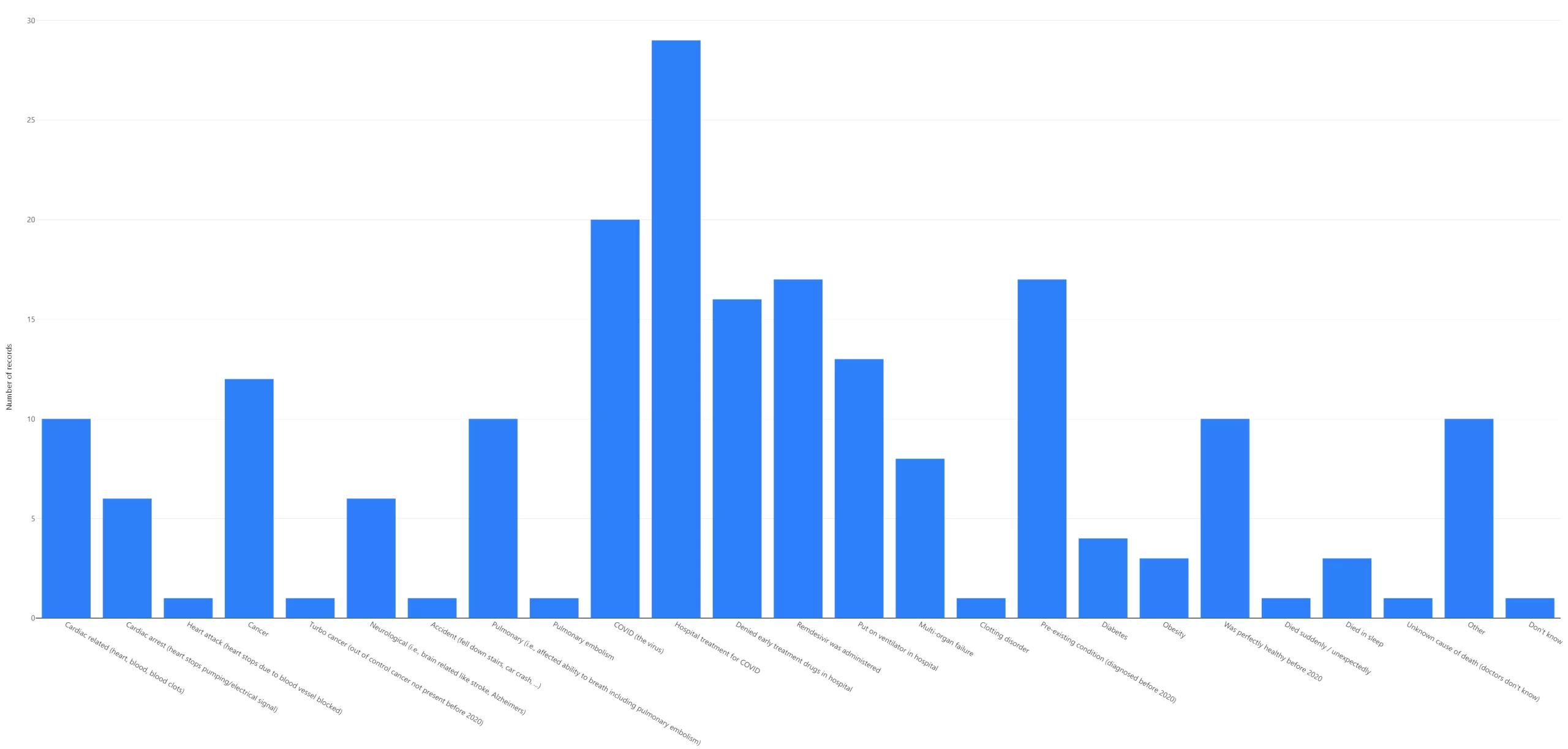
What the Unvaxxed Died of in 2021 and 2022
In 2021 and 2022, the primary cause of death for people 65 and younger was hospital treatment for COVID. Incidences of sudden death, pulmonary embolism and turbo-charged cancers were all low, and there were no unknown causes of death, nor any myocarditis deaths.
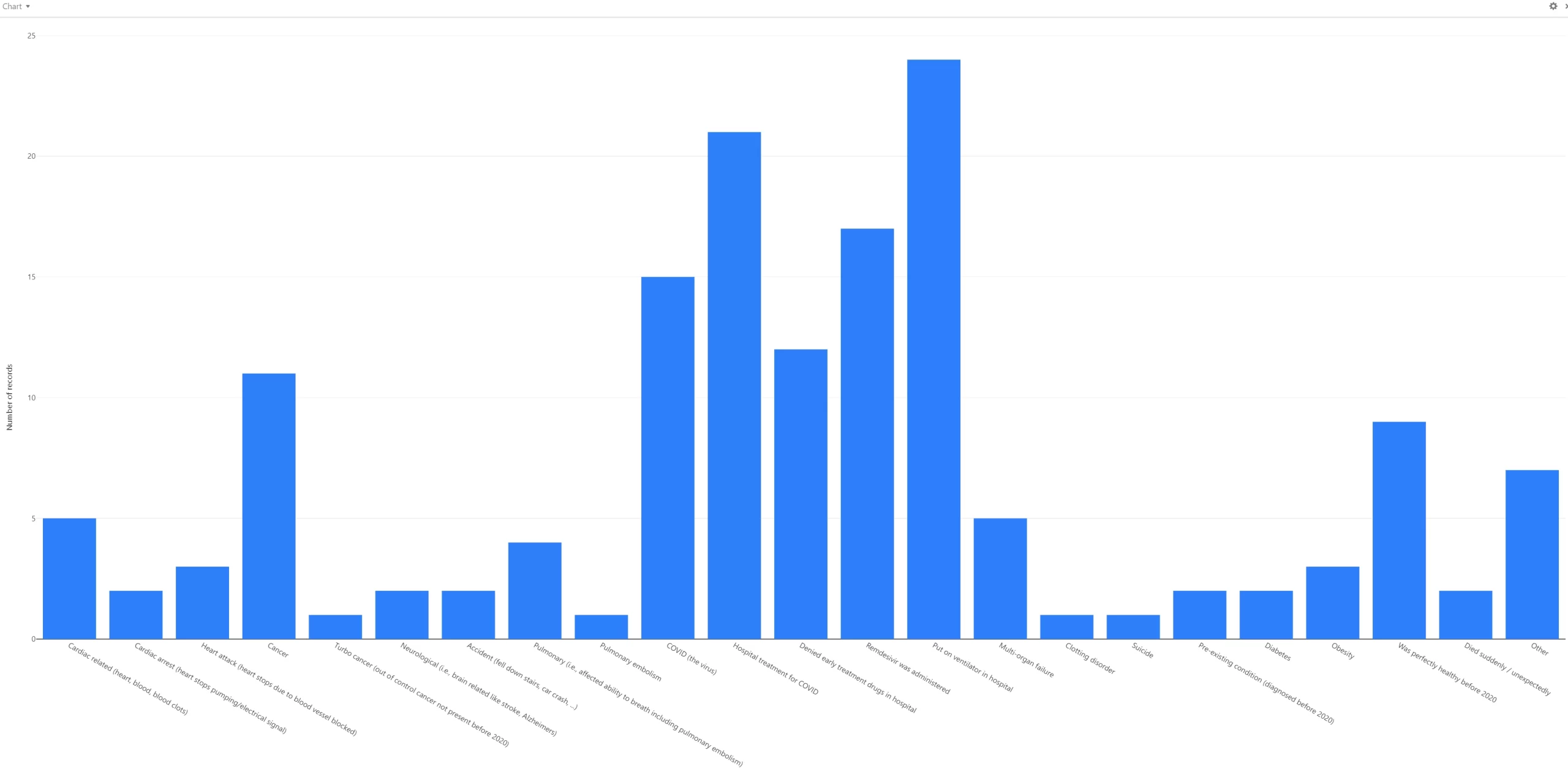
The same went for people older than 65. Hospital treatment for COVID was the No. 1 killer. Heart attacks, turbo-charged cancer and sudden death were all low, and there were no deaths from myocarditis.
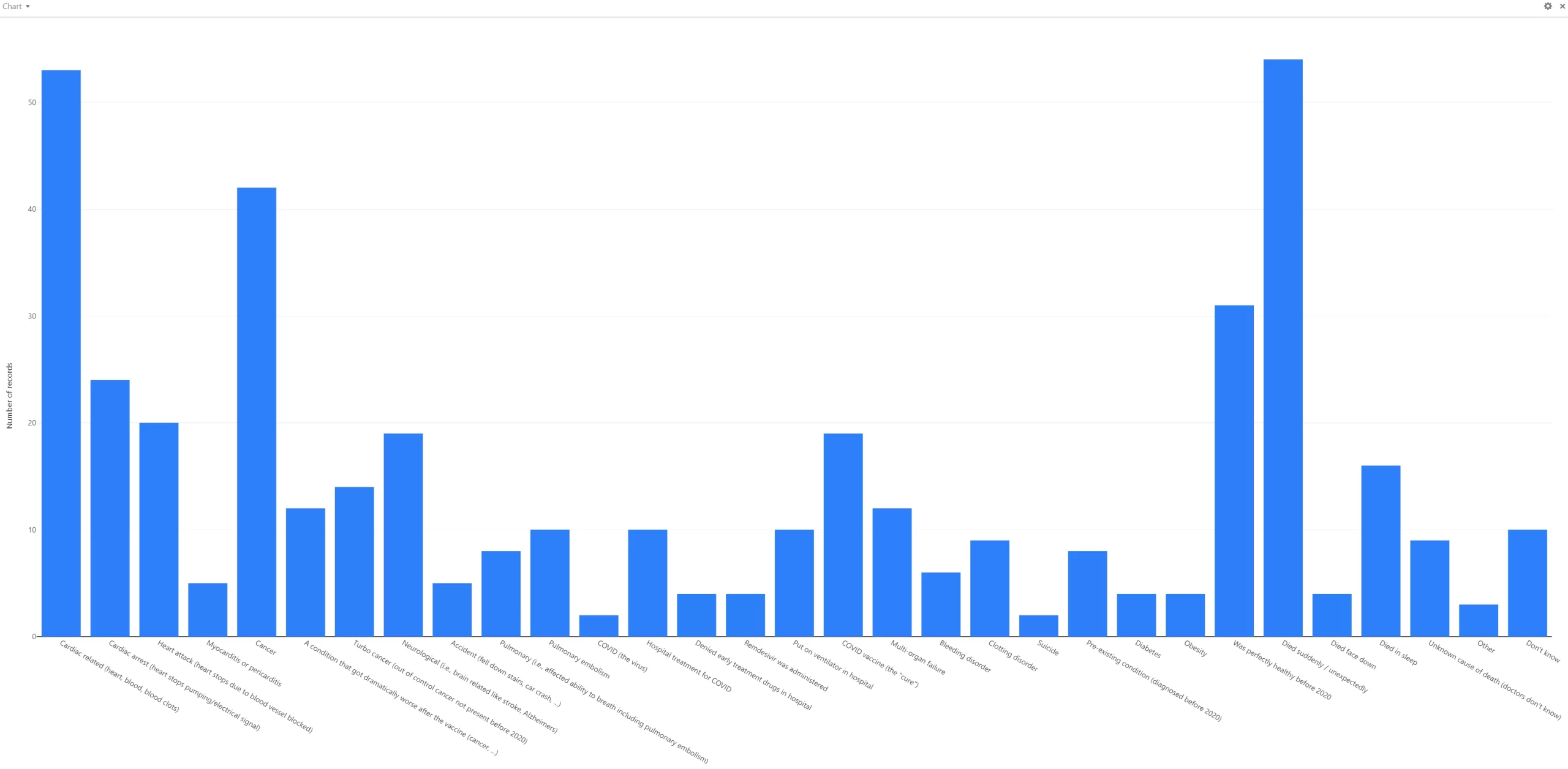
What the COVID-Jabbed Died of in 2021 and 2022
Among the COVID-jabbed aged 65 and younger, sudden death was the No. 1 cause of death in 2021 and 2022. The second was cardiac-related death and cancer was third. Importantly, the incidence of turbo-charged cancer among the jabbed was significant in this group, and myocarditis killed more than COVID-19.
Among those older than 65, cancer was the No. 1 cause of death, and the turbo-charged cancer rate is “huge compared to those without the vaccine.” Sudden death was also significantly elevated.
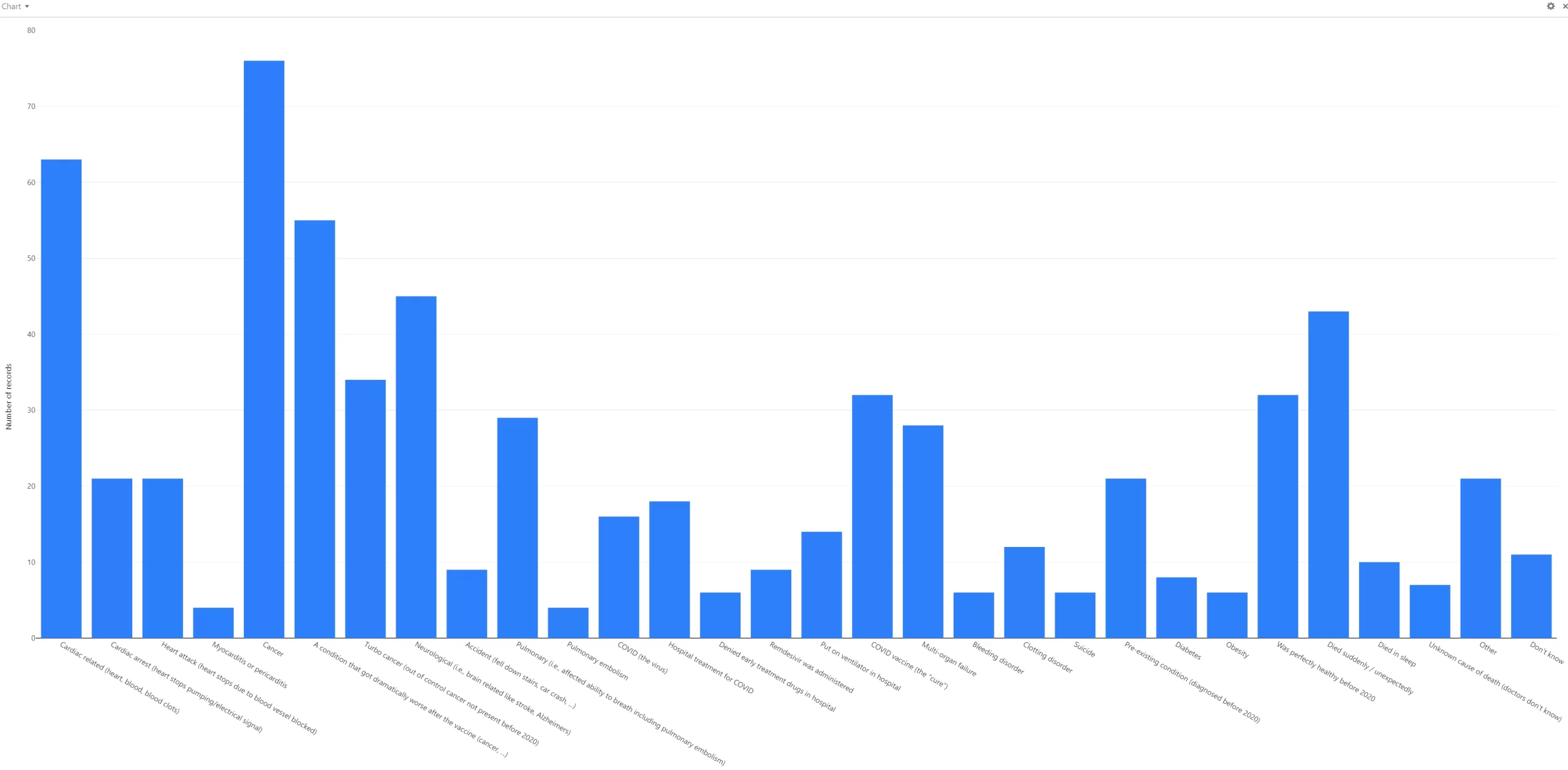
Stark Difference in Cancer Deaths Between Jabbed and Unjabbed
Kirsch summarizes the three most stunning differences between the jabbed and unjabbed:4
1. “Sudden death rates are off the charts for the vaccinated cf. unvaccinated for those <65 … It’s the #1 cause of death for this age group …
2. Myocarditis as a cause of death is registering now for both age ranges but only for the vaccinated …
3. Cardiac issues as a cause of death in vaccinated young people (<65) are significantly elevated vs. their unvaxxed peers.”
How COVID Jabs Raise Risk of Infections and Cancer
Exploding cancer rates is precisely what you would expect from a drug that impairs and destroys your immune system, which is what the COVID jabs do. The scientific paper “Innate Immune Suppression by SARS-CoV-2 mRNA Vaccinations”5 describes how the COVID shots suppress your innate immune system by inhibiting the type-1 interferon pathway, which is the first-stage response to all viral infections.
The reason type-1 interferon is suppressed is because it responds to viral RNA, and there’s no viral RNA in the COVID shot. The RNA is modified to look like human RNA, so the interferon pathway doesn’t get triggered. As a result, the COVID jab makes you more susceptible to infections.
One mechanism by which the jab causes cancer has to do with the fact that the SARS-CoV-2 spike protein obliterates 90% of the DNA repair mechanism in lymphocytes,6 a type of white blood cell that helps your body fight infections and chronic diseases such as cancer. That’s bad enough, yet that’s just one mechanism of many.
How the Jab Lowers Your Viral Clearance Capacity
Recent research7,8 also shows that repeated jabs trigger a switch in the types of antibodies your body produces and lower your ability to clear viruses. Jessica Rose reviews these findings in her Substack article:9
“A paper was published in Science Immunology on December 22, 2022 entitled: ‘Class switch towards non-inflammatory, spike-specific IgG4 antibodies after repeated SARS-CoV-2 mRNA vaccination’10 …
[It] explains in wonderful detail how a class of antibody that commands a non-inflammatory response (more like tolerizing) is prominent in people who have been repeatedly injected with the modified mRNA COVID-19 injectable products.
Translation: Instead of the intended pool of spike-specific neutralizing IgG antibodies being dominant in multiply-injected people, a pool of antibodies associated with spike-specific tolerance are dominant in multiply-injected people.
Besides the tolerizing capacity, they also showed that the phagocytic enabling capacities were much reduced overall. These activities lead to clearance of viral pathogens. Reduce them → reduction in viral clearance capacity …
To be clear, this wasn’t a ‘maybe the antibody profile was a little different’ … This was a ‘whoa there’s a 48,075% increase in spike-specific antibodies between the 2nd and 3rd injections …
IgG4 antibodies among all spike-specific IgG antibodies rose on average from 0.04% shortly after the second vaccination to 19.27% after the third … [I]mportantly, that is not a typical consequence of repeat antigen exposure from either natural infections and vaccination.”
Spike Overexposure Also Opens the Door for Cancer
As noted by Substack author Brian Mowrey:11
“This is a totally bonkers thing for an anti-spike-protein B cell to decide to do, and reflects B cell over-exposure to spike, which reflects super-excess production of spike by the Pfizer/BioNTech mRNA code …
It is not normal to make IgG4 when repeat encounter with a virus is spaced out over a lifetime, but injection-prompted antigen exposure promotes this response, and mRNA vaccines accelerate this effect …
There is no reason to predict that this would be ‘good’ in an antiviral response … ‘Wearing out’ the immune response in this way is believed to contribute to the development of tolerance against tumors.”
So, to summarize the effects in layman’s terms, the switch from spike-specific neutralizing IgG antibodies to IgG4 antibodies switches your body from tumor suppression mode into tumor progression mode, as cancerous cells now can evade your immune system. You become “tumor tolerant” as your immune system is no longer scavenging for and eliminating cancer cells. Mowrey also points out that:12
“Once a B cell has switched to IgG4, it cannot switch to any other IgG subclass, as the genes for all those other base designs have been discarded. All future clones of this B cell will code for IgG4 receptor/antibody for the antigen in question.”
What Other Health Effects May Result?
For clarification, IgG4 is a subclass of the immunoglobulin G (IgG) antibody type that responds to repeated and/or long-term exposure to an antigen. The mRNA shot evaluated here was that of Pfizer, and it was compared against Janssen’s viral vector-based shot. Moderna’s shot was not included. Notably, these results were not found among people who got Janssen’s shot, only Pfizer’s Comirnaty jab.
Comirnaty … induces a shift away from a viral clearing to a tolerance-inducing antibody class, and this is not the status quo for traditional vaccines or natural infections. The main problem here is … we have no idea of the effects of this ‘effect.’ ~ Jessica Rose, Ph.D.
As noted by Rose:13
“… the bottom line here is that the Comirnaty product … induces a shift away from a viral clearing to a tolerance-inducing antibody class, and this is not the status quo for traditional vaccines or natural infections. The main problem here is … we have no idea of the effects of this ‘effect.'”
That said, we can look at what happens in people with IgG4-related disease, and start formulating hypotheses from there. As explained by Rose, a hallmark of IgG4-related disease is fibrosis, i.e., tissue scarring, which can lead to organ dysfunction, organ failure and even death if left untreated.
Rose is now researching the possible links between this antibody switching and the stringy white deposits found in COVID-jabbed people who died. Might it be a new form of connective tissue disease?
In addition to the potential for cancer cells to run amok (as discussed in the section above), IgG4 dominance may also have severe autoimmune implications seeing how the COVID jab spike protein share similarities with human proteins.
“Molecular mimicry has been shown14 in multiple publications to be a potential problem with regard to the spike protein whereby it has been shown to share motifs with human proteins,” Rose writes.15 “What this means is that autoimmunity potential against these human proteins is clear and present.
In the context of this recent publication showing a dominant IgG4 pool, I have to wonder what the implications of this dominant pool are for molecular mimicry. Are these IgG4 antibodies capable of tolerizing in the context of our own protein?”
Resources for Those Injured by the COVID Jab
If you got one or more jabs and suffered an injury, first and foremost, never ever take another COVID booster, another mRNA gene therapy shot or regular vaccine. You need to end the assault on your system.
The same goes for anyone who has taken one or more COVID jabs and had the good fortune of not experiencing debilitating side effects. Your health may still be impacted long-term, so don’t take any more shots.
When it comes to treatment, there are still more questions than answers, and most doctors are clueless about what to do — in part because they never bothered to give early treatment for COVID and therefore don’t understand how different medicines and supplements impact the spike protein.
So far, it seems like many of the treatments that worked against severe COVID-19 infection also help ameliorate adverse effects from the jab. This makes sense, as the toxic, most damaging part of the virus is the spike protein, and that’s what your whole body is producing if you got the jab.
Two doctors who have started tackling the treatment of COVID jab injuries in earnest include Dr. Michelle Perro (DrMichellePerro.com), whom I’ve interviewed on this topic, and Dr. Pierre Kory (DrPierreKory.com).
Both agree that eliminating the spike protein your body is now continuously producing is a primary task. Perro’s preferred remedy for this is hydroxychloroquine, while Kory’s is ivermectin. Both of these drugs bind and thereby facilitate the removal of spike protein.
As a member of the Front Line COVID-19 Critical Care Alliance (FLCCC), Kory helped develop the FLCCC’s post-vaccine treatment protocol called I-RECOVER. Since the protocol is continuously updated as more data become available, your best bet is to download the latest version straight from the FLCCC website at covid19criticalcare.com16 (hyperlink to the correct page provided above).
The World Health Council has also published lists of remedies that can help inhibit, neutralize and eliminate spike protein. Inhibitors that prevent spike protein from binding to your cells include Prunella vulgaris, pine needle tea, emodin, neem, dandelion extract and the drug ivermectin.
Spike protein neutralizers, which prevent the spike from damaging cells, include N-acetylcysteine (NAC), glutathione, fennel tea, star anise tea, pine needle tea, St. John’s wort, comfrey tea and vitamin C. A March 2022 review paper17 suggests combating the neurotoxic effects of the spike protein using the flavonoids luteolin and quercetin.
Time-restricted eating (TRE) and/or sauna therapy can also help eliminate toxic proteins by stimulating autophagy. Several additional detox remedies can be found in “World Council for Health Reveals Spike Protein Detox.”
Other Helpful Treatments and Remedies
Other treatments and remedies that may be helpful for COVID jab injuries include:
• Hyperbaric oxygen therapy, especially in cases involving stroke, heart attack, autoimmune diseases and/or neurodegenerative disorders. To learn more, see “Hyperbaric Therapy — A Vastly Underused Treatment Modality.”
• Lower your Omega-6 intake. Linoleic acid is consumed in amounts ten times of ideal in well over 95% of the population and contributes to massive oxidative stress that impairs your immune response. Seed oils and processed foods need to be diligently avoided. You can review my previous post for more information.
• Pharmaceutical grade methylene blue, which improves mitochondrial respiration and aid in mitochondrial repair. It’s actually the parent molecule for hydroxychloroquine. A dose of 15 to 80 milligrams a day could go a long way toward resolving some of the fatigue many suffer post-jab.
It may also be helpful in acute strokes. The primary contraindication is if you have a G6PD deficiency (a hereditary genetic condition), in which case you should not use methylene blue at all. To learn more, see “The Surprising Health Benefits of Methylene Blue.”
• Near-infrared light, as it triggers production of melatonin in your mitochondria18 where you need it most. By mopping up reactive oxygen species, it too helps improve mitochondrial function and repair. Natural sunlight is 54.3% infrared radiation,19 so this treatment is available for free. For more information, see “What You Need to Know About Melatonin.”
• Lumbrokinase and serrapeptidase are both fibrinolytic enzymes taken on an empty stomach one hour before or two hours after to help reduce the risk of blood clots.
- 1, 3, 4 Steve Kirsch Substack December 27, 2022
- 2, 9, 13 Jessica Rose Substack December 27, 2022
- 5 Food Chem Toxicol June 2022; 164: 113008
- 6 The Expose August 2, 2022
- 7, 10 Science Immunology December 22, 2022
- 8, 11, 12 Brian Mowrey Substack July 22, 2022
- 14, 15 Jessica Rose Substack July 4, 2022
- 16 Covid19criticalcare.com
- 17 Molecular Neurobiology March 2022; 59(3): 1850-1861
- 18 Physiology February 5, 2020 DOI: 10.1152/physiol.00034.2019
- 19 Journal of Photochemistry and Photobiology February 2016; 155: 78-85
How Sugar Harms Your Brain and Drives Alzheimer’s Epidemic
Reproduced from original article:
https://articles.mercola.com/sites/articles/archive/2023/01/07/sugar-brain-function.aspx
The original Mercola article may not remain on the original site, but I will endeavor to keep it on this site as long as I deem it to be appropriate.
Analysis by Dr. Joseph Mercola Fact Checked January 07, 2023

STORY AT-A-GLANCE
- One in 3 seniors in the U.S. dies with Alzheimer’s, and the disease kills more than breast and prostate cancers combined
- A growing body of research suggests there’s a powerful connection between your diet and your risk of developing Alzheimer’s disease, via similar pathways that cause Type 2 diabetes
- Some research shows that sugar and other carbohydrates can disrupt your brain function even if you’re not diabetic or have any signs of dementia
- Long-term, sugar can contribute to the shrinking of your hippocampus, which is a hallmark symptom of Alzheimer’s disease
- The researchers propose that lowering glucose levels, even if they’re within the “normal” range, may have a positive influence on cognition in older people
Alzheimer’s disease, a severe form of dementia, affects more than 6 million Americans, according to 2022 statistics.1 One in 9 seniors over the age of 65 has Alzheimer’s; and the disease kills more than breast and prostate cancers combined.
A growing body of research suggests there’s a powerful connection between your diet and your risk of developing Alzheimer’s disease, via similar pathways that cause type 2 diabetes. Seventy-three percent of people with Alzheimer’s are over age 75; two-thirds of Americans with Alzheimer’s are women.
Contrary to popular belief, your brain does not require glucose, and actually functions better burning alternative fuels, especially ketones, which your body makes in response to digesting healthy fats.
According to experts at Emory School of Medicine, Alzheimer’s and other brain disorders are associated with proteins that regulate glucose metabolism. Previously, they had determined that abnormalities in the process by which the brain breaks down glucose were associated with amyloid plaques in the brain and the onset of memory loss.
Interestingly, Alzheimer’s disease was tentatively dubbed “Type 3 diabetes” in early 20052 when researchers discovered that in addition to your pancreas, your brain also produces insulin, and this brain insulin is necessary for the survival of brain cells.
“What we found is that insulin is not just produced in the pancreas, but also in the brain,” researchers said in a press release at the time. “And we discovered that insulin and its growth factors, which are necessary for the survival of brain cells, contribute to the progression of Alzheimer’s.”
Sugar Damages Brain Structure and Function
In your brain, insulin helps with neuron glucose-uptake and the regulation of neurotransmitters, such as acetylcholine, which are crucial for memory and learning. This is why reducing the level of insulin in your brain impairs your cognition.
Research3 has also shown that Type 2 diabetics lose more brain volume with age than expected — particularly gray matter. This kind of brain atrophy is yet another contributing factor for dementia.
Studies have found that people with lower levels of insulin and insulin receptors in their brain often have Alzheimer’s disease. But according to research published in the journal Neurology,4 sugar and other carbohydrates can disrupt your brain function even if you’re not diabetic or have any signs of dementia.
To test their theory, they evaluated short- and long-term glucose markers in 141 healthy, non-diabetic, non-demented seniors. Memory tests and brain imaging were administered to assess their brain function and the actual structure of their hippocampus. As reported by Scientific American:5
“Higher levels on both glucose measures were associated with worse memory, as well as a smaller hippocampus and compromised hippocampal structure.
The researchers also found that the structural changes partially accounted for the statistical link between glucose and memory. According to study co-author Agnes Flöel, a neurologist at Charité, the results ‘provide further evidence that glucose might directly contribute to hippocampal atrophy.'”
The findings suggest that even if you’re not diabetic or insulin resistant, of which about 80% of Americans are, sugar consumption can still disrupt your memory. Long-term, it can contribute to the shrinking of your hippocampus, which is a hallmark symptom of Alzheimer’s disease. (Your hippocampus is involved with the formation, organization and storage of memories.)
The authors of the study suggest that “strategies aimed at lowering glucose levels even in the normal range may beneficially influence cognition in the older population.”
‘Normal’ Blood Sugar Levels May Still Be Too High
Normally, a fasting blood sugar level between 100 and125 mg/dl is diagnosed as a prediabetic state.6 A fasting blood sugar level of 90 to 100 is considered “normal.” But in addition to the featured research, other studies have also found that brain atrophy occurs even in this “normal” blood sugar range.
Neurologist Dr. David Perlmutter insists that being very strict in limiting your consumption of sugar and non-vegetable carbs, and consuming healthy fats,7 are some of the most important steps you can take to prevent Alzheimer’s disease for this very reason.
He cites research from the Mayo Clinic,8 which found that diets rich in carbohydrates are associated with an 89% increased risk for dementia. Meanwhile, high-fat diets are associated with a 44% reduced risk.9
Sugar Lobby Threatens Organizations, Buries Science
Compelling research shows that your brain has great plasticity, which you control through your diet and lifestyle choices. Unfortunately, the American public has been grossly brainwashed by the sugar and processed food industries into believing that sugar is a perfectly reasonable “nutrient” that belongs in a healthy diet.
Without accurate information, it’s certainly more difficult to make health-affirming choices. Newsweek10 recently ran an article revealing just how far the sugar industry will go to defend its market share:
“According to a new report11 from the Center for Science and Democracy … industry groups representing companies that sell sweeteners, like the Sugar Association and the Corn Refiners Association … have poured millions of dollars into countering science that indicates negative health consequences of eating their products.
For example, when a University of Southern California study from 2013 found that the actual high fructose corn syrup content in sodas ‘varied significantly’ from the sugar content disclosed on soda labels, the Corn Refiners Association considered paying for its own counter research.
A consultant suggested that the counter research should only be published if the results aligned with their goal of disputing the USC study: ‘If for any reason the results confirm [the University of Southern California study], we can just bury the data,’ the consultant wrote, according to the report.”
According to the Center for Science report, the Sugar Association even threatened the director general of the World Health Organization (WHO). WHO had published a paper on sugar, recommending a 10% limit on added sugars, stating that added sugars “threaten the nutritional quality of diets.”
The Sugar Association shot off a letter to the director general, warning him that, unless WHO withdrew the study, the Sugar Association would persuade the US Congress to withdraw the WHO’s federal funding. The following year, when WHO published its global health strategy on diet and health, there was no mention of the offending sugar study.
Sugar Lobby Deserves Blame for Fueling Chronic Disease
Indeed, despite overwhelming evidence showing that sugar, and processed fructose in particular, is at the heart of our burgeoning obesity and chronic disease epidemics, the sugar lobby spent decades trying to dissuade regulatory agencies from looking at the “factual” dangers of sugar.
As a result, today, according to Centers for Disease Control and Prevention (CDC) data,12 3 in 5 Americans aged 2 years and older exceed the CDC’s recommendation to consume less than 10% of total calories in a day. On average adult men in the U.S. eat 19 teaspoons of added sugars a day; adult women eat an added 15. This adds up to about 14.1% of the average American’s food consumption.13
In the U.K., a report14 by the Scientific Advisory Committee on Nutrition (SACN) recommends limiting added sugar intake to just 5%, in order to avoid obesity and Type 2 diabetes. They calculate this to be the equivalent of 25 grams of sugar (5 to 6 teaspoons) per day for women, and 35 grams (7 to 8 teaspoons) for men.
This matches my own recommendations for healthy, noninsulin-resistant individuals — with one key difference. I recommend restricting sugar/fructose consumption to 25 grams from ALL sources, not just added sugar. This includes limiting your non-vegetable carbohydrates as well.
Crazy enough, the Scientific Advisory Committee on Nutrition still recommends you get 50% of your daily energy intake in the form of starchy carbohydrates, which will undoubtedly and significantly raise your risk of insulin resistance.
If you’re insulin/leptin-resistant, diabetic, overweight or have high blood pressure, heart disease or cancer, I recommend restricting your sugar/fructose consumption to a maximum of 15 grams per day from all sources, until your insulin/leptin resistance has been resolved.
Dietary Guidelines for Maintaining Healthy Brain Function
It’s becoming increasingly clear that the same pathological process that leads to insulin resistance and type 2 diabetes may also hold true for your brain. As you over-indulge on sugar and grains, your brain becomes overwhelmed by the consistently high levels of glucose and insulin that blunts its insulin signaling, leading to impairments in your thinking and memory abilities, eventually causing permanent brain damage.
Additionally, when your liver is busy processing fructose (which your liver turns into fat), it severely hampers its ability to make cholesterol, an essential building block of your brain that is crucial for optimal brain function. Indeed, mounting evidence supports the notion that significantly reducing fructose consumption is a very important step for preventing Alzheimer’s disease.
Because of the very limited treatments, and no available cure as of yet, you’re really left with just one solid solution, and that is to prevent Alzheimer’s from happening to you in the first place. As explained by neurologist Perlmutter, Alzheimer’s is a disease predicated primarily on lifestyle choices, the two main culprits being excessive sugar and gluten consumption.
Another major factor is the development and increased consumption of genetically engineered (GE) grains which are now pervasive in most processed foods sold in the US. The beauty of following my optimized nutrition plan is that it helps prevent and treat virtually ALL chronic degenerative diseases, including Alzheimer’s.
Dr. Perlmutter’s book, “Grain Brain: The Surprising Truth about Wheat, Carbs, and Sugar — Your Brain’s Silent Killers,” also provides powerful arguments for eliminating grains from your diet, particularly if you want to protect the health of your brain. In terms of your diet, the following suggestions may be among the most important for Alzheimer’s prevention:
| Avoid sugar and refined fructose — Ideally, you’ll want to keep your total sugar and fructose below 25 grams per day, or as low as 15 grams per day if you have insulin resistance or any related disorders. In one recent animal study, a junk food diet high in sugar resulted in impaired memory after just one week!15 Place recognition, specifically, was adversely affected.
As a general rule, you’ll want to keep your fasting insulin levels below 3, and this is indirectly related to fructose, as it will clearly lead to insulin resistance. However, other sugars (sucrose is 50% fructose by weight), grains, and lack of exercise are also important factors. Lowering insulin will also help lower leptin levels, which is another factor for Alzheimer’s. |
| Avoid gluten and casein (primarily wheat and pasteurized dairy, but not dairy fat, such as butter) — Research shows that your blood-brain barrier, the barrier that keeps things out of your brain where they don’t belong, is negatively affected by gluten.
Gluten also makes your gut more permeable, which allows proteins to get into your bloodstream, where they don’t belong. That then sensitizes your immune system and promotes inflammation and autoimmunity, both of which play a role in the development of Alzheimer’s. |
| Eat a nutritious diet, rich in folate, such as the one described in my nutrition plan. Vegetables, without question, are your best form of folate, and we should all eat plenty of fresh raw veggies every day. Avoid supplements like folic acid, which is the inferior synthetic version of folate. |
| Increase consumption of all healthful fats, including animal-based omega-3 — Beneficial health-promoting fats that your brain needs for optimal function include organic butter from raw milk, clarified butter called ghee, organic grass fed raw butter, olives, organic virgin olive oil and coconut oil, nuts like pecans and macadamia, free-range eggs, wild Alaskan salmon, and avocado.
Contrary to popular belief, the ideal fuel for your brain is not glucose but ketones. Ketones are what your body produces when it converts fat (as opposed to glucose) into energy. The medium-chain triglycerides (MCTs) found in coconut oil are a great source of ketone bodies, because coconut oil is about 66% MCTs. Also make sure you’re getting enough animal-based omega-3 fats, such as krill oil. (I recommend avoiding most fish because, although fish is naturally high in omega-3, most fish are now severely contaminated with mercury.) High intake of the omega-3 fats EPA and DHA help by preventing cell damage caused by Alzheimer’s disease, thereby slowing down its progression, and lowering your risk of developing the disorder. |
| Optimize your gut flora by regularly eating fermented foods or taking a high-potency and high-quality probiotic supplement. |
| Eat blueberries — Wild blueberries, which have high anthocyanin and antioxidant content, are known to guard against Alzheimer’s and other neurological diseases. |
Other Helpful Dietary Tips and Valuable Supplements
Another helpful tip is to reduce your overall calorie consumption, and/or intermittently fast. As mentioned above, ketones are mobilized when you replace carbs with coconut oil and other sources of healthy fats. A one-day fast can help your body to “reset” itself, and start to burn fat instead of sugar.
As part of a healthy lifestyle, I prefer an intermittent fasting schedule that simply calls for limiting your eating to a narrower window of time each day. By restricting your eating to a six- to eight-hour window, you effectively fast 16 to 18 hours each day.
Also be aware that when it comes to cholesterol levels and Alzheimer’s, lower is NOT better. Quite the contrary. Research shows that elderly individuals with the lowest cholesterol levels have the highest risk for Alzheimer’s.16 They also have the highest risk for dying. As he says, the war on cholesterol is fundamentally inappropriate and harmful.
Finally, there’s a short list of supplement recommendations worth noting for their specific benefits in preventing and treating dementia. So, although your fundamental strategy for preventing dementia should involve a comprehensive lifestyle approach, you may want to take special note of the following natural dietary agents. These four natural foods/supplements have good science behind them, in terms of preventing age-related cognitive changes:
1. Ginkgo biloba — Many scientific studies have found that Ginkgo biloba has positive effects for dementia. A 1997 study from JAMA showed clear evidence that Ginkgo improves cognitive performance and social functioning for those suffering from dementia.
Another 2006 study found Ginkgo as effective as the dementia drug Aricept (donepezil) for treating mild to moderate Alzheimer’s type dementia. A 2010 meta-analysis also found Ginkgo biloba to be effective for a variety of types of dementia.
2. Alpha lipoic acid (ALA) — ALA has been shown to help stabilize cognitive functions among Alzheimer’s patients and may slow the progression of the disease.
3. Vitamin B12 — A small Finnish study published in the journal Neurology17 found that people who consume foods rich in B12 may reduce their risk of Alzheimer’s in their later years. For each unit increase in the marker of vitamin B12 the risk of developing Alzheimer’s was reduced by 2%. Remember sublingual methylcobalamin may be your best bet here.
Lifestyle Strategies That Can Help Ward off Alzheimer’s
Lifestyle choices such as getting regular sun exposure and exercise, along with avoiding toxins, are also important factors when it comes to maintaining optimal brain health. Here are several of my lifestyle suggestions:
| Optimize your vitamin D levels with safe sun exposure — Strong links between low levels of vitamin D in Alzheimer’s patients and poor outcomes on cognitive tests have been revealed.18 Researchers believe that optimal vitamin D levels may enhance the amount of important chemicals in your brain and protect brain cells by increasing the effectiveness of the glial cells in nursing damaged neurons back to health.
Vitamin D may also exert some of its beneficial effects on Alzheimer’s through its anti-inflammatory and immune-boosting properties. Sufficient vitamin D is imperative for proper functioning of your immune system to combat inflammation that is also associated with Alzheimer’s. |
| Exercise regularly — It’s been suggested that exercise can trigger a change in the way the amyloid precursor protein is metabolized,19 thus, slowing down the onset and progression of Alzheimer’s.
Exercise also increases levels of the protein PGC-1alpha. Research has also shown that people with Alzheimer’s have less PGC-1alpha in their brains20 and cells that contain more of the protein produce less of the toxic amyloid protein associated with Alzheimer’s. I would strongly recommend reviewing the Peak Fitness Technique for my specific recommendations. |
| Avoid and eliminate mercury from your body — Dental amalgam fillings, which are 50% mercury by weight, are one of the major sources of heavy metal toxicity. However, you should be healthy prior to having them removed. Once you have adjusted to following the diet described in my optimized nutrition plan, you can follow the mercury detox protocol and then find a biological dentist to have your amalgams removed. |
| Avoid aluminum, such as antiperspirants, non-stick cookware, vaccine adjuvants, etc. |
| Avoid flu vaccinations as most contain both mercury and aluminum, well-known neurotoxic and immunotoxic agents. |
| Avoid anticholinergics and statin drugs — Drugs that block acetylcholine, a nervous system neurotransmitter, have been shown to increase your risk of dementia. These drugs include certain nighttime pain relievers, antihistamines, sleep aids, certain antidepressants, medications to control incontinence, and certain narcotic pain relievers.
Statin drugs are particularly problematic because they suppress the synthesis of cholesterol, deplete your brain of coenzyme Q10 and neurotransmitter precursors, and prevent adequate delivery of essential fatty acids and fat-soluble antioxidants to your brain by inhibiting the production of the indispensable carrier biomolecule known as low-density lipoprotein. |
| Challenge your mind daily — Mental stimulation, especially learning something new, such as learning to play an instrument or a new language, is associated with a decreased risk of Alzheimer’s. Researchers suspect that mental challenge helps to build up your brain, making it less susceptible to the lesions associated with Alzheimer’s disease. |
- 1 Alzheimer’s Association. Alzheimer’s Disease Facts and Figures
- 2 EurekAlert! March 7, 2005
- 3 Diabetes Care. v.36(12); 2013 Dec
- 4 Neurology November 12, 2013: 81(20); 1746-1752
- 5 Scientific American June 12, 2014
- 6 CDC. Diabetes Tests
- 7 David Perlmutter MD
- 8 J Alzheimers Dis. 2012 Jan 1; 32(2): 329–339
- 9 David Perlmutter MD. Eating Fat, Fighting Alzheimer’s
- 10 Newsweek June 27, 2014
- 11 Center for Science and Democracy, Union of Concerned Scientists
- 12 CDC. Be Sugar Smart
- 13 Am J Clin Nutr. 2014 Sep; 100(3): 901–907
- 14 British Nutrition Foundation. Sugar
- 15 Worldhealth.net December 30, 2013
- 16 Neurology. 2010 Nov 23; 75(21): 1888–1895
- 17 Neurology October 19, 2010: 75(16); 1402-3
- 18 Neurology. 2014 Sep 2; 83(10): 920–928
- 19 Journal of Neuroscience, April 27, 2005: 25(17); 4217-4221
- 20 Journal of Alzheimer’s Disease, 2011: 25(1); 151-62
7 Tricks to Improve Your Memory
Reproduced from original article:
https://articles.mercola.com/sites/articles/archive/2023/01/05/7-tricks-to-improve-your-memory.aspx
The original Mercola article may not remain on the original site, but I will endeavor to keep it on this site as long as I deem it to be appropriate.
Analysis by Dr. Joseph Mercola Fact Checked January 05, 2023

STORY AT-A-GLANCE
- A healthy lifestyle can support your brain health and even encourage your brain to grow new neurons, a process known as neuroplasticity
- Your brain’s hippocampus — the memory center — regenerates throughout your entire lifetime (even into your 90s), provided you give it the right tools to do so
- Lifestyle factors that may improve memory and promote neurogenesis include exercise, eating right and getting proper sleep
- Other memory tricks include avoiding multitasking, learning a new skill, playing brain games and using mnemonics to help you remember information
It was once believed that brain function peaked during early adulthood and then slowly declined, leading to lapses in memory and brain fog during your golden years. Now it’s known that our modern lifestyle plays a significant role in contributing to cognitive decline, which is why exposure to toxins, chemicals, poor diet, lack of sleep, stress and much more can hinder the functioning of your brain.
The flip side is also true in that a healthy lifestyle can support your brain health and even encourage your brain to grow new neurons, a process known as neurogenesis. Your brain’s hippocampus — the memory center — is especially able to grow new cells. It’s now known that your hippocampus regenerates throughout your entire lifetime, even into your 90s, provided you give it the tools to do so.
These “tools” are primarily lifestyle-based, which is wonderful news. You don’t need an expensive prescription medication or any medical procedure at all to boost your brain and your memory. You simply must try out the following tricks to improve your memory.
7 Lifestyle-Based Ways to Improve Your Memory
1. Eat right — The foods you eat — and don’t eat — play a crucial role in your memory. Fresh vegetables are essential, as are healthy fats and avoiding sugar. Research has shown daily sugar consumption impairs spatial memory and inhibits neurogenesis in the hippocampus.1 However, a high-fat, moderate-protein, low-net-carb ketogenic diet is crucial for protecting your brain health and preventing degeneration that can lead to Alzheimer’s.
One of the most striking studies showing the effects of a high-fat/low-carb versus high-carb diets on brain health revealed that high-carb diets increase your risk of dementia by a whopping 89%, while high-fat diets lower the risk significantly.2
In my book, “Superfuel: Ketogenic Keys to Unlock the Secrets to Good Fats, Bad Fats, and Great Health,” cowritten with James DiNicolantonio, Pharm.D., we explain how the omega-3 fat DHA is an essential structural component of your brain and is found in high levels in your neurons. When your omega-3 intake is inadequate, your nerve cells become stiff and more prone to inflammation as the missing omega-3 fats are substituted with omega-6 instead.
Once your nerve cells become rigid and inflamed, proper neurotransmission from cell to cell and within cells becomes compromised. Low DHA levels have been linked to memory loss and Alzheimer’s disease, and some studies suggest degenerative brain diseases may potentially be reversible with sufficient DHA.3,4
Coconut oil is another healthy fat for brain function. It contains medium-chain fats, also referred to as MCTs, which are converted into ketones, an excellent mitochondrial fuel. Researchers found that ketones may work as an alternative energy source for malfunctioning brain cells,5 which has been found to reduce symptoms in patients with Alzheimer’s disease.
2. Exercise — Exercise encourages your brain to work at optimum capacity by stimulating nerve cells to multiply, strengthening their interconnections and protecting them from damage.
During exercise nerve cells release proteins known as neurotrophic factors. One in particular, called brain-derived neurotrophic factor (BDNF), triggers numerous other chemicals that promote neural health and directly benefits cognitive functions, including learning.
A 2010 study on primates published in Neuroscience revealed that regular exercise not only improved blood flow to the brain but also helped the monkeys learn new tasks twice as quickly as nonexercising monkeys. This is a benefit the researchers believe would hold true for people as well.6
Exercise improves both brain structure and function, with research showing it significantly increases hippocampal volume in older adults with probable mild cognitive impairment.7 To get the most out of your workouts, I recommend a comprehensive program that includes high-intensity exercise, strength training, stretching and core work, along with plenty of daily nonexercise movement.
3. Stop multitasking — Used for decades to describe the parallel processing abilities of computers, multitasking is now shorthand for the human attempt to simultaneously do as many things as possible, as quickly as possible. Ultimately, multitasking may slow you down, make you prone to errors and make you forgetful.
The opposite of multitasking is mindfulness, which helps you achieve undistracted focus. Students who took a mindfulness class improved reading comprehension test scores and working memory capacity, as well as experienced fewer distracting thoughts.8
If you find yourself trying to complete five tasks at once, stop yourself and focus your attention back to the task at hand. If distracting thoughts enter your head, remind yourself that these are only “projections,” not reality, and allow them to pass by without stressing you out. You can then end your day with a 10- or 15-minute meditation session to help stop your mind from wandering and relax into a restful sleep.
4. Get a good night’s sleep — Research from Harvard indicates that people are 33% more likely to infer connections among distantly related ideas after sleeping,9 but few realize that their performance has actually improved.
Sleep is also known to enhance your memories and help you “practice” and improve your performance of challenging skills. The process of brain growth, or neuroplasticity, is believed to underlie your brain’s capacity to control behavior, including learning and memory. Plasticity occurs when neurons are stimulated by events, or information, from the environment.
However, sleep and sleep loss modify the expression of several genes and gene products that may be important for synaptic plasticity. Furthermore, certain forms of long-term potentiation, a neural process associated with the laying down of learning and memory, can be elicited in sleep, suggesting synaptic connections are strengthened while you slumber.
As you might suspect, this holds true for infants too, and research shows naps can give a boost to babies’ brainpower. Specifically, infants who slept in between learning and testing sessions had a better ability to recognize patterns in new information, which signals an important change in memory that plays an essential role in cognitive development.10
There’s reason to believe this holds true for adults, too, as even among adults, a mid-day nap was found to dramatically boost and restore brainpower.11 You can find 33 tips to help you get the shut-eye you need here.
5. Play brain games — If you don’t sufficiently challenge your brain with new, surprising information, it eventually begins to deteriorate. What research into brain plasticity shows, however, is that by providing your brain with appropriate stimuli you can counteract this degeneration.
One way to challenge your brain is via brain games, which you can play online via websites like Lumosity.com. Michael Merzenich, Ph.D. and Professor Emeritus at the University of California, whom I previously interviewed, has pioneered research in brain plasticity for decades. He developed a computer-based brain-training program that can help you sharpen a range of skills, from reading and comprehension to improved memorization and more.
The program is called Brain HQ, and the website has many different exercises designed to improve brain function. It also allows you to track and monitor your progress over time. While there are many similar sites online, Brain HQ is one of the oldest and most widely used.
If you decide to try brain games, try to invest at least 20 minutes a day, but no more than five to seven minutes is to be spent on a specific task. When you spend longer amounts of time on a task, the benefits weaken.
According to Merzenich, the primary benefits occur in the first five or six minutes of the task. The only downside to brain games is that it may become just another “task” you need to fit into an already busy day. If you don’t enjoy brain games, you can also try learning a new skill or hobby (see below).
6. Master a new skill — Engaging in “purposeful and meaningful activities” stimulates your neurological system, counters the effects of stress-related diseases, reduces the risk of dementia and enhances health and well-being.12
A key factor necessary for improving your brain function or reversing functional decline is the seriousness of purpose with which you engage in a task. In other words, the task must be important to you, or somehow meaningful or interesting. It must hold your attention.
For instance, one study revealed that craft activities such as quilting and knitting were associated with decreased odds of having mild cognitive impairment.13 Another study found that taking part in “cognitively demanding” activities like learning to quilt or take digital photography enhanced memory function in older adults.14
The key is to find an activity that is mentally stimulating for you. Ideally this should be something that requires your undivided attention and gives you great satisfaction, an activity you look forward to doing, such as playing a musical instrument, gardening, building model ships, crafting or many others.
7. Try mnemonic devices — Mnemonic devices are memory tools to help you remember words, information or concepts. They help you to organize information into an easier-to-remember format. Try:
- Acronyms, such as PUG for “pick up grapes”
- Visualizations, such as imagining a tooth to remember your dentist’s appointment
- Rhymes — If you need to remember a name, for instance, think “Shirley’s hair is curly”
- Chunking, which is breaking up information into smaller “chunks,” such as organizing numbers into the format of a phone number
3 More Smart Tips for Brainpower
If you’re serious about improving your memory and your cognitive function, you’ll also want to know about these three important variables for brain health.
• Vitamin D — Activated vitamin D receptors increase nerve growth in your brain, and researchers have also located metabolic pathways for vitamin D in the hippocampus and cerebellum of the brain, areas that are involved in planning, processing of information, and the formation of new memories.
Vitamin D increases nerve growth factor, which promotes brain health, while low vitamin D is associated with cognitive impairment and dementia.15 Appropriate sun exposure is all it takes to keep your levels where they need to be for healthy brain function. If this is not an option, a vitamin D3 supplement may be necessary.
• Time restricted eating — Time restricted eating (TRE) is another powerful intervention. It mimics the eating habits of our ancestors and restores your body to a more natural state that allows a whole host of metabolic benefits to occur.16
TRE involves limiting your eating window to six to eight hours per day instead of the more than 12-hour window most people use. Ideally, you’ll want to stop eating for several hours before bedtime, then start your eating window in mid- to late morning after you wake up.
TRE may improve cognitive function and protect against neurological diseases such as Alzheimer’s disease17 thanks to the production of ketone bodies18 and BDNF,19 which activates brain stem cells to convert into new neurons and triggers numerous other chemicals that promote neural health.
• Gut health — Your gut is your “second brain,” and your gut bacteria transmit information to your brain via the vagus nerve, the tenth cranial nerve that runs from your brain stem into your enteric nervous system (the nervous system of your gastrointestinal tract).
There is a close connection between abnormal gut flora and abnormal brain development, and just as you have neurons in your brain, you also have neurons in your gut — including neurons that produce neurotransmitters like serotonin, which is also found in your brain and is linked to mood.
Quite simply, your gut health can impact your brain function, psyche and behavior, as they are interconnected and interdependent in a number of different ways. In addition to avoiding sugar, one of the best ways to support gut health is to consume beneficial bacteria.
You can use a probiotic supplement for this, but I’m particularly fond of using fermented vegetables, because they can deliver extraordinarily high levels of beneficial bacteria.
The Choline-Brain Connection
Choline is an essential nutrient your body makes in small amounts. However, you must consume it through your diet to get enough. In adults, choline helps keep your cell membranes functioning properly, plays a role in nerve communications, prevents the buildup of homocysteine in your blood (elevated levels are linked to heart disease) and reduces chronic inflammation.
In pregnant women, choline plays an equally, if not more, important role, helping to prevent certain birth defects, such as spina bifida, and playing a role in brain development.
Prior research has concluded that choline intake during pregnancy “super-charged” the brain activity of animals in utero, indicating that it may boost cognitive function, improve learning and memory, and even diminish age-related memory decline and the brain’s vulnerability to toxins during childhood, as well as conferring protection later in life.20
If you’re pregnant, making sure your diet includes plenty of choline-rich foods is important, as research shows higher choline intake led to changes in epigenetic markers in the fetus.21 Specifically, it affected markers that regulate the hypothalamic-pituitary-adrenal (HPA) axis, which controls hormone production and activity.
The changes in fetal genetic expression will likely continue into adulthood, where they play a role in disease prevention. According to a study published in the journal Nutrients, only 8% of U.S. adults are getting enough choline (including only 8.5% of pregnant women).22 Krill oil is a simple solution, which can boost choline levels after a single dose.23 Aside from krill oil, eggs — particularly the yolks — are another excellent choline source.
- 1 Learning & Memory 2016; 23: 386-390
- 2 J Alzheimers Dis. 2012; 32(2):329-339
- 3 Alzheimer’s and Dementia 2010 Nov;6(6):456-64
- 4 Nutritional Neuroscience 2008 Apr;11(2):75-83
- 5 BMC Neurosci. 2008; 9(Suppl 2): S16
- 6 Neuroscience. 2010 Jun 2;167(4):1239-48
- 7 Br J Sports Med. 2015 Feb; 49(4): 248–254
- 8 Psychological Science March 28, 2013
- 9 New York Times September 27, 2008
- 10 Psychological Science August 2006; 17(8): 670
- 11 American Association of the Advancement of Science (AAAS) annual meeting, San Diego, California, February 21, 2010
- 12 Occup Ther Int. 2007;14(2):71-85
- 13 J Neuropsychiatry Clin Neurosci. 2011 Spring;23(2):149-54
- 14 Psychol Sci. 2014 Jan;25(1):103-12
- 15 J Aging Res. 2020; 2020: 6097820
- 16 Science November 16, 2018; 362(6416): 770-775
- 17 Neurobiology of Disease April 2007; 26(1): 212-220
- 18 IUMB Life 2017; 69.5 DOI: 10.1002/iub.1627, Conclusion
- 19 Annual Review of Nutrition 2005;25:237-60
- 20 J Neurophysiol. 2004 Apr;91(4):1545-55
- 21 FASEB J. 2012 Aug;26(8):3563-74
- 22 Nutrients August 5, 2017
- 23 Nutrients. 2019 Oct; 11(10): 2548
Vitamin D for Uterine Fibroid Reduction
Reproduced from original article:
https://articles.mercola.com/sites/articles/archive/2023/01/02/vitamin-d-for-uterine-fibroid-reduction.aspx
The original Mercola article may not remain on the original site, but I will endeavor to keep it on this site as long as I deem it to be appropriate.
Analysis by Dr. Joseph Mercola Fact Checked January 02, 2023

STORY AT-A-GLANCE
- Research reveals that sufficient serum levels of vitamin D were associated with a lower risk of uterine fibroids, which can present with abdominal pain and bloating, excessive menstrual bleeding, anemia, low back pain and painful sex
- Fibroids may also affect fertility as they distort the shape and function of the uterus, may obstruct the fallopian tubes that prevent pregnancy, restrict the growth of the baby and make vaginal birth impossible
- Unfortunately, most of the treatments currently available negatively affect fertility, making it nearly impossible for a woman to have children
- Vitamin D may prove to be a treatment with few side effects that also preserve fertility
- Your body produces vitamin D and melatonin through sensible sun exposure. Melatonin is a powerful antioxidant, master hormone, and regulator of inflammation and cell death
- Low levels of vitamin D are also associated with poor bone health, certain cancers, depression, heart disease and Type 2 diabetes. The only way to be certain you need a supplement and how much to take is by getting a blood test
Uterine fibroids are muscular tumors that are found growing in the wall of the uterus. They are nearly always benign, but the symptoms can be difficult to live with. In extremely rare cases, a fibroid can transform into a malignant tumor.
Fibroids are fairly common and occur in up to 70% of white women and more than 80% of black women,1 sometimes without symptoms. Factors that can increase the risk you develop fibroids include obesity, a family history of fibroids, age and ethnic origin.2
Symptoms include excessive or painful bleeding, bleeding between periods, frequent urination, painful sex, low back pain and an inability to completely empty the bladder when the fibroid places pressure over the urethra. Larger fibroids can cause abdominal distension and a feeling of fullness in the abdomen.3 Excessive bleeding during your period can also lead to anemia.
Treatment is determined by symptoms indicative of fibroids, the size and location of the fibroids, age and whether the woman wants to become pregnant. Unfortunately, most of the treatments currently available negatively affect fertility, making it nearly impossible for a woman to have children.
These treatments include surgical procedures such as a hysterectomy, endometrial ablation where the lining of the uterus is removed or destroyed, uterine fibroid embolization and radiofrequency ablation. Women can also choose a myomectomy, which is a surgical procedure to remove the fibroids without disturbing healthy uterine tissue. How the procedure is performed depends on the size and location of the fibroid.
While a myomectomy has a higher chance of preserving fertility, new fibroids can grow back. In addition to surgical procedures, birth control pills, gonadotropin-releasing hormone agonists and other oral therapies may be used to control heavy uterine bleeding. These also affect fertility so a woman cannot get pregnant. Treatments with few side effects that preserve fertility are a priority.
Vitamin D and Uterine Fibroids
A study4 published in 2022 in Fertility and Sterility examined how vitamin D levels might affect the development and progression of uterine fibroids.
The researchers were seeking a fibroid treatment that would preserve fertility. They studied the association between women with serum vitamin D levels equal to or greater than 30 nanograms per milliliter (ng/mL) against those with serum levels lower than 20 ng/mL.5 Participants were enrolled from 2010 to 2012 and followed over 5 years.
The researchers measured vitamin D serum levels, performed standard ultrasounds and updated variants that may have changed since the last evaluation. The patients were African American women between the ages of 23 and 35 years who had no previous history of fibroids.
The researchers enrolled 1,610 women and found 73% were deficient in vitamin D as measured by a level less than 20 ng/mL and only 7% had sufficient levels as defined by vitamin D serum levels greater than or equal to 30 ng/mL.
This level of deficiency is slightly better than has been measured in past studies. A 2011 study6 looked at survey data from 2005 to 2006 and found a prevalence of vitamin D serum measurements lower than 20 ng/mL in 82.1% of Blacks and 69.2% of Hispanics, with an overall rate of deficiency of 41.6%.
The rate of vitamin D testing and supplementation has increased significantly in recent years as research has revealed the importance low vitamin D levels play in disease. Deficiency defined as 20 ng/mL or lower is associated with fractures and bone loss and levels less than 12 ng/mL “dramatically increases the risk of excess mortality, infections, and many other diseases, and should be avoided whenever possible.”7
The researchers in the featured study found that serum levels of vitamin D equal to or greater than 20 ng/mL were associated with an estimated 9.7% reduction in the growth of fibroids when compared to people with vitamin D levels less than 20 ng/mL.
When the researchers looked at the data of individuals with vitamin D levels equal to or greater than 30 ng/mL, it was associated with an approximately 22% reduction in the incidence of fibroids when compared to individuals with levels less than 30 ng/mL. The group with the highest vitamin D serum levels of greater than 30 ng/mL also had a 32% increase in fibroid tissue loss.
The researchers acknowledged that the data was constrained by the small number of individuals in the cohort who had serum blood levels greater than or equal to 30 ng/mL. However, they believe the data “support the hypothesis that high concentrations of vitamin D decrease fibroid development.”8
This was not the first study to analyze the effect of vitamin D on uterine fibroids. A 2014 paper9 noted that vitamin D was known to be the main regulator of calcium homeostasis, has strong antifibrotic functions, was a potent antitumor agent that inhibited fibroid cell growth in vitro and shrunk lesions in preclinical animal studies.
Papers published in 201310 and 201511 also found that vitamin D plays a significant biological role in the development and proliferation of uterine fibroids. Another double-blind prospective clinical trial12 on 69 women with uterine fibroids and vitamin D deficiency found after a 10-week intervention with vitamin D supplementation the size of the uterine fibroid decreased significantly as compared to the placebo group.
Uterine Fibroids Impact Endometrial Function and Fertility
Treatment for uterine fibroids often negatively affects fertility, but so do the fibroids themselves. Fibroids distort the shape and function of the uterus, and they can obstruct the fallopian tubes, which prevents pregnancy. Since they take up space in the uterus, they can also restrict the growth of the baby and may make vaginal delivery impossible.
When a woman has small fibroids, a physician may take a “watch and wait” approach before moving forward with treatments. The most common problems13 a woman with fibroids faces during pregnancy include a breech presentation, labor that fails to progress, preterm delivery and placental abruption when the placenta breaks away from the wall of the uterus, which is an emergency.
Scientists recognize that fibroids actively influence the endometrium, or the lining of the uterus. Evidence suggests there is a relationship between the number of fibroids a woman has and her problems with fertility.14 The molecular pathways in the growth and development of a fibroid can directly affect the function of the endometrium. One of those processes is the production of extracellular matrix (ECM) that contributes to the stiffness and expansion of the tumor.
For some women, fibroids will shrink after menopause. This happens when hormone levels decrease during menopause, which are the same hormones that promote and support fibroid growth.15 Fibroids are fairly common and rarely cause acute complications.
However, when they do cause complications, they can be challenging. Thromboembolism, acute urinary retention and renal failure, acute vaginal or intraperitoneal hemorrhage, intestinal gangrene and mesenteric vein thrombosis are some of the acute complications that can occur when fibroids become large.16
Light as Medicine
As the Northern Hemisphere moves into the winter months, your exposure to sunlight naturally diminishes. For nearly three decades I have been fascinated by the association of sun exposure to health, and in this MedCram video, I believe we learn some of the important facts that have been missing.
Pulmonologist Dr. Roger Seheult explains the ins and outs of how sunlight impacts your health — not only through increasing your vitamin D levels but also through the production of melatonin. It’s roughly two hours long, but well worth it if you have the time and are fascinated by new insights that could radically change your health.
Melatonin is a master hormone,17 a potent antioxidant18 and antioxidant recycler,19 and a master regulator of inflammation and cell death.20 These functions are part of what makes it such an important anticancer molecule.21
Seheult also produced a condensed 25-minute version of the video22 in which he discussed some of the key findings that have led him to conclude that sunlight is a significantly important treatment for COVID-19.
To summarize the key findings, most melatonin your body produces is made inside your mitochondria in response to near-infrared radiation from the sun. Only 5% of melatonin is produced in the pineal gland. Contrary to what you might expect, melatonin supplements do not wind up in the mitochondria where they are needed to blunt the damage from oxidative stress.23
Research has also shown that melatonin is important in COVID treatment as it reduces the incidence of thrombosis and sepsis and lowers mortality.24 Seheult suggests that sun exposure can help combat other respiratory infections, including COVID, and the production of melatonin inside the mitochondria appears to be a key part of how this works.
He reviews the evidence showing that COVID rates across the world correlate to the amount of sun striking the area. Positive case rates also correlate with vitamin D levels in the blood.25 Higher blood levels correlate with lower incidence of COVID and higher rates of survival for inpatients.
In short, vitamin D is more than likely a marker of sun exposure. But the benefits may be due to other factors than vitamin D itself. As noted by Seheult, some studies looking at the effect of giving vitamin D to patients treated for severe COVID found no benefit, even at very high doses.
Optimize Your Vitamin D Supplementation
Low vitamin D levels have been associated with poor bone health, certain cancers, cardiovascular disease, depression, multiple sclerosis and Type 2 diabetes.26 Researchers have also linked low levels with an increased risk of developing uterine fibroids.27
The best way to produce vitamin D and melatonin, and support your overall health is with sensible sun exposure. However, as we’re going into the winter months, you may find you need supplementation to support your vitamin D levels. The only way to be certain you need a supplement and how much to take is to have a blood test.
Once you know your serum level, you can plug it into the Grassroots Health vitamin D calculator.28 This will help you determine how much supplement you may need over the winter months. You can also optimize your vitamin D supplementation by taking vitamin K2 and magnesium.
I’ve previously written about the importance of taking vitamin K2 to avoid complications associated with excessive calcification in your arteries when you’re taking high-dose supplemental vitamin D. According to research by GrassrootsHealth:29
“… combined intake of both supplemental magnesium and vitamin K2 has a greater effect on vitamin D levels than either individually … those taking both supplemental magnesium and vitamin K2 have a higher vitamin D level for any given vitamin D intake amount than those taking either supplemental magnesium or vitamin K2 or neither.”
Magnesium is a necessary component for the activation of vitamin D. Without sufficient amounts, your body cannot properly utilize the vitamin D supplement you’re taking.30 This helps explain why many need higher doses of vitamin D to optimize their levels. As noted by Mohammed Razzaque, professor of pathology at Lake Erie College of Osteopathic Medicine in Pennsylvania:31
“People are taking vitamin D supplements but don’t realize how it gets metabolized. Without magnesium, vitamin D is not really useful. By consuming an optimal amount of magnesium, one may be able to lower the risks of vitamin D deficiency and reduce the dependency on vitamin D supplements.”
According to a 2018 scientific review,32 as many as 50% of Americans taking vitamin D supplements may not get significant benefits as vitamin D simply gets stored in its inactive form because they have insufficient magnesium levels.
- 1 Gynecology & Obstetrics, 2020; doi.org/10.1002/ijgo.13102
- 2 UCLA Health, What Are Fibroids?
- 3 Cleveland Clinic, Uterine Fibroids, What are the symptoms of uterine fibroids?
- 4, 5, 8, 27 Fertility and Sterility, 2022; doi.org/10.1016/j.fertnstert.2022.08.851
- 6 Nutrition research, 2011; 31(1)
- 7 European Journal of Clinical Nutrition, 2020; 74
- 9 Women’s Health, 2014; 10(4)
- 10 Epidemiology, 2013;24(3)
- 11 Fertility and Sterility, 2015;104(3)
- 12 Caspian Journal of Internal Medicine, 2019; 10(2)
- 13 Office of Women’s Health, Uterine Fibroids, what if I become pregnant and have fibroids?
- 14 Frontiers in Cell and Developmental Biology, 2021 doi.org/10.3389/fcell.2021.633180
- 15 Cleveland Clinic, Uterine Fibroids, will fibroids go away on their own
- 16 Best Practice and Research Clinical Obstetrics and Gynecology, 2009; 23(5)
- 17 Indian Journal of Experimental Biology 1996; 34(5)
- 18 Frontiers in Pharmacology, 2020 doi.org/10.3389/fphar.2020.01220
- 19 Allergy Research Group, Melatonin, the Antioxidant Recycler
- 20 Cell Death & Disease 2019; 10(317)
- 21 Oncotarget, 2017; 8(24)
- 22 YouTube, January 26, 2022
- 23 YouTube, January 21, 2022 Minute 1:01:02
- 24 Diseases, 2021; doi.org/10.1016/j.ijid.2021.10.012
- 25 YouTube, January 26, 2022, Minute 3:00 – 4:15
- 26 National Institutes of Health, Vitamin D, Table of Contents – Vitamin D and Health
- 28 GrassRootsHealth Vitamin D Calculator
- 29 GrassrootsHealth Magnesium and Vitamin K2 Combined Important for Vitamin D Levels
- 30 Live Science February 26, 2018
- 31 Eurekalert February 27, 2018
- 32 Science Daily February 2018
How Oxalates Can Wreck Your Health
Reproduced from original article:
https://articles.mercola.com/sites/articles/archive/2023/01/01/how-oxalates-can-wreck-your-health.aspx
The original Mercola article may not remain on the original site, but I will endeavor to keep it on this site as long as I deem it to be appropriate.
Analysis by Dr. Joseph Mercola Fact Checked January 01, 2023
STORY AT-A-GLANCE
- Oxalic acid is a naturally occurring toxic, corrosive acid. When the oxalic acid has minerals attached to it, it’s called oxalate, which acts as a mineral chelator
- Oxalate forms crystals that your body has a limited capacity to process. Calcium oxalate, for example, which is oxalic acid with calcium attached, form into painful kidney stones
- Unlike some other food-related toxins, oxalate cannot be removed by cooking, soaking or fermenting the food. You also cannot simply take a mineral supplement to address the depletion oxalates causes
- The top three “superfoods” that are very high in oxalate and may cause trouble are spinach, Swiss chard and beet greens. Another high-oxalate food is almonds, which you can easily “overdose” on if you’re eating bread made with almond flour or drinking almond milk, or if you’re on a keto or paleo diet, as they both tend to rely heavily on almonds. Dark chocolate is another food that scores high for oxalates
- Oxalate damages cellular membranes causing excess calcium to flood the cell, resulting in accelerated cell death and other metabolic problems that contribute to chronic disease and ill health
In this interview, Sally Norton, author of “Toxic Superfoods: How Oxalate Overload Is Making You Sick — and How to Get Better,” reviews how and why even foods we’ve been told are healthy can wreak havoc on your health. As the title of the book implies, the main culprit in question is oxalate or oxalic acid, found in many plants, beans, grains, seeds and nuts, fruits, berries and herbs.1
So, just what are oxalates, why are they so bad, and how are they hidden in these superfoods that so many people are consuming? In short, it’s a naturally-occurring toxic, corrosive acid. In that state, it’s called oxalic acid. When the oxalic acid has minerals attached to it, it’s called oxalate.
Chemically, it’s a salt, and like other salts, it forms crystals that your body innately has a limited capacity to process. Calcium oxalate, for example, which is oxalic acid with calcium attached, forms into painful kidney stones.
And, unlike some other food-related toxins, oxalate cannot be removed by cooking, soaking or fermenting the food. You also cannot simply take a mineral supplement to address the depletion oxalates causes.
How Oxalate Causes Damage in Your Body
Oxalic acid is a dicarboxylic acid, meaning it has two carbons and each carbon has an oxygen molecule attached to it. “This special carbolic acid has all kinds of damaging toxic powers when it’s near a membrane,” Norton says. She explains:
“Membranes really matter to biochemistry and to our basic physiology at the cellular level. Your membranes have to have the right structure and the right materials in them to function well. You’ve been focusing lately on vegetable oils [linoleic acid] and how toxic they are.
It’s messing up the structure of the membrane, because a membrane is this double layer of fatty acids. Well, it needs a certain structure to work.
Now, the membrane does all kinds of intellectual communication processes in the cell, helps the cell decide what to do next in any situation, and you need to have certain fatty acids only on the inside of the membrane. It’s two layers. So, there’s what we call the inner leaflet and the outer leaflet.
On the inner leaflet, there is a phospholipid called phosphatidylserine … What’s getting into your body and causing trouble is the free oxalic acid ion, this single little molecule that easily transverses your gut because it just floats in the water between the cells. We call that paracellular trans …
When oxalate’s around, it causes membrane damage to the point where that innate structure where the phosphatidylserine is now showing up on the outside of the membrane. That’s bad news. For many cells, that means the cell is now in line to be removed because it’s damaged. It’s a signal to the immune system, hey, take away the cell. It’s been harmed.
So, you lose your structured membrane. That creates all kinds of headaches for a cell. Often it cannot function properly. This is especially true of the cells that line the vascular system. So, the endothelial lining that is this giant organ of physiology, metabolism and maintenance of the body can be in trouble after, say, a spinach smoothie.”
Top ‘Superfood’ Oxalate Offenders
The top three vegetable “superfoods” that are very high in oxalate and may cause trouble are spinach, Swiss chard and beet greens. Another high-oxalate food is almonds, which you can easily “overdose” on if you’re eating bread made with almond flour or drinking almond milk, or if you’re on a keto or paleo diet, as they both tend to rely heavily on almonds. Dark chocolate is another food that scores high for oxalates.
“There’s a peak at about four hours after you eat it where the level of this oxalic acid in your blood is really quite high. So, now that your cells have damaged membranes and … your poor liver is flooded with oxalic acid after meals, and the liver has zero physiology to break it down, change it, make it less toxic.
The liver literally makes more oxalate, and the more inflammation in the body, the more oxalate the liver makes … The amount that converts to oxalic acid depends on your vitamin B status. If you have enough B6 and B1, then it lowers the amount that becomes oxalic acid …
You also have to have low inflammation. People with diabetes and obesity have higher levels of generalized inflammation, so they’re likely to produce more endogenous oxalate.”
Oxalate Impairs Calcium Signaling
Once a membrane is damaged, oxalic acid can enter the cell. Oxalic acid is a calcium chelator, and calcium is critical to cell function. Cells use calcium as messengers, so it’s crucial for the self-management of the cell. Even before oxalate enters, which might take two hours, in the first 15 minutes after you’ve got oxalate near a cell, an increased amount of calcium will move into the cell.
In short, the cell membrane damage causes the cell to take up more calcium. That’s bad enough, but when oxalate follows, it lowers the effective calcium concentration from a physiologic standpoint. Norton explains what happens next:
“Now you’ve got cells that have too much calcium in them and too little calcium that’s actually functional. So, the cell keeps bringing in even more calcium because the oxalate is lowering the functional intracellular calcium by chelating calcium ions in the cell.
But in the meantime, the mitochondria are picking up calcium because they’re trying to save the cell from the excess calcium. So, this mitochondrial rescue problem kills the mitochondria and ultimately kills the cell as well. So, you’ve got multiple steps where the oxalate effects are kind of expanding into cell collapse …
The oxalate penetrates the cell cytosol area and the mitochondria and sits on … the active site of four metabolic enzymes, including the last step in glycolysis. So, the last step in glycolysis is blocked.
It also affects your ability to produce glucose and can contribute to low blood sugar, probably insulin resistance, and lots of metabolic problems because you’ve created an energy crisis in the cell … and you’ve got enzyme interference. Now, if your mitochondria ain’t happy, you can’t produce enough of the materials to even replace the cell. So, cell reproduction can be hampered.
They’re dying, their lives are shortened, they’re dying quicker, and they don’t have enough energy to produce enough proteins and other materials they need to duplicate themselves. So, you get fibrosis instead.
Instead of getting healthy maintenance of tissues, the fibroblasts start producing more and more of this scar tissue material and you get fibrotic gunk holding you together.
If you don’t have enough cells to hold the tissue together, you need this temporary stage of producing scar tissue to keep you from falling apart and suddenly bleeding out or having problems. This is a great thing the body’s doing, but in the long run, you could turn into a fibrotic mess and not know why.”
Oxalate Toxicity Increases Risk of EMF Toxicity
The concentration of calcium outside the cell is 50,000 times higher than inside the cell. Research by experts like Martin Pall in electromagnetic field (EMF) damage shows that EMF allows an influx of excess calcium into the cell, which causes a cascade of increased nitric oxide, superoxide and other toxic molecules. Oxalates also cause harm through that same mechanism. As noted by Norton:
“This is the intersection of all these toxicities where the oxalate toxicity creates increased vulnerability to the EMF toxicity. We see this in my client base where they’re frail and sensitive to everything.
When we get lower oxalates in the body, they’re tougher again and these other stressors aren’t quite as bad anymore. As you say, take control of your health. This is one place where you have more control over how much oxalate is in your diet than you have over EMF exposure in many situations.”
Symptoms of Oxalate Toxicity
Symptoms you might experience if you’re exposed to excessive amounts of oxalate include the following. For more in-depth details about the mechanics behind each, listen to the interview or read through the transcript.
“The main symptom pattern is that no one can figure out what’s wrong with you and you seem OK according to tests,” Norton says. “That’s a classic oxalate situation.”
I personally have struggled with a challenging itchy rash for 15 years that defied any diagnosis by multiple dermatologists. I finally realized that it was due to oxalates and it has dramatically improved by lowering my oxalate consumption. I also used to struggle with dental plaque and that seems to have also improved with oxalate reduction and using a dental scaler.
| Calcium oxalate kidney stones (which comprise about 80% of all kidney stones) | Itchy rashes |
| Interstitial cystitis (frequent urination and bladder pain) | Poor or slow wound healing |
| Frail skin that bleeds easily (as your connective tissues are being damaged) | Joint pain |
| Osteoporosis (as the oxalates are extracting minerals from your bones) | Calcium deposits |
| Digestive problems | Neurological problems ranging from bad mood and klutziness to tremors |
| Poor sleep | Rheumatologically muscle pains like fibromyalgia |
| Vision problems such as near-sightedness, cataracts and poor night vision | Dental plaque or tartar |
The Hazards of Excessive Vitamin C
Vitamin C and ascorbic acid can also lead to problems if your body is already loaded with oxalates as it is metabolically reduced to oxalic acid during breakdown. Norton explains:
“The major source of internal oxalate is ascorbic acid or vitamin C … There are lots of case studies of train wrecks from supplements, and lots of case studies about problems with intravenous vitamin C. Let me tell you my personal story. I had vitamin C chelation … I didn’t know I had an oxalate problem …
By the third time, I became harder and harder to stab for the IV needle because now my veins were ropier and rollier and would run away from the needle. That’s fibrosis … I only had IV vitamin C maybe 10 times. But the doctor and the nurse took no notice of this side effect of the treatment — that I was becoming more fibrotic and harder to puncture …
It’s hubris to say, ‘Oh, well, it’s fine. All my patients are doing great on my vitamin C IVs when you’re not open to seeing the side effects. One of the studies demonstrated that just with oral supplementation, for not all that long, once they stopped the vitamin C, the level of oxalate in the urine went way up.
So, while the body’s being assaulted by too much vitamin C, it’s busy sequestering the oxalate that’s forming and holding onto it and protecting the kidneys from devastation, from excessive oxalate load. Once you stop producing or eating too much oxalate, this holding pattern can let go, and now you see much higher oxalate levels in the blood and the urine.”
For these reasons, if you take vitamin C on a regular basis, Norton recommends limiting it to 250 mg a day. This is enough to meet your nutritional requirements and is unlikely to cause oxalic acid-related trouble. The exception would be if you are septic, in which case large doses of IV ascorbic acid can save your life.
The Antidote to Oxalate
The good news is there’s an “antidote” to oxalate that can be helpful if you’re struggling with oxalate toxicity or just happened to eat a high-oxalate meal. That antidote is citrate. I take citrates every day: magnesium citrate, calcium citrate and potassium citrate, typically with meals. This way absorption of any oxalate in the meal will be impaired.
“You definitely need calcium and magnesium with high oxalate meals,” Norton says. “But the bigger issue is this long-term toxicity, because we all grow up on high-oxalate foods. Peanut butter is high, wheat bran is high, potatoes are high. Oat bran is variable. Rice bran is high, wheat bran’s high.
The citrates in the minerals are especially important for this long tail of getting over the chronic illness of having an oxalate overload in your body. So, if you’re past the age of 10 and grew up on standard foods, you’ve got some degree of deposits in your bone marrow, your joints and glands …
The biggest biohack is calcium [citrate] because calcium promotes the clearing [of oxalate]. Some people can’t even tolerate the calcium because their body is so eager to upchuck this mess from its tissues that calcium gives it too much permission. Some people are so deficient in minerals.
The long term high-oxalate diet really sucks you dry of electrolytes and minerals, and you’re really fragile without the minerals. That’s slowing down the excretion from the tissues. The expulsion from the tissues requires a certain amount of metabolic heft and some access to electrolytes so the tissues can do what they need to do.
[I’ve seen] people who were heavy keto for three years and then went full carnivore, which is a zero oxalate diet — so, they went from super toxic high-oxalate diet to zero oxalate — which is a precipitous dive.
Some get immediately sick with more rashes … suddenly they are sick as a dog with oxalate poisoning because it’s mobilizing. All of a sudden, they’ve got enough nutrients and whatever. Now, the body’s turning it on.”
Detoxing Oxalate Takes Time
The take-home message here is that you need to go slow. It’s a marathon, not a sprint. Typically, after two years to two-and-a-half years on a low-oxalate diet, you may suddenly get sicker, because your kidneys are finally cleaned up and able to excrete oxalate more efficiently.
You’re then able to tap into deeper deposits. As a result, you may experience things like gastritis, migraines, anxiety attacks, gout and other kinds of toxic reactions. It can also increase uric acid, as the uric acid is replacing the oxalic acid. In this instance, it’s a sign that you’re clearing oxalate. Other signs of oxalate clearing include tartar buildup on your teeth, gritty eyes, gritty stools, hemorrhoids and burning stools.
Sources of Citrate
While you could take citrate supplements, raw grass-fed milk is a great option, as it’s high in calcium. Other options include sardines and lemon juice. As noted by Norton:
“[Dairy] has been the traditional nutrition … to get calcium because the only other good source is sardines and salmon bones. There is some bioavailable calcium in some of these low oxalate vegetables, but you can’t eat so much cabbage. Canned sardines are good too.
Citrate is so good. It is your friend. Lemon juice is a great source of citric acid and I use lemon juice as a therapy. I recommend people get a half a cup of fresh lemon juice, a quarter cup in the morning, quarter cup at night, and down it as a shot, or you can make a homemade lemon fizz.
It’s like an Alka-Seltzer Gold where you add the potassium bicarbonate and/or sodium bicarbonate and you can alkalize, because what happens is the liver turns some of the citric acid into bicarbonate, and alkalization helps so much because oxalate’s creating an acidic metabolism …
When you don’t feel good because your system is busy doing this nasty housekeeping and taking away this toxic waste out of your body, you go in acid, and the easiest answer is to juice a lemon, take Alka-Seltzer Gold or to use these citrate supplements. Citrate helps to alkalize, which is really great because now the kidney cells have an extra citric acid they can release from their own physiology into the urine, and that’s a critical factor.
If you have low citrate in your urine, you’re at risk for kidney stones because the citrate prevents us from getting the stones and helps to break down stones. I believe citrate’s attracted to the calcium and the calcium oxalate molecule or crystal nanocrystal or microcrystal. It attaches to the calcium side of the crystal, and it has an electromagnetic pull on that calcium that weakens the bond between the oxalate and the calcium.
So, now you have a three-way love affair where the two molecules are fighting over that calcium and the citrate wins. What that does is it turns the crystal of calcium oxalate, which is firm like quartz or glass, and it turns it into more of a chalky substance that’s easier to break down.”
If you use a powder form of the citrates, take a quarter teaspoon twice a day with meals. Norton prefers taking calcium citrate or magnesium citrate at bedtime. Both help soothe the nervous system and improve sleep. When using calcium citrate, she recommends breaking taking one dose at bedtime and one in the morning, plus two doses spread out during the day. With magnesium, twice a day is sufficient.
More Information
Norton hopes to publish a video course on oxalates sometime in 2023, hopefully by March. She’s also planning add-on training for health providers to get them up to speed. In the meantime, you can pick up a copy of of “Toxic Superfoods: How Oxalate Overload Is Making You Sick — and How to Get Better.” I believe the issue of oxalates is a vitally important aspect of optimal health that many miss.
You can also find more information on SallyKNorton.com, including a free downloadable PDF of low-oxalate recipes. There, you can also sign up for a Zoom group.
“We keep them small so you can interact with people and meet people that are on the journey with you and do some teaching there,” she says. “Eventually, when the course is out, we’ll be able to do more of the chat and share and talk about individual situations as a way to get into the material.”
Quercetin and Vitamin C: Synergistic Therapy for COVID-19
Reproduced from original article:
https://articles.mercola.com/sites/articles/archive/2022/12/31/quercetin-and-vitamin-c-synergistic-effect.aspx
The original Mercola article may not remain on the original site, but I will endeavor to keep it on this site as long as I deem it to be appropriate.
Analysis by Dr. Joseph Mercola Fact Checked December 31, 2022
STORY AT-A-GLANCE
- Vitamin C and quercetin have synergistic effects that make them useful in the prevention and early at-home treatment of COVID-19. Both are part of the MATH+ protocol developed by the Front Line COVID-19 Critical Care Working Group (FLCCC)
- For COVID-19 prophylaxis, the FLCCC recommends vitamin C, quercetin, zinc, melatonin and vitamin D3
- The at-home treatment for mildly symptomatic patients is very similar to the prophylactic regimen, but adds several optional drugs, including aspirin, famotidine (an antacid) and ivermectin (a heartworm medication that has been shown to inhibit SARS-CoV-2 replication in vitro)
- The in-hospital MATH+ protocol calls for intravenous methylprednisolone, high-dose ascorbic acid (vitamin C), thiamine and heparin. Optional additions include melatonin, zinc, vitamin D3, atorvastatin, famotidine and magnesium
- There are two distinct phases or stages of COVID-19 — the viral replication stage and the immune dysfunction stage — and the treatment must be appropriate for the stage you’re in. Equally crucial is starting aggressive treatment as early as possible
Quercetin was initially found to provide broad-spectrum protection against SARS coronavirus in the aftermath of the SARS epidemic that broke out across 26 countries in 2003.1,2,3 Now, some doctors are advocating its use against SARS-CoV-2, in combination with vitamin C, noting that the two have synergistic effects.
Incidentally, ascorbic acid (vitamin C) and the bioflavonoid quercetin (originally labeled vitamin P) were both discovered by the same scientist — Nobel prize winner Albert Szent-Györgyi.4,5 Quercetin’s antiviral capacity has been attributed to five main mechanisms of action:
- Inhibiting the virus’ ability to infect cells by transporting zinc across cellular membranes
- Inhibiting replication of already infected cells
- Reducing infected cells’ resistance to treatment with antiviral medication
- Inhibiting platelet aggregation — and many COVID-19 patients suffer abnormal blood clotting
- Promoting SIRT2, thereby inhibiting the NLRP3 inflammasome assembly involved with COVID-19 infection
Similarly, vitamin C at extremely high doses also acts as an antiviral drug, effectively inactivating viruses. During the 2003 SARS pandemic, a Finnish researcher called6 for an investigation into the use of vitamin C after research showed it not only protected broiler chicks against avian coronavirus, but also cut the duration and severity of common cold in humans and significantly lowered susceptibility to pneumonia.
The MATH+ Protocol
While high-dose vitamin C is new for COVID-19 treatment, it’s been used as a treatment for sepsis since about 2017. The vitamin C-based sepsis treatment was developed by Dr. Paul Marik, former critical care doctor at Sentara Norfolk General Hospital in East Virginia, which has since adopted it as standard of care for sepsis.
In the interview above, Marik explains how the COVID-19 critical care protocol grew out of his sepsis treatment, as he and other doctors noticed there were many similarities between sepsis and severe COVID-19 infection, in particular the out-of-control inflammatory cascade.
To address the differences between the two conditions, a group of doctors, including Marik, founded the Front Line COVID-19 Critical Care Working Group7 (FLCCC), and began developing a modified protocol specifically for COVID-19.
Known as the MATH+ protocol,8,9 it involves the use of three key medicines, all of which need to be started within six hours of hospital admission:
- Intravenous methylprednisolone, to suppress the immune system and prevent organ damage from cytokine storms
- Intravenous ascorbic acid (vitamin C) to control inflammation and prevent the development of leaky blood vessels in the lungs
- Subcutaneous heparin (enoxaparin), to thin the blood and prevent blood clots
MATH+ Prophylactic and At-Home Treatment Protocol
The initial MATH+ protocol10 was released in April 2020. In early July and August, it was updated11,12 to include quercetin and a number of optional nutrients and drugs, not only for critical care but also for prophylaxis and mild disease being treated at home.
For prophylaxis, the FLCCC recommends:13
- Vitamin C — 500 mg
- Quercetin — 250 mg to 500 mg
- Zinc — 75-100 mg/day (acetate, gluconate or picolinate). Zinc lozenges are preferred. After one month, reduce the dose to 30 mg to 50 mg per day
- Melatonin (slow release) — Begin with 0.3 mg and increase as tolerated to 2 mg at night
- Vitamin D3 — 1,000 to 4,000 IUs per day
The at-home treatment for mildly symptomatic patients is very similar, but adds several optional drugs, including aspirin (ASA), famotidine (an antacid), ivermectin (a heartworm medication that has been shown to inhibit SARS-CoV-2 replication in vitro14). (For dosages, see the Critical Care Management Protocol15 summary, available on the Easter Virginia Medical School’s site.)
They also recommend monitoring your oxygen saturation with a pulse oximeter and to go to the hospital if you get below 94%. The medical evidence to support each drug and nutrient can be found under “Medical Evidence”16 on the FLCCC’s website.
MATH+ Critical Care In-Hospital Protocol
In July, the in-hospital protocol was revised17 again to include thiamine (which is also a key ingredient in Marik’s sepsis protocol). As of the last revision, the in-hospital MATH+ protocol18 calls for:
- IV methylprednisolone
- High-dose ascorbic acid (vitamin C)
- Thiamine
- Heparin
- Optional — melatonin, zinc, vitamin D3, atorvastatin, famotidine and magnesium
According to the FLCCC, “By initiating the protocol soon after a patient meets criteria for oxygen supplementation, the need for mechanical ventilators and ICU beds will decrease dramatically.” While heparin is an important part of the protocol due to the clotting complications in the microvasculature of the lung, it is likely that N-acetyl cysteine (NAC) is likely a far better choice as it is far safer and likely as effective.
The Two Phases of Disease Require Different Treatments
This is a key point: There are two distinct phases or stages of COVID-19 — the viral replication stage and the immune dysfunction stage — and the treatment must be appropriate for the stage you’re in. Equally crucial is starting aggressive treatment as early as possible. The graphic below details the two stages of disease, and the FLCCC’s suggested treatment focus for each.
Peak viral replication takes place at the earliest signs of symptoms, which include cold/flu-like symptoms, loss of taste and smell, myalgia (muscle pain) and general malaise.
From the time of symptom onset to the time that immune dysregulation starts to set in (accompanied by worsening symptoms) is about five or six days. During this time, you need to aggressively treat, whether you’re at home (see the at-home treatment for symptomatic patients) or in the hospital.
The key remedies in this phase are antivirals (which is what vitamin C, quercetin and zinc are). Anti-inflammatories should be avoided in this phase, Marik warns. Again, if treating at home, be sure to monitor your oxygen saturation with a pulse oximeter. If your oxygen drops to 94% or below when sitting or walking, it’s time to go to the hospital.
If your immune system is unable to successfully combat the virus, then five to six days after first symptoms, early pulmonary dysfunction can set in. At this point, anti-inflammatories — i.e., corticosteroids — and immune suppressive therapeutics are required.
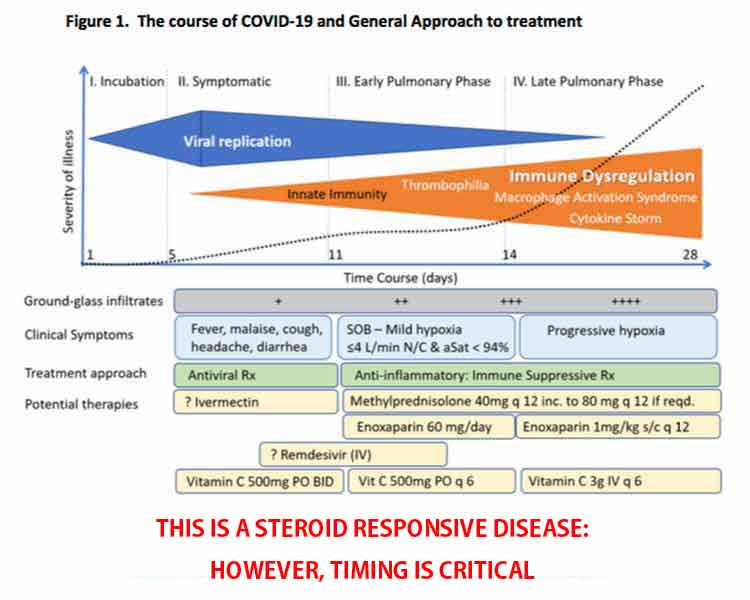
Viral Load Declines as Inflammation Rises
Another important concept explained by Marik in the featured interview is that the inflammatory response rises as the viral load decreases. They do not rise together.
“So, it’s really not the virus that is causing cytopathic effects,” he says. By the time you enter the pulmonary phase of the disease, your viral load has actually significantly decreased, but for some reason the inflammatory response then starts to run amok.
Your oxygen saturation is “the key indicator of pulmonary involvement,” Marik says. Once your oxygen saturation starts to decline, you are entering the early pulmonary phase where inflammation is rapidly increasing.
This is why it’s so important to make sure you’re measuring your oxygen saturation. Do not try to treat at home if your oxygen is dropping. Go to the hospital. Again, early treatment is crucial. Hopefully, your doctor will be willing to implement the MATH+ protocol.
Corticosteroids Are a Crucial Component
In a short essay19 co-written by the entire FLCCC team, they express their conviction that the MATH+ protocol is one of the best, most effective, critical care protocols for COVID-19 to date.
“Months ago, early on in COVID19, the FLCCC created the MATH+ protocol based on our physicians’ insights into COVID19 as a steroid-responsive disease.
This treatment recommendation went against all the major national and international health care societies that had misinterpreted the medical literature, a body of published evidence which, upon careful and deep review, actually supported the use of corticosteroids in prior pandemics …
Thousands of patients who became critically ill with Covid19 and who were suffering from massive inflammation may have been saved if this safe and powerful anti-inflammatory medicine had been provided.”
The essay20 stresses the importance of corticosteroids in the treatment of COVID-19, and cites results from the RECOVERY trial,21,22,23 a large, randomized controlled COVID-19 study by the University of Oxford, that validates their recommendation to use corticosteroids as soon as the patient is hospitalized.
In that study, the corticosteroid dexamethasone improved survival by one-third in ventilated patients and one-fifth in those requiring oxygen. However, the FLCCC believes another type of corticosteroid, methylprednisolone, is a better, more effective, choice.
First, because it reaches higher concentrations in lung tissue, and secondly, because it most closely matches the inflammatory gene activation patterns induced by SARS-CoV-2. They also believe the dexamethasone dose used in the RECOVERY trial was too low, especially for severe cases.
“In the hospitals of two of our FLCCC physicians — each having treated over 100 hospitalized patients with MATH+ often early on in the hospitalization, the hospital mortality rate to date is 7% in one hospital (Dr. Paul Marik, Norfolk, Va.) and less than 1% in the other (Dr. Joseph Varon, Houston, Texas),” the essay states.24
Vitamin C and Quercetin Work Synergistically
June 19, 2020, Marik published the paper,25 “Quercetin and Vitamin C: An Experimental, Synergistic Therapy for the Prevention and Treatment of SARS-CoV-2 Related Disease (COVID-19)” in the journal Frontiers in Immunology, which notes:
“Ascorbic acid is a crucial vitamin necessary for the correct functioning of the immune system. It plays a role in stress response and has shown promising results when administered to the critically ill. Quercetin is a well-known flavonoid whose antiviral properties have been investigated in numerous studies.
There is evidence that vitamin C and quercetin co-administration exerts a synergistic antiviral action due to overlapping antiviral and immunomodulatory properties and the capacity of ascorbate to recycle quercetin, increasing its efficacy.
Safe, cheap interventions which have a sound biological rationale should be prioritized for experimental use in the current context of a global health pandemic.”
The paper presents evidence for the use of vitamin C and quercetin — based on their biological actions and pharmacokinetics profiles — both as prophylaxis in high-risk populations, and as an adjunct to drugs such as Remdesivir or convalescent plasma in the treatment of hospitalized COVID-19 patients.
Post-COVID Syndrome
In the interview, Marik also addresses the issue of “post-COVID syndrome,” which he says is very similar to that of post-sepsis syndrome. In some cases, COVID-19 patients have recovered from the infection, only to die due to pulmonary embolism (blood clots in the lungs) or other organ dysfunction.
Marik suspects this is because the inflammatory response is still overactive. Many sepsis patients will have very high cytokine levels even a year after their recovery. He believes steroids are one key to downregulating the inflammatory response, which would prevent this problem.
A good way to screen for this, Marik says, is to measure CRP, which appear to be a good marker for ongoing inflammation. If CRP is high after recovering from COVID-19, Marik suggests doing a short course of corticosteroids to downregulate the inflammatory response. Aspirin may also be helpful if D-dimer is high. These should be used under medical supervision.
I believe this information needs to be shared far and wide, if we are to prevent more people from dying unnecessarily. More and more, as doctors are starting to speak openly about their clinical findings, we see there are quite a few different ways to tackle this illness without novel antivirals or vaccines, using older, inexpensive and readily available medications and nutrients that are already known to be safe.
- 1 Journal of Virology Sep 2004, 78 (20) 11334-11339, Antiviral activity of an analog of luteolin
- 2 Bioorg Med Chem. 2006 Dec 15;14(24):8295-306
- 3 Maclean’s February 24, 2020
- 4 ACS.org Albert Szent-Gyorgyi’s discovery of vitamin C
- 5, 25 Frontiers in Immunology June 19, 2020 DOI: 10.3389/fimmu.2020.01451
- 6 Journal of Antimicrobial Chemotherapy December 2003; 52(6): 1049-1050
- 7 covid19criticalcare.com
- 8, 10 MATH+ Protocol (PDF)
- 9 COVID-19 Management Protocol (MATH+) (PDF)
- 11 COVID-19 Management Protocol (MATH+) Updated July 9, 2020 (PDF)
- 12, 13 EVMS Critical Care COVID-19 Management Protocol August 1, 2020
- 14 Antiviral Research June 2020; 178: 104787
- 15 EVMS Critical Care COVID-19 Management Protocol June 17, 2020
- 16 FLCCC.net Medical Evidence
- 17, 18 MATH+ Hospital Treatment Protocol for COVID-19 July 14, 2020 (PDF)
- 19, 20, 24 Center for Balanced Health
- 21 Recovery Trial
- 22 BMJ 2020;369:m1626
- 23 Science Translational Medicine June 5, 2020
You Are Likely Deficient in Choline
Reproduced from original article:
https://articles.mercola.com/sites/articles/archive/2022/12/29/choline-deficiency.aspx
The original Mercola article may not remain on the original site, but I will endeavor to keep it on this site as long as I deem it to be appropriate.
Analysis by Dr. Joseph Mercola Fact Checked December 29, 2022

STORY AT-A-GLANCE
- In their 2020 review, the Dietary Guidelines Advisory Committee found that most Americans are deficient in choline
- Choline is important for development through all stages of life and plays a role in cognition, memory, focus, energy and metabolism
- Choline deficiency is connected to the development of nonalcoholic fatty liver disease and muscle damage
- Pregnant and lactating women are at an increased risk of choline deficiency due to increased needs of the developing fetus
- Beef liver and egg yolks are the richest dietary sources of choline
July 15, 2020, the Dietary Guidelines Advisory Committee (DGAC) published its 2020 report, an independent scientific review on the nutrition and health status of Americans, and there was a concerning finding: Most Americans don’t get enough choline, an essential nutrient that’s vitally important, but rarely discussed.
Marie Caudill, Ph.D., a registered dietitian who is internationally recognized for her research on choline and folate, says the most alarming find from the report is that the populations who would benefit the most from extra choline — pregnant and lactating women, infants and children — are falling especially short.
In pregnant women, choline deficiency is associated with an increased risk of neural tube defects. In the general population, getting too little choline can lead to the development of nonalcoholic fatty liver disease and muscle damage.
What Does Choline Do?
Choline is often lumped in with the B vitamins, but it’s not technically a vitamin. It’s more of a vitamin-like nutrient.1 Choline helps support optimal health at all stages of life. It plays a role in healthy fetal development, helps maintain cognition and memory, boosts energy, improves fitness and keeps your liver healthy.
Your brain and nervous system need adequate amounts of choline to help regulate muscle control, mood and memory.2 Choline is also involved in metabolism. Other roles of choline include:
| Promoting healthy fetal development3 — Choline is required for proper neural tube closure,4 brain development and healthy vision.5 Research shows mothers who get sufficient choline impart lifelong memory enhancement to their child due to changes in the development of the hippocampus (memory center) of the child’s brain.6 Choline deficiency also raises your risk of premature birth, low birth weight and preeclampsia. |
|
Helping reduce the risk for cardiovascular disease — According to a study in the journal ARYA Atherosclerosis, choline may help prevent cardiovascular disease by converting homocysteine to methionine.7 Homocysteine is an amino acid that may increase your risk for heart disease and stroke if it accumulates in the blood.8 |
| Aiding the synthesis of phospholipids, the most common of which is phosphatidylcholine, better known as lecithin, which constitutes between 40% and 50% of your cellular membranes and 70% to 95% of the phospholipids in lipoproteins and bile.9 |
| Boosting your nervous system health — Choline is necessary for making acetylcholine, a neurotransmitter involved in healthy muscle, heart and memory performance.10 |
| Strengthening cell messaging, by producing cell-messaging compounds.11 |
| Facilitate fat transport and metabolism — Choline is needed to carry cholesterol from your liver, and a choline deficiency could result in excess fat and cholesterol buildup.12 |
| Modulates DNA synthesis,13 aiding in the process along with other vitamins, such as folate and B12. |
| Improves cognitive performance — Researchers found a relationship between high dietary choline and better cognitive performance in a study involving men and women from the Framingham Offspring population.14 In a group of 1,391 men and women, performance factors were better in those who consumed more choline, adding to evidence your nutrition makes a difference in how your brain ages. |
| Helps manage certain mental disorders — Research shows that low choline intake is associated with increased anxiety levels.15 This nutrient has been used in treating rapid-cycling bipolar disorder, too. A study published in the journal Biological Psychiatry shows that choline supplementation helped reduce the manic and mood symptoms of people with bipolar disorder.16 |
| Influences methylation reactions17 |
| Aids in healthy mitochondrial function18 |
The Problems With Choline Deficiency
If you don’t get enough choline through your diet, it can result in a choline deficiency, which has widespread negative health effects. Because choline is involved in fat metabolism, low levels of the nutrient can result in an overaccumulation of deposits of fat in your liver.19
Eventually, this can lead to nonalcoholic fatty liver disease and nonalcoholic steatohepatitis, which currently affect between 25.5% – 31.5% of the U.S. population.20 Choline deficiency can also lead to liver damage and muscle damage.21
Choline deficiency can be even more worrisome for pregnant women and lactating mothers. Choline is essential for proper brain development of a growing fetus. It also helps maintain proper homocysteine concentrations during pregnancy.22
According to a study published in the American Journal of Epidemiology, there is an increased risk of neural tube birth defects in babies of women who consume less than 300 mg of choline per day when compared to pregnant women who get at least 500 mg daily.23
Because choline will be pulled from the mother’s blood to supply adequate amounts to the fetus, pregnant and lactating women have higher choline needs, yet only 5% get enough, according to one study.24 In addition to pregnant and lactating women, groups at especially high-risk for choline deficiency include:
- Endurance athletes — Endurance exercises, like marathons and triathlons, can deplete choline levels. Studies show that supplementing with choline before these types of stressful exercises can help keep the levels of choline in the blood from getting too low.25,26
- People who drink a lot of alcohol — Excess alcohol consumption can increase your need for more choline while simultaneously increasing your risk of deficiency.27
- Postmenopausal women — Postmenopausal women have lower estrogen concentrations, which can increase the risk of organ dysfunction in response to a low-choline diet.28
- Vegetarians and vegans — Animal foods like beef liver, eggs and krill oil are the highest sources of dietary choline. Because vegetarians and vegans have dietary restrictions that eliminate some or all of these choline-rich foods, it can be more difficult to get an adequate amount of the nutrient through diet alone.29
How Much Choline Do You Need?
Your liver makes some choline, but the amount isn’t enough to keep you healthy and prevent the adverse effects of choline deficiency. That’s why you need to get adequate amounts through your diet.
The amount of choline you need depends on your age, sex and whether or not you’re pregnant or nursing. Here’s a general breakdown from the National Institutes of Health:30
| Age | Male | Female | Pregnant Women | Nursing Women |
|---|---|---|---|---|
| 0 to 6 months | 125 mg/day | 125 mg/day | ||
| 7 to 12 months | 150 mg/day | 150 mg/day | ||
| 1 to 3 years | 200 mg/day | 200 mg/day | ||
| 4 to 8 years | 250 mg/day | 250 mg/day | ||
| 9 to 13 years | 375 mg/day | 375 mg/day | ||
| 14 to 18 years | 550 mg/day | 400 mg/day | 450 mg/day | 550 mg/day |
| 19 years and older | 550 mg/day | 425 mg/day | 450 mg/day | 550 mg/day |
Keep in mind, however, that some people have genetic polymorphisms that increase the need for choline and certain ethnic and racial groups are more likely to be affected.31 According to Chris Masterjohn, who has a Ph.D. in nutritional science, eating a diet that’s high in (otherwise healthy) saturated fats can also increase your need for choline.32
How to Get More Choline
Grass fed beef liver is the richest dietary source of choline, with 430 mg of choline per 100-gram cooked serving.33 But liver isn’t as much a staple on American plates as the second highest source of choline — eggs. One single egg, which weighs around 50 grams, contains 169 mg of choline.34
Here’s the catch, though: Most of that choline, or 139 mg, is found in the yolk.35 Egg yolks are also rich in lecithin, a fatty acid that’s a precursor for choline. That means if you’re still following the outdated and totally misguided advice to eat only the egg whites, you’re missing out on a lot of the egg’s nutrition.
Krill oil, which comes from krill, a crustacean mainly eaten by whales, penguins and other aquatic creatures, is also a rich source of choline. A 2011 study published in the journal Lipids found 69 choline-containing phospholipids in krill oil.36
Of those phospholipids, 60 were phosphatidylcholine substances, which protect against liver disease (including hepatitis and cirrhosis in alcoholics), reduce digestive tract inflammation and lessen symptoms associated with inflammatory conditions such as ulcerative colitis and irritable bowel syndrome.37 Other dietary sources of choline include:38
| Grass fed beef liver | Organic pasture raised chicken |
| Atlantic cod | Alaskan salmon |
| Kidney beans | Quinoa |
| Brussels sprouts | Broccoli |
| Shitake mushroom | Cauliflower |
According to the DGAC, most multi-vitamin supplements don’t contain sufficient amounts of choline. You can find supplements that contain only choline, but it’s always best to try to get what you need through a healthy diet.
- 1, 19 Oregon State University Linus Pauling Institute
- 2 National Institutes of Health Office of Dietary Supplements. December 6, 2019
- 3 Nutr Today. 2007; 42(4): 181–186
- 4, 23 Am J Epidemiol. 2004;160(2):102-9
- 5 Am J Epidemiol. 2013;177(12):1338-47
- 6 J Am Coll Nutr. 2004;23(6 Suppl):621S-626S
- 7 ARYA Atheroscler. 2011;7(2):78-86
- 8 JAMA. 2002;288(16):2015-22
- 9, 10, 17, 18 Curr Opin Clin Nutr Metab Care. 2013;16(3):339-45
- 11 Cell Reports January 8, 2019
- 12 J Biol Chem. 2002;277(44):42358-65
- 13 Cent Nerv Syst Agents Med Chem. 2012;12(2):82-94
- 14 Am J Clin Nutr. 2011;94(6):1584-91
- 15 Am J Clin Nutr. 2009;90(4):1056-60
- 16 Biol Psychiatry. 1996;40(5):382-8
- 20 National Institute of Diabetes and Digestive and Kidney Diseases
- 21, 38 National Institutes of Health Office of Dietary Supplements
- 22 Annu Rev Nutr. 2006;26:229-50
- 24 Public Health Nutr. 2014;17(9):1960-70
- 25 Eur J Appl Physiol Occup Physiol. 1993;67(1):87-91
- 26 J Am Coll Nutr. 2000;19(6):768-70
- 27 J Exp Med. 1954;100(6):615-27
- 28 Am J Clin Nutr. 2010;92(5):1113-9
- 29 BMJ NPH. 2019;0:1-4
- 30 National Institutes of Health Office of Dietary Supplements. Choline
- 31 FASEB J. 2014;28(7):2970-8
- 32 Chris Masterjohn PhD. November 23, 2010
- 33 USDA. January 2008
- 34 USDA FoodData Central. December 16, 2019
- 35 USDA FoodData Central. April 1, 2019
- 36 Lipids. 2011;46(1):25-36
- 37 Science Direct 2008
3 Top Micronutrients for Cardiovascular Health
Reproduced from original article:
https://articles.mercola.com/sites/articles/archive/2022/12/28/top-micronutrients-for-heart-health.aspx
The original Mercola article may not remain on the original site, but I will endeavor to keep it on this site as long as I deem it to be appropriate.
Analysis by Dr. Joseph Mercola Fact Checked December 28, 2022
STORY AT-A-GLANCE
- Brown University researchers conducted a study to determine which micronutrients are best for your heart
- They unveiled an up-to-date evidence-based map that quantifies the impact of micronutrients on cardiovascular outcomes
- Out of 27 micronutrients, three — omega-3 fats, folate and coenzyme Q10 (CoQ10) — came out on top
- Omega-3 fats decreased mortality from cardiovascular disease, while also reducing heart attacks and coronary heart disease events
- Folic acid, the synthetic version of folate, or vitamin B9, reduced stroke risk, while CoQ10 decreased all-cause mortality events
- Most, but not all, of the micronutrients studied showed “moderate- to high-quality evidence” of reducing risk factors for cardiovascular disease
Heart disease is the No. 1 cause of death in the U.S., killing one person every 34 seconds.1 Your diet plays a prominent role in your heart health, but the role of individual micronutrients continues to be debated. Brown University researchers conducted a study to determine which micronutrients are best for your heart.2
They unveiled an up-to-date evidence-based map that quantifies the impact of micronutrients on cardiovascular outcomes. Out of 27 micronutrients, three — omega-3 fats, folate and coenzyme Q10 (CoQ10) — came out on top.
Micronutrients Benefit Cardiometabolic Health
Micronutrients are vitamins and minerals that your body needs to function optimally. Deficiencies in micronutrients can lead to a range of acute and chronic conditions. In terms of heart health, Brown University researchers conducted a systematic review and meta-analysis involving 884 trials. The study, published in the Journal of the American College of Cardiology, evaluated 27 types of micronutrients used by 883,627 participants.3
“For the first time, we developed a comprehensive, evidence-based integrative map to characterize and quantify micronutrient supplements’ potential effects on cardiometabolic outcomes,” study author Dr. Simin Liu, professor of epidemiology and medicine at Brown University, said in a news release. “Our study highlights the importance of micronutrient diversity and the balance of health benefits and risks.”4
Most, but not all, of the micronutrients showed “moderate- to high-quality evidence” of reducing risk factors for cardiovascular disease. Those that were beneficial included:5
| Folic acid (folate) | Vitamin D | Magnesium | Zinc |
| Alpha-lipoic acid | Coenzyme Q10 | Melatonin | Catechin |
| Curcumin | Flavanol | Genistein | Quercetin |
The study was unique in that it took a comprehensive look at micronutrient supplementation, including phytochemicals and antioxidants. Liu explained:6
“Research on micronutrient supplementation has mainly focused on the health effects of a single or a few vitamins and minerals. We decided to take a comprehensive and systematic approach to evaluate all the publicly available and accessible studies reporting all micronutrients, including phytochemicals and antioxidant supplements and their effects on cardiovascular risk factors as well as multiple cardiovascular diseases.”
3 Micronutrients to Support Heart Health
While beta carotene supplementation increased all-cause mortality, omega-3 fats, folate and CoQ10 were highly protective. Here are more details about how these important micronutrients affect your heart health.
- Omega-3s — The study found omega-3 fats decreased mortality from cardiovascular disease, while also reducing heart attacks and coronary heart disease events.7 This mirrors previous studies, which have also found beneficial effects of omega-3s on heart health. Omega-3 fats derived from krill oil, for instance, have been found to reduce triglyceride levels and help reduce cardiovascular risk.8
Further, people with Type 2 diabetes who used omega-3 supplements had a lower incidence of hospitalization with heart failure — a form of heart disease in which the heart experiences ventricular dysfunction — in another study.9
An omega-3 index test is one of the most important annual health screens that everyone needs, and it’s a more important predictor of your heart disease risk than your cholesterol levels. Even research supported by the National Institutes of Health suggests an omega-3 test is a good predictor of overall health and all-cause mortality.10,11
That study measured the omega-3 index in 2,500 participants and found those with the highest omega-3 index had lower risks of heart problems and lower total mortality. The omega-3 index measures of the amount of eicosapentaenoic acid (EPA) and docosahexaenoic acid (DHA) in the membranes of your red blood cells (RBC). Your index is expressed as a percent of your total RBC fatty acids.
The omega-3 index has been validated as a stable, long-term marker of your omega-3 status, and it reflects your tissue levels of EPA and DHA. An omega-3 index over 8% is associated with the lowest risk of death from heart disease, while an index below 4% places you at the highest risk of heart disease-related mortality.
The ideal sources for EPA and DHA include cold-water fatty fish, like wild-caught Alaskan salmon, sardines, herring and anchovies. If you do not eat these fish on a regular basis, consider taking a krill oil supplement.
In addition, be aware that your omega-6 to omega-3 ratio should be about 1-to-1 or possibly up to 4-to-1, but most Americans consume far too many omega-6 fats and not enough omega-3. For optimal heart health, in addition to increasing your omega-3, it’s important to cut down on industrially processed seeds oils, often referred to as “vegetable oils,” found in most processed foods.
2. Folate — The Journal of the American College of Cardiology study revealed that folic acid reduced stroke risk.12 Folic acid is the synthetic version of folate, or vitamin B9, and it’s the most important dietary determinant of homocysteine. Elevated levels of homocysteine (Hcy) are a risk factor for coronary artery disease and are found in most patients with vascular disease.13 According to a literature review published in Advances in Therapy:14
“Several mechanisms have been proposed for Hcy’s pathogenesis related to vascular disease. Hcy can cause endothelial injury, dysfunction of DNA, proliferation of smooth muscle cells, oxidative stress, decreased function of glutathione peroxidase, impaired nitric oxide synthase, and inflammation.”
Evidence suggests that daily folic acid supplementation lowers homocysteine levels. “In fact, it has been shown that folic acid supplementation of 0.5 to 5.0 mg can lower Hcy levels by 25% and, thus, may decrease the risk of cardiovascular disease … Given that folic acid is cheap and effective, this should be a viable option for patients with high-risk for cardiovascular adverse events,” the researchers explained.15
In an animal study, folic acid was also found to prevent age-related structure changes and dysfunction of the heart that may lead to heart failure.16 It reduced cellular senescence, a hallmark of aging. The best way to increase your levels of this important micronutrient is to eat foods rich in natural folate, such as asparagus, avocados, Brussels sprouts, broccoli and spinach.
3. CoQ10 — CoQ10 decreased all-cause mortality events, according to the Journal of the American College of Cardiology study.17 Ubiquinol — the reduced, electron-rich form of CoQ10 that your body produces naturally — plays an important role in the electron transport chain of your mitochondria, where it facilitates the conversion of energy substrates and oxygen into the biological energy (adenosine triphosphate, or ATP) needed by your cells for life, repair and regeneration.
It’s a fat-soluble antioxidant, meaning it works in the fat portions of your body, such as your cell membranes, where it mops up potentially harmful byproducts of metabolism known as reactive oxygen species (ROS). As such, ubiquinol and CoQ10 supplements help protect your mitochondrial membranes from oxidative damage.
Many conditions, including heart disease, appear to be rooted in mitochondrial dysfunction.18 CoQ10 is used by every cell in your body, but especially your heart cells. Cardiac muscle cells have about 5,000 mitochondria per cell.19 For further comparison, mitochondria make up about 35% of the volume of cardiac tissue and only 3% to 8% of the volume of skeletal muscle tissue.20
In other research, CoQ10 has been found to help improve atrial fibrillation (AFib).21 AFib is an abnormal, often rapid, heart rhythm that occurs when the atria, your heart’s upper chambers, beat out of sync with the ventricles, the heart’s lower chambers. It’s a common symptom in those with heart failure or heart disease. In addition, CoQ10 influences several other aspects of heart health, including:
- High blood pressure — CoQ10 acts directly on your endothelium, dilating your blood vessels and lowering blood pressure.22,23 CoQ10 also decreases aldosterone, a hormone that makes you retain salt and water.24,25 When aldosterone goes down, excess salt and water are excreted through your kidneys, often causing your blood pressure to go down.
- Systemic inflammation — Supplementing with 60 milligrams (mg) to 500 mg of CoQ10 for eight to 12 weeks can significantly reduce tumor necrosis factor alpha (TNF-α), IL-6 and C-reactive protein (CRP);26,27 three measures of widespread inflammation.
- Stroke — Systemic inflammation, oxidative stress and nerve cell damage play a role in the development of stroke. Research suggests supplementing with CoQ10 can reduce ischemic lesions and improve outcomes in patients who have been treated with a statin drug after having a stroke (statins reduce CoQ10 levels in your body).28
Your body can naturally make CoQ10, but genetic alterations in metabolism, poor diet, oxidative stress, chronic conditions and aging can all interfere with CoQ10 production and lead to CoQ10 deficiency. Statin drugs can also deplete CoQ10.
Ubiquinol production ramps up from early childhood until your mid- to late 20s. By the time you hit 30, it begins to decline.29 Young people are able to use CoQ10 supplements quite well, but older people do better with ubiquinol, as it’s more readily absorbed.
A Personalized Approach Is Best
There’s no one-size-fits-all approach when it comes to supporting your heart health. Indeed, the featured study researchers noted that “an optimal nutritional strategy to promote cardiometabolic health will likely involve personalized combinations of these nutrients.”30
However, healthy diet, exercise, stress reduction and heart-based connections — i.e., strong and positive relationships — are key to heart and overall health. As mentioned, I also believe an omega-3 index test is one of the most important annual health screenings you can receive.
GrassrootsHealth makes testing easy through its D*Action+Omega-3 consumer-sponsored research project.31 You can find the GrassrootsHealth omega-3 index test kit on the GrassrootsHealth website.32
- 1 U.S. CDC, Heart Disease Facts
- 2, 3, 5, 12, 17 Journal of the American College of Cardiology December 13, 2022, Volume 80, Issue 24, Pages 2269-2285
- 4, 6 Science Daily December 5, 2022
- 7 Journal of the American College of Cardiology December 13, 2022, Volume 80, Issue 24, Pages 2269-2285, Results
- 8 Journal of the American Medical Association, 2022; 5(1)
- 9 JACC: Heart Failure, 2022;10(4)
- 10 Journal of Clinical Lipidology, 2018;12(3):718
- 11 EurekAlert! March 15, 2018
- 13 Adv Ther. 2020; 37(10): 4149–4164., Intro
- 14, 15 Adv Ther. 2020; 37(10): 4149–4164
- 16 Life Sci. 2021 Jan 1;264:118718. doi: 10.1016/j.lfs.2020.118718. Epub 2020 Nov 5
- 18 Integr Med (Encinitas). 2014;13(4):35-43
- 19 PeerJ. 2018;6:e4790
- 20 Am J Physiol Heart Circ Physiol. 2014;307(3):H346-52
- 21 J Investig Med. 2015;63(5):735-9
- 22 Molecular Aspects of Medicine. 1994;15(1):s257-s263
- 23 Circ Res. 1989;65(1):1-21
- 24 Am J Physiol. 1965;208:1275-80
- 25 Molecular Aspects of Medicine. 1994;15(1):s265-s272
- 26 Pharmacol Res. 2017;119:128-136
- 27 Pharmacol Res. 2019;148:104290
- 28 Nutr Neurosci. 2019;22(4):264-272
- 29 Biofactors 1999, 371-378, page 372
- 30 Journal of the American College of Cardiology December 13, 2022, Volume 80, Issue 24, Pages 2269-2285, Discussion
- 31 GrassrootsHealth D*Action+Omega-3 Project
- 32 GrassrootsHealth Tests
Krill Oil Offers Protection for Several Hallmarks of Aging
Reproduced from original article:
https://articles.mercola.com/sites/articles/archive/2022/12/26/krill-oil-aging.aspx
The original Mercola article may not remain on the original site, but I will endeavor to keep it on this site as long as I deem it to be appropriate.
Analysis by Dr. Joseph Mercola Fact Checked December 26, 2022

STORY AT-A-GLANCE
- Omega-3 fats help lower inflammation, which is the hallmark of nearly all diseases; new data using krill oil show it works through several mechanisms to mitigate the physical and biological hallmarks of aging
- Marine-based omega-3 fats effectively reduce triglyceride levels, which are associated with heart disease. Levels of omega-3 are a good predictor of all-cause mortality and omega-3 helps ameliorate a variety of psychiatric illnesses and degenerative brain disorders
- If you notice that your skin is rough and dry, you likely need more omega-3 fatty acids, which help regulate oil production in the skin, reduce inflammation, balance hydration and minimize the effect of sun damage and aging
- Avoid the temptation to assume your omega-3 index is sufficient because you’re eating fish or taking a supplement. Instead, take a simple omega-3 index blood test at home and use the information to determine the dose needed to raise your level to your target
Chronic inflammation is a hallmark of virtually all diseases, including cancer, obesity and heart disease. Your diet plays a significant if not primary role in a chain of events that lead to chronic inflammation. Your body requires certain nutrients to help balance the inflammatory response and maintain optimal health.
Inflammation also plays a role in aging. A research paper1 published in November 2022 evaluated evidence that lipids from Antarctic krill could intervene in the basic aging mechanism and therefore enhance healthy longevity. Krill oil contains omega-3 fatty acids, which your body needs to balance your intake of omega-6 fats.
Antarctic krill is rich in long-chain omega-3 fatty acids, choline and astaxanthin. The human diet once had an omega-3 to omega-6 ratio of 1-to-1. Today that ratio is closer to 20-to-1 or even higher.2 Data show this imbalance parallels the increase in overweight and obesity and suggests it is a major contributor to systemic inflammation.
Both omega-3 and omega-6 fatty acids are essential for good health. However, unlike omega-6 fatty acids that are found in high amounts throughout the Western diet, most people do not eat enough omega-3 fats. It is important to note that an omega-3 supplement may help, but it can never overcome a diet high in vegetable oils and processed foods, which contain significant amounts of omega-6 fats.
To attain optimal health, you must reduce your intake of foods high in omega-6 while increasing your intake of omega-3 fats. While aging is a biological process, the featured study3 found that krill oil can promote healthy aging through several mechanisms that mitigate the physical and biological hallmarks of aging.
Krill Oil Rewires Genetic Expression to Attenuate Aging
The researchers analyzed how krill oil could affect aging by targeting the evaluation of several hallmarks affected by krill oil rather than just one. Although many researchers have studied marine-based omega-3 fats, the underlying molecular mechanisms have not been fully understood.
In this study4 the researchers used human cells and C. elegans, a 1-millimeter-long nematode that lives in the soil. Using a model of Parkinson’s disease in the nematode, they showed that krill oil protects dopaminergic neurons from degeneration, improves dopamine-dependent behavior and decreases alpha-synuclein aggregation, which is a process found in neurodegenerative diseases such as Parkinson’s disease and dementia.5
These neuroprotective qualities have the effect of slowing down the visible hallmarks of aging. Loss of viability and increasing fragility associated with aging also may affect the onset of many major diseases. Evidence from the study suggests that interfering with this process could prolong a healthy life.
However, the researchers also acknowledge that many cellular processes are involved in aging and while this study showed krill oil as an antiaging supplement could attenuate many of the hallmarks, it is not the only nutrient you need to maintain your health as you age. The way you get your omega-3 fatty acids is also important.
Krill oil is high in long chain omega-3 acids eicosapentaenoic acid (EPA) and docosahexaenoic acid (DHA). One difference between fish oil and marine-based krill oil is that fish oil is only bound to triglycerides and krill oil is mainly bound to more bioavailable phospholipids.
DHA and EPA are water-insoluble, which means they cannot be transported in their free form in the blood and must be packaged into a lipoprotein such as phospholipids. This is the primary reason why the bioavailability of krill oil is higher than fish oil.
Marine Omega-3 for Cardiovascular and Neurological Health
The featured study sought to evaluate the effect krill oil had on aging hallmarks, but studies have also found that supplementation can affect the skin, tumor growth, cytokine storm and the neurological and cardiovascular systems. Heart disease is the primary cause of death for men and women in the U.S.6
Research published in January 2022,7 analyzed data from two randomized clinical trials and found omega-3 fatty acids derived from krill oil could reduce triglyceride levels effectively and were safe and well tolerated by the participants. While triglyceride levels are a necessary fat, in excess they can increase your risk for heart disease.8
Another study9 supported by the National Institutes of Health10 suggested that the omega-3 index may be a good predictor of overall health and all-cause mortality.11 This index is a measure of the amount of EPA and DHA in the membranes of your red blood cells and is expressed as a percent of your total RBC fatty acids.12
The index has been validated as a stable, long-term marker and reflects your tissue levels of EPA and DHA. An index greater than 8% is associated with the lowest risk of death from heart disease while an index below 4% places you at the highest risk of heart disease-related mortality.
Two papers analyzed the use of omega-3 after an ischemic stroke in an animal model and found neurological benefits with the administration of omega-3 fatty acids that helped improve brain cell survival and brain remodeling,13 which benefited the restoration of white matter and microglial responses,14 all of which improved long-term functioning.
Evidence also shows that marine-based omega-3 fats help ameliorate a variety of psychiatric illnesses and degenerative brain disorders, including Alzheimer’s disease.15 Low levels of DHA are linked to age-related cognitive decline, which some studies16 suggest may potentially be reversible with sufficient administration of DHA.
EPA may be beneficial in the treatment of depression.17 A stumbling block has been getting enough into the brain. One 2019 paper18 discovered that by using a lysophospholipid form of EPA they could significantly raise the EPA level in the brain of mice and increase levels of DHA in the brain, which researchers suggested may help in the treatment of neuroinflammatory diseases such as Alzheimer’s disease.
Omega-3 Fats Promote Skin Health
If you notice that your skin is rough and dry, you likely need more omega-3 fatty acids, which helps to regulate oil production in the skin, reduce inflammation, balance hydration and minimize the effect of sun damage and aging. As I’ve discussed in the past, many American diets have an overabundance of omega-6 linoleic acid (LA) which, like omega-3, is integrated into your cell membranes.
However, unlike omega-3, LA impairs your cell function and increases your risk of sunburn. To protect your skin and your overall health, you will want to eliminate as much LA from the diet as possible, while increasing your omega-3 intake.
You can accomplish this by avoiding all seed oils. These are found in most processed foods, restaurant foods, condiments and pastries. Conventionally raised chicken and pork are also high in LA since the animals are fed grain which is incorporated into the meat. Instead, cook at home with butter, ghee, beef tallow or coconut oil.
You can raise your levels of omega-3 fats by eating wild-caught Alaskan salmon, verified wild-caught sockeye salmon, sardines, mackerel, anchovies and herring. Canned Alaskan salmon is a less expensive alternative than salmon steaks. As a general recommendation, try to get two servings of fatty fish each week. Be sure to avoid farm-raised salmon since it is highly contaminated and has 5.5 times the amount of LA as wild-caught salmon.19,20
Combination Therapy Could Reduce Tumor Growth by 67%
Research21 presented in April 2022 at the annual Experimental Biology meeting in Philadelphia demonstrated that omega-3 fatty acids could help to promote cancer-fighting activities of immunotherapy and anti-inflammatory therapy in an animal model. Immunotherapy is a biological treatment that prompts the immune system to attack cancer cells.22
The research sought to determine the impact of nutrition on tumor activity after treatment with immunotherapy and anti-inflammatory therapy.23 At the time of the study, immunotherapy was approved for use in the treatment of cancer, but anti-inflammatory therapy was still under clinical investigation.
The evidence showed that mice consuming a diet high in omega-3 fats and receiving both cancer treatments had a 67% reduction in tumor growth when compared to the group of mice eating a normal diet and receiving no treatment. By comparison, cancer cell growth increased in the mice who ate the high omega-6 diet and were given immunotherapy.
The researchers believe the results indicated there could be synergistic activity between omega-3 fatty acids and immunotherapy and anti-inflammatory therapy for cancer. Abigail Kelly from Harvard Medical School Beth Israel Deaconess Medical Center presented the research and commented on the results in a press release:24
“We demonstrated, for the first time, that the combination of immunotherapy and anti-inflammatory treatment (sEHi) was more effective when mice were fed diets enriched with omega-3 fatty acids. This is very promising because dietary supplementation is easy to implement for cancer patients and can be added for patients already on immunotherapy.”
Omega-3 Could Directly Influence Cytokine Storm
One of the lethal effects of the SARS-CoV-2 virus that causes COVID-19 is the ability to trigger a cytokine storm. One of the ways to suppress this event is with omega-3 fats DHA and EPA. An opinion paper published in June 2020,25 in the journal Frontiers in Physiology, expounded on the known effects these fats have on biological pathways that “may have direct influence in the outcome of COVID-19.”26
Although not mentioned in this paper, DHA has also been known to prevent thrombosis (a blood clot within a blood vessel) by decreasing platelet aggregation.27 Evidence also shows that hypercoagulation is another complication of severe COVID-19 infection that can have lethal consequences.28 Omega-3 is also known to:
- Lower your risk of lung dysfunction
- Protect against lung damage
- Protect against secondary bacterial infection
- Improve mitochondrial function
How to Test and Know Your Level
Avoid the temptation to assume your omega-3 index is sufficient because you’re eating fish or taking a supplement. Only cold-water fatty fish have high omega-3 levels, and many fish oil supplements are synthetic with questionable efficacy.
GrassrootsHealth, a nonprofit public health research organization, has several cost-effective testing options available as part of its consumer-sponsored nutrient research projects,29 the aims of which are to establish population-based nutrition recommendations based on science-backed data. There are four test options to measure omega-3:
- Omega-3 index test kit
- Vitamin D and Omega-3 test kit
- Vitamin D, Magnesium and Omega 3 test kit
- Vitamin D, Magnesium and Omega 3 PLUS Elements test kit — This kit includes measurements of essential minerals (magnesium, selenium, zinc and copper) as well as harmful heavy metals (cadmium, lead and mercury)
Your blood sample is mailed to GrassrootsHealth and you fill out a quick online health questionnaire. Your test results will be emailed to you roughly 10 to 20 days after your samples are received.
Based on your index result, use GrassrootsHealth’s omega-3 index calculator30 to determine the dosage you may require to raise your current level to your chosen target level.
- 1, 3 Aging, 2022;14(21)
- 2 Nutrients, 2016;8(3)
- 4 Neuroscience News, November 23, 2022
- 5 Communications Biology, 2019 2;2(374)
- 6 Centers for Disease Control and Prevention, Heart Disease Facts
- 7 Journal of the American Medical Association, 2022;5(1)
- 8 Live Science, March 24, 2016
- 9 Journal of Clinical Lipidology, 2018;12(3):718
- 10 EurekAlert! March 15, 2018
- 11 Nature Communications, 21;12(2329)
- 12 Omega Quant, July 9, 2018
- 13 Neurobiology of Disease, 2019;126
- 14 Translational Stroke Research, 2016;7(6)
- 15 Current Clinical Pharmacology, 2018;13(4)
- 16 Alzheimer’s and Dementia 2010 Nov;6(6)
- 17 British Journal of Psychiatry 2016;2009
- 18 Journal of Lipid Research, 2019;60(3)
- 19 Nutrition Data Wild Atlantic Salmon
- 20 Nutrition Data Farmed Atlantic Salmon
- 21, 23, 24 NewsWise, March 25, 2022
- 22 National Cancer Institute, Immunotherapy to Treat Cancer
- 25, 26 Frontiers in Physiology, June 19, 2020 DOI: 10.3389/fphys.2020.00752
- 27 American Journal of Physiology Cell Physiology, 2013;304(3)
- 28 Thrombosis Research, 2020;194
- 29 GrassrootsHealth Research Projects
- 30 Omega-3 index calculator
Vitamin D Could Help Extend Your Life
Reproduced from original article:
https://articles.mercola.com/sites/articles/archive/2022/12/19/vitamin-d-could-help-extend-your-life.aspx
The original Mercola article may not remain on the original site, but I will endeavor to keep it on this site as long as I deem it to be appropriate.
Analysis by Dr. Joseph Mercola Fact Checked December 19, 2022

STORY AT-A-GLANCE
- People genetically predisposed to vitamin D deficiency are 25% more likely to die from any cause compared to those with different genetics conducive to healthy vitamin D levels
- Researchers with the University of South Australia also revealed that vitamin D deficiency increases the risk of chronic diseases like heart disease, respiratory diseases and cancer
- The more severe the vitamin D deficiency, the greater the risk of mortality became
- For the study, low levels of vitamin D were defined as less than 10 ng/ml (25 nmol/L), which is a severe deficiency state; higher levels of 60 to 80 ng/ml are likely necessary for optimal health and longevity benefits
- Strive to get your vitamin D from healthy sun exposure; higher levels of vitamin D may serve as a marker for sun exposure, which in turn may be responsible for many of the beneficial health effects attributed to vitamin D
What are your vitamin D levels? If you’re not sure, getting tested — and then optimizing your levels — could help you live longer. While low vitamin D levels have long been associated with increased risk of death, data on severely deficient individuals are lacking.
Now, it’s been shown that people genetically predisposed to vitamin D deficiency were 25% more likely to die from any cause compared to those with different genetics conducive to healthy vitamin D levels.1
The data came from researchers with the Australian Center for Precision Health at the University of South Australia, who also revealed that vitamin D deficiency driven by genetics increases the risk of chronic diseases like heart disease, respiratory diseases and cancer.2
Too Little Vitamin D Increases Risk of Death, Cancer
To find out vitamin D deficiency’s role in mortality, researchers used data from 307,600 people included in the U.K. Biobank, a cohort from England, Scotland and Wales containing data about genetics and health. Study author Josh Sutherland explained in a news release:3
“Vitamin D deficiency has been connected with mortality, but as clinical trials have often failed to recruit people with low vitamin D levels — or have been prohibited from including vitamin deficient participants — it’s been challenging to establish causal relationships …
We used a new genetic method to explore and affirm the non-linear relationships that we’ve seen in observational settings, and through this we’ve been able give strong evidence for the connection between low vitamin D status and premature death.”
In addition to increasing risk of all-cause mortality by 25%, people genetically predisposed to vitamin D deficiency also had a:4
- 25% greater risk of dying from a heart-related illness
- 16% greater risk of dying from cancer
- 96% greater risk of dying from a lung-related illness
Further, the more severe the vitamin D deficiency, the greater the risk of mortality became.5 It should be noted that low levels of vitamin D were defined as less than 10 ng/ml (25 nmol/L), which is a severe deficiency state. I would consider 20 ng/ml as a bare minimum level for health.
“While severe vitamin D deficiency is rarer in Australia than elsewhere in the world, it can still affect those who have health vulnerabilities, the elderly, and those who do not acquire enough vitamin D from healthy sun exposure and dietary sources,” Sutherland said. “Our study provides strong evidence for the connection between low levels of vitamin D and mortality, and this is the first study of its kind to also include respiratory disease related mortality as an outcome.”6
Optimize Vitamin D to Lower Cancer, Disease Risk
Optimizing your vitamin D level is one strategy that can boost your health in myriad ways. A deficiency in vitamin D has been implicated in such problems as multiple sclerosis7 and Parkinson’s disease,8 for instance. The link between Parkinson’s and vitamin D is so strong that one study found people with high vitamin D levels had a 65% lower risk of Parkinson’s compared to those with low vitamin D levels.9
Vitamin D also significantly reduces oxidative stress in your vascular system, which can prevent the development of heart disease.10 And, based on data from 191,779 American patients, people with a vitamin D level of at least 55 ng/mL (138 nmol/L) had a significantly lower SARS-CoV-2 positivity rate compared to those with a level below 20 ng/mL (50 nmol/L).11 In addition, optimizing your vitamin D levels is one of the absolute best strategies to slash your cancer risk.
Previous research found that a vitamin D level of 47 ng/ml was associated with a 50% lower risk of breast cancer.12 Further, researchers at University of California, San Diego School of Medicine reported that raising your vitamin D level to at least 40 ng/ml can slash your risk of all invasive cancers by 67%.13
Another analysis — this one conducted by GrassrootsHealth and published June 2018 in PLOS ONE — showed women with a vitamin D level at or above 60 ng/ml (150 nmol/L) had an 82% lower risk of breast cancer compared to those with levels below 20 ng/ml (50 nmol/L).14
An earlier study, which looked at women in the U.K., found having a vitamin D level above 60 ng/mL resulted in an 83% lower breast cancer risk.15,16 As for how vitamin D fights cancer, GrassrootsHealth explained:17
“Vitamin D may play a number of roles in the prevention of breast cancer development and progression.
The biologically active form of vitamin D, 1,25(OH)2D3, binds to the vitamin D receptor (VDR) in normal breast epithelium and this complex regulates the cell cycle, promotes differentiation, increases cell-to-cell adhesion, protects cells from DNA damage, regulates cytokines, activates immune cells, and suppresses inflammation, all of which may act to reduce malignant transformations.
In breast cancer cells, this complex also activates apoptosis and other mechanisms to suppress tumor growth.”
Vitamin D Deficiency Leads to Dementia
In another study utilizing data from the U.K. Biobank, University of South Australia researchers revealed that vitamin D deficiency may lead to dementia.18 Those who were deficient had an increased risk of dementia and stroke, with the strongest association found for people with vitamin D levels below 10 ng/ml (25 nmol/L).19
Low vitamin D levels were also associated with lower brain volumes, and genetic analyses suggested there’s a causal relationship between vitamin D deficiency and dementia. Further, the researchers found that up to 17% of dementia cases in some populations may be prevented if people raised their vitamin D levels to 20 ng/ml (50 nmol/L).20 Study author Professor Elina Hyppönen explained:21
“Vitamin D is a hormone precursor that is increasingly recognized for widespread effects, including on brain health, but until now it has been very difficult to examine what would happen if we were able to prevent vitamin D deficiency.
… Dementia is a progressive and debilitating disease that can devastate individuals and families alike. If we’re able to change this reality through ensuring that none of us is severely vitamin D deficient, it would also have further benefits and we could change the health and wellbeing for thousands.”
In a separate six-year study that followed 1,658 people, vitamin D deficiency was also associated with a substantially increased risk of dementia, including Alzheimer’s disease.22 In fact, people who were severely deficient in vitamin D had a 125% increased risk of developing dementia, whereas those who were moderately deficient were at a 53% greater risk.
For Alzheimer’s disease specifically, being severely vitamin D deficient was linked to a 122% increased risk compared to a 69% increase for those who were moderately deficient.23 In addition:
- Higher intake of dietary vitamin D was associated with a lower risk of developing Alzheimer’s disease among older women24
- Among the elderly (including the “oldest-old”) in China, low vitamin D levels were associated with increased risk of cognitive decline and impairment25
- Low vitamin D levels among older women in the U.S. were associated with a higher risk of cognitive impairment and decline26
What Are Optimal Vitamin D Levels?
I’ve long recommended a vitamin D level of 60 to 80 ng/ml (150-200 nmol/L) for optimal health and disease prevention. A level upward of 100 ng/mL also appears safe and beneficial for certain conditions, especially cancer.
Remember that the only way to determine how much sun exposure is enough and/or how much vitamin D3 you need to take is to measure your vitamin D level, ideally twice a year. The D*Action Project by GrassrootsHealth is a cost-effective way to do this, while simultaneously progressing valuable research.
To participate, simply purchase a D*Action Measurement Kit and follow the registration instructions included. When supplementing, also remember to take synergistic effects with other nutrients into account. If you take high-dose vitamin D, you may also need to increase your intake of:
- Magnesium
- Vitamin K2
- Calcium
These four nutrients — vitamins D and K2, calcium and magnesium — all work in tandem and rely on sufficient amounts of each to work optimally. Once you’ve confirmed your vitamin D levels via testing, remember to retest in three to four months to make sure you’ve reached your target level.
If you have, then you know you’re taking the correct dosage and/or getting the right amount of sun exposure. If you’re still low (or have reached a level above 80 ng/ml), you’ll need to adjust your dosage accordingly and retest again in another three to four months.
Is Vitamin D a Marker for Sun Exposure?
I strongly recommend getting your vitamin D from proper sun exposure if at all possible. This is because not only will adequate sun exposure naturally raise your vitamin D levels to healthy levels, but it will provide numerous other benefits, many of which are only beginning to be understood.
It’s quite possible that having higher levels of vitamin D serves as a marker for healthy sun exposure, which in turn may be responsible for many of the beneficial health effects attributed to vitamin D — including increased longevity and lower cancer risk.
Many people are not aware that only 5% of your body’s melatonin — a potent anticancer agent — is produced in your pineal gland. The other 95% is produced inside your mitochondria — provided you get proper sun exposure. So vitamin D is more than likely a biomarker or surrogate for sun exposure, which is intricately involved in melatonin production.27
During the day, if you get enough sun exposure, near-infrared rays from the sun penetrate deep into your body and activate cytochrome c oxidase, which in turn stimulates the production of melatonin inside your mitochondria. Your mitochondria produce ATP, the energy currency of your body. A byproduct of this ATP production is the creation of reactive oxidative species (ROS), which are responsible for oxidative stress and free radicals.
Excessive amounts of ROS will damage the mitochondria, contributing to suboptimal health, inflammation and chronic health conditions such as diabetes, obesity and thrombosis (blood clots). But melatonin essentially mops up ROS that damage your mitochondria.
So by getting plenty of sun exposure during the day, your mitochondria will be bathed in melatonin, thereby reducing oxidative stress28,29 and offering a host of health benefits. In short, while vitamin D is important, for optimal health and longevity strive to get it from the sun, not by swallowing it.
- 1, 4 Drugs.com October 25, 2022
- 2 Annals of Internal Medicine October 25, 2022
- 3, 5, 6 University of South Australia October 26, 2022
- 7 Neurol Ther. 2018 Jun; 7(1): 59–85
- 8 Acta Neurol Scand. 2019 Aug 6
- 9 EPMA J. 2017 Dec; 8(4): 313–325. Interventional and genetic clinical studies
- 10 International Journal of Nanomedicine January 19, 2018; 2018(13): 455-466
- 11 PLOS ONE September 17, 2020 DOI: 10.1371/journal.pone.0239252
- 12 Anticancer Res. 2011 Sep;31(9):2939-48
- 13 PLOS ONE, 2016; 11 (4): e0152441
- 14 PLOS ONE June 15, 2015 (PDF)
- 15 European Journal of Cancer 2005 May;41(8):1164-9
- 16 GrassrootsHealth, Breast Cancer Reduction and Vitamin D
- 17 PLOS ONE June 15, 2015 (PDF), Page 9
- 18, 20, 21 University of South Australia June 14, 2022
- 19 The American Journal of Clinical Nutrition, Volume 116, Issue 2, August 2022, Pages 531–540, Results
- 22 Neurology August 6, 2014
- 23 Science Daily August 6, 2014
- 24 J Gerontol A Biol Sci Med Sci. 2012 Nov;67(11):1205-11
- 25 J Gerontol A Biol Sci Med Sci. 2016 Oct;71(10):1363–1368
- 26 J Gerontol A Biol Sci Med Sci. 2012 Oct;67(10):1092-8
- 27 Bitchute, The Joe Cohen Show, Episode 1, October 25, 2022, 4:00
- 28 Physiology February 5, 2020 DOI: 10.1152/physiol.00034.2019
- 29 YouTube, MedCram, Sunlight: Optimize Health and Immunity January 21, 2022