Skin
now browsing by category
Why You Should Embrace Healthful Sun Exposure
Reproduced from original article:
https://articles.mercola.com/sites/articles/archive/2023/10/29/sun-exposure-health-benefits.aspx
The original Mercola article may not remain on the original site, but I will endeavor to keep it on this site as long as I deem it to be appropriate.
Analysis by Dr. Joseph Mercola October 29, 2023
STORY AT-A-GLANCE
- Both ultraviolet A (UVA) and the near-infrared light spectrum increase NO. Sunlight also boosts cytochrome c oxidase, serotonin, brain-derived neurotrophic factor and other photoproducts, all of which are produced even in the wintertime when the sunlight is too weak to trigger vitamin D production
- Your body is designed to benefit from sun exposure, and if you’re diabetic or have heart disease, it may well be one of the missing factors. Sunlight also lowers your risk for many other conditions, including Type 1 diabetes, multiple sclerosis, osteoporosis and several types of cancer, including melanoma
- For every death caused by diseases related to excessive sun exposure — such as melanoma, the deadliest form of skin cancer — there are 328 deaths caused by diseases of sunlight deprivation
Marc Sorenson, who has a doctorate in education, and who is the founder of the Sunlight Institute,1 has written an excellent book, “Embrace the Sun,” in which he reveals why sunlight is foundational for optimal health and longevity.2 While vitamin D supplements clearly have their place, you cannot obtain all the benefits you get from the sun when you swallow it.
For example, many of the benefits of sunlight, such as a decreased risk of heart disease, have to do with its ability to increase nitric oxide (NO) production in your body.3 Ultraviolet A (UVA) and the near-infrared light spectrum both increase NO, so you’re getting that benefit from both ends of the light spectrum. Fifty percent of sunlight is near-infrared.4
Near-infrared also increases cytochrome c oxidase (COO),5 the fourth cytochrome in the mitochondria, and neither of these benefits can be had from swallowing a pill. It’s really important to realize that your body is designed to benefit from sun exposure, and if you’re diabetic or have heart disease, it may well be one of the missing factors. As noted by Sorenson:
“When we get out in the sun, the research is incredible. The risk of heart disease and the risk of myocardial infarction drop dramatically in the summertime, and go up dramatically in the wintertime.
Meaning, there’s something there that has to be beyond vitamin D, because the vitamin D supplement studies with heart disease haven’t worked out well. What we know now is the main mover to prevent heart disease is probably NO, which is a potent vasodilator. It opens them up.
Blood pressure can go down dramatically with regular sun exposure, which it does. Among people who are getting sunlight on a regular basis, the risk of dropping dead of a heart attack goes down rather dramatically …
You can produce 20,000 international units (IU) in 20 minutes of ideal unobstructed sun exposure on both sides of the body …”
How the Sun Avoidance Conspiracy Was Born
Importantly, for every death caused by diseases related to excessive sun exposure — such as common skin cancers (basal cell and squamous cell carcinomas) as well as some other uncommon diseases — there are 328 deaths caused by diseases related to sunlight deprivation,6 according to Sorenson’s data.
Knowing your risk of dying from heart disease or stroke is 80 times greater on average than from skin cancer should really put things into perspective.7 Clearly, sun avoidance is hardly the lifesaving strategy dermatologists make it out to be.
I’d always wondered why there was such an avid aversion of sun exposure within the dermatology community. It just doesn’t make any sense — until I read Sorensen’s book, in which he dissects the motivation behind this illogical stance. He explains:
“The powers of darkness, as I call them, are very highly invested in the sunscreen industry. About 70% of the funding comes from the sunscreen industry. Of course, with a dermatological society, they back those who produce sunscreens.
We’ve got a vast conspiracy with the sunscreen industry. That’s one of the main things. Besides … medicine in general is not that interested in keeping people well, because if they do get people well — and sunlight will do that to a great extent — they’re out of business. There is a conspiracy out there. I’ve written a very large chapter about that and how they used their anti-sun [propaganda] to keep people sick.”
On Skin Cancer
There are two basic types of skin cancer: melanoma and nonmelanoma. Importantly, 75% of all melanoma occurs on areas of the body that never see the sun, Sorenson notes, and indoor workers have double the rate of lethal melanoma skin cancer than outdoor workers.8 A primary risk factor for melanoma appears to be intermittent sun exposure and sunburn, especially when you’re young.
According to data presented in his book, in 1935 about 1 in 1,500 people contracted melanoma. As of 2002/2003, that rate was 1 in 50. Between 2006 and 2015, melanoma rates increased 3% per year,9 so rates just keep going up.
“The more we use sunscreen, the more melanoma we get. Australia’s proven that for many, many years,” Sorenson says. “They use more sunscreen than any people on Earth, yet they have the highest prevalence of melanoma …
Melanoma increased by 3,000% between 1935 and, let’s say, 2002 to 2003. That’s a tremendous increase. Sun exposure during that time, by my government figures, has gone down by over 90%. We have a 90% decrease in sun exposure and a 3,000% increase in melanoma.
How does that add up for their theory? It doesn’t add up at all. They’re now beginning to realize that, I think, little by little. But still, they’re in that hip pocket of the medical schools that promote sunscreens and such.”
As noted by Sorenson, the sun actually protects you from melanoma. It does not protect again the more common skin cancers, though. However, protection from those can be had from a diet high in antioxidants.

Download this Article Before it Disappears
Sun Avoidance Kills Far More People Than Sun-Related Diseases
Nonmelanoma skin cancers are primarily divided into basal cell and squamous cell cancer, and sun exposure does increase your risk of those cancers. The thing to remember is that these are typically nonlethal. The relative safety of skin cancer is craftily hidden, however, by combining statistics for nonfatal and fatal skin cancers.
Most of the deaths attributed to nonmelanoma skin cancers (basal and squamous cell), which number around 4,420 per year, according to cancer.net,10 are in those who have severely compromised immune systems. Melanoma, meanwhile, kills an estimated 7,230 people per year in the U.S.11,12 It’s also important to realize that common skin cancer does not turn into the deadlier melanoma.
When you consider the statistics, it seems clear that sun avoidance is actually increasing your risk of deadly skin cancer, and that by exposing your skin to the sun, you will decrease your risk of melanoma.
What’s more, sun avoidance will also raise your risk of internal cancers, along with a long list of chronic diseases, the mortality rates of which are far more alarming than melanoma. As mentioned earlier, for every sun-related death there are 328 deaths from sun-deficiency-related diseases.
Sorenson’s book also cites Iranian research showing women who cover themselves completely have a 10-times higher risk of breast cancer compared to women who don’t cover themselves completely. That’s a 1,000% greater risk of breast cancer. Yet women are being told to avoid sun exposure at all costs to protect their health.
You Can Benefit From Sun Exposure Year-Round
During wintertime at latitudes above 22 degrees you’re not going to be able to get enough ultraviolet B (UVB) exposure on your skin to significantly raise your vitamin D level, unless you are at high altitudes in the mountains.
However, you’re still getting other photoproducts such as brain-derived neurotrophic factor (BDNF), NO and others. They will be produced even in the winter when the sunlight is too weak to trigger vitamin D production.
“I tan every day in St. George, Utah,” Sorenson says. “It may be 40 degrees F. outside; I step into the garage, so I’m protected from the breezes. I get out in the sun every day. It’s not doing me a bit of good for vitamin D, but I do have my own tanning bed. I can go into that tanning bed and it produces a dramatic amount of vitamin D.
So will a good vitamin D sunlamp … Sometimes I fudge and take a vitamin D pill, but I would rather [use my tanning bed] because it’s a lot more natural than taking a vitamin D pill, in my opinion. That’s the way that I do it …
Of course, tanning beds have been much maligned, [yet it] dramatically increases bone strength. It dramatically increases vitamin D levels. It reduces the risk of psoriasis and eczema. It does many other things that they never give any credit for …
I was just thinking about the new study on Parkinson’s disease, [which] showed people who are out in the bright sun daily, regularly have 1/50th the risk of ever getting Parkinson’s. That’s fairly new research. I was stunned by that research.”
Avoid Sunburn at All Costs
Naturally, regardless of the season, you want to make sure you do not get sunburn. Once your skin turns the lightest shade of pink, move into the shade or put on clothing and a hat to cover up your skin. Beyond that point, there’s no benefit, only the risk of skin damage. As noted by Sorenson:
“Your body shuts it down at that point. In fact, your body will shut down your vitamin D production, along with anything else, that it doesn’t want. There is a very interesting piece of research … that shows people who use sunscreen have anywhere from three to six times the risk of sunburn.
Another one was a big meta-analysis, which showed there was no benefit whatsoever in using sunscreens. None at all. In fact, there was a slight increase in the risk of all skin cancers together.”
Sun Exposure Decreases Risk of Autoimmune Disease
Aside from lowering your risk for a variety of cancers, including melanoma, sun exposure also radically decreases your risk of autoimmune diseases. (Diseases in which your body identifies proteins and other structures made by the body as foreign and destroys them.) Two classic examples are multiple sclerosis (MS) and Type 1 diabetes.
Sorenson cites research from Finland showing vitamin D supplementation decreased the risk of Type 1 diabetes by five- to sixfold. When compared to Venezuelan children, who get ample sun exposure, Finnish children had 400 times the risk of Type 1 diabetes.
Researchers have also found an inverse risk between vitamin D status and MS risk,13 and studies have confirmed MS is far less prevalent in areas near the equator, such as Ecuador, where prevalence ranges from a low of 0.75 per 100,000 inhabitants in the South, to a high of 5.05 per 100,000 in the capital city of Quito.14
What’s a Healthy Vitamin D Level?
Science has shown 20 ng/mL (50 nmol/L), which is typically considered the cutoff for vitamin D sufficiency, is still grossly inadequate and dangerous to health. For optimal disease protection, you need a vitamin D blood level between 60 and 80 ng/mL15 (150 to 200 nmol/L).
Once you get above 60 ng/mL, the risk for cancer and other chronic illness declines dramatically — in the case of breast cancer by more than 80%.16
There appears to be variations in the ideal level, however, depending on the condition in question. Sorenson cites research showing that athletic performance, and the risk of injury due to falling among nonathletes, improved until they reached a level of about 63 ng/mL (158 nmol/L), at which point performance and risk of falling started to slightly decline again.
On the other hand, in the case of breast cancer, which is a major concern for women, levels upward of 80 ng/mL (200 nmol/L) appear to be the most protective. When aiming for those higher levels, though, I believe getting your vitamin D from sunlight becomes all the more important, especially if you’re seeking protection from diseases such as heart disease.
Because, remember, swallowing a vitamin D pill will not trigger NO production like sun exposure does, and increasing NO appears to be a significant way by which sun exposure lowers your heart disease risk. Sunlight also boosts your serotonin level, a neurotransmitter thought to play an important role in depression.
In his book, Sorenson cites research showing that spending the entire day in bright sunlight increases your serotonin level by 800%. A precursor to serotonin — melatonin — is also crucial for sleep and cancer prevention.
Sunlight and Visual Acuity
Myopia, with people needing glasses at an early age, and presbyopia, which is when you need reading glasses, are also on the rise, and this too may be a side effect of insufficient sun exposure. Sorenson explains:
“One of the studies was done comparing people in Singapore to people who grew up in Australia. They had the same ethnic background, basically Oriental-Asian background. Those who were playing in the sun in Australia had about one-sixth the risk of getting myopia.
It is so important. If we don’t get out and we don’t focus [our eyes] in the sun, [if] we don’t look into the distance — that may be one of the reasons we don’t get enough vitamin D, we don’t get enough serotonin, NO and any of the other photoproducts produced by the sun.
There is a pandemic of myopia. We’re seeing it here in the United States with the Asian kids. In many cases, as they get older, it will lead to blindness. Of course, they always talk about macular degeneration and so forth, but there’s a dichotomy here, because if you have macular degeneration, they tell you to totally stay out of the sun.
It does tend to relate to sun exposure. At the same time, vitamin D levels that are high tend to reduce the risk. So, what do you do? Stop getting your sun and take a vitamin D pill? I don’t think so. I think if we’re in the sun the way we ought to be and eat the polyphenols and so forth … that’s probably the way to prevent most of the older-age diseases.
Now, as far as presbyopia … I’ve had it since I was about 40. I just take some reading glasses and I can get along with reading my fine print. I wasn’t able to escape it. It runs in my family. I think there must be some genetic component there, because I was out in the sun and I never had any myopia.”
As for age-related macular degeneration (ARMD), which is the leading cause of blindness among the elderly, research by Dr. Chris Knobbe, an ophthalmologist who wrote a book on the risk factors of ARMD, whom I’ll be interviewing on this topic, has compiled massive amounts of data showing that ARMD did not exist before 1930 and this appears largely due to the consumption of processed foods, especially processed vegetable oils.
Sugar, of course, does not help either. That combination causes massive degeneration of your vision, which is very difficult to reverse in its advanced stages. But if you catch it at an early stage, you can reverse it using dietary changes.
For presbyopia, I recommend not wearing sunglasses and avoiding reading glasses. As you age, there’s a tendency to want to make that font bigger to see text better, but I recommend resisting that temptation, as it’s only going to make matters worse.
Also, avoid squinting and simply blink instead. Blink multiple times until the text becomes clear, then relax your eyes to refocus. Brighter light may also help you read without increasing the font size on your tablet or computer, or using reading glasses.
Sunlight for Bone Health
Sorenson also recounts some of the historical data supporting the idea that sun exposure benefits health in important ways and boosts athletic performance. Aside from breast health, research shows sun exposure also helps prevent osteoporosis, which is yet another significant concern for women in particular. Sorenson says:
“In Spain, women who were sun seekers, those who were always outside, trying to tan … as much as possible, those women had 1/11th the risk of ever having a hip fracture as women who were avoiding the sun. That one point alone should get every woman out in the sun, because all women are afraid not only of breast cancer but also of osteoporosis.
Women need sunlight to prevent it. Whether vitamin D pills will work, I am not convinced. They don’t give them enough vitamin D so they can’t really tell in the research. But we know that sunlight works to prevent hip fractures. Boy, that’s a big one to me …
[Higher] vitamin D levels also dramatically help your brain … People think better … You are 3.5 times more likely to end up in a rest home [assisted care facility] if you do not have a good vitamin D level … [If] you’ve got a mom, dad, uncle or whoever is in danger of going there, I think it can be prevented … They can stay at home, maybe with a son or daughter, and they wouldn’t need to worry about them injuring themselves every other second.”
More Information
To learn more, I strongly recommend picking up a copy of Sorenson’s book, “Embrace the Sun.” Strongly emphasized in the book is the importance of sunlight for the prevention of cardiovascular disease — again, by way of boosting NO, which lowers your blood pressure and increases blood flow, more so than raising your vitamin D.
Sorenson believes erectile dysfunction (ED), for men, may be a related problem that could be addressed through improved sun exposure, as one of the major reasons for ED is lack of NO. Cialis or Viagra is not the answer. Sunlight is.
“I think … we have to have holistic sun [exposure] again,” Sorenson says. “We need to have every single photoproduct produced. I have written down about five more photoproducts I haven’t even had the time to study. We don’t know what they do yet.
But why would you go for a vitamin D pill when you could get out in the sun and get all of the available [photoproducts] that we don’t even know [the benefits of] yet? For optimal human health, we need to be in the sunlight.”
- 1 Sunlight Institute
- 2 Sunlight Institute January 18, 2016
- 3 Medical News Today May 8, 2013
- 4 Illuminating Engineering Society March 29, 2018
- 5 Scientific Reports, February 22, 2018
- 6 Embrace the Sun, by Marc Sorenso
- 7 BBC News May 7, 2013
- 8 Medical Hypotheses 2009 Apr;72(4):434-43
- 9 Cancer.net Melanoma Statistics 2016
- 10, 11 Cancer.net Skin Cancer Statistics 2019
- 12 Skincancer.org Skin Cancer Statistics
- 13 JAMA 2006 Dec 20;296(23):2832-8
- 14 Neurologia 2010 Jun;25(5):309-13
- 15 PLOS ONE June 15, 2018
- 16 European Journal of Cancer 2005 May;41(8):1164-9
Do Your Moles Ever Go Away?
Reproduced from original article:
https://articles.mercola.com/sites/articles/archive/2023/09/06/moles.aspx
The original Mercola article may not remain on the original site, but I will endeavor to keep it on this site as long as I deem it to be appropriate.
Analysis by Dr. Joseph Mercola Fact Checked September 06, 2023

STORY AT-A-GLANCE
- Skin is your largest and fastest growing organ, used to protect your body, regulate temperature, get rid of waste products and house a nervous system that allows you to feel and sense your environment
- Moles may be present at birth, but more commonly are acquired through childhood as skin pigment cells — melanocytes — clump together; moles present at birth have a higher risk of becoming skin cancer
- Some moles may disappear naturally over several years, while others may be affected by abnormal cell growth, either changing shape and size or disappearing
- It is important to do monthly skin checks to observe for changes to moles and implement preventive strategies, such as sensible sun exposure, vitamin B3 and eating a whole food diet
Editor’s Note: This article is a reprint. It was originally published February 17, 2018.
Skin is your body’s largest and fastest growing organ, used to protect your body from bacteria and germs, regulate your temperature, get rid of waste products and house a nervous system that allows you to feel and sense your environment.1 Your skin is what others first notice about you, and is an indicator of both internal and external aging.
Skin cancer is one of the most common types of cancer in the U.S.2 Estimates suggest nearly 20% of all Americans will experience some form of skin cancer during their life. Non-melanoma skin cancers affect nearly 3 million Americans each year and more than 1 million are living with melanoma. The rates of diagnosis of basal cell (BCC) and squamous cell carcinomas (SCC), non-melanoma skin cancers, have been rising dramatically.
There has been an increase of 145% of BCC between 1976 to 1984 and 2000 to 2010, and a 263% increase of SCC during the same period.3 Routinely inspecting your skin increases the likelihood you’ll recognize changes that may need medical attention, and will help you become more familiar with your unique pattern of moles (nevi), freckles and blemishes.
Monthly self-inspection is done in a well-lit room with the assistance of mirrors to inspect areas that are difficult to see. Your first examination may take longer as you record the location of moles and freckles on your body. This enables you to confirm the location and any changes each month forward. You might notice that a mole suddenly appears where there wasn’t one before, or a mole you’ve had for years may start to disappear.
Evolution of a Mole
Moles are growths on your skin that are usually black or brown, but can be a lighter tan. They usually appear in childhood anywhere on your body, either alone or in groups. By the time you reach your mid-20s it’s common to have 10 to 40 moles.4
Moles happen when cells that provide color to your skin — melanocytes — grow in clumps together instead of spreading throughout your skin. After being exposed to the sun or during hormonal changes, such as your teen years or pregnancy, moles may darken in color.
Not all moles are created equally. The common mole is 5 to 6 mm in diameter, with distinct edges and evenly pigmented.5 Congenital nevi are present at birth, can range in size and shape and are sometimes referred to as birthmarks, while acquired moles appear during childhood or young adulthood. Congenital nevi have a higher risk of developing into melanoma as you age.6
When the shape and size of your mole is uncommon, it’s called dysplastic nevi.7 Sometimes called “atypical moles,” these dysplastic nevi may be larger than a common mole, range in color from pink to black and have both raised and flat areas on the mole. The area may be slightly scaly, and the edges may not be defined and can occur anywhere on the body. If you have dysplastic nevi, you also likely have a larger number of common moles.8
Moles are classified according to the layers of skin in which they appear, between the dermis and epidermis (junctional), in the dermis (intradermal) or in both the dermis and the junction between the dermis and epidermal layers (compound).9 Halo nevi are raised moles that develop a ring of lighter pigmented skin around the mole, likely from inflammatory infiltrating cells. Why the reaction occurs is not known, but halo moles are benign and don’t require treatment.
Disappearing Nevi
While not common, some moles may disappear. Some of the more common reasons they fade are hormonal changes associated with pregnancy or the evolution of change over time.10 During pregnancy, it is not unusual for moles to darken in appearance. After birth, these moles will lighten, sometimes so much so they appear to have disappeared.
Sometimes a healthy mole will disappear over time, but the process is usually gradual. The mole usually starts out flat, becomes slightly raised and then becomes lighter and pale, eventually disappearing.11 These disappearing moles are not usually cause for concern unless your physician has previously flagged the mole as possibly problematic.12
Although any mole can appear or disappear, halo moles are known to go through a years-long process as they fade from view.13 The process starts when pigmentation is lost around the mole and a pale white ring forms. Over time the mole itself fades, leaving skin lighter than the surrounding pigmentation. In the coming years melanocytes will spread over the area and it blends in with the surrounding skin.
Download this Article Before it Disappears
Is Your Mole Cancerous?
Although it isn’t unusual for a mole to appear or disappear, there are instances when a mole has become cancerous and then disappears, while the cancer has spread to other areas of your body.14 A disappearing mole is not often a sign of cancer, but it is worth investigating, especially if the mole had an unusual appearance, changed before fading, faded rapidly or had been dysplastic.15
When an area of skin becomes cancerous, your immune system will fight back, sometimes reducing the size of the cancerous mole or making it disappear altogether. It the cancer has not metastasized, then the disappearance or regression of the mole is a cure.16
However, if the cancer has spread, the disappearance of the initial site does not mean the cancer has resolved. As you inspect your body for changes in your moles, look for the following signs that may mean a mole is transitioning to a melanoma skin cancer. The ABCDE rule makes it easier to remember the signs:17
A: Asymmetry is when one half of a mole doesn’t match the other half
B: Borders are not well-defined, but rather ragged, irregular, notched or blurred
C: Color of the mole is not the same throughout the mole
D: Diameter is larger than 6 mm or the width of a pencil eraser
E: Evolving over time, the mole is changing in shape, diameter and color
Non-melanoma BCC or SCC may have different symptoms.18 In these cases, an unusual growth or sore that doesn’t resolve quickly may be the first indication. Initially, you may see a nodule, rash or an irregular patch that may be raised and likely oozes or bleeds easily. You may see blood vessels or an indentation in the center of a developing BCC, while SCC may progress as firm lumps with a rough surface that develops slowly.
How Deadly Melanoma Is Related to Your Degree of Sun Exposure
A 10-year multicenter survey published in the Journal of the American Academy of Dermatology found early removal of suspect skin lesions, with the intent to reduce mortality from melanoma, may not be effective as many of the lesions removed were benign and the procedures led to further morbidity and health care costs for the patients.19 Further, the researchers found it was the specialized clinics that became more adept at differentiating benign from cancerous moles.
This should not be surprising, as professionals who analyze more skin lesions will become more adept at identifying those that require treatment. Thus, if you find a suspect mole or lesion it is important to seek an evaluation by a specialized clinic until you are satisfied with the analysis. However, while your risk of developing a deadly melanoma is related to sun exposure, it is too little exposure that raises your risk and not too much.
While the death rate from melanoma has remained stable, new cases have risen by 1.4% each year over 10 years.20 Rising rates have been largely blamed on sun exposure, and dermatologists warn you should wear heavy sunscreen protection anytime you are in the sun. However, while many sunscreen products protect your skin against UVB light, they are relatively ineffective against UVA unless you use one that can effectively screen out both.21
UVB light is the spectrum of ultraviolet light responsible for sunburns and blistered skin, while UVA light penetrates more deeply, triggering cellular damage leading to cancerous growths. The amount of UVB light fluctuates through the year as there is less intensity when the sun rides lower in the sky during the winter months, but no such fluctuation occurs for UVA light.22
UVB light is also what your body uses to produce vitamin D.23 Taken together, this means slathering on sunscreen products may be reducing your vitamin D production without actually protecting your skin from the most damaging UVA radiation.
While sun exposure seems to have an inverse relationship with melanoma risk, your linoleic acid (LA) intake appears directly correlated with cancer risk. The more LA someone consumes in their diet, the higher their chance of developing all cancers, including common skin cancers like melanoma.
Are You Increasing Your Risk of Death by Avoiding the Sun?
A study published in the Journal of Internal Medicine found avoiding sun exposure increases your risk from all-cause mortality.24 The researchers followed nearly 30,000 middle-aged to older women over a span of 20 years in Sweden. The data indicated that chronic sun exposure was associated with a reduced risk of mortality, which is in direct conflict with nearly every dermatologist’s recommendations.
Another study found the rates of melanoma are increasing at a greater rate among fair-skinned indoor workers since 1940, possibly since UVA rays easily penetrate large windows while UVB rays do not, thus negatively affecting production of vitamin D and increasing cellular damage from UVA.25
Many studies have shown having sufficient vitamin D helps protect against many forms of cancer26 and improves the health of your bones and teeth,27 immune system,28 cardiovascular system29 and brain.30
If dermatologists’ recommendations were correct, then the incidence of skin cancers should be decreasing as use of sunscreen products have become more popular. However, over the past 30 years these rates have only increased. Many sunscreen products also contain toxic ingredients and vitamin A that has been shown to increase the speed of malignant cell development and the spread of skin cancer.31
Simple Skin Cancer Prevention Strategies
As with most medical conditions, prevention is the best medicine. Your skin was designed to produce vitamin D, and when done properly is the best way to reduce your risk of many different diseases, including skin cancer. In combination with optimizing your vitamin D levels, the carotenoid astaxanthin has a unique ability to reduce signs of aging by protecting your skin from sun damage.
Eating a healthy, whole food diet, rich in natural antioxidants is another useful strategy to avoid damage to your skin. While you want to shield yourself from burning, you also want to get healthy, sensible sun exposure to optimize your vitamin D. Sunlight also has many other health benefits over and above vitamin D production. Here are a few tips to help you reap the maximum reward while minimizing your risk:
• Expose large amounts of your skin to sunlight for short periods daily — By exposing at least 40% of your body, you increase your chances of producing adequate amounts of vitamin D.
If you are going to use sunscreen, give your body the chance to produce vitamin D before you apply the product, and choose a product that is nontoxic and protects against both UVA and UVB light. The Environmental Working Group publishes a comprehensive “Guide to Sunscreens.”32
• Use a large hat to shield your face from the sun, as the skin on your face is thinner and more prone to damage.
• Stay out long enough for your body to turn the very lightest shade of pink if you’re light-skinned, or just a hint of reddish if you’re dark-skinned. Cover with clothing, hat or shade if you are planning to stay out for a longer period. If natural shade is not available, create your own shade using an umbrella.
• Astaxanthin is a powerful way of protecting your skin internally from exposure to UVA rays. It typically takes several weeks of daily supplementation to provide protection by saturating your body’s tissues.
- 1 American Academy of Dermatology, About Skin
- 2, 3 American Academy of Dermatology, Skin Cancer
- 4, 6, 7, 8 National Cancer Institute, Common Moles, Dysplastic Nevi and Risk of Melanoma
- 5, 9 Skin Vision, April 5, 2016
- 10, 11, 14, 15, 16 Medical News Today January 23, 2018
- 12, 13 Medical News Today Can a Mole Disappear?
- 17 American Cancer Society, Signs and Symptoms of Melanoma Skin Cancer
- 18 NHS Inform Skin Cancer
- 19 Journal of the American Academy of Dermatology, 2012;67(1):54
- 20 National Cancer Institute SEER, Melanoma of the Skin
- 21, 22 Environmental Working Group, September 28, 2010
- 23 Journal of Pharmacology and Pharmacotherapeutics, 2012; 3(2):118
- 24 Journal of Internal Medicine, 2014;276(1):77
- 25 Medical Hypothesis, 2009; 72(4):434
- 26 National Cancer Institute, Vitamin D and Cancer Prevention
- 27 Nutrients. 2020 May; 12(5): 1471
- 28 Journal of Investigative Medicine, 2011;59(6):881
- 29 Johns Hopkins Medicine, Vitamin D and the Heart
- 30 Scientific American, November 1, 2009
- 31 Environmental Working Group, The Problem with Vitamin A
- 32 Environmental Working Group, Guide to Sunscreens
Why Collagen Is a Proven Necessity
Reproduced from original article:
https://articles.mercola.com/sites/articles/archive/2023/09/04/why-collagen-is-a-proven-necessity.aspx
The original Mercola article may not remain on the original site, but I will endeavor to keep it on this site as long as I deem it to be appropriate.
Analysis by Dr. Joseph Mercola Fact Checked September 04, 2023
STORY AT-A-GLANCE
- Collagen is the most common and abundant of your body’s proteins, accounting for about 30% of the total protein in your body. One of its primary purposes is to provide structural scaffolding to allow tissues to stretch and flex while maintaining tissue integrity
- Collagen is found in your skin, connective tissues like tendons, ligaments, cartilage and fascia, your bones, organs, blood vessels, musculoskeletal system, hair and nails
- The loss of collagen that occurs with age is the primary reason for wrinkles, dry sagging skin and lackluster hair. You can maintain a more youthful appearance by making sure you’re getting plenty of collagen and/or gelatin in your diet
- Collagen is also crucial for bone health and recovery from soft tissue injuries, and can help improve sleep, reduce joint pain, improve gut health, glucose tolerance and blood pressure, reduce cardiovascular damage, lower your risk of osteoporosis, and lower inflammation and oxidative damage
- The primary amino acids in collagen — glycine, proline and hydroxyproline — make up the matrix of connective tissue. Beef contains very little of these amino acids, so eating only muscle meat will not provide enough amino acids to allow you to build strong connective tissue and maintain bone strength
Collagen is the most common and abundant of your body’s proteins, accounting for about 30% of the total protein in your body. It’s found in your skin, connective tissues like tendons, ligaments, cartilage and fascia, your bones, organs, blood vessels, musculoskeletal system and even your hair and nails. One of its primary purposes is to provide structural scaffolding for tissues to allow them to stretch and flex while maintaining tissue integrity.
Collagen Helps Maintain a More Youthful Appearance
The loss of collagen that occurs with age is the primary reason for wrinkles, dry sagging skin and lackluster hair. When your collagen level is high, your skin will tend to be soft, smooth and firm, because the collagen allows skin cells to continuously repair and renew themselves.
By the time you reach your 60s, you have about half the collagen you did in your youth, and once you enter your 80s, you have about four times less, hence the radical changes in your skin.
If you’re vegetarian or vegan, signs of skin aging may be more pronounced for the simple fact that you don’t eat collagen-rich foods on a regular basis. Foods like fish, bone broth and organic, pastured chicken and eggs are all natural sources of collagen. Many vegetarians and vegans also shun collagen supplements because they’re made from animal sources.
When it comes to skin health, it’s important to realize that topically applied collagen cannot cross into deeper skin layers, so most collagen-containing skin creams are likely a waste of money. To really make a difference, you need to tackle the problem from the inside-out. The good news is you can maintain a more youthful appearance by making sure you’re getting plenty of collagen and/or gelatin in your diet.1,2,3
Collagen Supports Optimal Health in Many Ways
The benefits of collagen certainly don’t end there, though. Collagen is also crucial for bone health,4,5,6 and will dictate how well and how rapidly you’ll recover from soft tissue injuries. Collagen can also help:
| Improve your sleep7 | Reduce joint pain and stiffness,8 including osteoarthritis pain9 |
| Improve digestion10 and gut health by keeping your gut lining healthy11 | Improve glucose tolerance12 |
| Improve blood pressure13 | Reduce cardiovascular damage14 |
It can also help lower your risk of osteoporosis (brittle bone). According to ABC15 Health Insider Dr. Shad Marvasti, adding 10 to 15 grams of collagen a day has been shown to improve bone health in as little as eight weeks.15
Thanks to its high glycine content, collagen also helps reduce inflammation and oxidative damage, which are hallmarks of most chronic diseases. The amino acid glycine, which makes up 28% of collagen, does this by inhibiting the consumption of nicotinamide adenine dinucleotide phosphate (NADPH), which acts as a reductive reservoir of electrons to recharge antioxidants once they become oxidized.
Download this Article Before it Disappears
Collagen Is Required for Strong Connective Tissue and Bone
Connective tissues such as tendons, ligaments, cartilage and fascia also tend to get weaker and less elastic with age, making you more prone to injuries that can take a long time to heal.
Connective tissue injuries are also problematic because there’s very little blood supply in connective tissue, which slows recovery. While a muscle injury is relatively easy to recover from, connective tissue requires collagen to heal, as glycine,16 proline and hydroxyproline17 are the raw materials that make up the matrix of connective tissue.
Beef contains very little of the amino acids required for connective tissue health. So, beef alone will not allow you to build strong connective tissue and maintain bone strength.
Interestingly, research suggests your body will selectively take collagen into the areas that are stressed and need it most. We discussed this in my 2018 interview with Mark Sisson, a former elite endurance athlete.
As you can see in the chart below, beef contains very little of the amino acids required for connective tissue health. So, beef alone will not allow you to build strong connective tissue and maintain bone strength.
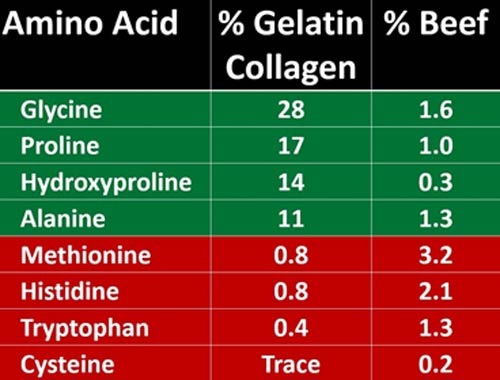
If you are only eating muscle meats without the connective tissue, you will get the amino acids in the right column, which simply does not provide your body with the amino acids it requires to build collagen. Admittedly, these missing amino acids are not essential so your body can make them, but it will waste loads of energy in doing that.
Bone Formation
Bone is created when collagen fibrils mineralize together with carbonated hydroxyapatite (calcium apatite). Combined, they form a hybrid material that is very strong yet flexible.
What’s more, as other minerals (such as strontium- and calcium-based minerals) are deposited inside the collagen, it causes a reaction that triggers the collagen fibrils to contract. This stress generates a mineral-collagen composite material composed of high-tensile fibers with properties reminiscent of reinforced concrete.18,19
This explains why tendons have the tensile strength of wire ropes and why healthy bones are so hard yet not brittle.20 As with connective tissue, the key to strong and flexible bone is collagen, and if you’re not trying to maintain a healthy intake, your bones will become increasingly brittle and less strong with age, ultimately resulting in osteoporosis.
Collagen for Life Extension and Disease Prevention
If you are getting the majority of your protein from muscle meats you will be getting high amounts of the amino acids that are in red, which are very low in collagen and gelatin. Why is this important? Because these are the very amino acids that, when consumed in excess, have been highly correlated with decreased longevity.
Your collagen intake may also impact your longevity and overall disease risk. As reported by the late Ray Peat, a biologist who specialized in bioenergetic medicine,21 life extension studies have shown that restricting tryptophan or cysteine alone produces greater life extension than calorie restriction, which is rather remarkable.
Referring to the chart above, you can see that beef contains more than three times the amount of tryptophan compared to collagen. Peat also argued that collagen, the cooked form (gelatin) in particular, has a long history of use for disease prevention. Modern medicine has simply chosen to overlook or forget all of that. In his archived article “Gelatin, Stress, Longevity,” Peat explained:22
“Both tryptophan and cysteine inhibit thyroid function and mitochondrial energy production, and have other effects that decrease the ability to withstand stress. Tryptophan is the precursor to serotonin, which causes inflammation, immunodepression, and generally the same changes seen in aging …
[G]elatin is a protein which contains no tryptophan, and only small amounts of cysteine … Using gelatin as a major dietary protein is an easy way to restrict the amino acids that are associated with many of the problems of aging …
When cells are stressed, they form extra collagen, but they can also dissolve it, to allow for tissue remodeling and growth … When collagen is broken down, it releases factors that promote wound healing and suppress tumor invasiveness.
Glycine itself is one of the factors promoting wound healing and tumor inhibition. It has a wide range of antitumor actions, including the inhibition of new blood vessel formation (angiogenesis), and it has shown protective activity in liver cancer and melanoma …
When we eat animal proteins in the traditional ways (for example, eating fish head soup … ‘head-cheese’ … and chicken-foot soup …), we assimilate a large amount of glycine and gelatin …
When only the muscle meats are eaten, the amino acid balance entering our blood stream is the same as that produced by extreme stress, when cortisol excess causes our muscles to be broken down to provide energy and material for repair.
The formation of serotonin is increased by the excess tryptophan in muscle, and serotonin stimulates the formation of more cortisol, while the tryptophan itself, along with the excess muscle-derived cysteine, suppresses the thyroid function …
The range of injuries produced by an excess of tryptophan and serotonin seems to be prevented or corrected by a generous supply of glycine. Fibrosis, free radical damage, inflammation, cell death from ATP depletion or calcium overload, mitochondrial damage, diabetes, etc., can be prevented or alleviated by glycine …
Since persistent lipolysis and insulin resistance, along with a generalized inflammatory state, are involved in a great variety of diseases, especially in the degenerative diseases, it’s reasonable to consider using glycine/gelatin for almost any chronic problem.”
Red meat, on the other hand, contains far higher levels of the antimetabolic amino acids cysteine and tryptophan, which you want less of if you struggle with degenerative and/or inflammatory conditions.
Glycine for Bleeding, Stroke and Muscle Spasms
In his article,23 Peat also argues that a wide variety of bleeding conditions can be successfully treated with glycine, and hence a collagen- or gelatin-rich diet. These include everything from nosebleeds and excessive menstrual bleeding, to bleeding ulcers, hemorrhoids and even stroke.
According to Peat, glycine, taken shortly after a stroke, limits the damage and accelerates recovery. Glycine may also be protective in epilepsy, by stabilizing nerves and raising the amount of stimulation required to activate nerves. Glycine also has antispastic effects that can help alleviate muscle spasms associated with multiple sclerosis (MS).
Conditions involving excess prolactin, serotonin and/or cortisol, such as autism, postpartum and premenstrual problems, Cushing’s disease, diabetes and impotence, may also benefit.
“In some of the older studies, therapeutic results improved when the daily gelatin was increased,” he notes. “Since 30 grams of glycine was commonly used for treating muscular dystrophy and myasthenia gravis, a daily intake of 100 grams of gelatin wouldn’t seem unreasonable, and some people find that quantities in that range help to decrease fatigue …
For adults, a large part of that could be in the form of gelatin. If a person eats a large serving of meat, it’s probably helpful to have 5 or 10 grams of gelatin at approximately the same time, so that the amino acids enter the blood stream in balance.”
Make Sure You Are Getting Some Collagen or Glycine
Importantly, while glycine, proline, hydroxyproline and alanine all have anti-inflammatory and other healing properties, the primary amino acids in red meat tend to induce and/or promote inflammation (listed in red in the chart above).
For that reason, I cut my egg and meat intake by 50% and replaced the protein with gelatin and collagen instead. Overall, I aim to have about one-third of my protein as collagen or gelatin.
As a general suggestion, a good maintenance dose is about 20 grams of collagen per day. If you’re trying to address a soft tissue injury, you may want to increase that to 40 grams a day. You can also help prevent the breakdown of collagen by eating antioxidant-rich foods and avoiding cigarette smoke, pollution,24 excessive alcohol consumption and sugary foods.25 Vitamin C-rich foods also aid in collagen production.
Collagen Types
While 29 different types of collagen have been scientifically identified, most supplements will contain one or more of just three of these, which are known simply as:26,27,28
- Type 1 — Collagen found in skin/hide, tendon, scales and bones of cows, pigs, chicken and fish
- Type 2 — Formed in cartilage and typically derived from poultry
- Type 3 — Fibrous protein found in bone, tendon, cartilage and connective tissues of cows, pigs, chicken and fish
Types 1, 2 and 3 comprise 90% of the collagen found in your body.29 Collagen supplements typically come in one of two forms: unhydrolyzed (undenatured) or hydrolyzed (denatured) collagen. In their natural, hydrolyzed state, collagen molecules are poorly absorbed due to their large size.
Hydrolyzation refers to a processing technique that breaks the molecules down into smaller fragments, thereby enhancing intestinal absorption. For this reason, most collagen products are hydrolyzed.
Collagen Vs. Gelatin
As for the difference between collagen and gelatin: Collagen is the raw material and gelatin is what you get when you cook the collagen.30 While collagen and gelatin have the same basic amino acid composition, gelatin is more digestible and easier to absorb, which is important if your digestion is in any way compromised.
Collagen is made from animal bones, skins, tendons and other connective tissues. The collagen is extracted through an acid or alkali treatment followed by purification and does not involve heat. Since the molecular structure is larger, collagen does not dissolve in water.
When collagen is heated, the molecular bonds break down, giving you gelatin hydrolysate or hydrolyzed gelatin (other terms to describe gelatin include collagen hydrolysate or collagen peptides). Since the peptide chains are shorter, gelatin can be dissolved in water, where it forms a thick gel.
In terms of health benefits, these differences are likely minimal, because when collagen is ingested, it gets broken down in your gastrointestinal tract into shorter peptides that are the same as gelatin.
Since only free amino acids can enter your bloodstream, collagen and gelatin have essentially identical systemic effects, as their basic composition is the same. That said, gelatin may be preferable if you have ulcers or other GI problems.
Collagen Sources — The Good, the Bad and the Ugly
The ideal source of collagen/gelatin is homemade broth made from boiled organic chicken feet or beef bones. (Gelatin is the thickened layer that forms on top.) This also tends to be the most cost effective.
As far as supplements go, my preference is powdered gelatin, followed by collagen products made from beef bone broth rather than hide. When made from cattle hide, even organic certification becomes questionable, because hides, organic or not, are scraps from the leather tannery industry that have undergone intense processing with harsh chemicals.
Whether you choose gelatin or collagen, make sure it’s certified “100% Organic” by the U.S. Department of Agriculture (USDA)31 or, better yet, certified grass fed by the American Grassfed Association (AGA), which has the most rigorous standards.
Nonorganic collagen supplements are best avoided, as most are made from animal parts derived from animals raised in concentrated animal feeding operations (CAFOs), and may contain unwanted contaminants, including heavy metals,32 chemicals and drugs,33,34 including antibiotics.
Also, do not use JELL-O brand35 “gelatin” snacks, as ready-to-eat JELL-O cups contain no gelatin whatsoever. Instead, they’re using carrageenan, which can induce inflammation and contribute to a wide variety of chronic diseases.36 It can also cause digestive side effects.37
JELL-O powder38 does contain gelatin, as it contains food coloring and preservatives with questionable safety. What you want is a pure gelatin powder without sugar and other additives.
If you cannot afford a high-quality collagen or gelatin supplement, you could consider taking pure glycine instead. It’s available in powder form and tends to be very affordable and is easy to take, as it has a mildly sweet flavor. That said, alanine and proline have many of the same benefits as glycine, including protection against cell damage, so using gelatin rather than pure glycine is preferable.39
- 1 Skin Pharmacology and Physiology 2014; 27: 47-55 (PDF)
- 2 Journal of Medical Nutrition & Nutraceuticals 2015; 4(1): 47-53
- 3 J Drugs Dermatol. 2019 Jan 1;18(1):9-16
- 4 Bone 2010 Mar;46(3):827-3
- 5 PLoS One 2014 Jun 13;9(6):e99920
- 6 J Agric Food Chem. 2010 Jan 27;58(2):835-41
- 7 J Pharmacol Sci 2012; 118: 145 – 148 (PDF)
- 8 Curr Med Res Opin. 2008 May;24(5):1485-96
- 9 Curr Med Res Opin. 2006 November; 22(11):2221-32
- 10 Am J Physiol 1982 February;242(2):G85-8
- 11, 24 USA Today August 26, 2023
- 12 J Med Food. 2016 Sep;19(9):836-43
- 13, 14 J Med Food. 2010 Apr;13(2):399-405
- 15, 25 ABC15 August 21, 2023
- 16 Molecular Cell Biology, 4th Edition, Section 22.3. 2000
- 17 Amino Acids 2018 Jan;50(1):29-38
- 18 Science April 7, 2022; 376(6589): 188-192
- 19 National Natural Science Foundation of China, Chinese Scholars and Cooperators Achieved Progress in Bioprocessing-inspired Fabrication
- 20 Phys.org April 8, 2022
- 21 Umzu. Who Is Ray Peat?
- 22, 23, 39 RayPeat.com Gelatin Stress and Longevity
- 26 Nutraingredients.com March 19, 2015
- 27 Charlotte’s Book, Collagen Supplements
- 28 Amino-collagen.com, Types of Collagen
- 29 Woundresearch.com, A Review of Collagen and Collagen-Based Wound Dressings
- 30 Paleo Leap, Collagen Versus Gelatin
- 31 USDA.gov, USDA Organic
- 32 Rodale’s Organic Life May 19, 2017
- 33 Consumer Wellness Center October 5, 2017
- 34 Bonebroth.news October 5, 2017
- 35 Amazon JELL-O
- 36 MedicineNet Carrageenan
- 37 NIH. Environ Health Perspect. 2001 Oct; 109(10): 983–994
- 38 Amazon JELL-O Powder
What Are Polyphenols and Why Do We Need Them?
Reproduced from original article:
https://articles.mercola.com/sites/articles/archive/2023/07/31/what-are-polyphenols.aspx
The original Mercola article may not remain on the original site, but I will endeavor to keep it on this site as long as I deem it to be appropriate.
Analysis by Dr. Joseph Mercola Fact Checked July 31, 2023
STORY AT-A-GLANCE
- Polyphenols are powerful organic compounds found in plants, which help protect plants from ultraviolet light, pathogens, oxidative damage and harsh climates
- Consuming foods rich in the more than 8,000 known polyphenols may help ward off chronic diseases, including cardiovascular and neurodegenerative diseases, cancer, Type 2 diabetes and obesity
- There are four major types of polyphenols — flavonoids, phenolic acids, stilbenes and lignans
- Polyphenols positively influence gut microbiota, and it’s likely that gut-modulatory effects may partially explain the benefits of many polyphenol-rich foods
- If you eat a diet based on whole foods, you’ll naturally consume plenty, as polyphenols are abundant in fruits, vegetables, tea, cocoa and more
Polyphenols are powerful organic compounds found in plants, which offer protection from ultraviolet light, pathogens,1 oxidative damage and harsh climates. With more than 8,000 identified to date, consuming foods rich in polyphenols may help ward off both acute and chronic diseases, including cardiovascular and neurodegenerative diseases, cancer,2 Type 2 diabetes and obesity.3
While polyphenols are best known for their anti-inflammatory and antioxidant effects, they affect multiple physiological processes related to enzyme activity, cell proliferation, signaling pathways and more.4
As such, these compounds may be integral to achieving optimal health. Fortunately, if you eat a diet based on whole foods, you’ll naturally consume plenty, as polyphenols are abundant in fruits, vegetables, tea, cocoa and more.
Four Major Types of Polyphenols
All polyphenols have phenolic structural features, but there are a variety of sub-groups within this group of phytochemicals, each with its own distinct features.
1.Flavonoids — Among the 8,000-plus known polyphenols, more than 4,000 are flavonoids.5 These compounds are responsible for the vibrant color in many flowers and fruits, and contribute to the bitterness, astringency, flavor, aroma and oxidative stability of many fruits, berries and vegetables. They can be broken down into six subclasses:6
| Flavonols | Flavones | Flavanones |
| Flavanols | Anthocyanins | Isoflavones |
Several well-known flavonoids include:
• Quercetin, a natural antiviral agent7 found in foods such as onions, apples, plums and green tea, which also combats inflammation and works as a natural antihistamine.
Quercetin shows promise for helping to protect vision as well, with researchers describing their potential effects on degenerative retinal diseases, and noting, “Some polyphenols, especially flavonoids (e.g., quercetin and tannic acid), could attenuate light-induced receptor damage and promote visual health benefits.”8
• Myricetin, found in cranberry, Swiss chard, rutabagas, garlic, blueberries and other foods,9 is being studied for a range of potential therapeutic actions, including anticancer, antidiabetic, antiobesity, anti-inflammatory and hepatoprotective effects, along with protection against cardiovascular disease and osteoporosis.10
• Catechins, which are abundant in green tea, include epicatechin, epigallocatechin, epicatechin gallate and epigallocatechin gallate (EGCG). These compounds have anticancer effects that may help prevent lung, breast, esophageal, stomach, liver and prostate cancers,11 along with anti-inflammatory and antioxidant properties.
Researchers at the University of Leeds and Lancaster University found he EGCG in green tea can help prevent heart disease by dissolving arterial plaque.12 Other research suggests this compound also has the ability to inhibit amyloid beta plaque formation in the brain, which is associated with Alzheimer’s disease.13
2. Phenolic acids — Phenolic acids make up about one-third of the polyphenols in an average diet. Common examples include caffeic acid, gallic acid and ferulic acid. While you can find phenolic acids in all plants, researchers explained in Oxidative Medicine and Cellular Longevity that these compounds “are particularly abundant in acidic-tasting fruits.”14
Edible plant sprouts, such as alfalfa, sunflower and broccoli, also contain phenolic acids,15 as does hibiscus. In hibiscus extract, caffeic acid may be responsible for some of its antiobesity effects, as it’s known to decrease body weight, regulate lipid metabolism and promote the breakdown of fats in the liver.16
3. Stilbenes — In plants, most stilbenes are synthesized in response to infection or injury. There are more than 400 known stilbenes,17 but the longevity compound resveratrol is one of the most popular.18 Resveratrol is found in abundance in muscadine grapes,19 with most of the antioxidants concentrated in the grape skins and seeds.20
Other food sources include berries, such as raspberries, blueberries, cranberries and mulberries, pomegranate, apples, Indian jackfruit and raw cacao. Another potent, yet lesser-known, source of resveratrol is itadori tea, made from Japanese knotweed.21
Stilbenes also have “extraordinary potential for the prevention and treatment of different diseases, including cancer, due to their antioxidant, cell death activation, and anti-inflammatory properties,” noted researchers with the University of Valencia in Spain.22
4. Lignans — Lignans, found in seeds such as flax and sesame and fruits like jackfruit, are metabolized by bacteria in your gut, converting into compounds such as enterodiol and enterolactone, which have weak estrogenic activity. They may help prevent cardiovascular disease and Type 2 diabetes and may help reduce the risk of hormone-associated cancers such as breast, uterine, ovarian and prostate.23
Health Benefits of Polyphenols
Polyphenols act as functional foods with antioxidant properties, helping to eliminate reactive oxygen species that contribute to disease. They also offer anti-inflammatory, antihypertensive and anti-diabetic actions, making them ideal for warding off some of the most common diseases worldwide. Writing in the Journal of Food Biochemistry, researchers with the University of Manitoba in Canada and colleagues explained:24
“The non-communicable diseases (NCDs) burden has been increasing worldwide due to the sedentary lifestyle and several other factors such as smoking, junk food, etc. Scientific literature evidence supports the use of plant-based food polyphenols as therapeutic agents that could help to alleviate NCD’s burden. Thus, consuming polyphenolic compounds from natural sources could be an effective solution to mitigate NCDs concerns.”
In fact, consuming polyphenol-rich foods may have a number of health benefits, including:25,26,27
| Reducing blood pressure | Improving lipid metabolism |
| Lowering blood glucose | Reducing body weight |
| Preventing and improving metabolic syndrome | Protecting heart health |
| Skin protective effects | Antibacterial properties |
| Reducing cancer risk. Researchers believe the antioxidant effects of polyphenols help protect DNA from free radical damage,28 which can trigger cancer development. Polyphenols also reverse epigenetic markers in the DNA believed to reduce tumor growth |
Boost your immune function |
| Protection against osteoporosis, due to a positive effect on bone metabolism29 | Reduced risk of neurodegenerative diseases |
Download this Article Before it Disappears
Polyphenols Are Good for Your Gut
In the video above, you can hear professor Yves Desjardins, with the Institute of Nutrition and Functional Food at the Université Laval, Québec, explain the impressive effects of polyphenols on the gut microbiota, and the resulting beneficial influence on metabolic diseases.30
“We surmise that (poly)phenols’ broad antimicrobial action free ecological niches occupied by competing bacteria, thereby allowing the bloom of beneficial gut bacteria … The beneficial direct impact of (poly)phenols on the gut microbiota relies on two principal modes of action: a direct bacterial stimulatory effect and a direct antimicrobial effect,” Desjardins and colleagues wrote in Frontiers in Nutrition.31
They’ve proposed the term duplibiotics to describe polyphenols’ two modes of action in the gut that benefit humans. Polyphenols also appear to have a prebiotic effect, improving the beneficial bacteria living in your gut. Much of the research has been done on green tea, which plays an important role in balancing your gut flora by increasing good bacteria and reducing the number of potentially harmful bacteria.32
However, it’s likely that gut-modulatory effects may partially explain the benefits of many polyphenol-rich foods. For instance, researchers wrote in The Journal of Nutritional Biochemistry, “The weight-lowering property of fruits, green tea and vinegar wine in obese people may be partly related to their polyphenol content, which changes the gut microbiota.”33 They added:34
“It is clear that dietary polyphenols and their metabolites contribute to the maintenance of gut health by the modulation of the gut microbial balance through the stimulation of the growth of beneficial bacteria and the inhibition of pathogen bacteria, exerting prebiotic-like effects.”
What Are the Best Food Sources of Polyphenols?
If you’d like to add more polyphenol-rich superfoods to your diet, the European Journal of Clinical Nutrition published a list of the 100 richest dietary sources of polyphenols based on milligrams (mg) per 100 grams.
“The richest sources were various spices and dried herbs, cocoa products, some darkly colored berries, some seeds (flaxseed) and nuts (chestnut, hazelnut) and some vegetables, including olive and globe artichoke heads,” the team found.35 Additional foods topping that list include:36
| Cloves | Peppermint | Star anise |
| Cocoa powder | Mexican oregano | Celery seed |
| Dark chocolate | Flaxseed meal | Black elderberry |
| Chestnut seeds | Dried sage | Rosemary |
| Spearmint | Thyme | Blueberries |
| Blackcurrant | Capers | Black olives |
| Hazel nuts | Pecans |
You can further optimize the health benefits of these foods by eating them with a little bit of healthy fat, as polyphenols are fat soluble.37 How the plant is grown can also influence its healing potential. As noted in The American Journal of Clinical Nutrition, agricultural practices and industrial processes can reduce the health effects of polyphenols in food.
“It is important to realize that the polyphenols that are the most common in the human diet are not necessarily the most active within the body, either because they have a lower intrinsic activity or because they are poorly absorbed from the intestine, highly metabolized, or rapidly eliminated,” the researchers explained.38
However, organically grown foods contain statistically higher levels of polyphenols compared to conventionally grown varieties. Also, freeze-drying preserves higher phenol content than air-drying does.39 So, to optimize the polyphenols in your diet, focus on eating a wide variety of fresh, homegrown, organic or biodynamically grown fruits, vegetables, herbs and spices, along with cocoa and tea.
- 1 Oxid Med Cell Longev. 2009 Nov-Dec; 2(5): 270–278. doi: 10.4161/oxim.2.5.9498, Abstract
- 2 Nutrients. 2010 Dec; 2(12): 1231–1246., Intro
- 3 Front. Nutr., 21 September 2018, Abstract, Intro
- 4 Crit Rev Food Sci Nutr. 2020;60(4):626-659. doi: 10.1080/10408398.2018.1546669. Epub 2019 Jan 7
- 5 Nutrients. 2010 Dec; 2(12): 1231–1246., 2. Classification of Polyphenols
- 6 Oxid Med Cell Longev. 2009 Nov-Dec; 2(5): 270–278. doi: 10.4161/oxim.2.5.9498, Flavonoids
- 7 Journal of Infectious Diseases and Preventive Medicine May 24, 2014; 2: 111
- 8 Molecules. 2021 Jun 4;26(11):3407. doi: 10.3390/molecules26113407., Abstract
- 9 BMC Complement Med Ther. 2020; 20: 241., Table 1
- 10 Food Science & Nutrition August 11, 2021, Abstract
- 11 Int J Mol Sci. 2020 Mar; 21(5): 1744
- 12 Journal of Biological Chemistry May 31, 2018, doi: 10.1074/jbc.RA118.002038
- 13 Infectious Agents and Cancer 2017; 12: 36
- 14, 18 Oxid Med Cell Longev. 2009 Nov-Dec; 2(5): 270–278., Figure 2
- 15 Nutrients. 2021 Aug; 13(8): 2882., Section 3
- 16 Food & Function, 2014, 5, 734, Table 4
- 17 Oxidative Medicine and Cellular Longevity vol. 2016, Article ID 3128951, 15 pages, 2016
- 19 Ann N Y Acad Sci. 2015 Aug; 1348(1): 150–160
- 20 Journal of Food Processing and Preservation November 2014
- 21 J Agric Food Chem. 2002 May 22;50(11):3337-40. doi: 10.1021/jf0112973., Intro
- 22 Oxidative Medicine and Cellular Longevity vol. 2016, Article ID 3128951, 15 pages, 2016
- 23 Oregon State University, Linus Pauling Institute, Lignans
- 24 J Food Biochem. 2022 Oct;46(10):e14264. doi: 10.1111/jfbc.14264. Epub 2022 Jun 13
- 25 Food Funct. 2022 Oct 3;13(19):9734-9753. doi: 10.1039/d2fo01552h
- 26 Molecules. 2023 Feb 15;28(4):1845. doi: 10.3390/molecules28041845
- 27 Oxid Med Cell Longev. 2009 Nov-Dec; 2(5): 270–278
- 28 Oxidative Medicine and Cellular Longevity, 2015, 1-14
- 29 Polyphenol Antioxidants and Bone Health: A Review, by Dr Venketeshwer Rao (Ed.), ISBN: 978-953-51- 0296-0
- 30 YouTube, Texas A&M Nutrition and Food Science, Effect of polyphenols on the gut microbiota and their effect on metabolic diseases
- 31 Front. Nutr., 28 June 2021
- 32 Microbiology And Immunology August 25, 2012; 56(11): 729-739
- 33 The Journal of Nutritional Biochemistry August 2013, Volume 24, Issue 8, Pages 1415-1422
- 34 The Journal of Nutritional Biochemistry August 2013, Volume 24, Issue 8, Pages 1415-1422, Conclusion
- 35 European Journal of Clinical Nutrition November 3, 2010; 64: s112-s120, Results
- 36 European Journal of Clinical Nutrition November 3, 2010; 64: s112-s120
- 37 The American Journal Of Clinical Nutrition, 79(5), 727-747
- 38 The American Journal Of Clinical Nutrition, 79(5), 727-747, Bioavailability of Polyphenols
- 39 Journal of Agricultural and Food Chemistry 2003; 51: 1237-1241
Chia seeds boost your immune system and protect your heart
Reproduced from original article:
https://www.naturalhealth365.com/chia-seeds-boost-your-immune-system-and-protect-your-heart.html
by: July 6, 2023
 (NaturalHealth365) Chia seeds may be small, but they are bigger than life when it comes to nutrition. These potent powerhouses pack plenty of omega-3 fatty acids, antioxidants, magnesium, fiber, iron, zinc, and calcium.
While known scientifically as the dried seeds of the Salvia hispanica plant, the seeds are much better known by their common name of chia seeds, thanks in no small part to the popular “chia pet” gift line of terra cotta figures. Historically, these seeds have been used to help with a wide range of conditions, and more recent scientific research is providing evidence that backs up what generations have known about this tiny seed’s health benefits.
7 ways chia seeds can help you build a healthy body
Compared to the more commonly known flaxseed, chia seeds offer up more omega-3 fatty acids, fiber, calcium, and phosphorus. Many of the seed’s most significant health benefits stem from its high fiber content.
Here is a look at just seven of the health benefits you can expect to reap from adding these tiny seeds to your regular diet:
1. Reduced risk of heart disease
As the largest producer of chia seeds worldwide, Australia is also home to a majority of the research conducted on the health benefits of chia seeds. In one such study, animals fed chia seeds exhibited significantly better heart health than those not receiving chia seeds. This is likely due to the large quantity of alpha-linolenic acid (ALA) they contain, a type of omega-3 fatty acid that must be obtained through diet. Chia seeds are considered by far the best natural, plant-based source of ALA.
2. Protection against cervical and breast cancer
French researchers also linked high ALA content to lowered risk of breast cancer, according to a study published in the European Journal of Cancer in 2000. In a 2013 study further analyzing these results, scientists found that ALA, the primary fatty acid found in chia seeds, had the ability to induce “cell suicide” in breast and cervical cancer cells without affecting nearby healthy cells.
3. Better insulin sensitivity
Along with improving cardiovascular health, the same Australian study showed that chia seed consumption is linked to improved glucose tolerance and insulin sensitivity.
Lowered insulin sensitivity is associated with insulin resistance and eventual pre-diabetes and type 2 diabetes. It is known that the risk of developing this disease is greatly diminished when adopting healthier eating habits.
4. Immune-boosting capabilities
The ancient Aztecs and Mayans prized chia seeds for their medicinal properties, using them to treat colds and the flu. Modern-day research out of the University of the Valley of Guatemala determined chia seeds have an antioxidant rating much higher than other good dietary sources of antioxidants, including blackberries, mango, pineapples, or grapes.
Chia seeds contain significant amounts of nutrients – including vitamin C, certain flavonols, vitamin E, lignin, and phenolic acids – known to boost the immune system with powerful antioxidants.
5. Improved joint health
The Aztecs also believed that the chia seed was essential for good joint health. Even today, you will find a wealth of anecdotal evidence backing the belief that these tiny seeds are good for the joints. Research shows many of the prominent nutrients found in these seeds possess strong anti-inflammatory and anti-rheumatic properties, making the case that these little seeds are indeed good for healthy joints.
6. Enhanced athletic performance
Athletes are frequently told to load up on carbs to pump up endurance and stamina, but research shows that these seeds offer a healthier alternative to sugary drinks and white flour foods. In one such study, highly trained male athletes were divided into groups provided with a chia drink loaded with omega-3s or given Gatorade.
The researchers found no significant difference when measuring performance after the treatments, suggesting that there would be no “good” reason to consume Gatorade, especially when the chia drink offers a healthier alternative to sugary beverages with unwanted (toxic) ingredients.
7. Healthy hair and skin
The antioxidants found in these seeds are known to slow skin aging by eliminating free radicals. In addition, you will get a number of nutrients, including protein and several minerals and vitamins known to promote healthy hair growth.
How adding these seeds can maximize your health benefits
If you are ready to harvest the benefits of chia seeds, follow a few recommendations to avoid any unwanted side effects common with high-fiber foods, such as bloating and gastrointestinal distress. Avoid consuming more than the recommended two tablespoons of whole seeds daily.
There are many ways to add these seeds to your diet. Consider adding toasted chia to salads for a bit of crunch, blend soaked seeds with fresh fruit to make jam, replace a small amount of the flour with chia seeds in your favorite bread recipe, or throw some soaked seeds into a healthy smoothie.
Also, be sure to drink plenty of clean (purified) water when consuming chia seeds. Research has shown little nutritional difference between whole versus ground seeds, so choose whichever you prefer.
Sources for this article include:
Get dry eye relief with THIS promising natural intervention
Reproduced from original article:
https://www.naturalhealth365.com/get-dry-eye-relief-with-this-promising-natural-intervention.html
by: July 7, 2023
 (NaturalHealth365) Did you know that dry eye disease (DED) is more prevalent than most people realize? With over 16 million people in the United States alone impacted by this condition, DED is a silent epidemic. It predominantly affects women, with a staggering two times higher occurrence than men. Astonishingly, reports indicate that up to 50% of all adults battle some form of dry eye.
But here’s the glimmer of hope: there’s a potential game-changer on the horizon. An oral probiotic holds promise in offering relief for this widespread ailment.
Here’s a quick look at this promising new intervention for DED.
Friendly bacteria protect the surface of the eye, new study suggests
A recent study by the Baylor College of Medicine focused on the oral use of a probiotic bacterial strain revealed the intervention reduced dry eye symptoms. The study’s findings show the new treatment modality’s use of bacteria within the patient’s intestinal tract might preclude the need for the use of eye drops, ointments, gels, and other treatment options.
This isn’t the first time these researchers have delved into the realm of gut bacteria and dry eye. Their previous investigations unveiled a startling revelation: mice provided with gut bacteria derived from Sjogren syndrome patients experienced exacerbated symptoms compared to their counterparts who received different bacteria. Intriguingly, the latter group was supplied with gut bacteria sourced from healthy individuals.
The implications of these findings are profound, underscoring the far-reaching effects of a healthy gut microbiome. By harnessing probiotic bacteria, we can unlock greater protective benefits in supporting eye health.
Bolster your gut health to achieve optimum health and wellness
The remarkable benefits of probiotics extend far beyond eye health, highlighting their profound impact on our overall well-being. These beneficial bacteria have emerged as a potent tool, enhancing various aspects of our physical and mental health.
Digestive health: Probiotics play a vital role in maintaining a healthy digestive system. By promoting a balanced gut microbiome, probiotics support optimal digestion, nutrient absorption, and a robust immune response within the gastrointestinal tract.
Immune system support: The gut is intricately linked to the immune system, and probiotics play a crucial role in strengthening immune function. These beneficial bacteria help regulate immune responses, defend against harmful pathogens, and reduce the risk of certain infections.
Mental well-being: The gut-brain connection is a fascinating area of study, and emerging research suggests that probiotics may positively influence mental health and well-being. Probiotics can help modulate neurotransmitter activity, reduce inflammation, and support a healthy stress response. This may result in improved mood, reduced anxiety, and enhanced overall mental wellness.
Healthy skin: Our skin is the largest organ of the body, and the internal balance of our microbiome influences its health. Probiotics can help promote a healthy skin microbiome, reducing inflammation, supporting barrier function, and potentially alleviating conditions such as acne, eczema, and rosacea.
Support your eye health with these natural solutions
In addition to prescriptions and artificial tears, there are actionable steps you can take to get dry eye relief. Consider incorporating the following strategies into your daily routine:
Embrace probiotic-rich foods: Probiotics play a crucial role in overall health, including eye health. Increase your intake of probiotic-rich foods such as yogurt, kefir, sauerkraut, kimchi, and kombucha. These foods are packed with beneficial bacteria that can support a healthy gut microbiome, potentially enhancing the health of your eyes.
Stay hydrated: Proper hydration is essential for maintaining optimal tear production. Drink an adequate amount of water throughout the day to keep your body well-hydrated and support tear production.
Consume omega-3 fatty acids: Omega-3 fatty acids have been shown to have anti-inflammatory properties. Include foods rich in omega-3 fatty acids in your diet, such as fatty fish (wild-caught salmon, mackerel, sardines), flaxseeds, chia seeds, and walnuts.
Blink regularly and take visual breaks: When engaged in activities like reading or staring at a screen for extended periods, we tend to blink less frequently, leading to dry eyes. Make a conscious effort to blink regularly and take regular breaks to rest your eyes and reduce strain.
Maintain a moist environment: Consider using a humidifier in your living or workspace, especially in dry climates or during the winter months. Increasing the humidity levels can help prevent excessive evaporation of tears.
Protect your eyes: Shield your eyes from environmental factors that can exacerbate dryness. Wear wraparound sunglasses outdoors to reduce exposure to wind and sunlight, and use protective eyewear when engaging in activities that may cause eye irritation.
Remember, these tips can complement traditional treatments and lifestyle modifications recommended by your eye care specialist. By incorporating these practical strategies into your daily routine, you can take proactive steps towards finding relief and promoting better eye health overall.
Sources for this article include:
Worried about skin cancer? Harness the power of food for sun protection
Reproduced from original article:
https://www.naturalhealth365.com/worried-about-skin-cancer-harness-the-power-of-food-for-sun-protection.html
by: May 29, 2023
 (NaturalHealth365) Can you imagine a life devoid of joyous moments under the warm embrace of the sun? Unfortunately, there are many who have succumbed to an unwarranted fear of sun exposure, robbing themselves of the simple pleasures it brings. Despite the countless well-documented benefits of sunlight for human health, we have been inundated with messages warning us of its supposed malevolence. Of course, it is essential to note that while sunlight offers numerous benefits, overexposure should be avoided to protect against potential harm.
If you enjoy spending time in the great outdoors and looking for natural methods to safeguard yourself against the risks of skin cancer, there is good news: you can actively bolster your sun protection by incorporating certain foods into your diet, offering a holistic approach that aligns with your preference for natural methods. In addition to relying solely on sunscreen without toxic chemicals, these dietary choices can further enhance your defense against harmful sun exposure.
Protect your skin from the inside out with these SIMPLE dietary choices
Most people are unaware that foods rich in certain nutrients can help reduce their risk of skin cancer. Consuming the right foods will help safeguard your sensitive skin against the sun’s ultraviolet rays, essentially protecting your body from the inside out. Extensive research has shed light on the protective role of antioxidants, including vitamins and various nutrients, in the battle against free radicals and their harmful effects, which can contribute to the development of skin cancer.
In light of recent developments, an increasing number of dermatologists are now recommending their patients incorporate nutrient-rich foods into their diet as a means of fortifying their skin health. Not only do these foods provide a natural source of essential antioxidants, but they also offer a synergistic blend of nutrients that work together to maximize their effectiveness.
1. Curcumin
The plant pigment known as curcumin that makes turmeric yellow in hue is revered for its ability to destroy those life-threatening melanoma skin cancer cells. Curcumin also combats the formation and spread of cancer by functioning as a powerful antioxidant that prevents the formation of aflatoxin and nitrosamine processes that hike the risk of cancer.
Indulging in turmeric adds a delightful burst of flavor to cauliflower, rice, potatoes, carrots, and various other vegetables, making it a delicious and healthful addition to your meals.
2. Berries
Berries, known for their rich content of ellagic acid, offer a flavorful and nutritious way to naturally boost your sun protection, making them a delicious addition to your diet. Ellagic acid, derived from ellagitannin, is a compound found in various red fruits.
Among these fruits, raspberries have been identified as particularly potent in the fight against skin cancer, making them an excellent addition to your sun protection regimen.
3. Nuts
Pecans and walnuts also contain ellagitannin, which detoxifies harmful liver enzymes and stops carcinogens from clinging to DNA. This acid also causes cancer cells to destruct, eliminating the free radicals that cause skin cancer.
4. Mushrooms
Mushrooms, a natural source of beta-glucans, contain compounds that have been shown in studies to actively combat the development of melanoma. These beta-glucans have the remarkable ability to attract immune cells to the cancerous area, aiding in the destruction of malignant cells and potentially serving as a valuable defense against melanoma.
5. Weave in carotenoids for added sun protection
Carotenoids, the pigments that make vegetables and fruits yellow, red, and orange in hue, shield the skin against damage from the sun’s ultraviolet radiation. Examples of veggies and fruits with carotenoids include tomatoes, cantaloupe, carrots, spinach, and kale.
6. Vitamin E
By incorporating a combination of carotenoid-rich fruits and vegetables along with foods containing vitamin E into your diet, you can effectively counteract and mitigate the effects of the sun’s ultraviolet light on your skin. This powerful combination works synergistically to provide enhanced protection and nourishment, helping to maintain the health and vitality of your skin even in the face of sun exposure.
7. Selenium
Harnessing the power of selenium-rich foods such as halibut, Brazil nuts, cod, and mushrooms can significantly enhance the body’s antioxidant defense system, offering an additional layer of protection against the damaging effects of sun exposure. By incorporating these selenium-packed foods into your diet, you can fortify your body’s natural defense mechanisms, bolstering its ability to counteract the harmful effects of the sun’s rays.
8. Beware of aflatoxin
The presence of chlorophyll in plants and plant-based foods has been found to effectively reduce the risk of aflatoxin contamination. Aflatoxins are harmful substances that can damage DNA, consequently elevating the risk of developing skin cancer.
Notably, peanuts are particularly susceptible to aflatoxin contamination. By consuming a diet rich in chlorophyll-containing foods, you can help minimize your exposure to aflatoxins.
9. Reduce your alcohol intake
Regular alcohol intake has been linked to an increased risk of malignant melanoma, potentially attributed to the conversion of alcohol into acetaldehyde within the body. This process can result in DNA damage, raising the likelihood of developing skin cancer.
10. Sidestep nitrate-laden meat
Nitrates, present in soil, water, and air, are commonly used as additives in cured meat products for their visual appeal. However, mounting evidence suggests a concerning association between nitrates and the development of cancer.
By making conscious choices in our diet and lifestyle, such as incorporating sun-protective foods, being mindful of alcohol consumption, and reducing the intake of nitrates in cured meats, we can take proactive steps to enhance our skin health and reduce the risk of skin cancer.
Remember, small changes can have a significant impact on our well-being, so let’s prioritize our skin’s protection and overall health.
Sources for this article include:
Therapeutic Benefits of Direct Application of Vitamin C
Reproduced from original OMNS article (OrthoMolecular News Service): http://orthomolecular.org/
Subscribe to the free Orthomolecular Newsletter: http://orthomolecular.org/subscribe.html
Go to the OMNS Archive: http://orthomolecular.org/resources/omns/index.shtml
Orthomolecular Medicine News Service, April 9, 2023
Physicians’ use of topical ascorbate began over 50 years ago
Editorial by Andrew W. Saul
OMNS (April 9, 2023) I kept wondering where the pustulous rash on my wrists and between my fingers was coming from. It appeared at the end of an afternoon of working in my back yard vegetable gardens. Suspecting some poison plants to be out there somewhere, I resolved to pinpoint and eradicate them. But my immediate need was to stop the really annoying itching. Necessity being the parent of invention, I decided to try topical application of vitamin C. It was quick and easy: I simply took a half teaspoon of ascorbic acid powder and added drops of water until it formed a paste. Generously applied to the rash, it relieved the itch in less than 15 minutes. A day or so of twice-daily repetition and the rash was gone. I learned that the offending plants in my yard were belladonna and poison sumac. I have also seen this work on poison oak and poison ivy. And I am now more diligent in wearing work gloves.
The general idea of using vitamin C topically did not come to me out of nowhere. Back in 1984, Robert F. Cathcart III, MD, published on how to make what he simply called “C-paste.” He used it for herpes simplex lesions and early Kaposi’s lesions. “C-paste is made with either ascorbic acid or sodium ascorbate and water applied directly to the skin and covered with a bandage. Frequently, one application will suffice for herpes. . . Frequently, applications to intact skin where the patient perceives an outbreak is about to occur will completely abort the attack. Several applications may be necessary to penetrate through the intact skin.” [1]
Topical vitamin C is a remarkable and versatile antiviral. Vitamin C paste applied directly to HSV or HPV lesions may make a visible difference, sometimes overnight. It is also effective on warts, which are viral. [2] If ascorbic acid C stings, one may use sodium ascorbate instead of ascorbic acid. I have seen both to work.
All this apparent antiviral property of concentrated vitamin C was an odd companion to the earlier antitoxic property I had experienced.
Preparation of a water-based vitamin C paste is simple. Slowly add a small amount of water to about half a teaspoon of vitamin C powder. Use just enough water to wet down the vitamin C. Using less water will make a thicker paste. Application with the fingertip or a cotton swab, several times daily, is easy. The water will evaporate in a few minutes and leave a plainly visible but temporary coat of vitamin C crystals on the skin.
It was soon to get even more interesting: I learned that vitamin C had been used to actually destroy cancer cells. How well it does so is easily and visibly demonstrated by twice-daily topical application directly onto basal cell skin carcinomas. There is no localized dose higher than that achieved by direct application. [3]
The use of topical vitamin C to kill basal cell carcinoma has been known at least since 1971. Frederick R. Klenner, MD, wrote: “We have removed several small basal cell epithelioma with a 30 percent ointment” of vitamin C. [4]
One person, who reported that a 2mm diameter spot on the nose would not heal for months, had it disappear within a week with twice-daily concentrated vitamin C applications. Another patient reported that after dermatologist-diagnosed multiple spots of basal cell carcinoma were coated with vitamin C, the spots fell off within two weeks. [5]
Common sense caution: First have your physician diagnose any suspected cancer-like blemish. Basal cell carcinomas are slow growing and it is rare for them to metastasize. This provides an opportunity for a therapeutic trial of vitamin C, provided one has proper medical diagnosis and follow-up. But malignant melanoma, for example, is fast-spreading and most definitely not to be home-treated.
Having read this far, you may or may not be ready for yet another therapeutic use: bleeding after tooth extraction.
“A woman of age 82 had a decayed lower incisor tooth removed by her dentist (resulting in) uncontrolled bleeding estimated at the time as 1 to 2 mL/min. Blood was oozing not only from the socket, but from a broad area of local gum tissue, particularly posteriorly. Direct pressure applied with several gauzes did not slow the continuous oozing. . . [With] application of a gauze dusted with buffered vitamin C powder [such as calcium ascorbate], bleeding slowed significantly. Then the entire bleeding surface of her gums was dusted with about 0.25 g of the powder. After the third application of a similar amount, the bleeding stopped.” [5]
Broad-spectrum utility of a pharmaceutical drug is generally lauded as a boon to humanity. Yet a vitamin demonstrating wide-ranging properties as an antitoxic, antiviral, anti-cancer, and anti-hemorrhagic agent has been largely dismissed by the medical profession.
There is a principle which is a bar against all information,
which is proof against all argument,
and which cannot fail to keep man in everlasting ignorance.
That principle is condemnation without investigation.
~ William Paley (1743-1805), often attributed to Herbert Spencer (1820-1903)
(Andrew W. Saul is in his 20th year as Editor-in-Chief of the Orthomolecular Medicine News Service. He is neither a virologist nor a physician. He is author or coauthor of a dozen books and has taught clinical nutrition and cell biology at the university level. Work directly with your own healthcare provider on any health issue.)
References
[1] Robert F. Cathcart III, MD. Medical Hypotheses, 14(4):423-433, Aug 1984. http://www.doctoryourself.com/aids_cathcart.html
[2] Topical vitamin C for HPV, genital herpes, and herpes simplex: Vitamin C as an antiviral. http://www.doctoryourself.com/herpes.html
[3] Topical vitamin C stops basal cell carcinoma. Orthomolecular Medicine News Service, November 9, 2007. http://orthomolecular.org/resources/omns/v03n12.shtml
[4] Fredrick R. Klenner, MD. Observations on the dose and administration of ascorbic acid when employed beyond the range of a vitamin in human pathology. Journal of Applied Nutrition Vol. 23, Nos 3 & 4, Winter 1971. http://yost.com/health/klenner/klenner-1971.pdf and http://www.doctoryourself.com/klennerpaper.html
[5] Age spots, basal cell carcinoma and solar keratosis. http://www.doctoryourself.com/news/v5n9.txt
[6] HD Riordan, and JA Jackson. Ascorbate stops prolonged bleeding from tooth extraction. Journal of Orthomolecular Medicine 1991, 6(3-4).
Nutritional Medicine is Orthomolecular Medicine
Orthomolecular medicine uses safe, effective nutritional therapy to fight illness. For more information: http://www.orthomolecular.org
Find a Doctor
To locate an orthomolecular physician near you: http://orthomolecular.org/resources/omns/v06n09.shtml
The peer-reviewed Orthomolecular Medicine News Service is a non-profit and non-commercial informational resource.
Editorial Review Board:
Albert G. B. Amoa, MB.Ch.B, Ph.D. (Ghana)
Seth Ayettey, M.B., Ch.B., Ph.D. (Ghana)
Ilyès Baghli, M.D. (Algeria)
Barry Breger, M.D. (Canada)
Ian Brighthope, MBBS, FACNEM (Australia)
Gilbert Henri Crussol, D.M.D. (Spain)
Carolyn Dean, M.D., N.D. (USA)
Ian Dettman, Ph.D. (Australia)
Susan R. Downs, M.D., M.P.H. (USA)
Ron Ehrlich, B.D.S. (Australia)
Hugo Galindo, M.D. (Colombia)
Gary S. Goldman, Ph.D. (USA)
Michael J. Gonzalez, N.M.D., Ph.D. (Puerto Rico)
William B. Grant, Ph.D. (USA)
Claus Hancke, MD, FACAM (Denmark)
Patrick Holford, BSc (United Kingdom)
Ron Hunninghake, M.D. (USA)
Bo H. Jonsson, M.D., Ph.D. (Sweden)
Dwight Kalita, Ph.D. (USA)
Felix I. D. Konotey-Ahulu, M.D., FRCP (Ghana)
Peter H. Lauda, M.D. (Austria)
Alan Lien, Ph.D. (Taiwan)
Homer Lim, M.D. (Philippines)
Stuart Lindsey, Pharm.D. (USA)
Pedro Gonzalez Lombana, M.D., Ph.D. (Colombia)
Victor A. Marcial-Vega, M.D. (Puerto Rico)
Juan Manuel Martinez, M.D. (Colombia)
Mignonne Mary, M.D. (USA)
Joseph Mercola, D.O. (USA)
Jorge R. Miranda-Massari, Pharm.D. (Puerto Rico)
Karin Munsterhjelm-Ahumada, M.D. (Finland)
Sarah Myhill, MB, BS (United Kingdom)
Tahar Naili, M.D. (Algeria)
Zhiyong Peng, M.D. (China)
Isabella Akyinbah Quakyi, Ph.D. (Ghana)
Selvam Rengasamy, MBBS, FRCOG (Malaysia)
Jeffrey A. Ruterbusch, D.O. (USA)
Gert E. Schuitemaker, Ph.D. (Netherlands)
Thomas N. Seyfried, Ph.D. (USA)
Han Ping Shi, M.D., Ph.D. (China)
T.E. Gabriel Stewart, M.B.B.CH. (Ireland)
Jagan Nathan Vamanan, M.D. (India)
Andrew W. Saul, Ph.D. (USA), Editor-In-Chief
Associate Editor: Robert G. Smith, Ph.D. (USA)
Editor, Japanese Edition: Atsuo Yanagisawa, M.D., Ph.D. (Japan)
Editor, Chinese Edition: Richard Cheng, M.D., Ph.D. (USA)
Editor, Norwegian Edition: Dag Viljen Poleszynski, Ph.D. (Norway)
Editor, Arabic Edition: Moustafa Kamel, R.Ph, P.G.C.M (Egypt)
Editor, Korean Edition: Hyoungjoo Shin, M.D. (South Korea)
Editor, Spanish Edition: Sonia Rita Rial, PhD (Argentina)
Editor, German Edition: Bernhard Welker, M.D. (Germany)
Associate Editor, German Edition: Gerhard Dachtler, M.Eng. (Germany)
Assistant Editor: Michael Passwater (USA)
Contributing Editor: Thomas E. Levy, M.D., J.D. (USA)
Contributing Editor: Damien Downing, M.B.B.S., M.R.S.B. (United Kingdom)
Contributing Editor: W. Todd Penberthy, Ph.D. (USA)
Contributing Editor: Ken Walker, M.D. (Canada)
Technology Editor: Michael S. Stewart, B.Sc.C.S. (USA)
Associate Technology Editor: Robert C. Kennedy, M.S. (USA)
Legal Consultant: Jason M. Saul, JD (USA)
Comments and media contact: drsaul@doctoryourself.com OMNS welcomes but is unable to respond to individual reader emails. Reader comments become the property of OMNS and may or may not be used for publication.
This article may be reprinted free of charge provided 1) that there is clear attribution to the Orthomolecular Medicine News Service, and 2) that both the OMNS free subscription link http://orthomolecular.org/subscribe.html and also the OMNS archive link http://orthomolecular.org/resources/omns/index.shtml are included.
Riordan Clinic | Orthomolecular.org
3100 N Hillside Ave
Wichita, Kansas 67219
United States
Can Coffee Reduce Your Risk of Alzheimer’s Disease?
Reproduced from original article:
https://articles.mercola.com/sites/articles/archive/2022/12/22/does-coffee-reduce-alzheimers-disease-risk.aspx
The original Mercola article may not remain on the original site, but I will endeavor to keep it on this site as long as I deem it to be appropriate.
Analysis by Dr. Joseph Mercola Fact Checked December 22, 2022

STORY AT-A-GLANCE
- A report revealed coffee could potentially reduce the risk of developing neurodegenerative conditions or relieve some symptoms
- The results support past studies that found coffee protects the neurological system, reduces cognitive decline and improves insulin sensitivity
- Rates of Alzheimer’s Disease are rising. It is also called Type 3 diabetes, as the effect of insulin dysregulation in the brain may induce changes seen in Alzheimer’s Disease
- More possible benefits from coffee include reduced risks of dying early and of contracting certain cancers and Type 2 diabetes; it also may boost athletic performance
- Coffee crops are heavily sprayed with pesticides, so seek out organic selections; consider grinding it at home and drinking it without sugar
Coffee is an integral part of many people’s morning and afternoon routines, with long lines at neighborhood coffee shops as testaments to its popularity. According to Daily Coffee News, the 2019 coffee report from the National Coffee Association found that 63% of people report they had a cup of coffee within the past day, which is a 6% increase from 2016.1
For the first time in the association’s history of reporting, the preference for brewed gourmet, espresso-based beverages and blended or cold brew drinks surpassed traditional, non-gourmet selections. The report also reveals coffee consumption was relatively stable in the past year.
This is fortunate since the U.S. Department of Agriculture2 forecasted reduced production since this is an off-year in the cyclical harvesting of Brazil’s Arabica trees. Lower shipments from Brazil and Honduras may result in 4.7 million fewer bags exported.
Despite the high number of people who drink coffee in the U.S., America ranks 25th globally in coffee consuming countries per capita, according to World Atlas.3 For comparison, Finland consumes 12 kg (3.2 gallons) per capita of coffee while the U.S. drinks 4.2 kg (1.1 gallons) per capita.
In the past, coffee drinking has been looked at as a vice or crutch to get some quick energy during the day. But research is revealing health benefits from it. It’s important, however, to remember that most coffee is heavily sprayed with pesticides. If you’re a java aficionado, it’s wise to purchase organic coffee to reduce your exposure to chemical toxins.
Enjoy Neuroprotective Effects From Caffeine
Coffee drinkers are familiar with its short-term stimulating effects on the nervous system. It can make you more alert but in larger amounts, even a little jittery. Scientists are also evaluating the long-term effects caffeine may have on cognition, specifically in people with dementia and Alzheimer’s disease. The results have been encouraging.4
The Institute for Scientific Information on Coffee (ISIC) recently released a report written by Elizabeth Rothenberg, Ph.D., which identified coffee as a potential dietary intervention that could reduce the risk of developing neurodegenerative conditions or relieve some symptoms.5
Researchers have found that caffeine and coffee drinking may provide a protective effect on the neurological system.6 The authors of several studies have found that drinking coffee lowers your risk for Alzheimer’s disease7 and reduces overall cognitive decline.8,9 There are also indications that the caffeine in coffee might increase insulin sensitivity, as well.10
In a collaborative effort, German and French research teams used an animal model to demonstrate how caffeine could block adenosine-activated brain receptors and have a positive effect on tau deposits found in the brains of those with Alzheimer’s disease.11
Researchers have also studied12 the effect of coffee on multiple sclerosis, another neurodegenerative condition. In their review of the literature they found “that coffee and caffeine intake in moderation must not be considered as a health risk.” As an aside, they also noted that consuming high amounts of coffee and caffeine to “what equals about six cups of coffee per day” may help “reduce the risk of some diseases significantly.”
While they didn’t specify what those diseases might be, the authors did warn that a negative side effect of consuming coffee in large amounts could result in an addiction that can be hard to quit.
Alzheimer’s Rates Are Rising
The research demonstrating some neuroprotective effects of coffee is one step that may help to stem the tide of a rising number of people diagnosed with Alzheimer’s Disease. It is estimated the number who have Alzheimer’s disease 65 years and older will rise to 88 million by 2050.13
Currently, the Alzheimer’s Association estimates there are 55 million age 65 and older who have Alzheimer’s disease. The growth in numbers is related to one of the largest aging generations, baby boomers.14 Alzheimer’s Disease remains incurable and one of the more pressing and tragic public health issues that takes a steep social and economic toll on families and communities.
Alzheimer’s Disease Described as Type 3 Diabetes
Type 3 diabetes is a newly-coined term that describes alterations of insulin signaling in the brain, as it “… represents a form of diabetes that selectively involves the brain and has molecular and biochemical features that overlap with both Type 1 diabetes mellitus and [Type 2].”15
As you can imagine, overindulging in grains and sugar-laden foods raises your risk of Type 2 diabetes; we’re now learning that it likely increases your risk for Type 3 as well. Research published in the American Diabetes Association’s journal Diabetes Care16 showed that those with Type 2 have a 60% increased risk of dementia.
Another study17 showed that “higher glucose levels may be a risk factor for dementia, even among persons without diabetes.” On the other hand, researchers have found that eating a high-fat, high-protein diet could lower your risk of dementia.18
Since the same study found that higher carbohydrate intake increases your risk of dementia, it stands to reason that lowering your carb intake and increasing healthy fat and protein intake would be a good strategy for lowering the risk of cognitive impairment in seniors.
You Have More Reasons to Drink Coffee
If you’ve steered clear of coffee because you’ve heard it is dehydrating, you may be happy to hear this was just a rumor. Researchers from the School of Sports and Exercise Sciences at University of Birmingham in the United Kingdom have concluded that having several cups of coffee each day doesn’t cause dehydration.19 This is good news because it means there’s no reason to ditch the java simply on the basis of dehydration dangers. Other benefits of drinking coffee include:
| Potentially reducing your risk of dying early — In a study of 210,501 people, data showed that drinking coffee, caffeinated or decaffeinated, each day reduced the overall risk of death.20 |
| Potentially reducing your risk of skin cancer — Drinking four cups of caffeinated coffee may reduce your risk of melanoma, the more dangerous form of skin cancer.21 |
| Boosting athletic performance — Results from a meta-analysis22,23 showed that drinking 3 to 8.1 mg of caffeine per kilogram of body weight (1.36 to 3.68 mg per pound) could increase the average endurance measurement in athletes by 24%. |
| Stimulating brown fat — Caffeine has been found to “rapidly generate heat and metabolize macronutrients … and may have the potential to be used therapeutically in adult humans.”24 |
| Reducing your risk of Type 2 diabetes — A study of adult men and women followed for 5.8 years demonstrated that coffee drinking “may have favorable effect in prevention of prediabetes and T2D [Type 2 diabetes].”25 |
| Lowering your risk of cancers — In a meta-analysis, scientists found that drinking coffee was associated with a lower risk of several cancers.26 Interestingly, they found the “largest relative risk reduction at intakes of three or four cups a day versus none.” |
| Boosting colon cancer survival — In those with stage 3 colon cancer, four or more cups of coffee each day lowered the risk of recurrence and death by 42%. They also found coffee drinkers were “34% less likely to die from cancer or any other cause.”27 Another research team found coffee was associated with a lower risk of colorectal cancer and that it had a dose-dependent response.28 |
The Healthiest Coffee Is Black and Organic
It’s important to remember your coffee beans are one of the most heavily sprayed crops. Look for coffee that is certified organic. Some researchers have also suggested that adding dairy products can interfere with the body’s absorption of beneficial chlorogenic acids you get from coffee.29 It’s also best to steer clear of sugar since it spikes your insulin level and contributes to insulin resistance.
Consider grinding coffee yourself to prevent it from going rancid. A pack of pre-ground may go bad even before you get it home, depending on how long it’s sat on the shelf. If you use a drip coffee maker, choose non-bleached filters. Bright white filters are often chlorine bleached, and heat from the coffee can leach chlorine out of the filter during the brewing process.
The bottom line is coffee can be a healthy addition to your diet, but you don’t need to start drinking it (or tea) if you don’t already. If you enjoy it, then feel free to indulge without guilt when you choose black, organically grown coffee.
If you’re pregnant, you would be wise to avoid caffeine from coffee and other sources because it’s been shown to increase your chances of prolonging your pregnancy and having a baby with a low birth weight.
- 1 Daily Coffee News, March 11, 2019
- 2 U.S. Department of Agriculture
- 3 World Atlas
- 4 Archives of Medical Science, April 1 2017;13(3):507–514
- 5 Institute for Scientific Information on Coffee December 2019
- 6 CNS Neuroscience & Therapeutics, 2017;23(4):272
- 7 European Journal of Neurology, 2002; doi: 10.1046/j.1468-1331.2002.00421.x
- 8 Neurology, 2007;69(6) Abstract
- 9 Journal of Alzheimer’s Disease, 2010
- 10 Journal of Alzheimer’s Disease 20 (2010) S167–S174
- 11 Science Daily, April 7, 2014
- 12 Frontiers in Nutrition, 2018; doi: 10.3389/fnut.2018.00133
- 13 Alzheimer’s Association, 2019 Alzheimer’s Disease Facts and Figures, Page 17 top left column
- 14 Pew Research Center, March 1, 2018, Births Underlying Each Generation Graph
- 15 Journal of Diabetes, Science and Technology, 2008;2(6)
- 16 Diabetes Care February 2016; 39(2): 300
- 17 New England Journal of Medicine 2013; 369: 540-548 Abstract/Concl
- 18 J Alzheimers Dis. 2012 Jan 1; 32(2): 329–339
- 19 PLOS|One, 2014;9(1):e84154
- 20 Circulation, 2015;132:2305
- 21 Journal of the National Cancer Institute, 2015;107(2):dju421
- 22 University of Georgia, December 17, 2015
- 23 International Journal of Sport Nutrition and Exercise Metabolism. Volume 26: Issue 3. Pages 221–239
- 24 Scientific Reports, 2019;9(9104)
- 25 Nutrition, Metabolism, & Cardiovascular Diseases (28)12, pp 126-1266
- 26 BMJ November 21, 2017; 359: j5024
- 27 Harvard Health Publishing, October 2015
- 28 Cancer Epidemiology Biomarkers and Prevention, 2016;25(4):634
- 29 Journal of Agriculture and Food Chemistry, 2011;59(19):10772
The Best Foods for Your Skin
Reproduced from original article:
https://articles.mercola.com/sites/articles/archive/2022/12/12/best-foods-for-your-skin.aspx
The original Mercola article may not remain on the original site, but I will endeavor to keep it on this site as long as I deem it to be appropriate.
Analysis by Dr. Joseph Mercola Fact Checked December 12, 2022

STORY AT-A-GLANCE
- According to recent research, eating 2.25 cups of grape powder per day for two weeks, equal to 60 grapes a day, can help protect your skin against sunburn. After two weeks, one-third of study participants showed increased resistance to UV-induced skin erythema (reddening of the skin)
- Grape skins are rich in polyphenols, which are one of the primary components responsible for improving the resilience of your skin against UV damage
- Other polyphenol-rich foods include herbs like cloves, Mexican oregano, rosemary, spearmint and peppermint, elderberry, black olives, dark chocolate and cocoa powder
- Another powerful skin protector is astaxanthin, a carotenoid antioxidant derived from Haematococcus microalgae. Research has shown 16 weeks of astaxanthin supplementation can improve wrinkles, skin moisture and elasticity. Astaxanthin-rich foods include wild-caught Alaskan salmon, trout, krill (or krill oil), shrimp and crayfish
- Omega-3 fat is also important for skin health, while high omega-6 linoleic acid (LA) intake is a significant contributor to sunburn. To improve your skin and reduce your sunburn risk, strictly limit seed oils in your diet and eat more omega-3-rich fatty fish such as wild-caught Alaskan salmon, verified wild-caught sockeye salmon, sardines, anchovies, mackerel and herring. A krill oil supplement will provide you with both astaxanthin and omega-3
According to recent research,1,2 eating what amounts to a little over 60 grapes a day for two weeks can help protect your skin against sunburn. In the study, 29 volunteers were fed 70 grams of grape powder a day for two weeks, or the equivalent of three,126-gram servings of fresh grapes a day, with a three-fourth cup, or about 24 grapes, considered as one serving.3
After the two-week study period, one-third of study subjects (9 of 29) showed increased resistance to ultraviolet (UV)-induced skin erythema (reddening of the skin).
One in 10 retained this benefit for four weeks after they stopped eating the grape powder. Grape skins are rich in polyphenols, which are one of the primary components in grapes responsible for improving the resilience of your skin against UV damage.4 Polyphenols are also anti-inflammatory with antioxidant effects, and play a role in DNA repair mechanisms.5 As noted in a 2010 paper:6
“Chemoprevention refers to the use of agents that can inhibit, reverse, or retard the process of these harmful events in the UV-exposed skin. A wide variety of polyphenols or phytochemicals … have been reported to possess substantial skin photoprotective effects.
This review article summarizes the photoprotective effects of some selected polyphenols, such as green tea polyphenols, grape seed proanthocyanidins, resveratrol, silymarin and genistein, on UV-induced skin inflammation, oxidative stress, and DNA damage …
It is suggested that polyphenols may favorably supplement sunscreens protection, and may be useful for skin diseases associated with solar UV radiation-induced inflammation, oxidative stress and DNA damage.”
Polyphenols 101
Polyphenols are phytochemicals found in natural plant foods. More than 8,000 polyphenols have been identified in foods such as tea, wine, chocolate, fruits and vegetables. Antioxidants such as polyphenols help protect the cells in your body from free radical damage, thereby controlling the rate at which you age, and that includes your skin, where aging becomes quite visible.
If your body does not get adequate protection, free radicals can become rampant, causing impaired cell function that not only can lead to tissue degradation, but also put you at risk of chronic diseases.
Polyphenols are what give fruits, berries and vegetables their vibrant colors, and contribute to the bitterness, astringency, flavor, aroma and oxidative stability of the food. In the plant, they protect against ultraviolet radiation, pathogens, oxidative damage and harsh climatic conditions. In the human body, polyphenols have been shown to have a diverse array of biological properties,7,8 including the following:
| Protecting your skin against ultraviolet radiation, as demonstrated in the featured study9,10 |
| Fighting cancer cells and inhibiting angiogenesis11 (the growth of blood vessels that feed a tumor) — Several studies have demonstrated the usefulness of polyphenols in the prevention of cancer.12,13,14,15 Researchers believe the antioxidant effects of polyphenols help protect DNA from free radical damage, which can trigger cancer development. Polyphenols also reverse epigenetic markers in the DNA believed to reduce tumor growth |
| Promoting brain health and protecting against dementia16,17,18 |
| Fighting free radicals and reducing the appearance of aging |
| Reducing inflammation |
| Protecting your cardiovascular system,19 in part by inhibiting vascular endothelial growth factor (VEGF), which can cause complications with atherosclerotic plaques20 |
| Supporting normal blood sugar levels21 |
| Promoting normal blood pressure |
| Reducing your risk of osteoporosis, thanks to its positive effect on bone metabolism22,23 |
| Improving your gut health — Polyphenols appear to have a prebiotic effect, improving the beneficial bacteria living in your gut. Much of the research has been done on green tea, which plays an important role on balancing your gut flora by increasing good bacteria and reducing the number of bad bacteria.24,25,26,27 Researchers have also found improvements in gut flora with moderate consumption of red wine and chocolate28,29 |
How to Optimize the Polyphenol Content of Your Diet
Aside from grapes — where the polyphenols are found in the skin — many other foods also contain high amounts. In 2010, the European Journal of Clinical Nutrition published a list30 of the 100 richest dietary sources of polyphenols based on milligrams (mg) per 100 grams. Foods topping that list include:
| Cloves | Peppermint | Star anise |
| Cocoa powder | Mexican oregano | Celery seed |
| Dark chocolate | Flaxseed meal | Black elderberry |
| Chestnut seeds | Dried sage | Rosemary |
| Spearmint | Thyme | Blueberries |
| Blackcurrant | Capers | Black olives |
| Hazel nuts | Pecans |
You can further optimize the health benefits of these foods by eating them with a little bit of fat, as polyphenols are fat soluble.31 How the plant is grown can also influence its healing potential. As noted in 2004 paper,32 agricultural practices and industrial processes can reduce the health effects of the polyphenols in the food.
Research33 has shown organically grown foods contain statistically higher levels of polyphenols compared to conventionally grown varieties. Also, freeze-drying preserves higher phenol content than air-drying does.
Astaxanthin Also Protects Your Skin From UV Damage
Another powerful skin protector is astaxanthin, a carotenoid antioxidant derived from Haematococcus microalgae. The alga produces astaxanthin as a protective mechanism to shield itself from harsh UVs and other environmental stressors, and research has shown astaxanthin provides similar benefits in humans when consumed.34,35,36
As reported by Liver Doctor,37 research38 published in the Journal of Clinical Biochemistry and Nutrition in 2017 showed 16 weeks of astaxanthin supplementation protected against wrinkles and loss of skin moisture, and improved skin elasticity. It also helps lighten age spots by preventing the accumulation of too much melanin.39
“Additional studies have shown that astaxanthin inhibits the production of inflammatory chemicals by skin cells when they are exposed to UV radiation,” LiverDoctor.com writes.40
“The inflammatory chemicals break down collagen and elastin fibers, and increase the risk of pigmentation changes to the skin. The lead author of the study has stated that ‘Long term astaxanthin supplementation may prophylactically inhibit skin deterioration induced over time by environmental damage and consequently retard the skin aging process via its anti-inflammatory effect.'”
When it comes to UV radiation protection, astaxanthin specifically helps protect against UV-induced cell death. Unlike topical sun block, astaxanthin does not actually block UV rays, so it doesn’t prevent UVB from converting into vitamin D in your skin; it simply protects your skin against damage.
This protective effect is so potent studies even show it helps protect against total body irradiation,41 primarily by scavenging intracellular reactive oxygen species (ROS) and reducing cell apoptosis (programmed cell death), and burn-wound progression, by reducing oxidative stress-induced inflammation and mitochondrial-related apoptosis.42 You can learn more about astaxanthin’s skin benefits in “7 Nutrients to Boost Your Skin’s Natural SPF.”
Astaxanthin-Rich Foods
Foods that contain generous amounts of astaxanthin are restricted to seafoods that consume the microalgae, such as:
- Wild-caught Alaskan salmon
- Trout
- Krill (or krill oil)
- Shrimp
- Crayfish
If you rarely eat these foods, an astaxanthin supplement can be used. Just make sure it’s made from the Haematococcus pluvialis microalgae and not petrochemicals. While taking too many antioxidant supplements can be problematic, astaxanthin is far safer in this regard — in fact, it’s safe even in extremely high dosages — thanks to several unique features.
Unique Features of Astaxanthin
Astaxanthin is related to beta-carotene and lutein, but its unique molecular structure makes it both more potent and more widely usable than other carotenoids.
Importantly, while it donates electrons to neutralize free radicals, astaxanthin is not depleted by this electron donation. It has a massive surplus that allows it to remain active far longer — at least one order of magnitude longer than most other antioxidants.
The astaxanthin also remains intact, meaning there are no chemical reactions to break it down, which is what occurs in most other antioxidants. Another major difference is in the number of free radicals it can handle. Most antioxidants, such as vitamins C, E can typically handle only one free radical at a time.
Astaxanthin can address multiple free radicals simultaneously by forming an electron cloud around the molecule. This is known as the electron dislocation resonance. When free radicals try to steal electrons from the astaxanthin molecule, they’re simply absorbed into and neutralized by this electron cloud, all at once.
Astaxanthin also has the unique ability to protect both water- and fat-soluble parts of the cell. Carotenoids are typically divided into water-soluble or fat-soluble, but astaxanthin belongs to an in-between group that can interface between both water and fat.
This means the astaxanthin molecule can affect and expand the biolipid membrane of all cells. It’s not simply floating around in your bloodstream; it actually integrates into the cellular membrane. It also has the ability to cross the blood-brain barrier, which is part of its neuroprotective effects.
Another key feature is that it cannot function as a pro-oxidant. Many antioxidants will act as pro-oxidants (meaning they cause rather than combat oxidation) when present in sufficient concentrations. Astaxanthin, on the other hand, does not function as a pro-oxidant, even when present in high amounts, which makes it both safer and more beneficial. Lastly, it acts on at least five different inflammation pathways, making it a very potent anti-inflammatory.
Other Uses for Astaxanthin
In addition to its skin benefits, astaxanthin can also benefit your eye, brain, lung43 and heart health, and help prevent conditions such as cancer, metabolic syndrome, Type 2 diabetes, diabetic nephropathy, gastrointestinal disease, liver diseases, male infertility and HgCl₂-induced acute renal failure.44
Its potent anti-inflammatory effects also make it useful for inflammatory conditions and joint problems such as rheumatoid arthritis, carpal tunnel syndrome and tennis elbow. It’s also been shown to improve athletic performance, in part by ameliorating exercise-induced fatigue.
Omega-3 Versus Omega-6 for Skin Health
The third dietary factor for optimal skin health that I’ll cover in this article involves fat. Omega-3 fat is important for healthy skin. If your skin is rough, dry and wrinkly, you probably need more omega-3, as it helps regulate oil production in your skin, balance hydration, reduce inflammation and minimize the effects of sun damage and aging in general.45
High omega-3 intake will help protect your skin against UV damage, whereas high LA intake will INCREASE your risk of sunburn, as LA is highly perishable and readily oxidizes.
On the other side of this coin is omega-6 linoleic acid (LA). Like omega-3, LA gets integrated into your cell membranes, but unlike omega-3, LA impairs rather than optimizes cellular function. With regard to sun exposure, high omega-3 intake will help protect your skin against UV damage, whereas high LA intake will INCREASE your risk of sunburn, as LA is highly perishable and readily oxidizes.
So, to protect and improve your skin, you’ll want to eliminate as much LA from your diet as possible, and increase your omega-3 intake. This means you’ll need to:
• Avoid all seed oils, found in most processed foods, restaurant foods, condiments, pastries, conventional chicken and pork. Do not cook your food with seed oils; use butter, ghee, beef tallow or coconut oil instead.
• Eat more omega-3-rich fatty fish such as wild-caught Alaskan salmon, verified wild-caught sockeye salmon, sardines, anchovies, mackerel and herring. All of these are high in omega-3 while being low in contaminants. Canned Alaskan salmon is a less expensive than salmon steaks. As a general recommendation, try to get two servings of fatty fish per week.46
Avoid farm-raised salmon. Not only is farmed salmon one of the most contaminated foods on the market, but most are also loaded with harmful LA thanks to being fed genetically engineered (GE) corn and soy. Others are fed fishmeal, which is known to accumulate industrial chemicals like PCBs and dioxins.
Farmed salmon contain only half the omega-3 of wild salmon47,48,49 and one-fourth the vitamin D,50 while having more than 5.5 times the amount of omega-6.51,52 Farmed salmon are also routinely exposed to antibiotics and pesticides.
Alaska does not permit aquaculture, so all Alaskan fish are wild-caught. They also have some of the cleanest water and some of the best maintained and most sustainable fisheries. To verify authenticity, look for the state of Alaska’s “Wild Alaska Pure” logo. Sockeye salmon is now being farmed in certain areas of North America,53 so if you opt for sockeye, make sure it’s wild-caught.
Other Health Benefits of Omega-3 Fats
Beyond taking care of your skin, other health benefits of omega-3s include but are not limited to:
• Reducing inflammation, which can be helpful for those suffering with rheumatoid arthritis by reducing stiffness and pain.54 Women who suffer from menstrual pain may also experience milder pain55,56
• Optimizing muscle building and bone strength — Omega-3 fats help your body build healthy muscle mass, including people suffering from cancer who may experience cachexia.57 Omega-3 fats can also help improve your bone strength by improving the utilization of calcium in your body. This may lead to a reduction in the development of osteoporosis58
• Improving metabolic syndrome59 and insulin resistance60
• Improving mental health and behavior — Demonstrated benefits have been shown for children with attention deficit hyperactivity disorder (ADHD), including reduced aggression, hyperactivity,61 impulsivity,62 oppositional behavior63 and restlessness.64
Omega-3 is associated with lowered risk for other neurological/cognitive dysfunction as well, including: memory loss, brain aging, learning disorders and ADHD,65 autism and dyslexia66
• Protecting your vision — DHA is a major structural element in your eye and brain.67 Low levels of DHA may increase your risk for age related macular degeneration68
Summary
So, to summarize what we’ve reviewed here, foods that will nourish your skin and provide natural protection against sunburn include polyphenol-rich foods such as grapes, dark chocolate, cocoa, olives, green tea and certain herbs; astaxanthin from wild-caught Alaskan salmon, trout, shrimp and crayfish; and omega-3 fat from fatty fish.
A krill oil supplement will give you both astaxanthin and omega-3. At the same time, you also want to limit omega-6 LA as much as possible, which is done by avoiding the foodstuffs listed above.
- 1, 9 Antioxidants 2022; 11(12): 2372
- 2, 10 The Telegraph
- 3 Livestrong. Grapes Serving Size. December 26, 2019
- 4, 5, 6 Dermatology Research March 2010; 302(2): 71
- 7 Oxid Med Cell Longev. 2009 Nov-Dec; 2(5): 270–278
- 8 Global Healing Center, Polyphenols
- 11 Molecular Nutrition and Food Research March 2015: 59(3); 401-412
- 12 Pharmacological Research. 2012 Jun;65(6):565-76
- 13 Oxidative Medicine and Cellular Longevity, 2015, 1-14
- 14 National Cancer Institute, Tea and Cancer Prevention
- 15 Rev Physiol Biochem Pharmacol. 2007;159:79-113
- 16 Oxidative Medicine and Cellular Longevity July 6, 2009; 2(5): 270-278, Article ID: 897484
- 17 Curr Pharm Biotechnol. 2014;15(4):330-342
- 18 Oxidative Medicine and Cellular Longevity March 10, 2013; 2013: 1-18, Article ID 891748
- 19 The American Journal of Clinical Nutrition January 2005; 81(1): 292S-297S
- 20 Molecular Nutrition & Food Research December 25, 2014; 59(3), 401-412
- 21 Pacific College of Oriental Medicine August 1, 2014
- 22 Polyphenol Antioxidants and Bone Health: A Review, by Dr Venketeshwer Rao (Ed.), ISBN: 978-953-51- 0296-0
- 23 Nutrition Research July 2009; 29(7), 437-456
- 24 Microbiology And Immunology August 25, 2012; 56(11): 729-739
- 25 Research in Microbiology November 2006: 157(9); 876-884
- 26 Microbial Ecology in Health And Disease July 11, 2009; 3(6): 1990
- 27 Crit Rev Food Sci Nutr. 2012;52(10):936-48
- 28 American Journal of Clinical Nutrition June 2012; 95(6):1323-1334
- 29 American Journal of Clinical Nutrition January 2011; 93(1):62-72
- 30 European Journal of Clinical Nutrition November 3, 2010; 64: s112-s120
- 31, 32 The American Journal of Clinical Nutrition May 2004: 79(5); 727-747
- 33 Journal of Agricultural and Food Chemistry 2003; 51: 1237-1241 (PDF)
- 34 Food and Function 2014 Sep;5(9):1994-2003
- 35 Experimental Dermatology 2014 Mar;23(3):178-83
- 36 Photodermatol Photoimmunol Photomed. June 2008;24(3):134-41
- 37, 40 Liver Doctor Astaxanthin Protects Your Skin from the Sun
- 38 Clinical Biochemistry and Nutrition July 2017; 61(1): 33-39
- 39 CNN January 18, 2019
- 41 Stem Cell Res Ther. 2017; 8: 7
- 42 Scientific Reports January 27, 2017; 7 Article number: 41440
- 43 Food and Chemical Toxicology June 2013;56:450-458
- 44 Molecular Nutrition and Food Research 2011 Jan: 55(1):150-65
- 45, 46 Aveeno.com Omega-3 Skin Benefits
- 47 Scientific Reports 2016; 6 Article number 21892
- 48 Ecowatch October 8, 2016
- 49 CivilEats December 8, 2014
- 50 J Steroid Biochem Molecular Biol March 2007
- 51 Nutrition Data Wild Atlantic Salmon
- 52 Nutrition Data Farmed Atlantic Salmon
- 53 Fraser Farmed Sockeye
- 54 Arthritis Foundation, Fish Oil
- 55 European Journal of Clinical Nutrition 1995; 49(7):508-516
- 56 American Journal of Obstetrics and Gynecology 1996;17(4):1335-1338
- 57 Cancer 2004; 101(2): 370-378
- 58 Progress in Lipid Research, 1997; 36(2-3):131-151
- 59 Journal of Pediatrics, 2010; 157(3):395-400
- 60 Acta Cardiologica 2009; 64(3):321-327
- 61 Lipids, 2003; 38(10):1007-1021
- 62 Journal of Child Neurology 2012; 27(6):747-753
- 63 Acta Paediatrics 2010; 99(10):1540-1549
- 64 Nutrition 2012; 28(6):670-677
- 65 Nordic Journal of Psychiatry May 2, 2014
- 66 Alternative Medicine Review 2007 Sep;12(3):207-27
- 67 Pediatric Research, 1990; 27(1):89-97
- 68 Survey of Ophthalmology, 2014; 59(5): 532-539