Skin
now browsing by category
Methylene Blue Is Beneficial for Slowing Skeletal Aging and Treating Brain Disorders
Reproduced from original article:
https://articles.mercola.com/sites/articles/archive/2024/10/21/methylene-blue-bone-brain-health.aspx
Analysis by Dr. Joseph Mercola October 21, 2024
STORY AT-A-GLANCE
- Methylene blue, first synthesized in 1876, evolved from a textile dye to an essential medical compound. It promotes mitochondrial health by enhancing energy production and reducing oxidative stress
- Recent research suggests methylene blue is useful in the treatment of traumatic brain injury and conditions like Alzheimer’s disease
- A March 2024 study indicates methylene blue supports bone health by inhibiting osteoclast differentiation, reducing the risk of age-related bone loss when combined with lifestyle modifications
- Methylene blue offers various other health benefits, including reducing UTI risk, improving skin health, managing osteoarthritis and enhancing the effects of niacinamide on metabolic health
- When selecting methylene blue, opt for pharmaceutical-grade (USP) varieties with 99% purity; avoid industrial or chemical-grade options, as they contain harmful contaminants. Recommended dosages are included
Methylene blue, first created in 1876, started as a fabric dye. Scientists soon realized it had medical benefits, and in 1891, it became the first synthetic compound used to treat malaria.1
It was also the first synthetic compound to be used as an antiseptic. To this day, methylene blue remains indispensable in hospitals worldwide, as it’s also the only known antidote for metabolic poisons such as cyanide and carbon monoxide.2 In fact, it’s on the World Health Organization’s (WHO) “Model List of Essential Medicines.”3
Indeed, I believe that methylene blue is one of the most important medicines to have at home. Adding to its long list of benefits, emerging research suggests it also benefits your brain and skeletal health.
How Does Methylene Blue Work?
Methylene blue is a versatile compound with numerous applications, but its most significant effect is on cellular energy production. It primarily interacts with the mitochondrial electron transport chain, which is crucial for generating energy in cells.
In normal cellular respiration, electrons derived from the food we consume are passed through a series of protein complexes in the mitochondria. This process, known as the electron transport chain, ultimately leads to the production of ATP, the cell’s energy currency. Oxygen serves as the final electron acceptor in this chain.
Methylene blue’s unique property lies in its ability to accept electrons and transfer them directly to oxygen, effectively bypassing parts of the conventional electron transport chain. This alternative electron shuttle enhances energy production, particularly in situations where normal cellular processes are impaired or inefficient.
By facilitating more efficient electron transfer and energy production, methylene blue improves various aspects of cellular function and overall health. This capacity to interact with and optimize cellular energetics is what makes methylene blue a subject of interest in both scientific research and therapeutic applications. In my interview with Francisco Gonzalez-Lima, Ph.D., an expert on methylene blue, he explained:
“Methylene blue donates its electrons directly to the electron transport chain. It obtains electrons from surrounding compounds, and maintains oxygen consumption and energy production. By doing this, it helps oxygen to be fully reduced into water.
It becomes two things that are often not found together. It acts as an antioxidant, because oxygen is neutralized into water by donating electrons to the electron transport, and it produces energy, because when the electron transport pumps are moving along oxidative phosphorylation, you have an increase in ATP formation.
Oftentimes, we have things that improve energy metabolism, but then they lead to oxidative stress. In the case of methylene blue, that’s not the case.
You will increase oxygen consumption rates, increase ATP production for energy metabolism, and at the same time reduce oxidative stress which, of course, will lead to reduction in oxidative damage at the level of mitochondria, then at the level of the other parts of the cells, and eventually membranes of the cells, and reactions that are cascades of this oxidative damage.”
Methylene Blue Protects Against Brain Injury and Neurodegenerative Diseases
A March 2024 review published in Reviews in the Neurosciences4 explores the use of methylene blue as a therapeutic agent for traumatic brain injury (TBI), which is characterized by damage to brain tissue from an external force. TBI damage leads to a cascade of neurodegenerative processes that continue long after the initial injury.
It shares many pathological features with neurodegenerative diseases such as Alzheimer’s disease (AD), including the accumulation of beta-amyloid plaques and tau protein tangles. This similarity is significant because it suggests that treatments effective for one condition might be beneficial for the other. The authors explained:5
“In the pathogenesis of AD as well as in the pathogenesis of cerebral ischemia and TBI oxidative stress, progressive inflammation, glial activation, blood-brain barrier dysfunction and excessive activation of autophagy are involved, which implies the presence of many targets … affected by neuroprotectors.
That is, multivariate cascades of nerve tissue damage represent many … targets for therapeutic interventions. One of such substances … used in multipurpose therapeutic strategies is methylene blue (MB).
This drug … [has] an antiapoptotic and anti-inflammatory effect, activate autophagy, inhibit the aggregation of proteins with an irregular shape, inhibit NO synthase and bypass impaired electron transfer in the respiratory chain of mitochondria.”
These insights are supported by other studies.6,7 For instance, a study published in Medical Hypotheses8 explored how methylene blue mitigates the neurodegenerative damage caused by excessive iron deposits in the brain, which triggers the production of highly reactive hydroxyl radicals through the Fenton reaction, a process involving iron and hydrogen peroxide (H2O2).
These radicals cause significant oxidative stress, damaging cellular components, and accelerating neuronal dysfunction and death. This process not only harms neurons but also promotes the aggregation of misfolded proteins, exacerbating the progression of neurodegenerative diseases like Alzheimer’s and Parkinson’s disease. Methylene blue mitigates these effects by inhibiting the Fenton reaction and reducing hydroxyl radical production.

Save This Article for Later – Get the PDF Now
Methylene Blue’s Role in Supporting Bone Health
Another study published March 2024 in the journal Aging9 investigated how methylene blue improves skeletal aging when administered over a long-term period. It also examined the effects of mitoquinone (MitoQ), a mitochondrial-targeted antioxidant that reduces the accumulation of reactive oxygen species.
The researchers conducted both in vitro and in vivo experiments on mice. Results from both experiments showed that while methylene blue and MitoQ did not alter the progression of ongoing age-related bone loss, they did show a dose-dependent inhibition of osteoclast differentiation.
This is important because osteoclasts play a role in bone resorption, which is the process of breaking down bones. An excess of osteoclast activity leads to bone loss and diseases like osteoporosis. By inhibiting osteoclast differentiation, methylene blue, as well as MitoQ, reduces your risk for bone loss.
The authors also noted that while methylene blue and MitoQ reduce bone resorption, taking them alone may not be enough to inhibit bone loss. To maximize their benefits, they need to be combined with lifestyle modifications such as regular exercise or anabolic bone loading. This multifaceted approach is a more effective strategy for mitigating age-related decreases in skeletal health.
Other Ways Methylene Blue Benefits Your Health
Methylene blue has also been shown to have several other health benefits, such as:
| Reduces the risk of urinary tract infections (UTIs) — I consider this one of the most significant uses of methylene blue, as it offers a powerful, gut-friendly alternative to antibiotics for treating UTIs. This is especially beneficial for the elderly, who often have compromised gut health.
Since methylene blue isn’t metabolized by your body, it gets excreted by the kidneys into your bladder, where it accumulates and eventually reaches concentrations high enough to act as a strong oxidant, effectively targeting and eliminating pathogens in the bladder.10 |
| Improves skin health — According to a study published in the journal Cells,11 methylene blue promotes skin firmness and elasticity while reducing signs of aging by inhibiting oxidative damage, increasing the lifespan of fibroblasts and promoting cell proliferation. |
| Manages osteoarthritis — A 2022 animal study published in Acta Pharmacologica Sinica12 found that methylene blue helps manage osteoarthritis by protecting the cartilage from degeneration, reducing synovitis (inflammation of the joint lining) and relieving joint pain. It does these actions by upregulating the enzymes Nrf2 and PRDX1, which are essential for managing oxidative stress and inflammatory responses. |
| Reduces risk of vasoplegia — This condition is characterized by persistently low systemic vascular resistance even though the heart is pumping normally, leading to severe and uncontrollable blood vessel widening.
Research shows that methylene blue helps manage this condition by reducing the effects of cytokines that cause blood vessels to widen. It does this by inhibiting enzymes like NO synthase and guanylyl cyclase, and by blocking M3 receptors as a cholinesterase inhibitor.13 |
| Promotes mitochondrial health — A study published in the International Journal of Molecular Sciences14 found that methylene blue increases hydrogen peroxide levels, which activates the Nrf2/ARE signaling pathway. This, in turn, boosts antioxidant gene activity and reduces mitochondrial DNA damage. |
| Reduces reperfusion injury — Reperfusion injury occurs when blood supply returns to tissue after a period of ischemia, such as when surviving a heart attack or stroke.
According to a 2021 animal study published in Acta Pharmacologica Sinica,15 methylene blue reduces brain edema following an ischemic stroke by inhibiting the activation of the enzymes AQP4 and ERK1/2, which are involved in regulating fluid balance and inflammation in brain cells. |
| Enhances the effects of niacinamide — Methylene blue enhances the benefits of niacinamide (vitamin B3) on brain health and metabolism, according to bioenergetic medicine expert Georgi Dinkov.16 |
| Prevents further environmental damage from sunscreens — I don’t recommend using sunscreen as it interferes with your body’s vitamin D production. Instead, it’s far better to cover up your skin with clothing once you’ve reached your ideal sun exposure time.
However, if you want to use sunscreen, such as for extended outdoor activities, choose one with zinc oxide and/or titanium dioxide that avoids nanosized particles. In addition to these ingredients, consider a sunscreen that has methylene blue, as it has been shown to be safe for coral reefs. Most sunscreens sold today contain oxybenzone, a chemical that damages aquatic ecosystems.17 |
General Dosing Recommendations
Methylene blue exhibits hormesis, meaning low doses produce beneficial effects while higher doses cause adverse outcomes, so finding the right dose is important to maximize its benefits. As a general guideline, dosages between 0.5 and 4 milligram per kilogram (mg/kg) of bodyweight are recommended.
For an acute treatment, such as in the case of cyanide poisoning, the upper limit is between 3 and 4 mg/kg, which is typically the range given as an IV antidote. For nonacute, more long-term treatment, a much lower dose of 3 to 5 mg once a day for most adults per day works better. It has a half-life of 12 to 13 hours, so once-a-day dosing is fine. Taking it with ascorbic acid enhances its absorption.
This low dose works particularly well for those who have reductive stress. However, an easier to find and safer to use alternative would be molecular hydrogen. Learn more from my recent interview with Dr. Tyler Lebaron.
Selecting the Right Methylene Blue for Your Medicine Cabinet
With its numerous health benefits, methylene blue is a valuable addition to your medicine cabinet. However, choosing the right type is important. You’ll find three primary grades on the market — industrial-grade, chemical-grade (laboratory-grade) and pharmaceutical grade.
The only one I recommend using is the pharmaceutical-grade variety, available by prescription. Avoid industrial-grade methylene blue that’s often found in pet stores for aquarium maintenance. They contain significant amounts of impurities, with only 10% to 25% being actual methylene blue. Similarly, chemical-grade methylene blue is intended for laboratory staining experiments and contain trace amounts of harmful metals like lead, cadmium and arsenic.
While pharmaceutical-grade methylene blue might not be available at your local pharmacy, many compounding pharmacies stock it. If you’re having difficulty finding a reliable source, ask your physician for a prescription to obtain it from a compounding pharmacy.
- 1, 2 Some Drugs and Herbal Products, Exposure Data
- 3 WHO Model List of Essential Medicines 2023, Page 4
- 4, 5 Rev Neurosci. 2024 Mar 27;35(5):585-595
- 6 Brain Research Volume 1805, 15 April 2023, 148290
- 7 Biochemistry Moscow 87, 940–956 (2022)
- 8 Medical Hypotheses Volume 185, April 2024, 111299
- 9 Aging (Albany NY). 2024 Mar 25;16(6):4948-4964
- 10 Research and Reports in Urology 2020:12 639–649
- 11 Cells. 2021 Dec; 10(12): 3379
- 12 Acta Pharmacologica Sinica Volume 43, Pages 417–428 (2022)
- 13 Methodist Debakey Cardiovasc J. 2023; 19(4): 38–47
- 14 Int J Mol Sci. 2023 Mar 24;24(7):6118
- 15 Acta Pharmacologica Sinica Volume 42, Pages 382–392 (2021)
- 16 Haidut.me October 22, 2020 (Archived)
- 17 EurekAlert! March 1, 2022
Niacinamide — The Best Supplement to Prevent Skin Cancer
Reproduced from original article:
https://articles.mercola.com/sites/articles/archive/2024/10/01/niacinamide-skin-cancer-prevention.aspx
Analysis by Dr. Joseph Mercola October 01, 2024
STORY AT-A-GLANCE
- Niacinamide (vitamin B3) enhances DNA repair and reduces UV-induced immunosuppression in skin cells, preventing non-melanoma skin cancers
- A large-scale study found higher niacin intake associated with a 16% lower risk of squamous cell carcinoma. Another study showed niacinamide twice daily for 12 months reduced new nonmelanoma skin cancers by 23%
- Niacinamide works by preventing ATP depletion, boosting cellular energy and enhancing DNA repair. It’s particularly beneficial for those with multiple past skin cancers, showing 54% reduction in basal cell carcinomas and 52% in squamous cell carcinomas
- Many studies use 500-mg doses, but caution is advised. Small doses of 50 mg three times daily are better to optimize energy and boost cellular NAD+ levels. Excessive intake may lead to side effects or backfire
- Topical niacinamide offers benefits for acne treatment, sebum reduction, antiaging effects and rosacea management. Oral niacinamide also supports brain health, chronic pain relief, stress protection, vision health and may ameliorate damage from linoleic acid consumption
In the video above, board-certified dermatologist Dr. Andrea Suarez, known online as Dr. Dray, shares some fascinating insights about niacinamide, a water-soluble form of vitamin B3 (niacin), and its benefits for skin health.1
Niacinamide, also known as nicotinamide, is a precursor for NAD+, which is not only involved in the conversion of food to energy but is also important in the process of repairing damaged DNA. This is crucial because your skin faces constant environmental stressors, including ultraviolet (UV) radiation, which can damage DNA in skin cells and suppress your immune system.
Niacinamide shows promise for skin cancer prevention due to its ability to enhance DNA repair and reduce UV-induced immunosuppression in skin cells. These mechanisms are useful in preventing the development of non-melanoma skin cancers (NMSCs), which include basal cell carcinoma (BCC) and squamous cell carcinoma (SCC).
The Promise of Niacinamide for Skin Cancer Prevention
Clinical trials show that taking 500 milligrams (mg) of niacinamide twice daily significantly reduce the incidence of NMSCs in high-risk individuals.2 This news was particularly encouraging for those with a history of skin cancer. However, while many studies for skin cancer prevention use 500-mg doses, caution is warranted.
Niacinamide at a dose of 50 mg three times per day is a better dose and will provide the fuel for the rate limiting enzyme for NAD+, NAMPT. I recommend getting niacinamide in powder form because the lowest available dose in most supplements is 500 mg, and that will decrease NAD+ due to negative feedback on NAMPT, which is the opposite of what you’re looking for.
Other research has shown a beneficial role of niacinamide intake specifically for SCC risk reduction. In one large-scale study involving the Nurses’ Health Study and the Health Professionals Follow-up Study, researchers found that total niacin intake was inversely associated with SCC risk. The pooled hazard ratio was 0.84, suggesting a 16% lower risk of SCC for those with higher niacin intake.3
Niacinamide: Your Skin’s New Best Friend
A study conducted in Australia and published in The New England Journal of Medicine also found that this simple supplement significantly reduces the risk of developing nonmelanoma skin cancers.4 The study, involving 386 high-risk patients, revealed that taking 500 mg of niacinamide twice daily for 12 months led to a 23% lower rate of new nonmelanoma skin cancers compared to those taking a placebo.
This effect was seen in both basal cell carcinomas and squamous cell carcinomas, the two most common types of skin cancer. Again, the benefits of niacinamide were most pronounced in patients who had a history of numerous skin cancers, suggesting it might be particularly helpful for those at higher risk. The best part? Niacinamide is inexpensive, easily accessible as an over-the-counter supplement and comes with minimal, if any, side effects.
In addition to reducing skin cancer risk, niacinamide showed impressive results in decreasing actinic keratoses — precancerous skin lesions that can develop into squamous cell carcinomas. Participants taking niacinamide had 11% fewer actinic keratoses at three months and 20% fewer at nine months compared to the placebo group. This translated to three to five fewer actinic keratoses on average.
The mechanism behind niacinamide’s protective effects lies in its ability to prevent adenosine triphosphate (ATP) depletion and boost cellular energy, enhancing DNA repair. Your cells need ATP for life, repair and regeneration. Niacinamide also reduces UV-induced immunosuppression without altering your baseline immunity, providing a two-pronged approach to skin protection.
Many conventional chemopreventive agents, such as oral retinoids, cause significant side effects like dry skin, increased lipid levels and even liver toxicity. However, niacinamide showed no clinically significant adverse effects in the study. While the study used a dose of 500 mg twice daily, the minimum effective dose for skin cancer prevention is unknown.
Save This Article for Later – Get the PDF Now
Niacinamide Reduces Skin Cancer in High-Risk Individuals
If you’ve had multiple skin cancers in the past, niacinamide is particularly beneficial for you. A systematic review and meta-analysis revealed that niacinamide’s effectiveness in preventing skin cancers tends to increase for individuals with a higher number of previous skin cancers.5
Niacinamide was effective in reducing both BCCs and SCCs, with a 54% reduction in BCCs and a 52% reduction in SCCs compared to control groups. To reap the full benefits of niacinamide for skin cancer prevention, consistency is key.
Again, the studies showing significant reductions in skin cancers used a dosage of 500 mg twice daily, taken orally for at least 12 months. This regimen appears to be effective for both healthy individuals and organ transplant recipients, who are at higher risk for skin cancers due to immunosuppression.
Niacinamide: A Secret Weapon for Skin Cancer Prevention
Unlike sunscreen, which blocks UV rays, niacinamide works by repairing DNA damage that has already occurred in your skin cells. This means it helps reverse past sun damage and reduce your risk of developing skin cancer, particularly BCC and SCC. As noted in the journal Cureus:6
“By providing the precursor molecules for key components to produce adenosine triphosphate (ATP), nicotinamide also enhances DNA repair by replenishing cellular energy after UV damage. Current research also suggests that nicotinamide plays a role in blocking inflammatory cell activation and influences cell life span, survival, and cancer progression.”
Niacinamide’s skin-protective effects stem from its ability to boost your body’s natural defense mechanisms. When you take niacinamide supplements, you’re providing your cells with the building blocks they need to produce ATP, the energy currency of your cells. This extra energy empowers your skin cells to repair DNA damage more efficiently after UV exposure.
But that’s not all — niacinamide also helps block inflammatory cell activation and influences cell lifespan and survival. This multipronged approach makes it a powerful ally in your skin cancer prevention strategy. It’s a simple addition to your daily routine that could have significant benefits for your skin health.
It’s especially important if you have a history of skin cancer, as studies have shown that many patients with non-melanoma skin cancers often have vitamin deficiencies.7 By addressing these deficiencies, you’re giving your skin the tools it needs to protect itself.
Interestingly, a 2023 study found that patients who believed more strongly in niacinamide’s ability to reduce skin cancer risk were more likely to use it consistently.8 On average, patients perceived that niacinamide could reduce their risk of basal cell carcinoma by 31.2% and squamous cell carcinoma by 30.2%.
Those who were actually taking niacinamide had an even higher perception of its effectiveness, believing it could reduce their risk by 41.2% for BCC and 38.3% for SCC. The researchers noted, “Our results should encourage providers to educate patients and their families on nicotinamide and its link to skin cancer prevention.”9
Too Much Niacinamide Can Backfire
Keep in mind that the niacinamide dosages used in research studies vary widely and can be on the high side. As a general rule, I only recommend taking small doses of 50 mg of niacinamide three times a day.
This dosage has been shown to optimize energy metabolism and boost NAD+ levels, which are foundational for optimal health. It can be taken four times a day if you space them out. Take a dose as soon as you get up, before going to bed, and twice evenly spaced between those times.
The problem with taking too much vitamin B3, whether in the form of niacin or niacinamide, is that it might backfire and contribute to cardiovascular disease10,11 and other side effects. Dray stresses the importance of proper dosage and warned about potential dangers of excessive intake:12
“You can run into dangerous side effects when taking very high doses. You can get into toxic ranges if you take too much. Three and a half grams per day will definitely get you to toxic levels that can damage your liver.”
Other potential side effects of high doses include nausea, vomiting, headache, dizziness and fatigue. There’s also a risk of medication interactions, particularly with carbamazepine. I recommend getting niacinamide in powder form so you can control the dose. Niacinamide will only cost you about 25 cents a month if you get it as a powder. Typically, 1/64 of a teaspoon of niacinamide powder is about 50 mg.
Niacinamide: A Versatile Skincare Ingredient and Overall Health Remedy
While the focus of many studies is on oral supplementation, Dray also touched on the benefits of topical niacinamide in skincare products, noting, “It’s actually very beneficial for a variety of skin issues when applied topically because it’s anti-inflammatory, it’s an antioxidant.”13 She explains that niacinamide applied topically is useful for:14
1. Acne treatment — “Four percent niacinamide is as effective for moderate acne as 1% clindamycin.”
2. Sebum reduction — “Two percent niacinamide gel … decreases sebum production, reducing oiliness and shine.”
3. Antiaging effects — “It’s been demonstrated when applied anywhere from 2% to 4% to help improve the look of fine lines, red blotchiness … It also can improve the appearance of sunspots, help them fade.”
4. Rosacea management — “Niacinamide can improve barrier function and make the symptoms of rosacea … better.”
However, Dray notes that some individuals may find topical niacinamide irritating, especially at higher concentrations. In addition to helping your skin, oral niacinamide also benefits other aspects of health, such as:
- Brain health, including Alzheimer’s disease15
- Chronic pain16
- Stress reduction17
- Vision health, including glaucoma18
- Ameliorate damage caused by linoleic acid (LA) consumption
The last one is particularly important, as one of the most toxic metabolic byproducts of LA is 4 HNE, a toxic aldehyde that appears to play a causative role in heart failure.19 Fortunately, there is an enzyme system called aldehyde dehydrogenases that deactivates 4 HNE.
The best way to increase the activity of this enzyme system is to make sure you have sufficient NAD+, and the most efficient way to optimize your NAD+ level is to make sure you’re getting 50 mg of niacinamide three times a day.
Further, as niacinamide emerges as a promising and versatile compound for skin health and cancer prevention, its ability to enhance DNA repair, reduce UV-induced immunosuppression and decrease the incidence of non-melanoma skin cancers makes it a valuable tool in dermatological care.
While clinical trials have shown significant benefits at higher doses, it’s crucial to approach supplementation cautiously, as excessive intake can lead to adverse effects. The recommended dosage of 50 mg three times daily in powder form strikes a balance between efficacy and safety.
Beyond skin health, niacinamide offers benefits throughout your body, underlining its importance as a multifaceted supplement. As research continues to unfold, niacinamide stands out as a simple, cost-effective and generally safe addition to your health regimen, particularly for those concerned about skin cancer risk and overall skin health.
- 1, 12, 13, 14 YouTube, Dr. Dray, The Skin Supplement You Need to Know About April 28, 2022
- 2 Nutrients. 2024 Jan; 16(1): 100, Discussion
- 3 Nutrients. 2024 Jan; 16(1): 100, Dietary Niacin Intake and NMSC
- 4 N Engl J Med 2015;373:1618-1626
- 5 J Cutan Med Surg. 2022 May; 26(3): 297–308
- 6, 7, 8, 9 Cureus. 2023 Aug; 15(8): e44403
- 10 Nature Medicine February 19, 2024; 30: 424-434
- 11 Memorial Sloan Kettering Cancer Center, Nicotinamide
- 15 Clinical Trials Nicotinamide as an Early Alzheimer’s Disease Treatment (NEAT) NCT03061474
- 16 Cell Reports Medicine November 8, 2023
- 17 Nutrients. 2022 Jun; 14(11): 2219
- 18 JAMA Ophthalmology 2022;140(1):11-18
- 19 Haidut.me February 21, 2024 (Archived)
How Methylene Blue Can Help Promote Healthier Skin
Reproduced from original article:
https://articles.mercola.com/sites/articles/archive/2024/07/31/methylene-blue-skin-health.aspx
Analysis by Dr. Joseph Mercola July 31, 2024

STORY AT-A-GLANCE
- Methylene blue is a versatile medicine with multiple health benefits, including promoting skin health, boosting brain function and managing conditions like osteoarthritis. It works by enhancing mitochondrial function and acting as an antioxidant
- Research suggests methylene blue can help promote youthful skin by reducing reactive oxygen species, stimulating cell proliferation and upregulating antioxidant defenses. It may also aid in wound-healing through photodynamic therapy
- Beyond skin health, methylene blue shows promise in boosting brain health, managing osteoarthritis pain, providing general pain relief, reducing risk of vasoplegia after heart surgery and promoting overall mitochondrial health
- Methylene blue may help mitigate tissue damage after a heart attack by reducing reperfusion injury. For nonacute treatments, low doses of 0.5 to 1 mg per kilogram of body weight are recommended
- When using methylene blue, it’s crucial to select pharmaceutical-grade (USP) product, as other grades contain impurities. Proper dosing is typically 0.5 to 1 mg per kilogram of body weight, with an upper limit of 4 mg for acute treatment
Methylene blue may be one of the most important medicines people need to have in their homes. In fact, it’s on the World Health Organization’s “Model List of Essential Medicines.”1
First synthesized in 1876 by German chemist Heinrich Caro,2 methylene blue can help save lives. In fact, it’s found in every hospital in the world, and used in surgeries, treating methemoglobinemia and as a staining tool for experiments. But that’s not all — research suggests that it may help promote healthy skin and even overall wellness.
How Methylene Blue Works to Benefit Your Health
Before diving into how methylene blue can help promote skin health, it’s important to have a basic understanding of how it works. In my interview with Francisco Gonzalez-Lima, Ph.D., an expert on methylene blue, he mentions that this drug has several mechanisms of action, but the most notable one is its effect on the electron transfer chain, which can promote mitochondrial health. He explains:
“Our body uses electrons as part of the electron transport chain that happens inside mitochondria, and these electrons, moved along through the mitochondria, are generated from electron donors that we produce by the foods that we eat.
All the foods that we eat, the only way they contribute to energy is by producing electron donors. They donate these electrons to the electron transport inside the mitochondria. The ultimate electron acceptor in nature is oxygen. That’s why the process of removing electrons from a compound is referred to as oxidation.
In mitochondria, this process is called oxidative phosphorylation. The electron transport is coupled with the phosphorylation of adenosine to eventually produce the adenosine triphosphate molecule (ATP). Methylene blue is an electron cycler. It’s an auto-oxidizing compound.
So, methylene blue donates its electrons directly to the electron transport chain, it obtains electrons from surrounding compounds, and maintains oxygen consumption and energy production. By doing this, it helps oxygen to be fully reduced into water.
So, it becomes two things that are often not found together. It acts as an antioxidant, because oxygen is neutralized into water by donating electrons to the electron transport, and it produces energy, because when the electron transport pumps are moving along oxidative phosphorylation, you have an increase in ATP formation.”
Methylene Blue Can Help Promote Youthful Skin
In a study3 published in Scientific Reports, researchers sought to learn how methylene blue can help promote skin health. What prompted this line of thought was a prior study, wherein they discovered methylene blue “stimulated cell proliferation and delayed senescence in skin fibroblasts from patients with Hutchinson-Gilford progeria syndrome,” a rare genetic disorder that causes accelerated aging.
To test the hypothesis, the researchers applied methylene blue on 2D primary dermal fibroblasts, as well as reconstructed 3D human skin models. They also tested other well-known reactive oxygen species (ROS) scavengers — N-Acetyl-L-cysteine (NAC), MitoQ and MitoTEMPO — to serve as a baseline for the effectiveness of methylene blue.4
What they discovered about methylene blue’s potential was nothing short of striking. According to their findings, methylene blue was “the most effective in reducing mitochondrial ROS and promoting skin cell proliferation.”5
In addition, they found that methylene blue may help delay or reverse phenotypes from skin cells from elderly participants. Using a different test, they extracted two dermal fibroblast lines from participants over 80 years old and treated these with methylene blue for four weeks. They discovered that methylene blue helped suppress gene expression related to aging, as well as reduced mitochondrial superoxide (believed to be the original ROS6) levels similar to young cells.7
Aside from these findings, the researchers noted that methylene blue can help upregulate Nrf2 expression, an “essential regulator of antioxidant defense system,” which contributes to reduced overall ROS.
“In summary, MB at nanomolar concentration is potent to scavenge free radicals and stimulate cell proliferation in both young and old dermal fibroblasts.
MB treatment on 3D reconstructed skin models provides strong evidence of its potential for improving skin viability, increasing skin hydration and thickness, promoting skin elastin and collagen synthesis, and protecting the skin matrix through the inhibition of enzymatic degradation by MMP. Altogether, our study suggests that MB can be a promising agent for use in antiaging cosmetics,” they concluded.
Other published research support these findings. In one example, published in The FASEB Journal,8 methylene blue was found to help increase the lifespan of fibroblast samples and cell proliferation, all the while reducing aging markers.9
Save This Article for Later – Get the PDF Now
Methylene Blue May Also Help Facilitate Wound-Healing
Making you appear youthful is not the only application of methylene blue. In a 2020 study,10 researchers noted that it may be used as a photosensitizer to treat infected wounds via photodynamic therapy (PDT).
For the experiment, five patients of varying ages were selected, and all of them had infected wounds lasting between one and three months. Before PDT was administered, the wounds were cleaned, then methylene blue was applied to the affected area and covered with film before being exposed to light. After repeated sessions, researchers noted reduced wound secretions, suggesting that the process also helped eliminate antibiotic-resistant bacteria.11
For context, PDT is a two-stage treatment that uses light energy (typically a laser) to activate a photosensitizer, an inert drug that becomes toxic to cancerous tissue once exposed to light. But as noted by the Mayo Clinic, PDT can also be used to eliminate viruses, fungi and bacterial infections.12
Other Beneficial Applications of Methylene Blue
Methylene blue has also been shown to have several other health benefits, including:
| Boosting brain health — Research13 suggests that methylene blue’s ability to cross the blood-brain barrier makes it a promising aid for Alzheimer’s disease, Parkinson’s disease and brain injuries.
Methylene blue has been found to bypass the Complex I/III activity in the electron transfer chain and directly reducing the production of free radicals rather than scavenging them. Animal tests also suggest that it can partially restore the membrane in Complex III-inhibited mitochondria.14 |
| Managing osteoarthritis — In a 2021 study,15 researchers recommended methylene blue for treating osteoarthritis. Using animal test models, they discovered that it helped reduce pain and joint deterioration. The test group that received methylene blue also had a lower number of osteophytes (bone spurs), which form when bone is damaged by arthritis.16
In another study,17 osteoarthritic test animals injected with methylene blue experienced better weight distribution between each knee, as well as reduced swelling. Methylene blue also helped suppress biomarkers related to the progression of osteoarthritis, such as tumor necrosis factor alpha and interleukin 6. Pain was also reduced. |
| Relieving pain — In connection with the benefit mentioned above, research suggests that methylene blue may generally alleviate pain. According to a study18 published in Frontiers in Neuroscience, methylene blue inhibits suppresses nitric oxide (NO) production (since NO is a proinflammatory mediator) that can lead to pain relief. |
| Reducing risk of vasoplegia — A complication that can occur after heart surgery, vasoplegia is characterized by low blood pressure despite a normal heartbeat,19 and methylene blue seems to help in this regard.
In a 2010 review,20 researchers noted that intravenous administration of methylene blue before cardiac surgery can help lower the risk of vasoplegic syndrome in high-risk patients. If complications do occur, severity is lessened. Methylene blue was also shown to be used for post-cardiac operations, helping decrease mortality. It’s believed that methylene blue applies these benefits by inhibiting guanylate cyclase, a class of enzymes that control bacteria in humans,21 thus lowering vascular smooth muscle relaxation. |
| Promoting mitochondrial health — Methylene blue may help boost your body’s antioxidant capabilities, according to a study22 published in the International Journal of Molecular Sciences.
Researchers noted that upon administration, methylene blue helped boost hydrogen peroxide production and subsequent activation of the Nrf2/ARE signaling pathway. This resulted in the activation of antioxidant genes that helped decrease mitochondrial DNA damage in the context of cisplatin administration, a drug used for cancer treatment that can damage kidney function.23 |
| Preventing further environmental damage of sunscreens — I generally don’t recommend using sunscreen, as it will hamper vitamin D production. Instead, it’s far better to cover up your skin with clothing once you’ve reached your ideal sun exposure time.
However, if you absolutely want to use a sunscreen, such as if you’re going to be outdoors for long periods of time, your safest bet is to use a product containing zinc oxide and/or titanium dioxide that doesn’t contain nanosized particles. In addition to these ingredients, consider a sunscreen that has methylene blue, as it has been shown to be safe for coral reefs. Most sunscreens sold today contain oxybenzone, a chemical that can damage aquatic ecosystems.24 |
Methylene Blue May Help After a Heart Attack
While heart attack can cause sudden death, survivors face the serious threat of reperfusion injury, where cellular dysfunction and decay may worsen following the restoration of blood flow. Administering methylene blue can help mitigate this tissue damage, but it’s important to avoid overdose.
For nonacute, longer-term treatments, including managing dementia and post-stroke, as well as cognitive enhancement and overall health optimization, low doses of 0.5 milligrams (mg) to 1 mg per kilogram of body weight are recommended.
Additionally, keep 10 mg of sublingual melatonin on hand. Like methylene blue, it can minimize reperfusion injury when taken immediately after a heart attack or stroke. According to a report from The Conversation:25
“Laboratory studies of heart attack … have shown that melatonin does indeed protect the heart from damage after a heart attack. Similar studies have shown that when rats’ hearts are deprived of oxygen, as occurs in a heart attack, providing the heart with melatonin had a protective effect.”
The Correct Methylene Blue Matters
Based on what’s been published about methylene blue, it’s a compound well worth having in your medicine cabinet. But, don’t just go out and get any methylene blue you can find. Selecting the right product is important, and there are three types typically sold — industrial-grade, chemical-grade (laboratory-grade) and pharmaceutical-grade.
The only one you should use is the pharmaceutical-grade variety. Other types of methylene blue, such as the one found in pet stores, are meant for keeping aquariums clean. Industrial-grade methylene blue contains impurities, and only 10% to 25% is real methylene blue.
Chemical-grade methylene blue is used for staining experiments by laboratories. While it has higher purity, it’s still not suitable for health applications, as it can contain lead, cadmium and arsenic. When ingested, these impurities can accumulate in your body over time, causing toxicity.
Pharmaceutical-grade methylene blue is 99% pure, and is the one used for intravenous administration and oral ingestion. They are marked USP, or United States Pharmacopeia. However, you may need a prescription to purchase it. Once you have this type, I recommend buying a stainless-steel spoon that measures 8 to 10 mg for accurate measurements.
Generally, dosing is between 0.5 mg and 1 mg per kilogram of body weight, with an upper limit of 4 mg for acute treatment of things like cyanide poisoning, for which methylene blue is the only antidote. It has a half-life of 12 to 13 hours, so taking it once a day is sufficient.
According to Gonzalez-Lima, USP methylene blue has better purity than the European pharmaceutical-grade one. Moreover, taking it with ascorbic acid can improve absorption. You probably won’t find pharmaceutical-grade methylene blue at your local pharmacy, but many compounding pharmacies carry them. If you have trouble finding a reliable source, simply ask your physician to write you a prescription to a compounding pharmacy.
With regard to cosmetic use, a small number of companies have started manufacturing topical creams and lotions that contain methylene blue.
- 1 WHO Model List of Essential Medicines 2023, page 4
- 2 D J Med Sci 2020;6(3):136-145 (PDF)
- 3 Scientific Reports volume 7, Article number: 2475 (2017), Abstract
- 4, 5 Scientific Reports volume 7, Article number: 2475 (2017), Results
- 6 J Clin Biochem Nutr. 2015 Jan; 56(1): 1–7, Abstract
- 7 Scientific Reports volume 7, Article number: 2475 (2017), MB Reduces Aging Signs in Old Skin Cells
- 8 FASEB J. 2008 Mar;22(3):703-12, Abstract
- 9 Cells. 2021 Dec; 10(12): 3379, MB in Skin Aging
- 10, 11 Photodiagnosis and Photodynamic Therapy Volume 32, December 2020, 102051, Abstract
- 12 Mayo Clinic, Photodynamic Therapy
- 13 Cells. 2021 Dec; 10(12): 3379, MB in Brain Aging
- 14 Antioxidants (Basel). 2021 Feb; 10(2): 305, Abstract
- 15 Acta Pharmacologica Sinica volume 43, pages 417–428 (2022), Result
- 16 NHS, Osteophyte (Bone Spur)
- 17 Exp Ther Med. 2018 Apr; 15(4): 3856–3864, Abstract
- 18 Front Neurosci. 2021; 15: 663650, The MB-Induced Interruption of iNOS/NO-NF-κB Signaling
- 19 Critical Care volume 22, Article number: 174 (2018), Abstract
- 20 J Anaesthesiol Clin Pharmacol. 2010 Oct-Dec; 26(4): 517–520, Methylene Blue in Catecholamine Refractory Vasoplegia
- 21 Cellular Signalling Volume 23, Issue 12, December 2011, Pages 1921-1926, Conclusions and Perspectives
- 22, 23 Int J Mol Sci. 2023 Apr; 24(7): 6118, Abstract
- 24 Personal Care Insights, March 2, 2022
- 25 The Conversation, March 30, 2022
Black Seed Oil — A Natural Ally in Maintaining Disease-Free Living
Reproduced from original article:
https://articles.mercola.com/sites/articles/archive/2024/05/15/black-seed-oil-health-benefits.aspx
Analysis by Dr. Joseph Mercola May 15, 2024

STORY AT-A-GLANCE
- Studies have shown black seed oil’s impressive potential to help protect against cancer, as well as other disorders like diabetes, asthma and even respiratory ailments
- Thymoquinone (TQ), black seed oil’s main bioactive component, is the primary compound responsible for its many benefits. This monoterpene molecule helps alter certain molecular and signaling pathways related to cancer and other inflammatory and degenerative diseases
- Thymoquinone helps reduce the risk of cancer by inhibiting cell proliferation, triggering apoptosis (cancer cell death) and preventing cancer cell migration, but without harming healthy cells
- Black seed oil contains 1.7 grams of linoleic acid per teaspoon, so only take it as a supplement
Herbal oils have a long history of use in traditional medicine, and one particular example that has stood the test of time is black seed oil. Not to be confused with black cumin (Bunium bulbocastanum),1 black seed oil comes from the Nigella sativa (N. sativa) plant, which grows in Southern Europe, Southwest Asia and the Middle East.2 The seeds are shaped like tiny Brazil nuts and coal-black (as their name implies).
Black seed oil is regarded for its potential to help protect against diseases and heal ailments — it has antidiabetic, analgesic, anti-inflammatory, antimicrobial and antioxidant properties, to name a few.3 Studies have also shown its impressive potential to help protect against cancer.
Studies Demonstrate Black Seed Oil’s Anticancer Effects
In his COVID Intel4 Substack article, Canadian physician William Makis posted a summary of five papers that focus on the anticancer potential of black seed oil. According to the studies,5,6,7,8,9 N. sativa may help protect against different types of cancer in humans, including:
- Breast cancer — A study in Fitoterapia10 found that the combination of phytochemicals thymoquinone (TQ), carvacrol and trans-anethole in black seed oil, even in small doses, was more efficient in preventing breast cancer cells from spreading, as opposed to using individual but higher concentrations of these chemicals.
- Pancreatic cancer — Published in the Frontiers of Oncology journal, the study11 notes that thymoquinone “regulates the occurrence and development of pancreatic cancer at multiple levels and through multiple targets that communicate with each other.”
- Colorectal cancer — The researchers noted12 that TQ-LNCs (thymoquinone lipid nanocapsules) helped reduce tumor size in mice with colorectal cancer.
- Prostate and colon cancers — According to the study,13 N. sativa oil helped slow down the growth of prostate and colon cancer cells, especially when higher doses of thymoquinone were administered.
- Hepatic cancer, cervical cancer, leukemia and more — Using nanotechnology, the researchers14 observed the anticancer efficacy of TQ on its own or when combined with other cancer treatments.
The five studies highlight black seed oil’s main bioactive component, thymoquinone (TQ), as the primary compound responsible for its anticancer benefits.
Thymoquinone’s Mechanism of Action
Chemically known as 2-methyl-5-isopropyl-1, 4-benzoquinone, thymoquinone is a monoterpene molecule that’s been found to alter certain molecular and signaling pathways related to cancer and other inflammatory and degenerative diseases.15
According to the featured research,16 thymoquinone helps reduce the risk of cancer by inhibiting cell proliferation, triggering apoptosis (cancer cell death) and preventing cancer cell migration, but without harming healthy cells. One study notes:17
“TQ [thymoquinone] is the main bioactive constituent in N. sativa that has been intensively investigated in vitro and in vivo and shown to have several therapeutic properties, including anticancer activity. Its effectiveness on cancers is demonstrated in murine model studies in which TQ enhances higher survival rates, reduced tumor volume, reduced pro-cancerous molecules and elevated anti-tumorigenesis biomarkers.
Meanwhile, in in vitro studies, TQ has shown the ability to inhibit cancer staging such as migration, proliferation, and invasion or apoptosis induction by repressing the activation of vital pathways, such as JAK/STAT and PI3K/AKT/mTOR.”
In the featured article,18 Makis summarizes the mechanisms of action of thymoquinone, explaining that this phytochemical’s unique feature is its ability to activate certain proteins that prevent tumors from forming. It also turns off oncogenes, which are genes that promote cancer growth.
Considering that cancer is now the leading cause of death worldwide — with 10 million people dying in 2020 from this illness, according to the World Health Organization (WHO)19 — the rise of natural interventions like black seed oil is certainly an advantage, especially since conventional cancer treatments today are rife with side effects.
“Cancer continues to threat [sic] mortal alongside scientific community with burgeoning grasp. Most efforts directed to tame Cancer such as radiotherapy or chemotherapy, all came at a cost of severe side effects.
The plant derived bioactive compounds on the other hand carries an inevitable advantage of being safer, bioavailable & less toxic compared to contemporary chemotherapeutics,” one of the studies reports.20
Save This Article for Later – Get the PDF Now
Black Seed Oil May Also Protect Against COVID-19
During the height of the COVID-19 pandemic, N. sativa was found to be one of the natural remedies that may be potentially beneficial against the viral infection. One study21 published in 2021 reviewed the active ingredients in black seed oil, mainly thymoquinone, α-hederin, and nigellidine, and found that they may help combat COVID-19.22
Aside from having significant antihistamine effects, these black seed oil compounds help downregulate interferon regulatory factor-3 activation, which is essential in innate bacterial and viral immune responses.23
Thymoquinone may also help promote autophagy, which is the body’s mechanism of eliminating damaged cells. A 2018 study24 found that thymoquinone can help promote autophagy in the heart muscle. This is crucial, as COVID-19 was found to suppress autophagy; therefore, thymoquinone’s effects on autophagy are indicative of its antiviral potential.
In addition, the researchers noted that thymoquinone may help inhibit enzymes that can produce leukotriene and prostaglandins,25 which are both inflammatory agents.
“Considering the anti-inflammatory actions of N. sativa seed and its different extracts, these might be potentially used for the prevention as well as cure of SARS‐CoV‐2 viral infection,” the researchers report.26
Black seed oil is listed as one of the Front Line COVID-19 Critical Care Alliance’s (FLCCC) recommended first-line treatments for COVID-19,27 along with ivermectin, hydroxychloroquine (HCQ) and zinc.
What Else Can Black Seed Oil Do for You?
In different cultures, N. sativa has been used for centuries to help ease ailments. The Indians consider it an important element in their Unani and Ayurvedic traditional systems of medicine. Meanwhile, the Muslims value it as one of the “greatest forms of healing medicine.” In fact, the Prophetic Hadith — the compilations of the teachings of Muhammad — refer to black seed as “the remedy for all diseases except death.”28
To give you an idea of just how useful black seed oil is, here’s a list of ways it can benefit your health:
• Helps ease asthma and other respiratory problems — Diffusing the oil may help ease asthma attacks. A 2019 study noted its potential for treating allergies as well as obstructive lung disorders.29
• Promotes normal blood pressure levels — A double-blind, randomized experiment published in the Phytotherapy Research30 found that participants who were given black seed oil daily had decreased systolic and diastolic blood pressure levels compared to those who were only given a placebo.
• May help in diabetes management — A Malaysian study31 looked at N. sativa’s ability to repair pancreatic damage related to Type 1 diabetes in animal subjects. They found that those that were given the oil had increased serum insulin levels and reduced blood glucose levels.
• Helps protect against the toxic effects of aflatoxins — These are substances produced by certain types of mold, particularly Aspergillus flavus and Aspergillus parasiticus. Aflatoxin exposure may lead to an increased risk of liver cancer.32
In a study published in the International Journal of Health Sciences, animal subjects that were exposed to aflatoxins and given black seed oil had reduced effects on their kidneys and liver, showing its cytoprotective effects.33
Black Seed Oil May Also Help With Dermatological Conditions
N. sativa oil may also help with skin ailments and promote a healthier complexion. In one review of the literature published in the Journal of Dermatology and Dermatologic Surgery,34 black seed oil was found to help promote wound healing in farm animals as well as reduced the effects of vitiligo in lizards.
“In a randomized double blind clinical study, patients applied N. sativa oil to lesions of vitiligo twice daily for 6 months had a significant decrease in the vitiligo area scoring index with no significant side effects,” the researchers noted.35
Another clinical study,36 this time on humans, found that a 10% black seed oil lotion reduced acne vulgaris after two months of use, mainly due to its anti-inflammatory, immunomodulatory and antimicrobial properties. The study says 67% of patients were “fully satisfied” and 28% were “partially satisfied” with the treatment.
“The 10% Nigella sativa oil lotion showed no side effects, and can be considered very safe when compared with other topical therapies like tretinoin and benzoyl peroxide that are commonly associated with local and systemic side effect such as local irritation, burning sensation, dryness of skin, peeling and teratogenic effects.
The present study recommends the use of 10% Nigella sativa oil lotion as a topical therapy for acne vulgaris, as it is a natural plant extract,” the researchers conclude.37
However, remember that black seed oil may still have certain side effects on sensitive individuals when applied topically. One study notes that the oil caused contact dermatitis in two persons.38 No adverse effects were reported when the oil was used internally, though. To be safe, dilute pure black seed oil with a safe carrier oil and apply a small amount on your skin to check for any adverse reactions.
Black Seed Oil Contains Linoleic Acid, So Be Mindful of Dosage
Since it is a seed oil, N. sativa contains unsaturated fatty acids, with linoleic acid (LA) as the primary constituent, making up 50% to 60%. Other fatty acids include oleic acid (20%), eicosadienoic acid (3%) and dihomolinoleic acid (10%).39
Although it’s advisable to avoid omega-6 fats, particularly LA, you shouldn’t be too worried if you’re only using black seed oil as a supplement (as opposed to consuming ultraprocessed foods or deep-fry foods in seed oils, which exposes you to excessively high amounts of LA).
Each teaspoon of black seed oil contains about 1.7 grams of LA, so avoid taking higher amounts than that. Ideally, you’ll want to limit your LA intake to 5 grams a day or less, which is closer to what our ancestors used to get. Black seed oil also contains oleic acid, which is nearly as damaging as LA.
Use an online tool like Cronometer.com to help you track your food and LA intake. The key is to use a digital scale to carefully weigh your food, so you can enter the exact amount to the nearest gram.
Once you’ve entered your food for the day, go to the “Lipid” section on the lower left side. You just need to look at how many grams of omega-6 are present to find out how much LA is in your diet for that day. Roughly 90% of the omega-6 you eat is LA. To learn more about the dangers of excessive linoleic acid, I advise you to read my article, “Linoleic Acid — The Most Destructive Ingredient in Your Diet.”
- 1 Ethnobotanical review of Bunium bulbocastanum (Black Cumin) for the treatment of diseases: The clinical and mechanistic evidence, April 2022
- 2, 3 Asian Pacific Journal of Tropical Biomedicine, 2013, 3(5)
- 4, 16, 18 COVID Intel, April 29, 2024
- 5, 10 Fitoterapia, September 2023, 169(105601)
- 6, 11 Front. Oncol., January 4, 2023, 12(2022)
- 7, 8 Cancer Cell International, 2023, 23(320)
- 9, 13 Genes 2023, 14(9):1730
- 12 Cancer Cell International, 2023, 23(320), TQ and colorectal cancer
- 14 Pharmaceuticals 2021, 14(4):369
- 15 Front. Pharmacol., September 21, 2017, Volume 8 – 2017
- 17 Pharmaceuticals 2021, 14(4):369, Conclusions
- 19 World Health Organization, February 3, 2022
- 20 Fitoterapia, September 2023, 169(105601), Abstract
- 21, 22 Phytotherapy Research, 2021, 35(3):1329-1344
- 23 Phytotherapy Research, 2021, 35(3), 1329-1344, Immune response
- 24 J Cell Biochem., September 2018, 119(9):7212-7217
- 25 Planta Med., February 1995, 61(1):33-6
- 26 Phytotherapy Research, 2021, 35(3):1329-1344, Inflammation and cytokine storm
- 27 FLCC Alliance, I-CARE Early COVID Treatment Summary, February 1, 2024
- 28 Asian Pac J Trop Biomed. May 2013; 3(5): 337–352, Introduction
- 29 Avicenna J Phytomed. May-June 2019;9(3):195-212
- 30 Phytother Res. December 2013;27(12):1849-53
- 31 Global Journal of Pharmacology, January 2013, 7(1):14-19
- 32 National Cancer Institute, Aflatoxins, December 5, 2022
- 33 Int J Health Sci (Qassim). July 2008; 2(2): 26–44
- 34 Journal of Dermatology & Dermatologic Surgery, July 2015, 19(2): 92-98
- 35 Journal of Dermatology & Dermatologic Surgery, July 2015, 19(2): 92-98, Vitiligo
- 36 The Iraqi Postgraduate Medical Journal, 2010, 9(2)
- 37 The Iraqi Postgraduate Medical Journal, 2010, 9(2), Discussion
- 38 Phytotherapy Research, April 2003, 17(4): 299-305
- 39 Asian Pac J Trop Biomed. May 2013, 3(5): 337–352
Oxalates — The Hidden Dangers in ‘Healthy’ Foods
Reproduced from original article:
https://articles.mercola.com/sites/articles/archive/2024/04/28/oxalates-in-food.aspx
Analysis by Dr. Joseph Mercola April 28, 2024
STORY AT-A-GLANCE
- Oxalates, or dicarboxylic acids, are natural compounds found in many foods like leafy greens and nuts. Despite their simple carbon dioxide-based structure, they can form harmful crystals in the body and disrupt biological processes
- Oxalates can bind to calcium to form insoluble crystals that may lead to kidney stones and other health issues
- Oxalates can also inhibit crucial enzymes in the mitochondrial electron transport chain, reducing energy production and increasing oxidative stress
- If you struggle with chronic health issues related to mineral imbalances or metabolic inflexibility, minimizing your oxalate intake is advisable
- Foods high in oxalates that should be avoided if sensitive include spinach, almonds, peanut butter and sweet potatoes
In today’s episode, I am thrilled to welcome back Sally Norton, an esteemed authority on oxalates, whose expertise is invaluable for anyone seeking to understand this topic.
Norton has dedicated years to meticulously analyzing data and compiling an authoritative guide on oxalates, “Toxic Superfoods: How Oxalate Overload Is Making You Sick — and How to Get Better.” In it, she reviews how and why foods we’ve been told are healthy can undermine your health.
Her academic background includes a bachelor’s degree in nutritional science from Cornell University and her master’s degree in public health from the University of North Carolina, Chapel Hill. In this interview, we explore the broader implications of oxalates on health, Norton’s personal journey with oxalate sensitivity, and her innovative solutions for common nutritional misunderstandings.
What Are Oxalates?
Oxalates are natural compounds found in many foods, including leafy greens, nuts, and seeds. Another term for oxalate is dicarboxylic acid, which is made up by two carbon dioxide (CO2) molecules. As I’ve discussed in previous articles, CO2 is essential for health and life itself, so how is it that two CO2 molecules together cause so much harm?
The key problem with oxalates is not their CO2 origin but rather their ability to form crystals that interfere with normal biological processes. Dicarboxylic acids, such as oxalate, are characterized by having two carboxyl groups (COOH), which can lose protons under physiological conditions, leaving them with a negative charge.
This negative charge allows them to bind positively charged ions like calcium. When oxalates bind with calcium, they form calcium oxalate crystals, which are not soluble and can accumulate, leading to the formation of kidney stones or other tissue deposits.
Moreover, the electromagnetic properties of these charged oxalate ions can interfere with cellular functions. For example, the negatively charged oxalate can disrupt enzyme functions that are crucial for cellular energy production.
The enzymes in the mitochondrial electron transport chain, which are vital for ATP (energy) production, can be inhibited by the binding of oxalate ions, resulting in decreased energy production and increased oxidative stress within cells. In this way, oxalates contribute to broader metabolic and physiological dysfunctions.
This paradoxical nature of oxalates — arising from a simple and essential molecule like CO2 but leading to complex health challenges — illustrates the nuanced interactions within human biochemistry. In essence, the “charging” of dicarboxylic acids like oxalate transforms them into reactive molecules that can disrupt normal cellular processes through electromagnetic interactions.
As a result, people with compromised kidney function aren’t the only ones who need to be concerned about oxalates. Just about anyone struggling with chronic health issues related to mineral imbalances and/or metabolic flexibility may be adversely impacted by them and would do well to minimize their intake.
Oxalate Rashes Are a Common Symptom of Oxalate Toxicity
Oxalate toxicity can cause several problems that are very common, such as oxalate rashes — intensely itchy rashes that have no apparent cause. I struggled with that for 15 years before I finally discovered the cause. While using my aloe vera plants helped me, the best solution is to avoid oxalate-rich foods, as they’re what’s causing it.
Topical calcium citrate can also help resolve those itchy rashes. The reason topical calcium citrate works so well is twofold. Calcium binds to and forms precipitates with oxalates. It also addresses the calcium and electrolyte interference caused by oxalates.
“This interference with electrolytes and calcium is a major toxic effect,” Norton says. “And as the immune system is trying to deal with those oxalates in the subdermis, you’re getting additional electrolyte disturbances.
I don’t really know the mechanism of why that calcium topically is so powerful, but it’s amazing [for] any skin injury, People who are doing hair removal or whatever, damaging their skin, putting calcium on top of it, it just heals like overnight …
Interestingly, you can see it in the primary hyperoxaluria literature where high oxalate levels turn fascia and other connective tissues into calcified sheets. You can see it in the X-rays in kids that end up dying of oxalate poisoning that, just because the body is high oxalate, it causes calcification in tissues …
Calcium encourages oxalate clearing depending on how much oxalate is already in the diet, but once you’re low in oxalate, adding more calcium can increase the mobilization of oxalate.”
Citrate, such as fresh-squeezed lemon juice, taken internally, will also help dissolve oxalates.
Save This Article for Later – Get the PDF Now
Oxalate-Rich Foods to Avoid
In the interview, Norton specifies several foods that are particularly high in oxalate and need to be avoided if you’re sensitive. Top examples include:
• Spinach — Typically, spinach can have oxalate levels as high as 600-800 mg per 100 grams
• Almonds — Almonds generally contain about 122 mg of oxalates per 100 grams. Nuts in general tend to be problematic, not only for oxalates but also for linoleic acid. As noted by Norton:
“These seeds from the trees are designed with all these multiple anti-nutrients to kick you in the gut. All the anti-nutrients are gut toxic. They’re all causing some degree of gut damage. Nuts are just designed to be indigestible. They’re designed to dismantle your ability to digest food. If you want a healthy gut, you don’t want nuts kicking your gut over and over again.”
• Peanut butter — Peanut butter can have around 140 mg per 100 grams
• Sweet potatoes — They contain about 30 mg of oxalates per 100 grams, which is considered high compared to other vegetables but much lower than spinach or nuts
• Figs — Figs have approximately 40 mg per 100 grams
Surprisingly, collagen-rich protein sources, including gelatin, bone broth, animal skins, tendons and ligaments, meat cuts that include a lot of connective tissues such as oxtail, neck and shank, and organ meats like heart and liver, can also be aggravating if you’re sensitive to oxalates or struggle with recurring kidney stones. So, it is wise to avoid oxalates until your gut is healed and you can tolerate them.
Decreased Mitochondrial Energy Production Contributes to Oxalate Toxicity
Metabolic inflexibility refers to your body’s reduced ability to switch between fuel sources, particularly between carbohydrates and fats, efficiently. This inflexibility can impair your energy production capabilities. When energy production is compromised, especially at the cellular level in the gut lining, it impairs your body’s ability to maintain a low oxygen environment in the large intestine, which is required to keep pathogenic bacteria in check.
The large intestine is typically an anaerobic (low oxygen) environment where beneficial bacteria thrive. These bacteria are crucial for various functions, including maintaining the integrity of the gut barrier and modulating immune responses.
A healthy gut with a properly maintained anaerobic environment supports the growth of beneficial obligate anaerobes, such as the keystone species Akkermansia. When the oxygen gradient is disturbed due to insufficient energy production (as seen in metabolically inflexible individuals), it allows facultative anaerobes (bacteria that can utilize oxygen when available) to proliferate.
These bacteria often produce endotoxins, also known as lipopolysaccharides (LPS), which can cause inflammation if they translocate across the compromised gut barrier into the systemic circulation.
Oxalates indirectly contribute to this scenario by exacerbating mitochondrial dysfunction and reducing cellular energy production. This reduction in ATP production can impair the maintenance of the anaerobic conditions necessary in the large intestine, facilitating the overgrowth of facultative anaerobes and the subsequent production of endotoxins.
The Intricate Relationship Between Gut Bacteria and Oxalates
Another important bacterium is Oxalobacter formigenes, a beneficial bacterium in the gut that plays a crucial role in the metabolism and regulation of bodily oxalate levels. It digests oxalate crystals and basically signals the gut wall to excrete oxalate for its own nourishment.
In this way, Oxalobacter helps reduce the concentration of oxalate in your gut, which can consequently lower the risk of oxalate crystallization and the formation of kidney stones and other health problems. However, the relationship between oxalates and Oxalobacter also has a hazardous aspect.
While these bacteria can mitigate some of the risks associated with high oxalate levels, their presence and effectiveness can be compromised if the oxalate levels become too high or if the gut environment becomes inhospitable due to other dietary or metabolic imbalances.
Excessive oxalates can overwhelm the gut system, inhibit other beneficial gut flora, and contribute to a reduction in Oxalobacter populations, thus diminishing their protective role. But the reason oxalates are able to overwhelm your system goes right back to having low or impaired metabolism again.
Your body’s inability to produce cellular energy to maintain the oxygen gradient in your gut causes the Oxalobacter to disappear in the first place, which allows the oxalates to accumulate. It’s basically a self-perpetuating cycle in the wrong direction. As noted by Norton:
“It’s this vicious cycle because one of the major ways that oxalate itself is toxic is by breaking down cellular production of ATP. It blocks the last step of glycolysis. It blocks Complex II.
It causes all this oxidative stress and inflammation that messes up the mitochondria. It’s messing up the membranes of the mitochondria in the cell. So, this is one of its mechanisms of harm. And then you have these redundant ways in which the energy production is being destroyed.
And unfortunately, the body really tries hard to look like everything’s fine. So, this can go on under the hood for decades. Then suddenly in your late 30s or in your 40s, you suddenly feel old and broken.”
How to Minimize the Harmful Effects of Oxalates
We cover a lot of ground in this interview, so here’s a quick summary of the strategies and food choices discussed that can help minimize the harmful effects of oxalates or aid in their elimination:
| Limit high-oxalate foods — This is of course a no-brainer. Reducing your intake of foods known to be high in oxalates such as spinach, almonds, and peanut butter will decrease your overall oxalate load. |
| Increase your calcium intake — Consuming foods high in calcium or using calcium supplements can bind to oxalates in the gut, preventing their absorption and facilitating their excretion through the stool. Foods rich in calcium include dairy products, leafy greens, and fortified foods. |
| Hydrate adequately — Drinking sufficient water is crucial as it helps to flush out oxalates through the urine and prevents kidney stones from forming. |
| Balance your collagen intake — While collagen is extremely beneficial, it’s important to moderate its intake if you are sensitive to oxalates, given that collagen breakdown can lead to oxalate production. So, do consume sources of collagen like bone broth, but do so in moderation. |
| Optimize your gut health — Promoting a healthy gut microbiome by consuming probiotic-rich foods like yogurt, kefir and fermented vegetables can support the growth of beneficial bacteria, including those that can degrade oxalates like Oxalobacter. |
| Citrate consumption — Citrate, found in citrus fruits like lemons and oranges, can help by binding with calcium and oxalate, thereby reducing the formation of kidney stones. Avoid over-supplementation with ascorbic acid, however, as high doses can convert into oxalate. Ascorbic acid is the most common form of vitamin C used in dietary supplements. |
| Cook high-oxalate foods well — Cooking methods that involve boiling can help reduce oxalate content in foods as the oxalates will leach into the cooking water. |
| Topical calcium for oxalate-related skin irritations — If oxalates are causing skin irritations, applying topical calcium can alleviate symptoms by precipitating oxalates at the site. |
More Information
To learn more, pick up a copy of “Toxic Superfoods: How Oxalate Overload Is Making You Sick — and How to Get Better.” You can also find more information on her website, SallyKNorton.com, or follow her on YouTube, Facebook, Twitter/X and Instagram.
Latest Additions to Long COVID Recovery Protocol
Reproduced from original article:
https://articles.mercola.com/sites/articles/archive/2024/02/24/long-covid-recovery-protocol.aspx
The original Mercola article may not remain on the original site, but I will endeavor to keep it on this site as long as I deem it to be appropriate.
Analysis by Dr. Joseph Mercola February 24, 2024
STORY AT-A-GLANCE
- The Front Line COVID-19 Critical Care Alliance has updated its treatment protocols for long COVID and post-jab injuries, adding time-restricted eating (TRE) and photobiomodulation (PBM), using either the sun or near-infrared sauna
- The primary benefit of TRE for these conditions is its ability to optimize your mitochondrial function, which is key for recovery from any illness or disease. As a general rule, I recommend compressing your eating window to between six and eight hours, and fasting for the remaining 16 to 18 hours each day
- Near-infrared light triggers production of melatonin in your mitochondria. Melatonin is one of the most important antioxidant molecules in your body. Aside from having direct antioxidant effects, it also stimulates the synthesis of glutathione and other important antioxidants
- Fifty-three percent of sunlight is near-infrared. Sauna Space also makes near-infrared sauna bulbs that mimic the sun, providing 39% near-infrared light, but no UV
- You can further optimize your mitochondria by combining PBM with methylene blue. This combination has been shown to provide neuroprotective benefits. It can also address the chronic fatigue that is so common in long COVID and post-jab injuries
The video above features the Front Line COVID-19 Critical Care Alliance’s (FLCCC) weekly update for October 26, 2022, in which I reviewed the benefits of two of the latest additions to the FLCCC’s long COVID recovery protocol,1 and their post-jab recovery protocol:2 time-restricted eating (TRE) and photobiomodulation using either the sun or a near-infrared sauna. Leading the discussion are FLCCC cofounders Dr. Paul Marik and Dr. Pierre Kory.
Time-Restricted Eating (TRE)
The vast majority of people eat across 12 hours or more, which is a recipe for metabolic disaster. Health statistics bear this out. In July 2022, the Journal of the American College of Cardiology3 posted an update on the metabolic fitness or flexibility of the American population.
Metabolic fitness includes things like blood glucose and blood sugar, blood pressure and weight, and metabolic flexibility refers to your body’s ability to seamlessly transition between burning fat and carbohydrates as your primary fuel.
In 2016, 12.2% of Americans were considered metabolically fit.4 Two years later, in 2018, only 6.8% of U.S. adults had optimal cardiometabolic health.5 That was four years ago, so today, that ratio is probably even lower.
I believe at least 95% of Americans are by now metabolically unhealthy, which means some 19 out of 20 people would benefit from TRE, as it’s one of the easiest yet most powerful interventions for reducing insulin resistance, restoring metabolic flexibility and losing excess body fat.
As it pertains to long COVID and post-jab recovery, the primary benefit of TRE is its ability to optimize your mitochondrial function, which is key for recovery from any illness or disease.
As a general rule, I recommend compressing your eating window to between six and eight hours, and fasting for the remaining 16 to 18 hours each day. The timing of that eating window is important though.
You want to avoid eating first thing in the morning (wait at least two or three hours) and you want to avoid eating right before bed. Ideally, have your last meal at least three hours or more before bedtime. So, to give you an example, you could eat all your meals between 10 a.m. and 6 p.m., or 11 a.m. and 5 p.m.
Near-Infrared Exposure and Melatonin
Another important mitochondrial tool is strategic use of near infrared light and its impact on melatonin, which is one of the most important antioxidant molecules in your body. Aside from having direct antioxidant effects, it also stimulates the synthesis of glutathione and other important antioxidants like superoxide dismutase and catalase.
While commonly thought of as something produced only in the pineal gland of your brain, which is produced in response to darkness, it only accounts for 5% of the melatonin in your body. A couple of years ago, Dr. Russel Reiter published a groundbreaking paper explaining that the vast majority, 95%, is actually made within the mitochondria inside your cells,6 where it is produced in response to near-infrared light, which could be from the sun or near-infrared sauna bulbs.
Considering melatonin combats oxidative damage, it makes sense that most of it is made in your mitochondria, because that’s precisely where a majority of the oxidative damage occurs — in the mitochondrial electron transport chain. So, it’s a truly phenomenal system. The key that makes this system work, however, is exposure to near-infrared light. To dive deeper into this topic, see my interview with Reiter.
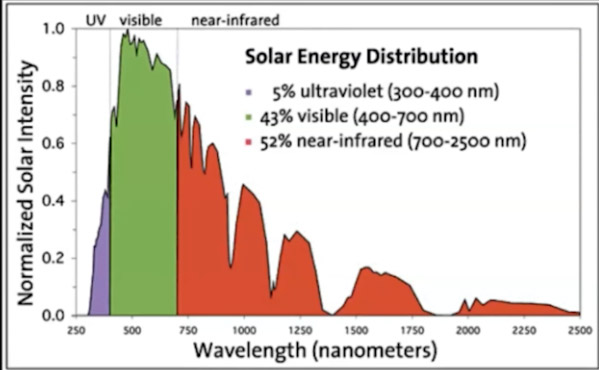
This is one of the reasons why exposing as much bare skin as possible to the sun for an hour a day is my No. 1 recommendation to optimize your health. And it’s free. As you can see in the graph below, 52% of the sun’s rays are near-infrared.
Download this Article Before it Disappears
Concerning Skin Cancer
As noted by Marik, many shy away from sun exposure as a source of UV and near IR for fear of skin cancer. This is yet another example of medical propaganda. The fact is the sun is a nutrient that will actually decrease your risk of both skin cancer and internal cancers, provided you avoid sun burn.
Another little-known fact is that the fats in your diet can, to a significant degree, dictate how predisposed you are to burning and sun-related skin damage. The key is to limit omega-6 fats in your diet. That means avoiding processed foods, foods cooked in seed oils, and animal foods raised on seed oils and/or grains, such as chicken and pork.
Omega-6 seed oils are primarily linoleic acid (LA), a polyunsaturated fat that is highly susceptible to oxidative damage when exposed to a variety of stressors. What’s more LA can remain embedded in your cell membranes and tissues for up to seven years, all the while wreaking havoc and causing damage through oxidative stress.
As it pertains to sun exposure, the LA embedded in your cell membranes gets activated by the exposure to the sun, which contributes to skin damage. Once you drastically reduce or eliminate LA from your diet, your risk of sunburn will be dramatically reduced over time, as will your risk of skin cancer.
General Benefits of Photobiomodulation (PBM)
Light in the red and infrared range has several important health benefits, including:
| Increasing mitochondrial ATP production | Increasing heat shock proteins, which help proteins maintain their three-dimensional structure and refold misfolded proteins |
| Activating cell stress responses | Increasing autophagy |
| Reducing inflammation | Speeding up wound healing |
Near-infrared light specifically, which is invisible to the naked eye, can penetrate 5 to 7 inches into your body, into your subcutaneous tissue, muscle tissue, bone and even interior tissues as you can see by the graphic below. This is in stark contrast to far IR that most saunas use, which penetrates less than half an inch.

This is what makes near-infrared saunas so useful, as you can boost melatonin production throughout your entire body, including your organs, thereby detoxing and healing them. In comparison, far-infrared penetrates only 1 to 2 millimeters, yet far-infrared is, unfortunately, what most commercially available electrical saunas use.
General Benefits of Sauna Therapy
Research has demonstrated sauna use can:
| Improve cardiovascular fitness and lower your risk of death from cardiovascular disease, stroke and heart attack |
| Lower your blood pressure |
| Lower your risk of dementia |
| Improve your mood and mental health, and reduce symptoms of depression, in part by sensitizing opioid receptors |
| Strengthen your immune function |
| Reduce all-cause mortality |
| Improve athletic endurance |
| Reduce inflammation by lowering c-reactive protein, and increasing IL-10 and IL-6 (aka, myokine), and activating Nrf2 |
| Activate and replenish stem cells |
| Improve fasting glucose and insulin sensitivity |
| Reduce the stress hormone cortisol7 |
All of these benefits occur in a dose-dependent manner, so the more frequent your sauna use, the more robust your benefits will be. For example, using the sauna two to three times a week has been shown to reduce your risk of cardiac death by about 22% compared to once-a-week use, whereas those who use it seven times a week lower their risk by 63%.
Similarly, those who use it four to seven times a week have a 40% lower all-cause mortality risk than those who use it only once a week. To learn more about these and other health benefits of sauna therapy, see “The Stunning Health Benefits of Sauna Therapy.”
Different Saunas Provide Different Sets of Benefits
Many of the benefits listed above are related to the heat exposure alone, and for heat, it doesn’t much matter what type of sauna you use: a traditional thermal Finnish sauna, a far-infrared sauna or a near-infrared one. Although one needs to be careful as many far IR saunas simply do not get hot enough to generate heat shock proteins and detox.
Near-infrared saunas have benefits that you simply cannot get with the others. Below is a simple chart showing the differences in benefits between the three primary types of saunas available in the U.S.

As you can see, all will provide detoxification to some degree (although the detox provided by far-infrared is questionable, seeing how it barely penetrates your tissue. Far-infrared saunas also oftentimes cannot get hot enough for efficient detox, which requires you to sweat profusely). Detoxification is something just about every person needs, as we’re surrounded by toxins and take them in with both food and water.
Unstructured proteins tend to aggregate, and these aggregates can then form plaques in your vascular system or brain, contributing to neurodegenerative diseases and cardiovascular problems. Heat shock proteins serve a really crucial role in keeping these kinds of problems at bay.
All three will also generate heat shock proteins to some degree. As mentioned earlier, heat shock proteins are important because they refold misfolded proteins and all of us have misfolded proteins.
Unstructured proteins tend to aggregate, and these aggregates can then form plaques in your vascular system or brain, contributing to neurodegenerative diseases and cardiovascular problems, so heat shock proteins serve a really crucial role in keeping these kinds of problems at bay.
Again, there’s a question mark by far-infrared, as many far-infrared saunas can’t get hot enough. Near-infrared saunas also are nowhere near as hot as the Finnish-style sauna, but they don’t need to be, due to the extreme penetration. You’ll sweat profusely and activate heat shock proteins even though the air temperature is lower than a Finnish thermal sauna.
You can determine if your sauna is hot enough for you by measuring your temperature with an oral thermometer. It should be around 101 to 103 degrees Fahrenheit as you finish your sauna. You could also weigh yourself before and after the sauna and you should lose between 2 and 4 pounds of water (sweat). This would be one pint to one quart of water.
Next on the list, melatonin production. This can only be achieved in a near-infrared sauna, as melatonin is not produced in response to mere heat or light in the far-infrared range.
The Importance of an EMF-Free Sauna
Lastly, there’s the issue of adverse health effects of electromagnetic fields (EMF). I published a book about this in early 2020, called “EMF*D.” Virtually no far-infrared saunas on the market are truly EMF-free, even when advertised as such. The reason for this is because EMFs include both electric and magnetic fields, and most saunas address only one of these.
If you’re using a wood-burning Finnish sauna, it will of course be EMF-free, but almost no one has that in the U.S. Most Finnish-style saunas sold here use electrical heaters and emit electrical fields. When you’re detoxing, you want to be in a parasympathetic environment. When you’re exposed to EMFs, it activates your sympathetic nervous system, which impairs your ability to detox properly.
The near-infrared Sauna Space sauna that I use and recommend has no EMFs. And, again, while traditional and some FIR saunas can provide outstanding benefits in detox and heat shock protein generation, neither of them provide the light wavelengths to generate PBM benefits.
What Make Sauna Space’s Bulbs so Unique
Sauna Space uses incandescent heat lamps (shown in the photo further below) that produce the majority of the heat as mid-infrared, plus a significant percentage of near- and mid-infrared frequencies that provide PBM benefits. The spectral distribution of these bulbs is shown in the following graph.
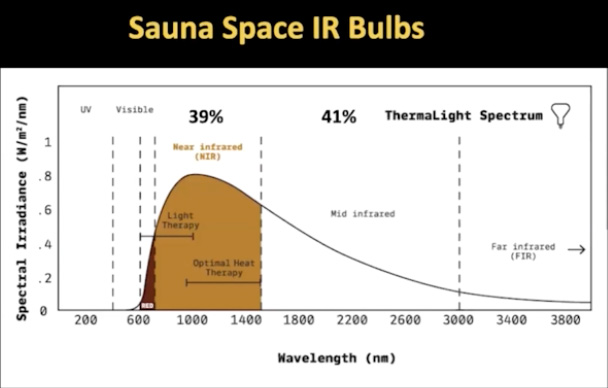
As mentioned, 53% of sunlight is near-infrared, and the Sauna Space bulbs mimic sunlight with 39% of the light being in the near-infrared range. (They do not have any UV light, however, so you will not make vitamin D. The bulbs only mimic sunlight in terms of their infrared distribution.) This is vastly superior to the average red heat lamp (graph below), in which only 14% is near-infrared.
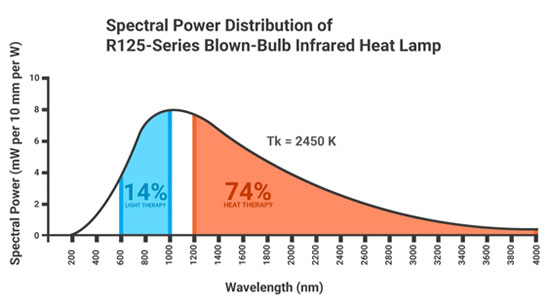
In “Near-Infrared Sauna Therapy — A Key Biohack for Health,” I provide instructions for how you can create your own near-infrared sauna using the Sauna Space near-infrared bulbs.
Sauna Space is the only company that I know of that makes these kinds of bulbs, so they’ve really cornered the market, at least for now. Using these, you’ll be able to make the absolute best, most effective sauna there is, as you’re getting both the standard sauna benefits and the PBM benefits, and none of the EMF hazards.

Optimizing Photobiomodulation With Methylene Blue
If you want to further optimize your mitochondria, you can combine PBM (the near-infrared light) with methylene blue. A 2020 paper8 in Translational Neurodegeneration reviews the benefits of this combination, specifically as it refers to neuroprotection. I believe this combination can also be very valuable in the treatment of long COVID and in post-jab recovery, many symptoms of which are neurological in character.
In 1890, the German physician Dr. Paul Ehrlich published a study showing methylene blue could effectively treat malaria. Interestingly, many of the most useful drugs for COVID are antimalarial and antiparasitic drugs such as hydroxychloroquine. Well, methylene blue is the parent molecule to chloroquine.
Methylene blue can be particularly useful for addressing the fatigue that is so common in long COVID. You can learn more in “The Surprising Health Benefits of Methylene Blue,” in which I interview Francisco Gonzalez-Lima, Ph.D., who has spent many years studying this drug.
In closing, you can find the latest, updated protocols for long COVID9 and post-jab injuries10 on the FLCCC’s website. These protocols are continually updated as the team learns more.
- 1, 9 FLCCC Alliance, I-RECOVER Long COVID Treatment
- 2, 10 FLCCC Alliance, I-RECOVER Post-Vaccine Treatment Protocol
- 3 Journal of the American College of Cardiology July 2022; 80(2): 138-151
- 4, 5 Metab Syndr Relat Disord February 2019; 17(1): 46-52
- 6 Physiology February 5, 2020
- 7 YouTube The Science & Health Benefits of Deliberate Heat Exposure | Huberman Lab Podcast #69
- 8 Translational Neurodegeneration 2020; 9: 19
Can You Kill Warts With Duct Tape?
Reproduced from original article:
https://articles.mercola.com/sites/articles/archive/2024/02/24/wart-duct-tape.aspx
The original Mercola article may not remain on the original site, but I will endeavor to keep it on this site as long as I deem it to be appropriate.
Analysis by Dr. Joseph Mercola February 24, 2024

STORY AT-A-GLANCE
- Common warts are benign skin growths triggered by an infection with human papillomavirus (HPV), affecting up to 20% of the population. Most notably the prevalence is higher in children than adults
- After exposure, it can take up to six months for a wart to develop and most disappear without treatment. However, data show that if you want to remove warts, duct tape is an effective, inexpensive and painless method that does not leave scar tissue
- Two studies demonstrated duct tape removed 80% to 85% of the participant’s warts as compared to 60% of those who received cryotherapy
- Other conventional removal methods include prescription strength acid, minor surgery and laser treatment, each of which is painful and typically leaves a scar. Other at-home treatments that are not painful and don’t leave a scar include garlic, banana peel, pineapple juice and aloe vera
There are several different types of warts, but most are benign skin growths that affect up to 20% of the population.1 Although they’re common, the prevalence in school children is higher than in adults and they are more common in immunosuppressed patients and those who handle meat.
While they can occur at any age, they’re rare during infancy and the prevalence peaks in school age children at roughly 16 years. Traditional medicine practitioners and Western medicine doctors have looked at several ways of eliminating this skin growth from their patients. It turns out that you may have the best chance of success treating skin warts at home with duct tape.
What Are Warts?
Before we talk about how they’re removed, let’s talk about what they are. Warts are caused by a viral infection along the top layer of the skin, most generally from human papillomavirus (HPV).2 Currently, well over 100 types of HPV have been identified but only some of those tend to infect the skin after direct or indirect contact with an infected person.
Your risk of infection rises when there is a break in the skin or a disruption to the epithelial barrier. There are several common wart infections, including the common wart, genital wart, flat wart and deep palmoplantar warts. Treatment can be difficult because warts frequently recur, and yet sometimes they resolve spontaneously within a few years.
There are a small number of HPV subtype infections that are associated with the development of malignancies, but those don’t cause the common wart growth you find on your hands, fingers and other areas of the body that are commonly touched. The common wart has a rough texture and usually has small black dots in the center, which are clotted blood vessels.
After exposure, it can take up to six months for a wart to develop and although they often disappear on their own, many people choose to have them removed because they can be embarrassing.3 You can reduce your risk of developing warts by avoiding direct contact with them, including warts on your own body.
If you pick at a wart, it tends to spread the virus. Warts tend to appear in areas of the skin that have been broken, so biting your fingernails or nibbling the skin around the nails increases your risk.
Does Duct Tape Kill Warts?
There are case studies and credible examples of home remedies that can help remove the common wart. But as Dr. Michael Greger, founder of NutritionFacts.org, notes, many things can be attributed to curing warts because most go away on their own.4
He notes one study that followed 1,000 children for two years during which the researchers found that two-thirds of the warts disappeared without any treatment, suggesting that the best treatment may be to leave them alone unless treatment is warranted.
It is assumed that spontaneous healing is associated with an immune response in the body. This is based on studies where a wart was injected with a vaccine or a placebo. In this study, Greger notes that the vaccine appeared to accelerate the immune process and cleared the wart. The problem is that injections hurt and 30% of the children who had their warts injected with the vaccine developed a flu-like syndrome.5
Multiple studies have demonstrated that a placebo effect on warts can cure approximately one-quarter of the cases and traditional medical therapies can resolve approximately 50% of the warts. For duct tape to be considered efficacious, it would have to cure at least as many as conventional treatments.
One group of researchers6 tested duct tape against cryotherapy to treat common warts in 51 children and young adults ages 3 to 22 years. The participants were randomized and 26 were treated with duct tape and 25 with liquid nitrogen for 10 seconds every 2 to 3 weeks for a maximum of six treatments. The data revealed that 85% of the participants using duct tape were cured while 60% of the participants using cryotherapy had complete resolution.
In other words, the duct tape worked far better than the current medical treatment. As Gregor notes,7 the researchers observed the only adverse effect from the duct tape was a minimal amount of local irritation. Yet cryotherapy is painful, causes bloody blisters that can get infected and one young child vomited before each cryotherapy session in fear of the pain.
Download this Article Before it Disappears
What’s the Best Type of Duct Tape for Wart Removal
Further studies tried to replicate the results. A 2007 paper8 analyzed the cost-effectiveness of several treatments for warts and found that duct tape was the most cost-effective but “published evidence of its effectiveness is sparse. Duct tape could be adopted as the primary treatment for cutaneous warts if its effectiveness is verified by further rigorous trials.”9
Greger discussed10 the results of a second 2007 study11 that looked at the treatment of common warts in adults using duct tape in a double-blind, randomized controlled trial. In this study, the researchers engaged 90 immunocompetent adults who had at least one wart and randomized them to either be treated with moleskin with transparent duct tape or moleskin alone.
They found no statistically significant differences in the two groups for the treatment of warts in the adult population. To determine whether the difference was the age of the participants, Greger describes another study in which 100 school children were randomized to receive treatment with duct tape or a corn pad. In this study the researchers did the same thing, applying clear duct tape, and they got the same results — the duct tape failed.
At that point, the question of whether duct tape could help treat the common wart was dropped as ineffective since follow-up studies had demonstrated different results than the original study using a larger number of participants.
However, since duct tape appeared to be working clinically, could the difference be in the type of duct tape that was used and not in the age difference of the participants? Greger quotes from a 2011 paper12 published in the British Journal of Dermatology titled “Clear Duct Tape is Not Duct Tape,” in which the author postulated:
“[C]lear duct tape and moleskin both contain an acrylic-based adhesive, whereas standard silver duct tape contains a totally different rubber-based adhesive … It is likely that the success of traditional duct tape is associated with the … adhesive that comes in direct contact with the wart during treatment.”
In fact, another later study13 published in 2016 engaged 60 immunocompetent participants and after two months demonstrated that duct tape adhered with cyanoacrylate (Super Glue) resolved 80% of the warts as compared to 60% that resolved in participants who received cryotherapy.
Quoting from a 2005 Mayo Clinic Health Letter,14 Greger reads the first line of the answer to a question posed by a grandmother whose 14-year-old grandson was embarrassed by the warts on his hand. “Odd as it may sound, duct tape is a legitimate and often effective treatment for common warts.”
Conventional Treatments for Warts
Duct tape is unconventional and inexpensive, both of which are not typically well-accepted in Western medicine. Following the 2002 study that initially demonstrated duct tape could effectively remove the common wart in 80% of the participants, Greger shared some of the public physician comments. Some said they had used duct tape for decades, while others were not happy, writing that the information “could damage the reputation of cryosurgery for this indication.”15
Another objection was that the 10-second application is only useful on very thin lesions and in order to remove warts the cryotherapy “should elicit a vesicular reaction that will separate the papilloma from the underlying skin and, yes, this hurts.”16
Finally, Greger notes that Dr. William Abramovitz from Baylor University Medical Center went on to make light of the child who vomited out of fear before each application, writing that “Maybe the child who vomited prior to each application figured out the unintended conclusions of the design of this study.”17
Cryotherapy is just one of the recommended treatments for common warts. Mayo Clinic18 lists others in current use, including prescription-strength salicylic acid and other acids, such as trichloroacetic acid to remove the wart one layer at a time. These acid treatments are done in the office where the doctor first shaves off the surface of the wart and then applies the acid with a wooden toothpick. This requires repeated painful treatments every week or two.
Other options include minor surgery that can leave a scar and laser treatment to cauterize or burn the blood vessels that feed the infected tissue. This causes the wart to eventually die. However, research evidence supporting the effectiveness of laser treatment is limited; in addition to this, the treatment is painful and typically leaves a scar.
Mayo Clinic19 notes that one of the goals of treatment is to stimulate the immune system to fight the virus. They write that non-prescription strength at-home acid and freezing treatments may be effective — unless you have an impaired immune system or diabetes.
Other Effective Home Remedies for Warts
Common warts can go away on their own, especially in children. However, there are several ways to get rid of them at home, including duct tape, depending on your healthcare provider’s advice. It’s important to remember that these applications are for common warts and not those that you may find on your face or genitals. In these cases, seek medical advice to avoid complications.
| Duct tape — Mayo Clinic20 recommends covering the wart completely with standard duct tape for six days. Soak it in water and gently remove the dead tissue with a disposable emery board. Leave it exposed for 12 hours and then repeat the process until the wart has disappeared. |
| Salicylic acid — This product comes in patches, ointments and pads to help remove layers of the wart.21 Before application, immerse your wart in warm water and file dead skin with a disposable emery board. Salicylic acid may not kill the virus causing the wart, however, and it may return. |
| Garlic — Antiviral properties in garlic may help fight the virus and support your immune system. Apply the garlic to your warts but do not leave it in contact with your skin overnight, since this may cause a burn.22 |
| Banana peel — The inside of a banana peel may be placed in direct contact with the wart and taped in place for a few days. Remove it and replace it with a new banana peel until the wart disappears, which may take up to three weeks.23 |
| Pineapple juice — Apply the juice directly to the wart on a cotton ball or put a small slice of pineapple on the wart and cover it with a bandage for three to five minutes. Repeat two to three times a day.24 |
| Aloe vera — Dab a cotton ball with aloe vera gel and place it in contact with the wart, taping it in place to leave it on for a few days. Reapply every aloe vera every few hours.25 |
- 1 Wart, August 14, 2023
- 2 Medscape, September 25, 2020
- 3 Mayo Clinic, Common Warts, Overview, Prevention
- 4, 5, 7 Nutrition Facts, June 3, 2019
- 6 Archives of Pediatrics and Adolescent Medicine, 2002; 156(10)
- 8, 9 British Journal of Dermatology, 2007;156(4)
- 10, 14 Nutrition Facts, June 10, 2019
- 11 Archives of Dermatology, 2007; 143(3)
- 12 British Journal of Dermatology, 2011;165(2)
- 13 Journal of Advances in Medical and Pharmaceutical Sciences, 2016; 8(3)
- 15 Nutrition Facts, June 5, 2019
- 16 Nutrition Facts, June 5, 2019 Video Min 1:18
- 17 Nutrition Facts, June 5, 2019 Video Min 1:24
- 18, 19, 20, 21 Mayo Clinic, Common Warts, Treatment
- 22 Dermatology Reports, 2011;3(1)
- 23 American School of Natural Health, Banish Warts with Banana Peel
- 24, 25 The Healthy, April 22, 2021
How Does Ear Piercing Change Your Skin’s Microbiome?
Reproduced from original article:
https://articles.mercola.com/sites/articles/archive/2023/12/27/ear-piercing-skin-microbiome.aspx
The original Mercola article may not remain on the original site, but I will endeavor to keep it on this site as long as I deem it to be appropriate.
Analysis by Dr. Joseph Mercola December 27, 2023

STORY AT-A-GLANCE
- Ear piercing represents a catastrophic environmental disturbance, one that drastically changes the microbial communities living there
- Microbial changes start when the skin is sterilized for the procedure, while piercing “reshapes the skin’s physical topology” and the insertion of jewelry further alters the microbes’ environment
- Skin piercings create “hospitable niches” where bacteria can thrive, including areas of increased moisture and nutrient retention
- Ultimately, piercings increased microbial diversity and ecological complexity
- Piercings may also cause a shift toward moist skin microbiomes, resembling those typically found in areas like the nose, armpit and groin
Piercings are an ancient form of human self-expression that are also sometimes used for religious and spiritual reasons.1 5,000-year-old Ötzi the Iceman was found with pierced earlobes, signaling the importance of piercings for ancient societies.2 In the U.S., ear piercing is especially popular — about 84% of women and 64% of men have pierced earlobes.3
While the piercing itself takes only a moment, to the microbes on your skin it represents a catastrophic environmental disturbance, one that drastically changes the microbial communities living there.
In a study from McGill University, Canada, researchers observed 28 individuals with earlobe piercings to track shifts in skin microbiomes. Ultimately, they found even a seemingly simple ear piercing represents “ecosystem engineering on the human body.” According to lead study author Charles Xu:4
“We know from anthropology and sociology that piercings are uniquely human symbols of expression, connection, and identity. With this study, we’ve shown that skin piercings also represent an unintentional act of ecosystem self-engineering of the ecological landscape that is the human skin.”
Ear Piercing Shifts Your Skin’s Microbiome
The microbiome refers to all the microbes that live in and on your body. Your skin, as the largest organ, is home to many microbes that work in concert to keep your biological systems running smoothly. Writing in Experimental Dermatology, scientists with Hallym University explain:5
“Humans maintain a cooperative symbiotic relationship with their skin microbiota, a complex community of bacteria, fungi and viruses that live on the surface of the skin, and which act as a barrier to protect the body from the inside and outside. The skin is a ‘habitat’ and vast ‘ecosystem’ inhabited by countless microbes; as such, relationships have been forged through millions of years of coevolution.
It is not surprising then that microbes are key participants in shaping and maintaining essential physiological processes. In addition to maintaining barrier function, the unique symbiotic microbiota that colonizes the skin increases the immune response and provides protection against pathogenic microbes.”
But this microbiome is vulnerable to its environment, such that punctures and the introduction of a piece of jewelry alter its inhabitants. The McGill University team swabbed the skin of people about to get ear piercings, then swabbed the skin again over the next two weeks to document changes.6
But the interference to skin microbiome starts even before the actual piercing, when skin is sterilized for the procedure. This alone is a “major environmental disturbance to the local skin microbiome,” followed by piercing, which “reshapes the skin’s physical topology.”7 The insertion of stainless-steel jewelry further alters the microbes’ environment.
“This is expected to produce a novel ecological niche that differs from the previously unpierced skin in many ways such as surface area, temperature, acidity, humidity, and environmental exposure. This drastic environmental shift should fundamentally alter the ecological and evolutionary forces acting on the piercing microbiome,” according to the study.8
Ear Piercing Increases Microbial Diversity and Ecological Complexity
In the two weeks following ear piercing, the team found a significant increase in the number of unique DNA sequences, known as amplicon sequence variants (ASV) richness, at the piercing site. In a control group of people who did not get piercings, ASV richness remained stable.
Skin piercings created “hospitable niches” where bacteria can thrive, including areas of increased moisture and nutrient retention. Skin pH increased along with moisture, supporting the growth and survival of bacteria. In addition, earring studs may act as physical traps where debris, such as sweat and sebum, can accumulate, acting as nutrient sources for microorganisms.9
The potentially dangerous bacteria Staphylococcus epidermidis and Cutibacterium acnes bacteria were particularly prevalent at the piercing site. While “they’re both potentially dangerous,” Science Alert reported, “… when they exist together in the same spot, they tend to keep each other in balance.”10 The interplay between these two forms of opportunistic pathogens may explain some of the changes observed in the skin following piercing. The study noted:11
“Both C. acnes and S. epidermidis are common members of skin microbiomes that help maintain skin homeostasis through competitive exclusion of potential pathogens, production of antibacterial bacteriocins, and priming of the skin’s innate Toll-like receptor (TLR) immune system.
Against each other, however, they compete using a variety of methods including the production of antimicrobial short chain fatty acids, bacteriocins and polymorphic toxins, and electricity. The strong antagonism between C. acnes and S. epidermidis may help explain the observed change in the piercing microbiome.”
The study also found piercings may cause a shift toward moist skin microbiomes, resembling those typically found in areas like the nose, armpit and groin.12 Further, the researchers suggest piercings could act as a model for studying biological responses to environmental change:13
“We show that the piercing process — skin sterilization, piercing of the skin, and insertion of a metal stud — has a demonstrable impact on the ecology of the local skin microbiome.
Despite sterilization serving as a major environmental disturbance that kills many resident species, we found that, over time, the new piercing environment was significantly associated with greater biodiversity and ecological complexity, with fundamental differences in the nature of biotic interactions compared to exposed earlobe skin.
… By significantly altering the composition and ecology of the resident human microbiome, skin piercings could serve as a model for insights into the response of microbiomes to environmental disturbance as well as community assembly processes more generally.”
It’s even possible that the microbial changes that occur on human skin after piercing could shed light on how catastrophic environmental events shape larger ecosystems.
According to study author Rowan Barrett, “Piercings represent a nice tractable model to gain better understanding of the general processes involved in community assembly following environmental change. If we understand these processes, we might be able to incorporate policies or engage in active management practices to aid the recovery of biological communities.”14
Download this Article Before it Disappears
Alterations to Skin Microbiome Can Lead to Skin Problems, Systemic Disease
Millions of bacteria fungi and viruses live on your skin. Similar to the microbiome in your gut, when these microorganisms aren’t balanced it can result in skin problems, such as atomic dermatitis, acne, dandruff and chronic wound infections, and even systemic disease.15
“The cutaneous innate and adaptive immune responses can modulate the skin microbiota, but the microbiota also functions in educating the immune system,” according to Nature Reviews Microbiology.16 Many factors can influence the makeup of your skin microbiome — piercing is just one of them. Even the regular exfoliation of skin cells is a major player. As written in Microorganisms:17
“The outer layer of the epidermis continuously releases keratinized skin cells, leading to self-renewal of the skin every four weeks. Every hour between 500 to 3000 cells exfoliate from 1 cm2 of skin, which means that one adult releases between 600,000 and a million or more cells per hour. Since about 10% of exfoliated cells contain bacteria, this mechanism may significantly affect the microbiome composition.”
A Healthy Microbiome May Start In Utero
Other factors include the thickness of your skin and density of hair follicles. Sweat, aging, wrinkles, ethnicity and your living environment are also involved. Whether you live in an urban or rural environment, interact with animals and get regular exposure to sunlight all influence the microbes on your skin.
Young children also tend to have greater diversity in fungal species than adolescents and adults, while healthy microbiome may be established in utero. The placenta has a metabolically rich microbiome, while further colonization occurs via vaginal delivery. In fact, the facial skin microbiome in 10-year-old children is influenced by their childbirth method — vaginal or cesarean section (C-section).18
C-section delivery is associated with an increased risk of immune system and metabolic disorders, possibly due to altered microbes. Research by Gloria Dominguez-Bello, president of The Microbiota Vault, and colleagues revealed, however, that “vaginal seeding” of C-section babies successfully restores maternal microbes in the infant when done immediately after birth, naturalizing their microbiota.19
While it’s unknown if restoring the babies’ microbiota after birth leads to long-term health outcomes, Dominguez-Bello intends to find out. She told People:20
“If a baby is born via elective C-section, with no water breaking, they are not exposed to the mother’s microbiome in the vagina. But we have shown that if we normalize, at least partially, the microbiome of a baby that is born by elective C-section by rubbing them with gauze soaked in fluid with their mother’s microbiome, we can normalize the mouth microbiome of the baby during the first year of life.
Are we protecting kids against asthma, against Type 1 diabetes, against celiac disease, allergies, obesity by doing this? We are doing a 5-year clinical trial to find out.”
As is the case with gut microbiota, exposure to antibiotics, as is the case with long-term acne therapy, also alters your skin microbiome, including leading to the appearance of antibiotic-resistant species. Transplanting skin microbiome from a healthy person to the skin of another is an increasingly popular option for improving skin conditions without antibiotics and their related risks, although more research is needed in this area.
You’re a Microbial Being
In my interview with Rodney Dietert, Professor Emeritus of immunotoxicology at Cornell University, he explains that we’re microbial beings, as “more than 99% of your genes are from microbes, not from your chromosomes.”21 You have approximately 3.3 million microbial genes, mainly bacterial. Across the entire population of humans, there are just under 10 million different microbial genes, so you won’t necessarily have all of them.
You also have 22,000 to 25,000 chromosomal genes (these genes are what were analyzed through the Human Genome Project), which means you only have about 2,000 more chromosomal genes than an earthworm. As noted by Dietert, since we have about 3.3 million microbial genes, that means we’re more than 99% microbial, genetically.
As such, protecting your microbiome is crucial for optimal health. Whether piercings have a large enough influence on your body’s microorganisms to alter your health remains to be seen. There are, however, several ways you can protect your microbiome as much as possible. In addition to avoiding elective c-sections, this includes:
<tdstyle=”width:50%;” valign=”top” data-title=”Do”>Boost your soluble and insoluble fiber intake, focusing on vegetables and seeds, including sprouted seeds.
| Do | Avoid |
|---|---|
| Eat plenty of fermented foods — Healthy choices include lassi, fermented grass fed kefir, natto (fermented soy) and fermented vegetables. | Antibiotics, unless absolutely necessary. If you do use them, make sure to reseed your gut with fermented foods and/or a high-quality probiotic supplement. |
| Take a probiotic supplement — If you don’t eat fermented foods on a regular basis, a probiotic supplement can be useful. | Conventionally-raised meats and other animal products, as CAFO animals are routinely fed low-dose antibiotics. |
| Chlorinated and/or fluoridated water — This includes during bathing or showering. | |
| Get your hands dirty in the garden — Exposure to bacteria and viruses in soil can help strengthen your immune system and provide long-lasting immunity against disease. | Processed foods — Excessive sugars, along with otherwise “dead” nutrients, feed pathogenic bacteria.
Food emulsifiers such as polysorbate 80, lecithin, carrageenan, polyglycerols, and xanthan gum may have an adverse effect on your gut flora. |
| Open your windows — Research shows opening a window and increasing natural airflow can improve the diversity and health of the microbes in your home, which in turn benefit you.22 | Agricultural chemicals, glyphosate (Roundup) in particular is a known antibiotic and could potentially kill many of your beneficial gut microbes if you eat foods contaminated with it. |
| Wash your dishes by hand instead of in the dishwasher — Research has shown washing your dishes by hand leaves more bacteria on the dishes than dishwashers do.
Eating off these less-than-sterile dishes may decrease your risk of allergies by stimulating your immune system.23 |
Antibacterial soap, as it kills off both good and bad bacteria and contributes to the development of antibiotic resistance. |
- 1 Cutis. 2023 Sep;112(3):139-145. doi: 10.12788/cutis.0847
- 2, 4, 9, 11, 12, 13 Proceedings of the Royal Society B November 29, 2023
- 3 Statista United States: Pierced body parts in 2017, by gender December 20, 2019
- 5 Exp Dermatol. 2023 Dec;32(12):2048-2061. doi: 10.1111/exd.14940. Epub 2023 Sep 28
- 6, 10 Science Alert December 9, 2023
- 7, 8 Proceedings of the Royal Society B November 29, 2023, Intro
- 14 McGill Newsroom December 4, 2023
- 15 Nature Reviews Microbiology volume 16, pages 143–155 (2018)
- 16 Nat Rev Microbiol. 2011 Apr; 9(4): 244–253
- 17 Microorganisms. 2021 Mar; 9(3): 543
- 18 Microorganisms. 2021 Mar; 9(3): 543., The Skin Microbiome in Different Stages of Human Development
- 19 Cell Press August 13, 2021
- 20 People January 3, 2023
- 21 Bitchute, Microbiome and the Immune System, Interview with Rodney Dietert, Ph.D. January 22, 2021
- 22 ISME Journal 2012 Aug;6(8):1469-79
- 23 Pediatrics February 23, 2015
What Are the Health Benefits of Sweating?
Reproduced from original article:
https://articles.mercola.com/sites/articles/archive/2023/12/27/health-benefits-of-sweating.aspx
The original Mercola article may not remain on the original site, but I will endeavor to keep it on this site as long as I deem it to be appropriate.
Analysis by Dr. Joseph Mercola December 27, 2023

STORY AT-A-GLANCE
- When your body temperature rises, sweat glands release water at your skin’s surface, which quickly evaporates and cools your skin and the blood underneath
- In traditional Persian medicine, sweating is used for both preventive care and disease treatment
- Sweat glands secrete antimicrobial peptides that help restrict the growth of various microbes on the skin, potentially helping to reduce infection or atopic dermatitis
- Concentrations of the heavy metals nickel, lead and chromium may be 10 to 30 times higher in sweat than in blood and urine, and some toxins may be preferentially excreted in sweat
- Sweating may offer support for chronic diseases, including cardiovascular, respiratory and joint diseases
Sweating is often viewed as a nuisance — something unpleasant that humans try to avoid and cover up. Yet, this natural and important body process occurs for good reasons. In addition to regulating body temperature, sweating helps maintain homeostasis in your body, including removing waste products and toxins.1
Sweating can also be used therapeutically to support well-being and reduce chronic disease.2 If you’re unable to sweat normally, sweating either too much or too little may signify significant health concerns, another clue of its wide-reaching importance.
Why Humans Sweat
Sweating, also known as perspiration, describes the release of liquid from your sweat glands, which number anywhere from 2 million to 4 million. During puberty, your sweat glands become fully active, with glands in men tending to produce more sweat than sweat glands in women.3
As a method of thermoregulation to help keep your body cool, sweating ramps up if the weather is hot or you’re exercising. However, you may also sweat if you’re feeling angry, stressed, anxious or afraid. Medical conditions, such as cancer and low blood sugar, can also trigger sweating, as can menopause and fever.
Consuming certain medications, including thyroid hormone and morphine, may also make you sweat, as can drinking alcohol or caffeinated beverages or eating spicy foods, a condition known as gustatory sweating.4
When your body temperature rises, sweat glands release water at your skin’s surface, which quickly evaporates and cools your skin and the blood underneath. “This is the most effective means of thermoregulation in humans,” according to researchers with the University of Mississippi Medical Center.5 Beyond cooling you off, sweating also has “important homeostatic functions,” such as:6
- Clearing excessive micronutrients from your body
- Removing waste products produced by metabolic processes
- Eliminating toxins
- Support for chronic diseases, including cardiovascular, respiratory and joint diseases
Health Risks of Excessive or Inadequate Sweating
Your body depends on its ability to sweat normally, such that when this balance is thrown off disease states can result. Hyperhidrosis is the medical term for excessive sweating, believed to affect about 4.8% of U.S. adults, or 15.8 million people.7
Hyperhidrosis is known to interfere with self-esteem, social interactions, relationships and career choices, with many affected reporting problems with work, school, social functioning and emotional health. Close to half — 48% — say their quality of life is poor or very poor as a result of hyperhidrosis.
The condition can also cause dehydration and skin infections.8 A link to systemic conditions is also possible, as sweating disorders may signal dysfunction of the autonomic nervous system, particularly the sympathetic nervous system.9
Hypohidrosis, which is inadequate sweating, and pathologic anhidrosis, an inability to sweat, are also potentially damaging to your health and may lead to dry skin, heat exhaustion, heatstroke and death.10
Download this Article Before it Disappears
Sweating to Help Prevent and Relieve Chronic Disease
In traditional Persian medicine, sweating is used for both preventive care and disease treatment.11 According to a review published in Galen Medical Journal:12
“Reviewing historical medical manuscripts indicates that traditional Persian medicine (PM) scientists have described several methods for the treatment of diseases. Sweating is one of them which has an important role in both prevention and treatment of diseases.
PM physicians were well aware of the health benefits of sweating and believed that sweating removes waste products, maintains the body health, and balances body temperature.
Based on the principles of PM, any disturbances in the excretion of metabolic and dietary waste products can cause disease; therefore, the use of several sweating methods and even diaphoretic herbs have been considered in maintaining human health and as one of the therapeutic method since many centuries ago.”
Indeed, from Roman baths and Scandinavian saunas to Aboriginal sweat lodges, sweating for health has been embraced by cultures worldwide. Researchers writing in the Journal of Environmental and Public Health explained:13
“Sweating with heat and/or exercise has been viewed throughout the ages, by groups worldwide, as ‘cleansing’ … Sweating offers potential and deserves consideration, to assist with removal of toxic elements from the body.
… Sweating is not only observed to enhance excretion of the toxic elements of interest in this paper, but also may increase excretion of diverse toxicants, as observed in New York rescue workers, or in particular persistent flame retardants and bisphenol-A … Optimizing the potential of sweating as a therapeutic excretory mechanism merits further research.”
The researchers noted the following promising roles of sweat in detoxification:
- Sweat may be an important route for excretion of cadmium when an individual is exposed to high levels
- Sweat-inducing sauna use might provide a therapeutic method to increase elimination of toxic trace metals
- Sweating should be the initial and preferred treatment of patients with elevated mercury urine levels
Sweat glands also secrete antimicrobial peptides that help restrict the growth of various microbes on the skin, potentially helping to reduce infection or atopic dermatitis. The sweat gland-derived antimicrobial peptide dermcidin is also thought to play a role in regulating the innate immune system’s response to infection and injury.14
Many Toxins May Be ‘Preferentially Excreted Through Sweat’
Because sweat is 99% water, it’s sometimes said that sweating doesn’t provide a meaningful avenue for detoxification. In the journal Temperature, it’s noted, “The role of sweating to eliminate waste products and toxicants seems to be minor compared with other avenues of excretion via the kidneys and gastrointestinal tract.”15
However, research shows that toxins are, in fact, excreted via sweat. According to research in Archives of Environmental Contamination and Toxicology:16
“Many toxic elements appeared to be preferentially excreted through sweat. Presumably stored in tissues, some toxic elements readily identified in the perspiration of some participants were not found in their serum. Induced sweating appears to be a potential method for elimination of many toxic elements from the human body.”
For instance, concentrations of the heavy metals nickel, lead and chromium may be 10 to 30 times higher in sweat than in blood and urine.17 It’s also noted in the International Journal of Environmental Research and Public Health, “Physiologists have long regarded sweating as an effective and safe means of detoxification, and heavy metals are excreted through sweat to reduce the levels of such metals in the body.”18
That study found levels of nickel, lead, copper and arsenic in sweat were higher when the sweating was induced via dynamic exercise as opposed to sauna usage, although mercury levels in sweat were the same regardless of sweating method.19
Another systematic review found that in people with higher exposure or body burden of arsenic, cadmium lead and mercury, “sweat generally exceeded plasma or urine concentrations, and dermal could match or surpass urinary daily excretion … Sweating deserves consideration for toxic element detoxification.”20
Bisphenol A is another chemical contaminant often detected in sweat, in some cases even when no BPA was found in serum or urine samples.21
Health Benefits of Sauna Usage
Inducing sweating via sauna usage has been linked to many health benefits, including for the heart, respiratory system, joints, chronic pain and brain.22 One mechanism for this effect is thought to be related to the fact that heat stresses your heart and body similar to that of exercise, thus prompting similar effects.23 However, sweating is also part of sauna bathing’s therapeutic effects.
Researchers in Finland — where sauna use is common — found that men who used a sauna four to seven times a week for an average of 15 minutes had a 66% lower risk of developing dementia, and 65% lower risk of Alzheimer’s, compared to men who used the sauna just once a week.24
Waon therapy, a form of dry sauna treatment that warms the entire body, is also linked to improved heart health, including in people with chronic heart failure.25 Separate research published in JAMA Internal Medicine revealed that men who used a Finnish-style, dry heat sauna seven times per week also cut their risk of death in half from fatal heart problems compared to those who used it only once a week.26
This held true even after confounding factors such as smoking, blood pressure and triglyceride levels were factored in. In regard to time, the greatest benefits were found among those who sweated it out for 19 minutes or more each session.
As noted by the study, “Sauna bathing leads to skin sweating — induced fluid loss and increase in heart rate, which are physiologic responses to warm temperature … Our results suggest that sauna bathing is a recommendable health habit.”27
How to Induce Sweating
Regular sauna usage is one way to induce sweating, but it’s not the only one. Virtually any type of intense exercise will lead to sweating, as will exercising in warm temperatures or in a heated room, such as in Bikram yoga. If you choose to use a sauna for sweating, there are several options, including a Finnish sauna, far-infrared saunas and near-infrared saunas.
The difference between the infrared saunas and the traditional Finnish sauna is the Finnish-style heats you from the outside in, whereas the infrared heats from the inside out. Near-infrared saunas have additional benefits as they penetrate your tissues more effectively and at wavelengths not absorbed by water.
The near-infrared range affects your health primarily through interaction with chromophores, light-absorbing molecules found in your mitochondria and water molecules. Near-infrared light also has healing and repairing properties, helping optimize other biological functions.
Remember, if you sweat heavily, you’ll also lose valuable fluids and electrolytes. So, be sure to drink plenty of pure water and replace your electrolytes. Coconut water is one option to replace electrolytes naturally. You can also mix one-quarter teaspoon of Himalayan salt with a gallon of pure filtered water for electrolyte replacement.
- 1, 2, 6, 10, 11, 12 Galen Med J. 2020; 9: e2003
- 3, 4 Medline Plus, Sweating
- 5 National Library of Medicine, StatPearls, Anatomy, Skin Sweat Glands October 10, 2022
- 7, 8 Am J Clin Dermatol. 2023; 24(2): 187–198
- 9 Br J Dermatol. 2018 Jun;178(6):1246-1256. doi: 10.1111/bjd.15808. Epub 2018 Apr 25
- 13 Journal of Environmental and Public Health Volume 2012 (2012), Article ID 184745, 10 pages
- 14 Shock. 2016 Jan; 45(1): 28–32
- 15 Temperature (Austin). 2019; 6(3): 211–259
- 16 Arch Environ Contam Toxicol. 2011 Aug;61(2):344-57. doi: 10.1007/s00244-010-9611-5. Epub 2010 Nov 6
- 17, 18, 19 Int J Environ Res Public Health. 2022 Apr; 19(7): 4323
- 20 J Environ Public Health. 2012; 2012: 184745
- 21 J Environ Public Health. 2012;2012:185731
- 22 Galen Med J. 2020; 9: e2003., Introduction
- 23 Complement Ther Med. 2019 Jun:44:218-222. doi: 10.1016/j.ctim.2019.05.002. Epub 2019 May 2
- 24 Age and Ageing, Volume 46, Issue 2, March 2017, Pages 245–249, doi: 10.1093/ageing/afw212
- 25 Am J Cardiol. 2012 Jan 1;109(1):100-4. doi: 10.1016/j.amjcard.2011.08.014. Epub 2011 Sep 23
- 26 JAMA Internal Medicine 2015;175(4):542-548
- 27 JAMA Internal Medicine 2015;175(4):542-548, Introduction, Conclusions
The Crucial Role of Vitamin D in Physical and Mental Health
Reproduced from original article:
https://articles.mercola.com/sites/articles/archive/2023/10/30/vitamin-d-physical-and-mental-health.aspx
The original Mercola article may not remain on the original site, but I will endeavor to keep it on this site as long as I deem it to be appropriate.
Analysis by Dr. Joseph Mercola October 30, 2023

STORY AT-A-GLANCE
- Vitamin D is a potent immunomodulator, influencing both your innate and adaptive immune responses. As such, vitamin D deficiency has been linked to health conditions such as osteoporosis, autoimmune diseases, cardiovascular diseases and cancer
- Vitamin D is also crucial for the maintenance of healthy bones and nervous system function
- Sun exposure is the primary source of vitamin D, and while sunburn needs to be avoided, this risk needs to be balanced with the need for vitamin D production
- In the critically ill, vitamin D deficiency has been shown to increase infection and mortality rates, and is associated with longer hospital stays
- Chinese researchers concluded that vitamin D status can predict your risk of death from COVID-19, as well as the severity of your symptoms in the acute phase. Having a vitamin D level lower than 36.04 ng/mL was predictive for death
For decades, the conventional medical establishment and media have downplayed if not entirely ignored evidence showing that sun exposure is a crucial part of a healthy lifestyle that prevents, as opposed to creates, diseases — including cancer.
Is that about to change? It’s too early to tell, but surprisingly supportive scientific papers and mainstream media articles have recently highlighted the benefits of sun exposure and vitamin D optimization.
Scientific Review Highlights Importance of Vitamin D
Among them is a scientific review published in the peer-reviewed journal Cureus, in which the authors highlight “the intricate relationship between Vitamin D and patient outcomes.” An excerpt from the paper, “The Sunlight-Vitamin D Connection: Implications for Patient Outcomes in the Surgical Intensive Care Unit,” reads:1
“Vitamin D, known for its multifaceted roles in immune modulation, inflammation regulation, and maintenance of calcium homeostasis, emerges as a pivotal factor in the care of critically ill patients.
Our exploration reveals a high prevalence of Vitamin D deficiency in the SICU, primarily attributable to limited sunlight exposure, comorbidities, and medication use.
Importantly, Vitamin D status impacts infection rates, mortality, and length of stay in the SICU, making it a clinically relevant consideration … The prospect of personalized Vitamin D supplementation strategies offers promise for optimizing patient care.”
The paper goes on to stress that vitamin D’s “crucial role in maintaining human health” goes well beyond its classical role in bone health (by regulating calcium and phosphorus homeostasis).
“Emerging evidence suggests that vitamin D exerts a much broader influence on various physiological processes,” the authors note. For example, they point out that vitamin D is “a potent immunomodulator, influencing the innate and adaptive immune responses”:
“In the innate immune response, Vitamin D enhances the production of antimicrobial peptides like cathelicidins and defensins, which are essential for defense against infections.
The adaptive immune response regulates the proliferation and differentiation of T and B cells, two critical immune system components. By modulating the immune response, Vitamin D can help the body defend against pathogens and may be involved in autoimmune diseases where the immune system mistakenly attacks the body’s tissues.”
As such, vitamin D deficiency has been linked to health conditions such as osteoporosis, autoimmune diseases, cardiovascular diseases, and cancer. According to this paper, vitamin D is also “crucial for the functioning of the nervous system and has been associated with mental health disorders.”
Vitamin D is also a key regulator of cell growth and differentiation, and “Proper cell growth and differentiation regulation is crucial for maintaining tissue health and preventing abnormal cell proliferation, often associated with cancer,” the authors state.
Sensible Sunlight Exposure Is the Primary Source of Vitamin D
Importantly, the authors accurately stress that sunlight is the primary source of vitamin D, and while sunburn needs to be avoided, this risk needs to be balanced with the need for vitamin D production:2
“When ultraviolet B (UVB) radiation from the sun penetrates the skin, it triggers a series of enzymatic reactions that lead to the synthesis of Vitamin D in the body. This process highlights the crucial role of sunlight exposure in maintaining adequate Vitamin D levels …
Using clothing that covers most of the skin and applying sunscreen can block UVB radiation, inhibiting Vitamin D synthesis. While protecting the skin from harmful UV radiation is essential to prevent sunburn and skin cancer, individuals may need to balance sun protection practices with the need for Vitamin D production.
Strategies such as exposing uncovered skin for short periods or considering Vitamin D supplements may be necessary when sun protection is paramount.”
Download this Article Before it Disappears
Vitamin D in Critical Illness
The authors also review the clinical implications of vitamin D in critically ill ICU patients, where the scientific evidence shows vitamin D deficiency:3
- Increases infection rates, including hospital-acquired nosocomial infections
- May increase mortality rates in SICU patients
- Is associated with longer hospital stays
Conversely, higher vitamin D levels in SICU patients have been shown to:
| Reduce infection rates | Improve immune function by directly regulating immune cells’ behavior and regulating adaptive immunity, thereby preventing excessive immune activation |
| Mitigate excessive inflammation | Improve muscle function and mobility, thereby aiding in patient recovery and rehabilitation |
| Support lung function | Mitigate cardiovascular risks and complications |
| Improve mental health | Improve patient outcomes and reduce mortality |
To improve outcomes in SICU patients, the authors recommend taking an individualized approach, where patients with documented vitamin D deficiencies are given vitamin D supplements, with vitamin D3 (the active form) being preferred over D2 (the synthetic version), as it raises levels more effectively.
The authors also accurately recommend assessing the patient’s baseline vitamin D level through blood testing before supplementing, to determine the extent of the deficiency, and to monitor the level during and after supplementation. This is the only way to ensure vitamin D sufficiency, because it’s the blood level that matters, not the individual dose. In conclusion, the authors made the following comments:4
“Through our exploration of Vitamin D’s immunomodulatory effects, anti-inflammatory properties, and role in maintaining calcium homeostasis, it becomes evident that Vitamin D is a critical factor influencing the recovery and overall health of SICU patients.
Despite the challenges and complexities surrounding accurate assessment and supplementation, the implications for clinical practice are substantial. Routine screening, individualized dosing strategies, and patient education can help optimize care in the SICU.”
Vitamin D Status Can Predict COVID-19 Mortality Rate
In November 2020, I coauthored a scientific review on vitamin D’s impact on COVID-19. That paper, “Evidence Regarding Vitamin D and Risk of COVID-19 and Its Severity” was published in the journal Nutrients.5
Media vilified me for my stance on vitamin D, and one journalist went so far as to claim she “couldn’t verify” that I was the author of this peer-reviewed paper, all in an effort to discredit me.
Since then, the evidence for vitamin D against COVID has only grown stronger. Most recently, an observational study6,7 from China concluded that vitamin D status can predict your risk of death from COVID-19, as well as the severity of your symptoms in the acute phase.
In the critically ill, vitamin D deficiency has been shown to increase infection and mortality rates, and is associated with longer hospital stays.
The study, published in the Virology Journal, analyzed data from 399 COVID patients hospitalized between December 2022 and February 2023. The patients were categorized into three groups based on their vitamin D blood levels at admission (normal: 30 ng/mL or higher, insufficient: 20-29 ng/mL, or deficient: less than 20 ng/mL).
Analysis revealed that vitamin D deficiency was associated with more severe symptoms and having a vitamin D level lower than 36.04 ng/mL was predictive for death.
The predictability of COVID-19 mortality was even greater when vitamin D levels were considered together with levels of interleukin-5 (IL-5) and eosinophil. Patients with vitamin D below 36.04 ng/mL, IL-5 higher than 1.7 pg/mL, and an eosinophil count of less than 0.015 had the highest risk of death.
What’s particularly notable here is that 36.04 ng/mL is within the “normal” range for vitamin D, clearly illustrating that “normal” is far from optimal, and not enough when your life hangs in the balance. Most vitamin D experts consider 30 ng/mL half of what an optimum vitamin D level should be, which is 60 to 80 ng/mL.
‘Unexpected’ Life Extension Benefits
October 1, 2023, The Guardian also ran an article8 highlighting some of the “unexpected” benefits of sun exposure, including longer life expectancy and a reduced risk of death from skin cancer. Of course, anyone who has spent any amount of time investigating the matter will not be surprised. That said, here’s an excerpt from that article, written by science correspondent Linda Geddes:
“For decades, it has been drilled into us that if the sun is out, we’d better slip on protective clothing, slop on suncream and slap on a hat to stay safe. There’s little doubt that too much sun exposure — and particularly sunburn — increases our risk of developing skin cancer.
It also prematurely ages the skin. But scientists are increasingly questioning the mantra that sunlight is an evil to be avoided at all costs, and investigating the brighter side of sun exposure.
It’s not just about vitamin D. Though important for strong bones and teeth this sun-induced vitamin is just the tip of the iceberg in terms of the physiological processes that are influenced by sunlight falling on the skin. Sunseekers may even have a longer lifespan.
This counterintuitive connection first came to light in 2014, when a Swedish researcher … published the results of a large study9 that followed the health of around 30,000 women over 20 years.
It found that, on average, women who spent more time in the sun lived for one to two years longer than those who avoided the sun, even after taking into account factors such as wealth, education and exercise.
This increased life expectancy appeared to stem from lower rates of cardiovascular disease and other non-cancer-related illnesses, including type 2 diabetes, autoimmune disease and chronic lung disease.
Other studies10 have since identified a similar pattern, including among pale-skinned Britons … [T]hose with more active sun-seeking behavior were 14% less likely to die from any cause during the [13-year] study period compared to sun avoiders, and their risk of death from cardiovascular disease was 19% lower …
Curiously, active sunseekers’ risk of dying from cancer, including skin cancers, was also 14% lower. [A] similar pattern has been seen in other studies too.”
Your Skin Has Built-In Protective Mechanisms
Geddes accurately describes how melanin, the pigment that gives your skin its dark color, protects your skin cells from DNA damage by absorbing ultraviolet sun rays. This is what causes you to develop a tan. She also explains how melanin production is activated by the release of beta-endorphins in response to sunlight, which have stress- and pain relieving effects all of their own.
And, while skin cancer can be triggered by repeated sunburn that damages your skin, people who get lots of sun exposure still have longer life expectancy than those who avoid the sun. So, clearly, routine sun exposure is not a prescription for death by skin cancer. Quite the opposite.
The key, really, is to avoid the skin damage caused by sunburns,11 and the easiest way to do that is by gradually building up a tan. Start by exposing large portions of skin for only five to 15 minutes if you’re fair-skinned, and longer if you have naturally darker skin, around solar noon.
You want your skin to develop just the slightest hint of pink, then cover back up. Each day after that, add a few more minutes. This will allow your melanin to do its job and protect your skin cells from UV damage. If you start in the spring, by mid-summer, you’ll be able to spend hours outside without burning, and your risk of skin cancer will then be minimal.
Vitamin D Supplements Do Not Confer the Same Benefits
Thankfully, Geddes also accurately notes that vitamin D supplements do not confer the same benefits as sun exposure, and that your vitamin D level is a biomarker of sun exposure, which is something I’ve been stressing for quite some time. Never in the history of mankind have we relied on pills for vitamin D production, and there’s no evidence to suggest that it would be wise to do so. Geddes writes:12
“Surprisingly though, large long-term trials assessing the impact of taking daily vitamin D supplements to prevent these conditions have produced mixed results, prompting some researchers to question whether they may have been looking at this from the wrong perspective.
‘Your vitamin D level is a biomarker that you have been in the sun, but it is not necessarily the active agent involved in human disease pathogenesis,’ says Prof Prue Hart at the Telethon Kids Institute in Perth, Australia …
As evidence mounts for these potentially beneficial effects of sunlight, so do calls for a rethink of public health advice on how best to stay safe in the sun.
In 2020, Weller, Hart, Lindqvist and 12 other researchers published a review13 in the International Journal of Environmental Research and Public Health, alerting doctors and policymakers to the ‘significant public health problem of insufficient sun exposure.’
While they don’t dispute that UV exposure is a major cause of skin cancer, they believe the ‘Slip, Slap, Slop’ approach to sun avoidance — originally advocated by Cancer Council Australia, but now broadly adopted in other countries — may be damaging the health of people living in high-latitude countries such as the UK.”
The one drawback with using sun exposure to maintain a protective vitamin D level is that there’s simply not enough sunlight hitting the earth year-round in some areas. If you live north of 37 degrees North latitude, you may still need a vitamin D supplement to get you through the winter.
Cancer Organizations Trade Skin Cancer for Internal Cancers
Indeed, the U.S. Surgeon General,14,15 the American Academy of Dermatology (AAD) and many other cancer organizations recommend complete and total sun avoidance in order to prevent skin cancer. The AAD will not even acknowledge different recommendations based on skin type.
This is a disastrous recommendation, as having a vitamin D blood level of 40 ng/mL or higher is a key prevention tool for all types of cancer, including internal cancers that are far deadlier than melanoma (malignant skin cancer). Studies have repeatedly demonstrated that it can significantly reduce your cancer risk, and increase your chances of surviving cancer if you do get it.16,17
For example, researchers at the University of California found that women with a vitamin D serum level of 40 ng/mL or greater had a 67% lower risk of cancer compared to women with levels of 20 ng/mL or less.18,19
The study included ALL invasive cancers, except for skin cancer, and had a follow-up period of nearly four years. Higher vitamin D is also associated with lower all-cause mortality.20,21 So, essentially, the recommendation to avoid all sun exposure trades the low risk of skin cancer for a far greater risk of deadly internal cancers.
By adhering to sensible sun exposure guidelines and making sure you do not get burned, you can maximize your benefits and minimize the risks of skin damage that could lead to skin cancer.
On the whole, overexposure to the sun, not all sun exposure, is the real problem when it comes to raising your risk for skin cancer.22 Meanwhile, optimizing your vitamin D via regular UV exposure can help decrease your risk of well over a dozen different cancers that are far more common and far more deadly than melanoma.
Brittle Bones Is a Serious Problem
Optimizing your vitamin D with sensible sun exposure will also protect you against osteopenia (brittle bones) and osteoporosis (bone loss), the prevalence of which is on the rise among younger people.
As of 2020, an estimated 12.3 million Americans over 50 were affected by osteoporosis, and an additional 47 million younger Americans were in the early stages.23 If your bones are getting compromised in your 40s or even 30s, what life expectancy, not to mention quality of life, can you really expect?
Fosamax and other bisphosphonate drugs are not the answer to this, as they are incredibly toxic and can raise your risk of bone fractures, particularly in the thigh bone.24
The reason for this is because these drugs strengthen your bones, but they do that by inhibiting your body’s ability to absorb old bone. As a result, the bone becomes harder, but also more brittle. Truly healthy bone is hard yet flexible.
Other side effects of bisphosphonate drugs include gastrointestinal problems, gastric ulcers, flu-like symptoms, severe bone, joint and muscle pain, and osteonecrosis of the jawbone.
Optimizing your vitamin D and getting sufficient exercise is a far better route for most people. KAATSU, or blood flow restriction (BFR) training is a great option if you’re frail and/or out of shape, as you don’t need heavy weights.
Recent research25 has confirmed that BFR increases not only muscle mass but also bone mass, “primarily through several hormonal pathways at the same time it enhances cardiovascular function.”
As noted by the authors, “The improvements in mobility and gait are indicators of greater health-related quality of life minimizing disability in older adults.” For more details on how BFR works its magic, see my previous article “How to Stay Fit for Life.”
- 1 Cureus October 10, 2023; 15(10): e46819
- 2 Cureus October 10, 2023; 15(10): e46819, Introduction & Background, and Factors Influencing Sunlight-Mediated Vitamin D Synthesis
- 3 Cureus October 10, 2023; 15(10): e46819, Clinical implications of vitamin D in SICU patients
- 4 Cureus October 10, 2023; 15(10): e46819, Conclusions
- 5 Nutrients November 2020; 12(11): 3361
- 6 Virology Journal 2023; 20, Article number 212
- 7 NutraIngredients Asia October 4, 2023
- 8, 12 The Guardian October 1, 2023
- 9 Journal of Internal Medicine April 4, 2014; 276(1): 77-86
- 10 MedRxiv Preprint July 12, 2023
- 11, 22 Dermatoendocrinol. 2009 Sep-Oct; 1(5): 253–261
- 13 International Journal of Environmental Research and Public Health July 13, 2020; 17: 5014
- 14 Surgeon General’s Call to Action to Prevent Skin Cancer
- 15 CNN July 30, 2014
- 16 Anticancer Research February 2011: 31(2); 607-611
- 17 UC San Diego Health System Press Release March 6, 2014
- 18 PLOS ONE, 2016; 11 (4): e0152441
- 19 PR Web April 6, 2016
- 20 Institute of Medicine, Committee to Review Dietary Reference Intakes for Vitamin D and Calcium, Dietary Reference Intakes for Calcium and Vitamin D
- 21 J Clin Endocrinol Metab 2013;98:2160-2167
- 23 The Washington Post October 17, 2023 (Archived)
- 24 Yahoo News October 18, 2023
- 25 Physical Therapy and Rehabilitation July 21, 2020; 9: 128-133