Pain
now browsing by category
Basic Lifestyle Changes Reduce Chronic Back Pain Disability
Reproduced from original article:
https://articles.mercola.com/sites/articles/archive/2025/02/19/chronic-low-back-pain.aspx
Analysis by Dr. Joseph Mercola February 19, 2025

STORY AT-A-GLANCE
- Chronic low back pain is a major global issue, affecting 619 million people annually, often leading to long-term disability, medication dependence and reduced mobility
- Lifestyle strategies, including improved diet and movement, reduced back pain-related disability by 1.3 points in a clinical trial, proving small changes lead to meaningful results
- Office workers using sit-stand desks and movement reminders saw a 50% drop in back pain-related disability, highlighting the importance of reducing prolonged sitting
- A comprehensive review found combining exercise, cognitive therapy and lifestyle changes produced the most significant improvements in chronic back pain relief
- Practical solutions like walking, posture adjustments, core strengthening, stress reduction and healthy nutrition help address the root causes of chronic back pain naturally
Low back pain stands as one of the leading causes of disability around the globe, affecting an average of 619 million people worldwide each year.1
However, lifestyle strategies meaningfully counter chronic low back pain. A randomized clinical trial published in JAMA Network Open reported that those who paired guideline-based care with diet and activity improvements showed a measurable 1.3-point decrease in disability scales.2
Meanwhile, using sit-stand desks and regular movement breaks led to a 50% drop in back pain-related disability for desk workers, contrasted with 14% in the control group.3 These results highlight just how influential small behavioral changes become over time. Additional research found that combining exercise programs with personalized counseling promoted better pain relief and improved function.4
Chronic low back pain, characterized by persistent aches, stiffness and limited mobility, risks compounding into dependence on pain medications and long-term muscle problems if left unchecked. Fortunately, lifestyle modifications can effectively change what feels like an unbreakable cycle of discomfort into something far more manageable.
Healthy Lifestyle Approach Shifts Chronic Pain Outcomes
The JAMA Network Open study set out to compare guideline-based care for chronic low back pain with a more extensive lifestyle program that included tailored diet plans, structured exercise and practical coaching sessions.5 The study enrolled 346 adults who reported ongoing lower back discomfort for at least three months.
Researchers randomly assigned these individuals to two groups. One group received standard physiotherapy and routine guidance, while the other group participated in the Healthy Lifestyle Program (HeLP). The researchers specifically looked at real-life influences like excess weight, smoking, poor diet and limited physical activity.
Both groups were encouraged to engage in typical exercises for back pain, but the HeLP group added a more in-depth approach: additional consultations with dietitians, repeated follow-up calls and custom coaching designed to transform daily habits beyond basic movement alone.
HeLP participants shed 1.6 kilograms more than the control group by the end of the assessment.6 This is roughly 3.5 pounds, which might sound modest until you remember how even minor weight decreases reduce strain on your spine during everyday tasks like sitting, bending or picking up objects.
Data also highlighted that HeLP participants enjoyed distinct gains in daily functioning. The trial traced these changes over 26 weeks and noted that people who deeply engaged with the recommended healthy habits felt less restricted by back pain when going about their routines, whether walking the dog or getting groceries out of the trunk.
One noteworthy point is the concept called the “complier average causal effect.” In simpler terms, that’s the difference researchers saw when comparing individuals who actually attended a certain number of sessions, followed dietary advice and participated in coaching calls, versus those who skipped appointments or didn’t complete their tasks at home.
People in the HeLP group who reached the compliance threshold scored an average 5.4-point improvement in back pain-related disability.7
That sort of improvement goes beyond small talk; it represents fewer disruptions in daily life, from comfortably standing at a work counter to playing on the floor with a grandchild. The magnitude of improvement suggests that, when it comes to chronic back pain, even “bite-size” lifestyle tweaks build momentum. Instead of prescribing medication or scheduling endless in-office treatments, the data confirm that lasting benefits flow from a more holistic approach.
Think of it like building the foundation of a house: a single beam doesn’t hold up the whole structure. You need a strong set of healthy eating habits, regular muscle engagement and a pinch of real-life motivation to shore up your back and lower your risk of future flare-ups.
Sit-Stand Strategies in the Workplace Show Surprising Pain Reductions
A randomized trial published in Occupational and Environmental Medicine investigated another approach to chronic low back pain among office employees.8 Known as the Stand Back trial, this research followed 27 desk workers who experienced persistent back issues beyond the three-month mark.
Scientists wanted to see if reducing total hours spent sitting would bring measurable relief to people dealing with day-in, day-out discomfort that made tasks like bending, standing for long periods or even quick walks more difficult than they should be. These participants were, on average, in their early 50s, many working at desks for at least 20 hours per week.
Everyone in the study reported varying degrees of persistent lower back aches, along with disability levels above a certain clinical threshold.
Researchers divided them into two main groups: one remained under standard guidance without additional equipment, and the other received monthly in-person and telephone counseling about how and why to stand up more often. The second group also got access to a specialized desk attachment designed to let them switch between sitting and standing, along with a wrist-worn device that gently vibrated when the user stayed seated too long.9
The research team closely tracked how these strategies influenced pain, mobility and overall function. Participants in the intervention group learned practical ways to interrupt prolonged sitting. For instance, they were encouraged to alternate between sitting and standing every 30 minutes or so. They also checked in by phone each month to discuss barriers in real life, like workplace layouts or hectic schedules. This focused counseling made all the difference.
People in the intervention group reported feeling more capable of short bursts of movement throughout the day, eventually weaving these breaks into normal routines instead of treating them as an afterthought. It’s noteworthy how these individuals embraced small changes such as two- or three-minute walking breaks, even in tight office corridors or around cubicles.
Half the participants specifically mentioned an uptick in daily energy. One reason behind that might be increased blood flow and reduced muscle tension, two factors that, when combined, ease the stiff, nagging pain that stems from staying in a single position for extended periods.10
The researchers also recorded a significant decline in self-reported disability ratings among the individuals who integrated stand-up strategies. Over the six-month follow-up, the main measure of disability, called the Oswestry Disability Index (ODI), decreased by around 50% for the stand-up group compared with only 14% for those following standard advice.
An eight-point difference in ODI separated the intervention participants and control group across the entire study period. Lower ODI values translate to everyday tasks feeling simpler, whether that’s reaching for items on high shelves or quickly bending to pick something off the floor.

Save This Article for Later – Get the PDF Now
Less Sitting Time Helped Reduce Back Pain
This investigation also looked at raw sitting time. People using the adjustable desk setup averaged a 1.4 hour per day reduction in prolonged sitting, compared to controls who stuck to a more typical desk schedule.
That drop in seated hours aligns with corresponding improvements in how participants scored their back pain. One explanation is that shorter, more frequent breaks take pressure off spinal discs and muscles, reducing the constant tension that leads to chronic soreness.
By moving regularly, individuals also kept their abdominal and back muscles more engaged, providing better structural support to the spine. The researchers also incorporated a modest dose of cognitive-behavioral therapy to facilitate self-management and target participants’ beliefs about pain.
Many office setups don’t naturally encourage standing up every half hour, which is why the researchers also emphasized the role of workplace design. Having a quick button or lever to adjust desk height made it easy to alternate positions, so people weren’t stuck in a single posture. This attention to physical work environments, combined with gentle reminders from a wristband when an employee sat still too long, created a system of cues and reinforcements.
Regular phone support also gave participants someone to talk with whenever they felt their efforts stalled or life got in the way. The Stand Back trial concluded that simply offering sit-stand attachments and reminders isn’t enough; employees benefitted most when they also received coaching about adopting new habits.11
Comprehensive Review Spotlights Superior Strategies for Chronic Back Pain
A systematic review and network meta-analysis published in Healthcare (Basel) also investigated how different lifestyle interventions help people who experience chronic non-specific low back pain.12 Twenty studies were included in this analysis. Most of the studies were randomized controlled trials, and spanned various exercise regimens, behavioral approaches and combined strategies.
Their central question was: Which approach delivers the best relief for individuals dealing with long-term lower back discomfort, especially when no clear anatomical cause exists? The researchers looked at how each intervention improved pain intensity and daily function. They also examined how multiple variables — like exercise type or the presence of behavioral therapy — affected progress.
The researchers found that combining cognitive-based therapy with functional exercise programs delivered some of the highest levels of pain relief. Cognitive-based therapy covers strategies for reworking a person’s thought process about pain, aiming to combat negative beliefs and boost self-confidence in movement.
When therapists then guided participants through functional workouts, including controlled movements, posture corrections and gentle strength-building tasks, pain intensity lowered more notably than with single-focused programs.13
This synergy translated into a tangible shift for day-to-day living — imagine a person who had avoided basic tasks like walking around the block suddenly becoming more active without major flare-ups. The researchers revealed that some interventions, like simple lumbar stabilization exercises, also ranked high in reducing pain severity.
Lumbar stabilization typically involves exercises that bolster the core and spine-supporting muscles, creating a more stable environment for the spinal column.
Because chronic non-specific low back pain often hinges on muscular imbalances and issues with alignment, a well-rounded core is important. Another significant element of improvement was resistance training.14
This approach taps into a different mechanism: building muscle strength around your torso and hips allows these muscles to handle daily stressors more effectively. Even better, if you suffer from daily aches related to too much sitting or suboptimal posture, strengthening your glutes, abs and back helps cushion the load on sensitive vertebrae.
Interestingly, the research also spotlighted how a carefully assembled exercise regimen gave more consistent results than any single type of workout alone.15 In other words, while resistance exercises, lumbar stabilization and functional training each held benefits, blending them often magnified those results. That means if someone you know has been trying only yoga or only lifting light weights, it’s more effective to incorporate multiple approaches.
Addressing Mental Outlook Helps Break the Cycle of Fear-Avoidance
One of the more compelling observations from this analysis was that interventions addressing mental outlook — like cognitive therapy or motivational components — helped break the cycle of fear-avoidance.16 Fear-avoidance happens when individuals believe any movement will aggravate their pain, so they start avoiding even gentle physical activity. That behavior worsens muscle deconditioning, making the pain more noticeable whenever they finally do stand or walk.
Therapies that reassure people about safe ways to be active encourage them to push through that initial apprehension, which over time lowers perceived discomfort. The researchers tracked multiple data points: improvements in pain intensity (often measured with visual scales), changes in functional disability (assessed through questionnaires that capture how well someone carries out everyday tasks) and differences in how participants perceived their overall well-being.
No single “magic bullet” fixed the pain, but rather several small, sustained shifts in habits and exercise routines. Positive results likely spring from a balanced mix of physical strengthening, improved cardiovascular endurance and a gradual reframing of negative beliefs about pain. This kind of broader method acknowledges the body’s complexity.
Sometimes, your spine needs a physical boost, while your mind needs emotional reassurance that daily movements are safe. A multi-pronged intervention delivered exactly that. By looking at real data gathered from over a dozen randomized trials, the researchers made it clear that a wide-ranging, cohesive plan outperformed narrow, single-faceted approaches.
Real Ways to Address the Core Causes of Your Back Pain
The first step in turning around chronic low back pain is to tackle the deeper issues that drive it in the first place. You might be dealing with extra body weight that strains your spine, or long hours sitting at a desk with few breaks. You might also notice how stress, repressed emotions or fear of movement leads you to stay inactive, even though your body thrives when you move. Recognizing these root problems puts you on track for genuine improvements instead of chasing quick fixes.
1. Add walking sessions into your routine — Walking is one of the simplest, most low-cost ways to break the cycle of discomfort. If you spend many hours at a desk, short walks throughout the day loosen up tight spinal muscles and increase circulation. When you walk, your spine gently compresses and decompresses, which supports healthy nutrient flow to those sensitive discs.
You don’t need fancy workout clothes or an elaborate plan — just comfortable shoes and a few extra minutes. If you are worried about balance or stamina, start small with five-minute walks, then gradually build. Think of these short walks as mini tune-ups for your back, giving everything a chance to reset so you feel more mobile and less stiff.
2. Rearrange your sitting pattern — Long stretches at your desk or on the couch lock your spine into a single position for too long. This habit weakens the muscles that hold your back upright and stable. Changing posture every 30 minutes — whether that’s shifting in your chair, standing up or stretching overhead — keeps those core muscles activated.
If you have a job that demands constant computer work, think about adding a timer on your phone. Each time it goes off, do something simple: a few squats next to your desk, a light backbend or a quick lap around the hallway. A standing desk with a walking pad is also useful. This breaks up periods of inactivity and reminds your core and spine to stay engaged.
3. Strengthen core and supporting muscles — If you carry extra abdominal weight or feel unsteady when walking, core exercises will help. Core doesn’t just mean sit-ups or planks. It also includes any movement that tightens and stabilizes your midsection, such as bird dog exercises on all fours or gentle hip bridge lifts.
These workouts act like scaffolding for your spine, so it doesn’t bear all the pressure alone. When your abs, hip flexors and lower back muscles cooperate, they share the load. That eases the strain on any one spot and helps prevent sharp, lingering aches during everyday movements.
4. Introduce movement breaks that fight stress — Back pain often flares when people feel tense or anxious, so mixing relaxation techniques into your routine is key. Slow breathing and gentle neck rolls are good ways to release anxiety and tension that adds to your aches. Every couple of hours, pause what you’re doing, close your eyes and slowly breathe in through your nose.
Then exhale just as slowly. This guides your body out of that anxious or rigid state, lowering stress hormones that sometimes magnify pain sensations. Pair this with a slow, fluid movement, like raising your arms overhead or doing a few lunges — nothing crazy, just enough to keep circulation going.
5. Pay attention to nutrition and weight control — Extra pounds create constant downward pressure on your back. It’s like carrying a backpack filled with heavy items all day. If you aim to lessen that daily strain, avoid ultraprocessed foods, which contain seed oils rich in linoleic acid, a mitochondrial poison, and consume enough healthy carbohydrates to support cellular energy.
Over time, small changes add up, allowing you to move more comfortably because you’re not carrying as much through your spine each step of the way. Lower weight also means better stamina, which makes it easier to stick with active habits.
Each of these steps helps chip away at the underlying triggers of chronic low back pain — excess body weight, prolonged inactivity, muscle imbalances and accumulated tension. You take the momentum you gain from small wins, like more stable posture or a slight decrease in stiffness, and build on it.
- 1 Lancet Rheumatol. 2023 May 22;5(6):e316–e329
- 2, 5, 6, 7 JAMA Netw Open. 2025;8(1):e2453807
- 3, 8, 9, 10, 11, 13 Occup Environ Med. 2018 Jan 12;75(5):321–327
- 4, 12, 14, 15, 16 Healthcare (Basel). 2024 Feb 20;12(5):505
How DMSO Safely Eliminates ‘Incurable’ Pain
Reproduced from original article:
https://articles.mercola.com/sites/articles/archive/2025/01/03/dmso-chronic-pain.aspx
Analysis by A Midwestern Doctor January 03, 2025

STORY AT-A-GLANCE
- NSAIDs (e.g., ibuprofen) and opioids are the standard for pain management but pose significant risks, causing tens of thousands of deaths annually
- Dimethyl sulfoxide (DMSO) provides powerful pain relief, even helping individuals disabled by conditions like failed spine surgeries or severe arthritis regain health
- It is also effective for hard-to-treat pain cases like complex regional pain syndrome, trigeminal neuralgia, fibromyalgia, migraine headaches and post-surgical pain
- DMSO works through multiple mechanisms to relieve pain, including blocking nerve conduction, reducing inflammation, relaxing muscles, and improving circulation
- Unlike opioids where tolerance develops over time, DMSO often becomes more effective with continued use, and many patients require it less frequently or not at all as their conditions resolve
- This article reviews the science behind DMSO, clinical evidence from thousands of cases, and home treatment protocols for pain, arthritis, and injuries, plus tips on sourcing DMSO
Decades of research have demonstrated DMSO treats a wide range of illnesses, and recently, I’ve provided extensive evidence for how it treats:
| Challenging neurological conditions (e.g., strokes, Down syndrome, dementia, brain and spinal cord injuries) | Many autoimmune conditions |
| Eye, ear, nose, and mouth disorders | A myriad of skin disorders |
| Tissue injuries | Disorders of the internal organs |
However, while DMSO often produces remarkable results for those conditions (e.g., over the last few months, I’ve received more than a thousand testimonials from readers who tried using DMSO with great results), it is best known for its use in treating pain. This is because:
- The response it creates is rapid and dramatic, to the point multiple people with chronic untreatable pain have shared with me it “left them laughing because it was so unbelievable.”
- It accelerates the healing of acute and chronic injuries linked to chronic pain.
- It also helps chronic rheumatic diseases like arthritis.
Why DMSO Stands Out
Drugs like NSAIDs and opioids are linked to severe side effects, including tens of thousands of deaths each year.1 NSAIDs cause heart, kidney, and stomach damage, while opioids carry addiction and overdose risks.2
In contrast, DMSO has demonstrated remarkable safety for over 60 years without a single death reported. Its side effects, most commonly mild skin irritation or a garlic-like odor, are minor and temporary. Even at doses 30 times higher than normal, studies show no toxicity.3
DMSO’s unique combination of safety, efficacy, and versatility makes it a transformative option for pain relief and injury recovery — proving that effective medicine doesn’t have to come with dangerous trade-offs.
This program about DMSO on 60 Minutes, for example, provides a context to how impactful it has been for many Americans in pain:
How DMSO Treats Pain
In addition to rapidly treating injuries4 or autoimmune conditions5 (which are often the root cause of pain) DMSO’s has a few therapeutic properties that make it uniquely suited to safely treat a wide variety of pain conditions.
• Conduction blocking — Many different nerves exist in the body. One group, known as the “small fibers” are responsible for transmitting specific sensations and they (particularly the C fibers) are frequently linked to debilitating chronic pain syndromes (e.g., small fiber neuropathy — characterized by sensations of pins-and-needles, pricks, tingling, and numbness alongside burning pain and electrical shocks).
Note: The five most common symptoms of COVID vaccine injuries, in order, are fatigue, post-exertional malaise, brain fog, small fiber neuropathy, and dysautonomia.
DMSO selectively blocks the conduction of the small fibers, thereby stopping the pain without causing significant damage to the rest of the body or having a tolerance develop to it (rather DMSO typically becomes more effective with time). To illustrate:
| A study found 5% to 10% DMSO blocked the after discharges of C-fibers6 (a process associated with painful stimuli). |
| DMSO has been observed to suppress NMDA and AMPA induced ion fluxes in neurons,7 each of which are receptors linked to chronic pain (e.g., NMDA is linked to central pain sensitization8).
Note: This property has been hypothesized to account for DMSO treating complex regional pain syndrome and cancer pain.9 |
| DMSO has also been observed to block sodium and calcium ions’ entry into cells10 (likewise, many local anesthetics work by blocking sodium ion entry). This effect has also been proposed to explain how DMSO can help cancer pain.11 |
| DMSO has also been reported to significantly enhance the potency of local anesthetics.12,13,14,15 |
| In a human study, 50% DMSO was found to produce partial anesthesia (numbness) to pin pricking sensation.16 |
| Isolated sciatic nerves immersed in 6% DMSO for 30 to 120 minutes developed a temporary 40% decrease in conduction velocity.17 A complete blocking of condition has also been observed with 75% DMSO in radial nerves18 and with 5% DMSO in small peripheral nerve fibers.19 |
• Choline esterase inhibition — Acetylcholinesterase inhibitors increase acetylcholine (the neurotransmitter of the parasympathetic nervous system) by blocking their degradation. Numerous studies show DMSO is an effective acetylcholine esterase inhibitor,20,21,22,23,24,25,26 and that it blocks the inhibitory effects of the sympathetic nervous system.27
Chronic pain has been linked to excessive sympathetic activity, and counterbalancing that with an acetylcholinesterase inhibitor has shown promise for treating chronic pain.28 However, unlike those drugs, DMSO does not have a risk of creating excessive acetylcholine levels (possibly because at higher doses it instead blocks cholinergic transmission,29 or because it is a competitive rather than irreversible inhibitor30).
• Anti-inflammatory — Many of my colleagues who used DMSO in practice find it to be one of the most effective anti-inflammatory agents out there. DMSO in turn, has been repeatedly shown to:31,32
◦ Reduce inflammatory cytokines, prostaglandins, and pathologic inflammatory responses to tissue injury.
◦I ncrease anti-inflammatory prostaglandins.
◦ Neutralize (scavenges) free radicals, which are both a cause and result of chronic inflammation and a common cause of tissue injury, degenerative illness, and chronic pain.
Research also shows DMSO prevents experimentally induced edema,33,34,35 (including severe forms36), allergic eczema,37 contact dermatitis,38,39 tissue necrosis,40,41 granuloma formation,42 arthritis,43,44,45 and joint stiffness following injury.46
Since inflammation is a key cause of pain (e.g., “chronic inflammatory pain” is well recognized47), this likely accounts for some of DMSO’s analgesic properties.
• Muscle relaxation — DMSO tends to relax skeletal muscle48 while simultaneously enhancing the contraction of other muscles49 (e.g., 3% to 6% DMSO enhances the contraction of the heart and stomach).
DMSO applied topically to the skin of patients produces electromyographic evidence of muscle relaxation 1 hour after application,50 while another study found 50% DMSO prevented the contraction of frog skeletal muscles.51
A 1966 study found that (as shown by electromyography) muscles in spasm will relax within 60 minutes of topical application. It also found that this relaxation could be used to treat headaches associated with cervical disease and complex regional pain syndrome.52
As muscle tension is a frequent cause of pain and musculoskeletal disorders, this property likely accounts for some of its efficacy for those conditions.
• Circulatory enhancement — DMSO removes blood clots and increases blood circulation53 and has been recognized to eliminate the pain associated with blood clots. This aligns with Chinese medicine’s view that poor blood flow causes sharp, piercing pain.54
Note: One of the most common side effects of vaccinations is them creating tiny blood clots (discussed further here), which then trigger microstrokes throughout the body that can often be detected with an appropriate neurological examination. To this point, many of the injuries reported from the original smallpox vaccine matched the same unusual pains and neurological symptoms associated with blood stasis in Chinese Medicine.
Save This Article for Later – Get the PDF Now
Treating Pain with DMSO
As opioids are seen as the gold standard for pain control, there is very little awareness research has shown a comparable analgesic exists. To illustrate:
• A 1983 study55 using a common research metric (how mice respond to heat and tail flicks) found that DMSO produced an analgesic effect comparable in strength to morphine.
However, this effect was assessed to be due to a different mechanism as an opioid receptor blocker (naloxone) did not affect DMSO’s ability to eliminate pain, DMSO did not produce any of the side effects seen with opioids, and DMSO’s effect lasted far longer (4 to 6 hours and in some cases over 24 hours — whereas in contrast morphine typically lasted less than 2 hours).
Note: Another mouse study using similar tests also found that DMSO blocks pain.56
However, unlike other analgesics (pain killers), DMSO has a variety of unique properties. These include:
• It treats a very wide range of pain conditions, including ones other analgesics can’t address. For example, case reports exist of DMSO treating phantom pain57 (pain outside the body where an amputated limb had previously existed).
• Rather than the body developing a resistance to it (which is what commonly happens with opioids), DMSO often becomes more effective at eliminating pain with subsequent doses, and in many cases, is needed less and less frequently (or not at all because the condition is resolved).
Because of this, while acute pain rapidly responds to DMSO, chronic pain conditions often take 4 to 7 days of applications for DMSO to begin taking effect and 6 to 8 weeks for lasting relief to occur (e.g., to quote one patient, “after twenty-four DMSO injections, I was completely pain-free”).
• In many cases, as is seen with other applications of DMSO, due to DMSO rapidly spreading throughout the body, the effect is systemic. For example, one study found 65% of patients experienced pain relief if DMSO was applied at the site of pain,58 whereas 61.5% experienced comparable relief when DMSO was applied somewhere further away in the body. Because of this, DMSO has been found to help a wide range of pain conditions.
Headaches
Tension headaches (e.g., those caused by muscular tension of the neck) and sinus headaches tend to respond to DMSO (with relief typically lasting 4 to 6 hours), whereas migraine and cluster headaches are less responsive to DMSO. For example, these results were reported59 by two doctors:

Note: Many headaches are incorrectly categorized as migraine headaches. Additionally, while I have received reports of readers with life-changing improvements in migraine headaches, those headaches typically only respond to DMSO if it’s applied during the early stages of the headache.
• Stanley Jacob MD reported on 59 patients with headaches from a variety of causes, of whom over 75% responded to DMSO.
This included 13 out of 17 patient with years of chronic neck pain from cervical arthritis that triggered headaches, (who then required a gradually decreasing DMSO dose), 4 out of 5 patients with sinus headaches improved from DMSO, 2 out of 2 patients with temporal arteritis (causing severe head pain) who fully recovered after DMSO and 26 out of 35 patients who’d had trigeminal neuralgia for more than a year with numerous failed treatments (13 of whom then had a full recovery).60
• Another study found DMSO both relaxes the cervical musculature and alleviates tension headaches.61
Fibromyalgia
The pioneer of DMSO reported that DMSO helped 70% of Fibromyalgia patients62 (with none experiencing side effects), and there are many published examples of it healing this condition.63
Over the years, I have also heard of quite a few cases of individuals with fibromyalgia having a massive improvement in their quality of life from DMSO but simultaneously, I’ve also seen quite a few cases where it needed to be done slowly for a sensitive patient (as otherwise the initial detoxification response was too much for the individual).
Note: This principle is also important to keep in mind when working with other “sensitive patients.”
Spinal Pain
Many of the most profound benefits from DMSO are found in patients with spinal issues (e.g., spinal stenosis, a failed back surgery, surgical scars, severe arthritis, previous spinal cord injuries, or bulging discs), and numerous testimonies (e.g., many can be found in the 1980 Congressional hearing on DMSO64) exist of individuals who had been in years of crippling pain suddenly getting their lives back because of how effectively DMSO treated their pain and restored their mobility.
However, while I frequently read case reports of this (and I’ve now received dozens from readers), I have only located one that specifically evaluated it. In that 1968 study,65 38 patients with lumbar and cervical disc problems received conventional (nonsurgical) treatments, and half also received DMSO — which was found to halve the required treatment time.
Note: Topically applied DMSO is often extremely helpful for herniated discs (and much safer than systemic steroids). Additionally, a few people found injecting DMSO mixed with lidocaine into the vertebral musculature was quite helpful for spinal pain.
Additionally, there are also many instances of quadriplegics who initially took DMSO to alleviate their chronic pain and then gradually regained motor function as a “side effect” of DMSO. In turn, there are many cases of individuals overcoming lifelong paraplegia, (including cases where their “miraculous” improvement could be traced to DMSO as it stopped once DMSO was withdrawn).
Complex Regional Pain Syndrome
Complex regional pain syndrome (CRPS) is a chronic pain condition involving autonomic and inflammatory issues, often triggered by trauma like surgery and linked to small fiber neuropathy. Its causes remain unclear, and treatment usually relies on multiple drugs targeting symptoms.
DMSO is one of the few effective alternative therapies for CRPS, as it blocks pain from small fibers. Unfortunately, its potential for treating CRPS remains largely overlooked.
Note: Complex regional pain syndrome was an adverse event associated with the HPV vaccine.
The supporting evidence is as follows:
| A 1985 study demonstrated that 50% DMSO reduced the inflammation associated with CRPS and improved symptoms associated with the condition.66 |
| A 1996 study of 32 patients with acute CRPS (e.g., heat, redness, pain, swelling, reduced range of motion) gave them 50% DMSO or placebo for 2 months, and a significant improvement was seen in the DMSO group.67 |
| A 2003 study randomized 64 patients with CRPS to receive topical 50% DMSO and 67 patients to receive N-acetylcysteine (NAC) for 17 weeks to a year. This study found that DMSO was a cost effective therapy that produced good to excellent results for the patients, especially when their CRPS was associated with inflammatory symptoms and when it was done earlier in the illness.68 |
| Another 2003 study of 146 patients also comparing 50% DMSO to NAC (over 24 months) found DMSO was effective, particularly for hot (inflammatory) CRPS.69 |
| A 2012 study gave 29 patients (who had had CRPS for less than a year) 50% topical DMSO and found DMSO significantly reduced their pain (with results approaching a complete absence of pain), brought back the functionality of the affected limb and improved their quality of life.70 |
| A 2012 study used a combination of treatments including 50% DMSO for CRPS and found this combination was effective for treating the condition.71 |
| Finally, a 2005 review of the existing therapies for CRPS concluded 50% DMSO had evidence of efficacy and, compared to the other treatment options, was the least likely to cause harm.72 |
Cancer Pain
Many cancer patients experience severe pain (which increases as the cancer becomes terminal), and in 10% to 20% of cases, it does not respond to standard opioid management.73 In many cases however, it does to DMSO. For example:
• A study included two older patients with cancer pain DMSO, one of whom had an excellent response to treatment and one who had a good response.74
• Another study found that of 7 patients with metastatic cancer pain, DMSO gave 2 a full remission and 2 a partial remission.75
• One of the most well known examples was Otis Bowen MD (a popular second term Indiana governor) who “illegally” used topical DMSO to treat his wife’s pain from terminal multiple myeloma and then publicly denounced the FDA’s absurd embargo on it at the AMA’s 1981 national meeting.76
Remarkably, a few years later, Bowen became Reagan’s Secretary of Health and Human Services, but even then, with this highly ethical doctor at the helm of the HSS, DMSO was unable to overcome the FDA’s prohibition of it.77
Note: For decades, the FDA has relentlessly stonewalled life-changing natural therapies to protect the medical industry from competition, and one of their most egregious campaigns was directed towards DMSO.
Surgical Pain
Since DMSO both accelerates wound healing and reduces pain,78 it is uniquely suited to post-operative pain. Numerous studies support this. For example:
• A rat study found administering DMSO into a wound before closing it significantly reduced the subsequent pain and guarding the rats had, suggesting this approach could address a common complication of surgery.79
• A 1967 study found that DMSO applied to the incision sites of thoracotomy (open chest surgery) patients in concentrations of 60% to 80% resulted in significant pain relief, and reduction of the opioids needed (which in turn led to fewer gastrointestinal complications).
These patients as a group were able to cough more effectively, move more easily both in and out of bed, resume early motion of the arm and shoulder, and in general enjoy a more rapid and less complicated postoperative course.80
• Another study gave 90% DMSO to 64 postpartum women with episiotomy pain and found that over half had pain relief and a reduction in swelling and that there was a significant improvement in mobility (with some patients who had left the hospital then requesting to resume DMSO to alleviate subsequent pain).81
Conclusion
Since the pharmaceutical industry revolves around indefinitely selling pills that temporarily “treat” an illness, pain is one of its most coveted markets. DMSO’s remarkable ability to safely eliminate pain (and that being well-known to hundreds of thousands of Americans over 60 years) hence provides some of the most substantial proof I know of that effective therapies are being deliberately withheld from us to protect the medical monopoly.
Fortunately, the internet’s rapid dissemination of information which challenges prevailing narratives, and the unprecedented ascendency of the Make America Healthy Again has created a window to break this medical monopoly. As such, the results many are now having from DMSO are providing critical first hand experiences that will open eyes to the dysfunctional medical paradigm we are stuck within, and I am immensely grateful to see that this is happening in my lifetime.
Author’s note: This is an abridged version of a longer article that goes into greater detail on the data discussed here, how DMSO is used for pain, arthritis and musculoskeletal injuries (e.g., sprains), and provides guidance for personal DMSO use (e.g., dosing, therapeutic precautions and where to obtain it). That article and its additional references can be read here.
A Note from Dr. Mercola About the Author
A Midwestern Doctor (AMD) is a board-certified physician from the Midwest and a longtime reader of Mercola.com. I appreciate AMD’s exceptional insight on a wide range of topics and am grateful to share it. I also respect AMD’s desire to remain anonymous since AMD is still on the front lines treating patients. To find more of AMD’s work, be sure to check out The Forgotten Side of Medicine on Substack.
- 1 Br J Gen Pract. 2016 Apr;66(645):172–173
- 2 The Forgotten Side of Medicine, October 27, 2023
- 3 Ann N Y Acad Sci. 1975 Jan 27;243:497-506 (Archived)
- 4, 31, 64, 78 The Forgotten Side of Medicine, September 29, 2024
- 5 The Forgotten Side of Medicine, October 20, 2024
- 6, 18 Exp Neurol. 1969 Jun;24(2):272-6
- 7 Exp Neurol. 2001 Jul;170(1):180-5
- 8 Anesthesia & Analgesia 97(4):p 1108-1116, October 2003
- 9, 11 Inflamm Allergy Drug Targets. 2010 Sep;9(4):306-12
- 10 J Pharmacol Exp Ther. 1995 Jun;273(3):1273-86
- 12, 13 Amazon, The Persecuted Drug: The Story of DMSO
- 14 Ann N Y Acad Sci. 1967 Mar 15;141(1):524-31
- 15 American Academy of Ophthalmology and Otolaryngology, Volume 71, Issue 6, 918 – 922
- 16 JAMA. 1965 Sep 6:193:796-804
- 17 Annals of the New York Academy of Sciences, 141: 242-247
- 19 Headache. 1966 Oct;6(3):101-8
- 20, 48 Proc Soc Exp Biol Med. 1966 May;122(1):103-7
- 21 Nature. 1966 Oct 22;212(5060):405
- 22, 29, 49 Ann N Y Acad Sci. 1975 Jan 27:243:337-57
- 23, 30 Biochem Pharmacol. 1983 Jan 1;32(1):151-8
- 24 Brain Res. 1991 Dec 6;566(1-2):329-32
- 25 ACS Chem Neurosci. 2017 Dec 20;8(12):2618-2625
- 26 Brain Research, Volume 566, Issues 1–2, 6 December 1991, Pages 329-332
- 27 Japanese Journal of Pharmacology, Volume 18, Issue 1, 1968, Pages 86-88
- 28 Alzheimers Dement (N Y). 2019 Jun 4:5:175-183
- 32, 53 The Forgotten Side of Medicine, September 15, 2024
- 33, 37, 38, 39, 41 Pharmacology. 1969;2(5):313-9. doi: 10.1159/000136034
- 34, 56 Pharmacol Res. 2008 Jun;57(6):419-25
- 35 In DMSO Symposium, Vienna, pp. 18-24. 1966
- 36 Ann Allergy. 1966 Nov;24(11):633-5
- 40 Ann N Y Acad Sci. 1967 Mar 15;141(1):280-90
- 42, 43 Curr Ther Res Clin Exp. 1968 Sep;10(9):486-92
- 44 DMSO, Attenuation of Adjutant Arthritis in Rats by Treatment with Oxygen Radical Scavengers, Part 1
- 45 Am J Vet Res. 1998 Sep;59(9):1149-52
- 46 Clin Orthop Relat Res. 1988 Aug:(233):304-10
- 47 Anesthesia and Analgesia in Laboratory Animals, Second Edition, 2008
- 50, 52, 61 In DMSO symposium. Vienna: Berlin, Saladruck, Volume 21, 1966
- 51 Annals of the New York Academy of Sciences, 141: 310-325
- 54 The Forgotten Side of Medicine, March 31, 2024
- 55 Ann N Y Acad Sci. 1983:411:19-27
- 57, 63 Amazon, The DMSO Handbook for Doctors
- 58 Die Medizinische Welt, March 1, 1969, 11:606-609
- 59, 74 Ann N Y Acad Sci. 1967 Mar 15;141(1):572-85
- 60 Headache: The Journal of Head and Face Pain, 5: 78-81
- 62 DMSO, Fibromyalgia Syndrome
- 65 Przegl Lek. 1968;24(2):298-300
- 66 Unfallchirurg. 1985 Jul;88(7):330-2
- 67 Acta Anaesthesiol Scand. 1996 Mar;40(3):364-7
- 68 Pharmacoeconomics. 2003;21(2):139-48
- 69 Pain. 2003 Apr;102(3):297-307
- 70 Farm Hosp. 2012 Sep-Oct;36(5):385-91
- 71 Neuromodulation. 2012 Mar-Apr;15(2):144-50; discussion 150
- 72 J Fam Pract. 2005 Jul;54(7):599-603
- 73 Pain Ther. 2023 Apr 13;12(3):645–654
- 75 Annals of the New York Academy of Sciences, 141: 506-516
- 76 The New York Times, November 8, 1985
- 77 Wikipedia, Otis Bowen
- 79 Int Wound J. 2014 Apr 21;13(2):252–256
- 80 Ann N Y Acad Sci. 1967 Mar 15;141(1):493-5
- 81 Annals of the New York Academy of Sciences, 141: 403-405
Why ‘Unbalanced’ Muscles Cause Pain
Reproduced from original article:
https://articles.mercola.com/sites/articles/archive/2024/12/26/unbalanced-muscles.aspx
Analysis by Dr. Joseph Mercola December 26, 2024
STORY AT-A-GLANCE
- Muscle imbalances occur when certain muscles become stronger or tighter than their opposing counterparts, disrupting musculoskeletal harmony and causing pain through altered movement patterns
- Common causes include repetitive movements, poor posture, inadequate training routines and lifestyle factors like improper footwear, affecting both athletes and non-athletes
- Hip muscle imbalances significantly impact lower back health, with weakness in hip extensors or flexors altering gait and placing excessive stress on your spine
- Knee pain and injuries, particularly patellofemoral pain syndrome, often result from muscle imbalances
- Natural options include avoiding excessive sitting, regular stretching, strengthening exercises targeting underactive muscles, proper footwear, balance training and maintaining good posture throughout daily activities
Have you ever felt persistent pain in your shoulder, elbow, wrist or lower back, especially after engaging in activities that involve repetitive movements? These discomforts might stem from muscle imbalances — where certain muscles become stronger or tighter than their opposing counterparts.
Muscle imbalances disrupt the harmony of your musculoskeletal system, leading to altered movement patterns and increased stress on joints. This imbalance is particularly prevalent in athletes, including those who perform overhead movements, such as those in baseball, tennis, volleyball and water polo.1 However, muscle imbalances affect non-athletes as well — even working at a computer for long hours each day puts you at risk.
No matter the activity, when one side of your body becomes dominant due to repetitive use, the non-dominant side often lags behind in strength and flexibility. Muscle imbalances aren’t just a matter of asymmetry; they’re significant contributors to pain and injury in both athletes and the general population.
The Causes Behind Muscle Imbalances
Several factors contribute to the development of muscle imbalances. Primarily, repetitive movements in one direction or pattern cause certain muscles to overwork while others become underutilized. For instance, in overhead sports, your dominant arm and shoulder undergo constant stress from throwing or swinging, leading to increased muscle volume and strength on that side.
This dominance results in weaker muscles on the non-dominant side, creating an imbalance. Additionally, inadequate training routines that neglect the non-dominant muscles, improper techniques and insufficient rest periods exacerbate these imbalances. Runner’s knee, also known as patellofemoral pain syndrome, is another condition often caused by overuse and muscle imbalances.
Even chewing gum on one side of your mouth more often than the other, it can also cause jaw muscle imbalance. Lifestyle factors, such as poor posture, improper footwear and sedentary habits, also play a role by promoting uneven muscle development. Understanding these causes is essential for preventing imbalances and the associated pain, ensuring that your body remains balanced and resilient against injuries.
Recognizing the Signs of Muscle Imbalance
Identifying muscle imbalances early helps prevent the progression to more severe pain and injuries. Common signs include persistent aches or soreness in specific joints, reduced range of motion and noticeable differences in muscle size or strength between opposing sides of your body.
For example, you might find that one shoulder is significantly stronger or more developed than the other, or experience tightness in certain muscles that restrict your movement. Additionally, muscle imbalances may lead to compensatory movements, where other muscles or joints compensate for the weaker ones, causing further strain.
If you notice any of these signs, address them promptly through targeted exercises and proper training techniques to restore balance and alleviate discomfort.
Left untreated, unbalanced muscles significantly increase the risk of various injuries. In overhead athletes, for instance, shoulder injuries are among the most common, including rotator cuff tears, impingements and labral tears.2 These injuries occur because the dominant shoulder undergoes excessive stress, leading to overuse and strain.
Elbow injuries, such as medial epicondylitis (commonly known as golfer’s elbow), and wrist injuries like radial epiphysitis, are also prevalent. Lower back pain is another frequent issue, arising from compensatory movements and poor posture caused by muscle imbalances.3 These injuries not only cause pain but also hinder performance and reduce the overall functionality of affected areas.
Save This Article for Later – Get the PDF Now
Muscle Imbalances and Hip Health
Beyond the commonly discussed shoulder and upper limb issues, muscle imbalances significantly impact hip health, often leading to debilitating lower back pain.4 Whether you’re an athlete or simply going about your daily activities, over time repetitive movements may lead to unequal muscle strength around your hips that disrupts the alignment and function of your pelvic girdle.5
Weakness in your hip extensors or flexors can alter your gait, placing excessive stress on your lower back. Studies have shown that hip extensor weakness and hip flexor imbalances are closely linked to the development of chronic low back pain, especially in female athletes.6
Additionally, weakened gluteus medius muscles in the hip region are frequently associated with a positive Trendelenburg sign, indicating compromised hip stability. This instability not only causes pain but also affects your ability to perform movements efficiently. Addressing hip muscle imbalances through targeted strengthening exercises for your glutes and hip flexors helps restore balance, improve posture and alleviate lower back discomfort.7
Knee Injuries Linked to Muscle Imbalance
Knee pain is another prevalent issue linked to muscle imbalances, particularly patellofemoral pain syndrome (PFPS). PFPS affects approximately 22.7% of the general population and is often the result of weakened quadriceps and imbalanced muscle activation around your knee.8
When the vastus medialis, a key quadriceps muscle, fails to activate promptly, it disrupts patellar tracking, leading to increased stress on your knee joint. This imbalance causes pain and predisposes you to further injuries such as ligament strains and cartilage damage.
Moreover, weak hip muscles, particularly the gluteus medius, exacerbate knee problems by failing to stabilize your pelvis during movement, forcing your knee to compensate. Incorporating exercises that strengthen both your quadriceps and hip stabilizers helps correct these imbalances, improving knee alignment and reducing pain.9
Functional Assessments Help Identify Muscle Imbalances
Functional assessments are often used to uncover the underlying biomechanical issues that contribute to pain and injuries. Everyday movements like walking, squatting or even standing reveal how well your muscles work in harmony.
Functional assessments, such as single-leg squats, gait analysis and step-up exercises, provide valuable insights into your muscle coordination and strength distribution.10 For example, during a single-leg squat, discrepancies in hip and knee movements highlight weaknesses or tightness in specific muscle groups.
These assessments go beyond conventional strength tests, revealing how muscle imbalances affect your overall movement patterns. Identifying your unique imbalances and deficiencies enables the creation of personalized exercise programs tailored to restore balance and enhance your body’s natural mechanics, ensuring a healthier, pain-free lifestyle.
Exercise Programs Relieve a Common Muscle Imbalance
Have you ever noticed a forward head posture or rounded shoulders, especially after long hours at a desk or intense training sessions? These are hallmark signs of upper crossed syndrome (UCS), a common muscle imbalance pattern that disrupts your upper body’s alignment and function.
UCS is characterized by an imbalance between overactive and underactive muscles in your neck, shoulders and upper back. Specifically, your upper trapezius and pectoral muscles become tight and overactive, pulling your shoulders forward and your head into a forward position. Conversely, your lower and middle trapezius, serratus anterior and infraspinatus muscles become weak and underactive, failing to stabilize your scapula and maintain proper shoulder alignment.
This imbalance not only causes visible postural problems but also leads to chronic pain in your neck, shoulders and upper back. Studies have shown that a comprehensive corrective exercise program (CCEP) significantly enhances muscle activation, movement patterns and postural alignment in individuals with UCS.11
Over an eight-week period, CCEP incorporates a variety of exercises designed to strengthen your underactive muscles while stretching and relaxing the overactive ones. What makes CCEP particularly effective is its holistic approach, addressing not just the symptoms but the underlying neuromuscular and biomechanical factors that perpetuate muscle imbalances.
Participants in studies have reported lasting improvements in muscle balance and posture, even after a short period of detraining. Cobra yoga pose is one exercise to consider. This traditional beginner yoga pose is a gentle backbend position accomplished from a face-down, on-the-floor position.12
The goal is to strengthen your spine while opening your chest. It’s an excellent counter activity to relieve upper crossed syndrome that occurs when you are working over a desk. Begin by lying on the floor on your stomach, stretching your legs behind you and placing the tops of your feet on the floor.13
Put your hands under your shoulders and keep your elbows close to your body. Press the tops of your feet, thighs and lower pelvis firmly into the floor while straightening your arms to lift your chest. Go only as high as you can while maintaining connection from your lower pelvis through your toes on the floor. Start by holding this for 15 seconds, building to 30 seconds as you grow stronger. Inhale on the way up and exhale with your release on the way down.
Tips to Relieve Muscle Imbalances
Achieving and maintaining muscle balance doesn’t always require intensive training or specialized programs. Natural methods may effectively relieve muscle imbalances and enhance your overall musculoskeletal health. Start by incorporating regular stretching into your daily routine to improve muscle flexibility and reduce tightness in overactive muscles like the pectorals and upper trapezius.
Practices such as yoga help enhance flexibility and promote body awareness, helping you recognize and correct postural deviations. Additionally, flexibility routines also enhance muscle elasticity and joint range of motion, reducing the risk of tightness that contributes to imbalances. Additionally, mindfulness and proper breathing techniques alleviate muscle tension and promote relaxation, addressing the stress that often contributes to muscle imbalances.
Strengthening exercises should focus on the underactive muscles — like your lower trapezius, serratus anterior and gluteus medius — to restore balance and stability. Simple bodyweight exercises, such as planks, side-lying leg lifts and scapular retractions — where you pull your shoulder blades together — can be done anywhere and require no special equipment.
Be sure to incorporate exercises that target both your dominant and non-dominant sides. Unilateral training, such as single-arm presses or single-leg deadlifts, ensures that each side of your body develops equally, preventing one side from compensating for the other.
Proper technique during physical activities is paramount; whether you’re lifting weights, playing sports or performing daily tasks, ensuring that you move correctly minimizes undue stress on specific muscles. Equally important is allowing sufficient rest and recovery periods, giving your muscles time to repair and grow uniformly.
More Natural Methods to Relieve Muscle Imbalances
If you have a movement imbalance it will invariably tend to result in some type of injury over time. Further, your body is naturally asymmetrical. Balance is maintained through the integration of these system imbalances, and when balanced integration fails, structural weaknesses and pain often develop.
Spinal manipulation, commonly performed by physical therapists, chiropractors and osteopaths, is one tool to help relieve muscle imbalance by restoring alignment and reducing tension in your spine, which improves nerve function and alleviates compensatory muscle strain.
Proper footwear is another important element, as it provides stability and arch support, promoting balanced muscle engagement in your feet, legs and hips, which can help prevent muscle imbalances.
Conversely, improper footwear — such as shoes lacking arch support or with a narrow toe box — negatively alter posture and gait mechanics, leading to compensatory strain on certain muscle groups, which may over time cause muscle imbalances and contribute to issues like bunions, knee, hip and lower back pain.
Incorporating balance training, such as standing on one leg or using a balance board, also enhances muscle coordination and prevents imbalances from developing. Moreover, maintaining an ergonomic workspace and being mindful of your posture throughout the day helps prevent the onset of muscle imbalances. You’ll also want to avoid excessive sitting and incorporate plenty of daily movement.
Muscle imbalances, whether caused by repetitive athletic movements, poor posture or specific syndromes like upper crossed syndrome, play a significant role in the development of chronic pain and injury.
However, addressing muscle imbalances through targeted exercises and natural methods will restore harmony to your musculoskeletal system, enhance your physical performance and allow you to enjoy a healthier, more active lifestyle. Embrace these strategies today and take proactive steps toward a balanced and resilient body.
DMSO Is a Miraculous Therapy for Pain and Tissue Injury
Reproduced from original article:
https://articles.mercola.com/sites/articles/archive/2024/10/25/dmso-pain-tissue-injury.aspx
Analysis by A Midwestern Doctor October 25, 2024

STORY AT-A-GLANCE
- The standard approach for managing pain and musculoskeletal injuries often involves NSAIDs (e.g., ibuprofen), which are linked to serious risks, including tens of thousands of deaths annually
- DMSO is a highly effective, natural pain reliever that has helped individuals disabled by chronic pain (e.g., from failed spinal surgery or severe arthritis) regain their quality of life. It also addresses conditions that other therapies struggle to alleviate like complex regional pain syndrome
- DMSO is effective in promoting wound healing and healthy scar formation, making it remarkable for surgical recovery and burns
- DMSO has an 80% to 90% success rate for treating a wide range of musculoskeletal conditions, including arthritis, back and neck strains, sprains, bursitis, and traumatic injuries. Its rapid and dramatic effects have made it popular among professional athletes for quick recovery
Modern medicine often sidelines “miracle” drugs that work too well. Despite decades of evidence showing that the naturally occurring chemical Dimethyl Sulfoxide (DMSO) is a remarkably safe and versatile treatment for a range of challenging conditions — such as strokes, head trauma, spinal cord injuries, dementia, and even Down Syndrome — it has been largely overlooked.
This sidelining is particularly remarkable as DMSO is also one of the most effective treatments for acute and chronic pain, musculoskeletal injuries, and chronic degenerative conditions (e.g., arthritis).
DMSO, Nature’s Healer
DMSO is a powerful, natural compound with several unique properties that make it an incredibly versatile healing agent:
| Rapid absorption — When applied to the skin or ingested, DMSO quickly spreads throughout the body. |
| Cellular protection — It shields cells from lethal stressors like burns, frostbite, blood loss, radiation, and shockwaves, and can rescue already damaged cells on the verge of dying. |
| Safety profile — DMSO is extremely safe,1 and in almost all cases, its only side effects are temporary skin irritation or creating a garlic-like odor. In contrast, the standard of care (NSAIDs) kill tens of thousands of Americans each year and are the leading cause of drug induced hospital admissions. |
| Conduction blocking — DMSO selectively blocks pain signals from small nerve fibers (e.g., C fibers)2,3,4 which are often involved in chronic pain (e.g., DMSO is one of the most effective treatments for complex regional pain syndrome). This blocking effect is reversible and doesn’t cause tolerance. |
|
Choline esterase inhibition — By inhibiting acetylcholinesterase,5,6,7,8 DMSO boosts acetylcholine levels, enhancing parasympathetic function and reducing pain. |
| Anti-inflammatory action9 — DMSO is incredibly effective at rapidly reducing inflammation (e.g., it lowers inflammatory cytokines, scavenges free radicals, and drains edema that would otherwise compress tissues). |
| Muscle relaxation — DMSO rapidly relaxes skeletal muscles, easing pain from tension and spasms.10,11,12 |
DMSO and Tissue Healing
DMSO greatly improves wound healing (e.g., from burns or surgeries). For example:
• A study of 1371 chronic skin wounds that had often remained unhealed for years (e.g., infected ulcers or severe burns) found 95.04% had a rapid and complete recovery (e.g., no burn scars).13 Likewise, a systematic review found DMSO effectively treated ulcers.14
• Numerous studies show that DMSO accelerates limb regeneration in animals15 and surgical wound healing in humans.16 It also enhances the viability of skin grafts and flaps, offering benefits for plastic and reconstructive surgery.17,18,19,20,21,22
• Animal studies have shown DMSO increases the tensile strength of surgical scars23,24 (which significantly improves surgical outcomes), decreases experimentally induced intestinal adhesions25 (a common complication of abdominal surgeries) by 80%, prevents hypertrophic (excessive) scar formation.26
• Human studies show DMSO can flatten and loosen keloid scars27 and gradually eliminate subcutaneous fibrosis induced by radiation.28
• Finally, DMSO is also sometimes used to repair keloid scars. For example, in one study of ten people with keloids, applying 50% to 80% DMSO a couple of times a day induced scar flattening with the loosening of the collagen surrounding the fibrous bundles.29 Similarly, another study found DMSO eliminated (through a gradual softening and reduction of it).30
Save This Article for Later – Get the PDF Now
DMSO and Musculoskeletal Injuries
Many of the early adopters of DMSO went from skeptics to believers because of the rapid and dramatic improvements they saw from it healing acute injuries (e.g., as they had patients with debilitating bursitis in the shoulder recovering within minutes of receiving DMSO).
As it was far safer and more effective than any other way to treat musculoskeletal injuries, joint disorders or chronic pain, DMSO was rapidly adopted by doctors and pharmaceutical companies across the country (e.g., millions were invested to bring DMSO products to market and hundreds of thousands of Americans had life-changing benefits from it).
Unfortunately, as DMSO’s use was skyrocketing, on November 10, 1965, the FDA decided to globally ban all research on it by falsely claiming it was incredibly dangerous. Because of this, there was an explosion and then sudden disappearance of DMSO research, which sadly continued even with Congress repeatedly trying to get the FDA to overturn their indefensible prohibition of DMSO.
Note: A detailed review of DMSO’s extensive safety data and toxicology studies can be viewed here.
As a result, very little knowledge now exists of DMSO’s use in human musculoskeletal injuries other than it existing in a few FDA approved products (where it typically is combined with another agent). Remarkably however, it is fully permitted in veterinary medicine (which led to a lot of Americans using DMSO that was “meant for horses”) where it is frequently utilized for musculoskeletal injuries. Those forgotten studies include:
| A 1964 study,31 where 22 out of 25 patients with subacromial bursitis experienced a rapid improvement within 30 minutes of DMSO, while in chronic cases 32 of 40 patients improved and in some patients, a reduction in shoulder calcium deposits was also noted (which in a later 1967 study,32 were shown on X-ray to disappear following DMSO). |
This 1965 study:33
 |
This large 1967 study:34
 Note: In that study,35 many of the results were immediate and dramatic. For example, this was one bursitis patient.  |
This 1967 study:36
 |
This 1967 study:37
 |
A 1967 study that found:38
 Note: The miscellaneous conditions treated in this study by DMSO included 19 cases of sciatica, 6 cases of coccydynia, and 2 cases of lupus.39 |
Another 1967 study40 found:
 |
| A 1967 study41 gave PT and 70% DMSO to 7 people with frozen shoulders, 4 of whom had excellent pain relief and improved motion. |
A 1967 blinded study42 for acute musculoskeletal disorders (using 10% DMSO gel as a “placebo”) that found:
  In that study, its author (a former president of the Aerospace Medical Association43) remarked:
He then conducted a follow-up double-blind study44 on patients with sprains, strains, bursitis, or tendinitis which found DMSO significantly improved those conditions and reduced the time patients lost from work. |
| A 1994 blinded study45 gave 157 patients with acute tendinopathies (e.g., tennis elbow) 10% DMSO gel or a placebo ointment three times a day for 14 days within 3 days of symptoms starting. Pain of movement under loading and the mobility of the joints were significantly improved after, respectively, 3 and 7 days of treatment with DMSO. After 14 days on DMSO, a further improvement was observed, and 44% of the patients (and 9% of placebo) were pain-free.
Note: DMSO has also been reported to be effective for carpal tunnel syndrome46 (and other hand issues like trigger fingers). For those struggling with carpal tunnel syndrome, I discussed our approaches to the disorder here. |
Finally, a 1967 analysis47 of 76 studies using topically applied (90%) DMSO for musculoskeletal conditions found 72% improved. Specifically:
   Note: The review also included 102 Traumas (contusion, fracture, etc.), 29 Tenosynovitis, 27 Neuritis, 20 Muscle spasms, 20 unspecified types of arthritis, and 220 miscellaneous issues (e.g., fibrositis, epicondylitis, synovitis, calcific tendinitis). To quote the authors:
Finally, at a symposium on DMSO,48 data on 9,521 patients were presented, which showed DMSO was effective therapy in a wide variety of acute traumatic conditions, in acute and chronic subacromial bursitis, osteoarthritis, gouty arthritis, and in some patients with rheumatoid arthritis (along with other conditions such as early Dupuytren’s contracture). Note: A later 1981 study49 also found DMSO was superior to indomethacin in the treatment of gout. |
Sports Injuries
“What I like about DMSO is that you don’t have to interrupt your training every time you get a minor pull or sprain. It doesn’t pump you up like certain pills. It’s simply a very useful thing to use for simple athletic injuries.
Some people have told me that you shouldn’t use it because it might mask the pain of a serious injury, but a good athlete knows his body well. Even when I’m using DMSO, I know when I can push and when I can’t.” — Al Oerter, a discus thrower and the first American to win 4 consecutive Olympic gold medals.50
One of the greatest challenges professional athletes face are sports injuries which prevent them from returning to the field, particularly since many sports injuries are a product of micro-injuries building up until a critical point is passed (e.g., from adhesions and scars in the soft tissue).
In turn, since DMSO both heals micro-injuries and rapidly treats traumatic injury (returning them to full functionality), DMSO was rapidly adopted by professional athletes once they realized what it could do for their careers (and being off the field was often devastating to their careers).
In turn, due to the voice their position afforded them, a few professional athletes (e.g., Atlanta Falcons Quarterback June Jones51 — who now is a coach52) became some of the most impactful advocates for DMSO (e.g., Jones stated in Congressional testimony53 that “veterinary” DMSO was widely used but athletes were afraid of publicly discussing it). Likewise, in 2013, a Dallas Cowboys Lineman stated:54
“You get it [from] the veterinarian and it goes right to the bloodstream. It’s an ointment that’s like anti-inflammatory. You put it on your skin and you put it on a muscle, and I guarantee you, in about 30 minutes you’d feel it. It wasn’t on the list [of banned substances] … we used DMSO and people knew it. Everyone knew about it.”
Furthermore, in his riveting testimony, Jones provided cases that left the Congressmen in disbelief, such as a teammate with a bone chip and a torn ligament (which would require months of recovery and hence end their season) taking DMSO immediately after the injury and 7 or 8 days later returning to the field (with the bone chip remaining but no longer causing issues).
Likewise, at that Congressional hearing, the former team physician for the Oakland Raiders55 testified that he’d used 70% topical DMSO on a careful and controlled basis for his players 20 to 30 times a year for 5 years. From this, he observed that DMSO was the most beneficial when given in the first 3 to 4 days of an acute injury where a muscle or joint had severe swelling, particularly of the extremities, especially the ankle, elbow, hands, or wrist.
Overall, he stated that DMSO provided good to excellent results 70% to 80% of the time (e.g., through reduced pain and swelling) and the players felt they were able to return to play 50% to 75% faster than they had from similar injuries in the past. Conversely, they did not find DMSO was helpful for chronic injuries, but this may have been due to it not being used long enough for the effects to kick in.
Note: He also emphasized that DMSO would transform the field of occupational medicine. I fully agree with his assessment, especially given just how frequently Worker’s Comp fails to help its patients.
Similarly, podiatrist Lowell Scott Weil (who was the physician for both the Chicago Bears and the United States Olympic gymnastics team) used DMSO on a regular basis (particularly injured gymnasts).
After 12 years of using it, he shared,56 he’d seen it rapidly heal injuries (e.g., he had a gymnast who suffered an ankle sprain expected to end her season, but instead quickly recovered and made the U.S. Olympic team, and a football player who tore his hamstring but was able to rapidly return to the field).
Overall, he had a 60% treatment success rate and saw the best response to DMSO for tendinitis, myositis, and post-injury situations such as muscle pulls, ankle sprains, strains, and tears of the soft tissue (and conversely the only side effects he had were skin irritation). Additionally, he also used it for arthritic patients (especially rheumatoid arthritis) with many having dramatic relief. Many other compelling anecdotes exist.
For example, this book57 discusses the experience of an Oregon State track coach and early adopter of DMSO who had many amazing stories of DMSO treating hamstring and achilles tendon injuries such as an athlete being able to return to the field at full capacity 3 days after a normally disqualifying hamstring injury and the story of a blind long distance runner who was able to run due to DMSO fixing musculoskeletal injuries and (according to the author) then played a pivotal role in opening the sport to women.
Note: A major problem in certain sports like football is repeated concussions (which are now recognized to put them at risk for cognitive impairment and dementia later in life). As discussed in the first part of this series, in addition to treating strokes and spinal cord injuries, DMSO is also immensely helpful for mitigating the effects of concussions.
Research also directly demonstrates DMSO’s utility in sports medicine:
• A 1965 study58 treated 47 injured athletes from a wide range of sports (e.g., tennis, diving, or wrestling) by applying 90% DMSO applied to the injured areas 3 times a day initially and then after 2 days, twice a day. The 30 acute traumas (e.g., sprains, strains, dislocations, serious cuts) were observed to rapidly resolve, sometimes “so spectacularly as to compel us to urge our patients to observe greatest caution in order to avoid further damage to a joint.”
The 10 chronic conditions (e.g., tennis elbow) and 7 conditions resulting from prolonged immobilization also responded rapidly and those athletes were often able to quickly return to the field. These results and the lack of observed adverse events led the investigators to argue DMSO urgently needed to become the standard of care in sports medicine.
• A study59 of 78 patients (mostly athletes) with overstrained tendons received Dolobene gel (15% DMSO, dexpanthenol and heparin) for 2 to 3 weeks, with over 50% having a significant improvement of symptoms and those improvements including a 94% improvement in pain, a 55% improvement of swelling, 95% improvement of redness and 92% improvement of warmth.
• A study60 gave Dolobene gel to 30 athletes with soft tissue injuries of the upper and lower extremities twice daily for 4 weeks. There were 4 athletes with contusion of the shoulder, 8 with distortion and contusion of the knee joint, 8 with muscle, tendon and ligament lesions, and 10 with distortion of the ankle joint.
Following DMSO, 10 had an excellent response (improvement), 5 had an excellent to good response, 10 had a good response and 5 had a moderate response. Specifically, pain, inflammation, swelling, reabsorption of hematomas, tenderness and recovery time were assessed.
• A study61 gave Dolobene gel and ultrasound to 15 subjects who had received a blunt tissue trauma (without fracture) to the lower extremity within the last 24 hours. Compared to 15 placebos, the treatment resulted in a faster relief of pain, reduction of edema, and recovery of mobility.
• A 1966 study62 of 28 professional baseball players found that giving them DMSO after injuries caused their downtime be one third of what was observed by the treating physician in the previous year with 42 players.
Note: While not quite the same as getting tackled, I’ve also come across cases63 of individuals taking DMSO immediately after getting hit by a car while crossing the street (which caused injuries but no fractures) and immediately fully recovering.
Conclusion
Many of the benefits of DMSO are so extraordinary that they understandably invite a healthy degree of skepticism, and it is for that reason I have spent months carefully compiling the evidence behind it. Likewise, after presenting the initial case for DMSO to the readership of the Forgotten Side of Medicine, I put out a call for what those who’d tried DMSO had experienced.
In those comments, dozens of readers reported remarkable experiences of DMSO, many of which mirror those described throughout this article, but also other even more remarkable ones (e.g., for a child with Down Syndrome, a man with Parkinson’s and a woman who had severed her spinal cord).
The suppression of DMSO has always deeply bothered me, and in turn, I feel incredibly grateful to be alive at a time when the world is ready to learn of the suppressed medical truths many before me (e.g., the DMSO researchers) devoted their lives to bring to humanity.
Furthermore, I believe this is just the start, as beyond open platforms like Twitter (X) rapidly eroding the public’s trust in corrupt medical dogmas, I know through trusted confidants directly connected to RFK Jr. that the next four years offers an unprecedented opportunity to begin rectifying many of the previously insurmountable problems that have plagued our health care system and make America Healthy Again.
Author’s note: This is an abridged version of a longer article that goes into greater detail on the points mentioned here, others not as extensively covered (e.g., the wealth of evidence DMSO is a life-changing pain treatment), and guidance for topical DMSO use (e.g., dosing, therapeutic precautions and where to obtain it).
That article and its additional references can be read here (along with a companion article discussing DMSO’s remarkable utility for a variety of musculoskeletal injuries and chronic pain conditions and an article about how DMSO treats a variety of “incurable” autoimmune and genetic disorders).
A Note from Dr. Mercola About the Author
A Midwestern Doctor (AMD) is a board-certified physician from the Midwest and a longtime reader of Mercola.com. I appreciate AMD’s exceptional insight on a wide range of topics and am grateful to share it. I also respect AMD’s desire to remain anonymous since AMD is still on the front lines treating patients. To find more of AMD’s work, be sure to check out The Forgotten Side of Medicine on Substack.
- 1 The Forgotten Side of Medicine, October 12, 2024
- 2, 3 Exp Neurol. 1969 Jun;24(2):272-6
- 4 Neurosci Lett. 1993 Feb 19;150(2):145-8
- 5 ACS Chem Neurosci. 2017 Dec 20;8(12):2618-2625. doi: 10.1021/acschemneuro.7b00344. Epub 2017 Oct 16
- 6 Brain Res. 1991 Dec 6;566(1-2):329-32. doi: 10.1016/0006-8993(91)91719-h
- 7 Biochem Pharmacol. 1983 Jan 1;32(1):151-8
- 8 Nature. 1966 Oct 22;212(5060):405
- 9 The Forgotten Side of Medicine, September 29, 2024
- 10 Proc Soc Exp Biol Med. 1966 May;122(1):103-7
- 11 Ann N Y Acad Sci. March 1967, Volume 141, Issue 1, Pages 310-325
- 12 DMSO Symposium. Vienna: Berlin, Saladruck. Vol. 21. 1966
- 13 Ann N Y Acad Sci. 1975 Jan 27:243:408-11
- 14 Wounds UK 15(15):361-370, November 2003
- 15 Ann N Y Acad Sci. January 1975, Volume 243, Issue 1, Pages 257-268
- 16 Klin Khir (1962). 1988:(1):1-3
- 17 DMSO.org, March 12, 1993
- 18, 22 Aesthet Surg J. 2005 Mar-Apr;25(2):201-9
- 19 Otolaryngol Head Neck Surg. 1994 Feb;110(2):228-31
- 20, 21 Plast Reconstr Surg. 2007 Dec;120(7):1819-1822
- 23 Am Surg. 1966 Jun;32(6):421-4
- 24 La Presse Medicale, 01 Jan 1967, 75(1):20
- 25 Arch Surg. 1965 Dec;91(6):920-3
- 26 J Plast Reconstr Aesthet Surg. 2017 Apr;70(4):509-517
- 27, 29 Ann N Y Acad Sci. March 1967, Volume 141, Issue 1, Pages 638-645
- 28, 30 Ann N Y Acad Sci. 1967 Mar 15;141(1):603-12
- 31 Northwest Med. 1964 Mar:63:167-8
- 32, 34, 35 Ann N Y Acad Sci. March 1967, Volume 141, Issue 1, Pages 506-516
- 33 JAMA. 1965;192(4):309-313
- 36 Ann N Y Acad Sci. March 1967, Volume 141, Issue 1, Pages 586-598
- 37 Ann N Y Acad Sci. 1967 Mar 15;141(1):572-85
- 38 Ann N Y Acad Sci. March 1967, Volume 141, Issue 1, Pages 532-550
- 39 A Midwest Doctor, September 25, 2024
- 40 Ann N Y Acad Sci. 1967 Mar 15;141(1):599-602
- 41 Ann N Y Acad Sci. 1967 Mar 15;141(1):569-71
- 42 Ann N Y Acad Sci. March 1967, Volume 141, Issue 1, Pages 496-505
- 43 Aeropsace Medical Association
- 44 Curr Ther Res Clin Exp. 1971 Aug;13(8):536-40
- 45 Fortschr Med. 1994 Apr 10;112(10):142-6
- 46, 63 Amazon, The DMSO Handbook for Doctors
- 47, 48 Ann N Y Acad Sci. March 1967, Volume 141, Issue 1, Pages 517-523
- 49 Terapevticheskii Arkhiv, 01 Jan 1981, 53(7):127-129
- 50 Amazon, DMSO: The True Story of a Remarkable Pain-Killing Drug
- 51, 53 UPI Archives, December 17, 1981
- 52 Wikipedia, June Jones
- 54 New York Post, February 8, 2013
- 55 Dr. Graham Reedy (Archived)
- 56 Amazon, DMSO: Nature’s Healer
- 57 Amazon, The Persecuted Drug: The Story of DMSO
- 58 Gazz. Intern. Med. Chir. 70 (1965): 1605
- 59, 60, 61 Springer Book Archive, DMSO, 1985, Neue Erfahrungen in der Behandlung des Sehnenüberlastungssyndroms, Pages 54–57
- 62 DMSO Symposium. Saladruck, Berlin, 1966
The Many Forgotten Health Benefits of Aspirin
Reproduced from original article:
Analysis by Dr. Joseph Mercola August 29, 2024
STORY AT-A-GLANCE
- Aspirin offers benefits beyond heart health, including cancer prevention, improved pregnancy outcomes during influenza infection and treatment for fatty liver disease and pulmonary fibrosis
- Long-term low-dose aspirin use (over 10 years) may reduce the risk of dementia, particularly in people with pre-existing coronary heart disease
- Aspirin can enhance glucose utilization, reduce fatty acid release, lower cortisol levels and increase metabolic rate, potentially aiding in weight loss and hormone balance
- Studies suggest aspirin may improve survival rates in intensive care units, slow the progression of abdominal aortic aneurysms and reduce the risk of developing Type 2 diabetes
- When considering aspirin use, opt for immediate-release, uncoated versions. The suggested dosage is dependent on your circumstances 82 mg to 325 mg tablet daily with your largest meal
For years, you’ve probably heard that a daily low-dose aspirin can help prevent heart attacks and strokes. Now, suddenly, health authorities are backpedaling on this advice.1
Why the change? They claim it’s about bleeding risks, but there’s more to the story. Look at the timing — this shift comes as newer, far more expensive blood thinners flood the market. These drugs can cost up to $550 a month,2 while aspirin sets you back just $1.50.3
It’s a pattern we’ve seen before with drugs like ivermectin. Safe, effective and cheap medicines get pushed aside to make way for pricier alternatives. The pharmaceutical industry has a long history of this, dating back to when nonsteroidal anti-inflammatory drugs (NSAIDs) were introduced in the 1970s.
They’re telling you to avoid aspirin, but are they telling you the whole truth? As always, I encourage you to look beyond the headlines and consider who benefits from these changing guidelines. Your health — and your wallet — may depend on it.
For decades, aspirin has been a cornerstone in the prevention of cardiovascular disease (CVD). A comprehensive review of 13 primary prevention trials recently revealed that low-dose aspirin is associated with small but statistically significant reductions in major CVD events, such as heart attack and stroke.4
The absolute risk reduction can be up to 2.5%, which means that for every 1,000 people taking aspirin, up to 25 fewer may experience a major CVD event. But the truth is, aspirin offers numerous health advantages beyond heart health that are rarely talked about. Learning about these benefits can help you take control of your health.
Aspirin’s Role in Cancer Prevention
Recent studies have shed light on aspirin’s potential to prevent colorectal cancer (CRC) and other types of cancer. Taking at least 75 milligrams (mg) of aspirin daily for several years has been shown to reduce the long-term incidence and death from CRC,5 with the greatest benefit seen for proximal colon cancers, which are malignancies that occur in the first and middle sections of the colon, also known as the right side of the colon.
In fact, in women, aspirin use for over 20 years was associated with a 35% reduction in CRC incidence.6 The effect appears to be dose-dependent, with longer duration of use linked to greater benefits. Aspirin may also improve survival rates after a CRC diagnosis, with regular users showing reductions in CRC mortality of 29% and overall mortality of 21%.7
Interestingly, the benefits of aspirin use in CRC may extend to other cancer types as well. An analysis of eight trials found that the 20-year risk of any cancer death was reduced by 20%, and gastrointestinal cancer deaths by 35%. These findings suggest that low-dose aspirin use over multiple years could be a valuable tool in your cancer prevention strategy.
Research has also uncovered a role for aspirin in treating certain types of hepatocellular carcinoma (HCC), or liver cancer. A case study revealed that aspirin effectively controlled disease progression in a patient with HCC caused by adenomatous polyposis coli (APC) mutations.8 These mutations, which activate the Wnt pathway, were identified as the primary driver of the patient’s cancer.
By administering high-dose aspirin (300 mg daily), doctors achieved disease control for nearly five years. The effectiveness of aspirin in this HCC case is linked to its ability to inhibit the Wnt pathway, which plays a crucial role in cancer development. In patients with APC mutations, the Wnt pathway becomes overactivated, promoting tumor growth.
Aspirin works by activating glycogen synthase kinase 3 beta (GSK3β), which in turn increases the phosphorylation and degradation of β-catenin, a key protein in the Wnt pathway.
This mechanism effectively counteracts the effects of the APC mutation. Additionally, aspirin’s action as a cyclooxygenase 2 (COX2) inhibitor may contribute to its anticancer effects. This case demonstrates how a common, inexpensive drug like aspirin could be repurposed for targeted cancer therapy based on specific genetic profiles.
Aspirin Improves Pregnancy Outcomes During Influenza Infection
Low-dose aspirin may also offer benefits during influenza infection in pregnancy.9 A study using a mouse model found that aspirin treatment significantly improved vascular function in pregnant mice infected with influenza A virus.10 The infected mice showed impaired blood vessel relaxation, but aspirin treatment restored normal vascular function.
This is important because vascular dysfunction during pregnancy can lead to complications like preeclampsia and restricted fetal growth. The study also found that aspirin reduced inflammation in the blood vessels and decreased viral spread from the lungs to other tissues. Most notably, aspirin treatment improved outcomes for the offspring, including better survival rates and higher birth weights.
These findings suggest that the vascular protective effects of aspirin may help support a healthier pregnancy even in the face of influenza infection. The dosage used in the study was comparable to the low doses of aspirin already safely prescribed to some high-risk pregnant women to prevent preeclampsia. This suggests the treatment could be readily translatable to clinical use. However, as Georgi Dinkov notes:11
“The even better news is that these findings do not apply only to flu and/or only to pregnancy. COVID-19, as well as most other viral infections, cause similar systemic state of inflammation, which affects primarily the vascular system. As such, the study … suggests that aspirin may be a viable prophylactic and treatment intervention for all other viral conditions as well.”
Save This Article for Later – Get the PDF Now
Aspirin Therapy Shows Promise for Fatty Liver Disease
A daily aspirin regimen may offer more benefits than you realize. A study presented at the 2023 meeting of the American Association for the Study of Liver Diseases12 revealed that low-dose aspirin could be an effective treatment for metabolic dysfunction-associated steatotic liver disease (MASLD), a condition previously known as nonalcoholic fatty liver disease.
The terminology shift aims to more accurately reflect the underlying metabolic dysfunction associated with the condition, emphasizing the metabolic risk factors and pathophysiology rather than just the absence of alcohol consumption. In a groundbreaking trial, researchers found that taking 81mg of aspirin daily led to significant improvements in liver health for patients with MASLD.13
Over a six-month period, participants who took aspirin experienced a substantial reduction in liver fat content compared to those who received a placebo. This decrease in liver fat was accompanied by improvements in other markers of liver health, including inflammation and fibrosis.
The study’s findings are particularly exciting because they demonstrate aspirin’s ability to address multiple aspects of liver health. Not only did aspirin reduce the amount of fat in the liver, but it also showed promise in tackling inflammation and fibrosis — two key factors in the progression of liver disease.
Participants who took aspirin saw a 17.3% decrease in intrahepatic lipid content — the amount of fat stored within liver cells — while those in the placebo group experienced a 30.3% increase. This striking difference suggests that aspirin could potentially halt or even reverse the accumulation of fat in the liver, a hallmark of MASLD.
Additionally, the aspirin group showed improvements in liver enzyme levels and other markers of liver health, indicating a broader positive impact on liver function.
Aspirin Improves Mortality Rates in the ICU
While the previous study focused on aspirin’s benefits for fatty liver disease, new research suggests its potential extends to critical care settings. A large-scale study involving 146,191 intensive care unit (ICU) patients found that aspirin use during ICU stays was associated with a significant reduction in 28-day mortality rates.14
This effect was particularly notable in patients with systemic inflammatory response syndrome (SIRS) symptoms but without sepsis. The findings add another layer of understanding of aspirin’s many health benefits. Not only might it help protect your liver from fat accumulation and inflammation, but it could also improve your chances of survival if you ever find yourself in intensive care.
Aspirin’s Role in Preventing Diabetes and Abdominal Aortic Aneurysms
Aspirin also has a protective effect against Type 2 diabetes. An analysis of the ASPREE trial, which involved 16,209 adults aged 65 and older, revealed that those taking low-dose aspirin (100 mg daily) had a 15% lower risk of developing diabetes compared to those on placebo.15 This finding adds a new dimension to the potential benefits of aspirin therapy, especially for older adults.
The study also found that aspirin use was associated with a slower increase in fasting plasma glucose levels over time, revealing that aspirin might help maintain better blood sugar control, even in individuals who don’t develop full-blown diabetes.
A large cohort study involving 3,435 patients also revealed that aspirin use is associated with slower progression of abdominal aortic aneurysms (AAAs), particularly in men and nonsmokers.16 This reveals even more about aspirin’s potential benefits, extending beyond heart health and diabetes prevention.
AAAs are a serious vascular condition that can lead to life-threatening ruptures if left unchecked. The study found that patients taking aspirin had a 36% lower odds of rapid aneurysm progression compared to those not taking aspirin. While aspirin didn’t significantly impact long-term mortality or major bleeding risks, its potential to slow AAA growth could be a game-changer in managing this condition.
Aspirin’s Impressive Anti-Fibrotic Effects
Aspirin could also be useful as a treatment for pulmonary fibrosis,17 a lung disease that occurs when lung tissue becomes damaged and scarred. This thickening and stiffening of the tissue make it difficult for your lungs to work properly, leading to a decline in lung function.
Aspirin may help combat lung scarring. A study found that aspirin significantly inhibited the differentiation and migration of lung fibroblasts, which are key drivers of fibrosis, or scarring.18 When researchers treated fibrotic lung cells with aspirin, it markedly decreased the expression of proteins associated with fibrosis like collagen, fibronectin, and alpha-smooth muscle actin.
In a mouse model of pulmonary fibrosis, aspirin treatment reduced collagen deposition and lung fibrosis compared to untreated mice. These findings suggest aspirin may help prevent the excessive scarring and tissue remodeling seen in pulmonary fibrosis. Given aspirin’s wide availability, low cost and established safety profile, it presents an intriguing option for pulmonary fibrosis treatment.
The study also sheds light on how aspirin might combat pulmonary fibrosis — by enhancing a cellular process called autophagy. Autophagy is your cells’ way of recycling damaged components and maintaining homeostasis. Interestingly, insufficient autophagy has been observed in lung tissue from patients with idiopathic pulmonary fibrosis.
The research found that aspirin treatment increased markers of autophagy in fibrotic lung cells and tissues. Using electron microscopy, the researchers also observed more autophagosomes (structures involved in autophagy) in aspirin-treated samples. When autophagy was blocked using inhibitors, it reversed aspirin’s anti-fibrotic effects. This suggests that aspirin may work by activating autophagy to clear out damaged proteins and prevent the build-up of scar tissue.
By promoting this natural cellular cleaning process, aspirin could potentially slow down or even reverse the progression of pulmonary fibrosis, adding to aspirin’s diverse health benefits and opening up new possibilities for its therapeutic use.
Long-Term Aspirin Use Offers Cognitive Benefits
While previous research on aspirin’s cognitive benefits has been mixed, research published in Alzheimer’s Research & Therapy highlights the importance of long-term use.19 The analysis found that taking low-dose aspirin for more than 10 years was critical for detecting a protective effect against dementia.
This suggests that starting aspirin use in middle age and continuing it for at least a decade may offer cognitive benefits. Aspirin’s protective effects for dementia were mainly seen in people with pre-existing coronary heart disease (CHD).
Among CHD patients, low-dose aspirin use was associated with a 31% reduced risk of Alzheimer’s disease, 69% reduced risk of vascular dementia and 54% reduced risk of all-cause dementia. If you have CHD, it’s therefore possible that low-dose aspirin could provide dual benefits for your cardiovascular and cognitive health.
Aspirin’s Metabolic Magic: From Fat Burning to Hormone Balance
Aspirin also enhances your body’s use of glucose for energy while reducing the release of fatty acids from fat cells, particularly linoleic acid (LA), an omega-6 fat that’s a significant contributor to chronic disease.
This is crucial because most Americans have excess LA in their tissues, and it takes seven years of a low-LA diet to reduce it to healthy levels. Therefore, you want to avoid increasing LA release from fat stores into your body. It’s preferable to release LA gradually, allowing your liver to process it. Being water-soluble, you can eliminate it through urine without it being converted into inflammatory prostaglandins.
Notably, aspirin also lowers your baseline cortisol — indirectly by reducing inflammation, and directly by inhibiting an enzyme that converts inactive cortisone to active cortisol. Aspirin decreases stress-induced aldosterone production, potentially helping to lower blood pressure.
It increases your carbon dioxide and progesterone levels while inhibiting a major inflammatory pathway, NF kappa-B, which can help your body naturally boost the production of two important hormones: testosterone and progesterone.
Aspirin also uncouples mitochondria. This uncoupling of mitochondrial oxidative metabolism from ATP production can help increase your metabolic rate and aid in weight loss. Dinitrophenol (DNP), like aspirin, uncouples mitochondrial metabolism and causes significant weight loss. However, DNP’s effective dose is dangerously close to its toxic dose, making it too risky for clinical use and no longer available in the U.S.
Aspirin Purchasing Guidelines
If you decide to use aspirin, avoid coated extended-release versions due to their additives. Opt for immediate-release aspirin, which can be found on Amazon. Check the inactive ingredients list carefully — corn starch should be the only one listed. After thorough research, I found a product meeting these criteria. The suggested dosage is dependent on your circumstances 82 mg to 325 mg tablet daily with your largest meal.
I’m convinced of aspirin’s preventive value and now take 111 mg daily using Health Natura’s USP grade 60 gram aspirin powder for under $20. However, I use a 99% pure USP aspirin version that’s not in tablet form. I find its prometabolic, antilipolytic, anti-inflammatory, anticortisol, and anti-estrogen effects appealing, and its safety is well-established.
If you’re sensitive to aspirin, consider using a salicylic acid or willow bark supplement instead. When you take aspirin, your body metabolizes the acetylsalicylic acid into salicylic acid, which is responsible for aspirin’s anti-inflammatory, pain-relieving and antithrombotic effects. This compound is naturally found in willow bark.
Overall, aspirin is a versatile and underappreciated medication with a wide array of health benefits beyond its well-known cardiovascular applications. From cancer prevention and improved pregnancy outcomes to potential treatments for liver disease and cognitive decline, aspirin’s diverse effects warrant further research and consideration.
Its metabolic impacts and potential to influence hormone balance add another layer to its therapeutic potential. The breadth of aspirin’s potential benefits suggests that this common, inexpensive medication may have more to offer than health authorities are acknowledging in supporting overall health and preventing various chronic conditions.
- 1 AAFP October 21, 2021
- 2 Talk to Mira, How Much Do Blood Thinners Cost Without Insurance in 2024?
- 3 Walmart Aspirin Prices
- 4 Aspirin Use to Prevent Cardiovascular Disease and Colorectal Cancer: An Evidence Update for the U.S. Preventive Services Task Force
- 5, 6, 7 Cureus. 2024 Feb; 16(2): e54658
- 8 World J Clin Cases. 2021 Aug 26; 9(24): 7189–7195
- 9, 11 Haidut.me July 17, 2024 (Archived)
- 10 Frontiers in Immunology April 3, 2024
- 12, 13 American Association for the Study of Liver Diseases, 2023 Meeting, November 10-14
- 14 Clinical Therapeutics April 2023, Volume 45, Issue 4
- 15 European Association for the Study of Diabetes Annual Meeting 2023, Abstract 175
- 16 JAMA Network Open December 12, 2023
- 17, 18 Experimental Gerontology February 2023, Volume 172, 112085
- 19 Alzheimer’s Research & Therapy May 28, 2022
‘Stressed’ — An Eye-Opening Perspective on the Effects of Stress
Reproduced from original article:
https://articles.mercola.com/sites/articles/archive/2024/08/17/stressed-documentary.aspx
Analysis by Dr. Joseph Mercola August 17, 2024
STORY AT-A-GLANCE
- The documentary “Stressed” explores the historical understanding of stress, from ancient times to modern scientific discoveries, highlighting the evolution of our comprehension of the mind-body connection
- Stress is more complex than commonly thought, encompassing physical, biochemical and mental/emotional aspects. This holistic view recognizes the interconnectedness of these forms and their equal importance in overall health
- Neuro Emotional Technique (NET) is a therapeutic approach that combines elements from cognitive behavioral psychology, traditional Chinese medicine and muscle testing to identify and release stored emotional stress
- Research shows NET’s potential in helping cancer survivors cope with emotional distress and trauma, as well as alleviating chronic low back pain and reducing inflammatory biomarkers
- Additional stress management strategies, such as exercise, mindfulness meditation and proper sleep hygiene, are included below
When people think about stress, they often focus on the mental and emotional pressures they face in their everyday lives — the demands of their jobs, family responsibilities or personal challenges. However, this only scratches the surface of what stress truly encompasses.
In reality, stress manifests in multiple forms. There’s physical stress affecting our bodies, biochemical stress from our nutrition and environment, and the mental and emotional stress we typically recognize. Understanding this broader perspective is crucial because all these forms of stress are equally significant and interconnected.
The mind and body are not separate entities but integral parts of a unified whole. This profound concept is explored in the award-winning documentary featured above, “Stressed.” The film is produced by ONE Research Foundation, which aims to advance the understanding of mind-body therapies in health care through research and education, particularly of a method called the Neuro Emotional Technique (NET).1
How We Came to Our Understanding of Stress
The documentary2 begins with a historical perspective on stress, tracing it back to our hunter-gatherer ancestors from 70,000 BC, who lived in a constant state of high alert to survive the threat of predators in their environment. “Even though this seems like an extremely long time ago, we actually react to stress in the environment just like these early people,” the film reveals.
Surprisingly, the term “stress” was first used in the 17th century, not in the medical field but in engineering. During this same century, René Descartes, the father of modern philosophy, proposed the idea of mind-body dualism, suggesting that the mind and body were separate entities. This belief significantly influenced the initial understanding of stress as a purely mental phenomenon.
It wasn’t until the 20th century that Hungarian-Canadian endocrinologist Hans Selye, now known as the “father of stress research,” challenged this belief and began using the term “stress” in biological and psychological contexts. He developed the concept of General Adaptation Syndrome (GAS), which describes the body’s three stages of stress response — alarm, resistance and exhaustion,3 paving the way to our current, more integrated understanding of stress response.
“When somebody’s under a lot of stress, at least emotional stress, a whole cascade of things can be going on, from neck problems to low back problems to stomach problems to anxiety …
Stress causes almost every condition out there. And if we can just take some of that emotional pressure off their system, at least the chemistry of that emotion, their body has a better chance to heal,” explains Christine Cohn, D.C., one of the experts interviewed in the film.
Dr. Candace Pert, a neuroscientist and pharmacologist, provided further evidence supporting the mind-body connection with her discovery of opiate receptors. Her work led to the identification of neuropeptides, the chemical messengers that facilitate communication between the brain and the immune system, which solidifies the link between mental and physiological responses.
Repressed Stress Can Manifest as Diseases
The film also introduced the concept of conditioned response, a learned reaction that occurs automatically after repeated exposure to specific triggers. This concept, first studied by Russian physiologist Ivan Pavlov, shows how our bodies and minds can be “trained” to react in certain ways to particular stimuli.4
For example, if you’ve had multiple negative experiences in social situations, you might develop anxiety (the conditioned response) whenever you’re in a social setting (the stimulus), even if there’s no immediate threat. The interviewees emphasized that these conditioned responses could become deeply ingrained and affect your physical and emotional well-being.
If you don’t properly process or express the emotions tied to these responses, they can become repressed in your body. As Howard Cohn, D.C., points out in the documentary, “[W]hat you don’t express in life you’ll repress until it expresses as disease or dysfunction.” Deb Walker, D.C., another featured expert, added:
“Symptoms can show up in the form of anxiety or depression. And in modern days, people are quick to try to take a pill … [O]ften, it’s just masking or covering up a symptom … [I]f we can get to what is the underlying cause that keeps getting retriggered, lives can change.”
The film also highlights research5 conducted by the Marcus Institute of Integrative Health at Jefferson University, which investigated how mind-body therapeutic techniques, specifically NET, can help address unresolved emotional stress that contributes to the development and treatment of diseases.
Save This Article for Later – Get the PDF Now
What Is Neuro Emotional Technique?
NET is a therapeutic approach developed by Scott Walker, D.C., who also founded the ONE Research Foundation. On its website, the foundation explains that NET “is based on the concept that unresolved emotional trauma is stored in the body … Since emotional reality dramatically affects health, using NET to identify and release negatively charged emotions (neuro emotional complexes) allows for normalization of abnormal physical and behavioral patterns.”6
In the film, Walker shared that he developed NET after observing that some of his patients weren’t responding to traditional chiropractic treatments, particularly those who exhibited signs of emotional tension. This belief was further reinforced when he met another chiropractor, Jennifer Lamonica, D.C., who shared cases where patients’ spinal misalignments returned when they thought about stressful events.
Walker then applied his hypothesis to a patient who had been in a car accident. Recognizing her fear from the accident as a potential emotional block, he adjusted specific spinal segments associated with the kidney meridian, which is associated with fear in traditional Chinese medicine.
To his surprise, not only did the patient’s physical symptoms improve, but she also reported that her fear about the accident had dissipated. This led Walker to develop NET as a systematic approach to addressing the mind-body connection in health.
How Does NET Differ From Other Stress Management Techniques?
Compared to methods that primarily focus on psychological or cognitive approaches to stress management, NET specifically addresses subluxations, which are misalignments or dysfunctions in the spine or other joints as a result of emotional stress. Its goal is to help the body return to balance or homeostasis.7 An article8 in the Journal of Integrative Medicine further explains how this technique works:
“NET is defined as a multimodal stress reduction mindfulness-based intervention and was founded upon three essential concepts. (1) Cognitive behavioral psychology: sharing aspects in common with standard CBT for traumatic stress, in terms of exposure therapy, NET seeks the reversal or extinction of classically conditioned, distressing emotional responses to trauma-related stimuli, such as stress.
(2) Traditional Chinese medicine: NET engages the energy system, in which a patient touches a pulse point that is determined to be involved in the body’s stress reaction to a particular stimulus. The links between emotions and the meridian system have been expressed in acupuncture theory for 2,000 years. Current concepts hold that tightness in the fascial system might represent acupoints and meridians in the human body.
(3) Muscle testing: This feedback technique is believed to be an indicator of altered physiological function, in which a given muscle is less capable of resisting an outside force when there is some alteration in the function of the nervous system. Specifically, Walker proposed that the muscle test responds to cognitive and emotional stimuli.”
How NET Can Help People With Cancer-Related Trauma
The study9 on NET that was featured in the documentary was published in 2017 in the Journal of Cancer Survivorship. Its focus was on cancer survivors who were experiencing distressing memories related to their cancer diagnosis. They were asked to make a script detailing the traumatic event. These scripts were then read back to them while undergoing functional magnetic resonance imaging (fMRI) scans to measure levels of distress.
“All of these people physiologically reacted to thinking about that stressful event. Heart rate went up or galvanic skin response changed,” Dr. Daniel Monti, director of the Marcus Institute of Integrative Health, pointed out in the documentary.
The participants were randomly assigned to either receive the NET therapy or be placed on a waiting list for comparison. Before undergoing NET, all participants showed increased brain activity in regions associated with memory and emotions, such as the parahippocampus and brainstem. After receiving NET therapy, there was a notable decrease in brain activity in these regions when participants recalled their traumatic memories.10
This reduction in brain activity correlated with improvements in their emotional well-being, including reduced overall distress, anxiety levels and symptoms related to traumatic stress. This led the researchers to conclude that NET may be effective in helping cancer survivors cope with emotional distress caused by traumatic memories of their cancer experience.
A follow-up study11 was published in the same journal in 2018, this time investigating the changes in brain function and emotional responses among cancer survivors who received NET compared to those on a waitlist.
Results showed that those who underwent NET experienced notable changes in how different brain regions communicated with each other, particularly involving the cerebellum, a part of the brain involved in motor control and emotional regulation. These changes were associated with reduced emotional and physiological responses to distressing cancer-related memories.
“This study is an initial step towards establishing a neurological signature of treatment effect for the NET intervention. Specifically, functional connectivity between the cerebellum and the amygdala and prefrontal cortex appear to be associated with a reduction in autonomic reactivity in response to distressing cancer-related memories,” the researchers concluded.12
NET May Also Help Alleviate Chronic Low Back Pain
In a 2022 randomized, double-blinded, placebo-controlled study13 published in the Journal of Integrative Medicine, researchers assessed the effects of NET on patients with chronic low back pain. The researchers analyzed pain and disability levels, as well as inflammatory markers in the participants’ blood, including C-reactive protein, TNF-α, IL-1, IL-6 and IL-10, to understand any physiological changes associated with the treatment.
Their findings showed that those who received NET experienced “clinically and statistically significant reductions in pain, disability and inflammatory biomarkers, and improvements in quality-of-life measures.” This suggests that NET not only reduced pain and disability but also had a positive impact on the body’s inflammatory responses. The researchers further noted:
“The decrease in four of the five proinflammatory blood biomarkers (CRP, TNF-α, IL-1 and IL-6) in the NET intervention group but not in the placebo group suggests a physiological, systemic effect that appears to be stimulated by this approach.
Its practical value may lie in the fact that a wide range of chronic diseases, including diabetes, osteoarthritis, atherosclerosis, cardiomyopathy and asthma have an inflammatory component …
[T]his study’s reduction in inflammatory risk factors … provides a blueprint for future epidemiological research into the application of NET protocol to treat and prevent these potentially fatal conditions. The proposed interrelatedness of mindfulness interventions, as depicted by NET, includes the brain, psychology, physiology and behavior.”
Addressing Suppressed Emotions Can Help You Return to Joy
The basis of NET — that is, the interconnectedness between physical health and emotional well-being — resonates with the perspective in my upcoming book, “The Power of Choice.” While my previous best-sellers have focused on diet and lifestyle strategies for physical health and longevity, this new book approaches health from a different perspective — that of connection to your consciousness.
“The Power of Choice” emphasizes the importance of prioritizing Joy in your decision-making process, empowering you to make healthy choices and align with your authentic Self. I capitalize “Self” and “Joy” to underscore their deeper, transcendent nature. Self represents your unlimited, immortal consciousness, while Joy denotes a profound state of contentment that emanates from within.
By consciously acknowledging and addressing repressed emotions that may contribute to poor health, you not only embrace the power of choice but also create more space in your life to foster Joy. This process is not just about physical healing but also about reconnecting with your true Self and trusting your innate ability to heal.
As the documentary aptly puts it, “The mind and the body are intimately connected and the more we can embrace that, the more we can take control of our health and ultimately take control of our lives.”
Additional Stress-Busting Strategies
While NET offers a promising approach to addressing stress-related issues, it’s valuable to explore other accessible stress management strategies that you can practice on your own to help mitigate the effects of stress in your daily life. Some of the strategies I recommend include:
| Reduce cortisol levels — Cortisol is your body’s primary stress hormone, and diet has a lot to do with chronically elevated cortisol levels. To learn how to reduce elevated cortisol levels, check out my article “Key Strategies to Reduce Your Cortisol Levels.” |
| Exercise regularly — Exercise can improve overall mood and counters the detrimental effects of stress by lowering cortisol levels, your body’s primary stress hormone. Decreasing cortisol levels with regular physical activity will help you reduce your risk of stress-related health complications.14
I recommend doing moderate exercises such as walking, as they cannot be overdone.15 Walking outdoors also provides an opportunity to reconnect with nature and spend time under the sun, which can help further decrease stress levels.16 |
| Practice mindfulness meditation — Practicing “mindfulness” means that you’re actively paying attention to the moment you’re currently in. A 2022 study17 published in the Chinese Journal of Traumatology showed that mindfulness meditation helped reduce the symptoms of post-traumatic stress disorder (PTSD) among military personnel. |
| Think positively — Maintaining an optimistic outlook in life helps promote the production of chemicals in the brain that break the stress cycle. |
| Engage in creative hobbies — Participating in hobbies like painting, writing or playing music helps divert attention from stress and boosts satisfaction. |
| Seek out humor — The old adage that laughter is the best medicine exists for a reason. Laughter triggers the release of endorphins, your body’s natural stress-relievers, making it a potent antidote to stress. It also helps promote relaxation. |
| Perform breathing techniques — Dysfunctional breathing habits are typically developed in response to some type of emotional trauma. The trauma gets embedded in your brain circuits, and when you encounter triggers, they activate specific breathing habits, some of which may significantly lower your carbon dioxide (CO2) concentration level.
Unfortunately, many popular deep breathing methods exacerbate the situation, as they promote overbreathing and can trigger a wide range of physiological changes. My interview with Dr. Peter Litchfield will help you build better breathing habits and also explain the importance of CO2. |
| Get quality sleep at night — Establish a regular sleep schedule and create a conducive sleep environment to enhance stress resilience and overall health. |
| Increase physical contact — Incorporate regular, consensual hugs into your daily interactions to release oxytocin, reduce stress and foster emotional bonding. |
| Practice Emotional Freedom Techniques (EFT) — EFT is a form of psychological acupressure based on the energy meridians used in acupuncture that can quickly restore inner balance and healing. In the video below, EFT practitioner Julie Schiffman demonstrates how to tap for stress relief.
|
- 1 ONE Research Foundation, Education
- 2 YouTube, Stressed – A Documentary Film
- 3 VeryWell Health, February 3, 2024
- 4 Simply Psychology, February 2, 2024
- 5, 9, 10 J Cancer Surviv. 2017 Aug;11(4):438-446
- 6 ONE Research Foundation, Research Focus
- 7 NET Mind Body, What Is NET?
- 8, 13 Journal of Integrative Medicine. Volume 20, Issue 2, March 2022, Pages 135-144
- 11, 12 J Cancer Surviv. 2018 Feb;12(1):145-153
- 14 Harvard Health Bulletin, July 7, 2020, How Exercise Reduces Stress
- 15 British Journal of Sports Medicine 2021;55:992-1000
- 16 Int. J. Environ. Res. Public Health 2022, 19(4), 2098
- 17 Chinese Journal of Traumatology. Volume 24, Issue 4, July 2021, Pages 221-230
How Methylene Blue Can Help Promote Healthier Skin
Reproduced from original article:
https://articles.mercola.com/sites/articles/archive/2024/07/31/methylene-blue-skin-health.aspx
Analysis by Dr. Joseph Mercola July 31, 2024

STORY AT-A-GLANCE
- Methylene blue is a versatile medicine with multiple health benefits, including promoting skin health, boosting brain function and managing conditions like osteoarthritis. It works by enhancing mitochondrial function and acting as an antioxidant
- Research suggests methylene blue can help promote youthful skin by reducing reactive oxygen species, stimulating cell proliferation and upregulating antioxidant defenses. It may also aid in wound-healing through photodynamic therapy
- Beyond skin health, methylene blue shows promise in boosting brain health, managing osteoarthritis pain, providing general pain relief, reducing risk of vasoplegia after heart surgery and promoting overall mitochondrial health
- Methylene blue may help mitigate tissue damage after a heart attack by reducing reperfusion injury. For nonacute treatments, low doses of 0.5 to 1 mg per kilogram of body weight are recommended
- When using methylene blue, it’s crucial to select pharmaceutical-grade (USP) product, as other grades contain impurities. Proper dosing is typically 0.5 to 1 mg per kilogram of body weight, with an upper limit of 4 mg for acute treatment
Methylene blue may be one of the most important medicines people need to have in their homes. In fact, it’s on the World Health Organization’s “Model List of Essential Medicines.”1
First synthesized in 1876 by German chemist Heinrich Caro,2 methylene blue can help save lives. In fact, it’s found in every hospital in the world, and used in surgeries, treating methemoglobinemia and as a staining tool for experiments. But that’s not all — research suggests that it may help promote healthy skin and even overall wellness.
How Methylene Blue Works to Benefit Your Health
Before diving into how methylene blue can help promote skin health, it’s important to have a basic understanding of how it works. In my interview with Francisco Gonzalez-Lima, Ph.D., an expert on methylene blue, he mentions that this drug has several mechanisms of action, but the most notable one is its effect on the electron transfer chain, which can promote mitochondrial health. He explains:
“Our body uses electrons as part of the electron transport chain that happens inside mitochondria, and these electrons, moved along through the mitochondria, are generated from electron donors that we produce by the foods that we eat.
All the foods that we eat, the only way they contribute to energy is by producing electron donors. They donate these electrons to the electron transport inside the mitochondria. The ultimate electron acceptor in nature is oxygen. That’s why the process of removing electrons from a compound is referred to as oxidation.
In mitochondria, this process is called oxidative phosphorylation. The electron transport is coupled with the phosphorylation of adenosine to eventually produce the adenosine triphosphate molecule (ATP). Methylene blue is an electron cycler. It’s an auto-oxidizing compound.
So, methylene blue donates its electrons directly to the electron transport chain, it obtains electrons from surrounding compounds, and maintains oxygen consumption and energy production. By doing this, it helps oxygen to be fully reduced into water.
So, it becomes two things that are often not found together. It acts as an antioxidant, because oxygen is neutralized into water by donating electrons to the electron transport, and it produces energy, because when the electron transport pumps are moving along oxidative phosphorylation, you have an increase in ATP formation.”
Methylene Blue Can Help Promote Youthful Skin
In a study3 published in Scientific Reports, researchers sought to learn how methylene blue can help promote skin health. What prompted this line of thought was a prior study, wherein they discovered methylene blue “stimulated cell proliferation and delayed senescence in skin fibroblasts from patients with Hutchinson-Gilford progeria syndrome,” a rare genetic disorder that causes accelerated aging.
To test the hypothesis, the researchers applied methylene blue on 2D primary dermal fibroblasts, as well as reconstructed 3D human skin models. They also tested other well-known reactive oxygen species (ROS) scavengers — N-Acetyl-L-cysteine (NAC), MitoQ and MitoTEMPO — to serve as a baseline for the effectiveness of methylene blue.4
What they discovered about methylene blue’s potential was nothing short of striking. According to their findings, methylene blue was “the most effective in reducing mitochondrial ROS and promoting skin cell proliferation.”5
In addition, they found that methylene blue may help delay or reverse phenotypes from skin cells from elderly participants. Using a different test, they extracted two dermal fibroblast lines from participants over 80 years old and treated these with methylene blue for four weeks. They discovered that methylene blue helped suppress gene expression related to aging, as well as reduced mitochondrial superoxide (believed to be the original ROS6) levels similar to young cells.7
Aside from these findings, the researchers noted that methylene blue can help upregulate Nrf2 expression, an “essential regulator of antioxidant defense system,” which contributes to reduced overall ROS.
“In summary, MB at nanomolar concentration is potent to scavenge free radicals and stimulate cell proliferation in both young and old dermal fibroblasts.
MB treatment on 3D reconstructed skin models provides strong evidence of its potential for improving skin viability, increasing skin hydration and thickness, promoting skin elastin and collagen synthesis, and protecting the skin matrix through the inhibition of enzymatic degradation by MMP. Altogether, our study suggests that MB can be a promising agent for use in antiaging cosmetics,” they concluded.
Other published research support these findings. In one example, published in The FASEB Journal,8 methylene blue was found to help increase the lifespan of fibroblast samples and cell proliferation, all the while reducing aging markers.9
Save This Article for Later – Get the PDF Now
Methylene Blue May Also Help Facilitate Wound-Healing
Making you appear youthful is not the only application of methylene blue. In a 2020 study,10 researchers noted that it may be used as a photosensitizer to treat infected wounds via photodynamic therapy (PDT).
For the experiment, five patients of varying ages were selected, and all of them had infected wounds lasting between one and three months. Before PDT was administered, the wounds were cleaned, then methylene blue was applied to the affected area and covered with film before being exposed to light. After repeated sessions, researchers noted reduced wound secretions, suggesting that the process also helped eliminate antibiotic-resistant bacteria.11
For context, PDT is a two-stage treatment that uses light energy (typically a laser) to activate a photosensitizer, an inert drug that becomes toxic to cancerous tissue once exposed to light. But as noted by the Mayo Clinic, PDT can also be used to eliminate viruses, fungi and bacterial infections.12
Other Beneficial Applications of Methylene Blue
Methylene blue has also been shown to have several other health benefits, including:
| Boosting brain health — Research13 suggests that methylene blue’s ability to cross the blood-brain barrier makes it a promising aid for Alzheimer’s disease, Parkinson’s disease and brain injuries.
Methylene blue has been found to bypass the Complex I/III activity in the electron transfer chain and directly reducing the production of free radicals rather than scavenging them. Animal tests also suggest that it can partially restore the membrane in Complex III-inhibited mitochondria.14 |
| Managing osteoarthritis — In a 2021 study,15 researchers recommended methylene blue for treating osteoarthritis. Using animal test models, they discovered that it helped reduce pain and joint deterioration. The test group that received methylene blue also had a lower number of osteophytes (bone spurs), which form when bone is damaged by arthritis.16
In another study,17 osteoarthritic test animals injected with methylene blue experienced better weight distribution between each knee, as well as reduced swelling. Methylene blue also helped suppress biomarkers related to the progression of osteoarthritis, such as tumor necrosis factor alpha and interleukin 6. Pain was also reduced. |
| Relieving pain — In connection with the benefit mentioned above, research suggests that methylene blue may generally alleviate pain. According to a study18 published in Frontiers in Neuroscience, methylene blue inhibits suppresses nitric oxide (NO) production (since NO is a proinflammatory mediator) that can lead to pain relief. |
| Reducing risk of vasoplegia — A complication that can occur after heart surgery, vasoplegia is characterized by low blood pressure despite a normal heartbeat,19 and methylene blue seems to help in this regard.
In a 2010 review,20 researchers noted that intravenous administration of methylene blue before cardiac surgery can help lower the risk of vasoplegic syndrome in high-risk patients. If complications do occur, severity is lessened. Methylene blue was also shown to be used for post-cardiac operations, helping decrease mortality. It’s believed that methylene blue applies these benefits by inhibiting guanylate cyclase, a class of enzymes that control bacteria in humans,21 thus lowering vascular smooth muscle relaxation. |
| Promoting mitochondrial health — Methylene blue may help boost your body’s antioxidant capabilities, according to a study22 published in the International Journal of Molecular Sciences.
Researchers noted that upon administration, methylene blue helped boost hydrogen peroxide production and subsequent activation of the Nrf2/ARE signaling pathway. This resulted in the activation of antioxidant genes that helped decrease mitochondrial DNA damage in the context of cisplatin administration, a drug used for cancer treatment that can damage kidney function.23 |
| Preventing further environmental damage of sunscreens — I generally don’t recommend using sunscreen, as it will hamper vitamin D production. Instead, it’s far better to cover up your skin with clothing once you’ve reached your ideal sun exposure time.
However, if you absolutely want to use a sunscreen, such as if you’re going to be outdoors for long periods of time, your safest bet is to use a product containing zinc oxide and/or titanium dioxide that doesn’t contain nanosized particles. In addition to these ingredients, consider a sunscreen that has methylene blue, as it has been shown to be safe for coral reefs. Most sunscreens sold today contain oxybenzone, a chemical that can damage aquatic ecosystems.24 |
Methylene Blue May Help After a Heart Attack
While heart attack can cause sudden death, survivors face the serious threat of reperfusion injury, where cellular dysfunction and decay may worsen following the restoration of blood flow. Administering methylene blue can help mitigate this tissue damage, but it’s important to avoid overdose.
For nonacute, longer-term treatments, including managing dementia and post-stroke, as well as cognitive enhancement and overall health optimization, low doses of 0.5 milligrams (mg) to 1 mg per kilogram of body weight are recommended.
Additionally, keep 10 mg of sublingual melatonin on hand. Like methylene blue, it can minimize reperfusion injury when taken immediately after a heart attack or stroke. According to a report from The Conversation:25
“Laboratory studies of heart attack … have shown that melatonin does indeed protect the heart from damage after a heart attack. Similar studies have shown that when rats’ hearts are deprived of oxygen, as occurs in a heart attack, providing the heart with melatonin had a protective effect.”
The Correct Methylene Blue Matters
Based on what’s been published about methylene blue, it’s a compound well worth having in your medicine cabinet. But, don’t just go out and get any methylene blue you can find. Selecting the right product is important, and there are three types typically sold — industrial-grade, chemical-grade (laboratory-grade) and pharmaceutical-grade.
The only one you should use is the pharmaceutical-grade variety. Other types of methylene blue, such as the one found in pet stores, are meant for keeping aquariums clean. Industrial-grade methylene blue contains impurities, and only 10% to 25% is real methylene blue.
Chemical-grade methylene blue is used for staining experiments by laboratories. While it has higher purity, it’s still not suitable for health applications, as it can contain lead, cadmium and arsenic. When ingested, these impurities can accumulate in your body over time, causing toxicity.
Pharmaceutical-grade methylene blue is 99% pure, and is the one used for intravenous administration and oral ingestion. They are marked USP, or United States Pharmacopeia. However, you may need a prescription to purchase it. Once you have this type, I recommend buying a stainless-steel spoon that measures 8 to 10 mg for accurate measurements.
Generally, dosing is between 0.5 mg and 1 mg per kilogram of body weight, with an upper limit of 4 mg for acute treatment of things like cyanide poisoning, for which methylene blue is the only antidote. It has a half-life of 12 to 13 hours, so taking it once a day is sufficient.
According to Gonzalez-Lima, USP methylene blue has better purity than the European pharmaceutical-grade one. Moreover, taking it with ascorbic acid can improve absorption. You probably won’t find pharmaceutical-grade methylene blue at your local pharmacy, but many compounding pharmacies carry them. If you have trouble finding a reliable source, simply ask your physician to write you a prescription to a compounding pharmacy.
With regard to cosmetic use, a small number of companies have started manufacturing topical creams and lotions that contain methylene blue.
- 1 WHO Model List of Essential Medicines 2023, page 4
- 2 D J Med Sci 2020;6(3):136-145 (PDF)
- 3 Scientific Reports volume 7, Article number: 2475 (2017), Abstract
- 4, 5 Scientific Reports volume 7, Article number: 2475 (2017), Results
- 6 J Clin Biochem Nutr. 2015 Jan; 56(1): 1–7, Abstract
- 7 Scientific Reports volume 7, Article number: 2475 (2017), MB Reduces Aging Signs in Old Skin Cells
- 8 FASEB J. 2008 Mar;22(3):703-12, Abstract
- 9 Cells. 2021 Dec; 10(12): 3379, MB in Skin Aging
- 10, 11 Photodiagnosis and Photodynamic Therapy Volume 32, December 2020, 102051, Abstract
- 12 Mayo Clinic, Photodynamic Therapy
- 13 Cells. 2021 Dec; 10(12): 3379, MB in Brain Aging
- 14 Antioxidants (Basel). 2021 Feb; 10(2): 305, Abstract
- 15 Acta Pharmacologica Sinica volume 43, pages 417–428 (2022), Result
- 16 NHS, Osteophyte (Bone Spur)
- 17 Exp Ther Med. 2018 Apr; 15(4): 3856–3864, Abstract
- 18 Front Neurosci. 2021; 15: 663650, The MB-Induced Interruption of iNOS/NO-NF-κB Signaling
- 19 Critical Care volume 22, Article number: 174 (2018), Abstract
- 20 J Anaesthesiol Clin Pharmacol. 2010 Oct-Dec; 26(4): 517–520, Methylene Blue in Catecholamine Refractory Vasoplegia
- 21 Cellular Signalling Volume 23, Issue 12, December 2011, Pages 1921-1926, Conclusions and Perspectives
- 22, 23 Int J Mol Sci. 2023 Apr; 24(7): 6118, Abstract
- 24 Personal Care Insights, March 2, 2022
- 25 The Conversation, March 30, 2022
What Are Terpenoids?
Reproduced from original article:
https://articles.mercola.com/sites/articles/archive/2024/06/11/terpenoids.aspx
Analysis by Dr. Joseph Mercola June 11, 2024

STORY AT-A-GLANCE
- Terpenoids represent the largest and most diverse class of beneficial plant chemicals; more than 40,000 individual terpenoids exist, and new ones are discovered every year
- Accumulating research suggests terpenoids may help reduce the risk for metabolic disorders, fight cancer, exert antiaging benefits and more
- Terpenoids are responsible for the wide variety of plant flavors and aromas, making them a sought-after commodity in the flavor and fragrance industries
Traditional medical practitioners have known for millennia that plants have the power to prevent, treat or otherwise improve a number of medical conditions. Plants contain bioactive phytochemicals, such as tocopherols, polyphenols and ascorbic acid, which perform important functions in both plants and humans.
Terpenoids (aka isoprenoids) are another beneficial phytochemical — one that many people haven’t heard of before. Out of the seemingly countless compounds in plants, terpenoids represent the largest and most diverse class of beneficial chemicals.1 More than 40,000 individual terpenoids exist, and new ones are discovered every year.2
Plants use terpenoid metabolites to support basic functions like growth, repair and development. However, according to research3 published in Advances in Biochemical Engineering and Biotechnology, they “use the majority of terpenoids for more specialized chemical interactions and protection.”
Among humans, terpenoids have long been valued for medicinal purposes in traditional Indian and Chinese medicines, and they’ve also been used for food, pharmaceutical and chemical purposes. The cancer drug Taxol and the antimalarial drug artemisinin are both terpenoid-based drugs,4 but the plant compounds are perhaps most well-known for being the main constituents of the essential oils in many plants.
Because they’re responsible for the wide variety of plant flavors and aromas — from flowery and fruity notes to woody undertones — they’re a sought-after commodity in the flavor and fragrance industries.5 Further, as noted by a study6 in the journal Recent Patents on Food, Nutrition & Agriculture:
“Terpenoids represent the oldest known biomolecules, having been recovered from sediments as old as 2.5 billion years. Among plant secondary metabolites, they are the most abundant and diverse class of natural compounds. The diversity of terpenoids is probably a reflection of their many biological activities in nature, which has made them a widely used resource for traditional and modern human exploitation.”
Eating Terpenoids Daily May Benefit Metabolic Disorders, Including Diabetes
As they pertain to your health, there’s evidence that these powerful plant compounds play a beneficial role in metabolism. According to researchers at Kyoto University in Japan,7 terpenoids can modulate the activities of ligand-dependent transcription factors, particularly peroxisome proliferator-activated receptors (PPARs).
PPARs help regulate genes involved in the metabolism of fat and glucose, and PPAR activation has a beneficial effect on blood pressure, cholesterol levels, diabetes, heart disease and stroke.
“Because PPARs are dietary lipid sensors that control energy homeostasis, daily eating of these terpenoids might be useful for the management for obesity-induced metabolic disorders, such as Type 2 diabetes, hyperlipidemia, insulin resistance and cardiovascular diseases,” the researchers wrote, adding:8
“Dietary patterns rich in vegetables and fruit are associated with a lower prevalence of metabolic syndrome. Because most of the terpenoids are of plant origin and they are contained in vegetables and fruit, dietary terpenoids may contribute to a decrease in risk of metabolic syndrome. Moreover, because the terpenoids constitute one of the largest families of natural products, more potent and useful PPAR activators may exist.”
Terpenoids May Be Valuable as Cancer-Fighting Antioxidants and More
Terpenoids are classified into several classes of chemicals including monoterpenes, diterpenes, triterpenes and tetraterpenes, the latter of which contain the more familiar carotenoids, including lutein and lycopene. Many of them are known for their antioxidant properties as well as their potential for fighting cancer. Lycopene, for instance, may play a role in breast and prostate cancer prevention.
A review published in the journal Vitamins and Hormones also noted, “The monoterpenes limonene and perillyl alcohol may be promising substances in cancer therapy,”9 noting that combinations of antioxidants, in particular, may exert synergistic effects.
Terpenoids have also been singled out as having the potential to prevent and treat liver cancer. According to a study10 in the World Journal of Hepatology, “A large number of terpenoids exhibit cytotoxicity against a variety of tumor cells and cancer preventive as well as anticancer efficacy in preclinical animal models.”
Ten new terpenoids, along with 15 known terpenoids, were even shown to reverse multidrug resistance in a multidrug-resistant tumor cell line.11 And nimbolide — a bioactive terpenoid compound found in neem — may shrink prostate tumors by as much as 70% while suppressing metastasis by about 50% when taken orally for three months.12 The plant compounds have also shown potential as anti-colon cancer agents, with researchers explaining:13
“Anticancer properties of terpenoids are associated with various mechanisms like counteraction of oxidative stress, potentiating endogenous antioxidants, improving detoxification potential, disrupting cell survival pathways and inducing apoptosis.”
In addition, structurally some terpenoids are similar to human hormones, and a diet rich in terpenoids is inversely related to the risk of chronic diseases like cancer, according to research published in Current Drug Targets — including hormone-related cancers like breast and prostate cancers.14 “[P]re-clinical studies support clinical application of … naturally occurring terpenoids in treatment of hormone-related human cancers,” the researchers noted.
Save This Article for Later – Get the PDF Now
Terpenoids Are Anti-Inflammatory, Pain-Relieving and More
Beyond their cancer-preventive effects, terpenoids also have the following beneficial properties:15
| Analgesic (pain-relieving) | Anti-inflammatory |
| Antimicrobial | Antifungal |
| Antiviral | Antiparasitic |
They may also help explain why essential oil therapy can be so effective, as terpenoids are known to affect animal and human behavior when inhaled from ambient air.16 As terpenoids are also found in cannabis, it’s been suggested that terpenoids may work synergistically with cannabinoids to produce some of the beneficial effects of medical marijuana. According to a study in the British Journal of Pharmacology:17
“[Terpenoids] display unique therapeutic effects that may contribute meaningfully to the entourage effects of cannabis-based medicinal extracts … phytocannabinoid-terpenoid interactions … could produce synergy with respect to treatment of pain, inflammation, depression, anxiety, addiction, epilepsy, cancer, fungal and bacterial infections (including methicillin-resistant Staphylococcus aureus).”
Scientifically Speaking, What Are Terpenoids?
Natural Products Chemistry & Research18 describes terpenoids as “a large and diverse class of naturally-occurring organic compounds similar to terpenes,” and “any group of hydrocarbons that contain terpenes, derived from five-carbon isoprene units.” They can form cyclic structures such as sterols. Further:
“Most are multicyclic structures that differ from one another not only in functional groups but also in their basic carbon skeletons. These lipids can be found in all classes of living things, and are the largest group of natural products …”
Most have a fragrance but no color, are lighter than water and volatile with steam (aka “at steam”), at which point they volatilize or change into a gas. A few terpenoids are solids, such as camphor, but all are soluble in organic solvents and usually insoluble in water. Most of them are optically active and many are open-chain or connected, cyclic unsaturated compounds (that form a ring) with one or more double bonds.19
Plants Containing the Most Terpenoids
Terpenoids are found in many living organisms throughout nature, especially plants, fungi and marine animals.20 If you want to increase your intake of these beneficial compounds via your diet, eating more whole plant foods is an excellent way to start.
By eating a wide variety, you can be sure you’re consuming a variety of terpenoids. For example, a list of dietary terpenoids being evaluated for anticancer activity, and their dietary sources, was published in the journal Frontiers in Bioscience:21
- Monoterpenes — Lemons, oranges, grapefruit, caraway, bergamot, peppermint, spearmint, dill, tomatoes
- Diterpenes — Carrots, spinach, pumpkin, broccoli, mango, papaya, cherries, tomatoes, oranges, cabbage, watermelon, lettuce
- Triterpenoids — Mangoes, strawberries, grapes, figs
- Carotenoids — Tomatoes, oranges, carrots, peas, sprouts, greens
In addition, thyme and coriander seed oil, which contains up to 70% linalool (a terpenoid), are also good sources, as are mushrooms and chamomile. Black seed oil, which is rich in the terpenoid thymoquinone, is another excellent option.
Thymoquinone is known to have anticancer effects.22 Research23 published in Drug Discovery Today concluded thymoquinone has a long history of battling cancer in vitro and in vivo (in “test tube” experiments and animal studies), and modulates 9 of the 10 hallmarks of cancer.
Thymoquinone extract from black cumin appears to be effective against cancers in the blood, lung, kidney, liver, prostate, breast, cervix, colon and skin.24 Black cumin oil is popular in the health food scene, but for optimum nutrition, it may be better to use the seeds because essential fatty acids are easily destroyed by heat or prolonged exposure to air. One problem with extracting oil from seeds is that processing is required, so damage is done.
I soak the seeds overnight, then put them in a smoothie. They’re a little on the bitter side, so putting a sweetener in them, such as honey or maple syrup, gives them a tasty boost. Research is ongoing looking into the effects of various terpenoid extracts, such as that from the Siberian fir, a coniferous evergreen tree, which has shown potential antiaging and anticancer effects.25
The bottom line is that terpenoids appear to be phenomenal for your health, and if you’d like to consume more of them, the easiest way to do so is to eat more vegetables, herbs and fruits.
Beyond that, many plant extracts, essential oils and medicinal plants also contain high concentrations, and working with a holistic health care practitioner who is familiar with some of the different varieties, and their individualized uses, may help you to determine the best sources for you.
- 1, 3 Adv Biochem Eng Biotechnol. 2015;148:63-106
- 2, 7, 8 PPAR Research Volume 2010 (2010), Article ID 483958, 9 pages
- 4 Science Daily, September 23, 2012
- 5, 6 Recent Pat Food Nutr Agric. 2011 Jan;3(1):9-16
- 9 Vitam Horm. 2005;72:505-35
- 10 World J Hepatol. 2011 Sep 27; 3(9): 228–249
- 11 J Nat Prod. 2017 Jun 23;80(6):1767-1775
- 12 Antioxidants & Redox Signaling April 2016; 24(11): 575-589
- 13 Eur J Pharmacol. 2017 Jan 15;795:169-178
- 14 Curr Drug Targets. 2010 Jun; 11(6): 733–744
- 15, 20 Evid Based Complement Alternat Med. 2017; 2017: 6196198
- 16, 17 Br J Pharmacol. 2011 Aug; 163(7): 1344–1364
- 18 Natural Products Chemistry & Research, Terpenoids (Archived)
- 19 Study.com Cyclic Hydrocarbons 2003-2017
- 21 Front Biosci. 2008; 13: 3457–3469
- 22 Pharmacogn Rev. 2013 Jul-Dec; 7(14): 117–120
- 23 Drug Discovery Today January 2014, Volume 19, Issue 1, Pages 18-30
- 24 Afr J Tradit Complement Altern Med. 2011; 8(5 Suppl): 226–232
- 25 Oncotarget. 2016 Dec 13;7(50):83744-83754
Migraine Triggers and Helpful Treatments
Reproduced from original article:
https://articles.mercola.com/sites/articles/archive/2024/04/22/migraine-triggers-treatments.aspx
Analysis by Dr. Joseph Mercola April 22, 2024
STORY AT-A-GLANCE
- Migraine is the third most prevalent illness in the world, yet researchers still struggle to understand exactly how and why migraines occur. Adding to the complexity, there are several different types of migraine
- Migraine is thought to be a disorder of your nervous system, most likely originating in your brain stem. Evidence also suggests migraines are strongly related to mitochondrial dysfunction
- One of the primary causes of mitochondrial dysfunction is excess linoleic acid (LA) consumption, so radically reducing your intake should be at the top of your list if you struggle with migraines
- Nutrient deficiencies also appear to play a role. Of particular importance for prevention and treatment of migraine are vitamin D, magnesium, Coenzyme Q10 (CoQ10) and riboflavin (vitamin B2)
Migraines affect an estimated 12% of the American population and is the second leading cause of disability worldwide.1 They can strike both young and old, but a majority of sufferers are women. According to research,2 “Its prevalence increases in puberty but continues to increase until 35 to 39 years of age, decreasing later in life, especially after menopause.”
Worldwide, as many as 1 billion people are affected,3 making migraine the third most prevalent illness in the world. Yet, despite its prevalence, researchers still struggle to understand exactly how and why migraines occur. Adding to the complexity, there are several different types of migraines, including:4,5
| Cluster | Chronic | Episodic |
| Basilar | Hemiplegic | Retinal |
| Abdominal | Optical | With aura |
| Without aura | Status migrainous | Transformed |
| Menstrual | Vestibular |
What Does a Migraine Feel Like?
Migraine attacks are typically recurring, of moderate to severe intensity, many times occurring only on one side of your head. Along with throbbing, piercing or “burning” pain, other common symptoms include nausea, visual disturbances, dizziness, numbness in your extremities or face, and extreme sensitivity to light, sound, smell and touch.6
An attack may last from a couple of hours to as long as three days, often requiring bed rest in complete darkness and silence. In a 2017 Greatist article, migraine sufferers were asked to describe their pain. Here are some of their answers:7
• “My head feels like it’s in a vise” — Triggers often include stress,8 weather changes, physical exertion, lack of sleep and/or eating the wrong foods. Artificial sweeteners9 such as aspartame are also known to commonly trigger migraine.Doctors suggest keeping a food diary to track the emergence of symptoms to pin down certain food triggers. You could do the same for weather and stress if you believe such factors may play a role.
• It’s “like when a light fixture starts to go out” — This patient is describing the effects of ocular migraine, the onset of which often starts with flickering or flashing light phenomena, or zigzagging lines in the peripheral vision, which can eventually take over the entire field of vision.
These visual disturbances are referred to as an “aura.” Other common auras include blind spots, blurry, wavy or kaleidoscope vision. Auras can also involve other senses.
For example, you may experience paresthesia (tingling or numbness), aphasia (trouble speaking), auditory hallucinations or smelling something that isn’t there. Approximately one-quarter of all migraines are accompanied by aura, which is thought to be caused by a chemical or electrical wave in the brain region that processes sensory signals.10
• “It’s like I’ve been staring at the sun” — Oftentimes, the entire head, from the neck up, can feel overworked, “battered and bruised,” or like your brain has been pounded with a hammer. Post-symptoms can also include a stiff neck for up to a day after the headache ends.
• “Like I’m on a ship during a storm” — Nausea and a feeling of being in motion is also common.
Estrogen Is a Major Player in Migraines
Generally speaking, migraine is thought to be a disorder of your central nervous system, most likely originating in your brain stem.11 While most brain regions do not register or transmit pain signals, the trigeminal nerve network does.
Pain is relayed through the trigeminal network to an area in your brain stem called the trigeminal nucleus. From there, it is conveyed to the sensory cortex in your brain that is involved in awareness of pain and other senses. Interestingly, estrogen appears to be a major factor in this chain of events.
The late Ray Peat, a pioneer in bioenergetic medicine, argued that estrogen is a major cause of migraines, and in 2018, research was published that offered fresh support for that view. Researchers found that estrogen sensitizes cells around the trigeminal nerve and connected blood vessels in the head, thereby augmenting pain signals.
Estrogen, of course, is at its highest during women’s’ reproductive years, which also helps explain not only the gender difference in prevalence but also the age range at which migraines are most common. As noted by bioenergetic researcher Georgi Dinkov, a student of Peat, in 2018:12
“After more than 80 years of claiming estrogen protected women from migraines and mood disorders (and prescribing HRT as prevention/treatment) modern medicine seems to be finally recognizing the causative role of estrogen in migraines. Peat has been saying this for years …
The fact that stress also causes and/or exacerbates migraines is another ‘obvious’ sign for the role of estrogen (and serotonin/cortisol) in migraines.
In addition to implicating estrogen as a facilitator and cause of migraines, [a] study13,14 [in Frontiers of Molecular Biosciences] … also states that progesterone and testosterone are protective.
I have personally noticed that all men who complained of migraines have quite obvious signs of hypogonadism and hyperestrogenism — low muscle mass, gyno, irritability, depression, etc.”
Save This Article for Later – Get the PDF Now
Migraines and Mitochondrial Dysfunction
An even more foundational cause of migraines is mitochondrial dysfunction. As such, any strategy that helps improve your mitochondrial function is likely to be helpful. The most important of these strategies is to limit your intake of linoleic acid (LA), as this omega-3 fat acts as a mitochondrial toxin when consumed in excess. I published a paper together with Christopher D’Adamo on the detrimental health effects of LA in July 2023, which you can read for free.15
Ideally, you’d want to keep your intake below 2% of your daily calories, but even 5% would be a significant improvement since most people consume far more than that. Seed oils, and hence most processed foods and restaurant foods, are the primary sources of LA and need to be radically limited. I’ll expound on this further below.
The main reason why excess LA causes so many health problems — from migraines to heart disease and cancer — is that it prevents your mitochondria from working properly. Mitochondria are subcellular organelles responsible for producing most of your cellular energy in the form of ATP, and without ATP, your cells cannot function and repair themselves normally.
PUFAs such as LA are easily damaged by oxygen in a process called oxidation,16 which triggers the creation damaging free radicals.17 These, in turn, give rise to advanced lipoxidation end-products (ALEs)18 and oxidized linoleic acid metabolites (OXLAMs).19,20
LA-Induced Metabolites Cause Major Damage
These ALEs and OXLAMs then go on to cause mitochondrial dysfunction, which is a hallmark of most all chronic disease, including migraines. In addition to oxidation, inflammation and mitochondrial dysfunction, processed seed oils can also:
| Damage the cells lining your blood vessels |
| Cause memory impairment and increase your risk of Alzheimer’s disease (canola oil, in particular, has been linked to Alzheimer’s) |
| Strip your liver of glutathione thereby lowering your antioxidant defenses |
| Inhibit delta-6 desaturase (delta-6), an enzyme involved in the conversion of short-chained omega-3s to longer chained omega-3s in your liver |
| Impair your immune function and increase mortality |
| Make your fat cells more insulin sensitive, thereby causing insulin resistance |
| Inhibit cardiolipin, an important fat in the inner membrane of your mitochondria |
How LA Impairs Your Mitochondria
The inhibition of cardiolipin in the inner membrane of your mitochondria explains much of the damage caused by LA. You have about 40 quadrillion to 100 quadrillion mitochondria throughout the cells of your body. The cristae of the inner membrane of the mitochondria contains a fat called cardiolipin,21 and its function is dependent on the type of fat you get from your diet.
Cardiolipin is important, because it influences the structure of the cristae inside your mitochondria, which is the area where energy production occurs. If cardiolipin is damaged, then the complexes will not be close enough together to form supercomplexes and thus the mitochondrial energy production will be impaired.
Cardiolipin also works like a cellular alarm system that triggers apoptosis (cell death) by signaling caspase-3 when something goes wrong with the cell. If the cardiolipin is damaged from oxidative stress due to having too much LA, it cannot signal caspase-3, and hence apoptosis does not occur.
As a result, dysfunctional cells are allowed to continue to grow, which can turn into a cancerous cell. The type of dietary fat that promotes healthy cardiolipin is omega-3 fat, and the type that destroys it is omega-6, especially LA.
The good news is that dietary changes can improve the composition of fats in your cardiolipin in a matter of weeks, or even days. So, even though it will take years to lower your total body burden of LA, you will likely notice improvements well before then.
What Foods to Avoid, and How
Primary sources of LA include seed oils used in cooking, processed foods and restaurant foods made with seed oils, condiments, seeds and nuts, most olive oils and avocado oils (due to the high prevalence of adulteration with cheaper seed oils), and animal foods raised on grains such as conventional chicken and pork.
Ideally, consider cutting LA down to below 5 grams per day. If you’re not sure how much you’re eating, enter your food intake into Cronometer — a free online nutrition tracker — and it will provide you with your total LA intake.
Cronometer will tell you how much omega-6 you’re getting from your food down to the 10th of a gram, and you can assume 90% of that is LA. Anything over 10 grams of LA is likely to cause problems. Healthy fat replacements include tallow, butter or ghee, all of which are excellent for cooking.
The table below provides a relatively comprehensive list of the most commonly consumed oils and their approximate LA content.22,23,24 In general, the lowest LA-containing fats — butter and beef tallow — would be the fats of choice.
These excellent cooking fats would not only be the lowest in LA but will also provide the fat-soluble vitamins, A, D, and K2. Coconut oil is also very low in LA but doesn’t provide the important fat-soluble vitamins that tallow and butter contain.
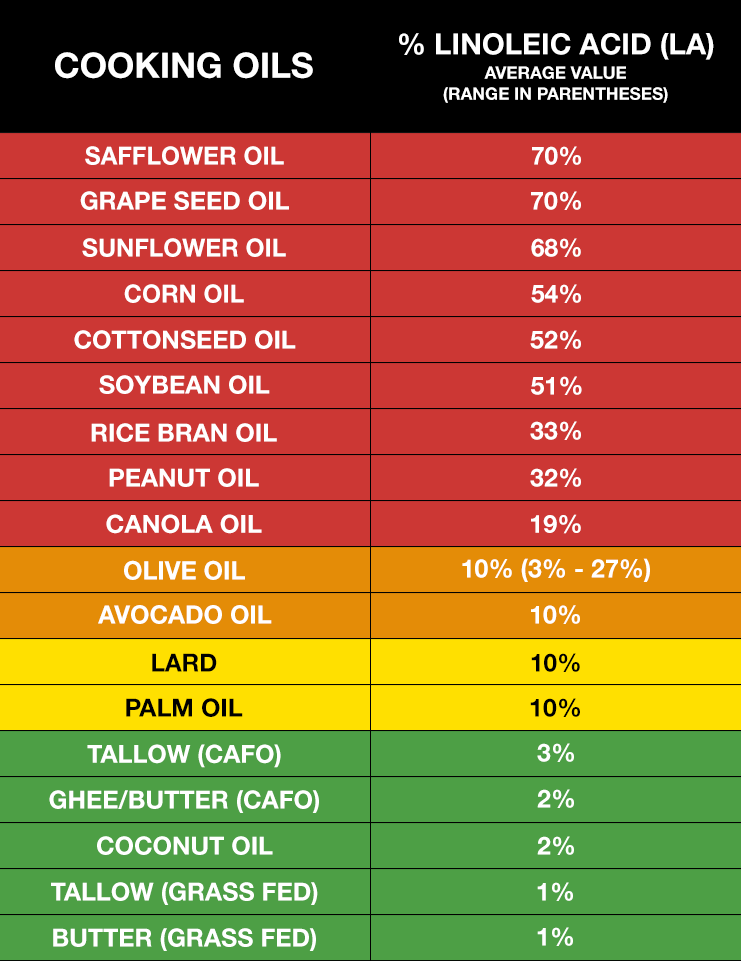
Some Migraines May Indicate a More Serious Blood Vessel Problem
One long-held theory was that a migraine is caused by vascular changes in your brain, from initial blood vessel constriction and a drop in blood flow, followed by dilation and stretching of blood vessels, which activates pain-signaling neurons.
Newer studies have negated this theory, however, as researchers determined migraines are not actually preceded by constriction and decrease in blood flow, but rather by a blood flow increase of nearly 300 percent. Despite that, circulation appears normal, or even slightly reduced, once the attack is in full swing. The question remains: Why?
One small observational study25 found that migraineurs tend to have a different blood vessel structure in their brains compared to those who do not get migraines. Using magnetic resonance angiography, the researchers examined the structure of blood vessels and the changes in cerebral blood flow, focusing on a system of arteries that deliver blood to the brain called “circle of Willis.”
They found that an incomplete circle of Willis was significantly more common in those who get migraines, with or without aura, compared to the control group (73% and 67% versus 51%, respectively). As a result, compared to those with a complete circle of Willis, those with an incomplete circle had greater asymmetry in hemispheric cerebral blood flow.
According to one of the authors of the study, Dr. John Detre, a professor of neurology and radiology:26
“Abnormalities in both the circle of Willis and blood flow were most prominent in the back of the brain, where the visual cortex is located. This may help explain why the most common migraine auras consist of visual symptoms such as seeing distortions, spots or wavy lines.”
Other research27 suggests some migraines — primarily migraines without aura — may be caused by a tear in your neck artery (arterial dissection), which raises your risk of stroke.
Compared to people who had migraine with aura, those without aura were 1.7 times more likely to have an arterial tear. Arterial dissection and stroke was also more likely in men and those under the age of 39. Overall, your probability of having this problem is very low, but it may be worth getting it checked out if you fall into a high-risk category.
Nutrient Deficiencies Linked to Migraine
Nutritional deficiencies can also contribute to or cause a number of different health problems, including migraines. In the video above, “America’s pharmacist” Suzy Cohen discusses drug-free solutions for migraine and headache relief, including nutritional supplements. Nutrients of particular importance here are vitamin D,28 magnesium, coenzyme Q10 (CoQ10) and riboflavin (vitamin B2), and deficiencies in one or more of these is quite common.
In a migraine study29 involving more than 7,400 children, teens and young adults, 16% to 51% of participants had below average levels of vitamins depending on the vitamin tested.30 Those suffering from chronic migraines were overall more likely to have CoQ10 and riboflavin deficiency compared to those with episodic migraines.
Unfortunately, many of the patients in this study were prescribed preventive therapy and too few were given supplements alone for the researchers to determine if supplementation was enough to actually prevent migraines.31 However, other research suggests they can.
For example, research using vitamin D supplementation demonstrated a reduction in C-reactive protein (CRP) and a statistically significant reduction in headache frequency.32 Another more study by Finnish researchers found that men with the lowest vitamin D levels were twice more likely to suffer frequent headaches than those with the highest levels.
Overall, the lower the men’s blood level of vitamin D, the more frequent their headaches. Those with a vitamin D blood level of 15.3 nanograms per milliliter (ng/mL) or lower typically had one or more headaches per week, while those with a level of 11.6 ng/mL or lower reported up to seven headaches per week. Ideally, your vitamin D level should be in the 60 to 80 ng/mL range, so both groups were severely deficient. As reported by Deming Headlight:33
“The researchers theorized that vitamin D has anti-inflammatory properties that prevent swelling in the sensory neurons and the microglial cells in the brain and is essential for proper brain function. In the study information, they also note that previous studies show vitamin D prevents musculoskeletal pain, a major cause of tension headaches.”
According to research presented at the 50th Annual Meeting of the American Headache Society34 in 2010, nearly 42% of patients with chronic migraine were deficient in vitamin D. The study also showed that the longer you suffered from chronic migraines, the more likely you are to be vitamin D deficient.
Magnesium Is Empirically Recommended for All Migraine Sufferers
Magnesium — which can affect both serotonin receptor function and the production and use of neurotransmitters — has also been shown to play an important role in the prevention and treatment of migraines, and migraine sufferers are more likely to suffer from magnesium deficiency than non-migraineurs.35
Researchers theorize that migraine sufferers may develop magnesium deficiency from a variety of reasons, including poor absorption, renal wasting, increased excretion due to stress or low nutritional intake. Since magnesium administration is both easy and safe, researchers have noted that empiric treatment with a magnesium supplement is justified for all migraine sufferers.36
As a prophylactic, be prepared to boost your magnesium intake for at least three months to experience results, ideally in combination with CoQ10.
In many cases, receiving a high dose of magnesium can also abort an attack in progress. The most effective way to administer magnesium for migraine would be to get an intravenous (IV) infusion. I used to regularly administer magnesium IVs for those with acute migraines and it seemed to work for most patients to abort the headache.
Barring that option, magnesium threonate may be your best option for an oral supplement. It has superior absorbability compared to other forms of magnesium, and since its ability to cross the blood-brain barrier makes it more likely to have a beneficial effect on your brain.
B Vitamins Are Also Important
Besides CoQ10, magnesium and vitamin D, other vitamin deficiencies linked to migraines include riboflavin (B2), B6, B12 and folic acid. One 2009 study37 evaluated the effect of 2 mg of folic acid, 25 mg vitamin B6 and 400 micrograms (mcg) of vitamin B12 in 52 patients diagnosed with migraine with aura.
Compared to the placebo group, those receiving these supplements experienced a 50% reduction in migraine disability over a six-month period. Previous studies38 have also reported that high doses of riboflavin can help prevent migraine attacks. For example, in one study patients who received 400 mg of riboflavin per day experienced a 50% reduction in migraine frequency after three months.
Are You Eating Plenty of These Foods?
Although supplements are convenient, it’s important you get as many nutrients from your diet as possible, as your body can metabolize and absorb vitamins and minerals from your diet more effectively and efficiently than from most supplements.
In addition to adding foods rich in magnesium, riboflavin and CoQ10 to your daily diet, look for organic, grass fed products to reduce your exposure to toxins and additional stressors. As for vitamin D, sensible sun exposure is your best bet. If you opt for a vitamin D3 supplement, be sure to increase your vitamin K2 and magnesium as well.
|
Foods Rich in Magnesium39 |
|
| Dark leafy greens | |
| Wild Alaskan salmon | |
| Yogurt made from organic and/or grass fed milk with no added sugars | |
|
Foods Rich in Riboflavin40 |
|
| Beet greens | Tempeh |
| Crimini Mushrooms | Organic low-PUFA eggs |
| Asparagus | Broccoli |
| Cauliflower | |
Migraines Are a Mitochondrial Problem
The fact that nutritional deficiencies worsen migraine and supplementation can ease it lends additional support to the theory that migraines are a mitochondrial disorder.41 Ubiquinol — the reduced form of CoQ10 — plays a vital role in ATP production, which is the basic fuel for your mitochondria.
Your body does produce ubiquinol naturally; in fact, it is the predominant form in most healthy cells, tissues and organs. However, with rampant pollution and poor diet, mitochondrial dysfunction has become increasingly common, warranting supplementation with either ubiquinol or CoQ10.
One study published in the journal Neurology42 found that CoQ10 was superior to a placebo in preventing migraines and reducing severity. Of the patients who received 100 mg of CoQ10 three times a day, 50% reported significantly reduced frequency of headaches compared to only 14% of those who took the placebo.
That said, while ubiquinol may be beneficial, for long-term migraine relief you really need to address your diet in a more comprehensive manner, as detailed above.
Migraine Prevention 101: Avoid Triggers
Last but not least, it’s also useful to keep a diary of your migraines to identify potentially triggers. That way, you can avoid them. While there are many (and what triggers a migraine for one might not trigger it in another), the following are some of the most common.
| Food and drink, especially wheat and gluten, dairy, cane sugar, yeast, corn, citrus, eggs, artificial preservatives or chemical additives, cured or processed meats, alcohol (especially red wine and beer), aspartame, caffeine and MSG.43,44 |
| Allergies, including food allergies45 and food sensitivities and chemical sensitivities. Research published in the journal Lancet in 197946 showed migraineurs with food antigen immunoreactivity experienced profound relief when put on an elimination diet.
Another randomized, double-blind, cross-over study published in 201047 found that a six-week-long diet restriction produced a statistically significant reduction in migraines in those diagnosed with migraine without aura. If you suspect you might have a food allergy, I suggest doing a diet elimination challenge to see if your symptoms improve. Keep in mind that depending on your typical migraine frequency, you may need to avoid the suspected food for a few weeks in order to evaluate whether it had an effect or not. To confirm the results, reintroduce the food or drink on an empty stomach. If the suspected food is the culprit, you will generally be able to feel the symptoms return within an hour, although migraines can sometimes have a longer lag time than, say, bloating or drowsiness. |
| Hormones — Some women experience migraines before or during their periods, during pregnancy or during menopause. Others may get migraines from hormonal medications like birth control pills or hormone replacement therapy. |
| External stimuli — Bright lights, fluorescent lights, loud noises and strong smells (even pleasant ones) can trigger and/or exacerbate a migraine.
Blue light in particular can be problematic. Many digital devices and LED light sources emit mostly blue light. Research has found that this light increases your migraine pain and activates your trigeminal nerve, associated with the pain of migraines.48 Meanwhile, green light may help ease migraine pain and photosensitivity.49 |
| Changes in sleeping cycle, either missing sleep and oversleeping. |
| Stress/post-stress — Any kind of emotional trauma can trigger a migraine, even after the stress has passed. |
| Dehydration and/or hunger — Skipping meals or fasting are also common triggers. |
| Physical exertion — Extremely intense exercise, or even sex, has been known to bring on migraines. |
| Weather changes, and/or changes in altitude. |
Acupuncture and Chiropractic May Be Helpful Adjuncts to Migraine Treatment
Acupuncture may also be a helpful adjunct therapy. Research has found that getting regular acupuncture treatments can help reduce the frequency and severity of migraine attacks in those suffering from migraine without aura.50,51,52
In all, 249 adult migraineurs who reported two to eight migraine attacks per month were included in the study. They were randomly assigned to receive either 20 real acupuncture treatments or 20 sham treatments over four months. Among those receiving the real treatment, migraine frequency declined by about three episodes per month, while the sham group had two attacks less per month. According to the authors:
“Acupuncture should be considered as one option for migraine prophylaxis in light of our findings.”
It’s interesting to note that even sham treatment had a significant response. Indeed, previous research has shown the placebo effect can be a potent tool in the prevention and treatment of migraines and other types of pain. As noted by neurologist Dr. Amy Gelfand, while the placebo response is troublesome for researchers, it can be a very beneficial effect for patients, especially when the treatment is otherwise safe, be it acupuncture or sugar pills.53
Chiropractic adjustments have also helped many patients, but not all chiropractors are skilled with the techniques to address migraine, so before you schedule an appointment it is important to confirm that your chiropractor has significant experience in helping people treat their migraines.
- 1, 2 Stat Pearls, Migraine Headache
- 3, 6 Migraine Research Foundation, Migraine Facts
- 4 Healthcentral.com, Migraines
- 5 Prevention April 28, 2015
- 7 Greatist March 13, 2017
- 8 Curr Pain Headache Rep. 2016 Jul;20(7):45
- 9 Chris Kresser May 30, 2014
- 10 WebMD, Migraines
- 11 Scientific American July 21, 2013
- 12 Ray Peat Forum August 29, 2018
- 13 Frontiers in Molecular Biosciences August 14, 2018
- 14 EurekAlert! August 14, 2018
- 15 Nutrients July 2023; 15(14): 3129
- 16 Oxid Med Cell Longev. 2014;2014: 360438. DOI: 10.1155/2014/360438
- 17 Pharmacognosy Review. 2010;4(8):118-126
- 18 Biochemical Journal. 1982;208(1):129-140
- 19 Nephrol Dialysis Transplant. 2001;16(8):1598-1606
- 20 Free Radical Biol Med. 1992;13:341-390
- 21 YouTube, Omega-6 Apocalypse 2, Chris Knobbe August 25, 2021
- 22 Renewable Energy. 2018; 126: 403-419
- 23 Int J Mol Sci. 2015;16(6):12871-12890
- 24 The Plan Journal. 2008;54:640-655
- 25 PLoS One July 26, 2016; 8(7): e71007
- 26 Huffington Post July 26, 2013
- 27 WebMD March 6, 2017
- 28 Biomed Research International, 2014; 2014: 827635
- 29 EurekAlert! June 10, 2016
- 30 MD Magazine June 17, 2016
- 31 WebMD June 10, 2016
- 32 Journal of Research in Medical Sciences 2015 May; 20(5): 477–482
- 33 Deming Headlight February 4, 2017 (Archived)
- 34 50th Annual Meeting of the American Headache Society (Archived)
- 35, 36 J Neural Transm (Vienna). 2012 May;119(5):575-9
- 37 Pharmacogenetics and Genomics 2009 Jun;19(6):422-8
- 38 European Journal of Neurology 2004 Jul;11(7):475-7
- 39 EverydayHealth.com, 9 Food Sources of Magnesium
- 40 Whfoods.com, Vitamin B2 Rich Foods (Archived)
- 41 Headache 2012 Oct;52 Suppl 2:81
- 42 Neurology 2005 Feb 22;64(4):713-5
- 43, 46 Lancet 1979 May 5;1(8123):966-9
- 44 Sun Sentinel June 18, 2013 (Archived)
- 45 PubMed.gov, “Food allergies and migraine” search results
- 47 Cephalalgia 2010 Jul;30(7):829-37
- 48 Nature Neuroscience 2010 Feb; 13(2): 239-245
- 49 Science Daily May 17, 2016
- 50 JAMA February 20, 2017 DOI: 10.1001/jamainternmed.2016.9378
- 51, 53 Reuters February 23, 2017
- 52 CNN February 21, 2017
Study Reveals Previously Unknown Mechanism Behind Acupuncture’s Ability to Reduce Pain
Reproduced from original article:
https://articles.mercola.com/sites/articles/archive/2024/03/01/acupunctures-ability-to-reduce-pain.aspx
The original Mercola article may not remain on the original site, but I will endeavor to keep it on this site as long as I deem it to be appropriate.
Analysis by Dr. Joseph Mercola March 01, 2024

STORY AT-A-GLANCE
- Research suggests acupuncture can be an effective treatment for pain. Clear and robust effects have been found in the treatment of back pain, neck pain, shoulder pain, osteoarthritis and headaches
- When properly administered to elicit de qi, acupuncture results in the release of nitric oxide (NO) at the acupuncture site, which in turn encourages the release of natural analgesics in your body
- Previous research shows acupuncture deactivates certain parts of your brain, thereby altering your experience of pain
When it comes to treating ailments such as chronic pain, I definitely prefer nontoxic options to drugs and surgery. Americans use 80% of all the opioids sold worldwide1 — a testament to the pervasiveness of pain in this country — and with drug overdoses now being the ninth leading cause of death in the U.S., we clearly need safer alternatives.
Acupuncture is one such alternative. Research shows it can be an effective option for a number of health problems, but pain in particular. Contrary to allopathic, symptom-based medicine, acupuncture aims to eliminate the root cause of your problem, which is said to originate in a dysfunction in your body’s energetic meridian system.
Basic Principles of Acupuncture
Traditional Chinese medicine (TCM) views the body as a cohesive system where everything within it is interconnected. In other words, it recognizes that each part of your body has the ability to affect all other parts.
There are 14 major energy channels called meridians that flow through your body. An energy called qi (or chi) circulates along the meridians to all parts of your body, including the internal organs and every cell. This qi is the vital force that literally keeps us alive. Vibrant health is a result of balanced, unimpeded flow of energy through your body.
According to TCM, illness and pain are the byproducts of energy blockages somewhere along one or more meridians. Each acupuncture point along the meridian acts like a pass-through or gate. Energy can get “bottlenecked” in these points, slowing down the flow, sometimes to the point of standstill. This is the precursor to pain and illness.
By inserting a thin needle into the congested or “clogged” area, it opens the gate and allows the energy to flow again. With qi flowing smoothly, your body can re-regulate the flow of energy, repair itself and maintain its own optimal level of health. Herbs and other therapies such as guacha, cupping and moxibustion — the burning of herbs on or over the skin — can be used to support the healing.
Acupuncture May Offer Drug-Free Pain Relief
In a 2012 analysis2,3 of 29 published studies involving more than 17,900 participants, researchers concluded that acupuncture has a definite effect in reducing chronic pain — more so than standard pain treatment. Real acupuncture also produced slightly better results than using sham needles, which suggests the benefits of needling are due to more than the placebo effect.
By going the extra mile and retrieving the raw data on self-reported pain, and standardizing the various study participants’ responses, they were also able to more accurately assess and compare them as a whole. Overall, the team discovered a “clear and robust” effect of acupuncture in the treatment of back pain, neck pain, shoulder pain, osteoarthritis and headaches.
On a scale of zero to 100, participants who started out with a pain rating of 60 experienced an average 30-point drop (a 50% reduction) in response to the real acupuncture treatments (using needles); a 25-point drop when receiving sham acupuncture; and a mere 17-point drop when receiving “standard pain care” that did not include acupuncture. According to the lead author:4
“The effects of acupuncture are statistically significant and different from those of sham or placebo treatments … So we conclude that the effects aren’t due merely to the placebo effect.”
Download this Article Before it Disappears
Acupuncture Cuts Pain by Boosting Nitric Oxide
While there’s been a great deal of controversy as to whether or not acupuncture works “for real,” and if so, how, research presents an answer to this question. The study5,6,7,8,9 in question was conducted by researchers at LA BioMed. The research laboratory has developed a noninvasive device capable of sampling biomolecules over specific skin regions.
Using this device, they were able to determine that when acupuncture is properly administered, nitric oxide (NO) is released at the “acupoints” — the acupuncture sites into which the needles are inserted. NO is a soluble gas that is continually produced from the amino acid L-arginine inside your cells. This gas plays an important role in supporting normal endothelial function and protecting your cells’ powerhouses, the mitochondria. It’s also a potent vasodilator.
By relaxing and dilating your blood vessels, NO improves blood flow and lowers blood pressure. NO also encourages release of natural analgesics (pain relieving chemicals) in your body. Together, this helps explain why and how acupuncture works to reduce pain.
A number of acupuncture studies have produced negative results. The reason for this may have to do with the way the acupuncture is done. In order for NO release to occur, “de qi” had to be elicited. De qi feels a bit like an electric shock. Westerners are not accustomed to this sensation, which is why many Western acupuncturists won’t do it.
De qi is elicited by twisting the inserted needle. In this study, they twisted the needle for two minutes or until de qi was elicited. They then manipulated the needles for two minutes every five minutes, for a total of 20 minutes each treatment. Heat can also amplify the effectiveness of the treatment and, here, the application of heat also increased NO release at the acupoints.
Acupuncture Reduces Osteoarthritis Pain
A number of studies support the use of acupuncture for pain. A large, landmark study10,11 published in 2004, which assessed whether acupuncture might work for osteoarthritis pain, produced remarkably positive results.
A total of 570 patients diagnosed with osteoarthritis of the knee were enrolled for this 26-week-long trial — the longest and largest randomized, controlled phase III clinical trial of acupuncture ever conducted. None of the participants had tried acupuncture before, and none had had knee surgery in the previous six months. Nor had they used steroid injections.
The participants were randomly assigned to receive one of three treatments: acupuncture, sham acupuncture or self-help strategies recommended by the Arthritis Foundation, which served as a control group).
Significant differences in response was seen by weeks 8 and 14, and at the end of the trial, the group receiving real acupuncture had a 40% decrease in pain and a nearly 40% improvement in function compared to baseline assessments — a 33% difference in improvement over the sham group.
According to the late Dr. Stephen E. Straus, who served as the first director of the National Center for Complementary and Alternative Medicine (NCCAM), which is a part of the National Institutes of Health:12
“For the first time, a clinical trial with sufficient rigor, size and duration has shown that acupuncture reduces the pain and functional impairment of osteoarthritis of the knee. These results also indicate that acupuncture can serve as an effective addition to a standard regimen of care and improve quality of life for knee osteoarthritis sufferers.
NCCAM has been building a portfolio of basic and clinical research that is now revealing the power and promise of applying stringent research methods to ancient practices like acupuncture.”
Other Evidence Showing What Acupuncture ‘Does’
Boosting NO release isn’t the only mechanism by which acupuncture reduces pain. Previous research suggests acupuncture stimulates your central nervous system to release natural chemicals that alter bodily systems, pain and other biological processes. In 2003, the World Health Organization (WHO) conducted an extensive review and analysis of clinical trials involving acupuncture.13 According to this report,14 acupuncture:
- Stimulates the conduction of electromagnetic signals, which may release immune system cells or painkilling chemicals
- Activates your body’s natural opioid system, which may help reduce pain or induce sleep
- Stimulates your hypothalamus and pituitary gland, which modulate numerous body systems
- Alters secretion of neurotransmitters and neurohormones, which may positively influence brain chemistry
According to the WHO’s analysis, “Some of these studies have provided incontrovertible scientific evidence that acupuncture is more successful than placebo treatments in certain conditions.” The report again confirmed its benefits for pain, saying:
“The proportion of chronic pain relieved by acupuncture is generally in the range 55–85 percent, which compares favorably with that of potent drugs (morphine helps in 70 percent of cases) and far outweighs the placebo effect (30–35 percent).”
Acupuncture Reduces Pain by Shutting Down Certain Brain Regions
In the BBC documentary, “The Science of Acupuncture,” which originally aired in 2015, a team of researchers conducted an experiment that had never been done before. Using high-tech MRI imaging, they visually demonstrated that acupuncture has a very real effect on the brain.
Acupuncture, it turns out, does something completely unexpected — it deactivates certain parts of the brain, particularly in the limbic system, decreasing neuronal activity, opposed to having an activating impact.
Their experiment also clearly showed that superficial sham needling does not have this effect. Your limbic system is associated with the experience of pain, adding further evidence that something unique happens during acupuncture. It quite literally alters your experience of pain by shutting down these deeper brain regions.
Other Nondrug Solutions for Pain Relief
There are many other ways to address pain beside acupuncture. Below is a long list of suggestions. Clearly, there are times when pain is so severe that a narcotic pain reliever may be warranted. But even in those instances, the options that follow may allow you to at least reduce the amount you take, or the frequency at which you need to take it.
If you need an acute pain reliever, you can consider an over-the-counter (OTC) option. Research15 shows prescription-strength naproxen (Naprosyn, sold OTC in lower dosages as Aleve) provides the same pain relief as more dangerous narcotic painkillers.
However, while naproxen may be a better alternative to narcotic painkillers, it still comes with a very long list of potential side effects,16 and the risks increase with frequency of use, which is why I discourage anyone from taking them, especially long term. It would be far better to try some of the nontoxic options below.
| Eliminate or radically reduce most grains and sugars from your diet — Avoiding grains and sugars will lower your insulin and leptin levels and decrease insulin and leptin resistance, which is one of the most important reasons why inflammatory prostaglandins are produced. That is why stopping sugar and sweets is so important to controlling your pain and other types of chronic illnesses. |
| Take a high-quality, animal-based omega-3 fat — Omega-3 fats are precursors to mediators of inflammation called prostaglandins. (In fact, that is how anti-inflammatory painkillers work, by manipulating prostaglandins.)
Good sources include wild-caught Alaskan salmon, sardines and anchovies, which are all high in healthy omega-3s while being low in contaminants such as mercury. As for supplements, my favorite is krill oil, as it has a number of benefits superior to fish oil. |
| Optimize your sun exposure and production of vitamin D — Optimize your vitamin D by getting regular, appropriate sun exposure, which will work through a variety of different mechanisms to reduce your pain. Sun exposure also has anti-inflammatory and pain relieving effects that are unrelated to vitamin D production, and these benefits cannot be obtained from a vitamin D supplement.
Red, near-, mid- and far-infrared light therapy (photobiology) and/or infrared saunas may also be quite helpful as it promotes and speeds tissue healing, even deep inside the body. |
| Medical cannabis — Medical marijuana has a long history as a natural analgesic and is now legal in some form in 43 states; seven states are still holding out with approving CBD only. You can learn the laws in your state on covercannabis.com.17 |
| Kratom — Kratom (Mitragyna speciosa) is another plant remedy that has become a popular opioid substitute.18 In August 2016, the U.S. Drug Enforcement Administration issued a notice saying it was planning to ban kratom, listing it as a Schedule 1 controlled substance. However, following massive outrage from kratom users who say opioids are their only alternative, the agency reversed its decision.19
There’s very little research showing how to use kratom safely and effectively, and it may have a very different effect from one person to the next. In 2023 Congress began introducing bills to address this issue and to regulate its use more closely.20 Kratom is likely safer than an opioid for someone in serious and chronic pain. However, it’s important to recognize that it is a psychoactive substance and should not be used carelessly. Also, while it may be useful for weaning people off opioids, kratom is in itself addictive. So, while it appears to be a far safer alternative to opioids, it’s still a powerful and potentially addictive substance. So please, do your own research before trying it. |
| Emotional Freedom Techniques (EFT) — EFT is a drug-free approach for pain management of all kinds. EFT borrows from the principles of acupuncture in that it helps you balance out your subtle energy system.
It helps resolve underlying, often subconscious, and negative emotions that may be exacerbating your physical pain. By stimulating (tapping) well-established acupuncture points with your fingertips, you rebalance your energy system, which tends to dissipate pain. |
Meditation and mindfulness training — Among volunteers who had never meditated before, those who attended four 20-minute classes to learn a meditation technique called focused attention (a form of mindfulness meditation) experienced significant pain relief — a 40% reduction in pain intensity and a 57% reduction in pain unpleasantness.21
K-Laser, class 4 laser therapy — If you suffer pain from an injury, arthritis or other inflammation-based pain, I’d strongly encourage you to try K-Laser therapy. It can be an excellent choice for many painful conditions, including acute injuries. By addressing the underlying cause of the pain, you will no longer need to rely on painkillers.
K-Laser is a class 4 infrared laser therapy treatment that helps reduce pain, reduce inflammation and enhance tissue healing — both in hard and soft tissues, including muscles, ligaments or even bones. The infrared wavelengths used in the K-Laser allow for targeting specific areas of your body and can penetrate deeply into the body to reach areas such as your spine and hip.
Chiropractic — Many studies have confirmed that chiropractic management is much safer and less expensive than allopathic medical treatments, especially when used for pain such as low back pain.
Qualified chiropractic, osteopathic and naturopathic physicians are reliable, as they have received extensive training in the management of musculoskeletal disorders during their course of graduate health care training, which lasts between four to six years. These health experts have comprehensive training in musculoskeletal management.
Physical therapy — Physical therapy has been shown to be as good as surgery for painful conditions such as torn cartilage and arthritis.Foundation training — Foundation training is an innovative method developed by Dr. Eric Goodman to treat his own chronic low back pain. It’s an excellent alternative to painkillers and surgery, as it actually addresses the cause of the problem.
Massage — A systematic review and meta-analysis published in the journal Pain Medicine included 60 high-quality and seven low-quality studies that looked into the use of massage for various types of pain, including muscle and bone pain, headaches, deep internal pain, fibromyalgia pain and spinal cord pain.22
The review revealed massage therapy relieves pain better than getting no treatment at all. When compared to other pain treatments like acupuncture and physical therapy, massage therapy still proved beneficial and had few side effects. In addition to relieving pain, massage therapy also improved anxiety and health-related quality of life.
Astaxanthin — Astaxanthin is one of the most effective fat-soluble antioxidants known. It has very potent anti-inflammatory properties and in many cases works far more effectively than anti-inflammatory drugs. Higher doses are typically required and you may need 8 milligrams (mg) or more per day to achieve this benefit.Ginger — This herb has potent anti-inflammatory activity and offers pain relief and stomach-settling properties. Fresh ginger works well steeped in boiling water as a tea or grated into vegetable juice.Curcumin — In a study of osteoarthritis patients, those who added 200 mg of curcumin a day to their treatment plan had reduced pain and increased mobility. A past study also found that a turmeric extract composed of curcuminoids blocked inflammatory pathways, effectively preventing the overproduction of a protein that triggers swelling and pain.23Boswellia — Also known as boswellin or “Indian frankincense,” this herb contains specific active anti-inflammatory ingredients.Bromelain — This enzyme, found in pineapples, is a natural anti-inflammatory. It can be taken in supplement form but eating fresh pineapple, including some of the bromelain-rich stem, may also be helpful.Cetyl myristoleate (CMO) — This oil, found in fish and dairy butter, acts as a joint lubricant and anti-inflammatory. I have used this for myself to relieve ganglion cysts and carpal tunnel syndrome. I used a topical preparation for this.Evening primrose, black currant and borage oils — These contain the essential fatty acid gamma-linolenic acid (GLA), which is particularly useful for treating arthritic pain.Cayenne cream — Also called capsaicin cream, this spice comes from dried hot peppers. It alleviates pain by depleting the body’s supply of substance P, a chemical component of nerve cells that transmits pain signals to your brain.Mind-body therapies — Methods such as hot and cold packs, aquatic therapy, yoga, various mind-body techniques and cognitive behavioral therapy24 can also result in astonishing pain relief without drugs.Grounding — Walking barefoot on the earth may also provide a certain measure of pain relief by combating inflammation.Low-Dose Naltrexone (LDN) — Naltrexone is an opiate antagonist, originally developed in the early 1960s for the treatment of opioid addiction. When taken at very low doses (LDN, available only by prescription), it triggers endorphin production, which can boost your immune function and ease pain.
- 1 Minnesota Department of Health. Opioids Perception of Pain. October 3, 2022
- 2, 4 Archives of Internal Medicine 2012 Oct 22;172(19):1444-53
- 3 Time Healthland September 11, 2012
- 5 Evidence-Based Complementary and Alternative Medicine 2017, Article ID: 4694238
- 6 Medicalxpress June 29, 2017
- 7 The Verge July 1, 2017
- 8 Forbes June 30, 2017
- 9 Medical News Today July 2, 2017
- 10 Annals of Internal Medicine 2004 Dec 21;141(12):901-10
- 11, 12 NBC News. Study: Acupuncture Aids Arthritis in Knee. December 20, 2004
- 13, 14 Integr Med Res. 2019 Sep; 8(3): 160–166
- 15 Drugs.com. Top 9 Things You Must Know About Naproxen. December 7, 2023
- 16 Drugs.com Naproxen
- 17 covercannabis.com. February 15, 2024
- 18 Current Topics in Medicinal Chemistry 2011;11(9):1165-75
- 19 Washington Post October 12, 2016
- 20 Congressional Research Service. Kratom Regulation. Federal Status and State Approaches. November 28, 2023
- 21 J Neurosci. 2011 Apr 6;31(14):5540-8
- 22 Pain Medicine May 10, 2016
- 23 Arthritis & Rheumatism November 2006; 54(11): 3452–3464
- 24 CNN May 28, 2014