Pain
now browsing by category
Could Endometriosis Be Caused by Bacteria?
Reproduced from original article:
https://articles.mercola.com/sites/articles/archive/2024/02/23/endometriosis-fusobacterium.aspx
The original Mercola article may not remain on the original site, but I will endeavor to keep it on this site as long as I deem it to be appropriate.
Analysis by Dr. Joseph Mercola February 23, 2024
STORY AT-A-GLANCE
- A 2023 study found Fusobacterium could be linked to the development of endometriosis, which is a proliferation of uterine endometrial tissue in areas of the abdomen outside the uterus
- The condition causes pain, heavy and irregular periods, fatigue and gastrointestinal symptoms during a menstrual period, such as diarrhea, constipation and pain with urination or bowel movements
- Certain species of Fusobacterium are commonly found in the human gut and oral flora, but infections with other invasive species have been linked to a wide range of clinical presentations from non-severe pharyngitis to life-threatening abscesses and sepsis
- Endometriosis places women at an increased risk of other health problems, including infertility, cancer, cutaneous melanoma, Non-Hodgkin’s lymphoma, autoimmune diseases, cardiovascular disease, asthma, obesity, migraine headaches and irritable bowel syndrome
- Women can take several steps to reduce the risk of developing endometriosis or help reduce the symptoms, including avoiding endocrine-disrupting chemicals as the condition is hormone dependent, avoiding sugar to reduce inflammation and pain, and considering several nutraceuticals that may help reduce symptoms
There is a good and a bad side to bacteria. One 2023 study1 published in Science Translational Medicine revealed data suggesting one genus of an anaerobic, gram-negative bacteria,2 Fusobacterium, plays an influential role in the development of endometriosis. This genus of bacteria has species that live symbiotically with humans and others that develop invasive infections.
The inappropriate use of antibiotics and bacterial infections has culminated in the “greatest public health challenge of our time”3 — antimicrobial resistance. One important focus of attaining and maintaining optimal health is supporting a balanced gut microbiome. When bacteria develop the ability to avoid the drugs designed to kill them, resistant infections can proliferate and become difficult or impossible to treat.
Your gut microbiome is a major contributor to a wide range of physical, mental and emotional health conditions. Research links gut microbial dysbiosis to obesity, Type 2 diabetes, cardiovascular disease,4 athletic performance,5 cognitive impairment,6 depression and anxiety.7 It should then come as no surprise that bacteria may play a role, regardless of how significant, in many of the prevalent chronic health conditions that plague society.
The film, “The Invisible Extinction,”8 highlights the work of microbiologists Dr. Martin Blaser and Gloria Dominguez-Bello — a husband-wife team — who warn that the human microbiome is endangered, putting human health at risk.
As data indicating the significance of a healthy microbiome to overall health continues to mount, researchers are also identifying ways in which harmful bacteria play a role in noninfectious disease development. And, one particular bacterial infection associated with endometriosis, Fusobacterium, may suggest a potential treatment pathway for this painful disorder.9
Could This Bacteria Trigger Endometriosis?
The 2023 study10 found that Fusobacterium, a bacterial type that’s commonly found in the human gut and oral flora, may be linked to endometriosis. The study included 155 women in Japan11 and found 64% of women presenting with endometriosis had Fusobacterium within ovarian endometriotic lesions. However, less than 10% of women without endometriosis had the Fusobacterium in their endometrium.12
The researchers used an animal model and inoculated Fusobacterium into mice which then increased myofibroblasts and the weight and number of endometriotic lesions. The mice were treated with antibiotics and researchers found this could, in large part, not only prevent endometriosis from developing, but help reduce the endometriotic lesions that were already established.
The researchers believe the data support a potential mechanism for the development of endometriosis and suggest it could be an approach to treating the disease.13
In addition to evaluating for the presence of Fusobacterium within human endometrial tissue and testing an animal model, the researchers also used cell culture experiments to find that the bacteria initiated a substance called TGF-beta, which appeared to activate normally dormant cells.
Although certain species of Fusobacterium live symbiotically within the oral and gut microflora, this species of Fusobacterium is invasive and has been linked to other infections and diseases.14 Although the infections with Fusobacterium are uncommon,15 they tend to infect younger and older individuals and cause a wide range of clinical symptoms from non-severe pharyngitis to life-threatening abscesses and sepsis.
What Is Endometriosis?
The word “endometriosis” is derived from the name of the tissue that lines the uterus, which is the endometrium. This lining is what the body releases with each menstrual cycle. Each month, the body grows a new endometrium in preparation for a potential pregnancy. Endometriosis occurs when this tissue grows in areas of the abdomen outside of the uterus.
According to Johns Hopkins Medicine, the condition affects up to 10% of women.16 The endometrial tissue most often grows on or around the reproductive organs, such as the ovaries, fallopian tubes, space between the uterus and the rectum, or the lining of the pelvic cavity. Less frequently, it can also grow around the bladder, intestines, rectum and stomach.
The condition increases pain associated with menstrual cramps and can cause pain during or after sex. Women may also experience heavy or irregular periods, fatigue and gastrointestinal symptoms during a menstrual period such as diarrhea, constipation and pain with urination or bowel movements.
Although the condition has no known cause, data does show certain factors increase the risk, including starting menstruation before age 11, a family history of endometriosis and periods that last more than 7 days. Although in many cases, a diagnosis of endometriosis begins with severe symptoms, some women can have endometriotic lesions outside the uterus but have no symptoms.17
While data from the featured study is encouraging, as it helps to at least point to a potential trigger, it’s important to note that endometriosis is likely multifactorial and may have cultural or environmental differences. A 2021 study18 published in Reproductive Sciences evaluated a group of 371 fertile women with endometriosis, 175 from China and 196 from Italy. Symptoms and quality of life were compared, which revealed significant differences between the two groups.
Italian women presented with symptoms at a younger age, more frequently with severe pain, were more often diagnosed with deep infiltrating endometriosis and had more systemic comorbidities at the time of diagnosis than women from China. Scores on tests also showed the Italian group of women had worse health-related quality of life.
In the group of Chinese women, there was less pain, diagnosis at an older age, ovarian and superficial endometriosis and better quality of life scores. The researchers suggested that the differences may be related to ethnicity, healthcare system or social and cultural background.19

Download this Article Before it Disappears
Endometriosis and Comorbidities
Endometriosis is debilitating. According to Science Alert,20 women in the U.K. often wait an average of 7.5 years before seeing their physician for a diagnosis and Yale Medicine21 estimates that women in the U.S. may experience symptoms for 10 years before getting a proper diagnosis.
Unfortunately, this places these women at risk of more health problems, including infertility. In some cases, endometriosis causes complete infertility, but in other cases, fertility may not be affected. Research22 also suggests that women with endometriosis have a higher risk of pregnancy-related complications, including preterm delivery, miscarriage, preeclampsia, bowel perforation and uterine rupture.
When left untreated, endometriosis not only leads to infertility, but other organ damage. A 2015 systematic review23 of the literature identified studies that looked at the association between endometriosis and specific diseases.
They found increasing evidence that women with endometriosis have a higher risk of several chronic diseases, suggesting that the condition is not harmless with respect to long-term health. According to this review, women with endometriosis had a “higher risk of ovarian and breast cancers, cutaneous melanoma, asthma, and some autoimmune, cardiovascular and atopic diseases, and at decreased risk of cervical cancer.”24
In a separate article,25 one of the scientists postulated potential explanations for the associations, including that studies may have had a methodological bias. Other explanations included the potential that endometriosis induces physiological changes that increase the risk of chronic disease, that women with endometriosis share specific risk factors for chronic disease, or that the treatment for endometriosis could increase the risk of some chronic diseases.
Analysis of data from Taiwan26 identified similar associations between endometriosis and chronic diseases. In this population, the researchers also found an association with irritable bowel syndrome, migraine headaches, pelvic inflammatory disease, obesity, chronic liver disease, cardiovascular disease, diabetes, rheumatoid arthritis and chronic renal disease.
A 2023 study27 published in the journal Nature Genetics may help explain the comorbidity with other inflammatory and pain-related conditions. In a genome-wide association meta-analysis of European and East Asian participants, the researchers:
“… observed significant genetic correlations between endometriosis and 11 pain conditions, including migraine, back and multisite chronic pain (MCP), as well as inflammatory conditions, including asthma and osteoarthritis.”
The severity of the symptoms can affect mental health28 and may compromise social relationships, which in turn influences support systems. Depression and anxiety can also amplify the perception of pain. In one study,29 researchers estimated that at least one-third of women with endometriosis suffer from depression and anxiety.
Reducing Symptoms of Endometriosis
Insulin sensitivity may also play a role in endometriosis. A 2019 review30 looked at the likelihood of the coexistence of Type 1 diabetes and endometriosis, including the prospect that therapeutic strategies could help reduce complications. While Type 1 diabetes is an autoimmune disease, endometriosis is not.
However, according to the paper, they share similar pathophysiological pathways, including an association with chronic inflammation and an overactive immune response. A 2002 study31 also showed women with endometriosis more frequently had mechanical dysfunction in the gastrointestinal system and reactive hypoglycemia with normal insulin levels.
According to the researchers, the nerve dysfunction found in women with endometriosis was identical to that found in individuals with insulin resistance and resulted in debilitating gastrointestinal symptoms. In addition to strategies that improve insulin sensitivity and reduce resistance, women with endometriosis may consider addressing other factors that contribute to symptoms of endometriosis, such as:
• Avoiding endocrine disruptors — Endometriosis is hormone dependent, and data has linked exposure to environmental endocrine disrupting chemicals (EDCs) with the development of endometriosis. A 2023 study32 looked at epidemiological and experimental data of four EDCs and found:
“The available information strongly indicates that environmental exposure to EDCs such as PCBs, dioxins, BPA, and phthalates individually or collectively contribute to the pathophysiology of endometriosis.”
One commonly used EDC is oxybenzone, found in many sunscreen formulations. The Environmental Working Group (EWG) calls oxybenzone “the most worrisome sunscreen active ingredient,”33 as the chemical is readily absorbed through the skin, is associated with skin reactions and has demonstrated hormone-disrupting properties.
A 2012 study34 associated benzophenone, the class of drugs to which oxybenzone belongs,35 as an EDC that has a high likelihood of increasing the risk of endometriosis. EDC chemicals are found in many everyday products, including pesticides, plastics and food storage materials, and antibacterial soaps.36
• Avoiding sugar — Dysregulated blood sugar has a significant influence on endometriosis as it promotes an inflammatory response in the body,37 which may contribute to a flare-up of the disease and raise pain levels. As blood sugar rises, cortisol can also rise which lowers progesterone levels and sets the stage for higher levels of estrogen.38
• Considering physical activity — Physical activity and exercise is an important factor in attaining and maintaining optimal health. Yet, for women with endometriosis, they may want to consider physical activity a prescription to help lower inflammation and painful symptoms. While the literature examining endometriosis is not conclusive, data does reveal that physical activity helps lower the inflammatory response.39
One review of the literature40 was unable to find enough quality studies to produce a quantitative meta-analysis, but did identify a couple studies showing activity improved pain intensity and decreased stress levels. The researchers suggested future high-quality randomized controlled trials were necessary to determine if physical activity improved symptoms and quality of life.
A 2023 study41 in the International Journal Gynecology and Obstetrics, reviewed the benefits of physical therapy in women with endometriosis, doing a meta-analysis on six studies that evaluated pain intensity and quality of life measures. The data show these non-pharmacological therapies “are a therapeutic option for women with endometriosis for improving pain intensity and physical function.”
• Considering supplements — Women with endometriosis may also consider nutraceuticals that have demonstrated a beneficial effect against the pain and symptoms of endometriosis. N-acetylcysteine (NAC), chasteberry and melatonin may all offer some relief.
In a 2013 Italian study,42 women who took 600 mg of NAC three times a day for three consecutive days per week, for three months, saw such significant improvement that half of the treatment group were able to cancel their surgeries. Eight of the 47 women in the intervention group had complete remission. The researchers concluded that:43
“Our results are better than those reported after hormonal treatments … NAC actually represents a simple effective treatment for endometriosis, without side effects, and a suitable approach for women desiring a pregnancy.”
Chasteberry is known as “the woman’s herb,” and has a long history of use in female fertility and hormonal health. A leaf decoction has demonstrated a reduction in symptoms of endometriosis within clinical practice and reduction in endometrial cyst size.44 Chasteberry may also help reduce inflammation and balance reproductive hormones.45
Chasteberry may help increase progesterone production, which affects the luteal phase of the menstrual cycle, the time from ovulation until bleeding starts. These issues are often linked to menstrual irregularities, including endometriosis.
Melatonin has also shown some promise for pain control. In one study,46 10 mg per day of melatonin helped decrease pain by 39.8% and dysmenorrhea by 38.01%.
- 1, 10, 12, 13 Science Translational Medicine, 2023;15(700)
- 2 Journal of Critical Care Medicine, 2017;3(4)
- 3 Centers for Disease Control and Prevention, November 15, 2022
- 4 Indian Heart Journal, 2021;73(3)
- 5 Current Gastroenterology Reports, 2020;22(11)
- 6 Frontiers in Pharmacology, 2022; 13
- 7 Clinics and Practice, 2017;7(4)
- 8 The Invisible Extinction
- 9, 11 Nature, June 14, 2023
- 14 Science Alert, June 15, 2023 Para 7, 9
- 15 The Journal of Critical Care Medicine, 2017; 3(4)
- 16 Johns Hopkins Medicine, Endometriosis
- 17 Cleveland Clinic, Endometriosis, How is endometriosis diagnosed?
- 18, 19 Reproductive Sciences, 2021; 28(8)
- 20 Science Alert, April 17, 2023
- 21 Yale Medicine, Endometriosis
- 22 Endometriosis.net, June 20, 2018 subhead 1, para 1
- 23, 24 Human Reproduction Update, 2015;21(4)
- 25 Endometriosis, Endometriosis and Co-morbidities
- 26 Journal of the Chinese Medical Association, 2016; 79 (11)
- 27 Nature Genetics, 2023;55
- 28 International Journal of Women’s Health, 2017; 9
- 29 Frontiers in Neuroendocrinology, 2022;65
- 30 Journal of endocrinology, 2019; 243(3)
- 31 Fertility and Sterility, 2002; 77 (Supplement 1)
- 32 Reproductive Toxicology, 2023;115
- 33 Environmental Working Group, The trouble with ingredients in sunscreens
- 34 Environmental Science & Technology, 2012;46(8)
- 35 Biomonitoring California, Benzophenone-3
- 36 Endocrine Society, January 24, 2022
- 37 Cleveland Clinic, January 28, 2022
- 38 Endometriosis.net, March 9, 2021
- 39 Nature Reviews Immunology, 2011;11
- 40 BMC Women’s Health, 2021; 21(355)
- 41 International Journal Gynecology and Obstetrics, 2023; 162(1)
- 42, 43 Evidence-Based Complementary and Alternative Medicine, 2013 (240702)
- 44 Current Drug Delivery, 2019; 16(5) 40% DTP 7.7
- 45 Cleveland Clinic, November 22, 2022
- 46 Pain, 2013;154(6)
Unraveling the Mysteries of mRNA Vaccine Shedding
Reproduced from original article:
https://articles.mercola.com/sites/articles/archive/2024/02/03/mysteries-of-mrna-vaccine-shedding.aspx
The original Mercola article may not remain on the original site, but I will endeavor to keep it on this site as long as I deem it to be appropriate.
Analysis by A Midwestern Doctor February 03, 2024
STORY AT-A-GLANCE
- Over the last two years, we have collected a significant amount of data that suggests a sizable number of unvaccinated people will become ill around individuals who were vaccinated in a fairly consistent and repeatable manner
- Since shedding of mRNA vaccines in theory should not be possible, whenever those individuals (who are often suffering immensely) share their stories, they are immediately ridiculed and dismissed
- We have identified a few plausible mechanisms (and the evidence to support them) to explain why this transmission occurs. These include exosome mediated shedding (most likely), asymptomatic COVID-19 shedding and transfected bacterial shedding
- In this article, we will explore some of the major questions surrounding shedding, such as what appears to be causing it and what the mysterious odor associated. Through doing so, a framework can be created to explore some of the most contentious issues surrounding shedding
After the COVID vaccines came out, we began to encounter more and more patients who had a compelling case history that suggested that were being repeatedly injured from being around recently vaccinated individuals.
For example, near the start of the vaccine rollout, a compelling (but hard to believe) story circulated online and as the year went by, we saw more and more patients who provided similar accounts to the one within this video:
This perplexed us as in theory, the mRNA vaccines (as they are not alive and hence do not replicate) should not be able to shed, but as time went forward, we kept on seeing more shedding cases which symptomatically improved once the patient’s shedding exposures were addressed. As a result, we’ve spent the last three years struggling to try to figure out what’s going on.
To help unravel this mystery, we recently put out a call for individuals to share their own shedding injuries and see if those accounts matched what we had observed. These is understandably a lot of interest in this subject (e.g., a Tweet about it received 555k views) and we’ve now collected hundreds of stories (which can be viewed here).
To briefly summarize what we have learned (which is discussed in much more detail in the previous article):
|
Although it is required by the FDA (and has been done for the other gene therapy products on the market), none of the COVID vaccines were ever tested for shedding. |
| It has since been demonstrated that vaccine sheds in the breast milk and semen. There is also evidence suggesting but not proving the vaccine sheds in both the sweat and breath. It’s much less clear if it sheds in the stools. |
| Individuals appear to be affected by being in proximity to a vaccinated person (particularly if they are quite close to them), by touching something a vaccinated person contacted (particularly bed sheets), and for particularly sensitive individuals, being in an area which had previously been densely occupied by shedders (conversely being outdoors, presumably due to airflow, reduces how much a shedder affects someone nearby). |
| In most (but not all) cases, the effects of shedding will resolve once the affected individual simply stops being in contact with shedders. |
| The susceptibility to shedding greatly varies person to person (with the majority not being affected by it).
Those most sensitive to shedding are the “sensitive patients” (who often also have other conditions like fibromyalgia, Lyme or chemical sensitivities), those who have already been “sensitized” to the spike protein (demonstrated by them having either a vaccine injury or long COVID) and those who have a yet unknown susceptibility to the spike protein (which I believe is due to them being unable to effectively produce antibodies which neutralize the spike protein). Note: There were also a few cases of pets being affect by shedding which suggests the effects are not necessarily dependent upon a human receptor. |
| Individuals are the most likely to shed immediately after vaccination or boosting (which leads to many sensitive individuals dreading the next boosting campaign). This tendency to shed appears to match the observed blood levels of spike protein which quickly rise following vaccination then drop, but never hit zero.
In turn, the most sensitive individuals always notice if someone was vaccinated, while less sensitive individuals only get ill from people who had been recently vaccinated. |
| Many individuals affected by shedding are able to identify clear reproducible patterns of when they get ill from shedding (e.g., each time they go to church on Sunday they get the same illness on Monday). |
| Some people shed much more than others (e.g., individuals can frequently identify who at their church always makes them ill). Typically, younger people shed more than older people. Furthermore, sensitive individuals repeatedly notice certain characteristics of shedders (e.g., they have a distinct odor). |
| The most common effect of shedding is abnormal menstrual bleeding (which can sometimes be very severe and frequently affects post menopausal women). Other common symptoms include nosebleeds, spontaneous bruising, tinnitus, rashes, headaches, reactivation of latent viruses (e.g., shingles), briefly coming down with a covid like illness, sinus issues and muscle pain.
Some people experience a cluster of these symptoms while others only experience one or two of them. |
| Individuals tend to notice an increasing duration of exposure to a shedder will make them feel worse. In turn, numerous readers have noticed that if they ignore their lighter symptoms (which often onset within minutes of a shedding exposure) and do not exit the situation, they will become severely ill for a prolonged period. |
| Most of the shedding injuries appear to be a consequence of circulatory impairments (e.g., microclotting). I personally believe this is due their adverse effects on the physiologic zeta potential (which once treated appears to fix spike protein injuries) and to a lesser extent activating the cell danger response. |
| Most of the vaccine shedding symptoms resemble what is seen in other spike protein injuries. However, there are two key differences. First, spontaneous bruising and nosebleeds are unique to shedding (they are not typically seen after long COVID or a vaccine injury).
Secondly, the symptoms which emerge from shedding exposures tend to be less severe than the traditional spike protein injuries (e.g., heart issues or strokes are rarer and less severe) and when the severe effects occur (e.g., death), they are typically proceeded by less severe reactions to shedding (but unfortunately the victim continued to expose themselves to shedders). This suggests that the shedding reactions are being caused by reactions to a lower dose of spike protein — which is congruent with the fact a vaccinated individual will have more spike protein inside them than what is shed into their environment. |
| Shedding effects are typically either immediate (e.g., nosebleeds, headaches and dizziness), onset in 6-24 hours (e.g., menstrual issues) or gradually show up over time.
Note: None of these are absolutes (e.g., sometimes the nosebleeds take a day to manifest, whereas I found one case where someone had severe menstrual bleeding immediately after a shedding exposure). |
| Two studies have validated the shedding effect is real. |
| The majority of people do not appear to be affected by shedding. |
Mysteries of the Shedding Phenomenon
The previous facts understandably raise a lot of uncomfortable questions many want answers to (hence why we received so many replies). I personally believe they necessitate a federal law being passed which will prohibit any gene therapies from entering the market unless their shedding is properly evaluated, that data is made public and it can be proven it is feasible to prevent the general public from being shed on.
Given the gravity of this situation, we believe it critical to provide the most accurate and balanced assessment of the COVID vaccine “shedding” phenomenon. This in turn was why we put out a public call for as much information on it as possible and why we’ve been as transparent as possible in how we reached our conclusions and provided all the data we used that helped us reach this conclusion.
Since mRNA “shedding” is such an inexplicable phenomenon, attempts to explain or predict it inevitably result in a large number of highly speculative hypotheses being raised. In turn, it was my hope that consistent patterns would be seen in the shedding reports which could narrow down which of those hypotheses could fit the observed patterns and hence were more likely to answer many of the questions which have been repeatedly raised on this subject.
For the rest of the article as we attempt to untangle this mystery, I will share our current perspectives on what might be going on and the answers to the most commonly received questions on it.
The Vaccine Smell
One of the most surprising things I learned from exploring the shedding issue is how many people have reported observing a distinct smell from individuals who appear to shed [e.g., 1, 2, 3, 4, 5, 6, 7, 8, 9, 10, 11, 12, 13, 14, 15, 16, 17, 18, 19, 20, 21, 22, 23, 24, 25, 26, 27, 28, 29, 30]. Additionally, many also notice this smell is present in areas where many vaccinated individuals have been (e.g., after a booster rollout, in crowded public spaces, or inside cars they drove).
Overall, it appears that a higher spike protein load appears to be “easier” to smell (e.g., in someone recently vaccinated — as spike protein levels spike in the blood after vaccination, when in close proximity to a shedder particularly if some type of intimate contact occurred, or when around someone who for some reason has a greater degree of shedding).
Similarly, more sensitive people (who are typically more likely to be injured by the vaccines) are more likely to detect this smell (e.g., they can still smell it once the shedders are no longer physically present).
Note: Numerous readers reported being able to consistently tell if someone was recently vaccinated.
Additionally, I’ve found a few cases where:
• Secondary shedding could be smelled.
• A sexual partner lost their distinctive odor.
• At least one individual with a vaccine injury could smell the shedding on themselves. [e.g., 1, 2, 3]. I would like to quote what one of those individuals shared since I believe it may offer some vital clues for unravelling this mystery:
“The smell was one of the first symptoms of my vax injury (albeit a benign one, compared to what it eventually turned into). It was like my entire smell changed. I was living in Florida at the time — needless to say I’d sweat a lot. And every time, post-vax, my underarm sweat would have this strange metallic smell.
I would complain to my girlfriend about it. Always telling her ‘there’s just something off. I can sense it’ … at the time, she wasn’t picking up on it. Or she disagreed as to the nature of the smell, while begrudgingly agreeing there was a slight change (she thought I was overreacting; also, she is unvaccinated) … But then a friend pointed it out at a workout class when I was sweating heavily.
I’ve been on a number of therapies for over a year now. The smell comes and goes. When it comes, I know I’m in for a flare up. It seems the flare ups tend to come from shedding (both viral and synthetic shedding). I haven’t noticed the smell on others. Just myself. It makes me feel like I’m not me anymore, and that I’ve been hijacked.”
The labels I’ve seen used to describe the smell are as follows: “mild sickly sweet,” “rotting [or dying] flesh,” “magnetic onion,” “unpleasant,” “distinctive,” “the smell of death,” “medicines plus latrines,” “musty plus rancid,” “dead animal,” a “decomposing body,” “road kill,” “like ammonia but not as strong,” “sweet,” “sour stomach,” “elderly person as their flesh breaks down with age,” “a chemical flu smell,” “of seaweed,” “putrid,” “sweet meat,” “strange and metallic,” “sharp, pungent and toxic,” “horrible,” “unique odor,” “chemical,” “vinegar,” “subtle like a pheromone.”
Note: Bolded items were reported by multiple people.
From looking at this list of smells, a few things jump out at me:
• While it’s quite difficult to put into words something which has never been described before, the descriptions are fairly consistent with each other.
• One of the most well recognized consequences of the vaccination is accelerated aging, which appears to be reflected in this list.
• There may be two separate things people are smelling (the decomposing flesh vs. the metallic chemical). One theory which was proposed to me to explain the second smell is that it’s a result of micro-organisms in the environment that have been metabolizing all the chemicals that were used to (pointlessly) sterilize every surface through COVID-19 as one reader said it was first noticed in 2020 but dramatically increased in 2021.
• Individuals who can smell this will likely lose their attraction to shedders (as appealing smells are often the most important thing for sexual compatibility).
Note: One sensitive person who can perceive the shedding has shared that they’ve completely lost their attraction to vaccinated women for this reason.
• The one friend I have who can smell this (and a very perceptive colleague) reports that it appears to be being emitted through the pores. This is consistent with what some of the individuals (e.g., the one quote above) observed and the evidence suggesting the shedding occurs through the sweat since it contaminates sheets.
Since individuals often perceive the same environmental quality through different senses (depending on their primary sensory orientation is) I was also curious to see other ways the “quality” shedders had was described.
Since smell is intimately linked to taste, I expected those reports to resemble the smells. The three I received [1, 2, 3] did just that, describing it as: “you can taste the jabs … it’s metallic and unpleasant,” “can taste a metallic sensation,” “a dry acid feeling on my tongue.”
Quite a few people also reported feeling sensations from vaccinated individual [e.g., 1, 2, 3, 4, 5, 6, 7, 8, 9] and described them as follows:
“‘… noxious,’ ‘recently vaccinated people have a slime on their skin,’ ‘it was a feeling of repellent that made me want to get away as quickly as possible,’ ‘the bioelectric field around the person disappears,’ ‘their energy changes to a stainless steel sink sponge feel which is metallic and raggedy (which that reader believed represented neurologic damage),’ ‘illness and excitable energy,’ ‘a heavy air pressure and spatial fog weighing on my brain (which if not exited from will then create vertigo for that reader),’ ‘it makes our noses prickle,’ ‘half of my tongue went numb the next day,’ ‘their energy field has a physical sensation of ‘metallic’ of physical repulsion, or a greyness, black goo, and even a dullness of mind that I could see.'”
Note: The last commenter also noted they verified they could accurately predict who was vaccinated and that they noticed food prepared from vaccinated individuals was different.
As you might notice, these are somewhat congruent with the previously described smells and tastes. One sensitive physician I know who smells the odor (and seems to know more about it than anyone else I know) has shared the following with me:
| They had previously had environmental sensitivities, which with work they were able to eliminate. |
| Until those sensitivities were resolved, they would smell chemical residues on them when they got home which they then needed to clean off. |
| In December 2020 (right after the rollouts began), they began to notice a new smell they’d never smelled before which lingered on them once they got home and they needed to clean off (e.g., with a shower) in order to be able to be comfortable at home (previously, while sensitive, they’d also needed to do this for everyday chemical exposures). |
| Before long, this smell started emerging in public places (e.g., a store), but was by far the strongest in the hospital. Because this smell had not existed throughout the first year of the pandemic, they assumed it was linked to the vaccine. Presently, they believe the smell is the spike protein and something else in the vaccine. |
| The smell gets stronger each time a new series of boosters is rolled out (as most of coworkers at the hospital likely receive it). |
| This smell was much weaker in Southern Europe, suggesting either their vaccines were different, or the health of the average American caused them to shed differently. |
| When the shedding smell is particularly strong, they experience temporary symptoms while around those individuals (e.g., pain in a part of the body). This for instance occurred after the most recent round of boosters. |
| Many people who were vaccinated do not have this smell, which suggests many (as discussed in the previous article) received placebos. Unfortunately for my colleague, it is much higher in hospitalized patients (which suggests those who received the more potent vaccines were also more likely to be injured and hence hospitalized). Likewise, the more “real” doses someone received, the harder it is for my colleague to be around them.
Note: Presently my colleague estimates around 50% of the population is truly jabbed, but in certain cases (e.g., in clinics for the elderly who are more likely to have been repeatedly boosted, this figure rises to 80%). Sadly, those with the most unusual or severe illnesses, they invariably muscle test (or smell) as having been “truly” vaccinated. The subject of “hot lots” has been a longstanding controversy. |
| The mold biotoxin community has also noticed a new toxin (and odor) they need to be wary of which entered the environment during 2020 and worsened in 2021 after the vaccines hit the market.
Likewise, my colleague has had patients who believed they’d had a mold exposure (which is often debilitating for patients with chronic mold issues) but when it was looked into, my colleague assessed it was actually from vaccine shedding that had contaminated their environment. |
| Like the cleaners mentioned earlier, my colleague notices a significant difference in environments that have vs. have not had a significant presence of vaccinated individuals in them. |
| Whatever is creating this smell is gradually seeping into the environment (e.g., a colleague through muscle testing recently found the same toxin in seawater foam from the ocean a patient reacted to). |
| Not every vaccinated person has an overt shedding smell, but with almost all of them, it can be detected once the air next to them is breathed in.
Note: I believe this could be explained by the fact only some people received vaccines with positively charged lipid nanoparticles that hence concentrated in the lungs. |
| My colleague believes that whatever is causing this smell behaves a lot like a pheromone. Likewise, Ryan Cole has shared that he believes the pheromonal process is a likely mechanism to account for much of what is being seen with shedding as female menstruation is highly sensitive to pheromones (this reader and this reader also associate shedding with pheromones).
Note: My colleague (and their mentor) have also found that it is more difficult to treat or evaluated truly vaccinated individuals, as a haze is present around them which makes muscle testing more difficult to perform and their simple presence in the office can interfere with treating other patients who are also there. Initially this forced them to not see vaccinated patients, but in time they found workarounds for this issue. Presently, this colleague and their mentor (who has a good track record in working with complex illness) believes the primary mechanism of toxicity from the shedding is energetic rather than physical in nature (which may for instance explain the experiences of this reader). |
I suspect in the years to come, this smell will become much more clearly worked out. Additionally (assuming it is a physical smell rather than “energetic” smell), I am almost certain it will be possible to train dogs to smell it. For instance, consider (to quote UCLA) what they were able to do with COVID-19:
“When the COVID-19 pandemic struck, the diagnostic abilities of dogs were put to the test. Professional trainers claimed high success rates of dogs sniffing out COVID-19 infections, and a few small studies backed them up. In one, specially trained dogs were 97% accurate in sniffing out COVID-19 from sweat samples taken from 335 people.
This included finding infection in 31 individuals with no symptoms. When testing moved from isolated biological materials in a lab to actual humans in real-world settings, accuracy dropped a bit.
When it comes to the widespread use of specially trained dogs to diagnose COVID-19, more study is needed. However, researchers and clinicians agree it’s a promising avenue. Dogs detected infection up to 48 hours earlier than a PCR test. And while a rapid test requires a swab, chemical reagents and 10 minutes or so to produce results, the dog’s response is immediate.
There is also interest in harnessing the canine sense of smell to learn more about long COVID.”
Download this Article Before it Disappears
Shedding Mechanisms
Note: I recently wrote an article titled “How Do We Navigate Uncertainty In These Perilous Times?” primarily to provide critical context for this section.
As I discussed above (and in more detail in the first half of this series), the major issue I’ve had with this subject is that in theory, mRNA vaccines should not be able to shed, but for some reason they are.
At this point, I’ve come up with a few potentially viable explanation to explain why this is happening. The ones I feel have enough evidence to substantiate them are as follows:
Variable Sensitivity
From all the previously received case reports, it has been established that the sensitivity to either the spike protein (or a yet unknown vaccine component) varies by orders of magnitude (discussed further in the first half of this series).
While this does not explain how the vaccine is able to “shed” it explains why some people can be relatively unaffected by high concentrations of it (e.g., the asymptomatic shedders) whereas others get very ill from the tiny amount of the shedding agent which exits the body and can be absorbed from the environment.
This in turn is consistent with the hypotheses that the spike protein’s toxicity is partly a result of it being an allergen (some people are extraordinarily sensitive to an allergen) and it being an agent which collapses the physiologic zeta potential (as everyone has a differing critical threshold below which impaired zeta potential will trigger microclotting throughout the body).
Exosome Mediated Shedding
While not perfect, exosome shedding is the hypothesis that best fits the existing data on shedding. Briefly, this hypothesis argues that the vaccine is concentrating in the lungs (due its previously described affinity for the pulmonary arteries when the vaccine is incorrectly manufactured), which results in some (but not all vaccinated) individuals exhaling a significant amount of spike protein containing exosomes which then affect those in their surrounding.
This mode of “shedding transmission” essentially allows for a relatively small difference in total spike protein concentration between the shedder and the individual affected by the shedder.
Note: Before I learned why the vaccine manufacturing process can cause the vaccine to accumulate in the lungs, I came to suspect something caused the vaccine to concentrate in the arteries that travel from the heart to the lungs because clinicians kept on reporting to me that it seemed to be a primary site of injury in their vaccine injured patients.
Likewise, I now suspect the “strongest” shedders were those who received lipid nanoparticles that were manufactured in a way which caused them to concentrate in the lungs.
Exosomes for reference are small vesicles (which the lipid nanoparticles sought to mimic) that cells continually release and take in, hence forming a critical communication network the entire body relies upon (e.g., mothers have exosomes in their breastmilk which make it through the digestive tract and deliver [micro]RNA to their developing babies which plays a critical epigenetic role in guiding their healthy development).
In the same way that mRNA is a relatively new and unexplored technology, the science of exosomes is still in its infancy. Nonetheless, many clinicians are actively using “healthy” exosomes in practice (e.g., those derived from stem cells or amniotic fluid) and having remarkable improvements occur for a variety of degenerative conditions.
During COVID, we noticed that the virus appeared to poison the exosome system and in turn that injecting healthy exosomes into the blood stream often produced remarkable results for those patients (as well as for long COVID and to a lesser extent vaccine injuries).
In the case of the vaccine, this makes a lot of sense, as the vaccine works by causing cells to mass produce spike proteins (which get pushed to the cell surface at which point they can bud off into toxic exosomes that traverse the body).
In turn, it has been shown this does indeed occur after vaccination (and I suspect, due to the vaccine design, much more frequently than is seen in COVID — which may account for why “vaccine” shedding differs from COVID-19 shedding).
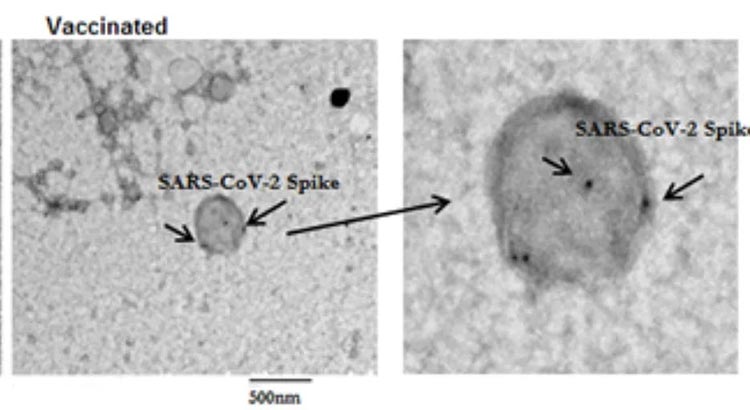
Note: The negative controls in this experiment did have spike protein on their exosomes.
Because of all the signaling effects generated by exosomes (very small doses of healthy exosomes can create profound improvements in patients which are hard to believe unless you see it first hand), it in turns seems plausible that inhaling toxic exosomes could have a profound impact on those sensitive to shedding.
Furthermore, many of the vaccine injury case histories I’ve seen indicate the route of exposure had to be respiratory in nature (e.g., the rapid nose bleeds), further supporting this hypothesis. Conversely, I’ve seen spike protein injured patients have excellent pulmonary and nasal responses to nebulized amniotic exosomes, which again indicates that toxic exosomes could also be active there. Presently, the following has been shown:
| Spike protein containing exosomes (which circulate in the bloodstream) spike after vaccination (and then decline) and appear to be one of the primary things responsible for triggering the immune response that creates antibodies to the vaccine, as once spike protein coated exosomes are transferred to mice, the mice develop antibodies to the spike protein (along with increasing levels of various inflammatory cytokines). |
| A 2023 peer-reviewed study found that unvaccinated children who were around COVID-19 vaccinated parents developed an immune response to the spike protein that was not seen in children with unvaccinated parents. Additionally, they were also able to find spike protein antibodies in surgical masks worn by the physicians. This led the authors to hypothesize that antibodies being directly transferred through the parent’s breath to their children.
I however would argue the results suggest spike coated exosomes (which produce spike antibodies once they arrive in the children) are being transferred. This is because, to the best of my knowledge, it has not otherwise been shown antibodies can be directly transferred to someone else through breath (this would change a lot of the fundamental principles of how herd immunity works in the population) and if the transference were to occur, the concentration in the child would be dramatically lower than the parent (which as best as I can tell was not what the study found). |
| Significant amounts of (RNA containing) exosomes can be found in your breath, and those exosomes (which derive from the lungs) vary depending upon on the disease state someone has (“sicker” people have “worse” exosomes). To illustrate, see this 2013 paper, this 2020 paper and this 2021 paper.
Note: Since this is a relatively new field of research, each paper is more sophisticated than the preceding one. |
| The spike protein has a high (heparin dependent) affinity for binding to the surface of exosomes. So if was not already there when the exosome initially formed it can also attach to exosomes traveling in the blood stream. |
| Long COVID (and more severe acute COVID) is characterized by the presence of more spike protein studded exosomes (see this paper and this paper). Additionally, they also showed exosomes from COVID patients are highly inflammatory (and potentially clot forming) and are taken up by the lung cells.
The most detailed study (and imaging) of spike protein containing exosomes can be found in this paper (which also found that spike protein containing exosomes can circulate a year after COVID infection). Note: This study also found COVID triggers the production of spike protein coated exosomes, and when lung cells was exposed to those exosomes, an immune response to the spike protein was triggered. |
| An inhaled vaccine was made from lung derived exosomes coated with spike proteins (they were lung derived so the lung cells would be more likely to absorb them).
These spike protein exosomes both generated an immune response and were absorbed into the body. Once absorbed, those exosomes then traveled to other tissues and organs in the body which (based on all the reports we’ve received and the patients we’ve seen) are known to be affected by shedding. Note: The key point from the above studies is that many of the above papers showed (abnormal) exosomes (e.g., spike protein coated ones) activated the immune system and appeared to play a key role in developing an immune response to them. |
Lastly, exosomes may also be absorbed through skin contact (after being sweated out by a shedder) but it’s harder to know if this does occur, as the existing data I’ve seen indicates it’s often difficult for (generic) exosomes to penetrate the skin.
As there are many cases suggesting skin to skin shedding transmission occurs, that either means something else is at work or spike coated exosomes indeed can penetrate the skin (e.g., because the skin becomes more porous at certain times or because containing spike protein increases the ability of an exosome to penetrate the skin).
In short, I think the theory behind mRNA vaccines (having cells produce exosomes on their surface which are then recognized by the immune system), was a terrible idea since it not only causes the body to attack those potentially essential cells (e.g., a good case can be made this happens to the heart) but also that it poisons the exosome system.
This again illustrates why it was a terrible decision to abandon the existing regulatory principles and allow a completely brand new technology with a huge number of unknowns to be given to a large number of people. While the regulators might have wanted to hope those unknowns would all be “fine” as time goes forward, we discover reason after reason they are actually a huge problem.
Note: The clinical uses of exosomes and their rationale for being used is discussed in much more detail here.
The SARS-CoV-2 Virus
I believe some of the shedding people attribute to the vaccine is in fact due to the virus itself. In turn, there are a few reasons why could happen and it is likely one or more of the following is occurring:
1. The SARS-CoV-2 virus is pervasive throughout our environment now and since the shedding symptoms resemble other spike protein injuries, it is likely some of the cases that are being labeled as “shedding” are actually just exposure to the SARS-CoV-2 virus. However, I must note I do not believe this can account for many of the stories I’ve come across.
2. The COVID vaccine transforms the immune response of an injected individual from one that eliminates the infection to one that reduces the symptoms of an existing infection. This in turn may lead to vaccinated individuals becoming chronic “silent” carries of COVID-19 and unawarely shed the virus into their environment.
This effect is traditionally observed with vaccines directed at a toxin an infectious agent produces rather than the organism itself (e.g., the pertussis vaccine prevents its toxin from causing whooping cough which can lead to vaccinated individuals becoming chronic carries of pertussis and silently shedding it into their environment — something demonstrated by pertussis outbreaks occurring in vaccinated institutions).
In the case of COVID-19 vaccination, it has been discovered that repeated exposure to the (highly allergenic) spike protein triggers the body to begin switching to producing of IgG4 antibodies, antibodies which are reduce the immune response to an allergen — something which is helpful for say pollens you are always exposed to, but not helpful for a harmful agent reproducing within the body.
Note: I suspect many of the vaccinated individuals predominantly become symptomatic when they are exposed to new variants they do not yet have an IgG4 response to.
In turn, it appears that repeated vaccination reduces the symptoms from a COVID-19 infection as you no longer have the (often dangerous) allergic response to the spike protein, but it also prolongs the duration of the infection and can turn you into a silent carries of the infection.
This again illustrates why it was unwise to deploy a poorly understood technology upon the world and that had a more thorough risk analysis of been performed, people would have realized that it was unwise to perpetually produce the infectious component of SARS-CoV-2 in the body.
Note: As further proof of this point, Novavax was able to demonstrate that their vaccine (which provides three injections of the antigen alongside an adjuvant rather than forcing the body to continually produce the spike protein) does not trigger the IgG4 response seen from the mRNA vaccines.
3.Vaccinating someone currently infected with COVID-19 causes the existing infection to spiral out of control, which in turn leads to the infected individual suddenly transmitting large amounts of the pathogen into the environment. Some of the things that have made me suspect this are:
• I personally know of numerous cases (which I logged) where someone got a COVID-19 vaccine, shortly after came down with a severe case of COVID-19 and then died in the hospital. Likewise, analyses of VAERS reports have found after 1-2 weeks, the most common causes of death reported following vaccination was a COVID-19 infection.
Note: I could see this either being due to the immune suppressive effects of the vaccine (e.g., the immune system becoming hyper-primed to respond to the spike protein rather than the existing viral strain, the vaccine being demonstrated to destroy the bone marrow stem cells which produce the immune system’s cells or the IgG4 class switch) or due to it provoking a severe inflammatory response (as much of the damage of from a COVID-19 infection is a result of the immunological response to it).
• I have seen a few reports (e.g., in a survey Steve Kirsch asked me to review) of someone who had a mild (PCR confirmed) lingering COVID infection then get a COVID vaccine and immediately crash (e.g., they needed to be hospitalized). These examples again suggest that the immunosuppressive effects of the vaccine can destroy the immune system’s ability to properly respond to an existing infection.
Note: This was also something that was seen with the HPV vaccine (if you have the HPV strain known to cause cancer at the time you got the vaccine, the HPV trials showed you actually became more likely to get cervical cancer).
Since the HPV vaccine and the COVID-19 vaccines are the most immunologically agitating vaccines on the market (e.g., they have a very high rate of causing autoimmune disorders), I suspect they are much more likely to worsen the response to a preexisting infection of the disease they “protect” you against.
• I know a hermit who I can verify stayed inside his house for the last two years except to see his parents once a week. Throughout the pandemic he never had an issue with COVID, but after his parents were vaccinated, he immediately developed a significant COVID infection.
Likewise, I have read numerous reports of people who either came down with COVID or a COVID like illness after being around a vaccinated individual. For example, this was one reader’s shedding story:
“In December of 2021 we attended a family wedding in another state. We drove there in our RV, not stopping often in restaurants. My husband and I were one of the few at this wedding unvaccinated, which the rest of the family disapproved of, so I was careful in my exposure. We took a home covid test two days before seeing everyone and again on the day we arrived. Negative.
At the wedding I was dancing with my nephew, a police officer, who had recently been boosted. He wasn’t feeling well — and two days later he tested positive. Three days later, feeling achy and unwell, I tested positive and two days later my husband tested positive. I am sure my nephew was shedding. The only people at the wedding who got sick were relatives or friends of my nephew.”
Likewise, another reader shared this story:
“My husband and I had the same hair stylist. She said she had just gotten boosted in Feb 2023 (after initial 2 shots). That week, we both got our hair done by her. We both are unvaccinated and had never had Covid. We both came down with COVID that week.”
Note: If you consider the first point, the vaccine could also be causing a chronic COVID infection which causes the vaccinated to continually expel spike protein coated exosomes and those are what actually create the problem for those around them.
Bacterial DNA Plasmid Contamination
It has now been demonstrated that the vaccines are contaminated with DNA plasmids that were not removed during the (improper) manufacturing process.
In turn, I believe it is quite possible those plasmids are in turn integrating into the recipient’s genome or their microbiome. Assuming they are in fact integrating into the microbiome, the transfected bacteria will reproduce the spike protein plasmid and can hence transfect other bacteria in the microbiome (which in turn can produce the spike protein).
In turn, since we are always spreading our microbiome (including through the air) to those around us, spike transfected bacteria provide a way that the vaccine could allow a replication competent organism to be transmitted to those around us — something which on the surface appears impossible with the mRNA technology (and is hence frequently used to argue against the possibility of shedding). Presently, the following data points exist to support this hypothesis:
1. It is now known that the most dangerous vaccine lots also had higher amounts of the plasmid contaminants.
2. One system of medicine (based on terrain theory) believes the microbiome transforming into a pathologic state is the root cause of many illnesses.
In turn, this system “treats” a variety of diseases by providing plasmids extracted from healthy states of the common organisms found within the body under the theory that unhealthy ones will take up those plasmids, transform into the healthy ones that live with the body and then produce more of the “healthy” plasmids.
In essence, this approach seeks to restore health is exactly the opposite of what the (spike protein plasmid containing) COVID vaccines are doing. While I do not follow the fairly complex protocols adherents of this school of medicine ask patients to follow, I have found that some of their remedies are extremely helpful for specific diseases that are otherwise quite difficult to treat.
With spike protein injuries, we’ve found one remedy this system believes “treats” the microorganism which causes blood clotting is quite helpful for both vaccine injuries and long-haul COVID. This in turn suggests to us that something about the spike protein pathologically alters the microbiome until it is reversed with a healthy plasmid.
Note: Much more was written about this school of medicine here.
3. A 2022 study was able to prove that the SARS-CoV-2 virus will infect the gut microbiome, reproduce its components within those bacteria and alter the gut microbiome (due to the bacteria it infected dying).
Since bacteriophages typically require specialized proteins to infect bacteria, the fact that SARS-CoV-2 acted as a bacteriophage was a bit of a mystery, which led the study’s authors to propose a few guesses on why it happened, all of which understandably lacked evidence to support them.
4. Sabine Hazan MD, who is a gastroenterologist and a world expert on the microbiome likewise discovered that:
• SARS-CoV-2 could be found in the stools of individuals with a COVID-19 infection.
• That a SARS-CoV-2 infection pathologically altered the gut microbiome.
• That the severity of a COVID-19 infection correlates to the degree of pathologic alteration of the gut microbiome, although it was indeterminate if the alterations in the gut microbiome preceded the infection (and hence predisposed one to a severe infection) or if it was a result of the infection itself.
Note: This study and this case report suggested that restoring the gut microbiome shortened COVID-19 hospitalization time and significantly improved one’s likelihood of survival. Dr. Hazan has also put forth the hypothesis that some of the benefit of ivermectin may be a result of it increasing the beneficial gut bacteria which are harmed by a COVID-19 infection.
• That mRNA vaccination pathologically altered the gut microbiome (and reduced the same beneficial bacteria observed to be lost in COVID-19 infections, particularly bifidobacteria) both one month after vaccination and at 6-9 months post vaccination.
All of this suggests but does not prove that microbiome transfection plays a key role in the shedding phenomenon. One thing that makes me more open to this hypothesis are the numerous cases (e.g., the cleaners discussed in the previous article) I’ve come across of individuals becoming ill from touching surfaces that were touched by shedders (and hence could contain those spike protein transfected bacteria).
Note: While it was widely believed to do so throughout the pandemic, SARS-CoV-2 is not transmitted by contaminated surfaces, which means something else is “shedding” onto them.
While it’s possible it is the spike protein exosomes, it’s unclear to me if they could persist in the environment (we always are instructed to store therapeutic exosomes at very low temperatures but in contrast, one study I found suggests serum exosomes can persist at room temperature for a few days) and as mentioned above, it’s unclear if they can be absorbed through the skin.
Additionally, Dr. Hazan’s work makes me wonder if the pre-existing microbiome of an individual may influence their susceptibility to shedding.
Note: I asked Dr. Hazan if she was ever able to assess if vaccination caused the gut microbiome to produce the spike protein.
She told me she never had the funding to do the research (as given its controversial nature, no one wanted to fund it so she had to use up a lot of her savings to self-fund the COVID-19 vaccination studies [that type of research costs a lot]) and she is thus presently trying to raise the funds for the research to determine if the vaccine integrates into the human genome or microbiome (which can be donated to here).
While talking to her, she emphasized that the mRNA vaccine damaging the gut microbiome could potentially be creating some of the shedding symptoms being observed since a healthy microbiome both produces essential nutrients and reduces inflammation throughout the body.
Pheromones
As mentioned above, some believe the vaccine shedding pathology is largely mediated through pheromones (hence why some can smell their distinct odor). Ryan Cole endorses this hypothesis, partly because it is known that pheromones can have a significant impact on menstruation.
Likewise, a few readers [1, 2] have shared that they believe shedders emit a toxic “pheromone.” While this possibility is intriguing, I do not believe it can explain everything that has been observed with shedding.
Note: As far as I know, there is no research on the connection between exosomes and pheromones.
Lipid Nanoparticle Breakdown Products
The shedding is an allergic reaction to the broken down components of the lipid nanoparticles (e.g., PEG) being excreted from patients. Overall, I feel this explanation is unlikely account for much of what has been observed.
Conclusion
Given how controversial the idea an injection being given to billions of people could actually be actively harming unvaccinated people is, we’ve put a lot of thought into if we wanted to broach this topic. For this reason, we’ve spent a long time researching the topic and tried to stick to claims we could provide the evidence to substantiate.
At this point, I feel we have been able to answer many of the questions numerous people have asked us to explore. Nonetheless, there are a few topics that have not yet been covered I know many of you still want some guidance on (e.g., does shedding silently put you at risk from a deadly disease like cancer).
The dilemma we face is that most of those answers rely more speculative evidence and our fear is that if they are associate with these points, they will be focused on and hence used to dismiss the rest of the critically important points raised throughout this article.
For example, many people want to know how to protect themselves from shedding. In my eyes, the best answer to this question is the same message everyone in this movement has been giving for the last year: “stop boosting people.” However, since we are still not at that point (however we are close as most of the public appears to have realized the boosters are either unsafe or ineffective), I am not sure if that constitutes useful advice.
Note: I am hopeful the shedding issue, provided it’s presented in a reasonable and measured manner, may finally be the thing that tips the scales against continuing the COVID-19 booster campaign as the incentives to keep them on the market is rapidly dwindling (since almost no one is buying them).
Likewise, I think making people conscious of how shedding may be harming them is helpful since it provides guidance on how to significantly reduce that harm by avoiding shedding exposures, but at the same time it’s not really helpful because no one wants to be stuck being isolated from society (which many readers have shared is the situation they’ve now found themselves in — particularly in regards to intimate relationships).
In the longer version of this article, (this article is an abridged version of the fully one which can be viewed here), we will cover everything we currently know about these topics (e.g., sexual shedding or blood transfusions from vaccinated individuals) and what can be done about them.
Lastly, if you were affected by shedding and can share your shedding experience (e.g., in the comment section here or on this Tweet) we would greatly appreciate as we need gather as much data as possible to unravel this mystery and have something be done about it.
A Note From Dr. Mercola About the Author
A Midwestern Doctor (AMD) is a board-certified physician in the Midwest and a longtime reader of Mercola.com. I appreciate his exceptional insight on a wide range of topics and I’m grateful to share them. I also respect his desire to remain anonymous as he is still on the front lines treating patients. To find more of AMD’s work, be sure to check out The Forgotten Side of Medicine on Substack.
The Good News and Bad if You Suffer From Back Pain
Reproduced from original article:
https://articles.mercola.com/sites/articles/archive/2024/02/02/back-pain-good-bad-news.aspx
The original Mercola article may not remain on the original site, but I will endeavor to keep it on this site as long as I deem it to be appropriate.
Analysis by Dr. Joseph Mercola February 02, 2024
STORY AT-A-GLANCE
- Back pain is one of the most common health complaints across the globe, with an estimated 80% of people experiencing back pain at some point in their life. It’s also the No. 1 cause of job disability
- According to a recent systematic review and meta-analysis, a majority of people who experience back pain do recover, even if the pain persists for a couple of months. The bad news is that the longer the pain persists, the lower your chances of a full recovery
- In practical terms this means that if pain persists after an injury has healed, you need to switch up your treatment strategy. Once the injury has healed, ongoing pain is typically due to pain system hypersensitivity, and that requires an approach that includes retraining your brain to perceive pain appropriately
- Avoid opioids, as they tend to augment pain sensitivity. Research has also shown opioids (including morphine, Vicodin, oxycodone and fentanyl) fail to control moderate to severe pain any better than over-the-counter (OTC) drugs such as acetaminophen, ibuprofen and naproxen
- Pain Reprocessing Therapy (PRT) has been shown to successfully reverse chronic back pain by rewiring neural pathways so that your brain can respond to signals more appropriately. The goal is to reduce your fear of movements associated with pain, so that when you move, you can be confident that it’s not going to hurt. Several other treatment strategies are also reviewed
Back pain is one of the most common health complaints across the globe, with an estimated 80% of people experiencing back pain at some point in their life.1 It’s also the No. 1 cause of job disability.2 The University of South Australia now has both good and bad news for back pain sufferers.
The good news is that a majority of people who experience back pain do recover, even if the pain persists for a couple of months. The bad news is that the longer the pain persists, the lower your chances of a full recovery. These are the take-away’s from a systematic review and meta-analysis carried out by the University of South Australia. As noted by the authors:3
“For the acute pain cohort, the estimated mean pain score with inception time uncorrected was 56 at baseline, 26 at 6 weeks, 22 at 26 weeks and 21 at 52 weeks (moderate-certainty evidence).
For the subacute pain cohort, the mean pain score was 63 at baseline, 29 at 6 weeks, 29 at 26 weeks and 31 at 52 weeks (moderate-certainty evidence). For the persistent pain cohort, the mean pain score was 56 at baseline, 48 at 6 weeks, 43 at 26 weeks and 40 at 52 weeks (very low-certainty evidence) …
Participants with acute and subacute low back pain had substantial improvements in levels of pain and disability within the first 6 weeks … however, participants with persistent low back pain had high levels of pain and disability with minimal improvements over time …
Identifying and escalating care in individuals with subacute low back pain who are recovering slowly could be a focus of intervention to reduce the likelihood of transition into persistent low back pain.”
Pain and Emotional Processing Can Get Cross-Wired
In practical terms, what this means is that if pain persists after your back injury has healed, you need to switch treatment strategies. At that point the pain is probably due to pain system hypersensitivity, and that requires an approach that includes retraining your brain to perceive pain appropriately. As explained in the Harvard Health blog:4
“… it’s not just pre-existing attitudes that worsen back pain. The pain itself can rewire your brain. When pain first occurs, it impacts your pain-sensitivity brain circuits. But when pain lasts, the related brain activity switches away from the ‘pain’ circuits to circuits that process emotions. That’s why emotions like anxiety often take center stage in chronic back pain.”
Managing Pain System Hypersensitivity
Australia’s Department of Health addresses the issue of pain system hypersensitivity, also referred to as “central sensitization”:5
“In people with persistent pain, central sensitization means the alarm ‘keeps on ringing’ and that pain ‘memories’ can persist long after the original cause of the pain has healed. People experiencing persistent pain can experience a memory or ‘echo’ of their original pain.
This explains why people can experience pain when an x-ray or scan looks ‘normal’ … persistent pain is best thought of as a glitch in the ‘software program’ that processes danger signals in the body and which the brain interprets as pain.
Sometimes this happens along with memory of the original injury or event that caused pain, and these memories become intertwined. For example, you might experience fear and pain with a certain movement.
The good news is that pain management can use helpful neuroplasticity to help reprogram the way the nervous system responds to danger signals and how the brain interprets this as pain. The aim of pain treatments is to reduce central sensitization, decrease pain, favor normal movement and daily activity and restore well-being.
Examples of using this plasticity in treatments for persistent pain include using ‘mirror therapy’ to treat phantom leg pain … using mindfulness-based stress reduction (meditation or yoga) to help manage fibromyalgia or re-educating movement without the association of fear.
Pain management is all about using helpful neuroplasticity to reprogram and reduce the overactive danger signals in the brain and nervous system. What each individual needs for helpful reprogramming may be different and researchers are currently exploring new treatments using plasticity.”
To address this kind of hypersensitivity to pain, the Australian Health Department recommends:6
- Learning ways to manage your stress
- Doing things that reduce your focus on pain
- Physical movement and exercise done in a sensible and “paced” way
- Finding new creative hobbies or practices (like photography or meditation) to help calm your nervous system and make new non-painful nervous system connections
- Avoiding opioids, as they tend to augment and worsen pain sensitivity
Download this Article Before it Disappears
Avoid Opioids
The recommendation to avoid opioids is an important one, as back pain is one of the most common reasons for opioid dependence, the side effects of which can be lethal. In fact, opioids are now the leading cause of death among Americans under the age of 50.7
According to a 2018 study,8,9 opioids — which modulate your brain’s reaction to pain — are the most commonly prescribed medications for people with chronic low back pain. These drugs often end up being used long-term in this population, and research suggests about 20% of patients on long-term opioid therapy end up developing an opioid use disorder.10 Up to 25% of opioid users also end up with other substance-abuse disorders,11 which have additional risks.
The use of opioids for back pain flies in the face of guidelines12 from the American College of Physicians, which recommends heat wraps and exercise as a first line of treatment, stressing that prescription drugs should only be used as a last resort, as they completely fail to treat the underlying problem.
Research13 has also shown opioids (including morphine, Vicodin, oxycodone and fentanyl) fail to control moderate to severe pain any better than over-the-counter (OTC) drugs such as acetaminophen, ibuprofen and naproxen. In fact, those taking nonopioid pain relievers actually fared “significantly better” in terms of pain intensity.
Considering the immense risks associated with opioid use, you’d be wise to exhaust all other alternatives before jumping on that bandwagon to disaster. The good news is there are a wide variety of non-drug options available.
Pain Reprocessing Therapy
One therapy shown to successfully reverse chronic back pain by retraining your brain is called Pain Reprocessing Therapy (PRT).14,15 This pain re-education therapy helps rewire neural pathways so that your brain can respond to signals more appropriately.
The goal is to reduce your fear of movements associated with pain, so that when you move, you can be confident that it’s not going to hurt. The short video above explains how PRT works.
In a clinical study cited in the video, 98% of patients reported improvement in their pain and 66% were nearly pain-free after eight weeks, and these improvements were confirmed by brain imaging. You can learn more about this novel therapy by visiting painreprocessingtherapy.com.
Addressing the Emotional Root of Back Pain
The success of PRT helps explain the remarkable benefits of the late Dr. John Sarno’s mind-body techniques. Sarno believed most chronic back pain was rooted in psychological or emotional issues.
His specialty was treating patients who had already had surgery for low back pain and did not get any relief. This is a tough group of patients, yet he claimed to have a greater than 80% success rate using techniques like the Emotional Freedom Techniques (EFT).
When negative emotions are suppressed, your brain redirects the emotional impulses to restrict blood flow to certain parts of your body, such as your back, neck or shoulders, thereby triggering pain. This pain acts as a distraction from the anger, fear or rage you don’t want to feel or think about.
As noted by Sarno in the documentary “All the Rage” — a four-minute trailer of which is included above — “I tell [my patient] what’s going on, and lo and behold, it stops hurting.” The “what” that is going on is not a physical problem at all, it’s emotions: anger, fear, frustration, rage.
When these kinds of emotions are suppressed, your brain redirects the emotional impulses to restrict blood flow to certain parts of your body, such as your back, neck or shoulders, thereby triggering pain. This pain acts as a distraction from the anger, fear or rage you don’t want to feel or think about.
The pain essentially acts as a lid, keeping unwanted emotions from erupting. You may feel anger at the pain, but you won’t have to face the fact that you’re actually angry at your spouse, your children or your best friend, or that you hate your job, or the fact that you feel taken advantage of.
As noted by Sarno, working hard and constantly trying to do everything perfectly to keep everybody around you happy, “is enraging to the unconscious mind.” The term Sarno coined for this psychosomatic pain condition is “tension myoneural syndrome,”16 and he firmly believed most people can overcome their pain by acknowledging its psychological roots.
Another doctor who believes resolving suppressed emotions is key for those with chronic back pain is Dr. David Hanscom, an orthopedic surgeon. He prescribes expressive writing as a primary treatment tool for back pain. You can learn more about this on Hanscom’s website, backincontrol.com.17
The Importance of Staying Active and Minimizing Sitting
Getting back to normal activity levels is an important part of recovery. If it’s true that most pain (barring an acute injury) is “in your head,” then the longer you “baby” yourself and avoid physical activity for fear of it hurting, the more you’re programming your brain to expect pain.
Staying active and minimizing sitting will also lower your risk of developing back pain in the first place by improving muscle strength and coordination, reducing stiffness and improving blood flow.
Oftentimes, back pain originates from tension and muscular imbalances. For example, sitting for long periods of time ends up shortening the iliacus, psoas and quadratus lumborum muscles that connect from your lumbar region to the top of your femur and pelvis.
When these muscles are chronically short, it can cause severe pain when you stand up as they will effectively pull your lower back (lumbar) forward. By bringing these muscles into better balance, you will remedy many of these common pains and discomforts.
This was certainly true for me when I had debilitating back pain about 10 years ago that failed to respond to all interventions. The only thing that worked was to radically reduce sitting. I switched to a standing desk and the problem permanently resolved.
Overuse and misuse of the muscles supporting your spine, poor muscle strength and inappropriate posture while sitting, standing and walking are other common causes of low back pain. For instance, when walking with your toes pointed outward, the muscles in your hips and lower back tighten, increasing your risk for lower back pain.
Sitting with your shoulders hunched over a computer screen stretches muscles in your upper back and places added stress on your lower back, increasing your risk for both lower and upper back pain.
Walking with your head down is yet another posture-related problem that has repercussions on the rest of your back and hips,18 as your head is the single heaviest part of your body and will throw everything out of alignment. If poor posture is a culprit, consider doing some exercises to stretch out your shoulders, open up your hip flexors and lift your chest.
Three Ways to Address Improper Body Mechanics
Techniques that can ease or erase back pain by teaching you proper body mechanics include:
• Foundation Training,19 which helps strengthen your core. This includes anything that directly connects to your pelvis, whether above or below it. Foundation Training teaches all those muscles to work together through integrated chains of movement, which is how your body is structurally designed to move.
• Compression breathing — This breathing technique, which is part of Foundation Training, helps re-educate the muscles surrounding the spine of your rib cage, teaching them to be in a state of expansion rather than contraction. The technique is demonstrated in the video above.
Done properly, it will help lengthen your hip flexors, stabilize your spine and support your core using transverse abdominal muscles. This strengthens your back and keeps your chest high and open, all of which can reduce pain. Over time, your muscles will get stronger and your seated posture will improve.
• Neurostructural integration technique (NST), a gentle, noninvasive technique that stimulates your body’s reflexes. Simple movements are done across muscles, nerves and connective tissue, which helps your neuromuscular system to reset all related tension levels, promoting natural healing.
To learn more, you can download Michael Nixon-Livy’s free ebook,20 “Neurostructural Integration Technique: A Better Way to Good Health” from nsthealth.com. Basic training videos are also available on Vimeo.21 To find an NST therapist near you, see our NST Therapists Page.
Benefits of Chiropractic Care
Spinal adjustment by a chiropractor can also ease back pain in many cases. In one 2017 meta-analysis22 of 26 studies, spinal manipulation was associated with “statistically significant benefits in both pain and function, of on average modest magnitude, at up to six weeks.”
The average patient reported greater ease and comfort in their day-to-day activities, such as walking, sleeping or turning in bed. However, while these results appear to be modest in nature, it is important to recognize the results are an average, and that the participants only underwent manipulation. In other words, they were not given any additional rehabilitative exercises designed to maintain functional movement of the spine gained after manipulation, or to reduce inflammation.
A study23,24 that did take physical therapy and/or anti-inflammatories into account, published in 2018, found this kind of multidisciplinary approach reduced discomfort and disability to a greater degree than standard medical care.
In all, 750 active duty military service members already being treated for lower back pain were evaluated. All were receiving physical therapy and/or drugs to ease pain and inflammation. The team added chiropractic treatment to half the participants, including spinal manipulation, rehabilitation exercises and treatment with cold or heat.
On average, the chiropractic treatment group received two to five treatments over a six-week period. After six weeks, patients who received chiropractic treatments experienced greater improvements in their lower back pain and less disability than those who did not receive the treatments. Lead study author and chiropractor Christine Goertz, Ph.D., commented on the results:25
“Spinal manipulation (often referred to as Hias chiropractic adjustment) may help heal tissues in your body that form as a result of injury, decreasing pain and improving your body’s ability to move correctly.
It is also possible that manipulation impacts the way your body perceives pain through either the brain or spinal cord and or decreases pain from muscle strain, inflammation and or spasm in the muscles next to your spine.”
Aside from addressing any immediate spinal misalignment that might cause back pain, chiropractic care can also help address, prevent and treat deeper dysfunctions in your body. Chiropractic adjustments can actually affect the chemistry of biological processes on a cellular level, thereby reducing oxidative stress and improving immune function and DNA repair,26 for example.
Acupuncture and Massage
Acupuncture and massage also have their place, and often work well together. As explained by the WellBridge Clinic in Oregon, which is a proponent of acupuncture for back pain:27
“There is extensive, conclusive research behind the use of acupuncture for pain resolution and management, especially for back pain. Modern science has found that targeting specific points in the body with acupuncture pins acts as a nociceptive stimulation that leads to the activation of the nerve-endocrine-immune systems.
This activation helps the body to begin to heal at the sites of injury and pain. Effectively, this means it increases blood flow and circulation to injured areas. It changes the electrical current that is the foundation of our biology. That’s how acupuncture releases endorphins to ease pain, release muscle tension, and change cellular processes so the body can heal.”
Back problems that may respond well to acupuncture include:
- Pinched nerves
- Sciatica
- Herniated discs
- Spinal stenosis
Massage therapy, meanwhile, releases endorphins that help induce relaxation, relieve pain and reduce levels of stress chemicals such as cortisol and noradrenaline. It also reverses the damaging effects of stress by slowing your heart rate, respiration and metabolism, and lowering high blood pressure.
Simple Stretches to Help Relieve Lower Back Pain
Stretching is also important, as tight and stiff muscles and lack of flexibility will contribute to back pain. There are many options here. Below, I’ve highlighted five simple stretches commonly recommended for lower back pain.28 If these stretches are too painful to perform, stop doing them and consult your doctor, chiropractor or massage therapist before continuing.
• Baby cobra — Lie on your stomach with your legs together, arms bent and palms on the ground at chest level, elbows bent. Inhale and lift your chest, keeping the back of your neck long and your chin relaxed. Exhale and return your forehead to the mat. Repeat a few times, focusing on your breath.
• Bird dog — Begin on all fours, then lift and extend one leg and the opposite arm at the same time. Hold for three to five breaths. Switch sides and raise and hold the opposite arm and leg for three to five breaths.
• Cat/cow — Begin on all fours. Place your hands directly under your shoulders and your knees under your hips. On your inhalation, drop your belly and lift your gaze up to the ceiling. When you exhale, round your spine so your tailbone drops between your thighs and your head lifts between your arms. Repeat multiple times, slowly, to gently increase spinal mobility.
• Psoas lunges — Your psoas muscle extends from your lowest vertebrae to the top of your thigh, putting it in a good position to stress your lower back when it becomes tight. A great way to stretch your psoas is through lunges.
Begin by standing on your knees. Bring your right leg in front of you so that your right foot is on the floor and your knee is bent at a 90-degree angle. Tuck your buttocks slightly and place your hands on your right knee, or your hips. Allow your hips to gently shift forward as you breathe for three to five breaths. Repeat on the other side.
• Twist — Twists help rotate and lengthen your spine and can be performed sitting in a chair or while lying or sitting on the ground. Begin on your back and bring your knees up to your chest. Gently allow your legs to fall to one side and turn your torso in the opposite direction, extending your arm. Breathe in this position for 30 seconds and then repeat on the other side.
You can do this stretch sitting by raising your arms and twisting gently from your torso. If seated in a chair, you can grip the arm of the chair with one hand and put the other hand on the opposite leg. Extend your spine on the inhale and twist a little further on the exhale. Repeat on the other side.
Back Pain Is Common, yet Largely Avoidable
Once you understand that back pain is typically the result of poor posture, improper movement, pain hypersensitivity, emotional repression or a combination of these factors, it becomes clear why narcotics and surgery have such high failure rates. They simply don’t address any of the underlying causes.
So, if you’re among those seeking medical care for persistent back pain, I’d advise you to consider your options — several of which I’ve just reviewed — before filling that prescription or going under the knife.
- 1, 10, 11 Pharmacy Times March 2020; 88(3)
- 2 The Lancet March 22, 2018
- 3 CMAJ January 22, 2024; 196(2): E29-E46
- 4 Harvard Health April 25, 2016
- 5, 6 Australia’s Department of Health, PainHealth
- 7 CBS News June 6, 2017
- 8 Journal of Pain October 2018; 19(10): 1104-1112
- 9 Clinical Pain Advisor May 16, 2018
- 12 AAFP 2017; 96(6): 407-408
- 13 JAMA March 6, 2018;319(9):872-882
- 14 JAMA Psychiatry 2022; 79(1): 13-23
- 15 DW.com June 9, 2022
- 16 Tmswiki.org, Introduction to Tension Myositis Syndrome
- 17 Backincontrol.com
- 18 A Vogel, August 18, 2015
- 19 Foundation Training
- 20 NST Health
- 21 Vimeo NST Training
- 22 Journal of the American Medical Association 2017;317(14):1451-1460
- 23 Journal of American Medical Association, 2018;1(1):e180105
- 24 Medscape, May 21, 2018
- 25 Reuters Health, May 21, 2018
- 26 International Research and Philosophy Symposium. Sherman College of Straight Chiropractic. Spartanburg, SC. October 9-10, 2004
- 27 WellBridge Clinic
- 28 HealthyWay July 11, 2018 (Archived)
Study: The Anti-Inflammatory Properties of Ginger
Reproduced from original article:
https://articles.mercola.com/sites/articles/archive/2024/01/26/ginger-anti-inflammatory-properties.aspx
The original Mercola article may not remain on the original site, but I will endeavor to keep it on this site as long as I deem it to be appropriate.
Analysis by Dr. Joseph Mercola January 26, 2024

Story at-a-glance
- The bioactive compounds in ginger help counteract neutrophil hyperactivity in certain autoimmune diseases by increasing cyclic adenosine monophosphate (cAMP), which in turn inhibits neutrophil extracellular trap (NET) formation
- Researchers were encouraged to find a natural supplement that could help fight overactive neutrophils and may complement treatment programs to relieve symptoms of diseases like rheumatoid arthritis, lupus and antiphospholipid syndrome
- Ginger positively influences your gut by accelerating gastric emptying, and thus reduces the potential for heartburn. Alongside other spices, it can increase your gut microbiome diversity and, in turn, help to suppress long-term weight gain
- Ginger can modulate pain associated with menstruation, osteoarthritis, migraines and delayed onset muscle soreness. Research also finds cardioprotective properties, which may be attributed to antihypertensive and antiplatelet activity
Roughly 5,000 years ago, ginger (Zingiber officinale) was a luxury item.1 The root can be eaten fresh, pickled, preserved, candied, powdered or ground and researchers have now found the mechanism through which ginger helps reduce the symptoms of autoimmune diseases.2
Ginger is from the same family as cardamom and turmeric and is indigenous to tropical Asia. However, since ginger does not grow in the wild, the exact origins are unclear. It has been used medicinally and in food for at least 5,000 years.3
When the Roman Empire fell, the ginger trade was taken up by Arab merchants and spread across Europe. It continues to be used in traditional medicine today. Ayurvedic practitioners promote ginger to improve digestion and destroy toxins but warn that pregnant women, people with high blood pressure, skin diseases, gallstones or peptic ulcers should limit their intake. Data also suggests that adding ginger to your diet can do more than impact autoimmune diseases.
Ginger May Help Inflammation in Autoimmune Diseases
In January 2021,4 researchers from the University of Michigan demonstrated that a bioactive compound in ginger helped lower antibody production and stop disease progression in an animal model in which the animals had the autoimmune diseases antiphospholipid syndrome or lupus.
Ginger has traditionally been used to help lower inflammation, but until the most recent study published by the University of Colorado, the biological mechanism that underlies the anti-inflammatory properties had not been identified. In the paper5 published in JCI Insight, the research team noted the previously reported activity against antiphospholipid syndrome and lupus.
In the current study,6 they explored how taking a whole ginger extract could impact neutrophils in autoimmune mice and healthy humans. The study examined neutrophil extracellular trap (NET) formation and how that influenced inflammation. NET formation is also known as NETosis which, when restrained, could help reduce inflammation and symptoms in people with different types of autoimmune diseases.
NETs are microscopic structures that look like spider webs. They promote clotting and inflammation, which contributes to the development and progression of several autoimmune diseases such as rheumatoid arthritis, lupus and antiphospholipid syndrome.
In this trial, researchers gave 20 milligram supplements of gingerols to healthy volunteers over seven days. They found the supplementation increased cyclic adenosine monophosphate (cAMP), which was responsible for inhibiting NETosis.
“Our research, for the first time, provides evidence for the biological mechanism that underlies ginger’s apparent anti-inflammatory properties in people,” said senior co-author Dr. Jason Knight, associate professor in the department of internal medicine, division of rheumatology, at the University of Michigan.
“There are not a lot of natural supplements, or prescription medications for that matter, that are known to fight overactive neutrophils. We, therefore, think ginger may have a real ability to complement treatment programs that are already underway. The goal is to be more strategic and personalized in terms of helping to relieve people’s symptoms,” he added.
The researchers hope the results of this study will help garner funding for clinical trials using ginger in people with inflammatory diseases where neutrophils play a prominent role, including in the treatment of COVID-19.
Known Effects on the Gastrointestinal Tract
What you eat and drink has an impact on the development of heartburn and data shows ginger offers a range of gastroprotective effects, including against dyspepsia (indigestion).7 Ginger can reduce the pressure on the lower esophageal sphincter, which helps prevent heartburn. It also prevents dyspepsia, flatulence and bloating.
Clinical trials have demonstrated how ginger extract can increase gastrointestinal motility and accelerate gastric emptying, another factor that influences heartburn. Ginger is also one of the most popular home remedies used by people with irritable bowel syndrome (IBS) to help control their symptoms, although a small pilot study showed ginger was not more effective than a placebo.
Adding two or three slices of fresh ginger root to two cups of hot water and letting it steep for several minutes results in a delicious cup of ginger root tea. Try drinking it approximately 20 minutes before eating a meal to help lower your potential risk of heartburn.
In a 2022 study8 the researchers noted that past data demonstrated that taking capsules of spices including cinnamon, oregano, ginger, black pepper and cayenne pepper could favorably affect the composition of your gut bacteria after just two weeks. They engaged 54 adults who were at risk of cardiovascular disease9 to add a blend of herbs and spices, including cinnamon, ginger, cumin, turmeric, rosemary, oregano, basil and thyme, to a controlled diet.
The researchers evaluated three different doses — one-eighth teaspoon per day, three-fourth teaspoon per day or 1.5 teaspoons per day.10 They tested gut bacteria diversity after four weeks of consuming herbs and spices and found those consuming three-fourths teaspoon or 1.5 teaspoon daily doses increased gut diversity, which represents a healthy change in the gut microbiome.
Decreased diversity has been linked to chronic conditions such as obesity and Type 2 diabetes. “Research has shown that people who have a lot of different microbes have better health and a better diet than those who don’t have much bacterial diversity,” study author Penny Kris-Etherton, Evan Pugh University professor of nutritional sciences at Penn State, said.11
Specifically, the researchers noted an increase in the Ruminococcaceae bacterial group, which is known to be beneficial for immune function and liver metabolism. The researchers noted that past studies had suggested enrichment of this family could suppress long-term weight gain and diet-induced obesity.
Data from a pilot study12 also demonstrated that ginger could reduce the proliferation of colorectal epithelium and increase apoptosis and differentiation, especially of the colonic mucosa in the crypts. These results were consistent with other research data, suggesting that ginger has a chemoprotective property that lies in the ability to regulate cell function and viability.
Download this Article Before it Disappears
Ginger and Pain Relief
Clinical trials have also demonstrated that ginger can modulate pain through a variety of mechanisms, including inhibiting prostaglandins.13 Traditionally, ginger has been used to treat pain associated with menstruation, osteoarthritis, migraines and delayed onset muscle soreness.
More than 400 chemical substances have been identified in ginger root extracts, and researchers continue to find new ones. Recently, more patients who have diseases linked to chronic inflammation are considering natural pain relief options to protect themselves from drug side effects related to long-term use or as prophylactic treatment.
A narrative review of 10 years of randomized control trials14 examined how ginger has been used to treat several conditions and the method by which the active compounds helped lower chronic inflammatory disease symptoms.
Evidence from six clinical trials evaluated the efficacy of ginger in symptoms of dysmenorrhea and found that the most common length of time ginger was taken was during the first three days of menstruation, all of which showed ginger was effective to some degree in decreasing pain in women with dysmenorrhea.
A review of the data15 evaluating ginger against knee osteoarthritis looked at randomized clinical trials using either oral or topical ginger. Two studies suggested that ginger helped reduce pain and two assessed topical use of an aromatic essential oil, which the researchers believed had the potential as an alternative for short-term pain relief.
The review concluded16 that while there is good evidence in vitro and in animal models to demonstrate that ginger has anti-inflammatory activities and could lower chronic inflammatory disease symptoms, especially pain, human studies were not numerous.
Many of the human clinical trials were conducted in Asia and the researchers theorized that the outcome expectancy could differ across ethnicities and cultures, so it was important to confirm the promising pain-relieving effects in a worldwide population.
Ginger and Your Heart
As the acknowledgment of the health benefits of herbs and spices continues to grow, researchers are finding even more health benefits from ginger. Two 2021 studies demonstrate how ginger could have a significantly positive effect on heart health.
In the first study,17 the researchers chose to review the phytochemical properties of the bioactive components of ginger and the health benefits it has in several diseases with special attention paid to the cardiovascular system.
After a comprehensive search of the literature, researchers noted that ginger was among the herbs used to develop new drugs that have more potency and fewer side effects. They noted that the cardioprotective effects may be attributed to the antihypertensive, antiplatelet and antihyperlipidemic activities of ginger. They suggest that these biological activities offer new insight into the treatment of cardiovascular disease.18
The second study19 analyzed the effects ginger extract could have on cardiomyocyte hypertrophy, cardiac fibrosis and the ultimate development of heart failure. The study began using cultured cardiomyocytes and cardiac fibroblasts in the lab. These were first treated with ginger extract and then stimulated with phenylephrine.
The lab data showed that ginger extract could suppress the increase in the surface area of cardiomyocytes that are commonly induced by the drug treatment. The extract also suppressed the mRNA levels of brain natriuretic peptide (BNP) and atrial natriuretic factor (ANF), which are upregulated in a variety of cardiac disorders, including congestive heart failure, hypertensive heart disease, and ischemic heart disease.20
Next, the researchers used mice who were surgically treated and then given a daily oral dose of ginger extract for eight weeks.21 The mice then had echocardiographic analysis and, finally, the heart weight was measured and compared against the body weight. The researchers found that the mice taking the ginger extract had a reduction in the expected increased posterior wall thickness and a decrease in systolic dysfunction.
While the featured study demonstrated that ginger has a positive effect on those who have specific autoimmune diseases, it’s apparent that the overall effects can also positively influence your gut health, reduce pain and offer some protection to your cardiovascular system. Many of these effects are also related to the anti-inflammatory properties of the bioactive compounds in ginger.
- 1, 3 Ancient Origins, December 15, 2018
- 2 University of Colorado Anschutz Medical Campus, September 22, 2023
- 4 Michigan Medicine, January 6, 2021
- 5, 6 JCI Insight, 2023; doi: 10.1172/jci.insight.172011
- 7 Food Science & Nutrition, 2019;7(1) 2
- 8, 9 The Journal of Nutrition, 2022;152(11)
- 10, 11 PennState, December 2, 2022
- 12 Cancer Prevention Research, 2013;6(4)
- 13, 16 Phytotherapy Research, 2020;34(11)
- 14 Phytotherapy Research, 2020;34(11) 3.1
- 15 Phytotherapy Research, 2020;34(11) 3.3
- 17, 18 Current Molecular Pharmacology, 2021; 14(6)
- 19, 21 European Cardiology Review, 2021; 16
- 20 Journal of Transplantation, 2012; 2012 first line
An Herbal Guide to Natural Pain Relief
Reproduced from original article:
https://articles.mercola.com/sites/articles/archive/2023/12/21/herbal-options-for-chronic-pain.aspx
The original Mercola article may not remain on the original site, but I will endeavor to keep it on this site as long as I deem it to be appropriate.
Analysis by Dr. Joseph Mercola December 21, 2023
STORY AT-A-GLANCE
- Chronic pain is debilitating, affects millions of people each year, and is a growing public health problem. In 2010, it was costing the nation up to $635 billion each year. The number of people suffering has grown and the economic cost is likely much higher
- The pharmaceutical industry is pouring money into a growing population of people who need pain relief, despite available natural options without the list of side effects and adverse events associated with pain medication
- Herbal options for pain are typically the most effective for chronic pain after several weeks. Because they can interact with other herbs and drugs, it’s important to consult with a provider familiar with natural options
- Consider investigating the use of willow bark, ginger, turmeric, rosehips, Boswellia and feverfew to name a few. The risk-benefit ratio in some herbs is too high, making them a poor choice, such as thunder god vine
- Other strategies can help support pain management, such as supplementing with choline and orange essential oil, and choosing the right foods
Chronic pain is debilitating and affects the lives of millions of people each year. While the pharmaceutical industry has contributed to the rising opioid epidemic and death rates by encouraging the use of opioids, there are several herbal solutions to help reduce your pain and improve your quality of life.
In 2021, the CDC1 estimated 20.9% of all adults had experienced chronic pain and 6.9% experienced high-impact chronic pain, which the CDC defined as pain that substantially restricts daily activities. In 2023, an NIH report2 showed that new cases of chronic pain occur more often than diabetes, high blood pressure and depression.
The data from the NIH showed that the rate of chronic pain in U.S. adults increased slightly from 2021 to 21%, but high-impact pain rose over 1% to 8%. The NIH wrote that the links between chronic pain and the opioid epidemic “underscores the urgency to understand and address the issue of pain.”3
The high cost of chronic pain is measured in dollars and emotional distress. The economic cost is measured in unemployment, poverty, self-medication with alcohol and street drugs, and health care dollars. A large study in 20104 showed the cost to the nation at that time was up to $635 billion each year. In 2023 dollars that would be equal to $882 billion.5 This points to pain as a major public health challenge.
The Need for Natural Pain Solutions
A lot of money is poured into treating neck and back pain, two of the more common areas of chronic pain. Yet, as the pharmaceutical industry pours more into “discovering” medications that might help alleviate pain, the options typically come with a long list of side effects and some, like Vioxx,6 Darvon and Darvocet,7 are pulled off the market when the side effects include heart problems, stroke and death.
Common side effects from pain medications include constipation, stomach ulcers, nausea, clouded thinking, drowsiness and in some cases, addiction.8 Data also show that men and women perceive pain differently.
Research into gender differences in pain perception9 found that when men and women are exposed to identical pain stimulation, women rate the pain higher on a pain scale. Factors that may affect pain perception include sex hormones, emotions, age, attitude and a learned response from past experiences.
The rising number of people with chronic pain and subsequent economic and emotional costs, gender differences in pain perception and a high number of disrupting and even dangerous side effects from pharmaceutical options point to the need for finding effective natural pain solutions without high costs and significant side effects.
Herbal Options for Chronic Pain
The following alternative herbal options for chronic pain offer a balanced approach. However, it is important to recognize that they can also interact with any drugs you are taking. Before adding herbal remedies to your regimen, it is important to consult with health care providers who are familiar with natural options, such as naturopathic doctors or herbalists. Note that herbal remedies typically work best after taking them for weeks and are not always effective for acute pain.
There are limited data on using herbs in women who are pregnant or breastfeeding and in children, so herbal remedies in this group should be avoided unless they are recommended by a health care provider. Additionally, while some herbs reduce inflammation and pain, the risk-benefit ratio may be too high in some people. Of course, there are also spices and plant extracts that have shown efficacy in treating pain, but the following are herbs that can help with natural pain relief.
1. Willow bark — Extracts from the willow tree have anti-inflammatory properties and have long been used to treat fever and pain.10 The active ingredient, salicin, is similar to aspirin. Willow bark also contains other flavonoids, polyphenols and salicylates that help reduce inflammation in a way that’s similar to nonsteroidal anti-inflammatory drugs (NSAIDs) like naproxen or ibuprofen.
The most commonly reported side effects are gastrointestinal issues and allergic reactions.11 Children may be at higher risk of Reye’s syndrome, and it should be avoided in women who are pregnant since it crosses the placental barrier.
In a 2013 study of 436 patients, those taking willow bark extract with musculoskeletal pain demonstrated a significant reduction in pain. In another study with 128 patients receiving standardized willow bark extract, the researchers found patients experienced relief from mild to fairly severe coxarthrosis or gonarthrosis comparable to that of standard therapies, without the subsequent adverse events.
2. Ginger — Ginger has a high number of compounds called gingerols, which are recognized as anti-inflammatories through metabolizing arachidonic acid.12 The botanical name is Zingiber officinale and it has been used by herbalists for roughly 2,500 years.13
Ginger is found growing natively in tropical countries and has a long list of medicinal properties, including having been used to treat digestive and appetite problems, prevent motion sickness, reduce muscle pain, swelling and arthritis, and relieve hyperemesis gravidarum.
Data describe a delay in therapeutic action, so it is not helpful for acute pain conditions. Side effects can include drowsiness and heart arrhythmias as well as interference with platelet aggregation and increased bleeding time, especially when used with other herbs or drugs that have the same risk of bleeding.
In one double-blind, placebo-controlled, randomized clinical trial with 60 patients suffering from migraine headaches, researchers found those who received ginger and NSAIDs had significantly better clinical responses. Other trials demonstrated ginger could significantly improve pain in knee osteoarthritis and reduce knee swelling.
3. Turmeric — Turmeric comes from the rhizome of the plant and has the active polyphenolic compound called curcumin.14 Traditionally, turmeric has been used as an anti-inflammatory agent that promotes wound healing and has an analgesic effect. Curcumin is known to regulate inflammatory cytokines, and this effect has proved useful in autoimmune diseases such as multiple sclerosis and rheumatoid arthritis.
Curcumin and turmeric also inhibit platelet aggregation, and so caution must be used when using it with other drugs that have a similar potential. Studies have demonstrated a reduction in pain in patients with osteoarthritis and an improvement in quality-of-life scores in women with breast cancer.
4. Rose hips — In standardized trials,15 rose hip powder has been beneficial in reducing pain in people with osteoarthritis without major side effects. In one review of the literature16 researchers found data showing rose hip powder lowered serum measurements of C-reactive protein and over three months, participants experienced a 13% decline in pain relative to no change measured in those taking a placebo.
A meta-analysis of three trials with 287 patients showed standardized rose hip powder consistently lowered pain scores and people taking the rose hip powder were twice as likely to respond as those who took a placebo. Additionally, rose hip powder does not have ulcerogenic effects, nor does it inhibit platelet aggregation.17
5. Devil’s claw — This is a popular medicinal plant native to South Africa that has a reputation for traditional use for the treatment of pain, malaria and liver and kidney problems.18 According to Mount Sinai, there have been several studies that demonstrate a reduction in pain and an improvement in physical functioning after taking Devil’s claw for eight to 12 weeks.
When compared against a leading European medication, those taking Devil’s claw experienced the same pain relief with fewer side effects. Other data showed it may relieve joint pain and was at least moderately effective in people with arthritis.
6. Boswellia — This herb is also known as frankincense. In a 2020 literature review19 of seven trials and 545 patients, the researchers found that Boswellia helped relieve pain, stiffness and improved joint function leading them to conclude that it could be “an effective and safe treatment option for people” with osteoarthritis.
In a 2018 study,20 patients with osteoarthritis received a combination of curcumin and boswellic acid and experienced a reduction in pain symptoms over 12 weeks.
7. Feverfew — This herb has a long history of use for the treatment of inflammation, headaches and fever.21 In the late 20th century, it was used for migraine headaches. In addition to anti-inflammatory action, it also inhibits serotonin release and platelet aggregation, which increases the risk of bleeding when used with other herbs or medications with the same characteristic.
Clinical studies have demonstrated the administration of feverfew and ginger may be an effective first-line abortive treatment for migraines and feverfew alone may help reduce the frequency of migraine attacks
8. Thunder god vine — This traditional Chinese herb has anti-inflammatory and analgesic effects.22 While it has been useful in patients with rheumatoid arthritis pain, it is also associated with several significant side effects, including renal insufficiency, decreased male infertility, hematotoxicity and immune suppression. Clinical researchers do not recommend use due to the high risk-benefit ratio.
9. Black cohosh — According to The Herbal Academy,23 while black cohosh is more commonly used in women during menopause, it was traditionally used as an antispasmodic for cramping and muscle pain of any type, as well as for nerve-related and spinal cord injury-related pain.
10. Corydalis — This flowering plant is in the poppy family and has been used in traditional herbalism for strong pain.24 However, the herb can have significant side effects, including dizziness and nausea, so it is best used under the careful guidance of an experienced herbalist or physician.
11. Rosemary — Rosemary grows natively along the Mediterranean Sea and in sub-Himalayan areas. It’s been used in traditional medicine for headaches, migraine and depression, and as a mild analgesic and antispasmodic. There is evidence that rosemary has significant anti-inflammatory, antioxidant, antitumorigenic and neuroprotective properties as well as clinical effects on memory, pain, anxiety and sleep.25
12. Ashwagandha — Ashwagandha has been used in Ayurvedic medicine for thousands of years to help improve immune health, cognitive function and sleep. A 2016 randomized, double-blind, placebo-controlled study26 analyzed the effect in 60 patients with knee joint pain.
At the end of 12 weeks, the researchers found a significant reduction in pain, stiffness and disability compared to baseline measurements and placebo. The group taking 250 mg showed the earliest improvement at 4 weeks.
Download this Article Before it Disappears
More Strategies That Can Help Lower Pain Perception
Although the focus of this article is on a guide to herbal remedies that can help lower or eliminate your pain, I’ll briefly mention other strategies with links to past articles that you might consider using alongside herbs to improve pain management.
• Steer clear of steroids — While steroid injections sometimes lessen the immediate pain, data show they can make the joints worse and over time can increase pain. Additionally, there is a lack of evidence to support using steroids and shots in the knee may be no more effective than a placebo.
• Food — Food is powerful medicine as it can significantly impact inflammation and therefore, pain, in a variety of chronic conditions. Arthritis is one of those conditions. There are over 100 different types that include symptoms of pain, stiffness and swelling.
Food compounds such as sulforaphane, anthocyanins and compounds found in a variety of spices can help lower pain. Conversely, a diet high in sugar and ultraprocessed foods can alter your gut microbiome and promote inflammation.
• Choline — This precursor to acetylcholine is likely an important part of pain relief, yet an estimated 90% of the population is deficient. Groups with the highest risk of deficiency include pregnant and breastfeeding women, endurance athletes, people who drink a lot of alcohol, postmenopausal women and vegetarians and vegans.
• Orange essential oil — Orange essential oil used for massage or aromatherapy has helped significantly relieve pain in women in labor and older adults with moderate to severe knee pain. The oil also helps ease stress and anxiety and boosts relaxation and mood.
- 1 Morbidity and Mortality Weekly Report, 2023;72(15)
- 2, 3 NIH, May 16, 2023
- 4 US Pain Foundation, September 29, 2021
- 5 Federal Reserve Bank of Indianapolis. Inflation Calculator
- 6 NPR, Vioxx: The Downfall of a Drug
- 7 CNN, November 19, 2010
- 8 Mayo Clinic, Chronic Pain: Medication Decisions
- 9 British Journal of Anesthesia, 2013; 111(1)
- 10 HealthNews, November 16, 2023, Willow Bark
- 11 Pharmaceutics, 2021;13(2) 3.9 Willow Bark 55% DTP and Table 9 for studies
- 12 HealthNews, November 16, 2023, Ginger
- 13 Pharmaceutics, 2021;13(2) 3.2 Ginger
- 14, 20 Pharmaceutics, 2021;13(2) 3.3 Turmeric
- 15 HealthNews, November 16, 2023, Rosehip
- 16 Examine, Rosehip, 6.2 Osteoarthritis
- 17 Australian Family Physician, 2012; 41(7)
- 18 Mount Sinai, Devil’s Claw
- 19 BMC Complementary Medicine and Therapies, 2020; 20
- 21 Pharmaceutics, 2021;13(2) 3.8 Feverfew
- 22 Pharmaceutics, 2021;13(2) 3.6 Thunder God Vine
- 23, 24 The Herbal Academy, 12 Traditional Herbs That Ease Pain
- 25 Iranian Journal of Basic Medical Sciences, 2020; 23(9)
- 26 Journal of Ayurveda and Integrative Medicine, 2016; 7(3)
Resolving Lower Back Pain for Good With NST
Reproduced from original article:
https://articles.mercola.com/sites/articles/archive/2023/11/06/resolving-lower-back-pain-with-nst.aspx
The original Mercola article may not remain on the original site, but I will endeavor to keep it on this site as long as I deem it to be appropriate.
Analysis by Dr. Michael Nixon-Livy November 06, 2023
STORY AT-A-GLANCE
- Neurostructural Integration Technique (NST) is a powerful technique that can ease muscle aches and pain by stimulating the central and peripheral autonomic nervous systems
- The main objective of NST is to remove pain and dysfunctional physiological conditions by restoring the structural integrity of the body; NST helps your body reintegrate on many levels, and thus return to and maintain normal homeostatic limits on a daily basis
- Approximately 80% of the world’s population will suffer from lower back pain (LBP) at some point in their lives, and LBP is the world’s leading cause of disability
- Barring instances when the LBP is caused by direct impact injury, the pain and its location are typically a manifestation resulting from systematic imbalances that have been in place far longer than the LBP
- As an example, patients will often present with debilitating LBP and chronic TMJ or TMD (temporomandibular joint dysfunction) that they, their doctor and/or health care practitioners have overlooked, discounted as insignificant or simply not understood, let alone associate with the LBP condition
Overview
Without doubt lower back pain is one of modern man’s most frequent, challenging and unrelenting problematic health conditions.
In this age of modern medical and scientific research, new discoveries are being made at a rapid rate; yet, nothing is emerging to quell the seemingly worsening state of affairs accompanying the undeniable fact that this global health condition is on the increase. Some salient information:
| Approximately 80% of the world’s population, ranging from adolescents to the elderly will suffer from lower back pain — LBP at some point in their lives. |
| Currently 1 person in 10 is suffering from LBP, making it the world’s leading cause of disability. |
The number of adult individuals affected by LBP in the USA alone is on the rise year on year, and the 65 and older age group appears to be more prone. Members of The Lancet editorial staff, Stephanie Clark and Richard Horton, concluded.
|
| In 20181 in the U.S. around 31.6% of women and 28% of men suffered from LBP. |
| More than half of Americans who experience LBP spend the majority of their time at work sitting. |
| Various surveys performed over the last decade confirm that LBP sufferers report their condition negatively effects their work, daily tasks, exercise regime, sleep, social activities, emotional status and ultimately quality of life. |
|
The direct cost to the U.S. economy in treating back per year is $50 billion, and when another 100 billion is added to this by way of indirect costs such as lost wages and productivity, insurance and legal costs and impact on the family, it is easy to appreciate just how serious this condition is and how urgently we need to find better solutions. |
| Popular treatments utilized in the U.S. that produce relief from LBP but without any long-term guarantee of nonrecurrence, include medication, chiropractic and physical therapy. |
| According to the editors of a series of papers in the prestigious medical journal The Lancet: Lower back pain impacts an estimated 540 million people across the globe, and most are treated in a manner that is not consistent with best practice treatment guidelines. |
| Ultimately, 1 in 10 sufferers of LBP discovers the primary cause of their condition with a staggering 90% left completely in the dark as to its cause and origin. |
Further Observations
Jan Hartvigsen, D.C., Ph.D., of the department of health professions at Macquarie University in Sydney, Australia, was part of the low back pain work group that discussed the prevalence of the condition.
Their findings suggest that very few population groups, if any, are completely immune to lower back pain, writing that it is an “extremely common symptom” that affects all age groups making it the most common disability worldwide. Other observations by Hartvigsen and colleagues include:
| The global burden of lower back pain will likely increase during the next few decades, especially in low and middle-income countries. |
| Work disability and health care costs that were ascribed to lower back pain differed significantly worldwide. |
| Low levels of physical activity, obesity and smoking were linked to lower back pain. |
| Most people with the condition could not correctly pinpoint the exact nociceptive source of their pain. |
| LBP was a “complex condition” that has biophysical factors, comorbidities, pain-processing mechanisms, as well as psychological and social factors to the pain and related disability. |
| Most episodes of lower back pain did not last long and do not leave a lasting impact; however, periodic episodes are common and low back pain is “increasingly understood” as a long-lasting condition with a “variable course” as opposed to isolated events. |
| Disability from low back pain happened most frequently in working age groups. |
| LBP was the reason for 60.1 million disability-adjusted life-years in 2015, an increase of 54% since 1990, with the largest increases occurring in low and middle-income countries. |
Hartvigsen and colleagues concluded:
“Although there are several global initiatives to address the global burden of low back pain as a public health problem, there is a need to identify cost-effective and context-specific strategies for managing low back pain to mitigate the consequences of the current and projected future burden.”
Download this Article Before it Disappears
Resolving Lower Back Pain With NST
If we consider the foregoing it is easy to appreciate that resolving LBP convincingly is potentially a challenging task that has many permutations and, depending on the individual and the degree of their LBP condition, may require a singular intervention or multifactorial approach.
This article has been written not to criticize any other approach or methodology that seeks to resolve LBP, but to simply shine light on the fact that there are other ways, perhaps less known, but arguably more effective than those currently being used in the mainstream.
And, that NST is one of those remarkably effective musculoskeletal methods that has changed the lives of millions of LBP sufferers around the world in the last 25 years, and continues to do so year on year, with great simplicity and equally great dependability.
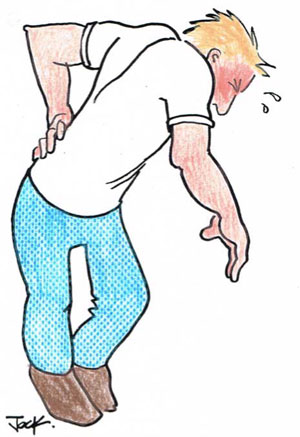
System Before Symptom
One of the most typical, common and firmly held beliefs that I have heard both patients and various health practitioners express over the last 30 years is that lower back pain — LBP — has its origin and source in the lower back itself.
Consistent with this belief is that therapy should be applied, therefore, to the lower back where the pain is.
When a patient presents to my office with an MRI (magnetic resonance image) of their lumbar spine that shows a bulging disc applying compression to a neighboring nerve, of course we are obliged to agree that this has something to do with their pain.
The expectation of the patient is for me to then treat where the obvious problem is, which is a completely reasonable attitude.
But barring when the LBP has been caused by direct impact injury, I have found in thousands of cases that the condition itself and its location are more of a “final expression” or “manifestation” resulting from systematic imbalances that have been in place for longer than the LBP itself.
The systematic imbalances may range from acute to chronic, up to and including degenerative in nature. They are referred to as “systematic” for two reasons.
•Firstly, because the imbalances are coexistent and function codependently between multiple systems. The neuromuscular, fascial, skeletal, visceral and endocrine systems and even the brain itself may all be involved in the one pattern that is ultimately delivering an LBP condition.
•Secondly, the imbalances are referred to as “systematic” because they interfere with the natural self-regulating capacity that the human organism depends on to function optimally and remain pain free.
At the structural level itself this relationship is characterized by the perpetual synchronous rhythmic relationship between the diaphragm, pelvic girdle, spinal column and cranium. When this is lost, firstly dysfunction, and then pain, set in.
As an example, patients will often present with debilitating LBP and at the same time a chronic TMJ or TMD (temporomandibular joint dysfunction) that they, their doctor and/or health care practitioners have overlooked, discounted as insignificant or simply not understood, let alone associate with the LBP condition.
As a consequence corrections performed on the lumbar spine itself for the LBP condition may produce temporary relief but not long term resolution, simply because the body’s center of gravity, “the sacrum,” depends on the body’s superstructure, “the cranium,” and its host of auxiliary components (including TMJ) to remain dynamically balanced. And the rule applies vice versa.
Only when the TMJs are corrected and stabilized can we expect to have proper cranial-atlas-cervical spine integration, and consequently proper lumbo-sacral-pelvic integration. Only then will appropriate neuro-muscular-skeletal relationships between the diaphragm, pelvic girdle, spinal column and cranium be restored.
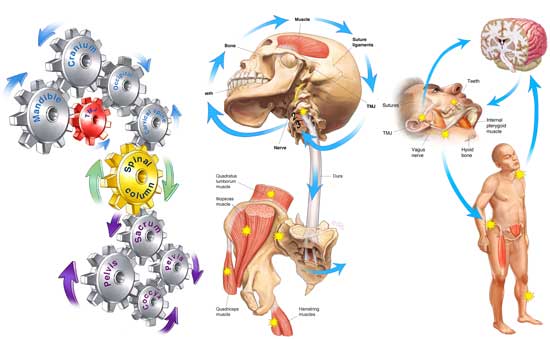
Images showing interconnectivity and systematic relationships between super and substructures of the body
Consequently, chronic tensions and pressure acting around and on the lumbar spine itself will be released.
To resolve this particular scenario described above, an NST session lasting approximately 30 to 45 minutes would include, at the very least, adjustments for the lumbar, thoracic and cervical spines, sacrum, diaphragm, shoulders and TMJ.
This approach ensures that systematic integration is restored with the LBP in focus. But this is just one simple example of observing and correcting LBP in a systematic fashion. Another simple example of the system being impacted from a source outside of the area of LBP is when a hamstring muscle is in a state of chronic tension.
Now, the cause of the tight hamstring may have been structurally induced via too much sitting, but it could also have been introduced via one of the visceral-somatic reflexes that exist between the large intestine and the hamstring muscles.
Lets imagine that our patient who presents with LBP has had poor dietary habits for some time and is chronically constipated. They eat a lot of refined and processed food and a lot of meat. Their bowel movements occur once or twice a week or maybe less.
Put in very simple terms: A chronically restricted large intestine organ (smooth muscle) can have a strong reflexive effect on the hamstring and even quadratus lumborum muscles, both leading to LBP.
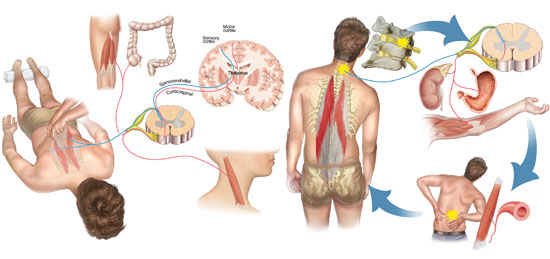
Visceral disturbance can quickly lead to tight muscles and lower back pain
Furthermore, the tight hamstring muscle acts as a tight cable on the ischial tuberosity and sacrum, preventing the pelvic girdle and sacrum itself from enjoying their proper motion of flexion and extension that occurs in response to diaphragmatic respiration.
The resultant effect is that a tensional myofascial train between hamstring, sacrum ligaments, gluteal, piriformis and erector spinae muscles is established, causing pressure on nerves either directly (e.g., sciatic nerve) or via lopsided vertebral bodies in the lumbar spine causing an intervertebral disc to bulge and apply pressure to root nerves exiting the lumbar spine.
Either way the result is LBP courtesy of a systematic imbalance. To resolve this particular scenario described above, an NST session lasting approximately 30 to 45 minutes would include, at the very least, adjustments for the lumbar, thoracic and cervical spines, sacrum, diaphragm, hamstring muscle, pelvis and viscera.
Choosing Procedures
With NST choosing which procedures to include that will resolve each patient’s unique presenting symptom pattern is a simple matter of always including certain ‘core’ procedures such as the lumbar, thoracic, cervical spine, sacrum and diaphragm adjustments and then adding the procedures that correspond to other areas of tension or pain.
Therefore choosing the procedures to tailor an NST session for a patient is a straightforward process partly decided on before the session commences and partly decided on throughout the session as the practitioner discovers areas of tension and pain.
There are countless other examples of how acquired systematic imbalances can result in LBP or indeed myriad other local pain conditions neck pain, shoulder pain, knee pain, visceral pain, conditions of the ANS and much more.
Nor is it any surprise to not only see LBP conditions evaporate after a few sessions of NST, but a host of other comorbidities resolve as well. Of course it’s always valid to discover what the patient has does or has been doing on a daily basis that might have contributed to this set of compromises within their organism.
Do they sit for long hours at a time whilst working on a computer? Clearly this can lead to a situation where poor posture combines with various stressors such as visual and emotional to predispose the patient to clenching and grinding causing the TMJ dysfunction in the first place.
Obviously diet and hydration play significant roles in this context as high levels of stress related sugar dependence for example may produce more irritation to viscera, nerves and emotions causing further predisposition to clenching and grinding and TMD issues.
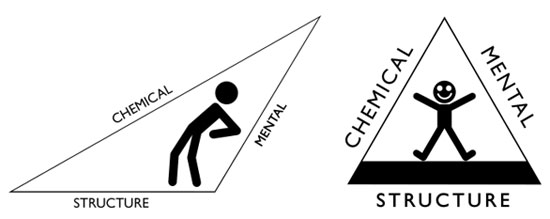 All sides of the ‘triad of health’ are interactive and vitally important to keep balanced in attaining optimal health
And so the story with each individual goes. Regardless of the cause one thing is for sure — relieving chronic systematic imbalances not only rapidly relieves LBP and other symptoms, but it also ensures that patients are sensitized to making the best future choices in their lifestyles that will deliver prolonged daily balance and freedom from pain — should they choose to do so.
NST is undoubtedly a profoundly effective system of spinal and somatic adjustments that dependably deliver outstanding results. But at the same time it is also a process of discovery and education for the patient, whereby they ultimately grasp that the lifestyle decisions they make on a daily basis will ultimately place control of their health and longevity in their own hands.
As Edison put it back in 1903: “The doctor of the future will give no medicine but will interest his patients in the care of the human frame, in diet and in the causes and prevention of disease.”
The only way that our population’s health standards will improve in generations to come is by individuals assuming responsibility for their own health and prioritizing this above all else. Of course, we will always need physicians of all persuasions but there is much that can be achieved by the individual alone taking control of their health.
Restoring Systematic Integration to Remove LBP
NST employs a layered approach at every session that follows a particular model known as the Core-Extremities-Core approach where particular procedures are utilized to not only bring about dynamic integration of the pelvic girdle, spinal column and cranium as a unit, but indeed to provide specific release to particular parts of the body as required.
• Core — Includes corrections for the lumbar, thoracic and cervical spines, sacrum and diaphragm. This set of corrections is known as the “base core” and is the minimum any patient would receive regardless of their presenting symptoms. Base core corrections alone produce outstanding results.
• Extremities — Includes corrections for the upper and lower extremities that are added to the base core corrections as required to detail the session for particular presenting symptoms in the hips, hamstrings, knees, ankles, feet, shoulders, elbows, wrists and hands.
When added to base core corrections, these targeted releases are extremely effective, providing rapid pain reduction in afflicted areas. Extremities corrections also prepare the way for deeper core corrections to work more immediately.
• Super Core — Includes corrections for the coccyx, pelvic girdle, temporomandibular joints, atlas and cranium. This set of corrections forms what is known in NST as “super core,” corrections and not only provide for more thorough unlocking and integration of the pelvic-occipital system and body as a whole, but ultimately deliver sustainability of corrections for patients.
Super core corrections are utilized only as required as determined by simple specific tests performed routinely throughout every session.
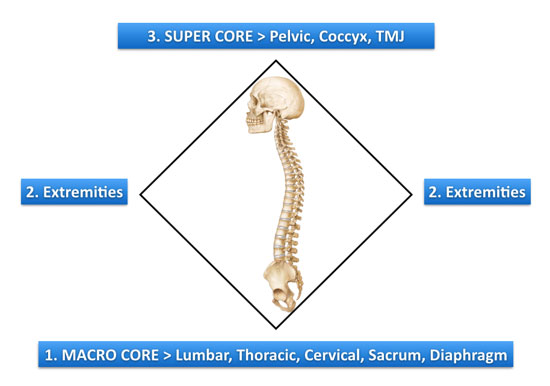
Regulating Muscle Tension Is the Key
If there is one fundamental principle around which NST is designed, and how and why it works so simply yet profoundly, it is the elimination of irregular “macro and micro” muscular and fascial “tensional patterns” throughout the body. Consequently optimizing “tensegrity” is the goal!
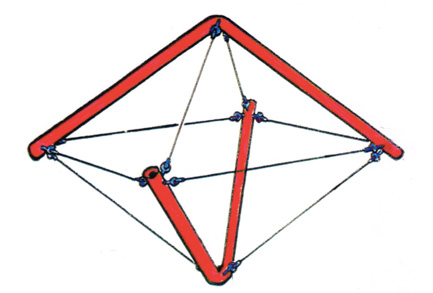 This simple tensegrity model shows that if the cables (muscles) are balanced the orange bars (bones)
will follow and consequently nerve function and physiology are optimized
In a macro sense a typical muscular tensional pattern may involve a unilateral hamstring muscle, unilateral gluteus maximus and medius muscles, erector spinae muscles and diaphragm muscle. In a micro sense a typical muscular tensional pattern may involve a unilateral sternocleidomastoid muscle, hyoid muscles, masseter, lateral pterygoid and temporalis muscles.
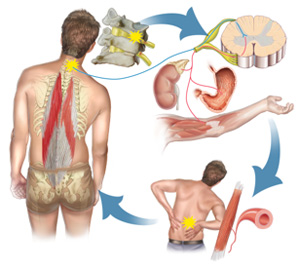 Poor tensegrity = pain and dysfunction |
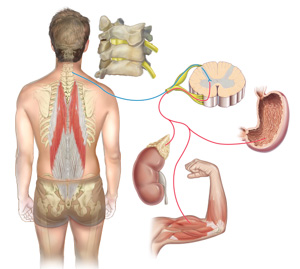 Good tensegrity = robust physiology and health |
Although at first glance it may seem complex to consider the unlocking of such a muscle pattern, the job is made extremely easy by following the simple sequences of releases that relate to whatever part of the body has tension.
The sequences are tried and proven, having produced resolution from LBP and a broad variety of other conditions for millions and millions of individuals over the last 25 years in particular. As an example, the bilateral releases for the lumbar spine number nine in total, and although very straightforward, represent perhaps the most complex set of releases.
In other words there is nothing very complex at all about the sequences that are quickly learnable and immediately reproducible. The bilateral thoracic releases number five in total and the cervical, six. Following are a few images of typical NST releases or PRI-moves.
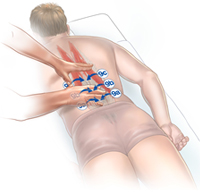 Lumbar spine PRI-moves |
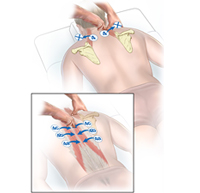 Thoracic spine PRI-moves |
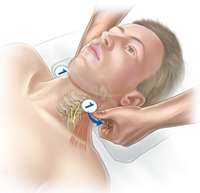 Cervical spine PRI-moves |
The NST PRI-Move
The PRI-move is perhaps the golden key that makes the NST system of releases possible at all. It was firstly developed by a sports medicine specialist in Melbourne, Australia, by the name of Ernie Saunders (1880-1951) and later refined by the celebrated Australian osteopath Thomas Ambrose Bowen (1916-1982), whose work inspired much of the NST system of releases.
The PRI-move refers to every release performed in NST that all share the same common formula of stretching the skin and fascia over a designated underlying structure (muscle, nerve, tendon, ligament) contacting that structure with counter pressure, and then crossing the structure, causing it to bump or shift as a response.
The response causes a “discharge impulse reaction” in the structure that it is applied to and also other remote structures as well, hence giving rise to the PRI-move’s name, which simply means Proprioceptive Rolling Impulse movement.
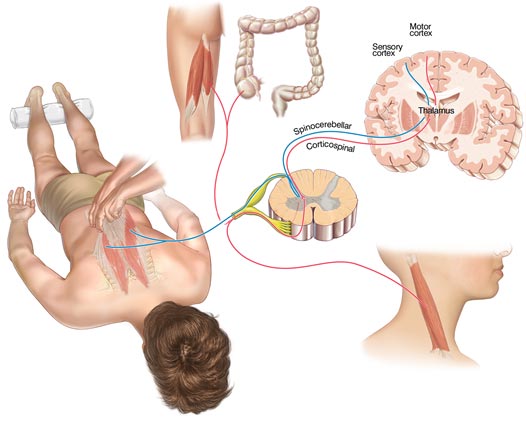 Pri-moves applied in the spinal region cause local tissue sedation and remote muscle and visceral release via reflex pathways
Sequences of PRI-moves appear to cause a “proprioceptive tipping point” of sorts, whereby groups of muscles rapidly recalibrate back to a normal neuromuscular status. The resultant effect is a rapid reduction in muscles tension and pain, accompanied by a sense of relation, clarity and improved energy levels.
Signs of Muscle Tension
Many patients who suffer from LBP will also have other myofascial and musculoskeletal issues that appear to be unrelated, but in fact are telltale signs that all is not well in the body’s tensional system. Below is a list of symptoms sufferers of LBP report with, yet have not connected with their LBP:
| General stiffness and aches and pains | Pain on doing bending or twisting movements |
| Pain or stiffness when walking | Pain when moving between sitting-standing-lying |
| Low energy, fatigue or heaviness | Depression and lethargy |
| Irritability and negativity | Headaches |
| Foggy thoughts and poor memory | Bowels and bladder not working properly |
| Breathing difficulty | Poor sleep |
| Low sexual drive |
After a few sessions of NST it frequently comes as a pleasing surprise to patients when they discover that not only has their LBP gone, but they are noticing that many of those other secondary symptoms have vanished as well.
Results Achieved With NST
Results achieved using NST in general clinical practice for LBP are genuinely outstanding and can be categorized as follows:
- 85% of patients will require one to three sessions to experience resolution
- 10% of patients will require four to six sessions to experience resolution
- 5% of patients will require ongoing sessions at seven to 14 days apart to remain pain free
While these have been my results over 30 years working with tens of thousands of patients in my clinics in Australia, France, Germany and Poland, they are also the same as our NST practitioners achieve.
To the best of my knowledge there are currently approximately 5,500 NST practitioners throughout the world who are actively practicing NST and, to a person, they would all concur that results are predictably pretty much the same the world over.
Surprisingly few sessions (generally one to four) are required to bring about sustainable relief from LBP for their patients by using NST.
I also know this to be the case via thousands of case studies collected from these practitioners at hundreds of NST seminars that I have taught since 1996 and via equally as many personal testimonies throughout the same period of time.
Furthermore, between 2004 and 2006 I teamed up with doctors at a prominent psychosomatic institute in Milan, Italy, (Institute of Integrated Psychosomatics) to run a series of research studies into the effectiveness of NST for patients suffering from chronic LBP.
Two groups of 60 and then 39 patients were given five NST sessions producing an 81% success rate in the most severe sufferers of LBP and around 90% in the less severe sufferers. Previous medical intervention had been unable to resolve the LBP for the most severe sufferers.
Results were measured in pain scale reduction, ROM improvements, elimination of medication, avoidance of surgery and improvement in quality of life. The research was supervised Riccardo Scognamiglio and Michele Fortis at the Bergamo hospital with Alessandro Aloisi and other physiotherapists performing NST sessions.
The research was ultimately regulated by the Northern Italian government in cooperation with the WHO (World Health Organization).
Development of NST
I designed NST in Melbourne, Australia, between the years of 1991 and 1995, and since 1996, along with my band of teachers, have been teaching it exclusively to osteopaths, physiotherapists, chiropractors, doctors and other professional therapists via postgraduate seminars throughout Australia, Canada, the European continent, Russia, the United Kingdom and the USA.
The construction and underpinning philosophy of NST were significantly influenced by the osteopathic work of Ernie Saunders and Thomas Bowen, both Australians, and the chiropractic-osteopathic work of Dr. Major Bertrand DeJarnette, USA.
NST, or “neurostructural integration technique,” refers to the manner in which the technique is applied and points to some of its underpinning philosophy. Said in reverse, NST is a technique for the integration of the structure via stimulation of the neurological and neuromuscular systems. Musculoskeletal and myofascial systems are implicit in this description.
Although NST utilizes absolutely no adjustments whatsoever to the skeletal system itself as in classical chiropractic or osteopathy, its sequences of specialized rolling movements called PRI-moves (proprioceptive rolling impulse movements) applied to the spinal column, pelvic girdle, cranium and extremities produce results that every chiropractor, osteopath and physiotherapist would be delighted with.
Conclusion
NST is a modern day osteospinal system that is easy to learn and reproduce instantly in the clinic for outstanding results in resolving lower back pain — LBP.
It would be a great injustice, however, to consider NST as an intervention only for LBP, as it is equally effective in resolving neck pain, all conditions of the articulations, visceral disorders, menstrual disorders, headaches, RSI, sporting injuries, motor vehicle injuries, autoimmune disorders and much more.
Most practitioners who attend the five-day osteospinal seminar quickly convert many of their patients over to NST, as it is very user friendly, requiring little physical effort by the practitioner; yet, it produces outstanding clinical outcomes for the vast majority of patients on a daily basis.
Seminars
NST is taught exclusively to professional postgraduate practitioners via intensive hands-on seminars. There are four seminars that round out complete NST training, namely, Osteospinal, Advanced, Proto Plus and Deep Cures.
Osteospinal is the only mandatory level, while Advanced, Proto Plus and Deep Cures are all optional electives but highly recommended.
Osteospinal
The first of the NST seminars is the five-day Osteospinal seminar that includes the all-important “NST Operating System” that is fundamental to the functioning of NST. Corrections for the spinal column, pelvic girdle, cranium, diaphragm and extremities are included.
Much can be achieved with the operating system, and many practitioners are completely satisfied to remain with this body of work such is its completeness and effectiveness.
Advanced
The second of the NST seminars is the four-day Advanced Osteospinal system that provides a host of new strategies for the shoulders, elbows, hands, feet, hips, TMJ cranium and more. These strategies seamlessly dovetail into the basic Osteospinal system.
The practitioner will also learn many time saving “clinical tricks” to accelerate the work learned at the Osteospinal seminar.
Proto Plus
The third of the NST seminars, Proto Plus is a three-day seminar showcasing 24 sublimely effective mini-protocols and procedures that again dovetail seamlessly with the work covered in the previous two seminars.
The mini-protocols have the effect of accelerating results and providing practitioners with alternative strategies for particular chronic or challenging cases.
Deep Cures
The final NST seminar is a three-day journey beyond the spine into the realms of chemicals and emotions.
With the aid of a specialized radionic test kit and laser, practitioners will learn a series of ways to test if their patient is being affected by any one of a number of blockages that may act as an impediment to the proper function of autoregulation that typically takes place after receiving an NST session.
Practitioners will also learn how to test for toxicity and biochemical and nutritional deficiencies. The final day of the seminar is dedicated to a trilogy of emotional corrections from the world of Erickson, Kinesiology and EFT that will be a godsend for patients who have an emotional history to their physical condition.
About the Author Dr. Michael Nixon-Livy is the CEO of www.nsthealth.com and a practicing NST-osteopathic physician and psychotherapist specializing in natural integrative medicine for sustainable pain relief and health. He is based in Australia and tours the world yearly teaching and lecturing. Founder and developer of the highly acclaimed NST Osteospinal system, he is also an author and the leading lecturer for NST post-graduate seminars worldwide since 1996. He has personally introduced and taught the NST system in no fewer than 20 countries around the world including the USA and developed various live and digital education systems. Michael is a passionate advocate for the education of individuals, groups and communities about intelligent lifestyle management to achieve optimal health and longevity. |
- The Lancet, Volume 391, Issue 10137, 2356 – 2367
- WebMD, “Back Pain Health Center”
- Centers for Disease Control and Prevention, 2014
- American Family Physician
- Pain Doctor, “What Causes Low Back Pain?”
- American Chiropractic Association, “Back Pain Facts and Statistics
- NST Health Shop, “Research”
- Lancet. 2018 Jun 9;391(10137):2356-2367
- 1 CDC
Can Choline Help With Our Pain Epidemic?
Reproduced from original article:
https://articles.mercola.com/sites/articles/archive/2023/10/12/acetylcholine-pain-relief.aspx
The original Mercola article may not remain on the original site, but I will endeavor to keep it on this site as long as I deem it to be appropriate.
Analysis by Dr. Joseph Mercola Fact Checked October 12, 2023

STORY AT-A-GLANCE
- Boosting choline, a precursor for acetylcholine, may be an important part of pain relief, but an estimated 90% of the U.S. population is deficient
- Researchers from the University of Chicago revealed that targeting an acetylcholine receptor led to pain-relieving effects in mice, even in animals that were tolerant to opioids
- The pathway did not activate the brain’s reward system, so there’s little chance of addiction, and there was no tolerance built up or withdrawal symptoms when the treatment stopped
- Choline plays a significant role in human health, from neurotransmitter synthesis to cell structures, and may be involved in the development of nonalcoholic fatty liver disease (NAFLD), atherosclerosis and neurological disorders
- Krill oil and eggs, particularly the yolks, are excellent choline sources
The neurotransmitter acetylcholine may be an untapped pathway for pain relief that doesn’t involve dangerous drugs like opioids. Researchers from the University of Chicago revealed that targeting an acetylcholine receptor led to pain-relieving effects in mice, even in animals that were tolerant to opioids.1
The pain relief was powerful enough to rival that from opioids, but without the negative effects. The pathway did not activate the brain’s reward system, so there’s little chance of addiction, and there was no tolerance built up or withdrawal symptoms when the treatment stopped.2 Boosting choline, a precursor for acetylcholine, may therefore be an important part of pain relief, but many in the U.S. are deficient.
How Acetylcholine May Relieve Pain
Acetylcholine is an excitatory neurotransmitter that excites nerve cells, triggering it to send a message.3 A 2011 study revealed that acetylcholine decreased activity of pain-excited neurons and increased the activity of pain-inhibited neurons in the cornu ammonis region of the hippocampus.4
The University of Chicago study specifically involved an area of the brain called the ventrolateral periaqueductal gray (vlPAG), a “critical nexus” for systems involved in pain control.
In 2017, the study’s senior author, Daniel McGehee, Ph.D., and colleagues found that targeting alpha-7 (⍺7), an acetylcholine receptor in the vIPAG, relieved pain. While this receptor typically increases nervous system activity, when it was stimulated in the study it led to a quiet state that resulted in pain relief for several hours. McGehee said in a University of Chicago news release:5
“That was a huge and extremely unexpected outcome. Persistent inhibition was not on our radar at all. It was always a conundrum to me, but we saw that there is recruitment of another signaling pathway that is altering potassium channel function and causing these cells to shut down.”
Fortunately, the acetylcholine receptor involves a different pathway from opioids. So when the team boosted acetylcholine in opioid-tolerant mice, the same pain-relieving effects were seen. Study author Shivang Sullere, Ph.D. explains:6
“Not only do these cells relieve pain, they also accurately mirror the pain state of the organism. Through imaging methods, we can reproducibly monitor these neurons and acetylcholine in the vlPAG. This provides us a valuable biomarker for the pain state of an organism.
This unexplored role of acetylcholine also points towards its potential involvement in the central sensitization processes that contribute to the development of chronic pain conditions. Modifying acetylcholine signaling provides an opportunity to relieve pain and prevent the establishment of the chronic pain state.”
Why Do You Need Choline?
Choline was identified in 18627 and officially recognized as an essential nutrient by the Institute of Medicine in 1998.8 It plays a significant role in human health, from neurotransmitter synthesis to cell structures, and has a large impact on the development of nonalcoholic fatty liver disease (NAFLD), atherosclerosis9 and neurological disorders.10
During development, choline supports healthy development of the brain and may help reduce the risk of neural tube defects. In older adults, it’s also important. In one study, 77% of men and 80% of postmenopausal women who were deprived of dietary choline developed signs of subclinical organ dysfunction, including fatty liver and muscle damage.11 The dysfunction resolved when the participants consumed a high-choline diet.
While your body can produce some choline in the liver, it’s not enough to meet human needs. There’s also an interrelationship between folate and choline deficiencies, as both are methyl donors.12 When the diet is deficient in folate, choline becomes the primary methyl donor, creating greater insufficiency or deficiency of the nutrient.
As a precursor for acetylcholine, choline increases acetylcholine release, which plays a role in many body functions, including muscle control, memory and circadian rhythm.13 Other important functions of choline in the body include:14
- Synthesis of phospholipids needed for cell membranes, including phosphatidylcholine and sphingomyelin
- Modulating gene expression
- Cell membrane signaling
- Fat transport and metabolism — Choline is needed to carry cholesterol from your liver, and a choline deficiency could result in excess fat and cholesterol buildup15
- Early brain development
Choline may also help prevent cardiovascular disease by converting homocysteine to methionine.16 Homocysteine is an amino acid that may increase your risk for heart disease and stroke if it accumulates in the blood.17 Choline is also important for healthy mitochondrial function18 as well as mental health. Choline deficiency may lead to abnormal fat deposits in your liver, causing NAFLD.19
Further, low choline intake is associated with increased anxiety,20 while high dietary choline is linked to better cognitive performance.21 Meanwhile, choline deficiency is linked with DNA damage and apoptosis, and breast cancer risk may be reduced by 24% among women who eat a high-choline diet.22 Low levels of acetylcholine are also linked to Alzheimer’s disease.23 According to the National Institutes of Health:24
“Cholinergic neurons use the neurotransmitter acetylcholine, and Alzheimer’s disease is often treated by increasing acetylcholine levels or preventing its breakdown.”
Download this Article Before it Disappears
There’s a Good Chance You’re Choline-Deficient
An estimated 90% of the U.S. population is deficient in choline,25 and, according to a study published in the journal Nutrients, only 8% of U.S. adults (including only 8.5% of pregnant women) are getting enough on a daily basis.26 The amount of choline you need depends on your age, sex and whether or not you’re pregnant or nursing. Generally, the recommended intake is 425 milligrams (mg) a day for women and 550 mg/day for men.27
Pregnant and nursing women require more choline — from 450 mg to 550 mg a day — and some people have genetic polymorphisms that increase the need for choline. Certain ethnic and racial groups are more likely to be affected.28 In addition to pregnant and lactating women, groups at especially high risk for choline deficiency include:
- Endurance athletes — Endurance exercises, like marathons and triathlons, can deplete choline levels. Studies show that supplementing with choline before these types of stressful exercises can help keep levels of choline in the blood from getting too low.29,30
- People who drink a lot of alcohol — Excess alcohol consumption can increase your need for more choline while simultaneously increasing your risk of deficiency.31
- Postmenopausal women — Postmenopausal women have lower estrogen concentrations, which can increase the risk of organ dysfunction in response to a low-choline diet.32
- Vegetarians and vegans — Animal foods like beef liver, eggs and krill oil are the highest sources of dietary choline. Because vegetarians and vegans have dietary restrictions that eliminate some or all of these choline-rich foods, it can be more difficult to get an adequate amount of the nutrient through diet alone.33
The Best Sources of Choline
Eggs, particularly the yolks, are an excellent choline source. Among egg consumers, more than 57.3% met the adequate intake levels for choline, compared to just 2.4% of people who consumed no eggs. In fact, the researchers concluded that it’s “extremely difficult” to get enough choline unless you eat eggs or take a dietary supplement.34 Other dietary sources of choline include:35
| Grass fed beef liver | Cauliflower | Atlantic cod |
| Alaskan salmon | Kidney beans | Quinoa |
| Brussels sprouts | Broccoli | Shiitake mushroom |
Krill oil, however, may be an ideal choline source. It contains 69 choline-containing phospholipids to synthesize phosphatidylcholine, a critical component of human cell membranes.36 This is key to its benefits as a source of choline, because it’s estimated that 60% of choline in organic salts is otherwise lost when gut bacteria convert it to the metabolite trimethylamine (TMA).
Enzymes may then turn TMA into trimethylamine-N-oxide (TMAO), a potential biomarker for insulin resistance and heart problems. But krill oil contains fatty acids in the form of phosphatidylcholine (PC) — unlike fish oil, which contains them in triglyceride form.
As noted by the researchers, “Choline in the form of PC is considerably less converted to TMA as demonstrated in a single-dose study with krill oil,37 potentially resulting in more efficient delivery of choline.”38 It’s been shown for instance, that 28 days of krill oil supplementation increased choline levels in healthy young adults.39
Further, in a study comparing phosphatidylcholine, present in krill oil, and choline bitartrate salt, it was found that the krill oil led to higher levels of the important metabolites betaine and dimethylglycine (DMG) along with lower levels of TMAO, which can lead to health issues, compared to the other choline source. Researchers explained:40
“Krill oil is increasingly recognized as a useful source of phosphatidylcholine, in addition to its acknowledged role in providing the omega-3 fatty acids EPA and DHA. In a former study, phosphatidylcholine was shown to raise plasma choline levels more efficiently compared to ingestion of free choline as choline chloride.”
More Help for the Pain Epidemic
About 21% of U.S. adults are suffering from chronic pain, with new cases occurring more often than new cases of other common conditions like diabetes, depression and high blood pressure.41 If you’re among them, seek out natural options first before resorting to drugs.
The solution you need depends on the underlying cause of your chronic pain. Back pain, for instance, typically responds well to exercises, chiropractic adjustments, acupuncture and massage. Often, addressing the emotional component of your pain using tools like the Emotional Freedom Techniques is also helpful.
In addition to adding more choline-rich foods to your diet, other foods can also support pain control by lowering the inflammatory response and improving your gut health. Ginger is often used as a pain reliever for low back pain, osteoarthritis, migraines and delayed onset muscle soreness.42
Increasing your intake of animal-based omega-3 fats may also reduce pain, including that associated with rheumatoid arthritis and inflammatory bowel disease.43 Ultraprocessed foods, on the other hand, are inflammatory and may contribute to chronic pain conditions. In animal studies, they’ve been found to increase the excitability of muscle nerves, increasing the likelihood of muscle pain.44,45
Other natural pain relief options include hypnotherapy, music therapy and use of hot or cold packs. Even taking a swim in cold water offers effective relief from chronic pain in some cases.46 You’ll want to get regular high-quality sleep as well, as lack of sleep and poor sleep quality are closely linked to chronic pain.47
Often, it’s possible to relieve pain effectively using a combination of these and other lifestyle strategies. But if not, seek the help of a holistic health care provider who can help guide you on a path toward healing. Opioids should be a last resort and are not always necessary to treat even moderate to severe pain. Ibuprofen and acetaminophen (which do have their own set of risks) may work just as well.48
- 1 Neuron November 1, 2023, 111, 1-21
- 2, 5, 6 The University of Chicago September 20, 2023
- 3, 23 Cleveland Clinic, Acetylcholine
- 4 J Neural Transm (Vienna). 2011 Apr;118(4):555-61. doi: 10.1007/s00702-010-0545-x. Epub 2011 Jan 19
- 7 Annals of Nutrition and Metabolism, 2012; 61(3)
- 8, 22 Nutrition Reviews, 2009;67(11):615–623
- 9, 11, 25 Nutr Rev. 2009 Nov; 67(11):615-623
- 10 Nutrients, 2020;12(6)
- 12, 14 National Institutes of Health, Choline
- 13 Oregon State University, Choline, Summary
- 15 J Biol Chem. 2002;277(44):42358-65
- 16 ARYA Atheroscler. 2011;7(2):78-86
- 17 JAMA. 2002;288(16):2015-22
- 18 Curr Opin Clin Nutr Metab Care. 2013;16(3):339-45
- 19 Oregon State University Linus Pauling Institute
- 20 Am J Clin Nutr. 2009;90(4):1056-60
- 21 Am J Clin Nutr. 2011;94(6):1584-91
- 24 NIH, Carnitine, Health Professional
- 26, 34 Nutrients August 5, 2017
- 27 Linus Pauling Institute, Micronutrient Information Center
- 28 FASEB J. 2014;28(7):2970-8
- 29 Eur J Appl Physiol Occup Physiol. 1993;67(1):87-91
- 30 J Am Coll Nutr. 2000;19(6):768-70
- 31 J Exp Med. 1954;100(6):615-27
- 32 Am J Clin Nutr. 2010;92(5):1113-9
- 33 BMJ NPH. 2019;0:1-4
- 35 National Institutes of Health Office of Dietary Supplements
- 36 Lipids. 2011;46(1):25-36
- 37 Nutrients. (2019) 11:2548. doi: 10.3390/nu11102548
- 38 Front. Nutr., 18 August 2020 | doi: 10.3389/fnut.2020.00133, Future Directions
- 39 Lipids Health Dis. 2015 Dec 15;14:163. doi: 10.1186/s12944-015-0162-7
- 40 Nutrients. 2019 Oct; 11(10): 2548, Discussion
- 41 National Institutes of Health May 16, 2023
- 42 Phytotherapy Research, 2020; 34(11) Abstract
- 43 Pain. 2007 May;129(1-2):210-23. doi: 10.1016/j.pain.2007.01.020. Epub 2007 Mar 1
- 44 Nutrients. 2020 Oct; 12(10): 3216
- 45 EurekAlert! November 13, 2020
- 46 BBC News February 13, 2018
- 47 Neuropsychopharmacology. 2020 Jan; 45(1): 205–216
- 48 JAMA. 2017;318(17):1661-1667
Can Inhaling Menthol Help Your Brain?
Reproduced from original article:
https://articles.mercola.com/sites/articles/archive/2023/09/07/inhaling-menthol-cognitive-function.aspx
The original Mercola article may not remain on the original site, but I will endeavor to keep it on this site as long as I deem it to be appropriate.
Analysis by Dr. Joseph Mercola Fact Checked September 07, 2023
STORY AT-A-GLANCE
- Researchers seeking a connection between smell and the central nervous system discovered that smelling menthol can improve cognition in healthy animals and those with neurodegenerative disease
- This data highlights the potential therapeutic benefit that menthol may have in modulating immune health and central nervous system disease
- Menthol is a popular aromatherapy essential oil, as well as peppermint and frankincense
- Peppermint oil is often associated with relieving nausea, pain, stomach and respiratory symptoms, and managing stress and mental fatigue
- Frankincense essential oil has anti-inflammatory properties, can help reduce symptoms of ulcerative colitis and irritable bowel
Researchers1 from Cima University of Navarra published a paper in Frontiers of Immunology in which they demonstrated that smelling menthol could improve cognition in animal models suffering from neurodegenerative disease. The study lends another layer of evidence that aromatherapy, or the practice of inhaling a scent or absorbing components of essential oils through the olfactory system or skin,2 can have beneficial effects on your body and brain.
According to Consumer Reports,3 U.S. consumers spent $1 billion on essential oils in 2015. This grew to $4.6 billion in 20224 and experts estimate the market will reach $9.85 billion by 2030.
The term aromatherapy wasn’t used until the late 1920s, but the history of benefiting from aromatic plants dates back thousands of years. Ancient Egyptians, Greeks, Chinese and Romans used essential oils in their cosmetics and drugs.5 Today aromatherapy practitioners work with patients who have a variety of health conditions and help them use aromatherapy at home.
Data from the featured study suggests that this simple practice may help improve cognitive function in those with Alzheimer’s disease.6
Menthol Enhances Cognitive Performance
The researchers sought to investigate the connection that exists between the olfactory, immune and central nervous systems. Past research7 has identified the complex interactions between the olfactory system and the brain, including studies that showed a correlation between the appearance of the first symptoms of Alzheimer’s disease and loss of smell.
Dr. Juan José Lasarte, director of the Immunology and Immunotherapy Program at Cima and principal author of the investigation, commented in a press release:8
“We have focused on the olfactory system’s role in the immune and central nervous systems, and we have confirmed that menthol is an immunostimulatory odor in animal models. But surprisingly, we observed that short exposures to this substance for six months prevented cognitive decline in the mice with Alzheimer’s and, what is most interesting, also improved the cognitive ability of healthy young mice.”
The researchers chose to use menthol, a naturally occurring compound found in peppermint and other mint leaves, to analyze the impact on cognitive capacity and immune system.9 After brief and frequent exposure to menthol, the researchers evaluated the immune response and typical cognitive decline in an animal model of Alzheimer’s disease.
When the animal detected the scent, the body showed a decrease in interleukin-1-beta levels, which is a key protein in the inflammatory response.10 When the mice were exposed to menthol for one week every month for 6 months, the cognitive impairment normally observed in the mouse model was prevented.
The researchers also used a medication approved for managing autoimmune conditions to suppress the same protein and found an improvement in cognitive capacity in healthy mice and those with Alzheimer’s disease. They concluded:11
“These data suggest an association between the immunomodulatory capacity of smells and their impact on the cognitive functions of the animals, highlighting the potential of odors and immune modulators as therapeutic agents for CNS-related diseases.”
Another researcher from the study noted that data demonstrating a connection between the olfactory, central nervous and immune systems, suggest that immune modulators and odors may play an important role in preventing and relieving central nervous system diseases,12 and may open the door to creating new therapies.
Not All Odors Are Therapeutic Agents
The data from this research highlights the potential that odors, specifically scents from essential oils, may have therapeutic benefits in modulating physiology and impacting disease. Data analyzing the therapeutic effect of essential oils is not new. A 2017 study13 found evidence that compounds in essential oils have an analgesic-like action and may hold some promise in the development of pain relief products.
Aromatherapy has also been used to reduce anxiety,14 alleviate depression,15 and it has shown a beneficial effect on obesity.16 Results of using fennel essential oil in an animal model revealed an improvement in lipid metabolism and a decrease in insulin levels indicating that inhaling fennel essential oil could affect cardiovascular health and other indicators of obesity-related dysfunction.17
Download this Article Before it Disappears
The Power of Aromatherapy
Scent can have a powerful influence on your well-being and is known to trigger memory, also known as odor-linked memories. Odors are better at triggering memory than pictures.18 For example, smelling your mother’s perfume on another woman can trigger strong memories and emotions about your mother.
Aromatherapy uses concentrated essential oils from a variety of botanicals to harness olfactory power for healing. Essential oils carry biologically active volatile compounds in a highly concentrated form.
Two powerful essential oils are peppermint and frankincense. In the featured study, researchers demonstrated how menthol improved cognition in an animal model. The main active ingredient of peppermint oil is menthol.19
Peppermint oil is popular in the aromatherapy world and is derived from the leaves of the peppermint plant. It’s widely used as a home remedy for stomach problems and is effective in helping to relieve nausea. Peppermint oil has exhibited antiviral, antimicrobial, antifungal, antioxidant, analgesic and anti-edema properties20 and may be useful for:
• Relieving stomach problems — Peppermint oil may help ease functional dyspepsia,21 relieve indigestion, stomach cramps and bloating22 and is effective in improving symptoms of irritable bowel syndrome.23
• Easing respiratory problems — Peppermint oil has expectorant and decongestant properties24 that can help clear up phlegm in the respiratory tract.
• Relieving pain — Peppermint oil can help relieve sore muscles25 when it’s added to massage oil. Some may find relief from headaches26 by dabbing a few drops mixed with a carrier oil on the wrist, or inhaling the essential oil.
• Managing stress and mental fatigue — Studies suggest that the essential oil has an effect similar to psychostimulants,27 helping to manage stress and mental fatigue, as demonstrated in an animal study.
A second essential oil that stands out from the crowd is frankincense, commonly referred to as the King of Oils. Anecdotally, many swear by the healing powers found in the essential oil and research demonstrates several benefits including reducing inflammatory conditions, anti-inflammatory effects in ulcerative colitis and irritable bowel syndrome, reducing the risk of asthma and an antiproliferative effect on tumors.28
You can choose to use frankincense oil with a few drops of your favorite carrier oil, add it to your bath, or in a warm compress. When using a diffuser or vaporizer, ensure the device is made specifically for essential oils.
- 1, 7, 8, 12 EurekAlert! May 10, 2023
- 2 John Hopkins Medicine, Aromatherapy: Do Essential Oils Really Work?
- 3 Consumer Reports, April 9, 2016
- 4 Verified Market Research, U.S. Essential Oil Market Size and Forecast, Top graph
- 5 Mount Sinai, Aromatherapy
- 6 Frontiers in Immunology, 2023; 14
- 9, 11 Frontiers in Immunology, 2023; 14 abstract
- 10 SciTechDaily, July 17, 2023
- 13 International Journal of Molecular Sciences, 2017;18(12)
- 14 Asian Pacific Journal of Cancer Prevention, 2020; 21(3)
- 15 Mini Reviews in Medicinal Chemistry, 2021;21(16)
- 16 International Journal of Molecular Sciences, 2021;22(21)
- 17 Nutrients, 2022; 14 (4)
- 18 Frontiers for Young Minds, March 31, 2022 Abstract
- 19 Alimentary Pharmacology and Therapeutics, 2018;47(6) Results/Pharmacokinetics 10% down the page (DTP) para 1
- 20 International Scholarly Research Notices, 2012;718645 Introduction, para 1 middle
- 21 Alimentary Pharmacology and Therapeutics, 2000;14(12)
- 22 NHS, Peppermint Oil
- 23 Journal of Gastroenterology, 2007;42(7)
- 24, 26 Mount Sinai, Peppermint Colds and flu section
- 25 National Center for Complementary and Integrative Health, Peppermint Oil, last bullet at the top
- 27 Asian Journal of Pharmaceutical and Clinical Research, 2009;2(2) page 30, rt column, section 3 search “psychostimulants”
- 28 Advances in Hygiene and Experimental Medicine, 2016;70
Do Redheads Need Less Vitamin D?
Reproduced from original article:
https://articles.mercola.com/sites/articles/archive/2023/09/05/do-redheads-need-less-vitamin-d.aspx
The original Mercola article may not remain on the original site, but I will endeavor to keep it on this site as long as I deem it to be appropriate.
Analysis by Dr. Joseph Mercola Fact Checked September 05, 2023
STORY AT-A-GLANCE
- Just 1% to 2% of the global population has red hair, which is caused by a mutation of the melanocortin 1 receptor (MC1R), a gene located on chromosome 16
- Due to their naturally fair skin and lighter complexion, redheads are able to produce vitamin D more effectively than most people
- Redheads are at a greater risk for skin cancer even without sun exposure, and are also likely to be more sensitive to temperature changes, pain and painkillers
- Regardless of whether you possess the MC1R gene, your body needs a certain amount of vitamin D for optimal health, so be sure to check your level, particularly if you live in a northern climate and are experiencing the “winter blues”
Editor’s Note: This article is a reprint. It was originally published January 27, 2018.
Between 1% to 2%, or just 76 to 152 million people, of the global population has red hair. This unique hair color is caused by a mutation of the melanocortin 1 receptor (MC1R), a gene located on chromosome 16. MC1R is a protein involved in regulating your hair and skin color, as well as eye hue. As a recessive trait, the mutated gene must be inherited from both parents to produce a child with red hair.
Variations in the MC1R gene are responsible for a range of reddish hair color — from “strawberry blond” to brown hair with red hues — and fair skin that may or may not be heavily freckled. Due to the type of melanin their bodies produce, redheads are at a greater risk of developing skin cancer even if they avoid sun exposure.
On the positive side, their pale skin and sensitivity to ultraviolet (UV) light helps redheads produce vitamin D more efficiently than their blonde or brunette counterparts.
The History of Red Hair
While data on the exact distribution of redheads worldwide is unavailable, red hair seems to occur more frequently among northern and western Europeans and their descendants. Jacky Colliss Harvey, author of “A History of the Redhead,” told The Washington Post the MC1R gene originated in Central Asia and “thrives mainly in remote regions and closed communities such as Ireland, Scotland and coastal regions of Scandinavia.”1
Redhead characteristics, says Harvey, are due to “a mutation in the MC1R gene that fails to produce sun-protective, skin-darkening eumelanin and instead causes pale skin, freckles and red hair.” Indeed, your eye, hair and skin color are determined by a protein called melanin, of which there are two kinds:2
- Eumelanin — If you produce mostly eumelanin, you tend to have brown or black hair and dark skin that tans easily. Eumelanin also protects your skin from damage caused by the sun’s UV rays.
- Pheomelanin — If you produce mostly pheomelanin, you will likely have blond or red hair, freckles and light-colored skin that tans poorly. Due to the lack of protection from UV radiation afforded by pheomelanin, you will have an increased risk of skin damage caused by sun overexposure.
Professor Jonathan Rees, grant chair of dermatology at Scotland’s University of Edinburgh, and one of a team of scientists to identify the MC1R gene variants in humans,3 suggests Northern European countries are home to a greater proportion of redheads than anywhere else in the world. He believes the biggest concentrations of redheads are found in Ireland and Scotland.
“If you’re in northern Europe, you get used to seeing people with different hair color,” says Rees. “[I]f you just think about Asia, it’s very, very rare to see somebody with red hair. And in most of Africa, it is exceedingly rare to see somebody with red hair. It is an unusual trait globally.”4
Redheads May Need Less Vitamin D Than Others
Due to their naturally fair skin, redheads are able to produce vitamin D more effectively than most people.5 Even though vitamin D can be obtained naturally through sensible exposure to the sun, modern lifestyles and weather conditions in many parts of the world make it nearly impossible for some to obtain sufficient amounts. Given their genetic predisposition, redheads are able to produce it on their own. Said Harvey:6
“As our distant ancestors migrated to settle the cool, gray climes of Northern Europe, redheads had a signal advantage over their darker peers: Their pale skin produced vitamin D more efficiently from the wan sunlight, strengthening their bones and making women more likely to survive pregnancy and childbirth.”
The Daily Mail suggests having red hair and pale skin offers an important health advantage to those who possess it:7
“Redheads, it would seem, boast a genetic [secret] weapon which enables them to fight off certain debilitating and potentially deadly illnesses more efficiently than blondes or brunettes. A pale complexion permits more sunlight into the skin, where it encourages the production of vitamin D. This helps to prevent rickets, a disease which progressively weakens bone structures, and the lung disease tuberculosis, which can be fatal.”
Despite its name, vitamin D is not a regular vitamin. It’s actually a steroid hormone obtained primarily from sun exposure. Its ability to influence genetic expression produces many of its wide-ranging health benefits. Vitamin D is so important, research suggests simply increasing vitamin D3 levels in the general population could lower rates of chronic diseases such as depression, diabetes, heart disease, hypertension, obesity and more.
Beyond contributing to strong bones, sufficient amounts of vitamin D can help reduce your risk of several types of cancer. Furthermore, vitamin D strengthens your immune system, which protects you from colds and the flu by helping your body attack and destroy bacteria and viruses.
Download this Article Before it Disappears
Sufficient Vitamin D Is Necessary for Optimal Health
Regardless of whether you possess the MC1R gene, your body needs a certain amount of vitamin D to promote and safeguard your health. The optimal vitamin D level for general health is in the 40 to 80 nanograms per milliliter (ng/ml) range; 60 to 80 ng/ml appears to be ideal.
While the ideal way to raise your vitamin D is by regularly and sensibly exposing large amounts of your skin to sunshine, that might not be possible where you live. If so, you will want to take an oral vitamin D3 supplement along with vitamin K2 and magnesium, to ensure maximum effectiveness.
You can determine your maintenance dose by measuring your blood level. Ideally, check your vitamin D level twice a year, in winter and summer, when your levels will be at their lowest and highest. As a general guideline, vitamin D experts recommend 4,000 IUs per day for adults, but that applies only if you are already in the therapeutic range. If your levels are low, you may need 8,000 IUs or more per day to start.
Particularly during the winter months, you’ll want to keep an eye on your levels. Lack of UV exposure can bring out the “winter blues,” leading to feelings of depression. If you notice your mood and energy levels are down, you may not be getting enough vitamin D.
Even if you live in an area receiving year-round sun, you are at risk of missing out on vitamin D from natural sun exposure if you spend most of your time indoors, use topical sunscreens or wear long clothing for religious reasons.
Redheads at Greater Risk for Melanoma
If you possess the MC1R gene, you are at a greater risk of developing melanoma, the deadliest form of skin cancer.8 Many have mistakenly assumed the increased risk is related to the fact that fair-skinned people possess the type of melanin that gives them less “natural sunscreen” against the sun’s UV rays. It follows then that the sun would be more damaging to redheads, thereby putting them at increased risk of skin cancer.
The problem with this widely held belief is that melanoma often appears on skin that is not exposed to sun, which suggests there must be another explanation. In fact, research suggests redheads have an increased melanoma risk whether they spend time in the sun or not.
A 2012 study published in the journal Nature,9 among mice bred to be susceptible to cancer, 50% of those with golden-yellow hair (the “redheads”) developed melanoma within a year based on zero exposure to UV light.
This was a far higher incidence rate than occurred among albino or black mice. Even though the researchers initially thought their lights may have been emitting UV radiation, they realized UV light exposure was not the culprit. Instead, the pheomelanin pigment itself, which they say may contribute to damage from oxidative stress in the skin cells, is what triggers cancer.
With respect to subsequent research, published in JAMA Dermatology in 2016,10 Dr. David Fisher, director of the melanoma program at Massachusetts General Hospital, stated, “It’s been known for several decades that UV chemically excites [MC1R-variant] pheomelanin and triggers release of reactive oxygen species, while the brown-black eumelanin has some capacity to absorb UV and is also very good at quenching antioxidant damage in cells.”11
Sensitivity to Temperature, Pain Are Redhead Characteristics
Redheads are also likely to be more sensitive to temperature changes and pain than those with darker hair and skin. Research12,13 conducted at the University of Louisville, in Kentucky, compared the pain tolerance of 30 red-headed volunteers to that of 30 brunettes. The redheads began to feel pain at around 43 degrees F, whereas those with darker hair did not begin to shiver until the temperature dropped near freezing.
The research team believes the MC1R gene may cause a redhead’s temperature-detecting response to become overactivated, resulting in them being more sensitive to cold. This study also involved the use of lidocaine, an anesthetic that works to decrease pain by temporarily numbing the area. Its use was shown to be significantly less effective in redheads. The study authors stated:14
“In summary, redheads are more sensitive to thermal pain than women with dark hair, but do not show differences in baseline electrical pain thresholds. Furthermore, redheads are more resistant to the analgesic effects of subcutaneous lidocaine. These results extend the previous observation that redheads are more resistant to volatile anesthetics.
Mutations of the melanocortin 1 receptor, or as a consequence thereof, therefore seem to modulate pain sensitivity. It remains unclear whether this modulation occurs at a central or peripheral level or both.”
If You Possess MC1R You May Need More Anesthetic
Dr. Daniel Sessler, who was previously associated with the University of Louisville and now chairs the department of outcomes research at Cleveland Clinic, suggested the study confirmed anecdotal evidence he’d gathered indicating redheads were more sensitive to certain types of pain. He stated:15
“After a previous study, we received more than 100 communications from redheads who claimed that anesthesia often failed or that unusually high doses of local anesthetics were required to achieve adequate analgesia. It suggested that the redhead gene may have some role in the pain pathway. That redheads are subject to sunburn and skin cancer must be linked to the difference in pain sensitivity.”
Sessler also heard from redheads with respect to dental pain and their anxiety and fear about going to the dentist. As a result, he suggests that if you have red hair and are considering a dental or surgical procedure requiring an anesthetic, you should talk to your doctor about the likelihood that you may be somewhat resistant to anesthetics.
“Because they’re resistant, many redheads have had bad experiences,” Sessler said. “If they go to the dentist or have a cut sutured, they’ll need more local anesthetic than other people.”16
A study published in the Journal of the American Dental Association17 involving 144 people, 85 of whom possessed variants of the MC1R gene, found participants with MC1R to be more anxious and fearful, as well as more avoidant, of dental care. The study authors said:
“Participants with MC1R gene variants reported significantly more dental care–related anxiety and fear of dental pain than did participants with no MC1R gene variants. They were more than twice as likely to avoid dental care as were the participants with no MC1R gene variants, even after [we] controlled for general trait anxiety and [gender].”
Other research18,19,20 suggests bearers of the MC1R gene are more sensitive to painkillers. Apparently, the same MC1R mutation that is responsible for red hair and fair skin also releases a hormone in the brain that has the ability to mimic endorphins. While endorphins have multiple functions, one of their primary roles relates to providing pain relief.
If you are a redhead, this mimicking ultimately affects how your body receives pain signals from your brain, causing you to have a heightened sensitivity to prescription opioid painkillers. As a result, you may be able to take smaller doses while achieving the same level of pain tolerance as others.21
- 1, 6 The Washington Post June 12, 2015
- 2 National Institutes of Health January 16, 2018
- 3 Nature Genetics November 1995; 11(3):328-30
- 4 BBC News October 2, 2013
- 5 Verify World Redhead Day
- 7 DailyMail.com, Why redheads have a head start in the health stakes
- 8 International Journal of Molecular Sciences June 2013; 14(6): 12222–12248
- 9 Nature October 31, 2012
- 10 JAMA Dermatology 2016; 152(7): 751-753
- 11 PLOS Blogs April 7, 2016
- 12, 14 Anesthesiology March 2005; 102(3): 509–514
- 13, 15 The Guardian September 11, 2005
- 16 The New York Times August 6, 2009
- 17 The Journal of the American Dental Association July 2009; 140(7): 896-905
- 18 BMJ 2010; 341: c6931B
- 19 Journal of Medical Genetics July 2005; 42(7): 583–587
- 20 Proceedings of the National Academy of Sciences of the USA April 15, 2003; 100(8): 4867–4872
- 21 Medical Daily August 18, 2015
From spice rack to superhero: How ginger puts infection-fighting white blood cells on “high alert”
Reproduced from original article:
https://www.naturalhealth365.com/from-spice-rack-to-superhero-how-ginger-puts-infection-fighting-white-blood-cells-on-high-alert.html
by: July 11, 2023
 (NaturalHealth365) Experts warn that antibiotic resistance, in which disease-causing bacteria become immune to the drugs meant to defeat them, is reaching dangerous levels worldwide. In fact, even the Centers for Disease Control reports that this emerging public health crisis caused over 5 million deaths around the globe in 2019 alone. As scientists scramble to identify natural products that can serve as alternatives to antibiotics, a common kitchen spice – ginger – is giving rise to new hope.
Ginger root, prized in the Ayurvedic and traditional Chinese medicine healing systems, has long been believed to support immune system health. Now, a new scientific study shows that a compound found in ginger can boost the readiness of white blood cells to fight infection. Let’s look at the intriguing mechanisms that allow ginger to put the body’s defense system on high alert.
Compound in ginger gives the “all hands on deck” signal to infection-fighting immune cells
The study, conducted at the Technical University of Munich and published in Molecular Nutrition and Food Research, examined the effect of gingerol – a pungent compound found in ginger – on immune cells known as neutrophil granulocytes. Often referred to as the “first line of defense” against infection, neutrophils destroy disease-causing bacteria and other pathogens by engulfing them, a process known as phagocytosis. (For good measure, neutrophils release anti-microbial enzymes as well).
The researchers found that gingerol seemed to enhance the inclination of neutrophils to attack pathogens. In other words, gingerol helped to “prime” the neutrophils, moving them from a resting state to a “ready to go” state. When researchers exposed cells to a peptide that mimics bacterial infection, they found that cells stimulated by the gingerol reacted about 30 percent more strongly than untreated cells.
Even modest amount of gingerol triggers beneficial response
The scientists found that the gingerol worked through a specific receptor, TRPV1, located on the neutrophils. (TRPV1 is also the receptor for capsaicin, the active component of chili peppers). And the team found that even very low concentrations of gingerol were enough to modulate cell activity. This supports the assumption that even modest amounts of gingerol – such as the amount found in a liter of ginger tea – could help “tweak” the immune system for the better. In addition, the ginger compounds appeared to enter the blood rapidly (roughly 30 to 60 minutes after consuming a liter of ginger tea).
While more research is needed to further unlock the infection-fighting capabilities of ginger and its compounds, the study provides a fascinating peek into the process. Additionally, it supports what forward-thinking doctors and herbal healers have always maintained: ginger enhances the ability of the immune system to target and destroy invading bacteria.
Ginger combats the microbial culprits responsible for common illnesses
In addition to promoting immune system defense against pathogens, gingerol has antibacterial, antifungal, and antiviral properties of its own. In a 2017 review published in the International Journal of Molecular Science, the authors cited laboratory studies showing that gingerol significantly inhibited the growth of multiple pathogens – including salmonella (a common food-borne microbe that causes diarrhea, fever, and stomach pains), E. coli, P. gingivalis (implicated in gum disease) and P. aeruginosa.
Most impressive of all, gingerol has been shown to work against methicillin-resistant staphylococcus aureus – the bacteria commonly known as MRSA. While ginger is not a silver bullet against pathogens, it appears to be able to discourage their growth – and to do so without contributing to the scourge of antibiotic resistance.
Elevate recipes with ginger while supporting immune health
You can access the benefits of ginger – and its lemony, spicy flavor – in a variety of ways. Employ it fresh or powdered in poultry, beef, and seafood recipes, or add the sliced or minced root to salads, salsa, and marinades. You can also partake in a zingy ginger shot, nibble on pickled ginger, or ginger in a fresh juice. (Ginger partners particularly well with apple, carrot and lemon juices).
To make a spicy, energizing ginger tea, wash and thinly slice a two-inch piece of fresh ginger root, then add to hot water and boil for ten to 30 minutes. Strain, allow the mixture to cool, and then sip away. If desired, you can sweeten it with raw honey and add a splash of lemon juice. (By the way, scientists report that ginger stimulates an enzyme in saliva that breaks down sulfur compounds, resulting in fresher breath. Is there no end to the benefits of this versatile spice?)
Many holistic doctors advise ginger to reduce pain and inflammation. Multiple studies have supported its use in treating osteoarthritis and menstrual cramps, and a 2020 review published in Cytokine credited it with lowering inflammatory markers such as C-reactive protein. Ginger is also advised to regulate blood sugar, promote healthy digestion, ease nausea, and protect against cognitive decline and Alzheimer’s disease.
Supplementary ginger is available in the form of capsules, tablets, tinctures, and extracts. Holistic healthcare providers typically advise amounts of 500 mg two or three times a day but check with your own doctor before supplementing.
No doubt, this new study suggests that natural herbs offer a safe way to eliminate the threat of antibiotic resistance, especially when used with other healthy lifestyle choices. So, go ahead and add this hard-working herb to your diet and enjoy the health benefits today.
Sources for this article include:
Onlinelibrary.wiley.com
Sciencedaily.com
Sciencedaily.com
Clevelandclinic.org
NIH.gov
WHO.int
CDC.gov
NIH.gov