Soil
now browsing by category
The Best Flowers to Support Healthy Soil and Protect Your Garden from Pests
Reproduced from original article:
https://articles.mercola.com/sites/articles/archive/2026/06/02/best-flowers-for-vegetable-garden.aspx
Analysis by Dr. Joseph Mercola June 02, 2026
- Flowers like yarrow, fennel, and goldenrod attract beneficial insects that naturally control pests such as aphids, thrips, and caterpillars, reducing the need for chemical sprays
- Marigolds, nasturtiums, and alyssum act as living pest repellents and trap crops, while also supporting pollination and improving crop yield
- Deep-rooted flowers like borage, comfrey, and clover improve soil structure, pull up buried nutrients, and support healthier, more resilient vegetables
- Strategic flower placement boosts airflow, deters disease, and creates microclimates that protect crops and enhance growth in small or challenging spaces
- Many flowers offer edible and medicinal benefits, making your garden more functional by providing food, herbal remedies, and long-term soil support
If you’ve ever poured your energy into growing vegetables only to watch them wilt, weaken, or fall prey to pests, you’re not alone. The missing piece in many struggling gardens isn’t fertilizer, more watering, or better tools — it’s flowers. Not for looks, but for function. Flowers are the most underused tool in the gardener’s toolkit, and the science is catching up to what experienced growers have known all along: your vegetables thrive when they’re surrounded by the right blooms.
Most people treat flowers and vegetables like they belong in separate worlds — one for beauty, the other for food. But that separation is costing you time, yield, and resilience. When you rely on synthetic pest control or isolated rows of crops, you’re working against nature’s built-in systems. You’re left doing more of the labor yourself — spraying, weeding, watering, and battling burnout.
Instead, think of your garden as a living, layered system. One that works better when flowers pull in pollinators, when their roots break up compacted soil, and when their scent and shape bring balance to the chaos above and below ground. You don’t need a massive plot or perfect conditions. You need strategic choices — flowers that multitask, protect, and support your veggies from seed to harvest. Here’s how to bring that strategy to life.
Yarrow, Fennel, and Goldenrod Make Your Garden Smarter, Not Harder
Instead of relying on pesticides, Modern Farmer highlights how planting wildflowers at the edges of your beds brings in natural predators that keep pest outbreaks in check.1 These flowering plants attract insects that feed on destructive bugs before they cause damage. Wildflowers also reinforce soil health and promote nutrient cycling, which helps your garden stay productive and resilient long term.
• Yarrow, fennel, and goldenrod attract the insects that eat your garden’s worst pests — These flowers act like magnets for lady beetles, parasitic wasps, hoverflies, and lacewings — the insect world’s cleanup crew. These natural allies target and kill aphids, thrips, spider mites, caterpillars, and beetles, preventing them from wiping out your greens, tomatoes, or cucumbers.
According to the article, “The most important benefit is how wildflowers attract predatory insects,” shifting the focus from reaction to prevention.
• Their umbrella-shaped blooms are designed to support predator insects — Fennel and yarrow have umbrella-like clusters of flowers, called umbels, that make it easy for short-tongued insects to access nectar. This helps keep tiny beneficial insects like parasitic wasps and hoverflies energized and active in your garden. Many of them lay eggs directly into pests like hornworms, where their larvae hatch and devour the pest from the inside out.
• These same flowers strengthen your soil while protecting it from erosion — If you’re dealing with bare patches, runoff, or compacted dirt, these flowers do double duty. Yarrow fills gaps fast, holding topsoil in place and limiting erosion. Goldenrod thrives in sloped or erosion-prone areas, anchoring the soil during heavy rain. For gardeners in areas with heavy clay or sandy beds, these plants offer a low-effort fix that improves structure over time.
• Some wildflowers even earn their keep as crops or useful herbs — Fennel isn’t just a pest magnet — its bulbs and seeds are edible and marketable. Bee balm (Monarda) offers leaves for tea with a minty, peppery flavor, and milkweed attracts monarch butterflies while supporting pollinator diversity. With the right mix, you’re not just growing flowers; you’re adding revenue streams and apothecary tools to your backyard.
Choose Wildflowers That Match Your Region’s Soil and Climate
Yarrow survives in U.S. Department of Agriculture Zones 3 through 9, making it reliable in both frosty winters and scorching summers.2 Liatris and milkweed are well-suited for dry, drought-prone gardens, while Joe Pye weed thrives in wetter areas near creeks or drainage spots. Matching the flower to the soil helps reduce maintenance and boosts long-term success.
• Wildflower roots support a thriving underground microbial network — These wildflowers aren’t just feeding bees above ground — they’re feeding beneficial microbes below it. Their roots support fungi and bacteria that help your vegetables absorb key nutrients like phosphorus and nitrogen. The result? Stronger root systems, faster growth, and better crop health, without synthetic fertilizers.
• More insects mean fewer diseases — Pests don’t just chew holes — they spread viruses and bacteria. Wildflower-attracted insects interrupt these cycles by keeping vector populations low. This means fewer sick plants, stronger defenses, and less need for chemical sprays.
• Each season, your garden gets smarter and stronger — Many of these flowers reseed on their own or spread through underground roots. That means the longer you use them, the stronger their benefits become. You’ll spend less time replanting, less money on inputs, and see more life, and harvest, in your garden year after year.
These Flowers Work Overtime in Your Garden
A piece from Meadowlark Journal details how planting specific flowers in and around your vegetable garden supports a more balanced and productive garden.3 The article explores how integrating colorful annuals and perennials helps pull in beneficial insects, prevent pest outbreaks, support pollination, and improve soil health, all without synthetic chemicals.
• The right flowers make your entire garden work smarter, not harder — Pairing specific blooms with your vegetables makes your space more productive. When you surround your crops with the right flowers, you attract natural pest controllers, boost pollination, improve soil health, and reduce the need for pesticides or fertilizer.
• Best flowers for pest control and pollination? Start with marigolds, alyssum, and nasturtiums — Marigolds do double duty by repelling root-damaging nematodes and attracting lacewings and ladybugs that feed on aphids. Sweet alyssum draws in hoverflies and predatory wasps, keeping caterpillars and aphids in check. Nasturtiums are the garden’s decoy — they lure pests away from your veggies and act as living trap crops.
• Borage and sunflowers pull their weight by boosting vegetable yields — Borage lifts minerals from deep in the soil where most vegetable roots can’t reach, feeding nearby crops like tomatoes, squash, and strawberries. Sunflowers act as pollinator magnets and natural trellises for beans and cucumbers, helping you maximize space and support climbing plants without needing extra structures.
• Zinnias, lavender, and calendula directly improve soil health and root strength — These flowers aren’t just beneficial above ground — they work below the surface, too. Zinnias and lavender reduce erosion and bring in pest-fighting insects. Calendula improves soil aeration, helps beneficial insects like lacewings thrive, and feeds the earth as it breaks down after blooming. The result? Looser soil, better drainage, and stronger roots.
Flower and Veggie Combos Give You a Major Edge
Warm-season pairings — like zinnias with squash or cosmos with melons — create mini microclimates that protect sensitive plants from extreme sun while drawing in more bees.4 These flower partners also help repel pests like cucumber beetles and squash vine borers. In cooler weather, calendula and violas pair well with lettuce and root crops for similar benefits.
• Smart layout tips help you get more from small spaces — Instead of lining up vegetables in strict rows, try tucking flowers at the base of tall crops or placing them in hanging baskets for vertical impact. Borage planted at the corners of strawberry beds, or marigolds circling tomato plants, help you make the most of every square foot, improving function and drawing in beneficial insects where you need them most.
• Some flowers even boost flavor and resilience — Basil planted near tomatoes or peppers doesn’t just keep mosquitoes and flies away — it actually improves their flavor and growth rate. Lavender pulls pollinators into your plot while keeping deer and moths at bay.
Flowers Add Function, Not Just Color, to Your Garden Beds
A detailed guide from Gardenary breaks down why every kitchen garden should include flowers as essential components of soil health, pest control, and biodiversity.5 It outlines four key reasons: attracting pollinators and predators, improving soil, offering edible blooms, and enhancing the beauty of your space, all of which benefit vegetable production.
• Some of the best flowers in your garden belong on your plate or in your medicine cabinet — You don’t have to choose between beauty and utility. Calendula petals can be made into soothing skin salves or brewed into a calming tea. Borage blooms are perfect in salads or frozen into ice cubes for herbal drinks. Nasturtium flowers and leaves add a spicy, peppery bite to meals.6 These edible flowers serve multiple functions — feeding you, feeding your pollinators, and strengthening your garden ecosystem.
• Choose flowers based on the pests you’re battling — If aphids or squash bugs are tearing up your crops, Gardenary suggests planting marigolds to repel nematodes and attract helpful insects like ladybugs. Catmint, sage, and lavender all use strong fragrances to confuse and deter destructive insects like Japanese beetles and cabbage worms. Nasturtiums lure pests away from high-value vegetables like broccoli and kale, sacrificing themselves to protect the rest of your crop.
• Flowers break up hard soil and pull nutrients to the surface — Plants like phacelia and clover act as living soil boosters. Their roots loosen compacted earth, help with drainage, and leave behind nutrient-rich organic matter as they die back. Comfrey and dandelion have long taproots that mine minerals like calcium and potassium from deep underground, delivering them where your veggies can use them.
• Layout matters — use flower placement to boost airflow, light, and growth — Gardenary recommends skipping the straight rows and thinking in layers. Pair sunflowers with bush beans to avoid shading out smaller plants. Surround brassicas like cabbage with lavender to confuse pests and add fragrance. Let nasturtiums sprawl beneath taller crops like okra to cover the soil, prevent weeds, and deter bugs, all in the same space.
• Use the seasons to guide your flower choices and planting timeline — In fall, start with cool-hardy blooms like larkspur, yarrow, and Queen Anne’s lace. Once spring arrives, switch to heat-lovers like cosmos, marigolds, and zinnias. This staggered system means your garden keeps feeding pollinators all year long, and your soil never sits bare.
• No big garden? No problem — flowers work in containers, too — Even if you’re growing on a balcony, in a courtyard, or in a few raised beds, you can still make flower-based gardening work. Use hanging baskets or grow bags to add layers of pollinator-friendly plants throughout your space. Move them around to experiment with light, airflow, or pest pressure without committing to fixed beds. This makes gardening more forgiving and more fun.
How to Rebuild a Healthier Garden Using Flowers as Tools
If your vegetable garden is constantly battling pests, drying out too fast, or struggling to produce, the real issue could be a lack of support plants. Flowers aren’t just decorative — they solve root problems like soil erosion, poor pollination, and pest overload. By choosing the right flowers and placing them strategically, you give your vegetables the backup they need to thrive without chemicals. Here’s how to get started:
1. Choose flowers that fix the biggest problem in your garden — If you’re fighting off aphids or squash bugs, start with marigolds and nasturtiums. If you’re noticing low yields or misshapen fruit, focus on flowers that attract more bees and butterflies, like zinnias, borage, or cosmos. For compacted soil or poor drainage, calendula, clover, and phacelia are the go-to picks because they naturally improve soil structure as they grow and break down.
2. Plant with a purpose, not just for color — Every flower should have a job. Use sunflowers as living fences or trellises for beans and cucumbers. Add basil and lavender to repel moths and mosquitoes while boosting flavor in nearby tomatoes and peppers. If you’re working with limited space, place flowers in baskets or pots near your veggies to attract pollinators without crowding your garden beds.
3. Pair the right flower with the right veggie — Match based on sun, size, and season. For example, tuck marigolds around your tomato or pepper plants. Place borage near squash or strawberries to help pull up nutrients. Grow cosmos behind zucchini or melons to shade the soil and attract hoverflies. Avoid pairing sunflowers with potatoes — sunflowers release compounds that stunt certain root vegetables.
4. Start with what’s easiest to grow — If you’re new to gardening or short on time, begin with direct-sow flowers like zinnias, salvia, and wildflower blends. They grow fast and require almost no babying. You’ll see results within weeks, and so will your vegetables. This gives you an early win and keeps motivation high throughout the season.
5. Build your garden to evolve and improve each year — Perennials like yarrow, lavender, and Joe Pye weed come back every season and expand your flower coverage over time. Let self-seeding annuals like calendula and borage do some of the work for you. Once they’re established, you’ll spend less time replanting and more time harvesting. Your garden will start managing itself.
FAQs About Flowers for Your Vegetable Garden
Q: What are the best flowers to plant in a vegetable garden for pest control?
A: Top choices include yarrow, fennel, goldenrod, marigolds, sweet alyssum, and nasturtiums. These flowers attract beneficial insects like lady beetles, parasitic wasps, and hoverflies that prey on pests such as aphids, thrips, and caterpillars.
Q: How do flowers improve soil health?
A: Flowers like calendula, borage, clover, and comfrey break up compacted soil, prevent erosion, and feed beneficial soil microbes. Their roots loosen the ground and pull up deep minerals like calcium and potassium, helping nearby vegetables absorb more nutrients.
Q: Can I grow flowers and vegetables together in small spaces?
A: Yes. Flowers can be tucked between crops, grown in containers, or added to hanging baskets. Strategic placement boosts airflow, pollination, and pest control without requiring large garden beds.
Q: Which flowers are edible or medicinal?
A: Calendula, borage, nasturtiums, and bee balm are edible and offer health benefits. Calendula petals work well in teas or salves, while nasturtiums add a peppery flavor to salads. These multipurpose blooms support your garden and your wellness.
Q: How should I choose flowers based on my garden’s needs?
A: Select flowers based on your biggest challenges — marigolds and nasturtiums for pests, borage and cosmos for pollination, or clover and phacelia for soil structure. Match flowers to your region’s climate, and pair them seasonally with vegetables to maximize benefits.
The Ancient Bacterium That Eats Roundup
© GreenMedInfo LLC. This work is reproduced and distributed with the permission of GreenMedInfo LLC.
Want to learn more from GreenMedInfo? Sign up for the newsletter here:
www.greenmedinfo.com/greenmed/newsletter
Reproduced from original article:
https://sayerji.substack.com/p/how-bacillus-subtilis-is-quietly
A ubiquitous microorganism found in healthy soil and traditional foods the world over may be the missing link in restoring planetary and human health from the ground up.

One ancient and extremely powerful bacterium — in our soil, our fermented foods, and our own gut — is dismantling glyphosate, protecting our cardiovascular system, modulating our immunity, and reminding us that “germs” have always been the medicine
There is a quiet, almost poetic symmetry in the way Nature responds to human folly.
We have saturated our soils with a synthetic molecule designed to dismantle the shikimate pathway — the very pathway that bacteria in our guts depend on to make the amino acids that become our neurotransmitters, our connective tissue, our immune signals. We were told this molecule was safe for us because humans don’t possess the shikimate pathway. What we were not told, for decades, is that we are not only human. The 99% of our holobiont selves that is microbial in origin does possess the shikimate pathway. Glyphosate, by mechanism, is an antibiotic against the very organisms that make us who we are.
And yet, hidden within the same biosphere we have so casually poisoned, there exists a single, humble bacterium that can take this molecule apart — bond by bond — while at the same time producing some of the most therapeutically powerful biomolecules known to medicine. It lives in the soil beneath our feet. It lives in the fermented foods of every traditional cuisine that survived industrialization. It lives in the rhizospheres of our food crops. And — as researchers have come to recognize only in the past two decades — it lives in our own gastrointestinal tracts, where it has been working as a quiet commensal partner for as long as our species has existed.
Its name is Bacillus subtilis.
This is the story of how one ancestral microbe braids together nearly every thread of the microbiome revolution: the extensibility of our biology through microbial partners, the continuity between soil and gut that makes us inseparable from the living Earth, the restorative intelligence of microbial life that can heal damage our own genome cannot even register, and the ancestral dietary inheritance through which our forebears continuously renewed this relationship long before any of us had the language to name it.
Before we go further into the science, a single image to anchor what we mean when we say “we.” Da Vinci’s Vitruvian Man — the Renaissance icon of human perfection as a self-contained, geometrically complete being — has been reimagined in contemporary microbiome science as the Holobiont: a body inseparable from the trillions of microbes, fungi, viruses, and food-derived signaling molecules with which it lives in constant biochemical conversation.

The Damage Glyphosate Does to the Holobiont
To understand why the B. subtilis story matters, we must first sit with the scale of what glyphosate has done.
Glyphosate is the active ingredient in Roundup and is the most widely applied herbicide in agricultural history. It is sprayed onto Roundup-Ready GM crops, used as a pre-harvest desiccant on conventional wheat and oats, and applied to fields, lawns, parks, and roadsides on every inhabited continent. Its industrial defenders have repeated, for nearly half a century, that glyphosate is safe for mammals because mammals do not possess the shikimate pathway — the metabolic route through which plants, fungi, and bacteria synthesize the aromatic amino acids phenylalanine, tyrosine, and tryptophan.

The argument is technically true and biologically dishonest. We do not possess the shikimate pathway. Our microbiome does. The bacteria of our gut — including the Lactobacillus and Bifidobacterium species that ferment our foods, modulate our immunity, produce our B-vitamins, and govern the gut-brain axis — depend on the shikimate pathway.¹ ² So do many fungi in our mycobiome. So do many soil organisms that build the living substrate beneath every meal we have ever eaten.
What the published research has now made unambiguously clear — across in vitro studies, animal models, and metabolomic analyses — is that glyphosate exposure selectively suppresses many of the beneficial members of the gut community while leaving certain pathogens relatively unscathed. Lactobacillus and Bifidobacterium have been shown to be more susceptible to glyphosate than Clostridium perfringens and certain Salmonella strains.³ The shikimate pathway has been documented as transcriptionally active across a meaningful fraction of human gut microbes,⁴ and metabolomic studies in rats have confirmed accumulation of shikimate-pathway intermediates — the biochemical fingerprint of glyphosate inhibition — inside living animals exposed to environmentally relevant doses.⁵ Samsel and Seneff first articulated the broader implications of this mechanism for chronic human disease in their 2013 Entropy review on glyphosate’s suppression of cytochrome P450 enzymes and microbial amino acid biosynthesis.¹
This is the meaning of glyphosate’s harm: it is not a “human toxin” in the narrow toxicological sense. It is a holobiont toxin. It targets the inner ecology that constitutes 99% of our genetic identity. Because the body it was poisoning was never recognized as a body by the regulatory science that approved it, the damage was allowed to accumulate, generation upon generation, until it now shows up in the epidemic curves of celiac disease, IBD, autism, depression, autoimmunity, and the metabolic disorders that increasingly define the modern human condition.
When we ask what glyphosate “does” to a person, the honest answer is: it does not act on the person at all. It acts on the microbial communities through which the person exists.
Bacillus subtilis: The Bacterium We Forgot We Knew
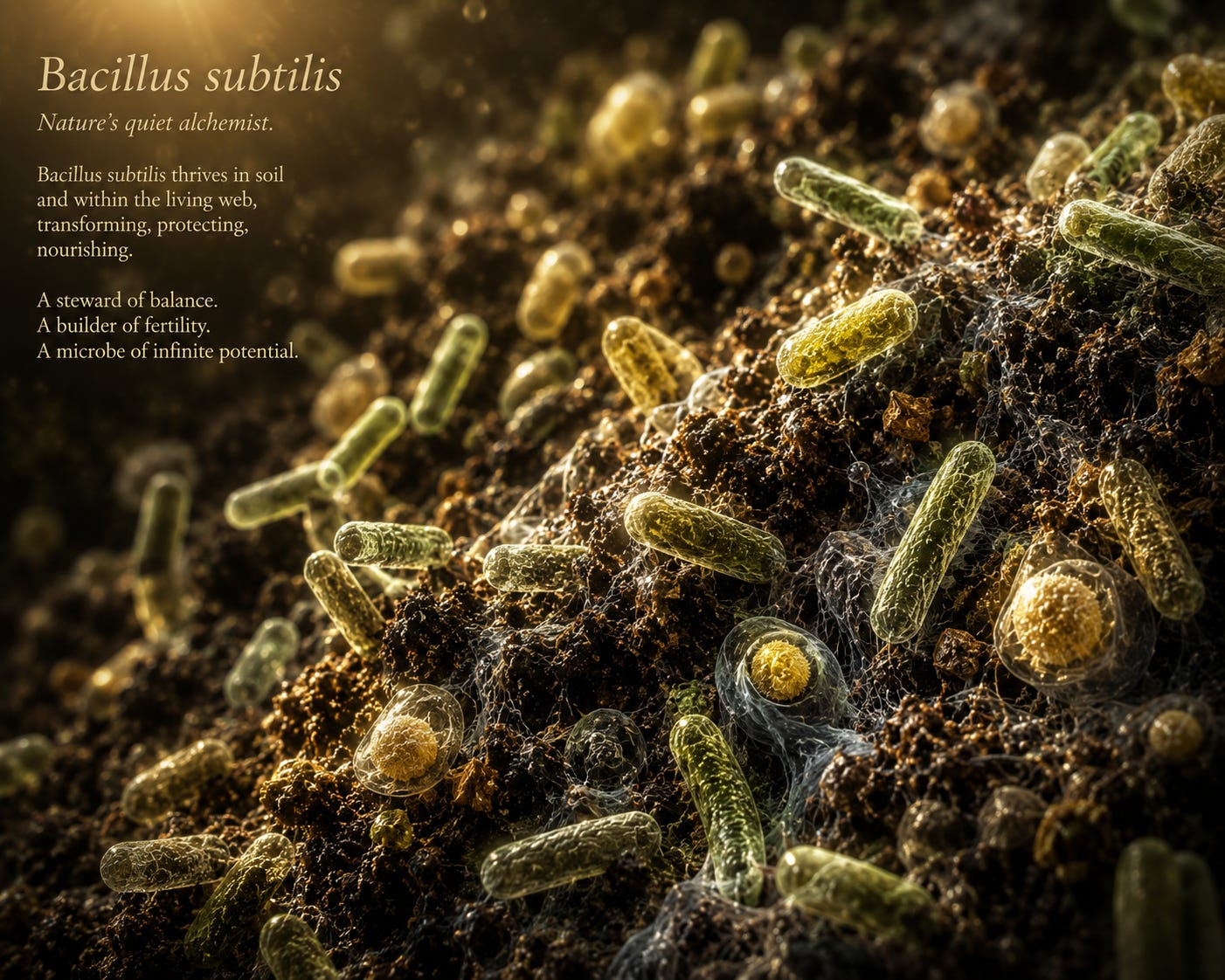
And yet, in the very soil that conventional agriculture has carpet-bombed, an older lineage of bacteria carries on its ancient work. Among them is Bacillus subtilis.
B. subtilis is one of the most studied organisms in all of biology. It is the textbook gram-positive bacterium, the model organism for sporulation, the workhorse of fermentation laboratories around the world. For most of the twentieth century, microbiologists classified it as a soil bacterium — a tidy designation that allowed us to think of it as separate from us, “out there” in the dirt. That classification has been quietly overturned.
In 2009, researchers at Royal Holloway University in London, working with strains isolated directly from ileum biopsies and fecal samples of healthy humans, demonstrated that B. subtilis had adapted to life inside the human gastrointestinal tract.⁶ The bacterium could sporulate anaerobically, secrete antimicrobials against pathogens, and form protective biofilms along the gut wall. Their conclusion was unambiguous: B. subtilis and other spore-formers should be considered “gut commensals rather than solely soil microorganisms.”⁶ Subsequent reviews have confirmed and extended this view, noting that B. subtilis spores survive cooking temperatures, the acidity of the stomach, and the bile of the small intestine — and that they germinate, grow, and contribute metabolically once they reach the gut.⁷
This is itself a small microbiome revolution. B. subtilis is not “out there” — it is, and has always been, part of us. Our ancestors, foraging unwashed roots and tubers, eating naturally fermented foods, drinking unfiltered spring water, breathing air thick with soil dust during planting and harvest, were continuously inoculated with this organism. It travelled with us, in us, alongside us, across continents and millennia. The boundary between the soil’s microbiome and ours, between the field and the gut, was never the hard line modern hygiene imagined it to be. It was, as the herbalist Paul Schulick named it, a life bridge — and B. subtilis is one of the species that walks it.
How Our Ancestors Met This Bacterium Every Day
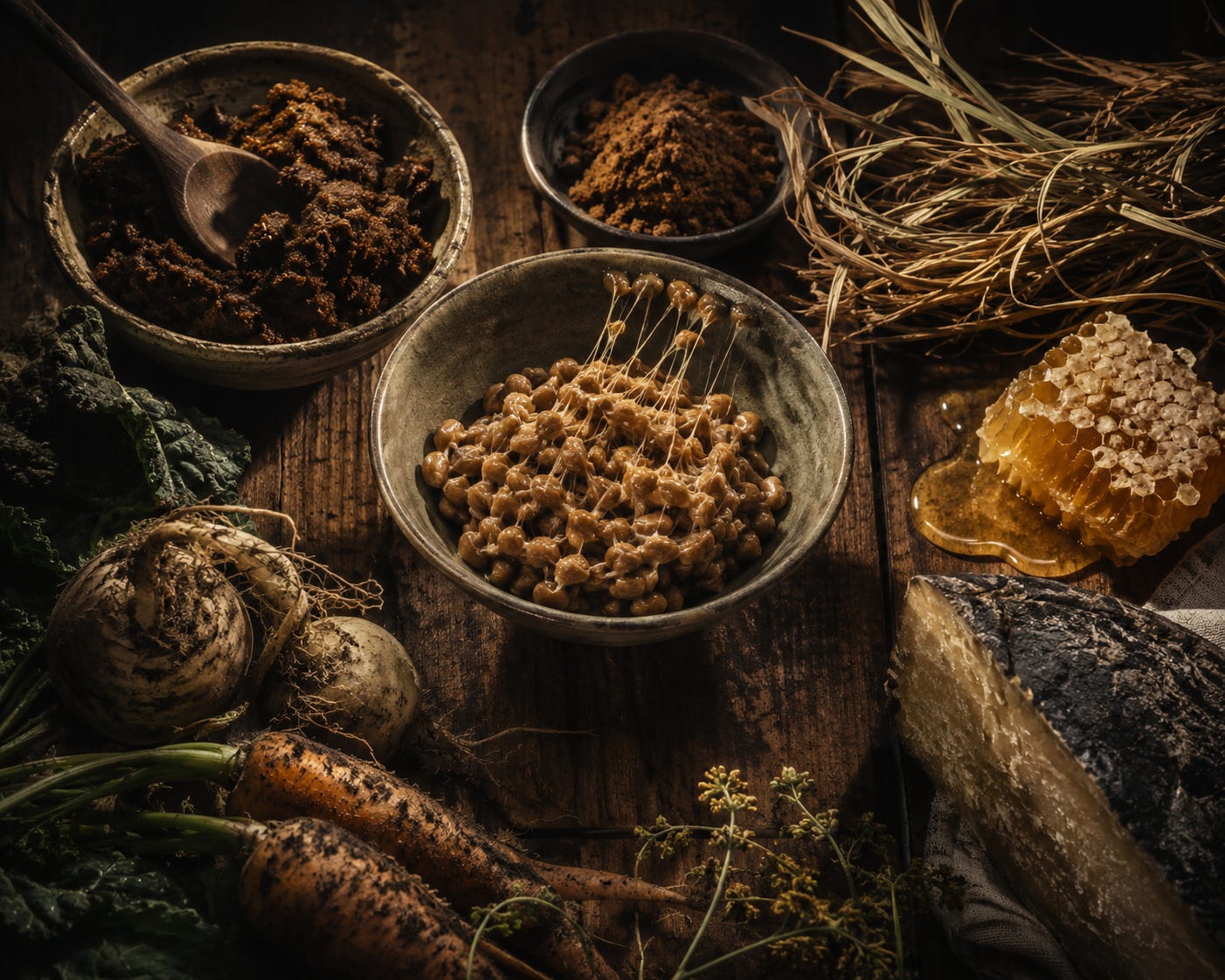
Long before “probiotic” became a marketing word, B. subtilis was already a daily dietary inheritance for human beings across the planet. It lived in the foods our ancestors knew were sacred — foods so often associated with longevity and vitality that traditional cultures built entire ritual practices around their preparation.
The most celebrated dietary source is natto, the traditional Japanese fermented soybean dish in which Bacillus subtilisvar. natto converts cooked soybeans into one of the most nutrient-dense, bioactive foods in the human dietary record.⁸ Eaten daily for centuries in regions of Japan associated with exceptional cardiovascular health and bone density,⁹ natto is a living culture — every spoonful contains billions of active B. subtilis organisms along with the cascade of bioactive molecules they produce.
But natto is only the most famous example. B. subtilis and its close relatives are involved in fermentation of:
- Kinema, thua nao, and pe-poke — the soybean ferments of Nepal, Thailand, and Myanmar, dietary parallels to natto with their own indigenous Bacillus strains
- Dawadawa, iru, and ogiri — West African condiments fermented from locust bean, soybean, or melon seed, central to the cuisines of Nigeria, Ghana, Senegal, and surrounding regions
- Cheonggukjang — the rapidly-fermented Korean soybean paste, traditionally aged on rice straw rich in wild Bacillus
- Doenjang and chunjang — slower Korean fermented bean pastes carrying Bacillus alongside the more famous Aspergillus and Lactobacillus communities
- Raw, unwashed root vegetables — carrots, beets, parsnips, and tubers pulled from healthy living soil carry B. subtilis spores on their surface, which is one reason traditional cuisines historically did not over-sterilize their produce, and why ‘eating dirt’ (albeit healthy sources in very small quantities) may be an essential part of health.
- Wild and properly-tended honey — honey collected from hives surrounded by biodiverse pasture and forest harbors Bacillus species among its broader microbial signature [learn more about the microbial wonders of raw honey here]
- Aged hay, grass-finished animal products, and raw milk from animals on pasture — B. subtilis was historically named hay bacillus because it was first cultivated from hay; pastured-animal foods naturally carry this organism

What this means, in plain biological terms, is that B. subtilis exposure was continuous for our ancestors. Not a once-a-week event. A daily, almost hourly inoculation through food, water, air, and soil contact. The modern lifestyle — sterile kitchens, washed produce, pasteurized everything, sealed packaged foods, dirt-free hands — has functionally eliminated this exposure for most people living in industrialized societies. We have, in effect, severed one of the oldest continuous microbial relationships in the human evolutionary record.
What This Bacterium Actually Does for Us
The reason B. subtilis mattered so deeply to our ancestors is not romantic. It is biochemical. This single organism is one of the most prolific producers of therapeutically active molecules in the entire microbial world. The peer-reviewed literature on its secondary metabolites now spans thousands of papers. A short list of what B. subtilis makes, while alive in our food or in our gut, includes:
Nattokinase. Produced during the fermentation of soy, nattokinase is a serine protease with potent fibrinolytic activity — it dissolves fibrin, the protein scaffold that holds blood clots together.¹⁰ It is one of the most extensively studied natural cardiovascular compounds in the literature, with documented effects on blood viscosity, atherosclerotic plaque, blood pressure, and circulatory function.¹⁰ ¹¹ Daily natto consumption has been associated, in Japanese population studies, with lower cardiovascular mortality and reduced stroke risk.⁹
Vitamin K2 as menaquinone-7 (MK-7). B. subtilis var. natto is, by a wide margin, the richest known biological source of MK-7 — the long-chain form of vitamin K2 with the longest half-life in human serum.⁸ ¹² MK-7 activates osteocalcin (which directs calcium into bone) and matrix Gla protein (which keeps calcium out of arterial walls). The clinical implications are significant: MK-7 supplementation has been associated with reduced arterial calcification, improved bone density in postmenopausal women, and lower cardiovascular mortality.¹² A 100-gram serving of natto contains roughly 1 milligram of MK-7, an amount essentially impossible to obtain from any other food.¹²
Surfactin. A cyclic lipopeptide and one of the most powerful biosurfactants known. Recent research has documented surfactin’s ability to enhance secretory IgA production, increase intestinal villus height, upregulate tight-junction proteins (claudin-1, occludin, ZO-1) that maintain gut barrier integrity, and reduce intestinal inflammation in models of induced colitis.¹³ Surfactin also has documented antiviral activity, including against enveloped viruses, and has been shown to inhibit the VEGF pathway involved in tumor angiogenesis — making it an emerging candidate in oncology research.¹⁴
Subtilisin and related proteases. Powerful protein-digesting enzymes that contribute to the breakdown of dietary proteins (including the difficult-to-digest gluten proteins of wheat) and to the catabolism of damaged proteins in tissues. B. subtilis proteases are part of the reason traditional fermented soy foods are more digestible than unfermented soy.
Bacteriocins and antimicrobial peptides. A broad arsenal of compounds — subtilin, mycosubtilin, fengycin, iturin, plipastatin — with documented activity against pathogenic bacteria (including methicillin-resistant Staphylococcus aureus), pathogenic fungi (including Candida albicans), and certain viruses.¹⁴ These compounds are part of how B. subtilis in our gut helps maintain the microbial balance that resists opportunistic infections.
Folate, riboflavin, biotin, and other B-vitamins. Like many beneficial gut commensals, B. subtilis contributes directly to the synthesis of essential cofactors our own cells cannot produce.⁷
Immune-modulating spore-coat proteins. Even before germination, B. subtilis spores interact with gut-associated lymphoid tissue (GALT), training the immune system, biasing it toward tolerance rather than reactivity, and contributing to the gut-immune axis that determines so much of our overall health.⁷
This is the supra-human principle in plain biochemistry. We could not, with our human genome alone, make these molecules. We borrow them — daily, ancestrally, through diet and exposure — from a microbial partner whose chemical capabilities vastly exceed our own.
The Clinical Picture: What Happens When We Restore the Relationship
The literature on B. subtilis as a probiotic supplement has matured considerably in recent years, and the clinical signal is consistent. A recent open-label pilot trial conducted by the Center for Applied Health Sciences using Bacillus subtilisAB22™ at 1 billion CFU per day for six weeks documented, in healthy adult volunteers, statistically significant improvements in:¹⁵
- Bloating (baseline scores nearly halving, from 4.0 to 2.0)
- Flatulence (4.3 to 2.6)
- Abdominal discomfort (trending improvement)
- Enthusiasm and well-being (significant increases)
- Fatigue, anxiety, and nervousness (significant decreases)
- TNF-α — a central pro-inflammatory cytokine implicated in systemic inflammation, fatigue, mood disturbance, and chronic disease — showed a statistically significant decrease in serum levels¹⁵

The TNF-α reduction is, biologically, the most important data point. It provides a measurable mechanistic anchor for the mood, energy, and gut comfort improvements: when systemic inflammation decreases, the entire neuroendocrine-immune axis recalibrates. The gut-brain axis is no longer a metaphor; it is a measurable cascade of cytokines, neuroactive metabolites, and vagal signaling that B. subtilis demonstrably modulates.¹³ ¹⁵
This is the AB22™ form of Bacillus subtilis that I selected for CardioNK™, my own cardiovascular-regenerative formulation.¹⁶ CardioNK was built around what I call the Regenerative Natto Complex: a single ancient ferment delivering nattokinase (2 billion colony-forming units (CFU) and 10,800 fibrinolytic units per dose, anchored to the dose range used in the clinical literature), AB22® Bacillus subtilis itself, and MK-7 — all three of which originate from the same organism, working in the same biological synergy our ancestors received every time they ate a bowl of natto. Layered on top are EA-613™ hyper-soluble ellagic acid and pterostilbene for additional polyphenolic vascular and metabolic support.¹⁶ The design philosophy was simple: instead of fragmenting the natto ferment into isolated, decontextualized molecules, deliver them the way Nature delivered them — together, in their evolved synergy, with the parent organism still present.

Bs-15 Discovery: A Microbial Answer to a Synthetic Problem
And now we return to the soil — and to the deepest expression of B. subtilis‘s capacity to heal what industrial chemistry has broken.
In 2015, a research team from the Shandong Institute of Pomology, working with Rutgers University and the Chinese Academy of Agricultural Sciences, published a study in Genetics and Molecular Research with the unassuming title ”Glyphosate biodegradation and potential soil bioremediation by Bacillus subtilis strain Bs-15.”¹⁷

The Bs-15 strain had been isolated from the rhizosphere — the thin, living layer of soil clinging to plant roots — of a pepper plant. Earlier work had shown that this strain promoted plant growth and suppressed disease. What Yu and colleagues set out to test was whether Bs-15 could do something even more remarkable: take a synthetic, organophosphorus molecule that resists chemical, hydrolytic, and photolytic breakdown — and dismantle it.
The results were striking.
Bs-15 not only survived glyphosate exposure; it thrived in it. The bacterium tolerated glyphosate concentrations up to 40,000 mg/L — a concentration vastly higher than anything an ecosystem would ever encounter.¹⁷ It could use glyphosate as both a carbon and a phosphorus source, meaning the molecule that the industry treats as a permanent contaminant was, for Bs-15, a meal. Under optimized conditions, Bs-15 degraded approximately 65% of glyphosate in liquid culture within 60 hours. In non-sterile soil, where Bs-15 worked in concert with the native microbial community, degradation reached 71.57% within four days.¹⁷

Even more telling was what happened to the overall microbial ecosystem when Bs-15 was introduced. Using BIOLOG ECO microplate analysis — a standard ecological method for measuring functional diversity in microbial communities — the researchers found that glyphosate-contaminated soils inoculated with Bs-15 showed significantly greater functional diversity across five separate indices (Shannon, Shannon uniformity, Simpson, McIntosh, and McIntosh uniformity) than uninoculated controls.¹⁷ The bacterium was not only degrading the herbicide; it was restoring the biological complexity the herbicide had collapsed.
In other words: Bs-15 was healing the soil.

Subsequent research has extended this story. Engineered glyphosate oxidase enzymes derived from Bacillus species have demonstrated catalytic efficiency toward glyphosate increased by more than a thousand-fold, with selectivity for glyphosate over related molecules.¹⁸ A 2023 study published in Environmental Microbiology further documented that B. subtilis naturally adapts to glyphosate exposure not primarily through mutation but through reducing uptake of the herbicide — a remarkably elegant survival strategy that preserves the integrity of its own shikimate pathway.¹⁹ The bacterium, in other words, recognizes glyphosate as a threat and protects itself.
The Threads, Braided
This is where the deeper pattern emerges, and where the microbiome lens earns its keep.
First — extensibility. The human genome cannot break down glyphosate. Our liver enzymes do not metabolize it cleanly; what little processing occurs is largely passive, and the bulk of the molecule is excreted in a form structurally similar to what entered. Likewise, our genome cannot produce nattokinase, MK-7, surfactin, or the antimicrobial peptides that protect us from opportunistic pathogens. None of this is part of “our” 1% of the holobiont. Yet B. subtilis — an organism that lives both in soil and in our own intestines, and that we have eaten ancestrally for millennia — can do all of it. This is the supra-human principle in action. We extend our biological capability through our microbial partners. What we cannot metabolize, they metabolize for us. What we cannot synthesize, they synthesize for us. What we cannot defend ourselves against, they defend us against. The holobiont is the unit of physiology — not the human body in isolation.
Second — continuity. The same species that lives in pepper-plant rhizospheres also lives in fermented soybeans, in raw honey, in hay, in pasture-finished dairy, and in the human gut. It travels between soil and body, between field and digestive tract, through every traditional food culture our species ever developed. There is no clean separation. When industrial agriculture poisons the soil microbiome, it is poisoning a continuous biological tissue that includes our own. When we sterilize, pasteurize, and chemically wash our food into lifelessness, we are severing the same continuity. Conversely, when we eat natto, when we honor fermented traditions, when we restore the soil’s microbiome through wild-soil inoculation and regenerative farming — we are restoring an organ of our own extended physiology.
Third — restorative intelligence. The Bs-15 study is not a story of a single bacterium overpowering a single toxin. It is a story of a community coming back to life. The most important finding in the paper is not the degradation percentage — it is the functional diversity indices. Bs-15’s presence allowed dozens of other microbial species, suppressed by glyphosate, to recover. The bacterium acted as a keystone, a starting point from which a whole ecology re-assembled itself. This is the signature of biological intelligence at the ecosystem scale: not the linear “kill the bad thing” logic of biocide chemistry, but the recursive, generative logic of life restoring life through relationship.
Fourth — ancestral inheritance. Every culture that survived industrialization with their cardiovascular, skeletal, and digestive health intact had B. subtilis in their daily food. Not as a supplement. As a tradition. The Japanese have natto. The Koreans have cheonggukjang. The Nepalese have kinema. The West Africans have dawadawa. The Europeans had hay-fermented dairy, traditionally aged cheeses, root cellars where vegetables remained in contact with their soil microbiome. This was not nutritional coincidence. It was, across the entire human species, the dietary expression of a multi-million-year coevolutionary partnership.
What This Means
The implications, set in the context of two decades of microbiome research, are quietly enormous.
It means that the most widely applied herbicide on Earth — a molecule that regulatory science declared “safe” because it didn’t directly poison the eukaryotic human cell — is, by mechanism, an antibiotic against the holobiont. The harm has always been there. We simply lacked the conceptual framework to see it.
It means that our gut, our soil, and our food are not separate domains but continuous biological tissue, and that what we do to one of them we do to all of them. The “life bridge” between the inside and outside of the body has never been metaphor. It is a measurable, molecularly mediated continuity carried by organisms like B. subtilis.
It means that the cardiovascular, immune, mood, and gut benefits documented in the clinical literature on natto, nattokinase, and MK-7 are not isolated nutraceutical effects. They are the recovery of a relationship — the restoration of biological information our ancestors received every day, and that most modern humans have lost.
And it means — perhaps most importantly — that Nature has not abandoned us. Even after decades of poisoning, the bacteria that can heal the damage are still there. Still in the soil. Still in the rhizospheres of plants. Still in the fermented foods of every traditional cuisine that has survived. Still in our own guts, waiting for us to stop eradicating them. They are waiting. They are willing. They are, by their very metabolism, for life.
The work of restoration, then, is not heroic and it is not technological. It is humble and ecological. Stop the spraying. Restore the soil. Eat the ferments — natto, dawadawa, kinema, real raw honey, real raw foods from real living soil. Take the spore-form probiotics, particularly clinically validated strains like AB22™, when ferment access is limited. Honor the diversity. Recognize, finally, that the body we are trying to heal does not end at our skin and that the medicine has always been in relationship — with the microbes, with the soil, with each other, and with the living Earth from which we have never truly been separate.
Bacillus subtilis knew this all along.
It was waiting for us to catch up.

References
- Samsel, A., & Seneff, S. (2013). Glyphosate’s suppression of cytochrome P450 enzymes and amino acid biosynthesis by the gut microbiome: Pathways to modern diseases. Entropy, 15(4), 1416–1463.
- Mesnage, R., & Antoniou, M. N. (2020). Computational modelling shows that indigenous gut microorganisms metabolise the herbicide glyphosate. bioRxiv. https://doi.org/10.1101/870105
- Shehata, A. A., Schrödl, W., Aldin, A. A., Hafez, H. M., & Krüger, M. (2013). The effect of glyphosate on potential pathogens and beneficial members of poultry microbiota in vitro. Current Microbiology, 66(4), 350–358.
- Puigbò, P., Leino, L. I., Rainio, M. J., Saikkonen, K., Saloniemi, I., & Helander, M. (2022). Does glyphosate affect the human microbiota? Life, 12(5), 707. (Computational analysis of shikimate pathway prevalence in gut microbiome.)
- Mesnage, R., Teixeira, M., Mandrioli, D., Falcioni, L., Ducarmon, Q. R., Zwittink, R. D., Mazzacuva, F., Caldwell, A., Halket, J., Amiel, C., Panoff, J. M., Belpoggi, F., & Antoniou, M. N. (2021). Use of shotgun metagenomics and metabolomics to evaluate the impact of glyphosate or Roundup MON 52276 on the gut microbiota and serum metabolome of Sprague-Dawley rats. Environmental Health Perspectives, 129(1), 017005.
- Hong, H. A., Khaneja, R., Tam, N. M. K., Cazzato, A., Tan, S., Urdaci, M., Brisson, A., Gasbarrini, A., Barnes, I., & Cutting, S. M. (2009). Bacillus subtilis isolated from the human gastrointestinal tract. Research in Microbiology, 160(2), 134–143.
- Lefevre, M., Racedo, S. M., Ripert, G., Housez, B., Cazaubiel, M., Maudet, C., Jüsten, P., Marteau, P., & Urdaci, M. C. (2024). Spore-based probiotic Bacillus subtilis: Current applications in humans and future perspectives. Fermentation, 10(2), 78. https://doi.org/10.3390/fermentation10020078
- Sumi, H., Hamada, H., Tsushima, H., Mihara, H., & Muraki, H. (1987). A novel fibrinolytic enzyme (nattokinase) in the vegetable cheese natto; a typical and popular soybean food in the Japanese diet. Experientia, 43(10), 1110–1111.
- Nagata, C., Wada, K., Tamura, T., Konishi, K., Goto, Y., Koda, S., Kawachi, T., Tsuji, M., & Nakamura, K. (2017). Dietary soy and natto intake and cardiovascular disease mortality in Japanese adults: The Takayama study. American Journal of Clinical Nutrition, 105(2), 426–431.
- Chen, H., McGowan, E. M., Ren, N., Lal, S., Nassif, N., Shad-Kaneez, F., Qu, X., & Lin, Y. (2018). Nattokinase: A promising alternative in prevention and treatment of cardiovascular diseases. Biomarker Insights, 13, 1177271918785130.
- Kurosawa, Y., Nirengi, S., Homma, T., Esaki, K., Ohta, M., Clark, J. F., & Hamaoka, T. (2015). A single-dose of oral nattokinase potentiates thrombolysis and anti-coagulation profiles. Scientific Reports, 5, 11601.
- Sato, T., Inaba, N., & Yamashita, T. (2020). MK-7 and its effects on bone quality and strength. Nutrients, 12(4), 965; and Schurgers, L. J., Teunissen, K. J. F., Hamulyák, K., Knapen, M. H. J., Vik, H., & Vermeer, C. (2007). Vitamin K-containing dietary supplements: Comparison of synthetic vitamin K1 and natto-derived menaquinone-7. Blood, 109(8), 3279–3283.
- Wu, Y., Liu, Y., Zhou, L., Ye, W., Liu, Y., Sun, J., Wang, X., & Wang, W. (2024). Surfactin from Bacillus subtilisenhances immune response and contributes to the maintenance of intestinal microbial homeostasis. Microbiology Spectrum, 12(12), e00918-24.
- Caulier, S., Nannan, C., Gillis, A., Licciardi, F., Bragard, C., & Mahillon, J. (2019). Overview of the antimicrobial compounds produced by members of the Bacillus subtilis group. Frontiers in Microbiology, 10, 302; and Wu, Y. S., Ngai, S. C., Goh, B. H., Chan, K. G., Lee, L. H., & Chuah, L. H. (2017). Anticancer activities of surfactin and potential application of nanotechnology assisted surfactin delivery. Frontiers in Pharmacology, 8, 761.
- Center for Applied Health Sciences (CAHS). (2024). The Efficacy and Tolerability of Bacillus subtilis AB22™: A Pilot Clinical Study on Gut Health, Mood, and Immunomodulation. Open-label proof-of-concept pilot trial, 1×10⁹ CFU daily, 42 days, n=10 healthy adult volunteers. Primary endpoints: adverse events, VAS gastrointestinal/mood/stress measures, serum cytokine panel including TNF-α. Amplified Ingredients, LLC.
- Regenerate Company. CardioNK™ Product Documentation: Regenerative Natto Complex (nattokinase 10,800 FU, AB22® Bacillus subtilis, vitamin K2 MK-7), EA-613™ hyper-soluble ellagic acid, and pterostilbene. https://regeneratecompany.com/products/cardionk
- Yu, X. M., Yu, T., Yin, G. H., Dong, Q. L., An, M., Wang, H. R., & Ai, C. X. (2015). Glyphosate biodegradation and potential soil bioremediation by Bacillus subtilis strain Bs-15. Genetics and Molecular Research, 14(4), 14717–14730. https://doi.org/10.4238/2015.November.18.37
- Qin, Y., Wu, G., Guo, Y., Ke, D., Yin, J., Wang, D., Fan, X., Liu, Z., Ruan, L., & Hu, Y. (2020). Engineered glyphosate oxidase coupled to spore-based chemiluminescence system for glyphosate detection. Analytica Chimica Acta, 1133, 39–47; and Delprat, N., Martins, L. O., Blum, L. J., Aymard, C. M. G., Leca-Bouvier, B., Octobre, G., & Doumèche, B. (2023). User-friendly one-step disposable signal-on bioassay for glyphosate detection in water samples. Biosensors & Bioelectronics, 241, 115689.
- Schwedt, I., Schöne, K., Eckert, M., Pizzinato, M., Winkler, L., Knotkova, B., Richts, B., Hau, J. L., Steuber, J., Mireles, R., Noda-Garcia, L., Fritz, G., Mittelstädt, C., Hertel, R., & Commichau, F. M. (2023). The low mutational flexibility of the EPSP synthase in Bacillus subtilis is due to a higher demand for shikimate pathway intermediates. Environmental Microbiology, 25(12), 3604–3622.
The Growing Consolidation of Agricultural and Pharmaceutical Industries and Its Impact on Health
Reproduced from original article:
https://articles.mercola.com/sites/articles/archive/2025/02/11/consolidation-of-big-ag-and-big-pharma.aspx
Analysis by Ashley Armstrong February 11, 2025

STORY AT-A-GLANCE
- Chronic disease rates in America have increased dramatically, from 7.5% of the population in the 1930s to 60% today, representing a 700% surge, while obesity now affects 40% of Americans
- Four companies (Bayer, Syngenta, BASF, and Corteva) dominate the agricultural market, with Bayer controlling 18.2% of global agrochemicals and, together with Corteva, over half of U.S. retail seed sales for major crops
- The concentration ratio (CR4) in U.S. agriculture has reached extreme levels — 85% in beef packing, 70% in pork packing, and 95% control of corn intellectual property by just four companies
- In 2024, pharmaceutical companies spent $294 million on lobbying, while agribusinesses spent $32.7 million, with Bayer alone spending $6.46 million in the U.S.
- Modern industrial agriculture mimics pharmaceutical business models by creating dependency cycles. Farmers must repeatedly purchase synthetic inputs while patients require ongoing medication rather than cure-focused treatments
America is facing a health crisis. In the 1930s, just 7.5% of Americans suffered from chronic diseases.1 Today, that figure has surged by over 700%, with 60% of Americans now living with one or more chronic conditions.2 We are also fatter than ever — obesity rates have reached 40% and continue to climb.3
Even more alarming, the U.S. is the only developed nation where both healthy life expectancy and total life expectancy are in decline4 — a trend that began before COVID-19. In other words, we’re not living as long as our grandparents did, despite all of our technological advancements.

How did we get here? One answer lies in the disturbing parallels between Big Pharma and Big Ag — two industries that wield enormous power over our health. The relationship between our food systems and our healthcare systems is no coincidence. Food is being produced in ways that undermine our health and keep us dependent on pharmaceuticals.
The business models of both the pharmaceutical and agriculture industries thrive on treating symptoms rather than addressing root causes, ensuring a continuous cycle of dependency.
- Pharmaceutical companies profit immensely by focusing on symptom management instead of curing underlying conditions. Chronic diseases like diabetes or hypertension, for example, have become lucrative markets, as patients often require lifelong medication rather than one-time treatments.
- Big Ag mirrors this approach. Farmers are locked into systems reliant on synthetic fertilizers, pesticides, herbicides, and genetically modified crops — inputs they must repurchase every season. Rather than restoring soil health or embracing regenerative farming, these practices perpetuate chemical dependency. (And fail to provide truly nutritious, health-promoting food).
Both industries promise solutions but often create new problems. In agriculture, pests develop resistance, leading to the need for even stronger chemicals. In healthcare, one medication’s side effects often require another drug to manage.
This cycle of dependency benefits corporations but leaves the rest of us sick, overmedicated, and struggling. The unfortunate reality is that the power over our health is concentrated in the hands of a few corporations.
Understanding this connection between Big Ag and Big Pharma is the first step toward change. By supporting alternative systems — whether regenerative agriculture or holistic health practices — we can begin to reclaim our well-being.
Bayer — Bridging Big Pharma and Big Ag
When exploring the overlap between Big Pharma and Big Ag, Bayer stands out as a stark example. As of December 2023, Bayer comprised 340 consolidated companies operating in 80 countries.5,6 Its vast reach ensures its influence spans nearly every aspect of health and agriculture, blurring the lines between industries that should prioritize health over profit.
Before Bayer acquired Monsanto in 2018, the two companies operated in separate realms. Monsanto was a powerhouse in agriculture, dominating the seed and agrochemical markets, while Bayer focused primarily on pharmaceuticals and consumer health products. The $63 billion merger merged these sectors, creating a global behemoth that exerts significant influence over both food production and health care.
This acquisition solidified Bayer’s dominance in agriculture. By 2018, Bayer controlled 18.2% of the global agrochemical market.7 Between 2018 and 2020, Bayer and Corteva collectively accounted for more than half of U.S. retail seed sales for corn, soybeans, and cotton. Globally, Bayer, Syngenta, BASF, and Corteva dominate the agricultural market, controlling a substantial share.8

This German multinational now operates across pharmaceuticals, consumer health, and agriculture — a structure that raises serious concerns. Bayer’s pharmaceutical division spans several therapeutic areas:
- Cardiology — Medications like Xarelto (rivaroxaban) treat blood clots, hypertension, and cardiovascular issues.
- Oncology — Cancer treatments such as Stivarga (regorafenib) and Nexavar (sorafenib) address colorectal, liver, and kidney cancers.
- Women’s health — Products include hormonal contraceptives and treatments for menopause-related conditions.
- Ophthalmology — Drugs like Eylea (aflibercept) combat macular degeneration.
Bayer’s consumer health division includes household names, reinforcing Bayer’s influence in everyday health decisions:
- Allergy and cold remedies — Claritin and Alka-Seltzer.
- Digestive health — MiraLAX and Rennie.
- Skin and wound care — Bepanthen and Canesten.
Bayer’s agricultural division, bolstered by Monsanto’s expertise, focuses on “crop science” and food production. While this may seem to serve public health by addressing food security, the reality is more complicated. Bayer’s focus on genetically modified seeds, synthetic fertilizers, and pesticides promotes systems of dependency that harm soil health and perpetuate chemical use.
Bayer’s dual role in pharmaceuticals and agriculture exemplifies how intertwined these sectors have become. The consolidation of power across both industries raises pressing questions about the health of people and the planet. Is it truly possible for one corporation to champion health while contributing to agricultural practices that undermine it?
Consolidation of Power and CR4 — A Rigged System
The centralization of power in both Big Ag and Big Pharma has created systems that prioritize corporate profits over the health of people, farmers, and the environment. By examining the CR4 (Concentration Ratio of 4) — a metric that measures the market share of the four largest firms in an industry — we can see just how concentrated these industries have become. The CR4 provides a clear picture of market competitiveness:
- When the CR4 > 50%, the top four firms control more than half the market, suggesting significant concentration.
- A CR4 > 80% indicates a highly concentrated, oligopolistic market.
- A CR4 < 40% reflects a relatively competitive industry.
High CR4 values signify reduced competition, giving dominant firms significant power over pricing, policies, and market access, often at the expense of consumers and smaller players. In the U.S. agricultural sector, CR4 values are alarmingly high, showcasing how a handful of corporations dominate key markets:
| Beef packing — From a CR4 of 25% in 1977, it soared to 85% by 2018. |
| Pork packing — Rose from 33% in 1976 to 70% in 2018. |
| Broiler (chicken) processing — Increased from 34% in 1986 to 54% in 2018. |
| Seed market — By 2023, BASF, Bayer, Corteva, and Syngenta controlled 95% of U.S. corn and 84% of soybean intellectual property. |
| Nitrogen fertilizer (North America) — CR4 stands at 77%. |
| Agricultural machinery — The CR4 is approximately 60.8%. |
Farmers are forced into a system where they have little choice over inputs, crops, livestock, or markets, and a system that encourages a “go big or go home” mindset to make the numbers work. This industrialized and concentrated setup marginalizes small farmers and alienates consumers from the family farms that grow their food. Meanwhile, biodiversity, rural communities, and soil health suffer as corporations push monocultures and chemical dependency.
While the pharmaceutical industry is slightly more fragmented, certain sectors exhibit high CR4 values:
- Vaccines — Pfizer, GSK, Sanofi, and Merck control nearly 80% of the global market.
- Diabetes drugs — Dominated by Novo Nordisk, Eli Lilly, and Sanofi, with a CR4 of about 70%.
- Oncology — The top four companies (Roche, Merck, BMS, and Novartis) control 45% to 50% of the market.
High CR4 values highlight a troubling reality: concentrated power creates a system ripe for market abuse. Whether it’s Big Ag controlling what farmers plant or Big Pharma deciding what treatments are available, these industries hold disproportionate power over our food and health systems.
The result? Consumers pay more, farmers earn less, and the broader systems we depend on — our health and our environment — continue to erode.

Save This Article for Later – Get the PDF Now
Government Funding — Reinforcing Unsustainable Systems
Both Big Ag and Big Pharma rely on government funding and policies that prioritize their profit-driven models. This institutional support not only perpetuates cycles of dependency but also manipulates public perception through lobbying and control of educational narratives.
Government subsidies unfortunately prioritize industrial farming practices, favoring monocultures that require chemical inputs to manage pests and maintain yields. Monocultures, with their lack of biodiversity, create environments where pests thrive, driving farmers to use more synthetic pesticides.
The Federal Crop Insurance Program guarantees minimum profits for farmers. While this reduces risk for farmers, it also drives up input costs as suppliers exploit this guaranteed revenue stream. With rising costs for fertilizers, pesticides, and machinery, farmers’ slim profit margins make them increasingly dependent on subsidies.
Subsidized crop insurance also incentivizes conventional farming methods over sustainable alternatives. Farmers are often required to use high-yield practices, genetically modified seeds, and chemical inputs to qualify. This system rewards high-yield chemical-intensive farming and does not provide any financial incentive to pursue regenerative practices like crop rotation, no till, and cover cropping.
Subsidies help sustain chemical dependency in agriculture, so Big Ag companies want to make sure the subsidies stick around.
Healthcare policies mirror agriculture, prioritizing conventional methods while sidelining preventive care. Health Insurance coverage focuses on medications, surgeries, and hospital visits but neglects preventive measures like nutrition, exercise, or alternative therapies.
Isn’t it so frustrating that your gym membership or chiropractor visits aren’t covered by “health insurance”? Chronic diseases are often managed with pharmaceuticals, which treat symptoms but rarely address root causes.
This creates a cycle of dependency similar to agriculture, where conventional practices are perpetuated, leaving healthier alternatives underfunded and underutilized.
Manipulating and Controlling the Narrative
Both industries invest heavily in shaping public perception and regulatory outcomes through extensive lobbying.
- In 2024, U.S. agribusinesses spent $32.7 million on lobbying to influence policies and regulations.9
- The pharmaceutical and health products sector spent a staggering $294 million on lobbying efforts.10
- In 2024, Bayer spent $6.46 million on lobbying in the U.S. alone.11
- In the EU, Bayer reported lobbying expenditures between €7 million and €8 million in 2023, the highest of any company.12
Both Big Ag and Big Pharma also influence educational curricula to align with their interests.
- Textbooks often emphasize conventional farming methods, including synthetic pesticides, fertilizers, and GMOs, while giving less attention to sustainable alternatives.
- Large agribusinesses shape agricultural programs at universities, promoting practices that support their products.
- Pharmaceutical companies sponsor Continuing Medical Education (CME) programs for Doctors, promoting the latest drugs over non-pharmaceutical treatments.
- Many medical textbooks are influenced by pharmaceutical companies, sometimes including advertisements or content that favors their products.
Companies like Bayer also shape public health narratives through educational campaigns about diseases such as cancer, cardiovascular conditions, and diabetes. While these campaigns raise awareness, they often steer solutions toward pharmaceutical products rather than holistic or preventative measures. Both industries have created systems that …
- Reward conventional, unsustainable practices.
- Suppress alternatives through lobbying and narrative control.
- Drive dependency on synthetic inputs and pharmaceutical treatments.
The foundation of their massive profits lies in creating perpetual dependency by focusing on symptom management which ensures a consistent revenue stream.
Cures, on the other hand, like addressing food choices and lifestyle habits, or implementing regenerative farming practices, would reduce long-term dependency, undermining the continuous profit model.
It’s undeniably a clever business model — though one that comes at the expense of our health and well-being. Farmers and patients are not to blame! They are doing the best they can trying to navigate these difficult systems.
The structures themselves — bolstered by government funding and corporate influence — limit options for healthier, more sustainable alternatives.
Gut Health and Soil Health Parallels
The analogy between gut health and soil health highlights a deeper connection between the human health and agriculture industries. Gut health is now scientifically linked to a wide range of chronic diseases (diabetes, autoimmune disorders, neurological disorders, digestive disorders, and more), highlighting the critical role of the gut microbiome in maintaining overall health.
Just as a balanced, healthy microbiome is essential for human well-being, a thriving soil microbiome is crucial for producing nutrient-dense, sustainable food.

An imbalanced soil microbiome disrupts the essential ecosystem functions that sustain healthy soil, triggering widespread issues like pest invasions, nutrient deficiencies, and disruptions in natural carbon and water cycles.
Over-tilled soil, deprived of organic matter, and inundated with chemicals like pesticides and synthetic fertilizers, causes the microbiome to destabilize. As a result, soil fertility and plant health decline, creating a greater reliance on harmful chemicals to maintain crop production.
Now imagine if you took an antibiotic every day. Over time, this could disrupt the delicate balance of beneficial bacteria in your gut, leading to digestive issues, weakened immunity, and overall health problems, right?
Well, the same effect occurs in the soil when we rely heavily on agrochemicals. Many of these chemicals function like an “antibiotic” to the soil microbiome, killing or suppressing beneficial microorganisms that are essential for soil health and plant growth. Without a thriving community of beneficial microbes, the soil becomes less resilient, more prone to pests and disease, and less effective at absorbing water and nutrients.
Over time, this leads to a dependence on even more chemical inputs to maintain productivity, much like how the overuse of antibiotics can lead to the need for stronger medications to manage infections.
 Image from: Land 2020, 9(2), 34; doi: 10.3390/land9020034
Just as enhancing gut health reduces our reliance on pharmaceuticals, improving soil health is essential to reducing the dependence on toxic chemicals in agriculture. Plus, these two microbiomes are deeply interconnected — healthy soil supports nutrient-dense crops, which, in turn, positively impact the human microbiome.

Intellectual Power and Seed Saving
The parallels between the agricultural and pharmaceutical industries become even more apparent when examining their approach to intellectual property (IP) development. Both industries profit by creating so-called “novel” products marketed as innovations to “improve our health.” This IP focus puts a heavy emphasis on technological solutions, often at the expense of more sustainable, natural alternatives.
In reality, these efforts often center on market domination and securing exclusive access to resources, ensuring their control and profitability rather than prioritizing genuine health or sustainability.
In agriculture, seed saving was a longstanding tradition that allowed farmers to preserve crop diversity and maintain independence. By saving and replanting seeds each year, farmers ensured they had access to crops suited to their local environments.
However, with the advent of patented genetically modified (GM) seeds from companies like Bayer and Monsanto, this practice has been largely undermined. These corporations not only patent the seeds but also often bundle them with the requirement to buy proprietary herbicides, pesticides, and fertilizers, creating a “package deal” that traps farmers into a cycle of dependence.
 Image from: Grain, April 8, 2015
The widespread use of GM seeds has led to monoculture farming, where large tracts of land are dedicated to a single crop. This practice is vulnerable to pests, diseases, and soil degradation, increasing the need for toxic chemical interventions.
At the same time, the consolidation of the seed industry into a few powerful corporations has raised seed prices, limiting access for small-scale farmers and pushing out traditional varieties in favor of commercial crops designed for high yields, not biodiversity.
The large-scale adoption of monoculture farming truly began around 1950, driven by the Green Revolution. This period saw the introduction of high-yielding crop varieties, chemical fertilizers, pesticides, and modern irrigation techniques, which significantly shifted farming toward monoculture.
It revolutionized agriculture, especially in developing countries, with crops like wheat, rice, and corn being grown in vast, uniform fields to maximize production. Prior to this, farming systems were more diverse, incorporating a mix of crops and livestock. Practices such as crop rotation, polyculture, and pasture-livestock integration were common and contributed to nurturing the soil microbiome.
While some claim that industrial agriculture is necessary to feed the growing global population, the reality is that we already produce enough food to feed 1.5 times the world’s population.13 The problem lies in food distribution, waste, and political barriers that prevent nourishing food from reaching those who need it most.
Big Ag invests heavily in synthetic and technological solutions — such as genetic engineering, precision agriculture, and chemical treatments — that can be patented, protected, and profited from. These innovations often prioritize short-term yield increases without regard for the long-term health of the soil or ecosystem.
In contrast, natural farming practices like agroecology and permaculture, which focus on biodiversity and ecosystem balance, can’t be patented. After all, you can’t dominate markets when you work in harmony with Mother Nature!
This shift in focusing on IP and tech solutions over natural methods mirrors the situation in the pharmaceutical industry. Just as agricultural giants control the seed market through patents and proprietary technologies, pharmaceutical companies like Pfizer, Merck, and Johnson & Johnson hold patents on “life-saving” medications, limiting access to affordable alternatives.
Generic drugs often face barriers due to patent protections, and smaller producers struggle to compete with these industry giants.
Big Pharma “innovation” is primarily focused on developing new drugs, therapies, or medical devices, frequently overlooking low-cost, lifestyle-based interventions that they can’t profit from (like dietary, lifestyle and exercise improvements).
In both sectors, the focus has shifted away from independent solutions to a reliance on corporate-controlled products. For agriculture, it means dependence on GM seeds and chemicals; for healthcare, it means reliance on patented pharmaceuticals.
This model ensures a continuous revenue stream but limits the exploration of more holistic or alternative approaches — whether that’s crop rotation and heirloom seeds in farming or preventive care and natural treatments in medicine.
How to Make Real Change
The current systems in both healthcare and agriculture are designed to ensure that corporations profit at the expense of public health and sustainability. These industries prioritize efficiency, profit, and corporate control, rather than the long-term well-being of people or the planet.
Just as access to non-GMO or heirloom seeds becomes more limited and expensive in agriculture, alternative healthcare treatments often face similar barriers. Natural remedies or integrative approaches are often excluded from insurance coverage or priced out of reach, much like organic or heirloom crops are more expensive than their conventional counterparts.
Now don’t get me wrong — Technology and efficiency improvements are important, and pharmaceutical and chemical interventions do have their place! However, it’s clear that our current approach involving heavy reliance isn’t working. We rely on these solutions for short-term relief, but they often come with long-term consequences.
In agriculture, the focus is on high-yield, chemical-intensive farming that sacrifices biodiversity and soil health. In healthcare, the emphasis is on symptom management through drugs, rather than addressing the root causes of illness.
Both industries are becoming dangerously consolidated, limiting choice, increasing costs, and deepening a cycle of dependency on corporate-controlled solutions.
Real change won’t come from the top down, as entrenched corporate interests hold too much power. It will come from the bottom up — through consumers, patients, and farmers making conscious decisions to support a healthier, more sustainable future.
The alternative is clear: regenerative farming that nurtures the land and promotes biodiversity, paired with a healthcare system that empowers individuals through preventative, holistic approaches.
We have the power to make a difference. By supporting farmers who embrace regenerative practices and avoiding food produced with harmful chemicals, we can drive a market shift toward healthier, more sustainable food. Likewise, by taking control of our health and focusing on prevention — through proper diet, exercise, and stress management — we can reduce our dependence on pharmaceutical drugs.
The change we need starts with us. By choosing to invest in regenerative agriculture and preventative healthcare, we can break free from the systems that profit from our dependency. Together, we can build a future where health and sustainability take priority over corporate control.
About the Author
Ashley Armstrong is passionate about helping others restore metabolic health and in creating an alternative food system low in PUFAs and low in toxic agrochemicals. She’s the co-founder of Angel Acres Egg Club, which specializes in low-PUFA (polyunsaturated fat) eggs that are shipped to all 50 states.
Armstrong also co-founded Nourish Food Club, which ships low-PUFA chicken, low-PUFA pork, beef, cheese, A2 dairy and traditional sourdough to all 50 states. While the egg club has memberships open, Nourish Food Club has a temporary waiting list.
- 1 Am J Public Health. 2011 Mar;101(3):438-447
- 2 National Association of Chronic Disease Directors, Commentary on Chronic Disease Prevention in 2022 (Archived)
- 3 CDC, Obesity and Severe Obesity Prevalence in Adults: United States, August 2021-August 2023
- 4 WHO, Life Expectancy and Healthy Life Expectancy
- 5 Bayer, List of active Bayer companies with at least a share of 50%
- 6 Bayer, Products from A to Z
- 7 USDA, Economic Research Service, October 2, 2023
- 8 AgNews, September 23, 2022
- 9 Open Secrets, Industry Profile: Agricultural Services/Products
- 10 Statista, December 13, 2024
- 11 Open Secrets, Client Profile: Bayer AG
- 12 Corporate Europe Observatory, September 23, 2024
- 13 Journal of Sustainable Agriculture, 36:595-598 (2012)
Why Are Farmers Adding Rocks to Their Fields?
Reproduced from original article:
https://articles.mercola.com/sites/articles/archive/2023/10/10/rocks-in-fields.aspx
The original Mercola article may not remain on the original site, but I will endeavor to keep it on this site as long as I deem it to be appropriate.
Analysis by Dr. Joseph Mercola Fact Checked October 10, 2023

STORY AT-A-GLANCE
- The pH of soil influences the growth and productivity of crops grown on the land. Soil pH regulates the availability of nutrients to the plant, so, even if the soil is fertile, unless the pH is appropriate, the plants cannot absorb the nutrients
- Lab data show that adding crushed volcanic rock called basalt or olivine can help sequester carbon dioxide, balance the soil pH, and improve crop yield
- Several startup companies have developed programs so farmers are not charged for the rock, delivery or spread across the land since large corporations purchase the rock for “carbon credits”
- Crop productivity, soil health and protecting the environment are also functions of regenerative farming and livestock practices. To protect the environment and your health seek out foods from small farmers using regenerative agricultural practices
Would you add rock to your garden soil and expect a better harvest? That’s exactly what farmers across the country are hoping to see this season.1 Of course, there is a little more to the story than adding rocks to the soil and watching plants grow. It has to do with altering the pH of the soil.
Importance of Soil pH to Crop Productivity
The pH is a measurement of acidity. The measurement ranges from 0 to 14, where 7 is neutral. pH measurements less than 7 are acidic and those greater than 7 indicate a base. Both acids and bases are corrosive and the greater the distance from neutral, the more corrosive the substance.
To put this in perspective,2 blood has a pH of 7.4, and milk, urine and saliva have a pH that ranges from 6.3 to 6.6. More acidic compounds you might find in your home include grapefruit juice and tomato juice, which have a pH of 2.5 to 3.5, or battery acid and hydrochloric acid, which have a pH near zero. On the other side of the scale, baking soda has a pH of 9.5; bleach and oven cleaner have a pH of 13.5; and liquid drain cleaner has a pH of 14.
It turns out that soil pH also makes a difference in the growth and productivity of plants.3 Soil pH might not be the most exciting topic, but having a basic understanding can help improve your gardening efforts. When you consider garden soil, acidic soils generally have a pH that ranges from 4 to 6.5, while alkaline soils have measurements that range from 7.5 to 9.
While pH is not a nutrient, it does regulate the availability of soil nutrients to the plant. In other words, just because your soil is fertile doesn’t mean the plants will be able to absorb the nutrients and thrive. Plants either prefer a soil pH that ranges from 7 to slightly alkaline or ranges from 7 to slightly acidic.
When the soil is too acidic, gardeners and farmers can apply lime to help raise the soil pH. And that’s what farmers have been doing in areas of the country that commonly have acidic soil. According to a map from The Biota of North America Program republished in The Modern Farmer,4 acidic soils, or those with a pH less than 6, occur along the East Coast, through part of the Midwest and along the West Coast of Oregon, California and Washington.
The soil pH is referred to as the “master soil variable”5 since it influences a variety of factors important to plant growth. Soil pH is linked to the chemical environment, biology and geological factors.
Volcanic Basalt Rock May Help Balance Soil pH
A 2018 paper6 published in Nature Plants proposed that crop production and climate change could be positively influenced by adding crushed silicate rock to croplands. The paper theorized that crushed volcanic rock could lower the amount of CO2 that enters the atmosphere and increase crop production and pest and disease protection, as well as restore fertility and structure to the soil.
Silicate is the most important mineral found in igneous rock, which crystallizes from volcanic magma.7 A 2023 paper8 used computer modeling to estimate the total carbon sequestration of enhanced rock weathering (ERW) on croplands. The researchers found that applying 10 tons of basalt dust per hectare (2.47 acres) could sequester 64 gigatons of CO2 over 75 years.
When this was extrapolated to all agricultural land, the mathematical model suggests that ERW could sequester 217 gigatons over 75 years with a few caveats. There is a fraction of the basalt that does not weather, which indicates a need to optimize application and ERW payback in hot and humid environments is significantly shorter.
Application of ERW has been the focus of several startup companies in the past year after lab research demonstrated the potential to improve soil health and reduce carbon emissions.9 The process begins when slightly acidic rain contacts the volcanic rock and converts carbon dioxide to bicarbonate.10 The bicarbonate raises the soil pH and releases minerals into the soil.
Adding pulverized rock to the soil “turbocharges” this natural process, releasing minerals faster within several years, instead of over thousands of years.11 One area where farmers are trying this is the Columbia Basin in Oregon.
Francisco Calderon, director of the Columbia Basin Agricultural Research Center, says that over the years the pH of the topsoil in the area has dropped to 5 and below.12 Chris Rauch is one of those farmers. He grows dryland wheat in the area surrounding Pendleton, Oregon, along the Columbia Plateau that was formed by ancient basalt lava flows.
He first learned about the process during an annual agricultural show in Spokane and was initially doubtful of the process. However, when the latest pH soil results came in at 5.3, he reconsidered his decision.
Download this Article Before it Disappears
Farmers Getting Help at No Charge
Not only was he doubtful of the process, but there was no charge to the farmers for the rock, the delivery or distribution across the land. It seemed too good to be true. However, because enhanced rock weathering is a form of permanent sequestration or carbon dioxide removal, the startup companies supplying the basalt rock can sell “carbon credits” to large corporations.13
It’s a win-win situation for the farmers and the corporations. Farmers receive soil amendments that they hope will help raise the soil pH and improve crop productivity at no charge, while large corporations can demonstrate they are taking some action against climate change.
Initially, Rauch was concerned that the amendment would negatively impact seeding and increase soil compaction. But he found that the basalt blended in as if it were delivered by the wind.
It isn’t only areas where soil pH is naturally acidic that can benefit from ERW. Jesse Vollmar is an agricultural consultant who lives in Michigan, where the natural soil pH is between 6.5 and 7, but years of heavy fertilizer and tilling has taken its toll on the soil.
Vollmar began working with a small ERW startup company in Seattle and has helped other farmers in his area. He told Modern Farmer “It’s just a no-brainer for farmers. The hardest part is keeping up with demand.”14
Farmers in Virginia have also applied basalt to the farmland. Rick Bennett grows several crops on his old tobacco farm that has been heavily farmed for the last two centuries. Bennett tested a plot that had particularly acidic soil by creating test strips to determine if there was a difference in crop production.
Bennett reports he doesn’t see a great deal of difference in the plants. However, he’s waiting until after harvest to evaluate the data on the number of soybean pods and the number of beans in the pods before he decides.
Olivine Can Do More With Less
While basalt is the most common volcanic rock, it’s not the only one. Another is olivine, which is a greenish-colored stone with a higher capacity to capture carbon dioxide.15 Another startup company, EION, uses olivine along the Mississippi River Delta Region where the soil is acidic. According to the CEO and founder of EION, Adam Wolf, the area is an ideal model for managing land.
“They have an appreciation for the natural world,” says Wolf. “It’s not as reductionist as in places like California, where you see vast landscapes dominated by one crop.”16 As Modern Farmer notes,17 the high humidity and heat also increase the reaction speed, allowing olivine to capture more CO2 with less rock.
Instead of spreading 9 to 10 tons of basalt across each acre of land, 2 to 3 tons of olivine is spread per acre. However, olivine cannot be sourced in the U.S., so it is imported from Norway. Once it reaches the Mississippi, it is milled and distributed. A consultant for EION, Dan Prevost, rents patches of low-quality acidic land near his home in Mississippi and helps rebuild the soil using lands nobody else wants.
While the process sounds easy and cost-effective, Civil Eats points out that it hasn’t been widely studied. Phil Renforth is a professor of engineering geology at Cardiff University. He was not involved in the 2018 research paper, but spoke with a reporter from Civil Eats, saying:18
“While enhanced weathering could make an enormous contribution to climate change mitigation, it remains one of the most poorly understood methods of removing CO2 from the atmosphere. As the authors suggest, we need to do a lot more work to establish if these large carbon drawdowns can be achieved, and to assess the positive and negative impacts of this approach.”
Vollmar and Prevost started their journey in regenerative farming and understand the vital importance of soil pH to crop productivity and health, as well as protecting the environment.
Regenerative Farming Helps Protect the Soil and Livestock
Regenerative agriculture and holistic livestock management is a method of organic and food farming that not only avoids pesticides, fertilizers, GMO seeds and excessive greenhouse gas emissions, but regenerates soil fertility, water retention, carbon sequestration and rural livelihoods.
Regeneration has become a hot topic in the natural and organic food sector while climate activists discuss the role of organic and regenerative practices to help reduce greenhouse gas emissions and sequester excess atmospheric carbon dioxide. One regenerative farm example is White Oak Pastures in Bluffton, Georgia.
Run by Will Harris, the farm produces high-quality, grass fed products and has been an inspirational example of how to convert from conventional to regenerative agriculture while thriving financially.
In November 2022,19 Harris spoke with Joe Rogan about the transition from conventional farming practices to regenerative techniques, some of the pitfalls of industrialized farming and how using regenerative techniques has helped to restore the land.
Unfortunately, the majority of meat sold in the U.S. still comes from CAFOs, not grass fed farms. To protect the environment and your health, as well as support animal welfare, seek out food from small farmers using regenerative agricultural practices.
One useful option is to look for the American Grassfed Association (AGA) logo on meat and dairy, which ensures the animals were born and raised on American family farms, fed only grass and forage from weaning until harvest, and raised on pasture without confinement to feedlots.20
Get to know local farmers using regenerative methods near you. Regeneration International, incorporated in 2014, has built a global network of regenerative farmers and ranchers across 60 countries. You can find a map of regenerative farms to secure a source of sustainable food near you.
- 1, 4, 9, 12, 13, 14, 15, 16, 17 Modern Farmer, September 25, 2023
- 2 U.S. Geological Survey, June 19, 2019
- 3 The Spruce, December 9, 2021
- 5 Applied and Environmental Soil Science, 2019;5794869
- 6 Nature Plants, 2018; 4
- 7 Open Geology, 6 Ignaeous Rocks and Silicate Material
- 8 AGU, 2023; doi: 10.1029/2023EF003698
- 10, 11, 18 Civil Eats, April 6, 2018
- 19 The Joe Rogan Experience, November 4, 2022
- 20 American Grassfed Association, Our Standards
The Effects of Biodynamic Farming on Environment and Food
Reproduced from original article:
https://articles.mercola.com/sites/articles/archive/2023/09/24/biodynamic-farming-effects.aspx
The original Mercola article may not remain on the original site, but I will endeavor to keep it on this site as long as I deem it to be appropriate.
Analysis by Dr. Joseph Mercola Fact Checked September 24, 2023
STORY AT-A-GLANCE
- Food quality is determined by how it was grown. Certified organic food helps you avoid pesticides. But even organic foods may be lacking in important nutrients if grown in nutrient-poor soils
- Biodynamic farming is a spiritual-ethical-ecological approach to agriculture initially developed by Rudolf Steiner in the 1920s. It’s an approach that can provide far superior harvests while simultaneously healing the Earth
- The Biodynamic view is that a farm is a living organism — self-contained, self-sustaining, following the cycles of nature, and able to create its own health and vitality out of the living dynamics of the farm
- The organic standard is the base of the Demeter standard, which then goes much further, taking into account the core idea of the farm as a closed system; solutions to disease, pest and weed control comes out of the farm system itself
- Demeter is a global Biodynamic certification agency. Formed in 1928 in Germany, it’s the oldest ecological certification organization in the world. In Germany, 10% of the organic farmland is Biodynamic
Editor’s Note: This article is a reprint. It was originally published October 15, 2017.
Eating real, nonprocessed food is the key to sustaining good health, but even when it comes to whole food, its quality is largely determined by how it was grown. Certified organic food is recommended to avoid toxic contaminants such as pesticides. But even organic foods may be lacking in important nutrients if grown in nutrient-poor soils.
To truly build good topsoil, you have to implement regenerative farming methods, many of which are not automatically required by organic standards.
Biodynamic certification, which is a step above organic, is the topic of today’s discussion with Elizabeth Candelario, managing director for Demeter,1 a global Biodynamic certification agency. Candelario spent most of her career in the wine industry. While she was working as a marketing director for a winery in Sonoma County, the winery decided to transition from conventional to Biodynamic farming, which is how her interest in Biodynamics began.
“Here in the United States, the wine industry was the early adopter in Biodynamic,” Candelario says. “The reason for that was really twofold. One is winemakers couldn’t help but notice that the best wines in the world were coming from Biodynamic vineyards, wineries like Domaine de la Romanée-Conti and Zind-Humbrecht. Another reason is that a lot of wineries, at least back in the day, were family-owned …
You had winery families that were interested in passing that winery down from one generation to the next. The best example of that is the Frey Vineyards up in Mendocino County, where they literally have four generations of family living [there] … They were really thinking about the ecological aspect of what they were doing and how they were farming. So, it wasn’t unique that the winery I worked at chose [Biodynamic] …
That experience — I not only witnessed the transformation of the estate, but I also witnessed a transformation in the people we were working with — was, for me, emerging between my career [in] the wine industry and my interest in social mission … I joined Demeter about almost 10 years ago.”
The History of Biodynamic Farming
Organic is well-known in the U.S. market. Biodynamic is a fairly unknown concept, although its history spans back nearly nine decades. Biodynamic farming is a spiritual-ethical-ecological approach to agriculture initially developed by Austrian scholar Rudolf Steiner,2 Ph.D. (1861-1925).
It’s an approach that can provide far superior harvests compared to conventional chemical-based agriculture, while simultaneously healing the Earth. As organic farming, the concept of biodynamic emerged in response to the industrialization of agriculture. Candelario explains:
“Steiner was a polyglot. He was a very smart man. He was interested in economics and social systems. He’s most known here in the U.S. as the founder of Waldorf education. Toward the end of his life, he was approached by a group of farmers that were very concerned about what they were seeing on their farms. This was back in the 1920s …
After World War I, chemical companies got very crafty repurposing nitrogen that had been used to make bombs as fertilizer, and nerve gas as synthetic pesticides. They had stockpiles of these chemicals and realized they had application on farms. This was around the time of the industrialization of the manufacturing model. The idea was that you wanted to produce the highest output at the lowest cost.
It’s not surprising that that kind of industrial view also influenced the way people started thinking about their farms. This idea of importing things from the outside, these natural resources, to increase production really mirrored that industrial model. But what was happening was that farmers were really beginning to notice that their seeds weren’t germinating.
Their animals weren’t as healthy. The food wasn’t as good. Because of that, they approached Steiner and asked him for his perspective on what was happening on their farms. He answered them in what is now referred to as ‘The Agriculture Course or The Foundations for a Renewal of Agriculture’ — a series of lectures he delivered.”
The Farm as a Living Organism
Steiner’s view was as simple as it was revolutionary. He said, “You need to stop thinking of your farms as factories and envision them as living organisms — self-contained, self-sustaining, following the cycles of nature, and able to create their own health and vitality out of the living dynamics of the farm.” Seventeen years later, Lord Northbourne coined the term “organic” based on Steiner’s view of the farm as an organism. So, Biodynamic is really the origin of organic farming.
Both focus on bringing life back to the soil and avoiding the decimation of the topsoil with synthetic fertilizers, which are toxic to microbial life. Demeter was started by a small number of farmers who attended Steiner’s agriculture course. “They decided that what he had talked about was so important that they wanted to codify it in an agricultural standard,” Candelario says.
To ensure the standard would maintain its integrity in the marketplace, they decided to develop a strict certification program. Demeter was formed in 1928 in Germany and remains the oldest ecological certification organization in the world.
Even back then, they had a formal certification process and a certification label, Candelario explains. While largely unknown in the U.S., Demeter is well-recognized within Central Europe. In Germany, 10% of the organic farmland is Biodynamic. There are even Demeter stores.
I’ve fully embraced the Biodynamic concept and am converting the Mercola line of products from organic to Biodynamic certified and locating sources of raw materials to do that. Many are still not available within the U.S., but we’re in the slow process of conversion. One of the Biodynamic products we’ll release this fall comes from an Egyptian farm called SEKEM.
“SEKEM just celebrated their 40th anniversary and their commitment to social mission is incredible,” Candelario notes. “Because of the values implicit in Biodynamic agriculture, you see lots of examples of projects that have a huge social mission component.”
Download this Article Before it Disappears
Organic Versus Biodynamic
One of the easiest ways to grasp the concept of biodynamic is to think of it in the context of organic standards. While similar, there are distinct differences between the two standards. Organic standards are set by the National Organic Program (NOP); Demeter sets the standards for Biodynamic. Candelario explains:
“Organic is really about what you don’t do. In organic, you don’t use synthetic fertilizers or pesticides. You don’t use genetically modified organism (GMO) seed. You do everything you can to avoid GMO contamination; no sewer sludge on the farm and no irradiation of products.
What’s happening with the burgeoning interest in organic, which is a really good thing, is there’s a lot of pressure on that standard, so you have products coming into the market that do the minimum of what is required, sitting right next to another product that’s also labeled organic that does much more.
Biodynamics fundamentally maintains the core principle that the farm is a living organism. We start by saying that the organic standard is the base to the Demeter standard. If a farm is Demeter certified, it means that it’s met the organic standard, even if it’s not certified organic.
But then, the standard is much broader, maintaining that idea of the farm as a closed system. You look for solutions to disease, pest and weed control to come out of the farm system itself.”
Biodynamic Standards Require Entire Farm to Qualify
In organic, a 10,000-acre conventional farm that does not use prohibited materials on 1,000 of its acres can get organic certification for those 1,000 acres. To qualify for Biodynamic certification, the entire farm must meet the standard, as the whole farm is viewed as an integrated living organism.
Ten percent of that farmland must also be set aside for cultivation of biodiversity. This can be accomplished by leaving natural oak groves or waterways, or it could be created through insectaries and hedgerows.
“If a farmer is having a fertility issue, in conventional farming, a conventional farmer might say, ‘Let’s just bring in those synthetic fertilizers.’ An organic farmer might say, ‘Let me look and see what organic fertilizers I can bring into the farm.’
That’s a step better, but you’re still mining a natural resource and importing it to the farm. A biodynamic farmer’s going to say, ‘What is it about my farm system that isn’t capable of delivering the fertility that my crops need?’
They answer that from a biodynamic toolbox, which may be green manures, composting, cover cropping and incorporating animals. The mindset is quite different. There are eight Biodynamic preparations. They’re made from materials a farmer can find on the farm. They’re used as compost amendments, foliar sprays and soil amendments.
In organic, there’s just one processing standard for all products. In Biodynamic, there are 16 processing standards. The intention is to allow the integrity of the agricultural ingredients to define the finished product, so you have high content of Biodynamic ingredients with minimal processing. It’s a real foodie standard.”
Having animals integrated on the farm is a core principle of Biodynamic farming, but it doesn’t end there. Great focus is also placed on animal welfare. While it’s possible to gain Biodynamic certification for a farm that does not raise livestock, it’s actually quite difficult to achieve optimal soil health without the integration of herbivores. They’re really an integral part of a self-sustaining system.
The Certification Process
The certification process itself is very similar to organic. There is a base standard that needs to be met, regardless of size (and there is no size limitation). A farm or brand that wants to get a product certified submits an application. There is an inspection of the farm or the processing facility to ensure that the standard is met, and each farm or facility is re-inspected on an annual basis.
The certification cost is also very similar to organic, ranging from $250 to $750. Annual inspection costs are minimized to the extent that it’s possible by pooling inspections in one geographic area, allowing members to share the cost of an inspector.
Moving Forward
A catch-22 preventing Biodynamic from spreading faster is the shortage of certified products in the national marketplace. Most Demeter members are small family farms that only sell locally or regionally.
“We realized we really needed to focus on getting some national brands to get products in the market so that we could use those products to educate consumers,” Candelario says. Five years ago, Demeter started working with Whole Foods to select companies and brands whose values aligned with Biodynamic.

“[We’d] approach them to say, ‘Would you consider bringing these Biodynamic products into the market before consumers even know what it is?’
It’s a wonderful story because we now have 25, some of the leading national brands — soon to be joined by you as well — like Lundberg Family Farms, Lakewood Juice, The Republic of Tea, that have worked really hard and invested a lot to bring these products into the market.
I would say the supply chain understands Biodynamic — the brands we’ve talked to, the retailers and other important players. But we’re just on the verge of really doing the consumer education that we need to do.”
The key, and the intention of this interview, is to help you understand and recognize the importance of the Demeter certification label. That’s really going to be the new platinum standard for high-quality, nutrient-dense food. While many Biodynamic ingredients must currently be sourced overseas, from communities like SEKEM in Egypt, the goal is to grow most of these ingredients right here in the U.S. for American-based brands.
Healing the Planet Through Agriculture
As noted by Candelario, the vision of Demeter is to heal the planet through agriculture, and we can do that by transitioning farming from conventional to organic and, ultimately, to Biodynamic. At present, the marketplace is being used to drive the adoption of Biodynamics on the farm, which is why it’s so important for consumers to understand its principles, its benefits and to start asking for certified products. Demand is ultimately what drives change the fastest.
In the case of Biodynamic, there are many reasons to support it. Foodists and those seeking optimal health will want it because it’s a mark of superior quality and nutrition. Animal rights activists would be wise to support it as it places strong emphasis on animal welfare. Environmentalists will want it because of its healing impact on the Earth and normalizing effect on weather.
“Paul Hawkin just wrote a book called ‘Drawdown: The Most Comprehensive Plan Ever Proposed to Reverse Global Warming.’ I really recommend it. In that book, he talks about how, in order to address climate change, we need to do two things. We need to address emissions.
That is the burning of fossil fuels, the agricultural activities that actually release carbon into the air. The other half of the equation is we have to sequester carbon. We have to pull that excess carbon that’s in the air back down and into the soil.
Guess what happens when we pull carbon out of the air? It happens every day when the sun is shining. That’s what photosynthesis does. It takes that carbon from the air and pushes it down into the soil. Not only are we sequestering carbon, we’re making more healthy and nutritious food.
In conventional [farming], sequestering carbon doesn’t happen because conventional fertilizers stop that process where the plant is basically rewarded by the microbiota in the soil to pull that carbon out of the air.
Synthetic fertilizers kill the microbiota in the soil. You don’t have that carbon drawdown that you’re looking for in conventional agriculture. By definition, the more carbon you put in the soil, the more you’re building a resilient soil. You’re building a water conservative soil. You’re building the potential to have incredibly healthy food.”
Soil Is an Incredibly Efficient Carbon Sink
Measuring the organic content of soil is an easy way to assess soil health. Most conventional farms have an organic content below 2%. Virgin Midwestern prairie used to be 7 to 8%. Good soil has a deep black color, because carbon is black; it’s rich and actually smells good.
As noted by Candelario, a French initiative called the 4 Per 1,000 Initiative3 found that if we were to increase the carbon (the organic matter) in all agricultural land around the world by a mere 0.4% per year, the annual increase of CO2 in the atmosphere would be halted, because so much carbon would be drawn from the atmosphere.
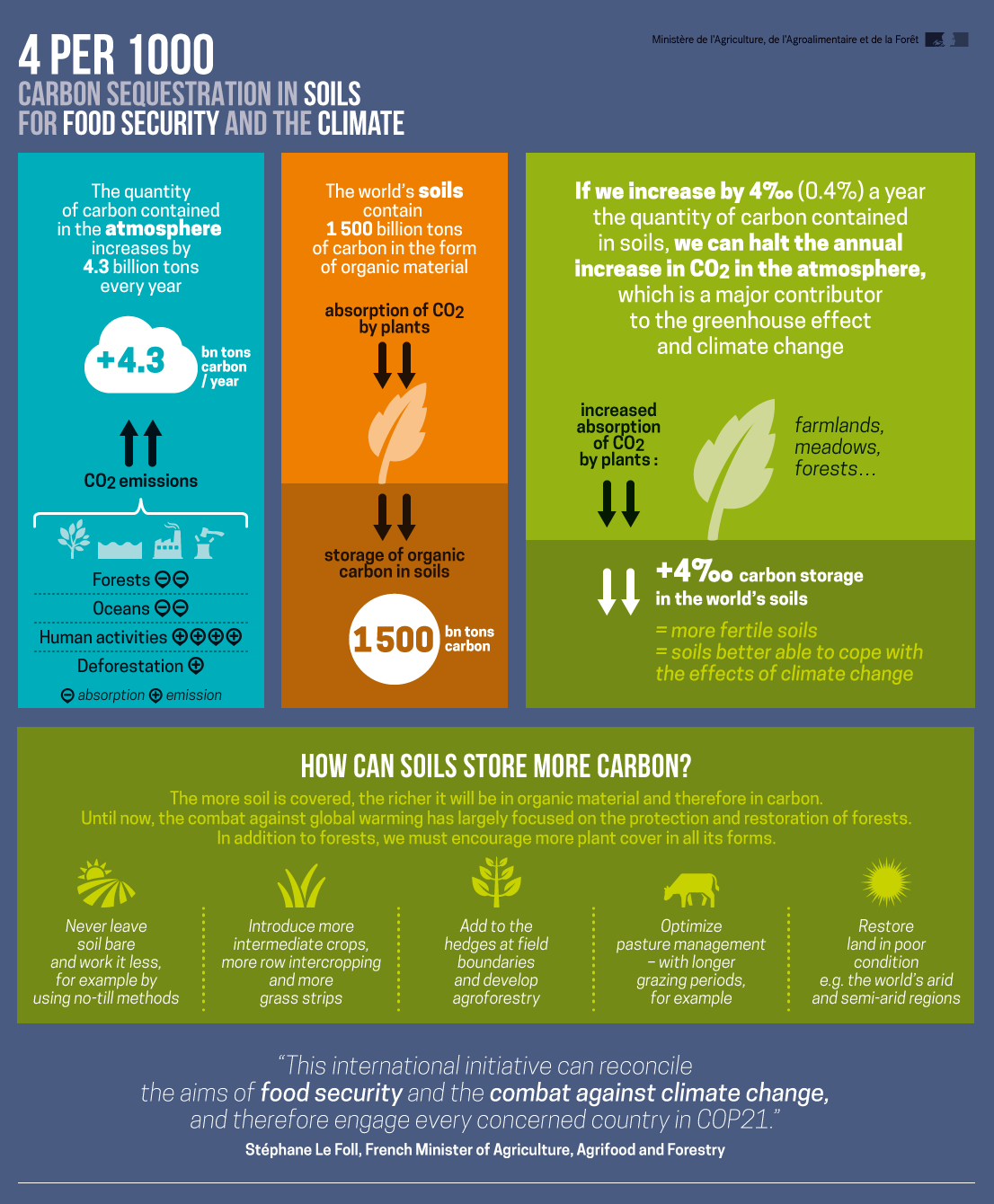
Source: 4p1000.org
Steiner’s Soil Amendments
One facet of Biodynamic farming that might raise a few eyebrows is Steiner’s soil amendments, some of which may sound fairly mystical at first. For example, one involves packing dung into a cow’s horn that is then buried during a specific moon phase.
The use of these kinds of Biodynamic preparations is a requirement of the Demeter standard, and while they may sound strange, there’s solid support for their use. (Farmers who for whatever reason cannot make these preparations can purchase them from Josephine Porter Institute4 or Biodynamic Source.5)
“You can understand the preparations on a very practical level,” Candelario says. “There is preparation 500, which is taking cow manure, putting it in a cow horn and burying it over the winter. There is preparation 501, which is taking silica, putting that in a cow horn and burying it over the summer. And then preparation 502 through 508, which are basically herbs — chamomile and valerian — those are used as compost amendment.
[The] analogy I like to use is to think about a sourdough starter … It’s a catalyst. And when you think about the idea of the farmer not being dependent on chemicals … and saying, ‘How can I affect the fertility of my farm, the health of my compost pile, just from the materials I can find on my farm?’ These materials were things that farmers already had on their farms.
[Let’s] talk about the 500 — First of all, putting it under the ground in the winter creates a constant temperature. It’s the refrigerator where that cow manure can age. When you pull it up and you pull that out on the counter, it smells like chocolate. It’s this beautiful material.
It’s put in water. It’s dynamitized by creating a vortex; really stirring it, and then it’s spread on the soil. It’s sprayed as a tea. [You use] one cow horn’s worth of manure per acre. We have research on our website that shows increased microbial life in the soil based on that. That’s really not surprising when you think about it. The silica is used as a foliar spray.”
More Information
As organic standards are becoming increasingly watered down, there’s an intensifying need for a more robust standard that cannot easily be bastardized. The USDA Organic label simply does not represent regenerative agriculture, and it’s important to realize this. Many organic farms are not even using cover crops, let alone integrating holistic herd management. Biodynamic certification fills this need, and really surpasses even the most stringent organic standards ever devised.
Again, key features of Biodynamic are the facts that the entire farm must qualify; it must operate as a self-sustaining whole; a portion of the land must be set aside for biodiversity; and animal welfare is addressed. I am actually in the process of converting the vacant lot next to my home to become certified Biodynamic.
For more details, please see Demeter-USA.org. You’ll find the standards listed in the “For Farmers” section. The website also provides a directory of certified farms and brands. This directory can also be found on BiodynamicFood.org.
Demeter’s U.S.-based sister organization, the Biodynamic Association, provides a lot of educational material as well, including an interactive Biodynamic webinar series, video and audio lectures and a quarterly Biodynamics Journal. There’s also an international Biodynamic Association.
I really think there’s a clarion call right now, especially for the natural food industry, to focus on regenerative and Biodynamic agriculture. Because at the end of the day, Biodynamic farms are uniquely suited to address carbon sequestration in a way that other industries are not.
The good news is that consumers have tremendous power when it comes to driving this change. Every time you shop for food, you’re voting for one agricultural system or another, so make deliberate, intentional choices.
DISASTER in the making: Pesticides are damaging vital soil organisms, new study suggests
Reproduced from original article:
www.naturalhealth365.com/pesticides-damage-soil-organisms-3841.html
by: Damon Hines, staff writer | May 22, 2021
 (NaturalHealth365) Global soils are the source of all life on land. They produce food, store carbon, and purify water. If topsoil is lost through “bad treatment,” it takes thousands of years until the soil is produced again. Pesticides and chemical poisons qualify as “bad treatment,” and without urgent action to halt the degradation caused by pesticides, pollution, and intensive farming, the future of global soils is bleak.
The pesticides and chemical poisons applied to agricultural soil are causing widespread damage to the vital organisms and microbial life that help keep soils healthy. According to research published in Frontiers in Environmental Science, “negative effects are evident in both lab and field studies, across all studied pesticide classes, and in a wide variety of soil organisms and endpoints.” Scientists found 71% of the tested parameters showed negative effects from pesticide exposure, including earthworms, beetles, springtails, and other organisms.
It’s time to stop treating soil like dirt
The numbers are staggering.
A third of the Earth’s land is severely degraded, and fertile soil is being lost at the rate of 24 billion tons a year. According to soil scientist Dr. Rattan Lal, 135 billion tons of soil have been lost from farmland since the Industrial Revolution. If that rate of degradation continues, researchers say the world’s topsoil could be gone in 60 years, which is a grim projection considering topsoil is where 95% of the planet’s food is grown.
Out of sight, out mind … but the damage is being done
It’s easy to overlook that vital soil organisms play a crucial role in the food web.
While toxic pesticides lurk in up to 70% of the produce in the U.S., contaminate groundwater in rural areas, and have been found to concentrate in the milk and meat of farmed animals through contaminated feed, researchers warn that soil organisms aren’t often considered when accessing the impact of pesticides and toxic farm chemicals.
For example, why is it that the U.S. tests chemicals on honeybees – insects that may never come into contact with soil – but not invertebrates?
According to Professor Nico Eisenhauer of Leipzig University, microbial species are essential for turning waste into nutrients, but 99% of them have yet to be studied by scientists. In fact, a quarter of all the animal species on Earth live beneath our feet -out of sight, out of mind -and provide the nutrients for our food. One teaspoon of healthy soil can contain up to a billion bacteria and more than 1km of fungi, algae, and other microfauna.
How to tackle the decline in biodiversity
Protecting soil structure needs to be included in the modern farming system. While the UN continually stresses the importance of soils to future food security, “soil awareness” and the impact toxic pesticides have on vital organisms doesn’t get the big headlines like, say, Roundup cancer lawsuits or the increasing threat of dicamba drift.
It’s time to work with the natural system and not fight against it. Raising awareness is the first step — the next step: better land regulation, improved farming efficiency, and EPA regulations on agricultural pesticides.
Sources for this article include:
Film Reveals How Industrial Agriculture Destroys Soil
Reproduced from original article:
https://articles.mercola.com/sites/articles/archive/2020/02/08/how-industrial-agriculture-destroys-soil.aspx
Analysis by Dr. Joseph Mercola Fact Checked
February 08, 2020
The Video not available on this site. To view, please go to the original article above.
Visit the Mercola Video Library
STORY AT-A-GLANCE
- The documentary, “The Need to Grow,” highlights the damage industrial agriculture is doing to soil health
- Seventy percent of the planet’s soils have already been destroyed
- The entire food chain and human life depend on billions of microorganisms that coexist in the soil
- Tilling the soil disrupts fragile soil life and turns soil carbon into atmospheric carbon dioxide, fueling the climate crisis
- The film features Michael Smith, inventor of the Green Power House, a power plant powered by sunlight and waste that efficiently creates biochar to accelerate the regeneration of soil
“The Need to Grow” highlights the shocking damage industrial agriculture is doing to our soil. The documentary, produced by Earth Conscious Films, follows three people who are fighting for change in our food system.
They include a 6-year-old activist petitioning Girl Scouts to get genetically modified ingredients out of its cookies; a farmer, biochemist and chef who is fighting to keep his land for regenerative urban farming; and an inventor from Montana who developed a Green Power House to accelerate the regeneration of soil using biochar.
The film starts out revealing some devastating facts about soil, including that 70% of our planet’s soil has already been destroyed. And because nature takes an estimated 1,000 years to generate just 3 centimeters of topsoil, if this rate of soil degradation continues, Earth could run out of farmable soil in 60 years.1
These facts are worrisome. But they serve as an important wakeup call that immediate action must be taken to save our soil. Fortunately, as shown in the film, there are fast and effective solutions to regenerate our soil. But before we explore those solutions, let’s first look at the root of the problem.
In the U.S., we’re losing soil at 10 times the rate of which it takes to regenerate it. The main driver is industrial agriculture, which relies heavily on synthetic inputs and machinery that tills up the soil. The practice of tilling affects the soils’ ability to hold water. It also turns soil carbon into atmospheric carbon dioxide, heating up the atmosphere, which in turn fuels the climate crisis.
It All Boils Down to the Soil
Tilling and applying agrichemicals disrupts fragile soil microbes. A single teaspoon of healthy soil can host billions of microorganisms.2 Tens of thousands of different living species, such as bacteria, fungi, nematodes, insects and earthworms, create a complex, interconnected web that affects not only the soil but also the health of all living creatures and the food chain as a whole.
These intricate networks act like a fast underground internet, transporting nutrients, water and carbon, creating a stable structure that prevents erosion and permits plants and other lifeforms to thrive. In short, soil microbes make life possible. As Paul Stamets, mycologist and author of “Mycelium Running: How Mushrooms Can Save the World,” says in the film:
“We are here today because of very smart choices on the evolutionary path. And we are born from the soil that gives us life. All of our food comes from soil. So, when we begin to destroy the biology of the soil we destroy the food networks that give us life. This is where we face an unprecedented circumstance.”
The Difference Between Soil and Dirt
Over the last century, farmers around the world have been encouraged to rely on unsustainable inputs, such as synthetic fertilizers and pesticides, which have resulted in short-term boosts in production, but at a major cost to soil longevity.
Large-scale monocropping and repeated tilling have resulted in the loss of topsoil rich in biodiversity, leaving behind dead dirt. This soil degradation has accelerated erosion, allowing a lifetime of topsoil to turn to dust and be blown or washed away.
This leads to a host of other problems, including food scarcity, as crops become less resilient to extreme weather conditions such as flooding and drought. As noted in the film, the difference between life and death, abundance and extinction, is the difference between soil and dirt.
The rise of industrial agriculture is tied to the military industrial complex, Jeffrey Smith, author of “Seeds of Deception,” explains in the film. After World War II, there was an excess of bomb-making material that was turned into pesticides. As the military industrial complex moved into agriculture, a model of chemical dependency was born. It’s a model environmental activist Vandana Shiva describes in the film as a war against our planet:
“Industrial agriculture, in my point of view, is first and foremost a war against the Earth because it is a war against all species, since you are bringing more chemicals into food production. And all they are doing is killing.”

Industrial Agriculture Linked to Ocean Dead Zones
Today, about 44 billion pounds of chemical fertilizers are used each year, according to the film. The impacts of these synthetic fertilizers reach far and wide. They disrupt the soil’s microbial balance and harm beneficial fungus and organic matter.
As biodiversity decreases, more fertilizers are needed to maintain outputs. Without nature there to do its job, agrichemicals must be used to fight off weeds and bugs. David King, founder of Seed Library of Los Angeles, put it best in the film when he said, “The idea that you can fight nature is dead upon arrival.”
The problems with synthetic fertilizers don’t stop on the field. Up to 50% of nitrogen fertilizers are washed away with rain and irrigation water, causing a huge amount of pollution that’s resulted in an ocean dead zone the size of New Jersey.
A dead zone in the ocean lacks oxygen and can kill fish and other marine life. The New Jersey-size dead zone is the largest ever measured since scientists began mapping ocean dead zones in 1985.3
Factory farms or concentrated animal feeding operations (CAFOs) — which are easily the most polluting activity on the planet — are a second major contributor to ocean dead zones.
In August 2017, a report by the environmental group Mighty blamed toxins from factory farm manure and chemical fertilizers for causing the largest dead zone ever recorded. The Guardian reports:4
“Nutrients flowing into streams, rivers and the ocean from agriculture and wastewater stimulate an overgrowth of algae, which then decomposes. This results in hypoxia, or lack of oxygen, in the water, causing marine life either to flee or to die.”
Roundup Weedkiller at Center of 42,700 Cancer Lawsuits
Sadly, vast amounts of resources are used to fuel industrial agriculture and factory farming. In the U.S., more than 33% of fossil fuels, 50% of all water and 80% of farmland is used to raise animals that are confined in factory farms and to grow the grain to feed them, according to the film.
Most of the grains are genetically modified, 80% of which are engineered to withstand Monsanto’s Roundup weedkiller. Roundup has been linked to a host of health problems, including liver and kidney damage, Parkinson’s, infertility and Non-Hodgkin lymphoma. More than 42,700 plaintiffs in the U.S. have filed suit against Bayer (Monsanto’s new owner), claiming Roundup caused their cancer.5
The use of glyphosate, the key ingredient in Roundup, has risen 10,000% since 1974, according to the film. The chemical is now found in our food, air and rainwater. Still, U.S. regulatory authorities do not require food to be tested for glyphosate contamination.
Big Agriculture’s philosophy of using GMOs and glyphosate is one of sterilization: Kill everything except the crop. This is the exact opposite of farming in ways that regenerate soil and biodiversity.
The Green Power House
The film features Erik Cutter, a biochemist and oncologist by training who became a chef, farmer and pioneer of urban regenerative agriculture. Cutter uses a tool called the SoxxBoxx Gro System,6 an elevated tray containing rows of polypropylene socks filled with healthy soil.
The SoxxBoxx system sequesters carbon and blends organic, aeroponic and hydroponic practices. The results are plants high in nutrients that don’t require pesticides.
The film shows Cutter being introduced to a natural fertilizer that, to his amazement, caused his plant to change colors within 45 minutes of applying it. The material turned out to be biochar. It was produced by Michael Smith, inventor of the Green Power Plant. Fascinated and eager to learn more, Cutter hopped on an airplane and flew to Montana to meet Smith.
Smith is a mathematician, physicist and former software engineer. His background is diverse and includes working in the field of artificial intelligence for a variety of companies such as Walt Disney Studios, NASA and the FBI. Smith was one of the first pioneers in 3D printing, long before 3D printers were known as they are today.
He took his expertise in artificial intelligence and began to apply it to biology. In 2009, he co-founded Algae Aqua-Culture Technologies Inc., which designed the Green Power House.7 The power house operates on a system powered by sunlight and industrial waste, diverting that waste from landfills and producing electricity while accelerating the regeneration of soil.
The power house uses something they call the dragon, a state-of-the-art pyrolysis machine. When biomass such as wood chips enter the dragon, it’s heated close to 1,000 degrees Fahrenheit. The absence of oxygen prevents combustion, leaving behind a stable carbon structure similar to charcoal.
The extracted energy runs the entire power house off-grid, while creating enough excess electricity to meet the needs of about 100 homes. It would take more than 3 acres of solar panels to accomplish this, notes the film.
Biochar
The electricity is not their main product, though. It’s their “waste” byproduct. Pretty incredible, right? The main product is biochar, which is emerging as one of the best solutions to environmental pollution.
The process of making biochar has been around for about 9,000 years. Our ancestors created biochar to revitalize the soil. Algae Aqua-Culture did not invent the process of making biochar, they simply reformulated it for the 21st century.
As explained in the film, biochar is a form of extremely stable carbon with pores that create a massive surface area in a tiny space. Think of it like this: A 2-inch piece of biochar, if unfolded, would have the surface area the size of a football field. This structure is an optimal breeding ground for beneficial soil microbes, holding water and nutrients where plant roots need them the most.
Without the dragon, the wood waste would end up in the landfill, releasing greenhouse gases as it decomposed. Instead, biochar locks the carbon back underground for hundreds or even thousands of years. The technology is aimed at both regenerating the soil and reducing the carbon footprint of polluting industries like timber and coal, while providing cleaner, low-carbon energy alternatives.8
Remarkably, one green power house is able to stabilize more than 1 ton of carbon every day. It would take about 50,000 trees to do the same, according to the film.
Smith is using the Green Power House to fix carbon, pulling it out of the atmosphere and putting it back in the ground where it can do the most good. Smith and his team essentially copied nature’s way of producing soil — taking carbon dioxide, water and sunlight and creating biomass from it. They just found a way to accelerate the process.
The Liquid Prairie
The film takes Cutter on a tour through what Smith and his team refer to as the “Liquid Prairie.” Using continuously fed carbon dioxide from the dragon, rapidly growing algae is harvested every day. Through biodigestion, algae are converted to a nutrient-rich organic fertilizer that when combined with biochar, creates a powerful soil rejuvenator.
Methane, a byproduct of algae digestion, is sent back to the dragon, which heats and processes more waste, completing the cycle. Most people don’t know it, but algae are higher in energy than coal, Smith tells Cutter in the film. Through the whole process, Smith is doing in four or five days what nature would do in 400 years.
Save the Soil
Solutions such as the Green Power Plant are key in building healthy soil and transforming our broken food and farming system. The good news is there are many steps all of us can take to help shift our death-based agriculture system to a life-based economy.
We can’t feed the world from dead soil. But we can provide nutritious food on a global scale without destroying the planet. All we need are many small solutions that lead to a societal shift.
Actions such as shopping organic, supporting local regenerative farms, growing your own food, composting, seed-saving or starting a garden at your or your child’s school can help restore soil health and the biodiversity that depend on it.
As the film notes, the future of our food system is in our hands. Agriculture can either destroy the planet or it can be a vessel to regenerate our soils, restore ecosystems and create true food security. But we must act now. The actions we take in the next few years will have environmental effects lasting for generations.
As Shiva says in the film, “In life, the phrase ‘it’s too late’ doesn’t work. Life is about renewal. Life is about healing. Life is about bursting forth again and again and again.” Click here to find local farms in your area selling regenerative products.
|
About the Director  Rosario Dawson, and Ryan Wirick I believe in bringing quality to my readers, which is why I wanted to share some information about the filmmakers, Rob Herring and Ryan Wirick, from “The Need to GROW.” Here is a little more about them and what went in to making this film. Thank you, Rob and Ryan, for sharing with us. What was your inspiration for making this film? The U.N. report “Wake Up Before It’s Too Late” recently stated that localizing and diversifying the food supply and increasing small organic farms was the key to fixing our food system, rather than relying on chemical-dependent, soil-eroding, nutrient-lacking GMO monocultures. It seemed so obvious. Meanwhile, Time magazine estimated that at our current rate of soil degradation, we only have roughly 60 years of farmable topsoil left on the planet. We knew the public didn’t need another doomsday film insinuating it was too late to save our species. It’s not. So, we set out looking for the untold stories of revolutionary people who are already creating the new food system, in harmony with nature. As we began interviewing experts, it quickly became apparent how important soil health is to the future of the planet. Soil isn’t sexy, so it’s often overlooked as being nothing more than dirt. This couldn’t be further from the truth — there are more micro-organisms in a healthy tablespoon of soil than there are people on the planet! Healthy soil regulates not just the nutrients in a healthy food system, but healthy water, air, biodiversity and the ability to return atmospheric carbon pollution back into the Earth. Like nothing else, the act of healing our soils truly addresses almost every other environmental issue — including climate change! The film follows a mother and daughter activist, a renegade urban farmer and an accomplished visionary inventor revolutionizing soil restoration. It was important to us for these characters’ personal journeys to serve as a vehicle through which we could weave in myriad action steps on all scales. Audiences leave feeling hopeful and knowing exactly what solution they can participate in immediately — regardless of who they are or where they live. Shot over nearly five years, “The Need To GROW” is ultimately a story of underdog resilience. Each character overcomes a major setback, bringing viewers on a ride to not only learn about the astonishing issue of soil health — and the urgent problems of our food system overall — but to connect with characters who offer an inspiring example of what can be accomplished with perseverance and heart. What was your favorite part of making the film? We forged lifelong friendships, not only with the stars of the film, but with countless solutionists around the country whom we met while traveling and looking for the most cutting-edge solutions. What we saw was there are a lot of incredible people out there working hard to heal this planet and our relationship to it. It is more than hopeful — we found that we already have most of the answers to turn around our environmental destructive habits. When the time comes that the public and governments are ready to listen, the answers will be ready to deploy, as proven by those who are already participating in the future food system. What gives us the most pride is seeing the new friendships that exist between people we helped connect through this process. Seeing inspiring leaders interact and work together now — and knowing our film is the reason for their relationship — makes us happier than anything. Where do the proceeds from your film go? All proceeds of “The Need to GROW” go toward raising awareness of the importance of soil regeneration and increasing the accessibility of solutions to heal both people and planet. Our new platform, Earth Conscious Life, was created to accentuate how there are no dividing lines between planetary health and human health — the pursuit of a healthy planet, society, family and home are one and the same. Our mission is to make these connections indispensable for people through community and art focused on holistic solutions.  |
- 1 Scientific American December 5, 2014
- 2 University of Minnesota, Department of Soil, Water and Climate 2020
- 3 National Oceanic and Atmospheric Administration August 2, 2017
- 4 The Guardian August 1, 2017
- 5 U.S. Right to Know January 14, 2020
- 6 La Times June 19, 2019
- 7 Algae Aqua-Culture Technologies 2009
- 8 Flathead Beacon September 24, 2015