Vitamins
now browsing by category
Top Tips for a Healthier 2022
Reproduced from original article:
https://articles.mercola.com/sites/articles/archive/2022/01/04/top-tips-for-a-healthier-2022.aspx
The original Mercola article may not remain on the original site, but I will endeavor to keep it on this site as long as I deem it to be appropriate, and will not be bullied into removing it.
Analysis by Dr. Joseph Mercola Fact Checked January 04, 2022
STORY AT-A-GLANCE
- The start of a new year is often a good time to take stock and plan out beneficial lifestyle changes. Included are 22 tips for making 2022 your healthiest year yet
- Top tips include optimizing your vitamin D, targeting your immune system with immune-boosting nutraceuticals, treating COVID symptoms early, improving your liver health, protecting your vision and combating inflammation and autoimmune diseases
- Items to eliminate include processed foods high in seed oils and processed sugar, as well as electromagnetic field exposures, freedom of speech robbers such as Google and Facebook, and toxic clothing
- Items to add include magnesium, collagen, filtered water, vision-enhancing nutrients, osteoporosis-busting exercise and healthy sleep
The start of a new year is often a good time to take stock and plan out beneficial lifestyle changes. Here are 22 tips for making 2022 your healthiest year yet. How many have you incorporated so far, and which ones can you add to your toolbox for the coming year?
Tip 1: Optimize Your Vitamin D
Vitamin D optimization is an absolute foundational strategy for fighting infections as it bolsters the first line of defense of your immune system. Ideally, test your vitamin D level twice a year, in the winter and summer, to make sure you’re in a healthy range of 60 ng/mL to 80 ng/mL year-round. (A compelling body of research suggests 40 ng/mL is the cutoff for sufficiency.)
Vitamin D can reduce your risk of COVID-19 and other respiratory infections by reducing the survival and replication of viruses, reducing inflammatory cytokine production, maintaining endothelial integrity and increasing ACE2 concentrations, which helps lower COVID-19 severity.
If your vitamin D levels are not optimal and you come down with COVID, it is best to take 0.5 mcg of calcitriol on the first day and then 0.25 mcg for a week, as this is the active form of vitamin D. Merely swallowing regular vitamin D capsules will not help with COVID for one to two weeks, which is why you must add calcitriol.
You can learn more about the mechanisms behind vitamin D in my June 2020 scientific report, available on StopCovidCold.com. October 31, 2020, I also published a scientific review1 in the peer-reviewed journal Nutrients — “Evidence Regarding Vitamin D and Risk of COVID-19 and Its Severity” — co-written with William Grant, Ph.D., and Dr. Carol Wagner, both of whom are part of the GrassrootsHealth expert vitamin D panel. You can read the paper for free here.
Tip 2: Up Your Intake of Key Immune-Boosting Nutrients
Many nutrients are known for their immune-boosting properties and ability to ward against encapsulated RNA viruses such as influenza and coronaviruses. A number of them were identified and listed in a February 2020 article in the journal Progress in Cardiovascular Diseases.2,3,4
A number of nutrients have also shown promise against the atypical symptoms associated with severe COVID-19, such as excessive, out of control inflammation and blood clots.
While these symptoms have become increasingly rare as the virus has mutated into milder strains (Omicron being a prime example), some early COVID-19 patients are still struggling with long-term symptoms, colloquially known as “long COVID.” For them, such nutraceuticals may be particularly helpful.
Here’s a summary of the nutritional supplements identified. (For suggested dosages, see the Progress in Cardiovascular Diseases paper.5)
| N-acetylcysteine (NAC) — Encourages glutathione production, thins mucus, lowers your chances of influenza infection and reduces your risk of developing severe bronchitis. |
| Elderberry extract — Known to shorten influenza duration by two to four days and reduce the severity of the flu. |
| Spirulina — Reduces severity of influenza infection severity and lowers influenza mortality in animal studies. In a human trial, spirulina significantly lowered the viral load in patients with HIV infection. |
| Beta-glucan — Reduces severity of influenza infection severity and lowers influenza mortality in animal studies. |
| Glucosamine — Upregulates mitochondrial antiviral-signaling protein (MAVS), reduces severity of influenza infection severity and lowers influenza mortality in animal studies. |
| Selenium — Selenium deficiency increases the rate at which viruses can mutate, promoting the evolution of more pathogenic strains. |
| Zinc — Supports “effective function and proliferation of various immune cells,” lowering mortality in the elderly by 27%. If treating acute COVID, it’s best taken with quercetin (500 mg) to drive the zinc into the cell to limit viral replication. |
| Lipoic acid — Helps boost type 1 interferon response, which activate intracellular antimicrobial programs, thereby limiting viral spread between cells, and modulate your innate immune responses, restraining pro-inflammatory pathways and inhibiting cytokine production. They also activate your adaptive immune system.6 |
| Sulforaphane — Helps boost type 1 interferon response. |
| Resveratrol — A 2005 study7 in The Journal of Infectious Diseases found resveratrol has the power to inhibit the replication of influenza A virus, significantly improving survival in influenza-infected mice. According to the authors, resveratrol “acts by inhibiting a cellular, rather than a viral, function,” which suggests it “could be a particularly valuable anti-influenza drug.” |
Tip 3: Treat COVID as FIRST Sign of Infection
Should you develop COVID symptoms, you simply MUST start treatment immediately. We now know early treatment is key for successful resolution of the infection. It could literally be the difference between life and death and I can’t stress that enough. It is far better to overtreat a cold like COVID than ignoring the symptoms and dismissing them.
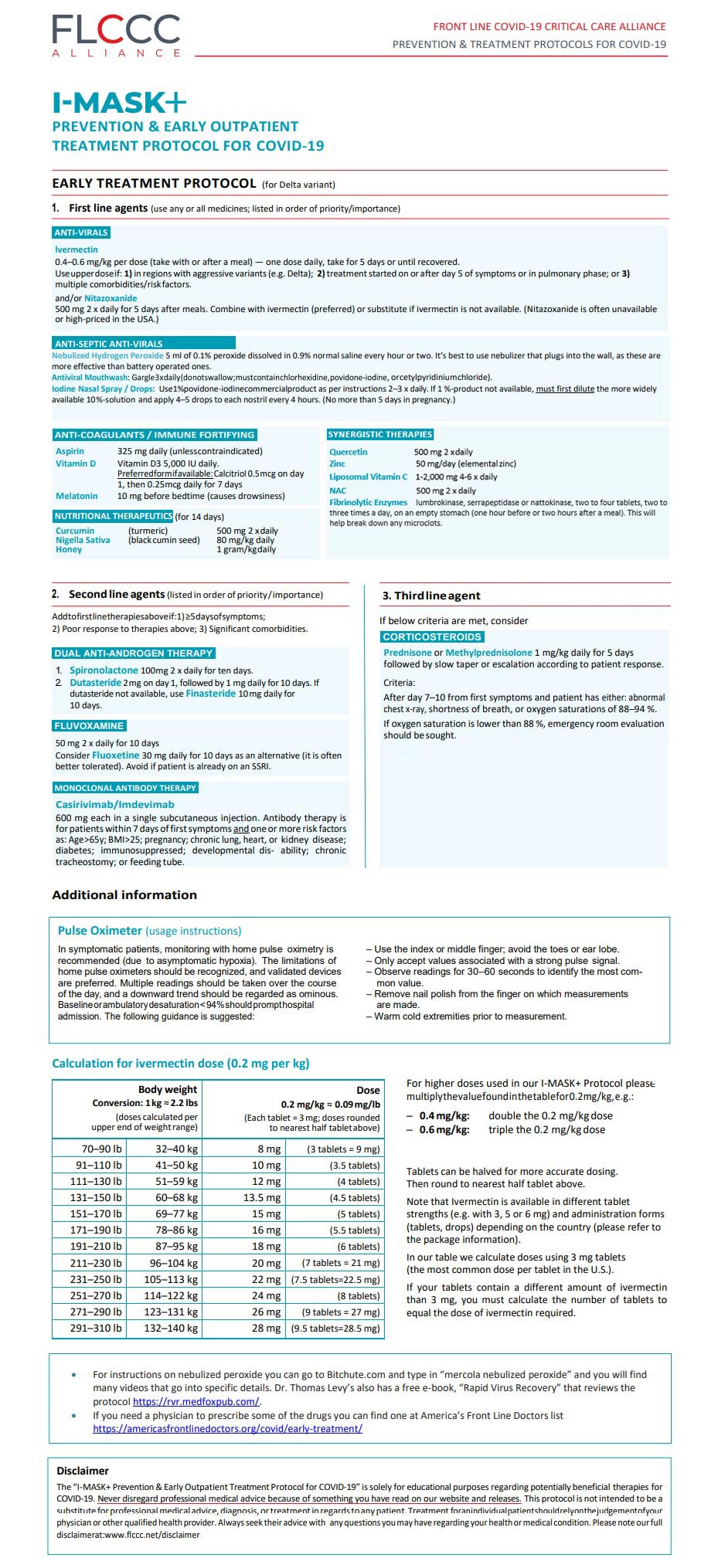
There are several early treatment protocols available, most of which focus on similar remedies. I believe the Frontline COVID-19 Critical Care Alliance’s (FLCCCs) protocol is among the most comprehensive. You can find a listing of doctors who can prescribe necessary medicines on the FLCCC website.
There, you can also find downloadable PDFs in several languages for prevention and early at-home treatment, the in-hospital protocol and long-term management guidance for long-haul COVID-19 syndrome.
A slightly revised version of the FLCCC protocol is below. I’ve altered some of the dosages, and added a few more therapies that they have yet to include, such as nebulized hydrogen peroxide and intravenous ozone.
Tip 4: Optimize Your Health With Systemic Enzymes
Enzymes are proteins composed of individual amino acids necessary to speed up cellular functions and biological processes. Some of the bodily processes that require enzymes include energy production, oxygen absorption, toxic waste removal, breaking down fats in your blood, dissolving blood clots and fighting infections.
Proteolytic enzymes such as lumbrokinase and serrapeptase act as blood cleansers that combat inflammation and rebalance your immune system.
In the era of COVID, an enzyme called lumbrokinase may be of particular benefit, as it helps break down blood clots. If you’ve had COVID-19 in the past, and/or received one or more COVID injections, lumbrokinase may be helpful to prevent blood clotting issues.
Proteolytic enzymes such as lumbrokinase and serrapeptase serve to digest unwanted proteins in your blood, like blood clots. They also help combat inflammation and rebalance your immune system, facilitating the removal of inflammatory proteins, removing fibrin (a clotting material that restricts blood flow and prolongs inflammation), reducing edema in inflamed regions, and boosting the potency of macrophages and killer cells.
If you want these enzymes to work on the potentially damaging proteins in your blood and not the food in your stomach, you will need to take them on an empty stomach, either one hour before or two hours after a meal. Otherwise the enzymes will be used to digest your food and not work in your bloodstream.
Tip 5: Boost Your Liver Health With Choline
Nonalcoholic fatty liver disease (NAFLD) is a common condition caused by an unhealthy processed food diet. Aside from cutting out processed foods high in sugars and seed oils, adding in more choline can be helpful, as it appears to be a key controlling factor in arresting the development of fatty liver.
It does this by enhancing secretion of very low density lipoprotein (VLDL) particles in your liver, which are required to safely transport fat out of your liver. Choline deficiency may result in excess fat and cholesterol buildup. Choline also aids in DNA synthesis and is important for healthy mitochondrial function.
Choline-rich foods to consider loading up on include wild-caught Alaskan salmon, krill oil, organic pastured chicken, vegetables such as broccoli, cauliflower and asparagus, shiitake mushrooms, grass fed beef liver and pastured egg yolks.
A single hard-boiled egg can contain anywhere from 113 to 147 milligrams of choline, or about 25% of your daily requirement, making it one of the best choline sources in the American diet. Only grass fed beef liver beats it, with 430 milligrams of choline per 100-gram serving.
Tip 6: Eliminate ALL Seed (Vegetable) Oils
A compelling report in the journal Gastroenterology offers a radically novel yet logically sound explanation as to why some COVID-19 patients develop life-threatening organ failure, namely their high unsaturated fat intake. Since diet-related comorbidities are responsible for 94% of COVID-19-related deaths,8 taking control of your diet is a simple, common-sense strategy to lower the risks associated with this infection.
Simply put, high intake of polyunsaturated fats (PUFAs) — a primary source of which is industrial seed oils — is associated with increased mortality from COVID-19, while healthy saturated fats actually lower your risk of death.
Omega-6 linoleic acid (LA) makes up the bulk of the omega-6 consumed and is the primary contributor to nearly all chronic diseases, because when consumed in excessive amounts, LA acts as a metabolic poison radically limiting mitochondrial function and your ability to produce cellular energy.
The reason for this is because polyunsaturated fats such as LA are highly susceptible to oxidation. As the fat oxidizes, it breaks down into harmful sub-components such as advanced lipid oxidation end products (ALES) and oxidized LA metabolites (OXLAMs). These ALES and OXLAMs are actually what cause the damage.
While excess sugar is certainly bad for your health and should typically be limited to 25 grams per day or less, it doesn’t cause a fraction of the oxidative damage that LA does. Processed vegetable oils are a primary source of LA, but even food sources hailed for their health benefits contain it, and can be a problem if consumed in excess. Cases in point: olive oil and conventionally raised chicken, which are fed LA-rich grains.
Tip 7: Boost Your Magnesium Intake
Magnesium is required for the healthy function of most cells in your body. Deficiency will impede your cellular metabolic function and deteriorate mitochondrial function, which can result in more serious health problems. Deficiency is widespread, thanks to inadequate consumption of leafy greens, so if you rarely eat your veggies, you could probably benefit from supplementation.
Having low amounts of magnesium has also been shown to significantly increase your supplemental vitamin D requirement. Research by GrassrootsHealth9 shows you need 146% more vitamin D to achieve a blood level of 40 ng/ml (100 nmol/L) if you do not take supplemental magnesium, compared to taking your vitamin D with at least 400 mg of magnesium per day.
Your vitamin K2 intake can also affect your required vitamin D dosage. Data10 from nearly 3,000 individuals revealed 244% more oral vitamin D was required to get 50% of the population to achieve a vitamin D level of 40 ng/ml (100 nmol/L) if they weren’t concurrently also taking magnesium and vitamin K2. So, a simple way to optimize your vitamin D absorption is to take it in conjunction with magnesium and K2.
Foods with the highest magnesium levels include spinach, Swiss chard, turnip greens, beet greens, collard greens, broccoli, Brussels sprouts, kale, bok choy and romaine lettuce.
If you’re using a supplement, you may want to use magnesium threonate to provide at least some of your magnesium, as it appears to be most efficient at penetrating cell membranes, including your mitochondria and blood-brain barrier. Another effective way to boost your magnesium level is to take Epsom salt (magnesium sulfate) baths, as the magnesium will effectively absorb through your skin.
Tip 8: Improve Your Bowel Evacuation
Healthy evacuation of your bowels is a factor that many tend to ignore. The good news is that improving your bowel function can be as simple as changing how you sit on the toilet. Your puborectalis muscle helps control elimination during a bowel movement and prevent incontinence when you’re standing.
However, when you sit on a typical toilet, this muscle cannot fully relax, which is why you may need to push or even strain in order to have a bowel movement. While squatting, however, the muscle relaxes fully, making elimination easier.
Squatting on the toilet bowl can help you eliminate waste better if you are constipated. But this requires strength, flexibility and balance, especially if you’re not used to this method. Other options include using a simple footstool to help you get into a more “squatty” position or leaning forward as you sit on the toilet, with your hands on or near the floor.
Tip 9: Combat Chronic Inflammation
Chronic inflammation is a hallmark of virtually all disease, including cancer, obesity and heart disease. While inflammation is a perfectly normal and beneficial process that occurs when your body’s white blood cells and chemicals protect you from foreign invaders like bacteria and viruses, it leads to trouble when the inflammatory response gets out of hand and continues indefinitely.
Your diet plays a significant, if not primary, role in this chain of events and is the perfect place to start to address it. Certain nutritional supplements can also be helpful as add-ons. Here’s a summary of key principles:
• Limit or eliminate vegetable oils (seed oils) — A key part of an anti-inflammatory diet involves excluding refined vegetable oils, as they are clearly one of the most pernicious and pervasive poisons in the food supply. Simply avoiding all processed foods and most restaurant foods will go a long way toward helping you avoid them.
• Eat more veggies — Vegetables are a key anti-inflammatory staple. Ideally, opt for organic locally grown veggies that are in season, and consider eating a fair amount of them raw. If you struggle with autoimmune disease or have significant inflammation in your body, though, consider limiting vegetables with high lectin content. Some high- lectin foods can be made safer to eat through proper soaking and cooking, as well as fermenting and sprouting.
• Add in fermented foods — Traditionally fermented and cultured foods are other anti-inflammatory staples that work their “magic” by optimizing your gut flora. A majority of inflammatory diseases start in your gut as the result of an imbalanced microbiome.
Fermented foods such as kefir, natto, kimchi, miso, tempeh, pickles, sauerkraut, olives and other fermented vegetables will help reseed your gut with beneficial bacteria. Ideally, you’ll want to eat a wide variety of them as each contains a different set of beneficial bacteria (probiotics).
If you don’t like fermented vegetables, consider yogurt made from raw, organic milk from grass fed cows. Yogurt has been shown to reduce inflammation by improving the integrity of your intestinal lining, thereby preventing toxins in your gut from crossing into your bloodstream.
• Boost your omega-3 fat intake — Marine-based omega-3 fats found in fatty cold-water fish that are low in environmental toxins — such as wild Alaskan salmon, sardines and anchovies — are also important anti-inflammatories, particularly for brain and heart health. In fact, your omega-3 level is a powerful predictor of mortality. If you don’t enjoy these types of fish, consider using krill oil instead.
• Cook with herbs and spices — Ounce for ounce, herbs and spices are among the most potent anti-inflammatory ingredients available and making sure you’re eating a wide variety of them on a regular basis can go a long way toward preventing chronic illness. Among the most potent anti-inflammatory herbs and spices are cloves, cinnamon, Jamaican allspice, apple pie and pumpkin pie spice mixtures, oregano, marjoram, sage, thyme and Italian spice.
Tip 10: Filter Your Water
While the U.S. has many water quality concerns, it doesn’t really matter where you live anymore, as many dangerous chemicals find their way into the ecosystem, spreading from one continent to another. This is why filtering your household water is more a necessity than an option these days.
Filtering your drinking water is good practice, but equally important is filtering the water you use for bathing. This is because immersing yourself in contaminated water may be even more hazardous to your health than drinking it.
Chemicals absorbed through your skin go directly into your bloodstream, bypassing your digestive and internal filtration systems. Unfiltered water can also expose you to dangerous chlorine vapors and chloroform gas, which can cause dizziness, fatigue, asthma, airway inflammation and respiratory allergies.
Unless you can verify the purity of your water, you should seriously consider installing a high-quality, whole-house water filtration system. Ideally, filter the water both at the point of entry and at the point of use. This means filtering all the water that comes into the house, and then filtering again at the kitchen sink and shower. As for the type of filtration system to get, there are various options, most of which have both benefits and drawbacks.
Common options include reverse osmosis (RO), ion exchange, and granular carbon or carbon block filters. Ideally, you want a filtration system that uses a combination of methods to remove contaminants, as this will ensure the removal of the widest variety of contaminants.
Tip 11: Reduce Your EMF Exposure
One of the most dangerous kinds of pollution affecting your health is the invisible sea of electromagnetic fields (EMFs) your body swims in daily, both outdoors and in your home. Common sources include cell phones, cell towers, computers, smart meters and Wi-Fi, to name just a few. Strategies to reduce your EMF exposure include:
| Connect your computer to the internet via a wired connection and put it in airplane mode. Also opt for wired keyboards, trackballs, mice, printers and house phones. |
| If you must use Wi-Fi, be sure to shut it off whenever it’s not in use, especially at night. |
| Shut off the electricity to your bedroom at night to reduce electrical fields from the wires in your walls. |
| Use a battery-powered alarm clock, ideally one without any light. |
| Replace your microwave oven with a steam convection oven, which will heat your food quickly and far more safely. |
| Avoid “smart” appliances and thermostats that depend on wireless signaling, including smart TVs. Consider using a large computer monitor as your TV instead, as it doesn’t emit Wi-Fi. |
| Opt out of smart meters if you can or add a shield to an existing smart meter. |
| Avoid using a wireless baby monitor. Instead, move the baby’s bed into your bedroom, or use a hard-wired monitor. |
| Remove all fluorescent lights from your home and switch to incandescent bulbs. |
| Avoid carrying your cell phone on your body unless it’s in airplane mode, and never sleep with it in your bedroom. |
| Use the speakerphone on your cell phone, and hold it at least 3 feet away from you. Ideally, use your cell phone as little as possible. |
Even if you implement these strategies, you’re unlikely to eliminate all exposure, as EMFs saturate public places and can invade your home from your neighbors. To minimize the harmful effects, the following strategies can be helpful:
• Increase your magnesium intake — As a natural calcium channel blocker, magnesium can help reduce the effects of EMF on your voltage-gated calcium channels. Since many are deficient in magnesium, I believe you could benefit from as much as 1 to 2 grams of magnesium per day.
• Molecular hydrogen — Molecular hydrogen has been shown to target free radicals produced in response to radiation, such as peroxynitrites. Studies have shown molecular hydrogen can mitigate about 80% of this damage.
Molecular hydrogen will also activate Nrf2, a biological hormetic that upregulates superoxide dismutase, catalase and all the other beneficial intercellular antioxidants. This in turn lowers inflammation, improves your mitochondrial function and stimulates mitochondrial biogenesis.
• Protective spices — Cinnamon, cloves, ginger root, rosemary and turmeric have exhibited protective effects against EMF-induced damage.
Tip 12: Boost Your Collagen Production Naturally
Collagen is the most common and abundant of your body’s proteins. One of its primary purposes is to provide structural scaffolding for your various tissues to allow them to stretch while still maintaining tissue integrity.
As a compound of essential amino acids, there’s only one way to get collagen: Your body can’t produce it, so you must obtain it through your diet. Historically, traditional diets provided ample collagen in the form of broth made from boiled chicken feet or beef bones. These are by far your best alternatives.
If you decide to use a collagen supplement, it’s important to know what to look for. Laboratory testing has revealed many popular collagen and bone broth products contain potentially hazardous contaminants typically associated with concentrated animal feeding operations (CAFOs), so to avoid contaminants, make sure your collagen supplement is certified “100% Organic” by the U.S. Department of Agriculture (USDA).
Moreover, collagen supplements can be either unhydrolyzed (undenatured) or hydrolyzed (denatured). The processing that most collagen supplements undergo to become hydrolyzed can also result in questionable byproducts that are best avoided. My personal preference is to use a less denatured (unhydrolyzed) organic collagen supplement, as it has a more balanced amino acid profile.
That said, I still believe the natural approach is best. Making homemade bone broth using bones and connective tissue from grass fed, organically raised animals isn’t very complicated and will produce the best results.
Tip 13: Optimize Your Sleep
One of the most radical and recent discoveries revealing the importance of sleep for health is that each and every organ has its own biological clock. In your brain is a “master clock” that synchronizes these clocks and your bodily functions to match the 24-hour light and dark cycle.
When you upset your circadian rhythm by not getting enough sleep, the results can have far-reaching consequences, affecting everything from mood, creativity and brain detoxification to DNA expression, chronic disease risk — including dementia — and longevity. Helpful tips to optimize your sleep include:
| Sleep in complete darkness, or as close to it as possible, to avoid lowering melatonin production, which can interfere with your sleep. |
| Keep the temperature in your bedroom no higher than 70 degrees Fahrenheit. |
| Eliminate EMFs in your bedroom. |
| Keep all electronic devices at least 3 feet from your bed. |
| Adopt a neutral sleeping position by propping your pillow under your neck, not your head, to maintain a proper spinal curve. |
| Reserve your bed for sleeping and don’t keep a TV in your bedroom. |
| Consider separate bedrooms if sharing your bed with a partner impairs your sleep. Pets may also need to be kept in another room if they disturb your sleep. |
Tip 14: Ditch Google and Facebook Once and for All
Over the years, the government and business monopolies, including the likes of Big Tech, have formed a global alliance hell-bent on protecting and concentrating member profits. The price for keeping business going as usual is personal liberty and freedom of speech that may impact these fascist government-industrial complexes.
In recent times, we’ve seen unprecedented efforts to censor natural health topics in various online platforms, especially Google and Facebook, under the guise of protecting you against “misinformation.”
By censoring the voices that challenge mainstream information on crucial health topics like pharmaceutical drugs, vaccines, GMOs, pesticides, junk foods, artificial sweeteners and fake meat, Google and Facebook are able to protect the profits of its advertisers and stakeholders.
Across the board, Google only gives you the results they want you to see, while relevant articles and news they deem “harmful” are buried. Facebook, meanwhile, relies on so-called “fact checkers” to dissuade and redirect users away from anything that contradicts the mainstream narrative. We now have proof that Facebook’s “fact checks” are nothing more than opinion pieces, thanks to a lawsuit by journalist John Stossel,11,12,13 but they’re still presented as assertions of facts.
If you’re fed up with Google’s and Facebook’s exploitation and manipulation, the best way to break free is by being informed. If we work together to boycott them, Google and Facebook will crumble.
We have added a built-in sharing tool on top of each newsletter article to make it easier for you to share it to your friends and family via email or text. And, while the articles on my website are only viewable for 48 hours, we are in the process of transferring our entire archive over to the Censored Library on Substack. This will allow us to bring back my previously deleted articles in a liability-protected format.
For just $5 a month, or the discounted annual rate of $50 per year, you will have access to all of my articles, all the time, even after they’ve been deleted from Mercola.com.


Tip 15: Protect Your Eye Health
Your ocular health affects your overall well-being, so routine eye exams are an important health basic. Additionally, keep your eyes healthy and your vision sharp by:
• Removing trans fats from your diet — As with linoleic acid, processed foods and baked goods are primary sources of harmful trans fats.
• Removing high fructose corn syrup from your diet — High blood pressure can damage the small blood vessels in your retina, obstructing blood flow, and a key strategy to normalize your blood pressure is to dramatically reduce your fructose intake.
High sugar intake is also a primary culprit of elevated blood sugar readings. High blood sugar not only obstructs blood flow by damaging blood vessels in your retina but also pulls fluid from the lens of your eye, which can affect your ability to focus. As a general guide, I recommend keeping your total daily fructose consumption below 25 grams a day, including fructose from fruit.
• Eating your veggies — Consuming high amounts of carotenoid-rich vegetables, especially ones rich in lutein and zeaxanthin, can encourage healthy vision.
• Boosting your omega-3 fat intake — Omega-3 fats protect healthy vision. Good sources include wild-caught Alaskan salmon, sardines and anchovies. If you use a supplement, I recommend krill oil, which also contains astaxanthin, a potent antioxidant.
• Quitting smoking — Smoking increases free radical production throughout your body, putting you at risk for any number of health problems, including vision problems.
Aside from lutein and zeaxanthin, astaxanthin is one of the best antioxidants for eye health. It’s been shown to protect against a number of eye-related problems, including age-related macular degeneration, which is the No. 1 cause of blindness in the elderly, glaucoma, cataracts, inflammatory eye diseases, cystoid macular edema, retinal arterial occlusion, diabetic retinopathy and venous occlusion.
Astaxanthin also helps maintain appropriate eye pressure, energy levels and visual acuity. Because the above list includes several of the leading causes of blindness in the U.S., this powerful antioxidant becomes increasingly important.
Tip 16: Grow Your Own Food
Growing your own food has many rewards, from providing you with fresher, uncontaminated produce and cutting your grocery bill, to increasing your sense of well-being and slashing your risk of depression. Research14 also shows elderly individuals who garden on a regular basis have a 36% lower risk of dementia than non-gardeners.
There are many different ways to grow your own food, even if you live in an apartment. You can use virtually every square foot of your space, including vertical space, for growing food. Hanging baskets are ideal for a wide variety of foods, such as strawberries, leafy greens, runner beans, pea shoots, tomatoes and a variety of herbs. And, instead of flowers, window boxes can hold herbs, greens, radishes, scallions, bush beans, strawberries, chard and chilies, to name just a few.
Rule No. 1 for growing nutrient-dense food is building healthy soil. There are five basic principles to growing topsoil and building a healthy soil ecosystem, and these rules apply whether you’re working a farm or tending a small vegetable garden in your backyard:
- Avoid disturbing the soil microbiome — The less mechanical disturbance the better, which means no tillage, herbicides, pesticides or fungicides
2. Protect the soil’s surface — Use cover crops, untreated lawn clippings, mulch and wood chips to maintain soil biology, prevent water evaporation and lower soil temperature, which is particularly important on hot days
3. Diversify your crops — Having a diverse array of plant life is essential to healthy soil, and cover crops help fulfill this requirement
4. Maintain living roots in the ground as long as possible — Growing something at all times is key to soil vitality, so be sure to plant a cover crop after you harvest your vegetables
5. Integrate livestock and other animals, including insects — To mimic the impact of wild herds, regenerative farmers will pasture chickens, cows, lambs, pigs and other animals to benefit the soil and ensure a highly nutrient-dense finished product. While many homeowners cannot keep farm animals on their property, you can easily attract pollinators and predator insects to ward off garden pests by including lots of flowering plants
One of the simplest and most inexpensive gardening alternatives is to grow your own sprouts. They’re a particularly excellent choice during winter months, when outdoor gardening is limited or ruled out. They also grow quickly, allowing you to harvest in about a week, and you don’t have to cook them. Sprouts are also a perfect complement to fermented vegetables, which are also easy and inexpensive to make at home, from scratch.
Sprouts are actually among the most nutrient-dense foods out there. Topping the list are sunflower seed and pea sprouts, which are typically about 30 times more nutritious than organic vegetables. Sunflower and pea sprouts are among my own favorites. Broccoli sprouts, known for their anticancer activity, are another excellent choice.
Tip 17: Try Blood Flow Restriction (BFR) Training
Blood flow restriction (BFR) training, also known as vascular occlusion training, involves “partially restricting arterial inflow and fully restricting venous outflow” while working the occluded muscle. BFR training works on a very simple principle: It tricks your body into believing that it’s moving far heavier weights than you’re actually using, generating compensatory metabolic responses.
With BFR training, you’re able to significantly enhance your strength and muscle mass using a fraction of the weight typically used, in about half the time it would normally take.
Its ability to achieve such remarkable physiological benefits has to do with the fact that when you restrict the venous blood flow from the muscle group being engaged, you create a relatively hypoxic environment in the exercising muscle which then boosts beneficial metabolic responses, such as increasing muscle lactate and growth hormone, and inhibiting myostatin.
Venous flow restriction is achieved by wrapping the extremity being worked with an inflatable cuff or band. The band needs to be tight enough to shut down the venous return to the heart, allowing the venous blood to “pool” in the region of the limb that is being exercised, while loose enough to allow arterial flow-through.
With very light exercise, and in about 15 to 20 minutes, you get an exhaustive workout that sends a signal to your brain to help you “recover and adapt to it.” Your brain then sends out a wide variety of powerful hormonal responses that cause your muscles and blood vessels to grow.
BFR is particularly beneficial for the elderly, as it dramatically reduces the risk of injury while optimizing muscle growth beyond what strength training with heavy weights can actually do! To learn the ins and outs of BRF, be sure to download and read through my free BFR report.
Tip 18: Lower Your Risk for Autoimmune Disease
Autoimmune diseases are on the rise, so the earlier you take steps to prevent them, the better. The good news is that some of the strategies that can lower your risk of autoimmune problems are incredibly simple and inexpensive.
For example, drinking a solution of baking soda on a daily basis can help reduce inflammation associated with and caused by autoimmune conditions. Baking soda provides a signal to mesothelial cells — which line your internal organs — that your body is doing fine; it’s not under attack, so developing an aggressive immune system and/or a harmful autoimmune response is unnecessary.15
To try this strategy, simply add one-half teaspoon of baking soda to half a glass of water (about 4 ounces), stir until it’s completely dissolved, and repeat no more than three times per day, and no more than seven one-half teaspoons in any given 24-hour period.
Another strategy that costs nothing is to allow fevers to run their course, as long as they’re not above 103 degrees F. While most tend to rush to administer fever-reducing medicine at the first sign of a low-grade fever, this can actually backfire. Fever facilitates your detoxification process, with the aim of producing a cleaner system. Reducing the fever can effectively prevent or interrupt your body’s natural healing process.
A far better alternative would be to administer liposomal vitamin C, which will aid and speed the process, not stop it. Certain homeopathic medicines can also be beneficial. If you’ve suppressed fevers all your life, you may benefit from regular saunas, ideally one with low or no electromagnetic fields, as this will help detoxify your system. If you’ve been vaccinated, you probably need to take saunas on a regular basis as well.
Tip 19: Combat Osteoporosis
With osteoporosis — brittle bone — comes the risk of bone fractures due to a fall, and hip fractures in particular are notorious for raising an older individual’s risk of death. Low bone density, known as osteopenia, also raises your risk of fractures and may progress into osteoporosis. But before you turn to conventional drugs, you should know that there are far safer ways to address this problem, such as by loading up on nutrients that help promote bone growth. These include:
| Vitamin D | Vitamins K1 and K2 |
| Calcium | Magnesium |
| Collagen | Boron |
| Strontium |
Sufficiently load-bearing exercise is also important. Research suggests the load needed to trigger bone growth in the hip is 4.2 times your bodyweight. Unfortunately, conventional strength training comes nowhere near that — but BFR does! So, preventing osteoporosis is yet another reason to add BFR to your lifestyle tool kit.
Tip 20: ‘Green’ Up Your Wardrobe
Fast fashion is a major contributor to the global waste problem, as clothing is now the fastest growing category of waste. Across the board, throughout the distribution chain, whatever cannot be sold always ends up in a landfill. The textile industry is also a major environmental polluter.
The primary solution should be obvious: Buy less. Buying only what you actually need will allow you to spend more on high-quality items that last. If an item is still in good condition but for whatever reason doesn’t fit your body or lifestyle anymore, ask around to see if anyone wants or needs it first.
As a last-ditch resort, donate clothing that is still in good condition to a reputable charity that serves the needs of your local community. Local women’s shelters and crisis centers may accept your donations.
If you need to purchase new clothes, make sure to choose organic, GOTS-certified clothing made from sustainably grown fabrics. The SITO brand is an example of a GOTS-certified organic clothing brand, established by the biodynamic certification agency Demeter. SITO supports our global mission for improving fabric production and putting an end to fast fashion.
Tip 21: Take Control of Your Blood Pressure
In 2017, the American Heart Association (AHA) and the American College of Cardiology, along with nine other health organizations, changed the cutoff used to diagnose high blood pressure from 140/90 to 130/80.
This slight shift increased the number of people diagnosed with high blood pressure to include many who had previously been considered within the normal range. According to the AHA, an estimated 103 million U.S. adults today have high blood pressure (hypertension), and about 1 in 3 people has prehypertension.
According to medical physiology textbooks, as much as 95% of hypertension is called essential hypertension, meaning the underlying cause is unknown. However, a number of factors have been identified as contributing to high blood pressure, including but not limited to insulin and leptin resistance, potassium deficiency and elevated uric acid levels. The good news is that there are many techniques and lifestyle changes, including the following:
| Exercise — A comprehensive fitness program can go a long way toward regaining your insulin sensitivity and normalizing your blood pressure. In fact, exercise is considered a first line of treatment by several health authorities, including the World Health Organization, the International Society of Hypertension and the U.S. Joint National Committee on Detection, Evaluation and Treatment of High Blood Pressure.
If you are insulin resistant, you’ll also want to include weight training. When you work individual muscle groups, you increase blood flow to those muscles, and good blood flow will increase your insulin sensitivity. |
| Vitamin D optimization — Vitamin D deficiency is associated with both arterial stiffness and hypertension. For optimal health, maintain a vitamin D level between 60 ng/mL and 80 ng/mL year-round. |
| Time-restricted eating — Eating all your meals within a six- to eight-hour window each day is one of the most effective ways I’ve found to normalize your insulin/leptin sensitivity, which is a root cause of high blood pressure. |
| Stress management — It has been shown that people with heart disease can lower their risk of subsequent cardiac events by over 70% simply by learning to manage their stress. Suppressed negative emotions such as fear, anger and sadness can severely limit your ability to cope with the unavoidable every day stresses of life. It’s not the stressful events themselves that are harmful, but your lack of ability to cope. |
| Essential oils — A number of essential oils can be helpful, including lavender, ylang- ylang, marjoram, bergamot, rose, frankincense, rosemary, lemon balm and clary sage. |
| Beets — In one small placebo-controlled trial,16 one glass (250 milliliters or 8.5 ounces) of beetroot juice per day for one month reduced blood pressure in those diagnosed with hypertension by an average of 8 mmHg systolic and 4 mmHg diastolic pressure.
This 8/4 mmHg reduction is very close to that provided by blood pressure medications, which typically can reduce blood pressure by about 9/5 mmHg, and for many it was enough to bring their blood pressure down to normal levels. The treatment group also saw a 20% improvement in blood vessel dilation capacity and a 10% reduction in arterial stiffness. |
Tip 22: KetoFast
KetoFast is the term I coined to describe a protocol that combines three key strategies: a cyclical ketogenic diet, intermittent fasting and cyclical partial fasting. The first step to KetoFast is to make sure you stop eating at least three hours before bedtime to avoid creating unnecessary free radicals.
Next, compress your eating to a six- to eight-hour timeframe, meaning you eat all of your calories for the day during those six to eight hours. For the remaining 16 to 18 hours, you’re fasting. For example, delay your first meal of the day until 11 am or noon and stop eating by 7 pm.
Once you’ve followed this intermittent fasting schedule for a month, you can move into the second phase, which involves having a single reduced-calorie meal, ideally breakfast, followed by a 24-hour water-only fast, once or twice a week. This meal will typically be somewhere between 300 and 500 calories. This meal should consist of:
- Carbs — Less than 10 grams of net carbohydrates (total carbs minus fiber), primarily from nonstarchy vegetables, seeds or nuts.
- Protein — Half of your personalized daily protein requirement. If you’re younger than 60, a general recommendation for your daily protein requirement would be 0.8 grams of protein per kilogram of lean body mass, or 0.5 grams of protein per pound of lean body mass. The key here is not just lowering your overall protein intake but, rather restricting your intake of branched-chain amino acids such as leucine, found primarily in meat and dairy products.
- Fat — The remainder of your calories come from healthy fats such as coconut oil, avocado, MCT oil, butter, olive oil and raw nuts.
The day after your water-only fast, go ahead and feast. Now’s the perfect time to do hardcore strength training, and to load up on protein. Immediately after your workout is when you’ll want to eat that grass fed organic steak and/or whey protein, as now you’re in rebuilding mode.
The intermittent and partial fasting regimen described in KetoFast essentially mimics ancestral eating patterns, allowing your body to work optimally by allowing for periods of breakdown and cleanout, and periods of rebuilding and rejuvenation.
One way that your body promotes this is through autophagy, which is the body’s innate cleanout process, in which damaged mitochondria, proteins and cellular components are digested and then recycled during the regeneration phase, which occurs during refeeding. By upregulating autophagy, you may significantly lower your risk of most diseases, including cancer and neurodegeneration.
A common misconception is that because nutritional ketosis is so beneficial, it stands to reason that remaining in ketosis for the rest of your life would be the way to go. I disagree with this approach, having experienced the drawbacks of it firsthand.
Continuous keto can start wreaking havoc with your hormonal system, specifically your thyroid. It’s important to realize that nutritional ketosis is a catabolic process, meaning you’re breaking things down. This is a good and necessary process, but you also need to build your body back up! After some months on a continuous ketogenic diet, you start losing muscle mass, which is the complete opposite of what you’re looking for.
I strongly recommend cycling in and out of ketosis once you’ve regained your metabolic flexibility and are able to effectively burn fat for fuel. In other words, you stay in ketosis only long enough to make sure you’re burning fat, and then you move into a more balanced approach where you’re adding in higher amounts of healthy carbs once or twice a week.
- 1 Nutrients October 31, 2020;12, 3361; doi:10.3390/nu12113361
- 2 Prog Cardiovasc Dis. 2020 Feb 12. pii: S0033-0620(20)30037-2
- 3 EurekAlert! January 24, 2020
- 4 Elsevier.com January 24, 2020
- 5 Prog Cardiovasc Dis. 2020 Feb 12. pii: S0033-0620(20)30037-2, Table 1
- 6 Nat Rev Immunol. 2014 Jan; 14(1): 36–49
- 7 The Journal of Infectious Diseases May 15, 2005; 191(10): 1719-1729
- 8 CDC.gov August 26, 2020
- 9 GrassrootsHealth Is Supplemental Magnesium Important for Vitamin D Levels?
- 10 GrassrootsHealth Magnesium and Vitamin K2 Combined Important for Vitamin D Levels
- 11 wattsupwiththat.com John Stossel Lawsuit against Meta Platforms (PDF)
- 12 WND December 10, 2021
- 13 wattsupwiththat.com December 9, 2021
- 14 Medical Journal of Australia 2006 Jan 16;184(2):68-70
- 15 Science Daily April 25, 2018
- 16 Medical News Today February 22, 2018
This Nutrient Deficiency Is Associated With Depression
Reproduced from original article:
https://articles.mercola.com/sites/articles/archive/2021/12/27/vitamin-b12-deficiency-associated-with-depression.aspx
The original Mercola article may not remain on the original site, but I will endeavor to keep it on this site as long as I deem it to be appropriate, and will not be bullied into removing it.
Analysis by Dr. Joseph Mercola Fact Checked December 27, 2021

STORY AT-A-GLANCE
- A study published in the British Journal of Nutrition found an association between vitamin B12 deficiency and the incidence of depression in older people living in the community
- Older adults with low levels had a 51% increased risk of developing depression during the study. Low levels of vitamin B12 may result from poor diet, or poor absorption related to lower levels of pepsin secretion that releases vitamin B12 from food
- Other nutrient deficiencies are also associated with depression, including vitamin D and a low omega-3 index. Vitamin D deficiency may result from limited exposure to sunlight, inadequate absorption or poor conversion to the active form
- Omega-3 fatty acids are essential for brain health, blood clotting, muscle activity and more. The omega-3 index is lowest in North America, Europe, Central and South America, Africa and the Middle East. Deficiency contributes to mood disorders, including depression
Research published in December 20211 using data from the Irish Longitudinal Study on Aging (TILDA) discovered those with a vitamin B12 deficiency had a greater risk of symptoms of depression. According to the Anxiety and Depression Association of America,2 264 million people worldwide live with symptoms of depression. In 2017, roughly 17.3 million adults in the U.S. had experienced at least one major depressive episode.
This number rose in 2019 to 19.4 million adults who had experienced at least one major depressive episode.3 It is not uncommon for someone who has depression to also suffer from symptoms of anxiety.4 According to the CDC,5 data from the National Health and Nutrition Examination Survey show women are roughly twice as likely to experience depression as men, which was a pattern that was observed in each age group surveyed.
Symptoms of depression can include feeling sad or empty, hopeless, irritable, worthless and restless. You may have difficulty sleeping, experience appetite or weight changes or have thoughts of death or suicide. Not everyone experiences every symptom. For some individuals, their symptoms make it difficult to function.6
The December 2021 study linked deficiencies in vitamin B12 with the incidence of symptoms of depression in the elderly. Vitamin B12 is a water-soluble vitamin found in some foods.7 It’s also available as a prescription medication and dietary supplement. Your body uses vitamin B12 for the function and myelination of the central nervous system, to form healthy red blood cells and in DNA synthesis.
Food sources include those of animal origin, such as pasture-raised poultry, dairy products, eggs and meat. Absorption of vitamin B12 is dependent on intrinsic factor, which is a transport and delivery binding protein produced in the stomach.8 The bioavailability from food decreases when the amount of vitamin B12 exceeds the capacity of intrinsic factor.
Vitamin B12 is released from food by the activity of hydrochloric acid and gastric protease in the stomach and saliva in the mouth.9 In 1999 it was estimated10 that vitamin B12 deficiency affects up to 15% of people over age 60. In this study, however, classic symptoms of deficiency were often lacking in this population.
The low vitamin B status is attributed to the high prevalence of atrophic gastritis which results in low-acid pepsin secretion and reduces the release of vitamin B12 from food. The 2021 study finds these low levels of vitamin B12 may increase the risk of depression in older adults.11
Vitamin B12 Deficiency Associated With Depression
The study published in the British Journal of Nutrition12 sought to evaluate the relationship between vitamin B12, folate and the incidence of depression in older individuals living in the community. There were 3,849 individuals over age 50 included.
The results showed a link between vitamin B12 deficiency, but not with a folate deficiency.13 The researchers found that even after controlling for factors such as chronic disease, cardiovascular disease, antidepressant use, physical activity and vitamin D status, the results remain significant.14
The older adults who had a B12 deficiency had a 51% increased risk of developing symptoms of depression during the four years of the study. The data also showed that certain factors influenced the vitamin B12 status in older adults. This included geographic location, obesity, smoking, socioeconomic status and gender.
While the link was found between older adults living in the community and a vitamin B12 deficiency, they also found that older individuals in the study had a lower risk of depression. In a press release from Trinity College Dublin, Eamon Laird, from TILDA15 and lead scientist of the study talked about the results in a press release, saying:16
“This study is highly relevant given the high prevalence of incident depression in older adults living in Ireland, and especially following evidence to show that one in eight older adults report high levels of low B12 deficiency rates.
There is a growing momentum to introduce a mandatory food fortification policy of B-vitamins in Europe and the UK, especially since mandatory food fortification with folic acid in the US has showed positive results, with folate deficiency or low status rates of just 1.2% in those aged 60 years and older.”
Vitamin D Deficiency Plays a Role in Mental Health
This recent study highlights the importance of adequate nutrition to protect your optimal health. In addition to vitamin B12, other nutrients have a significant effect on mental health. Vitamin D is one of those nutrients. Vitamin D, also known as calciferol,17 is a fat-soluble vitamin, which your body can absorb from a few foods and produces endogenously when exposed to sunlight.
People can become deficient when they consume less than the recommended level, have limited exposure to sunlight, their absorption from the digestive tract is inadequate, or the kidneys do not convert the vitamin to its active form. Scientists believe that vitamin D deficiency is a vastly overlooked global health problem at epidemic proportions.18
How vitamin D deficiency is defined also varies. For the most part, researchers interpret vitamin D deficiency as serum levels of 25(OH)D at 20 nanograms per milliliter (ng/mL) or less.19 However, optimal serum levels of vitamin D are between 40 ng/mL and 60 ng/mL.20
Early research in 200021 demonstrated there were significantly deficient levels of vitamin D3 in patients who suffered from depression and alcohol addiction. By 2007, researchers had recognized the importance of low levels of vitamin D on mood.22
Further research23 found individuals with fibromyalgia also had a higher risk of low serum levels of vitamin D and it appeared that supplementing with high doses of vitamin D in individuals who were depressed and overweight could ameliorate the symptoms.24 Over the years, researchers continue to ask the question if vitamin D is a causal association with depression or another symptom of the condition.25
Other scientists postulated whether an effective therapy for depression would be the detection and treatment of vitamin D deficiency.26 By 2014,27 one study found hypovitaminosis D was associated with the severity of depression that people experienced. Their results suggested there was an inverse associated dose-response, which implied that low levels of vitamin D may be an underlying biological vulnerability.
In 2018,28 the British Journal of Psychiatry published a systematic review and meta-analysis that demonstrated low levels of vitamin D are associated with depression. The important factor to remember is that it’s highly unlikely supplementation in people whose serum levels are optimal will have any effect on mood disorders. Instead, the effect is more likely to be found in those whose serum levels are low.
Relevance of Omega-3 Fatty Acids for Depression
Omega-3 fats are essential polyunsaturated fatty acids (PUFAs), which your body needs for a variety of functions. These include digestion, blood clotting, brain health and muscle activity. In early 2021, omega-3 fats made the news when data29 revealed individuals with an omega-3 index measuring 5.7% or greater had significantly better outcomes from COVID-19.
An omega-3 index measures the amount on the red blood cell membranes.30 Those with a measurement less than 4% have a higher risk of heart disease. Individuals with an omega index between 4% and 8% have an intermediate risk and those whose level is greater than 8% are at low risk of heart disease.
One 2016 published analysis of the data31 revealed there were areas of the world with omega-3 index measurements greater than 8%. These included Scandinavia, Sea of Japan and indigenous populations who did not eat westernized foods. Areas of the world with levels below 4% included Central and South America, Europe, North America, the Middle East, Southeast Asia and Africa.
While your level of omega-3 is important, equally as important is the ratio between omega-6 and omega-3. I have found it extremely difficult to correct an imbalance by simply taking more omega-3 fats. In fact, just as an excessive amount of omega-6 is dangerous, an excessive amount of omega-3 can also contribute to ill-health.
The imbalance between omega 6 and omega 3 that occurred in the last 150 years is thought to be behind many of the inflammatory-related diseases common in society, including depressive disorders.32 Increasing evidence suggests that a deficiency in omega-3 fats contribute to mood disorders, including depression.33,34,35
Increased Risk in Elderly of Deficiencies and Depression
Vitamin D,36 B1237 and omega-3 fats are common deficiencies found in the general population and older adults. The reason older adults may have nutrient deficiencies is likely related to poor absorption, poor diet and lack of exposure to sunlight.
A lack of optimal levels of nutrients is a significant contributor to the development of inflammation and disease, and one of the health conditions associated with inflammation is depression.38 Depression affects the quality of life and productivity in the elderly, at a time when they are often more isolated from others.
To date, many older adults are treated for depression using psychotherapy and/or medications. However, since there is a significant link between nutrition and mood, it only makes sense to first address the potential nutrient deficiencies before adding medications that come with a long list of side effects.
One of the more common classes of antidepressants, selective serotonin reuptake inhibitors (SSRIs),39 may trigger nausea, dizziness, insomnia, anxiety, diarrhea and tremors,40 all of which can be dangerous for older adults. These side effects can negatively impact intake or increase the risk of a fall.
As has been demonstrated during the COVID-19 pandemic, maintaining optimal health and nutrition helps to reduce your risk of contracting a viral illness. The featured study also demonstrates that nutrient intake is crucial to your mental health. It is much easier to address bodily needs before they trigger illness and disease. Although it may take a little time and energy, it is vital for your quality of life to take control of your health.
- 1, 12 British Journal of Nutrition, 2021; doi:10.1017/S0007114521004748
- 2 Anxiety and Depression Association of America, Depression
- 3 National Institute of Mental Health, Major Depression
- 4 Anxiety and Depression Association of America, Facts and Statistics
- 5 Centers for Disease Control and Prevention, February 2018
- 6 National Institute of Mental Health, Depression, section 2
- 7, 8, 9 National Institutes of Health, Vitamin B12
- 10 Annual Review of Nutrition, 1999;19:357
- 11, 13 Technology Networks, December 15, 2021
- 14, 16 Trinity College Dublin, December 14, 2021
- 15 Trinity College Dublin, The Irish Longitudinal Study on Aging
- 17 National Institutes of Health, vitamin D
- 18 International Journal of Health Sciences, 2010; 4(1)
- 19 European Journal of Clinical Nutrition, 2020; 74
- 20 Grassroots Health, Are You Vitamin D Deficient?
- 21 Journal of Neural Transmission, 2000; 107
- 22 Medical Hypothesis, 2007; 69(6)
- 23 Clinical Rheumatology, 2007; 26
- 24 Journal of Internal Medicine, 2008; doi.org/10.1111/j.1365-2796.2008.02008.x
- 25 Nutrition Reviews, 2009;67(8)
- 26 Issues in Mental Health Nursing, 2010;31(6)
- 27 Molecular Psychiatry, 2014; 19
- 28 British Journal of Psychiatry, 2018; 202(2)
- 29 Prostaglandins, Leukotrienes and Essential Fatty Acids, 2021; doi.org/10.1016/j.plefa.2021.102250 Highlights
- 30 OmegaQuant, July 9, 2018, Risk Zones
- 31 Progress in Lipid Research, 2016; 63
- 32 Oxidative Medicine and Cellular Longevity, 2014; (313570)
- 33 Critical Reviews in Food Science and Nutrition, 2017; 57:1
- 34 Frontiers in physiology, 2018; doi.org/10.3389/fphys.2018.01047
- 35 Translational Psychiatry, 2019;9(190)
- 36 Avicenna Journal of Medicine, 2018;8(4)
- 37 Hong Kong Medical Journal 2015;21(2)
- 38 Frontiers in Immunology, 2019;10(1696)
- 39 NIH MedlinePlus, 2020
- 40 Cleveland Clinic, Depression Medications
The Effects of Biotin on Your Hair, Nails and Thyroid
Reproduced from original article:
https://articles.mercola.com/sites/articles/archive/2021/12/27/biotin-benefits.aspx
The original Mercola article may not remain on the original site, but I will endeavor to keep it on this site as long as I deem it to be appropriate, and will not be bullied into removing it.
Analysis by Dr. Joseph Mercola Fact Checked December 27, 2021
STORY AT-A-GLANCE
- Dermatologists frequently prescribe biotin for people with hair loss, despite a paucity of research proving it helps
- Biotin insufficiency is more rare than other nutritional deficiencies but it does happen, leading to hair loss, depression, loss of appetite and numbness and tingling
- Biotin is important in metabolism, having demonstrated the ability to improve glycemic control and strengthen nails
- Supplementation can alter blood tests, including for thyroid, vitamin D and troponin, a marker of cardiac health
This article was previously published July 20, 2020, and has been updated with new information.
Your body uses vitamins for normal cell functioning; Essential vitamins must be consumed because they cannot be manufactured by the cells. Vitamins are grouped into two categories: fat soluble and water soluble.1 The fat soluble types get stored in fatty tissue and absorbed when eaten with dietary fat.
Water soluble vitamins are not stored by your body. Instead, excessive amounts are excreted through the urine. This means that essential water-soluble vitamins must be consumed on a regular basis to prevent any shortages. Vitamin B7, colloquially called biotin, is a water-soluble vitamin your body uses for energy metabolism.
Vitamins have different jobs within the body, including supporting your immune system, neurological system and energy metabolism. Biotin is a cofactor for an enzyme that is crucial in the metabolism of glucose, fatty acids and amino acids. It is also used in the production of hormones and cholesterol.2
Cholesterol is a fat-like substance that’s required in the right amounts for good health. Your body uses about 1,000 mg of cholesterol every day to synthesize hormones and vitamin D and to make cell membranes and the myelin sheath, which surrounds nerve cells.3 Without adequate biotin, your body can’t make enough cholesterol.
What’s Behind Your Hair Loss?
Despite a lack of research to support the idea that biotin may help address hair loss or improve skin and nail health, dermatologists have been prescribing it for years.4 Studies published in 20165 and 20176 included results having to do with the use of biotin to help thinning hair.
Although it was helpful when prescribed to those with a biotin deficiency, it didn’t appear to be useful in others. In the study published in 2016, researchers assessed patients from the Center for Dermatology and Hair Diseases who arrived with complaints of hair loss. They found that 38% of the women also had a biotin deficiency.
The most common type of hair loss in women and men is androgenetic alopecia.7 Men lose it at the front and vertex of the head, with thinning along the sides over the ear. Women start with diffuse thinning at the vertex.
By age 50, 50% of men will experience what is commonly called male pattern baldness. Interestingly, malnutrition, iron deficiency anemia and thyroid disease are also linked to hair loss. Other reasons for loss can include telogen effluvium, when the hair is lost in moderate amounts after a major body stress. Side effects from some drugs, medical illness and a fungal infection of the scalp can also cause hair loss.8
Yet, dermatologist Dr. Wilma Bergfeld from Cleveland Health Clinic finds that one of the most common causes is poor nutrition, more specifically the lack of essential vitamins. She says dermatologists start their detective work with a thorough physical exam and medical history, including family records and information on each patient’s diet, exercise and medications. She commented:9
“If your hair is falling out at the roots, often something is going wrong in your body or in your life situation. We find biotin to be very helpful for hair disorders. It also makes nails thicker, and oral biotin is exceedingly safe, even in large doses. Biotin improves hair growth and helps with inflammation. The hair follicle, the skin and the nails all benefit.”
Common Signs of Insufficiency
Insufficiency of this B vitamin is more rare than other nutritional deficiencies, but it can still occur. Since the body does not store it, your nutrient intake must be consistent. Some of the common signs of insufficiency include hair loss, brittle nails and a red, scaly rash around the eyes, nose, mouth and genitals. Other symptoms may include:10
- Depression
- Loss of appetite or nausea
- Tingling in the extremities
- Numbness
- Hallucinations
Several of the symptoms of biotin insufficiency are neurological in nature. Researchers also suggest that biotin supplementation may be helpful in the treatment of multiple sclerosis (MS). It’s crucial in the development of the myelin sheath, which gets damaged or destroyed in MS. In one study, scientists concluded, “These preliminary data suggest that high doses of biotin might have an impact on disability and progression in progressive MS.”11
Dr. Bruce Cree is a neurologist from the University of California San Francisco. He has a special interest in the disease and commented on a study of a pharmaceutical grade biotin treatment for MS:12
“Taken together, these studies are very promising and provide hope for a condition that has thus far been largely intractable using treatments targeting neuro-inflammation. That the extension study from the SPI trial showed an apparent durability of effect suggests that high dose biotin may have disease modifying properties in addition to its proposed role in enhancing energy metabolism.
Furthermore, the positive impact of high dose biotin points to a new line of inquiry in understanding the pathophysiology of progressive MS.”
Deficiency can happen with prolonged parenteral feedings that are not supplemented with vitamin B7. Individuals who eat raw egg whites for long periods of time can also experience deficiency, since the egg whites contain a type of protein called avidin, which binds with biotin,13 thus preventing the body from absorbing the nutrient.14
Biotin Brings the Good Stuff
Biotin plays a role in metabolic function and the metabolism of carbohydrates and amino acids. The breakdown of these nutrients helps create energy. In one study of 447 people with poorly controlled Type 2 diabetes, researchers added chromium picolinate with biotin for 90 days.15
When compared to the control group who received a placebo, the intervention group showed a reduction in their hemoglobin A1c by 0.54%. Fasting glucose levels were also lower, suggesting the combination may be a successful adjuvant to medication prescribed for glycemic control.
In a second, more recent study, researchers found that the synergistic effect with chromium picolinate is well-tolerated.16 Biotin has also been tested in people with Type 1 diabetes. Scientists believe it may have the potential to slow hepatic steatosis and control diabetic neuropathy and nephropathy.17
As you might expect, since a biotin deficiency can lead to brittle nails, adding extra biotin to the diet may help strengthen them. In an animal study, researchers looked at in vitro lab results involving animal claws and hooves. They used biotin as treatment for nail disorders and found “Several observations in animals and cells lines led to the hypothesis that biotin could be used to treat human nails.”18
Although supplementation with biotin rapidly clears skin rashes associated with the vitamin deficiency, there is no scientific evidence that it can improve everyone’s skin health.19 There is evidence that both deficiency and overload can adversely affect a growing baby. Women who are pregnant should consult their OB/GYN.
Supplements May Alter Thyroid Tests
The Food and Nutrition Board has not established the upper limits for biotin supplementation.20 In 1998, scholars from the National Academy of Sciences gathered information from clinical observations and studies in which biotin deficiency was induced.21 Factors they identified that affect an individual’s body requirement include the ingestion of raw egg whites, genetic defects, anticonvulsants and pregnancy.
They found no adverse effects associated with a high intake of biotin in humans or animals. People taking up to 200 milligrams by mouth each day did not have any signs of toxicity. However, based on results from an animal study, they did find that taking doses of biotin during pregnancy can inhibit placental growth and increase the risk of miscarriage.
The doses used in the study were higher than those that are frequently recommended and they were not found to be useful in determining an upper intake level for humans. The Harvard TH Chan School of Public Health reports that an upper limit for biotin has still not been established as there aren’t negative effects noted with high intakes.22
However, even taking a low dose can interfere with diagnostic blood tests commonly used to measure hormones, such as your thyroid hormone. It can also alter results of vitamin D tests.23 This can be crucial in optimizing your vitamin D level before the fall flu season and the expected second wave of COVID-19.
Taking biotin before a thyroid test has resulted in false diagnoses of Graves’ disease and severe hypothyroidism. A single 10 mg dose taken 24 hours before a thyroid function test can taint the results. The FDA published a warning in 2017 that biotin could interfere with lab tests.24
They received a report of an individual who died following a troponin test, which had been done for markers of cardiac health. The individual had been taking high levels of biotin and the test revealed a false negative, resulting in no treatment following a heart attack.
Biotin can also interact with medications, and some medications can lower biotin levels. For instance, anticonvulsant treatments can significantly lower biotin, which may happen by increasing catabolism of biotin and inhibiting absorption.25
Start With Biotin-Rich Foods
The best way to get your biotin is through whole food, especially if you are concerned about a supplement altering your test results. However, if you steer clear of taking excessive amounts and stop taking supplements at least 24 hours before a blood test, biotin supplements can be safe. It’s important to let your physician know you are taking supplements if you must have an emergency blood test.
There are two forms of biotin found in food. The first is free biotin, found in plants. The second is protein-bound in protein-based animal foods. The free version is more readily absorbed, but your body can use both forms. Foods high in free biotin include:26,27
- Almonds
- Sunflower seeds
- Spinach and broccoli
- Carrots, onions and cauliflower
- Sweet potatoes
Protein-bound biotin is found in:
- Organic, free-range/pastured eggs yolks
- Organ meats such as liver and kidneys
- Dairy products such as milk, butter and cheese (ideally organic raw milk from grass fed cows)
- Seafood (just make sure it’s low in mercury and other contaminants, and wild-caught, not farmed)
One of the best sources of biotin is pastured egg yolk. Cooking the egg white deactivates the avidin, which means eating cooked eggs will not lead to a biotin deficiency. If you choose to take a biotin supplement for hair loss, the Cleveland Clinic dermatologists recommend a mega-B combination:
- 3 milligrams of biotin
- 30 milligrams of zinc
- 200 milligrams of vitamin C
- <1 milligram of folic acid
Bergfeld notes, “Occasionally, the mega B-vitamin combination gives some patients minor gastric trouble but switching them to biotin alone relieves it.”28
- 1 Medline Plus
- 2, 20, 23, 25, 27 National Institutes of Health
- 3 News-Medical, April 19, 2019
- 4, 9, 28 Cleveland Clinic, September 25, 2019
- 5 International Journal of Trichology, 2016;8(2)
- 6 Skin Appendage Disorders, 2017;3:166
- 7 American Family Physician, September 15, 2017
- 8 Harvard Health Publishing, December 2018
- 10, 14 Nutri-Facts
- 11 Multiple Sclerosis and Related Disorders, 2015;4(2):159
- 12 Business Wire, April 21, 2016
- 13, 18 Journal of Dermatological Treatment, 2017;doi.org/10.1080/09546634.2017.1395799
- 15 Diabetes Metabolism Research and Reviews, 2008;24(1)
- 16 Medical Hypotheses, 2015;85(1)
- 17 Medical Hypotheses, 2016;95:45
- 19 Greatist, July 8, 2020
- 21 National Academy of Science, 1996
- 22 Harvard TH Chan School of Public Health
- 24 Food and Drug Administration, November 4, 2019
- 26 The Healthy, August 28, 2019
US Autism Rate Is Now 1 in 44
Reproduced from original article:
https://articles.mercola.com/sites/articles/archive/2021/12/23/autism-rate-1-in-44.aspx
The original Mercola article may not remain on the original site, but I will endeavor to keep it on this site as long as I deem it to be appropriate, and will not be bullied into removing it.
Analysis by Dr. Joseph Mercola Fact Checked December 23, 2021
STORY AT-A-GLANCE
- In the mid-1960s, the autism rate was 1 in 10,000. By 2012, it had shot up to 1 in 88. In 2016, it was 1 in 68, and now it’s 1 in 44 8-year-olds
- Rates vary widely from state to state. In California, where incidence is the highest, 1 in 26 8-year-olds has a diagnosis of autism. Missouri, which has the lowest incidence, has a rate of 1 in 60
- Improved diagnosis alone cannot explain this trend. Genetics play only a minor role, and even then, primarily only when combined with toxic exposures
- Glyphosate appears to be a leading contributor to autism
- Other contributing factors include maternal antibodies associated with autoimmune diseases, maternal immune system overactivation and mitochondrial dysfunction (typically involving electron transport chain overactivity). Mitochondrial abnormalities are suspected of being involved in as many as 80% of cases
In the mid-1960s, the autism rate was 1 in 10,000.1 By 2012, it had risen to 1 in 88,2 then 1 in 68 as of 2016,3 and now, we’re looking at an autism rate of 1 in 44 8-year-olds, although rates vary widely from state to state.4
In California, where incidence is the highest, 1 in 26 8-year-olds has a diagnosis of autism. Missouri, which has the lowest incidence, has a rate of 1 in 60. According to the U.S. Centers for Disease Control and Prevention, the dramatic uptick is in part due to improved and more comprehensive identification and diagnosis.
However, improved diagnosis alone cannot explain this trend. One in 44 children were not autistic in the 1980s, with or without diagnosis. No, something is going on. One or more environmental factors are clearly having a devastating impact on our children.
Mitochondrial Dysfunction in Autism
According to an October 2020 scientific review5 in the journal Seminars in Pediatric Neurology, “Several lines of evidence implicate mitochondria in the pathophysiology of autism spectrum disorder (ASD).” For years, autism was believed to be due to genetics, but empirical studies have proven genetic predispositions play a very small role.
The authors point to “novel abnormalities” in mitochondrial function that have been found in autistic children, and the fact that treatments targeting mitochondrial dysfunction, such as L-carnitine supplementation and a ketogenic diet, have been fruitful.
In 2007, approximately 4% of autistic children could be diagnosed with a definite mitochondrial disease. More recent investigations looking at mitochondrial biomarkers and electron transport chain activity suggest mitochondrial abnormalities may be involved in as many as 80% of cases. Biomarkers of mitochondrial dysfunction include elevated levels of:
| Lactate | Pyruvate |
| Alanine | Creatine kinase |
| Ubiquinone | Acyl-carnitines |
| Carnitine (low levels being an indication of dysfunction) |
As noted by the authors, this is “remarkably interesting” because mitochondria are “very vulnerable to environmental factors.” In other words, something in our environment is triggering mitochondrial dysfunction in an ever-growing percentage of children. The question is what?
Children whose autism is rooted in mitochondrial dysfunction will typically have a key set of symptoms that include:
- Fatigability
- Gastrointestinal disorders
- Seizures and/or epilepsy
- Motor delay and/or ataxia and/or muscle weakness
- Unusual neurodevelopmental regression, including multiple regressions or regression later than commonly associated with ASD
Mitochondrial Overactivity
While classic mitochondrial disease is defined, at least in part, by severe deficits in electron transport chain activity, in children with ASD, mitochondrial dysfunction tends to involve overactivity. According to the authors:6
“… we have shown that about one-third of LCLs [lymphoblastoid cell lines] derived from children with ASD repeatedly show elevated respiratoryiou rates, approximately 200% of controls, for respiratory parameters associated with adenosine triphosphate production.
We have also demonstrated the consequences of elevated respiratory rates; specifically, this subset of ASD LCLs are more sensitive to acute exposure to reactive oxygen species (ROS) such that respiratory rates drop precipitously with acute increases in ROS.
We hypothesized these changes represent an adaptive response to previous environmental exposures, a phenomenon known as mitoplasticity.
To support this hypothesis, we demonstrated that elevated respiratory rates can be induced in LCLs with prolonged exposure (96 hours) to mild ROS, a microenvironment that simulates the effect of environmental toxicants on mitochondria.
Additionally, we have demonstrated that this subset of LCLs respond differently to environmental agents associated with ASD, including trichloroacetaldehyde hydrate and ethylmercury, and enteric short chain fatty acids propionate and butyrate, as compared to ASD LCLs which do not demonstrate these high respiratory rates at baseline.”
Important Nutritional Supplements
Two helpful treatments have already been mentioned: L-carnitine supplementation and ketogenic diets. Studies evaluating ketogenic diets and ASD have found them to be well-tolerated by a majority of children.
A review of four studies found 18% of children saw significant improvement on a ketogenic diet, 40% reported moderate improvement and 32% had mild improvement. Only 8% experienced a worsening of their symptoms.7
In cases where the ASD is caused by mitochondrial dysfunction, however, supplementing specific cofactors become important. The good news is this kind of supplementation is very safe and well tolerated. There’s virtually no risk involved, in terms of adverse side effects. Among the most important nutritional cofactors are:8
| B vitamins, including niacin (B3), riboflavin (B2), biotin (B7), thiamine (B1), pyridoxine (B6), pantothenic acid (B5), methylcobalamin (B12), reduced folate (B9) | Coenzyme Q10 or the reduced form, ubiquinol |
| L-carnitine or acetyl-L-carnitine | Creatine monohydrate |
| Alpha-lipoic acid | Vitamin E |
| Vitamin C | N-acetyl-L-cysteine (NAC) |
| Zinc |
Benefits of L-Carnitine and CoQ10
Of these, L-carnitine has been most widely studied. As explained in this paper:9
“Two medium sized (n = 30, 30) double-blind placebo-controlled studies using L-carnitine treatment (50 mg/kg/d for 3 months and 100 mg/kg/d for 6 months) found that scores on the Childhood Autism Rating Scale (CARS) improved with L-carnitine as compared to placebo with one study finding that greater symptomatic improvement was correlated with a greater increase in blood carnitine levels.
A small (n = 10) 8-week open-label trial of L-carnitine used particularly high doses (up to 400 mg/kg/d in 3 divided doses, maximum of 6000 mg/d) …
Several parental rated measures showed improvements in behavior and hyperactivity before correction for multiple comparisons and improvements in language correlated with post-treatment blood carnitine levels. Children with ASD and genetic mutations in the carnitine pathway also appear to response to L-carnitine.”
CoQ10 has also been evaluated in clinical trials. In one, 50 mg of ubiquinol was given twice a day for three months. Children who attained a CoQ10 blood level above 2.5 umol/L saw improvements in communication, interactions, sleep and food rejection.10
A three-month-long regimen of L-carnitine, CoQ10 and alpha-lipoic acid also produced encouraging results, improving mitochondrial function and ASD-related behavior. When the children discontinued the cocktail, their behavior worsened again.
Autism and Autoimmunity
Previous research also suggests ASD may have an autoimmunity component. As explained in a 2009 paper titled “Autoimmunity in Autism”:11
“Increasing evidence of autoimmune phenomena in individuals with autism could represent the presence of altered or inappropriate immune responses in this disorder, and this immune system dysfunction may represent novel targets for treatment.
Furthermore, in recent studies, antibodies directed against the fetal brain have been detected in some mothers of children with autism; these antibodies have the ability to alter behavioral outcomes in the offspring of animal models.”
Research12,13 published in 2013 found that more than 1 in 10 mothers of autistic children had antibodies associated with autoimmunity that adversely reacted with proteins in the brain of the baby, resulting in ASD. The authors point out that any activation of the mother’s immune system “might lead to an increased risk of a child with ASD.”
In light of the COVID injection campaign, the possibility of autoantibodies playing a role in ASD is extremely troublesome, as autoimmune diseases are a potential side effect. We don’t yet really know the extent of which the SARS-CoV-2 spike protein interacts with the human brain, but it’s clearly not beneficial.
Women, in particular, are suffering neurological dysfunction as a result of the COVID shot. How might the spike protein affect offspring? That’s still too early to say, but I suspect we’ll come to find that the effect can be devastating.
Toxic Chemicals Implicated in Autism
Not surprisingly, exposure to toxic chemicals in utero has also been identified as a potentially causative factor. According to the National Academy of Sciences, an estimated 3% of all neurobehavioral disorders in children are caused by toxic exposures.
Another 25%, the interaction of toxic exposures and genetic factors is thought to be causative.14,15 In 2012, scientists identified 10 chemicals suspected of causing learning disabilities and ASD:16
| Lead | Methylmercury |
| Polychlorinated biphenyls (PCBs) | Organophosphate pesticides, including glyphosate |
| Organochlorine pesticides | Endocrine-disrupting chemicals |
| Automotive exhaust | Polycyclic aromatic hydrocarbons (PAHs) |
| Brominated flame retardants | Perfluorinated compounds |
Of these, glyphosate is a top suspect17,18 for the simple reason that exposure to it is so widespread. Research19 published in 2019 found women exposed to 11 commonly used pesticides — including glyphosate — during pregnancy have a higher risk of having a child diagnosed with autism.
Pregnant women who lived within a 2,000-meter (1.24 miles) radius of a highly-sprayed area were 10% to 16% more likely to have children diagnosed with autism than those who lived farther away. As reported by Time:20
“When they looked at diagnoses of autism spectrum disorder that also came with intellectual disabilities, they found on average 30% higher rates among children who were exposed to the pesticides while in utero. Exposure in the first year of life increased the risk of autism by up to 50% compared to those not exposed to certain pesticides.”
Glyphosate Is Likely a Key Culprit
Stephanie Seneff, Ph.D., who has spent a large portion of her career studying glyphosate, believes it is a significant cause or contributor to autism. She’s shown glyphosate:
- Disrupts your gut microbiome
- Impairs peristalsis — a feature that is exceedingly common in children with autism21
- Inhibits bile acid release by impairing gallbladder contraction — Many autistic children have very pale stool, suggestive of low bile acid levels
- Impairs digestive enzymes — Many autistic children also have undigested particles in their stool, which suggests a lack of digestive enzymes. And, indeed, glyphosate affects your digestive enzymes, particularly trypsin, pepsin and lipase
The Roles of GI Inflammation and Maternal Gut Bacteria
Another potential trigger is maternal gut inflammation. Research22 published in early December 2021 found that when pregnant mice were challenged with immune activation, it changed their gut microbiota. This altered microbiota in turn primed the offspring for intestinal inflammation that resulted in neurodevelopmental disorders. MIT News reported the findings, noting:23
“Infection during pregnancy with elevated levels of the cytokine IL-17a may yield microbiome alterations that prime offspring for aberrant immune responses …
When a mother experiences an infection during pregnancy and her immune system produces elevated levels of the molecule Interleukin-17a (IL-17a), this can not only alter brain development in her fetus, but also alter her microbiome such that after birth the newborn’s immune system can become primed for future inflammatory attacks.
In four studies beginning in 2016,24 study co-senior authors Gloria Choi of MIT and Jun Huhof Harvard University traced how elevated IL-17a during pregnancy acts on neural receptors in a specific region of the fetal brain to alter circuit development, leading to autism-like behavioral symptoms in mouse models.
Their new research … shows how IL-17a can act to also alter the trajectory of immune system development. ‘We’ve shown that IL-17a acting on the fetal brain can induce autism-like behavioral phenotypes such as social deficits,’ says Choi …
‘Now we are showing that the same IL-17a in mothers, through changes in the microbiome community, produces co-morbid symptoms such as a primed immune system.’
The researchers caution that the study findings are yet to be confirmed in humans, but that they do offer a hint that central nervous and immune system problems in individuals with autism-spectrum disorders share an environmental driver: maternal infection during pregnancy.”
Here, the COVID-19 pandemic may end up worsening an already terrible trend, as the infection is associated with elevated IL-17a. IL-17a is a key molecule in both the innate and adaptive immunity that helps mobilize your immune system response during early infection. It’s been singled out as being involved in the thrombotic and vascular mechanisms of COVID-19 specifically.25
One October 2021 study26 suggested IL-17a acts as a silent amplifier of the COVID-19 immune response, resulting in some of the worst side effects associated with the infection. While pregnant women are universally instructed to get the COVID shot to protect themselves from the infection, there’s every reason to suspect the injection may cause far more harm than the infection itself.
If you get COVID while pregnant, you may or may not have a serious case of it, but if you take the shot, you have a 100% chance of suffering the effects of it, which for many include dramatically elevated levels of inflammation.
From my perspective, getting the COVID jab because you fear what COVID-19 might do to you and/or your baby is actually irrational, as your risk of adverse effects from the shot is exponentially higher than your risk of severe COVID-19 infection.
Autism Is a Multifactorial Condition
A number of other culprits could also be named, such as retroviruses (which the COVID shots can reactivate) and electromagnetic field (EMF) exposure. According to Judy Mikovits, Ph.D., a retrovirus family known as xenotropic murine leukemia virus-related viruses (XMRV) may play a causal role in autism.27
Disturbingly, one source for XMRVs is contaminated childhood vaccines. Mikovits details the history of this in her book, “Plague: One Scientist’s Intrepid Search for the Truth About Human Retroviruses and Chronic Fatigue Syndrome (ME/CFS), Autism and Other Disease.”
In previous interviews with me, Mikovits has also expressed concern that the COVID shots may activate latent XMRV infection. If it does, we could expect the autism rate to explode at an even more exponential rate than we’re seeing already.
I predict the COVID shots will be found to contribute to autism in a number of different ways. But even in the absence of these injections, it’s clear that environmental toxicities are wreaking havoc with our children’s health.
There’s no single answer to this problem. Since many different toxins can contribute, preventing autism must include the elimination of most toxic exposures.
Top suspects include childhood vaccines, the 10 chemicals listed earlier (glyphosate in particular), autoimmune antibodies, gut inflammation, retroviruses and EMF exposure. To this list, I would also add the COVID gene transfer injections, as they can be a source of severe inflammation and autoimmunity, and have been shown to have a direct adverse impact on neurology.
- 1, 3 Autism Society
- 2 National Autism Association
- 4 Yahoo News! December 7, 2021
- 5, 6, 8, 9, 10 Seminars in Pediatric Neurology October 2020; 35: 100829
- 7 Seminars in Pediatric Neurology October 2020; 35: 100829, Table 2
- 11 Curr Opin Investig Drugs May 2009; 10(5): 463-473
- 12 Molecular Psychiatry August 20, 2013; 18: 1171-1177
- 13 Science Daily August 29, 2021
- 14 Environmental Health Perspectives July 1, 2012; 120(7)
- 15, 16 Science Daily April 25, 2012
- 17 Journal of Molecular and Genetic Medicine, 2015;9:187
- 18 Medical Sciences, 2018;6(2):29
- 19 BMJ 2019;364:l962
- 20 Time March 20, 2019
- 21 Scientific Reports 9, Article number: 5987 (2019)
- 22 Immunity December 7, 2021 DOI: 10.1016/j.immuni.2021.11.005
- 23 MIT News December 9, 2021
- 24 The Picower Institute
- 25 Autoimmun Rev July 2020; 19(7): 102572
- 26 Biomedicine & Pharmacotherapy October 2021; 142: 111980
- 27 Plague: One Scientist’s Intrepid Search for the Truth About Human Retroviruses and Chronic Fatigue Syndrome (ME/CFS), Autism […], by Judy Mikovits
World Council for Health Reveals Spike Protein Detox
Reproduced from original article:
https://articles.mercola.com/sites/articles/archive/2021/12/22/spike-protein-detox.aspx
The original Mercola article may not remain on the original site, but I will endeavor to keep it on this site as long as I deem it to be appropriate, and will not be bullied into removing it.
Analysis by Dr. Joseph Mercola Fact Checked December 22, 2021

STORY AT-A-GLANCE
- If you had COVID-19 or received a COVID-19 injection, you may have dangerous spike proteins circulating in your body
- Spike proteins can circulate in your body after infection or injection, causing damage to cells, tissues and organs
- The World Council for Health has released a spike protein detox guide, which provides straightforward steps you can take to potentially lessen the effects of toxic spike protein in your body
- Spike protein inhibitors and neutralizers include pine needles, ivermectin, neem, N-acetylcysteine (NAC) and glutathione
- The top 10 spike protein detox essentials include vitamin D, vitamin C, nigella seed, quercetin, zinc, curcumin, milk thistle extract, NAC, ivermectin and magnesium
Have you had COVID-19 or received a COVID-19 injection? Then you likely have dangerous spike proteins circulating in your body. While spike protein is naturally found in SARS-CoV-2, no matter the variant, it’s also produced in your body when you receive a COVID-19 shot. In its native form in SARS-CoV-2, the spike protein is responsible for the pathologies of the viral infection.
In its wild form it’s known to open the blood-brain barrier, cause cell damage (cytotoxicity) and, as Dr. Robert Malone, the inventor of the mRNA and DNA vaccine core platform technology,1 said in a commentary on News Voice, “is active in manipulating the biology of the cells that coat the inside of your blood vessels — vascular endothelial cells, in part through its interaction with ACE2, which controls contraction in the blood vessels, blood pressure and other things.”2
It’s also been revealed that the spike protein on its own is enough to cause inflammation and damage to the vascular system, even independent of a virus.3
Now, the World Council for Health (WCH), a worldwide coalition of health-focused organizations and civil society groups that seek to broaden public health knowledge, has released a spike protein detox guide,4 which provides straightforward steps you can take to potentially lessen the effects of toxic spike protein. You can view their full guide of natural remedies,5 including dosages, at the end of this article.
Why Should You Consider a Spike Protein Detox?
Spike proteins can circulate in your body after infection or injection, causing damage to cells, tissues and organs. “Spike protein is a deadly protein,” Dr. Peter McCullough, an internist, cardiologist and trained epidemiologist, says in a video.6 It may cause inflammation and clotting in any tissue in which it accumulates.7
For instance, Pfizer’s biodistribution study, which was used to determine where the injected substances end up in the body, showed the COVID spike protein from the shots accumulated in “quite high concentrations” in the ovaries.8
Further, a Japanese biodistribution study for Pfizer’s jab found that vaccine particles move from the injection site to the blood, after which circulating spike proteins are free to travel throughout the body, including to the ovaries, liver, neurological tissues and other organs.9 WCH noted:10
“The virus spike protein has been linked to adverse effects, such as: blood clots, brain fog, organizing pneumonia, and myocarditis. It is probably responsible for many of the Covid-19 [injection] side effects … Even if you have not had any symptoms, tested positive for Covid-19, or experienced adverse side effects after a jab, there may still be lingering spike proteins inside your body.
In order to clear these after the jab or an infection, doctors and holistic practitioners are suggesting a few simple actions. It is thought that cleansing the body of spike protein … as soon as possible after an infection or jab may protect against damage from remaining or circulating spike proteins.”
Spike Protein Inhibitors and Neutralizers
A group of international doctors and holistic practitioners who have experience helping people recover from COVID-19 and post-injection illness compiled natural options for helping to reduce your body’s spike protein load. The following are spike protein inhibitors, which means they inhibit the binding of the spike protein to human cells:
| Prunella vulgaris | Pine needles |
| Emodin | Neem |
| Dandelion leaf extract | Ivermectin |
Ivermectin, for example, docks to the SARS-CoV-2 spike receptor-bending domain attached to ACE2, which may interfere with its ability to attach to the human cell membrane.11 They also compiled a list of spike protein neutralizers, which render it unable to cause further damage to cells. This includes:
| N-acetylcysteine (NAC) | Glutathione |
| Fennel tea | Star anise tea |
| Pine needle tea | St. John’s wort |
| Comfrey leaf | Vitamin C |
The plant compounds in the table above contain shikimic acid, which may counteract blood clot formation and reduce some of the spike protein’s toxic effects. Nattokinase, a form of fermented soy, may also help to reduce the occurrence of blood clots.12
How to Protect Your ACE2 Receptors and Detox IL-6
Spike protein attaches to your cells’ ACE2 receptors, impairing the receptors’ normal functioning. This blockage may alter tissue functioning and could be responsible for triggering autoimmune disease or causing abnormal bleeding or clotting, including vaccine-induced thrombotic thrombocytopenia.
Ivermectin, hydroxychloroquine (with zinc), quercetin (with zinc) and fisetin (a flavonoid) are examples of substances that may naturally protect your ACE2 receptors.13 Ivermectin works in this regard by binding to ACE2 receptors, preventing the spike protein from doing so.14
Interleukin 6 (IL-6) is a proinflammatory cytokine that is expressed post-injection and levels increase in those with COVID-19. It’s for this reason that the World Health Organization recommends IL-6 inhibitors for people who are severely ill with COVID-19.15 Many natural IL-6 inhibitors, or anti-inflammatories, exist and may be useful for those seeking to detox from COVID-19 or COVID-19 injections:16
| Boswellia serrata (frankincense) | Dandelion leaf extract |
| Black cumin (Nigella sativa) | Curcumin |
| Krill oil and other fatty acids | Cinnamon |
| Fisetin | Apigenin |
| Quercetin | Resveratrol |
| Luteolin | Vitamin D3 (with vitamin K) |
| Zinc | Magnesium |
| Jasmine tea | Spices |
| Bay leaves | Black pepper |
| Nutmeg | Sage |
How to Detox From Furin and Serine Protease
To gain entry into your cells, SARS-CoV-2 must first bind to an ACE2 or CD147 receptor on the cell. Next, the spike protein subunit must be proteolytically cleaved (cut). Without this protein cleavage, the virus would simply attach to the receptor and not get any further.
“The furin site is why the virus is so transmissible, and why it invades the heart, the brain and the blood vessels,” Dr. Steven Quay, a physician and scientist, explained at a GOP House Oversight and Reform Subcommittee on Select Coronavirus Crisis hearing.17
The existence of a novel furin cleavage site on SARS-CoV-2, while other coronaviruses do not contain a single example of a furin cleavage site, is a significant reason why many believe SARS-CoV-2 was created through gain-of-function (GOF) research in a laboratory. Natural furin inhibitors, which prevent cleavage of the spike protein, can help you detox from furin and include:18
- Rutin
- Limonene
- Baicalein
- Hesperidin
Serine protease is another enzyme that’s “responsible for the proteolytic cleavage of the SARS-CoV-2 spike protein, enabling host cell fusion of the virus.”19 Inhibiting serine protease may therefore prevent spike protein activation and viral entry into cells. WCH compiled several natural serine protease inhibitors, which include:20
| Green tea | Potato tubers |
| Blue green algae | Soybeans |
| N-acetyl cysteine (NAC) | Boswellia |
Time-Restricted Eating and Healthy Diet for All
In addition to the targeted substances mentioned above, WCH was wise to note that a healthy diet is the first step to a healthy immune system. Reducing your consumption of processed foods and other proinflammatory foods, including vegetable (seed) oils, is essential for an optimal immune response.
Time-restricted eating, which means condensing your meals into a six- to eight-hour window, is also beneficial. This will improve your health in a variety of ways, primarily by improving your mitochondrial health and metabolic flexibility. It can also increase autophagy,21 which helps your body clear out damaged cells. As noted by WCH:22
“This method … is used to induce autophagy, which is essentially a recycling process that takes place in human cells, where cells degrade and recycle components. Autophagy is used by the body to eliminate damaged cell proteins and can destroy harmful viruses and bacteria post-infection.”
Another strategy to boost your health and longevity, and possibly to help detox spike protein,23 is regular sauna usage. As your body is subjected to reasonable amounts of heat stress, it gradually becomes acclimated to the heat, prompting a number of beneficial changes to occur in your body.
These adaptations include increased plasma volume and blood flow to your heart and muscles (which increase athletic endurance) along with increased muscle mass due to greater levels of heat-shock proteins and growth hormone.24 It’s a powerful detoxification method due to the sweating it promotes.
Top 10 Spike Protein Detox Essentials — and the Full Guide
Below you can find WCH’s full guide of useful substances to detox from toxic spike proteins, including recommended doses, which you can confirm with your holistic health care practitioner. If you’re not sure where to start, the following 10 compounds are the “essentials” when it comes to spike protein detox. This is a good place to begin as you work out a more comprehensive health strategy:25
| Vitamin D | Vitamin C |
| NAC | Ivermectin |
| Nigella seed | Quercetin |
| Zinc | Magnesium |
| Curcumin | Milk thistle extract |
World Council for Health’s Spike Protein Detox Guide26
| Substance | Natural Source(s) | Where to Get | Recommended Dose |
|---|---|---|---|
| Ivermectin | Soil bacteria (avermectin) | On prescription | 0.4 mg/kg weekly for 4 weeks, then monthly *Check package instructions to determine if there are contraindications prior to use |
| Hydroxychloroquine | On prescription | 200 mg weekly for 4 weeks *Check package instructions to determine if there are contraindications prior to use |
|
| Vitamin C | Citrus fruits (e.g. oranges) and vegetables (broccoli, cauliflower, brussels sprouts) | Supplement: health food stores, pharmacies, dietary supplement stores, online | 6-12 g daily (divided evenly between sodium ascorbate (several grams), liposomal vitamin C (3-6 g) & ascorbyl palmitate (1–3 g) |
| Prunella Vulgaris (commonly known as self-heal) | Self-heal plant | Supplement: health food stores, pharmacies, dietary supplement stores, online | 7 ounces (207 ml) daily |
| Pine Needles | Pine tree | Supplement: health food stores, pharmacies, dietary supplement stores, online | Consume tea 3 x daily (consume oil/resin that accumulates in the tea also) |
| Neem | Neem tree | Supplement: health food stores, pharmacies, dietary supplement stores, online | As per your practitioner’s or preparation instructions |
| Dandelion Leaf Extract | Dandelion plant | Supplement (dandelion tea, dandelion coffee, leaf tincture): natural food stores, pharmacies, dietary supplement stores, online | Tincture as per your practitioner’s or preparation instructions |
| N-Acetyl Cysteine (NAC) | High-protein foods (beans, lentils, spinach, bananas, salmon, tuna) | Supplement: health food stores, pharmacies, dietary supplement stores, online | Up to 1,200 mg daily (in divided doses) |
| Fennel Tea | Fennel plant | Supplement: health food stores, pharmacies, dietary supplement stores, online | No upper limit. Start with 1 cup and monitor body’s reaction |
| Star Anise Tea | Chinese evergreen tree (Illicium verum) | Supplement: health food stores, pharmacies, dietary supplement stores, online | No upper limit. Start with 1 cup and monitor body’s reaction |
| St John’s Wort | St John’s wort plant | Supplement: health food stores, pharmacies, dietary supplement stores, online | As directed on supplement |
| Comfrey Leaf | Symphytum plant genus | Supplement: health food stores, pharmacies, dietary supplement stores, online | As directed on supplement |
| Lumbrokinase Serrapeptidase Or Nattokinase |
Natto (Japanese soybean dish) | Supplement: health food stores, pharmacies, dietary supplement stores, online | 2-6 capsules 3-4 times a day on empty stomach one hour before or two hours after a meal |
| Boswellia serrata | Boswellia serrata tree | Supplement: health food stores, pharmacies, dietary supplement stores, online | As directed on supplement |
| Black Cumin (Nigella Sativa) | Buttercup plant family | Grocery stores, health food stores | |
| Curcumin | Turmeric | Grocery stores, health food stores | |
| Fish Oil | Fatty/oily fish | Grocery stores, health food stores | Up to 2,000 mg daily |
| Cinnamon | Cinnamomum tree genus | Grocery store | |
| Fisetin (Flavonoid) | Fruits: strawberries, apples, mangoes Vegetables: onions, nuts, wine | Supplement: health food stores, pharmacies, dietary supplement stores, online | Up to 100 mg daily Consume with fats |
| Apigenin | Fruits, veg & herbs parsley, chamomile, vine-spinach, celery, artichokes, oregano | Supplement: health food stores, pharmacies, dietary supplement stores, online | 50 mg daily |
| Quercetin (Flavonoid) | Citrus fruits, onions, parsley, red wine | Supplement: health food stores, pharmacies, dietary supplement stores, online | Up to 500 mg twice daily, Consume with zinc |
| Resveratrol | Peanuts, grapes, wine, blueberries, cocoa | Supplement: health food stores, pharmacies, dietary supplement stores, online | Up to 1,500 mg daily for up to 3 months |
| Luteolin | Vegetables: celery, parsley, onion leaves Fruits: apple skins, chrysanthemum flowers |
Supplement: health food stores, pharmacies, dietary supplement stores, online | 100-300 mg daily (Typical manufacturer recommendations) |
| Vitamin D3 | Fatty fish, fish liver oils | Supplement: health food stores, pharmacies, dietary supplement stores, online | 5,000–10,000 IU daily or whatever it takes to get to 60-80 ng/ml as tested in your blood |
| Vitamin K | Green leafy vegetables | Supplement: health food stores, pharmacies, dietary supplement stores, online | 90-120 mg daily (90 for women, 120 for men) |
| Zinc | Red meat, poultry, oysters, whole grains, milk products | Supplement: health food stores, pharmacies, dietary supplement stores, online | 11-40 mg daily |
| Magnesium | Greens, whole grains, nuts | Supplement: health food stores, pharmacies, dietary supplement stores, online | Up to 350 mg daily |
| Jasmine Tea | Leaves of common jasmine or Sampaguita plants | Grocery store, health food stores | Up to 8 cups per day |
| Spices | Grocery store | ||
| Bay Leaves | Bay leaf plants | Grocery store | |
| Black Pepper | Piper nigrum plant | Grocery store | |
| Nutmeg | Myristica fragrans tree seed | Grocery store | |
| Sage | Sage plant | Grocery store | |
| Rutin | Buckwheat, asparagus, apricots, cherries, black tea, green tea, elderflower tea | Supplement: health food stores, pharmacies, dietary supplement stores, online | 500-4,000 mg daily (consult health care provider before taking higher-end doses) |
| Limonene | Rind of citrus fruits such as lemons, oranges, and limes | Supplement: health food stores, pharmacies, dietary supplement stores, online | Up to 2,000 mg daily |
| Baicalein | Scutellaria plant genus | Supplement: health food stores, pharmacies, dietary supplement stores, online | 100-2,800 mg |
| Hesperidin | Citrus fruit | Supplement: health food stores, pharmacies, dietary supplement stores, online | Up to 150 mg twice daily |
| Green Tea | Camellia sinensis plant leaves | Grocery store | Up to 8 cups of tea a day or as directed on supplement |
| Potatoes tubers | Potatoes | Grocery store | |
| Blue Green Algae | Cyanobacteria | Supplement: health food stores, pharmacies, dietary supplement stores, online | 1-10 grams daily |
| Andrographis Paniculata | Green chiretta plant | Supplement: health food stores, pharmacies, dietary supplement stores, online | 400 mg x 2 daily *Check for contraindications |
| Milk Thistle Extract | Silymarin | Supplement; Health food stores, pharmacies, dietary supplement stores, online | 200 mg x 3 daily |
| Soybeans (organic) | Soybeans | Grocery store, health food stores |
- 1 Trial Site News May 30, 2021
- 2 Newsvoice.se July 17, 2021
- 3 Circulation Research March 31, 2021
- 4, 5, 7, 10, 12, 13, 16, 18, 20, 22, 23, 25 World Council for Health, Spike Protein Detox Guide
- 6 Rumble, Dr. Peter McCullough, Therapeutic Nihilism and Untested Novel Therapies, October 5, 2021, 6:00
- 8 Children’s Health Defense June 3, 2021
- 9 Rights and Freedoms, Confidential Pfizer Research Document
- 11, 14 In Vivo. Sep-Oct 2020;34(5):3023-3026. doi: 10.21873/invivo.12134
- 15 WHO July 6, 2021
- 17 YouTube June 29, 2021
- 19 Scientifica (Cairo). 2021; 2021: 2706789
- 21 Nutrients. 2019 Jun; 11(6): 1234
- 24 FourHourWorkweek.com April 10, 2014
- 26 World Council for Health, Spike Protein Detox Guide
NO DEATHS FROM VITAMINS
Reproduced from original OMNS article (OrthoMolecular News Service):
https://orthomolecular.activehosted.com/index.php
Subscribe to the free Orthomolecular Newsletter: http://orthomolecular.org/subscribe.html
Go to the OMNS Archive: http://orthomolecular.org/resources/omns/index.shtml
Orthomolecular Medicine News Service, December 20, 2021
Safety Confirmed by America’s Largest Database
by Andrew W. Saul, Editor
OMNS (Dec. 20, 2021) The 38th annual report from the American Association of Poison Control Centers shows zero deaths from vitamins. Supporting data is in Table 22B, p 1476-1478, at the very end of the report published in Clinical Toxicology. [1] It is interesting that it is so quietly placed way back there where nary a news reporter is likely to see it. The AAPCC reports zero deaths from multiple vitamins. And, there were no deaths whatsoever from vitamin A, niacin, pyridoxine (B-6) any other B-vitamin. There were no deaths from vitamin C, vitamin D, vitamin E, or from any vitamin at all.
On page 1477 there is an allegation of a single death attributed to an unspecified, unknown “Miscellaneous Vitamin.” The obvious uncertainly of such a listing diminishes any claim of validity.
There were no fatalities from amino acids, creatine, blue-green algae, glucosamine, or chondroitin. There were no deaths from any homeopathic remedy, Asian medicine, Hispanic medicine, or Ayurvedic medicine. None.
Zero deaths from vitamins. Want to bet this will never be on the evening news? Well, have you seen it there? And why not? After all, over half of the U.S. population takes daily nutritional supplements. A Harris Poll showed that for American adults, the number is 86%. [2] But let’s just use the low number. Should each of those people tale only one single tablet daily, that still makes close to 170,000,000 individual doses per day, for a total of well over 60 billion doses annually. Since many persons take far more than just one single vitamin tablet, actual consumption is considerably higher, and the safety of vitamin supplements is all the more remarkable.
Throughout the entire year, coast to coast across the entire USA, there was not one single death from a vitamin. If vitamin supplements are allegedly so “dangerous,” as the FDA, the news media, and even some physicians still claim, then where are the bodies?
(Andrew W. Saul is Editor-in-Chief of the Orthomolecular Medicine News Service, now in its 18th year of free publication. He is also a member of the Japanese College of Intravenous Therapy; the Orthomolecular Medicine Hall of Fame; and is author or coauthor of twelve books. He has no financial connection whatsoever to the supplement or health products industry.)
References:
1. Gummin DD, Mowry JB, Beuhler MC et al. 2020 Annual Report of the American Association of Poison Control Centers’ National Poison Data System (NPDS): 38th Annual Report. Clinical Toxicology 2021, 59:12. https://doi.org/10.1080/15563650.2021.1989785 or https://www.tandfonline.com/doi/abs/10.1080/15563650.2021.1989785
Nutritional Medicine is Orthomolecular Medicine
Orthomolecular medicine uses safe, effective nutritional therapy to fight illness. For more information: http://www.orthomolecular.org
Find a Doctor
To locate an orthomolecular physician near you: http://orthomolecular.org/resources/omns/v06n09.shtml
The peer-reviewed Orthomolecular Medicine News Service is a non-profit and non-commercial informational resource.
Editorial Review Board:
Albert G. B. Amoa, MB.Ch.B, Ph.D. (Ghana)
Seth Ayettey, M.B., Ch.B., Ph.D. (Ghana)
Ilyès Baghli, M.D. (Algeria)
Ian Brighthope, MBBS, FACNEM (Australia)
Gilbert Henri Crussol, D.M.D. (Spain)
Carolyn Dean, M.D., N.D. (USA)
Ian Dettman, Ph.D. (Australia)
Damien Downing, M.B.B.S., M.R.S.B. (United Kingdom)
Susan R. Downs, M.D., M.P.H. (USA)
Ron Ehrlich, B.D.S. (Australia)
Hugo Galindo, M.D. (Colombia)
Martin P. Gallagher, M.D., D.C. (USA)
Michael J. Gonzalez, N.M.D., D.Sc., Ph.D. (Puerto Rico)
William B. Grant, Ph.D. (USA)
Claus Hancke, MD, FACAM (Denmark)
Tonya S. Heyman, M.D. (USA)
Suzanne Humphries, M.D. (USA)
Ron Hunninghake, M.D. (USA)
Bo H. Jonsson, M.D., Ph.D. (Sweden)
Dwight Kalita, Ph.D. (USA)
Felix I. D. Konotey-Ahulu, MD, FRCP, DTMH (Ghana)
Jeffrey J. Kotulski, D.O. (USA)
Peter H. Lauda, M.D. (Austria)
Alan Lien, Ph.D. (Taiwan)
Homer Lim, M.D. (Philippines)
Stuart Lindsey, Pharm.D. (USA)
Pedro Gonzalez Lombana, MD, MsC, PhD (Colombia)
Victor A. Marcial-Vega, M.D. (Puerto Rico)
Charles C. Mary, Jr., M.D. (USA)
Mignonne Mary, M.D. (USA)
Jun Matsuyama, M.D., Ph.D. (Japan)
Joseph Mercola, D.O. (USA)
Jorge R. Miranda-Massari, Pharm.D. (Puerto Rico)
Karin Munsterhjelm-Ahumada, M.D. (Finland)
Tahar Naili, M.D. (Algeria)
W. Todd Penberthy, Ph.D. (USA)
Zhiyong Peng, M.D. (China)
Isabella Akyinbah Quakyi, Ph.D. (Ghana)
Selvam Rengasamy, MBBS, FRCOG (Malaysia)
Jeffrey A. Ruterbusch, D.O. (USA)
Gert E. Schuitemaker, Ph.D. (Netherlands)
T.E. Gabriel Stewart, M.B.B.CH. (Ireland)
Thomas L. Taxman, M.D. (USA)
Jagan Nathan Vamanan, M.D. (India)
Garry Vickar, M.D. (USA)
Ken Walker, M.D. (Canada)
Anne Zauderer, D.C. (USA)
Andrew W. Saul, Ph.D. (USA), Editor-In-Chief
Associate Editor: Robert G. Smith, Ph.D. (USA)
Editor, Japanese Edition: Atsuo Yanagisawa, M.D., Ph.D. (Japan)
Editor, Chinese Edition: Richard Cheng, M.D., Ph.D. (USA)
Editor, French Edition: Vladimir Arianoff, M.D. (Belgium)
Editor, Norwegian Edition: Dag Viljen Poleszynski, Ph.D. (Norway)
Editor, Arabic Edition: Moustafa Kamel, R.Ph, P.G.C.M (Egypt)
Editor, Korean Edition: Hyoungjoo Shin, M.D. (South Korea)
Editor, Spanish Edition: Sonia Rita Rial, PhD (Argentina)
Contributing Editor: Thomas E. Levy, M.D., J.D. (USA)
Assistant Editor: Helen Saul Case, M.S. (USA)
Technology Editor: Michael S. Stewart, B.Sc.C.S. (USA)
Associate Technology Editor: Robert C. Kennedy, M.S. (USA)
Legal Consultant: Jason M. Saul, JD (USA)
Comments and media contact: drsaul@doctoryourself.com OMNS welcomes but is unable to respond to individual reader emails. Reader comments become the property of OMNS and may or may not be used for publication.
Click here to see a web copy of this news release: https://orthomolecular.acemlna.com/p_v.php?l=1&c=214&m=217&s=a8c8fe7bea3fdaa4efae896c7612b3de
Riordan Clinic | Orthomolecular.org
3100 N Hillside Ave
Wichita, Kansas 67219
United States
HIGH-DOSE VITAMIN C FOR ANKYLOSING SPONDYLITIS
Orthomolecular Medicine News Service, December 16, 2021
Ascorbate, not laughter, is what cured Norman Cousins
by Andrew W. Saul, Editor
OMNS (Dec. 16, 2021) Ask most people about the healing power of laughter and most will say, “Of course!” The first time the general public heard of it was in Saturday Review editor Norman Cousins’ 1979 book Anatomy of an Illness. It is publisher-described as a “best-selling, groundbreaking classic by Norman Cousins on combating life-threatening illness through humor and patient participation in care. . . It started the revolution in patients working with their doctors and using humor to boost their bodies’ capacity for healing.” [1]
While Covid seems to have depleted healthcare of much of that revolution (and all of the humor), this famous book remains in print. It was even made into a television movie. [2]
With all that, one might think the medical profession would have, by now, paid more careful attention to what Cousins actually did to get well. The vital component of Cousins’ recovery was extremely high doses of vitamin C, administered by intravenous infusion. [3] But it is positive attitude and humor that typically get the credit for his recovery from ankylosing spondylitis, a chronic, inflammatory arthritis.
Reversing this severe condition is not a matter of laughter. It is very important to highlight the rest of the story, the portion that is marginalized or deliberately excluded from most medical discussion.
Cousins’ tells of his decision to use high doses of vitamin C:
“My hope was to start at ten grams (10,000 mg) and then increase the dose daily until we reached 25 grams. To know whether we were on the right track we took a sedimentation test before the first intravenous administration of ten grams of ascorbic acid. Four hours later, we took another sedimentation test. There was a drop of nine full points. Seldom had I known such elation. The ascorbic acid was working. . . The fever was receding, and the pulse was no longer racing. We stepped up the dosage. On the second day we went to 12.5 grams of ascorbic acid, on the third day, 15 grams, and so on until the end of the week, when we reached 25 grams . . . At the end of the eighth day I was able to move my thumbs without pain.” (p 42-43)
And far from showcasing cooperation between doctor and patient, Cousins adds this:
“[A] woman telephoned two days later to say she had attempted to discuss the possible efficacy of ascorbate for her husband, only to have the doctor cut her short by chanting “quack, quack” and then describing the whole process as “b.s.” The woman and her husband decided to discontinue the doctor’s services, although he had been a longtime family friend.”(p 132)
Orthopedic surgeon Robert F. Cathcart, M.D., has pointed out that it is not always necessary to have intravenous vitamin C provided that frequently spaced doses of oral vitamin C are employed. [4]
Whether intravenous or oral, the key with C is to use enough. There is no better summation than revisiting Cousins’ own experience:
“On the second day we went to 12.5 grams of ascorbic acid, on the third day, 15 grams, and so on until the end of the week, when we reached 25 grams (25,000 mg). At the end of the eighth day I was able to move my thumbs without pain.”
For 45 years now I have been recommending that a patient “take enough C to be symptom-free, whatever that amount may be.” I stand by that statement.
(OMNS Editor-in-Chief Andrew W. Saul taught his first health education course in 1976. Since then he has written, co-authored or co-edited 26 books including four books with Abram Hoffer, MD. At the express request of Dr. Hoffer and Hugh Riordan, MD, Saul founded the Orthomolecular Medicine News Service in 2005.)
References:
1. https://wwnorton.com/books/Anatomy-of-an-Illness/
2. https://www.imdb.com/title/tt0086891/
3. How to Get Intravenous Vitamin C Given to a Hospitalized Patient: A Checklist http://www.doctoryourself.com/strategies.html
4. Vitamin C, Titration to Bowel Tolerance, Anascorbemia, and Acute Induced Scurvy, by Robert F. Cathcart, M.D. http://doctoryourself.com/titration.html
The Cathcart vitamin C paper is also posted in:
Italian: http://www.doctoryourself.com/Cathcart_Italian_Titration-1.pdf
French: http://www.doctoryourself.com/Cathcart_francais_Titration.rtf
Portuguese: http://www.doctoryourself.com/Cathcart 1981 Titration Portuguese.pdf
Spanish: http://www.doctoryourself.com/Cathcart 1981 Titration Spanish.pdf
Nutritional Medicine is Orthomolecular Medicine
Orthomolecular medicine uses safe, effective nutritional therapy to fight illness. For more information: http://www.orthomolecular.org
Find a Doctor
To locate an orthomolecular physician near you: http://orthomolecular.org/resources/omns/v06n09.shtml
The peer-reviewed Orthomolecular Medicine News Service is a non-profit and non-commercial informational resource.
Editorial Review Board:
Albert G. B. Amoa, MB.Ch.B, Ph.D. (Ghana)
Seth Ayettey, M.B., Ch.B., Ph.D. (Ghana)
Ilyès Baghli, M.D. (Algeria)
Ian Brighthope, MBBS, FACNEM (Australia)
Gilbert Henri Crussol, D.M.D. (Spain)
Carolyn Dean, M.D., N.D. (USA)
Ian Dettman, Ph.D. (Australia)
Damien Downing, M.B.B.S., M.R.S.B. (United Kingdom)
Susan R. Downs, M.D., M.P.H. (USA)
Ron Ehrlich, B.D.S. (Australia)
Hugo Galindo, M.D. (Colombia)
Martin P. Gallagher, M.D., D.C. (USA)
Michael J. Gonzalez, N.M.D., D.Sc., Ph.D. (Puerto Rico)
William B. Grant, Ph.D. (USA)
Claus Hancke, MD, FACAM (Denmark)
Tonya S. Heyman, M.D. (USA)
Suzanne Humphries, M.D. (USA)
Ron Hunninghake, M.D. (USA)
Bo H. Jonsson, M.D., Ph.D. (Sweden)
Dwight Kalita, Ph.D. (USA)
Felix I. D. Konotey-Ahulu, MD, FRCP, DTMH (Ghana)
Jeffrey J. Kotulski, D.O. (USA)
Peter H. Lauda, M.D. (Austria)
Alan Lien, Ph.D. (Taiwan)
Homer Lim, M.D. (Philippines)
Stuart Lindsey, Pharm.D. (USA)
Pedro Gonzalez Lombana, MD, MsC, PhD (Colombia)
Victor A. Marcial-Vega, M.D. (Puerto Rico)
Charles C. Mary, Jr., M.D. (USA)
Mignonne Mary, M.D. (USA)
Jun Matsuyama, M.D., Ph.D. (Japan)
Joseph Mercola, D.O. (USA)
Jorge R. Miranda-Massari, Pharm.D. (Puerto Rico)
Karin Munsterhjelm-Ahumada, M.D. (Finland)
Tahar Naili, M.D. (Algeria)
W. Todd Penberthy, Ph.D. (USA)
Zhiyong Peng, M.D. (China)
Isabella Akyinbah Quakyi, Ph.D. (Ghana)
Selvam Rengasamy, MBBS, FRCOG (Malaysia)
Jeffrey A. Ruterbusch, D.O. (USA)
Gert E. Schuitemaker, Ph.D. (Netherlands)
T.E. Gabriel Stewart, M.B.B.CH. (Ireland)
Thomas L. Taxman, M.D. (USA)
Jagan Nathan Vamanan, M.D. (India)
Garry Vickar, M.D. (USA)
Ken Walker, M.D. (Canada)
Anne Zauderer, D.C. (USA)
Andrew W. Saul, Ph.D. (USA), Editor-In-Chief
Associate Editor: Robert G. Smith, Ph.D. (USA)
Editor, Japanese Edition: Atsuo Yanagisawa, M.D., Ph.D. (Japan)
Editor, Chinese Edition: Richard Cheng, M.D., Ph.D. (USA)
Editor, French Edition: Vladimir Arianoff, M.D. (Belgium)
Editor, Norwegian Edition: Dag Viljen Poleszynski, Ph.D. (Norway)
Editor, Arabic Edition: Moustafa Kamel, R.Ph, P.G.C.M (Egypt)
Editor, Korean Edition: Hyoungjoo Shin, M.D. (South Korea)
Editor, Spanish Edition: Sonia Rita Rial, PhD (Argentina)
Contributing Editor: Thomas E. Levy, M.D., J.D. (USA)
Assistant Editor: Helen Saul Case, M.S. (USA)
Technology Editor: Michael S. Stewart, B.Sc.C.S. (USA)
Associate Technology Editor: Robert C. Kennedy, M.S. (USA)
Legal Consultant: Jason M. Saul, JD (USA)
Comments and media contact: drsaul@doctoryourself.com OMNS welcomes but is unable to respond to individual reader emails. Reader comments become the property of OMNS and may or may not be used for publication.
Riordan Clinic | Orthomolecular.org
3100 N Hillside Ave
Wichita, Kansas 67219
United States
COVID-19 and the Two Types of Disease Experts
Reproduced from original OMNS article (OrthoMolecular News Service):
https://orthomolecular.activehosted.com/index.php
Subscribe to the free Orthomolecular Newsletter: http://orthomolecular.org/subscribe.html
Go to the OMNS Archive: http://orthomolecular.org/resources/omns/index.shtml
Orthomolecular Medicine News Service, December 13, 2021
Commentary by W. Gifford-Jones, MD
OMNS (Dec. 13, 2021) Have you wondered why national TV disease experts so quickly report, every day, on the number of new cases of COVID-19? It looks like reporting yet another new variant of this cantankerous virus won’t die easily. But they never mention this important fact: the Orthomolecular Medicine News Service (OMNS) has repeatedly reported that there’s a safe, effective treatment for COVID-19: a treatment that’s never killed anyone. [1-10] Why the silence? Because these 50 international researchers, physicians and professors have no access to mainstream media, especially television news programs. Tragically, bypassing their research has resulted in disaster. But finally, there’s an important happening.
OMNS recently reported that there are now twelve clinical studies showing that vitamin C in the right dose can save lives. [11] This should not be startling news. Years ago, Dr. Frederick R. Klenner, a board-certified chest specialist, showed that high doses of intravenous vitamin C (IVC) cured polio, pneumonia, meningitis and several other viral diseases. [12,13] But this research has tragically been ignored by the medical profession.
Now, TV disease experts are ignoring research again, and this time from virologists with years of experience. Yet consider this from London’s Imperial College, and the Pulmonary and Critical Care Medicine at Virginia Medical School. [14, 15] Their message is clear: “Covid patients have low levels of vitamin C. These levels are often seen in scurvy.”
During COVID infection, depleted levels of vitamin C lead to pneumonia and the risk of severe widespread organ failure and death. It takes more than twenty oranges to provide just one gram of vitamin C, so vitamin supplements are required.
Dr. Linus Pauling, one of the major advocates of vitamin C treatment, never tired of saying, “It’s the dosage” over and over again. Doctors such as Paul Marik, Pierre Kory, and Joseph Varon, critical care experts, now treat COVID patients with vitamin C, a variety of steroids, along with vitamin Bi, and blood thinners. Their life-saving research has been recognized by the United Nations. [16]
But TV experts are not listening, nor during TV interviews do they mention that taking one gram of vitamin C three times daily (3,000 mg), 350 mg of magnesium daily, 50 mg of zinc. 100 mcg of selenium and 5,000 IU of vitamin D daily would help build up immunity, would decrease the risk of infection, and decrease hospital admissions.
What has been missed for many years is that vitamin C is not just a vitamin. It is also an anti-viral, antioxidant, anti-infective and anti-inflammatory. And clinical trials have repeatedly confirmed a lack of adverse effects with vitamin C.
Also missed by many is the knowledge that desperately ill patients may require eight, ten or even twenty-five grams of intravenous vitamin C or more, repeated over several days. Dosage is the message. In one study, vitamin C levels predicted who would or wouldn’t survive. In some cases blood levels of vitamin C were low by as much as 80 percent. And these patients, to survive, required up to 24 grams of IVC daily.
Paul Marik, MD, is doing what should have been done long ago, before so many lives were lost. He is suing the hospital for not allowing him to prescribe this life-saving therapy to patients. [16] Dr. Marik says, “This case is about doctors, having the ability to honor their Hippocratic Oath, to follow evidence-based medicine and to treat patients the best way we know how. I refuse to watch another patient die from COVID-19 knowing that I was not allowed to give him proven treatments that could have saved his life.”
Since the supplement protocol of essential vitamins and minerals can enhance natural immunity against viral infection, it is effective against viral variants. The protocol can reduce side-effects of vaccination, and can enhance waning immunity from a vaccine.
It seems unbelievable that there’s such a vast difference between what is reported by armchair TV disease “experts” as opposed to experienced orthomolecular doctors who are treating patients. And that these doctors are reporting that intravenous vitamin C along with other steroid medication, would have saved 95 percent of COVID patients.
Will the TV disease experts now listen?
To access all Orthomolecular Medicine News Service articles, free of charge: http://www.doctoryourself.com/omns/index.shtml In addition to English, all are available in Spanish and Portuguese, and many articles are in German, French, Chinese, Arabic, Korean, and Norwegian.
To subscribe to the OMNS free of charge: http://www.orthomolecular.org/forms/omns_subscribe.shtml
References
1. Rasmussen MPF (2020) Vitamin C Evidence for Treating Complications of COVID-19 and other Viral Infections. Orthomolecular Medicine News Service. http://orthomolecular.org/resources/omns/v16n25.shtml
2. Gonzalez MJ (2020) Personalize Your COVID-19 Prevention: An Orthomolecular Protocol. Orthomolecular Medicine News Service. http://orthomolecular.org/resources/omns/v16n31.shtml
3. Downing D (2020) How We Can Fix This Pandemic In A Month. (Revised edition) Orthomolecular Medicine News Service. http://orthomolecular.org/resources/omns/v16n49.shtml
4. Passwater M (2020) Do the Math: “MATH+” Saves Lives. Orthomolecular Medicine News Service. http://orthomolecular.org/resources/omns/v16n55.shtml
5. Bens C (2021) A Health Crisis Exposed by the COVID Pandemic. Orthomolecular Medicine News Service. http://orthomolecular.org/resources/omns/v17n02.shtml
6. Doctor Y, Saul AW, Smith RG (2021) Nutrition to Treat and Prevent COVID-19. Orthomolecular Medicine News Service. http://orthomolecular.org/resources/omns/v17n03.shtml
7. Passwater M (2021) Vitamin C Levels in Critically Ill Covid-19 Patients. Orthomolecular Medicine News Service. http://orthomolecular.org/resources/omns/v17n17.shtml
8. Passwater M (2021) Viral Mutations and the Risk of ‘Second-hand Malnutrition’. Orthomolecular Medicine News Service. http://orthomolecular.org/resources/omns/v17n19.shtml
9. Grant WB (2021) Update on the beneficial effects of vitamin D for cancer, cardiovascular disease, type 2 diabetes and COVID-19. Orthomolecular Medince News Service. http://orthomolecular.org/resources/omns/v17n21.shtml
10. Kalita DK (2021) 700,000 Covid-19 Deaths: Time for a Change in Treatment Strategy. Orthomolecular Medicine News Service. http://orthomolecular.org/resources/omns/v17n23.shtml
11. Holford P (2021) Twelve intervention trials conclude that vitamin C works for Covid: So why are hospitals being prohibited from using it? Orthomolecular Medicine News Service. http://orthomolecular.org/resources/omns/v17n27.shtml
12. Klenner FR. The use of vitamin C as an antibiotic. Journal of Applied Nutrition, 1953, Vol 6, p 274-278. http://www.whale.to/v/c/klenner1.html
13. Klenner FR. The treatment of poliomyelitis and other virus diseases with vitamin C. Southern Medicine and Surgery, July, 1949, p 209. http://www.whale.to/v/c/klenner3.html
14. Holford P, Carr AC, Zawari M, Vizcaychipi MP (2021) Vitamin C Intervention for Critical COVID-19: A Pragmatic Review of the Current Level of Evidence. Life, 11:1166. https://pubmed.ncbi.nlm.nih.gov/34833042
15. Holford P, Carr AC, Jovic TH, et al. (2020) Vitamin C-An Adjunctive Therapy for Respiratory Infection, Sepsis and COVID-19. Nutrients. 12:3760. https://pubmed.ncbi.nlm.nih.gov/33297491
16. Coronavirus News Source (2021) World’s Leading ICU Doctor Files Lawsuit Against Hospital System After Being Barred from Administering Safe and Effective COVID-19 Treatments. https://www.newswise.com/coronavirus/world-s-leading-icu-doctor-files-lawsuit-against-hospital-system-after-being-barred-from-administering-safe-and-effective-covid-19-treatments/?article_id=760545
Nutritional Medicine is Orthomolecular Medicine
Orthomolecular medicine uses safe, effective nutritional therapy to fight illness. For more information: http://www.orthomolecular.org
Find a Doctor
To locate an orthomolecular physician near you: http://orthomolecular.org/resources/omns/v06n09.shtml
The peer-reviewed Orthomolecular Medicine News Service is a non-profit and non-commercial informational resource.
Editorial Review Board:
Albert G. B. Amoa, MB.Ch.B, Ph.D. (Ghana)
Seth Ayettey, M.B., Ch.B., Ph.D. (Ghana)
Ilyès Baghli, M.D. (Algeria)
Ian Brighthope, MBBS, FACNEM (Australia)
Gilbert Henri Crussol, D.M.D. (Spain)
Carolyn Dean, M.D., N.D. (USA)
Ian Dettman, Ph.D. (Australia)
Damien Downing, M.B.B.S., M.R.S.B. (United Kingdom)
Susan R. Downs, M.D., M.P.H. (USA)
Ron Ehrlich, B.D.S. (Australia)
Hugo Galindo, M.D. (Colombia)
Martin P. Gallagher, M.D., D.C. (USA)
Michael J. Gonzalez, N.M.D., D.Sc., Ph.D. (Puerto Rico)
William B. Grant, Ph.D. (USA)
Claus Hancke, MD, FACAM (Denmark)
Tonya S. Heyman, M.D. (USA)
Suzanne Humphries, M.D. (USA)
Ron Hunninghake, M.D. (USA)
Bo H. Jonsson, M.D., Ph.D. (Sweden)
Dwight Kalita, Ph.D. (USA)
Felix I. D. Konotey-Ahulu, MD, FRCP, DTMH (Ghana)
Jeffrey J. Kotulski, D.O. (USA)
Peter H. Lauda, M.D. (Austria)
Alan Lien, Ph.D. (Taiwan)
Homer Lim, M.D. (Philippines)
Stuart Lindsey, Pharm.D. (USA)
Pedro Gonzalez Lombana, MD, MsC, PhD (Colombia)
Victor A. Marcial-Vega, M.D. (Puerto Rico)
Charles C. Mary, Jr., M.D. (USA)
Mignonne Mary, M.D. (USA)
Jun Matsuyama, M.D., Ph.D. (Japan)
Joseph Mercola, D.O. (USA)
Jorge R. Miranda-Massari, Pharm.D. (Puerto Rico)
Karin Munsterhjelm-Ahumada, M.D. (Finland)
Tahar Naili, M.D. (Algeria)
W. Todd Penberthy, Ph.D. (USA)
Zhiyong Peng, M.D. (China)
Isabella Akyinbah Quakyi, Ph.D. (Ghana)
Selvam Rengasamy, MBBS, FRCOG (Malaysia)
Jeffrey A. Ruterbusch, D.O. (USA)
Gert E. Schuitemaker, Ph.D. (Netherlands)
T.E. Gabriel Stewart, M.B.B.CH. (Ireland)
Thomas L. Taxman, M.D. (USA)
Jagan Nathan Vamanan, M.D. (India)
Garry Vickar, M.D. (USA)
Ken Walker, M.D. (Canada)
Anne Zauderer, D.C. (USA)
Andrew W. Saul, Ph.D. (USA), Editor-In-Chief
Associate Editor: Robert G. Smith, Ph.D. (USA)
Editor, Japanese Edition: Atsuo Yanagisawa, M.D., Ph.D. (Japan)
Editor, Chinese Edition: Richard Cheng, M.D., Ph.D. (USA)
Editor, French Edition: Vladimir Arianoff, M.D. (Belgium)
Editor, Norwegian Edition: Dag Viljen Poleszynski, Ph.D. (Norway)
Editor, Arabic Edition: Moustafa Kamel, R.Ph, P.G.C.M (Egypt)
Editor, Korean Edition: Hyoungjoo Shin, M.D. (South Korea)
Editor, Spanish Edition: Sonia Rita Rial, PhD (Argentina)
Contributing Editor: Thomas E. Levy, M.D., J.D. (USA)
Assistant Editor: Helen Saul Case, M.S. (USA)
Technology Editor: Michael S. Stewart, B.Sc.C.S. (USA)
Associate Technology Editor: Robert C. Kennedy, M.S. (USA)
Legal Consultant: Jason M. Saul, JD (USA)
Comments and media contact: drsaul@doctoryourself.com OMNS welcomes but is unable to respond to individual reader emails. Reader comments become the property of OMNS and may or may not be used for publication.
Riordan Clinic | Orthomolecular.org
3100 N Hillside Ave
Wichita, Kansas 67219
United States
6 Ways to Reverse Hair Loss
© GreenMedInfo LLC. This work is reproduced and distributed with the permission of GreenMedInfo LLC.
Want to learn more from GreenMedInfo? Sign up for the newsletter here:
www.greenmedinfo.com/greenmed/newsletter
Reproduced from original article:
www.greenmedinfo.com/blog/6-ways-reverse-hair-loss
Posted on: Monday, December 13th 2021 at 7:45 am
Written By: Ali Le Vere, B.S., B.S. – Senior Researcher-Gre… and Sophia Ruiz
This article is copyrighted by GreenMedInfo LLC, 2021

A condition plaguing over 80 million men and women in the United States alone, hair loss a condition that not only indicates possible health issues but can also profoundly diminish quality of life. Here we provide in-depth, actionable information that can provide hair loss sufferers with tools they need to reverse hair loss
Hair loss, although not a life-threatening condition, can be a significant source of social stigma and pose a profound detriment to quality of life. However, it is readily reversible in many cases once the underlying cause is identified and remediated.
In many cases, it can be rectified by optimizing vitamin and mineral status, since vitamins and minerals play a critical role in the hair cycle and in particular in the rapid turnover of the matrix cells residing within the follicle bulb (1). In fact, many of the overt nutritional deficiency diseases are associated with prominent hair loss, showcasing how crucial our diets are not only for prevention of pathology, but also for visible signs of health such as healthy hair.
For example, in the eighteenth century, James Lind documented that scurvy, the vitamin C deficiency disease that historically afflicted sailors on long voyages, was linked to dermatological symptoms including skin hemorrhage and hair loss (1). Other conditions of protein-energy malnutrition including kwashiorkor and marasmus, can also be associated with profound hair loss, underscoring how important diet is to hair quality (1).
Although hair loss is multifactorial, there are several common-sense steps that can be systematically examined and addressed in order to fix it, as outlined below. Many of the approaches elucidated are diet-related, as hair is a rapidly proliferating organ, which therefore requires much of the blood supply and the provision of adequate nutrition.
1. Eat a nutrient-dense diet replete in B vitamins
Human hair, which is comprised of approximately 100,000 hair follicles, grows in three phases, including the active growing or “anagen phase,” which represents 90% of the hairs, the degeneration or “catagen phase,” representing less than 10% of hairs, and the resting or “telogen phase” in which hair is shed, representing 5% to 10% of the hairs (2). During the anagen phase in particular, essential dietary elements including vitamins, minerals, and protein are required.
Deficiencies in the water-soluble vitamin B complex are particularly implicated, since B vitamins play a foundational role in cell metabolism. Because folate and vitamin B12, for example, are active in the production of nucleic acids, they may play a role in the highly proliferative hair follicle (1). Although research is inconsistent, some findings are confirmatory of these deficiencies in conditions of hair loss, such as one study which showed that mean red blood cell folate was significantly suppressed in patients with alopecia areata (AA) (Yousefi 3). Folate is present in a variety of foods, with some of the highest food sources including beef liver, spinach, black-eyed peas, asparagus, and Brussels sprouts.
Vitamin B12 sufficiency is also quintessential to hair growth since it affects the synthesis of almost 100 different substrates including RNA, DNA, and proteins (1). In some investigations, as many as half of the individuals eating a vegan diet were categorized as vitamin B12 deficient (Gilsing 4), since B12 is found exclusively in animal products. Foods naturally rich in vitamin B12 include clams, beef liver, trout, and sockeye salmon, and fortified nutritional yeasts also contain B12 (6 Health Prof Fact Sheet B12).
Deficiencies in riboflavin (vitamin B2) may likewise contribute to hair loss. A precursor of flavin cofactors of the electron transport chain known as flavin mononucleotide (FMN; also known as riboflavin-5′-phosphate) and flavin adenine dinucleotide (FAD), riboflavin is instrumental to the series of redox reactions within the inner mitochondrial membrane that serve to generate cellular energy. Riboflavin is important not only for metabolism of macronutrients but it is also important for cell function, growth, and development and is used as an antioxidant for the immune system and for healthy skin and hair (5).
Pregnant and lactating women, vegans, older adults, alcoholics, people with certain disorders such as Brown-Vialetto-Van Laere syndrome (BVVL), and women on oral contraceptive pills are at risk for riboflavin deficiency (5). The best non-fortified sources of riboflavin are organ meats, with beef liver topping the list. Lean meats, clams, mushrooms, almonds, eggs, quinoa, and salmon also contain moderate amounts.
Lastly, biotin (vitamin B7) is one of the most recommended supplements for reversing hair loss, due to its role as a coenzyme for carboxylase enzymes which play a role in metabolic reactions critical to maintenance of healthy hair such as fatty acid synthesis, gluconeogenesis, and branched-chain amino acid catabolism (6). Although skin rashes, brittle nails, and hair loss are all signs of biotin deficiency, researchers state that large-scale studies do not support the efficacy of biotin supplementation (1).
Even so, biotin deficiency warrants exploration in cases of hair loss, especially where risk factors for biotin deficiency, such as alcoholism, pregnancy, malabsorption, and use of medications including valproic acid and isotretinoin, which disrupt activity in the enzyme biotinidase, are present (1). Excessive consumption of raw eggs can also deplete biotin, because avidin in the egg whites attaches to biotin and interferes with its absorption (1). Cooking eggs can circumvent this problem since it destroys the avidin particles.
A foods-first approach is the safest bet, as long as absorptive processes are intact, because foods contain synergistic nutrients to prevent the genesis of imbalances which can occur with supplementation–and especially with the megadose supplementation which is oftentimes recommended. Beef liver again tops the list as the richest source of biotin followed by whole eggs, with pink salmon, pork chops, hamburger patties, sunflower seeds, and sweet potato also containing fair but comparatively lower amounts.
Other than B vitamins, there are many other essential nutrients for hair growth that go well beyond the scope of this article. However, optimizing digestion and eating a phytonutrient-rich diet consistent with evolutionarily compatible eating principles–with a plate predominated by organic fruits and vegetables, roots and tubers, nuts and seeds, pseudograins such as amaranth, buckwheat, and quinoa where tolerated–alongside sustainably and humanely raised animals and seafood for those who eat from an omnivore template–will help to buffer against nutrient deficiencies.
2. Address Thyroid Dysfunction
It has been well-elucidated within the scientific literature that various endocrine disorders, including hypothyroidism, hyperthyroidism, and parathyroid disorders, can contribute to hair loss (7). Disorders of the thyroid gland, the butterfly-shaped gland that sits at the base of the neck, are implicated in hair loss since thyroid hormone is critical to development and maintenance of the hair follicle (7).
Hashimoto’s thyroiditis, an autoimmune thyroid condition, is the most common cause of hypothyroidism, and should always be investigated in cases of hair loss. To assess thyroid status, a comprehensive thyroid panel including the following biomarkers should be ordered by a holistic physician well-versed in thyroid lab interpretation and optimization:
- free T3 (fT3)
- free T4 (fT4)
- reverse T3
- thyroid peroxidase (TPO) antibodies
- thyroglobulin (TG) antibodies
Although a multifaceted, holistic approach is required to treat Hashimoto’s thyroiditis, foundational first steps include removal of pro-inflammatory food proteins such as gluten. Not only does celiac disease occur twelve times more frequently in individuals with Hashimoto’s relative to the general population (8), but antibodies produced against gluten can cross-react with the thyroid gland.
Gluten is also known to produce leaky gut syndrome, wherein the selective gates between intestinal cells become excessively permeable, allowing for the trafficking of undigested food proteins, microbial byproducts, endotoxins, and foreign agents into systemic circulation (9). This influx of inflammatory components provokes an immune response that can culminate in autoimmune response against the thyroid and other tissues.
The approach to treating Hashimoto’s thyroiditis is complex, and is best done in conjunction with a naturopathic doctor or functional medicine practitioner. However, as is the approach for all autoimmune diseases and chronic illnesses more broadly, addressing the pillars of health and restoring an evolutionarily compatible lifestyle with sun exposure, nature, grounding, community, restorative sleep, and an anti-inflammatory, low-antigen diet free of immunoreactive foods such as gluten, dairy, and soy–as well as replete in thyroid-supportive micronutrients–should top the list of interventions.
3. Check Your Vitamin D Levels
Vitamin D is a fat-soluble vitamin necessary for the balance of the three distinct arms of the immune system: Th1, Th2, and Th17. Generally, polarization to the Th1 or Th17 immune responses away from the Th2 response results in excessive inflammation, tissue damage, and possible autoimmunity (10). In other words, without adequate vitamin D, the scales may be tipped in the direction of an inflammatory cascade that leads to immune dysfunction. Thus, vitamin D’s immunomodulatory effects are undeniably essential for healthy immune responses (11).
A robust body of literature not only informs us of the presence of vitamin D receptors in the hair follicle but also demonstrates a clear connection between vitamin D deficiency and the development of alopecia areata (AA), a form of hair loss with autoimmune implications (12). One hallmark feature of AA is an increased production of Th1-type signaling molecules like interleukin-2 (IL-2) and interferon γ (IFNγ) in and around the hair follicle. Specifically, IFNγ is known to be a potent inhibitor of hair growth (13). These findings give us a deeper understanding as to how vitamin D deficiency and the corresponding immune dysfunction could be involved with the pathogenesis of AA.
However, conflicting findings in the research suggest that AA may not always boil down to a vitamin D deficiency itself. In some cases of AA, a decrease in vitamin D receptor expression and a resultant decrease in vitamin D activity might also contribute (12).
Treating a vitamin D deficiency is usually quite simple. Sun exposure provides a cost-free abundance of vitamin D. However, in winter months or in northern latitudes, supplementation and proactive food consumption might be needed to bolster vitamin D levels. In this case, supplementation with the bioavailable vitamin D3 as opposed to vitamin D2 is prudent. Fatty cold-water fish such as wild-caught salmon, sardines, and mackerel and organic, pasture-raised ghee provide a moderate dose of vitamin D3 in each serving while minimizing the possibility of food intolerances (ghee excludes most immunoreactive dairy proteins).
4. Include Antioxidant-Rich and Anti-Inflammatory Foods In Your Diet
Antioxidant-rich and anti-inflammatory foods are revered as pillars of health for a myriad of reasons. However, their possible applications as treatments in hair loss may give them a more vanity-driven, yet vital application.
Dermal papilla cells (DPCs), cells located at the base of the hair follicle, are responsible for signaling the division of hair follicle cells that leads to hair growth (14). Supporting the integrity and signaling capacity of these cells, then, is of the utmost importance in maintaining hair growth and preventing hair loss.
In cell culture studies, loss of proliferative capacity of DPCs–or the ability of these cells to multiply–is associated with increased markers of oxidative stress, or inflammation (6). Additionally, topical application of lipid peroxides (fats damaged by free radicals) causes cell death of hair follicle cells, leading to the onset of the catagen or shedding phase in the hair cycle. These findings are mirrored by elevated biomarkers of oxidative stress in AA and androgenetic alopecia (AGA), also known as pattern hair loss (15, 16).
What this all means, then, is that inflammation is a potent mediator of hair loss. In addition to the aforementioned Th1 polarization in AA, specific inflammatory molecules are also observed in AGA scalps. In AGA-affected hair follicles, there also seems to be elevated levels of the bacteria strain P. acnes. This particular strain incites the immune system through a release of byproducts called porphyrins (17).
The ensuing response is an activation of IL-1α, a pro-inflammatory cytokine known to inhibit hair growth, and TNF-α, a potent inducer of the inflammatory transcription factor NF-κB which is the gateway to other mediators of inflammation such as prostaglandins, thromboxanes, and leukotrienes. All of this culminates in the production of inflammation-spawning signaling molecules that wreak havoc on hair growth.
By including antioxidant-rich and anti-inflammatory foods as a focus in your diet, you can assist your body in lowering inflammation and mitigating oxidative stress. Try “eating the rainbow” to ensure a diversity of phytonutrients and incorporating fatty fish, turmeric, ginger, and even herbal medicines like cannabinoid-rich full-spectrum hemp oil into your daily routine.
Some of the plant-based foods with the highest antioxidant potential include berries, such as dried varieties of amla (Indian gooseberry), dog rose, and bilberries, fresh black currants, blackberries, cranberries, crowberries, goji berries, strawberries, and zebeck (red sour berries) (18). An analysis of 581 fruits and vegetables found the following plant foods to contain high levels of antioxidants (18):
- Artichokes
- Green and red chili peppers
- Lemon skin
- Curly kale
- Okra flour
- Apples
- Plums
- Apricots
5. Rule out Anemia
Iron deficiency is the leading global cause of anemia, responsible for 30%-50% of anemia in children and other groups. It is more common in women, with studies illuminating that two billion people worldwide are iron deficient (19). Iron deficiency anemia occurs when the balance of iron intake, iron stores, and iron losses become disturbed and can no longer support production of the body’s red blood cells, which carry iron-rich proteins known as hemoglobin. Hemoglobin is important as a result of its role in tissue oxygenation, or the delivery of oxygen to tissue.
Iron deficiency anemia is more common in multiparous women as well as in minority and low-income populations, but other risk factors include heavy menstrual bleeding, malabsorptive disorders, overexercise, pregnancy, presence of microorganisms that use up iron stores or inhibit its absorption, and consumption of substances which impede iron absorption, such as caffeine, antacid medication, calcium supplements, and dairy.
Although low iron is frequently touted as a cause of hair loss, findings vary, but some research does document a relationship between iron deficiency and conditions of hair loss including female pattern hair loss (FPHL), alopecia areata, alopecia universalis or totalis, and telogen effluvium (20). One study found a significant decrease in hair loss and improvement in serum ferritin concentration in subjects with telogen effluvium who received oral iron therapy (21). Another analytical case-control study found that serum ferritin levels below or equal to 30 ng/mL are strongly associated with telogen hair loss in women of childbearing age without systemic inflammation or other underlying disorders (22).
To rule out iron deficiency, the following tests should be ordered. Serum ferritin concentration is especially important, as it is reflective of total body iron stores and can signify the very early stages of iron deficiency (20).
- Serum Iron
- Ferritin
- Total iron binding capacity (TIBC)
- Unsaturated iron binding capacity (UIBC)
- Transferrin saturation percentage
Although iron supplementation or even intravenous iron infusions may be required in extreme cases, investigating why iron levels are low merits examination. Barring absorptive disorders, restoring iron levels through dietary strategies is oftentimes attainable.
Bioavailability of iron is dependent upon dietary context, as certain components in food can either inhibit or enhance iron absorption. For example, pairing iron with vitamin C-rich foods such as Bell pepper, broccoli, grapefruit, kiwi, oranges, and strawberries can enhance iron absorption. Consuming iron away from certain substances which inhibit iron absorption, such as tannins in coffee, oxalates in tea, polyphenols in cocoa, and phytate in soy will also render it more bioavailable. The “heme iron” present in animal foods, such as organ meats, beef, lamb, turkey, oysters, and clams, is generally more usable than “non-heme iron” in plant foods, including leafy greens, olives, quinoa, pumpkin seeds, legumes, and dark chocolate.
6. Enhance Your Insulin Sensitivity
The metabolic dysfunction known as insulin resistance is a contributor to elevated androgen levels, which is a mediating factor in the pattern hair loss known, again, as androgenetic alopecia (AGA) (17). A loss of cellular sensitivity to insulin forces an elevation in blood insulin levels, also known as hyperinsulinemia. In ovarian cell culture studies, hyperinsulinemia has been shown to increase the expression and enhance the activity of the 5α-reductase enzyme responsible for converting testosterone into powerful androgen dihydrotestosterone (DHT) (23).
DHT can stimulate the proliferation of sebaceous gland cells, the microscopic exocrine glands in the skin that secrete an oil, waxy substance known as sebum that lubricates the skin and hair. The result is increased sebum production (17), allowing pro-inflammatory P. acnes bacteria to readily colonize the hair follicle, leading to inflammatory responses, free radical production, and the need for tissue repair.
This tissue repair is initiated by a growth factor called TGF-β1 responsible for creating fibrous scar tissue. Continual stimulation of this process, as in chronic inflammation and oxidative stress, can lead to a process called perifollicular fibrosis. This can cause restricted growth space inside the hair follicle and choked-off blood supply, eventually leading to hair loss.
To prevent this deleterious sequence of events, restoring insulin sensitivity should be the priority. Inhibiting the insulin resistance cascade prevents insulin-associated DHT spikes, which may help reverse and prevent AGA hair loss. The cause of insulin resistance is still elusive, but there is an emerging trend within the literature that suggests inflammation and oxidative stress are inextricably linked to reduced insulin sensitivity (24).
Some natural agents with insulin-sensitizing properties include berberine from goldenseal, bitter melon, cinnamon, and alpha lipoic acid. Curcumin, an active constituent within the golden-hued Indian culinary spice turmeric, is particularly effective, with one study showing that it is 400 to 100,000 times more effective than the prescription drug Metformin at activating the mechanism behind glucose uptake (25).
Omega-3s, the polyunsaturated fatty acids within cold-water fatty fish, also possess potent anti-inflammatory properties that may warrant their use for recovering insulin sensitivity. In one systematic review, researchers concluded: “Short-term fish oil supplementation is associated with increasing the insulin sensitivity among those people with metabolic disorders” (26).
Other Variables in Hair Loss
As illustrated, hair loss is a multi-factorial condition that requires a multi-pronged approach. In addition to the aforementioned factors, it is important to manage stress, since stressors can disrupt the finely-orchestrated hormonal symphony and change hair follicle biochemistry. Equally significant is minimizing exposure to environmental toxicants.
Phthalate-laden, endocrine-disrupting shampoos, conditioners, and styling products as well as chlorinated and fluoridated water not only irritate the hair follicles and can precipitate shedding, but also displace iodine in the thyroid gland and can suppress thyroid function, creating a vicious cycle of hair loss.
Hair is merely outward manifestation of health, such that we can glean insights into an individual’s underlying state of health by assessing hair quality. Luckily, however, because the evidence-based interventions presented here are based in removing the impediments to and restoring the contributors to health–the approaches that bolster hair quality are also oftentimes accompanied by the fortunate byproduct of improving your quality of life and wellness overall.
If hair loss is getting you down, visit the GreenMedInfo database on the subject for more on natural ways to fight this condition.

References
1. Almohanna, H. et al. (2019). The Role of Vitamins and Minerals in Hair Loss: A Review. Dermatological Therapies, 9(1), 51-70.
2. Phillips, T.G. et al. (2017). Hair loss: common causes and treatment. American Family Physician, 96(6), 371-378.
3. Yousefi, M. et al. (2014). Evaluation of serum homocysteine, high-sensitivity CRP, and RBC folate in patients with alopecia areata. Indian Journal of Dermatology, 59(6), 630.
4. Gilsing et al. (2010). Serum concentrations of vitamin B12 and folate in British male omnivores, vegetarians, and vegans: results from a cross-sectional analysis of the EPIC-Oxford cohort study. European Journal of Clinical Nutrition, 64(9), 933-939. doi: 10.1038/ejcn.2010.142
5. Bhusal, A., & Banks, S.W (2019). NCBI Bookshelf: Riboflavin Deficiency. Retrieved from https://www.ncbi.nlm.nih.gov/books/NBK470460/
6. Trüeb R. M. (2009). Oxidative stress in ageing of hair. International Journal of Trichology, 1(1), 6-14. doi:10.4103/0974-7753.51923
7. Vincent, M., & Yogiraj, K. (2013). A Descriptive Study of Alopecia Patterns and their Relation to Thyroid Dysfunction. International Journal of Trichology, 5(1), 57-60.
8. Collin, P. et al. (1994). Autoimmune thyroid disorders and coeliac disease. European Journal of Endocrinology, 130(2),137-140. Retrieved from //www.eje-online.org/content/by/year
9. Fasano, A. (2012). Leaky gut and autoimmune disease. Clinical Review of Allergy and Immunology, 42(1), 71-78. doi: 10.1007/s12016-011-8291-x.
10. Damsker, J. M., Hansen, A. M., & Caspi, R. R. (2010). Th1 and Th17 cells: adversaries and collaborators. Annals of the New York Academy of Sciences, 1183, 211-221. doi:10.1111/j.1749-6632.2009.05133.x
11. Hewison, M. (2012). An update on vitamin D and human immunity. Clinical Endocrinology,76(3), 315-325. doi:10.1111/j.1365-2265.2011.04261.x
12. Gerkowicz, A. et al. (2017). The Role of Vitamin D in Non-Scarring Alopecia. International Journal of Molecular Sciences, 18(12), 2653. doi:10.3390/ijms18122653
13. Ito, T. et al. (2005). Interferon-gamma is a potent inducer of catagen-like changes in cultured human anagen hair follicles. British Journal of Dermatology, 152(4), 623-631. doi:10.1111/j.1365-2133.2005.06453.x
14. Driskell, R. R., Clavel, C., Rendl, M., & Watt, F. M. (2011). Hair follicle dermal papilla cells at a glance. Journal of Cell Science, 124(Pt 8), 1179-1182. doi:10.1242/jcs.082446
15. Prie, B.E. et al. (2015). Oxidative stress and alopecia areata. Journal of Medicine and Life, 8 Spec Issue(Spec Issue), 43-46.
16. Prie, B.E. et al. (2016). Oxidative stress in androgenetic alopecia. Journal of Medicine and Life, 9(1), 79-83.
17. English, R. (2018). A hypothetical pathogenesis model for androgenic alopecia: clarifying the dihydrotestosterone paradox and rate-limiting recovery factors. Medical Hypotheses, 111, 73-81. doi: 10.1016/j.mehy.2017.12.027
18. Carlsen, M.H. et al. (2010). The total antioxidant content of more than 3100 foods, beverages, spices, herbs and supplements used worldwide. Nutrition Journal, 9(3), doi: 10.1186/1475-2891-9-3
19. Miller, J.L. (2013). Iron Deficiency Anemia: A Common and Curable Disease. Cold Spring Harbor Perspectives in Medicine, 3(7): a011866.
20. Park, S.Y. et al. (2013). Iron Plays a Certain Role in Patterned Hair Loss. Journal of Korean Medical Science, 28(6), 934-938. doi: 10.3346/jkms.2013.28.6.934
21. Rushton, D.H. et al. (2002). Causes of hair loss and the developments in hair rejuvenation. International Journal of Cosmetic Science, 24, 17-23.
22. Moeinvaziri, M. et al. (2009). Iron status in diffuse telogen hair loss among women. Acta Dermatovenerologica Croatica (ADC),17(4), 279-284.
23. Kayampilly, P.P. et al. (2010). Stimulatory effect of insulin on 5alpha-reductase type 1 (SRD5A1) expression through an Akt-dependent pathway in ovarian granulosa cells. Endocrinology, 151(10), 5030-5037. doi:10.1210/en.2010-0444
24. Keane, K.N. et al. (2015). Molecular Events Linking Oxidative Stress and Inflammation to Insulin Resistance and β-Cell Dysfunction. Oxidative Medicine and Cellular Longevity, 2015, 181643. doi:10.1155/2015/181643
25. Kim, T. et al. (2009). Curcumin activates AMPK and suppresses gluconeogenic gene expression in hepatoma cells. Biochemistry & Biophysics Research Communications, 388(2), 377-382.
26. Gao, H. et al. (2017). Fish oil supplementation and insulin sensitivity: a systematic review and meta-analysis. Lipids in Health and Disease, 16(1), 131. doi:10.1186/s12944-017-0528-0
27. National Institutes of Health: Office of Dietary Supplements. (2019). Folate: Fact Sheet for Health Professionals. Retrieved from https://ods.od.nih.gov/factsheets/Folate-HealthProfessional/
28. National Institutes of Health: Office of Dietary Supplements. (2019). Riboflavin: Fact Sheet for Health Professionals. Retrieved from https://ods.od.nih.gov/factsheets/Riboflavin-HealthProfessional/
29. National Institutes of Health: Office of Dietary Supplements. (2019).Vitamin B12: Fact Sheet for Health Professionals. Retrieved from https://ods.od.nih.gov/factsheets/VitaminB12-HealthProfessional/
30. National Institutes of Health: Office of Dietary Supplements. (2019). Biotin: Fact Sheet for Health Professionals Retrieved from https://ods.od.nih.gov/factsheets/Biotin-HealthProfessional/#h3


Florida Surgeon General Promotes Nutraceuticals for COVID
Reproduced from original article:
https://articles.mercola.com/sites/articles/archive/2021/12/13/florida-surgeon-general-promotes-vitamin-d-for-covid.aspx
The original Mercola article may not remain on the original site, but I will endeavor to keep it on this site as long as I deem it to be appropriate, and will not be bullied into removing it.
Analysis by Dr. Joseph Mercola Fact Checked December 13, 2021
STORY AT-A-GLANCE
- Dr. Joseph Ladapo was appointed Florida surgeon general and secretary of the Florida Department of Health by Gov. Ron DeSantis September 21, 2021
- Ladapo has now issued a statewide public service announcement in support of commonsense COVID prevention strategies such as optimizing your vitamin D, staying active, eating nutrient-dense foods and boosting your immune system with supplements such as vitamin C, quercetin and zinc
- Florida Health even highlights emerging treatments such as fluvoxamine and inhaled budesonide. Importantly, Florida Health now states that “Physicians should use their clinical judgment when recommending treatment options for patients’ individualized health care needs. This may include emerging treatment options with appropriate patient informed consent, including off-label use or as part of a clinical trial”
- Despite publishing a scientific review on vitamin D for COVID in the peer-reviewed journal Nutrients, and the paper being the second most downloaded article this year, I’ve been vilified and targeted by the U.S. Food and Drug Administration and the Federal Trade Commission for reporting its benefits
- The evidence for vitamin D against COVID-19 satisfies Hill’s criteria for causality in a biological system, and dozens of studies have demonstrated vitamin D helps reduce all risks associated with COVID
As a ray of hope in what appears to be an utterly broken medical system, Florida’s new surgeon general, Dr. Joseph Ladapo, has issued a statewide public service announcement in support of commonsense COVID prevention strategies such as optimizing your vitamin D, staying active, eating nutrient-dense foods and boosting your immune system with supplements.
The HealthierYouFL.org website1 now urges Floridians to “Talk to your health care provider about how certain supplements or foods containing vitamins and minerals might help boost your immune system, such as zinc, vitamin D, vitamin C and quercetin.” These are all well-known supplements that have been shown to have a positive impact on your COVID-19 risk.
The surgeon general also supports the use of monoclonal antibodies in acute cases, and as prevention in high-risk patients who have been exposed to COVID-19. Available treatment locations can be found on FloridaHealthCOVID19.gov.
Physicians should use their clinical judgment when recommending treatment options for patients’ individualized health care needs. This may include emerging treatment options with appropriate patient informed consent, including off-label use … ~ Florida Department of Health
‘Physicians Should Use Clinical Judgment’
Florida Health even highlights emerging treatments such as fluvoxamine and inhaled budesonide. Importantly, Florida Health now states that:2
“Physicians should use their clinical judgment when recommending treatment options for patients’ individualized health care needs. This may include emerging treatment options with appropriate patient informed consent, including off-label use or as part of a clinical trial.”
Well, no one could be happier about this than I. I’ve been calling for vitamin D recommendations since the earliest days of the pandemic — ideally nationwide, but statewide is at least a start, especially considering Florida is the sunshine state. Instead, I’ve been vilified and targeted by the U.S. Food and Drug Administration and mainstream media for reporting its benefits.3,4
The FDA specifically mentioned Vitamin C, Vitamin D and Quercetin in their warning letter. Now that the Florida surgeon general agrees, will they also be warned by the federal authorities?
Ladapo was appointed Florida surgeon general and secretary of the Florida Department of Health by Gov. Ron DeSantis September 21, 2021,5 and it’s refreshing to finally see COVID guidance that makes sense. In his acceptance speech, Ladapo said:6
“I am honored to have been chosen by Governor DeSantis to serve as Florida’s next Surgeon General. We must make health policy decisions rooted in data and not in fear …
I have observed the different approaches taken by governors across the country and I have been impressed by Governor DeSantis’ leadership and determination to ensure that Floridians are afforded all opportunities to maintain their health and wellness, while preserving their freedoms as Americans.”
Vitamin D Papers Top List of Most Popular Studies of the Year
October 31, 2020, I published a scientific review7 in the journal Nutrients, co-written with William Grant, Ph.D., and Dr. Carol Wagner, both of whom are part of the GrassrootsHealth expert vitamin D panel.
As of October 31, 2021, our paper, “Evidence Regarding Vitamin D and Risk of COVID-19 and Its Severity” — which you can download and read for free — was the second most downloaded study from this journal in the past 12 months. It was also No. 2 in citations and No. 4 for views.
The study with the most downloads in the past year and the all-time highest number of views was another vitamin D paper8 by Bhattoa et.al., which found vitamin D supplementation reduced the risk of influenza and COVID-19 infections and deaths. The coauthors of my paper, Grant and Baggerly, were coauthors on this paper as well.
A third vitamin D paper, by Annweiler et.al., also nabbed the No. 1 spot for most-cited study in the past 12 months. This study found vitamin D supplementation improved survival in frail elderly hospitalized with COVID-19.
Clearly, vitamin D has been on the forefront of many minds, and I’m glad the Florida surgeon general recognizes its importance as well. While mainstream media and many so-called health authorities still hold on to the ridiculous claim that there’s “no scientific basis” for the recommendation of vitamin D for COVID, that is just false.
As early as the end of September 2020, data from 14 observational studies — summarized in Table 1 of our paper9 — showed that vitamin D blood levels are inversely correlated with the incidence and/or severity of COVID-19. Many critics of vitamin D will claim that these associations are not causal. However, there are statistical tools such as Bradford Hill that can actually prove causation through these associations are strong enough.
The Bradford Hill criteria are a group of nine principles (i.e., strength of association, consistency of evidence, temporality, biological gradient, plausibility or mechanism of action, and coherence, although coherence still needs to be verified experimentally) that can be useful in establishing epidemiologic evidence of a causal relationship between a presumed cause and an observed effect.
It has been widely used in public health research and has determined that the vitamin D insufficiency for COVID is indeed causal.10
How Vitamin D Protects Against COVID
It’s important to realize that your body is well-equipped to handle just about any infection, provided your immune system is working properly, as that is your body’s first line of defense. Vitamin D receptors are found in a large number of different tissues and cells, including your immune cells. This means vitamin D plays an important role in your immune function specifically.
If vitamin D is lacking, your immune system will be impaired, which in turn makes you more susceptible to infections of all kinds, including COVID-19. As explained in our paper, having sufficient vitamin D in your system can reduce your risk of COVID-19 and other respiratory infections through several different mechanisms, including but not limited to the following:11
| Reducing the survival of viruses |
| Inhibiting the replication of viruses12 |
| Reducing inflammatory cytokine production |
| Maintaining endothelial integrity (endothelial dysfunction contributes to vascular inflammation and impaired blood clotting, two hallmarks of severe COVID-19) |
| Increasing angiotensin-converting enzyme 2 (ACE2) concentrations — Angiotensin II is a natural peptide hormone that increases blood pressure by stimulating aldosterone. ACE2 normally consumes angiotensin I, thereby lowering the concentration of angiotensin II. However, SARS-CoV-2 infection downregulates ACE2, resulting in excessive accumulation of angiotensin II, which worsens the infection |
| Boosting your overall immune function by modulating your innate and adaptive immune responses |
| Reducing respiratory distress13 |
| Improving overall lung function |
| Helping produce surfactants in your lungs that aid in fluid clearance14 |
| Boosting T cell immunity, which plays an important role in your body’s defense against viral and bacterial infections. When vitamin D signaling is impaired, it significantly impacts the quantity, quality, breadth and location of CD8 T cell immunity, resulting in more severe viral and bacterial infections.15
According to a December 11, 2020, paper,16 high-quality T cell response actually appears to be far more important than antibodies when it comes to providing protective immunity against SARS-CoV-2 specifically |
| Increasing expression of antimicrobial peptides in your monocytes and neutrophils — both of which play important roles in COVID-19 |
| Enhancing expression of an antimicrobial peptide called human cathelicidin, which helps defend respiratory tract pathogens |
From my perspective, vitamin D optimization is one of the easiest, least expensive and most impactful strategies to reduce your risk of serious SARS-CoV-2 infection and other respiratory infections.
Vitamin D optimization is particularly important for dark-skinned individuals (who tend to have lower levels than Caucasians unless they spend extended time in the sun), the elderly, and those with preexisting chronic health conditions. All of these are also risk factors for COVID-19, so population-wide optimization of vitamin D levels could significantly improve COVID outcomes among the most vulnerable.
How Vitamin D Influences Your COVID Risks
At this point, there’s no shortage of studies showing higher vitamin D levels beneficially impact all stages of COVID-19. It:
| Lowers your risk of testing positive for COVID — The largest observational study17 to date, which looked at data for 191,779 American patients, found that of those with a vitamin D level below 20 ng/ml (deficiency), 12.5% tested positive for SARS-CoV-2, compared to just 5.9% of those who had an optimal vitamin D level of 55 ng/ml or higher. This inverse relationship persisted across latitudes, races/ethnicities, sexes and age ranges. |
| Reduces your risk of symptomatic illness — SARS-CoV-2-specific investigations have found that COVID-19 is far more common in vitamin D deficient individuals.
In one such study,18,19,20 82.2% of COVID-19 patients tested were deficient in vitamin D, compared to 47.2% of population-based controls. (Mean vitamin D levels were 13.8 ± 7.2 ng/ml, compared to 20.9 ± 7.4 ng/ml in controls.) They also found that blood levels of vitamin D were inversely correlated to D-dimer levels (a measure of blood coagulation). Many COVID-19 patients have elevated D-dimer levels, which are associated with blood clots. This was particularly true with the original SARS-CoV-2 virus, but while less common with subsequent variants, some blood clotting, just less intense, can still occur. |
| Reduces infection severity — Our vitamin D paper21 also lists data from 14 observational studies that show vitamin D blood levels are inversely correlated with the incidence and/or severity of COVID-19. This is quite logical, considering vitamin D regulates inflammatory cytokine production — a lethal hallmark of COVID-19 — and is an important regulator of your immune system. |
| Reduces your risk of hospitalization — Reduced severity would translate into a lower risk for hospitalization, and that’s precisely what researchers have found.
A Spanish study22,23 found baseline vitamin D levels inversely correlated with the risk of ICU admission, and that giving supplemental vitamin D3 (calcifediol at 532 micrograms on the first day of admission followed by 266 mcg on days 3, 7, 15 and 30) to hospitalized patients with PCR-confirmed COVID-19 reduced ICU admissions by 82%. |
| Reduces your risk of death — COVID-19 patients with a vitamin D level between 21 ng/mL (50 nmol/L) and 29 ng/mL (75 nmol/L) had a 12.55 times higher risk of death than those with a level above 30 ng/mL in one study.24 Having a level below 20 ng/mL was associated with a 19.12 times higher risk of death.
Another study25,26 found the risk of severe COVID-19 and related deaths virtually disappeared when vitamin D levels were above 30 ng/mL (75 nmol/L). A third paper27 found a marked variation in mortality depending on whether the patients lived above or below 35 degrees North latitude. As noted by the authors, having adequate vitamin D “could be very important in preventing the cytokine storm and subsequent acute respiratory distress syndrome that is commonly the cause of mortality.”28 |
| Speeds viral clearance — While having enough vitamin D in your system will reduce your odds of infection and serious illness, taking oral vitamin D once infected can still help you recover faster.
Research29 published in November 2020 found oral vitamin D supplementation in SARS-CoV-2-positive individuals with mild symptoms who also had low vitamin D, helped speed up viral clearance. Participants were randomly assigned to receive either 60,000 IUs of oral cholecalciferol (nano-liquid droplets) or a placebo for seven days. The target blood level was 50 ng/mL. Anyone who had not achieved a blood level of 50 ng/mL after the first seven days continued to receive the supplement until they reached the target level. Periodically, all participants were tested for SARS-CoV-2 as well as fibrinogen, D-dimer, procalcitonin and CRP, all of which are inflammatory markers. The primary outcome measure of the study was the proportion of patients testing negative for COVID-19 before Day 21 of the study, as well as changes in inflammatory markers. Of the 16 patients in the intervention group, 10 (62.5%) tested negative by Day 21, compared to just five of the 24 controls (20.8%). Fibrinogen levels were also significantly decreased in the treatment group, indicating lower levels of clotting. |
How to Optimize Your Vitamin D Level
For optimal health, immune function and disease prevention, you want a vitamin D blood level between 60 ng/mL and 80 ng/mL year-round. In Europe, the measurements you’re looking for are 150 nmol/L and 200 nmol/L.
If you live in a sunny locale like Florida and practice sensible sun exposure year-round, you might not need any supplements. The DMinder app30 is a helpful tool to see how much vitamin D your body can make depending on your location and other individual factors.
Many, unfortunately, don’t get enough sun exposure for one reason or another, and in these cases, an oral vitamin D supplement may be required. Just remember that the most important factor here is your blood level, not the dose, so before you start, get tested so you know your baseline.
Here’s a summary of how to determine whether you might need an oral supplement, and your ideal dosage:
1.First, measure your vitamin D level — One of the easiest and most cost-effective ways of measuring your vitamin D level is to participate in the GrassrootsHealth’s personalized nutrition project, which includes a vitamin D testing kit. Once you know what your blood level is, you can assess the dose needed to maintain or improve your level.
2.Assess your individualized vitamin D dosage — To do that, you can either use the chart below, or use GrassrootsHealth’s Vitamin D*calculator. (To convert ng/mL into the European measurement (nmol/L), simply multiply the ng/mL measurement by 2.5.) To calculate how much vitamin D you may be getting from regular sun exposure in addition to your supplemental intake, use the DMinder app.31
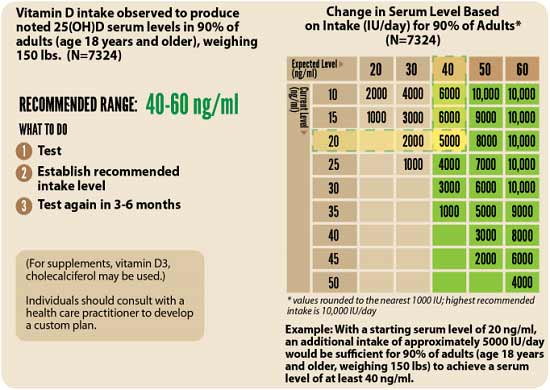
Factors that can influence your vitamin D absorption include your magnesium32 and vitamin K233 intake. Magnesium is required for the conversion of vitamin D into its active form.34,35,36,37 If your magnesium level is insufficient, the vitamin D you ingest orally may simply get stored in its inactive form.38,39
Research by GrassrootsHealth40 shows you need 146% more vitamin D to achieve a blood level of 40 ng/ml (100 nmol/L) if you do not take supplemental magnesium, compared to taking your vitamin D with at least 400 mg of magnesium per day.
Your best bet is to take your vitamin D with both magnesium and K2. According to GrassrootsHealth,41 “combined intake of both supplemental magnesium and vitamin K2 has a greater effect on vitamin D levels than either individually,” and “those taking both supplemental magnesium and vitamin K2 have a higher vitamin D level for any given vitamin D intake amount than those taking either supplemental magnesium or vitamin K2 or neither.”
Data42 from nearly 3,000 individuals revealed 244% more oral vitamin D was required to get 50% of the population to achieve a vitamin D level of 40 ng/ml (100 nmol/L) if they weren’t concurrently also taking magnesium and vitamin K2.
3.Retest in three to six months — Remeasure your vitamin D level in three to six months, to evaluate how your sun exposure and/or supplement dose is working for you.
4.Take activated vitamin D (calcitriol) if your level is low and you come down with an acute infection like COVID. The dose is 0.5 mcg on day one and then 0.25 mcg daily for seven days.
- 1, 2 Healthieryoufl.org
- 3 FDA.gov Mercola.com warning letter February 18, 2021
- 4 GospelNewsNetwork March 15, 2021
- 5, 6 FLgov.org September 21, 2021
- 7, 11, 21 Nutrients October 31, 2020;12, 3361; doi:10.3390/nu12113361
- 8 Nutrients 2020; 12(11):3377
- 9 Nutrients October 31, 2020;12, 3361; doi:10.3390/nu12113361, Table 1
- 10 Nutrients October 31, 2020;12, 3361; doi:10.3390/nu12113361, Table 3
- 12 Nutrients, 2020;12:988
- 13 Advances in Pharmacological Sciences 2018; 2018: 8494816
- 14 ATS Journals October 5, 2010; 183(10)
- 15 The Journal of Nutrition October 15, 2014; 144(12): 2073-2082
- 16 Vaccine: X December 11, 2020; 6: 1000076
- 17 PLOS ONE September 17, 2020 DOI: 10.1371/journal.pone.0239252
- 18 The Journal of Clinical Endocrinology & Metabolism October 27, 2020; dgaa733 [Epub ahead of print]
- 19 Endocrine.org October 27, 2020
- 20 Science Daily October 27, 2020
- 22 Preprints in The Lancet January 22, 2021
- 23 Preprints in The Lancet January 22, 2021 (PDF)
- 24 Emerginnova.com June 4, 2020
- 25 Infectious Diseases April 8, 2020 DOI: 10.21203/rs.3.rs-21211/v1
- 26 Orthomolecular Medicine News Service June 22, 2020
- 27, 28 Alimentary Pharmacology & Therapeutics, 2020; doi.org/10.1111/apt.15777
- 29 Postgraduate Medical Journal November 12, 2020 DOI: 10.1136/postgradmedj-2020-139065
- 30, 31 DMinder app
- 32 BMC Medicine 2013; 11: 187
- 33, 41, 42 GrassrootsHealth Magnesium and Vitamin K2 Combined Important for Vitamin D Levels
- 34 Live Science February 26, 2018
- 35 Medicalxpress.com February 27, 2018
- 36 News-Medical.net February 26, 2018
- 37 Wellandgood.com February 26, 2018
- 38 Journal of the American Osteopathic Association March 2018; 118: 181-189
- 39 Science Daily February 2018
- 40 GrassrootsHealth Is Supplemental Magnesium Important for Vitamin D Levels?