Sunlight
now browsing by category
Inflammation Alters Mood and Behavior
Reproduced from original article:
https://articles.mercola.com/sites/articles/archive/2025/05/10/inflammation-alters-mood-and-behavior.aspx
Analysis by Dr. Joseph Mercola May 10, 2025

STORY AT-A-GLANCE
- New research shows inflammation directly influences mood and behavior by sending chemical signals that activate anxiety circuits in the brain, helping to explain emotional aftereffects of illness
- Specific inflammatory cytokines stimulate neurons in brain regions responsible for processing fear, while anti-inflammatory signals calm these same neural pathways
- Scientists discovered that certain immune molecules function like neurotransmitters in the brain, influencing social behavior and emotional states independently of inflammation
- Blocking inflammation incorrectly backfires; it triggers more intense anxiety as the body produces additional inflammatory messengers that overstimulate fear circuitry
- Managing inflammation-related mood issues requires reducing linoleic acid (LA) intake from vegetable oils, supporting mitochondrial function, getting safe sun exposure, avoiding alcohol and monitoring emotional symptoms after illness
After a physical illness, emotional aftershocks are more common than most people realize. Mood swings, irritability and even social withdrawal often surface without warning — and they don’t always go away when the fever breaks or the rash fades. These shifts are frequently dismissed as psychological or stress-related, but there’s more going on under the surface.
Emerging science is redefining how we understand these post-illness changes. Rather than being side effects of recovery, they appear to be part of a complex feedback loop between your immune system and your brain. It’s not just about fighting infection. Your body is sending signals that shape how you feel, how you think and how you connect with others.
For years, the biological link between the immune response and emotional state was a mystery. Doctors observed the patterns but lacked a clear explanation for why recovering patients often reported feeling emotionally unwell. That’s beginning to change.
Recent research is uncovering exactly how immune activity interacts with brain circuits involved in mood and behavior, offering new clues — and new hope — for addressing anxiety, depression and social disconnection at the source.
A set of studies, published in Cell in April 2025, offers a detailed look at this immune-brain connection.1,2 These findings move us beyond theory and into practical understanding of how immune molecules affect your emotional wiring in real time.
Inflammation Hijacks Your Brain’s Anxiety Center
The first study investigated how inflammation affects anxiety by mapping how immune molecules called cytokines interact with brain circuits.3 The researchers focused on two inflammatory signals and how they stimulated neurons in a region of the brain responsible for processing fear and emotional memories. In animal models, the team looked at how changes in immune activity led to shifts in anxiety-related behaviors.
• Researchers identified brain cells that react to both pro- and anti-inflammatory signals — The key discovery was that certain brain cells respond to both types of immune messengers. These cells are constantly listening for cues. If the message is inflammatory, anxiety circuits rev up; if the message is anti-inflammatory, those same circuits calm down. Your mood, in other words, is closely tied to which immune signals your brain is getting at any given time.
• The findings explain why you feel more anxious during or after illness — When inflammatory cytokines rose, mice became more anxious. They avoided open spaces, explored less and showed clear signs of being on edge. Even more surprising, when researchers tried to block these inflammatory signals, it made things worse. The body responded by producing even more inflammation, which overstimulated the brain’s fear circuitry.
• Blocking inflammation the wrong way triggered rebound anxiety — In the study, interfering with inflammatory signaling didn’t reduce anxiety — it backfired. The body overcorrected by flooding the system with more inflammatory messengers, creating even more excitability in fear-processing neurons. This highlights how delicate the system is and why simply trying to “shut off” inflammation won’t work without understanding the underlying balance.
Calming Signals Work Through the Same Brain Pathway
The same brain cells that react to inflammatory signals also respond to anti-inflammatory cues. When those calming signals were increased, the anxious behavior disappeared. The mice became calmer, more balanced and less reactive to their environment. These results show that your immune system has its own internal checks and balances — you just have to support them.
• One calming molecule suppresses anxious brain activity — A specific anti-inflammatory signal works like a brake for your brain’s fear response. When this molecule interacts with the neurons in your brain’s anxiety center, it lowers their activity. That makes them fire less often, which slows the brain’s anxiety feedback loop. In other words, your brain becomes less hyperreactive and more emotionally stable.
• These immune messengers act instantly — Your immune system sends out real-time signals that shift your emotional state within minutes. That’s why anxiety often feels like it comes out of nowhere. A spike in inflammation, whether from an infection, injury or stress, changes how your brain behaves almost immediately.
• Fear-processing cells get stuck in overdrive — When inflammatory messengers dominate, the neurons in your brain’s fear center become overly excitable. They start firing too often and too intensely, feeding a loop of anxiety and worry. This makes it harder for your body’s natural calming systems to keep up. Your stress response becomes harder to shut off.
• The same neurons receive both calming and fear signals — The exact same brain cells can be told to panic or to relax, depending on which immune molecule they hear from. If your system is inflamed, those calming signals get drowned out. But if you support your immune balance, those neurons switch back to a more stable, regulated state.
• This is physical, not just psychological — Anxiety isn’t just mental. It’s physical. It’s rooted in your biology, your immune response and the real-time signals your body is sending to your brain. When inflammation is high, your emotional resilience takes a hit. When it’s balanced, your mood stabilizes.

Save This Article for Later – Get the PDF Now
Cytokines Boost Social Behavior by Acting Like Brain Chemicals
The second study focused on a lesser-known cytokine and how it interacts with specific brain receptors to influence social behavior.4 Researchers wanted to know which immune-related signals show up in the brain and how they affect behavior when triggered. Instead of focusing on how these signals trigger inflammation, the team explored their role as brain messengers — working more like mood-regulating chemicals to shift behavior in real time.
• Researchers identified a brain signal that increases sociability and curiosity — A specific chemical message activates a part of the brain responsible for social behavior. When this signal was triggered, mice that usually avoided others and repeated the same actions over and over began behaving more normally.
They explored their surroundings, showed interest in new mice and became more socially engaged. According to the researchers, this signal helped restore a more natural pattern of social connection.
• This chemical signal is made inside the brain, not just by the immune system — In a major discovery, researchers found that this social signal isn’t just produced by immune cells; it’s also made directly by neurons inside the brain. That’s a big deal, because it puts this molecule in the same category as familiar brain chemicals like serotonin and dopamine. It’s not just reacting to the immune system — it’s helping control mood and behavior from within.
• Your brain and immune system use the same language to control behavior — This finding challenges the old belief that immune signals only work outside the brain. In reality, the brain uses some of the exact same molecules your immune system does — just in a different context.
These shared messages help manage emotional behavior, including how connected, curious or socially withdrawn you feel. In this case, boosting the signal helped correct withdrawn behavior in mice genetically inclined toward social avoidance.
• Cytokines influence emotional state and behavior without needing to enter the brain — One of the most important takeaways from the research is that immune molecules don’t have to cross the blood-brain barrier to affect how you feel. The research showed that cytokines act on brain areas that already receive immune signals.5
These findings are part of a broader effort to understand how your brain and immune system work together — and sometimes against you — to shape your mood.
• Scientists are also questioning how inflammation impacts the blood-brain barrier itself — A lingering question could hold the key to better treatments: Does chronic inflammation weaken the blood-brain barrier, making it more permeable to damaging substances? If so, then long-term inflammation wouldn’t just influence mood temporarily; it could change how vulnerable your brain is to future damage.6
What to Do About Chronic Inflammation That Alters How Your Brain Processes Mood and Behavior
If your anxiety, mood swings or social withdrawal feel worse after getting sick — or seem to come out of nowhere — it’s time to take a closer look at the root cause: chronic inflammation. You don’t fix this by numbing symptoms. You fix it by restoring balance to your immune system and protecting your brain’s delicate communication circuits.
The goal is to stop the runaway signaling that hijacks your emotional centers and rewires your behavior from the inside out. These five steps target the biological triggers, including cytokine signaling, mitochondrial stress and brain inflammation, so you start feeling like yourself again.
1. Cut linoleic acid (LA) down to under 5 grams per day — ideally below 2 — If you only do one thing, make it this. LA in vegetable oils drives inflammation like gasoline on a fire. It hides in nearly every processed food: restaurant meals, sauces, chips, crackers, even “healthy” organic snacks. Swap all vegetable oils for healthier fats like grass-fed butter, ghee or tallow.
Stay away from olive and avocado oil, as they’re often cut with cheaper vegetable oils and still too high in monounsaturated fat, which causes similar mitochondrial dysfunction. I recommend tracking your LA intake for a few days using a free online food tracker. You’ll be shocked by what you uncover.
2. Support your mitochondria by giving them the fuel they actually need — Your mood is tied directly to how much energy your cells produce. Cytokines disrupt this energy flow, which leaves you feeling drained, foggy or emotionally reactive. To repair that, you need to restore production of adenosine triphosphate (ATP), your body’s main energy currency that your cells need to survive and repair.
Start by increasing your carbohydrate intake with easy-to-digest sources like fruit juice with pulp, white rice and whole fruit. If you have unbalanced gut bacteria, or dysbiosis, avoid fiber, including whole grains, until your gut is healed. Ultimately, most adults need about 250 grams of healthy carbs daily. Starving your mitochondria will only prolong the problem.
3. Boost your anti-inflammatory signals naturally with sun exposure — Sunlight helps your cells produce energy more efficiently and triggers your body to make key anti-inflammatory molecules. It also helps regulate mood through melatonin and vitamin D production. But don’t just sunbathe randomly.
The safest and most effective exposure happens after you’ve eliminated seed oils from your diet for at least six months. Until then, stick to morning and late-afternoon light — no harsh midday sun.
4. Avoid alcohol, as it destroys mitochondrial function and inflames your brain — Alcohol is a metabolic poison. Even small amounts disrupt mitochondrial energy production and increase oxidative stress in the brain. The idea that moderate drinking is protective was based on flawed studies. Don’t let marketing override your biology.
5. Watch for delayed emotional symptoms after illness and adjust early — If you’re someone who experiences mood swings after getting sick, or during stressful immune events like a dental procedure or vaccine, start tracking your mood in a journal. Note when symptoms begin, how long they last and what symptoms show up, like irritability, social withdrawal or fatigue.
This helps you link emotional shifts to immune activity and gives you a clear signal when it’s time to double down on your recovery strategies.
The earlier you respond, the faster you recover. When your immune system is in balance, your brain calms down. You think more clearly, connect more easily with others and feel more like yourself again.
FAQs About Inflammation and Mood
Q: How does inflammation affect your mood and behavior?
A: Inflammation sends chemical messengers called cytokines into your bloodstream, some of which directly activate anxiety circuits in your brain. These signals make you feel anxious, withdrawn or emotionally unstable, especially after illness or during immune system flare-ups.
Q: What role do immune signals play in emotional regulation?
A: Some immune signals increase anxiety by overstimulating the part of your brain that processes fear. Others send calming messages to those same brain cells, helping reduce anxious behavior. Your emotional state depends on which of these signals is stronger at any given time.
Q: Can immune signals influence social behavior too?
A: Yes. One specific immune signal was shown to increase social interest and reduce repetitive behavior in mice that typically avoided interaction. What makes it unique is that it’s also produced by brain cells, not just the immune system, so it acts more like familiar brain chemicals such as serotonin or dopamine.
Q: What’s the connection between chronic illness and mood swings?
A: New research shows that mood changes following infections or autoimmune episodes are the result of immune-brain cross talk. Inflammatory cytokines activate specific brain circuits almost immediately, reshaping how you process fear, emotion and social interaction.
Q: What helps lower cytokine-driven mood issues?
A: Start by removing vegetable oils and processed foods that drive inflammation. Support cellular energy with digestible carbs like fruit and white rice. Get safe sun exposure to activate your body’s anti-inflammatory pathways and avoid alcohol, which impairs mitochondrial function and inflames your brain.
How Mitochondria Help Fight Infections and Calm Autoimmune Storms
Reproduced from original article:
https://articles.mercola.com/sites/articles/archive/2025/04/22/how-mitochondria-help-fight-infections.aspx
Analysis by Dr. Joseph Mercola April 22, 2025

STORY AT-A-GLANCE
- Macrophages and mitochondria are immune partners; macrophages clear germs and control inflammation, while mitochondria power cells and signal macrophages to manage inflammation effectively
- Mitochondria’s complex III produces superoxide, signaling macrophages to release IL-10, the “off switch” for inflammation — key for preventing chronic and autoimmune issues
- Research showed impaired mitochondrial complex III reduces IL-10, causing unchecked inflammation and severe illness, highlighting mitochondria’s important immune regulatory role
- Naturally boost IL-10 through fiber-rich foods for butyrate, sunshine exposure, exercise and spices like garlic to enhance your body’s inflammation control mechanisms
- Healthy mitochondria, threatened by seed oils in processed foods and toxins, are essential for energy and immunity; lifestyle choices significantly impact mitochondrial function and overall well-being
Your body’s a busy place, full of tiny workers keeping you healthy. Some of these workers, like macrophages and mitochondria, do more than you might think. They’re not just cleaning up germs or powering your cells — they’re also teaming up to control inflammation, that fiery response that protects you from infections in the short term but contributes to diseases when it becomes chronic.
It’s important to understand how these cellular heroes work, why they’re key for fighting infections and calming autoimmune flare-ups, and, perhaps most importantly, how to support them with simple, everyday habits.
Meet Your Body’s Cleanup Crew — What Are Macrophages?
You’ve got a squad of cells called macrophages patrolling your body. Think of them as your cleanup crew — part janitor, part security guard. They roam around, gobbling up germs like bacteria and viruses, and tidying up after cuts or bruises. But they don’t stop there. They also play a big role in managing your immune system’s reaction when trouble hits.
• How do they work? When something invades — like a cold virus — macrophages swoop in to eat it up. They’re your first line of defense, keeping pathogens in check.
• What’s their secret weapon? Macrophages release a helper called IL-10, which is like an “all clear” signal. It tells your immune system to back off once the danger’s gone. This is important because it stops inflammation from going overboard.
Inflammation is like a fire alarm — it’s loud and grabs attention when you need to fight off invaders. But if it keeps blaring after the germ’s gone, it’s trouble. That’s where macrophages and IL-10 save the day, especially for conditions like autoimmune diseases — such as rheumatoid arthritis or lupus, where your body attacks itself — or severe infections like sepsis, a body-wide emergency.
What Are Mitochondria? More Than Just Energy Makers
Inside your cells, you’ve got tiny mitochondria, often referred to as “power plants.” They churn out energy to keep you moving, like batteries powering a city. Macrophages lean on them to fuel their cleanup jobs. But mitochondria do much more than just make energy.
• A hidden superpower — Mitochondria are like command centers, sending signals to guide how macrophages handle infections or injuries. Complex III, part of the electron transport chain, is the star here — it’s like a switchboard operator telling everyone what to do.
• Why this matters — Without these signals, your macrophages can’t do their full job. It’s not just about power — it’s about control. And when that control slips, inflammation runs wild.
So, mitochondria aren’t just keeping the lights on — they’re helping you fight germs and calm things down when the battle’s over.
Save This Article for Later – Get the PDF Now
What Did Scientists Find About Mitochondria and Inflammation?
In a 2025 study published in Science Advances, researchers tested mice to see how mitochondria help macrophages.1 They interfered with the complex III switch in the macrophages of some mice, breaking it on purpose. Then they gave these mice the flu or a serious infection-like state. Those mice got much sicker than normal ones.
• What went wrong? In the lab, those broken macrophages barely made IL-10 when they got infection signals. Without IL-10, they couldn’t quiet the inflammation alarm — it just kept screaming.
• Meet superoxide — Normally, complex III pumps out a molecule called superoxide, a reactive oxygen species (ROS) that’s like a flare macrophages shoot off to influence the production of IL-10. But with no complex III, there’s no superoxide and no calm-down signal in the form of IL-10. The result? Inflammation takes over. The study reveals how important mitochondria are for your immune system. They’re not just energy makers — they tame inflammation, too.
How Does Superoxide Work? The Firefighter Analogy
Let’s break this down with a picture you can see in your head. Imagine superoxide as a firefighter spotting a blaze — that blaze is inflammation. The firefighter grabs a radio and calls for backup — IL-10, the water truck that douses the flames.
• What happens when it breaks? In those mice with broken complex III, the firefighter’s radio is dead. No call goes out, no water trucks roll in and the fire (inflammation) rages on. That’s why the mice in the study got so sick.
• Energy isn’t the fix — Scientists tried giving the macrophages a backup power source called alternative oxidase. It kept the lights on, but without superoxide, IL-10 still didn’t show up. So, superoxide is a key signaling molecule involved in regulating inflammation in your body.
How Can a Protein Save the Day?
Here’s where it gets interesting. When superoxide couldn’t call for help, researchers found a backup plan: a protein called protein kinase A (PKA). Think of PKA as a stand-in firefighter.
• What did the researchers do? In the lab, they turned on PKA in those broken macrophages. Guess what? It worked. PKA picked up the radio and called for IL-10, calming inflammation even without superoxide.
• Why this matters — This finding hints at new ways to help your immune system when mitochondria stumble. It’s like having a spare key to cool things down when inflammation’s heating up.
Do All Macrophage Jobs Need Superoxide?
Not exactly. Macrophages don’t just fight germs; they also make repairs. The researchers gave some macrophages a “repair” signal called IL-4 to heal tissues instead of battle invaders. Interestingly, broken complex III did not interfere with this job.
• Two modes, one cell — Picture macrophages like a car with two gears:
1. Fighting gear — Takes on infections — needs superoxide to call IL-10.
2. Healing gear — Fixes tissues — runs fine without superoxide.
• What this means — Your mitochondria play different roles depending on what’s needed. Fighting germs? They need that superoxide flare. Healing cuts? They’re good without it. This shows how smart your body is — it’s got backup plans for different tasks.
Why Should You Boost IL-10 Naturally?
More IL-10 means a stronger “off switch” for inflammation. That’s beneficial for your health, especially if you’ve got:
• Autoimmune disorders like multiple sclerosis or rheumatoid arthritis, where your immune system mistakenly attacks healthy body tissue.
• Severe infections, where inflammation often spirals out of control.
• The benefits — Boosting IL-10 helps calm those storms naturally. It’s like giving your cleanup crew a megaphone to shout “all clear” louder and faster.
• How do you do it? You don’t need fancy tools, just simple lifestyle changes to lift your IL-10 levels.
How Does Butyrate Boost IL-10 Naturally?
One superstar for raising IL-10 is butyrate, a short-chain fatty acid your gut bacteria make when you eat fiber-rich foods. It’s beneficial for both your gut and immune system. Growing evidence indicates butyrate increases IL-10 production.2
• What does butyrate do? It boosts complex III’s signaling, so your macrophages shoot off more superoxide flares and call in more IL-10 — like giving your firefighter a megaphone. Butyrate also helps nourish your colon cells, which rely on butyrate as a main energy source.
When these cells get the fuel they need, your gut lining stays strong, lowering the chances of substances such as undigested food, bacteria and metabolic wastes sneaking through into your bloodstream, a condition known as leaky gut. Butyrate’s protective effects are linked to multiple health benefits, including more stable digestion and better immune response.
• How do you get it? To boost butyrate production, eat fiber-filled carbohydrates like fruits on a regular basis. You also get butyrate from certain foods like grass fed butter and ghee, but a key way to increase your supply is by adding fiber sources such as fruits, vegetables, whole grains and beans to your meals. When you give your gut bacteria enough fiber to ferment, they create even more butyrate.
It’s important to understand, however, that if your gut health is poor, increasing dietary fiber must be done gradually to avoid the production of endotoxin, a mitochondrial poison. Rice and whole fruits are a good starting point.
What Are Other Ways to Boost IL-10 Naturally?
Butyrate’s not the only trick up your sleeve to boost IL-10. Here are more easy ways to increase IL-10 and keep your immune system happy:
• Sunshine or ultraviolet B (UVB) light therapy — Exposure to sunlight or UVB light therapy increases levels of IL-10.3 Ideally, expose your bare skin to direct sunlight daily. Be aware, however, that seed oils, rampant in processed and fast food, are packed with linoleic acid (LA).
In the future we will be referring to these fats as PUFs which is short for polyunsaturated fats as it is far more accurate than calling them PUFAs, since most people know them as fats and not acids.
When LA accumulated in your skin interacts with the sun’s UV rays, it triggers inflammation and DNA damage. It’s best to avoid direct sunlight during peak hours (10 a.m. to 4 p.m.) until you’ve cut back on seed oils for six months. This gives your body time to clear some of the accumulated LA.
• Exercise — Getting moving, whether it’s walking, dancing or biking, boosts IL-10. One study found a 27-fold increase in IL-10 immediately after exercise.4
• Spice it up — Try adding these to your meals regularly:
1. Garlic — Toss it in your meals — it’s tasty and helps boost IL-10.5
2. Licorice — Consider sipping it as a tea — but be aware licorice is contraindicated for those with high blood pressure, kidney or liver disease and pregnant and breastfeeding women.6
Why Does Mitochondrial Health Matter to You?
Mitochondria play a key role in producing adenosine triphosphate (ATP), the energy currency essential for numerous cellular functions. When mitochondrial function is compromised, ATP production decreases, leading to cellular energy deficits.
This reduction in energy impairs the cell’s ability to regulate normal processes, fostering an environment ripe for chronic inflammation. If your mitochondria are dysfunctional, you might notice trouble fighting infections, more inflammation and chronic disease.
• What harms mitochondria? LA in most processed foods is a widespread mitochondrial poison that compromises your cellular energy production. Endocrine-disrupting chemicals (EDCs), including estrogen-mimicking compounds like xenoestrogens, and pervasive electromagnetic fields (EMFs) also interfere with your mitochondria and your cells’ ability to generate energy efficiently.
• What helps mitochondria? Along with avoiding LA, EDCs and EMFs, carbohydrates play a key role in supporting your mitochondrial function.
Most adults need a daily intake of around 200 to 250 grams of targeted carbohydrates to support cellular energy. If you lead a more active lifestyle, you likely need even more. If you have dysbiosis, avoid fiber until your gut heals.
If your gut health is generally healthy or you have only minor gut issues, start with easily digestible options like white rice and whole fruits. As your gut adjusts, consider adding root vegetables, then non-starchy vegetables, starchy vegetables like sweet potatoes or squash, beans, legumes and, finally, minimally processed whole grains.
FAQs About Mitochondria and Autoimmune Disorders
Q: What foods boost IL-10 naturally?
A: Fiber-rich foods, including apples, berries, broccoli, sweet potatoes, oats and rice, feed your gut bacteria, which then produce butyrate. Butyrate is a short-chain fatty acid that acts as a “power-up” for your immune system, specifically boosting the signaling of mitochondrial complex III in macrophages.
This enhanced signaling leads to increased superoxide production, which in turn triggers a greater release of IL-10, the anti-inflammatory molecule. Therefore, focusing on incorporating diverse fiber sources in your diet is key to naturally elevating IL-10 levels. One caveat — if you have dysbiosis, avoid fiber until your gut health is healed.
Q: How does exercise help your immune system?
A: Exercise serves as a rapid and potent natural method to enhance your immune system’s ability to manage inflammation. Even a short burst of physical activity, such as walking or dancing, significantly increases IL-10 levels — up to 27 times in one study.7
This surge in IL-10 acts as a powerful “off switch” for inflammation, quickly calming down immune responses. By regularly engaging in physical activity, you’re effectively training your immune system to efficiently resolve inflammation, promoting balance and preventing it from becoming chronic.
Q: Why does IL-10 matter for autoimmune disorders?
A: IL-10 is important in autoimmune disorders because it functions as the immune system’s “off switch” for inflammation. In autoimmune conditions like lupus, rheumatoid arthritis and multiple sclerosis, the immune system mistakenly attacks the body’s own healthy tissues.
IL-10’s role is to signal the immune system to stand down and stop this attack. By effectively promoting the resolution of inflammation, IL-10 provides significant relief in autoimmune disorders by preventing the immune system from continuously harming healthy cells and tissues.
Q: What’s the best way to support mitochondria?
A: Supporting your mitochondria involves several key strategies: dietary fiber intake to produce butyrate, daily physical activity to boost IL-10 and overall mitochondrial function and regular sun exposure (or UVB light therapy) to also increase IL-10. Equally important is avoiding factors that harm mitochondria, such as linoleic acid prevalent in processed foods and seed oils, endocrine-disrupting chemicals and electromagnetic fields.
Further, ensuring adequate targeted carbohydrate intake (200 to 250 grams daily) fuels mitochondrial energy production. Paying attention to gut health and gradually increasing fiber intake is also important for optimal mitochondrial support.
How to Tell the Difference Between Freckles, Sunspots, and Moles
Reproduced from original article:
https://articles.mercola.com/sites/articles/archive/2025/04/26/difference-between-freckles-sunspots-moles.aspx
Analysis by Dr. Joseph Mercola April 26, 2025

STORY AT-A-GLANCE
- Freckles are small, flat, light brown spots that darken in summer and fade in winter; they typically appear in clusters on sun-exposed areas
- Moles can be flat or raised, tan to dark brown, sometimes with hair, and should be monitored for skin cancer warning signs
- Sunspots, often called liver spots, are signs of oxidative damage — not just sun exposure — and reflect excess linoleic acid (LA) and iron in your body
- Lipofuscin, a waste product formed when oxidized LA binds with iron, builds up in sun-exposed skin as you age, creating the brown pigmentation seen in sunspots
- Checking your serum ferritin levels and reducing LA intake helps prevent and reverse oxidative stress that leads to sunspots and premature skin aging
Have you ever looked in the mirror and wondered about those little marks on your skin? Maybe they’re freckles from your childhood, sunspots from sunny vacations or moles you’ve had forever. These spots are more than just part of your look — they’re clues to your health.
The good news? You can take charge of your wellness starting today. In this guide, you’ll learn what freckles, sunspots and moles really are, how to tell them apart and what to do if they signal trouble. Get ready to feel confident about your skin and empowered to keep it healthy.
What Do Your Skin Spots Look Like?
Your skin is like a scrapbook, full of stories from sunny days and family traits. To understand those stories, you need to know what each spot looks like. Let’s break it down so you can spot freckles, sunspots and moles with ease.
• Freckles — tiny paint splatters — Picture freckles as tiny paint splatters on your skin. They’re small, flat and usually light brown or tan. You’ll often see them in clusters on your face, arms or shoulders. These spots love the sun — they get darker in summer and fade in winter, especially if your skin is fair. Freckles are common and usually no big deal.1
It’s interesting to note that newborns are rarely born with freckles; they typically start appearing in early childhood after sun exposure. The tendency to develop freckles is strongly linked to the presence of a gene that affects the type of melanin produced by your body.2
• Sunspots — sun’s lasting marks — Sunspots are flat, brownish and can be as small as a pencil eraser or as big as a small coin. Look for them on sun-exposed areas like your hands, face or chest. Unlike freckles, they don’t fade with the seasons — they stick around all year.3
• Moles — little skin islands — Think of moles as little islands on your skin. They can be flat or raised, tan to dark brown, and sometimes even have hair growing from them. Moles can pop up anywhere — not just where the sun hits — and they’re usually permanent. Most are harmless, but it’s smart to keep an eye on them.
The number of moles a person has can vary greatly, with some individuals having only a few while others have many. Most moles develop during childhood and adolescence, but it’s also common to develop new moles in adulthood, particularly during periods of hormonal change like pregnancy.
The Root Causes — Why Do These Spots Appear?
Why does your skin decide to sprinkle itself with spots? It’s a mix of your genes and how much sun you’ve soaked up. Here’s are several reasons why freckles, sunspots, and moles show up.
• Freckles — a combination of genetics and sun — Freckles are like your skin dancing with the sun, guided by your family traits. If you’ve got fair skin and freckles run in your family, sunlight tells your skin to sprinkle extra color in tiny dots. It’s a natural occurrence — not a sign something’s wrong.
• Sunspots — oxidative damage from linoleic acid (LA) and iron — Unlike freckles, sunspots aren’t just about melanin buildup. They also contain lipofuscin, a brown pigment made from oxidized LA bound to excess iron. High levels of LA from vegetable oils, combined with elevated iron, create oxidative damage that builds up in sun-exposed skin over time. That’s why these spots become more visible with age.
• Moles — clusters of character — Moles are like little bursts of personality, shaped by your DNA and sometimes the sun. Some appear when you’re born, while others grow later as you age or catch some rays. They happen when pigment cells clump together instead of spreading out evenly.
Save This Article for Later – Get the PDF Now
Sunspots Are Signs of Oxidative Stress
Sunspots are more than just the result of sun exposure — they’re a visible sign of oxidative damage happening under the surface. What many people don’t realize is that sunspots, which are sometimes called liver spots, are largely made up of a substance called lipofuscin.
• Lipofuscin is often described as a type of “age pigment” — More accurately, it’s the accumulation of cellular waste formed when LA, a polyunsaturated fat found in vegetable oils, gets oxidized by excess iron in your body. In other words, lipofuscin is a byproduct of oxidative damage — and the brown spots you see are your skin’s way of showing it.
• High levels of iron act as a catalyst for this process — This is especially true when combined with a high intake of LA. The result? An overload of oxidative byproducts that collect in your skin, especially in sun-exposed areas. Over time, this creates the brown pigmentation we recognize as sunspots or liver spots.
• This process doesn’t just affect your appearance — It could also signal an increased risk of skin aging and even cancer. That’s why I recommend checking your iron levels with a simple blood test called a serum ferritin test.
Ideally, your ferritin should fall between 35 and 45 ng/mL. If it’s higher, regular blood donation — two to four times per year — is an effective, natural way to remove excess iron and reduce oxidative stress. You can also remove smaller amounts monthly if needed.
• Another helpful screening tool is a gamma-glutamyl transpeptidase (GGT) test — This serves as a proxy for free iron levels and oxidative stress. Elevated GGT indicates an increased risk for cardiometabolic disease and even sudden cardiac death.
So, while sunspots seem like simple cosmetic issues, they’re actually telling you a deeper story about your internal health. Treat them as a signal to evaluate your diet and iron load.
When Should You Worry?
Most skin spots are just part of your unique look, but some hint at bigger issues. Knowing what to watch for is important to help you catch problems early. Here’s how to tell if your spots need extra attention.
• Freckles are usually safe — Freckles are usually harmless, but if one starts growing, changing color or looking unusual, take notice. It’s rare, but a changing freckle could mean something serious like skin cancer. Don’t panic — just get it checked out.
• Sunspots are caution signs — Sunspots look harmless, but they’re more than just souvenirs from sunny days. This buildup of cellular waste is a visible sign of deeper oxidative stress and damage to your skin. If they get bigger, darker or have uneven edges, they might signal skin cancer. Don’t brush off those changes — get them checked out by a dermatologist.
• Moles — Check the ABCDEs — Moles are often just beauty marks, but some hide risks like melanoma. Use this simple ABCDE checklist to stay on top of them.4 If a mole shows any of these signs, see a doctor right away. Early action is your best defense:
◦Asymmetry — One side doesn’t match the other.
◦Border — Edges are jagged or blurry.
◦Color — Mixed colors or odd shades.
◦Diameter — Bigger than a pencil eraser (about 6 millimeters).
◦Evolving — It’s changing in size, shape or feel.
How to Monitor and Protect Your Skin
You’ve got the know-how — now it’s time to take control. Keeping your skin healthy is easier than you think with a few simple habits. Here’s how to stay on top of your spots and shield your skin.
• Do a monthly skin check — Grab a mirror and set a monthly date to look over your skin. Check your front, back and sides — use a hand mirror for spots like your scalp or back. Look for new spots and note any changes.
• Embrace the sun safely — Regular sun exposure is key for optimal health. However, it’s best to avoid direct sunlight during peak hours (10 a.m. to 4 p.m.) until you’ve cut back on LA-rich vegetable oils for at least six months. When LA accumulated in your skin interacts with the sun’s UV rays, it triggers inflammation and DNA damage.
• Know when to call a pro — If a spot starts growing, itching or changing colors, don’t wait. Make an appointment with a dermatologist. Spotting issues early keeps your skin in top shape.
Your skin’s story is yours to write. You now know how to spot freckles, sunspots and moles, why they pop up and when to get them checked. With a quick monthly scan and some sun-smart moves, you’re already building a foundation for healthier skin. Add in some skin-boosting tools, like healthy foods, methylene blue and niacinamide, and you’re on your way to a healthier you.
FAQs — Your Top Skin Spot Questions Answered
Q: What’s the difference between a freckle and a sunspot?
A: Freckles are small, light brown spots that darken in the sun and fade in winter. Sunspots are larger, darker and stay year-round. They often contain lipofuscin, a compound formed by the oxidation of LA and iron, which signals deeper oxidative damage in your skin.
Q: Can moles turn into cancer?
A: Yes, some moles can become melanoma, a type of skin cancer. Watch for asymmetry, unusual borders, odd colors, size over 6 millimeters or changes. Make it a habit to regularly examine your moles for any of these warning signs.
Q: How can I protect my skin from the sun?
A: Embrace the sun safely by avoiding peak hours (10 a.m. to 4 p.m.) until you’ve cut back on vegetable oils, which contain LA, for six months. This helps reduce inflammation and DNA damage from UV rays, caused by LA accumulated in your skin.
Also, consider checking your serum ferritin levels to ensure your iron is in the optimal range (35 to 45 ng/mL). Reducing both LA and excess iron helps minimize oxidative stress and prevent sunspots and premature aging.
Q: When should I see a doctor about a skin spot?
A: If a spot grows, itches, bleeds or looks different from others, see a dermatologist. Quick action catches problems early. Don’t hesitate to schedule an appointment if you have any concerns about a skin spot.
Q: Are certain people more prone to developing these skin spots?
A: Yes, individuals with fair skin and a family history of freckles are more likely to develop them. Sunspots, on the other hand, are more common in those with high iron levels, elevated LA intake and cumulative sun exposure. The number of moles a person has is often genetically determined.
Understanding the Effects of Vitamin D Toxicity
Reproduced from original article:
https://articles.mercola.com/sites/articles/archive/2025/04/06/understanding-effects-of-vitamin-d-toxicity.aspx
Analysis by Dr. Joseph Mercola April 06, 2025
STORY AT-A-GLANCE
- Vitamin D metabolism involves a three-step process — initial production in skin, conversion to 25-hydroxyvitamin D in the liver, and final activation to 1,25-dihydroxyvitamin D in the kidneys
- While vitamin D deficiency causes health problems, excessive intake results in hypercalcemia, causing symptoms like increased thirst, fatigue, and digestive issues
- Natural sunlight exposure is recommended for vitamin D production, but you should consider your skin color and linoleic acid intake when determining appropriate sun exposure times
- Regular monitoring through blood tests twice a year and maintaining levels between 60 and 80 ng/mL is recommended for optimal health benefits
- Approaches to optimize your vitamin D level includes proper sunlight exposure at the right time, consuming vitamin D-rich foods like pastured eggs and wild-caught fish, and taking supplements at the right dose
I’m a big believer in the role of vitamin D in optimizing your health. As noted in previous articles, it’s been shown to help promote a diverse range of functions, including mental health, skeletal health, and immune function.
However, there’s one topic about vitamin D that deserves more attention — toxicity. Just as a deficiency will lead to various health problems, it’s important to maintain a proper balance because too much vitamin D will also cause problems. This issue, as well as other topics, was explored by Reinhold Vieth, Ph.D., during a presentation at the University of Minnesota, which I will summarize below.
Vitamin D Metabolism Explained
Vieth begins his presentation, featured in the video above, by providing an overview of how vitamin D is produced and metabolized in your body.
• Your skin creates an early version of vitamin D — This precursor substance travels through your bloodstream to your liver, where it is converted into 25-hydroxyvitamin D. When your doctor asks for a vitamin D blood test, this is the vitamin D measurement they’re looking for.1
• The kidneys help synthesize vitamin D — To become fully active, 25-hydroxyvitamin D then travels to your kidneys, where it is converted into 1,25-dihydroxyvitamin D, which works more like a hormone.
This active form helps your intestines absorb calcium from the food you eat. It also supports a stable environment in your body by making sure cells get what they need to function correctly. Your body stores this nutrient in places such as your muscles and fatty tissue.2
• An easy way to understand how vitamin D is created — To paint a picture explaining this process, visualize the flow of vitamin D as if it moves through several buckets, each one connected by holes that let the vitamin drop to the next step. The first bucket is the form made in your skin. The second is the 25-hydroxyvitamin D in your liver. The third is the active 1,25-dihydroxyvitamin D produced in your kidneys.
The reason proper vitamin D levels matter is that this nutrient does not act alone. It works alongside calcium and other substances to keep many parts of your body healthy. Two common symptoms of vitamin D deficiency include fatigue and brittle bones. However, too much vitamin D also has its risks.
Balancing Calcium with Vitamin D — Your Body’s Tightrope Act
Another crucial topic that Vieth discusses is the interaction between vitamin D and calcium. Essentially, vitamin D boosts your ability to absorb calcium from meals.
• Vitamin D increases the bioavailability of calcium — When you eat foods rich in calcium, such as dairy products, your intestines take in more of that mineral if there is enough vitamin D available. In addition to supporting your bones, calcium is important for muscle and nerve health.
• Parathyroid hormone (PTH) also supports calcium management — It acts as a messenger in your body’s calcium system. When calcium levels are low, PTH sends signals to your bones to release some calcium into your bloodstream. Vitamin D works alongside PTH by helping your body absorb calcium from food through your digestive system, which helps replenish your bones.3
If your vitamin D level is too high, your blood calcium levels become excessive, leading to hypercalcemia. You’ll feel thirstier, develop fatigue faster, or sense that your digestive habits have changed. Although hypercalcemia is rare, it does occur if you take large doses of supplemental vitamin D on a regular basis.4
Save This Article for Later – Get the PDF Now
Effects of Vitamin D Overload
While low levels of vitamin D are not good, mega-doses put extra stress on your system. If you already get enough vitamin D from sun exposure and/or moderate supplementation, swallowing more won’t make you healthier.
• Symptoms of excess vitamin D — In Vieth’s presentation, he tells the story of a 29-year-old man who was experiencing a wide range of symptoms, such as vomiting, increased thirst, and acute renal failure. At first, doctors diagnosed him with gastroenteritis, saying he’ll eventually feel better.
However, the man had to return, and now, doctors took him seriously. They tested his blood, which contained 3.72 mmol/L of calcium (normal is 2.20 to 2.65 mmol/L), as well as a whopping 1,555 nmol/L of vitamin D (normal is 20 to 80 nmol/L).5
• Fortified products drastically increase your vitamin D levels — Eventually, the man’s father had to be admitted to the same hospital for similar symptoms. After investigating their eating habits, Vieth noted that the father and son’s table sugar was fortified with pure vitamin D, about a milligram per teaspoon. Eventually, they made a full recovery when the fortified table sugar was removed.6
Setting the Foundation to Optimized Vitamin D Levels
The takeaway is that excessive vitamin D intake from food or supplements are just as harmful as having too little. So, it’s important to be mindful of supplement dosages and not exceed recommended amounts.
• Exposing your skin to natural sunlight at appropriate times is the best approach — However, there are certain caveats you need to be aware of, such as your diet, which is most likely high in linoleic acid (LA). When ultraviolet light hits your skin, it also interacts with LA that triggers inflammatory responses and DNA damage. As a result, high-LA diets make you more prone to sunburn and skin damage.
• Take a more careful approach to sun exposure as you work to purge LA from your body — I recommend avoiding high-intensity midday sun exposure until you’ve been off vegetable oils for at least six months.
As you gradually eliminate LA from your body — a process that typically takes two to three years — your risk of sunburn and skin cancer declines. However, after about six months, your skin is usually better protected against sunburn, allowing you to safely enjoy sun exposure around solar noon.
• Consider your skin color when optimizing your vitamin D — Melanin, responsible for skin pigmentation, also acts as a natural sunscreen. This means that if you have darker skin, you’ll need more time under the sun to generate the same amount of vitamin D as those with lighter complexions.
Additional Guidelines for Safe Sun Exposure
When you begin getting regular sun exposure, use this simple safety test: watch your skin for the first sign of pinkness, which is an early warning of sunburn. Stop sun exposure before your skin turns pink to prevent damage. This pinkness threshold helps you determine your safe exposure time.
Now, what if you need to spend time under the sun but haven’t completely removed LA from your body yet? Here are some protective strategies I recommend:
• Take 12 milligrams of astaxanthin daily to enhance your skin’s UV resistance.
• Apply topical niacinamide (vitamin B3) cream before sun exposure to protect against UV-induced DNA damage.
• Take a baby aspirin 30 to 60 minutes before sun exposure to help prevent LA conversion to harmful oxidized linoleic acid metabolites (OXLAMs).
• Use molecular hydrogen supplements to combat oxidative stress.
How to Supplement Vitamin D Properly
While most people would probably benefit from a vitamin D3 supplement, it’s important to get your vitamin D level tested before you start supplementing.
• You cannot rely on blanket dosing recommendations — The crucial factor here is your blood level, not the dose, as the dose you need is dependent on several individual factors, including your baseline blood level.
• The sweet spot for harnessing the benefits of vitamin D — Research suggests the optimal level for health and disease prevention is between 60 ng/mL and 80 ng/mL, while the cutoff for sufficiency appears to be around 40 ng/mL. In Europe, the measurements you’re looking for are 150 to 200 nmol/L and 100 nmol/L respectively.
I’ve published a comprehensive vitamin D report in which I detail vitamin D’s mechanisms of action and how to ensure optimal levels. I recommend downloading and sharing that report with everyone you know. A quick summary of the key steps is as follows:
1. First, measure your vitamin D level — Once you know what your blood level is, you can assess the dose needed to maintain or improve your level. If you cannot get enough vitamin D from the sun (you can use the DMinder app7 to see how much vitamin D your body can make depending on your location and other individual factors), then you’ll need an oral supplement.
2. Assess your individualized vitamin D dosage — To do that, you can either use the chart below, or use GrassrootsHealth’s Vitamin D*calculator. To convert ng/mL into the European measurement (nmol/L), simply multiply the ng/mL measurement by 2.5. To calculate how much vitamin D you may be getting from regular sun exposure in addition to your supplemental intake, use the DMinder app.8
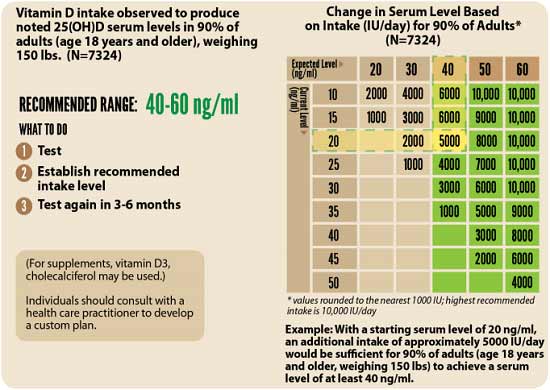
3. Retest in three to six months — Lastly, you’ll need to remeasure your vitamin D level in three to six months, to evaluate how your sun exposure and/or supplement dose is working for you.
Take Your Vitamin D With Magnesium and K2
It’s strongly recommended to take magnesium and K2 concomitant with oral vitamin D. Data from nearly 3,000 individuals reveal you need 244% more oral vitamin D if you’re not also taking magnesium and vitamin K2.9
What this means in practical terms is that if you take all three supplements in combination, you need far less oral vitamin D in order to achieve a healthy vitamin D level.

Frequently Asked Questions (FAQs) About Vitamin D Toxicity
Q: Why is vitamin D important for health, and how is it processed in my body?
A: Vitamin D supports your mental, skeletal, and immune health. It is produced in the skin from sun exposure, then converted in the liver to 25-hydroxyvitamin D, and finally activated in the kidneys as 1,25-dihydroxyvitamin D. This final form helps absorb calcium and maintain cell function.
Q: Can I have too much vitamin D? If so, what are the risks?
A: Yes, excessive vitamin D leads to hypercalcemia (high blood calcium), causing symptoms like fatigue, thirst, digestive issues, and even kidney failure. This occurs with chronic supplementation or consuming fortified foods unknowingly.
Q: How does vitamin D interact with calcium and other nutrients?
A: Vitamin D enhances calcium absorption from food, which is essential for bone, muscle, and nerve health. It works with parathyroid hormone (PTH) to maintain calcium balance. Supplementing with magnesium and vitamin K2 is also crucial, as they help vitamin D function efficiently and safely.
Q: What’s the safest way for me to get vitamin D from sunlight?
A: Expose your skin to sun just before it turns pink to avoid sunburn. If your diet is high in linoleic acid (from vegetable oils), it increases sun sensitivity. Reducing LA intake over time and using protective strategies (like astaxanthin or niacinamide) help your skin handle UV exposure better.
Q: How should I supplement vitamin D correctly?
A: Start by testing your blood levels. The optimal range is 60 to 80 ng/mL (150 to 200 nmol/L). Use tools like the DMinder app or GrassrootsHealth’s calculator to assess sun exposure and determine the right supplement dose. Retest every three to six months to adjust intake as needed.
Melatonin Fights Against Skeletal Muscle Damage Caused by ‘Diabesity’
Reproduced from original article:
https://articles.mercola.com/sites/articles/archive/2025/04/02/melatonin-skeletal-muscle-damage.aspx
Analysis by Dr. Joseph Mercola April 02, 2025

STORY AT-A-GLANCE
- Obesity and insulin resistance impair your mitochondrial function. This leads to muscle breakdown, reduced endurance, and worsening glucose control, which further fuels metabolic disease
- A recent study found that melatonin helps combat obesity-driven muscle deterioration by improving mitochondrial function, reducing oxidative stress, and restoring muscle fibers
- Research shows that melatonin boosts brown adipose tissue (BAT) function, which increases calories burned, improves metabolic flexibility, and protects mitochondria from oxidative damage in diabetes and obesity
- Melatonin makes muscles more resilient and efficient, as it optimizes energy expenditure, activates metabolic pathways that regulate energy production and fat oxidation, prevents fat accumulation and increases fatigue-resistant muscle fibers
- Boost your natural melatonin by getting morning sunlight, reducing digital screen use at night, making your bedroom completely dark and doing relaxing activities before bed
Obesity-driven muscle deterioration occurs when mitochondria, the energy-producing centers of your cells, stop working properly. Skeletal muscle requires constant energy, but when insulin resistance sets in, mitochondrial function declines and oxidative stress skyrockets.
As a result, your body loses its ability to efficiently generate energy, while inflammation and free radicals break down muscle fibers faster than they regenerate. Over time, this leads to muscle weakness, reduced endurance, and worsening glucose control, which fuels the very disease that caused the problem in the first place.
With metabolic disease on the rise, solutions that support mitochondrial health are more important than ever. New research published in Free Radical Biology and Medicine1 in February 2025 highlights an unexpected player in this process — melatonin. While this hormone is more commonly known as a sleep regulator, melatonin is also a key factor in preserving muscle function and optimizing energy metabolism at the cellular level.
How Melatonin Supports Muscle Health and Prevents Damage from ‘Diabesity’
The featured study, led by researchers from the University of Granada, Spain, looked at how melatonin influences muscle health in rats with both obesity and diabetes, a condition they referred to as “diabesity.” Researchers aimed to determine if melatonin prevents muscle loss by increasing energy production and improving muscle fibers. They focused on the vastus lateralis, a large leg muscle that helps with movement and stability. The researchers observed that melatonin:2
• Restores muscle fibers lost due to diabetes — After 12 weeks of melatonin supplementation, researchers observed that melatonin increased slow-twitch muscle fibers and reduced fast-twitch fibers. This is important because slow-twitch fibers are more efficient at using oxygen, helping muscles sustain activity longer without fatigue, unlike fast-twitch fibers, which tire more quickly.
• Improves muscle metabolism and efficiency — The researchers also found that melatonin-treated rats had a higher proportion of oxidative muscle fibers, which require less energy to sustain contractions and allow muscles to function more efficiently. This fiber shift means muscles are better equipped for sustained movement and improved endurance capacity, which is important for individuals with metabolic disorders.
• Boosts cellular energy production — The study showed that melatonin improved mitochondria by increasing their ability to convert nutrients into ATP (energy). This means cells produced more ATP while generating less waste. This made muscle cells more energy-efficient and better equipped to handle metabolic stress.
• Protects muscle cells from oxidative stress — In diabetes, mitochondria produce excess reactive oxygen species (ROS), which damage muscle tissue and accelerate aging. Melatonin lowered ROS levels while boosting antioxidant enzyme activity, especially superoxide dismutase (SOD), which neutralizes harmful molecules. This helps protect mitochondrial integrity and prevent muscle breakdown.
• Strengthens muscle cells at a deeper level — Researchers found that melatonin activated key proteins involved in cellular defense and muscle adaptation, helping muscles resist metabolic stress and recover more effectively.
• Enhances fat-burning in muscles — Melatonin improved how muscle cells processed fat by increasing the activity of enzymes that convert fat into energy. This meant muscles used fat more efficiently instead of storing it, which is especially important for people with obesity and diabetes, as poor fat metabolism leads to weight gain and worsens health problems.
• Works even better in females — Female diabetic rats showed greater improvements in oxidative muscle fibers and energy production, suggesting melatonin’s benefits may be influenced by hormones. This could be especially helpful for postmenopausal women at risk of muscle loss and metabolic decline.
• Maintains strength and energy despite diabetes — By improving energy production, fat metabolism, and muscle protection, melatonin helps counteract muscle loss in diabetes and obesity. It supports endurance, strengthens muscle fibers, and reduces cellular stress, making it a powerful tool for muscle health.
This study builds upon years of research from the University of Granada, which has progressively examined how melatonin supports mitochondrial function, muscle composition, and metabolic health.
How Does Melatonin Enhance Fat Burning and Metabolic Health?
A 2021 study conducted by the research team from the University of Granada, published in Antioxidants (Basel),3 was one of the first to investigate melatonin’s role in metabolic regulation. This study focused on brown adipose tissue (BAT). Unlike white fat, which stores energy, BAT burns fat to produce heat, which helps keep the body warm and regulates metabolism.
However, in people with obesity and diabetes, BAT function declines, leading to slower metabolism, increased fat storage, and impaired energy balance. Researchers aimed to see if melatonin could restore BAT’s ability to burn fat efficiently, improve mitochondrial function, and reduce stress inside cells. According to their findings, melatonin:
• Improves how brown fat burns energy — The study found that melatonin increased the efficiency of mitochondria inside BAT, allowing them to generate energy more effectively. This meant cells produced more ATP (the body’s main energy currency) while wasting less energy.
• Boosts calorie-burning capacity — Melatonin increased levels of UCP1, a protein that turns on BAT’s calorie-burning function. With higher UCP1 activity, BAT cells burned more fat for fuel, helping to improve overall metabolism. Additionally, melatonin increased the number and activity of mitochondria in BAT, further enhancing its ability to burn calories and regulate body temperature.
• Protects brown fat from cellular damage — In metabolic diseases like diabetes, cells produce high levels of harmful ROS, which damage mitochondria and make fat-burning less efficient. The study found that melatonin reduced oxidative stress by boosting antioxidant enzyme activity, which helped neutralize harmful molecules and preserve BAT’s fat-burning function.
• Improves metabolic flexibility — Healthy metabolism depends on your body’s ability to switch between burning fat and glucose for energy, depending on demand. In diabetes, this flexibility is often lost, making it harder to burn stored fat. Melatonin helped restore this ability in BAT, making it easier for the body to balance energy use and prevent insulin resistance.
Save This Article for Later – Get the PDF Now
How Melatonin Increases Mitochondrial Health and Muscle Composition
Building on these results, a 2023 study also published in Antioxidants (Basel)4 by the same research group shifted the focus from BAT to skeletal muscle, your body’s primary site for movement, strength, and glucose use. They investigated whether melatonin could restore muscle energy production, improve endurance, and protect against muscle deterioration, and found that it:
• Helps muscle cells produce energy more efficiently — Melatonin helped mitochondria maintain their normal function by regulating fission (splitting) and fusion (merging), two processes that keep mitochondria healthy. This prevented energy breakdown and kept muscle cells working more efficiently.
• Activates key muscle-protective enzymes — Melatonin activated SIRT1, an enzyme that shields muscle cells from oxidative stress and improves endurance-based muscle fibers. This means muscle tissue was better protected from the harmful effects of diabetes, reducing fatigue, and preserving strength.
• Promotes cellular renewal — In diabetes, damaged mitochondria accumulate inside muscle cells, making them weaker and more prone to breakdown. The study found that melatonin stimulated autophagy, a process where muscle cells remove damaged mitochondria and replace them with new, fully functional ones. This kept muscle cells stronger, healthier, and more resilient over time.
• Increases fatigue-resistant muscle fibers — Skeletal muscle contains different types of fibers, some designed for quick bursts of energy (fast-twitch fibers) and others for endurance (slow-twitch fibers). The study found that melatonin increased the proportion of oxidative muscle fibers (Type I and Type IIa), which are better at using fat for fuel and resisting fatigue. This means muscles could sustain activity for longer without becoming exhausted.
These findings reinforced the idea that melatonin plays an essential role in supporting skeletal muscle metabolism, improving endurance capacity, and protecting against muscle degeneration in metabolic disorders.
Melatonin Optimizes Energy Expenditure and Prevents Fat Storage
A 2024 study published in Biomedicine and Pharmacotherapy5 expanded upon these findings, combining insights from both skeletal muscle and brown fat studies to investigate melatonin’s broader metabolic effects. Researchers explored how melatonin activates key metabolic pathways that regulate energy balance, endurance and mitochondrial biogenesis (the process of creating new mitochondria). Their findings showed that melatonin:
• Stimulates muscle cells to burn extra energy instead of storing it as fat — Melatonin increased levels of sarcolipin (SLN), a protein that prevents muscles from storing excess energy. Instead, SLN forces muscle cells to burn extra energy as heat rather than storing it as fat, helping to reduce fat buildup while increasing energy expenditure.
• Activates key energy-regulating pathways — Researchers discovered that melatonin turned on a metabolic system that helps muscles generate energy, burn fat, and build stronger mitochondria. This activation enhances the body’s ability to generate sustained energy and resist metabolic stress.
• Improves muscle metabolic efficiency — Skeletal muscle in melatonin-treated rats showed higher mitochondrial function, making muscles more resistant to fatigue and better equipped to handle metabolic stress.
• Prevents fat buildup even without diet or exercise changes — One of the most striking findings was that melatonin led to significantly lower visceral fat storage, even without changes in food intake or physical activity. This suggests that melatonin increases energy expenditure, making the body burn more calories at rest while improving the ability to switch between burning fat and glucose.
This study provided even more evidence that melatonin is a key regulator of metabolism, not just a sleep hormone. To learn more about the role melatonin plays in your health, read “What You Need to Know About Melatonin.”
How Sunlight Triggers Mitochondrial Melatonin Production
While melatonin is commonly associated with the pineal gland and nighttime sleep cycles, over 95% of your body’s melatonin is actually produced inside your mitochondria, and this process depends on your exposure to natural sunlight.6
• Near-infrared (NIR) light from the sun drives this process — NIR light, which is abundant in early morning and late afternoon sunlight, ranges from 800 to 1,000 nanometers. This range of wavelengths is invisible and has the ability to penetrate deep into your skin and activate cytochrome c oxidase in your mitochondria. This key enzyme stimulates the production of mitochondrial melatonin.7
• Mitochondrial melatonin acts as a powerful antioxidant — Unlike pineal melatonin, which follows the circadian rhythm, mitochondrial melatonin production neutralizes free radicals before they damage cellular structures, similar to how plants boost melatonin levels when exposed to environmental stressors like heat or drought.8,9
• Natural sunlight is non-negotiable — Anytime your bare skin is exposed to natural sunlight, you can be sure you’re receiving the NIR wavelengths needed to trigger melatonin production in your mitochondria. Conversely, when indoors under artificial lighting, you can be certain you’re not getting any.
• Artificial light fails to trigger this process — Artificial lighting, no matter how advanced, cannot replicate the full spectrum of natural sunlight. Most indoor lighting lacks the NIR wavelengths. Even sitting near a window offers no benefit, since low-emissivity (low-e) glass filters out the majority of NIR radiation.
To learn more about the benefits of NIR light, check out “Light Therapy Might Help Ease ‘Dry’ Form of Macular Degeneration.”
How to Optimize Your Melatonin Production Naturally
While melatonin supplementation is beneficial for certain health conditions, it’s also important to support your body’s natural melatonin production. Although melatonin has a strong safety record, long-term high doses (over 5 to 10 milligrams) may pose risks.
One concern is that melatonin helps release heavy metals like mercury from the body, which may cause damage unless properly detoxified. If taking higher doses, it’s best to follow a good detox plan and use a sauna regularly to flush out toxins. To naturally optimize your melatonin production, follow these tips:
• Get bright sunlight during the day — As explained above, sunlight plays an important role beyond regulating your circadian rhythm, which lowers melatonin during the day and increases it at night. It also delivers the wavelengths needed to activate mitochondrial melatonin production. Try to spend at least 15 minutes in the morning sun to support both sleep and cellular health.
However, it’s important to avoid high-intensity sun exposure until you’ve been off vegetable oils for about six months, as these oils significantly raise your risk of sunburn. Discover the keys to safer sun exposure in “The Role of Sun Exposure in Optimizing Your Cellular Health.”
• Limit blue light exposure at night — Blue light from phones, computers and LED lights suppresses melatonin production, making it harder to fall asleep. In the evening, use dim lighting, salt lamps, or incandescent bulbs instead of harsh LEDs. If you must use screens, wear blue-blocking glasses or install blue-light filtering software.
• Sleep in total darkness — Even small amounts of light can disrupt melatonin levels. Use blackout curtains, a sleep mask, or remove glowing electronics to create a pitch-dark sleeping environment.
• Manage stress before bed — High stress raises cortisol, which blocks norepinephrine, the hormone needed for melatonin release. Try meditation, stretching or deep breathing before bed and avoid stressful activities like work or intense discussions in the evening.
By following these natural strategies, you will help your body produce enough melatonin for restful sleep and better overall health.
Frequently Asked Questions (FAQs) About Melatonin and Muscle Health
Q: How does melatonin help prevent muscle loss?
A: Melatonin protects muscles from deterioration caused by obesity and diabetes by improving energy production, reducing oxidative stress and supporting muscle fiber regeneration.
Q: Can melatonin boost energy and endurance?
A: Yes. Melatonin helps your mitochondria work better, meaning your cells create more energy with less waste. It also shifts muscle composition to favor endurance fibers, so you stay active longer without getting tired as quickly.
Q: Does melatonin help burn fat?
A: Yes, melatonin encourages your muscles to burn fat for fuel instead of storing it. It also activates key metabolic pathways that regulate energy and prevent excess fat accumulation, making it a great tool for managing weight.
Q: What’s the best way to boost melatonin naturally?
A: To support natural melatonin production, get bright sunlight during the day, limit blue light exposure at night, sleep in total darkness and manage stress levels. These steps help regulate your circadian rhythm and optimize melatonin release.
Q: Is it safe to take high doses of melatonin?
A: Melatonin is generally safe, but very high doses (over 5 to 10 milligrams) may release stored toxins like mercury. If you’re taking higher doses, supporting detox with sauna sessions and proper nutrition helps minimize any risks.
- 1, 2 Free Radical Biology and Medicine. Volume 227, 1 February 2025, Pages 322-335
- 3 Antioxidants (Basel). 2021 Sep 17;10(9):1482
- 4 Antioxidants (Basel). 2023 Jul 27;12(8):1499
- 5 Biomedicine & Pharmacotherapy Volume 172, March 2024, 116314
- 6 Int J Mol Sci. 2021 Nov 19;22(22):12494
- 7 Biology (Basel). 2023 Jan 6;12(1):89
- 8 Curr Protein Pept Sci. 2021;22(5):413-429
- 9 CABI Agriculture and Bioscience, Volume 5, Article number: 103 (2024)
Filling the Tank — Restoring Cellular Energy (Part 2)
Reproduced from original article:
https://articles.mercola.com/sites/articles/archive/2025/03/22/restoring-cellular-energy-part-2.aspx
Analysis by Dr. Joseph Mercola March 22, 2025

STORY AT-A-GLANCE
- A body without cellular energy is like a car without fuel. Providing your body with the right nutrition, exercise, sleep, and sunlight exposure is essential to maintaining and replenishing these vital energy reserves
- Exercise, particularly interval training and resistance exercises, stimulates mitochondrial biogenesis and enhances your body’s capacity to generate energy and improve metabolic health
- Quality sleep enables cellular repair. This allows your mitochondria to restore and regenerate through processes like mitophagy and aligns your body’s circadian rhythms
- Sunlight exposure directly fuels mitochondria by converting red and near-infrared light into electrons. This supports ATP production and synchronizes your body’s internal energy systems
- To safely benefit from sun exposure, eliminate vegetable oils from your diet first. They contain linoleic acid that accumulates in your skin and increases your risk of UV-induced oxidative stress and sunburn
A body without energy is like a car without gas. No matter how well its components are maintained, it cannot run without fuel to power its engine. Everyday factors like eating a poor, ultraprocessed diet, exposure to environmental toxins and the relentless demands of modern life drain your body’s reserves, leaving you running on empty.
When cellular energy is depleted, even a body that appears healthy from the outside will struggle to sustain its internal processes — cells lose the ability to repair themselves, tissues break down and chronic diseases take hold. Yet, modern medicine often focuses on masking symptoms of this cellular energy deficit rather than addressing the underlying cause.
Solving this energy crisis requires more than surface-level solutions. It needs a deeper, deliberate strategic approach that tackles the root causes of mitochondrial dysfunction. In Part 1, you learned how to nourish yourself with the right foods. Here, in Part 2, I’ll review some of the key lifestyle strategies that revitalize energy production and restore your innate ability to heal and thrive.
How Exercise Catalyzes Energy Production
The next pillar of optimal energy production is physical activity, one of the most powerful stimulators of mitochondrial biogenesis, the process by which cells create new mitochondria.
• Exercise triggers mitochondrial adaptation — During exercise, muscles consume large amounts of ATP (energy) to fuel their contractions, creating a temporary energy deficit.1 This prompts cellular responses to enhance the mitochondria’s capacity to generate energy, as well as increase the number of mitochondria within the cells, to meet the muscles’ demands more effectively.
• The type and intensity of exercise matters — Not all forms of exercise provide the same mitochondrial benefits. Strategic forms of activity, such as high-intensity interval training (HIIT), resistance exercises, and moderate-intensity movement, offer unique benefits for mitochondrial health.
Revitalizing Mitochondrial Health Through HIIT
High-intensity interval training (HIIT) is a form of exercise that alternates between periods of high-intensity effort and low-intensity recovery. This method challenges your cardiovascular and muscular systems by repeatedly pushing your body to exert maximum effort for short bursts, followed by periods of active rest or lighter activity.
• Interval walking training (IWT) is a simple yet powerful form of interval training — IWT alternates between three minutes of relaxed walking and three minutes of brisk walking over a 30-minute session. This method combines the simplicity of walking with the metabolic benefits of interval activity, making it an effective and accessible exercise option for people of all fitness levels.2
• IWT is easy to implement — Nose Hiroshi, the creator of IWT, outlines the following steps to incorporate this method into your routine:3
1.Begin with proper stretching to prepare your muscles.
2.Start walking with small strides, maintaining a pace that allows you to comfortably hold a conversation.
3.Increase intensity by taking larger strides, ensuring your heels contact the ground first, followed by your toes.
4.Bend your arms at a right angle and swing them naturally, using this motion to encourage larger, more powerful strides. Aim for a pace that lightly engages your calf muscles.
5.Alternate between three minutes of slower, relaxed walking and three minutes of faster, more intense walking.
6.Gradually work toward a goal of 60 minutes of brisk walking per week, spread over multiple sessions to make it manageable and sustainable.
•A gradual approach prevents overexertion and maximizes benefits — For beginners, starting with one or two IWT sessions per week, gradually increasing duration and frequency, offers a manageable way to improve mitochondrial function without overtaxing your body.
The simplicity and effectiveness of IWT make it a foundational exercise for individuals looking to restore energy levels and improve overall health. To learn more about IWT, read “Interval Walking Training — Going Beyond Step Count.”
Save This Article for Later – Get the PDF Now
Can Resistance Training Boost Metabolic Health?
Resistance training further enhances mitochondrial health by targeting large muscle groups and creating localized energy demands. Exercises like squats, deadlifts, and rows not only strengthen muscles but also stimulate mitochondrial biogenesis, the process by which cells create new mitochondria to produce more energy.
• Resistance training stimulates mitochondrial biogenesis — Engaging large muscle groups activates key regulatory proteins, such as PGC-1α, which signals cells to produce more mitochondria, and TFAM, which helps maintain and repair mitochondrial DNA.4
• Resistance training also builds lean muscle mass — This boosts your resting metabolic rate and supports long-term energy production. It improves insulin sensitivity as well, enhancing the ability of your muscles to use glucose and fats as fuel.5,6,7
• Balance training duration to avoid diminishing returns — To maximize the benefits of resistance training without risking overtraining, research shows the ideal duration is 30 to 60 minutes per week. Exceeding 130 minutes of weekly resistance training has been shown to negate longevity benefits, so moderation is key.8
To learn more about the optimal amount of exercise for health and longevity, check out “Nailing the Sweet Spots for Exercise Volume.”
Balancing Your Exercise Routine for Optimal Energy
Other studies support the importance of balancing exercise intensity. For example, a study published in Cell Metabolism9 observed that progressively increasing exercise intensity improved performance and mitochondrial adaptations up to a point. However, excessive training resulted in a 40% reduction in mitochondrial respiration. This decline was accompanied by impaired glucose regulation and insulin secretion, key markers of metabolic dysfunction.
• Overtraining reduces mitochondrial efficiency — While excessive training causes your body to compensate by increasing the number of mitochondria, this doesn’t stop their overall function from declining. This is why it’s important to balance how hard and how often you exercise, allowing time for recovery to keep your mitochondria healthy.
• Moderate-intensity activities support energy without drawbacks — Moderate-intensity activities, such as walking and recreational cycling, are excellent options for those with poor mitochondrial health or limited energy reserves — and do not diminish longevity benefits beyond a certain point. Moreover, practices like restorative yoga, gentle stretching or even mindful relaxation support your body’s ability to repair and regenerate.
• A well-rounded exercise plan enhances both physical and cellular health — By aligning physical activity with your individual energy levels and prioritizing recovery, you’ll be able to achieve a sustainable and effective approach to restoring cellular energy and building resilience.
The Importance of Sleep for Cellular Repair
No discussion of cellular energy restoration would be complete without addressing sleep. Sleep is a fundamental process for mitochondrial repair and optimal energy production.
• Deep sleep supports mitochondrial maintenance — During deep sleep, your body enters a state where energy demand decreases, allowing cells to focus on restorative processes. This includes repairing mitochondrial membranes and removing damaged components through mitophagy, a process that ensures energy production remains efficient.10
• Sleep drives the production of essential molecules — These include melatonin and growth hormone, which not only regulate mitochondrial function but also help neutralize oxidative stress, protecting mitochondria from further damage. The circadian rhythms that govern sleep also play a pivotal role in cellular energy regulation.11
• Circadian rhythms synchronize energy regulation — At night, these rhythms align mitochondrial activity with your body’s lowered energy demands, enhancing their efficiency and allowing for the replenishment of energy reserves. This synchronization is vital for maintaining a balance between energy production and repair, ensuring that mitochondria are primed to meet your body’s demands upon waking.
Practical Strategies to Improve Your Sleep Hygiene
Improving sleep quality involves a proactive approach that addresses environmental, behavioral, and nutritional factors to support restorative rest and mitochondrial repair.
• Minimize blue light exposure in the evening — This is one of the most effective strategies to get better sleep. Using screen filters, wearing blue-light-blocking glasses, or turning off electronic devices at least an hour before bed restores natural melatonin levels, enabling your body to transition into a repair-focused state.12
• Optimize your sleep environment — A dark, quiet, and cool bedroom promotes deeper, more restorative sleep by reducing external disturbances. Blackout curtains, white noise machines, and adjustable thermostats are practical tools that enhance your sleep environment. Maintaining a room temperature between 60 and 68 degrees Fahrenheit supports your body’s natural drop in core temperature, which facilitates the transition into sleep.
• Minimizing exposure to electromagnetic fields (EMFs) — EMFs from devices such as cell phones, Wi-Fi routers, and other electronics interfere with melatonin production and disrupt your circadian rhythm. Unplugging devices, turning off Wi-Fi at night, and keeping electronics out of the bedroom significantly reduce EMF exposure.
• Establish a consistent bedtime routine — Going to bed and waking up at the same time every day reinforces your body’s circadian rhythm, optimizing the timing of repair processes. Incorporating relaxing pre-sleep activities, such as taking a warm bath or practicing mindfulness, signals your body to prepare for sleep.13
• Exercise at the right time — Engaging in physical activity earlier in the day improves your sleep quality by aligning your circadian rhythm and regulating your hormone levels.14 Morning or early afternoon exercise is ideal, as it avoids the stimulating effects that interfere with relaxation in the evening.
• Time your meals appropriately — It’s wise to avoid heavy meals close to bedtime to avoid disruptions to digestion and blood sugar levels.15
• Use nutritional support wisely — Magnesium is a key component for sleep due to its ability to promote relaxation.16 I recommend magnesium glycinate and malate, especially in delayed time-release formats, as it prevents the magnesium from causing loose stools.
To find the right dosage, start with 400 milligrams to 500 milligrams and gradually increase the amount until you notice mildly loose stools. That’s your maximum dose. Once you’ve determined this threshold dose, you can transition to magnesium threonate if you wish.
• Melatonin helps if your circadian rhythm is already disrupted — Low doses, taken 30 to 60 minutes before bedtime, aid in resetting your body’s internal clock. However, melatonin use should be viewed as a short-term solution while lifestyle adjustments are implemented to address the root causes of poor sleep. Overreliance on supplements will diminish your body’s natural production over time.
Get more tips to improve your sleep in “Sleep — Why You Need It and 50 Ways to Improve It.”
What’s the Link Between Sunlight, Circadian Health, and Your Cells?
Sunlight is one of the most powerful and underappreciated tools for optimizing cellular health. Just as plants harness sunlight for photosynthesis, your body transforms sunlight into energy at the cellular level.
• Mitochondria harness sunlight for energy production — When red and near-infrared light from the sun touches your skin, your mitochondria absorb these wavelengths, converting them into electrons. These electrons are fed directly into the electron transport chain, enabling the production of ATP. Unlike energy derived from food, which undergoes complex metabolic pathways, sunlight offers a direct and efficient way to fuel mitochondrial function.
• Sunlight light boosts mitochondrial antioxidants — Near-infrared light activates cytochrome c oxidase in your mitochondria. This key enzyme stimulates the production of mitochondrial melatonin. Unlike pineal melatonin, which regulates your sleep-wake cycle, mitochondrial melatonin functions as a powerful antioxidant within the cells.17
• Morning sunlight synchronizes your circadian rhythm — Exposure to early morning sunlight helps regulate your body’s internal clock, synchronizing your circadian rhythm with the natural cycles of day and night. To support this process, try spending time outdoors as soon as you wake up, whether walking or sitting in direct sunlight. Midday sunlight is equally important, as it provides ultraviolet B (UVB) rays necessary for vitamin D synthesis.
To learn more about the vital role of sunlight in energy production and cellular function, read “The Role of Sun Exposure in Optimizing Your Cellular Health.”
Unlocking the Power of Sunlight — Six Ways to Boost Your Sun Exposure
As important as sun exposure is, before you spend time in the sun, consider your diet. If it’s currently high in linoleic acid (LA), your approach to high-intensity sun exposure requires careful planning. LA accumulates in your skin, making it highly susceptible to oxidative damage when exposed to UV light, putting you at higher risk of sunburn.
1. Eliminate vegetable oils before increasing sun exposure — To fully benefit from sunlight while avoiding its harmful effects, your first priority should be to eliminate vegetable oils and ultraprocessed foods from your diet. It takes about six months for your body to sufficiently clear some of these harmful fats from your tissues.
2. Adjust sun exposure while detoxing from LA — Avoid intense sun exposure around peak hours, typically one hour before and after solar noon. In most of the U.S. during summer, this means avoiding direct sunlight from 11 a.m. to 3 p.m. during Daylight Saving Time or from 10 a.m. to 2 p.m. during Standard Time.
While you won’t get the full spectrum of sunlight’s health benefits outside of these times, it will allow you to safely ease into exposure while your skin detoxes. Once your tissues are free from the damaging effects of vegetable oils, your skin will be better equipped to handle direct sunlight without the toxic byproducts that result from LA oxidation.
3. Once your body is ready, optimize sun exposure — Aim to spend time outdoors around solar noon — approximately 12 p.m. or 1 p.m. during Daylight Saving Time. This is when ultraviolet (UV) and near-infrared light are at their peak, providing the optimal conditions for vitamin D synthesis and mitochondrial energy production.
4. Ease into sunlight gradually — Begin with 10 to 15 minutes of exposure, depending on your skin tone, and gradually increase your time as your skin adapts. To maximize the benefits, expose as much skin as possible without sunscreen, but avoid overexposure because it increases your risk of sunburn or oxidative stress. Cover up with protective clothing as soon as your skin turns the slightest shade of pink.
5. Consider your skin tone — For individuals with darker skin tones, there is no specific color change equivalent to the “light shade of pink” that indicates sufficient sun exposure for vitamin D production. This is because melanin, the pigment that gives skin its color, acts as a natural sunscreen and affects vitamin D synthesis differently in darker skin.
Instead of looking for a color change, people with darker skin should focus on controlled sun exposure times. Most studies recommend 25 to 40 minutes of daily sunlight exposure for brown and black skin.18
6. Plan your day around this invaluable practice — Whether it’s a lunch break outdoors, a walk during solar noon or a brief pause to soak up the sun’s energy. By aligning your habits with the natural rhythm of sunlight, you unlock its profound potential to support your cellular health and overall vitality.
The Path Forward
Your cells are equipped with an extraordinary ability to repair, regenerate, and thrive, but this remarkable potential depends on keeping your cellular “fuel tank” full. Without adequate energy, your systems will falter, leaving you vulnerable to disease and chronic dysfunction. The key to optimizing your cellular energy lies in replenishing your mitochondria with the right inputs while removing the obstacles that drain their capacity.
• Eliminating barriers unlocks true healing — When you resolve the underlying disruptions to mitochondrial function, you unlock your body’s ability to heal from virtually any disease, so you no longer need to rely on temporary fixes from modern medicine that only mask the underlying problem. Instead, you build the foundation for health that is resilient, enduring, and rooted in the natural design of your body.
• Cellular energy is a vital yet overlooked link — Modern medicine has ignored the importance of cellular health for far too long. Refueling your cells with the nutrients, lifestyle habits, and restorative practices they need isn’t just a novel approach — it is the only approach that delivers real, lasting results.
• Revolutionizing health through energy-based medicine — Placing cellular energy at the core of every diagnosis and treatment plan redefines the medical paradigm, fundamentally transforming how we prevent and treat diseases. This is a revolution in health and a return to what medicine was always meant to be — a system that supports your body’s ability to restore itself, not suppress it.
The path forward is clear — it begins with cellular energy, the true foundation of lasting wellness.
Frequently Asked Questions (FAQs) About Restoring Cellular Health
Q: Why is cellular energy important for overall health?
A: Your cells need energy to repair themselves, maintain function, and prevent disease. When energy levels drop, your body struggles to heal, leading to fatigue, muscle loss, metabolic issues, and chronic illness.
Q: How does exercise improve mitochondrial function?
A: Exercise stimulates mitochondrial biogenesis, increasing the number and efficiency of mitochondria. High-intensity interval training (HIIT) and resistance training are especially effective at boosting energy production and metabolic health.
Q: What role does sleep play in energy production?
A: Deep sleep is when your body repairs mitochondria, removes damaged cells, and restores energy reserves. Poor sleep disrupts this process, leading to fatigue, inflammation, and lower cellular function.
Q: How does sunlight impact cellular energy?
A: Sunlight stimulates mitochondrial melatonin production, reduces oxidative stress, and helps regulate your circadian rhythm. Morning and midday sun exposure optimizes vitamin D and energy production.
Q: What are the best ways to improve energy levels naturally?
A: Support your mitochondria by eating whole foods, exercising regularly, prioritizing quality sleep, reducing stress, and getting daily sunlight. Avoiding ultraprocessed foods, vegetable oils and environmental toxins also helps maintain optimal cellular function.
- 1 Nature Metabolism Volume 2, Pages 817–828 (2020)
- 2 Appl Physiol Nutr Metab. 2024 Jul 1;49(7):1002-1007
- 3 Youtube, NHK World-Japan, New Findings on Walking and Running – Medical Frontiers
- 4 The Journal of Physiology, February 2021; Volume 599, Issue 3: Pages 803-817
- 5 Sports Med 52, 463–479 (2022)
- 6 Eur J Clin Nutr. 2015 Jul;69(7):831-6
- 7 Journal of Exercise Science & Fitness Volume 19, Issue 4, October 2021, Pages 241-251
- 8 Missouri Medicine March-April 2023; 120(2): 155–162
- 9 Cell Metabolism. Volume 33, Issue 5, 4 May 2021, Pages 957-970.e6
- 10, 11 Antioxidants (Basel). 2023 Mar 9;12(3):674
- 12 Sleep Adv. 2020 Jun 4;1(1):zpaa002
- 13, 15 Cureus. 2024 Jun 3;16(6):e61568
- 14 Biomolecules. 2024 Nov 7;14(11):1418
- 16 Biol Trace Elem Res. 2023 Jan;201(1):121-128
- 17 Biology (Basel). 2023 Jan 6;12(1):89, Role of Non-Visible Near Infrared (NIR) Radiation on Melatonin Synthesis
- 18 Nutrients. 2018 Apr 7;10(4):457
Mitochondrial Dysfunction Sparks Inflammation and Cancer Risk
Reproduced from original article:
https://articles.mercola.com/sites/articles/archive/2025/03/19/mitochondrial-dysfunction.aspx
Analysis by Dr. Joseph Mercola March 19, 2025

STORY AT-A-GLANCE
- Suppression of mitochondrial ATP production prevents apoptosis and activates the NLRP3 inflammasome, a key player in inflammation and disease
- Inhibitors of oxidative phosphorylation (OXPHOS) lead to changes in mitochondrial cristae structure and retention of cytochrome c, which is necessary for NLRP3 activation but not sufficient on its own
- Activation of the NLRP3 inflammasome requires two signals, one of which is mitochondrial, highlighting the complexity of its regulation
- Diverse NLRP3 activators share the ability to suppress apoptosis, allowing damaged cells to survive and contributing to chronic inflammation and cancer
- Mitochondrial dysfunction is closely linked to inflammation and various diseases, emphasizing the importance of understanding these mechanisms for optimal health
Chronic inflammation and cancer are health challenges that affect millions of individuals worldwide. Inflammation is your body’s natural response to injury or infection, characterized by redness, swelling and pain. However, when inflammation becomes persistent, it leads to tissue damage and contributes to the development of various diseases, including cancer.
Cancer itself is marked by the uncontrolled growth and spread of abnormal cells, which invade surrounding tissues and form harmful tumors. If left untreated, these conditions significantly impair quality of life and increase mortality rates. Mitochondria, often referred to as the powerhouses of the cell, play a key role in producing adenosine triphosphate (ATP), the energy currency essential for numerous cellular functions.
When mitochondrial function is compromised, ATP production decreases, leading to cellular energy deficits. This reduction in energy impairs the cell’s ability to regulate normal processes, fostering an environment ripe for chronic inflammation.
According to research published in Immunity,1 impaired mitochondrial function directly activates the NOD-like receptor protein 3 (NLRP3) inflammasome, a key component in the inflammatory response. This activation not only sustains inflammation but also creates conditions that promote cancer development by enabling cancer cells to thrive and evade your immune system.
Mitochondrial Function Is Intricately Involved in Inflammation and Cancer
The impact of mitochondrial dysfunction on inflammation and cancer is significant. Studies show that approximately 20% of all cancers are linked to chronic inflammation, highlighting the strong connection between these conditions.2 Additionally, individuals with mitochondrial disorders are at a higher risk of developing inflammatory diseases compared to the general population.3
• Millions of Americans are affected by mitochondrial dysfunction — In the U.S. alone, chronic inflammatory conditions affect close to 125 million adults,4 while cancer remains the second leading cause of death, accounting for more than 608,000 fatalities each year.5 Moreover, research indicates that mitochondrial dysfunction contributes to the resistance of cancer cells to conventional therapies, making treatment more challenging.6
• A call to action for better treatment for mitochondrial health — The statistics underscore the urgent need to address mitochondrial health as a strategy to combat both inflammation and cancer effectively.
Beyond their direct effects, chronic inflammation and cancer driven by mitochondrial dysfunction leads to a cascade of additional health problems. Persistent inflammation is associated with cardiovascular diseases, diabetes and neurodegenerative disorders, further compounding the burden on affected individuals.
• Cancer stems largely from mitochondrial dysfunction — Cancer progression often results in debilitating symptoms such as pain, fatigue and loss of organ function, which drastically reduces life expectancy and quality of life.
Understanding the role of mitochondrial dysfunction in driving inflammation and cancer not only illuminates therapeutic targets but also emphasizes the importance of maintaining mitochondrial health to prevent a wide array of serious health issues.
• Mitochondrial dysfunction is a key player in the development of NLRP3-related conditions — When mitochondria fail to produce adequate ATP, it sets off a cascade of cellular stress signals.
These signals activate the NLRP3 inflammasome, a protein complex that plays a significant role in the body’s inflammatory response.7 The activation of this inflammasome is linked to various diseases, including chronic inflammation and cancer, as it leads to uncontrolled cell death and tissue damage.
Study Reveals How Mitochondrial Dysfunction Fuels Inflammation and Cancer
A recent study investigated the intricate relationship between mitochondrial function and the activation of the NLRP3 inflammasome. The research focused on understanding how the inhibition of oxidative phosphorylation (OXPHOS), the process by which mitochondria produce ATP, affects cell death and inflammation.
The study employed various cell types, including myeloid cells, primary murine microglia, human monocyte-derived macrophages, HCT116 and HeLa cells, as well as conducted in vivo experiments using Xenopus laevis tadpoles.8
• The NLRP3 inflammasome negatively impacts mitochondrial health — The population studied encompassed a diverse range of cells to mimic different physiological conditions. The findings revealed that activators of NLRP3 significantly hinder mitochondrial ATP production, which in turn suppresses apoptosis, the process of programmed cell death.
This suppression allows damaged cells to survive longer than they should, contributing to inflammation and leading to cancer development. The study demonstrated that when OXPHOS is inhibited, mitochondrial cristae — the inner folds of mitochondria — undergo structural changes that trap cytochrome c, a molecule essential for apoptosis.9
• Other factors that diminish apoptosis — The research also showed that various NLRP3 activators, such as nigericin, imiquimod and extracellular ATP, inhibit apoptosis not by activating the inflammasome directly, but through their disruptive effects on mitochondrial function. These compounds cause the closure of crista junctions, preventing cytochrome c from being released into the cytoplasm, which is a necessary step for apoptosis to proceed.
• The impact of viral infections on mitochondrial function and apoptosis — It was observed that infections like SARS-CoV-2 could strongly suppress apoptosis by inhibiting the cleavage of caspase-3, an enzyme involved in the execution of apoptosis. This suppression not only hinders the removal of infected cells but also facilitates the activation of the NLRP3 inflammasome, thereby promoting an inflammatory response.10
Save This Article for Later – Get the PDF Now
Mitochondrial Dysfunction Is at the Root of Most Chronic Disease
Biologically, the mechanism at play involves the inhibition of mitochondrial ATP production by NLRP3 activators. When OXPHOS is blocked, mitochondria cannot produce sufficient ATP, leading to the rearrangement of cristae and retention of cytochrome c within the mitochondria. This retention prevents apoptosis, allowing damaged cells to survive and multiply unchecked.
• The process of NLRP3 signaling and activation — The suppression of ATP production provides a necessary signal for the activation of NLRP3. However, full activation of NLRP3 requires a second signal, highlighting the complexity of the inflammasome’s regulation.11
The study also compared the effects of different NLRP3 activators and OXPHOS inhibitors, revealing that while all these agents suppress apoptosis, only certain ones could activate NLRP3 without an additional signal.
• A way to control mitochondrial processes to facilitate healing — This comparison highlights the intricate relationship between mitochondrial function and inflammasome activation, suggesting that modulating mitochondrial processes could be an effective strategy for managing inflammation and reducing cancer risk.12
The research provides compelling evidence that mitochondrial dysfunction, specifically through the inhibition of OXPHOS, plays a pivotal role in suppressing apoptosis and activating the NLRP3 inflammasome.
This dual action not only fosters a proinflammatory environment but also allows for the survival of malignant cells, thereby linking reduced mitochondrial function to the progression of inflammation and cancer.13 As noted on Georgi Dinkov’s blog, the study demonstrates that mitochondrial dysfunction is a key player in both cancer and inflammation:14
“Yet another study, which demonstrates the inseparable link between metabolism and ‘structural’ problems such as cellular integrity and lifecycle (e.g. apoptosis), as well as mysterious processes of systemic inflammation, often occurring without any cause that medicine can identify.
Both of these processes are highly visible in cancer — i.e., lack of apoptosis in ‘cancer’ cells despite their wrecked genome and metabolic dysfunction, as well as their highly inflamed nature that ‘recruits’ nearby cells to the ‘cancer’ process through the cytokines the ‘cancer’ cells produce and releases in the blood.
In other words, all that takes for systemic inflammation and even cancer (i.e., lack of apoptosis in damaged cells) to form is reduced mitochondrial function, resulting in a prolonged drop of ATP levels.
Thus, chronic stress, inflammatory diet (PUFA anyone?), endocrine disruptors, and the ‘modern’ life characterized by never-ending soul-crushing routines are all direct causes of all our ailments as the one thing all those pathological processes have in common is their profoundly suppressive effects on mitochondria/OXPHOS.
Conversely, simply restoring/improving mitochondrial function may be enough to ameliorate/cure virtually all chronic diseases known to medicine.”
How to Address Mitochondrial Dysfunction and Reduce Inflammation
Your mitochondria power every cell in your body. When they don’t work properly, inflammation rises and damaged cells multiply instead of dying off naturally. Here’s how to support your mitochondrial function and restore cellular energy:
1. Eliminate processed foods and vegetable oils — The modern diet is rife with processed foods and vegetable oils rich in linoleic acid (LA) that damage your gut microbiome and promote harmful bacteria.
LA is a mitochondrial poison that compromises your cellular energy production. In addition to processed foods, avoid nuts and seeds as well to reduce LA intake. It’s also advisable to avoid dining out, since most restaurants use vegetable oils in their cooking, sauces and dressings.
Additionally, limit your consumption of chicken and pork, which are typically high in LA. Replace processed foods with whole, unprocessed foods and healthy fats such as grass fed butter, tallow and ghee. It’s wise to keep your LA intake below 5 grams from all sources. If you can get it below 2 grams, that’s even better. To help track your LA intake, enter all your daily meals into an online nutrition tracker.
2. Optimize carbohydrate intake — Carbohydrates play an important role in supporting mitochondrial function since glucose is the preferred fuel for energy production at the cellular level. Tailor your carbohydrate consumption to support cellular energy by aiming for at least 250 grams of targeted carbohydrates daily for most adults. Individuals with higher activity levels typically require more.
Introduce carbohydrates gradually to allow your gut to adapt, thereby minimizing digestive issues and endotoxin levels. Begin with white rice and whole fruits to nourish beneficial bacteria before considering vegetables, whole grains and starches. Avoiding high-fiber diets initially is important if your gut microbiome is compromised, as excessive fiber will increase endotoxin levels.
If your gut health is severely compromised, focus on easily digestible carbohydrates like dextrose water for the first week or two. Sip it slowly throughout the day to support gradual gut healing.
3. Reduce exposure to environmental toxins — Exposure to synthetic endocrine-disrupting chemicals (EDCs), estrogen and pervasive electromagnetic fields (EMFs) further impairs your cells’ ability to generate energy efficiently. This energy deficit makes it challenging to sustain the oxygen-free gut environment necessary for beneficial bacteria like Akkermansia to flourish.
Further, a lack of cellular energy creates an environment in your gut that favors endotoxin-producing bacteria, damaging mitochondria and creating a vicious cycle of worsening health. By tackling excess LA, estrogens (xenoestrogens found in everyday items like plastic), EDCs and EMFs, you restore your cellular energy and start down the path toward optimal mitochondrial function and health.
4. Get proper sun exposure and boost NAD+ levels — Take niacinamide (50 milligrams three times daily) to increase NAD+ production, which helps your mitochondria generate more energy. NAD+ enables proper cell death signaling and supports your immune system’s ability to identify and remove damaged cells.
Daily sun exposure is also important as it promotes cellular energy production by stimulating mitochondrial melatonin, offering powerful antioxidant protection. Start with brief morning exposures and gradually increase tolerance. It’s important to avoid direct sunlight during peak hours (from 10 a.m. to 4 p.m. in most U.S. regions) until you’ve eliminated vegetable oils from your diet for at least six months to reduce sunburn risk associated with stored linoleic acid.
Frequently Asked Questions About Mitochondrial Dysfunction and Inflammation
Q: What is the connection between mitochondrial dysfunction and chronic inflammation?
A: When mitochondria underproduce ATP, the body perceives this energy deficit as cellular stress. This stress triggers the NLRP3 inflammasome, a protein complex that amplifies inflammation. Over time, chronic inflammation damages tissues and can set the stage for serious conditions like cancer.
Q: How does mitochondrial dysfunction contribute to cancer development?
A: Damaged mitochondria hinder the cell’s ability to undergo apoptosis (programmed cell death). When apoptosis is suppressed, abnormal cells survive longer than they should, accumulating more mutations and fueling tumor growth. Additionally, chronic inflammation driven by impaired mitochondrial function creates an environment that supports cancer progression.
Q: Why is linoleic acid problematic for mitochondrial health?
A: LA, found in most vegetable oils and many processed foods, is considered a mitochondrial poison because it impairs cellular energy production. Consuming high amounts of LA results in both gut dysbiosis (an imbalance of gut bacteria) and heightened inflammation, further undermining mitochondrial function and overall health.
Q: Can improving carbohydrate intake help restore mitochondrial function?
A: Yes. Glucose is a key fuel for energy production (via oxidative phosphorylation) in the mitochondria. By incorporating adequate, easily digestible carbohydrates — such as white rice or whole fruits — you’ll be able to support cellular energy and encourage healthier gut bacteria. This approach is especially important if your gut microbiome is already compromised.
Q: What lifestyle strategies can support better mitochondrial function?
A: Key strategies include eliminating processed foods (especially those high in vegetable oils), optimizing carbohydrate intake, reducing exposure to toxins like endocrine disruptors and heavy electromagnetic fields, getting regular sun exposure, and boosting NAD+ levels (e.g., via niacinamide supplementation). These measures help reduce inflammation, restore proper cell death signaling, and protect against chronic diseases linked to mitochondrial dysfunction.
- 1, 8, 9, 10, 11, 12, 13 Immunity, November 20, 2024
- 2 Signal Transduction and Targeted Therapy volume 6, Article number: 263 (2021)
- 3 J Clin Med. 2020 Mar 9;9(3):740
- 4 National Institutes of Health, November 3, 2020
- 5 CDC, Cancer Data and Statistics, December 3, 2024
- 6 J Hematol Oncol. 2022 Jul 18;15:97
- 7 Annual Review of Immunology April 2023, 41:301-316
- 14 To Extract Knowledge from Matter, December 7, 2024
Cellular Health Revolution — Unveiling Hidden Threats and Empowering Solutions
Reproduced from original article:
https://articles.mercola.com/sites/articles/archive/2025/02/02/cellular-health-revolution.aspx
Analysis by Dr. Joseph Mercola February 02, 2025
STORY AT-A-GLANCE
- In my appearance on The Jimmy Dore Show, we discussed how mitochondrial dysfunction, caused by modern toxins, is at the root of many diseases. ATP production has decreased by up to 75% compared to a century ago
- I shared insights from my latest book, “Your Guide to Cellular Health: Unlocking the Science of Longevity and Joy,” including that seed oils, like soybean and corn oil, are major culprits in damaging cellular health, while natural sugars can be beneficial when used wisely
- Endocrine-disrupting chemicals and EMFs from devices like cellphones and Wi-Fi routers pose significant risks to mitochondrial function, necessitating practical steps to reduce exposure
- Powerful foundations and industry interests have shaped medical education and public health policies, often prioritizing pharmaceutical interventions over natural approaches
- Restoring cellular health involves eliminating toxins, adopting a whole foods diet, optimizing sun exposure and addressing gut health imbalances
In my appearance on The Jimmy Dore Show, we explored a vital yet often overlooked aspect of human well-being — cellular health and the myriad of silent toxins eroding it. I shared insights from my latest book, “Your Guide to Cellular Health: Unlocking the Science of Longevity and Joy.”
This article reviews the most pivotal points from our extensive discussion, revealing the vital components that sustain health and the modern challenges that threaten them. As I shared with Dore, for 15 years I struggled with a mind-bending, unexplained rash that caused me to lose sleep at night because of unrelenting itching. All the physicians I consulted, some of the best out there, had no clue how to resolve it.
This personal battle led me to a groundbreaking realization: impaired mitochondrial function is at the heart of nearly every disease. Mitochondria, the powerhouses of your cells, produce adenosine triphosphate (ATP) — your body’s essential energy currency.
Everyone knows you can’t run a car without fuel. Similarly, your body is a vehicle that transports you around, and if you don’t have enough energy, it’s a problem. Historically, humans produced twice the amount of ATP compared to today, but the influx of chemical toxins has drastically reduced cellular energy production, leading to a significant decline in overall health.
The ATP Crisis — A Modern Epidemic
Humans are producing up to 75% less ATP today than a century ago. This decline is not just a number — it’s a reflection of our deteriorating health. The question remains: Why has ATP production plummeted?
The answer lies in the toxins that have permeated our environment over the past 150 years. The Industrial Revolution and subsequent advancements introduced chemical poisons into our lives, fundamentally disrupting our cellular machinery. Among these toxins, seed oils like soybean, corn and sunflower oil, stand out as primary culprits in harming your cellular energy.
Seed Oils — The Silent Destroyers of Health
Seed oils rich in polyunsaturated fatty acids (PUFAs) are one of the main drivers destroying your health, as excess consumption leads to obesity, diabetes, heart disease, cancer and dementia. These oils, often misleadingly labeled as “healthy” vegetable oils, wreak havoc on mitochondrial function. Consuming excessive amounts overloads your cells with harmful fats, crippling their ability to produce ATP.
Safe alternatives include coconut oil, ghee and beef tallow. Eating out poses a significant challenge for those striving to avoid seed oils like canola and soybean oil. One practical tip when you dine at a restaurant is to inform the server that you have a severe allergy to seed oils. Show them evidence of the dangers, and ensure the kitchen adheres to your requirements.
Most restaurants are unaware of the extent of seed oil contamination. By educating them and insisting on pure fats, you protect your health while raising awareness. The prevalence of adulterated oils, even in the case of products like extra virgin olive oil, makes vigilance essential. Additionally, cooking your own meals at home or choosing restaurants that use healthier frying fats, such as beef tallow, will significantly reduce your exposure to harmful PUFAs.
Save This Article for Later – Get the PDF Now
The Truth About Sugar — A Cellular Fuel
Contrary to popular belief, not all sugars are detrimental. Sugar, when used wisely, restores your energy. The key lies in understanding the type of sugar and its role in your metabolism. Real sugar — specifically glucose, also known as dextrose — is the ultimate fuel for your mitochondria. Unlike high-fructose corn syrup, which is harmful, glucose is essential for efficient energy production.
However, moderation is crucial. If you consume too much sugar, it disrupts insulin and hormonal balance. For individuals suffering from severe mitochondrial poisoning, however, glucose is a lifesaver, providing the necessary energy to sustain vital bodily functions. This nuanced understanding of sugar’s role challenges the conventional narrative that all carbohydrates are harmful.
Your Gut Microbiome — Balancing Good and Bad Bacteria
Your gut health plays a pivotal role in cellular energy and overall well-being. I explained the importance of colonocytes — cells lining your colon that rely on short-chain fatty acids like butyrate, propionate and acetate, produced by beneficial bacteria. When mitochondrial function is impaired, these colonocytes begin to die, allowing oxygen to seep back into your gut.
This shift creates an environment where pathogenic, oxygen-tolerant bacteria thrive, producing endotoxins that further damage mitochondria. This creates a vicious cycle I call the “black hole of death.”
To break free from this cycle, it’s essential to restore the balance of gut bacteria. Unfortunately, many people are unaware of the state of their microbiome, as beneficial bacteria are often overshadowed by their pathogenic counterparts. Advanced testing, though expensive, provides insights into the state of your gut health, but practical dietary adjustments are equally important.
Until an intervention targets the factors harming your colonocytes and restores optimal oxygen levels, the population of beneficial, oxygen-intolerant microbes cannot be reestablished in your gut. This mitochondrial-gut microbiome communication is necessary for health. However, when oxygen-tolerant pathogenic bacteria dominate, they outcompete the beneficial, oxygen-intolerant bacteria, preventing the production of essential metabolites needed for vitality.
Removing excess oxygen from your colon is key because, without it, even the best lifestyle practices — such as exercise, adequate sleep proper nutrition and the use of supplements — will not result in significant improvement. Simply introducing probiotics is insufficient for replenishing oxygen-intolerant microbes, as most commercially available probiotics are often non-viable.
While these probiotics offer postbiotic benefits, they do not function as true “seeds” to rebuild the appropriate microbial community. Just as a seed cannot grow in a desert, the environment within your colon must be conducive for these beneficial microbes to flourish.
Therefore, avoiding mitochondrial poisons, including seed oils and endocrine-disrupting chemicals, is essential to create the right conditions for restoring a healthy, oxygen-intolerant microbial population in your gut.
The Hidden Dangers of Plastics and Endocrine Disruptors
Beyond dietary choices, environmental toxins like plastics pose a significant threat to cellular health. Plastics produce endocrine-disrupting chemicals (EDCs) that stimulate estrogen receptors. These chemicals are pervasive, found in everyday items like water bottles and food wraps, and are linked to various health issues, including breast cancer.
EDCs disrupt hormonal balance, leading to widespread health problems. These chemicals primarily operate by activating estrogen receptors within your cells. This activation leads to an increased influx of calcium ions into your cells. Excessive intracellular calcium dramatically elevates the levels of superoxide and nitric oxide.
These reactive molecules swiftly combine to form peroxynitrite, an extremely potent oxidant stressor. The formation of peroxynitrite induces severe oxidative stress, resulting in significant cellular damage. In addition, when combined with natural estrogen, exposure to EDCs leads to estrogen overload and initiates a series of harmful events.
How EDCs Trigger Your Self-Attack Autoimmune Responses
Endocrine-disrupting chemicals (EDCs) pose a significant threat to your health, initiating a cascade of negative effects that begin at the cellular level and ripple outward to impact your entire body. This process unfolds in several interconnected stages, each building upon the last to create a perfect storm of health challenges in your system.
It all starts with your mitochondria — the powerhouses of your cells. EDCs interfere with these crucial organelles, diminishing their ability to produce the energy your cells need to function optimally. This energy deficit isn’t just a matter of you feeling tired; it has far-reaching consequences, particularly for your gut health.
Your digestive system relies on a delicate balance of beneficial bacteria, many of which thrive in an oxygen-free environment. The energy shortage caused by mitochondrial dysfunction disrupts this carefully maintained anaerobic setting in your gut. As a result, these beneficial microorganisms struggle to survive and perform their vital functions within you.
One of the key roles of these gut bacteria is the production of short-chain fatty acids. These compounds are essential for maintaining the health and integrity of your intestinal lining. They act as a primary food source for the cells that make up this barrier and help regulate the immune responses in your gut. However, when your gut bacteria are compromised due to the altered environment, their ability to produce these crucial fatty acids is severely impaired.
The absence of adequate short-chain fatty acids leads to a weakening of your intestinal barrier. This condition is often referred to as “leaky gut” or increased intestinal permeability. In this state, the tight junctions between the cells lining your intestines become loose, allowing substances that should remain within your gut to pass into your bloodstream.
This is where the situation can take a particularly concerning turn for you. Among the substances that can now penetrate your weakened gut barrier are proteins that bear a striking resemblance to structures within your own body — such as those found in your joints or neurological tissues.
When these foreign yet familiar proteins enter your bloodstream, your immune system is faced with a case of mistaken identity. It perceives these proteins as threats and mounts an attack against them.
The problem is, due to the similarity between these intruding proteins and your own body tissues, your immune response doesn’t stop at neutralizing the perceived invaders. Instead, it can turn against your own cells and tissues that share similar structures. This misdirected immune attack is the hallmark of autoimmune diseases, where your body essentially wages war against itself.
Thus, from the initial disruption of cellular energy production by EDCs, you arrive at a situation where your body’s own defense mechanisms have been tricked into causing harm to you. This complex chain of events underscores the far-reaching and interconnected nature of your body’s systems and highlights how these seemingly small disruptions can cascade into significant health challenges for you.
The challenge lies in finding safe alternatives, as conventional plastics are laden with harmful chemicals. I’m in the process of creating bio-compatible alternatives to plastics in order to help eliminate EDC exposure and promote environmental sustainability.
Electromagnetic Fields (EMFs) — A Mitochondrial Poison
Another insidious threat to your cellular health today is exposure to EMFs. Unlike other toxins, EMFs permeate our environment, making them a pervasive danger that is often overlooked.
Electromagnetic frequencies describe all types of radiation, including beneficial ones like sunlight. However, the high-frequency EMFs emitted by modern devices such as cellphones, Wi-Fi routers and microwaves operate in the gigahertz range, posing significant risks to your mitochondria.
While ionizing radiation like X-rays directly damages cells by creating free radicals, EMFs cause harm through a different mechanism called non-thermal effects. These non-thermal effects disrupt cellular function without raising tissue temperatures, making the damage less visible but equally, if not more, dangerous.
EMFs interfere with mitochondria by increasing calcium ion influx into cells. Elevated calcium levels catalyze the production of harmful free radicals, leading to oxidative stress and mitochondrial dysfunction. This process mirrors the damage caused by other mitochondrial poisons, like seed oils and EDCs, creating a vicious cycle of cellular decline.
The Telecommunication Industry’s Deceptive Practices
The telecommunications industry, much like the tobacco industry before it, has employed deceptive strategies to downplay the dangers of EMFs. They used the same playbook as the tobacco industry to greenwash their products and obfuscate the real risks. The 1996 Telecommunications Act, for instance, effectively immunized these companies from liability, allowing them to continue disseminating harmful EMFs without accountability.
They promote the idea that non-ionizing radiation is safe because it doesn’t cause immediate thermal damage. This misleading narrative ignores the long-term, chronic effects of EMF exposure, which accumulate over time and contribute to a host of health problems, including cancer, neurological disorders and reduced cellular energy.
Practical Steps to Mitigate EMF Exposure
Understanding the dangers of EMFs is only the first step; taking actionable measures to reduce exposure is crucial for safeguarding your health. Here are several strategies I recommend:
1. Limit cellphone use — Avoid keeping your cellphone close to your body, especially when sleeping. Cellphones emit high levels of EMFs and prolonged exposure significantly disrupts mitochondrial function. I personally use an EMF shield tent to create a low-radiation environment during sleep, ensuring that my mitochondria remain untainted by these frequencies.
2. Reduce Wi-Fi dependency — Turn off Wi-Fi routers when not in use, especially at night. Wi-Fi is a constant source of EMFs in many households, and minimizing its operation drastically reduces overall exposure. For essential connectivity, use wired Ethernet connections instead of wireless alternatives.
3. Create EMF-free zones — Designate certain areas of your home, such as your bedroom, as EMF-free zones. By establishing a sanctuary free from electromagnetic radiation, you provide your mitochondria with the environment they need to function optimally. Simple steps like using wired devices and keeping electronic gadgets out of these areas makes a significant difference.
4. Use EMF shielding products — Investing in EMF shielding products, such as EMF-blocking phone cases or shielding tents, provides additional protection. These products help deflect or absorb harmful frequencies, safeguarding your cellular health. While not a complete solution, they offer a practical layer of defense against unavoidable EMF exposure.
Reclaiming Health — Strategies for Protection and Restoration
To break free from this cycle of mitochondrial poisoning, it is imperative to adopt comprehensive strategies that eliminate exposure to harmful toxins and support mitochondrial function. Here are several actionable steps:
1. Eliminate seed oils and processed foods — As mentioned, seed oils like soybean, corn and sunflower oil are laden with PUFAs that oxidize easily, producing toxic metabolites that damage mitochondria. By removing these oils from your diet, you reduce the primary source of mitochondrial poisoning.
2. Adopt safe fats and whole foods — Incorporate saturated fats such as coconut oil, butter, ghee and beef tallow into your diet. These fats are stable and support mitochondrial function without the harmful effects of PUFAs. Additionally, focus on whole, unprocessed foods that provide essential nutrients without the added toxins found in processed products.
3. Minimize EMF exposure — Limit your exposure to EMFs by reducing the use of wireless devices and turning off Wi-Fi when not in use. Embracing EMF shielding solutions, such as EMF-blocking phone cases and creating EMF-free zones in your home, significantly reduces cellular stress and supports mitochondrial health.
4. Optimize sun exposure — Embrace sun exposure around solar noon once you have eliminated seed oils from your diet. Proper sun exposure enhances mitochondrial energy production and supports overall health. Use minimal, protective clothing to maximize benefits while preventing skin damage.
5. Restore gut health — Addressing gut microbiome imbalances is crucial for maintaining cellular energy. Focus on consuming beneficial bacteria and limiting fiber intake if pathogenic bacteria dominate your gut. Probiotic supplements and dietary adjustments help restore a healthy balance of gut flora, supporting mitochondrial function.
The Power of Education and Advocacy
Raising awareness about the true impact of these mitochondrial poisons is essential for empowering individuals to take control of their health. Education and advocacy are crucial in countering the misinformation spread by powerful industries. By informing the public about the real dangers of seed oils, EMFs and mask mandates, we foster a movement toward healthier living and systemic change.
On an individual level, you must take proactive steps to protect your health, even in the face of pervasive EMF exposure and misleading public health directives. Simple lifestyle changes, combined with a commitment to natural health principles, significantly enhance mitochondrial function and overall well-being.
A Vision for a Healthier Future
Looking ahead, my mission is to continue developing solutions that protect and restore cellular health. These efforts aim to harmonize technological advancements with natural health practices, ensuring that progress does not come at the expense of our well-being.
The goal is to empower individuals with the knowledge and tools needed to maintain robust mitochondrial function and achieve lasting health. By addressing the root causes of mitochondrial poisoning and advocating for informed, holistic health practices, we’ll can pave the way for a future of longevity and joy.
The Role of Vitamin D Deficiency in Mental Illness
Reproduced from original article:
https://articles.mercola.com/sites/articles/archive/2024/12/23/vitamin-d-deficiency-mental-illness.aspx
Analysis by Dr. Joseph Mercola December 23, 2024
STORY AT-A-GLANCE
- Vitamin D receptors exist throughout your brain, affecting mental health by regulating neurotransmitters and reducing inflammation. Deficiency is linked to depression, anxiety and psychosis
- Mental health patients show higher rates of vitamin D deficiency, caused by reduced sun exposure, obesity and other factors
- Studies show vitamin D supplementation improves depression symptoms, particularly in elderly and adolescent patients. Optimal blood levels range from 60 to 80 ng/mL
- Safe sun exposure remains the best source of vitamin D, but those consuming seed oils should wait four to six months after elimination before increasing sun exposure; if regular sun exposure isn’t feasible, vitamin D supplementation may be necessary
- Protective strategies for safe sun exposure include taking astaxanthin (12 mg daily), using niacinamide cream, pre-exposure baby aspirin and molecular hydrogen supplementation
Vitamin D receptors are not just limited to your skeletal system for bone health — they’re also present in various brain regions like your hippocampus, substantia nigra and cerebellum.
This hints at vitamin D’s key role in neurological development and the functioning of your nervous system. When your body lacks sufficient vitamin D, it disrupts neurotransmitter release, affects neurotrophic factors and impairs neuroprotection.1
These disruptions are linked to mood and behavioral changes, contributing to psychiatric conditions such as depression, anxiety and even psychosis. Moreover, vitamin D helps modulate inflammation, which is often elevated in mental health disorders. This is why optimizing your vitamin D levels is important for both physical health and maintaining your mental well-being.
Vitamin D Deficiency and Its Prevalence in Mental Health Conditions
Vitamin D deficiency is common, affecting over half of the global population regardless of age or ethnicity.2 For individuals battling psychiatric disorders, the rates of deficiency are even higher. Studies indicate that psychiatric patients often have lower vitamin D levels compared to the general population.
Factors contributing to this deficiency include reduced sunlight exposure due to time spent indoors, poor dietary intake and obesity, which sequesters vitamin D in fat tissues. Additionally, certain psychiatric medications lead to weight gain, further complicating vitamin D status.3
This widespread deficiency is concerning because low levels of vitamin D have been linked to a higher incidence of various mental health issues, including depression, schizophrenia and anxiety disorders4 — each affected in unique ways.
In depression, low vitamin D levels are associated with increased symptoms and a higher risk of developing the disorder. Vitamin D may protect the hippocampus during stress-related dysregulation and support the release of dopamine, a neurotransmitter involved in mood regulation.5
Schizophrenia, a chronic mental health disorder characterized by distorted thinking and perceptions, is another area of interest concerning vitamin D’s benefits. Research reveals a high prevalence of vitamin D deficiency among individuals with schizophrenia, particularly those experiencing acute episodes.6
Some studies have also found a strong association between low vitamin D levels and the severity of schizophrenia symptoms, suggesting that vitamin D could play a role in cognitive function and neuroprotection.7 In psychotic spectrum diseases like schizophrenia, deficiency is often linked to poorer outcomes and increased symptom severity, due to reduced neuroprotection and impaired neurotransmission.
The Impact of Vitamin D on Specific Mental Health Conditions
Neurodevelopmental disorders, including autism and attention-deficit hyperactivity disorder (ADHD), also show significant correlations with vitamin D levels, where supplementation has been found to improve behavioral and cognitive symptoms.8
Some research also indicates that individuals with bipolar disorder often exhibit lower levels of vitamin D compared to those without the condition. For instance, higher levels of vitamin D binding protein have been observed in bipolar patients, suggesting a link between vitamin D metabolism and mood regulation.9
Additionally, vitamin D plays a role in sleep-wake disorders, where deficiency disrupts circadian rhythms and leads to poor sleep quality.10 Optimizing vitamin D levels is therefore a promising therapeutic strategy for many mental health conditions. Studies have shown that vitamin D supplementation leads to improvements in depressive symptoms, particularly in individuals with existing deficiencies.
For instance, elderly patients with depression, adolescents and those recovering from acute illnesses have all benefited from increased vitamin D intake. In the context of schizophrenia, adding vitamin D to standard antipsychotic treatments has been linked to better cognitive outcomes and reduced symptom severity.11
Neuroinflammation, the inflammation of the nervous tissue, plays a role in many neurological and mental disorders, including traumatic brain injury, Alzheimer’s disease and vascular dementia. Vitamin D has emerged as a promising agent in combating neuroinflammation due to its anti-inflammatory and immunomodulatory properties.12
Animal studies, such as those conducted on rats with traumatic brain injury, have also demonstrated that vitamin D supplementation shifts microglial cells toward an anti-inflammatory state, reducing brain edema and protecting the blood-brain barrier.
Save This Article for Later – Get the PDF Now
Vitamin D Helps Relieve Depression and Anxiety
A meta-analysis published in the Journal of Affective Disorders explored the effectiveness of vitamin D supplementation in managing primary depression.13 The study reviewed 18 randomized controlled trials to assess whether vitamin D alleviates depressive symptoms in adults. The findings revealed a significant overall reduction in depression scores among those who received vitamin D supplements compared to those who received a placebo.
Notably, the benefits were more pronounced in individuals with baseline vitamin D levels exceeding 20 ng/mL, where the reduction in depressive symptoms was substantial. This suggests that higher levels of vitamin D may be necessary to achieve meaningful improvements in depression.
A study published in The American Journal of Geriatric Psychiatry also revealed a compelling association between vitamin D deficiency and increased depressive symptoms in older adults.14 The study analyzed data from 299 participants, with over 60% classified as either vitamin D deficient or insufficient.
These individuals exhibited higher scores on the Geriatric Depression Scale, particularly in the dysphoria and meaninglessness subdomains. This negative correlation suggests that lower vitamin D levels are directly linked to heightened feelings of sadness, hopelessness and a lack of purpose — core elements of depression. Notably, the study found that higher vitamin D sufficiency levels, nearing 95.5 ng/mL, were associated with minimal to no depressive symptoms.
These results underscore the crucial role that adequate vitamin D plays in maintaining mental health, highlighting the potential of VD supplementation as a strategic intervention to alleviate depressive symptoms in older populations. Anxiety disorders, much like depression, significantly impact your daily life and overall well-being.
Separate research highlights that low vitamin D levels are not only associated with increased symptoms of depression but also with heightened anxiety.15 Vitamin D’s antioxidant and anti-inflammatory properties play a role in mitigating the oxidative stress and inflammation that are key players in the pathophysiology of anxiety disorders.
Brain regions such as the prefrontal cortex and hippocampus, which are involved in regulating mood and anxiety, contain vitamin D receptors and the enzyme necessary for activating vitamin D. This suggests that adequate vitamin D levels are essential for maintaining the health and functionality of these brain areas. Supplementing with vitamin D has also been found to help reduce anxiety symptoms.16
Maximizing the Benefits of Sunlight for Vitamin D Production
While vitamin D supplements are widely available, sunlight remains the gold standard for vitamin D synthesis in your body. Beyond just vitamin D production, sun exposure offers additional health advantages. In fact, elevated vitamin D levels often indicate healthy sun exposure, which may explain many of the health benefits traditionally attributed to vitamin D alone, including reduced mental health benefits, cancer risk and enhanced longevity.
One important factor that’s often overlooked in sun exposure discussions, however, is the impact of dietary oils, particularly seed oils. If you regularly consume seed oils, you’ll need to exercise extra caution with sun exposure. These oils contain high amounts of linoleic acid (LA), which becomes problematic when exposed to ultraviolet radiation. The interaction between sunlight and LA-rich skin triggers inflammation and DNA damage.
For this reason, it’s advisable to limit sun exposure to earlier in the morning or later in the afternoon if you’ve been consuming these oils regularly. A safe approach is to wait four to six months after eliminating these oils from your diet before increasing sun exposure. Several personal characteristics also influence how your body tolerates and responds to sunlight:
• Skin pigmentation — Melanin serves as a natural sunscreen. People with darker skin need longer sun exposure to produce the same amount of vitamin D as those with lighter skin.
• Body composition — Fat tissue stores fat-soluble compounds, including oxidized seed oils. Those with higher body fat percentages may need to be more cautious, as stored oils extend the risk period even after dietary changes.
Guidelines for Safe Sun Exposure
The simplest way to gauge appropriate sun exposure is the “sunburn test.” Monitor your skin for any signs of redness. If you don’t notice even slight pinkness, you’re likely within a safe exposure range. Always avoid sunburn, as it indicates damage. As you reduce LA stores in your body, your susceptibility to sunburn and skin cancer decreases significantly.
These recommendations account for both optimal vitamin D production and protection against oxidative stress while your body eliminates stored LA so during the transition period:
• Until you’ve been seed oil-free for six months, avoid direct sun 2 to 3 hours before and after solar noon. While complete tissue clearance of seed oils takes about two years, the six-month mark typically allows enough detoxification for beneficial sun exposure during peak hours.
• Remember that during Daylight Saving Time (summer months), solar noon occurs at 1 PM, not 12 PM. This means peak sunlight hours are roughly 10 AM to 4 PM during these months.
• As your body eliminates stored seed oils over the initial six months, gradually increase sun exposure closer to solar noon. Start with early morning or late afternoon sun, slowly working toward midday exposure as your tissues become cleaner and more resilient to UV light.
If sun exposure is necessary before your body has cleared seed oils, consider these protective measures:
1. Astaxanthin supplementation — Take 12 milligrams daily to enhance skin resistance to sun damage.
2. Topical niacinamide — Apply vitamin B3 cream before sun exposure to protect against UV-induced DNA damage.
3. Pre-exposure aspirin — Taking a baby aspirin 30 to 60 minutes before sun exposure may reduce skin cancer risk by preventing LA conversion to harmful oxidized linoleic acid metabolites (OXLAMs).
4. Molecular hydrogen — This compound helps neutralize free radicals and reduces oxidative stress while maintaining beneficial reactive oxygen species.
Vitamin D Supplementation Tips
If regular sun exposure isn’t feasible, vitamin D supplementation may be necessary. However, the current definition of vitamin D deficiency (less than 20 ng/mL) has been shown to be inadequate for good health and disease prevention. While sufficiency begins around 40 ng/mL (100 nmol/L in European measurements), the target range for optimal health is 60 to 80 ng/mL (150 to 200 nmol/L). To optimize your vitamin D levels:
- Test your levels twice a year
- Adjust sun exposure or supplementation based on the results
- Retest after three to four months to confirm you’ve reached target levels
- Continue monitoring to maintain optimal levels
Remember that everyone’s relationship with the sun is unique. Listen to your body’s signals and adjust your exposure accordingly. The goal is to harness the benefits of sunlight while avoiding sunburn. Further, keep in mind that the interplay between vitamin D and mental health is intricate and multifaceted. While supplementation shows promise, it’s not a one-size-fits-all solution.
Vitamin D deficiency could be both a consequence of mental illness — due to factors like reduced sunlight exposure and poor diet — and a contributing factor to the severity and resistance to treatment of these conditions. Therefore, addressing vitamin D levels should be part of a holistic approach to mental health care, alongside dietary improvements, physical activity and other psychosocial interventions.
However, ensuring adequate vitamin D levels through safe sun exposure and supplementation when necessary is a valuable component in supporting your mental well-being. By taking proactive steps to manage your vitamin D status, you contribute positively to your overall mental health and resilience against psychiatric disorders.
- 1, 2, 3, 4, 5, 8, 10, 11 Medicina (Kaunas). 2023 Nov 21;59(12):2056
- 6, 7, 9, 12 Diseases. 2024 Jun 20;12(6):131
- 13 J Affect Disord. 2024 Jan 1:344:653-661. doi: 10.1016/j.jad.2023.10.021. Epub 2023 Oct 16
- 14 The American Journal of Geriatric Psychiatry July 2024, Volume 32, Issue 7, P808-820
- 15, 16 Curr Nutr Rep. 2022 Sep 13;11(4):675–681
The Keys to Trusting Your Gut
Reproduced from original article:
https://articles.mercola.com/sites/articles/archive/2024/07/21/keys-to-trusting-your-gut.aspx
Analysis by Dr. Joseph Mercola July 21, 2024
STORY AT-A-GLANCE
- Gary Vaynerchuk, a prominent entrepreneur and digital marketing expert, transformed his family’s liquor business from $3 million to $60 million in revenue through pioneering online marketing strategies
- Traditional Eastern European natural health practices have had a deep and lasting effect on his lifestyle and beliefs about the body’s innate healing abilities
- Your body is designed to be healthy. It’s not designed to get diseased. That only happens because you’re not providing the foundational elements required for self-healing. If you have a healthy metabolism, you will not have chronic pain anywhere, and energy to spare
- Metabolically healthy people also tend to be perpetually curious. You must have enough energy to be curious, and most people don’t have enough energy because they’re metabolically poisoned. Optimism is another feature commonly found among healthy people
- Vaynerchuk’s books, such as “Crush It!” and “Jab, Jab, Jab, Right Hook,” reflect his expertise in leveraging social media to build personal and business brands
In this video, I interview Gary Vaynerchuk about his family roots and how his upbringing contributed to his current success. Vaynerchuk, often known as Gary Vee, is a prominent entrepreneur, author, speaker, and internet personality.
He’s best known for his work in digital marketing and social media, leading his own company VaynerMedia, a digital agency focused on social media-first approaches. He first gained prominence by revolutionizing his family’s wine business through innovative online marketing, which included creating one of the first e-commerce platforms for alcohol and hosting a daily webcast called “Wine Library TV.”
His efforts dramatically increased the business’s annual revenue from $3 million to $60 million. Vaynerchuk has also authored several books, including “Crush It! Why NOW Is the Time to Cash in on Your Passion” and “Jab, Jab, Jab, Right Hook: How to Tell Your Story in a Noisy Social World,” which provide insights into leveraging social media to build personal brands and businesses.
He is also involved in venture capital, having invested in companies like Facebook, Twitter, Tumblr and Uber early on. Through his personal brand and his company, he’s become a leading influencer among marketing professionals and entrepreneurs.
Family, Faith and Health
Vaynerchuk was born in Babruysk, Belarus, which was part of the Soviet Union until its dissolution in 1991. His family emigrated to the United States when he was 3 years old. His father opened a liquor store and Gary, even as a young boy, would help out, because that’s how families in Belarus work. They work together.
Eastern Europeans also tend to have deep spiritual family values, which is relatively rare in the U.S. these days. I heard him on a few other podcasts and was intrigued by the fact that he was so tuned into the spiritual aspect of reality.
I’m not as interested in WHAT he does, as HOW he does it. Where does the passion come from? I’m also intrigued by how the love of one’s parents can contribute to a person’s success in life. Are the two connected? I believe so.
Natural Healing — Your Body Knows What to Do
Eastern Europeans also tend to be far savvier about natural health than many Americans. Vaynerchuk recounts the story of how his great grandmother would wake him and his sister up when she came to visit and make them go outside and walk on the grass in their bare feet. Today, this is known as “grounding” or “earthing.”
“I’m very affected by my upbringing,” he says. “It’s my framework. I was also taught to never go to the doctor, ever, for my whole life. And also, no foreign chemicals. If I take two Advil right now, I’m unconscious.
Whether it’s the foods, or the things you put into your body, or how you interact with nature. I also remember my family being weird — or so I thought as a kid in the 80s in America.
We’d go to Sandy Hook, the beach, and my family would immediately run in and grab sand from the bottom of the ocean and scrub their faces with it. The other thing, literally anytime I wasn’t feeling well, for the first 15 years of my life, my mom or my grandma would say ‘Drink some tea and go to sleep …’
If you asked 18-year-old me in 1993, ‘Talk about medicine,’ my initial answers would be ‘ginger, cinnamon, mint, red beets.’ When I used to have a chest cold, my mom would put vodka on a rack and heat it up and put it on my chest. Not Vicks VapoRub. Just real ancient, historical ways of doing stuff …
I just remembered something I haven’t thought about 30 years. I used to think of my body like a superhero. If the superhero character got their thumb cut off, the thumb would just grow back in. I literally grew up thinking that if I did nothing, that it would fix itself.
Three weeks ago, I jammed my thumb playing basketball very badly. My friends were like, ‘Let’s put some ice on it.’ It swelled up. I didn’t do it.
A week later, my trainer said, ‘You know, it’s interesting that you didn’t do the ice thing, because I’ve been reading a lot about how the body naturally does it. It swells up to protect you. It’s a natural cast.’ It was just interesting the way he was talking about it. And he said, ‘Some people are now debating that you’re actually better off not icing it.’”
Save This Article for Later – Get the PDF Now
Healthy Body, Healthy Mind
Indeed, your body is designed to stay healthy. It’s not designed to get diseased. That only happens because you’re not providing the foundational elements required for self-healing. If you have a healthy metabolism, you will not have chronic pain anywhere, and energy to spare.
Metabolically healthy people also tend to be perpetually curious. You must have enough energy to be curious, and most people don’t have enough energy because they’re metabolically poisoned. Like Vaynerchuk suggests, optimism is another feature commonly found among healthy people.
“I believe my optimistic point of view on everything has an incredible impact on my life,” Vaynerchuk says. “So, it goes both ways. I grew up in my dad’s liquor store, and so, I got into very bad habits and really hurt my back. My QL.
But I would say soft tissue and fascial work has given me a new lease on life. I’ve always felt healthy. But I definitely had aches and pains and mobility issues until I got serious about that seven, 10 years ago.”
Foundational Basics Pay Off
The challenge most of us have is that our work doesn’t in any way, shape, or form resemble the work of our ancestors, whose work forced them to move about all day long. We don’t do that. Most people are stuck behind a desk most of the day. There are serious consequences of this, including aches and pains.
I’m in the process of developing something called 22nd Century yoga, which is a form of mobility medicine where you engage in daily movements that will help you stay limber. Also, as noted by Vaynerchuk, when you violate your own inner wisdom, your body will communicate your mistake to you, frequently in the form of pain, discomfort or fatigue.
For example, most people realize that they feel better after spending time outdoors in a natural setting. Just being in the sun has tremendous healing benefits, not only because it prompts vitamin D production but also because the near-infrared rays in sunlight nourish your body in other ways.
Sunlight interacts with light receptor proteins called chromophores in your body. When light hits the chromophores, they activate a variety of biological processes, including mitochondrial chelating systems in the cells, nitric oxide release and ATP production, all of which, together, promote DNA repair and cellular regeneration. Most of the Eastern European patients that I treated instinctively knew that the sun is a source of nutrition and were outside regularly.
The same thing goes for getting dirty, which helps strengthen your immune system. “I still have a very good relationship with germs,” Vaynerchuk says. “It’s incredible to me how infrequent I struggle with any kind of cold.” Today, we know that as the hygiene hypothesis, which suggests that if you’re overly hygienic and too assiduous about cleaning with antiseptics, your immune system becomes weaker.
Finding Balance
In the interview, we also talk about the role of media and how it’s being used for propaganda, including health propaganda.
“One of the great things that happened to me was I was born in the Soviet Union, but I grew up in America. So, propaganda was something I thought about all the time. Like when Reagan was president, I could sense that he was doing a good PR job. At 10, I understood.
I was also very entrepreneurial, and very quickly, in my early 20s, I’m like ‘Everything is business.’ We now talk about Big Food, Big Pharma. It was very, very intuitive to me in my 20s. And so, I’ve lived my adult life taking everything with a grain of salt.
I feel like that’s becoming a more modern conversation as people are trying to figure out east-west, historical versus modern. And you know, I do think people overcorrect the other way.
I’ve got personal [friends] who so have demonized modern medicine that they are no longer with us, because they didn’t do some things that they should have that probably could have helped them. So, I think a lot about finding the middle.”
As mentioned, while not a health expert, Vaynerchuk’s perspective on health tends to be intuitively spot-on, thanks to his upbringing. Ultimately, you’d want to trust your body to figure it out. It is not that you abandon rationality and data — you certainly need to take that into consideration — but to blindly trust experts other than your body is a foolish choice in my opinion.
On Marketing Well
Next, our conversation transitions into areas that Vaynerchuk is most known for, namely marketing and entrepreneurship. He comments:
“I think what I’ve done well is communicate to people about incredible truths [that] in marketing … have been fruitful. I think people are getting a lot more alternative knowledge from the way the internet works and things of that nature. But I think I’m incredibly practical.
It’s funny, I think about business and marketing the way that you and I are discussing health right now. If you’re worried about your body, why on earth would you not listen to your body? I find something very interesting about the medical industry, which is they like to fight each other on who’s right.
And I see it in marketing. I tell a lot of marketing ideological professors or pontificators who also write books like I do — ‘Wait a minute, if you’re so good at marketing, why doesn’t your book sell?’ I grew up learning marketing by trying to help my father’s liquor store do more business, because that’s what you do for your family business.
And so, since I was 6 years old, I’ve been obsessed with attention. Let me explain what I mean. What I find amazing about what you and I are doing right now is we couldn’t do this 40 years ago. Humans that have passion or expertise for things couldn’t get into the world. We needed to have a gatekeeper say that we’ll interview you or will give you three minutes on this show.
But no one had platforms. And so, I’ve been focused on attention my whole life. And now, every platform allows for attention. That is a remarkable change in the world. So, for example, I believe that what I was doing at 6, which was paying attention to what the cars that were driving by my lemonade stand would most likely look at to see that my lemonade was 25 cents.
From that day on to today, I spend all of my time trying to understand where consumer attention is. What are they paying attention to? What do they look at? Which platforms? Is it direct mail? Is it Google? Is it YouTube? Is it TikTok? And so, my great passion is understanding where attention is and then communicating in practical, optimistic terms what we are talking about.”
Three Keys to Marketing Success
In the early 2000s, Vaynerchuk broke out with a wine show on YouTube called Wine Library TV. He cites three reasons for the success of that show.
“One, I was deeply knowledgeable and passionate about wine at that point, and I spoke about wine in a way that no one had ever spoken about it before. Wine was put on a very elitist pedestal. And as you probably know, through your life, people are intimidated by wine, right? …
So, I wanted to make it less intimidating. I spoke about it in very casual terms, and I would compare it to things that people knew. Instead of talking about a wine tasting like ‘an esoteric cassis from the south of France,’ I would say, ‘You know that grape Jolly Rancher you loved as a kid?’ I made it relatable.
And finally, I used a new medium. I was able to use YouTube when it first came out when nobody really knew how big it was going to be to reach a lot more people than, let’s say, The New York Times’ dining section.
I believe the framework that I started for wine is what I do now. I have a marketing company called VaynerMedia that works with the biggest companies in the world to do their marketing and social and traditional channels. But I feel passionate for the people that are listening that are entrepreneurial.
I just wrote a new book called ‘Day Trading Attention,’ which is really my thesis. I couldn’t explain to everyone here how great of an opportunity everybody has to reach an audience for the first time, really, in the history of distribution, [in a way that’s] immediate and creative.
For the first 15 years, it was email marketing. You would have to amass a lot of followers, and then you would post and a percentage of them would see it. We now live in a new era where it’s really profound.
Every individual piece of content on LinkedIn, on YouTube, on Instagram, has the potential to reach a very broad audience based on the quality of the piece of content, not on how many followers you have.
This is a level of meritocracy of information and entertainment that we have never seen in the history of the world. And I could not recommend more for people to get very serious about organic social media, meaning you just post — you don’t even have to run media ads on it — for you and your platform.”
The Hidden Connection Between Your Gut and Your Intuition
Vaynerchuk continues:
“I turned on Netflix the other night and saw a documentary about gut health trending in the top 10. I was happy to see that. I’m personally fascinated by intuition and the fact that — I believe — the gut is your primary brain, and your brain is second.”
He’s, again, spot-on. Your gut is the primary way that you obtain health, and I would say 97% to 98% of the public do not have good gut health. It correlates really strongly with metabolic flexibility, the ability to optimally generate cellular energy. They’re intimately related, and if you don’t have good gut health, you can’t connect to your gut, which is sort of a euphemistic way of saying you can’t connect to your energy or your intuition.
AI Will Revolutionize Information Sharing yet Again
Of course, we now stand at the precipice of yet another revolution, in terms of information gathering and sharing. In the last several years, we’ve seen the rise of tremendous censorship, especially pertaining to natural or alternative health, which is in direct competition with Big Pharma.
For a time, after being deplatformed everywhere, I feared the knowledge I and many others have and share would eventually be lost forever. Now, I realize that’s not the case.
Artificial intelligence such as ChatGPT is rapidly overtaking traditional search engines, and there’s a tremendous opportunity in that. Just about anyone can create their own AI chatbots trained on the material YOU want it to know, and at present, there doesn’t appear to be a way to put that genie back in the box.
More Information
To learn more, you can pick up any one of his books, listen to his podcast, or follow him on Facebook, Instagram, X, YouTube or TikTok.
In addition to “Crush It! Why NOW Is the Time to Cash In on Your Passion,” “Jab, Jab, Jab, Right Hook: How to Tell Your Story in a Noisy Social World” and “Day Trading Attention: How to Actually Build Brand and Sales in the New Social Media World,” he’s also coming out with a children’s book called “Meet Me in the Middle.” It’s a story about a patient pig and an eager eagle.
“Patience is [among] my top five favorite traits in a human being,” he says. “However … a lot of people, when they hear me talking about patience, think that I’m talking about non-action, or that I’m talking about laziness. And I keep telling people, there’s a reason that there are separate words. Laziness and patience are not the same …
I created V Friends, it’s my Sesame Street-meets-Pokémon, to help kids and parents finally find the middle, because everything can be great and balanced, and most things aren’t, really, where they’re at.”