Sunlight
now browsing by category
How Light Exposure Plays a Role in Cognition
Reproduced from original article:
https://articles.mercola.com/sites/articles/archive/2024/05/11/light-exposure-cognition.aspx
Analysis by Dr. Joseph Mercola May 11, 2024

STORY AT-A-GLANCE
- A preprint study conducted by researchers from the University of Liège in Belgium explored how different levels of light exposure influence your cognitive function
- The researchers noted that higher levels of light exposure among participants led to better cognitive performance in executive tasks
- To harness the power of light exposure, you can use photobiomodulation devices that emit red and near-infrared light
- Photobiomodulation can help boost mitochondrial function, which may result in better cognitive function
Can bright light exposure lead to a sharper mind and heightened alertness? Researchers from the University of Liège in Belgium sought out the answer to this. In the 2024 preprint study titled “Regional Response to Light Illuminance Across the Human Hypothalamus,”1 they investigated how light exposure affects cognitive function in humans.
According to Neuroscience News,2 “The study … is described by the editors as of fundamental importance, and represents a key advancement to our understanding of how different levels of light affect human behavior.”
Light Affects the Emotional and Executive Areas of Your Brain
For context, prior research conducted on animals established that light exposure affects many subcortical structures,3 which are the parts of your brain that play “a pivotal role in cognitive, affective and social functions in humans.”4 Now, the researchers are investigating if the same effects are seen in humans, making the study a first of its kind.
Speaking to NeuroScience News,5 lead author Islay Campbell, Ph.D., from the University of Liège, Belgium, commented:
“Translating findings on how light exposure affects the brain in animal models to humans is a difficult process, as the later maturation of the cortex in human beings enables much more complex cognitive processing.
In particular, the question of whether hypothalamus nuclei contribute to the stimulating impact of light on cognition is not established.”
The Effects of Light on the Hypothalamus
Campbell and her team recruited 26 participants to complete two cognitive tasks designed to stimulate the emotional and executive areas of the hypothalamus while being subjected to varying levels of light intensity.6 They used seven Tesla MRI (magnetic resonance imaging) machines to monitor brain activity in real time and record the results.
The hypothalamus is responsible for managing the endocrine system. Essentially, it acts as a central station, receiving signals from other parts of your brain to release and inhibit hormones essential for maintaining life. These include the thyroid gland, adrenal gland and reproductive organs. The hypothalamus also helps regulate your appetite and temperature.7
Inside the hypothalamus, which all mammals have, lies the center master clock – the suprachiasmatic nuclei (SCN). The SCN cannot function on its own but requires environmental stimuli to synchronize the body clock. This allows you to follow a pattern of wakefulness and sleep.8
The hypothalamus is generally divided into two areas regions — anterior and posterior. The anterior region handles the production of hormones needed by the body, while the posterior region is where oxytocin and vasopressin are stored after being produced in the anterior region. Oxytocin and vasopressin are hormones that perform crucial functions such as maintaining mood and regulating temperature.9
For the study, the researchers subdivided the two parts of the hypothalamus into five. This approach helped them identify which specific areas of the hypothalamus experienced a reaction while under light exposure. Here’s an illustration from the study to help you visualize the intricacy of the divisions.
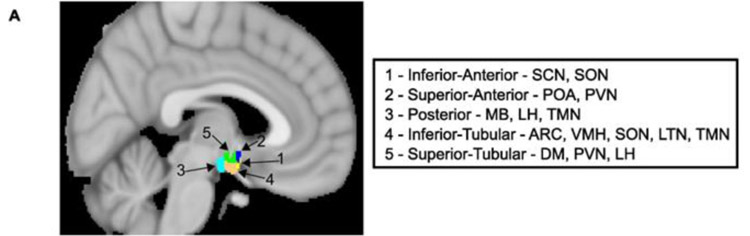 Image credit: eLife, “Regional Response to Light Illuminance Across the Human Hypothalamus,” Figure 2A10
Save This Article for Later – Get the PDF Now
Light Intensities Can Have Varying Effects on Different Parts of the Hypothalamus
The participants were asked to get an MRI scan one week before the trials began. They were also required to get around seven hours of sleep, and were prohibited from consuming caffeine and alcohol, as well as undergoing strenuous exercise.11
To create the test environment, the researchers used a lightbox that illuminated a cable on both ends, allowing them to vary the intensity while the participants performed the tasks.12 The participants were then asked to complete two tests to identify the effects of light exposure on their cognition. Here’s a breakdown, summarized in a report by Sleep Review:13
1. Executive task — The participants were asked to determine if the current sound played to them was the same as one they heard two playbacks earlier, or if it contained the letter “K.”
2. Emotional task — They were asked to determine the gender of a voice that used either a neutral tone or angry tone.
Throughout the study, the participants were alternatively placed in darkness or exposed to bursts of light exposure through four levels of illumination. The researchers noted:14
“In the executive task, participants were exposed to 30s to 70s (median 30s) of light blocks separated by 10s of darkness (< 0.1 lux) and the light blocks were repeated 11 times for each light condition. For the emotional task, participants were exposed to 30 to 40s (median 35s) light blocks separated by 20s of darkness (< 0.1 lux) and the light blocks were repeated five times for each light condition.”
Once results were recorded, the researchers noticed that higher light intensity increased activity in the posterior hypothalamus among the participants.15 At the same time, higher light intensities resulted in decreased activity in the anterior and ventral sections of the hypothalamus. Furthermore, higher light intensities resulted in better performance in the executive task.16
The Role of the Hypothalamus in Your Cognitive Function
The response to this preprint study is positive, as it could not only help identify light’s effects on various brain structures but may also support further research into noninvasive treatments for sleep problems and cognitive fatigue.
According to Neuroscience News, “The strength of evidence is praised as compelling, supporting the authors’ analyses of the complex interplay between light exposure, hypothalamic activity, and cognitive function.”17
Previously published evidence also support the findings of this research. In a 2020 study18 published in Physiology & Behavior, researchers noted that sections of the brain such as the cortex, hippocampus and amygdala have been studied extensively in the role of cognition, but not the hypothalamus. Through the course of their research, they observed that the hypothalamus may play a role in cognition:19
“Such hypothalamic control of memory-related synaptic machinery may enable gating/thresholding/permissive/tagging operations within yet poorly defined logic gates for memory updating. Hypothalamic signals may thus facilitate cost-benefit analysis of learning and memory in real-world settings.”
In another study,20 published in Frontiers in Neurology, authors noted that light exposure increases physiological arousal in the brain, leading to increased alertness.
The data from this preprint study clearly illustrate that light exposure can have a profound effect on your cognitive performance. So, how can you take advantage of it? Through a process called photobiomodulation (PBM), which is actually one of my favorite biohacks.
How Photobiomodulation Can Benefit Your Health
PBM refers to the process of using light therapy to benefit your health. Typically, this process involves using red and near-infrared wavelengths (with enough intensity) that your body can utilize.
One of the most notable benefits of near-infrared exposure is the increase in ATP (adenosine triphosphate) production in your mitochondria. Essentially, ATP is the energy currency used to power biological processes essential for life, such as muscle contractions, ion transport and chemical synthesis.21
As noted in a study published in Biology Letters, near-infrared exposure helped increase ATP in animal subjects and even reduced inflammation. Fruit flies exposed to near-infrared light also gained a significant increase in lifespan.22
Another fantastic benefit of near-infrared exposure is melatonin production — 95% of melatonin is produced in your mitochondria in response to near-infrared light. The melatonin released by your pineal gland account for just 5% of the melatonin in your body.23
Now, you might be wondering how mitochondria underscore these benefits. According to published research, your mitochondria play an important role in cognition. Here’s a succinct explanation, according to a study24 published in Mitochondrion:
“Mitochondria have a crucial role in brain development and neurogenesis, both in embryonic and adult brains. Since the brain is the highest energy consuming organ, it is highly vulnerable to mitochondrial dysfunction. This has been implicated in a range of brain disorders including, neurodevelopmental conditions, psychiatric illnesses, and neurodegenerative diseases.”
In another study, published in the International Journal of Molecule Sciences,25 mitochondrial dysfunction has been implied to be a common mechanism involved in the most recognizable features of Alzheimer’s disease.
Linking all points together, harnessing the power of PBM can help boost mitochondrial health. In turn, healthy mitochondria can help maintain optimal cognitive function.
Can Home Saunas Provide the Same Benefits as PBM?
Electric saunas designed for your home typically emit far-infrared light, which can still provide detoxing benefits. However, with some tinkering, they can be modified to function as a PBM device as well, which can save money since you won’t need a dedicated PBM device.
You can modify your sauna by using incandescent heat bulbs that emit the majority of their energy as near-infrared light. While it may take some work, the effort will be worth it.
If you want to save time and energy, consider near-infrared bulbs from SaunaSpace.26 All their bulbs contain metal guards that prevent the glass from accidentally breaking and injuring you. Use the instructions to hang the new incandescent bulbs in your old sauna.
This simple trick can increase the benefits you experience in your sauna since you’re also getting the benefits of PBM from the new bulbs. Done correctly, eight incandescent red bulbs can heat up to 160 degrees Fahrenheit in about 20 minutes, which is far better than typical far-infrared saunas.
It’s also good to test your sauna for electromagnetic field (EMF) radiation. If it does have EMFs, I recommend shielding your sauna as best as you can to protect your health.
As for the actual sauna session, it’s always important to start out slowly. Listen to your body so you can decide how much heat stress you can tolerate. Ideally, sauna sessions should last anywhere between 15 and 30 minutes. Also, remember to stay hydrated before, during and after, since you’ll be sweating a lot.
Sunlight Is the Ideal Light Source
While a PBM device (or a modified sauna) can be a fantastic addition to your health routine, you shouldn’t shun proper sun exposure. Ideally, spend more time outdoors whenever possible. Only use PBM devices to get red and near-infrared light you need if you cannot get enough regular sun exposure.
Humans need direct sun exposure in order to optimally thrive, and while artificial lighting sources offering specific light spectrums may be helpful for various problems, ideally, we need the full spectrum of light that natural sunlight offers.
If you’re going out to get sunlight, I recommend doing it during solar noon. For those living in areas that implement Daylight Saving Time, it should be 12:30 to 1:30 PM. Scheduling your daily walk around this time allows you to maximize the benefits of ultraviolet B rays and near-infrared radiation from the sun.
Blocking Blue Light at Night Can Help Transform Your Sleep
Last but not least, light exposure during the day has a major impact on your sleep quality, which in turn affects health in countless ways. Getting bright light exposure first thing in the morning and mid-day helps properly “set” your circadian clock, while bright light from artificial lighting and screens in the evening prevents melatonin release, inhibiting sleep.
Normally, your brain starts progressively increasing the hormone melatonin around 9 or 10 pm, which makes you sleepy. Melatonin acts as a marker of your circadian phase or biological timing.
In a nutshell, this hormone influences what time of day or night your body thinks it is, regardless of what time the clock on the wall displays. Besides regulating your sleep cycle, it also provides other important health benefits, including helping to prevent cancer.
Somewhere between 50 and 1,000 lux is the activation range within which light will begin to suppress melatonin production. However, wavelength is also important. Red and amber lights will not suppress melatonin while blue, green, and white lights will.
The reason for this is because these are the wavelengths are the most common outdoors during daytime hours. So, you’ll want to avoid the blue light wavelength after sunset. This includes artificial light, and light emitted by electronics such as your TV, computer, and other electronic screens.
The blue light range (400–490 nm) can also induce photoreceptor damage in your eyes, so besides disrupting your sleep this is another potential problem with light emitting screens. As noted in one recent study,27 “it is important to consider the spectral output of LED-based light sources to minimize the danger that may be associated with blue light exposure.”
Ways to Limit Blue Light Exposure at Night
There are several ways to avoid blue light in the evening depending on your lifestyle and personal preferences:
1.Turn off or dim all lights after sunset and avoid watching TV or using light emitting electronics for at least one hour before bedtime (ideally two hours or more). Research28,29 shows that using an electronic device within one hour of bedtime can delay falling asleep for more than an hour.
Another study30 that compared melatonin profiles in individuals exposed to standard room light (<200 lux) vs. dim light (<3 lux) found that exposure to room light before bedtime shortened the time of elevated melatonin levels by about 90 minutes.
That means it may take you an extra hour and a half before you’re sleepy enough to fall asleep once you’re in bed. Combine room light and electronic displays right before bed and it’s easy to see how sleep may remain elusive for hours on end.
2.After sundown, shift to a low-wattage bulb with yellow, orange or red light if you need illumination. A salt lamp illuminated by a 5-watt bulb is an ideal solution that will not interfere with your melatonin production. If using a computer or smart phone, install blue light-blocking software like f.lux. The program automatically alters the color temperature of your screen as the day goes on, pulling out the blue wavelengths as it gets late.
3.One of the easiest solutions is to use amber colored glasses that block blue light. This way, you don’t have to worry about installing programs on all your devices, or buying special light bulbs for evening use. Once you have your glasses on, it doesn’t matter what light sources you have on in your house.
Studies31,32,33 have confirmed that when using blue-blocking glasses, people produce as much melatonin as they do in dim light, even if they’re in a lit room or using light emitting technology. Other studies34 have shown that people using blue-blocking glasses had major improvements in both sleep quality and mood. Shift workers who use them before bedtime (i.e. in the morning when it’s bright out) also report improved sleep.35
- 1, 3 eLife, April 2024 “Regional Response to Light Illuminance Across the Human Hypothalamus,” Discussion
- 2, 5, 15, 17 NeuroscienceNews.com, April 23, 2024
- 4 Sci Rep. 2018; 8: 1183, Introduction
- 6, 10, 11, 16 eLife, April 2024, “Regional Response to Light Illuminance Across the Human Hypothalamus,” Abstract
- 7 StatPearls, “Physiology, Hypothalamus,” Introduction
- 8 Somnologie (Berl). 2019; 23(3): 147–156, Anatomical architecture of the circadian system
- 9 Cleveland Clinic, “Hypothalamus” How Does the Hypothalamus Interact With the Pituitary Gland?
- 12, 14 eLife, April 2024 “Regional Response to Light Illuminance Across the Human Hypothalamus,” Light Exposure
- 13 Sleep Review, April 25, 2024
- 18, 19 Physiology & Behavior Volume 223, 1 September 2020, 112988, Abstract
- 20 Front Neurol. 2018; 9: 56, Direct Effects of Light on Sleep
- 21 StatPearls, “Physiology, Adenosine Triphosphate,” Introduction
- 22 Biology Letters, March 2015, Volume 11, Issue 3, Abstract
- 23 Int J Mol Sci. 2021 Nov; 22(22): 12494, Abstract
- 24 Mitochondrion, Volume 69, March 2023, pages 18-32, Abstract
- 25 Int J Mol Sci. 2021 May; 22(9): 4850, Abstract
- 26 SaunaSpace, Replacement Bulbs
- 27 Molecular Vision 2016; 22: 61–72
- 28 BMJ Open2015;5:e006748
- 29 Huffington Post February 4, 2015
- 30 J Clin Endocrinol Metab. 2011 March; 96(3): E463–E472
- 31 Applied Ergonomics 2013 Mar;44(2):237-40
- 32 Journal of Pineal Research August 2006: 41(1); 73-78
- 33 The Journal of Clinical Endocrinology & Metabolism DOI: 10.1210/jc.2004-2062
- 34, 35 Chronobiology International 2009 Dec;26(8):1602-12
Vitamin D Shows Promise in Targeting Aging’s Biological Mechanisms, Study Finds
Reproduced from original article:
https://articles.mercola.com/sites/articles/archive/2024/05/06/vitamin-d-aging.aspx
Analysis by Dr. Joseph Mercola May 06, 2024

STORY AT-A-GLANCE
- Vitamin D may help modulate many of the 12 hallmarks of aging, which is crucial in older adults who make less vitamin D, activate less vitamin D from food, supplements and sunshine, and need more vitamin D as an effective strategy to slow aging and protect health
- Each of the 12 hallmarks of aging may be discussed independently, but most act synergistically with one or more other hallmarks. Optimal levels of vitamin D may improve genomic instability, reduce epigenetic alterations associated with disease, improve mitochondrial function, decrease cellular senescence and improve gut dysbiosis
- Measurement of DNA methylation is a more accurate measure of biological health than telomere length and is positively influenced by vitamin D optimization
- Consistent sunshine exposure is the best option to raise insufficient vitamin D levels. In northern climates, this can be challenging so you might consider near-infrared light therapy or oral vitamin D3 supplementation
A 2024 paper1 published in Nutrients by Italian scientists summarized the current knowledge of how vitamin D might modulate some of the hallmarks of aging. Vitamin D, also called calciferol, is present in some foods. However, more is produced by your body after exposure to sunlight.
In the initial stage,2 the vitamin D you get from supplements, foods, or sun exposure must undergo two changes to be activated and used. The first happens in the liver where vitamin D is converted to 25-hydroxyvitamin D and the second happens in the kidney where it forms 1, 25-dihydroxyvitamin D, also called calcitriol.
Importance of Aging and Vitamin D Deficiency
Long before the COVID-19 pandemic, researchers were concerned about vitamin D deficiency. According to a 2011 paper,3 based on data from the National Health and Nutrition Examination Survey 2005 to 2006, found 41.6% of the general population had deficient serum concentrations, defined as of 20 nanograms per milliliter (ng/mL) or less. The highest rate of deficiency was seen in Blacks at 82.1% and Hispanics at 69.2%.
Using data that spanned 1998 to 2005, a 2021 paper reported that the prevalence of vitamin D deficiency may range from 40% to 100%, and correcting this deficiency would be “a cost-effective intervention.”4 Yet, despite evidence to the contrary, mainstream media, such as the New York Times,5 advises readers “to get absolutely no sun this summer.”
The American Academy of Dermatology Association also recommends sunscreen on any bit of skin not covered by clothing anytime you’re outside.6 In the following discussion of how vitamin D may mitigate some of the hallmarks of aging, it’s important to note that as you age, the production of the active form of vitamin D is typically reduced by 50% due to age-related decline in renal function.7
The results of the 5th International Conference “Controversies in Vitamin D” held in September 2021 was a consensus statement by physicians on vitamin D supplementation in older individuals. The scientists agreed “Of three possible strategies to establish vitamin D sufficiency — sunshine exposure, food fortification, and supplementation — the latter seems to be the most effective and practical in the aging population.”8
What Processes Contribute to Aging?
The aging process is marked by a decline in organ function and the development of age-related illness. Researchers in the current study noted that aging is a multifactorial process characterized by 12 hallmarks:9
| Genomic instability — Increased mutation frequency in the genome | Telomere attrition — Telomere shortening leads to cellular aging and dysfunction |
| Epigenetic alterations — Changes in gene expression without DNA modification | Loss of proteostasis — Disruption in the dynamic regulation of proteins |
| Disabled macroautophagy — Impaired process of recycling cellular components | Deregulated nutrient sensing — Disruption of cellular response to nutrients impairing metabolism |
| Mitochondrial dysfunction — Impaired energy production and increased oxidative stress | Cellular senescence — Cessation of cell division |
| Stem cell exhaustion — Depletion of stem cells, impairing tissue repair and regeneration | Altered intercellular communication — Disrupted signaling, leading to inflammation and tissue dysfunction |
| Chronic inflammation — Persistent, low-grade inflammation triggering tissue damage | Dysbiosis — Imbalanced microbial communities affecting health and disease |
The featured research noted that while these manifestations can be discussed independently, they do not act as a single cause but are highly interrelated. Either independently or synergistically they lead to molecular and cellular damage. By understanding the relationships, researchers hope to identify interventions that could mitigate the processes.
Vitamin D has a significant impact on musculoskeletal structure and function, and other studies have noted the role it plays in multiple other organs and systems, including endothelial cells, cardiomyocytes, neural stem cells, neurons, osteoblasts, monocytes, macrophages, and epithelial cells adipocytes. These actions have suggested that vitamin D may attenuate some pathological changes associated with the aging process.
Save This Article for Later – Get the PDF Now
How Optimal Vitamin D Levels May Target the Hallmarks of Aging
Past research has identified the impact vitamin D has on aging adults, finding that older individuals have a risk of suboptimal vitamin D levels resulting from decreased synthesis and intake.10 Lower levels are associated with signs of aging, such as depression, heart disease, cancer and cognitive decline.
Research in the International Journal of Molecular Sciences characterizes aging as “a physiological progression of biomolecular damage and the accumulation of defective cellular components, which trigger and amplify the process, toward whole-body function weakening.”11 The review identified the biomolecular pathways that are the foundation of immunosenescence and inflammaging as biotargets of vitamin D.
They caution that while research has progressed, limitations still exist in being able to translate this knowledge into clinical practice. The researchers in the featured study12 identified the changes that vitamin D supplementation makes on the main hallmarks of aging and detailed those descriptions from past studies.
For example, the potential for modulating genomic instability has been evaluated in Type 2 diabetes, finding that vitamin D supplementation leads to a decrease in nitric oxide and an increase in reduced glutathione, which decreases oxidative processes overall.
A positive correlation was identified between telomere length and serum levels of 25(OH)D, which equated to a five-year difference in telomeric aging.13 An analysis of older adults found a positive association at baseline but an inconsistent relationship at later measurements. Further studies found no causal effect. Supplementation did increase telomerase activity, supporting the theory that vitamin D beneficially affects telomere wellness.
Epigenetic alterations are associated with several diseases,14 the cumulative effects of which are highly correlated with chronological age. In one study of pregnant women, vitamin D supplementation was associated with bone mass in the infant and had implications for the development of the lung, metabolic and nervous systems.
Additionally, the researchers found evidence in past studies15 that vitamin D significantly impacts mitochondrial function, including reducing oxidative stress, mitigating damage in neurodegenerative and heart diseases, and improving muscle and lung function.
The research16 also identified the impact vitamin D supplementation might have on decreasing cellular senescence and senescence-associated secretory phenotype (SASP). SASP is a phenomenon where senescent cells do not die but begin to secrete inflammatory cytokines, proteases and other molecules into the surrounding environment.
This can influence the behavior of nearby cells and contribute to a variety of physiological and pathological processes. The data has shown that vitamin D supplementation shows promise in reducing these effects. Researchers also identified data that showed vitamin D counteracts dysbiosis in individuals with HIV-1 infection.17
Biological Aging and DNA Methylation
As researchers in the featured study noted, the hallmarks of aging have a strong connection to each other, contributing to and exacerbating the effects of others. One of those effects is mitochondrial dysfunction and a rise in reactive oxygen species (ROS) that induces epigenetic changes through DNA methylation.18
In my interview19 with Ryan Smith, founder of TruDiagnostic, a commercial testing system that tests your biological age, he discussed the idea of DNA methylation. Every cell in your body has the same DNA but expresses it in different ways. That expression is regulated, in part, epigenetically. With differentiation, cells change their epigenetic expression to regulate the genes that are turned off and turned on.
DNA methylation silences gene transcription. At the beginning of a DNA strand is a promoter site and methylation is measured at those sites. The level of methylation correlates to the degree of actual expression of DNA. In the past, telomere length had been used to measure biological aging. However, Smith and I agree that epigenetic clocks are far superior.
The first low-risk strategy Smith recommends that lowers your biological age is vitamin D optimization. Ideally, you want to maintain a blood level of 60 ng/mL to 80 ng/mL. In the interview, Smith cited an interventional trial20 in which overweight individuals reduced their biological age by 1.85 years on average by taking 4,000 international units (IUs) of oral vitamin D each day for 16 weeks.
There were 51 participants included in that short-term study. After adjustments of multi-covariates, serum concentrations of 25(OH)D were significantly associated with a reduction in Horvath ∆Age, also called delta age. The Horvath epigenetic clock is a biomarker that measures the methylation of specific DNA sites to estimate biological age.
Supplementation Is Acceptable in Northern Climates but Sunshine Is Better
As noted in the featured study:
“Considering how much VitD is related to several chronic inflammatory diseases and how negatively low-grade chronic inflammation impacts general health, adequate VitD storage should be a priority.”21
The ideal way to optimize your vitamin D level is by getting regular sun exposure on bare skin. There are also health benefits associated with sun exposure that go far beyond vitamin D production. I highly encourage you to read the article “Benefits of Sunshine on Your Bare Skin,” in which I detail many of those benefits.
For example, sunlight can positively affect your microbiome, mitochondria and melatonin production. Yet, depending on where you live, your ability to get good sun exposure may be limited to just three to four months each year.
When you can’t get outside, your next-best choice may be red and near-infrared light therapy, which can mimic some of the benefits of natural sunlight. In my interview with Ari Whitten, author of “The Ultimate Guide to Red Light Therapy,” we discuss how red light and near-infrared light are forms of nutrition for the body.
Photoreceptors on your mitochondria capture photons of red and near-infrared light to produce energy more efficiently. Light therapy might also help modulate gene expression, one of the hallmarks of aging.
As Ari explains, one of the biggest challenges with sun exposure is the infrequency of exposure, which tends to be more problematic than being outdoors regularly. Intermittent exposure increases your likelihood of burning and causing damage to the skin, while regular exposure ameliorates the risk and engages your innate adaptive systems explicitly designed to prevent DNA damage from UV light exposure.
Before jumping into building your red light or near-infrared light therapy box at home, I encourage you to watch the interview and read about “The Benefits of Red Light and Near-Infrared Light Therapy.” In the interview, we talk about the fallacy that more is better. That’s a hazardous assumption since you can overdo the effects of light therapy.
If you can’t get enough sun exposure and don’t have access to a red light or near-infrared light sauna, consider taking an oral vitamin D3 supplement. In “Magnesium and K2 Optimize Your Vitamin D Supplementation,” I discuss the supplements that can be taken together to boost your vitamin D absorption and activation within your body.
Long-term deficiency is known to contribute to health problems like rickets, heart disease and autoimmune diseases, but even insufficiency can contribute to depression, slow wound healing, muscle weakness, fatigue and impaired cognition. In the article hyperlinked above are clear guidelines on how to determine your vitamin D level and the approximate dosage that can get you into the optimal range of 60 ng/mL to 80 ng/mL.
- 1 Nutrients, 2024; 16 (6)
- 2 National Institutes of Health, Vitamin D para 1, 2
- 3 Nutrition Research, 2011 Jan;31(1):48-54, Abstract
- 4 Endocrine Practice, 2021; 27 (5), Introduction
- 5 The New York Times May 29, 2023
- 6 AAD, Sunscreen FAQs, When Should I Use Sunscreen?
- 7 Endocrinology and Metabolism Clinics of North America, 2013; 42(2), Abstract
- 8 Springer Link, 2022; 79, Conclusions
- 9 Nutrients, 2024; 16 (6), Introduction para 2
- 10 Journal of Aging and Gerontology, 2014; 2(2)
- 11 International Journal of Molecular Sciences, 2023;24(5)
- 12 Nutrients, 2024;16(6) Section 4.1
- 13 Nutrients, 2024;16(6) Section 4.2
- 14 Nutrients, 2024;16(6) Section 4.3
- 15 News Medical Life Sciences, March 26, 2024 section 3 para 9
- 16 Nutrients, 2024;16(6) Section 4.6
- 17, 21 Nutrients, 2024;16(6) Section 4.10
- 18 Nutrients, 2024;16(6), Section 3 para 2
- 19 Bitchute, January 26, 2022
- 20 The Journal of Gerontology Series A, 2019;74(1)
Vitamin D3 Versus D2
Reproduced from original article:
https://articles.mercola.com/sites/articles/archive/2024/05/04/vitamin-d3-versus-d2.aspx
Analysis by Dr. Joseph Mercola May 04, 2024
STORY AT-A-GLANCE
- Contrary to popular belief, vitamin D2, derived from plants, and D3, from animal products, do not have equal nutritional value, and deficiency is gaining ground, so study authors are asking governments to consider updating current guidelines
- Researchers found vitamin D3 to be twice as effective in raising levels in the body in comparison to D2
- More than 1 in 5 people in the U.K. have low levels of vitamin D; as an essential nutrient, it’s not a vitamin your body produces, so it must be attained from an outside source: via sunlight, food or supplementation
- Told by officials that D2 and D3 were basically the same, retail outlets led to believe one was just as viable as the other added vitamin D2 to their products, which did nothing to help people increase their levels
It’s something I’ve been encouraging for several years now — making sure you’re getting adequate levels of vitamin D, not only because it’s a crucial nutrient, but because so many people are deficient and don’t realize it.
But a study has emerged dispelling the idea many scientists and health care providers have had for many years, the upshot being that there is a vast difference between vitamin D2, which is plant-based (notably from mushrooms), and vitamin D3, which is derived from animal products.
The two do not, as some have believed, have a similar nutritional value. Health authorities are calling for official recommendations for vitamin D intake to be changed in accordance with this information, which is not actually new, as we’ve related this important distinction for some time. The “groundbreaking” study from the University of Surrey was conducted to determine, between vitamins D2 and D3, which was more effective in raising levels in the body.
The trial was funded by the Biotechnology and Biological Sciences Research Council (BBSRC) — “the largest U.K. public funder of nonmedical bioscience” — and the Diet and Health Research Industry Club (DRINC). Susan Lanham-New, principal investigator of the trial, called the results a “very exciting discovery which will revolutionize how the health and retail sector views vitamin D,” EurekAlert! reported.1
She added, “Vitamin D deficiency is a serious matter, but this will help people make a more informed choice about what they can eat or drink to raise their levels through their diet.” Serious is right: One study shows that more than 40% of the American population is deficient in vitamin D,2 and some experts say the problem is serious enough to call it a pandemic.3
Vitamin D2 and D3: Not Interchangeable
Vitamin D is produced by your body after exposure to the sun, and because winter is the period during which sunshine is least available, vitamin D levels are typically at their lowest during this time.
The 335 South Asian and white European women who participated in the study over two winters were divided into five groups and given either juice containing vitamin D2 or D3, a biscuit with the same or a placebo. At the conclusion of the study, researchers found vitamin D3 to be twice as effective in raising levels in the body in comparison to D2. EurekAlert! reported:4
“Vitamin D levels in women who received vitamin D3 via juice or a biscuit increased by 75 percent and 74 percent respectively compared to those who were given D2 through the same methods. Those given D2 saw an increase of 33 percent and 34 percent over the course of the 12-week intervention.
The research also found that nutrient levels of both vitamin D2 and D3 rose as a result of both food and acidic beverages such as juice, which were found to be equally as effective. Those who received the placebo experienced a 25 percent reduction in the vitamin over the same period.”
What’s interesting, as mentioned, is that the information from this study is not new news. A similar study published in 2011 is one of several instances where vitamin D3 has been shown to have a much greater significance for your health compared to D2. One study5 shows D3 to:
- Convert to its active form 500% faster
- Be 87% better at raising and maintaining vitamin D levels
- Produce two to three times greater storage of the vitamin than D2
Recommendations for Vitamin D Outdated and Unsafe
Here’s where it gets problematic: Several governments around the world, including the U.S. National Institutes of Health, assert there’s no difference between vitamins D2 and D3 and that interchanging the two makes no difference whatsoever in your body’s levels.
However, information from Public Health England reveals that more than 1 in 5 people in the U.K. have low levels of vitamin D, so the intake they recommend is 10 micrograms per day, all year long, for everyone beginning at age 4.
EurekAlert! notes that daily intake of vitamin D3 — but not vitamin D2 — will allow the population to avoid such health problems as rickets, osteoporosis and a higher risk of developing heart disease, all associated with individuals with insufficient levels of vitamin D in their bodies.
What the scientists found influences public health but also retail markets in that many have added vitamin D2 to their products because they were led to believe it was just as viable in the body to increase people’s “D” levels as taking D3. Lead study author and dietitian Laura Tripkovic explained:6
“The importance of vitamin D in our bodies is not to be underestimated, but living in the U.K. it is very difficult to get sufficient levels of it from its natural source, the sun, so we know it has to be supplemented through our diet. However, our findings show that vitamin D3 is twice as effective as D2 in raising vitamin D levels in the body, which turns current thinking about the two types of vitamin D on its head.”
Tripkovic explained that people who eat vitamin D3-rich foods or take supplements are two times more likely to raise their vitamin D profile than when consuming the equivalent in vitamin D2 foods such as mushrooms, D2-fortified bread or taking D2 supplements.
Save This Article for Later – Get the PDF Now
Downsides of Low Vitamin D Versus Benefits of Optimal Levels
Vitamin D is involved in the biology of all cells in your body, including your immune cells. A large number of studies have shown raising your vitamin D level can significantly reduce your risk of cancer and many other chronic diseases. So, what happens when someone isn’t getting the amount of vitamin D that they should? Daily Mail7 notes that lack of vitamin D:
- Can cause your bones to become thin, brittle or misshapen
- Is linked to an increased risk of multiple sclerosis
- Is linked to a growing prevalence for children to develop rickets, shown in many cases to cause malformed and/or broken bones
- Appears to play a role in insulin resistance, high blood pressure and immune function, related to heart disease and cancer
People who are obese, older than age 65 and/or housebound may have lower levels of vitamin D due to their diets, little sun exposure and other factors, and among dark-skinned individuals in the U.S, only 3% among thousands have enough vitamin D.8 Beyond cancer prevention, a Swiss study9 from 2013 lists several of the more dramatic benefits of getting the right amount of vitamin D:
- The development, function and maintenance of healthy bones and regulation of calcium homeostasis throughout life
- The basis for the prevention and management of osteoporosis, a disease producing brittle bones that are prone to fractures
- The regulation of neuromuscular function, reducing the risk of falls, a major cause of bone fractures
- Possibly a central component of musculoskeletal health through vitamin D’s beneficial effects on muscle function and bone stability
- May show favorable effects in many organs and play a significant role in the maintenance of general health
The Significance of Getting Adequate Sunlight
Another reason vitamin D levels are so important is that hepatic mitochondria and their associated microsomal enzymes metabolize vitamin D, whatever the source, Pharmacy Times noted, adding:10
“When patients consume too much vitamin D2 or vitamin D3, this process is completely unregulated and patients’ vitamin D levels will rise proportionally to their intake. On the other hand, cutaneous synthesis from sun exposure allows patients levels to reach a preset point, and after that, additional sun exposure will not increase vitamin D levels.”
This means the best way to make sure you’re getting enough vitamin D is to get regular sensible exposure to direct sunlight on your body each day. Depending on your locale, in the winter when the sun hides behind clouds and temperatures are often so chilly you’re forced to wear long sleeves and galoshes, this may be difficult if not impossible, however.
Alternatively, adding vitamin D3 supplements to your regimen can help you achieve optimal vitamin D levels. The foods you eat can also make a difference in helping to make or break your health (if not your bones). The best foods for increasing your vitamin D intake via your diet are animal-based and quite limited:
- Raw milk
- Eggs, particularly the yolk from organic, pastured eggs
- Wild-caught Alaskan salmon and other healthy fish such as mackerel and sardines, preferably from cold waters, and not farmed
Get Your Vitamin D Levels Tested
If you decide your vitamin D3 should be taken in supplement form, it’s your serum level, or how much D3 your blood contains, that determines how much you should take until your levels are optimized to between 60 and 80 nanograms per milliliter, or ng/ml.
Studies done by Grassroots Health11 recommend an upper limit of about 8,000 IUs (the International Unit by which fat-soluble vitamins are measured) daily of vitamin D3. Children need a minimum of 2,000 IUs per day;12 however, getting your blood tested is the only way to know for sure whether your vitamin D levels are within the optimal range and, consequently, how much oral vitamin D3 you may need. Also be sure the vitamin D you take is correctly balanced with vitamin K2.
An Atlanta-based Emory University School of Medicine study published in the Journal of the American College of Cardiology outlined vitamin D’s association with cardiovascular disease prevention.13
The upshot is that levels below 20 ng/ml are simply not enough to maintain bone health, let alone provide the other disease-prevention benefits that vitamin D has to offer. As mentioned, I recommend you achieve 60 to 80 ng/ml of vitamin D in your blood.
- 1, 4, 6 EurekAlert! July 5, 2017
- 2 Nutr Res. 2011 Jan;31(1):48-54
- 3 Science Direct Vol. 52, Issue 24, December 9, 2008, pp. 1949-1956
- 5 JCEM March 2011
- 7 Daily Mail July 4, 2017
- 8 JAMA Network March 23, 2009
- 9 Int J Vitam Nutr Res. 2013;83(2):92-100
- 10 Pharmacy Times July 6, 2017
- 11 Grassroots Health 2017
- 12 GrassrootsHealth, “From the D*action Panel of Vitamin D Scientists/Researchers”
- 13 J Am Coll Cardiol. 2017 Jul 4;70(1):89-100, Abstract
Five ‘Simple yet Effective’ Tips to Boost Your Longevity
Reproduced from original article:
https://articles.mercola.com/sites/articles/archive/2024/04/10/tips-to-boost-your-longevity.aspx
Analysis by Dr. Joseph Mercola April 10, 2024

STORY AT-A-GLANCE
- Simple changes can significantly influence overall health and longevity. Nearly 70% of people across five generations said they would like to live 100 years, but not if they had terrible health, were a burden on their family, or if they had serious cognitive loss
- Training specialist David Wiener found five effective choices to help achieve that goal, beginning with keeping your brain active using games, concentration skills, keeping a gratitude journal, going for daily walks and reaching out to loved ones
- Fresh air and sunshine can help lift your mood and optimize your vitamin D levels, which decreases your risk of metabolic syndrome, Type 2 diabetes and heart disease. Sleep reduces your risk of heart disease and stroke
- Chronic stress can lead to medical conditions that shorten your lifespan. Exercise is generally acknowledged as leading to a healthier life, but exercising in the late morning hours can support greater benefits than exercising at other times of the day
- Each of these five simple strategies can make a significant difference in your overall health and longevity. Perhaps the most important factor, however, is reducing your linoleic acid (LA) intake, as LA is a potent metabolic poison when consumed in excess
Longevity and the Fountain of Youth have been a focus of human thought and experiment for centuries. Researchers are fascinated by the topic. A quick search on PubMed reveals over 62,000 results for research studies that include the term “longevity”1 and over 150 studies listed on ClinicalTrials.gov.2
The financial company Edward Jones3 published a 2022 study in which they asked five generations of Americans whether they wanted to live to age 100. Nearly 70% of them said “yes,” but included that they would not want the added longevity if they had terrible health, were a burden on their family or had serious cognitive loss. The researchers wrote, “The real answer to our question seems to be, ‘Yes, but it depends on staying healthy, engaged and purposeful.'”4
The Edward Jones report noted that the number of people who are 65 and older has nearly tripled in the last 50 years and it is projected to reach 86 million by 2050. They note that together with living longer and more people retiring, this stage in life appears to be far more important than in previous decades, and with far more social and marketplace implications.
A reporter from the online magazine Express5 spoke with David Wiener, training specialist at AI-based fitness and lifestyle coaching app Freeletics. He shared tweaks you could include in your lifestyle choices that would be simple, but effective in helping you to meet this goal — living a longer, healthier and more engaged life.
One thing he did not address, however, was diet. As detailed in “Linoleic Acid — The Most Destructive Ingredient in Your Diet,” linoleic acid, an omega-6 fat, acts as a metabolic poison when consumed in excess.
So, if you want to live a long, healthy life, this really ought to be your starting point. LA intake above 10% is highly likely to cause problems. Ideally, you want to keep it well below 5%. If your LA intake has been high, make sure you’re getting enough vitamin E, as it protects polyunsaturated fats like LA from lipid peroxidation. That said, let’s take a look at Wiener’s suggestions, all of which are good.
Keep Your Brain Active and Sharp
Wiener describes keeping your brain active as being one of the “best ways”6 of increasing life expectancy and maintaining your cognitive ability. “By challenging your brain with mental exercises, it is believed you could maintain individual brain cells and stimulate communication between them to help them work more effectively,” Wiener told Express. He went on,7
“While most people’s jobs keep them mentally active and alert, learning a new hobby or skill, volunteering or mentoring are additional ways to keep your mind sharp, more specifically learning a language has shown to be greatly beneficial too.”
Your brain is one of the most important organs in your body. Exercising your brain, in the same way that you would exercise your body, plays a significant role in longevity and independence. Taking care of your brain includes engaging in stimulating activities that not only make your brain work but also bring you joy.
Some of the activities that Dr. Laurie Archbald-Pannone, a geriatric medicine physician and associate professor of medicine at the University of Virginia, recommends include keeping a gratitude journal, going for a daily walk and reaching out to friends and family.
Denise Park, Ph.D., professor and director of research at the Center for Vital Longevity in the School of Behavioral Sciences at the University of Texas in Dallas, spoke with Forbes Magazine8 about a study in which she and her team engaged a group of older individuals to learn two new activities — digital photography and quilting.
The researchers found the adults improved their memories over three months. Park talked about finding the optimal amount of challenge to maintain a healthy mind, noting that too much is stressful but too little does not encourage gain. “Adding novel behaviors that you never performed before helps build new neural circuits that will be built to handle that challenge,” she said.9
Finding games that stimulate different functions can also support your social life. Engaging in stimulating brain activity with others helps to reduce isolation and the brain exercise helps give you a sense of control as well as helps support the creation of new brain connections.
Dr. Zaldy Tan is an expert in senior care and the director of the Cedars-Sinai Memory and Aging Program. Tan identified types of brain activities that help challenge and exercise your mind. Tan suggests games that challenge:10
- Verbal memory such as a crossword puzzle
- Concentration skills such as online brain games
- Visual-spatial working memory skills such as a jigsaw puzzle
- Tactile skills that use procedural memory such as knitting or model building
- Tactile, visual, motor and auditory skills such as dancing
Get Outside to Enjoy the Fresh Air and Sunshine
It’s no secret that being outside in the fresh air is healthy. Wiener recommends gardening and taking walks to help boost your time outside and optimize your vitamin D levels.11 One meta-analysis of 28 studies demonstrated a substantial decrease in heart disease, metabolic syndrome and Type 2 diabetes in middle age to elderly people with high levels of vitamin D.12
Optimal levels of vitamin D also support healthy function of your muscles and immune system, as well as bone health by helping your body to absorb calcium.13 However, depending on where you live and the time of the year, it’s not always possible to get outside for a little sunshine.
It is important to note that vitamin D supplements may help to raise your vitamin D serum measurements, but they don’t give you everything you need. As Wiener points out, sunshine also influences your sleep, which I discuss just below. “This is because sunlight also regulates another hormone in the body called melatonin that controls your sleep cycle,” Wiener said.
Save This Article for Later – Get the PDF Now
Red and Near-Infrared Light Therapy
If sunshine is not an option, then red and near-infrared light, which are subsets of natural sunlight, may help you get some of the same benefits. During an interview with Ari Whitten, author of “The Ultimate Guide to Red Light Therapy,” we reviewed the mechanics and benefits of red light and infrared light. Whitten has a degree in kinesiology, exercise science and movement science, and has studied natural health and nutrition for over 20 years.
Over the last few decades, there have been more than 5,000 studies published about red and near-infrared light therapy, also called photobiomodulation. Researchers have noted an impact on a wide range of conditions, including combating wrinkles and cellulite, improving hair regrowth and sports performance, increasing strength and benefits for individuals with Alzheimer’s and Parkinson’s disease.
Red and near-infrared light operates through several mechanisms of action in the body to produce positive effects. As Whitten and I discussed in the interview, it helps support mitochondrial health and stimulate mitochondrial biogenesis, modulates gene expression and helps structure water that surrounds your cells. Each of these mechanisms offers significant benefits to your overall health.
Sleep: Prioritize Quality and Quantity
Wiener notes that research has consistently demonstrated sleeping less than six hours each night presents a significant risk for heart attack and stroke. Taking care to get at least seven to eight hours of quality sleep each night can help support longevity.
Nearly every facet of your biology is affected when you don’t get enough sleep, which is demonstrated by the long list of health effects linked to sleep deprivation. You’ll find a list and studies in the article linked below. Some of the effects include reduced athletic performance, increased risk of neurological issues, increased risk of Type 2 diabetes, weakened immune function and an increased risk of high blood pressure, heart attacks and cardiovascular disease.
Unfortunately, many people still see a lack of sleep as a badge of honor. To them, it signifies a sign of drive, ambition and achievement. Worse, good sleep may be characterized as a sign of sloth. In 2018, Joe Rogan interviewed professor Matthew Walker, Ph.D., founder and director of the University of California Berkeley’s Center for Human Sleep Science.
As explained by Walker,14 your brain doesn’t shut down while you’re asleep. Instead, some parts become far more active than when you’re awake. During REM sleep, the visual, motor kinesthetic, emotional and memory centers increase activity, while the area that rules rationality and logical thinking, decreases. There are several common factors that Walker calls the “enemy of sleep.” These include:
- Alcohol and caffeine — These and other substances, such as sleeping pills, interfere with sleep quality and sleep time
- Artificial lighting — We have effectively electrified the night, and light at night damages your health by degrading your sleep
- Loneliness, anxiety and depression — The longing for connection and the effects of mental illness can often interfere with or cause people to forego sleep
- Long work hours — The international business environment, increased global competition and longer commuter times are just a few of the factors contributing to the increase in work hours and stress-related burnout
- Overcommitment — Schedules are filled from morning to night, and many people are unwilling to trade entertainment or socializing with family and friends for sleep
Wiener and Walker make several recommendations to achieve quality sleep each night. You’ll find those and more in “Sleep — Why You Need It and 50 Ways to Improve It.”
Use Stress Reducing Strategies to Lower Cortisol Secretion
As Wiener stated, stress can trigger the release of high cortisol levels.15 A fight or flight response can raise your blood pressure and give you the resources you need in the moment. But chronic activation of the system causes the consistent release of hormones that produce harmful physiological changes.16 This leads to the storage of abdominal fat, insomnia, low energy and changes in appetite.
Additionally, it can lead to high blood pressure, heart disease, metabolic syndrome, arthritis, Type 2 diabetes and obesity. Each of these chronic diseases can lead to premature death. The fight or flight response is modulated by the sympathetic and parasympathetic nervous systems, which are part of the autonomic nervous system. This system controls functions in the body that happen automatically, such as heart rate and blood pressure.
The sympathetic nervous system signals the fight or flight response to begin, and once the danger has passed the parasympathetic nervous system helps apply the brakes to the hormone release. In chronic stress, your sympathetic nervous system is revved up, which has a detrimental effect on your health. But, by using controlled breathing techniques, you can create physiological change that lowers your heart rate and blood pressure and improves immune function.
Breathing techniques can help modulate the autonomic nervous system, several of which you can read about in “Have You Tried Box Breathing?” Box breathing is a basic tactical breathing technique used by Navy SEALS to remain calm under duress.17
Other Ways to Normalize Cortisol
Two other factors that will have a significant impact on your cortisol level is low-carb diets and fasting. Both are sure-fire ways to increase cortisol and should be avoided if you’re trying to optimize your mitochondrial function.
If you don’t get enough glucose from your diet, your body must produce glucose by activating stress hormones like glucagon, adrenaline, and cortisol, which make glucose by sacrificing the protein stored in your muscle, bones and brain.
To avoid this, you’ll want to make sure you’re getting at least 150 grams of glucose a day, ideally from ripe fruit. My carb intake is currently between 400 to 450 grams a day, and I feel great.
If you have a healthy gut, you’ll be able to incorporate more fruit fiber without a problem. If your gut is impaired, however, the extra fiber can feed endotoxin-producing bacteria in your gut, which will suppress your mitochondrial function even further. In this case, start by introducing things like pulp-free orange juice.
You Get Greater Benefits When You Exercise in the Morning
Exercise is generally acknowledged as leading to a healthier life, but did you know that there are certain times of the day when you experience greater benefits? Wiener18 recommends exercising in the morning to take advantage of fat oxidation that naturally occurs during the morning hours before having your first meal.
A 2022 paper19 found an association between the time of day you exercise and the risk of coronary heart disease and stroke. The 86,657 men and women who participated were free of cardiovascular disease at the beginning of the study.
The researchers compared the peak time of activity across a 24-hour period and found those who were most active during the late morning had a significantly lower risk of stroke and coronary artery disease compared to people who had a pattern of midday activity.
You can use each of these five simple strategies to make a significant difference in your overall health and longevity. While they may seem simple and easy — almost too easy — they are highly effective and help you take control of your health.
- 1 PubMed, “Longevity”
- 2 Clinical Trials, “Longevity”
- 3, 4 Edward Jones, Longevity and the New Journey of Retirement page 4 & 5
- 5 Express, March 3, 2024
- 6, 7 Express, March 3, 2024, #1
- 8, 9, 10 Forbes Health, May 23, 2023
- 11 Express, March 3, 2024, #2
- 12 Maturitas 2010; 65(3)
- 13 NIAMS, Calcium and Vitamin D: Important for Bone Health, What Does Vitamin D Do for Our Bones? 60% down the page (DTP)
- 14 YouTube, Joe Rogan Experience #1109, Min 13:11
- 15, 18 Express, March 3, 2024, #4
- 16 Yale Medicine, Chronic Stress Subhead 3, 4
- 17 YouTube, Box Breathing and Meditation Technique w/ Mark Divine of SealFit – TechniqueWOD
- 19 European Journal of Preventive Cardiology, 2022; 30(3)
‘Long Vax’ Finally Enters Lexicon
Reproduced from original article:
https://articles.mercola.com/sites/articles/archive/2024/04/05/covid-vaccine-long-vax.aspx
Analysis by Dr. Joseph Mercola April 05, 2024

Story at-a-glance
- Dr. Pierre Kory and Dr. Paul Marik are trying to get the word out that long vax is not only real but has disabled many Americans who were at the peak of health prior to getting a COVID jab
- At Kory’s long COVID clinic, 70% of the patients actually have long vax and reported their symptoms began “minutes, hours, days or several weeks” after receiving a COVID-19 shot
- Long vax symptoms are nearly identical to those of long COVID — the difference being that the long vax patients tend to be sicker, with more frequent small fiber neuropathy and dysautonomia
- A study by Yale scientists detailed long vax, which they called chronic post-vaccination syndrome, in 241 people
- Top reported symptoms include exercise intolerance, excessive fatigue, numbness, brain fog and neuropathy
An estimated 6.4% of U.S. adults have experienced symptoms of long COVID, a term used to describe a complex disorder that persists for three or more months after contracting COVID-19.1 While long COVID has been extensively covered in the media, millions more suffer from long vax — a condition with nearly identical symptoms to long COVID, but often even more severe.
New York pulmonologist Dr. Pierre Kory and Dr. Paul Marik, a critical care doctor formerly with Sentara Norfolk General Hospital in East Virginia, are part of the Front Line COVID-19 Critical Care Working Group (FLCCC). They’re trying to get the word out that long vax is not only real but has disabled many Americans who were at the peak of health prior to getting a COVID jab.2
At Long COVID Clinic, 70% of Patients Have Long Vax
Kory opened a tele-health practice that specializes in treating COVID disease, including long COVID. Kory says:3
“Long COVID, although a new name, is not a new disease. It meets the diagnostic criteria for a decades-old condition called myalgic encephalitis/chronic fatigue syndrome (ME/CFS).
The three symptom ‘pillars’ which lead to the diagnosis are fatigue, post-exertional malaise (PEM), and ‘brain fog’ (i.e. cognitive deficits ranging from word finding difficulties, short term memory loss, inability to focus/comprehend, and more rarely confusion or disorientation).
Although this triad is present in nearly every patient I see (rarely brain fog is missing), the patients also present with a ‘side menu’ of problems which can include sensory neuropathies, dysautonomia/POTS, motor neuropathies, abdominal issues, musculoskeletal complaints, and cranial symptoms (i.e tinnitus, vertigo, headaches, vision, hearing loss, smell loss, taste loss).
Many of my patients are debilitated and meet criteria for disability, despite the majority reporting being in the peak of health and functioning prior to the pandemic.”
Yet, Kory and colleagues quickly noticed that most of their patients reported their symptoms began “minutes, hours, days or several weeks”4 after receiving a COVID-19 shot. While many had also had COVID-19, only a small number tied their symptoms to the viral infection.
While the team initially called the condition post-COVID vaccine injury syndrome, they changed the diagnosis to “long vax” because the symptoms were so close to long COVID — the difference being that the long vax patients tended to be sicker, with more frequent small fiber neuropathy and dysautonomia, Kory said.5
Research Details Neuropathic Symptoms Following COVID-19 Jabs
Scientific studies detailing long vax symptoms continue to emerge. In one study from early in the pandemic, more than two-thirds of those reporting long COVID symptoms had negative antibody tests, suggesting at least some of them didn’t even have COVID-19.6 Meanwhile, many COVID jab recipients report long COVID-like symptoms.
As reported by Science magazine in 2022, “In rare cases, coronavirus vaccines may cause long COVID-like symptoms,”7 which can include (but is not limited to) brain fog, memory problems, headaches, blurred vision, loss of smell, nerve pain, heart rate fluctuations, dramatic blood pressure swings and muscle weakness. The feeling of “internal electric shocks” are also reported.
Also in 2022, a preprint study from the U.S. National Institutes of Health reported new neuropathic symptoms that began in 23 adults within one month of receiving a COVID-19 shot.8 All of the patients felt severe tingling or numbness in their faces or limbs, and 61% also experienced dizziness when standing up, intolerance to heat and heart palpitations.
When 12 of the patients had their nerve function tested, seven had less sweating in their hands and feet than normal, while six had a condition where their heart beats too fast when they stand up.9
The researchers also took skin samples from the lower legs of 16 patients. Among them, 31% showed signs that the small nerves in the skin were not as dense as they should be, which can indicate nerve damage. Another 13% were on the border of being considered damaged, and 19% had swollen nerve fibers. When five of the samples were evaluated more closely, signs of an immune reaction in the blood vessels were detected.10
Further, while electrical tests on the nerves were normal for most participants, 52% showed clear signs of damage to the small nerves that can be felt but not easily seen. The study shows that after getting the COVID-19 shot, a range of symptoms related to nerve damage is possible, which might be caused by an immune system reaction.
Save This Article for Later – Get the PDF Now
Yale Scientists Detail Long Vax Symptoms
A study by Yale scientists, including Dr. Harlan Krumholz of Yale School of Medicine in New Haven, Connecticut, also shed light on long vax, which they described as chronic post-vaccination syndrome, or PVS.11 In a study of 241 people who reported PVS after an mRNA COVID-19 shot, the median time from the jab to the onset of symptoms was three days, with symptoms continuing for 595 days. The five most common symptoms included:12
- Exercise intolerance (71%)
- Excessive fatigue (69%)
- Numbness (63%)
- Brain fog (63%)
- Neuropathy (63%)
In the week before the survey was completed, patients reported a range of additional symptoms highlighting the mental toll the condition takes. The symptoms required a median of 20 interventions for treatment and included:13
| Feeling unease (93%) | Fearfulness (82%) |
| Overwhelmed by worries (81%) | Feelings of helplessness (80%) |
| Anxiety (76%) | Depression (76%) |
| Hopelessness (72%) | Worthlessness (49%) |
“In this study,” the researchers explained, “individuals who reported PVS after COVID-19 vaccination had low health status, high symptom burden, and high psychosocial stress despite trying many treatments. There is a need for continued investigation to understand and treat this condition.”14
Even a 2021 study reported a series of patients who experienced new autoimmune conditions — or flare-ups of existing autoimmune disease — following mRNA COVID-19 shots,15 highlighting the importance of careful research into the ongoing health risks.
Will Long Vax Be Censored?
It’s hopeful that scientific on long vax is reaching medical journals and getting some media coverage.16 But Kory and Marik are concerned it could reach a similar fate as other COVID shot coverage during the pandemic.
“The concern is that our findings, Krumholz’s study, and any reports of adverse events from COVID-19 vaccination, will be subject to the same institutional censorship we saw throughout the pandemic. Suppressing this information risks creating an even bigger disaster,” they told The Hill,17 referring to a potential epidemic of autoimmune diseases that could occur as a result.
“America’s health agencies need to snap into action to help study this problem so we can better understand and treat these conditions. Unfortunately, there doesn’t seem to be much hope of this happening,” Kory and Marik wrote. “The National Institutes of Health is fixated on studying the effect of Paxlovid, an antiviral COVID treatment, to treat long COVID and long vax, despite it having no proven effect on autoimmune disease.”18
Further, Kory explains that while major medical centers and hospitals across the U.S. have opened long COVID clinics, the treatments they offer are largely ineffective, and they often gas-lit long vax patients who tried to get help:19
“[F]or most of 2022 into 2023, those centers consistently gas-lit the Long Vax patients who presented to those clinics. Gaslighting of medical injuries is the well-described inability for physicians to recognize or accept when their own treatments (i.e the mRNA vaccines) cause harm …
The stories my patients would tell me of the care they received included what I would describe as abuse or insults from the treating physicians when the patients tried to convince them that the vaccines were the cause. These stories still make my blood boil and have estranged many of my patients from ‘the system.’ I believe the gaslighting responses have lessened somewhat but I don’t really know how much.
What angered me even further is that the health agencies only directed funding at long COVID and the medical literature and media only referred to sufferers as having long COVID. The contribution of the gene therapy vaccines are consistently ignored.”
Is Long Vax Behind the Explosion of Disability Claims?
Kory believes that long vax, and to a lesser extent long COVID, are behind the explosion of disability claims that have occurred since COVID-19 shots rolled out.20
Data compiled by former BlackRock analyst and fund manager Edward Dowd revealed a sobering glimpse into the true carnage that occurred at the hands of the COVID-19 shot campaign,21 and its results are striking. It revealed the following estimated human and economic costs:22
Human cost:
- 26.6 million injuries
- 1.36 million disabilities
- 300,000 excess deaths
Economic cost:
- Total: $147.8 billion
- Injuries: $89.9 billion
- Disabilities: $52.2 billion
- Excess deaths: $5.6 billion
What’s more, this data is from the employed population, aged 16 to 64 — a typically healthy crowd. To put this into perspective, John Leake writes on Courageous Discourse, “Note that this death count in one year is 5.2 times the number of men killed in ten years of combat in Vietnam.”23
Help for Long Vax Symptoms
As long vax and its symptoms become increasingly recognized, it will hopefully lead to increased access to effective treatments. If you’re experiencing symptoms, it’s important to find a holistic health care practitioner who’s familiar with long vax and how to treat it. You can also access FLCCC’s I-RECOVER24 guide,25 which offers step-by-step instructions on how to treat reactions from COVID-19 injections.26
I also summarized strategies to optimize mitochondrial health if you’re suffering from long COVID or long vax, with a focus on boosting mitochondrial health. To allow your body to heal you’ll want to minimize EMF exposure as much as possible. Your diet also matters, as the cristae of the inner membrane of the mitochondria contains a fat called cardiolipin, the function of which is dependent on the type of fat you get from your diet.
The type of dietary fat that promotes healthy cardiolipin is omega-3 fat, and the type that destroys it is omega-6, especially linoleic acid (LA), which is highly susceptible to oxidation. So, to optimize your mitochondrial function, you want to avoid LA as much as possible and increase your intake of omega-3s.
Primary sources of LA include seed oils used in cooking, processed foods and restaurant foods made with seed oils, condiments, seeds and nuts, most olive oils and avocado oils (due to the high prevalence of adulteration with cheaper seed oils). Animal foods raised on grains, such as conventional chicken and pork, are also high in LA.
Another major culprit that destroys mitochondrial function is excess iron — and almost everyone has too much iron. You can learn more about the health risks of excess iron in my interview with Christy Sutton, D.C. The most effective way to lower your iron is to donate blood two to four times a year.
Copper is also important for energy metabolism, detoxification and mitochondrial function, and copper deficiency is common. Other strategies include sun exposure and near-infrared light therapy, NAD+ optimizers and methylene blue, which can be a valuable rescue remedy. By improving your mitochondrial function and restoring the energy supply to your cells, you’ll significantly increase your odds of reversing the problems caused by the jab or the virus.
- 1 U.S. CDC, MMWR February 15, 2024 / 73(6);135–136
- 2, 3, 4, 5, 19, 20 Pierre Kory’s Medical Musings March 8, 2024
- 6 TNR December 8, 2022
- 7 Science January 20, 2022
- 8, 9, 10 medRxiv May 17, 2022
- 11, 12, 13, 14 medRxiv November 10, 2023
- 15 Int Immunopharmacol. 2021 Oct:99:107970. doi: 10.1016/j.intimp.2021.107970. Epub 2021 Jul 10
- 16, 17, 18 The Hill March 6, 2024
- 21 Phinance Technologies, The Vaccine Damage Project March 2023
- 22 Zero Hedge March 28, 2023
- 23 Substack, Courageous Discourse March 29, 2023
- 24, 25 FLCCC Alliance, I-RECOVER
- 26 FLCCC Alliance, I-RECOVER, Post-Vaccine Treatment Guide
The 20-5-3 Nature Prescription: How Much Time Should You Be Outside?
Reproduced from original article:
https://articles.mercola.com/sites/articles/archive/2024/03/20/the-20-5-3-nature-prescription.aspx
The original Mercola article may not remain on the original site, but I will endeavor to keep it on this site as long as I deem it to be appropriate.
Analysis by Dr. Joseph Mercola March 20, 2024

STORY AT-A-GLANCE
- The 20-5-3 nature prescription describes how much time you spend outdoors to be happy and healthy
- At the bottom of the pyramid is 20 minutes: This is the amount of time you should aim to spend outdoors three times a week to boost memory, cognitive function and well-being
- The next part of the 20-5-3 rule refers to five hours — the length of time you strive to spend in semi-wild nature each month
- The final part of the 20-5-3 nature prescription describes three days — the number you should spend every year in remote areas of the natural world
- Spending time outdoors may put your brain into “soft fascination” mode, which has meditation-like benefits
It’s no secret that spending time in nature is good for your mind and body. Humans are designed to be connected to their natural environment, and when this connection is severed, as is so common in the modern world, physical, emotional and mental health suffers.
I’ve long recommended spending time outdoors daily to reap the benefits of sensible sun exposure. But even beyond sunlight, the natural world offers a place for humans to destress and connect in ways that don’t occur inside of four walls.
Michael Easter, professor at the University of Nevada, Las Vegas, and author of “The Comfort Crisis: Embrace Discomfort to Reclaim Your Wild, Happy, Healthy Self,” described his time spent in the Alaskan wilderness as “transcendent.”1 Yet, Americans may spend up to 92% of their time inside,2 missing out on key benefits.
Still, the advice to “spend time outdoors” is ambiguous, leaving many to wonder how much time in nature is necessary for optimal health and well-being. The 20-5-3 nature pyramid may provide some clarity.
20 Minutes in Nature, Three Times a Week
Rachel Hopman, Ph.D., a neuroscientist at Northeastern University, told Easter about the nature pyramid — a simple guideline for the amount of time you should spend in nature. At the bottom of the pyramid is 20 minutes. This is the amount of time you should aim to spend outdoors three times a week to boost memory, cognitive function and well-being.3 It may also lower levels of the stress hormone cortisol.
It’s important to note that walking while using a cellphone did not lead to the same beneficial effects. However, simply going for a walk outside may put your brain into “soft fascination” mode, which has meditation-like benefits. Easter wrote:4
“In nature, our brains enter a mode called ‘soft fascination.’ Hopman described it as a mindfulness-like state that restores and builds the resources you need to think, create, process information, and execute tasks. It’s mindfulness without the meditation.
A short daily nature walk — or even a walk down a tree-lined street — is a great option for people who aren’t keen on sitting and focusing on their breath. But turn off your phone — alerts from it can kick you out of soft-fascination mode.”
Other research by Hopman and colleagues found spending time in natural environments, like parks or forests, can make you feel better and think clearer. When you focus on something, your brain uses up energy, like a battery running out of power. But nature is different — it gives your brain a break because you don’t have to try so hard to pay attention to it. Hopman’s study looked at brain waves of 29 people before, during and after spending time in nature.5
They found that a specific type of brain wave, called posterior alpha power, was lower when people were in nature compared to when they were not. This suggests that changes in this brain wave might help explain how being in nature affects our brains.
Five Hours in Semi-Wild Nature Each Month
The next part of the 20-5-3 rule refers to five hours — the length of time you strive to spend in semi-wild nature each month. It’s not only the hours spent that are important but also the environment. Look for a natural area such as a state park, which gives you access to a wilder space — more so than you’d find in your average city park.
Part of the relaxation humans feel when immersed in nature may come from viewing fractals. “Fractals are patterns that repeat at increasingly fine sizes and so create shapes of rich visual complexity. Prevalent in nature, clouds, trees and mountains are common examples, as are cauliflowers and fern leaves,” according to research published in Urban Science.6
Fractals are like repeating patterns, but they look a bit different each time they repeat. Most studies on how people react to fractals have used ones that mimic the patterns we see in nature, rather than ones that repeat exactly at different sizes. Researchers wondered: Do we feel better because of any kind of fractal, or specifically because of the ones found in nature?
To find out, a study looked at both types of fractals — the ones that mimic nature and the ones that repeat exactly — and gradually changed one into the other.7 They showed these patterns to 35 people while measuring their brain activity. The results revealed that people responded differently to the two types of fractals — and the ones that looked like natural patterns were better at helping people feel relaxed and focused.
“Cities don’t have fractals,” Hopman told Easter. “Imagine a typical building. It’s usually flat, with right angles. It’s painted some dull color.”8
Save This Article for Later – Get the PDF Now
Three Days in the Wild Every Year
The final part of the 20-5-3 nature prescription describes three days — the number you should spend every year in remote areas of the natural world. Easter explains:9
“This is the top of the pyramid. Three is the number of days you should spend each year off the grid in nature, camping or renting a cabin (with friends or solo). Think: places characterized by spotty cell reception and wild animals, away from the hustle and bustle.
This dose of the wildest nature is sort of like an extended meditation retreat … It causes your brain to ride alpha waves, the same waves that increase during meditation or when you lapse into a flow state. They can reset your thinking, boost creativity, tame burnout, and just make you feel better.”
Indeed, after a week spent river-rafting, the participants in one study reported an average 29% decrease in post-traumatic stress disorder (PTSD) symptoms and a 21% decrease in general stress, along with improvements in social relationships, life satisfaction and happiness.10,11 The researchers attributed the benefits to the feelings of awe experienced when in the natural world. Easter described similar emotions after time spent in the wild:12
“I experienced savage weather, crossed raging rivers, and faced a half-ton grizzly. My brain was feeling less hunkered down in its typical foxhole — a state I’d compare to that of a roadrunner on meth, dementedly zooming from one thing to the next. My mind felt more like it belonged to a monk after a month at a meditation retreat. I just felt … better.
The biologist E.O. Wilson put what I was feeling this way: ‘Nature holds the key to our aesthetic, intellectual, cognitive, and even spiritual satisfaction.'”
Not Enough Time in Nature Poses Health Risks
Urbanized lifestyles, characterized by limited access to natural spaces, extensive screen time and heightened work and academic pressures, contribute to an increase in nature deficits. This trend results in a reduction in outdoor leisure time and a greater amount of time spent indoors.
Journalist Richard Louv, in his book “Last Child in the Woods,” coined the term “nature deficit disorder” to describe this phenomenon.13 Although not a formal psychological diagnosis, it highlights how nature deficiency is linked to adverse psychological and physical health outcomes. Louv contends that human disconnection from nature leads to diminished sensory engagement, attention difficulties and elevated rates of both physical and emotional ailments.
Time outdoors is so fundamental to human life that even in U.S. maximum security prisons, inmates are guaranteed two hours outdoors each day. Yet, according to one survey, 50% of children spend less than one hour outside daily.14 It’s further noted in Proceedings of the Royal Society B:15
“Humans in developed countries spend much of their time indoors and in urban landscapes that bear little resemblance to the environment in which our species evolved. For example, a large survey based in the USA suggested that a typical citizen spends 87% of their time indoors and an additional 6% of their time in vehicles.
Living almost entirely apart from nature can lead to an overall disconnection from nature that has negative consequences for environmental conservation and can deprive individuals of the health and well-being benefits that nature provides.”
Spending Time in Green and Blue Spaces Is Good for You
Varying the time you spend in natural environments among green spaces — like forests and parks — or blue spaces, like rivers, lakes and coastal areas, also provides significant benefits to overall well-being. There is a growing recognition of the importance of both green and blue spaces.
While green and blue spaces share some characteristics such as cooling effects and exposure to biodiversity, they also offer unique experiences. Blue spaces, for example, provide opportunities for recreational activities like swimming and offer distinct soundscapes such as the sounds of water, unlike green spaces.
A team of researchers, analyzing data from 18 countries, found that the greatest mental health benefits may stem from exposure to various types of natural environments. Visiting green spaces, inland blue spaces or coastal blue spaces within the past four weeks was positively associated with well-being and inversely associated with mental distress.
Feeling psychologically connected to nature, known as nature connectedness, was similarly linked to mental well-being and was associated with a lower likelihood of using depression medication.16 In separate studies, it was observed that older adults with access to parks exhibited better physical and psychological health, while individuals who frequented blue spaces also reported improved health.17
Another variable is exposure to specific sites and sounds in the natural world, like birds and their songs. It turns out these sweet melodies may yield lasting mental health benefits, according to research from the Institute of Psychiatry, Psychology & Neuroscience (IoPPN) at King’s College London.18
The study took place between April 2018 and October 2021. It involved 1,292 participants primarily from the U.K., the European Union and the U.S. A cellphone app called Urban Mind was used to collect real-time reports of participants’ mood and environment.
Significant improvements were reported in the mental well-being of people with and without depression upon seeing a bird or hearing birdsongs compared to not seeing or hearing a bird.19 The positive benefits to mood lasted until the next app message, or up to eight hours.20
Why I Disagree With This Recommendation
I view the 20-5-3 nature rule as a feeble attempt to identify the minimum requirement of being outdoors in the sun. I realize that many, even at this astonishing low level, still fail to achieve this recommendation. This is a devastatingly sad commentary on just how unhealthy our behavior has become.
Getting regular daily sun exposure has been a passion of mine for several decades. There are many benefits to this activity that was engaged in by virtually every one of our ancient ancestors. It was virtually impossible to violate this because the daily necessities of living forced nearly everyone to experience daily sun exposure, not 20 minutes three times a week.
Even up to the turn of the twentieth century the most common occupation in the US was that of farmer who is outside most of the day. Today virtually all of us have indoor jobs. So, even if we live at a latitude where healthy sun exposure is possible, most fail to go outdoors and are stuck inside all day long.
I strongly believe that most of us should strive to be outdoors for an hour a day. Ideally that hour should be around solar noon to achieve the benefits of UVB and near IR wavelengths that, not only increase vitamin D, but additionally increase a storage form of energy known as structured water that can power your body when you don’t have sun exposure.
- 1, 3, 4, 8, 9, 12 Pocket June 12, 2021
- 2 Men’s Health June 4, 2021
- 5 Cogn Res Princ Implic. 2020 Dec; 5: 51
- 6 Urban Sci. 2022, 6(1), 3; doi: 10.3390/urbansci6010003
- 7 Nonlinear Dynamics Psychol Life Sci. 2015 Jan;19(1):1-12
- 10 Berkeley News July 12, 2018
- 11 Emotion December 2018
- 13 Yale Environment 360 January 9, 2020
- 14 Ivanhoe.com May 8, 2022
- 15 Proc Biol Sci. 2020 Dec 23; 287(1941): 20201811
- 16 Sci Rep. 2021; 11: 8903., Abstract
- 17 Int J Environ Health Res. 2021 Sep;31(6):703-714. doi: 10.1080/09603123.2019.1681379. Epub 2019 Oct 18
- 18 Scientific Reports October 27, 2022
- 19 The Hill October 27, 2022
- 20 King’s College London October 27, 2022
Can Valerian Root Help You Sleep Better?
Reproduced from original article:
https://articles.mercola.com/sites/articles/archive/2023/12/22/valerian-root-for-sleep.aspx
The original Mercola article may not remain on the original site, but I will endeavor to keep it on this site as long as I deem it to be appropriate.
Analysis by Dr. Joseph Mercola December 22, 2023

STORY AT-A-GLANCE
- Valerian root has a sedative effect and has a long history of use to promote relaxation and sleep. Studies show it helps improve the speed at which you fall asleep, depth of sleep and sleep quality
- Melatonin is another helpful sleep aid, with lower doses being more effective than larger ones
- For chronic insomnia, you need to address foundational causes. Get bright sun exposure during the day, avoid excessive amounts of light and blue light at night, and avoid electromagnetic fields
Insomnia is defined as a medical condition involving difficulty falling asleep or staying asleep through the night. While aggravating in and of itself, insomnia can also lead to or exacerbate many other health problems, ranging from fatigue and an increased risk of accidents to a heightened risk of diabetes and cancer.
According to the latest estimates, insomnia may affect upward of 70 million American adults, with men reporting a higher incidence than women.1
According to the U.S. Centers for Disease Control and Prevention (CDC), more than one-third of American adults fail to get at least seven hours of sleep on a regular basis,2 which is associated with an increased risk of chronic ill health and mental distress. As noted by Dr. Wayne Giles, director of CDC’s Division of Population Health:3
“As a nation we are not getting enough sleep. Lifestyle changes such as going to bed at the same time each night; rising at the same time each morning; and turning off or removing televisions, computers, mobile devices from the bedroom, can help people get the healthy sleep they need.”
Another really crucial lifestyle aspect that can have a profound impact on your ability to sleep is sunlight and artificial light exposure during the day and night. Getting appropriate light exposure at the appropriate time of day — which I’ll discuss further below — is perhaps one of the most important factors that needs to be addressed if you’re having trouble sleeping.
One of the worst things you can do is reach for a sleeping pill. That said, certain natural supplements may be helpful as a temporary fix while you address the root causes. Here, I’ll review a couple of supplements known for their beneficial influence on sleep.
Valerian Root — Nature’s Valium
Frequently referred to as “nature’s Valium,” valerian root (Valeriana officinalis) has a sedative effect and has been used in traditional medicine to promote relaxation and sleep for at least 2,000 years. Some of the sedating compounds in valerian root include:
• Valerenic acid — As noted by Authority Nutrition,4 stress can lower your levels of gamma-aminobutyric acid (GABA), which in turn has been linked to anxiety and impaired, poor quality sleep. The valerenic acid in valerian root has been shown to inhibit breakdown of GABA, resulting in greater calm and relaxation. Valium and Xanax work in similar ways.
• Isovaleric acid, which helps prevent involuntary muscle contractions. Its action is similar to valproic acid, used to treat epilepsy
• Hesperidin, an antioxidant with sedative properties
• Linarin, an antioxidant with sedative properties
Valerian has also been shown to help maintain serotonin levels in the brain, which has a mood stabilizing effect. In fact, a number of studies have noted valerian root (sometimes in combination with other herbs, such as lemon balm), can be useful for anxiety brought on by acute or chronic stress.
Studies have also demonstrated its usefulness for hyperactivity, generalized anxiety disorder and obsessive-compulsive disorder. However, too high a dose can have the converse effect, increasing anxiety. In one study, anxiety was increased when the highest dose, 1,800 milligrams (mg), was administered.5
Valerian May Improve Sleep
Valerian is one of the most commonly used herbal remedies for insomnia. Studies have found it helps improve6 the speed at which you fall asleep, depth of sleep (achieving deep sleep 36% faster7), and overall quality of sleep. Bear in mind, however, that herbs can affect different people in different ways, and 1 in 10 people actually tend to feel energized by valerian root, which may impede sleep. If you notice this tendency, clearly valerian is not a good sleep aid for you.
Higher dosages can also have this reverse effect, so always start with a minimal dose, and use the lowest dose needed to achieve the desired effect. Typical dosages used in studies range between 400 mg and 900 mg, taken anywhere from 30 minutes to two hours before bed.
A 2011 study,8 which focused on post-menopausal women, found 30% of participants experienced improved sleep quality after taking 530 mg of valerian twice a day for four weeks. An earlier study,9 published in 2001, also found that people who are regularly kept awake at night, plagued by thoughts of work deadlines, relationship problems or other stressful life events might find relief from either valerian or kava.
In that study, adults who had suffered from stress-induced insomnia for over 15 years first received 120 mg daily of kava for six weeks. Then, after two weeks off treatment, they received 600 mg of valerian daily for another 6 weeks.
Overall, participants reported that both herbs significantly relieved their symptoms of stress and insomnia, and while the majority, 58%, reported no side effects from either treatment, 16% reported vivid dreams after taking valerian and 12% experienced dizziness with kava.
In a 1989 study,10 44% of participants reported “perfect” sleep and 89% reported improved sleep after taking a 400 mg of a valerian preparation called Valerina Natt.
Download this Article Before it Disappears
Side Effects and Contraindications
Importantly, studies have not found any serious adverse effects from valerian, although some users report headache, stomach ache, irregular heartbeat or dizziness.11,12 Unlike sleeping pills, when used as directed, valerian will not adversely affect your reaction time, alertness or concentration the following day.
That said, avoid valerian if you’re on any kind of sedatives (either drugs or natural herbs or supplements with sedative effects), narcotics, antidepressants or anti-seizure medication. Also, do not take it with alcohol, and do not drive or use machinery within several hours of taking valerian. Valerian may also be contraindicated if you are pregnant or have liver problems, and should not be given to children under the age of 3.
Melatonin May Be an Even Better Option
I personally believe melatonin is one of the best options available, as far as supplemental sleep aids are concerned. Melatonin is a hormone produced by your pineal gland, which is affected by light and dark.
At night, when it gets dark, your pineal gland begins producing melatonin, which makes you feel sleepy. (Melatonin also acts as an antioxidant and regulator of mitochondrial functions,13 which is why chronic sleep problems can raise your risk of disease,14 including cancer15).
When functioning normally, your melatonin levels will remain elevated for about 12 hours (usually between 9 p.m. and 9 a.m.). Then, as the sun rises, your pineal gland typically stops producing melatonin and the levels in your blood decrease, signaling it’s time to wake up.
The pineal gland’s sensitivity to light explains why LED lights and electronics should be filtered or avoided at least an hour or two before bed, and why something as simple as turning on a light in the middle of the night to go to the bathroom can interfere with your sleep for the rest of the night.
Interestingly enough, studies have shown lower doses of melatonin are more effective, so do not make the mistake of thinking that more is better. You can start with as little as 0.25 mg of melatonin and work your way up in quarter-milligram increments from there until you get the desired effect.
As with valerian, too high a dose can have the reverse effect, making it more difficult to fall and stay asleep. Still, even melatonin is only a short-term solution. The best option if you regularly have trouble sleeping is to try to find out the root cause of your insomnia. More often than not, the trouble can be traced back to insufficient sunlight exposure during the day and inappropriate and/or excessive artificial lighting at night.
To Sleep Well, Mind Your 24-Hour Light Exposure
If you have trouble sleeping at night, be sure to:
• Get bright sunlight exposure during the day, as this helps “set” your internal body clock or circadian rhythm. Your body requires exposure to bright daylight, especially in the early morning, to produce healthy amounts of melatonin each night.
Artificial indoor lighting is several magnitudes lower than daylight, so there’s really no substitute for spending at least 15 to 30 minutes outdoors at some point between 9 a.m. and noon, ideally without sunglasses or regular glasses on.
• Avoid or filter blue light sources in the evening, such as LED lighting, fluorescent lighting and electronic screens, as blue light suppresses melatonin production, thereby impeding your ability to fall asleep and reducing sleep quality.16 You can mitigate the negative impact of artificial lights and electronic screens by wearing blue-blocking glasses.
I now put on my red-colored glasses as soon as the sun sets, as they also filter out yellow and green, which can also disturb melatonin production. I use $12.99 red laser eye protection safety glasses from Amazon.17 I only wear them after sunset. If I need to shield myself from blue light before sunset I use amber-colored glasses.
Historically, the only light source our ancient ancestors had at night was fire, which has virtually no blue or green light. Even moonlight and starlight is a form of solar (i.e., a form of fire) radiation, and while there is some blue there, it is greatly diminished and nowhere near that of a fluorescent or LED light bulb, or your computer or TV screen.
Exposure to these blue light frequencies after sunset virtually assures that you will lower your melatonin and melanopsin levels. It also increases your risk of blindness from macular degeneration.
• Sleep in total darkness — My rule of thumb is, if you can see your hand in front of your face, then there is too much light for optimal sleep. If you find blackout shades too costly, you could just wear a well-fitting sleep mask to prevent stray light from filtering through your eyelids. It is not as good, though, as your skin has some sensitivity to light, so strive for complete darkness whenever possible.
Electromagnetic Fields Can Also Impair Sleep
Aside from getting the correct kind of light exposure during the day and avoiding excessive amounts of light and blue light at night, it’s also important to address the electromagnetic field (EMF) emitted from wiring and electronic devices.
While blue light at night reduces your melatonin secretion and therefore antioxidant protection for your mitochondrial function, EMF from electronic devices not only impairs melatonin secretion, it also harms your mitochondria by producing oxidative damage. Thus, your computer, cellphone and other electronic devices may impair sleep and damage your health in more ways than one.
Cancer is one major concern of EMF exposure,18,19,20 as mitochondrial damage lays the foundation for future cancer development. DNA damage triggered by EMF also leads to changes in cellular function and premature cell death. In 2011, the World Health Organization actually classified cellphone radiation as a 2B carcinogen, or “possibly carcinogenic to humans.”21
EMF also has a detrimental effect on the health of your brain, altering function and potentially fueling dementia. Even though measured EMF from cellphones is considered low, studies have demonstrated it can alter your brain function and activity.22 EMF from cellphones and Wi-Fi is also linked to changes in brain neurons that affect memory and the ability to learn.23
EMF-Proofing Your Bedroom
Eliminating EMF exposure can be tricky business, as most homes are quite literally swimming in electric currents. Still, there are ways to reduce EMF to a smaller or greater degree, depending on how far you’re willing to go. Here are some suggestions, ranging from modest to more extreme:
• Avoid running electrical cords underneath your bed.
• One of the most important is to turn off your Wi-Fi at night. Since you don’t need internet access while sleeping, this is a simple remedy that most people can implement.
• Move alarm clocks and other electrical devices away from your head, or ideally out of the room. If these devices must be used, keep them as far away from your bed as possible, preferably at least three feet. Cellphone chargers should be kept at least 4 feet away from your bed, while portable phone bases and wireless routers should be kept as far away from your bedroom as possible.
• Avoid sleeping with your head against a wall that contains unshielded electric wiring and/or electric meters, circuit breaker panels, televisions or stereos on the other side. Unfortunately, few communities in the U.S. require wall wiring to be placed in metal-clad conduit. This is primarily done for fire prevention, but it also eliminates most electric fields.
Therefore, more than likely, you are exposed to electric fields that radiate from the wires in the wall at the head of your bed, even if you don’t have any electronics on the other side of the wall. The solutions in both instances are to move your bed 3 feet away from the wall, install an EMF protection canopy over your bed, or turn off the power breaker to your bedroom.
• Pull your circuit breaker before bed to kill all power in your house.
To Sleep Well, Don’t Rely on Temporary Fixes
It’s important to understand that while herbs are far less problematic than sleeping pills (which fail to live up to their promises while carrying significant health risks), ultimately even these natural supplements are just temporary fixes that don’t address the root cause. If you’re struggling with insomnia on a regular basis, you are far better off seeking to correct the problem at its foundation, as discussed above.
- 1 Trend Statistics, Insomnia, August 18, 2016
- 2, 3 CDC.gov February 18, 2016
- 4 Science Direct. Effects of Chronic Mild Stress on GABAergic System. August 26, 2022
- 5 Phytotherapy Research 2006 Feb;20(2):96-102
- 6 Express July 8, 2020
- 7 Am J Med. 2006 Dec; 119(12): 1005–1012
- 8 Menopause 2011 Sep;18(9):951-5
- 9 Phytotherapy Research 2001 Sep;15(6):549-51
- 10 Pharmacology, Biochemistry and Behavior 1989 Apr;32(4):1065-6
- 11 J Complement Integr Med. 2011
- 12 National Center for Complementary and Integrative Health. Valerian
- 13, 14 International Journal of Alzheimer’s Disease, 2011; 2011:326320
- 15 Nature Reviews Cancer 2009; 9(12): 886
- 16 Live Science, February 26, 2016
- 17 Amazon.com, HDE Laser Eye Protection Safety Glasses for Red and UV Lasers
- 18 US National Toxicology Program May 19, 2016
- 19 Bulletin of the World Health Organization, 1999; 77(11):906
- 20 British Journal of Cancer 2010; 103(7):1128
- 21 World Health Organization, Reviewed October 2014
- 22 Environmental Working Group, August 27, 2013
- 23 Biomol Ther (Seoul). 2019 May; 27(3): 265–275
Top Supplements for Longevity by Popular Physician
Reproduced from original article:
https://articles.mercola.com/sites/articles/archive/2023/11/10/top-supplements-for-longevity.aspx
The original Mercola article may not remain on the original site, but I will endeavor to keep it on this site as long as I deem it to be appropriate.
Analysis by Dr. Joseph Mercola November 10, 2023
STORY AT-A-GLANCE
- Dr. Peter Attia recently reviewed some of the supplements he takes to improve his health and longevity. These include fish oil, vitamin D, magnesium, folate, B6 and B12, aspirin, ashwagandha, glycine, phosphatidyl serine and probiotics
- Higher omega-3 levels have been consistently linked to better health and longer life spans. However, while most reach for fish oil to increase their omega-3, this isn’t the best choice, as most fish oils are synthetic ethyl esters. Your best source of omega-3 is cold-water fatty fish like wild-caught salmon, sardines, herring and mackerel
- Your vitamin D level is a biomarker for sun exposure. Ideally, get your vitamin D level tested twice a year. Based on the evaluation of healthy populations that get plenty of natural sun exposure, the optimal range for general health appears to be somewhere between 60 and 80 ng/mL (150 to 200 nmol/L)
- Magnesium is the fourth most abundant element in your body and one of the seven essential minerals we cannot live without. According to one scientific review that included studies dating as far back as 1937, low magnesium may be the greatest predictor of heart disease
- When it comes to B vitamins, I also recommend taking niacinamide, as it plays a vital role in producing energy in your mitochondria. It’s also a precursor to NAD+, which is tightly correlated with total ATP production and acts as fuel for longevity proteins called sirtuins
In the video below, Dr. Peter Attia reviews some of the supplements he takes to improve his longevity. Attia’s medical background is distinguished by both top-tier training and hands-on experience.
After earning his MD at Stanford and completing surgical residency at the eminent Johns Hopkins Hospital, he pursued two focused years at the esteemed National Institutes of Health, concentrating on applied physiology related to longevity and metabolic health.
Attia complemented his clinical immersion with business insights gained through consulting for the globally-respected firm McKinsey & Company, advising organizations on achieving critical goals. This dual expertise fuels his nuanced approach to preventative care.
As a physician, he has become highly influential for championing an evidence-based methodology to nutrition, preventative medicine and lifespan extension. His academic rigor and communication acumen have made him one of the most respected voices on applying scientific principles to optimize health span. Media outlets praise his pioneering work in preventative care and metabolic health.
I have enormous respect for his academic achievements and his unwavering commitment to learn, but despite his exceptional abilities, he does not appear to recognize the profound influence of industry on scientific and medical research. This influence often makes it exceedingly challenging to address the foundational questions he seeks to address.
Similarly, while I respect a significant portion of Attia’s beliefs and teachings, there are an equal number of his positions where I hold a radically different viewpoint.
Some examples would be his embrace of regular weekly fasts, even though it resulted in him losing 40 pounds of muscle mass. He also strongly endorsed the diabetic drug Metformin to lower glucose levels and increase longevity and wasn’t aware that it’s a potent mitochondrial poison that impairs Complex 1 and lowers your metabolic rate, which decreases longevity.
He recently, although reluctantly, for reasons you can see in the video below, shared the supplements he uses to improve his own longevity. I thought this would be a perfect opportunity to weigh in on some of his positions.
Fish Oil
The first longevity supplement Attia lists is fish oil (Carlson’s brand EPA and DHA). In an interview I recently did with William Harris, Ph.D. — an internationally recognized expert on omega-3 fatty acids and the inventor of the Omega-3 Index test — he stressed that higher omega-3 levels have been consistently linked to better health and longer life spans. You can order the test without any doctor’s order for $49.95 at their site. EPA and DHA protects health and promotes longevity by:
| Thinning your blood, which discourages inappropriate clotting that can lead to a stroke or heart attack |
| Lowering serum triglyceride levels |
| Helping to lower blood pressure, in part by improving the health of the lining of your blood vessels so that they can relax better |
| Anti-inflammatory effects — For example, provided you have enough EPA and DHA in your membranes, when an inflammatory insult occurs, metabolites of the EPA and DHA — resolvins and protectins — will be synthesized. As their names imply, these metabolites help protect against and resolve inflammation. If you do not have sufficient omega-3, the inflammatory response persists longer and can become chronic |
| Helping the mitochondrial membrane process energy — Improving the fluidity and flexibility of the mitochondrial membrane allows enzymes and the other proteins embedded in the membrane to operate more smoothly |
| Adding structural stability to mitochondrial membranes — When loaded with omega-3, the membrane allows these agents to move freely, allowing everything to work as it should |
Why Fish Oil Is Not an Ideal Omega-3 Source
While most reach for fish oil to increase their omega-3 level, this isn’t the best choice. In fact, most fish oils are synthetic ethyl esters, and ethyl esters are very different from the triglyceride and phospholipid forms omega-3 found in sea food. Based on the EPA content he cites, I suspect Attia is taking the Elite EPA product from Carlson, which is an ethyl ester form.
Seafood contains roughly 50/50 triglycerides and phospholipids. Krill oil also delivers omega-3 primarily in the phospholipid form, which makes it a superior choice to fish oil. There’s also evidence suggesting that the naturally occurring phosphatidyl-choline in krill oil has important health benefits. Krill oil also has the benefit of naturally occurring astaxanthin, a potent antioxidant that helps keep the oil fresh longer.
Ethyl ester, meanwhile, is a completely synthetic product. It starts out as a raw fish oil which is then processed to separate the fatty acids from the triglycerides. An ethyl group (ethanol) is then added to the fatty acids, which allows for the further chemical separation of non-omega-3s and the omega-3s, so that you end up with a concentrated form of omega-3.
One problem with ethyl esters is that they’re poorly absorbed, so unless you take it with a fatty meal, most of it will go right through you. It’s also prone to rancidity, which doesn’t do your health any favors.
Ideally, you’d want to get most of your omega-3 from cold-water fatty fish like wild-caught Alaskan salmon, sardines, herring and mackerel, for example. So, while I agree that omega-3 is an important nutrient for optimal health and longevity, I disagree with the recommendation to get it from synthetic fish oil.
Download this Article Before it Disappears
Omega-3 Dosing
I also believe Attia is taking too much fish oil. He estimates he takes about 2 grams of EPA and 1.5 grams of DHA per day to reach his goal of a red blood cell (RBC) membrane concentration of 12%. Research1 has shown that an index greater than 8% is associated with the lowest risk of death from heart disease while an index below 4% places you at the highest risk of heart disease-related mortality.
Even Harris, who invented the Omega-3 Index test that measures your RBC concentration of omega-3, only recommends 1 gram of fish oil, and prefers to get it from seafood.
I believe anything over 1 gram could be risky, because EPA and DHA are both polyunsaturated fats (PUFAs) and, like linoleic acid (LA), are susceptible to oxidation and the production of dangerous aldehyde metabolites.
Vitamin D
Vitamin D is next. Attia takes 5,000 IUs a day, which I suspect is far too low unless he also gets loads of sun exposure. He doesn’t mention sun exposure at all, though, so it’s probably not part of his daily routine.
The ideal dose for most adults of normal weight is 6,000 IUs a day, 7,000 IUs if you’re overweight, and 8,000 IUs a day if you’re obese. At those dosages, most people can reach a minimum blood level of 40 ng/mL (100 nmol/L),2 which is the lower cutoff for sufficiency. Other research suggests you may need as much as 9,122 IUs per day to reach 40 ng/mL.3
Most definitely, the conventional claim that you only need a few hundred IUs per day — which is still touted by medical professionals in media4 — is completely inaccurate and is based on a statistical error5 that for some reason has never been officially corrected.
An incredible body of research shows the benefits of having optimal vitamin D levels from sun exposure — not a supplement. Your vitamin D level is really a biomarker for sun exposure. Based on the evaluation of healthy populations that get plenty of natural sun exposure, the optimal range for general health appears to be somewhere between 60 and 80 ng/mL (150 to 200 nmol/L).
Interestingly, Attia takes the vitamin D reluctantly, as he’s believes most vitamin D studies “have been poorly done.” As a result, he’s not convinced that vitamin D supplementation is all that important. The reason he takes it is because while he’s unsure of the benefits, he’s sure the risks of taking vitamin D are minuscule.
What he seems to be missing is the incredible body of research showing the benefits of having optimal vitamin D levels from sun exposure — not a supplement. Your vitamin D level is really a biomarker for sun exposure. Yet Attia fails to acknowledge the benefits of sun exposure altogether.
Your best bet is to get your vitamin D level tested twice a year. Based on the evaluation of healthy populations that get plenty of natural sun exposure, the optimal range for general health appears to be somewhere between 60 and 80 ng/mL (150 to 200 nmol/L). You can order a vitamin D test without any doctor visit at the omega 3 test site for only $49.95.
Magnesium
When it comes to Attia’s magnesium recommendation, we’re entirely aligned. Magnesium is the fourth most abundant element in your body6 and one of the seven essential minerals we cannot live without.7
It’s involved in hundreds of biochemical reactions in the body,8 and deficiency can contribute to significant health problems.9 It is necessary for the healthy functioning of most cells, and especially your heart and muscles.10 Low levels can impede both cellular metabolic function and mitochondrial function.
According to one scientific review11,12 that included studies dating as far back as 1937, low magnesium may actually be the greatest predictor of heart disease. Research published in 201713 shows even subclinical magnesium deficiency can compromise cardiovascular health.
Attia takes about 1 gram of elemental magnesium per day from three different sources: SlowMag (a slow release brand), magnesium L-threonate and magnesium oxide. Of these, my favorite is L-threonate, as it appears to make its way into your brain the best.
B Vitamins
B vitamins are also vitally important. Attia takes methylfolate and methylcobalamin (methylated vitamin B12) daily, and 50 milligrams of B6 three times a week.
Personally, I believe a B complex is a good option for most people, as you really need all the B vitamins, not just one or two. That said, Attia does mention that the reason he takes the folate and B12 to keep his homocysteine level below 9. Elevated homocysteine is a risk factor for heart disease.
I also recommend taking 50 mg of niacinamide (aka nicotinamide, a form of niacin or vitamin B3) two to three times a day, as it plays a vital role in producing energy in your mitochondria.
Without it, your mitochondria simply cannot make energy efficiently. Niacinamide is also a precursor to NAD+, which is also tightly correlated with total ATP production. NAD+ also acts as fuel for longevity proteins called sirtuins.
Because of its effects on energy production and NAD+, niacinamide can be useful in the prevention and/or treatment of a long list of chronic conditions, including obesity,14,15 insulin resistance and diabetes,16,17 neurodegeneration18 and neurological conditions such as Alzheimer’s and ischemic stroke,19,20 heart failure,21,22 leaky gut,23,24 glaucoma,25,26 declining testosterone levels,27,28 cancer,29,30 kidney disease,31 alcoholic- and nonalcoholic liver disease,32,33 and even COVID-19.34
Your NAD levels dramatically decline with age. It’s also used up by DNA repair enzymes and enzymes involved in inflammation and immunity, such that chronic inflammation, or acute illness in old age, can rapidly result in depletion.
Attia doesn’t mention niacinamide in his short discussion about B vitamins, and it’s possible he might not be aware that niacinamide is one of the best, not to mention most cost-effective, ways to boost NAD+. It’s far superior to both nicotinamide riboside (NR) and nicotinamide mononucleotide (NMN).
Aspirin
I also agree with his recommendation to take a baby aspirin every day. He takes it for cardiovascular protection, although he admits the evidence base for this is light. He also stresses that the potential CV benefits must be weighed against the risk of bleeding.
According to a 2009 paper,35 long-term low-dose aspirin therapy nearly doubles your risk for gastrointestinal bleeding.
Using aspirin in combination with SSRI antidepressants has been shown to increase your risk of abnormal bleeding by 42%, compared to those taking aspirin alone,36 and taking aspirin (325 mg/day) with Plavix has been shown to nearly double your risk of major hemorrhage and significantly increase your risk of death, while not affecting your risk of recurrent stroke to any significant degree.37
That said, aspirin may have other benefits as well. Importantly, it helps increase the oxidation of glucose as fuel for your body while inhibiting the oxidation of fatty acids, specifically linoleic acid.
As I’ve mentioned many times before, one of the most foundational strategies to improve your health is to lower your linoleic acid intake, but since you’re always going to get some from your food, and linoleic acid remains in your cellular membranes for up to seven years, a daily low-dose aspirin regimen may help prevent some of the damage in the meantime by limiting its release from your fat cells.
This is because aspirin has an anti-lipolytic effect, so it helps lower both the supply of fat to the cell and the excessive oxidation of fats. It will also lower your baseline cortisol, indirectly by lowering inflammation, and directly by inhibiting the enzyme 11-beta-hydroxysteroid dehydrogenase Type 1. This enzyme synthesizes active cortisol from the inactive precursor cortisone. Cortisol promotes inflammation, so you do not want elevated levels.
Purchasing Guidelines
While picking out aspirin might seem like an easy thing to do, there are, in fact, some important considerations to keep in mind. First, avoid coated extended-release aspirin. It’s not recommended due to the additives they put in it.
Immediate-release aspirin made with cornstarch is the preferred version, but it can now be hard to find. Look carefully at the list of inactive ingredients. I personally use a USP grade aspirin which is the highest grade and use one scoop twice a day which is about two-thirds of one aspirin a day.
Ashwagandha
Ashwagandha is another good recommendation. It’s an apoptogenic herb, meaning it helps your body adapt to stress by balancing your immune system, metabolism and hormonal systems. The root contains the highest concentration of active ingredients that modulate hormones, including thyroid hormone, estrogen, progesterone and testosterone.
Naturally occurring steroids called withanolides in ashwagandha also suppress pathways responsible for several inflammation-based illnesses such as arthritis, asthma, hypertension, osteoporosis and cancer.
Ashwagandha also supports sexual and reproductive health in both men and women. In men, it helps boost testosterone levels, and has been shown to improve semen quality in infertile men.
In women, ashwagandha’s ability to rebalance hormones (including thyroid hormone, estrogen and progesterone) has been shown to improve polycystic ovary syndrome and relieve menopausal symptoms.
Ashwagandha also has natural pain reliever (analgesic) and rejuvenating properties, and can promote general health when used regularly. While some adaptogens are stimulants in disguise, this is not the case with ashwagandha. It can give your morning exercise routine a boost, and when taken prior to bed it can help you get a good night’s sleep as well.
Glycine
Attia also takes glycine at night, which is an excellent recommendation. However, at just 2 grams, he’s seriously underdosing unless he’s also taking large amounts of collagen or gelatin, which I doubt as he never mentions it. A therapeutic dose is closer to 10 to 15 grams.
Collagen accounts for about 30% of the total protein in your body, and nearly one-third of the amino acids in collagen is glycine. One of the primary purposes of collagen is to provide structural support and strength to your tissues, such as your hair, skin, nails, bones, tendons, ligaments and cartilage.38,39,40 Sufficient collagen intake allows these tissues to stretch while still maintaining tissue integrity.
Glycine also helps reduce inflammation and oxidative damage, as it inhibits the consumption of nicotinamide adenine dinucleotide phosphate (NADPH). NADPH is used as a reductive reservoir of electrons to recharge antioxidants once they become oxidized.
Glycine also has cell-protective, and anti-stress effects,41 and has been shown to extend lifespan in animal studies and mitigate chronic disease and disability, thereby increasing healthspan. You need at least 12 grams of glycine daily for optimal collagen turnover, plus another 3 grams per day to form glutathione.
Phosphatidyl Serine and Probiotics
I also agree with the recommendation for the phosphatidyl serine. This is something I also take. Phosphatidyl serine is a component of the cell membrane, and is involved in cell cycle signaling and apoptosis (programmed cell death).
It’s particularly important for brain health and is commonly used to prevent age-related declines in memory and cognition. Some also use it to boost athletic performance, and to ameliorate symptoms of ADHD.
Lastly, he’s experimenting with a brand probiotic specifically for glucose control. I believe there are far better reasons to take a probiotic, the main one being to optimize your microbiome and limit endotoxin production, which is a major contributor to many diseases.
- 1 Preventive Medicine July 2004; 39(1):212-20
- 2 Dermato-Endocrinology 2017; 9(1) article e1300213
- 3, 5 J. Prev Med Public Health July 2017; 50(4):278-281
- 4 Healthline June 5, 2023
- 6 Austin Journal of Nutrition and Food Sciences, 2014;2(10)
- 7 Michigan Medicine, University of Michigan, March 28, 2018
- 8, 10 NIH.gov Magnesium Fact Sheet for Professionals
- 9 Open Heart 2018;5:e000668, Magnesium in human biology
- 11 PR Newswire, January 31, 2013
- 12 New Hope Network, January 31, 2013
- 13 Open Heart November 7, 2017
- 14 Journal of Nutritional Biochemistry September 2022; 107: 109056
- 15 Haidut.me May 31, 2023
- 16 Nutrients June 2022; 14(11): 2219
- 17 Haidut.me July 12, 2022
- 18 Haidut.me May 11, 2023
- 19 Cell Reports April 20, 2023; 42(5): 112372
- 20 Phys.org April 27, 2023
- 21 Nature Cardiovascular Research February 13, 2023; 2: 174-191
- 22 Haidut.me March 3, 2023
- 23 Nutrients 2023; 15(1): 174
- 24 Lifespan January 11, 2023
- 25 JAMA Ophthalmology 2022;140(1):11-18
- 26 Haidut.me December 9, 2021
- 27 Nature Aging 2022; 2: 105-114
- 28 Haidut.me March 31, 2022
- 29 Nature Metabolism 2022; 4: 711-723
- 30 Haidut.me July 14, 2022
- 31 Nat Metab March 2023; 5(3): 357-359
- 32 Exp Mol Pathol April 2016; 100(2): 303-306
- 33 NMN.com April 7, 2016
- 34 Metabolism December 2020; 295(52): 17986-17996
- 35 Drug Ther Bull. 2009 Nov;47(11):122-5
- 36 CMAJ 2011 Nov 8; 183(16): 1835–1843, Results
- 37 New England Journal of Medicine August 30, 2012
- 38 Bone 2010 Mar;46(3):827-3
- 39 PLoS One 2014 Jun 13;9(6):e99920
- 40 J Agric Food Chem. 2010 Jan 27;58(2):835-41
- 41 RayPeat.com Gelatin Stress and Longevity
The Crucial Role of Vitamin D in Physical and Mental Health
Reproduced from original article:
https://articles.mercola.com/sites/articles/archive/2023/10/30/vitamin-d-physical-and-mental-health.aspx
The original Mercola article may not remain on the original site, but I will endeavor to keep it on this site as long as I deem it to be appropriate.
Analysis by Dr. Joseph Mercola October 30, 2023

STORY AT-A-GLANCE
- Vitamin D is a potent immunomodulator, influencing both your innate and adaptive immune responses. As such, vitamin D deficiency has been linked to health conditions such as osteoporosis, autoimmune diseases, cardiovascular diseases and cancer
- Vitamin D is also crucial for the maintenance of healthy bones and nervous system function
- Sun exposure is the primary source of vitamin D, and while sunburn needs to be avoided, this risk needs to be balanced with the need for vitamin D production
- In the critically ill, vitamin D deficiency has been shown to increase infection and mortality rates, and is associated with longer hospital stays
- Chinese researchers concluded that vitamin D status can predict your risk of death from COVID-19, as well as the severity of your symptoms in the acute phase. Having a vitamin D level lower than 36.04 ng/mL was predictive for death
For decades, the conventional medical establishment and media have downplayed if not entirely ignored evidence showing that sun exposure is a crucial part of a healthy lifestyle that prevents, as opposed to creates, diseases — including cancer.
Is that about to change? It’s too early to tell, but surprisingly supportive scientific papers and mainstream media articles have recently highlighted the benefits of sun exposure and vitamin D optimization.
Scientific Review Highlights Importance of Vitamin D
Among them is a scientific review published in the peer-reviewed journal Cureus, in which the authors highlight “the intricate relationship between Vitamin D and patient outcomes.” An excerpt from the paper, “The Sunlight-Vitamin D Connection: Implications for Patient Outcomes in the Surgical Intensive Care Unit,” reads:1
“Vitamin D, known for its multifaceted roles in immune modulation, inflammation regulation, and maintenance of calcium homeostasis, emerges as a pivotal factor in the care of critically ill patients.
Our exploration reveals a high prevalence of Vitamin D deficiency in the SICU, primarily attributable to limited sunlight exposure, comorbidities, and medication use.
Importantly, Vitamin D status impacts infection rates, mortality, and length of stay in the SICU, making it a clinically relevant consideration … The prospect of personalized Vitamin D supplementation strategies offers promise for optimizing patient care.”
The paper goes on to stress that vitamin D’s “crucial role in maintaining human health” goes well beyond its classical role in bone health (by regulating calcium and phosphorus homeostasis).
“Emerging evidence suggests that vitamin D exerts a much broader influence on various physiological processes,” the authors note. For example, they point out that vitamin D is “a potent immunomodulator, influencing the innate and adaptive immune responses”:
“In the innate immune response, Vitamin D enhances the production of antimicrobial peptides like cathelicidins and defensins, which are essential for defense against infections.
The adaptive immune response regulates the proliferation and differentiation of T and B cells, two critical immune system components. By modulating the immune response, Vitamin D can help the body defend against pathogens and may be involved in autoimmune diseases where the immune system mistakenly attacks the body’s tissues.”
As such, vitamin D deficiency has been linked to health conditions such as osteoporosis, autoimmune diseases, cardiovascular diseases, and cancer. According to this paper, vitamin D is also “crucial for the functioning of the nervous system and has been associated with mental health disorders.”
Vitamin D is also a key regulator of cell growth and differentiation, and “Proper cell growth and differentiation regulation is crucial for maintaining tissue health and preventing abnormal cell proliferation, often associated with cancer,” the authors state.
Sensible Sunlight Exposure Is the Primary Source of Vitamin D
Importantly, the authors accurately stress that sunlight is the primary source of vitamin D, and while sunburn needs to be avoided, this risk needs to be balanced with the need for vitamin D production:2
“When ultraviolet B (UVB) radiation from the sun penetrates the skin, it triggers a series of enzymatic reactions that lead to the synthesis of Vitamin D in the body. This process highlights the crucial role of sunlight exposure in maintaining adequate Vitamin D levels …
Using clothing that covers most of the skin and applying sunscreen can block UVB radiation, inhibiting Vitamin D synthesis. While protecting the skin from harmful UV radiation is essential to prevent sunburn and skin cancer, individuals may need to balance sun protection practices with the need for Vitamin D production.
Strategies such as exposing uncovered skin for short periods or considering Vitamin D supplements may be necessary when sun protection is paramount.”
Download this Article Before it Disappears
Vitamin D in Critical Illness
The authors also review the clinical implications of vitamin D in critically ill ICU patients, where the scientific evidence shows vitamin D deficiency:3
- Increases infection rates, including hospital-acquired nosocomial infections
- May increase mortality rates in SICU patients
- Is associated with longer hospital stays
Conversely, higher vitamin D levels in SICU patients have been shown to:
| Reduce infection rates | Improve immune function by directly regulating immune cells’ behavior and regulating adaptive immunity, thereby preventing excessive immune activation |
| Mitigate excessive inflammation | Improve muscle function and mobility, thereby aiding in patient recovery and rehabilitation |
| Support lung function | Mitigate cardiovascular risks and complications |
| Improve mental health | Improve patient outcomes and reduce mortality |
To improve outcomes in SICU patients, the authors recommend taking an individualized approach, where patients with documented vitamin D deficiencies are given vitamin D supplements, with vitamin D3 (the active form) being preferred over D2 (the synthetic version), as it raises levels more effectively.
The authors also accurately recommend assessing the patient’s baseline vitamin D level through blood testing before supplementing, to determine the extent of the deficiency, and to monitor the level during and after supplementation. This is the only way to ensure vitamin D sufficiency, because it’s the blood level that matters, not the individual dose. In conclusion, the authors made the following comments:4
“Through our exploration of Vitamin D’s immunomodulatory effects, anti-inflammatory properties, and role in maintaining calcium homeostasis, it becomes evident that Vitamin D is a critical factor influencing the recovery and overall health of SICU patients.
Despite the challenges and complexities surrounding accurate assessment and supplementation, the implications for clinical practice are substantial. Routine screening, individualized dosing strategies, and patient education can help optimize care in the SICU.”
Vitamin D Status Can Predict COVID-19 Mortality Rate
In November 2020, I coauthored a scientific review on vitamin D’s impact on COVID-19. That paper, “Evidence Regarding Vitamin D and Risk of COVID-19 and Its Severity” was published in the journal Nutrients.5
Media vilified me for my stance on vitamin D, and one journalist went so far as to claim she “couldn’t verify” that I was the author of this peer-reviewed paper, all in an effort to discredit me.
Since then, the evidence for vitamin D against COVID has only grown stronger. Most recently, an observational study6,7 from China concluded that vitamin D status can predict your risk of death from COVID-19, as well as the severity of your symptoms in the acute phase.
In the critically ill, vitamin D deficiency has been shown to increase infection and mortality rates, and is associated with longer hospital stays.
The study, published in the Virology Journal, analyzed data from 399 COVID patients hospitalized between December 2022 and February 2023. The patients were categorized into three groups based on their vitamin D blood levels at admission (normal: 30 ng/mL or higher, insufficient: 20-29 ng/mL, or deficient: less than 20 ng/mL).
Analysis revealed that vitamin D deficiency was associated with more severe symptoms and having a vitamin D level lower than 36.04 ng/mL was predictive for death.
The predictability of COVID-19 mortality was even greater when vitamin D levels were considered together with levels of interleukin-5 (IL-5) and eosinophil. Patients with vitamin D below 36.04 ng/mL, IL-5 higher than 1.7 pg/mL, and an eosinophil count of less than 0.015 had the highest risk of death.
What’s particularly notable here is that 36.04 ng/mL is within the “normal” range for vitamin D, clearly illustrating that “normal” is far from optimal, and not enough when your life hangs in the balance. Most vitamin D experts consider 30 ng/mL half of what an optimum vitamin D level should be, which is 60 to 80 ng/mL.
‘Unexpected’ Life Extension Benefits
October 1, 2023, The Guardian also ran an article8 highlighting some of the “unexpected” benefits of sun exposure, including longer life expectancy and a reduced risk of death from skin cancer. Of course, anyone who has spent any amount of time investigating the matter will not be surprised. That said, here’s an excerpt from that article, written by science correspondent Linda Geddes:
“For decades, it has been drilled into us that if the sun is out, we’d better slip on protective clothing, slop on suncream and slap on a hat to stay safe. There’s little doubt that too much sun exposure — and particularly sunburn — increases our risk of developing skin cancer.
It also prematurely ages the skin. But scientists are increasingly questioning the mantra that sunlight is an evil to be avoided at all costs, and investigating the brighter side of sun exposure.
It’s not just about vitamin D. Though important for strong bones and teeth this sun-induced vitamin is just the tip of the iceberg in terms of the physiological processes that are influenced by sunlight falling on the skin. Sunseekers may even have a longer lifespan.
This counterintuitive connection first came to light in 2014, when a Swedish researcher … published the results of a large study9 that followed the health of around 30,000 women over 20 years.
It found that, on average, women who spent more time in the sun lived for one to two years longer than those who avoided the sun, even after taking into account factors such as wealth, education and exercise.
This increased life expectancy appeared to stem from lower rates of cardiovascular disease and other non-cancer-related illnesses, including type 2 diabetes, autoimmune disease and chronic lung disease.
Other studies10 have since identified a similar pattern, including among pale-skinned Britons … [T]hose with more active sun-seeking behavior were 14% less likely to die from any cause during the [13-year] study period compared to sun avoiders, and their risk of death from cardiovascular disease was 19% lower …
Curiously, active sunseekers’ risk of dying from cancer, including skin cancers, was also 14% lower. [A] similar pattern has been seen in other studies too.”
Your Skin Has Built-In Protective Mechanisms
Geddes accurately describes how melanin, the pigment that gives your skin its dark color, protects your skin cells from DNA damage by absorbing ultraviolet sun rays. This is what causes you to develop a tan. She also explains how melanin production is activated by the release of beta-endorphins in response to sunlight, which have stress- and pain relieving effects all of their own.
And, while skin cancer can be triggered by repeated sunburn that damages your skin, people who get lots of sun exposure still have longer life expectancy than those who avoid the sun. So, clearly, routine sun exposure is not a prescription for death by skin cancer. Quite the opposite.
The key, really, is to avoid the skin damage caused by sunburns,11 and the easiest way to do that is by gradually building up a tan. Start by exposing large portions of skin for only five to 15 minutes if you’re fair-skinned, and longer if you have naturally darker skin, around solar noon.
You want your skin to develop just the slightest hint of pink, then cover back up. Each day after that, add a few more minutes. This will allow your melanin to do its job and protect your skin cells from UV damage. If you start in the spring, by mid-summer, you’ll be able to spend hours outside without burning, and your risk of skin cancer will then be minimal.
Vitamin D Supplements Do Not Confer the Same Benefits
Thankfully, Geddes also accurately notes that vitamin D supplements do not confer the same benefits as sun exposure, and that your vitamin D level is a biomarker of sun exposure, which is something I’ve been stressing for quite some time. Never in the history of mankind have we relied on pills for vitamin D production, and there’s no evidence to suggest that it would be wise to do so. Geddes writes:12
“Surprisingly though, large long-term trials assessing the impact of taking daily vitamin D supplements to prevent these conditions have produced mixed results, prompting some researchers to question whether they may have been looking at this from the wrong perspective.
‘Your vitamin D level is a biomarker that you have been in the sun, but it is not necessarily the active agent involved in human disease pathogenesis,’ says Prof Prue Hart at the Telethon Kids Institute in Perth, Australia …
As evidence mounts for these potentially beneficial effects of sunlight, so do calls for a rethink of public health advice on how best to stay safe in the sun.
In 2020, Weller, Hart, Lindqvist and 12 other researchers published a review13 in the International Journal of Environmental Research and Public Health, alerting doctors and policymakers to the ‘significant public health problem of insufficient sun exposure.’
While they don’t dispute that UV exposure is a major cause of skin cancer, they believe the ‘Slip, Slap, Slop’ approach to sun avoidance — originally advocated by Cancer Council Australia, but now broadly adopted in other countries — may be damaging the health of people living in high-latitude countries such as the UK.”
The one drawback with using sun exposure to maintain a protective vitamin D level is that there’s simply not enough sunlight hitting the earth year-round in some areas. If you live north of 37 degrees North latitude, you may still need a vitamin D supplement to get you through the winter.
Cancer Organizations Trade Skin Cancer for Internal Cancers
Indeed, the U.S. Surgeon General,14,15 the American Academy of Dermatology (AAD) and many other cancer organizations recommend complete and total sun avoidance in order to prevent skin cancer. The AAD will not even acknowledge different recommendations based on skin type.
This is a disastrous recommendation, as having a vitamin D blood level of 40 ng/mL or higher is a key prevention tool for all types of cancer, including internal cancers that are far deadlier than melanoma (malignant skin cancer). Studies have repeatedly demonstrated that it can significantly reduce your cancer risk, and increase your chances of surviving cancer if you do get it.16,17
For example, researchers at the University of California found that women with a vitamin D serum level of 40 ng/mL or greater had a 67% lower risk of cancer compared to women with levels of 20 ng/mL or less.18,19
The study included ALL invasive cancers, except for skin cancer, and had a follow-up period of nearly four years. Higher vitamin D is also associated with lower all-cause mortality.20,21 So, essentially, the recommendation to avoid all sun exposure trades the low risk of skin cancer for a far greater risk of deadly internal cancers.
By adhering to sensible sun exposure guidelines and making sure you do not get burned, you can maximize your benefits and minimize the risks of skin damage that could lead to skin cancer.
On the whole, overexposure to the sun, not all sun exposure, is the real problem when it comes to raising your risk for skin cancer.22 Meanwhile, optimizing your vitamin D via regular UV exposure can help decrease your risk of well over a dozen different cancers that are far more common and far more deadly than melanoma.
Brittle Bones Is a Serious Problem
Optimizing your vitamin D with sensible sun exposure will also protect you against osteopenia (brittle bones) and osteoporosis (bone loss), the prevalence of which is on the rise among younger people.
As of 2020, an estimated 12.3 million Americans over 50 were affected by osteoporosis, and an additional 47 million younger Americans were in the early stages.23 If your bones are getting compromised in your 40s or even 30s, what life expectancy, not to mention quality of life, can you really expect?
Fosamax and other bisphosphonate drugs are not the answer to this, as they are incredibly toxic and can raise your risk of bone fractures, particularly in the thigh bone.24
The reason for this is because these drugs strengthen your bones, but they do that by inhibiting your body’s ability to absorb old bone. As a result, the bone becomes harder, but also more brittle. Truly healthy bone is hard yet flexible.
Other side effects of bisphosphonate drugs include gastrointestinal problems, gastric ulcers, flu-like symptoms, severe bone, joint and muscle pain, and osteonecrosis of the jawbone.
Optimizing your vitamin D and getting sufficient exercise is a far better route for most people. KAATSU, or blood flow restriction (BFR) training is a great option if you’re frail and/or out of shape, as you don’t need heavy weights.
Recent research25 has confirmed that BFR increases not only muscle mass but also bone mass, “primarily through several hormonal pathways at the same time it enhances cardiovascular function.”
As noted by the authors, “The improvements in mobility and gait are indicators of greater health-related quality of life minimizing disability in older adults.” For more details on how BFR works its magic, see my previous article “How to Stay Fit for Life.”
- 1 Cureus October 10, 2023; 15(10): e46819
- 2 Cureus October 10, 2023; 15(10): e46819, Introduction & Background, and Factors Influencing Sunlight-Mediated Vitamin D Synthesis
- 3 Cureus October 10, 2023; 15(10): e46819, Clinical implications of vitamin D in SICU patients
- 4 Cureus October 10, 2023; 15(10): e46819, Conclusions
- 5 Nutrients November 2020; 12(11): 3361
- 6 Virology Journal 2023; 20, Article number 212
- 7 NutraIngredients Asia October 4, 2023
- 8, 12 The Guardian October 1, 2023
- 9 Journal of Internal Medicine April 4, 2014; 276(1): 77-86
- 10 MedRxiv Preprint July 12, 2023
- 11, 22 Dermatoendocrinol. 2009 Sep-Oct; 1(5): 253–261
- 13 International Journal of Environmental Research and Public Health July 13, 2020; 17: 5014
- 14 Surgeon General’s Call to Action to Prevent Skin Cancer
- 15 CNN July 30, 2014
- 16 Anticancer Research February 2011: 31(2); 607-611
- 17 UC San Diego Health System Press Release March 6, 2014
- 18 PLOS ONE, 2016; 11 (4): e0152441
- 19 PR Web April 6, 2016
- 20 Institute of Medicine, Committee to Review Dietary Reference Intakes for Vitamin D and Calcium, Dietary Reference Intakes for Calcium and Vitamin D
- 21 J Clin Endocrinol Metab 2013;98:2160-2167
- 23 The Washington Post October 17, 2023 (Archived)
- 24 Yahoo News October 18, 2023
- 25 Physical Therapy and Rehabilitation July 21, 2020; 9: 128-133
Why You Should Embrace Healthful Sun Exposure
Reproduced from original article:
https://articles.mercola.com/sites/articles/archive/2023/10/29/sun-exposure-health-benefits.aspx
The original Mercola article may not remain on the original site, but I will endeavor to keep it on this site as long as I deem it to be appropriate.
Analysis by Dr. Joseph Mercola October 29, 2023
STORY AT-A-GLANCE
- Both ultraviolet A (UVA) and the near-infrared light spectrum increase NO. Sunlight also boosts cytochrome c oxidase, serotonin, brain-derived neurotrophic factor and other photoproducts, all of which are produced even in the wintertime when the sunlight is too weak to trigger vitamin D production
- Your body is designed to benefit from sun exposure, and if you’re diabetic or have heart disease, it may well be one of the missing factors. Sunlight also lowers your risk for many other conditions, including Type 1 diabetes, multiple sclerosis, osteoporosis and several types of cancer, including melanoma
- For every death caused by diseases related to excessive sun exposure — such as melanoma, the deadliest form of skin cancer — there are 328 deaths caused by diseases of sunlight deprivation
Marc Sorenson, who has a doctorate in education, and who is the founder of the Sunlight Institute,1 has written an excellent book, “Embrace the Sun,” in which he reveals why sunlight is foundational for optimal health and longevity.2 While vitamin D supplements clearly have their place, you cannot obtain all the benefits you get from the sun when you swallow it.
For example, many of the benefits of sunlight, such as a decreased risk of heart disease, have to do with its ability to increase nitric oxide (NO) production in your body.3 Ultraviolet A (UVA) and the near-infrared light spectrum both increase NO, so you’re getting that benefit from both ends of the light spectrum. Fifty percent of sunlight is near-infrared.4
Near-infrared also increases cytochrome c oxidase (COO),5 the fourth cytochrome in the mitochondria, and neither of these benefits can be had from swallowing a pill. It’s really important to realize that your body is designed to benefit from sun exposure, and if you’re diabetic or have heart disease, it may well be one of the missing factors. As noted by Sorenson:
“When we get out in the sun, the research is incredible. The risk of heart disease and the risk of myocardial infarction drop dramatically in the summertime, and go up dramatically in the wintertime.
Meaning, there’s something there that has to be beyond vitamin D, because the vitamin D supplement studies with heart disease haven’t worked out well. What we know now is the main mover to prevent heart disease is probably NO, which is a potent vasodilator. It opens them up.
Blood pressure can go down dramatically with regular sun exposure, which it does. Among people who are getting sunlight on a regular basis, the risk of dropping dead of a heart attack goes down rather dramatically …
You can produce 20,000 international units (IU) in 20 minutes of ideal unobstructed sun exposure on both sides of the body …”
How the Sun Avoidance Conspiracy Was Born
Importantly, for every death caused by diseases related to excessive sun exposure — such as common skin cancers (basal cell and squamous cell carcinomas) as well as some other uncommon diseases — there are 328 deaths caused by diseases related to sunlight deprivation,6 according to Sorenson’s data.
Knowing your risk of dying from heart disease or stroke is 80 times greater on average than from skin cancer should really put things into perspective.7 Clearly, sun avoidance is hardly the lifesaving strategy dermatologists make it out to be.
I’d always wondered why there was such an avid aversion of sun exposure within the dermatology community. It just doesn’t make any sense — until I read Sorensen’s book, in which he dissects the motivation behind this illogical stance. He explains:
“The powers of darkness, as I call them, are very highly invested in the sunscreen industry. About 70% of the funding comes from the sunscreen industry. Of course, with a dermatological society, they back those who produce sunscreens.
We’ve got a vast conspiracy with the sunscreen industry. That’s one of the main things. Besides … medicine in general is not that interested in keeping people well, because if they do get people well — and sunlight will do that to a great extent — they’re out of business. There is a conspiracy out there. I’ve written a very large chapter about that and how they used their anti-sun [propaganda] to keep people sick.”
On Skin Cancer
There are two basic types of skin cancer: melanoma and nonmelanoma. Importantly, 75% of all melanoma occurs on areas of the body that never see the sun, Sorenson notes, and indoor workers have double the rate of lethal melanoma skin cancer than outdoor workers.8 A primary risk factor for melanoma appears to be intermittent sun exposure and sunburn, especially when you’re young.
According to data presented in his book, in 1935 about 1 in 1,500 people contracted melanoma. As of 2002/2003, that rate was 1 in 50. Between 2006 and 2015, melanoma rates increased 3% per year,9 so rates just keep going up.
“The more we use sunscreen, the more melanoma we get. Australia’s proven that for many, many years,” Sorenson says. “They use more sunscreen than any people on Earth, yet they have the highest prevalence of melanoma …
Melanoma increased by 3,000% between 1935 and, let’s say, 2002 to 2003. That’s a tremendous increase. Sun exposure during that time, by my government figures, has gone down by over 90%. We have a 90% decrease in sun exposure and a 3,000% increase in melanoma.
How does that add up for their theory? It doesn’t add up at all. They’re now beginning to realize that, I think, little by little. But still, they’re in that hip pocket of the medical schools that promote sunscreens and such.”
As noted by Sorenson, the sun actually protects you from melanoma. It does not protect again the more common skin cancers, though. However, protection from those can be had from a diet high in antioxidants.
Download this Article Before it Disappears
Sun Avoidance Kills Far More People Than Sun-Related Diseases
Nonmelanoma skin cancers are primarily divided into basal cell and squamous cell cancer, and sun exposure does increase your risk of those cancers. The thing to remember is that these are typically nonlethal. The relative safety of skin cancer is craftily hidden, however, by combining statistics for nonfatal and fatal skin cancers.
Most of the deaths attributed to nonmelanoma skin cancers (basal and squamous cell), which number around 4,420 per year, according to cancer.net,10 are in those who have severely compromised immune systems. Melanoma, meanwhile, kills an estimated 7,230 people per year in the U.S.11,12 It’s also important to realize that common skin cancer does not turn into the deadlier melanoma.
When you consider the statistics, it seems clear that sun avoidance is actually increasing your risk of deadly skin cancer, and that by exposing your skin to the sun, you will decrease your risk of melanoma.
What’s more, sun avoidance will also raise your risk of internal cancers, along with a long list of chronic diseases, the mortality rates of which are far more alarming than melanoma. As mentioned earlier, for every sun-related death there are 328 deaths from sun-deficiency-related diseases.
Sorenson’s book also cites Iranian research showing women who cover themselves completely have a 10-times higher risk of breast cancer compared to women who don’t cover themselves completely. That’s a 1,000% greater risk of breast cancer. Yet women are being told to avoid sun exposure at all costs to protect their health.
You Can Benefit From Sun Exposure Year-Round
During wintertime at latitudes above 22 degrees you’re not going to be able to get enough ultraviolet B (UVB) exposure on your skin to significantly raise your vitamin D level, unless you are at high altitudes in the mountains.
However, you’re still getting other photoproducts such as brain-derived neurotrophic factor (BDNF), NO and others. They will be produced even in the winter when the sunlight is too weak to trigger vitamin D production.
“I tan every day in St. George, Utah,” Sorenson says. “It may be 40 degrees F. outside; I step into the garage, so I’m protected from the breezes. I get out in the sun every day. It’s not doing me a bit of good for vitamin D, but I do have my own tanning bed. I can go into that tanning bed and it produces a dramatic amount of vitamin D.
So will a good vitamin D sunlamp … Sometimes I fudge and take a vitamin D pill, but I would rather [use my tanning bed] because it’s a lot more natural than taking a vitamin D pill, in my opinion. That’s the way that I do it …
Of course, tanning beds have been much maligned, [yet it] dramatically increases bone strength. It dramatically increases vitamin D levels. It reduces the risk of psoriasis and eczema. It does many other things that they never give any credit for …
I was just thinking about the new study on Parkinson’s disease, [which] showed people who are out in the bright sun daily, regularly have 1/50th the risk of ever getting Parkinson’s. That’s fairly new research. I was stunned by that research.”
Avoid Sunburn at All Costs
Naturally, regardless of the season, you want to make sure you do not get sunburn. Once your skin turns the lightest shade of pink, move into the shade or put on clothing and a hat to cover up your skin. Beyond that point, there’s no benefit, only the risk of skin damage. As noted by Sorenson:
“Your body shuts it down at that point. In fact, your body will shut down your vitamin D production, along with anything else, that it doesn’t want. There is a very interesting piece of research … that shows people who use sunscreen have anywhere from three to six times the risk of sunburn.
Another one was a big meta-analysis, which showed there was no benefit whatsoever in using sunscreens. None at all. In fact, there was a slight increase in the risk of all skin cancers together.”
Sun Exposure Decreases Risk of Autoimmune Disease
Aside from lowering your risk for a variety of cancers, including melanoma, sun exposure also radically decreases your risk of autoimmune diseases. (Diseases in which your body identifies proteins and other structures made by the body as foreign and destroys them.) Two classic examples are multiple sclerosis (MS) and Type 1 diabetes.
Sorenson cites research from Finland showing vitamin D supplementation decreased the risk of Type 1 diabetes by five- to sixfold. When compared to Venezuelan children, who get ample sun exposure, Finnish children had 400 times the risk of Type 1 diabetes.
Researchers have also found an inverse risk between vitamin D status and MS risk,13 and studies have confirmed MS is far less prevalent in areas near the equator, such as Ecuador, where prevalence ranges from a low of 0.75 per 100,000 inhabitants in the South, to a high of 5.05 per 100,000 in the capital city of Quito.14
What’s a Healthy Vitamin D Level?
Science has shown 20 ng/mL (50 nmol/L), which is typically considered the cutoff for vitamin D sufficiency, is still grossly inadequate and dangerous to health. For optimal disease protection, you need a vitamin D blood level between 60 and 80 ng/mL15 (150 to 200 nmol/L).
Once you get above 60 ng/mL, the risk for cancer and other chronic illness declines dramatically — in the case of breast cancer by more than 80%.16
There appears to be variations in the ideal level, however, depending on the condition in question. Sorenson cites research showing that athletic performance, and the risk of injury due to falling among nonathletes, improved until they reached a level of about 63 ng/mL (158 nmol/L), at which point performance and risk of falling started to slightly decline again.
On the other hand, in the case of breast cancer, which is a major concern for women, levels upward of 80 ng/mL (200 nmol/L) appear to be the most protective. When aiming for those higher levels, though, I believe getting your vitamin D from sunlight becomes all the more important, especially if you’re seeking protection from diseases such as heart disease.
Because, remember, swallowing a vitamin D pill will not trigger NO production like sun exposure does, and increasing NO appears to be a significant way by which sun exposure lowers your heart disease risk. Sunlight also boosts your serotonin level, a neurotransmitter thought to play an important role in depression.
In his book, Sorenson cites research showing that spending the entire day in bright sunlight increases your serotonin level by 800%. A precursor to serotonin — melatonin — is also crucial for sleep and cancer prevention.
Sunlight and Visual Acuity
Myopia, with people needing glasses at an early age, and presbyopia, which is when you need reading glasses, are also on the rise, and this too may be a side effect of insufficient sun exposure. Sorenson explains:
“One of the studies was done comparing people in Singapore to people who grew up in Australia. They had the same ethnic background, basically Oriental-Asian background. Those who were playing in the sun in Australia had about one-sixth the risk of getting myopia.
It is so important. If we don’t get out and we don’t focus [our eyes] in the sun, [if] we don’t look into the distance — that may be one of the reasons we don’t get enough vitamin D, we don’t get enough serotonin, NO and any of the other photoproducts produced by the sun.
There is a pandemic of myopia. We’re seeing it here in the United States with the Asian kids. In many cases, as they get older, it will lead to blindness. Of course, they always talk about macular degeneration and so forth, but there’s a dichotomy here, because if you have macular degeneration, they tell you to totally stay out of the sun.
It does tend to relate to sun exposure. At the same time, vitamin D levels that are high tend to reduce the risk. So, what do you do? Stop getting your sun and take a vitamin D pill? I don’t think so. I think if we’re in the sun the way we ought to be and eat the polyphenols and so forth … that’s probably the way to prevent most of the older-age diseases.
Now, as far as presbyopia … I’ve had it since I was about 40. I just take some reading glasses and I can get along with reading my fine print. I wasn’t able to escape it. It runs in my family. I think there must be some genetic component there, because I was out in the sun and I never had any myopia.”
As for age-related macular degeneration (ARMD), which is the leading cause of blindness among the elderly, research by Dr. Chris Knobbe, an ophthalmologist who wrote a book on the risk factors of ARMD, whom I’ll be interviewing on this topic, has compiled massive amounts of data showing that ARMD did not exist before 1930 and this appears largely due to the consumption of processed foods, especially processed vegetable oils.
Sugar, of course, does not help either. That combination causes massive degeneration of your vision, which is very difficult to reverse in its advanced stages. But if you catch it at an early stage, you can reverse it using dietary changes.
For presbyopia, I recommend not wearing sunglasses and avoiding reading glasses. As you age, there’s a tendency to want to make that font bigger to see text better, but I recommend resisting that temptation, as it’s only going to make matters worse.
Also, avoid squinting and simply blink instead. Blink multiple times until the text becomes clear, then relax your eyes to refocus. Brighter light may also help you read without increasing the font size on your tablet or computer, or using reading glasses.
Sunlight for Bone Health
Sorenson also recounts some of the historical data supporting the idea that sun exposure benefits health in important ways and boosts athletic performance. Aside from breast health, research shows sun exposure also helps prevent osteoporosis, which is yet another significant concern for women in particular. Sorenson says:
“In Spain, women who were sun seekers, those who were always outside, trying to tan … as much as possible, those women had 1/11th the risk of ever having a hip fracture as women who were avoiding the sun. That one point alone should get every woman out in the sun, because all women are afraid not only of breast cancer but also of osteoporosis.
Women need sunlight to prevent it. Whether vitamin D pills will work, I am not convinced. They don’t give them enough vitamin D so they can’t really tell in the research. But we know that sunlight works to prevent hip fractures. Boy, that’s a big one to me …
[Higher] vitamin D levels also dramatically help your brain … People think better … You are 3.5 times more likely to end up in a rest home [assisted care facility] if you do not have a good vitamin D level … [If] you’ve got a mom, dad, uncle or whoever is in danger of going there, I think it can be prevented … They can stay at home, maybe with a son or daughter, and they wouldn’t need to worry about them injuring themselves every other second.”
More Information
To learn more, I strongly recommend picking up a copy of Sorenson’s book, “Embrace the Sun.” Strongly emphasized in the book is the importance of sunlight for the prevention of cardiovascular disease — again, by way of boosting NO, which lowers your blood pressure and increases blood flow, more so than raising your vitamin D.
Sorenson believes erectile dysfunction (ED), for men, may be a related problem that could be addressed through improved sun exposure, as one of the major reasons for ED is lack of NO. Cialis or Viagra is not the answer. Sunlight is.
“I think … we have to have holistic sun [exposure] again,” Sorenson says. “We need to have every single photoproduct produced. I have written down about five more photoproducts I haven’t even had the time to study. We don’t know what they do yet.
But why would you go for a vitamin D pill when you could get out in the sun and get all of the available [photoproducts] that we don’t even know [the benefits of] yet? For optimal human health, we need to be in the sunlight.”
- 1 Sunlight Institute
- 2 Sunlight Institute January 18, 2016
- 3 Medical News Today May 8, 2013
- 4 Illuminating Engineering Society March 29, 2018
- 5 Scientific Reports, February 22, 2018
- 6 Embrace the Sun, by Marc Sorenso
- 7 BBC News May 7, 2013
- 8 Medical Hypotheses 2009 Apr;72(4):434-43
- 9 Cancer.net Melanoma Statistics 2016
- 10, 11 Cancer.net Skin Cancer Statistics 2019
- 12 Skincancer.org Skin Cancer Statistics
- 13 JAMA 2006 Dec 20;296(23):2832-8
- 14 Neurologia 2010 Jun;25(5):309-13
- 15 PLOS ONE June 15, 2018
- 16 European Journal of Cancer 2005 May;41(8):1164-9