Red Light
now browsing by category
Melatonin Fights Against Skeletal Muscle Damage Caused by ‘Diabesity’
Reproduced from original article:
https://articles.mercola.com/sites/articles/archive/2025/04/02/melatonin-skeletal-muscle-damage.aspx
Analysis by Dr. Joseph Mercola April 02, 2025

STORY AT-A-GLANCE
- Obesity and insulin resistance impair your mitochondrial function. This leads to muscle breakdown, reduced endurance, and worsening glucose control, which further fuels metabolic disease
- A recent study found that melatonin helps combat obesity-driven muscle deterioration by improving mitochondrial function, reducing oxidative stress, and restoring muscle fibers
- Research shows that melatonin boosts brown adipose tissue (BAT) function, which increases calories burned, improves metabolic flexibility, and protects mitochondria from oxidative damage in diabetes and obesity
- Melatonin makes muscles more resilient and efficient, as it optimizes energy expenditure, activates metabolic pathways that regulate energy production and fat oxidation, prevents fat accumulation and increases fatigue-resistant muscle fibers
- Boost your natural melatonin by getting morning sunlight, reducing digital screen use at night, making your bedroom completely dark and doing relaxing activities before bed
Obesity-driven muscle deterioration occurs when mitochondria, the energy-producing centers of your cells, stop working properly. Skeletal muscle requires constant energy, but when insulin resistance sets in, mitochondrial function declines and oxidative stress skyrockets.
As a result, your body loses its ability to efficiently generate energy, while inflammation and free radicals break down muscle fibers faster than they regenerate. Over time, this leads to muscle weakness, reduced endurance, and worsening glucose control, which fuels the very disease that caused the problem in the first place.
With metabolic disease on the rise, solutions that support mitochondrial health are more important than ever. New research published in Free Radical Biology and Medicine1 in February 2025 highlights an unexpected player in this process — melatonin. While this hormone is more commonly known as a sleep regulator, melatonin is also a key factor in preserving muscle function and optimizing energy metabolism at the cellular level.
How Melatonin Supports Muscle Health and Prevents Damage from ‘Diabesity’
The featured study, led by researchers from the University of Granada, Spain, looked at how melatonin influences muscle health in rats with both obesity and diabetes, a condition they referred to as “diabesity.” Researchers aimed to determine if melatonin prevents muscle loss by increasing energy production and improving muscle fibers. They focused on the vastus lateralis, a large leg muscle that helps with movement and stability. The researchers observed that melatonin:2
• Restores muscle fibers lost due to diabetes — After 12 weeks of melatonin supplementation, researchers observed that melatonin increased slow-twitch muscle fibers and reduced fast-twitch fibers. This is important because slow-twitch fibers are more efficient at using oxygen, helping muscles sustain activity longer without fatigue, unlike fast-twitch fibers, which tire more quickly.
• Improves muscle metabolism and efficiency — The researchers also found that melatonin-treated rats had a higher proportion of oxidative muscle fibers, which require less energy to sustain contractions and allow muscles to function more efficiently. This fiber shift means muscles are better equipped for sustained movement and improved endurance capacity, which is important for individuals with metabolic disorders.
• Boosts cellular energy production — The study showed that melatonin improved mitochondria by increasing their ability to convert nutrients into ATP (energy). This means cells produced more ATP while generating less waste. This made muscle cells more energy-efficient and better equipped to handle metabolic stress.
• Protects muscle cells from oxidative stress — In diabetes, mitochondria produce excess reactive oxygen species (ROS), which damage muscle tissue and accelerate aging. Melatonin lowered ROS levels while boosting antioxidant enzyme activity, especially superoxide dismutase (SOD), which neutralizes harmful molecules. This helps protect mitochondrial integrity and prevent muscle breakdown.
• Strengthens muscle cells at a deeper level — Researchers found that melatonin activated key proteins involved in cellular defense and muscle adaptation, helping muscles resist metabolic stress and recover more effectively.
• Enhances fat-burning in muscles — Melatonin improved how muscle cells processed fat by increasing the activity of enzymes that convert fat into energy. This meant muscles used fat more efficiently instead of storing it, which is especially important for people with obesity and diabetes, as poor fat metabolism leads to weight gain and worsens health problems.
• Works even better in females — Female diabetic rats showed greater improvements in oxidative muscle fibers and energy production, suggesting melatonin’s benefits may be influenced by hormones. This could be especially helpful for postmenopausal women at risk of muscle loss and metabolic decline.
• Maintains strength and energy despite diabetes — By improving energy production, fat metabolism, and muscle protection, melatonin helps counteract muscle loss in diabetes and obesity. It supports endurance, strengthens muscle fibers, and reduces cellular stress, making it a powerful tool for muscle health.
This study builds upon years of research from the University of Granada, which has progressively examined how melatonin supports mitochondrial function, muscle composition, and metabolic health.
How Does Melatonin Enhance Fat Burning and Metabolic Health?
A 2021 study conducted by the research team from the University of Granada, published in Antioxidants (Basel),3 was one of the first to investigate melatonin’s role in metabolic regulation. This study focused on brown adipose tissue (BAT). Unlike white fat, which stores energy, BAT burns fat to produce heat, which helps keep the body warm and regulates metabolism.
However, in people with obesity and diabetes, BAT function declines, leading to slower metabolism, increased fat storage, and impaired energy balance. Researchers aimed to see if melatonin could restore BAT’s ability to burn fat efficiently, improve mitochondrial function, and reduce stress inside cells. According to their findings, melatonin:
• Improves how brown fat burns energy — The study found that melatonin increased the efficiency of mitochondria inside BAT, allowing them to generate energy more effectively. This meant cells produced more ATP (the body’s main energy currency) while wasting less energy.
• Boosts calorie-burning capacity — Melatonin increased levels of UCP1, a protein that turns on BAT’s calorie-burning function. With higher UCP1 activity, BAT cells burned more fat for fuel, helping to improve overall metabolism. Additionally, melatonin increased the number and activity of mitochondria in BAT, further enhancing its ability to burn calories and regulate body temperature.
• Protects brown fat from cellular damage — In metabolic diseases like diabetes, cells produce high levels of harmful ROS, which damage mitochondria and make fat-burning less efficient. The study found that melatonin reduced oxidative stress by boosting antioxidant enzyme activity, which helped neutralize harmful molecules and preserve BAT’s fat-burning function.
• Improves metabolic flexibility — Healthy metabolism depends on your body’s ability to switch between burning fat and glucose for energy, depending on demand. In diabetes, this flexibility is often lost, making it harder to burn stored fat. Melatonin helped restore this ability in BAT, making it easier for the body to balance energy use and prevent insulin resistance.

Save This Article for Later – Get the PDF Now
How Melatonin Increases Mitochondrial Health and Muscle Composition
Building on these results, a 2023 study also published in Antioxidants (Basel)4 by the same research group shifted the focus from BAT to skeletal muscle, your body’s primary site for movement, strength, and glucose use. They investigated whether melatonin could restore muscle energy production, improve endurance, and protect against muscle deterioration, and found that it:
• Helps muscle cells produce energy more efficiently — Melatonin helped mitochondria maintain their normal function by regulating fission (splitting) and fusion (merging), two processes that keep mitochondria healthy. This prevented energy breakdown and kept muscle cells working more efficiently.
• Activates key muscle-protective enzymes — Melatonin activated SIRT1, an enzyme that shields muscle cells from oxidative stress and improves endurance-based muscle fibers. This means muscle tissue was better protected from the harmful effects of diabetes, reducing fatigue, and preserving strength.
• Promotes cellular renewal — In diabetes, damaged mitochondria accumulate inside muscle cells, making them weaker and more prone to breakdown. The study found that melatonin stimulated autophagy, a process where muscle cells remove damaged mitochondria and replace them with new, fully functional ones. This kept muscle cells stronger, healthier, and more resilient over time.
• Increases fatigue-resistant muscle fibers — Skeletal muscle contains different types of fibers, some designed for quick bursts of energy (fast-twitch fibers) and others for endurance (slow-twitch fibers). The study found that melatonin increased the proportion of oxidative muscle fibers (Type I and Type IIa), which are better at using fat for fuel and resisting fatigue. This means muscles could sustain activity for longer without becoming exhausted.
These findings reinforced the idea that melatonin plays an essential role in supporting skeletal muscle metabolism, improving endurance capacity, and protecting against muscle degeneration in metabolic disorders.
Melatonin Optimizes Energy Expenditure and Prevents Fat Storage
A 2024 study published in Biomedicine and Pharmacotherapy5 expanded upon these findings, combining insights from both skeletal muscle and brown fat studies to investigate melatonin’s broader metabolic effects. Researchers explored how melatonin activates key metabolic pathways that regulate energy balance, endurance and mitochondrial biogenesis (the process of creating new mitochondria). Their findings showed that melatonin:
• Stimulates muscle cells to burn extra energy instead of storing it as fat — Melatonin increased levels of sarcolipin (SLN), a protein that prevents muscles from storing excess energy. Instead, SLN forces muscle cells to burn extra energy as heat rather than storing it as fat, helping to reduce fat buildup while increasing energy expenditure.
• Activates key energy-regulating pathways — Researchers discovered that melatonin turned on a metabolic system that helps muscles generate energy, burn fat, and build stronger mitochondria. This activation enhances the body’s ability to generate sustained energy and resist metabolic stress.
• Improves muscle metabolic efficiency — Skeletal muscle in melatonin-treated rats showed higher mitochondrial function, making muscles more resistant to fatigue and better equipped to handle metabolic stress.
• Prevents fat buildup even without diet or exercise changes — One of the most striking findings was that melatonin led to significantly lower visceral fat storage, even without changes in food intake or physical activity. This suggests that melatonin increases energy expenditure, making the body burn more calories at rest while improving the ability to switch between burning fat and glucose.
This study provided even more evidence that melatonin is a key regulator of metabolism, not just a sleep hormone. To learn more about the role melatonin plays in your health, read “What You Need to Know About Melatonin.”
How Sunlight Triggers Mitochondrial Melatonin Production
While melatonin is commonly associated with the pineal gland and nighttime sleep cycles, over 95% of your body’s melatonin is actually produced inside your mitochondria, and this process depends on your exposure to natural sunlight.6
• Near-infrared (NIR) light from the sun drives this process — NIR light, which is abundant in early morning and late afternoon sunlight, ranges from 800 to 1,000 nanometers. This range of wavelengths is invisible and has the ability to penetrate deep into your skin and activate cytochrome c oxidase in your mitochondria. This key enzyme stimulates the production of mitochondrial melatonin.7
• Mitochondrial melatonin acts as a powerful antioxidant — Unlike pineal melatonin, which follows the circadian rhythm, mitochondrial melatonin production neutralizes free radicals before they damage cellular structures, similar to how plants boost melatonin levels when exposed to environmental stressors like heat or drought.8,9
• Natural sunlight is non-negotiable — Anytime your bare skin is exposed to natural sunlight, you can be sure you’re receiving the NIR wavelengths needed to trigger melatonin production in your mitochondria. Conversely, when indoors under artificial lighting, you can be certain you’re not getting any.
• Artificial light fails to trigger this process — Artificial lighting, no matter how advanced, cannot replicate the full spectrum of natural sunlight. Most indoor lighting lacks the NIR wavelengths. Even sitting near a window offers no benefit, since low-emissivity (low-e) glass filters out the majority of NIR radiation.
To learn more about the benefits of NIR light, check out “Light Therapy Might Help Ease ‘Dry’ Form of Macular Degeneration.”
How to Optimize Your Melatonin Production Naturally
While melatonin supplementation is beneficial for certain health conditions, it’s also important to support your body’s natural melatonin production. Although melatonin has a strong safety record, long-term high doses (over 5 to 10 milligrams) may pose risks.
One concern is that melatonin helps release heavy metals like mercury from the body, which may cause damage unless properly detoxified. If taking higher doses, it’s best to follow a good detox plan and use a sauna regularly to flush out toxins. To naturally optimize your melatonin production, follow these tips:
• Get bright sunlight during the day — As explained above, sunlight plays an important role beyond regulating your circadian rhythm, which lowers melatonin during the day and increases it at night. It also delivers the wavelengths needed to activate mitochondrial melatonin production. Try to spend at least 15 minutes in the morning sun to support both sleep and cellular health.
However, it’s important to avoid high-intensity sun exposure until you’ve been off vegetable oils for about six months, as these oils significantly raise your risk of sunburn. Discover the keys to safer sun exposure in “The Role of Sun Exposure in Optimizing Your Cellular Health.”
• Limit blue light exposure at night — Blue light from phones, computers and LED lights suppresses melatonin production, making it harder to fall asleep. In the evening, use dim lighting, salt lamps, or incandescent bulbs instead of harsh LEDs. If you must use screens, wear blue-blocking glasses or install blue-light filtering software.
• Sleep in total darkness — Even small amounts of light can disrupt melatonin levels. Use blackout curtains, a sleep mask, or remove glowing electronics to create a pitch-dark sleeping environment.
• Manage stress before bed — High stress raises cortisol, which blocks norepinephrine, the hormone needed for melatonin release. Try meditation, stretching or deep breathing before bed and avoid stressful activities like work or intense discussions in the evening.
By following these natural strategies, you will help your body produce enough melatonin for restful sleep and better overall health.
Frequently Asked Questions (FAQs) About Melatonin and Muscle Health
Q: How does melatonin help prevent muscle loss?
A: Melatonin protects muscles from deterioration caused by obesity and diabetes by improving energy production, reducing oxidative stress and supporting muscle fiber regeneration.
Q: Can melatonin boost energy and endurance?
A: Yes. Melatonin helps your mitochondria work better, meaning your cells create more energy with less waste. It also shifts muscle composition to favor endurance fibers, so you stay active longer without getting tired as quickly.
Q: Does melatonin help burn fat?
A: Yes, melatonin encourages your muscles to burn fat for fuel instead of storing it. It also activates key metabolic pathways that regulate energy and prevent excess fat accumulation, making it a great tool for managing weight.
Q: What’s the best way to boost melatonin naturally?
A: To support natural melatonin production, get bright sunlight during the day, limit blue light exposure at night, sleep in total darkness and manage stress levels. These steps help regulate your circadian rhythm and optimize melatonin release.
Q: Is it safe to take high doses of melatonin?
A: Melatonin is generally safe, but very high doses (over 5 to 10 milligrams) may release stored toxins like mercury. If you’re taking higher doses, supporting detox with sauna sessions and proper nutrition helps minimize any risks.
- 1, 2 Free Radical Biology and Medicine. Volume 227, 1 February 2025, Pages 322-335
- 3 Antioxidants (Basel). 2021 Sep 17;10(9):1482
- 4 Antioxidants (Basel). 2023 Jul 27;12(8):1499
- 5 Biomedicine & Pharmacotherapy Volume 172, March 2024, 116314
- 6 Int J Mol Sci. 2021 Nov 19;22(22):12494
- 7 Biology (Basel). 2023 Jan 6;12(1):89
- 8 Curr Protein Pept Sci. 2021;22(5):413-429
- 9 CABI Agriculture and Bioscience, Volume 5, Article number: 103 (2024)
Exploring Benefits of Different Wavelengths of Light in Photobiomodulation
Reproduced from original article:
https://articles.mercola.com/sites/articles/archive/2025/03/26/different-wavelengths-light-photobiomodulation.aspx
Analysis by Dr. Joseph Mercola March 26, 2025

STORY AT-A-GLANCE
- Photobiomodulation therapy utilizes specific light wavelengths — including 660 nanometers (nm), 850 nm and 1,050 nm — to stimulate biological processes, each offering unique tissue penetration and therapeutic benefits
- The optical window (600 to 1,100 nm) allows effective light penetration into tissues by avoiding absorption from hemoglobin, melanin and water, optimizing PBM efficacy
- Red light at 660 nm enhances skin health, collagen production and wound healing, reduces neuropathic pain and boosts cellular energy (ATP), ideal for dermatology and wound-healing applications
- Near-infrared light at 850 nm penetrates deeper, aiding muscle recovery and pain management, reducing inflammation and improving skin complexion, suitable for sports medicine and rehabilitation
- Light at 1,050 nm reaches deep tissues and brain structures, supporting cognitive function, brain health, ophthalmic uses, stroke recovery and detoxification processes
Photobiomodulation (PBM) therapy, also known as low-level laser therapy (LLLT), is a noninvasive therapeutic modality that utilizes light within specific wavelengths to stimulate beneficial biological processes in living tissues.1
This article explores the benefits and penetration depths of three distinct wavelengths: 660 nanometers (nm), 850 nm and 1,050 nm. These wavelengths have unique properties and applications in diverse fields.
Understanding the Optical Window
More than half the wavelengths that come from the sun — 53% — are red, near-, mid- and far-infrared. Each of these wavelengths has important health benefits. Solar rays can be divided into three categories:
- Ultraviolet (UVA, UVB and UVC), which account for 7% of the solar spectrum
- Visible light (violet, indigo, blue, green, yellow, orange, red), ranging from 400 to 700 nm, which account for 39% of the spectrum
- Invisible infrared (near-, mid- and far-infrared) light, ranging from 700 to 10,000 nm, which account for 54% of the spectrum
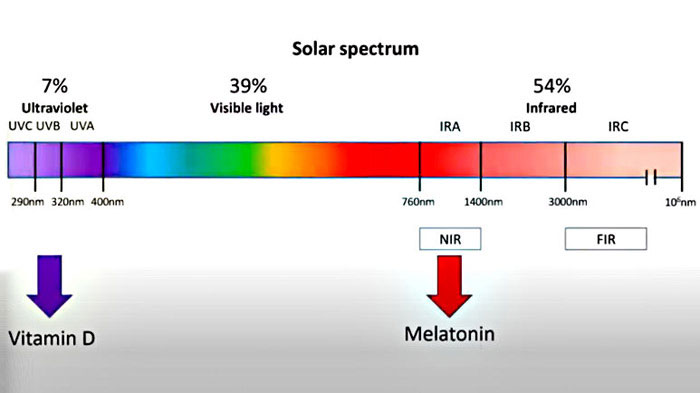
• There’s a term in biophysics called the optical window — This ranges from approximately 600 nm to 1,100 nm; 600 nm is red-orange. Around 700 nm you get into near-infrared, which becomes invisible and tops out roughly at 1,500 nm.
• The ideal optical window is about halfway through the near-infrared range, between 600 to 900 nm — Within this optical window, the wavelengths are long enough to penetrate into the body and reach deep into the tissues, but they’re not readily absorbed by hemoglobin, melanin and water.
• Below 600 nm, the rays don’t penetrate very deep — What does get into the body gets absorbed by hemoglobin and melanin. The optical window sweet spot is around 800 to 810 nm, which is classic near-infrared. However, research suggests there are benefits at other wavelengths as well.
What Are the Benefits of the 660 nm Wavelength?
Red light at 660 nm exhibits a penetration depth ranging from 1 millimeter (mm) to 10 mm, effectively reaching the epidermis, dermis and hypodermis layers of the skin, as well as some underlying tissues.2 This wavelength is readily absorbed by skin tissue, making it particularly beneficial for skin health and collagen production.3
• The depth of penetration of 660 nm light is influenced by several factors — These include irradiance (power density), tissue thickness, gender, and bone and muscle composition.4 While light penetration was unaffected by skin tone, it increased with irradiance and relative bone/muscle composition, and decreased with greater tissue thickness and in males. Tissue penetration depths were greater for females than for males.5
• The 660 nm wavelength offers a range of benefits, particularly for skin health and wound healing — Its ability to stimulate collagen production makes it a valuable tool for skin rejuvenation and reducing the appearance of wrinkles.6 Additionally, its anti-inflammatory and wound healing properties contribute to faster tissue repair and recovery from injuries.7
Further, 660 nm light reduces neuropathic pain8 and increases energy levels by promoting the release of adenosine triphosphate (ATP) from cells’ mitochondria.9 Combining 660 nm with 830 nm near-infrared (NIR) light could have additional benefits, delaying muscle fatigue and enhancing skeletal muscle performance.10 This suggests there are synergistic effects when using multiple wavelengths. Additional benefits of 660 nm light include:
• Increases cellular energy (ATP), which kickstarts cells to regenerate faster11
• Improves bone healing by increasing ATP production and accelerating callus formation in the bone fracture healing process12
• Accelerates wound healing by increasing the formation of new blood vessels and enhancing collagen deposition13
• Stimulates fibroblast differentiation, which is important for wound healing14
• Promotes proliferation in human adipose-derived stem cells, which is considered beneficial in regenerative medicine15
Save This Article for Later – Get the PDF Now
What Are the Benefits of the 850 nm Wavelength?
Near-infrared light (NIR) at 850 nm penetrates deeper into tissues than 660 nm light, reaching up to 50 mm in depth, although with reduced intensity at such depths.16 This allows it to reach muscles, joints and even bones.17 Further, 850 nm light stimulates mitochondrial activity and enhances cellular energy production, promoting tissue repair and regeneration.18
• It has also been shown to enhance M1-related cytokine release — This increases fibroblast proliferation,19 while reducing pain levels in individuals with chronic back pain.20 Research suggests photobiomodulation at 850 nm plays an anti-inflammatory role by decreasing TNF-α levels,21 improves skin complexion and builds collagen to diminish wrinkles.22
• The 850 nm wavelength offers a broader range of benefits compared to 660 nm — Its benefits extend beyond skin health to include muscle recovery, pain management and hormonal and metabolic effects. Its deeper penetration allows it to address issues related to muscles, joints and deeper tissues, making it suitable for athletes and individuals with chronic pain conditions.
• It also can be used to treat hyperpigmentation — 850 nm light significantly reduces melanin production and tyrosinase expression, suggesting applications in treating hyperpigmentation and melanin-overproducing skin conditions.23
It’s important to note that while 850 nm light has shown many therapeutic benefits, some studies suggest that 808 nm NIR light is more effective for specific applications, such as promoting wound healing and reducing inflammation.24 Further research is needed to fully compare the efficacy of these two wavelengths.
What Are the Benefits of the 1,050 nm Wavelength?
Near-infrared light at 1,050 nm penetrates even deeper than 850 nm light, reaching deep into tissues and influencing brain structures.25 This wavelength is thought to influence cellular processes, including the activation of cytochrome c oxidase, a key enzyme in the mitochondrial respiratory chain, also known as the electron transport chain.26
• The 1,050 nm wavelength offers unique benefits — These benefits are related to its deep penetration capabilities, particularly in the context of brain health and ophthalmic applications. Its ability to support cognitive function makes it a promising area of research for conditions like dementia.27 Additionally, its use in ophthalmic imaging suggests potential for improved diagnostics and treatment of eye conditions.28
• The reflection and absorption spectra of 1,050 nm light play a role in its penetration depth and thermal impact on tissues29 — Studies have shown a reflection peak around 1,050 nm to 1,120 nm, indicating that a significant portion of light at this wavelength is reflected. This, combined with its lower absorption, contributes to its deeper penetration and reduced thermal impact on the skin.
• Hormesis is relevant to 1,050 nm light therapy — This is a concept where maximal responses are observed at intermediate doses.30 This suggests that optimal therapeutic effects are likely achieved with moderate doses of 1,050 nm light.
Meanwhile, 1,050 nm light supports stroke recovery and the cardiovascular system of the brain,31 while promoting overall detoxification by supporting the lymphatic system’s flushing of toxins out of the body.32
Diverse Applications of 660 nm, 850 nm and 1,050 nm Light
The 660 nm, 850 nm and 1,050 nm wavelengths of light in photobiomodulation each exhibit unique properties and applications in various fields.
• 660 nm appears most effective for skin health and wound healing — This is due to its ability to stimulate collagen production and promote cell regeneration. This has implications for dermatology, cosmetic surgery and wound care.
• 850 nm offers a broader range of benefits due to its deeper penetration into tissues — These include muscle recovery, pain management and hormonal and metabolic effects. This wavelength holds promise for sports medicine, pain management clinics and rehabilitation settings.
• 1,050 nm shows promise in brain health and ophthalmic applications — It can reach deep into tissues and influence brain structures. This has implications for neurology, ophthalmology and the treatment of neurodegenerative diseases.
This highlights the versatility of PBM therapy and its ability to address a wide range of health concerns. By continuing to investigate the therapeutic ability of PBM therapy, we can unlock its full range of benefits and improve patient outcomes across various medical specialties.
Dosing Suggestions
Spending time outdoors provides natural near-infrared exposure, but many people don’t get outside on a regular basis. Red and near-infrared therapy has also been shown to improve athletic performance and recovery, and for this effect, a PBM device is far more effective than sunshine, as the wavelengths are more targeted. This is also the case for targeting health conditions like myopathy and neuropathy.
• For general health, you’re looking for the Goldilocks amount of red, near- and infrared light — With too little, you don’t get a biological effect. With too much, you get into an inhibitory zone. So, what’s an ideal dose, in terms of an individual session? Most of the scientific literature uses anywhere from 5 joules to 50 joules. (Joule is a measurement of the energy delivered to the body in watts per second.)
• As a general guidance, get as much full-spectrum sunlight from the outdoors as you can — Afterward, use a dose of 25 joules, and take a day off every now and then. With a large panel, that would equate to 10 minutes on the front and 10 minutes on the back, for a total of 20 minutes.
• There are no hard rules to go by when it comes to selecting a device — In general, red is not going to penetrate as deep, and is typically more for skin disorders. Near-infrared will penetrate deeper, which is ideal for muscle recovery and cognitive enhancement. A mixed device gives you the best of both worlds, but you’ll need to spend about 50% more time using it, compared to a pure near-infrared device.
The effectiveness of PBM varies depending on factors such as wavelength, power density and treatment duration. When considering PBM for various health concerns, consult with a health care provider experienced in this therapy. They will help determine the most appropriate parameters for your specific condition and guide you on how to integrate PBM for the best results.
Frequently Asked Questions (FAQs) About Photobiomodulation
Q: What is photobiomodulation (PBM), and how does it work?
A: Photobiomodulation (PBM), also known as low-level laser therapy, uses specific wavelengths of red and near-infrared light (660 nm, 850 nm, and 1,050 nm) to stimulate biological processes, enhance cellular energy (ATP), and support healing, pain relief and tissue regeneration.
Q: What is the significance of the “optical window” in PBM therapy?
A: The optical window (600 to 1,100 nm) allows light to penetrate tissues effectively without being absorbed by hemoglobin, melanin, or water. This window maximizes therapeutic benefits by targeting deeper tissues for healing and regeneration.
Q: What are the key benefits of the 660 nm wavelength?
A: The 660 nm red light improves skin health, collagen production, wound healing and neuropathic pain relief. It also boosts cellular energy, making it ideal for dermatology, skin rejuvenation and tissue repair.
Q: How does the 850 nm wavelength differ from 660 nm in its effects?
A: The 850 nm near-infrared light penetrates deeper, aiding muscle recovery, joint pain management, reducing inflammation and improving skin complexion. It’s widely used in sports medicine, rehabilitation and chronic pain treatments.
Q: What makes the 1,050 nm wavelength unique in PBM?
A: The 1,050 nm wavelength penetrates the deepest, reaching brain structures to support cognitive function, brain health, stroke recovery and detoxification. It shows promise in neurology, ophthalmology and treating neurodegenerative conditions.
- 1, 16 Acupuncture & Electro-Therapeutics Research, February 2007, 32(1-2):81-6
- 2 Kineon, Red Light Wavelenghts: Everything You Need to Know
- 3 PlatinumLED Therapy Lights, February 24, 2023
- 4, 5 Photobiomodul Photomed Laser Surg. 2020 Jul 14;38(7):393–394
- 6 Dermatol Surg. 2017 Mar;43(3):371-380
- 7 Platinum Therapy Lights, November 1, 2024
- 8, 10, 12, 13 Platinum Therapy Lights, January 13, 2025
- 9 Ann Biomed Eng. 2011 Nov 2;40(2):516–533
- 11 Aesthetic Bureau, The Deep Science of Photobiomodulation
- 14 Lasers Surg Med. 2020 Sep;52(7):671-681. doi: 10.1002/lsm.23204
- 15 Scientific Reports, August 10, 2017
- 17 International Journal of Engineering & Technology 2018, Vol. 7, No. 2.8: Special Issue 8 (Archived)
- 18, 24 Kineon, 808nm Versus 850nm What is the Difference, 2024
- 19, 21 Int. J. Bioautomation 2023, 27(1), 5-14
- 20 Medicine (Baltimore). 2020 Aug 7;99(32):e21611
- 22 Photomed Laser Surg. 2014 Feb 1;32(2):93–100
- 23 Acta Dermato-Venereologica 2012, Vol. 92, No. 6
- 25, 26 JustLight, Red Light Therapy for Dementia
- 27 Aging Dis. 2021 Jul 1;12(4):954–963
- 28 Opt Express. 2010 Sep 13;18(19):20029–20048
- 29 GembaRed, August 31, 2023
- 30 Focus (Am Psychiatr Publ). 2022 Jan 25;20(1):36–44
- 31 Fringe Heals, Red Light Therapy for Stroke
- 32 Int J Mol Sci. 2022 Mar 10;23(6):2975