Nutrition
now browsing by category
“Let food be thy medicine, and medicine be thy food” ~ Hippocrates.
Doctors should be taught this in medical school, as well as “First, do no harm”.
Cooking Oil: A Household Ingredient That You Should Not Take for Granted
Reproduced from original article:
https://www.mercola.com/infographics/healthiest-cooking-oil.htm
The original Mercola article may not remain on the original site, but I will endeavor to keep it on this site as long as I deem it to be appropriate.

Cooking oil is one of the most common culinary ingredients you’ll find in American homes. It’s used in countless dishes, but what exactly does it do?
The main purpose of using cooking oil is to quickly transfer heat to the food that’s being cooked. This is why frying is usually quicker than other cooking methods, such as boiling or roasting. Cooking oil has good tolerance against high temperatures, which means it doesn’t boil or break down right away.
In addition, cooking oil can provide additional flavor, depending on what it’s made of, and bring out the fat-soluble nutrients in the other ingredients. When used in baking, it can help with moisture retention, as well as tenderizing and leavening the ingredients.
Despite these advantages, the main issue with cooking oil (especially vegetable oil) is that when it is heated, it releases trans fat, free radicals and toxins that can leach into your food and wreak havoc on your health.
Why You Should Avoid Vegetable Oils Like the Plague
Vegetable oils are one of the unhealthiest oils you can consume. They are rich in trans fat, which is a synthetic fatty acid that inhibits your body’s production of prostacyclin, a factor that keeps your blood flowing smoothly. If your body cannot produce enough prostacyclin, blood clots can form in your arteries, increasing your risk of heart disease.
Aside from endangering your cardiovascular health, trans fat may even impair your memory. According to a study published in Time, participants who consumed high levels of trans fat remembered 11 fewer words compared to those who consumed lower levels.
Much of the reason why vegetable oils contain trans fat is because they are hydrogenated, a process wherein hydrogen gas is forced into the oil at a high pressure during manufacturing. Companies use this method to extend the shelf life of their products, but at the cost of people’s health.
Furthermore, vegetable oils produce oxidized cholesterol when heated, increasing thromboxane formation, a factor that clots your blood, as well as two toxins: cyclic aldehydes and acrylamide.
In light of all this information, which vegetable oils should you avoid? I’ve put together a list of vegetable oils that can endanger your health:
- Soybean oil: This contains plenty of highly processed omega-6 fats. When you use it to cook food, the increased levels of omega-6 can lead to chronic inflammation.
- Corn oil: Similar to soybean oil, corn oil has extremely high amounts of omega-6 compared to omega-3. In fact, the ratio is estimated to be around 49:1. Ideally, the ratio should be 1:1 only.
- Cottonseed oil: It’s estimated that 93 percent of cotton in the U.S. is genetically engineered. Consuming oil made from these cotton plants can have an adverse effect on your health in the long run.
- Canola oil: You may have seen plenty of advertisements that present canola oil as a safe and healthy cooking ingredient. Unfortunately, this is not true, as canola oil can introduce oxidized cholesterol into your body when consumed.
Instead of Vegetable Oils, These Are the Healthiest Cooking Oils You Can Use
With the prevalence of hydrogenated cooking oils in the market, what options are you left with? Fortunately, there are many healthy alternatives available, and they are easy to acquire:
- Olive oil: This oil contains healthy fatty acids that can help lower your risk of heart disease. In addition, it may help lower the risk of breast cancer in women.
- Grass-fed butter: Raw, organic butter made from healthy grass-fed cows’ milk contains many nutrients, such as vitamins A, D, E and K2. Furthermore, it contains various minerals and antioxidants that can help support your health.
- Peanut oil: This oil contains high levels of omega-6 similar to other vegetable oils, but it can be beneficial to your health (it is high in antioxidants) as long as you consume it unheated and in moderation.
- Sesame oil: Similar to peanut oil, sesame oil is high in omega-6. However, if consumed unheated and in small amounts, it may benefit your health, especially if you are diabetic.
- Coconut oil: This is what I believe is the best cooking oil you can use for your dietary needs. It has various health benefits, which I will discuss below.
Cooking With Coconut Oil: One of the Best Oils You Can Use
Coconut oil has been getting plenty of attention lately, and rightfully so. I believe it’s one of the best things you can add to your diet because it can help optimize your health in ways you may have never experienced before. In fact, I use it exclusively whenever I cook, and I wholeheartedly believe that you should as well. Take a look at the amazing benefits it can provide:
- Cardiovascular Health
Coconut oil may have a positive effect on your heart health. Researchers discovered that consuming it can help improve your good cholesterol levels, while simultaneously lowering bad cholesterol levels. As a result, your risk of heart disease decreases. - Energy Boost
Coconut oil can be a great source of healthy energy, thanks to its medium-chain fatty acids (MCFAs). When consumed, the MCFAs are immediately digested and converted by your liver into energy that you can immediately use. - Weight Management
Aside from giving you an energy boost, coconut oil simultaneously stimulates your metabolism to encourage shedding body fat, thus helping you maintain a healthy weight profile. - Antimicrobial Properties
The compounds of coconut oil can help keep your internal organs free from microbes. According to a mice study, subjects who were fed coconut oil had a significant reduction in candida albicans, a yeast strain that causes candidiasis, or more commonly known as yeast infection. - Oral Health
Coconut oil can be used for oil pulling, a hygienic practice that uses oil to rinse your mouth. Its antimicrobial properties help “pull” out and eliminate bacteria and viruses that live in your mouth, along with food debris stuck between your teeth.
Try These Healthy and Delicious Recipes That Use Coconut Oil
The great thing about coconut oil is that it can be used in a variety of cooking methods. It has a mild flavor that helps bring out the natural flavors of other ingredients. I encourage you to try the following recipes so you can taste the difference.
|
Mom’s Best Fried Chicken Recipe |
Salmon Supreme Recipe |
Healthy Quinoa Pie Recipe |
Ingredients:
|
Ingredients:
|
Ingredients:
|
Procedure:
Note: Do not burn or char your meats and avoid eating the black portions. |
Procedure:
*Note: If Old Bay Seasoning is not available, another seafood seasoning would be fine, or a combination of celery salt, dried mustard, black pepper and a small amount of the following: ground bay leaves, ground cloves, allspice, ginger, mace, cardamom, cinnamon and paprika. |
Procedure:
|
This Mushroom Compound Is a Longevity Powerhouse
Reproduced from original article:
The original Mercola article may not remain on the original site, but I will endeavor to keep it on this site as long as I deem it to be appropriate.
Analysis by Dr. Joseph Mercola Fact Checked October 13, 2023
STORY AT-A-GLANCE
- Ergothioneine, a sulfur-containing amino acid found in mushrooms, is a powerhouse when it comes to promoting longevity
- Out of 112 measured plasma metabolites, ergothioneine is the metabolite most significantly associated with lower morbidity and mortality, being associated with a lower risk of coronary artery disease, stroke and death of all causes
- In 2005, scientists discovered that most human tissues have a highly specific carnitine-based transporter for ergothioneine, which suggests humans are designed to eat and reap specific benefits from mushrooms
- Ergothioneine has antioxidant, anti-inflammatory, antimutagenic and cytoprotectant properties, and research shows depletion of ergothioneine leads to higher oxidative stress and cell death
- Mushrooms that contain ergothioneine include pine mushrooms, oyster mushrooms, shiitake, king boletes, porcinis, chanterelles, lion’s mane and Enokitake, just to name a few. Porcini, shiitake, oyster, maitake and king oyster typically contain the highest amounts
In the Nutrition Facts video above, Dr. Michael Greger reviews the scientific literature showing that ergothioneine, a sulfur-containing amino acid found in mushrooms, is a real powerhouse when it comes to promoting longevity.
For example, he cites a 2020 study1 published in the journal Heart, which found that out of 112 measured plasma metabolites:
“Ergothioneine was the metabolite most significantly associated with lower morbidity and mortality, being associated with a lower risk of CAD [coronary artery disease], stroke, death of all causes, and death of cardiovascular causes.”
The authors concluded that “higher ergothioneine was an independent marker of lower risk of cardiometabolic disease and mortality, which potentially can be induced by a specific healthy dietary intake.”
Mushrooms that contain ergothioneine include pine mushrooms, oyster mushrooms, shiitake, king boletes, porcinis, chanterelles, lion’s mane and Enokitake,2 just to name a few.
Porcini, shiitake, oyster, maitake and king oyster typically contain the highest amounts. White button mushrooms also contain it, but in far lower amounts. Greger presents some comparative data on these mushrooms in his video.
We Were Made to Eat Mushrooms
As noted by Greger, ergothioneine was largely ignored until 2005, when scientists discovered that most human tissues have a highly specific carnitine-based3 transporter for ergothioneine.4
This transporter is even chronobiologically upregulated before mealtimes. These facts strongly indicate that mankind was designed to eat and reap specific benefits from mushrooms. But what are those benefits, exactly?
One of the mechanisms of action that make ergothioneine so beneficial for health is its antioxidant properties,5,6 which are similar to that of glutathione.7 As an antioxidant, it reduces cellular damage by gobbling up harmful free radicals.
It has an extra edge over many other antioxidants, however, because it accumulates in tissues and organs after ingestion,8 and can help prevent oxidative damage in those tissues over a long period of time.9
What’s more, the tissues in which it tends to accumulate the most are tissues that also tend to be more prone to free radical damage, such as the lenses of your eyes and liver, as well as tissues that are more sensitive to damage in general, such as bone marrow, seminal fluid and blood.
Ergothioneine has antioxidant, anti-inflammatory, antimutagenic and cytoprotectant properties, and research shows depletion of ergothioneine leads to higher oxidative stress and cell death.
Mushrooms May Protect Mitochondrial Health
Remarkably, it may even accumulate in, and protect, your mitochondria,10 the tiny organelles inside your cells that produce cellular energy in the form of ATP. As explained in a 2021 paper:11
“Early studies suggested (but did not rigorously establish) that OCTN1 is found in the mitochondria, allowing ET [ergothionione] accumulation in this organelle. Indeed, ET could protect mitochondrial DNA from oxidative damage due to hydrogen peroxide or UV exposure.
Since then, few studies have investigated the intracellular localization of OCTN1 and ET. Mitochondrial dysfunction is implicated in a wide range of disorders and the therapeutic benefits of ET have been suggested to be mediated through protection of this organelle.
We recently demonstrated that ET protects mitochondrial morphology in transgenic Drosophila models of PD [Parkinson’s disease] (unpublished data). Definitive evidence of ET uptake and accumulation in the mitochondria is required.”

Download this Article Before it Disappears
Ergothioneine — A Longevity Vitamin?
Ergothioneine also has anti-inflammatory, antimutagenic12 and cytoprotectant13 properties. In short, it protects your cells against all sorts of damage. “Depletion of ETT (ergothioneine) leads to augmented oxidative stress and cell death,” one study notes.14
As such, the authors suggested it might represent a new vitamin. However, as explained by Greger, vitamins are classified as such “by the manifestation of overt dietary deficiency diseases,” and no such diseases have been identified for ergothioneine. Or have they?
“Perhaps deficiency diseases are staring us in the face,” Greger says. Low plasma levels of ergothioneine have been linked to frailty, cardiovascular disease, mild cognitive impairment, dementia and Parkinson’s disease,15,16 for example, all of which are rampant.
Others have suggested ergothioneine might be better classified as “longevity vitamin.”17 While some vitamins may not be essential for life, “longevity vitamins” appear to be crucial for extended health- and life span, and ergothioneine fits that bill.
Health Benefits of Ergothioneine
While research into the health benefits of ergothioneine is still in its infancy, ergothioneine has been shown to:
Support healthy brain function, cognition18 and mood19 — As noted in the review paper “Ergothioneine in the Brain”:20
Eating two or more portions of mushrooms per week has been shown to reduce your risk of mild cognitive impairment by more than half, compared to one portion a week or less.21 Another study found people who consumed mushrooms three times a week or more had a significantly lower risk of developing dementia, over a period of six years, compared to those who only ate mushrooms once a week or less.22 A third study found seniors with early-stage Alzheimer’s disease who consumed one-third to a full teaspoon of powdered lion’s mane mushroom per day for several months saw mild but measurable improvement in their cognitive function and Activities of Daily Living scores, compared to placebo.23 As noted in the 2022 review paper, “Decline of Ergothioneine in Frailty and Cognition Impairment”:24
|
| Bolster the immune response, thereby reducing your risk of infections.25 |
| Protect cardiovascular health by reducing oxidative stress, inflammation and lipid peroxidation.26 |
| Improve atherosclerosis.27 |
| Protect skin and mitochondrial DNA from UV-related damage.28 |
| Promote eye health and protect against age-related macular degeneration (AMD) and vision loss by neutralizing free radicals and lowering oxidative stress in the retina.29 |
| Protect and maintain the health of your central nervous system by promoting neuronal stem cell differentiation.30 |
| Protect fertility in men when taken two weeks before administration of the anticancer drug cisplatin, which is known to cause testicular damage resulting in infertility.31 |
| Slow or prevent fibrosis by modulating levels of inflammatory cytokines and mitigating oxidative damage in tissues.32 |
| Lower your risk of cancer, in particular breast cancer.33 |
| Lower all-cause mortality.34 |
A Cup of Mushrooms a Day May Keep the Doctor Away
A 2019 study35 published in Nutrition Today, which compared ergothioneine intakes between various countries, found the lowest estimated daily consumption in the U.S., at 1.1 milligrams per day, and the highest in Italy, at 4.6 mg per day. A primary factor in this outcome was believed to be Italians’ preference for ergo-rich porcini mushrooms.
However, even just adding white button mushrooms to your daily diet, which has among the lowest amounts of ergothioneine, can more than double your blood level.
A retrospective study36 in Plant Foods for Human Nutrition, which looked at how daily mushroom consumption might affect Type 2 diabetes risk factors, found that eating 1 cup of white button mushrooms a day raised ergothioneine concentrations from a mean of 317 nanograms per milliliter at baseline to 677 ng/mL at the end of 16 weeks. Participants with metabolic syndrome also experienced significant:
“… increases in the antioxidant marker ORAC (oxygen radical absorption capacity) and anti-inflammatory hormone, adiponectin and significant decreases in serum oxidative stress inducing factors, carboxymethyllysine (CML) and methylglyoxal (MG).”
A Promising Therapeutic for Longer, Healthier Life Span
In closing, consider the following final thoughts presented in the paper “Ergothioneine, Recent Developments”:37
“The unique chemistry of ET [ergothioneine] gives rise to its high stability and ability to accumulate in the body, enabling a wide range of cytoprotective and disease mitigating properties.
While associations have been made between low blood levels of ET and various human disorders, there is much still unknown. Nevertheless, the uptake in the fetus and infant, the near, if not fully, ubiquitous presence in tissues and the avid retention by the body are strong evidence that ET plays a critical role in human development and health.
Numerous animal studies have also demonstrated its benefits, whereas preventing uptake through silencing OCTN1 appears to worsen pathology in these disease models.
It remains to be seen whether supplementation in humans, especially the elderly or the subset of individuals with lower blood levels of ET (due to polymorphic variants of the transporter or diet), could reduce the risk of age-related and other diseases, or act as a therapeutic by slowing or halting disease progression.
The safety profile of ET and regulatory approvals facilitate such studies. With the rapid surge in interest, it is undoubtedly exciting times for this unique … compound.”
- 1 Heart 2020; 106: 691-697
- 2, 6, 18, 25, 26, 29 Health by Mushrooms January 16, 2023
- 3, 7, 9, 15 Neurochem Res September 2022; 47(9):2513-2521
- 4 PNAS April 5, 2005; 102(14): 5256–5261
- 5, 12 Mycobiology March 2009; 37(1): 43-47
- 8 Redox Biology June 2021; 42: 101868
- 10, 11 Redox Biology June 2021; 42: 101868, Section 2.3
- 13 Nutrition Research Reviews December 2020; 33(2): 190–217
- 14 Cell Death & Differentiation 2010; 17: 1134-1140
- 16 YouTube Nutrition Facts October 2, 2023; 1:48 minutes
- 17 Journal of Nutritional Science 2020; 9: e52
- 19, 20 FEBS Letters May 2022; 596(10):1290-1298
- 21 YouTube Nutrition Facts October 2, 2023; 5:02 minutes
- 22 YouTube Nutrition Facts October 2, 2023; 5:11 minutes
- 23 YouTube Nutrition Facts October 2, 2023; 5:35 minutes
- 24 FEBS Letters May 2022; 596(10): 1270-1278
- 27 YouTube Nutrition Facts October 2, 2023; 4:04 minutes
- 28 Redox Biology June 2021; 42: 101868, Section 3.2.6
- 30 Redox Biology June 2021; 42: 101868, Section 3.2.1
- 31 Redox Biology June 2021; 42: 101868, Section 3.2.2
- 32 Redox Biology June 2021; 42: 101868, Section 3.2.3
- 33 YouTube Nutrition Facts October 2, 2023; 4:24 minutes
- 34 YouTube Nutrition Facts October 2, 2023; 4:30 minutes
- 35 Nutrition Today January 1, 2019; 54(1):16-22
- 36 Plant Foods for Human Nutrition September 2016; 71(3): 245-251
- 37 Redox Biology June 2021; 42: 101868, Final Thoughts
Benefits of Coffee and Tea
Reproduced from original article:
https://articles.mercola.com/sites/articles/archive/2023/10/12/benefits-of-coffee-and-tea.aspx
The original Mercola article may not remain on the original site, but I will endeavor to keep it on this site as long as I deem it to be appropriate.
Analysis by Dr. Joseph Mercola Fact Checked October 12, 2023

STORY AT-A-GLANCE
- Tea, particularly green tea, has been linked with a reduced risk of stroke, diabetes and depression, and improved blood pressure, abdominal obesity and glucose levels
- Coffee consumption is associated with reduced risk of premature death and cardiovascular death, heart disease, cancer, nonalcoholic fatty liver disease, cirrhosis and diabetes
- Coffee should be organic and shade-grown; drink it black or with added coconut oil or MCT oil
- Tea should be organic and grown in a nonpolluted environment to avoid contamination with heavy metals or fluoride; drink it without milk, with lemon added if you like
- Pregnant women should not drink coffee or tea due to its caffeine content, which has been linked to low birth weight, heart problems and behavioral problems later in life
Editor’s Note: This article is a reprint. It was originally published January 15, 2018.
Just as you can make or break your health via the foods you choose at each meal, you can support or sabotage your well-being one beverage choice at a time. At one end of the spectrum would be soda — one of the absolute worst choices to drink. At the other, pure water — arguably the best for quenching your thirst and supporting optimal health.
For those times when you’re looking for something to savor and sip, an excellent alternative is coffee or tea, both of which have earned a solid spot among healthy beverages, with some caveats, however.
After water, coffee and tea are the most commonly consumed beverages worldwide, and they’re also top sources of both caffeine and antioxidant polyphenols for Americans. Tea, particularly green tea, has been linked with a reduced risk of stroke, diabetes and depression, and improved blood pressure, abdominal obesity and glucose levels, while coffee consumption is associated with reduced risk of premature death and cardiovascular death, for starters.1
“Coffee is a complex beverage containing hundreds of biologically active compounds,” researchers wrote in the Journal of the American College of Cardiology,2 and this is why it, and tea, have such far-reaching health potential. From your heart to your vision to your brain, there are many reasons to enjoy a cup (or a few) of coffee or tea daily — organic, preferred.
Health Benefits of Coffee From Your Heart to Your Brain
Research presented at the American Heart Association’s Scientific Sessions 2017 found that compared to non-coffee drinkers, coffee drinkers had a 7% lower risk of heart failure and an 8% lower risk of stroke for each additional cup of coffee consumed per week.3 Separate research linked coffee consumption to a lowered risk of heart disease, cancer, nonalcoholic fatty liver disease, cirrhosis and diabetes.4
In the latter study, the largest risk reduction came from drinking three to four cups daily, but they suggested drinking more would likely benefit health, not harm it.
As for your brain health, increased coffee (and tea) consumption was linked to a lower risk of glioma brain tumor, such that people in the top category of coffee consumption were 91% less likely to have glioma compared with those in the bottom category.5
It may help your brain function as well, with research showing that drinking one to two cups of coffee daily may lower your risk of Alzheimer’s disease and other forms of dementia, cognitive decline and cognitive impairment compared to drinking less than one cup.6
Drinking coffee may even enhance long-term memory consolidation7 and, if you drink the caffeinated variety, improve attention and alertness while decreasing your risk of depression.8 Caffeine can be a double-edged sword, with excess consumption causing adverse effects, and everyone’s tolerance to caffeine is unique.
However, most people naturally adjust their coffee consumption to avoid the jittery feeling that comes from too much caffeine. Researchers wrote in the Archives of Internal Medicine:9
“At low to moderate doses, caffeine has well-known psychostimulant effects such as improved psychomotor performance, increased vigilance, elevated arousal (lesser somnolence and greater activation), and increased sensations of well-being and energy.
The known effects of caffeine are dose-dependent, but typically biphasic, i.e. low doses are perceived as pleasant and stimulating whereas a reverse effect is observed with higher doses. Most individuals seem to adapt their caffeine consumption to their own tolerance, so that the habitual is within the range between reinforcing and aversive effects.”
Tea Offers Many Health Benefits, Too
Many of the health benefits offered for coffee consumption can also be gained by drinking tea, so a case can be made for adding either (or both) to your daily diet. For instance, drinking green tea is associated with reduced mortality due to all causes, as well as mortality due to heart disease. Research also shows holistic benefits to green tea consumption, including lower blood pressure, oxidative stress and chronic inflammation.10
In terms of heart health, green tea improves both blood flow and the ability of your arteries to relax, with research suggesting a few cups of green tea each day may help prevent heart disease.11 One of green tea’s claims to fame is the catechin epigallocatechin-3-gallate (EGCG).
Studies show EGCG can be helpful for the prevention of arteriosclerosis, cerebral thrombus, heart attack and stroke — in part due to its ability to relax your arteries and improve blood flow.12 In addition, tea may also benefit:
• Type 2 diabetes — One study found people who consume six or more cups of green tea daily had a 33% lower risk of developing Type 2 diabetes than those who consumed less than one cup per week.13
• Weight loss — There is some evidence that long-term consumption of green tea catechins is beneficial for burning fat and may work with other chemicals to increase levels of fat oxidation and thermogenesis.
• Bone health — Green tea polyphenols combined with a form of vitamin D called alfacalcidol could boost bone structure and strength, according to a study in mice. The mixture may reverse damage to bones caused by lipopolysaccharide (LPS)-induced chronic inflammation, which could in turn reduce the risk of osteoporosis.14
• Vision health — Catechins in green tea could help protect you against glaucoma and other eye diseases, as research found that the compounds travel from your digestive system into the tissues of your eyes. During the study, the catechins found in green tea were absorbed into various parts of the eyes anywhere from 30 minutes to 12 hours after rats were given tea.15
• Cancer — Green tea components have been shown to downregulate the expression of proteins involved in inflammation, cell signalization, cell motility and angiogenesis, while an association between green tea intake and decreased risk of cancers (including ovarian and breast16) has been reported.17
Previous research has shown that green tea polyphenols act on molecular pathways to shut down the production and spread of tumor cells.18 They also discourage the growth of the blood vessels that feed the tumors. EGCG even acts as an antiangiogenic and antitumor agent, and helps modulate tumor cell response to chemotherapy.19
Download this Article Before it Disappears
Different Types of Tea May Offer Different Benefits
Much of the fanfare surrounding tea goes to green tea, but there are many different varieties to consider. Black and green tea (as well as oolong, dark and white teas) come from the same plant, an evergreen called Camellia sinensis. It is the processing method and degree of oxidization (exposure to oxygen) that create the different tea types. While black tea is oxidized, green tea is not oxidized at all after the leaves are harvested.
This minimal oxidation may help to keep the beneficial antioxidants in green tea intact, although both green and black teas have beneficial effects. Generally speaking, the less the tea is oxidized, the lower its caffeine content and higher its antioxidants. White tea is actually the least processed of all teas, while oolong is semi-oxidized, placing it between green and black teas in terms of caffeine and antioxidant levels.20
There are also herbal teas, which vary quite dramatically in flavor and health effects (herbal teas are actually not considered “true” teas, as they do not come from Camellia sinensis, but they can be beneficial and enjoyable nonetheless). What types of benefits do different types of tea offer?
- Green and black tea for your gut — Both green and black tea may alter gut microbes in a way that’s beneficial for preventing weight gain and obesity.21
- Oolong tea for weight management and heart health — The polyphenols in oolong tea help control fat metabolism in your body by activating certain enzymes. A 2001 study published in the Journal of Nutrition found that participants who ingested either full-strength or diluted oolong tea burned 2.9 to 3.4% more total calories daily.22
- Hibiscus tea for overall health — High in vitamin C, minerals and antioxidants, studies suggest hibiscus tea may improve blood pressure, help prevent metabolic syndrome, protect your liver and even provide anticancer effects.23
- Matcha for an antioxidant boost — Matcha is a type of green tea, but unlike regular green tea, in which you steep and discard the leaves, when you drink matcha you consume the entire leaves, which are ground micron fine. Studies indicate that 1 cup of matcha may provide the antioxidant equivalent of 3 cups of regular green tea and as much as 137 times more antioxidants than low-grade green tea.24
Coffee and Tea Caveats: Choose Organic and Ditch the Dairy
The health potential of your coffee and tea depends on several factors, beginning with quality. Coffee, which is a heavily pesticide-sprayed crop, should always be organic, as well as shade-grown. Coffee is a shade-loving plant, but growers often strip forests to make growing and harvesting easier.
This destroys the ecological habitat of many natural pest deterrents, such as birds and lizards, while the pests flourish, resulting in additional pesticide use in nonshade-grown varieties.
It’s equally important to choose organic tea, when available, as well as choose varieties grown in nonpolluted areas, as tea plants readily absorb lead and fluoride from the soil. Selecting organic will help you avoid pesticides, while choosing tea grown in a pristine environment will ensure that the least amount of fluoride, heavy metals and other toxins from soil and water possible leaches into the leaves. A clean growing environment is essential to producing a pure, high-quality tea.
You’ll also want to avoid adding health-busting additives like sugar to your coffee or tea. Even milk is best avoided, as the proteins in milk may bind to and neutralize the antioxidants in tea, such that its health benefits are significantly reduced. For instance, one study found, “Milk counteracts the favorable health effects of tea on vascular function.”25
Similar effects have been noted in coffee, with one study revealing that the antioxidant capacity of coffee was “significantly decreased by milk addition.”26
Further, while most people can safely consume coffee and tea, if you’re pregnant, I believe you should avoid both due to the caffeine. Not only has coffee consumption during pregnancy been linked to low birth weight babies,27 but also to heart problems in a mouse study28 and to behavioral disorders in later life, if the mother consumes caffeine at 15 weeks gestation, a key point when the fetal brain seems most susceptible to caffeine exposure.29
Tricks to Boost the Health Benefits of Your Coffee or Tea
All you need to do to enjoy the health benefits of coffee and tea is slowly sip and savor your organic unsweetened brew. However, if you want to kick the benefits up a notch higher, there are a couple of tricks to do so. For tea, add a squeeze of fresh lemon juice, which may help to stabilize its beneficial catechins so you can absorb more of them.30
For coffee, adding in coconut oil or medium-chain triglyceride (MCT) oil may help you to burn fat and improve your mitochondrial function. Start with a small amount, such as 1 teaspoon of MCT oil, working your way up to 1 or 2 tablespoons, to avoid gastrointestinal side effects. You can also blend in a pat of raw grass fed butter. This recipe is a favorite among those following a ketogenic diet.
In fact, many consider MCTs “the ultimate ketogenic fat,” as it allows you to eat slightly more net carbs while still staying in nutritional ketosis. Without MCTs, you’d have to cut carbs more drastically in order to maintain ketosis, and hot coffee is an ideal carrier for MCT oil.
Ultimately, whether you prefer your coffee black or with MCT oil, or your tea with or without lemon, these beverages represent a simple way to increase your intake of antioxidants and other disease-fighting compounds daily.
- 1 Curr Opin Clin Nutr Metab Care. 2013 Nov;16(6):688-97
- 2 J Am Coll Cardiol. 2013 Sep 17;62(12):1043-1051
- 3 EurekAlert! November 13, 2017
- 4 BMJ. 2017 Nov 22;359:j5024
- 5 Eur J Nutr. 2017 Nov 9
- 6 Clin Nutr. 2017 Jun;36(3):730-736
- 7 Nature Neuroscience 17, 201–203 (2014)
- 8, 9 Arch Intern Med. 2011 Sep 26; 171(17): 1571–1578
- 10 Diabetes Metab J. Jun 2013; 37(3): 173-175
- 11 European Journal of Cardiovascular Prevention & Rehabilitation June 2008, 15(3):300-305
- 12 Eur J of Cardiovascular Prevention & Rehabilitation, June 2008, 15(3):300-305
- 13 Ann Intern Med. 2006 Apr 18;144(8):554-62
- 14 Journal of Nutritional Biochemistry October 29, 2010
- 15 Journal of Agricultural and Food Chemistry February 10, 2010;58(3):1523-34
- 16 Carcinogenesis (2008) 29 (10): 1967-1972
- 17 Gynecol Oncol. 2012 Sep;126(3):491-8
- 18 EurekAlert! December 2004
- 19 Biochem Pharmacol. 2011 Dec 15;82(12):1807-21
- 20 The Tea Spot, About Tea
- 21 European Journal of Nutrition September 30, 2017
- 22 J Nutr. 2001 Nov;131(11):2848-52
- 23 Cardiovasc Hematol Agents Med Chem. 2013 Mar;11(1):25-37
- 24 J Chromatogr A. 2003 Sept. 5;1011(1-2):173-80
- 25 Eur Heart J. 2007 Jan;28(2):219-23
- 26 Food Chem. 2012 Oct 15;134(4):1870-7
- 27 BMC Medicine February 19, 2013, 11:42
- 28 Sci Rep. 2016; 6: 34106
- 29 J Pediatr. 2017 Oct;189:120-127.e1
- 30 Mol Nutr Food Res. 2007 Sep;51(9):1152-62
Can Choline Help With Our Pain Epidemic?
Reproduced from original article:
https://articles.mercola.com/sites/articles/archive/2023/10/12/acetylcholine-pain-relief.aspx
The original Mercola article may not remain on the original site, but I will endeavor to keep it on this site as long as I deem it to be appropriate.
Analysis by Dr. Joseph Mercola Fact Checked October 12, 2023

STORY AT-A-GLANCE
- Boosting choline, a precursor for acetylcholine, may be an important part of pain relief, but an estimated 90% of the U.S. population is deficient
- Researchers from the University of Chicago revealed that targeting an acetylcholine receptor led to pain-relieving effects in mice, even in animals that were tolerant to opioids
- The pathway did not activate the brain’s reward system, so there’s little chance of addiction, and there was no tolerance built up or withdrawal symptoms when the treatment stopped
- Choline plays a significant role in human health, from neurotransmitter synthesis to cell structures, and may be involved in the development of nonalcoholic fatty liver disease (NAFLD), atherosclerosis and neurological disorders
- Krill oil and eggs, particularly the yolks, are excellent choline sources
The neurotransmitter acetylcholine may be an untapped pathway for pain relief that doesn’t involve dangerous drugs like opioids. Researchers from the University of Chicago revealed that targeting an acetylcholine receptor led to pain-relieving effects in mice, even in animals that were tolerant to opioids.1
The pain relief was powerful enough to rival that from opioids, but without the negative effects. The pathway did not activate the brain’s reward system, so there’s little chance of addiction, and there was no tolerance built up or withdrawal symptoms when the treatment stopped.2 Boosting choline, a precursor for acetylcholine, may therefore be an important part of pain relief, but many in the U.S. are deficient.
How Acetylcholine May Relieve Pain
Acetylcholine is an excitatory neurotransmitter that excites nerve cells, triggering it to send a message.3 A 2011 study revealed that acetylcholine decreased activity of pain-excited neurons and increased the activity of pain-inhibited neurons in the cornu ammonis region of the hippocampus.4
The University of Chicago study specifically involved an area of the brain called the ventrolateral periaqueductal gray (vlPAG), a “critical nexus” for systems involved in pain control.
In 2017, the study’s senior author, Daniel McGehee, Ph.D., and colleagues found that targeting alpha-7 (⍺7), an acetylcholine receptor in the vIPAG, relieved pain. While this receptor typically increases nervous system activity, when it was stimulated in the study it led to a quiet state that resulted in pain relief for several hours. McGehee said in a University of Chicago news release:5
“That was a huge and extremely unexpected outcome. Persistent inhibition was not on our radar at all. It was always a conundrum to me, but we saw that there is recruitment of another signaling pathway that is altering potassium channel function and causing these cells to shut down.”
Fortunately, the acetylcholine receptor involves a different pathway from opioids. So when the team boosted acetylcholine in opioid-tolerant mice, the same pain-relieving effects were seen. Study author Shivang Sullere, Ph.D. explains:6
“Not only do these cells relieve pain, they also accurately mirror the pain state of the organism. Through imaging methods, we can reproducibly monitor these neurons and acetylcholine in the vlPAG. This provides us a valuable biomarker for the pain state of an organism.
This unexplored role of acetylcholine also points towards its potential involvement in the central sensitization processes that contribute to the development of chronic pain conditions. Modifying acetylcholine signaling provides an opportunity to relieve pain and prevent the establishment of the chronic pain state.”
Why Do You Need Choline?
Choline was identified in 18627 and officially recognized as an essential nutrient by the Institute of Medicine in 1998.8 It plays a significant role in human health, from neurotransmitter synthesis to cell structures, and has a large impact on the development of nonalcoholic fatty liver disease (NAFLD), atherosclerosis9 and neurological disorders.10
During development, choline supports healthy development of the brain and may help reduce the risk of neural tube defects. In older adults, it’s also important. In one study, 77% of men and 80% of postmenopausal women who were deprived of dietary choline developed signs of subclinical organ dysfunction, including fatty liver and muscle damage.11 The dysfunction resolved when the participants consumed a high-choline diet.
While your body can produce some choline in the liver, it’s not enough to meet human needs. There’s also an interrelationship between folate and choline deficiencies, as both are methyl donors.12 When the diet is deficient in folate, choline becomes the primary methyl donor, creating greater insufficiency or deficiency of the nutrient.
As a precursor for acetylcholine, choline increases acetylcholine release, which plays a role in many body functions, including muscle control, memory and circadian rhythm.13 Other important functions of choline in the body include:14
- Synthesis of phospholipids needed for cell membranes, including phosphatidylcholine and sphingomyelin
- Modulating gene expression
- Cell membrane signaling
- Fat transport and metabolism — Choline is needed to carry cholesterol from your liver, and a choline deficiency could result in excess fat and cholesterol buildup15
- Early brain development
Choline may also help prevent cardiovascular disease by converting homocysteine to methionine.16 Homocysteine is an amino acid that may increase your risk for heart disease and stroke if it accumulates in the blood.17 Choline is also important for healthy mitochondrial function18 as well as mental health. Choline deficiency may lead to abnormal fat deposits in your liver, causing NAFLD.19
Further, low choline intake is associated with increased anxiety,20 while high dietary choline is linked to better cognitive performance.21 Meanwhile, choline deficiency is linked with DNA damage and apoptosis, and breast cancer risk may be reduced by 24% among women who eat a high-choline diet.22 Low levels of acetylcholine are also linked to Alzheimer’s disease.23 According to the National Institutes of Health:24
“Cholinergic neurons use the neurotransmitter acetylcholine, and Alzheimer’s disease is often treated by increasing acetylcholine levels or preventing its breakdown.”
Download this Article Before it Disappears
There’s a Good Chance You’re Choline-Deficient
An estimated 90% of the U.S. population is deficient in choline,25 and, according to a study published in the journal Nutrients, only 8% of U.S. adults (including only 8.5% of pregnant women) are getting enough on a daily basis.26 The amount of choline you need depends on your age, sex and whether or not you’re pregnant or nursing. Generally, the recommended intake is 425 milligrams (mg) a day for women and 550 mg/day for men.27
Pregnant and nursing women require more choline — from 450 mg to 550 mg a day — and some people have genetic polymorphisms that increase the need for choline. Certain ethnic and racial groups are more likely to be affected.28 In addition to pregnant and lactating women, groups at especially high risk for choline deficiency include:
- Endurance athletes — Endurance exercises, like marathons and triathlons, can deplete choline levels. Studies show that supplementing with choline before these types of stressful exercises can help keep levels of choline in the blood from getting too low.29,30
- People who drink a lot of alcohol — Excess alcohol consumption can increase your need for more choline while simultaneously increasing your risk of deficiency.31
- Postmenopausal women — Postmenopausal women have lower estrogen concentrations, which can increase the risk of organ dysfunction in response to a low-choline diet.32
- Vegetarians and vegans — Animal foods like beef liver, eggs and krill oil are the highest sources of dietary choline. Because vegetarians and vegans have dietary restrictions that eliminate some or all of these choline-rich foods, it can be more difficult to get an adequate amount of the nutrient through diet alone.33
The Best Sources of Choline
Eggs, particularly the yolks, are an excellent choline source. Among egg consumers, more than 57.3% met the adequate intake levels for choline, compared to just 2.4% of people who consumed no eggs. In fact, the researchers concluded that it’s “extremely difficult” to get enough choline unless you eat eggs or take a dietary supplement.34 Other dietary sources of choline include:35
| Grass fed beef liver | Cauliflower | Atlantic cod |
| Alaskan salmon | Kidney beans | Quinoa |
| Brussels sprouts | Broccoli | Shiitake mushroom |
Krill oil, however, may be an ideal choline source. It contains 69 choline-containing phospholipids to synthesize phosphatidylcholine, a critical component of human cell membranes.36 This is key to its benefits as a source of choline, because it’s estimated that 60% of choline in organic salts is otherwise lost when gut bacteria convert it to the metabolite trimethylamine (TMA).
Enzymes may then turn TMA into trimethylamine-N-oxide (TMAO), a potential biomarker for insulin resistance and heart problems. But krill oil contains fatty acids in the form of phosphatidylcholine (PC) — unlike fish oil, which contains them in triglyceride form.
As noted by the researchers, “Choline in the form of PC is considerably less converted to TMA as demonstrated in a single-dose study with krill oil,37 potentially resulting in more efficient delivery of choline.”38 It’s been shown for instance, that 28 days of krill oil supplementation increased choline levels in healthy young adults.39
Further, in a study comparing phosphatidylcholine, present in krill oil, and choline bitartrate salt, it was found that the krill oil led to higher levels of the important metabolites betaine and dimethylglycine (DMG) along with lower levels of TMAO, which can lead to health issues, compared to the other choline source. Researchers explained:40
“Krill oil is increasingly recognized as a useful source of phosphatidylcholine, in addition to its acknowledged role in providing the omega-3 fatty acids EPA and DHA. In a former study, phosphatidylcholine was shown to raise plasma choline levels more efficiently compared to ingestion of free choline as choline chloride.”
More Help for the Pain Epidemic
About 21% of U.S. adults are suffering from chronic pain, with new cases occurring more often than new cases of other common conditions like diabetes, depression and high blood pressure.41 If you’re among them, seek out natural options first before resorting to drugs.
The solution you need depends on the underlying cause of your chronic pain. Back pain, for instance, typically responds well to exercises, chiropractic adjustments, acupuncture and massage. Often, addressing the emotional component of your pain using tools like the Emotional Freedom Techniques is also helpful.
In addition to adding more choline-rich foods to your diet, other foods can also support pain control by lowering the inflammatory response and improving your gut health. Ginger is often used as a pain reliever for low back pain, osteoarthritis, migraines and delayed onset muscle soreness.42
Increasing your intake of animal-based omega-3 fats may also reduce pain, including that associated with rheumatoid arthritis and inflammatory bowel disease.43 Ultraprocessed foods, on the other hand, are inflammatory and may contribute to chronic pain conditions. In animal studies, they’ve been found to increase the excitability of muscle nerves, increasing the likelihood of muscle pain.44,45
Other natural pain relief options include hypnotherapy, music therapy and use of hot or cold packs. Even taking a swim in cold water offers effective relief from chronic pain in some cases.46 You’ll want to get regular high-quality sleep as well, as lack of sleep and poor sleep quality are closely linked to chronic pain.47
Often, it’s possible to relieve pain effectively using a combination of these and other lifestyle strategies. But if not, seek the help of a holistic health care provider who can help guide you on a path toward healing. Opioids should be a last resort and are not always necessary to treat even moderate to severe pain. Ibuprofen and acetaminophen (which do have their own set of risks) may work just as well.48
- 1 Neuron November 1, 2023, 111, 1-21
- 2, 5, 6 The University of Chicago September 20, 2023
- 3, 23 Cleveland Clinic, Acetylcholine
- 4 J Neural Transm (Vienna). 2011 Apr;118(4):555-61. doi: 10.1007/s00702-010-0545-x. Epub 2011 Jan 19
- 7 Annals of Nutrition and Metabolism, 2012; 61(3)
- 8, 22 Nutrition Reviews, 2009;67(11):615–623
- 9, 11, 25 Nutr Rev. 2009 Nov; 67(11):615-623
- 10 Nutrients, 2020;12(6)
- 12, 14 National Institutes of Health, Choline
- 13 Oregon State University, Choline, Summary
- 15 J Biol Chem. 2002;277(44):42358-65
- 16 ARYA Atheroscler. 2011;7(2):78-86
- 17 JAMA. 2002;288(16):2015-22
- 18 Curr Opin Clin Nutr Metab Care. 2013;16(3):339-45
- 19 Oregon State University Linus Pauling Institute
- 20 Am J Clin Nutr. 2009;90(4):1056-60
- 21 Am J Clin Nutr. 2011;94(6):1584-91
- 24 NIH, Carnitine, Health Professional
- 26, 34 Nutrients August 5, 2017
- 27 Linus Pauling Institute, Micronutrient Information Center
- 28 FASEB J. 2014;28(7):2970-8
- 29 Eur J Appl Physiol Occup Physiol. 1993;67(1):87-91
- 30 J Am Coll Nutr. 2000;19(6):768-70
- 31 J Exp Med. 1954;100(6):615-27
- 32 Am J Clin Nutr. 2010;92(5):1113-9
- 33 BMJ NPH. 2019;0:1-4
- 35 National Institutes of Health Office of Dietary Supplements
- 36 Lipids. 2011;46(1):25-36
- 37 Nutrients. (2019) 11:2548. doi: 10.3390/nu11102548
- 38 Front. Nutr., 18 August 2020 | doi: 10.3389/fnut.2020.00133, Future Directions
- 39 Lipids Health Dis. 2015 Dec 15;14:163. doi: 10.1186/s12944-015-0162-7
- 40 Nutrients. 2019 Oct; 11(10): 2548, Discussion
- 41 National Institutes of Health May 16, 2023
- 42 Phytotherapy Research, 2020; 34(11) Abstract
- 43 Pain. 2007 May;129(1-2):210-23. doi: 10.1016/j.pain.2007.01.020. Epub 2007 Mar 1
- 44 Nutrients. 2020 Oct; 12(10): 3216
- 45 EurekAlert! November 13, 2020
- 46 BBC News February 13, 2018
- 47 Neuropsychopharmacology. 2020 Jan; 45(1): 205–216
- 48 JAMA. 2017;318(17):1661-1667
What Are the Key Micronutrients for Your Brain?
Reproduced from original article:
https://articles.mercola.com/sites/articles/archive/2023/10/09/brain-nutrients.aspx
The original Mercola article may not remain on the original site, but I will endeavor to keep it on this site as long as I deem it to be appropriate.
Analysis by Dr. Joseph Mercola Fact Checked October 09, 2023

STORY AT-A-GLANCE
- Micronutrients refer to food-based vitamins and minerals your body requires for optimal functioning. The four primary types are water-soluble vitamins, fat-soluble vitamins, macrominerals and trace minerals
- Micronutrients catalyze enzymatic processes, have antioxidant activity and modulate your immune system
- Long-term micronutrient deficiencies can contribute to the development of neurodegenerative processes and neurological diseases such as Alzheimer’s disease, Parkinson’s disease, Huntington’s disease and amyotrophic lateral sclerosis (ALS)
- Some of the most important micronutrients involved in Alzheimer’s disease are vitamins A, B, C, D and E, selenium, copper, zinc, iron and manganese. In the case of copper, iron and manganese, elevated levels are typically the problem
- In the case of Parkinson’s disease, key micronutrients include vitamins A, D, E, B1, B6, B9 and C
Micronutrients refer to food-based vitamins and minerals your body requires for optimal functioning, and even mild deficiencies can contribute to chronic disease. Micronutrients can be divided into four primary types:
- Water-soluble vitamins such as B vitamins and vitamin C
- Fat-soluble vitamins such as vitamins A, D, E and K
- Macrominerals such as calcium, magnesium, sodium and potassium (minerals your body needs in larger amounts)
- Trace minerals such as iron, zinc, copper and selenium (minerals your body needs in very small amounts)
Micronutrient Deficiencies Can Drive Neurodegeneration
A recent scientific review1,2 published in the peer-reviewed journal Nutrients discusses the role of micronutrients in neurological disorders specifically, noting that long-term deficiencies may be involved in the cause and subsequent development of neurodegenerative processes and neurological diseases such as Alzheimer’s disease, Parkinson’s disease, Huntington’s disease and amyotrophic lateral sclerosis (ALS).
As noted in this paper, the primary function of micronutrients is their “catalytic effect in enzyme systems, either as cofactors or as components of metalloenzymes.” Other essential roles include antioxidant activity and immune modulation.
When you’re deficient in micronutrients, especially long term, peripheral nerve damage and/or damage to the central nervous system can result, which in turn can contribute to a variety of neurological diseases, including Alzheimer’s and Parkinson’s.
Key Nutrients Involved in Alzheimer’s Disease
While any number of nutrients can impact your risk for Alzheimer’s disease, some of the most important players are vitamins A, B, C, D, and E, selenium, copper, zinc, iron and manganese. In the case of copper, iron and manganese, elevated levels are typically the problem. As explained by the authors:3
“Elevated levels of Hcy [homocysteine] are associated with cognitive impairment. Because of the involvement of vitamins B9, B12, and B6 in Hcy metabolism, hypovitaminosis of these vitamins [i.e., lack of these vitamins] lead to hyperhomocysteinemia [elevated homocysteine].
Substitution of these vitamins helps to decrease the levels of Hcy. However, it has been reported that high doses of vitamins B9, B12, and B6 do not influence the cognition of patients with mild AD [Alzheimer’s disease].
Other vitamins are also associated with AD pathogenesis: thiamine (B1) deficiency has been observed in patients with cognitive impairment, and supplementation improved the symptoms. Vitamin B12 has a direct effect on tau proteins — it inhibits their fibrilization. Vitamin B3 (niacin) may have protective properties against AD and other types of cognitive decline.
Prolonged treatment with vitamin E is in consideration as beneficial in the management of AD, but the outcome is still unclear. Vitamin A inhibits amyloid-β plaque formation.
Vitamin D hypovitaminosis is acknowledged as a risk factor for AD. The pathogenic and therapeutic effects of vitamin D are not yet fully known, but its neuroprotective and anti-inflammatory functions are crucial. It was proposed as a potential therapeutic option for individuals with AD.
Detection of copper can be useful when diagnosing and preventing AD. Significantly higher levels of copper have been found in the brain tissue of AD patients. Copper supports oxidative stress, and it induces neurofibrillary tangle formation by tau hyperphosphorylation.
Another element involved in the pathogenesis of AD is zinc. Low plasmatic levels of zinc are repeatedly associated with decreases in learning ability and memory. Zinc status affects the progression of AD.
The neurotoxicity of manganese can also be associated with AD: it influences the function of astrocytes and the synthesis and degradation of glutamate. Monitoring of manganese can be one of the strategies for preventing AD.
The correlation of higher selenium levels with higher cognitive abilities in the elderly was reported. It is also believed that selenium deficiency may be linked to AD causation. Imbalance in iron metabolism and its accumulation also participates in AD development. One of the proposed novel strategies for Alzheimer’s disease prevention is a diet rich in antioxidants.”
Download this Article Before it Disappears
Important Notes on Iron
Unfortunately, this review does not go into detail about iron. The key issue with iron is you don’t want elevated iron levels. Most adults have excessive iron and do not need more.
Instead, they need to lower their iron, which is easily done by donating blood on a regular basis. What’s more, low ferritin is typically a sign that copper insufficiency is preventing proper iron recycling. In this case, increasing copper will allow the stored iron to recycle, thereby correcting the problem. To learn more about the hazards of high iron and simple ways to screen for and lower it, please see “Why Managing Your Iron Level Is Crucial to Your Health.”
Key Nutrients Involved in Parkinson’s and ALS
In the case of Parkinson’s disease, key micronutrients include:4
| Vitamin A |
| Vitamin D — Has anti-inflammatory effects and lowers oxidative stress. Deficiency is associated with dopaminergic neuronal death. according to the authors, it’s been “proven that adequate vitamin D serum levels might avoid Parkinson’s disease onset and possibly improve clinical outcomes.”
Higher serum concentration of vitamin D has also been shown to improve motor symptoms, and getting at least 15 minutes or more of sunlight exposure per week is associated with a lower risk of Parkinson’s |
| Vitamin E — Improves the function of the dopaminergic receptors, and higher levels are associated with lower Parkinson’s incidence. Vitamin E-rich diets have been shown to be protective, reducing the risk of Parkinson’s more than carotenoids or vitamin C |
| Thiamine (B1) — Low thiamine speeds up the degeneration of dopaminergic neurons. Thiamine and folate play important roles in the olfactory system, and many Parkinson’s patients develop impaired taste and smell, which is indicative of a deficiency in one or both of these B vitamins |
| B6 — Low B6 is a known risk factor for Parkinson’s |
| Folate (B9) — Elevated homocysteine is a risk factor for Parkinson’s and induces dopaminergic neuron death in Parkinson’s patients. B6, B9 and B12 help keep homocysteine levels in check |
| Vitamin C — Parkinson’s patients routinely have lower plasma vitamin C levels than healthy controls |
The featured paper also reviews the key micronutrients involved in ALS and other motor neuron diseases, myasthenia gravis (an autoimmune disorder affecting the neuromuscular junction), multiple sclerosis (MS), Huntington’s disease (a neurodegenerative disorder resulting in involuntary movements and cognitive impairment), epilepsy, ischemic stroke, myopathy (a muscle disorder), neuropathy, restless leg syndrome and injuries to the central and peripheral nervous systems.
Signs and Symptoms of Nutrient Deficiency
In most cases, symptoms of micronutrient deficiencies do not become apparent until your body is severely depleted, and even then, they can be difficult to identify if there’s no test available.
Oftentimes, symptoms are nonspecific, and include things like frequent infections and skin problems, and as your health deteriorates, more micronutrients are used up, thereby speeding up their depletion. Some micronutrient deficiencies do have more identifiable symptoms, though, such as:
| Anemia (iron, copper and/or B12 deficiency) | Scurvy (vitamin C) |
| Osteomalacia or softening of the bones (vitamin D) | Pellagra (niacin) |
| Hemorrhagic diseases (vitamin K) | Night blindness (vitamin A) |
Your Brain Needs Glucose for Optimal Function
It’s important to recognize that, of all the organs in your body, your brain has the highest energy requirement, and as you age, the mitochondrial genes that drive energy production become less active, leaving your brain more susceptible to disease.5
The mitochondria tend to be less dense and more fragmented, and generate much lower amounts of energy. That does not mean that neurodegeneration is a given, however. You can effectively prevent this fate by eating correctly and having a healthy lifestyle in general.
Free radicals catalyzed by excessive reactive oxygen species (ROS) formed at the level of the mitochondria are typically extremely harmful, and one of the most effective ways to minimize them is to make sure you’re eating enough healthy carbs, such as fruit, because glucose is the optimal fuel for creating energy in your mitochondria.
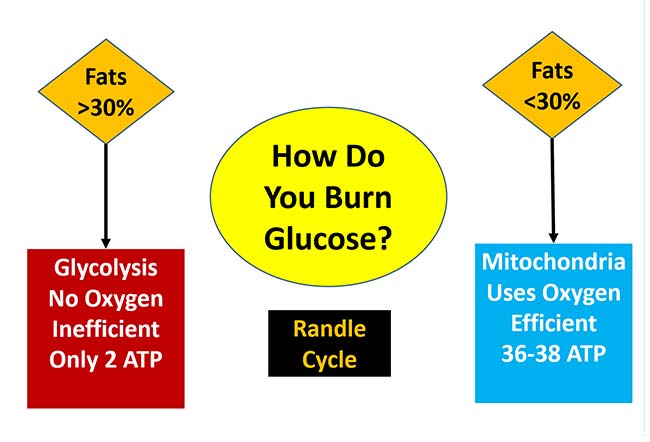
Your mitochondria can only burn one fuel at a time — either fat or glucose. As illustrated above, fats are broken down in a process called beta oxidation into acetyl-co A, which gets fed into the Krebs cycle. Carbs are broken down to pyruvate, which cannot enter the electron transport chain until they are converted to Acetyl-Co-A by pyruvate dehydrogenase.
The key here is that there’s a stealth switch that controls which of these fuels your mitochondria will burn. The switch has been given the name the Randle Cycle, but it is more helpful to visualize it as a railroad switch that changes the tracks of the train. The train can only travel down one track: not both. This is because only one type of fuel can be burned at a time.
Burning glucose in your mitochondria creates more energy and fewer ROS, raises your metabolic rate, and produces carbon dioxide, which protects against oxidative (reductive) stress and oxygenates cells. All of these things will help protect your brain function.
In a best-case scenario, you will metabolize, or burn, glucose in your mitochondria with minimal reductive stress. When you do this, you will only generate 0.1% ROS.
This route is also incredibly efficient at energy production, creating 36 to 38 adenosine triphosphates (ATP) for every molecule of glucose that is metabolized. However, for this to occur, you need to consume less than 30 to 40% of your calories as fat. When you consume significantly more than that amount, the switch changes to burn fat in your mitochondria and your ability to burn glucose will be impaired.
Chronically oxidizing fats as your primary fuel will also tend to increase your cortisol level, resulting in chronic inflammation, both of which accelerate the aging process.
So, in summary, burning glucose in your mitochondria creates more energy and fewer ROS, and raises your metabolic rate. It also produces carbon dioxide as a byproduct, which protects against oxidative (reductive) stress and oxygenates cells. All these things will help protect your brain function.
For more details about the Randle Cycle and how your metabolism works, see “Crucial Facts About Your Metabolism” and “Crucial Facts About Your Metabolism, Part 2.”
Gut Problems Also Likely Cause of Parkinson’s Disease
A new study6 in the October 2023 issue of Molecular Psychiatry showed that the presence of damaged mitochondrial DNA in the bloodstream is sufficient to cause all symptoms of Parkinson’s disease. The mitochondrial debris is then activated by the endotoxin (lipopolysaccharide) receptor TLR4.
Endotoxin is produced in your gut when you eat fermentable carbs that you are unable to digest in your stomach and small intestine. The carbs then travel to the large intestine, where they fuel the growth of gram-negative bacteria that grow and die. When they die, the endotoxin in their cell wall is released, activating the TLR4 receptor.
The Ray Peat approach is to increase the amount of simple carbs in your diet so your mitochondria can be optimally fueled. But there is strict caution to avoid fermentable carbs for the very reason that they can create endotoxin and activate the TLR4 receptor.
When introducing carbs, it is important to do it slowly, and make sure you are not having digestive symptoms like belching, bloating or gas, which are signs that the carbs aren’t being digested in your upper digestive system. If this is the case, you will need to use small amounts of fruit juices without pulp until your gut can digest the carbs without symptoms.
Lion’s Mane Mushroom May Protect Your Cognitive Function
In addition to basic micronutrients, a number of other supplements can also help protect your cognitive function. One interesting one is lion’s mane mushroom (Hericium erinaceus), which has a long history of use in traditional medicine.
Buddhist monks, for example, traditionally used lion’s mane mushroom tea to enhance brain function and heighten focus. In modern times, several studies have confirmed lion’s mane’s neuroprotective and cognition-enhancing effects, including the following:
| A 2023 study7 found that Lion’s mane extract can enhance memory by promoting neuron projections and connections to other neurons. |
| In a 2020 study,8 patients with mild Alzheimer’s disease who were given three 350-milligram capsules of lion’s mane mushroom per day for 49 weeks improved their cognitive test scores. |
| An epidemiological study9 published in 2017, which included 13,230 participants 65 years of age and older, found those who ate mushrooms at least once a week had “a lower risk of incident dementia, even after adjustment for possible confounding factors.” The greatest risk reduction was among those ate mushrooms three times or more per week. |
| A similar but smaller study10 published in 2019 reported that those who ate the most mushrooms had a 43% lower risk of developing mild cognitive impairment, independent of confounding factors such as alcohol consumption, cigarette smoking and high blood pressure. |
| A 2016 study found extracts from lion’s mane mushroom reduced symptoms of memory loss in mice and prevented neuronal damage caused by amyloid beta plaques known to accumulate in the brain with Alzheimer’s disease. |
| A 2010 study11 involving seniors between the ages of 70 and 74 found higher intakes of fruits, vegetables, grain products and mushrooms improved cognitive performance. |
You can consider adding mushrooms like lion’s mane to your diet as they can be an excellent addition to nearly any meal. They complement all kinds of grass-fed meats and wild-caught fish, go well in nearly any salad and can be added to soups, casseroles and other meals.
However, it is crucial to choose organically grown mushrooms as fungi easily absorb air and soil contaminants. Alternatively, you could opt for an organic supplement or extract.
- 1, 4 Nutrients September 25, 2023; 15(9): 4129
- 2 Medical News Today October 2, 2023
- 3 Nutrients September 25, 2023; 15(9): 4129, Section 6.1.1
- 5 Cell Reports May 29, 2018; 23(9): 2550-2558
- 6 Molecular Psychiatry October 2, 2023
- 7 Journal of Neurochemistry, 2023; doi: 10.1111/jnc.15767
- 8 Frontiers in Aging Neuroscience, 2020;12
- 9 Journal of the American Geriatrics Society, 2017;65(7)
- 10 Journal of Alzheimer’s Disease, 2019;68(1)
- 11 British Journal of Nutrition, 2010;104(8)
The Wide-Ranging Health Benefits of Quercetin
Reproduced from original article:
https://articles.mercola.com/sites/articles/archive/2023/10/05/health-benefits-of-quercetin.aspx
The original Mercola article may not remain on the original site, but I will endeavor to keep it on this site as long as I deem it to be appropriate.
Analysis by Dr. Joseph Mercola Fact Checked October 05, 2023

STORY AT-A-GLANCE
- Quercetin is a natural antihistamine with anti-inflammatory, antioxidant and antiviral properties
- This natural flavonoid is useful for boosting heart health, relieving allergy symptoms, supporting liver health and more
- Quercetin acts as a zinc ionophore, helping to shuttle zinc through the cellular membrane and into the cell, which is crucial for stopping virus replication
- Rich sources of quercetin include apples — especially the skins — onions, broccoli, cherries, berries and green tea
- I recommend keeping quercetin in your medicine chest for times when you feel you’re coming down with something, such as a cold or influenza
Quercetin is one of more than 4,000 known flavonoids,1 compounds that contribute to the bitterness, astringency, flavor, aroma and oxidative stability of many fruits, berries and vegetables.
Quercetin, in particular, is a plant pigment and natural antiviral agent2 found in foods such as onions, apples, plums and green tea, which also combats inflammation and works as a natural antihistamine.
I recommend keeping quercetin in your medicine chest for times when you feel you’re coming down with something, such as a cold or influenza. However, there’s also good reason to include plenty of quercetin-rich foods in your diet on a regular basis, as it offers multiple benefits to your health.
Quercetin Supports Heart Health
Quercetin exerts a range of biological activities that have a positive role in heart disease, including:3
| Anti-inflammatory | Antihypertensive | Vasodilator effects |
| Antiobesity | Antihypercholesterolemic | Antiatherosclerotic |
In one study of 30 men with coronary heart disease, consuming quercetin-rich red grape polyphenol extract led to an increase in flow-mediated dilation of arteries, which can signal improved endothelial health.4 It also inhibits platelet aggregation and has vasorelaxant properties that help lower blood pressure and prevent cardiac hypertrophy, in which the heart muscles thickens.
Another benefit to quercetin is its potential to lower uric acid levels,5 elevated levels of which are linked to an increased risk of heart disease and stroke,6 not to mention gout insulin resistance and Type 2 diabetes. Dr. David Perlmutter told Yahoo:7
“While we’ve known for decades about how uric acid increases the risk of gout, this new understanding about the role it plays in stroke is really encouraging, since there’s so much we can do to bring our uric acid levels under control. In fact, there’s great research showing how the nutrient quercetin can substantially lower uric acid levels.”
Perlmutter suggests supplementing with 500 milligrams (mg) of quercetin along with 100 mg of luteolin for a gout-lowering effect similar to that induced by the gout drug Allopurinol.8
This natural compound is also useful for optimizing cholesterol levels, as it may help inhibit oxidation of low-density lipoprotein (LDL). It also has blood pressure-lowering effects. A study on rats found daily supplementation reduced systolic blood pressure by 18% and diastolic by 23%.9
In addition, a six-week trial on overweight humans at high risk of heart disease also found that quercetin — at a dose of 150 mg per day — reduced systolic blood pressure and oxidized LDL levels.10 It may even support a healthy weight via multiple antiobesity effects. According to Pharmacognosy Review:
“Quercetin has a specific feature which inhibits fat accumulation in maturing human fat cells and simultaneously triggers apoptosis (programmed destruction) in existing fat cells. In addition, quercetin also blocks the uptake of glucose from the blood, blocks the fat cell production, and enhances fat cell necrosis.”
Quercetin Offers Allergy Relief
In the video above, chiropractor Dr. Jin Sung highlights quercetin’s role in seasonal allergies, noting that it demonstrates the greatest anti-allergy activity among flavonoids and works by modulating the release of histamine from basophils and mast cells.11
In a study comparing quercetin with herbal water on histamine release from mast cells, quercetin inhibited cells’ release of histamine by 95% to 97%.12 Other research shows quercetin supplementation may reduce allergy symptoms such as sneezing, runny nose and itchy eyes.13 The half-life of quercetin is 3.5 to 7.5 hours, so for best results you may want to take it in divided doses.
Sung recommends a dose of 500 mg to 1,000 mg two to four times a day during allergy season to help manage the symptoms, starting with the lowest dose — 500 mg, twice a day — and gradually increasing if necessary.14
Synergistic supplements for allergy relief, which you can take along with quercetin, include stinging nettle, butterbur extract, mangosteen extract, ginger, vitamin C and vitamin D.15
Download this Article Before it Disappears
Powerful Antiviral Effects
In addition to offering antioxidant, anti-inflammatory, anticancer, antimicrobial and immune-modulating properties, quercetin acts as a zinc ionophore.16 These work by shuttling zinc through the cellular membrane and into the cell, which is crucial for stopping virus replication. This is part of what makes it so useful during cold and flu season due to its antiviral effects.
Quercetin was initially found to provide broad-spectrum protection against SARS coronavirus in the aftermath of the 2003 SARS epidemic.17,18,19 A number of studies have also shown quercetin, when used early, also lowers your risk of hospitalization and death from COVID-1920 and improves clinical outcomes.
In one study, patients with COVID-19 who received quercetin along with standard care recovered faster and had less severe symptoms.21
Other viruses known to respond to quercetin include adenovirus, herpes simplex virus, Japanese encephalitis virus, and respiratory syncytial virus (RSV).22 If you’re prone to colds and flu, you could consider taking quercetin for a couple of months before cold and flu season hits to boost your immune system.
Quercetin likely drives zinc into the cell to inhibit viral replication and also works synergistically with vitamin C, which enhances plasma quercetin levels,23 so consider using both together for best results. According to a Frontiers in Immunology review article:24
“There is evidence that vitamin C and quercetin co-administration exerts a synergistic antiviral action due to overlapping antiviral and immunomodulatory properties and the capacity of ascorbate to recycle quercetin, increasing its efficacy.”
Help to Keep Gray Hair Away
Research suggests the use of onion juice as a natural, topical treatment to support hair regrowth,25 and one reason could be due to quercetin. In addition to helping reduce inflammation,26 quercetin enhances the expression of the antioxidant enzyme catalase27 in your scalp, which helps break down hydrogen peroxide that contributes to cell damage and thinning hair.28
By breaking down hydrogen peroxide, catalase — and by extension, quercetin — may also be beneficial for slowing down hair graying. Hydrogen peroxide is a well-known tool for bleaching your hair, but many people aren’t aware that your hair cells make hydrogen peroxide, too.
As you age, the amount produced increases, which researchers believe ultimately bleaches out your hair pigment, turning your hair gray and then white.29
Quercetin is well known for maintaining oxidative balance in the body, both by inhibiting and alleviating oxidative stress.30 This is another way that it may help keep gray hair away. Oxidative stress is the state in which your body’s free radicals (from pollution, poor diet, stress) outnumber your antioxidant defenses (from healthy diet).
Graying hair may be an indicator of oxidative stress-induced damage.31 Research has also shown that people with premature graying had a higher level of pro-oxidants and lower levels of antioxidants than those with normal hair.32 As researchers noted in the FASEB Journal, compounds that slow oxidative stress, such as quercetin, may be useful for slowing down or stopping hair graying.33
Support for Vision, Liver Health and Tumor Regression
Other reasons to embrace quercetin-rich foods include its promise for helping to protect vision, with researchers describing its potential effects on degenerative retinal diseases, noting, “Some polyphenols, especially flavonoids (e.g., quercetin and tannic acid), could attenuate light-induced receptor damage and promote visual health benefits.”34
Additional research published in the August 2019 issue of Phytotherapy Research concluded quercetin has a beneficial impact on nonalcoholic fatty liver disease (NAFLD) “by ameliorating inflammation, oxidative stress and lipid metabolism.”35
It may also be useful for fighting cancer. According to research published in 2016, quercetin may trigger tumor regression by interacting with your DNA and activating the mitochondrial pathway of apoptosis (the programmed cell death of damaged cells).36 Quercetin was found to induce cytotoxicity in leukemic cells, and the effect was dose-dependent.
Limited cytotoxic effects were also found in breast cancer cells. Overall, quercetin increased the lifespan of at least 40% of mice with cancer fivefold compared to untreated controls. The authors attributed these effects to quercetin’s direct interaction with DNA and its activation of the mitochondrial pathway of apoptosis, and suggested quercetin’s potential use as a cancer therapy adjunct deserves further exploration.
Quercetin may also act as a senolytic agent against senescence-mediated cancer growth.37 Cellular senescence is a dynamic and multistep process associated with alterations in metabolic activity and gene expression.38 This can compromise tissue regeneration and contribute to aging.
On the other hand, by removing senescent cells, which are similar to nonreplicating cancer cells that secrete powerful proinflammatory cytokines that destroy your health, age-related dysfunction can be attenuated and potentially extend lifespan.
What Are the Best Sources of Quercetin?
Quercetin is found in many foods, including citrus fruits, green leafy vegetables, broccoli, apples, onions, green tea, red grapes, dark cherries and berries, such as blueberries and cranberries. Among these, the highest levels are found in apples — especially the skins — onions, broccoli, cherries, berries and green tea.39
For an especially concentrated source, consider onion skins. They may have 77 times more quercetin than the flesh.40,41 While consuming onion skins may be unpalatable, consider sipping on a broth made from onion peels for more potent therapeutic effects. Quercetin is also found in medicinal products such as Ginkgo biloba, St. John’s Wort (Hypericum perforatum) and elderberry (Sambucus canadensis).
If you’re using quercetin in supplement form, consider taking it at night (with zinc) before you go to bed and you haven’t eaten for at least three to four hours. If you are metabolically flexible, you will dive into nutritional ketosis while you sleep.
The other benefit of taking quercetin at night is to take advantage of its senolytic action to remove senescent cells. You can further optimize quercetin’s senolytic properties if you take it while you are fasting.
- 1 Nutrients. 2010 Dec; 2(12): 1231–1246
- 2 Journal of Infectious Diseases and Preventive Medicine May 24, 2014; 2: 111
- 3, 4, 10, 22, 39 Pharmacogn Rev. 2016 Jul-Dec; 10(20): 84–89
- 5 British Journal of Nutrition January 20, 2016
- 6 Cureus. 2021 Sep; 13(9): e18172
- 7, 8, 41 Yahoo September 22, 2023
- 9 Br J Pharmacol. 2001 May; 133(1): 117–124
- 11, 14, 15, 16 YouTube, Dr. Jin W. Sung May 10, 2022
- 12 J Herb Pharmacother. 2003;3(4):41-54
- 13 European Review for Medical and Pharmacological Sciences 2022; 26: 4331-4345
- 17 Journal of Virology Sep 2004, 78 (20) 11334-11339
- 18 Bioorg Med Chem. 2006 Dec 15;14(24):8295-306
- 19 Maclean’s February 24, 2020
- 20 International Journal of General Medicine June 8, 2021; 14: 2359-2366
- 21 Int J Gen Med. 2021; 14: 2807–2816
- 23 Journal of the American Dietetic Association 2011 Apr;111(4):542-9
- 24 Frontiers in Immunology June 19, 2020 DOI: 10.3389/firmmu.2020.01451
- 25 J Dermatol. 2002 Jun;29(6):343-6. doi: 10.1111/j.1346-8138.2002.tb00277.x
- 26, 28 Woman’s World July 23, 2023
- 27, 30 Molecules. 2019 Mar; 24(6): 1123
- 29 FASEB J. 2009 Jul;23(7):2065-75
- 31, 33 FASEB J. 2006 Jul;20(9):1567-9
- 32 Int J Trichology. 2015 Jul-Sep;7(3):91-4
- 34 Molecules. 2021 Jun 4;26(11):3407. doi: 10.3390/molecules26113407
- 35 Phytotherapy Research August 26, 2019 DOI: 10.1002/ptr.6486
- 36 Scientific Reports April 12, 2016; 6 Article Number: 24049
- 37 Nutrition Research, 2022; 104
- 38 Frontiers in Cell and Developmental Biology, 2021; doi: 10.3389/fcell.2021.645593
- 40 Journal of Cleaner Production September 10, 2019
Why Synthetic Food Is Very Dangerous
Reproduced from original article:
https://articles.mercola.com/sites/articles/archive/2023/10/04/synthetic-food.aspx
The original Mercola article may not remain on the original site, but I will endeavor to keep it on this site as long as I deem it to be appropriate.
Analysis by Dr. Joseph Mercola Fact Checked October 04, 2023
STORY AT-A-GLANCE
- An estimated 99% of the components making up whole food are a complete mystery. The U.S. Department of Agriculture’s National Nutrient Database for Standard Reference details 188 nutritional components of food, including 38 flavonoids, yet scientists estimate there are more than 26,000 different biochemicals in our food
- We know even less about the constituents of processed foods and synthetic foods, which falsely claim to be “equivalents” to whole foods, such as “animal-free meats” or “animal-free milk”
- Scientists cannot create equivalence when they don’t even know what 85% or more of the whole food they’re trying to replicate consists of
- A paper published in the April 2023 issue of Animal Frontiers warns that cultured products are not nutritionally equivalent to the meats they’re intended to replace
- A May 2023 report by the Food and Agriculture Organization concluded there are at least 53 potential health hazards associated with lab-grown meat, including the possibility of contamination with heavy metals, microplastics, nanoplastics and chemicals, allergenic additives, toxic components, antibiotics and prions
Do you know what’s in the food you eat? Remarkable as it may seem, 99% of the components making up whole food are a complete mystery. As reported by New Scientist in July 2020:1
“We know next to nothing about the vast majority of compounds in our diet … ‘Our understanding of how diet affects health is limited to 150 key nutritional components,’2 says Albert-László Barabási at Harvard Medical School, who coined the term nutritional dark matter.
‘But these represent only a small fraction of the biochemicals present in our food’ … The idea that food is a rich and complex mix of biochemicals is hardly news.
Even the well-known macronutrients — proteins, carbohydrates and fats — are hugely diverse. There’s also a vast supporting cast of micronutrients: minerals, vitamins and other biochemicals, many of which are only present in minuscule quantities, but which can still have profound health effects.”
The official source of nutritional information is the U.S. Department of Agriculture’s (USDA) National Nutrient Database for Standard Reference.3 It lists the composition of hundreds of thousands of foods, but it’s not as detailed as you might imagine.
In all, it details only 188 nutritional components, including 38 flavonoids, yet scientists estimate there are more than 26,000 different biochemicals in our food.4,5
As noted by New Scientist,6 “with the USDA as your guide, 99.5% of the components in food are a mystery,” and as noted by Barabási, “It would be foolish to dismiss 99.5% of the compounds we eat as unimportant7 … We will not really understand how we get sick if we don’t solve this puzzle.”8
Searching for Nutritional ‘Dark Matter’
Disturbed by the information gap, an international team of researchers started working on a more comprehensive database a decade ago called FooDB,9 which as of 2020 contained information on some 70,000 nutritional compounds.
Yet even this database still has a long way to go. An estimated 85% of the nutritional components listed remain unquantified, meaning they know a food contains a particular component, but they don’t know how much. The health implications of most compounds also remain largely unknown. New Scientist notes:10
“This is also true of individual micronutrients. ‘Consider beta-carotene,’ says Barabási. ‘It tends to be positively associated with heart disease, according to epidemiological studies, but studies adding beta-carotene to the diet do not show health benefits.
One potential reason is that beta-carotene never comes alone in plants; about 400 molecules are always present with it. So epidemiology may be detecting the health implications of some other molecule.’
Another probable cause is the effect of the microbiome on dark nutrients, says [FooDB founder David] Wishart. ‘Most dark nutrients are chemically transformed by your gut bacteria.
That’s probably why studies on the benefits of different foods give relatively ambiguous results. We don’t properly control for the variation in gut microflora, or our innate metabolism, which means different people get different doses of metabolites from their food.’”
Processed Foods Are an Even Greater Mystery
The reason I started with that background is because we know even less about the constituents of processed foods and synthetic foods that ignorantly claim to be “equivalents” to whole foods, such as “animal-free meats” or “animal-free milk.”
Food processing alone will often alter the composition of bioactive molecules in a food, and hence the food’s impact on health,11 but today, processed foods also contain a wide array of synthetic chemicals that, prior to the modern era, were never part of the human diet. As such, they pose incredible risks to long term health and well-being. Processed foods may also have intergenerational effects.
How can scientists create equivalence when they don’t even know what 85% or more of the whole food they’re trying to replicate consists of?
In recent years, the idea that we can simply replace whole foods with synthetic, genetically modified or lab-grown alternatives that are wholly equivalent to the original food has taken root. In reality, that’s simply impossible.
How can scientists create equivalence when they don’t even know what 85% or more of the whole food they’re trying to replicate consists of? Common sense will tell you they can’t. It might look, smell and even taste similar, but the micronutrient composition will be entirely different, and as a result, the health effects will be incomparable as well.
Download this Article Before it Disappears
Animal-Free Equivalence Is a PR Fraud
Take cultured meat, for example. It’s said to be equivalent to real animal meat because it’s grown from animal cells. The cells are then grown in a nutrient solution inside a bioreactor until it becomes a meat-like slab.
Similarly, Bored Cow12 animal-free milk is a dairy alternative made with whey protein obtained through a fermentation process, plant-based fats (in lieu of milk fats), citrus fiber (for creaminess) and added vitamins and minerals.
Defenders of cultured meat insist that this product is not “fake meat” but “actual meat,”13 the only difference being that no animal had to be slaughtered to create it. Cultured meat and other synthetic foods are also said to be more environmentally friendly. But nothing could be further from the truth.
Their impact is far more akin to that of the pharmaceutical industry than the food industry. According to a recent “cradle-to-gate life cycle” analysis,14,15,16,17 the lab-grown meat industry produces anywhere from four to 25 times more CO2 than traditional animal husbandry.
Based on this assessment, each kilo of cultured meat produces anywhere from 542 pounds (246 kilos) to 3,325 pounds (1,508 kg) of carbon dioxide emissions, making the climate impact of cultured meat four to 25 times greater than that of conventional beef. And this information is only provided to refute those who believe the global warming fallacy.
As noted by the authors, investors have poured billions of dollars into animal cell-based meat (ACBM) sector based on the theory that cultured meat is more environmentally friendly than beef. But according to these researchers, that hype is based on flawed analyses of carbon emissions.
Cultured meat is also the epitome of ultraprocessed food18 and therefore likely to cause health problems like those caused by other ultraprocessed foods, such as obesity,19 cardiovascular diseases, Type-2 diabetes, metabolic syndrome, irritable bowel syndrome, cancer,20 mental health problems21 and increased all-cause mortality.22,23,24,25,26
A paper27 published in the April 2023 issue of Animal Frontiers also warned that there are several implications of cell-based meat that need to be considered, but aren’t, including the fact that cultured products are not nutritionally equivalent to the meats they’re intended to replace.
The claim that no animals are killed in the process is also false. At present, most cultured or cell-based meats are created by growing animal cells in a solution of fetal bovine serum (FBS), which is made from the blood of unborn calves. In short, pregnant cows are slaughtered to drain the unborn fetus of its blood.
Is It Safe to Eat Tumors?
There are also many unanswered questions surrounding safety. For example, to get the cell cultures to grow, some companies are using immortalized cells, which technically speaking are precancerous and/or fully cancerous.28 (Other companies use embryonic stem cells or cells from living animals.29)
The reason for using immortalized cells is because normally behaving cells cannot divide forever. Most cells will only multiply a few dozen times before they become senescent (old) and die.
This won’t work when your intention is to grow thousands of pounds of tissue from a small number of cells, hence they use immortalized cells that have no off switch for their replication and can divide indefinitely.
Meat substitutes cultured in this way could therefore be thought of as tumors, seeing how the flesh is entirely made up of precancerous or cancerous cells. Is it safe to eat tumors? We don’t know.
MIT biologist Robert Weinberg, Ph.D., has proposed that humans can’t get cancer from these cells because they’re not human cells and therefore cannot replicate inside your body.30 However, there’s no long-term research to back this theory.
Dietary Headaches to Come
It’s also important to realize that the nutritional composition and safety of synthetic foods will vary depending on the brand.
When you’re dealing with beef, for example, the meat from one cow will be relatively identical to that of any other cow (one major exception being the way they’re raised and fed). One wild-caught salmon is comparable to any other wild-caught salmon, and each russet potato is more or less identical to every other russet potato.
But since each synthetic food brand uses proprietary ingredients and processes, no two will have the identical composition or safety, so even if one is eventually proven safe and nutritious, those results cannot be applied to any other brand.
This variance has the potential to create major problems in the future when all sorts of foods have been replaced with synthetic non-equivalents. How do you determine which cultured beef, chicken or salmon brand might be best for you? How will you devise a sensible diet plan when every food comes in myriad variations of varying composition and safety?
Synthetic Foods Pose Unique Food-Safety Hazards
Many synthetic food proponents claim lab-created food will bypass a host of food-safety problems, but the converse is far more likely to be true. Sure, beef, for example, can be contaminated during processing, packaging, transport or storage, or during the cooking process.
But in cultured meat, every ingredient and processing step brings with it the potential of contamination, and any of the hundreds of ingredients could have toxic effects, alone or in synergy.
Indeed, an in-depth analysis31,32 of the available evidence by the Food and Agriculture Organization of the United Nations (FAO) and a World Health Organization expert panel, published in May 2023, concluded there are at least 53 potential health hazards associated with lab-grown meat.
Among them are the possibility of contamination with heavy metals, microplastics, nanoplastics and chemicals, allergenic additives, toxic components, antibiotics and prions.
What’s more, some of the ingredients that go into synthetic biology like cultured meat are regulated as “non-detectable manufacturing aids,” and you won’t even know what they are. Israeli startup Profuse Technology, for example, has developed a growth media supplement that massively encourages protein growth.
As reported by Food Navigator Europe in an article titled “Cultivated Meat ‘Breakthrough’: Media Supplement Achieves Full Muscle Maturation on Scaffold Within 48 Hours,”33 the supplement reduces the time to grow filets and steaks by 80% and augments the protein in the final product by a factor of five.
An Unsustainable Model
The cultured meat process also produces toxic biowaste — a problem that doesn’t exist in conventional agriculture and food processing. In the video above, Alan Lewis, vice president of government affairs for Natural Grocers, reviews what goes into the making of synthetic biology.
The starting ingredients are typically cheap sugars and fats derived from genetically engineered corn and soy, grown in environmentally destructive monocultures with loads of herbicides, pesticides, and synthetic fertilizers.
As a result, they’re loaded with chemical residues. Hundreds of other ingredients may then be added to the ferment to produce the desired end product, such as a certain protein, color, flavor or scent. The most-often used microorganism in the fermentation process is E. coli that has been gene-edited to produce the desired compound through its digestive process.
The microorganism must also be antibiotic-resistant, since it needs to survive the antibiotics used to kill off other undesirable organisms in the vat. As a result, antibiotic-resistant organisms also become integrated into the final product, and the types of foodborne illness that might be caused by gene-edited antibiotic-resistant E. coli and its metabolites are anyone’s guess.
In addition to the desired target metabolite, these gene-edited organisms may also spit out non-target metabolites with unknown environmental consequences and health effects. But that’s not all. Once the target organisms are extracted, what’s left over is hazardous biowaste.
While traditional fermentation processes, such as the making of beer, produce waste products that are edible by animals, compostable and pose no biohazard, the biowaste from these synthetic biology ferments must first be deactivated, and then must be securely disposed of. It cannot go into a landfill.
Protect Your Health by Avoiding Frankenfoods
Making food that requires GMO inputs and produces more CO2 than conventional farming and hazardous biowaste to boot is hardly a sustainable model. But then again, synthetic biology and processed foods are not being pushed out of true concern for sustainability.
If that was the goal, everyone would be looking at regenerative agriculture where every part of the system supports and sustains other parts, thereby eliminating the need for chemical inputs, radically reducing water needs while optimizing yields.
No, synthetic biology is pursued because it is a formidable control mechanism. Those who own all the synthetic food production will control the world in a very literal sense. To learn more about this plot for control, see “The Fake ‘Food as Medicine’ Agenda.”
In short, the globalists already own and control most of the carbohydrates grown in the world today. By replacing real animal foods with patented lab-made protein alternatives, they’ll have unprecedented power to control the world’s population.
It’ll also grant them greater control over people’s health. It’s already known that the consumption of ultraprocessed food contributes to disease, and the benefactor of ill health is Big Pharma.
The processed food industry has spent many decades driving chronic illness that is then treated with drugs rather than a better diet. Synthetic foods will likely be an even bigger driver or chronic ill health and early death.
The fact is, fake meat and dairy cannot replace the complex mix of nutrients found in grass fed beef and dairy, and it’s likely that consuming ultraprocessed meat and milk alternatives may lead to many of the same health issues that are caused by a processed food diet. So, if you want to really protect your health and the environment, skip pseudofoods that require patents and stick to those found in nature instead.
- 1, 6, 7, 10 New Scientist July 22, 2020 (Archived)
- 2, 4 Nature Food 2020; 1: 33-37
- 3 National Nutrient Database for Standard Reference (Archived)
- 5 Afekta February 26, 2020
- 8 Inside Science December 9, 2019
- 9 FooDB
- 11 Knowable Magazine September 20, 2023
- 12 Bored Cow Animal-Free Milk
- 13 Food Safety News September 19, 2023
- 14 BioRxiv April 21, 2023
- 15 New Scientist May 9, 2023
- 16 Interesting Engineering May 14, 2023
- 17 Watts Up With That? May 12, 2023
- 18 Friends of the Earth, From Lab to Fork, June 2018 (PDF)
- 19 Cell Metabolism, 2019; doi: 10.1016/j.cmet.2019.05.008
- 20 BMJ 2018; 360:k322
- 21 Advisory UPF Dangerous for Your Brain
- 22 JAMA Internal Medicine February 11, 2019;179(4):490-498
- 23 BMJ February 14, 2018; 360
- 24 JAMA 2017;317(9):912-924
- 25 BMJ, 2019;365:I1451
- 26 BMJ, 2019;365:l1949
- 27 Animal Frontiers April 2023; 13(2): 68-74
- 28, 29, 30 The Fern February 7, 2023
- 31 FAO.org Food Safety Aspects of Cell-Based Food
- 32 ISAAA.org May 10, 2023
- 33 Food Navigator Europe September 26, 2023
Animal and Plant Protein Sources Are Not Equal
Reproduced from original article:
https://articles.mercola.com/sites/articles/archive/2023/09/05/protein-sources-are-not-equal.aspx
The original Mercola article may not remain on the original site, but I will endeavor to keep it on this site as long as I deem it to be appropriate.
Analysis by Dr. Joseph Mercola Fact Checked September 05, 2023
STORY AT-A-GLANCE
- Protein is the primary building block for muscle and muscle loss is associated with a loss of independence and risk of premature death. Data show that animal protein is more bioavailable and provides more essential amino acids than plant protein
- The Dietary Guidelines for Americans uses an ounce-equivalent standard portion to compare nutritional content, which data suggest may not be accurate. The bioavailability of amino acids is an important consideration and one researcher suggests the data may call into question the recommendation to eat more plant-based foods
- For multiple reasons, the push to eat more plant-based foods is not sustainable as it doesn’t provide the needed nutrition and leads to nutritional deficiencies. Fake meat products are also metabolically hazardous, as they are created with vegetable fats and raise greenhouse gas emissions
- Fake foods are the very definition of junk food. A society that relies on fake foods for nutrition can be easily controlled through the supply chain. A healthier choice for you and the environment is real, grass fed meat that has proven to produce a negative net total carbon footprint
Maintaining your muscle mass as you age is an integral part of staying healthy and independent. A 2023 study1 evaluated protein intake in young and older adults, two populations that historically have challenges in consuming protein-based foods. The data indicated that not all protein sources offer the same health benefit.
After reaching your 40s, you can lose roughly 1% of muscle mass each year, which corresponds to a 1% to 3% reduction in strength.2 Losing muscle is associated with a loss of independence in the elderly and a downward decline in health, including the risk of premature death.
Building muscle is a complex process that requires two vital foundational factors. The first is resistance training or muscle strengthening exercises that help to strengthen and build muscle. The second is protein that your body uses to build that muscle. It turns out that the debate over plant- versus meat-based diets must also include whether both diets can adequately feed muscle development.
You can determine your ideal protein intake by multiplying your lean body mass in pounds by 0.6 to determine the low range and 0.8 to determine the high range. Your lean body mass is what is left over after you subtract your body fat. So if you are 20% body fat your lean body mass would be your weight times 0.8.
All Protein Is Not Created Equal
Research scientists from Purdue University3 completed the study4 comparing 2-ounce equivalents of animal-based foods against plant-based sources. The Dietary Guidelines for Americans uses an ounce-equivalent (oz-eq) portion to compare nutritional content.
For example, a 1 oz-eq of protein is equal to one whole egg, 1 ounce of meat, a fourth-cup of beans or a half-ounce of nuts. Wayne Campbell, Ph.D., was the primary investigator and is a professor in the department of nutrition science at Purdue University.
He suggests that the basis for equating plant- and meat-based protein sources as equivalent means they have a nutritional content that is used similarly within the body, and yet this is not clear.5 In addition to the different nutrient content, including protein quality and quantity, there is also limited information about how the body processes different types of protein foods in a mixed meal.
The researchers were interested in analyzing this question in two populations. The first were younger adults who historically lack variety in their diet and the second were older adults whose diet may contain poor quality sources of protein despite their nutritional needs.
The researchers gathered 30 young adults and 25 older adults for an investigator-blinded, randomized crossover trial. Each participant completed four sessions during which they ate a meal with 2 oz-eq of either whole eggs, unprocessed pork, black beans or sliced almonds.
The researchers measured plasma essential amino acids at baseline, 30, 60, 120, 180, 240 and 300 minutes after eating. The data showed that the age of the participant did not affect the bioavailability of the essential amino acids in all four protein food groups tested. In both age groups, pork yielded greater essential amino acid bioavailability and pork and eggs yielded greater bioavailability than black beans and almonds.
The researchers concluded from the data that the oz-eq used by the Dietary Guidelines for Americans does not provide an equivalent amount of bioavailable essential amino acids in younger or older adults.
Gavin Connolly, Ph.D., was the clinical trials project manager and is a research associate in the department of nutrition science and gerontology at Purdue University. He notes that bioavailable essential amino acids are linked with the ability to build body protein or muscle and suggests, “This is an important consideration for muscle and whole-body health and physical function across the life course.”6
The authors also suggest that the findings have public health nutrition guidance implications, and Campbell goes so far as to say, “These results are also pertinent to the DGA’s recommendation to consume more plant-based foods.”7
Push to Eat Green Is Not Sustainable
Data from this study are yet another indication that plant-based and lab-produced meat substitutes are not sustainable options. Even at an early age, children need protein. Initially, this is supplied through breast milk, but once children move on to table food, there is a significant health benefit to adding whole foods to their diet, but not restricting them to a plant-based diet.
Although meat substitutes seek to look and taste like meat, they are not. One study8 of Polish children between the ages of 5 and 10 years analyzed body composition, cardiovascular risk and micronutrient status in children who were vegetarian and vegan as compared to omnivores.
The study claimed that the vegan diet was associated with a healthier cardiovascular risk profile based largely on lower levels of LDL cholesterol, which is not a good indicator of cardiovascular health.
Yet, these same children had an increased risk of nutritional deficiencies, lower bone mineral content and were shorter by about 3.15 centimeters or 1.2 inches. The researchers called this “concerning,” and wrote:9
“Our data suggest that restriction of animal-based foods could prevent children from achieving optimal height or bone mineral status and could lead to selected nutritional deficiencies. The shorter height of children consuming PBDs [plant-based diets] may have mixed implications for long-term health.”
Fake meat products are metabolically hazardous as they use vegetable fats to replace animal fats which are devoid of important vitamins and loaded with the dangerous omega-6 fat, linoleic acid. Although the push to eat fake food is reportedly to reduce greenhouse gas emissions and protect the environment, it is only a formula for disaster.
A 2022 study10 demonstrated that ultraprocessed foods already account for 36% to 45% of total diet-related biodiversity loss and up to one-third of total diet-related greenhouse gas emissions. Increasing the amount of processed fake food would only drive these percentages higher.
For all the lip service that’s paid to “equity,” increasing consumption of processed foods like fake meat and lab-produced meat products will worsen economic inequalities as it redirects money away from small farmers and independent homesteaders to transnational corporations that rely on underpaid workers.
Download this Article Before it Disappears
Lab-Produced Meat Alternatives Are Junk Food
Additionally, fake meat products are the very definition of ultraprocessed foods, which are “formulations of ingredients, mostly of exclusive industrial use, that result from a series of industrial processes (hence ‘ultraprocessed’).”11 According to this 2019 study, ultraprocessed foods already make up more than half of the energy consumed in high-income countries such as the U.K., Canada and the U.S.
By contrast only one-fifth to one-third of the total caloric intake in middle income countries came from ultraprocessed foods. Should globalists be successful in pushing a fake food diet, that percentage will rise precipitously.
In an effort to get you hooked on fake meat, the products are marketed as healthier and better for the environment. Added to this, Impossible Burger and Beyond Burger have nearly the same amount of fat and calories as real beef burgers. They also have more processed sodium and as a reporter at NBC News so succinctly pointed out:12
“If eating more realistic fake meat was about health, the offerings would be far lower in salt content, contain fewer calories and have a bit less dietary fat. None of them do, because the point was never to live up to the marketing of healthier eating. It was to simply act as a smooth replacement for the meat we worried about eating in our day-to-day lives.”
If health is not the underlying reason for developing fake meat and plant-based products, what is? You need only consider how easily a society that depends on lab-produced and manufactured foods can be manipulated.
Although eating red meat has been vilified for decades as being unhealthy, cancer-promoting and artery-clogging, data13 from the University of Washington’s Institute for Health Metrics and Evaluation showed weak evidence of any association between unprocessed red meat and several health conditions, including hemorrhagic and ischemic stroke.
A 2019 paper14 demonstrated that if there were health benefits from eating less beef, they were minimal. The researchers concluded there was “low to very low” evidence that red meat triggered health problems. When you choose your meat for dinner, do you want grass fed beef that’s rich in vitamins and healthy fat, or a fake meat product with over 263 global patents?15
Grass Fed Meat Is a Far Better Choice
Some think of lab-created or vegetable-based meat substitutes as the lesser of two evils when compared to CAFO meat. Yet, as the featured study demonstrates, not all protein is created equal, and altering the natural order of the life cycle is not the answer.
As I’ve written in the past, White Oak Pastures in Bluffton, Georgia, has demonstrated through a commissioned analysis that regeneratively grown beef can produce a net total emission of carbon in the negative numbers as compared to CAFO and meat foodstuffs that hold multiple patents and are quantifiably junk food.
It’s also worth noting that products that use soy, such as the Impossible Burger, are made with GMO soy that contains glyphosate. A healthier, more sustainable choice is grass fed beef, which also has a healthier ratio of dietary fat, and supports environmental health.
When given the choice, as we hope we will always be able to make, skip the fake meat alternative that is trying to disguise itself as healthy food and opt for real food that’s being raised the right way instead.
- 1, 4 Nutrients, 2023;15(13)
- 2 YouTube, June 29, 2022 Min 5:44
- 3, 5, 6, 7 SciTechDaily, August 18, 2023
- 8, 9 American Journal of Clinical Nutrition, 2021;113(6)
- 10 Journal of Cleaner Production, 2022; 368(133155)
- 11 Public Health Nutrition, 2019;22(5)
- 12 NBC News, September 8, 2019
- 13 Nature Medicine, 2022;28
- 14 Annals of Internal Medicine, 2019; doi.org/10.7326/M19-1621
- 15 Insights, January 20, 2022
What Are the Signs of Vitamin B Complex Deficiency?
Reproduced from original article:
https://articles.mercola.com/sites/articles/archive/2023/09/04/symptoms-of-vitamin-b-complex-deficiency.aspx
The original Mercola article may not remain on the original site, but I will endeavor to keep it on this site as long as I deem it to be appropriate.
Analysis by Dr. Joseph Mercola Fact Checked September 04, 2023
STORY AT-A-GLANCE
- A deficiency in B vitamins may lead to respiratory conditions, dementia, psychiatric symptoms and blood disorders
- Some groups experience a greater risk of B vitamin deficiency, such as the elderly, those exposed to pesticides, individuals taking proton pump inhibitors, those who drink large amounts of alcohol or who have an autoimmune disease
- B vitamins help your body detoxify from air pollution, which causes serious damage to your lungs, heart and other organ systems; folate may also help reduce the incidence of neural tube defects in infants and prevent the development of autism and schizophrenia
- While the terms folate and folic acid are often used interchangeably, they are not identical; folic acid may trigger liver damage comparable to the damage produced by glyphosate
Editor’s Note: This article is a reprint. It was originally published July 16, 2018.
Traditional media often run stories about how supplements may cause problems. One of the problems with studies highlighting supplements is they typically use synthetic vitamins, and not whole food supplements. Your body was not made to process unnatural agents, often posing as equivalents to the real thing. The reality is they are frequently not the same and do not provide you with the same health benefits.
Vitamin deficiencies may lead to illness and disease, and contribute to chronic issues such as high blood pressure, dementia and cancer. One nutritional deficiency having the potential to wreak havoc on your health, your cognition and even your respiratory system is a deficiency in vitamin B complex. B vitamins also help your body to detoxify from chronic exposure to pollutants and chemicals.
Elderly Have Higher Rates of Deficiency
A large population study conducted in Ireland1 discovered a larger than expected number of adults over age 50 with vitamin B12 and folate deficiencies. Researchers from Trinity College Dublin2 analyzed information from over 5,000 adults to establish a general level of vitamin B12 and folate in a mature population.
Public health policies in many countries have suggested supplementing processed foods with folic acid and vitamin B12 may ensure the population at large has access to these nutrients. However, the present findings3 suggest official health policies may not be sufficient. The researchers noted both folate and vitamin B12 are crucial to brain health, red blood cell production, and synthesis and repair of DNA and nerve functions.4
The data revealed as many as 1 in 8 older adults has low levels of vitamin B12 or a B12 deficiency, and 1 in 7 has low or deficient folate levels. As the age of the participants increased, the prevalence of inadequate folate levels seemed to increase. Percentages rose from 14% in people up to 60 years, rising to 23% in participants older than 80.5
Past studies have linked poor long-term health, especially in older adults, to low nutritional levels of folate and vitamin B12. The high rates of deficiency seen in older populations are cause for concern. Dr. Rose Anne Kenny, principal investigator in the study,6 believes since these deficiencies may be treated with food fortification, significant policy and practice implications are suggested for government and health services.
Fortification of food products in Ireland is voluntary, but some foods are enriched with micronutrients such as folic acid. In the U.S., folic acid fortification is mandatory, yet an estimated 3.2% of adults over 50 continue to demonstrate deficiency and another 20% have borderline deficient levels of vitamin B12, according to the National Health and Nutrition Examination Survey (NHANES) by the Centers for Disease Control and Prevention (CDC).7
B Vitamin Deficiencies Are Dangerous to Your Health
Vitamin B deficiencies are linked with a number of health concerns. B12 deficiency is a known cause for central and peripheral nervous system damage. One study demonstrated deficiency increased the prevalence of laryngeal hyper-responsiveness and subsequently lowered cough thresholds.
After B12 supplements were given, patients found their symptoms significantly improved. According to the study,8 the results suggest a deficiency may contribute to chronic cough by favoring sensory neuropathy.
Central nervous system disorders are also associated with a deficiency in vitamin B, including dementia and Alzheimer’s. In the U.S., Alzheimer’s disease is at epidemic proportions, with 5.4 million Americans living with the disease and the number expected to jump to 16 million by 2050. In a study published in PNAS,9 researchers found vitamins B6, B12 and folic acid may help slow the progression of Alzheimer’s disease, confirming and supporting previous studies.
All of the 156 study participants were over the age of 70 and diagnosed with mild cognitive impairment. One group received a placebo and the other high-dose vitamin B supplementation consisting of B6, B12 and folic acid.10 The treatment demonstrated an effective slowing of the shrinkage of the whole brain volume over two years and reduced cerebral atrophy in brain regions particularly vulnerable to damage by Alzheimer’s.
Psychiatric conditions also respond significantly to vitamin B supplementation. Research has demonstrated it reduces symptoms associated with schizophrenia more so than standard drug treatments alone.11 When used together with antipsychotics, vitamin B supplements may restore nutritional deficits, reduce oxidative stress and modulate neurological pathways that exacerbate symptoms of psychiatric illness.
The late Dr. Abram Hoffer was a leading niacin researcher and world authority on the therapeutic use of niacin.12 He found certain people have what he termed a niacin dependency. This means they need far more niacin on a regular basis than normal and are essentially dependent in order to remain well.
This appears to be the case in some suffering specific disorders, including attention deficit disorder, anxiety, depression, obsessive compulsive disorder and general psychosis; deficiency may trigger mania, psychosis and paranoid delusions. Vitamin B deficiencies are also associated with:
FatigueWeaknessAnemiaSkin infectionsNauseaMental confusionDigestive issuesNerve problems (numbness, tingling, trouble walking)13
Download this Article Before it Disappears
Groups More at Risk for B Complex Vitamin Deficiencies
While B12 is easily obtained from animal proteins such as meat, fish, milk and cheese, advancing age may diminish your ability to absorb the vitamin from food.14 Absorption depends on adequate stomach acid, pepsin and gastric intrinsic factor.
Insufficient amounts of acid may also be present if you use acid blockers for heartburn. Individuals who regularly use a proton pump inhibitor may develop a B12 deficiency.15 Excessive intake of alcohol may result in reduced absorption rates as well.
Individuals who suffer other stomach or small intestine disorders, such as celiac or Crohn’s disease, may be unable to absorb vitamin B12 from their food.16 Those who have had surgical procedures in their gastrointestinal tract for weight loss or procedures resulting in removal of all or part of the stomach may also be at risk.
Individuals who practice strict vegetarianism or are vegans are at greater risk than those who are lacto-ovo vegetarians, as natural food sources are limited to animal-based foods.
The B-group of vitamins is a collection of eight water-soluble vitamins,17 which are unable to be stored by the body and must be consumed regularly in your diet. Extended cooking times or food processing can destroy or reduce the availability of many of the B vitamins. In the featured study from Ireland, low or deficient vitamin B12 was more commonly found in smokers, those who lived alone and those from lower socioeconomic backgrounds.18
There are also groups of people who have an increased requirement, such as women who are pregnant or breastfeeding, those who have an autoimmune disorder or people with HIV infections. Frank vitamin B6 deficiency is relatively rare in the U.S., but some suffer from subclinical deficiency or suboptimal levels. People with poor renal function, autoimmune disorders such as rheumatoid arthritis or those who are alcohol dependent have greater difficulty in absorbing vitamin B6.19
Detoxify From Chronic Air Pollution
Chronic exposure to pesticides and air pollution may help deplete vitamin B complex. Adequate amounts of all eight vitamins are necessary to aid in your body’s nutritional demands during detoxification.20 According to the World Health Organization,21 92% of people worldwide breathe polluted air and live in toxic environments responsible for at least 1 in 4 deaths reported worldwide.
Poor air quality causes serious damage to your lungs, heart and other organ systems. However, maintaining optimal levels of vitamin B complex may help to offset your exposure to toxic air pollution.22 In a study published in PNAS,23 researchers recruited 10 volunteers between 18 and 60 years of age. The participants were exposed to clean air and given a placebo to establish a baseline.
During the next round of testing, they inhaled concentrated smog for two hours, after which blood samples were collected. Next, participants received daily supplements of 2.5 milligrams (mg) of folic acid, 50 mg of vitamin B6 and 1 mg of vitamin B12 for four weeks before inhaling hazardous levels of fine particulate matter (PM 2.5) air pollution.
It is important to note the dosages used during the study were higher than those recommended by the Institute of Medicine. However, this was not the first time higher than normal doses of vitamin B vitamins have shown distinct health benefits.
Following four weeks of supplementation the participants experienced a reduction in genetic damage in 10 gene locations, protected mitochondrial DNA from harmful effects and reparation of some of the genetic damage caused by the pollution.24
Benefits to Maintaining Optimal Levels of B Vitamins
Folate (vitamin B9) is one of the B vitamins needed to produce red and white blood cells in your bone marrow and to convert carbohydrates into energy. Although your body is capable of making folate in your gut,25 it requires specific probiotic bacteria, which may not currently populate your gut microbiome. Adequate amounts of folate are extremely important during periods of rapid growth, such as during infancy, adolescence and pregnancy.
For this reason, in the 1990s the U.S. mandated grain-based foods to be fortified with folic acid to help prevent neural tube defects in infants born to mothers who may not have consumed enough folate.26 Neural tube defects are complex congenital malformations that result when the neural tube closure during embryogenesis fails.
Although supplementation with folic acid has demonstrated a decrease in the prevalence of neural tube defects,27,28 other lines of evidence have suggested B12, choline and methylation metabolism are also involved.29
Optimal levels of vitamin B9 may also deter the development of psychosis and autism in children. In one study, researchers compared school-age children born before the fortification mandate against young people born after, finding an increase in utero folic acid exposure was associated with changes in later brain development, which in turn predicted a reduced risk for symptoms of psychosis.30
The team from Massachusetts General Hospital31 reviewed two sets of brain images taken between ages 8 and 18, revealing those born after full implementation of folic acid fortification had different patterns of cortical maturation. These differences were characterized by significantly thicker brain tissue and delayed thinning of the cerebral cortex, regions associated with the development of schizophrenia.
Folate may also mitigate the risk of pesticide-induced autism. As glyphosate disrupts your gut microbiome, it may lead to a decreased ability to produce folate and induce folate deficiency. Research by UC Davis finds taking a recommended amount of folic acid at the time of conception may lower your child’s risk of pesticide-related autism. In a press release, researchers wrote:32
“In the study, children whose mothers took 800 or more micrograms of folic acid (the amount in most prenatal vitamins) had a significantly lower risk of developing autism spectrum disorder (ASD) — even when their mothers were exposed to household or agricultural pesticides associated with increased risk.
Mothers who took less than 800 micrograms and encountered household pesticides had a much higher estimated risk of having a child who developed an ASD than moms who took 800 micrograms of folic acid or more and were not exposed to pesticides. The associated risk increased for women exposed repeatedly.
Women with low folic acid intake who were exposed to agricultural pesticides during a window from three months before conception to three months afterward also were at higher estimated risk.”
Folate or Folic Acid?
While the terms folate and folic acid are often used interchangeably, it is important to realize there are significant differences between them. Massachusetts Institute of Technology research scientist Stephanie Seneff, Ph.D., writes in a Weston A. Price article about the differences between the two:33
“The folic acid supplement that’s added to flour is a synthetic version of the B vitamin, which is oxidized and missing the methyl group. The active form of the vitamin is technically called methyltetrahydrofolate. Folic acid is much more stable, whereas folate easily breaks down with aging or with heat … Folic acid is a (cheaper) synthetic molecule whereas folate is natural.
A definitive study from 1991 involving 33 centers in seven countries seemed to support the decision, suggesting a clear benefit from folic acid supplementation with little down side.
A bold assumption in supplementing with folic acid rather than folate was that the gut microbes would take care of reducing folic acid to folate (adding two hydrogen atoms and reducing double bonds) and then adding the all-important methyl group, prior to its absorption into the bloodstream. If this doesn’t happen, the folic acid is useless, and may even have toxic effects.
A much more recent study, from 2014, suggests that this assumption was wrong. Through direct measurements of folic acid metabolites in the hepatic portal vein, they discovered that the human gut can methylate folate but it can’t efficiently reduce folic acid, a step that is necessary prior to methylation.
This means that the unreduced and unmethylated folic acid makes its way to the liver, which then is tasked with both reducing it and methylating it.
This costs the liver dearly, both in antioxidant capacity and in methylation capacity. In fact, it can be expected to drive the liver toward a hyperoxidized state, with a high ratio of oxidized-to-reduced glutathione and a depletion of an important compound called nicotinamide adenine dinucleotide phosphate (NADPH) and methionine, all of which lead to liver stress. Unfortunately, glyphosate does all of these things in the liver as well.”
Find These Valuable Nutrients in Your Food
As a rule, I recommend getting most, if not all, of your nutrition from real food. Ideally, this is from organically raised foods to avoid exposure to toxic pesticides. Depending upon your situation and condition however, you may need one or more supplements.
If you find you rarely or never eat foods rich in one of these nutrients you may want to consider using a high-quality, ideally food-based supplement. Consider limiting your sugar intake and incorporating fermented foods to help improve your absorption and reduce damage to your mitochondria and metabolism.
As the entire B group of vitamins is produced within your gut, it is important to eat fermented foods and organically grown whole food to provide your microbiome with important fiber and beneficial bacteria to optimize your internal vitamin B production.
- 1, 4, 5 Medical News Today, June 29, 2018
- 2 The Irish Longitudinal Study on Ageing
- 3 British Journal of Nutrition, 2018;120(1)
- 6, 7 UPI, June 26, 2018
- 8 American Journal of Clinical Nutrition, 2001; 93(3):542
- 9, 10 PNAS, 2013; 110(23):9523
- 11 The University of Manchester. B Vitamins Reduce Schizophrenia Symptoms. February 16, 2017
- 12 Orthomolecular, October 7, 2005
- 13 Harvard Health. Vitamin B12 Deficiency Can Be Sneaky and Harmful. March 23, 2022
- 14 New York Times, September 6, 2016
- 15 NIH. Vitamin B12. Fact Sheet for Professionals
- 16 National Institutes of Health, Vitamin B12
- 17 Better Health Channel, Vitamin B
- 18 Science Daily, June 26, 2018
- 19 National Institutes of Health, Vitamin B6
- 20, 22 EFSA. Tolerable Upper Intake Levels for Vitamins and Minerals
- 21 World Health Organization, September 27, 2016
- 23, 24 PNAS, 2017;114(13):3503
- 25 Nutrients, 2011; 3(1):118
- 26, 30 Medical Xpress, July 3, 2018
- 27 New England Journal of Medicine, 2007;357:135
- 28 Pediatrics, 1999;104(2)
- 29 International Journal of Environmental Research and Public Health, 2013; 10(9):4352
- 31 Journal of the American Medical Association, July 3, 2018; doi: 10.1001/jamapsychiatry.2018.1381
- 32 Nutrition Perspectives. Issue 3. July-September 2017
- 33 Weston Price, May 4, 2016
Kids Intentionally Poisoned by Artificial School Lunches
Reproduced from original article:
https://articles.mercola.com/sites/articles/archive/2023/09/06/kids-poisoned-by-artificial-school-lunches.aspx
The original Mercola article may not remain on the original site, but I will endeavor to keep it on this site as long as I deem it to be appropriate.
Analysis by Dr. Joseph Mercola Fact Checked September 06, 2023

STORY AT-A-GLANCE
- Two Kraft Heinz ready-to-eat prepackaged Lunchables are being added to K-12 school lunch programs across the U.S. this fall
- Kraft Heinz — which is primarily owned by institutional shareholders, the top four being Berkshire Hathaway, BlackRock, Vanguard and State Street — is a partner of the School Nutrition Association, and has been pushing to get their wares into the lunch program for some time
- According to Katie Wilson, executive director of the Urban School Food Alliance, the fact that a processed, packaged food meets school lunch standards points to problems with the federal nutritional guidelines
- Topping my list of concerns for the Lunchables extra cheese pizza product is the presence of soybean oil, which is loaded with harmful omega-6 linoleic acid (LA). Evidence suggests LA is a key contributor to chronic diseases, as it impairs mitochondrial function and energy production
- “Vital wheat gluten” is another concern. This is pure gluten, which can contribute to or cause leaky gut. Other questionable ingredients include artificial flavors, preservatives, food coloring and “cellulose powder,” which is a fancy name for refined wood pulp. In addition to being an anticaking agent, wood pulp also provides bulk (cutting down on the amount of “real” ingredients required) and can have a laxative effect in sufficient quantity
The quality of school lunches has been deteriorating for decades, and it just got another downgrade. As reported by CNN,1 two Kraft Heinz ready-to-eat prepackaged Lunchables are being added to K-12 school lunch programs across the U.S. as of this fall semester.
Improved Nutrition?
The school Lunchables have reportedly been reformulated to meet the National School Lunch Program’s (NSLP) nutritional requirements, which include higher grain content and lower sodium, compared to the Lunchables sold in stores.
But if you have even the slightest knowledge about diet and nutrition, you’ll realize that NSLP nutritional requirements really don’t amount to much. They certainly do not guarantee that your children are being well-fed.
Schools are required to offer students five meal components: fruit, vegetable, protein, grain and milk, and students must take at least three, including a fruit or vegetable option, as part of their lunch.
While that seems sound, once you start looking at what qualifies as fruit, vegetable, protein, grain and milk, you quickly realize that what the kids are actually getting is ultraprocessed junk food loaded with artificial ingredients.
Pizza, for example, has been a staple in schools for a long time, with tomato sauce qualifying as “vegetable.” The Lunchables “extra cheesy pizza” isn’t even regular pizza. It’s basically an ultraprocessed imitation of an ultraprocessed junk food.
Not surprisingly, Kraft Heinz is a partner of the School Nutrition Association, and has reportedly been pushing to get their wares into the lunch program for some time.2
Meanwhile, the Kraft Heinz Company is primarily owned by institutional shareholders.3 As of this writing, the top four owners are Berkshire Hathaway, BlackRock, Vanguard and State Street4 — the same entities that have a monopoly on the world’s resources in general.
Balanced Nutrition?
Kraft Heinz has also partnered with Del Monte to provide a Lunchables with Fresh Fruit option, where the processed lunch meat and cheese is served with pieces of fruit (apples, pineapple, grapes or clementines) rather than crackers.
According to foodsided.com,5 the fruit-based Lunchables is an effort to create a more “balanced eating school lunch option.”
These products are not being rolled out as part of the school lunch program, however. They’ll be available in grocery stores across the South-Central region of the U.S. this fall, and are being marketed to children who bring their own lunches.
Download this Article Before it Disappears
Lunchables Raise Concern Among Child Nutritionists
According to The Washington Post,6 the new Lunchables offerings “could appeal to schools that are struggling with labor shortages in cafeterias and supply chain kinks that have limited their menu options.” However, “many nutrition experts greeted the news with a heaping side of skepticism” — as they well should. The Washington Post writes:7
“Katie Wilson, the executive director of the Urban School Food Alliance, said the approval of Lunchables points to bigger problems with federal guidelines. ‘The fact that a processed, packaged food meets school lunch standards is part of what needs to change in the national school lunch program,’ she said …
Dariush Mozaffarian, a cardiologist and professor at the Tufts Friedman School of Nutrition, said he wouldn’t have a problem with Lunchables — if they didn’t include processed meat or high sodium levels.
The World Health Organization considers products such as sandwich meats, hot dogs and bacon to be ‘Group 1’ carcinogens, the same category as cigarettes and asbestos, he noted …
‘These are products that could be used in an emergency situation, but I certainly hope they don’t become the norm in school meals,’ Wilson said. ‘What message are we sending our children about healthy eating?’ And then there’s the packaging — plastic trays and wrappers — which some critics say is wasteful.”
Plastic Contamination — Another Pressing Concern
Indeed, each Lunchables product comes in a plastic tray with plastic wrap cover, so just how much plastic trash will be added by serving Lunchables to 30 million students, every day of the school year?
Without getting bogged down in actual math, we can conclude it’s going to be quite a lot, so where’s the environmental concern? Aren’t we eliminating livestock and cutting agriculture to save the planet? Shouldn’t we leave the cows and rice paddies alone and eliminate processed foods wrapped in plastic instead?
Both food and water are becoming increasingly contaminated with these toxic bits. Microplastic particles, which are less than 5 millimeters long, are literally clouding the oceans in spots.
Carried along with the ocean’s currents, swirling gyres of “plastic smog”8 now cover about 40% of the world’s ocean surfaces.9 Plastic bits are eaten by fish and other marine life, which are then eaten by us.10
Remarkably, the annual release of plastics to land is estimated to be four to 23 times greater than that released to oceans.11 Eighty-three percent of tap water samples tested worldwide, and 94% of samples in the U.S., are also contaminated with plastic.12
Pure Garbage
While media report the content of these Lunchables in terms of the amounts of grains, meat/meat alternatives, saturated fat and sodium in them, most nutritionally-aware people know that there’s more to nutrition than that. Just what is in these products?
Here’s the Nutrition Facts label and list of ingredients for the Lunchables Extra Cheesy Pizza (4.2-ounce package) sold in U.S. grocery stores:13

|
 |
The school lunch program version comes in a 5.05-ounce container and is formulated to contain 2 ounces of meat/meat alternative, 2 ounces of grains, one-eighth cup of red vegetable (tomato sauce), 7 grams of saturated fat and 700 milligrams of sodium.
Aside from those details, I’ve not been able to locate a full list of ingredients for the school version, but I believe it’s reasonable to assume that most of the individual ingredients will be the same as the grocery store version.
Soybean oil is loaded with harmful omega-6 linoleic acid — a key contributor to chronic diseases, as it impairs mitochondrial function and energy production.
Topping my list of concerns for the “pizza” version is the presence of soybean oil, which is loaded with harmful omega-6 linoleic acid (LA). Evidence suggests LA is a key contributor to chronic diseases, as it impairs mitochondrial function and energy production.
“Vital wheat gluten” is another concern. This has been described as “normal wheat flour on steroids.”14 It’s basically pure gluten, which can contribute to or cause leaky gut. Other questionable ingredients include artificial flavors of unknown constitution, sodium benzoate preservative and food coloring.
It’s worth noting that they’re not using real mozzarella cheese but rather two kinds of “cheese product.” The food coloring (apocarotenal) is a yellow-red compound used to give it a familiar yellowish cheese color.
They also add “cellulose powder” as an anticaking agent, which is a fancy name for refined wood pulp.15 Bon Appetit! Wood pulp also provides bulk (cutting down on the amount of “real” ingredients required) and can have a laxative effect in sufficient quantity.
Even Worse Garbage
Taking a look at Lunchables Uploaded, which are sold in stores but not part of the school lunch program, provides an even more revolting read. These 15.12 ounce trays come with an artificially-flavored, artificially- and naturally-sweetened drink, a bag of Cheez It and Trolli gummy candy. And Kraft Heinz wants you to think they’re concerned with “balanced nutrition.”
Here’s the complete ingredients list for Lunchables Uploaded Ultimate Deep Dish Pepperoni Pizza with Cheez It & Trolli Candy:16
“Purified Drinking Water; Pizza Sauce (Water, Tomato Paste, Sugar, Contains Less than 2% of Modified Food Starch, Garlic Powder, Salt, Onion Powder, Spice, Citric Acid, Dried Basil, Sea Salt, Sodium Benzoate and Potassium Sorbate [Added as Preservatives], Xanthan Gum, Natural Flavor)
Pizza Crust: (Enriched Flour [Wheat Flour, Niacin, Reduced Iron, Thiamine Mononitrate, Riboflavin, Folic Acid], Water, Whole Wheat Flour, Soybean Oil, Yeast, Sugar, Contains 2% or Less of: Reduced Sodium Salt Blend [Salt, Potassium Chloride, Natural Flavor], Dough Conditioner [Whey (Milk), L-Cysteine], Vital Wheat Gluten, Natural and Artificial Flavors, Mono-Diglycerides, Sodium Stearoyl Lactylate, Rice Bran Extract, Calcium Propionate, Dough Conditioner [Enriched Wheat Flour (Wheat Flour, Niacin, Reduced Iron, Thiamine Mononitrate), Enzymes], Dehydrated Garlic, Cellulose Powder)
Baked Snack Crackers (Enriched Flour [Wheat Flour, Niacin, Reduced Iron, Thiamin Mononitrate (Vitamin B1), Riboflavin (Vitamin B2), Folic Acid], Vegetable Oil [Soybean and Palm Oil], Cheese Made with Skim Milk [Skim Milk, Whey Protein, Cheese Cultures, Salt, Enzymes, Annatto Extract for Color], Contains Two Percent or Less of Salt, Paprika, Yeast, Paprika Oleoresin for Color, Soy Lecithin)
Gummy Worms: (Corn Syrup, Sugar, Gelatin, Modified Corn Starch, Fumaric Acid, Lactic Acid, Citric Acid, Sodium Citrate, Calcium Lactate, Sodium Lactate, Natural and Artificial Flavors, Titanium Dioxide [Color], Red 40, Yellow 5, Yellow 6, Blue 1)
Cheese Blend (Mozzarella Pasteurized Prepared Cheese Product [Part-Skim Milk, Water, Milk Protein Concentrate, Milkfat, Contains Less than 2% of Salt, Cheese Culture, Sodium Citrate, Sorbic Acid as Preservative, Enzymes, Vitamin A Palmitate, Cellulose Powdered Added to Prevent Caking]
Pasteurized Prepared Cheese Product [Pasteurized Part-Skim Milk, Water, Milk Protein Concentrate, Milkfat, Contains Less than 2% of Salt, Cheese Culture, Sodium Citrate, Sorbic Acid as Preservative, Enzymes, Apocarotenal (Color), Vitamin A Palmitate, Cellulose Powder Added to Prevent Caking])
Pepperoni Made with Pork and Chicken (Pork, Mechanically Separated Chicken, Salt, Contains 2% or Less of Pork Stock, Spices [Including Mustard], Dextrose, Lactic Acid Starter Culture, Oleoresin of Paprika, Flavoring, Sodium Ascorbate, Sodium Nitrite, BHA, BHT, Citric Acid)
Tropical Punch Artificial Flavored Soft Drink Mix (Sugar, Fructose, Citric Acid, Contains Less than 2% of Ascorbic Acid [Vitamin C], Natural and Artificial Flavor, Acesulfame Potassium and Sucralose [Sweeteners], Calcium Phosphate, Artificial Color, Red 40, Blue 1, BHA [Preserves Freshness]).”
Vegetable oils, pure gluten, refined wood pulp, soy, corn syrup, sugar, artificial flavors, artificial colors, nitrites, preservatives and artificial sweeteners — this is what passes for “food” for growing children whose development and IQ depend on proper nutrition. It’s beyond sad. And it certainly helps to explain the explosion of chronic diseases in childhood.
Processed Food Diets Are Deadlier Than Smoking
Research has shown refined high-carb diets are as risky as smoking, increasing your risk for lung cancer by as much as 49%,17 while other estimates suggest processed foods kill more people prematurely than cigarette smoking.18
Many studies have also demonstrated that the more processed a food is, the worse it is for your health, and more than $1 trillion is spent on treating junk food-related diseases in the U.S. each year.19
Processed foods promote a wide variety of chronic health problems, including obesity,20 cardiovascular diseases, Type-2 diabetes, metabolic syndrome, irritable bowel syndrome, depression and cancer.
A 2018 study published in BMJ,21 which included 104,980 participants who were followed for an average of five years, found that each 10% increase in ultraprocessed food intake raised the cancer rate by 12%. This works out to nine additional cancer cases per 10,000 people per year. The risk of breast cancer, specifically, went up by 11% for every 10% increase in ultraprocessed food.
Processed foods also raise your risk of premature death,22,23,24,25,26 which makes sense, considering how health issues like heart disease and cancer can shave years, if not decades, off your life span.
French research27 published in 2019 found that for each 10% increase in the amount of ultraprocessed food consumed, the risk of premature death rose by 14%. This then also means you have a significant degree of control over your expected life span. Cut your processed food consumption by half and you’re already 70% less likely to die early than you were before.
Ultraprocessed Defined
Food processing occurs on a spectrum, with traditionally canned or fermented foods being “processed” but minimally so, whereas ultraprocessed foods have not only been cooked or altered, but also contain unnatural ingredients — such as those found in Lunchables.
Generally, ultraprocessed foods can be defined as food products containing one or more of the following:
- Ingredients that are not traditionally used in cooking
- Unnaturally high amounts of sugar, salt, processed industrial oils and unhealthy fats
- Artificial flavors, colors, chemical sweeteners and other additives that imitate sensorial qualities of unprocessed or minimally processed foods (examples include additives that create textures and pleasing mouth-feel)
- Preservatives and chemicals that impart an unnaturally long shelf-life
- Genetically engineered (GE) ingredients, which in addition to carrying potential health risks also tend to be heavily contaminated with toxic herbicides
As described in the NOVA classification of food processing,28 “A multitude of sequences of processes is used to combine the usually many ingredients and to create the final product (hence ‘ultraprocessed’).” Examples include hydrogenation, hydrolysation, extrusion, molding and preprocessing for frying.
Ultraprocessed foods also tend to be far more addictive than other foods, thanks to high amounts of sugar (which has been shown to be more addictive than cocaine29), salt and fat. The processed food industry has also developed “craveabilty” into an art form. Nothing is left to chance, and by making their foods addictive, manufacturers ensure repeat sales.
Processed Food and the Obesity Epidemic
For a clear illustration of what processed food has done to public health, just look at photos of beachgoers in the 1960s and ‘70s and compare it to a beach scene of today. Even as recently as my childhood in the 1970s, obesity was uncommon and even older people were relatively trim.
The obesity rate among adults through the 1960s and ‘70s was only 13%.30 In 2020, the U.S. obesity rate hit 42%,31,32 and another 30% of adults were overweight.33 Combined, that means more than 7 out of 10 people are carrying excess weight, placing them at increased risk for preventable health problems, mental health issues, chronic disease and early death.34
A main culprit behind this obesity epidemic is the omega-6 fat, linoleic acid (LA), which is found most abundantly in seed (commonly referred to as vegetable) oils that processed foods are loaded with.
As the takeover and transformation of our food system ramps up, the problems associated with processed foods will only get more severe, as the globalists’ goal is to replace most natural and whole foods with unhealthy patented ultraprocessed products.
Animal farming will be regulated into oblivion in order to be replaced by insect farms (so-called micro livestock), gene-edited food, lab grown meat and synthetic animal-free dairy products — all in the name of safeguarding public health and protecting the environment.
Back in 2016, the World Economic Forum (WEF) published an article titled “What Will We Eat in 2030?”35 The article proposed to improve the food system by increasing food processing and the engineering foods in “ways that are better for our health.”
“’Ultraprocessed’ foods need not be unhealthy,” the WEF claimed. But this is as big a lie as “Roundup is safe enough to drink,” “Smoking is safe for pregnant women,” “DDT is good for me” and “COVID vaccines are safe and effective.” There is no way to make ultraprocessed food healthy. Period. And the sooner people realize this, the sooner we can turn the obesity and childhood disease trends around.
Healthy Eating Habits Start at Home
In my view, eating a diet consisting of 90% whole (ideally organic) food and only 10% or less processed foods is an achievable goal for most that could make a significant difference in your weight and overall health, and that of your children. You simply need to make the commitment and place a high priority on it.
Remember, your children’s eating habits are formed at an early age, at home. If they’re used to eating healthy whole food at home, they may be less inclined to opt for Lunchables at school, especially if they’ve been told why one is better than the other.
And, if you’re tucking Lunchables into your child’s lunch bag out of sheer convenience, please consider the long-term ramifications to your child’s health. Review the disease and mortality statistics for processed food diets again. The fact is, eating healthy isn’t all that complicated.
Simply focus on whole foods. Your child’s lunch could consist of some white rice with a piece of cooked chicken from last night’s dinner, for example, along with some fresh fruit and/or vegetable.
- 1, 2 CNN March 14, 2023
- 3 Nasdaq August 3, 2021
- 4 Nasdaq KHC Institutional Holdings
- 5 Foodsided.com July 30, 2023
- 6, 7 Washington Post March 16, 2023
- 8 Huffington Post May 24, 2017
- 9 The Center for Biological Diversity, Plastics Pollution
- 10 Daily Mail August 28, 2016
- 11 Science of the Total Environment May 15, 2017; 586: 127-141
- 12 Orb, Invisibles: The Plastic Inside Us
- 13 Stop & Shop Lunchables Extra Cheesy Pizza
- 14 Happy Herbivore Vital Wheat Gluten
- 15 Drugs.com Cellulose Powder
- 16 Amazon Lunchables Uploaded
- 17 Cancer Epidemiology, Biomarkers & Prevention March 2016, DOI: 10.1158/1055-9965.EPI-15-0765
- 18, 34 American Journal of Lifestyle Medicine September-October 2018; 12(5): 375-381
- 19 Valuing the Impact of Food May 2020, p.2
- 20 Cell Metabolism, 2019; doi: 10.1016/j.cmet.2019.05.008
- 21 BMJ 2018; 360:k322
- 22, 27 JAMA Internal Medicine February 11, 2019;179(4):490-498
- 23 BMJ February 14, 2018; 360
- 24 JAMA 2017;317(9):912-924
- 25 BMJ, 2019;365:I1451
- 26 BMJ, 2019;365:l1949
- 28 World.openfoodfacts.org
- 29 Curr Opin Clin Nutr Metab Care. 2013 Jul;16(4):434-9
- 30 American Psychological Association July 2012
- 31 Trust for America’s Health, State of Obesity 2022
- 32, 33 Single Care Obesity Statistics 2022
- 35 WEforum November 10, 2016