Nutrition
now browsing by category
“Let food be thy medicine, and medicine be thy food” ~ Hippocrates.
Doctors should be taught this in medical school, as well as “First, do no harm”.
How to Produce the Healthiest Foods Imaginable
Reproduced from original article:
https://articles.mercola.com/sites/articles/archive/2023/12/31/food-production.aspx
The original Mercola article may not remain on the original site, but I will endeavor to keep it on this site as long as I deem it to be appropriate.
Analysis by Dr. Joseph Mercola December 31, 2023
STORY AT-A-GLANCE
- Low-carb/high-fat diets ultimately backfire because they inhibit glucose metabolism, which is the most efficient form of energy production in the mitochondria; they also impair thyroid function
- One of the reasons why ketogenic and carnivore diets are usually helpful for a time is because, if implemented properly, you’re radically reducing your intake of omega-6 fats, linoleic acid (LA) in particular, which is one of the primary drivers of ill health
- LA is a primary driver of disease, in large part due to its detrimental effect on mitochondrial function and, hence, energy production
- Your body has a certain amount of energy and a number of biological processes that it can turn on or turn off with that energy pool. The more energy you have available, the more functions your body can turn on. When your energy production is lower than required to maintain all functions, your body must downregulate certain functions, which ultimately results in problems
- One of the easiest ways to assess how much energy your body is producing is to take your body temperature. Take your temperature 30 to 40 minutes after breakfast and midday. You want to see a rise in temperature
The interview above features Ashley Armstrong, who’s an expert in two areas. One is producing some of the healthiest food in the United States, and the second is understanding how your body uses it and how to select the right types of food to optimize your biology, based on the late biologist and thyroid expert, Ray Peat’s, principles of bioenergetic medicine. She also is a certified personal trainer with a Ph.D., MS and BS in engineering.
Like many others who are trying to improve their health, Armstrong tried low-carb diets, fasting, keto and even carnivore diets in the past. But while these all led to improvements initially, they didn’t eliminate them, which ultimately led her to investigate Peat’s principles.
“Ray Peat, he honestly saved my life and I owe so much to that man,” she says. “I’m forever grateful for him. The biggest wake-up for me was measuring my body temperature. I was on a carnivore diet and measured my body temperature — it was 96.5 degrees Fahrenheit.
I was like, wow, no wonder my hair is thinning. No wonder my complexion is so pale. No wonder I’m not sleeping through the night. There was just a number of red flags. That body temperature measurement just woke me up. It’s what I needed to [realize] I’m not thriving, I’m just surviving.
I’ve been implementing Dr. Peat’s principles for over three years now. I have more energy in life than I think I’ve ever had, even as a teenager. And it’s just amazing to see how being not restricted with your food, just being strategic with macros, types of food, how powerful that can be for your energy production.”
The Problem With Low-Carb and Keto
As I’ve detailed in previous articles over the past year, low-carb/high-fat diets ultimately backfire because they inhibit glucose metabolism, which is the most efficient form of energy production in your mitochondria; they also impair thyroid function. Your thyroid is crucial for energy production, and if your thyroid doesn’t work, you’re down the creek without a paddle.
One of the reasons for this is because ketogenic diets increase the stress hormones — cortisol, glucagon and adrenaline. On the other hand, one of the reasons why ketogenic and carnivore diets are usually helpful for a time is because, if implemented properly, you’re radically reducing your intake of omega-6 fats, linoleic acid (LA) in particular, which is one of the primary drivers of ill health.
Energy Production Is Key for Overall Health
As explained by Armstrong, the best way to understand the bioenergetic principle is to think of your body as a system. It has a certain amount of energy, and a number of biological processes that it can turn on or turn off with that energy source.
The greater your energy pool, the more functions your body can turn on. When your energy production is lower than required to maintain all functions, your body must downregulate certain functions, which ultimately results in problems. The human body is designed to promote survival, so it’s going to prioritize things like your heart rate.
Functions that aren’t necessarily vital for survival in the immediate moment, like sex hormone production, reproductive function, digestion, sleep and high cognitive thinking, get downregulated first. When you increase energy production, however, your body can then expend energy on those functions and bring them “back online.”

Download this Article Before it Disappears
Using Body and Pulse Measurements as Guides
As explained by Armstrong, one of the easiest ways to assess how much energy your body is producing is to take your body temperature.
“High stress hormones can keep your waking body temperature elevated,” she says, “so you’ve got to do your waking temperature 30 to 40 minutes after breakfast, and then I like to do midday. You want to see that temperature rise.
For many who are on low-carb or who are living on stress hormones, they’re going to have potentially high waking body temperature, but after breakfast, that temperature may drop. That’s because the food you’re consuming is lowering your stress hormones and your actual body temperature is then better exposed.
So we want to see that body temperature rise. And I love how both of us are so passionate about linoleic acid. As human linoleic acid consumption has gone up, human body temperature has gone down. So, the types of fats that we are consuming in our diet is impacting energy production in a negative way.
It’s shown with obesity rates out the roof. It’s shown with the decline in our body temperature. It’s shown with the decline in our healthy life expectancy, which is bizarre as a First-World country. There are just so many profound effects.
But when we just think of it as energy production — the more energy we can give our body to be able to perform functions, the better it’s going to function. I asked this question to someone who is really adamant about fasting. I said, ‘If you’ve got two bodies, one body that’s fasted and the other body that is fed nourishing food, which body is going to thrive and function better?’
It’s obvious. If you add a third person fed more of a standard American diet, of course maybe fasting is going to make you feel better, but you can elevate yourself a step above. You don’t have to rely on fasting to increase energy production. Your body is not going to increase energy when you’re not [putting] energy in.”
Indeed, when it comes to fasting, one of the primary benefits is that it lowers the fuel for gram-negative bacteria that produce endotoxin in your gut. Low-carb does this as well. Endotoxin, estrogen, LA and stress hormones will all decrease your mitochondrial function, mediated in big part by your thyroid function. Those are the big things that need to be reduced to enhance your mitochondrial function and energy production within the mitochondria.
How LA Harms Your Energy Production
As mentioned, LA is a primary driver of disease, in large part due to its detrimental effect on mitochondrial function and, hence, energy production. Your body can use both fat and glucose for energy. Muscle, in particular, will use fat for fuel, as will your heart. So, fat is not bad, but it’s important to realize that different fats affect your body in different ways, so it’s crucial to get the right fats. Armstrong explains:
“The different types of fatty acid molecules have drastically different structures and those impact the internal environment inside of us. They impact how your body is producing energy. The more saturated we can become, the better our internal environment is going to be.
When someone goes low-carb, maybe they reduce the amount of packaged food that they’re eating that contains a ton of vegetable oil and linoleic acid, and so potentially they’re resaturating some of their tissues.
But when you learn about what livestock are being fed these days, then you realize that a high animal fat diet can still contain quite a bit of PUFAs [polyunsaturated fats] and linoleic acid, depending on what those animals ate. So, think it’s important to consider the amount of each macronutrient that you’re intaking because that can have profound impacts on your energy production.
Saturating your tissues is going to take you to the next level, but adding in appropriate levels of carbohydrates is going to allow you to take your consciousness and energy production level to the next level [beyond that].”
The types of carbs you eat matter, however. I’m convinced the ideal carbohydrate is fresh, ripe fruit. Ripe is the key here. Of course, some fruits are better than others. Watermelon, for example, is among the best. Watermelon with feta cheese and a little mint on top makes for a delicious snack.
Aside from containing a lot of water, watermelon also contains a substance called citrulline, which converts into arginine, a precursor for nitric oxide (NO). NO is important to your body, but the caveat is that it needs to come from real food. Drugs like Cialis or Viagra, which act by increasing NO, will accelerate your path toward premature death. Artificial citrulline and other synthetic amino acids that raise NO are also best avoided.
“In Michigan, I rely a lot on frozen fruit,” Armstrong says. “In the summertime I’ll go to strawberry fields and pick strawberries when fresh and then freeze a ton of them. Same thing with blueberries and peaches. And then I rely on a lot of apples in the winter because apples are abundant around here and can be stored.”
Juices also have their place. Cold-pressed, pulp-free orange juice, for example, is a good choice. The reason you want pulp-free is because if you’re like most people, you have gram-negative, endotoxin bacteria in your gut that will thrive on the pulp, hence increasing endotoxin production.
So, if you have an unhealthy microbiome, pulp-free orange juice is a great carb that will gently and safely allow you to enter the higher carb world. As your microbiome improves, then you can transition to whole fruits and berries, which is, I believe, far superior to juices.
How to Produce the Best Eggs
Segueing into the topic of food production, Armstrong’s farm produces some of the highest quality eggs I’ve ever come across, and the feed recipe I use for my own chickens came from her. But I recently discovered something that could make them even better, and that is to allow the chickens to scratch for their own food.
Their ideal food is insects fresh from the ground, and while I previously thought chickens couldn’t get enough food this way, meaning you had to give them something, that may actually not be true.
Unfortunately, in places where the ground freezes, chickens will not be able to sustain themselves on insects, and you definitely do NOT want to feed your chickens dehydrated bugs. Why? Because the bugs are raised on corn and soy, making them very high in LA.
But in places like South Florida, for example, you can easily produce top-notch eggs, quality-wise, by allowing your chickens to peck for insects, without giving them any supplemental feed. Armstrong is also making plans to let her chickens forage for bugs year-round:
“I think that would be the ideal condition, and I have an image in my head of what I want to bring our farm to in the future — a greenhouse where we’ve got fodder growing on the ground and a worm farm … so [the chickens] will get abundant bugs in the winter. That’s what I want to move towards, but that requires a lot of financial investment. So we’ll get there one day.”
The Feed Has Dramatic Impacts on Animal Foods
The feed Armstrong developed, which I’ve been using as well, results in eggs that have about 75% less LA than conventional eggs. When it comes to conventional eggs, the LA is really the only problem. When the chickens are fed an ideal diet, the yolk in the egg is one of the best, most nutritious foods imaginable. The only thing that comes close is organ meat.
Egg yolks are the ultimate food; the problem is 99.99% of the eggs produced in this country are not that good. I don’t care if they say free range, grass fed, organic, it doesn’t matter. They’re terrible because they have four times more LA than they should. As noted by Armstrong:
“It’s important to consider organic soybeans have the same amount of linoleic acid as non-organic soybeans. Whether it’s grown conventionally, organically does not change the fatty acid composition of soybeans. You don’t want to be eating eggs from chickens fed a bunch of soy vegetable oil and other high omega-6 PUFA foods.”
According to Armstrong, the feed of the chickens may even determine the eggs’ allergenicity. In other words, if you’re allergic to eggs, you could potentially be able to eat the eggs from correctly-fed chickens.
“What is soy high in? Phytoestrogens that can be very problematic for some people. If a chicken is eating phytoestrogens that can be problematic for humans, those get passed through into the eggs. We have a number of customers that cannot eat any other eggs, but they’re totally fine with our eggs. And it’s because of the diet of the chicken.
So if you have allergic reactions or problems with eggs, try a different source where they’re not fed soy. Some people can be allergic to corn as well, and that allergenicity can pass through the egg as well. But it seems like soy is the biggest culprit.
But be careful of many corn and soy-free feeds, because those are high-PUFA ingredients like sunflower, flax, fish oil, vegetable oil and safflower oil. And so, just be really careful of your source, and ask what the chickens are eating. But yes, allergenicity of eggs I think really depends on what the chicken eats.”
LA-Rich Animal Feed Is Now Impacting Human Energy Production and Health
All of that said, it’s still crucial to ensure your chickens have enough food, be it fresh insects or a carefully planned feed that is low in LA and high in healthy saturated fats and other nutrients.
“Your chicken is not going to thrive if it’s underfed,” Armstrong says. “Your chicken is not going to thrive if it doesn’t have food. I am trying to boost the metabolic rate of our chickens as high as possible. Just like us, chickens are monogastric single stomach animals, the types of fat that they are fed, the types of fat that we are fed impacts the types of fat inside of us.
This is a little bit different for ruminant animals — cows, goats — but for monogastric chickens, pigs, their diet is very important. And this is why I am so passionate about it, because we have been lied to and convinced that saturated fat is bad for us.
So, you’ve seen a huge push for PUFAs in our diet. This is going beyond just human dietary choices. This is impacting our livestock food. And this is having profound impacts on not only livestock health, but also the food that we’re consuming …
Even in the dairy industry, they’re creating things called rumen-protected fats. They are PUFAs that in a typical rumen digestion system can go through the process called hydrogenation, which turns the PUFA into saturated fat.
They are designing rumen-protected fats so that the PUFA is passed through the rumen. The PUFA content of milk is increasing. That means any dairy fat — butter, cream, whole milk. The PUFA content of beef fat is increasing. And this is by design … Lard and chicken fat from conventional animals has the same amount of PUFA as canola oil.
This is profound. We have changed the types of fat inside of us. I think the linoleic acid content of humans has increased 136%. That is changing how our body is making energy inside of us. The types of fat we consume day-to-day have a long life inside of us — 600 days. So, the types of fat we’re consuming day to day impacts our energy production for years to come.
It’s unfortunate because this is just the reality for a lot of people, and that’s why I’m so passionate about it. Our food system is designed in a way that is not setting us up for success. That’s why I want to try to change it by going back to how our food was produced 100 years ago, where there was appropriate amounts of PUFAs in foods, small amounts, and saturated fat was the predominant fat source for both livestock and humans.”
High PUFA Diets Shut Down Your Metabolism
As explained by Armstrong, in nature, animals increase their PUFA consumption up to a certain amount to initiate torpor, which means their metabolism is so downregulated that they can survive the winter without eating. Think about that. Can you function optimally if your diet is one meant for hibernation? In that state, you have to eat fewer and fewer calories to avoid weight gain, which results in undernourishment and poor energy production.
“I try to keep my PUFA consumption as low as possible,” Armstrong says. “You can easily track that in Cronometer and see what your total PUFA, total linoleic acid content is per day. If you have four conventional eggs, you’re already at about 5 grams of linoleic acid in a day. And I would want people to be lower than that. All foods contain some amount of linoleic acid, so even milk is going to have a little bit.”
There’s no question that LA is NOT an essential fat, even though it’s categorized as such. It’s not essential because nearly all foods contain it. It’s virtually impossible to become deficient in LA if you eat food, regardless of what that food is.
Another fat that likely IS essential, but isn’t widely recognized as such, is the odd-chain saturated fats (OCFAs) found primarily in dairy. You can learn more about this in “The Amazing Benefits of Dairy Fat.” There’s also evidence suggesting that if you don’t get enough OCFAs in your diet, then high saturated fat intake might become problematic.
So, you need these odd-chain saturated fats. That’s why you need butter. You need milk. These are essential. Your optimized biology and health is dependent on these foods, because, again, the OCFAs help increase your body’s energy pool. They boost energy production, which will improve how your entire body functions.
In the interview we also discuss how dairy improves the health benefits of eggs, as the calcium in the dairy reduces the conversion of tryptophan in the egg white into serotonin. Serotonin is another compound you simply do not want too much of.
You also want to make sure you’re having enough carbohydrates with that meal. Carbohydrate oxidation produces 50% more carbon dioxide (CO2), so simply having carbs with your eggs will raise your CO2 level, which is very important for health.
“So, for breakfast, have eggs, milk, some honey or maple syrup and fruit. Boom, there you go. You’re drastically reducing the conversion of tryptophan to serotonin and it’s a simple meal,” Armstrong says.
More Information
We discuss a lot more in this interview than what I’ve covered here, so for more fascinating details, be sure to listen to the whole interview. For example, we discuss the pros and cons of egg whites, and why most cheese sold in the U.S. is less than healthy, as many cheese producers are using a microbial rennet made by Pfizer that is derived from mold that eats genetically modified corn and soy.
We also discuss various ideas for improving the feed of chickens, and how to maintain maximum egg production in the winter with incandescent lights and red light therapy.
If you want to purchase eggs from Armstrong’s farm, Angel Acres Egg Co., visit angel-acresfarm.com. She’s also started a new private member food system that offers milk, cheese, low-PUFA pork and low-PUFA chicken, called Nourish Cooperative. Both will ship farm-fresh food right to your door.
Vitamins A, B, C, D, E — What About Vitamin F?
Reproduced from original article:
https://articles.mercola.com/sites/articles/archive/2024/01/01/vitamin-f.aspx
The original Mercola article may not remain on the original site, but I will endeavor to keep it on this site as long as I deem it to be appropriate.
Analysis by Dr. Joseph Mercola January 01, 2024

STORY AT-A-GLANCE
- In the early 20th century, Casimir Funk, a Polish chemist, came up with the term “vitamine” — a compound that contains “amine,” which is Latin for nitrogen
- After Funk discovered vitamines, nutrition scientist Elmer McCollum revealed an “accessory” substance in certain fats that was needed for rats to grow; this substance was called vitamin A, for accessory
- McCollum and others named a nutrient vitamin B, for beriberi, while the different B vitamins were eventually numbered in the order they were discovered
- Vitamins were then named alphabetically until vitamin E; next came vitamin K, which is necessary for blood coagulation — or koagulation, as it was written in a German journal; rather than naming it vitamin F, the K abbreviation stuck
- Vitamin F did end up making a comeback, as it was used to name the essential fatty acids (EFAs) alpha-linolenic acid (ALA) and linoleic acid (LA)
Have you ever wondered what happened to vitamin F? We have vitamins A through E, and vitamin K, but vitamin F seems long forgotten. Getting to the bottom of the mystery requires digging into the history of vitamins, including how they came to be and the strategies used in naming them.
While it’s easy to take the knowledge of water- and fat-soluble vitamins for granted, it wasn’t until 1912 that the idea of vitamins came to be, setting the stage for more in-depth studies into these important nutritional compounds.
Nutrition Discoveries Came Before Vitamins
Humans have long had intrinsic knowledge that the foods they eat are tied to their health. In 1772, the discovery of nitrogen led to experiments on the element in food, followed by the discovery of an “animal substance” called protein in 1839. National Geographic reported:1
“For decades, historian Kenneth Carpenter writes, protein was considered the sole nutrient for human health despite emerging knowledge that fruits, vegetables, and milk eased conditions like scurvy and rickets. While these afflictions were common among those with limited diets, researchers still blamed other factors, like infections, tainted food, or even sea air.”
Around this time, it was recognized that beriberi, a disease now known to be caused by a vitamin B1 (thiamine) deficiency, may have a dietary link. Not only were poor people more likely to suffer from it than wealthier people, but those in prison who were fed white rice often developed the condition.
In the early 20th century, Casimir Funk, a Polish chemist, soon began to conduct experiments on pigeons, which revealed that those fed white rice grew ill. Their condition was reversed, however, when they ate rice bran and yeast. He suggested a “vitamine” — a compound that contains “amine,” which is Latin for nitrogen — was missing in the white rice diet, causing the pigeons to become sick. National Geographic continued:2
“The discovery of vitamins sent a shockwave through the scientific community, suggesting that diseases might be caused by nutritional deficiencies — and cured by adequate amounts of the newly discovered compounds. ‘A monotonous diet ought to be avoided,’ Funk declared. Researchers rushed to isolate other micronutrients associated with diseases like rickets, scurvy, goiters, and more.”
Vitamins Were Named Alphabetically — Until This
After Funk discovered vitamines, nutrition scientist Elmer McCollum revealed an “accessory” substance in certain fats that was needed for rats to grow. This substance was called vitamin A, for accessory. From there, McCollum and others named Funk’s rice bran nutrient vitamin B, for beriberi, while the different B vitamins were eventually numbered in the order they were discovered. As National Geographic noted:3
“The ‘e’ used in Funk’s new term was eventually dropped after scientists recognized that not all the compounds were nitrogen-containing amines. But the custom of naming vitamins alphabetically in order of discovery continued.
Today, four fat-soluble vitamins (A, D, E, and K) and nine water-soluble vitamins (Vitamin C and the eight B vitamins—B1 [thiamin], B2 [riboflavin], B3 [niacin], B5 [pantothenic acid], B6 [pyridoxine], B7 [biotin], B9 [folate], and B12 [cobalamin] — are considered essential to human growth and health.”
After vitamin E was discovered, Carl Peter Henrik Dam, a Danish biochemist, bucked the system with vitamin K, which is necessary for blood coagulation — or koagulation, as it was written in a German journal in which his research was published. Rather than naming it vitamin F, the K abbreviation stuck.
Download this Article Before it Disappears
Essential Fatty Acids Are Sometimes Called Vitamin F
Vitamin F did end up making a comeback, as it was used to name the essential fatty acids (EFAs) alpha-linolenic acid (ALA) and linoleic acid (LA).4 However, EFAs are need in substantial amounts, not trace amounts, which meant they didn’t meet the criteria to be called vitamins. For the record, Britannica defines vitamins as “any of several organic substances that are necessary in small quantities for normal health and growth in higher forms of animal life.”5
“Scientists discovered ALA and LA in the 1920s and mistook them for a vitamin they called vitamin F. The label stuck even though they were later found to be fats,” Cleveland Clinic reported.6 As explained by Nils Hoem, Ph.D., — a research scientist with Aker Biomarine, the largest krill oil company in the world — the plant-based omega-3 fats ALA and LA are both polyunsaturated fats (PUFAs) that are considered essential in conventional medicine.7
However, the amount of LA that many people consume in ultraprocessed foods has increased dramatically since its discovery. History shows that our lopsided consumption of ALAs began in the early 1900s, when people were discouraged from eating natural animal fats such as butter and lard.8 This led to a significant increase — more than two-fold — in the intake of LA, largely from vegetable oils.9
LA is an 18-carbon molecule. ALA also has 18 carbons. Since your body cannot make these fats, you must get them from your diet. That said, since LA is found in nearly every food, it’s virtually impossible to become deficient in LA. In fact, most people consume far too much LA, as it’s abundant in most ultraprocessed foods.
Others, such as the omega-3s EPA and DHA, which have 20 and 22 carbons respectively, can be synthesized in your body, provided you have enough available delta-6-desaturase, an enzyme responsible for their conversion.
The problem is that there’s competitive inhibition for that enzyme, so when you have 10-fold (1,000%) more omega-6 in your system, as many people do, then the delta-6-desaturase will be used to convert the omega-6 into arachidonic acid, instead of converting the ALA into EPA.
Since processed foods are loaded with omega-6 fats, it radically skews the omega-3 to omega-6 ratio and inhibits your body’s innate ability to synthesize beneficial EPA and DHA. Again, when you have large quantities of LA in your diet, it inhibits the enzyme, delta-6 desaturase, that converts ALA into EPA and then DHA.
So, it’s important to lower your LA intake as much as possible so your body can more easily convert any plant-based omega-3, found in flax, hemp and chia seeds, into the animal-based omega-3 fats EPA and DHA.
This competition for delta-6 becomes a moot point if you reduce your LA intake to only 1% to 2% of daily calories. But most people consume 20% to 25% of their calories in the form of LA, which means they have stored up this fat in their cells.
Restricting LA intake will balance out your omega-3s naturally, but increasing your intake of animal-based omega-3s is also important, as it can essentially push the omega-6 out of your membranes.
What About Vitamins G, H, I and J?
Other compounds once held the titles of the now-defunct vitamins G, H and J, although it seems I didn’t make the cut. According to The Globe and Mail:10
“Vitamin G is an obsolete name for riboflavin (now B2). H was the original name for biotin (now B7). There is no record of a historical vitamin I. Vitamin J has been associated with either riboflavin or the non-essential substance catechol, and M is an obsolete name for folic acid (B9).
Substances formerly referred to as vitamins L (anthranilic acid), N (thioctic or alpha-lipoic acid), O (carnitine), and P (flavonoids) are other examples of nutrients that do not meet the modern definition of a vitamin.”
More recently, vitamin G has been used to stand for “green space,” which is closely linked to physical and mental health and longevity.11
Vitamin Deficiencies Are Common
Despite widespread knowledge about the importance of vitamins for human health, many people are lacking in a variety of these compounds. Even at a subclinical level, being deficient in vitamins and minerals can cause a range of symptoms, ranging from fatigue and irritability to heart palpitations and pain.12 Common vitamin deficiencies include:
1. Vitamin D — Despite its name, vitamin D is not a regular vitamin. It’s a steroid hormone that your body is designed to obtain primarily through sun exposure, not via your diet. Worldwide, about 1 billion people are deficient in vitamin D, while an estimated 50% have vitamin D insufficiency.13
Older Americans tend to have the highest levels of vitamin D deficiency. In the U.S., 61% of older adults are deficient, rising to 90% in Turkey and 96% in India.14 In 2014, however, older Americans were already so deficient in vitamin D that it was estimated that as many as 100% of them were deficient, in large part due to less time spent outdoors.15
Vitamin D is necessary not only for healthy bones but for health throughout the body. As a powerful epigenetic regulator, vitamin D influences that activity of more than 2,500 genes, and vitamin D receptors are present all over the body, including in the intestine, pancreas, prostate and immune system cells.16 As noted in a systematic review published in Frontiers in Nutrition:17
“Previous association studies reported that vitamin D deficiency is also an important risk factor for SARS-CoV-2, weak muscle strength, cardiovascular disease, multiple sclerosis, upper respiratory tract infection, certain cancers, and other disease. In turn, these complications may increase the burden of global disease. Therefore, preventing vitamin D deficiency is a very important and urgent public health issue.”
I’ve long recommended a vitamin D level of 60 to 80 ng/ml (150-200 nmol/L) for optimal health and disease prevention. A level upward of 100 ng/mL also appears safe and beneficial for certain conditions, especially cancer.
However, the only way to gauge whether you might need to supplement, and how much to take, is to get your level tested, ideally twice a year, in the early spring, after the winter, and early fall when your level is at its peak and low point. Vitamin D is best obtained via sensible sun exposure, but supplementation may be necessary for some people.
2. Vitamin K2 — Known for its role in bone and heart health, vitamin K2 is found in grass fed animal products such as meat, eggs, liver and dairy,18 as well as in fermented foods, including sauerkraut, certain cheeses and the fermented soy food natto — items that many Americans do not consume enough of.
Vitamin K2, menaquinone, which is synthesized by intestinal bacteria, works synergistically with calcium, magnesium and vitamin D to build strong, healthy bone. Vitamin K2 directs calcium to your bones and prevents it from being deposited in your soft tissues, organs and joint spaces. Vitamin K2 also activates the protein hormone osteocalcin, produced by osteoblasts, which is needed to bind calcium into the matrix of your bone.
3. Vitamin B12 — A water-soluble vitamin also known as cobalamin, vitamin B12 plays a role in numerous biochemical reactions and neurological functions in your body, including DNA synthesis.19 Your body can’t make vitamin B12 on its own, so it must be obtained via your diet or supplementation.
It’s been suggested that nearly two-fifths of Americans may have lower than ideal B12 levels, with 9% deficient and 16% below 185 pmol/L, which is considered marginally deficient.20 While vegetarians and vegans are susceptible since B12 is derived from animal products, even meat eaters may be deficient, as problems with absorption are common.
4. Vitamin A — An estimated 51% of adults are not consuming enough vitamin A,21 increasing their risk of degenerative diseases like macular degeneration, a leading cause of blindness in the U.S.22
Vitamin A is a group of nutrients that falls into two different categories: retinoids found in animal foods and carotenoids found in plant foods. The two are chemically different and provide different health benefits, but both are necessary for optimal health. Plant foods high in beta-carotene include sweet potatoes, carrots, cantaloupe and mangoes.23 Animal foods rich in vitamin A include liver, egg yolks and grass fed butter.
If you think you may be missing out on important vitamins in your diet, the best way to boost your intake is via organic, whole foods. If you’re not eating right, a high-quality multivitamin may help fill in any gaps, with research suggesting they may improve biomarkers of nutrition compared to placebo.24,25
When choosing a multivitamin, be sure to look for a manufacturer that has checks and balances in place to ensure the quality of the product. And remember, since multivitamins contain both water- and fat-soluble vitamins, it’s generally recommended to take half your daily dose in the morning, with breakfast, and the other half with your main meal.
- 1, 2, 3 National Geographic November 9, 2023 (Archived)
- 4, 6 Cleveland Clinic, Vitamin F
- 5 Britannica, vitamin
- 7 Bitchute, Interview With Nils Hoem June 21, 2023
- 8, 9 BMJ Open Heart August 22, 2018
- 10 The Globe and Mail December 5, 2011
- 11 BMC Public Health. 2006; 6: 149
- 12 Nutrients. 2017 Jul; 9(7): 655
- 13, 14 National Library of Medicine, StatPearls, Vitamin D Deficiency, Epidemiology
- 15 J Aging Gerontol. 2014 Dec; 2(2): 60–71
- 16 Nutrients. 2021 Oct; 13(10): 3596. Intro
- 17 Frontiers in Nutrition March 17, 2023, Discussion
- 18 NIH. Vitamin K
- 19 Journal of Clinical Nephrology & Kidney Diseases August 31, 2018
- 20 USDA August 2000
- 21 Oregon State University, Micronutrient Inadequacies, Vitamin A
- 22 U.S. CDC, Macular Degeneration
- 23 National Institutes of Health, Vitamin A, Sources Of Vitamin A, Table 2
- 24 Oregon State University June 14, 2023
- 25 Nutrients 2023, 15(12), 2691; doi: 10.3390/nu15122691
‘The Fish on My Plate’ — A Global Fish Tale
Reproduced from original article:
https://articles.mercola.com/sites/articles/archive/2023/12/13/the-fish-on-my-plate-documentary.aspx
The original Mercola article may not remain on the original site, but I will endeavor to keep it on this site as long as I deem it to be appropriate.
Analysis by Dr. Joseph Mercola December 13, 2023
STORY AT-A-GLANCE
- A PBS Frontline documentary, “The Fish on My Plate,” tracks a best-selling author’s global pursuit of an answer to the question, “What fish should I eat that’s good for me and good for the planet?”
- For a whole year, Greenberg gave up meat and ate only fish — some 700 portions — while investigating open-sea fishing and fish-farming practices in places like Alaska, Norway and Peru
- Greenberg’s radical change in diet had virtually no effect on helping him address his cholesterol issues and high blood pressure, but it did enable him to lose weight and raise his omega-3 levels
After having blood drawn on September 21, 2015, as a baseline measure of his health, best-selling author and lifelong fisherman Paul Greenberg undertook what one media source characterized as “‘Super Size Me’ for healthy eaters.”1 For a whole year, as a strict pescatarian, Greenberg ate fish and other seafood daily. All told, he consumed some 700 portions, often eating fish for breakfast, lunch and dinner on the same day.
Greenberg’s story is featured in a PBS Frontline documentary, “The Fish on My Plate,”2 which tracks his yearlong journey to identify which fish are the healthiest for human consumption and best for the planet. Along the way, Greenberg successfully draws our attention to a few new options for increasing the sustainability of the global seafood industry. The documentary also features insights and ideas from some of the industry’s top business and thought leaders.
As he travels the world, Greenberg crosses paths with the many “ordinary people” who are involved in putting fish on your plate. With farmed fish and genetically-engineered fish capturing attention in this film, Greenberg’s reporting gives you a keen sense of how far mankind has moved away from individual people casting a line into the water in hopes of catching one or two fish.
While his investigation makes for entertaining viewing, the results of Greenberg’s efforts to better his personal health by giving up meat in favor of fish were, at best, mixed.
The Premise of ‘The Fish on My Plate’
As the nearly 90-minute documentary unfolds, the premise for Greenberg’s mission seems to have two primary foci:
- Conduct a personal health experiment by eating daily portions of fish and other seafood with the expectation that very high amounts of omega-3 fats may help resolve his cholesterol levels, depression, high blood pressure and sleep issues
- Evaluate open-sea fishing and fish-farming practices around the globe to gain a better understanding of what’s working and what’s not
Among the thought-provoking insights gleaned from his global exploration of the fishing industry, Greenberg learned:
- If you live in the U.S., the average piece of fish travels more than 5,000 miles before it arrives to your plate
- Around 90% of the fish consumed in the U.S. is imported, yet the U.S. exports around one-third of what is caught nationally
- It’s not unusual for a fish caught in America to be frozen whole; shipped to a country like China where it is defrosted, deboned and packaged using cheaper labor; then refrozen and shipped back to the U.S., where it is recorded as an import
- As much as 25% of all fish caught globally is sent to processing plants to be ground up and boiled down, then turned into fish oil or dried into fish meal that is used for animal/fish feed, fertilizer and pet food
- At the time of filming, Peru provided nearly 30% of the anchovies used worldwide to produce fish oil and fish meal; however, due to El Niño effects during the 2016 to 2017 catch year, output dropped to around 16%3
The Importance of Sustainability
One of the sustainable ideas raised in the film is attributed to Connecticut-based GreenWave ocean farms. They have found a way to grow clams, mussels and oysters on ropes suspended beneath ocean buoys, where these shellfish clean the surrounding ocean by soaking up carbon, nitrogen and phosphorous.
GreenWave founder Bren Smith calls his sustainably grown kelp “the new kale” and a “gateway drug to an entirely new cuisine,” suggesting it could replace corn as animal feed at some point in the future. Smith says:
“There are 10,000 edible plants in the ocean … We can scale [kelp] because it’s vertical. We can grow incredible amounts of food in small areas, 10 to 30 tons of seaweed or a couple hundred thousand shellfish per acre, if we grow this way.
The reason it’s replicable and scalable, and so cheap, is because it’s a simple rope-scaffolding system. We’re able to start these farms up extremely quickly, and we don’t need feed, fertilizer or fresh water, things that are expensive and are going to be increasingly in short supply.”
Due to their status as “zero-input,” foods, Smith suggests his seafood is among “the most sustainable food production on the planet.” He also claims at some point in the future it’s going to be “the most affordable food on the planet.”
Download this Article Before it Disappears
Was Greenberg Healthier After Eating All That Fish?
After a year of eating fish, Greenberg was overwhelmingly successful in his quest to improve his omega-3 index, which was recorded at 10.5%. Greenberg used a company called OmegaQuant to complete an omega-3 fatty acid blood test.
This is a great test and I would encourage everyone to get it done, as DHA is vital element for cellular and metabolic health. The last time I had my test done it was 9.9% and it confirmed my intake of DHA from sardines, anchovies and fish roe was just fine. About Greenberg’s results, Bill Harris, Ph.D., president and CEO of OmegaQuant, said to Greenberg:
“At 10.5 [percent] you’re in pretty rarefied territory … The average American is around maybe 5%. The average Japanese, at least a few decades ago, was around 9% or 10%.”
To learn how that high level of omega-3 correlates to his overall health, Greenberg consulted his general practitioner, Dr. Richard Shepard, clinical instructor in NYU Langone Medical Center’s department of medicine. The results revealed Greenberg’s:
- Blood pressure went “up a tiny bit”
- Ratio of good cholesterol (HDL) to bad cholesterol (LDL) remained unchanged
- Triglycerides were “virtually the same”
About the results, Greenberg said to Shepard:
“Looking at these numbers, I have to say I’m a little disappointed. I’ve been eating a lot of fish — a lot of oily fish — like sometimes three times a day. I thought I would see some movement in these numbers. Do you think these numbers are an accurate picture of health?”
Said Shepard: “These numbers are an accurate picture of your blood lipids, but they don’t necessarily reflect your health. They’re just one factor.” In response to Greenberg’s desire to know if Shepard saw any noticeable changes in him as a result of eating the fish-heavy diet, Shepard stated: “I’d say you are virtually the same. Unchanged.”
Mercury Is a Concern for Anyone Who Consumes Fish Daily
While omega-3 gains are a benefit of regular fish consumption, not all fish are high in omega-3, and most are contaminated with mercury, so indiscriminate fish eating can be risky. Selecting fish high in omega-3 and low in mercury is a crucial consideration whenever you eat fish.
Research published in 2010, which quantified the contributions to total mercury in the U.S. seafood supply by 51 different varieties of fish and shellfish, found tuna was responsible for more than one-third of Americans’ total exposure to methylmercury.4 Mercury is a known neurotoxin that wreaks havoc on your body and brain. Greenberg tested hair to obtain his mercury level, which turned out to be 5 parts per million (ppm). Greenberg told NPR:5
“So, people will see in the film that I get some disturbing results regarding my mercury levels at the end of a year. I’m not a child or a woman of childbearing age, so I can be a little cavalier with my mercury levels. But I’ve backed away from eating fish every day. I’ve probably backed down to three or four times per week, which is still double what the average American eats.”
Fish You Should Not Eat Because It Will Damage Your Health
I’ve never been a fan of farmed fish. I was at a New Jersey restaurant earlier this year and asked the waiter how the salmon could be organic, and after talking to his supervisor, he said that it was farmed! One of the worst farmed fish is farmed salmon, which is best avoided because it:
- Is one of the most toxic foods in the world;6 tests reveal farmed salmon is five times more toxic than any other food product tested
- Contains about half the omega-3 levels of wild salmon
- Is often fed a genetically-modified diet of corn and soy products
- May contain antibiotics, pesticides and other chemical toxins due to the unsanitary and overcrowding conditions that often accompany fish-farming operations
- May be genetically engineered
In addition, avoid large carnivorous fish such as marlin, sea bass and tuna, including canned tuna, as these tend to contain some of the highest concentrations of mercury. Both the U.S. Environmental Protection Agency and U.S. Food and Drug Administration have placed canned tuna on its “choices to avoid” list7 for pregnant women and small children due to its high mercury levels.
For more information about mercury in fish, see the Mercury Policy Project’s website, Mercury and Fish: The Facts.8 They have a helpful guide you can print out for reference.9 A 2015 article in Investigate West also addressed this issue, and includes a guide to how many meals per week you can safely eat based on any given seafood’s contamination level.10
Why Farmed Fish Is a Poor Choice
Because Greenberg wanted to learn more about the benefits and impact of farmed salmon versus wild salmon he traveled to11
- Norway, the birthplace and enduring epicenter of salmon farming, which is a multimillion-dollar industry responsible for 70% of the salmon consumed worldwide
- Alaska, where as many as one in three salmon are born in hatcheries and later released and caught in the wild
According to the Food and Agriculture Organization of the United Nations,12 industrial fish farming, also known as aquaculture, is the fastest growing form of food production in the world. Fifty percent of the world’s seafood comes from fish farms and about 580 aquatic species are currently farmed worldwide.13
At first glance, farmed fish may seem like a good idea to help protect wild seafood populations from overfishing. In reality, however, the industry is plagued with many of the same problems surrounding land-based concentrated animal feeding operations (CAFOs), including disease, inferior nutrition and pollution.
Due to the horrible conditions, some have described fish farms as “CAFOs of the sea.” Many farmed fish are fed genetically engineered corn and soy, which is a completely unnatural diet for marine life. Others are fed fishmeal, which is known to accumulate industrial chemicals like PCBs and dioxins.
Fish waste and uneaten feed litter the sea floor beneath these farms, generating bacteria that consume oxygen vital to shellfish and other bottom-dwelling sea creatures. Farmed fish waste promotes algal growth that harms the water’s oxygen content, posing risks to coral reefs and other aquatic life.
Due to the close quarters in which farmed fish are raised, combined with their unnatural diets, disease can spread quickly. Because some farmed fish are raised in pens in the ocean, pathogens can spread widely and do harm to other marine life.
Concentrated antibiotics, pesticides and other chemicals are often used to fight diseases and parasites common to fish farms. One study found a drug used to kill sea lice also kills other marine invertebrates, can travel up to half a mile and persists in the water for hours.14
In the documentary, Smith noted his dislike for salmon farms due to their use of antibiotics and fertilizers, as well as their need for a constant supply of smaller wild fish for food. He asserted: “I used to work on the salmon farms. I saw things first hand. We were really running Iowa pig farms in the ocean.”
Fish You Might Consider Eating More Often
While Greenberg’s story is attention-grabbing and interesting, it’s evident he took fish consumption to an extreme. In health, as with most of life, it seems best to avoid such extremes. Greenberg also sampled some of the fish on my “do not eat” list shown above. In my opinion, he would have been better served by limiting his selections to only the fish best known to promote positive health benefits.
Below is a list of the healthiest fish I suggest you consider eating more often. As is the case with these, your best choices are small, cold-water, fatty fish, which are an ideal source of omega-3s with a low risk of contamination. Wild-caught salmon is another excellent source that is low in mercury and other environmental toxins.
- Anchovies
- Sardines
- Mackerel
- Herring
- Wild-caught Alaskan salmon (certified)
About Alaska salmon, Richard Nelson, an Alaska-based cultural anthropologist, radio host and writer, stated: “The most responsible thing you can do is eat wild-Alaskan salmon. Every time you buy a can of Alaska salmon or you buy a filet, you’re saying, ‘Yes, I like what you’re doing in Alaska, keep doing it.’ You’re getting something fantastic to eat, and you’re voting ‘yes’ for something that really matters in our world.”
With few exceptions, outside of the varieties mentioned above, much of the rest of the world’s fish supply is heavily tainted with industrial toxins and pollutants. Given the dismal state of pollution worldwide, it’s quite common for fish to be tainted with heavy metals such as arsenic, cadmium, lead, mercury, PCBs and radioactive poisons.
For this reason, it is important to be selective in the types of fish you consume, focusing on those high in healthy fats and low in contaminants. A general guideline is the closer to the bottom of the food chain the fish is, the less contamination it will accumulate. To encourage you to try these fish, I recommend you experiment by adding anchovies or sardines to your next salad. You may also want to check out my personal lunch recipe and healthy baked salmon recipe.
Why Omega-3 Fats Are Vital to Supporting Your Overall Health
Omega-3 fats are a continuing topic of interest in the news,15,16,17 and I cannot emphasize enough how vital they are to your overall health. Given that most people do not eat fish regularly, fish oil supplements have become an increasingly popular alternative to help ensure you’re getting enough of these important fats. When supplementing, I strongly recommend you choose an animal-based omega-3. My personal favorite is krill oil.
Krill oil contains the indispensable animal-based EPA and DHA omega-3s your body needs. With the help of phospholipids, the nutrients in krill oil are carried directly to your cell membranes where they are more readily absorbed. They can also cross your blood-brain barrier to reach important brain structures.
Animal-Based Omega-3s Have Been Validated as Beneficial to Your Heart and More
Over the years, I have discussed the many benefits of omega-3s related to the vital support they give to your body in terms of supporting brain function, joints, skin and vision, among others, including your heart.18,19
A study published in Mayo Clinic Proceedings20 validated previous studies suggesting an increase in omega-3 intake may benefit your heart. After reviewing 34 studies on eicosapentaenoic acid (EPA) and docosahexaenoic acid (DHA), researchers confirmed those who consume fish and/or omega-3 supplements may help improve their cardiovascular health.
Higher-risk populations, such as those with elevated triglyceride or LDL levels, seemed to benefit even more from omega 3s than their healthier counterparts.
Closing Thoughts on Greenberg’s Year of Fish Consumption
Laughing to himself, Greenberg wraps up the film and his year of zealous fish consumption with these thoughts:
“All that fish I ate! I was surprised by the medical results, but I do feel better after a year of eating fish. Anecdotally, people say I look better. They say my skin is better … But maybe it’s just a giant placebo effect … This is not where I thought this journey would take me. All year, I was feeling smug. You all keep eating your artery-blocking, earth-destroying land meat, but not me. I’m eating fish and getting younger by the day.”
Greenberg shared with NPR an observation he made about how the fish-based diet affected his weight, resulting in a healthy amount of weight loss. He said:21
“The other thing that happened with eating fish all the time is that I lost weight. Now, there’s a confounding factor: When you go to a restaurant, the fish always comes with the healthy stuff. If you order the steak, it comes with fries, but if you order the salmon, you get some nice steamed broccoli. I don’t necessarily contribute the weight loss to the fish, but rather to it leading me to other healthier patterns of eating.”
In the end, Greenberg pledged: “I’ll keep eating fish, but not every fish, and not every day.” That seems like good advice for all of us.
- 1 Salon April 25, 2017
- 2 PBS, The Fish on My Plate
- 3 Feednavigator.com March 7, 2017
- 4 Environmental Research 2010 Apr;110(3):226-36
- 5, 21 NPR April 24, 2017
- 6 Beyond Pesticides June 16, 2022
- 7 U.S. Food and Drug Administration January 18, 2017
- 8 Mercury Policy Project, Mercury and Fish: The Facts
- 9 Mercury Policy Project’s guide to mercury levels in different varieties of fish and shellfish (PDF)
- 10 Investigate West March 10, 2015
- 11 Fast Company April 24, 2017
- 12 Food and Agriculture Organization of the United Nations, Aquaculture
- 13 US FDA. Aquacultured Seafood. September 19, 2023
- 14 Marine Pollution Bulletin June 2001; 42(6): 433-44
- 15, 18 CNN January 19, 2017
- 16 Time January 3, 2017
- 17 Medical Daily January 3, 2017
- 19 Medical News Today October 6, 2016
- 20 Mayo Clinic Proceedings January 2017; 92(1): 15-29
The Role of GABA in Health and Well-Being
Reproduced from original article:
https://articles.mercola.com/sites/articles/archive/2023/12/10/role-of-gaba.aspx
The original Mercola article may not remain on the original site, but I will endeavor to keep it on this site as long as I deem it to be appropriate.
Analysis by Dr. Joseph Mercola December 10, 2023
STORY AT-A-GLANCE
- Most modern people live in constant fight-or-flight mode and find it hard to relax. GABA helps put you into parasympathetic mode, thereby promoting relaxation and stress reduction, indirectly
- Glutamate is the primary excitatory neurotransmitter and GABA the main inhibitory neurotransmitter. These two are always working in conjunction with each other to maintain a balance. Glutamate converts into GABA in your brain. If you have trouble converting glutamate into GABA, you’ll have excitatory-like symptoms, as the glutamate over-accumulates
- Underlying factors that can prevent the efficient conversion of glutamate to GABA include a lack of cofactors (B6 and magnesium), and a lack of the enzyme glutamate decarboxylase, which is what converts the glutamate to GABA. Two common problems that inhibit the function of this enzyme are infections and chronic stress
- Mentally, GABA deficiency is associated with anxiety, fear, depression, short temper, phobias, impulsiveness, disorganization, addictions, schizophrenia and OCD. IBS, diarrhea, hypertension, tinnitus, chronic pain, migraines, allergies, frequent urination, flushing, sweating, salt cravings and muscle tension are physical symptoms of GABA deficiency
- Supplements that help raise GABA include N-nicotinoyl GABA or nanoliposomal varieties of GABA, kava, valerian root and cannabinoids such as CBD and CBG. Other ways to increase GABA include exercise, and things like meditation, mindfulness training, breathing exercises and yoga, which raise GABA by putting you in a parasympathetic state
In this interview, Dr. Scott Sherr, director of integrative hyperbaric medicine and health optimization at Hyperbaric Medical Solutions, reviews the action of gamma aminobutyric acid (GABA) and the role it plays in your physical and mental health.
“I worked with people all over the world, and I worked with clinics all over the world, using hyperbaric therapy as the fulcrum or main focus point of what I do,” Sherr explains.
“I then gravitated towards a colleague of mine who was working in a foundational approach to medicine called health optimization medicine and practice, which is an educational platform.
It’s a nonprofit that’s training doctors and practitioners, including myself, on how to optimize health. And from there I’ve kind of delved into multiple things, including neurotransmitter balancers like GABA.”
Most modern people live in constant fight-or-flight mode and find it hard to relax. GABA helps put you into parasympathetic mode, which is why it helps promote relaxation and stress reduction. Indirectly, GABA can also aid detoxification because detoxification happens during parasympathetic mode.
Serotonin Is Not a ‘Happy Hormone’
Most have heard of serotonin, dopamine, glutamate and norepinephrine, but they don’t realize that GABA is a major player involved in 20% of your brain’s neurotransmission.
Glutamate is the primary excitatory neurotransmitter and GABA the main inhibitory neurotransmitter. These two are always working in conjunction with each other to maintain a balance.
Serotonin is typically referred to as “the happiness hormone,” and deficiency is thought to be the source of depression. That’s why depression is routinely treated with selective serotonin reuptake inhibitors (SSRIs) that raise serotonin levels in your brain.
The problem is, serotonin is NOT responsible for depression, and raising your serotonin is the last thing you want to do. Elevated serotonin destroys empathy, love and wisdom, and impairs thyroid function, reduces metabolism, and contributes to reductive stress and insomnia.
Increasing GABA, on the other hand, can indeed be part of the solution for depression. Many who struggle with depression are GABA deficient, and augmenting the GABA system can in these instances make a big difference.
“GABA deficiencies are associated with so many things,” Sherr says. “It’s associated with anxiety, with fear, with depression, with a short temper, phobias, impulsiveness, disorganization, addictions. It’s even associated with schizophrenia and OCD [obsessive-compulsive disorder].
You can also have things like IBS and diarrhea, hypertension, tinnitus, chronic pain, migraines, allergies, frequent urination, flushing, sweating, salt cravings, muscle tension. These are all things that could be signs of GABA deficiency.
Many have been prescribed an SSRI for some of these symptoms, but it may not have been related to a serotonin deficiency. Actually, we know that depression is not related to serotonin deficiency. That’s been well-studied over the last several years now.”
Why GABA Is so Important for Mental Health
As explained by Sherr, GABA decreases the firing of neurons. When GABA binds to its receptor, it prevents that neuron from firing. So, it’s what we would call a postsynaptic neuron. The presynaptic neuron fires and the postsynaptic neuron doesn’t fire because GABA prevents it from doing so.
GABA also functions as an interneuron. An interneuron is a neuron located between other neurons, and it regulates the firing between the other neurons. Sherr explains:
“[Interneurons] are extremely important for learning, processing, memory and skill acquisition, because it’s not about how much you can intake in your brain; it’s how much you can stop that information from coming in so that your brain can actually process it, so you can learn and understand and have new memories and skill acquisition …
So, if we can enhance and balance the GABA system, we can see a significant shift in the health of our patients and clients. I’ve been seeing this in real time, looking at the whole arc of GABA production, everything from the amino acid glutamine, which gets converted into glutamate in the brain.
Glutamate is your excitatory neurotransmitter. And then glutamate gets converted into GABA. GABA is made, for the most part, in the brain from glutamate. And you need the cofactors, vitamin B6 and magnesium to do it.”
The conversion of glutamate to GABA only goes in one direction, so GABA doesn’t convert back into glutamate. According to Sherr, if you have trouble converting glutamate into GABA, you’ll have excitatory-like symptoms, as the glutamate overaccumulates.
Download this Article Before it Disappears
Factors That Inhibit Glutamate’s Conversion to GABA
Underlying factors that can prevent the efficient conversion of glutamate to GABA include:
• A lack of cofactors — B6 and magnesium.
• A lack of the enzyme glutamate decarboxylase, which is what converts the glutamate to GABA. Two common problems that inhibit the function of this enzyme are:
- ◦Infection, either acute or chronic.
- ◦Chronic stress causing cortisol and glucocorticoid elevations — When your stress hormones are elevated, you’re going to decrease the production of GABA.
The chronic stress angle is one of the reasons I quit low carb and intermittent fasting, as one of the side effects of those strategies is an increase in stress hormones, primarily epinephrine and cortisol. That said, Sherr points out that the ketogenic diet does increase GABA production. It’s an effect related to the production of ketone bodies. So, there is some balance there.
The stress of fasting, however, could easily deplete your GABA reserves, depending on what those stores are to begin with. Eating too little can also affect your gut lining and cause problems via that route. I firmly believe that optimizing mitochondrial function with appropriate carb intake is the best way to increase GABA. Ideally you will also need about 0.7 grams of protein per pound of body weight. Sherr explains:
“[People who eat very little] might not be getting enough protein in the day, for example. As a result of that, they’re not getting enough glutamine. Glutamine is an amino acid that’s extremely important for the health of the gut lining.
If you have any leaky gut, for example, or stress in the gut with infection, or if you have a leaky brain, which is very common if you have a leaky gut, you’re probably going to need significantly greater amounts of glutamine to convert to glutamate, because you’re using all the glutamine for your colonic cells. It’s the main fuel of your cells in the gut themselves. So, you have to be looking at the whole picture when you’re thinking about this.
The other thing is that GABA supplements don’t typically work because the molecule itself, GABA, is too big to get across the blood-brain barrier. However, if you have a leaky brain, they may work. So if you’re taking GABA and it’s working, it may be because you have a leaky brain, which sounds scary, but that just means that you have a leaky gut as well.
So, be aware that if you’re trying to enhance the GABA system, you’re going to be thinking about all the aspects of the biology — leaky gut, leaky brain, glutamine production, glutamate conversion, cofactors.
And then if you’re looking to enhance the GABA system, you have to be thinking about other things rather than just GABA itself. And there are many other ways to do that. There are herbals, there are even ways of attaching GABA to other things to help it get through the blood-brain barrier.”
Does Oral GABA Work?
Now, there’s ongoing debate as to whether oral supplementation with GABA works on brain-related issues as it’s still unclear whether, and how well, GABA can cross the blood-brain-barrier (BBB). Studies looking into this matter have come to wildly differing conclusions.
For decades, the drug industry and mainstream medicine have spent a ton of money on questionable studies to “prove” GABA supplementation has no effects on the brain. This is understandable once you realize that many of the most popular anti-anxiety meds, such as benzodiazepines, are GABA agonists.
If you can just take a GABA supplement to treat your anxiety, depression and sleeplessness, the drug industry would suffer major losses. Interestingly, companies are now working on alcohol replacement products based on GABA, so, the industry faces a tricky problem. If oral GABA can’t cross the BBB, just how could a GABA-based synthetic alcohol produce alcohol-like effects in the brain? Sherr comments:
“Alcohol has a high affinity for the GABA receptor. This is where benzodiazepines, barbiturates and Quaaludes will also bind. Those are called allosteric binding sites of the GABA receptor. So, GABA binds to the receptor, and it’s got all these other binding sites on the receptor where other things can bind.
So, alcohol and benzos and barbiturates bind very tightly to the GABA receptor, and when they do that, it enhances GABA production and GABA function. So you have more of the inhibition. So yes, this is how alcohol works.
Unfortunately, things like alcohol, benzos and barbiturates are highly addictive because they bind so tightly to the GABA receptor at their sites, and then they cause a conformational shift in the receptor themselves. So, if you go cold turkey off of those things, it could cause withdrawal and even death.
But there are other natural equivalents that are much safer. Things like kava, for example, have been known for thousands of years to affect the GABA receptor without causing any potential addiction, withdrawal or tolerance. Honokiol from magnolia bark is another one that binds to a receptor site outside of the GABA receptor itself but actually does the same thing.
It helps with enhancing GABA production. Valerian root is another one that increases GABA production in the brain, but it doesn’t bind to the GABA receptor itself. It binds to these allosteric sites.
There’s something called N-nicotinoyl GABA, which is vitamin B3 attached to a GABA molecule. Because it’s attached to B3, it very easily gets through the blood brain barrier and then hydrolyzes vitamin B3 and GABA in the brain.
As a result of that, you have increased vitamin B3 in GABA directly. So that becomes a GABA agonist, also called an orthosteric ligand at the GABA receptor. So, you have other ways to modulate the receptor, even if you can’t get GABA in directly.
Now, I have heard that nanoliposomal varieties will potentially work because they’re attached in a fat molecule itself. And if you take very, very high doses of GABA directly, that may have an effect as well. But, at least clinically, if patients have a pretty good gut overall, they don’t have any effect of the GABA supplements themselves.
Then, I give them vitamin B3 attached to GABA. If we give them these allosteric molecules like the ones I’ve just described, then they start having significant improvement. Then their anxiety and stress get better and they sleep better as well.”
Cannabinoids such as CBD and CBG will also enhance the GABA system, as will THC, although it can produce a paradoxical response. “The reason some people who take THC will get a lot of anxiety is that it’s doing something to the GABA receptor where you [end up having] less GABA to play around with. As a result of that, you get more excitatory anxiety and things like that,” Sherr explains.
Other ways to increase GABA include exercise, which helps reset the balance between glutamate and GABA, and things like meditation, mindfulness training, breathing exercises and yoga. All these strategies put your body in a parasympathetic state, which increases GABA production.
The Importance of Carbon Dioxide
One of the reasons breath work is so helpful for resetting your sympathetic and parasympathetic balance has to do with carbon dioxide (CO2), commonly misunderstood as nothing more than a harmful waste product of respiration. As it turns out, CO2 has many important roles, including improving oxygenation and tolerance to stress. Sherr explains:
“I’ve been an oxygen guy for a decade, doing hyperbaric oxygen therapy and understanding how oxygen works. It wasn’t until maybe two years ago, when I met a couple of colleagues in the breath space and the CO2 retention space, that I truly started to understand that if I wanted oxygen to work better, I needed to understand how CO2 was working.
Because, if you’re hyperventilating, for example, you don’t unbind oxygen from your red blood cells and you can’t get it to your peripheral tissue because of how you shift your oxygen dissociation curve. The oxygen dissociation curve shifts depending on multiple different things.
Oxygen availability is one of them, CO2 is another. The pH in the body will shift. I used to think about it as, ‘Oh, we just make carbon dioxide and breathe it out.’ But CO2 has lots of other major effects, especially in the brain. It causes vasodilation, for example.
If you have too little CO2, you’re going to constrict blood vessels, and if you’re constricting blood vessels, you’re going to have a challenge with getting oxygen to the tissues that need it.
So, the breath work that works on CO2 tolerance is really important, because that’s going to shift your oxygen dissociation curve. As a result of that, you’re going to have a better parasympathetic and sympathetic balance because you’re going to be more tolerant to stress overall if you have more CO2 tolerance overall.
So, I think a part of what’s going on with breath work and balancing out your sympathetic and parasympathetic nervous system is CO2 tolerance. By extension, I think GABA is playing a role as we have more parasympathetic balance around as well.”
Most people think you need to breathe more — heavier and more quickly — to get more oxygen, but it’s the exact opposite. Rapid deep breathing lowers your oxygen. Slow, shallow breathing allows CO2 to rise, which in turn allows more oxygen to be distributed. Nasal breathing is also important for improving your oxygen carrying capacity.
More Information
If you’re intrigued by Sherr’s approaches and want to learn more, be sure to check out his website, drscottSherr.com. To learn more about health optimization medicine, which focuses on optimizing cellular health, gut health and the effects of neurotransmitters like GABA, check out homehope.org. You can also connect with Sherr on Instagram.
The Crucial Role of NAD+ in Optimal Health
Reproduced from original article:
https://articles.mercola.com/sites/articles/archive/2023/12/03/nad-plus-optimal-health.aspx
The original Mercola article may not remain on the original site, but I will endeavor to keep it on this site as long as I deem it to be appropriate.
Analysis by Dr. Joseph Mercola December 03, 2023
STORY AT-A-GLANCE
- NAD+ (nicotinamide adenine dinucleotide) is one of the most important biomolecules in your body. It’s involved in the conversion of food to energy, maintaining DNA integrity and ensuring proper cell function. Together, these functions help protect against or delay aging and disease
- NAD also acts as fuel for longevity proteins called sirtuins
- NAD levels dramatically decline with age, contributing to aging and chronic disease states. NAD is also used up by DNA repair enzymes and enzymes involved in inflammation and immunity, such that chronic inflammation, or acute illness in old age, can rapidly result in depletion
- To restore NAD, you need to fix the root cause for NAD depletion, which primarily involves addressing the decline in the NAD salvage pathway. By increasing enzymes in that pathway, which decline with age, your body can recycle NAD like it did naturally when it was younger
Editor’s Note: This article is a reprint. It was originally published March 27, 2022.
In this interview, Nichola Conlon, Ph.D., a molecular biologist, antiaging specialist and founder of a nutraceutical company that produces an NAD+ boosting supplement.
NAD+ (nicotinamide adenine dinucleotide) is one of the most important biomolecules in your body. It’s involved in the conversion of food to energy, maintaining DNA integrity and ensuring proper cell function. Together, these functions help protect against or delay aging and disease. As explained by Conlon:
“NAD is actually something I ended up working on in the drug development industry. I was fortunate enough to work for a company that was forward thinking. It actually started looking at developing molecules that would improve our health span, which is the proportion of the life that we live in good health.
So, rather than just focusing on individual diseases, we were actually looking at underlying mechanisms of cellular aging and looking at slowing cellular aging to improve healthy lifespan.
This is when I came across NAD, which is an incredibly important molecule in the body. Going back to molecular biology roots, NAD is important for two critical things in the body.
The first is energy production. The process that takes the energy out of the food we eat and converts it into ATP, which is the form of energy currency that our cells can use to survive and do all the functions that they need to do, absolutely requires NAD.
Without it, we simply wouldn’t be alive because our bodies wouldn’t be able to make any energy. It’s estimated that if we didn’t have any NAD in our body, we’d literally be dead in 30 seconds, which shows how critical it is to our cells.
The second thing that it’s really important for is cellular maintenance and repair. NAD almost acts as a sensor in the body. It enables the cell to react to changes in energetic stress, which is basically how much energy or lack of energy the cell has … These are the two major things that NAD is known for, and because of these roles, it’s absolutely fundamental to overall cellular health.”
As an example, if you were to exercise or fast, that uses up cellular energy. NAD will sense this raised energy demand and increase its levels. Elevated NAD is actually a signal that the cell is in a state of stress. In response, cellular maintenance and repair processes are switched on to preserve the cell and help it survive the stress.
Some History
NAD plays a large role in the Krebs citric acid cycle as it helps to pass the electrons along in the mitochondria in the electron transport chain to facilitate oxidative phosphorylation and generate cellular ATP. While discovered in 1905, well over a century ago, few scientists have paid much attention to it.
In the late 1990s, David Sinclair, Ph.D., while working in Leonard Guarente’s lab at Massachusetts Institute of Technology (MIT), realized that NAD is the fuel for longevity proteins called sirtuins. That’s when it started coming into prominence as an anti-aging agent.
“It was around 2014 that I started getting involved in the aging field,” Conlon says. “This was a time when a lot of scientists were talking about this idea that we could slow cellular aging … [Today], there isn’t a single scientist that works in the field of biogerontology — the study of aging — who doesn’t say that you can slow biological.”
Testing NAD Levels Is Complicated
Oftentimes, before you start supplementing something, you’ll want to find out what your level is. Unfortunately, that’s extremely difficult to do with NAD. We do know that NAD levels decrease with age, which is one of the reasons why people want to boost their NAD back to youthful levels.
“In scientific laboratories, we use some fairly sophisticated techniques to measure NAD,” Conlon says, “But now there’s been an emergence of companies saying, ‘Send your blood and we’ll measure it for you.’ The reality is, unfortunately, that as good as that would be, it just doesn’t work that way.
If you think of what NAD does, NAD is described as a redox molecule. What that means is, that it is continually flipping states. It carries electrons in the electron transport chain and [is involved in] the mitochondrial reactions. This means that by its very nature, NAD is designed to flip between different states, so it’s really, really unstable.
Literally, as soon as NAD is taken out of the body, it starts to break down into its precursors. It starts to change form. Therefore, if you don’t do something to stop those reactions very, very quickly, what you end up measuring is not a correct reflection of what is actually in the body and in the cell.
When we measure NAD in the laboratory, we have to make sure that as soon as it is taken out of the person, it’s put straight on ice to stop any reactions and then immediately prepped to take out the cells that we want to measure the NAD from. They’re then cryogenically frozen to stop any changes or any reactions until we measure the NAD. You’ve got around a 30-minute window to get this done.
After that, to work out how much NAD is in the sample, you can then use techniques such as mass spectrometry, which compares the amount of NAD in the sample to standards, which are known amounts of NAD.
These are not simple techniques. They are quite advanced laboratory techniques. So, when companies that say they can provide this as a postal service, at the moment, I’m quite skeptical of what they are actually measuring.”
Download this Article Before it Disappears
How NAD Is Made and Regenerated
Your net NAD level is the sum of what your body makes minus what it loses. If you can successfully limit the amount being lost, then you can maintain your NAD level. So, how is it made, and how is it lost? Conlon explains:
“It’s incredibly complex. It’s not just a simple case of adding two things together to make more NAD and that’s the end of it. Within the cell, there are five different precursors that NAD can be made out of. These are the raw materials that your body uses to manufacture NAD …
You’ve got the B vitamins and derivatives nicotinic acid (nicotinamide), niacin, nicotinamide riboside (NR) and nicotinamide mononucleotide (NMN). And also the amino acid tryptophan. Once these are inside the cell, they enter various different pathways which then assemble them into NAD.
There are three main pathways. The most important pathway for NAD production is something called the NAD salvage pathway. This is because not only can it make NAD from these external raw materials that come into the cell, but it can also recycle NAD as it is broken down.
A key thing that many people don’t realize is that when NAD is being used up in all of these beneficial processes in the cell, such as in DNA repair and activating other cellular pathways like the sirtuins, it actually gets broken down into one of its precursors, nicotinamide.
The cell is really clever because what it’s evolved to have is this salvage pathway, a recycling pathway for this nicotinamide (niacinamide). Which means that when NAD is used up, it gets broken down in nicotinamide and this nicotinamide then just gets recycled straight back into fresh NAD again.
This makes absolute sense, because why would the body want to rely on generating such a critical molecule using external precursors? It needs to use something endogenous, something that it’s always going to have a ready supply of.
This also means that as demand for NAD goes up, more NAD is broken down in to nicotinamide, so technically there’s more raw material that can simply be recycled straight back into fresh NAD again. This has been demonstrated to be the most important pathway for NAD production in the body.
So when we’re young, we’ve got this abundant supply of NAD that’s continually being recycled via the salvage pathway. Unfortunately, as we get older, NAD declines. There are two main reasons for this. Firstly, more NAD is used up.
When more NAD is used up, this means more needs to be recycled to replenish NAD. But it’s also been found that that salvage pathway also declines with age. So right at this point in your life when you’ve got an increased demand for NAD, you’ve also got a reduction in the body’s ability to regenerate NAD via this recycling route.
When you put those two things together, what you get is an exponential decline in NAD, which is exactly what we see in human tissues throughout life. We see about a 50% reduction in NAD levels in our tissues every 20 years, which is quite shocking considering how important it is to our lives.”
How NAD Is Depleted
The thing that depletes NAD the most is when it’s acting as a cofactor for other enzymes, such as the sirtuins and DNA repair enzymes. In that role, NAD acts much like a fuel, so it gets used up, causing your level to decline. In its energy production role, it merely flips between states, so the overall amount doesn’t really change. The two primary enzymes that consume NAD are:
• Poly ADP ribose polymerases (PARPs), especially PARP1, a DNA repair enzyme — With age, the amount of DNA damage increases, which has to be repaired. One of the key enzymes that repairs this damage is called PARP1. For that enzyme to work, it needs NAD as a fuel. It literally takes NAD and breaks it down to form its reaction in the DNA repair action.
“What you see is that if you’ve got increased levels of DNA damage in your tissues, you get increased activity of this enzyme and you get NAD depletion,” Conlon says. Studies suggest extensive DNA damage within a cell can within five minutes deplete the NAD level in that cell to about 5% to 10% of what it started out with.
One common exposure that causes DNA damage is electromagnetic field exposures (EMFs) from cell phones and wireless technologies. Some studies have shown that every time PARP1 is activated for DNA repair, it consumes 150 NAD molecules.1
• CD38 — Another enzyme called CD38, found on the surface of many immune cells, also consumes about 100 molecules of NAD for every cycle of its reaction. CD38 is a cell signal enzyme involved in sending calcium signals throughout the cell to activate parts of your immune system.
“CD38 is one of the biggest NAD consumer in the body because of the fact that it is so inefficient at using NAD,” Conlon says. “It’s been found that even if you can inhibit CD38 by just a very, very small amount, you can have a significant impact on NAD levels because it is so inefficient.”
The Challenges of Exogenous NAD Supplementation
Unfortunately, boosting NAD is no easy feat either. Many use NR or NMN, but the bioavailability of these is quite poor. It’s kind of like swallowing bioidentical hormones. It’s the real deal when you swallow it, but your liver has a tendency to want to detoxify and typically conjugates or adds in methyl groups to facilitate excretion. So, they don’t really have time to transfer into your blood.
It’s clearly now demonstrated that to restore NAD, you need to fix the root causes. You need to fix that salvage pathway. You need to increase the enzymes in that pathway that are actually declining with age so that your body can recycle NAD like it did naturally when it was younger. ~ Nichola Conlon, Ph.D.
Conlon and her team discovered another way of boosting NAD.
“When we started looking at NAD, the first thing we did was to look for evidence that you could use molecules or supplements to boost NAD. At the time, everyone was looking at enhancing NAD levels with nicotinamide riboside or nicotinamide mononucleotide. which are the precursors or the raw materials that the body uses to make NAD.
But there was no evidence that the reason that NAD was declining was because the body had a lack of availability of these precursors. In fact, still to this day, there’s no evidence that our bodies have a reduced capacity to absorb these or that there’s a reduced amount circulating in the plasma for the cells to use.
Over the last couple of years, more understanding of NAD decline has emerged. It’s clearly now demonstrated that to restore NAD, you need to fix the root causes. You need to fix that salvage pathway. You need to increase the enzymes in that pathway that are actually declining with age so that your body can recycle NAD like it did naturally when it was younger.
You also need to look at these processes that are wasting NAD. You need to look at inhibiting CD38 and stopping chronic low level inflammation that’s wastefully using up NAD. You also need to look at reducing DNA damage and being more efficient in its repair so you don’t have this constant chronic activation of DNA repair, which is also using up NAD.”
Conlon and her team decided to pursue a multi-target strategy. Rather than just putting more raw material into the cell, the aim is to fix the cell. In experiments, they’ve demonstrated that you can boost NAD levels in the cells without putting any precursor in. You can actually just use ingredients that inhibit CD38 and activate nicotinamide phosphoribosyltransferase (NAMPT). This will boost NAD without having to add more raw materials to the cell.
NAMPT Is a Rate Limiting Enzyme for NAD Production
NAMPT is really important because that’s the bottleneck, the rate limiting enzyme for the production of NAD. Conlon explains:
“The reason the salvage pathway declines with age is because of this one key enzyme. NAMPT actually recycles niacinamide and converts it into NMN, which then gets converted back into NAD. The rate limiting step, the bottleneck in that process, is NAMPT. And lo and behold, that is the key enzyme that declines as we get older.
Studies have demonstrated that you get a 50% decrease in this enzyme between the ages of 45 and 60. That’s a significant decline considering how important this is for new NAD production. The decline in the levels of this enzyme again correlate with the decline in NAD that we experience.
Many diseases and issues that are associated with NAD decline are found to be because of a reduction in this enzyme. So, it’s absolutely critical to try and improve the activation and expression of this enzyme in the body to enhance NAD. It worked brilliantly to give us high NAD levels when we were younger, so why not restore it back to that?”
How Much Does NAD Decline Over Time?
NAD starts declining from the day you’re born. For every 20 years thereafter, you lose about 50%. So, by the time you’re 20, your NAD level is half of what you had at birth. By age 40, it’s halved again from what you had at age 20, and so on. “It’s an exponential curve,” Conlon says, “Looking in elderly people’s tissues, they really don’t have very much left.” I believe this may be one of the many reasons why elderly people are so susceptible to COVID. Perhaps even a primary one.
Conlon cites research showing SARS-CoV-2 infection does cause massive NAD depletion by over activating the PARPs. While PARP1 is involved in DNA repair, some of the other PARPs are involved in inflammatory responses, and they too need NAD.
“The running theory is that if we’re older or sicker we have lower levels of NAD to begin with, so when we get infected, we’re already at a lower starting point. So in someone who’s younger and healthy and has high NAD, when they get infected, they’ve already got quite a good level to begin with, so even when they get that depletion, they can get by because they had adequate supplies to begin with.
The other really interesting thing is what the cell does in response to the virus to try and mitigate this. All of the genes that the cell regulates to try and protect itself are all to do with NAD salvage. The body actively tries to increase NAMPT to protect itself because it knows that’s the best way to produce NAD and rectify the problem.”
NAD Restoration for Optimal Health
According to Conlon, preclinical animal studies have shown NAD restoration really does help reverse disease and improve health span. In humans, using NR supplementation, the benefits have been less stellar. So far, they’ve not been able to replicate the preclinical models. Conlon suspects this is because NR and other precursors simply don’t address the root causes of NAD decline.
“NAMPT is an enzyme, and you can get antibodies which will selectively attach to it. To measure it, we use a Western blot, which basically measures the amount of NAMPT protein that is available in the cell and it shows as a dark band. Basically, the darker the band, the more expression.
Alpa lipoic acid works by increasing the activation of another energy sensor in the body called AMPK. AMPK is a sensor of any energy stress. When there’s an energy stress in the body, AMPK goes up and it basically activates NAMPT so that it can increase NAD levels in the cells,” Conlon explains.
Best and Least Expensive Way to Improve Your NAD+ Levels
So deeply appreciate Dr. Conlon’s insights and expertise on NAD+ precursors. Although I have read dozens if not hundreds of papers on NAD+ the entire subject is confusing and I now realize it is likely because of financial interests that the best precursor is not recommended more frequently. Dr. Conlon has concluded, and I thoroughly agree with her, that the best single NAD+ precursor is niacinamide, not niacin, NR or NMN.
It is now beyond obvious to me why no one is promoting niacinamide. This is because it costs less than one cent a day and as a result there is simply no money to be made in promoting it. Ideally you buy niacinamide powder and use 1 to 1/2 of 1/64th of a teaspoon three times a day (25-50 mg).
You will need special measuring spoons to measure this small a dose. This is important as more is most definitely not better and much worse. If you use too much you will actually inhibit sirtuins which are important longevity proteins.
Spending $11 on 250 grams of niacinamide powder will give you a nearly four year supply of niacinamide. That pencils out to 23 cents a month or less than one penny a day. It is basically free. NMN in therapeutic doses of 1-2 grams/day can be one to two hundred dollars a month or 400-800X more expensive than niacinamide powder.
So let me review the reasons why Dr. Conlon and I both are convinced that niacinamide is the best NAD+ precursor. The immediate breakdown product of NAD+ is niacinamide and the enzyme NAMPT is the rate limiting enzyme in the salvage pathway to restore niacinamide back to NAD+. As you can see by the pathway below niacinamide is actually first converted to NMN before NAD+. This is likely why researchers like David Sinclair and others promote NMN.
However the enzyme NMNAT1-3 that converts NMN to NAD+ is not the rate limiting enzyme. Recall that NAMPT is what controls how much NAD+ you make. So you flooding your body with NMN is not going to be as useful as using small amounts of niacinamide and activating NAMPT as discussed below. Ideal dosing of niacinamide is from 25 to 50 mg three times a day. It is the rare person that will not respond favorable to this simple intervention for increasing NAD+.
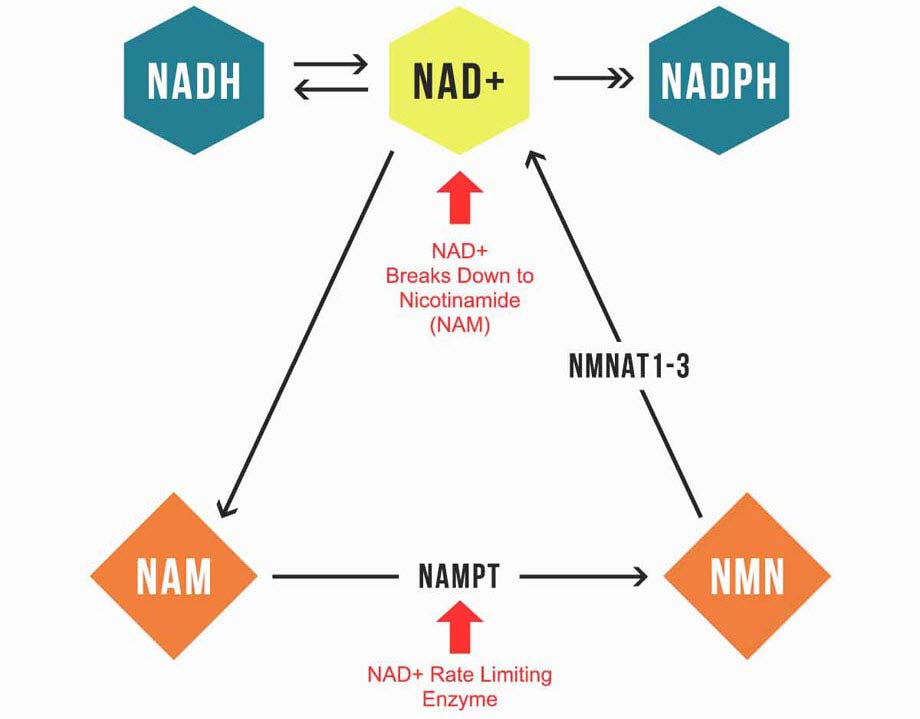
Synergistic Lifestyle Strategies
While supplementation can be very valuable, it’s not a magic bullet. In most cases, supplementation needs to be done in conjunction with other healthy lifestyle changes for lasting, optimal results. So, to boost and maintain youthful NAD levels, consider the following healthy lifestyle strategies:
- Physical exercise — Naturally increases NAMPT by activating AMPK, which in turn increases NAD. Conlon cites research showing about three weeks of resistance training will boost NAMPT by about 127%, which again is far greater than what you can get from an NR supplement alone.
- Fasting or time-restricted eating — Naturally increases NAMPT by activating AMPK, which in turn increases NAD.
- Circadian rhythm optimization by going to bed at sunset and getting up at sunrise and avoiding blue light after sunset will have profound impacts on increasing NAMPT.
- Avoid radiation exposure — To protect your NAD by preventing its consumption by PARPs, consider avoiding EMFs in the form of your cell phone and Wi-Fi and other forms of DNA damaging radiation, such as unnecessary medical x-rays and CAT scans.
- Sauna bathing — Heat stress also helps boost NAD.
Considering you can’t really measure your NAD level, how can you your levels are improving? Conlon replies:
“We have three things that people always report back on. The first is energy levels, which is not surprising whatsoever given the key role that NAD has in the body of producing our energy. It’s not an energy boost where people feel wired … It’s more like having enthusiasm about the day — more ‘get up and go.’
The other thing is mental clarity and focus. And the final thing is sleep. NAD levels are actually circadian and cyclical and can fluctuate throughout your day … As you get older and NAD levels decline, the peaks and troughs of NAD decline too which can hamper your circadian rhythm, which means your sleep quality isn’t as good. Those are the three main things.”
I have a very optimized lifestyle that optimizes my NAD+ to youthful levels. I do this through an 18-hour daily fast in which I start my resistance training, and most days will follow that with an EMF-free sauna at 160 degrees F. for 20 minutes. I use 50 mg of the niacinamide powder I described above.
Even though I am rapidly approaching 70, my levels are that of someone much younger because of the activities I engage in that radically upregulate NAMPT. If you want to optimize your levels of NAD+, I encourage you to incorporate some of these strategies.
Most People Don’t Reach Micronutrient Requirements Through Food Alone
Reproduced from original article:
https://articles.mercola.com/sites/articles/archive/2023/11/20/micronutrient-deficiencies.aspx
The original Mercola article may not remain on the original site, but I will endeavor to keep it on this site as long as I deem it to be appropriate.
Analysis by Dr. Joseph Mercola November 20, 2023

STORY AT-A-GLANCE
- Most adolescents are not getting adequate nutrient intake from diet alone — a finding confirmed from other studies in developed countries such as Spain, France, Portugal and Germany
- Three-quarters of adolescents consumed less than 54% of the recommended amounts of healthy foods like fruits, vegetables and dairy products
- Nearly three-quarters of the youth exceeded the recommended limit for sweet and salty snacks — by 453%
- When nutrient intake was considered from diet alone, adolescents often consumed less than recommended amounts of the fat-soluble vitamins A, D and E along with the water-soluble vitamins folate, biotin and pantothenic acid
- The use of dietary supplements helped to increase the adolescents’ intake of vitamins and minerals, particularly magnesium and vitamin C, but this isn’t a replacement for a healthy, nutrient-rich diet
While it’s possible to get all the vitamins and minerals your body needs by eating a healthy diet, most people fall short. The issue isn’t typically a matter of quantity but quality — many people are eating energy-rich, nutrient-poor foods, setting them up for an excess of omega-6 fats from seed oils and sugar while important micronutrients are lacking.
For instance, among children and adults with high intakes of added sugars — more than 25% of their caloric intake — dietary intake of vitamins A, C and E and magnesium were low.1 Research published in Critical Reviews in Food Science and Nutrition also suggested that more than 80% of the U.S. population is at risk of certain nutrient inadequacies.2
Among adolescents, who are growing rapidly and have an increased need for nutrients as a result, low vitamin and mineral intake is also common, according to a study in BMC Nutrition.3
Many Adolescents Missing Out on Important Vitamins and Minerals
The study involved 342 Slovenian adolescents with an average age of 15.4 years. In addition to collecting data on eating habits, body height and mass and micronutrient intake the researchers assessed participants’ use of dietary supplements, including multivitamins consumed in popular drinks.
When nutrient intake was considered from diet alone, adolescents often consumed less than recommended amounts of the fat-soluble vitamins A, D and E along with the water-soluble vitamins folate, biotin and pantothenic acid. Minerals such as iodine, chromium and molybdenum were also low.
The adolescents weren’t getting enough of these nutrients because three-quarters of them consumed less than 54% of the recommended amounts of healthy foods like fruits, vegetables and dairy products.4 At the same time, nearly three-quarters of the youth exceeded the recommended limit for sweet and salty snacks — by 453% — and the recommended amount of meat products by 320%.5
Sodium intake was also high, “most likely due to excessive consumption of meat/meat products (except female DS [dietary supplement] users) and sweet/salty snacks.”
The use of dietary supplements helped to increase the adolescents’ intake of vitamins and minerals, particularly magnesium and vitamin C. However, the team stated, “Although DS use improved micronutrient intake in adolescents (especially vitamin C and magnesium), activities on public-health interventions should be focus to improve their diets.”6
Overall, the study stressed that adolescents are not getting adequate nutrient intake from diet alone — a finding confirmed from other studies in developed countries such as Spain, France, Portugal and Germany. The researchers concluded:7
“After reviewing and summarizing nutrient deficiencies in adolescents from different studies, almost the entire spectrum of nutrients has been identified as those with inadequate intake (e.g. minerals calcium, magnesium, iron, zinc, potassium, and iodine, and vitamins D, K, E, C, folic acid, B2, B6, B12), making it difficult to highlight the most important ones.”
Children and Adults Are Lacking in Nutrients, Too
Other age groups are also lacking in important nutrients needed for optimal health, potentially compromising immune system function, exacerbating chronic disease and hindering growth and development.8
One study suggested that, globally, 56% of preschool-aged children, or 372 million, are deficient in at least one of three micronutrients. Among non-pregnant women of reproductive age, 69%, or 1.2 billion people, are deficient.9
While most individuals with micronutrient deficiencies live in low- and middle-income countries, close to half (48%) of women and children in high-income countries also have at least one micronutrient deficiency.10 A computer analysis of diets from 20 people, including professional and amateur athletes and sedentary adults, also revealed that each one fell short of meeting recommended micronutrient levels.11
“Food alone in all 20 subjects did not meet the minimal Recommended Daily Allowances (RDA) micronutrient requirements for preventing nutrient-deficiency diseases,” the team concluded.12
Download this Article Before it Disappears
Nutrient Levels in Food Are Falling
Many nutrient deficiencies are the result of poor dietary choices or lack of access to healthy foods. However, foods are also generally less nutritious than they used to be. It’s interesting to note that even in 1936, concerns were raised about nutrient levels in food. An excerpt from the 74th USA Congressional Record from that year states:13
“Laboratory tests prove that the fruits, the vegetables, the grains, the eggs and even the milk and the meats of today are not what they were a few generations ago (which doubtless explains how our forefathers thrived on a selection of foods that would starve us today).
It is bad news to learn from our leading authorities that 99% of the American people are deficient in these minerals, and that a marked deficiency in any one of the more important minerals actually results in disease. Any upset of the balance, any considerable lack of one or another element, however microscopic the body requirement may be, and we sicken, suffer, and shorten our lives.”
Nutrient declines have only continued. In one analysis of 43 garden crops from 1950 to 1999, “apparent, statistically reliable declines” were detected for six nutrients — protein, calcium, riboflavin, vitamin C, phosphorus and iron. The declines ranged from 6% for protein to 38% for riboflavin.14
A study that analyzed nutritional quality changes in wheat from 1850 to 2016 also found nutrient levels had dropped. While the amount of carbohydrates in wheat increased, protein content and other nutrients, including manganese, iron, zinc and magnesium, declined.15,16
Common Nutrient Deficiencies
In the U.S., it’s estimated that 1 in 3 Americans are deficient in at least 10 minerals, putting them at risk of chronic diseases such as heart disease and diabetes.17 Even at a subclinical level, being deficient in vitamins and minerals can cause a range of symptoms, ranging from fatigue and irritability to heart palpitations and pain.18 Common nutrient deficiencies include:
1. Vitamin D — An estimated 40% of Europeans are deficient in vitamin D, while 13% are severely deficient.19 Among older Americans, up to 100% may be deficient, in large part due to less time spent outdoors.20
The only way to gauge whether you might need to supplement, and how much to take, is to get your level tested, ideally twice a year, in the early spring, after the winter, and early fall when your level is at its peak and low point. Vitamin D is best obtained via sensible sun exposure, but supplementation may be necessary for some people.
2. Magnesium — It’s estimated that more than half of the U.S. population may not be consuming enough magnesium.21 You only need about 150 milligrams (mg) to 180 mg a day to prevent deficiency, but optimal levels are closer to the 600 mg/day level. For comparison, the RDA for magnesium is around 310 mg to 420 mg per day depending on your age and sex.22
Dark green leafy vegetables are a good source of magnesium, and juicing your greens is an excellent way to boost your intake, although supplementation is likely necessary for most people.
3. Vitamin K2 — Known for its role in bone and heart health, vitamin K2 is found in grass fed animal products such as meat, eggs, liver and dairy, as well as in fermented foods, including sauerkraut, certain cheeses and the fermented soy food natto — items that many Americans do not consume enough of.
4. Vitamin B12 — A water-soluble vitamin also known as cobalamin, vitamin B12 plays a role in numerous biochemical reactions and neurological functions in your body, including DNA synthesis.23 Your body can’t make vitamin B12 on its own, so it must be obtained via your diet or supplementation.
It’s been suggested that nearly two-fifths of Americans may have lower than ideal B12 levels, with 9% deficient and 16% below 185 pmol/L, which is considered marginally deficient.24 While vegetarians and vegans are susceptible since B12 is derived from animal products, even meat eaters may be deficient, as problems with absorption are common.
5. Vitamin A — An estimated 51% of adults are not consuming enough vitamin A,25 increasing their risk of degenerative diseases like macular degeneration, a leading cause of blindness in the U.S.26
Vitamin A is a group of nutrients that falls into two different categories: retinoids found in animal foods and carotenoids found in plant foods. The two are chemically different and provide different health benefits, but both are necessary for optimal health. Plant foods high in beta-carotene include sweet potatoes, carrots, cantaloupe and mangoes.27 Animal foods rich in vitamin A include liver, egg yolks and grass fed butter.
Can a Multivitamin Make Up for Nutrient Deficiencies?
No dietary supplement can replace a healthy diet full of nutrient-dense whole foods. But if you’re not eating right, or you suspect you have nutrient deficiencies, a multivitamin may help to fill in the gaps. In one study, a team of researchers from Oregon State University found a significant positive effect when older men used multivitamins. The multivitamin group had improved biomarkers of nutrition while the placebo group did not.28
In fact, nutrition biomarkers fell in some of the placebo participants, which “suggests that food alone was not enough to keep their vitamin and carotenoid levels up,” Tory Hagen, principal investigator and Helen P. Rumbel Professor for Healthy Aging Research at the Linus Pauling Institute explained.29
Daily multivitamin use in older adults may also give memory a boost. In one study, researchers estimated that taking a multivitamin improved performance by “the equivalent of 3.1 years of age-related memory change” compared to placebo30 and could not only help maintain cognitive functioning but potentially enhance it later in life.
Since multivitamins contain both water- and fat-soluble vitamins, it’s generally recommended you take half your daily dose in the morning, with breakfast, and the other half with your main meal. Be sure that you’re not using a multivitamin to replace real food, however.
Dietary supplements should be used in addition to a healthy lifestyle, not in place of it. You can also work with a holistic health care provider to help you identify any nutrient deficiencies in your body and use targeted supplements and foods to address them.
- 1 Linus Pauling Institute, Micronutrient Information Center
- 2 Crit Rev Food Sci Nutr. 2010 Mar;50(3):228-58. doi: 10.1080/10408391003626223
- 3 BMC Nutrition volume 9, Article number: 110 (2023)
- 4, 5, 7 BMC Nutrition volume 9, Article number: 110 (2023), Results
- 6 BMC Nutrition volume 9, Article number: 110 (2023), Conclusions
- 8, 9 The Lancet Global Health November 2022 Volume 10, Issue 11, E1590-E1599, Findings
- 10 The Lancet Global Health November 2022 Volume 10, Issue 11, E1590-E1599, Discussion
- 11, 13 J Int Soc Sports Nutr. 2006; 3(1): 51–55
- 12 J Int Soc Sports Nutr. 2006; 3(1): 51–55., Conclusion
- 14 J Am Coll Nutr. 2004 Dec;23(6):669-82. doi: 10.1080/07315724.2004.10719409
- 15 Scientific Reports volume 10, Article number: 21828 (2020)
- 16 National Geographic May 3, 2022
- 17 Amazon, The Mineral Fix
- 18 Nutrients. 2017 Jul; 9(7): 655., Abstract
- 19 European Journal of Clinical Nutrition volume 74, pages 1498–1513 (2020)
- 20 J Aging Gerontol. 2014 Dec; 2(2): 60–71
- 21 Oregon State University, Micronutrient Inadequacies, Magnesium
- 22 National Institutes of Health, Magnesium
- 23 Journal of Clinical Nephrology & Kidney Diseases August 31, 2018
- 24 Agricultural Research August 2000
- 25 Oregon State University, Micronutrient Inadequacies, Vitamin A
- 26 U.S. CDC, Macular Degeneration
- 27 National Institutes of Health, Vitamin A, Sources Of Vitamin A, Table 2
- 28 Nutrients 2023, 15(12), 2691; doi: 10.3390/nu15122691
- 29 Oregon State University June 14, 2023
- 30 The American Journal of Clinical Nutrition July 2023, Volume 118, Issue 1, Pages 273-282, Results
The Benefits of Fever
Reproduced from original article:
https://articles.mercola.com/sites/articles/archive/2023/11/09/benefits-of-fever.aspx
The original Mercola article may not remain on the original site, but I will endeavor to keep it on this site as long as I deem it to be appropriate.
Analysis by Dr. Joseph Mercola November 09, 2023
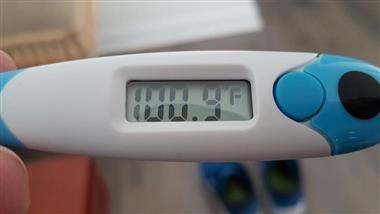
STORY AT-A-GLANCE
- In most cases, there’s no reason to fear a fever; using fever-reducing medications may prolong the illness
- Increasing research supports the “let it ride” philosophy, which states that fever is protective and should be allowed to run its course
- When critically ill patients were aggressively treated to reduce fever, the study had to be stopped early because so many people in the aggressive treatment group died compared to the group whose fevers weren’t treated
- Several hours of mild fever is beneficial for COVID-19 patients, as it raises cellular levels of beneficial heat shock protein 70 (HSP70), which is protective in cases of sepsis-induced ARDS
- In people with influenza, using fever-reducing drugs is linked to a 5% increase in mortality; in most cases, rest and plenty of fluids are all that’s needed when a fever strikes
I originally wrote this article 12 years ago. But the topic is so important that I wanted to publish an update spreading the word that, in most cases, there’s no reason to fear a fever. Reaching for fever-reducing medications right away is also typically counterproductive and may make it take longer for you to get better.1,2
Fever is a sign that your, or your child’s, immune system is working at its best. Virtually all animals — and even fish3 — naturally develop a fever when they’re fighting a bacterial or viral illness. This response occurs because it improves your body’s ability to get rid of infection.
Fever Benefits Your Body
When an organism invades your body, it triggers the release of pyrogen, a substance that signals your brain’s hypothalamus to raise your body’s temperature. This is done through a number of different mechanisms, including:
- Shivering
- Release of the hormone TRH
- Increasing your metabolic rate
- Restricting blood flow to the skin to minimize heat loss
- Piloerection (raising the small hairs), which suppresses sweating, a cooling mechanism
The fever, in turn, launches a number of beneficial body processes, including immune-protective mechanisms, that either directly or indirectly help ward off the invading bacteria or virus. For instance, temperatures from 104 to 105.8 degrees F (40 to 41 degrees C) reduce the replication rate of poliovirus in cells by 200-fold, while increasing the susceptibility of Gram-negative bacteria to antibody destruction.4
“Given the complexity of these immune mechanisms, it is remarkable that fever-range temperatures stimulate almost every step involved in this process, promoting both innate and adaptive immunity,” researchers wrote in Nature Reviews Immunology.5
“Febrile temperatures serve as a systemic alert system that broadly promotes immune surveillance during challenge by invading pathogens.”6 Some of these wide-reaching benefits include:
| Increase in antibodies — cells trained to attack the exact type of invader that your body is suffering from | More white blood cells are produced to help fight off the invading bugs |
| More interferon, a natural antiviral and anticancer substance, is produced, which helps block the spread of viruses to healthy cells | Walling off of iron, which bacteria feed on |
| Increased temperature, which directly kills microbes (most bacteria and viruses grow better at temperatures lower than the human body) | Improved ability of certain white blood cells to destroy bacteria and infected cells |
| Fever also impairs the replication of many bacteria and viruses |
Fever? Let It Ride
“The fever response is a hallmark of infection and inflammatory disease and has been shaped through hundreds of millions of years of natural selection,”7 yet many health care providers still consider it dangerous and worthy of treating because it causes discomfort.
Scientists also continue to debate fevers’ merits. One side favors the idea that fever should be suppressed because of its high metabolic costs. Every 1.8 degree F rise in body temperature requires a 10% to 12.5% increase in metabolic rate,8 which is significant.
This is one of the reasons why you frequently lose weight when you have a fever. However, increasing research supports the “let it ride” philosophy, which contends that fever is protective.9 Writing in the Journal of Thoracic Disease, researchers with the University of Miami Miller School of Medicine described a classic 1975 study10 on fever and survival in iguanas infected with bacteria:11
“He gave them the opportunity to seek heat via sunlamps and all but one sought the warmth to raise their temperature. The one who did not was the only one who died. Next, he injected the iguanas with bacteria and gave them antipyretics [fever-reducing drugs]. The iguanas that were able to mount a fever despite the antipyretic were the only ones that survived.”
A 1987 study on rabbits also found that administering fever-reducing drugs caused more harm than good. The team found fever suppression in the animals “had a markedly deleterious effect on the course of infection, resulting in an increased content of infectious virus in the mesenteric lymph nodes, increased mortality, and retarded recovery in animals that survived the infection.”12
Similarly striking findings have been found in people, specifically critically ill patients in the intensive care unit. One group of patients was treated aggressively for fever, receiving acetaminophen every six hours if their temperature rose above 101.3 degrees F (38.5 degrees C).
The other group only received treatment if their fever reached 104 degrees F (40 degrees C), which consisted of acetaminophen and cooling blankets until their temperature went below 104 degrees F.
The study had to be stopped early because so many people in the aggressive treatment group died compared to the other group — seven deaths versus one, respectively. “Aggressively treating fever in critically ill patients may lead to a higher mortality rate,” the team concluded.13
Another study, this time on fish, showed allowing fever to run its course cleared infection in about half the time it took for animals without a fever to heal.14,15 In addition to rapidly clearing infection, fever helped control inflammation and repair tissue damage.
“We let nature do what nature does, and in this case, it was very much a positive thing,” study author and immunologist Daniel Barreda, with the University of Alberta, said in a news release.16 “Every animal examined has this biological response to infection,” she says, suggesting that fever provides a strong evolutionary survival advantage.
Download this Article Before it Disappears
Moderate Fever Is Protective Against COVID-19
Acute respiratory distress syndrome (ARDS), which involves programed cell death in the lungs’ alveolar cells, is a primary cause of death in COVID-19 patients. The natural rise in body temperature that occurs during mild or moderate fever, however, may raise cellular levels of beneficial heat shock protein 70 (HSP70), which is protective in cases of sepsis-induced ARDS.
Writing in Frontiers in Medicine, researchers suggested that several hours of mild fever, defined as less than 101.8 degrees F (38.8 degrees C), is advantageous for COVID-19 patients, “allowing lung cells to accumulate protective HSP70 against damages from the inflammatory response to the virus SARS-CoV-2.”17 Again, simply allowing a mild or moderate fever to take its course helps increase HSP70, offering you a survival advantage:18
“HSP70s can use the energy from ATP hydrolysis to forcefully unfold and dismantle different types of aggregated and functional protein oligomers in the cell. Hence, it can drive conformational changes in various large cytotoxic protein aggregates and convert them into soluble, harmless, functional proteins.
… Conversely, degenerative neuronal and muscular tissues in aging nematodes and humans that systematically express lower cellular levels of HSP70s than young individuals are particularly fragile and stress-sensitive. Cells with low HSP70 levels tend to spontaneously undergo apoptosis, and consequent tissue losses in aging humans lead to progressive degenerative diseases.”
Because the ability to develop fever and accumulate HSP70 decreases with age, the team even suggested using thermotherapies or physical training to raise body temperature in these cases. Scientists writing in Evolution, Medicine, and Public Health also suggested letting fever do its job, particularly in the pandemic era:19
“For COVID-19, many public health organizations have advised treating fever with medicines such as acetaminophen or ibuprofen. Even though this is a common practice, lowering body temperature has not improved survival in laboratory animals or in patients with infections.
Blocking fever can be harmful because fever, along with other sickness symptoms, evolved as a defense against infection. Fever works by causing more damage to pathogens and infected cells than it does to healthy cells in the body. During pandemic COVID-19, the benefits of allowing fever to occur probably outweigh its harms, for individuals and for the public at large.”
Fever-Reducing Drugs May Backfire
In most cases, fever-reducing medications should be avoided, as they typically only suppress the natural healing mechanisms of the fever and prolong the illness. For example, in people with influenza, using fever-reducing drugs is linked to a 5% increase in mortality.20 Even the American Academy of Pediatrics (AAP) warned against “fever phobia” and overuse of fever-reducing drugs:21
“Appropriate counseling on the management of fever begins by helping parents understand that fever, in and of itself, is not known to endanger a generally healthy child. In contrast, fever may actually be of benefit …
When counseling a family on the management of fever in a child, pediatricians and other health care providers should minimize fever phobia and emphasize that antipyretic use does not prevent febrile seizures.”
Further, in their advice for parents wondering if they should treat their child’s fever, AAP states, “The key is to watch your child’s behavior. If they are drinking, eating, sleeping normally, and are able to play, you do not need to treat the fever. Instead, you should wait to see if the fever improves by itself.”22
Remember, the point of the fever is to stimulate the immune system and create an inhospitable environment for invading organisms, essentially turning up the heat high enough that the invading microbes cannot live. So, anytime you lower a fever artificially you’re making your body more hospitable to the invading pathogens.
Lowering a fever with medications also masks your symptoms, which may lead you to return to your normal activities too soon, when your body could still benefit from extra rest. The drugs may also prolong illness. In a study of acetaminophen for children with chickenpox, the drug led to prolonged itching and time to scabbing compared to placebo treatment.23
Further, a study of adults with colds found that aspirin and acetaminophen suppressed production of antibodies and increased cold symptoms, with a trend toward longer infectiousness.24
These medications also carry risks of side effects, including liver damage with acetaminophen, stomach upset with Ibuprofen and Reye’s syndrome with aspirin. It’s recommended that children under 19 not be given aspirin when they have a fever, due to the link to Reye’s syndrome.
When Is a Fever Dangerous?
It’s rare for a fever to rise higher than 104 or 105 degrees F, and as long as your child isn’t distressed, there is no harm in letting a fever run its course. Keep in mind also that fevers tend to spike in the late afternoon and evening, so a slight increase in fever during this time is not necessarily cause for alarm.
In most cases, rest and plenty of fluids is all that’s needed when a fever strikes. Fever does increase fluid loss, so it’s important to give your child plenty of fluids, even if they don’t feel thirsty, to prevent dehydration. There are some instances, however, when a fever does require medical attention. This includes:
- Fever in an infant younger than 3 months (at any temperature)
- Fever above 102.2 degrees F (39 degrees C) in children between 3 months and 36 months, if they appear ill
- Anytime a fever rises over 104.5 degrees F (40 degrees C)
- In some cases of sepsis or neurological injuries, uncontrolled fever may lead to worse outcomes25
In children 5 years and under, fever can also lead to a seizure, known as a febrile seizure. Though this can be frightening, it typically will cause no lasting effects. During a febrile seizure, lay your child on his side or stomach on the ground, loosen any tight clothing and support the child to prevent injury.
When the seizure stops, you should seek medical attention right away to be sure the seizure was not caused by something other than the fever, such as meningitis or bacteria in the blood.
However, remember that letting a fever run its course is typically the best choice to fight off a viral or bacterial infection. You can further bolster your immune system’s ability to ward off pathogens, and reduce the likelihood of developing a fever in the first place, by eating right, getting plenty of daily movement, using sound methods for stress relief and sleeping well.
- 1, 14, 16 Science Daily March 15, 2023
- 2, 3, 15 Immunology and Inflammation March 14, 2023
- 4, 5, 6, 7, 8, 20, 25 Nat Rev Immunol. 2015 Jun; 15(6): 335–349
- 9, 11 J Thorac Dis. 2015 Dec; 7(12): E633–E636
- 10 Science. 1975 Apr 11;188(4184):166-8
- 12 J Infect Dis. 1987 May;155(5):991-7. doi: 10.1093/infdis/155.5.991
- 13 Surg Infect (Larchmt). 2005 Winter;6(4):369-75. doi: 10.1089/sur.2005.6.369
- 17, 18 Front Med (Lausanne). 2020; 7: 564170
- 19 Evol Med Public Health. 2021; 9(1): 26–35
- 21 American Academy of Pediatrics March 2011, Volume 127, Issue 3
- 22 AAP, Healthychildren.org, Treating Your Child’s Fever
- 23 J Pediatr. 1989 Jun;114(6):1045-8. doi: 10.1016/s0022-3476(89)80461-5
- 24 The Journal of Infectious Diseases December 1, 1990
Fast Food Loaded With Antibiotics, Hormones, Heavy Metals, but Few Nutrients
Reproduced from original article:
https://articles.mercola.com/sites/articles/archive/2023/10/27/fast-food-antibiotics-hormones.aspx
The original Mercola article may not remain on the original site, but I will endeavor to keep it on this site as long as I deem it to be appropriate.
Analysis by Dr. Joseph Mercola October 27, 2023
STORY AT-A-GLANCE
- Most chain restaurants rely on beef and chicken from concentrated animal feeding operations (CAFOs), where veterinary drugs are routinely used, and of 10 fast food meals sampled and tested, all but two tested positive for veterinary drugs
- Six of the 10 fast food samples (Taco Bell, Dunkin’, Wendy’s, Domino’s, Burger King and McDonald’s) contained a veterinary antibiotic ionophore called monensin, which is not approved for human use as it can cause severe harm
- Of 43 school lunches tested, 95% had detectable levels of glyphosate, a carcinogenic and endocrine-disrupting weed killer linked to liver inflammation, metabolic disorder, cardiovascular disease and cancer
- 100% of the school lunches tested contained heavy metals at levels up to 6,293 times higher than the maximum levels allowed in drinking water. Cadmium and lead were found at the highest levels
- Of 21 fast food meals tested for essential minerals, none met the recommended daily requirements of calcium, potassium, manganese, copper, zinc and iron, and none of the 10 fast food meals tested for B vitamins contained detectable levels of B9 or B12. Vitamin B3 (niacin) levels were also exceptionally low
While high amounts of linoleic acid (LA) is one of the primary reasons why processed foods and fast food are so bad for your health, contaminants like veterinary drugs, antibiotics, hormones and heavy metals — combined with inferior amounts of essential nutrients — are other highly-ranked reasons to steer clear of.
8 of 10 Fast Food Meals Contain Veterinary Drugs
In September 2023, Moms Across America (MAA) submitted food samples from 10 fast food chains to the Health Research Institute, a nonprofit laboratory that tests food for nutrient content, contaminants and toxins. Each food sample was tested for the presence of 104 of the most common veterinary drugs and hormones. You can read the certificate of analysis here.1
Fast food restaurants sampled included McDonald’s, Starbucks, Subway, Chick-fil-A, Burger King, Taco Bell, Chipotle, Dunkin’, Wendy’s and Domino’s. Of these, only Chipotle and Subway tested negative for veterinary drugs.
This isn’t all that surprising, considering most chain restaurants rely on beef and chicken from concentrated animal feeding operations (CAFOs), where veterinary drugs are routinely used. As explained by MAA:2
“Due to large, industry, confined animal feeding operation conditions, which include extremely close quarters, unsanitary spaces, and high incidence of disease, most of America’s nonorganic meat comes from livestock that is heavily treated with antibiotics, growth hormones, and an anti-parasitic which is also a known aviary contraceptive.”
6 of 10 Contain Potentially Risky Antibiotics
Six of the 10 fast food samples (Taco Bell, Dunkin’, Wendy’s, Domino’s, Burger King and McDonald’s)3 contained a veterinary antibiotic ionophore called monensin, which is not approved for human use as it can cause severe harm. The sample with the highest concentration (Taco Bell) contained 0.64 micrograms (mcg). The “acceptable” daily intake is 12.5 mcg/kg of body weight per day.
Monensin also has a number of side effects in animals, including anorexia, diarrhea, depression, ataxia, degeneration of heart and skeletal muscles, necrosis and death.
The antibiotic ionophore narasin, which has the same side effects in animals as monensin, was found in 4 of the 10 samples (Wendy’s, Dunkin’, Domino’s and Starbucks). The highest concentration, 1.53 mcg, was found in a Wendy’s cheeseburger. The three others contained only trace concentrations. The “acceptable” daily intake is 5 mcg/kg per day.
Both monensin and narasin are toxic to dogs and horses and can cause paralysis of the hind legs at extremely low levels. They can also cause acute cardiac rhabdomyocyte degeneration and necrosis in beef and dairy cattle. The reason they’re used in cattle is because they encourage weight gain. MAA commented on these findings:4
“Moms Across America is gravely concerned about our population, especially children, unknowingly eating unprescribed antibiotic ionophores livestock, even at low levels, consistently because of potential damage to the microbiome as well as the risk of antibiotic-resistant bacteria growth.
We question if the side effects of these ionophores in dogs and horses, leaving their hind legs dysfunctional, might be related to millions of Americans presenting with restless leg syndrome and neuropathy, conditions unknown to most humans just a generation or two ago … Until proven safe, we urge our regulatory agencies, such as the USDA and FDA, to disallow the use of these drugs in our livestock.”
Download this Article Before it Disappears
‘Fowl Contraceptive’ Detected in Chick-fil-A Sandwich
The Chick-fil-A chicken sandwich was found to contain nicarbazin,5 an antiparasitic drug and fowl contraceptive that causes infertility in certain poultry, such as pigeons and geese. In fact, it’s used to control geese and pigeon populations.
In chickens, it’s used to control certain types of infections and fatten them up. Side effects of the drug include increased sensitivity to heat stress, degenerative processes in the liver and kidneys, and death.
In 2009, the British Soil Association sought to have nicarbazin banned in the U.K., as evidence proving the drug would not cause genetic damage, mutations, birth deformities or malformations was lacking. As a result, a European review board was unable to establish a safe level of residue in chickens and eggs.6
Despite open questions, the European Commission and the UK’s Veterinary Medicines Directorate continued to allow routine use of the drug in the poultry industry by using a legal loophole. In the U.S., nicarbazin has been an approved veterinary drug for use as an anticoccidial agent in broiler chickens since 1955.7
The Chick-fil-A sandwich contained 0.36 mcg of nicarbazin and the “acceptable” level is 200 mcg/kg per day.8 The seemingly wide safety margin does not mean there’s nothing to worry about though. As noted by MAA executive director Zen Honeycutt:
“The impact of millions of Americans, especially children and young adults, consuming a known animal contraceptive daily is concerning. With infertility problems on the rise, the reproductive health of this generation is front and center for us, in light of these results.
These are veterinary drugs and hormones … so the only studies that I have found, and that you will find, will be for animals. [They’re] not authorized for humans, and yet they’re being allowed [into the food supply]. Some people are consuming this food every day, so we don’t know how much they are accumulating in their body.”
John Fagan, chief scientist at the Health Research Institute, also noted that the FDA’s acceptable levels are really only meaningful when we’re talking about acute poisoning. In the case of fast food, which some people eat three times a day, the concern is chronic poisoning from the accumulation of toxins over time.9
School Lunches Loaded With Pesticides
In September 2022, MAA also tested 43 school lunches for the presence of not only hormones and veterinary drugs, but also pesticides, heavy metals and nutritional content.10 The results there were even more concerning.
Ninety-five percent of the school lunch items had detectable levels of glyphosate, a carcinogenic and endocrine-disrupting weed killer routinely used on GMO grains that has been linked to liver inflammation, metabolic disorder, cardiovascular disease and cancer, including liver cancer and Non-Hodgkin’s lymphoma.11,12
The highest levels of glyphosate were found in beef taco with soft wheat tortilla (286.77 nanograms per gram) and pizza (156.14 ng/g). As noted by MAA, these levels are highly concerning:13
“If consumed regularly, results with Total Effective Glyphosate above 25 ng/g could have harmful effects. These are levels that, if routinely fed to rats, cause them to show symptoms of Non-Alcoholic Fatty Liver Disease (NAFLD).
NAFLD is life-threatening and is an epidemic in the USA. These levels of glyphosate in school lunches would be expected to have similar effects on children.
Levels lower than 25 ng/g can be expected to contribute to NAFLD and other pathologies because a child will eat more than one thing during the day that contains glyphosate, and the levels of glyphosate would be cumulative.”
Other toxic pesticides found in the school meals include:
- Thiabendazole, which has immune suppressing effects, was found in 27.9% of the samples.
- Piperonal butoxide, present in 18 of the 43 samples (41%), is a developmental toxin that causes birth defects and neurodevelopment disruptions.
- Pyrimethanil, detected at 595.04 ppb on an apple, has been shown to cause thyroid tumors in animals.
School Meals: Drugs, Heavy Metals, but Few Nutrients
Nine of the 43 school lunches also contained four types of veterinary drugs and hormones, and a shocking 100% of meals contained heavy metals at levels up to 6,293 times higher than the maximum levels allowed in drinking water. Levels ranged from 0.5 ppb to 94.4 mcg/kg.
The highest levels of heavy metals were cadmium and lead, found at up to 46.8 mcg/kg (cadmium) and 94.4 mcg/kg (lead). Meanwhile, most of the meals were “abysmally low” in essential nutrients. As reported by the MAA:
“An advisor has calculated the contribution that the sample food would make to a person’s nutritional requirements, assuming that they ate a 4 oz portion (standardly used in nutritional analysis) and assuming that this food contributed ¼ of their nutrition for the day.
‘The nutritional items are consistently very deficient in Copper and are also consistently deficient (but to a lesser extent) in calcium, potassium, and phosphorous. Magnesium, zinc, and manganese are deficient in many of the samples, roughly 50%. The only mineral that is consistently meeting or exceeding requirements is iron. That is good but it is not enough!’ …
Without proper nutrients, our children’s brains will not function properly, and their bodies will not be developed as needed. Often children with learning and behavioral issues are deficient in just one or two minerals or vitamins; when those nutrients are added to their diet, their mental, physical, and behavioral issues subside. Even violent behavior is discontinued. Our children must have proper nutrient-dense food.”
Fast Food Cannot Sustain You
After completing the veterinary drug analysis on 10 fast food meals, MAA went on to test 21 fast food brands for essential minerals, and the top 10 brands for B vitamins.
“The testing was conducted out of concern for America’s skyrocketing mental and physical health crisis,” Honeycutt writes in her October 18, 2023, report.14
“Eighty-five million Americans eat fast food every day. Fast food companies often supply a significant portion of the 30 million school meals served to our children each day.
The quality of the food, including the contamination of agrochemicals and lack of nutrients due to toxic chemical inputs, contributes to our mental and physical health issues. One in five Americans have a mental illness, and 54% of our children have a chronic health issue.
For many impoverished children, school meals are the only food they consume each day. Numerous studies have linked toxins in the food supply and lack of nutrition to conditions such as autism, depression, aggression, suicide, and homicides. This report will … disclose the mineral, vitamin B, and calorie levels in the top 20 fast food restaurants/ school lunch suppliers.”
Based on the micronutrient testing done on school lunches in 2022 (above), you can probably guess what this nutritional testing revealed. The mineral content of the fast food tested did not meet the recommended daily requirements of calcium, potassium, manganese, copper, zinc and iron.
For example, the recommended daily allowance (RDA) of copper is 900 mcg per day, and Chick-fil-A’s chicken nuggets contain just 1.4 mcg of copper per gram. To meet the RDA, an adult would need to consume nearly nine servings of nuggets.
Signs of copper deficiency include fatigue, poor concentration and low mood. Also, “children with autism and violent behavior often have an imbalance of copper,” Honeycutt writes.
Fast Food Nearly Devoid of B Vitamins
Even worse, zero amounts of vitamin B9 or B12 were detected in the top 10 fast food samples, and deficiencies in these B vitamins can lead to fatigue, digestive issues, heart problems, nervous system disorders and erratic behavior. Indeed, vitamin B12 (cobalamin) is known as “the energy vitamin.” Your body requires it for energy production.
It also plays an important role in neurological function, and deficiency can culminate in a range of mental health symptoms, from irritability and depression to dementia and even psychosis. You can learn more about vitamin B12’s role in mental health in this November 6, 2022 article.
Warning signs of B12 deficiency include brain fog, memory lapses, mood swings, apathy, fatigue, muscle weakness and tingling in the extremities. Unfortunately, B12 deficiency may not present itself for several years, so by the time you notice symptoms, you may be quite deficient.
The fact that NONE of the top 10 fast foods contained B12 is rather remarkable when you consider B12-rich foods include beef, seafood, chicken and eggs. Beef and chicken are staples in fast food, yet fast food beef and chicken provide no B12 at all! If that doesn’t convince you that fast food meat is nowhere near the same as grass fed organic meat, I don’t know what will.
A woman would need to consume 333 servings of Chick-fil-A chicken sandwiches and a man would need to eat 380 servings to meet the RDA for niacin.
Levels of B3 (niacin) were also abysmal. The RDA for women is 14 mg per day and for men it’s 16 mg. To meet that RDA, a woman would need to consume 333 servings of Chick-fil-A chicken sandwiches (at a serving size of 210 grams) and a man would need to eat 380 servings.
Chipotle’s carnitas bowl with everything, which had the highest amount of B3, still requires you to eat eight servings if you’re a woman and nine servings if you’re a man, to meet your RDA of niacin. As reported by MAA:15
“On average, adults would need to consume between 64-73 servings of the top 10 fast foods to get proper vitamin B3 nutrition per day. Alternatively, a portion of liver (pasture-raised, ideally) or a can of tuna (SafeCatch) would supply enough vitamin B3 or niacin for proper nutrition for a day. Clearly, cheap fast food is not as cheap as it seems when one factors in the value of the nutrients provided in the purchase.”
- 1, 3 Health Research Institute Certificate of Analysis
- 2, 4 Moms Across America October 9, 2023
- 5, 7 EPA Nicarbazin
- 6 The Poultry Site March 9, 2009
- 8 Science Direct, Nicarbazine, Detecting and Controlling Veterinary Drug Residues in Poultry
- 9 Zero Hedge October 13, 2023
- 10, 13 Moms Across America September 28, 2022
- 11 Berkeley Public Health March 1, 2023
- 12 Patient Power Non-Hodgkin’s Lymphoma February 13, 2023
- 14, 15 Moms Across America October 18, 2023
Dr. Mercola Interviews Dr. Karen Becker
Reproduced from original article:
https://articles.mercola.com/sites/articles/archive/2023/10/22/dr-mercola-interviews-dr-karen-becker.aspx
The original Mercola article may not remain on the original site, but I will endeavor to keep it on this site as long as I deem it to be appropriate.
Analysis by Dr. Joseph Mercola October 22, 2023
STORY AT-A-GLANCE
- Dr. Karen Becker, who’s been the consulting veterinary formulator and educator on my site for 14 years, shares her deep philosophical views on how pets enrich our lives — from teaching us how to grieve to offering unconditional love in ways that even humans typically cannot
- She also offers a wealth of knowledge about how to keep your pet optimally healthy at any life stage
- To enhance your pet’s healthspan, focus on proper nutrition and other key elements of well-being, including movement, fresh air, detoxification and stress management, including chemical stress, emotional stress and physical stress
- There’s a spectrum of commercially available pet foods, and the closer you get to fresh and raw, the better; you can also improve your pet’s health one meal at a time by adding in fresh, human foods, including fruit and vegetable scraps
- Dr. Becker is the coauthor of “The Forever Dog,” a book born out of her desire to know why and how some animals live so much longer than others
Dr. Karen Becker in my view is the best integrative veterinarian out there. What you’ll notice first is the striking artwork behind her in the video. The art is a photomicrograph of the minerals in her precious pets that have passed on. The breathtaking artwork is created from the cremated remains of some of her companion animals.
“So, it’s interesting that you can actually get a hint of an animal’s health and wellness status by looking at mineral composition, even in death,” Dr. Becker says. “They do a beautiful job of helping you see vividly upfront and every day the beautiful aspects that our animals continue to give us and the lessons that they continue to teach us.”
Dr. Becker, who’s been our veterinary consultant for 14 years, and recently expanded it to bark & whiskers, shares her deep philosophical views on how pets enrich our lives — from teaching us how to grieve to offering unconditional love in ways that even humans typically cannot.
She also offers a wealth of knowledge on bark & whiskers about how to keep your pet optimally healthy at any life stage, with a focus on proper nutrition and other key elements of well-being — movement, fresh air, detoxification, and stress management, including chemical stress, emotional and physical stress. If you haven’t visited her new site, I encourage you to do it now.

Pets’ Poor Nutrition Starts With Vet School Indoctrination
Dr. Becker was fortunate to come from a nutritionally minded family, which taught her the importance of healthy food from a young age:
“If you go in [to veterinary school] with the foundation of nutrition, you have something to balance it with. And that was, thankfully for me, my situation. My parents are wildly proactive.
I grew up, my Grandma Shaw taught me how to grow and juice wheatgrass when I was 12. My parents and my mama made three homemade organic garden, fresh meals a day. We never had soda, we never had white bread. So, I went to vet school understanding the power of food. That is not true of my peers.”
When she went to veterinary school, her nutrition class wasn’t taught by an independent, board-certified veterinary nutritionist, but by an industry representative — a major conflict of interest:
“I had a rep from the ultraprocessed pet food diet company teach my nutrition class … that’s the equivalent of having a drug rep teach your pharmacology class. There’s a serious conflict of interest.
Not to mention, every single veterinary school in the world has a professional relationship with one of the major pet food companies that supplies the hospital and university, with not just foods for the animals in the clinic, but they supply veterinary students pet foods, free pet foods.”
Pet Food Industry Has Parallels With Human Food Industries
This process ostracizing human natural therapies from conventional human medicine began back in 1910 with the release of the Flexner Report, which was written in commission for the Carnegie Foundation.1
The Flexner Report essentially eliminated almost every form of natural medicine, because it was a competitor to the emerging class of pharmaceuticals, primarily derived from oil and petroleum products that Rockefeller was behind.2 Essentially, natural therapies and nutrition were excised from medical school curriculums.
Corporate capture also changed the course of pet food, which went from fresh food, scraps of human food that families would feed to their animals to ultraprocessed foods based on byproducts. In about 1895 in England, James Spratt started selling Spratt’s cakes, which is considered the original dog food.
“That original formula was wheat flour, leftover fat … salt and water, and then they baked it. The problem was it became moldy and rancid. So, mycotoxins … were a huge issue. All throughout the early pet foods, from late 1800s, early 1900s, animals kept dying of nutritional deficiencies, as you can imagine,” Dr. Becker says.
Canned dog and cat foods came next, followed by the introduction of kibble, by Purina, which has caused significant chronic disease in pets ever since, much like the introduction of ultraprocessed foods in the human diet. Dr. Becker explains:
“In 1945, Purina made rice and wheat Chex with this brand-new machine called an extruder. And it was in 1951 that their pet division said, ‘Hey, can we borrow the extruder to extrude the very first bag of Purina dog chow?’ 1951.
And they borrowed it from the human food extrusion line. And what they realized is, ‘Oh my gosh, this extrudes an all-in-one, ready to eat, stored in the pantry, dump it in the bowl, from birth till death. All you have to do is feed this little brown crunchy ball, we’ll add a synthetic, we’ll take everything left over from the human food industry that can’t be fed to humans.
We’ll add a synthetic multivitamin and mineral to it, we’ll extrude it at high temperatures, and then we’ll package it and sell it as complete and balanced nutrition.’ That was the beginning of the decline of overall health and wellbeing for companion animals.”
She believes at least 50% of the degenerative diseases that we’re seeing today in pets, including cancer, obesity, diabetes, organ failure, autoimmune disease, and allergies, are directly related to diet and lifestyle. In addition to the ultraprocessed nature of the food, there are quality control issues, in that food used for pets has failed human food inspection.
“Food that passes inspection goes into the human food market. Everything that fails inspection goes into animal feed, including dog and cat food. So, unless your pet food is labeled, ‘Made with human-grade ingredients,’ it is made from rendered, USDA inspected and failed raw materials.
Now, the food failed for a reason. Maybe mycotoxins, could be heavy metals. You’re never going to know how the raw materials got into your pet’s pet food.”
The other issue is species appropriateness. Cats are carnivores and dogs are scavenging carnivores, but “the pet food industry is trying to convince pet owners that dogs are vegans and cats are omnivores, and that is not true.” Dr. Becker explains:
“Dogs’ and cats’ physiology has not evolved in the last 100 years to eat a bunch of highly processed refined carbs and oils. They just haven’t. So, when we put metabolically stressful foods into physiology that was never meant to process this, there are serious metabolic consequences. And that is exactly what we’re seeing in terms of degenerative disease today.”
Download this Article Before it Disappears
What Do the Oldest Dogs in the World Have in Common?
While diet is among the most important factors in longevity, it’s not the only one. Dr. Becker is the coauthor of “The Forever Dog,” a book born out of her desire to know why and how some animals live so much longer than others. The book sold out 45 minutes after being released and became a No. 1 best seller for the New York Times.
Her coauthor, Rodney Habib, found and interviewed the world’s oldest dogs, including 30-year-old Maggie in Australia (who passed in 2016) and another 30-year-old dog, named Bobi, in Portugal, revealing that they share many things in common, most of them based on comprehensively healthy lifestyles. Dr. Becker says:
“Every single one of these dogs had some key variables in common. They all moved their bodies every day. They all were allowed to make choices. They were able to go outside and sniff and have direct sunshine, ground themselves. They had access to fresh food every day.
These animals had an entirely different set of variables that allowed them to have all the resources they need for appropriate detoxification as well as this robust nutrient intake from a whole variety of different foods over their lifetime …
I think that [a] combination of healthy natural movement, a rich social life and an amazing diet are probably the key factors for extending health and wellbeing in our pets.”
Moving Up on the Pet Food Spectrum
There’s a spectrum of commercially available pet foods, and the closer you get to fresh and raw, the better. The spectrum includes, from best to worst:
1. Fresh, raw food — “Raw means unadulterated raw meat plus ground up veggies with appropriate sources of vitamins and minerals that’s put together to mean a nutritionally complete and balanced diet,” Dr. Becker says.
2. Gently cooked foods and freeze-dried foods — These “take all of these good organic, fresh, raw meats, and then either freeze-dry them quickly or gently cook them and then freeze them.”
3. Dehydrated pet foods — The quality of these can vary, ranging from just dehydrated raw meat, which is excellent, to high carb and starchy, which is not.
“Dehydrated pet foods are one of the hardest categories to discern because you must do your research. Did they start with all raw meat-based, or did they start with a bunch of corn, wheat, rice, and peas? You need to flip over the label, make some phone calls, send the email, and discern the raw materials that dehydrated pet foods came from. But they’re still less heat treated than dry.”
4. Extruded dry food (kibble) — This is like feeding fast-food to your pet each day.
Dr. Becker recommends pet parents consider where they are on this pet food spectrum, and then take steps to move closer to No. 1 — fresh, raw food:
“If you’ve got to continue feeding all extruded, ultraprocessed fast food to your dog or cat, then start thinking about how you can occasionally add in [fresh food] to maybe one or two of the 14 meals you feed your pets during the week. Could you swap in one or two homemade nutritionally complete meals, which are fresher foods?
Could you swap out four meals of a homemade diet? Could you do a commercially available raw or fresh food in the morning and a dry food at night? How could you incrementally and stepwise go from all ultraprocessed calories to fewer and fewer ultraprocessed calories over the course of 14 meals in a week?”
Next, she recommends adding moisture to the food, especially for cats, which often develop kidney disease due to eating poorly. You can also top your pet’s meals with a variety of fresh human foods, including fruit and vegetable scraps you might otherwise throw away:
“Add in those fresh food toppers that contain all the bioactives and polyphenols that contain all of the enzymes that have not been processed. That means the tops and bottoms of carrots.
That means the tops and bottoms of your snap peas, feed those to your dogs. Everything that you’re cutting off of your fresh fruits and veggies, all those dented blueberries that you’re like, ‘Ooh, they’re too soft for me,’ feed them to your dogs.
That’s the daily, ongoing source of table food or table scraps that you can share with your animals that provide these potent polyphenols and bioactives that are necessary for the rebuilding and the maintenance to prevent degeneration as animals go through life.
So, share your fresh foods. The only foods that you will not be sharing with your dogs and cats are onions — so no chives, leaks, onions, none of those. No chocolate obviously, and no raisins and grapes.”
‘Dogs Are Wired as Athletes’
Another important takeaway is that there are many low- or no-cost strategies you can use to improve your pet’s health, and one of them is daily movement. Dr. Becker points out, “Dogs are wired as athletes … Even the tiniest chihuahua.”
So, they need exercise each day, and not simply roaming around a fenced-in backyard. They need “heart thumping, aerobic, muscle building endurance, a tongue out, panting good, really good anaerobic exercise.”
“We come home exhausted, we’re tired at night. We don’t really feel like helping our dogs who’ve been stuck in the house all day move their bodies. But I do believe it is our ethical and moral obligation to give them the opportunity to do that,” Dr. Becker says.
Along those lines, dogs also need to be outside, so ensuring your dog gets vigorous activity outdoors daily is “the best longevity gift you could ever give your dog, and it’s free,” Dr. Becker says, adding:
“They need to have morning sun hit their retinas to be able to secrete adequate biologic hormones. They need to go for a walk at night to be able to secrete adequate melatonin. Dogs need to be outside and ground themselves and sniff to be able to take in their environment.”
Even going for long walks, including up and down hills or over curbs, is extremely beneficial for pets, and for you. Your pet will also benefit psychologically from this activity, reducing behavioral problems. “The No. 1 reason dogs are dumped at shelters are behavior problems and the level of anxiety in dogs,” Dr. Becker says. Providing them with an optimal diet and plenty of exercise can virtually eliminate that problem.
Partner With a Proactive Wellness Veterinarian
Many veterinarians are caught up in the conventional model of treating disease symptoms instead of working to prevent disease in the first place. If your veterinarian isn’t helping you to make healthy choices that can help prevent degeneration in your pet, partner with an integrative veterinarian who will.
Symptoms such as chronic gastrointestinal issues, excessive shedding, intermittent constipation, diarrhea, or vomiting are all signs that something is out of balance in your pet’s body — presenting an opportunity to make healthy changes for your pet before it’s too late. By being proactive, you can add many healthy years to your pet’s life and enjoy many more moments of companionship together.
And remember, too, that pets don’t complain, so it’s often easy to miss those initial stages of degenerative disease. “So being a really astute pet parent is something that we need to practice as well.” Dr. Becker adds:
“These are their bodies saying, ‘I’m having a problem here.’ And then it’s up to us to be able to say, ‘I’m not going to panic. I’m going to identify root causes, and if I don’t have enough information to be able to go down the path of my veterinarian, I’m going to partner with a proactive wellness veterinarian who can, and I’m going to start putting into place a system of first diagnostics.
Let’s find out why my animal has these symptoms, and then let’s start with nontoxic protocols to heal and restore the underlying disease or damaged tissue to get my animal’s body back on track.’
That’s the logical progression of what pet parents can do to stop treating the symptoms of potential degenerative disease and start getting to the root causes of symptoms that are there months to years before the body breaks.”
If overhauling your pet’s diet and lifestyle sounds overwhelming, Dr. Becker stresses that even small changes can make a major difference to your pet’s healthspan and well-being:
“Don’t panic, take a deep breath, and you can make one minor change, one bite of food at a time. You can make minor but significant changes in your dog and cat’s well-being by recognizing that you don’t have to change everything this red-hot minute.
But you can begin working toward improving the health and the immediate environment that your dog and cat’s DNA is in, to over time ultimately shift the trajectory from a life of probable degeneration to a life of prevention and making the body resilient and strong through your intentional actions. So, the key is to not be overwhelmed, the key is to be empowered.”
Best Anti-Inflammatory Nutrients
Reproduced from original article:
https://articles.mercola.com/sites/articles/archive/2023/10/16/best-anti-inflammatory-nutrients.aspx
The original Mercola article may not remain on the original site, but I will endeavor to keep it on this site as long as I deem it to be appropriate.
Analysis by Dr. Joseph Mercola Fact Checked October 16, 2023

STORY AT-A-GLANCE
- Inflammation is your body’s built-in emergency response to assaults resulting in injury or infection. If the inflammation is not resolved, it becomes chronic, which can result in serious disease states such as rheumatoid arthritis, liver disease and heart disease
- There are many anti-inflammatory nutrients, and if you make a habit of including enough of them in your diet, you can keep inflammation in check relatively easily
- Nutrients known for their potent anti-inflammatory properties include omega-3 fats EPA and DHA, which are also crucial for the functionality of your cell membranes and the membranes of your mitochondria, and ginger, which has been shown to bolster immune system function and ameliorate autoimmune diseases such as lupus and rheumatoid arthritis
- Curcumin, a compound found in turmeric, has antibacterial, anticancer, anti-inflammatory, antimalarial, antioxidant, antiparasitic, antiproliferative, pro-apoptotic and wound healing properties. Conditions responsive to curcumin include certain types of cancer, high blood pressure, heart disease and blood clots, intestinal and bowel issues, neurodegenerative conditions and glaucoma
- Other potent anti-inflammatory nutrients include chondroitin, glucosamine, MSM, vitamin E, glycine, bromelain, boswellic acid and green tea extract
Inflammation is your body’s built-in emergency response to assaults resulting in injury or infection. In the acute state, inflammation is an important and vitally necessary part of your body’s healing mechanism.
However, if the inflammation is not resolved, it becomes chronic, which is profoundly destructive and plays a role in nearly every chronic degenerative disease.
While anti-inflammatory drugs may be helpful in some situations, they can have undesirable side effects and are rarely an ideal solution in the long run. To prevent and treat chronic inflammation, dietary nutrients, either from whole food or a nutritional supplement, are typically your best option.
The good news is there are many anti-inflammatory nutrients out there, and if you make a habit of including enough of them in your diet, you can keep inflammation in check relatively easily. Below, in no particular order, I’ll review some of the nutrients known for their anti-inflammatory powers.
Vitamin E
Vitamin E prevents LA stored in your tissues from being oxidized into dangerous toxic byproducts. Since most people are walking around with LA stores that are 10 times higher than normal, and since excess LA is likely one of the primary contributors to chronic disease, it can be a good idea to take vitamin E regularly until you get your LA down to healthy levels, which may take up to six years for most people.
Vitamin E also prevents LA stored in your tissues from being oxidized into dangerous toxic byproducts.
Vitamin E can almost miraculously prevent most of the damage done by LA, and it can also reverse or prevent many of the issues associated with excess estrogen. This is important because LA has remarkable parallels to excess estrogen in terms of its metabolic and anti-health effects. You see, when you eat excess PUFA or LA, you increase your body’s production of estrogen.
So, when you increase LA, estrogen levels go up — and that’s not a good thing. Both LA and estrogen interestingly increase the flow of calcium from outside the cell to inside because the concentration of calcium outside as well is 50 times higher than inside. So, the excess as LA will cause the influx of calcium inside the cell, which causes nitric oxide and superoxide to increase inside the cell.
When you do this, with this magical combination, you increase a very pernicious reactive nitrogen species called peroxynitrite, and that causes pervasive damage to tissues in your body.
Both LA and estrogen also increase a potentially dangerous process in your body called lipolysis, which is simply the liberation of fatty acids from your fat cells into your bloodstream where they are mobilized. This then increases the oxidation or, simply, the burning of fats in your mitochondria, which is precisely what you want to avoid as ideally you want to be burning glucose in your mitochondria, not fatty acids.
Fortunately, vitamin E can help neutralize this damaging effect of LA. Vitamin E also directly inhibits the activity of an enzyme called aromatase. This is an enzyme that converts the male hormones like testosterone and DHEA into estrogens.
Even better, it serves as an estrogen antagonist, meaning it binds to the estrogen receptor to block it from binding to estrogen. This dramatically lowers the damage from excess estrogen.
Vitamin E works very similarly to the drug tamoxifen, which is used to treat estrogen receptor-positive breast cancers. For these reasons, I firmly believe nearly everyone needs to be getting vitamin E in their diet. However, due to the high LA burden, very few people are able to get enough vitamin E from their diet to suppress this oxidative destruction from excess LA in their tissues.
The good news is that since the supplementation is short term, you’re not going to need it the rest of your life.
If you can keep your LA intake to below 5 grams a day for three years, it’s likely you may not even need it at all, or at most, only a few times a month. However, if for whatever reason, during this time, or when the LA in your tissues are low or normal, and you go out and binge on a meal that’s very high in LA, I would strongly recommend taking a vitamin E capsule to protect yourself from this exposure.
Vitamin E also protects against free radical damage and the normal effects of aging. It’s particularly important for brain health, and studies have found it can help delay the loss of cognitive function in people with Alzheimer’s disease by preventing cell membrane damage and neuronal death.1
How to Pick a Good Vitamin E Supplement
Most vitamin E supplements are synthetic. This is a major clue that it is different from the vitamin E you’re getting from real food. How can you tell a vitamin E supplement is synthetic? Well, all you must do is read the label. Fortunately, they make it pretty simple.
Synthetic vitamin E is called alpha tocopherol acetate. The acetate is the key. If the label says tocopherol acetate, it’s screaming that it is synthetic. Next, you need to pay attention to the orientation of the optical isomer. Most vitamin supplements are racemic, or they have left- and right-hand isomers. This is a problem as most biological molecules have optical isomers that are right-handed. They’re usually called D and L isomers for right and left.
When you have both left and right isomers present, it’s called racemic. Biologically, there’s usually only one optical isomer that works well, and with vitamin E it is the D isomer that works in your body, while the L isomer is useless. Yet in synthetic supplements, 50% of the vitamin E in the supplement is the useless L isomer.
To make matters even worse, many synthetic versions use an ester of vitamin E, which only has about 50% of the activity of the natural product. So, the total activity of many vitamin E supplements is reduced by 75%.
So, the first step in identifying healthy good vitamin E supplements is to make sure you’re not getting real vitamin E and not synthetic. What you’re looking for is “d alpha tocopherol,” as on the label below. As you can see on this label, it says that this is d alpha tocopherol. It is not DL or racemic; this is the pure D isomer, which is what your body can use.

You might also have noticed that this is vitamin E from sunflower oil, which has a very high percentage of LA. Not to worry, though, as the LA in the capsule is an insignificant amount, probably less than 50 or 100 milligrams.
Your goal is to keep LA intake under 5,000 milligrams, so it really won’t negatively impact your LA intake at all. You’ll also notice that the dose is 134 milligrams or units. You really wouldn’t want to use much more than this, as it is unnecessary. More is not better; you don’t want to take 400 units, you don’t want 1,000 units, you want the sweet spot Goldilocks dose, which is about 100 units, or 100 mg.
You also see at the bottom of this label that there are other vitamin E isomers, the complete spectrum of tocotrienols, specifically the beta, gamma and delta types of vitamin E, which are also only the effective D isomer.
So, you can use this label as a template to select a healthy vitamin E supplement. It’s important to get this right, and nearly everyone watching this would benefit from taking the appropriate vitamin E supplement, which is why I’m spending so much time on it.
Download this Article Before it Disappears
Omega-3 Fats
Omega-3 fats play a crucial role in the health and functionality of your cell membranes and the membranes of your mitochondria. June 25, 2023, I posted an interview with Nils Hoem, Ph.D., in which we took a deep dive into this.
Membranes are lipid structures made of phospholipids and other constituents. The foods you eat provide the raw material substrate that is then assembled into the mitochondrial and cellular membranes, which is why the type of fats you consume is so important.
If you’re eating any processed foods, you’re likely getting far too much omega-6 linoleic acid (LA), which damages your mitochondrial machinery and reduces your body’s ability to convert the 18-carbon omega 3 fat ALA into the 20-carbon fat EPA and 22-carbon fat DHA.
If you reduce your LA intake to historical norms — about 2% of your daily calories — and get enough omega-3 ALA (found in chia seeds, walnuts, beans and seaweed), then you can make substantial amounts of DHA and EPA and may not need supplementation. You can probably also forgo supplements if you eat fatty fish like wild-caught salmon, mackerel, sardines and anchovies on a regular basis.
That said, most people who are not strict enough about reducing their LA intake and don’t eat these kinds of fish might benefit from a DHA/EPA supplement. If you decide to take an omega-3 supplement, I believe krill oil is superior to most fish oil supplements, which are synthetically produced ethyl esters. The omega-3 in krill, on the other hand, is just the way it is in nature, and is attached to phospholipids that increase its absorption, which means you need less of it.
Krill oil also contains almost 50 times more astaxanthin, a potent antioxidant, than fish oil, which prevents the highly perishable omega-3 fats from oxidizing before they’re integrated into your cellular membranes.
While LA is highly inflammatory, the omega-3s are anti-inflammatory and help protect your bones, muscles, joints and connective tissues from damage, and repair any damage that has already occurred.
A 2019 animal study2 that compared the analgesic and anti-inflammatory activity of Neptune krill oil and fish oil concluded that while both reduced severe inflammation and pain, the Neptune krill oil was the most effective.
Ginger Root
Ginger, which is easy to grow at home, has been shown to bolster immune system function and ameliorate autoimmune diseases such as lupus and rheumatoid arthritis by making neutrophils (a type of white blood cell) more resistant to neutrophil extracellular trap (NET) formation, which is known to propel inflammation and contribute to autoimmune diseases. As reported by CU Anschutz Medical Campus in September 2023:3
“In a clinical trial, the researchers found that daily intake of a ginger supplement for seven days (20 mg of gingerols/day) by healthy volunteers boosted a chemical inside the neutrophil called cAMP. These high levels of cAMP then inhibited NETosis (neutrophil extracellular trap formation) in response to various disease-relevant stimuli.
‘Our research, for the first time, provides evidence for the biological mechanism that underlies ginger’s apparent anti-inflammatory properties in people,’ said senior co-author Jason Knight, MD, PhD, associate professor in the Division of Rheumatology at the University of Michigan.”
Ginger also has antibacterial, antiviral, antioxidant and anticancer properties that protect against disease, both acute and chronic. The National Library of Medicine has the following to say about ginger:4
“The exact mechanism is not understood entirely, but several active compounds of ginger have been shown to have biological activity.
- Gingerol and gingerol-related compounds: Antioxidant activity, anti-tumor activity via induction of apoptosis and modulation of genetic activity, anti-inflammatory and anti-analgesic activity, antimicrobial activity, and hepatoprotective activity
- Paradol: Antioxidant, anti-cancerous, and antimicrobial properties
- Shogaol: Antioxidant, anti-inflammatory, anti-cancerous activity via inhibition of cell invasion, reduction of matrix metalloproteinase-9 expression, and anti-proliferation activity
- Zingerone: Antioxidant activity, anti-inflammatory, and anti-bacterial properties
- 1-Dehydro-10-gingerdione: Regulation of inflammatory genes
- Terpenoids: Induction of apoptosis via activation of p53
- Ginger flavonoids: Antioxidant activity
… Ginger has been shown to play a vital role as an antimicrobial agent. Several active components have been shown to be active against E coli, Salmonella typhi, Bacillus subtilis, Candida albicans, M. avium, and M. tuberculosis …
Antioxidants help free the body of free radicals and reduce oxidative stress. The imbalance between reactive oxygen species (ROS) production and antioxidative defense mechanisms can induce oxidative stress …
Ginger is a source of numerous antioxidants and plays a role in reducing lipid oxidation and ROS formation. Studies have shown ginger root’s active compounds’ ability to scavenge superoxide anion and hydroxyl radicals and inhibit lipid peroxidation in vivo.
Inflammation is an important immune response mechanism to damage and can be mediated via interleukin-1 (IL-1), tumor necrosis factor (TNF), and anti-inflammatory cytokines … In vivo studies have shown ginger’s ability to suppress pro-inflammatory cytokines and down-regulate induction of inflammatory genes.”
Turmeric Extract
Besides giving Indian curries their rich golden color, turmeric contains a polyphenol called curcumin, which exhibits more than 150 potentially therapeutic actions.
With thousands of studies performed,5 researchers have shown curcumin has antibacterial, anticancer, anti-inflammatory, antimalarial, antioxidant, antiparasitic, antiproliferative, pro-apoptotic and wound healing properties. Scientists investigating curcumin’s biological activities had this to say about the extent to which it plays a vital role in supporting your health:6
“Modern science has shown that curcumin modulates various signaling molecules, including inflammatory molecules, transcription factors, enzymes, protein kinases, protein reductases, carrier proteins, cell survival proteins, drug resistance proteins, adhesion molecules, growth factors, receptors, cell-cycle regulatory proteins, chemokines, DNA, RNA and metal ions.”
Given its antioxidant and anti-inflammatory properties, conditions shown to be responsive to curcumin include7 certain types of cancer8,9 (by blocking blood supply to tumors and modulating signaling pathways involved in cancer), high blood pressure, heart disease and blood clots, intestinal and bowel issues10 (by stimulating bile production), neurodegenerative conditions,11 and glaucoma12 (by limiting oxidative damage in the eye and lowering intraocular pressure).
While turmeric is widely available in powdered form, it contains a very small amount of curcumin, which is also known to be poorly absorbed through your gastrointestinal tract. For these reasons, you’ll receive more health benefits from a curcumin extract. Because it’s a lipophilic (fat-loving) molecule, many curcumin preparations include some sort of oil or fat to improve its absorbability and bioavailability.
Glucosamine, Chondroitin and MSM
Glucosamine and chondroitin are compounds found in human cartilage, while MSM13 (methylsulfonylmethane) is a sulphur-rich compound found in certain plants, fruits and vegetables.
Research suggests glucosamine and chondroitin work synergistically when paired, and MSM can further boost their effects by enhancing cell penetration. All three have anti-inflammatory properties and are commonly used in the treatment of arthritis symptoms.
Alone or together, glucosamine and chondroitin help relieve arthritis-related pain by slowing the degradation of collagen and cartilage and improving the function of your joints. As explained by Center TRT:14
“Glucosamine and chondroitin are two essential components of cartilage that play a crucial role in maintaining joint health. Glucosamine is a vital building block for glycosaminoglycans, which are essential for the formation and repair of cartilage.
Chondroitin, on the other hand, is a structural component of cartilage that helps it retain water, thereby providing the necessary lubrication and shock absorption for joints to function smoothly.
Together, glucosamine and chondroitin work synergistically to support healthy joints. While glucosamine promotes the growth and repair of cartilage, chondroitin helps maintain its integrity and flexibility. This is why glucosamine and chondroitin supplements are often recommended for individuals experiencing joint pain or stiffness resulting from age-related wear and tear, injury, or arthritis.
Moreover, research has shown that the combination of glucosamine and chondroitin can help slow down the progression of joint damage in individuals with osteoarthritis,15 which is a common degenerative joint disease characterized by the breakdown of cartilage.”
Other Anti-Inflammatory Nutrients
Other anti-inflammatory nutrients you may want to consider include:
• Glycine — Glycine exerts potent anti-inflammatory effects by inhibiting activation of immune cells and suppressing the production of pro-inflammatory cytokines. It acts on inflammatory cells like macrophages to block the signaling of the NLRP3 inflammasome.
Glycine also reduces TNFα, IL-6, and other cytokine levels in macrophages, and counteracts LPS-induced inflammatory responses. Furthermore, glycine acts on neutrophils to inhibit CXCR2 signaling and recruitment, as well as blocking ICAM-1 expression and limiting endothelial adhesion.
• Bromelain — Bromelain is an enzyme found in pineapples. It can reduce inflammation, joint pain and joint degradation, improve gut function and digestive health, and aid in the metabolism of amino acids. There’s also evidence suggesting it can help to prevent respiratory issues and heart disease, and bolster immune function.16
• Boswellic acid — Boswellic acid, extracted from the boswellia serrata tree, has a long history of use in traditional medicine. It can reduce pain and inflammation throughout the body, including arthritis pain.17
• Green tea extract — Green tea extract contains a potent antioxidant catechin called EGCG, which combats inflammation, relieves joint and muscle soreness, and prevents future oxidative stress and damage. It can also improve the function of your brain, heart and blood vessels, and help your immune system fight off various diseases.18
- 1 Medical News Today April 14, 2015
- 2 Biotechnology Reports June 2019; 22: e00341
- 3 CU Anschutz Medical Campus September 22, 2023
- 4 National Library of Medicine Ginger Root
- 5 PubMed.gov, Curcumin
- 6, 9 Clinical and Experimental Pharmacology and Physiology March 2012; 39(3): 283–299
- 7 LIVESTRONG October 3, 2017
- 8 Cancer Prevention Research (Philadelphia) April 2014; 7(4): 466-474
- 10 Cochrane Database of Systematic Reviews October 17, 2012; 10: CD008424
- 11 Biofactors January 2013; 39(1): 122-132
- 12 J Ocul Pharmacol Ther October 2014; 30(8): 657-664
- 13 Nutrients March 2017; 9(3): 290
- 14 Center TRT June 13, 2023
- 15 Molecular and Cellular Proteomics June 2012; 11(6): M111.012417
- 16 Biotechnol Res Int 2012; 2012: 976203
- 17 Indian Journal of Pharmaceutical Sciences May-June 2011; 73(3): 255-261
- 18 Chinese Medicine 2010; 5: 13