Age
now browsing by category
Grip Strength Is a Reliable Biomarker of Biological Age
Reproduced from original article:
https://articles.mercola.com/sites/articles/archive/2024/03/15/grip-strength-biological-age-biomarker.aspx
The original Mercola article may not remain on the original site, but I will endeavor to keep it on this site as long as I deem it to be appropriate.
Analysis by Dr. Joseph Mercola March 15, 2024

STORY AT-A-GLANCE
- Grip strength appears to be well correlated with epigenetic clocks used to estimate biological age based on DNA methylation patterns. Researchers concluded that age acceleration in men and women is associated with loss of strength over time
- Chronological age is the number of months or years that you have existed on Earth, while biological age describes the age at which your cells are functioning. As your cells grow older, they’re more susceptible to a variety of age-related diseases, many of which are in the top 10 leading causes of death
- There are similar associations between grip strength and endurance, balance, mobility, immune system function, heart health, cognitive function, an increase in psychiatric conditions and dementia
- Hand grip strength is measured with a dynamometer, which you can purchase or use at your local gym. Take three measurements following the instructions and average the measurements to find your grip strength
- While important, grip strength is an indicator of overall strength, so just improving hand strength doesn’t improve health or longevity. I highly encourage you to consider KAATSU, which is a specialized form of blood flow restriction training
Research1 published in the Journal of Cachexia, Sarcopenia and Muscle demonstrated once again that grip strength is a reliable biomarker of your biological age. In case you were not aware, your biological age can be a different number than your chronological age.
Biological Age, Health Span and Legal Implications
Chronological age is the number of years you have existed on Earth, while biological age describes the age at which your cells are functioning. For some people, these numbers are the same, and for others, they are vastly different. If you throw another measurement into the mix, your health span is the amount of time in life you are free from age-related disease.
Your health span is intimately related to your biological age. This means as your body’s cells decline in function, they’re more susceptible to a variety of age-related diseases, many of which are in the top 10 leading causes of death recorded by the Centers for Disease Control and Prevention.2 These conditions include heart disease, cancer, stroke, Alzheimer’s disease, diabetes and chronic liver disease.
Researchers believe that biological age is a combination of genetics, lifestyle choices, nutrition and comorbidities.3 You have control over two factors — lifestyle and nutrition — which together influence comorbidities. In other words, you have control over a vast majority of the factors that impact your biological age, and therefore your longevity.
When you consider the world around you, a lot has changed in the last five years. Bioethicists at Harvard University4 question if the distinction between biological and chronological age is significant, should that support a legal age change? While this is a question for another time, you can see how taking control of your health today may hold many benefits later in life, no matter what time in life you begin making changes.
The featured study indicates that grip strength is a reliable biomarker of your biological age, which would indicate that measuring your grip strength can help doctors predict your probability of developing chronic disease or all-cause mortality. One writer ponders5 about the growing number of individuals in their 20s and 30s who are no longer biologically young.
He writes that over the last eight years, a variety of studies have shown that the number of people with serious chronic diseases is growing, alongside a rising infertility rate, rising rate of mental illnesses in young women, and a roughly 70% decline in male testosterone since the 1970s.
He concludes that it is “obvious just how much the quality of human life has declined in just 1-2 decades.”6 Yet, information from the featured study and many others demonstrate that simple lifestyle changes can produce significant results.
Grip Strength Is a Reliable Biomarker for Biological Age
The researchers identified a growing body of evidence that has linked muscular weakness to a host of age-related health outcomes.7 Many researchers have looked at low grip strength as a biomarker of aging. This research team sought to identify the pathways that connect grip strength to negative health consequences by looking at DNA methylation (DNAm) age acceleration.
The researchers used data from the 2006 to 2008 data collection in the Health and Retirement Study in which there were eight to 10 years of follow-up. The researchers looked at longitudinal modeling that examined a potential association between the change in grip strength and DNAm age acceleration.
The data estimated age acceleration using DunedinPoAm, PhenoAge and GrimAge clocks, which are three epigenetic clocks used to estimate biological age based on DNAm patterns.8
At the conclusion of the study, the researchers wrote that there was “a robust and independent cross-sectional association between NGS (normalized grip strength) and DNAm age acceleration for men using the DunedinPoAm, PhenoAge and GrimAge clocks and for women using the DunedinPoAm and GrimAge clocks.”9
Based on the data, the researchers concluded that there is “some initial evidence of age acceleration among men and women with lower NGS and loss of strength over time.”10 They suggest that more research is needed to understand the extent to which DNAm age is associated with grip strength and chronic disease.
This data seeks to explain what other researchers have documented, that grip strength provides evidence of your overall strength and upper limb function, as well as information about bone mineral density, nutrition, cognition, sleep and quality of life.11

Save This Article for Later – Get the PDF Now
Relationship Between Strength and Overall Health
Other researchers have also identified a similar relationship with grip strength, overall health and specific health conditions. According to geriatric medicine specialist Ardeshir Hashmi from the Cleveland Clinic, “Grip strength naturally begins to decline around age 50, and maybe even earlier. People who maintain their grip strength age more slowly. They stay healthier longer and are stronger throughout their bodies.”12
The consensus is that the stronger your grip strength, the better your health and the lower your grip strength the poorer your health. However, there is no consensus on the exact low and high measurements, and they are different based on your chronological age, weight and other factors.13
It’s estimated that grip strength is an indication of general muscle strength, which is crucial for endurance, balance and mobility. The association between hand grip strength and the strength of your immune system was the focus of a 2022 study14 that concluded measuring hand strength allows for “preliminary predictions on the current level of immunity and inflammation in the body.”
Data has also found that hand grip strength is correlated with heart health and can help predict cardiovascular problems alongside family history, blood pressure and other indicators.15 Low grip strength increases the risk of osteoporosis in postmenopausal women and a stronger grip is associated with increased functional independence.16 Grip strength can also affect your stability and increase the risk of accidents when you can’t catch yourself from falling.
Several studies have also found an association between a weaker grip, a reduction in cognitive functioning, an increase in the risk of psychiatric conditions and an increase in dementia.17 A large study published in 2022 associated poor hand grip strength in midlife with cognitive decline roughly 10 years later.18
The study19 published in JAMA Neurology used data from the U.K. Biobank Cohort Study. The researchers concluded that hand grip strength is associated with neurocognitive brain health. They believe this adds to a growing body of research indicating that increasing muscle strength in middle-aged adults may help maintain neurocognitive brain health as you age.
Another 2022 study20 published in BMC Medicine analyzed cross-sectional and longitudinal data from over 40,000 participants. The number in the cohort varied depending on the measurement being analyzed.
The researchers looked at the association between grip strength, behavioral outcomes and brain structure, finding an association between grip strength and increased gray matter volume in regional areas of the brain, as well as several measures of cognition and mental health.
How to Measure Hand Grip Strength
I have known of the correlation between grip strength and longevity for some time now, but was surprised that the instrument to measure it is inexpensive, So, I purchased one for $25 on Amazon and was delighted that my grip strength was off the charts at 129 pounds. I sincerely believe it is largely due to hanging for 90 seconds to two minutes twice a day for the last few years, a practice that I encourage nearly anyone to consider to increase their grip strength.
Researchers in the featured study used a Smedley spring-type hand dynamometer to measure grip strength.21 Grip strength measures muscle strength exerted in your hand and forearm muscles. A dynamometer is typically the tool that’s used to measure grip strength but not what’s used to improve your grip strength.
The measurement is typically given in kilograms or pounds. A digital hand dynamometer is the easiest and most reliable way of measuring your hand strength. Owning a hand dynamometer helps you keep track of your grip strength over time. To use a dynamometer be sure to follow the instructions that come with the device. Generally:22
- The grip handle should be positioned to fit your hand
- Bend your elbow at a 90-degree angle
- Apply maximum effort to squeeze the dynamometer
- Repeat a total of three times and average the three results
A 2018 study23 used data from 1,232 participants aged 18 to 85 years to extract normative reference values for hand grip strength in that age range. The researchers established ranges based on gender and dominant or non-dominant hands.
The cohort was broken into five-year age ranges and an overall range was established for each group as well as identifying those in the 10th, 25th, 50th, 75th and 90th percentiles. Examples of the measurement ranges in the dominant hand include:
| Years | Pounds |
|---|---|
| Men | |
| 18-24 | 103.6 +/- 17.9 |
| 35-39 | 103.8 +/- 26.2 |
| 50-54 | 97.0 +/- 22.7 |
| 60-64 | 84.7 +/- 22.7 |
| 70-74 | 76.5 +/- 19.8 |
| Women | |
| 18-24 | 61.9 +/- 15.7 |
| 35-39 | 64.4 +/- 13.7 |
| 50-54 | 62.2 +/- 13.9 |
| 60-64 | 52.0 +/- 14.3 |
| 70-74 | 47.4 +/- 11.2 |
Pay Close Attention to Overall Strength
As the lead researcher of the featured study, Mark D. Peterson said, “Grip strength is a proxy indicator of overall muscle strength, meaning that it is highly correlated to other measures of strength. Thus, simply increasing grip strength would not render any changes to health or longevity.”24
While grip strength is just an indicator of your overall strength, you still may want to spend some time improving your grip strength to make everyday tasks easier. Hashmi recommends25 using a racquetball or squash ball as a squeeze ball.
He notes that the size and the material of the ball are important so that you have the right resistance. A tennis ball is too large and may cause an injury while exercising. Other options can include resistance bands and grip and squeeze handles that come in different sizes and levels of resistance. He recommends using a low resistance and working your way up to higher strengths.
While you might think that traditional weightlifting is the only way to build muscle, there are several other options. If you’ve never done any strength training, it may help to begin with resistance bands that come in a variety of different strengths. These allow you to build muscle while you learn the correct form to reduce your risk of injury.
As you get stronger, I highly encourage you to consider my favorite way of strength training — KAATSU, also known as blood flow restriction training. It can help radically improve muscle growth and strength without risking injury. This makes an ideal for people who have never done strength training and for the elderly.
Strength training is vital to prevent age-related muscle loss that leads to frailty and premature death. KAATSU is not only effective in building muscle, even when you’re older, but it also generates some highly beneficial metabolic byproducts, including insulin growth factor 1, growth hormones and brain-derived neurotrophic factor (BDNF).
You can learn more about the benefits of KAATSU in “How to Optimize Health and Strength — Even if You’re Over 60,” which features my interview with Dr. Marcos de Andrade, a research physician and CEO of BIOHAXS. We met at Dave Asprey’s Biohacking Conference in June 2023, where we ended up arm wrestling. De Andrade was 38 years old and an extreme fitness buff, and I was 69. But I still beat him. So, age doesn’t have to be a determining factor or excuse for poor fitness.
- 1 Journal of Cachexia, Sarcopenia and Muscle, November 9, 2022
- 2 Centers for Disease Control and Prevention, Leading Causes of Death
- 3 Translational Oncology, 2022; 15(1) Bullet 3
- 4 Center for Bioethics, April 1, 2021
- 5, 6 Haidut, February 27, 2024 (Archived)
- 7 Journal of Cachexia, Sarcopenia and Muscle, November 9, 2022, Sentence 1 and background last sentence
- 8 Haidut, February 27, 2024, last para (Archived)
- 9 Journal of Cachexia, Sarcopenia and Muscle, November 9, 2022, Results; Conclusion for next para
- 10 Journal of Cachexia, Sarcopenia and Muscle, November 9, 2022, Conclusion
- 11 Clinical Interventions in Aging, 2019; 14
- 12 Cleveland Clinic, March 13, 2023, para 5
- 13 Cleveland Clinic, March 13, 2023, Subhead 1 para 2; Muscle strength para 1
- 14 International Journal of Environmental Research and Public Health, 2022; 19(20) quote is from last sentence abstract
- 15 British Heart Foundation, March 14, 2018
- 16 Joan Pagano, November 7, 2023
- 17 BMC Medicine, 2022;20(286) 5% down the page, Background para 1
- 18 Harvard Health Publishing, September 1, 2022 top of para 1
- 19 JAMA Neurology, 2022; 5(6) Abstract/Concl and Relevance
- 20 BMC Medicine, 2022;20(286) 45% down the page, Discussion, para 1 GMV=grey matter volume – abbreviations at the end of the article
- 21 Journal of Cachexia, Sarcopenia and Muscle, November 9, 2022, Methods/Exposures/Grip Strength para 1 15-30% Down the page
- 22 Cathe, How Strong Is Your Grip? Para 7
- 23 Journal of Orthopaedic & Sports Physical Therapy, 2018;48(9) Pop up appendix A 80% down the page
- 24 Atlanta Journal Constitution, April 17, 2023
- 25 Cleveland Clinic, March 13, 2023, Hand exercises 60% down the page
The World’s Happiest People Share These 15 Things in Common
Reproduced from original article:
https://articles.mercola.com/sites/articles/archive/2024/03/06/15-things-happy-people-have-in-common.aspx
The original Mercola article may not remain on the original site, but I will endeavor to keep it on this site as long as I deem it to be appropriate.
Analysis by Dr. Joseph Mercola March 06, 2024

STORY AT-A-GLANCE
- Americans’ satisfaction with their personal lives reached a near-record low in 2024, with just 47% expressing high satisfaction
- Journalist Dan Buettner spoke with Dan Witters, research director of the Gallup National Health and Well-Being Index, who revealed 15 interconnected elements that often signify authentic happiness
- These “cowbell metrics” often occur synergistically and, when they do, are a harbinger of contentedness and joy
- Among the 15 elements are making time for vacations with family and friends and using your strengths to do what you do best daily
- Eating healthy every day, visiting the dentist regularly and feeling safe and secure in your community are also important for happiness
Americans’ satisfaction with their personal lives reached a near-record low in 2024, with just 47% expressing high satisfaction. The finding, from a Gallup poll,1 suggests economic uncertainty is to blame, but finances are just one factor in finding happiness. Physical health, social connections and a sense of purpose also play a role, as do other, more concrete, variables.
Journalist Dan Buettner, author of “The Blue Zones of Happiness: Lessons From the World’s Happiest People,” spoke with Dan Witters, research director of the Gallup National Health and Well-Being Index, while doing research for his book.2
Witters revealed a set of interconnected elements that often signify authentic happiness. These so-called “cowbell metrics” often occur synergistically and, when they do, are a harbinger of contentedness and joy.
15 Habits of Happy People
Witters told Buettner that if these 15 statements describe you, there’s a good chance you’re happier than most other people:3
- You manage your finances well and live within your means. You have enough money to do everything you want to do.
- You set and reach goals on an ongoing basis.
- You always make time for trips or vacations with family and friends.
- You use your strengths to do what you do best every day.
- You feel safe and secure in your community.
- You learn something new or interesting every day.
- You have someone in your life who encourages you to be healthy.
- You eat healthy every day.
- You eat five servings of fruits and vegetables at least four days every week.
- You go to the dentist at least once per year.
- In the last 12 months, you have received recognition for helping to improve the city or area where you live.
- You don’t smoke.
- You are of a normal, healthy weight.
- You exercise at least 30 minutes at least three days per week.
- You are active and productive every day.
Where Are the Happiest Places on Earth?
Blue Zones are areas in the world where people tend to be unusually long-lived. Buettner has spent decades studying the five blue zones — Okinawa, Japan; Sardinia, Italy; Nicoya, Costa Rica; Ikaria, Greece; and Loma Linda, California — where some of the world’s longest-living people tend to live.
He’s also identified blue zones of happiness — areas of the world he describes as “happiness hotspots.” Among them are countries he found embodied three types of happiness that he could measure:4
- Life satisfaction, measured by people rating their lives on a scale of 1 to 10
- Purpose, measured by rating level of engagement with meaningful daily activities
- Daily enjoyment, which is measured by asking people to report how many times they felt joy, laughed or smiled in the last 24 hours
Singapore, Buettner says, epitomizes happiness from life satisfaction. As the happiest country in Asia, people in Singapore, he found, “like a clear and easy path to success, and they don’t mind working hard. They prefer security over freedom, and they want to live out largely conservative values.” In Denmark, however, people enjoy happiness from their high sense of purpose:5
“In Denmark, people live with more purpose than anywhere else. All their health care, social security, and education is covered. They have almost all their daily needs taken care of, so they don’t need to keep up with the Joneses. This pushes people into careers they love. The Danes work 37 hours a week, belong to clubs, and are able to pursue their passions and use their strengths.”
Having a sense of purpose and staying productive, for instance, were shown to promote longevity in The Longevity Project, a Stanford study spanning 80 years.6 The concept of “eudaimonic well-being,” coined by Aristotle, also refers to a type of happiness derived from endeavors that foster a deeper sense of purpose, life meaning or self-actualization.
This might include your career, family life, volunteering efforts or even pursuits like attending a cooking class. Additionally, studies indicate that people whose happiness stems from eudaimonic sources have favorable gene-expression profiles.7 Meanwhile, in Costa Rica, the people prioritize and embrace daily enjoyment:8
“It’s green, there’s easy access to nature, and there’s a feeling of equality as everybody has their basic needs covered. They prioritize social interaction, and they will almost never work extra hours if it means they have to forego a good party. They also prioritize family — Sunday afternoons are spent with family and big long lunches. They are also religious, and research shows that religious/spiritual people are happier.”
Download this Article Before it Disappears
Communities With These Features Promote Happiness and Longevity
You can still find happiness even if you don’t live in one of the happiest places on Earth. Buettner states that communities designed with certain metrics in mind may promote longevity and well-being.9 This includes access to healthy food from farmers markets and a clean environment, along with trustworthy politicians, police and neighbors.
Walkability, or safe streets and sidewalks that promote physical activity and social connections, are also important, as is access to nature. Indeed, spending time in nature may significantly improve well-being, including benefits to:10
- Perceived stress
- Relaxation
- Positive and negative emotions
- Sense of wholeness
- Transcendence
Buettner also mentioned civic engagement, or active participation in city governance to uphold and enhance quality of life, affordable and regular access to dental care services, and people-friendly streets that prioritize humans over cars as useful for fostering happy communities.11 Within the U.S., Buettner noted that cities with government leaders who favor quality of life over unchecked development tend to be happier.12
Further, cities with bikeable and walkable infrastructure tend to have happier populations, while providing access to parks and green spaces contributes to residents’ overall happiness. Moreover, reducing fast food and junk food consumption while making fruits and vegetables more affordable and accessible leads to happier and healthier residents.13
Happiness and Longevity Go Hand in Hand
Experiencing emotional well-being, positive mood, joy, happiness, vigor, energy and other measures of “positive affect,” along with positive dispositions like life satisfaction, hopefulness, optimism and a sense of humor, is associated with increased survival in healthy people, including reduced cardiovascular mortality.14
In short, higher levels of happiness predict longer life expectancy. In a study of 6,073 older adults, happiness was significantly associated with lower mortality.15 Psychological health factors, like feeling depressed and scores on mental health and self-health, were most important (60%) in explaining how happiness relates to living longer.
Physical health factors also played a role (33%) in how happiness protects against early death. This effect was similar to other factors like age, support from others and lifestyle choices. Further, according to Buettner:16
“Health and happiness go hand in hand. You cannot pull the two apart, and one doesn’t exist without the other. If you are among the happiest 20 percent of people, you live around eight years longer than the saddest. So a real strategy for living longer is getting happier.
In the original blue zones regions, where people live the longest, healthiest lives, people tended to be happy. Their environment and culture nudged residents into positive behaviors that improved life satisfaction.”
Happy people even tend to get sick from colds and flu less often. Researchers evaluated over 300 individuals for their emotional style, which included assessing how often they experience positive emotions, such as happiness, pleasure and relaxation, and negative emotions like anxiety, hostility and depression.17 The participants were then exposed to one of two cold viruses via nasal droplets.
Across both viruses, individuals with a happier disposition had a reduced risk of catching a cold. Specifically, one-third of those with a negative emotional style (NES) contracted a cold, whereas only 1 in 5 of those with a positive emotional style (PES) became ill. The researchers noted:18
“Although PES was associated with lower levels of endocrine hormones and better health practices, these differences could not account for different risks for illness … The tendency to experience positive emotions was associated with greater resistance to objectively verifiable colds. PES was also associated with reporting fewer unfounded symptoms and NES with reporting more.”
In a separate study, nearly 200 volunteers underwent assessment for their emotional style and were then exposed to either a cold or flu virus. Not only were individuals with a positive emotional style less prone to illness, but they also reported experiencing fewer symptoms. “These results indicate that PES may play a more important role in health than previously thought,” the researchers noted.19
What Can You Do To Be Happier?
Buettner believes that up to 50% of happiness is controlled by each individual, while the rest is dictated by a combination of genes and luck.20 This means there’s plenty you can do to get happier, starting today. When asked what you can do right now to become happier, Buettner suggested:21
“Make a new happy friend — that’s one of the best things you can do. Your happiness will go up 15 percent. And volunteer, even if you think you don’t have the time. People who find meaningful ways to give back are happier. Also, do your best to always sleep 7.5 hours a night. People who sleep 6 hours a night are 30 percent less happy than people who sleep more.”
People who sleep well are also more satisfied with life, even after controlling for other factors like personality.22 “As many societies become more competitive and market-oriented, sleep is easily regarded as a waste of time (and money). However, sacrificed sleep may create a vicious cycle of making the world appear as a zero-sum competition, which aggravates interpersonal stress,” researchers wrote in Frontiers in Psychology, adding:23
“What constitutes a good life? Many people in modern society may shove a ‘good sleep’ below other priorities, such as high status or income. However, our study suggests that this inconspicuous daily routine not only restores the body, but also elevates the mind’s view of life.”
Having meaningful conversations with those around you is also conducive to happiness — much more so than small talk. In one study, small talk was defined as “uninvolved conversation of a banal nature,” in which only trivial information was exchanged. A substantive conversation was defined as one in which meaningful information was exchanged.24
Compared to the unhappiest participants, the happiest participants spent 25% less time alone and 70% more time talking. However, while talking, they had one-third as much small talk and twice as many substantive conversations.25 It could be, then, that simply making an effort to have deeper conversations could be a key to increasing happiness:26
“Together, the findings demonstrate that the happy life is social rather than solitary and conversationally deep rather than superficial … On one hand, well-being may be causally antecedent to having substantive interactions. Happy people may be ‘social attractors’ that facilitate deeper social encounters.
On the other hand, deep conversations may actually make people happier. Just like self-disclosure can instill a sense of intimacy in a relationship, deep conversations may instill a sense of meaning in the interaction partners. Therefore, our results raise the interesting possibility that happiness can be increased by facilitating substantive conversations.”
So, putting effort into your social relationships, particularly nurturing those that provide deep, meaningful conversations, will pay off in terms of happiness, but addressing other elements — like finances, productivity and purpose — is also essential to creating a well-rounded, joyful life.
- 1 Gallup February 8, 2024
- 2, 3, 9, 11, 12, 13, 16, 20, 21 CNBC February 1, 2024
- 4, 5, 8 Blue Zones October 2017
- 6 The Longevity Project (Archived)
- 7 PNAS July 29, 2013
- 10 Evid Based Complement Alternat Med. 2015; 2015: 651827., Abstract
- 14 Psychosom Med. 2008 Sep;70(7):741-56
- 15 BMC Geriatrics volume 23, Article number: 440 (2023)
- 17, 18 Psychosom Med. 2003 Jul-Aug;65(4):652-7
- 19 Psychosom Med. 2006 Nov-Dec;68(6):809-15
- 22, 23 Front Psychol. 2018; 9: 1589
- 24, 25, 26 Psychol Sci. 2010 Apr 1; 21(4): 539–541
Can This Molecule Boost Fertility and Longevity in Aging Humans?
Reproduced from original article:
https://articles.mercola.com/sites/articles/archive/2024/02/06/spermidine-fertility-longevity.aspx
The original Mercola article may not remain on the original site, but I will endeavor to keep it on this site as long as I deem it to be appropriate.
Analysis by Dr. Joseph Mercola February 06, 2024

STORY AT-A-GLANCE
- Spermidine, a polyamine compound originally isolated from semen, encourages autophagy, a cellular ‘self-eating’ process known to positively affect aging and longevity
- Spermidine, an antiaging molecule, has the potential to reverse declining fertility in older mice, with potential ramifications for humans as well
- Older mice not only had less spermidine in their ovaries compared to young and middle-aged mice, but they also had more degraded oocytes and follicles
- When the older mice received spermidine, their oocytes developed faster and with fewer defects compared to untreated mice of the same age
- Spermidine is found in common foods, including aged cheese and fermented soy products, as well as mushrooms, pears and potatoes
Fertility declines in women as they age, in part due to decreases in the quality of developing eggs, or oocytes. Little is known, however, about how this process occurs — and whether it could be prevented or slowed. A study on mice suggests it’s possible to improve oocyte quality with spermidine supplementation.1
It found that spermidine, an antiaging molecule, has the potential to reverse declining fertility in older mice, with potential ramifications for humans as well.2 Spermidine, a polyamine compound originally isolated from semen, encourages autophagy, a cellular ‘self-eating’ process known to positively affect aging and longevity.3
Why Spermidine Is Considered a Fountain of Youth
While spermidine was first found in semen, it has various metabolic functions in many types of cells and is naturally found in all living organisms.4 It’s also found in common foods, including aged cheese and fermented soy products, as well as mushrooms, pears and potatoes. A review published in the journal Autophagy details some of spermidine’s benefits:5
“This chemical affects numerous biological processes, including cell growth and proliferation, tissue regeneration, DNA and RNA stabilization, enzymatic modulation, and regulation of translation, among others. Furthermore, spermidine exhibits anti-inflammatory and antioxidant properties, enhances mitochondrial metabolic function and respiration, promotes chaperone activity and improves proteostasis.”
Spermidine also appears to act as a fountain of youth, offering longevity benefits in a number of species. In addition to extending lifespan, studies show spermidine offers cardio- and neuroprotection, stimulates anticancer immune response and may decrease immunosenescence6 — the gradual deterioration of your immune system — which is a leading cause of death in the elderly.7
Many of spermidine’s antiaging effects are believed to be linked to its stimulation of cytoprotective macroautophagy. According to the Autophagy review, “Age-associated conditions including cancer, neurodegeneration and cardiovascular diseases are directly connected to the intracellular accumulation of toxic debris, and its removal by autophagy constitutes a well-documented avenue for protection against age and disease.”8
In fact, spermidine’s potency is equivalent to that of rapamycin,9 a prescription immunosuppressant drug with autophagy-stimulating properties that’s used in cancer treatment.
Spermidine Boosts Fertility in Older Mice
Research published in Nature Aging suggests spermidine may have a role to play in helping fertility issues. In humans, spermidine levels decline with aging, and researchers have suggested the molecule may act as an “antiaging vitamin.”10 This may include turning back the reproductive clock.
Researchers with Nanjing Agricultural University in China found that older mice not only had less spermidine in their ovaries compared to young and middle-aged mice, but they also had more degraded oocytes and follicles. When the older mice received spermidine, however, their oocytes developed faster and with fewer defects compared to untreated mice of the same age.11
The number of follicles also increased. In humans, the number of follicles, which hold and release oocytes, is often used to measure the quantity and quality of oocytes. “Even when the researchers delivered spermidine in drinking water instead of with an injection, it still reversed signs of oocyte ageing,” according to a news release in Nature.12
And the benefits didn’t end there. The formation of blastocysts, the early stage of an embryo, also improved after spermidine exposure. Older mice given the compound also produced about double the number of young per litter compared to older mice not given spermidine.13 It’s possible that it works to boost fertility by improving mitochondrial function and helping clear away damaged cell components.
“Genes linked to cell energy production and processes that clean up cellular debris had different expression patterns in young mice, older mice and older mice that had received spermidine,” the Nature release noted. “In spermidine-enriched mice, oocytes recovered their ability to clear out broken components. The compound also seemed to enhance the function of healthy mitochondria in ageing mice.”14
What’s more, when the team applied spermidine to aged pig oocytes in a lab that were under stress, similar beneficial effects occurred, suggesting its fertility-boosting effects may apply to multiple species15 — possibly even humans. Next, the team plans to test spermidine on human oocytes in a lab.
Download this Article Before it Disappears
Spermidine May Lower Mortality, Support Brain Health
Beyond offering a potential option to stave off declining fertility, spermidine is also linked to increased survival in humans. Consuming spermidine-rich food lowers mortality associated with cardiovascular diseases and cancer.16 Further, a study published in The American Journal of Clinical Nutrition found a diet rich in spermidine, at levels commonly found in the Western diet, lowers the risk of all-cause mortality:17
“Spermidine showed the strongest inverse relation with mortality among 146 nutrients studied. The reduction in mortality risk related to a diet rich in spermidine (top compared with bottom third of spermidine intake) was comparable to that associated with a 5.7-y younger age. All of the findings apply to spermidine from dietary sources and to amounts characteristically found in the Western diet …”
Cognitive benefits are also possible. In fruit flies, spermidine slows age-induced memory impairment,18 while also delaying brain aging and improving cognitive dysfunction in mice with age-related cognitive decline. Spermidine helped to decrease malondialdehyde levels, an indication of an overproduction of reactive oxygen species, while improving superoxide dismutase, which defends against oxidative stress.19
In humans, higher dietary intake of spermidine is also linked with a reduced risk of cognitive impairment.20
A research team with Manipal College of Pharmaceutical Sciences in India further suggested spermidine could be a useful therapeutic strategy for neurological disorders due to its autophagy-inducing properties. They noted that a healthy brain is dependent on its concentration of polyamines:21
“Polyamines interact with the opioid system, glutamatergic signaling and neuroinflammation in the neuronal and glial compartments. Among the polyamines, spermidine is found highest in the human brain. Age-linked fluctuations in the spermidine levels may possibly contribute to the impairments in neural network and neurogenesis.”
Protection for Your Heart and Liver, Obesity Benefits
Spermidine also offers cardioprotective properties, even when simply added to drinking water. One study on mice found feeding spermidine:22
- Enhanced cardiac autophagy, mitophagy and mitochondrial respiration
- Improved the mechano-elastic properties of cardiomyocytes, which coincided with increased titin phosphorylation and suppressed subclinical inflammation
- Preserved diastolic function
- Reduced systemic blood pressure
- Reduced cardiac hypertrophy
In humans, a diet high in spermidine is associated with reduced blood pressure and lower incidence of cardiovascular disease.23 It also reverses arterial aging, which is characterized by stiffening of large arteries and the development of arterial endothelial dysfunction, which increases the risk of cardiovascular disease (CVD).
This benefit may be due to its interactions with nitric oxide (NO) and other factors, according to researchers with the University of Colorado, Boulder:24
“Our results indicate that spermidine exerts a potent anti-aging influence on arteries by increasing NO bioavailability, reducing oxidative stress, modifying structural factors and enhancing autophagy. Spermidine may be a promising nutraceutical treatment for arterial aging and prevention of age-associated CVD.”
Research published in the journal Cancer Research also demonstrated how spermidine can be used to prevent liver fibrosis and hepatocellular carcinoma (HCC), a common type of liver cancer, in lab mice.25 Researchers noted the mice lived longer after receiving a 3 millimolar (mM) spermidine supplement in their drinking water.
The spermidine-treated mice were also less likely than their untreated counterparts to develop liver fibrosis and cancerous liver tumors, even if they were predisposed to those conditions. Whereas the mice groups treated lifelong with spermidine achieved a 25% greater life extension, those treated at older ages saw a 10% increase in longevity.
The team explained, “Consuming spermidine over the lifetime of humans provides a novel paradigm to prevent, change, or reverse the pathogenic course of liver fibrosis and HCC in a safe and cost-effective way for patients with chronic liver diseases or with high risk for developing HCC, and patients already developing HCC.”26 They further suggested that spermidine’s wide-reach health benefits may significantly impact human health for the better:
“As spermidine is a natural component … plentiful in a variety of food and agricultural products such as wheat germ, grapefruit, and Natto (a Japanese product of fermented soy), and can be chemically synthesized and developed as a drink or a dietary supplement to serve with normal diets, it will be a promising safe and cost-effective intervention that will be readily adopted for long-term intervention by the general human population to extend lifespans.”
Indeed, spermidine also alters the composition and function of gut microbiota, and intake is linked with a lower risk of obesity. The compound leads to significant weight loss and improved insulin resistance in obese mice, which may be related to alleviation of metabolic endotoxemia, which causes low-grade inflammation, and its ability to enhance intestinal barrier function.27
Spermidine-Rich Foods to Add to Your Diet
If you’re interested in harnessing spermidine’s health potential, it may be as simple as increasing spermidine-rich foods in your diet. According to The American Journal of Clinical Nutrition study:28
“Spermidine is the polyamine most readily absorbed from the human gut. A broad and diverse palette of foods contain high amounts of spermidine, such as fresh green pepper, wheat germ, cauliflower, broccoli, mushrooms, and a variety of cheeses, whereas even higher amounts are found in soybean products such as natto, shitake mushrooms, amaranth grain, and durian.”
Polyamines like spermidine are also present in aged (fermented) cheese, including blue cheese, Brie, cheddar, Swiss, Gouda, Gruyere, Manchego and Parmesan. Intake of spermidine-rich foods is important at any age but may be particularly useful as you get older, when spermidine levels tend to decline.
- 1 Nature Aging October 16, 2023
- 2, 11, 12, 13, 14, 15 Nature October 16, 2023
- 3, 4, 5, 6, 8, 9, 10, 16 Autophagy. 2019; 15(1): 165–168
- 7 EBioMedicine. 2019 Nov;49:381-388
- 17 The American Journal of Clinical Nutrition August 2018, Volume 108, Issue 2, Pages 371-380, Discussion
- 18 Aging (Albany NY). 2020 Apr 15; 12(7): 6401–6414
- 19 Aging (Albany NY). 2020 Apr 15; 12(7): 6401–6414., Discussion
- 20 Cell Rep. 2021 Apr 13;35(2):108985. doi: 10.1016/j.celrep.2021.108985
- 21 Neuropeptides. 2020 Oct:83:102083. doi: 10.1016/j.npep.2020.102083. Epub 2020 Aug 24
- 22, 23 Nature Medicine November 14, 2016; 22: 1428–1438
- 24 Mech Ageing Dev. 2013 Jul-Aug;134(7-8):314-20. doi: 10.1016/j.mad.2013.04.004. Epub 2013 Apr 20
- 25, 26 Cancer Res (2017) 77 (11): 2938–2951
- 27 Gut Microbes. 2020; 12(1): 1832857
- 28 The American Journal of Clinical Nutrition August 2018, Volume 108, Issue 2, Pages 371-380, Intro
Life Lessons From 100-Plus-Year-Olds
Reproduced from original article:
https://articles.mercola.com/sites/articles/archive/2023/12/29/life-lessons-from-centenarians.aspx
The original Mercola article may not remain on the original site, but I will endeavor to keep it on this site as long as I deem it to be appropriate.
Analysis by Dr. Joseph Mercola December 29, 2023
STORY AT-A-GLANCE
- Three centenarians share their life stories and share words of wisdom on longevity
- Although each is unique, they share an impressive amount of fortitude and emotional resilience
- Positive attitude, gratitude and an appreciation for living is apparent in the film and likely play a major role in the subjects’ longevity
Editor’s Note: This article is a reprint. It was originally published January 14, 2017.
Age is just a number, and this is clearly evident in the lives of the three centenarians interviewed in the LifeHunters video above.
Each has his or her own story — Clifford Crozier, born in 1915; Emilia Tereza Harper, born in 1913; and John Millington Denerley, born in 1914 — but you’ll notice a certain “je ne sais quoi” that they all seem to share.
Positivity and strength are certainly apparent, along with a will to live and a continued interest in and curiosity about the world around them.
Even as times changed, these people kept on living, adapting to and welcoming the new phases of their lives. It’s this fortitude and emotional resilience that has likely played a major role in their longevity.
Emotional Resilience and Optimism Help You Stay Young at Heart
Each of the centenarians in the video look far younger than their chronological years, and they certainly don’t act their age (who knows how a 100-year-old is “supposed” to act anyway). Their positive attitudes undoubtedly are to credit for helping them stay young at heart, and research backs this up.
In a study of 100 seniors (average age of 81), those who were exposed to implicit positive messages (words like creative, spry and fit) experienced gains in their physical strength.1
It’s evidence that your mind truly does have power over your body, and all of the centenarians interviewed exemplify this. If you believe your body and mind will fail you as you age, it may very well follow suit.
But the opposite also holds true, especially if your positive mindset is combined with the basic requirements for healthy living (like good sleep, fresh healthy food and staying active). The majority of centenarians report feeling about 20 years younger than their chronological age, and their mindset has a lot to do with this self-perception.
Though Denerley is 102, for instance, he states that he feels like he’s 69 or 79. There’s a good chance, too, that if you were to evaluate his biological age, it would be closer to how he feels than to his actual chronological age.
Interestingly, experts also agree that using acceptable biomarkers to determine biological age (such as blood pressure, muscle power, skeletal mass and fitness indicators) would be a better indicator of lifespan than chronological age.2
Centenarians Eat Real Food
Notably, none of the centenarians were self-proclaimed health nuts, but they do understand the value of eating real food. There was no other option when they were born, after all. As Harper noted, she grew up eating home-cooked food. What else was there?
And more than that, her family grew their own food as well. Everything they ate was taken fresh from their garden, prepared and then put onto their plates.
In 2017, the notion of eating home-grown, home-cooked food has become more of a novelty than a norm for many people, but reverting back to this traditional way of eating is the best route for health and longevity.
The simple act of eating whole food is a theme common to centenarians (even if their diets aren’t “perfect,” like Crozier’s apparent fondness for whiskey on occasion). Emma Morano, who, at 116, is the oldest person in the world, similarly shared with news outlets one of her dietary secrets: three eggs (two of them raw) and raw minced meat daily.3
Aside from what to eat, many centenarians also mention the importance of variations of intermittent fasting, i.e., not overeating, eating only once a day or, in Morano’s case, having only a light dinner.
In Okinawa, Japan, which has an unusually high concentration of people who live to 100 and beyond, hara hachi bu, or eating until you’re only 80% full, is said to be an important factor in longevity.4
Download this Article Before it Disappears
Strong Relationships, Fond Memories and Living in the Moment
Another common thread among the centenarian trio? Strong, positive relationships. Each spoke fondly of their marriages which, though their spouses had passed decades earlier, still offered them fond memories. Each also was able to look back on their life experiences and relationships with appreciation and gratitude.
This, too, is backed up by science, with research showing that the types of social relationships someone enjoys — or doesn’t — can actually put them at risk for premature death. In fact, researchers found a 50% increased likelihood for survival for participants with stronger social relationships.5
Harper, in particular, explained that she was able to live happily because she had a lifetime of memories to fall back on. It’s important to remember this — that experiences tend to make us happier than possessions.
The “newness” of possessions wears off, as does the joy they bring you, but experiences improve your sense of vitality and “being alive” both during the experience and when you reflect back on it.
In addition, most centenarians, regardless of their health status, tend to have positive attitudes, optimism and a zest for life. In the video, you’ll notice the trio make mention of living in the moment, living for the day and having no regrets.
These are people who, despite having more than 100 years of “past,” are living very much in the present, not dwelling on what they have lost but appreciating all the living they have done (and have yet to do).
Also noteworthy, none of them has plans to go anytime soon. Each speaks of feeling strong and expects to continue living each day to its fullest. They are active — physically, mentally and socially. This, too, will only help them to stay young and healthy.
Helping Others Will Come Back to You Hundreds-Fold
Harper also spoke of the importance of being kind and helping those around you. This is a life lesson worth learning, as doing good deeds helps others in need while providing a natural mood boost for you.
Volunteering, for instance, can lower your risk of depression and anxiety and even boost your psychological well-being.6,7 Not only does it keep you active and on your feet, but there’s a definite social aspect as well, both of which contribute to happiness and longevity.
Volunteering to help others also gives you a sense of purpose and can even lead to a so-called “helper’s high,” which may occur because doing good releases feel-good hormones like oxytocin in your body while lowering levels of stress hormones like cortisol. Personality traits can also affect your longevity, which may also be playing a role in the centenarians interviewed.
Having a sense of purpose and staying productive, for instance, have been shown to promote longevity in The Longevity Project, a Stanford study spanning 80 years.8 Conscientiousness, specifically, was identified as a marker for longevity. The reason for this, the researchers believe, is because conscientious behavior influences other behaviors.
For example, conscientious people tend to make healthier choices, such as avoiding smoking and choosing work they enjoy and life partners they get along with — factors that can have a significant impact on their stress level and general contentment. Conscientious people also tend to be more productive, even past conventional retirement age, and tend to regard their work as having purpose.
The Longevity Project dismisses the idea that hard work will kill you early. On the contrary, those who stay productive and work hard all their lives actually tend to be happier, healthier and more social compared to those who don’t work as hard. Co-author and psychologist Howard S. Friedman, Ph.D., of the University of California, said in an interview with the American Psychological Association (APA):9
“… [O]ur studies suggest that it is a society with more conscientious and goal-oriented citizens, well-integrated into their communities, that is likely to be important to health and long life. These changes involve slow, step-by-step alterations that unfold across many years. But so does health. For example, connecting with and helping others is more important than obsessing over a rigorous exercise program.”
Being a Lifelong Learner Is Linked to Longevity
It’s interesting that Denerley mentioned if he had one regret it would be not taking his studies seriously enough early on. He recommended getting an education early in life as a crucial point, and this, too, is correlated with a longer life.
People with a bachelor’s degree or higher tend to live about nine years longer than people who don’t graduate from high school, according to a U.S. Centers for Disease Control and Prevention (CDC) National Center for Health Statistics report.10 This is likely, in part, because educated people may get better jobs, plan more for their future or lead healthier lifestyles. However, having a natural curiosity about life and a desire to keep learning likely also plays a role in the longevity connection.
There Is No Set Pattern for Why Some People Live to 100 and Beyond
Despite advances in science that have linked everything from eating more vegetables to the age your mother gave birth to you (younger being better) with a longer life, no one can lay out a set plan that will guarantee you’ll live to 100. And the fact remains that centenarians and super centenarians (those who live to 110 and beyond) are a motley crew. According to Israeli physician Nir Barzilai of the Institute for Aging Research at Albert Einstein College of Medicine in New York:11
“There is no pattern. The usual recommendations for a healthy life — not smoking, not drinking, plenty of exercise, a well-balanced diet, keeping your weight down — they apply to us average people. But not to them. Centenarians are in a class of their own.”
Based on years of data from studying centenarians, Barzilai reported that when analyzing the data from his particular pool of centenarians, at age 70:12
- 37% were overweight
- 8% were obese
- 37% were smokers (for an average of 31 years)
- 44% reported only moderate exercise
- 20% never exercised at all
Despite this, Barzalai is quick to emphasize you should not disregard the importance of making healthy lifestyle choices, explaining:
“Today’s changes in lifestyle do in fact contribute to whether someone dies at the age of 85 or before age 75. But in order to reach the age of 100, you need a special genetic make-up. These people age differently. Slower. They end up dying of the same diseases that we do — but 30 years later and usually quicker, without languishing for long periods.”
‘Keep Right on to the End of the Road’
What words of wisdom do centenarians have to offer to those with less life experience? “Time spent on reconnaissance is seldom wasted,” Crozier said. “Be as independent as you can but don’t be reluctant to ask for help when you think you need it.” Harper has advice of her own, noting, “A good idea is to behave well to other people, show them respect and help them as much as you possibly can, and it will be repaid hundred-folds.”
Denerley, too, has a motto for life, which he credited to Scottish comedian Sir Harry Lauder. It sums up, perhaps best of all, the attitude that’s gotten him so far in life (especially when combined with his infectious smile), “Keep right on to the end of the road.”
- 1 Psychological Science October 17, 2014 [Epub ahead of print]
- 2 New York Times July 22, 2013
- 3 The Telegraph May 13, 2016
- 4 The Huffington Post May 20, 2014
- 5 PLoS Med. 2010 Jul 27;7(7):e1000316
- 6 Soc Sci Med. 2003 Jan;56(2):259-69
- 7 J Health Soc Behav. 2007 Dec;48(4):450-64
- 8 The Longevity Project
- 9 American Psychological Association December 2011
- 10 U.S. CDC May 16, 2012
- 11, 12 Spiegel Online International 2010
This Mushroom Compound Is a Longevity Powerhouse
Reproduced from original article:
The original Mercola article may not remain on the original site, but I will endeavor to keep it on this site as long as I deem it to be appropriate.
Analysis by Dr. Joseph Mercola Fact Checked October 13, 2023
STORY AT-A-GLANCE
- Ergothioneine, a sulfur-containing amino acid found in mushrooms, is a powerhouse when it comes to promoting longevity
- Out of 112 measured plasma metabolites, ergothioneine is the metabolite most significantly associated with lower morbidity and mortality, being associated with a lower risk of coronary artery disease, stroke and death of all causes
- In 2005, scientists discovered that most human tissues have a highly specific carnitine-based transporter for ergothioneine, which suggests humans are designed to eat and reap specific benefits from mushrooms
- Ergothioneine has antioxidant, anti-inflammatory, antimutagenic and cytoprotectant properties, and research shows depletion of ergothioneine leads to higher oxidative stress and cell death
- Mushrooms that contain ergothioneine include pine mushrooms, oyster mushrooms, shiitake, king boletes, porcinis, chanterelles, lion’s mane and Enokitake, just to name a few. Porcini, shiitake, oyster, maitake and king oyster typically contain the highest amounts
In the Nutrition Facts video above, Dr. Michael Greger reviews the scientific literature showing that ergothioneine, a sulfur-containing amino acid found in mushrooms, is a real powerhouse when it comes to promoting longevity.
For example, he cites a 2020 study1 published in the journal Heart, which found that out of 112 measured plasma metabolites:
“Ergothioneine was the metabolite most significantly associated with lower morbidity and mortality, being associated with a lower risk of CAD [coronary artery disease], stroke, death of all causes, and death of cardiovascular causes.”
The authors concluded that “higher ergothioneine was an independent marker of lower risk of cardiometabolic disease and mortality, which potentially can be induced by a specific healthy dietary intake.”
Mushrooms that contain ergothioneine include pine mushrooms, oyster mushrooms, shiitake, king boletes, porcinis, chanterelles, lion’s mane and Enokitake,2 just to name a few.
Porcini, shiitake, oyster, maitake and king oyster typically contain the highest amounts. White button mushrooms also contain it, but in far lower amounts. Greger presents some comparative data on these mushrooms in his video.
We Were Made to Eat Mushrooms
As noted by Greger, ergothioneine was largely ignored until 2005, when scientists discovered that most human tissues have a highly specific carnitine-based3 transporter for ergothioneine.4
This transporter is even chronobiologically upregulated before mealtimes. These facts strongly indicate that mankind was designed to eat and reap specific benefits from mushrooms. But what are those benefits, exactly?
One of the mechanisms of action that make ergothioneine so beneficial for health is its antioxidant properties,5,6 which are similar to that of glutathione.7 As an antioxidant, it reduces cellular damage by gobbling up harmful free radicals.
It has an extra edge over many other antioxidants, however, because it accumulates in tissues and organs after ingestion,8 and can help prevent oxidative damage in those tissues over a long period of time.9
What’s more, the tissues in which it tends to accumulate the most are tissues that also tend to be more prone to free radical damage, such as the lenses of your eyes and liver, as well as tissues that are more sensitive to damage in general, such as bone marrow, seminal fluid and blood.
Ergothioneine has antioxidant, anti-inflammatory, antimutagenic and cytoprotectant properties, and research shows depletion of ergothioneine leads to higher oxidative stress and cell death.
Mushrooms May Protect Mitochondrial Health
Remarkably, it may even accumulate in, and protect, your mitochondria,10 the tiny organelles inside your cells that produce cellular energy in the form of ATP. As explained in a 2021 paper:11
“Early studies suggested (but did not rigorously establish) that OCTN1 is found in the mitochondria, allowing ET [ergothionione] accumulation in this organelle. Indeed, ET could protect mitochondrial DNA from oxidative damage due to hydrogen peroxide or UV exposure.
Since then, few studies have investigated the intracellular localization of OCTN1 and ET. Mitochondrial dysfunction is implicated in a wide range of disorders and the therapeutic benefits of ET have been suggested to be mediated through protection of this organelle.
We recently demonstrated that ET protects mitochondrial morphology in transgenic Drosophila models of PD [Parkinson’s disease] (unpublished data). Definitive evidence of ET uptake and accumulation in the mitochondria is required.”
Download this Article Before it Disappears
Ergothioneine — A Longevity Vitamin?
Ergothioneine also has anti-inflammatory, antimutagenic12 and cytoprotectant13 properties. In short, it protects your cells against all sorts of damage. “Depletion of ETT (ergothioneine) leads to augmented oxidative stress and cell death,” one study notes.14
As such, the authors suggested it might represent a new vitamin. However, as explained by Greger, vitamins are classified as such “by the manifestation of overt dietary deficiency diseases,” and no such diseases have been identified for ergothioneine. Or have they?
“Perhaps deficiency diseases are staring us in the face,” Greger says. Low plasma levels of ergothioneine have been linked to frailty, cardiovascular disease, mild cognitive impairment, dementia and Parkinson’s disease,15,16 for example, all of which are rampant.
Others have suggested ergothioneine might be better classified as “longevity vitamin.”17 While some vitamins may not be essential for life, “longevity vitamins” appear to be crucial for extended health- and life span, and ergothioneine fits that bill.
Health Benefits of Ergothioneine
While research into the health benefits of ergothioneine is still in its infancy, ergothioneine has been shown to:
Support healthy brain function, cognition18 and mood19 — As noted in the review paper “Ergothioneine in the Brain”:20
Eating two or more portions of mushrooms per week has been shown to reduce your risk of mild cognitive impairment by more than half, compared to one portion a week or less.21 Another study found people who consumed mushrooms three times a week or more had a significantly lower risk of developing dementia, over a period of six years, compared to those who only ate mushrooms once a week or less.22 A third study found seniors with early-stage Alzheimer’s disease who consumed one-third to a full teaspoon of powdered lion’s mane mushroom per day for several months saw mild but measurable improvement in their cognitive function and Activities of Daily Living scores, compared to placebo.23 As noted in the 2022 review paper, “Decline of Ergothioneine in Frailty and Cognition Impairment”:24
|
| Bolster the immune response, thereby reducing your risk of infections.25 |
| Protect cardiovascular health by reducing oxidative stress, inflammation and lipid peroxidation.26 |
| Improve atherosclerosis.27 |
| Protect skin and mitochondrial DNA from UV-related damage.28 |
| Promote eye health and protect against age-related macular degeneration (AMD) and vision loss by neutralizing free radicals and lowering oxidative stress in the retina.29 |
| Protect and maintain the health of your central nervous system by promoting neuronal stem cell differentiation.30 |
| Protect fertility in men when taken two weeks before administration of the anticancer drug cisplatin, which is known to cause testicular damage resulting in infertility.31 |
| Slow or prevent fibrosis by modulating levels of inflammatory cytokines and mitigating oxidative damage in tissues.32 |
| Lower your risk of cancer, in particular breast cancer.33 |
| Lower all-cause mortality.34 |
A Cup of Mushrooms a Day May Keep the Doctor Away
A 2019 study35 published in Nutrition Today, which compared ergothioneine intakes between various countries, found the lowest estimated daily consumption in the U.S., at 1.1 milligrams per day, and the highest in Italy, at 4.6 mg per day. A primary factor in this outcome was believed to be Italians’ preference for ergo-rich porcini mushrooms.
However, even just adding white button mushrooms to your daily diet, which has among the lowest amounts of ergothioneine, can more than double your blood level.
A retrospective study36 in Plant Foods for Human Nutrition, which looked at how daily mushroom consumption might affect Type 2 diabetes risk factors, found that eating 1 cup of white button mushrooms a day raised ergothioneine concentrations from a mean of 317 nanograms per milliliter at baseline to 677 ng/mL at the end of 16 weeks. Participants with metabolic syndrome also experienced significant:
“… increases in the antioxidant marker ORAC (oxygen radical absorption capacity) and anti-inflammatory hormone, adiponectin and significant decreases in serum oxidative stress inducing factors, carboxymethyllysine (CML) and methylglyoxal (MG).”
A Promising Therapeutic for Longer, Healthier Life Span
In closing, consider the following final thoughts presented in the paper “Ergothioneine, Recent Developments”:37
“The unique chemistry of ET [ergothioneine] gives rise to its high stability and ability to accumulate in the body, enabling a wide range of cytoprotective and disease mitigating properties.
While associations have been made between low blood levels of ET and various human disorders, there is much still unknown. Nevertheless, the uptake in the fetus and infant, the near, if not fully, ubiquitous presence in tissues and the avid retention by the body are strong evidence that ET plays a critical role in human development and health.
Numerous animal studies have also demonstrated its benefits, whereas preventing uptake through silencing OCTN1 appears to worsen pathology in these disease models.
It remains to be seen whether supplementation in humans, especially the elderly or the subset of individuals with lower blood levels of ET (due to polymorphic variants of the transporter or diet), could reduce the risk of age-related and other diseases, or act as a therapeutic by slowing or halting disease progression.
The safety profile of ET and regulatory approvals facilitate such studies. With the rapid surge in interest, it is undoubtedly exciting times for this unique … compound.”
- 1 Heart 2020; 106: 691-697
- 2, 6, 18, 25, 26, 29 Health by Mushrooms January 16, 2023
- 3, 7, 9, 15 Neurochem Res September 2022; 47(9):2513-2521
- 4 PNAS April 5, 2005; 102(14): 5256–5261
- 5, 12 Mycobiology March 2009; 37(1): 43-47
- 8 Redox Biology June 2021; 42: 101868
- 10, 11 Redox Biology June 2021; 42: 101868, Section 2.3
- 13 Nutrition Research Reviews December 2020; 33(2): 190–217
- 14 Cell Death & Differentiation 2010; 17: 1134-1140
- 16 YouTube Nutrition Facts October 2, 2023; 1:48 minutes
- 17 Journal of Nutritional Science 2020; 9: e52
- 19, 20 FEBS Letters May 2022; 596(10):1290-1298
- 21 YouTube Nutrition Facts October 2, 2023; 5:02 minutes
- 22 YouTube Nutrition Facts October 2, 2023; 5:11 minutes
- 23 YouTube Nutrition Facts October 2, 2023; 5:35 minutes
- 24 FEBS Letters May 2022; 596(10): 1270-1278
- 27 YouTube Nutrition Facts October 2, 2023; 4:04 minutes
- 28 Redox Biology June 2021; 42: 101868, Section 3.2.6
- 30 Redox Biology June 2021; 42: 101868, Section 3.2.1
- 31 Redox Biology June 2021; 42: 101868, Section 3.2.2
- 32 Redox Biology June 2021; 42: 101868, Section 3.2.3
- 33 YouTube Nutrition Facts October 2, 2023; 4:24 minutes
- 34 YouTube Nutrition Facts October 2, 2023; 4:30 minutes
- 35 Nutrition Today January 1, 2019; 54(1):16-22
- 36 Plant Foods for Human Nutrition September 2016; 71(3): 245-251
- 37 Redox Biology June 2021; 42: 101868, Final Thoughts
Glycine Reverses Aging in Cells
Reproduced from original article:
https://articles.mercola.com/sites/articles/archive/2023/10/02/glycine-reverses-aging-in-cells.aspx
The original Mercola article may not remain on the original site, but I will endeavor to keep it on this site as long as I deem it to be appropriate.
Analysis by Dr. Joseph Mercola Fact Checked October 02, 2023
STORY AT-A-GLANCE
- Collagen is one-third of the protein in your body and 28% of it is made up of the amino acid glycine. One study estimates most people are about 10 grams short of what their bodies need for all metabolic uses on a daily basis
- Mounting research suggests glycine may play an important role in the aging process. It’s been shown to extend lifespan in worms, mice and rats, and improve health in mammalian models of age-related disease
- Glycine is a precursor to glutathione, a powerful endogenous antioxidant that declines with age, and the lack of glutathione in older adults may be an element that drives the oxidative stress and mitochondrial dysfunction that lead to age-related degeneration
- Glycine also acts as a neurotransmitter and may play an important role in depression, neuroinflammation, neurodegeneration and cognitive decline
- Glycine may even be responsible for the epigenetic regulation that drives the aging process. Regulation of the aging process in your mitochondria appears to be ruled by two genes that regulate glycine production in the mitochondria. Adding glycine to the culture medium of fibroblast cells taken from 97-year old people restored the cells’ respiratory function, which suggests that glycine treatment can reverse the age-associated respiration defects in human fibroblasts
Collagen — which provides structural support and strength to your tissues1,2,3 — accounts for about 30% of the total protein in your body. Twenty-eight percent of collagen, in turn, is made up of the amino acid glycine.4
Glycine, proline and hydroxyproline5 are the raw materials for connective tissue, but the benefits of glycine go far beyond connective tissue health. In fact, mounting research suggests glycine may play an important role in the aging process.
While your body does make glycine, endogenous production decreases with age, and if you only eat red meat, and rarely or never consume foods made with collagen-rich connective tissue, you’re likely not getting enough from your diet either. The chart below details the amino acid ratios of gelatin/collagen versus red meat (beef). As you can see, gelatin/collagen contains vastly more glycine than beef.
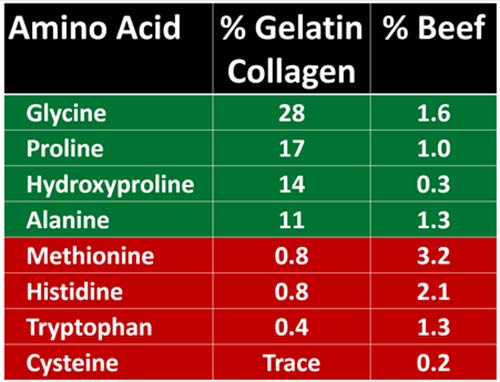
Glycine Has Many Antiaging Benefits
Glycine has been shown to extend lifespan in worms, mice and rats, and to improve health in mammalian models of age-related disease.6 In some animal studies, eating a diet containing 8% to 12% glycine increased the median lifespan by as much as 28.4%.7
As explained by Siim Land, author of “Metabolic Autophagy: Practice Intermittent Fasting and Resistance Training to Build Muscle and Promote Longevity,” in the video above, glycine induces autophagy (a “self-eating” process in which your body digests damaged cells) and mimics the longevity benefits of methionine restriction.8 Both of these effects are related to an enzyme called glycine N-methyltransferase (GNMT).
Glycine is a receptor for GNMT, and the GNMT converts glycine to sarcosine, a metabolite that induces autophagy. GNMT also plays a role in methionine clearance.9 Methionine is involved in cancer cell growth and metabolism, and restricting methionine has been shown to:10
- Inhibit cancer cell growth
- Extend lifespan
- Lower levels of insulin, glucose and insulin-like growth factor 1 (IGF-1)
- Reduce liver damage after exposure to dangerous amounts of acetaminophen
- Reduce frailty
Even intermittently restricting methionine leads to benefits like improved glucose homeostasis, reduced obesity and protection against fatty liver disease.11 Glycine is also a precursor to glutathione, a powerful endogenous antioxidant that declines with age.
The lack of glutathione in older adults may be an element that drives the oxidative stress and mitochondrial dysfunction that leads to age-related degeneration. Glycine also acts as a neurotransmitter12 and may play an important role in depression.13 It’s also been shown to alleviate neuroinflammation and protect against cognitive deficits in mice with neurodegeneration.14
Glycine Reverses Aging in Human Cells
According to previous research,15 glycine may even be responsible for the epigenetic regulation that drives the aging process as a whole. As reported by Science Daily in 2015,16 contrary to popular belief, the aging process in your mitochondria may not be controlled by DNA mutations after all, but rather by epigenetic regulation.
This epigenetic regulation appears to be ruled by two genes (CGAT and SHMT2) that regulate glycine production in the mitochondria. By altering the regulation of these genes, the researchers were able to either induce defects or restore mitochondrial function in human fibroblast cell lines.
Remarkably, simply adding glycine to the culture medium of fibroblast cells taken from 97-year-old people restored the cells’ respiratory function, which “suggests that glycine treatment can reverse the age-associated respiration defects in the elderly human fibroblasts.” As such, glycine supplementation could potentially give the elderly “a new lease on life.”
According to one study, most people are about 10 grams short of what their bodies need for all metabolic uses on a daily basis.
Download this Article Before it Disappears
Glycine Is Required in Daily Collagen Turnover
Making up 28% of your body’s collagen, glycine is, of course, also required for optimal collagen synthesis. As explained by Land in the featured video:17
“Glycine also has a very important role in antiaging directly by helping to reduce wrinkles, and collagen synthesis … The less collagen or glycine you consume, the slower your collagen turnover is.
Slow collagen turnover increases the damage that occurs to your collagen, such as glycation and oxidation, and reduces collagen deposition into tissues.
Collagen … makes up your hair, teeth, skin, nails, organs, arteries, cartilage, bones, tendons and ligaments. Collagen is literally the glue that holds you together. So, making sure that you preserve your collagen is very important for slowing down aging, especially when it comes to wrinkles.
Starting at the age of 20 you lose just under 10% of your skin’s collagen content every decade. So, by the time you’re 75 years old you would have lost 50% of your skin’s collagen content …
[U]p until very recently it was thought that the collagen turnover was very slow, and it only happened over the course of many years — over the entire lifespan. However, recently it was shown that college turnover happens every day and is part of your daily protein turnover.”
Glycine Protects Against Age-Related Disease
Glycine also helps mitigate chronic disease and disability, thereby increasing your health span. As reported in a 2023 scientific review, glycine has been shown to:18
| Suppress tumor growth in mice with melanoma19 | Decrease fasting glucose, insulin, triglyceride and IGF-1 in male rats20 |
| Preserve muscle mass and reduce inflammatory markers in mice with cancer cachexia21 | Improve endothelial function in older rats22 |
| Reduce weight gain and improve bone mineral density in a mouse model designed to mimic postmenopausal bone loss23 | Protect against cardiac hypertrophy24 |
| Alleviate neuroinflammation and protect against cognitive deficits in mice with neurodegeneration25 |
Human trials also confirm that glycine is protective against a range of chronic diseases. As noted by Land:
“The benefits of glycine generally have to do with improving the blood sugar levels, fasting insulin levels, triglycerides, even lowering the demand for sleep, improving brain function and health, helping with just overall aspects of vitality.”
Other Health Benefits of Glycine
Other health benefits of glycine include:
- Improved sleep26
- Reduced inflammation and oxidative damage, as glycine inhibits the consumption of nicotinamide adenine dinucleotide phosphate (NADPH). NADPH is used as a reductive reservoir of electrons to recharge antioxidants once they become oxidized
- Reduced stress27
- Improved wound healing28
- Improved gut health29
In his article “Gelatin, Stress, Longevity,”30 the late biologist, Ray Peat, reviewed a long list of health conditions that can be prevented or alleviated by glycine supplementation and/or increased consumption of collagen or gelatin. These include:31
| Fibrosis | Most bleeding problems, including nosebleeds, excessive menstrual bleeding, bleeding ulcers, hemorrhoids and stroke. According to Peat, glycine, taken shortly after a stroke, limits the damage and accelerates recovery |
| Epilepsy, by stabilizing nerves and raising the amount of stimulation required to activate nerves | Multiple sclerosis (MS), thanks to its antispastic effects |
| Any condition involving excess prolactin, serotonin and/or cortisol, including autism, postpartum and premenstrual problems, Cushing’s disease, diabetes, and impotence | Fatigue |
| Muscular dystrophy and myasthenia gravis | Metabolic disorders32 |
| Nonalcoholic fatty liver disease (NAFLD)33 | Schizophrenia34 |
How to Optimize Your Glycine Intake
When it comes to optimizing your glycine intake, you have several basic options:
1. Eat more collagen or gelatin-rich foods, as glycine makes up nearly one-third of collagen and gelatin. Examples include homemade bone broth made with bones and connective tissue from grass fed, organically raised animals, and chicken broth made from organic chicken feet. The claws are particularly rich in collagen.35
Indirectly, animal foods such as seafood, red meat, poultry and dairy products will also raise your glycine level, as these foods contain taurine, which increases glycine.36
2. Take a high-quality collagen or gelatin supplement.
3. Take a glycine supplement. Pure glycine is available in powder form and tends to be very affordable and easy to take, as it has a mildly sweet flavor.
Considering its many health benefits, making sure you get enough glycine in your diet can go a long way toward improving your health and life span. There’s no established daily requirement or upper limit of glycine currently, so it’s hard to make specific recommendations.
That said, doses of 3 to 5 grams have been shown to improve sleep.37 One study38 estimated that most people are about 10 grams short of what their bodies need for all metabolic uses on a daily basis,39 and in a study of people with metabolic syndrome, 15 grams of glycine a day for three months reduced oxidative stress and improved systolic blood pressure.40 That should give you an approximate idea.
- 1 Bone 2010 Mar;46(3):827-3
- 2 PLoS One 2014 Jun 13;9(6):e99920
- 3 J Agric Food Chem. 2010 Jan 27;58(2):835-41
- 4 Molecular Cell Biology, 4th Edition, Section 22.3. 2000
- 5 Amino Acids 2018 Jan;50(1):29-38
- 6 Ageing Research Reviews March 31, 2023, Highlights
- 7 Ageing Research Reviews March 31, 2023, Table 1
- 8, 9, 10 Ageing Research Reviews March 31, 2023
- 11, 18 Ageing Research Reviews March 31, 2023, Table 2
- 12 Ageing Research Reviews March 31, 2023, Intro
- 13 Medical News Today April 4, 2023
- 14, 25 Journal of Neuroinflammation October 15, 2020; 17, Article number 303
- 15 Scientific Reports 2015; 5 Article number 10434
- 16 Science Daily May 26, 2015
- 17 YouTube, Siim Land, Glycine Longevity Benefits Are Amazing – New Study Confirms April 5, 2023, 5:49, 7:31
- 19 Carcinogenesis, Volume 20, Issue 5, May 1999, Pages 793–798
- 20 The FASEB Journal April 1, 2011
- 21 Clinical Nutrition June 2014, Volume 33, Issue 3, Pages 448-458
- 22 Canadian Journal of Physiology and Pharmacology March 4, 2015; 93(6)
- 23 Amino Acids 2016; 48: 791–800
- 24 Biochemical Pharmacology January 1, 2017; 123: 40-51
- 26 J Pharmacol Sci 2012; 118: 145 – 148 (PDF)
- 27, 28, 30, 31 RayPeat.com Gelatin Stress and Longevity
- 29 Am J Physiol 1982 February;242(2):G85-8
- 32, 33 Nutrients June 2019, 11(6): 1356
- 34, 37 Examine Glycine
- 35 TheHealthBenefitsOf.com 10 Chicken Feet Health Benefits
- 36 Anxiety Medication, Taurine
- 38 J Biosci December 2009; 34(6): 853-872
- 39 Supplements Self Decode Glycine
- 40 Canadian Journal of Physiology and Pharmacology June 17, 2013
The Wide-Ranging Health Benefits of Taurine
Reproduced from original article:
https://articles.mercola.com/sites/articles/archive/2023/07/28/health-benefits-of-taurine.aspx
The original Mercola article may not remain on the original site, but I will endeavor to keep it on this site as long as I deem it to be appropriate.
Analysis by Dr. Joseph Mercola Fact Checked July 28, 2023
STORY AT-A-GLANCE
- The amino acid taurine is found in animal foods such as seafood, grass-fed red meat, dairy products, pastured eggs, and poultry
- Of the amino acids, it’s the most abundant source of sulfur, and is required for many biological processes, including the healthy function of your immune system, nervous system, metabolism, and digestion
- Taurine is important for brain and heart health, muscle function, bile salt formation and antioxidant defenses. It also helps rebuild damaged collagen fibers and can help ease anxiety
- According to recent research, taurine may also play an important role in longevity and healthy aging. In mice, the median lifespan increased by 10% to 12%. Life expectancy at 28 months was raised by 18% to 25%
- Taurine improved strength, coordination and endurance, bone mass and bone quality, glucose homeostasis and glucose tolerance, age-related inflammation, immune function, gut health, memory, mitochondrial function and the function of all organs
The amino acid taurine is found in animal foods such as seafood, grass-fed red meat, dairy products, pastured eggs, and poultry. Of the amino acids, it’s the most abundant source of sulfur, and is required for a wide range of physiological processes, including the healthy function of your immune system, nervous system,1,2 metabolism and digestion.3
As noted in a 2021 scientific review titled “The Role of Taurine in Mitochondrial Health: More Than Just an Antioxidant”:4
“Taurine is a naturally occurring sulfur-containing amino acid that is found abundantly in excitatory tissues, such as the heart, brain, retina and skeletal muscles …
Accumulating studies have shown that taurine supplementation also protects against pathologies associated with mitochondrial defects, such as aging, mitochondrial diseases, metabolic syndrome, cancer, cardiovascular diseases, and neurological disorders.”
Mechanisms of Action
More specific mechanisms of action of taurine include but are not limited to:
| Stabilizing proteins5 |
| Enhancing the function of endogenous antioxidants, thereby supporting your body’s ability to defend against oxidative/reductive damage.6 It protects your antioxidant status in several ways, including by neutralizing hypochlorous acid,7 diminishing the generation of superoxide by the mitochondria,8 and by minimizing oxidative stress,9 including mitochondrial oxidative stress induced by toxins10 |
| Reducing insulin resistance, hyperglycemia, and glucose serum concentrations11,12 |
|
Lowering lipid peroxidation13,14 |
| Reducing inflammation and associated organ injury15,16 |
| Conjugating cholesterol into bile acids, thereby aiding digestion and absorption of fats17 |
| Enhancing electron transport chain activity by regulating mitochondrial protein synthesis, and protects mitochondria against excessive superoxide generation18 |
| Neuroprotection, by regulating intracellular calcium;19 protecting against age-related memory degradation |
| Protecting against ionizing radiation-induced cell damage20 |
| Regulating sodium and calcium homeostasis21 |
| Reducing plasma LDL and triglycerides, and lowering cholesterol in the liver, thereby retarding development of atherosclerosis22 |
| Regulating gene expression by up-regulating 87 known genes and down-regulating 206 known genes in the liver, many of which are involved in cell growth, division, differentiation and apoptosis23 |
| Antiepileptic activity24 |
| Easing anxiety by increasing glycine and GABA25 |
Importantly, taurine can also help raise your metabolic rate, thereby serving as a useful aid against obesity and overall health optimization. Being similar in structure to glycine, it may also have anti-estrogenic effects.26
Symptoms and Health Effects of Taurine Deficiency
The fact that taurine can only be found in the foods that globalists are now trying to eliminate from our food supply is one of many reasons to push back and refuse their fake lab-made alternatives. Without natural animal foods, taurine deficiency will likely skyrocket and health may suffer across the board. Common symptoms and effects of taurine deficiency include:27,28,29,30
| Fatigue and low energy, as taurine is involved in energy production |
| Muscle cramps, muscle weakness, muscle wasting/atrophy and poor exercise performance, as taurine is essential for muscle health and function |
| Increased oxidative stress and systemic inflammation, which contributes to and is a hallmark of most chronic diseases |
| Impaired immune function, as taurine is involved in immune cell function and the regulation of inflammation |
| Vision problems associated with retinal degeneration, as taurine is essential for development and maintenance of the cells in your retina |
| Cardiovascular problems such as high blood pressure, irregular heart rhythm and cardiovascular diseases, as taurine helps regulate blood pressure31 and heart function.32
Taurine deficiency is common among patients with congestive heart failure (CHF),33 and oral supplementation has been linked to improved cardiac performance,34 improved contractile function of the heart,35 reduced pathology in the left main artery wall,36 and lower CHF mortality37 |
| Digestive problems such as bloating, diarrhea and malabsorption, as taurine is involved in bile production (and hence digestion and absorption of fats) |
| Accelerated aging, as taurine is slowing DNA damage, slows degradation of telomeres, improves mitochondrial function and is involved in cellular senescence; low taurine has been linked to a wide variety of age-related diseases in humans38 |
| Obesity, insulin resistance and diabetes39,40,41 |
| Liver disease |
Of course, since taurine is one of the nutrients missing in plant-based diets, vegans may want to consider a high-quality taurine supplement. While your body can synthesize some taurine, it’s not going to be sufficient in the long run, especially as you get older and your body’s ability to synthesize it diminishes.
Taurine levels decrease by an estimated 80% over the course of the average lifetime,42 and this decline is in part related to a loss of endogenous synthesis capacity over time. Still, the amount of taurine you get from your diet also plays a role, and even young healthy vegans have approximately 20% lower taurine levels than their meat-eating counterparts.43
Download this Article Before it Disappears
Taurine Supplementation Improves Exercise Performance
If you’re a fitness buff like me, you’ll be pleased to know that taurine can also help improve your athletic performance and reduce muscle damage. As reported in a systematic review published in 2021:44
“From the selected literature, we observed that taurine supplementation (2 g three times daily) with exercise can decrease DNA damage. Furthermore, 1 g of acute taurine administration before or after exercise can decrease lactate levels.
However, acute administration of taurine (6 g) at a high dose before the start of exercise had no effect on reducing lactate level, but increased glycerol levels, suggesting that taurine could be an effective agent for prolonged activities, particularly at higher intensities …
Finally, we observed that a low dose of taurine (0.05 g) before performing strength enhancing exercises can decrease muscular fatigue and increase enzymatic antioxidants …
This review systematically reported the dose response of taurine in improving exercise performance. We found from the selected literature that endurance training requires a higher dose of taurine, ~1 g five times daily, to prevent muscle-related damage whereas strength exercise requires a lower dose of taurine (0.05 g) to increase enzymatic antioxidants and decrease muscular fatigue.”
It also helps rebuild damaged collagen fibers, which can help you recover and recuperate from sports injuries faster.45
Taurine Increases Longevity
More recent research, published in the June 2023 issue of the journal Science,46,47 also found that oral taurine supplementation significantly increased the healthy lifespan of a variety of animals. In mice, the median lifespan increased by 10% to 12%. Life expectancy at 28 months was raised by 18% to 25%. In the video at the top of the article, biohacker and author Siim Land reviews these findings.
As reported by Science Alert:48
“Scientists have discovered not only that animals age more quickly when they don’t have enough of the amino acid taurine in the body, but that oral taurine supplements can delay aging and increase a healthy lifespan …
‘For the last 25 years, scientists have been trying to find factors that not only let us live longer, but also increase health span, the time we remain healthy in our old age,’ says biologist Vijay Yadav from Columbia University, senior author on the study. ‘This study suggests that taurine could be an elixir of life within us that helps us live longer and healthier lives.’”
Taurine Protects Against Hallmarks of Aging
Animals given supplemental taurine didn’t just live longer, they were also healthier overall. In mice, taurine improved:
| Strength, coordination, and endurance | Bone mass and bone quality |
| Glucose homeostasis and glucose tolerance | Age-related inflammation |
| Immune function | Gut health |
| Memory | Function of all organs |
| Mitochondrial function and health |
Interestingly, according to the authors, taurine “cured” osteoporosis. It’s not often you see the word “cure” being used in medical literature. Taurine also “suppressed ovariectomy-induced body-weight gain in a rodent model of menopause.”
Treated mice also had less body fat (approximately 10% less at 1,000 milligrams of taurine per day) and higher energy levels. According to the authors, “Fat-pad weight divided by body weight percentage was dose-dependently reduced in taurine-treated mice.”
As shown in previous studies, taurine supplementation also improved several markers of aging, including:
| Senescence | Intercellular communication |
| Telomere length | Epigenetic changes |
| Genomic stability | Mitochondrial function |
| Stem cell populations | Nutrient sensing |
Taurine Effects in Monkeys
Similar effects were observed when feeding taurine to rhesus monkeys. Fifteen-year-old monkeys (equivalent to 45 to 50 years old in humans) were given 250 mg per kg of bodyweight (equivalent to the 1,000 mg/kg given to mice) once a day for six months.
Compared to controls, taurine-fed monkeys gained less weight and had lower rates of body fat. After six months, they also had higher bone density, confirmed by higher serum markers for bone formation (osteocalcin) and decreased resorption. They also had 19% lower fasting blood glucose, a 20% to 36% reduction in liver damage markers, and a significant reduction in indirect markers of ROS-induced molecular damage.
“Thus, taurine has beneficial effects on most tested health parameters (body weight, bone, glucose, liver, and immunophenotype) in nonhuman primates,” the authors concluded.49
Previous animal research50 on mice lacking the taurine transporter also suggests taurine is involved in a wide variety of biologically protective processes, as these mice ended up developing multiorgan dysfunction. This too supports the notion that taurine is a key player in longevity and healthy lifespan.
Taurine in the Treatment of Stroke
Stroke victims may also benefit from taurine. As explained in a 2013 paper titled “Neuroprotective Mechanisms of Taurine Against Ischemic Stroke”:51
“Ischemic stroke (cerebral ischemia) is due to a partial or complete reduction in blood flow to the brain … Insufficient oxygen and glucose supply in cerebral ischemia leads to unsustainable cellular homeostasis which initiates cell injury.
Cellular injury progresses as a result of excitotoxicity, ionic imbalance, oxidative and nitrosative stresses, endoplasmic reticulum (ER) stress and mitochondrial disturbances, ultimately resulting in programmed cell death …
Taurine is able to cross the blood-brain barrier and displays a plethora of functions in the central nervous system (CNS) … Although taurine is not definitively classified as a neurotransmitter it fulfills most of the necessary criteria …
It modulates neurotransmission by eliciting inhibitory neuronal transmission through GABAA receptors, glycine receptors and putative taurine receptors … The fundamental pathophysiological mechanisms involved in ischemic stroke are glutamate excitotoxicity, calcium imbalance and oxidative stress which individually or collectively results in cell death.
Therefore, taurine’s role as an inducer of inhibitory neurotransmission, an antioxidant, neuromodulator, regulator of calcium homeostasis and neuroprotector, potentially makes it an ideal therapeutic agent for ischemic stroke.”
Taurine for Neurodegenerative Diseases and Post-Jab Injuries
Taurine may also be an important aid in the treatment of neurodegenerative diseases such as Alzheimer’s and Parkinson’s. The reason for this is because taurine deficiency is associated with endoplasmic reticulum stress,52 a major contributor to prion diseases. Taurine is also thought to be important for proper protein folding.53
Disturbingly, the SARS-CoV-2 spike protein — introduced by natural infection or the mRNA COVID jabs — can pass through the blood-brain-barrier and cause damage resulting in everything from brain fog and dementia to Creutzfeldt-Jakob disease (human mad-cow disease),54,55,56 so taurine may also be valuable in the treatment of COVID, long-COVID and/or post-jab injuries.
Taurine Is Important From Cradle to Grave
As noted by the authors of the 2023 Science study, taurine’s effects on established hallmarks of aging makes it a veritable fountain of youth:57
“Although we do not yet know the initial events that taurine elicits, we provide evidence for the suppressed taurinylation of mitochondrial tRNAs during aging in mitochondrial dysfunction, a prominent feature of aging …
We propose that a combination of taurine and taurine-derived biomolecules may delay aging by affecting various aging hallmarks in distinct cells and tissues …
[D]uring early life, taurine appears to be essential for homeostasis in several organ systems, and its deficiency during development may compromise these functions postnatally.
Consistent with this hypothesis, organisms have a three- to fourfold higher taurine concentration in embryonic tissues than in adult tissues; moreover, taurine deficiency during development leads to growth retardation, blindness, and osteoporosis, and its supplementation during gestation increased bone mass postnatally …
It is possible that developmental or postnatal changes in taurine metabolism might affect the rate of aging during late life, and adjusting this endogenous machinery might extend healthy life span.”
- 1 Healthline Taurine
- 2 Journal of Biomedical Science August 24, 2010; 17 Article No. S1
- 3 Medical News Today Taurine
- 4 Molecules August 2021; 26(16): 4913
- 5 Amino Acids 2018; 50(1): 125-140
- 6 Molecular Medicine Reports June 24, 2021, Article No. 605
- 7 Amino Acids January 2014; 46(1): 89-100
- 8 Amino Acids January 2014; 46(1): 47-56
- 9 Mol Cell Biochem May 2016; 416(1-2): 11-22
- 10 Can J Physiol Pharmacol February 2009; 87(2): 91-99
- 11 Experimental and Molecular Medicine November 30, 2012; 44(11): 665–673
- 12 Food Chemistry: Molecular Sciences July 30, 2022; 4: 100106
- 13 Adv Exp Med Biol 1998;442:163-168
- 14 International Journal of Gerontology September 2011; 5(3): 166-170
- 15 Nutrition Journal 2021; 20: 53
- 16 Cellular Immunology May 2022; 375: 104503
- 17 Biocrates, Taurine
- 18 Amino Acids June 2012;42(6):2223-2232
- 19 J Neurosci Res November 15, 2001; 66(4):612-619
- 20 Advances in Experimental Medicine and Biology Book Series, Taurine 11, Pages 443-450
- 21, 34 International Journal of Clinical Cardiology, DOI: 10.23937/2378-2951/1410246
- 22 Amino Acids 2014; 46: 73-80
- 23 J Med Food Spring 2006; 9(1): 33-41
- 24 Riv Neurol October-December 1975; 45(4): 391-398
- 25 Anxiety Medication, Taurine
- 26 Ray Peat, Gelatin, Stress, Longevity
- 27, 32 NAO Medical Symptoms of Taurine Deficiency
- 28, 39, 42, 43, 46, 49, 57 Science June 9; 380(6649) DOI: 10.1126/science abn9257
- 29, 40 Biomolecules & Therapeutics 2018; 26(3): 225-241
- 30, 41 Twitter Dr. Eashwarran Kohilathas April 7, 2023
- 31 European Journal of Pharmacology May 3, 1990; 180(1):119-127
- 33 Hearts 2020; 1(2): 86-98
- 35 American Heart Journal June 2002; 143(6): 1092-1100
- 36 Hypertension April 27, 2009; 53:1017–1022
- 37 Journal of Biomedical Science 2010; 17 Article No. S6
- 38 Science June 9, 2023; 380(6649)
- 44 Frontiers in Physiology 2021; 12: 700352
- 45 Tohoku J Exp Med March 2015; 235(3): 201-213
- 47 Science June 8, 2023; 380(6649): 1010-1011, Perspective/Commentary
- 48 Science Alert June 12, 2023
- 50 Nutrients 2017; 9(8): 795
- 51 Brain Sciences June 2013; 3(2): 877-907
- 52, 53 Adv Exp Med Biol 2015; 803: 481-487
- 54 Prion 2022; 16(1): 78-83
- 55 Cureus February 2023; 15(2): e34872
- 56 Twitter Dr. Eashwarran Kohilathas February 15, 2023
Vitamin K Protects Against Diabetes
Reproduced from original article:
https://articles.mercola.com/sites/articles/archive/2023/06/05/vitamin-k-protects-against-diabetes.aspx
The original Mercola article may not remain on the original site, but I will endeavor to keep it on this site as long as I deem it to be appropriate.
Analysis by Dr. Joseph Mercola Fact Checked June 05, 2023
STORY AT-A-GLANCE
- Canadian researchers identified a protective role vitamin K plays against diabetes following past research implicating vitamin K in the development of the disease. Diabetes was the seventh leading cause of death in 2017 and total health care costs were $327 billion in 2019
- The researchers found vitamin K in large quantities in beta cells where insulin is produced and discovered it plays an important role in maintaining calcium, which prevents a disturbance in insulin secretion
- Vitamin K is a fat-soluble vitamin and important to lowering the inflammatory response, bone metabolism, preventing mineralization of the arterial system, and preventing heart attack, stroke, peripheral vascular disease and cancer
- Other important factors in the development of diabetes include carbohydrate intake, artificial sweeteners, seed oils and statin medications. Addressing these factors as well as increasing omega-3 fat consumption and ensuring you are not deficient in vitamin C and magnesium can also help prevent diabetes
In a May 2023 paper, Canadian researchers announced they had newly identified a protective role that vitamin K plays against diabetes.1 In 2019, diabetes was the seventh leading cause of death in the U.S.,2 a disease which affected approximately 37.3 million people in 2019.3
How Diabetes Affects Public Health
According to the CDC,4 the total number of existing cases of diabetes steadily increased from 2001 to 2020 and similar trends were seen when the population was examined by ethnic group, education level, race, age and sex. The CDC further broke down the data by the percentage of adults with diagnosed diabetes in each state.
When this table is compared against 2021 data of obese adults,5 it is apparent that many of the states with higher numbers of obese adults also have higher percentages of adults with diagnosed diabetes.
In 2017,6 it was estimated the total health care cost for people diagnosed with diabetes was $327 billion. The total direct cost in 2017 was $237 billion, which rose dramatically from $188 billion in 2012. In 2018 diabetes was responsible for 8.25 million hospital discharges, 17 million emergency room visits and 62,012 people with end-stage kidney disease.
One of the hallmark signs of diabetes is high blood sugar, which happens for several reasons. For example, the pancreas may not make enough insulin, which is the hormone that helps glucose move from the bloodstream into the cells to be used for energy. The cells may also become insulin resistant, a significant risk factor for which is overeating carbohydrates and added sugars. These spike your insulin level and gradually increase resistance.
Sugar and carbohydrate can cause a hormonal response, which changes metabolism and is a primary cause of weight gain.7,8 In essence, this data supports the statement that you cannot out-exercise your diet and therefore your risk for Type 2 diabetes. According to the CDC,9 the daily mean percentage of carbohydrate intake for men and women is 45.9% and 47.4% respectively.
The current Dietary Guidelines for Americans, 2020-2025, lists the upper limit for carbohydrates at 65%,10 although the limits were based on nearly 20-year-old data. According to the 2020 guidelines, the “Estimates are based on Estimated Energy Requirements (EER) set by the Institute of Medicine. Source … 2005.”
Vitamin K and Gamma Carboxylation Protects Insulin Production
Scientists know that vitamin K is necessary for gamma-carboxylation of glutamic acids that occurs in the cells and affects protein secretion.11 Past clinical studies have also implicated vitamin K in the development of diabetes, yet the underlying mechanism has remained unclear.
Vitamin K is best known for the role it plays in blood clotting. The gamma-carboxylation reaction is essential to the process of blood clotting and scientists have suspected this process may also have other functions in the body.12 Past studies show a link between a lower intake of vitamin K and an increased risk of Type 2 diabetes.
Researchers from the University of Montreal first determined that vitamin K was present in large quantities in beta cells — where insulin is produced — and involved in gamma-carboxylation. Then, using an animal model, they identified the role vitamin K plays in the gamma-carboxylation inside the beta cells and how the presence of vitamin K may help protect against diabetes. Julie Lacombe conducted the laboratory work and commented in a press release:13
“We were able to identify a new gamma-carboxylated protein called ERGP. Our study shows that this protein plays an important role in maintaining physiological levels of calcium in beta cells in order to prevent a disturbance of insulin secretion. Finally, we show that vitamin K through gamma-carboxylation is essential for ERGP to perform its role.”
The researchers point out that this is the first time in 15 years a new vitamin K-dependent protein has been identified. This potentially opens a new area of research in the role vitamin K plays in the body, as well as new therapeutic applications for diabetes.
Download this Article Before it Disappears
More Health Benefits From Vitamin K
Vitamin K is a fat-soluble vitamin that significantly influences your health.14 Since your body stores very little, it’s rapidly depleted without regular dietary intake. Several common drugs can also deplete levels of vitamin K, which makes ensuring adequate consumption even more important.
Vitamin K is involved in several bodily functions, including bone metabolism and preventing blood vessel mineralization. This means it plays a particularly important role in the prevention of osteoporosis, heart disease and bleeding disorders.
There are two main forms of vitamin K and several subtypes, which can make matters a little confusing. The difference between vitamins K1 and K2 was clearly established in the 2004 Rotterdam study,15 which focused on the effect the vitamins had on heart health. While vitamin K1 has no real effect on heart disease, vitamin K2 is important to the cardiovascular system.
Vitamin K1 plays other roles. In a 2020 study,16 researchers found older individuals with low levels of vitamin K1 had a higher probability of mobility issues and disability than those with higher levels. One of the reasons vitamin K2 plays an important role in bone and heart health has to do with complex biochemical reactions involving the enzymes matrix gla-protein and osteocalcin.
“Gla” stands for glutamic acid, which binds to calcium in the cells of the arterial walls and removes it from the lining of your blood vessels.17 It then helps facilitate the integration of calcium into the bone matrix.
Calcium deposits in the arteries are responsible for atherosclerosis, commonly called hardening of the arteries, which slowly blocks blood flow. This is a common cause of heart attacks, strokes and peripheral vascular disease. Vitamin K2 also helps move calcium into tooth enamel and plays a role in preventing tooth decay.18
Vitamin K2 plays a role in cancer prevention, as noted in the 2010 European Prospective Investigation into Cancer and Nutrition study.19 People with higher intakes of vitamin K2 also had lower cancer risk and mortality. Evidence has also suggested20 that vitamin K2 can reduce the risk of Non-Hodgkin lymphoma by 45% as compared to those with the lowest intake of vitamin K2. The researchers attribute this role to the vitamin’s ability to inhibit inflammatory cytokines.
The inflammatory response is crucial in many chronic diseases and diseases of aging, and research has suggested both vitamin K1 and K2 have anti-inflammatory properties. In one analysis,21 researchers found vitamin K helps protect against chronic aging conditions, cardiovascular disease and inflammation.
Another study22 demonstrated a reduction in C-reactive protein, a common biomarker used to evaluate inflammation in patients with rheumatoid arthritis. Vitamin K2 may also play a role in chronic kidney disease. One clinical trial23 demonstrated four weeks of supplementation with vitamin K2 MK-7 significantly reduced calcification in the participants’ blood vessels.
Vitamin K2 MK-7 has also demonstrated benefits in participants with age-related macular degeneration.24 In a 2012 paper,25 researchers revealed the role vitamin K2 serves as a mitochondrial electron carrier, which helps maintain normal ATP production in mitochondrial dysfunction like that found in Parkinson’s disease.
Multiple Factors Contribute to Diabetes
There were an estimated 96 million adults diagnosed with prediabetes in 2019. However, this may only be a matter of semantics as many are suffering from what the late Dr. Joseph Kraft calls “diabetes in situ.”26 I believe any fasting blood sugar that regularly measures over 90 suggests insulin resistance and Kraft suggested 8 out of 10 Americans were insulin resistant based on data from 14,384 patients.
The risks of prediabetes include being overweight and inactivity.27 One factor that significantly increases your risk of obesity, and therefore Type 2 diabetes, is artificial sweeteners. A 2018 animal study28 confirmed that artificial sweeteners raise your risk of obesity and diabetes.
Other studies29 have demonstrated that women who consume artificial sweeteners feel hungrier and consume more food than those who drink sugar-sweetened beverages. This research showed30 the body is not fooled by artificial sweeteners, which is another reason why they promote, rather than prevent, obesity.
During the COVID-19 pandemic, there was a 17% rise in deaths in people with diabetes.31 During the pandemic, 39.5% of all deaths related to COVID occurred in those with diabetes.32 Inactivity and a poor diet fueled the diabetic crisis during the pandemic. Diets that focus on ultraprocessed foods and fast foods are at the root of the problem as they are loaded with dangerous seed oils, misleadingly named “vegetable oils.”
Yet, the American Diabetes Association continues to recommend seed oils like canola “as part of a healthy balanced diet.”33 These oils are rich in omega-6 linoleic acid, which is the most common fat in the American diet. An important take-home message is that linoleic acid is not digested. Instead, it is stored while saturated fat is mostly burned or oxidized and used up.34 This aptly illustrates the importance of the type of fat you eat.
Secondary effects from some medications can also increase the risk of developing diabetes. One of the most significant of those medications is statins. These are cholesterol-lowering medications with a long history of adverse events and side effects that could double the risk of diabetes with long-term use.35
Ensuring your bedroom is pitch black is a simple way to reduce your risk of chronic disease. A real-world study36 in individuals aged 63 to 84 found those who were exposed to light during sleep were more likely to be obese and have high blood pressure or diabetes.
Strategies to Reduce Your Risk or Reverse High Blood Sugar
Eating a balanced, healthy diet of fresh, organically raised fruits and vegetables and steering clear of artificial sweeteners and all processed foods is the best way to take control of your glucose levels. The timing of your meals also matters.
Time-restricted eating (TRE) is a simple yet powerful intervention for weight loss. TRE mimics the eating habits of our ancestors and restores your body to a more natural state that allows a host of metabolic benefits to occur.37 If you’re overweight or obese, I recommend limiting your eating window to six to eight hours per day instead of the more than 12-hour window most people use.
As mentioned, one of the most important strategies to reduce your risk for diabetes or reverse the disease is to reduce your LA intake. Many people will experience weight loss as a “side effect” of reducing intake of LA. Ideally, consider cutting LA down to below 7 grams per day, which is close to what our ancestors used to get before all of these chronic health conditions, including obesity, diabetes, heart disease and cancer, became widespread.
To do so, you’ll need to avoid nearly all ultraprocessed foods, fast foods and restaurant foods, as virtually all of them contain seed oils. The easiest way to do this is to prepare the majority of your food at home so you know what you are eating.
Also, be aware that, because animals are fed grains that are high in linoleic acid,38 it’s also hidden in “healthy” foods like chicken and pork, which makes these meats a major source that should be avoided. Olive oil is another health food that can be a hidden source of linoleic acid, as it’s often cut with cheaper seed oils. Instead, use tallow, ghee or butter to cook with. Ghee is better than butter as it has a higher smoke point.
Still Other Strategies
Several other strategies can also help improve blood sugar control and protect your overall health. One is to pay attention to the type of fat in your diet.
While omega-6 linoleic acid primarily found in vegetable/seed oils, nuts and seeds are damaging in the amounts consumed by Americans, most people don’t get enough omega-3 fatty acids. Omega-3 fats are found in fatty, cold-water fish such as wild-caught Alaskan salmon, anchovies, sardines, mackerel and herring.
It’s best to avoid farmed salmon as there is an exaggerated potential for contamination, including pollution, disease, toxicity and inferior nutritional quality. Most farmed fish are also fed genetically engineered corn and soy, which is a completely unnatural diet for marine life and loaded with hazardous omega-6 fat that is stored in the flesh, raising the consumers’ intake of omega-6 fat.
A December 2020 study39 showed adults who test positive for glutamic acid decarboxylase (GAD65) antibodies can significantly reduce the risk of adult-onset Type 1 diabetes by eating omega-3-rich fatty fish. Type 1 diabetes is an autoimmune condition and the researchers found that those who did not eat fatty fish were twice as likely to develop the disease.40
Other nutrient deficiencies associated with the development of diabetes include vitamin C, vitamin D and magnesium. With vitamin C, one study showed that supplementation may help lower glucose levels.41 Likewise, other studies show that vitamin D supplementation can be an ally against diabetes.42
Magnesium is also an often-overlooked nutrient. Deficiency is associated with Type 2 diabetes and heart disease43 and low levels may be the greatest predictor of heart disease.44 Magnesium deficiency is linked to a higher risk of insulin resistance since it impairs the body’s ability to regulate blood sugar.45
In one study46 of prediabetics, those with the highest magnesium intake lowered their risk for blood sugar and metabolic problems by 71% when compared to those with the lowest intake. To compound the problem, high serum levels of insulin, which is common in insulin resistance, lead to further magnesium loss.47
- 1, 11 Cell Reports, 2023; 42(5)
- 2 Diabetes Association, Statistics About Diabetes, Deaths
- 3 Centers for Disease Control and Prevention, National and State Diabetes Trends, section 1
- 4 Centers for Disease Control and Prevention, National and State Diabetes Trends
- 5 CDC, Nutrition, Physical Activity, and Obesity: Data, Trends and Maps Choose Obesity/Weight Status, Adults who have obesity, View by total and 2021
- 6 Diabetes Research Institute Foundation, Diabetes Statistics Section 3
- 7 American Society for Nutrition, September 13, 2021 bullets
- 8 The American Journal of Clinical Nutrition, 2021;114(6)
- 9 Centers for Disease Control and Prevention, Diet/Nutrition
- 10 Dietary Guidelines for Americans, 2020 – 2025, Download PDF
- 12, 13 NewsWise, May 18, 2023
- 14 Oregon State University, Vitamin K
- 15 Journal of Nutrition, 2004;134(11)
- 16 The Journals of Gerontology, 2020; 75(4)
- 17 Thrombosis and Haemostasis, 2008;100(4)
- 18 Steve Lin, Use Vitamin K2 to Remineralize Your Teeth
- 19 American Journal of Clinical Nutrition, 2010;91(5)
- 20 Science Daily, April 21, 2010
- 21 Anti-Inflammatory Actions of Vitamin K, April 22, 2016
- 22 Modern Rheumatology, 2012;23(5)
- 23 BMC Nephrology, 2017;18(191)
- 24 Dermato-Endocrinology, 2014;6(1)
- 25 Science, 2012;336(6086)
- 26 The Fat Emperor, May 10, 2015
- 27 CDC, December 30, 2022, Section 3
- 28 US News, April 23, 2018
- 29 JAMA Nutrition, Obesity, and Exercise 2021;4(9)
- 30 The Journal of Physiology 2013 Nov 15;591(22)
- 31 Reuters, August 12, 2021
- 32 CDC, MMWR Weekly 2020;69(28) Subhead 2 para 3
- 33 American Diabetes Association, Fats, Monounsaturated fat
- 34 Haidut.me October 22, 2019
- 35 Diabetes Metabolism Research and Reviews, 2019;35(8)
- 36 Sleep, 2023, 46(3)
- 37 Science November 16, 2018; 362(6416): 770-775
- 38 Journal of Dairy Science January 2018; 101(1): 222-232
- 39 Diabetes Care, 2020;44(2)
- 40 Healio, December 31, 2020 para 4
- 41 NPS Medicinewise. February 25, 2019
- 42 McMaster University October 2, 2018
- 43 Reuters, December 30, 2016
- 44 New Hope Network January 31, 2013 para 1
- 45 World Journal of Diabetes, 2015;6(10)
- 46 Nutrients, 2013;5(10) Abstract 4 lines from bottom
- 47 Diabetic Medicine, 1995;12(8)
Was It Really a Good Death? Or Murder?
Reproduced from original article:
https://articles.mercola.com/sites/articles/archive/2023/04/29/was-it-really-good-death-or-murder.aspx
The original Mercola article may not remain on the original site, but I will endeavor to keep it on this site as long as I deem it to be appropriate.
Analysis by Dr. Joseph Mercola Fact Checked April 29, 2023
STORY AT-A-GLANCE
- Tens of thousands of people in the U.K. have allegedly been murdered via involuntary euthanasia in hospitals and care homes run by the U.K.’s National Health Service (NHS)
- The involuntary euthanasia involves the administration of midazolam, a sedative drug often used in the U.S. for execution via lethal injection, and morphine
- Victims’ families allege the NHS is responsible for the involuntary euthanasia of up to 457 people per day, without the consent of patients or their caregivers — deaths often attributed to COVID pneumonia
- The process typically begins with a do-not-resuscitate (DNR) or do-not-attempt-resuscitation (DNAR) form, which is often recommended simply based on a person’s age
- The protocol stems from the Liverpool Care Pathway for the Dying Patient (LCP), a government-backed “pathway to euthanasia,” during which patients were drugged and deprived of food, water and medical treatments, even in cases when recovery may have been possible
- LCP was abolished in 2014, but its practices continued and accelerated during the COVID-19 pandemic
Tens of thousands of people in the U.K. have allegedly been murdered via involuntary euthanasia in hospitals and care homes run by the U.K.’s National Health Service (NHS).1 The process typically involves the administration of midazolam, a sedative drug often used in the U.S. for execution via lethal injection.2 Because it doesn’t relieve pain, an opioid such as morphine is usually added in.
The scandal is ousted in “A Good Death? The Midazolam Murders,” a documentary film produced by Jacqui Deevoy. She realized something was wrong when a do-not-resuscitate order, or DNR, was put on her dad while he was in a care home.
“So, I spoke to a whistleblower doctor,” Deevoy said. “She told me they were being put on people who were over 60 with mental health issues, people with physical disabilities, even on children with autism.”3
Continuing a death protocol put in place by the Liverpool Care Pathway, victims’ families allege the NHS is responsible for the involuntary euthanasia of up to 457 people per day, without the consent of patients or their caregivers — deaths often attributed to COVID pneumonia.4
Deadly Legacy Stems From Banned Death Protocol
The Liverpool Care Pathway for the Dying Patient (LCP) was a government protocol used in England and Wales to “improve end-of-life care.”5 Developed in the 1990s, the protocol was meant to provide best practice guidelines during a patient’s final days, and included guidance on symptom control, discontinuation of treatments and psychological, social and spiritual care.6
What occurred instead was a “pathway to euthanasia,” during which patients were drugged and deprived of food, water and medical treatments, even in cases when recovery may have been possible. The LCP was abolished in 2014, following public uproar and a government-commissioned review, which criticized its practices. The Guardian reported:7
“The review listened to harrowing stories from families who had not been told their loved one was expected to die and, in some cases, were shouted at by nurses for attempting to give them a drink of water. Nursing staff had wrongly thought, under the LCP guidance, that giving fluids was wrong.
Some patients were put on the pathway and treatment was withdrawn, only for them to make a recovery, albeit temporarily. Communication was very poor and medical staff sometimes dodged painful discussions with patients and families, the review found.”
Even after LCP was abolished, however, reports continued from families who said their loved ones were put on the pathway and died as a result.8 Stuart Wilkie lost both of his parents in December 2019, six days apart in two separate care homes.9 He believes they were murdered with involuntary euthanasia. “I have to dispel a little myth. Everybody has said that it [LCP] was abolished and finished. It hasn’t stopped.”10
It Starts With DNR, Lack of Informed Consent
The stories of the families affected follow a similar pattern, typically beginning with a DNR or do-not-attempt-resuscitation (DNAR) form, which is often recommended simply based on a person’s age. “That is absolutely ageism going on here,” Wilkie says. “If you’re ever asked to do a DNAR, my advice would be never ever sign a DNAR. Right? Because it’s misused and abused.”11
There’s supposed to be shared decision making when it comes to end-of-life care, and informed consent. But, Wilkie notes:12
“The doctors and the nurses have no concept of the word or the phrase ‘informed consent.’ It’s their job to inform the relatives, which they’re not doing. And they don’t obtain consent themselves. They have to obtain that from the patient or from the patient’s relative who has power of attorney. And they’re not doing that either. So, what they are doing is involuntary euthanasia that is illegal. And the courts are failing to prosecute.”
Once the DNR is in place, however, it often puts the wheels of involuntary euthanasia in motion. He continues:13
“This is the fundamental problem. Doctors cannot give consent. They have to obtain consent from the patient, or somebody with power of attorney. And that’s not happening at all, across the board, in every hospital, every day.
You’ve got a DNAR, you’ve then got a DoLS [Deprivation of Liberty Safeguards] — a deprivation of liberty. Doctors, hospitals, then think they have got total power to kill that person thereafter. And the family members then lost all rights to their relative.
They tried to make it out that it’s a way of a mercy killing, or what they call a good death, which is a missed translation from what it really is, which is an easy death. It has nothing, nothing whatsoever, to do with the condition of the patient at that time. I have spoken to consultant palliative experts who said fundamentally that’s wrong. You can’t predict death, natural death.”
The word euthanasia comes from the Greek word euthanatos, which was first used to describe the “easy death” of Augustus Caesar, who died naturally at the age of 75.
The word, however, “has been bastardized ever since,” Wilkie says, “and taken over by eugenicists who want to use that word as a cover up for execution. And that could be of people with Down syndrome, with autism, or just purely age … You are branded with this. They’ve got the paperwork, the DNAR, the DoLS assessment put on you. And the next step is they predict your death by giving you anticipatory drugs.”14
Download this Article Before it Disappears
COVID Protocol Calls for Euthanasia Cocktail
The involuntary euthanasia protocol typically involves medazepam given with morphine. “It’s wrong to give the two drugs together. Fundamentally wrong,” Wilkie explains. “There is what’s called a concomitant effect. So, by putting medazepam with morphine together, you’ve got respiratory depression, that together, slow down your breathing, slow down your breathing, slow down your breathing, and they know what they’re doing.”15
Patients and their families are told the drugs will help bring oxygen to the lungs, when it has the opposite effect. “And the worst thing is, I’ve also found NHS paperwork that shows you the protocol … during the pandemic, is that they’re giving breathless patients up to 30 milligrams of morphine and 60 milligrams of midazolam, which is enough to kill anybody,” Wilkie says.16
During the COVID-19 pandemic, the National Institute for Health and Care Excellence (NICE) guideline NG163 called for “pharmacological interventions and anticipatory prescribing” for COVID-19 patients,17 based on guidelines that were originally intended for patients with advanced cancer who were expected to die in a matter of hours or days. Writing in the BMJ, palliative care professor Sam Ahmadzai criticized the guidelines, stating:18
“The combination of opioid, benzodiazepine and/or neuroleptic is used in specialist palliative care settings for symptom control and for ‘palliative sedation’ to reduce agitation at the end of life. It takes great skill and experience to use palliative sedation proportionately so that extreme physical and existential distress are palliated, but death is not primarily accelerated.
NG163 states: ‘Sedation and opioid use should not be withheld because of a fear of causing respiratory depression.’ If COVID-19 infection were uniformly fatal, this would be an acceptable statement. But for people not previously known to be at the end of life, there is potential risk of unintended serious harm, if these medications are used incorrectly and without the benefit of specialist palliative care advice.”
Many victims’ families said COVID-19 was listed on their loved one’s death certificate after involuntary euthanasia took place. NHS even got supplies of midazolam from France during the pandemic as a “precaution” against potential shortages of the drug.19
It turns out NG163 is the updated version of the LCP. As noted by Maajid Nawaz on Substack, “So what is NG163? Readers may be surprised to know that it is in fact the same as the Liverpool “Care” Pathway, using the same drugs Midazolam and morphine, while the only thing that was banned was the name.”20
‘This Is Prolonged Torture’
The euthanasia drug combination given to patients in hospitals doesn’t result in a “good” or “easy” death. Wilkie described the slow respiratory depression it causes as a form of prolonged torture:21
“If you make the comparison to the executions that take an hour or maybe two hours to die, they say this is prolonged torture. What’s 29 hours of slowly taking down your breathing? And I would ask anybody that gives one of these drugs to somebody, or even thinks about giving this drug, to think how you would feel if you went down from 12 breaths a minute, to six breaths a minute, to three breaths a minute.
And you know the person who walks in with that drug — and they put it into your body — is slowly killing you, without your consent. It’s involuntary euthanasia that is illegal in this country … This is another myth with the doctors, or even the pathologist, that will say, ‘Oh, there’s fluid on the lung.’ Well, if you can’t breathe, you can’t respire, you can’t get rid of the fluid. A lot of what we breathe out includes water.
If you slow the breathing down, you build up fluid on the lungs. That’s not the same as pneumonia … So, it’s like a fish out of water … the idea that this is a good death is a myth that needs to be dispelled. It’s not a good death to be given these drugs. I believe that midazolam should be banned for use in the elderly, period.”
Wilkie also describes the paradoxical effect, which describes cases in which drugs induce symptoms that end up being fatal. When the doctors notice these symptoms, they give more of the same drugs causing the harm. “They’re actually exacerbating the condition,” Wilkie says.22
“We go back to iatrogenic, physician-caused, death. I don’t think many nurses know properly what a paradoxical effect is. I think a lot of doctors don’t know what the paradoxical effect is. And it’s a very harsh thing to get your head around that you are trying to open your mouth to get air. But because they’ve given you drugs, you can’t get it.”
Money and Blind Faith in Authority Make a Deadly Trap
What’s the motive for killing off the elderly or infirmed? The film makes the case that money is the driving force. Involuntary euthanasia not only frees up hospital resources but also removes members of society who may have been entitled to pensions and ongoing medical care. Most of those involved, however, at the frontlines are likely just doing what they’re told. Wilkie says:23
“I’ve come to the conclusion over this whole process that there are 5% of doctors — about 1 in 20 — who are, I would say, not only intelligent, very good doctors, but they’ve got empathy, and they will actually properly talk to the family. But unfortunately, that’s only 1 in 20.
I believe that about 90% of the people involved are just followers that just do what they’re told and lack that empathy. I think it could be restored, I think they could be retrained. And then the other end, I think there’s an equivalent 5% — 1 in 20 — who … are basically eugenicists, and they want to … shorten the life of the elderly and the vulnerable and disabled.”
This is why there are many cases when it’s in your best interest to avoid hospitals, particularly for elective procedures or chronic conditions. If you do need to go to the hospital due to a life-threatening emergency, be sure to have an advocate with you who can manage your care and act as a power of attorney if necessary.
- 1 Rumble, A Good Death? The Midazolam Murders, Film Synopsis
- 2 The New York Times March 8, 2022
- 3 Rumble, A Good Death? The Midazolam Murders, 1:11
- 4 Rumble, A Good Death? The Midazolam Murders, 14:06
- 5 Version 2. Wellcome Open Res. 2018; 3: 15
- 6 Br J Gen Pract. 2013 Oct; 63(615): 509–510
- 7 The Guardian July 15, 2013
- 8 Daily Mail December 16, 2015
- 9 Rumble, A Good Death? The Midazolam Murders, 14:21
- 10, 11, 12 Rumble, A Good Death? The Midazolam Murders, 17:00
- 13 Rumble, A Good Death? The Midazolam Murders, 19:00
- 14 Rumble, A Good Death? The Midazolam Murders, 12:00
- 15, 16 Rumble, A Good Death? The Midazolam Murders, 23:26
- 17, 18 BMJ 2020;369:m1461
- 19 The Pharmaceutical Journal May 19, 2020
- 20 Substack, Radical Media – by Maajid Nawaz
- 21 Rumble, A Good Death? The Midazolam Murders, 50:24
- 22 Rumble, A Good Death? The Midazolam Murders, 29:27
- 23 Rumble, A Good Death? The Midazolam Murders, 37:00
Improve your vision and bone health with lutein and zeaxanthin
Reproduced from original article:
https://www.naturalhealth365.com/improve-your-vision-and-bone-health-with-lutein-and-zeaxanthin.html
by: April 24, 2023
 (NaturalHealth365) Lutein, a type of carotenoid found in the macula, is often prescribed to reduce intraocular pressure in individuals with pre-glaucoma and glaucoma. However, a recent study published in JAMA Ophthalmology by the National Institutes of Health (NIH) shows that lutein is also helpful in decreasing age-related macular degeneration.
Additionally, when combined with another macular carotenoid called zeaxanthin, lutein can improve bone health, making it even more compelling to include these nutrients in your daily supplement routine.
Revolutionizing eye health: Uncover the power of lutein and zeaxanthin
In smokers, some “experts” suggest, the use of beta-carotene has been linked to an increased risk of lung cancer. However, two NIH-supported studies demonstrate that the use of lutein and zeaxanthin, as shown in the age-related eye disease studies (AREDS2), can effectively replace beta-carotene, leading to a reduction in age-related macular degeneration (AMD). This is significant as AMD is the primary cause of blindness among older adults in the U.S.
Over a decade-long analysis of the AREDS2 formula, zeaxanthin, and lutein were found to be effective replacements for beta-carotene. This formula not only reduces the risk of lung cancer caused by beta-carotene but also slows the progression of AMD. However, it should be noted that the participants in the study were already smokers. The primary goal of AREDS2 was to create a formula that could be utilized by everyone, regardless of smoking habits.
The results of the study demonstrate that this innovative formula is superior in slowing the progression of AMD and is also safer. The reduction or elimination of AMD is critical for maintaining good health, as this retinal degenerative disease can ultimately lead to blindness. While there is no conventional cure for AMD currently, treating it has the potential to reduce the rate of vision loss.
The dangers of beta-carotene for smokers: Why lutein and zeaxanthin are a safer bet
The initial AREDS study, conducted in 1996, demonstrated that a dietary supplement containing 15 mg of beta-carotene, 80 mg of zinc, 2 mg of copper, and vitamins C and E could slow the progression of AMD, specifically from moderate to late stages. However, subsequent studies revealed that smokers who took beta-carotene had a significantly higher risk of lung cancer than non-smokers.
In the subsequent AREDS2 study, the beta-carotene was replaced with 2 mg of zeaxanthin and 10 mg of lutein for individuals who had ceased smoking or never smoked. The study found that the use of lutein and zeaxanthin did not increase the risk of lung cancer and had the potential to reduce the progression of AMD by up to one-quarter. The study concluded with participants using the AREDS2 formula with zeaxanthin and lutein instead of beta-carotene.
A more recent study involving over 4,000 patients over five years since the previous AREDS2 study showed a 20% decrease in the risk of progression to late-stage AMD compared to those who took beta-carotene. It is evident that lutein and zeaxanthin are vital components in the fight for better eye health.
More benefits: Lutein and zeaxanthin support bone health
Recent studies have shown that zeaxanthin and lutein not only promote eye health but also strengthen bones, reducing the risk of osteoporosis in older adults. In a study involving participants aged 50 and above, it was found that the intake of these carotenoids can lead to stronger bones and reduced risk of fractures. However, it’s worth noting that a relatively high level of zeaxanthin and lutein intake was required to achieve these results.
Nonetheless, the dual benefits of zeaxanthin and lutein make them particularly valuable for vulnerable senior citizens. By incorporating these carotenoids into their daily supplement intake, older adults can enhance their vision and bone health and improve their overall health and longevity.
To learn more about how to properly supplement your diet, we suggest you work with an integrative health coach – who understands your entire health history and personal goals.
Sources for this article include: