Stroke
now browsing by category
Are These the 19 Most Important Supplements to Take?
Reproduced from original article:
https://articles.mercola.com/sites/articles/archive/2023/03/24/most-important-supplements-to-take.aspx
The original Mercola article may not remain on the original site, but I will endeavor to keep it on this site as long as I deem it to be appropriate.
Analysis by Dr. Joseph Mercola Fact Checked March 24, 2023

STORY AT-A-GLANCE
- Molecular hydrogen is a selective antioxidant, meaning it doesn’t indiscriminately suppress free radicals but, rather, helps your body make the antioxidants it needs
- Glycine and NAC are glutathione precursors; your body uses glutathione to increase the effectiveness of antioxidants such as vitamin C, which is why it’s known as the “master antioxidant”
- Magnesium is involved in the functioning of more than 300 enzymes, and many people are deficient
- The best supplements for you depend on your age, health status, diet and health goals
- I mention a bonus supplement at the end of the article
While dietary supplements cannot take the place of a healthy lifestyle, they can be used strategically to boost your health, especially in cases of deficiency. In the U.S., 57.6% of adults aged 20 and over use supplements, with multivitamins, vitamin D and omega-3 fats representing the top three.1 Another survey put the percentage of Americans using supplements at 86%.2
So, it’s safe to say that many people are interested in taking control of their health with the support of supplemental vitamins, minerals and other compounds. But, when it comes to supplements, more isn’t always better.
To ensure you’re using only supplements you need — avoiding wasting your money while maintaining your body’s balance — I recommend using dietary interventions first. Next, work with a holistic health care practitioner who can guide you on which supplements your body truly needs.
19 Supplements I Consider Essential
The best supplements for you depend on your age, health status and health goals. If having a practitioner guide you isn’t possible, essential supplements may be next on your list — and I’ve compiled the list in rank order of what I believe to be the most important ones.
Some of the most important individual variables you need to consider would be if you are plant-based or choose to eat animal products. While many plant-based diets are fundamentally healthy, they do lack some vital nutrients, like vitamin B12, retinol, vitamin K2, carnosine, carnitine, collagen and choline. If you are plant-based, you will certainly want to consider adding these to your regimen.
1. Molecular Hydrogen (H2)
Molecular hydrogen acts as a selective antioxidant, meaning it doesn’t indiscriminately suppress free radicals. Rather, it’s unique in that it helps your body make its own endogenous antioxidants. This is important because excessive use of antioxidants can be counterproductive, while molecular hydrogen serves as a redox regulator.
The H2 molecule is the smallest in the universe, which allows it to diffuse through all cell membranes, including the blood-brain barrier and subcellular compartments, and into the mitochondria. According to Tyler LeBaron, Ph.D., it’s been shown to have therapeutic benefits in more than 170 different animal disease models.3 While there’s no risk of overdosing on molecular hydrogen, intermittent exposure produces the best results.

Download this Article Before it Disappears
2. Vitamin D
Vitamin D has multiple actions on the immune system, including enhancing the production of antimicrobial peptides by immune cells, reducing damaging pro-inflammatory cytokines, and promoting the expression of anti-inflammatory cytokines.4
A recent study found giving vitamin D to people with COVID-19 cut risk of death from SARS-CoV-2 by 51% and reduced risk of admission to the intensive care unit (ICU) by 72%.5,6 Vitamin D also plays a role in heart disease, as it improves circulation and may be beneficial for high blood pressure. In addition, due to its effects on endothelial function, vitamin D may also help improve or prevent heart failure, heart attack, vasculopathy, stroke and diabetes.7
Ideally, optimize your vitamin D levels via sensible sun exposure, as there are many benefits to sun exposure even aside from vitamin D, such as increasing mitochondrial melatonin by near infrared (IR) exposure.
My vitamin D level is typically between 80 and 100 and I haven’t taken any vitamin D supplements so you can get your levels high if you are disciplined about your sun exposure. Just be sure to make sure you are eating a very low linoleic acid (LA) diet as it is excessive omega-6 fats that virtually everyone consumes, that cause sun-induced skin cancers.
However, if getting healthy sun exposure simply isn’t an option for you due to your location or lifestyle, daily vitamin D3 supplementation of 8,000 to 10,000 units is likely needed to reach a vitamin D level of 60 to 80 ng/mL.
Data from GrassrootsHealth’s D*Action studies suggest the optimal level for health and disease prevention is between 60 ng/mL and 80 ng/mL, while the cutoff for sufficiency appears to be around 40 ng/mL. In Europe, the measurements you’re looking for are 150 to 200 nmol/L and 100 nmol/L respectively.
The only way to gauge whether you might need to supplement, and how much to take, however, is to get your level tested, ideally twice a year — in the early spring and early fall — when your level is at its low point and peak, respectively. Make sure that your supplemental vitamin D intake is balanced with other nutrients, including vitamin K2 (to avoid complications associated with excessive calcification in your arteries) and magnesium.
3. Niacinamide
NAD+ (nicotinamide adenine dinucleotide) is one of the most important biomolecules in your body. It’s involved in the conversion of food to energy, maintaining DNA integrity and ensuring proper cell function. Together, these functions help protect against or delay aging and virtually all chronic disease.
NAD+ also acts as fuel for longevity proteins called sirtuins. Sadly, NAD levels dramatically decline with age, contributing to aging and chronic disease states. NAD is also used up by DNA repair enzymes and enzymes involved in inflammation and immunity, such that chronic inflammation, or acute illness in old age, can rapidly result in depletion.
To restore NAD_, you need to fix the root cause for NAD+ depletion, which primarily involves addressing the decline in the NAD salvage pathway. By increasing enzymes in that pathway, which decline with age, your body can recycle NAD_ like it did naturally when it was younger. For more information, please review my fantastic interview with molecular biologist Nichola Conlon, Ph.D.
In addition to optimizing NAD+ levels, it also blocks lipolysis which is important if you are the more than 99% of the population that have elevated linoleic acid (LA) levels. Reducing the release of LA from your tissues will lower the amount of oxidative stress in in your body.
Niacinamide, like progesterone, inhibits the production of nitric oxide, and also like progesterone, it improves recovery from brain injury and also:
| Helps lowers stress | Lowers harmful free fatty acids | Protects against scar formation |
| Helps brain injuries | Supports immune function | Improves mitochondrial function |
| Reduces serotonin formation and/or accelerates it’s elimination | Reduces lipolysis | Protects against pathogenic prostaglandins |
| Supports glucose oxidation | Inhibits excess nitric oxide formation |
Niacinamide can also lower your triglycerides, which are a potent cardiovascular disease risk factor. It also has a direct anti-adrenaline effect and increases the oxidation of glucose which is your primary metabolic fuel.
The best way to supplement niacinamide is by taking a very low dose of 50 mg three times a day. This is an order of magnitude less expensive than taking NAD precursors like nicotinamide riboside or nicotinamide mononucleotide to increase NAD+ levels.
Please do NOT take high doses like 500 mg or even 1,000 mg, because taking more is not better and will be highly counterproductive as higher doses will impair your sirtuin longevity proteins.
You can purchase a niacinamide powder and take one-sixty-fourth of a teaspoon three times a day or take a 50 mg niacinamide tablet three times a day. Because a 50 mg niacinamide tablet currently is not being made commercially, we will be launching one very soon.
4. B Complex
Vitamin B complex is important for your health because it’s involved in a wide range of bodily functions and processes including cell health and the growth of red blood cells, energy levels, eyesight, brain function, digestion and appetite, proper nerve function, hormones and cholesterol production, and cardiovascular health.
B vitamins have a direct impact on your energy levels, brain function and cell metabolism. Vitamin B complex help support or promote cell health, growth of red blood cells, energy levels, eyesight, brain function, digestion, appetite, proper nerve function, and cardiovascular health and may help prevent infections.
Vitamin B complex is also important for pregnant women as it helps to form the neural tube, which is the precursor to the baby’s brain and spinal cord. It also helps to prevent birth defects of the baby’s brain and spine. It is important to note that vitamin B complex is water-soluble, which means it is not stored in the body and needs to be taken more than once a day.
5. Magnesium
Magnesium is necessary for the healthy functioning of most cells, especially your heart, kidneys and muscles. It’s involved in the functioning of more than 300 enzymes,8 and low levels of magnesium impede cellular metabolic function and deteriorate mitochondrial function.
Magnesium is also required for the activation of vitamin D, and deficiency may hamper your ability to convert vitamin D from sun exposure and/or oral supplementation. Unfortunately, deficiency is common and rarely diagnosed.9
When it comes to oral supplementation, my personal preference is magnesium threonate, as it appears to be the most efficient at penetrating cell membranes, including your mitochondria and blood-brain barrier. Magnesium is also absorbed through your skin, so you can use a topical solution or take Epsom salt (magnesium sulfate) baths to increase your levels.
6. Vitamin E
Vitamin E is a fat-soluble antioxidant that I believe is important for nearly everyone to take. Why? Because it limits the production of very dangerous free radicals from the metabolism of the omega-6 fat, linoleic acid (LA), which virtually everyone reading this has too much of. It does this by inhibiting lipolysis, or the release of the stored LA in your tissues.
While exercise and fasting are wonderful tools to improve your health, the downside is that virtually everyone has too much LA in their tissues and both of these strategies will increase lipolysis of LA stored in your tissue and produce loads of free radicals and oxidative stress.
Vitamin E not only can prevent oxidative stress from too much LA, but it may also help your body convert this dangerous fat to a non-dangerous saturated fat. Bacteria in your intestine can use vitamin E to saturate the LA. So, vitamin E can actually transform the polyunsaturated fat rather than just protect against it after effects.
Vitamin E is an aromatase inhibitor, which means it blocks the enzyme that converts androgens like testosterone to estrogen, which is useful in reducing the risk for many cancers, especially breast and prostate cancers. Not only does it prevent the production of estrogen, but it also detoxifies xenoestrogens from synthetic chemicals.
Vitamin E is an iron chelator and can also remove age spots or liver spots and scars on your skin if applied topically. It does this because it is an iron chelator. Another term for liver spots is lipofuscin, which is an accumulation of oxidized fats like LA and iron.
While cosmetically unattractive, removing lipofuscin spots is key because what you see on your skin is the tip of the iceberg. They are also in your tissues and organs and will contribute to premature aging. Thankfully, taking vitamin E orally seems to help lower lipofuscin levels. Vitamin E also lowers prolactin, which helps counteract high estrogen levels which tends to increase fertility. Finally, it also blocks adrenaline and reduces cortisol and inflammation.
All of these are major reasons why I am huge fan of vitamin E and believe most people would benefit by taking it. However, you just need to be very careful in selecting your vitamin E supplements as most on the market are counterproductive. Natural vitamin E is a family of eight different compounds: four tocopherols and four tocotrienols. If you eat certain wholesome foods, all eight of the different vitamin E compounds are naturally available.
So, please be careful and make sure to avoid all synthetic vitamin E supplements. You also want to make sure that it has no soy oil in it as soy is typically a GMO, loaded with glyphosate and high in LA.
Your vitamin supplement should have all tocopherols (alpha, beta, gamma and delta) with the majority of tocopherol as alpha. Similarly, it should have balance tocotrienols (alpha, beta, gamma and delta). The most common vitamin E supplement on the market is made from GMO soy, is synthetic and only has alpha tocopherol with no other isomers and has no tocotrienols. You definitely don’t want to use supplements like that.
7. Vitamin C (Not Ascorbic Acid)
Vitamin C is a powerful antioxidant that can strengthen your body’s natural defenses. It may reduce your risk of chronic disease, including protection against immune system deficiencies, cardiovascular disease, prenatal health problems, eye disease and even skin wrinkling.
Vitamin C plays an essential role in your body, particularly for skin and immune health. It also boosts collagen production and helps protect your skin from UV damage. Some research has found that supplementing with vitamin C can shorten the duration of a cold and may help prevent and treat other infections, such as tetanus and pneumonia.
There are basically two types of vitamin C: that derived from whole foods with all the vital and important micronutrients and synthetic ascorbic acid. They both are important and serve crucial biological roles.
The best of the synthetic ascorbic acid would by liposomal forms as they can more easily penetrate cell membranes, especially when needed in large doses as when treating an acute infection, sepsis or cancer. However, it is best to avoid taking synthetic ascorbic acid daily as this can impair copper utilization by your mitochondria.
It is better to take whole food vitamin C daily as this will support the integration of copper into the electron transport chain in your mitochondria and allow you to generate cellular energy more efficiently. Ideally this can be in the form of fruits that are high in vitamin C, like oranges, tangerines, amla (also known as gooseberry) and, my favorite, acerola cherries. It is best to take it a few times a day as vitamin C is water soluble.
8. Probiotics
If you don’t eat fermented foods on a regular basis, a probiotic supplement can be useful for maintaining your gut health and microbial diversity. Your gut microbiome affects nearly all your physiological systems, but gut microbial diversity decreases with age.10
For each gram-per-day increase in the average national consumption of fermented vegetables, the mortality risk for COVID-19 decreased by 35.4% in one study.11 Beneficial bacteria found in fermented foods may even be effective for suppressing colon cancer,12 while your mental health is also affected.
One randomized controlled trial demonstrated that high-dose probiotic supplementation is beneficial for people with depression,13 while Lactobacillus has been found to produce gamma aminobutyric acid (GABA), a neurotransmitter that inhibits excessive neuronal firing, helping to induce a natural state of calm,14 in animal studies.15
9. Omega-3 Fat as DHA and EPA
Omega-3 fats are important for brain health, warding off autoimmune disease16 and decreasing mortality from cardiovascular disease, while also reducing heart attacks and coronary heart disease events.17 An omega-3 index test is one of the most important annual health screens that everyone needs, and it’s a more important predictor of your heart disease risk than your cholesterol levels.
Even research supported by the National Institutes of Health suggests an omega-3 test is a good predictor of overall health and all-cause mortality.18,19 The ideal sources for EPA and DHA omega-3s include cold-water fatty fish, like wild-caught Alaskan salmon, sardines, herring and anchovies. If you do not eat these fish on a regular basis, consider taking a krill oil supplement.
Fish oil is among the most popular supplements in the U.S. Globally, the fish oil market was valued at $1.9 million in 2019, with estimates suggesting this will rise to $2.8 million by 2027.20 Many of these dollars may be wasted, however, due to a chemical process that leaves many fish oil supplements lacking in actual EPA and DHA.
The issue with most fish oil supplements is the chemical process used — trans-esterification — which transforms the oil into a synthetic product that’s far removed from the oil you’d get when eating fish or a high-quality cod liver oil.
When you eat fish or a high-quality cod liver oil, the omega-3 is in a triglyceride form. However, the omega-3s in most all fish oil supplements are in an ethyl ester which is essentially a synthetic substrate, created through the micro distillation process of crude fish oil, in which ethanol and/or industrial alcohol is added. This mix is heat distilled in a vacuum chamber, resulting in a concentrated omega-3 ethyl ester condensate.
The problem with ethyl esters is they’re the least bioavailable form of omega-3. Manufacturers could convert them back into the triglyceride form by detaching the ethyl alcohol molecule and reattaching a glycerol molecule in a process known as re-esterification,21 but most don’t because it’s so costly.
Additionally, not only does this molecular distillation process remove vital resolvins and protectins that are important in reducing inflammation, but it also concentrates the EPA and DHA. You can tell the concentration of these two fats in any given supplement by looking at the label. In fish, the oil consists of 20% to 30% EPA and DHA, whereas purified fish oil concentrate typically contains between 60% and 85% EPA and DHA.22
In my view it is best to avoid most omega-3 supplements as there are many dangers with them. Krill or a high-quality cod liver oil are some of the best choices I know of, but you must be careful here also, as most are very low quality and add synthetic vitamin A and D into the oil.
Krill oil stands out in this regard, however. It’s more bioavailable because the EPA and DHA are bound in a phospholipid form, allowing you to take lower doses while still reaping similar results. Research also suggests krill oil alleviates oxidative stress and iron accumulation, such that it could be used as a treatment for toxicity caused by iron overload.23
10. L-Glycine
I personally take teaspoon (about 5 grams) of glycine twice a day, in the morning and before bed. Glycine is an amino acid and is an important methyl-group donor. Methyl groups are found in DNA, where they play a role in cellular reactions. Glycine helps protect against intracellular calcium overload and hypoxia and has anti-inflammatory effects.
In addition to supporting brain function,24 supplemental glycine may be useful for the “prevention and control of atherosclerosis, heart failure, angiogenesis associated with cancer or retinal disorders and a range of inflammation-driven syndromes, including metabolic syndrome.”25 Importantly, glycine is also a glutathione precursor, discussed below. Ray Peat has shown that glycine is:
| Anti-excitatory | Anti-stress | Anti-inflammatory |
| Anti-Serotonin | Anti-estrogenic | Improves learning & memory |
| Promotes recovery from strokes & seizures | Cell protective | Promotes wound healing |
| Inhibits tumor formation | Inhibits lipolysis |
11. N-acetylcysteine (NAC)
NAC, a form of the amino acid cysteine. It’s most well-known to help increase glutathione and reduce the acetaldehyde toxicity26 that causes many hangover symptoms. Anyone who overdoses on acetaminophen (Tylenol) also receives large doses of NAC in the emergency room, as it helps prevent liver damage by increasing glutathione.
NAC can be combined with glycine (known as GlyNAC) for even more benefits. In a pilot trial of older adults, GlyNAC supplementation for 24 weeks corrected glutathione deficiency and improved multiple measures of health, including:27
| Mitochondrial dysfunction | Oxidative stress | Inflammation |
| Endothelial dysfunction | Insulin resistance | Genomic damage |
| Cognition | Strength | Gait speed |
| Exercise capacity | Body fat levels | Waist circumference |
12. Quercetin
Quercetin, an antioxidant flavonol found in foods such as onions, apples, plums and green tea, is a natural antiviral28 which helps drive zinc into the cells to stop viral replications. It also combats inflammation and works as a natural antihistamine. A number of studies have also shown quercetin, when used early, also lowers your risk of hospitalization and death from COVID-19,29 and improves clinical outcomes.
Quercetin is one of the supplements I recommend keeping in your medicine chest for times when you feel you’re “coming down” with something, be it the common cold or influenza. This is because it helps drive zinc ions into your cells, which then serves to halt replication of the virus that you are infected with.
Like vitamin E, quercetin also chelates iron. Like niacinamide, it also increases NAD+ levels but through a different mechanism. Rather than serving as a substrate to make NAD+, it helps to activate the rate limiting enzyme in the NAD+ salvage pathway, NAMPT, thus increasing NAD+ levels. Finally, it can also help with nonalcoholic fatty liver disease (NAFLD).
Plant-Based Diets Essential Supplements
If you are eating a plant-based diet or you do eat animal foods but are avoiding any organ meats, which are some of the most nutrient dense foods that we know of, then please seriously consider adding these supplements to your regimen.
13. Vitamin B12
Vitamin B12 is likely the most important nutrient that is missing from a plant-based diet and it is absolutely essential that you take it if you choose not to eat animal foods. Left undetected and unaddressed, a vitamin B12 deficiency can lead to fatigue, muscle weakness, intestinal issues, limited nerve development, mood disturbances and much more.
But it is not only vegetarians that can be deficient in this important B vitamin. There are three factors are involved in the widespread B12 deficiency we’re seeing today:
- Many people don’t have enough stomach acidity due to lower levels of pepsin secretion to release the vitamin B12 from dietary proteins.
- Factory-farmed meat and poultry (the most common types consumed today) contain lower levels of vitamin B12.
- Insufficient production of intrinsic factor, a special protein, required for B12 to be absorbed in your small intestine may be the result of aging or an autoimmune condition.
Your body needs vitamin B12 to make red blood cells, maintain nerves, produce DNA and to carry out essential functions for your heart, arteries and veins, nervous system, brain and cognitive function. There’s no way you can enjoy optimal health without adequate B12 levels.
When you supplement with vitamin B12 be sure to choose the more biologically active, methylcobalamin, or “methyl B12,” is the most bioavailable and most absorbable form of vitamin B12. Avoid using the most common form of B12, cyanocobalamin.
14. Retinol (Vitamin A)
Retinol, also known as Vitamin A, is a fat-soluble vitamin that is essential for many bodily functions, including vision, growth, cell division, reproduction and immunity. It is not to be confused with beta-carotene. Even though many nutritional labels conflate the two, they are completely different. Since many are unable to easily convert beta-carotene to vitamin A, it is important to make sure you are getting retinol not beta-carotene.
Vitamin A is necessary for producing hemoglobin, the protein in your red blood cells that transports oxygen. It is necessary to properly recycle and make copper available in your mitochondrial electron transport chain for energy production. It is also necessary for your body to produce two vitally important hormones, progesterone and pregnenolone and has ant-estrogenic properties. It is also helpful for male fertility.
One of the most important benefits of retinol would be to help your body’s immune system and natural defense against illness and infection to work optimally. It also works synergistically with vitamin D with many similar benefits. Also, like vitamin E, retinol has anti-estrogenic properties.
Retinol is responsible for making the pigments in your eye’s retina, improves your vision and promotes good night vision. It also can help protect against cancer. It likely also improves skin health and helps keep your skin moist, and may help reduce the risk of skin and other cancers. Doses are typically from 5,000 to 10,000 I.U.s.
15. Copper
Copper is an essential mineral that plays a vital role in many bodily functions, including the production of red blood cells, the absorption of iron and the maintenance of nerve cells. Most importantly, it is vital to the proper functioning of your mitochondria so you can generate enough ATP.
Copper and its master protein, ceruloplasmin, are instrumental for mitochondrial function. Ceruloplasmin is what drives the copper into the mitochondria, and each mitochondrion needs about 50,000 atoms of copper to do its work.
There are five cytochrome complexes embedded in your inner mitochondrial membranes. Their purpose is to shuttle electrons created from the food you eat that is ultimately converted to acetyl-CoA to produce ATP. If these complexes are deficient in copper, you will not be able to generate enough cellular energy.
Despite its bad rap, most people are deficient in copper. To raise your copper level, you could use a copper bisglycinate supplement (about 4 to 8 mg), or foods like grass fed beef liver, and whole food vitamin C that has the enzyme tyrosinase which is loaded with copper. For additional information please review my podcast with Morley Robbins.
16. Zinc
Zinc plays many roles in your body. It is required for the healthy functioning of all your cells, tissues, organs and bones. Zinc is the second most abundant trace mineral in your body, coming in just after iron. It’s found in foods like beef, poultry, shellfish and mushrooms.
Zinc deficiency is not just an issue with vegetarians, but for those with GI and digestive disorders who can experience decreased zinc absorption. Those who eat seeds, grains, nuts and legumes that are loaded with phytates which can bind zinc and also prevent absorption, may also be deficient. Pregnant and nursing women require higher levels of zinc and those with excessive alcohol consumption also need extra zinc to metabolize the alcohol.
Researchers have discovered hundreds of ways zinc supports health in your body, and every year, they continue to discover more. In the last decade alone, there have been tens of thousands of studies investigating the roles zinc plays in promoting good health.
Zinc provides support for immune function, healthy cell growth, respiratory health and healthy metabolism. It also helps support brain health and healthy function of your taste, smell and vision.
One of the biggest challenges with zinc for people of any age is that zinc isn’t stored in your body, so you must consume the amount your body needs each and every day which is about 15 mg. If you are eating sufficient animal protein or organs, you should not need to supplement unless you are sick, as supplemental zinc can be quite useful to limit viral replication especially if taken with quercetin.
17. Vitamin K2
Vitamin K2 is needed to activate the protein osteocalcin, which is found in your bones. Without vitamin K2, this and other vitamin K2-dependent proteins remain inactivated, and cannot perform their biological functions.30 Vitamin K2 also facilitates the transfer process of calcium from your arteries to your bone. Without it, your risk of arterial calcification increases. It does this by increasing the production of an important hormone for bone health, osteocalcin.
In one study, those who consumed foods with the highest amount of vitamin K2 were less likely to experience severe calcification in their arteries or less likely to die from heart disease over a seven- to 10-year period.31 Vitamin K2 also works in tandem with vitamin D and magnesium. As a rule, if you have osteoporosis, heart disease or diabetes, you’re likely deficient in vitamin K2.
If you are eating fermented foods such as natto, or vegetables fermented using a starter culture of vitamin K2-producing bacteria, then you may not need to take a supplement. Certain cheeses such as Brie, Munster and gouda, are also particularly high in K2, as are grass fed organic animal products such as egg yolks, liver, butter and dairy.
18. Collagen
Collagen, in addition to being rich in glycine, is well-known for its role in skin health, including helping mitigate age-related wrinkles.32 It may also reduce joint pain and stiffness33 while improving glucose tolerance34 and high blood pressure.35
My personal preference is to use a less denatured (unhydrolyzed) organic collagen supplement, as it has a more balanced amino acid profile or, better yet, simply boost your collagen intake by making homemade bone broth using bones and connective tissue from grass fed, organically raised animals.
19. L-Carnosine
Carnosine is a dipeptide composed of two amino acids: beta-alanine and histidine. It’s a potent antioxidant as it binds to advanced lipoxidation endproducts (ALEs) that are the result of oxidized seed oils in your diet. The highest concentrations of carnosine are found in your muscles and brain.
If you’re a vegetarian or vegan, you will have lower levels of carnosine in your muscles. This is one reason why many strict vegans who do not properly compensate for this and other nutritional deficiencies tend to have trouble building muscle. Eating beef is known to efficiently raise carnosine levels in your muscle,36 which is why if you’re a vegetarian or vegan this supplement may be particularly important.
Bonus Methylene Blue
While methylene blue is clearly not a vitamin or mineral and is, in fact, the oldest known modern drug, I consider it an important and, in many cases, essential supplement for most because it is the best product out there to increase mitochondrial electron transport efficiency and your production of cellular energy currency or ATP. In simpler terms, most anyone who is fatigued or tired will benefit from using methylene blue.
Additionally, it is very inexpensive if you avoid buying it in foolish ways. If you purchase 1 ounce (25 grams) of the bulk powder it will last you over three years if you take 20 mg/day, which is a solid maintenance dose, but if you are tired you can easily double or triple that.
Twenty mg is a very small amount and is about half of one-sixty-fourth teaspoon. That would be a one-one hundred twenty-eighth teaspoon, but those are not available. Just be really careful, though, as methylene blue is a dye and will stain your countertop. It’s best to measure over a stainless-steel sink. A dose of 50 mg is best taken by putting one-sixty-fourth teaspoon into an empty gel cap, as it can irritate your mouth at higher concentrations.
The best time to take it is prior to near infrared (IR) exposure from a near IR sauna, a photobiomodulation panel or sun exposure. For more details about methylene blue be sure to view my interview with the leading researcher in the field, Francisco Lima-Gonzalez, Ph.D.
The Timing of Your Supplements Matters
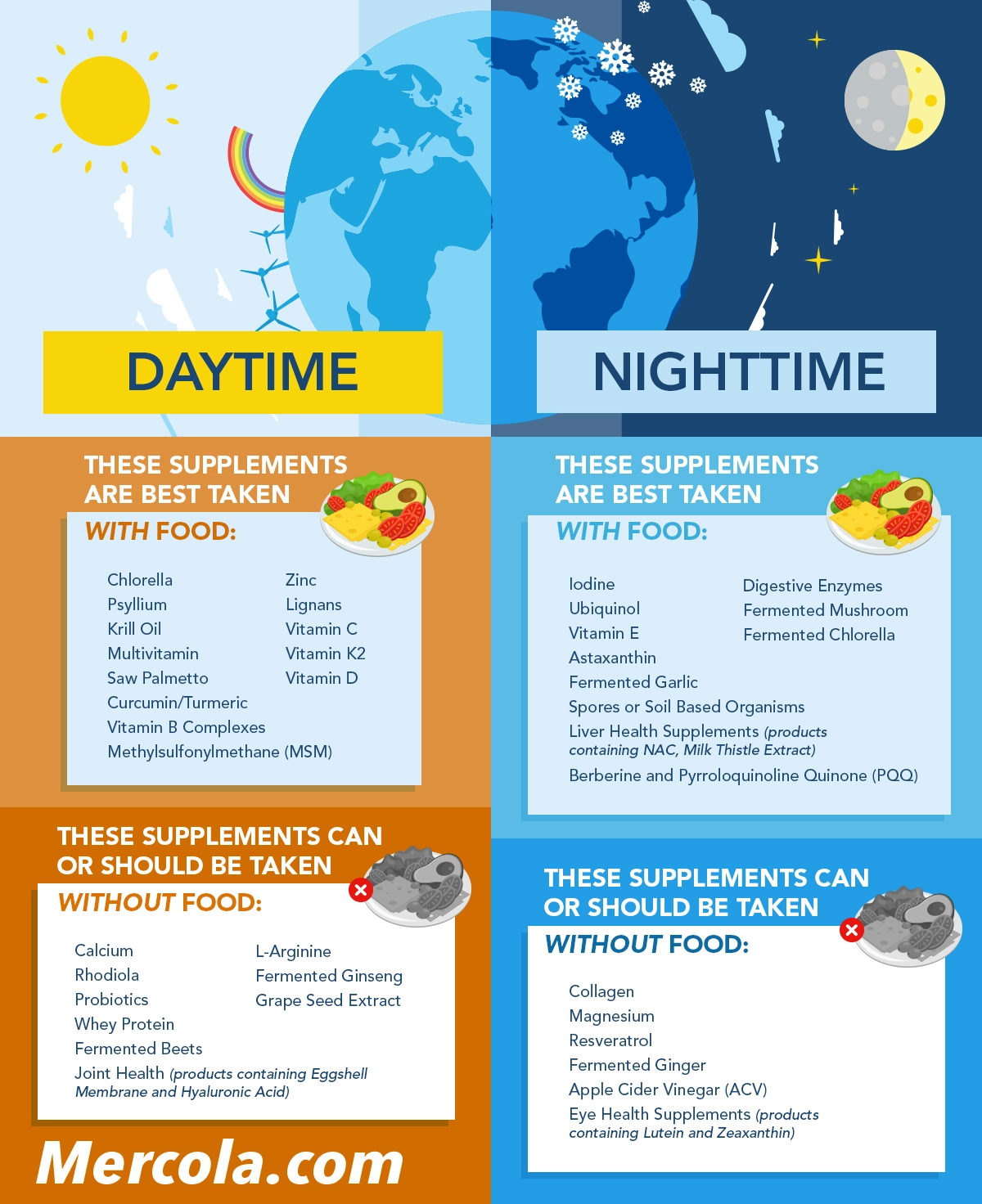
When and how you take supplements — such as with or without food and in the morning or evening — can make a difference in their safety and effectiveness. For instance, fat-soluble vitamin K2 is best taken with your largest meal that contains fat, while magnesium, which helps your body relax, is best taken in the evening. In the infographic above, you can see a simple breakdown of some of the most common supplements and when it’s best to take them.
- 1 U.S. CDC, NCHS Data Brief No. 399, February 2021
- 2 American Osteopathic Association January 16, 2019
- 3 Bitchute, Interview With Tyler Lebaron March 1, 2023
- 4 Scientific Reports volume 11, Article number: 10641 (2021)
- 5 YouTube, Dr. John Campbell February 1, 2023, 14:07
- 6 Pharmaceuticals (Basel). 2023 Jan; 16(1): 130., Abstract
- 7 International Journal of Nanomedicine January 19. 2018; 2018(13): 455-466
- 8, 9 BMJ Open Heart 2018
- 10 Aging (Albany NY). 2019 Jan 31; 11(2): 289–290
- 11 medRxiv July 7, 2020; DOI: 10.1101/2020.07.06.20147025
- 12 Factors Determining the Apoptotic Response of Colorectal Carcinoma Cells to Butyrate, a Fermentation Product Derived from Dietary Fiber (2009)
- 13 Translational Psychiatry June 3, 2022
- 14 The Journal of Neuroscience May 1, 2013; 33(18):7770-7
- 15 Translational Psychiatry June 3, 2022, Discussion
- 16 BMJ 2022;376:e066452
- 17 Journal of the American College of Cardiology December 13, 2022, Volume 80, Issue 24, Pages 2269-2285, Results
- 18 Journal of Clinical Lipidology, 2018;12(3):718
- 19 EurekAlert! March 15, 2018
- 20 Business Wire September 9, 2020
- 21, 22 A Comparison of Synthetic Ethyl Ester Form Fish Oil vs. Natural Triglyceride Form (PDF), What Are Triglycerides and Ethyl Esters?
- 23 Environ Sci Pollut Res Int. 2020 Feb;27(4):3950-3961. doi: 10.1007/s11356-019-06983-1. Epub 2019 Dec 10
- 24 Clinical and Translational Medicine March 27, 2021, Section 4.13
- 25 Medical Hypotheses January 15, 2019
- 26 Indian Journal of Clinical Biochemistry 1994, 9 (2)
- 27 Clinical and Translational Medicine March 27, 2021, Abstract, Results
- 28 Journal of Infectious Diseases and Preventive Medicine May 24, 2014; 2: 111
- 29 International Journal of General Medicine June 8, 2021; 14: 2359-2366
- 30 Integrative Medicine (Encinitas) February 2015
- 31 The Journal of Nutrition November 1, 2004: 134(11); 3100-3105 (The Rotterdam Study)
- 32 Journal of Medical Nutrition & Nutraceuticals 2015; 4(1): 47-53
- 33 Curr Med Res Opin. 2008 May;24(5):1485-96
- 34 J Med Food. 2016 Sep;19(9):836-43
- 35 J Med Food. 2010 Apr;13(2):399-405
- 36 Science Direct, Carnosine
mRNA shot SCANDAL: Pfizer knew after first 90 days, 275 people suffered stroke-related brain damage
Reproduced from original article:
https://www.naturalhealth365.com/pfizer-knew-after-first-90-days-275-people-suffered-stroke-related-brain-damage.html
by: March 6, 2023
 (NaturalHealth365) Within less than three months of the release of its mRNA jab, Pfizer employees knew 275 individuals suffered brain damage caused by stroke. This shocking fact indicates Pfizer’s brass prioritized profit over people. There is an argument to be made that the company’s executives who knew about the threat posed by its injections are criminally negligent, meaning they failed to provide injection recipients with due care.
If justice prevails, Pfizer’s brass will be removed from their corporate posts. However, it is worth noting that an internal review conducted by Pfizer employees contrasts with the facts presented above. According to Pfizer representatives, its cumulative case review indicates the injection does not pose safety issues.
Pfizer ignored hundreds of serious adverse events during first 90 days of COVID shot rollout
If Pfizer executives were utterly transparent, they wouldn’t have requested nearly an entire century of secrecy before revealing the data about the mRNA shot. Making the situation even more concerning is that the FDA assisted Pfizer in the push to conceal shot-related documents for 75 years.
The problem with Pfizer and other Big Pharma corporations concealing the truth about the impact of the clot shot for nearly an entire century is that most of those who received one or several doses would have passed away by the time the data was released.
Enter Aaron Siri, Esq. Siri, an attorney, spearheaded the legal case culminating in a federal judge requiring that the shot documents be made public within 108 days. The number 108 is important as it is amount of time the FDA needed to approve the coronavirus shots.
COVID shot causes stroke-related brain damage
Now that the facts about the clot shot are finally being revealed, it is crystal clear that even a single injection hikes the chances of a stroke and subsequent brain damage. The Pfizer Document 5.3.6 reveals 275 people endured a stroke, likely due to the shot between the day it was administered and 41 days later. About half of the strokes occurred in the initial two days following injection.
A stroke’s impact can last for years, decades, or even a lifetime. The reduction of blood to the brain prevents the transmission of oxygen and vitally important nutrients to the brain. As a result, brain cells perish within a few minutes or less. Stroke often results in body paralysis, language deficiencies, and other health problems. Some stroke victims struggle to swallow food and/or beverages.
Pfizer Document 5.3.6 is a preview of the future
Continue to explore the stats, facts, and figures presented in Pfizer’s documents, and you’ll find nearly every single one of the strokes suffered by jab recipients was serious. Nearly 20% of the strokes turned out to be fatal. In addition, about one-third of the strokes failed to resolve.
Furthermore, one-third of the stroke victims had an outcome categorized as “unknown,” meaning the result of the stroke has yet to be determined. Finally, we would be remiss not to point out that three people who took the Pfizer shot suffered cerebral venous sinus thrombosis, meaning extensive and potentially life-threatening clots within the brain.
Sources for this article include:
Does This Popular Pill Lower Risk of Death in Men?
Reproduced from original article:
https://articles.mercola.com/sites/articles/archive/2023/02/11/pde-5is-linked-to-lower-risk-of-death-in-men.aspx
The original Mercola article may not remain on the original site, but I will endeavor to keep it on this site as long as I deem it to be appropriate.
Analysis by Dr. Joseph Mercola Fact Checked February 11, 2023

STORY AT-A-GLANCE
- A study funded by drug company Sanofi found treatment with phosphodiesterase type 5 inhibitors (PDE-5is), such as Viagra, lowers the risk of death in men
- The study was observational, so it can’t confirm that the reduced death risk was caused by the pills
- Sanofi markets the PDE-5is avanafil (Stendra), so it’s far from an unbiased study
- Viagra produces therapeutic levels of nitric oxide, which is responsible for much of its benefit
- You can boost nitric oxide levels naturally via diet, exercise and other lifestyle factors
A study funded by drug company Sanofi found treatment with phosphodiesterase type 5 inhibitors (PDE-5is), such as Viagra, lowers the risk of death in men.1 But the study was observational, so it can’t confirm that the reduced death risk was caused by the pills. Further, Sanofi markets the PDE-5is avanafil (Stendra), so it’s far from an unbiased study.
“Put simply, if a pharmaceutical company funds a trial, the chances of results and conclusions in that company’s favor are increased,” Sergio Sismondo of Queen’s University, Canada, explained in Frontiers in Research Metrics and Analytics.2 He was referring to a 2017 Cochrane Review, which found that when drug manufacturer funds a drug study, it “leads to more favorable efficacy results and conclusions than sponsorship by other sources.”3
So, it’s not surprising that this industry-sponsored study led to favorable results for the drug. However, even putting likely bias aside, there’s reason to believe that the pills’ perceived longevity benefits may be due to other factors.
Industry-Funded Study Shows Viagra Reduces Death Risk
The study, published in The Journal of Sexual Medicine, evaluated the effect of PDE-5is on major adverse cardiovascular events (MACE), including hospitalization for heart attack, stroke, heart failure and coronary revascularization, and overall mortality.4
It involved data from men with erectile dysfunction without a major adverse cardiovascular event within one year. Among the subjects, exposure to PDE-5is was associated with lower incidence of MACE, cardiovascular death and overall mortality compared to no exposure. Further, the risk reduction was linked with PDE-5i exposure level, meaning the noted benefits increased in those taking higher doses.
Specifically, men who took a PDE-5i were 39% less likely to die from heart disease compared to those who did not take the drugs. Men who took PDE-5is also had a 25% lower risk of dying from any cause and a 13% lower risk of having a cardiac event, like a heart attack or stroke.5 But are the purported benefits too good to be true? Dr. Deepak Bhatt, cardiologist and director of Mount Sinai Heart in New York, told ScienceAlert:6
“While it is possible that Viagra may have some cardiovascular benefits, that would require further investigation, and this current study does not prove it. Rather, it is more likely that the patients in this study who were placed on Viagra by their doctors were less likely to have heart disease, because if patients have severe heart disease, they are often not placed on Viagra in the first place.”
The study authors also noted that men taking PDE-5is and capable of engaging in sexual activity may be healthier than other men to begin with, and it’s possible that the increased sexual activity may have also favorably affected their health:7
“It may be postulated that men who have ED and are capable of taking PDE-5is and engaging in sexual activity may be healthier to begin with, and that unmeasured baseline differences may contribute to the effects observed.
A second study limitation is the absence of an independent measure of sexual activity in these men, so it is not clear whether increased sexual activity may have contributed to the benefits seen that were independent of pharmacological effects of PDE-5i exposure.”
Does Viagra Also Lower Alzheimer’s Risk?
Viagra was originally approved and marketed for high blood pressure and angina8 and was prescribed off-label for erectile dysfunction before it was approved for that use. However, drug companies haven’t stopped looking for new ways to market this drug. In 2005, the U.S. Food and Drug Administration (FDA) approved sildenafil — the same active ingredient in Viagra — to treat pulmonary arterial high blood pressure, using the brand name Revatio.9
Further, in 2022, researchers with the Cleveland Clinic analyzed 1,600 approved drugs in the hopes that one of them could be repurposed as an Alzheimer’s treatment.10 Viagra turned out to be surprisingly effective. Usage reduced the risk of Alzheimer’s disease by 69%, while increasing neurite growth and reducing levels of toxic tau proteins.11
It’s important, however, to look into the underlying reasons why Viagra appears to be so beneficial. As a PDE 5 inhibitor, Viagra enhances vasodilation mediated by nitric oxide (NO). Viagra produces therapeutic levels of NO,12 which is responsible for much of its benefit. In fact, in 2003, researchers at Virginia Commonwealth University13 showed, for the first time, that Viagra stimulates the release of NO in heart cells, which reduces damage to the heart muscle during heart attacks.14
However, Viagra comes with a risk of serious side effects, including sudden vision loss and hearing loss, heart attack, stroke, irregular heartbeat and death.15 Viagra use is also associated with an increased risk of developing melanoma,16 the deadliest form of skin cancer. As such, I don’t recommend using Viagra.
That being said, you may be able to harness its potential benefits by naturally boosting NO in your body. NO is a soluble gas produced from the amino acid L-arginine inside your cells, where it supports endothelial function and protects your mitochondria.
Download this Article Before it Disappears
You Can Boost Your Nitric Oxide Naturally
Taking Viagra in the hopes of lowering your risk of death exposes you to potential side effects. Fortunately, there are ways to boost your NO naturally, without the use of drugs. Eating nitrate-rich foods like beets is one of them. Fermented beets contain even higher nitrate levels. Other vegetables high in nitrates include arugula, butter leaf lettuce and spring greens. NO production can be further magnified by combining these foods with probiotics.17
What’s great about boosting NO is that it offers a wide range of benefits. For instance, NO has a direct antiviral effect on SARS-CoV-2, effectively blocking viral replication in vitro.18
High-intensity exercise will also trigger NO production in your body.19 Ideally, you’d both eat nitrate-rich veggies and engage in exercise regularly. While it’s important to give your body the raw materials to create NO, after it’s made it’s stored inside vesicles lining your blood vessels, and it won’t work until you release it. High-intensity exercises are great at releasing it, and I recommend blood flow restriction training (BFR) for this purpose.
The local muscle hypoxia brought on by BFR exercise significantly increases vascular endothelial growth factor (VEGF), which acts like “fertilizer” for your blood vessels. The medical term for this development of new blood vessels is angiogenesis. Angiogenesis, in turn, enhances NO bioavailability. BFR, by way of increasing NO, has also been found to stimulate muscle satellite stem cells and proliferation.20
Exercise, meanwhile, is one of the best ways to extend your longevity and reduce your risk of premature death. While lack of activity is the cause of more than 5 million deaths each year,21 a study published in the European Journal of Preventive Cardiology revealed that estimated age based on subjects’ exercise stress test was a better predictor of mortality than chronological age.22 The results held true for both men and women.
Getting sensible sun exposure on large portions of your body is also important, as NO is released into your bloodstream when sunlight hits your skin.23,24 Ultraviolet A and the near-infrared light spectrum both increase NO, so you’re getting that benefit from both ends of the light spectrum.
As explained in a 2009 paper in the journal Circulation Research,25 when you expose your body to sunlight, photolabile NO derivates such as nitrite and S-nitroso thiols decompose and form vasoactive NO. (Photolabile means the compounds are altered or undergo chemical changes in response to light).
Take Action if You Have Erectile Dysfunction
It’s also important to understand that erectile dysfunction (ED) can act as a “canary in the coalmine,” signaling underlying health problems. One study of 95,000 men found that those with ED had an increased risk of heart-related problems, including:26
- Heart failure
- Stroke
- Peripheral vascular disease
- Ischemic heart disease
- “Other” cardiovascular disease
This doesn’t necessarily mean that erectile dysfunction causes heart problems, but, more likely, that both share a common pathology of the blood vessels known as endothelial dysfunction. The researchers explained:27
“Erectile dysfunction per se is unlikely to be a major independent cause of CVD, and is best considered as a risk marker rather than a risk factor for CVD. That is, it is likely to serve as an indicator, or ‘biomarker,’ of the severity of underlying pathological processes such as atherosclerosis and endothelial dysfunction.”
Natural Strategies for ED
If you have ED, be sure to get your heart health checked out by a holistic health care practitioner and be proactive in making lifestyle changes to support heart health. Taking Viagra, even if it solves the symptoms of ED, will not solve the underlying pathological processes contributing to it. Remember, too, that not every case of ED is physical in nature; there can also be emotional and psychological contributors.
There are, however, natural strategies to target ED as well. Research from Harvard University demonstrated that men younger than 70 who regularly consume foods rich in flavonoids have an 11% to 16% reduced risk of experiencing ED, for instance.28
Pomegranate juice might also be useful for men struggling with mild to moderate erectile dysfunction,29 thanks to its ability to preserve nitric oxide and enhance its biological actions.30 Nitric oxide relaxes and widens blood vessels, thereby increasing penile blood flow.
Toward that end, L-arginine may also improve microcirculation in your genitals that can result in stronger erections and better sexual responsiveness, but without the side effects of Viagra and similar drugs.
L-arginine is more effective when combined with pycnogenol, resulting in significant improvement of sexual functioning.31 Another study found using a combination of 6 grams of L-arginine and 6 milligrams of the compound yohimbine improved the sexual functioning of men diagnosed with mild to moderate ED.32
So whether you’re looking to reduce your risk of premature death or improve ED — or both — taking Viagra is rarely the answer. Instead, you’ll want to ensure your overall lifestyle is a healthy one, as this will not only enhance your longevity but also your sexual health.
- 1, 4 The Journal of Sexual Medicine, Volume 20, Issue 1, January 2023, Pages 38–48
- 2 Front. Res. Metr. Anal., 08 March 2021
- 3 Cochrane Database Syst Rev. 2017 Feb 16;2(2):MR000033
- 5, 6, 9 Science Alert January 23, 2023
- 7 The Journal of Sexual Medicine, Volume 20, Issue 1, January 2023, Pages 38–48, Discussion
- 8 History, March 27, 1998
- 10 Nature Aging volume 1, pages 1175–1188 (2021)
- 11 Greek Reporter December 11, 2022
- 12, 14 Virginia Commonwealth University March 13, 2003
- 13 Circulation Research April 4, 2003, Vol 92, Issue 6
- 15 Drugwatch, Viagra
- 16 JAMA Intern Med. 2014;174(6):964-970. doi: 10.1001/jamainternmed.2014.594
- 17 PLOS One 2015; 10(3): e0119712
- 18 Redox Biology 2020; 37: 101734
- 19 J Sports Med Phys Fitness. 2021 Sep;61(9):1208-1211. doi: 10.23736/S0022-4707.21.11640-8. Epub 2021 Jan 20
- 20 Mol BiolCell. 2000;11(5):1859–97
- 21 The Lancet, 2016;388(10051):1511
- 22 European Journal of Preventive Cardiology, 2019; doi: 10.1177/2047487319826400
- 23 J Invest Dermatol. 2014 Jul;134(7):1839-1846
- 24, 25 Circ Res. 2009 Nov 6;105(10):1031-40
- 26, 27 PLOS Medicine January 22, 2013
- 28 The American Journal of Clinical Nutrition, Volume 103, Issue 2, February 2016, Pages 534–541
- 29 Int J Impot Res. 2007 Nov-Dec;19(6):564-7
- 30 Nitric Oxide 2006 Sep;15(2):93-102
- 31 Journal of Sex & Marital Therapy November 30, 2010
- 32 Eur Urol. 2002 Jun;41(6):608-13; discussion 613. doi: 10.1016/s0302-2838(02)00175-6
Sudden Death: The No. 1 Cause of Death for Under 65s in 2021 and 2022
Reproduced from original article:
https://articles.mercola.com/sites/articles/archive/2023/01/06/sudden-death-after-covid-shots.aspx
The original Mercola article may not remain on the original site, but I will endeavor to keep it on this site as long as I deem it to be appropriate.
Analysis by Dr. Joseph Mercola Fact Checked January 06, 2023

STORY AT-A-GLANCE
- Mounting evidence shows the COVID shots are destroying people’s immune systems and are triggering turbo-charged cancers
- A survey by Steve Kirsch found sudden death is the No. 1 cause of death among those under the age of 65 who got the COVID jab
- Myocarditis as a cause of death is now registering across all age ranges but only for the vaccinated. Cardiac-related deaths are also significantly elevated among younger people (under 65) who got the jab compared to their unjabbed peers
- Recent research shows repeated jabs trigger a switch in the types of antibodies your body produces and lower your ability to clear viruses. By switching from spike-specific neutralizing IgG antibodies to IgG4 antibodies, your body switches from tumor suppression mode into tumor progression mode
- In addition to the potential for cancer cells to run amok, IgG4 dominance may also have severe autoimmune implications, as the COVID jab spike protein share similarities with human proteins
Evidence showing the COVID shots are a public health disaster keeps mounting. In late December 2022, Steve Kirsch1 and Jessica Rose,2 Ph.D., both published Substack articles detailing some of the latest evidence showing the shots are destroying people’s immune systems and have triggered an avalanche of turbo-charged cancers.
Kirsch’s article3 features results from a recent survey he conducted. It included four questions: age, whether the deceased was jabbed or not, year of death and cause of death. While the number of responses is low, major insights can still be gleaned by looking at the trends.
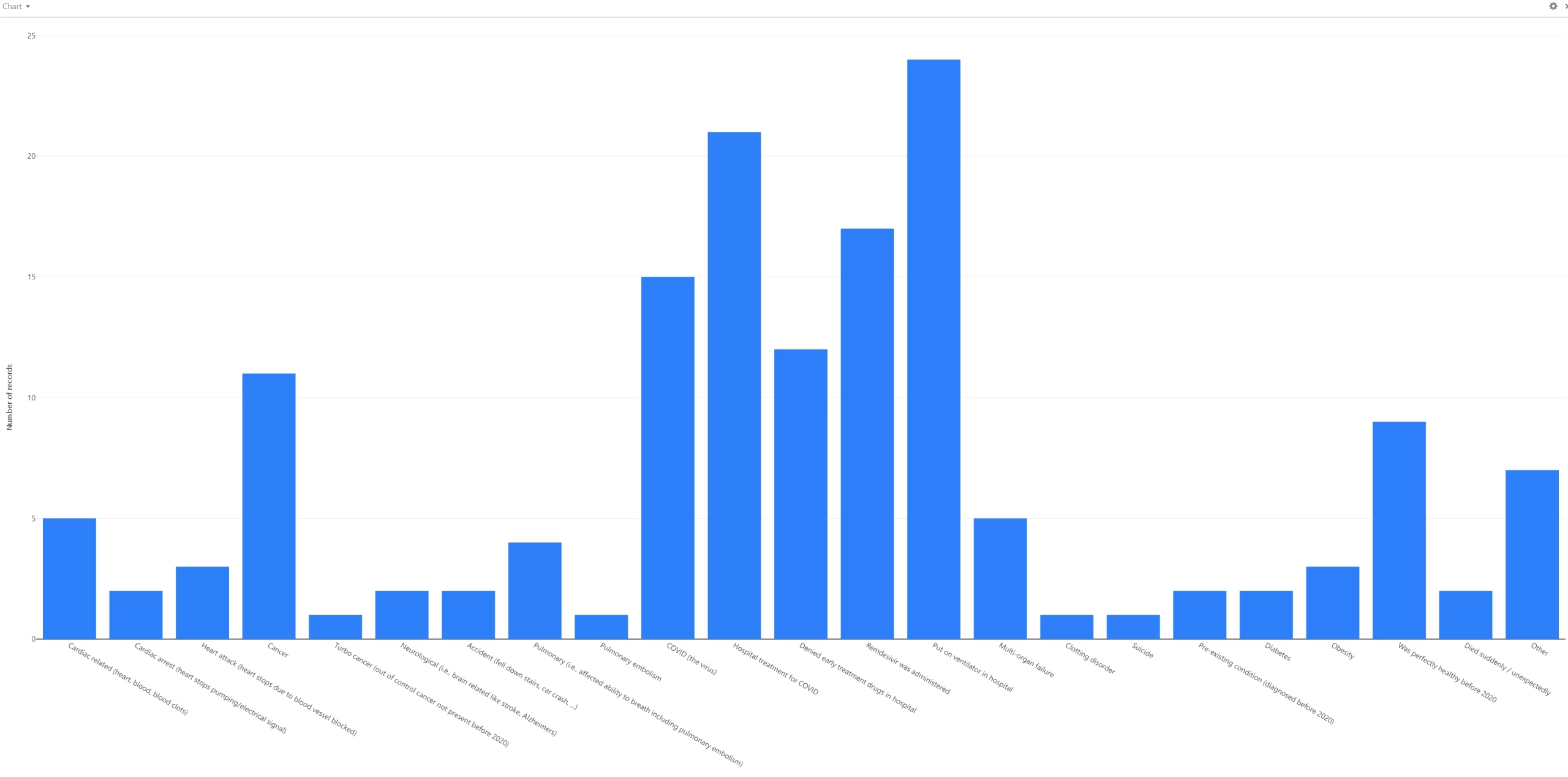
First, we have the baseline data from 2020, which show cancer was the No. 1 killer of Americans younger than 65, followed by hospital treatment for COVID. Turbo-charged cancers accounted for one-ninth of the cancer reports, and there were no reports of death from myocarditis.
Among seniors over the age of 65, preexisting conditions were the top cause of death in 2020. Cancer was second, COVID infection third and cardiac events fourth. There were no turbo-charged cancer deaths, nor any myocarditis deaths. Kirsch then gets into the differences between the vaxxed and the unvaxxed in 2021 and 2022.
What the Unvaxxed Died of in 2021 and 2022
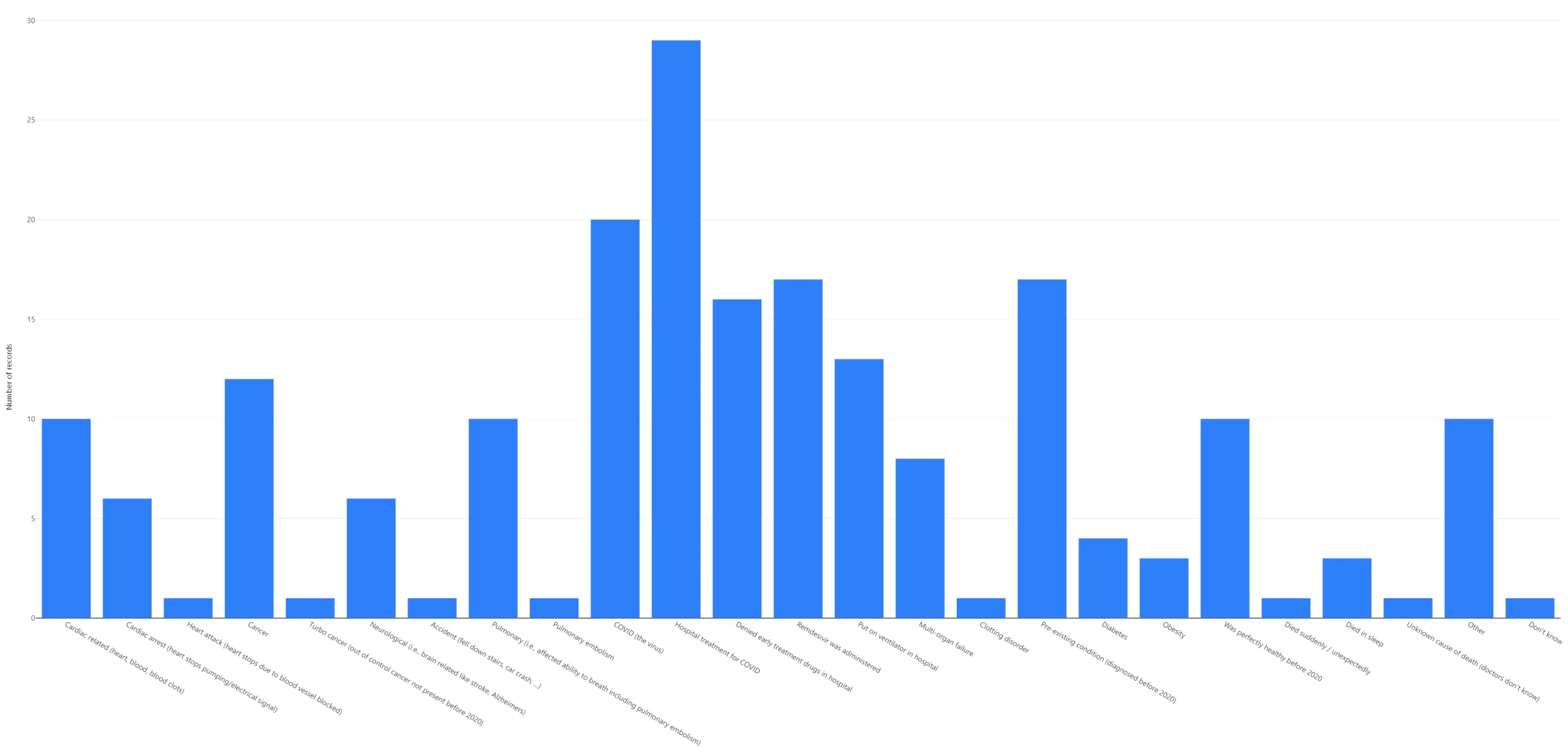
In 2021 and 2022, the primary cause of death for people 65 and younger was hospital treatment for COVID. Incidences of sudden death, pulmonary embolism and turbo-charged cancers were all low, and there were no unknown causes of death, nor any myocarditis deaths.
The same went for people older than 65. Hospital treatment for COVID was the No. 1 killer. Heart attacks, turbo-charged cancer and sudden death were all low, and there were no deaths from myocarditis.
What the COVID-Jabbed Died of in 2021 and 2022
Among the COVID-jabbed aged 65 and younger, sudden death was the No. 1 cause of death in 2021 and 2022. The second was cardiac-related death and cancer was third. Importantly, the incidence of turbo-charged cancer among the jabbed was significant in this group, and myocarditis killed more than COVID-19.
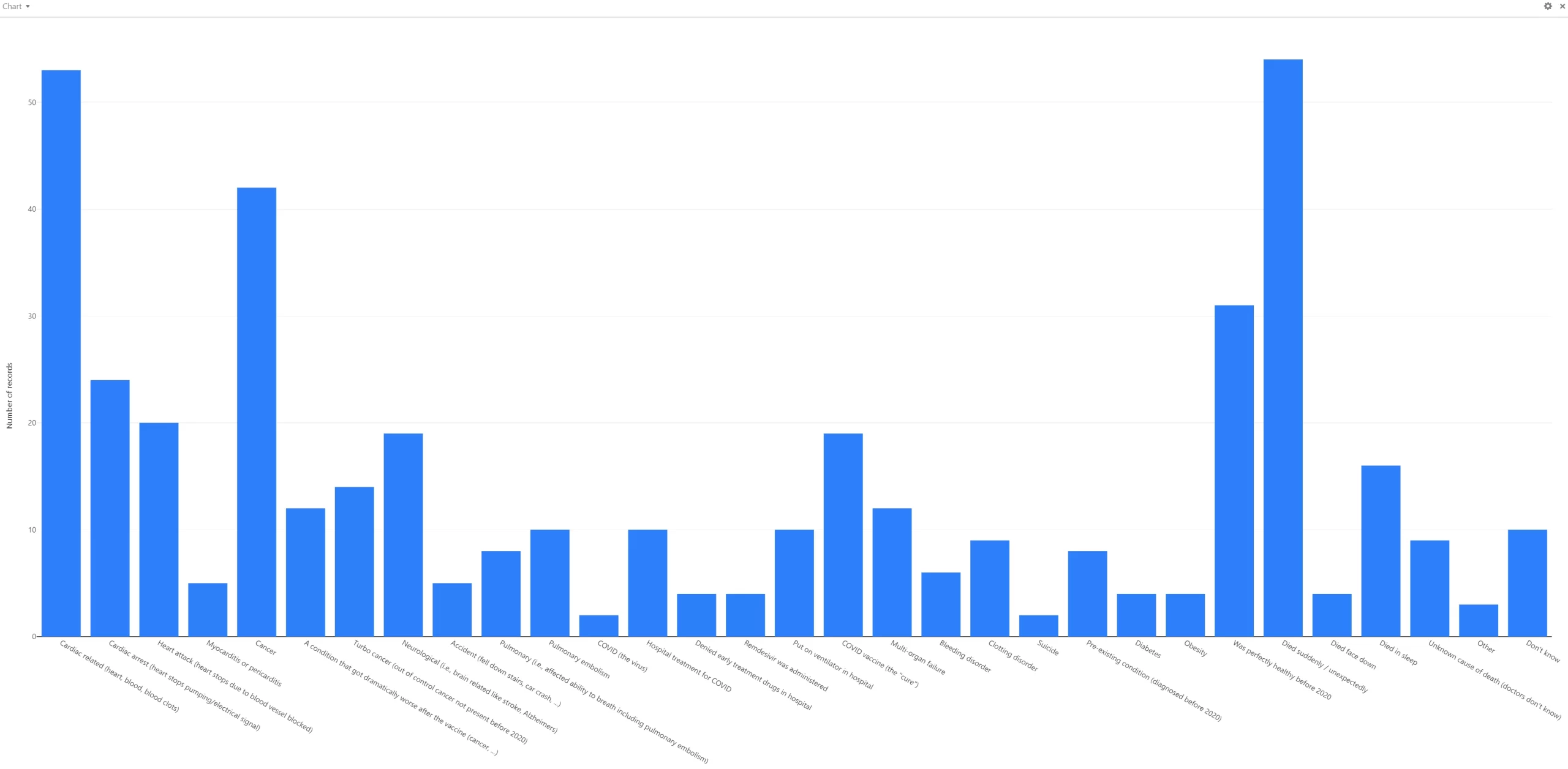
Among those older than 65, cancer was the No. 1 cause of death, and the turbo-charged cancer rate is “huge compared to those without the vaccine.” Sudden death was also significantly elevated.
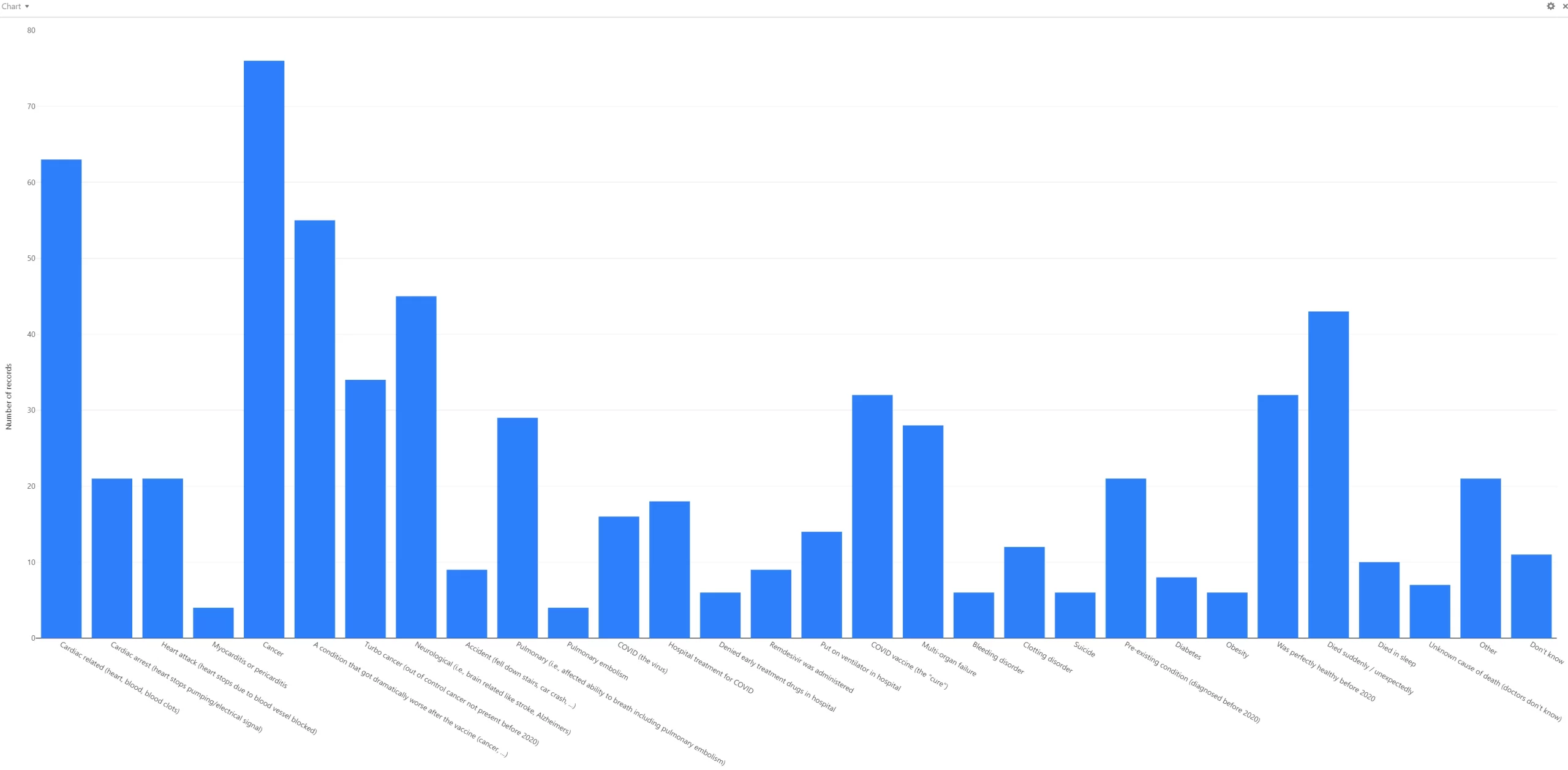
Stark Difference in Cancer Deaths Between Jabbed and Unjabbed
Kirsch summarizes the three most stunning differences between the jabbed and unjabbed:4
1. “Sudden death rates are off the charts for the vaccinated cf. unvaccinated for those <65 … It’s the #1 cause of death for this age group …
2. Myocarditis as a cause of death is registering now for both age ranges but only for the vaccinated …
3. Cardiac issues as a cause of death in vaccinated young people (<65) are significantly elevated vs. their unvaxxed peers.”
How COVID Jabs Raise Risk of Infections and Cancer
Exploding cancer rates is precisely what you would expect from a drug that impairs and destroys your immune system, which is what the COVID jabs do. The scientific paper “Innate Immune Suppression by SARS-CoV-2 mRNA Vaccinations”5 describes how the COVID shots suppress your innate immune system by inhibiting the type-1 interferon pathway, which is the first-stage response to all viral infections.
The reason type-1 interferon is suppressed is because it responds to viral RNA, and there’s no viral RNA in the COVID shot. The RNA is modified to look like human RNA, so the interferon pathway doesn’t get triggered. As a result, the COVID jab makes you more susceptible to infections.
One mechanism by which the jab causes cancer has to do with the fact that the SARS-CoV-2 spike protein obliterates 90% of the DNA repair mechanism in lymphocytes,6 a type of white blood cell that helps your body fight infections and chronic diseases such as cancer. That’s bad enough, yet that’s just one mechanism of many.
How the Jab Lowers Your Viral Clearance Capacity
Recent research7,8 also shows that repeated jabs trigger a switch in the types of antibodies your body produces and lower your ability to clear viruses. Jessica Rose reviews these findings in her Substack article:9
“A paper was published in Science Immunology on December 22, 2022 entitled: ‘Class switch towards non-inflammatory, spike-specific IgG4 antibodies after repeated SARS-CoV-2 mRNA vaccination’10 …
[It] explains in wonderful detail how a class of antibody that commands a non-inflammatory response (more like tolerizing) is prominent in people who have been repeatedly injected with the modified mRNA COVID-19 injectable products.
Translation: Instead of the intended pool of spike-specific neutralizing IgG antibodies being dominant in multiply-injected people, a pool of antibodies associated with spike-specific tolerance are dominant in multiply-injected people.
Besides the tolerizing capacity, they also showed that the phagocytic enabling capacities were much reduced overall. These activities lead to clearance of viral pathogens. Reduce them → reduction in viral clearance capacity …
To be clear, this wasn’t a ‘maybe the antibody profile was a little different’ … This was a ‘whoa there’s a 48,075% increase in spike-specific antibodies between the 2nd and 3rd injections …
IgG4 antibodies among all spike-specific IgG antibodies rose on average from 0.04% shortly after the second vaccination to 19.27% after the third … [I]mportantly, that is not a typical consequence of repeat antigen exposure from either natural infections and vaccination.”
Spike Overexposure Also Opens the Door for Cancer
As noted by Substack author Brian Mowrey:11
“This is a totally bonkers thing for an anti-spike-protein B cell to decide to do, and reflects B cell over-exposure to spike, which reflects super-excess production of spike by the Pfizer/BioNTech mRNA code …
It is not normal to make IgG4 when repeat encounter with a virus is spaced out over a lifetime, but injection-prompted antigen exposure promotes this response, and mRNA vaccines accelerate this effect …
There is no reason to predict that this would be ‘good’ in an antiviral response … ‘Wearing out’ the immune response in this way is believed to contribute to the development of tolerance against tumors.”
So, to summarize the effects in layman’s terms, the switch from spike-specific neutralizing IgG antibodies to IgG4 antibodies switches your body from tumor suppression mode into tumor progression mode, as cancerous cells now can evade your immune system. You become “tumor tolerant” as your immune system is no longer scavenging for and eliminating cancer cells. Mowrey also points out that:12
“Once a B cell has switched to IgG4, it cannot switch to any other IgG subclass, as the genes for all those other base designs have been discarded. All future clones of this B cell will code for IgG4 receptor/antibody for the antigen in question.”
What Other Health Effects May Result?
For clarification, IgG4 is a subclass of the immunoglobulin G (IgG) antibody type that responds to repeated and/or long-term exposure to an antigen. The mRNA shot evaluated here was that of Pfizer, and it was compared against Janssen’s viral vector-based shot. Moderna’s shot was not included. Notably, these results were not found among people who got Janssen’s shot, only Pfizer’s Comirnaty jab.
Comirnaty … induces a shift away from a viral clearing to a tolerance-inducing antibody class, and this is not the status quo for traditional vaccines or natural infections. The main problem here is … we have no idea of the effects of this ‘effect.’ ~ Jessica Rose, Ph.D.
As noted by Rose:13
“… the bottom line here is that the Comirnaty product … induces a shift away from a viral clearing to a tolerance-inducing antibody class, and this is not the status quo for traditional vaccines or natural infections. The main problem here is … we have no idea of the effects of this ‘effect.'”
That said, we can look at what happens in people with IgG4-related disease, and start formulating hypotheses from there. As explained by Rose, a hallmark of IgG4-related disease is fibrosis, i.e., tissue scarring, which can lead to organ dysfunction, organ failure and even death if left untreated.
Rose is now researching the possible links between this antibody switching and the stringy white deposits found in COVID-jabbed people who died. Might it be a new form of connective tissue disease?
In addition to the potential for cancer cells to run amok (as discussed in the section above), IgG4 dominance may also have severe autoimmune implications seeing how the COVID jab spike protein share similarities with human proteins.
“Molecular mimicry has been shown14 in multiple publications to be a potential problem with regard to the spike protein whereby it has been shown to share motifs with human proteins,” Rose writes.15 “What this means is that autoimmunity potential against these human proteins is clear and present.
In the context of this recent publication showing a dominant IgG4 pool, I have to wonder what the implications of this dominant pool are for molecular mimicry. Are these IgG4 antibodies capable of tolerizing in the context of our own protein?”
Resources for Those Injured by the COVID Jab
If you got one or more jabs and suffered an injury, first and foremost, never ever take another COVID booster, another mRNA gene therapy shot or regular vaccine. You need to end the assault on your system.
The same goes for anyone who has taken one or more COVID jabs and had the good fortune of not experiencing debilitating side effects. Your health may still be impacted long-term, so don’t take any more shots.
When it comes to treatment, there are still more questions than answers, and most doctors are clueless about what to do — in part because they never bothered to give early treatment for COVID and therefore don’t understand how different medicines and supplements impact the spike protein.
So far, it seems like many of the treatments that worked against severe COVID-19 infection also help ameliorate adverse effects from the jab. This makes sense, as the toxic, most damaging part of the virus is the spike protein, and that’s what your whole body is producing if you got the jab.
Two doctors who have started tackling the treatment of COVID jab injuries in earnest include Dr. Michelle Perro (DrMichellePerro.com), whom I’ve interviewed on this topic, and Dr. Pierre Kory (DrPierreKory.com).
Both agree that eliminating the spike protein your body is now continuously producing is a primary task. Perro’s preferred remedy for this is hydroxychloroquine, while Kory’s is ivermectin. Both of these drugs bind and thereby facilitate the removal of spike protein.
As a member of the Front Line COVID-19 Critical Care Alliance (FLCCC), Kory helped develop the FLCCC’s post-vaccine treatment protocol called I-RECOVER. Since the protocol is continuously updated as more data become available, your best bet is to download the latest version straight from the FLCCC website at covid19criticalcare.com16 (hyperlink to the correct page provided above).
The World Health Council has also published lists of remedies that can help inhibit, neutralize and eliminate spike protein. Inhibitors that prevent spike protein from binding to your cells include Prunella vulgaris, pine needle tea, emodin, neem, dandelion extract and the drug ivermectin.
Spike protein neutralizers, which prevent the spike from damaging cells, include N-acetylcysteine (NAC), glutathione, fennel tea, star anise tea, pine needle tea, St. John’s wort, comfrey tea and vitamin C. A March 2022 review paper17 suggests combating the neurotoxic effects of the spike protein using the flavonoids luteolin and quercetin.
Time-restricted eating (TRE) and/or sauna therapy can also help eliminate toxic proteins by stimulating autophagy. Several additional detox remedies can be found in “World Council for Health Reveals Spike Protein Detox.”
Other Helpful Treatments and Remedies
Other treatments and remedies that may be helpful for COVID jab injuries include:
• Hyperbaric oxygen therapy, especially in cases involving stroke, heart attack, autoimmune diseases and/or neurodegenerative disorders. To learn more, see “Hyperbaric Therapy — A Vastly Underused Treatment Modality.”
• Lower your Omega-6 intake. Linoleic acid is consumed in amounts ten times of ideal in well over 95% of the population and contributes to massive oxidative stress that impairs your immune response. Seed oils and processed foods need to be diligently avoided. You can review my previous post for more information.
• Pharmaceutical grade methylene blue, which improves mitochondrial respiration and aid in mitochondrial repair. It’s actually the parent molecule for hydroxychloroquine. A dose of 15 to 80 milligrams a day could go a long way toward resolving some of the fatigue many suffer post-jab.
It may also be helpful in acute strokes. The primary contraindication is if you have a G6PD deficiency (a hereditary genetic condition), in which case you should not use methylene blue at all. To learn more, see “The Surprising Health Benefits of Methylene Blue.”
• Near-infrared light, as it triggers production of melatonin in your mitochondria18 where you need it most. By mopping up reactive oxygen species, it too helps improve mitochondrial function and repair. Natural sunlight is 54.3% infrared radiation,19 so this treatment is available for free. For more information, see “What You Need to Know About Melatonin.”
• Lumbrokinase and serrapeptidase are both fibrinolytic enzymes taken on an empty stomach one hour before or two hours after to help reduce the risk of blood clots.
- 1, 3, 4 Steve Kirsch Substack December 27, 2022
- 2, 9, 13 Jessica Rose Substack December 27, 2022
- 5 Food Chem Toxicol June 2022; 164: 113008
- 6 The Expose August 2, 2022
- 7, 10 Science Immunology December 22, 2022
- 8, 11, 12 Brian Mowrey Substack July 22, 2022
- 14, 15 Jessica Rose Substack July 4, 2022
- 16 Covid19criticalcare.com
- 17 Molecular Neurobiology March 2022; 59(3): 1850-1861
- 18 Physiology February 5, 2020 DOI: 10.1152/physiol.00034.2019
- 19 Journal of Photochemistry and Photobiology February 2016; 155: 78-85
COVID Jabs Have Erased 25 Years of Health Gains
Reproduced from original article:
https://articles.mercola.com/sites/articles/archive/2023/01/03/declining-life-expectancy.aspx
The original Mercola article may not remain on the original site, but I will endeavor to keep it on this site as long as I deem it to be appropriate.
Analysis by Dr. Joseph Mercola Fact Checked January 03, 2023

STORY AT-A-GLANCE
- Americans had lost nearly three years of life expectancy during 2020 and 2021. In 2019, the average life span of Americans of all ethnicities was 78.8 years. By the end of 2020, it had dropped to 77.0 years and by the end of 2021 it was 76.4
- From 2020 to 2021, death rates increased for each age group 1 year and over. The age groups with the highest increases include working age adults, 25 to 54, and children under 4
- The leading causes of death in 2021 were heart disease, cancer and COVID-19, all three of which were higher in 2021 than 2020. Unintentional injury and stroke also significantly increased in 2021
- Heart disease, stroke and cancer are all now-known side effects of the COVID jabs. Unintentional injuries may also be due to the shots, as you may easily be injured if you pass out or suffer a heart attack or stroke while doing just about anything
- If the COVID jabs worked, you’d expect excess mortality to drop, yet that’s not what we’re seeing. We’re also not seeing mass death from COVID. The only clear factor that might account for these discrepancies is mass injection with an experimental gene transfer technology
In August 2022, provisional life expectancy estimates1,2 for 2021 were released, showing Americans had lost nearly three years of life expectancy during 2020 and 2021. In December 2022, the finalized mortality report3 confirmed these shocking data.
Shocking Decline in US Life Expectancy
In 2019, the average life span of Americans of all ethnicities was 78.8 years.4 By the end of 2020, it had dropped to 77.0 years5 and by the end of 2021, it was 76.4.6 As detailed in the U.S. Centers for Disease Control and Prevention’s finalized mortality report for 2021:7
“In 2021, life expectancy at birth was 76.4 years for the total U.S. population — a decrease of 0.6 year from 77.0 years in 2020 … For males, life expectancy decreased 0.7 year from 74.2 in 2020 to 73.5 in 2021. For females, life expectancy decreased 0.6 year from 79.9 in 2020 to 79.3 in 2021 … From 2020 to 2021, death rates increased for each age group 1 year and over …”
As Virginia Commonwealth University professor of population health Dr. Steven Woolf told USA Today,8 “That means all the medical advances over the past quarter century have been erased.”
Life Expectancy Has Dropped Across All Age Groups
Age-specific rates of death increased across all age groups as follows:9
| 10.1% for age group 1–4 (from 22.7 deaths per 100,000 population in 2020 to 25.0 in 2021) | 4.4% for 5–14 (13.7 to 14.3) |
| 5.6% for 15–24 (84.2 to 88.9) | 13.4% for 25–34 (159.5 to 180.8) |
| 16.1% for 35–44 (248.0 to 287.9) | 12.1% for 45–54 (473.5 to 531.0) |
| 7.5% for 55–64 (1,038.9 to 1,117.1) | 3.8% for 65–74 (2,072.3 to 2,151.3) |
| 2.4% for 75–84 (4,997.0 to 5,119.4) | 3.5% for 85 and over (15,210.9 to 15,743.3) |
As you can see, something very strange is going on here. While life expectancy dropped across all age groups, the age groups with the highest increases in mortality were working age adults, 25 through 54, followed by children between the ages of 1 and 4.
What’s Killing Younger Americans?
The leading causes of death in 2021 were heart disease, cancer and COVID-19, all three of which were higher in 2021 than 2020.10 Unintentional injury and stroke also significantly increased in 2021.
Heart disease, stroke and cancer are all now-known side effects of the COVID jabs. Unintentional injuries may also be due to the shots, as you may easily be injured if you pass out or suffer a heart attack or stroke while doing just about anything.
Woolf, however, believes low COVID-19 jab rates and general poor health of Americans are to blame for the increased mortality. In addition to disregarding the fact that the primary causes of death are side effects of the COVID shots, working age adults and children are also, comparatively speaking, the healthiest groups in general and ought to have a lower risk of death from any cause, but especially heart disease and cancer.
And, since they have a far lower risk of dying from COVID in the first place (compared to the elderly), a slightly lower COVID jab rate in this age group is unlikely to have made such a huge difference.
According to CDC data,11 84% of 25- to 49-year-olds got at least one dose and 71% is considered “fully ‘vaccinated.’” In the 50 to 64 year category, it’s 95% and 83% respectively. In the 65 and over category, 95% got at least one dose and 93% are “fully ‘vaccinated,’” so it’s not like there’s a major difference in jab rates.
‘Sudden Death Syndrome’ May Be Driving Down Life Expectancy
COVID-19 is an unlikely cause for the rapid decline in life expectancy for the simple fact that it’s not a major contributor to rising excess mortality. Excess mortality is a statistic that is related to but separate from life expectancy.
It refers to the difference between the observed numbers of deaths (from all causes) during a given time, compared to the expected number of deaths based on historical norms, such as the previous five-year average. (Formula: reported deaths minus expected deaths equals excess deaths.)
Across the world, excess mortality has dramatically risen since the start of the pandemic, and barely a day now goes by without a healthy adult suddenly dropping dead with no apparent cause. People have died during live broadcasts, in the middle of speeches and during dinner.
Clearly, they were feeling well enough to go to work, to an event or a restaurant, and something caused them to instantaneously die without warning. These are the people making up these excess death statistics. They shouldn’t be dead, yet something took them out.
Excess Deaths Took Off After the COVID Jab Rollout
While COVID-positive deaths were part of the equation in 2020, excess deaths really took off after the rollout of the COVID jabs, not during the height of the pandemic as one would expect if COVID-19 was the real killer.12 Besides, we already know that “COVID-19 death” simply means that the person tested positive for SARS-CoV-2 at the time of death or just prior to it.
If the COVID jabs worked, you’d expect excess mortality to drop, yet that’s not what we’re seeing. We’re also not seeing mass death from COVID. The only clear factor that might account for these discrepancies is mass injection with an experimental gene transfer technology.
For the U.S., there were 3,440,546 deaths of all ages for the year 2020.13 The expected numbers were 3,028,959, so that was an excess of 13.6% (411,587 above expected). In 2021, there were 3,459,496 deaths of all ages, which was 16.4% above expectations. As of mid-April 2022, the excess death rate was already at 14.1%, with 1,041,538 reported deaths of all ages.
If the COVID jabs worked, you’d expect excess mortality to drop, yet that’s not what we’re seeing. We’re also not seeing mass death from COVID. The only clear factor that might account for these discrepancies is mass injection with an experimental gene transfer technology.
More Working Age Adults Were Coerced Into Taking the Jab
Life insurance data confirm that it’s working age adults who are dying in record numbers, which is what’s really driving down life expectancy. In the third quarter of 2021, the death rate of working-age Americans (18 to 64) was 40% higher than prepandemic levels, and these deaths were, again, not attributed to COVID.
As noted by Dr. Robert Malone in a January 2022 Substack article,14 workers were forced to accept the toxic COVID jabs at a higher frequency relative to the general population. This, I believe, is the real answer to why they’re dying at a disproportionate rate.
As for children under 4, well, toxins tend to be more dangerous to younger children, so it’s no great shock that the death rate for children has risen more than the rate of older people. After all, we’re now giving these toxic COVID jabs to babies as young as 6 months old.
Data Manipulation Hides Real Cause of Death
As mentioned, the leading causes of death in 2021 were heart disease, cancer and COVID-19. Data analysis by The Ethical Skeptic15 — self-described as a former intelligence officer and strategist — shows cancer deaths are now being mislabeled as COVID deaths. The suspicion is that this is an effort to hide the fact that the COVID shots have resulted in soaring cancer rates.
Seven of the 11 International Classification of Diseases (ICD) codes tracked by the U.S. National Center for Health Statistics — including cancer — saw sharp upticks starting in the first week of April 2021, which is when large swaths of the American population were getting their first COVID jabs.
According to The Ethical Skeptic’s analysis of U.S. Morbidity and Mortality Weekly Report (MMWR) data, the CDC has been filtering and redesignating cancer deaths as COVID deaths since Week 14 of 2021 to eliminate the cancer signal.16
The following two charts illustrate how cancer mortality is being artificially suppressed. As explained by The Ethical Skeptic:17,18
“The set dynamics are complex, but the principle is straightforward. When a death cert lists Cancer as the UCoD [underlying cause of death] and COVID as MCoD [main cause of death] — the UCoD & MCoD are being swapped, and COVID is being listed as the UCoD 100% (425/wk).

“This results in 20% of all COVID deaths each week, also happening to be persons dying of Cancer — which is egregiously higher than it should be. This is clear over-attribution = equates to exactly the difference between the Cancer and All Other ICD-10 code lag curves.”
The problem facing the CDC, is … What does one do when COVID Mortality is no longer substantial enough to conceal the excess Cancer Mortality?”

So, to rephrase, what The Ethical Skeptic is saying is that 20% of the weekly so-called COVID deaths are cancer deaths, which is rather astounding. Swapping the underlying and main causes of death, listing COVID as the main cause, hides (to some degree) the fact that cancer deaths are going through the roof.
According to his analysis, the COVID shot is killing 7,300 Americans per week. COVID, meanwhile, is killing 1,740 people.19 What will the CDC blame when COVID disappears, and they can no longer swap the underlying and main cause of death designations? Time will tell.
In the meantime, cancer is already one of the leading causes that is prematurely killing Americans, and uncontrollable turbo-charged cancers only started to occur after the rollout of the COVID jabs.20
Former NIH Director Blames Christian Misinformation
Former National Institutes of Health director Dr. Francis Collins recently suggested misinformation spread by White Evangelical Christians are driving vaccine hesitancy, and that it’s this religious “culture war” that is killing Americans.
Collins either has an agenda or is seriously confused, as statistics show whites in general had the highest COVID jab uptake rates when the jabs came out, and people who took it were far more likely to promote the jab than discourage it. As reported by the Kaiser Family Foundation:21
“… federal data from the Centers for Disease Control and Prevention (CDC) show that 78% of the total population in the United States have received at least one dose of a COVID-19 vaccine …
Over the course of the vaccination rollout, Black and Hispanic people have been less likely than their White counterparts to receive a vaccine, but these disparities have narrowed over time and reversed for Hispanic people.”
Christians in general also haven’t been particularly “hesitant” about getting the jab. An investigation by the Public Religion Research Institute found22 56% of white evangelical protestants got jabbed, as did 74% of White mainline protestants and 79% of white Catholics. For some reason, the jab rates among Black religious affiliations were not assessed, so we have no idea whether religion has influenced Blacks to reject the shot.
Bear in mind, the COVID jab rate for the U.S. as a whole (one dose or more) is 79%,23 so Christians in general are about as average as you can get. Granted, evangelical protestants have a significantly lower rate, but is Collins suggesting white evangelicals are causing Blacks to reject the jab — because Blacks had, and still have, the lowest jab rates.24
The Use of Scapegoats Is a Classic Prejudice Builder
As detailed in “Vaccines Are the New ‘Purity Test,’” the Nazis used a four-step process for dehumanizing Jews,25 — prejudice, scapegoating, discrimination and persecution. By scapegoating Jews as dirty and diseased, the German public was indoctrinated into agreeing with, or at least going along with, the Nazis’ genocidal plan.
Over the past three years, we’ve seen how government officials have repeatedly tried to pin blame for the spread of COVID on one specific group or another. Fortunately, these narratives didn’t stick in the long term, but they did do significant harm for a time.
Collins’ attack on evangelical Christians is just the latest example of how they try to maintain control by seeding division among races, religious and political groups. The more we distrust and fear each other, the less we pay attention to the real criminals.
But, in order for this the division attempt to work, there must be a target, a scapegoat, toward which people can direct their frustration. COVID-19 is now endemic and a rare threat to anyone. COVID narratives are simply being recycled to keep the fear of illness and distrust among people going.
It’s important to realize, though, that fear is the No. 1 destroyer of freedom. The greater your fear, the more you’ll obey, and the more you obey, the more freedom you must give up. And freedoms relinquished are never voluntarily given back by those in power. People throughout the ages have always had to fight to regain freedoms lost.
- 1, 6 CDC Provisional Life Expectancy Estimates for 2021, August 2022
- 2 New York Times August 31, 2022 (Archived)
- 3, 5, 7, 9 CDC NCHS Data Brief December 2022
- 4 CDC Press release July 21, 2021
- 8, 10 USA Today December 22, 2022
- 11, 23, 24 USA Facts COVID Vaccine Tracker
- 12 Our World in Data Excess Mortality During COVID Pandemic
- 13 US Mortality
- 14 Robert Malone Substack January 2, 2022
- 15 The Ethical Skeptic August 20, 2022, Part 1
- 16 Gettr The Ethical Skeptic July 16, 2022
- 17 Twitter The Ethical Skeptic October 2, 2022, Corrected chart
- 18 Twitter The Ethical Skeptic October 1, 2022
- 19 Twitter The Ethical Skeptic September 29, 2022
- 20 Steve Kirsch Substack February 5, 2022
- 21 KFF July 14, 2022
- 22 PRRI September 22, 2021
- 25 BahaiTeachings Hitler’s Four-Step Process for Dehumanizing the Jews
3 Top Micronutrients for Cardiovascular Health
Reproduced from original article:
https://articles.mercola.com/sites/articles/archive/2022/12/28/top-micronutrients-for-heart-health.aspx
The original Mercola article may not remain on the original site, but I will endeavor to keep it on this site as long as I deem it to be appropriate.
Analysis by Dr. Joseph Mercola Fact Checked December 28, 2022
STORY AT-A-GLANCE
- Brown University researchers conducted a study to determine which micronutrients are best for your heart
- They unveiled an up-to-date evidence-based map that quantifies the impact of micronutrients on cardiovascular outcomes
- Out of 27 micronutrients, three — omega-3 fats, folate and coenzyme Q10 (CoQ10) — came out on top
- Omega-3 fats decreased mortality from cardiovascular disease, while also reducing heart attacks and coronary heart disease events
- Folic acid, the synthetic version of folate, or vitamin B9, reduced stroke risk, while CoQ10 decreased all-cause mortality events
- Most, but not all, of the micronutrients studied showed “moderate- to high-quality evidence” of reducing risk factors for cardiovascular disease
Heart disease is the No. 1 cause of death in the U.S., killing one person every 34 seconds.1 Your diet plays a prominent role in your heart health, but the role of individual micronutrients continues to be debated. Brown University researchers conducted a study to determine which micronutrients are best for your heart.2
They unveiled an up-to-date evidence-based map that quantifies the impact of micronutrients on cardiovascular outcomes. Out of 27 micronutrients, three — omega-3 fats, folate and coenzyme Q10 (CoQ10) — came out on top.
Micronutrients Benefit Cardiometabolic Health
Micronutrients are vitamins and minerals that your body needs to function optimally. Deficiencies in micronutrients can lead to a range of acute and chronic conditions. In terms of heart health, Brown University researchers conducted a systematic review and meta-analysis involving 884 trials. The study, published in the Journal of the American College of Cardiology, evaluated 27 types of micronutrients used by 883,627 participants.3
“For the first time, we developed a comprehensive, evidence-based integrative map to characterize and quantify micronutrient supplements’ potential effects on cardiometabolic outcomes,” study author Dr. Simin Liu, professor of epidemiology and medicine at Brown University, said in a news release. “Our study highlights the importance of micronutrient diversity and the balance of health benefits and risks.”4
Most, but not all, of the micronutrients showed “moderate- to high-quality evidence” of reducing risk factors for cardiovascular disease. Those that were beneficial included:5
| Folic acid (folate) | Vitamin D | Magnesium | Zinc |
| Alpha-lipoic acid | Coenzyme Q10 | Melatonin | Catechin |
| Curcumin | Flavanol | Genistein | Quercetin |
The study was unique in that it took a comprehensive look at micronutrient supplementation, including phytochemicals and antioxidants. Liu explained:6
“Research on micronutrient supplementation has mainly focused on the health effects of a single or a few vitamins and minerals. We decided to take a comprehensive and systematic approach to evaluate all the publicly available and accessible studies reporting all micronutrients, including phytochemicals and antioxidant supplements and their effects on cardiovascular risk factors as well as multiple cardiovascular diseases.”
3 Micronutrients to Support Heart Health
While beta carotene supplementation increased all-cause mortality, omega-3 fats, folate and CoQ10 were highly protective. Here are more details about how these important micronutrients affect your heart health.
- Omega-3s — The study found omega-3 fats decreased mortality from cardiovascular disease, while also reducing heart attacks and coronary heart disease events.7 This mirrors previous studies, which have also found beneficial effects of omega-3s on heart health. Omega-3 fats derived from krill oil, for instance, have been found to reduce triglyceride levels and help reduce cardiovascular risk.8
Further, people with Type 2 diabetes who used omega-3 supplements had a lower incidence of hospitalization with heart failure — a form of heart disease in which the heart experiences ventricular dysfunction — in another study.9
An omega-3 index test is one of the most important annual health screens that everyone needs, and it’s a more important predictor of your heart disease risk than your cholesterol levels. Even research supported by the National Institutes of Health suggests an omega-3 test is a good predictor of overall health and all-cause mortality.10,11
That study measured the omega-3 index in 2,500 participants and found those with the highest omega-3 index had lower risks of heart problems and lower total mortality. The omega-3 index measures of the amount of eicosapentaenoic acid (EPA) and docosahexaenoic acid (DHA) in the membranes of your red blood cells (RBC). Your index is expressed as a percent of your total RBC fatty acids.
The omega-3 index has been validated as a stable, long-term marker of your omega-3 status, and it reflects your tissue levels of EPA and DHA. An omega-3 index over 8% is associated with the lowest risk of death from heart disease, while an index below 4% places you at the highest risk of heart disease-related mortality.
The ideal sources for EPA and DHA include cold-water fatty fish, like wild-caught Alaskan salmon, sardines, herring and anchovies. If you do not eat these fish on a regular basis, consider taking a krill oil supplement.
In addition, be aware that your omega-6 to omega-3 ratio should be about 1-to-1 or possibly up to 4-to-1, but most Americans consume far too many omega-6 fats and not enough omega-3. For optimal heart health, in addition to increasing your omega-3, it’s important to cut down on industrially processed seeds oils, often referred to as “vegetable oils,” found in most processed foods.
2. Folate — The Journal of the American College of Cardiology study revealed that folic acid reduced stroke risk.12 Folic acid is the synthetic version of folate, or vitamin B9, and it’s the most important dietary determinant of homocysteine. Elevated levels of homocysteine (Hcy) are a risk factor for coronary artery disease and are found in most patients with vascular disease.13 According to a literature review published in Advances in Therapy:14
“Several mechanisms have been proposed for Hcy’s pathogenesis related to vascular disease. Hcy can cause endothelial injury, dysfunction of DNA, proliferation of smooth muscle cells, oxidative stress, decreased function of glutathione peroxidase, impaired nitric oxide synthase, and inflammation.”
Evidence suggests that daily folic acid supplementation lowers homocysteine levels. “In fact, it has been shown that folic acid supplementation of 0.5 to 5.0 mg can lower Hcy levels by 25% and, thus, may decrease the risk of cardiovascular disease … Given that folic acid is cheap and effective, this should be a viable option for patients with high-risk for cardiovascular adverse events,” the researchers explained.15
In an animal study, folic acid was also found to prevent age-related structure changes and dysfunction of the heart that may lead to heart failure.16 It reduced cellular senescence, a hallmark of aging. The best way to increase your levels of this important micronutrient is to eat foods rich in natural folate, such as asparagus, avocados, Brussels sprouts, broccoli and spinach.
3. CoQ10 — CoQ10 decreased all-cause mortality events, according to the Journal of the American College of Cardiology study.17 Ubiquinol — the reduced, electron-rich form of CoQ10 that your body produces naturally — plays an important role in the electron transport chain of your mitochondria, where it facilitates the conversion of energy substrates and oxygen into the biological energy (adenosine triphosphate, or ATP) needed by your cells for life, repair and regeneration.
It’s a fat-soluble antioxidant, meaning it works in the fat portions of your body, such as your cell membranes, where it mops up potentially harmful byproducts of metabolism known as reactive oxygen species (ROS). As such, ubiquinol and CoQ10 supplements help protect your mitochondrial membranes from oxidative damage.
Many conditions, including heart disease, appear to be rooted in mitochondrial dysfunction.18 CoQ10 is used by every cell in your body, but especially your heart cells. Cardiac muscle cells have about 5,000 mitochondria per cell.19 For further comparison, mitochondria make up about 35% of the volume of cardiac tissue and only 3% to 8% of the volume of skeletal muscle tissue.20
In other research, CoQ10 has been found to help improve atrial fibrillation (AFib).21 AFib is an abnormal, often rapid, heart rhythm that occurs when the atria, your heart’s upper chambers, beat out of sync with the ventricles, the heart’s lower chambers. It’s a common symptom in those with heart failure or heart disease. In addition, CoQ10 influences several other aspects of heart health, including:
- High blood pressure — CoQ10 acts directly on your endothelium, dilating your blood vessels and lowering blood pressure.22,23 CoQ10 also decreases aldosterone, a hormone that makes you retain salt and water.24,25 When aldosterone goes down, excess salt and water are excreted through your kidneys, often causing your blood pressure to go down.
- Systemic inflammation — Supplementing with 60 milligrams (mg) to 500 mg of CoQ10 for eight to 12 weeks can significantly reduce tumor necrosis factor alpha (TNF-α), IL-6 and C-reactive protein (CRP);26,27 three measures of widespread inflammation.
- Stroke — Systemic inflammation, oxidative stress and nerve cell damage play a role in the development of stroke. Research suggests supplementing with CoQ10 can reduce ischemic lesions and improve outcomes in patients who have been treated with a statin drug after having a stroke (statins reduce CoQ10 levels in your body).28
Your body can naturally make CoQ10, but genetic alterations in metabolism, poor diet, oxidative stress, chronic conditions and aging can all interfere with CoQ10 production and lead to CoQ10 deficiency. Statin drugs can also deplete CoQ10.
Ubiquinol production ramps up from early childhood until your mid- to late 20s. By the time you hit 30, it begins to decline.29 Young people are able to use CoQ10 supplements quite well, but older people do better with ubiquinol, as it’s more readily absorbed.
A Personalized Approach Is Best
There’s no one-size-fits-all approach when it comes to supporting your heart health. Indeed, the featured study researchers noted that “an optimal nutritional strategy to promote cardiometabolic health will likely involve personalized combinations of these nutrients.”30
However, healthy diet, exercise, stress reduction and heart-based connections — i.e., strong and positive relationships — are key to heart and overall health. As mentioned, I also believe an omega-3 index test is one of the most important annual health screenings you can receive.
GrassrootsHealth makes testing easy through its D*Action+Omega-3 consumer-sponsored research project.31 You can find the GrassrootsHealth omega-3 index test kit on the GrassrootsHealth website.32
- 1 U.S. CDC, Heart Disease Facts
- 2, 3, 5, 12, 17 Journal of the American College of Cardiology December 13, 2022, Volume 80, Issue 24, Pages 2269-2285
- 4, 6 Science Daily December 5, 2022
- 7 Journal of the American College of Cardiology December 13, 2022, Volume 80, Issue 24, Pages 2269-2285, Results
- 8 Journal of the American Medical Association, 2022; 5(1)
- 9 JACC: Heart Failure, 2022;10(4)
- 10 Journal of Clinical Lipidology, 2018;12(3):718
- 11 EurekAlert! March 15, 2018
- 13 Adv Ther. 2020; 37(10): 4149–4164., Intro
- 14, 15 Adv Ther. 2020; 37(10): 4149–4164
- 16 Life Sci. 2021 Jan 1;264:118718. doi: 10.1016/j.lfs.2020.118718. Epub 2020 Nov 5
- 18 Integr Med (Encinitas). 2014;13(4):35-43
- 19 PeerJ. 2018;6:e4790
- 20 Am J Physiol Heart Circ Physiol. 2014;307(3):H346-52
- 21 J Investig Med. 2015;63(5):735-9
- 22 Molecular Aspects of Medicine. 1994;15(1):s257-s263
- 23 Circ Res. 1989;65(1):1-21
- 24 Am J Physiol. 1965;208:1275-80
- 25 Molecular Aspects of Medicine. 1994;15(1):s265-s272
- 26 Pharmacol Res. 2017;119:128-136
- 27 Pharmacol Res. 2019;148:104290
- 28 Nutr Neurosci. 2019;22(4):264-272
- 29 Biofactors 1999, 371-378, page 372
- 30 Journal of the American College of Cardiology December 13, 2022, Volume 80, Issue 24, Pages 2269-2285, Discussion
- 31 GrassrootsHealth D*Action+Omega-3 Project
- 32 GrassrootsHealth Tests
Glutathione to Improve Health and Age-Related Degeneration
Reproduced from original article:
https://articles.mercola.com/sites/articles/archive/2022/12/12/glynac-supplementation.aspx
The original Mercola article may not remain on the original site, but I will endeavor to keep it on this site as long as I deem it to be appropriate.
Analysis by Dr. Joseph Mercola Fact Checked December 12, 2022
STORY AT-A-GLANCE
- Glutathione is a powerful antioxidant composed of three amino acids — cysteine, glycine and glutamic acid
- The lack of glutathione in older adults may be a key element driving the oxidative stress and mitochondrial dysfunction that lead to age-related degeneration
- Researchers looked into supplementation with a combination of glycine and N-acetylcysteine (NAC), two glutathione precursors known as GlyNAC when taken together
- In older adults, GlyNAC supplementation for 24 weeks corrected glutathione deficiency and improved multiple measures of health
- By boosting glutathione, supplementation with GlyNAC led to improvements in oxidative stress, mitochondrial dysfunction, inflammation, endothelial dysfunction, insulin resistance, strength, cognition and more
Glutathione is a powerful antioxidant composed of three amino acids — cysteine, glycine and glutamic acid. In older adults, limited availability of glycine and cysteine may lead to decreased synthesis of glutathione, such that glutathione deficiency is widespread in this population.1
The lack of glutathione in older adults may be a key element driving the oxidative stress and mitochondrial dysfunction that lead to age-related degeneration. Meanwhile, a “practical and effective approach” to lowering oxidative stress as you age may simply involve boosting your glutathione levels.2
Boosting Glutathione Improves Strength, Brainpower
Researchers at Baylor College of Medicine looked into supplementation with a combination of glycine and N-acetylcysteine (NAC), two glutathione precursors known as GlyNAC when taken together. They had previously shown that young mice deficient in glutathione had mitochondrial dysfunction, and supplementing with GlyNAC in older mice not only improved glutathione deficiency but also mitochondrial impairment, oxidative stress and insulin resistance.3
Additional previous research they conducted in HIV patients4 also found that GlyNAC supplementation improved “deficits associated with premature aging” in this population.5 This included improvements to oxidative stress, mitochondrial dysfunction, inflammation, endothelial dysfunction, insulin resistance, genotoxicity, strength and cognition.6
A subsequent pilot trial in older humans found similar results, with GlyNAC supplementation for 24 weeks correcting glutathione deficiency and improving multiple measures of health, including:7
| Mitochondrial dysfunction |
Oxidative stress |
Inflammation |
| Endothelial dysfunction | Insulin resistance | Genomic damage |
| Cognition | Strength | Gait speed |
| Exercise capacity | Body fat levels | Waist circumference |
While the benefits declined after GlyNAC supplementation was discontinued for 12 weeks, the researchers concluded, “Supplementing GlyNAC in aging humans could be a simple and viable method to promote health and warrants additional investigation.”8 In scientific circles, there are nine hallmarks of aging that lead to most age-related disorders. These include:9
| Genomic instability | Telomere attrition | Epigenetic alterations |
| Loss of proteostasis | Deregulated nutrient-sensing (including insulin resistance) | Mitochondrial dysfunction |
| Cellular senescence | Stem cell exhaustion | Altered intercellular communication (including inflammation) |
It’s interesting to note that GlyNAC supplementation improved four of these nine defects — mitochondrial dysfunction, inflammation, insulin resistance and genomic damage.10
The Power of Three
The study authors believe GlyNAC works by the “power of 3,” acting together to bring about beneficial changes, as follows:11
- Correction of glutathione deficiency, which results in correctio of oxidative stress and mitochondrial dysfunction.
- Glycine, an important methyl-group donor. “Methyl groups are abundant in DNA and are important components of multiple cellular reactions,” they noted. “Glycine is also important for normal brain function. Hence providing glycine could improve multiple defects as seen in this trial.”
- NAC, which acts as a cysteine donor. “Cysteine is critically important in energy metabolism by contributing the sulfhydryl (SH) group needed for energy generation … Cysteine and its donated SH groups also play key roles in multiple additional cellular reactions and function.”
“We call this the ‘Power of 3,’” study author and endocrinologist Dr. Rajagopal Sekhar, associate professor of medicine at Baylor College of Medicine, explained, “because we believe that it takes the combined benefits of glycine, NAC and glutathione to reach this far reaching and widespread improvement.” He believes this also the potential to protect brain and muscle health in aging:12
“I am particularly encouraged by the improvements in cognition and muscle strength. Alzheimer’s disease and mild cognitive impairment (MCI) are serious medical conditions affecting memory in older people and leading to dementia, and there are no effective solutions for these disorders.
We are exploring the possibility that GlyNAC could help with these conditions by conducting two pilot randomized clinical trials to test whether GlyNAC supplementation could improve defects linked to cognitive decline in Alzheimer’s disease and in MCI, and possibly improve cognitive function.”
Glutathione’s Link to COVID-19
Due to the significant oxidative stress it causes, a glutathione deficiency may be at the root of severe illness, including from COVID-19. Dr. Alexey Polonikov, from Kursk State Medical University, explained further:13
“Based on an exhaustive literature analysis and own observations, I proposed a hypothesis that glutathione deficiency is exactly the most plausible explanation for serious manifestation and death in COVID-19 infected patients.
The major risk factors established for severe COVID-19 infection and relative glutathione deficiency found in COVID-19 infected patients with moderate-to-severe illness have converged me to two very important conclusions:
(1)oxidative stress contributes to hyper-inflammation of the lung leading to adverse disease outcomes such as acute respiratory distress syndrome, multiorgan failure and death;
(2)poor antioxidant defense due to endogenous glutathione deficiency as a result of decreased biosynthesis and/or increased depletion of GSH [glutathione] is the most probable cause of increased oxidative damage of the lung, regardless which of the factors aging, chronic disease comorbidity, smoking or some others were responsible for this deficit.”
Many of the comorbid risk factors that predict severe COVID-19 disease are also tied to glutathione deficiency. In one evaluation of COVID-19 patients from six hospitals in Atlanta, researchers found independent factors that raised the risk of hospitalization. These included smoking, having Type 2 diabetes, being male, being Black, being of advanced age and being obese.14 Polonikov found evidence that a glutathione deficiency may be implicated in these comorbidities.
In his paper he identified the progressive reduction in endogenous glutathione with aging. This, he believes, makes “the elderly more susceptible to oxidative damage caused by different environmental factors compared to younger individuals.”15 He pointed out that deficiencies in endogenous glutathione are also found in people who have other comorbid conditions.
He proposed these decreased levels with chronic disease could begin a shift toward oxidative stress and exacerbate lung inflammation, ultimately leading “to acute respiratory distress syndrome (ARDS), multiorgan failure and death.”
NAC’s Role in COVID-19 Treatment and Prevention
NAC, a form of the amino acid cysteine, also plays a crucial role in COVID-19. NAC has a long history of use as a remedy for acetaminophen poisoning. It neutralizes the toxic effects of the drug by recharging glutathione, thereby preventing liver damage. But the idea that NAC can also be helpful against viral infections is not new. Previous research16 has found it reduces viral replication of certain viruses, including the influenza virus.
In a study published October 2020 in Clinical Immunology, researchers focused on a specific group of patients, namely those with glucose 6-phosphate dehydrogenase (G6PD) deficiency, which has been shown to facilitate human coronavirus infection due to the fact that G6PD depletes glutathione.17
Importantly, NAC may also protect against other problems associated with COVID-19, including the hypercoagulation that can result in stroke and/or blood clots18 that impair the ability to exchange oxygen in the lungs. Considering many COVID-19 cases involve blood clots in addition to excessive oxidative stress, and NAC effectively addresses both, I believe NAC should be included in standard of care for COVID-19. As noted in the FASEB Journal:19
“Based on a broad range of antioxidant and anti-inflammatory mechanisms … the oral administration of NAC is likely to attenuate the risk of developing COVID-19, as it was previously demonstrated for influenza and influenza-like illnesses.
Moreover, high-dose intravenous NAC may be expected to play an adjuvant role in the treatment of severe COVID-19 cases and in the control of its lethal complications … including pulmonary and cardiovascular adverse events.”
NAC Prevents Strokes and Is Neuroprotective
NAC is most well-known to help increase glutathione and reduce the acetaldehyde toxicity20 that causes many hangover symptoms. However, it may also prevent strokes in people with hereditary cystatin C amyloid angiopathy (HCCAA), a rare genetic disorder.21
People with HCCAA have an average life expectancy of just 30 years, and most die within five years of their first stroke,22 so reducing their incidence could prove to be essential to increasing survival.
The finding is even more significant because it was conducted by researchers from Children’s Hospital of Philadelphia (CHOP), which is notoriously against supplements. NAC appears to work by preventing the formation of amyloid-producing proteins, which promote amyloid deposits linked to strokes.23 NAC is also sometimes prescribed to break up mucus in the lungs.24
NAC is also showing increasing promise as a neuroprotectant. Scientists are investigating NAC as a treatment for Parkinson’s disease, which has been linked to glutathione deficiency in the substantia nigra, a region that houses dopamine neurons.25
However, because glutathione is poorly absorbed, in many cases it’s easier to raise your glutathione by taking NAC instead. It could also have potential for Alzheimer’s as, according to the CHOP researchers, the process of protein deposition that occurs in HCCAA is similar to what occurs in Alzheimer’s, although at an accelerated pace in HCCAA compared to Alzheimer’s, which is why dementia occurs later in life with the latter.
“If the underlying mechanisms of protein deposition and pathogenesis are sufficiently similar, similar or identical treatments may be effective,” they said.26 Another area where NAC shows particular promise is in the treatment of mental health disorders, including post-traumatic stress disorder,27 depression28 and substance use disorders.29
How to Boost Your Glutathione Levels
Food, supplements and exercise can be used to help optimize your glutathione levels. In addition to NAC and GlyNAC, supplementation with cysteine and glycine has been found to improve glutathione deficiency.30
Foods that have a positive impact on glutathione production include cruciferous vegetables such as broccoli, green tea, curcumin, rosemary and milk thistle.31 Whey protein, which is a rich source of cysteine, may also be beneficial,32 along with getting quality sleep.33,34
Different types of exercise can also influence your levels. In one study researchers enrolled 80 healthy but sedentary volunteers to measure the type of exercise that may have the greatest effect.35 They found aerobic training in combination with circuit weight training showed the greatest benefit.
You can also use molecular hydrogen to increase your glutathione levels naturally as it will cause your ARE (antioxidant response elements) to go directly to your DNA and have it transcribe the genes that not only produce glutathione and dozens of other important antioxidants, like catalase and superoxide dismutase. But it will only cause your body to make them, if and only if, your body has excess oxidative stress, which is precisely what you want.
Finally, a commonly overlooked strategy is to increase your melatonin levels by exposing your skin to near infrared. This is because one of the side effects of melatonin is that it causes your body to produce glutathione. The optimal way to get this near infrared exposure is by sun exposure but that is a challenge during the winter months, so near, not far, infrared saunas will work as will photobiomodulation near IR panels.
- 1 Innov Aging. 2019 Nov; 3(Suppl 1): S416
- 2 Am J Clin Nutr. 2011 Sep; 94(3): 847–853., Abstract
- 3 Clinical and Translational Medicine March 27, 2021, Abstract, Background
- 4, 6 Biomedicines September 30, 2020
- 5, 12 Baylor College of Medicine March 29, 2021
- 7 Clinical and Translational Medicine March 27, 2021, Abstract, Results
- 8 Clinical and Translational Medicine March 27, 2021, Abstract, Conclusions
- 9 Cell. 2013 Jun 6; 153(6): 1194–1217
- 10 Clinical and Translational Medicine March 27, 2021, Section 4.12
- 11 Clinical and Translational Medicine March 27, 2021, Section 4.13
- 13 Researchgate, April 2020 [Preprint]
- 14 Morbidity and Mortality Weekly Report, June 26, 2020; 69(25)
- 15 American Chemical Society Infectious Disease, 2020, doi: 10.1021/acsinfecdis.0c00288
- 16 European Respiratory Journal 1997 Jul;10(7):1535-41
- 17 Clinical Immunology 2020 Oct; 219: 108544
- 18 Redox Biology 2018 Apr; 14: 218–228
- 19 FASEB Journal August 11, 2020; doi: 10.1096/fj.202001807
- 20 Indian Journal of Clinical Biochemistry 1994, 9 (2)
- 21, 26 Nature Communications March 23, 2021
- 22, 23, 24 Newswise March 19, 2021
- 25 Neuroscience Letters 1982 Dec 13;33(3):305-10
- 27 Journal of Clinical Psychiatry 2016;77(11):e1439–e1446
- 28 SaluBrainous October 18, 2017
- 29 Curr Psychiatr. 2018 Jun; 17(6): 30–55
- 30 Am J Clin Nutr. 2011 Sep; 94(3): 847–853
- 31 Nutrients, 2019;11(9)
- 32 Nutrients. 2019 May; 11(5): 1056
- 33 Progress in Neuropsychopharmacology and Biological Psychiatry, 2012;37(2)
- 34 Annals of Neurosciences, 2012;19(4)
- 35 European Journal of Cardiovascular Prevention and Rehabilitation, 2007;14(5)
Excess Sleep Can Increase Stroke Risk by 85%
Reproduced from original article:
https://articles.mercola.com/sites/articles/archive/2022/11/21/too-much-sleep-increase-stroke-risk.aspx
The original Mercola article may not remain on the original site, but I will endeavor to keep it on this site as long as I deem it to be appropriate.
Analysis by Dr. Joseph Mercola Fact Checked November 21, 2022

STORY AT-A-GLANCE
- Compared with sleeping seven to eight hours a night, those who slept for nine hours or more had a 23% greater risk of stroke
- Those who took long midday naps of more than 90 minutes also had a greater stroke risk — by 25% — than those who napped for 30 minutes or less
- The greatest risk occurred among those who both slept for nine hours or more at night and napped for more than 90 minutes; this combination increased stroke risk by 85%
- Sleeping for less than seven or more than eight hours per night is associated with an increased risk of high blood pressure, a leading risk factor for stroke
While the pitfalls of too little sleep have been well documented, there are also risks of sleeping too much, which is generally defined as more than nine hours a night. Specifically, excessive sleep, along with long midday naps, may increase your risk of stroke, according to a Chinese study involving 31,750 people.1
It’s unclear exactly why excess sleep increases stroke risk, but long nappers and sleepers are more likely to have increased waist circumferences and inactive lifestyles, both of which are risk factors for stroke. However, other mechanisms could also be at play, as the relationship between sleep and cardiovascular health is complex and still being explored.
Too Much Sleep, Long Naps Increase Stroke Risk by 85%
Compared with sleeping seven to eight hours a night, those who slept for nine hours or more had a 23% greater risk of stroke, while shorter sleep (less than six hours a night) had no significant effect on stroke risk. Those who took long midday naps of more than 90 minutes also had a greater stroke risk — by 25% — than those who napped for 30 minutes or less.2
The greatest risk of all, however, occurred among those who both slept for nine hours or more at night and napped for more than 90 minutes. This excessive sleep combination increased stroke risk by 85% compared to moderate sleepers and nappers.
Sleep quality also matters, and the researchers found, “Compared with good sleep quality, those with poor sleep quality showed a 29%, 28% and 56% higher risk of total, ischemic, and hemorrhagic stroke, respectively.”3 People who were long nighttime sleepers with poor sleep quality were 82% more likely to have a stroke compared to moderate sleepers with good-quality sleep.
What’s more, even switching sleep duration from moderate to long increased stroke risk. Those who switched from seven to nine hours of sleep a night to nine hours or more were 44% more likely to have a stroke than persistent moderate sleepers.4 Previous research has also linked sleeping for more than eight hours per night with stroke, particularly in the elderly and women.5
The Link Between Sleep Duration and Stroke
In the U.S., more than 795,000 people have a stroke every year, which amounts to one stroke every 40 seconds.6 While stroke is the second leading cause of death, and a leading cause of disability, worldwide,7 it’s only recently that its link to sleep has become more widely recognized. In fact, most strokes occur in the first hours of the day, a time during sleep when blood pressure patterns dip, then surge in the morning.
“This morning blood pressure surge has been suggested to lead to increased cardiovascular and cerebrovascular events in the morning by disrupting vulnerable plaques, leading to rupture and thrombosis,” researchers explained in the journal Frontiers in Neurology.8
Sleep duration is also associated with an increased risk of high blood pressure, a leading risk factor for stroke. One study revealed, for instance, that sleeping for less than seven or more than eight hours per night is associated with an increased risk of high blood pressure.9
Disrupted sleep, including that caused by sleep apnea or limb movements during sleep, can also raise stroke risk, as noted in the Journal of Stroke,10 perhaps because it puts extra stress on your cardiovascular system:
“Any causes of sleep curtailment or fragmentation such as sleep restriction, sleep apnea, insomnia, periodic limb movements during sleep, and shift work, not only impair cardiovascular restoration but also impose a stress on the cardiovascular system. Sleep disturbances have been reported to play a role in the development of stroke and other cardiovascular disorders.”
In order to reduce your risk of stroke and other chronic conditions, optimizing your sleep is crucial — but what’s the “magic” number? Adults need an average of seven to nine hours of sleep a night, with most doing well with about eight.
Additional Risk Factors for Stroke
There are a number of risk factors for stroke aside from excess sleep, many of them physical in nature. As mentioned, high blood pressure is the greatest one, increasing risk of stroke by two- to fourfold.11 Other health conditions, including heart disease, diabetes, atherosclerosis and obesity, also increase the risk, as do smoking cigarettes and physical inactivity.
Using antibiotics for an extended period of time during middle-age or later may also increase the risk of cardiovascular disease, including heart attack and stroke, in women.12
Among younger adults, in particular, men have a higher risk of stroke than women, and African-American and Hispanic Americans are about two times more likely to have a stroke than Caucasians.13
Further, according to Dr. Lee H. Schwamm, stroke neurologist at Massachusetts General Hospital, and Dr. Lawrence R. Wechsler, professor of neurology at Perelman School of Medicine School of Medicine, the risk factors for stroke among people under the age of 50 differ from those in older patients, and include the following:14
| Arterial dissection causing a blood clot — Causes of arterial dissection, which is when the lining of an artery tears, can occur during sudden neck movements, including sports injuries to the neck and jolting that can occur when riding a roller coaster |
| Hole in the heart (patent foramen ovale) — An estimated 1 in 4 people has this condition, which raises your odds of a stroke, as it can allow a blood clot to cross through your heart and into your brain |
| Blood clots |
| Heart defects or disturbed heart rhythm |
| Narrowing of the arteries caused by stimulants or drugs, causing a sudden lack of oxygen to your brain |
| Aneurism or arteriovenous malformation |
Exercise Slashes Stroke Risk
What’s worse for your health than excess sleep is excess sleep combined with physical inactivity and prolonged sitting. In fact, one study found “… physical inactivity, prolonged sitting and/or long sleep duration … had the strongest associations with all-cause mortality.”15
The good news is that exercise is very effective at both improving your sleep quality and reducing your risk of stroke, even in small doses. Less than an hour of strength training per week can reduce your risk for heart attack and stroke anywhere from 40% to 70%.16 Less than one hour of strength training per week also lowered the risk of metabolic syndrome, which raises your risk for Type 2 diabetes, heart disease and stroke, by 29%.17
Daily walks may also have a protective effect, particularly in reducing stroke severity should one occur. Adults who participate in light to moderate physical activity may have less severe strokes than their physically inactive peers, with researchers recommending at least four hours of walking or two to three hours of swimming a week as a potential means of reducing stroke severity.18
One reason why exercise is protective against stroke is because elevating your core temperature through exercise, steam rooms, hot baths or saunas helps optimize heat shock proteins (HSP) inside your cells, which limit cellular damage facilitate cellular recovery,19 and improves protein misfolding and repair.
Accumulation of damaged HSP may lead to plaque formation in your brain or cardiovascular system, thus leading to an increased risk of stroke or cardiovascular disease. Toward that end, researchers have also linked sauna use with a reduced risk for stroke and high blood pressure, because it increases heat shock proteins.20
Most Strokes Are Due to Lifestyle Factors
The vast majority of strokes are linked to modifiable lifestyle factors, which is why I strongly encourage you to take control of your health to reduce your risk. If you’re sleeping too much, seek out the underlying reasons why and address them at the source.
Overall, however, many of the same risk factors that raise your risk of heart disease — such as obesity, smoking and inactivity — also raise your risk of stroke. Common nutrient deficiencies, like vitamin D and magnesium, also raise your risk.
Ideally, measure your vitamin D level twice a year and make sure you maintain a healthy level between 60 and 80 ng/mL (150 and 200 nmol/L) year-round, either from sensible sun exposure or oral supplementation, or both. To raise your magnesium level, eat magnesium-rich foods and/or take a magnesium supplement, balanced with vitamins D3, K2 and calcium. Other key stroke-prevention strategies include:
- Eat real food — A diet of unprocessed or minimally processed whole foods, rich in healthy fats and fermented foods and low in net carbs, will protect your heart and cardiovascular health.
- Manage your stress — Stress is associated with a high-risk of stroke,21 and while experiencing stress is inevitable, how you manage it can make the difference in how it affects your health. My favorite overall tool to manage stress is EFT (Emotional Freedom Techniques).
Act FAST if Stroke Occurs
If you or a loved one is having a stroke, emergency medications can dissolve the clot that is blocking blood flow to your brain. Acting fast is crucial, however, as in order to be effective, you typically need to get help within three hours — and the sooner the better.22
Most strokes occur without warning, so knowing the following symptoms of stroke and calling 911 immediately can therefore be the difference between life and long-lasting disability or death.
- Sudden numbness or weakness of face, arm or leg, especially when occurring on one side of the body; face drooping, typically on just one side
- Sudden confusion; trouble talking or understanding speech
- Sudden trouble seeing in one or both eyes, or double vision
- Sudden trouble walking, dizziness or loss of balance or coordination
- Sudden severe headache with no known cause; nausea or vomiting
Even if the symptoms are brief and disappear, a mini stroke may have occurred, so get emergency help if you or a loved one experiences any of these symptoms. A helpful acronym to memorize is FAST:
F: Face drooping
A: Arm weakness
S: Speech impairment
T: Time to call 911!
After a stroke, neuroplasticity training can also help you to regain lost function if implemented immediately. Bob Dennis’ book “Stroke of Luck: Master Neuroplasticity for Recovery and Growth After Stroke,” and its shortened version, “Stroke of Luck: NOW! Fast and Free Exercises to Immediately Begin Mastering Neuroplasticity Following a Stroke,” are excellent reference books that can help you to optimize recovery after a stroke.
- 1, 3 Neurology December 11, 2019
- 2, 4 MedPage Today December 11, 2019
- 5 Sci Rep. 2016; 6: 33664
- 6 U.S. CDC, Stroke Facts
- 7, 8 Front Neurol. 2017; 8: 392
- 9 Sleep. 2006 Aug;29(8):1009-14
- 10 J Stroke. 2018 Jan; 20(1): 12–32
- 11 National Institute of Neurological Disorders and Stroke, Brain Basics: Preventing a Stroke, What are treatable risk factors?
- 12 European Heart Journal April 24, 2019
- 13 National Institute of Neurological Disorders and Stroke, Brain Basics: Preventing a Stroke, What are risk factors for a stroke
- 14 New York Times March 5, 2019
- 15 PLOS Medicine December 8, 2015
- 16 Medicine & Science in Sports & Exercise March 2019, 51(3):499-508
- 17 Science Daily November 13, 2018
- 18 Neurology 2018; 00: e1-e7 [PDF]
- 19 Journal of Cell Science, 2004, 117:2641
- 20 BMC Med. 2018; 16: 219
- 21 J Neurol Neurosurg Psychiatry. 2012 Nov;83(11):1104-10. doi: 10.1136/jnnp-2012-302420. Epub 2012 Aug 27
- 22 American Stroke Association, Why Getting Quick Stroke Treatment Is Important
Does Coffee Dehydrate You?
Reproduced from original article:
https://articles.mercola.com/sites/articles/archive/2022/09/12/does-coffee-dehydrate-you.aspx
The original Mercola article may not remain on the original site, but I will endeavor to keep it on this site as long as I deem it to be appropriate, and will not be bullied into removing it.
Analysis by Dr. Joseph Mercola Fact Checked September 12, 2022

STORY AT-A-GLANCE
- What may have begun as a rumor, science has disproved. Drinking even a moderate amount of coffee each day will not lead to dehydration; in fact, habitual male drinkers may enjoy the same hydration from coffee as they do from water
- While coffee is not dehydrating, it may help to know other beverages offer greater hydration benefits when they take longer to absorb through the stomach, such as pasture raised, organically grown raw milk and organic coconut water
- Drinking coffee also stimulates your metabolism and reduces your risk for developing Type 2 diabetes, stroke, cardiovascular disease and premature death. One meta-analysis also found athletes benefited from improved performance and reduced post-workout soreness
- Dark roast coffee beans have some of the best health benefits related to their high levels of antioxidants and low level of acrylamide. It is also crucial to choose organically or biodynamically grown coffee beans to reduce your exposure to glyphosate and other chemical residues
While no one knows exactly when coffee was discovered, the National Coffee Association reports there are many legends surrounding its origin. The story repeated most frequently1 is of a goat herder who discovered the potential of the beans when he noticed the behavior of his goats after they ate the berries.2
From this humble beginning grew an enormous industry. According to data gathered by World Atlas3 the top three coffee consuming countries starts with Finland, where citizens drink 12 kilograms (26.4 pounds) of coffee per person per year. Norway is second consuming 9.9 kg (21.8 pounds) per capita, followed by Iceland with 9 kg (19.8 pounds) per person per year.
The U.S. ranks No. 25, in last place, where residents consume 4.2 kg (9.2 pounds) per capita, behind Portugal, Lebanon, Croatia, Greece and Brazil. According to the most recent data gathered by the National Coffee Association4 as reported by the Daily Coffee News,5 the amount of coffee consumed in America has remained unchanged in the last year, but more gourmet brew is being served.
For the first time in 69 years of publishing coffee trends, reported consumption of gourmet coffee has overtaken non-gourmet, the Daily Coffee News said. Another interesting factoid: If you frequent a local coffee house for your morning cup, you may be spending up to 45 hours per year waiting for your shot of caffeine.6
But whether you’re standing in line for your coffee or brewing it at home to boost you through the morning, have you ever wondered if the mild diuretic effect you experience may trigger dehydration?
Don’t Believe the Rumor About Coffee Dehydrating You
It may have begun as a rumor, but science has since proven that even a moderate intake of coffee each day will not produce dehydration.7 There has been a historical suggestion coffee and other caffeinated drinks may cause dehydration and therefore should be avoided to maintain an optimal fluid balance.
To evaluate physiological factors, researchers8 engaged 50 men who habitually drank from three to six cups of coffee each day. The group underwent testing using water or caffeinated coffee. The researchers controlled the participants’ activity, food, fluid and coffee intake during the study.
They measured total body water and used urinary and blood hydration markers to evaluate hydration status. Interestingly, they concluded “there were no significant differences across a wide range of hematological and urinary markers of hydration status between trials.”
Their data suggest habitual male coffee drinkers could enjoy some of the same hydration from coffee as from drinking water. Dr. Daniel Vigil from the David Geffen School of Medicine at the University of California explained to Time magazine9 how the mild diuretic effects of caffeine do not cause you to become dehydrated, but instead increase your level of hydration.
Although it seems logical to assume you’re headed toward dehydration when you experience frequent urination after drinking coffee, Vigil explains your body doesn’t lose more fluid from the mild diuretic effect of caffeine than you take in by drinking it. He explains a headache after drinking your morning cup of joe may indicate you’re sensitive to caffeine or that you could already be dehydrated.10
Some Drinks Offer More Hydration
A study published in the American Journal of Clinical Nutrition11 sought to assess the potential that different beverages had on hydration status and to identify a hydration index. They believed it was important to categorize drinks that promote fluid balance in clinical settings with an aim at helping individuals who may not have free access to fluid or the ability to take frequent bathroom breaks.
They analyzed the effect 13 commonly consumed beverages had on participants when they were in an optimal state of hydration, and found drinks that emptied from the stomach at a slower rate were able to continue to hydrate over a longer time period. As CNN explains, factors slowing absorption included protein, full-fat milk and low levels of sugar12 — exactly what you’d find in pasture-raised raw milk or coconut water.
Researchers found raising the level of sugar in the drinks did not increase the benefit to hydration. In fact, not only did it contribute to insulin resistance, but the higher levels of sugar were more dehydrating as the fluid reached the small intestines.
Every cell in your body depends on staying hydrated for health. Hydration is critical for your cardiovascular health as it keeps the muscles working efficiently and helps the heart pump the blood through the body more easily.13 However, hydration is about getting water inside your cells and not simply about drinking more water.
Coffee Stimulates Brown Fat and Your Metabolism
Most people drink their morning cup of coffee to help get their engines running, but researchers have also found the amount of caffeine in one standard cup of coffee is enough to stimulate brown fat activity, burning more energy and potentially improving your insulin sensitivity. These cellular activities may also help improve weight management.
Brown fat tissue is involved in heat generation and burning glucose and fats in a mitochondrial reaction mediated by mitochondrial uncoupling protein 1 (UCP1). When UCP1 is upregulated, it may reduce the potential for obesity. Researchers14 performed an analysis of the results of exposure to caffeine on cell cultures and in healthy human participants.
In both experiments, data demonstrated positive results. Treatment with caffeine increased the expression of UCP1 in cellular culture. In healthy adults, imaging demonstrated an increased temperature of brown adipose tissue in the supraclavicular area after drinking coffee that was not present after drinking water.
More Health Benefits Associated With Coffee
Hold the flavored cream and sugar if you’d like to enjoy many of the health benefits associated with properly grown, harvested and roasted coffee. Harvard recounts the history of coffee and health. In 1991 the World Health Organization placed it on a list of possible carcinogens. By 2016 research data showed coffee was associated with a decreased risk of certain cancers.
Just the thought of coffee is associated with a psychological arousal, especially in Western cultures. Researchers15 found after being exposed to coffee cues, such as images, participants reacted as if they had consumed the drink. Participants perceived time as shorter and thought in more concrete, precise terms suggesting a more alert state of mind.16
Based on another meta-analysis of 30 perspective studies17 from 2002 to 2015, researchers in Sweden concluded drinking coffee was inversely associated with the risk of developing Type 2 diabetes. Participants from ages 20 to 70 were followed for a median of 5.8 years. The researchers found those who drank coffee, compared to nondrinkers, had a lower risk of prediabetes and Type 2 diabetes.
Another long-term study18 suggested it was coffee reducing the risk and not tea. Detailed information was gathered every two to four years for more than 20 years from participants in three large studies. The data showed when volunteers increased coffee consumption by more than one cup every day for four years, they experienced a 12% lower risk of Type 2 diabetes in the next four years.
One meta-analysis found coffee also benefited athletes by improving their performance19 and another found caffeine reduced post-workout muscle soreness.20
Choose Organic or Biodynamic Dark Roast
While there are multiple benefits to drinking coffee, it is crucial to drink dark roast, organically or biodynamically grown coffee beans. The brown to black coffee beans you take out of the bag begin their life green. They are roasted at high heat to release their flavor.
Coffee may be produced as a light to dark roast, each with a unique taste and acidity level.21 Dark roasted coffee has some of the best health benefits related to the high level of antioxidants and low level of acrylamide.
The color of coffee roast is not your only consideration when you choose it. It’s also important to seek out organically or biodynamically ground coffee beans. For example, in their effort to monitor chemical residues, Nestle brand found:22
“… in some green coffee lots chemical residue levels are close to limits defined by regulations. We are reinforcing our controls working with suppliers to ensure that our green coffee continues to meet regulations all around the world.”
The chemical residues are the result of the application of glyphosate in countries producing coffee beans. Nestle has put into effect new procedures beginning October 1, 2019, until levels of glyphosate contamination in the beans can drop. Bloomberg23 reports this has “the potential to complicate global coffee trade-flows.”
Brazilian producers report they are working to reduce chemical residues to meet European requirements, which are much stricter than American regulations. Remember, the quality of the food you eat is determined by how it’s grown. Even organically produced food – meaning that it’s grown without pesticides – may be grown in nutrient-deficient soil.
- 1 The Insider, December 13, 2018
- 2 National Coffee Association, The History Of Coffee, An Ethiopian Legend
- 3 World Atlas, Top 10 Coffee Consuming Nations, Table Top 25 Coffee Consuming Nations
- 4 National Coffee Association, National Coffee Data Trends 2019
- 5 Daily Coffee News, March 11, 2019
- 6 History of Coffee, Economics of Coffee
- 7, 8 PLOS|One, 2014;9(1):e84154
- 9, 10 Time Magazine, March 16, 2018
- 11 American Journal of Clinical Nutrition, 2016;103(3):717
- 12 CNN, September 25, 2019
- 13 American Heart Association, Staying Hydrated – Staying Healthy
- 14 Scientific Reports, 2019;9(9104)
- 15 Consciousness and Cognition, 2019;70:57
- 16 University of Toronto Scarborough, March 26, 2019
- 17 Nutrition Reviews September 2018; 76(16): 395-417
- 18 Diabetologia July 2014; 57(7): 1346-1354
- 19 International Journal of Sport Nutrition and Exercise Metabolism, 2015;26(3):221
- 20 The Journal of Pain, 2007;8(3):237
- 21 Harvard T.H. Chan School of Public Health, The Nutrition Source, Coffee, Type of Roast
- 22, 23 Bloomberg, September 26, 2019
What You Need to Know About Melatonin
Reproduced from original article:
https://articles.mercola.com/sites/articles/archive/2022/07/31/what-you-need-to-know-about-melatonin.aspx
The original Mercola article may not remain on the original site, but I will endeavor to keep it on this site as long as I deem it to be appropriate, and will not be bullied into removing it.
Analysis by Dr. Joseph Mercola Fact Checked July 31, 2022
STORY AT-A-GLANCE
- Melatonin is one of the most important antioxidant molecules and certainly the most ancient, as it has been part of biological life for over 3 billion years. It’s present in prokaryotes, which are bacteria, and even in plants
- In the human body melatonin not only has independent direct antioxidant effects on its own, but it also stimulates the synthesis of glutathione and other important antioxidants like superoxide dismutase and catalase
- Mitochondrial melatonin production is one of the reasons why regular sun exposure is so crucial. The near-infrared spectrum, when hitting the skin, trigger the generation of melatonin in your mitochondria
- Considering melatonin’s function within the mitochondria, and the fact that mitochondrial dysfunction is a hallmark of most chronic disease, it makes sense that melatonin would be helpful against a number of different diseases, including the two most common — heart disease and cancer
- Melatonin and methylene blue belong in every emergency medical kit. In cases of an acute heart attack or stroke, melatonin can help limit the damage, while methylene blue augments cytochromes to allow the continued production of ATP even without the use of oxygen, which also helps minimize cell death and tissue damage
In this interview, Russel Reiter, Ph.D. — a world-class expert on melatonin — discusses some of the biological activities and health benefits of this important molecule. With some 1,600 papers to his credit, as well as three honorary doctor of medicine1 degrees, he’s published more studies on melatonin than anyone else alive.
Melatonin 101
Melatonin is one of the most important antioxidant molecules and certainly the most ancient, as it has been part of biological life for over 3 billion years. It’s present in prokaryotes, which are bacteria, and even in plants. In the human body — aside from having direct antioxidant effects — it also stimulates the synthesis of glutathione and other important antioxidants like superoxide dismutase and catalase. Reiter continues:
“Melatonin has been here forever … and its functions have evolved. It has learned to work successfully with other molecules during this three-billion-year evolution. One of the molecules with which it collaborates is glutathione … But the antioxidant activity of melatonin is extremely diverse.
It in fact is a very good radical scavenger. There are other radical scavengers — vitamin C, vitamin E and so forth — but melatonin is superior to those. But beyond that, it stimulates antioxidative enzymes, especially in mitochondria. Mitochondria are small organelles in the cell that generate the bulk of the free radicals.
So, it’s very important to have a good antioxidant at the level of the mitochondria and melatonin happens to be located and is, in fact, synthesized in the mitochondria. Melatonin scavenges radicals that are generated, but it also stimulates something called sirtuin-3, which activates or deacetylates super oxide dismutase (SOD), which is a very important antioxidative enzyme.
It also removes free radicals and prevents the degeneration of the mitochondria, and why this is so important is because mitochondria are really the center of the action within a cell. In other words, there’s strong evidence that aging, frailty of aging, senescence of cells as we age, relate to molecular damage at the level of the mitochondria, and melatonin seems to be very efficient at protecting mitochondria from that damage.”
Melatonin increases glutathione through a genomic effect on the enzyme that regulates the synthesis of gamma glutamylcysteine synthase, the rate limiting enzyme in glutathione synthesis. Melatonin activates that enzyme.
Glutathione tends to be found in high concentrations in cells, although some is also found, to a lesser degree, in the extracellular space and the mitochondria. Meanwhile, 95% of the melatonin in your body is concentrated within the mitochondria inside the cells.
Its antioxidant effects are quite diverse, but include preventing free radical generation by enhancing the efficiency of the electron transport chain so fewer electrons leach onto oxygen molecules to generate super oxide antiradical.
How Mitochondrial Melatonin Is Generated
Mitochondrial melatonin production is one of the reasons why regular sun exposure is so crucial. Most people understand that sun exposure on bare skin generates vitamin D, courtesy of UVB (ultraviolet B radiation). Few, however, understand that the near-infrared spectrum, when hitting your skin, triggers the generation of melatonin in your mitochondria. Reiter explains:
“Near-infrared radiation penetrates relatively easily the skin and subcutaneous tissues. Every one of those cells contains mitochondria and it appears that near-infrared radiation that is detected in fact induces melatonin production. That is important, because we now think that melatonin within mitochondria is inducible under a lot of stressful conditions.
That is not definitively proven, but it appears that under stress, all cells may upregulate their ability to produce melatonin because it’s so highly productive. And typically, under stress, free radicals are generated. That is emphasized by the [fact] that in plants … that happens.
In other words, if you expose plants to drought, heat, cold, to metal toxicity, the first thing they do is upregulate their melatonin, because all of those situations generate free radicals. And we suspect, although that has not yet been definitely proven, in animal cells as well, including human [cells].”
Identifying the specific wavelengths that trigger melatonin production can be tricky, but generally speaking, it’s likely to be the range between 800 to 1,000 nanometers (nm). This range of near-infrared is invisible, and has the ability to penetrate tissue. Visible wavelengths generally do not penetrate the skin, and therefore cannot stimulate your mitochondria.
Anytime your skin is exposed to natural sunlight, however, you can be sure you’re receiving the necessary wavelengths of near-infrared to generate melatonin in your mitochondria. Conversely, when indoors under artificial lighting, you can be certain you’re not getting any. This is because most window glass is low-e and filters out a good portion of the near-infrared, so even sitting near a window is not going to provide you with this benefit.
To compensate for time spent indoors, I use a 250-watt Photo Beam near-infrared bulb from SaunaSpace in my office. I keep it lit when I’m in my office and have my shirt off. Considering most people spend most of their days indoors, mitochondrial melatonin deficiency is likely rampant. And, since many also do not get enough sleep, they also have a deficiency in the melatonin synthesized in the pineal gland in response to darkness.
The Two Types of Melatonin
As hinted at above, there are two types of melatonin in your body: The melatonin produced in your pineal gland, which traverses into your blood, and subcellular melatonin produced inside your mitochondria.
Importantly, the melatonin that your mitochondria produces does not escape your mitochondria. It doesn’t go into your blood. So, you’re not going to directly increase your blood or serum level of melatonin by sun exposure. But, bright sun exposure around solar noon will indirectly help your pineal gland to produce melatonin during the night.
It is important to understand that your blood level of melatonin is indicative of the melatonin produced in your pineal gland, and/or oral supplementation. Conversely, the melatonin produced by your pineal gland cannot enter into the mitochondria, which is why it is so important to get regular sun exposure. Reiter explains:
“In other words, if you surgically remove the pineal gland from an animal or human, blood levels of melatonin are essentially zero. Not totally zero — I think what happens is that the mitochondria in other cells continue to produce melatonin and some of that leaks out into the blood and gives you a residual — but you have no circadian rhythm.
Melatonin production in the pineal gland is highly rhythmic, depending on the light-dark cycle. This is not true for melatonin in mitochondria. It’s not cyclic. It’s not impacted by the light dark environment. It may be affected by certain wavelengths of energy, but it’s not affected by the light dark environment.
So, blood levels are derived from the pineal gland, and this rhythm is very important for setting circadian rhythms. In other words, the function of that melatonin is quite different from the function of the mitochondrial produced melatonin. It sets the rhythm. Of course, there’s always some scavenging by that melatonin as well, but the real scavenging s involved with mitochondrial-produced melatonin.”
Oral Supplementation Neutralizes Free Radicals
Oral supplementation, however, can enter your cells and mitochondria. This is a detail I was wrong about before, and which Reiter clarifies in this interview:
“If you supplement with melatonin, it can also enter cells and get into the mitochondria as well. And that is also very important … As you age, mitochondrial melatonin diminishes. If you supplement with melatonin, it will get into your mitochondria and, in fact, do what melatonin does — neutralize free radicals and protect the mitochondria’s function.”
Melatonin Is Vital to Heart Attack and Stroke Recovery
Considering melatonin’s function within your mitochondria, and the fact that mitochondrial dysfunction is a hallmark of most chronic disease, it makes sense that melatonin would be helpful against a number of different diseases, including the two most common — heart disease and cancer.
As explained by Reiter, one of the situations that is most devastating for the heart and brain is temporary interruption of the blood supply as a result of a cardiac arrest or stroke. This deprives the tissues of oxygen, and without oxygen, they rapidly deteriorate.
When the blood vessel reopens, which is called reperfusion, and oxygen flows back into those oxygen-deprived cells, this tends to be the time of maximum damage, as loads of free radicals are generated once the blood starts flowing again.
“There’s a large host of studies, including some in humans, where if you give melatonin to induced heart attack in animals or an accidental heart attack in humans, you can preserve or reduce the amount of cardiac infarct, the amount of damage that occurs in the heart,” Reiter says.
“There’s a very famous cardiologist in the Canary Islands, professor Dominguez-Rodriguez, whom I worked with. And we, about three years ago, published a paper where we infused melatonin directly into the heart after the vessel was opened. That reduced cardiac damage by roughly 40%.
The other thing that happens in a heart attack is that cardiac cells do not regenerate. Once you lose a cardiac cell, they’re done … and are replaced by fibrous tissue. Of course, fibrous tissue is not contractile, so you get heart failure.
We just published a paper, again with this same cardiologist, showing that if people who are potentially suffering with heart failure because of a damaged heart, they survive better and longer if they are given melatonin on a regular basis. It’s a small study … but I think that would be a worthwhile field to exploit.”
Dosage Suggestions for Acute Heart Attack
In terms of dosage, it’s difficult to translate doses used in animal studies onto human subjects. In animals, doses between 5 to 10 milligrams per kilogram of bodyweight are used. In humans, however, the dose is calculated on the basis of surface area rather than on body size, and that significantly reduces the amount of melatonin that you have to give.
That said, Reiter stresses that melatonin has no known toxic threshold, so even though we don’t know what the ideal dose is, we do know it’s safe even at high doses. Additionally, the timing of the dose will be important. The first dose should be taken immediately, but subsequent melatonin dosing should follow circadian biology, so around 10 a.m., 4 p.m., and before bed.
“If I had a heart attack and I had melatonin on my person, I would take melatonin,” Reiter says. “The question is how much? … This is not a recommendation to any of your patients, but I would not be hesitant about taking 50 milligrams at the time, and some subsequently for the next 24 hours, even during the day. Because you don’t want to lose any more heart cells than is absolutely necessary …
I have suggested this a number of times. In other words, an emergency medical technician goes out, picks up a patient who has clearly a heart attack. I think on site, immediately, melatonin should be given intravenously rather than orally. It’d be difficult to give it orally. That would be my recommendation.”
Emergency Medical Kit for Acute Heart Attack or Stroke
In cases of an acute heart attack or stroke (which have virtually identical tissue damage mechanisms, just one affects the heart and the other your brain), I would also add methylene blue. Methylene blue is well-documented to be highly beneficial for reperfusion injuries,2 especially if you do it right at the beginning of the event, because it augments cytochromes to allow the continued production of ATP even without the use of oxygen.
Melatonin and methylene blue belong in every emergency medical kit. In cases of an acute heart attack or stroke, melatonin can help limit the damage, while methylene blue augments cytochromes to allow the continued production of ATP even without the use of oxygen, which also helps minimize cell death and tissue damage.
So, together, methylene blue and melatonin could act as a one-two punch if you’ve got a stroke or heart attack. They really should be part of every emergency kit.
As an interesting side note, melatonin can also be useful in people with Type 2 diabetes. Reiter notes he has diabetic colleagues who take 1 gram of melatonin daily to counteract the free radical damage caused by hyperglycemia. Keep in mind that melatonin does not treat the cause of the diabetes. It only helps to counteract the damage being caused.
Half Life and Bioavailability of Melatonin
The half life of melatonin in the blood is only about 40 minutes. Within cells, the half life varies according to the level of oxidative stress present. If oxidative stress is high, the melatonin is destroyed much faster, and oxidative stress is low, it remains within the cell much longer.
Reiter also notes that in addition to being a free radical scavenger, all of melatonin’s metabolic kin — its active metabolites, such as N-acetyl-5-methoxytryptamine — are also excellent scavengers. While quickly used up in the presence of high oxidative stress, melatonin is also rapidly taken up when used orally, hence the suggestion to take multiple doses spread out.
Ideally, you’d want to use sublingual or intravenous melatonin, because it’ll enter your bloodstream much faster. Another option is to make your own rectal suppositories. If you swallow it, it needs to pass through and be metabolized by your liver.
Melatonin Is Also a Potent Antiviral
In addition to its antioxidant potency, melatonin also has antiviral capacity. These two features combined is thought to be why it’s been so useful against COVID-19.
“I’m going to give you a very specific example,” Reiter says. “Here’s a local physician, Dr. Richard Neil, whom I have known for a number of years. When COVID-19 became common, he called me, we discussed it, he started giving 1 mg per kilogram of body weight (once a day) for about five days, at the time of diagnosis. He has now treated more than 2,000 patients, very successfully, with melatonin.
The importance of melatonin in reference to COVID is that it is not specifically for [the original Wuhan strain]. The variants, Delta, Omicron, they’re viruses we think will respond. We currently have a paper in press where we showed that in animals, Zika virus toxicity is also prevented by melatonin, and we’ve checked four different coronaviruses in pigs.
That paper also shows that melatonin prevents the damage — the consequence — of those viruses. I think [melatonin] is generally a quite good antiviral agent and should be considered as useful. When President Trump was hospitalized with COVID, one of the molecules he was given was melatonin. Obviously, the physicians treating him knew this literature.”
So, to summarize, if you have symptoms of COVID, you could consider taking oral or sublingual melatonin 30 to 45 minutes before bedtime, first thing in the morning, at 10 a.m. and again at 4 p.m. You clearly want to avoid it a few hours before and after solar noon, as taking supplementation during that time will likely impair pineal nighttime melatonin secretion.
Reiter points out that slow-release melatonin has not been widely studied, and he generally doesn’t recommend it for that reason.
Melatonin for Cancer
Melatonin can also be useful in the prevention and treatment of cancer. Reiter explains:
“Cancer cells are clever. They do everything they can to permit their continued survival. It seems counterintuitive, but what they do is they prevent pyruvate from entering the mitochondria, and that reduces ATP production. But as a consequence of doing that, they accelerate something called glycolysis and that’s very inefficient in producing ATP, but it does it very rapidly. So, then they have sufficient energy.
The importance of preventing pyruvate from entering the mitochondria, we now think is the fact that pyruvate is a precursor to something called acetyl coenzyme A. Acetyl coenzyme A is a cofactor for the enzyme that regulates melatonin production in the mitochondria.
So, by eliminating or preventing pyruvate from getting into the mitochondria, [the cancer cells] prevent or reduce melatonin production, because they don’t allow the necessary cofactor to be produced. In other words, we predicted about four years ago that, in fact, the mitochondria of cancer cells would produce less melatonin.
We have subsequently shown that in two studies, both uterine cancers. Clearly, melatonin levels and the activity of the enzymes in the mitochondria of these types of cancer cells are at least about half what they would normally be. The prevention of pyruvate into the mitochondria, that’s Warburg type metabolism.
The other thing is the pyruvate is metabolized into lactic acid. It escapes the cell and produces an acidic environment for the cancer cell, and cancer cells like that acidic environment. So, if you can reduce the Warburg type metabolism, you may be able to limit the growth of cancer cells and perhaps also the metastasis …
Some cancer cells may only be part-time cancerous because [during nighttime] when they have high melatonin, then they avoid Warburg type metabolism. The interesting thing about Warburg type metabolism [is that] … many pathological cells, inflammatory cells, cells that are affected by amyloid beta in the brain, exhibit this specific type metabolism …
And we know that inflammatory cells — M2 and M1 inflammatory cells — can be converted back and forth by melatonin. The inflammatory cells can be prevented by giving them melatonin [because of] its effect on Warburg type metabolism. So, Warburg type metabolism is common in many, many pathological cells.”
The Link Between Metabolic Flexibility, Melatonin and Cancer
One of the reasons for why cancer is so prevalent likely has to do with the fact that 93% of Americans are metabolically inflexible and cannot seamlessly transition between burning carbs and fats for fuel.3 Glucose (sugar) is one of the primary fuels that most people have. Glucose has six carbons and is metabolized into pyruvate, which is a three-carbon molecule. Pyruvate, in turn, is metabolized in the mitochondria to acetyl-CoA.
The reason the Warburg Effect works is b pecauseyruvate dehydrogenase kinase (PDK) inhibits the inflow of pyruvate into the mitochondria so it cannot be converted into acetyl-CoA, and acetyl-CoA is not only needed in the production of melatonin, but is also used to efficiently produce ATP in the mitochondria and is how glucose is used in the mitochondria.
Another source of acetyl-CoA is beta oxidation of fats, which breaks down the fat to the two carbon molecule acetyl-CoA, which enters the mitochondria an active transport molecule, courtesy of MCT (mono carboxylase transporter). My point here is that when you are metabolically inflexible, the Warburg Effect becomes massive. But if you’re cardiometabolically healthy and can burn fat, you can effectively bypass that defect.
Prior to my interview with Reiter, I certainly knew that limiting carbs and preventing the Warburg effect was important in cancer treatment, but I hadn’t realized that one of the metabolic byproducts of acetyl-CoA was needed to produce melatonin. So, being metabolically flexible not only impairs the Warburg effect, but also supplies melatonin to combat the excessive oxidative stress in cancer.
This is why I would strongly encourage each and every one of you to regularly engage in two activities the rest of your life. First, expose as much of your skin as you can to an hour of sunshine a day around solar noon.
Second, you have to eliminate all seed oils from your diet, as excess seed oils are the primary reason why most people are metabolically inflexible. While the average person’s consumption of these oils is around 25% to 30% of total daily calories, it should only be about 1% to 2% (mine is 1.5%).