Sepsis
now browsing by category
How to Improve Medical Care: Include Treatment with Nutritional Supplements
Reproduced from original OMNS article (OrthoMolecular News Service):
http://orthomolecular.org/
Subscribe to the free Orthomolecular Newsletter: http://orthomolecular.org/subscribe.html
Go to the OMNS Archive: http://orthomolecular.org/resources/omns/index.shtml
Orthomolecular Medicine News Service, April 28, 2023
by Michael Passwater and Richard Cheng, MD, PhD
OMNS (April 28, 2023) A recent Gallup poll showed the majority of American adults feel the quality of healthcare in the US is unfavorable. [1] The US has the greatest healthcare expense per person in the world at $12,914 per person. That’s more than $5,000 per person higher than the next most expensive country (Germany, $7,383 per person), and more than double the average expense per person among wealthy nations. The US spends $4.3 trillion per year on medical care (mostly on “rescue care” interventions). These expenses do not count the cost of medical buildings, medical equipment, and medical research. [2,3] The US also leads the world in per capita spending for retail prescription drugs, totaling $378 billion per year. [4] In spite of all of this spending, the 2022 Commonwealth Fund report reveals that among wealthy nations, the US has the highest infant mortality, maternal mortality related to childbirth, deaths from drug overdoses, obesity prevalence, and prevalence of people with multiple chronic conditions, and the lowest life expectancy at birth. [5] The public, and many medical providers, are seeking a better way to pursue health.
The answer to better health care can include adequate nutritional supplements. Although supplements of essential nutrients are effective and widely used, they represent a tiny fraction of health care expenditures. Surveys indicate that 77 – 86% of Americans take at least one of the over 29,000 dietary supplements on the market. Vitamin D, magnesium, omega-3, Coenzyme Q10, and multivitamin supplements are the most commonly purchased dietary supplements. Approximately one third of Americans take vitamin C supplements. People with increased age, wealth, and education are more likely to use dietary supplements. Americans spend $30 billion per year on dietary supplements. Yet this expenditure is actually less than 1% (0.7%) of the money spent annually on “healthcare,” and less than 10% (7.9%) of the money spent on retail prescription drugs). [6] Approximately 40,000 of the 209,000 family practice physicians in the US have invested in continuing education related to integrative medicine. [7]
Orthomolecular Medicine in Action
Here are a few snapshots from around the world showing glimpses of other approaches to care for some disease conditions. This list is not at all exhaustive, and is not meant to imply that perfect solutions have been found for these ailments. Hopefully they will stimulate discussion and provide encouragement that nutritional therapy supporting the body’s natural defenses and metabolism can help produce safe, effective, and less expensive outcomes. Together, we can keep finding better ways to care for one another.
A mother and her infant son sought treatment at a hospital for an upper respiratory infection while traveling in Astana, Kazakhstan. Covid-19 tests were negative. The mother was given IV vitamin C and ultraviolet light (UVB) treatment to stimulate vitamin D production. Both mother and child were prescribed vitamin C, vitamin D, and a decongestant. [Personal communication]
A 60-year diabetic man with severe Covid-19 and rapidly deteriorating disease recovered quickly after receiving antioxidant therapies including high dose vitamin C, vitamin D3 and glutathione. http://orthomolecular.org/resources/omns/v18n03.shtml
An elderly woman in China was in the ICU diagnosed with acute liver failure when her American daughter received notice from the hospital of her life-threatening condition. The patient received high dose IV vitamin C and liposomal vitamin C and recovered within days. [Practice, RZ Cheng]
In December 2022, when China suddenly relaxed its lockdown policy, a 5-year old boy with a high temperature (39.5C/103F) was diagnosed with Covid-19, but was unable to be admitted to a hospital due to a shortage of hospital beds. The boy received high dose antioxidant therapy including vitamin C, and recovered the next morning. [Practice, RZ Cheng]
An 86-year man with metastatic prostate cancer lived 6 more years on a ketogenic diet and nutritional supplementation including high dose IV Vit C. When he eventually passed away, there was no sign of his cancer. [Practice, RZ Cheng]
A young Norwegian man who had chest lymphoma found that the lymphoma disappeared after adopting a restrictive-ketogenic diet and nutritional supplementation including high dose vitamin C. http://www.drwlc.com/blog/2022/11/01/2351
A 62 year man with symptomatic CTA-confirmed atherosclerotic coronary artery stenosis saw his stenosis completely resolve after 20 months on a low carbohydrate diet and nutritional therapy including high dose vitamin C. [Practice, RZ Cheng]
A 63 year man with carotid artery stenosis, Hashimoto’s thyroiditis (with elevated autoantibodies) , cholecystitis changes on ultrasound, as well as multiple other health problems received an integrative protocol including low carbohydrate/ketogenic diet, detox and nutritional therapy including high dose vitamin C, saw carotid artery stenosis disappear (CT confirmed) in 8 months. His thyroid autoantibodies became normal and inflammatory changes in his gallbladder went away as well. [Practice, RZ Cheng]
Many patients with autoimmune diseases have seen their disease improve or reverse, including Hashimoto cases, psoriasis [8], vitiligo, eczema, idiopathic thrombocytopenic purpura (ITP), and inflammatory bowel diseases. http://www.drwlc.com/blog/2022/05/20/reversing-hashimotos-thyroiditis-with-orthomolecular-medicine
The Baylor College of Medicine reported a 44 year old woman with a life-threatening case of Thrombotic Thrombocytopenic Purpura (TTP), with ADAMTS-13 function < 10% of normal and ADAMTS-13 inhibitors present, was refractory to standard treatments and remained in a coma after 12 days of intensive care treatment. She became fully awake and responsive 18 hours after receiving 150 mg/Kg IV N-Acetyl Cysteine (NAC), a precursor to glutathione, on day 13 of her hospitalization. IV NAC was continued for 10 days along with UNUSED_going standard treatment, and she was discharged in good condition 31 days after admission. The ADAMTS-13 levels improved to 65% on day 28, and her platelet count and hemoglobin level normalized 7 days after discharge from the hospital (day 38 of treatment). [9]
During the Ebola epidemic in Liberia in 2014, Dr. Jerry Brown and his team of “Ebola Fighters” at the ELWA Hospital were recognized as Time Magazine’s “Person of the Year”. Dr. Brown was the last physician remaining in the area, and used an approach centered around isolation, hydration, multivitamins, and selenium supplements to keep his team healthy and to care for as many people as possible. More recently, as medical director for the 14th Military Hospital in Liberia, he again emphasized multivitamins and selenium supplements to help with Covid-19 outbreaks in the area. [10]
Dr. Marik, founder of the HAT (hydrocortisone, ascobic acid, and thiamine) treatment protocol for sepsis, and MATH+ (methylprednisolone, ascorbic acid, thiamine, heparin) treatment protocol for acute COVID-19, and 2022 recipient of a unanimous commendation from the Virginia House of Commons in 2022 for “his courageous treatment of critically ill COVID-19 patients and his philanthropic efforts to share his effective treatment protocols with physicians around the world.” discusses his vision for healthcare in an interview with Dr. Mercola: [11] https://covid19criticalcare.com/a-new-vision-for-health-care
https://www.bitchute.com/video/Ygqz05H6otqj
Conclusion
In the cases reported above, serious illness was successfully treated and/or reversed using high doses of nutritional supplements. The rationale for this life-saving treatment is that serious illness depletes the body’s essential nutrients (such as vitamins and minerals). When essential nutrients are depleted, the body organs that rely on those nutrients cannot function and will often proceed to dysfunction and death. But with adequate levels of vitamins and minerals, the body shows its amazing power for recuperation. In cases where symptoms are mild and not life-threatening, higher levels of vitamins and minerals than the minimum (e.g. MDR) are helpful for optimum health.
Healthcare in the USA could be greatly improved with the inclusion of nutritional supplements in adequate individualized doses and duration into the “standard care” given by medical professionals.
“Truth is great and will prevail if left to herself, that she is the proper and sufficient antagonist to error, and has nothing to fear from the conflict, unless by human interposition disarmed of her natural weapons, free argument and debate; errors ceasing to be dangerous when it is permitted freely to contradict them.” ― Thomas Jefferson
Education and free speech, not censorship, are the antidotes to misinformation.
Real learning and progress, including medical progress, depends on keeping an open mind, following the evidence, and sharing positive outcomes. The practice of preventing and treating disease by providing the body with optimal amounts of substances which are natural to the body – Orthomolecular Medicine – continues to provide a solid foundation for wellness and healing around the globe. [12]
References
1. McPhillips D (2023) New poll shows jump in adults who rate the quality of US health care as ‘poor’. CNN https://www.cnn.com/2023/01/19/health/us-health-care-poll-gallup/index.html
2. Centers for Medicare and Medicaid, National Health Expenditure data fact sheet. (2021) https://www.cms.gov/research-statistics-data-and-systems/statistics-trends-and-reports/nationalhealthexpenddata/nhe-fact-sheet
3. McGouth M, Telesford I, Rakshit S, et al. (2023) “How does health spending in the U.S. compare to other countries? ” Health System Tracker. Peterson Center on Healthcare and KFF. https://www.healthsystemtracker.org/chart-collection/health-spending-u-s-compare-countries
4. Prescription drug expenditure in the United States from 1960 to 2021. Statista, accessed 4/10/2023. https://www.statista.com/statistics/184914/prescription-drug-expenditures-in-the-us-since-1960
5. U.S. Health Care from a Global Perspective, 2022: Accelerating Spending, Worsening Outcomes. https://www.commonwealthfund.org/publications/issue-briefs/2023/jan/us-health-care-global-perspective-2022
6. Zippia. (2023) 25 Fascinating Supplements Industry Statistics (2023) Data + Trends. Zippia.com. https://www.zippia.com/advice/supplements-industry-statistics
7. Ventola CL (2010) Current Issues Regarding Complementary and Alternative Medicine (CAM) in the United States Part 1: The Widespread Use of CAM and the Need for Better-Informed Health Care Professionals to Provide Patient Counseling. P T. 35:461-468. https://pubmed.ncbi.nlm.nih.gov/20844696
8. McCullough PJ, McCullough WP, Lehrer D, et al. (2021) Oral and Topical Vitamin D, Sunshine, and UVB Phototherapy Safely Control Psoriasis in Patients with Normal Pretreatment Serum 25-Hydroxyvitamin D Concentrations: A Literature Review and Discussion of Health Implications. Nutrients 13:1511. https://pubmed.ncbi.nlm.nih.gov/33947070
9. Tokpah WN (2020) Liberia: COVID-19 Cases Decline, Dr. Jerry Brown Discloses As Insurance Company of Africa Donates Supplement to Battle the Virus. Front Page Africa. https://frontpageafricaonline.com/news/liberia-covid-19-cases-decline-dr-jerry-brown-discloses-as-insurance-company-of-africa-donates-supplement-to-battle-the-virus
10. Li GW, Rombally S, Kamboj J, et al. (2014) Treatment of refractory thrombotic thrombocytopenic purpura with N-acetylcysteine: a case report. Transfusion 54:1221-1224. https://pubmed.ncbi.nlm.nih.gov/24117464
11. Front Line COVID-19 Critical Care Alliance (FLCCC) https://covid19criticalcare.com/experts/paul-e-marik
12. Orthomolecular.org Therapeutic Nutrition Based Upon Biochemical Individuality. Accessed 4/10/2023. http://orthomolecular.org/library/definition/index.shtml
Nutritional Medicine is Orthomolecular Medicine
Orthomolecular medicine uses safe, effective nutritional therapy to fight illness. For more information: http://www.orthomolecular.org
Find a Doctor
To locate an orthomolecular physician near you: http://orthomolecular.org/resources/omns/v06n09.shtml
The peer-reviewed Orthomolecular Medicine News Service is a non-profit and non-commercial informational resource.
Editorial Review Board:
Albert G. B. Amoa, MB.Ch.B, Ph.D. (Ghana)
Seth Ayettey, M.B., Ch.B., Ph.D. (Ghana)
Ilyès Baghli, M.D. (Algeria)
Barry Breger, M.D. (Canada)
Ian Brighthope, MBBS, FACNEM (Australia)
Gilbert Henri Crussol, D.M.D. (Spain)
Carolyn Dean, M.D., N.D. (USA)
Ian Dettman, Ph.D. (Australia)
Susan R. Downs, M.D., M.P.H. (USA)
Ron Ehrlich, B.D.S. (Australia)
Hugo Galindo, M.D. (Colombia)
Gary S. Goldman, Ph.D. (USA)
Michael J. Gonzalez, N.M.D., Ph.D. (Puerto Rico)
William B. Grant, Ph.D. (USA)
Claus Hancke, MD, FACAM (Denmark)
Patrick Holford, BSc (United Kingdom)
Ron Hunninghake, M.D. (USA)
Bo H. Jonsson, M.D., Ph.D. (Sweden)
Dwight Kalita, Ph.D. (USA)
Felix I. D. Konotey-Ahulu, M.D., FRCP (Ghana)
Peter H. Lauda, M.D. (Austria)
Alan Lien, Ph.D. (Taiwan)
Homer Lim, M.D. (Philippines)
Stuart Lindsey, Pharm.D. (USA)
Pedro Gonzalez Lombana, M.D., Ph.D. (Colombia)
Victor A. Marcial-Vega, M.D. (Puerto Rico)
Juan Manuel Martinez, M.D. (Colombia)
Mignonne Mary, M.D. (USA)
Joseph Mercola, D.O. (USA)
Jorge R. Miranda-Massari, Pharm.D. (Puerto Rico)
Karin Munsterhjelm-Ahumada, M.D. (Finland)
Sarah Myhill, MB, BS (United Kingdom)
Tahar Naili, M.D. (Algeria)
Zhiyong Peng, M.D. (China)
Isabella Akyinbah Quakyi, Ph.D. (Ghana)
Selvam Rengasamy, MBBS, FRCOG (Malaysia)
Jeffrey A. Ruterbusch, D.O. (USA)
Gert E. Schuitemaker, Ph.D. (Netherlands)
Thomas N. Seyfried, Ph.D. (USA)
Han Ping Shi, M.D., Ph.D. (China)
T.E. Gabriel Stewart, M.B.B.CH. (Ireland)
Jagan Nathan Vamanan, M.D. (India)
Andrew W. Saul, Ph.D. (USA), Editor-In-Chief
Associate Editor: Robert G. Smith, Ph.D. (USA)
Editor, Japanese Edition: Atsuo Yanagisawa, M.D., Ph.D. (Japan)
Editor, Chinese Edition: Richard Cheng, M.D., Ph.D. (USA)
Editor, Norwegian Edition: Dag Viljen Poleszynski, Ph.D. (Norway)
Editor, Arabic Edition: Moustafa Kamel, R.Ph, P.G.C.M (Egypt)
Editor, Korean Edition: Hyoungjoo Shin, M.D. (South Korea)
Editor, Spanish Edition: Sonia Rita Rial, PhD (Argentina)
Editor, German Edition: Bernhard Welker, M.D. (Germany)
Associate Editor, German Edition: Gerhard Dachtler, M.Eng. (Germany)
Assistant Editor: Michael Passwater (USA)
Contributing Editor: Thomas E. Levy, M.D., J.D. (USA)
Contributing Editor: Damien Downing, M.B.B.S., M.R.S.B. (United Kingdom)
Contributing Editor: W. Todd Penberthy, Ph.D. (USA)
Contributing Editor: Ken Walker, M.D. (Canada)
Technology Editor: Michael S. Stewart, B.Sc.C.S. (USA)
Associate Technology Editor: Robert C. Kennedy, M.S. (USA)
Legal Consultant: Jason M. Saul, JD (USA)
Comments and media contact: drsaul@doctoryourself.com OMNS welcomes but is unable to respond to individual reader emails. Reader comments become the property of OMNS and may or may not be used for publication.
Click here to see a web copy of this news release: https://orthomolecular.activehosted.com/p_v.php?l=1&c=280&m=279&s=a8c8fe7bea3fdaa4efae896c7612b3de
This article may be reprinted free of charge provided 1) that there is clear attribution to the Orthomolecular Medicine News Service, and 2) that both the OMNS free subscription link http://orthomolecular.org/subscribe.html and also the OMNS archive link http://orthomolecular.org/resources/omns/index.shtml are included.
Riordan Clinic | Orthomolecular.org
3100 N Hillside Ave
Wichita, Kansas 67219
United States
COVID Doctor Who Left Hospital Job Has a Vision for Health Care
Reproduced from original article:
https://articles.mercola.com/sites/articles/archive/2023/04/16/covid-doctor-lost-job-new-vision-health-care.aspx
The original Mercola article may not remain on the original site, but I will endeavor to keep it on this site as long as I deem it to be appropriate.
Analysis by Dr. Joseph Mercola Fact Checked April 16, 2023
STORY AT-A-GLANCE
- Before the COVID pandemic, Dr. Paul Marik became well-known for his development of a highly effective sepsis protocol using intravenous vitamin C, which resulted in a dramatic reduction in mortality rates
- In 2020, he cofounded the Front Line COVID-19 Critical Care Alliance (FLCCC) and subsequently published one of the most comprehensive and effective protocols for treating COVID-19, called MATH+
- While COVID mortality in Marik’s ICU was half that of his peers, the hospital banned the protocol from being used
- Marik sued to get MATH+ reinstated, at which point he was put through a sham peer review. The hospital levied fabricated charges against him and his hospital privileges were immediately suspended
- After Marik’s long tenure with numerous accolades, the hospital reported him to the National Practitioner Data Bank, which makes it near-impossible to get a medical license again in any state. This effectively ended his clinical career. However, Marik is taking a new route. Having discovered the falsehoods that conventional medicine has been built upon, he’s now researching and developing health protocols using lifestyle modification, diet and repurposed drugs
Before the COVID pandemic, Dr. Paul Marik became well-known for his development of a highly effective sepsis protocol using intravenous vitamin C, which resulted in a dramatic reduction in mortality rates. Then, in 2020, he cofounded the Front Line COVID-19 Critical Care Alliance (FLCCC) and subsequently published one of the most comprehensive and effective protocols for treating COVID-19.
Despite a stellar career up to that point, the sin of insisting on early treatment for COVID-19, and sharing that information with the public, resulted in him being vilified, discredited and ultimately forced to resign. I’m a veteran of this too, so much so that the first two times I attempted to interview Marik, he turned down the invitation, in part because of how I was being portrayed by the media.
“I was still digesting what was happening and I was unsure,” Marik says. “I didn’t realize how important you are in telling the truth and standing up for the truth. I was a little bit protective. We have subsequently met and, obviously, you’re one of my heroes because you stand up for the truth and you’ve known about the dishonesty, the deceit, the deception for much longer than I have.
I had swallowed the Kool-Aid. I was a tenured professor of medicine. I was the only one tenured in my department, in fact. I believed the medical literature, I believed the narrative. I believed what I taught, and you can understand how disturbing it is to one’s very core when you discover that what you’ve been teaching and promoting is based on lies, falsehood and deception.”
Indeed, it’s a hard pill to swallow for anyone, and I applaud Marik for having the courage and moral fortitude to follow the real evidence and not back down from the truth once it dawned on him. Some can’t handle it and simply stick their head in the sand and pretend they don’t know what they know.
COVID Revealed What the Medical System Is All About
As noted by Marik, COVID changed not only the world but medicine as well. Before COVID, intensive care specialists were relatively insulated against the evils of Big Pharma and they had therapeutic freedom. Their job was to save the patient using whatever means available, and they did so.
That changed when COVID came around. Suddenly, doctors were told to send patients home, without treatment, until or unless they were unable to breathe, at which point they were to put them on mechanical ventilation and follow a strict drug protocol. Together, these treatments proved deadly for most patients.
Marik was among those who refused to accept this and set out to develop treatment protocols, one for use in-hospital and another for early outpatient treatment.
“We had a really successful protocol for treating COVID in the hospital,” he says. “That’s how we really started the MATH+ protocol. We knew it was effective. My results were better than any of my colleagues’. But the hospital decided to basically outlaw what I was doing.
I was using safe FDA approved drugs which have been shown to be effective for COVID, and the hospital I worked at, the Sentara Healthcare system, publicly made a statement that the pharmacy would no longer dispense the medications I had used …
Basically, all I was left with was remdesivir. As we know, the use of remdesivir was halted for Ebola because it was shown to be a toxic drug that killed people. We know that Gilead and the National Institutes of Health (NIH) and [Dr. Anthony ] Fauci committed scientific fraud in the conduction of the remdesivir study …
They committed out-and-out scientific fraud. We know, according to publicly available World Health Organization data, that remdesivir increases the risk of a patient developing renal failure 20-fold. We know it increases your risk of dying.
You can understand the situation that I was in. I was the director of the ICU. I had run the ICU for 15 years, and now I was told I can’t use safe and effective drugs to treat my patients. Rather, I must use a toxic drug for which the hospital gets an additional bonus.
That was a big awakening for me and it speaks to the depth, the breadth of corruption. Basically, the health care system is not patient-geared or health care-geared or geared to enlighten patients, improve their health, improve their lifespan, make them happy, improve their general health.
The system is designed to make money. Simple as that. Make money for Big Pharma. Make money for the hospitals and the system and therefore empower the NIH. That’s a brief overview of this journey that I’ve traveled. They have persecuted me professionally and personally. Their goal was to take me down and destroy my career.
They were somewhat successful in ending my clinical career, but I’m not going to give up. I will never give up because you have to fight for truth and honesty. I think now I have a much bigger role because I and you and many of us have revealed the deceit of the system, and we need to empower patients and health care providers to do what our Hippocratic duty is: To help patients. That’s what we’re here to do.”
The MATH+ Protocol
The initial MATH+ protocol the FLCCC developed in early 2020 got its name from:
- Intravenous Methylprednisolone
- Intravenous Ascorbic acid
- Thiamine (B1)
- Full dose low molecular weight Heparin
- Plus optional treatments zinc, vitamin D and melatonin
Since then, the protocol has been revised several times as more data became available. Additional protocols have also been developed, including one for long-COVID and COVID jab injuries. You can find them all on the FLCCC’s website.

Download this Article Before it Disappears
Duty to the Patient Led to Sepsis Treatment Discovery
As explained by Marik, the MATH+ protocol grew out of his HAT protocol for sepsis, developed four years earlier.
“HAT stands for hydrocortisone, ascorbic acid and thiamine. How did this start? I’m a bedside clinician and as [Sir William] Osler said, ‘You learn medicine at the bedside.’ Why? Because that’s where the patient is … That’s where some of the most important discoveries are made, at the bedside. [In] January 2016, I had a patient who had overwhelming sepsis. I think she was in her 50s.
She had biliary sepsis. She arrived in the ICU. She became intubated. She was in renal failure. She was on multiple doses of vasopressors. As a doctor, I knew she was going to die … and when you’re at the bedside, you have a duty to the patient. The doctor always thinks, ‘What can I do to help this patient? Is there a rabbit I can pull out of the hat to help her?’
It just so happened I had read some work on vitamin C by Dr. [Alpha] Fowler and I was really impressed by his work. He had done a preliminary study looking at vitamin C in sepsis and I thought, ‘You know what? Why don’t I try it?’ It’s available in the hospital. It’s FDA approved. I called my pharmacist; we had vitamin C. I told them what I wanted to do. I explained to the family what we were going do. I decided to use vitamin C.
I was unclear about what dose to use. I looked at Dr. Fowler’s study and in his paper, he used two different doses, 50 milligrams per kilogram per day and 200 … We started off on 100 mg per kg per day, which came out to 1.5 grams every six hours …
I was always very impressed with hydrocortisone for sepsis. More recently, like a week ago, we now have a paper proving the lifesaving benefit of hydrocortisone in pneumonia. So, this wasn’t something I sucked out of the air.
Then I added thiamine because of its multiple beneficial effects. At first I thought it would help protect against oxalosis with vitamin C, but that wasn’t true. But thiamine actually has important effects in intermediary metabolism, mitochondrial function, energy, metabolism, and patients with sepsis are often both vitamin C deficient and thymine deficient.
That was the initial rationale for this. I thought, ‘Well, what do we have to lose?’ I was convinced the next morning when I came to work, she would not be with us. I can tell you, I was completely dumbfounded and stunned. The next morning, she was sitting up in bed, she was off vasopressor agents. She got extubated. Her kidney function had improved, and she left the ICU three days later.
I was stunned. Our nurses were stunned. The residents were stunned. They’d never seen such a thing. This is a woman who we knew was going to die and she walked out of the hospital. When you see something like this, you say, ‘Wow, maybe that was just a fluke.’ But I did it again and again and again, and exactly the same thing happened.
We started this as a protocol in our ICU and this was endorsed by our nurses because they could see the dramatic effect. The nurses tell the truth. They’re the ones at the bedside … although the hospital tried to silence them.”
Marik’s Sepsis Protocol Proven to Save Lives
At one point, Marik considered doing a randomized study to test his sepsis protocol, but his nurses dissuaded him. They deemed it unethical to withhold a treatment that clearly had superior effectiveness from people in the placebo or conventional treatment group. In the end, he published a prospective observational study in which he compared his treatment to retrospective data.
“We used the same selection criteria and we showed a significant reduction in mortality from about 40% in the ICU to 8%,” he says. “At the beginning, I was a hero at the hospital. They thought this was the most wonderful thing. They supported me.
They endorsed me and the dean supported me. But with time, as the media and [other] forces started playing out, I became less and less and less popular, to the point when it came to COVID, I was a pariah and they wanted to destroy me.
At that time, in the early or late 2017, 2018, sepsis was … one of the indicators of the quality of hospital care, and CMS [the Centers for Medicare & Medicaid Services] had quality indicators. Hospital sepsis mortality was a big deal …
The CEO of the hospital at that time was a very nice man. He provided me with the [hospital mortality] data. This was independent data from a data analytics company, which showed that since I had introduced the protocol … the hospital mortality from sepsis fell from 20% to 8%.”
How Does Vitamin C Combat Sepsis?
As for how vitamin C works in sepsis,1 Marik points out that vitamin C is more of a stress hormone than a vitamin. All animals, with the exception of humans and guinea pigs, make vitamin C when stressed. It’s made predominantly by the liver and kidneys.
So, it’s very important for or during stress. It’s also a powerful antioxidant, and it’s required as a cofactor for the synthesis of many enzymes and proteins. It also plays an important role in your immune system, as it’s involved in white blood cell function and the production of interferon.
Unfortunately, humans do not make endogenous vitamin C like other animals. So, when we are under stress or experience acute illness or infection, we need vitamin C, and oftentimes more than we get from our diet. As explained by Marik:
“When patients are septic, they have exceedingly low vitamin C levels. Animal models show that when you replace the vitamin C, it improves the outcome. This is not rocket science.
Vitamin C is essential as a stress hormone. It’s an essential antioxidant. And sepsis is a potent prooxidant. It’s important for the immune system. It’s important for the synthesis of catecholamines. It’s essential for tissue repair. It just makes sense that it would be beneficial in sepsis.”
The Timing of Vitamin C Administration Matters
The timing of the vitamin C administration for sepsis appears to be crucial, however. In his paper, Marik stated that patients were treated within 24 hours. However, they were really treated within six hours of ICU admission, and this is probably why some attempts at replication have failed.
For example, in one, vitamin C was administered within a 10-hour window. Others waited days before giving it. In one of the largest studies, which sought to invalidate Marik’s data, they didn’t give the first dose until 18 hours or more had passed.
“In this large randomized study which so-called ‘disproved’ our paper, the time to initiation of therapy was exceedingly long. Most patients were more than 24 hours … And, the investigators had previously viciously attacked me. In fact, at an open meeting they implied that I was a snake oil doctor …
As you know, this is a war on repurposed drugs, and they will do whatever they can. When you look at the data, it seems that if [vitamin C] is given early, it works. I did somewhat of a dose-finding study with our initial patients, just based on the variation according to what the pharmacy did, and it seemed like 1.5 grams, if given early, makes a difference … If it’s given after six to 10 or 12 hours, I think you need a higher dose …
Dr. Pierre Kory has done work in his ICU and he found exactly the same thing, that when there’s a delay in the initiation of vitamin C, the mortality benefit disappears. The question is, if you give it later, can you use a higher dose? That’s what we now are suggesting — that if you miss that window of opportunity, you probably need to use a higher dose …
There was a randomized study done in Taiwan, but they couldn’t get it published because the results were so striking. They gave [vitamin C] within two hours and the mortality reduction was completely off the charts. So, I think there’s a relationship between time and dose … But what the optimal dose is, I’m not sure … We need better dose-finding studies …”
One of the reasons Marik is still cautious about giving high doses of IV vitamin C for sepsis is because at high doses, it can act as a prooxidant. This is particularly true when there are free metals and free iron, and with sepsis you do get release of ferritin.
Marik Falsely Accused of Data Fabrication
As mentioned, in 2020, the MATH+ protocol became an extension of the HAT therapy for sepsis. At that time, the NIH, the CDC and WHO all claimed there was no treatment for patients hospitalized with COVID, which, as Marik notes, “is completely absurd.”
“How can a doctor not treat a patient? We came up with the MATH+ protocol … We demonstrated a reduction in mortality.2 I had data from my own hospital showing the reduction in mortality. The first assault against me came when Kory, Dr. Jose Iglesias and I wrote a review paper on MATH+. We just reviewed the rational for MATH+. In it, I quoted the hospital mortality, just one line, which was 8.6% at that time.
The hospital mortality worldwide at that point was 20% and we’ve subsequently published data in a peer-reviewed journal showing the average hospital mortality for COVID was 20%.
Where did I get the data? The chief medical officer of the hospital personally gave me the data, the hospital mortality, at Norfolk General. This was Dr. Michael Hooper. [But] Sentara Healthcare system and Hooper basically complained to the medical school [saying] I had fabricated the data.
There was a big inquiry. In the end, the medical school agreed with me … Anyway, what happened is the hospital put pressure on the journal, the Journal of Intensive Care Medicine, and forced them to retract our paper because of ‘scientific fraud and misconduct.’
The journal followed what they said. Clearly there were other extraneous forces acting with the hospital, but they retracted our paper … That was really the first major attack on me personally, and on the MATH+ protocol and against what we were doing … It was immoral because what we had in the paper was the truth. I think this emphasizes the power that the hospital systems have, and these other forces.”
As mentioned earlier, even though the MATH+ protocol was saving lives, the hospital essentially banned its use, leaving only toxic remdesivir. “The first week I went to work after this ban, I had seven patients with COVID and all seven died because I was basically put in a position that I wasn’t able to treat my patients,” he says.
Sham Peer Reviews and Kangaroo Courts
At the recommendation of his legal counsel, Marik sued the hospital in an effort to get the MATH+ protocol reinstated. The same day they went to court, Marik received a letter accusing him of a host of outrageous crimes.
“What hospitals do to get rid of doctors who are inconvenient to them, or who want to tell the truth, is they basically falsify a number of accusations,” Marik explains.
“They accused me of seven most outrageous things, including that I was forcing nurses to give patients medications to which they were allergic. Can you imagine something as outrageous as that? I think you would have to be completely moronic to actually think that a doctor could ever do such a thing.
They claimed I was forcing nurses to put the medications down the NG [nasogastric] tube. These were outrageous accusations and there was no documentation. There were no names or patient records or anything to support these claims, and based on these outrageous claims, they suspended my hospital privileges immediately.
I was found guilty. There was no due process. I wasn’t allowed legal representation. They basically stopped me practicing medicine based on these false accusations.
At that time, I didn’t know what was going on but I recognized subsequently, it’s a process called ‘sham peer review,’3 where hospitals invent accusations against doctors, and the system is such that because you don’t have due process, you’re assumed to be guilty.
You can lose your license and your privileges, and they get away with it. I then went to a hearing, which was indeed a kangaroo court with about 25 hostile people, and I wasn’t allowed legal representation. They knew the previous charges were completely bogus. They did what sham peer review does. They changed the focus.
They didn’t focus on the previous terrible crimes that I had committed. Now they basically said that I was a horrible individual. I was promoting an atmosphere of retaliation, distrust. I had angered people. I had annoyed people. I was just an awful human being, which was somewhat surprising to me because I’d never had a patient complaint in my entire clinical career, ever.
I’d never had a complaint from a medical student. I’d never had a complaint from a resident. I had never had a complaint from a nurse. All my evaluations were glowing. Suddenly I was this awful, horrendous human being that was creating distrust in the hospital. They went out of the way to not reinstate my privileges.
They reported me to the National Practitioner Data Bank. When you get reported to the National Practitioner Data Bank, your name is there forever, and it makes it almost impossible to get a license again in any state. The hospital essentially ended my career based on fraud, falsification of data, deceit, dishonesty and unethical behavior.
And here I had data to prove that in my ICU, under my care, the mortality was at least half that of my colleagues. That was irrelevant. They had to get rid of me because I was challenging the system. Essentially, I was forced to resign because they have enormous power and influence … That essentially ended my career.”
Anonymous Career Undoer Strikes Again
In addition to all of that, after Marik’s resignation in March 2022, a letter was sent to the CHEST journal, which had published his sepsis study in 2017, questioning the scientific validity of that paper and accusing him of data fabrication, yet again. The journal insisted he take the allegation seriously.
“I responded to the journal very professionally. I actually still had my data. I provided the data, I provided the IRB approval [from the] Institutional Review Board. The protocol was approved both by my medical school as well as the health care system. I provided all the data.
In September 2022, I received a letter from them, which said, ‘After a thorough review of the statistical methods and facts of the case, no further action will be taken in response to these allegations.’ CHEST cleared me of these allegations. However, it goes on. ‘However, during the course of our investigation, we received a new allegation.’
There were now new allegations regarding the methodology in our paper, which they said would violate the journal’s ethical policies, if true.
Basically, what they said is, review of the institution’s records yielded a discrepancy in a number of patients meeting the inclusion and exclusion criteria … [they were] basically saying that I had cherry-picked the patients. I had manipulated the data. There’s only one place that this accusation could have come from, only one source.
CHEST did not reveal the source of the allegation, but you put two and two together and there’s absolutely no question of doubt where this allegation came from. This allegation came from Sentara Healthcare system, because they could in some fashion put together the data. There’s no question that the chief medical officer, Dr. Michael Hooper, and Sentara had again wanted to discredit me.
This is the third time now they’re going after me. Again, this went on from September 2022. I was absolutely convinced that much like the Journal of Internal Care Medicine, the editor would not show scientific integrity and would have our paper retracted.
However, I was really surprised that a few days ago, April 3, I actually received a letter from CHEST in which they basically said they found insufficient evidence to confirm all of these allegations.4 Essentially we were vindicated. What they did want us to do was to make two small changes to the methods section. The conclusions stayed the same …
These were really inconsequential changes. In a way they validated our study. They vindicated me. They vindicated the protocol. I was really pleased that CHEST actually drew a line in the sand and said, ‘You know what? We’re going to look at the data. We’re going to stand for the truth.’ Although CHEST had dragged their heels and weren’t that responsive, I’m really appreciative to CHEST and the editor for standing up for the truth …
As you know, if you challenge the narrative and show that your treatment is actually efficacious, safer, and cheaper than that being promoted by the CDC, the NIH, the federal government, you are an enemy of the state and they were going to do whatever they could to take me down.”
Near-Infrared Sauna Therapy for Long COVID
The FLCCC MATH+ protocol now also includes near-infrared sauna therapy, which I think is a phenomenal addition, as near-infrared activates the production of melatonin in the mitochondria. This is precisely where melatonin is needed most, because most of the oxidative stress is created in the electron transport chain during the production of ATP. Marik comments:
“At the beginning I was a little bit skeptical, but the reality is there’s an enormous body of science to support this. I think if something is valid, it will be out there. If you actually do a MEDLINE search in the National Library of Medicine, you’ll find over 6,000 publications on photobiomodulation. It’s truly astonishing. Really what it is, is harnessing the power of the sun.
I know you go for a walk in the sun every day. Absolutely, there’s enormous data on the curative powers of the sun. In fact, in 1918 during the influenza pandemic in Boston, they took patients who were in the hospital outside in the sun. They called this ‘open air therapy’ and they showed the mortality decreased from 40% to about 13%.
There’s data now going back over 100 years attesting to the power of the sun. Most of the sunshine is near-infrared and near-infrared has enormous health benefits … It’s anti-inflammatory, it energizes the mitochondria, improves your metabolic dysfunction. It’s really important.
The problem is people who live in an igloo or near the North Pole, that’s not conducive to going outdoors. But you can purchase infrared lamps, one in particular that mimics sunshine, and you can expose yourself to near-infrared every day indoors.
That’s what I do. It’s part of my protocol. When I sit working or watching TV, I expose myself to near-infrared … You really want to replicate the way that we’ve evolved.
Sunshine during the day. Eating sparingly during the day. Eating saturated fat, and then at night, you sit around a campfire. Campfire makes red light, which is infrared, and it doesn’t switch off melatonin … It’s really about getting back to basics and I think you are one of the leaders in this lifestyle change.”
Finding Truth Brought a Silver Lining: Better Health
As noted by Marik, what happened with COVID has shone a bright light on corruption, deceit and dishonesty in the medical system that had been there for decades. It just wasn’t obvious to most people.
Once Marik began looking at protocols to treat COVID, he discovered that much of what’s taught in medical school and published in medical journals is false. The fraud is perpetrated by Big Pharma, and it’s to the detriment of our health.
“Diabetes and metabolic dysfunction is part of that,” he says. “If you believe the narrative, Type 2 diabetes is a progressive metabolic disease that’ll result in cardiac complications. You’re going to lose your legs. You’re going to have kidney disease, and the only treatment is expensive pharma drugs. That is completely false. It’s a lie.
This becomes important because it’s projected that by the end of this decade, half of the world’s population are going to be obese and over 20% to 25% will have Type 2 diabetes. The implications are enormous. The bottom line is Type 2 diabetes is a metabolic disease due to bad lifestyle and really bad eating habits.
We eat all the time. We snack all the time. This is part of the food industry’s goal. Processed food, starch, becomes an addiction. Most of us are glucose addicted and it’s, in fact, more addictive than cocaine. It creates this vicious cycle of insulin resistance.
If you’re insulin resistant, it prevents leptin and the other hormones acting on your brain, so you’re continually hungry. If you are continually hungry, you eat more, which causes more insulin resistance. It causes this vicious cycle of overeating carbohydrates …
What I did was, I started intermittent fasting … I started eating real food, not processed food. I’ve significantly reduced my intake of carbohydrates. By changing my diet and lifestyle … I’m off my diabetes medicine. My fasting glucose is down to 100 where it used to be 150 or 160. My hemoglobin A1C, probably the best marker of diabetes went from 7.1 to 5.6 …
Through this journey, I have changed my lifestyle. I’ve changed the way I eat and hopefully we can help other people. I also discovered there is an ancient Chinese herb called berberine — it’s been used for 3,000 years — which is probably the most effective diabetic medication there is. It’s very effective and this has been demonstrated in really good, well-designed trials.
The reason most people don’t know about it is you can’t patent berberine, so no one can make money from selling berberine.
Therefore, there’s no financial incentive in promoting it. It’s cheap. It’s over the counter, you can get on the internet. The combination of changing my diet, changing what I eat, taking berberine, I’ve basically cured my diabetes and there are many people that have followed this path.
Again, it attests to the deceit and dishonesty of the medical system. They benefit from people being chronically ill, from chronically taking medications because that’s what generates their income. Actually, for the health care system, I’ve saved enormous money because you spend less money on food and no money on medication, and I’m not going to develop, hopefully, all these diabetic complications.”
More Information
Again, you can find all the different treatment protocols on the FLCCC website, including:
- Prevention protocols for COVID, influenza and RSV
- Early COVID treatment protocols for adults and children
- Acute treatment protocols for RSV and influenza as well as a hospital treatment protocol for COVID-19
- Recover protocols for long COVID
- Post-COVID jab protocol
They now even have a treatment protocol for insulin resistance. Marik is also working on a new cancer treatment protocol using a metabolic approach and repurposed drugs. “Much like diabetes, patients with cancer can empower themselves,” he says, adding:
“I’ll tell you about a remarkable peer-reviewed randomized controlled study — exactly what the ivory tower people want — that looked at three simple interventions to reduce the risk of cancer. Three. Vitamin B, omega-3 fatty acids and exercise — and not smoking. They showed that these simple interventions reduce your risk of cancer by 50%. Isn’t that important?
There are some other things I would add to the protocol. Melatonin is very important in preventing cancer. There’s really good data that people who have low melatonin levels have much higher risk of cancer, particularly breast cancer …
So, there are simple things people can do to empower themselves to both reduce their risk of getting cancer and if they have cancer, they can work with their oncologist in an integrative adjunctive way, which will allow a reduction in the doses of toxic chemotherapeutic drugs. I think this is a really exciting area of endeavor …
[Dr. Thomas Seyfried’s] book was the impetus of me going down this path. His book is brilliant. He is a true scientist. I’m absolutely astonished by the depth and breadth of his research. Once you read his book, it’s perfectly clear that this is a metabolic disease and it can be controlled by metabolic intervention.
I think he is a pioneer, and for me, he’s changed my direction. This is not based on hearsay or snake oil medicine. This is based on really high-level scientific investigation. His work gave me the springboard and the encouragement to follow this path.”
Resolving Colds to Advanced COVID with Methylene Blue
Reproduced from original OMNS article (OrthoMolecular News Service):
http://orthomolecular.org/
Subscribe to the free Orthomolecular Newsletter: http://orthomolecular.org/subscribe.html
Go to the OMNS Archive: http://orthomolecular.org/resources/omns/index.shtml
Orthomolecular Medicine News Service, Feb 4, 2023
Editorial by Thomas E. Levy, MD, JD Contributing Editor, OMNS
OMNS (Feb 4, 2023) Linus Pauling first coined the word “orthomolecular” in an article he wrote in the journal Science in 1968. Quite simply, ortho means correct or right, and molecular refers to the simplest building block of any substance. Dr. Pauling started the whole concept of orthomolecular medicine by pointing out that the only true way to prevent or treat any medical condition is to restore whatever important natural substances (nutrients, vitamins, minerals) that are depleted. And the corollary of this approach to healthcare is that no patient is sick because they have low levels of any synthesized agents (prescription drugs) that are not found in nature.
As a rule, a pharmaceutical agent impacts some metabolic pathway in such a manner that helps to alleviate a symptom without lessening the pathology causing that symptom to be present. With the rarest of exceptions, pharmaceutical agents reliably allow a disease to continue to evolve while one or more of the associated symptoms are chronically suppressed. However, when deficiencies of important natural substances are corrected, positive clinical results not known to (or acknowledged by) traditional medicine are consistently seen. Clinical improvement following the resolution of such deficiencies typically indicates that the underlying disease is no longer progressing and possibly even reversing. And depending on how chronic the condition was, an eventual return to physiological normalcy might also result.
Probably the most noteworthy of chronically depleted nutrients in a large majority of people around the world is vitamin C. The literature supporting its positive health impact when properly administered is massive and extending over 80 years now. [1] The benefits of vitamin C and many other important orthomolecular substances continue to be suppressed and even belittled in biased and sometimes frankly fraudulent medical articles. The patented drugs that are promoted relentlessly make knowing the benefits of an inexpensive natural remedy difficult for even sincere healthcare practitioners who want the best for their patients.
Such “education” on the “essential” role of pharmaceutical drugs begins in medical and osteopathic schools, and it never stops. Furthermore, without the endorsement of traditional medicine, many healthcare practitioners are reluctant to use such agents even when they are fully aware of the benefits. Also, as evidenced by the past three years of the COVID pandemic, it appears that a majority of pharmaceutical companies, along with too many hospitals and far too many physicians, place profits far ahead of patient welfare. The application of scientifically-based treatment protocols, many based on orthomolecular principles, continues to be ignored and even suppressed.
Methylene blue (MB), a powerful antioxidant with a clinical impact comparable to even vitamin C, is a major exception to the principles of orthomolecular medicine. It is not produced in the body, and it is not naturally present in any animal or plant. Nevertheless, its documented beneficial health effects rival that of any other known substance, whether normally found in nature or coming out of a laboratory. Just like vitamin C, the true benefits of MB in so many different diseases remain unappreciated and unused by most clinicians, even though it has been safely utilized in many patients for a much longer time than even vitamin C.
The parallels between vitamin C and MB are also reflected in the fact that administering them in either their reduced or oxidized form is comparably beneficial to the patient. This is because the dose of vitamin C or MB is less designed to give a one-time boost to the electron stores of the body than it is to make sure newly-assimilated electrons get optimally distributed throughout the body.
A quality nutrition program is the best source of new (versus recycled) electrons in the body. And the qualities of super antioxidants like vitamin C and MB serve to make sure those electrons are optimally distributed and repeatedly exchanged in redox reactions throughout the body, which is the essence of optimal health.
For those who appreciate metaphors, good nutrition is the product (electron) manufacturing facility, and the premier antioxidants (vitamin C, MB) are the trucks that assure the optimal distribution and delivery of those products throughout the body (country). While it is logical and correct that delivering the antioxidant in its reduced form brings even more electrons into the body, the oxidized form is also highly effective without those extra electrons since it is the distribution and repeated give-and-take of electrons throughout the antioxidant matrix inside the cell that is of greatest therapeutic value. A clear example of this is seen in animal studies where dehydroascorbic acid (DHAA), which is the oxidized form of vitamin C, readily minimizes brain infarct size from induced ischemic stroke, facilitating rapid recovery. In fact, these studies also show that there is a precipitous decline in reduced vitamin C in the ischemic brain which is reversed by the infusion of DHAA. [2]
However, the presence of elevated blood levels of DHAA reported in patients with infectious disease does not mean DHAA is toxic per se. Rather, such elevated levels are just a reflection of increased oxidative stress in such a patient, not the cause of it. [3] Furthermore, any negative impact that DHAA has been reported to have in some in vitro studies does not reliably predict the positive effect that DHAA has in the intact plant, animal, or human, as such test tube studies are not receiving an ongoing new intake of electrons from quality nutrition or sun exposure. [4] Like the ascorbic acid and DHAA forms of vitamin C, the powerful clinical impact of MB appears equal whether administered in its oxidized (methylene blue) or reduced (leucomethylene blue) forms.
Methylene Blue (MB): A Brief History
Methylene blue (MB) is the first drug to be tested and used in humans. Chemically known as methylthioninium chloride, it was first synthesized in 1876, and it was used as an industrial dye. It was later found to be an excellent dye for staining microbes and human tissues as well. In 1891 it was found to be very effective as an anti-malarial agent by Paul Ehrlich. Of note, Ehrlich first coined the term “magic bullet” to refer to how effectively MB targeted and accessed the nervous system. [5] It has since been established to have a selective affinity for the nervous system, although it is highly effective in reaching all cells in the body.
As a powerful antioxidant with the ability to target the brain, MB was used as an antipsychotic drug for 50 years before phenothiazine became the first “official” antipsychotic drug. [6] It continues to be used as a dye for the staining of biological tissue specimens as well as a diagnostic tool in surgical procedures. [7] It has also been established to have numerous and very significant therapeutic purposes for a wide range of medical conditions. Some of the more significant conditions to be consistently and successfully treated by MB include the following:
- Infections, from minimal to life-threatening, including those having progressed to septic shock. Also, acute respiratory distress syndrome (ARDS) and hypoxemia secondary to COVID or any of multiple different pathogens [8,9]; also used for disinfection of plasma to be used for transfusion [10-12]
- Mitochondrial dysfunction [13-15]
- Depression, dementia, psychosis, impaired memory, as well as multiple acute and chronic neurological conditions [16]
- Methemoglobinemia, in which the oxygen-carrying capacity of the blood is critically depleted. [17] MB has FDA approval as a first-line therapy for this condition. [18,19]
Antioxidant Extraordinaire
An ideal antioxidant is one that is equally stable chemically in either its reduced or oxidized state, while having physical access to all the oxidized biomolecules in the body. Such a quality allows the continued giving and taking of electrons throughout the cellular and extracellular spaces, as that molecule does not resist being either reduced or oxidized. This redox (reduction-oxidation) property helps to conduct electron flow inside the cells. This helps to generate and sustain the microcurrents (a current is literally an electron flow) that have been identified inside cells, which work to maintain healthy transmembrane voltages. A sick cell always has a low transmembrane voltage, which directly reflects a redox balance skewed toward oxidation, with a limited influx of new antioxidant (nutrient) molecules available to deal with any new pro-oxidant (toxic) molecules. Normal transmembrane voltages are critical in maintaining healthy ion channels, transporters, pumps, and enzymes in the cell. [20] They are also critical for the optimal synthesis of ATP. [21]
A toxin always works to cause oxidation wherever it is found, or ends up. It is always pro-oxidant in its chemical impact, as it seeks to oxidize a biomolecule and then keep the electron it has “robbed.” The electron it acquires makes the toxin much more stable chemically, and such a reduced toxin will not give up the electron again to another oxidized, or electron-depleted, biomolecule. This means that the electron-sated toxin will never re-donate its electron to an oxidized biomolecule, as would occur with an electron-sated, or reduced, antioxidant molecule.
In addition to increasing the numbers of oxidized biomolecules, this retention of electrons by toxins also impedes/decreases electron flow (microcurrents) since the newly acquired electrons are tightly held and never again released in the manner of an antioxidant that is continually giving and taking electrons. An antioxidant like vitamin C decreases the total number of oxidized biomolecules and supports optimal microcurrents, and a toxin does the opposite. [22]
It is the antioxidant properties of MB that results in the impressive clinical impact it has on so many conditions. In this regard, there is a striking parallel in what MB can do in the body with what vitamin C can do. Both vitamin C and MB are small molecules, and they effectively reach every cell in the body. However, MB requires no active or passive cell wall transporters as does vitamin C, and it has both lipid-soluble and water-soluble characteristics. Because of this, MB passes easily through lipid-rich cell walls, after which it disseminates throughout the water-based cell. [23,24] Also, while both MB and vitamin C access the brain, MB has been found to have a brain concentration up to tenfold higher than in the serum as quickly as one hour after intravenous administration. [25] Uptake is very rapid in the other organs as well. [26]
MB also has well-documented antitoxin properties like vitamin C, but the studies documenting them are much less prolific than those showing the similar effects of vitamin C on pro-oxidants and other poisons. MB helps protect the kidneys against the toxicity of the chemotherapeutic agent, cisplatin. [27] MB has also been shown to protect the brain against the toxicity of another chemotherapeutic agent, ifosfamide. [28,29] It also was shown to effectively treat the encephalopathy induced by ifosfamide after it had developed. And even though there is not an abundance of articles demonstrating the ability of MB to neutralize toxins and repair toxic damage, multiple researchers recommend it be routinely available as an emergency antidote for general use. [30,31]
Many toxins also inflict harm in some individuals by the formation of methemoglobin with a reduction of oxygen delivery to the tissues. Such toxin excesses or poisonings can be effectively treated with MB, as it is already the treatment of choice by many clinicians for methemoglobinemia. MB is always a good partner to be administered along with vitamin C for any toxin excess or overdose. [32,33] The addition of magnesium with MB and vitamin C to overdose patients offers additional protection against the development of fatal arrhythmias that can occur before the MB and vitamin C can resolve and block further toxic impact. [34]
Ideal Shock Therapy
Methylene blue is exceptionally beneficial for both infections in general and for hypotensive shock. This makes it a particularly optimal therapy for the very common cause of intensive care unit death around the planet: septic shock.
Refractory septic shock, a state of disseminated infection with vascular collapse and hypotension often unresponsive to all traditional measures, consistently responds positively to MB therapy, sometimes saving the patient from otherwise certain death.
As with vitamin C and many other non-traditional treatments, nearly all clinicians simply will not take the “leap” from clear-cut positive results in the literature to the application of those results in their patients. At best, they use these non-traditional therapies almost like a final gesture that they have done everything possible to save the patient, even though those therapies have little to no toxicity and should not be relegated to the last option in a treatment protocol. And, of course, this only applies to the clinicians who are even remotely aware of the existence of the data showing how effective and nontoxic these non-traditional therapies are. The many pearls in the medical literature remain completely unharvested by most clinicians. And many more clinicians are very diligent in doing everything possible to maintain the “mainstream status quo” to the point of ignoring and even suppressing anything that might threaten it.
An experienced and honest clinician will tell you that just one dramatic case report that is accurately reported has enormous value. When a patient is on the verge of death despite all that has been done, and one single intervention quickly stops the clinical deterioration and starts a clear recovery, the alert clinician does not need a large prospective, double-blind, and placebo-controlled clinical trial to take such a clinical response seriously. Such a trial would be unethical when the placebo group is not being given the benefit of some inexpensive, nontoxic, and highly effective agent. Especially in the setting of an advanced and rapidly progressing infection with unresponsive shock secondary to sepsis, seeing the patient normalizing only a short time after a treatment is administered compels serious attention.
A clear example of such a case report was reported on a 38-year-old male patient who presented with bilateral pneumonia that subsequently worsened and resulted in bacteria (Klebsiella pneumonia) being released into the bloodstream (septicemia). Lethargic with low blood oxygen when admitted to the hospital, he was given IV fluids with insulin and antibiotics. The oxygen levels continue to decline with increased difficulty breathing, and he was then intubated and supported on a ventilator. Hypotension requiring vasopressor infusion ensued. Broader antibiotic coverage was added. Metabolic acidosis with declining renal function followed, and a few hours later he had a cardiac arrest. Four hours after regaining a heart rhythm and only 25 hours after initial presentation, extracorporeal membrane oxygenation (ECMO) support was started. Nevertheless, critically low blood pressure unresponsive to multiple vasopressors continued.
At this point in time, a 172 mg IV bolus of MB was administered, and an infusion of MB at 0.51 mg/kg/hour was maintained for the next 10 hours. Blood pressure quickly improved and vasopressor support could be decreased. At the conclusion of the infusion, the clinical status stabilized for another 22 hours, but fever with a dropping blood pressure unresponsive to combinations of vasopressors at the highest doses returned. The MB infusion was restarted and blood pressure again responded promptly. This time the infusion was continued for 54 hours, and about seven days after this longer infusion was completed the patient was fully recovered and discharged from the hospital. [35] Another impressive case report on a clinically similar patient showed that MB had to be continually infused for a full 120 hours to prevent repeated clinical relapses, after which the patient stabilized and was eventually discharged. [36]
These case studies, in which the patients effectively serve as their own controls, showed clear improvement on MB when severely ill, clear deterioration back to a life-threatening point after MB discontinuation, and prompt improvement with complete clinical resolution when the MB was restarted and continued for a long enough period. No sincere and competent clinician giving his/her highest priority to patient welfare would ignore the importance of such a clinical response when treating similar patients in the future. And this is especially the case when it is realized that MB, dosed appropriately, has an impeccable safety profile, just like vitamin C. Also, like vitamin C, MB also enhances antibody production in the body. [37] This begs the question: Why not use MB first in such situations, rather than last, or never?
Multiple studies have demonstrated the benefits of MB in stabilizing and even resolving septic shock, which is the worst stage that any infection can reach before the inevitable progression to death. No reports of MB worsening the overall clinical status of septic patients could be found. The studies consistently show that MB always improves hypotension when appropriately administered. Furthermore, it has been shown that MB improves survival in shock of all causes (vasodilatory shock), including the shock of advanced sepsis. [38]
The refractory hypotension in septic shock is consistently seen in the setting of excessive nitric oxide production, which causes too great a decrease in vascular tone. [39] MB promptly counteracts this in restoring normal blood pressure. [40] Furthermore, over 120 years of MB use has clearly established the lack of significant toxicity. Toxic levels exist, as with nearly every other agent (including water), but the amounts needed are far beyond the recommended dosing in established treatment protocols. [41-43]
An open-minded clinician reviewing the literature for the first time to learn about the best treatment for septic shock would certainly utilize methylene blue as a first-line agent. Even low doses of MB and one-time boluses of MB consistently show clear benefit in septic shock. However, the clinical response is much better and consistently achieved with a properly-dosed continuous infusion. [44,45] Septic shock still claims a lot of lives regardless of the therapy, and some clinical studies add MB seemingly as a last-ditch afterthought, after which MB is then reported to be ineffective for improving survival. And even now, some of the most recent clinical research continues to assert that “more studies are needed” on the impact of MB in septic shock, even though the very positive research on MB and septic shock now spans decades. [46-55] MB infusions in hypotensive neonates have also been shown to increase blood pressures rapidly and safely. [56-58]
The impact of MB on septic shock was addressed above in some detail since a patient cannot really be much sicker than having severe hypotension with massive infection and enormously increased oxidative stress throughout the body. However, it is important to realize that MB has also been shown to be very effective in treating different types of hypotensive shock that are unrelated to advanced degrees of infection. [59] Shock with unresponsive hypotension secondary to the ingestion of multiple drugs has responded rapidly to MB infusions, allowing the weaning of other vasopressor agents. [60,61] Shock secondary to anaphylaxis also responds well to MB. [62] One patient with profound refractory hypotensive shock following a dihydropyridine calcium channel blocker overdose only responded positively to MB infusion and was eventually discharged. Prior to the MB infusion, no improvement in blood pressure was seen with saline infusion, several doses of calcium gluconate, glucagon, various vasopressor agents, and even high-dose insulin euglycemic therapy over a period of several hours. [63] Another type of hypotensive shock, cardiac vasoplegia, is also sometimes seen following cardiac surgery. This is effectively treated by methylene blue as well. [64-66]
All forms of hypotensive shock should be treated with MB, and it should be part of the treatment protocol at the outset. It should not just be held back as a last-ditch intervention to save the patient. [67]
Regarding ARDS secondary to COVID, a massive production of pro-inflammatory agents known as a cytokine storm typically precedes imminent death if not effectively terminated and neutralized. [68,69] MB has been uniquely shown to inhibit the production of all three of the major classes of pro-oxidants involved in the cytokine storm clinical picture (reactive oxygen species [ROS], reactive nitrogen species [RNS], and cytokines). [70-72] And as a potent antioxidant, MB is highly effective in neutralizing the wide array of pro-oxidants that have already been produced in the ARDS lungs. MB also combines well with other antioxidants in providing clinical benefit. MB combined with vitamin C and N-acetyl cysteine was very effective in treating advanced COVID. [73]
Furthermore, patients who were severely ill with COVID but showing a steady clinical recovery still greatly benefit from MB. Very many “recovered” COVID patients have significant neurocognitive problems that are lessened or even blocked with adequate dosing of MB. With the known antioxidant properties of MB along with its predilection for targeting increased oxidative stress in the nervous system, it should be part of any COVID treatment, regardless of how well the infection is responding to other therapies. [74,75]
MB, Pathogens, and Photodynamic Therapy (PDT)
Logically, considering its documented impact on advanced septic shock, MB has also been shown to readily kill and/or neutralize a wide range of pathogens. While it can achieve this as a monotherapy, it is enhanced in effectiveness when accompanied by photodynamic therapy (PDT). A protocol using MB with PDT has even been shown to eliminate intracellular pathogens such as prions from the blood. [76] Another MB/PDT approach has shown rapid resolution of moderate to severe COVID in patients who did not require hospitalization. [77] MB has been shown to directly inhibit the initial binding of the COVID spike protein with the ACE2 receptor, a step necessary for the virus to enter the cell. [78-80]
MB and PDT have similar abilities to enhance mitochondrial function.
They both effectively bypass much of the Krebs cycle, producing normal amounts of ATP while generating less oxidative stress in the process of going through the entire cycle. [81] This can result in a complete clinical recovery from mitochondrial dysfunction syndromes.
ATP is produced in the mitochondria due to the shuttling of electrons through the four sequential complexes of the electron transport chain. The fourth complex transfers the electrons to the terminal electron acceptor, oxygen, ultimately resulting in ATP production. MB receives the electrons from the first complex and then directly passes those electrons on to cytochrome c in the fourth complex, bypassing the other complexes. [82] PDT with the photons from near-infrared light also energizes and enables the ability of cytochrome c to donate electrons to oxygen and result in the production of ATP. [83,84]
This bypassing of the earlier complexes of the electron transport chain lowers the production of reactive oxygen species (ROS) that would have been generated by those complexes, decreasing net oxidative stress in the cell. Yet, ATP production continues as though the entire electron transport chain was functioning normally. Less ROS production (mitochondrial oxidative stress) while achieving normal energy production goals is always a desirable, but rarely achieved therapeutic goal, and MB accomplishes this. [85,86] Because of these effects, MB has been promoted as an anti-aging drug. [87] In cultured fibroblasts, MB clearly extends the life span of these cells. [88]
When the mitochondria can be made more efficient in producing energy, every metabolic process in the body is positively impacted. Any of the mitochondrial dysfunction conditions can benefit from MB and PDT, but especially MB due to its antioxidant nature and its ability to be taken regularly in a supplemental fashion without the need to spend time receiving various applications of light therapy. Furthermore, the actions of MB or PDT can also serve to help restore to normal an electron transport chain that had accumulated too much oxidative damage to function with normal efficiency (mitochondrial dysfunction) by decreasing the pro-oxidants (ROS) normally generated in the process of making ATP. [89]
However, there is no need to enhance every MB treatment with PDT to get optimal benefit if the MB is properly-dosed. MB has been shown to inactivate a very large number of viruses and other pathogens in vitro, with and without PDT. [90-96] MB is especially well-suited to dealing with viral infections, as it works
- directly against the virus, and
- prevents virus entry into cells, and
- inhibits viral replication after entry into the cell. [97]
As might be expected, the ability of MB to resolve viral infections indicates its likely positive impact in preventing viral infections as well. During the first wave of COVID-19 infections in France, it was reported that a cohort of 2,500 end-stage cancer patients being treated with a protocol that included 75 mg of MB three times daily had NO reported cases of influenza or COVID. [98]
There is significant research into methylene blue derivatives, which are also highly effective antiviral agents, including against viruses in the smallpox family. [99] Similarly, as MB is of clear-cut benefit in the treatment of depression, MB derivatives are being evaluated for the treatment of depression and neurological disorders. [100] Undoubtedly, the pharmaceutical industry recognizes the incredible abilities of MB, and much effort is going into finding related and effective agents that can be patented in order to generate astronomical profits.
MB and Cancer
On the PubMed website, the entry “cancer methylene blue” results in about 2,500 references. The articles that appear address primarily the role of MB in:
- Localizing (staining) of cancerous tissues and/or identifying as many involved lymph nodes as possible [101-105]
- The inhibition, inactivation, or killing of a wide array of different cancer cells in vitro, with and without the application of PDT [106-113]
- The superiority of MB in treating tumors in mice over traditional chemotherapy [114]
- In combination with PDT, the complete resolution of AIDS-related Kaposi’s sarcoma skin lesions that had been unresponsive to chemotherapy with MB and toluidine blue [115]
- The direct treatment of cancer in dogs [116]
- The direct treatment of cancer in humans (only one article). While treating different types of cancer, the author asserted that MB reliably stopped pain secondary to cancer, improved general health, and added years of longevity. This was reported in 1907! [117] Another article asserted that MB was found to have anticancer effects over a century ago. [118] Of note, NO significant clinical applications of methylene blue on cancer patients were found other than the 1907 study cited above.
The efficacy of an inexpensive and safe agent like MB in many different and even advanced medical conditions make it an ideal general add-on or even stand-alone treatment most of the time. Furthermore, its potent anti-cancer effects in vitro make it especially puzzling why straightforward clinical studies on cancer patients with MB alone or in combination with other agents have not been reported. Even the positive effects of the much-ignored vitamin C on cancer patients have been published in many articles, yet the wonderful properties of MB have been known much longer now than vitamin C. The literature even suggests that MB could play a positive role in the treatment of cancer patients. [119]
MB: Safety and Dosing
The main side effect of MB is a blue discoloration of the urine. Rarely, some blue discoloration of the skin might be noticed when an extended administration of highly-dosed MB has occurred. Nevertheless, both effects are completely reversible in hours to a few days as the MB is eliminated out of the body. At very high doses of MB, some of the hemoglobin in the blood can be converted into methemoglobin, which is an abnormal state where MB is the treatment of choice when given at a lower dose. Even higher doses can result in greater toxic side effects, although higher doses can still be warranted for some critically ill patients who are not responding to other measures, as in terminal septic shock. Also, in patients with depression who are on drugs known as serotonin reuptake inhibitors (SSRIs), the addition of MB is not advisable, as some of these patients can develop a potentially life-threatening development known as serotonin syndrome. [120,121] However, MB is an effective anti-depressant by itself at low doses. [122]
Because they are highly effective antioxidants, both MB and vitamin C have been cited to rarely precipitate red blood cell hemolysis in patients with glucose-6-phosphate dehydrogenase (G6PD) deficiency. Nevertheless, closely-monitored administration of these agents in such patients typically avoids such hemolytic problems. In fact, when the G6PD-deficient patient presents with methemoglobinemia, a condition for which MB is typically the indicated treatment, properly-dosed vitamin C can resolve the condition without using MB. [123,124] Of note, G6PD deficiency resulting in hemolytic anemia from MB is very rare. In African children with malaria, MB therapy was shown to be very safe even when G6PD deficiency was present, as was the case with all 24 deficient children in one study. [125] Another study on 74 healthy but G6PD deficient adult men demonstrated no hemolysis when given MB along with chloroquine. [126]
Generally intravenous dosing is not necessary except for the critically ill patient, as in advanced hypotensive shock. There is no standard, fixed regimen of MB recommended in such situations. Boluses of 2 mg/kg of MB can be given, often followed by infusions of various duration depending on the clinical status and response of the patient. Such infusions are often in the range of 0.5 mg MB/kg/hour over an extended period, but as much as 4 mg MB/kg can be infused over an hour. An effective infusion spanning 120 hours has been reported. Others report that infusions can range from 0.25 to 2 mg MB/kg/hour. [127,128]
For less critical patients, as well as for outpatients, oral MB dosing can range from 10 mg to 50 mg, and that dosage can be taken from one to three times daily, adjusted up or down in dose size and frequency depending on clinical response. Even higher doses can be comfortably used for limited times. 200 mg daily to stabilize COVID patients that are not yet critically ill is a very reasonable dose. A reasonable regular supplementation dose can range from 5 to 15 mg daily for general good health if there is no targeted symptom or medical condition.
As a practical point regarding regular supplementation, a dose of 5 to 15 mg of 1% MB solution (0.5 to 1.5 milliliters) can be added to a small amount of water. A teaspoon of ascorbic acid powder (not sodium ascorbate) can then be added. After sitting for 15 minutes or less, the solution will completely clear with just a slight residual blue tint. [129] This can then be quickly consumed with little staining of the tongue that readily occurs with the MB solution alone. Regardless, the staining resolves quickly. But without the added ascorbic acid, it is best to just put the MB straight into something like tomato juice and then drink that.
Methylene blue is not a nutrient. While having some important similarities with vitamin C, there are differences, including a narrower tolerance limit and higher risk safety profile. Less than 2 mg/kg MB is generally regarded as safe; over 7 mg/kg is more likely to induce side effects. MB administration is to be done with the guidance of a qualified health care provider.
Recap
Methylene blue (MB) is an antioxidant with high redox activity, able to rapidly “oscillate” between its oxidized and reduced forms, much like that seen in vitamin C. A small molecule with fat- and water-soluble characteristics, it reaches all areas and cells of the body, and it especially concentrates in the brain and central nervous system. Like vitamin C, MB is highly effective in maintaining a healthy distribution of electrons already in the body, along with the distribution of new electrons assimilated from the nutrients in a healthy dietary regimen.
MB has a unique ability among antioxidants and other biomolecules to relay electrons from the first complex in the energy-generating Krebs cycle in the mitochondria directly to the fourth complex. This allows the energized fourth complex to then produce ATP without the additional expenditure of energy in the steps of the electron transport chain that was bypassed. As such, MB allows dysfunctional mitochondria to produce healthy levels of ATP while producing less oxidative stress in the process, an optimal way both heal those mitochondria while promoting healing anywhere in the body. Photodynamic therapy (PDT) can also directly activate the energy production of the fourth complex in the electron transport chain.
Like vitamin C, MB is also a very powerful anti-pathogen It has been documented to salvage even late-stage COVID patients supported on ventilators with hypotension secondary to septic shock. For viruses in general, MB has the unique ability to attack the circulating virus, to block its binding of the virus to the cells of the body, and to stop the proliferation of the virus inside the infected cell. When administered as recommended, MB is exceptionally well-tolerated, with a safety profile that extends now over a period of more than 100 years of clinical use.
(OMNS Contributing Editor Dr. Thomas E. Levy [televymd@yahoo.com] is board certified in internal medicine and cardiology. He is also an attorney, admitted to the bar in Colorado and in the District of Columbia. The views presented in this article are the author’s, and not necessarily those of all members of the Orthomolecular Medicine News Service Editorial Review Board. Readers should work in cooperation with their healthcare professional before and during application of this or any other approach to wellness.)
References
1. Levy T (2002) Curing the Incurable. Vitamin C, Infectious Diseases, and Toxins. Henderson, NV: MedFox Publishing
2. Spector R (2016) Dehydroascorbic acid for the treatment of acute ischemic stroke. Medical Hypotheses 89:32-36. PMID: https://pubmed.ncbi.nlm.nih.gov/26968905/
3. Bhaduri J, Banerjee S (1960) Ascorbic acid, dehydro-ascorbic acid, and glutathione levels in blood of patients suffering from infectious diseases. The Indian Journal of Medical Research 48:208-211. PMID: https://pubmed.ncbi.nlm.nih.gov/13800336/
4. Thon M, Hosoi T, Ozawa K (2016) Dehydroascorbic acid-induced endoplasmic reticulum stress and leptin resistance in neuronal cells. Biochemical and Biophysical Research Communications 478:716-720. PMID: https://pubmed.ncbi.nlm.nih.gov/27498033/
5. Wainwright M, Crossley K (2002) Methylene blue-a therapeutic dye for all seasons? Journal of Chemotherapy 14:431-443. PMID: https://pubmed.ncbi.nlm.nih.gov/12462423/
6. Howland R (2016) Methylene blue: the long and winding road from stain to brain: part 2. Journal of Psychosocial Nursing and Mental Health Services 54:21-26. PMID: https://pubmed.ncbi.nlm.nih.gov/27699422/
7. Oz M, Lorke D, Hasan M, Petroianu G (2011) Cellular and molecular actions of methylene blue in the nervous system. Medicinal Research Reviews 31:93-117. PMID: https://pubmed.ncbi.nlm.nih.gov/19760660/
8. Hamidi-Alamdari D, Hafizi-Lotfabadi S, Bagheri-Moghaddam A et al. (2021) Methylene blue for treatment of hospitalized COVID-19 patients: a randomized, controlled, open-label clinical trial, phase 2. Revista de Investigacion Clinica 73:190-198. PMID: https://pubmed.ncbi.nlm.nih.gov/34019535/
9. Mahale N, Godavarthy P, Marreddy S et al. (2021) Intravenous methylene blue as a rescue therapy in the management of refractory hypoxia in COVID-19 ARDS patients: a case series. Indian Journal of Critical Care Medicine 25:934-938. PMID: https://pubmed.ncbi.nlm.nih.gov/34733037/
10. Lozano M, Cid J, Muller T (2013) Plasma treated with methylene blue and light: clinical efficacy and safety profile. Transfusion Medicine Reviews 27:235-240. PMID: https://pubmed.ncbi.nlm.nih.gov/24075476/
11. Babigumira J, Lubinga S, Castro E, Custer B (2018) Cost-utility and budget impact of methylene blue-treated plasma compared to quarantine plasma. Blood Transfusion 16:154-162. PMID: https://pubmed.ncbi.nlm.nih.gov/27893348/
12. Gravemann U, Engelmann M, Kinast V et al. (2022) Hepatitis E virus is effectively inactivated by methylene blue plus light treatment. Transfusion 62:2200-2204. PMID: https://pubmed.ncbi.nlm.nih.gov/36125237/
13. Atamna H, Nguyen A, Schultz C et al. (2008) Methylene blue delays cellular senescence and enhances key mitochondrial biochemical pathways. FASEB Journal 22:703-712. PMID: https://pubmed.ncbi.nlm.nih.gov/17928358/
14. Kuliaviene I, Baniene R, Virketyte S et al. (2016) Methylene blue attenuates mitochondrial dysfunction of rat kidney during experimental acute pancreatitis. Journal of Digestive Diseases 17:186-192. PMID: https://pubmed.ncbi.nlm.nih.gov/26861116/
15. Duicu O, Privistirescu A, Wolf A et al. (2017) Methylene blue improves mitochondrial respiration and decreases oxidative stress in a substrate-dependent manner in diabetic rat hearts. Canadian Journal of Physiology and Pharmacology 95:1376-1382. PMID: https://pubmed.ncbi.nlm.nih.gov/28738167/
16. Rojas J, Bruchey A, Gonzalez-Lima F (2012) Neurometabolic mechanisms for memory enhancement and neuroprotection of methylene blue. Progress in Neurobiology 96:32-45. PMID: https://pubmed.ncbi.nlm.nih.gov/22067440/
17. Mak R, Liebelt E (2021) Methylene blue: an antidote for methemoglobinemia and beyond. Pediatric Emergency Care 37:474-477. PMID: https://pubmed.ncbi.nlm.nih.gov/34463662/
18. Clifton 2nd J, Leikin J (2003) Methylene blue. American Journal of Therapeutics 10:289-291. PMID: https://pubmed.ncbi.nlm.nih.gov/12845393/
19. Jiang Z, Duong T (2016) Methylene blue treatment in experimental ischemic stroke: a mini review. Brain Circulation 2:48-53. PMID: https://pubmed.ncbi.nlm.nih.gov/27042692/
20. Bezanilla F (2008) How membrane proteins sense voltage. Nature Reviews. Molecular Cell Biology 9:323-332. PMID: https://pubmed.ncbi.nlm.nih.gov/18354422/
21. Kaim G, Dimroth P (1999) ATP synthesis by F-type ATP synthase is obligatorily dependent on the transmembrane voltage. The EMBO Journal 18:4118-4127. PMID: https://pubmed.ncbi.nlm.nih.gov/10428951/
22. Levy T (2017) Hidden Epidemic: Silent oral infections cause most heart attacks and breast cancers. Henderson, NV: MedFox Publishing. See Chapter 4. To download free of book (English or Spanish): https://hep21.medfoxpub.com/
23. May J, Qu Z, Cobb C (2004) Reduction and uptake of methylene blue by human erythrocytes. American Journal of Physiology. Cell Physiology 286:C1390-C1398. PMID: https://pubmed.ncbi.nlm.nih.gov/14973146/
24. Bruchey A, Gonzalez-Lima F (2008) Behavioral, physiological and biochemical hermetic responses to the autoxidizable dye methylene blue. American Journal of Pharmacology and Toxicology 3:72-79. PMID: https://pubmed.ncbi.nlm.nih.gov/20463863/
25. Peter C, Hongwan D, Kupfer A, Lauterburg B (2000) Pharmacokinetics and organ distribution of intravenous and oral methylene blue. European Journal of Clinical Pharmacology 56:247-250. PMID: https://pubmed.ncbi.nlm.nih.gov/10952480/
26. DiSanto A, Wagner J (1972) Pharmacokinetics of highly ionized drugs. 3. Methylene blue-blood levels in the dog and tissue levels in the rat following intravenous administration. Journal of Pharmaceutical Sciences 61:1090-1094. PMID: https://pubmed.ncbi.nlm.nih.gov/5044808/
27. Usefzay O, Yari S, Amiri P, Hasanein P (2022) Evaluation of protective effects of methylene blue on cisplatin-induced nephrotoxicity. Biomedicine & Pharmacotherapy 150:113023. PMID: https://pubmed.ncbi.nlm.nih.gov/35483196/
28. Pelgrims J, De Vos F, Van den Brande J et al. (2000) Methylene blue in the treatment and prevention of ifosfamide-induced encephalopathy: report of 12 cases and a review of the literature. British Journal of Cancer 82:291-294. PMID: https://pubmed.ncbi.nlm.nih.gov/10646879/
29. Vakiti A, Pilla R, Moustafa M et al. (2018) Ifosfamide-induced metabolic encephalopathy in 2 patients with cutaneous T-cell lymphoma successfully treated with methylene blue. Journal of Investigative Medicine High Impact Case Reports 6:2324709618786769. PMID: https://pubmed.ncbi.nlm.nih.gov/30083561/
30. Baldo C, Silva L, Arcencio L et al. (2018) Why methylene blue has to be always present in the stocking of emergency antidotes. Current Drug Targets 19:1550-1559. PMID: https://pubmed.ncbi.nlm.nih.gov/29611486/
31. Kaiser S, Dart R (2022) The roles of antidotes in emergency situations. Emergency Medicine Clinics of North America 40:381-394. PMID: https://pubmed.ncbi.nlm.nih.gov/35461629/
32. Gebhardtova A, Vavrinec P, Vavrincova-Yaghi D et al. (2014) A case of severe chlorite poisoning successfully treated with early administration of methylene blue, renal replacement therapy, and red blood cell transfusion: case report. Medicine 93:e60. PMID: https://pubmed.ncbi.nlm.nih.gov/25144325/
33. Adhit K, Menon S, Acharya S, Siddhaarth K (2022) Toxin-induced methehemoglobinemia with kidney injury and hypoxic brain injury in a case of pesticide poisoning: a case report. Cureus 14:e32516. PMID: https://pubmed.ncbi.nlm.nih.gov/36654552/
34. Levy T (2019) Magnesium, Reversing Disease. Henderson, NV: MedFox Publishing. See Chapter 10. To download free copy of book (English or Spanish): https://mag.medfoxpub.com/
35. Jaiswal A, Kumar M, Silver E (2020) Extended continuous infusion of methylene blue for refractory septic shock. Indian Journal of Critical Care Medicine 24:206-207. PMID: https://pubmed.ncbi.nlm.nih.gov/32435102/
36. Dumbarton T, Minor S, Yeung C, Green R (2011) Prolonged methylene blue infusion in refractory septic shock: a case report. Canadian Journal of Anaesthesia 58:401-405. PMID: https://pubmed.ncbi.nlm.nih.gov/21246318/
37. Montegut L, Martinez-Basilio P, Moreira J, Schwartz L, Jolicoeur M (2020) Combining lipoic acid to methylene blue reduces the Warburg effect in CHO cells: from TCA cycle activation to enhancing monoclonal antibody production. PLoS One 15:e0231770. PMID: https://pubmed.ncbi.nlm.nih.gov/32298377/
38. Zhao C, Zhai Y, Hu Z et al. (2022) Efficacy and safety of methylene blue in patients with vasodilatory shock: a systematic review and meta-analysis. Frontiers in Medicine 9:950596. PMID: https://pubmed.ncbi.nlm.nih.gov/36237547/
39. Prauchner C (2017) Oxidative stress in sepsis: pathophysiological implications justifying antioxidant co-therapy. Burns 43:471-485. PMID: https://pubmed.ncbi.nlm.nih.gov/28034666/
40. Jang D, Nelson L, Hoffman R (2013) Methylene blue for distributive shock: a potential new use of an old antidote. Journal of Medical Toxicology 9:242-249. PMID: https://pubmed.ncbi.nlm.nih.gov/23580172/
41. Gebel F, Meng H, Michot F, Truniger B (1989) [Psychogenic water intoxication]. Article in German. Schweizerische Medizinische Wochenschrift 119:169-177. PMID: https://pubmed.ncbi.nlm.nih.gov/2648558/
42. Mercier-Guidez E, Loas G (2000) Polydipsia and water intoxication in 353 psychiatric inpatients: an epidemiological and psychopathological study. European Psychiatry 15:306-311. PMID: https://pubmed.ncbi.nlm.nih.gov/10954875/
43. Kirov M, Evgenov O, Evgenov N et al. (2001) Infusion of methylene blue in human septic shock: a pilot, randomized, controlled study. Critical Care Medicine 29:1860-1867. PMID: https://pubmed.ncbi.nlm.nih.gov/11588440/
44. Brown G, Frankl D, Phang T (1996) Continuous infusion of methylene blue for septic shock. Postgraduate Medical Journal 72:612-614. PMID: https://pubmed.ncbi.nlm.nih.gov/8977944/
45. Juffermans N, Vervloet M, Daemen-Gubbels C et al. (2010) A dose-finding study of methylene blue to inhibit nitric oxide actions in the hemodynamics of human septic shock. Nitric Oxide 22:275-280. PMID: https://pubmed.ncbi.nlm.nih.gov/20109575/
46. Schneider F, Lutun P, Hasselmann M et al. (1992) Methylene blue increases systemic vascular resistance in human septic shock. Preliminary observations. Intensive Care Medicine 18:309-311. PMID: https://pubmed.ncbi.nlm.nih.gov/1527264/
47. Keaney Jr J, Puyana J, Francis S et al. (1994) Methylene blue reverses endotoxin-induced hypotension. Circulation Research 74:1121-1125. PMID: https://pubmed.ncbi.nlm.nih.gov/8187278/
48. Daemen-Gubbels C, Groeneveld P, Groeneveld A et al. (1995) Methylene blue increases myocardial function in septic shock. Critical Care Medicine 23:1363-1370. PMID: https://pubmed.ncbi.nlm.nih.gov/7634806/
49. Preiser J, Lejeune P, Roman A et al. (1995) Methylene blue administration in septic shock: a clinical trial. Critical Care Medicine 23:259-264. PMID: https://pubmed.ncbi.nlm.nih.gov/7532559/
50. Andresen M, Dougnac A, Diaz O et al. (1998) Use of methylene blue in patients with refractory septic shock: impact on hemodynamics and gas exchange. Journal of Critical Care 13:164-168. PMID: https://pubmed.ncbi.nlm.nih.gov/9869542/
51. Memis D, Karamanlioglu B, Yuksel M et al. (2002) The influence of methylene blue infusion on cytokine levels during severe sepsis. Anaesthesia and Intensive Care 30:755-762. PMID: https://pubmed.ncbi.nlm.nih.gov/12500513/
52. Park B, Shim T, Lim C et al. (2005) The effects of methylene blue on hemodynamic parameters and cytokine levels in refractory septic shock. The Korean Journal of Internal Medicine 20:123-128. PMID: https://pubmed.ncbi.nlm.nih.gov/16134766/
53. Kwok E, Howes D (2006) Use of methylene blue in sepsis: a systematic review. Journal of Intensive Care Medicine 21:359-363. PMID: https://pubmed.ncbi.nlm.nih.gov/17095500/
54. Puntillo F, Giglio M, Pasqualucci A et al. (2020) Vasopressor-sparing action of methylene blue in severe sepsis and shock: a narrative review. Advances in Therapy 37:3692-3706. PMID: https://pubmed.ncbi.nlm.nih.gov/32705530/
55. Sari-Yavuz S, Heck-Swain K, Keller M et al. (2022) Methylene blue dosing strategies in critically ill adults with shock-a retrospective cohort study. Frontier in Medicine 9:1014276. PMID: https://pubmed.ncbi.nlm.nih.gov/36388905/
56. Driscoll W, Thurin S, Carrion V et al. (1996) Effect of methylene blue on refractory neonatal hypotension. The Journal of Pediatrics 129:904-908. PMID: https://pubmed.ncbi.nlm.nih.gov/8969734/
57. Goncalves-Ferri W. Albuquerque A, Evora P M, Evora P R (2022) Methylene blue not contraindicated in treating hemodynamic instability in pediatric and neonate patients. Current Pediatric Reviews 18:2-8. 34397332
58. Ismail R, Awad H, Allam R et al. (2022) Methylene blue versus vasopressin analog for refractory septic shock in the preterm neonate: a randomized controlled trial. Journal of Neonatal-Perinatal Medicine 15:265-273. PMID: https://pubmed.ncbi.nlm.nih.gov/34719443/
59. Manji F, Wierstra B, Posadas J (2017) Severe undifferentiated vasoplagic shock refractory to vasoactive agents treated with methylene blue. Case Reports in Critical Care 2017:8747326. PMID: https://pubmed.ncbi.nlm.nih.gov/29098094/
60. Fisher J, Taori G, Braitberg G, Graudins A (2014) Methylene blue used in the treatment of refractory shock resulting from drug poisoning. Clinical Toxicology 52:683-65. PMID: https://pubmed.ncbi.nlm.nih.gov/24364507/
61. Chalise S. Sahib T, Boyer G, Pathak V (2022) Methylene blue in refractory shock. Cureus 14:e31158. PMID: https://pubmed.ncbi.nlm.nih.gov/36505110/
62. Neto A, Duarte N, Vicente W et al. (2003) Methylene blue: an effective treatment for contrast medium-induced anaphylaxis. Medical Science Monitor 9:CS102-CS106. PMID: https://pubmed.ncbi.nlm.nih.gov/14586280/
63. Jang D, Nelson L, Hoffman R (2011) Methylene blue in the treatment of refractory shock from an amlodipine overdose. Annals of Emergency Medicine 58:565-567. PMID: https://pubmed.ncbi.nlm.nih.gov/21546119/
64. Omar S, Zedan A, Nugent K (2015) Cardiac vasoplegia syndrome: pathophysiology, risk factors and treatment. The American Journal of the Medical Sciences 349:80-88. PMID: https://pubmed.ncbi.nlm.nih.gov/25247756/
65. Arevalo V, Bullerwell M (2018) Methylene blue as an adjunct to treat vasoplegia in patients undergoing cardiac surgery requiring cardiopulmonary bypass: a literature review. AANA Journal 86:455-463. PMID: https://pubmed.ncbi.nlm.nih.gov/31584419/
66. Hohlfelder B, Douglas A, Wang L et al. (2022) Association of methylene blue dosing with hemodynamic response for the treatment of vasoplegia. Journal of Cardiothoracic and Vascular Anesthesia 36:3543-3550. PMID: https://pubmed.ncbi.nlm.nih.gov/35697643/
67. Evora P (2013) Methylene blue does not have to be considered only as rescue therapy for distributive shock. Journal of Medical Toxicology 9:426. PMID: https://pubmed.ncbi.nlm.nih.gov/24078299/
68. Hu B, Huang S, Yin L (2021) The cytokine storm and COVID-19. Journal of Medical Virology 93:250-256. PMID: https://pubmed.ncbi.nlm.nih.gov/32592501/
69. Pedrosa A, Martins D, Rizzo M, Silva-Nunes J (2023) Metformin in SARS-CoV-2 infection: a hidden path-from altered inflammation to reduced mortality. A review from the literature. Journal of Diabetes and Its Complications 37:108391. PMID: https://pubmed.ncbi.nlm.nih.gov/36621213/
70. Scigliano G, Scigliano GA (2021) Methylene blue in COVID-19. Medical Hypotheses 146:11055. PMID: https://pubmed.ncbi.nlm.nih.gov/33341032/
71. Dabholkar N, Gorantla S, Dubey S et al. (2021) Repurposing methylene blue in the management of COVID-19: mechanistic aspects and clinical investigations. Biomedicine & Pharmacotherapy 142:112023. PMID: https://pubmed.ncbi.nlm.nih.gov/34399199/
72. Yella SH, Yella SS, Sasanka K, Thangaraju P (2022) Does methylene blue satisfy an option in COVID-19? Infectious Disorders Drug Targets 22:62-65. PMID: https://pubmed.ncbi.nlm.nih.gov/35301956/
73. Hamidi-Alamdari D, Moghaddam A, Amini S et al. (2020) Application of methylene blue-vitamin C-N-acetyl cysteine for treatment of critically ill COVID-19 patients, report of a phase-I clinical trial. European Journal of Pharmacology 885:173494. PMID: https://pubmed.ncbi.nlm.nih.gov/32828741/
74. Magoon R (2021) Impending cognitive and functional decline in COVID-19 survivors. Comment on Br J Anaesth 2021; 126:44-47. British Journal of Anaesthesia 126:e113-e114. PMID: https://pubmed.ncbi.nlm.nih.gov/33390260/
75. Magoon R, Bansal N, Singh A, Kashav R (2021) Methylene blue: subduing the post COVID-19 blues! Medical Hypotheses 150:110574. PMID: https://pubmed.ncbi.nlm.nih.gov/33799158/
76. Simonsen A, Sorensen H (1999) Clinical tolerance of methylene blue virus-inactivated plasma. A randomized crossover trial in 12 healthy human volunteers. Vox Sanguinis 77:210-217. PMID: https://pubmed.ncbi.nlm.nih.gov/10717600/
77. Hepburn J, Williams-Lockhart S, Bensadoun R, Hanna R (2022) A novel approach of combining methylene blue photodynamic inactivation, photobiomodulation and oral ingested methylene blue in COVID-19 management: a pilot clinical study with 12-month follow-up. Antioxidants 11:2211. PMID: https://pubmed.ncbi.nlm.nih.gov/36358582/
78. Coghi P, Yang L, Ng J et al. (2021) A drug repurposing approach for antimalarials interfering with SARS-CoV-2 spike protein receptor binding domain (RBD) and human angiotensin-converting enzyme 2 (ACE2). Pharmaceuticals 14:954. PMID: https://pubmed.ncbi.nlm.nih.gov/34681178/
79. Bojadzic D, Alcazar O, Buchwald P (2021) Methylene blue inhibits the SARS-CoV-2 spike-ACE2 protein-protein interaction-a mechanism that can contribute to its antiviral activity against COVID-19. Frontiers in Pharmacology 11:600372. PMID: https://pubmed.ncbi.nlm.nih.gov/33519460/
80. Coghi P, Yun X, Ng J et al. (2022) Exploring SARS-CoV-2 Delta variant spike protein receptor-binding domain (RBD) as a target for tanshinones and antimalarials. Natural Product Research 36:6150-6155. PMID: https://pubmed.ncbi.nlm.nih.gov/35337238/
81. Yang L, Youngblood H, Wu C, Zhang Q (2020) Mitochondria as a target for neuroprotection: role of methylene blue and photobiomodulation. Translational Neurodegeneration 9:19. PMID: https://pubmed.ncbi.nlm.nih.gov/32475349/
82. Tucker D, Lu Y, Zhang Q (2018) From mitochondrial function to neuroprotection-an emerging role for methylene blue. Molecular Neurobiology 55:5137-5153. PMID: https://pubmed.ncbi.nlm.nih.gov/28840449/
83. Gonzalez-Lima F, Auchter A (2015) Protection against neurodegeneration with low-dose methylene blue and near-infrared light. Frontiers in Cellular Neuroscience 9:179. PMID: https://pubmed.ncbi.nlm.nih.gov/26029050/
84. Salehpour F, Mahmoudi J, Kamari F et al. (2018) Brain photobiomodulation therapy: a narrative review. Molecular Neurobiology 55:6601-6636. PMID: https://pubmed.ncbi.nlm.nih.gov/29327206/
85. Tretter L, Horvath G, Holgyesi A et al. (2014) Enhanced hydrogen peroxide generation accompanies the beneficial bioenergetic effects of methylene blue in isolated brain mitochondria. Free Radical Biology & Medicine 77:317-330. PMID: https://pubmed.ncbi.nlm.nih.gov/25277417/
86. Svab G, Kokas M, Sipos I et al. (2021) Methylene blue bridges the inhibition and produces unusual respiratory changes in complex III-inhibited mitochondria. Studies on rates, mice and guinea pigs. Antioxidants 10:305. PMID: https://pubmed.ncbi.nlm.nih.gov/33669457/
87. Xue H, Thaivalappil A, Cao K (2021) The potentials of methylene blue as an anti-aging drug. Cells 10:3379. PMID: https://pubmed.ncbi.nlm.nih.gov/34943887/
88. Atamna H, Kumar R (2010) Protective role of methylene blue in Alzheimer’s disease via mitochondria and cytochrome c oxidase. Journal of Alzheimer’s Disease 20 Suppl 2:S439-S452. PMID: https://pubmed.ncbi.nlm.nih.gov/20463399/
89. Lin A, Poteet E, Du F et al. (2012) Methylene blue as a cerebral metabolic and hemodynamic enhancer. PLoS One 7:e46585. PMID: https://pubmed.ncbi.nlm.nih.gov/23056355/
90. Bachmann B, Knuver-Hopf J, Lambrecht B, Mohr H (1995) Target structures for HIV-1 inactivation by methylene blue and light. Journal of Medical Virology 47:172-178. PMID: https://pubmed.ncbi.nlm.nih.gov/8830122/
91. Kwiatkowski S, Knap B, Przystupski D et al. (2018) Photodynamic therapy-mechanisms, photosensitizers and combinations. Biomedicine & Pharmacotherapy 106:1098-1107. PMID: https://pubmed.ncbi.nlm.nih.gov/30119176/
92. Eickmann M, Gravemann U, Handke W et al. (2020) Inactivation of three emerging viruses-severe acute respiratory syndrome coronavirus, Crimean-Congo haemorrhagic fever virus and Nipah virus-in platelet concentrates by ultraviolet C light and in plasma by methylene blue plus visible light. Vox Sanguinis 115:146-151. PMID: https://pubmed.ncbi.nlm.nih.gov/31930543/
93. Gendrot M, Andreani J, Duflot I et al. (2020) Methylene blue inhibits replication of SARS-CoV-2 in vitro. International Journal of Antimicrobial Agents 56:106202. PMID: https://pubmed.ncbi.nlm.nih.gov/33075512/
94. Cagno V, Medaglia C, Cerny A et al. (2021) Methylene blue has a potent antiviral activity against SARS-CoV-2 and H1N1 influenza virus in the absence of UV-activation in vitro. Scientific Reports 11:14295. PMID: https://pubmed.ncbi.nlm.nih.gov/34253743/
95. Lim D (2021) Methylene blue-based nano and microparticles: fabrication and applications in photodynamic therapy. Polymers 13:3955. PMID: https://pubmed.ncbi.nlm.nih.gov/34833254/
96. Arentz J, von der Heide H (2022) Evaluation of methylene blue based photodynamic inactivation (PDI) against intracellular B-CoV and SARS-CoV2 viruses under different light sources in vitro as a basis for new local treatment strategies in the early phase of a COVID-19 infection. Photodiagnosis and Photodynamic Therapy 37:102642. PMID: https://pubmed.ncbi.nlm.nih.gov/34863949/
97. Li Z, Lang Y, Sakamuru S et al. (2020) Methylene blue is a potent and broad-spectrum inhibitor against Zika virus in vitro and in vivo. Emerging Microbes and Infections 9:2404-2416. PMID: https://pubmed.ncbi.nlm.nih.gov/33078696/
98. Henry M, Summa M, Patrick L, Schwartz L (2020) A cohort of cancer patients with no reported cases of SARS-CoV-2 infection: the possible preventive role of methylene blue. Substantia 4:888. https://doi.org/10.13128/Substantia-888
99. Priyamvada L, Burgado J, Baker-Wagner M et al. (2021) New methylene blue derivatives suggest novel anti-orthopoxviral strategies. Antiviral Research 191:105086. PMID: https://pubmed.ncbi.nlm.nih.gov/33992710/
100. Delport A, Harvey B, Petzer A, Petzer J (2017) Methylene blue and its analogues as antidepressant compounds. Metabolic Brain Disease 32:1357-1382. PMID: https://pubmed.ncbi.nlm.nih.gov/28762173/
101. Mufti G, Shah P, Parkinson M, Riddle P (1990) Diagnosis of clinically occult bladder cancer by in vivo staining with methylene blue. British Journal of Urology 65:173-175. PMID: https://pubmed.ncbi.nlm.nih.gov/1690584/
102. Iishi H, Tatsuta M, Okuda S, Ishiguro S (1994) Diagnosis of colorectal tumors by the endoscopic Congo red-methylene blue test. Surgical Endoscopy 8:1308-1311. PMID: https://pubmed.ncbi.nlm.nih.gov/7831603/
103. Makanjuola D, Murshid K, Elbakery A et al. (1996) Early detection of breast cancer: report from King Khalid University Hospital. Annals of Saudi Medicine 16:139-143. PMID: https://pubmed.ncbi.nlm.nih.gov/17372413/
104. Saarela A, Kiviniemi H, Rissanen T (1997) Preoperative methylene blue staining of galactographically suspicious breast lesions. International Surgery 82:403-405. PMID: https://pubmed.ncbi.nlm.nih.gov/9412841/
105. Gupta M, Shrivastava K, Raghuvanshi V et al. (2019) Application of in vivo stain of methylene blue as a diagnostic aid in the early detection and screening of oral cancerous and precancerous lesions. Journal of Oral and Maxillofacial Pathology 23:304. PMID: https://pubmed.ncbi.nlm.nih.gov/31516247/
106. Gill W, Taja A, Chadbourne D et al. (1987) Inactivation of bladder tumor cells and enzymes by methylene blue plus light. The Journal of Urology 138:1318-1320. PMID: https://pubmed.ncbi.nlm.nih.gov/3669192/
107. Lee Y, Wurster R (1995) Methylene blue induces cytotoxicity in human brain tumor cells. Cancer Letters 88:141-145. PMID: https://pubmed.ncbi.nlm.nih.gov/7874686/
108. Sanchala D, Bhatt L, Pethe P et al. (2018) Anticancer activity of methylene blue via inhibition of heat shock protein 70. Biomedicine & Pharmacotherapy 107:1037-1045. PMID: https://pubmed.ncbi.nlm.nih.gov/30257315/
109. Lim E, Oak C, Heo J, Kim Y (2013) Methylene blue-mediated photodynamic therapy enhances apoptosis in lung cancer cells. Oncology Reports 30:856-862. PMID: https://pubmed.ncbi.nlm.nih.gov/23708127/
110. Dos Santos A, Terra L, Wailemann R et al. (2017) Methylene blue photodynamic therapy induces selective and massive cell death in human breast cancer cells. BMC Cancer 17:194. PMID: https://pubmed.ncbi.nlm.nih.gov/28298203/
111. Hosseinzadeh R, Khorsandi K, Jahanshiri M (2017) Combination photodynamic therapy of human breast cancer using salicylic acid and methylene blue. Spectrochimica Acta. Part A, Molecular and Biomolecular Spectroscopy 184:198-203. PMID: https://pubmed.ncbi.nlm.nih.gov/28499173/
112. Turchiello R, Oliveira C, Fernandes A et al. (2021) Methylene blue-mediated photodynamic therapy in human retinoblastoma cell lines. Journal of Photochemistry and Photobiology. B, Biology 222:112260. PMID: https://pubmed.ncbi.nlm.nih.gov/34304071/
113. Del Grande M, Miyake A, Nagamine M et al. (2022) Methylene blue and photodynamic therapy for melanomas: inducing different rates of cell death (necrosis and apoptosis) in B16-F10 melanoma cells according to methylene blue concentration and energy dose. Photodiagnosis and Photodynamic Therapy 37:102635. PMID: https://pubmed.ncbi.nlm.nih.gov/34798348/
114. Lai B (1989) [Antitumor effect of methylene blue in vivo]. Article in Chinese. Chinese Journal of Oncology 11:98-100. PMID: https://pubmed.ncbi.nlm.nih.gov/2806052/
115. Tardivo J, Del Giglio A, Paschoal L, Baptista M (2006) New photodynamic therapy protocol to treat AIDS-related Kaposi’s sarcoma. Photomedicine and Laser Surgery 24:528-531. PMID: https://pubmed.ncbi.nlm.nih.gov/16942436/
116. Pursell R (1957) Treatment of cancer in dogs by intravenous methylene blue. Nature 180:1300. PMID: https://pubmed.ncbi.nlm.nih.gov/13493501/
117. Slack H (1907) Methylene blue in the treatment of cancer. The Atlanta Journal-Record of Medicine 9:79-83. PMID: https://pubmed.ncbi.nlm.nih.gov/36020088/
118. Brown J (2022) Treatment of cancer with antipsychotic medications: pushing the boundaries of schizophrenia and cancer. Neuroscience and Biobehavioral Reviews 141:104809. PMID: https://pubmed.ncbi.nlm.nih.gov/35970416/
119. Yang S, Li W, Sumien N et al. (2017) Alternative mitochondrial electron transfer for the treatment of neurodegenerative diseases and cancers: methylene blue connects the dots. Progress in Neurobiology 157:273-291. PMID: https://pubmed.ncbi.nlm.nih.gov/26603930/
120. Basta M (2021) Postoperative serotonin syndrome following methylene blue administration for vasoplegia after cardiac surgery: a case report and review of the literature. Seminars in Cardiothoracic and Vascular Anesthesia 25:51-56. PMID: https://pubmed.ncbi.nlm.nih.gov/32951524/
121. Huang W, Li M (2022) Postoperative serotonin syndrome following administration of preoperative intrapulmonary methylene blue and intraoperative granisetron: a case report. The American Journal of Case Reports 23:e936317. PMID: https://pubmed.ncbi.nlm.nih.gov/35619329/
122. Naylor G, Smith A, Connelly P (1987) A controlled trial of methylene blue in severe depressive illness. Biological Psychiatry 22:657-659. PMID: https://pubmed.ncbi.nlm.nih.gov/3555627/
123. Rehman A, Shehadeh M, Khirfan D, Jones A (2018) Severe acute haemolytic anaemia associated with severe methaemoglobinaemia in a G6PD-deficient man. BMJ Case Reports 2018:bcr2017223369. PMID: https://pubmed.ncbi.nlm.nih.gov/29592989/
124. Lo Y, Mok K (2020) High dose vitamin C induced methemoglobinemia and hemolytic anemia in glucose-6-phosphate dehydrogenase deficiency. The American Journal of Emergency Medicine 38:2488. PMID: https://pubmed.ncbi.nlm.nih.gov/32561141/
125. Meissner P, Mandi G, Witte S et al. (2005) Safety of the methylene blue plus chloroquine combination in the treatment of uncomplicated falciparum malaria in young children of Burkina Faso [ISRCTN2720841]. Malaria Journal 4:45. 16179085
126. Mandi G, Witte S, Meissner P et a. (2005) Safety of the combination of chloroquine and methylene blue in healthy adult men with G6PD deficiency from rural Burkina Faso. Tropical Medicine & International Health 10:32-38. PMID: https://pubmed.ncbi.nlm.nih.gov/15655011/
127. Evora P (2020) Broad spectrum vasopressors support sparing strategies in vasodilatory shock beyond the vascular receptors. Chest 157:471-472. PMID: https://pubmed.ncbi.nlm.nih.gov/32033650/
128. Tchen S, Sullivan J (2020) Clinical utility of midodrine and methylene blue as catecholamine-sparing agents in intensive care unit patients with shock. Journal of Critical Care 57:148-156. PMID: https://pubmed.ncbi.nlm.nih.gov/32145658/
129. Mowry S, Ogren P (1999) Kinetics of methylene blue reduction by ascorbic acid. Journal of Chemical Education 76:970-973.
Nutritional Medicine is Orthomolecular Medicine
Orthomolecular medicine uses safe, effective nutritional therapy to fight illness. For more information: http://www.orthomolecular.org
Find a Doctor
To locate an orthomolecular physician near you: http://orthomolecular.org/resources/omns/v06n09.shtml
The peer-reviewed Orthomolecular Medicine News Service is a non-profit and non-commercial informational resource.
Editorial Review Board:
Albert G. B. Amoa, MB.Ch.B, Ph.D. (Ghana)
Seth Ayettey, M.B., Ch.B., Ph.D. (Ghana)
Ilyès Baghli, M.D. (Algeria)
Ian Brighthope, MBBS, FACNEM (Australia)
Gilbert Henri Crussol, D.M.D. (Spain)
Carolyn Dean, M.D., N.D. (USA)
Ian Dettman, Ph.D. (Australia)
Susan R. Downs, M.D., M.P.H. (USA)
Ron Ehrlich, B.D.S. (Australia)
Hugo Galindo, M.D. (Colombia)
Martin P. Gallagher, M.D., D.C. (USA)
Michael J. Gonzalez, N.M.D., D.Sc., Ph.D. (Puerto Rico)
William B. Grant, Ph.D. (USA)
Claus Hancke, MD, FACAM (Denmark)
Tonya S. Heyman, M.D. (USA)
Patrick Holford, BSc (United Kingdom)
Suzanne Humphries, M.D. (USA)
Ron Hunninghake, M.D. (USA)
Bo H. Jonsson, M.D., Ph.D. (Sweden)
Dwight Kalita, Ph.D. (USA)
Felix I. D. Konotey-Ahulu, MD, FRCP, DTMH (Ghana)
Jeffrey J. Kotulski, D.O. (USA)
Peter H. Lauda, M.D. (Austria)
Alan Lien, Ph.D. (Taiwan)
Homer Lim, M.D. (Philippines)
Stuart Lindsey, Pharm.D. (USA)
Pedro Gonzalez Lombana, MD, MsC, PhD (Colombia)
Victor A. Marcial-Vega, M.D. (Puerto Rico)
Juan Manuel Martinez, M.D. (Colombia)
Mignonne Mary, M.D. (USA)
Joseph Mercola, D.O. (USA)
Jorge R. Miranda-Massari, Pharm.D. (Puerto Rico)
Karin Munsterhjelm-Ahumada, M.D. (Finland)
Tahar Naili, M.D. (Algeria)
Zhiyong Peng, M.D. (China)
Isabella Akyinbah Quakyi, Ph.D. (Ghana)
Selvam Rengasamy, MBBS, FRCOG (Malaysia)
Jeffrey A. Ruterbusch, D.O. (USA)
Gert E. Schuitemaker, Ph.D. (Netherlands)
Han Ping Shi, M.D., Ph.D. (China)
T.E. Gabriel Stewart, M.B.B.CH. (Ireland)
Thomas L. Taxman, M.D. (USA)
Jagan Nathan Vamanan, M.D. (India)
Garry Vickar, M.D. (USA)
Anne Zauderer, D.C. (USA)
Andrew W. Saul, Ph.D. (USA), Editor-In-Chief
Associate Editor: Robert G. Smith, Ph.D. (USA)
Editor, Japanese Edition: Atsuo Yanagisawa, M.D., Ph.D. (Japan)
Editor, Chinese Edition: Richard Cheng, M.D., Ph.D. (USA)
Editor, Norwegian Edition: Dag Viljen Poleszynski, Ph.D. (Norway)
Editor, Arabic Edition: Moustafa Kamel, R.Ph, P.G.C.M (Egypt)
Editor, Korean Edition: Hyoungjoo Shin, M.D. (South Korea)
Editor, Spanish Edition: Sonia Rita Rial, PhD (Argentina)
Editor, German Edition: Bernhard Welker, M.D. (Germany)
Contributing Editor: Thomas E. Levy, M.D., J.D. (USA)
Contributing Editor: Damien Downing, M.B.B.S., M.R.S.B. (United Kingdom)
Contributing Editor: W. Todd Penberthy, Ph.D. (USA)
Contributing Editor: Ken Walker, M.D. (Canada)
Contributing Editor: Michael Passwater (USA)
Technology Editor: Michael S. Stewart, B.Sc.C.S. (USA)
Associate Technology Editor: Robert C. Kennedy, M.S. (USA)
Legal Consultant: Jason M. Saul, JD (USA)
Comments and media contact: drsaul@doctoryourself.com OMNS welcomes but is unable to respond to individual reader emails. Reader comments become the property of OMNS and may or may not be used for publication.
Melatonin as a Potential Treatment for SARS-CoV-2
Reproduced from original article:
https://articles.mercola.com/sites/articles/archive/2023/01/16/melatonin-potential-treatment-for-sars-cov-2.aspx
The original Mercola article may not remain on the original site, but I will endeavor to keep it on this site as long as I deem it to be appropriate.
Analysis by Dr. Joseph Mercola Fact Checked January 16, 2023

STORY AT-A-GLANCE
- More than 140 scientific studies suggest melatonin is a useful agent for treating SARS-CoV-2, according to research published in Cellular and Molecular Life Sciences
- Melatonin was most often researched for its ability to suppress inflammation and the cytokine storm related to COVID-19
- When people with COVID-19 were given melatonin, either alone or in combination with other treatments, severity of infection was reduced, death rate was lowered and hospitalizations were shortened
- Early on during the pandemic, a number of physicians and researchers called for melatonin in the treatment of COVID-19, but it was largely ignored
- Since melatonin is nonpatentable and inexpensive, there was little interest from the pharmaceutical industry or their government counterparts in promoting this compound
More than 140 scientific studies suggest melatonin is a useful agent for treating SARS-CoV-2, according to research published in Cellular and Molecular Life Sciences.1 Despite this, and its known antiviral and anti-inflammatory effects, melatonin has received little attention as a countermeasure for COVID-19.
After reviewing the published literature related to melatonin and SARS-CoV-2/COVID-19 in November 2021, the research team found melatonin was most often researched for its ability to suppress inflammation and the cytokine storm related to COVID-19.2 Use of melatonin as a treatment for people infected with SARS-CoV-2 was another common theme.
Overall, the data provide the rationale that melatonin could be used as a prophylactic agent against COVID-19 as well as a tool for treatment. When people with COVID-19 were given melatonin, either alone or in combination with other treatments, severity of infection was reduced, death rate was lowered and hospitalizations were shortened.
“Melatonin’s ability to arrest SARS-CoV-2 infections may reduce health care exhaustion by limiting the need for hospitalization,” the researchers noted, adding that it’s also safe — “melatonin has a high safety profile over a wide range of doses and lacks significant toxicity.”3
Melatonin Shows Promise for Treating COVID-19
One reason why melatonin works as an anti-COVID-19 agent is due to its role against sepsis (blood poisoning). The researchers explained:4
“While SARS-CoV-2 infections are generally thought of as a pulmonary issue, the consequences of this infection transcend the respiratory system. Ultimately, this disease becomes systemic with the development of severe sepsis or septic shock leading to multiple organ failure which is the condition that commonly leads to death of SARS-CoV-2-infected patients.”
Sepsis is a life-threatening condition triggered by a systemic infection that causes your body to overreact and launch an excessive and highly damaging immune response. Melatonin has prevented death in newborns suffering from severe bacterial sepsis5 and also appears to reverse septic shock symptoms by:6
- Decreasing synthesis of pro-inflammatory cytokines
- Preventing lipopolysaccharide (LPS)-induced oxidative damage, endotoxemia and metabolic alterations
- Suppressing gene expression of the bad form of nitric oxide, inducible nitric oxide synthase (iNOS)
- Preventing apoptosis (cell death)
The Mitochondria Connection
Many people are not aware that only 5% of your body’s melatonin — which is also a potent anticancer agent — is produced in your pineal gland. The other 95% is produced inside your mitochondria — provided you get sufficient near infrared exposure which is typically from sun on your bare skin. This is why vitamin D is more than likely a biomarker for sun exposure, which is intricately involved in melatonin production.7
As such, there’s also a mitochondrial component as to why melatonin appears so crucial for fighting viral infections like SARS-CoV-2. In fact, COVID-19 could be classified as a mitochondria-related disease, the researchers noted. They explained:8
“Numerous inter-related factors conspire to enhance the cytokine storm and multiple organ failure associated with COVID-19 disease severity and mortality, including elevated sPLA2-IIA, development of pro-inflammatory M1 macrophages, activation of HIF-1α, conversion to Warburg-type metabolism of immune cells, damage to mitochondria, massive release of cytokines, oxidative stress, etc. … each of these actions have been shown to be counteracted by melatonin.
A center piece of this series of processes may be the alterations in mitochondrial physiology and the shift of glucose oxidation to the cytosol [one of the liquids found inside cells]. This change in glucose handling markedly alters the metabolism of the mitochondria, which is critical to limiting cellular dysfunction, resisting disease, and preventing organismal death.”
In healthy cells, melatonin synthesis in mitochondria occurs when the glucose metabolite pyruvate enters the mitochondria. Glucose is a six-carbon molecule and is divided into two three-carbon molecules of pyruvate. Once the pyruvate is inside the mitochondria, it is subsequently metabolized into acetyl-coenzyme A (acetyl-CoA).
Acetyl-CoA is a required co-substrate for the intramitochondrial production of melatonin, which occurs in healthy cells but likely not cells that are highly inflamed. Further, the team reported, “when intracellular glucose metabolism is reprogrammed from the mitochondria into the cytosol, the mitochondria can no longer synthesize” acetyl-CoA, contributing to disease:9
“Thus, in the absence of local melatonin synthesis in infected cells, the loss of this locally produced potent endogenously generated anti-inflammatory and antioxidant agent, the mitochondria lose a major portion of their protection against reactive oxygen species, inflammatory cytokines, etc., leading to their dysfunction; this contributes to a weakening of the cells with an increased susceptibility to cellular destruction by SARS-CoV-2.
This would help explain the published data documenting the ability of melatonin to resist virus-related diseases, including that related to several different coronaviruses.”
Melatonin Is a Master Antioxidant
Melatonin is one of the most important antioxidant molecules. In the human body — aside from having direct antioxidant effects — it also stimulates the synthesis of glutathione and other important antioxidants like superoxide dismutase and catalase.
Melatonin increases glutathione through a genomic effect on the enzyme that regulates the synthesis of gamma glutamylcysteine synthase, the rate limiting enzyme in glutathione synthesis. Melatonin activates that enzyme.
Glutathione tends to be found in high concentrations in cells, although some is also found, to a lesser degree, in the extracellular space and the mitochondria. Melatonin’s antioxidant effects are quite diverse but include preventing free radical generation by enhancing the efficiency of the electron transport chain so fewer electrons leach onto oxygen molecules to generate super oxide antiradical.
Melatonin’s antioxidant prowess may be one reason why it’s a known suppressor of hypoxia-inducible factor-1α (HIF-1α), also known as oxygen sensing transcription factor. HIF-1α is activated under conditions of systemic low oxygen, and patients with elevated HIF-1α have increased risk of mortality and related severe cytokine release. Melatonin, as an HIF-1α inhibitor, may further contribute to a reduction in lung damage and COVID-19 severity.10
Early Calls for Melatonin Largely Ignored
Early on during the pandemic, a number of physicians and researchers called for melatonin in the treatment of COVID-19. The Frontline COVID-19 Critical Care Alliance (FLCCC) recommends the use of melatonin in their I-Care early COVID treatment protocol.11 In April 2020, a team from the U.S., Israel and Russia also suggested melatonin could reduce the severity of the pandemic, stating:12
“… by using the safe over-the-counter drug melatonin, we may be immediately able to prevent the development of severe disease symptoms in coronavirus patients, reduce the severity of their symptoms, and/or reduce the immuno-pathology of coronavirus infection on patients’ health after the active phase of the infection is over.”
In May 2020, a paper written by a group of scientists from the U.S. and Spain strongly suggested that melatonin be considered for prophylaxis or treatment of SARS-CoV-2. At the time, they noted:13
“Melatonin’s multiple actions as an anti-inflammatory, anti-oxidant, and anti-viral (against other viruses) make it a reasonable choice for use. Melatonin is readily available, can be easily synthesized in large quantities, is inexpensive, has a very high safety profile and can be easily self-administered.”
Then, in October 2020, a group from Turkey proposed using melatonin as a treatment for COVID-19 in the elderly, as it influences circadian rhythm, cardiovascular function and the immune system.14 Researchers know that melatonin levels decline with age, which is also associated with age-related diseases. They postulated that for this reason melatonin supplementation may be beneficial in treating older adults, in part by preventing age-related oxidative stress.
In December 2020, a team of scientists from Buenos Aires and the University of Toronto, Canada, also collaborated on a paper suggesting there was significant therapeutic potential for melatonin to “counteract the consequences of COVID-19 infections.”15
The writers postulated that melatonin has unique and wide-ranging effects as an anti-inflammatory agent, antioxidant and immunomodulatory compound and could be the “silver bullet” in treating COVID-19 patients. Given at night, it could effectively reverse sleep disorders and help control delirium in some patients. They further noted:16
“[I]ndirect evidence points out to a possible antiviral action of melatonin by interfering with SARS-CoV-2/angiotensin-converting enzyme 2 association … As a cytoprotector, melatonin serves to combat several comorbidities such as diabetes, metabolic syndrome, and ischemic and non-ischemic cardiovascular diseases, which aggravate COVID-19 disease.”
They even suggested melatonin has neuroprotective properties that can potentially reduce the neurological sequelae documented in patients infected with COVID-19.17 Later, in August 2021, researchers with Texas Tech University again called for melatonin as an early treatment option for COVID-19, explaining:18
“Although melatonin acts to fight early viral replication, the use of melatonin in patients with COVID-19 is not meant to be used as a cure but instead as an agent that equips the body to better fight viral infection.
This is demonstrated by the fact that in cases where the immune system is suppressed, melatonin has been found to stimulate the immune system, and in cases where there is inflammation, it has been found to show an immunosuppressive effect.
In the case of COVID-19, reduction of the long-lasting inflammatory and oxidative effects of the virus by melatonin allows the patient’s own immune system to properly respond to infection and recover more efficiently with a reduced recovery time.”
Why Melatonin Was Overlooked for COVID
The authors of the featured study called melatonin’s failure to attract widespread attention as a potential COVID-19 treatment “disappointing” and due, in part, to “lack of promotion of its therapeutic use for this disease by any influential group.”19 Yet melatonin not only appears effective for COVID-19 but also costs up to 100 times less than prescription drugs indicated for the condition.
Specifically, they found that melatonin is at least twice as effective as remdesivir or tocilizumab for reducing COVID-19 inflammatory markers. While the drugs were approved by the FDA to treat COVID-19, melatonin was not. Why? It all boils down to money:20
“Both drugs have notable side effects and are given intravenously. In contrast, melatonin has a high safety profile and can be taken orally or administered by any other route. Since melatonin is non-patentable and is inexpensive, the incentive of the pharmaceutical industry to support its use is lost. Finally, pharmaceutical drugs are sometimes enthusiastically advanced by individuals who stand to gain financially.”
As for dosing, the trials involved in the featured study used total melatonin doses ranging between 2 milligrams (mg) daily and 500 mg daily, taken orally once per day or divided into multiple doses over a 24-hour period.
Other physicians have used a dose of 1 mg per kilogram of body weight. If you have symptoms of COVID-19, you could consider taking oral or sublingual melatonin 30 to 45 minutes before bedtime, first thing in the morning, at 10 a.m. and again at 4 p.m. Ideally, work with a holistic health care provider who can guide you on proper dosing.
Although it has a high safety profile, using high-dose melatonin long term could be risky, as doses over 5 mg to 10 mg are likely to draw out heavy metals like mercury from your body. Unless you’re following a good detoxification program and using a sauna regularly, these heavy metals could cause biological damage.
While there are likely benefits to supplementing with oral melatonin, keep in mind that it also helps to optimize your body’s own production. It’s relatively simple and inexpensive, and at the same time you will help to optimize your vitamin D levels. Optimizing melatonin production begins with getting enough bright sunlight during the day since this helps to set your circadian clock.
As the evening approaches and the sun sets, you’ll want to avoid artificial lighting. Blue light from electronic screens and LED lights is particularly problematic and inhibits the production of melatonin. If you do need lighting, use incandescent light bulbs, candles or salt lamps. The blue light from electronic screens can be counteracted by using blue blocking software or wearing blue blocking glasses.
- 1, 2, 3, 4, 5, 8, 9, 10, 19, 20 Cellular and Molecular Life Sciences volume 79, Article number: 143 (2022)
- 6 Journal of Critical Care 2010 Dec;25(4):656.e1-6, P. 656.e2
- 7 Bitchute, The Joe Cohen Show, Episode 1, October 25, 2022, 4:00
- 11 FLCCC Alliance, I-CARE
- 12 Int Rev Immunol. 2020;39(4):153-162. doi: 10.1080/08830185.2020.1756284. Epub 2020 Apr 29
- 13 Frontiers in Medicine, 2020; doi: 10.3389/fmed.2020.00226
- 14 Turkish Journal of Medical Sciences, 2020;50(6)
- 15, 16, 17 Diseases, 2020;8(4)
- 18 Endocr Pract. 2021 Aug; 27(8): 850–855
Quercetin and Vitamin C: Synergistic Therapy for COVID-19
Reproduced from original article:
https://articles.mercola.com/sites/articles/archive/2022/12/31/quercetin-and-vitamin-c-synergistic-effect.aspx
The original Mercola article may not remain on the original site, but I will endeavor to keep it on this site as long as I deem it to be appropriate.
Analysis by Dr. Joseph Mercola Fact Checked December 31, 2022
STORY AT-A-GLANCE
- Vitamin C and quercetin have synergistic effects that make them useful in the prevention and early at-home treatment of COVID-19. Both are part of the MATH+ protocol developed by the Front Line COVID-19 Critical Care Working Group (FLCCC)
- For COVID-19 prophylaxis, the FLCCC recommends vitamin C, quercetin, zinc, melatonin and vitamin D3
- The at-home treatment for mildly symptomatic patients is very similar to the prophylactic regimen, but adds several optional drugs, including aspirin, famotidine (an antacid) and ivermectin (a heartworm medication that has been shown to inhibit SARS-CoV-2 replication in vitro)
- The in-hospital MATH+ protocol calls for intravenous methylprednisolone, high-dose ascorbic acid (vitamin C), thiamine and heparin. Optional additions include melatonin, zinc, vitamin D3, atorvastatin, famotidine and magnesium
- There are two distinct phases or stages of COVID-19 — the viral replication stage and the immune dysfunction stage — and the treatment must be appropriate for the stage you’re in. Equally crucial is starting aggressive treatment as early as possible
Quercetin was initially found to provide broad-spectrum protection against SARS coronavirus in the aftermath of the SARS epidemic that broke out across 26 countries in 2003.1,2,3 Now, some doctors are advocating its use against SARS-CoV-2, in combination with vitamin C, noting that the two have synergistic effects.
Incidentally, ascorbic acid (vitamin C) and the bioflavonoid quercetin (originally labeled vitamin P) were both discovered by the same scientist — Nobel prize winner Albert Szent-Györgyi.4,5 Quercetin’s antiviral capacity has been attributed to five main mechanisms of action:
- Inhibiting the virus’ ability to infect cells by transporting zinc across cellular membranes
- Inhibiting replication of already infected cells
- Reducing infected cells’ resistance to treatment with antiviral medication
- Inhibiting platelet aggregation — and many COVID-19 patients suffer abnormal blood clotting
- Promoting SIRT2, thereby inhibiting the NLRP3 inflammasome assembly involved with COVID-19 infection
Similarly, vitamin C at extremely high doses also acts as an antiviral drug, effectively inactivating viruses. During the 2003 SARS pandemic, a Finnish researcher called6 for an investigation into the use of vitamin C after research showed it not only protected broiler chicks against avian coronavirus, but also cut the duration and severity of common cold in humans and significantly lowered susceptibility to pneumonia.
The MATH+ Protocol
While high-dose vitamin C is new for COVID-19 treatment, it’s been used as a treatment for sepsis since about 2017. The vitamin C-based sepsis treatment was developed by Dr. Paul Marik, former critical care doctor at Sentara Norfolk General Hospital in East Virginia, which has since adopted it as standard of care for sepsis.
In the interview above, Marik explains how the COVID-19 critical care protocol grew out of his sepsis treatment, as he and other doctors noticed there were many similarities between sepsis and severe COVID-19 infection, in particular the out-of-control inflammatory cascade.
To address the differences between the two conditions, a group of doctors, including Marik, founded the Front Line COVID-19 Critical Care Working Group7 (FLCCC), and began developing a modified protocol specifically for COVID-19.
Known as the MATH+ protocol,8,9 it involves the use of three key medicines, all of which need to be started within six hours of hospital admission:
- Intravenous methylprednisolone, to suppress the immune system and prevent organ damage from cytokine storms
- Intravenous ascorbic acid (vitamin C) to control inflammation and prevent the development of leaky blood vessels in the lungs
- Subcutaneous heparin (enoxaparin), to thin the blood and prevent blood clots
MATH+ Prophylactic and At-Home Treatment Protocol
The initial MATH+ protocol10 was released in April 2020. In early July and August, it was updated11,12 to include quercetin and a number of optional nutrients and drugs, not only for critical care but also for prophylaxis and mild disease being treated at home.
For prophylaxis, the FLCCC recommends:13
- Vitamin C — 500 mg
- Quercetin — 250 mg to 500 mg
- Zinc — 75-100 mg/day (acetate, gluconate or picolinate). Zinc lozenges are preferred. After one month, reduce the dose to 30 mg to 50 mg per day
- Melatonin (slow release) — Begin with 0.3 mg and increase as tolerated to 2 mg at night
- Vitamin D3 — 1,000 to 4,000 IUs per day
The at-home treatment for mildly symptomatic patients is very similar, but adds several optional drugs, including aspirin (ASA), famotidine (an antacid), ivermectin (a heartworm medication that has been shown to inhibit SARS-CoV-2 replication in vitro14). (For dosages, see the Critical Care Management Protocol15 summary, available on the Easter Virginia Medical School’s site.)
They also recommend monitoring your oxygen saturation with a pulse oximeter and to go to the hospital if you get below 94%. The medical evidence to support each drug and nutrient can be found under “Medical Evidence”16 on the FLCCC’s website.
MATH+ Critical Care In-Hospital Protocol
In July, the in-hospital protocol was revised17 again to include thiamine (which is also a key ingredient in Marik’s sepsis protocol). As of the last revision, the in-hospital MATH+ protocol18 calls for:
- IV methylprednisolone
- High-dose ascorbic acid (vitamin C)
- Thiamine
- Heparin
- Optional — melatonin, zinc, vitamin D3, atorvastatin, famotidine and magnesium
According to the FLCCC, “By initiating the protocol soon after a patient meets criteria for oxygen supplementation, the need for mechanical ventilators and ICU beds will decrease dramatically.” While heparin is an important part of the protocol due to the clotting complications in the microvasculature of the lung, it is likely that N-acetyl cysteine (NAC) is likely a far better choice as it is far safer and likely as effective.
The Two Phases of Disease Require Different Treatments
This is a key point: There are two distinct phases or stages of COVID-19 — the viral replication stage and the immune dysfunction stage — and the treatment must be appropriate for the stage you’re in. Equally crucial is starting aggressive treatment as early as possible. The graphic below details the two stages of disease, and the FLCCC’s suggested treatment focus for each.
Peak viral replication takes place at the earliest signs of symptoms, which include cold/flu-like symptoms, loss of taste and smell, myalgia (muscle pain) and general malaise.
From the time of symptom onset to the time that immune dysregulation starts to set in (accompanied by worsening symptoms) is about five or six days. During this time, you need to aggressively treat, whether you’re at home (see the at-home treatment for symptomatic patients) or in the hospital.
The key remedies in this phase are antivirals (which is what vitamin C, quercetin and zinc are). Anti-inflammatories should be avoided in this phase, Marik warns. Again, if treating at home, be sure to monitor your oxygen saturation with a pulse oximeter. If your oxygen drops to 94% or below when sitting or walking, it’s time to go to the hospital.
If your immune system is unable to successfully combat the virus, then five to six days after first symptoms, early pulmonary dysfunction can set in. At this point, anti-inflammatories — i.e., corticosteroids — and immune suppressive therapeutics are required.
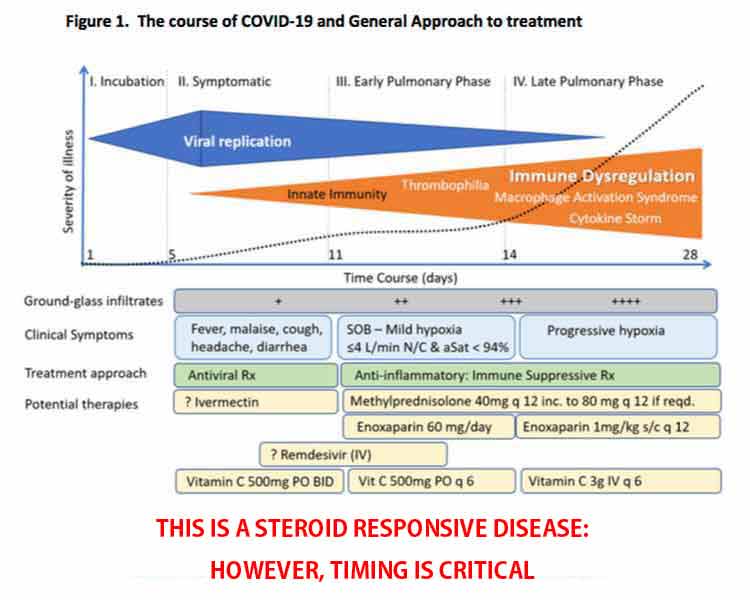
Viral Load Declines as Inflammation Rises
Another important concept explained by Marik in the featured interview is that the inflammatory response rises as the viral load decreases. They do not rise together.
“So, it’s really not the virus that is causing cytopathic effects,” he says. By the time you enter the pulmonary phase of the disease, your viral load has actually significantly decreased, but for some reason the inflammatory response then starts to run amok.
Your oxygen saturation is “the key indicator of pulmonary involvement,” Marik says. Once your oxygen saturation starts to decline, you are entering the early pulmonary phase where inflammation is rapidly increasing.
This is why it’s so important to make sure you’re measuring your oxygen saturation. Do not try to treat at home if your oxygen is dropping. Go to the hospital. Again, early treatment is crucial. Hopefully, your doctor will be willing to implement the MATH+ protocol.
Corticosteroids Are a Crucial Component
In a short essay19 co-written by the entire FLCCC team, they express their conviction that the MATH+ protocol is one of the best, most effective, critical care protocols for COVID-19 to date.
“Months ago, early on in COVID19, the FLCCC created the MATH+ protocol based on our physicians’ insights into COVID19 as a steroid-responsive disease.
This treatment recommendation went against all the major national and international health care societies that had misinterpreted the medical literature, a body of published evidence which, upon careful and deep review, actually supported the use of corticosteroids in prior pandemics …
Thousands of patients who became critically ill with Covid19 and who were suffering from massive inflammation may have been saved if this safe and powerful anti-inflammatory medicine had been provided.”
The essay20 stresses the importance of corticosteroids in the treatment of COVID-19, and cites results from the RECOVERY trial,21,22,23 a large, randomized controlled COVID-19 study by the University of Oxford, that validates their recommendation to use corticosteroids as soon as the patient is hospitalized.
In that study, the corticosteroid dexamethasone improved survival by one-third in ventilated patients and one-fifth in those requiring oxygen. However, the FLCCC believes another type of corticosteroid, methylprednisolone, is a better, more effective, choice.
First, because it reaches higher concentrations in lung tissue, and secondly, because it most closely matches the inflammatory gene activation patterns induced by SARS-CoV-2. They also believe the dexamethasone dose used in the RECOVERY trial was too low, especially for severe cases.
“In the hospitals of two of our FLCCC physicians — each having treated over 100 hospitalized patients with MATH+ often early on in the hospitalization, the hospital mortality rate to date is 7% in one hospital (Dr. Paul Marik, Norfolk, Va.) and less than 1% in the other (Dr. Joseph Varon, Houston, Texas),” the essay states.24
Vitamin C and Quercetin Work Synergistically
June 19, 2020, Marik published the paper,25 “Quercetin and Vitamin C: An Experimental, Synergistic Therapy for the Prevention and Treatment of SARS-CoV-2 Related Disease (COVID-19)” in the journal Frontiers in Immunology, which notes:
“Ascorbic acid is a crucial vitamin necessary for the correct functioning of the immune system. It plays a role in stress response and has shown promising results when administered to the critically ill. Quercetin is a well-known flavonoid whose antiviral properties have been investigated in numerous studies.
There is evidence that vitamin C and quercetin co-administration exerts a synergistic antiviral action due to overlapping antiviral and immunomodulatory properties and the capacity of ascorbate to recycle quercetin, increasing its efficacy.
Safe, cheap interventions which have a sound biological rationale should be prioritized for experimental use in the current context of a global health pandemic.”
The paper presents evidence for the use of vitamin C and quercetin — based on their biological actions and pharmacokinetics profiles — both as prophylaxis in high-risk populations, and as an adjunct to drugs such as Remdesivir or convalescent plasma in the treatment of hospitalized COVID-19 patients.
Post-COVID Syndrome
In the interview, Marik also addresses the issue of “post-COVID syndrome,” which he says is very similar to that of post-sepsis syndrome. In some cases, COVID-19 patients have recovered from the infection, only to die due to pulmonary embolism (blood clots in the lungs) or other organ dysfunction.
Marik suspects this is because the inflammatory response is still overactive. Many sepsis patients will have very high cytokine levels even a year after their recovery. He believes steroids are one key to downregulating the inflammatory response, which would prevent this problem.
A good way to screen for this, Marik says, is to measure CRP, which appear to be a good marker for ongoing inflammation. If CRP is high after recovering from COVID-19, Marik suggests doing a short course of corticosteroids to downregulate the inflammatory response. Aspirin may also be helpful if D-dimer is high. These should be used under medical supervision.
I believe this information needs to be shared far and wide, if we are to prevent more people from dying unnecessarily. More and more, as doctors are starting to speak openly about their clinical findings, we see there are quite a few different ways to tackle this illness without novel antivirals or vaccines, using older, inexpensive and readily available medications and nutrients that are already known to be safe.
- 1 Journal of Virology Sep 2004, 78 (20) 11334-11339, Antiviral activity of an analog of luteolin
- 2 Bioorg Med Chem. 2006 Dec 15;14(24):8295-306
- 3 Maclean’s February 24, 2020
- 4 ACS.org Albert Szent-Gyorgyi’s discovery of vitamin C
- 5, 25 Frontiers in Immunology June 19, 2020 DOI: 10.3389/fimmu.2020.01451
- 6 Journal of Antimicrobial Chemotherapy December 2003; 52(6): 1049-1050
- 7 covid19criticalcare.com
- 8, 10 MATH+ Protocol (PDF)
- 9 COVID-19 Management Protocol (MATH+) (PDF)
- 11 COVID-19 Management Protocol (MATH+) Updated July 9, 2020 (PDF)
- 12, 13 EVMS Critical Care COVID-19 Management Protocol August 1, 2020
- 14 Antiviral Research June 2020; 178: 104787
- 15 EVMS Critical Care COVID-19 Management Protocol June 17, 2020
- 16 FLCCC.net Medical Evidence
- 17, 18 MATH+ Hospital Treatment Protocol for COVID-19 July 14, 2020 (PDF)
- 19, 20, 24 Center for Balanced Health
- 21 Recovery Trial
- 22 BMJ 2020;369:m1626
- 23 Science Translational Medicine June 5, 2020
Krill Oil Offers Protection for Several Hallmarks of Aging
Reproduced from original article:
https://articles.mercola.com/sites/articles/archive/2022/12/26/krill-oil-aging.aspx
The original Mercola article may not remain on the original site, but I will endeavor to keep it on this site as long as I deem it to be appropriate.
Analysis by Dr. Joseph Mercola Fact Checked December 26, 2022

STORY AT-A-GLANCE
- Omega-3 fats help lower inflammation, which is the hallmark of nearly all diseases; new data using krill oil show it works through several mechanisms to mitigate the physical and biological hallmarks of aging
- Marine-based omega-3 fats effectively reduce triglyceride levels, which are associated with heart disease. Levels of omega-3 are a good predictor of all-cause mortality and omega-3 helps ameliorate a variety of psychiatric illnesses and degenerative brain disorders
- If you notice that your skin is rough and dry, you likely need more omega-3 fatty acids, which help regulate oil production in the skin, reduce inflammation, balance hydration and minimize the effect of sun damage and aging
- Avoid the temptation to assume your omega-3 index is sufficient because you’re eating fish or taking a supplement. Instead, take a simple omega-3 index blood test at home and use the information to determine the dose needed to raise your level to your target
Chronic inflammation is a hallmark of virtually all diseases, including cancer, obesity and heart disease. Your diet plays a significant if not primary role in a chain of events that lead to chronic inflammation. Your body requires certain nutrients to help balance the inflammatory response and maintain optimal health.
Inflammation also plays a role in aging. A research paper1 published in November 2022 evaluated evidence that lipids from Antarctic krill could intervene in the basic aging mechanism and therefore enhance healthy longevity. Krill oil contains omega-3 fatty acids, which your body needs to balance your intake of omega-6 fats.
Antarctic krill is rich in long-chain omega-3 fatty acids, choline and astaxanthin. The human diet once had an omega-3 to omega-6 ratio of 1-to-1. Today that ratio is closer to 20-to-1 or even higher.2 Data show this imbalance parallels the increase in overweight and obesity and suggests it is a major contributor to systemic inflammation.
Both omega-3 and omega-6 fatty acids are essential for good health. However, unlike omega-6 fatty acids that are found in high amounts throughout the Western diet, most people do not eat enough omega-3 fats. It is important to note that an omega-3 supplement may help, but it can never overcome a diet high in vegetable oils and processed foods, which contain significant amounts of omega-6 fats.
To attain optimal health, you must reduce your intake of foods high in omega-6 while increasing your intake of omega-3 fats. While aging is a biological process, the featured study3 found that krill oil can promote healthy aging through several mechanisms that mitigate the physical and biological hallmarks of aging.
Krill Oil Rewires Genetic Expression to Attenuate Aging
The researchers analyzed how krill oil could affect aging by targeting the evaluation of several hallmarks affected by krill oil rather than just one. Although many researchers have studied marine-based omega-3 fats, the underlying molecular mechanisms have not been fully understood.
In this study4 the researchers used human cells and C. elegans, a 1-millimeter-long nematode that lives in the soil. Using a model of Parkinson’s disease in the nematode, they showed that krill oil protects dopaminergic neurons from degeneration, improves dopamine-dependent behavior and decreases alpha-synuclein aggregation, which is a process found in neurodegenerative diseases such as Parkinson’s disease and dementia.5
These neuroprotective qualities have the effect of slowing down the visible hallmarks of aging. Loss of viability and increasing fragility associated with aging also may affect the onset of many major diseases. Evidence from the study suggests that interfering with this process could prolong a healthy life.
However, the researchers also acknowledge that many cellular processes are involved in aging and while this study showed krill oil as an antiaging supplement could attenuate many of the hallmarks, it is not the only nutrient you need to maintain your health as you age. The way you get your omega-3 fatty acids is also important.
Krill oil is high in long chain omega-3 acids eicosapentaenoic acid (EPA) and docosahexaenoic acid (DHA). One difference between fish oil and marine-based krill oil is that fish oil is only bound to triglycerides and krill oil is mainly bound to more bioavailable phospholipids.
DHA and EPA are water-insoluble, which means they cannot be transported in their free form in the blood and must be packaged into a lipoprotein such as phospholipids. This is the primary reason why the bioavailability of krill oil is higher than fish oil.
Marine Omega-3 for Cardiovascular and Neurological Health
The featured study sought to evaluate the effect krill oil had on aging hallmarks, but studies have also found that supplementation can affect the skin, tumor growth, cytokine storm and the neurological and cardiovascular systems. Heart disease is the primary cause of death for men and women in the U.S.6
Research published in January 2022,7 analyzed data from two randomized clinical trials and found omega-3 fatty acids derived from krill oil could reduce triglyceride levels effectively and were safe and well tolerated by the participants. While triglyceride levels are a necessary fat, in excess they can increase your risk for heart disease.8
Another study9 supported by the National Institutes of Health10 suggested that the omega-3 index may be a good predictor of overall health and all-cause mortality.11 This index is a measure of the amount of EPA and DHA in the membranes of your red blood cells and is expressed as a percent of your total RBC fatty acids.12
The index has been validated as a stable, long-term marker and reflects your tissue levels of EPA and DHA. An index greater than 8% is associated with the lowest risk of death from heart disease while an index below 4% places you at the highest risk of heart disease-related mortality.
Two papers analyzed the use of omega-3 after an ischemic stroke in an animal model and found neurological benefits with the administration of omega-3 fatty acids that helped improve brain cell survival and brain remodeling,13 which benefited the restoration of white matter and microglial responses,14 all of which improved long-term functioning.
Evidence also shows that marine-based omega-3 fats help ameliorate a variety of psychiatric illnesses and degenerative brain disorders, including Alzheimer’s disease.15 Low levels of DHA are linked to age-related cognitive decline, which some studies16 suggest may potentially be reversible with sufficient administration of DHA.
EPA may be beneficial in the treatment of depression.17 A stumbling block has been getting enough into the brain. One 2019 paper18 discovered that by using a lysophospholipid form of EPA they could significantly raise the EPA level in the brain of mice and increase levels of DHA in the brain, which researchers suggested may help in the treatment of neuroinflammatory diseases such as Alzheimer’s disease.
Omega-3 Fats Promote Skin Health
If you notice that your skin is rough and dry, you likely need more omega-3 fatty acids, which helps to regulate oil production in the skin, reduce inflammation, balance hydration and minimize the effect of sun damage and aging. As I’ve discussed in the past, many American diets have an overabundance of omega-6 linoleic acid (LA) which, like omega-3, is integrated into your cell membranes.
However, unlike omega-3, LA impairs your cell function and increases your risk of sunburn. To protect your skin and your overall health, you will want to eliminate as much LA from the diet as possible, while increasing your omega-3 intake.
You can accomplish this by avoiding all seed oils. These are found in most processed foods, restaurant foods, condiments and pastries. Conventionally raised chicken and pork are also high in LA since the animals are fed grain which is incorporated into the meat. Instead, cook at home with butter, ghee, beef tallow or coconut oil.
You can raise your levels of omega-3 fats by eating wild-caught Alaskan salmon, verified wild-caught sockeye salmon, sardines, mackerel, anchovies and herring. Canned Alaskan salmon is a less expensive alternative than salmon steaks. As a general recommendation, try to get two servings of fatty fish each week. Be sure to avoid farm-raised salmon since it is highly contaminated and has 5.5 times the amount of LA as wild-caught salmon.19,20
Combination Therapy Could Reduce Tumor Growth by 67%
Research21 presented in April 2022 at the annual Experimental Biology meeting in Philadelphia demonstrated that omega-3 fatty acids could help to promote cancer-fighting activities of immunotherapy and anti-inflammatory therapy in an animal model. Immunotherapy is a biological treatment that prompts the immune system to attack cancer cells.22
The research sought to determine the impact of nutrition on tumor activity after treatment with immunotherapy and anti-inflammatory therapy.23 At the time of the study, immunotherapy was approved for use in the treatment of cancer, but anti-inflammatory therapy was still under clinical investigation.
The evidence showed that mice consuming a diet high in omega-3 fats and receiving both cancer treatments had a 67% reduction in tumor growth when compared to the group of mice eating a normal diet and receiving no treatment. By comparison, cancer cell growth increased in the mice who ate the high omega-6 diet and were given immunotherapy.
The researchers believe the results indicated there could be synergistic activity between omega-3 fatty acids and immunotherapy and anti-inflammatory therapy for cancer. Abigail Kelly from Harvard Medical School Beth Israel Deaconess Medical Center presented the research and commented on the results in a press release:24
“We demonstrated, for the first time, that the combination of immunotherapy and anti-inflammatory treatment (sEHi) was more effective when mice were fed diets enriched with omega-3 fatty acids. This is very promising because dietary supplementation is easy to implement for cancer patients and can be added for patients already on immunotherapy.”
Omega-3 Could Directly Influence Cytokine Storm
One of the lethal effects of the SARS-CoV-2 virus that causes COVID-19 is the ability to trigger a cytokine storm. One of the ways to suppress this event is with omega-3 fats DHA and EPA. An opinion paper published in June 2020,25 in the journal Frontiers in Physiology, expounded on the known effects these fats have on biological pathways that “may have direct influence in the outcome of COVID-19.”26
Although not mentioned in this paper, DHA has also been known to prevent thrombosis (a blood clot within a blood vessel) by decreasing platelet aggregation.27 Evidence also shows that hypercoagulation is another complication of severe COVID-19 infection that can have lethal consequences.28 Omega-3 is also known to:
- Lower your risk of lung dysfunction
- Protect against lung damage
- Protect against secondary bacterial infection
- Improve mitochondrial function
How to Test and Know Your Level
Avoid the temptation to assume your omega-3 index is sufficient because you’re eating fish or taking a supplement. Only cold-water fatty fish have high omega-3 levels, and many fish oil supplements are synthetic with questionable efficacy.
GrassrootsHealth, a nonprofit public health research organization, has several cost-effective testing options available as part of its consumer-sponsored nutrient research projects,29 the aims of which are to establish population-based nutrition recommendations based on science-backed data. There are four test options to measure omega-3:
- Omega-3 index test kit
- Vitamin D and Omega-3 test kit
- Vitamin D, Magnesium and Omega 3 test kit
- Vitamin D, Magnesium and Omega 3 PLUS Elements test kit — This kit includes measurements of essential minerals (magnesium, selenium, zinc and copper) as well as harmful heavy metals (cadmium, lead and mercury)
Your blood sample is mailed to GrassrootsHealth and you fill out a quick online health questionnaire. Your test results will be emailed to you roughly 10 to 20 days after your samples are received.
Based on your index result, use GrassrootsHealth’s omega-3 index calculator30 to determine the dosage you may require to raise your current level to your chosen target level.
- 1, 3 Aging, 2022;14(21)
- 2 Nutrients, 2016;8(3)
- 4 Neuroscience News, November 23, 2022
- 5 Communications Biology, 2019 2;2(374)
- 6 Centers for Disease Control and Prevention, Heart Disease Facts
- 7 Journal of the American Medical Association, 2022;5(1)
- 8 Live Science, March 24, 2016
- 9 Journal of Clinical Lipidology, 2018;12(3):718
- 10 EurekAlert! March 15, 2018
- 11 Nature Communications, 21;12(2329)
- 12 Omega Quant, July 9, 2018
- 13 Neurobiology of Disease, 2019;126
- 14 Translational Stroke Research, 2016;7(6)
- 15 Current Clinical Pharmacology, 2018;13(4)
- 16 Alzheimer’s and Dementia 2010 Nov;6(6)
- 17 British Journal of Psychiatry 2016;2009
- 18 Journal of Lipid Research, 2019;60(3)
- 19 Nutrition Data Wild Atlantic Salmon
- 20 Nutrition Data Farmed Atlantic Salmon
- 21, 23, 24 NewsWise, March 25, 2022
- 22 National Cancer Institute, Immunotherapy to Treat Cancer
- 25, 26 Frontiers in Physiology, June 19, 2020 DOI: 10.3389/fphys.2020.00752
- 27 American Journal of Physiology Cell Physiology, 2013;304(3)
- 28 Thrombosis Research, 2020;194
- 29 GrassrootsHealth Research Projects
- 30 Omega-3 index calculator
NIACIN for COVID
Reproduced from original OMNS article (OrthoMolecular News Service):
http://orthomolecular.org/resources/omns/v18n25.shtml
Subscribe to the free Orthomolecular Newsletter: http://orthomolecular.org/subscribe.html
Go to the OMNS Archive: http://orthomolecular.org/resources/omns/index.shtml
Orthomolecular Medicine News Service, September 20, 2022
How niacin, niacinamide, and NAD can help with Long COVID-19
by W. Todd Penberthy, PhD
OMNS (Sept. 20, 2022) Just 1,000 milligrams per day of niacinamide, which costs about 5 cents, has been shown to clearly reduce mortality in patients with COVID-19 related acute kidney injury (AKI) by 25% [1] Investigators observed that “niacinamide administered for the prevention of COVID-19-related AKI progression was safe and associated with reduced estimated risk of death or the need for renal replacement therapy compared with historical controls. The association was strongest in severe AKI.”
Given that niacinamide and/or niacin (vitamin B3) are routinely dosed at much higher levels, typically involving 1,000 mg taken 3x/d (T.I.D.) and also that these higher levels provide greater benefits, it is likely that even greater COVID-19 benefits may occur when using these higher niacin/niacinamide doses after regular administration for patients with COVID19. [2]
Higher needs addressed by higher doses
I personally take 2,000 mg T.I.D., totaling 6,000 mg/day niacin — and my lipids are always perfect and also my liver enzymes are fine. In fact niacin is now known to reduce fatty liver and it is under development to treat non-alcoholic fatty liver disease. [3,4] So do not be misled by the myth that niacin is toxic to the liver. This was only shown for timed release formulations and not for the most common form, the less expensive immediate release form. [5]
As Stephen McConnell and I detailed in a previous orthomolecular publication, 500 mg of niacin 3x daily (TID) can effectively reverse the stages of chronic kidney disease, especially when used together with sodium bicarbonate (baking soda). [6] This activity has been proven in multiple clinical trials and in case studies. Still, the use of these common pennies-a-day agents are unfortunately not common in nephrology practice as somehow myths persist that it must be more complicated.
Without equivocation, the benefits of high doses of vitamin B3 as niacinamide or niacin for treating both COVID-19 and CKD are now proven. Moreover, these are safe therapeutics that have been used for over 50 years with unparalleled safety. In fact, niacin is so important to basic human health that the U.S. government mandated fortification of processed flour and rice in the 1940s, saving countless thousands of lives. [7]
Network pharmacology points to niacin
In the emerging field of network pharmacology, the benefit of treating multi-morbidity with niacin has been identified as exceptionally promising. The network pharmacology and bioinformatics screen was performed with criteria set to identify small molecules that may have favorable anti-viral, anti-inflammatory, and immunomodulatory activities. Niacin treatment was prominently identified based on five core desirable targets and the expression of 14 genes that it favorably modified. [8] The investigators concluded that niacin may provide therapeutic benefit as a treatment for patients with COVID-19 based on favorable effects on important signaling pathways controlling outcome, thus paving the way for clinical trials.
COVID-19 basics & NAD
Viral infectious disease like coronavirus disease 2019 (COVID-19), caused by severe acute respiratory syndrome coronavirus 2 (SARS-CoV-2) stimulate an immune response that can have a disastrous effect when uncontrolled, leading to deadly cytokine storms. Ultimately this process actively depletes NAD (nicotinamide adenine dinucleotide) in infected cells. Accordingly, many NAD precursors have been tested to combat this virus-caused deficiency of the essential NAD molecule. [9]
Risk factors for increased susceptibility to COVID-19 are age, insulin resistance, and diabetes. Low NAD concentrations are commonly observed with aging and in diabetes. Depletion of NAD has been reported in severe COVID-19 patients. Moreover, the expression of genes controlling NAD biosynthesis from precursors (vitamin B3s) are known to be changed after infection with SARS-CoV-2. [10] Many cellular enzymes utilize NAD in their biochemical reactions. When these enzymes are modulated with drugs, NAD can control the immune responses, so investigators conclude that boosting NAD is “an actionable component.” Pennies-a-day niacin administered in divided doses may serve best to prevent catastrophic NAD deficiency.
Standard medical practice and the lack of trials examining the basics
Unfortunately, in standard of care medicine there is often little scientific consideration of the possibility that we simply need more of what keeps most of us from even succumbing to COVID-19 sickness in the first place. Adequate amounts of essential nutrients and sufficient high quality sleep can enable the body to recover from virus-induced deficiencies of essential molecules and prevent death due to sepsis.
The majority of COVID-19 clinical drug trials are primarily profit-driven and involve patentable xenobiotic small molecules or biologics, with relatively little systemic investigation of the basics that are responsible for keeping the non-COVID-19-succumbing population resistant to developing disease.
With only a few exceptions, patients are served best if we start by following the acronym K.I.S.S. (“keep it simple, stupid”), making certain that all biochemical pathways are replete with all requisite co-factors and essential molecules. By following a basic K.I.S.S. orthomolecular approach, we are assisting all the steps in any given biochemical pathway needed to optimally fight pathogens in a manner consistent with a healthy functioning immune system. Monotherapeutic approaches are needed for making advances in basic science, but they rarely benefit patients, and are of ethical concern in clinical trial settings. Again, it is best to make sure adequate levels of all essential nutrients are present so multi-step biochemical pathways can function through to completion.
Vitamin B3 to NAD
Niacin and niacinamide are precursors for the NAD molecule, which is required for over 400 different gene functions, many of which are essential for keeping the cell alive. [11] Genetic polymorphisms within the NAD-binding domain confer different vitamin B3 dependencies. Some individuals have genes that endow a lower than usual binding affinity for the enzyme binding to the NAD molecule. Accordingly, these individuals need higher amounts of vitamin B3 to achieve the higher levels of NAD required to achieve competent gene function. [12]
Mechanisms of depletion
Vitamin B3 is unique and our knowledge of it distinguished compared to the other vitamins in the amount of relevant scientific research. Perhaps more is known about the molecular details of protein degradations actively causing acute and chronic depletion of NAD levels from vitamin B3 than for any other vitamin. In contrast, the consequences of vitamin B1 (thiamine) deficiency and the mechanisms thereof are woefully understudied. Much more attention should be devoted to these questions especially given that deficiencies of vitamin B1 clearly cause a clinical presentation that resembles Alzheimer’s disease, a condition for which we have almost no effective treatment.
One function of NAD is to serve as a substrate in the poly ADP-ribose polymerase (PARP) reaction, which is involved in many essential cell functions including repair of DNA in response to DNA damage. However, hyper-activation of PARP1 rapidly depletes NAD leading to catastrophic cell death. It has long been known that PARP1 hyper-activated cell death due to ischemic shock, DNA damage, or other stimuli can be prevented by pre-incubation or supplementation with vitamin B3 as NAD or niacin or niacinamide. This effect is particularly dramatic in neurons which are energetically demanding. SARS-CoV-2 has been shown experimentally to upregulate PARP enzymes, which degrade NAD. [10] Again, the most rational intervention would be to increase NAD+ supply. This may be accomplished inexpensively by supplemental niacin or niacinamide.
Knowledge of the mechanisms causing active depletion of NAD and even genetically inherited greater dependence on NAD is increasingly garnered as research on NAD biology advances. COVID-19 is a disease condition in which known pathways are activated to cause a greater requirement for vitamin B3. However, many other pathways requiring high levels of vitamin B3 are also known.
Three major mechanisms causing NAD depletion are well understood. Firstly, depletion of NAD is likely most acutely caused by hyper-activation of poly-ADP ribose polymerase (PARP1) enzyme, which can rapidly cause depletion of NAD in the PAR polymerization reaction, ultimately leading to quick cell death. PARP1 activity is stimulated by DNA damage. Many other stresses and under defined conditions cell death can be prevented by either increasing NAD levels or by inhibiting the PARP1 enzyme.
Secondly, a slower decrease in NAD levels is likely caused by persistent activation of the enzyme indoleamine 2,3-dioxygenase (IDO), which depletes the source of de novo NAD biosynthesis. IDO enzyme activity is elevated in COVID-19, sepsis, and severe inflammatory response syndrome with higher values predicting mortality. [13,14] IDO is also excessively and persistently activated in autoimmune diseases and cancer — and for these many IDO-targeted therapeutics are under development. [15] This pathway likely may be involved in some of the symptoms of long COVID-19.
Thirdly, NAD is depleted via activation of CD38 enzyme expressed on many white blood cells. Therefore, CD38 is likely to be exceptionally significant in the context of infectious disease and so investigators have been targeting it as a potential approach to treat a variety of conditions.
Genetic aspect of greater dependency
Everyone has their own unique needs for vitamin B3 and, by extension, the NAD needed to enable approximately 400 gene functions. Some individuals need much greater doses of vitamin B3 to achieve the higher levels of NAD required to achieve competent gene function. [12] These individuals are said to have a greater “dependency on vitamin B3” in order to avoid symptoms of deficiency. This biochemical aspect of genetics is an advanced concept — at the peak of western biomedical scientific achievements — but it is not generally taught in medical schools with only a few exceptions, such as with glucose-6-phosphate dehydrogenase.
However, with advances in genetics and associated biochemistry, more examples of the variety of vitamin B3 dependencies are regularly discovered. One of the most impressive and important to consider is the mitochondrial aldehyde dehydrogenase (ALDH2) enzyme, which functions to remove toxic acetaldehyde after drinking alcohol. As many as 50% of the Asian population have the Glu487→Lys variant, which confers a roughly 150-fold reduced affinity for NAD. Accordingly, the ALDH2 Glu487→Lys variant enzyme requires much higher NAD concentrations to function at a healthy level and ultimately prevent hyper-sensitivity to drinking alcohol.
Abram Hoffer, MD. PhD treated thousands of patients with schizophrenia by using high doses of niacin in over 40 years of clinical practice (1950s-1990s). Hoffer finally settled on the observation that some patients required as much as 18,000 mg of niacin a day to avoid schizophrenic symptoms. [16] He described this genetic response as an inter-individual dependence. This dose of 18,000 mg for good health is more than one-thousand-fold higher than the RDA of 16mg for adult males. Accordingly, we can expect that these inter-individual variations may play prominent roles in controlling COVID19 susceptibility.
Not surprisingly, schizophrenia has been determined to be the second highest risk factor for dying of COVID-19, just after age. [17,18] Again, the evidence strongly supports that high doses of niacin should be administered after a COVID-19 or related diagnosis. It is safe and may be the difference that saves lives.
SARS-CoV-2 COVID19 basics, pathogenesis
One of the potential catastrophic activities initiated by SARS-CoV-2 infection is a cytokine storm. The levels of circulating proinflammatory factors IL-1, IL-6, and TNFα are strongly associated with mortality in COVID-19 patients. Niacin (pennies-a-day doses) is well known to reduce IL-6 and TNF alpha. Meanwhile, IL-6 antibodies costing thousands of dollars are being tested for use against COVID-19. [19]
A great amount of focus has been devoted to the NAD precursors nicotinamide mononucleotide (NMN) and/or nicotinamide riboside (NR) in many clinical trials owing to their potential for return on financial investments. However, the truth is that in the rare occasions that plain old niacin or niacinamide (both discovered in the 1930s) are tested alongside these precursors, these older largely non-patentable forms of NAD precursor often give superior results.
In my own experience directing research comparing all NAD precursors, I observed the most impressive ischemic stress-associated zebrafish embryo life-saving activities using preincubations with niacin as compared to NMN, NR, tryptophan, quinolinic acid, or NAD itself (unpublished experimental observations). These various molecules cross the intestinal mucosa. Their molecular sizes, cell-specific transporters, ability to cross the blood-brain barrier, and more are all factors controlling their ultimate activities in addressing disease that must be empirically compared and tested. Biochemical evolutionary studies of niacin suggest that it is among the oldest of all NAD precursors.
Between 1945 and 1961 several studies found vitamin B3 to be useful in the treatment of TB of the lung, but this potential role was superseded by modern antibiotics. More recently it has been investigated and found to be promising for the treatment of HIV. A recent paper stated, “… this small molecule could emerge at the beginning of the 21st century either as a therapeutic agent in itself or as the lead compound for a new class of agents with activity against both TB and HIV.” [20]
Metabolic analysis of SARS-CoV-2 of COVID-19 patients determined that there is a tryptophan deficiency caused by infection with a correlative increase in pathogenic interleukin-6 (IL-6) levels. [21] Decreased tryptophan causes decreased NAD biosynthesis with concomitant NAD deficiency. High dose niacin supplementation can correct this NAD+ deficiency and the multitude of associated clinical presentations. Chronic fatigue syndrome may be an IDO trap, the result of constant NAD deficiency causing symptoms similar to long COVID-19 that are likely to be preventable with regular high doses of niacin taken in divided doses. [22]
Niacin addressing specific aspects of COVID pathogenesis
Investigators based in South Africa reviewed changes of macrophages in the context of sepsis with consideration of COVID-19 and pointed out the important role of the immunosuppressive molecule IDO in depleting vitamin B3-derived NAD concluding “…we strongly suggest that vitamin B3 be investigated as a therapy for sepsis, including that caused by COVID-19, ideally as a single agent at high dose rather than within a multivitamin,” which is likely to be insufficient. [13]
Hallmark features of pathological SARS-CoV-2 infection are marked elevations in pro-inflammatory cytokines and chemokines-including, most notably, interleukin-6 (IL-6), in addition to interleukin-1β (IL-1β), tumor necrosis factor-α (TNF-α), and monocyte chemoattractant protein-1 (MCP-1). Thus, a commonly proposed effective treatment of COVID-19 is targeting the blockade of IL-6, through inhibition of its most prominent transcription factor, nuclear factor kappa B (NF-κB) ). [23]
Sufficient doses of niacin have consistently been shown to markedly reduce production of pro-inflammatory cytokines (IL-6, TNF-α, MCP-1) in human monocytes, and can substantially inhibit TNF-α-induced NF-κB activation along with MCP-1 secretion in cultured human aortic endothelial cells. Niacin also suppresses TNF-α and IL-6 expressions through down-regulation of the NF-κB pathway. [24] Since vitamin B3 is highly lung protective, it should be used as soon as coughing begins.
Physicians in India have recommended “the mass scale distribution and use of nicotinamide (NAM) supplementation to decrease COVID- 19 prevalence,” based on recent Phase II clinical studies observing that nicotinamide supplementation with the standard of care demonstrably reduced COVID-19 patient recovery time by nearly 30% compared to standard of care alone. [25]
In a mouse model COVID-19 study, injected NAD kept them alive. [26] Investigators examining the effect of treatment with NAD+ found that the pneumonia phenotypes, including excessive inflammatory cell infiltration and embolization in SARS-CoV-2 infected lungs were significantly rescued by boosting NAD+ levels. Most notably, cell death was suppressed by greater than 65% with NAD+ supplementation!
Niacin attenuates lung inflammation and improves survival during sepsis by down-regulating the nuclear factor-κB pathway. A pilot phase of the COVID-19 trial showed an effect of nicotinamide on the time to complete resolution of COVID-19 symptoms.
Landmark clinical trials completed recently in Finland proved that niacin cures systemic NAD deficiency, reduces fatty liver, and also improves muscle performance. [27] Why this study isn’t yet common knowledge in clinical practice may be due to the unfortunate excessive distraction of life in 2022. However, the results of this Finnish study were unparalleled in their positive outcome — the data supporting once again that more research needs to be focused on better determining the full range of clinical indications that respond favorably to high doses of niacin, e.g. 1,000 mg taken 2-3x/d.
Conclusion and doses
The ideal niacin dosage varies depending on an individual’s genetics and their infections and/or stresses. Ultimately, perhaps the best gauge of the most effective niacin dosage regimen may involve the flush response. The niacin-eliciting flush pathway is known to be independent of the NAD biosynthetic pathway in our understanding thus far, and the niacin dose that just causes flushing is currently known to be exceptionally therapeutic for several indications. Still, some will flush with as little as 50 mg while others still do not even experience a flush after taking 4,000 mg at one time! The latter situation is expected to involve an individual with other health problems.
A simple straightforward recommendation is to take whatever dosage of niacin that elicits a flush response, starting with low doses and increasing gradually over several days to weeks until a flush appears. Remember that 1,000 mg taken 3 times a day in the plain old immediate release form has been successfully used in medical practice for over 50 years. It reproducibly corrects the lipodystrophic profile favorably, to reduce cardiovascular events and is expected to provide benefits in the context of COVID-19 — and much more!
(OMNS Contributing Editor W. Todd Penberthy received his PhD in biochemistry from the University of Tennessee College of Medicine in 1997. He then conducted research and taught at the university level. He is presently a continuing medical education writer https://https://www.cmescribe.com/resume/ who prepares courses for physicians to maintain their certification.)
References
1. Raines NH, Ganatra S, Nissaisorakarn P, et al. (2021) Niacinamide May Be Associated with Improved Outcomes in COVID-19-Related Acute Kidney Injury: An Observational Study. Kidney360 2:33-41. https://pubmed.ncbi.nlm.nih.gov/35368823
2. Pieper JA (2002) Understanding niacin formulations. Am J Manag Care 8:S308-S314. https://pubmed.ncbi.nlm.nih.gov/12240702
3. Kashyap ML, Ganji S, Nakra NK, et al. (2019) Niacin for treatment of nonalcoholic fatty liver disease (NAFLD): novel use for an old drug? J Clin Lipidol. 13:873-879. https://pubmed.ncbi.nlm.nih.gov/31706905
4. Ganji S, Hoa N, Kamanna J, et al. (2022) Niacin regresses collagen content in human hepatic stellate cells from liver transplant donors with fibrotic non-alcoholic steatohepatitis (NASH). Am J Transl Res. 14:4006-4014. https://pubmed.ncbi.nlm.nih.gov/35836902
5. Guyton JR. (2007) Niacin in cardiovascular prevention: mechanisms, efficacy, and safety. Curr Opin Lipidol. 18:415-420. https://pubmed.ncbi.nlm.nih.gov/17620858
6. McConnell S, Penberthy WT (2021) Reversing Chronic Kidney Disease with Niacin and Sodium Bicarbonate. Orthomolecular Medical News Service. http://orthomolecular.org/resources/omns/v17n22.shtml
7. Park YK, Sempos CT, Barton CN, et al. (2000) Effectiveness of food fortification in the United States: the case of pellagra. Am J Public Health 90:727-738. https://pubmed.ncbi.nlm.nih.gov/10800421
8. Li R, Li Y, Liang X, et al. (2021) Network Pharmacology and bioinformatics analyses identify intersection genes of niacin and COVID-19 as potential therapeutic targets. Brief Bioinform. 22:1279-1290. https://pubmed.ncbi.nlm.nih.gov/33169132
9. Zheng M, Schultz MB, Sinclair DA. (2022) NAD+ in COVID-19 and viral infections. Trends Immunol. 43:283-295. https://pubmed.ncbi.nlm.nih.gov/35221228
10. Heer CD, Sanderson DJ, Voth LS, et al. (2020) Coronavirus infection and PARP expression dysregulate the NAD metabolome: An actionable component of innate immunity. J Biological Chem. 295:17986-17996. https://pubmed.ncbi.nlm.nih.gov/33051211
11. Penberthy WT, Axelsen KB. (2022) Table of NAD-Utilizing Enzymes. https://www.cmescribe.com/vitamin-dependent-gene-databases
12. Ames BN, Elson-Schwab I, Silver EA. (2002) High-dose vitamin therapy stimulates variant enzymes with decreased coenzyme binding affinity (increased K(m)): relevance to genetic disease and polymorphisms. Am J Clin Nutr. 75:616-658. https://pubmed.ncbi.nlm.nih.gov/11916749
13. Suchard MS, Savulescu DM. (2022) Nicotinamide pathways as the root cause of sepsis – an evolutionary perspective on macrophage energetic shifts. FEBS J. 289:955-964. https://pubmed.ncbi.nlm.nih.gov/33686748
14. de Assis Barros D’Elia Zanella LGF, de Lima Galvão L (2021) The COVID-19 Burden or Tryptophan Syndrome: Autoimmunity, Immunoparalysis and Tolerance in a Tumorigenic Environment. J Infect Dis Epidemiol. 7:195. https://doi.org/10.23937/2474-3658/1510195
15. Penberthy WT. (2007) Pharmacological targeting of IDO-mediated tolerance for treating autoimmune disease. Curr Drug Metab. 8:245-66. https://pubmed.ncbi.nlm.nih.gov/17430113
16. Hoffer A, Prousky J. (2008) Successful treatment of schizophrenia requires optimal daily doses of vitamin B3. Altern Med Rev. 13:287-291. https://www.researchgate.net/publication/24036385_The_proper_treatment_of_schizophrenia_requires_optimal_daily_doses_of_vitamin_B3
17. Nemani K, Li C, Olfson M, et al. (2021) Association of Psychiatric Disorders With Mortality Among Patients With COVID-19. JAMA Psychiatry 78:380-386. https://pubmed.ncbi.nlm.nih.gov/33502436
18. Dembosky A. (2022) Having schizophrenia is the second biggest risk factor for dying from COVID-19. NPR. https://www.npr.org/2022/03/20/1087766160/having-schizophrenia-is-the-second-biggest-risk-factor-for-dying-from-covid-19
19. NIH COVID-19 Treatment Guidelines. (2022) Interleukin-6 Inhibitors. https://www.covid19treatmentguidelines.nih.gov/therapies/immunomodulators/interleukin-6-inhibitors
20. Murray MF. (2003) Nicotinamide: an oral antimicrobial agent with activity against both Mycobacterium tuberculosis and human immunodeficiency virus. Clin Infect Dis. 36:453-460. https://pubmed.ncbi.nlm.nih.gov/12567303
21. Thomas T, Stefanoni D, Reisz JA, et al. (2020) COVID-19 infection alters kynurenine and fatty acid metabolism, correlating with IL-6 levels and renal status. JCI Insight 5:e140327. https://pubmed.ncbi.nlm.nih.gov/32559180
22. Kashi AA, Davis RW, Phair RD. (2019) The IDO Metabolic Trap Hypothesis for the Etiology of ME/CFS. Diagnostics (Basel) 9:82. https://pubmed.ncbi.nlm.nih.gov/31357483
23. Kats D. (2021) Sufficient Niacin Supply: The Missing Puzzle Piece to COVID-19, and beyond? Preprint. https://doi.org/10.31219/osf.io/uec3r
24. Kwon WY, Suh GJ, Kim KS, et al. (2011) Niacin attenuates lung inflammation and improves survival during sepsis by downregulating the nuclear factor-κB pathway. Crit Care Med. 39:328-334. https://pubmed.ncbi.nlm.nih.gov/20975550
25. Gharote M. (2021) POTENTIAL ROLE OF NICOTINAMIDE SUPPLEMENTATION IN PREVENTION OF COVID-19 TRANSMISSION-A PERSPECTIVE. https://www.researchgate.net/publication/350800103_POTENTIAL_ROLE_OF_NICOTINAMIDE_SUPPLEMENTATION_IN_PREVENTION_OF_COVID-19_TRANSMISSION-A_PERSPECTIVE
26. Jiang Y, Deng Y, Pang H, et al. (2022) Treatment of SARS-CoV-2-induced pneumonia with NAD+ and NMN in two mouse models. Cell Discov. 8:38. https://pubmed.ncbi.nlm.nih.gov/35487885
27. Pirinen E, Auranen M, Khan NA, et al. (2020) Niacin Cures Systemic NAD+ Deficiency and Improves Muscle Performance in Adult-Onset Mitochondrial Myopathy. Cell Metab. 31:1078-1090.e5. https://pubmed.ncbi.nlm.nih.gov/32386566
Nutritional Medicine is Orthomolecular Medicine
Orthomolecular medicine uses safe, effective nutritional therapy to fight illness. For more information: http://www.orthomolecular.org
Find a Doctor
To locate an orthomolecular physician near you: http://orthomolecular.org/resources/omns/v06n09.shtml
The peer-reviewed Orthomolecular Medicine News Service is a non-profit and non-commercial informational resource.
Editorial Review Board:
Albert G. B. Amoa, MB.Ch.B, Ph.D. (Ghana)
Seth Ayettey, M.B., Ch.B., Ph.D. (Ghana)
Ilyès Baghli, M.D. (Algeria)
Ian Brighthope, MBBS, FACNEM (Australia)
Gilbert Henri Crussol, D.M.D. (Spain)
Carolyn Dean, M.D., N.D. (USA)
Ian Dettman, Ph.D. (Australia)
Susan R. Downs, M.D., M.P.H. (USA)
Ron Ehrlich, B.D.S. (Australia)
Hugo Galindo, M.D. (Colombia)
Martin P. Gallagher, M.D., D.C. (USA)
Michael J. Gonzalez, N.M.D., D.Sc., Ph.D. (Puerto Rico)
William B. Grant, Ph.D. (USA)
Claus Hancke, MD, FACAM (Denmark)
Tonya S. Heyman, M.D. (USA)
Patrick Holford, BSc (United Kingdom)
Suzanne Humphries, M.D. (USA)
Ron Hunninghake, M.D. (USA)
Bo H. Jonsson, M.D., Ph.D. (Sweden)
Dwight Kalita, Ph.D. (USA)
Felix I. D. Konotey-Ahulu, MD, FRCP, DTMH (Ghana)
Jeffrey J. Kotulski, D.O. (USA)
Peter H. Lauda, M.D. (Austria)
Alan Lien, Ph.D. (Taiwan)
Homer Lim, M.D. (Philippines)
Stuart Lindsey, Pharm.D. (USA)
Pedro Gonzalez Lombana, MD, MsC, PhD (Colombia)
Victor A. Marcial-Vega, M.D. (Puerto Rico)
Juan Manuel Martinez, M.D. (Colombia)
Mignonne Mary, M.D. (USA)
Jun Matsuyama, M.D., Ph.D. (Japan)
Joseph Mercola, D.O. (USA)
Jorge R. Miranda-Massari, Pharm.D. (Puerto Rico)
Karin Munsterhjelm-Ahumada, M.D. (Finland)
Tahar Naili, M.D. (Algeria)
Zhiyong Peng, M.D. (China)
Isabella Akyinbah Quakyi, Ph.D. (Ghana)
Selvam Rengasamy, MBBS, FRCOG (Malaysia)
Jeffrey A. Ruterbusch, D.O. (USA)
Gert E. Schuitemaker, Ph.D. (Netherlands)
Han Ping Shi, M.D., Ph.D. (China)
T.E. Gabriel Stewart, M.B.B.CH. (Ireland)
Thomas L. Taxman, M.D. (USA)
Jagan Nathan Vamanan, M.D. (India)
Garry Vickar, M.D. (USA)
Anne Zauderer, D.C. (USA)
Andrew W. Saul, Ph.D. (USA), Editor-In-Chief
Associate Editor: Robert G. Smith, Ph.D. (USA)
Editor, Japanese Edition: Atsuo Yanagisawa, M.D., Ph.D. (Japan)
Editor, Chinese Edition: Richard Cheng, M.D., Ph.D. (USA)
Editor, Norwegian Edition: Dag Viljen Poleszynski, Ph.D. (Norway)
Editor, Arabic Edition: Moustafa Kamel, R.Ph, P.G.C.M (Egypt)
Editor, Korean Edition: Hyoungjoo Shin, M.D. (South Korea)
Editor, Spanish Edition: Sonia Rita Rial, PhD (Argentina)
Contributing Editor: Thomas E. Levy, M.D., J.D. (USA)
Contributing Editor: Damien Downing, M.B.B.S., M.R.S.B. (United Kingdom)
Contributing Editor: W. Todd Penberthy, Ph.D. (USA)
Contributing Editor: Ken Walker, M.D. (Canada)
Assistant Editor: Helen Saul Case, M.S. (USA)
Technology Editor: Michael S. Stewart, B.Sc.C.S. (USA)
Associate Technology Editor: Robert C. Kennedy, M.S. (USA)
Legal Consultant: Jason M. Saul, JD (USA)
Comments and media contact: drsaul@doctoryourself.com OMNS welcomes but is unable to respond to individual reader emails. Reader comments become the property of OMNS and may or may not be used for publication.
This article may be reprinted free of charge provided 1) that there is clear attribution to the Orthomolecular Medicine News Service, and 2) that both the OMNS free subscription link http://orthomolecular.org/subscribe.html and also the OMNS archive link http://orthomolecular.org/resources/omns/index.shtml are included.
Riordan Clinic | Orthomolecular.org
3100 N Hillside Ave
Wichita, Kansas 67219
United States
Vitamin C Lowers Mortality in Severe Sepsis
Reproduced from original article:
https://articles.mercola.com/sites/articles/archive/2022/09/06/vitamin-c-thiamine-and-hydrocortisone-for-sepsis.aspx
The original Mercola article may not remain on the original site, but I will endeavor to keep it on this site as long as I deem it to be appropriate, and will not be bullied into removing it.
Analysis by Dr. Joseph Mercola Fact Checked September 06, 2022
STORY AT-A-GLANCE
- Sepsis is a last-ditch effort by your immune system to fight an infection in your body; it can lead to multiple organ failure and death unless promptly treated
- While viruses, fungi and parasites all have the ability to trigger sepsis, bacterial infections are the most common cause. The most common types of infection triggering sepsis are respiratory and urinary tract infections
- Each year, an estimated 1.7 million Americans get sepsis and nearly 270,000 die as a result. The reason for its high mortality rate is because sepsis is often overlooked; many are unfamiliar with its signs and symptoms. It’s also notoriously difficult to treat
- In 2017, a critical care physician announced the discovery of a simple and inexpensive way to treat sepsis using an intravenous cocktail of vitamin C and thiamine in combination with hydrocortisone
- A 2019 study using vitamin C only found it lowered mortality risk in patients with severe sepsis, and reduced the number of days spent in intensive care and overall hospital stay
One of the leading causes of death in American hospitals is something many are still unfamiliar with: septicemia (sepsis or septic shock). Also known as blood poisoning among lay people, sepsis1 is a last-ditch effort by your immune system to fight an infection in your body, which can lead to multiple organ failure and death unless promptly treated. As explained by the National Institute of General Medical Sciences:2
“The body releases immune chemicals into the blood to combat the infection. Those chemicals trigger widespread inflammation, which leads to blood clots and leaky blood vessels. As a result, blood flow is impaired, and that deprives organs of nutrients and oxygen and leads to organ damage.
In severe cases, one or more organs fail. In the worst cases, blood pressure drops, the heart weakens, and the patient spirals toward septic shock. Once this happens, multiple organs — lungs, kidneys, liver — may quickly fail, and the patient can die.”
While viruses, fungi and parasites all have the ability to trigger sepsis, bacterial infections are currently the most common cause. The most common types of infection triggering sepsis are respiratory and urinary tract infections.3 That said, research4 has demonstrated the number of fungal-induced sepsis infections is on the rise.
The problem is that sepsis is often overlooked as many are unfamiliar with its signs and symptoms. It’s also notoriously difficult to treat. A successful outcome relies on early detection and rapid treatment.
Sepsis Is the Costliest Condition Treated in the US
Each year, an estimated 1 million Americans get sepsis5 — a dramatic increase from 1.1 million just 14 years ago in 20086,7 — and nearly 270,000 of them die as a result, a substantial dip from the nearly half a million that were dying every year in 2014.8,9,10 According to data11 from two hospital cohorts, 34.7% to 55.9% of American patients who died in hospitals between 2010 and 2012 had sepsis at the time of their death (depending on which inpatient population they were in).
Experts are now calling for recognition12 of sepsis as a distinct cause of death, hoping this will result in better clinical practice guidelines. They also stress the importance of awareness in the community and the emergency room. To this end, September 13 has been designated as the annual “World Sepsis Day” to raise awareness.13
Conventional treatment, which is typically focused on high doses of antibiotics that further contribute to antibiotic resistant bacteria, is also a tremendous financial burden. A U.S. government report14,15 published in 2016 found sepsis was the most expensive condition treated in the U.S., racking up $23.7 billion in health care costs each year; by 2022 that number had risen to $62 billion just for treatment and care.16
The good news is there’s an inexpensive treatment that has been shown to be very effective against sepsis. The bad news is the number of hospitals that have adopted it as standard of care is still limited.
Vitamin C Concoction — An Inexpensive Cure for Sepsis
In 2017, news emerged about a critical care physician who claimed to have discovered a simple and inexpensive way to treat sepsis using an intravenous (IV) cocktail of vitamin C and thiamine (vitamin B1) in combination with the steroid hydrocortisone.17,18
The precise protocol used was 200 mg of thiamine every 12 hours, 1,500 mg of ascorbic acid every six hours, and 50 mg of hydrocortisone every six hours.19
The doctor in question, Dr. Paul Marik, former chief of pulmonary and critical care medicine at Sentara Norfolk General Hospital in East Virginia, published a small retrospective before-after clinical study20,21,22 showing that giving septic patients this simple IV cocktail for two days reduced mortality from 40% to 8.5%.
Sentara Norfolk General Hospital, where Marik worked, has since made the protocol its standard of care for sepsis, and others are starting to join in. Unfortunately, many hospitals are still dragging their heels, waiting for more clinical trials to be completed.
This despite the fact that the treatment is harmless in and of itself, meaning it won’t make the patient any worse than he or she already is. A 2018 review23 of the available research presents a hypothetical model for why and how the Marik protocol actually works, discussing how each of the three components are known to impact the biological processes involved in sepsis.
As noted in that review,24 reception of the treatment has been mixed, with some critical care leaders embracing it while others aren’t using it at all. What this means is that your ability to receive this potentially life-saving treatment is dependent on the hospital where you end up.
On the upside, “Enthusiasm for this drug combination in sepsis has grown rapidly” since the release of Marik’s initial study results, and much larger studies are now underway.
One of them was the VICTAS study25 (Vitamin C, Thiamine and Steroids in Sepsis), sponsored by Emory University, which expected to have about 2,000 participants, but ended up with only 501.26 The projected completion date for this study was October 2021, but it ended early for unexplained “administrative” reasons, and concluded that the treatment didn’t “significantly increase ventilator- and vasopressor-free days within 30 days.”
However, the authors noted that the study may not have lasted long enough to detect a “clinically important difference,” so the lack of “significant” effects could be attributed to that. While I wouldn’t ordinarily include a study like this in one of my articles, I think it’s important to note that they didn’t complete it, so the presumed lack of positive results shouldn’t be used to discredit Marik’s work.
What to Do if Your Doctor Refuses to Administer This
If your doctor refuses to consider Marik’s protocol offhand, convince him or her to review the recent studies cited here that show this works.27,28,29,30,31,32,33,34,35,36 Simply look up the references in the endnotes to the previous sentence (references 24 through 33) and make copies to take to your doctor.
Alternatively, you can go to PubMed37 directly and type in “vitamin C” and “sepsis” in the search engine and you will get a list of the available research.
These articles are completely free to download. I hope you never need to access them, but if you do, you can print them and use the information to convince your medical team to use these simple life-saving strategies. If they refuse, I would strongly suggest you take control of the situation and find another doctor and/or hospital that will.
Vitamin C Alone May Lower Mortality Risk
More recently, a study38,39,40,41 led by Dr. Alpha “Berry” Fowler was published in the October 2019 issue of JAMA. The study is not reflective of the Marik protocol per se, as it only used IV vitamin C, but its results are still tantalizing.
Fowler and his team sought to investigate the effectiveness of vitamin C infusion on organ failure scores and biomarkers of inflammation and vascular injury in patients with severe sepsis and acute respiratory failure.
Curiously, while the vitamin C infusion had no detectable influence on these end points, those who received the treatment did have a higher chance of survival, and spent less time in the hospital. As reported by NPR:42
“If you read the study summary, vitamin C didn’t help the patients. But if you dig deep into the paper, you will find that the people who got the treatment were much more likely to survive … The rub comes from the way the study … was designed.”
While vitamin C alone had no impact on organ failure scores and biomarkers of inflammation, when the researchers looked at 46 secondary endpoints, they discovered the mortality rate for the treatment group actually dropped from 46% to 30%. As noted by NPR:43
“If death had been the primary endpoint of the study, this result would have been highly significant. The conclusion would strongly support the hypothesis that vitamin C is an effective treatment of sepsis.
But there’s a catch. Since Fowler and his colleagues looked at 46 secondary endpoints, it’s likely that something would randomly pop up as statistically significant. It’s as though they had 46 bites at the apple to find something meaningful …
What patients really care about, of course, is … whether they live or die. Fowler tells NPR that he now rues his decision to select an endpoint that seemed more likely to show a benefit …
Though he’s now bound by the rules of experimental design to downplay the mortality results, he personally feels a sense of success. ‘We’re all whooping and hollering because of what we found,’ he says.”
Fowler’s team also found that, on average, those who received vitamin C had by day 28 spent three fewer days in the intensive care unit than the placebo group (seven days compared to 10). By day 60, the treatment group had also spent seven fewer days in the hospital overall —15 days compared to 22.44
Vitamin C, Thiamine and Steroids Have Synergistic Effects
When asked for comment on Fowler’s study, Marik pointed out vitamin C and corticosteroids have a synergistic effect. In other words, Fowler’s study cannot really be used to judge the effectiveness of vitamin C, thiamine and steroids in combination, as it only used one of the three ingredients.
Vitamin C is well-known for its ability to prevent and treat infectious diseases on its own. Influenza,45 encephalitis and measles46 have all been successfully treated with high-dose vitamin C, and previous research has shown it effectively lowers proinflammatory cytokines and C-reactive protein.47,48,49
To investigate the mechanism of action for vitamin C in sepsis with and without steroids, Marik, in collaboration with John Catravas, Ph.D., a pharmacology researcher at Old Dominion University, and others performed a study50 in which endothelial cells from lung tissue were exposed to lipopolysaccharide — a type of endotoxin found in patients with sepsis — in the absence or presence of ascorbic acid and hydrocortisone.
Interestingly, when either vitamin C or the steroid were administered in isolation, very little improvement in endothelial barrier function occurred. When administered together, however, the infection was successfully eradicated and the cells were restored to normal.
The addition of thiamine is also important. Not only is thiamine required for metabolism of some of the metabolites of vitamin C, thiamine deficiency syndrome (beriberi) has many similarities to sepsis, and thiamine deficiency is relatively common in critically ill patients.51
Studies have also shown thiamine can be helpful for a long list of diseases and disorders, including mitochondrial disorders,52 heart failure,53 delirium,54 thyroid fatigue and Hashimoto’s (a thyroid autoimmune disorder).55 These and other health effects may help explain why thiamine works so well in conjunction with vitamin C and hydrocortisone for sepsis.
Marik told NPR that Fowler’s study does highlight two important things, though. First, that there are no side effects of vitamin C infusion in critically ill patients and, second, a lowered mortality risk. “You can argue about all the statistical nuances, but that’s what the study showed,” Marik told NPR.56
Potential Contraindication
While vitamin C and thiamine administration is incredibly safe, it may be contraindicated if you happen to be glucose-6-phosphate dehydrogenase (G6PD) deficient, which is a genetic disorder.57 G6PD is an enzyme your red blood cells need to maintain membrane integrity.
High-dose IV vitamin C is a strong prooxidant, and giving a prooxidant to a G6PD-deficient individual can cause their red blood cells to rupture, which could have disastrous consequences.
Fortunately, G6PC deficiency is relatively uncommon, and can be tested for. People of Mediterranean and African descent are at greater risk of being G6PC deficient. Worldwide, G6PD deficiency is thought to affect 400 million individuals, and in the U.S. an estimated 1 in 10 African-American males have it.58
Know the Signs and Symptoms of Sepsis
One of the most important steps you can take to protect your health is to recognize the symptoms of sepsis and seek immediate medical attention if you suspect it.
It is important not to make a diagnosis at home. Instead communicate your concerns with a medical professional so that proper testing and treatment can be implemented. Common signs and symptoms of sepsis include the following.59,60,61 Many of these symptoms may be confused with a bad cold or the flu. However, they tend to develop much more rapidly than you would normally expect.
| A high fever with chills and shivering | Rapid heartbeat (tachycardia) |
| Rapid breathing (tachypnea) | Unusual level of sweating (diaphoresis) |
| Dizziness | Confusion or disorientation |
| Slurred speech | Diarrhea |
| Difficulty breathing, shortness of breath | Severe muscle pain |
| Low urine output | Cold and clammy skin |
| Skin rash | Nausea and/or vomiting |
The Sepsis Alliance recommends using the acronym TIME to remember some of the more common symptoms:62
- T — Temperature higher or lower than normal?
- I — Have you now or recently had any signs of an infection?
- M — Are there any changes in mental status, such as confusion or excessive sleepiness?
- E — Are you experiencing any extreme pain or illness; do you have a “feeling you may die?”
Post-Sepsis Syndrome
While some will recover fully from sepsis, for many the problems do not end at discharge from the hospital. Survivors may suffer physical, psychological and/or neurological consequences for the rest of their lives. For some survivors, their immune function can remain depressed for as long as a year after their recovery, resulting in frequently recurring infections.
The combination of symptoms is called post-sepsis syndrome and usually last between six and 18 months. Symptoms of post sepsis syndrome may include:63,64
| Lethargy (excessive tiredness) | Changes in peripheral sensation | Repeated infections at the original site or a new infection |
| Poor mobility | Muscle weakness | Shortness of breath |
| Chest pains | Swollen limbs | Joint and muscle pains |
| Depression, mood swings, anxiety or sadness | Hair loss | Dry flaking skin and nails |
| Taste changes | Poor appetite | Changes in vision |
| Difficulty swallowing | Reduced kidney function | Feeling cold |
| Excessive sweating | Post-traumatic stress disorder | Flashbacks and nightmares |
| Poor concentration and clouded thinking | Insomnia | Short-term memory loss |
There is no specific treatment for post-sepsis syndrome, but most get better over time. The U.K. Sepsis Trust65 recommends managing individual symptoms and supporting optimal health as you’re recovering.
Not all medical professionals are aware of post-sepsis syndrome, so it may be helpful to talk about your symptoms and ask for a referral to someone who may help manage your mental, physical and emotional challenges.
How to Reduce Your Risk of Sepsis
Again, part of what makes sepsis so deadly is people typically do not suspect it, and the longer you wait to treat it, the deadlier it gets.66 If you develop an infection, stay alert to symptoms of sepsis and seek immediate medical attention if they appear. Even health care workers can miss the signs and delay treatment.
While health care workers have a responsibility to prevent infections that could potentially turn septic and to educate patients about warning signs of sepsis, you can lower your own risk by:
• Promptly treating urinary tract infections (UTIs) — UTIs are the second most common type of infection,67 and one-quarter of sepsis cases are related to UTIs.68
Conventional treatment typically involves antibiotics, but research69,70 shows that UTIs caused by E. coli — which comprise71 90% of all UTIs — can be successfully treated with D-Mannose, a naturally occurring sugar that’s closely related to glucose.
• Properly cleaning skin wounds — About 1 in 10 sepsis cases are due to skin infections, so always take the time to properly clean and care for wounds and scrapes. Wash the wound with mild soap and water to clean out dirt and debris, then cover with a sterile bandage. Diabetics should follow good foot care to avoid dangerous foot infections.
• Caring for any chronic illness affecting your risk of sepsis — Research has found illnesses that increase your risk may include chronic lung disease, chronic kidney disease, diabetes, stroke and cardiovascular disease.72
• Avoiding nail biting — One study found 46.9% of the participants were nail biters.73 Exposure of the delicate skin underneath the nail, transferred from your mouth or acquired from the environment, increases your risk of infection.
• Avoiding infections in hospitals — When visiting a health care facility, be sure to wash your own hands, and remind doctors and nurses to wash theirs (and/or change gloves) before touching you or any equipment being used on you.
If you have to undergo a colonoscopy or other testing using a flexible medical scope, remember to call and ask how they clean their scopes and what kind of cleaning solution they use.
If the answer is glutaraldehyde (brand name Cidex), find another hospital or clinic — one that uses peracetic acid. This preliminary legwork will significantly decrease your risk of contracting an infection from a contaminated scope.
- 1 Centers for Disease Control and Prevention, What is Sepsis?
- 2, 59 National Institute of General Medical Sciences, Sepsis
- 3, 64 World Sepsis Day, Sepsis
- 4 Expert Review of Anti-Infective Therapy 2012; 10(6):701
- 5 NIH. Sepsis
- 6 CDC Inpatient Care for Septicemia or Sepsis
- 7 Mayo Clinic, Sepsis
- 8 PharmacoEconomics. 2004;22(14):895-906
- 9 NIH.gov Sepsis Fact Sheet
- 10 Advisory Board, May 21, 2014
- 11 JAMA, 2014; 312(1):90
- 12, 60 World Sepsis Day, Sepsis FAQ
- 13 World Sepsis Day
- 14 HCUP Statistical Brief #204, May 2016, Table 1
- 15 Sepsis Alliance News, July 30, 2016
- 16 Persown. The Economic Burden of Sepsis
- 17 NPR March 23, 2017
- 18 NBC4i.com March 23, 2017
- 19, 20 Chest June 2017; 151(6): 1229-1238
- 21 Dr. Malcolm Kendrick, January 28, 2017
- 22 Science Daily June 26, 2017
- 23 Critical Care 2018; 22: 283
- 24 Critical Care 2018; 22: 283, Ascorbic acid, corticosteroids and thiamine for the treatment of sepsis in current practice
- 25 Clinical Trials VICTAS, Clinical trial identifier: NCT03509350
- 26 JAMA. February 23, 2021
- 27 J Clin Med. 2019 Apr 9;8(4). pii: E478
- 28 Ann Intensive Care. 2019 May 20;9(1):58
- 29 J Thorac Dis. 2019 Apr;11(4):1562-1570
- 30 Trials. 2019 Jul 11;20(1):420
- 31 Crit Care. 2019 Jul 30;23(1):265
- 32 Nutrients. 2019 Aug 23;11(9). pii: E1994
- 33 Journal of Clinical Medicine January 16, 2019’ 8(1): E102
- 34 Indian Journal of Anaesthesia December 2018; 62(12): 934-939
- 35 Nutrients November 14, 2018; 10(11): E1762
- 36 Critical Care October 29, 2018; 22(1): 283
- 37 Pubmed
- 38 JAMA October 1, 2019;322(13):1261-1270
- 39, 44 Health Canal October 1, 2019
- 40 Science Daily October 1, 2019
- 41 Medical Xpress October 1, 2019
- 42, 43, 56 NPR October 1, 2019
- 45 Journal of Manipulative and Physiological Therapeutics 1999 Oct;22(8):530-3
- 46 Clinical Guide to the Use of Vitamin C by Fredrick R. Klenner, MD
- 47 Journal of Translational Medicine 2012; 10: 189
- 48 Riordan Clinic Press Release October 2012
- 49 Naturalhealth365.com November 22, 2016
- 50 Chest 2017 Nov; 152(5): 954–962
- 51 Critical Care 2018; 22: 283, Thiamine
- 52 Mayo Clinic, Thiamine
- 53 Heart Failure July 2013, DOI: 10.1111/chf.12037
- 54 Innovations in Clinical Neuroscience 2013 Apr; 10(4): 26–32
- 55 Thyroidpharmacist.com February 3, 2015
- 57, 58 NIH.gov Glucose-6-Phosphate Dehydrogenase Deficiency
- 61 Medical News Today, October 23, 2018
- 62 Sepsis Alliance, December 14, 2018
- 63, 65 Sepsis Trust, Post Sepsis Syndrome
- 66 Consumer Reports, August 23, 2016
- 67 Medline Plus UTI’s
- 68 Journal of Global Infectious Diseases 2009 Jan-Jun; 1(1): 57–63
- 69 Urology Research 1983;11(2):97-102
- 70 Kresser Institute September 22, 2016
- 71 Transl Androl Urol 2017 Jul; 6(Suppl 2): S142–S152.
- 72 Plos|One, 2012;7(10)
- 73 Acta Derm Venereol 2014; 94: 67–71
Melatonin Affects Thrombosis, Sepsis and COVID Mortality Rate
Reproduced from original article:
https://articles.mercola.com/sites/articles/archive/2021/11/11/melatonin-health-benefits.aspx
The original Mercola article may not remain on the original site, but I will endeavor to keep it on this site as long as I deem it to be appropriate, and will not be bullied into removing it
Analysis by Dr. Joseph Mercola Fact Checked November 11, 2021

STORY AT-A-GLANCE
- Data show melatonin used in people with severe COVID infections could lower mortality and reduce incidence of thrombosis and sepsis
- Research also showed those using melatonin had a 28% reduced likelihood of a positive COVID-19 test, and a 52% reduction in black Americans
- Melatonin is part of the Front Line COVID-19 Critical Care Alliance (FLCCC) protocols for prevention, early treatment and hospital care
- Other health benefits of melatonin include sleep regulation, protection against neurodegeneration, regulation of inflammation and control of pain in rheumatoid arthritis and osteoarthritis and protection against multiple sclerosis relapses
Two key studies have identified the role melatonin plays in reducing the risk of a positive test for COVID-191 and lowering the incidence of severe symptoms.2 Melatonin was first discovered in 1958 by Dr. Aaron Lerner, a dermatologist, who was able to isolate it from the pineal gland in a cow.3
Scientists began studying melatonin in the 1980s and by the 1990s it received more attention. Research data showed that melatonin influences a number of different bodily processes, including calcium-dependent metabolism, immune modulation and restraining tumor growth.
Although melatonin is produced in a variety of tissues, the major source is the pineal gland in the brain. This is a tiny endocrine gland found in the center of the brain. One of the initial functions is likely as a free radical scavenger. Interestingly, melatonin also functions in plants to reduce oxidative stress and promote seed germination and growth.4
The necessary precursor in plants and animals is tryptophan.5 Your body controls the release of melatonin through a master circadian clock, located in an area of the brain called the suprachiasmatic nuclei.6
This area synchronizes the secretion of melatonin through a complex pathway in the nervous system affected by the light input through the eyes. Since melatonin helps control the sleep-wake cycles, it became popular to use to help control jet lag.7 Data currently demonstrates8 that melatonin may be beneficial in preventing complications in people with COVID-19.
Lower Incidence of Severe Symptoms With Melatonin
A study9 published in the International Journal of Infectious Diseases was initiated to look at the effect melatonin may have on adult patients with severe COVID-19 infection. They engaged 158 patients with severe disease in a single center, prospective, randomized clinical trial conducted in Mosul, Iraq, from December 1, 2020, to June 1, 2021.
The patients were split into two groups. In the control group, there were 76 who were given standard therapeutic care only. There were 82 in the intervention group who received standard therapeutic care plus 10 milligrams (mg) of melatonin per day. Physicians then evaluated the incidence of sepsis, thrombosis and mortality in patients on Days 5, 11 and 17.
When the researchers compared the data in the control group to the intervention group, they found there was a significant reduction during the second week in thrombosis and sepsis in those that took melatonin. They also found that mortality was significantly higher in those that did not take melatonin.
Men made up 72.2% of the patients and the mean age was 56.3 years with a range of 32 to 78 years.10 Researchers split the intervention and control group with no significant difference in relationship to comorbidities that increase the risk of COVID-19, such as high blood pressure, asthma, diabetes and heart disease.
When measuring the individual endpoints, the researchers found that there was a significantly greater number of patients with thrombosis in the control group on Day 17 than there were in the group taking melatonin. No patient developed sepsis in the first five days in either group. However, by Day 11, two patients in the group taking melatonin developed sepsis and eight patients in the control group developed sepsis.
At the end of the study the researchers found there was a significantly higher mortality rate in the control group of 17.1% than in the melatonin group of 1.2%. Melatonin was administered orally and when added to the standard of care researchers concluded:11
“Improved thrombosis, sepsis, and mortality rates support the adjuvant melatonin’s efficacy in mitigating this infectious disease. Given melatonin’s superior performance as a cheap, highly safe, and readily available medication, it is strongly recommended to be addressed in future studies.”
Researchers Discover Melatonin Reduces Risk of Positive Test
Demonstration in the featured study12 that melatonin can reduce the severe effects of COVID-19 supports research published in late 202013 that showed using melatonin was associated with a 28% reduction in the likelihood of a positive COVID-19 test. The researchers began the study to identify potential treatment modalities using network medicine methodology alongside clinical observations.
Network medicine14 evaluates cellular networks and the implications those have on disease and treatment. When diseases are linked at the molecular level, network medicine seeks out potential drug treatments. The researchers used artificial intelligence to compare genes and proteins of SARS-CoV-2 alongside 64 other diseases.15
From this data they identified conditions that were similar and that had approved drugs for treatment. Using this information, the researchers identified 34 FDA-approved drugs used to treat similar conditions that may be considered for repurposing in the treatment of COVID-19.
The list of health conditions included autoimmune diseases, pulmonary conditions, specific antibodies and cardiovascular conditions.16 From these conditions the researchers identified medications, including melatonin, from a list of categories that included antibiotics, anti-inflammatories, hormones, beta blockers and B2-agonists.
After identifying these drugs, the researchers used the information alongside data from nearly 27,000 inpatients at Cleveland Clinic. They adjusted for confounding factors such as age, smoking history, race and a variety of disease comorbidities when they found melatonin use reduced the likelihood of a positive COVID-19 test by 28%.
Interestingly, when these same adjustments were made to a population of black Americans in the registry, the reduction rose to 52%. The study’s lead scientist, Feixiong Cheng, Ph.D., talked about the results in a press release from Cleveland Clinic:17
“It’s important to note that this doesn’t mean people should start taking melatonin without first consulting with their health care provider. We’re excited about these results and to study that connection more, but large-scale observational studies and randomized controlled trials are essential to confirm what we’ve found here.”
Melatonin Is an Integral Part of Front Line Protocol
Early in 2020, the Front Line COVID-19 Critical Care Alliance (FLCCC)18 developed preventive, outpatient treatment and inpatient protocols19 based on the insights of the founding critical care doctors. Dr. Paul Marik,20 critical care doctor at Eastern Virginia Medical school, also known for his work for improving the outcome of patients with sepsis,21 is one of those doctors.
Marik also used melatonin in the treatment of sepsis. He published a paper in the Journal of Thoracic Disease in February 202022 giving the scientific rationale for using melatonin to help regulate the oxidative imbalance and mitochondrial dysfunction that are commonly found in sepsis.
This was followed by a paper published in the Frontiers in Medicine in May 2020,23 in which he and a team of scientists published a therapeutic algorithm they used for melatonin in the treatment of COVID-19. They wrote, “Melatonin’s multiple actions as an anti-inflammatory, antioxidant and antiviral (against other viruses) make it a reasonable choice for use.”
In June 2020, the FLCCC24 published a press release on the MATH+ protocol, stating it is “showing profound impacts on survival of COVID-19 patients.” An integral part of the MATH+ hospital treatment protocol is the administration of 6 to 12 milligrams (mg) of melatonin at night.25
The group also developed an iMASK protocol for early outpatient treatment, which includes 10 mg of melatonin at night, listed under the category of anticoagulants and immune fortifying drugs.26 In a review of the evidence demonstrating the efficacy of ivermectin, the scientists wrote:27
“Although the adoption of MATH+ has been considerable, it largely occurred only after the treatment efficacy of the majority of the protocol components (corticosteroids, ascorbic acid, heparin, statins, Vitamin D, melatonin) were either validated in subsequent randomized controlled trials or more strongly supported with large observational data sets in COVID-19 (Entrenas Castillo et al., 2020;Horby et al., 2020;Jehi et al., 2020;Nadkarni et al., 2020;Rodriguez-Nava et al., 2020;Zhang et al., 2020a;Zhang et al., 2020b).
Despite the plethora of supportive evidence, the MATH+ protocol for hospitalized patients has not yet become widespread.”
When the review was subsequently published,28 the mention of melatonin and this quote was removed. Another challenge for patients with COVID-19 is the development of long-haul symptoms, which one study from UC Davis29 showed affects at least 25% of individuals.
Long haul symptoms can include body aches, muscle pain, brain fog, abdominal issues and loss of smell and taste.30 The FLCCC group also developed a management protocol for long-haul COVID-19 syndrome called I-RECOVER.31
The team developed an algorithm to help physicians identify the type of treatment based on the patient’s symptoms. However, all patients are advised to use vitamin C, omega-3 fatty acids, vitamin D3 and melatonin.
More Health Benefits of Melatonin
Your body uses melatonin to help protect your overall health in several ways. Melatonin is best known for the relationship it has with your circadian clock. Although scientists are still discovering some of the benefits of sleep, it is known that melatonin is an underlying regulating molecule for sleep.32
There have been positive studies demonstrating the effect that melatonin has on disorders associated with dysfunctional melatonin rhythms, such as jet lag and shift work.33 Additionally, there is evidence of diminished production of melatonin in those with Alzheimer’s disease in the early stages. Poor sleep quality increases the buildup of beta-amyloid plaques that are integral to the progression of Alzheimer’s disease.
The discovery of the relationship between neurodegeneration and sleep offers a potential for using melatonin to promote healthy mental aging and in the treatment of Alzheimer’s disease in the early stages.34 Melatonin also helps regulate inflammation in the body, which has a significant impact on pain associated with rheumatoid arthritis and osteoarthritis.35
One paper published in 201536 investigated the relationship between melatonin and multiple sclerosis relapses and found it meliorates periods of relapse. They discovered melatonin affects “T cell differentiation and ha[s] implications for autoimmune disorders such as multiple sclerosis.”
Melatonin helps to promote genomic stability, which may help explain why disruption of melatonin signaling has been found to promote the growth and metabolism of human breast cancer.37 The antioxidative and anti-inflammatory functions of melatonin have also demonstrated an ability to protect liver function and has an impact on fatty liver disease.38
The range of effects that melatonin has on the human body is significant. A published research study in the Journal of Perinatology39 demonstrated that early administration of melatonin alongside hypothermia (whole body cooling) in infants who suffered asphyxiation during birth had a neuroprotective effect and ameliorated brain injury in the infants who received hypothermia and five daily enteral doses of melatonin.
While there are likely benefits to supplementing with oral melatonin, it also helps to optimize your body’s own production. It’s relatively simple and inexpensive, and at the same time you will help to optimize your vitamin D levels. Optimizing melatonin production begins with getting enough bright sunlight during the day since this helps to set your circadian clock.
As the evening approaches and the sun sets, you’ll want to avoid artificial lighting. Blue light from electronic screens and LED lights is particularly problematic and inhibits the production of melatonin. If you do need lighting, use incandescent light bulbs, candles or salt lamps. The blue light from electronic screens can be counteracted by using blue blocking software or wearing blue blocking glasses.
My decision to personally use melatonin supplementation makes even more sense now that we understand that melatonin is not only produced in the pineal gland (which would benefit from circadian optimization), but also in our mitochondria. So, it appears that additional melatonin could serve as a useful adjunct in modulating your immune response.
- 1, 16 PLOS Biology, 2020; doi.org/10.1371/journal.pbio.3000970
- 2, 8, 9, 10, 11, 12 Diseases, 2021; doi.org/10.1016/j.ijid.2021.10.012
- 3 Chronobiology, Melatonin History
- 4, 5 Frontiers in Endocrinology, 2019; doi.org/10.3389/fendo.2019.00249
- 6 You and Your Hormones, Melatonin
- 7 Cochrane Database Systematic Review, 2002;(2)
- 13, 17 Cleveland Clinic, November 20, 2020
- 14 Nature Reviews Genetics, 2011;12:56
- 15 Cleveland Clinic, November 20, 2020, Artificial Intelligence section
- 18 FLCCC
- 19 FLCCC, Protocols
- 20 FLCCC, Founding Physicians
- 21 Chest, 2017;151(6)
- 22 Journal of Thoracic Disease, 2020;12(1)
- 23 Frontiers in Medicine, 2020; doi.org/10.3389/fmed.2020.00226
- 24 The MATH+ Protocol Is Showing Profound Impacts on Survival of Covid-19 Patients June 16, 2020
- 25 FLCCC, MATH+ protocol
- 26 FLCCC, iMASK, Click the US flag link to download full document
- 27 FLCCC, January 16, 2021
- 28 American Journal of Therapeutics, 2021;28(3)
- 29 UC Davis, March 30, 2021
- 30 UC Davis, March 30, 2021, 6 para up from bottom
- 31 FLCCC, I-RECOVER
- 32 Neuron, 2015;85(6)
- 33, 34 British Journal of Pharmacology, 2018; doi.org/10.1111/bph.14116
- 35 British Journal of Pharmacology, 2017; doi.org/10.1111/bph.13898
- 36 Cell, 2015;162(6)
- 37 Endocrine Related Cancer, 2015;22(3)
- 38 Journal of Pineal Research, 2018;64
- 39 Journal of Perinatology, 2015; 35
Might COVID Injections Reduce Lifespan?

Reproduced from original article:
https://articles.mercola.com/sites/articles/archive/2021/07/04/covid-vaccine-risks.aspx
Analysis by Dr. Joseph Mercola Fact Checked July 04, 2021
STORY AT-A-GLANCE
- Evidence suggests people who have received the COVID “vaccine” may have a reduced lifespan as a result of the acute, subacute and long-term effects from the COVID injection
- If you’ve gotten the COVID shot, consider yourself high risk for COVID and implement a daily prophylaxis protocol. This means optimizing your metabolic flexibility, vitamin D, and taking vitamin C, zinc and a zinc ionophore on a daily basis, at least throughout cold and flu season
- Evidence shows NAC may be used to prevent blood clots and break up any that might already have formed
- If you’re low risk for COVID and have not been vaccinated, make sure you have these items on hand and begin treating at the very first signs of cold or flu symptoms
- Also buy yourself a tabletop jet nebulizer, some saline solution and food grade hydrogen peroxide. Nebulized peroxide is an excellent go-to both for prevention and treatment, regardless of the stage the respiratory infection is in. For prevention, nebulize every other day. For treatment, use at first signs of respiratory infection
In this interview, return guest Dr. Vladimir Zelenko discusses an incredibly serious concern, one shared with at least two other highly credible experts — Michael Yeadon, Ph.D., a life science researcher and former vice-president and chief scientist of allergy and respiratory research at Pfizer, and professor Luc Montagnier, a world-renowned virologist who won the Nobel prize for his discovery of HIV.
Yeadon, Montagnier and Zelenko all believe the COVID-19 shots could reduce life expectancy by several decades, depending on several factors, including whether you’re required to get booster shots. In fact, there may be reason to suspect that many who get the jabs and subsequent boosters could lose their lives within two to three years, as a result of pathogenic priming.1,2
Many may not realize that when I was a youngster I was a Boy Scout, but you might know their motto is “Be Prepared.” It is an approach that has served me well over the years. I am not stating unequivocally that dire outcome will materialize, as my interview next week with Dr. Peter McCullough goes into. However, it would seem prudent to have a good protocol in your hands in anticipation of a worst-case scenario.
So, on that note, Zelenko and I take a deep dive into what can be done to prevent such a fate. Zelenko categorizes the risks of COVID-19 “vaccines” into three categories: acute, subacute and long-term, so let’s begin by reviewing the primary risks found in each of these categories.
Risk Category No. 1 — Acute Risks
The acute phase of harm begins at the moment of injection and likely lasts for about three months or so. Based on reports filed with the U.S. Vaccine Adverse Event Reporting System (VAERS), it’s clear that many cannot survive past the acute phase.
About 6,000 deaths have been reported so far, and death commonly occurs within 48 hours of injection. Many serious disabling events also occur rather rapidly, typically within a few days or weeks. However, Zelenko has a very dismal perspective on the accuracy of the VAERS database. He explains:
“According to a paper published by the Salk Institute in San Diego, they’ve discovered that the spike protein that’s generated through the vaccination itself has negative health effects. It’s toxic … on its own …
There’s plenty of evidence that shows that it spreads from the injection site and goes to the bloodstream, and basically comes into every single cell in the body.3,4
mRNA has a half-life of around one to two weeks, depending on the mRNA, and during that interim, each mRNA molecule makes around 2,000 to 5,000 spike proteins. So, we’re talking about trillions and trillions of spike proteins.
Your entire body becomes a spike protein factory. Several orders of magnitude more than if you were to get COVID, because COVID infects the upper and lower airways primarily. Those are the cells that get infected and begin to produce spike proteins. But here we’re injecting the vaccine and it actually travels to every single cell in your body and converts every single cell in your body into a factory for spike proteins.”
As the mRNA disseminates through your vascular system, the cells lining your blood vessels begin producing spike protein. This is why we’re seeing such a staggering number of reports of people experiencing blood clots from these injections.
According to Zelenko, 40% of these events occur within the first two days after injection. The risk then diminishes, but vascular events such as heart attacks, strokes, renal infarcts and pulmonary infarcts don’t completely peter out until about three months after the last injection.
But these events of the past three months are not being reported to VAERS. It is, of course, possible that people simply aren’t connecting them to the COVID shot they got several months earlier.
How Many Have Actually Died From the COVID Shots?
As noted by Zelenko, underreporting is part of the problem we’re facing. The real number of side effects is impossible to determine, given the fact that the Food and Drug Administration didn’t insist on a robust post-vaccination data collection system, but it’s most certainly higher than what VAERS is listing.
“If you look at the VAERS [vaccine adverse event reporting system], which in my opinion is a piece of garbage … as of today, let’s say says there’s 6,000 deaths associated with taking the vaccine. Well, we need to understand what that actually means,” Zelenko says.
“If you look at the 2009 Harvard study on the VAERS system, they said only 1% of events are actually reported. So, OK … whatever the number is, it’s not 6,000. Maybe only 10% are being reported. I don’t know. But definitely it’s being underreported.
And then there’s two [additional] big problems. There’s evidence coming out that VAERS reports that have been filed are being erased off the server, No. 1. No. 2, I personally know of 2,000 cases of deaths associated with the vaccine, and the doctor and/or family members that tried to file a VAERS report, their reports were rejected due to some technicality.
The fact that they all couldn’t make a report, that raises my eyebrows. What percentage of the information are we actually seeing? The answer is, I estimate, there are already around 200,000 dead Americans, directly related to the vaccinations.”
To get to that number, Zelenko assumes only 10%5 of adverse effects are reported. Studies have indicated it could be as low as 1%.6,7 That gives us a death toll of about 60,000, to which he adds another 140,000 given the fact that reports are being scrubbed and refused.
“The point is that it should definitely raise eyebrows and have the public start screaming and saying, ‘We want to know the truth. We want to know the accurate numbers. Stop suppressing the truth … I want to be able to make an informed choice whether or not I want to take this injection.’ And that’s not being given to the people.
My problem is not with the vaccine. My problem is with the government, governing bodies and certain people that are obstructing the flow of life saving information and suppressing the truth from people, and then using coercion to force people to take this vaccine. That’s the nefarious part.
The suppression is so blatant and so overt that doctors with impeccable credentials are being deplatformed for just voicing an opinion. And then you couple that together with proven prehospital treatment approaches and protocols that have been proven to reduce hospitalization and death by 85%, and that information is being suppressed.
So here you have a dual censorship where the positive, hopeful, life-saving information is being suppressed and the dangerous outcomes of the vaccination approach is being suppressed. It’s a perfect setup for genocide.”
Risk Category No. 2 — Subacute Risks
The subacute risk phase, which begins around three months’ post-injection, is exceedingly difficult to quantify. At bare minimum, it’s likely to last several months to a couple of years. The primary concern now is antibody-dependent enhancement (ADE), also referred to as pathogenic priming and/or paradoxical immune enhancement (PIE) as it more accurately describes the disease mechanism.
Zelenko believes the mRNA will have degraded by this time, and your cells will hopefully no longer produce spike protein. I believe he may be overly optimistic here, as the synthetic mRNA has been genetically modified to be less perishable, plus it’s encased in a nanolipid to resist breakdown.
I suspect this modified mRNA may remain viable far longer than anyone suspects, thanks to its synthetic nature. What’s more, there’s a mechanism by which the mRNA can be reverse transcribed into your DNA, which would make the spike protein production permanent — and probably intergenerational. I describe this process in “The Many Ways in Which COVID Vaccines May Harm Your Health.”
If Zelenko is correct, then the primary disease agent now switches from the spike protein to the antibodies produced in response to the spike protein. We don’t know how long these antibodies will last, but chances are they’ll stick around for a number of months or years.
While antibody production is the primary purpose of these shots, and the response said to provide you an immune benefit, they can actually be the source of problems.
Animal trials in which conventional coronavirus vaccines were tested have shown coronavirus vaccines routinely cause ADE,8,9,10,11,12 so when the animals are challenged with the real virus they’ve been immunized against, they can get seriously ill and even die. If hospitals start filling up with vaccinated individuals this fall, you’ll know why. They’re suffering the effects of ADE.
“In other words, those antibodies that were produced with the vaccination were pathologic,” Zelenko says. “They were lethal and they led to an exaggerated immune response. That’s what it means, antibody-dependent enhancement. It’s an enhancement of your immune response in a way that it will kill you …
The question is, how safe is it long-term, or in the subacute [phase] from three months to three years? That is a big question mark. Based on animal models — and this is what Dr. Mike Yeadon is saying — it could be absolutely genocidal. It’s the biggest gamble on the survival of humanity in the history of humanity.”
However, as a counter to this view, Dr. Peter McCullough, who is in complete agreement with the engineering of this event and it being one of the most egregious crimes against humanity, is not convinced that there will be a massive die-off in the fall.
He is well-trained in the science and has essentially completed a fellowship in COVID-19 along with being the senior editor of two prestigious medical journals so his opinion also deserves consideration. We will be posting his interview next Sunday, July 11, 2021.
Why Is Humanity’s Survival Being Risked?
The questions on many people’s mind right now are, “Why are lifesaving early treatment approaches suppressed?” “Why are the toxic side effects and death rates of the vaccines being suppressed?” and “Why are entire continents being coerced into taking a vaccine that is both medically unnecessary and unproven in terms of safety and effectiveness?”
Taken together, none of it makes any sense, which is why people like Yeadon, Montagnier, Zelenko and others are raising concerns about global genocide. Is that what this is all about? Is there an alternative interpretation of what’s happening? When you consider the actual data, mass vaccination simply isn’t necessary, so why the frantic push to get a needle in every arm? Zelenko explains:
“There’s something called medical necessity. So, let’s analyze if there’s any medical necessity for this vaccine, and you have to do that in a systematic way based on demographics.
If you look at the CDC’s data, anyone 18 and younger has a 99.998% chance of recovery from COVID-19 with no treatment. [Their risk of dying is] 1 in a million. It’s safer than influenza virus. If you gave me a choice, I would rather my kids have COVID-19 than influenza. So, why would I immunize a demographic that has close to 100% chance of recovery with an experimental vaccine that has already killed more kids than the virus?
If you look at the demographic between 18 and 45, people who are healthy have a 99.95% chance of recovery with no treatment … according to the CDC. Same question, why would I vaccinate a demographic that recovers on its own with no treatment?
Third question, if someone has antibodies — and there’s a plethora of evidence [showing] naturally produced antibodies are much more effective in clearing future viruses than vaccine-induced antibodies … Natural immunity is much better, more effective and safer, than vaccine-induced immunity. So, someone who has antibodies already from having COVID before, why would I vaccinate them? …
Fear is an extremely useful tool in manipulating the behavior of people. And that fear has been used to create a psychological motivation to get vaccinated with a vaccine that, in my opinion, has no medical necessity, has tremendous amount of actual and potential risks, and very questionable efficacy.”
Risk Category No. 3 — Long-Term Risks
Beyond the two-to three-year mark are the long-term risks, which are even more difficult to predict. One particularly difficult risk to predict or quantify is infertility. It’ll take decades before we have the data on reproductive effects. Women in their 20s who get the jab might not get serious about trying to get pregnant until they’re in their 30s.
Teens and young children will have to wait decades before fertility can be ascertained. Of course, by then, it’ll be too late. The damage will be done, and hundreds of millions will be in the same boat.
Zelenko cites research published in The New England Journal of Medicine, which concluded COVID vaccination during pregnancy had no increased risk of miscarriage. However, a closer look at the data set revealed that this was only true for women who got vaccinated during their third trimester. Women who get the COVID jab in their first and second trimester have a 24-fold higher risk of miscarriage.
There are also reports of declining sperm counts and testicular swelling in men, and menstrual cycle disruptions in women of all ages. “There is an absolute effect on fertility,” Zelenko says. We just don’t know to what degree yet.
Overall life expectancy is likely to be affected across the board but, again, it’s very difficult to predict just how many years or decades will be lost. Zelenko, like many other doctors, suspect autoimmune diseases and cancer rates will go up as a result of the jabs. As noted by Zelenko:
“Whether you look at the acute spike protein-induced death, the miscarriages, or the myocarditis in young adults, or you look at the subacute pathogenic priming issue, or you look at the potential long-term effects of infertility, auto immune disease and cancer, you have an absolute setup for a genocide. And that’s why these world-leading thought leaders, scientists, are cautioning people …
Let’s do a thought experiment. If COVID-19 were to infect every single human being on this planet and was not to be treated, what would be the overall global death rate? The answer is less than 1%, and I’m not advocating for that, by the way. That’s a lot of people still.
Now, what is going to be the death rate from global vaccination? That is going to be several orders of magnitude greater. And it actually depends how far out you look. Because if someone’s meant to live 80 years and they live 60 years, how do you quantify that? …
We’re talking about 1.5 to 2 billion people [dying] for no reason, except the agendas of a few psychopaths or sociopaths. Why do I say that? It’s because there have been people advocating for population reduction for decades. I just saw a video from [U.K. prime minister] Boris Johnson’s father … advocating for the reduction of England’s population to 15 million …
This type of ideology exists. In this generation, it’s not really anti-Semitic. What it is, is there’s a small group of sociopaths that believe … they’ve evolved into a superhuman enlightened [state] that entitles them the right to dictate the course of history.
For example, Bill Gates in 2015 said the world population needs to be reduced by a certain percentage because of global warming or whatever. So, my question is a very simple question. He’s one of the main supporters and profiteers of global vaccination. Why would I take a vaccine for my health from someone is advocating for the reduction of the world population?
Another scary individual is Klaus Schwab, the founder of the World Economic Forum. He’s very influential. He wrote the book ‘COVID-19 The Great Reset.’ In 2016, in a French interview … Schwab made an announcement that within 10 years, all of humanity will be tagged with an identifier. If you look at the UN 2030 plan, which was crafted by the World Economic Forum, it says ‘America will no longer be a superpower.’
That’s a stated agenda. Then, my favorite is, ‘You’ll own nothing and you’ll be happy. You won’t eat any meat. Fossil fuels will be prohibited. There’ll be a billion refugees, which will have to be integrated into your societies.’ So, my question is, what sociopath feels entitled to make a statement like ‘You will own nothing and you will be happy’?
What entitles this type of individual, or group of individuals, to think that way? Well, they believe that they’re enlightened far beyond the average human or subhuman.”
War Against God
Zelenko, a devout Jew, believes the root of this global takeover is really a war against God. The implication is that life has sanctity, and if life has sanctity, we have human rights, “earned” by our birth alone. This is the source of natural law. And, if we have human rights, handed down by God, then no one has the right to decide how long any one of us should live, or how many people there should be on the planet.
“That’s God’s prerogative,” Zelenko says. “However, if you take that out and view people as no different than an animal, a Darwinist perspective or eugenics perspective, and basically survival of the fittest is the yardstick that you measure the dominance hierarchy of humanity, in that case, these people feel that they are on top of the pyramid, and that entitles them to decide if you and me should live …
I call the [COVID] vaccine ‘Zyklon-V.’ That is the gas the Nazis used to kill my relatives. So to express my sentiments, I call it Zyklon-V. It’s an absolute weapon of mass destruction. People are being lied to, and they’re running into the gas chambers themselves because of the pathogenic fear.”
How to Protect Your Health Post-Jab
If you or someone you know or love got the COVID jab and now have serious regrets, there are definite strategies you can use to protect your health.
It appears if you made it through the first three months OK, then your risk for blood clots is likely radically diminished. To counteract excessive clotting, an anticoagulant may be appropriate. A natural alternative with great promise is n-acetyl cysteine (NAC), as it has both anticoagulant13 and thrombolytic effects,14 meaning it may both prevent clots and break up clots that have already formed. Obviously, do not get any more booster shots.
In the subacute phase, your No. 1 goal will be to avoid ADE. The key to this is to avoid triggering a pathogenic immune reaction, and the only way to do that is to implement some sort of prophylactic protocol, i.e., a COVID, common cold and influenza prevention protocol.
This is especially important for anyone that has received the COVID jab as they are at a high risk of having complications and are under the false impression that they are “protected” when actually they are at increased risk now that they got the jab and need to take extraordinary precautions.
Any symptoms of upper respiratory infection should also be treated immediately, not later. COVID is a multi-phase disease. The first phase is the viral phase, which lasts five to seven days. This is when it’s most easily treated. After Day 7, the disease typically progresses into the inflammatory phase, which requires different treatment.
Zinc supplementation is an important component for prevention and early treatment in the viral stage, as it impairs viral replication. You need to take it with a zinc ionophore, however, such as quercetin, EGCG (green tea extract), hydroxychloroquine or ivermectin.
“The majority of the COVID protocols focus on inhibition of our RNA virus replication. What that means is that for a virus to make copies of itself, it needs to enter the human cell. In the case of RNA viruses, all the COVID, coronaviruses and even the influenza viruses, they use a common pathway called RNA dependent RNA polymerase. That’s a very important enzyme.
That enzyme is what makes copies of the viral genetic material, which then enables for new viruses to be formed and spread. So, if you inhibit the viral RNA replication process, you’ll eliminate viral spreading, viral growth. The beautiful thing about what we found with zinc is that zinc inhibits this enzyme extremely well, if there’s another zinc [molecule] inside the cell.
But zinc cannot really get into the cell on its own. That’s where the concept of zinc ionophores come in. Zinc ionophores opens the door in the cell membrane and allows for zinc to go from outside of the cell, to inside of the cell. And when you increase the concentration of zinc inside the cell, then it can effectively inhibit this enzyme, stopping most if not all, coronaviruses and influenza viruses from replicating.”
If you want to use either hydroxychloroquine or ivermectin and live in a state that restricts their use, look for online telehealth options. The American Frontline Doctors is one resource. They only charge $90 for a consultation and you will be able to get the prescription that you need. Do not use Ivermectin from veterinary sources as it may be contaminated and is not designed for human use.
In addition to zinc and a zinc ionophore, you also need to optimize your vitamin D level. The range you’re looking for is 60 ng/mL to 80 ng/mL year-round. The appropriate dose of oral vitamin D3 is the dose that gets you within that range.
Vitamin C is another important component, especially if you’re taking quercetin, as they have synergistic effects. To effectively act as a zinc ionophore, the quercetin needs vitamin C.
In an effort to make it easier for patients, Zelenko has developed an oral supplement that contains all four: vitamin C, quercetin, vitamin D3 and zinc. It’s called Z-Stack and can be purchased on zstacklife.com. For a downloadable “cheat sheet” of Zelenko’s protocol for COVID-19, visit VladimirZelenkoMD.com
The take-home message here is that if you’ve gotten the jab, consider yourself high risk for COVID and implement a daily prophylaxis protocol. This means optimizing your vitamin D, and taking vitamin C, zinc and a zinc ionophore on a daily basis, at least throughout cold and flu season.
It would also be useful to do a daily sauna. Ideally one that can heat up to 170 degrees Fahrenheit. The best saunas are far-infrared and have low EMFs. Sadly, I don’t know any that go to 170 degrees and are low EMF.
I use one that goes to 170 and then I turn it off and turn on the SaunaSpace four near IR bulb system in the sauna and go in for 20 minutes. This practice activates heat shock proteins which will help remove the spike proteins and improve other damaged proteins in your body.
If you’re low risk for COVID and have not been vaccinated, make sure you have these items on hand and begin treating at the very first signs of cold or flu symptoms.
|
Strategies to Lower Risk in Those Who Received COVID Jab |
|
| Nebulized hydrogen peroxide 0.1% | Daily or more frequently if needed |
| NAC (N-acetyl Cysteine) | 500 mg once a day |
| Zinc | 15 mg once a day |
| Vitamin C | 500 mg once a day or 250 mg twice a day |
| Eliminate ALL vegetable (seed) oils | Goal is zero |
| Vitamin D | Most adults need 8000 IU per day but it is imperative to check blood levels 60-80 ng/ml or 100-150 nmol/l |
| Daily sauna | 20 minutes at 170 degrees will help destroy spike proteins |
| Time restricted eating | Helps remove spike proteins through autophagy |
| Seek to eat organic only foods, especially avoid the dirty dozen | This will help limit glyphosate intake |
Nebulized Peroxide and Other Health Promoting Measures
In addition to NAC (to prevent and break up clots), vitamin D, vitamin C, quercetin and zinc, buy yourself a tabletop jet nebulizer, some saline solution and food grade hydrogen peroxide. You’ll want to dilute the peroxide with saline to get a 0.1% solution.
Due to risks to my personal safety we had to remove the nebulized peroxide videos from the site but they are now up on our sustack site and you can view all of them here
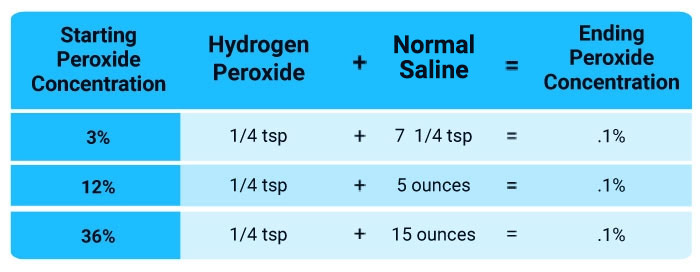
Nebulized peroxide is my personal go-to both for prevention and treatment, regardless of the stage the respiratory infection is in. To learn more, download Dr. Thomas Levy’s free e-book, “Rapid Virus Recovery.” As a preventive measure, simply nebulize every other day. Vitamin C is important here too, as it works as a catalyst for the peroxide. A daily dose of 500 milligrams would likely be sufficient for most.
We were forced to remove all the hydrogen peroxide videos that I had previously posted for liability reasons but fortunately they are all now posted on our Substack site. This is important as, in my view, this is the most important step you can take. I would recommend nebulizing a 0.1% solution every day as indicated in the videos, linked below.
There is no danger in doing it every day and likely there is a health benefit. As Dr. Tom Levy describes in one of the videos below, it seems to help improve your bowel movements, which may be a result of eliminating respiratory pathogens that were having negative impact on your microbiome.

Other important health-preserving strategies include the following:
•Make sure you’re metabolically flexible so that your body can seamlessly transition between burning fat and sugar as your primary fuel. This will allow your innate immune system to function optimally. Time-restricted eating is one surefire way to accomplish this.
•Avoid processed seed oils in your diet, such as sunflower oil, corn oil, safflower oil or avocado oils. All contain high levels of linoleic acid, which impairs your mitochondrial function, and in upper respiratory infections, it’s the precursor for the Leukotoxin that occurs in these infections.
•Focus on certified-organic foods to minimize your glyphosate exposure, and include plenty of sulfur-rich foods to keep your mitochondria and lysosomes healthy. Both are important for the clearing of cellular debris, including these spike proteins. You can also boost your sulfate by taking Epsom salt baths.
•To combat the toxicity of the spike protein, you’ll want to optimize autophagy, as this may help digest and remove the spike proteins. Time-restricted eating will upregulate autophagy, while sauna therapy, which upregulates heat shock proteins, will help refold misfolded proteins. They also tag damaged proteins and target them for removal.
It is important that your sauna is hot enough (around 170 degrees Fahrenheit) and does not have high magnetic or electric fields.
•If you’re having post-vaccination symptoms, you could consider:
◦Low-dose interferons such as Paximune, to stimulate your immune system
◦Peptide T (an HIV entry inhibitor derived from the HIV envelope protein gp120; it blocks binding and infection of viruses that use the CCR5 receptor to infect cells)
◦Cannabis, to strengthen Type I interferon pathways, which are part of your first line of defense against pathogens
◦Dimethylglycine or betaine (trimethylglycine) to enhance methylation, thereby suppressing latent viruses
◦Silymarin or milk thistle to help cleanse your liver
- 1 Lifesite News April 7, 2021
- 2 Facebook April 12, 2021
- 3 SARS-CoV-2 mRNA Vaccine BNT162 Biodistribution Study
- 4 Trialsitenews May 28, 2021
- 5 BMJ 2005;330:433
- 6 AHRQ December 7, 2007
- 7 The Vaccine Reaction January 9, 2020
- 8 Nature Microbiology September 9, 2020
- 9 Vaccine 2005
- 10 Frontiers in Immunology February 24, 2021
- 11 AIMS Allery and Immunology 2020
- 12 Frontiers in Immunology February 24, 2021 full
- 13 Blood Coagul Fribrinolysis January 2006; 17(1): 29-34
- 14 Hardball.parkoffletter.org November 10, 2020 Seheult lecture on NAC