Immunity
now browsing by category
Carrageenan’s Gut Health and Insulin Risks
Reproduced from original article:
https://articles.mercola.com/sites/articles/archive/2025/02/05/carrageenans-gut-health-and-insulin-risks.aspx
Analysis by Dr. Joseph Mercola February 05, 2025

STORY AT-A-GLANCE
- Carrageenan, a common food additive, is linked to insulin resistance and gut inflammation by increasing intestinal permeability and promoting systemic inflammation
- A study found that carrageenan intake led to reduced insulin sensitivity and increased inflammatory markers in overweight participants, suggesting a disruption in gut barrier function
- Animal studies have shown that carrageenan causes intestinal lesions and promotes cancer, with degraded carrageenan being particularly associated with carcinogenic effects
- The mechanism by which carrageenan causes harm involves macrophage infiltration and lysosomal disruption, leading to inflammation and tumor formation
- Avoid processed foods to reduce your exposure to carrageenan, as many contain this toxic additive
Carrageenan, a common food additive used to enhance texture in products like dairy and meat, is under scrutiny for its health risks. This widespread ingredient, known scientifically as E 407, has been linked to insulin resistance and chronic inflammation in the gut.
Insulin resistance is a condition where your body’s cells don’t respond effectively to insulin, leading to elevated blood sugar levels. Characterized by fatigue, increased hunger and weight gain, insulin resistance is a precursor to Type 2 diabetes — a disease affecting millions worldwide. Research published in BMC Medicine highlights that carrageenan disrupts your body’s insulin sensitivity, especially if you carry extra weight.1
As carrageenan consumption has surged over the past decades, understanding its impact on metabolic health is important for public health. The BMC Medicine study underscores the need for caution regarding consumption of carrageenan-containing foods. Future research must further investigate the long-term health effects of carrageenan to ensure public safety and well-being.
Understanding Carrageenan’s Risks to Health
Carrageenan is commonly found in processed foods, particularly those marketed as low-fat or dairy alternatives. While carrageenan is used for its gelling and emulsifying properties, concerns have arisen about its impact on gut health and metabolic processes.
One primary concern is its ability to increase intestinal permeability, often referred to as “leaky gut.” This condition allows harmful substances to pass through your gut lining into your bloodstream, triggering systemic inflammation. Additionally, carrageenan has been shown to activate immune cells, leading to the release of proinflammatory cytokines.
These immune responses exacerbate existing health conditions, particularly in those already predisposed to metabolic disorders. The interaction between carrageenan and the gut microbiome is another area of concern, as it disrupts the balance of beneficial bacteria, further contributing to health issues.
Explaining how these underlying causes lead to health problems involves understanding your body’s complex response to carrageenan. When intestinal permeability increases, it sets off a chain reaction. Harmful substances that should remain confined to your gut enter your bloodstream, prompting the immune system to respond. This immune activation can lead to chronic inflammation, a known precursor to various diseases, including Type 2 diabetes.
The disruption of the gut microbiome also impairs digestion and nutrient absorption, compounding the negative effects on overall health. These processes illustrate how a seemingly innocuous food additive has far-reaching consequences.
Diagnosing issues related to carrageenan consumption is challenging. Many symptoms, such as digestive discomfort and fatigue, are nonspecific and attributed to numerous other conditions. This overlap makes it difficult for healthcare professionals to pinpoint carrageenan as the culprit.
The diagnostic process often falls short due to the complexity of symptoms and the limited awareness of carrageenan’s health impacts. Many healthcare providers don’t consider food additives as a primary factor in their assessments, focusing instead on more common dietary or lifestyle factors.
As research continues to uncover the risks associated with carrageenan, it becomes increasingly important for both healthcare providers and consumers to be informed about its health implications.
Carrageenan Intake Significantly Impacts Insulin Sensitivity and Gut Health
The BMC Medicine study investigated the effects of carrageenan on insulin resistance, subclinical inflammation and intestinal health in humans.2 The research specifically aimed to determine how carrageenan consumption influences metabolic processes and gut integrity, shedding light on its role in chronic health issues.
The study involved 20 young, nonobese men with an average age of 27.4 years and a body mass index (BMI) of 24.5.3 These participants were exposed to carrageenan or a placebo over a two-week period, with a subsequent washout period to assess the lasting impacts of the additive.
The findings indicated that carrageenan intake did not significantly alter overall insulin sensitivity; however, in overweight participants, it was associated with reduced whole-body and hepatic insulin sensitivity.4
Carrageenan was also found to increase intestinal permeability. This disruption of the intestinal barrier was evidenced by higher lactulose absorption and elevated circulating zonulin levels, a protein associated with gut permeability.5 The study noted that participants who consumed carrageenan showed a significant rise in zonulin levels compared to those who took a placebo, underscoring the compound’s impact on gut integrity.6
Furthermore, those exposed to carrageenan had a “trend towards increased brain inflammation, and elevated C-reactive protein (CRP) and IL-6 levels,” while carrageenan exposure also activated natural killer (NK) cells and increased the release of proinflammatory cytokines such as IL-6.7
These immune responses contribute to a state of subclinical inflammation, which is a precursor to various chronic diseases, including Type 2 diabetes. The activation of NK cells in response to carrageenan suggests that the additive plays a direct role in promoting inflammatory pathways within the body.8
The study also highlighted that carrageenan-induced insulin resistance was more pronounced in individuals with higher BMIs.9 Participants with higher body mass experienced a greater decline in insulin sensitivity and increased levels of inflammatory markers like CRP and IL-6 during carrageenan intake.10 This suggests that carrageenan may exacerbate metabolic issues in overweight individuals, leading to more severe health complications over time.11
In summary, this study provides compelling evidence that carrageenan consumption can significantly disrupt metabolic and intestinal functions, particularly in individuals with higher body mass. The additive’s role in increasing gut permeability and promoting inflammation underscores the need for further investigation into its long-term health effects.12

Save This Article for Later – Get the PDF Now
Carrageenan’s Harmful Effects on the Gastrointestinal System
A research review further investigated the adverse effects of carrageenan on the gastrointestinal systems of various animals. The research aimed to determine how carrageenan contributes to chronic inflammatory bowel disease, ulcers and even cancer in different animal models.13
The study utilized a diverse group of animals, including guinea pigs, rats, monkeys, mice, rabbits, and ferrets. These animals were exposed to both undegraded and degraded forms of carrageenan to assess its impact. The findings revealed a strong association between carrageenan consumption and the development of intestinal tumors and ulcerations. Notably, degraded carrageenan was identified as a potential carcinogen, raising significant health concerns.14
One of the most striking outcomes was the high incidence of colonic tumors in rats. When rats were fed a diet containing 10% degraded carrageenan for less than two years, 32% developed colonic tumors.15 Further, exposing animals to 5% degraded carrageenan in their drinking water resulted in a 100% incidence of colonic metaplasia after just 15 months. Colonic metaplasia refers to the abnormal transformation of cells in the colon, which is often a precursor to cancer.16
The study also highlighted the severe gastrointestinal lesions caused by carrageenan. In various animal models, carrageenan exposure led to the formation of polypoidal lesions and significant, irreversible changes in the rectal mucosa.
These ulcerative lesions closely resembled those seen in human ulcerative colitis, a chronic inflammatory condition of the colon.17 Such similarities suggest that carrageenan could trigger similar inflammatory processes in humans, leading to serious bowel diseases.
Carrageenan Breaks Down in Your Stomach, Posing Health Risks
Biologically, carrageenan undergoes a chemical transformation during digestion. In the acidic environment of your stomach, carrageenan breaks down into smaller molecules, known as degraded carrageenan, which are more harmful.18
This degradation increases carrageenan’s ability to penetrate your intestinal barrier, allowing it to reach deeper tissues and organs. Once inside your body, carrageenan causes epithelial cell loss and erosion, weakening your gut lining and making it more susceptible to infections and inflammation.19
One mechanism by which carrageenan induces these harmful effects is through macrophage infiltration. Macrophages are immune cells that respond to foreign substances in your body. When carrageenan is present, it attracts macrophages to the intestinal walls, leading to an inflammatory response. This inflammation not only damages your gut lining but also disrupts normal cellular functions, paving the way for tumor formation and chronic diseases.20
Another important aspect of carrageenan’s harmful action is its ability to cross your intestinal barrier and accumulate in lymph nodes. This accumulation further exacerbates immune responses, leading to systemic inflammation.21 Furthermore, carrageenan’s interaction with lysosomes, which are your cell’s recycling centers, leads to their disruption. When lysosomes are damaged, they release enzymes that break down cellular components indiscriminately.22
The study also noted that the harmful effects of carrageenan are dose-dependent and related to the duration of exposure. Higher doses and longer exposure periods resulted in more severe gastrointestinal damage and a higher likelihood of tumor development.23 This dose-response relationship underscores the importance of minimizing carrageenan intake to reduce your risk of chronic health issues.
The study’s findings have significant implications for human health, especially considering the widespread use of carrageenan in processed foods. The evidence from animal models strongly suggests that carrageenan consumption could lead to similar gastrointestinal problems in humans, including chronic inflammation and an increased risk of colorectal cancer.24 These results call for a reevaluation of carrageenan’s safety in food products to protect public health.
Simple Steps to Avoid Carrageenan and Protect Against Its Harmful Effects
To safeguard your cellular health from carrageenan’s detrimental impacts on insulin sensitivity and gut integrity, adopt a comprehensive strategy that eliminates carrageenan exposure while enhancing your body’s natural healing capabilities. Follow these steps:
1. Avoid processed foods — Eliminate processed foods from your diet, as many contain carrageenan. For processed foods you’re considering, carefully scrutinize their ingredient lists.
If carrageenan is listed, avoid the product and choose cleaner alternatives that align with optimal health guidelines. The Cornucopia Institute has an online guide to avoid carrageenan in organic foods.25 Also avoid carrageenan-containing supplements to further protect your health.
2. Make your own alternatives — Replace commercial dairy products, like yogurt, and creamy soups, which often contain carrageenan, with homemade versions. This approach ensures full control over ingredients, eliminating unnecessary additives. Use milk sourced from grass fed cows and natural thickeners like grass fed cream or pureed vegetables to achieve the desired texture and flavor without compromising your health.
3. Enhance your cellular energy production — Boost your body’s natural ability to maintain a healthy gut barrier by optimizing your mitochondrial function, which is essential for cellular energy production.
Your mitochondria produce adenosine triphosphate (ATP), the essential fuel that keeps your cells running and repairing themselves. Without energy, your cells can’t repair and regenerate themselves. So, the fundamental issue underlying most chronic disease is that your cells are not producing enough energy.
By avoiding mitochondrial poisons, including linoleic acid (LA) in seed oils, synthetic endocrine-disrupting chemicals (EDCs), estrogen and pervasive electromagnetic fields (EMFs), you protect your mitochondrial health and boost cellular energy, so your body is better able to recover from exposure to toxins like carrageenan.
- 1, 2, 3, 4, 5, 6, 7, 8, 9, 10, 11, 12 BMC Medicine November 26, 2024; 22:558
- 13, 14, 15, 16, 17, 18, 19, 20, 21, 22, 23, 24 Environmental Health Perspectives October 2001, Volume 109, Number 10
- 25 The Cornucopia Institute, Guide to Avoiding Carrageenan in Organic Food
DMSO Transforms the Treatment of Infectious Diseases
Reproduced from original article:
https://articles.mercola.com/sites/articles/archive/2025/01/17/dmso-infectious-diseases.aspx
Analysis by A Midwestern Doctor January 17, 2025

STORY AT-A-GLANCE
- Dimethyl sulfoxide (DMSO) is a safe, naturally occurring substance with properties that make it effective for treating various medical conditions, including pain, injuries, wounds, strokes, spine injuries, autoimmune disorders, cancer, and internal organ diseases
- DMSO has broad antimicrobial properties, protects against microbial toxins, combats antibiotic resistance, and helps deliver healing deep into the body to treat otherwise inaccessible infections
- DMSO studies have generated evidence supporting its role in treating cancer and autoimmune disorders through its unique antimicrobial properties
- DMSO is highly effective against viruses like herpes and shingles, as well as conditions like feline panleukopenia in cats
- DMSO also proves valuable in treating persistent fungal and parasitic infections
Introduction
DMSO is a remarkably safe and naturally occurring substance (provided you use it correctly1) that rapidly improves a variety of conditions medicine struggles with — particularly chronic pain. For reference, those conditions included:
| Strokes, paralysis, a wide range of neurological disorders (e.g., Down Syndrome and dementia), and many circulatory disorders (e.g., Raynaud’s, varicose veins, hemorrhoids), which I discussed here. |
| A wide range of tissue injuries such as sprains, concussions, burns, surgical incisions, and spinal cord injuries (discussed here). |
| Chronic pain (e.g., from a bad disc, bursitis, arthritis, or complex regional pain syndrome), which I discussed here. |
| A wide range of autoimmune, protein, and contractile disorders such as scleroderma, amyloidosis, and interstitial cystitis (discussed here). |
| A variety of head conditions, such as tinnitus, vision loss, dental problems, and sinusitis (discussed here). |
| A wide range of internal organ diseases such as pancreatitis, infertility, liver cirrhosis, and endometriosis (discussed here). |
| A wide range of skin conditions such as burns, varicose veins, acne, hair loss, ulcers, skin cancer, and many autoimmune dermatologic diseases (discussed here). |
In turn, since I started this series, it struck a cord and I have received over 1400 reports of remarkable responses to DMSO many readers have had (compiled here).
This begs an obvious question — if a substance capable of doing all of that exists, why does almost no one know about it? Simply put, like many other promising therapies, it fell victim to a pernicious campaign by the FDA which kept it away from America despite decades of scientific research, Congressional protest, and thousands of people pleading for the FDA to reconsider its actions. Consider for example, this 60 Minutes program about DMSO that aired on March 23, 1980:
DMSO and Infectious Diseases
DMSO has a variety of unique therapeutic properties. Some of those make it incredibly well-suited to addressing microbial infections. For example:
• While nontoxic, it has an antiseptic effect that is harmful to microorganisms, especially the smallest ones. This property appears to be the most beneficial for herpes, shingles, and complex conditions with a microbiological component.
• It can remove the antibiotic resistance of bacteria. This is particularly helpful in widespread problematic infections that have gradually developed a resistance to many existing antibiotics (e.g., tuberculosis) and challenging infections that are not responding to antibiotics (e.g., ones that would otherwise require an amputation).
• It can deliver antimicrobial agents to areas that are typically difficult to reach (e.g., deep in a bone) and also directly to regions that would otherwise require a systemic application of the medication.
• It can increase circulation to many parts of the body, something which is often critical for resolving illnesses (as a healthy blood supply allows the immune system to enter and heal diseased areas). Likewise, pretreatment with DMSO has been shown to increase the immune system’s ability to resist a subsequent infection.
• Much in the same way DMSO protects cells from a wide variety of lethal stressors,2 it can also protect them from the harmful effects of bacterial toxins and can mitigate the toxicity of antimicrobial agents taken for a prolonged period.
In short, DMSO can transform the management of infectious diseases.
Save This Article for Later – Get the PDF Now
Shingles and Herpes
Since many people struggle with Herpes (HSV-1 or HSV-2) and Shingles (Herpes Zoster), especially the pain which follows shingles (known as post-herpetic neuralgia or PHN), DMSO has been extensively studied for these uses. In turn, DMSO was found to significantly improve those conditions (and canker sores3), particularly when combined with idoxuridine (IDU), an antiviral that has poor penetration into tissues (and hence does not work alone).
• Herpes simplex
◦A 1965 study4 used 1% IDU in 90% DMSO (and 10% distilled water) in 7 patients with severe cutaneous infections and noted significant improvement in all herpes cases, with the only side effect being slight skin irritation from the solution.
◦A 1966 RCT5 (randomized controlled trial) of 21 patients with recurrent herpes found DMSO halved the durations of outbreaks, and when given with 5% idoxuridine, cut it to a third (with similar results also found in a 1967 study6).
◦A 1983 study7 found that DMSO effectively brought acyclovir (ACV) into the skin, caused a moderate reduction in herpes lesions, and dramatically reduced them when combined with acyclovir.
◦A 1990 RCT8 gave 80% DMSO mixed with 15% IDU to 301 immunocompetent female patients. The duration of pain was reduced by 2.6 days and the healing time to normal skin by 2.3 days.
◦A 2002 cell study9 found 0.65% DMSO reduced herpes viral replication by 50%.
Note: DMSO also helps herpes fever blisters, and DMSO with IDU has been reported to be effective in treating HSV whitlow (herpes on the fingers).10

• Shingles and Post Herpetic Neuralgia (PHN)
◦In 1967, a German investigator reported DMSO yielded generally good results in 10 of 11 shingles and PHN cases11 (with similar results being found in another 1967 study12).
◦Two 1970 RCTs showed that IDU in DMSO was at reducing the duration of pain and healing in shingles.13 The patients were delighted, for the pain disappeared within a median of two days.
◦In 1971, Dr. William Campbell Douglass conducted a study of 41 patients with shingles and PHN of whom 73.3% had a good response to DMSO and 13.3% had a fair response.
◦A 1974 RCT14 of 118 shingles patients and a 1992 RCT15 of 171 shingles patients found DMSO and IDU significantly shortened the vesicular phase, healing time, and duration of pain, and it significantly improved post-herpetic neuralgia.
◦A 1981 trial of 46 shingles patients also confirmed the benefit of DMSO and IDU.16
DMSO and Bacterial Infections
DMSO has five key properties that make it effective in treating bacterial infections:
1. Increased bacterial membrane permeability — DMSO enhances bacterial membrane permeability,17 making bacteria more vulnerable to antibiotics, especially those targeting internal structures (e.g., penicillin). This is crucial for treating infections like tuberculosis, which has a tough outer barrier.
2. Direct bacterial breakdown — DMSO can dissolve bacteria, causing their contents to leak out and effectively neutralizing them.
3. Disruption of bacterial function — DMSO interferes with bacterial metabolism by blocking the production of essential membrane proteins, as shown in studies with E. coli.18
4. Improved circulation — DMSO enhances blood flow,19 which helps combat chronic infections often caused by impaired circulation.
5. Protection against bacterial toxins — DMSO mitigates the harmful effects of bacterial toxins, protecting cells from stress.
DMSO also enhances the immune response,20 contrary to concerns about immune suppression, and has been shown to increase resistance to infections like typhus.21
Common Microbes
DMSO has been extensively tested against common infectious bacteria (e.g., staph, strep, E. coli, pseudomonas), both by itself and in combination with antimicrobial therapies.
After a 196422 study showed DMSO inhibited the growth of bacteria, a 1967 study tested it against various microorganisms, and found at sufficient concentrations that DMSO caused those organisms to dissolve into a sediment.23

A 1969 study24 found that 75% DMSO was bactericidal (mainly by causing their internal contents to leak out), while 15% was sufficient to stop bacterial growth.

DMSO and Head Infections
Since DMSO is effective in eliminating many common microbial infections, it has shown great promise in ENT (ears, nose, and throat) medicine, as many of those diseases result from infections with common bacteria and the inflammatory response to them (particularly since it is often challenging to get antibiotics to the site of the infection).
Much of this was demonstrated in the 1967 publication25 by an ENT doctor who observed that DMSO would often significantly calm inflammation from an infection in the head (including severe ones that were difficult to treat with antibiotics). He compiled all of his cases26 here:

• Eye infections — DMSO can treat various eye conditions, including macular degeneration and eyelid inflammation. In a 1976 study,27 it was combined with antibiotics to successfully treat eye infections. Additionally, DMSO can resolve pink eye after just a few applications.28
• Sinusitis — DMSO helps open blocked nostrils quickly by reducing swelling and promoting tissue healing.29 Studies have shown DMSO significantly alleviates sinusitis symptoms, including one 1967 study30 where most patients had excellent results. It also enhances the effectiveness of antibiotics in treating rhinoscleroma,31 a rare nasal infection.
• Dentistry — DMSO is used in dentistry as a mouthwash, relieving gum pain32 and preventing bleeding. It can alleviate toothache pain and reduce swelling after dental procedures.33 Dentists have found it effective for treating infections and saving loose teeth from periodontitis.34 Many studies35 show DMSO helps improve gum health, treat pulpitis,36 and accelerate healing after tooth extractions.37
Tuberculosis
Despite over a century of work, Tuberculosis remains the world’s most deadly microbe (e.g., in 2023, it was estimated38 to have killed 1.25 million people). This is mainly due to this tiny bacteria’s unique characteristics and high aptitude for developing antibiotic resistance.
Because of this, once the early DMSO researchers realized that DMSO could remove antibiotic resistance, their focus immediately went to tuberculosis. In turn, many lab studies39 have demonstrated DMSO’s utility for this challenging infection which has been corroborated in humans:
• A 1969 study40 of 32, 14 showed an absence of tuberculosis secretion and most showed improvement (e.g., reduced endobronchitis, perifocal infiltration and lung tissue destruction).
• A 1980 study41 used DMSO to treat children with pulmonary tuberculosis.
• A 1991 study42 found nebulized DMSO mixed with rifampin over 1 to 2 months was an effective treatment for 148 pulmonary tuberculosis and 18 obstructive bronchitis patients (e.g., it healed the destructive cavities caused by tuberculosis).
Bacterial Toxins
One of the primary reasons bacterial infections sicken and kill is because of the toxins they release. DMSO in turn, has been repeatedly shown to mitigate this. For example:
• DMSO has been shown43 to protect the duodenum from H. pylori induced chronic ulcers.
• In rats, DMSO was shown44 to create a dose dependent reduction in the fluid secretion and mucosal permeability triggered by C. difficile’s toxin (with its maximum inhibition occurring at a 1% concentration). Given how common C. difficile colitis is, this application of DMSO has great promise.
• DMSO was shown to protect cells45 from the shigella bacteria’s toxin46 (which causes severe diarrhea and bloody stools).
• Endotoxaemia occurs in response to bacterial lipopolysaccharide (LPS) entering the bloodstream. A 2008 study of 18 horses47 found DMSO reduced the fevers that followed artificially induced endotoxemia, suggesting DMSO’s utility in treating sepsis, particularly since, DMSO can protect cells48 from the damage LPS causes.
Note: One of the most important characteristics the early adopters of ultraviolet blood irradiation recognized about it was that UVBI could effectively neutralize toxins in the bloodstream (a property that saved a significant number of lives).
Challenging Infections
DMSO has shown promise for many other challenging infections:
| Sepsis — DMSO has proven effective in treating septic complications, especially in heart attack survivors. A 1982 study49 showed its success even against antibiotic-resistant bacteria. In 1984 a Russian study50 confirmed DMSO accelerated recovery in critically ill septic patients, with one case of bladder infection improving after using DMSO.
Note: One author cited51 a case of a septic patient with a severe bladder infection who did not respond to antibiotics but recovered once he began taking one teaspoon of DMSO three times a day. |
| Lung infections — DMSO has treated chronic lung infections, with a 1975 study52 showing rapid recovery in infants with severe respiratory diseases when combined with antibiotics. A 2020 study53 reported that DMSO, combined with ceftriaxone, helped 31 lung abscess patients fully recover without recurrence.
Note: DMSO has also been repeatedly shown54 to effectively treat acute respiratory distress syndrome, a challenging lung condition that frequently follows severe infections and often requires ventilation. |
| Abdominal infections — DMSO, combined with antibiotics, has effectively treated peritonitis55 and abdominal abscesses.56 It helps concentrate antibiotics in the abdomen,57 providing extended treatment duration, especially for peritonitis, a fatal condition. |
Meningitis
|
| Osteomyelitis — DMSO has shown significant results in treating bone infections.60 Studies have found that combining DMSO with antibiotics and other therapies like hyperbaric oxygen speeds up recovery and reduces bone damage in both acute and chronic osteomyelitis.61,62,63,64,65,66 |
| Orchitis and epididymitis — In 1986, a Russian physician reported these conditions have an excellent response to DMSO.67 |
| Cancer and autoimmunity — DMSO has been observed to eliminate the unusual bacteria associated with many cancers and autoimmune diseases, which may in part explain its utility for those conditions.
Note: A wealth of evidence also supports DMSO’s use in a variety of challenging veterinary infections.68 |
Surgery
Three of the major issues encountered in surgery are:
- Surgical wounds (or burns) become infected before they seal and heal.
- Infections deep within the body need to be cut open so the infection can be drained or removed (or have antibiotics directly applied to it).
- Infected tissues must be removed (e.g., amputated) because the infection within them can’t be reached or addressed.
Fortunately, DMSO’s is uniquely suited to address each of these. For example, in this article, I discussed how many studies and reader testimonials show DMSO is a remarkable therapy for burns and wound healing, and here I reviewed the wealth of evidence that DMSO is a highly effective therapy for surgical scar healing.
Likewise, DMSO makes reaching a deep infection within the body possible without surgery. Numerous studies, in turn, demonstrate that DMSO can prevent and treat those infections:
| A 1969 case report69 highlighted a patient with a chronic fungal infection (that has high resistance to antifungals) who declined amputation in favor of antifungals dissolved in DMSO which saved his foot.
Note: There are many other cases of DMSO curing a chronic infection that had required amputation.70 |
| A 1978 surgical study71 used DMSO in combination with antibiotics to treat inflammatory infiltrates. |
| A 1984 study72 used DMSO to treat surgical wound infections. |
| A 1985 study73 found that injecting DMSO after severe mechanical trauma reduces the risks of a subsequent infection, while a 1984 study74 found that DMSO plus antibiotics prevent open wounds in the hands from developing purulent infections. |
| A 1990 study75 of 33 patients with phlegmons (inflamed areas under the skin) throughout the body found that a dressing with DMSO and silver nitrate, when compared to those receiving standard treatments, reduced the time required to begin a surgical repair by 2 to 2.5 times. |
| In 1998, Russian physicians reported that they routinely apply DMSO to surgical wounds as it accelerates healing and provides general infection control.76 |
Fungal Infections
A 2013 study77 used DMSO and antifungal agents on six different Candida species. It found 0.5% to 1% DMSO had an antifungal effect, but the inhibitory effect (with or without concurrent antifungals) varied significantly.
DMSO can also effectively bring antifungals to many parts of the body. DMSO for instance was shown78 to significantly increase the amount of ketoconazole that enters the brain and can transport griseofulvin79 through the skin (which in a 1974 study80 was used to successfully treat ringworm). Additionally:
- A 1965 study81 found DMSO was an effective treatment for ringworm and athlete’s foot, especially when combined with an antifungal.
- A 1977 study82 found DMSO (in combination with lidase) was a highly effective treatment for actinomycosis of the face and neck.
- A 1997 study83 found DMSO mixed with itraconazole treated fungal infections in horse corneas.
Parasites
There is also some data on how DMSO can treat parasites (e.g., 3% DMSO has been shown to significantly inhibit the growth of Trypanosoma cruzi,84 which causes Chagas disease). However, its primary value is bringing an antiparasitic medication to the region of infection (as parasites can often burrow quite deep into the tissues).
For example, two different 1966 studies (this study85 and this 25 person RCT86) found that DMSO plus an antiparasitic (e.g., 2% topical thiabendazole in 90% DMSO) was an effective treatment for hookworm infections in the skin. DMSO can also be combined with antiparasitic medications to reach challenging parasitic infections deep within the body. For example, a 1984 case report87 discussed DMSO treating a complex amoeba infection of the liver.
Conclusion
Many who’ve worked with DMSO believe it should be routinely utilized for severe infections, particularly those not responding to antibiotic therapy. Fortunately, we are in a unique moment where these forgotten sides of medicine finally have a chance to see the light of day.
Thus, I sincerely hope articles like these can begin to shift the medical system towards adopting a more sophisticated approach to infectious diseases that can help patients struggling with challenging infections.
Author’s Note: This is an abridged version of a longer article that goes into greater detail on the points discussed here and provides guidance for personal DMSO use (e.g., dosing, therapeutic precautions and where to obtain it) along with other natural approaches we’ve also found help many of those conditions (e.g., herpes and shingles). That article can be read here.
A Note from Dr. Mercola About the Author
A Midwestern Doctor (AMD) is a board-certified physician from the Midwest and a longtime reader of Mercola.com. I appreciate AMD’s exceptional insight on a wide range of topics and am grateful to share it. I also respect AMD’s desire to remain anonymous since AMD is still on the front lines treating patients. To find more of AMD’s work, be sure to check out The Forgotten Side of Medicine on Substack.
- 1 The Forgotten Side of Medicine, October 12, 2024
- 2, 19 The Forgotten Side of Medicine, September 15, 2024
- 3 Amazon, The DMSO Handbook: A New Paradigm in Healthcare
- 4 Ohio State Med J. 1965 Jun:61:532-3
- 5 Brit. Med. J., 1966, 2, 805-807
- 6 Annals of the New York Academy of Sciences, 141: 428-436
- 7 Annals of the New York Academy of Sciences, 411: 28-33
- 8 J Infect Dis. 1990 Feb;161(2):191-7
- 9 BMC Infect Dis. 2002 May 24:2:9. doi: 10.1186/1471-2334-2-9
- 10 Scottish Medical Journal. 1977;22(4):310-313
- 11 Zeitschrift fur Haut- und Geschlechtskrankheiten, 01 Sep 1967, 42(18):749-754
- 12 Annals of the New York Academy of Sciences, 141: 506-516
- 13 Br Med J. 1970 Dec 26;4(5738):776–780
- 14 Br Med J. 1974 Jun 8;2(5918):526-7
- 15 Med Clin (Barc). 1992 Feb 22;98(7):245-9
- 16 N Z Med J. 1981 Nov 25;94(696):384-6
- 17 Journal of Biological Chemistry, Volume 278, Issue 35, 33185-33193
- 18 Aust J Biol Sci. 1977 Apr;30(1-2):141-53
- 20, 21 The Forgotten Side of Medicine, October 20, 2024
- 22 Curr Ther Res Clin Exp. 1964 Feb:6:134-5
- 23 Ann N Y Acad Sci. 1967 Mar 15;141(1):261-72
- 24 J. Pharm. Sci., 58: 836-839
- 25, 26 Annals of the New York Academy of Sciences, (1967), 141(1), 451-456
- 27 Oftalmol Zh. 1976;31(3):168-70
- 28, 37 Amazon, DMSO: Nature’s Healer
- 29, 31, 35, 39, 60, 68, 70 The Forgotten Side of Medicine, December 29, 2024
- 30 Ann N Y Acad Sci. 1967 Mar 15;141(1):572-85
- 32 Amazon, DMSO: The True Story of a Remarkable Pain-Killing Drug
- 33, 51 Amazon, The DMSO Handbook for Doctors
- 34 Mikrobiolohichnyi Zhurnal, 01 Nov 1973, 35(6):766-769
- 36 Kazan Medical Journal 1983, Volume 64, No. 6, Pages 434-435
- 38 World Health Organization, Tuberculosis, October 29, 2024
- 40 Zh Ushn Nos Gorl Bolezn. 1969 Nov-Dec;29(6):68-71
- 41 Pediatriia, 01 Jan 1980, (9):24-25
- 42 Problemy Tuberkuleza, 01 Jan 1991, (3):34-36
- 43 Intern Med. 1993 May;32(5):359-64
- 44 American Journal of Physiology, Gastrointestinal and Liver Physiology, Volume 276, Issue 2, February 1999, Pages G485-G490
- 45 J Infect Dis. 1983 Nov;148(5):844-54
- 46 Wikipedia, Shigellosis
- 47 Equine Vet J. 2008 Jun;40(4):358-63
- 48 Eur Respir J Suppl. 1990 Oct:11:482s-484s
- 49 Research Laboratory of General Reanimatology of the USSR Academy of Medical Sciences, Issue: Vol 63, No 5 (1982)
- 50 Anesteziol Reanimatol. 1984 Jul-Aug:(4):38-40
- 52 Ann N Y Acad Sci. 1975 Jan 27:243:460-7
- 53 Benghazi University Medical Journal, September 2020, 1(4), doi: 10.37376/benunivmedj.v1i4.2474
- 54 The Forgotten Side of Medicine, November 17, 2024
- 55 Khirurgiia (Mosk). 1974 Oct:(10):53-7
- 56 Vrachebnoe Delo, 01 Oct 1975, (10):96-98
- 57 Antibiotiki, 01 Feb 1981, 26(2):102-104
- 58 Kaf. Infekts. Bol., Med. Inst., Kiev, Volume 7, 1978, Pages 146-148 (Archived)
- 59 Vrach Delo. 1987 Feb:(2):113-5
- 61 Vestnik Khirurgii Imeni I. I. Grekova, 01 Jan 1976, 116(1):90-92
- 62 Vestnik Khirurgii Imeni I. I. Grekova, 01 Feb 1980, 124(2):135-138
- 63 Vestnik Khirurgii Imeni I. I. Grekova, 01 Sep 1978, 121(9):88-90
- 64 Vestnik Khirurgii Imeni I. I. Grekova, 01 Aug 1979, 123(8):133-136
- 65 Vestnik Khirurgii Imeni I. I. Grekova, 01 Jul 1981, 127(7):94-96
- 66 Vestn Khir Im I I Grek. 1986 Mar;136(3):51-3
- 67 Urol Nefrol (Mosk). 1986 Nov-Dec:(6):50-2
- 69 Arch Intern Med. 1969;124(6):748–753
- 71 Klin Khir (1962). 1978 Dec:(12):34-7
- 72 Khirurgiia (Mosk). 1984 Apr:(4):19-22
- 73 Vestnik Khirurgii Imeni I. I. Grekova, 01 Feb 1985, 134(2):63-64
- 74 Klin Khir (1962). 1984 Jan:(1):49-52
- 75 Klinicheskaia Khirurgiia, 01 Jan 1990, (1):35-36
- 76 Klin Khir (1962). 1988:(1):1-3
- 77 Diagnostic Microbiology and Infectious Disease, Volume 75, Issue 1, January 2013, Pages 60-63
- 78 Antimicrob Agents Chemother. 1986 Oct;30(4):617-8
- 79 Sabouraudia: Journal of Medical and Veterinary Mycology, 9(1), 43–49
- 80 Vestn Dermatol Venerol. 1974 May;48(5):45-9
- 81 JAMA. 1965 Sep 13:193:923-8 CONCL. doi: 10.1001/jama.1965.03090110061015
- 82 Stomatologiia (Mosk). 1977 May-Jun;56(3):25-7
- 83 J Am Vet Med Assoc. 1997 Jul 15;211(2):199-203
- 84 The Korean Journal of Parasitology 2017; 55(1): 81-84
- 85 J S C Med Assoc. 1966 Jul;62(7):265-6
- 86 Arch Dermatol. 1966;94(5):643-645
- 87 Vrachebnoe Delo, 01 Jun 1984, (6):76-77
Exploring the Whole-Body Benefits of Matcha
Reproduced from original article:
https://articles.mercola.com/sites/articles/archive/2025/01/04/whole-body-benefits-of-matcha.aspx
Analysis by Dr. Joseph Mercola January 04, 2025

STORY AT-A-GLANCE
- Matcha is a powdered Japanese green tea made from shade-grown Camellia sinensis leaves. It contains high levels of chlorophyll, amino acids and theanine due to its unique growing and harvesting processes
- Unlike coffee, matcha provides sustained energy through caffeine-theanine synergy, creating “calm alertness” while containing three times more antioxidant catechins than regular green tea
- Scientific studies show matcha improves cognitive function, emotional perception and sleep quality in elderly adults, while reducing stress and anxiety when consumed regularly
- Matcha supports weight loss by increasing thermogenesis up to 43%, while improving gut health by promoting beneficial bacteria growth and maintaining proper bile acid balance
- The tea’s high EGCG content demonstrates anticancer properties by disrupting tumor blood supply development. It also supports heart health by improving cholesterol levels and lipid metabolism
Matcha’s popularity has surged in recent years, with many cafés and restaurants now unveiling matcha-infused specialty beverages and snacks. Even coffee aficionados are switching to the green side, replacing their espressos and cold brews with matcha lattes and smoothies. The demand for this product is so great that even centuries-old tea companies like Ippodo Tea are experiencing shortages of their matcha supply.1
But what exactly is matcha and what are the benefits you’ll get from this vibrant and “instagrammable” beverage? Let’s take a deep dive into the advantages you’ll reap from this delicious and wholesome drink.
Matcha 101
Made from the young, bright green leaves of the Camellia sinensis plant, matcha is a fine powdered Japanese tea with a vibrant green color. This plant is actually the same one used to make green and black tea; however, what sets these teas apart from each other is how they are grown and processed.
Green and black teas are harvested from plants that are fully exposed to the sun. To make green tea, the leaves are picked, heated and then dried. With black tea, after the leaves are harvested, they are exposed to air, leading to oxidation and turning the leaves black and giving them a different flavor.2
On the other hand, tea plants that are used for matcha production are grown in shade. The bushes are covered with a bamboo mat to protect them from excessive sunlight. Once harvested, the leaves, called “tencha,” are then ground carefully at a controlled temperature, creating a fine powder. Harvesting matcha leaves occurs only once a year.
Many think the vibrant green hue of the tea comes from additives, but it’s actually 100% natural, and a result of the increased chlorophyll content in the leaves. A 2021 review published in Molecules explains:3
“In the course of this process, plants are able to produce higher amounts of amino acids and bioactive compounds, including chlorophyll and theanine, responsible for the unique, non-bitter taste and the characteristic, vibrant color of matcha. As a result, matcha is highly valued for its quality and regarded as the most aromatic green tea.”
The traditional way to make matcha is by whisking the powder in a stone bowl to produce a thick, vibrant green tea. Every matcha brew is different, as tea producers try to balance the different flavors — umami, sweetness and bitterness — and fragrance in their product.
There are also different grades, with ceremonial grade matcha having the highest quality, and being the most expensive. It’s used in traditional tea ceremonies and Buddhist temples, having a deep green appearance, soft, powdery texture, and gentle balanced sweetness. Meanwhile, reasonably priced varieties like culinary grade matcha are used in baking and brewing matcha lattes.4
Matcha’s Nutrients Are Unmatched
The unique growing process is responsible for matcha’s impressive nutritional profile; every sip of this drink provides you with high amounts of amino acids and bioactive compounds, including chlorophyll and theanine. According to an article in The Conversation:5
“There’s some evidence chlorophyll may have health benefits — including anti-inflammatory, anticancer and antiobesity effects — due to its antioxidant properties.
Antioxidants neutralize free radicals, which are unstable molecules that harm our cells. Theanine has been shown to improve sleep and reduce stress and anxiety. The only other known dietary source of theanine is mushrooms.”
Matcha also contains caffeine; however, it doesn’t cause the side effects that some people experience when they drink coffee. This is mainly due to the theanine in matcha. A Style Rave article explains:
“L-theanine works synergistically with the caffeine in matcha to create what many describe as a state of ‘calm alertness.’ While matcha does contain caffeine, it releases more slowly into the bloodstream compared to coffee, providing a smoother and more sustained energy boost.”6
However, what gives matcha most of its health benefits is its high antioxidant content in the form of polyphenols, which account for as much as 30% of the tea’s dry weight. “Polyphenols are believed to be exceptionally powerful antioxidants, with effects comparable to those of vitamins, such as vitamins C and E, carotene and tocopherol,” the study notes.
The phenolic compounds in matcha are called catechins, which help scavenge free radicals and protect against harmful UV light. They’re also said to have antiallergenic, anti-inflammatory, antimicrobial, antiviral and anticancer properties.7 Catechins are also found in regular green tea, however, studies say that matcha offers as much as three times more catechins per serving compared to green tea. In matcha, 90% of the polyphenols are composed of catechins.8
There are four primary catechins found in matcha, namely epicatechin (EC), epicatechin-3-gallate (ECG), epigallocatechin (EGC) and epigallocatechin-3-gallate (EGCG). Of these four, EGCG is the most active and abundant, offering a wide range of benefits.9
“Catechins derived from tea demonstrate outstanding antioxidant activity due to their ability to neutralize free radicals and boost the detoxification activity of enzymes, including glutathione peroxidase, catalase and glutathione reductase … [C]atechins have greater antioxidant capacity than glutathione, vitamin C and flavonoids, which attests to their key role in maintaining cellular redox homeostasis,” according to the researchers.10
Save This Article for Later – Get the PDF Now
Matcha Supports Optimal Cognitive Function
If you’re finding it difficult to concentrate on tasks and are struggling to maintain focus, sipping on matcha could provide you with a brain boost, thanks to its theanine, caffeine and catechins.
Recent studies support these findings; for example, a 2024 randomized controlled trial published in PLoS One11 found that drinking matcha improved social acuity scores and sleep quality among elderly participants who have cognitive decline and mild cognitive impairment.
“The present study suggests regular consumption of matcha could improve emotional perception and sleep quality in older adults with mild cognitive decline. Given the widespread availability and cultural acceptance of matcha green tea, incorporating it into the daily routine may offer a simple yet effective strategy for cognitive enhancement and dementia prevention,” the study authors said.12
A critical review published in the Current Research in Food Science journal13 looked at five experimental human studies and evaluated the effects of matcha when consumed daily. The participants ingested around 2 to 4 grams (or 1 to 2 teaspoons) of matcha powder daily. The result found that compared to a placebo, matcha was more efficient in decreasing stress and anxiety while improving memory and cognitive function.
“Additionally, recent studies on EGCG, the main catechin in matcha, demonstrated that it has potential neuroprotective effects against neurological disorders by acting as an active compound that ameliorates cognitive defects,” the researchers added.14
Dealing with a Sluggish Metabolism and Excess Weight? Sip on Matcha
If you’re struggling to lose a few pounds, sipping on matcha tea could be to your advantage. According to studies, the catechins in matcha, particularly EGCG, have been found to significantly reduce body weight, body mass index (BMI) and abdominal fat.15 For example, a study published in the American Journal of Clinical Nutrition found that it increases thermogenesis (the process by which the body burns calories to produce heat) by as much as 43%.16
A 2022 animal study published in the Frontiers in Nutrition journal17 also highlighted that matcha helps support metabolism and inhibit obesity by targeting the gut-liver axis; basically, it maintains the balance of both good bacteria and fat-digesting bile acid in the gut, helping digest more fats.
“In particular, matcha treatment enriched SCFAs [short-chain fatty acid] producers such as Faecalibaculum, Alloprevotella, and potential probiotics such as Akkermansia muciniphila and provide useful information for excavating functional probiotics with hypolipidemic activity,” the study authors concluded.18
Recent Studies Highlight EGCG’s Anticancer Benefits
EGCG, found abundantly in both matcha and green tea, has recently gained attention for its ability to protect against cancer as well.19 According to researchers:
“EGCG has been found to exhibit anti-proliferative, anti-angiogenic and pro-apoptotic effects in numerous cancer cell lines and animal models. EGCG has demonstrated the ability to interrupt various signaling pathways associated with cellular proliferation and division in different cancer types. EGCG anticancer activity is mediated by interfering with various cancer hallmarks.”20
Simply put, EGCG hinders cancer from developing and growing by affecting cell signaling pathways. Another mechanism of action that EGCG affects is angiogenesis — the process through which tumors develop their own blood supply. By hampering angiogenesis, tumor cells do not receive enough blood, meaning they get less oxygen and nutrients required for these cells to thrive. This stunts their growth and reduces tumor size.21
Other Whole-Body Benefits of Matcha
Matcha’s flavor is described to be like green tea, but slightly more bitter.22 If you’re used to loose-leaf teas and tea bags, switching to matcha could take some getting used to. Because it’s in powder form, your tea can be slightly grainy if you don’t whisk it enough or don’t use the correct water-to-powder ratio.
It takes some practice to brew matcha, but don’t worry — the effort will be worth it, considering the many benefits associated with this beverage, which include:
• Supporting your immune system health — Rutin, a polyphenol compound found in matcha has anti-inflammatory properties, supports your immune system and seals blood vessels.23
• Easing stress and anxiety — Animal models and human trials have demonstrated the relaxing benefits of l-theanine in tea.24
• Promoting healthy gut microbiome — A 2022 study looked at the effects of drinking matcha on the fecal microbiota and found that it helped increase beneficial bacteria like Coprococcus while decreasing pathogenic Fusobacteria in the gut, which have profound long-term effects on gut and digestive health.25
• Supporting detoxification of toxic chemicals from your system — Chlorophyll, found abundantly in matcha tea, helps enhance the detoxification process and support liver health. According to one study:
“The liver plays a crucial role in metabolizing and eliminating endocrine-disrupting chemicals from the body. Chlorophyll promotes liver function and aids in the detoxification of these compounds, thereby reducing their accumulation and potential impact on the endocrine system.”26
• Promoting optimal heart health — The catechins in matcha promote cardiovascular health by lowering blood levels of triglycerides and low-density-lipoprotein (LDL) cholesterol in the blood while increasing high-density lipoprotein (HDL) cholesterol. According to a study, matcha “leads to improved lipid metabolism and therefore, improvement in body weight and cardiac health.”27
In particular, EGCG inhibits gene expressions that are involved in lipid metabolism, such as FAS, SCD1 and SREBP1, which trigger the excretion of free fatty acids.28
How to Make a Cup of Matcha
In Japan, the birthplace of matcha, special ceremonies revolve around properly brewing this tea. If you want to give traditional matcha a try, you’ll need a few tools, namely a chawan (tea bowl), chasen (bamboo whisk) and chashaku (tea ladle).29 If you want to keep it simple, you can skip these and use whatever kitchen items you have. However, you’ll still need a whisk; a typical egg whisk will suffice.
The Ippodo Tea website30 offers several matcha recipes to guide you. Here’s a simple recipe for classic matcha (usucha).
Directions
- Sift the matcha into the tea bowl/cup. Use 1 level teaspoon (or 1.5 heaping tea ladles/chashaku).
- Add 2 ounces (60 milliliters) of water. It should be around 176 degrees F (80 degrees C). To do this, pour just boiled water into a separate cup, allow to cool down for a while and then pour into your tea bowl/cup.
- Whisk the tea vigorously, making a zigzag or “M” shape. Do this for 15 seconds, or until the tea is frothy. Enjoy your freshly prepared matcha tea!
- 1 Ippodo Tea, October 30, 2024
- 2, 5 The Conversation, November 7, 2024
- 3 Molecules. 2020 Dec 27;26(1):85, Introduction
- 4 Sydney Morning Herald, November 1, 2024
- 6 Style Rave, October 31, 2024
- 7 Biomedical Dermatology, 2020, Volume 4, article number 8
- 8 , 13, 27, 28 Current Research in Food Science, 2023, Volume 6, 100396
- 9 Molecules. 2020 Dec 27;26(1):85
- 10 Molecules. 2020 Dec 27;26(1):85, Content of Catechins
- 11 PLoS One. 2024 Aug 30;19(8):e0309287
- 12 PLoS One. 2024 Aug 30;19(8):e0309287, Conclusion
- 14 Curr Res Food Sci. 2022 Nov 23;6:100396, Matcha tea and the improvement in cognitive function
- 15 Nutrients 2023, 15(13), 3022
- 16 The American Journal of Clinical Nutrition, December 1999, Volume 70, Issue 6, p1040-1045
- 17 Front Nutr. 2022 Aug 1;9:931060
- 18 Front Nutr. 2022 Aug 1;9:931060, Conclusion
- 19 Molecules 2023, 28(13), 5246
- 20 Molecules 2024, 29(6), 1373, Abstract
- 21 Molecules 2024, 29(6), 1373
- 22 Women’s Health, November 4, 2024
- 23 Food, April 2020, 9(4)
- 24 Food Science and Human Wellness, May 2022, Volume 11, Issue 3, Pages 467-475
- 25 J Clin Biochem Nutr. 2022 Nov 23;72(2):165–170, Discussion
- 26 Molecules. 2023 Jul 11;28(14):5344, Protection Against Endocrine Disruptors
- 29 Just One Cookbook, July 7, 2024
- 30 Ippodo Tea, Usucha (Classic Matcha) recipe
Promising Results for Beta-Glucan Supplementation in Alleviating Chronic Fatigue Symptoms
© GreenMedInfo LLC. This work is reproduced and distributed with the permission of GreenMedInfo LLC.
Want to learn more from GreenMedInfo? Sign up for the newsletter here:
www.greenmedinfo.com/greenmed/newsletter
Reproduced from original article:
https://greenmedinfo.com/content/promising-results-beta-glucan-supplementation-alleviating-chronic-fatigue-symp
Posted on: Sunday, June 16th 2024 at 3:00 am

For the millions suffering from Myalgic Encephalomyelitis/Chronic Fatigue Syndrome (ME/CFS), a debilitating condition characterized by extreme exhaustion and cognitive impairments, effective treatments remain elusive. However, a recent randomized controlled trial has uncovered a promising natural remedy: yeast-derived beta-glucan supplementation. This prebiotic fiber may offer new hope for managing the cognitive symptoms that plague ME/CFS patients.
The Gut-Brain Connection in ME/CFS
ME/CFS is a complex disorder affecting an estimated 17 million people worldwide.1 Patients often experience persistent fatigue, cognitive dysfunction, sleep disturbances, and gastrointestinal issues.2 While the exact causes remain unclear, growing evidence points to a dysregulated gut-brain axis as a key factor in ME/CFS pathology.3
The gut microbiome, the collection of microbes residing in our intestines, plays a crucial role in regulating immune function, metabolism, and even brain health via the gut-brain axis.4 In ME/CFS, altered gut microbiota composition and increased intestinal permeability have been linked to systemic inflammation and neurological symptoms.5 Therefore, targeting the gut with prebiotic interventions like beta-glucan may help restore balance and alleviate ME/CFS manifestations.
What the Study Found
In this 36-week randomized controlled trial, 65 ME/CFS patients received either a daily supplement containing 250mg of yeast-derived beta-glucan, along with vitamin D3, B6, and zinc, or a placebo. The results were promising:
“The findings showed that the beta-glucan supplementation significantly improved cognitive fatigue (assessed with FIS-40 scores) after the 36-week treatment compared to the baseline (p = 0.0338).”6
Cognitive fatigue scores decreased by 5.7% in the beta-glucan group, suggesting this prebiotic may help combat the “brain fog” that many ME/CFS patients struggle with. While the mechanisms require further investigation, the authors propose that beta-glucan may work by modulating the gut microbiome, reducing inflammation, and supporting the gut-brain axis.
The Advantages of a Natural Approach
Conventional treatments for ME/CFS are limited and often come with unwanted side effects. Antidepressants, sleep aids, and pain medications may provide temporary relief but do not address the underlying imbalances contributing to symptoms.
In contrast, beta-glucan is a natural prebiotic fiber found in foods like oats, barley, and certain mushrooms. By promoting the growth of beneficial gut bacteria and increasing production of short-chain fatty acids like butyrate,7 beta-glucan supports a healthy gut environment. This, in turn, may help regulate the immune system, reduce inflammation, and improve gut-brain communication8 – all of which are disrupted in ME/CFS.
Furthermore, the beta-glucan supplement in this study was well-tolerated, with no serious adverse events reported. This highlights the safety advantage of using natural, food-derived compounds to manage chronic conditions like ME/CFS.
Empowering Patients with Knowledge
While more research is needed to fully understand the potential of beta-glucan for ME/CFS, these findings offer a glimmer of hope for those struggling with this challenging condition. By raising awareness about the gut-brain connection and the role of prebiotics, we can empower ME/CFS patients to make informed choices about their health.
Incorporating prebiotic-rich foods or considering a quality beta-glucan supplement, under the guidance of a knowledgeable healthcare provider, may be a gentle yet effective way to support cognitive function and overall well-being in ME/CFS. As always, a personalized approach that takes into account an individual’s unique needs and sensitivities is essential.
In Conclusion
The promising results of this beta-glucan trial underscore the importance of exploring natural, evidence-based solutions for complex conditions like ME/CFS. By supporting the gut-brain axis and promoting a balanced microbiome, prebiotics offer a safe and holistic approach to symptom management.
As we continue to unravel the intricacies of the human body and the interconnectedness of our systems, let us remain open to the healing potential of nature. With further research and a commitment to patient empowerment, we can pave the way for more effective, integrative strategies to help those with ME/CFS reclaim their vitality and thrive.
Learn more about natural approaches to chronic fatigue syndrome here.
Learn more about beta glucan’s studied potential therapeutic properties here and by watching our recent livestream: The Truth about Immunity here.

References
1. Estevez-Lopez, F., et al. “Systematic Review of the Epidemiological Burden of Myalgic Encephalomyelitis/Chronic Fatigue Syndrome Across Europe: Current Evidence and EUROMENE Research Recommendations for Epidemiology.” Journal of Clinical Medicine 9, no. 5 (2020): 1557. https://doi.org/10.3390/
2. Cortes Rivera, M., et al. “Myalgic Encephalomyelitis/Chronic Fatigue Syndrome: A Comprehensive Review.” Diagnostics 9, no. 3 (2019): 91. https://doi.org/10.3390/
3. Cryan, J.F., et al. “The Microbiota-Gut-Brain Axis.” Physiological Reviews 99, no. 4 (2019): 1877-2013. https://doi.org/10.1152/
4. Martin et al. “Increased gut permeability and bacterial translocation are associated with fibromyalgia and myalgic encephalomyelitis/chronic fatigue syndrome: Implications for disease-related biomarker discovery.” Frontiers in Immunology 14 (2023): 1253121. https://doi.org/10.3389/fimmu.
5. Guo, C., et al. “Deficient butyrate-producing capacity in the gut microbiome is associated with bacterial network disturbances and fatigue symptoms in ME/CFS.” Cell Host & Microbe 31, no. 2 (2023): 288-304.e8. https://doi.org/10.1016/j.
6. Lacasa, M., et al. “Yeast Beta-Glucan Supplementation with Multivitamins Attenuates Cognitive Impairments in Individuals with Myalgic Encephalomyelitis/Chronic Fatigue Syndrome: A Randomized, Double-Blind, Placebo-Controlled Trial.” Nutrients 15, no. 21 (2023): 4504. https://doi.org/10.3390/
7. Singh, R.P., and Bhardwaj, A. “beta-glucans: A potential source for maintaining gut microbiota and the immune system.” Frontiers in Nutrition 10 (2023): 1143682. https://doi.org/10.3389/fnut.
8. Hu, M., et al. “Three Different Types of β-Glucans Enhance Cognition: The Role of the Gut-Brain Axis.” Frontiers in Nutrition 9 (2022): 848930. https://doi.org/10.3389/fnut.

Why Does the COVID Vaccine Persist In The Body?
Reproduced from original article:
https://www.midwesterndoctor.com/p/why-does-the-covid-vaccine-persist
The consequences of the questionable decisions made to manufacture the mRNA vaccines

Recently, new data emerged showing that the COVID vaccines persist for up to 700 days within patients (and likely longer). As this is quite concerning to many, I was required to write an article explaining how this happens, and how it relates to the egregious production process that characterized the COVID-19 vaccines.
Upsides and Downsides
A lot of things in life are trade-offs, and as I’ve gotten older, more and more I’ve come to appreciate how many things in our society boil down to the fact that the options for addressing them all have significant downsides, so in many cases no solution exists which is satisfactory to all parties involved.
As such, this dilemma is typically managed by some combination of the following:
• Having a biased focus which emphasizes the benefits of an approach a side supports and downplays its downsides (or conversely disproportionately focuses on the downsides of an opposing position). To this point, I’ve had countless issues I’ve debated both sides of and been able to effectively persuade audiences of each one—which highlights how subjective many of the entrenched beliefs we hold actually are (and, in turn, is why I put so much work here into fairly presenting both sides of each controversial topic I cover).
• Sweeping the downsides under the rug and gaslighting the populace into believing they don’t exist.
• Blitzing the public into supporting a questionable policy before they have time to recognize its downsides, and if that fails, overtly forcing them to go along with it.
Note: I believe one of the reasons why governments frequently do horrible things to their people is because they are put in the position of having to “solve” a problem (but with no truly satisfactory way to do it), so they become habituated to using the three previous strategies to push their chosen policies along and simultaneously develop a collective mentality that those questionable approaches are necessary for the “greater good.”
There are many different manifestations of this dilemma, many of which I believe are essentially reflective of a foundational concept in medicine—sensitivity and specificity.
An ideal diagnostic test would catch every instance of a disease (100% sensitivity) and simultaneously never have a false positive (100% specificity). Unfortunately, in almost all cases, this is impossible to do, and instead a trade-off exists where you can either prioritize sensitivity (which leads to a significant number of false positives) or prioritize specificity (which leads to a significant number of false negatives). During COVID for example, a decision was made to prioritize sensitivity with the PCR tests (by having a high replication cycle thresholds) so no cases of COVID would be missed, but this resulted in such poor specificity that the PCR tests effectively became worthless (except for drumming up fear) since they produced so many false positives.
As such, when tests are designed, attempts are made to ensure there is a good balance between sensitivity and specificity. In some cases this is successful (e.g., there are many lab results we will take at face value), but in many other cases, given the technology involved, it’s not really possible to do so (or it is, but lobbying led to overdiagnosis so a medical product could be sold).
Similarly:
• Many policies in the justice system aims to enact fall into this same situation. For example, an ideal death penalty is robust enough to deter murder (and keep violent criminals away from the public), but simultaneously lenient enough that it doesn’t accidentally execute innocent individuals. Since there is no way to have both perfect sensitivity and specificity on this, different states take radically different approaches to how they enforce the death penalty (lying all along the spectrum between sensitivity and specificity). Likewise, our judicial system was founded under the principle “innocent until proven guilty” whereas many other countries have judicial systems that are the exact opposite.
• In medicine, one of the greatest challenges is finding the appropriate dose, as people differ, so what might be a safe and therapeutic dose for one person could be toxic for another. As such, standardized doses are typically chosen by finding the best overall balance between efficacy (a sufficient dose) and safety (avoiding a toxic dose), but for many drugs, the standardized dose leads to many more sensitive patients becoming severely injured by the drugs (which is then commonly “addressed” by gaslighting those injured patients).
Note: a much more detailed discussion on the art of dosing can be found here.
• Every medical intervention has its risks and benefits, and ideally, the job of a physician should be to accurately weigh those to determine the best treatment for a patient (while simultaneously conveying what they are to the patient). Unfortunately, in many cases, they don’t (which is a large part of why patients are so dissatisfied with the medical system).
Overall, there are three key takeaways from this paradigm I wish to focus on in this article:
1. It is often incredibly difficult to find an acceptable balance between sensitivity and specificity, and many of the conventions our society now follows were the result of years of debate and protest from both sides to find a palatable middle ground between the two.
2. In almost any sphere I frequently find rushed attempts to find an acceptable balance between two conflicting positions to be immensely flawed and prone to creating significant issues in the future.
3. Many of the issues with the vaccine program are encapsulated by this framework.
The Forgotten Side of Medicine is a reader-supported publication. To receive new posts and support my work, consider becoming a free or paid subscriber. To see how others have benefitted from this newsletter, click here!
How Vaccines “Work”
Note: many believe the immune system is one of the least understood parts of physiology, something I would argue is a result of immunological research being focused on making profitable pharmaceuticals (e.g., vaccines) rather than understanding how it works.
In the classical conception of immunity, there are two types, innate immunity and adaptive immunity, with the innate response being relatively nonspecific (so it can work against a wide variety of infectious threats, including those the body has never seen before) and the adaptive one, which is uniquely suited to eliminating the specific invading organism.
The most widely accepted explanation for how the adaptive immune system works is “clonal selection theory” which states that the immune system:
1. Uses a random generation process to create a vast pool of potential antigen matching sequences.
2. Has vast number of different immune cells that each have those sequences attached to them circulate the blood stream.
3. Waits for one of those immune cells to contact an invading pathogen that the sequence it carries matches.
4. Have each of the immune cells be programmed to start rapidly reproducing once they get a sequence match.
5. Through the previous 4 steps, make it possible to produce a large number of immune cells which are specific to an invading organism (because they can bind to their antigens and alert the rest of the immune system to the organism’s presence), and thus effectively neutralize the infection.
6. Once the process is complete, to leave behind memory B cells, which match the invading pathogen and are able to stimulate the immune response in a much more rapid fashion (thereby shortening the time that steps 3 and 4 take).

The theory behind vaccination is that if the specific immune response and memory B cells can be created before the body encounters a dangerous microbe, this can:
• Allow the body to mount a robust immune response before a harmful invading organism has time to multiply within the body and cause significant damage.
• Cause individuals to rapidly clear infections (rather than needing to wait for the adaptive response to kick in), thereby reducing or eliminating the amount of time they can spread the disease into the population.
• Cause individuals to develop an immune response at the site of infection (e.g., the membranes of the nose and throat), thereby preventing the organism from being able to colonize those areas and thus preventing its transmission.
Being able to do this is hence immensely appealing to governments, as it allows a single intervention (the vaccine) which can easily be distributed to everyone in a top-down manner (which is what governments are good at doing) to address a longstanding problem (infectious disease outbreaks) and more importantly, to allow the government to present the appearance of working in earnest to safeguard the public’s health. Because of this appeal, throughout history, governments will get deeply invested in vaccine programs, and then once issues arise with those programs, double-down on the vaccine (e.g., with mandates) rather than reconsider the wisdom of the vaccine program.
Note: in a previous article, I showed how this misguided and tyrannical conduct has existed ever since the first vaccine (smallpox).
Vaccine Production
To “work” vaccines aim to mass produce a dangerous organism’s antigen without the organism itself being present and then administer that antigen into the body. By doing so, the intermediate stage of an infection (where the organism has already reproduced enough inside its host to have a large number of antigens be available to match a circulating immune cell) can be achieved without the individual being in danger of being damaged or overwhelmed by the infection.
Unfortunately, unlike chemicals which can be rapidly synthesized, antigens are complex enough that they can only be produced by biological systems. As such, to produce the antigen, one of the following is typically done.
• Mass produce the infectious organism, then “kill” it so that its antigens can be collected, but the organism itself is not able to cause infections.
• Genetically modify another organism to mass produce a desired antigen, then kill it and extract the antigen (e.g. the HPV vaccine does this with modified yeasts).
• Modify the live pathogen (typically a virus) so that it can still cause the infection and reproduce inside the recipient but simultaneously is “weakened” so that it is less likely to cause illness.
• Genetically modify a “benign” virus to contain the antigen but be unable to replicate in the human body, then mass produce it outside the body, and have the body develop an immune response to the virus and the antigen on it once it is injected.
• Introduce mRNA into cells so human cells can produce large amounts of the desired antigen, which the immune system then sees (e.g., on the surface of the cells) and develops an immune response to.
The basic problem is that none of these approaches are perfect, and each has both its ups and downsides. For example:
• Most can create autoimmunity.
• In those where only a single antigen is used (and the virus spreads from human to human), if the vaccine actually works, it rapidly stop working because the pathogen quickly evolves a new antigen that no longer matches the vaccine.
• It contrast, the multi-antigen ones (which don’t have that issue) are typically live attenuated vaccines, which then can cause those with weakened immune systems to develop infections from the vaccine itself (e.g., this happens with the polio vaccine—which is why the primary cause of polio now is from the vaccines rather than natural infections, but also can happen with others like the shingles and measles vaccine).
Furthermore, some infectious diseases respond fairly well to vaccination, but the majority do not, so at this point, the vaccine industry has already picked all the “low-hanging fruit” and hence faces an existential struggle to develop new proprietary (patentable) vaccines it can bring to market. For example, had it not been for COVID-19 (SARS-CoV-2), a SARS vaccine would have never been brought to market as it was well recognized the SARS virus was poorly suited for vaccination (which what we then saw throughout the pandemic).
Finally. even if a vaccine “works” it still has to be manufactured, and there are numerous cases of the tradeoffs being made resulting in a disaster. For example:
• To make the inactivated polio vaccine, the live polio virus had to be exposed to formaldehyde. However, the challenge with this was that if too much formaldehyde was used, it would damage the antigens on polio to the point they no longer matched those on the poliovirus, whereas if too little was used, some of the polioviruses would remain active and could then give the vaccine recipient polio. The creator of the vaccine (Salk) opted to prioritize efficacy over safety, which the government in turn supported, even when one of their own scientists (Bernice Eddy) warned them against releasing the vaccine (as it caused polio in her lab). That 1955 vaccine then infected at least 220,000 people with live polio virus in Cutter’s vaccine, of whom 70,000 developed muscle weakness, 164 were severely paralyzed, and 10 died.
Note: an identical issue had happened on a smaller scale (9000 infections, 12 severe cases, 6 deaths) in 1935 with an earlier version of the inactivated polio vaccine. Likewise, (as I showed here) there have been dozens of incidents where an insufficiently inactivated or attenuated diphtheria, rabies or yellow fever vaccines severely injured hundreds of people (as the attenuated vaccines faced a similar issue with it being easy to over or under attenuate).
• Growing viruses for vaccines requires having a cell culture to grow them in. Monkey kidney cells were chosen because they worked well for doing this, but unfortunately were contaminated with the cancer causing SV40 virus. In 1962, Eddy again warned the government about the vaccine, but they still chose to give it to the public (and retaliated against her for speaking out), which in turn led to a wave of cancer sweeping through America, which until the COVID-19 vaccines was unprecedented:

Note: many other viral vaccines (particularly the live ones) also have had harmful viral contaminants identified within them, but unlike SV40, that contamination has not been acknowledged. Most noteably, a strong case can be made that HIV emerged from virally contaminated vaccines (that had been grown in monkey tissues).
• After a potentially dangerous strain of influenza (due to it having similarities to the 1918 influenza) was identified, a rush began to make an emergency vaccine for it (despite the FDA’s chief influenza expert Morris accurately warning that strain posed no risk to America). Since it took a while to cultivate the virus for a live attenuated vaccine, in order to make the vaccine be produced fast enough to hit the market before the influenza strain disappeared, a decision was made to hybridize it with the PR8 strain, a fast growing influenza strain directly descended from the 1918 influenza. Morris warned against doing this, but was ignored (and fired). That 1976 vaccine subsequently injured a large number of people (including some of our patients) and was a publicity disaster for the US government.
• The anthrax vaccine used during (and after) the Gulf War required growing large amounts of the bacteria, killing them, and then filtering out the most toxic components from the final vaccine preparation. The issue the manufacturer ran into was that because of how dirty the vaccine was, its contaminants clogged the filters the manufacturer used, so “solve” the problem and be able to manufacture the vaccine at scale for the military, the manufacturer opted to use larger filters which did not clog, but also didn’t filter many of the toxic components out of the final products—which resulted in one of the most harmful vaccines in history being unleashed upon our military.
• Due to the challenges in producing it, the DTP vaccine (another killed bacterial vaccine) was notorious for having hot lots that killed their recipients (or left them with brain damage). In fact, one FDA pertussis specialist in 1976 stated:
Pertussis vaccine is one of the more troublesome products to produce and assay. As an example of this, pertussis vaccine has one of the highest failure rates of all products submitted to the Bureau of Biologies for testing and release. Approximately 15-20 percent of all lots which pass the manufacturer’s tests fail to pass the Bureau’s tests.
Eventually, the injuries that vaccine created led to so many lawsuits that the manufactures could not afford to continue producing the vaccine, at which point, the 1986 Vaccine Injury Act was passed. This shielded the manufactures from all future liability from it (hence allowing them to stay in business), and eventually incentivized the production of a safer but more costly pertussis vaccine.
• Frequently when an antigen is produced, it cannot solicit a sufficient immune response (unless a lot of it is used—which frequently makes the vaccine too costly to produce). To solve this problem, cheap (and toxic) adjuvants which enhance the immune response to the antigen are used, thereby allowing an affordable amount of antigen to be required for the final product. When the HPV vaccine was developed, it was discovered that its antigen (along with standard adjuvants) could not mount a sufficient immune response to get FDA approval, so a decision was made to use an experimental (but much stronger adjuvant) which worked—but also gave a large number of recipients autoimmune disorders (at least 2.3%). Nonetheless, that trade-off was also accepted to get it to market.
In short, if you look at all these cases, a consistent pattern should be clear. Whenever there is a choice between getting a dangerous vaccine to market or holding off because there isn’t a way to do it safely, the vaccine industry will always do the risky approach (especially in “emergency” situations) as they know they can unconditionally rely upon the US government to promote the product as “safe and effective” and then legally shield them from the disaster which inevitably follows.
COVID-19 Vaccine Hurdles
When COVID-19 began, the industry faced three major issues:
• Whoever was the first to develop a successful vaccine would make a lot of money, but those whose products took longer to reach the market would like miss out on the bonanza.
• There was a finite amount of time the lockdowns could be sustained (which made people want to vaccinate so they could be “free”) and it was very likely the population would rapidly develop herd immunity to COVID-19—so they was a limited window to get a vaccine to market.
• It was extraordinarily difficult to make a safe and effective vaccine for SARS (e.g., decades of work had not yielded a viable product).
Fortunately for the industry, the WHO (and Bill Gates), in 2010, had enacted their “Decade of Vaccine” plan, and with the World Economic Forum (between 2014-2016) had developed a framework for pushing through emergency vaccines that could bypass the regulatory process in the event of a health “emergency.” This framework gave lavish lavish fiscal incentives for vaccine manufacturers and positioned unaccountable organizations like the WHO, Gates foundation, or the World Economic Forum as the directors of a future pandemic response.
Shortly after that framework was finished, the FDA on January 13, 2017 released extremely detailed regulations for obtaining emergency use authorizations, and five days later, Gates publicly announced his plan to the world. This framework was endorsed by pharmaceutical companies, including Pfizer Moderna and J&J, and when Operation Warp Speed was finally conducted in 2020, it mirrored the framework Gates had previously developed.
Note: Event 201, a Gates funded “simulation” exercise modeling the release of a dangerous SARS virus from China was conducted on October 18, 2019. Reading through it in December of 2019 allowed me to accurately predict how COVID-19 would play out. Likewise, on 9/4/2019, Gates invested 55 million in the company that produced Pfizer’s mRNA vaccine—which in two years was worth 550 million.
So as you might expect, the industry chose to adopt the fastest possible production pathway, and was quickly granted the legal immunity (and lavish funding) necessary to accomplish that.
mRNA Vaccine Challenges
Note: one of the major advantages to the mRNA platform was that its production turn around time was much faster than existing alternatives (e.g., growing a virus in chicken eggs). This was a key reason why Fauci’s agency made decades of investments to develop the platform (as with the existing options, seasonal flu vaccines had to start being produced long before the circulating strain was known—which frequently led to the annual flu vaccine being for the wrong strain).
For the mRNA vaccines to “work,” the following needed to occur:
1. An antigen needed to be chosen that was highly likely to elicit a robust immune response that suggested SARS-CoV-2 immunity (and hence could win approval).
2. mRNA matching that antigen needed to be produced at scale.
3. The mRNA needed to be able to get into cells.
4. Once it got into the cells, the mRNA needed to be produce sufficient protein to create an immune response.
Many who have examined Pfizer and Moderna’s vaccines were perplexed by the design that was chosen, as many of the immensely harmful decisions that were chosen strongly imply the vaccine was deliberately designed to harm as many people as possible. While this very well might be the case, many of those issues can instead be explained by the fact each of those 4 challenges was addressed in a way that prioritized getting a vaccine to market rather than producing a safe one.
For example, the spike protein was the most reactive (immunogenic) part of the virus and necessary for SARS to infect cells, so it was an ideal vaccine target. However, it was also a terrible antigen to chose as:
• The spike protein had a significant overlap with human tissues so it was likely to trigger autoimmunity if produced throughout the body.
• The spike protein was highly toxic, so if it was mass produced within the body, it likely would injure the recipient.
• It was a rapidly mutating part of the virus, which guaranteed the circulating spike protein would quick evolve into a variant the vaccine did not work against it—leading to the remarkable situation where we mandated a vaccine for an extinct virus (which, in turn, caused those vaccinated to become more likely to catch COVID-19 as their immune systems were continually primed to respond to a different virus from that they were exposed to)—something best demonstrated by the Cleveland Clinic’s study of 51,011 people):

Similarly, when I was trying to understand the acute toxicity of the vaccines, I suspected the lipid nanoparticles used to produce the vaccines had to be responsible for their acute toxicity (e.g., which could be seen within seconds of it being put into blood) as those effects onset far faster than it seemed possible for significant numbers of spike proteins to be produced.
After I looked into, I realized that for decades it had been deemed impossible to produce mRNA carrying lipid nanoparticles that had sufficient safety and efficacy to produce viable vaccines (to the point pioneers in the technology like Robert Malone who had invested decades of work into it abandoned it as they felt it was impossible to make a lipid nanoparticle which were not cytotoxic). In turn, when I reviewed leaked Pfizer regulatory documents, I noticed that their lipid nanoparticle had been chosen on the basis of it being the only one that had efficacy—again suggesting safety wasn’t taken into consideration.
Note: there were many other safety issues with mRNA techonolgy (e.g., synthetic mRNA induced immune suppression and antigenic spike protein coating cells and causing the immune system to destroy those cells) that are beyond the scope of this article.
mRNA manufacturing
In my eyes, the two biggest production issues with the mRNA vaccines were producing them at scale and then having them produce spike protein in the body at scale.
Note: these were easy to predict as one of the greatest challenges the pharmaceutical industry, and particularly biotech faces is producing their products at scale—a process which typically takes years to work out, but for Operation Warp Speed needed to be done in a few months.
mRNA design
A major challenge with synthetic mRNA was that the immune system would rapidly break it down, which resulted in not enough of the spike protein being produced to trigger a sufficient immune response. This in turn was “solved” through pseudouridylation, a process where pseudouridine replaces uridine in mRNA molecules as pseudouridylated mRNA resists immune system degradation.
Unfortunately:
• This process occurs in a very limited and tightly regulated manner inside the body. At the time the mRNA vaccines were developed, there was limited understanding on the biological significance of pseudouridylation, however many (e.g., Robert Malone) felt the preliminary data showed this approach had serious risks (e.g., immune suppression).
• These existing technology for pseudouridylation causes it to occur in a random and haphazard way. As such, rather than being able to determine a “safe” dose of pseudouridylation, an all or nothing approach had to be adopted, which in turn led to a significant number of vaccines having “excessive” pseudouridylation (either due to how much of it happened to the mRNA or where in the mRNA the pseudouridylation occurred). In short, this approach was extremely reckless, and akin to playing Russian roulette but hoping everything worked out.
In turn, the pseudouridylation did “solve” the mRNA degradation problem (to the point it won an unscrupulous Noble Prize), but it also created a new issue—the mRNA (and spike protein production) persisting in the body for a prolonged period, and likely due to the haphazard nature of the vaccine’s production, it persisting much longer in some cases that others. Lastly, while this invention “won” the Noble Prize, there were also viable mRNA vaccines that did not utilize it (and hence did not have the risks it entailed).
Note: Codon optimization (which increases protein production from mRNA) may have also caused the vaccine to excessively produce spike protein in the cells.
mRNA preservation
One of the major issues with synthetic mRNA is that its immensely fragile, so even if it could be protected from immune degradation within the cells (e.g., via pseudouridylation) it still was highly susceptible to common environmental factors. As such, when the lots of finished vaccines were examined by regulators, they determined there was both significant degradation of the mRNA and significant variability in what mRNA was preserved.

As this degradation and the resulting “truncated mRNA” was one of the primary concerns from the drug regulators Pfizer “solved” this problem by having all of their vaccines be ultra frozen (under the belief this would prevent mRNA degradation). However, this was largely for show, and before long the practice was abandoned (e.g., many vaccine sites had vials sitting outside throughout the day).
Note: at the time I learned about it, I thought that the primary issues would be broken mRNA sequences producing unintended and potentially harmful protein sequences. We now believe it’s actually the opposite, and that this breakdown process was a blessing in disguise, as evidence gradually accumulated that the older vaccines were and the further from their production site they were injected into the body, the less toxic they were—suggesting that the vaccine’s toxicity was mitigated by portions of its mRNA breaking down and hence preventing it from producing as much spike protein.
Process 1 vs. Process 2
The original process used to produce the mRNA vaccine had two ways it could be done. In the cleaner process (which was used to produce the vaccines for the trials), mRNA was produced through controlled replications with minimal contaminants present. Unfortunately, this process could not be scaled.
• E. coli bacteria were genetically modified to have DNA that contained the spike protein, antibiotic resistance, and the SV-40 promoter.
• Those bacteria were mass produced, then doused with an antibiotic (so those without the resistance gene and thus the spike protein gene) died and did not contaminate the final product.
• The remaining bacteria are killed and their DNA is extracted.
• An mRNA polymerase is used turn that bacterial DNA into vaccine mRNA.
• Everything besides the mRNA is eliminated.
• The mRNA is packaged into lipid nanoparticles.
The essential problem with this process was that it was not feasible to remove many of the contaminants from each stage of production and there was significant room for variability at each stage (and thus in the final product). While many contaminants could be an issue, the vaccine safety community primarily focused on the plasmids as:
• They’ve repeatedly proved plasmids were present in the vaccine.
• The SV40 promoter (a key part of the cancer causing SV40 virus) was grafted onto the plasmids as this was an effective way to increase mRNA production.
• Plasmids had the potential to alter the human microbiome and genome (especially since the SV40 promoter will bring DNA into the nucleus)—which is particularly concerning since vaccine plasmids have now been shown to get into cell nuclei.
• If there was a genomic integration, it was likely creating indefinite spike protein production in the cells.
• When vaccine lots were analyzed for their plasmid levels, it was found the lots which more frequently injured their recipients had higher levels of DNA plasmids (suggesting either harmful genomic integration was occurring, that the plasmids were toxic absent genomic integration, or that they were a proxy for other harmful contaminants).
Inconsistent Manufacturing
Each of the previous points illustrates that the vaccine industry was not ready to bring the mRNA vaccines to market and that the manufacturing of them was rife with errors. Many other points also support this such as:
• Japan pulled 1.63M vials of Moderna’s vaccine after visible metal particles were found in them and when examining vaccine vials, Ryan Cole found glass shards in the vaccines. Both of these suggest the production of the vaccines was rushed to the point basic quality control steps were not taken.
• When Ryan Cole did a recorded examination of the vaccines with Del Bigtree they found:
We looked at all the different vaccines and I think one of the conclusions we came away with is that it’s just a hodgepodge..there were vaccines that seems as though there were no particles within them, almost nothing there it was almost like a saline shot and then there were Pfizer’s that were just packed with them and you just get the sense that the manufacturing of this is totally inconsistent…some were more concentrated and some were less.
Note: this suggests that there was either very poor mixing when the vaccines were packaged (leading to some having lots of the lipid nanoparticles and others none) or that the vaccine manufacturers were unable to produce enough vaccine to meet the existing orders and switched to packing placebo vials to meet their contracted orders.
• In one mass spectrometry examination of 4 vaccine vials, it was determined that the lipid nanoparticles, but not the mRNA, were present in each of the vials. This suggests that the vaccine was not prepared in a consistent manner, or that the manufacturers ran out of mRNA to fill the vaccines with.
• A large body of evidence from the adverse event reporting databases (compiled here) demonstrated that the toxicity of the vaccine lots greatly varied, which again was likely explained by inconsistencies in their manufacturing.
Note: in a previous article about the mRNA lipid nanoparticles, I showed how inconsistencies in the manufacturing of the vaccines likely explained why the vaccines tended to affect different organs in the body (as their charge was affected by how much mRNA they contained and the area they deposited in the body was influenced by their charge) and why some individuals had acute reactions to them.
Blot Gate
One method of analyzing which proteins are present is with an approach known as “Western Blot.” Periodically, individuals will fake Western Blots (which can be detected because its very easy to identify computer generated ones).
With the COVID-19 vaccines, Western Blots were meant to serve as a quality control measure which ensured the mRNA vaccine were producing their intended protein. However, when we examined the available Western Blots we discovered:
• Some of them were computer generated (and hence likely fake).
• Others showed proteins besides the intended vaccine antigen were there (possibly due to broken RNA fragments being turned into proteins).
All of this again suggested that there were serious manufacturing issues with the COVID vaccines, but a decision was made to sweep all of that under the rug to protect the vaccine manufacturers (particularly since the drug regulators willfully ignored this fraud).
Note: this is similar to how there was extensive fraud throughout the COVID-19 clinical trials to exaggerate vaccine efficacy and safety (which essentially invalidated all the data was gathered), yet even after the trial participants and trial supervisors repeatedly notified the FDA, nothing was done. Likewise, shortly before the vaccine rollout, Vanity Fair published an article highlighting the serious issues in Americas’s vaccine manufacturing plants and that the FDA essentially was unable to monitor them—hence arguing things would get even worse during Operation Warp Speed.
mRNA persistence
Once the COVID-19 vaccine hit the market and the injuries began to mount, we noticed a three curious patterns.
1. The susceptibility to vaccine injuries greatly differed, but in many cases seemed to cluster (e.g., I knew a husband and wife who got vaccinated at the same time and both have near fatal complications from the vaccine).
2. A significant number of individuals appeared to be sensitive to vaccine shedding, something that is supposed to be “impossible” but nonetheless was occurring in a fairly repeatable manner to a large number of people, with symptoms similar to COVID vaccine injuries but typically less severe.
Note: everything we know about shedding is discussed here.
3. Many individuals with vaccine injuries appeared to be suffering toxic reactions to spike proteins in their blood steam months if not years after vaccination. For example:
• Autopsy studies (conducted on individuals who died suddenly up to 6 months after the vaccine) have shown that their tissues were flooded with spike protein. Beyond the inflammatory and necrotic responses to the spike protein being their likely cause of death, it also suggested those individuals had had large amounts of spike protein being perpetually produced within their bodies.
• Both myself and Pierre Kory have come across numerous cases of individuals with vaccine injuries who, months, if not years after vaccination, respond to spike protein binders (suggesting unbound spike protein was causing their issues). Additionally, those individuals either remained recovered, significantly regress, or partially regress once the binder is stopped (implying there is a sustained but possibly diminishing production of spike protein in the body in many vaccine injured patients).
• The only commercially available test for the spike protein (offered by Quest) measures existing antibodies to the spike protein receptor binding domain, and provides values anywhere from 0-25,000 (or higher than 25,000). Clinically, we’ve seen that long COVID rarely get levels above 4,000, whereas in those with vaccine injuries, it can be anywhere from 0-25,000 with many being over 25,000. In turn, a rough (but not precise) correlation exists between the antibody levels (which do not directly measure spike protein levels) and a patient’s illness (along with its levels improving or worsening generally correlating to a patient’s symptoms improving or worsening). Curiously, many patients do not have their antibody levels decline with time (which is what you typically see after a COVID infection), which again suggests spike protein is being produced within the body that then stimulates an immune response. Conversely however, some of these cases may instead have been from people who had antibody levels far above 25,000 who then had their antibody levels decline (but this cannot be detected as they are still above the 25,000 cut off).
Note: Alex Bereneson has also shared reports of vaccinated individuals who’ve had spike protein antibody levels over 25,000 for months after vaccination.
Pivotal mRNA Studies
When the COVID vaccines were pitched to the public, two of the greatest concerns were that the experimental gene therapies could change our DNA and that they would persist in the body for a prolonged period. To address these sales barriers, the media continually platformed experts like Paul Offit and Anthony Fauci) who dismissed us by continually saying things like:
- The vaccines cannot enter the nucleus of the cell
- mRNA from the vaccines breaks down rapidly in the cell, so it does not have time to enter the nucleus and change your DNA.
- mRNA is not DNA, so believing mRNA can change DNA represents a fundamental lack of knowledge of biology.
These points raised red flags to me, as beyond their being issues with each of them, no data was ever provided to disprove genomic integration of the vaccine (which would have been quite easy to do). As such, I assumed the vaccines did integrate into the genome, and evidence would eventually emerge that they did (and likewise that at least some of the vaccines would continually produce spike protein in the recipients).
Throughout this process, two very important, but largely forgotten studies came out.
Note: due to the extreme scientific embargo on anything which challenged the COVID narrative, it is somewhat of a miracle either of these were published.
The first was a March 2022 study from Stanford which showed that both vaccine mRNA and spike protein persisted at high levels at least 2 months after vaccination. This was highly unusual for mRNA, and suggested something (e.g., the pseudouridylation) was preventing it from breaking down. Most importantly, the study did not go beyond 8 weeks, so it was likely the mRNA was persisting for a much longer time.
The second was a January 2023 study (with many Harvard authors) which found in adolescents and young adults who developed myocarditis within a few days of vaccination, that compared to controls, they had significantly higher levels of free spike protein circulating in their blood (due to them not forming antibodies which bound it). This in turn suggested that those who were reacting the worst to the vaccines lacked the ability to form antibodies which could counteract its effects in the body, which both explained why some individuals were so sensitive to the vaccine (e.g., shedding) but also that those likely to “benefit” from vaccination also would have mounted a robust response against a natural infection (hence invalidating the justification for getting vaccinated).
Note: with the smallpox vaccines, vaccination was deemed successful if there was a strong inflammatory reaction at the vaccination site, whereas if no reaction occurred, the vaccination was deemed unsuccessful and the individual was repeatedly revaccinated (as when it didn’t “take” the individuals could still get smallpox). Many early medical dissidents observed that severe reactions to the smallpox vaccine typically followed the vaccine not “taking.” They hence came to believe that the smallpox vaccine working was due to the recipient having a functional immune system that could both already fight off smallpox and create the superficial inflammatory reaction to the vaccine and that the vaccine was simply taking credit for what their immune system could already do. This study made me wonder if something similar has occurred with the COVID-19 vaccines.
Most recently, Yale’s immunology team (which had previously strongly endorsed using the vaccine to prevent COVID and to treat long COVID—which is often disastrous) conducted a longterm study of the effects of vaccination on immune function. Recently, they shared their preliminary results with the participants and disclosed that they were having difficultly publishing the study due to the political pushback they were receiving.
Note: it is extremely common for studies which challenge a medical dogma to never be published. For example, the study demonstrating COVID vaccination causes shedding was stonewalled for well over a year, as I show here, many studies demonstrating harm from the childhood vaccines have been blocked from publication (or even being conducted), and in one well known incident, the CDC deleted data that incriminated the vaccine program. Likewise, I recently highlighted how once the ultrasound industry took off, research into its dangers abruptly ended (due to funding being withdrawn and journals refusing to publish it), which eventually created a collective amnesia that this data ever existed.
As the study was being conducted, a few of us were contacted by participants in the trial who kept us appraised of what was going on, but asked us not to disclose any of it so that we would not interfere with the trial’s publication (as Yale putting their name behind a study demonstrating longstanding immunological injury would make “long-vax” become a medically accepted condition—but the scientific community tends to react quite badly to study results being prematurely leaked).
Prior to that meeting, preliminary data had been published a 2023 pre-print (which has still not been published) which detailed the common symptoms seen in the 241 participants with post vaccination syndrome (PVS), which match what we’ve seen in clinical practice:
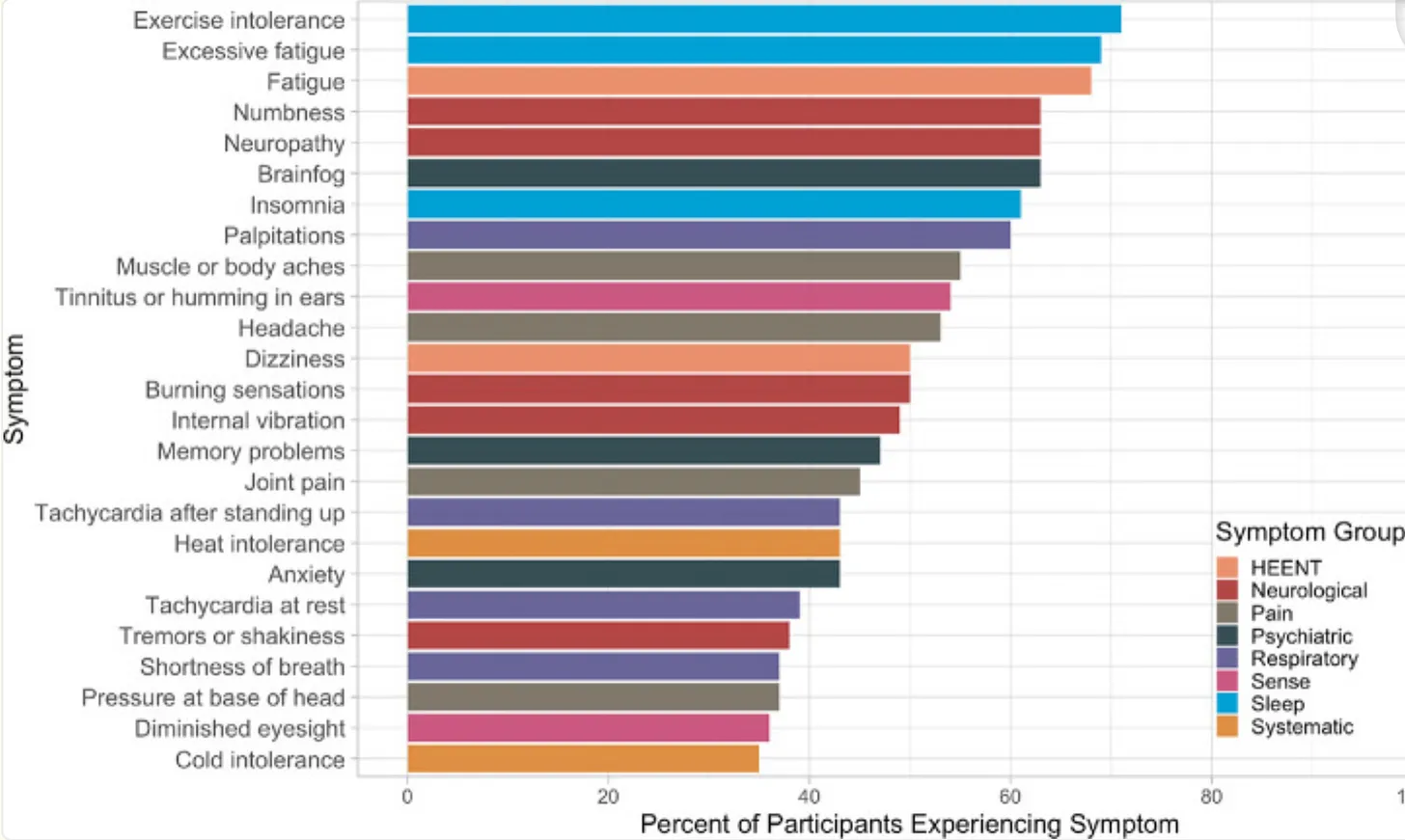
To quote the study:
In conclusion, people reporting PVS after covid-19 vaccination in this study are highly symptomatic, have poor health status, and have tried many treatment strategies without success. As PVS is associated with considerable suffering, there is an urgent need to understand its mechanism to provide prevention, diagnosis, and treatment strategies.
Note: these results were discussed in more detail in this October 2023 online conference (e.g., the mast cell component of the illness). From watching this conference, my impression was that the investigators sincerely want to help the trial participants, but due to the unpleasant implications of their findings, are in a very challenging position (hence why their 2023 pre-print has still not been published).
Recently, Alex Berenson decided to use his platform to publicize what was disclosed at the recent meeting, at which point, I felt it was appropriate to share some of what we’d learned, and shortly after it became a trending topic on 𝕏. There I highlighted that:
• There was a sustained drop in CD4 levels which the Yale group suspected could account for the sustained immune suppression following vaccination (e.g., AIDS is characterized by severe CD4 suppression). I do not know the average CD4 drop they saw, but one participant in the trial (who has extensive post vaccine symptoms) shared with me her labs which included:

• Study participants were found to have sustained vaccine spike protein in their blood (e.g., 700 days after vaccination), which led the researchers to suspect the vaccine was integrating into the genome.
Note: while there are no commercially available spike protein tests (instead we have to test the antibody levels), research institutions like Yale (and the studies I cited above) have access to tests for free spike protein. Fortunately, after years of work, a commercially available (and affordable) blood spike protein test appears to be just around the corner.
All of this briefly means:
• There is objective proof that long vax is a real syndrome. Unfortunately, given the pace at which science works, it will likely be a few more years before it is formally acknowledged (which will likely dovetail with new pharmaceuticals to treat it entering the market and all remaining interest in the COVID vaccines disappearing). However, given that Trump promoted these vaccines (and has been unwilling to distance himself from them), I could see left-wing institutions like Yale accelerating their publication timeline so that this becomes widely publicized throughout his presidency.
• The persistence of spike protein in the body indicates that the 2022 Stanford study would have found positive results if it had tested patients more than two months post vaccination and that the spike protein antibody titers are indicative of spike protein persisting within the body.
Note: I recently discussed this topic with Dr. Malone (who I consider to be the most knowledgeable people in this area). We are both of the opinion that while genomic integration may play a role in spike protein persistence, the more probable explanation is simply that the body cannot break down the mRNA (and possibly the spike proteins) due to how it was modified. Presently, the data does not exist to quantify the scale of spike protein genomic integration, but with what is currently known (which could change as more data becomes available) cellular production of vaccine mRNA is most likely not responsible for the majority of the free spike protein found in the vaccine injured individuals.
Conclusion
Throughout my life, as I’ve come to feel that because of the bad trade-offs inherent to many policies or technologies, those behind them (particularly the government) will take an approach akin to trying to pound a square peg through a round hole (as government always defaults to utilizing the force at its disposal to solve the problems it encounters). In contrast, whenever I encounter situations where there really does not seem to be a good way to balance the trade-offs, I take that as a sign I need to consider a completely different approach rather than forcing the one I’ve committed to into working.
With COVID for example, I realized near the start that it would be an exercise in futility to address it with a vaccine—a truth much of the world has now had its eyes opened to. Instead, it was my assessment from the start that the best option would be to quickly develop viable treatments for the illness that could prevent severe complications from it and then allow infected individuals to recover with a strong immunity to the disease (and as we’ve now seen, natural immunity is vastly superior to vaccine immunity for COVID-19).
Unfortunately, rather than heed that approach, our medical apparatus decided to do everything it possibly could to push the vaccine upon us, while simultaneously doing all they could to bury the myriad of effective off-patent treatments developed for COVID-19.
Since the pathway Bill Gates put into place for lucrative accelerated approvals is still in place, I believe this highlights how important it is for us to actually understand how these technologies work and the trade-offs involved with them (which are never disclosed). In turn, it is my sincere belief that if the public had known part of what I presented here, they likely would have never taken the COVID vaccines. Similarly, as I’ve tried to illustrate here, contamination and poor production is a systemic problem with vaccines, and were robust independent testing to be conducted (so people actually knew what was in the vaccines they were taking), the demand for them would likely disappear until the industry was forced to clean up its act.
Overall, it is my belief that the most effective way to stop these unsafe products is to simply have enough people boycott them that they become financially unsustainable (and due to the new era of information diffusion we are walking into thanks to platforms like 𝕏, it’s actually possible). The FDA and CDC have lost an immense amount of trust because of how flagrantly they lied to the public, and have thus far refused to take any accountability for their actions—something that will likely change once financial pressures (e.g., people no longer buying the drugs rubber-stamped by the FDA) force the agency to make genuine amends for its conduct throughout the pandemic.
While COVID-19 was a profound tragedy, because of it we now have an extraordinary opportunity to fix this continually proliferating corruption, and I sincerely thank each of you who has helped to make this moment possible.
The Benefits of Fermented Beets
Reproduced from original article:
https://articles.mercola.com/sites/articles/archive/2024/09/18/fermented-beets-benefits.aspx
Analysis by Dr. Joseph Mercola September 18, 2024

STORY AT-A-GLANCE
- Raw beet juice has been shown to lower blood pressure thanks to naturally occurring nitrates that are converted into nitric oxide in your body. Nitric oxide relaxes and dilates blood vessels, improving blood flow
- Beet juice can also boost stamina during exercise by as much as 16%, and has been shown to improve muscle capacity in people with heart failure by 13%
- Fermenting your beets gives you all the health-boosting benefits of raw beets — which are made even more bioavailable through fermentation — plus the beneficial bacteria and enzymes that result from fermentation
Beets and raw beet juice are typically recommended in limited amounts due to high sugar content. However, when fermented, beets are among the healthiest vegetables out there, as most of the sugar is then gobbled up by beneficial bacteria during the fermentation process while leaving other health-boosting ingredients intact.
Fermented foods are also chock-full of probiotics or good bacteria. A large number of studies have demonstrated how the ideal balance and diversity of bacteria in your gut forms the foundation for physical, mental and emotional well-being, and fermented beet juice has many additional benefits beyond probiotics.
Raw Beets Boost Heart Health
For example, raw beets have been shown to lower blood pressure by an average of four to five points in a matter of hours.1 This effect is due to the naturally occurring nitrates in beets, which are converted into nitric oxide in your body.2
Nitric oxide, in turn, relaxes and dilates your blood vessels, improving blood flow and lowering blood pressure. In fact, medicinally, nitrates are used to treat angina and congestive heart failure, and research shows a glass of beetroot juice has the same effect as prescription nitrates.3
Competitive athletes also use beet juice for its nitric oxide-boosting benefits. Research shows raw beets can boost stamina during exercise by as much as 16%,4 an effect attributed to increased nitric oxide.
In another study,5 nine patients diagnosed with heart failure who experienced loss of muscle strength and reduced ability to exercise were found to benefit from beet juice.
The patients were given 140 milliliters (mL) — about two-thirds of a cup — of concentrated beet juice, followed by testing, which found an almost instantaneous increase in their muscle capacity by an average of 13%.
One important caveat — Avoid using mouthwashes or chewing gum, as this prevents the nitric oxide conversion from occurring.6 The reason for this is that the nitrate is converted into nitrite in your saliva by friendly bacteria. That nitrite is then converted into nitric oxide in other places of your body.
Naturally occurring betaine in beets also reduces inflammation and protects against environmental stressors that can play a role in heart disease.
Beets Have Powerful Immune-Boosting and Anticancer Properties
The phytonutrients that give beets their deep crimson color also have powerful anticancer properties. Research7 has shown that beetroot extract reduced multiorgan tumor formations in various animal models when administered in drinking water. Beetroot extract is also being studied for use in treating human pancreatic, breast and prostate cancers.8
In addition, raw beets can boost immune function thanks to high vitamin C, fiber, potassium and manganese, while the betalain pigments and sulfur-containing amino acids in beets support your body’s Phase 2 detoxification process. Traditionally, beets have been valued for their ability to purify your blood and liver.
High in the B vitamin folate, beets also lower your stroke risk and are an excellent food for pregnant women. Folate is essential for many bodily processes, and deficiency during pregnancy raises the risk of birth defects. The blood-cleansing properties of beet kvass can also alleviate morning sickness.
Save This Article for Later – Get the PDF Now
Why Ferment Your Beets?
Fermenting your beets rather than eating them raw gives you all the health-boosting benefits of raw beets — which are made even more bioavailable through fermentation — plus the beneficial bacteria and enzymes that result from fermentation.
Besides pickled beets and beet-infused sauerkraut,9 fermented beet juice, known as beet kvass,10 is rising in popularity in the West. Beet kvass has a long tradition of use in Russia, Ukraine and other eastern European countries, where it’s consumed therapeutically as a general health tonic. It’s also commonly added to soups, sauces and vinaigrettes.
Traditionally, beet kvass has been used to boost immune function, cleanse blood, combat fatigue and treat kidney stones, chemical sensitivities, allergies and digestive problems. Anecdotal reports suggest beet kvass can even improve the appearance of age spots, thicken hair and minimize graying of hair.
A 2015 animal study confirms the gastrointestinal benefits of lacto-fermented beetroot juice, showing it improves gut microbiota and metabolic activity.11
Because of its detoxifying properties, avoid drinking too much when first starting out. Doing so could result in an overload of released toxins, producing bloating, constipation and/or cold or flu symptoms.
As a general recommendation, start with 1 ounce per day, gradually increasing the amount to an 8-ounce glass per day. If you’re highly toxic, you need to start with as little as a tablespoon.
Simple Beet Kvass Recipe
A number of beet kvass recipes can be found online. Here’s one from BeetsandBones.com:12
Ingredient list
- 2 large raw organic beets, cut into 1-inch cubes. Do not grate them, as this will release too much sugar. You do not need to peel the beets if they’re organic, unless you really want to, as the skin contains many bacteria that drive the fermentation. If using conventionally grown beets, peeling is advisable to avoid pesticide residues.
- 3 tablespoons of sauerkraut juice or pickle juice.
- Pure, filtered water, freshly squeezed beet juice or a combination of beet juice and pure water. Tap water tainted by chlorine or other chemicals will not work, as the chemicals will prevent fermentation and cause rotting instead. If using tap water, be sure to boil it first and let it cool before using.
- Optional: 1/2 teaspoon of natural unrefined salt, such as sea salt, or my personal favorite, Himalayan salt. The salt prevents bad bacteria from forming, but too much will make the drink unpalatable.
Place the beets in a large-mouth mason jar, filling the jar about one-third of the way. Add sauerkraut or pickle juice, salt, and water or beet juice, leaving 2 inches of space between the top of the liquid and the lid. Cover tightly and shake well to dissolve the salt.
Keep at room temperature for three to five days. In winter months, the fermentation process can take up to seven days due to colder room temperatures. Keep the lid tightly closed but remember to release pressure daily.
If froth, scum or mold develops, simply skim it off the top with a spoon. Do a daily taste test, and when the kvass has developed a pleasing taste, place it in the refrigerator to stop the fermenting process. Fizzy bubbles rising to the top is a sign that it’s ready.
Other Suggestions and Recommendations
If you like, you can separate the kvass from the beets by straining the liquid into a clean jar. As for storage, research shows that when refrigerated, lacto-fermented beet kvass retains its antioxidant powers for as long as 30 days.13 Naturally, the beets can be consumed as well, or you can reuse them to start another batch of kvass.
The beets also make an excellent addition to traditional borscht soup (beet soup) while the kvass can be used to pickle hard-boiled eggs. Some beet kvass recipes call for whey to be used,14 but it’s not really necessary and adds more steps and time to the process. Flavors can also be added,15 such as raisins, strawberries, fresh-squeezed orange juice, apple, carrots, lavender, fresh or dried mint leaves, cinnamon or ginger.
Opt for Organic or Heirloom Beets and Eat the Greens, Too
Whether you’re juicing your beets, eating them raw or fermenting them, I strongly recommend buying organic beets. As with many other crops, most of the sugar beets grown in the U.S. are now genetically engineered (GE). While table beets are not currently GE, they’re often grown in close proximity to sugar beets, and cross-pollination is known to occur. So, when choosing beets to eat, opt for organic varieties whenever possible to avoid potential GE contamination.
You can also buy your own heirloom beet seeds because beets are easy to grow. The many nutrients and real health advantages they offer are worth it. Besides the beetroots, beet greens offer a plethora of vitamins and minerals, too. They’re a great source of fiber — 1.41 grams in just one cup — as well as vitamin B6, magnesium, potassium, copper, manganese and antioxidants.16
The high amount of vitamin K in beet greens contains blood-clotting properties, fights aging, supports your DNA, reduces risk of osteoporosis, works with calcium to boost bone strength and also plays a role in fighting Alzheimer’s disease. Beet greens contain more iron than spinach and a higher nutritional value than the vegetable itself.17 Besides using young beet greens in salads or sautéing, juicing beet greens is another excellent way to obtain all these nutrients.
Raw Beets and Beet Kvass Can Benefit What Ails You
As you can see, beets have a wide range of health benefits. If you struggle with high blood pressure or heart failure, you can experiment with raw beet juice or beet kvass and see how it impacts you. If you notice improvements in your blood pressure or stamina after drinking the juice, then it’s a good fit.
If you have diabetes or are insulin resistant, carefully monitor how raw beet juice affects your overall health, and factor that into how often you choose to consume it. Typically, moderation is best.
Using beet kvass would appear to be a far better option, as much of the sugar is eliminated in the fermentation process. By supplying beneficial bacteria, the drink can also have a beneficial impact on diabetes and a whole host of other health problems, especially ailments rooted in gut dysfunction, and that list is a rather long one since it’s difficult to be optimally healthy if your gut microbiome is unhealthy.
- 1 Nutr J. 2012 Dec 11;11:106
- 2 Essentialstuff.org, April 28, 2014
- 3 Bodyecology.com, What Can Nitrates in Beet Juice Do for You?
- 4 J Appl Physiol (1985). 2009 Oct;107(4):1144-55
- 5 Circulation: Heart Failure 2015; 115.002141
- 6 Runners World May 8, 2013
- 7 Anticancer Agents Med Chem. 2011 Mar;11(3):280-4
- 8 J Complement Integr Med. 2013 Jun 26;10
- 9 Mother Earth News, Beet Kraut Recipe
- 10 Beatcancer.org, Benefits of Beat Kvass
- 11 Nutrients 2015 Jul; 7(7): 5905-5915
- 12 Beetsandbones.com, Beet Kvass
- 13 Polish Journal of Food and Nutrition Sciences, December 2011;61(4)
- 14 The Kitchn, How to Make Beet Kvass
- 15 DrAxe.com, Kvass
- 16 Food Data Central, Beet greens, raw
- 17 Digestive Disease Center of the Hudson Valley, Benefits of Beet Greens
Breast cancer surgery might trigger metastasis, researchers discover why
Reproduced from original article:
https://www.naturalhealth365.com/breast-cancer-surgery-might-trigger-metastasis-researchers-discover-why.html
by: August 14, 2024
 (NaturalHealth365) It is an unfortunate medical fact that people with breast cancer are highly likely to experience a recurrence after surgical tumor removal or a mastectomy. The cancer relapse usually takes place within 18 months of a surgical intervention. However, until now, medical professionals were at a loss as to why. A recent case report published in SAGE Open Medical Case Reports highlights this issue, documenting a case of breast cancer recurrence in both superficial and deep tissues following mastectomy with immediate reconstruction. This study emphasizes the complexity of post-surgical recurrence and the need for vigilant follow-up imaging, even years after the initial surgery.
A study by the Massachusetts Institute of Technology (MIT) and the Whitehead Institute shed light on the underlying mechanisms, adding to our understanding of this phenomenon. Surprisingly, the healing process of the surgical scar is at the root of this high incidence of cancer recurrence following surgery.
Breast cancer surgery taxes the immune system and leads to the spread of cancer cells
The immune system’s default functioning is to prevent the spread of cancer. This action continues even as the body is battling cancer. However, with the added stress of healing from surgery, the body’s healing forces are sidetracked away from their full focus on resolving a cancerous condition.
Cancer cells are then prone to spreading throughout the body, allowing the cancer to progress. The post-surgical wound response provokes already disseminated cells to grow and proliferate, forming tumors called metastases in other parts of the body.
During the wound healing and scarring process, the immune system goes into overdrive, sending cells to the area to promote healing and closure of the wound. This reaction of the immune system can actually fuel the formation of secondary tumors in critical areas such as the brain, liver, and lungs, where they can become even more life-threatening than the original appearance of cancer in the breasts.
Anti-inflammatory agents show promise in supporting the immune system, fighting the formation of cancer cells
In the past, researchers chalked up increased incidents of breast cancer following surgery to handling and disrupting the area. However, since healthy breast tissue is also removed, it could not be the surgery alone spreading cancer.
Get access to health coaching from Jonathan Landsman and many other top health experts. Plus, our social community is full of great health information. Start chatting with our incredible health moderators + much more. Click here to learn more.
The researchers believe anti-inflammatory drugs could help control the immune system so that cancer does not spread to other parts of the body. Foods high in antioxidants are known to be effective in fighting and protecting against cancer.
Favor anti-inflammatory foods and supplements to support your immune system
Antioxidant-rich foods have anti-inflammatory effects and suppress the formation of free radicals in the body. Free radicals are highly damaging to cells and set the stage for the rogue cell division that characterizes the formation of cancer cells.
Organic dark leafy green vegetables (i.e. kale and collard greens), berries, artichokes, pecans, and dark chocolate are among the foods highest in healing antioxidants. Whether you are facing a cancer diagnosis or want to decrease your odds of getting it, these foods can help support a healthy immune system.
In addition, as an added ‘anticancer effect,’ you might want to consider taking anti-inflammatory supplements such as vitamin C, D and curcumin.
Sources for this article include:
Unlocking Your Body’s Detox Potential: The Crucial Role of Lymphatics
Reproduced from original article:
https://articles.mercola.com/sites/articles/archive/2024/09/08/lymphatic-system.aspx
Analysis by Dr. Joseph Mercola September 08, 2024
STORY AT-A-GLANCE
- Your lymphatic system is crucial for immune function, fluid balance and detoxification. It removes cellular waste, fights infections and aids in nutrient absorption. Proper lymphatic function is essential for overall health
- In our interview, Dr. Perry Nickelston recommends a “Big Six” lymphatic drainage technique, focusing on six primary areas in a specific order: collarbone, jaw, shoulder/armpit, abdomen, groin and behind your knee
- Lymph nodes cluster around major joints to facilitate movement-based drainage. Lack of movement and poor breathing lead to lymphatic stagnation, causing various health issues like inflammation and recurring infections
- Regular movement, including walking, rebounding and hanging exercises, is vital for lymphatic health. Combining lymphatic massage with other detox strategies like sauna use enhances overall effectiveness
- Lymphatic health is closely tied to cardiovascular and brain function. Addressing lymphatic stagnation helps with heart health, neurodegenerative diseases and chronic pain management by reducing inflammation and improving fluid dynamics
Recently, I had the pleasure of interviewing Dr. Perry Nickelston, a chiropractor and expert in lymphatics. Your lymphatic system is a vital component of your body, playing a critical role in maintaining overall health and function. As an integral part of your immune system, it produces and transports white blood cells, particularly lymphocytes, which are essential for fighting infections and diseases.
Beyond its immune functions, your lymphatic system is crucial for maintaining fluid balance in your body by collecting excess fluid from tissues and returning it to your bloodstream. It also plays a key role in your digestive process, absorbing fats and fat-soluble vitamins from your small intestine and transporting them to your bloodstream.
Additionally, your lymphatic system acts as your body’s cleaning system, removing cellular waste, debris and toxins from tissues. It aids in defending against cancer by trapping cancer cells in lymph nodes, slowing the spread of some types of cancer. The system is also responsible for the circulation of interstitial fluid, which is important for delivering nutrients to cells and removing waste products.
Some hormones also utilize your lymphatic system as a transport channel. Given its diverse and essential functions, your lymphatic system’s importance to overall health and bodily function cannot be overstated. Nickelston shares key tips on how to unlock your body’s detox potential using a six-point lymphatic drainage program.
Your Lymphatic System: Your Body’s Unsung Hero
Nickelston began by explaining your lymphatic system’s role, noting:1
“The lymphatic system, it’s primarily part of two systems. Your immune system — it’s the biggest component of your immune system. And it just so turns out that the largest part of your immune system is in your gut … and that’s also where you find the largest presence of lymphatics.
And it’s a major part, which many people forget, of your vascular system, which is your blood flow system. So, if you have an issue with either one of those, blood flow and lymphatics, they’re going to go together.”
He likened the lymphatic system to a fish tank filter, constantly cleaning out cellular waste and harmful substances like bacteria, viruses and toxins. When this system becomes stagnant or blocked, it leads to a host of health problems. Nickelston recovered from several of his own health challenges by addressing his lymphatic system:2
“Many years ago, I was very sick and I was having a lot of infections and different types of autoimmune conditions that I never really got an official name for. Honestly, it felt like I had every one that you could possibly list off. It was just inflammation run amok.”
After years of struggling with conventional medical approaches, he discovered the power of working with your lymphatic system:3
“Within several days, I made the largest shift in how I felt and my symptoms that I’ve had probably five years up to that point. And I’m like, ‘OK, this is it. This is what I’ve been looking for. And now I’m just devoting the rest of my life to teaching others that.”
An Interconnected Web of Fluids and Signs of Lymphatic Stagnation
Most clinicians consider your kidneys to be the filtration system of your body, not the lymphatics. But as Nickelston explains, your lymphatics facilitate the excretion of toxins to your kidneys to ultimately remove them from the blood. The process involves an interconnected web of fluids. Nickelston explained:4
“All these fluids interconnect with each other. So, when you have stuff that comes out through the arterial system, the vascular system, that’s the supply side. So, that’s going to deliver the nutrients in the oxygen and the things to the cells, but in order to get to the cells, they have to cross through what’s called the interstitial fluid. And the lymphatic’s job is to keep that fluid clean.
So once the cells use the nutrients, they’re going to create energy and they create waste, metabolic waste. If anything, that comes through the capillary, and that waste has to get out. The veins are going to take some of it, but the particles that are too large won’t go into the vein. So, then it has to go into the garbage can of the lymphatic system.
Then the lymphatic system takes it to the lymph nodes, which are these mini toilets throughout the body, and you have about 600 or 700 of them.
And each node kills more things along the pathway. Your immune system bags and tags things that the lymphatics capture and that tells your immune system what something is and what it needs to do about it. And then eventually it’s going to dump its way back into the veins, and then it’s called plasma.
So, it goes from the veins and then it’s going to go from the veins back into the blood flow again, and that’s how it’s going to make its way to the kidneys. All of these areas intermix with each other. And if you have a backflow in one area, an obstruction or a stagnation, you’re going to have backflow in all the other areas because the pressure has to dissipate somewhere.”
This interconnection means that problems with lymphatic flow impact everything from your cardiovascular system to your brain health. How can you tell if your lymphatic system is struggling? Nickelston pointed out several key indicators:
| Puffiness and swelling, especially above your collarbones | Recurring infections |
| Chronic inflammation | Brain fog |
| Unexplained weight gain | Chronic pain |
Save This Article for Later – Get the PDF Now
The ‘Big Six’ Lymphatic Points

Lymph nodes are strategically clustered around your body’s primary joints that are meant to move frequently. These clusters are found at your shoulder joint, hip joint, knee joint, center of your abdomen and the top of your neck — specifically at the first three vertebrae and behind the angle of your jaw.
The purpose of this arrangement is to facilitate lymph movement through joint motion, such as when walking. Nickelston emphasizes that lack of movement in these joints, coupled with poor diaphragmatic breathing, lead to stagnation in your lymphatic system. This is why he recommends focusing on these six primary areas, dubbed the “Big Six,” before engaging in movement.
By addressing these key points, you effectively prime your lymphatic system for better function. Nickelston suggested the order is important, but my review suggests the order is not important. The key principle is to move lymph from areas of high pressure to low pressure, always toward your collarbone, which is the ultimate destination for lymph drainage:
- Collarbone area (both sides)
- Behind the angle of your jaw
- Shoulder joint/armpit region
- Abdomen (from sternum to navel)
- Inguinal lymph nodes (groin area)
- Behind your knee
“I usually have people do some rubbing. It can be different pressures, it can be light, it can be a little bit deeper, it can be slow, it can be fast,” Nickelston says, “just don’t cause pain when you do it. If you cause pain when you do it that too means you’re pressing too hard and you’re likely going to tighten up, which is going to defeat the purpose of you doing the reset.”5
This routine can be performed before exercise as a “pre-movement workout” and after exercise to facilitate waste removal. The duration can be as quick as one minute for all areas or longer if desired, with each area typically worked on for about 20 seconds.
According to Nickelston, this technique not only primes lymph flow but also improves vein and artery flow and enhances proprioceptive awareness before movement, presenting a simple yet effective way to support your lymphatic system’s function in your body.
The Power of Movement
While targeted massage is important, Nickelston also emphasized the role of movement in maintaining lymphatic health, noting, “Humans, were made to move. We’re designed to walk. So, you’re using your muscles and you’re pumping fluids all over the place.”6 We discussed the benefits of various types of movement, including:
- Walking, including brisk walking with arm swinging
- Rebounding on a mini trampoline
- Dancing and flowing movements
- Hanging exercises
I believe walking is the primary exercise that humans were designed to do. If you’re doing other forms of exercise and not walking, I encourage you to consider giving yourself more time to walk and do other exercises on top of walking. But with respect to lymphatics, adding in rebounding, dancing, hanging and walking backward allows you to move up and down, twist and rotate your body to further improve lymphatic circulation. Nickelston said:7
“You should be walking, hopefully brisk enough and without a phone in your hand, so you get some twisting and rotation and torsion in the center of the abdomen, and that moves fluids too. I always tell people envision wringing out a towel; twisting gets fluids to move.
So how about you walk and then you stop for a little bit, then you kind of jump up and down on the balls of your feet because you have built-in rebounders called calves, and you can go up and down like that as well as monitoring your breathing at the same time. Usually, I tell people to keep their mouth closed, breath in and out through their nose, and they’ll have more optimal movement of their diaphragm at the same time, and you do your lymphatics.
What I usually teach people is to do those, but then you’ll even have a better result when you do some lymphatic work before you walk and before you rebound … Twisting and turning when you’re walking and hanging works really great too. If you can hang from something for a period of time that really begins to open up those ribs along the spine and along the back that get stuck and locked.”
Further, lymphatic work complements other detoxification approaches. Combining lymphatic massage with strategies like sauna use, cold plunges and targeted supplementation is highly effective to facilitate detoxification. If this is your focus, an ideal sequence is to massage the Big Six, then use a rebounder and then progress into a far infrared sauna.
Your Lymphatic System’s Role in Heart and Brain Health
Your lymphatic health is tied to your overall health, including cardiovascular and brain function. Nickelston explained:8
“When your lymphatics are stagnated, you get backflow around the heart too. But that pressure … from the lymphatics also can revert back into the veins. So, the veins themselves can become stagnant and slow flowing and then that’s going to make a difference on the arterial side.”
This means addressing lymphatic stagnation is a powerful tool in supporting heart health, especially for those dealing with conditions like mild heart failure. In terms of brain health, Nickelston said:9
“What they’re finding in relationship to the brain — neuroinflammation, neurodegeneration with Alzheimer’s, Parkinson’s, MS [multiple sclerosis] and the fluid waste management system of the body, they’re tying it more to lymphatics in general, which is great.”
This emerging understanding of your lymphatic system’s role in brain health could open up new avenues for addressing neurodegenerative diseases. There’s also a relationship between lymphatic health and chronic pain. Nickelston explained:10
“Whenever you’re going to have a decrease in the lymphatics being able to get out, you’re going to have trapped inflammation around the interstitial fluid because it’s stasis. There’s an actual term for it called interstitial inflammatory stasis.”
This stagnation leads to increased pressure and inflammation, triggering pain responses. Moreover, lymphatic issues impair your body’s ability to inhibit pain signals:11
“What you’ll also find is that when you have so much inflammation in your body, and even maybe inflammation in your brain and poor blood flow into your brain because of lymphatic stagnation, you lose the ability to efficiently activate the pain inhibition pathway.”
This insight offers a new perspective on addressing chronic pain, suggesting that improving lymphatic flow is a key component of pain management.
How to Implement Lymphatic Health Strategies
Be sure to review the article I posted in the last week that supplements this interview. In terms of practical advice to begin incorporating these insights into your daily life, here are some key takeaways:
- Start with the Big Six lymphatic massage routine daily, especially before exercise.
- Prioritize regular movement, including walking, rebounding, hanging and varied motions.
- Practice deep, diaphragmatic breathing to support lymph flow.
- Consider integrating lymphatic work with other detox strategies like sauna use.
- Be patient and persistent, as it may take time to clear long-standing blockages.
While often overlooked, this crucial system plays a vital role in detoxification, immune function and even brain and heart health. What excites me most about this approach is its simplicity and accessibility. With just a few minutes of targeted massage and some mindful movement practices, you unlock significant improvements in your well-being.
A greater focus on lymphatic health is especially useful for those struggling with chronic conditions, inflammation and unexplained health issues. I encourage you to explore these concepts further and consider incorporating these strategies into your own health routine. As always, listen to your body and consult with your health care provider before making significant changes to your health regimen.
By paying attention to this often-neglected system, you’ll unlock a powerful key to enhanced vitality, reduced pain and improved overall health. It’s a reminder that often, the most profound health solutions are also the simplest.
- 1, 2, 3, 4, 5, 6, 7, 8, 9, 10, 11 Youtube, Dr. Mercola, Unlocking Your Body’s Detox Potential: The Role of Lymphatics — Interview With Dr. Perry Nickelston
Ginseng’s Secret Language: How Plant miRNAs Speak to Human Cells
© GreenMedInfo LLC. This work is reproduced and distributed with the permission of GreenMedInfo LLC.
Want to learn more from GreenMedInfo? Sign up for the newsletter here:
www.greenmedinfo.com/greenmed/newsletter
Reproduced from original article:
https://greenmedinfo.com/content/ginsengs-secret-language-how-plant-mirnas-speak-human-cells
Written By: GreenMedInfo Research Group

Imagine a world where plants can directly communicate with our bodies at a molecular level, fine-tuning our physiological processes. This isn’t science fiction – it’s the fascinating reality of cross-kingdom regulation through microRNAs, with ginseng leading the charge in this botanical-human dialogue.
The Silent Conversation: miRNAs as Cross-Kingdom Messengers
In the intricate dance of life, species have long been known to interact and support one another. However, recent discoveries in the field of molecular biology have unveiled a new layer to these relationships – one that operates at the genetic level through microRNAs (miRNAs). These small, non-coding RNA molecules play a crucial role in regulating gene expression, and remarkably, they can traverse the boundaries between kingdoms.
Ginseng: A Master of Cross-Kingdom Communication
Ginseng, revered for centuries in traditional medicine, has emerged as a prime example of a plant capable of cross-kingdom communication via miRNAs. Recent studies have shown that ginseng-derived miRNAs can survive mammalian digestion and enter circulation, where they interact with our cells and influence various physiological processes.1] This remarkable ability of ginseng miRNAs to cross species boundaries and directly impact mammalian and therefore presumably human physiology opens up new avenues for understanding the molecular basis of ginseng’s therapeutic effects.
Key Human Processes Modulated by Ginseng miRNAs
1. Immune Function
Ginseng miRNAs, particularly miRNA156, have been found to modulate immune responses in humans. They can influence the production of cytokines and the activity of immune cells, potentially explaining ginseng’s reputation as an immune-boosting herb.
2. Energy Metabolism
Research has shown that ginseng miRNAs can affect key enzymes involved in glucose metabolism and energy production. This may contribute to ginseng’s reported effects on fatigue and endurance.
3. Antioxidant Activity
Certain ginseng miRNAs have been observed to upregulate antioxidant enzymes in human cells, offering a molecular explanation for ginseng’s antioxidant properties.
4. Cardiovascular Health
Studies suggest that ginseng miRNAs may influence genes involved in blood pressure regulation and vascular health, aligning with traditional uses of ginseng for cardiovascular support.
The Broader Implications: A Web of Interspecies Support
The discovery of cross-kingdom regulation through miRNAs offers a new perspective on why diverse ecosystems tend to be healthier and more resilient. When plants and animals support one another, they may be engaging in a complex exchange of genetic information that fine-tunes the physiology of all participants.
This interspecies dialogue through miRNAs could explain:
- Why diverse diets tend to promote better health
- The importance of biodiversity for ecosystem and human health
- The molecular basis for some traditional herbal medicines
Conclusion: Redefining Our Relationship with Nature
As we uncover the intricate ways in which species communicate through miRNAs, we are compelled to reconsider our relationship with the natural world. The line between “us” and “them” becomes blurred, revealing a deeply interconnected web of life where genetic information flows freely between species. Ginseng, with its remarkable ability to modulate human physiology through miRNAs, serves as a powerful example of this cross-kingdom collaboration, hinting at the untapped potential of nature to support and enhance human health.
Five Habits That Ruin Your Sleep
Reproduced from original article:
https://articles.mercola.com/sites/articles/archive/2024/08/20/five-habits-that-ruin-your-sleep.aspx
Analysis by Dr. Joseph Mercola August 20, 2024

STORY AT-A-GLANCE
- Poor sleep habits like lingering in bed, avoiding sunlight and using electronics too close to bedtime can disrupt your sleep cycle. Experts recommend consistent sleep schedules and morning light exposure for better sleep
- Insufficient sleep can lead to impaired memory, slower reactions, increased risk of neurological problems, Type 2 diabetes and weakened immune function. Adults need aim for seven to nine hours of sleep every night
- Morning exercise may offer greater health benefits, including increased fat-burning and reduced risk of cardiovascular disease. Exercise can also improve sleep quality by reducing stress
- Blue light from electronic devices can interfere with melatonin production and disrupt sleep. Limiting device use before bed and reducing EMF exposure may improve sleep quality
- Sun exposure and adequate vitamin D levels play important roles in regulating sleep. Vitamin D deficiency has been linked to lower sleep quality and may impact various health aspects
Are you getting enough sleep these days? According to the National Council on Aging,1 more than a third of Americans are getting less than seven hours of sleep a day. Additionally, around 30% of adults experience insomnia.
While the optimal amount of sleep slightly varies, it would be wise for everyone above the age of 18 to aim for seven to nine hours. This duration is sufficient for your body to recover and undergo its various maintenance processes. If you’re getting anything lower than that, your health may eventually suffer.
Are You Doing These Five Sleep-Disrupting Habits?
If you think that you’re not getting enough sleep, you may have habits that need changing. The Hearty Soul lists five examples you might be doing that can disrupt your sleep cycle:2
1. Lingering in bed — According to sleep expert Dr. Chester Wu, staying in bed after waking up may be one of the most detrimental habits that can disrupt your sleep cycle, as it can leave you feeling groggy and tired. It’s better for you to get out of bed immediately, as it creates a strong distinction between waking and sleeping.
On a related note, how often do you make your bed after getting up? It may seem insignificant, but tidying your bed can have a positive psychological effect on your eventual sleep at night. It creates a powerful, symbolic signal in your brain that helps deter you from returning to your bed during the day. Moreover, doing it first thing in the morning tells your brain that the day has started.
2. Avoiding sunlight — Getting sunlight during the day is important, as it regulates your circadian rhythm. In other words, it’s another signal to your body that it’s daytime. Sleep health expert Dr. Chris Winter expounds on this further, saying that “Light effectively shuts off your brain’s production of melatonin and lets your body know the day has begun.”
If you’re avoiding sunlight in the morning, you’re potentially missing out on another habit that can have far-reaching repercussions to your health — exercise. Doing it in the morning can jumpstart your brain and signal that the day has begun.
3. Sleeping in on weekends — Catching up on a few more hours of sleep during the weekends may seem enticing, but it may disrupt your sleep cycle. According to sleep specialist Carleara Weiss, irregular wake-up times may lead to social jet lag that can result fatigue and concentration problems. To prevent these from happening, it’s important to maintain a consistent sleep schedule — even on weekends — to regulate your biological clock.
4. Using electronics in bed — With the advent of better wireless technology, many children and adults scroll through their phone nowadays before sleeping. In fact, statistics indicate that 75% of children and 70% of adults engage in this habit.3
While scrolling on your phone until you feel sleepy seems harmless, the blue light emitted from screens interferes with melatonin production. For those unfamiliar, blue light belongs to the visible light spectrum (a type of light we can see).
The visible spectrum is responsible for regulating your circadian rhythm, and too much of it can eventually disrupt the sleep/wake cycle. The largest natural source of blue light is sunlight, while artificial sources come from LED bulbs, computer monitors and handheld gadgets with screens.4
5. Staying in darkness after waking up — It’s tempting to stay in the comfort of your bed after waking up, but according to Winter, this can confuse your body’s internal clock. Providing himself as an example, he shares that he immediately gets up upon waking and exposes his body to light.
What Happens When You Don’t Get Enough Sleep?
As mentioned, sleep is an important aspect that can be detrimental when neglected. It’s not just for re-energizing yourself for the next day. It also plays a role in important processes, such as memory formation, metabolism and cardiovascular health.
When you don’t get sufficient sleep, the mentioned processes are affected, which in turn impacts your health. Here are some examples:
- Impaired memory retention — A study5 noted that sleep deprivation may hamper your ability to remember new information. Your body needs enough time to transform unstable memories into a more permanent form, and sleep deprivation disrupts this process.
- Slow reaction speed during daytime — Getting less than six hours of sleep affects your cognition, potentially increasing the risk of causing or getting involved in accidents. In a five-year study6 released by the Foundation for Traffic Safety, researchers noted that 29,834 people were killed due to drowsy drivers.
- Increased risk of neurological problems — Sleep deprivation has been found to impair the removal of misfolded neurotoxin proteins involved in neurodegenerative conditions, such as Alzheimer’s disease and Parkinson’s disease.7
- Increased risk of Type 2 diabetes — Poor sleep quality, as well as insufficient, excessive and irregular sleep patterns increase glucose intolerance. If you’re already prediabetic, poor sleep can worsen it further.8
- Impaired immune function — Sleep supports your immune system, and deprivation can lead to an increased risk of immune-related diseases, including neurodegenerative, cardiometabolic and autoimmune conditions.9
Save This Article for Later – Get the PDF Now
Why Exercising in the Morning Is Important
Exercise is an important component to promoting well-being, but did you know that adjusting your schedule to do it in the morning can provide greater benefits? According to training specialist David Wiener,10 exercising in the morning can help you burn more calories and excess body fat. That’s because fat oxidation naturally occurs during the morning hours before having your first meal.
A 2022 study11 supports this hypothesis. Researchers found a link between the time of day you exercise and the risk of coronary heart disease and stroke. They selected 86,657 men and women who didn’t have cardiovascular disease and compared the peak time of activity across a 24-hour period.
Results showed that participants who were most active during the late morning had a significantly lower risk of stroke and coronary artery disease compared to people who were more active during midday.
Interestingly, exercise may lead to better sleep quality, too. In a meta-analysis12 published in Cureus, researchers noted that being physically active can reduce stress, subsequently helping diminish daytime sleepiness and boost sleep quality at night. Moreover, exercise has been observed to be beneficial in both younger and older populations, highlighting the beneficial effects of exercise for everyone.
Blue Light From Your Gadgets May Be Disrupting Your Sleep
Do you habitually scroll through your phone so you can feel sleepy, only to find out you can’t fall asleep right away? As mentioned earlier, blue light from the screen blocks melatonin production.
When your retinas receive light, they send a signal to your suprachiasmatic nucleus (SCN), which is the group of cells in your hypothalamus controlling the biological clock. The signals create a chain reaction in your SCN that affect body temperature, sleep drive and appetite, making it harder to sleep.13
“In the evening, as it becomes dark outside, melatonin levels rise and body temperature lowers. Melatonin stays elevated throughout the night, promoting sleep. As long as our eyes perceive light, the SCN responds by suppressing melatonin production.
This explains why evening exposure to light, such as that from indoor light or electronic devices that emit blue light, such as a computer or television, make it harder to fall asleep.”
Not to mention, using your phone increases the overall time you’re exposed to electromagnetic fields (EMFs). These invisible sources of radiation may promote poor health. For example, a 2023 study14 noted that men who used their cellphones more than 20 times a day had significantly lower sperm counts compared to men who only used their phones once a week or less. In the case of women, EMF exposure can increase the risk of miscarriage.15
The list below shows some strategies that can help minimize your exposure to EMFs and help you sleep better at night. For more additional strategies, you can read my article “Ten New Studies Detail Health Risks of 5G.”
- Shut off the electricity to your bedroom at night. This typically works to reduce electrical fields from the wires in your wall unless there is an adjoining room next to your bedroom. If that is the case, you will need to use a meter to determine if you also need to turn off power in the adjacent room.
- Use a battery-powered alarm clock, ideally one without any light.
- Replace CFL bulbs with incandescent bulbs. Ideally remove all fluorescent lights from your house. Not only do they emit unhealthy light, but more importantly, they will actually transfer current to your body just being close to the bulbs.
- If you must use Wi-Fi, shut it off when not in use, especially at night when you’re sleeping. Ideally, work toward hardwiring your house so you can eliminate Wi-Fi altogether. If you have a notebook without any Ethernet ports, a USB Ethernet adapter will allow you to connect to the internet with a wired connection.
- Avoid using your cellphone and other electronic devices at least an hour (preferably several) before bed.
Embrace Sunlight to Get Better Sleep at the End of the Day
Aside from signaling your body that the day has started, sunlight produces vitamin D, and research suggests it plays a role in promoting sleep. According to a study16 published in Frontiers in Neurology, vitamin D deficiency has been linked to lower-quality sleep:
“Low vitamin D status is quite common especially in the winter months in central Europe, and vitamin D deficiency has been associated with impaired sleep. Vitamin D seems to have an important role in sleep regulation. Vitamin D deficiency increases the risk of sleep disorders and is reported to be associated with sleep difficulties, shorter sleep duration, and nocturnal awakenings.”
How does vitamin D work to promote sleep? According to a 2020 study,17 researchers noted that vitamin D receptors, as well as enzymes that control their activation, “are expressed in several areas of the brain involved in sleep regulation.”
Moreover, the researchers observed that vitamin D influences melatonin production, the hormone responsible for regulating circadian rhythm. In this regard, boosting vitamin D levels may help improve sleep quality and even manage sleep disorders, according to findings from a 2023 study.18
In addition to regulating your circadian rhythm, vitamin D plays a role in many biological processes. Research19 has shown that it has diverse functions, such as:
- Bone health — Promotes stronger bones through proper calcium and phosphorus handling
- Immune system — Helps fight microbes as well as reduction of proinflammatory cytokines
- Cancer — Inhibits cell proliferation, angiogenesis and metastasis of cancerous cells
- Cardiovascular health — Reduces oxidative stress, inflammation and thrombogenesis in the cardiovascular system
Regarding optimal vitamin D levels, I’ve long recommended 60 to 80 ng/mL (150 to 200 nmol/L) for optimal health and disease prevention. Moreover, vitamin D levels higher than 100 ng/mL appear to be safe in helping manage certain chronic diseases.
The best way to do this is to walk outside in minimal clothing, preferably during solar noon (around 12:30 to 1:30 PM). Aside from the UVB radiation hitting your skin to produce vitamin D, you’re also getting additional benefits from near-infrared radiation.
Have your blood tested first to serve as the baseline, then test again to be sure you’re hitting my recommended range. If results show that you’re still low (or if you’ve reached 80 ng/ml), you’ll need to adjust your sunlight exposure accordingly to stay within range. Then, retest in another three to four months.
- 1 National Council on Aging, “Sleep Statistics and Facts”
- 2 The Hearty Soul, July 3, 2024
- 3 Sleep Foundation, “Technology in the Bedroom”
- 4 Prevent Blindness, “What Is Blue Light?”
- 5 Neurosciences (Riyadh). 2023 Apr; 28(2): 91–99, Abstract
- 6 AAA Foundation for Traffic Safety, “Drowsy Driving in Fatal Crashes, United States, 2017–2021”
- 7 Biomed Res Int. 2020; 2020: 5764017, Abstract
- 8 NIDDKD, March 17, 2021
- 9 Commun Biol. 2021; 4: 1304, Abstract
- 10 Express, March 3, 2024
- 11 European Journal of Preventive Cardiology, 2022; 30(3), Abstract
- 12 Cureus. 2023 Aug; 15(8): e43595, Discussion
- 13 Sleep Foundation, “Sleep Drive and Your Body Clock”
- 14 Fertility and Sterility November 1, 2023 Epub ahead of print
- 15 Malays J Med Sci. 2023 Oct; 30(5): 70–80, Abstract
- 16 Front Neurol. 2023; 14: 1141835, Introduction
- 17 Curr Pharm Des. 2020;26(21):2492-2496, Abstract
- 18 Cent Eur J Public Health 2023; 31 (1): 19–24, Abstract
- 19 Drugs. 2023; 83(8): 665–685, Figure 1