Immunity
now browsing by category
ALARMING worldwide data indicates COVID shot decimates immune system
Reproduced from original article:
www.naturalhealth365.com/immune-system-decimated-by-covid-shot-3544.html
by: Sara Middleton, staff writer | February 11, 2022
 (NaturalHealth365) Last month, the European Medicines Agency went on record stating that receiving a COVID shot booster repeatedly – third, fourth, perhaps fifth doses of the mRNA jabs as frequently as every four months or so – could weaken jab recipients’ immune responses. According to EMA’s head of biological threats vaccine strategy, repeated boosters are “not something that we can think should be repeated constantly.”
But let’s even set aside the third, fourth, or fifth dose for a moment and look at other world data. Is there evidence suggesting that even just one or two COVID shot doses are bad for you?
Global data warns of possible immune dysfunction following the COVID shots
Data shared by the Daily Expose is shedding light on a proposed phenomenon known as “Covid-19 vaccine-induced acquired immunodeficiency syndrome”, or VAIDS. It’s supposedly similar to AIDS, a syndrome caused by the human immunodeficiency virus that disrupts immune function and makes it difficult to fight off infections.
Perhaps this dysfunction of the immune system could explain why official data from the government of New South Wales in Australia reveals that people who have received two or three doses of the COVID shot are more than twice as likely to be infected with SARS-CoV-2 than people who have received only one or no doses.
Supporters of the VAIDS-hypothesis also propose that the rapid decline in jab efficacy – as reported by U.S. public health officials and revealed in a recent study published in Science to be as steep as a 44% DROP in just six months – is a huge indicator that the human immune system is unable to provide adequate protection after getting stressed two or more times with a gene therapy drug within a year or so.
Another possible consequence of immune system damage caused by COVID shots is even worse adverse effects, something that the U.S. Centers for Disease Control and Prevention (CDC) expressed concern about during a media briefing back in July 2021, according to Reuters.
Additionally, government data from Scotland released in January even suggested that the COVID shots actually had NEGATIVE efficacy in December 2021 – in other words, twice-vaxxed individuals lost upwards of 70% of their immune response to the pandemic virus, and their jab status actually made them more susceptible to a COVID infection compared to unvaxxed people. This negative efficacy trend has been observed in many areas of the world.
Is the world facing a massive spike in immune disorders and other chronic health diseases – and are COVID shots part of the problem?
It is important to understand that at this time, VAIDS is not considered a real phenomenon and has been swiftly debunked and fact-checked by mainstream media outlets. According to AP News, other hypothesized kinds of immune damage associated with COVID shots – including antibody-dependent enhancement and destruction of immune T cells – have also been reported as “false.”
As we know, of course, what was once “misinformation” of the past – that lockdowns are harmful, for example, or that cloth masks are ineffective, or that fully vaxxed people can catch and spread SARS-CoV-2 – is now today’s acceptable truth. And since it can take years, even decades, before serious health problems associated with drugs are realized and made known to the public (thalidomide, DDT, and Vioxx, anyone?), it’s appropriate to look at these COVID shots with proper caution.
Nobody should be made to feel crazy or “anti-vax” simply for having questions and concerns about these brand-new-to-the-market drugs.
Pay attention to your loved ones’ health over the coming months and years, especially if any of them have received a COVID shot. Time will tell whether the population will begin to see a rise in immune-related dysfunction and whether we can accurately tease out all the underlying factors if this does happen.
In the meantime, do your part by doubling down on your healthy habits to keep your immune system as strong as possible.
Sources for this article include:
Reuters.com
APnews.com
Dailyexpose.uk
Beckershospitalreview.com
Bloomberg.com
Health.nsw.gov.au
Science.org
Thelancet.com
Publichealthscotland.scot
NIH.gov
The smallpox pandemic response was eerily similar to COVID
There is much to learn from how it was ended and who ended it
Content from A Midwestern Doctor, LeanMachine and others

In late Dec 2019, I predicted almost everything that has happened so far with COVID-19, which put me at odds with most of my physician colleagues. I was able to do so because I was familiar with history and saw many the signs our past mistakes would repeat themselves (for example, The Real Anthony Fauci details how the HIV epidemic was a blueprint for the management of COVID).
What is occurring now in Canada and other places is almost identical to what happened with the smallpox vaccination campaigns over a century ago, and I believe it is critical we understand these lessons from the past and it is vital this message gets out to the Truckers. If you have any way to get this message to them, PLEASE do.
Briefly, the original smallpox vaccine was an unusually harmful vaccination that was never tested before being adopted. It increased, rather than decreased smallpox outbreaks. As the danger and inefficacy became known, increasing public protest developed towards vaccination. Yet, as smallpox increased, governments around the world instead adopted more draconian mandatory vaccination policies. Eventually, one of the largest protests of the century occurred in 1885 in Leicester (an English city). Leicester‘s government was replaced, mandatory vaccination abolished, and public health measures rejected by the medical community were implemented. These measures were highly successful, and once adopted globally ended the smallpox epidemic, something most erroneously believe arose from vaccination.
This article is broken into the following sections:
-Dissolving Illusions
-History of Smallpox Vaccination
-Skepticism and Rejection of Smallpox Vaccination
-Mandatory Smallpox Vaccination
-Effects of Mandatory Smallpox Vaccination
-Smallpox Vaccine Injuries
-Historic 1885 Public Protest
-The Leicester Model
-History Repeats in the Present Day
Dissolving Illusions
As the kidneys are so susceptible to pharmaceutical injuries, nephrology is the one specialty in medicine where no one will question a doctor terminating a medication. In 2009, Suzanne Humphries M.D., a nephrologist noticed a concerning pattern of influenza vaccinations immediately preceding kidney injury or kidney failure where no other cause could be identified. Most hospitals have standing orders to ensure all admissions are vaccinated (due to financial reimbursements for immunization), and she challenged this practice in her kidney patients. While much of the staff agreed (having also witnessed the kidney damage), to her surprise, for the first time in her career, her professional opinion on kidney failure was ignored, the administration refused her request and she was harassed until she left.
She encountered many of the same denials of reality we face now when discussing COVID-19 immunizations. The most common response to her concerns was “how can you oppose the influenza vaccinations; do you not realize how much the polio and smallpox vaccines did for the world?” At some point, Dr. Humphries realized that she needed to investigate these claims for herself. Upon initially attempting to evaluate the efficacy of the smallpox vaccination campaigns, she discovered the data was not available. This eventually led her to investigate the archives of some of the oldest libraries in the country, where she discovered, a very different picture of the time emerged.
To a large extent, the mythology of modern medicine is built upon vaccination bringing us out of the dark ages of plagues and infectious diseases, and as a result, there is a vested interest to protect that mythology at all costs. As such, I believe Dr. Humphries chose an excellent title, and that she and the other authors through this work provided an immense contribution to the medical field. What follows is primarily excerpted from Dissolving Illusions (available as both a book and audiobook). For brevity, citations and references can be found there.
History of Smallpox Vaccination
When the industrial revolution began, large numbers of serfs (economic slaves) moved from the countryside to the cities to serve as the new work force. In these early cities, they lived in conditions of absolute squalor that in our modern age are difficult for most to even conceive of (which may have been partially due to the recent adoption of Thomas Malthus’s ideas on the need for population control by the European aristocracy).
As a result of these dangerous living conditions, plagues and infectious disease were commonplace. Early progressives in turn argued that improving deadly living conditions through early public hygiene programs and lessening the capitalist exploitation of the working class (by say giving humane hours or not forcing children 5 years of age to do backbreaking labor all day long) was the key to public health. There were many battles on this subject, which the activists of the time eventually won as public sentiment turned against the horrific effects of the smallpox vaccination, banishing these deadly diseases to the past.
Scarlet fever for example, killed many more people than smallpox, its decline perfectly mirrored smallpox, and few are even aware this disease previously was a horrendous plague.

- England and Wales smallpox and scarlet fever mortality rates from 1838 to 1922.
Modern medicine snuck in and successfully claimed credit for these changes, attributing them to vaccines, despite the data showing the opposite and vaccines not existing for most of the diseases. Dissolving Illusions provides the data and graphs that demonstrate there is a much stronger hypothesis to explain the decline of these infectious diseases.
An early practice to mitigate smallpox involved the intentional transmission of smallpox from one person to another (variolation), which was endorsed by some, and rejected by others as it was often viewed to be both dangerous and likely to worsen rather than improve outbreaks. For example, a 1764 article assessing the effects of variolation after 38 years of implementation found it had increased smallpox cases by 41% and smallpox deaths by 27%. As the hypodermic needle had not yet been invented, inoculation was achieved by rubbing an open wound on the arm with infected material. Folk rumors that exposure to cowpox appeared to protect milkmaids from smallpox also existed and physicians had attempting inoculation of cowpox (rather smallpox variolation) as a means of smallpox prevention.

On May 14, 1796, the physician Edward Jenner took disease matter from the hand of a milkmaid he believed had cowpox and inoculated an 8-year-old boy with it, then in July, inoculated the boy with smallpox, and after the child did not catch smallpox from the inoculation, declared that his vaccine would be 100% effective for life (later saying every 10 years and eventually it would last for a year). As no controlled experiments were done to study this practice, immunity was judged by the belief the presence of a vaccine scar would guarantee immunity, and even now, the CDC admits the level of antibody necessary to prevent smallpox infection is unknown. Additionally, studies of the vaccines with modern technology have found they contained a wide variety of viral species (widespread contamination and poor-quality control was also observed during the initial smallpox vaccination campaigns), and a debate as to the exact biological origination of the vaccine exists to this day.
Skepticism and Rejection of Smallpox Vaccination
Initially Jenner’s claims (first published in 1798) were met with much skepticism, as many physicians had observed patients develop cowpox and subsequently smallpox, and others questioned the basic validity of his studies (one physician who tested 3 children with Jenner’s vaccine found all 3 subsequently developed smallpox after inoculation, with similar results obtained by other physicians). Nonetheless, the practice gradually caught on, became a larger share of physician income, became more and more popular within the medical field, and over the next hundred years, the number of dissenting physicians gradually diminished. However, what is relatively unknown now is that many did speak out, and published literature with data showing serious issues with the vaccine.
Some examples are as follows:
Dr. Woodville, in 1799, after having administered the vaccination to many children stated, “…in several instances, the cowpox has proved a very severe disease. In three or four cases out of 500, the patient has been in considerable danger, and one child actually died.”
In 1809, the medical observer reported on over a dozen cases of often fatal smallpox contracted after vaccination (frequently occurring a year after vaccination), while the 1810 medical observer contained 535 cases of smallpox after vaccination (97 that were fatal), and 150 cases of severe vaccine injuries.
An 1817 London Medical Repository Monthly Journal and Review likewise found that many people who received the smallpox vaccination were still experiencing smallpox.
In 1818, Thomas Brown, a surgeon of 30 years and ardent proponent of vaccination, after vaccinating 1200 people stated: “The accounts from all quarters of the world, wherever vaccination has been introduced… the cases of failures are now increased to an alarming proportion.”
In 1829, the Lancet describing a recent outbreak stated “It attacked many who had had small-pox before, and often severely; almost to death; and of those who had been vaccinated, it left some alone, but fell upon great numbers.”
In 1845 George Greogory M.D. reported: “In the 1844 smallpox epidemic, about one-third of the vaccinated contracted a mild form of smallpox, but roughly 8 percent of those vaccinated still died, and nearly two-thirds had severe disease”.
Because of the genuine concerns against the immunizations, widespread resistance existed in the public towards the immunization practices. As the press was less censored at this time, there were frequent reports of deaths from smallpox in properly vaccinated citizens, as well as deaths from other conditions after vaccination.
In 1829, William Cobbett, a farmer, journalist, and English pamphleteer, wrote, in addressing the failures of vaccination: “Why, that in hundreds of instances, persons cow-poxed by JENNER HIMSELF [William Cobbett’s capital emphasis], have taken the real small-pox afterwards, and have either died from the disorder, or narrowly escaped with their lives!”
A 1850 letter to the “Hampshire Telegraph and Sussex Chronicle, ” claimed there were more admissions to the London Small-Pox Hospital in 1844 than during the smallpox epidemic of 1781 before vaccination began, and that one-third of the deaths from smallpox were in people who had previously been vaccinated.
Mandatory Smallpox Vaccination
As it became clear that the smallpox vaccine was unable able to prevent disease as initially promised, the medical profession moved the goal posts from lifelong “perfect” immunity to “milder disease” to justify vaccination, a tactic that has since repeated with other vaccination campaigns.
Mr. Henry May, writing to the Birmingham Medical Review, in January, 1874 reported that deaths as a result of vaccination were often not reported because of an allegiance to the practice. Often a vaccinated person was recorded as having died from another condition such as chicken pox or erroneously listed as unvaccinated.
This corruption of the vital statistics creates many challenges in assessing the efficacy of immunization, and is also why many authors argue no metric can be used to assess COVID-19 immunizations except total number of deaths (independent of cause) as this cannot be fudged. Of note, a different significant overlap exists with the early Polio campaigns (also detailed within the book), where “Polio” diagnostic criteria was repeatedly adjusted to meet the political need for Polio cases.
Governments responded to this skepticism by progressively using more and more force to mandate vaccination. Vaccination was made compulsory in England in 1853, with stricter laws passed in 1867. In the United States, Massachusetts created a set of comprehensive vaccination laws in 1855 (which created the Supreme Court case Jacobson v. Massachusetts a case that is frequently cited about state enforced vaccination). Lemuel Shattuck emphasized the need for vaccination and pushed for house-to-house vaccination to be enforced by the authority of the City of Boston in an 1856 report, also noting ““The City has already provided that no unvaccinated child shall be admitted into the public schools.”
A situation emerged I term the vaccine positive feedback cycle. Keep in mind that most systems in nature are instead negative feedback systems. In these, when something occurs, it self-corrects the system and turns it off rather than accelerating it, as occurs in a positive feedback system.
The cycle is as follows:
A concerning disease exists
↓
Immunization is cited as a potential solution to the problem
↓
A preliminary immunization campaign is conducted and makes the problem worse
↓
As the problem is now worse, the need for immunizations to address it increases and another campaign is conducted
↓
This makes the problem worse
↓
This increases the need for more aggressive measures to increase immunization
↓
This makes the problem worse and further perpetuates the cycle, before long leading to very questionable governmental policies designed to force unwilling parties to vaccinate.
The underlying drivers of this process seem to be an unquestionable faith in vaccination, a conviction dating back to the days of smallpox, that vaccinating an ever increasing proportion of the population through vaccination can end epidemics (now termed herd immunity), and the government having limited options to address the issue besides immunizations and governmental force.
Effects of Mandatory Smallpox Vaccination
In accordance the positive feedback cycle, these results were found everywhere. Within the United States, as smallpox worsened in Boston, in 1855, the government made enacted strict enforcement of vaccination. It was followed by the epidemics of 1859-1860, 1864-1865, 1867 (these were all similar in size to earlier epidemics), and then infamous 1872-1873 epidemic which dwarfed all previous epidemics (proving fatal to 1040 persons, at a rate of 280 deaths per 100,000 people).

By the end of 1868, more than 95 percent of the inhabitants of Chicago had been vaccinated. After the Great Fire of 1871 (it leveled the city), strict vaccine laws were passed, and vaccination was made a condition of receiving relief supplies. Chicago was then hit with a devastating smallpox epidemic in 1872 where over 2000 persons contracted smallpox, with over 25% dying, and the fatality rate among children under 5 being the highest ever recorded.
A 1900 medical article discussed vaccination in 3 European nations. In England, of 9392 small-pox patients in London hospitals, 6854 had been vaccinated and 17.5% of the 9392 died. In Germany “official returns show that between 1870 and 1885 one million vaccinated persons died from small-pox.” In France, “every recruit that enters the French army is vaccinated. During the Franco-Prussian war there 23,469 cases of small-pox in that army.”
An 1888 article in the Encyclopedia Britannica describing Prussia’s strict vaccination practices throughout the population (including mandatory re-vaccination for school pupils), noted “Notwithstanding the fact that Prussia was the best revaccinated (boosted) country in Europe, its mortality from smallpox in the epidemic of 1871 was higher (59,839) than in any other northern state.”
In 1899, Dr. Ruata in Italy reported: ““Among the great number of little epidemics which produced the 18,110 deaths mentioned” noting this death rate was unprecedented, and that he had verified from the local health authorities that the villages where these outbreaks occurred “vaccination has been performed twice a year in the most satisfactory manner for many years past.”
Japan also encountered similar issues, where compulsory vaccination became law in 1872 (for example at least 1 vaccination within a year of birth was made mandatory), and in 1885, the law was strengthened to require compulsory vaccination every 5 to 7 years. From 1885 to 1892 there were more than 25,000,000 recorded vaccinations and revaccinations, yet they had 156,175 cases of smallpox and 39,979 deaths. From 1892 to 1897, there were 142,032 cases of smallpox and 39,536 deaths. An 1896 act made re-vaccination every 5 years mandatory for all citizens regardless of their situation, and in the next year in 1897, they had 41,946 cases of smallpox and 12,276 deaths, a mortality rate of 32 per cent, nearly twice that from smallpox previous to the vaccination period.”
Smallpox Vaccine Injuries
While official medical pronouncements always heralded vaccination as a very safe procedure done with “pure lymph,” this view was not universal (and as detailed above, disproved with analysis of the vaccinations). The early Osteopaths and Homeopaths repeatedly detailed the significant novel acute and chronic illness created by smallpox vaccination and believed it was not the correct way to approach medicine. They also spoke out against the practice of vaccination and particularly mandatory vaccination (for example this is repeatedly discussed in the final summative medical text written by AT Still, the founder of Osteopathy).
On a population level, vaccine injuries were common. As detailed within graph 4.3 from Dissolving Illusions, within England and Wales, from 1859 to 1921 deaths from cowpox and other effects of vaccination were similar to smallpox deaths.

One of the most common deaths following vaccination was erysipelas, a particularly prolonged and painful way to die. There were many reports in the press and other publications of this occurring, and in an 1890 Encylopedia Britannica Article, it noted that in hospitals such as St. Petersburg, the erysipelas of vaccination has been the starting point of disastrous epidemics of erysipelas for those present.
Other less severe side effects such as frequent jaundice were also reported in the medical literature, for example in 1884 vaccination campaign of 1289 workman at a naval shipyard, 191 had jaundice. The transfer of infectious agents such as Syphillis or Tuberculosis through vaccination was also reported. A 1958 study detailed 9 cases of eczema vaccinatum, a very rare and lethal skin condition, following vaccination, of which 2 died, with the authors noting most cases of this condition are likely not reported (in a separate 1970 study, the authors noted that in 7 cases of death clearly attributable to vaccination, only 3 listed vaccination on the death certificate).
Historic 1885 Public Protest
As widespread skepticism of the vaccination increased, enforcement increased, with no legal recourse available to opt out of the immunization regardless of the situation or physician recommendation. Reports are abound across the world of vaccination resistors being fined and jailed or forcefully vaccinated, with parents often opting to receive these punishment in order to spare their children from vaccination.
Assaults on officers enforcing vaccination occurred, and riots periodically broke out. This quote 1874 quote from Emeritus Professor F. W. Newman encapsulates the mood of the time: “Decorous and admissible language fails me, in alluding to that which might have seemed incredible thirty years ago—the commanding of vaccination on a second child of a family, when vaccination has killed the first; and then sending the father to prison for refusal.” Many reports of the horrific enforcement of these mandates and the resistance against them within the United States can be found in Chapters 8 and 9 of Dissolving Illusions. However, the most notable story occurred within England.
The manufacturing town of Leicester was subject to the England’s 1840 law requiring immunization, and the 1859 law requiring every child to be vaccinated within 3 months of birth. As refusal to vaccinate was punishable by fines or imprisonment or both, many vaccine refusers agreed to vaccinate. In spite of their high vaccination rates, a 1871-1872 smallpox epidemic occurred, with 3000 cases happening, of which 358 died, leading to growing skepticism of vaccination, and increasing enforcement of the vaccination mandates. In 1869, 2 criminal prosecutions occurred against vaccine refusers, while 1100 occurred in 1881 (a total of 6000 occurred during this period of prosecutions, with 64 imprisonments and 193 seizures of property being enacted against those too poor to pay the fines).
In 1884, 5000 court summons had been issued against the unvaccinated, a case load that completely overloaded the court system. Letters in local newspaper at this time revealed widespread disdain for the irrationality of the procedure and the medical profession’s steadfast defense of a dangerous practice that had clearly failed over the last 80 years.
Tensions reached a boiling point and on March 23, 1885, a large protest estimated at 80,000 to 100,000 people erupted. It was composed of citizens of all professions from across England and receive support from citizens across Europe who could not attend it. The procession was two miles long, with displays showing the popular sentiments against vaccination present throughout the crowd. The demonstration was successful, and the local government acceded to and acknowledged their demands for liberty.
The Leicester Model
Mr. Councilor Butcher of Leicester addressed the protest and spoke of the growing opinion that the best way to get rid of smallpox and deadly infectious diseases was to use plenty of water, eat good food, live in light and airy houses, while it was the municipality’s duty to keep the streets clean and the sewers in order. He emphasized that if this was not done, it was unlikely any act of Parliament or vaccination could prevent the diseases.
That year, following the protest, the government was replaced, mandates were terminated, and by 1887 vaccination coverage rates had dropped to 10%. To replace the vaccination model, the Leicester activists proposed a system of immediately quarantining smallpox patients, disinfection of their homes and quarantining of their contacts alongside improving public sanitation.
The medical community vehemently rejected this model, and zealously predicted Leicester’s “gigantic experiment” would soon result in a terrible “massacre,” especially in the unprotected children, who were viewed by government physicians as “bags of gunpowder” that could easily blow-up schools (along with much other hateful and hyperbolic rhetoric directed at them). This smallpox apocalypse would forever serve as a lesson against vaccine refusal the medical profession bet their stake upon.
As the predicted catastrophe failed to emerge and Leicester had dramatically lower rates of smallpox than other fully vaccinated towns (ranging from 1/2 to 1/32). Various rationalizations were put forward to explain this, but as the decades went by, a gradual public acceptance of Leicester’s methods emerged, but even 30 years later, a New York Times article still predicted a disaster was right around the corner and it was imperative Leicester change their methods. Fortunately, the value of Leicester’s novel approach of quarantining and improvement public hygiene was recognized and gradually adopted around the world, leading to the eventual eradication of smallpox.
History Repeats in The Present Day
Once COVID-19 arrived in the USA, it was predicted by the medical field, that similar to previous respiratory diseases, would be 3 peaks of the epidemic after which it would disappear. For this reason, a rush to develop vaccinations before the epidemic disappeared initiated, leading many to suspect serious contamination issues would occur in the immunizations as quality control was sacrificed for speed.
From studying the vaccinations, myself and other physicians felt that if the vaccines were distributed on a large scale to the population, they would worsen and prolong the epidemic as they would prevent natural herd immunity from occurring.
As there was a high potential for toxicity from the vaccination, it seemed inevitable that progressively more draconian government mandates would be passed to counter widespread public resistance so they could reach the unreachable herd immunity threshold. Sadly, while the medical profession would have been expected to step up and address these serious concerns, bound by their vested self-interest, critics of the program citing easily available data would be a minority.
A few years ago, a prediction like this would have been unthinkable, unless you know the history of immunization. Like the smallpox vaccination campaigns, the COVID immunization campaign has been so egregious it has inspired a large global protest movement with the large scale current protests being very similar to those that occurred 135 years ago. My hope is that this movement can remember the lessons from the past and carry them forward to the present so future generations does not have to repeat our mistakes.
As a final note to draw the historical parallels, after 9/11, as a precaution against future bioterrorism, the US military engaged in a smallpox vaccine campaign. After it was discovered the vaccination caused myocarditis in some of the recipients, this program was aborted.
You have my full permission and encouragement to share this with anyone who can get the message out. I did not do the most of the work to compile this story and I don’t want credit for it. I just want the message to get out so we can move towards a better practice of medicine.
Race Is On for an Omicron Jab
Reproduced from original article:
https://articles.mercola.com/sites/articles/archive/2022/02/01/omicron-vaccine-race.aspx
The original Mercola article may not remain on the original site, but I will endeavor to keep it on this site as long as I deem it to be appropriate, and will not be bullied into removing it.
Analysis by Dr. Joseph Mercola Fact Checked February 01, 2022

STORY AT-A-GLANCE
- Omicron infection is rapidly ripping through populations, leaving natural herd immunity in its wake. Despite that, vaccine makers are still hard at work to produce an Omicron-specific injection, slated to be rolled out in March 2022, well after a majority have already been infected
- After the rollout of a fourth dose, Israel now has the highest COVID case rate per capita of any country in the world since the beginning of the pandemic
- The definition of what it means to be “fully vaccinated” against COVID keeps shifting with the rollout of additional boosters. Vaccine passport holders in various countries face the prospect of losing their “privileges” unless they get boosted
- Government data from Australia, the U.S., Canada, Scotland and England suggest people who have received at least two shots are now showing signs of serious immune system degradation
- This immune erosion, aka, acquired immune deficiency, is thought to account for elevated rates of myocarditis and other post-jab conditions, some of which can result in death if progressing rapidly, or chronic diseases if moving more slowly
At this stage in the game, it’s apparent that the COVID jab no longer works. Many health officials and world leaders are even openly acknowledging that the COVID shots cannot end the pandemic and that we must learn to live with the virus.
A major driver for this U-turn in the pandemic narrative is the emergence of the Omicron variant which, by mid-January 2022, accounted for 99.5% of all COVID cases in the U.S.1
The infection, which is far milder than previous ones, is ripping through populations, leaving natural herd immunity in its wake. Despite that, vaccine makers are still hard at work to produce an Omicron-specific injection.2 Pfizer has promised to have one ready by March 2022.3
The question is why, seeing how by the time the shot is released, just about everybody will have been exposed. If natural herd immunity is already maxed out, what good could a “vaccine” possibly do?
‘Everyone’ Will Have Natural Immunity
As Dr. William Moss, executive director of the International Vaccine Access Center at the Johns Hopkins Bloomberg School of Public Health told CNBC,4 “An omicron-targeted vaccine was needed in December [2021]. It still could be valuable but I do think in many ways, it’s too late.”
Dr. Shaun Truelove, an infectious disease epidemiologist at Johns Hopkins Bloomberg School of Public Health and a member of a team of researchers who make COVID projections, agreed, saying, “Given how quickly this [variant] is happening, [the targeted vaccine] may not matter because everybody’s going to be infected.”5 Pfizer CEO Albert Bourla even admits he doesn’t know “whether or not the new vaccine is needed or how it could be used,” CNBC reports.
January 25, 2022, Pfizer and Moderna announced they’ve started enrolling adults, 18 to 55, for trials on an Omicron-specific jab in the U.S. and South Africa.6 Pfizer will evaluate safety, tolerability and immune response in 1,420 volunteers,7 some of whom will have received two doses while others will have received three already. A third cohort will be unvaccinated (although one wonders where they’ll get those from).
Moderna has also joined the pointless race to produce an Omicron booster,8 although it’s doubtful they’ll be able to produce one any faster than Pfizer.
Moderna CEO Stéphane Bancel told CNBC that a fourth COVID jab also may be on the horizon, “as the efficacy of boosters will likely decline over time.”9 It’s unclear what strain that fourth shot would target.
Israel Proves Failure of COVID Boosters
For a preview of what’s in store after third and fourth booster shots, all we have to do is look at Israel, where more than 250,000 fourth doses had already been given by early January 2022. According to CNBC:10
“Early data from Israel shows that a fourth dose does increase antibody levels, says Dr. David Hirschwerk, infectious disease specialist and medical director at Northwell Health’s North Shore University Hospital.”
What CNBC neglects to note is that, after the rollout of a fourth dose, Israel now has the highest COVID case rate per capita of any country in the world since the beginning of the pandemic.
Looking at a Reuters graph11 of Israel’s seven-day average case rate, something absolutely abnormal appears to have happened in mid-January 2022, as the line shoots straight upward, hitting an all-time high of 75,603 new infections per day on January 24, 2022.
This, despite 74% of the population having received at least one dose, 67% having received two doses, and 56% having received at least one booster, as of January 25, 2022.12
What Does It Mean To Be ‘Fully Vaxxed’?
While the pandemic narrative has recently shifted, and rather dramatically, with some leaders openly speaking out against boosters without getting canceled or censored, it seems clear that we’re not out of the woods yet when it comes to COVID shots.
Vaccine makers clearly aim to make the COVID shot, at bare minimum, an annual injection.13 In the meantime, the definition of what it means to be “fully vaccinated” against COVID keeps shifting. At the beginning of 2021, many people undoubtedly got their primary series (two shots of Pfizer or Moderna, or a single jab in the case of AstraZeneca and Janssen) thinking life would be easier that way.
Being “fully vaccinated,” they wouldn’t be inconvenienced by vaccine passport restrictions and mandates. Well, that fantasy only lasted a few months. Now, those who got the first required series find themselves in the unwelcome position of being among the “unvaccinated” again unless they submit to a third jab.
As explained by U.S. Centers for Disease Control and Prevention director Dr. Rochelle Walensky during a recent press briefing:14
“What we’re really working to do is pivot the language to make sure everyone is up to date with their COVID-19 vaccines as they personally could be, should be, based on when they got their last vaccine. If you’ve recently gotten your second dose but you’re not eligible for a booster, you’re up-to-date. If you’re eligible for a booster and you haven’t gotten it, you’re not up-to-date and you need to get your booster.”
It’s only a matter of time before those with three jabs will be “unvaccinated” unless they submit to a fourth, and so on, ad nauseum. An as-yet unanswered question is how many mRNA injections can a person survive?
Considering the injection causes your body to produce toxic spike protein in uncontrolled amounts, it seems reasonable to assume there’s a tolerance limit, although that limit may vary from person to person. There’s really no telling how many people are one shot away from a crippling side effect or sudden death.
Each Shot Degrades Your Immune System
As reported by The Exposé,15 January 22, 2022, government data from around the world suggest people who have received at least two shots are now showing signs of serious immune system degradation.
According to that report, data from Australia, the U.S., Canada, Scotland and England clearly show “that their vaccinated populations immune system capability has been decimated when compared to the not-vaccinated population.” For starters, Omicron cases are rising far more rapidly and readily among the fully jabbed and boosted than among the unvaxxed.
So, the vaccine passports holders are 2.2x more likely to spread COVID than the unvaxxed who are denied vaccine passports and locked up in detention centers. ~ The Exposé
In Australia, the fully jabbed are 2.2 times more likely to catch COVID than the unvaccinated. “So, the vaccine passports holders are 2.2x more likely to spread COVID than the unvaxxed who are denied vaccine passports and locked up in detention centers,” The Exposé dryly notes.
Several studies have also shown the effectiveness of the jab wanes incredibly rapidly. And, disturbingly, it doesn’t peter out at zero. Immunity goes negative, meaning the fully vaxxed and boosted rapidly become MORE prone to COVID infection than they ever were before.
Negative Effectiveness Rates Found in Many Countries
In the U.S., a study16 on 780,225 U.S. veterans found the effectiveness of the jab dropped precipitously over six months:
- Janssen dropped from 86.4% effectiveness at the outset to 13.1% in the sixth month
- Moderna dropped from 89.2% to 58%
- Pfizer dropped from 86.9% to 43.3%
A Canadian study17 found vaccine effectiveness started declining sharply within as little as the second week after the second jab. By the sixth month after the second jab, the blood of 70% of nursing home residents had “very poor ability to neutralize the coronavirus infection in laboratory experiments.”
In the U.K., government data “show a clear linear fall-off in vaccine efficiency at an average rate of 4.8% per week for the over 18s,” The Exposé reports,18 and by the time you get past Week 9 after jab No. 2, effectiveness starts going negative.
“Doubly vaxxed (unboosted) people in the U.K. have now (as of January 2022) run right out of immune system efficiency against both Delta and Omicron when compared to unvaccinated people,” The Exposé writes. The question is whether or not there might be a point at which the immune system stops deteriorating. As of now, we don’t know.
Using data from five UK HSA COVID-19 Vaccine Surveillance Reports, The Exposé created the following graph, illustrating “the overall immune system performance among all age groups in England over the past five months.”

The Exposé explains:19
“What we can see from the above is that the immune system performance for adults aged between 18 and 59 has deteriorated to the worst levels yet since they were given the COVID-19 vaccine.
Whilst the immune system performance of everyone over the age of 60 has deteriorated dramatically following receipt of the booster shot, but not yet to the level seen between week 37 and week 40. The over 70’s have however seen the most dramatic fall in immune system performance between month 4 and month 5 alongside 18-29-year-olds.
The 55% boost to the immune systems of the over 80’s given by the boosters between month 3 and month 4 has all but deteriorated between month 4 and month 5. Their immune system is performing 1% better than it was in month 3 but still 54% worse than their unvaccinated counterparts.
The 73% boost to the immune systems of the 70-79-year-olds given by the boosters between month 3 and month 4 has also all but deteriorated between month 4 and month 5. Their immune system is performing 10% better than it was in month 3 but still 63% worse than their unvaccinated counterparts.
The minor boost however, given to the immune systems of everyone between the age of 30 and 59 by the boosters between month 3 and 4 has been completely decimated by the following month, whilst 18-29-year-olds have seen a 60% decline in their immune system performance between months 4 and 5.”
Are Double- and Triple-Jabbed People at Risk for VAIDS?
By now you may be wondering whether this negative effectiveness could be indicative of something far worse than just being more prone to Omicron infection. The Exposé20 believes the double- and triple-jabbed may actually have vaccine-acquired immunodeficiency syndrome or VAIDS, similar to AIDS.
While I think it’s still too early to come to a definitive conclusion, former Pfizer vice president Michael Yeadon has made a similar statement.21 In a December 6, 2021, article on americasfrontlinedoctors.org, Yeadon is quoted saying:22
“If immune erosion occurs after two doses and just a few months, how can we exclude the possibility that effects of an untested ‘booster’ will not erode more rapidly and to a greater extent?”
The article goes on to cite a Lancet preprint23 that compared outcomes among “vaccinated” and unvaccinated Swedes over the course of nine months. As in other studies, they found that protection against symptomatic COVID rapidly declined, and by six months’ post-jab, “some of the more vulnerable vaccinated groups were at greater risk than their unvaccinated peers.”
“Doctors are calling this phenomena in the repeatedly vaccinated ‘immune erosion’ or ‘acquired immune deficiency,’ accounting for elevated incidence of myocarditis and other post-vaccine illnesses that either affect them more rapidly, resulting in death, or more slowly, resulting in chronic illness,” the Frontline Doctors explain.24
The article also cites an August 2021 report from Scotland,25 which found those who had received the jab were 3.3 times more likely to die from COVID infection than the unvaccinated — a finding that certainly blows a huge hole in the claim that the jab prevents serious illness and death even if you do get symptomatic infection.
ICU Admissions Spike Among Vaxxed Immunocompromised Brits
The Daily Mail at the end of November 2021 also reported that weekly ICU admissions of “most vulnerable patients” had risen by 50% in the two preceding months, and that 1 in 28 ICU patients had conditions affecting their immune system. Blood cancer patients and organ transplant patients made up a bulk of this group.26
While the Daily Mail blamed the unusually high rate of admissions of immunocompromised patients on the government’s failure to roll out booster shots fast enough to counteract waning immunity, this is incredibly short-sighted. As noted by America’s Frontline Doctors, the shots are creating “vaccine addicts,” in the sense that their immune system won’t be able to ward off COVID without them. However, it’s still a losing venture, as each shot only worsens the immune erosion.
In the final analysis, it looks as though many may indeed end up being just one shot away from VAIDS as they continue to chase protection from an ever-mutating coronavirus.
The Daily Mail article tells the story of a transplant patient who was desperate to get his booster, knowing he was at high risk for COVID complications. It took three weeks, but he finally got his third shot. The very next day — THE NEXT DAY — he developed “a blinding headache, nausea and dizziness. A lateral flow test was positive and a follow-up PCR test confirmed that he had caught COVID.”
But rather than realizing he’s a victim of that third shot, the man is irrationally convinced that had he just gotten the third dose sooner, he wouldn’t have gotten COVID at all. Sadly, people like these will likely die from their “COVID jab addiction.” In closing, The Exposé writes:27
“Acquired immunodeficiency syndrome is a condition that leads to the loss of immune cells and leaves individuals susceptible to other infections and the development of certain types of cancers. In other words, it completely decimates the immune system.
Therefore, could we be seeing some new form of COVID-19 vaccine induced acquired immunodeficiency syndrome? Only time will tell, but judging by the current figures it looks like we will only need to wait a matter of weeks to find out.”
- 1 CDC COVID Data Tracker Data for 1/9/2022-1/15/2022
- 2, 4, 5, 9, 10 CNBC January 10, 2022
- 3 New York Post January 25, 2022
- 6 ZeroHedge January 25, 2022
- 7 CNN January 25, 2022
- 8 CNBC November 28, 2021
- 11 Reuters COVID tracker Israel as of January 24, 2022 (Archived)
- 12 New York Times COVID Vaccination Tracker, Israeli data as of January 25, 2022 (Archived)
- 13 Reuters January 22, 2022
- 14 Axios January 24, 2022
- 15, 18, 19, 20, 27 The Expose January 22, 2022
- 16 Science November 4, 2021; 375(6578): 331-336
- 17 Medical Express September 2, 2021
- 21, 22, 24 Americas Frontline Doctors December 6, 2021
- 23 Lancet Preprint October 25, 2021
- 25 Public Health Scotland August 2, 2021
- 26 Daily Mail November 20, 2021
Are We at the End of the Pandemic?
Reproduced from original article:
https://articles.mercola.com/sites/articles/archive/2022/01/28/end-of-the-pandemic.aspx
The original Mercola article may not remain on the original site, but I will endeavor to keep it on this site as long as I deem it to be appropriate, and will not be bullied into removing it.
Analysis by Dr. Joseph Mercola Fact Checked January 28, 2022

STORY AT-A-GLANCE
- Many health officials and world leaders are finally acknowledging that the COVID shots cannot end the pandemic and that we must learn to live with the virus. Some have even started speaking out against repeated boosters
- A major driver for this U-turn in the pandemic narrative is the emergence of the Omicron variant. While incredibly infectious, it causes only mild cold symptoms in the vast majority of people; it’s ripping through populations, leaving natural herd immunity in its wake. As a result, many are now claiming the end of the pandemic is in sight
- Nearly 100% of COVID cases in the Boston area are now Omicron. In New England, the current outbreak is predicted to rapidly wane and disappear during the month of February 2022. As of early January 2022, Omicron was responsible for about 73% of all COVID cases in the U.S.
- After two years of repetitive fearmongering, most people have had enough. The general consensus appears to be that people are ready to brave life even if the threat of COVID remains
- With that baseline of natural immunity that Omicron provides, populations will, going forward, be far better equipped to handle any new strains that emerge, without a significant increase in mortality
For nearly a year, experts have noted that the COVID shots cannot establish herd immunity to end the pandemic, as the gene transfer injections do not prevent infection or transmission.
It’s not rocket science, yet health officials and government leaders around the world have irrationally claimed otherwise, and censored any and all — regardless of credentials — who dared to suggest alternative approaches.
Now, all of a sudden, the narrative is rapidly changing, with loads of these same individuals — truthfully, if you can believe that — acknowledging that the COVID “vaccines” cannot end the pandemic and that we need to learn to live with the virus. Some have even started speaking out against repeated boosters, at least at intervals of three to four months.
It seems a major driver for this U-turn in the pandemic narrative is the emergence of the Omicron variant. While incredibly infectious, it causes only mild cold symptoms in the vast majority of people, so it’s essentially ripping through populations, leaving natural herd immunity in its wake. As a result, many are now claiming the end of the pandemic is in sight.1
Moving on From COVID
In a January 15, 2022, Trial Site News article, Mary Beth Pfeiffer reported:2
“The director of global infectious diseases at Massachusetts General Hospital is predicting what was unthinkable less than a month ago: The end of the pandemic. Dr. Edward Ryan made stunning and encouraging comments on the Omicron variant that give hope for a return to normalcy.
Among these: Omicron will make boosters unnecessary. The COVID virus will join the ranks of the ‘common cold.’ And the latest wave will enter ‘clean up mode’ shortly. ‘We are fighting the last war with COVID and should be pivoting back to normal life,’ the summary of Dr. Ryan’s comments states. ‘Spring/Summer will be really nice!'”
According to Ryan, nearly 100% of COVID cases in the Boston area are now Omicron, which is good news, considering it doesn’t appear to bring with it any of the more severe side effects seen with previous strains, including Delta. In New England, the current outbreak is predicted to rapidly wane and disappear during the month of February 2022. Nationwide, Omicron was reportedly responsible for about 73% of all cases as of early January 2022.3
Pfeiffer also reports that, according to Ryan, booster shots will not be needed for Omicron, as by the time a dedicated injection is released, the wave will already be over and done with. Ryan is reported to have stated that “we’re all going to get it, which will give us the immunity we need to get through it,” referring to the Omicron infection.
Ryan’s comments fly in the face of mainstream medical recommendations, which near-universally call for boosters for everyone, including children. Clearly, however, Ryan makes a lot of sense. The boosters, while seemingly able to temporarily raise a double-jabbed person’s resistance against Omicron, it’s designed to protect against the original SARS-CoV-2 strain that no longer exists.
Overall, it appears the only reason a double-jabbed person would need a booster against Omicron is because the first two doses impaired their immune system such that they’re now more vulnerable, even to a milder strain. This downward spiral of negative immunity can only continue if people continue to take boosters, especially mismatched ones.
Vaccine-Induced Herd Immunity Called Out as ‘Myth’
In early August 2021, the director of the Oxford Vaccine Group, professor Sir Andrew Pollard, actually spoke out against the idea that the COVID shots were the answer everyone was looking for. At the time, he referred to the idea that vaccine-induced herd immunity against COVID was “mythical.” As reported by Yahoo! News, August 10, 2021:4
“… Pollard … said … that herd immunity is ‘not a possibility’ with the current Delta variant. He called the idea ‘mythical,’ warning that vaccine programs should not be developed around it.
‘We know very clearly with coronavirus that this current variant, the Delta variant, will still infect people who have been vaccinated and that does mean that anyone who’s still unvaccinated, at some point, will meet the virus,’ Pollard told a session of the All-Party Parliamentary Group (APPG) on coronavirus.
He said that while vaccines might ‘slow the process’ of transmission down, they cannot currently stop the spread completely.
‘I think we are in a situation here with this current variant where herd immunity is not a possibility because it still infects vaccinated individuals,’ he said, predicting the next thing may be ‘a variant which is perhaps even better at transmitting in vaccinated populations.’ He added: ‘So that’s even more of a reason not to be making a vaccine program around herd immunity.'”
During that same APPG meeting, professor Paul Hunter from the University of East Anglia stressed that variants capable of evading the COVID shots were “an absolute inevitability.” Pollard and Hunter both turned out to be correct, as Omicron’s vaccine-evading capacity has now been documented.
Most People Are ‘Done’ With COVID
The reprieve Omicron provides could not have come at a better time. At this point, after two years of repetitive fearmongering, most people have simply had enough. It’s not often you put a hold on life for this long, and the general consensus appears to be that people are ready to brave life even if the threat of COVID remains.
The determination to get on with our lives is deeply and perhaps unchangeably human … Whatever damage Omicron might wreak in the immediate future, we will, most likely, soon lead lives that look a lot more like they did in the spring of 2019 than in the spring of 2020. ~ Yascha Mounk, associate professor, Johns Hopkins University
In a December 22, 2021, Atlantic opinion piece, Yascha Mounk, associate professor at Johns Hopkins University and a senior fellow at the Council on Foreign Relations, noted that “No matter the severity of the variant, the appetite for shutdowns or other large-scale social interventions simply isn’t there.” He goes on:5
“It feels like everyone I know has COVID … The pattern among my circle of friends fits with what’s unfolding in South Africa, where the coronavirus’s new Omicron variant was first identified.
The number of cases in the country shot up quickly, but the number of deaths has so far increased much, much more gradually — possibly indicating that Omicron is more contagious but causes less severe disease than previous variants …
I wager that, whatever course Omicron — or future strains of the disease — might take, we are about to experience the end of the pandemic as a social phenomenon …
Despite skyrocketing caseloads, few pundits or politicians are proposing strict measures to slow the virus’s spread. The appetite for shutdowns or other large-scale social interventions simply isn’t there …
Scientists have their own way of deciding that a pandemic is over. But one useful social-scientific marker is when people have gotten used to living with the ongoing presence of a particular pathogen.
By that definition, the massive surge of Omicron infections that is currently coursing through scores of developed countries without eliciting more than a half-hearted response marks the end of the pandemic.”
Mounk, like others, pointed out that if Omicron turned out to be as mild as it initially appeared — which has been borne out since then — then natural herd immunity would develop as the highly infectious virus spread like wildfire. With that baseline of natural immunity, populations would, in the future, be far better equipped to handle any new strains that emerge, “without a significant increase in mortality.”
Living With Risk
Mounk goes on to discuss how, over time, people get used to and learn to live with all sorts of risks, including direct threats to life and limb, and that’s exactly the kind of resiliency we see building and spreading now:6
“When I was growing up in Germany, I was fascinated by news reports about life in very dangerous places. Residents of Baghdad or Tel Aviv seemed to put themselves in danger simply by going shopping or meeting friends for a cup of coffee.
How, I wondered with a mixture of horror and admiration, could anybody be willing to accept such an existential risk for such a trivial pleasure?
But the truth of the matter is that virtually all humans have, for virtually all of recorded history, faced daily risks of disease or violent death that are far greater than those that the residents of developed countries currently face.
And despite the genuine horrors of the past 24 months, that holds true even now … The determination to get on with our lives is deeply and perhaps unchangeably human.
In that sense, the spring of 2020 will be remembered as one of the most extraordinary periods in history — a time when people completely withdrew from social life to slow the spread of a dangerous pathogen. But what was possible for a few months has turned out to be unsustainable for years, let alone decades.
Whatever damage Omicron might wreak in the immediate future, we will, most likely, soon lead lives that look a lot more like they did in the spring of 2019 than in the spring of 2020.”
Do You Have a Cold, Flu or COVID?
Based on what I’m seeing around me, it seems the prediction that Omicron will “get” just about everyone is likely to be true. People are sick in droves. The good news is that there’s little panic surrounding these cases. Most people are now realizing that there’s no need.
That said, I still recommend treating any COVID symptoms early and aggressively, just in case. As mentioned, the vast majority of SARS-CoV-2 infections are now related to Omicron, and the core symptoms are near-indistinguishable from the common cold and/or influenza. The most commonly reported symptoms of Omicron infection are:7
| Fatigue | Cough |
| Congestion, sneezing and runny nose | Sore throat |
| Headache | Fever |
In addition to these, other symptoms commonly reported with SARS-CoV-2 infection, up to and including Delta, include:
- Loss of taste or smell
- Stomach/gastrointestinal pain (which in some cases could be a sign of microclots in the intestines8)
- Nausea or vomiting
- Diarrhea
A key difference in symptomology between Delta and Omicron is that Omicron does not appear to cause the loss of taste and smell, which often occurs with Delta infection (as with previous strains). Fortunately, Omicron also does not seem to be associated with blood clots, like previous strains (especially the initial ones), and it’s also far less likely to cause severe lung infection and damage.9,10
Treat Symptoms Early
Considering the uncertainties around diagnosis, it’s best to treat any cold or flu-like symptoms early. At first signs of symptoms, start treatment. Perhaps it’s the common cold or a regular influenza, maybe it’s the much milder Omicron, but since it’s hard to tell, your best bet is to treat symptoms as you would treat earlier forms of COVID.
Considering how contagious Omicron is, chances are you’re going to get it, so buy what you’ll need now, so you have it on hand if/when symptoms arise. And, remember, this applies for those who have gotten the jab as well, since you’re just as likely to get infected — and perhaps even more so. Early treatment protocols with demonstrated effectiveness include:
- The Front Line COVID-19 Critical Care Alliance’s (FLCCC’s) prevention and early at-home treatment protocol. They also have an in-hospital protocol and long-term management guidance for long-haul COVID-19 syndrome. You can find a listing of doctors who can prescribe ivermectin and other necessary medicines on the FLCCC website
- The AAPS protocol
- Tess Laurie’s World Council for Health protocol
- America’s Frontline Doctors
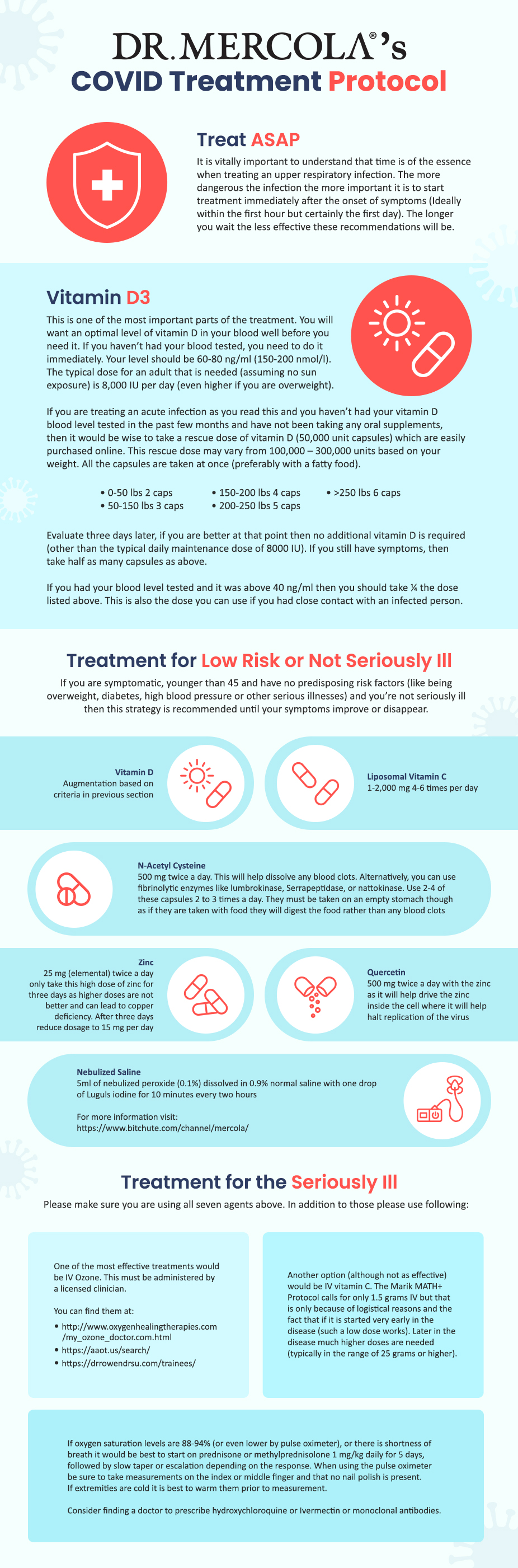
Based on my review of these protocols, I’ve developed the following summary of the treatment specifics I believe are the easiest and most effective.
Vaccines Cause Chronic Immune System Dysregulation
© GreenMedInfo LLC. This work is reproduced and distributed with the permission of GreenMedInfo LLC.
Want to learn more from GreenMedInfo? Sign up for the newsletter here:
www.greenmedinfo.com/greenmed/newsletter
Reproduced from original article:
www.greenmedinfo.com/blog/vaccines-cause-chronic-immune-system-dysregulation
Posted on: Wednesday, May 20th 2020 at 2:15 pm
Written By: GMI Reporter
This article is copyrighted by GreenMedInfo LLC, 2020

While vaccinations supposedly prevent childhood infectious disease, they do a far better job of causing many health issues increasingly prevalent in our society like autoimmune disease, asthma, allergies and cancer.
I have heard many times that vaccines cause problems with one’s immune system but never found a good explanation for exactly how this happens. Now I present to you the grim realities of vaccines and how they are likely causing more health issues, disease and deaths than they are preventing.
The Issues
Did vaccines really eradicate disease? A 1999 study from JAMA, the Journal of the American Medical Association, looked at the death rate from infectious disease since 1940. (1) What’s clear is that the death rate went down by 90% before vaccines were introduced. Other careful studies, such as that by J.B. and S.M. McKinlay, show that the vaccine-related diseases such as tuberculosis, diphtheria, smallpox and others were declining before vaccination came along. (10)
So there’s a question of whether vaccines were actually responsible for eradicating disease. Even the CDC, the Centers for Disease Control, admits it was simply improved hygiene, improved sanitation like indoor plumbing and better nutrition that reduced disease. (14)
Do vaccines work? Whenever there’s an outbreak or an epidemic, at least half of the people who contract the disease were partially or fully vaccinated. In fact, the death rates in one study were twice as high for children that contracted the disease against which they were vaccinated. (3)
There have been many outbreaks of whooping cough in recent years. Of the children that contracted the disease, estimates run as high as eighty percent that had been vaccinated against it. (6) Clearly some children are protected, while many are not. The strains in many vaccinations may no longer protect as new strains have emerged. (11)
Vaccines contain neurotoxins. The adjuvants required in vaccines to stimulate the immune response include mercury, formaldehyde and aluminum, which are known neurotoxins. Preservative-free vaccines may not have mercury, but there has been no public outcry against formaldehyde, aluminum and many others, so these remain in vaccines as adjuvants.
Additionally, a study from Kobe University, which showed that vaccines reliably induced autoimmunity, did not include any toxic adjuvants or preservatives such as mercury, aluminum, or formaldehyde normally used in vaccines. (13) This negates the more safely perceived practice of vaccinating with preservative-free vaccines.
Vaccines cause chronic immune system dysregulation. The changing of our immune system is the most concerning issue in regards to vaccines. Our immune systems, after the changes induced by repeated vaccines, can lose the ability to respond properly in the face of illness, causing a specific set of diseases that have become more prevalent since the introduction of vaccines.
Epidemiological studies (statistical surveys) show poorer long-term health is more common among the vaccinated who survive without serious injury than children who are not vaccinated. (3, 4, 8, 9) This is the issue we will focus on in this article.
How Our Immune System Works
Allow me to illustrate exactly how vaccines throw our immune systems off track. Humans have two different arms of our immune system. One is called cell-mediated immunity and the other is called humoral immunity. During the normal course of an infection, both arms of the immune system are involved.

Let’s take the chickenpox virus as an example. You get infected with the virus. Then you make a cell-mediated reaction and are sick for 2 weeks. Then your humoral immunity kicks in and you make antibodies so that if you are ever exposed to the chickenpox again, you will tag it and your immune system will destroy it before it infects your cells and you won’t become sick. That’s how the immune system works – both aspects are always involved.
Cell-mediated Immunity
Cell-mediated immunity entails the system of white blood cells that attack if you unfortunately pick up a virus. And because you’ve never encountered this virus before, the virus will infect, or get inside, different bodily cells. For instance, it will infect the cells of your respiratory tract. Now your white blood cells attack these infected cells and kill them. This whole process releases substances called cytokines, which produce the ill effects you feel when you get sick.
What we call being sick – fever, flu, mucus, cough, rash, etcetera is because of our cell-mediated immune system. The virus does not create the symptoms you experience; they are compliments of your immune system. This is demonstrated clearly when you suppress somebody’s cell-mediated immune system with steroid drugs like prednisone and then infect them with a virus. They don’t get ‘sick.’ They might even die from the infection, but they won’t get what we normally refer to as sick.
On the other hand, if you give somebody the chemicals (cytokines, etc.) of their cell-mediated system, you can stimulate a cell-mediated immune response without any infection at all – no virus, no bacteria, no nothing. You merely stimulate their cell-mediated immune system and they get sick. They have a cough, fever, rash and mucus and all the rest. So that which we call being sick is a cell-mediated response.
You may not want to go around boasting how you never get sick. This is very likely because your cell-mediated immunity is repressed so that you don’t release cytokines and then suffer with colds and flus. However, this doesn’t mean that you don’t have these viruses in your body causing harm. It just means your immune system and body are too depleted, overwhelmed and tired to respond.
This is exactly what is happening when individuals receive too many vaccinations, which at some point represses their cell-mediated immunity and their body’s ability to respond to new invaders. They then become susceptible to countless diseases.
Humoral Immunity
After your cell-mediated immune system clears a pathogen, your humoral immunity – the antibody system – remembers what happened. In about 4 to 6 weeks you have your very own immunity to the pathogen in question. Next time you are exposed to the same pathogen, you can manufacture antibodies in your defense. You clear the cold before it infects your cells. The cell-mediated immune system never needs to get involved and you don’t get sick.
There has never been until the 1940’s a situation where you have the stimulation of one part of the immune system without the other. That’s what happens with vaccines – the whole point of a vaccine is to stimulate the humoral immunity. The humoral antibodies are stimulated without a prior cell-mediated response.
This type of unnatural stimulation of our immune system is unprecedented. When you get the chickenpox vaccine, the whole point is to stimulate antibodies. If a vaccine stimulated a cell-mediated response, parents would likely not be as motivated to get their kids vaccinated. So by definition, a vaccination program is the attempt to stimulate the antibodies without a cell-mediated response.
This is the problem. The immune system is improperly trained by vaccines and chronic immune system dysregulation for life is the result.
Diseases Caused by Vaccines
When people are subject to repeated vaccines, they predictably simulate a situation of suppressed cell-mediated immunity and heightened antibody responses. Why? Because that’s the goal of vaccination.
If you make a list of the diseases that are characterized by suppressed cell-mediated immunity and heightened humoral immunity, you’re talking health conditions like asthma, allergies, eczema and autoimmune diseases including Crohn’s, Vitiligo, Multiple Sclerosis, Sjogren’s syndrome, Hashimoto’s, etcetera.
We cannot and will not eradicate all disease with vaccines. We have merely traded acute illnesses from which most recover for chronic illnesses for which modern medicine has no cure.

Ask your grandparents or parents how many children did they know in 1940’s or ’50’s who had allergies, and the answer is basically none. Now, it’s anywhere from 20 to 40% of children have some sort of chronic illness. Fifteen percent of children suffer from asthma. (2) Something is wrong with this picture.
So how did we get here? Many of today’s chronic diseases are characterized by excessive antibody production. How did we get that? Well that was the point of the vaccination program. That’s the goal. Why would you expect anything else to happen? Many of you may respond, “This has never been proven.”
Actually, the fact that vaccines produce more illness has been proven. Longitudinal survey studies comparing the health of vaccinated versus unvaccinated children have repeatedly shown statistically significant vaccinosis – illness produced in an individual after receiving a vaccine.
In a 1997 study in New Zealand, 1265 children were surveyed. Twenty-three percent of the vaccinated children experienced asthma and thirty percent suffered from allergies, while the unvaccinated children did not have a single incident of these illnesses. (8)
In a 2004 British Study of 30,000 children, vaccinated children had a 5.04 increased risk of asthma, while the unvaccinated only had a .36 percent prevalence. (9)
In a 2011 German Study of 8000 children, vaccinated children had at least two to five times more diseases and disorders than unvaccinated children.
In patients with an autoimmune disorder, the immune system can’t tell the difference between healthy body tissue and antigens that need to be attacked. The result is an immune response that destroys normal body tissues. This response is a hypersensitivity reaction similar to the response in allergic conditions. Vaccinations have been shown to induce autoimmune disorders.
Interestingly, there’s a study out of Kobe University in Japan where they took mice and put them on a rigorous vaccination program. They wanted to see if they could develop excessive antibodies as seen in autoimmune disease. And they found that at a certain threshold they could consistently and reliably induce autoimmune disease by simply giving enough vaccinations. (13)
The Kobe University study authors concluded:
Systemic autoimmunity appears to be the inevitable consequence of over-stimulating the host’s immune ‘system’ by repeated immunization with antigen to the levels that surpass the system’s self-organize criticality.
In other words, they found that, not only is vaccination a possible or even probable cause of autoimmune disorders, but that chronic diseases are the inevitable result of vaccinations!
This study was done with mice. This begs the question, ‘Has this been replicated in humans?’ Unequivocally yes. This experiment has been done and it’s called the last 70 years.
Autoimmune diseases have increased in quantity and variety as the number of vaccinations has increased over the last 70 years. There are over 100 autoimmune diseases. Studies with monogenetic twins have revealed that genetic influences only account for 25-40% of the disease risk making environmental influences the predominant factors. (7) Regardless of genetic vulnerability, one’s environment determines whether genes for autoimmunity are expressed.
There is a reason the fastest growing subset of diseases in the US and the world are autoimmune diseases. This is because we’re producing them. It’s a growth industry. As vaccines have increased in number, so have the number of cases of autoimmune disease.
Currently, there are over 70 vaccines on the recommended schedule, with even more in some US states. There are many more vaccines in development. I predict a worsening epidemic of allergies, asthma, autoimmune and other diseases caused by an atrophy of the cell-mediated immune response as more vaccines are added to the vaccine schedule. We are only seeing the tip of the iceberg with vaccine-induced reactions and disease.
Vaccinate or Not Vaccinate?
Children do die of vaccine-preventable diseases. However, many vaccinated children acquire the very diseases against which they are vaccinated – from the vaccine itself.
But many millions more suffer and die later in life due to the diseases vaccines induce by dysregulating the immune system. What to do? You must do a cost-benefit analysis and risk assessment for you personally as an individual and for your family.
Some mothers could never live with themselves if their child died of a preventable disease, which does happen. Most don’t know or believe that vaccines can cause disease in the future for their child. Some parents are highly risk averse and must vaccinate due to this facet of their personality.
Others operate out of fear, are pressured by their pediatrician or do not understand that they can get a vaccination exemption. Everyone is different, as are his or her reasons to vaccinate or not.
In making your decision, you have to think of the potential of the vaccine efficacy versus the risk of injecting your child with a known neurotoxin and an immune-shifting drug. There’s not a question about whether that’s going to happen – it does happen.
You cannot repeatedly vaccinate somebody and not expect a change in their immune system. Given these facts, you have to decide which makes more sense to you.
I think it’s a rational decision for somebody to say, “Yes I know that giving my child a polio vaccine will shift them more towards allergies, autoimmune disease and even cancer. I know it will create some neurotoxicity, but I’m not willing to live with the chance of them getting polio.” Fine.
What I don’t like is the status quo thinking “Get a vaccine, my doctor says they are perfectly safe, there’s no downside.” This is a fairytale.
I personally see the ever-increasing risk of autoimmune disease (5-8 in 100), allergies (1 in 10), asthma (8 in 100) and cancer (1 in 2-3) as far more prevalent diseases in our society and the bigger threat against which I want to protect my child. So, I am taking steps against these threats by NOT vaccinating.
I am willing to accept the far far smaller risk of my child contracting an infectious disease against which vaccines supposedly aim to eradicate. Others are not. You have to make this decision for yourself.
Vaccines do Damage
You can always choose to vaccinate, but you can never undo harm from a vaccine. I don’t believe vaccines by themselves cause autism – it has multifactorial causes – but in vulnerable children, vaccines can be the straw that broke the camel’s back. Vaccines do damage in vulnerable populations.
In vulnerable children, vaccines cause autism, seizures, mental retardation and so many other health issues. One must also take into account the fact that for every severe reaction, vaccines provoke less acute effects like confusion, language difficulties, memory issues, irritability, mood alterations, combativeness, difficulty concentrating and behavioral problems. (12). This sounds very much like ADD and ADHD, which are sweeping the child population in epidemic proportions.
The larger issue is that almost no one knows if their child is a member of this vulnerable population. Perhaps they know if their child is very sickly or already has a disease. This I would consider amongst the vulnerable population. Most symptoms of learning delays and other signs do not manifest until a child is around 2-3 years old. By this time a child has typically received a large number of vaccines.
If You Must Vaccinate
If you do choose to vaccinate or vaccines are mandated in your state or country, an ideal strategy is to delay vaccination. You will have far better outcomes than vaccinating from birth.
One study showed that children who delayed immunizations had less of a shift in their immune systems. (5) The damage at least can be minimized. Certainly, if your child suffers from illness, allergies, compromised immunity or is ill, you should seriously reconsider giving vaccinations.
This was reprinted from Nourishing Traditions of Baby and Childcare by Sally Fallon Morell and Dr. Thomas Cowan. For details on why these are wise suggestions, I recommend reading this wonderful baby book.
- Delay vaccinations until age two.
- Give no more than one vaccine every six months.
- Never give more than one vaccine at a time. This means avoid the 3 in 1 vaccines and opt for single vaccines.
- Avoid live virus vaccines.
- Never give a vaccination to a sick child. Vaccines are much more dangerous if your child has a compromised immune system.
- Avoid vaccines containing thimerosal, which is 50% mercury, found in flu vaccines. Single-vial vaccines are more likely to be thimerosal free. Avoid flu shots from community vials dispensed at hospitals or drug stores, which usually contain thimerosal. However, today the larger threat is neurotoxic aluminum in vaccines, not mercury.
- Supplement with extra cod liver oil, vitamin C, B12 and sulfur-rich foods such as liver and egg yolk before each vaccine. This will help your child as these nutrients play a key role in regulating the immune response.
- Do NOT give a child acetaminophen, Tylenol or paracetamol following a vaccine to reduce fever. You use up all of a child’s protective glutathione dealing with this fever reducer that is needed to deal with the neurotoxins in the vaccine. This is a grave mistake following a vaccine that can have disastrous consequences.
Vaccine Resources
Concerned parents spend a significant amount of time researching the issue of vaccines before deciding whether or not to proceed with the government recommended immunization schedule. This process can be incredibly frustrating because there is so much conflicting information. Many health care practitioners and family members consider you crazy is you even toy with the idea of not vaccinating.
I thought it would be helpful to pass along a list of references that I recommend. They are a good place to start building a foundation of knowledge regarding the vaccine controversy rather than blindly following your pediatrician’s advice, which will almost always be to vaccinate.
Nvic.org (National Vaccine Information Center)
Vran.org (excellent Canadian site)
Recommended Reading

Vaccines, Autoimmunity, and the Changing Nature of Childhood Illness by Dr Thomas Cowan.
One doctor’s surprising answer to the epidemic of autoimmunity and chronic disease.
Over the past 50 years, rates of autoimmunity and chronic disease have exploded: Currently, one in two-and-a-half American children has an allergy; one in 11 has asthma; one in 13 has severe food allergies; and one in 36 has autism. While some attribute this rise to increased awareness and diagnosis, Thomas Cowan, MD, argues for a direct causal relationship to a corresponding increase in the number of vaccines American children typically receive – approximately 70 vaccine doses by age 18. The goal of these vaccines is precisely what we’re now seeing in such abundance among our chronically ill children: the provocation of immune response.
Dr. Cowan looks at emerging evidence that certain childhood illnesses are actually protective of disease later in life; examines the role of fever, the gut, and cellular fluid in immune health; argues that vaccination is an ineffective (and harmful) attempt to shortcut a complex immune response; and asserts that the medical establishment has engaged in an authoritarian argument that robs parents of informed consent. His ultimate question, from the point of view of a doctor who has decades of experience treating countless children, is what we are really doing to children when we vaccinate them.

Vaccines: The Risks, the Benefits, the Choices is written by Dr. Sherri Tenpenny D.O. A comprehensive overview of very real vaccination risks, the potential benefits to immunization and various options parents can choose based on their individual situation.

Miller’s Review of Critical Vaccine Studies by Neil Z Miller. Many people sincerely believe that all vaccines are safe, adverse reactions are rare, and no peer-reviewed scientific studies exist showing that vaccines can cause harm. This book — Miller’s Review of Critical Vaccine Studies — provides the other side of the story that is not commonly told. It contains summaries of 400 important scientific papers to help parents and researchers enhance their understanding of vaccinations.

Dissolving Illusions By Dr Suzanne Humphries and Roman Bystrianyk. Not too long ago, lethal infections were feared in the Western world. Since that time, many countries have undergone a transformation from disease cesspools to much safer, healthier habitats. Starting in the mid-1800s, there was a steady drop in deaths from all infectious diseases, decreasing to relatively minor levels by the early 1900s.
The history of that transformation involves famine, poverty, filth, lost cures, eugenicist doctrine, individual freedoms versus state might, protests and arrests over vaccine refusal, and much more.
Today, we are told that medical interventions increased our lifespan and single-handedly prevented masses of deaths. But is this really true?
Dissolving Illusions details facts and figures from long-overlooked medical journals, books, newspapers, and other sources. Using myth-shattering graphs, this book shows that vaccines, antibiotics, and other medical interventions are not responsible for the increase in lifespan and the decline in mortality from infectious diseases. If the medical profession could systematically misinterpret and ignore key historical information, the question must be asked, “What else is ignored and misinterpreted today?”
Perhaps the best reason to know our history is so that the worst parts are never repeated.

Vaccinations: A Thoughtful Parent’s Guide: How to Make Safe, Sensible Decisions about the Risks, Benefits, and Alternatives by Aviva Jill Romm. Discusses how to weigh vaccine benefits and risks and make informed vaccine choices, including examining alternatives to vaccination.

What About Immunizations? Exposing the Vaccine Philosophy: This amazingly well-sourced book includes 21 answers to the most popular questions about vaccination along with a quiz you can take which will help you discover your personal wellness philosophy – invaluable in helping you forge the decision path that is right for your family. Numerous scientific references back up every assertion that is made.

Vaccine Free is a book with over 100 stories of unvaccinated children. Choosing not to vaccinate is not what the media portrays. Stories have the ability to cut through propaganda very effectively. A very powerful book that will, if nothing else, change your mind about people who choose not to vaccinate.

Vaccine Epidemic focuses on the searing debate surrounding individual and parental vaccination choice in the United States. Featuring more than twenty experts from the fields of ethics, law, science, medicine, business, and history, Vaccine Epidemic urgently calls for reform. It is the essential handbook for the vaccination choice movement and required reading for all people contemplating vaccination for themselves and their children. Louise Kuo Habakus and Mary Holland edit and introduce a diverse array of interrelated topics concerning the explosive vaccine controversy
References
1. Armstrong, Gregory, MD; Laura A. Conn, MPH; Robert W. Pinner, MD. January 6,1999, Vol 281, No. 1 https://jama.jamanetwork.com/article.aspx?articleid=768249
2. Channick, R. More Astham Inhalers going to School: New State Law Eliminates Need to Doctor’s Written Permission. Chicago Tribune. October 1, 2012.
3. Christensen, I et al. Routine Vaccinations and Child Survival: Follow Up Study in Guinea-Bissau, West Africa. British Medical Journal. 2000, 321:1435-8. https://www.ncbi.nlm.nih.gov/pmc/articles/PMC556111/
4. Claridge S. Unvaccinated Children are Healthier. https://www.whale.to/v/ias1992study.pdf. Accessed November 4, 2013.
5. Floistrup, H. Allergic Disease and Sensitization in Steiner School Children. J Aller Clin Immunol. 2006. Jan 117 (1):59-66. https://www.ncbi.nlm.nih.gov/pubmed/16387585
6. Grilc E, Pirnat N. Pertussis outbreak in recently vaccinated children in a kindergarten in Ljubljana during a resurgence in pertussis incidence. Eurosurveillance. Vol. 10, Issue 33. 18 August 2005. https://www.eurosurveillance.org/ViewArticle.aspx?ArticleId=2779
7. Karopka, T, Fluck, J, Mevissen, H, Glass, A. The Autoimmune Disease Database: a dynamically compiled literature-derived database. BMC Bioinformatics. 2006, 7:325 doi:10.1186/1471-2105-7-325. https://www.biomedcentral.com/1471-2105/7/325
8. Kemp, T et al. Is Infant Immunization a Risk Factor for Childhood Asthma or Allergy? Epidemiology. 1997 Nov 8: 678-80. https://www.ncbi.nlm.nih.gov/pubmed/9345669
9. McKeever TM et al. Vaccination and Allergic Disease: A Birth Cohort Study. American Journal of Public Health. June 2004, Vol 94, No. 6, pp 985-989. https://www.ncbi.nlm.nih.gov/pmc/articles/PMC1448377/
10. McKinlay JB,McKinlay SM. The questionable contribution of medical measures to the decline of mortality in the United States in the twentieth century. Milbank Mem Fund Q Health Soc. 1977 Summer; 55(3): 405-28. https://www.columbia.edu/itc/hs/pubhealth/rosner/g8965/client_edit/readings/week_2/mckinlay.pdf
11. Mooi F R, van LooIHM, King A. Adaptation of Bordetella pertussis to Vaccination: A Cause for its Reemergence? Emerging Infectious Diseases.Vol. 7, No. 3 Supplement June 2001. https://wwwnc.cdc.gov/eid/article/7/7/pdfs/01-7708.pdf
13. Novaccine.com. Reactions/Conditions. https://www.novaccine.com/reactions-conditions/
14. Tsumiyama, K. Miyazaki, Y. Shiozawa, S. Self-Organized Criticality Theory of Autoimmunity. December 31, 2009. PLoS ONE 4(12): e8382. doi:10.1371/journal.pone.0008382. https://www.plosone.org/article/info:doi%2F10.1371%2Fjournal.pone.0008382
15. Symposium: Accomplishments in Child Nutrition during the 20th Century. Infant Mortality in the 20th Century, Dramatic but Uneven Progress. Myron E. Wegman School of Public Health, University of Michigan: J. Nutr. 131: 401S-408S, 2001. https://jn.nutrition.org/cgi/reprint/131/2/401S.pdf
Top Tips for a Healthier 2022
Reproduced from original article:
https://articles.mercola.com/sites/articles/archive/2022/01/04/top-tips-for-a-healthier-2022.aspx
The original Mercola article may not remain on the original site, but I will endeavor to keep it on this site as long as I deem it to be appropriate, and will not be bullied into removing it.
Analysis by Dr. Joseph Mercola Fact Checked January 04, 2022
STORY AT-A-GLANCE
- The start of a new year is often a good time to take stock and plan out beneficial lifestyle changes. Included are 22 tips for making 2022 your healthiest year yet
- Top tips include optimizing your vitamin D, targeting your immune system with immune-boosting nutraceuticals, treating COVID symptoms early, improving your liver health, protecting your vision and combating inflammation and autoimmune diseases
- Items to eliminate include processed foods high in seed oils and processed sugar, as well as electromagnetic field exposures, freedom of speech robbers such as Google and Facebook, and toxic clothing
- Items to add include magnesium, collagen, filtered water, vision-enhancing nutrients, osteoporosis-busting exercise and healthy sleep
The start of a new year is often a good time to take stock and plan out beneficial lifestyle changes. Here are 22 tips for making 2022 your healthiest year yet. How many have you incorporated so far, and which ones can you add to your toolbox for the coming year?
Tip 1: Optimize Your Vitamin D
Vitamin D optimization is an absolute foundational strategy for fighting infections as it bolsters the first line of defense of your immune system. Ideally, test your vitamin D level twice a year, in the winter and summer, to make sure you’re in a healthy range of 60 ng/mL to 80 ng/mL year-round. (A compelling body of research suggests 40 ng/mL is the cutoff for sufficiency.)
Vitamin D can reduce your risk of COVID-19 and other respiratory infections by reducing the survival and replication of viruses, reducing inflammatory cytokine production, maintaining endothelial integrity and increasing ACE2 concentrations, which helps lower COVID-19 severity.
If your vitamin D levels are not optimal and you come down with COVID, it is best to take 0.5 mcg of calcitriol on the first day and then 0.25 mcg for a week, as this is the active form of vitamin D. Merely swallowing regular vitamin D capsules will not help with COVID for one to two weeks, which is why you must add calcitriol.
You can learn more about the mechanisms behind vitamin D in my June 2020 scientific report, available on StopCovidCold.com. October 31, 2020, I also published a scientific review1 in the peer-reviewed journal Nutrients — “Evidence Regarding Vitamin D and Risk of COVID-19 and Its Severity” — co-written with William Grant, Ph.D., and Dr. Carol Wagner, both of whom are part of the GrassrootsHealth expert vitamin D panel. You can read the paper for free here.
Tip 2: Up Your Intake of Key Immune-Boosting Nutrients
Many nutrients are known for their immune-boosting properties and ability to ward against encapsulated RNA viruses such as influenza and coronaviruses. A number of them were identified and listed in a February 2020 article in the journal Progress in Cardiovascular Diseases.2,3,4
A number of nutrients have also shown promise against the atypical symptoms associated with severe COVID-19, such as excessive, out of control inflammation and blood clots.
While these symptoms have become increasingly rare as the virus has mutated into milder strains (Omicron being a prime example), some early COVID-19 patients are still struggling with long-term symptoms, colloquially known as “long COVID.” For them, such nutraceuticals may be particularly helpful.
Here’s a summary of the nutritional supplements identified. (For suggested dosages, see the Progress in Cardiovascular Diseases paper.5)
| N-acetylcysteine (NAC) — Encourages glutathione production, thins mucus, lowers your chances of influenza infection and reduces your risk of developing severe bronchitis. |
| Elderberry extract — Known to shorten influenza duration by two to four days and reduce the severity of the flu. |
| Spirulina — Reduces severity of influenza infection severity and lowers influenza mortality in animal studies. In a human trial, spirulina significantly lowered the viral load in patients with HIV infection. |
| Beta-glucan — Reduces severity of influenza infection severity and lowers influenza mortality in animal studies. |
| Glucosamine — Upregulates mitochondrial antiviral-signaling protein (MAVS), reduces severity of influenza infection severity and lowers influenza mortality in animal studies. |
| Selenium — Selenium deficiency increases the rate at which viruses can mutate, promoting the evolution of more pathogenic strains. |
| Zinc — Supports “effective function and proliferation of various immune cells,” lowering mortality in the elderly by 27%. If treating acute COVID, it’s best taken with quercetin (500 mg) to drive the zinc into the cell to limit viral replication. |
| Lipoic acid — Helps boost type 1 interferon response, which activate intracellular antimicrobial programs, thereby limiting viral spread between cells, and modulate your innate immune responses, restraining pro-inflammatory pathways and inhibiting cytokine production. They also activate your adaptive immune system.6 |
| Sulforaphane — Helps boost type 1 interferon response. |
| Resveratrol — A 2005 study7 in The Journal of Infectious Diseases found resveratrol has the power to inhibit the replication of influenza A virus, significantly improving survival in influenza-infected mice. According to the authors, resveratrol “acts by inhibiting a cellular, rather than a viral, function,” which suggests it “could be a particularly valuable anti-influenza drug.” |
Tip 3: Treat COVID as FIRST Sign of Infection
Should you develop COVID symptoms, you simply MUST start treatment immediately. We now know early treatment is key for successful resolution of the infection. It could literally be the difference between life and death and I can’t stress that enough. It is far better to overtreat a cold like COVID than ignoring the symptoms and dismissing them.
There are several early treatment protocols available, most of which focus on similar remedies. I believe the Frontline COVID-19 Critical Care Alliance’s (FLCCCs) protocol is among the most comprehensive. You can find a listing of doctors who can prescribe necessary medicines on the FLCCC website.
There, you can also find downloadable PDFs in several languages for prevention and early at-home treatment, the in-hospital protocol and long-term management guidance for long-haul COVID-19 syndrome.
A slightly revised version of the FLCCC protocol is below. I’ve altered some of the dosages, and added a few more therapies that they have yet to include, such as nebulized hydrogen peroxide and intravenous ozone.
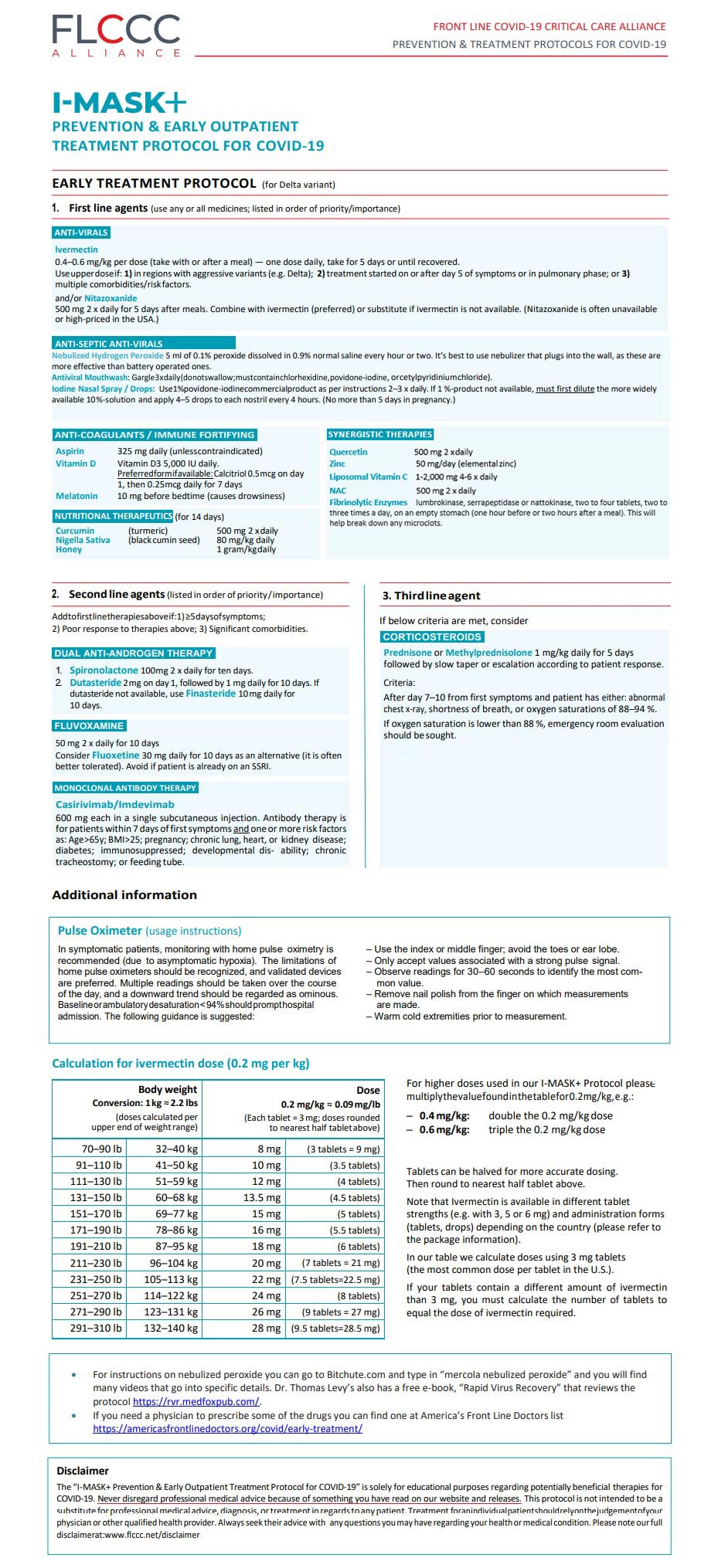
Tip 4: Optimize Your Health With Systemic Enzymes
Enzymes are proteins composed of individual amino acids necessary to speed up cellular functions and biological processes. Some of the bodily processes that require enzymes include energy production, oxygen absorption, toxic waste removal, breaking down fats in your blood, dissolving blood clots and fighting infections.
Proteolytic enzymes such as lumbrokinase and serrapeptase act as blood cleansers that combat inflammation and rebalance your immune system.
In the era of COVID, an enzyme called lumbrokinase may be of particular benefit, as it helps break down blood clots. If you’ve had COVID-19 in the past, and/or received one or more COVID injections, lumbrokinase may be helpful to prevent blood clotting issues.
Proteolytic enzymes such as lumbrokinase and serrapeptase serve to digest unwanted proteins in your blood, like blood clots. They also help combat inflammation and rebalance your immune system, facilitating the removal of inflammatory proteins, removing fibrin (a clotting material that restricts blood flow and prolongs inflammation), reducing edema in inflamed regions, and boosting the potency of macrophages and killer cells.
If you want these enzymes to work on the potentially damaging proteins in your blood and not the food in your stomach, you will need to take them on an empty stomach, either one hour before or two hours after a meal. Otherwise the enzymes will be used to digest your food and not work in your bloodstream.
Tip 5: Boost Your Liver Health With Choline
Nonalcoholic fatty liver disease (NAFLD) is a common condition caused by an unhealthy processed food diet. Aside from cutting out processed foods high in sugars and seed oils, adding in more choline can be helpful, as it appears to be a key controlling factor in arresting the development of fatty liver.
It does this by enhancing secretion of very low density lipoprotein (VLDL) particles in your liver, which are required to safely transport fat out of your liver. Choline deficiency may result in excess fat and cholesterol buildup. Choline also aids in DNA synthesis and is important for healthy mitochondrial function.
Choline-rich foods to consider loading up on include wild-caught Alaskan salmon, krill oil, organic pastured chicken, vegetables such as broccoli, cauliflower and asparagus, shiitake mushrooms, grass fed beef liver and pastured egg yolks.
A single hard-boiled egg can contain anywhere from 113 to 147 milligrams of choline, or about 25% of your daily requirement, making it one of the best choline sources in the American diet. Only grass fed beef liver beats it, with 430 milligrams of choline per 100-gram serving.
Tip 6: Eliminate ALL Seed (Vegetable) Oils
A compelling report in the journal Gastroenterology offers a radically novel yet logically sound explanation as to why some COVID-19 patients develop life-threatening organ failure, namely their high unsaturated fat intake. Since diet-related comorbidities are responsible for 94% of COVID-19-related deaths,8 taking control of your diet is a simple, common-sense strategy to lower the risks associated with this infection.
Simply put, high intake of polyunsaturated fats (PUFAs) — a primary source of which is industrial seed oils — is associated with increased mortality from COVID-19, while healthy saturated fats actually lower your risk of death.
Omega-6 linoleic acid (LA) makes up the bulk of the omega-6 consumed and is the primary contributor to nearly all chronic diseases, because when consumed in excessive amounts, LA acts as a metabolic poison radically limiting mitochondrial function and your ability to produce cellular energy.
The reason for this is because polyunsaturated fats such as LA are highly susceptible to oxidation. As the fat oxidizes, it breaks down into harmful sub-components such as advanced lipid oxidation end products (ALES) and oxidized LA metabolites (OXLAMs). These ALES and OXLAMs are actually what cause the damage.
While excess sugar is certainly bad for your health and should typically be limited to 25 grams per day or less, it doesn’t cause a fraction of the oxidative damage that LA does. Processed vegetable oils are a primary source of LA, but even food sources hailed for their health benefits contain it, and can be a problem if consumed in excess. Cases in point: olive oil and conventionally raised chicken, which are fed LA-rich grains.
Tip 7: Boost Your Magnesium Intake
Magnesium is required for the healthy function of most cells in your body. Deficiency will impede your cellular metabolic function and deteriorate mitochondrial function, which can result in more serious health problems. Deficiency is widespread, thanks to inadequate consumption of leafy greens, so if you rarely eat your veggies, you could probably benefit from supplementation.
Having low amounts of magnesium has also been shown to significantly increase your supplemental vitamin D requirement. Research by GrassrootsHealth9 shows you need 146% more vitamin D to achieve a blood level of 40 ng/ml (100 nmol/L) if you do not take supplemental magnesium, compared to taking your vitamin D with at least 400 mg of magnesium per day.
Your vitamin K2 intake can also affect your required vitamin D dosage. Data10 from nearly 3,000 individuals revealed 244% more oral vitamin D was required to get 50% of the population to achieve a vitamin D level of 40 ng/ml (100 nmol/L) if they weren’t concurrently also taking magnesium and vitamin K2. So, a simple way to optimize your vitamin D absorption is to take it in conjunction with magnesium and K2.
Foods with the highest magnesium levels include spinach, Swiss chard, turnip greens, beet greens, collard greens, broccoli, Brussels sprouts, kale, bok choy and romaine lettuce.
If you’re using a supplement, you may want to use magnesium threonate to provide at least some of your magnesium, as it appears to be most efficient at penetrating cell membranes, including your mitochondria and blood-brain barrier. Another effective way to boost your magnesium level is to take Epsom salt (magnesium sulfate) baths, as the magnesium will effectively absorb through your skin.
Tip 8: Improve Your Bowel Evacuation
Healthy evacuation of your bowels is a factor that many tend to ignore. The good news is that improving your bowel function can be as simple as changing how you sit on the toilet. Your puborectalis muscle helps control elimination during a bowel movement and prevent incontinence when you’re standing.
However, when you sit on a typical toilet, this muscle cannot fully relax, which is why you may need to push or even strain in order to have a bowel movement. While squatting, however, the muscle relaxes fully, making elimination easier.
Squatting on the toilet bowl can help you eliminate waste better if you are constipated. But this requires strength, flexibility and balance, especially if you’re not used to this method. Other options include using a simple footstool to help you get into a more “squatty” position or leaning forward as you sit on the toilet, with your hands on or near the floor.
Tip 9: Combat Chronic Inflammation
Chronic inflammation is a hallmark of virtually all disease, including cancer, obesity and heart disease. While inflammation is a perfectly normal and beneficial process that occurs when your body’s white blood cells and chemicals protect you from foreign invaders like bacteria and viruses, it leads to trouble when the inflammatory response gets out of hand and continues indefinitely.
Your diet plays a significant, if not primary, role in this chain of events and is the perfect place to start to address it. Certain nutritional supplements can also be helpful as add-ons. Here’s a summary of key principles:
• Limit or eliminate vegetable oils (seed oils) — A key part of an anti-inflammatory diet involves excluding refined vegetable oils, as they are clearly one of the most pernicious and pervasive poisons in the food supply. Simply avoiding all processed foods and most restaurant foods will go a long way toward helping you avoid them.
• Eat more veggies — Vegetables are a key anti-inflammatory staple. Ideally, opt for organic locally grown veggies that are in season, and consider eating a fair amount of them raw. If you struggle with autoimmune disease or have significant inflammation in your body, though, consider limiting vegetables with high lectin content. Some high- lectin foods can be made safer to eat through proper soaking and cooking, as well as fermenting and sprouting.
• Add in fermented foods — Traditionally fermented and cultured foods are other anti-inflammatory staples that work their “magic” by optimizing your gut flora. A majority of inflammatory diseases start in your gut as the result of an imbalanced microbiome.
Fermented foods such as kefir, natto, kimchi, miso, tempeh, pickles, sauerkraut, olives and other fermented vegetables will help reseed your gut with beneficial bacteria. Ideally, you’ll want to eat a wide variety of them as each contains a different set of beneficial bacteria (probiotics).
If you don’t like fermented vegetables, consider yogurt made from raw, organic milk from grass fed cows. Yogurt has been shown to reduce inflammation by improving the integrity of your intestinal lining, thereby preventing toxins in your gut from crossing into your bloodstream.
• Boost your omega-3 fat intake — Marine-based omega-3 fats found in fatty cold-water fish that are low in environmental toxins — such as wild Alaskan salmon, sardines and anchovies — are also important anti-inflammatories, particularly for brain and heart health. In fact, your omega-3 level is a powerful predictor of mortality. If you don’t enjoy these types of fish, consider using krill oil instead.
• Cook with herbs and spices — Ounce for ounce, herbs and spices are among the most potent anti-inflammatory ingredients available and making sure you’re eating a wide variety of them on a regular basis can go a long way toward preventing chronic illness. Among the most potent anti-inflammatory herbs and spices are cloves, cinnamon, Jamaican allspice, apple pie and pumpkin pie spice mixtures, oregano, marjoram, sage, thyme and Italian spice.
Tip 10: Filter Your Water
While the U.S. has many water quality concerns, it doesn’t really matter where you live anymore, as many dangerous chemicals find their way into the ecosystem, spreading from one continent to another. This is why filtering your household water is more a necessity than an option these days.
Filtering your drinking water is good practice, but equally important is filtering the water you use for bathing. This is because immersing yourself in contaminated water may be even more hazardous to your health than drinking it.
Chemicals absorbed through your skin go directly into your bloodstream, bypassing your digestive and internal filtration systems. Unfiltered water can also expose you to dangerous chlorine vapors and chloroform gas, which can cause dizziness, fatigue, asthma, airway inflammation and respiratory allergies.
Unless you can verify the purity of your water, you should seriously consider installing a high-quality, whole-house water filtration system. Ideally, filter the water both at the point of entry and at the point of use. This means filtering all the water that comes into the house, and then filtering again at the kitchen sink and shower. As for the type of filtration system to get, there are various options, most of which have both benefits and drawbacks.
Common options include reverse osmosis (RO), ion exchange, and granular carbon or carbon block filters. Ideally, you want a filtration system that uses a combination of methods to remove contaminants, as this will ensure the removal of the widest variety of contaminants.
Tip 11: Reduce Your EMF Exposure
One of the most dangerous kinds of pollution affecting your health is the invisible sea of electromagnetic fields (EMFs) your body swims in daily, both outdoors and in your home. Common sources include cell phones, cell towers, computers, smart meters and Wi-Fi, to name just a few. Strategies to reduce your EMF exposure include:
| Connect your computer to the internet via a wired connection and put it in airplane mode. Also opt for wired keyboards, trackballs, mice, printers and house phones. |
| If you must use Wi-Fi, be sure to shut it off whenever it’s not in use, especially at night. |
| Shut off the electricity to your bedroom at night to reduce electrical fields from the wires in your walls. |
| Use a battery-powered alarm clock, ideally one without any light. |
| Replace your microwave oven with a steam convection oven, which will heat your food quickly and far more safely. |
| Avoid “smart” appliances and thermostats that depend on wireless signaling, including smart TVs. Consider using a large computer monitor as your TV instead, as it doesn’t emit Wi-Fi. |
| Opt out of smart meters if you can or add a shield to an existing smart meter. |
| Avoid using a wireless baby monitor. Instead, move the baby’s bed into your bedroom, or use a hard-wired monitor. |
| Remove all fluorescent lights from your home and switch to incandescent bulbs. |
| Avoid carrying your cell phone on your body unless it’s in airplane mode, and never sleep with it in your bedroom. |
| Use the speakerphone on your cell phone, and hold it at least 3 feet away from you. Ideally, use your cell phone as little as possible. |
Even if you implement these strategies, you’re unlikely to eliminate all exposure, as EMFs saturate public places and can invade your home from your neighbors. To minimize the harmful effects, the following strategies can be helpful:
• Increase your magnesium intake — As a natural calcium channel blocker, magnesium can help reduce the effects of EMF on your voltage-gated calcium channels. Since many are deficient in magnesium, I believe you could benefit from as much as 1 to 2 grams of magnesium per day.
• Molecular hydrogen — Molecular hydrogen has been shown to target free radicals produced in response to radiation, such as peroxynitrites. Studies have shown molecular hydrogen can mitigate about 80% of this damage.
Molecular hydrogen will also activate Nrf2, a biological hormetic that upregulates superoxide dismutase, catalase and all the other beneficial intercellular antioxidants. This in turn lowers inflammation, improves your mitochondrial function and stimulates mitochondrial biogenesis.
• Protective spices — Cinnamon, cloves, ginger root, rosemary and turmeric have exhibited protective effects against EMF-induced damage.
Tip 12: Boost Your Collagen Production Naturally
Collagen is the most common and abundant of your body’s proteins. One of its primary purposes is to provide structural scaffolding for your various tissues to allow them to stretch while still maintaining tissue integrity.
As a compound of essential amino acids, there’s only one way to get collagen: Your body can’t produce it, so you must obtain it through your diet. Historically, traditional diets provided ample collagen in the form of broth made from boiled chicken feet or beef bones. These are by far your best alternatives.
If you decide to use a collagen supplement, it’s important to know what to look for. Laboratory testing has revealed many popular collagen and bone broth products contain potentially hazardous contaminants typically associated with concentrated animal feeding operations (CAFOs), so to avoid contaminants, make sure your collagen supplement is certified “100% Organic” by the U.S. Department of Agriculture (USDA).
Moreover, collagen supplements can be either unhydrolyzed (undenatured) or hydrolyzed (denatured). The processing that most collagen supplements undergo to become hydrolyzed can also result in questionable byproducts that are best avoided. My personal preference is to use a less denatured (unhydrolyzed) organic collagen supplement, as it has a more balanced amino acid profile.
That said, I still believe the natural approach is best. Making homemade bone broth using bones and connective tissue from grass fed, organically raised animals isn’t very complicated and will produce the best results.
Tip 13: Optimize Your Sleep
One of the most radical and recent discoveries revealing the importance of sleep for health is that each and every organ has its own biological clock. In your brain is a “master clock” that synchronizes these clocks and your bodily functions to match the 24-hour light and dark cycle.
When you upset your circadian rhythm by not getting enough sleep, the results can have far-reaching consequences, affecting everything from mood, creativity and brain detoxification to DNA expression, chronic disease risk — including dementia — and longevity. Helpful tips to optimize your sleep include:
| Sleep in complete darkness, or as close to it as possible, to avoid lowering melatonin production, which can interfere with your sleep. |
| Keep the temperature in your bedroom no higher than 70 degrees Fahrenheit. |
| Eliminate EMFs in your bedroom. |
| Keep all electronic devices at least 3 feet from your bed. |
| Adopt a neutral sleeping position by propping your pillow under your neck, not your head, to maintain a proper spinal curve. |
| Reserve your bed for sleeping and don’t keep a TV in your bedroom. |
| Consider separate bedrooms if sharing your bed with a partner impairs your sleep. Pets may also need to be kept in another room if they disturb your sleep. |
Tip 14: Ditch Google and Facebook Once and for All
Over the years, the government and business monopolies, including the likes of Big Tech, have formed a global alliance hell-bent on protecting and concentrating member profits. The price for keeping business going as usual is personal liberty and freedom of speech that may impact these fascist government-industrial complexes.
In recent times, we’ve seen unprecedented efforts to censor natural health topics in various online platforms, especially Google and Facebook, under the guise of protecting you against “misinformation.”
By censoring the voices that challenge mainstream information on crucial health topics like pharmaceutical drugs, vaccines, GMOs, pesticides, junk foods, artificial sweeteners and fake meat, Google and Facebook are able to protect the profits of its advertisers and stakeholders.
Across the board, Google only gives you the results they want you to see, while relevant articles and news they deem “harmful” are buried. Facebook, meanwhile, relies on so-called “fact checkers” to dissuade and redirect users away from anything that contradicts the mainstream narrative. We now have proof that Facebook’s “fact checks” are nothing more than opinion pieces, thanks to a lawsuit by journalist John Stossel,11,12,13 but they’re still presented as assertions of facts.
If you’re fed up with Google’s and Facebook’s exploitation and manipulation, the best way to break free is by being informed. If we work together to boycott them, Google and Facebook will crumble.
We have added a built-in sharing tool on top of each newsletter article to make it easier for you to share it to your friends and family via email or text. And, while the articles on my website are only viewable for 48 hours, we are in the process of transferring our entire archive over to the Censored Library on Substack. This will allow us to bring back my previously deleted articles in a liability-protected format.
For just $5 a month, or the discounted annual rate of $50 per year, you will have access to all of my articles, all the time, even after they’ve been deleted from Mercola.com.


Tip 15: Protect Your Eye Health
Your ocular health affects your overall well-being, so routine eye exams are an important health basic. Additionally, keep your eyes healthy and your vision sharp by:
• Removing trans fats from your diet — As with linoleic acid, processed foods and baked goods are primary sources of harmful trans fats.
• Removing high fructose corn syrup from your diet — High blood pressure can damage the small blood vessels in your retina, obstructing blood flow, and a key strategy to normalize your blood pressure is to dramatically reduce your fructose intake.
High sugar intake is also a primary culprit of elevated blood sugar readings. High blood sugar not only obstructs blood flow by damaging blood vessels in your retina but also pulls fluid from the lens of your eye, which can affect your ability to focus. As a general guide, I recommend keeping your total daily fructose consumption below 25 grams a day, including fructose from fruit.
• Eating your veggies — Consuming high amounts of carotenoid-rich vegetables, especially ones rich in lutein and zeaxanthin, can encourage healthy vision.
• Boosting your omega-3 fat intake — Omega-3 fats protect healthy vision. Good sources include wild-caught Alaskan salmon, sardines and anchovies. If you use a supplement, I recommend krill oil, which also contains astaxanthin, a potent antioxidant.
• Quitting smoking — Smoking increases free radical production throughout your body, putting you at risk for any number of health problems, including vision problems.
Aside from lutein and zeaxanthin, astaxanthin is one of the best antioxidants for eye health. It’s been shown to protect against a number of eye-related problems, including age-related macular degeneration, which is the No. 1 cause of blindness in the elderly, glaucoma, cataracts, inflammatory eye diseases, cystoid macular edema, retinal arterial occlusion, diabetic retinopathy and venous occlusion.
Astaxanthin also helps maintain appropriate eye pressure, energy levels and visual acuity. Because the above list includes several of the leading causes of blindness in the U.S., this powerful antioxidant becomes increasingly important.
Tip 16: Grow Your Own Food
Growing your own food has many rewards, from providing you with fresher, uncontaminated produce and cutting your grocery bill, to increasing your sense of well-being and slashing your risk of depression. Research14 also shows elderly individuals who garden on a regular basis have a 36% lower risk of dementia than non-gardeners.
There are many different ways to grow your own food, even if you live in an apartment. You can use virtually every square foot of your space, including vertical space, for growing food. Hanging baskets are ideal for a wide variety of foods, such as strawberries, leafy greens, runner beans, pea shoots, tomatoes and a variety of herbs. And, instead of flowers, window boxes can hold herbs, greens, radishes, scallions, bush beans, strawberries, chard and chilies, to name just a few.
Rule No. 1 for growing nutrient-dense food is building healthy soil. There are five basic principles to growing topsoil and building a healthy soil ecosystem, and these rules apply whether you’re working a farm or tending a small vegetable garden in your backyard:
- Avoid disturbing the soil microbiome — The less mechanical disturbance the better, which means no tillage, herbicides, pesticides or fungicides
2. Protect the soil’s surface — Use cover crops, untreated lawn clippings, mulch and wood chips to maintain soil biology, prevent water evaporation and lower soil temperature, which is particularly important on hot days
3. Diversify your crops — Having a diverse array of plant life is essential to healthy soil, and cover crops help fulfill this requirement
4. Maintain living roots in the ground as long as possible — Growing something at all times is key to soil vitality, so be sure to plant a cover crop after you harvest your vegetables
5. Integrate livestock and other animals, including insects — To mimic the impact of wild herds, regenerative farmers will pasture chickens, cows, lambs, pigs and other animals to benefit the soil and ensure a highly nutrient-dense finished product. While many homeowners cannot keep farm animals on their property, you can easily attract pollinators and predator insects to ward off garden pests by including lots of flowering plants
One of the simplest and most inexpensive gardening alternatives is to grow your own sprouts. They’re a particularly excellent choice during winter months, when outdoor gardening is limited or ruled out. They also grow quickly, allowing you to harvest in about a week, and you don’t have to cook them. Sprouts are also a perfect complement to fermented vegetables, which are also easy and inexpensive to make at home, from scratch.
Sprouts are actually among the most nutrient-dense foods out there. Topping the list are sunflower seed and pea sprouts, which are typically about 30 times more nutritious than organic vegetables. Sunflower and pea sprouts are among my own favorites. Broccoli sprouts, known for their anticancer activity, are another excellent choice.
Tip 17: Try Blood Flow Restriction (BFR) Training
Blood flow restriction (BFR) training, also known as vascular occlusion training, involves “partially restricting arterial inflow and fully restricting venous outflow” while working the occluded muscle. BFR training works on a very simple principle: It tricks your body into believing that it’s moving far heavier weights than you’re actually using, generating compensatory metabolic responses.
With BFR training, you’re able to significantly enhance your strength and muscle mass using a fraction of the weight typically used, in about half the time it would normally take.
Its ability to achieve such remarkable physiological benefits has to do with the fact that when you restrict the venous blood flow from the muscle group being engaged, you create a relatively hypoxic environment in the exercising muscle which then boosts beneficial metabolic responses, such as increasing muscle lactate and growth hormone, and inhibiting myostatin.
Venous flow restriction is achieved by wrapping the extremity being worked with an inflatable cuff or band. The band needs to be tight enough to shut down the venous return to the heart, allowing the venous blood to “pool” in the region of the limb that is being exercised, while loose enough to allow arterial flow-through.
With very light exercise, and in about 15 to 20 minutes, you get an exhaustive workout that sends a signal to your brain to help you “recover and adapt to it.” Your brain then sends out a wide variety of powerful hormonal responses that cause your muscles and blood vessels to grow.
BFR is particularly beneficial for the elderly, as it dramatically reduces the risk of injury while optimizing muscle growth beyond what strength training with heavy weights can actually do! To learn the ins and outs of BRF, be sure to download and read through my free BFR report.
Tip 18: Lower Your Risk for Autoimmune Disease
Autoimmune diseases are on the rise, so the earlier you take steps to prevent them, the better. The good news is that some of the strategies that can lower your risk of autoimmune problems are incredibly simple and inexpensive.
For example, drinking a solution of baking soda on a daily basis can help reduce inflammation associated with and caused by autoimmune conditions. Baking soda provides a signal to mesothelial cells — which line your internal organs — that your body is doing fine; it’s not under attack, so developing an aggressive immune system and/or a harmful autoimmune response is unnecessary.15
To try this strategy, simply add one-half teaspoon of baking soda to half a glass of water (about 4 ounces), stir until it’s completely dissolved, and repeat no more than three times per day, and no more than seven one-half teaspoons in any given 24-hour period.
Another strategy that costs nothing is to allow fevers to run their course, as long as they’re not above 103 degrees F. While most tend to rush to administer fever-reducing medicine at the first sign of a low-grade fever, this can actually backfire. Fever facilitates your detoxification process, with the aim of producing a cleaner system. Reducing the fever can effectively prevent or interrupt your body’s natural healing process.
A far better alternative would be to administer liposomal vitamin C, which will aid and speed the process, not stop it. Certain homeopathic medicines can also be beneficial. If you’ve suppressed fevers all your life, you may benefit from regular saunas, ideally one with low or no electromagnetic fields, as this will help detoxify your system. If you’ve been vaccinated, you probably need to take saunas on a regular basis as well.
Tip 19: Combat Osteoporosis
With osteoporosis — brittle bone — comes the risk of bone fractures due to a fall, and hip fractures in particular are notorious for raising an older individual’s risk of death. Low bone density, known as osteopenia, also raises your risk of fractures and may progress into osteoporosis. But before you turn to conventional drugs, you should know that there are far safer ways to address this problem, such as by loading up on nutrients that help promote bone growth. These include:
| Vitamin D | Vitamins K1 and K2 |
| Calcium | Magnesium |
| Collagen | Boron |
| Strontium |
Sufficiently load-bearing exercise is also important. Research suggests the load needed to trigger bone growth in the hip is 4.2 times your bodyweight. Unfortunately, conventional strength training comes nowhere near that — but BFR does! So, preventing osteoporosis is yet another reason to add BFR to your lifestyle tool kit.
Tip 20: ‘Green’ Up Your Wardrobe
Fast fashion is a major contributor to the global waste problem, as clothing is now the fastest growing category of waste. Across the board, throughout the distribution chain, whatever cannot be sold always ends up in a landfill. The textile industry is also a major environmental polluter.
The primary solution should be obvious: Buy less. Buying only what you actually need will allow you to spend more on high-quality items that last. If an item is still in good condition but for whatever reason doesn’t fit your body or lifestyle anymore, ask around to see if anyone wants or needs it first.
As a last-ditch resort, donate clothing that is still in good condition to a reputable charity that serves the needs of your local community. Local women’s shelters and crisis centers may accept your donations.
If you need to purchase new clothes, make sure to choose organic, GOTS-certified clothing made from sustainably grown fabrics. The SITO brand is an example of a GOTS-certified organic clothing brand, established by the biodynamic certification agency Demeter. SITO supports our global mission for improving fabric production and putting an end to fast fashion.
Tip 21: Take Control of Your Blood Pressure
In 2017, the American Heart Association (AHA) and the American College of Cardiology, along with nine other health organizations, changed the cutoff used to diagnose high blood pressure from 140/90 to 130/80.
This slight shift increased the number of people diagnosed with high blood pressure to include many who had previously been considered within the normal range. According to the AHA, an estimated 103 million U.S. adults today have high blood pressure (hypertension), and about 1 in 3 people has prehypertension.
According to medical physiology textbooks, as much as 95% of hypertension is called essential hypertension, meaning the underlying cause is unknown. However, a number of factors have been identified as contributing to high blood pressure, including but not limited to insulin and leptin resistance, potassium deficiency and elevated uric acid levels. The good news is that there are many techniques and lifestyle changes, including the following:
| Exercise — A comprehensive fitness program can go a long way toward regaining your insulin sensitivity and normalizing your blood pressure. In fact, exercise is considered a first line of treatment by several health authorities, including the World Health Organization, the International Society of Hypertension and the U.S. Joint National Committee on Detection, Evaluation and Treatment of High Blood Pressure.
If you are insulin resistant, you’ll also want to include weight training. When you work individual muscle groups, you increase blood flow to those muscles, and good blood flow will increase your insulin sensitivity. |
| Vitamin D optimization — Vitamin D deficiency is associated with both arterial stiffness and hypertension. For optimal health, maintain a vitamin D level between 60 ng/mL and 80 ng/mL year-round. |
| Time-restricted eating — Eating all your meals within a six- to eight-hour window each day is one of the most effective ways I’ve found to normalize your insulin/leptin sensitivity, which is a root cause of high blood pressure. |
| Stress management — It has been shown that people with heart disease can lower their risk of subsequent cardiac events by over 70% simply by learning to manage their stress. Suppressed negative emotions such as fear, anger and sadness can severely limit your ability to cope with the unavoidable every day stresses of life. It’s not the stressful events themselves that are harmful, but your lack of ability to cope. |
| Essential oils — A number of essential oils can be helpful, including lavender, ylang- ylang, marjoram, bergamot, rose, frankincense, rosemary, lemon balm and clary sage. |
| Beets — In one small placebo-controlled trial,16 one glass (250 milliliters or 8.5 ounces) of beetroot juice per day for one month reduced blood pressure in those diagnosed with hypertension by an average of 8 mmHg systolic and 4 mmHg diastolic pressure.
This 8/4 mmHg reduction is very close to that provided by blood pressure medications, which typically can reduce blood pressure by about 9/5 mmHg, and for many it was enough to bring their blood pressure down to normal levels. The treatment group also saw a 20% improvement in blood vessel dilation capacity and a 10% reduction in arterial stiffness. |
Tip 22: KetoFast
KetoFast is the term I coined to describe a protocol that combines three key strategies: a cyclical ketogenic diet, intermittent fasting and cyclical partial fasting. The first step to KetoFast is to make sure you stop eating at least three hours before bedtime to avoid creating unnecessary free radicals.
Next, compress your eating to a six- to eight-hour timeframe, meaning you eat all of your calories for the day during those six to eight hours. For the remaining 16 to 18 hours, you’re fasting. For example, delay your first meal of the day until 11 am or noon and stop eating by 7 pm.
Once you’ve followed this intermittent fasting schedule for a month, you can move into the second phase, which involves having a single reduced-calorie meal, ideally breakfast, followed by a 24-hour water-only fast, once or twice a week. This meal will typically be somewhere between 300 and 500 calories. This meal should consist of:
- Carbs — Less than 10 grams of net carbohydrates (total carbs minus fiber), primarily from nonstarchy vegetables, seeds or nuts.
- Protein — Half of your personalized daily protein requirement. If you’re younger than 60, a general recommendation for your daily protein requirement would be 0.8 grams of protein per kilogram of lean body mass, or 0.5 grams of protein per pound of lean body mass. The key here is not just lowering your overall protein intake but, rather restricting your intake of branched-chain amino acids such as leucine, found primarily in meat and dairy products.
- Fat — The remainder of your calories come from healthy fats such as coconut oil, avocado, MCT oil, butter, olive oil and raw nuts.
The day after your water-only fast, go ahead and feast. Now’s the perfect time to do hardcore strength training, and to load up on protein. Immediately after your workout is when you’ll want to eat that grass fed organic steak and/or whey protein, as now you’re in rebuilding mode.
The intermittent and partial fasting regimen described in KetoFast essentially mimics ancestral eating patterns, allowing your body to work optimally by allowing for periods of breakdown and cleanout, and periods of rebuilding and rejuvenation.
One way that your body promotes this is through autophagy, which is the body’s innate cleanout process, in which damaged mitochondria, proteins and cellular components are digested and then recycled during the regeneration phase, which occurs during refeeding. By upregulating autophagy, you may significantly lower your risk of most diseases, including cancer and neurodegeneration.
A common misconception is that because nutritional ketosis is so beneficial, it stands to reason that remaining in ketosis for the rest of your life would be the way to go. I disagree with this approach, having experienced the drawbacks of it firsthand.
Continuous keto can start wreaking havoc with your hormonal system, specifically your thyroid. It’s important to realize that nutritional ketosis is a catabolic process, meaning you’re breaking things down. This is a good and necessary process, but you also need to build your body back up! After some months on a continuous ketogenic diet, you start losing muscle mass, which is the complete opposite of what you’re looking for.
I strongly recommend cycling in and out of ketosis once you’ve regained your metabolic flexibility and are able to effectively burn fat for fuel. In other words, you stay in ketosis only long enough to make sure you’re burning fat, and then you move into a more balanced approach where you’re adding in higher amounts of healthy carbs once or twice a week.
- 1 Nutrients October 31, 2020;12, 3361; doi:10.3390/nu12113361
- 2 Prog Cardiovasc Dis. 2020 Feb 12. pii: S0033-0620(20)30037-2
- 3 EurekAlert! January 24, 2020
- 4 Elsevier.com January 24, 2020
- 5 Prog Cardiovasc Dis. 2020 Feb 12. pii: S0033-0620(20)30037-2, Table 1
- 6 Nat Rev Immunol. 2014 Jan; 14(1): 36–49
- 7 The Journal of Infectious Diseases May 15, 2005; 191(10): 1719-1729
- 8 CDC.gov August 26, 2020
- 9 GrassrootsHealth Is Supplemental Magnesium Important for Vitamin D Levels?
- 10 GrassrootsHealth Magnesium and Vitamin K2 Combined Important for Vitamin D Levels
- 11 wattsupwiththat.com John Stossel Lawsuit against Meta Platforms (PDF)
- 12 WND December 10, 2021
- 13 wattsupwiththat.com December 9, 2021
- 14 Medical Journal of Australia 2006 Jan 16;184(2):68-70
- 15 Science Daily April 25, 2018
- 16 Medical News Today February 22, 2018
Pfizer Says It Needs to Study a Third Dose for Toddlers
Reproduced from original article:
https://articles.mercola.com/sites/articles/archive/2022/01/04/pfizer-third-dose-covid-19-vaccine-for-toddlers.aspx
The original Mercola article may not remain on the original site, but I will endeavor to keep it on this site as long as I deem it to be appropriate, and will not be bullied into removing it.
Analysis by Dr. Joseph Mercola Fact Checked January 04, 2022

STORY AT-A-GLANCE
- Pfizer announced their experiments on children 6 months and older were unsuccessful in 2- to 5-year-olds as they didn’t produce an immune response, leading to a recommendation for a third shot and delaying the EUA for the youngest citizens
- Although the experiments produced a strong response in children 6 months to 24 months and 5 to 12 years, the company announced they were evaluating increasing these doses as well
- The study is listed as a phase 1, 2 and 3 model, evaluating the safety, dose and efficacy simultaneously, a strategy seldom, if ever, used. Data collection and analysis will be completed in one year on a population with little risk of the illness
- Despite the readily available and public data, some continue to call for a shot for children for the sake of herd immunity. Yet, according to a recent engineering analysis more people have died from the shot in less time than from the disease
Children are the future. Over the centuries, many have suffered atrocities at the hands of adults. Yet the recent push to inject children with a genetic experiment may be one of the worst public health offenses perpetrated on a population of people who are unable to speak for themselves, do not have a legal voice and depend on adults to protect them.
In the push to ensure there is a shot in every arm, Pfizer recently announced the clinical trials for the COVID jab in children has hit a snag.1 And yet, you would be hard-pressed to call the “Warp Speed” creation, testing and manufacture of this shot anything but implausible.
Historically, Vaccines Have Been Pulled After Reported Damage
At no other time in history have “vaccines” been created and distributed with such impunity. The closest scenario occurred in 1976 when one young soldier died from a new form of flu that triggered fear and the subsequent development of a flu vaccine aimed at 80% of the American public.2 While the World Health Organization took a “wait and see” approach, the CDC jumped in with both feet.
It was a pandemic that never materialized and those who were the real victims were the roughly 450 people who developed Guillain-Barre syndrome,3 a rare neurological disorder, and the roughly 53 who died from the vaccine.4
The rush to produce the newest vaccine iteration ostensibly began in early 2020 after the WHO announced SARS-CoV-2 would produce a worldwide pandemic5 and an early, flawed mathematical model predicted millions of deaths in America.6 Yet, this was not a medical product that fit the definition of a “vaccine.”
It was something never heard of before in vaccinology, based on an experimental mRNA technology that triggers your body to produce a spike protein. It was so new, in fact, that the CDC decided the definition of “vaccine” had to be changed7 and scientists were unsure of how the body would react to the genetic therapy injection. While the swine flu injection was pulled after 45 million shots were given when 53 people died,8 the COVID-19 injection will have a different history.
According to data from the Vaccine Adverse Events Reporting System (VAERS), collected by the CDC and FDA, there have been 20,244 deaths recorded in conjunction with the COVID jabs as of December 10, 2021,9 12 months after the first shot was given in the U.S.10 According to Bloomberg, as of December 23, 2021, there have been 499 million doses given in America.11
It is difficult to compare these numbers since two of the three available COVID shots require a double shot, so there haven’t been 497 million people vaccinated. Yet, the adverse events and deaths are also occurring after just one shot.
Taken at face value, the U.S. shut down the vaccination program in 1976 after 0.000117% of people died, while the VAERS estimate is that 0.00407% of people have died after a COVID injection (using Bloomberg’s December 21 dose numbers of 497 million).
In other words, based on the percentage of people who have died, 3,378% more died after the COVID injection than from the swine flu injection. There have been 965,841 adverse events reported, including permanent disabilities and heart attacks in young people. And yet, stakeholders in the shot insist the next generation of Americans must take it.
Pfizer Announced Youngest Kids Not Responding to the Shot
Pfizer has been working on a clinical trial12 to evaluate the safety of the mRNA jab in healthy children, intending to create a dose for children 6 months and older. Endpoints reports Pfizer recently announced “non-inferiority was not met for children between the ages of 2 and 5 when compared to older teenagers in the current trial.”13
Originally, the company hoped to apply for an emergency use authorization (EUA) for the youngest by the end of December 2021. However, since the data have not proven successful, they hope to submit for the EUA “in the first half of 2022,”14 one short year after starting the experiment. The company said it has made a shift to giving three doses in smaller amounts to raise the immune response.15 They explain the decision this way:
“Compared to the 16- to 25-year-old population in which high efficacy was demonstrated, non-inferiority was met for the 6- to 24-month-old population but not for the 2- to under 5-year-old population in this analysis …
The decision to evaluate a third dose of 3 µg for children 6 months to under 5 years of age reflects the companies’ commitment to carefully select the right dose to maximize the risk-benefit profile …
Pfizer and BioNTech also plan to evaluate a third dose of the 10 µg formulation in children 5 to under 12 years of age.”
If the two-dose regimen makes the changes to the immune system in the 6- to 24-months group and 5- to 12-year age groups that the company is looking for, why move to a three-dose regimen for them if not for financial gain?
Pfizer Pushing the Envelope With a Phase 1-2-3 Trial
It is important to note that the trial is listed in Clinical Trials as a phase 1-2-3 study.16 Phase 1 trials17 are generally concerned with establishing drug safety and dose range in a small number of healthy volunteers. Phase 2 trials determine the effectiveness of the drug using approximately 100 to 300 volunteers and often last from several months to two years.
Phase 3 studies are the final evaluation performed over multiple centers with up to several thousand patients to test the drug safety and efficacy. A search of the Clinical Trials database shows only one study in several hundred thousand studies listed that are simultaneously in Phase 1, 2 and 3.18
But not all parents and scientists are appalled by the experimentation on 6-month-old babies in the face of massive adverse events and permanent damage to adults. One mother and epidemiologist, Katelyn Jetelina,19 wrote she finds comfort that the clinical trial found errors and was surprised when it failed. She wrote:20
“As a mom, I was shocked and heartbroken. My girls were so close to getting their shot. We’ve waited so long and really needed a win.”
Children Are Not at Risk From COVID
Despite low rates of infection and death, the American Academy of Pediatrics calls “vaccines our best hope to end the COVID-19 pandemic.”21 However, we do know that the risk to children birth to 17 years is so small as to be inconsequential.
The CDC22 reports a total number of deaths in 2020 and 2021 from COVID-19 in this age group as 668 as of December 23, 2021. One study23 posted July 7, 2021, looked at deaths in the U.K. during the first 12 months of the pandemic and found that 99.995% of children survived.
Between March 2020 and February 2021 only 25 children under the age of 18 had died in the U.K. as a direct result of the infection. The researchers found there were 61 children with positive test results, but 36 deaths were attributed to other causes. This is a 2-in-1 million absolute mortality rate for children.24
More Children Have Died From the Shot Than the Illness
To compare the number of deaths from COVID illness against those who have died from the genetic therapy injection, we must address the known under-reporting factor (URF) in VAERS,25 which is a passive reporting system and the only area where the public can voluntarily report adverse events, including death.
The VAERS document is long and time-consuming,26 and while much of the information is necessary, the form can easily become overwhelming when doctors have multiple patients with adverse events from the COVID-19 shot.27 Several factors likely contribute to the URF, including the length of the form, lack of knowledge of the system and a growing physician shortage.28
One investigative team updated the URF in November 2021.29 The original number had been set in an early grant report submitted by the U.S. Department of Health and Human Services, stating “fewer than 1% of vaccine adverse events are reported.”30 Using an engineering analysis of the available data and judgment based on peer-reviewed literature and expertise of the scientists, a URF of 41 was determined.31
One of the paper’s writers, Steve Kirsch, recognized the URF would affect the number of children who died after taking the vaccine versus the number who have died from the illness. He used CDC data ending December 8, 2021, which showed 757 children younger than 18 were casualties of COVID-19. As of December 22, 2021, that number had grown to 790 casualties.32
He then found 32 deaths from the vaccine in VAERS data ending December 3, 2021.33 Using the URF of 41 and the data Kirsch took from VAERS and the CDC, this suggests there have been 1,312 deaths that likely were caused by the injection as compared to the 757 deaths caused by the illness. If you do the math, this means the shot has killed roughly 173% more children than the illness.
Using the same URF of 41 and the current VAERS data34 ending December 10, 2021, we can estimate there are likely 39,599,481 adverse events and 830,004 deaths caused by the injection. This is vitally important as the total number of deaths recorded for COVID-19 as of December 22, 2021, is 807,787.35 This means the shot possibly has killed more children and adults than the virus, and in less time.
Additionally, when you look at the data from the CDC,36 you note that there were 36,931 more deaths recorded in 2021 after the release of the vaccine than in 2020 when the illness first emerged from Wuhan. Although WHO didn’t declare the pandemic until March 2020, the U.S. has reclassified deaths before that, finding the first from COVID happened January 9, 2020.37
Vaccinating Children for Herd Immunity Is Unethical
Despite the readily available data, the American Academy of Pediatrics, CDC, FDA and others continue to call for vaccination in the most vulnerable in the population: our children. Their developing immune system and inability to protect themselves create a vulnerability that opens them up to unfathomable damage.
Sadly, medical professionals who express their concern are roundly ignored, despite the growing number of those health care professionals who are stepping forward. Among them is cardiac surgeon and patient advocate Dr. Hooman Noorchashm, who sent a public letter38 to the FDA commissioner in January 2021.
In it, he detailed the risks of vaccinating individuals who have previously been infected with SARS-CoV-2, or who have an active SARS-CoV-2 infection. It was subsequently removed from Medium.com.39
Immunologist Dr. Bart Classen also warned in early 2021 there is troubling evidence suggesting some mRNA shots may cause prion diseases such as Alzheimer’s and ALS,40 and Dr. J. Patrick Whelan, a pediatric rheumatologist specializing in multisystem inflammatory syndrome, has expressed concern about mRNA shots’ ability to cause “microvascular injury to the brain, heart, liver and kidneys in a way that is not currently being assessed in safety trials.”41
Health officials are telling parents that children should be vaccinated for the sake of herd immunity. What is largely ignored are the studies that show children are not driving the pandemic and, in fact, appear less likely to transmit the virus than adults.42 The Children’s Health Defense notes:43
“In short, public health leaders say, parents must ‘vaccinate the young to protect the old.’ Given the federal government’s estimate that one vaccine injury results from every 39 vaccines administered, it seems clear that officials expect children to shoulder 100% of the risks of COVID vaccination in exchange for zero benefit.”
An opinion piece in The BMJ24 by Peter Doshi, Elia Abi-Jaoude and Claudina Michal-Teitelbaum highlight why we must not force children to take the COVID shot simply because it might help vulnerable adults. They write:44
“Even if we were to assume this protection does exist, the number of children that would need to be vaccinated to protect just one adult from a bout of severe covid-19 — considering the low transmission rates, the high proportion of children already being post-covid, and most adults being vaccinated or post-covid — would be extraordinarily high.
Moreover, this number would likely compare unfavorably to the number of children that would be harmed, including for rare serious events. A separate, but crucial question is one of ethics. Should society be considering vaccinating children, subjecting them to any risk, not for the purpose of benefiting them but in order to protect adults? We believe the onus is on adults to protect themselves.”
Doshi was even more blunt in his June 10, 2021, public comment45 to the FDA’s Vaccines and Related Biological Products Advisory Committee. There, he pointed out that the FDA can only authorize the use of a medical product in a population if the benefit outweighs the risk in that same population.
This means that even if adults were to benefit, the COVID shots cannot be authorized for children unless children will actually benefit from it themselves. In the case of COVID-19 injections, children cannot benefit, seeing how they only have a 0.005% risk of death in the first place. Healthy children have died shortly after the jabs and dozens of cases of heart inflammation have been reported.
Since when, in the history of public health, have children been sacrificed to protect the sick and elderly? Public health authorities have completely reversed the conventional risk/reward analysis.
- 1 Endpoints News, December 17, 2021
- 2 Smithsonian Magazine, February 6, 2017
- 3 Smithsonian Magazine, February 6, 2017, paras 1, 4, 6, 10
- 4, 8 Fox News, May 6, 2021
- 5 Acata Biomed, 2020;91(1)
- 6 Cato Institute, April 21, 2020
- 7 Citizens Journal, September 13, 2021
- 8 Fox News, May 6, 2021
- 9 VAERS, COVID Data
- 10 Washington Post, December 14, 2020
- 11 Bloomberg, December 21, 2021
- 12, 16 Clinical Trials, NCT04816643
- 13, 14 Endpoints, December 17, 2021
- 15 Pfizer, December 17, 2021
- 17 University of Cincinnati College of Medicine, Clinical Trial Phases Defined
- 18 Clinical Trials, Search Details
- 19 Your Local Epidemiologist, December 20, 2021
- 20 Your Local Epidemiologist, December 20, 2021, para 2 under bullets
- 21 Healthy Children, When can kids get the COVID-19 vaccine or booster?
- 22 Centers for Disease Control and Prevention, Weekly Updates by Select Demographic and Geographic Characteristics, Table 1 Yearly tab, top line
- 23 Research Square July 7, 2021 DOI: 10.21203/rs.3.rs-689684/v1
- 24 Research Square July 7, 2021 DOI: 10.21203/rs.3.rs-689684/v1 Interpretation
- 25 Vaccine Adverse Event Reporting System
- 26 Vaccine Adverse Event Reporting System, Report an Adverse Event with a Writable PDF Form
- 27 The Catholic World Report, November 1, 2021
- 28 AAMC, June 26, 2020
- 29 Steve Kirsch, November 1, 2021
- 30 Health and Human Resources, Grant Final Report
- 31 Steve Kirsch, November 1, 2021, Summary page 61
- 32 Centers for Disease Control and Prevention, December 22, 2021, last table
- 33 Steve Kirsch, December 12, 2021
- 34 OpenVAERS COVID Data
- 35, 36 Centers for Disease Control and Prevention, Daily Updates of Totals by Week and State
- 37 Live Science, September 3, 2021
- 38 Citizen Wells, November 29, 2021
- 39 Medium February 15, 2021
- 40 Microbiology & Infectious Diseases 2021; 5(1): 1-3 (PDF)
- 41 University of California Public Comment related to consideration of vaccines against SARS-CoV-2, December 8, 2020 (PDF)
- 42 Pediatrics 2020; doi: 10.1542/peds.2020-004879
- 43 Children’s Health Defense February 11, 2021
- 44 The BMJ Blog July 13, 2021
- 45 YouTube VRBPAC June 10, 2021 Peter Doshi Minute 4:11:30
Why Your Body Needs Zinc — and Top Zinc-Rich Foods
© GreenMedInfo LLC. This work is reproduced and distributed with the permission of GreenMedInfo LLC.
Want to learn more from GreenMedInfo? Sign up for the newsletter here:
www.greenmedinfo.com/greenmed/newsletter
Reproduced from original article:
www.greenmedinfo.com/blog/why-your-body-needs-zinc-and-top-zinc-rich-foods
Posted on: Thursday, May 20th 2021 at 1:30 pm
Written By: GreenMedInfo Research Group
This article is copyrighted by GreenMedInfo LLC

This unsung dietary hero is so essential your cells wouldn’t know what to do without it. Read on to learn why zinc is one mineral you just can’t afford to miss
Zinc is an important trace mineral found throughout your body, second only to iron in its prevalence in human cells and tissues. Zinc plays a part in critical processes like wound healing, immune system response and functions such as cellular growth and repair.
There’s even an established link between zinc levels and respiratory health, giving zinc added importance during cold and flu season and whenever your body is under stress.
Zinc: Why You Need It
Have you ever wondered why people take zinc lozenges at the first sign of a cold? Evidence suggests that supplementing with zinc within 24 hours of the onset of symptoms may help shorten the length of colds.[i] Oral supplementation in the form of zinc lozenges, capsules and syrup are preferable to intranasal zinc, which has been linked with loss of sense of smell in some individuals.[ii]
Another function of zinc is the regulation of metabolism. Found in more than 300 enzymes, zinc is critical to digestion, including the absorption and metabolism of essential micronutrients.[iii] Zinc deficiency can lead to malnutrition, which is an important problem worldwide.[iv]
Adequate zinc intake is especially important for children of all ages, and if you are pregnant or lactating. Deficiency of zinc during formational times could lead to retarded growth of biological systems like the gastrointestinal tract and skeletal, immune and reproductive systems.[v]
Top Zinc-Rich Foods
Unlike iron, which is contained inside cellular components in your body, zinc permeates cells and tissues, performing critical structural, catalytic and regulatory functions. This is why getting adequate intake of zinc through your diet or supplementation is so important.[vi]
Safeguarding against zinc deficiency means having a varied diet fortified with zinc-rich foods. Proteins like pastured beef and poultry, and sustainably harvested, wild-caught fish and oysters are all good sources of this essential mineral. Vegetarian sources include organic cereals, beans, nuts, oats and tofu.
While adults and seniors have the same average physiologic requirements for zinc, absorption can decrease as you age. High-quality, bioavailable supplements can ensure that you meet your body’s unique needs, especially during times of increased stress or poor eating.
Zinc: A Very Precious Metal
Research into zinc’s importance has identified several beneficial mechanisms through which zinc, a group 2B metal, can act on the human body:[vii]
- Antioxidant properties, protecting cells from damage by free radicals
- Stabilizes organelles, structures within a cell that control functions like growth and energy production
- Anti-apoptotic agent, protecting cells from death
- Important cofactor in the synthesizing of DNA strands
- Vital component of wound healing
- Anti-inflammatory agent
These vital functions make zinc supplementation important for anyone facing illness. For asthmatics and sufferers of respiratory tract infections, zinc may be one of your best dietary defensive strategies.
Zinc for Respiratory Health
A 2021 study, published in the journal BMJ Global Health, identified acute respiratory tract infections (ARIs) as a leading cause of illness and death worldwide.[viii] Meta-analysis of random effects of zinc supplementation were conducted to estimate the pooled effects of supplements of vitamins D and C, zinc and multiple micronutrients (MMS) on the occurrence of ARIs and the duration of ARI symptoms.
Results of multiple studies showed that vitamin D supplementation reduced the risk of ARI and shortened duration of symptoms by a value of -6%. Vitamin C had the same effects to a degree of -9%, with a greater effect among men than women, and in middle-income countries compared to high-income countries. While zinc in isolation did not reduce the risk of ARIs, it significantly decreased the duration of ARI symptoms.[ix]
Takeaways from this important micronutrient study spotlight the need for a varied, vitamin-rich diet and regular sun exposure or a high-quality, bioavailable supplement combining vitamins C and D with zinc and essential micronutrients for the greatest degree of protection for your lungs and airways.[x]
Ingesting too much zinc also carries risks; taking oral zinc in high doses over long periods may lead to copper deficiency.[xi] Symptoms of low copper levels include numbness and weakness in your extremities. The National Institutes of Health considers supplementation at 40 milligrams of zinc per day to be the upper limit for adults.[xii]

References [i] Mayo Clinic, Drugs & Supplements, Zinc, https://www.mayoclinic.org/drugs-supplements-zinc/art-20366112 [ii] Mayo Clinic, Drugs & Supplements, Zinc, https://www.mayoclinic.org/drugs-supplements-zinc/art-20366112 [iii] Food and Agriculture Organization of the United Nations, Chapter 16. Zinc, https://www.fao.org/3/y2809e/y2809e0m.htm [iv] Roohani N, Hurrell R, Kelishadi R, Schulin R. Zinc and its importance for human health: An integrative review. J Res Med Sci. 2013;18(2):144-157. PMID: 23914218 [v] Roohani N, Hurrell R, Kelishadi R, Schulin R. Zinc and its importance for human health: An integrative review. J Res Med Sci. 2013;18(2):144-157. PMID: 23914218 [vi] Roohani N, Hurrell R, Kelishadi R, Schulin R. Zinc and its importance for human health: An integrative review. J Res Med Sci. 2013;18(2):144-157. PMID: 23914218 [vii] Truong-Tran AQ, Carter J, Ruffin R, Zalewski PD. New insights into the role of zinc in the respiratory epithelium. Immunol Cell Biol. 2001;79(2):170-177. doi:10.1046/j.1440-1711.2001.00986.x [viii] Ajibola Ibraheem Abioye, Sabri Bromage, Wafaie Fawzi. Effect of micronutrient supplements on influenza and other respiratory tract infections among adults: a systematic review and meta-analysis. BMJ Glob Health. 2021 01 ;6(1). PMID: 33472840 [ix] Ajibola Ibraheem Abioye, Sabri Bromage, Wafaie Fawzi. Effect of micronutrient supplements on influenza and other respiratory tract infections among adults: a systematic review and meta-analysis. BMJ Glob Health. 2021 01 ;6(1). PMID: 33472840 [x] Ajibola Ibraheem Abioye, Sabri Bromage, Wafaie Fawzi. Effect of micronutrient supplements on influenza and other respiratory tract infections among adults: a systematic review and meta-analysis. BMJ Glob Health. 2021 01 ;6(1). PMID: 33472840 [xi] Mayo Clinic, Drugs & Supplements, Zinc, https://www.mayoclinic.org/drugs-supplements-zinc/art-20366112 [xii] Mayo Clinic, Drugs & Supplements, Zinc, https://www.mayoclinic.org/drugs-supplements-zinc/art-20366112

How the COVID-19 Vaccine Destroys Your Immune System
Reproduced from original article:
https://articles.mercola.com/sites/articles/archive/2021/11/23/coronavirus-antibody-dependent-enhancement.aspx
The original Mercola article may not remain on the original site, but I will endeavor to keep it on this site as long as I deem it to be appropriate, and will not be bullied into removing it.
Analysis by Dr. Joseph Mercola Fact Checked November 23, 2021

STORY AT-A-GLANCE
- According to a study that examined how informed consent is given to COVID-19 vaccine trial participants, disclosure forms fail to inform volunteers that the vaccine might make them susceptible to more severe disease if they’re exposed to the virus
- Previous coronavirus vaccine efforts — including those for SARS, MERS and RSV — have revealed a serious concern: The vaccines have a tendency to trigger antibody-dependent enhancement (ADE)
- ADE means that rather than enhance your immunity against the infection, the vaccine actually enhances the virus’ ability to enter and infect your cells, resulting in more severe disease than had you not been vaccinated
- Lethal Th2 immunopathology is another potential risk. A faulty T cell response can trigger allergic inflammation, and poorly functional antibodies that form immune complexes can activate the complement system, resulting in airway damage
- There’s evidence showing the elderly — who are most vulnerable to severe COVID-19 and would need the vaccine the most — are also the most vulnerable to ADE and Th2 immunopathology
This article was previously published November 11, 2020, and has been updated with new information.
According to a study that examined how informed consent is given to COVID-19 vaccine trial participants, disclosure forms fail to inform volunteers that the vaccine might make them susceptible to more severe disease if they’re exposed to the virus.
The study,1 “Informed Consent Disclosure to Vaccine Trial Subjects of Risk of COVID-19 Vaccine Worsening Clinical Disease,” published in the International Journal of Clinical Practice, October 28, 2020, points out that “COVID-19 vaccines designed to elicit neutralizing antibodies may sensitize vaccine recipients to more severe disease than if they were not vaccinated.”
“Vaccines for SARS, MERS and RSV have never been approved, and the data generated in the development and testing of these vaccines suggest a serious mechanistic concern: that vaccines designed empirically using the traditional approach (consisting of the unmodified or minimally modified coronavirus viral spike to elicit neutralizing antibodies), be they composed of protein, viral vector, DNA or RNA and irrespective of delivery method, may worsen COVID-19 disease via antibody-dependent enhancement (ADE),” the paper states.
“This risk is sufficiently obscured in clinical trial protocols and consent forms for ongoing COVID-19 vaccine trials that adequate patient comprehension of this risk is unlikely to occur, obviating truly informed consent by subjects in these trials.
The specific and significant COVID-19 risk of ADE should have been and should be prominently and independently disclosed to research subjects currently in vaccine trials, as well as those being recruited for the trials and future patients after vaccine approval, in order to meet the medical ethics standard of patient comprehension for informed consent.”
What Is Antibody-Dependent Enhancement?
As noted by the authors of that International Journal of Clinical Practice paper, previous coronavirus vaccine efforts — for severe acute respiratory syndrome coronavirus (SARS-CoV), Middle East respiratory syndrome coronavirus (MERS-CoV) and respiratory syncytial virus (RSV) — have revealed a serious concern: The vaccines have a tendency to trigger antibody-dependent enhancement.
What exactly does that mean? In a nutshell, it means that rather than enhance your immunity against the infection, the vaccine actually enhances the virus’ ability to enter and infect your cells, resulting in more severe disease than had you not been vaccinated.2
This is the exact opposite of what a vaccine is supposed to do, and a significant problem that has been pointed out from the very beginning of this push for a COVID-19 vaccine. The 2003 review paper “Antibody-Dependent Enhancement of Virus Infection and Disease” explains it this way:3
“In general, virus-specific antibodies are considered antiviral and play an important role in the control of virus infections in a number of ways. However, in some instances, the presence of specific antibodies can be beneficial to the virus. This activity is known as antibody-dependent enhancement (ADE) of virus infection.
The ADE of virus infection is a phenomenon in which virus-specific antibodies enhance the entry of virus, and in some cases the replication of virus, into monocytes/macrophages and granulocytic cells through interaction with Fc and/or complement receptors.
This phenomenon has been reported in vitro and in vivo for viruses representing numerous families and genera of public health and veterinary importance. These viruses share some common features such as preferential replication in macrophages, ability to establish persistence, and antigenic diversity. For some viruses, ADE of infection has become a great concern to disease control by vaccination.”
Previous Coronavirus Vaccine Efforts Have All Failed
In my May 2020 interview above with Robert Kennedy Jr., he summarized the history of coronavirus vaccine development, which began in 2002, following three consecutive SARS outbreaks. By 2012, Chinese, American and European scientists were working on SARS vaccine development, and had about 30 promising candidates.
Of those, the four best vaccine candidates were then given to ferrets, which are the closest analogue to human lung infections. In the video below, which is a select outtake from my full interview, Kennedy explains what happened next. While the ferrets displayed robust antibody response, which is the metric used for vaccine licensing, once they were challenged with the wild virus, they all became severely ill and died.
The same thing happened when they tried to develop an RSV vaccine in the 1960s. RSV is an upper respiratory illness that is very similar to that caused by coronaviruses. At that time, they had decided to skip animal trials and go directly to human trials.
“They tested it on I think about 35 children, and the same thing happened,” Kennedy said. “The children developed a champion antibody response — robust, durable. It looked perfect [but when] the children were exposed to the wild virus, they all became sick. Two of them died. They abandoned the vaccine. It was a big embarrassment to FDA and NIH.”
Neutralizing Versus Binding Antibodies
Coronaviruses produce not just one but two different types of antibodies:
- Neutralizing antibodies,4 also referred to as immoglobulin G (IgG) antibodies, that fight the infection
- Binding antibodies5 (also known as nonneutralizing antibodies) that cannot prevent viral infection
Instead of preventing viral infection, binding antibodies trigger an abnormal immune response known as “paradoxical immune enhancement.” Another way to look at this is your immune system is actually backfiring and not functioning to protect you but actually making you worse.
Pfizer’s and Moderna’s COVID-19 shots use mRNA to instruct your cells to make the SARS-CoV-2 spike protein (S protein). The spike protein, which is what attaches to the ACE2 receptor of the cell, is the first stage of the two-stage process viruses use to gain entry into cells.
The idea is that by creating the SARS-CoV-2 spike protein, your immune system will commence production of antibodies without making you sick in the process. The key question is: Which of the two types of antibodies are being produced through this process?
Without Neutralizing Antibodies, Expect More Severe Illness
In an April 2020 Twitter thread,6 The Immunologist noted: “While developing vaccines … and considering immunity passports, we must first understand the complex role of antibodies in SARS, MERS and COVID-19.” They go on to list several coronavirus vaccine studies that have raised concerns about ADE.
The first is a 2017 study7 in PLOS Pathogens, “Enhanced Inflammation in New Zealand White Rabbits When MERS-CoV Reinfection Occurs in the Absence of Neutralizing Antibody,” which investigated whether getting infected with MERS would protect the subject against reinfection, as is typically the case with many viral illnesses. (Meaning, once you recover from a viral infection, say measles, you’re immune and won’t contract the illness again.)
To determine how MERS affects the immune system, the researchers infected white rabbits with the virus. The rabbits got sick and developed antibodies, but those antibodies were not the neutralizing kind, meaning the kind of antibodies that block infection. As a result, they were not protected from reinfection, and when exposed to MERS for a second time, they became ill again, and more severely so.
“In fact, reinfection resulted in enhanced pulmonary inflammation, without an associated increase in viral RNA titers,” the authors noted. Interestingly, neutralizing antibodies were elicited during this second infection, preventing the animals from being infected a third time. According to the authors:
“Our data from the rabbit model suggests that people exposed to MERS-CoV who fail to develop a neutralizing antibody response, or persons whose neutralizing antibody titers have waned, may be at risk for severe lung disease on re-exposure to MERS-CoV.”
In other words, if the vaccine does not result in a robust response in neutralizing antibodies, you might be at risk for more severe lung disease if you’re infected with the virus.
And here’s an important point: COVID-19 vaccines were NOT designed to prevent infection. The manufacturers’ definition of a “successful” vaccine is that it merely needs to reduce the severity of the symptoms.
ADE in Dengue Infections
The Dengue virus is also known to cause ADE. As explained in a Swiss Medical Weekly paper published in April 2020:8
“The pathogenesis of COVID-19 is currently believed to proceed via both directly cytotoxic and immune-mediated mechanisms. An additional mechanism facilitating viral cell entry and subsequent damage may involve the so-called antibody-dependent enhancement (ADE).
ADE is a very well-known cascade of events whereby viruses may infect susceptible cells via interaction between virions complexed with antibodies or complement components and, respectively, Fc or complement receptors, leading to the amplification of their replication.
This phenomenon is of enormous relevance not only for the understanding of viral pathogenesis, but also for developing antiviral strategies, notably vaccines …
There are four serotypes of Dengue virus, all eliciting protective immunity. However, although homotypic protection is long-lasting, cross-neutralizing antibodies against different serotypes are short-lived and may last only up to 2 years.
In Dengue fever, reinfection with a different serotype runs a more severe course when the protective antibody titer wanes. Here, non-neutralizing antibodies take over neutralizing ones, bind to Dengue virions, and these complexes mediate the infection of phagocytic cells via interaction with the Fc receptor, in a typical ADE.
In other words, heterotypic antibodies at subneutralizing titres account for ADE in persons infected with a serotype of Dengue virus that is different from the first infection.
Cross-reactive neutralizing antibodies are associated with decreased odds of symptomatic secondary infection, and the higher the titer of such antibodies following the primary infection, the longer the delay to symptomatic secondary infection …”
The paper goes on to detail results from follow-up investigations into the Dengue vaccine, which revealed the hospitalization rate for Dengue among vaccinated children under the age of 9 was greater than the rate among controls. The explanation for this appears to be that the vaccine mimicked a primary infection, and as that immunity waned, the children became susceptible to ADE when they encountered the virus a second time. The author explains:
“A post hoc analysis of efficacy trials, using an anti-nonstructural protein 1 immunoglobulin G (IgG) enzyme-linked immunosorbent assay (ELISA) to distinguish antibodies elicited by wild-type infection from those following vaccination, showed that the vaccine was able to protect against severe Dengue [in] those who had been exposed to the natural infection before vaccination, and that the risk of severe clinical outcome was increased among seronegative persons.
Based on this, a Strategic Advisor Group of Experts convened by World Health Organization (WHO) concluded that only Dengue seropositive persons should be vaccinated whenever Dengue control programs are planned that include vaccination.”
ADE in Coronavirus Infections
When researchers finally evaluate how the COVID-19 jabs are working so far, this could end up being important for the COVID-19 vaccine.
Hypothetically speaking, if SARS-CoV-2 works like Dengue, which is also caused by an RNA virus, then anyone who has not tested positive for SARS-CoV-2 might actually be at increased risk for severe COVID-19 after vaccination, and only those who have already recovered from a bout of COVID-19 would be protected against severe illness by the vaccine. These are important areas of inquiry and the current vaccine trials will simply not be able to answer this important question.
The Swiss Medical Weekly paper9 also reviews the evidence of ADE in coronavirus infections, citing research showing inoculating cats against the feline infectious peritonitis virus (FIPV) — a feline coronavirus — increases the severity of the disease when challenged with the same FIPV serotype as that in the vaccine.
The paper also cites research showing “Antibodies elicited by a SARS-CoV vaccine enhanced infection of B cell lines in spite of protective responses in the hamster model.” Another paper,10 “Antibody-Dependent SARS Coronavirus Infection Is Mediated by Antibodies Against Spike Proteins,” published in 2014, found that:
“… higher concentrations of anti-sera against SARS-CoV neutralized SARS-CoV infection, while highly diluted anti-sera significantly increased SARS-CoV infection and induced higher levels of apoptosis.
Results from infectivity assays indicate that SARS-CoV ADE is primarily mediated by diluted antibodies against envelope spike proteins rather than nucleocapsid proteins. We also generated monoclonal antibodies against SARS-CoV spike proteins and observed that most of them promoted SARS-CoV infection.
Combined, our results suggest that antibodies against SARS-CoV spike proteins may trigger ADE effects. The data raise new questions regarding a potential SARS-CoV vaccine …”
A study11 that ties into this was published in the journal JCI Insight in 2019. Here, macaques vaccinated with a modified vaccinia Ankara (MVA) virus encoding full-length SARS-CoV spike protein ended up with more severe lung pathology when the animals were exposed to the SARS virus. And, when they transferred anti-spike IgG antibodies into unvaccinated macaques, they developed acute diffuse alveolar damage, likely by “skewing the inflammation-resolving response.”
SARS Vaccine Worsens Infection After Challenge With SARS-CoV
An interesting 2012 paper12 with the telling title, “Immunization with SARS Coronavirus Vaccines Leads to Pulmonary Immunopathology on Challenge with the SARS Virus,” demonstrates what many researchers now fear, namely that COVID-19 vaccines may end up making people more prone to severe SARS-CoV-2 infection.
The paper reviews experiments showing immunization with a variety of SARS vaccines resulted in pulmonary immunophathology once challenged with the SARS virus. As noted by the authors:13
“Inactivated whole virus vaccines whether inactivated with formalin or beta propiolactone and whether given with our without alum adjuvant exhibited a Th2-type immunopathologic in lungs after challenge.
As indicated, two reports attributed the immunopathology to presence of the N protein in the vaccine; however, we found the same immunopathologic reaction in animals given S protein vaccine only, although it appeared to be of lesser intensity.
Thus, a Th2-type immunopathologic reaction on challenge of vaccinated animals has occurred in three of four animal models (not in hamsters) including two different inbred mouse strains with four different types of SARS-CoV vaccines with and without alum adjuvant. An inactivated vaccine preparation that does not induce this result in mice, ferrets and nonhuman primates has not been reported.
This combined experience provides concern for trials with SARS-CoV vaccines in humans. Clinical trials with SARS coronavirus vaccines have been conducted and reported to induce antibody responses and to be ‘safe.’ However, the evidence for safety is for a short period of observation.
The concern arising from the present report is for an immunopathologic reaction occurring among vaccinated individuals on exposure to infectious SARS-CoV, the basis for developing a vaccine for SARS. Additional safety concerns relate to effectiveness and safety against antigenic variants of SARS-CoV and for safety of vaccinated persons exposed to other coronaviruses, particularly those of the type 2 group.”
The Elderly Are Most Vulnerable to ADE
On top of all of these concerns, there’s evidence showing the elderly — who are most vulnerable to severe COVID-19 — are also the most vulnerable to ADE. Preliminary research findings14 posted on the preprint server medRxiv at the end of March 2020 reported that middle-aged and elderly COVID-19 patients have far higher levels of anti-spike antibodies — which, again, increase infectivity — than younger patients.
Immune Enhancement Is a Serious Concern
Another paper worth mentioning is the May 2020 mini review15 “Impact of Immune Enhancement on COVID-19 Polyclonal Hyperimmune Globulin Therapy and Vaccine Development.” As in many other papers, the authors point out that:16
“While development of both hyperimmune globulin therapy and vaccine against SARS-CoV-2 are promising, they both pose a common theoretical safety concern. Experimental studies have suggested the possibility of immune-enhanced disease of SARS-CoV and MERS-CoV infections, which may thus similarly occur with SARS-CoV-2 infection …
Immune enhancement of disease can theoretically occur in two ways. Firstly, non-neutralizing or sub-neutralizing levels of antibodies can enhance SARS-CoV-2 infection into target cells.
Secondly, antibodies could enhance inflammation and hence severity of pulmonary disease. An overview of these antibody dependent infection and immunopathology enhancement effects are summarized in Fig. 1 …
Currently, there are multiple SARS-CoV and MERS-CoV vaccine candidates in pre-clinical or early phase clinical trials. Animal studies on these CoVs have shown that the spike (S) protein-based vaccines (specifically the receptor binding domain, RBD) are highly immunogenic and protective against wild-type CoV challenge.
Vaccines that target other parts of the virus, such as the nucleocapsid, without the S protein, have shown no protection against CoV infection and increased lung pathology. However, immunization with some S protein based CoV vaccines have also displayed signs of enhanced lung pathology following challenge.
Hence, besides the choice of antigen target, vaccine efficacy and risk of immunopathology may be dependent on other ancillary factors, including adjuvant formulation, age at vaccination … and route of immunization.”
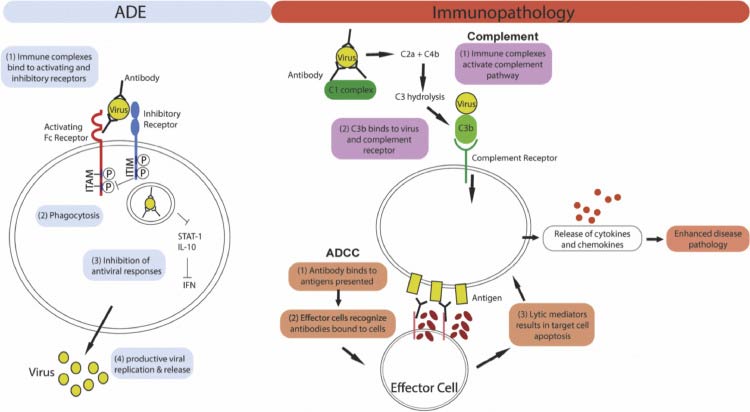
Figure 1: Mechanism of ADE and antibody mediated immunopathology. Left panel: For ADE, immune complex internalization is mediated by the engagement of activating Fc receptors on the cell surface. Co-ligation of inhibitory receptors then results in the inhibition of antiviral responses which leads to increased viral replication. Right panel: Antibodies can cause immunopathology by activating the complement pathway or antibody-dependent cellular cytotoxicity (ADCC). For both pathways, excessive immune activation results in the release of cytokines and chemokines, leading to enhanced disease pathology.
Do a Risk-Benefit Analysis Before Making Up Your Mind
Ironically, the data17,18,19 we now have no longer support a mass vaccination mandate, considering the lethality of COVID-19 is lower than the flu for those under the age of 60.20 If you’re under the age of 40, your risk of dying from COVID-19 is just 0.01%, meaning you have a 99.99% chance of surviving the infection. And, you could improve that to 99.999% if you’re metabolically flexible and vitamin D replete.
So, really, what are we protecting against with a COVID-19 vaccine? As mentioned, the vaccines aren’t even designed to prevent infection; they’re only meant to reduce the severity of symptoms.
And, as we’re now seeing, as many as 1 in 100 fully vaccinated people around the world are experiencing breakthrough infections.21 When you think that the so-called “vaccine protection” also could potentially make you sicker once you’re exposed to the virus, it seems like a lot of risk for a truly questionable benefit.
To circle back to where we started, neither the participants in current COVID-19 vaccine trials nor the ones lining up for the shot are being told of this risk — that by getting the vaccine they may end up with more severe COVID-19 once they’re infected with the virus.
Lethal Th2 Immunopathology Is Another Potential Risk
In closing, consider what this PNAS news feature states about the risk of vaccine-induced immune enhancement and dysfunction, particularly for the elderly, the very people who would need the protection a vaccine might offer the most:22
“Since the 1960s, tests of vaccine candidates for diseases such as dengue, respiratory syncytial virus (RSV), and severe acute respiratory syndrome (SARS) have shown a paradoxical phenomenon:
Some animals or people who received the vaccine and were later exposed to the virus developed more severe disease than those who had not been vaccinated. The vaccine-primed immune system, in certain cases, seemed to launch a shoddy response to the natural infection …
This immune backfiring, or so-called immune enhancement, may manifest in different ways such as antibody-dependent enhancement (ADE), a process in which a virus leverages antibodies to aid infection; or cell-based enhancement, a category that includes allergic inflammation caused by Th2 immunopathology. In some cases, the enhancement processes might overlap …
Some researchers argue that although ADE has received the most attention to date, it is less likely than the other immune enhancement pathways to cause a dysregulated response to COVID-19, given what is known about the epidemiology of the virus and its behavior in the human body.
‘There is the potential for ADE, but the bigger problem is probably Th2 immunopathology,’ says Ralph Baric, an epidemiologist and expert in coronaviruses … at the University of North Carolina at Chapel Hill.
In previous studies of SARS, aged mice were found to have particularly high risks of life-threatening Th2 immunopathology … in which a faulty T cell response triggers allergic inflammation, and poorly functional antibodies that form immune complexes, activating the complement system and potentially damaging the airways.”
- 1 International Journal of Clinical Practice, October 28, 2020 DOI: 10.111/ijcp.13795
- 2, 22 PNAS.org April 14, 2020 117 (15) 8218-8221
- 3 Viral Immunology 2003;16(1):69-86
- 4 Science Direct Neutralizing Antibody
- 5 Science Direct Binding Antibody
- 6 Twitter, The Immunologist April 9, 2020
- 7 PLOS Pathogens 2017 Aug; 13(8): e1006565
- 8, 9 Swiss Medical Weekly April 16, 2020; 150:w20249
- 10 Biochemical and Biophysical Research Communications August 22, 2014; 451(2): 208-214
- 11 JCI Insight February 21, 2019 DOI: 10.1172/jci.insight.123158
- 12 PLOS ONE April 2012; 7(4): e35421 (PDF)
- 13 PLOS ONE April 2012; 7(4): e35421 (PDF), page 11
- 14 medRxiv DOI:10.1101/2020.03.30.20047365 (PDF)
- 15 EBioMedicine 2020 May; 55: 102768
- 16 EBioMedicine 2020 May; 55: 102768, Introduction
- 17, 20 Annals of Internal Medicine September 2, 2020 DOI: 10.7326/M20-5352
- 18 Bitchute, SARS-CoV-2 and the rise of medical technocracy, Lee Merritt, MD, aprox 8 minutes in (Lie No. 1: Death Risk)
- 19 Technical Report June 2020 DOI: 10.13140/RG.2.24350.77125
- 21 Johns Hopkins September 28, 2021
Simple Strategies That Will Improve Your Immunity
Reproduced from original article:
https://articles.mercola.com/sites/articles/archive/2021/11/14/how-to-improve-immune-system.aspx
The original Mercola article may not remain on the original site, but I will endeavor to keep it on this site as long as I deem it to be appropriate, and will not be bullied into removing it.
Analysis by Dr. Joseph Mercola Fact Checked November 14, 2021
STORY AT-A-GLANCE
- Many who end up with severe COVID-19 have reduced adaptive immune function. As a result, they don’t clear the virus quickly and end up having to rely on a more proinflammatory killing of the virus inside their cells instead, which damages healthy cells as well
- Reduced T cell function appears to be a primary cause of severe COVID-19
- Diet and nutritional supplementation are two key strategies that can help support your immune function. Topping the list of nutrients required are vitamin D, magnesium, zinc and selenium
- Melatonin is also important. It has the ability to freely pass into any cell where it upregulates Nrf2 transcription, thereby boosting endogenous antioxidant production
- Other strategies that help support your immunity through a variety of means include time-restricted eating, exercise and sauna
This article was previously published December 20, 2020, and has been updated with new information.
“The Immunity Fix: Strengthen Your Immune System, Fight Off Infections, Reverse Chronic Disease and Live a Healthier Life” is a book written by James DiNicolantonio, Pharm.D., with whom I co-wrote “Super Fuel,” and Siim Land, an esteemed biohacker and author of “Metabolic Autophagy.”
In it, they review how to improve and regulate your immunity — a topic that should be high on anybody’s list these days. The catalyst for this collaboration was a number of academic papers written by DiNicolantonio on the underlying reasons for why some people suffer worse COVID-19 outcomes.
Many who end up with severe illness produce low amounts of Type 1 interferon. There’s also a reduction in their adaptive immune system. As a result, they don’t clear the virus quickly and end up having to rely on a more proinflammatory killing of the virus inside their cells instead.
Immune System Basics
As a refresher, your immune system consists of two primary “arms”:
- The innate immune system, which is your first line defense made up of natural killer (NK) cells, macrophages and white blood cells like neutrophils
- The adaptive immune system — T cells, and B cells that produce antibodies
As explained by DiNicolantonio:
“We used to think that the adaptive immune system was this system that takes a while to kick in, and once you have immunity from your adaptive immune system, then you have a longer-term protection, which is true. However, the adaptive immune system also seems to have cross sensitivity, meaning if you’ve been exposed to previous coronaviruses, your T cells seem to have some cross sensitivity to SARS-COV-2.
So, essentially, what we see is a reduction in T cells, in the cytotoxicity of these CD8 T-killer cells, which kill viruses in a nice, apoptotic, controlled way.
When you have a reduction in those types of immune cells, you have to rely more on your proinflammatory innate immune system for clearing viruses — things like neutrophils, white blood cells, macrophages. They kill in a much more pro-inflammatory, non-specific way, and they end up killing healthy bystander cells.
What we think is going on is, essentially, you have this reduction in Type 1 interferons … which interfere with the virus. And at the same token, you have a reduction in B cells and T cells. So, what ends up happening is you don’t clear the virus as quickly, and you end up having this proinflammatory killing.
Siim and I collaborated because these things are complex. We need to get this in layman’s terms. What our book boils down to is that your diet and your lifestyle control those types of things, and there’s things that you can do to support your own immune system.”
Your T cell function tends to decline with age. It’s also reduced in those with chronic disease. Reduced T cell function appears to be a primary cause of severe COVID-19, seeing how those with the worst COVID-19 outcomes are the elderly and/or those with comorbidities such as diabetes, hypertension, metabolic syndrome and cardiovascular disease.
These factors worsen the proinflammatory response that you get from SARS-CoV-2, but they also weaken your immunity in general. “The Immunity Fix” reviews lifestyle strategies that help you sidestep and prevent this proinflammatory response. “It’s a very holistic approach to looking at the immune system,” Land notes.
Top Two Nutrient Deficiencies to Address
Diet and nutritional supplementation are two key strategies that can help boost your immune function. According to Land and DiNicolantonio, vitamin D may be the most important nutrient in this respect. Vitamin D activates more than 2,000 genes, DiNicolantonio notes, including vitamin K-dependent proteins and repair genes. It also helps your body produce powerful antimicrobial and antiviral peptides.
Those over the age of 60 have a ninefold greater risk of dying from COVID-19 than that of younger individuals. If you’re severely vitamin D deficient, your risk can be 15 fold greater. So, while you cannot change your age, you can certainly alter your vitamin D status, thereby potentially minimizing your risk.
However, in order to convert the vitamin D into its active form, you need magnesium, so magnesium would probably be the second-most important nutrient deficiency to address. Magnesium is also required for immune cell function, so if your magnesium level is low, your immune function could be impaired.
“People who have genetically low magnesium in their natural killer (NK) cells and their CD8 T-killer cells … their immune system is down. They have chronic activation of Epstein-Barr, which 95% of us are infected with, and they’re at a much higher risk of lymphoma,” DiNicolantonio says.
“And that’s just one nutrient. Being deficient in one nutrient can potentially cause this immunodeficiency essentially. So, in the book, we go through how nutrients and your immune system interact and why nutrient deficiencies are probably leading to a lot of these poor COVID-19 outcomes.”
Zinc and Selenium Are Also Important
In terms of importance, zinc would probably nab the third spot. Taking zinc lozenges at the first onset of cold symptoms has been shown to cut the duration of the common cold by six to seven days, but you have to take it correctly.
“If you’re using lozenges, you have to take it every two hours,” DiNicolantonio explains. “You got to take it within 24 hours of symptom onset. You have to take about 18 milligrams per dose, and you have to get the total daily dose over 75 milligrams.”
Fourth on the list would be selenium. Not only is selenium deficiency associated with a fivefold higher risk of dying from COVID-19 and a threefold higher risk of having a poor COVID-19 outcome, but it is also associated with coxsackievirus-induced cardiomyopathy (Keshan disease).
So, if you’re deficient in selenium, a nonvirulent RNA virus called coxsackievirus, which typically only causes hand, foot and mouth syndrome in certain children, can become much more virulent, leading to virally induced cardiomyopathy. Patients with this cardiomyopathy, known as Keshan disease, are typically given selenium. Selenium is also important for the production of glutathione, which appears to play a significant role in COVID-19.
The Importance of Melatonin
Another thing that is associated with improved COVID-19 outcomes is melatonin. DiNicolantonio explains:
“Melatonin is interesting. I kind of view it like molecular hydrogen but with some additional advantages. Melatonin can freely pass into any cell membrane, so that’s very key. If you want to get to the oxidative stress, you have to be able to access it and get into the mitochondria. Melatonin and molecular hydrogen are two molecules that can do that and really do that well …
Melatonin is not just this hormone we secrete in the brain. We synthesize it from serotonin, and it can be produced in many cells. So, it’s active throughout the entire day. What’s interesting is that it’s one of the only molecules that seems to increase the transcription of Nrf2.
Most plant polyphenols and all these other Nrf2 boosters only inhibit the inhibitor of Nrf2, which is KEAP1. Essentially, they’re making the current Nrf2 levels more active. When you add melatonin, that increases the transcription of Nrf2. Very few molecules can actually do that.
And Nrf2 is how we boost our endogenous antioxidant enzymes. Really, that’s the key. If you have acute respiratory distress, you want to boost your overall endogenous antioxidant systems, and the best way to do tha is through Nrf2 activators, particularly melatonin.”
High-Dose Melatonin Reduces COVID-19 Mortality
As for dosage, a recent case series involving 10 patients with COVID-19-related pneumonia used 36 to 72 mg of oral melatonin per day in four divided doses, which is far higher than recommended for sleep. DiNicolantonio comments:
“It’s so safe. Doses of melatonin up to 1,000 mg per day in humans have shown virtually no side effects besides grogginess and sleepiness … Melatonin use is associated with an 83% reduction in mortality from COVID-19, a 30 to 50% reduction in testing positive for SARS-COV-2, and in a case series of 10 COVID pneumonia patients, it cut the duration of hospital stay by five days.
And none of those patients who got melatonin ended up on a mechanical ventilator or died whereas in similar severe COVID-19 cases that were hospitalized at the same time, 25% to 40% of those individuals ended up on mechanical ventilators or died.”
As explained by DiNicolantonio, melatonin is actively produced throughout the day and is a master antioxidant, meaning it scavenges free radicals. It also binds to melatonin receptors that upregulate your innate antioxidant defense systems.
“Melatonin actually seems to concentrate in the bone marrow and that’s important because your immune system comes from stem cells produced from your bone marrow,” DiNicolantonio explains.
“From those stem cells, you get your immune cells. Some of your immune cells can even produce melatonin. We think it’s being concentrated in the bone marrow to protect immature stem cells and immune cells from oxidative damage, which actually makes a lot of sense.”
Nebulized Hydrogen Peroxide
While Land and DiNicolantonio hypothesized that inhaled molecular hydrogen at 2% or 3% would be a potential important strategy in COVID-19 patients requiring ventilation in a hospital, this can be significantly expensive. A better alternative, in my opinion, would be nebulized hydrogen peroxide, which you can do at home. This is my personal go-to strategy, and I’ve seen many recover from COVID-19 using this strategy. You can review my video below for more detailed in formation.
Nebulizing hydrogen peroxide into your sinuses, throat and lungs is a simple, straightforward way to augment your body’s natural expression of hydrogen peroxide to combat infections and can be used to support the immune system.
All you need is a desktop nebulizer, food-grade hydrogen peroxide and some saline. That way, you have everything you need and can begin treatment at home at the first signs of a respiratory infection. Keep in mind food grade hydrogen peroxide must be diluted down to a 0.1% dilution before use.
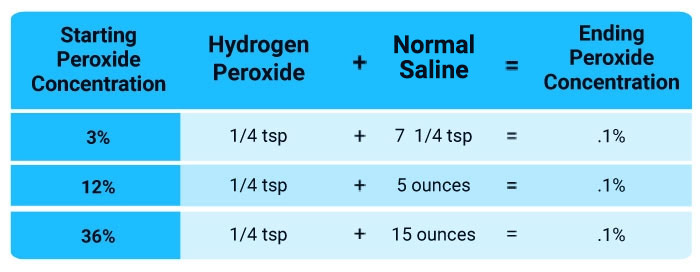
I believe the hydrogen peroxide works like a signaling molecule, and may even have some direct viricidal effect on the cells in the lining of the lungs and the sinuses where the virus takes hold initially. So, you’re potentially killing it directly, plus supporting your immune responses.
Address Your Metabolic Health
In addition to addressing nutrient deficiencies, in particular vitamin D, magnesium, zinc and selenium, Land stresses the importance of optimizing your metabolic health.
“Research [has found] that metabolic syndrome, obesity and diabetes, all those things, worsen the outcomes of COVID-19 as well as other infections like influenza. Obesity also increases the duration that you can carry the virus and share it for longer. So, it’s especially negative in a society that tends to be in poor metabolic health.
One interesting thing that we discovered during the writing of the book is that one of the molecules that gets activated during an infection is called HMGB1, which stands for High Mobility Box-1.
That gets activated during an infection, and it’s one of the key molecules that kind of offsets the cytokine storm by activating NFKB and NLRP3 inflammasome and eventually causes this massive pro-inflammatory cytokine response …
What we theorized based on this research, is that hyperglycemia, insulin resistance, elevated blood sugar will make it more likely that HMGB1 is going to get into the cell and turn on NFKB and these other pro-inflammatory cytokines that will eventually lead to the cytokine storm.”
The Case for a Low Linoleic Acid Diet
DiNicolantonio and I discussed the importance of avoiding seed oils in our book, “Superfuel.” In it, we dove deep into the importance of healthy fats for metabolic health, and the destructive nature of linoleic acid-rich vegetable oils.
Linoleic acid (LA) is one of the most perishable molecules in food, meaning it’s highly susceptible to damage. When it oxidizes, it turns into oxidative metabolites called oxidative linoleic acid metabolites or oxylipids or OXLAMs that damage proteins, DNA and cell membranes and are likely the primary culprit of chronic disease.
OXLAMs also activate pathways that destroy your immune response. What we didn’t fully appreciate at the time was that even healthy oils, such as olive oil, can have a negative impact, thanks to their LA content. LA is also high in conventionally raised chicken, as these animals are typically fed LA-rich grains.
If you exceed 10 grams of LA per day, and perhaps as little as 5 grams — regardless of their source — you may radically worsen your metabolic health. From a historical perspective, 150 years ago, the average consumption of LA was 2 to 3 grams. Today, many get more than 30 grams a day from their diet. In my view, an LA-restricted diet may be the single most important dietary intervention available. DiNicolantonio adds:
“That’s a great point, and I think from a COVID-19 perspective, the biggest thing you want to do is increase the resilience of your cells to oxidative stress. Unfortunately, if you’re consuming a diet high in LA, and if it doesn’t get burned for fuel and it gets stored in tissues, the half-life of LA is 680 days, and it can start oxidizing the cellular membranes, including on your immune cells as well.
If you increase your omega-6 intake, that affects the levels in your immune cells. And if you saturate your immune cells with this oxidized LA, you’re probably at a much higher risk of secreting more proinflammatory cytokines in your own cells, and your lungs and your arteries are probably much more susceptible to the damage that occurs when our body tries to kill off viruses.
I’m sure if we were to actually look at the blood levels of oxidized LA in severe COVID-19 patients, they would be sky high … So yeah, it’s likely a huge driver of overall inflammation.”
Simple Strategies to Improve Your NAD+ Level
Another important molecule is nicotinamide adenine dinucleotide (NAD+), which can be increased using precursors such as nicotinamide mononucleotide (NMN) and/or nicotinamide riboside (NR).
NMN appears to be the superior of the two, as it activates a salvage pathway. However, you don’t need to take an expensive supplement to improve your NAD+ level. Strategies such as exercise, hot or cold exposure and time-restricted eating — which costs you nothing — can get the job done. Land explains:
“A lot of the NAD that your body produces is recycled through the salvage pathway. Very little (less than 1%) of it is going to come from food, especially tryptophan or niacin.
The easiest way to prevent losing your NAD as you get older or as you get immunocompromised is to promote the salvage pathway, and one of the activators of this NAMPT enzyme that governs the salvage pathway is AMP protein kinase (AMPK), and AMPK gets primarily turned on by catabolic stressors in the body, such as exercise, sauna, cold, as well as fasting.
What I’ve concluded is that doing this regular intermittent fasting or timed eating is a very efficient way of keeping our energy levels high and preventing the lowering of the other things that lower NAD, like inflammation and oxidative stress.
The problem is that NAMPT is controlled by sirtuins and sirt1 especially. Sirtuins are longevity genes. Sirtuins also control your circadian rhythms. So, what I think is that if your circadian rhythms are misaligned, if you’re doing shift work or you’re jet lagged or something, then sirtuins are not going to be expressed, and you will also then inhibit NAMPT, which will then shut down the NAD salvage pathway.”
In other words, when sirtuins are suppressed from mismatched circadian rhythms, you also suppress NAMPT, as the NAMPT requires sirtuins to work. Sirtuins also consume NAD, so if your NAD level is low, you’re not going to get the benefits sirtuins provide.
“I think the supplemental NR and NMN are very useful if you’re in an NAD-deficient state because the problem is that if you’re already low in NAD, then it’s hard to raise that bar because you’re already so low and depleted,” Land says.
“If your NAD is high, then you experience the less negative side effects from inflammation oxidative stress because your body can repair and deal with it, whereas if you’re immunocompromised, you’re very old or you are just nutrient deficient and have low NAD, then it’s a vicious feedback loop. So, using something like a NAD precursor or a booster can be a quick fix to get yourself back on the right track.”
If you use an NAD or NMN supplement, consider getting it in suppository form. Other alternatives include subcutaneous or intranasal administration, all of which are more effective than oral supplements. That said, as noted by DiNicolantonio, if your NAD is low, your best bet is to address the underlying cause rather than simply adding supplements.
“Ultimately, any type of oxidative stress is going to deplete NAD. So, fix your metabolic dysfunction and improve your nutrient deficiencies first, and ultimately your NAD need is going to go down. Fix the things that are causing you to burn through your NAD.”
One of the most common sources of oxidative stress is electromagnetic field (EMF) exposure, which is the topic of my book “EMF*D.” Two primary enzymes consume NAD. One is poly ADP-ribose polymerases (PARP), which is also known as adenosine ribosyl transferase (ARTD). PARP is used to repair DNA damage, and every time PARP is activated, it uses up 150 molecules of NAD.
The good news is that strategies such as sauna, exercise and fasting not only will improve the production of NAD, but also will reduce the consumption of it. These strategies also lower inflammation, which in and of itself will lower your NAD consumption.
Other Benefits of Sauna Bathing
In addition to preserving your NAD, sauna bathing also mimics a fever, which is your body’s first-line defense against infections. DiNicolantonio explains:
“The reason why we induce a fever to fight an infection is because that allows our cells to secrete heat shock proteins. In order for a virus to replicate, it has to infect your cell, hijack your machinery, and it has to export its ribonucleoprotein complex out of the cell to replicate. In order for that complex to get exported, the M1 protein has to dock onto it.
Heat shock protein 70, which gets released during sauna sessions, can combine to the viral ribonucleoprotein complex preventing M1 protein from docking. [By] inhibiting the export of that viral ribonucleoprotein complex, [heat shock protein] essentially inhibits viral replication.”
According to Land, regular sauna bathing and exercise are among the best things you can do to strengthen your immune system and increase your body’s resilience. The two are also complementary.
Exercise causes preconditioning hormesis, so if you exercise before your sauna, then you significantly bolster your body’s ability to handle infection and other stresses. The heat will also promote recovery from the exercise by boosting growth hormone, repairing damaged proteins and reducing inflammation.
More Information
This interview merely touches on a small number of highlights of the information found in “The Immunity Fix,” so to learn more, be sure to pick up a copy. To connect with DiNicolantonio and Land, see their websites, DrJamesDinic.com and SiimLand.com. Both can also be found on Twitter and Instagram by searching for DrJamesDinic (@drjamesdinic) and Siim Land.