Cardiovascular
now browsing by category
Without our heart, we die, so why do people insult our heart with poor nutrition?
Herbs Can Help Lower Blood Pressure
Reproduced from original article:
https://articles.mercola.com/sites/articles/archive/2021/11/26/herbs-and-spices-lower-blood-pressure.aspx
The original Mercola article may not remain on the original site, but I will endeavor to keep it on this site as long as I deem it to be appropriate, and will not be bullied into removing it.
Analysis by Dr. Joseph Mercola Fact Checked November 26, 2021
STORY AT-A-GLANCE
- A controlled feeding study of people with known risk factors for heart disease showed eating 6.5 grams of 24 herbs and spices each day lowered systolic blood pressure
- Heart disease has ranked No. 1 in the top 10 leading causes of death in the U.S. for years; the number of deaths has jumped 9% in just six short years
- Vitamin D deficiency has been associated with high blood pressure in adults, and low levels in infants and children are predictive of high blood pressure in later childhood and teen years
- Salt has been vilified as a primary cause of high blood pressure. Yet, evidence shows it is the sodium/potassium ratio that has a greater impact on blood pressure
- Additional strategies that help lower blood pressure include exercise, stress reduction, inspiratory muscle strength training, meditation and sauna bathing
Heart disease has ranked No. 1 in the top 10 leading causes of death in the U.S. for years. In 2020,1 690,882 people died from heart disease. This is compared to 633,842 who died in 2015, which represents a 9% jump in six short years. One of the key risk factors for heart disease is high blood pressure.2 New data show a diet rich in herbs and spices may help reduce high blood pressure.3
Blood pressure measurements are expressed as two numbers.4 The top number is called the systolic number and the bottom is called the diastolic number. These numbers represent the pressure measured in millimeters of mercury (mmHg) required to move blood through your arteries. The top number is how much pressure is on the artery as the heart beats and the diastolic number is how much pressure remains in the artery between heart beats.
In 2017, the American College of Cardiology,5 in collaboration with the American Heart Association,6 published new guidelines that defined high blood pressure. This moved the measurement to diagnose high blood pressure from 140/90 to 130/80 mmHg.7
Researchers had been noticing a rise in heart disease in individuals whose blood pressure was previously thought to be within normal limits. With the changed guidelines, the American Heart Association8 estimated more than 100 million Americans have high blood pressure.
High blood pressure increases the risk of heart attack, kidney disease, vision loss, stroke and damaged blood vessels.9 New data published in the American Journal of Clinical Nutrition demonstrate how closely associated your diet is to your blood pressure measurement.10
24 Herbs and Spices Over Four Weeks Lowered Blood Pressure
Researchers at Pennsylvania State University11 sought to understand the effect that eating herbs and spices would have on cardiovascular disease. According to the researchers,12 this was the first controlled feeding study to evaluate mixed herbs and spices in a traditional U.S. diet against the risk factors for heart disease.
The researchers recruited 71 people with known risk factors for heart disease. Of those, 63 participants completed the controlled feeding study. The researchers used blood samples and blood pressure to gauge the effect of a low (0.5 grams), moderate (3.2 grams) and high (6.5 grams) intake of herbs and spices.
The participants consumed each diet in random order for a period of four weeks with a two-week washout between each diet.13 The remainder of the diet was based on the average American intake. The herbs and spices included basil, thyme, cinnamon and turmeric.
The researchers discovered that those consuming the diet high in herbs and spices had lower systolic blood pressure then those who consumed the diet with medium or low-dose herbs and spices. The participants wore a blood pressure monitor for 24 hours at the start of the study and at the end of each treatment period.
The researchers were excited by the results because the study did not specifically change the diet to be heart healthy. The only difference was in the number of herbs and spices consumed by the participants. Penny M. Kris-Etherton, professor of nutritional sciences at Penn State Evan Pugh University,14 said in a press release:15
“I think it’s really significant that participants consumed an average American diet throughout the study and we still found these results. We didn’t decrease sodium, we didn’t increase fruits and vegetables, we just added herbs and spices. It begs the next question that if we did alter the diet in these ways, how much better would the results be?”
Vitamin D Deficiency May Be Linked to High Blood Pressure
Several important factors influence your blood pressure, and your vitamin D level is one of them.16 Researchers have found vitamin D insufficiency and deficiency are associated with high blood pressure in adults and now find that low levels in infants and children can increase the risk of high blood pressure later in childhood and during the teen years.17
Vitamin D plays a significant role in several health conditions, and it may be one of the simplest solutions to a wide range of problems. Optimally, you’ll want to obtain vitamin D through sun exposure. However, since many dermatologists and other agencies18,19,20 began telling people to avoid the sun and use liberal amounts of sunscreen, vitamin D deficiency has reached epidemic proportions.21,22,23
In the U.K., the optimal level of vitamin D is 20 ng/mL (50 nmol/L) and higher.24 However, in the U.S., sufficient levels are between 30 ng/mL (75 nmol/L) and 60 ng/mL (150 nmol/L)25 or from 40 ng/mL (100 nmol/L) to 60 ng/mL (150 nmol/L).26 One study27 published in 2018 found 39.92% of the people had a vitamin D level of 20 ng/mL or less and 60.08% had levels of 20 ng/mL or greater.
Since the lowest sufficient level is 30 ng/mL, at least 40% of the population surveyed were deficient in vitamin D, and likely higher. Evidence suggests that low levels are associated with high blood pressure. One literature review28 of 30 randomized clinical trials and 4,744 participants found that vitamin D3 could help reduce systolic and diastolic blood pressure. The effect appeared dependent on the dose, duration and population.
A second review29 of 17 trials with 1,687 participants found supplementation with vitamin D had a statistically significant difference in reducing systolic and diastolic pressure in people who were vitamin D deficient and had high blood pressure.
Low levels of vitamin D also appear to have a predictive value in children. Researchers30 followed 775 children in ages ranging from birth to age 18 from 2005 to 2012 to investigate the effect vitamin D had on the development of high systolic blood pressure. Low vitamin D status was defined as less than 11 ng/mL at birth and less than 25 ng/mL during early childhood.
The researchers31 compared those with low levels of vitamin D to children who were born with adequate levels. They found that children with low levels had about a 60% higher risk of elevated systolic blood pressure from ages 6 to 18. Children who experienced persistently low levels throughout childhood were at double the risk of elevated systolic blood pressure between ages 3 and 18.32
Take Care With Your Sodium/Potassium Ratio
In the U.S. and many other developed countries, salt has been vilified as a primary cause of high blood pressure.33 The idea is with more salt, your body retains more fluid and therefore increases the work of the heart. According to research presented at the American Heart Association meeting in 2013,34 excessive salt contributed to 2.3 million heart-related deaths worldwide in 2010.
However, it is important to understand that sodium and potassium work together to affect your blood pressure. The average reported intake of potassium from food is about half35 of the 4,700 mg recommended.36 Research has demonstrated these low levels of potassium may have a significant impact on blood pressure,37,38,39 especially as it relates to the amount of salt normally found in the Western diet.
Potassium works to relax the walls of your arteries, which keeps your muscles from cramping and lowers your blood pressure.40 Reduction in blood pressure with added potassium has also been associated with a reduced risk of stroke and all-cause mortality.41
It’s recommended that you consume in the range of two to three times more potassium than sodium, depending on whether you currently have a heart condition or diabetes.42,43 But most Americans consume more sodium than potassium.
If researchers are looking only at sodium levels and not the ratio, which is more important than the overall salt intake,44 then it may appear as if salt is driving high blood pressure. Therefore, by lowering your salt intake you automatically improve the ratio.
More Strategies to Help Control Blood Pressure
There are many factors that can positively or negatively affect your blood pressure. As discussed, your diet plays an important role in the nutrients supplied to your arterial system. Several other strategies you may consider include:
| Exercise more — The American Heart Association45 recommends activity and exercise to help manage blood pressure. Studies have also demonstrated the effectiveness of exercise, including as a preventive strategy.46 Regular activity47 can lower blood pressure, reduce heart rest and prevent remodeling from high blood pressure that is pathological and increases the risk of heart failure and mortality. |
| Reduce stress — The American Heart Association48 also recommends managing your stress to help control high blood pressure. Stress stimulates the nervous system to produce hormones that cause vasoconstriction.49 This may cause short-term increases in blood pressure.50
Chronic stress can also affect sleep patterns,51 dietary habits52 and motivation to exercise,53 all of which are key factors in raising blood pressure.54 Acute stress is also associated with broken heart syndrome, which is a potentially life-threatening condition that mimics a heart attack.55 |
| Try inspiratory muscle strength training — One study56 showed using high resistance inspiratory muscle strength training (IMST) could reduce blood pressure measurements as well as aerobic exercise or meditation. IMST was originally developed for critically ill patients with respiratory diseases. The strategy uses a handheld device that provides resistance to the user as they inhale vigorously, thus strengthening muscles. |
| Incorporate meditation — Mind-body practices that trigger your body’s relaxation response,57 such as meditation, play an important role in lowering blood pressure by favorably influencing a recently identified set of genes and biological pathways.58 As the relaxation response is elicited, biochemical changes occur, including decreased oxygen consumption, blood pressure, heart and respiratory rate.59 |
| Use intermittent fasting — This is a form of time restricted eating during which you typically fast for 16 to 18 hours with a window of six to eight hours to eat. Evidence shows that there are several benefits to the cardiovascular system, including lowering blood pressure.60 A recent study61 from Baylor College of Medicine suggested that fasting may help normalize blood pressure by impacting the gut microbiota. |
| Sauna bathing — Sometimes some of the simplest strategies can have a tremendous impact. Sweating in a sauna can help expel toxins, improve blood circulation and improve mitochondrial function. In a video lecture by Rhonda Patrick, Ph.D.,62 she reviews how sauna bathing can be used as an exercise mimetic to increase your longevity.
In this lecture she notes that just a single sauna session has been shown to lower blood pressure, improve heart rate variability, and improve arterial compliance. Some of the positive benefits of the sauna on heart health may have to do with similar physiological changes that also occur during physical exercise. |
| Check your magnesium — Magnesium deficiency can contribute to a significant number of health problems since it is involved in hundreds of biochemical reactions in the body.63 One scientific review64 suggested that low magnesium may be the greatest predictor of heart disease and another65 suggested subclinical deficiency can compromise cardiovascular health.
Low magnesium levels have been linked to a high risk of high blood pressure,66 stroke67 and sudden cardiac death.68 The best way to determine your status is to do an RBC magnesium test. This measures the amount of magnesium in your red blood cells. There are several reasons why you may have insufficient or deficient levels of magnesium, including not getting enough from your diet, sweating, stress and lack of sleep. Seek to eat more magnesium-rich foods and consider high-quality magnesium supplements if necessary. Another way of effectively boosting your level is to use an Epsom salt bath as the magnesium is effectively absorbed through your skin. |
- 1 JAMA Network, 2021; 325(18)
- 2 CDC Heart Disease Facts, Americans at Risk for Heart Disease
- 3, 10, 12 The American Journal of Clinical Nutrition, 2021; doi.org/10.1093/ajcn/nqab291
- 4 American Heart Association, Understanding Blood Pressure Readings, Your blood pressure numbers and what they mean
- 5 American College of Cardiology, May 7, 2018
- 6 Hypertension, 2018;71
- 7 Centers for Disease Control and Prevention, Facts About Hypertension
- 8 American Heart Association, January 31, 2018
- 9 My Cleveland Clinic, What Can Happen if High Blood pressure is not treated?
- 11, 13, 15 EurekAlert! November 8, 2021
- 14 Penn State, Evan Pugh University Professors
- 16, 24 Express, November 15, 2021
- 17, 30 Hypertension, 2019;doi.org/10.1161/HYPERTENSIONAHA.119.13120
- 18 American Academy of Dermatology, Vitamin D Stats and Facts
- 19 UCSF Magazine, Summer 2018
- 20 Centers for Disease Control and Prevention, Sun Safety
- 21 Journal of Bone & Joint Surgery, 2010;92(13):2300 results
- 22 American Journal of Clinical Nutrition, 2008;87(4):1080S
- 23 International Journal of Health Sciences; 2010;4(1)
- 25 ZRT Lab, January 10, 2018
- 26 Grassroots Health, Are You Vitamin D Deficient?
- 27 Cureus, 2018;10(6)
- 28 Nutrition Metabolism and Cardiovascular Disease, 2016;26(8)
- 29 Medicine, 2019;98(19)
- 31, 32 American Heart Association, July 1, 2019
- 33 Nutrients, 2019;11(9)
- 34 Science Daily, March 21, 2013
- 35 USDAFood Surveys Research Group, September 9, 2012
- 36 National Institutes of Health, Potassium, 2nd line under table 2
- 37 Journal of the American Medical Association 1997;277(20):1624
- 38 Journal of Hypertension, 2015;33(8)
- 39 Cell Metabolism, 2015;21(1)
- 40 Harvard Health Publications, January 23, 2017
- 41 Stroke 2014; 45(10):2874
- 42 Autoimmune Association, August 5, 2013
- 43 The American Journal of Clinical Nutrition, 2012;96(2)
- 44 Advances in Nutrition, 2014; 5:712
- 45 American Heart Association, Getting Active to Control High Blood Pressure
- 46 Arq Bras Cardiol. 2016; 106(5)
- 47 Current Hypertension reports, 2015;17(10)
- 48 American Heart Association, Managing Stress to Control High Blood Pressure
- 49 WMJ, 1998;97(11)
- 50 Blood Pressure UK, Stress and Your Blood Pressure
- 51 Sleep Foundation, Stress and Insomnia
- 52 Harvard Health Publishing, February 15, 2021
- 53 Sports Medicine, 2014;44(1) Ab/Concl
- 54 CDC, Prevent High Blood Pressure subheads
- 55 Medical Xpress, October 13, 2021
- 56 Journal of the American Heart Association, 2021;10:e020980
- 57 The Journal of Alternative and Complementary Medicine, 2018;24(5)
- 58 Science Daily, April 4, 2018
- 59 PLOS One May 1, 2013, Intro para 2
- 60 Nutrients, 2019;11(3)
- 61 Science Daily, April 29, 2021
- 62 YouTube, September 10, 2019 Minute 6:54, 11:09, 12:53, 13:56
- 63 NIH.gov Magnesium Fact Sheet for Professionals
- 64 New Hope Network January 31, 2013
- 65 Open Heart 2018:e000668 (PDF)
- 66 Hypertension, 2016;68
- 67 BMC Medicine, 2016;14(210)
- 68 American Heart Journal, 2010;160(3)
Pfizer modifies formulation of its COVID jab for 5 to 11-year old kids, adds ingredient used to stabilize heart attacks
Reproduced from original article:
https://www.naturalhealth365.com/pfizer-adds-new-ingredient-3437.html
by: Sara Middleton, staff writer | November 9, 2021
 (NaturalHealth365) This week, American parents witnessed the U.S. government give the full go-ahead for the Pfizer mRNA COVID shot for kids aged 5 to 11. The public has been told that this injection has been specially formulated for children and contains a “lower dose” – just 10 micrograms of the ingredients compared to 30 micrograms for people aged 12 and up.
But these COVID shots for under-12 kids contain ingredients that have nothing to do with “preventing” COVID – including one substance frequently used in people who have had heart attacks. So, could this be an attempt by Big Pharma to prophylactically mitigate jab-related cardiac arrest in innocent young children?
Pfizer adds NEW ingredient to COVID shot for kids aged 5-11 that is commonly used to manage severe electrolyte imbalances following heart attacks
As heavy propaganda for mass injection continues – Big Bird from Sesame Street got his COVID shot this week, he announced to his viewers – we now know that Pfizer added a chemical called tromethamine (Tris) to its formulation for the shot for kids.
According to its Safety Data Sheet, there is no data available on Tris regarding neurotoxicity, mutagenicity, reproductive effects, and teratogenicity. The Cleveland Clinic explains that tromethamine is typically used to make blood and urine less acidic.
This is important in the treatment of a condition called metabolic acidosis, a type of electrolyte imbalance in which “the body produces too much acid or when the kidneys are not removing enough acid from the body.”
Importantly, metabolic acidosis is a common complication following heart attacks.
Side effects of tromethamine, which is typically given as an injection, include:
- Dark-colored urine
- Confusion
- Malaise, unusual fatigue, and flu-like symptoms
- Rapid heartbeat
- Light-colored stools
- Pain at the injection site
- Sweating
- Pain in the right upper abdomen
- Yellowing of the eyes and skin (jaundice)
- Dizziness
- Increased hunger
- Nausea
- Anxiousness
In other unusual timing: FDA just approved the first oral blood thinner for kids
This past June, the FDA approved Pradaxa, the first oral blood thinner for kids aged 3 months to 12 years old. Produced by Boehringer Ingelheim Pharmaceuticals, Inc, Pradaxa can be used to treat kids with venous thromboembolism (blood clots in the veins – a common cause of heart attack).
Close attention is needed in the coming months and years. According to the U.S. Centers for Disease Control and Prevention, approximately 13.4 deaths per 100,000 occur among kids aged 5 to 14 in this country. Additionally, the estimated prevalence of heart conditions among U.S. children aged 0–17 years, according to the 2016 National Survey of Children’s Health (NSCH), is 1.3%.
The American Heart Association also notes that rates of stroke among children have remained “steady” in recent years. But, only time will tell, will numbers like these change?
A controversial risk-benefit analysis by a man named Tony Rogers, who holds a PhD in economics and used Pfizer’s own trial data to support his claims, suggests that for every one child “saved” by the COVID shot, another 117 would be killed by the shot.
No doubt, time will tell whether the data will support this dire prediction.
Sources for this article include:
Citizenfreepress.com
CDC.gov
Clevelandclinic.org
Healthychildren.org
Biospectra.us
FDA.gov
CDC.gov
Skirsch.com
Earthnewspaper.com
FDA.gov
Kaiserpermanente.org
Delaware.gov
Stevekirsch.substack.com
Eating Chocolate Could Slash High Blood Pressure Risk
© GreenMedInfo LLC. This work is reproduced and distributed with the permission of GreenMedInfo LLC.
Want to learn more from GreenMedInfo? Sign up for the newsletter here:
www.greenmedinfo.com/greenmed/newsletter
Reproduced from original article:
www.greenmedinfo.com/blog/eating-chocolate-could-slash-high-blood-pressure-risk
Posted on: Wednesday, May 20th 2020 at 4:00 pm
Written By: GreenMedInfo Research Group
This article is copyrighted by GreenMedInfo LLC, 2020

There’s a growing list of research touting chocolate’s antioxidant content, favorable action against disease-inducing oxidative stress and overall health benefits. One study highlights chocolate’s potential to reduce the risk for high blood pressure, which can be good news amid near-epidemic levels of this condition worldwide
A number of studies support the positive effects of cocoa on cardiovascular health, including its ability to reduce common risk factors such as insulin resistance, endothelial dysfunction, low levels of HDL or “good” cholesterol and oxidized LDL (or “bad”) cholesterol.[i]
Recently, a study on French women investigated the potential benefit of cocoa consumption in lowering high blood pressure risk.
Which Cocoa Source Is Good for Blood Pressure?
In a cohort of 45,653 women, researchers estimated chocolate intake based on a 208-item dietary questionnaire and 24-hour recall.[ii] A detailed food composition table helped them estimate quantities of cocoa found in certain foods, such as chocolate drinks, biscuits, cakes, candy bars and desserts. Median chocolate consumption was 2.3 grams (g) per day at baseline.
Self-reported cases of high blood pressure were validated through a drug reimbursement database. Some 12,793 cases of the condition were identified in the study. In their assessment of the links between specific cocoa sources and high blood pressure risk, the group found that moderate — but not high — cocoa intake from all dietary sources was inversely associated with high blood pressure risk.
They concluded that moderately consuming plain chocolate can potentially reduce the risk for high blood pressure, while eating chocolate from sweet sources (i.e., desserts) can bring about an increased risk.
In a 2006 study, researchers saw that consuming around the same amount as the current study — 2.11 g of cocoa a day, which translates to just half an ounce every week — also had benefits. Men with the highest cocoa consumption slashed their risk of cardiovascular death by half compared to men who ate the least cocoa. High cocoa consumption also reduced the risk of all-cause mortality.[iii]
The GreenMedInfo database offers at least 170 abstracts with chocolate research, including a handful on its impact on cardiovascular diseases, high blood pressure and endothelial dysfunction.
Current estimates note that 1.13 billion people around the world have high blood pressure, with most living in low and middle income nations.[iv]
The Antioxidant Factor
In studies featuring the benefits of chocolate, tea, red wine and blueberries, one would likely encounter words like anthocyanins, flavonoids and antioxidants.
Antioxidants are a broad range of biochemicals that scour free radicals. These sinister oxidizers, once set loose, incite a chain reaction that starts to oxidize unsaturated fats of cell membranes, which then leads to crippled DNA expression, cell division and immune function, to name a few functions.[v]
Antioxidants fight oxidative stress or inflammation, which plays an important role in virtually all diseases including cancer, heart disease, diabetes and joint pain.[vi]
In a study published in the American Journal of Clinical Nutrition, chocolate was found to lower risk factors for diabetes.[vii] Eating chocolate’s active constituents, namely cacao and flavan-3-ols, reduced insulin resistance significantly.
Cocoa flavanols (a type of antioxidant) are plant-derived bioactive ingredients from the cacao bean. The dietary consumption of flavanols has been associated with improved cardiovascular health, such as the improvement of blood vessel elasticity and lowered blood pressure.[viii],[ix]
There’s a clincher, however: the compounds are often destroyed during normal food processing. Raw chocolate might be your best bet since the more heated and processed cacao is, the more flavanols and other antioxidants are lost. Raw cacao is available in bean, nib or powder form.
For other forms of chocolate, most experts recommend looking for chocolate that’s organic, fair-trade and as dark as possible, containing at least 70% cacao content.
References [i] Y Wan et al “Effects of cocoa powder and dark chocolate on LDL oxidative susceptibility and prostaglandin concentrations in humans”. Am J Clin Nutr. 2001 Nov;74(5):596-602. [ii] MacDonald CJ et al “Consumption of cocoa-containing foods and risk of hypertension in French women” Eur J Epidemiol. 2020 Jan 25. [iii] Brian Buijsse et al “Cocoa intake, blood pressure, and cardiovascular mortality: the Zutphen Elderly Study” Arch Intern Med. 2006 Feb 27 ;166(4):411-7. [iv] World Health Organization https://www.who.int/news-room/fact-sheets/detail/hypertension [v] GreenMedInfo www.greenmedinfo.com/blog/coffee-tea-turmeric-and-beyond-zero-essential-polyphenols-capt-randall-0 [vi] GreenMedInfo www.greenmedinfo.com/blog/coffee-tea-turmeric-and-beyond-zero-essential-polyphenols-capt-randall-0 [vii] Lee Hooper et al “Effects of chocolate, cocoa, and flavan-3-ols on cardiovascular health: a systematic review and meta-analysis of randomized trials” Am J Clin Nutr. 2012 Feb 1. Epub 2012 Feb 1. [viii] Roberto Sansone et al “Cocoa flavanol intake improves endothelial function and Framingham Risk Score in healthy men and women: a randomised, controlled, double-masked trial: the Flaviola Health Study” British Journal of Nutrition, 2015. [ix] Science Daily https://www.sciencedaily.com/releases/2015/09/150910110832.htm

Honey Reduces Risk of Heart Disease
© GreenMedInfo LLC. This work is reproduced and distributed with the permission of GreenMedInfo LLC.
Want to learn more from GreenMedInfo? Sign up for the newsletter here:
www.greenmedinfo.com/greenmed/newsletter
Reproduced from original article:
www.greenmedinfo.com/blog/honey-reduces-risk-heart-disease
Posted on: Thursday, January 30th 2020 at 2:30 pm
Written By: GreenMedInfo Research Group
This article is copyrighted by GreenMedInfo LLC, 2020

Got a sweet tooth that you just can’t squash? Relax! Nature has provided a healthy way to satisfy your sugar cravings. Put down the toxic white stuff and pick up a jar of pure, raw honey. Your heart will thank you for it
In a cooperative effort between researchers at the medical sciences departments of Iran’s Isfahan University and Mashhad University, honey has been shown to aid the body in healthy processing of fats by decreasing the overall amount of cholesterol and fats in the bloodstream.[i] The study was published in August 2018 in the journal of the European Society for Clinical Nutrition and Metabolism (ESPEN), Clinical Nutrition ESPEN.
Researchers were inspired by previous studies that demonstrated honey’s beneficial effects on cardiovascular disease symptoms. Their chief aim was to investigate whether the effect of honey consumption on overall lipids in the blood was markedly different than the effects of sucrose, or table sugar, on the blood lipid profiles of 60 young, healthy male subjects.
Good Fats Are Key to Heart Health
A lipid profile, also called a coronary risk panel, is a blood test that measures total blood triglycerides including high-density lipoproteins (HDL), often referred to as “good cholesterol,” and low-density lipoproteins (LDL), commonly known as “bad cholesterol.” In truth, there is only one “type” of cholesterol, a molecule that is incapable of dissolving in blood. In order to transport cholesterol to the various cells throughout the body, lipoproteins such as LDLs and HDLs act as cholesterol carriers.
LDLs may have earned their bad reputation due to the fact that, once they have deposited their cholesterol load, they become small enough to burrow into the linings of arteries where they can oxidize, resulting in damaging inflammation. Conversely, one of HDLs functions is to carry anti-oxidative enzymes to cells where they may help neutralize potential harm done by depleted LDLs’ oxidation.
The blood lipid profile is a primary screening tool for assessing an individual’s risk of developing coronary heart disease. The word “lipids” refers to fats and fat-like substances that are key regulators of cellular activity, such as the energetic functions of your body.[ii]
The effectiveness of this cellular transport system is dependent on having the right amount of healthy fats in your bloodstream. If an imbalance occurs, excess cholesterol may get deposited into the walls of blood vessels, eventually leading to atherosclerosis, or hardening of the arteries, that can cause heart attack and stroke due to blocked blood flow to the heart and brain.[iii]
In the focus study, 60 male subjects between the ages of 18 and 30 were randomly recruited and assigned into one of two groups: honey (experimental) and sucrose (control). Participants were included in the study if they were healthy, non-athletic and a non-smoker. Participants were excluded if they already consumed a large amount of honey in their daily life, took any sort of medication or had recently undergone major diet and lifestyle changes.
Body mass index (BMI) was measured and participants’ physical activity was self-reported via the International Physical Activity Questionnaire (IPAQ), a survey that assesses walking time, moderate and vigorous physical activities and time spent sitting throughout a typical week.
The experimental group received 70 grams of natural honey per day, while the control group received 70 grams of sucrose per day for a period of six weeks. Fasting lipid profile, including total cholesterol, HDL cholesterol, LDL and triacylglycerol, was determined for each subject at the beginning of the trial (baseline) via a 5-milliliter blood sample, which was collected in the morning after a 12-hour fasting period.
The lab tests were repeated after the six-week intervention period was complete. All 60 participants successfully completed the trial, and in the final analysis confounding variables including age, physical activity and some nutrient intake were adjusted.
Honey Improves Cholesterol While Table Sugar Is Toxic
Participants’ baseline measurements for fasting blood sugar, systolic blood pressure and diastolic blood pressure were not different between the honey and sucrose groups, indicating that there were no significant pre-existing differences between the groups at the beginning of the study. After the final blood lipid profiles were produced, researchers compiled the following findings:
- Consumption of honey decreased total cholesterol and LDL and increased the presence of HDL in the blood.
- Consumption of sucrose had the inverse effect, increasing total cholesterol and significantly raising LDL levels, while decreasing HDL in the blood.
In summary, total cholesterol significantly decreased in the honey group compared with the beginning of the trial, while total cholesterol increased in sucrose group. LDL cholesterol was decreased by honey consumption and increased by sugar intake. Honey also increased HDL cholesterol in the blood, while sucrose decreased the presence of this healthy fat.
The main finding of this study, noted researchers, was “the ability of natural honey to modulate some of the risk factors of cardiovascular disease.” According to the U.S. Centers for Disease Control and Prevention (CDC), heart disease is the leading cause of death in the U.S. with one person dying from cardiovascular disease every 37 seconds.[iv] Researchers called for further clinical trials to confirm their promising results.
Honey: Nature’s Oldest Health Food
Honey has an unprecedented history of use as a food and medicament, stemming back as far as recorded history. It has been found in ancient Egyptian tombs, still perfectly preserved, and in cave art dating back some 8,000 years.[v] Honey contains many active biological constituents including polyphenols, nutritionally dense phytochemicals that have antioxidant properties.[vi]
Many studies have confirmed that polyphenols provide a protective effect against diseases such as heart disease, cancer, diabetes, arterial diseases and more.[vii] There are over 200 abstracts on GreenMedInfo.com extolling the numerous health benefits of consuming pure, raw honey. Become a member today to access our in-depth research tools and learn more about how honey is one of nature’s most miraculous foods.
References [i] The effect of honey consumption compared with sucrose on lipid profile in young healthy subjects (randomized clinical trial). Rasad H, Entezari MH, Ghadiri E, Mahaki B, Pahlavani N. Clin Nutr ESPEN. 2018 Aug;26:8-12. doi: 10.1016/j.clnesp.2018.04.016. PMID: 29908688 [ii] American Association for Clinical Chemistry, Lab Tests Online.org, Tests, Lipid panel https://labtestsonline.org/tests/lipid-panel [iii] American Association for Clinical Chemistry, Lab Tests Online.org, Tests, Lipid panel https://labtestsonline.org/tests/lipid-panel [iv] CDC, Heart disease, Facts https://www.cdc.gov/heartdisease/facts.htm [v] Heathmont Honey, Bees, Honey history, https://www.heathmonthoney.com.au/bees/HoneyHistory.htm [vi] Beneficial roles of honey polyphenols against some human degenerative diseases: A review. Md Sakib Hossen, Pharmacol Rep. 2017 Dec;69(6):1194-1205. Epub 2017 Jul 4. PMID: 29128800 [vii] Beneficial roles of honey polyphenols against some human degenerative diseases: A review. Md Sakib Hossen, Pharmacol Rep. 2017 Dec;69(6):1194-1205. Epub 2017 Jul 4. PMID: 29128800
NEW STUDY: Reduce your risk of heart disease and stroke by making THIS common-sense diet change
Reproduced from original article:
www.naturalhealth365.com/added-sugars-3999.html
by: Lori Alton, staff writer | October 8, 2021
 (NaturalHealth365) Heart disease is responsible for 655,000 deaths a year, making it the leading cause of mortality in the United States. (And, close to 50 percent of all American adults suffer from some form of heart disease.) But, that’s not the only disturbing statistic. With a shocking 40 percent of the adults in the United States classified as medically obese, and almost half of all American adults affected by diabetes or prediabetes, the overall picture is a population plagued by ill health and chronic disease.
And, while many factors contribute to this grim reality, experts agree on a primary culprit – the excessive consumption of processed, sugary foods and drinks. Now, new research published in Circulation, the journal of the American Heart Association, reveals just how many lives could be saved by reducing added sugars in packaged foods and beverages. (Fasten your seat belt – this figure may astonish you).
News flash – even modest reductions in added sugars could save millions of lives
The microsimulation study, which was conducted by researchers at Massachusetts State Hospital, the Friedman School of Nutrition and Policy at Tufts University, The Harvard T.H. Chan School of Public Health, and the New York City Department of Health and Mental Hygiene, sought to evaluate the potential impact of the U.S. National Salt and Sugar Reduction Initiative. This 2018 initiative involved sugar-reduction targets for packaged foods and beverages in 15 categories to gradually persuade manufacturers to reformulate their sugary products.
And the results were stunning. Researchers reported that cutting sugar – by 20 percent in packaged foods and 40 percent in sugary beverages – could prevent two and a half million cardiovascular disease events, including strokes, heart attacks, and cardiac arrests! In addition, it could prevent 490,000 – close to half a million – cardiovascular deaths, along with three-quarters of a million cases of diabetes over the lifetime of the adult population.
The economic benefits are eye-opening, as well. Within ten years of the policy going into effect, the model forecasts that the U.S. could save $4.28 billion in total healthcare costs and a staggering $118.04 billion over the lifetime of the current American adult population. Americans would gain over six and a half million quality-adjusted life years, the scientists added. The most significant health benefits would be seen in black, Hispanic, and lower-income and less-educated adults, who suffer disproportionately from sugar-related chronic diseases.
“We hope that this study will help push the reformulation initiative forward in the next few years,” declared lead author Siyi Shangguan, M.D., M.P.H., attending physician at M.G.U.
Encouragingly, paring down amounts of added sugars in foods isn’t an all-or-nothing proposition. On the contrary, the team noted that even partial industry compliance could yield substantial health and economic gains.
A diet loaded with added sugars has deadly consequences
Sugar occurs naturally in all foods containing carbohydrates – including whole grains, dairy, fruits, and vegetables. However, according to researchers at Harvard Medical School, whole foods that contain natural sugars (those not added during manufacturing or processing) are not harmful. In addition, the researchers point out that a diet high in fruits, vegetables, and whole grains has been shown to reduce the risk of heart disease, diabetes, and even some cancers. (And, of course, these foods also contribute protein, fiber, essential vitamins and minerals, and numerous disease-fighting antioxidants).
Added sugars, however, are another story. Unfortunately, they are abundant in the Standard American Diet – particularly in soft drinks, fruit drinks, flavored yogurts, cookies, cakes, and candies. Added sugars even lurk unexpectedly in foods such as ketchup and lunch meats – with the result that the average adult takes in a whopping 24 teaspoons of added sugars a day.
The toll from excessive sugar can be severe.
WAKE UP: The higher the sugar intake, the greater the risk of heart disease and diabetes
In a 15-year study published in 2014 in JAMA Internal Medicine, people who obtained 17 percent to 21 percent of their daily calories from added sugars had a 38 percent higher risk of dying from cardiovascular disease than those who only consumed 8 percent of their calories from added sugars. More elevated sugar can lead to a greater accumulation of fat, which triggers fatty liver disease and promotes insulin resistance, spurring abnormal insulin production in the pancreas and raising the risk of type 2 diabetes. (In fact, studies have shown that people who regularly drink sugary beverages have a 25 percent greater risk of diabetes.)
In addition to contributing to tooth decay, excessive sugar also raises blood pressure and increases chronic inflammation, both of which are risk factors for heart disease.
Learning to read food labels and spotting added sugars can save your life
The World Health Organization recommends getting no more than 10 percent of your daily calories from added sugars. Eliminate or sharply reduce the use of refined sugar and syrupy commercial creamers in coffee and tea – and avoid sugar-laden sodas, sports, and energy drinks. (Studies have shown that these beverages account for 42 percent of average added sugar intake). Tip: opt for filtered water with a dash of lemon or lime. If you feel you must use sweetener, natural health experts advise stevia as the best alternative.
It’s also wise to scan labels, as sugar sneaks into processed foods under a variety of different names. Ingredients such as corn sweetener, high-fructose corn syrup, invert sugar, malt sugar, fructose, glucose, lactose, maltose, and sucrose are all tip-offs to the presence of added sugars.
Adhering to a Mediterranean diet – featuring healthy fats found in nuts and olive oil, whole grains, plenty of fresh fruits and vegetables, modest amounts of dairy and lean protein, and antioxidant spices – is an excellent way to increase dietary intake of whole foods and decrease sugar. (Of course, if you have diabetes, heart disease, or another medical condition, you should seek the guidance of a qualified integrative physician or health coach).
Sugar reduction is a simple, common-sense technique that may dramatically improve health. In fact, according to the researchers on the latest study, it could theoretically save your life – making it a virtual “no-brainer.”
Sources for this article include:
The Pandemic Cause No One Wants to Talk About
Reproduced from original article:
https://articles.mercola.com/sites/articles/archive/2021/10/02/toxic-stressor-exposure.aspx
Analysis by Dr. Joseph Mercola Fact Checked October 02, 2021

STORY AT-A-GLANCE
- Toxic stressor exposures, which can be chemical, physical, biological or psychological in nature, hinder your immune system’s ability to fight off viruses, and they deserve greater recognition in the fight against COVID-19 and future pandemics
- Most (95%) of COVID-19 deaths have other comorbidities and underlying conditions that contributed to the death, such as heart disease, high blood pressure, obesity, cancer or diabetes
- Many of these underlying conditions that increase the risk of severe COVID-19 and death are caused by toxic exposures, such as poor diet, environmental chemicals, inactivity and stress
- The COVID-19 pandemic response has focused on short-term emergency measures like quarantines, lockdowns and injections, which do nothing to address the long-term outlook for helping humans fight pathogenic viral diseases
- The reason that SARS-CoV-2 was singled out as the only toxic stressor to target, according to the study, has to do with political and financial reasons, not scientific ones, protecting major production and consumption stakeholders like the pharmaceutical industry, food industry and biotech industry
- In order to protect the public in the long-term, a “quarantine” from toxins like ultraprocessed foods, environmental chemicals, wireless radiation and much more would be far more effective than quarantining from one virus
The COVID-19 pandemic has focused on a singular target — SARS-CoV-2 — and how to neutralize it using an injection. But the issue of viral illness is so much larger than a single virus or one pandemic. Humans and viruses coexist. It’s a daily reality that you’ll be exposed to one or more of them, but not everyone will get sick.
What determines how you fare when exposed to any given virus is a complex mix of genetics and toxic stressors that degrade your immune system. Those “toxic stressor exposures,” which can be chemical, physical, biological or psychological in nature, hinder your immune system’s ability to fight off viruses,1 and they deserve greater recognition in the fight against COVID-19 and future pandemics.
As noted by a team of researchers in the journal Food and Chemical Toxicology, the role of toxic substance exposures is under-reported in the COVID-19 pandemic:2
“Coronavirus disease 2019 (COVID-19) and previous pandemics have been viewed almost exclusively as virology problems, with toxicology problems mostly being ignored.
This perspective is not supported by the evolution of COVID-19, where the impact of real-life exposures to multiple toxic stressors degrading the immune system is followed by the SARS-CoV-2 virus exploiting the degraded immune system to trigger a chain of events ultimately leading to COVID-19.”
Viruses Won’t Be Going Away
The notion of injecting our way out of viral illness ignores the crucial fact that viruses are all around us, and it’s impossible to develop an injection for every one that’s dangerous. Currently, there are about 263 viruses from 25 viral families known to infect humans.3 But this is just the tip of the iceberg. More than 1,100 viruses have been identified in animals and humans, but even this doesn’t give the full picture of how many viruses are circulating around us.
The Global Virome Project revealed that about 1.67 million viral species may have yet to be discovered in mammals and birds, and up to 827,000 of them have zoonotic potential, meaning they’re capable of being transmitted from animals to humans.4 It should be noted that viruses aren’t all bad.
Some of them may offer beneficial effects, like helping to regulate gut microbiota and to protect against noninfectious diseases. Further, the very exposure to viruses is a necessary evil, one that primes, maintains and strengthens your optimal immune response:5
“The mammalian virome includes diverse commensal and pathogenic viruses that evoke a broad range of immune responses from the host. A subset of the virome (in particular, zoonotic viruses that appear to be pathogenic in humans) challenges the immune system continually.
This process appears to be a dual-edged sword. Healthy immune systems respond optimally to viral challenges and are further strengthened by the continual challenges, offering additional protection against other viral challenges.”
Chronic Conditions Linked to COVID-19 Severity, Death
According to data from the U.S. Centers for Disease Control and Prevention, only about 5% of COVID-19 deaths list only COVID-19 on the death certificate.6 The other 95% have other comorbidities and underlying conditions that contributed to the death, such as heart disease, high blood pressure, obesity, cancer or diabetes.
Many of these underlying conditions that increase the risk of severe COVID-19 and death are caused by toxic exposures, such as poor diet, environmental chemicals, inactivity and stress.
“In short, it is the pervasive, constant exposure to toxic stressors in our environment, in combination with genetic factors, that cause us to develop diseases that impair our immune systems and make us susceptible to serious COVID-19 infection,” reported the Alliance for Natural Health. As the researchers noted, this includes factors such as:7
- Lifestyle — This includes physical inactivity, smoking, excessive alcohol consumption, poor diet including ultraprocessed foods and refined grains and chronic sleep deprivation.
- Pharmaceuticals and other iatrogenic causes — Among adults 65 and older, 54% take four or more prescription drugs.8,9 Immunosuppressants, nonsteroidal anti-inflammatory drugs (NSAIDs), acetaminophen, surgical stress, anesthesia, antidepressants, antibiotics, nanomedicine products, adjuvanted vaccines and ionizing radiation therapy can all degrade the immune system.
- Biotoxins and biomaterials — These refer to mold including aflatoxin, as well as viruses and bacteria.
- Occupational and environmental exposures — This type of exposure can include endocrine disrupting chemicals, microplastics, heavy metals, pesticides, air pollution, radiation, cell phones and Wi-Fi, heavy metals, PFAS, fine particulate matter, disinfection byproducts and more.
- Psychosocial and socioeconomic factors — From depression to chronic stress, social isolation, stressful life events and childhood adversity, these issues can also contribute to poor health.
For instance, researchers from the Alma Mater Studiorum University of Bologna in Italy analyzed 482 COVID-19 patients hospitalized between March 1, 2020, and April 20, 2020.10 “Obesity is a strong, independent risk factor for respiratory failure, admission to the ICU and death among COVID-19 patients,” they wrote, and the extent of risk was tied to a person’s level of obesity.
Even patients with mild obesity had a 2.5 times greater risk of respiratory failure and a five times greater risk of being admitted to an ICU compared to non-obese patients. Those with a BMI of 35 and over — moderate or severe obesity — were also 12 times more likely to die from COVID-19.11
Also, as with many viral infections, COVID-19 appears to have a nutritional component, by which you may lower your risk of severe outcomes by using vitamins and minerals therapeutically, but nutrient deficiencies continue to be ignored as official risk factors for COVID-19. COVID-19 patients given a combination of vitamin D, magnesium and vitamin B12, for instance, were significantly less likely to require oxygen therapy or ICU care compared to patients who did not.12
Focusing Only on Virology Misses the Importance of Toxicology
The COVID-19 pandemic response has focused on short-term emergency measures like quarantines, lockdowns and injections, which do nothing to address the long-term outlook for helping humans fight pathogenic viral diseases. Strategies that focus on boosting the immune system, however, are inexpensive, numerous and readily available, and could save lives now and in future pandemics:13
“There are strong misconceptions about the role played by SARS-CoV-2 in the emergence of COVID-19, especially the severity of COVID-19 in selected demographic groups. These misconceptions result in treatments focused on virology without any consideration of toxicology: containing/attenuating SARS-CoV-2 exposure/viral loads rather than intrinsically strengthening the immune system.
These virology-based actions do not address the underlying toxicology-based problems that must be addressed properly in order to decrease human vulnerability to infectious diseases, including COVID-19.”
Infectious diseases like COVID-19, SARS and influenza have a lot in common, including that only a small fraction who are exposed develop symptoms and, of them, an even smaller percentage die from the infection, often due to pneumonia or acute respiratory distress syndrome.14
Those most likely to die from these infectious diseases include the elderly with underlying conditions. Having a comorbidity such as heart disease, chronic respiratory disease, cancer, obesity or diabetes is a more reliable indicator of impaired immunity than even chronological age among older adults, the Food and Chemical Toxicology researchers explained.
Toxic stressor exposures contribute not only to these underlying conditions but also to metabolic stress and, with chronic conditions often comes elevated baseline inflammation, which further increases the risk of dying when exposed to a virus like SARS-CoV-2. All of these factors add up to increased vulnerability to infectious disease — vulnerability that likely could be prevented:15
“The most severe consequences from COVID-19 and influenza stem from a degraded/dysfunctional immune system, and the exploitation of the degraded immune system by the virus. For a healthy immune system, the virus would be unable to overcome its strong defenses, and would be neutralized.”
The Public Should ‘Quarantine’ From Toxic Stressors
The study used a hypothetical scenario that it would take exposure to four hazardous elements during the COVID-19 pandemic to result in fatal pneumonia. These might be pesticides, poor diet, wireless radiation and SARS-CoV-2. “Assume that any combination of three of the four hazardous elements would not be sufficient to result in pneumonia, and would result in no symptoms,” they noted.16
Yet, public health officials targeted only one potential hazard, SARS-CoV-2, ignoring the myriad other toxic stressors that, together, have a much greater presence and impact on public health. “The key concept here is that the virus-toxic stressors combination nexus is determining the ultimate health outcome, not necessarily any one of the constituents in isolation,” they said.17
The reason that SARS-CoV-2 was singled out as the only toxic stressor to target, according to the study, has to do with political and financial reasons, not scientific ones, protecting major production and consumption stakeholders like the pharmaceutical industry, food industry and biotech industry.
In order to protect the public, however, a “quarantine” from the toxins listed above — ultraprocessed foods, environmental chemicals, wireless radiation and much more — would be far more effective than quarantining from one virus:18
“Assigning responsibility for the pandemic to Mother Nature rather than to those who bear the major responsibility for laying the pandemic groundwork ensures that these harmful practices and their associated pandemics (including the annual deaths of the most vulnerable demographic related to the so-called influenza epidemics/pandemics) will continue unabated.
Why are not any of the other constituents of the virus-toxic stressors combination nexus being placed under effective ‘quarantine’ from the public? Why are not smoking, or air pollution, or excess alcohol, or wireless radiation, or agrochemicals, or industrial chemicals, being placed under quarantine?
There is no lack of evidence of linkages between these environmental pollutants and immune-related diseases.”
Rather than waiting for “official” advice to make common sense, positive changes in your life that will bolster your immune response, let this be your motivation. The more you avoid toxic exposures like unhealthy food, chemicals, unnecessary pharmaceuticals, social isolation, inactivity and pesticides, the better your immune system will function, and the healthier you’ll be in the event of any viral exposure that may come your way.
For long-term pandemic prevention, the researchers believe, and I would strongly agree, that toxicology-based approaches should be given priority over virology-based approaches. They added:19
“Since current COVID-19 treatments globally ignore the toxicology component almost completely, only limited benefits can be expected from these treatments.
… A more protective quarantine (for the current pandemic and against future pandemics) would be to impose effective ‘quarantines’ for the public against the intrinsically toxic constituents of the virus-toxic stressors combination nexus (e.g., pesticides, PFOS, PCBs, nerve agents, wireless radiation, etc.).
… If such a strategy had been followed consistently in the past, it could have prevented/minimized the incidence and outcome of COVID-19.”
- 1, 9 Alliance for Natural Health, September 2, 2021
- 2, 3, 4, 5, 7, 13, 14, 15, 16, 17, 18, 19 Food and Chemical Toxicology, August 14, 2020
- 6 U.S. CDC, COVID-19 Provisional Counts
- 8 KFF August 9, 2019
- 10 Eur J Endocrinol. 2020 Jul 1;EJE-20-0541.R2. doi: 10.1530/EJE-20-0541. Online ahead of print
- 11 U.S. News & World Report July 23, 2020
- 12 medRxiv June 10, 2020
How the Spike Protein Hurts the Heart
Reproduced from original article:
https://articles.mercola.com/sites/articles/archive/2021/09/28/how-the-spike-protein-hurts-the-heart.aspx
Analysis by Dr. Joseph Mercola Fact Checked September 28, 2021
STORY AT-A-GLANCE
- The FDA ignored warnings before the vaccine was distributed that it would likely cause organ damage; data published before and after the program was initiated showed it was the spike protein that damaged the microvasculature
- An analysis of 789 professional athletes with COVID-19 showed no adverse cardiac events in healthy individuals; however, the VAERS shows 11,793 people who had a heart attack or diagnosed with myocarditis or pericarditis after the jab
- Data from a patient group treated by Dr. Vladimir Zelenko showed none of the 3,000 patients he treated within the first five day of the onset of COVID-19 went on to develop long-haul symptoms, including fatigue, brain fog or difficulty breathing
- The list of people reporting adverse events from the jab is growing. To tell their stories, two websites have been created since social media platforms are routinely removing any information about adverse events
This video from the Front Line doctors White Coat Summit was published in mid-August. In it, pathologist Dr. Ryan Cole succinctly outlines many of the health challenges associated with the experimental genetic therapy injection program. He asks, after thousands of people have died from the injection, where are the autopsies to investigate this investigational program?
In July 2021, the U.S. military published a study in JAMA Cardiology1 in which they asked the question if myocarditis was a possible adverse event following a jab with mRNA COVID-19 injection. They identified 23 men who were diagnosed with myocarditis within 4 days of getting the shot. They determined that there was a diagnosis of myocarditis after “vaccination in the absence of other identified causes.”2
And yet, despite finding myocarditis in previously healthy individuals following the shot, the writers only recommended vigilance. The heart problems in 23 military men who had signed up to protect the citizens of the U.S., “should not diminish overall confidence in vaccinations during the current pandemic.”3
As of September 3, 2021, the vaccine adverse event reporting system (VAERS)4 had received 675,591 reports of adverse events following vaccination. Of these, there were 14,506 deaths, 6,422 heart attacks and 5,371 cases of pericarditis or myocarditis.
It is important to note that the VAERS has tracked adverse events since 1990. In 2019, there were 605 reports of deaths from all vaccines given. In 2021, there were 14,594 deaths reported in nine months.
Although these numbers are significant, a 2010 Harvard study commissioned by the Department of Health and Human Services revealed data demonstrating the VAERS likely only represents approximately 1% of those who are injured.5
In light of these statistics and knowing the new shot program was experimental, December 18, 2020, the Children’s Health Defense chairman and chief legal counsel, Robert F. Kennedy Jr, requested the Biden Administration consider establishing a “comprehensive, high integrity system to monitor adverse outcomes following vaccination.”6
In early 2020, many clinicians, scientists and other health experts warned that millions of people may experience potentially permanent or long-term injury or death after the shot. Interestingly, it is the call for greater surveillance of vaccine injury that has, in part, generated censorship from social media platforms through AI surveillance of your posts.
Spike Protein Damages Endothelial Cells and Hurts Heart
Dr. J. Patrick Whelan is a pediatric rheumatologist who warned the FDA of the microvascular injury the vaccine may cause to the kidneys, brain, liver and heart before it was released to the public. Whelan specializes in treating children with multisystem inflammatory syndrome (MIS-C), which is associated with coronavirus infections.7
He did not dispute the potential benefit the vaccine might have to arrest the spread of the virus, but instead cautioned that recipients may experience permanent damage to their microvasculature. At the time, his concern was based on data scientists and doctors were reporting after an infection with COVID-19 affected multiple organs beyond the lungs.
In March 2021, a research study was published in the American Heart Association’s journal Circulation.8 However, it is important to note that the study was preprinted online in December 2020,9 before the first vaccine was administered in the U.S.10
This is important, since the study demonstrated that the spike protein associated with SARS-CoV-2 damages endothelial function.11 In other words, before the emergency use authorization jab that injected instructions to create the spike protein was first administered, the CDC, FDA and NIAID were well aware the spike protein was likely causing damage to the endothelial cells lining the circulatory system.
This information was not discussed in the media and not considered by the FDA, and it continues to be buried as government agencies push for 100% vaccination in the U.S. In the study, the researchers created a pseudo-virus12 that contained the spike protein but did not contain the virus. Using an animal model, they showed that the virus was not necessary to create damage and inflammation.13
When the S protein attached to the ACE2 receptor it disrupted signaling to the mitochondria and caused damage and fragmentation. The alterations in mitochondrial function were confirmed as part of the inhibition of ACE2 signaling in the lab.
The results also revealed that the virus could induce endothelial cell inflammation and endotheliitis. The protein reportedly decreased ACE2 levels and impaired nitric oxide bioavailability.14 Co-senior scientist of the study, Uri Manor, explained in a press release from Salk Institute:15
“If you remove the replicating capabilities of the virus, it still has a major damaging effect on the vascular cells, simply by virtue of its ability to bind to this ACE2 receptor, the S protein receptor, now famous thanks to COVID. Further studies with mutant spike proteins will also provide new insight towards the infectivity and severity of mutant SARS CoV-2 viruses.”
Further Study Demonstrates the Effect of the Spike Protein
Then, a second paper16 was published online March 8, 2021, investigated the potential that the spike protein is an inflammagen, or an irritant that can trigger inflammation at the cellular level. The researchers sought to determine if the spike protein was the underlying cause of the hypercoagulation found with a COVID-19 infection.
Mass spectrometry showed the spike protein damaged fibrinogen, prothrombin and complement 3, all compounds used in coagulation. They suggested that the presence of the protein was contributing to hypercoagulation and may result in large microclots that have been observed in plasma samples from patients infected with COVID-19.
Again, science demonstrated that it wasn’t the virus causing endothelial damage that led to organ damage, such as was found in the heart, liver and kidney of COVID-19 patients. Rather, it was the spike protein that was also being injected in a genetic therapy shot program.
A third study published April 27, 2021, again demonstrated in an animal model that exposure to the spike protein alone was enough to induce severe lung damage.17 And yet, there was no move by governmental agencies to slow the distribution of this genetic experiment.
Researchers have continued to study how the spike protein affects the endothelial cells, and ultimately damages the heart muscle. A study published June 2021 in Frontiers in Cardiovascular Medicine18 demonstrated that the spike protein down regulates the expression of junctional proteins found in the arteries. They concluded:
“… these experiments reveal that Spike-induced degradation of endothelial junctional proteins affects endothelial barrier function and is the likely cause of vascular damage observed in COVID-19 affected individuals.”
Even as researchers identify the pathway the spike protein takes to damage the endothelial cells, it is patently ignored by the mainstream media, governmental agencies and many health experts who continue to push the public into vaccinating with a genetic therapy injection that does not effectively keep you from getting the disease or stop you from spreading the disease.
Infection Starts and May Stay in the Lungs
Interestingly, another study19 published in March 2021 questioned if the prevalence of inflammatory heart disease after COVID-19 infection in professional athletes would affect their ability to return to play.
The researchers evaluated 789 professional athletes who had COVID-19 and found no adverse cardiac events in those who underwent cardiac screening. In this group of healthy individuals, it appeared very rare for there to be systemic involvement of the spike protein.
However, in the VAERS reports September 3, 2021, there were a total of 11,793 individuals who suffered heart attack, myocarditis or pericarditis in the nine months that the vaccine had been administered.20 The effect of COVID-19 on the heart is well documented.21
In my interview with Dr. Vladimir Zelenko22 in February 2021, we discussed the treatment of COVID-19 with hydroxychloroquine. At that point, Zelenko had treated 3,000 patients with symptoms of COVID-19 and only three of his high-risk patients had subsequently succumbed to the disease.
While the focus of the interview was on treatment protocols and the use of the antimalarial drug hydroxychloroquine, Zelenko shared an interesting statistic about his protocol. In the early months of COVID-19, Zelenko decided to treat his high-risk patients as early as possible, without waiting for severe symptoms. This turned out to be one key to his significant success.
His understanding of the mechanism behind hydroxychloroquine and zinc led to using the combination alongside azithromycin, to prevent bacterial pneumonia and other bacterial infections common with COVID.
What is interesting are the statistics for Zelenko’s patients with long haul symptoms. Data from the University of Washington in 2021 found 32.7% of outpatients with COVID-19 go on to experience persistent symptoms.23,24 However, Zelenko had treated 3,000 patients and none who received treatment within the first five days went on to develop long-haul symptoms. His data was from the same period as that of the University of Washington.
While he has had patients with persistent symptoms from COVID-19, they sought medical care after the first five days of symptoms, which meant the inflammatory process had advanced. From his experience, and the experience of the patients he treated, early intervention with the protocol nearly eliminated the risk of persistent symptoms.
Long Haul Symptoms May Be Related to Spike Damage
The symptoms that may last for weeks or months after a COVID-19 infection are referred to as long-haul symptoms. For some, this may be the result of vascular damage caused by the spike protein. The CDC25 reports that a combination of the following symptoms without an active COVID infection can appear weeks after the infection and last for months.
| Brain fog described as difficulty thinking or concentrating | Chest pain | Cough and difficulty breathing |
| Depression or anxiety | Dizziness when first standing | Fast beating heart or pounding heart |
| Fatigue | Fever | Headache |
| Joint or muscle pain | Loss of smell or taste | Shortness of breath |
Scientists now know that the predominant pathophysiology of COVID-19 includes endothelial damage and microvascular injury, stimulation of hyperinflammation and hypercoagulability.26 A review in Physiological Reports27 examined how the capillary damage and inflammation from endotheliitis triggered by COVID-19 could contribute to the persistent symptoms by interfering with tissue oxygenation.
The combined effects of capillary damage in multiple key organs may accelerate hypoxia-related inflammation and lead to long-haul symptoms. Unlike Zelenko’s patients who did not have long-haul symptoms, participants in an online survey published in EClinical Medicine did not fare so well.28
The study revealed data from 3,762 participants with suspected or confirmed COVID-19 in 56 countries. For the majority, it took greater than 35 weeks to recover from all their symptoms. The data showed that people experienced an average of 55.9 symptoms across 9.1 organ systems. The most frequent symptoms six months after infection were cognitive dysfunction, fatigue and post-exertional malaise.
List of Vaccine Side Effects Is Growing
As the list of people reporting adverse events after the vaccine continues to grow, social media platforms are working just as hard to suppress any information about the list of side effects people are experiencing.
In order to tell their stories, people are posting videos, still photos and evidence of their vaccine injury at No More Silence29 and 1000 COVID Stories.30 One example is Sarah Green, a 16-year-old student who is experiencing debilitating symptoms. This is her story as told by her mother:31
“Within a few weeks, she developed a bad stutter and started experiencing uncontrollable head movements. She looked like someone who has Parkinson’s. She had never stuttered or had these tics before.
She was admitted to the hospital where she spent two nights and underwent numerous tests, before being discharged and told that it was a ‘nervous tic,’ and to see a mental health provider.
‘We asked several times if it could be the vaccine and we were ignored, until one doctor told us that he had no idea what it was, but it was ‘absolutely not the vaccine’ and we couldn’t blame everything on that.’
Her parents argued for a referral to see a neurologist, who diagnosed Sarah with Functional Movement Disorder, and told that it was “related to the vaccine, but not vaccine related.” They also said that it was an ‘extremely rare’ side effect, despite having seen several cases of it in their own practice over the past year.
Sarah had ended the last school year with a 4.7 GPA and was enrolled in an Early College program, on track to graduate with an Associates Degree. Given her current physical condition and limitations, she had no choice but to drop her college classes for this upcoming semester.
She has started her regular classes but has found it impossible to look down or write without triggering violent tremors and spasms. Her teacher will be typing her notes for her.
‘I am heartbroken because she has worked so hard and everything has changed for her — and I’m so damn mad! Our whole lives have changed, and for what what? A vaccine that doesn’t even work! My hope is that you, the reader, will be able to make an informed decision when deciding whether you get the vaccine or not. We were not afforded that opportunity.’”
It is crucial to report a vaccine injury or side effect to VAERS, as the data are essential in helping individuals, doctors and researchers make informed decisions. You can make your own report online or using a PDF by going to the Vaccine Adverse Event Reporting System.32 You’ll find more information about adverse events and how vaccines affect your health at the National Vaccine Information Center.33
- 1, 2, 3 JAMA Cardiology, 2021; doi.org/10.1001/jamacardio.2021.2833
- 4, 20 OpenVAERS
- 5 Agency for Healthcare Research and Quality, September 30, 2010
- 6, 7 The Defender, February 10, 2021
- 8, 11 Circulation, 2021; 128:1323
- 9 bioRxiv, December 4, 2020; doi.org/10.1161/circresaha.121.318902
- 10 BBC News, December 14, 2020
- 12 Investment Watch, May 7, 2021
- 13, 14 Circulation Research, 2021; 128:1326
- 15 Salk Institute, April 30, 2021
- 16 medRxiv, March 8, 2021; doi.org/10.1101/2021.03.05.21252960
- 17 Medical Xpress, April 27, 2021
- 18 Frontiers in Cardiovascular Medicine, 2021, doi.org/10.3389/fcvm.2021.687783
- 19 JAMA Cardiology, 2021; 6(7)
- 21 The British Heart Foundation, Coronavirus and Your Health
- 22 Bitchute, February 5, 2021
- 23 JAMA Network, February 19, 2021
- 24 UC Davis Health, March 30, 2021
- 25 Centers for Disease Control and Prevention, Post COVID Conditions
- 26 Nature Medicine, 2021;27:601
- 27 Physiological Reports, 2021; doi.org/10.14814/phy2.14726
- 28 The Lancet EClinical Medicine, 2021;38(101019)
- 29 NoMoreSilence
- 30 1000 COVID Stories
- 31 No More Silence, Sarah Green
- 32 VAERS
- 33 National Vaccine Information Center
ALARMING COVID shot update: Post-jab heart problems six times higher among teenage boys than hospitalization due to COVID
Reproduced from original article:
https://www.naturalhealth365.com/post-jab-heart-problems-3976.html
by: Sara Middleton, staff writer | September 18, 2021
 (NaturalHealth365) On September 9th, President Biden called for (among many other things) mass injection of all children aged 12 and up. Meanwhile, the Los Angeles public school system recently made headlines by stating that the COVID shot will be a school requirement for all its 12-and-older students – and it’s likely many other public school systems will follow suit.
But new data suggests that a key demographic target of these jab mandates – young boys – face a greater risk of harm from the shot than from the actual COVID-19 disease.
New study suggests that for this group of young people, getting a COVID shot is riskier to health than actually contracting COVID-19
A yet-to-be peer-reviewed study published on September 8, 2021, on MedRxiv combed through data from the Vaccine Adverse Event Reporting System (VAERS) between January 1, 2021, and June 18, 2021. The researchers specifically looked at adverse events reported for adolescents ages 12-17 who received either the Pfizer or Moderna mRNA jab.
The findings were sobering:
For boys aged 12 to 17 without any pre-existing health conditions, the chances of experiencing a cardiac adverse event such as heart inflammation post-jab were GREATER than their chances of being hospitalized with COVID-19. Post-injection cardiac adverse events were reported most often among young boys aged 12-15 following their second mRNA dose.
As of now, the chances of post-jab heart inflammation still appear relatively low – for boys aged 12-15, for example, the risk is 162.2 per million, based on the study’s data. However, it should be reiterated that there is notorious under-reporting to VAERS.
Understandably, the researchers conclude: “Further research into the severity and long-term sequelae of post-vaccination [cardiac adverse events] is warranted.”
PAY ATTENTION: Officials increasingly refer to past jab mandates in an attempt to make COVID shot mandates seem like not a big deal
In August 2020, Massachusetts officials tried to make the flu shot mandatory for all students in the state. After intense public protests, the Massachusetts Department of Public Health put their tail between their legs and unceremoniously shelved the mandate, claiming that DPH “wants to alleviate the burden to obtain flu vaccination and focus on continuing our COVID-19 vaccination efforts” rather than admitting that their idea was met with profound backlash.
But was this a short-lived victory?
After all, universities, as well as public school systems like Los Angeles County, now require COVID-19 vaccinations for their students and faculty. What’s to stop them from requiring even more shots in the future – including an annual flu jab and an unknown number of COVID-19 boosters?
Notably, these institutions, along with their supporters, readily dismiss opposition by stating that the precedent for jab mandates has long been set. President Biden said as much in his September 9th speech, when he stated: “The safest thing for your child 12 and older is to get them vaccinated. They get vaccinated for a lot of things. That’s it.”
But the dismissive idea that “mandates exist for other jabs, too, so it’s no different for COVID-19” is just the latest flair of propaganda, medical freedom advocates say. (Another piece of propaganda making the news circuits lately: that not getting vaxxed is equivalent to driving drunk!)
The truth is, COVID shots are still being investigated for their safety and efficacy. There is still so much to learn about the known – and unknown – harms of the COVID injection, especially for certain age groups, as just discussed. You might have even heard that the National Institutes of Health just awarded over $1.6 million dollars to five institutions to explore “potential links between COVID-19 vaccination and menstrual changes.”
Plus, the entire pandemic has raised some important questions: are medical mandates ethical? Is it morally acceptable to make medical products mandatory for members of a free society? Does the government or your employer really have the right to tell you what to inject into your body, under threat of force, termination, loss of property, or some other punishment? And just because something has “always been that way,” does that necessarily mean it’s right?
What do you think? Has your mind changed about jab mandates for children and schools since the pandemic began? And if you believe child vaccine schedules are acceptable, does that mean you think adult vaccine schedules are acceptable, too?
Sources for this article include:
Whitehouse.gov
Medrxiv.org
APNews.com
Theguardian.com
NIH.gov
Boston25news.com
11 Reasons to Love Plums
© GreenMedInfo LLC. This work is reproduced and distributed with the permission of GreenMedInfo LLC.
Want to learn more from GreenMedInfo? Sign up for the newsletter here:
www.greenmedinfo.com/greenmed/newsletter
Reproduced from original article:
https://www.greenmedinfo.com/blog/11-reasons-love-plums
Posted on: Wednesday, September 15th 2021 at 4:00 pm
Written By: GreenMedInfo Research Group
This article is copyrighted by GreenMedInfo LLC, 2021

More than just a juicy fruit that’s a seasonal delight in the kitchen, plums have a lot to offer in health benefits and wellness support, offering nutrients that influence everything from constipation to cognition
They can be easily transformed into sauces, jams and chutneys; they can also add a nice sweet touch to your meat dishes or turnovers. Plums, though, aren’t just a tasty treat whether eaten fresh or dried. They also offer a bevy of health-promoting properties that are hard to ignore.
Mounting research on plums shows promising outcomes on their anti-inflammatory, antioxidant and memory-improving qualities.[i] Researchers are particularly drawn to this fruit for its high phenolic content, primarily antioxidants called anthocyanins. Here’s a rundown of 11 reasons to love and eat plums with gusto today.
11 Top Health Benefits of Plums
1. Promote Bone Health
Dried plum or prunes, scientifically known as Prunus domestica L., are believed to be effective in preventing and reversing bone loss.
To test this, researchers recruited 236 women, one to 10 years postmenopausal, to their study and found that dried plum significantly reduced the blood levels of bone turnover markers in the subjects.[ii] They concluded that dried plum can improve bone mineral density in postmenopausal women partly by suppressing the rate of bone turnover.
Similar findings on dried plums emerged in male animal models, where they increased bone mass, suppressed pro-inflammatory cytokines and promoted peak bone mass.[iii] They also prevented bone loss in a male osteoporosis model via varying pathways.[iv]
2. Support Cognition
Consuming fruits and vegetables potentially protects against age-related cognitive decline, particularly when it comes to high-antioxidant produce. In a study on aging animal subjects, those that drank plum juice from 19 to 21 months of age showed improved working memory in an activity.[v] Those fed dried plum powder weren’t different from the control group, likely because of the smaller quantity of phenolics in the powder form.
3. Relieve Constipation
Consuming prunes may effectively aid in treating constipation. People who ate 2 ounces or 50 grams of prunes daily for three weeks reported having better stool consistency as well as frequency versus the psyllium group.[vi]
Be careful, however, as consuming too many prunes may lead to unwanted effects, such as diarrhea. Make sure, too, that there aren’t added sugars if you’re consuming prune juice for the bowel benefits.
4. May Inhibit Breast Cancer
Previous studies highlighted plum’s anti-mutagenic effects. Researchers tested an acetone extract of immature Chinese plum fruit and found it offered higher levels of total phenolics and condensed tannins compared to mature plums.[vii]
The extract from immature fruit possessed cytotoxic effects, indicating potential to be a safe, promising dietary intervention against the development of breast cancer.
5. Support Heart Health
In one study, participants drank prune juice and consumed three or six prunes every morning for eight weeks, or drank only a glass of water on an empty stomach.[viii] The prune and prune juice group experienced significantly lower blood pressure, total cholesterol and LDL cholesterol versus the water group.
In another study, men diagnosed with high cholesterol had lower LDL cholesterol levels after they consumed 12 prunes every day for eight weeks.[ix] In a separate study, consuming polyphenol-rich peach and plum juice prevented risk factors for obesity-related metabolic disorders as well as cardiovascular disease in animal models.[x]
6. May Fight Liver Cancer
In a study published in 2009, immature plum extracts strongly inhibited cancer cell growth in HepG2 cells, which are implicated in liver cancer.[xi] Immature plum and its active compound, epicatechin, were deemed “a natural resource for developing novel therapeutic agents for cancer prevention and treatment” by the researchers.
7. Antibacterial and Anti-Inflammatory Properties
Prunus domestica, in a study, demonstrated “remarkable power” in antibacterial tests, especially against Staphylococcus aureus and Escherichia coli, for two extracts studies.[xii]
A separate study assessed the antioxidant activity in plums that mediates its anti-inflammatory benefits, finding that chlorogenic acids were a major source of the antioxidant activity in the fruit.[xiii] Consuming fresh plums may be a challenge as they are seasonal, so converting the juice extract into powder is a common strategy.
Drying, however, may affect the polyphenols present and influence the various ways plum inhibits the growth of foodborne pathogens.[xiv] Plum extract powders, for instance, showed greater anti-inflammatory activity depending on the treatment and temperature used in the drying process.
8. Lung Cancer Benefits
In probing the underlying effects of purified plum polyphenols on human lung cancer cells, scientists concluded that there is a potential for the polyphenols to be an effective dietary intervention for cancer or during chemotherapy.[xv]
9. Weight Loss Support
In a study, researchers evaluated the effects of water-extracted plum on adiposity and inflammation in cells, analyzing aspects such as total phenolic and flavonoid content along with antioxidant activity.[xvi]
Their results emphasized the potential for plum to be a natural agent in preventing and improving obesity. Snacking on dried plums may also increase satiety as well as decrease subsequent food intake, helping control obesity.[xvii]
10. Maintain Blood Sugar
In vitro, animal and some human studies have highlighted functional foods’ ability to influence insulin resistance and underlying oxidative stress and inflammatory processes leading to diabetes. In a study, data indicated that a functional foods-based diet, including plums, may help manage Type 2 diabetes.[xviii] Plums also have the potential to increase levels of the hormone adiponectin, which plays a role in regulating blood sugar.[xix]
11. May Combat Colon Cancer
Tested in vitro on colon cancer cells, a polyphenol-enriched plum extract inhibited the growth of cancer cells and attenuated cancer-induced cell damage.[xx] It also appears to protect muscle cells from tumor-induced cytotoxicity, the researchers wrote.
References
[i] Igwe O et al “A Systematic Review on the Health Effects of Plums (Prunus domestica and Prunus salicina)” Phytother Res. 2016 May;30(5):701-31. Epub 2016 Mar 16.
[ii] Hooshmand S et al “Comparative effects of dried plum and dried apple on bone in postmenopausal women” Br J Nutr. 2011 May 31:1-8. Epub 2011 May 31.
[iii] Shahnazari M et al “Dietary dried plum increases bone mass, suppresses proinflammatory cytokines and promotes attainment of peak bone mass in male mice” J Nutr Biochem. 2016 08 ;34:73-82. Epub 2016 May 10.
[iv] Franklin M et al “Dried plum prevents bone loss in a male osteoporosis model via IGF-I and the RANK pathway” Bone. 2006 Dec;39(6):1331-42. Epub 2006 Aug 4.
[v] Shukitt-Hale B et al “Plum juice, but not dried plum powder, is effective in mitigating cognitive deficits in aged rats” Nutrition. 2009 May;25(5):567-73. Epub 2008 Dec 18.
[vi] Attaluri A et al “Randomised clinical trial: dried plums (prunes) vs. psyllium for constipation” Aliment Pharmacol Ther. 2011 Apr;33(7):822-8. doi: 10.1111/j.1365-2036.2011.04594.x. Epub 2011 Feb 15.
[vii] Yu M et al “Induction of apoptosis by immature fruits of Prunus salicina Lindl. cv. Soldam in MDA-MB-231 human breast cancer cells” Int J Food Sci Nutr. 2007 Feb;58(1):42-53.
[viii] Ahmed T et al “Use of prunes as a control of hypertension” J Ayub Med Coll Abbottabad. Jan-Mar 2010;22(1):28-31.
[ix] Tinker L et al “Consumption of prunes as a source of dietary fiber in men with mild hypercholesterolemia” Am J Clin Nutr. 1991 May;53(5):1259-65.
[x] Noratto G et al “Consumption of polyphenol-rich peach and plum juice prevents risk factors for obesity-related metabolic disorders and cardiovascular disease in Zucker rats” J Nutr Biochem. 2015 Jun ;26(6):633-41. Epub 2015 Feb 26.
[xi] Yu M et al “Induction of apoptosis by immature plum in human hepatocellular carcinoma” J Med Food. 2009 Jun;12(3):518-27.
[xii] Belhadj F et al “ANTIOXIDANT, ANTIHEMOLYTIC AND ANTIBACTERIAL EFFECTS OF DRIED AND FRESH PRUNUS DOMESTICA L” 2014 Jan.
[xiii] Chun O et al “Contribution of individual polyphenolics to total antioxidant capacity of plums” J Agric Food Chem. 2003 Dec 3;51(25):7240-5.
[xiv] Silvan J et al “Modulation of Antibacterial, Antioxidant, and Anti-Inflammatory Properties by Drying ofL. Plum Juice Extracts” Microorganisms. 2020 Jan 15 ;8(1). Epub 2020 Jan 15.
[xv] Li W et al “New Insights into the Mechanisms of Polyphenol from Plum Fruit Inducing Apoptosis in Human Lung Cancer A549 Cells Via PI3K/AKT/FOXO1 Pathway” Plant Foods Hum Nutr. 2021 Mar ;76(1):125-132. Epub 2021 Feb 27.
[xvi] Choe W et al “Water-extracted plum () attenuates adipogenesis in murine 3T3-L1 adipocyte cells through the PI3K/Akt signaling pathway” Exp Ther Med. 2018 Feb ;15(2):1608-1615. Epub 2017 Nov 27.
[xvii] Stacewicz-Sapuntzakis M “Dried plums and their products: composition and health effects–an updated review” Crit Rev Food Sci Nutr. 2013;53(12):1277-302.
[xviii] Mirmiran P et al “Functional foods-based diet as a novel dietary approach for management of type 2 diabetes and its complications: A review” World J Diabetes. 2014 Jun 15; 5(3): 267-281. Epub 2014 Jun 15.
[xix] Mirmiran P et al “Functional foods-based diet as a novel dietary approach for management of type 2 diabetes and its complications: A review” World J Diabetes. 2014 Jun 15; 5(3): 267-281. Epub 2014 Jun 15.
[xx] Alsolmei F et al “Polyphenol-Enriched Plum Extract Enhances Myotubule Formation and Anabolism while Attenuating Colon Cancer-induced Cellular Damage in C2C12 Cells” Nutrients. 2019 May 15 ;11(5). Epub 2019 May 15.
Dr. Peter McCullough: The State of COVID Treatment
Reproduced from original article:
https://articles.mercola.com/sites/articles/archive/2021/09/18/the-state-of-covid-treatment.aspx
Analysis by Dr. Joseph Mercola Fact Checked September 18, 2021
STORY AT-A-GLANCE
- Cardiologist, internist and epidemiologist Dr. Peter McCullough discusses why a key aspect of care — early treatment — has been missing from the pandemic
- With no hope of early treatment, McCullough believes that most people became conditioned to wait for an injection
- COVID-19 injections are waning in effectiveness and linked to an unacceptable number of serious injuries and deaths
- McCullough is among a growing number of experts who believe COVID-19 injections are making the pandemic worse; indiscriminate vaccination is driving mutations, as the virus is mutating wildly to evade the injections
- At 53:40 in the video, you can view McCullough’s early treatment regimen, which initially includes a nutraceutical bundle, progressing to monoclonal antibody therapy, anti-infectives like HCQ or ivermectin, antibiotics, steroids and blood thinners
The video above,1 featuring cardiologist, internist and epidemiologist Dr. Peter McCullough, is packed with sound logic, data and action steps that have the potential to turn the pandemic around — if only more people would listen.
Recorded at the Andrews University Village Church in Berrien Springs, Michigan, August 20, 2021, this presentation deserves to be heard, and I urge you to listen to it in its entirety. It will make you question why a key aspect of care — early treatment — has been missing from the pandemic.
McCullough, editor of two medical journals who has published 650 peer-reviewed papers, said this has been the first time in his career when he saw medical providers not offering early treatment for a disease.
Early COVID Treatment Saves Lives
The standard of care for COVID-19 has been to withhold treatment until a person is sick enough to be hospitalized. It typically takes two to three weeks for someone with COVID-19 to get sick enough to be hospitalized, and during that time early treatment can be lifesaving.
The rationale was that there have been no large, randomized trials conducted to know which treatments are safe and effective, but as McCullough said, “We can’t wait for large randomized trials … Something got in the minds of doctors and nurses and everyone to not treat COVID-19. I couldn’t stand it.” He and colleagues worked feverishly to figure out a treatment — why didn’t national health organizations do so also?
“Our government and other governments, and the entire world, has not lifted a finger to reduce the risk of hospitalization and death anywhere,” McCullough said, pointing out the irony: “If there was a kid with asthma, would we let the kid wheeze and choke for two weeks before the kid has to go to the hospital? No, we give the child medications. We don’t have randomized trials for every single thing that we do.”2
McCullough and colleagues realized that there are three major phases to COVID-19. It starts with virus replication, which then triggers inflammation, or a cytokine storm. This, in turn, leads to blood clotting. If enough micro blood clots form in the lungs, a person can’t get enough oxygen and dies. It’s a complex process, and no single drug is going to work to treat it, which is why McCullough uses a combination of drugs, as is done to treat HIV, staph and other infections.
Only about 6% of doctors’ decisions in cardiology are based on randomized trials. “Medicine is an art and a science, it takes judgment. What was happening is, I think out of global fear, no judgement was happening,” McCullough said,3 referring to doctors’ refusal to treat COVID-19 patients early on in the disease process.
Doctors Threatened for Treating COVID-19
Around the world, the unthinkable is happening: Doctors are being threatened with loss of their license or even prison for trying to help their patients. French doctor Didier Raoult suggested, early on, putting up a tent to try to treat covid-19 patients. He was put on house arrest. He has promoted the use of hydroxychloroquine (HCQ), which initially was available over the counter — until France made it prescription only.4
In Australia, if a doctor attempts to treat a COVID-19 patient with HCQ, they could be put in prison. “Since when does a doctor get put in prison to try to help a patient with a simple generic drug?” McCullough said. In South Africa, he added, a doctor was put in prison for prescribing ivermectin.
In August 2020, McCullough’s landmark paper “Pathophysiological Basis and Rationale for Early Outpatient Treatment of SARS-CoV-2 Infection” was published online in the American Journal of Medicine.5
The follow-up paper is titled “Multifaceted Highly Targeted Sequential Multidrug Treatment of Early Ambulatory High-Risk SARS-CoV-2 Infection (COVID-19)” and was published in Reviews in Cardiovascular Medicine in December 2020.6 It became the basis for the home treatment guide.
While some physician organizations have stepped up and are treating COVID-19 patients, “The ivory tower today still is not treating patients. The party line in my health system is, do not treat a COVID-19 patient as an outpatient. Wait for them to get sick enough to be admitted. Because my health system … follows the National Institutes of Health or the Centers for Disease Control, period.”
Conditioned to Wait for an Injection
With no hope of early treatment, McCullough believes that most people became conditioned to wait for an injection. “We became conditioned, after about May or so, to wear a mask, wait in isolation and be saved by the vaccine. And wait for the vaccine. And all we could hear about is the vaccine.”
The injections were developed, but they’re different than any prior vaccines and have been losing effectiveness while causing an unacceptable number of serious injuries and deaths. For comparison, in 1976, a fast-tracked injection program against swine flu was halted after an estimated 25 to 32 deaths.7
According to McCullough in the video, if a new drug comes on the market and five deaths occur, the standard is to issue a black box warning stating the medication may cause death. With 50 deaths, the product is pulled from the market, he says. Now consider this: The Vaccine Adverse Event Reporting System (VAERS) database showed that — for all vaccines combined before 2020 — there were about 158 total deaths reported per year.
By January 22, 2021, there were already 182 deaths reported for COVID-19 injections, with just 27.1 million people vaccinated. This was more than enough to reach the mortality signal of concern to stop the program, McCullough said.
“We’ve already crossed the line of concern January 22. And if there was a data safety monitoring board — I know, because I do this work — we would have had an emergency meeting and said, wait a minute, people are dying after the vaccine. We’ve got to figure out why.”8
It’s standard to have an external critical event committee, an external data safety monitoring board and a human ethics committee for large clinical trials — such as the mass COVID-19 injection program, but these were not put into place.
“This is something we’ve never seen in human medicine — a new product introduced and just going full-steam ahead with no check on why people are dying after the vaccine,” McCullough said. On two occasions, the CDC and FDA — in March and in June — reviewed the data and said none of the deaths are related to the vaccines. “I think this is malfeasance,” he stated.
Fast-forward to July 30, 2021, and VAERS data showed 12,366 Americans have died after a COVID0-19 injection.9 In an analysis of COVID-19 vaccine death reports from VAERS, researchers found that 86% of the time, nothing else could have caused the death, and it appears the vaccine was the cause.10
The Spike Protein Is Dangerous
Your body recognizes the spike protein in COVID-19 jabs as foreign, so it begins to manufacture antibodies to protect you against COVID-19, or so the theory goes. But there’s a problem. The spike protein itself is dangerous and known to circulate in your body at least for weeks and more likely months11 — perhaps much longer — after the COVID jab.
In your cells, the spike protein damages blood vessels and can lead to the development of blood clots.12 It can go into your brain, adrenal glands, ovaries, heart, skeletal muscles and nerves, causing inflammation, scarring and damage in organs over time. McCullough also believes that the spike protein is present in donated blood, and they’ve notified the Red Cross and the American Association of Blood Banking.
Messenger RNA (mRNA) platforms have been under study for years, in most cases being designed to replace a defective gene, which could potentially be used for cancer or heart failure treatment, for example.
In November 2020, however, Pfizer, in a joint venture with Germany-based BioNTech, announced that their mRNA-based injection was “more than 90% effective” in a Phase 3 trial.13 This does not mean that 90% of people who get injected will be protected from COVID-19, as it’s based on relative risk reduction (RRR).
The absolute risk reduction (ARR) for the jab is less than 1%. “Although the RRR considers only participants who could benefit from the jab, the absolute risk reduction (ARR), which is the difference between attack rates with and without a jab, considers the whole population. ARRs tend to be ignored because they give a much less impressive effect size than RRRs,” researchers wrote in The Lancet Microbe in April 2021.14
McCullough believes the mass injection campaign is an incredible violation of human ethics, in part because no one should be pressured, coerced or threatened into using an investigational product.
No attempts have been made to present or mitigate risks to the public, such as giving it only to people who really need it — not to low risk groups like children and young people and those who are naturally immune to COVID-19 due to prior infection. “I think this is the most disturbing thing,” he said.
The Injections Don’t Stop COVID-19, Can Be Deadly
The CDC’s Morbidity and Mortality Weekly Report (MMWR) posted online July 30, 2021, details an outbreak of COVID-19 that occurred in Barnstable County, Massachusetts — 74% of the cases occurred in fully vaccinated people.15
Indiscriminate vaccination is driving mutations, as the virus is mutating wildly to evade the injections. Their effectiveness, too, is rapidly waning. A study published in medRxiv, using data from the Mayo Clinic Health System, revealed that during periods of Alpha and Delta variant prevalence, Moderna’s injection was 76% effective while Pfizer’s effectiveness was only 42%.16
A little-known fact is that Moderna’s jab has three times the dose of Pfizer’s, but, curiously, health officials aren’t even discussing this or giving the public updates on which of the three injections work “best.” The narrative is simple and straightforward — get an injection, any injection.
Yet, as McCullough noted, the virus has mutated, and the vaccines aren’t working the way health officials had hoped: “The vaccines don’t stop COVID-19, at least not completely, and they’re not a shield against mortality.”17
Similar to VAERS, the U.K. maintains a “Yellow Card” reporting site to report adverse effects to vaccines and medications.18
Tess Lawrie, whose company The Evidence-Based Medicine Consultancy has worked with the World Health Organization, analyzed U.K. Yellow Card data and concluded that there’s more than enough evidence to pull the injections from the market because they’re not safe for human use. The report stated:19
“It is now apparent that these products in the blood stream are toxic to humans. An immediate halt to the vaccination programme is required whilst a full and independent safety analysis is undertaken to investigate the full extent of the harms, which the UK Yellow Card data suggest include thromboembolism, multisystem inflammatory disease, immune suppression, autoimmunity and anaphylaxis, as well as Antibody Dependent Enhancement (ADE).”
Early Treatment Is Crucial
McCullough is trying to get the word out about the importance of early treatment of COVID-19. Early ambulatory therapy with a sequenced-multidrug regimen is supported by available sources of evidence and has a positive benefit-to-risk profile to reduce the risk of hospitalization and death.
At 53:40 in the video, you can view McCullough’s early treatment regimen, which initially includes a nutraceutical bundle. While you’re recovering at home, open your windows and get plenty of fresh air and ventilation in your home.
If symptoms persist or worsen, he recommends calling your doctor and demanding monoclonal antibody therapy. The treatment progresses to include anti-infectives like HCQ or ivermectin, antibiotics, steroids and blood thinners.
If your doctor refuses to treat COVID-19 in the early stages, find a new one and/or visit a telemedicine clinic that will help, as “the prehospital phase is the time of therapeutic opportunity.”
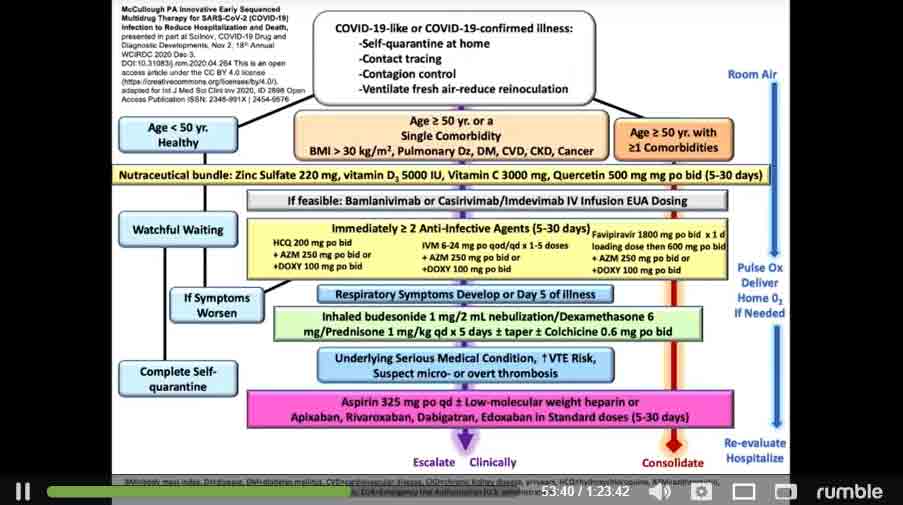
McCullough is among a growing number of experts who believe COVID-19 injections are making the pandemic worse. They “have an unfavorable safety profile and are not clinically effective, thus they cannot be generally supported in clinical practice at this time.”
Logically, this is clear, but McCullough believes we’re dealing with a mass psychosis that is preventing people from seeing the light. “The whole world is in a trance,” he said, adding:20
“Things are getting disturbingly out of control and it’s in the context of the virus. It is clear … we are in a very special time in the history of mankind. Whatever is going on, it is the entire world … every human being in the world. It appears to have a program.
The program … is happening to promote as much fear, isolation, suffering, hospitalization and death in order to get a needle in every arm, at all costs. That is what’s going on, and no one in this room can disagree.”
- 1, 2, 3, 4, 8, 9, 17, 20 Rumble August 26, 2021
- 5 American Journal of Medicine January 2021; 134(1): 16-22
- 6 Reviews in Cardiovascular Medicine 2020; 21(4): 517-530
- 7 CNN April 30, 2009
- 10 ResearchGate Preprint June 2021
- 11 Clinical Infectious Diseases, ciab465, doi: 10.1093/cid/ciab465
- 12 Bitchute July 22, 2021
- 13 Pfizer November 9, 2020
- 14 The Lancet Microbe April 20, 2021
- 15 MMWR Weekly August 6, 2021 / 70(31);1059-1062
- 16 medRxiv. 2021 Aug 9;2021.08.06.21261707. doi: 10.1101/2021.08.06.21261707
- 18 Yellow Card
- 19 The Evidence-Based Medicine Consultancy June 9, 2021