Cardiovascular
now browsing by category
Without our heart, we die, so why do people insult our heart with poor nutrition?
Blood Clots May Be the Root Cause of All Heart Disease
Reproduced from original article:
https://articles.mercola.com/sites/articles/archive/2022/02/13/root-cause-of-all-heart-disease.aspx
The original Mercola article may not remain on the original site, but I will endeavor to keep it on this site as long as I deem it to be appropriate, and will not be bullied into removing it.
Analysis by Dr. Joseph Mercola Fact Checked
STORY AT-A-GLANCE
- The thrombogenic hypothesis asserts that blood clotting is the basic underlying pathological process that causes all heart disease
- When a blood clot forms on your artery wall, it will typically be covered over and broken down. A problem arises, however, when the blood clot is not fully eliminated and becomes a ‘vulnerable’ point, and another blood clot forms at the same point. Over time this grows and becomes what’s conventionally referred to as atherosclerotic plaque
- A clot will form where endothelial cells have been stripped away, or are seriously damaged The blood clot will then be covered over by endothelial progenitor cells, which float around in your blood stream at all times. When progenitor cells find an area of damage, where a blood clot has formed, they attach themselves to that area, creating the new endothelial layer. This repair process can gradually create a thickening inside the artery wall itself
- In almost everyone, the process of endothelial damage and blood clotting is an ongoing process. Which means that problems only occur when the damage/blood clotting process occurs faster than the repair process, at which point you will end up with plaque buildup. This thickens the arterial wall, forcing blood flow through a narrower gap. When a large blood clot forms on top of an existing plaque, in this already narrowed area, you can end up with a heart attack or stroke
- Common causes of endothelial damage include such things as viral infections, high blood sugar levels, smoking, diabetes, heavy metals such as lead and aluminum, and high blood pressure
In this interview, repeat guest Dr. Malcolm Kendrick, a board-certified family physician and author of the book, “The Clot Thickens: The Enduring Mystery of Heart Disease,” reviews the underlying mechanisms for heart disease, which for the last century has been the leading cause of death in the U.S.
Of all the books he’s written, this is my favorite, as it goes into great detail, giving you the biological understanding of the process of atherosclerosis leading to heart attacks and strokes. He also has solid strategies for lowering your cardiovascular disease risk.
Incidentally, once you understand the disease process, then you can also understand how both COVID-19 and the COVID jab can contribute to heart disease. When asked why he’s taken such an interest in heart disease, Kendrick replies:
“When I was training as a student in medicine, Scotland had the highest rate of heart disease in the world. Early on the answer for why was, ‘Oh, well, it’s because we have such terrible diet, and we eat rubbish food like deep fried Mars bars.’
So, you eat too much saturated fat, the saturated fat gets turned into cholesterol in your bloodstream, and then it’s absorbed into arteries and forms narrowings and thickenings, which all sounds plausible if you don’t think about it too hard.
But I also happen to go to France quite a lot, and what I noticed about France was, they eat a lot of saturated fat. They eat more, in fact, than anyone else in Europe, and certainly more than Scotland. So, [this saturated fat] hypothesis certainly didn’t work for the French. They have the highest saturated fat intake in Europe and lowest rate of heart disease, and this has been the case for decades.
If you took all the risk factors for France and Scotland [such as smoking, high blood pressure and diabetes], then the French had slightly [higher risk], according to conventional thinking. But, in fact, they had one-fifth [the rate among age-matched men].
So, I thought, this is interesting. It doesn’t make much sense according to what we’re told. Then while I was in medical school, a tutor in cardiology said … LDL cannot cross the endothelium. At the time, I didn’t know what LDL was, nor did I know what the endothelium was, but it sounded important.
She had been looking at heart disease as a different process for decades … So, I think that’s really where I got started. Once you start questioning what the problem is, you end up questioning more and more and you start thinking, gosh, this is just nonsense, isn’t it? This whole hypothesis is just nonsense. So, I started picking it apart.”
The Thrombogenic Hypothesis
“The Clot Thickens” is Kendrick’s effort to explain an alternative hypothesis for what actually causes heart disease. If it’s not saturated fat and cholesterol, what is it? In 1852, a Viennese researcher, Karl von Rokitansky, developed what he called the encrustation hypothesis of heart disease.
Today, this hypothesis has been renamed the thrombogenic hypothesis. ‘Thrombo’ stands for thrombosis, i.e., blood clots, and ‘genesis’ means the cause of, or the start of. So, the thrombogenic hypothesis is that blood clots are the basic pathology that causes all heart disease.
In a nutshell, when a blood clot forms on your artery wall, which can happen for a number of reasons, it will typically be covered over and dissolved. A problem arises, however, if the blood clot is not fully eliminated and another blood clot forms in the same ‘vulnerable’ area. This then becomes what’s conventionally referred to as atherosclerotic plaque.
“The atherosclerotic plaque is basically a buildup of blood clot, repair, blood clot, repair, blood clot, repair,” Kendrick explains. “If the blood clotting process is faster than the repair process, you have a plaque that gradually grows and eventually thickens the artery wall until it narrows sufficiently that the final blood clot, on top of the existing plaque, is the thing that can cause a heart attack or stroke …
If you cut through the plaque and look at it, it almost looks like tree rings. You can see there’s been a clot, repair, clot, repair, clot, repair, clock, repair over the years.
It’s widely accepted that a blood clot forming on an existing plaque will cause the plaque to grow in size. You can find 10,000 papers saying that this is the case. What the mainstream won’t accept is that a blood clot on a healthy artery wall can initiate the whole process.
So, to an extent, all I’m saying to people is, well, we know blood clots cause the final event. We know blood clots cause plaques to grow. Why won’t you accept that blood clots are the thing that starts it in the first place? Because then we have one process all the way through, and it makes sense, because it fits with what you can see.”
As noted by Kendrick, the conventional view is that low-density lipoprotein or LDL gets into the artery wall where it initiates plaque formation. It then, inexplicably, stops initiating plaque, and the plaque continues to grow through the addition of repeated clots.
However, Kendrick says, once you start drilling down into the cholesterol, aka LDL hypothesis, the whole thing starts to fall apart. LDL simply cannot explain the disease progression. Yet despite the many holes in the theory, the idea that LDL causes heart disease is touted as an absolute, indisputable fact.
What’s the Mechanism?
In order to justify a hypothesis, you need to have a mechanism of action. Once you understand the mechanism of the actual disease process, then you can put the puzzle pieces together. Kendrick begins his explanation:
“Your blood vessels are lined with endothelial cells, a bit like tiles on a wall. Endothelial cells are also covered themselves in a thing called glycocalyx. If you try to pick up a fish, it’ll slip through your fingers; it’s very slippery. The reason it’s slippery is because it’s covered in glycocalyx and the glycocalyx is incredibly slippery. It’s nature’s Teflon.
So basically, in our case, the glycocalyx [is inside] our blood vessels, to allow the blood to travel through without it sticking, without damage occurring. So, you have this kind of damage-repellent layer on top of your endothelial cells.
Now, if that layer is damaged, and then the endothelial cell itself underneath is damaged, then the body will say, ‘Oh, we’ve got damage to a blood vessel, we must have a blood clot there because we could bleed out.’ So, a blood clot forms on the area of damage, and immediately stops [the bleeding].”
The blood clot doesn’t just keep on growing and growing. If it did, you’d die anytime you had a blood clot. Instead, when a clot forms, other processes step in to prevent it getting too big, which is why every blood clot doesn’t cause a stroke or heart attack. Once the clot has stabilized, and has been shaved down, the area is covered over by endothelial progenitor cells, made in the bone marrow, that float around in your blood stream.
When a progenitor cell finds an area that has been damaged, it attaches itself to that area, along with others, forming a new endothelial layer. The remaining blood clot is now lying ‘within’ the artery wall itself. So, basically, it’s the repair process that can lead to plaque buildup within the artery wall. In time, if damage outstrips repair, this can narrow the artery and reduce blood flow.
What Damages Endothelial Cells?
The question is, what can damage the endothelium in the first place? Here, Kendrick uses the SARS-CoV-2 mechanism as an example:
“The COVID virus enters endothelial cells through the ACE2 receptor. It prefers endothelial cells because they’ve got ACE2 receptors on them. It gets into the endothelial cell and starts replicating, then bursts out, damaging the cell. Bingo, you’ve got an area of damage.
Of course, added to this, when cells have viruses within them, they send out distress signals to the immune system saying, ‘I’ve been infected, come and kill me,’ and so the immune system starts to have a go at the endothelial cells. This is why you can get a problem, because the endothelial cells are being damaged and stripped off.
Blood clotting occurs at the points of damage and hey, presto, you’re having clotting, you’re having strokes, you’re having heart attacks, which is the thing that people at first couldn’t understand [about COVID-19]. Yet it’s very clear that what’s happening is you’ve got damage to the endothelial cells.
Obviously, you and I both know that if you get a [COVID jab], the cells are triggered to produce the spike protein, and these cells are sending out distress messages saying, ‘I’m infected.’ You have to be very careful if you want to stick something into cells that then says to the immune system, ‘Please come and destroy me,’ because that’s what the immune system is going to do.
But moving on from that, what other thing can cause endothelial damage? The answer is things like smoking. Smoke particles get out of your lungs, they go into your blood vessels and they cause damage … You smoke one cigarette and a whole bunch of microparticles appear in your bloodstream, which means endothelial cells are dying.
Luckily as endothelial cells die, another message is sent to the bone marrow saying, we need more endothelial cells and it stimulates endothelial progenitor cell production. These endothelial progenitor cells rush around covering over the areas of damage.
Some smokers have enough repair going on and when you’re younger, it’s okay. As you get older and your repair systems begin to fail a bit, cigarette smoking becomes more and more of a problem.”
Other things that can cause endothelial damage include:
•High blood sugar levels and diabetes. The protective glycocalyx layer is made of proteins and sugars — High blood sugar damages the glycoprotein layer, thinning it down in a measurable way. High blood sugar can reduce the glycocalyx layer by as much as two-thirds. This, in turn, exposes the endothelial cells to the bloods and anything else damaging that might be there.
The damage to the glycocalyx is why diabetics are prone to both arterial and capillary (small vessel) disease. You can’t get atherosclerosis in the capillaries, as there’s no room. Instead, the capillaries become broken down and destroyed. This in turn can cause ulcers, due to poor circulation in the skin of your legs and feet.
Peripheral neuropathy as the ends of nerve cells are deprived of oxygen. Also visual problems (diabetic retinal damage) and kidney damage. Blood pressure may also become elevated as your heart has to work harder to push blood through a network of damaged/missing small blood vessels.
•Heavy metals such as aluminum and lead.
•High blood pressure, as it puts stress on the endothelium — Atherosclerotic plaques (atherosclerosis) doesn’t occur unless the pressure is raised, adding biomechanical stress.
Repairing the Glycocalyx
As explained by Kendrick, the glycocalyx layer resembles a lawn, with slippery filaments that stick up. Within this glycocalyx layer you have nitric oxide synthase (NOS), which produces nitric oxide (NO), and you have NO itself, as well as a number of other anticoagulant proteins. The glycocalyx is actually a potent anticoagulant layer, so it stops blood clots forming. If glycocalyx is damaged, your risk of blood clotting increases.
“It’s a very complicated layer,” Kendrick says. “It’s like a jungle full of things that say, ‘Don’t stick to this, stay away from this.’” Within it, you also have albumin, protein complex produced by the liver. Albumin contains the proteins that help maintain and repair the glycocalyx. A fact that most doctors are unaware of is that, if you have a low albumin level, you’re significantly more likely to die of heart disease.
The good news is that while the glycocalyx layer can be rapidly destroyed, it can also be rapidly repaired. (Experiments have shown that in an area where the glycocalyx has been completely stripped off, it can be completely repaired in a single second.) Supplements like chondroitin sulfate and methylsulfonylmethane (MSM) can be helpful in this regard.
“If you try and explain that through the LDL mechanism, it just doesn’t work,” Kendrick says. “They have discovered that if you give chondroitin sulfate as a supplement — which normally is for arthritis and stuff like that — it reduces the risk of heart disease quite considerably. How do you explain that? Well, you can explain that because you’re protecting your glycocalyx.
These are the sort of things that make no sense if you like looking at the conventional ideas of heart disease, but are immediately and easily explained if you say, ‘We have to keep our glycocalyx healthy and we have to keep our endothelial cells underneath them healthy.
Otherwise they will be damaged and stripped off, and then we will get a blood clot, and if we keep getting blood clots at that point, we will end up with a plaque and eventually one of the blood clots on that plaque will kill you from a heart attack or a stroke.”
Blood Flow Restriction Training
A lifestyle strategy that can help repair endothelial damage is blood flow restriction (BFR) training. In response to BFR, your body produces vascular endothelial growth factor (VEGF), which acts as “fertilizer” for the endothelium. You can learn the ins and outs of BFR in my free BFR report. VEGF also induces the synthesis of nitric oxide (NO), a potent vasodilator, and it stimulates endothelial progenitor cells.
“NO protects the endothelium. It is anticoagulant — the most potent anticoagulant we have in the body. It’s really the magic molecule for cardiovascular health,” Kendrick says.
“At one time NO was known as Endothelial Derived Relaxation Factor (EDRF) NO was something no one believed could possibly exist in the human body. NO is actually a free radical. Everyone says free radicals are terribly damaging and unhealthy.
To that I reply, ‘Well, you may wish to know that the chemical that is the single most important protective chemical in the body for the cardiovascular system is an incredibly free radical called nitric oxide.”
Some anticancer drugs are designed to block VEGF, as the tumor needs angiogenesis — which is the creation of new blood vessels that are required to provide sufficient ‘nutrients’ Without these new blood vessels, the tumor dies off. Unfortunately, if you block VEGF, you also block NO, which then raises your risk for heart disease.
“These drugs were almost removed from the market,” Kendrick says, “because despite their anticancer activity, they were procardiovascular disease to quite a scary degree.
[That’s why], if you are given bevacizumab or Avastin as an anticancer drug, they now give you angiotensin converting enzyme inhibitors (ACE inhibitors), which are blood pressure lowering tablets, and ACE inhibitors have a specific impact on bradykinin, which increases NO synthesis.”
Strategies to Lower Your Thrombotic Risk
In his book, “The Clot Thickens: The Enduring Mystery of Heart Disease,” Kendrick reviews many different strategies that can lower your disease risk. Here’s a short-list of examples covered in far greater depth in the book, as well as some of my own recommendations that I bring up in the interview:
| Avoid unnecessary use of nonsteroidal anti-inflammatories (NSAIDs) such as ibuprofen, aspirin and naproxen — While they effectively inhibit inflammation, they can cause platelet aggregation by blocking COX-2. In other words, they activate your blood clotting system, making blood clots more likely. |
| Get plenty of sensible sun exposure — Sun exposure triggers NO that helps dilate your blood vessels, lowering your blood pressure. NO also protects your endothelium, and increases mitochondrial melatonin to improve cellular energy production. |
| Avoid seed oils and processed foods — Seed oils are a primary source of the omega-6 fat called linoleic acid (LA), which I believe may be far more harmful than sugar. Excessive intake is associated with most all chronic diseases, including high blood pressure, obesity, insulin resistance and diabetes.
LA gets embedded in your cell membranes, causing oxidative stress, and can remain there for up to seven years. Oxidative linoleic acid metabolites (OXLAMs) are what’s causing the primary damage, including endothelial damage. |
| Lower your insulin and blood sugar levels — Simple strategies to accomplish this include time-restricted eating, eating a diet high in healthy fats and low in refined carbohydrates, significantly restricting your LA intake and getting regular exercise. |
| Address chronic stress, which raises both blood sugar and blood pressure, promotes blood clotting and impairs your repair systems. Cortisol, a key stress hormone, reduces endothelial cell production. |
| Quit smoking. |
Critics fear COVID jabs will trigger massive increase in heart problems in 2022
Reproduced from original article:
https://www.naturalhealth365.com/mrna-jab-doubles-five-year-risk-of-heart-attack-3539.html
by: Sara Middleton, staff writer | February 7, 2022
 (NaturalHealth365) Since the COVID shot rollout began, reports of elite athletes suddenly collapsing with heart attacks and other cardiovascular issues have been making the rounds in the news. The sudden death of young people underscores a grim discovery about these mRNA vaccines: that they can cause a potentially deadly inflammation of the heart, known as myocarditis.
Is heart damage related to these shots more extensive than we realize? It may take some time before the data is fully clarified, but at least some reports appear to indicate widespread heart health problems in the coming future.
Dropping in plain sight: Dozens of jabbed professional football players collapsing, dying suddenly of heart issues
In January 2019, the Journal of the American Heart Association published a study claiming that more kids will be born with congenital heart defects in the coming decade because of … climate change. What do you think: legitimate science? Or preemptive damage control for the COVID rollout era – an unprecedented time in which pregnant women, infants, and kids under five years old are being pushed to take these brand new drugs.
Whatever the full story is surrounding future heart defects in our kids, we are already witnessing serious and sometimes fatal heart problems associated with these COVID shots in real-time. Just look at the tragedy that has been happening within the international football (soccer) community.
According to the Daily Expose, the number of (predominantly male) professional footballers who have collapsed during matches and died of cardiovascular-, immunological-, and/or neurological-related issues in 2021 is 278% HIGHER than the preceding 12-year average. This observation is not sufficient to prove that the COVID jabs have contributed to the unusual spike in sudden deaths, but the correlation is too dire to downplay.
Like other sports organizations, FIFA has strongly encouraged its players to get vaccinated. But it’s not just professional athletes who could be at risk of serious and sometimes fatal adverse effects from the COVID mRNA jabs.
New data suggests COVID mRNA jab DOUBLES the average person’s 5-year risk of heart attack
A November 2021 paper published in Circulation, a journal of the American Heart Association (written by functional medicine practitioner, cardiologist, and former cardiothoracic surgeon Dr. Steven Gundry) reportedly found that a person’s chances of suffering from acute coronary syndrome (ACS) within the next five years DOUBLES after getting two doses of mRNA jabs.
According to Mayo Clinic, ACS refers to a range of conditions caused by a sudden reduction in blood flow to the heart, including heart attacks.
In his abstract – which was harshly criticized and has since undergone some serious editing to be less “alarmist” – Dr. Gundry reports that the average 5-year ACS risk score among 566 vaxxed cardiology patients reached 25%, compared to only an 11% 5-year ACS risk score that was calculated among those patients prior to their vaccinations. ACS risk score can be calculated using what’s known in cardiology as the PULS Cardiac Test, which measures various biomarkers of cardiovascular inflammation and “T cell infiltration of cardiac muscle.”
Dr. Gundry’s study has several limitations. For example, it is only observational and lacks a control group. But in the context of all the other heart and circulatory issues, we are seeing post-jab, many readers may feel that it warrants closer investigation.
Sources for this article include:
Dailyexpose.uk
Dailyexpose.uk
Cedars-sinai.org
Opindia.com
AHAjournals.org
Logically.ai
TCTmd.com
Heart.org
Top Vitamin D Papers in 2021: Benefits ignored at a time they are most needed
Reproduced from original OMNS article (OrthoMolecular News Service):
https://orthomolecular.activehosted.com/index.php
Subscribe to the free Orthomolecular Newsletter: http://orthomolecular.org/subscribe.html
Go to the OMNS Archive: http://orthomolecular.org/resources/omns/index.shtml
Orthomolecular Medicine News Service, January 9, 2022
by William B. Grant, PhD.
OMNS (Jan. 9, 2022) The total number of publications that mention vitamin D is more than 93,600. A simple search at pubmed.gov shows there were 5484 publications in 2021 with vitamin D in the title or abstract. That is up from 4548 in 2020. In 2021, 609 of the publications with vitamin D in the title or abstract in 2021 were about COVID-19, and 279 about SARS-CoV-2.
The dominant health concern in 2020 has been COVID-19. According to data posted at https://www.worldometers.info/coronavirus/#countries, there have been over 288 million cases of SARS-CoV-2 infection or COVID-19 as well as over 5.4 million deaths attributed to COVID-19 by December 31, 2021. In addition, there have been tremendous disruptions in business, education, food production, social life, and travel. RNA vaccinations have been developed and used to reduce the risk of SARS-CoV-2 infection and incidence and severity of COVID-19. But as we are now learning, the protection from vaccination wanes with time and may not be as useful for new variants such as Omicron. One of the understandings when the U.S. Food and Drug Administration gave the emergency use authorization for the RNA vaccines in December 2020 was that there were no simple methods to prevent the infection or treat the disease. As a result, there has been a near-total mass media blockade on information regarding vitamin D in that regard, and a partial social media blockade. Several of the top vitamin D papers for 2021 were related to COVID-19.
Evidence that vitamin D fights COVID-19
There have been many observational studies of serum 25-hydroxyvitamin D [25(OH)D] and incidence of SARS-CoV-2 infection and/or COVID-19 as well as the severity of and death from COVID-19. The most complete meta-analysis study included data from 76 observational studies. [1] In that study, Figure 3 included 19 studies and found an odds ratio (OR) for low vs. high 25(OH)D levels of 1.48 (95% confidence interval (CI) 1.28 to 1.65). However, there has been a concern that measurements near the time of diagnosis may cause a reduction in the measured 25(OH)D level due to the acute inflammatory response. Those data were used to estimate the size of this effect. [2] The 19 studies can be divided into four categories: 25(OH)D at time of diagnosis (7 studies); within the prior year (8); preceding 10 years (1); and 10-15 years prior (3). The mean weighted ORs for each time are 2.08, 1.76, 1.27, and 1.04, respectively. Those values are consistent with a longer interval between blood draw and health outcome being associated with worse health outcomes due to changes in 25(OH)D levels. If we assume that the OR for the period less than one year is correct, then the OR at time of diagnosis may be somewhat too high. Even if so, that still means that observational studies with 25(OH)D measured near time of diagnosis are useful and imply that an adequate vitamin D level significantly lowers the risk of COVID-19.
There are a number of factors that increase risk of COVID-19 including obesity, older age, and comorbid diseases. Obesity is an important risk factor since it increases systemic inflammation and leads to storage of vitamin D in the adipose tissue, which tends to lower the vitamin D level in other organs of the body. A study conducted in Boston, MA found that while patients with 25(OH)D > 30 ng/ml and BMI < 30 kg/m2 had a significantly reduced risk of death from COVID-19 [OR = 0.18], a 25(OH)D level > 30 ng/ml was not associated with reduced risk of death for patients with BMI > 30 kg/m2. [3] Evidently a level significantly higher than 30 ng/ml is needed to lower risk in obese patients.
How it works
The innate immune system mechanisms by which vitamin D reduces risk of SARS-CoV-2 infection and COVID-19 appear to include reduced viral viability and replication by inducing cathelicidin and defensins as well as reduced production of proinflammatory cytokines and the risk of the cytokine storm. The innate immune system is not sensitive to the variant of SARS-CoV-2 involved. That is important because the virus readily mutates, thereby reducing the adaptive immune system’s ability to respond effectively. Thus, vitamin D can serve as an extra measure of protection as vaccine effectiveness wanes. The recommended serum 25(OH)D level for prevention is 40 to 60+ ng/ml, which could be achieved with the safe dose range of 5000 to 10,000 IU/d vitamin D3. [2]
In all the studies, vitamin D was unfortunately tested in the same fashion as drugs are tested. That is, one vitamin was tested to the exclusion of all other nutrients necessary for optimum health. Such a “scientific” endeavor offers at best a picture of one nutrient in a vacuum. But unlike drugs, nutrients in the human body work together as a team and therefore should be tested accordingly. For example, magnesium plays important roles in activating vitamin D as well as other health benefits [4]. The beneficial effects include reducing oxidative stress, reducing risk of the cytokine storm, maintaining endothelial integrity, increasing fibrinolysis, reducing coagulation, and strengthening the immune system. Thus, magnesium should be taken along with vitamin D3 supplements, perhaps 400 mg/d.
Observational studies that look at the results of vitamin D supplementation can be used to help determine whether the effects related to 25(OH)D level are due to vitamin D rather than something else such as non-vitamin D effects of solar UVB exposure. An article from Barcelona has done this for COVID-19. [5] Many people in Barcelona receive prescriptions for vitamin D3 or calcifediol [25(OH)D] from their physicians, making it easy to do observational studies on the effect of supplementation. Records were available for 108,343 patients prescribed vitamin D3 and 134,703 patients prescribed calcifeciol. Those prescribed vitamin D3 had a 5% lower risk of SARS-CoV-2 infection than controls [multivariate hazard ratio (HR) = 0.95 (95% CI, 0.91 to 0.98)], but no significant difference for severe COVID-19 or COVID-19 mortality. However, comparing 9474 treated with vitamin D3 who achieved > 30 ng/ml with 7616 untreated controls with 25(OH)D < 20 ng/ml, the multivariate HRs were near 0.7 for SARS-CoV-2 infection, severe COVID-19 and COVID-19 mortality. The same comparisons for 16,276 treated with calcifediol vs. 7616 untreated controls found multivariate HRs or 0.69 (95% CI, 0.61 to 0.79) for infection, 0.61 (0.46 to 0.81) for severe COVID-19, and 0.56 (0.42 to 0.76) for mortality. Evidently it is the level of 25(OH)D actually achieved that reduces risk of infection.
The most recent article on vitamin D and risk of COVID-19 hospitalization and mortality was published on January 1, 2022. [6] It presented an analysis of 4599 veteran patients receiving care in the US Department of Veterans Affairs health care facilities who tested positive SARS-CoV-2 during the period February 20 to November 8, 2020 and had data on serum 25(OH)D levels from the previous 15 to 90 days on file. Twenty one percent of the patients were hospitalized and 7.4% died within 60 days of their index SARS-CoV-2 test. Hospitalization rates decreased from 25% at 15 ng/ml to 18% at 60 ng/ml (adjusted relative risk ratio = 1.29), while mortality rates decreased from 11% for vitamin D level = 15 ng/ml to 6% at 60 ng/ml (adjusted relative risk ratio = 1.82). This provides excellent evidence for the efficacy of an adequate level of vitamin D in lowering risk of serious complications and mortality from COVID-19.
Making sense of the research
The observational studies suggest that treating COVID-19 patients with vitamin D might be beneficial. Unfortunately, in some studies, treatment with high-dose vitamin D3 was found to be ineffective. A study in Turkey involved the supplementation of 163 COVID-19 patients with between 254,000 to 500,000 IU in three to seven days to increase 25(OH)D level to above 30 ng/ml. [7] The mean 25(OH)D for the treated patients reached only 31±12 ng/ml on day 7 and 35±11 ng/ml on day 14. The rate of mortality was 11.19% (97 out of 867) in the whole cohort, including patients with comorbidities. The mortality rate of prospective cases who also had comorbidities but received vitamin D treatment was 5.5% (9 out of 162). Having vitamin D treatment decreased the mortality rate by a factor of 2.14.
Calcifediol treatment of COVID-19 patients in Spain is fairly common. An article reported results of treating 79 of 537 COVID-19 patients between February 5 and May 5, 2020. [8] The treatment used 0.266-mg calcifediol capsules (equivalent to 34,000 IU of vitamin D3), two on day 1, then one each on days 3, 7, 14, 21, and 28. Four (5%) treated patients died vs. 90 (20%) untreated patients. The multivariate OR for death by day 30 was 0.16 (95% CI, 0.03 to 0.80). The reason calcifediol in this type of study obtains much better results than vitamin D3 it that it raises serum 25(OH)D in a few hours rather than in a few days. That rapidly activates the important mechanisms of vitamin D such as reducing survival and replication of the SARS-CoV-2 virus as well as reducing the production of proinflammatory cytokines and the cytokine storm that damages the epithelial layer of many organs. [9]
Sunlight and the seasons
It is well known from existing virus variants that SARS-CoV-2 infection and COVID-19 rates are lower in summer than in winter. There are now three hypothesized reasons for lower rates in summer: (1), higher 25(OH)D levels; (2), inactivation of SARS-CoV-2 by solar UV; (3), higher serum nitric oxide levels from ultraviolet-A (320-400 nm) exposure. Solar UVA exposure increases serum nitric oxide by liberating it from subcutaneous nitrogen compounds, which has been found to reduce blood pressure. [10] Nitric oxide also has antiviral effects. All three reasons may be important.
For those who do not get adequate supplements of vitamin D, the blood level drops continually during the winter months in high-latitude countries. An analysis of COVID-19 deaths during January to April 17, 2020 was conducted with respect to sunlight doses at latitudes in three countries, England, Italy, and the U.S. where winter solar UVB doses are too low to produce adequate vitamin D, i.e., north of Florida [10]. The adjusted mortality risk factors were worst for England, and slightly less but still serious for the USA and Italy.
The effect of UV radiation in inactivating SARS-CoV-2 was outlined in a modeling study. [11] Laboratory studies of the UV inactivation action spectrum for SARS-CoV-2 were used with data for the spectral components of solar UV radiation at the earth’s surface between 70º S and 70º N to generate midday sun exposure inactivation times for viruses. Solar UVA in the range of 366 to 405 nm was found to be most important, because UVA intensity remains strong throughout the day, varying much less than UVB intensity. However, virus inactivation due to sunlight exposure is several times faster in summer than winter. For example, at 40º N, virus inactivation times varied from two minutes in July to six minutes in December. Also, the fact that people spend more time in the sun in summer than in winter further adds to the summer-winter differences in virus inactivation.
It may well be that all three factors affect seasonal variations in SARS-CoV-2 infection and COVID-19 rates. The implications are that people could spend more time in the sun in summer and take more vitamin D supplements in winter to achieve 25(OH)D levels in the 40-60 ng/ml (100-150 nmol/L) range. To do so could require 5000 to 10,000 IU/d for most adults, and would have many other health benefits as well.
Cardiovascular disease
There were important advances in understanding the role of vitamin D in reducing risk of cardiovascular disease (CVD) in 2021. For over a decade it has been known that serum 25(OH)D levels are inversely correlated with risk of CVD. However, since randomized controlled trials (RCTs) had not supported those findings, the medical treatment system elected to ignore that evidence. This year saw more observational studies that support vitamin D’s role in preventing disease, including one with respect to vitamin D supplementation, and others on Mendelian randomization (MR) studies. MR studies use genetic scores based on several single nucleotide polymorphisms (SNPs) that affect the serum 25(OH)D level. The idea is that if people are exposed to the same sources of vitamin D, those with a set of SNPs that predict the highest increase in genetically-predicted 25(OH)D levels will have better outcomes than those with sets of SNPs that predict the lowest levels. The problem with most MR studies to date is that they have lumped all results together irrespective of the genetically-predicted 25(OH)D levels. Instead, the most recent MR studies stratify the data by genetically-predicted serum 25(OH)D levels.
The first stratified MR study on vitamin D and risk of CVD used data from several European studies with four strata: <10 ng/ml, 10-25 ng/ml, 20-30 ng/ml, and >30 ng/ml. [12] For the participants with vitamin D deficiency [25(OH)D level < 10 ng/ml], genetic analyses provided strong evidence for an inverse association with all-cause mortality OR per 4 ng/ml increase in genetically-predicted 25(OH)D level (0.69) and nonsignificant inverse associations for stroke (0.85) and coronary heart disease (0.89). A finer stratification of participants found inverse associations between genetically-predicted 25(OH)D levels and all-cause mortality up to around 16 ng/ml. This article also reported observational results with respect to measured serum 25(OH)D levels. They showed significantly increased HRs for coronary heart disease below 10 ng/ml, stroke below 16 ng/ml, all-cause mortality rate below 16 ng/ml, CVD, cancer, and all-cause mortality rates below 20 ng/ml. These findings help explain why most RCTs have failed to find a beneficial effect of vitamin D supplementation on CVD outcomes: they enroll people with baseline 25(OH)D rates with a mean value often above 30 ng/ml, e.g. The VITamin D and OmegA-3 TriaL (VITAL). [13]
A second MR study used data from the UK Biobank dataset with 100 genetically-predicted 25(OH)D strata. [14] There was an L-shaped association between genetically-predicted serum 25(OH)D and CVD risk (Pnon-linear = 0.007), where CVD risk initially decreased steeply with increasing levels and plateaued at around 20 ng/ml. A similar association was seen for systolic (Pnon-linear = 0.03) and diastolic (Pnon-linear = 0.07) blood pressure. The observational analysis of serum 25(OH)D levels indicated that risk of all three outcomes was reduced up to 50 ng/ml.
An observational study compared risk of myocardial infarction and all-cause mortality rate. [15] This study used data from patients who received care at the Veterans Health Administration from 1999 to 2018. Comparing risk for those with baseline 25(OH)D < 20 ng/ml supplemented with vitamin D and achieving > 30 ng/ml (N = 2942) with those who did not supplement and remained with 25(OH)D < 20 ng/ml (N = 10014), the HR for myocardial infarction was 0.73 and the all-cause mortality rate HR was 0.61. Autism A study from Stockholm investigated the role of developmental vitamin D status and risk of autism spectrum disorder (ASD) for participants born in Sweden between 1996 and 2000. [16] The study involved 947 ASD cases without intellectual disability (ID) and 452 with ID, based on maternal 25(OH)D measured near 10 weeks of gestation and neonatal 25(OH)D measured at birth. Based on maternal 25(OH)D, the OR of ASD for 25(OH)D between 10 and 20 ng/ml was 1.58 while the OR for a 25(OH)D increase of 10 ng/ml was 0.65. Based on neonatal 25(OH)D, the OR for an increase of 10 ng/ml was 0.86. For ASD with ID, based on maternal 25(OH)D, the OR for an increase of 10 ng/ml was 0.52 while based on neonatal 25(OH)D, the OR for an increase of 10 ng/ml was 0.87. These results indicate that 25(OH)D levels early and throughout pregnancy are more important than at the end of pregnancy. Cancer A modeling study estimated the reduction in cancer deaths and costs of supplementing all inhabitants over the age of 50 years in Germany. [17] They used the value of 13% reduction obtained from meta-analysis of vitamin D supplementation RCTs. They noted that 247,000 cancer deaths occurred Germany in 2018. They assumed end-of-life costs per cancer death to be 40,000 € (Euros) and 25 € per person for 1000 IU/d vitamin D. The net savings was estimated to be 254 million €. Supplementing with 2000 IU/d vitamin D was estimated to achieve a cancer mortality reduction of 17%, albeit at twice the cost of 1000 IU/d vitamin D, while supplementing with 400 IU/d would reduce cancer death rates by 11% at 40% of the cost. A meta-analysis was published regarding observational studies of colorectal cancer risk with respect to serum 25(OH)D level. [18] There were 15,542 cases and 22,376 controls from case-control studies [serum 25(OH)D levels measured at time of diagnosis] and 1402 incident cases analyzed from a total population of 68,701. The OR for high vs. low 25(OH)D from case-control studies was 0.60 and 0.80 from prospective studies. The general reason why the ORs are better for case-control studies is that 25(OH) varies with time, and the longer the follow-up time, the lower the correlation with health outcomes. Some people are concerned that having undiagnosed cancer can lower serum 25(OH)D levels. However, that effect seems to apply to acute inflammatory diseases, such as viral infections, not cancer. Why isn’t vitamin D being recommended? Despite the recent advances in understanding the health benefits of higher 25(OH)D levels and vitamin D supplementation, the U.S. Preventive Service Task Force concluded in a review published in JAMA: “No studies evaluated the direct benefits or harms of screening for vitamin D deficiency. Among asymptomatic, community-dwelling populations with low vitamin D levels, the evidence suggests that treatment with vitamin D has no effect on mortality or the incidence of fractures, falls, depression, diabetes, cardiovascular disease, cancer, or adverse events. The evidence is inconclusive about the effect of treatment on physical functioning and infection.” [19] Table 1 in that review presented results for benefits and harms from 45 vitamin D RCTs. No benefits or harms were found. The reasons why randomized controlled studies have shown little beneficial effect are straightforward. As is now well known, traditional vitamin D randomized controlled studies are based on guidelines for pharmaceutical drugs. Participants are enrolled, generally with 25(OH)D levels above the population mean and given small vitamin D doses, generally no more than 2000 IU/d. The results are judged on the basis of treatment vs. placebo. As is now well known, such RCTs are doomed to failure since it is 25(OH)D that is correlated with health outcomes, not vitamin D dose. [20] The researchers who conducted the Vitamin D and Type 2 diabetes (D2d) study understood this after completing and reporting the results, and subsequently reported that risk of progression from prediabetes to type 2 diabetes was reduced by 25% for each 10 ng/ml from 20-30 ng/ml to > 50 ng/ml. [21]
If the lungs’ defense systems do not protect the lungs from damage from various irritants, permanent damage can develop, making the lungs more susceptible to various respiratory diseases. A review of the therapeutic potential of vitamin D in inflammatory lung diseases was published recently. [22] The actions of vitamin D on inflammatory cells are dissected in this review, as well as their clinical significance in respiratory illnesses.
A recent study reviewed trends in vitamin D status around the world. Some regions such as the Middle East and some countries in Asia have low vitamin D status. [23] A large improvement was seen in Finland after mandatory fortification of dairy products with vitamin D was introduced. Determinants of decline in vitamin D status are less sun exposure, increased use of sunscreen, increase of body mass index (BMI), less physical activity, and poor socioeconomic status. Determinants of increase in vitamin D status are food fortification with vitamin D and vitamin D supplements. As shown by the Finnish example, food fortification can lead to a population-wide increase in vitamin D status.
Conclusion
The evidence that vitamin D has important health benefits continued to increase in 2021. In particular, the benefits in reducing risk of SARS-CoV-2 infection and COVID-19 became more robust, as did those for CVD. The evidence clearly points to the healthy range of 25(OH)D as being 30-40 ng/ml, with additional evidence for the optimal range being 40-60 ng/ml. Due to modern lifestyles, it is very difficult to achieve those levels from solar UVB exposure and diet. The most efficient way to raise serum 25(OH)D is to supplement with vitamin D3, of at least 5000 IU/d, and up to 10,000 IU/d. After taking a supplement for 4 months, a blood test for vitamin D level (suggested level 40-60 ng/ml) along with a doctor’s advice can assist in setting the dose.
Adequate amounts of magnesium in the diet or in supplements (400-600 mg/d in malate, citrate, or chloride form) are necessary to aid the action of vitamin D. [24-27] Supplements of other essential nutrients are beneficial in empowering the immune system, including zinc (50 mg/d with 2 mg/d copper), and selenium (100 mcg/d, included in many multivitamins).
Disclosure: The author’s non-profit organization, Sunlight, Nutrition and Health Research Center (www.sunarc.org), receives funding from Bio-Tech Pharmacal, a vitamin D supplement manufacturer. He has 291 publications regarding vitamin D listed at pubmed.gov dating from 1999.
References
1. Dissanayake HA, de Silva NL, Sumanatilleke M, et al. (2021) Prognostic and therapeutic role of vitamin D in COVID-19: systematic review and meta-analysis. J Clin Endocrinol Metab 2021:dgab892. https://pubmed.ncbi.nlm.nih.gov/34894254
2. Grant, W.B. (2022) Vitamin D’s Role in Reducing Risk of SARS-CoV-2 and COVID-19 Incidence, Severity, and Death. Nutrients 14:183. https://doi.org/10.3390/nu14010183
3. Charoenngam N, Shirvani A, Reddy N, et al. (2021) Association of Vitamin D Status With Hospital Morbidity and Mortality in Adult Hospitalized Patients With COVID-19. Endocr Pract 27:271-278. https://pubmed.ncbi.nlm.nih.gov/33705975
4. DiNicolantonio JJ, O’Keefe JH (2021) Magnesium and Vitamin D Deficiency as a Potential Cause of Immune Dysfunction, Cytokine Storm and Disseminated Intravascular Coagulation in covid-19 patients. Mo Med. 118: 68-73. https://pubmed.ncbi.nlm.nih.gov/33551489
5. Oristrell J, Oliva JC, Casado E, et al. (2021) Vitamin D supplementation and COVID-19 risk: a population-based, cohort study. J Endocrinol Invest 2021:1-13. https://pubmed.ncbi.nlm.nih.gov/34273098
6. Seal KH, Bertenthal D, Carey E, et al (2022) Association of Vitamin D Status and COVID-19-Related Hospitalization and Mortality. J Gen Intern Med. 2022 Jan 1. https://pubmed.ncbi.nlm.nih.gov/34981368
7. Gonen MS, Alaylioglu M, Durcan E, et al. (2021) Rapid and Effective Vitamin D Supplementation May Present Better Clinical Outcomes in COVID-19 (SARS-CoV-2) Patients by Altering Serum INOS1, IL1B, IFNg, Cathelicidin-LL37, and ICAM1. Nutrients 13:4047. https://pubmed.ncbi.nlm.nih.gov/34836309
8. Alcala-Diaz JF, Limia-Perez L, Gomez-Huelgas R, et al. (2021) Calcifediol Treatment and Hospital Mortality Due to COVID-19: A Cohort Study. Nutrients 13:1760. https://pubmed.ncbi.nlm.nih.gov/34064175
9. Grant WB, Lahore H, McDonnell SL, et al. (2020) Evidence That Vitamin D Supplementation Could Reduce Risk of Influenza and COVID-19 Infections and Deaths. Nutrients 2020;12:988. https://pubmed.ncbi.nlm.nih.gov/32252338
10. Cherrie M, Clemens T, Colandrea C, et al. (2021) Ultraviolet A radiation and COVID-19 deaths in the USA with replication studies in England and Italy. Br J Dermatol 185:363-370. https://pubmed.ncbi.nlm.nih.gov/33834487
11. Nicastro F, Sironi G, Antonello E, et al. (2021) Solar UV-B/A radiation is highly effective in inactivating SARS-CoV-2. Sci Rep 11:14805. https://pubmed.ncbi.nlm.nih.gov/34285313
12. Emerging Risk Factors Collaboration E-CVD/VDSC. (2021) Estimating dose-response relationships for vitamin D with coronary heart disease, stroke, and all-cause mortality: observational and Mendelian randomisation analyses. Lancet Diabetes Endocrinol 9:837-846. https://pubmed.ncbi.nlm.nih.gov/34717822
13. Manson JE, Cook NR, Lee IM, et al. (2019) Vitamin D Supplements and Prevention of Cancer and Cardiovascular Disease. N Engl J Med 380:33-44. https://pubmed.ncbi.nlm.nih.gov/30415629
14. Zhou A, Selvanayagam JB, Hypponen E. (2021) Non-linear Mendelian randomization analyses support a role for vitamin D deficiency in cardiovascular disease risk. Eur Heart J 2021:ehab809. https://pubmed.ncbi.nlm.nih.gov/34891159
15. Acharya P, Dalia T, Ranka S, et al. (2021) The Effects of Vitamin D Supplementation and 25-Hydroxyvitamin D Levels on the Risk of Myocardial Infarction and Mortality. J Endocr Soc 5:bvab124. https://pubmed.ncbi.nlm.nih.gov/34396023
16. Lee BK, Eyles DW, Magnusson C, et al. (2021) Developmental vitamin D and autism spectrum disorders: findings from the Stockholm Youth Cohort. Mol Psychiatry 26:1578-1588. https://pubmed.ncbi.nlm.nih.gov/31695167
17. Niedermaier T, Gredner T, Kuznia S, et al. (2021) Vitamin D supplementation to the older adult population in Germany has the cost-saving potential of preventing almost 30 000 cancer deaths per year. Mol Oncol 2021;15:1986-1994. https://pubmed.ncbi.nlm.nih.gov/33540476
18. Hernandez-Alonso P, Boughanem H, Canudas S, et al. (2021) Circulating vitamin D levels and colorectal cancer risk: A meta-analysis and systematic review of case-control and prospective cohort studies. Crit Rev Food Sci Nutr 2021:1-17. https://pubmed.ncbi.nlm.nih.gov/34224246
19. Kahwati LC, LeBlanc E, Weber RP, et al. (2021) Screening for Vitamin D Deficiency in Adults: Updated Evidence Report and Systematic Review for the US Preventive Services Task Force. JAMA 325:1443-1463. https://pubmed.ncbi.nlm.nih.gov/33847712
20. Grant WB, Boucher BJ, Bhattoa HP, et al. (2018) Why vitamin D clinical trials should be based on 25-hydroxyvitamin D concentrations. J Steroid Biochem Mol Biol 177:266-269. https://pubmed.ncbi.nlm.nih.gov/28842142
21. Dawson-Hughes B, Staten MA, Knowler WC, et al. (2020) Intratrial Exposure to Vitamin D and New-Onset Diabetes Among Adults With Prediabetes: A Secondary Analysis From the Vitamin D and Type 2 Diabetes (D2d) Study. Diabetes Care 43:2916-2922. https://pubmed.ncbi.nlm.nih.gov/33020052
22. Afzal M, Kazmi I, Al-Abbasi FA, et al., (2021) Current Overview on Therapeutic Potential of Vitamin D in Inflammatory Lung Diseases. Biomedicines.9:1843. https://pubmed.ncbi.nlm.nih.gov/34944659
23. Lips P, de Jongh RT, van Schoor NM (2021) Trends in Vitamin D Status Around the World. JBMR Plus. 5:e10585. https://pubmed.ncbi.nlm.nih.gov/34950837
24. Deng X, Song Y, Manson JE, et al. (2013) BMC Medicine, 11:187. doi.org/10.1186/1741-7015-11-187. Figure 1: Magnesium is needed by Vitamin D in 8 places: https://vitamindwiki.com/Magnesium+is+needed+by+Vitamin+D+in+8+places+-+2013
25. Web search for vitamin D and magnesium. The whole list (576,000 !): https://scholar.google.com/scholar?hl=en&as_sdt=0%2C5&q=Vitamin+D+and+magnesium&btnG=
26. Web search for vitamin D, magnesium, and Covid-19 in 2021 (21,000 !): https://scholar.google.com/scholar?hl=en&as_sdt=0%2C5&q=Vitamin+D+and+magnesium+covid-19+2021&btnG=
27. Dean, C (2017) The Magnesium Miracle, 2nd Ed., Ballantine Books, ISBN-13: 978-0399594441.
Nutritional Medicine is Orthomolecular Medicine
Orthomolecular medicine uses safe, effective nutritional therapy to fight illness. For more information: http://www.orthomolecular.org
Find a Doctor
To locate an orthomolecular physician near you: http://orthomolecular.org/resources/omns/v06n09.shtml
The peer-reviewed Orthomolecular Medicine News Service is a non-profit and non-commercial informational resource.
Editorial Review Board:
Albert G. B. Amoa, MB.Ch.B, Ph.D. (Ghana)
Seth Ayettey, M.B., Ch.B., Ph.D. (Ghana)
Ilyès Baghli, M.D. (Algeria)
Ian Brighthope, MBBS, FACNEM (Australia)
Gilbert Henri Crussol, D.M.D. (Spain)
Carolyn Dean, M.D., N.D. (USA)
Ian Dettman, Ph.D. (Australia)
Susan R. Downs, M.D., M.P.H. (USA)
Ron Ehrlich, B.D.S. (Australia)
Hugo Galindo, M.D. (Colombia)
Martin P. Gallagher, M.D., D.C. (USA)
Michael J. Gonzalez, N.M.D., D.Sc., Ph.D. (Puerto Rico)
William B. Grant, Ph.D. (USA)
Claus Hancke, MD, FACAM (Denmark)
Tonya S. Heyman, M.D. (USA)
Suzanne Humphries, M.D. (USA)
Ron Hunninghake, M.D. (USA)
Bo H. Jonsson, M.D., Ph.D. (Sweden)
Dwight Kalita, Ph.D. (USA)
Felix I. D. Konotey-Ahulu, MD, FRCP, DTMH (Ghana)
Jeffrey J. Kotulski, D.O. (USA)
Peter H. Lauda, M.D. (Austria)
Alan Lien, Ph.D. (Taiwan)
Homer Lim, M.D. (Philippines)
Stuart Lindsey, Pharm.D. (USA)
Pedro Gonzalez Lombana, MD, MsC, PhD (Colombia)
Victor A. Marcial-Vega, M.D. (Puerto Rico)
Charles C. Mary, Jr., M.D. (USA)
Mignonne Mary, M.D. (USA)
Jun Matsuyama, M.D., Ph.D. (Japan)
Joseph Mercola, D.O. (USA)
Jorge R. Miranda-Massari, Pharm.D. (Puerto Rico)
Karin Munsterhjelm-Ahumada, M.D. (Finland)
Tahar Naili, M.D. (Algeria)
W. Todd Penberthy, Ph.D. (USA)
Zhiyong Peng, M.D. (China)
Isabella Akyinbah Quakyi, Ph.D. (Ghana)
Selvam Rengasamy, MBBS, FRCOG (Malaysia)
Jeffrey A. Ruterbusch, D.O. (USA)
Gert E. Schuitemaker, Ph.D. (Netherlands)
T.E. Gabriel Stewart, M.B.B.CH. (Ireland)
Thomas L. Taxman, M.D. (USA)
Jagan Nathan Vamanan, M.D. (India)
Garry Vickar, M.D. (USA)
Ken Walker, M.D. (Canada)
Anne Zauderer, D.C. (USA)
Andrew W. Saul, Ph.D. (USA), Editor-In-Chief
Associate Editor: Robert G. Smith, Ph.D. (USA)
Editor, Japanese Edition: Atsuo Yanagisawa, M.D., Ph.D. (Japan)
Editor, Chinese Edition: Richard Cheng, M.D., Ph.D. (USA)
Editor, French Edition: Vladimir Arianoff, M.D. (Belgium)
Editor, Norwegian Edition: Dag Viljen Poleszynski, Ph.D. (Norway)
Editor, Arabic Edition: Moustafa Kamel, R.Ph, P.G.C.M (Egypt)
Editor, Korean Edition: Hyoungjoo Shin, M.D. (South Korea)
Editor, Spanish Edition: Sonia Rita Rial, PhD (Argentina)
Contributing Editor: Thomas E. Levy, M.D., J.D. (USA)
Contributing Editor: Damien Downing, M.B.B.S., M.R.S.B. (United Kingdom)
Assistant Editor: Helen Saul Case, M.S. (USA)
Technology Editor: Michael S. Stewart, B.Sc.C.S. (USA)
Associate Technology Editor: Robert C. Kennedy, M.S. (USA)
Legal Consultant: Jason M. Saul, JD (USA)
Comments and media contact: drsaul@doctoryourself.com OMNS welcomes but is unable to respond to individual reader emails. Reader comments become the property of OMNS and may or may not be used for publication.>
Scientific COVER-UP: Data reveals mRNA jab linked to heart attacks
Reproduced from original article:
https://www.naturalhealth365.com/mrna-jab-link-to-heart-attacks-3485.html
by: Sara Middleton, staff writer | December 21, 2021
 (NaturalHealth365) A study recently published in Circulation, the journal of the American Heart Association (AHA), sounds a serious warning about the possible link between the mRNA COVID shot from Pfizer and Moderna and heart attacks.
Does this mean Big Pharma companies will actually be held accountable for the possible injuries, illnesses, and deaths their products are responsible for? Not so fast, says one leading cardiologist.
CONTROLLING THE NARRATIVE: Research suggesting link between COVID shot and heart attacks is being hidden from public eye
The study from Circulation, published on November 8, 2021, asserts from its data that “mRNA vacs dramatically increase inflammation on the endothelium and T cell infiltration of cardiac muscle and may account for the observations of increased thrombosis, cardiomyopathy, and other vascular events following vaccination.” The study also found that the five-year risk of developing acute coronary syndrome (ACS) for patients in the cohort increased from a baseline of 11% to as high as 25% following vaccination.
Unsurprisingly, the article has already been flagged with an “expression of concern” by the AHA, citing issues over typographical errors and possible data irregularities in the abstract.
Equally unsurprising is that mass PR campaigns are preemptively trying to squash concerns over the anticipated wave of heart attack victims coming in the near future. We are now being told by the media, for instance, that hundreds of thousands of people will soon face “heart-related illnesses due to post-pandemic stress disorder,” or PPSD.
It’s almost funny if it weren’t so tragic – that the same people who ignored or downplayed the negative impact of lockdowns, such as financial ruin and social isolation, will almost certainly place blame on the very adverse outcomes their lockdown policies created to explain away the alarming number of people who are likely to suffer heart attacks in the coming months and years. Never mind that millions of people have taken experimental drugs within the past year with absolutely no long-term safety data (and questionable short-term data to boot). Surely that can’t be a factor.
Meanwhile, a British cardiologist named Dr. Aseem Malhotra recently said in an interview on United Kingdom’s GB News that another team of researchers from a prestigious yet unnamed British institution contacted him privately to admit that they, too, found a link between coronary artery inflammation following the mRNA shots. However, they are deciding not to publish their findings because they are “concerned about losing research money.”
It’s officially “when not if:” U.S. is preparing to change the definition of “fully vaccinated”
In a move that was entirely predicted by people dismissively labeled as “conspiracy theorists,” Dr. Anthony Fauci recently admitted in an interview with CNN that he believes it is a matter of when, not if the definition of “fully vaccinated” will change.
In other words, sooner or later in the United States, anyone who willingly (or unwillingly, under threat of job loss or other punishment) complied with the first two doses must agree to get a third dose to retain the “fully vaxxed” title, and perhaps whatever sense of righteousness that comes with that.
Many other U.S. officials voice the sentiment. For example, the governor of Connecticut, Ned Lamont, said in a December 8 article in US News that he believes “if you were vaccinated more than six months ago, you’re not fully vaccinated.” New Mexico Governor Michelle Lujan Grisham has also come out and stated that for her constituents, fully vaxxed “means three vaccines.”
This brings up an important question:
Can anyone ever be “fully vaccinated” anyway? If pharmaceutical companies like Pfizer and Moderna – in collusion with global governments and mass media – continually create new versions of their mRNA jabs to account for all the new “variants” and continue to demand that people take these shots to be able to participate in society and feed their families, then aren’t we just creating an unending parade of compliance?
What is yet to be determined is if and how long people will continue to agree to the growing adult vaccine schedule being forced upon American society – using drugs made by pharmaceutical companies who are not liable for any injuries or deaths caused by their highly profitable products.
Sources for this article include:
Standard.co.uk
Thegatewaypundit.com
USnews.com
AHAjournals.org
What the VAERS Data Tell Us About COVID Jab Safety
Reproduced from original article:
https://articles.mercola.com/sites/articles/archive/2021/12/19/vaers-covid-data.aspx
The original Mercola article may not remain on the original site, but I will endeavor to keep it on this site as long as I deem it to be appropriate, and will not be bullied into removing it.
Analysis by Dr. Joseph Mercola Fact Checked December 19, 2021
STORY AT-A-GLANCE
- The U.S. Vaccine Adverse Event Reporting System (VAERS) is among the best adverse event data collection systems in the world, but it’s antiquated and difficult to use. Still, it’s a good way to detect safety signals that weren’t detected during premarket testing or clinical trials
- There are unmistakable, unprecedented safety signals in VAERS for the COVID shots. While the U.S. Food and Drug Administration and Centers for Disease Control and Prevention claim no deaths can be attributed to the COVID jabs, it’s impossible to discount 8,986 deaths in the U.S. territories alone, reported as of November 26, 2021
- The estimated underreporting factor for COVID jab injuries in VAERS is between 31 and 100, so the actual death toll in the U.S. could be anywhere from 278,500 to 898,600
- There’s a strong safety signal for female reproductive issues and for heart inflammation (myocarditis) in young men and boys. VAERS data show an inverse relationship between myocarditis and age, with youths being more frequently affected than older men
- VAERS data are being deleted without explanation. Each week, about 100 or so reports are routinely deleted, so there are now thousands of inexplicably missing reports
Jessica Rose, Ph.D., a research fellow at the Institute for Pure and Applied Knowledge in Israel, has taken a deep-dive into the U.S. Vaccine Adverse Events Reporting System (VAERS), and in this interview she shares the details of what she’s finding.
VAERS, despite flaws and drawbacks, is one of the greatest tools we have to evaluate vaccine safety. It was implemented as a consequence of the 1986 National Childhood Vaccine Injury Act. While vaccine companies were given blanket immunity against liability for adverse reactions under this law, VAERS was created to collect injury reports in a centralized database so that the post-marketing safety of childhood vaccines could be monitored.
The system was actually launched in 1990, so we have three decades’ worth of data to compare trends against. Granted, vaccine injuries are notoriously underreported. Investigations have found only 10%1 to as little as 1%2,3 of injuries are reported.
When it comes to the COVID jab specifically, calculations4 by Steve Kirsch, executive director of the COVID-19 Early Treatment Fund, suggest injuries are underreported by a factor of 41. But despite that and other shortcomings, VAERS can still provide valuable information about a given vaccine.
Rose is a computational biologist with postdoc degrees in molecular biology and biochemistry. While a native Canadian, she did her postgraduate training in Israel, where she still lives. When her dream of surfing in Australia were dashed due to the COVID-19 outbreak, she decided to start writing code for statistics and graphics, and as the pandemic wore on, she applied those programming skills to the VAERS database.
No, People Are Not Filing Fake Reports
A common attempt to explain away the VAERS data by so-called fact checkers is to say that it’s unreliable because anyone can file a report. This is pure hogwash. Yes, anyone can file a report, but there are penalties for filing a false report, and the filing is time-consuming and exacting. We can be quite certain there’s no over-reporting going on.
It takes on average 30 minutes to fill out a report, and the system is set up in such a way that you cannot save anything until you get to the very end. Even worse, each page will time out after an allotted period of time, forcing you to start from the beginning if you take too long to fill in the details.
“This probably frustrates enough people that they don’t start again,” Rose says. Indeed, the cumbersomeness of the website itself has often been cited as a reason for why doctors don’t report adverse events. Doctors don’t have the time to do it, and most patients don’t know they can file on their own. As noted by Rose:
“[VAERS] is probably one of the best adverse event data collection systems in the world, but it’s completely lamentable. It’s antiquated … Nonetheless … it’s a way to detect safety signals that weren’t detected during premarket testing or clinical trials.
And it is functioning that way, because there are many, many safety signals [about the COVID jabs] being thrown out by the data. For example, everyone’s heard of myocarditis … which is one of the safety signals being thrown off in VAERS. And so, we’ve learned that it happens in young people, more so in boys.”
One explanation for this gender discrepancy has to do with androgens. Testosterone has been shown to facilitate entry of the spike protein into cells by activating a specific enzyme. This could help explain why men, who have higher testosterone levels, are getting myocarditis at much higher rates than women.
Most Lethal ‘Vaccines’ in Medical History
Rose continues:
“I implore everybody to do this … [VAERS] is very accessible. Just go to their website and download the CSV files. You can play with it in Excel, or use whatever is compatible with the CSV file. The OpenVAERS system is even easier to use.
There are three separate files that you can download for the domestic data set, which includes the individual’s data, the symptoms or adverse events that they reported (and it can be up to 15 different types), and the injection data …
You can merge them so that, as per [each] VAERS ID, you have a lot more information … That’s what I did. All you have to do is count the number of adverse events that have occurred in 2021. In the context of the COVID-19 products, exclude all the other vaccines to isolate the signal, and compare the number of adverse events to the total number of adverse events reported in every single year going back 30 years.
There’s absolutely zero comparison. The average number of adverse event reports for the past 10 years is ~39,000, and that includes the adverse event report data for all of the vaccines combined. There are a lot of them …
So we’re looking at about 39,000 total adverse events per year [on average for all vaccines], as opposed to 675,942 [adverse events post COVID jab] in the domestic dataset alone [Editor’s note: Please note that all data are as of the day of the interview and have not been updated prior to publication]. And this does not include the underreporting factor …
We see the same trend when we isolate standalone adverse events like death. There are over 10,000 [post COVID jab] deaths reported now in the domestic dataset alone, not including the underreporting factor, and in the previous 10 years, the average was 155 deaths for the entire year for all the products combined. This is over 6,000% increase in reporting for deaths.
So, the question I’ve been posing to the FDA, the CDC and whoever wants to listen to me is, ‘What’s the cut-off number?’ Because you kind of think of death as being the worst outcome in terms of adverse events in the context of a vaccine or a biological product.
I think there are worse things than death personally. But most people think death is pretty bad. So that’s why I always talk about death in this context. What’s the cut-off number here? How many people have to die in order for these products to be deemed unsafe? So that’s basically all you have to do in VAERS. I mean, you can stop there. You don’t have to look at anything else. But there’s so much more.”
Can Causation Be Established?
While the U.S. Food and Drug Administration and Centers for Disease Control and Prevention outrageously deny that a single death can be attributed to the COVID jabs, it’s simply impossible to discount 19,532 deaths5 (8,986 in the U.S. territories alone6) reported as of November 26, 2021. As noted by Rose:
“It’s not even statistically plausible to say that not one death out of 10,000 was caused [by the shot]. It’s not scientific to say that … Those people, not 100% of them would have died anyway? That’s not how life works.”
The FDA and CDC are also ignoring standard data analyses that can shed light on causation. It’s known as the Bradford Hill criteria — a set of 10 criteria that need to be satisfied in order to show strong evidence of causal relationship. One of the most important of these criteria is temporality, because one thing has to come before the other, and the shorter the duration between two events, the higher the likelihood of a causative effect.
“So, when you’re talking about percentages of people who died within 24 hours of one of these jabs, let’s say you’re talking 50%,” Rose says. “That’s kind of suspicious to me. [Yet] they completely deny the causal effect. It’s just because of coincidence?”
There’s also a strong safety signal for female reproductive issues. Preliminary post-marketing data showed women who got the jab in the first 20 weeks of pregnancy had a miscarriage rate of 82%.7,8 Pfizer’s own data, which Rose analyzed, showed a miscarriage rate of 69% when given during the first 20 weeks. Yet no one is warning pregnant women away from these injections: Quite the contrary — women are being universally lied to.
How to Assess Underreporting
As mentioned, Kirsch has calculated an underreporting factor for post COVID jab events of 41, which is likely quite conservative. Rose’s calculation is even more conservative than that. She explains:
“Steve [Kirsch] and I are good friends. We’ve been working very closely on all of this stuff for a long time. His underreporting factor is 41. He estimated that based on a peer-reviewed publication that estimated anaphylaxis numbers, so he used anaphylaxis as a proxy for death.
What that means is that when you hear us say these numbers, you have to multiply them by 41, if you want to go with Steve’s estimate, or 31, in the case of mine. Mine is the most conservative estimate. I took Pfizer’s Phase 3 clinical trial data that they presented to the FDA.
There were over 18,000 participants in the drug group and the placebo groups, and there were a certain percentage of individuals in each arm that succumbed to a severe adverse event, which includes death, hospitalization, visit to the ER, a life threatening adverse event, disability or birth defect.
So, 0.7% of people in the drug arm succumbed to a severe adverse event according to their data. I used that rate, and multiplied it by the number of people who had been injected with one shot of Pfizer on a certain date, August 10, and that number becomes your expected number of people that would succumb to a severe adverse event based on their data.
So, you take that number and divide it by the number of reports of severe adverse events, and you get a multiplication factor, an underreporting factor. When you use that base dataset, the Pfizer Phase 3 clinical trial data, you get 31. Ronald Kostoff has also published a paper in Toxicology Reports, and his estimate is 100, I believe.
So, whenever you’re talking about the underreporting factor, I think you should talk about it in terms of a range, because each adverse event is going to have their own [underreporting factor] …
I think if people actually knew the reality of what was going on, they would decide very quickly, right now, never to go near these things. This isn’t hearsay. It’s not conjecture. The clinical trials are garbage, and there’s no safety data. I’m not just saying this — it’s very reflective in all of these adverse event data collection systems all over the world.
They’re all saying the same thing, the Yellow Card [system in the U.K.], the U.S. [VAERS], Australia’s [system9]. They’re all saying the same thing. As an example, myocarditis and young boys. You know, it’s not something that you can ignore. There’s a reason why this is happening. It’s because the [shots] are not safe.”
What Are VAERS IDs and Why Are They Missing?
VAERS IDs are the numbers assigned to individual report entries. Aside from underreporting, another oddity that strongly suggests the data are worse than we think is that VAERS IDs are going missing. In other words, case reports are being deleted from the system after they’ve been put in. Rose investigated this after seeing videos saying hundreds, perhaps thousands, of people had their reports deleted.
So, she set out to either confirm or deny whether reports were going missing each week, as data sets are updated weekly. She’s been downloading all the data sets since January 2021, which put her in the unique position of being able to compare the different sets, because when the data set is updated, the old data is overwritten.
They went through this horrifying experience, which no human should be going through, and then they got disappeared. I don’t even know what the word for that is. It’s appalling. ~ Jessica RoseNow, there are valid reasons for deleting a VAERS ID. One reason would be if both the doctor and the patient file a report. The two reports then need to be combined, and the ID number of one of the duplicated reports is erased. However, what Rose found is that reports are indeed being deleted that shouldn’t be. She explains:
“The way I was determining if entries, if their IDs, were disappearing was by finding out which VAERS IDs didn’t show up in the next update, because you would assume that every single ID that got into the system would stay in the system. And so, the next update would have that data set and a little more, but that’s not how it works.
There are removals every single week, and they’re not explained. There’s no explanation for these. So, the first thing I did when I found this — and it was over 1,000 [missing IDs] — was to check if a high proportion of these deleted reports were deaths. It wasn’t anything overly suspicious, something like 18%.
Then I checked severe adverse events, then I checked children, because this is a big one that’s happening now. A lot of babies are going missing in VAERS, and they shouldn’t be there [since the COVID shots aren’t being given to babies yet], which is probably why they’re being removed.
So, there wasn’t anything overtly suspicious about the nature of the [missing] IDs. But that’s not even the point. These are people who trusted in these products, and listened to people who are telling them they are safe and effective. They were healthy. They went out and got the shots.
Some of them suffered an adverse event, some of them died. These reports got filed to VAERS, and then they got removed. That’s atrocious. I’m not speculating here, either. This is what is happening. They went through this horrifying experience, which no human should be going through, and then they got disappeared. I don’t even know what the word for that is. It’s appalling.”
Data on Children Are Being Deleted
Rose has also delved into the VAERS data for children. Disturbingly, there are apparently thousands, likely tens of thousands of instances if you factor in underreporting, where the jabs have been given to children that were too young to receive the shot at the time they got it.
At the time she looked into this, there were approximately 5,570 reports with a metric code indicating that the product was given to a patient of inappropriate age. In fact, it was the most frequently occurring adverse event type among young children.
“So, there were so-called medical professionals injecting children without confirming their age,” she says, “and then those children suffered adverse reactions in the thousands. And this doesn’t include the underreporting factor. Some of them died. In the 5- to-11 age group, two of them died. One was 11, one was 13, and the timeframe between the death and the injection in one of the kids was five days, in the other it was one day.
So, this was in close temporal proximity. The part that’s even more disturbing than that is that … something like 60 children had died between the ages of zero and 18, and 38% of those children were under 2. [The next week] that percentage went down to 30%. I’m like, wait now, that was late last week. What happened to them?
There are these enormous inconsistencies in the data. Here’s another one. I have about 100 different files that contain algorithms that run code for specific things, like I have a kid’s file, a cancer file, a prion disease file. So, I run them all with the updated data.
Myocarditis is one of them. And there was this big chunk of data for the 50- to 75-year-olds pertaining to myocarditis reports last week, and this week, it’s one-half. It’s staggeringly obvious that something’s very different in the data. The absolute number of reports went up, but it seems to have shifted somehow.
There could be a plausible explanation. But the fact is there’s no reference at all as to how this data is being shifted around. There’s no record. So, we as the public, have no idea what’s actually going on. All we can say with absolute certainty is that something is going on.”
Myocarditis Report Pulled From Publication
Together with Dr. Peter McCullough, Rose recently wrote and submitted a paper10 on myocarditis cases in VAERS following the COVID jabs to the journal Current Problems in Cardiology. Everything was set for publication when, suddenly, the journal changed its mind and took it down. You can find the pre-proof on Rose’s website. The data clearly show that myocarditis is inversely correlated to age, so the risk gets higher the younger you are.
“Most of the reporting in VAERS was in young boys, aged 15. There was a sixfold difference in reporting following dose one and two, which indicates dose response and/or causal effect. The rate for myocarditis in 12- to 15-year-olds is 19 times above background reporting for the United States, so there’s a lot of stuff in that paper that was really important,” Rose says.
“There are many other papers coming out now that are 100% supporting what we found. It’s not debatable. They [pulled] this paper five days before that FDA meeting for the 5- to 11-year-olds, and I don’t think that was a coincidence, because it would have informed people as to the potential risk of myocarditis in young people. So, of course, they don’t want that, because they already bought 30 million doses for the 5- to 11-year-olds.”
Latent Infections Reactivated
Another common side effect of the jabs is the reactivation of latent infections such as herpes infections and shingles. Rose explains:
“There are a bunch of papers that have come out that lend some ideas as to why this is happening,” Rose says. “One makes the claim that CD8+ T cell populations are becoming compromised. In the acquired branch of the immune system, you have immune cell populations called CD4+ T cells and CD8+ T cells.
Everyone’s heard of HIV/AIDS. So, the idea there is that you have a virus that preferentially infects CD4+ T cells, which are the generals of the immune system. They kind of coordinate all the other cells to do their jobs. If you have a depletion in this type of cell, then the rest of the immune system kind of collapses, because they don’t have their general telling them what to do.
The CD8+ T cells are the killer cells. These cells are in charge of killing virally infected cells, so they’re very important in the context of a viral infection. One of these studies showed that in people post injection, the gene profiles were very different for CD positive T cells.
If we’re talking about going beyond immune dysregulation, if we’re talking about immune dysfunction, if we’re talking about certain immune cells being depleted, that could be a possible reason why you’re seeing a reemergence of a latent viral species, possibly. We’re also seeing cancer resurgences.
Another paper that came out shows that there might be problems in the realm of double-stranded DNA repair. There are two enzymes (BRCA and 53BP1) that have been reported to be impaired that are very important in repairing double stranded DNA breaks, and if you have an impairment of essential proteins that are meant to repair double stranded DNA breaks, you have serious problems.
One of those problems is proliferation of cells. So, whenever you get a certain type of exposure to a virus, say a cold or a flu virus, and it gets the better of you so your acquired immune system kicks in, you get these swollen glands. That is actual populations of T cells proliferating.
If you have stunted proliferative capacities, or if you have an impairment of that process, you don’t have an immune system if it happens in T cell and B cell populations …
So, in addition to the hyperinflammation that the spike protein seems to be inducing all over the body, there’s this immune function impairment. That’s really scary to me. [It’s something] we need to investigate and absolutely another reason why these rollouts should stop right now.”
More Information
To learn more, be sure to peruse Rose’s website, Jessica’s World. There, you’ll find links to videos in which she summarizes her various findings, and a weekly graphic update of the latest VAERS data for death, female reproductive issues, breakthrough COVID infections, cardiovascular events and immunological events.
Another excellent resource is OpenVAERS, which summarizes the most pertinent VAERS data for you on a weekly basis. If you click on the COVID Vaccine Adverse Event Reports, there’s a sliding bar at the top of the page where you can select to view data either for the U.S. territories only, or all VAERS reports, which includes international reports.
- 1 BMJ 2005;330:433
- 2 AHRQ December 7, 2007
- 3 The Vaccine Reaction January 9, 2020
- 4 SKirsch.io/vaccine-resources
- 5 OpenVAERS data as of November 26, 2021
- 6 OpenVAERS data as of November 26, 2021. For US only data, flip the selection switch at top
- 7 Science, Public Health Policy, and the Law November 2021; 4: 130-143
- 8 NEJM 2021; 384: 2273-2282
- 9 Health.gov.au Reporting and Managing Adverse Vaccination Events
- 10 Journal Pre-proof, A Report on Myocarditis Adverse Events in the U.S. Vaccine Adverse Events Reporting System (VAERS) in Association with COVID[…]
SHOCKING: Hundreds of athletes suffer cardiac arrests, blood clots or worse after taking the COVID jab
Reproduced from original article:
www.naturalhealth365.com/athletes-suffer-cardiac-arrests-3479.html
by: Sara Middleton, staff writer | December 16, 2021
 (NaturalHealth365) European countries like Sweden, Germany, France, and Denmark have officially banned Moderna’s mRNA COVID shot for people aged 30 and younger. Why? Because real-world data suggest, the jab increases the risk of cardiac problems – specifically, heart inflammation known as myocarditis and pericarditis.
While these post-jab heart problems are routinely classified as “rare,” myocarditis and pericarditis can be costly to treat, often have long-term effects, and may increase the risk of heart attack by causing blood clots (and they’re evidently not so “rare” as European officials are quite concerned about them).
Sadly, we may only be at the tip of the iceberg when it comes to understanding the devastating effects these COVID shots can have.
Tragic cases of heart attack and other cardiac problems in athletes are rolling in from around the world at an unprecedented rate – could the massive COVID shot program be to blame?
The blog Good Sciencing is keeping a running tally of the alarming number of worldwide athletes who have suffered cardiac problems this year, including heart attacks, strokes, blood clots, and cardiac arrhythmias. The common denominator? These athletes have reportedly all recently received at least one dose of the COVID shot.
All told, more than 300 athletes have suffered post-jab heart attacks in 2021, and at least 175 have died. It’s not clear how many of these injuries and deaths, if any, have been definitively linked to the COVID shot. Still, the increasing global rate of cardiac issues among athletes seems too concerning to ignore.
Check out this chart to see a visual representation of what Good Sciencing found:
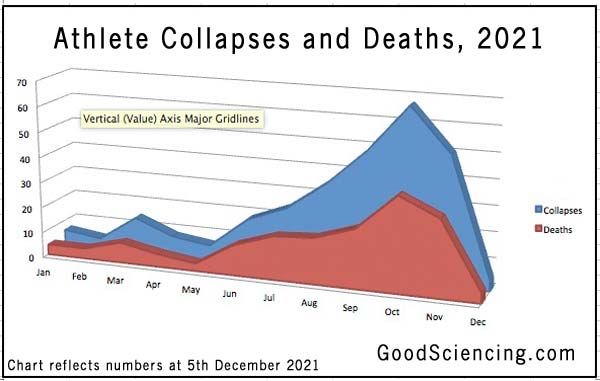
Some professional athletes have even gone public about their season-ending COVID shot injuries, including professional French tennis player Jeremy Chardy and professional American basketball player Brandon Goodwin.
Know the signs of a heart attack: This could save your life
Whether you know someone who’s had a COVID shot or simply know someone at risk of a heart attack, it’s important to know the early warning signs and symptoms. The sooner emergency medical care is received, the better the chances a heart attack victim will survive.
That said, the most common signs and symptoms of a heart attack include:
- Pain or discomfort in the chest: chest pain is usually felt on the left side or in the center of the chest and can feel like squeezing, fullness, or pressure; it can also come and go
- A sense of “impending doom”
- Lightheadedness or feeling faint or weak
- A cold sweat
- Pain in the neck, back, jaw, shoulder, and/or one or both arms
- Shortness of breath
- Less typical signs and symptoms – which women are more likely than men to experience – include nausea, vomiting, and unexplained fatigue
According to the CDC, about half of Americans have at least one of the three main risk factors for heart attack, including high cholesterol, high blood pressure, or a smoking habit. Advancing age, family history, and other lifestyle and environmental factors also play a role.
It’s worth noting that the idea of medications leading to cardiac problems is not fear-mongering or misinformation but, sadly, a well-documented truth. Before being withdrawn from the market in 2004, for example, the FDA-approved prescription drug Vioxx (prescribed to treat arthritis) was linked to as many as 140,000 heart attacks in the U.S alone.
Of course, we are now seeing increasing evidence of heart problems in people who have received the Moderna or Pfizer mRNA shot. Yet, the world continues to be told – by government “health” officials – that these shots are “safe and effective” for all and the “only” way out of this so-called pandemic is to roll up our sleeves and take more and more shots.
Question: What ever happened to improving immune system function with natural medicine. I guess those “experts” are not interested in successful protocols that do not rely on pharmaceutical drugs.
Sources for this article include:
CDC.gov
News24.com
Reuters.com
Goodsciencing.com
NYTimes.com
Newscientist.com
NPR.org
UCdavis.edu
Peachtreehoops.com
This One Thing Is Connected With Almost Every Cardiac Death
Reproduced from original article:
https://articles.mercola.com/sites/articles/archive/2021/12/14/lack-of-quality-sleep-associated-with-cardiac-morbidity.aspx
The original Mercola article may not remain on the original site, but I will endeavor to keep it on this site as long as I deem it to be appropriate, and will not be bullied into removing it.
Analysis by Dr. Joseph Mercola Fact Checked December 14, 2021

STORY AT-A-GLANCE
- A lack of quality sleep may be associated with nearly every heart-related death, and also may be associated with heart failure, stroke, diabetes and worsening obesity
- The pandemic has had an influence on sleep quality; results from a survey show that 71.8% of people with disrupted sleep patterns used technology just before bed
- Sleep deprivation is associated with several other health conditions, including atherosclerosis, diabetes, obesity, Alzheimer’s disease and other neurodegenerative conditions
- In one survey, it was reported that the average person got just 5.5 hours of sleep each night; sleep quality is impacted by light and EMF pollution, which you can improve
This article was previously published October 8, 2020, and has been updated with new information.
According to the World Health Organization, ischemic heart disease and stroke were the top two causes of death across the world in 2016.1 Although there have been dramatic declines in cardiovascular diseases (CVDs), ailments in this category continue to remain major causes of loss of health and life.2
In the U.S., the CDC’s Division for Heart Disease and Stroke Prevention reports that 1 in every 3 deaths is from heart disease and $1 of every $6 is spent on CVD.3
While the statistics are disturbing, cardiovascular disease can also lead to nonlethal stroke, heart attack, disability, serious illness and a lower quality of life. These conditions can trigger fatigue, depression and related problems.
The American Heart Association tracks seven key health factors and behaviors they believe increase your risk for heart disease and stroke.4 They call these “Life’s Simple 7,” which they measure to track progress toward their goal of improving the cardiovascular health of people in the U.S.
While each of Life’s Simple 7 behaviors and risk factors are important to overall health, they do not address problems with sleep as contributing factors.
Pandemic Interfering With Sleep Hours and Quality
In an interview with KYW radio, Dr. Zeeshan Khan, pulmonologist from the Deborah Heart and Lung Center, talked about sleep disorders and the relationship they have with CVD, especially in the midst of the current pandemic.5 He told the reporter that the International Classification of Sleep Disorders identifies at least 60 diagnoses in seven categories.6
The two most common are insomnia and obstructive sleep apnea. With sustained poor sleep, a person may experience altered judgment, mood swings and impaired cognition. Khan also listed problems with the cardiovascular system and immunity in people who chronically get less than seven hours of sleep each night.
He warned that lack of sleep can lead to problems with a person’s general health. He recommends that on average, people should get seven hours of sleep each night, but he also shared that in America, about 35% of the people get less than that. “We are kind of a sleep-deprived nation,” he said.
Symptoms of disrupted sleep or insomnia can vary depending on the person. Although you may take a 30-minute power nap in the early afternoon, it doesn’t get rid of sleep debt. It may help you feel better in the immediate moment, but it doesn’t impact the effect of sleep debt on your overall health.
Lack of Quality Sleep Is Associated With Cardiac Morbidity
When asked about how long it should take to fall asleep, Khan said the average amount of time is 15 to 20 minutes. However, the time it takes to fall asleep is extended when people take their smartphone or computer to bed with them. Using these devices can disrupt sleep in several ways, including by engaging your mind at a time when it should be slowing down.
Khan advises people to first use nonpharmacological treatments to help them sleep, such as cognitive behavioral therapy, mindfulness, a consistent sleep routine and meditation. He also recommends steering clear of medications as they can be addictive and they only treat the symptom of sleep disruption, not the reason behind it.
Additionally, he recommends steering clear of having a nightcap to help you relax and fall asleep. This is because drinking alcohol before bed may help you fall asleep faster, but in the long term it can have a negative effect on your sleep patterns. He stresses the importance of using a routine to go to sleep to cue your biological clock.
He went on to discuss the problems with sleep apnea, which often overlap with snoring. During snoring the upper airway narrows, which causes vibrations in the membranes. Although most people with sleep apnea snore, not all people who snore have sleep apnea.
When people with diabetes, heart disease or other problems also snore, they should be evaluated for sleep apnea, especially if they start having problems during the day. Sleep apnea lowers the amount of oxygen delivered to the brain, heart and other organs during sleep. According to Khan:7
“Almost every cardiac morbidity you can think of has been linked to sleep apnea. Heart disease, heart failure, arrhythmias, strokes … inflammatory issues like diabetes, worsening obesity — the list can go on and on.”
Sleep Disorders Associated With Using Technology at Night
In a recent study in Sleep Standards, researchers evaluated the results from a survey of 1,062 people across the U.S.8 The objective was to gain an understanding of how technology may have a relationship with sleep disorders.
One key finding was that 71.8% of the respondents who reported a disruption in sleep pattern also used technology just before bed. The researchers separated the participants into five age groups, which represented the total number in the survey. They were:
- Generation Z (under 25) — 22.3%
- Millennials (26 to 40) — 44.8%
- Generation X (41 to 55) — 23.8%
- Baby Boomers (56 to 76) — 8.9%
- Silent Generation (older than 76) — 0.2%
They also found that those under age 25 were the most likely to have sleep disorders. People who had a sleep disorder averaged five hours of sleep per night and spent up to 20 hours in front of a bright screen each day.9 The participants also reported that they used their technology devices within 30 minutes of bedtime: 70.2% watched television; 59.4% checked social media; 31.8% checked email; and 32.9% played video games.10
Of all the participants, 57.8% said they used cell phones, which was higher than television use at 18.5% or computer use at 14.2%. The highest percentage of participants in the survey had insomnia at 64.3%.
Although sleep apnea was the second most common disorder, it ran a far second at 14%. Other disorders reported in the survey included sleep paralysis, parasomnias, restless leg syndrome and narcolepsy. Although many experts such as Khan recommend steering clear of pharmaceutical remedies to treat insomnia, 51.2% of those surveyed reported using sleeping pills and 47.5% had tried other medications.
Sleep Deprivation Associated With More Health Conditions
Fragmented or disturbed sleep happens when you fall asleep easily but awaken during the night. This may happen frequently, and you go back to sleep easily, or you awaken and have a hard time going back to sleep. This type of sleep pattern can trigger chronic inflammation that contributes to mental health issues and neurological disorders.11
Lack of sleep also affects your immune system by reducing the number of protective cytokines available.12 In addition, it is associated with atherosclerosis, which is the buildup of plaque in the arteries. This may be called “clogged” or “hardened” arteries and can lead to lethal heart disease.
The exact mechanism of poor sleep in inducing atherosclerosis may have been clarified in a study published by UC Berkeley sleep scientists, who found that an increase in neutrophil and monocyte levels during fragmented sleep had an impact on the pathology of atherosclerosis. They wrote:13
“… these findings affirm a pathway in which the quality of human sleep, specifically the degree of fragmentation, raises inflammatory-related white blood cells, thereby conferring increased risk for atherosclerosis. This was true of sleep fragmentation assessed across a week or across a single night, which predicted increasingly higher CAC [Coronary Artery Calcification] score through a mediating association with increased neutrophils.”
Sleep deprivation is also linked to the development of Alzheimer’s disease and other neurodegenerative conditions. A recent animal study from Marche Polytechnic University in Italy revealed that astrocytes in the brain will start to break down healthy nerve synapses when you are chronically sleep deprived.14 They wrote that the results suggested:
“… that like many other stressors, extended sleep disruption may lead to a state of sustained microglia activation, perhaps increasing the brain’s susceptibility to other forms of damage.”
Average Number of Sleep Hours Dropping
For several years Mattress Firm has commissioned a survey on sleep habits and the number of hours people are sleeping each night. The 2019 results show Americans are sleeping less and less. They asked 3,000 adults about their sleep habits, how satisfied they were with their sleep and about the frequency of sleeping and naps. They compared those results to those from 2018.15
What they found was a sad commentary on the speed at which modern society has chosen to live. It seems that getting at least six hours has become more challenging with each passing year. In 2018, results from the survey showed the average person was sleeping six hours and 17 minutes each night, but by 2019 that had dropped to 5.5 hours.16
Experts currently recommend adults from 18 to 65 years sleep consistently from seven to nine hours each night.17 In other words, most people are sleeping at least 1.5 hours less each night than the minimum that experts think is important for optimal health.
While the number of hours you sleep is important, so is the quality. So, it’s even more disheartening to read that 25% of the respondents reported they also “consistently slept poorly in 2019.”18
Since the amount of quality sleep at night was on the decline, it makes sense that respondents reported they took more naps in 2019 than 2018. But, while more were taken, survey findings indicate there were many planned naps that didn’t get taken.
The survey defined a “great night’s sleep” as “quickly falling asleep and staying that way until morning.” There were about 120 nights fitting that criteria. Americans are so desperate for a good night of sleep they said they were willing to “pay $316.61 for just one night of perfect sleep.” This was $26.16 more than in 2018.
Interestingly, the people who reported the best sleep were those who slept on their back or slept with a pet in their bed. While side sleeping was the more common position reported in the survey, these were the same respondents who had the most difficult time getting to sleep.
EMF Pollution Associated With Sleep Hours and Quality
As I’ve written before, your sleep quality may be impacted by several factors, including your sleep pattern, the number of hours you spend sleeping and by the light and electromagnetic pollution in your area. If you’ve ever gone camping, you may have noticed a change in your sleep quality. Chances are you had a deeper sleep and awakened more rested.
Two factors that influence sleeping better outdoors are the drastic reduction in artificial lights and the reduction in electromagnetic fields (EMF). Your circadian clock is affected by your melatonin levels, which in turn are affected by exposure to light at night. You might enjoy the same restful sleep if you install blackout blinds, use a sleep mask and get rid of any light-emitting source in your bedroom.
Electromagnetic fields also may impair sleep quality19 and produce oxidative damage during sleep.20 Consider shutting off all your electronic devices and your Wi-Fi modem and router at night to reduce your exposure and improve your sleep quality. For more tips on improving the number of hours you sleep and the quality of your sleep, see “Top 33 Tips to Optimize Your Sleep Routine.”21
- 1 World Health Organization, May 24, 2018
- 2 Journal of the American College of Cardiology, 2017;70(1)
- 3 Centers for Disease Control and Prevention
- 4 American Heart Association
- 5, 7 KYW, September 18, 2020
- 6 Chest, 2014;146(5)
- 8, 10 Sleep Standards
- 9 Digital Journal, September 17, 2020
- 11 Berkeley News June 4, 2020
- 12 Mayo Clinic
- 13 PLOS Biology, June 4, 2020
- 14 Journal of Neuroscience, 2017;37(21)
- 15 Mattress Firm
- 16, 18 Study Finds, January 20, 2020
- 17 Sleep Health – Journal of the National Sleep Foundation, 2015;1(1):40
- 19 Journal of Sleep Research 1999;8:77
- 20 The Journal of Microscopy and Ultrastructure, 2017;5(4):167
- 21 American Back Centers
666 Cases of Heart Disease in 12 to 17-Year-Olds After COVID Shots
© GreenMedInfo LLC. This work is reproduced and distributed with the permission of GreenMedInfo LLC.
Want to learn more from GreenMedInfo? Sign up for the newsletter here:
www.greenmedinfo.com/greenmed/newsletter
Reproduced from original article:
www.greenmedinfo.com/blog/666-cases-heart-disease-12-17-year-olds-after-covid-shots
Posted on: Monday, December 6th 2021 at 3:45 pm
Written By: Brian Shilhavy

Originally published on www.healthimpactnews.com
The COVID-19 shots cause heart disease, mainly myocarditis and pericarditis, which is destroying the health of our young people.
This is a fact that is no longer in dispute, as even the CDC admits this, as their most recent report states:
As of November 24, 2021, VAERS has received 1,949 reports of myocarditis or pericarditis among people ages 30 and younger who received COVID-19 vaccine. Most cases have been reported after mRNA COVID-19 vaccination (Pfizer-BioNTech or Moderna), particularly in male adolescents and young adults. (Source.)
The only debatable points are, 1, whether or not these cases are “rare,” and 2, if the benefits of COVID-19 mass vaccination of young people outweigh the risk for heart disease.
And it is on these two points that the CDC is lying to the public, as I will conclusively prove in this article.
The second point is actually very easily debunked, by simply looking at publicly available statistics on COVID-19 deaths for this age group.

As of December 1, 2021, out of 779,402 alleged COVID-19 deaths covering almost 2 years now, only 630 of those were under the age of 17.
And even those 630 alleged deaths in this age group are not necessarily caused by COVID-19. It just means that when they died, they tested positive for COVID-19.
So there is no benefit to vaccinating children under the age of 17 for COVID-19 when they have almost a statistically zero percent chance of dying from COVID-19, when it is known that these shots cause heart disease.
As to the claim by the CDC that instances of heart disease caused by COVID-19 shots are “rare,” the factual evidence states otherwise.
I ran a search in VAERS, the U.S. Government’s Vaccine Adverse Events Reporting System, for all cases of “carditis” following COVID-19 shots for this age group, and from the 11/26/2021 release of VAERS data, it returned a result of 666 cases. (Source.)

Next, I preformed the exact same search for the same age group excluding COVID-19 shots and including all other vaccines listed in VAERS for the past 30+ years, and it returned a value of 40 cases, less than 2 cases per year. (Source.)

Keep in mind that the 666 cases in this age group following COVID-19 shots are for only 6 months for 12 to 15-year-olds in the U.S., as the Pfizer shot was only given emergency use authorization for that age group in May of this year (2021).
Children between the ages of 5 and 11 were just given emergency use authorization last month, November, 2021, but there are already 2 cases of heart disease also reported in this age group, a 6-year-old and 8-year-old, both boys. (Source.)
By whose definition are these cases of heart disease in these children “rare”?

We reported a couple of weeks ago that the American Heart Association journal, Circulation, published an abstract from a cardiologist, Steven R Gundry, that claims getting COVID-19 shots “Dramatically Increases” the risk for heart attacks.
UK medical doctor Vernon Coleman, in referencing the study, stated: Finally! Medical Proof the Covid Jab is “Murder”. See:
Dr. Aseem Malhotra, another cardiologist from the UK, confirmed the results of the AHA study and shared that British authorities in the field of Cardiology confirmed to him that this is happening, that the COVID-19 shots are leading to increased heart attacks, but they are afraid to go public because they will lose their research funding from the Drug Companies.
He called for an immediate end to vaccine mandates. Watch the interview, which is on our Bitchute channel.

Ben Madgen: Former Pro-Basketball Player in Australia. Image source.
The COVID World recently reported that former Australian pro-basketball player Ben Madgen has been diagnosed with pericarditis (inflammation of the sac surrounding the heart) shortly after receiving his second dose of the Pfizer COVID-19 vaccine.
The Australian doctors who treated him apparently disagree with the CDC that this is a “rare” side effect, as they told him that pericarditis is now a common side effect of the Pfizer shot for young males.

There are so many reports now of athletes and other young males suffering from heart attacks since the COVID-19 shots have started, that medical authorities had to try to come up with a different explanation to deflect attention away from the deadly COVID-19 shots.
So they invented a new disease: “post-pandemic stress disorder.”
Up to 300,000 people in the UK are facing heart-related illnesses due to post-pandemic stress disorder (PPSD), two London physicians have warned.
This could result in a 4.5 per cent rise in cardiovascular cases nationally because of the effects of PPSD, with those aged between 30 to 45 most at-risk, they claim.
Mark Rayner, a former senior NHS psychological therapist and founder of EASE Wellbeing CIC, said that as many as three million people in Britain are already suffering from PPSD, thanks to stress and anxiety caused by the effects of Covid-19. (Source.)
You can’t make this stuff up!
If adults want to be stupid enough to believe this nonsense and risk taking a COVID-19 shot, that is their choice.
But minor children are subject to the choices of their parents, so please do NOT give your child a COVID-19 shot!
Heed the warning from these parents who now regret their children getting one of these shots because their child is now dead, or suffering with heart disease.
Share this video far and wide. It is on our Bitchute channel and you can also download it from our Telegram channel.

World Record Holder Has Heart Damaged by Vaccine
Reproduced from original article:
https://articles.mercola.com/sites/articles/archive/2021/12/01/covid-19-injection-reactions.aspx
The original Mercola article may not remain on the original site, but I will endeavor to keep it on this site as long as I deem it to be appropriate, and will not be bullied into removing it.
Analysis by Dr. Joseph Mercola Fact Checked 1 December 2021

STORY AT-A-GLANCE
- Florian Dagoury is a world record holder in static breath-hold freediving; he held his breath for an astonishing 10 minutes and 30 seconds
- After receiving his second dose of Pfizer’s COVID-19 injection, he experienced increased heart rate and a reduction in his breath-holding capacity
- A cardiologist diagnosed him with myocarditis and pericarditis, both recognized adverse effects linked to the shots
- In another instance, 34-year-old Jeremy Chardy, a professional tennis player ranked 73rd in the world, suspended his season due to a severe adverse reaction to the COVID-19 shot
- Veteran triathlete Antoine Méchin, 32, is also facing the potential end to his career after receiving Moderna COVID-19 injections and developing a pulmonary embolism
- While health officials remain silent about COVID-19 injection reactions, the growing number of reports of adverse reactions cannot be silenced forever
Another elite athlete has experienced devastating injuries after receiving COVID-19 shots.Florian Dagoury is a world record holder in static breath-hold freediving. The freediver — from France and now based in Thailand — held his breath for an astonishing 10 minutes and 30 seconds.
After receiving his second dose of Pfizer’s COVID-19 injection, he experienced increased heart rate and a reduction in his breath-holding capacity. A cardiologist diagnosed him with myocarditis, or inflammation of the heart muscle, and pericarditis, which is inflammation of the outer lining of the heart.1 Both are recognized adverse effects linked to the shots.
While the U.S. Centers for Disease Control and Prevention continues to claim that these effects are “rare” after COVID-19 injections, as of November 10, 2021, 1,793 reports of myocarditis or pericarditis among people ages 12 to 29 years who received COVID-19 injections have been reported to the Vaccine Adverse Event Reporting System (VAERS).2
World Record Holder May See End of His Career
As a result of the shots, Dagoury’s career may be over. He shared his experience with Pfizer’s COVID-19 shots in his own words on Instagram:3
“Myocarditis, Pericarditis and Trivial Mitral regurgitation! Thank you Pfizer. Just want to share my annoying experience after vaccination and perhaps have some testimonials and similar stories around Freedivers. Did you get better?
After my 2nd dose I noticed that my heart rate was way higher than normal and my breath hold capacities went down significantly. During sleep, I’m at 65-70bpm instead of 37-45bpm. During the day I’m now always over 100bpm instead of 65bpm, even when I sit down and relax.
I once even reached 177bpm while having dinner with friends !!!! 10 days after my 2nd jab, I went to see a cardiologist and he told me it’s a common side effect of Pfizer vaccin, nothing to worry about, just rest it will pass.
40days after 2nd jab, I had no progress so I went to see another cardiologist and got diagnosed with Myocarditis, Pericarditis and Trivial Mitral regurgitation! Which is basically an inflammation of the heart muscles caused by the immune system and some tiny leaks of blood from the valves that no longer close properly.
I’m now struggling to reach 8min breath hold, 150m dyn and I even have a strong urge to breathe doing 40m dives. 30% decrease on my diving performance roughly.
My first thought and recommendation to Freedivers around the world is to choose a vaccine which is done the old fashion way like Sputnik, Sinovac, Sinopharm etc…instead of those new mRNA vaccines.”
Professional Tennis Player Ends Season After Shots
In another instance, 34-year-old Jeremy Chardy, a professional tennis player ranked 73rd in the world, suspended his season due to a severe adverse reaction to the COVID-19 shot, which left him unable to engage in intense activity. Speaking with The COVID World, Chardy said:4
“Since I had my vaccine (between the Olympics and the US Open), I have a problem. I am struggling. I can’t train, I can’t play. In my head, it’s difficult because I don’t know how long it will last. For now, my season is over and I don’t know when it will resume.
It’s frustrating because I started the year really well. I was playing very good and then I went to the Olympic Games where I also felt very good. It’s frustrating, especially that I don’t have ten years left to play. I regret having the vaccine, but I could not have known that this would happen.
I’ll be 35 in February so right now I might be a bit negative but this is the first time I have ever thought that this season might be my last. I don’t want to think about it … it’s difficult because I was having fun and I want to play longer.”
Triathlete’s Career May Be Over Due to COVID-19 Injections
Veteran triathlete Antoine Méchin, 32, is also facing the potential end to his career after receiving Moderna COVID-19 injections. After his second dose, he began to experience shortness of breath and low-back pain, which turned out to be a pulmonary embolism.
The symptoms, which included breathing problems and arm pain, started after the first dose, but doctors brushed off his shortness of breath as related to stress and fatigue. About a month after his second dose, shortness of breath and body pain returned. Only after testing at a sports clinic was the pulmonary embolism revealed. Méchin said:5
“I am now getting treatment and I hope to regain my lung capacity (in 3-6-9-12 months?) Until then: rest and low intensity for several months. Damaging healthy people to preserve the health of the weakest, a choice of backward logic. I would not get vaccinated again if it had to be done again.”
Professional Mountain Biker Sidelined by Shots
Kyle Warner is another example of healthy people in peak physical condition being harmed by COVID-19 injections. Warner, a 29-year-old professional mountain bike racer, got his second dose of Pfizer’s COVID-19 shot in June 2021. He suffered a reaction so severe that, as of October, he was still spending days in bed, easily overwhelmed by too much mental or physical exertion.6
Within seconds of the second dose, Warner experienced a metallic saline taste in his mouth, which can be an indication that the shot went into a vessel instead of the muscle.7 About two weeks later he started having strange reactions in his heart. Throughout the day, he started experiencing periods of accelerated heart rate.
As is often the case, an ER doctor completely brushed off his symptoms, telling him that he’s not having a reaction to the shot but instead was having an anxiety attack. Days after being sent home from the ER — and still experiencing heart problems, including cramping and burning — Warner went to a different hospital, where he was diagnosed with pericarditis along with postural orthostatic tachycardia syndrome (POTS) and reactive arthritis.
POTS is a blood circulation disorder that affects the autonomic nervous system and can be triggered by injections, including mRNA COVID-19 shots.8 One of the key symptoms of POTS is a significant increase in heart rate when a person stands up, and the elevated heart rate remains elevated for a longer than normal period. Fatigue, nausea, dizziness, heart palpitations and exercise intolerance can also occur.
While his symptoms of pericarditis have cleared, he’s still struggling with the symptoms of reactive arthritis and POTS, which can last for 12 to 18 months or more. And Warner, being very fit and accustomed to listening to his body, caught the problem early — many others may not.
“I believe where there is risk, there needs to be choice,” he said.9 But right now, people are being misled. “People are being coerced into making a decision based on lack of information versus being convinced of a decision based on total information transparency.”10
Pfizer COVID-19 Shot Increases Myocarditis Risk Threefold
Myocarditis and pericarditis cause symptoms such as chest pain, shortness of breath and a fluttering or pounding heart. Cases have occurred most often after mRNA COVID-19 injections (Pfizer-BioNTech or Moderna), particularly in male adolescents and young adults, according to the CDC. Further, myocarditis occurs more often after the second injection, usually within a week.11
A large study from Israel12 revealed that the Pfizer COVID-19 mRNA jab is associated with a threefold increased risk of myocarditis,13 leading to the condition at a rate of one to five events per 100,000 persons.14 Other elevated risks were also identified following the COVID jab, including lymphadenopathy (swollen lymph nodes), appendicitis and herpes zoster infection.15
The real-world case-control study from Israel included a mean of 884,828 people, aged 16 years and older, in each of two groups: one vaccinated and one control.16 The increased risk of myocarditis was clear, with researchers noting:17
“The risk appears to be highest among young men. We found that the risk of myocarditis increased by a factor of three after vaccination, which translated to approximately 3 excess events per 100,000 persons; the 95% confidence interval indicated that values between 1 and 5 excess events per 100,000 persons were compatible with our data.
Among the 21 persons with myocarditis in the vaccinated group, the median age was 25 years (interquartile range, 20 to 34), and 90.9% were male.”
When myocarditis occurs, it reduces your heart’s ability to pump and can cause rapid or abnormal heart rhythms that can be deadly. In severe cases, myocarditis can cause permanent damage to the heart muscle and lead to heart failure, heart attack, stroke and sudden cardiac death.18
In August 2021, New Zealand reported the death of a woman following Pfizer’s COVID-19 jab, which they believe was due to vaccine-induced myocarditis.19 Another devastating report in VAERS states that a 15-year-old boy from Colorado, with no preexisting conditions or allergies, died from cardiac failure two days after receiving Pfizer’s COVID-19 vaccine.20
Unlike in the U.S., where the CDC has recommended Pfizer’s COVID-19 shot for children 5 years and up, the U.K. is taking a more cautious and sensible approach. Due to myocarditis risks in youth, Britain’s Joint Committee on Vaccination and Immunization (JCVI) recommended against COVID-9 injections for healthy 12- to 15-year-olds.
Wei Shen Lim, COVID-19 chair for JCVI, stated, “The margin of benefit is considered too small to support universal Covid-19 vaccination for this age group at this time.”21
COVID-19 Injection Victims Need To Be Heard
While health officials remain silent about COVID-19 injection reactions, the growing number of reports of adverse reactions cannot be silenced forever. Websites like C19 Vax Reactions,22 started by former Green Bay Packers offensive lineman Ken Ruettgers, whose wife Sheryl suffered a severe neurological reaction to Moderna’s COVID-19 shot, exist online for people to share their stories.
There you can read over 500 real testimonies of adverse reactions to the shots and view dozens of videos detailing individuals’ reactions. The Real, Not Rare website has also collected dozens of stories from people who have been injured by COVID-19 shots,23 and there’s a good chance you know someone personally who’s been injured by the injections as well.
It’s important that these voices are heard, so if you or a loved one has been injured by a COVID-19 injection, please share your story with us and encourage others you know who have a story to share theirs as well.
- 1, 3 The COVID World November 5, 2021
- 2 U.S. CDC November 16, 2021
- 4 The COVID World September 24, 2021
- 5 The COVID World September 29, 2021
- 6, 9 YouTube, Dr. John Campbell, Kyle’s Vaccine Complication October 21, 2021, 1:01
- 7 YouTube, Dr. John Campbell, Kyle’s Vaccine Complication October 21, 2021, 21:59
- 8 Cureus. 2021 May; 13(5): e14837
- 10 YouTube, Dr. John Campbell, Kyle’s Vaccine Complication October 21, 2021, 41:51
- 11 U.S. CDC November 12, 2021
- 12, 14, 15, 16, 17 The New England Journal of Medicine August 25, 2021
- 13 MedPage Today August 25, 2021
- 18 Mayo Clinic, Myocarditis
- 19 New Zealand Ministry of Health August 30, 2021
- 20 Yahoo May 6, 2021
- 21 BBC News September 3, 2021
- 22 C19 Vax Reactions
- 23 Real Not Rare, Real Stories
mRNA Vaccines Put You at Risk for Acute Coronary Syndrome
Reproduced from original article:
https://articles.mercola.com/sites/articles/archive/2021/11/30/covid-vaccine-acute-coronary-syndrome.aspx
The original Mercola article may not remain on the original site, but I will endeavor to keep it on this site as long as I deem it to be appropriate, and will not be bullied into removing it.
Analysis by Dr. Joseph Mercola Fact Checked November 30, 2021
Video may not work on all browsers
STORY AT-A-GLANCE
- Using the PULS cardiac test, researchers have found Pfizer and Moderna mRNA COVID shots dramatically increase biomarkers associated with thrombosis, cardiomyopathy and other vascular events following vaccination
- Pre- and post-injection PULS tests for 566 patients were compared. On average, their PULS scores went from an 11% five-year risk for acute coronary syndrome, to a more than double, 25%, five-year risk
- Those who got the injection for fear that COVID-19 might adversely affect their heart now face the grim reality that they’ve exchanged a potential risk for a more certain one
- Another paper details how the mRNA shot can cause thrombocytopenia (low platelet count) through a mechanism that involves the activation of platelets by antibodies against the spike protein (anti-spike antibodies)
- A mystery that remains to be solved is why only certain people with antibodies to the spike protein (anti-spike antibodies) go on to develop symptoms of platelet activation and thrombocytopenia. One hypothesis is that only a subset of the anti-spike antibodies formed after vaccination can activate platelets and cause thrombocytopenia
In a November 21, 2021, tweet, cardiologist Dr. Aseem Malhotra writes:1
“Extraordinary, disturbing, upsetting. We now have evidence of a plausible biological mechanism of how mRNA vaccine may be contributing to increased cardiac events. The abstract is published in the highest impact cardiology journal so we must take these findings very seriously.”
The abstract he’s talking about is “mRNA COVID Vaccines Dramatically Increase Endothelial Inflammatory Markers and ACS Risk as Measured by the PULS Cardiac Test: A Warning,” published in the November 16, 2021, issue of the journal Circulation.2 (ACS is Acute Coronary Syndrome).
Cardiac Risk Warning
The PULS (Protein Unstable Lesion Signature) cardiac test3 is a simple blood test that detects unstable cardiac lesion rupture, one of the leading causes of heart attacks. As noted by the authors of that paper, this is “a clinically validated measurement of multiple protein biomarkers,” which include:
- IL-16, a proinflammatory cytokine
- Soluble Fas, an inducer of apoptosis
- Hepatocyte growth factor (HGF), a marker for chemotaxis of T-cells into epithelium and cardiac tissue
These and several other proteins are indicative of your immune system’s response to arterial injuries that can result in cardiac lesions. These lesions can become unstable, and if they rupture, they can lead to a heart attack.
So, based on the levels of these biomarkers, the test gives you a score that predicts your 5-year risk, as a percentage chance, of developing acute coronary syndrome (ACS). Elevated levels raise your PULS score while levels below the norm lower it.
COVID-Jabbed Patients More Than Double Their ACS Risk
According to the authors of the Circulation report:4
“The score has been measured every 3-6 months in our patient population for 8 years. Recently, with the advent of the mRNA COVID 19 vaccines (vac) by Moderna and Pfizer, dramatic changes in the PULS score became apparent in most patients. This report summarizes those results.
A total of 566 [patients], aged 28 to 97, M:F ratio 1:1 seen in a preventive cardiology practice had a new PULS test drawn from 2 to 10 weeks following the 2nd COVID shot and was compared to the previous PULS score drawn 3 to 5 months previously pre- shot.
Baseline IL-16 increased from 35=/-20 above the norm to 82 =/- 75 above the norm post-vac; sFas increased from 22+/- 15 above the norm to 46=/-24 above the norm post-vac; HGF increased from 42+/-12 above the norm to 86+/-31 above the norm post-vac.
These changes resulted in an increase of the PULS score from 11% 5-year ACS risk to 25% 5-year ACS risk. At the time of this report, these changes persist for at least 2.5 months post second dose of vac.
We conclude that the mRNA vacs dramatically increase inflammation on the endothelium and T cell infiltration of cardiac muscle and may account for the observations of increased thrombosis, cardiomyopathy, and other vascular events following vaccination.”
As noted by Malhotra, this is indeed extraordinarily disturbing. Patients who received a two-dose regimen of mRNA more than doubled their five-year ACS risk, driving it from an average of 11% to 25%. Just imagine the shape our medical system and society at large will be in if 1 of every 4 people who got the two-dose regimen ends up with acute heart failure.
Signs and Symptoms to Watch For
ACS is an umbrella term that doesn’t just include heart attacks, but also a range of other conditions involving abruptly reduced blood flow to your heart. Signs and symptoms of ACS typically begin very suddenly, and include:5
| Chest pain/discomfort, often described as aching, pressure, tightness or burning sensations | Pain that radiates from your chest to your shoulders, arms, upper abdomen, back, neck and/or jaw |
| Nausea and/or vomiting | Indigestion |
| Shortness of breath | Sudden heavy sweating |
| Lightheadedness, dizziness and/or fainting | Unusual or inexplicable fatigue |
| Restlessness and/or apprehensiveness |
If you suspect ACS, do not drive yourself to the hospital. Call for an ambulance, as it is a true medical emergency that may need prompt medical attention. Risk factors for ACS have historically included older age, high blood pressure, cigarette smoking, lack of exercise, unhealthy diet, excess body weight and diabetes.
SARS-CoV-2 infection was recently added to that list, but it seems we must also add the COVID jab as well. Those who got the injection for fear that COVID-19 might adversely affect their heart now face the grim reality that they’ve exchanged a potential risk for a more certain one.
Vaccine-Induced Thrombocytopenia
In related news, a paper published in the journal Blood Advances reviews “SARS-CoV-2 Spike-Dependent Platelet Activation in COVID-19 Vaccine-Induced Thrombocytopenia.”6 Thrombocytopenia is the medical term for low platelet count.
The authors point out that following the rollout of the mRNA and DNA-based COVID shots, more than 150 cases of thrombocytopenia have been reported. The reference for that statistic is a March 9, 2021, paper in the American Journal of Hematology,7 and injuries are stacking up at breakneck speed.
As of November 12, 2021, there were 4,387 cases of thrombocytopenia reported to the U.S. Vaccine Adverse Events Reporting System (VAERS),8 so it’s far more frequent than what they’re stating. (There are also 9,332 reports of heart attacks, which we just discussed, and 13,237 reports of myopericarditis, i.e., inflammation of the heart and/or heart sack.9)
According to the authors, identifying the mechanism by which the shots cause thrombocytopenia would facilitate the development of a diagnostic test. Historically, heparin-induced thrombocytopenia has been diagnosed using a serotonin release assay (SRA).
Using SRA, a subset of critically ill COVID-19 patients have tested positive for platelet-activating immune complexes that can cause thrombosis. Other researchers have also showed IgG antibodies from critically ill COVID-19 patients can activate platelets, resulting in a thrombotic event.
Here, using a modified SRA, they discovered spike-dependent, platelet-activating immune complexes in a patient with vaccine-induced thrombocytopenia, suggesting the spike protein is the causative factor. They explain:10
“Our patient was a 25-year-old woman who presented to hospital 10 days after receiving the Moderna mRNA COVID-19 vaccine with fatigue, petechiae and wet purpura. The initial platelet count was 1,000 per cubic millimeter without evidence of schistocytes on blood smear.
Coagulation studies were within the normal range … This also likely excludes the presence of a lupus anticoagulant, given the use of a lupus-sensitive reagent for PTT testing. Anti-platelet factor 4 (PF4)/heparin antibodies were not detected … and the classic SRA test, with or without heparin or exogenous PF4, was negative.
Assays for drug-induced immune thrombocytopenia with washed donor platelets were also negative for platelet binding with vaccine, PEG2000, or SARS-CoV-2 Spike protein … The patient was treated with dexamethasone and intravenous immune globulin (IVIg) for a presumed immune thrombocytopenic purpura. The platelet count normalized by day seven of treatment.
Additional serum testing identified SARS-CoV-2 Spike protein antibodies of the IgG … IgA … and IgM … classes. Antibodies against SARS-CoV-2 nucleocapsid protein were absent, confirming vaccine-induced antibodies without prior infection.
To further investigate the mechanism of thrombocytopenia, we tested the patient’s serum using a modified SRA with addition of recombinant SARS-CoV-2 Spike protein (Spike-SRA). We observed dose-dependent platelet activation with increasing SARS-CoV-2 Spike protein …
The reaction was inhibited by an FcγRIIa blocker … and IVIg … confirming FcγRIIa-dependent platelet activation. Platelet activation was also demonstrated to a lesser degree with increasing amounts of Moderna vaccine … and the excipient PEG2000 …
Furthermore, platelet activation was not detected in a control sample from a patient who had received the Moderna vaccine and had not developed thrombocytopenia …
Circulating Spike protein was detected in our patient’s serum using enzyme immunoassay testing … Together, these results suggest that the thrombocytopenia in this patient was secondary to FcγRIIa-mediated platelet activation by SARS-CoV-2 Spike immune complexes.”
Potential Mechanism Identified
If you found the section quoted above to be too complex, here’s the take-home message: The mRNA shot may be causing an exceptionally low level of platelets through a mechanism that involves antibodies against the spike protein (anti-spike antibodies) resulting in depletion of platelets by activating them.
Platelets are specialized cells that stop bleeding, and they have ACE2 receptors, which is what the SARS-CoV-2 spike protein binds to. When the spike protein binds to the ACE2 receptor on the platelets, it activates them.
This platelet activation can lead to disseminated intravascular coagulation, i.e., a pathological overstimulation of your coagulation system that can result in abnormal, and life threatening, blood clotting, as well as thrombocytopenia (low platelet count) and hemorrhaging.
Doctors for COVID Ethics described this mechanism in a February 28, 2021, letter11 to the European Medicines Agency (EMA). In that letter, they warned that, based on this mechanism, spike protein-based COVID shots are likely to cause blood clots, cerebral vein thrombosis and sudden death, which is precisely what we’ve been seeing ever since.
In essence, you basically end up with so many blood clots throughout your vascular system that your coagulation system is exhausted, hence the low platelet count. The low platelet count, in turn, is what allows for hemorrhaging (abnormal bleeding).
Questions Remain
A mystery that remains to be solved is why only certain people with antibodies to the spike protein (anti-spike antibodies) go on to develop symptoms of platelet activation and thrombocytopenia. Why not all of them? “One hypothesis is that platelet activation is dependent on unique spike protein epitopes, which are only recognized by a minority of identified antibodies,” the authors suggest.12 In closing, they state:
“Our case … highlights the applicability of the SRA to detect platelet activation disorders aside from HIT [heparin-induced thrombocytopenia]. Although classically done in the presence of heparin, it can be modified to include various antigens to elicit immune complex formation and identify platelet activation …
Ultimately, the role of SARS-CoV-2 Spike protein requires further clarification in regards to platelet activation, as well as the role of vaccine- and PEG-dependent platelet activation. We postulate that a small subset of antibodies against the Spike protein, formed after vaccination, can activate platelets and cause thrombocytopenia.
The prevalence of this phenomenon remains to be clinically determined. Regardless, the modified SRA presented here may be a useful diagnostic test as more cases of vaccine-induced thrombocytopenia are recognized.”
COVID Jab Risks Clearly Outweigh Any Potential Benefit
Since well before the rollout of these COVID shots, scientists and doctors have sounded the alarm, pointing out a host of potential mechanisms by which they may cause harm. Now, nearly a year into it, many of our fears are turning out to have been warranted. They’re causing very serious cardiovascular damage, blood disorders, and reproductive dysfunction.
Worst of all, our health authorities have abandoned the mandate to protect public health and are covering up the wreckage on behalf of the profit makers. On top of that, doctors and nurses who speak out about the collateral damage they’re seeing are being silenced and persecuted by medical boards and government officials alike.
Now, we’re injecting these kill shots into children as young as 5. I see no way for this to end on a pleasant note. As a society, as the deaths and injuries, especially in children, continue to escalate, we’re going to face some excruciatingly difficult times.
To remind you of where this article started, people who have received two mRNA shots have more than doubled their five-year risk of acute coronary events, on average. If you’ve not yet taken the jab, I reckon you probably won’t at this point. But if you’ve already taken one or two, I strongly urge you to review the mechanisms of harm, and evaluate whether it’s worth it to continue with a third.
The adverse changes caused by the shots persist for at least 2.5 months. That’s the low end. We still do not know what the upper time limit is. It could be a year or more, and the risks certainly do not diminish with subsequent additional doses. In the November 12, 2021, OpenVAERS report,13 they added a graph showing vaccination rates and VAERS reports by state.
As you can see, there’s a clear correlation between the rate of “fully vaccinated” in a given state and the number of COVID injuries reported from that state. (Indiana, for some reason, sticks out as a lone exception with a disproportionately high number of reports to the number of fully “vaccinated.”)
The gray zones are population; blue bars are the number of fully vaccinated; the red bars are the number of reported injuries. (All numbers have been divided by 1,000.) This is yet another piece of evidence that we have a serious problem on our hands.
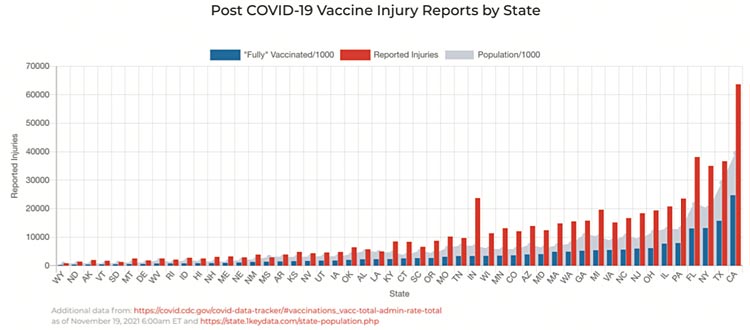
What Can You Do if You Have Jab Remorse?
If you now believe that getting the COVID jab was a mistake and wish to lessen your doubled risk of cardiac complications, there a few basic strategies I would advise.
1.Make certain you measure your blood vitamin D level and take enough vitamin D orally (typically about 8,000 units/day for most adults) to make sure your level is 60 to 80 ng/ml (100 to 150 nmol/l).
2.Eliminate all vegetable (seed) oils in your diet, which involves eliminating nearly all processed foods and most meals in restaurants unless you convince the chef to only cook with butter. Avoid any sauces or salad dressings in restaurants as they are loaded with seed oils. Also avoid chicken and pork as they are very high in linoleic acid, the omega-6 fat that is far too high in nearly everyone and contributes to oxidative stress that causes heart disease.
3.Consider taking around 500 mg/day of NAC, as it helps prevent blood clots and is a precursor for your body to produce the important antioxidant glutathione.
4.Consider fibrinolytic enzymes that digest the fibrin that leads to blood clots, strokes and pulmonary embolisms. The dose is typically two, twice a day, but must be taken on an empty stomach, either an hour before or two hours after a meal. Otherwise, the enzymes will digest your food and not the fibrin in the blood clot.
- 1 Twitter Aseem Malhotra November 21, 2021
- 2, 4 Circulation November 16, 2021; 144(Suppl_1)
- 3 PULS Cardiac Test
- 5 Mayo Clinic ACS
- 6, 10, 12 Blood Advances November 1, 2021 DOI: 10.1182/bloodadvances.2021005050
- 7 American Journal of Hematology March 9, 2021: 10.1002/ajh.26132
- 8, 9, 13 OpenVAERS Report as of November 12, 2021
- 11 Letter to EMA by Professor Sucharit Bhakdi and Colleagues February 28, 2021