Brain
now browsing by category
The gut and the brain are not separate, they work together for optimal health.
Six Ways to Maintain Optimal Cognitive Function as You Age
Reproduced from original article:
https://articles.mercola.com/sites/articles/archive/2024/05/17/maintain-optimal-cognitive-function.aspx
Analysis by Dr. Joseph Mercola May 17, 2024

STORY AT-A-GLANCE
- Solving puzzles as well as learning a new skill can create new neural connections in your brain, which can help keep your mind sharp
- Getting enough sleep can also support brain health. Research suggests your brain uses this period of rest to remove waste, while also helping you retain newly retained information better
- A healthy diet can help optimize mitochondrial health, which plays an important role in cognitive function. Avoid seed oils and all forms of processed food, as these are high in linoleic acid
- Remember to maintain current relationships and forging new ones. Connecting with people you care about, as well as those who share the same interests as you, can greatly benefit your cognitive health
You may believe that forgetting information here and there is normal as you age. However, that doesn’t have to become a permanent fixture in your life. There are several natural strategies that can help keep your brain in top shape.
In an article for CNET,1 journalist Taylor Leamey, who is also a Certified Sleep Science Coach,2 highlights six insightful ways to help keep your mind sharp as you age. I’ve listed them below, expanding on her ideas by adding my own recommendations.
Learn a New Skill
Have you ever wanted to play an instrument, like the guitar or the piano? It’s never too late to learn! One of the simplest ways to keep your brain in top shape is picking a new skill or hobby that you haven’t tried yet but interests you.
Taking up a musical instrument can, figuratively, have your brain firing on all cylinders. In a 2018 study,3 researchers sought to understand how music can benefit cognitive function in adults. They recruited seven patients diagnosed with mild traumatic brain injury and gave them piano lessons for eight weeks. Throughout the study, the participants’ brains were scanned using functional and structural magnetic resonance imaging (MRI) technology.
Results indicate that the subjects were able to function better in social interactions and had improved concentration. Moreover, six out of seven of them felt confident enough to return to their jobs after their accident.4
If learning a musical instrument doesn’t appeal to you, even the simple act of listening to music can have profound effects on your memory. In a study5 published in Neuropsychologia, patients with Alzheimer’s disease better recognized music when the lyrics were sung to them, aside from having a visual presentation. The study authors concluded that music may enhance memory recall for verbal information.
Another activity you can try is dancing. In a paper6 published in Clinical Interventions in Aging, researchers observed the effects of dancing on the cognitive function of participants affected by mild cognitive impairment, which is the transitional stage between normal aging and dementia.
For three months, the participants were instructed in a moderate-intensity dance routine, aside from their usual health care regimen. The dance routine was carefully selected for its complex movements, allowing the participants to use their memorization skills. Results showed an improvement in their episodic memory and processing speed compared to the control group, which didn’t partake in the dance classes.7
As you can see, acquiring a new skill or hobby can keep your brain “on its toes.” The important thing to remember is that you should be interested in it, so that you can remain inspired to keep practicing and getting better. “Just make sure it’s challenging or complex, and continue to practice for the best brain results,” Leamey says.8
Get Regular Exercise
Exercise is an important component to overall health that most people should implement in one way or another. Leamey says, “Generally, any exercise that’s good for the body will also help the mind. It doesn’t have to be lifting weights; walking, swimming and dancing also achieve the same results.”9
Aside from helping boost fitness, research suggests that exercise may also help with cognition by boosting blood flow to the brain.10 This process helps your brain produce new nerve cells, which is a process called neurogenesis.11
In a related example, a study12 noted that the hippocampus shrinks during late adulthood, which can increase your risk for impaired memory and dementia. The researchers hypothesized that exercise may counteract these cognitive issues.
In their experiment, they tasked participants with completing a computerized spatial memory task at baseline, as well as following an exercise program for a year. By the end of the study, the participants’ hippocampus grew by 2%. While this may seem small, it’s already enough to keep away reverse age-related loss for another one to two years.
In addition, the subjects received higher scores in the spatial memory task a year after their baseline scores were taken. Specific findings in this area of the study include increased response times and improved memory.13
So, what constitutes effective exercise? For most adults, moderate-intensity exercise is the ideal option. In my interview with Dr. James O’Keefe, a cardiologist with the Mid-America Heart Institute at St. Luke’s Hospital in Kansas City, he espouses two strong cases for moderate-intensity exercise:
1. Too much vigorous exercise can backfire — If you’re sedentary and begin to exercise, you get a dose-dependent decrease in mortality, depression, high blood pressure and other conditions. However, he noted that people who had the highest volume of vigorous exercise, which totals four to seven hours per week, won’t get any additional benefit.
2. You cannot overdo moderate exercise — This type of exercise is loosely defined as exercising to the point where you’re slightly winded but can still have a conversation. Activities that fall under this category include gardening, completing housework, walking, a relaxing bike ride around your neighborhood, yoga and swimming. In short, the exercise should not fall under the competitive category. It should be fun and stress-reducing.

Save This Article for Later – Get the PDF Now
Solve Puzzles to Train Your Mind’s Muscles
As exercising can lead to better fitness, the same idea can be likened to solving puzzles for your brain. According to training specialist David Wiener, in an interview for the online magazine Express,14 he explains how puzzles can help keep your mind sharp:
“By challenging your brain with mental exercises, it is believed you could maintain individual brain cells and stimulate communication between them to help them work more effectively.”
To “exercise” your mind, crossword puzzles may be a convenient option. In a study published in the Journal of the International Neuropsychology Society, completing crossword puzzles may help delay memory decline in persons who already developed dementia, “possibly via its effect on improving cognitive reserve.”15
Aside from puzzles, what other activities can you try? Dr. Zaldy Tan, director of the Cedars-Sinai Memory and Healthy Aging Program, provides additional examples that can stimulate your mind:16
- Concentration skills such as online brain games
- Visual-spatial working memory skills such as a jigsaw puzzle
- Tactile skills that use procedural memory, such as knitting or model-building
- An activity combining tactile, visual, motor and auditory skills, such as dancing
Prioritize Getting Enough, High-Quality Sleep
Sleep is one of the most important pillars of health, especially when it comes to brain health. Your brain makes up only 2% of your bodyweight yet uses around 20% of your body’s total energy expenditure.17 It performs numerous energy-intensive processes, such as synaptic transmission and firing neurons.
While you’re awake, metabolic waste is generated in the process of consuming energy.18 This is where sleep comes into play. As your body is in deep slumber, your brain takes advantage of this time to flush waste and clear out debris that could otherwise lead to degenerative disease.19
The system responsible for this process is the glymphatic system, which acts as a “brain-wide metabolite clearance system.”20 By pumping cerebrospinal fluid through your brain’s tissues, your glymphatic system flushes waste from your brain back into your circulatory system and liver for elimination.
If you don’t get enough sleep, cognitive performance becomes affected. According to Matthew Walker, Ph.D., director of the University of California Berkeley’s Center for Human Sleep Science, sleep influences your learning and memory processes both before and after acquiring new information. Therefore, depriving yourself of sleep will impact your brain’s learning process.21,22
If you’re having trouble getting peaceful rest, these strategies may help. For a more comprehensive list, see “Sleep — Why You Need It and 50 Ways to Improve It.”
| Avoid using electrical devices at night — These devices emit blue light, which tricks your brain into thinking it’s still daytime. |
| Get bright sun exposure in early morning and around mid-day — Your pineal gland produces melatonin roughly in approximation to the contrast of bright sun exposure in the day and complete darkness at night. If you’re always indoors and swamped in darkness, your body won’t notice the difference, thus hampering melatonin production. |
| Sleep in complete darkness — Light sources, even from a night light or alarm clock, can disrupt your internal clock and your production of melatonin. |
| Eliminate electromagnetic fields (EMFs) in your room — EMFs may disrupt your sleep. I recommend turning off your Wi-Fi at night, since you don’t need it while you’re asleep. Turning off the electricity in your bedroom by pulling your circuit breaker can also remove dirty electricity, which is a hidden source of EMFs. |
| Find your ideal sleeping temperature — According to sleep psychologist Michelle Drerup, PsyD, the ideal temperature for good sleep is around 60 to 67 degrees Fahrenheit (15 to 19 degrees Celsius).23 You can experiment within this range. |
| Adopt a neutral sleeping position — Posture can greatly affect sleep quality. For deep, restful sleep, I recommend adopting a neutral position. It’s a posture wherein you’re lying flat on your back with a pillow under your neck, and your arms down by your sides.
Note that this may increase your risk of sleep apnea, but you can use a paper tape over your mouth, thus forcing you to breathe through your nose and stop snoring. |
Eat a Healthy Diet
Your metabolic health is crucial for cognition. If it’s not in optimal shape, then brain health may suffer as well. As noted in a study published in Neurology,24 a pro-inflammatory diet can increase your risk of dementia. Notable pro-inflammatory markers include increased intake of omega-6 fatty acids, as well as trans fat.25
These findings lend credence to the dangers of linoleic acid (LA), an omega-6, polyunsaturated fatty acid (PUFA), which I believe is one of the most destructive ingredients in the modern Western diet. Most ultraprocessed and junk foods sold today contain high amounts of this unhealthy fat, and this includes fast food and foods served in restaurants.
If that’s the case, then what is the ideal diet for optimizing your metabolism for better brain health? Some of the options Leamey recommends are leafy greens, salmon, green tea, Greek yogurt, and cruciferous vegetables such as broccoli. While these are ideal suggestions, I advise getting them from clean, sustainable sources to protect your health.
For example, choose Alaskan wild-caught salmon instead of farmed salmon. For green tea, choose loose leaf tea, as teabags can leak toxins when heated. Regarding yogurt, it should be made from raw, grass fed milk, preferably homemade. As for leafy greens, spinach are high in oxalates, so if you’re sensitive to oxalates, stick to low oxalate varieties.
In addition to the mentioned foods, here are additional, crucial strategies that can help guide your dietary options:
| Keep PUFA intake below 5 grams. If you can get it below 2 grams, that would be even better. Generally, avoid all types of seed oils, such as soy, sunflower, safflower, canola, corn, palm and cottonseed oil, and any food made with or cooked in these oils. |
| Avoid high-fructose corn syrup when adding carbs to your diet. |
| Avoid all processed foods, restaurant foods, condiments and animal foods raised on grains, such as chicken and pork, as all of these are high in LA. |
| Stick with the sugars from ripe fruit, raw organic honey and/or pure organic cane sugar. |
| Carbohydrate intake can come in the form of some vegetables, and well-cooked low-oxalate starches. |
| Ideal protein intake is around 15% of your daily calories; restrict fats to 30%. |
The reason why I recommend limiting fat is because your mitochondria can only burn one fuel at a time, either fat or glucose. This energy-switching mechanism, called the Randle cycle, can be likened to a railroad that changes the tracks of a train. The image below can help you visualize this vital concept.

When more than 30% of your calories come from fats, your body will prioritize this energy source rather than glucose. The shift can hinder your body’s ability to burn carbohydrates, which can contribute to higher blood sugar levels and insulin resistance.
Your body does this through a process called gluconeogenesis, wherein cortisol is secreted and synthesized into glucose. Cortisol also happens to be the primary aging hormone, so keeping it low can help ward off premature aging.
Moreover, while I believe ripe fruits and starches like white rice are ideal carbs, it’s important to note that they’re rich in fiber, which will feed endotoxin-producing gut bacteria UNLESS your gut health is optimal.
If you experience problems eating complex carbs that result in bowel issues, then consider temporarily restricting your carb intake to very simple carbohydrates such as fruit juice, which is easier to digest. Once your gut health improves, you’ll be able to incorporate more fiber-rich fruits, vegetables and starches.
I also recommend avoiding sources of monounsaturated fatty acids (MUFAs) high in oleic acid, such as olive oil. These products may be just as damaging as LA when consumed in high quantities (when not balanced by adequate saturated fat). Interestingly, the Neurology study I cited earlier supports this notion — the researchers observed that MUFAs are also a pro-inflammatory dietary marker.26
Foster New and Current Connections
As the saying goes, “No man is an island, no man lives alone.”27 Humans are meant to be social, and neglecting this aspect can have dire consequences to your health. Leamey says:
“Prioritizing social contact is an essential part of aging well. Whether spending time with your family or putting yourself out there at your local community center, staying connected is an integral part of aging gracefully.”
According to a study published in PLOS Medicine, the quality of social relationships can directly affect mortality rate. In fact, the researchers equated the influence of social relationships to the same magnitude as smoking and alcohol consumption.28
Similarly, two meta-analyses29,30 that investigated loneliness and social isolation — which are related but not identical — may be an even greater threat to public health compared to obesity, and even raise your risk for premature death by 50%.
For best results, I recommend creating a social routine with the exercise examples I mentioned earlier, which can provide a synergistic effect. Going back to my interview with O’Keefe, he mentions how exercising while socializing can benefit your health:
“Exercising and making social connections at the same time, that is an absolute goldmine of a longevity activity,” he says. “That means that even walking with your dog or your friend or [playing] pickleball is huge … The whole thing is to move your body in a fun, playful manner and make it social.”
How does one make new friends, especially as an adult? Here are some suggestions that can help expand your social circle:
| Join a club — Proactively approaching an established group can allow you to meet people right away who have the same interests as you. Meetup.com is an online source that can show you clubs and get-togethers in your local area. |
| Create rituals of connection — Having weekly talk sessions or making time to eat a meal with family members can maintain help deepen your connections with loved ones. |
| Reach out — Seeking out and contacting friends who need support can strengthen connections, and this feedback loop can be a powerful way to help each other during times of need. |
| Exercise with others — As mentioned by O’Keefe earlier, you can join a gym and meet new people. This can allow you to create new social relationships while improving your fitness at the same time. |
| Support local businesses — Patronizing local businesses for your daily needs can help you develop a sense of community and encourage the formation of new relationships. |
| Volunteer — Joining a charitable organization can allow you to meet like-minded people who share the same altruistic interests as you. |
| Move and/or change jobs — While this option may be drastic, it may be the solution for other people. To make the change worthwhile, make sure that the environment or culture fits best with your personality. Don’t forget to consider the distance that may widen between your longtime friends and family if you move to a new place. |
- 1, 8, 9 CNET, May 11, 2024
- 2 CNET, Taylor Leamey
- 3 Brain Injury, 2018, Volume 32, Issue 5, Abstract
- 4 Brain Injury, 2018, Volume 32, Issue 5, Semi-Structured Interviews — Patient Group
- 5 Neuropsychologia. 2012 Dec; 50(14): 3295–3303., Discussion
- 6, 7 Clin Interv Aging. 2018; 13: 1691–1700, Abstract
- 10 Scientific American, July 1, 2013
- 11 Harvard Health Publishing, August 1, 2021
- 12 Biological Sciences, January 31, 2011, 108 (7), 3017-3022, Discussion
- 13 Biological Sciences, January 31, 2011, 108 (7), 3017-3022, Hippocampal Volume Is Related to Improvements in Spatial Memory
- 14 Express, March 3, 2024
- 15 J Int Neuropsychol Soc. 2011 Nov; 17(6): 10.1017/S1355617711001111., Abstract
- 16 Forbes Health, 6 Brain Exercises for Seniors to Try
- 17 J Magn Reson. 2018 Jul; 292: 155–170, Introduction
- 18 Washington University School of Medicine in St. Louis, February 28, 2024
- 19 Nature, February 28, 2024
- 20 Scientific Reports, February 2, 2018
- 21 YouTube, Dr. Matthew Walker on Sleep for Enhancing Learning, Creativity, Immunity and Glymphatic System
- 22 Harv Rev Psychiatry. 2008;16(5):287-98, Abstract
- 23 Cleveland Clinic, November 15, 2021
- 24 Neurology. 2021 Dec 14; 97(24): e2381–e2391, Abstract
- 25, 26 Neurology. 2021 Dec 14; 97(24): e2381–e2391, eTable 1
- 27 Boston University, The Howard Thurman Center, Meditation: No Man Is an Island
- 28 PLoS Med 7(7): e1000316, What Do These Findings Mean?
- 29 Business Insider, August 7, 2017
- 30 American Psychological Association, August 5, 2017
Toxins Cause Heart Failure and Cardiomyopathy
Reproduced from original article:
https://articles.mercola.com/sites/articles/archive/2024/05/15/toxins-cause-cardiomyopathy.aspx
Analysis by Dr. Joseph Mercola May 15, 2024

STORY AT-A-GLANCE
- Patients with severe heart failure have 12,000-fold more antimony in their heart muscle cells than healthy controls and 22,000-fold more mercury
- Heavy metals like mercury, cadmium and copper directly impair mitochondrial function, which is crucial for cellular energy production
- Antimony exposure is linked to cardiovascular issues and has estrogenic activity, which may contribute to chronic diseases including cancer
- The heart often serves as a collection site for heavy metals, significantly contributing to heart failure
- Chelation therapy may reverse heart damage caused by heavy metal toxicity. Routine phlebotomy is recommended for managing high iron levels and can also lower your microplastic burden
According to research1 published in 1999, people with severe heart failure have 12,000-fold more antimony in their myocytes (the heart muscle cells responsible for contraction) than healthy controls. They also have 22,000-fold more mercury.
Mercury is a highly toxic metal that causes oxidative stress, weakening of the antioxidant defense system, enzyme inactivation and increased oxidative damage, all of which contribute to the deterioration of heart function.2 Long-term exposure to antimony has also been linked to cardiovascular problems. Antimony also has estrogenic activity, which drives many chronic diseases, including cancer.
The oxidative stress caused by heavy metals is one of the primary ways in which they destroy your mitochondrial function. Some heavy metals, including mercury, cadmium and copper, also interfere directly with the mitochondrial electron transport chain,3 leading to reduced ATP production, which is crucial for cellular energy.
Mercury’s interaction with mitochondrial enzymes and membranes further amplifies oxidative damage, impairs cellular respiration, and can trigger cell death.
High Concentrations of Heavy Metals Are Nearly Always Present in Failing Hearts
In a November 2023 article,4 Dr. Thomas Levy, contributing editor for the Orthomolecular Medicine News Service, pointed out that the heart is “the preferred collection site” for most heavy metals, and as such, heavy metal toxicity is a common contributor to, and sometimes direct cause of, heart failure.
Various toxins, especially heavy metals like lead, copper, iron, mercury, aluminum, cadmium and others, can accumulate in heart tissue, contributing significantly to heart failure by directly damaging heart muscle cells and affecting their function. As reported by Levy:5
“Many different toxins, including many heavy metals, have been either linked to heart failure or clearly shown to be the direct cause. Furthermore, one or more of these toxins is nearly always present in high concentrations in the affected heart muscle. A partial list of such agents includes the following:
- Lead
- Copper
- Iron
- Mercury
- Aluminum
- Cobalt/Chromium
- Cadmium
- Gold/Silver
- Chemotherapy
- COVID spike protein”
Levy cites studies showing how each of these toxic agents damage your heart and deteriorate cardiac function. Lead, for example, is linked to acute heart failure and myocarditis; copper toxicity to hypertrophic cardiomyopathy; iron to congestive heart failure; and mercury to idiopathic dilated cardiomyopathy (IDCM).
Recognizing and treating heavy metal toxicity can dramatically improve heart function, Levy notes, adding that chelation therapy has shown promise in reversing toxicity-related heart damage.
The Safest Way to Lower Your Iron
While Levy reviews the use of an iron chelator (deferoxamine) for severe iron overload, routine phlebotomy (blood donation) is another, likely safer, option. Side effects of deferoxamine include but are not limited to allergic reactions, respiratory issues, vision disturbances, hearing loss, muscle spasms and bone pain.6
For those with elevated iron levels, I recommend donating blood two to four times a year. If losing 10% of your blood in one sitting is too problematic, you can remove blood in smaller amounts once a month on the schedule listed below. If you have congestive heart failure or severe COPD, you should discuss this with your doctor, but otherwise this is a fairly appropriate recommendation for most.
| Men | Postmenopausal Women | Premenopausal Women |
|---|---|---|
| 150 ml | 100 ml | 50 ml |
As reported by Levy:7
“[A] case report described a 27-year-old woman with ‘severe heart failure’ completely normalizing on an iron removal regimen. Patients with severe iron overload cardiomyopathy have an average survival of only one year when therapeutic phlebotomy (blood donation) and iron chelation are not utilized.
This form of cardiomyopathy begins with restricted filling of the heart (diastolic dysfunction), and then evolving into a congestive cardiomyopathy. Iron overload cardiomyopathy occurs most commonly in patients with hereditary hemochromatosis or secondary hemochromatosis (as with β-thalassemia and sickle cell anemia).
However, excess iron short of that seen in full-blown hemochromatosis can still be expected to inflict its own dose-dependent toxicity. Most adults already have excess levels of iron in their bodies, as reflected by elevated ferritin levels that erroneously remain regarded as normal in laboratory reference ranges.
Excess iron in the heart is also a predisposing factor to developing atrial fibrillation, an arrhythmia that contributes its own increased morbidity and mortality.
In animal studies, excess cellular iron in heart cells has been shown to increase oxidative stress and impair the ability of the mitochondrial electron transport chain (ETC) to produce ATP. As ATP is the primary energy-providing molecule in the body, any decrease in its production always results in compromised cellular function and disease.
Of note, resveratrol supplementation has been shown to dramatically improve heart function in animal models of iron overload cardiomyopathy. In another animal study,8 either deferiprone or N-acetylcysteine was effective in decreasing cardiac iron concentration.”
Save This Article for Later – Get the PDF Now
Where Does the Antimony Come From?
In personal correspondence with me, Levy pointed out that one of the primary sources of antimony is PET-containing plastics, with plastic water bottles being the top source.
“By comparison, antimony is more toxic than arsenic,” he told me. “After presenting this info recently, a Veteran in the audience told me that they dropped huge pallets of bottled water to the troops in the Middle East, and he would get sick every time he drank the water, but there was no other source of water. Of course, heat accelerated the antimony release into the water.”
Chapter 3 in Defend Our Health’s 2022 report, “Problem Plastic: How Polyester and PET Plastic Can be Unsafe, Unjust and Unsustainable Materials,” detail how antimony in plastic threaten our health, especially that of our children. Here’s a small excerpt:9
“Antimony (in the form of antimony trioxide) is the preferred catalyst for speeding the final chemical reaction that produces PET plastic. Small amounts of antimony can continually escape from PET during use and disposal of plastic bottles, food packaging, and from polyester clothing, children’s products, and other textiles.
Antimony has been known to adversely affect health for decades based on health studies of exposed people and laboratory animals … Children are exposed to multiple sources of antimony from its use as a plastic additive, including its common use with flame retardant chemicals, including in PET and polyester.
In addition to exposure from food and beverages, antimony may be ingested from house dust and from the mouthing of polyester-based toys and clothing. This aggregate exposure to antimony by children appears to exceed the maximum daily dose established by the State of California to protect against chronic organ toxicity.”
Importantly, antimony also has estrogenic activity and estrogen is not something you want too much of. The “Problem Plastic” report cites research that found estrogenic activity in 7 of 9 PET bottles tested.
Aside from being a known carcinogen and a driver of obesity, estrogen is also a metabolic inhibitor that slows down energy production in the cell. And, as stressed by Levy in the quote above, any decrease in energy production “always results in compromised cellular function and disease.”
Beware of Beverages in Plastic Bottles
In February 2022, Defend Our Health tested 20 popular beverages for the presence of antimony. All of the beverages were bottled in PET plastic, and all had detectable levels of antimony. Eight of the 20 samples (40%) had antimony concentrations that exceeded California’s Public Health Goal for drinking water of 1 part per billion (ppb), and 18 of the samples (90%) exceeded the 0.25 ppb limit recommended by Defend Our Health. According to the “Problem Plastic” report:10
“The highest concentration was found in the Campbell’s V8 vegetable juice sample, which had 3.45 parts per billion (ppb) of antimony, more than three times California’s public health goal for antimony in drinking water.
The soda sample with the highest antimony concentration was Coca Cola (packaged in 100% recycled PET) at 2.2 ppb. Nestle’s Perrier water had the highest concentration of antimony among the sampled bottled waters, at 1.58 ppb.
The plastic from 11 bottles had concentrations of antimony in the range of 216 to 321 parts per million (ppm). These concentrations fall within or slightly above the previously documented range of 172 to 261 ppm in PET bottles known to use an antimony catalyst.
Three bottles tested had undetectable concentrations of antimony. These PET samples were Simply Lemonade, Mountain Dew, and 7up bottles. Titanium concentrations for these PET samples were found to be six to seven times higher than in the other tested bottle samples …
Aluminum levels were also elevated in the plastic from two of these samples (Simply Lemonade and 7-up), suggesting that these bottles may have been produced using a titanium- and/or aluminum-based catalyst.”
Nanoplastics Linked to Heart Attacks and Stroke
In related news, recent research11 has also linked nanoplastics to an increased risk of heart attacks and stroke. The study, published in the New England Journal of Medicine, analyzed tissue from 257 individuals undergoing carotid endarterectomy.
Arterial plaques were found to contain several kinds of nanoplastics, including polyethylene, which was detected in 58.4% of patients, and polyvinyl chloride, found in 12.1%.
Disturbingly, individuals with microplastics or nanoplastics in their carotid artery tissues were found to have fourfold higher risk of suffering a cardiovascular event such as heart attack or stroke over the next three years compared to those without such plastics. They were also more likely to die from any cause.
Increasing Cellular Energy Is an Important Part of Heart Failure Treatment
The heart and the brain between them consume nearly one-third of your body’s energy. The brain is 2% of your body weight and consumes 20% of your body energy, while your heart is only 0.5% of your body weight (or 75% less than your brain) yet still consumes 7% to 8% of your body’s energy. Gram per gram, this is 50% more than your brain consumption.
If you are unable to produce adequate cellular energy, you simply won’t have enough power to allow your heart to pump efficiently. This is why it is so vital to implement the strategies we have discussed previously in other articles to improve cellular energy production.
The following are key concepts that need to be integrated to improve all cellular energy, and certainly energy produced for the heart. They all revolve around improving mitochondrial function:
• Lower LA as much as possible — This is the single most important mitochondrial poison. Watch my comprehensive video on why this is so and how to do it.
• Lower estrogen excess — Estrogen, yes even bioidentical, is nearly as dangerous as LA in destroying mitochondrial function. Aside from avoiding all estrogen supplements and plastics, as they are potent sources of xenoestrogens, you can take trans mucosal progesterone, not oral or transdermal, as it is a potent estrogen blocker. See section below for more details.
• Make sure your thyroid is working well — Thyroid function is absolutely essential to make sure you have a high metabolic rate and produce plenty of ATP. If you are going to do a thyroid test, it is important your TSH be well-suppressed and below 0.5. You can also confirm by taking your temperature first thing in the morning and two hours after meals. Low temperatures indicate low thyroid activity.
• Optimize your microbiome — This is key, as not only are 95% of people metabolically inflexible, but because of mitochondrial poisons their microbiome is out of balance with a preponderance of pathogenic endotoxin-producing bacteria, which is another potent mitochondrial poison. We will be reviewing essential strategies to reverse this pervasive condition in the near future.
Lower Your Toxic Burden With Blood Donation and Sauna
In addition to lowering iron, blood donation can also lower the levels of certain plastic chemicals in your blood. Another effective way to excrete heavy metals and plastic chemicals from your tissues is through sweating. I recommend using a near-infrared sauna with low EMFs for this purpose, as the near-infrared rays can penetrate far deeper into your body than far-infrared.
Other benefits of sauna use include improved cardiovascular fitness and reduced all-cause mortality, lower blood pressure, reduced dementia risk, improved mental health, strengthened immune function, improved athletic endurance, reduced inflammation, stem cell activation, improved insulin sensitivity and a reduction in stress hormones.
As a general recommendation, stay in the sauna for 20 to 30 minutes, or until you reach subjective fatigue, which is a sign that you’ve maxed out the benefits you’re going to get. It’s not about reaching a point of suffering — just that point where you’re feeling mildly anxious and tired and want to get out.
As for the frequency, research has consistently shown that it’s dose-dependent, so the more often you do it, the greater the benefits. The sweet spot seems to be right around four times a week, because you’ll also be losing minerals along with toxins. So, you need to rehydrate and replenish those minerals to avoid mineral deficiencies. For more details, including how to build your own near-infrared sauna, see “Near-Infrared Sauna Therapy — A Key Biohack for Health.”
Progesterone Counteracts Xenoestrogen Exposure From Plastics
To counteract the hazards of estrogenic exposure from plastics you can use progesterone, which is a natural estrogen antagonist. Progesterone is one of only four hormones I believe many adults can benefit from. (The other three are thyroid hormone T3, DHEA and pregnenolone.)
As a general recommendation, I recommend taking 25 to 50 mg of bioidentical progesterone per a day, taken in the evening one hour before bed, as it can also promote sleep. For optimal bioavailability, progesterone needs to be mixed into natural vitamin E. The difference in bioavailability between taking progesterone orally without vitamin E and taking it with vitamin E is 45 minutes versus 48 hours.
Another good reason for taking progesterone with vitamin E is because it binds to red blood cells, which allows the progesterone to be carried throughout your body and be distributed to where it’s needed the most.
Simply Progesterone by Health Natura is premixed with vitamin E and MCT oil. You can also make your own by dissolving pure USP progesterone powder into one capsule of a high-quality vitamin E, and then rub the mixture on your gums. Fifty milligrams of powdered progesterone is about 1/32 teaspoon.
Do not use synthetic vitamin E (alpha tocopherol acetate — the acetate indicates that it’s synthetic). Natural vitamin E will be labeled “d alpha tocopherol.” This is the pure D isomer, which is what your body can use. There are also other vitamin E isomers, and you want the complete spectrum of tocopherols and tocotrienols, specifically the beta, gamma, and delta types, in the effective D isomer.
I do not recommend transdermal progesterone, as your skin expresses high levels of 5-alpha reductase enzyme, which causes a significant portion of the progesterone you’re taking to be irreversibly converted primarily into allopregnanolone and cannot be converted back into progesterone.
Preventing Toxic Exposures Is Key
Of course, prevention — minimizing your exposure to heavy metals and estrogenic compounds such as microplastics — really needs to be your first line of defense.
While that sounds easy enough, it can be tricky business, for the simple reason that these toxins are all around us, in our food, water, household dust, clothing, household and personal care items and even the air we breathe. That said, making a concerted effort to rid your household of plastic can go a long way toward minimizing your and your children’s exposure. Here are a few suggestions to get you started:
| Filter your tap water and avoid water bottled in plastic — If you need to buy bottled water, opt for glass bottles. Also make sure the filter you use to purify your tap water can filter out microplastics. |
| Choose organic foods whenever possible. |
| Opt for low-mercury fish such as anchovy, catfish, wild-caught Alaskan salmon, sardines and tilapia — These fish are categorized as “Best Choices” for consumption due to their lower mercury levels, making them safer options for everyone, including pregnant women and children.12
Steer clear of all farmed fish, however, as farmed fish tend to be heavily contaminated. Also avoid large carnivorous fish such as marlin, sea bass and tuna, including canned tuna, as these tend to contain some of the highest concentrations of mercury. |
| Maintain proper ventilation to reduce indoor pollutants. |
| Boil hard tap water — If you have hard tap water, consider boiling it before using it for cooking or drinking, as hard water traps more microplastics. Recent research shows boiling hard tap water for five minutes removes up to 90% of the microplastics in the water.13 |
| Choose alternatives to plastic packaging — Opt for products packaged in glass, metal, or paper instead of plastic. This can significantly reduce the amount of plastic waste that potentially breaks down into microplastics. At home, use wax paper, parchment paper or paper bags to store foods rather than plastic wrap. |
| Use reusable containers — Replace single-use plastic bottles, cups, and containers with reusable alternatives made from safer materials like stainless steel or glass. |
| Never microwave plastics — Heat can cause plastics to leach chemicals into food. Use glass or ceramic containers for microwaving. |
| Avoid plastic cutting boards — Opt for wood or glass cutting boards instead. |
| Opt for natural fibers — Whenever possible, choose clothing and other textile products made from natural fibers like cotton, wool and linen, as synthetic fabrics such as polyester shed microfibers and leach xenoestrogens. |
| Wash synthetic clothes less frequently — When washing synthetic textiles, use a microfiber filter in your washing machine to trap synthetic fibers and prevent them from entering the water system. |
| Opt for food grade cosmetics and personal care products — Some cosmetics, toothpastes, and personal care products contain microbeads or other plastic particles. Look for products free of these materials. Ideally, opt for all-natural, food grade products. |
| Ensure proper disposal or recycling of electronics and batteries. |
- 1 J Am Coll Cardiol 1999 May;33(6):1578-83
- 2 Front Pharmacol April 12, 2021; 12
- 3 Scientific World Journal April 24, 2012; 136063
- 4, 5, 7 Orthomolecular Medicine News Service November 3, 2023 (Archived)
- 6 Drugs.com Deferoxamine
- 8 Toxicology 427:152289
- 9, 10 Defend Our Health, Problem Plastics July 2022
- 11 New England Journal of Medicine March 6, 2024
- 12 FDA Advice about Eating Fish
- 13 ZeroHedge March 8, 2024
‘Strong and Consistent Evidence’ Links Multivitamins to Memory and Cognitive Benefits
Reproduced from original article:
https://articles.mercola.com/sites/articles/archive/2024/05/13/multivitamins-benefits.aspx
Analysis by Dr. Joseph Mercola May 13, 2024

STORY AT-A-GLANCE
- Taking a daily multivitamin may improve memory and slow cognitive decline in older adults, according to a third major study on the topic
- The studies used data from the COcoa Supplement and Multivitamin Outcomes Study (COSMOS), with the latest showing those taking multivitamins perform better on cognitive and memory tests
- The COSMOS-Mind study found daily multivitamin supplementation translated to a 60% slowing of cognitive decline in those with a mean age of 73
- The COSMOS-Web study found taking a multivitamin improved performance by “the equivalent of 3.1 years of age-related memory change” compared to placebo
- The COSMOS-Clinic study, analyzed the effects of a daily multivitamin supplement on cognitive changes based on in-person visits, also found multivitamins had a positive impact on overall brain function over two years when compared to a placebo
Taking a daily multivitamin may improve memory and slow cognitive decline in older adults, according to a third major study on the topic. The studies used data from the COcoa Supplement and Multivitamin Outcomes Study (COSMOS), which evaluated whether cocoa extract supplementation with and without a standard multivitamin affected the risk of developing cardiovascular disease and cancer.
While the study, which involved 21,442 participants, found cocoa flavanol supplementation did not show a significant impact in reducing the total number of cardiovascular events, further evaluation revealed daily multivitamins potentially reduced lung cancer by 38% and “did appear to improve levels of several nutritional biomarkers.”1
Three additional studies using subsets of COSMOS data focused on cognitive benefits, with the latest showing those taking multivitamins perform better on cognitive and memory tests.2
COSMOS-Mind — Multivitamins Linked to Slower Cognitive Decline
The COSMOS-Mind study involved 2,262 participants with a mean age of 73 and looked at how taking cocoa extract or multivitamins and minerals (MVM) for three years affected brain function.3 Researchers called participants to test their thinking skills at the start of the study and then annually.
They measured overall brain function by looking at average scores from different tests, including memory and problem-solving activities. While the study found that cocoa extract didn’t make a difference in overall brain function, significant benefits were found from the daily multivitamin, with three years of such supplementation translating to a 60% slowing of cognitive decline, which is equivalent to about 1.8 years.4
Improvements in global cognition, episodic memory and executive function were noted, with the effects most pronounced in people with cardiovascular disease. According to the study, which was published in the journal Alzheimer’s & Dementia:5
“COSMOS-Mind provides the first evidence from a large-scale, long-term, pragmatic RCT [randomized controlled trial] to suggest that daily use of a safe, readily accessible, and relatively low-cost MVM supplement has the potential to improve or protect cognitive function for older women and men.
An additional trial is needed to confirm these findings in a more representative cohort and to explore potential mechanisms for cognitive benefit. This work may ultimately have important public health implications for standard of care to improve or protect cognitive function in older adults.”
COSMOS-Web — Multivitamins May Improve Memory in Those 60 and Over
The second study, COSMOS-Web, included men over the age of 60 and women over 65 who received either a multivitamin supplement or a placebo. The participants were evaluated at baseline and each year using neuropsychological tests over a period of three years.
Those taking the multivitamin supplement had better immediate recall at the first year point, which was maintained during follow-up. Effects were most pronounced in people with cardiovascular disease.
“When we start seeing that kind of consistency across well-designed studies, it certainly helps convince me — the ultimate skeptic — that we’re on to something real,” professor Adam Brickman of Columbia University, who worked on the first study, told Insider. “… I started taking multivitamins the day we ran the analyses and saw the results, and I take ’em every morning.”6
“There is evidence that people with cardiovascular disease may have lower micronutrient levels that multivitamins may correct, but we don’t really know right now why the effect is stronger in this group,” Brickman said.7
The researchers estimated that taking a multivitamin improved performance by “the equivalent of 3.1 years of age-related memory change” compared to placebo8 and could not only help maintain cognitive functioning but potentially enhance it later in life. The team concluded:9
“Vitamin supplementation is relatively inexpensive, accessible, and has a few adverse effects, and thus might be a potentially useful population health intervention … Daily multivitamin supplementation, compared with placebo, improves memory in older adults. Multivitamin supplementation holds promise as a safe and accessible approach to maintaining cognitive health in older age.”
Save This Article for Later – Get the PDF Now
COSMOS-Clinic — Multivitamins Improve Memory and Slow Cognitive Aging
The third study, COSMOS-Clinic, analyzed the effects of a daily multivitamin supplement on cognitive changes based on in-person visits involving 573 people.10 It, too, found multivitamins had a positive impact on overall brain function over two years when compared to a placebo. Specifically, they found a significant improvement in memory of past events, but not in the ability to plan or pay attention.11
The researchers, from Massachusetts General Hospital, Harvard Medical School and Brigham and Women’s Hospital in Boston, also conducted a meta-analysis involving all three COSMOS studies, without repeating participants and spanning two to three years of taking multivitamins.
The meta-analysis “showed strong evidence of benefits for both global cognition and episodic memory,” according to a press release. “The authors estimate that the daily multivitamin slowed global cognitive aging by the equivalent of two years compared to placebo.”12 Study author Chirag Vyas with Massachusetts General Hospital (MGH), said:13
“Cognitive decline is among the top health concerns for most older adults, and a daily supplement of multivitamins has the potential as an appealing and accessible approach to slow cognitive aging … The meta-analysis of three separate cognition studies provides strong and consistent evidence that taking a daily multivitamin, containing more than 20 essential micronutrients, helps prevent memory loss and slow down cognitive aging.
These findings will garner attention among many older adults who are, understandably, very interested in ways to preserve brain health, as they provide evidence for the role of a daily multivitamin in supporting better cognitive aging.”
Since the three trials used varied methods to assess cognition — including telephone, online and in-person assessments — and involved a large number of participants, they provide convincing evidence for the positive role of multivitamins in healthy brain aging. Study author Howard Sesso, with Brigham and Women’s Hospital, added:14
“With these three studies using different approaches for assessing cognition in COSMOS, each providing support for a daily multivitamin, it is now critical to understand the mechanisms by which a daily multivitamin may protect against memory loss and cognitive decline with a focus on nutritional status and other aging-related factors.
For example, the modifying role of baseline nutritional status on protecting against cognitive decline has been shown for the COSMOS cocoa extract intervention. A typical multivitamin such as that tested in COSMOS contains many essential vitamins and minerals that could explain its potential benefits.”
Multivitamins Improve Biomarkers of Nutrition in Men Aged 68 and Over
It’s estimated that one-third of U.S. adults — and one-quarter of children and adolescents — use multivitamin and mineral supplements,15 making them one of the most common supplements in the U.S. But despite their popularity, many wonder whether taking multivitamins really makes a difference in health.
A team of researchers from Oregon State University (OSU), who conducted a study involving 35 men aged 68 years or older, concluded, “Our evidence indicates that many older men could benefit from a daily multivitamin.”16
The men took either a multivitamin/multimineral (MV/MM) supplement or a placebo for at least six months. The researchers were mainly looking to see if the supplements would change levels of certain nutrients in their blood, a sign of better vitamin and mineral status. They also wanted to see if these supplements would affect how cells use oxygen, which is important for energy and health.
Those who took the MV/MM supplements saw improvements in their blood levels of certain vitamins, such as B6, vitamin D, vitamin E and beta-carotene, showing that the supplements could indeed boost the amount of these nutrients in the body.
However, the supplements didn’t make a significant difference in the levels of minerals like calcium and zinc. Interestingly, the supplements helped prevent a decrease in the rate at which certain immune cells used oxygen, which could be a good sign for overall health, particularly for metabolism and the immune system.
In contrast, the placebo group didn’t see these benefits and even saw a drop in some vitamin levels, suggesting they were moving toward a less optimal vitamin status. While vitamin and mineral deficiencies weren’t widespread in the healthy subjects that took part in the study, the researchers still found multivitamins to be worthwhile, explaining:17
“[T]he use of MV/MM supplements can improve or prevent declines in the status of several vitamins and may prevent declines in cellular bioenergetic status. Although MV/MM supplementation is a ‘one-size-fits-all’ strategy and does not target specific micronutrient needs, it is a cost-effective approach to improve micronutrient status in older men and may have an as yet unappreciated impact on maintaining metabolic function in cells.”
Can You Get Enough Vitamins and Minerals From Food Alone?
Ideally, people of all ages should strive to get their nutrition from whole, nutrient-dense foods — and it’s certainly possible to get the vitamins and minerals your body requires via your diet. However, nutrient deficiencies are common, even among people who believe they’re eating a balanced diet. In the U.S., 31% of the U.S. population was found to be at risk of at least one vitamin deficiency or anemia.18
Beyond cognitive function, your body depends on essential nutrients for growth, development and health maintenance, and deficiencies in certain vitamins can impact your immunity, vision, wound healing, bone health and much more.
This is why, if you think you may be missing out on important vitamins in your diet, the best way to boost your intake is via organic, whole foods. But if you’re not eating right, a high-quality multivitamin may help fill in any gaps and improve biomarkers of nutrition.19,20
“We’re not suggesting that people should get their vitamin and nutrient intake from supplements — the primary source of that should be from whole and healthy foods,” Brickman told Insider. “… I think that multivitamins, along with a lot of other things that we could potentially do as we age, might have a modest but meaningful effect on how we age, cognitively.”21
He added in a news release, “Supplementation of any kind shouldn’t take the place of more holistic ways of getting the same micronutrients.”22 When choosing a multivitamin, be sure to look for a manufacturer that has checks and balances in place to ensure the quality of the product.
And remember, since multivitamins contain both water- and fat-soluble vitamins, it’s generally recommended to take half your daily dose in the morning, with breakfast, and the other half with your main meal.
- 1 COcoa Supplement and Multivitamin Outcomes Study, Multivitamin Findings
- 2, 10 The American Journal of Clinical Nutrition March 2024, Volume 119, Issue 3, Pages 692-701
- 3 Alzheimer’s & Dementia September 14, 2022
- 4 Atrium Health, Wake Forest Baptist September 14, 2022
- 5 Alzheimer’s & Dementia September 14, 2022, Discussion
- 6, 21 Business Insider October 11, 2023
- 7, 22 Columbia University Irving Medical Center May 24, 2023
- 8 The American Journal of Clinical Nutrition July 2023, Volume 118, Issue 1, Pages 273-282, Results
- 9 The American Journal of Clinical Nutrition July 2023, Volume 118, Issue 1, Pages 273-282, Discussion, Conclusions
- 11, 12, 13, 14 Mass General Brigham January 18, 2024
- 15 NIH, Multivitamin/mineral Supplements, Fact Sheet for Health Professionals
- 16, 19 Oregon State University June 14, 2023
- 17 Nutrients 2023, 15(12), 2691; doi: 10.3390/nu15122691, Conclusions
- 18 Nutrients. 2017 Jul; 9(7): 655., Abstract
- 20 Nutrients 2023, 15(12), 2691; doi: 10.3390/nu15122691
How Light Exposure Plays a Role in Cognition
Reproduced from original article:
https://articles.mercola.com/sites/articles/archive/2024/05/11/light-exposure-cognition.aspx
Analysis by Dr. Joseph Mercola May 11, 2024

STORY AT-A-GLANCE
- A preprint study conducted by researchers from the University of Liège in Belgium explored how different levels of light exposure influence your cognitive function
- The researchers noted that higher levels of light exposure among participants led to better cognitive performance in executive tasks
- To harness the power of light exposure, you can use photobiomodulation devices that emit red and near-infrared light
- Photobiomodulation can help boost mitochondrial function, which may result in better cognitive function
Can bright light exposure lead to a sharper mind and heightened alertness? Researchers from the University of Liège in Belgium sought out the answer to this. In the 2024 preprint study titled “Regional Response to Light Illuminance Across the Human Hypothalamus,”1 they investigated how light exposure affects cognitive function in humans.
According to Neuroscience News,2 “The study … is described by the editors as of fundamental importance, and represents a key advancement to our understanding of how different levels of light affect human behavior.”
Light Affects the Emotional and Executive Areas of Your Brain
For context, prior research conducted on animals established that light exposure affects many subcortical structures,3 which are the parts of your brain that play “a pivotal role in cognitive, affective and social functions in humans.”4 Now, the researchers are investigating if the same effects are seen in humans, making the study a first of its kind.
Speaking to NeuroScience News,5 lead author Islay Campbell, Ph.D., from the University of Liège, Belgium, commented:
“Translating findings on how light exposure affects the brain in animal models to humans is a difficult process, as the later maturation of the cortex in human beings enables much more complex cognitive processing.
In particular, the question of whether hypothalamus nuclei contribute to the stimulating impact of light on cognition is not established.”
The Effects of Light on the Hypothalamus
Campbell and her team recruited 26 participants to complete two cognitive tasks designed to stimulate the emotional and executive areas of the hypothalamus while being subjected to varying levels of light intensity.6 They used seven Tesla MRI (magnetic resonance imaging) machines to monitor brain activity in real time and record the results.
The hypothalamus is responsible for managing the endocrine system. Essentially, it acts as a central station, receiving signals from other parts of your brain to release and inhibit hormones essential for maintaining life. These include the thyroid gland, adrenal gland and reproductive organs. The hypothalamus also helps regulate your appetite and temperature.7
Inside the hypothalamus, which all mammals have, lies the center master clock – the suprachiasmatic nuclei (SCN). The SCN cannot function on its own but requires environmental stimuli to synchronize the body clock. This allows you to follow a pattern of wakefulness and sleep.8
The hypothalamus is generally divided into two areas regions — anterior and posterior. The anterior region handles the production of hormones needed by the body, while the posterior region is where oxytocin and vasopressin are stored after being produced in the anterior region. Oxytocin and vasopressin are hormones that perform crucial functions such as maintaining mood and regulating temperature.9
For the study, the researchers subdivided the two parts of the hypothalamus into five. This approach helped them identify which specific areas of the hypothalamus experienced a reaction while under light exposure. Here’s an illustration from the study to help you visualize the intricacy of the divisions.
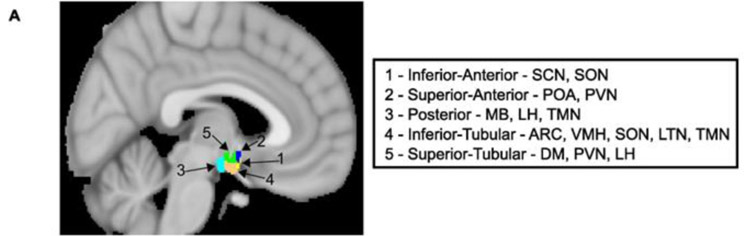 Image credit: eLife, “Regional Response to Light Illuminance Across the Human Hypothalamus,” Figure 2A10
Save This Article for Later – Get the PDF Now
Light Intensities Can Have Varying Effects on Different Parts of the Hypothalamus
The participants were asked to get an MRI scan one week before the trials began. They were also required to get around seven hours of sleep, and were prohibited from consuming caffeine and alcohol, as well as undergoing strenuous exercise.11
To create the test environment, the researchers used a lightbox that illuminated a cable on both ends, allowing them to vary the intensity while the participants performed the tasks.12 The participants were then asked to complete two tests to identify the effects of light exposure on their cognition. Here’s a breakdown, summarized in a report by Sleep Review:13
1. Executive task — The participants were asked to determine if the current sound played to them was the same as one they heard two playbacks earlier, or if it contained the letter “K.”
2. Emotional task — They were asked to determine the gender of a voice that used either a neutral tone or angry tone.
Throughout the study, the participants were alternatively placed in darkness or exposed to bursts of light exposure through four levels of illumination. The researchers noted:14
“In the executive task, participants were exposed to 30s to 70s (median 30s) of light blocks separated by 10s of darkness (< 0.1 lux) and the light blocks were repeated 11 times for each light condition. For the emotional task, participants were exposed to 30 to 40s (median 35s) light blocks separated by 20s of darkness (< 0.1 lux) and the light blocks were repeated five times for each light condition.”
Once results were recorded, the researchers noticed that higher light intensity increased activity in the posterior hypothalamus among the participants.15 At the same time, higher light intensities resulted in decreased activity in the anterior and ventral sections of the hypothalamus. Furthermore, higher light intensities resulted in better performance in the executive task.16
The Role of the Hypothalamus in Your Cognitive Function
The response to this preprint study is positive, as it could not only help identify light’s effects on various brain structures but may also support further research into noninvasive treatments for sleep problems and cognitive fatigue.
According to Neuroscience News, “The strength of evidence is praised as compelling, supporting the authors’ analyses of the complex interplay between light exposure, hypothalamic activity, and cognitive function.”17
Previously published evidence also support the findings of this research. In a 2020 study18 published in Physiology & Behavior, researchers noted that sections of the brain such as the cortex, hippocampus and amygdala have been studied extensively in the role of cognition, but not the hypothalamus. Through the course of their research, they observed that the hypothalamus may play a role in cognition:19
“Such hypothalamic control of memory-related synaptic machinery may enable gating/thresholding/permissive/tagging operations within yet poorly defined logic gates for memory updating. Hypothalamic signals may thus facilitate cost-benefit analysis of learning and memory in real-world settings.”
In another study,20 published in Frontiers in Neurology, authors noted that light exposure increases physiological arousal in the brain, leading to increased alertness.
The data from this preprint study clearly illustrate that light exposure can have a profound effect on your cognitive performance. So, how can you take advantage of it? Through a process called photobiomodulation (PBM), which is actually one of my favorite biohacks.
How Photobiomodulation Can Benefit Your Health
PBM refers to the process of using light therapy to benefit your health. Typically, this process involves using red and near-infrared wavelengths (with enough intensity) that your body can utilize.
One of the most notable benefits of near-infrared exposure is the increase in ATP (adenosine triphosphate) production in your mitochondria. Essentially, ATP is the energy currency used to power biological processes essential for life, such as muscle contractions, ion transport and chemical synthesis.21
As noted in a study published in Biology Letters, near-infrared exposure helped increase ATP in animal subjects and even reduced inflammation. Fruit flies exposed to near-infrared light also gained a significant increase in lifespan.22
Another fantastic benefit of near-infrared exposure is melatonin production — 95% of melatonin is produced in your mitochondria in response to near-infrared light. The melatonin released by your pineal gland account for just 5% of the melatonin in your body.23
Now, you might be wondering how mitochondria underscore these benefits. According to published research, your mitochondria play an important role in cognition. Here’s a succinct explanation, according to a study24 published in Mitochondrion:
“Mitochondria have a crucial role in brain development and neurogenesis, both in embryonic and adult brains. Since the brain is the highest energy consuming organ, it is highly vulnerable to mitochondrial dysfunction. This has been implicated in a range of brain disorders including, neurodevelopmental conditions, psychiatric illnesses, and neurodegenerative diseases.”
In another study, published in the International Journal of Molecule Sciences,25 mitochondrial dysfunction has been implied to be a common mechanism involved in the most recognizable features of Alzheimer’s disease.
Linking all points together, harnessing the power of PBM can help boost mitochondrial health. In turn, healthy mitochondria can help maintain optimal cognitive function.
Can Home Saunas Provide the Same Benefits as PBM?
Electric saunas designed for your home typically emit far-infrared light, which can still provide detoxing benefits. However, with some tinkering, they can be modified to function as a PBM device as well, which can save money since you won’t need a dedicated PBM device.
You can modify your sauna by using incandescent heat bulbs that emit the majority of their energy as near-infrared light. While it may take some work, the effort will be worth it.
If you want to save time and energy, consider near-infrared bulbs from SaunaSpace.26 All their bulbs contain metal guards that prevent the glass from accidentally breaking and injuring you. Use the instructions to hang the new incandescent bulbs in your old sauna.
This simple trick can increase the benefits you experience in your sauna since you’re also getting the benefits of PBM from the new bulbs. Done correctly, eight incandescent red bulbs can heat up to 160 degrees Fahrenheit in about 20 minutes, which is far better than typical far-infrared saunas.
It’s also good to test your sauna for electromagnetic field (EMF) radiation. If it does have EMFs, I recommend shielding your sauna as best as you can to protect your health.
As for the actual sauna session, it’s always important to start out slowly. Listen to your body so you can decide how much heat stress you can tolerate. Ideally, sauna sessions should last anywhere between 15 and 30 minutes. Also, remember to stay hydrated before, during and after, since you’ll be sweating a lot.
Sunlight Is the Ideal Light Source
While a PBM device (or a modified sauna) can be a fantastic addition to your health routine, you shouldn’t shun proper sun exposure. Ideally, spend more time outdoors whenever possible. Only use PBM devices to get red and near-infrared light you need if you cannot get enough regular sun exposure.
Humans need direct sun exposure in order to optimally thrive, and while artificial lighting sources offering specific light spectrums may be helpful for various problems, ideally, we need the full spectrum of light that natural sunlight offers.
If you’re going out to get sunlight, I recommend doing it during solar noon. For those living in areas that implement Daylight Saving Time, it should be 12:30 to 1:30 PM. Scheduling your daily walk around this time allows you to maximize the benefits of ultraviolet B rays and near-infrared radiation from the sun.
Blocking Blue Light at Night Can Help Transform Your Sleep
Last but not least, light exposure during the day has a major impact on your sleep quality, which in turn affects health in countless ways. Getting bright light exposure first thing in the morning and mid-day helps properly “set” your circadian clock, while bright light from artificial lighting and screens in the evening prevents melatonin release, inhibiting sleep.
Normally, your brain starts progressively increasing the hormone melatonin around 9 or 10 pm, which makes you sleepy. Melatonin acts as a marker of your circadian phase or biological timing.
In a nutshell, this hormone influences what time of day or night your body thinks it is, regardless of what time the clock on the wall displays. Besides regulating your sleep cycle, it also provides other important health benefits, including helping to prevent cancer.
Somewhere between 50 and 1,000 lux is the activation range within which light will begin to suppress melatonin production. However, wavelength is also important. Red and amber lights will not suppress melatonin while blue, green, and white lights will.
The reason for this is because these are the wavelengths are the most common outdoors during daytime hours. So, you’ll want to avoid the blue light wavelength after sunset. This includes artificial light, and light emitted by electronics such as your TV, computer, and other electronic screens.
The blue light range (400–490 nm) can also induce photoreceptor damage in your eyes, so besides disrupting your sleep this is another potential problem with light emitting screens. As noted in one recent study,27 “it is important to consider the spectral output of LED-based light sources to minimize the danger that may be associated with blue light exposure.”
Ways to Limit Blue Light Exposure at Night
There are several ways to avoid blue light in the evening depending on your lifestyle and personal preferences:
1.Turn off or dim all lights after sunset and avoid watching TV or using light emitting electronics for at least one hour before bedtime (ideally two hours or more). Research28,29 shows that using an electronic device within one hour of bedtime can delay falling asleep for more than an hour.
Another study30 that compared melatonin profiles in individuals exposed to standard room light (<200 lux) vs. dim light (<3 lux) found that exposure to room light before bedtime shortened the time of elevated melatonin levels by about 90 minutes.
That means it may take you an extra hour and a half before you’re sleepy enough to fall asleep once you’re in bed. Combine room light and electronic displays right before bed and it’s easy to see how sleep may remain elusive for hours on end.
2.After sundown, shift to a low-wattage bulb with yellow, orange or red light if you need illumination. A salt lamp illuminated by a 5-watt bulb is an ideal solution that will not interfere with your melatonin production. If using a computer or smart phone, install blue light-blocking software like f.lux. The program automatically alters the color temperature of your screen as the day goes on, pulling out the blue wavelengths as it gets late.
3.One of the easiest solutions is to use amber colored glasses that block blue light. This way, you don’t have to worry about installing programs on all your devices, or buying special light bulbs for evening use. Once you have your glasses on, it doesn’t matter what light sources you have on in your house.
Studies31,32,33 have confirmed that when using blue-blocking glasses, people produce as much melatonin as they do in dim light, even if they’re in a lit room or using light emitting technology. Other studies34 have shown that people using blue-blocking glasses had major improvements in both sleep quality and mood. Shift workers who use them before bedtime (i.e. in the morning when it’s bright out) also report improved sleep.35
- 1, 3 eLife, April 2024 “Regional Response to Light Illuminance Across the Human Hypothalamus,” Discussion
- 2, 5, 15, 17 NeuroscienceNews.com, April 23, 2024
- 4 Sci Rep. 2018; 8: 1183, Introduction
- 6, 10, 11, 16 eLife, April 2024, “Regional Response to Light Illuminance Across the Human Hypothalamus,” Abstract
- 7 StatPearls, “Physiology, Hypothalamus,” Introduction
- 8 Somnologie (Berl). 2019; 23(3): 147–156, Anatomical architecture of the circadian system
- 9 Cleveland Clinic, “Hypothalamus” How Does the Hypothalamus Interact With the Pituitary Gland?
- 12, 14 eLife, April 2024 “Regional Response to Light Illuminance Across the Human Hypothalamus,” Light Exposure
- 13 Sleep Review, April 25, 2024
- 18, 19 Physiology & Behavior Volume 223, 1 September 2020, 112988, Abstract
- 20 Front Neurol. 2018; 9: 56, Direct Effects of Light on Sleep
- 21 StatPearls, “Physiology, Adenosine Triphosphate,” Introduction
- 22 Biology Letters, March 2015, Volume 11, Issue 3, Abstract
- 23 Int J Mol Sci. 2021 Nov; 22(22): 12494, Abstract
- 24 Mitochondrion, Volume 69, March 2023, pages 18-32, Abstract
- 25 Int J Mol Sci. 2021 May; 22(9): 4850, Abstract
- 26 SaunaSpace, Replacement Bulbs
- 27 Molecular Vision 2016; 22: 61–72
- 28 BMJ Open2015;5:e006748
- 29 Huffington Post February 4, 2015
- 30 J Clin Endocrinol Metab. 2011 March; 96(3): E463–E472
- 31 Applied Ergonomics 2013 Mar;44(2):237-40
- 32 Journal of Pineal Research August 2006: 41(1); 73-78
- 33 The Journal of Clinical Endocrinology & Metabolism DOI: 10.1210/jc.2004-2062
- 34, 35 Chronobiology International 2009 Dec;26(8):1602-12
Autism and ADHD Linked to Disturbed Gut Flora Very Early in Life
Reproduced from original article:
https://articles.mercola.com/sites/articles/archive/2024/04/25/neurodevelopmental-disorders-gut-flora.aspx
Analysis by Dr. Joseph Mercola April 25, 2024

STORY AT-A-GLANCE
- The makeup of gut flora at birth and during the first year of life may play a key role in the development of neurodevelopmental disorders, including autism spectrum disorder, attention deficit hyperactivity disorder, communication disorders and intellectual disability
- The research connected changes in gut bacteria in early life to neurodevelopmental disorders and identified early signs of mood and digestive problems
- Children with three or more ear infections treated with antibiotics were more likely to develop a speech disorder, ADHD or an intellectual disability
- Among children who developed neurodevelopmental disorders, higher levels of inflammatory Citrobacter bacteria and lower levels of beneficial Coprococcus were found in the microbiome
- Antibiotics may be responsible for this effect, with researchers suggesting penicillin may increase Citrobacter while decreasing or eliminating Coprococcus
The makeup of gut flora at birth and during the first year of life may play a key role in the development of neurodevelopmental disorders, including autism spectrum disorder (ASD), attention deficit hyperactivity disorder (ADHD), communication disorders and intellectual disability.1 Worldwide, 3.4 billion people suffer from health conditions that affect the nervous system.2
While much remains to be discovered about how early gut microbiota affect cognition, it’s known that gut bacteria are involved in metabolism, neurological health, immune function and the health of the gastrointestinal tract. Further, gut-brain communication occurs via multiple avenues, including along the vagus nerve and through transport of short-chain fatty acids (SCAs).3
Gut microbes can also synthesize neurotransmitters, according to researchers with the University of Florida. In a study published in the journal Cell, they reveal that disruptions to gut flora in very early life may raise the risk of autism, ADHD and more.4
Gut Bacteria in Early Life Tied to Neurodevelopmental Disorders
The study tracked a group of Swedish children from birth over a 20-year period to identify factors that might influence whether they develop a neurodevelopmental disorder. Researchers collected extensive data from early in the children’s lives using detailed questionnaires about infections, antibiotic use, stress, prenatal conditions and family health history.
They also analyzed biological markers such as metabolites in umbilical cord blood and stool, types of body cell proteins and gut bacteria. Out of the 16,440 children monitored, 1,197 — or 7.3%5 — were diagnosed with a neurodevelopmental disorder, and significant links were found between certain early-life factors and the likelihood of developing NDs.
Notably, the research connected changes in gut bacteria to these disorders and identified early signs of mood and digestive problems.
“The remarkable aspect of the work is that these biomarkers are found at birth in cord blood or in the child’s stool at 1 year of age over a decade prior to the diagnosis,” study author Eric Triplett said in a news release.6 Interestingly, infants who went on to develop neurodevelopmental disorders were deficient in many bacteria known to promote gut health, including Akkermansia, Bifidobacterium, Ruminococcus and Faecalibacterium.
“Akkermansia muciniphila was associated with substances that contribute to the production of chemical signals in the brain known as neurotransmitters. These neurotransmitters play a crucial role in brain function and mood regulation,” the University of Florida reported.7
Antibiotics, Stress May Alter Microbiome, Contributing to Neurodevelopmental Damage
The study also revealed that children who had three or more ear infections treated with penicillin from the time they were born until age 5 were at increased risk of NDs compared to those in the control group. Specifically, they were:8
- 3.89 times more likely to develop a speech disorder
- 3.27 times more likely to develop ADHD
- 2.44 times more likely to develop an intellectual disability
Further, among children who developed neurodevelopmental disorders, higher levels of Citrobacter bacteria, which are associated with inflammation, and lower levels of Coprococcus, which are linked to mental health benefits, were found in the microbiome. Antibiotics may be responsible for this effect, with researchers suggesting penicillin may increase Citrobacter while decreasing or eliminating Coprococcus.9
“We’re not trying to say that antibiotics are necessarily a bad thing,” lead study author Angelica Ahrens said. “But perhaps overuse can be detrimental to the microbiome, and for some children, for whatever reason, their microbiome might not recover as readily.”10
Meanwhile, both environmental and emotional stress also increased the risk of NDs. Children whose mothers smoked during pregnancy were three times more likely to develop NDs, while toddlers exposed to secondhand smoke were 4.88 times more likely to develop ADHD. Toddlers whose fathers smoked more than 15 cigarettes daily were also 3.47 times more likely to develop autism.11
Further, among children later diagnosed with autism, higher levels of PFDA (perfluorodecanoic acid) were found. PFDA is a breakdown product often found in food packaging, especially those made to be grease-resistant, such as microwave popcorn bags and fast-food wrappers.12 “These substances are known to be associated with chronic inflammation, oxidative stress, immune suppression, and possible involvement in autoimmune diseases,” the researchers noted.13
According to Ahrens, “There’s a pretty consistent pattern where it seems increased stressors — whether from emotional stress or exposure to adverse health influences — can impact the immune system and, subsequently, the microbiome — along with all its downstream effects.”14
Save This Article for Later – Get the PDF Now
Children Are Exposed to an ‘Enormous Burden of Stressors’
It’s rarely just one factor that triggers a neurodevelopmental disorder or other chronic disease. Typically, it’s a combination of factors — like processed food loaded with linoleic acid, childhood vaccines, antibiotic overuse and environmental pollutants — that causes gut dysfunction and other imbalances in the body.
Beth Lambert, who in 2009 founded Epidemic Answers, a research organization focused on helping children with autism and other chronic diseases, explained in our interview that it’s the total load of modern living that often adds up to chronic diseases like autism:
“It’s what we call the total load of modern living. The total load is a concept that’s been around for a very long time, especially in environmental medicine … Patricia Lemer, who wrote a book called ‘Outsmarting Autism,’ first applied the concept of total load to neurodevelopmental conditions like autism, where she would say, basically, ‘It isn’t one thing that causes autism. It’s really a perfect storm, a total load.
It’s too many stressors of modern living on a body that doesn’t have enough resources to withstand those stressors.’
Here’s an example. Why is it that two children go into a pediatrician’s office, one gets their 18-month vaccines and the other one gets their 18-month vaccines, one develops autism and the other one doesn’t? Is it genes? Is it what the child ate that day? Is it the fact that one child had a sickness and the other one didn’t?
Was it because this child was on antibiotics when he had vaccines and this one wasn’t? There are so many variables in each child and in each story. So, that’s where I think the total load concept or total load theory really stands up is because there’s so much medical literature on modern living and the ways that we live in the modern world and how it damages your health.
Inflammatory foods, processed foods, the enormous quantity of sugar that modern children consume, the number of pharmaceuticals children have, the antibiotics, for instance … Antibiotics … destroy your gut bacteria. What is the significance of that? That gut bacteria regulates everything from your immune system to your digestion of food and your metabolism.
So, all of those factors are going to impact a child, especially when they are in that critical developmental time. So, if you think about an infant and all the work they have to do to get to crawl, and walk, and talk, and relate to the humans in their lives, all of that takes an enormous amount of energy.
If their body is burdened with toxins from the laundry detergent, and from the mercury and cadmium on their toys, and from the inflammatory foods they’re eating, and their vaccines and their antibiotics and their proton pump inhibitors … that’s when you’re going to see them begin to develop symptoms, whether those are skin symptoms, like eczema, allergies, or whether it’s neurodevelopmental symptoms.
As we’re going through this developmental timeline, if you have an enormous burden of stressors, inflammation going on in your body, and you’re supposed to be developing vision or speech, your body’s too busy dealing with all those stressors, so you’re going to have an arrested, impaired, or delayed development.”
Are EMFs the No. 1 Risk Factor?
Electromagnetic fields (EMFs) are the cigarettes of the 21st century — and most people are being exposed 24 hours a day. Most of the radiation emits from cellphones, cell towers, computers, smart meters and Wi-Fi, to name just a few of the culprits.
Exposure causes serious mitochondrial dysfunction due to free radical damage. Among the most common consequences of chronic EMF exposure to your brain are chronic conditions like Alzheimer’s, anxiety, depression and autism.15
Research published in Pathophysiology suggests autism may be associated with biological disturbances that are similar to the effects of EMF and radiofrequency exposures.16 Martin Pall, Ph.D., also discovered a previously unknown mechanism of biological harm from microwaves emitted by cellphones and other wireless technologies via voltage gated calcium channels (VGCCs) embedded in your cell membranes.17
VGCCs are found in high concentrations in the brain, and research involving animals has shown that even low levels of microwave EMFs can have significant and varied effects on the brain. Studies suggest that when these VGCCs are activated by EMFs, it can lead to a range of neuropsychiatric effects.
At least 26 studies have linked EMFs to neuropsychiatric effects, and five specific criteria have been used to demonstrate that this relationship is causal, meaning EMFs can cause these effects.18 While it’s nearly impossible to avoid EMF exposure completely, there are practical ways to limit it.
Given the number of EMFs that bombard you all day long, getting educated about the negative effects of EMFs is imperative to your well-being. Particularly if you are dealing with a serious illness or neurodevelopmental disorder like autism, it is well worth your time to reduce your EMF exposure as much as possible.
One strategy is to connect your desktop computer to the internet via a wired connection and put your desktop — and cellphone — in airplane mode. Also avoid wireless keyboards, trackballs, mice, game systems, printers and house phones. Opt for the wired versions instead. If you must use Wi-Fi, shut it off when not in use, especially at night when you’re sleeping. Shutting off the electricity to your bedroom at night will also help reduce your exposure.
How to Support a Healthy Microbiome
Avoiding antibiotics, including those found in conventionally raised meat, is key to keeping your microbiome health intact. Ultraprocessed foods, artificial sweeteners, chlorinated and fluoridated water and antibacterial products are other culprits that can worsen your microbial health.
Consuming fermented foods is an important step to increase microbiome diversity as well as decreases markers of inflammation.19 If you do take antibiotics or are looking for another supportive measure for gut health, consider spore-based probiotics, or sporebiotics. These are part of a group of derivatives of the Bacillus microbe and have been shown to dramatically increase your immune tolerance.
During pregnancy and in early life, vaginal delivery (versus caesarean), breastfeeding and exposure to older siblings can help establish a healthy microbiome during these crucial periods of development.20 As noted by microbiologist Dr. Marty Blaser:21
“Before modern times, microbes were transferred from mother to child during vaginal birth, from the mother’s breast during nursing, through skin-to-skin contact, and from the mother’s mouth by kissing.
Now, widespread cesarean delivery, bottle-feeding, extensive bathing (especially with antibacterial soaps), and especially the use of antibiotics have changed the human ecology and altered transmission and maintenance of ancestral microbes, which affects the composition of the microbiota.
The microbes, both good and bad, that are usually acquired early in life are especially important, since they affect a developmentally critical stage.”
- 1, 3, 4, 13 Cell April 3, 2024
- 2, 8, 9, 10, 11, 14 University of Florida April 3, 2024
- 5, 6, 7 Medical Xpress April 4, 2024
- 12 Salon March 23, 2023
- 15 Journal of Chemical Neuroanatomy September 2016; 75(Pt B): 43-51
- 16 Pathophysiology June 2013, Volume 20, Issue 3, Pages 191-209
- 17 Rev Environ Health. 2015;30(2):99-116
- 18 Journal of Chemical Neuroanatomy September 2016, Volume 75, Part B, Pages 43-51
- 19 Cell July 12, 2021
- 20 Nat Rev Cancer. 2018 May 21
- 21 Cleveland Clinic Journal of Medicine December 2018, 85 (12) 928-930
Why Choline Is NOT Associated With Prostate Cancer
Reproduced from original article:
https://articles.mercola.com/sites/articles/archive/2024/04/12/choline-prostate-cancer.aspx
Analysis by Dr. Joseph Mercola April 12, 2024

STORY AT-A-GLANCE
- Choline, essential for numerous physiological processes such as brain development, DNA synthesis and fat metabolism, was officially recognized as a vital nutrient in 1998, with deficiencies linked to severe health issues
- High choline intake is associated with significant health benefits, including reduced risks of heart disease, breast cancer and nonalcoholic fatty liver disease, underscoring its importance in your diet
- Studies suggesting a link between choline intake and an increased risk of prostate cancer fail to account for various dietary and environmental factors, leading to misleading conclusions about eggs
- Choline deficiency poses a greater health risk than high intake. An estimated 90% of Americans already do not meet the adequate daily intake values set by the Institute of Medicine
- Eggs from chickens fed a low-linoleic acid diet are a powerhouse of nutrition. They provide high-quality protein, essential fats, vitamins like D, E and K, and minerals such as selenium and zinc. Eggs also contain B vitamins essential for energy production
Some studies,1 including analyses from NHANES data, have stirred up fears about choline and its alleged link to an increased risk of prostate cancer. This fear causes people to avoid one of the most important nutrients to their health.
As your guide to deciphering the complexities of health and nutrition, I feel it’s imperative to address these concerns and explain why the fear surrounding choline intake, particularly from eggs, is not only misplaced but may also deter you from enjoying one of nature’s most nutrient-dense foods.
First, let’s understand what choline is. Choline, initially discovered in 1862,2 was officially recognized as an essential nutrient for human health by the Institute of Medicine in 1998.3 It plays a critical role in many physiological processes, including:4
| Healthy fetal development5 — Choline is required for proper neural tube closure,6 brain development and healthy vision.7 Research shows mothers who get sufficient choline impart lifelong memory enhancement to their child due to changes in the development of the hippocampus (memory center) of the child’s brain.8 Choline deficiency also raises your risk of premature birth, low birth weight and preeclampsia. |
| The synthesis of phospholipids, the most common of which is phosphatidylcholine, better known as lecithin, which constitutes between 40% and 50% of your cellular membranes and 70% to 95% of the phospholipids in lipoproteins and bile.9 |
| Nervous system health — Choline is necessary for making acetylcholine, a neurotransmitter involved in healthy muscle, heart and memory performance.10 |
| Cell messaging, by producing cell-messaging compounds.11 |
| Fat transport and metabolism — Choline is needed to carry cholesterol from your liver, and a choline deficiency could result in excess fat and cholesterol buildup.12 |
| DNA synthesis, aiding in the process along with other vitamins, such as folate and B12. |
| Methylation reactions.13 |
| Healthy mitochondrial function.14 |
Health Benefits of Choline
Studies have linked higher choline intake to a range of benefits, including a decreased risk for heart disease,15 a 24% decreased risk for breast cancer,16 and the prevention of nonalcoholic fatty liver disease (NAFLD).
In fact, choline appears to be a key controlling factor in preventing the development of fatty liver by enhancing secretion of very low-density lipoprotein (VLDL) particles, which are required to safely transport fat out of your liver.17 Research has also discovered evidence of epigenetic mechanisms of choline,18 which also helps explain how choline helps maintain healthy liver function.
Research19 published in 2020 also concluded that choline has anti-inflammatory activity and can be particularly useful in those with insulin resistance and/or metabolic syndrome. And, while a choline supplement was good in this regard, eggs were far better. Choline has also been shown to prevent neurodegenerative diseases such as Alzheimer’s by:20,21
- Reducing your homocysteine level, an amino acid that has been shown to cause neurodegeneration and is involved in the formation of amyloid plaques, two hallmarks of Alzheimer’s. Choline converts homocysteine into methionine, which has several beneficial effects.
- Inhibiting microglia activation — Microglia cells clear debris from your brain, and while this is a crucial function, in Alzheimer’s the microglia tend to become overactivated, causing inflammation in the brain that can result in the death of neurons. By reducing activation of microglia, choline can help protect Alzheimer’s patients from further brain damage.
Study Linking Choline to Prostate Cancer Has Many Weaknesses
The primary study22 that has many people second-guessing their egg consumption analyzed meat, milk and egg intake and their potential associations with prostate cancer. All of these are sources of choline, although eggs contain the highest amounts.
It suggested there might be a link between high dietary choline intake and an increased risk of advanced, lethal prostate cancer. According to the authors, “Men in the highest quintile of choline intake had a 70% increased risk of lethal prostate cancer.” However, this conclusion overlooks several crucial aspects.
For starters, the study was observational, meaning it can indicate associations but cannot prove causation. Considering the many dietary and environmental factors that can influence health outcomes, it’s extremely difficult to isolate the effect of a single nutrient.
What’s more, they only collected dietary information six times during 22 years of follow-up, which raises questions about accuracy. Many can’t even recall what they ate a few days ago, let alone the type of food and weekly quantity they consumed over the past year. Other shortcomings of this study include the following:
- It does not account for other components of the diet that could influence prostate cancer risk, such as phytonutrients, fiber, and other vitamins and minerals.
- No dose-response relationship across quintiles of choline intake was established. Understanding whether the risk of prostate cancer increases linearly with choline intake or if there’s a threshold effect would be crucial for dietary recommendations.
- The study also looked at postdiagnostic intake of choline and its relationship with lethal prostate cancer among men who were initially diagnosed with nonmetastatic disease and here, no statistically significant link could be found.
Save This Article for Later – Get the PDF Now
The Source of Choline Matters
The source of the choline also matters. Not all choline sources are created equal. Eggs, especially those from chickens fed low-linoleic acid (LA) diets, are incredibly nutrient-dense, offering not just choline but also vitamins, minerals and antioxidants in a natural package that your body can efficiently use.
Conversely, conventionally-raised eggs tend to be high in LA, and as I detailed in my extensive report on LA, this dietary component is a major driver of all chronic disease, including cancer, as it impairs your mitochondrial function and inhibits energy production.
An estimated 90% of the U.S. population is deficient in choline.23 At the same time, most people consume several times more LA than is safe based on historical intakes. So, what’s more likely to contribute to cancer? LA or choline?
There’s also the issue of generalizing. The study population, comprised of 47,896 male health professionals from the United States, may not represent the broader public due to its homogeneity in terms of profession, education, and potentially, socioeconomic status.
These factors can influence dietary habits, health awareness, access to healthcare, and the ability to engage in preventative health behaviors, which in turn could affect the study’s findings and their applicability to the general population.
For example, while health professionals are commonly expected to have greater knowledge about nutrition and disease prevention, this is rarely the case. Rather, they tend to follow standard dietary recommendations issued by government, which have repeatedly been proven to be disastrous for health.
Case in point, for decades, the recommendation has been to avoid saturated fat and cholesterol (both of which are high in eggs) and to opt for polyunsaturated (PUFA) seed oils instead, which, as it turns out, is a perfect recipe for cancer. So, was high choline consumption really the issue, or did they also have higher LA intake because of following misguided dietary recommendations?
Low-PUFA Eggs Are a Powerhouse of Nutrition
Focusing on a single nutrient also fails to consider the synergistic effects of foods. Whole foods like eggs contain a complex mix of nutrients that work together to support health.
Indeed, egg yolks from chickens fed low-LA diets are a powerhouse of nutrition. They provide high-quality protein, essential fats, vitamins E and K, and minerals such as selenium and zinc. Moreover, eggs are one of the few dietary sources of vitamin D, which is crucial for bone health and immune function.
A single hard-boiled egg can contain anywhere from 113 milligrams24 (mg) to 147 mg25 of choline, or about 25% of your daily requirement, making it one of the best choline sources in the American diet.26 Only grass fed beef liver beats it, with 430 mg of choline per 100-gram serving.27
Egg yolk also contains a large amount of B vitamins, all of which are necessary cofactors in the steps to produce energy in your body.
If you’re micronutrient deficient, your metabolism will be low because you don’t have the necessary cofactors to generate ATP, and in carbohydrate metabolism, choline is one of those necessary cofactors. When you add the high rate of choline deficiency in the general population into the mix, it’s highly unlikely that choline would be the cause behind lethal cancer.
How Much Choline Do You Need?
While a dietary reference intake value has not yet been established for choline, the Institute of Medicine set an “adequate daily intake” value of 425 mg per day for women, 550 mg for men and 250 mg for children28,29 to help prevent a deficiency and potential organ and muscle damage.
Curiously, those in the highest quintile of choline intake in this study30 were only getting a median of 509 mg per day, which doesn’t even meet the IOM’s ADI.
Keep in mind, however, that requirements can vary widely, depending on your overall diet, age, ethnicity31 and genetic makeup. As noted in one paper,32 “People with one of several very common genetic polymorphisms in the genes of choline metabolism are more likely to develop hepatic dysfunction when deprived of choline.”
Another study33 found that in some men, 550 mg of choline per day was insufficient as they still developed organ dysfunction. Postmenopausal women were also more prone to develop signs of organ dysfunction than premenopausal women when deprived of adequate amounts of choline for just under six weeks.
Eating a diet high in (otherwise healthy) saturated fats may also increase your choline requirement by as much as 30%.34 Pregnant and breastfeeding women, athletes and postmenopausal women also need higher amounts.
The fearmongering around eggs and choline is a perfect example of how isolating nutrients from their dietary context can lead to misleading conclusions.
The tolerable upper intake level for choline is 3.5 grams per day. Side effects of excessive choline include low blood pressure, sweating, diarrhea and a fishy body odor.35 Unfortunately, none of these signs and symptoms of choline excess were investigated in the featured study.
The Bigger Picture
It’s essential to look beyond headlines and understand the broader context of nutrition science. The fearmongering around eggs and choline is a perfect example of how isolating nutrients from their dietary context can lead to misleading conclusions.
A balanced diet focusing on whole, unprocessed foods is key to optimal health, and sadly, many simply don’t get enough essential nutrients because their diets are so loaded with processed food.
Food testing by Moms Across America (MAA) highlights the seriousness of the situation, as they found school lunches contain more toxins than nutrients.36 All school lunches tested contained heavy metals — some at levels up to 6,293 times higher than the maximum levels allowed in drinking water — and 95% had detectable levels of glyphosate.
Meanwhile, most of the meals were “abysmally low” in essential nutrients. Similarly, fast food meals provide nowhere near your daily nutrient requirements for vitamins and minerals.37
So, in conclusion, don’t let fearmongering dictate your dietary choices. Eggs, particularly from chickens on a healthy diet, remain one of the most nutrient-rich foods you can eat. As always, it’s about the quality and the source. Incorporating eggs into a balanced, nutrient-dense diet supports health far more than it harms.
Assuming you’re not getting choline from other sources, you need to eat at least two, probably three and more, egg yolks per day. I eat six yolks a day (but only one egg white) because I work out and walk at least five to six miles a day. The more active you are, the more choline you need to support a higher metabolic rate.
- 1, 22 American Journal of Clinical Nutrition 2012 Oct; 96(4): 855–863
- 2 Ann Nutr Metab. 2012;61(3):254-258
- 3 Nutr Rev. 2009 Nov; 67(11): 615–623
- 4 Natural Products Insider, The Choline Need (PDF)
- 5 Nutr Today. 2007; 42(4): 181–186
- 6 Am J Epidemiol. 2004 July 15;160(2):102-9
- 7 Am J Epidemiol. 2013 June 15;177(12):1338-47
- 8 J Am Coll Nutr 2004 Dec.;23(6Suppl):621S-626S
- 9, 10, 13, 14, 18, 32 Curr Opin Clin Nutr Metab Care. 2013 May; 16(3): 339–345
- 11 J Inherit Metab Dis. 2011 Feb.:34(1):3-15
- 12 J Biol Chem. 2002 Nov. 1;277(44):42358-65
- 15 ARYA Atheroscler. 2011 Summer;7(2):78-86
- 16 FASEB J. 2008 June;22(6):2045-2052
- 17 Veterinary Journal 2008 Apr;176(1):10-20
- 19 Nutrients 2020; 12(10): 3120
- 20 Molecular Psychiatry January 8, 2019
- 21 Science Daily January 8, 2019
- 23 Clean Eating Magazine November 23, 2021
- 24 Nutrition Data, Hardboiled egg (Archived)
- 25 USDA Nutrient Database Hardboiled egg
- 26 Nutr Rev. 2009 Nov; 67(11):615-623
- 27 USDA Database for Choline January 2008
- 28 Fatty Liver Diet Guide 2012-2015 (Archived)
- 29 NIH Choline Fact Sheet
- 30 American Journal of Clinical Nutrition 2012 Oct; 96(4): 855–863, Table 1
- 31 FASEB J. 2014 July;28(7):2970-8
- 33 American Journal of Clinical Nutrition 2007 May;85(5):1275-85
- 34 Chrismasterjohnphd.com November 23, 2010
- 35 Dietary Reference Intakes for Thiamin, Riboflavin, Niacin, Vitamin B6, Folate, Vitamin B12, Pantothenic Acid, Biotin, and Choline
- 36 Moms Across America September 28, 2022
- 37 Moms Across America October 18, 2023
Five ‘Simple yet Effective’ Tips to Boost Your Longevity
Reproduced from original article:
https://articles.mercola.com/sites/articles/archive/2024/04/10/tips-to-boost-your-longevity.aspx
Analysis by Dr. Joseph Mercola April 10, 2024

STORY AT-A-GLANCE
- Simple changes can significantly influence overall health and longevity. Nearly 70% of people across five generations said they would like to live 100 years, but not if they had terrible health, were a burden on their family, or if they had serious cognitive loss
- Training specialist David Wiener found five effective choices to help achieve that goal, beginning with keeping your brain active using games, concentration skills, keeping a gratitude journal, going for daily walks and reaching out to loved ones
- Fresh air and sunshine can help lift your mood and optimize your vitamin D levels, which decreases your risk of metabolic syndrome, Type 2 diabetes and heart disease. Sleep reduces your risk of heart disease and stroke
- Chronic stress can lead to medical conditions that shorten your lifespan. Exercise is generally acknowledged as leading to a healthier life, but exercising in the late morning hours can support greater benefits than exercising at other times of the day
- Each of these five simple strategies can make a significant difference in your overall health and longevity. Perhaps the most important factor, however, is reducing your linoleic acid (LA) intake, as LA is a potent metabolic poison when consumed in excess
Longevity and the Fountain of Youth have been a focus of human thought and experiment for centuries. Researchers are fascinated by the topic. A quick search on PubMed reveals over 62,000 results for research studies that include the term “longevity”1 and over 150 studies listed on ClinicalTrials.gov.2
The financial company Edward Jones3 published a 2022 study in which they asked five generations of Americans whether they wanted to live to age 100. Nearly 70% of them said “yes,” but included that they would not want the added longevity if they had terrible health, were a burden on their family or had serious cognitive loss. The researchers wrote, “The real answer to our question seems to be, ‘Yes, but it depends on staying healthy, engaged and purposeful.'”4
The Edward Jones report noted that the number of people who are 65 and older has nearly tripled in the last 50 years and it is projected to reach 86 million by 2050. They note that together with living longer and more people retiring, this stage in life appears to be far more important than in previous decades, and with far more social and marketplace implications.
A reporter from the online magazine Express5 spoke with David Wiener, training specialist at AI-based fitness and lifestyle coaching app Freeletics. He shared tweaks you could include in your lifestyle choices that would be simple, but effective in helping you to meet this goal — living a longer, healthier and more engaged life.
One thing he did not address, however, was diet. As detailed in “Linoleic Acid — The Most Destructive Ingredient in Your Diet,” linoleic acid, an omega-6 fat, acts as a metabolic poison when consumed in excess.
So, if you want to live a long, healthy life, this really ought to be your starting point. LA intake above 10% is highly likely to cause problems. Ideally, you want to keep it well below 5%. If your LA intake has been high, make sure you’re getting enough vitamin E, as it protects polyunsaturated fats like LA from lipid peroxidation. That said, let’s take a look at Wiener’s suggestions, all of which are good.
Keep Your Brain Active and Sharp
Wiener describes keeping your brain active as being one of the “best ways”6 of increasing life expectancy and maintaining your cognitive ability. “By challenging your brain with mental exercises, it is believed you could maintain individual brain cells and stimulate communication between them to help them work more effectively,” Wiener told Express. He went on,7
“While most people’s jobs keep them mentally active and alert, learning a new hobby or skill, volunteering or mentoring are additional ways to keep your mind sharp, more specifically learning a language has shown to be greatly beneficial too.”
Your brain is one of the most important organs in your body. Exercising your brain, in the same way that you would exercise your body, plays a significant role in longevity and independence. Taking care of your brain includes engaging in stimulating activities that not only make your brain work but also bring you joy.
Some of the activities that Dr. Laurie Archbald-Pannone, a geriatric medicine physician and associate professor of medicine at the University of Virginia, recommends include keeping a gratitude journal, going for a daily walk and reaching out to friends and family.
Denise Park, Ph.D., professor and director of research at the Center for Vital Longevity in the School of Behavioral Sciences at the University of Texas in Dallas, spoke with Forbes Magazine8 about a study in which she and her team engaged a group of older individuals to learn two new activities — digital photography and quilting.
The researchers found the adults improved their memories over three months. Park talked about finding the optimal amount of challenge to maintain a healthy mind, noting that too much is stressful but too little does not encourage gain. “Adding novel behaviors that you never performed before helps build new neural circuits that will be built to handle that challenge,” she said.9
Finding games that stimulate different functions can also support your social life. Engaging in stimulating brain activity with others helps to reduce isolation and the brain exercise helps give you a sense of control as well as helps support the creation of new brain connections.
Dr. Zaldy Tan is an expert in senior care and the director of the Cedars-Sinai Memory and Aging Program. Tan identified types of brain activities that help challenge and exercise your mind. Tan suggests games that challenge:10
- Verbal memory such as a crossword puzzle
- Concentration skills such as online brain games
- Visual-spatial working memory skills such as a jigsaw puzzle
- Tactile skills that use procedural memory such as knitting or model building
- Tactile, visual, motor and auditory skills such as dancing
Get Outside to Enjoy the Fresh Air and Sunshine
It’s no secret that being outside in the fresh air is healthy. Wiener recommends gardening and taking walks to help boost your time outside and optimize your vitamin D levels.11 One meta-analysis of 28 studies demonstrated a substantial decrease in heart disease, metabolic syndrome and Type 2 diabetes in middle age to elderly people with high levels of vitamin D.12
Optimal levels of vitamin D also support healthy function of your muscles and immune system, as well as bone health by helping your body to absorb calcium.13 However, depending on where you live and the time of the year, it’s not always possible to get outside for a little sunshine.
It is important to note that vitamin D supplements may help to raise your vitamin D serum measurements, but they don’t give you everything you need. As Wiener points out, sunshine also influences your sleep, which I discuss just below. “This is because sunlight also regulates another hormone in the body called melatonin that controls your sleep cycle,” Wiener said.
Save This Article for Later – Get the PDF Now
Red and Near-Infrared Light Therapy
If sunshine is not an option, then red and near-infrared light, which are subsets of natural sunlight, may help you get some of the same benefits. During an interview with Ari Whitten, author of “The Ultimate Guide to Red Light Therapy,” we reviewed the mechanics and benefits of red light and infrared light. Whitten has a degree in kinesiology, exercise science and movement science, and has studied natural health and nutrition for over 20 years.
Over the last few decades, there have been more than 5,000 studies published about red and near-infrared light therapy, also called photobiomodulation. Researchers have noted an impact on a wide range of conditions, including combating wrinkles and cellulite, improving hair regrowth and sports performance, increasing strength and benefits for individuals with Alzheimer’s and Parkinson’s disease.
Red and near-infrared light operates through several mechanisms of action in the body to produce positive effects. As Whitten and I discussed in the interview, it helps support mitochondrial health and stimulate mitochondrial biogenesis, modulates gene expression and helps structure water that surrounds your cells. Each of these mechanisms offers significant benefits to your overall health.
Sleep: Prioritize Quality and Quantity
Wiener notes that research has consistently demonstrated sleeping less than six hours each night presents a significant risk for heart attack and stroke. Taking care to get at least seven to eight hours of quality sleep each night can help support longevity.
Nearly every facet of your biology is affected when you don’t get enough sleep, which is demonstrated by the long list of health effects linked to sleep deprivation. You’ll find a list and studies in the article linked below. Some of the effects include reduced athletic performance, increased risk of neurological issues, increased risk of Type 2 diabetes, weakened immune function and an increased risk of high blood pressure, heart attacks and cardiovascular disease.
Unfortunately, many people still see a lack of sleep as a badge of honor. To them, it signifies a sign of drive, ambition and achievement. Worse, good sleep may be characterized as a sign of sloth. In 2018, Joe Rogan interviewed professor Matthew Walker, Ph.D., founder and director of the University of California Berkeley’s Center for Human Sleep Science.
As explained by Walker,14 your brain doesn’t shut down while you’re asleep. Instead, some parts become far more active than when you’re awake. During REM sleep, the visual, motor kinesthetic, emotional and memory centers increase activity, while the area that rules rationality and logical thinking, decreases. There are several common factors that Walker calls the “enemy of sleep.” These include:
- Alcohol and caffeine — These and other substances, such as sleeping pills, interfere with sleep quality and sleep time
- Artificial lighting — We have effectively electrified the night, and light at night damages your health by degrading your sleep
- Loneliness, anxiety and depression — The longing for connection and the effects of mental illness can often interfere with or cause people to forego sleep
- Long work hours — The international business environment, increased global competition and longer commuter times are just a few of the factors contributing to the increase in work hours and stress-related burnout
- Overcommitment — Schedules are filled from morning to night, and many people are unwilling to trade entertainment or socializing with family and friends for sleep
Wiener and Walker make several recommendations to achieve quality sleep each night. You’ll find those and more in “Sleep — Why You Need It and 50 Ways to Improve It.”
Use Stress Reducing Strategies to Lower Cortisol Secretion
As Wiener stated, stress can trigger the release of high cortisol levels.15 A fight or flight response can raise your blood pressure and give you the resources you need in the moment. But chronic activation of the system causes the consistent release of hormones that produce harmful physiological changes.16 This leads to the storage of abdominal fat, insomnia, low energy and changes in appetite.
Additionally, it can lead to high blood pressure, heart disease, metabolic syndrome, arthritis, Type 2 diabetes and obesity. Each of these chronic diseases can lead to premature death. The fight or flight response is modulated by the sympathetic and parasympathetic nervous systems, which are part of the autonomic nervous system. This system controls functions in the body that happen automatically, such as heart rate and blood pressure.
The sympathetic nervous system signals the fight or flight response to begin, and once the danger has passed the parasympathetic nervous system helps apply the brakes to the hormone release. In chronic stress, your sympathetic nervous system is revved up, which has a detrimental effect on your health. But, by using controlled breathing techniques, you can create physiological change that lowers your heart rate and blood pressure and improves immune function.
Breathing techniques can help modulate the autonomic nervous system, several of which you can read about in “Have You Tried Box Breathing?” Box breathing is a basic tactical breathing technique used by Navy SEALS to remain calm under duress.17
Other Ways to Normalize Cortisol
Two other factors that will have a significant impact on your cortisol level is low-carb diets and fasting. Both are sure-fire ways to increase cortisol and should be avoided if you’re trying to optimize your mitochondrial function.
If you don’t get enough glucose from your diet, your body must produce glucose by activating stress hormones like glucagon, adrenaline, and cortisol, which make glucose by sacrificing the protein stored in your muscle, bones and brain.
To avoid this, you’ll want to make sure you’re getting at least 150 grams of glucose a day, ideally from ripe fruit. My carb intake is currently between 400 to 450 grams a day, and I feel great.
If you have a healthy gut, you’ll be able to incorporate more fruit fiber without a problem. If your gut is impaired, however, the extra fiber can feed endotoxin-producing bacteria in your gut, which will suppress your mitochondrial function even further. In this case, start by introducing things like pulp-free orange juice.
You Get Greater Benefits When You Exercise in the Morning
Exercise is generally acknowledged as leading to a healthier life, but did you know that there are certain times of the day when you experience greater benefits? Wiener18 recommends exercising in the morning to take advantage of fat oxidation that naturally occurs during the morning hours before having your first meal.
A 2022 paper19 found an association between the time of day you exercise and the risk of coronary heart disease and stroke. The 86,657 men and women who participated were free of cardiovascular disease at the beginning of the study.
The researchers compared the peak time of activity across a 24-hour period and found those who were most active during the late morning had a significantly lower risk of stroke and coronary artery disease compared to people who had a pattern of midday activity.
You can use each of these five simple strategies to make a significant difference in your overall health and longevity. While they may seem simple and easy — almost too easy — they are highly effective and help you take control of your health.
- 1 PubMed, “Longevity”
- 2 Clinical Trials, “Longevity”
- 3, 4 Edward Jones, Longevity and the New Journey of Retirement page 4 & 5
- 5 Express, March 3, 2024
- 6, 7 Express, March 3, 2024, #1
- 8, 9, 10 Forbes Health, May 23, 2023
- 11 Express, March 3, 2024, #2
- 12 Maturitas 2010; 65(3)
- 13 NIAMS, Calcium and Vitamin D: Important for Bone Health, What Does Vitamin D Do for Our Bones? 60% down the page (DTP)
- 14 YouTube, Joe Rogan Experience #1109, Min 13:11
- 15, 18 Express, March 3, 2024, #4
- 16 Yale Medicine, Chronic Stress Subhead 3, 4
- 17 YouTube, Box Breathing and Meditation Technique w/ Mark Divine of SealFit – TechniqueWOD
- 19 European Journal of Preventive Cardiology, 2022; 30(3)
Alzheimer’s Is Now a Leading Cause of Death
Reproduced from original article:
https://articles.mercola.com/sites/articles/archive/2024/04/06/alzheimers-death-rate.aspx
Analysis by Dr. Joseph Mercola April 06, 2024
Story at-a-glance
- Alzheimer’s disease, a severe form of dementia, affected an estimated 6.7 million Americans in 2023, and deaths from Alzheimer’s more than doubled between 2000 and 2019
- Previous U.S. data placed the number dying from Alzheimer’s disease around 83,000 in 2010. By 2014, research suggested the true number was well over half a million per year — more than six times higher than previously thought. Today, 1 in 3 seniors dies with Alzheimer’s or some other dementia, and the death toll exceeds that of breast- and prostate cancer combined
- Since there’s no conventional cure, prevention is crucial if you want to avoid becoming a statistic. Two key strategies are lowering your linoleic acid (LA) intake and avoiding estrogen and estrogenic compounds
- Advances in diagnosis are being made. For example, researchers have created a blood test that predicts Alzheimer’s with great accuracy. There’s also a peanut butter smell test, and a free 15-minute at-home test called Self-Administered Gerocognitive Examination (SAGE) that can facilitate early diagnosis
Alzheimer’s disease, a severe form of dementia, affected an estimated 6.7 million Americans in 2023.1 It is not pretty to lose your mind, as many of you know from firsthand experience with relatives or friends. This devastating degenerative brain disease develops slowly over time and tends to be lethal in its final stages.
As a general guideline, tell-tale symptoms of Alzheimer’s include a decline in memory along with a decline in at least one of the following cognitive abilities:
- Speaking coherently or understanding spoken or written language
- Recognizing or identifying objects
- Ability to perform motor activities
- Abstract thinking and ability to make sound judgments
- Planning and carrying out complex tasks
Alzheimer’s Deaths Outpace Breast- and Prostate Cancer
Deaths from Alzheimer’s more than doubled between 2000 and 2019.2 In 2014, research suggested the actual death toll may be well over half a million per year,3 which would put Alzheimer’s in the top three killer diseases in the U.S., right behind heart disease and cancer.
Officially, it’s the sixth-leading cause of death in the United States as of 2019,4 and with a total of 121,499 recorded deaths that year, Alzheimer’s claimed more lives than breast- and prostate cancer combined.5
However, it seems the 2014 study was onto something, because while Alzheimer’s was listed on 121,499 death certificates in 2019, underlying causes like AD are typically left off. As explained by Bryan James, an epidemiologist at the Rush Alzheimer’s Disease Center in Chicago and lead author of the 2014 study:6
“Death certificates are well known to underreport deaths from Alzheimer’s and other types of dementia. The more immediate causes of death, such as pneumonia or heart attack, are usually listed, and the underlying causes of death are usually left off.”
Alzheimer Death Toll May Be Six Times Higher Than Previously Thought
The 2014 study, published in the journal Neurology,7 followed 2,566 seniors aged 65 and over for eight years. In that time, close to one-quarter of them developed Alzheimer’s. Four hundred of them died from the disease.
Using statistic extrapolation, the researchers came up with an estimated annual Alzheimer’s death toll in excess of 503,000 — more than six times higher than previous estimates. According to Dallas Anderson,8 an overseer of population studies relating to Alzheimer’s and dementia at the National Institute on Aging (NIA):
“People who I think are knowledgeable about the death registration system in the U.S. would not be surprised that the official number is low, but it is somewhat of a surprise to see that kind of a difference … It’s just another reminder that Alzheimer’s is really an important public health problem, and we need to work on it.”
Indeed, and since there’s no conventional cure, the issue of prevention is crucial if you want to avoid becoming a statistic here. There are also few if any successful medical treatments available once Alzheimer’s sets in.
For example, memantine (sold under the brand name Namenda) is approved for moderate to severe cases of Alzheimer’s, but doctors also prescribe it off-label for mild cases. Unfortunately, the drug has been found to be useless for mild to moderate Alzheimer’s.
A 2011 analysis of data9 from three clinical trials showed that patients with mild Alzheimer’s who took Namenda had no improvement in mental function or their ability to perform everyday tasks when compared to placebo. Even among moderate to severe Alzheimer’s patients, for which the drug is approved to treat, the researchers found only “meager” improvements.
Other go-to drugs for the treatment of Alzheimer’s include cholinesterase inhibitor drugs such as Aricept, Exelon and Reminyl. These too may do more harm than good as they provoke slower heart rates, significantly increasing your chances of getting a permanent pacemaker. They also raise your risk of hip fracture.
So, what can you do? The good news is that two key prevention strategies (which virtually no one is talking about) are relatively easy to implement, namely minimizing your linoleic acid (LA) consumption and estrogen exposure.
Save This Article for Later – Get the PDF Now
High Serotonin Levels Linked to Dementia
In September 2023, research10,11 linked high serotonin to dementia. Disturbingly, media outlets completely misrepresented the findings by confusing serotonin with serotonin transporter (SERT). What the researchers found was that having low levels of SERT is linked to problems with memory and thinking skills, which can eventually lead to dementia or Alzheimer’s disease.
Media, however, reported that “low serotonin” was linked to dementia, which is the converse of what they actually found. SERT is like a “clean-up crew” in the brain. It helps remove excess serotonin, which is a chemical messenger in the brain. When there’s not enough SERT around to do its job, serotonin levels outside of brain cells can rise too high. This excess serotonin floating around can cause trouble and contribute to problems with memory and thinking.
So, when the study talks about “low SERT” being associated with cognitive problems, it really means that having less of this clean-up crew leads to higher levels of serotonin outside brain cells. And higher levels of serotonin outside brain cells are linked to dementia. As noted by bioenergetic researcher Georgi Dinkov:12
“STUDY: high serotonin linked to dementia; MEDIA: low serotonin linked to dementia.13,14 Once again, a level of misreporting that I am much more included to ascribe to malice than incompetence simply because most of the popular press outlets covering a specific scientific study get the study authors to proof-read the press article before publishing.
So, for patently false press articles like that to appear is most likely due to an attempt to preserve the status of serotonin as the ‘happy hormone,’ as well as to delay/prevent the avalanche of lawsuit for iatrogenic dementia from all people taking SSRI and other serotonergic drugs.
In summary, the actual study found that low levels of the serotonin transporter (SERT) — the sodium-dependent protein responsible for uptake and deactivation of serotonin — were associated with cognitive impairment (which usually develops into full-blown dementia/Alzheimer with age).
In other words, higher extracellular serotonin levels were associated with dementia. The press articles state the exact opposite — that lower levels of the ‘happiness’ hormone serotonin were associated with dementia …
[The] study also suggests the prevention of dementia/Alzheimer may be as simple as eating some extra salt (providing the required sodium co-factor of SERT), or using a serotonin antagonist.
Air ionizers, which also tend to decrease extracellular serotonin may be helpful too and can provide benefit 24×7 without any conscious effort on behalf of the person/people using them.”
How to Address Elevated Serotonin
Considering that high extracellular serotonin can contribute to dementia, you’d be wise to keep your serotonin level as low as possible. One way to do that is by increasing GABA, which is available as a supplement. GABA increases the degradation rate of serotonin, so you cannot have high levels of both.
People with high GABA/low serotonin are typically calm and gregarious, whereas GABA deficiency and elevated serotonin is associated with anxiety, fear, depression, short temper, phobias, impulsiveness and disorganization.
People who have high GABA levels usually have low serotonin, and vice-versa. People with high GABA/low serotonin are typically calm and gregarious, whereas GABA deficiency and elevated serotonin is associated with anxiety, fear, depression, short temper, phobias, impulsiveness and disorganization.
Another important strategy is to address your gut health. When complex carbs that aren’t digested in your stomach travel down to your intestine, they end up feeding gram-negative bacteria that produce endotoxin, also known as LPS (lipopolysaccharide).
Endotoxin catalyzes a series of metabolic reactions that converts tryptophan in your gut to serotonin. So, to inhibit serotonin production in your gut (which is where most of the serotonin in your body is produced), you want to prevent endotoxin production, which means you need to balance your gut microbiome. Here are a few strategies to do that:
| Pre- and probiotics — Eat prebiotic foods such as onions, garlic, leeks, asparagus and bananas, and probiotic fermented foods like yogurt, kefir, kimchi and sauerkraut. Alternatively, take a probiotic supplement. Beneficial bacteria such as Bifidobacteria and Lactobacillus, and beneficial yeast like Saccharomyces boulardii, can all help rein in the endotoxin production through competitive inhibition. |
| Limit sugar and refined carbohydrates — High intake of sugar and refined carbohydrates can feed harmful bacteria in the gut and promote inflammation, potentially increasing endotoxin production. |
| Avoid resistant starches — Other carbs to avoid would be resistant starches from legumes, beans, lentils, most grains, green bananas, sushi rice and pasta. Oatmeal can also cause trouble for many. You’ll know it’s incompatible with you if you get gas and/or constipation, or if it slows your digestion. Oatmeal is also high in linoleic acid (LA), which is why I avoid it.
If you have small intestinal bacterial overgrowth (SIBO), you may also need to avoid starches like rice and cooked potatoes, as you have inhibited ability to break down the starch into glucose. As a result, these kinds of starches may impede your recovery. |
| Eat plenty of antioxidant-rich whole foods — Foods rich in antioxidants, such as berries, leafy greens, and other colorful fruits and vegetables, can help reduce oxidative stress and inflammation in the gut, thereby supporting gut health and reducing endotoxin production. |
| Choose healthy fats such as those found in avocados, coconut oil, organic grass fed butter and ghee to help reduce gut inflammation. |
| Optimize your omega-3 level — Consuming omega-3 fats from sources like fatty fish (salmon, mackerel, sardines) may help reduce gut inflammation and promote a healthy gut microbiome. |
Prolonged Estrogen Exposure Linked to Alzheimer’s Severity
Other research,15 published in October 2021, linked prolonged estrogen exposure to Alzheimer’s severity in women. This is particularly notable considering nearly two-thirds of Alzheimer’s patients are women.16 Estrogen is also a known carcinogen.17 As reported by Dinkov:18
“The study is pretty straightforward in its claim that longer exposure to endogenous estrogen was associated with exacerbated/higher biomarkers of Alzheimer disease (AD), as well as lower glucose metabolism and smaller brain volume in women.
Another interesting link the study mentions, which is relevant for both sexes, is that lower testosterone levels are also associated with exacerbated/higher biomarkers of AD. The earlier puberty and earlier menopause associations also mean shorter exposure to progesterone. As such, the study can be summarized with the simple statement that estrogen is detrimental while progesterone and testosterone are protective against AD.”
There are two key ways to lower your estrogen:
1. Avoiding estrogen replacement therapy and minimizing exposure to estrogenic compounds found in hundreds of consumer products.19 Opt for natural and organic personal care products, including makeup, skin care, and hair care items, to reduce exposure to synthetic chemicals like parabens and phthalates, which have estrogenic properties.
Ditto for household cleaning products, laundry detergents and air fresheners, many of which contain chemicals with estrogenic properties. Swap them out for natural, nontoxic alternatives or make your own cleaning solutions using vinegar, baking soda and essential oils instead.
Also minimize your use of plastic containers and food packaging, which can leach estrogenic compounds into food and beverages. Instead, opt for glass or stainless steel containers for food storage and water bottles.
2. Taking natural progesterone. Most formulations are not effective as they are oral or transdermal. Ideally, pure progesterone powder should be dissolved in a high-quality vitamin E with MCT oil and rubbed on your gums. Typical doses are 25 to 50 mg once or twice a day.
In my view, what mature women really need are progesterone and pregnenolone, not estrogen. In practical terms, you’ll want to make sure your levels of progesterone and pregnenolone are within healthy limits (the levels you’d have in your 20s), which is around 30 mg a day.
Mitochondrial Dysfunction Is at the Heart of Alzheimer’s
Nearly a quarter century ago, the late Ray Peat, a biologist and “father” of bioenergetic medicine, argued that Alzheimer’s and aging are two examples of what happens when you have poor mitochondrial function, resulting in declining energy production. He presented this hypothesis in two extensive articles.20,21
In the second article, he specifically addressed the role of estrogen and polyunsaturated fats (PUFAs) like LA, as well as the protective influence of progesterone. He wrote, in part:22
“Estrogen stimulates cell division, but can also increase the rate of cell death. Unsaturated fatty acids can also stimulate or kill … Besides increasing the free fatty acid concentration, estrogen possibly depresses the level of cholesterol, both of which are changes seen in the senile brain.
Estrogen causes massive alterations of extracellular matrix, and seems to promote dissolution of microtubules (Nemetschek-Gannsler), as calcium does. Unsaturated fats increase calcium uptake by at least some brain cells (H. Katsuki and S. Okuda, 1995.)
Unsaturated fats, like estrogen, increase the permeability of blood vessels. The unsaturated fat causes edema of the brain, inhibits choline uptake, blocking acetylcholine production.
Progesterone is a nerve growth factor, produced by glial cells (oligodendrocytes). It promotes the production of myelin, protects against seizures, and protects cells against free radicals. It protects before conception, during gestation, during growth and puberty, and during aging. It promotes regeneration. Its production is blocked by stress, lipid peroxidation, and an excess of estrogen and iron …
A ‘deficiency’ of polyunsaturated fatty acids leads to altered rates of cellular regeneration and differentiation, a larger brain at birth, improved function of the immune system, decreased inflammation, decreased mortality from endotoxin poisoning, lower susceptibility to lipid peroxidation, increased basal metabolic rate and respiration, increased thyroid function, later puberty and decreases other signs of estrogen dominance.
When dietary PUFA are not available, the body produces a small amount of unsaturated fatty acid (Mead acids), but these do not activate cell systems in the same way that plant-derived PUFAs do, and they are the precursors for an entirely different group of prostaglandins.”
Interestingly, a near-identical argument was laid out in an October 2020 article by Vijay Pande, Ph.D., and Kristen Fortney, titled “The Cure for Aging Might be the Cure for Alzheimer’s:”23
“What we are only now beginning to understand is that the diseases that ultimately kill us are inseparable from the aging process itself. Aging is the root cause. This means that studying these diseases without taking aging into account could be dangerously misleading … and worst of all, impede real progress …
The biggest risk factor for Alzheimer’s isn’t your APOE status; it’s your age. People in their twenties don’t get Alzheimer’s. But after you hit the age of 65, your risk of Alzheimer’s doubles every five years, with your risk reaching nearly one out of three by the time you’re 85.
What if going after this one biggest risk factor is the best vector of attack? Maybe even the only way to truly address it? This isn’t about the vanity of staying younger, about holding on to your good looks or your ability to run an 8 minute mile. It’s about the only concrete possibility we have to cure these diseases.”
How to Optimize Your Mitochondrial Function Through Diet
To optimize your mitochondrial function, you need to address your diet, as the foods you eat are the substrate from which cellular energy is produced. LA wreaks havoc with your cellular machinery and needs to be limited to 5 grams or less per day.
To reach that goal, you need to ditch all processed foods, fast foods and most restaurant foods, as they’re all loaded with or cooked in LA-rich seed oils. Focus on whole and minimally processed foods.
Your macronutrient ratios also matter. As explained in previous articles, including “A Surprising Reason Why You May Need More Carbs in Your Diet,” ideally, you want to burn glucose in the electron transport chain of your mitochondria, and to ensure that, you need to eat enough healthy carbs, and get no more than 35% or so of your daily calories from fat.
If your fat intake is too high, you’ll prevent glucose from being burned in the mitochondria and force it into glycolysis instead, which is a highly inefficient way to produce energy.
Advances Made in Alzheimer’s Diagnosis
While there are few options available once Alzheimer’s sets in, advances in diagnosis are being made. Early diagnosis may at least give you a chance to implement strategies that might slow down its progression, or in an ideal scenario perhaps even reverse it to some degree. Diagnostic tools include:
• A blood test that measures the patterns of 10 specific lipids associated with the plaques found in the brains of people with Alzheimer’s disease. These 10 lipids are highly predictive of whether or not you will suffer cognitive impairment.24
• A blood test that measures “a molecular precursor in the blood that can cause proteins to irregularly fold and clump in the brain, ultimately forming amyloid beta plaques.”25
• A peanut butter smell test — In tests, patients diagnosed with early stage Alzheimer’s experienced a significant difference in their ability to detect the smell of peanut butter between their right and left nostrils.
The left nostril tends to be impaired in those with Alzheimer’s, whereas those with other kinds of dementia experience either no differences in odor detection between the two nostrils, or the right nostril is worse for detecting the smell compared to the left one.
• A 15-minute at-home test called SAGE, which stands for Self-Administered Gerocognitive Examination, can help you assess your risk of Alzheimer’s and dementia.26 If taken at intervals over time, it can also serve as an early warning, if your scores begin to decline. The test can also be used to monitor the condition in those already diagnosed with Alzheimer’s. You can download the SAGE test from the Ohio State University’s website.27
Additional Alzheimer’s Prevention Guidelines
In addition to optimizing your mitochondrial function and avoiding things that raise your serotonin and estrogen, other helpful prevention strategies include:
| Avoid gluten and casein (primarily wheat and pasteurized dairy, but not dairy fat, such as butter) — Research shows that your blood-brain barrier is negatively affected by gluten. Gluten also makes your gut more permeable, which allows proteins to get into your bloodstream, where they don’t belong. That then sensitizes your immune system and promotes inflammation and autoimmunity, both of which play a role in the development of Alzheimer’s. |
| Optimize your gut flora by regularly eating fermented foods or taking a high potency and high-quality probiotic supplement. |
| Make sure you’re getting enough animal-based omega-3 fats, such as krill oil. High intake of the omega-3 fats EPA and DHA help by preventing cell damage caused by Alzheimer’s disease, thereby slowing down its progression and lowering your risk of developing the disorder. |
| Optimize your vitamin D level with safe sun exposure — Strong links between low levels of vitamin D in Alzheimer’s patients and poor outcomes on cognitive tests have been revealed. In one 2023 study, vitamin D reduced dementia risk by 40%. |
| Keep your fasting insulin levels below 3. |
| Eat a nutritious diet, rich in folate — Vegetables, without question, are your best form of folate, and we should all eat plenty of fresh raw veggies every day. Avoid supplements like folic acid, which is the inferior synthetic version of folate. |
| Avoid and eliminate mercury and aluminum from your body — Dental amalgam fillings, which are 50% mercury by weight, are one of the major sources of heavy metal toxicity. Make sure you use a biological dentist to have your amalgams removed. Sources of aluminum include antiperspirants, non-stick cookware and vaccine adjuvants. |
| Make sure your iron isn’t elevated and donate blood if it is — Studies show that iron accumulations in the brain tend to concentrate in areas most affected by Alzheimer’s, namely the frontal cortex and hippocampus. Magnetic resonance imaging tests have also revealed elevated iron in brains affected by Alzheimer’s. |
| Exercise regularly — It’s been suggested that exercise can trigger a change in the way the amyloid precursor protein is metabolized,28 thus slowing down the onset and progression of Alzheimer’s. In one study, women with the highest cardiovascular fitness had an 88% lower risk of dementia than those with moderate fitness. |
| Eat blueberries and other antioxidant-rich foods — Wild blueberries, which have high anthocyanin and antioxidant content, are known to guard against neurological diseases. |
| Challenge your mind daily — Mental stimulation, especially learning something new, such as learning to play an instrument or a new language, is associated with a decreased risk of Alzheimer’s. |
| Avoid anticholinergics and statin drugs — Drugs that block acetylcholine, a nervous system neurotransmitter, have been shown to increase your risk of dementia. These drugs include certain nighttime pain relievers, antihistamines, sleep aids, certain antidepressants, medications to control incontinence, and certain narcotic pain relievers.
Statin drugs are particularly problematic because they suppress the synthesis of cholesterol, deplete your brain of CoQ10 and neurotransmitter precursors, and prevent adequate delivery of essential fatty acids and fat-soluble antioxidants to your brain by inhibiting the production of the indispensable carrier biomolecule known as low-density lipoprotein. |
– Sources and References
- 1, 2, 5, 16 ALZ.org AD Facts and Figures
- 3 Time Magazine March 5, 2014
- 4 Alzheimer’s Association March 14, 2023; 19(4): 1598-1695
- 6, 8 CNN Health March 5, 2014
- 7 Neurology March 5, 2014 [Epub ahead of print]
- 9 CNN Health April 12, 2011 (Archived)
- 10 Journal of Alzheimer’s Disease September 2023; 96(1): 215-227
- 11 IosPress.com, Journal of Alzheimer’s Disease September 2023; 96(1): 215-227
- 12 Haidut.me February 20, 2024 (Archived)
- 13 UPI.com December 11, 2023
- 14 Neuroscience News December 7, 2023
- 15 Menopause October 2021; 28(10): 1099-1107
- 17 Science Daily December 13, 2002
- 18 Haidut.me March 30, 2022 (Archived)
- 19 Environmental Health News January 10, 2024
- 20 Ray Peat Alzheimer’s Part 1
- 21, 22 Ray Peat Alzheimer’s Part 2
- 23 A16z.com October 7, 2020
- 24 NBC News March 9, 2014
- 25 Science Alert December 22, 2022
- 26 Journal of Neuropsychiatry and Clinical Neurosciences January 13, 2014 [Epub ahead of print]
- 27 Ohio State University, SAGE Test
- 28 Journal of Neuroscience, April 27, 2005: 25(17); 4217-4221
Average Person Asleep by 10 but Still Wakes Up Tired
Reproduced from original article:
https://articles.mercola.com/sites/articles/archive/2024/04/04/average-bedtime-irregular-sleep.aspx
Analysis by Dr. Joseph Mercola April 04, 2024

Story at-a-glance
- According to a poll of 2,000 adults, the average time most people go to bed is before 10 p.m. — 9:54 p.m. to be exact
- Despite this reasonable bedtime, many still wake up feeling tired; this may be because your night’s rest is only restorative if you’re able to fall asleep and stay asleep
- Among adults, 4 in 10 say they’re bad sleepers, while another 60% say their nighttime routine needs work
- People with the most irregular sleep had the highest dementia risk and were 53% more likely to develop the condition than those with more regular sleep patterns
- The glymphatic system, which your brain uses for detoxification, is particularly active during sleep, which may actually serve to kickstart the system
Getting to bed too late is often blamed for feeling groggy the next morning. But according to a poll of 2,000 adults, the average time most people go to bed is before 10 p.m. — 9:54 p.m. to be exact.1
Despite this reasonable bedtime, many still wake up feeling tired. This may be because your night’s rest is only restorative if you’re able to fall asleep and stay asleep. It turns out, however, that regardless of bedtime, 4 in 10 say they’re bad sleepers, while another 60% say their nighttime routine needs work.
Further, only 24% said they sleep better when they go to bed earlier. A spokesperson for furniture retailer DFS, which commissioned the poll, explained, “Our study has shown how the actual time we go to bed can have a real impact on our sleeping routine as a whole. The hours of sleep we get is of course important, but the way we prepare ourselves and get ‘into the zone’ of sleep is also vital.”2
This isn’t just a matter of waking up feeling energized, either. Proper sleep is essential to your physical and mental health, and if you skimp on it enough, a number of diseases can result.
Irregular Sleep Increases Dementia Risk by 53%
Going to bed and waking up around the same times each day is a key part of healthy sleep hygiene. It may also be important for protecting your health, according to research published in Neurology.3
“Sleep health recommendations often focus on getting the recommended amount of sleep, which is seven to nine hours a night, but there is less emphasis on maintaining regular sleep schedules,” study author Matthew Paul Pase of Monash University in Melbourne, Australia said in a news release. “Our findings suggest the regularity of a person’s sleep is an important factor when considering a person’s risk of dementia.”4
The study involved 88,094 participants with an average age of 62 years and looked into how sleeping patterns, specifically how regular they are, might be connected to the risk of developing dementia. Researchers tracked sleep patterns using a special method that measures if they were asleep or awake at the same times across several days.
Over about 7.2 years, 480 people developed dementia. It turned out that both very irregular sleep patterns and overly consistent sleep patterns (sleeping and waking up at exactly the same times every day) were linked to a higher risk of dementia compared to those with moderately regular sleep patterns. This relationship was U-shaped, meaning both extremes were associated with increased dementia risk.
Further, in a smaller group who had brain scans, those at the extremes of sleep regularity tended to have smaller amounts of brain gray matter and hippocampal (a part of the brain important for memory) volume. That said, people with the most irregular sleep had the highest dementia risk and were 53% more likely to develop the condition than those in the middle.5
Those with the most regular sleep, meanwhile, did not have a reduced dementia risk compared to the middle group, suggesting even moderate improvements in sleep regularity may benefit brain health.
“Effective sleep health education combined with behavioral therapies can improve irregular sleep patterns,” Pase said. “Based on our findings, people with irregular sleep may only need to improve their sleep regularity to average levels, compared to very high levels, to prevent dementia. Future research is needed to confirm our findings.”6
Sleep Jump-Starts Nightly Brain Detoxification
It’s worth nothing that your brain uses sleep as its time to flush out toxins and metabolic waste — compounds that could otherwise accumulate and contribute to neurodegenerative disease. Most of your body uses the lymphatic system for this purpose. As Forbes explains:7
“In short, a specialized ‘sewerage’ infrastructure called the lymphatic system. This is made up of various vessels and channels that, like our circulatory system, spread across the entire body. These vessels are filled with a fluid called lymph, which flows through tissues and organs, washing up and collecting debris as it goes.
Dirty lymph is eventually drained into the blood vessels, where it is carried to the kidneys and liver for final filtration and removal.”
In your brain, however, it’s the glymphatic system that removes waste products, acting as a “brain-wide metabolite clearance system.”8 By pumping cerebrospinal fluid through your brain’s tissues, your glymphatic system flushes waste from your brain back into your circulatory system and liver for elimination.
It operates similarly to the lymphatic system in the rest of your body but is specialized for the unique environment of your brain and central nervous system. The term “glymphatic” combines “glial cells,” which are cells in your brain that bring nutrients to neurons, and “lymphatic,” reflecting its similarity to the body’s lymphatic system.
The glymphatic system facilitates the removal of metabolic waste products from the central nervous system via a network that involves the perivascular space — the space surrounding blood vessels — cerebrospinal fluid and glial cells.
The glymphatic system is particularly active during sleep, which may actually serve to “kickstart” the system,9 highlighting the importance of a good night’s sleep for brain health. Scientists with Washington University School of Medicine in St. Louis10 also revealed that during sleep, neurons generate electrical signals that trigger rhythmic brain waves, propelling cerebrospinal fluid through the brain
These electrical waves may boost the function of the glymphatic system, helping cerebrospinal fluid penetrate deeper into the brain and pick up waste, enhancing the cleaning process.
Save This Article for Later – Get the PDF Now
Your Heart Also Needs Proper Sleep
Your heart, like your brain and overall health, needs at least seven, if not eight, hours of sleep to function optimally. In fact, getting enough sleep each night, and quality sleep at that, is associated with cardiovascular risk and research also found that sleep is connected with subclinical atherosclerosis,11 the early stages of hardening and narrowing of the arteries.
Researchers with the National Center for Cardiovascular Research in Madrid, Spain used coronary ultrasound and CT scans to measure the artery health of close to 4,000 middle-aged adults and analyzed it according to their sleep duration and quality.
Those who slept for less than six hours a night (very short sleep duration) were 27% more likely to have subclinical atherosclerosis than those who slept for seven or eight hours a night.
While atherosclerosis is often associated with heart disease, it can occur in any of your body’s arteries, with symptoms depending on which arteries are affected. Atherosclerosis in your brain can lead to stroke, for instance, while the condition in your kidneys can lead to high blood pressure or kidney failure, and atherosclerosis in the arteries in your arms and legs may lead to peripheral artery disease.
This implies, then, that proper sleep could play a major role in disease prevention via its role in preventing atherosclerosis alone. The effect is so significant that an accompanying editorial noted that, with additional trials to confirm, sleep could be placed “alongside diet and exercise as a key pillar of a healthy lifestyle.”12
A Simple Way to Fall Asleep Faster
Anxiety and racing thoughts can make it difficult to fall asleep, even if you’re already in bed. When you become stressed, your breathing pattern and rate change naturally, but it’s important to be conscious of how triggers like this change your breathing habits — and what to do to resolve them.
The 4-7-8 breathing method, known for relaxation and promoting restful sleep,13 may help. Also known as “relaxing breath,” the 4-7-8 breathing method involves a specific pattern of breath control developed by Dr. Andrew Weil, based on ancient yogic techniques, including pranayama.14
Using this breathing method before sleep may trigger a relaxation response in your body, shifting you from a state of heightened stress — sympathetic nervous system activation — to a state of calm, or parasympathetic nervous system activation. This transition helps reduce stress and anxiety, which are common culprits behind sleep disturbances.
Focusing on the breathing pattern also encourages mindfulness, which involves being present in the moment and can help quiet your mind. This focus can distract you from the day’s stresses and worries that might interfere with sleep.
This specific pattern of breath control may also improve the balance of oxygen and carbon dioxide in your blood. Further, slowing down your breath can lead to deeper, more restful sleep by promoting physiological changes conducive to sleep, such as reduced heart rate and muscle relaxation.
It’s important to understand, however, that most breathing exercises, or techniques, aren’t a long-term solution because they don’t address the habits contributing to dysfunctional breathing in the first place. To get to the root of the problem and learn proper breathing, breathing behavior analysis learning techniques are typically necessary. If you’d like to try the 4-7-8 breathing method, however, it’s straightforward, as follows:
1. Prepare — Sit or lie down in a comfortable position. Close your eyes and take a moment to relax your body. Place the tip of your tongue against the tissue behind your upper front teeth and keep it there throughout the practice.
2. Inhale — Breathe in quietly through your nose for a count of 4 seconds.
3. Hold — Hold your breath for a count of 7 seconds.
4. Exhale — Exhale completely through your mouth, making a whoosh sound, for a count of 8 seconds.
This breathing cycle is repeated for four full breaths, but you can work your way up to eight repetitions over time.
How to Get a Good Night’s Rest
As mentioned, maintaining a regular bedtime and wake time is useful for brain health and overall sleep hygiene. But it’s just one piece of the puzzle to getting a good night’s sleep. I’ve compiled 50 top sleep tips you can use to fall asleep faster and stay asleep longer, which include sleeping in complete darkness.
Light (even that from a night light or alarm clock) can disrupt your internal clock and your production of melatonin, thereby interfering with your sleep. Also, keep the temperature in your bedroom cool, between 60 to 68 degrees F, and eliminate electromagnetic fields. Ideally, shut down the electricity to your bedroom by pulling your circuit breaker before bed and turning off your Wi-Fi at night.
Establishing a relaxing bedtime routine is also useful. This may include meditation, aromatherapy, essential oils, journaling or a massage from your partner. The key is to find something that makes you feel relaxed, then repeat it each night to help you release the tensions of the day and prepare for restful slumber.
- 1, 2 StudyFinds July 8, 2022
- 3 Neurology. 2024 Jan 23;102(2):e208029. doi: 10.1212/WNL.0000000000208029. Epub 2023 Dec 13
- 4, 5, 6 EurekAlert! December 13, 2023
- 7, 9 Forbes March 8, 2024
- 8 Scientific Reports February 2, 2018
- 10 Nature February 28, 2024
- 11 J Am Coll Cardiol. 2019 Jan 22;73(2):134-144
- 12 Journal of the American College of Cardiology January 2019, Volume 73, Issue 2
- 13 CNN September 16, 2022
- 14 Pocket January 3, 2022
The Subtle Early Signals of Dementia in Someone You Love
Reproduced from original article:
https://articles.mercola.com/sites/articles/archive/2024/03/26/early-dementia-sign.aspx
Analysis by Dr. Joseph Mercola March 26, 2024

STORY AT-A-GLANCE
- Before memory and thinking problems become obvious, people with dementia may display changes in mood and behavior
- In the early stages of the disease, irritability, anxiety or depression may occur
- Apathy is another common sign, although some people may display more blatant changes like suddenly becoming sexually promiscuous or developing the habit of snatching food off other people’s plates
- Alzheimer’s disease is the result of poor mitochondrial function; to optimize your mitochondrial function, you need to limit your intake linoleic acid (LA) to 5 grams a day or less
- To achieve this, you’ll need to eliminate all processed foods, fast foods and the majority of restaurant meals, which are frequently loaded with or prepared using seed oils high in LA
Worldwide, more than 55 million people are living with dementia, and each year nearly 10 million new cases occur.1 Dementia is not a disease in itself but rather a term used to describe a number of different brain illnesses that may affect your memory, thinking, behavior and ability to perform everyday activities. The most common type of dementia is Alzheimer’s disease, which accounts for up to 70% of cases.2
Many people associate dementia with memory loss — and this is a red flag — however, not all memory problems are due to Alzheimer’s (and some causes of dementia-like symptoms, including memory loss, can be reversed, such as those related to thyroid problems and vitamin deficiencies).3
If you’ve noticed yourself or a loved one becoming increasingly forgetful or experiencing changes in thinking abilities, you should see a health care provider right away. Oftentimes, however, the first symptoms are so subtle they may be easily missed — and they may manifest as changes in behavior and mood long before memory problems become apparent.
Fortunately, there are two crucial prevention strategies that remain largely underdiscussed yet are relatively simple to implement — reducing linoleic acid (LA) intake and limiting exposure to estrogen.
Pay Attention to Personality Changes — An Early Sign of Dementia
Before memory and thinking problems become obvious, people with dementia may display changes in mood and behavior, according to a team of neuropsychiatrists and Alzheimer’s experts, who say the latter symptoms may be among the earliest signs of dementia.
The team released a 34-question checklist they believe could help diagnosis a new condition called mild behavioral impairment (MBI).4 Similar to mild cognitive impairment (MCI), which is defined by a noticeable decline in cognitive abilities that does not yet interfere with most daily functions, MBI describes changes in behavior and mood that may occur prior to MCI and the cognitive changes associated with dementia.
The checklist is intended to identify patients at risk of dementia earlier, as according study author Dr. Zahinoor Ismail, a neuropsychiatrist at the University of Calgary, among people with MCI, those with mood and behavior changes will progress to full-blown dementia faster.5 Some have expressed concern that the checklist may lead to overdiagnosis or false diagnosis, putting some people through increased medical testing and worry unnecessarily.
In the case of MCI, for instance, not everyone diagnosed will go on to develop Alzheimer’s or other types of dementia. In fact, The New York Times reported, up to 20% of those with MCI later turn out to be cognitively normal.6
Still, others say keeping an eye out for unusual behavioral or personality changes can help people get help, at least symptom relief, faster. Sadly, there is currently no cure for Alzheimer’s disease and, as it progresses, the disease is devastating not only for those diagnosed but also their friends and family. Prevention remains the best option, and I detail steps that can help below.
Behavioral and Mood Changes to Watch Out For
Dementia manifests differently in everyone, which is why the most important changes to watch out for are those that are unusual for your loved one. A person may, for instance, stop doing something they’ve always loved to do, be it cooking a certain dish for your birthday or watching the evening news.
Apathy is another common sign, although some people may display more blatant changes like suddenly becoming sexually promiscuous or developing the habit of snatching food off other people’s plates.7 The Alzheimer’s Association noted:8
“Individuals living with Alzheimer’s or other dementia may experience mood and personality changes. They can become confused, suspicious, depressed, fearful or anxious. They may be easily upset at home, with friends or when out of their comfort zone.”
In the early stages of the disease, irritability, anxiety or depression may occur. In fact, a study published in the journal Neurology not only found that people who eventually developed dementia were twice as likely to develop depression earlier on in their lives, but they also tended to display mood changes in a consistent pattern.9 Time reported:10
“The symptoms appeared in consistent phases: first, irritability, depression and nighttime behavior changes; followed by anxiety, appetite changes, agitation and apathy. The final phase was elation, motor disturbances, hallucinations, delusions and disinhibition.”
In order for early mood and/or behavioral changes to be considered MBI, the change in behavior must persist for at least six months.
Save This Article for Later – Get the PDF Now
Signs of Mild Cognitive Impairment
In some people, MCI may follow the earliest changes in mood and behavior. MCI is a slight decline in cognitive abilities that increases your risk of developing more serious dementia, including Alzheimer’s disease, although it is by no means a guarantee. It’s estimated that up to 18% of people aged 60 and older are living with MCI.11
Simply misplacing your keys on occasion is not cause for alarm, however forgetting important information that you would have normally recalled, such as appointments, conversations or recent events, may be a sign. You may also have a harder time making sound decisions, figuring out the sequence of steps needed to complete a task or judging the time needed to do so.
If you’ve been diagnosed with MCI, be aware that some cases do not progress and may even improve. Regular exercise, proper diet — including reducing your intake of LA — and engaging in mentally and socially stimulating activities may help to boost your brainpower.
Dementia: When to Worry?
It can be difficult to gauge if a loved one is declining mentally. If you have suspicions but aren’t sure, try keeping a notebook to jot down instances that concern you. You may be able to identify a pattern of events that makes the picture clearer.
Agnes B. Juhasz, nurse, dementia care specialist and author of ‘The Dementia Whisperer: Scenes From the Frontline of Caring,’ suggested making note of anything out of ordinary for that particular person. She wrote in the [U.K.]’s Mirror news:12
“Naturally, there are a few typical signs and possible changes that are worth watching out for more closely. These include the level of forgetfulness; acute or permanent confusion about certain things; disorientation in time and place; significant changes in behavior and personality; decreased judgment; changes in speech or writing; and withdrawal from social interactions and activities.
But all these suggested signs ultimately lead us back to the essential, magical question we always have to ask before we can arrive at any further conclusions: ‘Is this abnormal for this individual, or is it part of who they have always been?’ When we notice that something is new and odd, that has never occurred in a person’s life before, as far as we have observed, that is the point when further help may be needed.”
Early Warning Signs of Alzheimer’s
While an absent-minded mistake, like putting a mug in the wrong cabinet, is not cause for alarm, feeling confused about day-to-day tasks is.
Losing interest in hobbies, repetitive behaviors (phrases, gestures or questions), mispronouncing words or stuttering can also be signs. And while occasional forgetfulness, like forgetting why you were walking into a room, is not typically reason to worry, more profound confusion, like the room itself feeling unfamiliar, may signal a problem.13
The Alzheimer’s Association also compiled differences between symptoms of dementia, including Alzheimer’s, and typical age-related changes:14
| Signs of Alzheimer’s/dementia | Typical age-related changes |
|---|---|
| Poor judgment and decision-making | Making a bad decision once in a while |
| Inability to manage a budget | Missing a monthly payment |
| Losing track of the date or the season | Forgetting which day it is and remembering it later |
| Difficulty having a conversation | Sometimes forgetting which word to use |
| Misplacing things and being unable to retrace steps to find them | Losing things from time to time |
Why Addressing Mitochondrial Dysfunction by Reducing LA Is Key
Work by the late Ray Peat, a biologist and “father” of bioenergetic medicine, suggests Alzheimer’s disease is the result of poor mitochondrial function, which results in reduced energy production.15,16
To optimize your mitochondrial function, you need to address your diet, as the foods you eat are the substrate from which cellular energy is produced. LA wreaks havoc with your cellular machinery, which is why it should be limited to 5 grams or less per day.
To achieve this, you’ll need to eliminate all processed foods, fast foods and the majority of restaurant meals, which are frequently loaded with or prepared using seed oils high in LA. Instead, prioritize whole and minimally processed foods.
In addition to limiting LA in your diet, carnosine, a dipeptide composed of two amino acids — beta-alanine and histidine — is a crucial aid for LA detoxification, as it binds to advanced lipoxidation endproducts (ALEs) that form from oxidized seed oils in your diet.
While your body will slowly eliminate stored LA over time, provided you reduce your intake, carnosine can help reduce the oxidative damage caused by LA while your body is cleaning itself out. I take liposomal carnosine every day before meals to help detoxify LA.
LA is highly susceptible to oxidation, and as the fat oxidizes it breaks down into harmful sub-components such as ALEs and oxidized LA metabolites (OXLAMs). These ALEs and OXLAMs are what cause most of the damage.
Carnosine binds to ALEs like a magnet and acts as a sacrificial sink. It’s basically a substitute target for these profoundly damaging molecules. In this way, carnosine allows your body to excrete the ALEs from your body before they damage your mitochondria, DNA or proteins.
As an added benefit, carnosine is protective against Alzheimer’s,17 due to its ability to scavenge 4-hydroxynonenal (4HNE), a biomarker of oxidative stress that may increase the harm caused by free radicals.
Elevated Serotonin Linked to Dementia
High serotonin levels are also linked to dementia.18 While often described as the “happy hormone,” serotonin, a chemical messenger in the brain, acts as an antimetabolite, hindering energy production in your mitochondria. A September 2023 study found that having low levels of serotonin transporter (SERT) is linked to problems with memory and thinking skills, which can eventually lead to dementia or Alzheimer’s disease.
SERT is like a “cleanup crew” in the brain, helping to remove excess serotonin. When there’s not enough SERT around to do its job, serotonin levels outside of brain cells can rise too high. This excess serotonin floating around can cause trouble and contribute to problems with memory and thinking.
Considering that high extracellular serotonin can contribute to dementia, you’d be wise to keep your serotonin level as low as possible. One way to do that is by increasing GABA, which is available as a supplement.
The Estrogen Connection
Alzheimer’s disease (AD) is more common in women than men,19 and prolonged estrogen exposure is also linked to Alzheimer’s severity in women.20 As bioenergetic researcher Georgi Dinkov explained, “The study can be summarized with the simple statement that estrogen is detrimental while progesterone and testosterone are protective against AD.”21
Avoiding estrogen replacement therapy and minimizing your exposure to the estrogenic compounds found in hundreds of consumer products is therefore an important step to protecting your brain health.
Taking natural progesterone is also important, but be aware that most formulations are not effective as they are oral or transdermal. Ideally, pure progesterone powder should be dissolved in a high-quality vitamin E with MCT oil and rubbed on your gums. Typical doses are 25 to 50 milligrams once or twice a day.
In my view, what mature women really need are progesterone and pregnenolone, not estrogen. In practical terms, you’ll want to make sure your levels of progesterone and pregnenolone are within healthy limits (the levels you’d have in your 20s), which is around 30 mg a day.
More Tips to Prevent Alzheimer’s Disease
In addition to optimizing your mitochondrial function, lowering your intake of LA and avoiding things that raise your serotonin and estrogen, other helpful Alzheimer’s prevention strategies include:
| Avoid gluten and casein (primarily wheat and pasteurized dairy, but not dairy fat, such as butter) — Research shows that your blood-brain barrier is negatively affected by gluten. Gluten also makes your gut more permeable, which allows proteins to get into your bloodstream, where they don’t belong. That then sensitizes your immune system and promotes inflammation and autoimmunity, both of which play a role in the development of Alzheimer’s. |
| Optimize your gut flora by regularly eating fermented foods or taking a high potency and high-quality probiotic supplement. |
| Make sure you’re getting enough animal-based omega-3 fats, such as krill oil. High intake of the omega-3 fats EPA and DHA help by preventing cell damage caused by Alzheimer’s disease, thereby slowing down its progression and lowering your risk of developing the disorder. |
| Optimize your vitamin D level with safe sun exposure — Strong links between low levels of vitamin D in Alzheimer’s patients and poor outcomes on cognitive tests have been revealed. In one 2023 study, vitamin D reduced dementia risk by 40%. |
| Keep your fasting insulin levels below 3. |
| Eat a nutritious diet, rich in folate — Vegetables, without question, are your best form of folate, and we should all eat plenty of fresh raw veggies every day. Avoid supplements like folic acid, which is the inferior synthetic version of folate. |
| Avoid and eliminate mercury and aluminum from your body — Dental amalgam fillings, which are 50% mercury by weight, are one of the major sources of heavy metal toxicity. Make sure you use a biological dentist to have your amalgams removed. Sources of aluminum include antiperspirants, nonstick cookware and vaccine adjuvants. |
| Make sure your iron isn’t elevated and donate blood if it is — Studies show that iron accumulations in the brain tend to concentrate in areas most affected by Alzheimer’s, namely the frontal cortex and hippocampus. Magnetic resonance imaging tests have also revealed elevated iron in brains affected by Alzheimer’s. |
| Exercise regularly — It’s been suggested that exercise can trigger a change in the way the amyloid precursor protein is metabolized,22 thus slowing down the onset and progression of Alzheimer’s. In one study, women with the highest cardiovascular fitness had an 88% lower risk of dementia than those with moderate fitness. |
| Eat blueberries and other antioxidant-rich foods — Wild blueberries, which have high anthocyanin and antioxidant content, are known to guard against neurological diseases. |
| Challenge your mind daily — Mental stimulation, especially learning something new, such as how to play an instrument or speak a new language, is associated with a decreased risk of Alzheimer’s. |
| Avoid anticholinergics and statin drugs — Drugs that block acetylcholine, a nervous system neurotransmitter, have been shown to increase your risk of dementia. These drugs include certain nighttime pain relievers, antihistamines, sleep aids, certain antidepressants, medications to control incontinence and certain narcotic pain relievers.
Statin drugs are particularly problematic because they suppress the synthesis of cholesterol, deplete your brain of CoQ10 and neurotransmitter precursors, and prevent adequate delivery of essential fatty acids and fat-soluble antioxidants to your brain by inhibiting the production of the indispensable carrier biomolecule known as low-density lipoprotein. |
– Sources and References
- 1, 2 World Health Organization, Dementia March 15, 2023
- 3 Alzheimer’s Association, What Is Dementia?
- 4 J Alzheimers Dis. 2017; 56(3): 929–938
- 5, 6, 7 The New York Times July 26, 2016
- 8, 14 Alzheimer’s Association, 10 Early Signs and Symptoms of Alzheimer’s and Dementia
- 9 Neurology February 10, 2015, 84(6) 617-622
- 10 Time January 14, 2015
- 11 Alzheimer’s Association, Mild Cognitive Impairment
- 12 Mirror November 9, 2016
- 13 Independent December 2015
- 15 Ray Peat Alzheimer’s Part 1
- 16 Ray Peat Alzheimer’s Part 2
- 17 Pharmaceuticals June 2023; 16(6): 778
- 18 Journal of Alzheimer’s Disease September 2023; 96(1): 215-227
- 19 ALZ.org AD Facts and Figures
- 20 Menopause October 2021; 28(10): 1099-1107
- 21 Haidut.me March 30, 2022 (Archived)
- 22 Journal of Neuroscience, April 27, 2005: 25(17); 4217-4221