Teeth
now browsing by category
Understanding Tooth Sensitivity and How to Stop It at the Root
Reproduced from original article:
https://articles.mercola.com/sites/articles/archive/2025/09/29/tooth-sensitivity-causes-and-remedies.aspx
Analysis by Dr. Joseph Mercola September 29, 2025

Story at-a-glance
- Tooth sensitivity often signals deeper dental problems like enamel erosion, gum recession, or hidden decay
- Everyday habits such as drinking acidic beverages, brushing too hard, or using harsh whitening products strip away your teeth’s natural protection and expose nerves
- Natural alternatives like zinc, black seed oil, and coconut oil soothe pain, reduce gum inflammation, and strengthen oral tissues without relying on fluoride
- Some remedies, like clove oil or saltwater rinses, offer short-term relief, while others, such as apple cider vinegar, make sensitivity worse
- Protecting enamel with gentle brushing, staying hydrated, breaking harmful habits, and seeking care from a mercury-free biological dentist help stop pain at its root
Tooth sensitivity reaches far beyond a simple inconvenience. It interrupts everyday moments — your morning coffee, an evening meal, even a breath of cold air — turning them into sharp reminders that something deeper is going on inside your mouth. What seems small at first often grows into a cycle of discomfort that makes you cautious with food, hesitant in social settings, and frustrated by pain that refuses to go away.
This issue matters because it isn’t just about discomfort — it’s about what that discomfort is telling you. Sensitivity is often the first signal of changes happening below the surface, changes that, if ignored, erode both oral health and quality of life. From subtle enamel wear to gum changes that expose delicate inner structures, the process begins quietly but carries long-term consequences if left unchecked.
The real opportunity lies in learning what drives sensitivity and how to interrupt it before it progresses. Researchers have explored everything from daily habits to underlying conditions, uncovering practical strategies that not only ease the pain but also address the root causes. Understanding these insights opens the door to lasting relief — and to regaining the freedom to enjoy simple pleasures without hesitation.
Tooth Sensitivity Triggers Exposed
A report published in Health explains that dentin hypersensitivity stems from damage to enamel or cementum, the protective layers of your teeth.1 Dentin is the inner layer that makes up most of the tooth’s structure, and it’s much less dense than enamel. It contains thousands of microscopic tubules that connect directly to your nerves.
When the outer shield is worn down, those open tubules act like direct channels, letting heat, cold, or pressure trigger sudden, sharp pain during normal activities like eating or drinking. Common causes include cavities and gum disease, but there are also lesser-known triggers like bruxism and oral hygiene products.
• The population affected is broader than you might think — Tooth sensitivity is one of the most common dental complaints worldwide. Adults of all ages deal with it, but the risk rises as enamel thins and gums recede with age. Both men and women are affected, and lifestyle habits — such as diet, brushing technique, and oral care product use — play a strong role in whether symptoms appear or worsen.
• Everyday damage from diet and lifestyle fuels the problem — Ordinary habits chip away at enamel and cementum, leaving dentin exposed. Tooth decay forms holes that expose dentin directly. Acidic foods, soda, and stomach acid from gastroesophageal reflux disease (GERD) erode enamel.
Brushing too aggressively, especially with hard bristles or at the wrong angle, inflames gums and accelerates recession. Even oral care products with harsh chemicals or whitening agents thin enamel and irritate dentin, increasing sensitivity.
• Several types of damage have unique fingerprints on your teeth — Different patterns of damage signal different underlying causes. Grinding or clenching leaves grooves in teeth. Fractures and chips create pathways for triggers to reach dentin. Old fillings and crowns wear down, no longer protecting vulnerable areas. Even routine dental work temporarily inflames nerves, leading to short-term sensitivity before tissues settle.
• Your body’s natural defenses against sensitivity are sometimes stripped away — Your mouth is designed with built-in protection, but when it’s compromised, sensitivity worsens.
Saliva normally washes away bacteria and neutralizes acids, yet dry mouth — whether from medications, autoimmune conditions like Sjögren’s, or smoking — removes this barrier. Plaque and tartar buildup also push gums back and deepen decay. Smoking compounds every risk, intensifying gum disease, drying your mouth further, and increasing bacterial buildup.
Natural Ingredients Offer Relief Beyond Fluoride
An article published by Glow Africa examined a rising trend: many people are now skipping fluoride when choosing toothpaste for sensitive teeth.2 The key motivation is that oral health is deeply connected to overall wellness, and choosing natural ingredients offers a way to protect teeth without relying on neurotoxic chemicals.
Millions of people struggle with sensitivity so severe that it changes how they live. These individuals often feel disempowered when conventional fluoride toothpastes don’t solve the problem. This growing frustration fuels the desire to align health practices with values that promote long-term wellness.
• Natural ingredients give you direct benefits that target both pain and gum health — Zinc is a cornerstone mineral for gum strength and bacterial control, lowering inflammation and protecting against bacteria that worsen sensitivity. Black seed oil, used for centuries in traditional medicine, is highlighted for its anti-inflammatory power, soothing irritated gums and easing discomfort in sensitive teeth.
• Qualities you should look for when making the switch to natural toothpaste — Gentle but thorough cleaning power prevents enamel loss by avoiding harsh abrasives. Ingredients like zinc provide direct relief without weakening tooth structure.
Anti-inflammatory support from black seed oil helps calm gum irritation and supports healthier tissue. While there are plenty of high-quality natural toothpastes in the market, I recommend making your own at home using coconut oil, baking soda, and essential oils.
• Consider oral care as part of a bigger wellness picture — Glow Africa connected oral health with overall quality of life, stating, “When individuals have access to simple, effective health solutions, it fosters a sense of agency and empowerment that extends far beyond oral care.” By viewing toothpaste choice as part of a wellness lifestyle, managing sensitivity isn’t only about easing pain — it’s also about building confidence and supporting long-term health.

Save This Article for Later – Get the PDF Now
Everyday Habits That Make Tooth Sensitivity Worse
A review from Johns Hopkins Medicine focused on how sensitive teeth react to common daily activities.3 It emphasized that discomfort comes not only from structural damage but also from habits, food choices, and lifestyle patterns that wear teeth down over time. The article explained that “sensitive teeth are quite common,” and discomfort often appears when people eat hot, cold, sweet, or acidic foods.
• Common triggers are rooted in daily choices and routines — Brushing too hard or using abrasive toothpaste scrapes away the protective enamel layer, exposing dentin and nerves underneath. Acidic foods such as citrus fruits and sodas speed up enamel erosion, leaving teeth vulnerable. Whitening treatments inflame dentin and intensify pain sensitivity. Jaw issues like temporomandibular disorder (TMD) also contribute by causing clenching and enamel wear.
• Specific treatment approaches target different causes of sensitivity — Desensitizing toothpastes come in many forms, though effectiveness varies, so it often takes experimenting to find one that works best for you.
Dental bonding or sealants are sometimes used when gum recession or enamel erosion exposes dentin, sealing and protecting sensitive areas. Mouthguards shield enamel from grinding and clenching, preventing further nerve exposure. Lifestyle changes — like quitting smoking and avoiding acidic foods — play a central role in lasting relief.
• Natural remedies are useful, but not all are equally effective — Clove oil has long been used for its numbing effect and provides temporary relief, though it doesn’t fix the root cause.4 Saltwater rinses reduce inflammation and encourage gum healing, offering a simple at-home option. Garlic, which contains the antimicrobial compound allicin, offers short-term pain relief when rubbed on the tooth.
• This “healthy” agent could make things worse — Apple cider vinegar, often promoted as a natural cure-all, is highly acidic and breaks down enamel directly, making pain more severe.5 Always mix apple cider vinegar with water to reduce its acidity before drinking it. You can also use a straw, which helps the liquid bypass direct contact with your teeth. After consuming apple cider vinegar, rinse your mouth with pure water to help neutralize the acid.
Solutions to Stop Tooth Sensitivity at the Root
Solving tooth sensitivity isn’t just about dulling the pain. It’s about stopping the damage that’s making your nerves fire in the first place. If you only cover up the discomfort, you leave the real cause — whether that’s enamel erosion, gum recession, or bacterial buildup — untouched. The good news is that with the right steps, you can rebuild protection around your teeth, calm irritation, and prevent the triggers that make eating or drinking uncomfortable. Here are the most effective ways to address it directly.
1. Protect your enamel with the right brushing habits — If you’re brushing too hard, using the wrong angle, or scrubbing with stiff bristles, you’re stripping away the very shield that keeps your teeth safe. Switch to a soft-bristled brush, hold it at a 45-degree angle, and use gentle circular motions. This protects your enamel from thinning and stops gums from receding further. Oil pulling with coconut oil is another helpful habit that lessens tooth sensitivity.6
2. Choose natural, soothing ingredients in your toothpaste — If you want a gentler approach, fluoride-free toothpastes with ingredients like zinc and black seed oil are worth trying. You can also make your own using this natural eggshell toothpaste recipe. It includes ultrafine eggshell powder, which provides calcium for remineralization, and coconut oil as a binder and mild antimicrobial.
Baking soda acts as a gentle cleanser while peppermint essential oil adds a fresh taste and acts as a mild antiseptic.
3. Repair damage with professional care from a biological dentist — If your teeth are already damaged, it’s important to get restoration work done in a way that doesn’t add toxins into your body. That’s why I recommend using a mercury-free biological dentist for procedures like repairing old fillings. This way, you strengthen weak spots without introducing mercury or other harmful materials into your system. Regular preventive care with a biological dentist will also optimize your oral health.
4. Support saliva and reduce acid exposure — If you’re dealing with dry mouth from medications, smoking, or autoimmune conditions, it’s important to keep your mouth hydrated. Drink plenty of water throughout the day and cut back on sodas, citrus, and vinegar-based drinks that erode enamel. Saliva is your natural defense system, and when it’s working, your teeth are far less sensitive.
5. Stop the hidden habits that wear teeth down — If you grind your teeth at night or clench during the day, you’re putting constant stress on your enamel. Using a night guard, practicing jaw relaxation during the day, and managing stress levels help stop this destructive cycle. If you’re also using whitening kits or chemical mouthwashes, stop them — they inflame dentin and worsen sensitivity.
By breaking these habits, you give your enamel a chance to recover and your teeth a chance to feel strong again.
Choose a Biological Dentist for Further Care
Biological dentists have undergone training that equips them to view and treat your oral health as an integral part of your overall health. They’re also trained in how to safely remove mercury fillings. To help you on your search, refer to the resources below:
• Dental Amalgam Mercury Solutions (DAMS) — Email them here or call 651-644-4572 for an information packet
• International Academy of Biological Dentistry and Medicine (IABDM)
• International Academy of Oral Medicine and Toxicology (IAOMT)
FAQs About Tooth Sensitivity
Q: What exactly is tooth sensitivity and why does it hurt so much?
A: Tooth sensitivity, or dentin hypersensitivity, happens when enamel or gum tissue wears away, exposing the dentin underneath. Dentin contains thousands of tiny tubules that connect directly to your nerves. When hot, cold, sweet, or acidic foods hit those open channels, the nerves fire, creating sharp, sudden pain.
Q: Who is most at risk for developing sensitive teeth?
A: Anyone can experience sensitivity, but the risk increases with age as enamel thins and gums recede. Lifestyle habits such as drinking soda, eating acidic foods, brushing too hard, or smoking also play a major role. Even certain medical conditions, like GERD or autoimmune diseases that cause dry mouth, raise the likelihood of sensitivity.
Q: Are natural remedies effective for sensitive teeth?
A: Yes, some natural ingredients have proven benefits. Zinc strengthens gums and controls bacteria, while black seed oil reduces inflammation. Saltwater rinses also soothe irritated tissue, and options like clove oil and garlic provide short-term relief. Apple cider vinegar actually worsens sensitivity by eroding enamel if you drink it undiluted.
Q: What daily habits should I change to protect my teeth?
A: Gentle brushing with a soft-bristled toothbrush at a 45-degree angle preserves enamel and protects gums. Avoiding acidic drinks like soda and citrus juice reduces erosion. Quitting smoking prevents dry mouth and gum damage. Staying hydrated supports saliva, your body’s natural defense system, and managing stress helps stop grinding and clenching that wear teeth down.
Q: When should I consider professional treatment for sensitivity?
A: If home care and natural remedies don’t bring relief, it’s time to see a dentist. Biological dentists offer safer, toxin-free treatments like fluoride-free remineralization strategies and mercury-free restoration of old fillings. Catching problems early usually prevents them from progressing.
- 1 Health June 21, 2025
- 2 Glow Africa November 27, 2024 (Archived)
- 3 Johns Hopkins Medicine, Sensitive Teeth: Why They Hurt and How to Stop the Pain
- 4, 5 NY Dental Boutique, Natural Remedies for Tooth Sensitivity: What Works and What Doesn’t
- 6 Al-Azhar Journal of Dentistry 2021, Volume 8, Issue 1 (Archived)
‘Ozempic Teeth’ — How GLP-1 Injections Can Ruin Your Oral Health
Reproduced from original article:
https://articles.mercola.com/sites/articles/archive/2025/08/11/ozempic-teeth.aspx
Analysis by Dr. Joseph Mercola August 11, 2025
Story at-a-glance
- More than 13.5 million people are now using GLP-1 injections like Ozempic, up from 450,000 in 2018 — a sharp rise linked to an equally sharp increase in side effects
- Patients using Ozempic are reporting rapid tooth decay, bleeding gums, and dental infections — even in people with no history of oral disease or poor hygiene habits
- Reduced saliva and increased stomach acid — two known side effects of GLP-1 drugs — set the stage for bacterial overgrowth, acid erosion, bad breath, and irreversible enamel loss
- Weight loss from GLP-1 drugs often includes bone and muscle mass, not just fat — putting users at higher risk for fractures, osteoporosis, and long-term structural damage
- The oral bacteria triggered by Ozempic use, such as P. gingivalis, are linked not just to gum disease but to heart disease, pneumonia, and even Alzheimer’s
Over 13.5 million people today are now taking GLP-1 drugs — an astounding surge from nearly 450,000 prescriptions in 2018.1 Once prescribed as a drug for managing Type 2 diabetes, these injections are now being used for weight loss, and sold under brand names like Ozempic, Wegovy, and Mounjaro.
It seems like there’s no stopping their popularity. Unfortunately, the same can be said for the side effects being linked to these drugs. Social media is now abuzz with the latest concern being linked to GLP-1 medications. Apparently, people who are using these drugs are now coming down with sudden dental issues.
This Shortcut to a Slimmer Waist Could Ruin Your Smile
A news report from Fox News highlights yet another rising concern about GLP-1 medications, particularly how these drugs are triggering tooth- and gum-related issues. According to the report, patients and doctors are now seeing a consistent pattern of dental problems linked to these medications.2
• Beware of “Ozempic teeth” — Much like the infamous “Ozempic face,” this refers to oral health symptoms, such as tooth decay, gum disease, oral infections, bad breath, and dental collapse, that are showing up in people who are taking these medications. Even those with no prior history of dental disease are experiencing these side effects.
• Dental professionals are reporting these effects — While there is still no scientific evidence linking GLP-1 use with dental issues, medical experts are now seeing a pattern.3 Dr. Ricky Marshall, an oral health practitioner based in Arizona, has noticed the increasing number of patients who are reporting similar symptoms. “Patients have reported dry mouth while on Ozempic in both dental practices I work in,” he said.
• Why does Ozempic cause dry mouth? Marshall believes that the dry mouth side effect is one of the main reasons for the dental problems linked to these weight loss drugs. But why does this occur in the first place? Apparently, semaglutide, the active ingredient in these injections, affects your salivary glands and reduces saliva production. According to an article in The Conversation:
“It isn’t exactly clear why semaglutide has this effect on the salivary glands. But in animal studies of the drug, it appears the drug makes saliva stickier. This means there’s less fluid to moisten the mouth, causing it to dry out.”4
Your Digestive and Dental Health Are Connected
Unfortunately, those who use these weight loss drugs are often unaware of the side effects, as many of them aren’t indicated on the drugs’ information leaflet. But, according to The Hearty Soul, even if there are no direct warnings about these side effects, there are signs. “For example, one of the common side effects that appears on the label is acid reflux. This increase in acid can start to erode your teeth over time.”5
• Ozempic slows down digestion — This is what causes your stomach to produce more acid. Having higher amounts of stomach acid then results in acid reflux (heartburn), and when the acid goes back up and reaches your teeth, it “will absolutely contribute” to tooth decay, Marshall said.6
• Another one of Ozempic’s major side effects is vomiting — Semaglutide delays digestion, which can cause bloating, nausea, and vomiting. When you repeatedly vomit, the hydrochloric acid in your vomit erodes your teeth’s enamel, the protective outer surface. In particular, the back surface of the teeth is more prone to being damaged.7
• Bad breath is another concern — The reduced saliva production in your mouth allows bacteria like Streptococcus mutans, Lactobacillus strains, and Porphyromonas gingivalis to thrive, which leads to foul odor. Lack of saliva means your tongue is not being cleaned properly, which further contributes to halitosis.8
• Ozempic alters how you taste food — Dr. Daniel Rosen, a New York-based obesity specialist, said that people who take the injection also change the way they view food — a phenomenon dubbed as “Ozempic tongue.” While this is mainly due to the different taste receptors on the tongue, the effect could be related to your brain, too.
“You have to remember that taste is not just in your tongue it is also in your brain. We know GLP-1s lessen the dopamine hit from food, making the experience less enjoyable, which could be why tastes start to shift. Think of seeing a photo of a juicy burger on a menu and that first bite with the explosion of flavor in your mouth and juices dripping down to your chin,” Rosen said.
“That is the pleasure system in the brain responding to food. If all of that is dampened or turned off in the brain because of the GLP-1 medications you can see why someone would say food tastes different or that things don’t taste the same. Patients might say everything tastes the same, or food tastes so bland.”9
• Your oral health is not an isolated concern — It reflects the state of your systemic well-being. For example, the bacteria P. gingivalis produced as a side effect of Ozempic use not only leads to periodontal disease, but also impairs your innate immune response and raises your risk of Type 2 diabetes, heart disease, pneumonia, autoimmune disease, and mental health issues.
These recent alarms about Ozempic are a clear indication of how it’s setting off a silent breakdown, and if you’re not paying attention, the damage could become irreversible. Read “Ozempic and Other Weight Loss Drugs Linked to 162 US Deaths” to learn more about the damaging effects of these drugs.
Save This Article for Later – Get the PDF Now
You Lose More Than Just Body Fat — You Lose Bone and Muscle, Too
Another striking yet underreported side effect of GLP-1 drugs? Rapid loss of bone and muscle mass. With every injection, you’re just not shedding body fat; you’re also shrinking your bones and lean muscles, which has severe health consequences. According to an article in LADBible, “Losing this muscle can impair someone’s strength and joint stability, while reduced bone density also raises the risk of osteoporosis, a condition which can cause brittle bones.”10
• Nearly half of your weight loss could be coming from your bones and muscles — In one clinical trial on semaglutide, 140 participants were tracked over 68 weeks to observe its effects on obese individuals. While the participants lost 23 pounds of fat, they also lost 15 pounds of lean muscle mass. That’s nearly 40% of their total weight loss coming from tissue the body actually needs to survive and thrive.11
• The elderly are more severely affected — According to a Daily Mail article, individuals already dealing with age-related degeneration — postmenopausal women, older adults, and those with low baseline muscle mass — are suffering the worst outcomes from these weight-loss injections. Professor Carl Heneghan, director of Oxford University’s Centre for Evidence-Based Medicine, said:12
“Any drug that reduces muscle mass and bone density is a bad idea for people who are frail and those vulnerable to fractures with osteoporosis. The evidence is clear — these drugs carry significant risks and the longer a patient stays on them, the greater the risk.”
• Alarmingly, young people are also affected — Ozempic’s effects on bone and muscle loss aren’t just seen in the elderly. The LADBible article highlights how Avery, a 30-year-old singer, developed full-blown osteoporosis and osteopenia after just one year on Ozempic, taking the weight loss drug without a prescription.13
Osteoporosis typically affects postmenopausal women or elderly adults. So seeing this disease emerge in a young adult with no prior history is a clear warning sign that something is very wrong. On her social media, the singer warned people not to make the same mistake she did. “It’s become very normalized, but it’s really dangerous. I just can’t believe I did that damage to myself,” Avery said.14
These findings show how these “miracle drugs” alter your physiology at a foundational level. And if you keep using these shortcuts, you could find yourself paying a steep price for that slimmer waistline.
Your Oral Health Affects Your Overall Health Far More Than You Think
As I’ve mentioned in my previous articles, your mouth serves as a window to your physical and mental health — it’s the first indicator that something is not functioning properly inside your body. What’s more, the damage that Ozempic causes to your oral health could pave the way for worse health issues, such as:
• Cardiovascular disease — A review published in the Journal of Endodontics analyzed data from 12 research papers and found that people who have already lost all their natural teeth or only have fewer than 10 natural teeth remaining were 1.66 times more likely to die from heart-related issues compared to those with more teeth.15
• Infections — Having gum disease means your gums are inflamed; when this happens, pathogenic bacteria and viruses can enter your body through the leaky nature of your blood vessels. Once inside, they can spread to various areas via the bloodstream. When these harmful microbes reach your organs, they lead to inflammation and trigger disease.
• Alzheimer’s disease — A 2023 study published in the Neurology journal found that periodontitis (gum infection) causes your hippocampus to shrink — a marker of this neurodegenerative disease.16
When multiple systems in your body are struggling, your gums are often the ones that break down first. This is because although the gum tissues regenerate quickly, they are also exposed to constant bacterial challenges. That makes them both vulnerable and valuable as an early warning system. For this reason, I recommend implementing strategies to protect your oral health.
In addition, if you’re using Ozempic and are experiencing the telltale oral symptoms, it’s a sign that something more sinister is going on inside your body. The best course of action is to simply stop using these drugs.
Strategies to Manage Your Weight Naturally
You don’t need to rely on GLP-1 drugs to bring your weight back to a healthy state. Instead, I recommend optimizing your cellular energy production through a multifaceted approach that involves various diet and lifestyle changes.
While it takes effort to implement, the results are safer, healthier, and long-term — something Ozempic and other weight loss drugs just can’t offer. Here are strategies that I recommend for healthy weight management:
1. Avoid Ozempic and other GLP-1 drugs — Don’t fall for the hype. Although these medications initially seem efficient in eliminating excess fat, their benefits are usually short-lived and the side effects are damaging.
2. Eliminate vegetable oils from your diet — If you regularly consume ultraprocessed foods, I recommend stopping right now and replacing them with real, whole foods. Processed foods contain linoleic acid (LA)-rich vegetable oils that disrupt your metabolic pathways and alter how your body stores fat. Instead, cook your meals using tallow, grass fed butter, or coconut oil.
I also recommend downloading my new Health Coach app, which will come out soon. It has Seed Oil Sleuth™, a unique feature that will help identify every hidden source of seed oils in your meals. It also calculates your daily intake to the nearest tenth of a gram. Just scan the QR code below to join the early-access list to the app.
3. Shift your carbohydrate sources gradually — Avoid making sudden dietary changes that will shock your system. If your gut is compromised, start by introducing easily digestible carbohydrates like whole fruit or white rice before incorporating more complex carbs. If you have severe gut issues, sip dextrose water to provide your cells with a steady source of easy-to-digest, healthy carbohydrates for energy. After a week or two, begin to transition over to whole fruit or white rice.
4. Consider your protein and collagen intake — I suggest aiming for 0.8 grams of protein per pound of your ideal body weight and balancing that amount so that about one-third comes from collagen. This will help support muscle maintenance, tissue repair, and hormone balance.
If you exercise frequently, you might need to slightly increase your intake. My suggestion is to take it slow and listen to how your body responds. Stable protein intake is foundational for regulating cravings and stabilizing energy.
5. Support your mitochondrial health with other healthy habits — Getting daily sun exposure is one example; however, if you’re still consuming vegetable oils, make sure to avoid intense midday sun for at least four to six months. The LA in these oils migrate to your skin and oxidize under sun exposure, causing skin damage. Read “The Role of Sun Exposure in Optimizing Your Cellular Health” for more information.
Get enough sleep at night, minimize your stress, and incorporate moderate-intensity movement, such as walking, in your lifestyle. These strategies will support your cellular energy production and aid in weight management.
Remember, the shortcut to optimal health — and healthy weight loss — does NOT exist. If you’re still tempted to start using weight loss medications, use caution; make sure to read the studies, familiarize yourself with the side effects, and make sure you understand the dangers of these drugs.
Frequently Asked Questions (FAQs) About Ozempic and Oral Health
Q: What are “Ozempic teeth,” and why are people talking about them?
A: “Ozempic teeth” refers to a cluster of dental issues — such as tooth decay, gum infections, dry mouth, and enamel erosion — reported by users of GLP-1 weight-loss drugs like Ozempic, Wegovy, and Mounjaro. These side effects are not listed on drug labels, but dentists and patients are seeing a consistent pattern of sudden, severe oral deterioration.
Q: How do GLP-1 drugs like Ozempic damage your teeth and gums?
A: These drugs reduce saliva production, which normally helps clean the mouth and protect teeth. They also slow digestion, increasing acid reflux and vomiting — both of which bathe the teeth in acid. This combination erodes enamel, inflames gums, and creates the perfect environment for bacteria to thrive.
Q: Who is most at risk for these oral and bone-related side effects?
A: People with already compromised dental health, dry mouth, or poor digestion are especially vulnerable. Older adults, postmenopausal women, and those with low muscle mass are also at higher risk for severe bone loss and fractures caused by the rapid loss of lean tissue on these drugs.
Q: What’s causing the bad breath and strange taste changes reported with Ozempic use?
A: Reduced saliva allows harmful bacteria to thrive, leading to bad breath. Some users also report “Ozempic tongue,” where food tastes bland or unappealing. This shift is likely due to how GLP-1 drugs affect dopamine and taste perception, altering how the brain processes food-related pleasure.
Q: What are safer, long-term alternatives to GLP-1 weight loss drugs like Ozempic?
A: Instead of relying on injections, focus on restoring your body’s ability to produce energy efficiently. Start by removing vegetable oils from your diet, gradually reintroduce healthy carbohydrates like fruit or white rice, especially if your gut is sensitive, and prioritize protein and collagen (0.8 grams per pound of ideal body weight, with one-third from collagen). Support your mitochondria with sun exposure, quality sleep, stress reduction, and consistent movement like walking.
- 1 Look Meds, March 27, 2025
- 2, 6 Fox News, May 28, 2025
- 3, 5 The Hearty Soul, June 1, 2025
- 4, 7, 8 The Conversation, June 4, 2025
- 9 LADBible, May 13, 2025
- 10, 13 LADBible, June 3, 2025
- 11 N Engl J Med 2021;384:989-1002
- 12 Daily Mail, June 2, 2025
- 14 LADBible, May 9, 2025
- 15 Journal of Endodontics, Volume 50, Issue 10, October 2024, Pages 1370-1380
- 16 Neurology, September 5, 2023, Issue 101 (10) e1056-e1068
Heavy Metals in Everyday Toothpaste Threaten Your Health
Reproduced from original article:
https://articles.mercola.com/sites/articles/archive/2025/07/08/heavy-metals-everyday-toothpaste-threaten-health.aspx
Analysis by Dr. Joseph Mercola July 08, 2025

Story at-a-glance
- Independent testing of 51 popular toothpaste brands revealed 90% contained lead, 65% arsenic, 47% mercury, and 35% cadmium. Only six toothpastes tested clean
- Heavy metals enter toothpaste through contaminated raw materials like hydroxyapatite, calcium carbonate, and bentonite clay used in manufacturing
- Lead and cadmium disrupt cellular functions, causing kidney damage, osteoporosis, anemia, and various other health complications
- Despite evidence, toothpaste companies refuse to remove heavy metals. Some even use legal means to intimidate whistleblowers
- Switching to a homemade toothpaste made from coconut oil, baking soda, and essential oils offers safer protection compared to mass-produced alternatives
One product that’s an essential part of oral care is toothpaste. Sold in different colors and flavors, almost everyone has a preferred brand they regularly buy. However, most people take toothpaste for granted and don’t think twice about what’s in it. As it turns out, the minty flavor you’ve been enjoying reveals a dark side — heavy metals.
Independent Testing Reveals Heavy Metal Contamination in Popular Toothpaste Brands
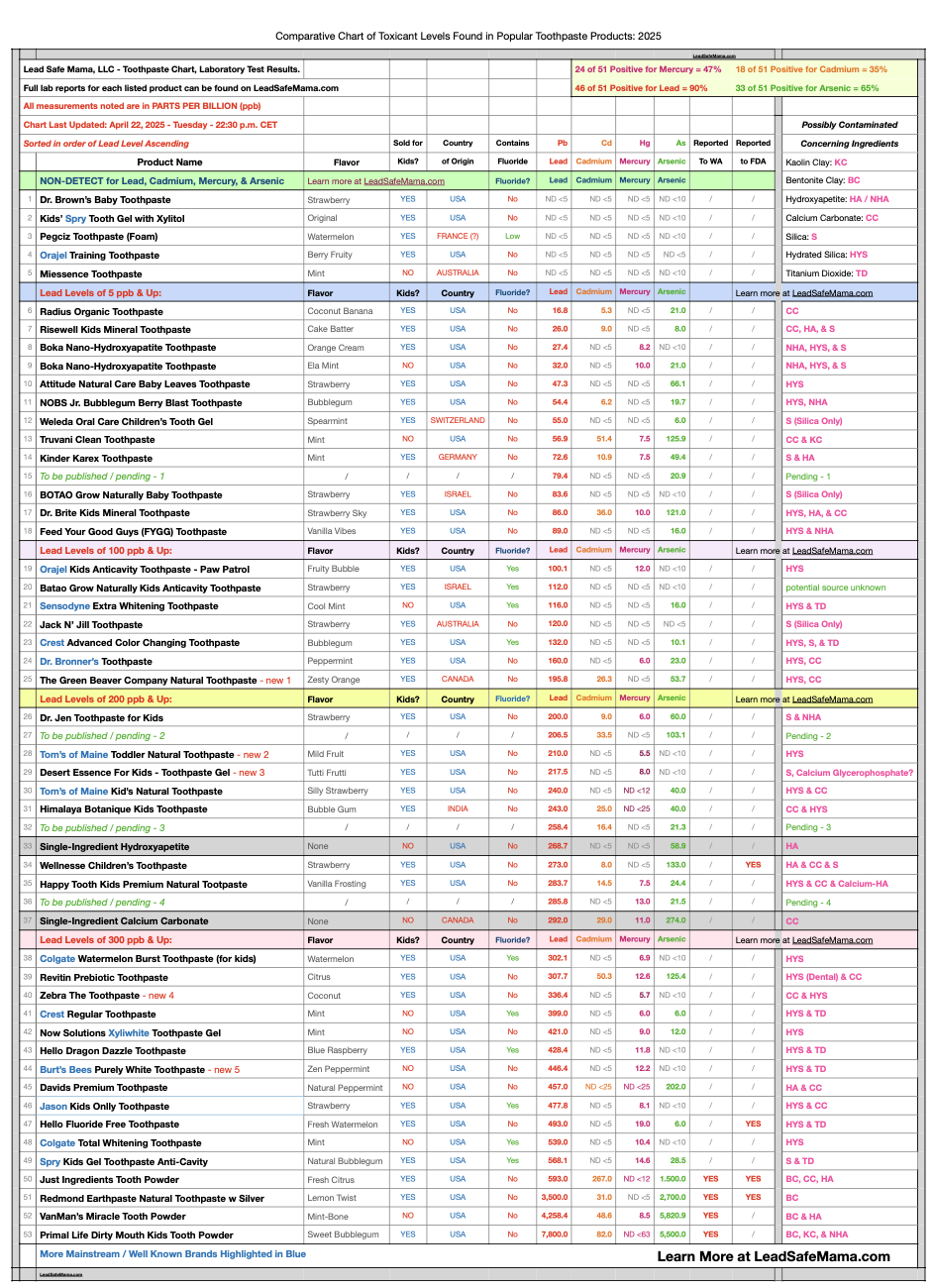
In an investigative report published by Lead Safe Mama (LSM), an organization advocating for safety in consumer goods and lead poisoning prevention, they recently released an updated list of 51 popular toothpaste brands containing common heavy metals. Spearheaded by Tamara Rubin, a filmmaker and environmental activist, their work has already resulted in six product recalls, showing their commitment to protecting public health.1
• Heavy metals are in your toothpaste — In a summary of LSM’s report, 90% of samples had lead, 65% had arsenic, 47% had mercury, and 35% had cadmium.
• The movement started many years ago — According to a report from The Guardian, Rubin’s campaign against heavy metals in toothpaste began 12 years ago. While working with children who had been exposed to heavy metals, she noticed that their families had a common toothpaste brand, which contained lead.
• Toothpaste will put your health at risk — The highest limits of the samples have been found to violate the state of Washington’s highest set limits, but not federal limits. Still, the federal government acknowledges the dangers of lead, saying that no level of exposure is safe.
• Manufacturers are not willing to change — Despite the shocking exposé by LSM, toothpaste manufacturers are turning a blind eye. In fact, many have attacked her, according to The Guardian:2
“So far, none of the companies Lead Safe Mama checked have said they will work to get lead out of their product, Rubin said. Several sent her cease-and-desist letters, which she said she ignored, but also posted on her blog.
Some companies have defended themselves, often claiming that lead is found in trace levels throughout the environment and is impossible to avoid. Others have said the levels Rubin found are not concerning.”
• The root of exposure — According to Rubin’s research, many ingredients used in mass-produced toothpaste are the source of heavy metal exposure:3
“Rubin said the contamination seems to lie in some ingredients added to toothpaste, including hydroxyapatite, calcium carbonate and bentonite clay. Hydroxyapatite is extracted from cow bone and added because it allegedly helps teeth absorb calcium, though Rubin said she doubts it does. Calcium carbonate is added to help remove stains from teeth. Bentonite clay is a cleaning agent,” The Guardian reported.
“Those with the highest levels all had bentonite clay. Meanwhile, Rubin’s testing of hydroxyapatite and calcium carbonate as individual ingredients showed concerning levels of lead and other metals, suggesting those are the source.”
• Few toothpastes are safe to use — Rubin noted that so far, LSM has only found six toothpaste that have nondetectable levels for lead, mercury, arsenic, and cadmium.
For the full list of the toothpastes LSM has tested, refer to the image below. If you find your toothpaste in this list, get rid of it right away.
The Presence of Heavy Metals in Toothpaste Is Everywhere
LSM isn’t the only one shining a light on the dangers of heavy metals in mass-produced toothpaste. In a systematic review published in Frontiers in Dental Medicine, researchers are also aware of the growing dangers of these products.4
The team analyzed 11 studies from around the world to gauge how widespread heavy metal contamination is in over-the-counter toothpastes. The sample size reviewed toothpastes from regions including Asia, Europe, and Africa.
• Heavy metals in toothpaste are common — Overall, researchers consistently found concerning levels of heavy metals, notably lead, cadmium, and chromium, across the tested products. The review highlighted that these heavy metals appeared frequently enough to pose genuine public health concerns.
• Lead was among the most troubling metals — It showed up in varying quantities, sometimes negligible, but in certain studies, levels soared as high as 6,313 parts per billion. For reference, the U.S. Food and Drug Administration (FDA) sets the limitations of lead at 20 parts per million (ppm), showing how much people are at risk when using these products.
• Cadmium appeared almost as frequently — Most of the toothpastes in the cited studies contained this metal. Research shows that even low levels of exposure from this heavy metal increases your risk for osteoporosis, as well as kidney and liver disease. It does this by causing mitochondrial dysfunction after exposure.5
• Chromium is another dangerous heavy metal — Prevalent in most of the tested toothpastes, chromium has no reason to appear in these products. In fact, one of the cited studies in the review noted that this element was not supposed to be in toothpaste at all.
• Reckless manufacturing allows heavy metals to seep in — The researchers emphasized that the primary route these heavy metals use to get into toothpaste products is through the raw ingredients, often in areas where the soil naturally contains heavy metals. Unsurprisingly, when manufacturers do not thoroughly test these raw materials for contaminants, heavy metals easily slip into your toothpaste unnoticed.
• The effects of heavy metals on your health — From a biological standpoint, the reason these metals are so harmful revolves around how they disrupt key bodily functions at a cellular level. For instance, cadmium interferes directly with your kidneys’ filtration systems. In addition, it’s been found to affect the lungs and pancreas.6
Lead, meanwhile, targets multiple vital functions throughout your body. Exposure is linked to a wide range of issues, such as appetite loss, weight loss, vomiting, constipation, anemia, kidney failure, black gum deposits and irritability.7
These findings reinforce the urgent need for better testing and monitoring for toothpaste. As noted by the researchers:8
“There is a need for specific guidelines on the limits for heavy metals in toothpastes, with a clear distinction between essential and nonessential metals.
Toothpastes should not exceed the acceptable safety limits prescribed by regulatory agencies. Stringent quality assurance processes need to be developed and put into place by manufacturers and strictly assessed and evaluated by regulators.”
While regulatory bodies debate stricter guidelines, you can immediately protect yourself by carefully choosing oral care products that transparently disclose their ingredients and testing standards. Better yet, you can make your own toothpaste at home.
Save This Article for Later – Get the PDF Now
Dental Floss Is Also Filled with Toxic Chemicals
On a similar note, dental floss — another crucial part of optimal oral health — has been found to contain “forever” chemicals that affect your overall well-being. Specifically, one study showed an association between Oral-B Glide dental floss (as well as other household items) and higher exposure to per- and polyfluoroalkyl substances (PFAS).9
•PFAS are found in fluorinated floss — Out of 18 dental floss products, six of them (including three Glide products) contain po lytetrafluoroethylene (PTFE), a forever chemical commonly known as Teflon — the same material found in nonstick cookware. Conversely, floss that do not have detectable levels of fluorine are considered non-fluorinated and thus, unlikely to contain forever chemicals.
• Forever chemicals are found in the filament — Further analysis showed that the six floss positive for forever chemicals contained “typical” values between 1,000 and 3,000 counts/µC (microcoulomb), a unit of electricity. However, the exact figures are hard to quantify because of how thin floss can get. Despite this roadblock, the researchers are convinced that flossing is one way many people are exposed to these toxins:10
“This is the first evidence that flossing with PTFE-based dental floss could contribute to an individual’s body burden of PFASs, but additional data are required to verify this finding, for example, demonstrating the potential for PFASs in floss to migrate into saliva or onto hands.”
• Personal care products are also linked to elevated PFAS levels — Many of these products, including cosmetics, fragrances, and lotions, incorporate PFAS to enhance texture, durability, or water resistance. This makes you unknowingly add to your chemical load each day.
• Consumer habits influence toxic load — The study revealed some differences between African-American and non-Hispanic white women. While both groups experienced elevated PFAS levels from product use, African-American women generally had higher concentrations, possibly due to different product preferences or socioeconomic factors influencing exposure levels.
• The consequences of exposure to your health — PFAS disrupt your health by interfering with hormone systems, which control nearly every bodily function, such as metabolism, immune function, and reproduction. Once these chemicals enter your bloodstream, they mimic natural hormones, binding to receptors and altering normal hormone balance.
Another key mechanism involves PFAS affecting your liver, the primary organ responsible for detoxifying harmful substances. These chemicals overwhelm your liver, impairing its ability to filter toxins from your blood effectively. Over time, this impairment increases your risk of liver disease11 and even certain types of cancers.
• PFAS are highly persistent — This means they don’t easily break down. Once inside your body, these chemicals linger, continuing to disrupt your health long after initial exposure, hence the “forever” in their name.
Forever chemicals accumulate steadily, building up harmful concentrations that heighten your risk of chronic illness, particularly affecting organs and systems essential for maintaining good health. According to a report from The Conversation, they have the ability to remain in your body for decades.12
Top Tips to Reduce Exposure to Heavy Metals in Oral Health Products
Now that you’re aware of the dangers lurking in many commercial toothpastes and dental floss, it’s important to take steps to reduce your exposure. Here are practical recommendations:
1. Choose toothpaste with verified ingredients — If making toothpaste at home isn’t practical for you, carefully look for companies that clearly state they test their toothpaste for heavy metals.
Look for products labeled “third-party tested” or “heavy metal-free,” and always read ingredient lists thoroughly. Transparency from brands helps you make healthier choices easily. LSM also has recommendations for toothpaste with nondetectable levels of heavy metals and fluoride. Again, I recommend reviewing the list to give you an idea which products you should avoid and buy.
2. Choose safe dental floss alternatives — On a similar note, look for floss that is verified to not contain forever chemicals and other additives, such as fluoride. For example, there are vegan vegetable waxes that are smoother and glide between your teeth easier compared to regular floss.
3. Adopt oil pulling as part of your daily routine — Oil pulling is a traditional oral hygiene practice that involves swishing organic coconut oil around your mouth for 10 to 15 minutes daily.
This practice effectively binds and removes toxins and pathogens from your mouth before they damage your oral health. Thus, oil pulling also is a great adjunct to brushing your teeth compared to commercial mouthwashes. For an in-depth guide, read “Why Is Oil Pulling Suddenly All the Rage?”
4. Work up a sweat regularly — If you’ve been using popular toothpaste brands, especially the ones mentioned by LSM, it’s highly likely you’ve been exposed to heavy metals. While switching to homemade toothpaste minimizes your exposure, it’s just one part of the equation — you should also work toward detoxifying yourself.
I recommend you start exercising regularly, as sweating has been shown to be one of the best ways to remove heavy metals from your body. Specifically, high-intensity exercise up to 75 minutes a week is effective. But don’t go any higher than that, because you start to lose the longevity benefits associated with exercise. For more information, read “Unleash the Detoxifying Power of Sweating to Eliminate Heavy Metals.”
5. Make your own toothpaste at home — Creating your own toothpaste gives you full control over every ingredient. In the next section, I’ll share my recipe.
Here’s a Healthy Homemade Toothpaste Recipe You Can Try
While there are plenty of high-quality toothpastes in the market, I recommend making your own at home. It’ll be far cheaper and healthier for your oral health. Here’s a DIY recipe that I’ve been using for years now to great effect:
| Ingredient | Function | Quantity |
|---|---|---|
| Ultra-fine eggshell powder (eight to 10 large shells) | Provides calcium for remineralization | 1/4 cup once milled |
| Coconut oil (soft but not melted) | Acts as a binder and mild antimicrobial | 2 tablespoons |
| Baking soda | Works as a gentle cleanser and pH level buffer | 1 tablespoon |
| Xylitol or erythritol (optional) | A sweetener that helps fights S. mutans | 1 teaspoon |
| Peppermint essential oil | Provides a fresh taste, and is a mild antiseptic | Eight to 10 drops |
| Castile soap or bentonite clay (optional) | Gives it a light foaming or silkier feel | 1/2 teaspoon |
Directions
1. Collect and rinse the eggshells — Scrape out the membranes from the eggshells and give them a quick water rinse.
2. Sterilize eggshells in two stages to kill salmonella — Boil in plain water for 10 minutes (skim off foam), then drain. Afterward, bake at 400 degrees Fahrenheit (205 Celsius) for 15 to 20 minutes until bone-dry.
3. Grind eggshells to talc — Grind the shells in a coffee-mill or spice grinder, then pass through a fine sieve. The powder should feel like cornstarch between your fingers. Any grit can scratch your tooth enamel.
4. Mix the paste — In a small bowl, combine baking soda, xylitol, and eggshell powder. Mash in softened coconut oil until you hit a frosting-like texture. Stir in essential oil (and soap or clay if using).
5. Jar and store — Spoon into a clean glass jar. Cap tightly. This toothpaste keeps two to three months in a cool cupboard, but stores longer in the fridge (coconut oil solidifies below 76 degrees Fahrenheit/24 degrees Celsius).
6. Brush — Use a pea-sized dab. Dip a dry brush or use a tiny spatula to avoid contaminating the jar. Apply in gentle circles for two minutes, then rinse. If you find the toothpaste to be too runny, add extra baking soda and/or eggshell powder. If it’s too stiff, add more coconut oil.
Making your own eggshell toothpaste certainly has its advantages but remember that it’s not a miracle oral solution. Remember to maintain regular checkups with your dentist, floss, and eat a healthy diet.
Frequently Asked Questions (FAQs) About Heavy Metals in Toothpaste
Q: Are heavy metals commonly found in toothpaste?
A: Yes. Tests show heavy metals like lead, cadmium, arsenic, and mercury appear frequently in popular toothpaste brands, with some containing extremely high levels that damage your health.
Q: What health problems are linked to heavy metals in toothpaste?
A: Exposure to heavy metals from toothpaste is connected to serious health issues including cognitive impairment, hormonal disruption, kidney and liver damage, anemia, osteoporosis, and even behavioral problems in children.
Q: Why do toothpaste manufacturers allow heavy metals in their products?
A: Heavy metals enter toothpaste primarily through untested or poorly sourced ingredients like calcium carbonate, hydroxyapatite, and bentonite clay. Manufacturers often neglect thorough testing and dismiss concerns by claiming these metals naturally occur in the environment.
Q: How can I reduce my exposure to heavy metals from toothpaste?
A: You can reduce your exposure immediately by making your own toothpaste at home with natural ingredients, choosing brands that clearly test and label their products as heavy metal-free, and incorporating daily detoxifying practices like oil pulling.
Q: Is it enough to just switch toothpaste?
A: Switching to safer toothpaste significantly cuts your exposure, but to detoxify accumulated metals already in your body, you should regularly engage in activities like vigorous exercise and sweating, which effectively help remove toxins from your system.
- 1 Lead Safe Mama, January 31, 2025
- 2, 3 The Guardian, April 17, 2025
- 4, 6, 7, 8 Front Dent Med. 2025 Mar 26;6:1543972
- 5 Int J Environ Res Public Health. 2020 May 26;17(11):3782
- 9, 10 Journal of Exposure Science and Environmental Epidemiology, January 8, 2019
- 11 NIH, May 10, 2022
- 12 The Conversation, October 10, 2022
DMSO Transforms the Treatment of Infectious Diseases
Reproduced from original article:
https://articles.mercola.com/sites/articles/archive/2025/01/17/dmso-infectious-diseases.aspx
Analysis by A Midwestern Doctor January 17, 2025

STORY AT-A-GLANCE
- Dimethyl sulfoxide (DMSO) is a safe, naturally occurring substance with properties that make it effective for treating various medical conditions, including pain, injuries, wounds, strokes, spine injuries, autoimmune disorders, cancer, and internal organ diseases
- DMSO has broad antimicrobial properties, protects against microbial toxins, combats antibiotic resistance, and helps deliver healing deep into the body to treat otherwise inaccessible infections
- DMSO studies have generated evidence supporting its role in treating cancer and autoimmune disorders through its unique antimicrobial properties
- DMSO is highly effective against viruses like herpes and shingles, as well as conditions like feline panleukopenia in cats
- DMSO also proves valuable in treating persistent fungal and parasitic infections
Introduction
DMSO is a remarkably safe and naturally occurring substance (provided you use it correctly1) that rapidly improves a variety of conditions medicine struggles with — particularly chronic pain. For reference, those conditions included:
| Strokes, paralysis, a wide range of neurological disorders (e.g., Down Syndrome and dementia), and many circulatory disorders (e.g., Raynaud’s, varicose veins, hemorrhoids), which I discussed here. |
| A wide range of tissue injuries such as sprains, concussions, burns, surgical incisions, and spinal cord injuries (discussed here). |
| Chronic pain (e.g., from a bad disc, bursitis, arthritis, or complex regional pain syndrome), which I discussed here. |
| A wide range of autoimmune, protein, and contractile disorders such as scleroderma, amyloidosis, and interstitial cystitis (discussed here). |
| A variety of head conditions, such as tinnitus, vision loss, dental problems, and sinusitis (discussed here). |
| A wide range of internal organ diseases such as pancreatitis, infertility, liver cirrhosis, and endometriosis (discussed here). |
| A wide range of skin conditions such as burns, varicose veins, acne, hair loss, ulcers, skin cancer, and many autoimmune dermatologic diseases (discussed here). |
In turn, since I started this series, it struck a cord and I have received over 1400 reports of remarkable responses to DMSO many readers have had (compiled here).
This begs an obvious question — if a substance capable of doing all of that exists, why does almost no one know about it? Simply put, like many other promising therapies, it fell victim to a pernicious campaign by the FDA which kept it away from America despite decades of scientific research, Congressional protest, and thousands of people pleading for the FDA to reconsider its actions. Consider for example, this 60 Minutes program about DMSO that aired on March 23, 1980:
DMSO and Infectious Diseases
DMSO has a variety of unique therapeutic properties. Some of those make it incredibly well-suited to addressing microbial infections. For example:
• While nontoxic, it has an antiseptic effect that is harmful to microorganisms, especially the smallest ones. This property appears to be the most beneficial for herpes, shingles, and complex conditions with a microbiological component.
• It can remove the antibiotic resistance of bacteria. This is particularly helpful in widespread problematic infections that have gradually developed a resistance to many existing antibiotics (e.g., tuberculosis) and challenging infections that are not responding to antibiotics (e.g., ones that would otherwise require an amputation).
• It can deliver antimicrobial agents to areas that are typically difficult to reach (e.g., deep in a bone) and also directly to regions that would otherwise require a systemic application of the medication.
• It can increase circulation to many parts of the body, something which is often critical for resolving illnesses (as a healthy blood supply allows the immune system to enter and heal diseased areas). Likewise, pretreatment with DMSO has been shown to increase the immune system’s ability to resist a subsequent infection.
• Much in the same way DMSO protects cells from a wide variety of lethal stressors,2 it can also protect them from the harmful effects of bacterial toxins and can mitigate the toxicity of antimicrobial agents taken for a prolonged period.
In short, DMSO can transform the management of infectious diseases.
Save This Article for Later – Get the PDF Now
Shingles and Herpes
Since many people struggle with Herpes (HSV-1 or HSV-2) and Shingles (Herpes Zoster), especially the pain which follows shingles (known as post-herpetic neuralgia or PHN), DMSO has been extensively studied for these uses. In turn, DMSO was found to significantly improve those conditions (and canker sores3), particularly when combined with idoxuridine (IDU), an antiviral that has poor penetration into tissues (and hence does not work alone).
• Herpes simplex
◦A 1965 study4 used 1% IDU in 90% DMSO (and 10% distilled water) in 7 patients with severe cutaneous infections and noted significant improvement in all herpes cases, with the only side effect being slight skin irritation from the solution.
◦A 1966 RCT5 (randomized controlled trial) of 21 patients with recurrent herpes found DMSO halved the durations of outbreaks, and when given with 5% idoxuridine, cut it to a third (with similar results also found in a 1967 study6).
◦A 1983 study7 found that DMSO effectively brought acyclovir (ACV) into the skin, caused a moderate reduction in herpes lesions, and dramatically reduced them when combined with acyclovir.
◦A 1990 RCT8 gave 80% DMSO mixed with 15% IDU to 301 immunocompetent female patients. The duration of pain was reduced by 2.6 days and the healing time to normal skin by 2.3 days.
◦A 2002 cell study9 found 0.65% DMSO reduced herpes viral replication by 50%.
Note: DMSO also helps herpes fever blisters, and DMSO with IDU has been reported to be effective in treating HSV whitlow (herpes on the fingers).10

• Shingles and Post Herpetic Neuralgia (PHN)
◦In 1967, a German investigator reported DMSO yielded generally good results in 10 of 11 shingles and PHN cases11 (with similar results being found in another 1967 study12).
◦Two 1970 RCTs showed that IDU in DMSO was at reducing the duration of pain and healing in shingles.13 The patients were delighted, for the pain disappeared within a median of two days.
◦In 1971, Dr. William Campbell Douglass conducted a study of 41 patients with shingles and PHN of whom 73.3% had a good response to DMSO and 13.3% had a fair response.
◦A 1974 RCT14 of 118 shingles patients and a 1992 RCT15 of 171 shingles patients found DMSO and IDU significantly shortened the vesicular phase, healing time, and duration of pain, and it significantly improved post-herpetic neuralgia.
◦A 1981 trial of 46 shingles patients also confirmed the benefit of DMSO and IDU.16
DMSO and Bacterial Infections
DMSO has five key properties that make it effective in treating bacterial infections:
1. Increased bacterial membrane permeability — DMSO enhances bacterial membrane permeability,17 making bacteria more vulnerable to antibiotics, especially those targeting internal structures (e.g., penicillin). This is crucial for treating infections like tuberculosis, which has a tough outer barrier.
2. Direct bacterial breakdown — DMSO can dissolve bacteria, causing their contents to leak out and effectively neutralizing them.
3. Disruption of bacterial function — DMSO interferes with bacterial metabolism by blocking the production of essential membrane proteins, as shown in studies with E. coli.18
4. Improved circulation — DMSO enhances blood flow,19 which helps combat chronic infections often caused by impaired circulation.
5. Protection against bacterial toxins — DMSO mitigates the harmful effects of bacterial toxins, protecting cells from stress.
DMSO also enhances the immune response,20 contrary to concerns about immune suppression, and has been shown to increase resistance to infections like typhus.21
Common Microbes
DMSO has been extensively tested against common infectious bacteria (e.g., staph, strep, E. coli, pseudomonas), both by itself and in combination with antimicrobial therapies.
After a 196422 study showed DMSO inhibited the growth of bacteria, a 1967 study tested it against various microorganisms, and found at sufficient concentrations that DMSO caused those organisms to dissolve into a sediment.23

A 1969 study24 found that 75% DMSO was bactericidal (mainly by causing their internal contents to leak out), while 15% was sufficient to stop bacterial growth.

DMSO and Head Infections
Since DMSO is effective in eliminating many common microbial infections, it has shown great promise in ENT (ears, nose, and throat) medicine, as many of those diseases result from infections with common bacteria and the inflammatory response to them (particularly since it is often challenging to get antibiotics to the site of the infection).
Much of this was demonstrated in the 1967 publication25 by an ENT doctor who observed that DMSO would often significantly calm inflammation from an infection in the head (including severe ones that were difficult to treat with antibiotics). He compiled all of his cases26 here:

• Eye infections — DMSO can treat various eye conditions, including macular degeneration and eyelid inflammation. In a 1976 study,27 it was combined with antibiotics to successfully treat eye infections. Additionally, DMSO can resolve pink eye after just a few applications.28
• Sinusitis — DMSO helps open blocked nostrils quickly by reducing swelling and promoting tissue healing.29 Studies have shown DMSO significantly alleviates sinusitis symptoms, including one 1967 study30 where most patients had excellent results. It also enhances the effectiveness of antibiotics in treating rhinoscleroma,31 a rare nasal infection.
• Dentistry — DMSO is used in dentistry as a mouthwash, relieving gum pain32 and preventing bleeding. It can alleviate toothache pain and reduce swelling after dental procedures.33 Dentists have found it effective for treating infections and saving loose teeth from periodontitis.34 Many studies35 show DMSO helps improve gum health, treat pulpitis,36 and accelerate healing after tooth extractions.37
Tuberculosis
Despite over a century of work, Tuberculosis remains the world’s most deadly microbe (e.g., in 2023, it was estimated38 to have killed 1.25 million people). This is mainly due to this tiny bacteria’s unique characteristics and high aptitude for developing antibiotic resistance.
Because of this, once the early DMSO researchers realized that DMSO could remove antibiotic resistance, their focus immediately went to tuberculosis. In turn, many lab studies39 have demonstrated DMSO’s utility for this challenging infection which has been corroborated in humans:
• A 1969 study40 of 32, 14 showed an absence of tuberculosis secretion and most showed improvement (e.g., reduced endobronchitis, perifocal infiltration and lung tissue destruction).
• A 1980 study41 used DMSO to treat children with pulmonary tuberculosis.
• A 1991 study42 found nebulized DMSO mixed with rifampin over 1 to 2 months was an effective treatment for 148 pulmonary tuberculosis and 18 obstructive bronchitis patients (e.g., it healed the destructive cavities caused by tuberculosis).
Bacterial Toxins
One of the primary reasons bacterial infections sicken and kill is because of the toxins they release. DMSO in turn, has been repeatedly shown to mitigate this. For example:
• DMSO has been shown43 to protect the duodenum from H. pylori induced chronic ulcers.
• In rats, DMSO was shown44 to create a dose dependent reduction in the fluid secretion and mucosal permeability triggered by C. difficile’s toxin (with its maximum inhibition occurring at a 1% concentration). Given how common C. difficile colitis is, this application of DMSO has great promise.
• DMSO was shown to protect cells45 from the shigella bacteria’s toxin46 (which causes severe diarrhea and bloody stools).
• Endotoxaemia occurs in response to bacterial lipopolysaccharide (LPS) entering the bloodstream. A 2008 study of 18 horses47 found DMSO reduced the fevers that followed artificially induced endotoxemia, suggesting DMSO’s utility in treating sepsis, particularly since, DMSO can protect cells48 from the damage LPS causes.
Note: One of the most important characteristics the early adopters of ultraviolet blood irradiation recognized about it was that UVBI could effectively neutralize toxins in the bloodstream (a property that saved a significant number of lives).
Challenging Infections
DMSO has shown promise for many other challenging infections:
| Sepsis — DMSO has proven effective in treating septic complications, especially in heart attack survivors. A 1982 study49 showed its success even against antibiotic-resistant bacteria. In 1984 a Russian study50 confirmed DMSO accelerated recovery in critically ill septic patients, with one case of bladder infection improving after using DMSO.
Note: One author cited51 a case of a septic patient with a severe bladder infection who did not respond to antibiotics but recovered once he began taking one teaspoon of DMSO three times a day. |
| Lung infections — DMSO has treated chronic lung infections, with a 1975 study52 showing rapid recovery in infants with severe respiratory diseases when combined with antibiotics. A 2020 study53 reported that DMSO, combined with ceftriaxone, helped 31 lung abscess patients fully recover without recurrence.
Note: DMSO has also been repeatedly shown54 to effectively treat acute respiratory distress syndrome, a challenging lung condition that frequently follows severe infections and often requires ventilation. |
| Abdominal infections — DMSO, combined with antibiotics, has effectively treated peritonitis55 and abdominal abscesses.56 It helps concentrate antibiotics in the abdomen,57 providing extended treatment duration, especially for peritonitis, a fatal condition. |
Meningitis
|
| Osteomyelitis — DMSO has shown significant results in treating bone infections.60 Studies have found that combining DMSO with antibiotics and other therapies like hyperbaric oxygen speeds up recovery and reduces bone damage in both acute and chronic osteomyelitis.61,62,63,64,65,66 |
| Orchitis and epididymitis — In 1986, a Russian physician reported these conditions have an excellent response to DMSO.67 |
| Cancer and autoimmunity — DMSO has been observed to eliminate the unusual bacteria associated with many cancers and autoimmune diseases, which may in part explain its utility for those conditions.
Note: A wealth of evidence also supports DMSO’s use in a variety of challenging veterinary infections.68 |
Surgery
Three of the major issues encountered in surgery are:
- Surgical wounds (or burns) become infected before they seal and heal.
- Infections deep within the body need to be cut open so the infection can be drained or removed (or have antibiotics directly applied to it).
- Infected tissues must be removed (e.g., amputated) because the infection within them can’t be reached or addressed.
Fortunately, DMSO’s is uniquely suited to address each of these. For example, in this article, I discussed how many studies and reader testimonials show DMSO is a remarkable therapy for burns and wound healing, and here I reviewed the wealth of evidence that DMSO is a highly effective therapy for surgical scar healing.
Likewise, DMSO makes reaching a deep infection within the body possible without surgery. Numerous studies, in turn, demonstrate that DMSO can prevent and treat those infections:
| A 1969 case report69 highlighted a patient with a chronic fungal infection (that has high resistance to antifungals) who declined amputation in favor of antifungals dissolved in DMSO which saved his foot.
Note: There are many other cases of DMSO curing a chronic infection that had required amputation.70 |
| A 1978 surgical study71 used DMSO in combination with antibiotics to treat inflammatory infiltrates. |
| A 1984 study72 used DMSO to treat surgical wound infections. |
| A 1985 study73 found that injecting DMSO after severe mechanical trauma reduces the risks of a subsequent infection, while a 1984 study74 found that DMSO plus antibiotics prevent open wounds in the hands from developing purulent infections. |
| A 1990 study75 of 33 patients with phlegmons (inflamed areas under the skin) throughout the body found that a dressing with DMSO and silver nitrate, when compared to those receiving standard treatments, reduced the time required to begin a surgical repair by 2 to 2.5 times. |
| In 1998, Russian physicians reported that they routinely apply DMSO to surgical wounds as it accelerates healing and provides general infection control.76 |
Fungal Infections
A 2013 study77 used DMSO and antifungal agents on six different Candida species. It found 0.5% to 1% DMSO had an antifungal effect, but the inhibitory effect (with or without concurrent antifungals) varied significantly.
DMSO can also effectively bring antifungals to many parts of the body. DMSO for instance was shown78 to significantly increase the amount of ketoconazole that enters the brain and can transport griseofulvin79 through the skin (which in a 1974 study80 was used to successfully treat ringworm). Additionally:
- A 1965 study81 found DMSO was an effective treatment for ringworm and athlete’s foot, especially when combined with an antifungal.
- A 1977 study82 found DMSO (in combination with lidase) was a highly effective treatment for actinomycosis of the face and neck.
- A 1997 study83 found DMSO mixed with itraconazole treated fungal infections in horse corneas.
Parasites
There is also some data on how DMSO can treat parasites (e.g., 3% DMSO has been shown to significantly inhibit the growth of Trypanosoma cruzi,84 which causes Chagas disease). However, its primary value is bringing an antiparasitic medication to the region of infection (as parasites can often burrow quite deep into the tissues).
For example, two different 1966 studies (this study85 and this 25 person RCT86) found that DMSO plus an antiparasitic (e.g., 2% topical thiabendazole in 90% DMSO) was an effective treatment for hookworm infections in the skin. DMSO can also be combined with antiparasitic medications to reach challenging parasitic infections deep within the body. For example, a 1984 case report87 discussed DMSO treating a complex amoeba infection of the liver.
Conclusion
Many who’ve worked with DMSO believe it should be routinely utilized for severe infections, particularly those not responding to antibiotic therapy. Fortunately, we are in a unique moment where these forgotten sides of medicine finally have a chance to see the light of day.
Thus, I sincerely hope articles like these can begin to shift the medical system towards adopting a more sophisticated approach to infectious diseases that can help patients struggling with challenging infections.
Author’s Note: This is an abridged version of a longer article that goes into greater detail on the points discussed here and provides guidance for personal DMSO use (e.g., dosing, therapeutic precautions and where to obtain it) along with other natural approaches we’ve also found help many of those conditions (e.g., herpes and shingles). That article can be read here.
A Note from Dr. Mercola About the Author
A Midwestern Doctor (AMD) is a board-certified physician from the Midwest and a longtime reader of Mercola.com. I appreciate AMD’s exceptional insight on a wide range of topics and am grateful to share it. I also respect AMD’s desire to remain anonymous since AMD is still on the front lines treating patients. To find more of AMD’s work, be sure to check out The Forgotten Side of Medicine on Substack.
- 1 The Forgotten Side of Medicine, October 12, 2024
- 2, 19 The Forgotten Side of Medicine, September 15, 2024
- 3 Amazon, The DMSO Handbook: A New Paradigm in Healthcare
- 4 Ohio State Med J. 1965 Jun:61:532-3
- 5 Brit. Med. J., 1966, 2, 805-807
- 6 Annals of the New York Academy of Sciences, 141: 428-436
- 7 Annals of the New York Academy of Sciences, 411: 28-33
- 8 J Infect Dis. 1990 Feb;161(2):191-7
- 9 BMC Infect Dis. 2002 May 24:2:9. doi: 10.1186/1471-2334-2-9
- 10 Scottish Medical Journal. 1977;22(4):310-313
- 11 Zeitschrift fur Haut- und Geschlechtskrankheiten, 01 Sep 1967, 42(18):749-754
- 12 Annals of the New York Academy of Sciences, 141: 506-516
- 13 Br Med J. 1970 Dec 26;4(5738):776–780
- 14 Br Med J. 1974 Jun 8;2(5918):526-7
- 15 Med Clin (Barc). 1992 Feb 22;98(7):245-9
- 16 N Z Med J. 1981 Nov 25;94(696):384-6
- 17 Journal of Biological Chemistry, Volume 278, Issue 35, 33185-33193
- 18 Aust J Biol Sci. 1977 Apr;30(1-2):141-53
- 20, 21 The Forgotten Side of Medicine, October 20, 2024
- 22 Curr Ther Res Clin Exp. 1964 Feb:6:134-5
- 23 Ann N Y Acad Sci. 1967 Mar 15;141(1):261-72
- 24 J. Pharm. Sci., 58: 836-839
- 25, 26 Annals of the New York Academy of Sciences, (1967), 141(1), 451-456
- 27 Oftalmol Zh. 1976;31(3):168-70
- 28, 37 Amazon, DMSO: Nature’s Healer
- 29, 31, 35, 39, 60, 68, 70 The Forgotten Side of Medicine, December 29, 2024
- 30 Ann N Y Acad Sci. 1967 Mar 15;141(1):572-85
- 32 Amazon, DMSO: The True Story of a Remarkable Pain-Killing Drug
- 33, 51 Amazon, The DMSO Handbook for Doctors
- 34 Mikrobiolohichnyi Zhurnal, 01 Nov 1973, 35(6):766-769
- 36 Kazan Medical Journal 1983, Volume 64, No. 6, Pages 434-435
- 38 World Health Organization, Tuberculosis, October 29, 2024
- 40 Zh Ushn Nos Gorl Bolezn. 1969 Nov-Dec;29(6):68-71
- 41 Pediatriia, 01 Jan 1980, (9):24-25
- 42 Problemy Tuberkuleza, 01 Jan 1991, (3):34-36
- 43 Intern Med. 1993 May;32(5):359-64
- 44 American Journal of Physiology, Gastrointestinal and Liver Physiology, Volume 276, Issue 2, February 1999, Pages G485-G490
- 45 J Infect Dis. 1983 Nov;148(5):844-54
- 46 Wikipedia, Shigellosis
- 47 Equine Vet J. 2008 Jun;40(4):358-63
- 48 Eur Respir J Suppl. 1990 Oct:11:482s-484s
- 49 Research Laboratory of General Reanimatology of the USSR Academy of Medical Sciences, Issue: Vol 63, No 5 (1982)
- 50 Anesteziol Reanimatol. 1984 Jul-Aug:(4):38-40
- 52 Ann N Y Acad Sci. 1975 Jan 27:243:460-7
- 53 Benghazi University Medical Journal, September 2020, 1(4), doi: 10.37376/benunivmedj.v1i4.2474
- 54 The Forgotten Side of Medicine, November 17, 2024
- 55 Khirurgiia (Mosk). 1974 Oct:(10):53-7
- 56 Vrachebnoe Delo, 01 Oct 1975, (10):96-98
- 57 Antibiotiki, 01 Feb 1981, 26(2):102-104
- 58 Kaf. Infekts. Bol., Med. Inst., Kiev, Volume 7, 1978, Pages 146-148 (Archived)
- 59 Vrach Delo. 1987 Feb:(2):113-5
- 61 Vestnik Khirurgii Imeni I. I. Grekova, 01 Jan 1976, 116(1):90-92
- 62 Vestnik Khirurgii Imeni I. I. Grekova, 01 Feb 1980, 124(2):135-138
- 63 Vestnik Khirurgii Imeni I. I. Grekova, 01 Sep 1978, 121(9):88-90
- 64 Vestnik Khirurgii Imeni I. I. Grekova, 01 Aug 1979, 123(8):133-136
- 65 Vestnik Khirurgii Imeni I. I. Grekova, 01 Jul 1981, 127(7):94-96
- 66 Vestn Khir Im I I Grek. 1986 Mar;136(3):51-3
- 67 Urol Nefrol (Mosk). 1986 Nov-Dec:(6):50-2
- 69 Arch Intern Med. 1969;124(6):748–753
- 71 Klin Khir (1962). 1978 Dec:(12):34-7
- 72 Khirurgiia (Mosk). 1984 Apr:(4):19-22
- 73 Vestnik Khirurgii Imeni I. I. Grekova, 01 Feb 1985, 134(2):63-64
- 74 Klin Khir (1962). 1984 Jan:(1):49-52
- 75 Klinicheskaia Khirurgiia, 01 Jan 1990, (1):35-36
- 76 Klin Khir (1962). 1988:(1):1-3
- 77 Diagnostic Microbiology and Infectious Disease, Volume 75, Issue 1, January 2013, Pages 60-63
- 78 Antimicrob Agents Chemother. 1986 Oct;30(4):617-8
- 79 Sabouraudia: Journal of Medical and Veterinary Mycology, 9(1), 43–49
- 80 Vestn Dermatol Venerol. 1974 May;48(5):45-9
- 81 JAMA. 1965 Sep 13:193:923-8 CONCL. doi: 10.1001/jama.1965.03090110061015
- 82 Stomatologiia (Mosk). 1977 May-Jun;56(3):25-7
- 83 J Am Vet Med Assoc. 1997 Jul 15;211(2):199-203
- 84 The Korean Journal of Parasitology 2017; 55(1): 81-84
- 85 J S C Med Assoc. 1966 Jul;62(7):265-6
- 86 Arch Dermatol. 1966;94(5):643-645
- 87 Vrachebnoe Delo, 01 Jun 1984, (6):76-77
6 Healthy Lifestyle Habits That May Help Slow Memory Decline

STORY AT-A-GLANCE
- Some people notice changes in memory as they get older, which one study suggests you can influence by making lifestyle changes in diet, exercise, smoking, alcohol consumption, cognitive activity and social contact
- Each factor was categorized, and statistical analysis of the raw data demonstrated that each of the individual behaviors was associated with a slower decline in memory
- The researchers also looked at individuals with the APOE4 genotype, linked to memory decline and Alzheimer’s disease, finding that those who made positive changes in at least two to three of the lifestyle factors had a slower memory decline than those who did not
- Linoleic acid is a dietary factor that negatively influences overall health and brain health. This ubiquitous fat is the most destructive ingredient in your diet; a 2017 study found it was linked to worsening memory and learning ability in animals with Alzheimer’s-type disease
- Several more steps you might consider making to protect brain health and slow memory decline include eating more mushrooms, gaining better balance, good oral health, walking backward and steering clear of statin medications to name just a few
Research1 published in The BMJ has found links between a healthy lifestyle and memory decline in older adults using a 10-year, population based prospective cohort study. As people get older, some notice that they have changes in memory, like forgetting where they put their keys or having trouble remembering someone’s name.
For the most part, these changes don’t significantly impact a person’s daily life. Many people believe these are normal changes that occur with aging, and yet they don’t occur in everyone. It is normal for people of all ages to forget things occasionally, but progression to mild cognitive impairment, which is an early stage of loss of memory and other cognitive abilities, is not a normal part of aging.2
The prevalence of memory decline may be increasing. In a 1993 Spanish study3 of people aged 40 years and over, researchers found the prevalence of memory impairment was 3.6%, and in individuals 65 years and older it was 7.1%. According to the CDC, a more current measurement found that 1 in 10 U.S. adults aged 45 years and older reported having memory loss.4
While they are similar in nature, memory decline and dementia are two distinct conditions that affect how the brain functions. However, worsening memory loss is sometimes an early sign of Alzheimer’s disease,5 which affects an estimated 6 million Americans, 73% of which are 75 years and older. But there is hope, since data from the featured study indicates that making simple lifestyle choices can have a significant impact on your long-term brain health.
These Six Simple Steps Are Linked to Slower Memory Loss
A group of researchers from China were seeking to identify the types of lifestyle choices that might protect against memory loss as an individual ages.6 The researchers gathered participants aged 60 years or older from the northern, southern and western parts of China. In total, 29,072 people participated in the study. The researchers followed up with participants over a 10-year period, from 2009 to 2019.
Anyone who had a life-threatening disease, or hearing or vision loss, which are factors associated with cognitive decline, was excluded from the study. During the second phase, the people who were in Phase 1 who had available APOE genotyping, and who were not diagnosed with mild cognitive impairment or dementia, were included.
The researchers followed up with the participants four times over 10 years to look for links between memory in participants with normal cognitive function and lifestyle choices. Researchers used neuropsychological testing to identify cognitive performance at baseline, and at each follow-up during the 10-year period. Data for anyone who progressed to mild cognitive impairment or dementia was excluded in the main analysis.
The researchers analyzed six modifiable lifestyle factors, which included physical exercise, diet, alcohol, smoking, cognitive activity and social contact. In each category, individuals were ranked according to how much they participated in a particular factor. For example, people were categorized as currently smoking, never smoked or used to smoke.
After data collection, the researchers evaluated the association of each of these lifestyle factors against memory function. They found three distinct groups. Those who followed four to six of the lifestyle choices were in a favorable group, those who followed two to three were in an average group, and those who followed 0 to 1 were in the unfavorable group.
Statistical analysis of the raw data demonstrated that each of the individual behaviors was associated with a slower memory decline. After adjusting for health and socioeconomic factors, the individuals who had a healthy diet had the strongest protection against memory decline.7 This was followed by those who engaged in cognitive activity and then physical exercise.
The researchers began with the statement that “memory continuously declines as people age,” but the rate of that decline may be affected by lifestyle factors. Age-related memory decline is not always associated with Alzheimer’s disease or other types of dementia. Additionally, forgetfulness in old age may “be reversed or become stable rather than progress to a pathological state.”8
Results Were Also True for APOE4 Carriers
Factors that have been identified in past research that could affect memory include aging, chronic diseases, lifestyle patterns and the apolipoprotein (APOE) ε4 genotype.9 The researchers considered the APOE genotype because of its association with Alzheimer’s disease. APOE4 is a specific allele of the apolipoprotein E gene.
The APOE gene is involved in the production of a protein called apolipoprotein E, which plays a role in cholesterol metabolism and lipid transportation. The APOE gene has several alleles — or slight variations in the genetic sequencing — including APOE2, APOE3 and APOE4.
It is APOE4 that’s associated with an earlier and more rapid decline in memory and an increased risk of Alzheimer’s disease.10 People who inherit one copy of the APOE4 allele have an increased risk of developing Alzheimer’s disease and those who inherit two copies have an even higher risk.
However, the data from this study showed that while APOE4 genotype could increase your risk for developing dementia, those who carried APOE4 and had favorable or average lifestyles showed a slower memory decline as compared to those who had unfavorable lifestyles.11 In other words, while the gene can increase your risk, you have some control over whether that risk is expressed by how you take care of yourself.
Save This Article for Later – Get the PDF Now
Diet, Linoleic Acid and Memory Decline
I have long believed and talked about the difference that you can make in your health by making simple lifestyle choices in each of these same areas: nutrition, physical exercise, mental exercise, smoking, excessive alcohol and socialization. I would also suggest that there are other simple steps you can take to protect your memory and cognition, which I’ll discuss below.
But before moving further, I think we need to address one of the most destructive ingredients in your diet — linoleic acid. I take a more in-depth look at how linoleic acid destroys your health in “Linoleic Acid — The Most Destructive Ingredient in Your Diet.” But, if you don’t have time, let’s summarize the key points.
Fats are the primary building block of your cell membranes, which is why it’s important to eat the right type of fat for your health and longevity. Vegetable and seed oils are loaded with polyunsaturated fats (PUFAs), which are chemically unstable, making them highly susceptible to damage by oxygen species that are generated during energy production in the cells.
This damage causes them to form advanced lipoxidation end (ALE) products and free radicals that damage cell membranes, proteins, mitochondria and your DNA. Even worse, PUFAs are integrated into your cell membranes, where they can remain for five to seven years.
In the article linked above I explain why seed oils are far worse than sugar and how consuming LA can have a significant impact on your overall health, including increasing your risk of memory impairment and Alzheimer’s disease.
A 2017 study12 published in Scientific Reports from Temple University concluded that replacing olive oil with canola oil (a seed oil) was not justified. However, in the press release,13 the researchers admitted that canola oil was linked to worsening memory and learning ability in animals with Alzheimer’s disease.
Other Strategies That Can Protect Your Memory and Cognitive Health
As the featured study demonstrated, protecting your cognitive health and memory is as much a function of what you should do as it is what you shouldn’t do. Let’s look at some other steps you can take to help protect your memory and cognitive health.
| Mushrooms — As I discuss in “How Mushrooms Help Protect Your Brain,” these fungi contain ergothioneine and glutathione, also known as the “master antioxidant.” Both help protect against age-related diseases like heart disease, cancer and dementia. In countries with the highest levels of ergothioneine in the diet, individuals have the lowest risk of neurodegenerative diseases.
Data show that eating more than two portions of mushrooms in a week can reduce the risk of mild cognitive impairment by a significant percentage. Be sure to choose organic mushrooms or grow your own because fungi easily absorb air and soil contaminants. |
| 10-second balance test — This quick 10-second test is independently linked to all-cause mortality. Data also shows that if you cannot stand on one leg for 20 seconds you may have an increased risk of reduced cognitive function.
If you don’t have an underlying health condition that causes vertigo or loss of balance, you can improve your balance and stability, reducing your risk of falling and taking a step toward taking care of your brain health. I share six ways to improve your balance and stability in “Can You Pass the 10-Second Balance Test?“ |
| Address periodontal disease — Data show that periodontal disease may contribute to the development of Alzheimer’s. The risk of mild cognitive impairment and Alzheimer’s disease in those with periodontal disease is significantly higher than in those without periodontal disease. This underscores the importance of maintaining good oral health throughout your life. |
| Walking backward — A small study by researchers from London University has suggested that walking backward could boost your memory. Each time participants in the study walked backward consistently, they got more test answers correct, which suggested to researchers that there’s a link between time and space that is fundamental to the way our brain forms memory.
Walking backward is believed to have originated in ancient China. Today, it’s also used to build muscle, improve sports performance and promote balance. |
| Flavonol and choline — Nutrient deficiencies can impact memory function. A large-scale study of flavanol and epicatechin supplementation demonstrated that people with a baseline flavanol deficiency experienced improvements in memory. Choline is another essential nutrient that plays a role in memory, energy and metabolism.
Choline is necessary to make acetylcholine, which is a neurotransmitter involved in memory performance. Researchers have established a relationship between high dietary choline and better cognitive performance and low choline intake has been associated with an increase in anxiety. |
| Magnesium threonate — Researchers have found that some people’s brains shrink with age more than others, but now it’s believed that increasing synapses and their density could help prevent cognitive decline.
Scientists developed magnesium L-threonate in 2010, which is a patented compound with the ability to enhance working memory, short and long-term memory and learning. In 2016 they found that not only did it enhance performance, but it could reverse brain aging by more than nine years. |
| Avoid statins — Statins are promoted by Big Pharma to help protect against cardiovascular disease, yet they do not. People with early mild cognitive impairment and low to moderate cholesterol levels may more than double their risk of dementia when they use statin medications. The medication also contributes to a decline in metabolism in the brain’s posterior cingulate cortex, which is the region that declines significantly in early Alzheimer’s disease. |
| Shed excess body fat — Mounting evidence suggests that maintaining a healthy level of body fat and an increased level of muscle mass can affect your brain health and slow the rate of cognitive aging.
People with higher amounts of abdominal fat had lower levels of fluid intelligence with age while those with greater muscle mass were more protected against this decline. To fully understand your metabolism, and therefore the changes you can make to achieve a healthy weight see, “Crucial Facts About Your Metabolism.” |
- 1, 6 The BMJ, 2023; 380
- 2 Alzheimer’s Association, Mild Cognitive Impairment, line 1
- 3 Journal of Neurology, Neurosurgery and Psychiatry, 1993; 56(9)
- 4 Centers for Disease Control and Prevention, When to Talk to Your Doctor About Memory Loss, A growing problem – bullet 1
- 5 Alzheimer’s Association, Alzheimer’s Disease Facts and Figures
- 7 MDedge, Six Healthy Lifestyle Habits Linked to Slowed Memory Decline
- 8 The BMJ, 2023; 380 Introduction para 1
- 9 The BMJ, 2023; 380 Introduction para 2
- 10 The BMJ, 2023; 380 Comparison with other studies, para 3, 75% DTP – search “The APOE ε4 allele is reportedly correlated”
- 11 MDedge, Six Healthy Lifestyle Habits Linked to Slowed Memory Decline, Page 2, section 1, under the table
- 12 Scientific Reports, 2017;7
- 13 Temple University, December 7, 2017
Who Knew Humans Have a Third Set of Teeth?
Reproduced from original article:
https://articles.mercola.com/sites/articles/archive/2024/03/16/third-set-of-teeth.aspx
The original Mercola article may not remain on the original site, but I will endeavor to keep it on this site as long as I deem it to be appropriate.
Analysis by Dr. Joseph Mercola March 16, 2024

STORY AT-A-GLANCE
- Dental experts are exploring a medication to regenerate teeth, initially targeting anodontia, which could revolutionize dental care
- Wisdom teeth, often called “third molars,” aren’t a separate set, but the final teeth to emerge in adulthood, evolving from ancestral needs
- Gingivitis, if left untreated, can progress to periodontitis, highlighting the importance of proactive oral hygiene to prevent tooth loss
- Gum disease not only affects oral health, but it also correlates with brain health, indicating a broader impact on overall wellness
- Simple practices like oil pulling with coconut oil and maintaining a diet rich in whole foods complement oral hygiene routines, promoting healthier teeth and gums
Most people are born with 20 baby teeth and 32 permanent teeth. But around 1% of people have a condition called hyperdontia, which means they have extra teeth, known as supernumerary teeth.1
These extra teeth can be either baby or permanent, and there might be one or several of them. However, according to Katsu Takahashi, who heads the dentistry and oral surgery department at the Medical Research Institute Kitano Hospital in Osaka, Japan, about 1 in 3 cases of hyperdontia lead to the growth of a third set of teeth.
What’s interesting is that Takahashi and his colleagues believe that all humans might have once had the ability to grow a third set of teeth, but over time, this ability was lost.2 There’s even evidence suggesting that the “buds” for a third set of teeth may still exist.
Pioneering a Tooth Regenerative Drug
Sharks and certain reptiles have a unique ability: Their teeth continuously regenerate throughout their lives, sometimes as frequently as every two weeks.3 Could humans also tap into this regenerative power to grow new teeth once they’re lost? Takahashi and his team firmly believe so, and they’re actively developing a medication to try to make this a reality.
Their groundbreaking work, published in 2021, unveiled a protein produced by the uterine sensitization-associated gene-1 (USAG-1 gene)4 that hampers tooth growth in mice. By using a neutralizing antibody medicine to block USAG-1,5 the mice successfully grew new teeth.6 Now, the team is focused on translating these findings into a medication for humans, aimed at addressing anodontia — the complete absence of teeth — in children aged 2 to 6.
The clinical trials are slated to commence in July 2024, with the potential for the product to reach dentists’ offices by 2030.7 Takahashi told The Mainichi:8
“The idea of growing new teeth is every dentist’s dream. I’ve been working on this since I was a graduate student. I was confident I’d be able to make it happen … In any case, we’re hoping to see a time when tooth-regrowth medicine is a third choice alongside dentures and implants.”
Does a Third Set of Teeth Naturally Exist in Humans?
In a 2023 review published in Regenerative Therapy, Takahashi and colleagues detailed the progress made in tooth regeneration. They wrote, “Anti-USAG-1 antibody treatment in mice is effective in tooth regeneration and can be a breakthrough in treating tooth anomalies in humans.”9 They continued:
“With approximately 0.1% of the population suffering from congenital tooth agenesis and 10% of children worldwide suffering from partial tooth loss, early diagnosis will improve outcomes and the quality of life of patients. Understanding the role of pathogenic USAG-1 variants, their interacting gene partners, and their protein functions will help develop critical biomarkers.
Advances in next-generation sequencing, mass spectrometry, and imaging technologies will assist in developing companion and predictive biomarkers to help identify patients who will benefit from tooth regeneration.”
In humans, the potential for tooth regeneration hinges on what experts like Takahashi refer to as a “third dentition,” an additional set of teeth believed to naturally occur in humans.
“In addition to the permanent dentition in humans, a ‘third dentition’ with one or more teeth can occur. In some cases, this third dentition is thought to develop as a partial dentition following permanent dentition,” they explain. “In humans, a rudimentary epithelial form of the third dentition has been identified … Detection of the third dentition during early childhood facilitates the visualization and characterization of hyperdontia in the mouth of infant and some fetuses.”10
Apart from studies on mice, researchers also experimented on ferrets and found that using antibodies targeting USAG-1 resulted in tooth regeneration, akin to the concept of a third dentition. “This result is encouraging given that ferrets share dental patterns similar to those of humans,” they noted in Regenerative Therapy.11
While further testing for safety and effectiveness is crucial, the team remains optimistic about the potential of this treatment to stimulate tooth growth in humans.12
“Compared to dental implants and dentures, antibody-based treatment is more cost-effective and uses a naturally existing third dentition in humans at certain ages. Anti-USAG-1 antibody treatment in mice is effective for tooth regeneration and can be a breakthrough in treating tooth anomalies in humans.”
Save This Article for Later – Get the PDF Now
Understanding Wisdom Teeth: Decoding the Role of ‘Third Molars’
Wisdom teeth, often known as “third molars,” are not a separate set of teeth; rather, they are the final set of teeth to emerge in adulthood.13 It’s believed that these molars, which typically appear between the ages of 18 to 24, might have served a purpose for our ancestors, who had larger jaws and more teeth.14
However, as human jaws have evolved to be smaller, wisdom teeth sometimes fail to erupt fully through the gums. When they do, they can pose issues if there isn’t adequate space. Oral health specialists commonly advise removing wisdom teeth if they’re growing in at odd angles, causing discomfort, experiencing tooth decay or impacting adjacent teeth, leading to inflammation.
Despite these recommendations, many parents choose to have their teenagers’ wisdom teeth extracted preventatively, even in the absence of apparent issues. Statistics suggest that around 5 million individuals undergo wisdom teeth removal annually, with many of these procedures potentially being unnecessary.15 A 2005 Cochrane Review also indicated that a significant number of wisdom teeth extractions could be avoided.16
The review highlighted the importance of judicious decision-making based on specific indicators for extraction, which could potentially reduce the need for surgical procedures by 60% or more. Furthermore, the authors suggested that closely monitoring asymptomatic wisdom teeth might be a reasonable approach. A subsequent 2020 Cochrane Review reiterated the ongoing debate surrounding the removal of asymptomatic and disease-free wisdom teeth:17
“Impacted wisdom teeth can cause swelling and ulceration of the gums around the wisdom teeth, damage to the roots of second molars, decay in second molars, gum and bone disease around second molars and development of cysts or tumors.
It is generally agreed that removing wisdom teeth is appropriate if signs or symptoms of disease related to the wisdom teeth are present, but there is less agreement about how asymptomatic disease-free impacted wisdom teeth should be managed.”
The Link Between Oral Health and Your Body’s Health
The medication researchers are testing will initially be designed to promote tooth regrowth in those with anodontia, but its success could pave the way for broader applications, including addressing tooth loss. However, it’s crucial to recognize that declining oral health not only affects your teeth but also impacts your overall well-being.
Without preventive oral hygiene, you can develop gingivitis, an inflammatory condition triggered by the buildup of plaque or bacteria on teeth. One of the symptoms of gingivitis is red, bleeding gums. Left untreated, gingivitis can progress to periodontitis, a severe infection that may lead to tooth loss.
Furthermore, dental health significantly influences brain health, as evidenced by studies linking gum disease to hippocampal atrophy, the shrinking of a brain region associated with Alzheimer’s disease. In one study18 involving 172 individuals aged 55 and older,19 both gum disease and tooth count were associated with changes in brain structure. Participants with mild gum disease and fewer teeth exhibited accelerated shrinkage in the left hippocampus.
In this cohort, the researchers found that people with one less tooth experienced more brain shrinkage at a rate that was equivalent to nearly one year of brain aging.
A systematic review and meta-analysis of 13 studies revealed a marked increase in the risk of Alzheimer’s disease and mild cognitive impairment among individuals with periodontal disease compared to those without.20 This risk was particularly pronounced in individuals with severe periodontal disease. Moreover, beyond cognitive decline, periodontitis has been linked to various systemic diseases, including:21
| Diabetes | Heart disease | Respiratory disease |
| Adverse pregnancy outcomes | Cancer | Nervous system diseases |
Recognizing Warning Signs of Oral Health Issues
Nearly half of adults aged 30 or older — about 46% — exhibit signs of gum disease, while approximately 9% have severe gum disease.22 However, the tricky part is that many individuals are unaware of their condition because gum disease often remains “silent,” showing no signs or symptoms until it reaches more advanced stages.23
In the early phase of gingivitis, you might notice that your gums bleed during brushing, flossing or when eating hard foods. Additionally, your gums may appear red or swollen. As the disease progresses, your gums might recede, making your teeth look longer. You may also experience loose teeth, mouth sores, bad breath and pus between your gums and teeth.24
Unlike anodontia, a rare genetic disorder resulting in tooth loss, the loss of teeth later in life can often be prevented by taking proactive oral health measures. Consistent oral hygiene practices, such as regular brushing, flossing and tongue scraping, coupled with routine cleanings by a mercury-free biological dentist, play a crucial role in maintaining healthy teeth and gums.
Adopting a lifestyle that prioritizes a diet rich in fresh, whole foods is also vital for promoting a naturally clean mouth and good oral health. Another beneficial practice is oil pulling, which involves swishing a small amount of oil, like coconut oil, around your mouth for approximately 20 minutes before spitting it out into the garbage.
Oil pulling, when combined with regular brushing and flossing, can help reduce gingivitis and plaque, as well as bacterial colony counts in saliva.25 Only a small amount of oil is needed to achieve good results — 1 tablespoon for adults and 1 teaspoon for a child.
Coconut oil, known for its antibacterial and antiviral properties, is particularly suitable for oil pulling. Research has shown that coconut oil pulling is as effective as chemical mouthwash (chlorhexidine) in reducing plaque, gingival index score, bleeding-on-probing and gingivitis,26 highlighting its potential benefits for oral health.
While the concept of growing a third set of teeth holds promise, the potential side effects of using medication to achieve this result are uncertain. For now, staying vigilant about your oral health can help ensure that your teeth remain firmly in place — where they belong — at any stage of life.
- 1, 2, 8 The Mainichi June 12, 2023 (Archived)
- 3 Florida Museum February 17, 2020
- 4 Nature, 2021;11(13674)
- 5, 7 Euro News August 5, 2023
- 6 Popular Mechanics September 4, 2023 (Archived)
- 9, 10, 11, 12 Regenerative Therapy March 2023; 22:160
- 13 Cleveland Clinic, Wisdom Teeth
- 14 National Library of Medicine, Wisdom teeth: Overview May 7, 2020
- 15 Vox February 4, 2015
- 16 Cochrane Database Systematic Review April 18, 2005; (2): CD003879
- 17 Cochrane Review May 4, 2020
- 18 Neurology January 24, 2006; 66 (2)
- 19 Science Daily July 5, 2023
- 20 Psychogeriatrics. 2021;21(5)
- 21 Frontiers in Aging and Neuroscience, 2022; 14
- 22 U.S. CDC, Gum Disease, Overview, last bullet
- 23, 24 American Academy of Periodontology, Gum Disease Information
- 25, 26 Heliyon 2020;6(8)
Is It Wise to Get Your Wisdom Teeth Pulled?
Reproduced from original article:
https://articles.mercola.com/sites/articles/archive/2023/08/18/wisdom-teeth-extraction.aspx
The original Mercola article may not remain on the original site, but I will endeavor to keep it on this site as long as I deem it to be appropriate.
Analysis by Dr. Joseph Mercola Fact Checked August 18, 2023
STORY AT-A-GLANCE
- Estimates suggest 5 million people have their wisdom teeth removed each year, and more than half may be completely unnecessary. According to a 2005 Cochrane Review, “Prudent decision-making, with adherence to specified indicators for removal, may reduce the number of surgical procedures by 60% or more”
- There are no scientifically proven health benefits to removing wisdom teeth that don’t cause problems
- Many oral health experts recommend extracting wisdom teeth only if they’re growing in at an odd angle, causing pain, are affected by tooth decay, or if they’re impacting other teeth or causing inflammation
- Extracting wisdom teeth is not a risk-free procedure, even if you’re young. Risks associated with the surgery include poor wound healing, infection, dry socket, pain, uncontrolled bleeding and nerve injury resulting in numbness around the mouth and face
- Opioid addiction is another hidden risk, as most oral surgeons prescribe opioids for post-surgical pain. Research shows a combination of ibuprofen and acetaminophen works better than opioids for pain following wisdom tooth extraction, so avoid opioids at all costs
- Root canals is another risky procedure that is largely driven by profit motives. Root canal-treated teeth often end up harboring harmful microbes, the toxic waste products of which can have systemic health impacts and contribute to a variety of chronic diseases, from chronic fatigue and chronic pain syndromes to heart disease and cancer
The preemptive extraction of wisdom teeth before they become problematic has been a routine practice for decades. Surgical tooth removal began after the introduction of the local anesthetic Novocaine in 1902.
Before that, these third molars were rarely, if ever, removed as a preventive measure due to the pain involved.1 The removal of wisdom teeth started becoming more common after the 1950s with the advent of antibiotics to treat related infections.2
Oral health experts typically recommend extracting wisdom teeth if they’re growing in at an odd angle, causing pain, are affected by tooth decay, or if they’re impacting other teeth or causing inflammation.
Many parents, however, opt to have their teenagers’ wisdom teeth removed even when there’s no sign of trouble. Estimates suggest 5 million people have their wisdom teeth removed each year, and more than half may be completely unnecessary.3
According to a 2005 Cochrane Review,4 “Prudent decision-making, with adherence to specified indicators for removal, may reduce the number of surgical procedures by 60% or more.” The authors also note that “watchful monitoring of asymptomatic wisdom teeth may be an appropriate strategy.”
Controversy Continues: To Pull or Not to Pull?
That said, the controversy over what to do with asymptomatic wisdom teeth continues. The most recent Cochrane Review5 published in 2020 concluded that “The available evidence is insufficient to tell us whether or not asymptomatic disease-free impacted wisdom teeth should be removed.” As reported by The Washington Post:6
“Those who favor early extraction say it is generally easier, safer and results in quicker recovery when patients are young, between 15 and 25, although, as with all surgery … there can be risks. When patients are young, the roots of the teeth are small and simpler to remove, they say …
Opponents — including the American Public Health Association — regard such prophylactic extractions as unnecessary surgery. At least one paper7 says there are no scientifically proven health benefits to removing wisdom teeth that don’t cause problems.
A National Institutes of Health consensus conference urged against the practice as far back as 1980,8 and several recent studies9,10 suggest there is no compelling reason to do so …
The ADA agreed in a 2014 paper11 that asymptomatic wisdom teeth weren’t necessarily disease- or problem-free, but added there was insufficient evidence to conclude that prophylactic removal was better than continued monitoring.”
Wisdom Tooth Extraction Is a Money-Maker
Absent clear evidence of benefit, why are so many oral surgeons recommending this procedure? In a word: Money. A significant portion of oral surgeons’ paychecks come from the removal of wisdom teeth, so they have a financial incentive to maintain this new status quo.
It’s important to realize that this procedure is not risk-free, even if you’re young. Risks associated with the surgery include poor wound healing, infection, dry socket, pain, uncontrolled bleeding and nerve injury resulting in numbness around the mouth and face.
The prudent approach, I think, would be to have the state of your wisdom teeth evaluated on a regular basis, and if one or more is found to be damaged or causing a problem, to have the problematic wisdom teeth removed. If they’re not causing a problem, you may be better off leaving well enough alone.
Download this Article Before it Disappears
Avoid Post-Surgical Opioids
If your teen does need to have one or more wisdom teeth pulled, please do not allow them to take opioids for pain relief. Opioid overdoses are now the leading cause of death for Americans under the age of 50,12 and wisdom tooth extraction is one of the most common reasons for receiving an opioid prescription in the first place.
Dentists wrote a staggering 18.1 million prescriptions for opioids in 2017,13 and dentists and oral surgeons are by far the major prescribers of opioids to children and teens.14
According to a JAMA report15 published August 2018, opioids are “routinely” prescribed for wisdom tooth extractions, and a 2004 survey found 85% of oral surgeons prescribed opioids after the removal of wisdom teeth.16
This is extremely risky, as even short-term use is associated with future opioid misuse and addiction among teens and young adults. In fact, children who receive an opioid have a 1 in 3 chance of “lifetime illicit use.”
Research17 has shown that of the people who received a mere 12-day supply of an opioid, 1 in 4 were still taking the drug one year later, and that includes all age groups. Children and teens are at higher risk for continued use once they’re exposed.18
Research has shown a combination of ibuprofen and acetaminophen actually works better than opioids for the treatment of pain following wisdom tooth extractions.
In a 2018 article19 in The Philadelphia Inquirer, Dr. Rima Himelstein, an adolescent medicine specialist, urged parents whose children are undergoing oral surgery to:
“Be the gatekeeper for medications, including those prescribed after wisdom teeth extraction. Don’t just hand your teen the bottle of pills after surgery. And be sure to properly dispose of leftover prescription drugs …”
Wisdom tooth extraction can indeed leave you sore and in pain for a few days, but there are far safer ways to address that discomfort. Research20,21 has shown a combination of ibuprofen and acetaminophen actually works better than opioids for the treatment of pain following wisdom tooth extractions. So, skip the opioid prescription, and just use over-the-counter pain killers as needed instead.
Root Canals — Another Overused and Risky Dental Procedure
Root canals, also known as a pulpotomy, is another risky dental procedure that is largely driven by profit motives. Root canal-treated teeth often end up harboring harmful microbes, the toxic metabolic waste products of which can have systemic health impacts and contribute to a variety of chronic diseases, from chronic fatigue and chronic pain syndromes to heart disease and cancer.
In fact, most biological and holistic dentists agree that many chronic health problems can be traced back to these hidden dental infections. The key problem when you have a root canal performed is that the tooth has died but remains in the body. It’s well-known you cannot leave a dead organ in your body, or it will cause severe infection.
Even if the root of the tooth is thoroughly cleaned out, it’s physically impossible to get all the pathogens out of the microtubules, and the waste material from these bacteria is extremely toxic. As with wisdom tooth extraction, a primary driver of the root canal industry is the cash incentive.
All Root Canaled Teeth Are a Source of Infection
According to experts on this topic, all root canals are a source of infection. It’s only a matter of degree. The reason why not everyone with a root canal suffers in noticeable ways has to do with the fact that the response to toxins varies from person to person.
Some are constitutionally “hardier” than others to begin with. Your overall toxic load from other environmental exposures also comes into play. The bacteria produced are known to affect cardiovascular health. Cancer may also be triggered by infected teeth.
According to Dr. Dawn Ewing, a naturopathic practitioner and executive director of the International Academy of Biological Dentistry and Medicine, 98% of the breast cancer patients have a root canaled tooth on the same side as their affected breast.22
Similarly, Dr. Jerry Tennant once claimed 96% of the last 60 cancer patients seen in his practice were found to have an infected tooth. Ewing and Tennant were both featured in the Netflix documentary “Root Cause,” in which these statements were made.
The pulp of your tooth is also closely interconnected with your lymph system and autonomic system — more so than any other organ. Your teeth are also energetically connected to and will affect your meridians, used in Traditional Chinese Medicine.
Carefully Consider and Weigh Your Options
Now, should you happen to have one or more root canaled teeth, this does not mean you have to rush to extract them. It does mean, however, that it would be wise to remember this fact should you start to experience a chronic health problem, and to take it into consideration when deciding on a treatment plan for a chronic health issue.
Also, if your dentist is recommending you get a root canal, evaluate the data and your personal situation, such as your health risks, before making your decision. I would also suggest trying ozone therapy before getting a root canal or tooth extraction done.
Ozone therapy is typically administered through a syringe, right into or around the base of the tooth. Multiple visits are usually needed to address the infection.
Ozone is directly toxic to infectious material, and it also stimulates your immune system. I was able to prevent a root canal by using ozone therapy. It took about five treatments. It’s safe, nontoxic, and relatively inexpensive, so it may be worth considering before taking more drastic measures.
That said, if the pulp tissue has completely died due to infection, nothing, including ozone, will bring the tooth back to life, at which point a root canal or extraction are your only options.
Removing a Root-Canaled Tooth Must Be Done Properly
If you decide to have a root-canaled tooth removed, you need to make sure your dentist understands the implications and is familiar with holistic dental procedures. The following resources can help you locate a biological (holistic) dentist in your area:
- Consumers for Dental Choice
- The International Academy of Biological Dentistry and Medicine (IABDM)
- The International Academy of Oral Medicine & Toxicology (IAOMT)
Extracting the tooth is just the first step. Next, the area must be drained and cleaned of bacteria. Ozone gas is by many holistic dentists considered indispensable during this step, as the gas is able to permeate the bone and gum tissue, killing the infection.
The periodontal ligament also needs to be removed in order to allow for the jawbone to properly regrow and completely seal the hole where the tooth was.
If the extraction site is not meticulously cleaned and disinfected (and this goes for any tooth extraction, not just root canaled teeth), a cavitation — a pocket in the jawbone filled with bacteria — may form. Failure to remove the periodontal ligament also contributes to cavitations by preventing the bone from properly regrowing.
After the root canaled tooth has been extracted, you’ll want to allow your jawbone to heal completely. In most cases, this will take at least three months. Once your dentist has confirmed that there’s no cavitation, you can proceed with dental replacement.
Dental Replacement Options
There are several options for how to replace the missing tooth at this point, including the following:
| Not replacing the tooth. |
| Inserting a removable bridge. |
| Inserting a traditional bridge, which requires creating crowns for the teeth on each side of the missing tooth. A significant drawback to this is that you’re sacrificing two (in many cases) healthy teeth, and increasing the risk of those teeth needing a root canal later on. What’s more, the average bridge lasts only eight years, with a range of five to 15 years. |
| Using a resin-bonded bridge, also known as a Maryland bridge, which holds the pontic (false tooth) in place by bonding a frame to the backside of the adjoining teeth.
This is the preferred option by many holistic dentists as it does not involve damaging the adjacent teeth. A drawback is that the bridge is only as strong as the adhesive, so it may detach and need to be rebonded from time to time. It’s also not suitable for missing molars due to the forces placed on the bridge during chewing. |
| Putting in an implant-supported bridge, which can be a good option in cases where two or more adjacent teeth are missing. |
| A ceramic implant — Traditional implants have used titanium, but today there are also zirconia (a type of ceramic) implants. Titanium can in some cases trigger autoimmune problems. There is a blood test23 to help determine this sensitivity.
Being a metal, titanium can also contribute to galvanic currents in your mouth, and will distort the energy flow in the meridian flowing through that tooth. While most people do not notice galvanic currents, others experience unexplained nerve shocks, ulcerations, a salty or metallic taste or a burning sensation in their mouth. Galvanic currents may also contribute to insomnia, brain fog, ear-ringing, epilepsy and dizziness. What’s more, if you drink fluoridated water or use fluoridated toothpaste, it is important to know that fluoride severely accelerates the corrosion of titanium. Low pH in your mouth due to acidity or dry mouth further accelerates this effect.24 Your best option for an implant is to use a zirconia implant. Zirconia is considered far more biocompatible and is typically recommended by holistic dentists. |
- 1 Paradigm Dental
- 2 Fortschr Kiefer Gesichtschir 1995; 40: 113-116
- 3 Vox February 4, 2015
- 4 Cochrane Database Systematic Review April 18, 2005; (2): CD003879
- 5 Cochrane Review May 4, 2020
- 6 Washington Post August 7, 2023
- 7 InformedHealth.org May 7, 2020
- 8 Washington Post February 24, 1980
- 9 Am J Public Health April 2014; 104(4): 728-734
- 10 Am J Public Health April 2014; 104(4): 735-743
- 11 ADA CE Program Article 4, Indications for Third-Molar Extractions 2014
- 12 CBS News June 6, 2017
- 13 ADA.org May 25, 2019
- 14 New York Times July 10, 2017
- 15 JAMA 2018;320(5):504-506
- 16 Washington Post March 3, 2019
- 17 CDC, Morbidity and Mortality Weekly Report March 17, 2017, 66(10);265–269
- 18 Annals of Emergency Medicine 2015 May;65(5):493-499.e4
- 19 The Philadelphia Inquirer December 19, 2018
- 20 JADA August 2013; 144(8): 898-908
- 21 British Dental Journal 2004 Oct 9;197(7):407-11; discussion 397
- 22 YouTube Root Cause 1:10 min
- 23 Melisa.org
- 24 Biomaterials. 1998 Aug;19(16):1495-9
The Dangers of Root Canals and How to Treat Them
Reproduced from original article:
https://articles.mercola.com/sites/articles/archive/2023/05/27/the-hidden-dangers-of-root-canals.aspx
The original Mercola article may not remain on the original site, but I will endeavor to keep it on this site as long as I deem it to be appropriate.
Analysis by Dr. Joseph Mercola Fact Checked May 27, 2023
STORY AT-A-GLANCE
- Root canal-treated teeth can harbor dangerous pathogens that contribute to chronic disease
- Modern technologies such as ozone and laser therapies can effectively address many issues so a root canal procedure can be avoided. They can also be used to treat infected root canal-treated teeth, and to safely perform a root canal when needed
- If you need a root canal procedure, see an endodontist who is trained in the use of these regenerative technologies
- Even when decay and bacteria have made it all the way into the nerve tissue, laser therapy can sterilize the surface of the nerve, while ozone gas, which also kills pathogens, can actually stimulate your immune system to kick in and eradicate the remaining infection
- If you have a root canal-treated tooth, be sure to get a 3D cone beam scan to assess the state of the tooth and rule out infection
Editor’s Note: This article is a reprint. It was originally published April 11, 2021.
In this interview, Dr. Val Kanter, a board-certified endodontist and biological dentist with a practice in Beverly Hills, California, discusses the oft-ignored dangers of root canal procedures and modern technologies with which these issues can be effectively addressed and corrected.
Unfortunately, few regular dentists fully appreciate the intimate links between your oral health and overall physical health and, as a result, some of their interventions can actually cause catastrophic health challenges.
The sad reality is that if we knew how to eat properly from the time we were born, the need for just about any type of dentistry would, in my view, decrease by at least 90%, because we just wouldn’t develop cavities.
Thankfully we have trained professionals who can help restore our health, and Kanter is one of them. Her transition into holistic dentistry occurred after she moved from Florida to California and started doing some self-exploration.
“I had some enlightening moments,” she says, “and it was really interesting because I was raised in mainstream dentistry and mainstream health, not really understanding what I do now. It was through that self-discovery that I actually learned about water fluoridation and the major damage that has created.
I got involved with the Fluoride Action Network and worked closely with Michael [Connett] for a long time, publishing research on some of the damages. One of the things that is so obvious to us is fluorosis in kids. It was originally thought to affect only 10% of kids, and now we’re up to a place where it’s affecting 50% or more.
That’s a window. It’s a view of what’s happening inside the body. That’s what got me on the path and that led me into learning about ozone and laser therapy and it really opened up a whole new world for me in the field of endodontics.”
Do You Really Need a Root Canal?
One of the founding members of the American Endodontics Society, Dr. George Meinig, wrote the book “Root Canal Cover-Up.” It’s a really good primer and provides solid information as to why you may want to consider avoiding root canal treatment.
The conventional idea is that it’s best to preserve whatever you can of the original tooth rather than replacing it entirely. Hence, they’ll do a root canal and attach a crown rather than pull the tooth and replace it, typically with an implant. The downside is that root canal-treated teeth can cause significant health complications that often aren’t recognized as being a side effect of the root canal.
There’s a whole new world of regenerative dentistry and regenerative endodontics that if you’re using the proper equipment, you can preserve the vitality of the teeth. ~ Dr. Val Kanter
According to Kanter, more than 20 million root canal procedures are done every year in the U.S. “It’s an astronomical number, and most of those root canal procedures are done by general dentists,” she says. That in itself is a problem, as you typically do less than 10 root canals while in dental school, and once you’re in practice, much of the training you get is done by sales reps of various equipment.
“One of the most important things that I want the listeners to understand,” Kanter says, “is that there is a specialty out there that focuses on this procedure. If you do decide to have the procedure done, please go see a specialist. See two or three. Get multiple opinions.
It’s so important, because I feel that a lot of root canal procedures are done unnecessarily. It’s a quick way to hit a symptom, just like a medication. It’s, ‘Oh, let’s take out the nerve and the pain will stop.’ These inflammations inside the teeth can be reversed. I see it daily in my practice. I see a lot of patients who want to prevent a root canal.
There’s a whole new world of regenerative dentistry and regenerative endodontics that if you’re using the proper equipment, you can preserve the vitality of the teeth and that’s my passion and goal. With that said, most of my practice is retreating old, contaminated root canals …
My goal is to teach all of the dentists out there about these procedures because then it doesn’t even have to go to that level. If someone needs a root canal procedure, they should see an endodontist if they decide to go that route.
I think one of the top things that you should be seeking if you are a patient looking for a practitioner that’s going to resonate with the things that you want — which are some of these regenerative procedures — is finding dentists that are using this laser therapy.
It’s becoming more and more popular, but still probably about 10% of dentists use dental lasers. I would start there. Go to Fotona’s website1 and find someone in your area using this laser therapy.”
Prevention Basics
Of course, prevention is the best medicine, and some basic care can help you minimize the time you need to spend in a dentist chair. The most important factor in that regard is nutrition. Three crucial nutrients for oral and dental health are vitamins A, D and K. You also need a good supply of minerals.
“Unfortunately, most of our food is deficient in the minerals and micronutrients we need because of the way that farming has been done,” Kanter says. Ideally, you’ll want to do micronutrient testing along with testing your vitamin D level and hemoglobin A1C. Kanter will perform many of these tests at her office, and helps patients customize their diet.
“It’s challenging because the nutritional component of dental schools is minuscule. That’s why I did advanced training with the ACIMD, which is basically integrative biological dentistry and medicine training to become a naturopath … By decreasing sugar in your diet, and stress, you can actually [heal your teeth].
Your teeth are a beautiful complex system that are actually healing themselves constantly. There’s an outward fluid flow inside the nerve complex in your tubules and it’s protecting your teeth. As soon as you start loading your body with sugar and all of these other things, the fluid flow just reverses, and that leads to an influx of bacteria and other toxins that can start to create inflammation in the tooth.
The tooth is a very complex and unique system, unlike anywhere else in the body. If you have inflammation from any other injury, your skin can stretch and swell, whereas the tooth is encapsulated in enamel, and it can’t stretch. When inflammation starts to build up, it can quickly turn into a pathological process and that’s what leads to major nerve damage.”
Download this Article Before it Disappears
Ozone and Laser Therapy
Once pain sets in, you’re past the point of being able to prevent deterioration, but this is where regenerative dentistry can come in and save the day (and your tooth). One is ozone therapy. Another is laser therapy.
Pulpitis is inflammation of the pulp nerve complex of the tooth. Using these regenerative therapies, Kanter has successfully reversed this kind of inflammation in many patients. Even when decay and bacteria have made it all the way into the nerve tissue, laser therapy can sterilize the surface of the nerve, while ozone gas, which also kills pathogens, can actually stimulate your immune system to kick in and eradicate the remaining infection.
In the interview, you’ll find a video showing how the Erbium YAG laser treatment seemingly melts away the decayed tooth structure. Contrary to mechanical drilling, the laser is so gentle on the tooth structure, you don’t even need anesthesia. It also sterilizes the surface as you go along. Why is this important? Kanter explains:
“When you drill, you’re starting to remove decay filled with bacteria. As the dentist is drilling deeper into the tooth into the more vulnerable layers near the nerve, you’re carrying that bacteria that’s trapped in the bur and you’re actually driving it deeper in the tooth. With the laser, you’re sterilizing cell layer by cell layer.”
Were the laser to hit the nerve, it also will not kill the nerve. Once the area is free of decay, Kanter will ozonate the entire surface, and since it’s a gas, the ozone is able to penetrate into and actually disinfect the tubules. Special bioceramic materials that are highly biocompatible are then used to complete the restoration of the tooth.
“Using photobiomodulation or low-level laser … a neodymium YAG laser, which is 1064 wavelength … you can actually stimulate the mitochondria inside the tissues, upregulating ATP production, collagen synthesis and angiogenesis,” she says.
“I generally use it at 20 Hertz, so the frequency is 20. Then, if it’s intraoral, we usually use it at a 2-watt power level. It takes just a couple of minutes … We do these low-level laser procedures on every single patient that’s coming to see me, and it’s profound, the amount of healing and the reduction of pain and inflammation that we can see.”
In the future, we may even have the ability to regenerate tooth material naturally. As explained by Kanter, researchers are investigating the ability of collagen matrices embedded with different medications to stimulate natural tooth formation. There are also studies looking at how to regrow teeth from scratch.
The Hidden Hazards of Root Canals
There are several reasons for avoiding root canals. Importantly, research by Dr. Weston A. Price demonstrated just how interconnected your teeth are with your overall health. He implanted infected root canaled teeth under the skin of rabbits, and in many cases, the rabbits went on to develop the very disease that the donor of the tooth had.
Granted, dentistry has changed a lot since Price, so his results may not be directly applicable to today. Kanter, who is the endo director of the International Academy of Oral Medicine and Toxicology (IAOMT), is now in the process of developing studies to try to recreate some of his studies to see whether the root canals of today, in which teeth are able to be cleaned to a far greater degree, still produce the same systemic effects.
That said, as recently as nine years ago, the American Association of Endodontists, which oversees the specialty of endodontics, admitted that current techniques fail to completely remove all infected material from root canaled teeth. To illustrate this, Kanter shows a CT scan of a root canaled tooth (see video).
“The red area is the area that the instrument has cleaned out. The green area wasn’t even touched. What this means is that a third of the soft tissue of this necrotic tissue in the tooth is completely untouched by instruments. Unfortunately, most [dental students] have in their head, ‘I need to get these instruments in and I got to do this shaping of these canals,’ and that’s actually not what’s cleaning the teeth at all.
What’s happening is that the dentist is grabbing a syringe of a fluid to irrigate the tooth. Generally, they’re using sodium hypochlorite, which is essentially bleach, and they’re just taking a syringe with a small needle on it and they’re introducing it down into the canal. It’s not cleaning everything out. It’s only cleaning a teeny tiny percentage of the dentinal tubules, leaving a ton of bacteria and toxins behind.
In the picture on the right, you see all this black material. These are complete channels of necrotic tissue that are left behind during these procedures. We can see why these teeth can be so toxic if all of this material is left behind. That’s just looking at the main nerve channels, not even tubules. It’s surprising that root canal treatments ever work.”
The good news is that the relationship of apical periodontitis and systemic illnesses is finally starting to be more widely recognized. Apical periodontitis is an infection around a tooth that leads to infection in the bone. “If you have apical periodontitis, you’re three times more likely to develop coronary artery disease,” Kanter says. It’s also associated with a higher risk of kidney disease and cancer.
Up to 78% of the plaques found in heart attack victims have oral pathogens in them, and they’re the exact same pathogens you find in failed root canal treatments. This kind of systemic infection can be identified by looking at biomarkers such as CRP and interleukin-6.
Yes, There Are Ways to Make Root Canals Safer
In cases where regenerative techniques are inappropriate and more aggressive treatment is required, you basically have only two options left: extraction of the tooth or a root canal. The good news is that there are safer ways of doing a root canal these days, but you need to use a combination of ozone and laser therapy in order to achieve optimal sterilization. Ozone alone isn’t even enough. Kanter explains:
“I have incorporated ozone therapy into my root canal procedures for the last five years. In fact, I started a pilot study at UCLA looking at the efficacy of ozone gas and comparing it to traditional techniques. It was a blow to me, but unfortunately the ozone gas wasn’t doing the job.
We use that at about 100 micrograms per milliliter, which is very high, but we only did it for one minute per canal. Now, what we know about ozone is that it’s both dose dependent and time dependent. Further studies are going to be done, but we may need to create a closed system where we can completely infuse the tooth with the ozone gas in order to sterilize it because, yes, of course, a gas is going to travel deeper into tubules than a liquid is.
The main issue is that if there’s debris and blockages in these tubules, I don’t believe the ozone gas to be able to penetrate. Now, with the traditional techniques, you’re leaving so much behind. I have a really cool video that compares the traditional technique with the new laser activated irrigation. This is what’s made me feel really good about these treatments that I’m doing on my patients …
With the new laser activation that I’m using in my practice, watch how quickly this biofilm is disrupted. The laser is simply at the top of the tooth. It doesn’t have to extend down the canal, and look at that energy.
This is what not a lot of people are familiar with. You cannot have a root canal procedure without an advanced irrigation. It is absolutely critical. Within 10 to 20 seconds, look at the amount of biofilm that’s disrupted. We’re also seeing complete cleaning of the dentinal tubules … down to the microtubules as well …
There’s one more technology on the market that’s reaching a lot of endodontists. If you need a root canal procedure, find someone that’s using either the laser or this gentle procedure. The general aid is using sound energy … all of these different frequencies, and you have a closed system on the tooth and it actually sucks all of the necrotic tissue and debris out of the root structure.
Between these two technologies, we’re getting results like this. This is the look of the tubules when they’re just sparkling clean. It is possible, but unfortunately the majority of root canal procedures that are being done are not using this.”
Hyperbaric Oxygen Treatment
Another alternative treatment that can be very useful is hyperbaric oxygen treatment. By introducing higher pressures, you’re able to get oxygen deeper into the tooth area, thereby facilitating and speeding healing. Kanter has a couple of different hyperbaric centers in Los Angeles that she will sometimes refer patients to.
“The patients that come see me are generally very committed to their health. We do a variety of treatments that support the procedures that we’re doing. We do ozone inside the tooth, where it has an antibacterial effect, but we also inject it around the tooth. We do that at their recall appointments as well, so we’re constantly stimulating the immune system around these teeth.
We’re also doing the low-level laser treatments, as well as microcurrent and other things to keep energy flowing in these areas where I know that there is scar tissue. We have to break that down, and eventually energy can start flowing through,” she says.
Why Extraction Isn’t an Ideal Solution
The second option, to extract the infected tooth, also has its issues. For example, there’s a decrease in neurofeedback to the brain, and so it’s correlated with early Alzheimer’s and other degenerative, neurodegenerative diseases, Kanter says. Also, when you take a tooth out, the periodontal ligament that encompasses the root needs to be completely removed as well.
This ligament nourishes the root from the outside and acts as a defense mechanism against bacteria. The problem is it also provides 70% of the blood flow to the surrounding jaw bone. So, when you take a tooth and the surrounding ligament out, you also cut the blood supply to your jaw in that area by 70%, which is why you end up seeing bone degeneration and resorption, as there’s nothing left to support that bone.
“There’s definitely cases [in which] a tooth extraction is indicated, but I think there’s plenty of patients out there that can withstand having a root canal procedure and remain healthy. Even Weston Price said there are different categories of patients out there.
There are patients who are going to be very susceptible to any sort of remnant bacteria in these teeth, causing systemic illnesses, and then there’s going to be people that are just fine … Apical periodontitis or root canal infections cause systemic illnesses. But a root canal procedure or a root canal treated tooth in itself does not cause the systemic illness …
We need to do more research with these new techniques. It’s definitely a goal of mine to get the research done, to mimic some of these older studies, using the new technology, and looking at not only getting rid of the bacteria but getting rid of the endotoxins and everything else the bacteria leave behind, because those move quicker than the bacteria once they’re released into the body.”
Replacing Extracted Teeth
If you have a periapical abscess, it is typically too late to save the tooth as it is dead and seriously infected. In that case, it will need to be removed. Once a tooth is extracted, you then have to decide what you’re going to replace it with. Here, there are a number of options — implant, bridge or partial — each with its own pros and cons.
“First of all, if you’re going to extract the tooth, it needs to be done by a surgeon using things like PRF, platelet rich fibrin, which really helps the site heal and create new bone and collagen in the area quickly, and also provides an immune response in the area. That’s really important,” Kanter says.
“Also, if you’re thinking about doing an implant, you need to do sensitivity testing … because [many] are sensitive to titanium, and most of the implants being placed are made of titanium. There are alternatives like zirconia, but it’s important that you find out if you are compatible with these materials before you put them in your body.
If you’re not able to put these in your body because of sensitivity, then your options are going to be a bridge or a partial. But metal in the mouth is becoming more and more of an issue. We’re seeing it constantly. It’s creating these interference fields in the mouth and a lot of people are having hypersensitivity reactions to them.
It turns into a domino effect on the patient’s overall health. We’re constantly evaluating that and helping our patients figure out what materials are best for them and what prosthesis or restorative plan is going to be best for them.”
Call to Action
Unfortunately, many have improperly cleaned root canal-treated teeth, and more often than not, there can be silent infections around these teeth. For this reason, Kanter urges anyone who has a root canaled tooth to get a three-dimensional cone beam image done of the tooth.
Many endodontists have this machine. If they don’t have one, they should be able to refer you out for one. “You should have a 3D scan if you’ve ever had a root canal procedure,” Kanter says. “That’s my call of action to all of your listeners.”
In the interview video, she shows what an infected root canal looks like. You cannot see this infection, however, on a standard dental X-ray. These are the kinds of post-root canal problems Kanter deals with in her practice, using the regenerative technologies discussed above.
“That’s 75% of my practice,” she says. “Patients get the CT, we find these issues, we find the connections into the sinus, how it’s related to all of these [health] problems, and we just start breaking it down and doing our best to help these patients.”
So, getting a 3D cone scan of your tooth is the first step. Kanter recommends having the scan radiographically interpreted by your nearest university or a company called Beam Readers. “These are board-certified radiologists that look through every detail,” Kanter explains.
Again, to locate a biological endodontist familiar with the regenerative technologies discussed in this interview, check out fotona.com, or gentlewave.com. They offer lists of practitioners that are using these technologies.
“If you’re going to someone using either of these technologies, you’re going to generally be in good hands,” Kanter says. “In my practice, I’m using both. I use the laser and the gentle wave, so we are cleaning to the ultimate capacity in these teeth and that’s what I feel is necessary.”
More Information
Kanter is creating an educational platform to teach and endodontists and dentists about diagnosis and precision dentistry on her website, i-endo.com. “These new courses are already starting, and I’m going to be spending the next decade really trying to change this paradigm and shift into the new way of healthcare,” she says.
To learn more about the nutritional aspects of dental health, check out Weston Price’s classic book, “Nutrition and Physical Degeneration,” and for a foundational understanding of the health hazards of root canal treatment, see “Root Canal Cover-Up.”
Therapeutic Benefits of Direct Application of Vitamin C
Reproduced from original OMNS article (OrthoMolecular News Service): http://orthomolecular.org/
Subscribe to the free Orthomolecular Newsletter: http://orthomolecular.org/subscribe.html
Go to the OMNS Archive: http://orthomolecular.org/resources/omns/index.shtml
Orthomolecular Medicine News Service, April 9, 2023
Physicians’ use of topical ascorbate began over 50 years ago
Editorial by Andrew W. Saul
OMNS (April 9, 2023) I kept wondering where the pustulous rash on my wrists and between my fingers was coming from. It appeared at the end of an afternoon of working in my back yard vegetable gardens. Suspecting some poison plants to be out there somewhere, I resolved to pinpoint and eradicate them. But my immediate need was to stop the really annoying itching. Necessity being the parent of invention, I decided to try topical application of vitamin C. It was quick and easy: I simply took a half teaspoon of ascorbic acid powder and added drops of water until it formed a paste. Generously applied to the rash, it relieved the itch in less than 15 minutes. A day or so of twice-daily repetition and the rash was gone. I learned that the offending plants in my yard were belladonna and poison sumac. I have also seen this work on poison oak and poison ivy. And I am now more diligent in wearing work gloves.
The general idea of using vitamin C topically did not come to me out of nowhere. Back in 1984, Robert F. Cathcart III, MD, published on how to make what he simply called “C-paste.” He used it for herpes simplex lesions and early Kaposi’s lesions. “C-paste is made with either ascorbic acid or sodium ascorbate and water applied directly to the skin and covered with a bandage. Frequently, one application will suffice for herpes. . . Frequently, applications to intact skin where the patient perceives an outbreak is about to occur will completely abort the attack. Several applications may be necessary to penetrate through the intact skin.” [1]
Topical vitamin C is a remarkable and versatile antiviral. Vitamin C paste applied directly to HSV or HPV lesions may make a visible difference, sometimes overnight. It is also effective on warts, which are viral. [2] If ascorbic acid C stings, one may use sodium ascorbate instead of ascorbic acid. I have seen both to work.
All this apparent antiviral property of concentrated vitamin C was an odd companion to the earlier antitoxic property I had experienced.
Preparation of a water-based vitamin C paste is simple. Slowly add a small amount of water to about half a teaspoon of vitamin C powder. Use just enough water to wet down the vitamin C. Using less water will make a thicker paste. Application with the fingertip or a cotton swab, several times daily, is easy. The water will evaporate in a few minutes and leave a plainly visible but temporary coat of vitamin C crystals on the skin.
It was soon to get even more interesting: I learned that vitamin C had been used to actually destroy cancer cells. How well it does so is easily and visibly demonstrated by twice-daily topical application directly onto basal cell skin carcinomas. There is no localized dose higher than that achieved by direct application. [3]
The use of topical vitamin C to kill basal cell carcinoma has been known at least since 1971. Frederick R. Klenner, MD, wrote: “We have removed several small basal cell epithelioma with a 30 percent ointment” of vitamin C. [4]
One person, who reported that a 2mm diameter spot on the nose would not heal for months, had it disappear within a week with twice-daily concentrated vitamin C applications. Another patient reported that after dermatologist-diagnosed multiple spots of basal cell carcinoma were coated with vitamin C, the spots fell off within two weeks. [5]
Common sense caution: First have your physician diagnose any suspected cancer-like blemish. Basal cell carcinomas are slow growing and it is rare for them to metastasize. This provides an opportunity for a therapeutic trial of vitamin C, provided one has proper medical diagnosis and follow-up. But malignant melanoma, for example, is fast-spreading and most definitely not to be home-treated.
Having read this far, you may or may not be ready for yet another therapeutic use: bleeding after tooth extraction.
“A woman of age 82 had a decayed lower incisor tooth removed by her dentist (resulting in) uncontrolled bleeding estimated at the time as 1 to 2 mL/min. Blood was oozing not only from the socket, but from a broad area of local gum tissue, particularly posteriorly. Direct pressure applied with several gauzes did not slow the continuous oozing. . . [With] application of a gauze dusted with buffered vitamin C powder [such as calcium ascorbate], bleeding slowed significantly. Then the entire bleeding surface of her gums was dusted with about 0.25 g of the powder. After the third application of a similar amount, the bleeding stopped.” [5]
Broad-spectrum utility of a pharmaceutical drug is generally lauded as a boon to humanity. Yet a vitamin demonstrating wide-ranging properties as an antitoxic, antiviral, anti-cancer, and anti-hemorrhagic agent has been largely dismissed by the medical profession.
There is a principle which is a bar against all information,
which is proof against all argument,
and which cannot fail to keep man in everlasting ignorance.
That principle is condemnation without investigation.
~ William Paley (1743-1805), often attributed to Herbert Spencer (1820-1903)
(Andrew W. Saul is in his 20th year as Editor-in-Chief of the Orthomolecular Medicine News Service. He is neither a virologist nor a physician. He is author or coauthor of a dozen books and has taught clinical nutrition and cell biology at the university level. Work directly with your own healthcare provider on any health issue.)
References
[1] Robert F. Cathcart III, MD. Medical Hypotheses, 14(4):423-433, Aug 1984. http://www.doctoryourself.com/aids_cathcart.html
[2] Topical vitamin C for HPV, genital herpes, and herpes simplex: Vitamin C as an antiviral. http://www.doctoryourself.com/herpes.html
[3] Topical vitamin C stops basal cell carcinoma. Orthomolecular Medicine News Service, November 9, 2007. http://orthomolecular.org/resources/omns/v03n12.shtml
[4] Fredrick R. Klenner, MD. Observations on the dose and administration of ascorbic acid when employed beyond the range of a vitamin in human pathology. Journal of Applied Nutrition Vol. 23, Nos 3 & 4, Winter 1971. http://yost.com/health/klenner/klenner-1971.pdf and http://www.doctoryourself.com/klennerpaper.html
[5] Age spots, basal cell carcinoma and solar keratosis. http://www.doctoryourself.com/news/v5n9.txt
[6] HD Riordan, and JA Jackson. Ascorbate stops prolonged bleeding from tooth extraction. Journal of Orthomolecular Medicine 1991, 6(3-4).
Nutritional Medicine is Orthomolecular Medicine
Orthomolecular medicine uses safe, effective nutritional therapy to fight illness. For more information: http://www.orthomolecular.org
Find a Doctor
To locate an orthomolecular physician near you: http://orthomolecular.org/resources/omns/v06n09.shtml
The peer-reviewed Orthomolecular Medicine News Service is a non-profit and non-commercial informational resource.
Editorial Review Board:
Albert G. B. Amoa, MB.Ch.B, Ph.D. (Ghana)
Seth Ayettey, M.B., Ch.B., Ph.D. (Ghana)
Ilyès Baghli, M.D. (Algeria)
Barry Breger, M.D. (Canada)
Ian Brighthope, MBBS, FACNEM (Australia)
Gilbert Henri Crussol, D.M.D. (Spain)
Carolyn Dean, M.D., N.D. (USA)
Ian Dettman, Ph.D. (Australia)
Susan R. Downs, M.D., M.P.H. (USA)
Ron Ehrlich, B.D.S. (Australia)
Hugo Galindo, M.D. (Colombia)
Gary S. Goldman, Ph.D. (USA)
Michael J. Gonzalez, N.M.D., Ph.D. (Puerto Rico)
William B. Grant, Ph.D. (USA)
Claus Hancke, MD, FACAM (Denmark)
Patrick Holford, BSc (United Kingdom)
Ron Hunninghake, M.D. (USA)
Bo H. Jonsson, M.D., Ph.D. (Sweden)
Dwight Kalita, Ph.D. (USA)
Felix I. D. Konotey-Ahulu, M.D., FRCP (Ghana)
Peter H. Lauda, M.D. (Austria)
Alan Lien, Ph.D. (Taiwan)
Homer Lim, M.D. (Philippines)
Stuart Lindsey, Pharm.D. (USA)
Pedro Gonzalez Lombana, M.D., Ph.D. (Colombia)
Victor A. Marcial-Vega, M.D. (Puerto Rico)
Juan Manuel Martinez, M.D. (Colombia)
Mignonne Mary, M.D. (USA)
Joseph Mercola, D.O. (USA)
Jorge R. Miranda-Massari, Pharm.D. (Puerto Rico)
Karin Munsterhjelm-Ahumada, M.D. (Finland)
Sarah Myhill, MB, BS (United Kingdom)
Tahar Naili, M.D. (Algeria)
Zhiyong Peng, M.D. (China)
Isabella Akyinbah Quakyi, Ph.D. (Ghana)
Selvam Rengasamy, MBBS, FRCOG (Malaysia)
Jeffrey A. Ruterbusch, D.O. (USA)
Gert E. Schuitemaker, Ph.D. (Netherlands)
Thomas N. Seyfried, Ph.D. (USA)
Han Ping Shi, M.D., Ph.D. (China)
T.E. Gabriel Stewart, M.B.B.CH. (Ireland)
Jagan Nathan Vamanan, M.D. (India)
Andrew W. Saul, Ph.D. (USA), Editor-In-Chief
Associate Editor: Robert G. Smith, Ph.D. (USA)
Editor, Japanese Edition: Atsuo Yanagisawa, M.D., Ph.D. (Japan)
Editor, Chinese Edition: Richard Cheng, M.D., Ph.D. (USA)
Editor, Norwegian Edition: Dag Viljen Poleszynski, Ph.D. (Norway)
Editor, Arabic Edition: Moustafa Kamel, R.Ph, P.G.C.M (Egypt)
Editor, Korean Edition: Hyoungjoo Shin, M.D. (South Korea)
Editor, Spanish Edition: Sonia Rita Rial, PhD (Argentina)
Editor, German Edition: Bernhard Welker, M.D. (Germany)
Associate Editor, German Edition: Gerhard Dachtler, M.Eng. (Germany)
Assistant Editor: Michael Passwater (USA)
Contributing Editor: Thomas E. Levy, M.D., J.D. (USA)
Contributing Editor: Damien Downing, M.B.B.S., M.R.S.B. (United Kingdom)
Contributing Editor: W. Todd Penberthy, Ph.D. (USA)
Contributing Editor: Ken Walker, M.D. (Canada)
Technology Editor: Michael S. Stewart, B.Sc.C.S. (USA)
Associate Technology Editor: Robert C. Kennedy, M.S. (USA)
Legal Consultant: Jason M. Saul, JD (USA)
Comments and media contact: drsaul@doctoryourself.com OMNS welcomes but is unable to respond to individual reader emails. Reader comments become the property of OMNS and may or may not be used for publication.
This article may be reprinted free of charge provided 1) that there is clear attribution to the Orthomolecular Medicine News Service, and 2) that both the OMNS free subscription link http://orthomolecular.org/subscribe.html and also the OMNS archive link http://orthomolecular.org/resources/omns/index.shtml are included.
Riordan Clinic | Orthomolecular.org
3100 N Hillside Ave
Wichita, Kansas 67219
United States
What Are the Health Benefits of Vitamin K2?
Dr Mercola’s web site has now been moved to https://mercola.substack.com.
Reproduced from original article:
https://articles.mercola.com/sites/articles/archive/2022/09/22/health-benefits-of-vitamin-k2.aspx
The original Mercola article may not remain on the original site, but I will endeavor to keep it on this site as long as I deem it to be appropriate, and will not be bullied into removing it.
Analysis by Dr. Joseph Mercola Fact Checked September 22, 2022

STORY AT-A-GLANCE
- Vitamin K2 is highly beneficial as it ensures calcium is not deposited in your arteries but transported to your bones and teeth where it belongs, reducing your risk of atherosclerosis and kidney disease, and supporting your hormonal health
- Vitamin K2 is important to balance testosterone production in men and women, reducing a man’s risk of low testosterone levels and a woman’s risk of polycystic ovarian syndrome
- Vitamin K2 also helps reduce inflammation and improve insulin sensitivity, and is a cofactor for vitamin D and calcium to support bone health
- Vitamin K2 MK-4 is found in animal foods such as organic egg yolk, dark chicken meat and goose liver. MK-7, the most effective form, is found in fermented foods such as natto, and in both soft and hard cheeses such as Brie and Gouda
Vitamin K is a fat-soluble vitamin essential for the functioning of several proteins involved in physiological processes. Naturally occurring forms are vitamin K1 (referred to as phylloquinone) and vitamin K2 (called menaquinones).1,2
Vitamin K1, which is derived from green plants, is best known for the role it plays in blood clotting, while vitamin K2, derived primarily from fermented foods and animal products such as eggs, meat and liver,3 is important to hormone production and utilization, as well as bone and heart health.
Vitamin K2 does not get the attention it deserves, and it’s highly likely you’re not getting enough in your diet. Although fat-soluble, the body stores very little and it’s rapidly depleted without regular dietary intake.
Before discussing the numerous areas of your health where vitamin K2 has a significant impact, it’s first important to understand the different forms of the vitamin.
The Different Forms of Vitamin K2
Vitamin K2 is needed to activate the protein osteocalcin, which is found in your bones. Without vitamin K2, this and other vitamin K2-dependent proteins remain inactivated, and cannot perform their biological functions.4
According to Leon Schurgers, a world-renowned researcher in vitamin K2, the difference between vitamins K1 and K2 was clearly established in The Rotterdam Study,5 published in 2004, of which Schurgers was a co-author.
While the study focused on the difference between how K1 and K2 affect the heart (K1 has no effect at all), the researchers also looked at what types of foods supply each of the vitamins. In an interview, he said:
“I measured a variety of food items for vitamin K content … Vitamin K1 is highly available in green, leafy vegetables — spinach, kale, broccoli and cabbage.
However, the absorption of vitamin K1 from food is extremely low. Only 10 percent of the vitamin K which is found in green leafy vegetables, is absorbed in your body … And there’s no variable or modification of the consumption that will significantly increase the absorption …”
Vitamin K2, on the other hand, was only present in fermented foods. It’s actually produced by specific bacteria during the fermentation process. Certain bacteria in your gut naturally produce vitamin K2 in your body as well. Interestingly, while the K1 in vegetables is poorly absorbed, virtually all of the K2 in fermented foods is readily available to your body. Vitamin K2 can be further broken down into:6,7,8
• MK-4 (menaquinone-4), a short-chain form of vitamin K2 found in animal-based foods such as meats dairy and eggs. MK-4 also has a very short biological half-life — about 2.5 hours — making it a poor candidate as a dietary supplement.
That said, natural MK-4 from food is important for good health,9 as MK-4 plays a role in gene expression, turning some genes off and others on, and is therefore important for cancer prevention.10
• MK-7 (menaquinone-7), longer-chain forms found in fermented foods. There’s a variety of these long-chain forms, but the most common one is MK-7. This is the one you’ll want to look for in supplements, as this form is extracted from real food, specifically natto,11 a fermented soy product.
The MK-7, which forms in the fermentation process, has two major advantages. It stays in your body longer and has a longer half-life, which means you can take it just once a day in very convenient dosing.12 Research13 has shown MK-7 helps prevent inflammation by inhibiting proinflammatory markers that can cause autoimmune diseases like rheumatoid arthritis.
While vitamin K1 has been found to “moderately reduce” the risk of bone fractures,14 MK-7 is more effective than vitamin K1 at reaching your bone.15,16 In your bones, vitamin K2 is used to produce osteocalcin, improving metabolic and hormonal health and exercise performance.

Cardiovascular Protection and Cofactor for Vitamin D, Calcium
Calcium deposits in the arteries are responsible for atherosclerosis, hardening and narrowing of the arteries, slowly blocking blood flow.
It’s a common cause of heart attacks, strokes and peripheral vascular disease. Vitamin K2 is important in the activation of important proteins, such as matrix GLA-protein (MGP), found in your vascular system,17 and studies have demonstrated K2 inhibits arterial calcification and improves arterial flexibility,18,19 thereby reducing your risk of atherosclerosis.
One recent study20 proposed therapeutic supplementation with vitamin K2 could prevent or halt progression of vascular calcification that may occur with excessive calcium intake, and other studies have demonstrated those eating the highest amount of vitamin K2 have the lowest risk of developing cardiovascular disease.21
Vitamin K2 also functions as an important cofactor for calcium and vitamin D. While calcium is important for strengthening bones and overall skeletal health, it only works when it gets to the right place. Vitamin K2 prevents calcium from being deposited along the walls of the blood vessels and directs it into the bone.22
So, it’s important to remember that vitamin K2 and vitamin D (along with calcium and magnesium) have a synergistic relationship when it comes to your bone and heart health. To maximize your benefits of oral vitamin D supplementation, it’s important to maintain optimal levels of vitamin K2.23 Studies indicate supplementing with both vitamins D3 and K2 offers greater cardiovascular health benefits than consuming either vitamin alone.24
K2 Helps Prevent Osteoporosis and Protects Teeth
As mentioned earlier, vitamin K2 activates osteocalcin, a protein hormone made by your bone that is dependent on K2 for activation via carboxylation. One of the primary roles osteocalcin plays is in binding calcium and transporting it to the bone.25
Osteocalcin is a small non-collagenous protein measured in the serum and synovial fluid samples of people with osteoarthritis,26 and researchers believe serum levels of osteocalcin may be useful as a screening tool to assess osteoporosis risk.27
Vitamin K2 is also important for your oral health. Preserving enamel helps reduce cavity formation. Your enamel is made of hollow tubes that extend into the dentin. The enamel is made of nonliving cells, while the dentin has live cells called odontoblasts.
These cells release proteins using vitamin K2 to help prevent tooth decay through an immune response.28 Research has demonstrated osteocalcin may be found in inflamed tissue, and researchers consider the protein to have a reparative role in dental pulp.29
Vitamin K2 Plays a Role in Reducing Inflammation
The inflammatory response is a crucial component in many chronic diseases and diseases of aging. Scientific evidence suggests both vitamin K1 and K2 have anti-inflammatory activity, in part by inhibiting nuclear factor kappa-B.30
For example, in one meta-analysis,31 researchers found evidence vitamin K has a protective role in chronic aging conditions, inflammation and cardiovascular disease. Another study32 confirmed the role the vitamin K2 MK-7 form specifically has in the modulation of inflammatory biomarkers.
The researchers evaluated natural vitamin K2 for its potential to inhibit gene expression and production of pro-inflammatory markers in vitro, finding the MK-7 form inhibited gene expression in a dose-dependent manner.
Other research33 has demonstrated a reduction in C-reactive protein, a common biomarker used to evaluate inflammation in patients with rheumatoid arthritis. C-reactive protein is a risk marker for a wide range of diseases and the researchers concluded higher intake of vitamin K2 may lower overall risk.
There is also accumulating evidence vitamin K2 may play a role in chronic kidney disease. A pre- and post-intervention clinical trial,34 which included patients with a diagnosis of chronic kidney disease who took a vitamin K2 MK-7 supplement for four weeks, found it significantly reduced calcification in the patients’ blood vessels. Patients with chronic kidney disease with a subclinical vitamin K deficiency may also benefit from a greater intake of the vitamin.35
Deficiency Affects Testosterone Production
Yet another role vitamin K2 plays in your body is the optimal production of sex hormones. Research shows vitamin K2 MK-4, found in animal foods such as meat and dairy products, can help balance testosterone production.36 Animal studies show inducing a vitamin K deficiency reduces testosterone production.37
Vitamin K2 has an effect in women as well, as the vitamin may be helpful in the management of polycystic ovarian syndrome (PCOS). This is now the most common hormonal disorders in young women, causing enlarged ovaries and potentially leading to fertility problems.38
In one randomized study, 60 vitamin D deficient women with PCOS took either a placebo or a combination of calcium, vitamin D and vitamin K for eight weeks. Those in the treatment group enjoyed greater decrease in testosterone and symptoms than the placebo group.39
How K2 May Influence Insulin Sensitivity
An unexpected discovery was made when researchers found bone was an endocrine organ, contributing to the regulation of a number of physiological processes, including glucose homeostasis.40
There’s even evidence to suggest vitamin K2 supplementation may improve insulin sensitivity via osteocalcin metabolism,41 and may help prevent the development of Type 2 diabetes. 42 The evidence is not conclusive, however, as a systematic review of controlled trials found K2 supplementation had no effect on insulin sensitivity.43
Part of the problem may have something to do with the form of vitamin given. Numerous studies have demonstrated synthetic vitamin K2 supplements are not as effective as natto-derived K2 supplements.
Statins Contribute to the Depletion of Vitamin K2
Nearly 25% of Americans over the age of 45 are taking cholesterol-lowering statin drugs, despite the high risks of the drugs. In addition to other side effects, statins inhibit the production of vitamin K2.
A study published in Expert Review of Clinical Pharmacology44 revealed statins may actually stimulate the development of atherosclerosis and heart failure, and one of the mechanisms by which this occurs is the inhibition of the synthesis of vitamin K2, which protects your arteries from calcification.
How to Boost Your Intake of Vitamin K2 Naturally
If you decide to take a statin or use a vitamin D3 supplement, it is highly recommended you include a vitamin K2 supplement in the MK-7 form. Seek out a supplement extracted from the Japanese fermented soy product called natto. Professor Cees Vermeer,45 one of the world’s top vitamin K2 researchers, recommends between 45 micrograms (mcg) and 185 mcg daily for adults.
Just remember that since vitamin K2 is fat-soluble, it’s best to take it with a small amount of fat to improve absorption. Consuming foods rich in vitamin K2 is your best bet. MK-4 is found in animal foods such as free-range, organic eggs (particularly the yolk), dark chicken meat and goose liver. MK-7 is found in fermented foods such as natto, a type of fermented soy, and in soft and hard cheeses such as Brie and Gouda.
- 1 Oregon State University, Vitamin K
- 2 Journal of Biological Chemistry, December 14, 2007
- 3, 12 Nutrition Journal, November 12, 2012
- 4 Integrative Medicine (Encinitas) February 2015
- 5 Journal of Nutrition November 1, 2004: 134(11); 3100-3105 (The Rotterdam Study)
- 6, 9 Journal of Agriculture and Food Chemistry, 2006
- 7 Biochemica et Biophysica Acta, 2002
- 8 Haemostasis, July 27, 2000
- 10 Journal of Hepatology, July 2007
- 11, 16 Nutraceutical Business Review, February 23, 2016
- 13 European Journal of Pharmacology, August 15, 2015
- 14 Medicine, 2017;96(17)
- 15 Osteoporosis International, March 2013
- 17 Thrombosis and Haemostasis, 2008; 100(4):393
- 18, 22 Integrative Medicine, 2015;14(1)
- 19 Oman Medical Journal, 2014;29(3)
- 20 Frontiers in C vardiovascular Medicine doi.org/10.3389/fcvm.2019.00006
- 21 Journal of Nutrition, 2004;134(11)
- 23 Int J Endocrinol. 2017; 2017: 7454376. September 12, 2017
- 24 International Journal of Endocrinology, 2017; 2017
- 25 Tissue Engineering, 2017; 23(3)
- 26 Science Direct, Osteocalcin
- 27 Journal of Clinical and Diagnostic Research, 2017;9(8)
- 28 Steven Lin, Use Vitamin K2 to Remineralize Your Teeth
- 29 Journal of Endodontics, 2013;39(7)
- 30 Anti-inflammatory Actions of Vitamin K March 22, 2017, DOI: 10.5771/63891
- 31 Current Nutrition Reports, 2016;5(2)
- 32 Journal of Medicinal Food, 2016;19(7)
- 33 Modern Rheumatology, 2012;23(5)
- 34 BMC Nephrology, 2017;18(191)
- 35 Nutrients, 2013;5(11)
- 36 Biochimica et Biophysica Acta, 2006;1760(10)
- 37 Lipids in Health and Disease, 2011; 10:158
- 38 BMC Medicine, 2010; 8:41
- 39 Hormone and Metabolic Research, 2016;48(7):446
- 40 Reviews of Endocrine and Metabolic Disorders, 2015;16(2)
- 41 Diabetes Care, 2011;43(9)
- 42 Diabetes Research and Clinical Practice, 2018; 136:39
- 43 Diabetes, Metabolic Syndrome and Obesity, 2017;10:169
- 44 Expert Review of Clinical Pharmacology, 2015;8(2)
- 45 Nutraceuticals World, June 11, 2013