Nutrition
now browsing by category
“Let food be thy medicine, and medicine be thy food” ~ Hippocrates.
Doctors should be taught this in medical school, as well as “First, do no harm”.
C15:0 — Found in Dairy — May Be an Essential Fat
Reproduced from original article:
https://articles.mercola.com/sites/articles/archive/2024/08/10/c150-pentadecanoic-acid.aspx
Analysis by Dr. Joseph Mercola August 10, 2024
STORY AT-A-GLANCE
- C15:0, an odd-chain saturated fat, may be an essential nutrient. Research suggests it plays a crucial role in cellular health and disease prevention
- The discovery of C15:0’s importance began with studies on Navy dolphins. Higher C15:0 levels were associated with healthier aging in these marine mammals
- C15:0 deficiency may lead to “Cellular Fragility Syndrome,” characterized by fragile red blood cells, anemia, and increased risk of chronic diseases like diabetes and cardiovascular issues
- Modern diets have seen a decline in C15:0 intake due to reduced consumption of whole-fat dairy and changes in cattle feeding practices
- Increasing C15:0 intake through diet or supplementation may offer significant health benefits, challenging long-held beliefs about saturated fats and nutrition
C15:0, also known as pentadecanoic acid, is an odd-chain saturated fat primarily found in dairy products, some fish, and certain plants. The story of C15:0’s importance begins in an unlikely place — with dolphins.
Dr. Stephanie Venn-Watson, a veterinary epidemiologist, was brought on board the Navy’s Marine Mammal program about 20 years ago to help understand aging in dolphins and protect their health. The Navy has been caring for a population of dolphins for over 60 years, and these dolphins are living much longer in captivity (40 to 50+ years) compared to their wild counterparts (around 20 years).
As these dolphins aged, researchers noticed they developed conditions similar to humans, including chronic inflammation, high cholesterol, and fatty liver disease. Intriguingly, some dolphins aged healthier than others, despite receiving the same care. This observation led to a deep dive into the dolphins’ diet and metabolomics.
Using advanced techniques, researchers looked at which small molecules predicted healthier aging in dolphins. This is where C15:0 first emerged as a significant factor. Dolphins with higher levels of C15:0 were found to be healthier as they aged. This discovery in dolphins opened a whole new avenue of research into C15:0’s potential benefits for human health.
The simplicity of the dolphin diet, consisting solely of fish, allowed researchers to eliminate many confounding factors present in human diets. By studying the fatty acid content of different fish species, they found significant variations in C15:0 levels. This insight led to targeted dietary modifications for the dolphins, which resulted in improved health outcomes.
The dolphin studies provided the first clues about C15:0’s potential as an essential fat and its role in healthy aging. This unexpected path from marine biology to human health underscores the interconnectedness of species and the potential for cross-species research to yield valuable insights for human well-being.
The Cellular Stability Hypothesis and the Vital Role of C15:0
C15:0 has emerged as a crucial player in maintaining your cellular health. Venn-Watson’s recent comprehensive study,1 has proposed what she calls the “Cellular Stability Hypothesis.” This hypothesis suggests that C15:0 plays a vital role in stabilizing your cell membranes, protecting them from a newly discovered form of cell death called ferroptosis.
Ferroptosis is a process involving the peroxidation of fragile fatty acids in your cell membranes, combined with abnormal intracellular iron levels. This deadly combination leads to the production of harmful reactive oxygen species, disabling your mitochondria — the powerhouses of your cells — and ultimately causing cell death. It’s a silent killer that may be at the root of many chronic diseases plaguing our society today.
Dr. Venn-Watson’s research suggests that when your C15:0 levels drop below 0.2% of total fatty acids in your cell membranes, you enter a state she calls “Cellular Fragility Syndrome.” This syndrome is characterized by fragile red blood cells, anemia, iron overload in the liver, and increased risk of conditions like Type 2 diabetes, cardiovascular disease and fatty liver disease. It’s a domino effect that starts at the cellular level and cascades into systemic health issues.
Is C15:0 an Essential Fatty Acid?
For decades, you’ve known about two essential fats: alpha-linolenic acid or ALA (an omega-3) and linoleic acid (LA, an omega-6). However, recent studies have provided compelling evidence that C15:0 should be added to this exclusive list.
What makes a fat “essential” is that your body cannot produce enough of it on its own, meaning you must obtain it through your diet to maintain optimal health. This discovery is reshaping our understanding of nutrition and could have far-reaching implications for public health policies and dietary recommendations.
C15:0 meets the criteria for an essential fat in several ways. For starters, your dietary intake directly correlates with circulating levels in your body, indicating that it’s primarily obtained through diet. Low levels are also consistently associated with increased risk of chronic diseases, suggesting its crucial role in maintaining health.
Supplementation can raise your circulating levels and improve health outcomes in animal models and humans, demonstrating its potential as a therapeutic agent. It also has dose-dependent mechanisms of action that target key physiological processes, further solidifying its importance in your body’s functioning.

Save This Article for Later – Get the PDF Now
The Far-Reaching Impact of C15:0 Deficiency
The impact of C15:0 deficiency is far-reaching and multifaceted. The “Cellular Fragility Syndrome” resulting from C15:0 deficiency is characterized by a cascade of health issues. It starts with fragile red blood cells susceptible to lipid peroxidation, leading to anemia and dysmetabolic iron overload syndrome (DIOS). This iron overload can trigger ferroptosis in the liver, potentially leading to advanced nonalcoholic fatty liver disease (NAFLD) and nonalcoholic steatohepatitis (NASH).
The syndrome also encompasses insulin resistance, metabolic syndrome, Type 2 diabetes, and cardiovascular disease. Perhaps most alarmingly, it includes systemic iron overload and ferroptosis, which can accelerate aging and tissue damage throughout your body. It’s a complex web of interconnected health issues, all potentially stemming from a deficiency in this one crucial fat.
The Mounting Evidence for C15:0’s Importance
The evidence supporting the importance of C15:0 is mounting. Numerous epidemiological studies have shown that people with lower circulating C15:0 levels have a higher risk of developing chronic diseases. For example, a meta-analysis2 of 33 prospective cohort studies found that people with higher C15:0 levels had a lower risk of developing Type 2 diabetes.3
This is particularly significant given the global diabetes epidemic we’re currently facing. Lower C15:0 levels were also associated with an increased risk of cardiovascular disease in multiple studies,4 adding another layer to our understanding of heart health. Additionally, people with NAFLD tend to have lower plasma C15:0 concentrations,5 suggesting a potential role for this fatty acid in liver health.
The Decline of C15:0 in Modern Diets
So, why have we seen a decline in C15:0 intake over the past few decades? Several factors have contributed to this trend. There’s been a widespread reduction in the consumption of whole-fat dairy products due to health recommendations to limit saturated fat intake. These recommendations, while well-intentioned, may have had unintended consequences by reducing our intake of beneficial fats like C15:0.
Changes in cattle feeding practices have also affected C15:0 content in dairy products, with grass fed animals producing milk with higher C15:0 content than those fed corn silage. This shift towards grain-fed cattle in industrial farming may have inadvertently reduced the C15:0 content in our dairy supply.
Seasonal variations in C15:0 content of milk, with lower levels in winter, also play a role. This seasonal fluctuation suggests that our ancestors may have had naturally varying levels of C15:0 intake throughout the year, a pattern that’s been disrupted by modern food production and distribution methods.
There’s also been a decline in fish consumption in some populations, and certain fish species are good sources of C15:0. Global changes in fish populations, with smaller fish containing less fat and potentially less C15:0, have further contributed to this decline. These factors combine to create a perfect storm of C15:0 deficiency in modern diets.
Practical Ways to Increase Your C15:0 Intake
Based on the available research, your cell membranes require more than 0.2% C15:0 to ensure cellular stability. Optimal circulating C15:0 concentrations should be between 0.4% to 0.64% of total fatty acids. C15:0 deficiency is defined as 0.21% or less of total circulating fatty acids.6
To achieve adequate circulating levels, a daily dietary C15:0 intake of around 100 to 200 mg may be necessary. These numbers provide a concrete target for addressing C15:0 deficiency and optimizing your cellular health.
Given the importance of C15:0 for your cellular health and disease prevention, it’s crucial to ensure adequate intake. Here are some practical ways to increase C15:0 in your diet:
| Embrace full-fat dairy products, especially from grass fed cows. A cup of whole milk contains about 100 mg of C15:0.7 | Include grass fed beef in your diet. It contains more C15:0 than grain-fed beef. |
| Eat certain types of fish, particularly mullet and catfish, which have C15:0 content similar to milkfat. | Consider lamb, especially Australian lamb, which is high in C15:0. |
| Choose butter over margarine, preferably from grass fed cows. | Incorporate full-fat cheese made with animal rennet into your diet. |
| Opt for organic pasture-raised eggs. | Explore traditional fermented dairy products like kefir or cultured butter. |
Embracing the C15:0 Revolution
While more research is needed to fully understand the optimal intake and long-term effects of C15:0 supplementation, the current evidence suggests that increasing your dietary intake of this fatty acid could have significant health benefits.
By incorporating C15:0-rich foods into your diet and being mindful of factors that affect C15:0 content in foods, you can take proactive steps towards better cellular health and potentially reduce your risk of chronic conditions like Type 2 diabetes, cardiovascular disease and NAFLD.
As we continue to learn more about C15:0 and its effects on health, it’s likely that dietary recommendations will evolve to include this important nutrient. In the meantime, focusing on whole, nutrient-dense foods, particularly those from grass fed animals and certain fish species, can help ensure you’re getting adequate amounts of this newly recognized essential fat.
That said, while increasing C15:0 intake may offer health benefits, it’s just one piece of the puzzle. A balanced diet, regular exercise, stress management, and other healthy lifestyle factors all play crucial roles in maintaining your overall health and preventing chronic diseases.
The story of C15:0 is a testament to the complexity of human nutrition and the ongoing nature of scientific discovery. It reminds us that there’s always more to learn about how our bodies function and what they need to thrive. By staying informed about these discoveries and being willing to adjust our habits accordingly, we can continually optimize our health and well-being.
Stay curious, stay informed, and above all, stay healthy. Your journey to optimal health is a personal one, and discoveries like C15:0 remind us that there’s always more to learn. By staying open to new information and being willing to challenge long-held beliefs, you can continue to refine and improve your approach to health and wellness.
All About Phytic Acid and Phytates – Good and Bad
Reproduced from original article:
https://www.precisionnutrition.com/all-about-phytates-phytic-acid
By Ryan Andrews, MS, MA, RD, RYT, CSCS
Phytic acid – the storage form of phosphorus – is one of those pesky “anti-nutrients” the Paleo community keeps telling you to avoid.
It’s often considered an anti-nutrient because it binds minerals in the digestive tract, making them less available to our bodies.
Yet these same anti-nutrient properties can also help in the prevention of chronic disease.
What is phytic acid?
Seeds — such as nuts, edible seeds, beans/legumes, and grains — store phosphorus as phytic acid. When phytic acid is bound to a mineral in the seed, it’s known as phytate.
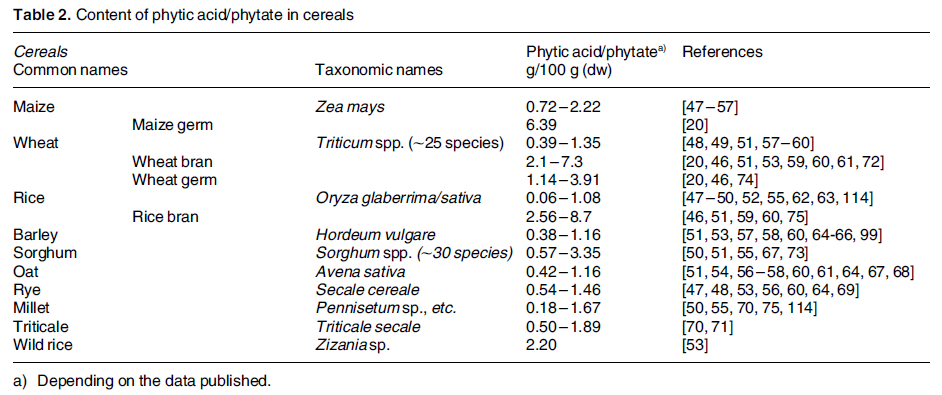
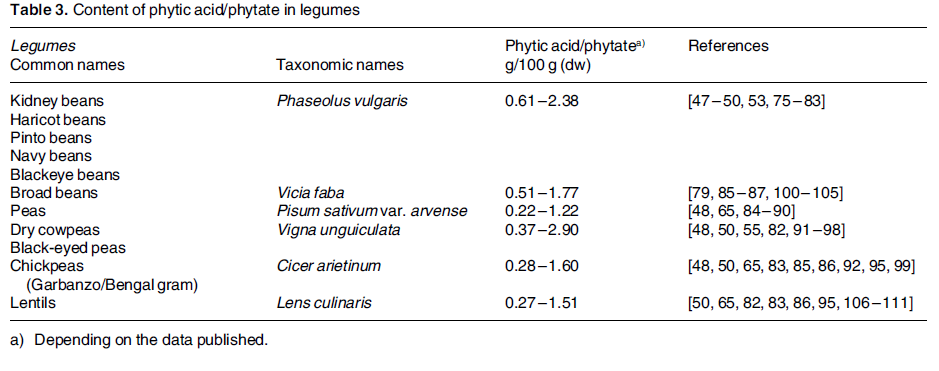
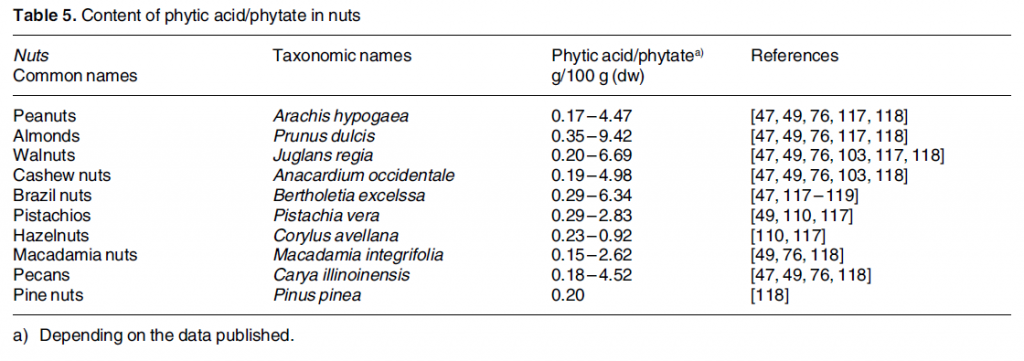
The tables below compare various seed types according to their phytic acid/phytate content.
Whole grains
Legumes
Nuts
Oil seeds
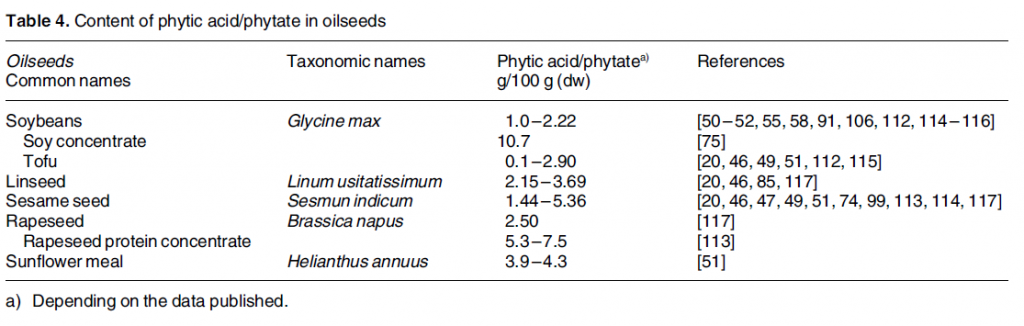
As you can see, phytic acid content varies greatly among plants. This is due to the type of seed, environmental condition, climate, soil quality, how phytate is measured in the lab, and so forth.
Roots, tubers, and other vegetables may also contain phytic acid, but usually in lower amounts.
The most concentrated sources tend to be whole grains and beans. Phytic acid is isolated in the aleurone layer in most grains, making it more concentrated in the bran. In legumes, it’s found in the cotyledon layer (where the protein is).
Phytate = phytic acid bound to a mineral
Phytates perform an essential role in plants, as they are an energy source for the sprouting seed. When a seed sprouts, phytase enzymes break down the stored phytates.
When we eat the plant, phytates are hydrolyzed during digestion to myo-inositol-1,2,3,4,5,6-hexkisphosphate (IP6) and lower inositol polyphosphates including IP1 through IP5 (these are phytate degradation products).
Who’s eating phytic acid?
Everyone who eats plants consumes some phytic acid. It’s all a question of degree.
As you can imagine, intake tends to be much higher among those who follow non-Westernized diets. In developing countries, plants are staple foods, which means people eat more of them, and therefore get more phytic acid.
In developed countries, plant-based or vegetarian eaters tend to consume more phytic acid than omnivores. Further, males usually consume more phytic acid than females, simply because they eat more food.
Phytate digestion
Most phytate (37-66%) is degraded in the stomach and small intestines.
Ordinarily, our bodies regulate phytate levels pretty well, adjusting uptake in the gut and excretion until body levels come into balance.
Vitamin D status in the body seems to influence how much phytate is actually retained. The more vitamin D, the more phytate retained; the less vitamin D, the less phytate retained.
Potential problems with phytic acid
Phytic acid can bind minerals in the gut before they are absorbed and influence digestive enzymes. Phytates also reduce the digestibility of starches, proteins, and fats.
Here’s an example.
Vegan eaters often consume more iron than omnivores. Yet, they also consume more anti-nutrients, including phytates, and these reduce the amount of iron available to their bodies. Consuming 5-10 mg of phytic acid can reduce iron absorption by 50%.
This is why vegetarian eaters should eat more iron than omnivores (33 mg for veg eaters vs. 18 mg for omnivores).
Daily iron loss for men & women
- Adult men lose ~1 mg of iron per day
- Adult menstruating women lose ~1.4 mg/day
- Postmenopausal women lose ~0.8 mg/day
- Lactating women lose ~1.1 mg/day
While in the intestines, phytic acid can bind the minerals iron, zinc, and manganese. Once bound, they are then excreted in waste.
This can be a good or bad thing, depending on the condition. It’s a bad thing if you’re having trouble building up iron stores in the body and have developed iron-deficiency anemia.
When is it a good thing? Keep reading – you’ll find potential benefits of phytic acid below.
Potential benefits of phytic acid
Despite its potential drawbacks, phytic acid is similar in some ways to a vitamin, and metabolites of phytic acid may have secondary messenger roles in cells.
Some experts even suggest that it’s the phytic acid in whole grains and beans that lends them their apparent protective properties against cardiovascular disease, cancer, and diabetes.
(Remember, the grains with little to no phytic acid are the refined ones.)
The supplement industry has caught on to this. Have you even seen a bottle of inositol hexaphosphate, or IP6? That’s simply a supplemental source of phytic acid.
When phytic acid binds minerals in the gut, it prevents the formation of free radicals, thus making it an antioxidant. Not only that, but it seems to bind heavy metals (e.g., cadmium, lead) helping to prevent their accumulation in the body
Phytic acid’s preventative properties
Cancer
Foods higher in phytic acid seem to enhance the activity of natural killer cells and inhibit tumor growth.
Those who consume more phytic acid are less likely to succumb to breast and prostate cancer. Exposing the colon to less iron seems to decrease the risk of colon cancer. And phytic acid might reduce the side effects of chemotherapy.
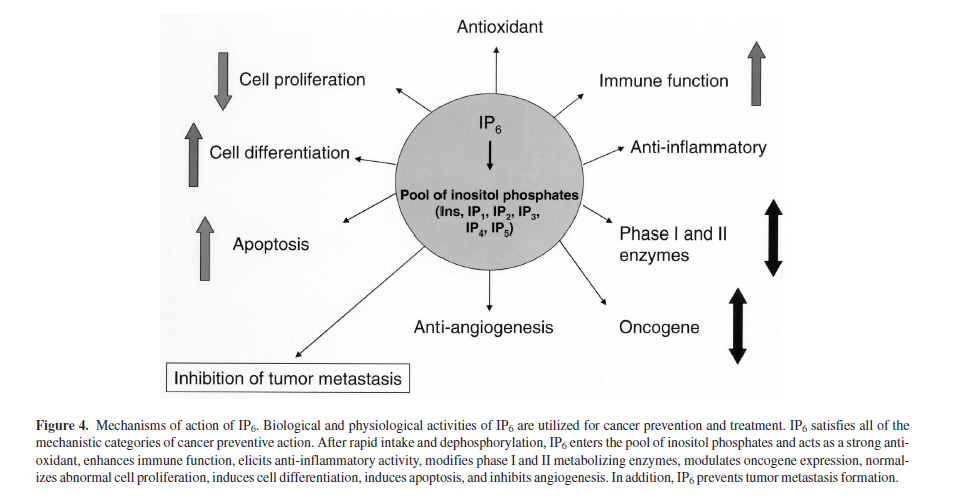
Cardiovascular disease
Phytic acid helps prevent hardening of the arteries and platelet formation.
Kidney stones
With some phytate being excreted in the urine, this may improve kidney health and prevent stones.
Insulin resistance
Phytic acid plays a role in pancreatic function and insulin secretion. And it may reduce the glycemic response from meals, meaning you feel full for longer.
Hemochromatosis
Hemochromatosis, or iron overload, is a common genetic disorder that phytic acid’s iron-binding properties can protect against or reduce.
In the balance
Is phytic acid worth worrying about? Maybe not, for most of us.
One study showed that subjects consuming a Mediterranean-style diet that included 1000-2000 mg of phytic acid per day did not suffer from reduced mineral bioavailability.
At the same time, certain people might have to be more wary.
In particular, iron intake and absorption can be critical for infants nearing six months of age. So when plants are added to infants’ diets, it may be important to adopt strategies to reduce phytic acid and enhance iron absorption.
Overcoming phytic acid as an antinutrient
Luckily, it’s possible to overcome the anti-nutrient effects of phytic acid in our foods while still getting the benefits of a plant-rich diet. Here are a few strategies that my be more or less helpful depending on the specific situation:
Heat
Heating foods can destroy small amounts of phytic acid. (Note: heat can also destroy phytase and vitamin C.)
Processing
Milling grains and removing the bran decreases phytic acid. Unfortunately, milling also tends to remove many of the minerals! Removing the bran and then enriching a food with minerals might allow for enhanced nutrient absorption in the body.
Soaking
Soaking beans and grains can reduce phytic acid (and other antinutrients).
Fermenting
Fermentation and bread leavening (using yeast) can help to break down phytic acid due to the activation of native phytase enzymes, reducing the number of phosphate groups.
This is big stuff since myo-inositol phosphates with fewer than five phosphate groups don’t inhibit zinc absorption (IP1 to IP4). And those with fewer than three phosphate groups don’t inhibit iron absorption (IP3 to IP2).
Also, some of the acids produced during fermentation might actually boost absorption of certain minerals.
Sprouting
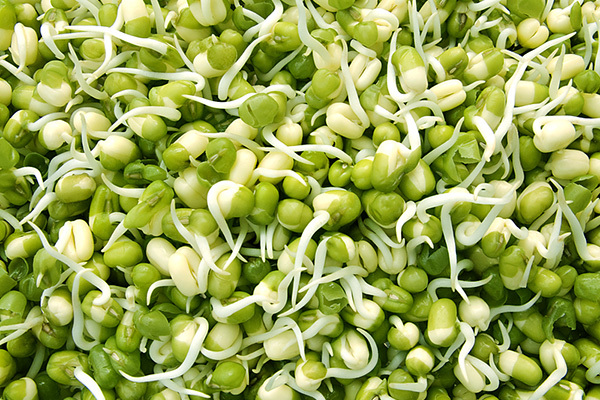
Sprouting and malting enhances native phytase activity in plants and thus decreases phytic acid.
Vitamin C
Vitamin C appears strong enough to overcome phytic acid. In one study, adding 50 mg of vitamin C counteracted the phytic acid load of a meal. In another study, 80 mg of ascorbic acid (vitamin C) counteracted 25 mg of phytic acid.
Protein powders
During processing of plant-based protein powders, it’s possible to de-phytinize (via addition of microbial phytase). Also, protein isolates and concentrates can be treated with dialysis or ultrafiltration to remove phytic acid.
Seed breeding
Scientists are working on seed breeds containing less phytic acid. There are modern seed hybrids of grain and legume plants that contain less phytic acid.
Animal protein
Animal protein may enhance absorption of zinc, iron, and copper. Adding small amounts of animal protein might increase the absorption of these minerals in the body. (Well, except for dairy/casein, as it also seems to hinder iron and zinc absorption.)
Gut health
A low pH in the gut enhances iron absorption. Balancing the level of beneficial bacteria in the GI tract might help with this. See All About Probiotics.
Bonus: Can other animals digest phytic acid?
Ruminant animals (e.g., cattle, sheep, goats, buffalo) possess phytase producing flora for digesting phytic acid.
Non-ruminant animals (e.g., pigs, chickens, dogs, cats) don’t have phytase producing flora, so phytic acid passes through them undigested and makes its way into the soil.
Feeding livestock too much grain can inhibit mineral absorption and increase phosphorus excretion, leading to pollution. Ever heard of the Dead Zone in the Gulf of Mexico?
Summary and recommendations
In healthy people eating balanced diets, phytic acid’s effects on iron, zinc, and manganese status is minimal and it doesn’t seem to cause nutrient deficiencies.
To argue that some plant foods are “unhealthy” because of their phytic acid content seems mistaken, especially when phytic acid’s potential negative effects on mineral assimilation may be offset by its health benefits.
So we should aim to reduce phytic acid rather than eliminate it.
To reduce the anti-nutrient effects of phytic acid in foods, try the following:
- Soak, sprout, ferment, and cook plant foods.
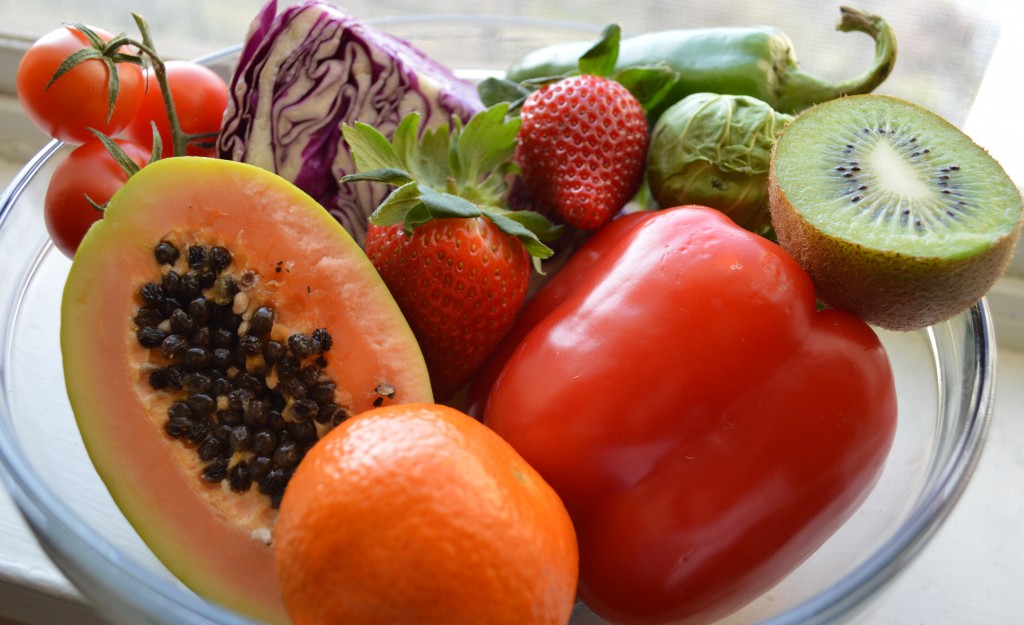
- Consume vitamin C-rich foods with meals that contain phytic acid. Dense source of vitamin C include guava, bell pepper, kiwi, oranges, grapefruit, strawberries, Brussels sprouts, cantaloupe, papaya, broccoli, sweet potato, pineapple, cauliflower, kale, lemon juice, and parsley.
- Use vinegar in salad dressings and cooking to enhance mineral absorption and offset phytic acid.
- Supplement with phytase enzymes if necessary.
- Eat mineral fortified foods if necessary
- Supplement minerals if there is still a shortfall in your diet.
- If you’re eating a plant-based diet and have confirmed nutrient deficiencies, and you’ve tried all the above strategies with no success, adding small amounts of animal foods on occasion might boost stores of necessary minerals in your body.
Practice Makes Perfect — The Science of Memory Formation
Reproduced from original article:
https://articles.mercola.com/sites/articles/archive/2024/06/07/science-of-memory-formation.aspx
Analysis by Dr. Joseph Mercola June 07, 2024

STORY AT-A-GLANCE
- A May 2024 study conducted by researchers at the University of California, Los Angeles (UCLA) aimed to determine how training affects the working memory, which is responsible for temporarily retaining and processing information for immediate use
- Researchers trained mice to perform olfactory delayed-association tasks over two weeks. After doing this repetitive task for seven sessions, the mice learned to perform the task with an accuracy level of 94.2%, and their memory patterns began to “crystalize” with practice
- While consistent practice and exposure to information can help enhance memory and learning, not all influences on your memory can be positive. One prominent example of this is the indoctrination efforts during the pandemic
- The good news is you can reverse indoctrination and take back control of your memories by promoting the production of healthy new index neurons and optimizing mitochondrial energy production
Memory plays a crucial role in learning, decision-making and shaping your identity. It’s a continuous process of absorbing information, retaining it and retrieving that knowledge to frame your understanding of and responses to the world around you.
The cognitive function that allows you to temporarily retain and process information for immediate tasks is called the working memory.1 For instance, during a conversation, your working memory acts like a mental notepad, allowing you to keep track of the information you’re receiving and use it in real-time.
In May 2024, researchers at the University of California, Los Angeles (UCLA) Health presented a study in the journal Nature,2 which aimed to determine how training enhances the brain’s capacity for working memory, revealing intriguing findings about the brain’s capability.
How Are Memories Formed?
Memory formation is a complex process that begins with encoding. During this stage, the information captured by your sensory organs is sent to the corresponding sensory areas of the brain (visual cortex, auditory cortex, etc.), where it is processed and integrated with your existing knowledge and experiences.3
When you learn something new, your brain forms new connections called synapses between neurons. These connections create new circuits, essentially remapping your brain. The brain is a vast network of connections — each of its 100 billion nerve cells can form up to 10,000 connections with other nerve cells. These synapses get weaker or stronger depending on how much you’re exposed to particular information or activities.4
The hippocampus, located in the temporal lobe,5 plays an important role in memory formation. It organizes and integrates sensory information, transforming it into coherent memory traces.6 Attention during encoding helps the hippocampus focus on relevant information and filter out distractions.7
After encoding, the memory undergoes consolidation, stabilizing the newly formed memory trace.8 This involves two main stages — synaptic consolidation and systems consolidation. During synaptic consolidation, which occurs shortly after learning, the connections between synapses are strengthened,9 primarily through a process called long-term potentiation.10
Systems consolidation happens over a more extended period, gradually transferring the memory trace from the hippocampus to the neocortex. This transition from short-term to long-term storage is part of the consolidation process, making memories more stable and less dependent on the hippocampus.11
The final stage of memory formation is retrieval, wherein stored information is accessed and brought into conscious awareness when the memory is triggered. The prefrontal cortex coordinates this process, while the hippocampus helps access the relevant memory traces stored in the neocortex.12
Interestingly, each time a memory is retrieved, it can be modified before being stored again, a process known as reconsolidation.13 This allows memories to be updated with new information but also makes them susceptible to changes and distortions.
How Practice Cements Memory Formation
In the featured UCLA Health study,14 researchers focused on understanding how consistent practice influences the overall capacity and efficiency of the brain’s working memory. To evaluate this, they trained mice to perform olfactory delayed-association tasks over two weeks.
During the tests, the mice were presented with odors A or B for one second. After a five-second delay, they were presented with odors C or D for another second. If the combination is A followed by C or B followed by D, the mice need to lick during a choice period, which is three seconds after being presented with the second odor, to get a reward. If they were presented with a different combination, they were taught to withhold licking.
After doing this repetitively for seven sessions, the mice learned to perform the task with an accuracy level of 94.2%. “Tracking M2 (secondary motor cortex) neuron activity over 10 days revealed that late-delay WM (working memory) representations, which are crucial for task performance, initially fluctuate in early expert stages but stabilize with continued practice in the late expert phase,” the researchers observed.15
To put it simply, as the mice performed the task, their memory patterns began to “crystalize,” becoming more stable and consistent with practice. Dr. Peyman Golshani, corresponding author and UCLA Health neurologist, likens this process to practicing a musical melody. As reported by Science Daily, Golshani notes:16
“If one imagines that each neuron in the brain is sounding a different note, the melody that the brain is generating when it is doing the task was changing from day to day, but then became more and more refined and similar as animals kept practicing the task.”
He adds that these insights into the mechanisms of memory consolidation and the importance of consistent practice in cementing new skills and information in the brain “not only advances our understanding of learning and memory but also has implications for addressing memory-related disorders.”17
Save This Article for Later – Get the PDF Now
How Indoctrination Efforts Sabotage Your Autobiographical Memory
While consistent practice and exposure to information can help enhance memory and learning, it’s important to recognize that not all influences on your memory can be positive. One prominent example of this is the indoctrination efforts that the world underwent during the pandemic.
In the video above, Dr. Michael Nehls,18 author of “The Indoctrinated Brain: How to Successfully Defend Your Mental Freedom,”19 discusses the neuroscientific aspects of how brain alterations can render individuals more vulnerable to negative external influences.
According to Nehls, there are two types of thinking systems — System 1 (nonthinking) and System 2 (thinking). Our brains operate in System 1 most of the time. System 2 is only activated through conscious effort, upon recognizing the need for critical thinking. If you don’t have enough mental energy to think, you’re not likely to activate System 2. Instead, you get stuck in System 1, putting you on autopilot and making you more likely to follow mass thoughts or movements.
The media and global leaders have engineered a vicious cycle that makes it easier for you to be stuck in this state and get indoctrinated. It starts with fearmongering, shifting goals and poor health advice. This induces chronic stress, which, coupled with key nutritional deficiencies, leads to consistently high stress hormone levels and poor energy production. Stress hormones also inhibit hippocampal neurogenesis, reducing mental resilience and increasing stress.
Ultimately, this downward spiral erodes your autobiographical memory, which plays an important role in your individuality. Autobiographical memories are stored in the hippocampus and are heavily influenced by emotional association (how you felt when something happened).
When something is associated with fear, you’re more likely to remember it — and this is what technocrats are using as a powerful tool. By hijacking your remaining index neurons and overwriting your autobiographical memories with fear-inducing propaganda narratives, they can take away your individuality and manipulate you easily.
How to Protect Your Hippocampus
The good news is you can reverse indoctrination and take back control of your memories by promoting the production of healthy new index neurons. Nehls suggests addressing these factors that influence hippocampal neurogenesis:
| Purpose in life — According to Nehls, not having a sense of purpose in life increases your risk of developing hippocampal dementia, i.e. Alzheimer’s disease. |
| Nutrition — For optimal hippocampal growth, make sure you have adequate levels of essential micronutrients. Among these, iodine and vitamin D are the most important. Maintaining a vitamin D level within the range of 40 to 60 ng/mL (100 to 150 nmol/L) will support your immune and neurological health. |
| Social life — Loving relationships promote the release of oxytocin, a potent hippocampal growth factor. On the other hand, isolation and loneliness have a detrimental effect on hippocampal function. Companionship is also important because it provides the emotional experiences and conversations essential for the survival of hippocampal neurons. Without this new information, newly generated neurons will die off and their production will decline. |
| Exercise — Exercise can help stimulate hippocampal neurogenesis. In his book,20 Nehls cites research showing that seniors who take a one-hour brisk walk every day can grow their hippocampus by 2% in a single year. For comparison, Alzheimer’s patients lose about 5% of their hippocampal volume per year.21 |
| Sleep — Your hippocampus generates new neurons during sleep, when it’s not actively gathering new experiences. Melatonin, known to stimulate hippocampal neurogenesis, may play a key role in this process. Nehls states that it typically takes around two weeks to restart neurogenesis after experiencing chronic sleep deprivation. |
| Time — Trying to do more than what’s manageable generates stress, which not only hinders neurogenesis but also promotes neurodegeneration. However, having too much free time can be detrimental as well, as the stimuli needed for neuron growth are absent. According to Nehls, the optimal state is eustress — “positive stress caused by challenging yet doable tasks.” |
Optimize Your Mitochondrial Health to Boost Your Brainpower
In addition to Nehls’ recommendations, I recommend adopting the strategies below to boost your mitochondrial energy production, which will provide you with the energy needed to effectively engage your System 2 critical thinking skills.
• Limit your linoleic acid (LA) intake — LA severely impairs your mitochondrial function, compromising your ability to create cellular energy. Optimizing your mitochondrial energy production is crucial not only for a healthy body and mind but also for your intuition. The energy produced by your mitochondria is virtually identical to the energy that created the universe and undergirds physical reality.
So, once you optimize your mitochondrial energy production, you also swing the door open to your higher spiritual faculties where intuition, inner guidance and pure knowing reside. Once you’re connected to your inner knowing, no indoctrination attempt can succeed because you can “see” clearly, even when the truth is being hidden.
• Limit fats, eat healthy carbs in optimal amounts — When your fat intake exceeds about 35% of your daily calories, your body enters fat metabolism, which reduces mitochondrial efficiency by 25% to 50%. Eating optimal amounts of healthy carbs, such as fruits, raw honey and starches like white rice, will help optimize your mitochondrial glucose metabolism, resulting in higher energy production.
The paradox here is that you need good gut health to benefit from an optimal diet. If your gut health is impaired, eating fibrous fruits and starches will only feed the pathogenic bacteria in your gut. So, if your gut health is less than optimal, start by eliminating as much LA as possible (which is one of the primary destroyers of cellular energy production) and introduce healthy carbs slowly, starting with fruit juices.
Glucose metabolism also boosts the production of structured water (deuterium-depleted water) within the mitochondria and decreases the production of reactive oxygen species (ROS), enhancing overall mitochondrial function.
• Consider supplements for healthy metabolism — Niacinamide, also known as nicotinamide (a form of vitamin B3), is essential for healthy metabolism, mitochondrial function and cellular energy production. For general support, I recommend taking 50 milligrams three times a day.
Niacinamide may also be useful in early Alzheimer’s treatment,22 especially when combined with methylene blue, as they work synergistically. Methylene blue by itself has also shown promise in inhibiting Alzheimer’s progression.23
You can also consider using nootropics for cognitive enhancement and neuroprotection. For more information about nootropics, check out my article “5 Potent Nootropic Herbs to Supercharge Memory and Concentration.”
• Reduce your serotonin levels — Often mistaken as the “happy hormone,” serotonin actually acts as an antimetabolite, impairing mitochondrial energy production, which can lead to fatigue and a slowed metabolism. Studies have also linked elevated serotonin levels to dementia.24
One way to lower your serotonin is to increase GABA, which is available as a supplement, as GABA increases the degradation rate of serotonin. People who have high GABA levels usually have low serotonin, and vice-versa.
People with high GABA/low serotonin are typically calm and gregarious, whereas GABA deficiency and elevated serotonin is associated with anxiety, fear, depression, short temper, phobias, impulsiveness and disorganization.
Another important strategy is to address your gut health. When complex carbs that aren’t digested in your stomach travel down to your intestine, they end up feeding gram-negative bacteria that produce endotoxin, also known as LPS (lipopolysaccharide).
• Maintain low estrogen levels — Like serotonin, estrogen is also antimetabolic and will inhibit energy production. You can find tips to help lower your estrogen load here.
- 1 ScienceDirect, Working Memory
- 2, 14, 15 Nature. 2024 May 15. doi: 10.1038/s41586-024-07425-w
- 3 Harvard University, The Derek Book Center for Teaching and Learning, How Memory Works
- 4 Johns Hopkins Medicine, Inside the Science of Memory
- 5 Ann Indian Acad Neurol. 2012 Oct-Dec; 15(4): 239–246
- 6 Neuroscience & Biobehavioral Reviews Volume 118, November 2020, Pages 196-208
- 7 J Physiol. 2009 Jun 15; 587(Pt 12): 2837–2854
- 8 University of California San Francisco, Memory
- 9, 11 Front Synaptic Neurosci. 2019; 11: 1
- 10 Neuroscience Research Volume 183, October 2022, Pages 1-6, The molecular and cellular mechanisms underlying synaptic plasticity
- 12, 13 Curr Biol. 2013 Sep 9; 23(17): R764–R773., Prefrontal cortex–hippocampus interactions and mechanisms of memory retrieval
- 16, 17 ScienceDaily, May 15, 2024
- 18 Michael Nels, Informations
- 19 Amazon, The Indoctrinated Brain: How to Successfully Fend Off the Global Attack on Your Mental Freedom
- 20 Amazon, The Indoctrinated Brain: How to Successfully Fend Off the Global Attack on Your Mental Freedom, Page 66
- 21 ISRN Radiol. 2013; 2013: 174524
- 22 Clinical Trials Nicotinamide as an Early Alzheimer’s Treatment NCT03061474
- 23 Haidut.me December 2, 2019 (Archived)
- 24 Journal of Alzheimer’s Disease, vol. 96, no. 1, pp. 215-227, 2023
Broccoli Sprouts Provide Greater Benefits Than Full-Grown Broccoli
Reproduced from original article:
https://articles.mercola.com/sites/articles/archive/2024/06/04/broccoli-sprouts-health-benefits.aspx
Analysis by Dr. Joseph Mercola June 04, 2024

STORY AT-A-GLANCE
- Cruciferous vegetables are loaded with health promoting compounds, including indolocarbazole and sulforaphane, the source of their trademark odor and one of the most powerful of nutrients in cruciferous vegetables
- Concerns about thyroid damaging compounds in cruciferous vegetables can be avoided by eating a balanced diet
- Sprouts pack a bigger nutritional punch than full-grown broccoli and require little room for cultivation. They can promote better health and food security
- Other ways to safeguard your food security is to grow more of your food at home, consider keeping chickens for a steady supply of eggs and learn to preserve foods using canning and pickling, especially if you live in an area with a short growing season
Cruciferous vegetables, which include Brussels sprouts, cauliflower and broccoli are nutritional powerhouses. Notable for their bitter taste and slightly sulfurous smell when cooked, they are loaded with powerful nutrients and minerals.
Broccoli, in particular, is famous for being a rich source of glucosinolates, the sulfur-containing compound responsible for its smell, flavor and a myriad of health benefits1 that range from cancer fighting properties to heart health.
The best health promoting nutrient in broccoli is sulforaphane. It was first identified as having chemoprotective properties in the 1990s and has been widely studied since for its health benefits.2 Broccoli sprouts contain 10 to 100 times more sulforaphane than full grown broccoli.3
Nutrients In Cruciferous Vegetables Spark Interest, Health Debate
The glucosinolates that occur naturally in cruciferous vegetables react with the human enzymes during chewing to form isothiocyanates (ITC). Sulforaphane is classified as an isothiocyanate.
ITCs are the subject of considerable interest to researchers due to their anti-carcinogenic activities and ability to promote detoxification.4 Unfortunately, sulforaphane is also an anti-thyroid substance or goitrin.5 Goitrins are organosulfur compounds also found in cruciferous vegetables and are why broccoli is viewed as having a negative impact on thyroid health.
This is where the subject of cruciferous vegetable can get tricky. Boiling and blanching effectively destroys the goitrogenic properties of cruciferous vegetables but also strips them of benefits provided by ITC components like sulforaphane.
Moreover, you would have to consume pounds of raw cruciferous vegetables daily to obtain clinical levels of sulforaphane.6 Both of these potential pitfalls can be avoided by switching to broccoli sprouts.7
How You Can Benefit From Sulforaphane
Before reviewing the advantages of broccoli sprouts and how to grow your own, let us review just a few of the beneficial properties attributed to sulforaphane and other ITCs found in cruciferous vegetables. Sulforaphane has been widely studied and the scope of its potential benefits is remarkable. For example:
- A 2017 study8 found it was effective in treating moderate to severe autism.
- The British Journal of Nutrition discovered elderly Western Australian women who ate more cruciferous vegetables had a lower risk of extensive calcium buildup in their aortas.
- A 2015 study9 examined isothiocyanates (ITCs), most prominently sulforaphane and determined broccoli consumption is beneficial for the heart.
- It also boosts liver enzymes that fight cancer causing environmental toxins.10
- 2023 Frontiers in Oncology study11 stated, “Sulforaphane (SFN) is one of these naturally occurring agents and studies have shown that it is able to target a specific cancer cell population displaying stem-like properties, known as cancer stem cells (CSCs).”
Save This Article for Later – Get the PDF Now
Additional Benefits of Broccoli: ICZ and Leaky Gut
Sulforaphane has been the subject of study in 3,000 rodent studies, 50 clinical trials and countless preclinical examinations.12 It is but one of the many nutrients found in cruciferous vegetables.
A recent study13 found broccoli helps heal leaky gut and colitis. Leaky gut is a serious and underdiagnosed condition that occurs when gaps form in the membrane of your intestinal wall, which can lead to inflammation, skin disorders, food intolerances, allergic reactions and neuropsychological disorders.14
Indolocarbazole (ICZ) can boost your immune function and improve your microbiome health by binding to your gut wall and activating receptors. Like sulforaphane, it is created during the process of eating cruciferous veggies. To achieve a level necessary to address leaky guy, you would need to eat 3.5 cups of broccoli daily.
However, Brussels sprouts contain three times more ICZ, so a single cup would suffice. Broccoli sprouts are also a source of ICZ and have shown great potential for addressing gut dysfunction.15
Optimizing Your Veggie Consumption With Broccoli Sprouts
With all these impressive studies in hand, you may wonder how much sulforaphane you should consume. The USDA recommends 2.5 to 3.5 cups of vegetables daily but do not specify recommendations for cruciferous vegetables.16
They do, however, distinguish between leafy vegetables and beans, peas and lentils.17 I strongly urge you to limit lectins, an anti-nutrient linked to inflammation and autoimmune reactions that are found in beans, grains, legumes and members of the nightshade family.
Consuming a sufficient quantity of full-grown, raw broccoli may pose a challenge. This is just one reason why broccoli sprouts can be an indispensable component of your diet. Broccoli sprouts are far more nutrient dense and require a far smaller quantity to obtain the same levels of nutrients like ICZ and ITCs such as sulforaphane.
Studies on broccoli florets and sprouts and the impact goitrins may have on your health are also promising. Full-grown broccoli, in the form of broccoli florets, were rated as having the lowest anti-thyroid potential of any cruciferous vegetable.18 According to another study,19 “In animals with hypothyroidism, broccoli sprouts were found to exert a beneficial influence on the antioxidant balance of the thyroid gland.”
The National Academy of Sciences researchers also concluded20 that “Small quantities of crucifer sprouts may protect against the risk of cancer as effectively as much larger quantities of mature vegetables of the same variety.”
Growing a Broccoli Sprout Garden
I encourage everyone to grow their own food. It does not take much space to grow broccoli sprouts and they pack a huge nutritional punch. They also can be cultivated indoors throughout the year. Compared to mature broccoli, you can grow sprouts more quickly and they have more concentrated nutrients, phytochemicals, antioxidants and fewer antinutrients.
You may be surprised to learn that the turnaround time for growing broccoli sprouts is not much more than a week. Sprouts are among the easiest and least labor-intensive options. For a step-by-step guide on how to grow sunflower sprouts, see the video above. These same techniques can be applied to other sprouted seeds.
Once you identify a suitable space and acquire your sprouting seeds, you are just days away from having a supply of broccoli sprouts. Here is a step-by-step guide to growing your sprouts.
- Get a tray that fits your space, ceramic tiles and ballast of 5 to 10 pounds to place on the tiles while the seeds are germinating.
- It is possible to grow sprouts in jars but soil is easier and produces more abundant food.
- Place your seeds in a bowl that contains three times more volume of clean, cool water and soak the seeds for eight hours.
- You can recycle the soaking water into a watering can or other container to water your other plants.
- Rinse the seeds and leave them out of the water for 24 hours or until sprouts begin to germinate.
- Fill your tray or growing container halfway with soil and spread the seeds evenly over the soil.
- Water until the soil is moist but not dripping.
- Cover the soil with ceramic tiles and 5- to 10-pound weights.
- Remove the tiles every 24 hours to water the sprouts for two to four days, replacing the tiles between waterings.
- Once sprouts begin to emerge and lift the tiles, remove tiles and place the tray in a sunny area.
- Harvest sprouts after two to three more days.
Safeguard Your Food Security Against Crop Failures and Diminished Yields
It is impossible to miss that growing food shortages and inflation are quickly becoming the norm. This hardship is not the result of failing policies but is part of the World Economic Forum’s Great Reset.
The world is slowly awakening to this technocratic takeover. Intentionally incompetent regulatory decisions and policies are being implemented under the guise of science. Upheaval and privatization are sure to follow. There are several steps you can take to meet your basic food needs and prepare for the likely coming shortages.
| Obtaining organic seeds — Obtaining, storing and using non-GMO organic seeds is the first step to safeguarding your food supply. Propagating organic seeds from organically grown plants is the most sustainable solution to food insecurity. Seeking out high-quality organic seeds is a great starting point. They produce the most robust plants and healthiest food. |
| Save seeds from your best plants — Save seed from your own best performing plants, on your land and in your own ecosystem, gradually developing varieties better adapted to your own soil, climate and growing conditions. |
| Growing food at home — Growing as much fresh food as possible is foundational to safeguarding your food supply. Sprouts grow quickly and are packed with nutrients. They require little space are a great starting point. Stocking up on sprouting seeds is a must. |
| Keeping chickens — Local regulations often permit chickens, which can supply a steady stream of eggs. Keep in mind that the chickens also require feed. If you are fortunate enough to have the space to homestead, there are mobile chicken coops that allow your birds to eat free range while protecting them from predators. |
| Gardening — Gardens can vary greatly in size. Ideally, space for an orchard would allow a diversity of crops. Whether you are supplementing your diet from a small plot or capable of full self-sufficiency. |
| Canning and pickling — These are basic food storage skills that your grandparents or great grandparents likely mastered. In challenging times, you will certainly benefit by adopting these proven methods, which are especially important in areas with a short growing season. |
Prepare for Food Insecurity With Minimal Growing Space
If you do not have sufficient land to grow your own food, consider joining a food co-op. You can also keep food on hand in the form of shelf-stable and non-perishable items. Dry staples like rice and beans last far beyond their listed expiration date. They are best stored in sealed, food grade buckets with oxygen absorbers. Freeze dried foods can last a quarter century or even more.
Whey, protein powders, and canned fish (avoid ones in vegetable oil) can add balance to your diet in times of scarcity. Vacuum sealing food is another option. For optimal storage, use a cool, dark area. You can also build a pantry if you live in a rental unit without a basement.
These actionable practices, while not without labor or expense, can provide necessary security. In the event you need to fall back on your supplies, you will be thankful for the availability of nutritionally potent and easy to grow broccoli sprouts.
- 1 Frontiers in Pharmacology, 2021 Oct 26, Abstract
- 2, 12 Molecules, 2019 Oct;24(19):3593, Abstract
- 3 Foods, 2021 Aug 19, Abstract
- 4 Acta Pharmacologica Sinica, 2009 May, Abstract
- 5 Foods, 2023 Oct 2, Abstract
- 6 Foods, 2021 Aug 19, Introduction
- 7 Plants (Basel), 2022 Oct 11, Influence of Broccoli Sprout Extract on the Inflammation Process
- 8 Global Advances in Health and Medicine, 2017 October 26, Abstract
- 9 Oxidative Medicine and Cellular Longevity, 2015 October, Introduction
- 10 Science Daily, April 5, 2005
- 11 Frontiers in Oncology, 2023 Jan 23, Abstract
- 13 International Journal of Molecular Sciences, 2023 Sep, Abstract
- 14 International Journal of Molecular Sciences, 2023 Sep, Background to the Hypothesis — The Case for Sulforaphane
- 15 International Journal of Molecular Sciences, 2023 Sep, Abstract, Tight Junctions as Critical Components of the Gut Barrier
- 16 USDA, MyPlate, Vegetables
- 17 USDA, MyPlate, Beans, Peas, and Lentils
- 18 Plants (Basel), 2022 Oct 11, Introduction
- 19 Biomedicine & Pharmacotherapy, Jan 2018, Abstract
- 20 Proceedings of the National Academy of Sciences, 1997 Sep 16, Abstract
Do You Know How to Store Potatoes?
Reproduced from original article:
https://articles.mercola.com/sites/articles/archive/2024/05/03/how-to-store-potatoes.aspx
Analysis by Dr. Joseph Mercola May 03, 2024

STORY AT-A-GLANCE
- When potatoes are chilled, an enzyme breaks down the sucrose (aka sugar) they contain and turns it into fructose and glucose, which combines with the amino acid asparagine to form acrylamide, a carcinogenic substance, when heated
- Differences between yams and sweet potatoes are their shape, size and color, but most people mistakenly refer to them interchangeably. Few Americans have even tasted true yams, which originated in Africa
- Sweet potatoes are more nutritious than white potatoes, and contain copper/zinc superoxide dismutase and catalase, as well as two antioxidant enzymes; due to the anthocyanins, purple sweet potatoes contain three times the antioxidants
- You can ferment sweet potatoes and purple potatoes as easily as any other vegetable, increasing the nutrition as well as the shelf life
To most, it would seem as if storing certain veggies in a cool place, such as the garage, back porch or even the refrigerator, would be a good idea. It might keep them cooler and help them last longer, right?
Turns out, that’s not how it works with potatoes. When potatoes get chilled, the starch in them turns to sugar and they become tough. They might look OK, but when they’re cooked, they may emit harmful properties that they wouldn’t have, otherwise. They can become not just slightly shrunken and wrinkly, but potentially toxic.
Here’s what happens: When potatoes are chilled, an enzyme known as invertase breaks down the sucrose (aka sugar) they contain and turns it into fructose and glucose, also called dextrose, the main sugar manufactured by your body and your chief source of energy.1
These two sugars, fructose and glucose, combine with the amino acid asparagine in potatoes and form acrylamide when they’re baked, fried or otherwise heated, according a study published in Risk Analysis.2
This doesn’t happen with frozen potatoes, however, because sucrose doesn’t get broken down by very low temperatures. An article from New Scientist explains:3
“Acrylamide is made by something called the Maillard reaction, which browns cooked foods and gives them their pleasing flavor. As sugars and amino acids react together, they produce thousands of different chemicals.
Particularly high levels of acrylamide are found in starchy foods, like potatoes and bread, when cooked at temperatures over 120 [degrees] C. The chemical can also be present in breakfast cereals, biscuits and coffee.”
As a matter of fact, acrylamide forms when potatoes or other starchy foods are browned to the point of charring, or above 250 degrees F (120 degrees C).4 This can be true with baked, grilled, sautéed or roasted starchy veggies, as well as with grains and even coffee.
Acrylamide and How to Avoid It
In 2002, the world learned through the Swedish National Food Authority5 that acrylamide is no longer considered a potential genotoxic carcinogen linked to an increased risk of cancer, but a confirmed cause, something that many experts say they suspected all along.6
Further, acrylamide converts in your body to another compound known as glycamide, which studies show can bind to your DNA and cause mutations. Animal studies indicate that acrylamide does indeed cause several types of cancer.7
However, this may not translate consistently or clearly to humans, according to Emma Shields, formerly from Cancer Research UK, who adds that while it may be difficult to prove the cancer link in people, there’s no guarantee it doesn’t damage human DNA, as well. Lifestyle factors may weigh in on this effect, though, Shields said.8
“It’s important to remember that there are many well-established factors like smoking, obesity and alcohol, which all have a big impact on the number of cancer cases in the U.K.”
Acrylamide can be found in as much as 40% of the calories consumed by the average American, the U.S. Food and Drug Administration (FDA) says.9 It’s also a given that most processed foods, because they’ve been subjected to high temperatures, contain acrylamide. Potato chips are a perfect example.
Eating mostly raw vegetables brings you the greatest health benefits, but when you do subject them and other foods to heat, do so at the lowest possible temperatures, cooking them just until done, and avoiding frying, baking or broiling whenever possible. In general, cook at a lower temperature whenever possible.
You can reduce acrylamide formation by soaking raw potatoes in water for 15 to 30 minutes before cooking. And while I don’t normally recommend eating potatoes and other starchy foods such as rice and pasta, chilling them after they’re cooked will turn a portion of them into digestive-resistant starch, which can be beneficial for your gut health. As an example, potato salad may be one of the healthier ways to eat potatoes.
The Acrylamide Cancer Link
Researchers at Maastricht University in the Netherlands conducted an extensive review of 62,573 women between the ages of 55 and 69. When the data was analyzed, the scientists determined that higher intakes of acrylamide were linked to a higher risk of endometrial and ovarian cancer, compared to lower intakes.10
George Alexeeff, Ph.D., former deputy director at the Office of Environmental Health Hazard Assessment for California, said his office definitely believes acrylamide is a chemical people should be concerned about, and that if something causes cancer in animals, it would most likely cause cancer in humans, too. According to an interview at Los Angeles Times:11
“The Environmental Protection Agency considers acrylamide potentially so dangerous that it has fixed the safe level for human consumption at almost zero, with a maximum permissible level in drinking water of 0.5 parts per billion.”
Additional studies also indicate that acrylamide in foods can cause cancer. One noted that receptor-positive breast cancer risk is elevated when this toxic compound has been ingested.12
Save This Article for Later – Get the PDF Now
Yams, Sweet Potatoes and Nutritional Attributes
You may already know that yams and sweet potatoes are two different vegetables, and that neither yams nor sweet potatoes are potatoes at all. The basic differences between yams and sweet potatoes are their shape, size and color, but even grocery stores and recipes often refer to them interchangeably.
Sweet potatoes belong to the Convolvulaceae or morning glory plant family and have two seed leaves, while yams have only one embryonic seed leaf. But they’re both tubers. So, where did the confusion begin?
Sweet potatoes grown in the American south were called nyamis, the African term for “to eat.” The shortened “yam” is still used today.13
Not as sweet, yams come in a bulky, more or less cylindrical shape, with a thin bark-like skin and dry, starchy flesh. They come from the Dioscoreae family of plants related to palms. Because they’re native to Africa, and are also grown in Asia, they’re not common in the U.S. other than in international markets.
Sweet potatoes are sweeter and more moist (although this can vary, too). They’re also elongated with tapered ends and smooth skin in hues varying from beige to orange to purple, and they can grow to a whopping 5 feet in length. The outside skin can be red, purple or brown, and the flesh anywhere from white to yellow to red-orange.
Sweet potatoes, with their yellow-to-orange-hued flesh, contain two important antioxidant enzymes: copper/zinc superoxide dismutase and catalase. The dark flesh color also indicates the presence of beta-carotene, another important antioxidant, which is converted by your body to vitamin A to retinol to help protect your eyesight.
But the purple sweet potato variety contains more than three times the antioxidant power due to anthocyanins, also related to their pigmentation, which help fight several types of cancer, including stomach, colon, lung and breast.14 Nutrition Facts notes:15
“Most recently, sweet potato proteins were tried on colorectal cancer cells, one of our most common and deadly cancers.
Normally, we just surgically remove the colon, but that only works in the early stages since there are often ‘micrometastases’ outside the colon that can subsequently lead to cancer recurrence and death …
So, we’ve been searching for anti-metastatic agents. Not only does sweet potato protein slow down the growth of colon cancer cells, but it may also decrease cancer cell migration and invasion.”
White Potatoes and Purple Potatoes
Both yams and sweet potatoes are noted as better for you than regular white potatoes, mostly due to the increased antioxidants and fiber content.
But just like white potatoes, they should be stored loosely (not in plastic) in a dark, dry spot at around 50 to 60 degrees Fahrenheit, but not cold and never refrigerated. Raw sweet potatoes don’t freeze well.16
The flavor of any potato, whether it’s white, purple or sweet, can be adversely affected when they’ve been stored in cold places.
One reason potatoes have such a reputation for being unhealthy for you is because so many of them are made into incredibly unhealthy, greasy fries. In fact, the average American eats around 29 pounds every year!17
In their unprocessed form, white potatoes provide nutrients such as vitamin C, copper, B vitamins, potassium, manganese, phosphorus and fiber, along with antioxidant phytonutrients. I’m not normally a fan of potatoes, especially if eaten in excess. But they do have some healthy attributes, especially if they’re organic and you eat the peel. According to nutrition group the George Mateljan Foundation:18
“Potatoes also contain a variety of phytonutrients that have antioxidant activity. Among these important health-promoting compounds are carotenoids, flavonoids and caffeic acid, as well as unique tuber storage proteins, such as patatin, which exhibit activity against free radicals.”
If you’re healthy, eating white potatoes in moderation is OK, but there are healthier sources of many of the nutrients potatoes provide. Then there are purple potatoes from the Solonaceae (nightshade) family, also high in antioxidants, a fact that’s hinted in both the skin and flesh color. For centuries, the purple in purple potatoes was used as a dye for textiles and even to color other food.
More Benefits of Eating Purple Potatoes
Eating purple potatoes has numerous health benefits. A 100-gram serving contains 1.54 grams of protein, 3.1 grams of fiber, 337 milligrams of potassium, 30 milligrams of calcium and numerous other vitamins and minerals.19 They’re high in fiber and are also easy to digest; plus, they contain valuable electrolytes and help prevent low potassium.20 Additionally, they:
• May help lower and regulate your blood pressure, due to the effect they have on capillaries and blood vessels.21 The potassium content in them also helps in this regard, as higher intakes have been linked to lowered blood pressure.22
The research also revealed that purple potatoes lowered diastolic blood pressure (the bottom number on a blood pressure reading) by 4.3% and the systolic reading (the top number) blood pressure by 3.5%.
• May help reduce the risk of blood clots — Thrombosis is one of the leading causes of death throughout the world, but purple potato consumption can help, due in part to the chlorogenic acid, which may break down blood clots and prevent the enzymatic activity of procoagulant proteins and peptides.
One study showed that chlorogenic acid delayed blood clot development in mice, which suggests it could be used to treat blood clots and possibly prevent them.23
• Contain over-the-top levels of antioxidants and phytonutrients — These help fight disease by lowering inflammation, especially due to the anthocyanins and their ability to zap free radicals. Traditional medicine used these compounds to treat hypertension (high blood pressure) and liver dysfunction and help prevent eye diseases and infections.24
• Contain colon-cleansing fiber — You could say fiber is the ultimate cleansing system because it is what helps move food through your system and out of your body. This can prevent constipation and promote regularity, among other benefits. Potatoes, both white and purple, contain soluble and insoluble fiber, just like nuts, beans and other vegetables such as cauliflower and green beans.25
Fermenting Vegetables, Including Sweet and Purple Potatoes
There are lots of ways to prepare both sweet potatoes and purple potatoes. The important thing is to avoid using unhealthy oils and high temperatures in the preparation. That said, you can ferment these veggies as easily as any other to retain optimal vitamins and minerals, and give your body the beneficial microbes it needs. Fermenting vegetables also adds greatly to the amount of time they can be stored.
Mixing sweet potatoes or purple potatoes with other veggies such as cabbage, beets and celery, helps create an excellent base, as well as flavor. Herbs and spices, such as basil and rosemary, add a deeper flavor profile. Fermenting your own veggies is simple and enjoyable, and you’ll know exactly what’s in them. If you’d like to give fermented sweet potatoes a try, a tasty fermented veggie recipe follows:
Ingredients
- 2 medium-sized heads of cabbage
- 3 1/4 pounds of carrots
- 1/3 of a red bell pepper
- 1 medium-sized sweet potato
- 1/2 bunch of golden beats
- Half of a Granny Smith apple
- 1 bunch of parsley
- 1/2 bunch of cilantro
- 4 inches of ginger root, grates
- 1 head of garlic, grated
- Starter culture, such as Kinetic Culture
- Himalayan salt or celery juice
Procedure
- Chop or shred your veggies.
- Add 1 1/2 Tbsp. of Himalayan salt to a quart of filtered or distilled water (an equal amount of celery juice can be used in place of the salt/water mixture) and one pre-measured packet of Kinetic Culture for every quart of veggies.
- Pack the veggies into a wide-mouth canning jar, pressing down to eliminate air pockets.
- Top with a cabbage leaf, tucked down over the top to make sure the veggies are completely immersed.
- Cap loosely (don’t tighten down too hard) to allow gases to be released, then keep the jar in a warm place at 68 to 75 degrees Fahrenheit for 24 to 96 hours.
- 1 MedicineNet March 19, 2012 (Archived)
- 2 Risk Analysis, 2017 Sep, 37 (9), 1754-1767, Abstract
- 3, 6, 8 New Scientist, January 23, 2017
- 4 Food Standards Agency, “Acrylamide”
- 5 Swedish National Food Authority October 31, 2016 (Archived)
- 7 Front Nutr. 2018; 5: 14, AA Consumption and Cancer
- 9 FDA March 14, 2016 (Archived)
- 10 Cancer Epidemiol Biomarkers Prev 2007;16(11). November 2007, Abstract
- 11 Los Angeles Times, December 19, 2005
- 12 Breast Cancer Res Treat 122(1),199-210
- 13 Epicurious November 14, 2017
- 14 Cancer Lett. 2008 October 8; 269(2):281-290
- 15 NutritionFacts.org, “Sweet Potato Proteins vs. Cancer”
- 16 Southern Living, “You Might Be Storing Your Sweet Potatoes Wrong”
- 17 Food Democracy June 19, 2011
- 18 The World’s Healthiest Foods January 30 – February 5, 2017 (Archived)
- 19 USDA, Purple Sweet Potatoes
- 20 Runner’s World August 2, 2007
- 21 J Agric Food Chem. 2012 Jul 11;60(27):6749-54, Abstract
- 22 NIH, “Potassium”
- 23 J Biochem Mol Toxicol. 2016 October 5
- 24 J Biomed Biotechnol. 2004 December 1; 2004(5):306-313
- 25 Mayo Clinic 1998-2017
Some of the Best Vegetables to Grow in Times of Crisis
Reproduced from original article:
https://articles.mercola.com/sites/articles/archive/2024/03/06/survival-garden-crops.aspx
The original Mercola article may not remain on the original site, but I will endeavor to keep it on this site as long as I deem it to be appropriate.
Analysis by Dr. Joseph Mercola March 06, 2024
STORY AT-A-GLANCE
- During times of crisis, staple foods and plants you know will grow well are ideal; it’s not the time to be trying out experimental varieties
- Choose vegetables that can be canned, fermented or pickled so you can eat them at your leisure, or those that can be stored for months without the need for refrigeration
- Top foods to plant in troubled times include potatoes, green beans, heirloom onions, carrots, winter squash and okra
- In addition to providing you with fresh vegetables without a trip to the grocery store, gardening is a simple way to reduce stress — another important benefit during times of crisis
The idea of being as self-reliant as possible is suddenly becoming more appealing to many, some are taking an interest in gardening for the first time.
In late March 2020, Oregon State University waived the fee for its online vegetable gardening course and had 15,000 people sign up in the next week. Normally, they would have had two to five people register in that time period. Meanwhile, seed companies have reported “an unprecedented surge of orders” while plant nurseries are seeing an uptick in business.1
“It has been like wildfire,” Elliot Dasler, owner of a nursery in Oregon, told KOIN 6 News about how their business has taken off.2 During times of crisis, staple foods and plants you know will grow well are ideal; it’s not the time to be trying out experimental varieties. Even better, choose vegetables that can be canned, fermented or pickled so you can eat them at your leisure, or those that can be stored for months without the need for refrigeration.
Such foods not only exist but can be quite easy to grow right in your own backyard. If you’re among those looking to test out your green thumb, whether for stress-relief purposes, sustenance or both, Hoss Tools has created the useful video I’ve posted here about some of the most crisis-worthy vegetables to plant.
Staple ‘Crisis Crops’ to Plant in Your Vegetable Garden
Hoss Tools, located in Georgia, provides tools, seeds and other supplies for growing your own food, including for those interested in homesteading or leading a self-sufficient lifestyle. In the video, they’ve detailed their top foods to plant in troubled times, which include the following:
|
Potatoes — Potatoes can be stored for up to six months, offering a source of nutrition that doesn’t require refrigeration. They can also be canned, which extends their storage life to three to five years. Hoss recommends planting potatoes two to three weeks before your region’s last frost, in rows spaced 36 inches apart. You should incorporate compost into your soil before planting. Their favorite varieties include Kennebec, a round white potato with creamy flesh and low- to medium starch, and Yukon gold, which has a buttery yellow flesh. Red Norland, which is a medium-sized rose-colored potato with dense flesh and low starch, is another favorite. Importantly, potatoes love to be hilled, which means adding additional soil to the bed and molding it around the plants. You should hill the potatoes two or three times during the growing season. The idea is that, since potatoes are a part of the plant’s stem, not the root, the more “stem” you keep underground, the more potatoes will grow and the better your harvest will be.3 Potatoes, which are rich in fiber, vitamins B and C and minerals like potassium, are easy to grow in the early spring and take about 85 to 100 days to mature, depending on environmental conditions. Once you harvest the potatoes, it’s important to store them properly — loosely (not in plastic) in a dark, dry spot at around 50 to 60 degrees F. While potatoes like a dark, cool environment, they should not be chilled, as they’re damaged by refrigeration. |
| Green beans — Green beans, which offer a rich source of vitamins A, C and K and manganese, fiber and folate, are another excellent, productive storage crop, which can be canned right along with potatoes, or fermented.
Green beans can also be blanched and frozen for up to a year. Hoss recommends the momentum bush bean variety,4 which they say is the most productive bush bean variety out there, with high yields, concentrated harvests and high tolerance to stress. Beans should be planted in spring after the last frost has occurred, as germination typically occurs when soil temperatures are 65 degrees F or higher (with optimal germination temperature being 77 degrees F). The seeds can be planted directly outdoors and can be planted every couple of weeks in the spring and early summer so you’ll have production throughout the entire growing season. Plant them as early as possible in the spring, since the plants will drop blooms, or cease production, during hot summer temperatures. Bush beans can be harvested three or four times in the season, and can also be planted in double rows to save space and increase your harvest. To do this, make two rows of beans spaced 6 inches apart, with the double rows spaced 3 feet apart.5 If you have access to drip irrigation or a soaker hose, you can use it to provide irrigation to both rows of beans at once. Beans can also be planted densely, with Hoss suggesting gardeners “stack the plants thick” to ensure you’ll have plenty of beans to eat in the cooler months if you can them. |
| Heirloom onions — Heirloom onions are a truly sustainable food source. Homesteaders in the past growing such onions would come out to the field and dig up onions as they needed them, then dig up the bulbs and store them as you would normal onions to be replanted the next year.
Not only do onions store really well, keeping for two months or more after harvest, depending on variety, but you have your own seed stock that you can reuse and share with your neighbors. Further, onions, which are rich in vitamin C, sulphuric compounds, flavonoids and other phytochemicals, are incredibly healthy. |
| Carrots — As with most homegrown vegetables, the taste of a store-bought carrot can’t compare to the flavor of a homegrown variety. Plus, carrots are another useful vegetable during hard times, as they can be stored in the refrigerator for two to three weeks or blanched and frozen for even longer storage.
Other options include canning and fermenting, making these a versatile vegetable for long-term usage. Like green beans, carrots can be grown in double rows with irrigation in between. Plant rows 6 inches apart, skip 3 feet, then plant two more rows 6 inches apart. Hoss recommends seeding carrots in a thick band and not thinning them, so you’ll have a “dense forest of carrots” and get a lot of production out of a little bit of space. When grown this way, your carrots may not all come out uniform in size — some will be smaller and some bigger — but they’ll taste great just the same. Carrots should be seeded directly outdoors, as they don’t transplant well, and do best when planted in cooler temperatures during the early spring or fall. Carrots, which are rich in valuable beta carotene, require longer to germinate than most other crops, and you’ll need to keep the soil moist for at least seven days for germination to occur. A soil temperature of about 75 degrees F is optimal. If you live in the South, you can grow two crops of carrots per year. Plant one in the fall, allowing the crop to overwinter so you can harvest in the spring. Since it’s not too hot yet, the carrots will hold well in the soil, allowing you to harvest them as you need them. You can then plant another crop in the early spring, which will be ready for a late spring/early summer harvest. |
| Winter squash — Winter squash, with its thick skin, is another excellent food for storage purposes. Though they’re called “winter” squash, they’re grown during the warm part of the year but can be stored without refrigeration for use during the winter. Generally, the sweeter the variety, the less time they can be stored.
Kabocha, a winter squash with a creamy flesh that’s useful for soups, can be stored for about three months while more common butternut and acorn squash will keep for six months. The sweet dumpling variety, which is one of the sweetest winter squashes, has an average storage time of 30 to 45 days. Winter squash is a good source of vitamins K1, A, C and E, as well as B vitamins, calcium and magnesium. Storage time is important, as winter squash produce one harvest at the end of the growing season, giving you food to enjoy all winter long. |
| Okra — Okra is a warm-weather crop that produces pods measuring 2 to 3 inches long, which grow on a large, leafy and perennial plant with hibiscus-type flowers. High in fiber, okra also offers vitamin K, manganese, folate and vitamin C, as well as plentiful amounts of flavonoids and antioxidants.
It’s an important crisis-crop because it’s a high-producing crop with long-term production. The plants may start producing pods when they’re 1 to 2 feet tall and will continue producing, as the plants grow 5 to 6 feet tall.6 However, you can cut the tops off when it gets about 4 feet tall, and plant three succession plants per year. Hoss recommends planting okra — especially the most productive jambalaya variety — in the spring and again in midsummer and early fall, as it will grow up until the first frost date. It’s important to rotate where you plant okra, coming back only on a three-year rotation, due to nematodes, which are tiny worms that act as plant parasites. However, once planted, okra is a hearty and versatile food that can be frozen, canned or pickled. It’s a staple food source in the South, and though it prefers irrigation for the most abundant productivity, it is somewhat drought-resistant and will still grow well in very hot, drier conditions. |
Planting Your Own ‘Victory Garden’
During World War II, a time when potential food shortages were looming, victory gardens became so prolific that they supplied an estimated 40% of Americans’ fresh vegetables.7 Now, “corona victory gardens” are becoming a thing, and while it’s always an excellent time to grow your own food, if you’ve been considering it in the past, now is a perfect time to get started.
In addition to providing you with fresh vegetables without a trip to the grocery store, gardening is a simple way to reduce stress — another important benefit during times of crisis.
A study in the journal Preventive Medicine Reports also concluded, “A regular dose of gardening can improve public health,” noting that gardening is associated with reductions in depression and anxiety and increases in life satisfaction, quality of life and sense of community.8 Gardening by older adults is also linked to:9
- Feelings of accomplishment
- Well-being and peace
- A decrease in depressive symptoms
- A protective effect on cognitive functions
- The development of social links
In addition to the vegetables mentioned above, which are ideal for their high productivity and/or long storage potential, other popular garden vegetables include tomatoes, sweet and hot peppers, cucumbers, snow peas, spinach, lettuce and chard — all of which are easy to grow.
Remember, too, that the No. 1 rule for growing nutrient-dense food is healthy soil. To develop healthy soil, protect it by diversifying your plants, avoiding tilling and covering the surface with cover crops or mulch. Even starting with one or two vegetables will provide you with an important food source, increasing your food security and giving you a pastime you can be proud of.
Changing the Food System From the Bottom Up
Reproduced from original article:
https://articles.mercola.com/sites/articles/archive/2024/02/11/healthy-eggs.aspx
The original Mercola article may not remain on the original site, but I will endeavor to keep it on this site as long as I deem it to be appropriate.
Analysis by Dr. Joseph Mercola February 11, 2024
STORY AT-A-GLANCE
- Around the advent of the American Civil War, in the 1870s or so, is when they developed the technology to extract oils from seeds. Before then, the average LA intake was less than 5 grams a day, and likely closer to 2 or 3 grams
- Eggs and bacon are two sources that, today, have very high LA levels, thanks to being fed an unnatural and PUFA-rich diet
- The mainstream is so convinced that saturated fat is bad and PUFAs are good that they’re now starting to use technology to turn the saturated fats in ruminant animals into PUFAs
- Ashley Armstrong’s farm, Angel Acres Egg Co., produces eggs that are low in linoleic acid (LA), as nature intended. On average, her eggs contain 17 to 20 milligrams of LA, which is about one-quarter of the LA found in conventional eggs
- Armstrong has also started a new private member food system called Nourish Cooperative that offers milk, cheese, low-PUFA pork, low-PUFA chicken and grass fed beef. Angel Acres Egg Co. and Nourish Cooperative both ship farm-fresh food right to your door
The video above features an interview with return guest Ashley Armstrong, a certified personal trainer with a Ph.D., MS and BS in engineering, and cofounder of Angel Acres Egg Co., which specializes in low-PUFA (polyunsaturated fat) eggs. On average, her eggs contain 17 to 20 milligrams of linoleic acid (LA), which is about one-quarter of the LA found in conventional eggs.
She’s also started a new private member food system that offers milk, cheese, low-PUFA pork and low-PUFA chicken, called Nourish Cooperative. Both ship farm-fresh food right to your door.
“One of my favorite topics is essentially just returning back to how food used to be made,” Armstrong says. “One-hundred fifty years ago, the dietary linoleic acid (LA) was naturally low, so people would just go to the grocery store and their food options didn’t have a bunch of linoleic acid.
It was, in my opinion, probably easier to source food back then. And now we’re inundated with not just PUFAs from vegetable oils, but also from animal products as well, because some animals are just vehicles for vegetable oils. The statement that ‘You are what you eat’ has never been more true because of how much the agriculture industry has changed over the last 100 years.”
Modern Diet Is Loaded With Harmful LA
Around the advent of the American Civil War, in the 1870s or so, is when they developed the technology to extract oils from seeds. Before then, the average LA intake was less than 5 grams a day, and likely closer to 2 or 3 grams.
Today, most people exceed that by the time they’re done with breakfast. As noted by Armstrong, eggs and bacon are two sources that, today, have very high LA levels, thanks to being fed an unnatural and PUFA-rich diet.
Eggs and bacon are typically perceived as healthy food options, especially among carnivores, but what most are missing is that LA is a metabolic poison that impairs, if not destroys, mitochondrial function and, as such, conventional eggs and bacon is a recipe for ill health. The good news is there are ways to raise eggs and pork that aren’t loaded with LA, which is what Armstrong specializes in.
“I think the best thing someone can do for their health is track their food on chronometer for five days and just pay attention to the amount of PUFAs in their diet. If you can push that as low as possible, I think you’re going to see improvements in your health pretty quickly,” Armstrong says.
“And you can’t achieve that going out to eat at restaurants. You can’t achieve that eating a ton of nuts and seeds. You can’t achieve that eating conventional bacon, conventional egg yolks, conventional drumsticks and things like that.
You have to really pay attention to the types of fat you’re eating. It’s kind of eye-opening that food sourcing really does matter in today’s day and age, because the abundance we have in these high-PUFA, high-LA options is kind of alarming and frightening.”
Fortunately, the word is starting to get out. There’s now an app called Seed Oil Scout that identifies which restaurants cook their food in seed oils and which do not. Unless you go to a seed oil-free restaurant, you can be virtually guaranteed they’re cooking in seed oil, because it’s far cheaper than cooking in butter.
Why Healthy Eggs Are so Important
Chicken eggs are an enormously important part of our diet because they contain nutrients that are really difficult to get from other foods, choline in particular. Choline, found in ample amounts in organic, pastured egg yolks, was first discovered in 1862.1
It was officially recognized as an essential nutrient for human health by the Institute of Medicine in 1998.2 Since then, we’ve learned that choline has a long list of health benefits. For example, it’s required for:
| Healthy fetal development3 |
| Optimal brain function, memory and cognition |
| Nervous system health — Choline is necessary for making acetylcholine, a neurotransmitter involved in healthy muscle, heart and memory performance |
| Cell structure — Choline is needed for the synthesis of phosphatidylcholine, better known as lecithin, which is required for the composition of cell membranes |
| Mitochondrial function4 |
| Metabolism (energy production) |
| DNA synthesis |
| Methylation reactions5 |
| Cardiovascular health |
| Liver health, as choline is needed to carry cholesterol from your liver; a choline deficiency could result in excess fat and cholesterol buildup6 |
Research7 published in 2020 also concluded that choline has anti-inflammatory activity and can be particularly useful in those with insulin resistance and/or metabolic syndrome. And, while a choline supplement was good in this regard, eggs were far better.
Download this Article Before it Disappears
Choline Is Required for Energy Production
Armstrong comments:
“In terms of maximal nutrients in square footage, I don’t know if you can beat egg yolk. Mother nature designed the egg to protect the yolk because the yolk is the most precious part of the egg. The shell acts as a physical barrier to protect the yolk, and the egg white is very antimicrobial, antibacterial in nature to protect the integrity of the yolk.
So the egg yolk is a nutrient powerhouse. It has all of the nutrients needed to grow a chicken. From this little yolk, an entire chicken is grown. How beautiful is that? It’s incredible. It contains a large amount of B vitamins, and all of the B vitamins are necessary cofactors in the steps to produce energy in your body.
If you don’t have enough of the micronutrients, if you’re micronutrient deficient, your metabolism won’t be as robust, because you don’t have the necessary cofactors to generate ATP. Choline, I think, is one of the most important nutrients that a lot of people are deficient in. In carbohydrate metabolism, carbohydrate oxidation, choline is a necessary step in energy production.”
Assuming you’re not getting choline from other sources, you need to eat at least two, probably three and more, egg yolks per day. I eat six yolks a day, but only one egg white, because I work out and walk at least five to six miles a day. The more active you are, the more choline you need to support a higher metabolic rate.
Armstrong recommends trying honey cured egg yolk. Simply place the egg yolk in a glass container and pour enough honey over the yolk to cover it. Let it cure overnight. This will firm up the yolk a bit, making it less runny. You can just scoop it out of the honey, eat it raw, and then reuse the honey to cure more yolk.
Mad Science — Transforming the Fatty Acid Profiles of Animals
As explained by Armstrong, livestock are classified into two types: ruminant animals, which includes cows, lamb, goats and deer, and monogastric animals such as chickens and swine (and humans).
Ruminant animals have a complex digestive system consisting of, typically, four stomachs. Their digestion involves a variety of microbes that help break down the food they eat. These digestive microbes also convert dietary PUFAs into saturated fats through a process called biohydrogenation. As a result, ruminant animal products tend to be lower in PUFA, even if they’re fed a high-PUFA diet.
Monogastric animals have just one stomach, and whatever fats they eat is translated into their tissues. This is why conventionally raised chicken meat and pork are so high in PUFAs.
Unfortunately, the mainstream is so convinced that saturated fat is bad and PUFAs are good that they’re creating technologies to manipulate the fatty acid composition in ruminant animals. In other words, they’re using technology to turn the saturated fats in ruminant animals into PUFAs, which is nothing short of a disaster.
“That’s why I think conversations like this are so important, to spread awareness and empower those who are in food production,” Armstrong says. “Our farmers need to be educated on why we need to go back to traditional farming styles, traditional feed programs, so we can return the natural fatty acid profiles that mother nature created.”
While monogastric feed diets are already very high in PUFAs, conventional farmers are also using dried distillers grains (DDGs), made from the waste products of the ethanol industry, which is driving the PUFA content in monogastric livestock even higher.
“There are studies showing that for pigs fed DDGs, their fat composition has the same amount of PUFAs as canola oil. So we’re literally transforming the fatty acid profile in our agriculture system for the worst,” Armstrong says.
This wouldn’t be quite as bad if it was given to ruminant animals, as they have the capacity to convert the PUFAs into saturated fat. Alas, they’re giving it to monogastric animals like chickens and pigs, turning those foods into something that can only harm your health in the long run. Unfortunately, there are no regulations around the use of DDGs, so we don’t know how much is being used, or who’s using it.
Barriers to Healthier Foods
Equally unfortunate is that farmers like Armstrong, who understands nutrition and wants to raise animals right, are held back in more ways than one. She can’t take advantage of government subsidized feed, for example. She also doesn’t have the benefit of scale. She explains:
“The biggest obstacle is the feed, because the big feed mills are so efficient in what they do that they can bring in massive quantities of the feed ingredients at the same time. They have that economy of scale that is really hard to have at a single farm level.
We’re not bringing in truckloads of feed ingredients at a time. And the more trucking that you have in creating your feed automatically raises the prices. Anyone involved in trucking knows how expensive trucking is right now. So if there’s this system set in place where massive quantities of corn and soy are trucked in at the same time, and a bunch of feed is made at the same time, that’s where you can cut a lot of costs.
That’s good thing, that’s advantageous. But right now, I don’t have enough volume to push those types of economies of scale. It’s just going to be more expensive as we’re starting to grow and grow.
But the more farmers that we bring into our partnership … if we develop hubs in our area and we can create those economies of scale a little bit better … bringing feed to a general hub, that’s where we can start to lower costs over time and can get more and more competitive with the prices at the grocery store.
If anyone were to log onto my website right now and see what the price per egg box is, they’d probably be a little bit alarmed, but I’m not making a ton of money on the eggs. It is my goal to lower the costs significantly over time. We are actively making steps towards that.
One thing, for example, is we’re optimizing box dimensions so that we can get better shipping rates. Another thing is our feed, hopefully in the next couple months, will be delivered in semi-trucks with an auger arm. We’ve been doing feed bags for years now, and that’s so expensive.
The fact that now we have the option of a semi-truck, that’s going to save significant costs on delivery of the feed. Ultimately, at the end of the day, I think one of the coolest things that can happen is connecting feed crop farmers with livestock farmers.
We need people to grow our feed. I don’t have enough land to grow the crops for our livestock. We’re not going to have feed that’s sprayed with pesticides. That’s unacceptable on our end. So how can we have a network of row crop farmers working with livestock farmers to produce low-PUFA, low linoleic acid food grown as nature intended?
We’re currently working on those steps behind the scenes, as well as to directly connect with the people growing the feed as well, because that’s a very integral part of this … We’re just trying to replicate what mother nature did 100, 200 years ago.
It doesn’t matter if the eggs are [labeled] ‘organic;’ if the chickens are still fed organic soy, it’s still going to have high linoleic acid. Organic soybeans don’t have low linoleic acid. A conventional and organic soybean is the same.”
Livestock Guardians
If you want to raise your own chickens for eggs, you not only need to ensure you’re feeding them correctly, but you must also protect them from predators. I’ve had at least 50 chickens killed by predators. Armstrong has now hooked me up with a livestock guard dog, a Great Pyrenees puppy named Joy. We discuss the reason for using this breed in the interview. Of course, once you have a guard dog or two, you also need to make sure you’re feeding them correctly as well.
“Feeding them what they are biologically designed to eat is very important so that they can function at their best and protect the chickens,” Armstrong says. “So, an integral part of what we do here, and this is just something that I started way back in the beginning when costs were so high.
How do I reduce costs in a way that doesn’t sacrifice quality? And I was like, well, for some reason the butcher shop by me has a bunch of extra organ scraps because humans don’t like organs and they’ve got meat scraps. So for the last two and a half years, I’ve gone every week to a local butcher shop, picked up beef meat scraps and beef organs … that I feed to our chickens.
And the nice thing is that the livestock guardian dogs just munch right along the chickens. So, they get bones, they get calcium, they get all the connective tissue around the bones, they get the muscle meat, they get the organs.
And so that’s an integral part of something that I’ll try to set up for all of the farmers in our network — connecting to a local butcher because there is so much food waste. It allows the chickens to get a protein boost. It allows the chickens to get a nutrient intake boost, and it really helps the livestock guardian dogs as well.
I just go weekly to pick it up. I tip him and I also bring trash bags, and it’s a great relationship because it costs the butcher money for garbage trucks to come take these scraps to landfill.”
Why Ashley Was Able to Make Such Brave and Courageous Choices
Ashley had been on a quest for health and wellness her whole life. She dabbled with various fad diets, but never was able to identify what truly resonated with her. While attending graduate school for her Ph.D., she chased a path in prosthetics, 3D printing and control engineering, believing it to be her passion.
Yet, deep down, she felt a disconnect, realizing she was more influenced by others’ expectations than her own desires. Despite her initial excitement, a grand sense of fulfillment completely eluded her.
Her true calling came unexpectedly through her fascination with regenerative agriculture. Volunteering at local farms opened her eyes to a world where food production not only nourishes humans, but also revitalizes the soil and respects livestock. This newfound passion consumed her free time, igniting a Joy within her that academic pursuits never could.
Her story also illustrates the consequences of making similar choices. Not only did she radically improve the quality of her own life, but her choice allowed her to create a business that provides the finest commercially produced eggs in the United States. Her brand is Golden Nuggets because that is what they are.
They literally are golden nuggets of nutrition that are rarely available outside of growing your own chickens. Her eggs help people avoid one of the most potent metabolic toxins in their diet. So not only can you improve your own life by making brave and courageous choices, but you can also improve the lives of many others.
It is highly probable that her story will resonate very powerfully with you and offer both insight and inspiration as she describes her journey to reclaim her Joy.
By setting aside the advice of others to unearth her own truths, she embodies the essence of bravery and courage. Choosing to walk away from years of hard work influenced by the expectations of others, she exemplifies a profound example of someone rediscovering her Joy. It’s difficult to envision a more fitting example of a return to Joy.
Very similar to Ashley, I also made a courageous and brave decision a few days after our interview that will have profound implications on the future exciting trajectory of this site. I suspect it will radically increase your ability to experience Joy.
In the video segment above Ashley reflects on the timeline of her decision, considering how just a few years ago, her health was far from ideal. She struggled with mitochondrial energy production, and her body was in a low thyroid state. Your body prioritizes energy for essential tasks, and decision-making requires significant energy.
Your brain consumes about 20% of your body’s energy despite being only 2% of its weight. Ashley simply would not have had enough cellular energy to supply her brain to make a decision like she did unless she improved her health. Factors like excess linoleic acid, estrogen and endotoxins were depleting her cellular energy, which is crucial for making energy-intensive decisions.
Her transformation underscores the power of nurturing your health to gain the energy necessary for making significant life changes. Avoiding dietary pitfalls like seed oils played a key role in this journey, enabling her to tap into a newfound capacity for brave decisions — a testament to the profound impact of regaining cellular energy on her ability to navigate life’s choices.
It is my sincere desire and hope that you consider her journey to inspire and empower you to make similar choices in your own life and reclaim the Joy that you deserve. Imagine experiencing the nearly limitless Joy that Ashley has with her 1000 chickens and four Livestock Guard Dogs below.
Join the New Food Revolution
If you want to purchase eggs from Armstrong’s farm, Angel Acres Egg Co., visit angel-acresfarm.com. She’s slowly increasing the number of chickens within the network to fulfill the demand, so be sure to add your name to the wait list. She is doing everything to scale this business as fast as possible, but remember that your support will help her scale the operation so that we can train more farmers to raise the chickens closer to where you live so you can avoid shipping costs and have the highest quality Golden Nuggets of nutrition for you and your family.
“Regenerative agriculture and mobile pasture raised is very important for me. So, on a single farm, I don’t want to have more than 2,000 chickens, because at that point, potential diseases start to come into play. You start degrading the landscape, and I don’t think that that’s where chickens can really be super healthy.
So it’s ultimately going to be hubs and more and more farmers getting involved,” she says. “Those who join the wait list will be notified first when more spots open up.”
She’s also started a new private member food system called Nourish Cooperative that offers milk, cheese, low-PUFA pork, low-PUFA chicken, grass fed beef and lamb. Both will ship farm-fresh food right to your door.
“The goal of both is returning back to how food used to be produced and creating these food systems where humans can naturally consume lower levels of linoleic acid,” Armstrong says. “We’re trying to make it easier for humans to get their nutrients without increasing their PUFA intake. So we’re starting both from the ground, up, and as we reach more economies of scale, we bring more farmers into the network.
That’s how we make a change — when we show these big players in the industry that ‘Hey, these are metrics that consumers care about. So either make that change or get out of the way.’
That’s when we can truthfully make a change, when we can start making the people high up in the agriculture system start to question, ‘Maybe we were wrong about polyunsaturated fatty acids. Maybe saturated fat actually isn’t bad.’ We can show that by consumer interest and where consumers are buying food from.”
Liposomal Carnosine Is Essential for Detoxing Linoleic Acid
Reproduced from original article:
https://articles.mercola.com/sites/articles/archive/2024/02/05/liposomal-carnosine.aspx
The original Mercola article may not remain on the original site, but I will endeavor to keep it on this site as long as I deem it to be appropriate.
Analysis by Dr. Joseph Mercola February 05, 2024

STORY AT-A-GLANCE
- Carnosine is a dipeptide found in meat. The highest concentrations of carnosine are found in your muscles, brain, central nervous system and gastrointestinal tract
- If you’re a vegetarian or vegan, you will have lower levels of carnosine in your muscles. This is one reason why many strict vegans who do not properly compensate for this tend to have trouble building muscle
- Carnosine binds to advanced lipoxidation endproducts (ALEs) that form from oxidized seed oils in your diet, making it a crucial aid in the detoxification of linoleic acid (LA)
- Thanks to its ability to scavenge 4-hydroxynonenal (4HNE), carnosine is also protective against obesity, diabetes, cardiovascular disease and Alzheimer’s disease, just to name a few
- The best way to optimize your carnosine level is to eat organic grass fed beef. When it comes to carnosine supplements, your best bet is liposomal versions as they have the highest bioavailability
Carnosine is a dipeptide found in meat. It’s not found in any plant foods. Dipeptide means it’s made up of two amino acids, in this case beta-alanine and histidine. The highest concentrations of carnosine are found in your muscles, brain, central nervous system1 and gastrointestinal tract,2 which gives you an indication of its potential importance.
Unfortunately, it’s also one of the top 10 most common nutrient deficiencies, especially among vegans. If you’re a vegetarian or vegan, you will have lower levels of carnosine in your muscles. This is one reason why many strict vegans who do not properly compensate for this tend to have trouble building muscle.
Carnosine also binds to advanced lipoxidation endproducts (ALEs) that form from oxidized seed oils in your diet, making it a crucial aid in the detoxification of linoleic acid (LA).
Carnosine’s Physiological Roles
Carnosine has several physiological roles and benefits. For example, it:3
| Provides athletic benefits — Approximately 99% of carnosine is found in muscle tissue where it facilitates lactic acid detoxification, improves muscle contraction and muscle relaxation and enhances endurance |
| Alleviates diabetic nephropathy by protecting podocyte and mesangial cells4 |
| Modulates energy metabolism in macrophages and microglia by restoring and/or enhancing the basal conditions |
| Has antioxidant properties and scavenges reactive oxygen species (ROS) and aldehydes created by peroxidation of fatty acid cell membranes during oxidative stress5 |
|
Regulates the activity of stem cells |
| Modulates glucose metabolism |
| Enhances the degradation and/or scavenging of nitric oxide (NO) |
| Promotes wound healing |
| Opposes glycation6 |
| Slows down the aging process by prolonging the life of cells and preserving cellular homeostasis7 |
| Regulates osmotic pressure |
| Modulates glutamate production and transport |
| Modulates brain metabolism |
| Chelates heavy metals8 |
| Acts as a pH buffer9 |
| Acts as a neurotransmitter |
| Protects olfactory receptor neurons in the elderly |
Beef, Liposomal Carnosine and Precursors Are the Best Sources
Interestingly, a June 2023 paper10 in the medical journal Pharmaceuticals reviewed the science behind carnosine with the aim of developing new delivery systems for carnosine-based drugs. As noted in this paper:
“Because of its well-demonstrated multimodal pharmacodynamic profile, which includes anti-aggregant, antioxidant, and anti-inflammatory activities, as well as its ability to modulate the energy metabolism status in immune cells, this dipeptide has been investigated in numerous experimental models of diseases, including Alzheimer’s disease, and at a clinical level.
The main limit for the therapeutic use of carnosine is related to its rapid hydrolysis … [This is the] reason why the development of new strategies, including the chemical modification of carnosine or its vehiculation into innovative drug delivery systems (DDS), aiming at increasing its bioavailability and/or at facilitating the site-specific transport to different tissues, is of utmost importance.”
Delivery systems currently in use or in development include intraperitoneal injections, intranasal sprays and oral administration of various nanoformulations. But while the drug industry is keen on figuring out how to profit from carnosine by making it into a drug, you certainly don’t need a drug to get these benefits.
Simply eating organic grass fed beef is one of the most efficient ways to raise your carnosine level.11 This is one of many reasons why cultured beef is not a viable substitute for real beef. Not only does fake beef lack carnosine but also B vitamins, retinol, long-chain omega-3 fatty acids, taurine, creatine and bioavailable forms of iron and zinc.12
Most carnosine supplements aren’t very effective either because the carnosine is rapidly broken down into its constituent amino acids by certain enzymes. Your body then reformulates those amino acids back to carnosine in your muscles.
An exception to this is liposomal carnosine, which appears to work quite well. Another alternative is to supplement with beta-alanine, which is the rate limiting amino acid in the formation of carnosine. According to a 2021 paper,13 daily intake of beta-alanine can raise the carnosine content of skeletal muscle by as much as 80%.
Download this Article Before it Disappears
Carnosine Protects Against LA-Induced Oxidative Stress
One benefit not expounded upon in the Pharmaceuticals paper is carnosine’s ability to reduce LA-induced oxidative stress. While your body will slowly eliminate stored LA over time, provided you reduce your intake, carnosine can help reduce the oxidative damage caused by LA while your body is cleaning itself out. I take liposomal carnosine every day before meals to help detoxify LA.
The omega-6 fat LA is highly susceptible to oxidation, and as the fat oxidizes it breaks down into harmful sub-components such as ALEs and oxidized LA metabolites (OXLAMs). These ALEs and OXLAMs are what cause most of the damage.
Carnosine binds to ALEs like a magnet and acts as a sacrificial sink. It’s basically a substitute target for these profoundly damaging molecules. In this way, carnosine allows your body to excrete the ALEs from your body before they damage your mitochondria, DNA or proteins. (Another molecule that protects against LA-induced damage is carbon dioxide). The illustration below shows how carnosine works in this regard.
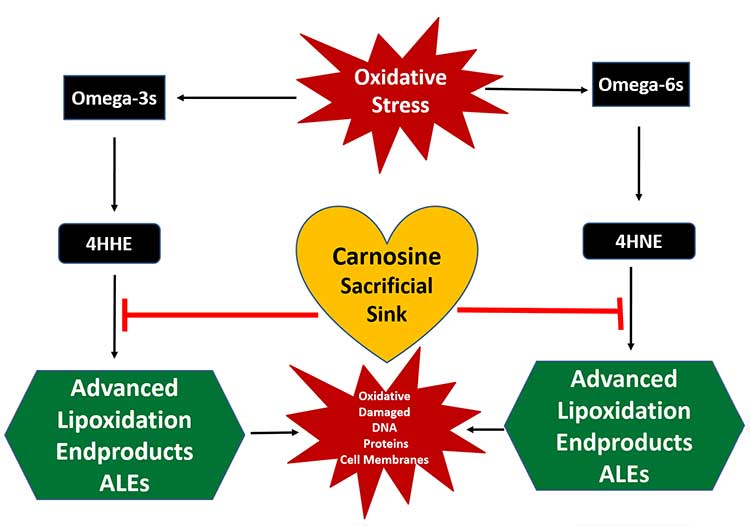
Carnosine May Be Protective Against a Wide Range of Diseases
A more detailed explanation of how carnosine protects against reactive oxygen species (ROS) and how that helps protect against oxidative stress-related pathologies is given in a 2021 paper in the journal Antioxidants:14
“A study that examined the effect of carnosine on oxidative stress in human kidney tubular epithelial (HK-2) cells indicated that carnosine decreased NADPH oxidase (NOX) 4 expression and increased total superoxide dismutase (T-SOD) activity, thus reducing the production of intracellular ROS, relieving the oxidative stress of cells, and ultimately inhibiting the mitochondrial pathway of apoptosis.
Ability of carnosine to protect against pathologies characterized by oxidative stress has been shown in a number of conditions … Carnosine changes the reactivity of superoxide anion by forming a charge-transfer complex with the superoxide radical and also by reducing the efficiency of hydroxyl radicals, creating a compound less reactive than the hydroxyl radical.
One of the mechanisms to protect organisms from oxidative stress is the chelation of transition metals, preventing them from participating in deleterious processes involving ROS … Interestingly, when comparing metals involved in free radical generation, carnosine was found to have a greater antioxidant activity coupled with copper than iron …
At physiological concentrations, carnosine directly reacts with superoxide anion similar to ascorbic acid. In physiological conditions, carnosine was found to reduce oxidative damage and to improve antioxidant activity of different antioxidative enzymes …
Experiments on aged rats showed that therapy with 250 mg/kg/carnosine per day significantly decreased oxidative stress and increased activity of antioxidative enzymes … In similar model of aged rats, carnosine increased liver vitamin E, which further demonstrates its importance in defending the organism from free radicals.
Rising data indicate that carnosine acts as a scavenger of reactive and cytotoxic carbonyl species including 4-hydroxynonenal (HNE). HNE is an aldehyde generated endogenously by lipid peroxidation of unsaturated fatty acids that act as ‘toxic second messengers,’ extending the harmful potential of free radicals.
HNE is considered an important biomarker of oxidative stress and accumulating data indicate that it may modulate signaling pathways of cell proliferation, apoptosis, and inflammation.”
How Carnosine Protects Against Alzheimer’s
As noted in the Pharmaceuticals paper,15 one of the pathologies that carnosine is protective against is Alzheimer’s disease. In my November 2021 interview with Tucker Goodrich, he explained the role of HNE, specifically, in Alzheimer’s, and why it’s so important to get rid of it.
“In heart failure, Alzheimer’s, and AMD [age-related macular degeneration], one of the things they see is an inability of the cell to produce enough energy. The mitochondria are getting damaged. HNE does that damage. It damages 24% of the proteins in the cell, primarily around energy production.
One of the ways your cells produce energy is they basically ferment glucose into pyruvate outside of the mitochondria. This is a perfectly normal part of metabolism and they produce something called pyruvate. A molecule called pyruvate dehydrogenase takes pyruvate into the mitochondria and converts it to acetyl-CoA so the mitochondria can burn it very efficiently for fuel.
Well, one of the things HNE does is it breaks pyruvate dehydrogenase, and they see this in Alzheimer’s where their cells are no longer able to produce enough energy. This is why your cells are dying in Alzheimer’s.
The beta amyloid plaques in Alzheimer’s disease are induced by HNE. There’s a great model that came out of Harvard a couple of years ago showing that.
Even the critical, the most important part of the mitochondria, complex 5, — ADP synthase — which is what takes all the energy coming from your mitochondria and turns it into ATP, which is what fuels the rest of your body — is damaged by HNE. This is a huge issue. There’s no more fundamental problem in aging and health than protein damage.”
Carnosine is the most effective scavenger of HNE, so optimizing your level can go a long way toward protecting against the HNE-induced damage that promotes Alzheimer’s.
Carnosine — A Promising Therapeutic for Obesity-Related Conditions
Elevated HNE has also been found in obese and diabetic patients,16 so there’s reason to suspect carnosine can be important in the treatment of these conditions as well. Another disease where elevated HNE plays a role is atherosclerosis. As noted in the 2021 Antioxidants paper:17
“… emerging studies have indicated that these reactive aldehydes are more than simply markers of oxidative stress.
Rather, it is suggested that these reactive species may play a significant pathogenic role in obesity-associated disorders such as insulin resistance and a carnosine analog alleviates the production or enhances the removal of reactive carbonyl species, providing promising new therapeutic compounds for cardiovascular and metabolic diseases related to obesity.”
Take Control of Your Health by Lowering Your LA Intake
As detailed in several previous articles, the evidence strongly suggests excessive LA is driving most if not all modern diseases, including heart disease and cancer. Fortunately, the solution is simple. Just lower your LA intake.
The easiest way to do this is to use an online nutritional calculator such as Cronometer to calculate your daily intake. Cronometer will tell you how much omega-6 you’re getting from your food down to the 10th of a gram, and you can assume 90% of that is LA. Anything over 10 grams is likely to cause problems. I keep my intake below 5 grams a day.
Since there’s no downside to limiting your LA, you’ll want to keep it as low as possible, which you do by avoiding high-LA foods. Keep in mind you’ll never be able to get to zero, and you wouldn’t want to do that either. You do need some LA, but since it’s found in most foods, and since you need only small amounts, there’s really no way to end up with a deficiency.
- 1, 3, 10, 15 Pharmaceuticals June 2023; 16(6): 778
- 2, 4, 5, 6, 7, 8, 9, 13, 14, 16, 17 Antioxidants July 2021; 10(7): 1037
- 11 Science Direct, Carnosine; Nutritional Supplements and Metabolic Syndrome
- 12 Animal Frontiers April 15, 2023
Groundbreaking Database Helps Improve Cancer Treatments
Reproduced from original article:
https://articles.mercola.com/sites/articles/archive/2024/01/28/groundbreaking-database-cancer-treatments.aspx
The original Mercola article may not remain on the original site, but I will endeavor to keep it on this site as long as I deem it to be appropriate.
Analysis by Dr. Joseph Mercola January 28, 2024
STORY AT-A-GLANCE
- Dr. William LaValley has created state-of-the-art databases of tens of thousands of studies covering the molecular biology of cancer and the anticancer benefits of nutritional supplements and repurposed drugs
- The effectiveness of chemotherapy and radiation can be significantly improved by specifically targeted nutritional supplements and/or repurposed drugs, based on your cancer profile
- Periodic fasting prior to and on the day of chemotherapy or radiation treatment can also be enormously helpful in reducing side effects and increasing effectiveness
Editor’s Note: This article is a reprint. It was originally published May 14, 2017.
Cancer will affect half of all men and one-third of all women at some point in their lives. Having optimal metabolic flexibility can significantly reduce your chances of cancer and improve your chances of recovery, but it’s certainly not the only way to address this devastating disease.
Dr. William LaValley is one of the world’s most advanced clinical researchers and medical doctor practitioners in the field of integrative cancer treatment. He has broken new ground by creating state-of-the-art databases of tens of thousands of studies covering the molecular biology of cancer and the anticancer benefits of nutritional supplements and repurposed drugs (drugs used off-label).
LaValley Protocols — The Other Half of Cancer Treatment
LaValley, a family physician, spent a decade researching the scientific literature, ultimately developing a set of comprehensive databases that he now uses to educate other physicians about science-backed integrative treatments for cancer. He also trains physicians to treat cancer patients using evidence-based molecularly targeted treatments.
“When I was in medical school in the mid-1980s, we didn’t learn molecular biology as part of the medical school curriculum. I always felt incomplete and inadequate because I didn’t understand molecular biology,” he says. “In the beginning of 2006, I took a self-imposed sabbatical … to learn the molecular biology of cancer.
Since that time, I have developed relational databases that connect cancer cell types, molecular pathways and chemotherapy and pharmaceuticals, as well as natural products — how they interact and how they’re cross-referenced with each other.
I have spent well over 13,000 hours developing these databases that now can be used to greatly accelerate the selection of these options, because the data is organized. It’s collated. I can then go in and select specific recommendations because I know where to go look.
That information, I think, has great value for the medical community because now doctors don’t have to go and do all of that. This information is now encapsulated and in a way predigested. It has great value for the broad spectrum of cancer cell types because there’s so much data out there.”
Many Nutritional Supplements Have Anticancer Activity
LaValley’s work shows there are large amounts of data showing nutritional supplements have molecularly targeted, anticancer effects. Some readily available, commonly utilized drugs also increase anticancer activity in those with cancer, and both can be used to boost the effectiveness of conventional chemotherapy and radiation treatments.
“The challenge is that most doctors, because they are already overwhelmed … don’t have the time to dig into this information,” he says. “[There] are two other important reasons that doctors aren’t being taught about this. One is that pharmaceutical companies are restricted by law and regulation from educating about the use of their drugs except for how they’re approved …
The concept is repurposing of drugs. Doctors do it all the time, except they don’t learn about it except from other doctors. There are now doctors teaching about these commonly available drugs for anticancer activity.
In addition to that, supplement companies are forbidden from educating and marketing about the use of their products for disease treatment, specifically cancer treatment. Yet there are large amounts of data that show scientifically proven anticancer molecular effects from a whole range of natural supplements, in a whole range of cancers.”
Download this Article Before it Disappears
Metformin Versus Other Options
There are instances where older, inexpensive drugs can be repurposed for their useful anticancer properties. LaValley mentions metformin as an example, noting it is very low cost, has a long history of safety, is widely available and has significant evidence across a whole range of cancer cell types as having anticancer activity on multiple different molecular targets.
Personally, I have concerns about metformin, as it has been shown to be toxic to mitochondria. Many of its benefits, at least at a molecular level, can be replicated by nutraceuticals that don’t have the mitochondrial toxicity. In my view, Metformin is a mitochondrial poison and should be avoided by most. Lowering stress hormones, like cortisol, adrenalin and glucagon, by having sufficient healthy carbs is a far more effective strategy.
Natural Medicine Has a Place in Personalized Precision Medicine
There are several important aspects of cancer: cancer metabolism in general; the molecular pathways within the cancer cells; and the microscopic environment adjacent to the cancer cells, the latter of which includes your immune system, which has anticancer immune cells that detect and eliminate cancer cells and precancer immune cells that protect and support cancer cells.
There are natural supplements that can increase or boost your anticancer immune cells and decrease your pro-cancer immune cells.
Now, what kills most cancer patients is actually the mechanism by which circulating cancer stem cells are distributed throughout the body. If you can target and eliminate these cancer stem cells, then it’s relatively easy to control the cancer. LaValley says:
“When I describe cancer to patients or to their doctors, I’m looking at targeting cancer metabolism … In addition [to] molecular pathways within the cancer cells, there are a whole range of cancer-supporting and protecting cells in the microscopic environment immediately adjacent to the cancer cells. That microenvironment includes a population of stem cells that can replenish cancer cells even when those cancer cells are eliminated.
Whether it’s cancer cells or those stem cells or some of the immune microenvironment cells, they can … leave the cancer tumor … and circulate throughout the body to other positions … and start growing additional cancer tumors called metastatic cancer …
Using natural products, we can target all of these … There are many options available. Those options can be personalized depending on the molecular characteristics … of those patients’ cancer cells.
They can be evaluated using technology called genomics, DNA assessment, or look at RNA or look at the proteins in the cancer cells, to give a much better idea of how to target … treatment on that particular person’s cancer. That’s personalized precision medicine, in addition to patient-centered medicine, which is where the integrative medicine doctors are giving people choices for natural medicine in addition to their conventional medicine.”
Building Your Cancer Treatment Team
LaValley warns against taking a do-it-yourself approach when you have cancer. It’s very important to work with a qualified team of physicians who have access to scientific literature and know how to personalize protocols for your particular cancer. Fortunately, there is now a large network of integrative medicine doctors in the U.S. and in Canada who are available for collaboration with your oncologist and integrative medicine doctor.
This is precisely what LaValley does. He collaborates with doctors to give them evidence-based, molecularly targeted, anticancer treatment recommendations for supplements, as well as off-label or repurposed pharmaceuticals. Another important member of the team is the nutritionist.
“All of [my recommendations are] specifically designed to be integrated with whatever their chemotherapy and or radiation therapy is, and not expected, recommended or designed to be ‘instead of.’ Most people are getting chemo and radiation. That’s where they are. They don’t know that they can get this significantly greater increased benefit …
The doctor receives the protocol recommendations and then considers and decides [on] each one … with that patient. Then, with our team, we can help those people implement the selections that doctor has made so that we make it very efficient.
It’s a very organized systematic approach. People can implement very complex, very effective, broad-spectrum protocols and get robust anticancer results, basically really healthy, good, long lives. They can do it because this system is made efficient for implementation at home on a daily basis.”
Hope for Late-Stage Cancer Patients
When we’re talking about cancer and cancer treatment, there’s a really wide range of patients and potential options. If you’ve been recently diagnosed and have very localized stage 1 cancer, it is possible that you could control it by carefully implementing various principles that involve food or lifestyle changes. However, the more aggressive your cancer, and the later the stage at which you’re diagnosed, the more comprehensive your treatment strategy needs to be.
Now, what if you’ve just been diagnosed with a stage 4 aggressive cancer? As demonstrated by the ChemoThermia Oncology Center in Turkey, these days there’s often hope even for those given mere weeks to live. LaValley also sees many patients with stage 4 cancer.
“If they’re able to implement at least a minor protocol or a medium-sized protocol, it’s very common for us to see they’re getting significant benefit. In other words, slowing down the progression, even getting the tumor amount, the tumor load, to decrease,” he says. “There are ways to decrease the symptoms, decrease the suffering that people have as well.
There are ways to increase the anticancer part of the immune system with people in stage 4 cancer, because stage 4 can be a very end-stage, very dramatic, very difficult part. Or it can be an early aspect of stage 4 where they still have a really robust quality of life and they are able to manage and have a good full life doing what they want to do … I think it really matters to the degree that they’re willing to implement [the protocols].
What I tell people is try it for three months. See how you’re able to implement. Collaborate with your doctor, your conventional oncology team, as well as your integrative medicine doctors. Assess how you are at one, two and three months.
These kinds of protocols, they take a while to get up and running. It may take a month or so just to get things up and running. Then over the next two months [of] very diligently implementing, reassess and determine whether there’s value. If somebody has a rapidly progressive cancer and then it doesn’t rapidly progress, that’s progress. That’s benefit. That’s value. They’re able to extend their length of life.”
New Technology Can Identify Cancer Markers
Cancer patients also have more and better options today in terms of post-care, or that time after their cancer has gone into remission and can no longer be seen on a computed tomography (CT) scan, positron emission tomography (PET) scan, magnetic resonance imagery (MRI) or other kind of scanning tool. Just because the tumor can no longer be seen on a scan does not automatically mean there are no cancer cells left in the body.
Today, there are tools that can identify tumor markers, such as particular proteins in the blood. Should such markers be present, continuing the anticancer protocol would be prudent, and could mean the difference between living cancer free for the rest of your life or having to address a recurrence down the road.
More Information
If you’ve been diagnosed with cancer, or know someone who has been diagnosed, you may want to consider tackling it from more angles than just one. Chemotherapy and radiation are hardly magic bullets. Overall, they have fairly low success rates for many cancers.
Also know that LaValley and his team, as well as other integrative medicine doctors, are available to help, regardless of where you live. Oftentimes LaValley will initially be contacted by the patient. He can then contact your chosen oncologist or integrative medicine doctor to establish a collaborative team. If you don’t have an integrative medicine doctor, or oncologist, he and his team can also help you find one.
Once a collaboration has been set up, LaValley can develop a customized treatment protocol just for you for your integrative medicine physician to consider in your treatment. Remember, it’s important to have an integrative team working together to ensure the entire spectrum of care is properly covered.
You can find more information on his website, www.LaValleyMDProtocols.com. It’s a phenomenal resource that both you and your doctor can peruse. To set up a consultation with LaValley, see the “Get Started” tab.
“We’re developing resources for patients and their doctors to make it easier for them to understand [the information] and to have a discussion, as well as [make] this database access easier,” he says.
“Medicine is undergoing such a great evolution that it’s going to come across the full spectrum. That’s what we’re aiming to do. It’s to make people have access to these [protocols] from whatever practice or whatever licensed physician they’re going to.”
Are Baby Carrots as Good for You as Full Size?
Reproduced from original article:
https://articles.mercola.com/sites/articles/archive/2024/01/16/are-baby-carrots-good-for-you.aspx
The original Mercola article may not remain on the original site, but I will endeavor to keep it on this site as long as I deem it to be appropriate.
Analysis by Dr. Joseph Mercola January 16, 2024

STORY AT-A-GLANCE
- Carrots are a popular snack food in the U.S. as they are easy, sweet and go well with a number of different dipping sauces, such as humus
- While baby carrots are nutrient-dense, they also are bathed in chlorine before sale, increasing the risk of exposure to disinfection byproducts, some of the most dangerous chemicals to your health
- Cooking and cutting whole unprocessed carrots may release more beneficial and powerful antioxidants in the vegetable
Carrots, and especially baby carrots, are a popular snack in the U.S., for adults and children alike. Parents use the bite-sized, sweet treats in children’s lunches to boost the nutrient value of their mid-day meal. They are easy to dip, snack on and require little to no preparation.
Baby carrots today are a breed apart from the original product, which were peeled and reshaped from broken or misshapen larger carrots. California carrot farmer Mike Yurosek was the entrepreneur in the 1980s who reshaped the way you think about carrots.1
As Yurosek’s method of peeling and reshaping has evolved over the years, the popularity of the product has grown. Today, farmers produce hybrid carrots designed to meet the needs of the consumer who wants a fresh out-of-the-bag snack without the hassle of peeling and cleaning. But, does all that convenience come at a price?
Do Small Size Carrots Have Full-Size Nutrients?
Baby carrots appeal to many, as they both taste good and deliver an additional nutritional punch to a diet potentially high in processed foods. Carrots are a root vegetable that are commonly orange in color. Purple, black, red, white and yellow varieties have also been developed, although not as baby carrots.
The current 2-inch carrots are cut from a special variety of plant that grows slim and remains tender.2 The ends of the carrots, or broken pieces, are now used for juicing or are processed into cattle feed.
The carrots used for baby carrots are grown in close proximity, to encourage the root to grow deep and slender, as well as being harvested approximately 40 to 60 days earlier than full grown variety.3
Baby carrots are also not peeled as they once were. Instead, the carrots are shaped from small, slender carrots that don’t have the characteristic lighter colored core, and then are buffed and polished in a tumble drum.4
According to a comparison between baby carrots5 and full-sized carrots6 in the U.S. Department of Agriculture National Nutrient Database for Standard Reference Release, baby carrots have slightly more water and slightly fewer calories.
They each have approximately the same amount of sugar, but baby carrots have less iron, phosphorus and magnesium. Comparing 100 grams of each type of carrot, baby carrots also carry less vitamin A and vitamin C, but significantly more folate than the larger variety.
Although the nutrient value between the two types of carrots is not equal, this may be offset if you are more tempted to eat a greater number of baby carrots than you are the larger, thicker variety.
Benefits of Carrots and Beta-Carotene
In this short video, I briefly go over the role and importance of antioxidants to your health. Carrots are a potent source of antioxidants in your diet, including lycopene, beta-carotene and vitamin A. Half a cup of chopped carrots, whether the larger or smaller baby carrot, contains over 200% of the average daily recommended amount of vitamin A.
The high vitamin A content comes from beta-carotene, which is converted into vitamin A in your liver. Beta-carotene is also a strong antioxidant, effective against free radicals and reducing oxidative stress. By developing a habit of including carrots in your daily diet, you will enjoy some important health benefits.
| Cancer — Antioxidants in carrots may play a role in cancer prevention. Research has demonstrated smokers who eat carrots more than once a week have a lower risk of lung cancer,7 while a beta-carotene-rich diet may also protect against prostate cancer.8,9
Further research demonstrates the association between beta-carotene and a lower risk of colon cancer,10 a positive effect against leukemia11 and reduced risk of gastric cancer.12 A natural toxin carrots use against fungal disease, falcarinol, may stimulate cancer-fighting mechanisms in your body, and has demonstrated the ability to reduce the risk of tumors in rats.13 |
| Vision — Vitamin A deficiency may cause your eye’s photoreceptors to deteriorate, leading to vision problems. Eating foods rich in beta-carotene may restore vision,14 lending truth to the old adage that carrots are good for your eyes.
Carrots may reduce your risk of age-related macular degeneration15 and the incidence of cataracts.16 Additionally, research shows women may reduce their risk of glaucoma by 64% by consuming more than two servings of carrots per week.17 |
| Heart health — Fruits and vegetables that are deep orange in color are associated with a lower risk of coronary heart disease (CHD). Carrots are associated with a 32% lower risk of CHD18 and have been associated with a lower risk of heart attacks in women.19 |
| Metabolic syndrome — Beta-carotene and lycopene, two carotenoids found in carrots, have been associated with a lower incidence of metabolic syndrome in middle aged men.20 Metabolic syndrome is associated with heart disease, stroke and type 2 diabetes. |
| Skin — Orange-red vegetables, rich in beta-carotene, may help prevent cell damage and premature skin aging.
People who suffer from leukoplakia, white lesions found in the mouth and tongue of people exposed to years of smoking or alcohol consumption, and who took a beta-carotene supplement experienced fewer symptoms.21 Researchers have also found people who suffer from scleroderma, a connective tissue disorder causing hardening of the skin, had low levels of beta-carotene.22 |
| Oral health — Carrots may help reduce the number of cavities you get and help keep your teeth clean. Saliva is an alkaline substance, helping to reduce bacteria and plaque production on your teeth. Eating carrots helps to increase your production of saliva and stimulates your gums.23 |
| Brain health — Carrot extract has demonstrated a positive effect on the management of cognitive dysfunction.24 Eating a high number of root vegetables, such as carrots, reduce cognitive decline in middle-aged men and women.25 |
| Liver function — Carrot extract may also help protect your liver from environmental toxins.26 The hepatoprotective benefits of carrots are experienced with both the vegetable and the extract.27 |
| Antiaging effects — Antioxidants help to ward off the damage caused by free radicals, and are a strong antiaging force. Carrots are a valuable source of these antioxidants.28 |
| Anti-inflammatory — The anti-inflammatory properties in carrots are significant even when compared to anti-inflammatory drugs like aspirin, ibuprofen and naproxen.29 |
Download this Article Before it Disappears
Cutting Carrots May Enhance the Nutrient Value
Since baby carrots are buffed, removing the outer protective layer, they require refrigeration to extend their shelf life. Even in the refrigerator, they may start to spoil within 30 days of picking and processing. Many of the health benefits of carrots come from their strong antioxidant activity, which may be enhanced through cooking or cutting the vegetable.
Plants have a rudimentary form of communication and a means of protection. In one study, researchers discovered when a tobacco plant was attacked by a specific insect, the plant released a compound that attracted the insect’s predator, thus protecting itself.30 This same process of chemical change may increase the antioxidant concentration in a carrot after it has been cut.
Both humans and plants use antioxidants to limit the damaging effects of oxidative reactions and stress in cells. Oxidative stress may predispose you to diseases, such as heart disease and cancer. Plant-based phenolic antioxidants may reduce the risk of developing these conditions.31 Some of the phenolic antioxidants produced by plants appear in blood plasma and tissue, which may improve the function of these antioxidants in your body.
Studies suggest that wounding a carrot by cutting or shredding will increase the production of antioxidants in the plant. Author of one study, Luis Cisneros-Zevallos, Ph.D., director of the Plant Bioactives & Bioprocessing Research Lab at Texas A&M University, commented:32
“Wounding fresh produce sends a signal to the cells, which perceive that as if they were under attack or facing adverse conditions. As a result, oxidative stress increases in the cell and they start synthesizing antioxidant molecules to protect the cell from that stress.”
Researchers found the more the plant was wounded or stressed, the greater the antioxidant production at the cellular level.33 The higher the intensity of the damage, the longer the plant produced antioxidants, measured over four days during the study, making carrots rich sources of phenolic antioxidant compounds.
Cooking Your Carrots May Release More Carotenoids
Cooking carrots may also increase the level of beta-carotene and phenolic acids produced by the carrot. Since raw carrots have a tough cell wall, less than 25% of the beta-carotene in carrots is able to be converted into vitamin A.34 During cooking the cellulose walls are dissolved, freeing up nutrients. An increase in total carotenoids available after steam blanching have been demonstrated. When dehydrated, the carotenoids are protected but do not increase.
Another study evaluating the effects of boiling, steaming and frying on carotenoids in vegetables, found steamed vegetables kept the best texture quality, but all three means of cooking demonstrated an overall increase in values.35 Just resist the urge to cut your carrots before cooking to make more antioxidants available for absorption.
Baby Carrots Take a Chlorine Bath
Part of the process baby carrots undergo before reaching the grocery store is a chlorine bath. The largest carrot farm, Grimmway Farms, reports that chlorine is used on all their baby carrots to prevent food poisoning.36 After their chlorine wash they are rinsed, packaged and shipped.
Chlorine is also used to extend the shelf life of the baby carrots.37 As baby carrots begin to age they develop a white appearance on the outer layer. This doesn’t affect the nutrient value of the carrots, but does impact how appetizing they appear. Buffing and processing baby carrots increase the rate at which the carrots begin deteriorating and develop a white blush on the exterior caused from drying out.38
The rate at which this white coating appears will depend upon the condition of the carrots before processing, the amount of abrasiveness of the processing and the humidity levels during storage. Chlorine, used to clean and preserve the carrots, is a common chemical found in your water supply, pesticides, paper and plastics. In the last 30 years, a growing body of evidence has suggested that chlorine and by-products trigger significant negative health conditions.
Although the amount of chlorine in baby carrots is minute, it is added to your overall toxic burden from other sources. It isn’t the chlorine that causes the problems, but rather the disinfection byproducts (DBPs) produced when chlorine interacts with organic matter. These byproducts are far more toxic than the chlorine, including trihalomethanes and haloacetic acids. In this instance, the term organic is used to mean a compound that is carbon-based.
This means these byproducts are produced in all carrots, whether toxic pesticides were used in the growing process or not. Long-term risks of exposure to DBPs include excessive free radical formation, which accelerates aging and vulnerability to gene mutation and cancer. More than 600 DBPs have been discovered, some of which are linked to liver malfunction, arteriosclerotic damage and neurodegenerative changes.39
Scientists are only beginning to understand the long- and short-term impact of chlorine-based chemicals. The healthiest option is to buy whole, unprocessed carrots — ideally organic — then wash, peel and cut them yourself.
Create a Super Trio
Here are three excerpts from studies showing how ginger, turmeric and carrots — three superfoods — were effective in both treatment and prevention of several cancers:
• Ginger — “Although the medicinal properties of ginger have been known for thousands of years, a significant number of in vitro, in vivo, and epidemiological studies further provide substantial evidence that ginger and its active compounds are effective against wide variety of human diseases including GI [gastrointestinal] cancer.
Ginger has been found to be effective against various GI cancers such as gastric cancer, pancreatic cancer, liver cancer, colorectal cancer and cholangiocarcinoma.”40
• Turmeric — “Curcumin is among the more successful chemopreventive compounds investigated in recent years, and is currently in human trials to prevent cancer. The mechanism of action of curcumin is complex and likely multifactorial. We have made the unexpected observation that curcumin strikingly modulates proteins of iron metabolism in cells and in tissues, suggesting that curcumin has properties of an iron chelator.”41
• Carrots — This study has shown that extracts from carrots can induce apoptosis and cause cell cycle arrest in leukemia cell lines.42
Get all three of these powerful antioxidants in one delicious dish: Steam a few cups of carrots in a few tablespoons of water, just until tender-crisp. Add a few teaspoons of butter, sea salt to taste and a half-teaspoon each of grated turmeric and ginger (or half that amount of the ground variety). To serve, mash lightly or serve whole for a wildly healthy, delicious side dish.
- 1, 3, 36 Fox News, January 7, 2014
- 2, 4 Huffington Post, Jan. 27, 2013
- 5 US Department of Agriculture National Nutrient Database for Standard Reference Release Carrots, baby, raw
- 6 US Department of Agriculture National Nutrient Database for Standard Reference Release, Carrots, raw
- 7 International Journal of Epidemiology 1986 Dec;15(4):463-8
- 8 Cancer Epidemiol Biomarkers Prev. 2004 Feb;13(2):260-9
- 9 European Journal of Nutrition 2014 Dec;53(8):1615-23
- 10 International Journal of Clinical Oncology 2014; 19(1) 87-97
- 11 Journal of Medicinal Food. 2011 Nov;14(11):1303-12
- 12 Journal of Gastric Cancer; Dec2015; 15(4):256
- 13 J Agric Food Chem 2005 Mar 9;53(5):1823-7
- 14 Scientific American June 23, 2014
- 15 Investigative Ophthalmology and Visual Science 2014; 55(1):587
- 16 Critical Reviews in Biotechnology 2016; 36(5):829-839
- 17 American Journal of Opthalmology 2008 Jun;145(6):1081-9
- 18 British Journal of Nutrition, 2011; 106(10): 1562-1569
- 19 BMJ 1990; 300(6727):771-773
- 20, 21, 22 J Nutr 2009 May;139(5):987-92
- 23 Well-Being Secrets, 23 Science-Backed Health Benefits of Carrots
- 24 Biological and Pharmaceutical Bulletin, 2006; 29(6):1154
- 25 British Journal of Nutrition, 2011;106(5):752
- 26 Journal of Ethnopharmacology 1995; 47(2):69-74
- 27 Food and Nutrition Sciences, 2014; 5(22)
- 28 Lexwell. Superfood of the Month: Carrots
- 29 Phytotherapy Research, 2003; 17(8):976
- 30 Free Radic Biol Med. 2006 Apr 1;40(7):1152-60
- 31 Current Opinion in Clinical Nutrition and Metabolic Care 2000 Nov;3(6):447-51
- 32 New York Times, Jan. 20, 2017
- 33 Food Chemistry 2012; 134(2):615
- 34 Journal of Food Science and Technology 2012; 49(1):22-32
- 35 Journal of Agriculture and Food Chemistry 2008; 56(1):139
- 37 International Journal of Food Microbiology May 10, 2007
- 38 Health Canada 2009; White Blush on Cocktail Carrots
- 39 Environmental Science and Technology, 2011; 45(13): 5791
- 40 Gastroenterology Research and Practice, 2015;2015; 142979
- 41 Free Radical Biology and Medicine 2006; 40: 1152-1160 (Archive)
- 42 Journal of Medicinal Food 2011; 14(11):1303