Natural Medicine
now browsing by category
Reversal of Cardiovascular Diseases with Orthomolecular Medicine
Reproduced from original OMNS article (OrthoMolecular News Service):
http://orthomolecular.org/
Subscribe to the free Orthomolecular Newsletter: http://orthomolecular.org/subscribe.html
Go to the OMNS Archive: http://orthomolecular.org/resources/omns/index.shtml
Orthomolecular Medicine News Service, May 1, 2022
New Free-Access Video:
Two Case Reports and Literature Review
https://youtu.be/0oeZeJRp0WY or https://www.brighteon.com/channels/OMES
Presented by Richard Z. Cheng, MD, PhD
OMNS (May 1, 2022) Cardiovascular diseases (CVDs) are the leading cause of death, killing some 18 million people globally, costing more than $320 billion annually in the USA alone. About 2/3 of these deaths are due to heart attacks and strokes, with atherosclerosis the key pathology. Although the causes of CVDs continue to be debated, it is generally accepted in the literature that atherosclerotic CVDs are inflammatory diseases with elevated oxidative stress. Oxidative stress is due to the imbalance of excessive oxidants (toxins) and deficient antioxidants. The resulting deficiency of vitamin C, a primary antioxidant, leads to impairment of collagen synthesis. Collagen plays a critical role in the integrity of arterial walls. Collagen deficiency results in arterial wall damage and an inflammatory response leading to atherosclerosis and associated pathologies including coronary artery stenosis and occlusion.
Based on the review and analysis of decades of research, we have previously proposed an integrative orthomolecular medicine approach that includes healthy lifestyle, nutritional supplementation with a focus on high dose vitamin C and other antioxidants, and toxin avoidance and removal (detox). We report here that with this protocol we have reversed two cases of atherosclerotic CVDs. Existing evidence and clinical experience suggest that atherosclerosis is preventable and reversible.
[The above 32 minute presentation inaugurates the new video arm of the Orthomolecular Medicine News Service. The Orthomolecular Medicine Educational Video Service is free-access, peer-reviewed, and non-commercial. https://www.youtube.com/channel/UC1dbpz2xB3jhAAyjvLn2yOQ/about
Videos will also be posted on Brighteon at https://www.brighteon.com/channels/OMES
This video is from Brighteon as YuoTube indiscriminately delete videos that may affect the profits of the big drug companies.
Your comments, corrections and suggestions are invited and may be made directly to <DrCheng@drwlc.com> .]
More Cardiovascular Disease articles from OMNS:
Spencer A, Saul AW (2010) Vitamin C and Cardiovascular Disease. Orthomolecular Medicine News Service. http://orthomolecular.org/resources/omns/v06n20.shtml
Smith RG, Saul AW (2011) Two Vitamin C Tablets Every Day Could Save 200,000 Lives Every Year: Ascorbate Supplementation Reduces Heart Failure. Orthomolecular Medicine News Service. http://orthomolecular.org/resources/omns/v07n14.shtml
Orthomolecular Medicine News Service (2005) Vitamin C Fights Heart Disease – Vitamin C Saves Lives. http://orthomolecular.org/resources/omns/v01n02.shtml
Nutritional Medicine is Orthomolecular Medicine
Orthomolecular medicine uses safe, effective nutritional therapy to fight illness. For more information: http://www.orthomolecular.org
Find a Doctor
To locate an orthomolecular physician near you: http://orthomolecular.org/resources/omns/v06n09.shtml
The peer-reviewed Orthomolecular Medicine News Service is a non-profit and non-commercial informational resource.
Editorial Review Board:
Albert G. B. Amoa, MB.Ch.B, Ph.D. (Ghana)
Seth Ayettey, M.B., Ch.B., Ph.D. (Ghana)
Ilyès Baghli, M.D. (Algeria)
Ian Brighthope, MBBS, FACNEM (Australia)
Gilbert Henri Crussol, D.M.D. (Spain)
Carolyn Dean, M.D., N.D. (USA)
Ian Dettman, Ph.D. (Australia)
Susan R. Downs, M.D., M.P.H. (USA)
Ron Ehrlich, B.D.S. (Australia)
Hugo Galindo, M.D. (Colombia)
Martin P. Gallagher, M.D., D.C. (USA)
Michael J. Gonzalez, N.M.D., D.Sc., Ph.D. (Puerto Rico)
William B. Grant, Ph.D. (USA)
Claus Hancke, MD, FACAM (Denmark)
Tonya S. Heyman, M.D. (USA)
Patrick Holford, BSc (United Kingdom)
Suzanne Humphries, M.D. (USA)
Ron Hunninghake, M.D. (USA)
Bo H. Jonsson, M.D., Ph.D. (Sweden)
Dwight Kalita, Ph.D. (USA)
Felix I. D. Konotey-Ahulu, MD, FRCP, DTMH (Ghana)
Jeffrey J. Kotulski, D.O. (USA)
Peter H. Lauda, M.D. (Austria)
Alan Lien, Ph.D. (Taiwan)
Homer Lim, M.D. (Philippines)
Stuart Lindsey, Pharm.D. (USA)
Pedro Gonzalez Lombana, MD, MsC, PhD (Colombia)
Victor A. Marcial-Vega, M.D. (Puerto Rico)
Juan Manuel Martinez, M.D. (Colombia)
Mignonne Mary, M.D. (USA)
Jun Matsuyama, M.D., Ph.D. (Japan)
Joseph Mercola, D.O. (USA)
Jorge R. Miranda-Massari, Pharm.D. (Puerto Rico)
Karin Munsterhjelm-Ahumada, M.D. (Finland)
Tahar Naili, M.D. (Algeria)
W. Todd Penberthy, Ph.D. (USA)
Zhiyong Peng, M.D. (China)
Isabella Akyinbah Quakyi, Ph.D. (Ghana)
Selvam Rengasamy, MBBS, FRCOG (Malaysia)
Jeffrey A. Ruterbusch, D.O. (USA)
Gert E. Schuitemaker, Ph.D. (Netherlands)
T.E. Gabriel Stewart, M.B.B.CH. (Ireland)
Thomas L. Taxman, M.D. (USA)
Jagan Nathan Vamanan, M.D. (India)
Garry Vickar, M.D. (USA)
Ken Walker, M.D. (Canada)
Anne Zauderer, D.C. (USA)
Andrew W. Saul, Ph.D. (USA), Editor-In-Chief
Associate Editor: Robert G. Smith, Ph.D. (USA)
Editor, Japanese Edition: Atsuo Yanagisawa, M.D., Ph.D. (Japan)
Editor, Chinese Edition: Richard Cheng, M.D., Ph.D. (USA)
Editor, French Edition: Vladimir Arianoff, M.D. (Belgium)
Editor, Norwegian Edition: Dag Viljen Poleszynski, Ph.D. (Norway)
Editor, Arabic Edition: Moustafa Kamel, R.Ph, P.G.C.M (Egypt)
Editor, Korean Edition: Hyoungjoo Shin, M.D. (South Korea)
Editor, Spanish Edition: Sonia Rita Rial, PhD (Argentina)
Contributing Editor: Thomas E. Levy, M.D., J.D. (USA)
Contributing Editor: Damien Downing, M.B.B.S., M.R.S.B. (United Kingdom)
Assistant Editor: Helen Saul Case, M.S. (USA)
Technology Editor: Michael S. Stewart, B.Sc.C.S. (USA)
Associate Technology Editor: Robert C. Kennedy, M.S. (USA)
Legal Consultant: Jason M. Saul, JD (USA)
Comments and media contact: drsaul@doctoryourself.com OMNS welcomes but is unable to respond to individual reader emails. Reader comments become the property of OMNS and may or may not be used for publication.
Click here to see a web copy of this news release: https://orthomolecular.acemlna.com/p_v.php?l=1&c=226&m=229&s=a8c8fe7bea3fdaa4efae896c7612b3de
This article may be reprinted free of charge provided 1) that there is clear attribution to the Orthomolecular Medicine News Service, and 2) that both the OMNS free subscription link http://orthomolecular.org/subscribe.html and also the OMNS archive link http://orthomolecular.org/resources/omns/index.shtml are included.
Riordan Clinic | Orthomolecular.org
3100 N Hillside Ave
Wichita, Kansas 67219
United States
When You Cook with This, Toxic Compounds Are Released
Reproduced from original article:
https://articles.mercola.com/sites/articles/archive/2022/04/23/why-splenda-is-not-safe-for-consumption.aspx
The original Mercola article may not remain on the original site, but I will endeavor to keep it on this site as long as I deem it to be appropriate, and will not be bullied into removing it.
Analysis by Dr. Joseph Mercola Fact Checked April 23, 2022

STORY AT-A-GLANCE
- Cooking with sucralose generates chloropropanols, part of a class of toxins known as dioxins, which have been linked to cancer and endocrine disruption. Other toxic compounds created when sucralose is exposed to heat include polychlorinated dibenzo-p-dioxins and dibenzofurans
- Research shows sucralose — sold under brand names such as Splenda, Splenda Zero, Zero-Cal, Sukrana, Apriva, SucraPlus, Candys, Cukren and Nevella — is metabolized and accumulates in fat cells
- Many studies have linked artificial sweeteners to an increased risk for obesity, insulin resistance, Type 2 diabetes and metabolic syndrome — the very conditions for which the sweeteners are promoted
- Sucralose reduces gut bacteria by as much as 50%, preferentially targeting bacteria known to have important human health benefits. Splenda has also been shown to exacerbate gut inflammation and intensify symptoms in people with Crohn’s disease
- Research published in 2016 found male mice experienced a significant dose-related increase in malignant tumors and cancer of the blood, bone marrow and the lymphatic system when fed higher doses of sucralose
This article was previously published May 8, 2019, and has been updated with new information.
Are artificial sweeteners such as Splenda still part of your daily diet? If so, I would strongly recommend reconsidering. It’s important to realize that while artificial sweeteners have no (or very few) calories, they are still metabolically active,1 and not in a beneficial way.
For example, research2,3 published in the online version of the Journal of Toxicology and Environmental Health August 21, 2018, shows sucralose — sold under brand names such as Splenda, Splenda Zero, Zero-Cal, Sukrana, Apriva, SucraPlus, Candys, Cukren and Nevella — is metabolized and accumulates in fat cells.
Remarkably, artificial sweeteners have become so ubiquitous, research4 published in the April 2019 issue of Ecotoxicology and Environmental Safety refers to them as an “emerging” environmental contaminant, noting they have “high water persistence.”
According to this paper, artificial sweeteners are chemically stable in the environment and water supplies appear to be at greatest risk for contamination. The researchers looked at 24 environmental studies assessing the presence of artificial sweeteners in the environment from 38 locations around the world, including Europe, Canada, the U.S. and Asia.
“Overall, the quantitative findings suggested that the occurrence of non-nutritive artificial sweeteners is present in surface water, tap water, groundwater, seawater, lakes and atmosphere,” the paper states. What the ultimate ramifications for wildlife, especially marine life, and human health might be are still anyone’s guess.
Artificial Sweeteners Promote Obesity, Diabetes and More
As explained in the 2016 paper,5 “Metabolic Effects of Non-Nutritive Sweeteners,” many studies have linked artificial sweeteners to an increased risk for obesity, insulin resistance, Type 2 diabetes and metabolic syndrome. This is in stark contrast to what you’re told by industry, which continues to promote artificial sweeteners as a way to lower your risk of those conditions.
The paper presents several mechanisms by which artificial sweeteners promote metabolic dysfunction:
1.They interfere with learned responses that contribute to glucose control and energy homeostasis — Studies have demonstrated that when sweet taste and caloric intake are mismatched, your body loses its ability to properly regulate your blood sugar.
2.They interact with sweet-taste receptors expressed in digestive system that play a role in glucose absorption and trigger insulin secretion, thereby inducing both glucose intolerance and insulin resistance, which raises your risk of obesity. Sweet taste without calories also increases appetite6 and subjective hunger ratings.7
3.They destroy your gut microbiota — A 2008 study8 revealed sucralose (Splenda) reduced gut bacteria by as much as 49.8%, preferentially targeting bacteria known to have important human health benefits. Consuming as few as seven little Splenda packets may be enough to have a detrimental effect on your gut microbiome.
More recent research,9 published in the journal Molecules in October 2018, confirmed and expanded these findings, showing that all currently approved artificial sweeteners (aspartame, sucralose, saccharin, neotame, advantame and acesulfame potassium-k) disrupt the gut microbiome — in part by damaging the bacteria’s DNA, and in part by interfering with their normal activities.
Another 201810 found Splenda consumption may exacerbate gut inflammation and intensify symptoms in people with Crohn’s disease by promoting harmful gut bacteria. These results echoed those published in 2014,11 where they found Splenda may exacerbate symptoms of Crohn’s disease by augmenting “inflammatory activity at the biochemical level” and altering microbial-host interactions within the intestinal mucosa.
Similarly, research12 published in 2017 implicated sucralose in chronic liver inflammation by altering “the developmental dynamics of the gut microbiome.”
Why You Should Never Cook With Splenda
Splenda (sucralose) is frequently recommended for cooking and baking,13 and is often used in processed foods in which high heat was involved. This, despite the fact that scientists have warned about the dangers of heating sucralose for years.
In the 2013 paper,14 “Sucralose, a Synthetic Organochloride Sweetener: Overview of Biological Issues,” the authors state that “Cooking with sucralose at high temperatures … generates chloropropanols, a potentially toxic class of compounds.” This paper also warns the acceptable daily intake set for sucralose may in fact be hundreds of times too high to ensure safety.
The German Federal Institute for Risk Assessment (BfR) recently issued a report15 on the available data on sucralose, confirming that cooking with sucralose is likely a terrible idea, as chlorinated compounds are formed at high temperatures. As reported by MedicalXpress:16
“When sucralose (E 955) is heated to temperatures higher than 120 degrees C a gradual — and with further continuously increasing temperature — decomposition and dechlorination of the sweetener occurs.
Temperatures of between 120 degrees C [248 degrees Fahrenheit] and 150 degrees C [302 degrees F] are possible during industrial manufacturing and processing of foods, and are also reached in private households during cooking and baking of foods containing sucralose.
This may lead to the formation of chlorinated organic compounds with a health-damaging potential, such as polychlorinated dibenzo-p-dioxins (PCDD), dibenzofurans (PCDF) and chloropropanols.”
Chloropropanols, while still poorly understood, are believed to have adverse effects on your kidneys and may have carcinogenic effects.17 One good reason to be suspicious of chloropropanols is because they’re part of a class of toxins known as dioxins, and dioxins are known to cause cancer and endocrine disruption.
The fact that sucralose creates toxic dioxins when heated is also a concern for those who use vaping liquid containing this artificial sweetener. A 2017 study18 found sucralose contributes sweet taste only when used in a cartridge system, and chemical analysis showed the use of a cartridge system also raised the concentration of sucralose in the aerosol.
I find it interesting that these studies are now confirming what I suspected and published in my book, published over 10 years ago — “Sweet Deception” — which was an expose on Splenda.
Sucralose Shown to Have Carcinogenic Potential
Research19 published in 2016 in the International Journal of Occupational and Environmental Health tested the carcinogenic potential of sucralose by adding it to mouse feed, at various concentrations, starting at 12 days of gestation and continuing throughout their natural life span.
Results showed male mice experienced a significant dose-related increase in malignant tumors and hematopoietic neoplasias (cancer of the blood, bone marrow and the lymphatic system). The dosages tested were 0, 500, 2,000, 8,000 and 16,000 parts per million (ppm). The worst results occurred in males given 2,000 ppm and 16,000 ppm. According to the authors:
“These findings do not support previous data that sucralose is biologically inert. More studies are necessary to show the safety of sucralose, including new and more adequate carcinogenic bioassay on rats. Considering that millions of people are likely exposed, follow-up studies are urgent.”
Pregnant Women Beware
More recent research,20 published in 2018, revealed the artificial sweeteners sucralose and acesulfame-potassium transfer into breast milk — a crucial fact that pregnant women need to be mindful of, considering the harmful effects of these compounds. To determine whether the sweeteners could transfer into breast milk, the researchers enrolled 34 women who were exclusively breastfeeding.
Each of the women drank 12 ounces of Diet Rite Cola, which contains 68 milligrams (mg) of sucralose and 41 mg of acesulfame-potassium, before breakfast. Habitual use of artificial sweeteners was also assessed via a diet questionnaire. Breast milk samples were collected before ingestion and every hour thereafter for six hours. As reported by the authors:
“Owing to one mother having extremely high concentrations, peak sucralose and acesulfame-potassium concentrations following ingestion of diet soda ranged from 4.0 to 7387.9 ng/mL and 299.0 to 4764.2 ng/mL, respectively.”
This is believed to be the first time researchers have demonstrated that infants are in fact exposed to artificial sweeteners even when exclusively breastfed (if the mother consumes them). An accompanying commentary21 by pediatric experts notes:
“NNS [non-nutritive sweeteners] were present in the breast milk of all subjects in physiologically significant amounts, and … at concentrations well above the taste thresholds. Why is this important?
NNS or non-caloric artificial sweeteners (NCAS) are ubiquitous in the modern diet … Despite the approval by the FDA and European Food Safety Authority, concerns, admittedly largely unproven, persist about their safety … The concerns about NNS are three-fold.
First, that they may adversely alter taste preferences. Second, that the ultimate effect may be contrary to what is intended and their ingestion may increase food consumption. Third, that they may adversely alter the gut bacterial microbiome and its metabolites.
All of these concerns are magnified with early exposure in life. The evidence to support these concerns is either inductive or based on experimental models and emerging human data.”
‘Diet’ Beverages Linked to Risk of Stroke and Heart Attack
Another 2018 study22 by the American Heart Association (AHA) found that, compared to drinking none or just one “diet” drink per week, women over 50 who drank two or more artificially sweetened beverages per day had a:23
- 31% increased risk for ischemic stroke
- 29% increased risk of coronary heart disease
- 23% increased risk of all types of stroke
- 16% increased risk of early death
The risk is particularly high for women with no previous history of heart disease, those who are obese and/or African-American women. The study included more than 81,714 women from the Women’s Health Initiative Observational Study, a longitudinal study of the health of 93,676 postmenopausal women between the ages of 50 and 79. The mean follow-up time was close to 11.9 years. According to the authors:
“In women with no prior history of cardiovascular disease or diabetes mellitus, high consumption of ASB [artificially-sweetened beverages] was associated with more than a twofold increased risk of small artery occlusion ischemic stroke … High consumption of ASBs was associated with significantly increased risk of ischemic stroke in women with body mass index ≥30 …”
In an accompanying editorial,24 “Artificial Sweeteners, Real Risks,” Hannah Gardener, assistant scientist in the department of neurology at the University of Miami, and Dr. Michell Elkind at Columbia University, suggest drinking pure water instead of no-calories sweetened beverages, as it is by far the safest and healthiest low-calorie drink there is.
If you want some flavor, just squeeze a little bit of fresh lemon or lime into mineral water. In instances where your cooking, baking or beverage needs a little sweetener, be mindful of your choice.
Sucralose Linked to Liver, Kidney and Thymus Damage
Other recent research25 published in the journal Morphologie found sucralose caused “definite changes” in the liver of treated rats, “indicating toxic effects on regular ingestion.” The researchers warn these findings suggest sucralose should be “taken with caution to avoid hepatic damage.”
In other words, regularly using Splenda could damage your liver. Here, adult rats were given a much higher (yet nonlethal) oral dose of sucralose — 3 grams (3,000 mg) per kilo body mass per day for 30 days, after which the animals’ livers were dissected and compared to the livers of unexposed controls. According to the authors:
“Experimental rats showed features of patchy degeneration of hepatocytes along with Kupffer cells hyperplasia, lymphocytic infiltration, sinusoidal dilatation and fibrosis indicating a definite hepatic damage on regular ingestion of sucralose. Sinusoidal width was also found to be increased in experimental animals as compared to controls.”
Studies have also linked sucralose consumption to liver and kidney enlargement26,27 and kidney calcification.28,29 Another organ affected by sucralose is your thymus, with studies linking sucralose consumption to shrinkage of the thymus (up to 40%30,31) and an increase in leukocyte populations (immune system cells) in the thymus and lymph nodes.32
Sucralose Safety Has Been Repeatedly Questioned
As of April 12, 2022, there are 21,800 references to sucralose in the scientific search engine Google Scholar, so there’s no shortage of studies to review if you’re curious. Here’s a small sampling of papers raising questions about the safety of this artificial sweetener.
| Artificial Sweetener Such as Sucralose May Promote Inflammation in Human Subcutaneous Fat-Derived Mesenchymal Stromal Cells, 2017 33 — Research presented at GW Annual Research Days in 2017 shows sucralose consumption caused an increase in superoxide accumulation and cellular inflammation.
The sweetener also Increased expression of a specific sweet taste receptor. According to the researchers, “upregulation of adipogenic genes … cultured in near physiological concentrations of sucralose, indicate possible causality between increased fat deposition and sweetener use.” |
| The Non-Caloric Sweeteners Aspartame, Sucralose and Stevia sp. Induce Specific but Differential Responses to Compartmentalized Adipose Tissue Accumulation, 201734 — In this study, consumption of sucralose resulted in weight gain and elevated blood glucose and body fat accumulation. |
| Sucralose Activates an ERK1/2–Ribosomal Protein S6 Signaling Axis, 201635 — Sucralose was found to stimulate insulin secretion much like glucose, but through completely different and poorly understood pathways. According to the authors, these findings “will have implications for diabetes.” |
Changes in the Expression of Cell Surface Markers in Spleen Leukocytes in a Murine Model of Frequent Sucralose Intake, 201636 — This study found frequent sucralose intake may affect your immune function. According to the authors:
|
| Popular Sweetener Sucralose as a Migraine Trigger, 200637 — As noted by the authors, “This observation of a potential causal relationship between sucralose and migraines may be important for physicians to remember this can be a possible trigger during dietary history taking.
Identifying further triggers for migraine headaches, in this case sucralose, may help alleviate some of the cost burden (through expensive medical therapy or missed work opportunity) as well as provide relief to migraineurs.” |
Healthier Sugar Substitutes
Two of the best sugar substitutes are Stevia and Lo Han Kuo (also spelled Luo Han Guo). Stevia, a highly sweet herb derived from the leaf of the South American stevia plant, is sold as a supplement. It’s completely safe in its natural form and can be used to sweeten most dishes and drinks.
Lo Han Kuo is similar to Stevia, but is my personal favorite. I use the Lakanto brand vanilla flavor which is a real treat for me. The Lo Han fruit has been used as a sweetener for centuries, and is about 200 times sweeter than sugar.
A third alternative is to use pure glucose, also known as dextrose. Dextrose is only 70% as sweet as sucrose, so you’ll end up using a bit more of it for the same amount of sweetness, making it slightly more expensive than regular sugar. But, it is safer than regular sugar, which is 50% fructose.
So, dextrose is well worth it for your health as it does not contain any fructose whatsoever. Contrary to fructose, glucose can be used directly by every cell in your body and as such is a far safer sugar alternative.
– Sources and References
- 1, 14 Journal of Toxicology and Environmental Health, Part B, Critical Reviews 2013 Sep; 16(7): 399–451
- 2 Journal of Toxicology and Environmental Health, Part A, August 21, 2018; 81(18): 913-923
- 3 Inverse August 27, 2018
- 4 Ecotoxicology and Environmental Safety April 15, 2019; 170: 699-707
- 5 Physiol Behav. 2015 Dec 1; 152(0 0): 450–455
- 6 Physiol Behav. 1993 Mar; 53(3):459-66
- 7 Lancet. 1986 May 10; 1(8489):1092-3
- 8 Journal of Toxicology and Environmental Health 2008;71(21):1415-29
- 9 Molecules 2018; 23(10): 2454
- 10 Inflammatory Bowel Diseases April 23, 2018; 24(5): 1005-1020
- 11 Gastroenterology May 2014; 146(5), Supplement 1: S830
- 12 Frontiers in Physiology July 24, 2017
- 13 Splenda, Cooking and Baking With Splenda
- 15 BfR opinion No 012/2019 April 9, 2019
- 16 Medicalxpress April 15, 2019
- 17 Foodstandards.gov.au, Chloropropanols in Food
- 18 PLOS ONE October 2, 2017
- 19 International Journal of Occupational and Environmental Health 2016; 22(1): 7-17
- 20 J Pediatr Gastroenterol Nutr. 2018 Mar;66(3):466-470
- 21 J Pediatr Gastroenterol Nutr. 2018 Mar; 66(3): 371-372
- 22 Stroke February 14, 2018
- 23 Science Daily February 14, 2019
- 24 Stroke February 14, 2019, Artificial Sweeteners, Real Risks
- 25 Morphologie August 2, 2018 [Epub ahead of print]
- 26, 28, 30 New Scientist November 23, 1991
- 27, 29, 31 Pacific Health Info, January 29, 2005
- 32 FASEB April 1, 2015, abstract number 593.4
- 33 GW Annual Research Days 2017 Artificial Sweetener: Sucralose May Promote Inflammation in Human Subcutaneous Fat-derived Mesenchymal Stromal Cells
- 34 FASEB April 1, 2017; 31(1)
- 35 FEBS Open Bio December 7, 2016; 7(2)
- 36 FASEB April 1, 2016; 30(1), supplement
- 37 Headache 2006 Sep;46(8):1303-4
The Most Important Stealth Factor to Improve Your Health
Reproduced from original article:
https://articles.mercola.com/sites/articles/archive/2022/04/03/iron-copper.aspx
The original Mercola article may not remain on the original site, but I will endeavor to keep it on this site as long as I deem it to be appropriate, and will not be bullied into removing it.
Analysis by Dr. Joseph Mercola Fact Checked April 03, 2022<
STORY AT-A-GLANCE
- Minerals play a crucial role in the activation of enzyme pathways, which are responsible for metabolism. This, in part, is what makes minerals so foundational for good health. If you don’t have the required minerals, the “batteries” of your cells, the mitochondria and the nuclei, won’t work. Inflammation is poor energy production, and the reason goes back to mitochondrial dysfunction
- Iron and copper are highly interdependent and need to be considered together. If you don’t have copper in your diet, hemoglobin production becomes impaired, along with many other aspects of iron metabolism. So, being anemic does not automatically mean that you’re iron deficient. You may be deficient in copper. Anemia typically relates to iron dysfunction or dysregulation, not deficiency
- The best way to lower excessive iron is to donate blood, one to four times a year. Most adult men and postmenopausal women have high iron and could benefit from regular blood donation, as high iron is extremely toxic and destroys health. An even better strategy is to remove smaller amounts of blood every month and a recommended schedule is provided
- To raise your copper level, you could use a copper supplement, but foods like grass-fed beef liver, bee pollen and whole food vitamin C are better
- If you’re a farmer or grow your own food, the best way to put copper back into the soil, to get it into the food, is to add copper sulfate. Before you plant, simply spray the soil with copper sulfate, 10 to 15 pounds per acre
Morley Robbins, MBA, CHC,1 founder of the Magnesium Advocacy Group and best known as the Magnesium Man, has also written a book called “Cu-RE Your Fatigue: The Root Cause and How to Fix It on Your Own.”
In this book, he goes well beyond magnesium into other nutrients such as copper, iron, vitamins A and D and more, and his Root Cause Protocol2 is the implementation of that information. I’m impressed with the book because Robbins covers every basic cause for disease that I am aware of. Most people who write about health will miss a few, but I believe he really nails all of them.
The Importance of Copper
Minerals play a crucial role in the activation of enzyme pathways, which are responsible for metabolism. This, in part, is what makes minerals so foundational for good health.
If you don’t have the required minerals, the “batteries” of your cells, the mitochondria, won’t work properly. In a nutshell, good health depends on ample and robust energy production and utilization, and for that, you need copious amounts of highly-functioning mitochondria that have limited oxidative stress.
Robbins describes mitochondria not as a power plant but as a factory. And what goes on in a factory? Of course, there’s activity that depends on an energy source, but there’s also movement of raw materials, the production and movement of end products, and the recycling of them.
“People don’t think about that — and the fact that the mitochondria are connected to both the endoplasmic reticulum and the lysosomes,” Robbins says. “Well, suddenly you’ve got lysosomes being the recycling center and the endoplasmic reticulum being where the proteins are going to get made. It’s like a completely different idea.
We all have this image from our high school biology class of what the picture of a cell looks like, and it has one or two mitochondria. Well, I’ve come to realize that that picture was drawn by Walt Disney, because it’s a complete distortion of reality.
The average cell has 500 mitochondria; the average liver cell has 2,000 mitochondria; kidney cell, 4,000 mitochondria; heart cell, 10,000 mitochondria. The mature eggs in a woman’s body have anywhere from 100,000 to 600,000 mitochondria.
And then the brain region, the substantia nigra, it has 2 million mitochondria per neuron. That’s a game changer, when you begin to understand the concentration of activity.”
As an example, Parkinson’s disease is rooted in defective mitochondrial function in this area of the brain. According to Robbins, by the time you get a diagnosis of Parkinson’s, 66% of those neurons are dead. Multiply 66% times 2 million mitochondria per neuron, and you realize we’re talking about a massive loss of mitochondrial energy.
Conventional medical doctors will typically prescribe L-DOPA to treat Parkinson’s, but that actually makes the situation much worse in the long run, and in no way, shape or form addresses the loss of these mitochondria. “This whole concept of energy production is so essential, and it’s overlooked,” Robbins says.
Inflammation Is a Lack of Energy
Another description of “lack of energy” is inflammation, Robbins says. Inflammation is poor energy production, and the reason goes back to mitochondrial dysfunction. He likens mitochondria to a two-stroke engine with two copper centers, Copper A (two Copper atoms) and Copper B (with one Copper atom).
Copper A is the easy stroke that produces hydrogen peroxide (H2O2), which is a source of oxidative stress. The hydrogen peroxide then needs to be turned into two molecules of water (H2O). If your body keeps producing H2O2 rather than water, it’s because you don’t have enough copper to achieve the transformation into two molecules of H2O.
This typically implies that the Cytochrome c Oxidase enzyme in Complex 4 of the mitochondrial electron transport chain is not doing its job. And as hydrogen peroxide builds, you end up with loads of free radicals that results in mitochondrial oxidative damage.
“We live on a planet that has two very active elements, oxygen and iron, and we know they don’t mix well, because they create rust,” Robbins says. “Yet the terminal destination for both iron and oxygen are the mitochondria. That’s an important thing to understand. And so, inside these organelles, these factories, are a series of proteins that are loading electrons onto oxygen and hydrogen.
The term used in the literatures is we’re activating oxygen and hydrogen to create water. The mitochondria are water wheels, they’re the source of water in our metabolism. And when minerals are in optimal levels, we can make water.
And once we make water — which implies the pH of 7, because that’s when water exists — that releases the precursor to energy, called ADP. ADP goes over to another complex to become ATP. And, as many people might know, those proteins, ADP and ATP, actually have magnesium in them to give them structural integrity. It’s a very important aspect of energy dynamics.”
The Role of Mitochondrial Complexes
Inside the electron transport chain (ETC) in the mitochondria are five complexes. Complex 1, 3 and 4 work together as a unit and are known clinically as the “Respirasome.” Complex 4, also known as Cytochrome c Oxidase (CcOX), is an electron shuttle that has multiple elements of copper in it. It’s actually a dimer, so that means there are actually six atoms of copper, and the job of those copper atoms is to turn oxygen into water.
“Here’s where I think it gets really fascinating. Every kitchen has a stove, right? And they’re usually made of iron, steel, and they’re cooking something. But does the stove run itself? Does the stove know what food to put into the pot? What temperature? How long to keep it on?
Of course not, it needs a chef. I call them Cuisine artists, so we can see the symbol for copper, Cu, and I for iron. And so, inside Complex 4, there is a stove, and it’s called heme a3. It holds oxygen.
And then Copper B comes along and slices and dices, it lets the electrons and hydrogen flow through, and voila, we have water. Then, that releases ADP to go over to Complex 5, which is called ATP Synthase, and it’s like a rotor, a little motor inside the mitochondria. These are stacked like pancakes. We don’t really know how many Complex 5s are in one mitochondria, it could be hundreds, it might be thousands.
But they’re each spinning at 150 revolutions per second, and every time it goes around, it’s releasing three Mg-ATP. Just think of the vortex of thousands of these little rotors inside one mitochondria, much less thousands, hundreds of thousands, millions. The sheer elegance of the design of human physiology is absolutely amazing.”
Complex 4, or CcOX, is an electron shuttle, and needs retinol (vitamin A) to function. Robbins explains there’s a four-part component called the Signalosome, but:
“… if retinol isn’t there in adequate levels, it’s going to set the stage for what’s called the Warburg effect. And that’s going to take us down a whole different bunny trail, but whoever knew about retinol being critical for energy production? That’s not something typically discussed in clinical circles.”
Retinol is not the same as beta-carotene. There are no plant sources of retinol, it only comes from animal sources, which is yet another profoundly good reason to regularly include animal foods in your diet. Butter, heavy cream, egg yolks, liver and CLO are particularly high in retinol. Your body can make retinol from beta-carotene, but ONLY if you have adequate copper in the tissue to activate BCMO enzyme.
Why Sun Exposure Is so Important
Another important point to understand is that while sun exposure is important for making vitamin D, it is also crucial for transforming retinol into its active metabolites, called retinoids. There are nuclear receptors and retinoic acids, which are hormones, that are incredibly important. The nuclear receptors allow your thyroid to work, for example, by binding TR (Thyroid Receptor) to RXR (a key Retinoid X Receptor. With absent adequate RXR, the condition is called hypothyroidism.
Infrared radiation from sunlight also triggers the production of melatonin in your mitochondria. So, when you’re getting sun exposure, you’re accomplishing three very important things.
You’re activating vitamin D, you’re converting vitamin A to its active form, which allows vitamin A to perform its many regulatory functions, and you’re producing melatonin in the mitochondria, which radically reduces oxidative stress in the mitochondrial factories.
As explained by Robbins, vitamin A is a light sensor and vitamin D is a light filter. “It’s a fascinating concept to think of those as parallel yin-yang functions,” he says. “They need to be considered together.”
Being anemic does not automatically mean that you’re iron deficient. You may be deficient in copper. Anemia is really iron dysfunction or dysregulation.
Similarly, iron and copper need to be considered together. “Iron serves at the pleasure of copper enzymes,” Robbins says. If you don’t have copper in your diet, you can’t make hemoglobin and you cannot properly metabolize Iron. So, being anemic does not automatically mean that you’re iron-deficient. You may be deficient in copper. Anemia is really iron dysfunction or dysregulation.
If you’re a farmer or grow your own food, the best way to put copper back into the soil, to get it into the food, is to add copper sulfate. Before you plant, simply spray the soil with copper sulfate, 10 to 15 pounds per acre. Most farmers merely use NPK (nitrogen, phosphorous and potassium) fertilizer and NPK blocks copper uptake in the plants, which was highlighted by Andre Voisin, Ph.D., in his 1957 classic (which, sadly, is now out of print): “Soil, Grass & Cancer.”
Iron Toxicity Is Likely Your Biggest Health Danger
Unfortunately, the focus on iron loading can be disastrous, as excess iron increases oxidative stress. Robbins explains:
“Iron dysregulation is the elephant in the room. It is front and center of why we have metabolic dysfunction. When we go back into the mitochondria, again, they’re not just making energy. They are critical recycling centers. Again, if iron has a terminal destination in the mitochondria, that means it needs to be recycled.
What’s it’s supposed to be recycled into? It’s either going to become a heme group or it’s going to become iron sulfur clusters. Those are the two principal sources of using iron in the body, beyond the dominance that hemoglobin plays.
It turns out that to make heme and to make iron sulfur clusters, we’ve got to have copper. Four of the eight enzymes to make heme are copper dependent and found within the mitochondrial matrix, and the rate limiting variable in making iron sulfur clusters, Glutaredoxin-5, requires copper.
If, in fact, there is a deficiency in copper — which I would argue exists because farming and food processing have lowered copper’s presence in the soil and in the food — by virtue of that, the concentration of copper in the mitochondria has changed.
It is lower today than it was 90 years ago. It’s been the No. 1 nutrient deficiency on the farm for 80 years. At the same time, what the World Health Organization will tell you is that iron deficiency is the No. 1 nutrient deficiency. Well, those two are connected and they don’t know that …
There are 50,000 atoms of copper in each mitochondrial matrix. That’s a big deal. If the copper’s not there, then the heme enzymes and the iron sulfur cluster enzymes are not going to work right. Iron is going to start to build in the mitochondria and then ultimately into the tissue.
It’s going to go into what’s called mitoferrin, a storage locker in the mitochondria, and then it might spill out into the ferritin inside the cell itself. When that starts to build, it’s called the labile iron pool (LIP), and labile does not mean happy. It does not mean free. It means REALLY reactive.
It’s important to understand what that word means. As that iron is rising, there can be a 40% loss of energy, a 60% loss, 80% loss up to a 94% loss of energy [because] it’s damaging the ETC [electron transport chain] — Complexes 1, 3 and 4. It’s also affecting the ability to work with oxygen. There’s just a wholesale breakdown.
In simple terms, it’s rust … Complex 4 must turn oxygen into water. If that doesn’t happen, you’re going to create super oxide. That’s an oxygen molecule with an extra electron. It’s not super, it’s actually Hyper-oxide. You’re going to create hydrogen peroxide. You’re going to create the hydroxyl radical [*OH].
These are violently reactive, and … it begins to increase the acidity inside the cell. When the cell becomes more acidic, it can’t make energy. And that’s ultimately what iron is doing. It’s causing this increased acidity because of its reactive nature with oxygen and these proteins in the ETC.”
Why Blood Tests Aren’t Dependable
As noted by Robbins, there’s a big difference between iron deficiency in the blood and iron dysregulation in the mitochondria and in the cell. This is something that’s not adequately understood.
In 2004 biochemist Bruce Ames determined there’s 10 times more iron in the cell than in the blood.3 This means the blood tests we rely on are not accurate. They don’t reveal the whole story of iron metabolism. You need to measure iron activity in several ways, such as:
| CBC | Serum zinc |
| Serum copper | Serum ceruloplasmin |
| Transferrin percent saturation | Ferritin, Total Iron Binding Capacity, serum iron and hemoglobin |
| Serum retinol |
Where Is Most Iron Stored?
So, where is most of the iron in the body, and what is the most accurate reflection of that? According to Robbins, inside your body, the ideal ratio of iron to copper is, on average, 50-to-1. Ideally, you would have about 5,000 milligrams of iron and about 100 mg of copper in your body.
The highest concentrations of iron, 70%, is in the hemoglobin. So, ideally, in your blood you would have about 3,500 mg of iron, but there is only 1 mg of copper. Now, inside your bone marrow, where blood is actually made, you’d have about 24 mg of iron and 47 mg of copper. Your body is very dependent on copper to make that blood. When copper is deficient, your hemoglobin level will decline.
Robbins cites 2021 research by Yohan Kim and Rocio Perez-Gonzalez that showed when you eliminate copper, iron loading takes place in the liver, and the gene responsible for that is a gene that’s affected by loss of copper.
High Ferritin Is Not a Sign of Iron Sufficiency
So, getting back to the issue of anemia. What does that actually mean? Where is the iron? As explained by Robbins, the iron is stuck, because it can’t properly recycle. Ideally, iron isn’t stored but rather continuously recycled. Ferritin is an iron storage protein, which measures iron in the tissues, but not when it shows up in the serum, which is far more important.
Years ago, Robbins asked Dr. Douglas Kell, a world-renowned iron researcher, “What is the ideal ferritin level for a human?” His answer: Zero. Robbins thought he was joking, but he was not. Kell told him, “Rising ferritin is not a sign of iron vitality. It’s a sign of organ pathophysiology.”
Unfortunately, few doctors understand this. In conventional medicine, anyone with a ferritin level of 20 is assumed to have iron deficiency. So, how can you properly diagnose what’s going on? Robbins explains:
“Here’s how I explained it to the Amish farmers to make sure they understood it. I said, ‘If you want to know how many bales of hay you have in your barn, would you go out in the field and start counting them?’ And they went, ‘No.’ Well, that’s what they’re doing with blood tests.
The ferritin protein is designed to be inside the cell. What Dr. Kell was pointing out is that under intense inflammation, there’s a change in how the lysosomes work to break down the ferritin protein and then allow for the recycling of the iron.
We’re getting at some really esoteric physiology and I’m going to try to keep it really simple. The narrative is that serum ferritin is an accurate indication of ferritin in the cell. No, it’s not. This idea that looking inside the blood is going to be an indicator of what’s happening inside the cell is a leap of faith.
My sweet spot is between 20 and 50. When Dr. Kell said zero, I said, I don’t think people would believe me if I said zero. So, I went back into the research and 20 to 50 seems to be an acceptable tolerance. What I’ve learned is that, in the blood testing, when the serum ferritin for a woman gets above 150, that’s when the red flag goes off for women. And when it gets above 300, that’s when the red flag goes off for men.
It usually correlates with liver inflammatory activity. And there’s some dysregulation, some stressor. It might be diet, it might be just environmental stress, it could be a number of factors …
And I would argue [iron metabolism] is the most complicated, most sophisticated and least understood part of human physiology. It is not a dipstick function. Iron is not low or high. Iron is either dysregulated or it’s functional. And if it doesn’t have adequate supplies of copper, you don’t have “functional” iron metabolism.
The fact is these two metals don’t have separate metabolism. They are joined at the hip of the master antioxidant protein, Ceruloplasmin. That’s what gives the metals their integrity. Ceruloplasmin expresses many enzymes but the most important ones are the ones that regulate iron and oxygen.
Copper’s the only element on the planet that can manage the two most reactive elements in our body. All the others are kind of the observers, if you will. And so, copper is central to the process of keeping oxidative stress at a moderate level but optimizing energy production.
That’s the magic sauce — making sure there’s a healthy balance between energy and exhaust, just like there is in our car. We’re going to produce exhaust. And so, it’s like we’ve got to be able to optimize both the energy and the exhaust.”
My Clinical Experience
I first became aware of the danger of excess iron over 30 years ago when I diagnosed my dad with hemochromatosis. His ferritin level was close to 1,000. I learned the danger of iron through health and science journalist and radio personality Bill Sardi, who recently passed away. Sardi had recommended an iron chelator called IP6, but I found it was worthless and the only thing that lowered my dad’s ferritin was for him to do blood donations.
My dad had beta thalassemia, which predisposed him to iron accumulation. I inherited that from my father and my ferritin was also in the 100s in the 1980s. Thankfully, I have been relatively aggressive about lowering my iron through regular blood removal, but Robbins helped me understand that there is a huge gap here and we need to be hyperdiligent about keeping our iron levels low.
I used to measure serum ferritin on all my patients and nearly everyone was over 100, which is consistent with Robbins’ observation that this is a major issue for nearly everyone. I used to regularly mention this in my newsletter but have neglected it in recent years. Thanks to Robbins, I now understand just how important this is and will be doing additional articles on how you can lower your iron.
Why Removing Iron Is so Important to Stay Healthy
I had read Robbins’ book and listened to many of his interviews but never really appreciated the main crux of the problem of iron storage. What is typically taught is that you have 5,000 mg (5 grams) of iron in your body. But this number does NOT include iron stored in your tissues.
Robbins explains that we accumulate about 1 mg of iron every day (based on the research of leading Iron biologists), and unless we lose blood, we retain that amount. This is largely related to many of the processed foods being supplemented with dangerous forms of iron like iron fillings. So, by the time you are 65, you may have accumulated over 20,000 mg of storage iron.
This storage iron will radically increase the oxidative stress and tissue damage in your body. It also is one of the most common causes of fatigue because of how it impairs the mitochondrial production of energy.
When you donate a pint or half a liter of blood, you are actually removing 250 mg of iron from your tissue iron. Donating four pints a year is far more than most people do but you can see that if you had 20,000 mg of storage iron, it would take you 20 years of donating blood four times a year to get it down to normal levels.
Although blood donation is one highly effective way to lower your iron, it is not the ideal, as losing 10% of your blood in one sitting can be a problem for many. It is far easier on your system to remove blood in smaller amounts once a month on the schedule I have listed below. If you have congestive heart failure or severe COPD, you should discuss this with your doctor, but otherwise this is a fairly appropriate recommendation for most.
| Men | 150 ml |
| Postmenopausal Women | 100 ml |
| Premenopausal Women | 50 ml |
Most Will Benefit From Blood Donation
As I mentioned above, most adult men and postmenopausal or nonmenstruating women, have excessive iron levels. Fortunately, there’s a simple remedy. Simply donate blood one to four times a year. The more the better. However, four pints is an aggressive schedule and an easier approach to your system is to do it monthly at your home.
I will be doing a future video on this, but all it requires is hiring a phlebotomist to come to your house and drain the appropriate amount of blood as per the chart above. This could be pricey, but if you expand your network of family and friends you may be surprised that you already know someone who is a trained phlebotomist.
According to Robbins, people who donate blood a few times a year wind up living a lot longer because it reduces their iron and associated pathology. Can you imagine if you were donating the equivalent of four pints a year? In my view, it may be the single best way to improve your health.
Your body has no enzyme, no hormone, no active mechanism to address excess iron, other than blood loss, which allows it to leave your body. It’s a profoundly basic principle. Robbins cites a famous iron biologist at Indiana University, the late Eugene D. Weinberg, who wrote an influential 2010 article in which he stated that at the first onset of not feeling well, he would donate a pint of blood and invariably feel better.
“What is aging?” Robbins asks. “It’s iron accumulation in our eyes, in our hearing, in our hair, in our heart, our liver, our joints. All these conditions of old age are just iron accumulation. Why is it accumulating? Because it’s not being recycled. And what’s falling as we age? Critical minerals: magnesium drops, copper drops and retinol gets stored.
Retinol is not available in our metabolism. Why? Because it gets stuck in our liver because it’s not being attached to the retinol binding protein, so it stays as retinyl esters in the liver and it has no function then.
The other connection that people need to know about is the connection between iron and sugar. There are two axes that run the body: Copper and fat, and iron and sugar, and never the twain shall meet …
I’ve read a lot of articles. How many have I found that actually talk about the metabolism of fat in the mitochondria? One. And I think the mitochondria actually are fat organelles. They really prefer fat, but we’ve been corralled into a diet based on sugar, which is really toxic with iron. Most people don’t know that. It’s amazing what it does to the chemistry of the cell.”
Summary
To summarize some of the key points, ferritin can generally be used as a crude assessment tool for iron status, with the understanding that it’s not reflective of intercellular iron stores, which is the more important parameter. So, if your ferritin is between 20 and 50, you’re probably in the ballpark.
That said, Robbins warns that ferritin alone should never be used as an assessment of iron status. A far more powerful indicator is to measure your hemoglobin, as it’s a bigger pool of iron and is constantly recycled. High hemoglobin would be suggestive of higher iron content.
If your ferritin is below 20, there may be some serious problems afoot, typically parasites. So, don’t just jump to the conclusion that you have iron deficiency and start taking iron supplements, because iron is one of the most toxic supplements there is. Excessive iron is one of the easiest ways to destroy your health, and most of the iron added to processed foods are problematic as they can be carcinogenic.
“If people understand the importance of lowering the iron footprint and increasing the copper footprint, that produces this access to vitality and longevity that very few people talk about,” Robbins says.
It is important to understand you still need to seriously consider depleting your high iron stores. The only ones who may be safe are those who have been regularly donating blood; probably donating over 20 pints would get you in the safe range.
As for raising your copper intake, it’s best to get your copper from food and not a supplement. Good sources include bee pollen, grass fed beef liver and other organ meats. You also want plenty of saturated fats in your diet, as copper is a fat-soluble mineral. If you don’t have fat in your diet, your ability to absorb copper plummets.
Whole food vitamin C can also be helpful, as vitamin C contains an enzyme called tyrosinase, which has 2 atoms of copper in it. Acerola cherry is one excellent source. A single acerola cherry contains about 80 mg of whole food vitamin C. Ascorbic acid is prooxidant, while vitamin C complex is actually an antioxidant. Anything that has copper is going to be antioxidant.
As noted by Robbins, “The antioxidant enzyme capacity is really dependent on available copper, so food-based forms are very important.”
More Information
For more information, be sure to listen to the interview in its entirety, and pick up a copy of “Cu-RE Your Fatigue: The Root Cause and How to Fix It on Your Own.” The book is available in paperback, ebook and audio. You can also learn more on his website, TheRootCauseProtocol.com.
“If people can just lower their iron footprint and increase their focus on nutrient dense food, with a special bias towards the copper, as we’ve discussed today, it’s going to have a significant change in how your body generates energy, and how you feel,” Robbins says. “And if you want to get into the real depth of it, both the book and the website go into more detail.”
6 Natural Ibuprofen Alternatives Backed by Clinical Research
© GreenMedInfo LLC. This work is reproduced and distributed with the permission of GreenMedInfo LLC.
Want to learn more from GreenMedInfo? Sign up for the newsletter here:
www.greenmedinfo.com/greenmed/newsletter
Reproduced from original article:
www.greenmedinfo.com/blog/6-natural-ibuprofen-alternatives-backed-clinical-research3
Posted on: Thursday, February 24th 2022 at 4:30 am
Written By: Sayer Ji, Founder
This article is copyrighted by GreenMedInfo LLC, 2022

With the public’s growing awareness of the deadly side effects associated with the regular use of synthetic painkillers like ibuprofen, the need for natural, evidence-based alternatives has never been greater.
People generally think that over-the-counter drugs are safer than physician-prescribed ones. Unfortunately that does not hold true for drugs like ibuprofen, consumed at a rate of billions of doses, annually, and responsible for thousands of cardiovascular disease-related deaths each year.
Did you know that Merck’s blockbuster drug Vioxx caused more than 27,000 deaths and heart attacks between 1999 and 2003? In fact, it was the FDA’s own drug safety researcher, David Graham, who blew the whistle on the agency in 2004 at a Congressional hearing, estimating that over 60,000 Americans died as a result of its use, and the FDA’s inaction around their well-known side effects.
What does this have to do with ibuprofen? Researchers have known that ibuprofen is at least as dangerous as Vioxx for at least six years. But millions continue to take this drug, daily, without receiving adequate warning, while heart disease and cardiac mortality statistics continue to expand unabated.
For further background on the severe and still underreported dangers of ibuprofen, consult the following articles:
-
Ibuprofen Kills Thousands Each Year, So What Is The Alternative?
-
Ibuprofen Can Stop Your Heart (31% Increase In Cardiac Arrest Risk)
You can also view our ibuprofen database which presently collates the peer-reviewed research on the link between ibuprofen use and over 30 different conditions.

Considering the veritable nightmare of adverse effects associated with ibuprofen use — the “pain killer” that that is ‘so effective’ it permanently cures pain by killing the patient — it behooves both the medical profession and the health consumer to find safer alternatives, even if that means going back to the time-tested, multi-culturally validated tradition of herbal medicine.
Here are a 5 clinically validated, natural alternatives worth considering:
-
Arnica: a 2007 study found that arnica, applied topically, was as effective as ibuprofen for relieving symptoms associated with osteoarthritis of the wrist, and with less side effects.
-
Ginger: a 2009 study found that ginger was effective as ibuprofen for pain symptoms associated with difficult menstrual cycles (dysmenorrhea).
-
Turmeric: a 2014 study found that turmeric extracts were as effective as ibuprofen for relieving symptoms of knee osteoarthritis.
-
Thyme: 2004 study found that an extract of thyme was as effective as ibuprofen in reducing pain and spasm symptoms associated with difficult menstrual cycles (dysmenorrhea).
-
Omega-3 fatty acids: a 2006 study found that omega-3 fatty acid supplementation with fish oil helped neurosurgery patients reduce their need for medications, and experienced results consistent with previous research indicating palliative effects at least as effective as ibuprofen.
-
Cinnamon: a 2015 study found that cinnamon was as effective as ibuprofen for pain associated with difficult menstrual cycles (dysmenorrhea).
For related research, use the GreenMedInfo databases on natural anti-inflammatories and analgesics. Consider also that ibuprofen is not the only NSAID with debilitating and even lethal side effects. Learn more about the dangers of this chemical class, including aspirin, on our NSAID database.

Simple but Powerful Ways to Boost Athletic Performance
Reproduced from original article:
https://fitness.mercola.com/sites/fitness/archive/2022/03/13/win-exercise.aspx
The original Mercola article may not remain on the original site, but I will endeavor to keep it on this site as long as I deem it to be appropriate, and will not be bullied into removing it.
Analysis by Dr. Joseph Mercola Fact Checked March 13, 2022
STORY AT-A-GLANCE
- When and what you eat, and how you hydrate, can make a big difference in your athletic performance, and can affect your payoff in terms of the amount of muscle you can build
- Athletes need about 30 grams of protein four times a day. If you do a whole-body workout, you’ll need about 40 grams of protein to maximize muscle protein synthesis
- The choice of exercising in a fasted state or not depends on your goal. For a professional athlete, it makes sense to have some carbs and food in your system to optimize performance. For the average person, however, especially older people, optimizing autophagy is likely a far more important goal, so for them exercising while fasting may be a better choice
- Dehydration acclimation will trigger beneficial adaptations such as expansion of baseline blood volume, which will improve your athletic performance over time
- Athletic performance can also be improved by boosting your blood volume with acute salt and fluid loading, increasing your bicarbonate level to hit peak alkalosis, and by cooling your body before or during your workout
James DiNicolantonio, PharmD, (my coauthor for “Superfuel”) and Siim Land have written three books together, “The Immunity Fix,” “The Mineral Fix” and, now, “WIN: Achieve Peak Athletic Performance, Optimize Recovery and Become a Champion,” which is the topic of today’s discussion. “WIN” is a great reference, loaded with simple but powerful exercise strategies. It’s also one of the best books ever written on hydration.
I’ve often warned that unless you’re engaging in regular exercise, especially after you hit 40 or 50, you’re headed for an eventual metabolic and structural catastrophe. The only sure thing about your future is that you’ll become frail, which is a miserable way to die. There’s no magic pill for frailty.
To avoid frailty you simply must engage in regular movement and exercise. When and what you eat, and how you hydrate, can make a big difference in your performance though, and can affect your payoff in terms of the amount of muscle you can build.
Should You Eat Before Exercising?
Many fitness experts believe that you should have carbs and protein before you work out, because you’ll be able to work out stronger. However, I believe far greater benefits can be had by exercising in a fasted state, as this will allow you to maximize autophagy. Land addresses this in his brilliant book, “Metabolic Autophagy.” DiNicolantonio says:
“I think it’s important to train both in a fasted state, as well as loading with complex carbs about an hour before vigorous exercise. The reason is because you want metabolic adaptations for both systems — utilizing fat for fuel in a fasted state, and also the ability to utilize glucose.
Essentially, if you’re exercising in a fasted state, your body’s going to be better at utilizing fat for fuel, and it’s going to help spare glycogen, which is important for anaerobic performance. So, training in a fasted state … will help more vigorous exercise performance [by] sparing of glycogen, because you’re able to utilize the fat for fuel better, and you’re probably going to burn fat better in a fasted state as well.
But the data is very clear that if you are performing at a vigorous pace, essentially 70% VO2 max or higher, preloading with about 50 grams of complex carbs is absolutely going to help preserve muscle glycogen levels and improve performance, both from an endurance and a peak power output standpoint.”
Land agrees, stating that the choice of exercising in a fasted state or not depends on your goal. If you’re a professional athlete, he believes it makes more sense to have some carbs and food in your system, because it will optimize performance. And, if you’re competing, you’ll need to train at near-peak performance most if not all the time, so training in a fasted state may be counterproductive.
“Of course, there is some merit to training periodically in a fasting state or a low-glycogen state, to build up this metabolic flexibility and adaptation. But from a progressive overload perspective, which means that you actually get better over time, you get stronger or faster, whatever the sport is, then you will need to have some calories to help you to push yourself further,” Land says.
For the average person, however, especially older people, optimizing autophagy is likely a far more important health goal. Nothing depletes glycogen from your muscles more effectively than exercising in a fasting state, which will maximally upregulate autophagy. So, for many, it’s a really powerful strategy. That said, it’s not black-and-white. As noted by Land:
“Always exercising in a fasting state can also lead to a muscle catabolism, and that can also be harmful for the elderly. So even for the elderly, it can be good to, periodically at least, have some calories in their system, especially amino acids, during the exercise to help to prevent this muscle catabolism.”
Should You Take HMB?
One of the things you want to achieve with your exercise is the activation of mTOR, and one way to do that is to make sure your body has plenty of branched-chain amino acids, especially leucine, isoleucine and valine. One of the metabolic byproducts of leucine is hydroxymethylbutyrate (HMB). Some fitness experts recommend taking HMB either before or after your workout.
According to DiNicolantonio, there’s evidence that HMB is beneficial, particularly in catabolic states, but the jury’s still out. Some studies show dramatic improvements in muscle gains when using HMB, but it’s still fairly controversial. “Personally, I can’t necessary recommend it outside of really low-caloric intake states to help preserve muscle mass,” he says.
Land agrees, saying he believes HMB would be most appropriate for people with sarcopenia, or people who are on low-calorie or low-protein diets. “If you’re getting enough protein in your diet, then you probably don’t need it,” he says.
How Proper Hydration Can Optimize Your Workout
My favorite part of “WIN” is the section on hydration. There’s far more to proper hydration and hydrating for fitness performance than meets the eye. Most will simply drink water or, worse, sports drinks chockfull of sugar in addition to the electrolytes, and call it done. But as explained by DiNicolantonio:
“If you’re a highly competitive athlete, training three months out before competition … then you want to practice something called dehydration acclimation. Multiple sessions of mild dehydration will lead to adaptations where you will get expansion of baseline blood volume and all these other adaptations, where you’re actually performing better later on.
Your training may suffer a little bit performing dehydration acclimation [but] you get those metabolic adaptations. Then, before competition, you do salt loading with high doses of salt and fluids about 90 minutes prior. That’s going to dramatically boost blood volume and increase performance. But you don’t always want to use high doses of salt, because you want adaptations to being in a dehydrated state.
So, there’s really three ways to hydrate. If you don’t feel like you have a lot of energy before a training camp, you want to take 1,000 to 2,000 milligrams of sodium [one-half to 1 full teaspoon of salt] and 10 to 20 ounces of fluid, respectively, to get a blood volume expansion of about 3% to 4%, so that you can train fairly well.
The goal then is to actually lose about 1.5 to 2.5% of your body weight through sweat, which will induce mild dehydration. When you do that multiple times, you get dehydration acclimation …
The top benefits are when you start hitting 3,000 to 4,300 milligrams of sodium, which is essentially 1.5 to 2 teaspoons of salt per liter of fluid. When you hit those higher amounts (consumed with 26 to 33.8 oz. of fluid, respectively), you can get 8% to 10% increases in blood volume and dramatic improvements in performance …
If you want to acutely boost performance dramatically, you want an 8% to 10% increase in blood volume, because the blood volume drops within five minutes of vigorous exercise by 8% to 10% as blood flows away from the heart towards working skeletal muscle.
This relative drop of blood volume feeding the heart … is really the main linchpin for decreasing athletic performance. So, if you … take appropriate salt solutions prior to performance, you can prevent the drop in blood volume and dramatically improve performance.
When I say dramatically improve performance, there’s nothing better. Nothing even comes close to preloading with salt and fluids. I’ll give you an example. Beta-alanine can increase the time you can perform vigorous exercise by about one minute. However, taking salt solutions can increase exercise time by anywhere from typically 10 to over 20 minutes, so it’s 10 to 20 times more effective than the best preworkout [supplement] on the market.”
The Importance of Carnosine
That said, beta-alanine is also very important. It’s the rate-limiting amino acid for the formation of carnosine, which slows the aging of cells and protects against mitochondrial dysfunction.1 It’s especially important if you’re prediabetic, which a majority of Americans are. Another way to boost your carnosine level is with magnesium orotate. Orotate (orotic acid, a mineral) converts into beta-alanine, and then into carnosine in your liver.
So, it basically acts like a delayed-release beta-alanine. There are also carnosine supplements available, but they’re not as cost-effective. As noted by DiNicolantonio, taking a precursor is typically better than taking the actual substance that you’re trying to increase.
Hydration Is More Than Merely Drinking Water
A common misconception is that hydration is all about water intake. DiNicolantonio and Land turn that myth on its head in their book. Merely hydrating with plain water can actually have negative effects on performance, both vigorous exercise performance and endurance exercise. DiNicolantonio explains:
“To give you an example, if you consume just 5 ounces of water in 15 minutes, that exceeds gastric emptying. And, when you’re vigorous exercising, gastric emptying dramatically goes down. So, if you drink too much water, you’re going to bloat the system.
Water is just going to sit in the stomach, and you can actually decrease vigorous exercise performance by 2.5% just drinking water, which is what most people think is going to help them.
So, that’s the problem in vigorous exercise. In endurance exercise, drinking too much plain water dramatically increases hyponatremia or low sodium levels in the blood, which can kill you … Drinking plain water has also been shown to increase the susceptibility of skeletal muscle to electrically-induced muscle cramps. So again, salt and electrolytes play key roles here at reducing muscle cramps, especially in performance in the heat …
If you get the salt solution dosing correct, it can decrease your heart rate by nine to 10 beats per minute. It can increase exercise duration by 20 to 21 minutes, which is essentially anywhere from 25% to 50% increase in how long you can exercise vigorously, which is crazy when you think about it.
And, it can decrease core body temperature by three-quarters of a degree Fahrenheit, because we lose water from our blood volume to dissipate heat through sweat. And so, if you have more fluid, you can cool off better. You’ll have better sweat rates, and that can evaporate and cool you down quicker. So, you can keep your core body temperature lower simply by drinking salt solutions before exercise.”
Hydration and Other Benefits of Glycine
To do the hydration protocol reviewed above, you’d start drinking the salt solutions around 90 minutes before your exercise, finishing it off over the course of about 30 minutes. It’s important to not include any kind of glucose in the solution, as glucose will increase diuresis and cause dehydration.
To your salt solution you could, however, add glycine, an amino acid with a mildly sweet taste. Glycine helps increase the absorption of sodium in the intestine and decrease core body temperature. Glycine is also an inhibitory neurotransmitter and may help reduce muscle cramps. Glycine is thought to be the reason for why pickle juice is so effective at rapidly aborting muscle cramps.
“There’s been two studies showing that pickle juice, at about 2.5 ounces, can abort a muscle cramp within 30 to 90 seconds,” DiNicolantonio says. “It can’t be due to volume expansion and interstitial fluid expansion. It would never happen that quick. It’s the acetic acid in the pickle juice, we think, that releases glycine, and that basically aborts a muscle cramp.”
My favorite hydration strategy is to drink a quart of water about one hour before my workout and sauna, in which I have added two packets of our new electrolyte powder and one-half teaspoon of glycine powder (about 3 grams).
Summary of the Dehydration Acclimation Protocol
So, to summarize the dehydration acclimation protocol discussed above:
- 90 minutes before exercise, start drinking a solution of 0.5 to 1 teaspoon salt with 10 to 20 ounces of fluid to get a blood volume expansion of 3% to 4%, or 1.5 to 2 teaspoons of salt with 26 ounces to a full liter of fluid, respectively, for an 8% to 10% increase in blood volume for maximum improvement in performance.
- Optional: Add 4 o 6 grams of glycine to improve sodium absorption and decrease core body temperature.
- Next, your goal is to lose 1.5% to 2.5% of your body weight through sweat, which will induce mild dehydration.
- Rehydrate using a formula of one-half teaspoon of sodium per liter of fluid lost during your training.
- As you do that multiple times, you become acclimated to dehydration and get all the benefits of that — better baseline blood volume, better sweat rates, improved ability to cool off.
Raising Your Alkalinity Can Boost Performance
There’s a common misconception that delayed-onset muscle soreness is due to lactate or lactic acid. As explained by DiNicolantonio, lactate is actually the beneficial molecule that pulls the acid — hydrogen ions — out of your cells. Your body actually uses lactate as fuel during exercise.
However, lactate correlates with high acid in your cells, so there’s this myth that lactate is bad for you, even though it’s not. When you vigorously exercise, you produce loads of hydrogen ions because ATP demand exceeds supply. When that happens, you automatically retain acid.
You can get ahead of the problem by boosting your bicarbonate level to hit peak alkalosis. This will increase your pH, reducing the acidity in your blood, and this too can dramatically improve performance. The reason for this is because many mitochondrial enzymes are pH-sensitive. As the cell becomes more acidic, it shuts down those enzymes and reduces ATP production. Eventually, the muscle ceases to work.
“A lot of people don’t believe that you can make the body more alkaline,” DiNicolantonio says. “Well, it’s clear you can, because you can boost bicarbonate levels using things like sodium bicarbonate or sodium citrate.
A lot of people also don’t believe that diet has anything to do with the acid/base balance in the body, but it does. Because, from a physiological perspective, the kidneys can only get rid of 40 to 70 milliequivalents of acid before it starts retaining 1 milliequivalent of acid for every 2.5 milliequivalents above that threshold. To get rid of that retained acid, you have to breathe it out, but to breathe out acid, you have to deplete one molecule of bicarbonate.
So yes, you can breathe out acid, but it’s not a free lunch. You will deplete your bicarbonate levels. This is why you do need a balance if you’re on an animal-based diet or a carnivore diet. You need to be consuming some type of bicarbonate-forming substance, whether it be sodium citrate or sodium bicarbonate, to offset the acid load of the diet.”
I agree that this is likely a crucial point. If you’re on a high-meat or carnivore diet, you need to address this because you can get far too acidic and it best to neutralize this excessive acidity with bicarbonate and/or citrate. I personally use both, as citrate has the added advantage of binding to oxalates in your foods.
Testing for and Correcting High Acidity
The good news is you can easily measure the pH of your body fluids with a litmus test. According to DiNicolantonio, the best time to test is four hours after a meal. If your urine pH is less than 6.8, you’re likely retaining acid. Ideally, you want to be around 7.4.
If you’re too acidic, you can take either sodium citrate or sodium bicarbonate to lower it. DiNicolantonio’s preference is sodium citrate, as it does not increase the pH of your stomach the way sodium bicarbonate does. He explains:
“Essentially, when you are consuming bicarbonate, it’s making the stomach pH increase and you’re diluting the acid of your stomach. You need acid in order to digest food and absorb nutrients. It’s super important. So, if you start messing with the pH of your stomach, that’s not good because you might not be able to digest food well.
That’s how we kill pathogens, too, so the risk of food-borne illness will go up as well. And chloride is important to form hydrochloric acid in the stomach acid. The reason why I like sodium citrate is because you’re not dumping bicarbonate into the gut, and you’re not decreasing the acidity of the stomach.
The key here though is that most studies have inappropriately dosed sodium citrate much too close to exercise to show benefits. It takes longer to form bicarbonate in the body when you take citrate versus taking bicarbonate. So, you actually should be dosing sodium citrate about four hours before performance to get to a peak alkalosis state.
What’s great about citrate too is, if it doesn’t get converted to bicarbonate, citrate is actually better than bicarbonate in regards to improving alkalinity. Because one molecule of citrate can bind three hydrogen ions, whereas it’s a one-to-one binding of bicarbonate to hydrogen. So, citrate really is just an amazing way to alkalinize your body …
But here’s what’s really important. You don’t want to drink it in solution, because it’s tough on the gut. It’s really something you want to take with food, at least 20 to 25 grams of carbs. You take it four hours before performance, which is really when you should be having your protein meal. So, it’s nice that you can dose the citrate with food, so you can tolerate it better …
Five grams of sodium citrate inhibits 60 milliequivalents of acid. An average carnivore is going to produce 150 to 200 milliequivalents of acid. So, in order to neutralize that, you would need anywhere from 5 grams of sodium citrate, about three times a day.
You really want to be at a net acid excretion of zero, because even if your body is able to excrete acid, it’s still damaging on the kidneys to do that, so you want to try to get it to a neutral acid excretion.”
The Importance of Getting Your Protein Dosage Right
“WIN” also delves into the issue of protein, which is really important. In the past, I got overzealous about not activating mTOR and went on a low-protein diet (0.6 to 0.8 grams of protein per kilogram). It was a terrible mistake.
Once I realized it and doubled my protein intake to 1.5 grams per kg (140 to 150 grams) per day. This helped me put on over 25 pounds of muscle mass and I now weigh 200 pounds for the first time in my life and my body fat is around 10%. Land expounds on this important topic:
“In animal studies, mTOR activation can be linked to accelerated aging and some cancers. But there’s no human studies, and at least when it comes to exercise performance, mTOR is still quite central to things like muscle protein synthesis and muscle growth.
We also know that muscle use is very important for longevity and anti-aging, so I think the worries about [mTOR] can be a bit overblown. I mean, protein isn’t the only thing that activates mTOR. It’s also carbs and insulin, so you’re screwed either way if you’re wanting to restrict mTOR.
But there’s a limit to how much mTOR you’re going to activate in one sitting. Because the amount of protein synthesis is also limited, and that threshold is around 20 to 40 grams of protein in one sitting, you’re not going to activate more muscle protein synthesis by consuming more protein. So, it doesn’t matter if you eat 100 grams of protein or 20 grams of protein in one sitting. You’re still going to activate the same amount of mTOR …
If you eat six times a day, then you’re still going to turn on mTOR even if you eat very few calories. Even if you eat like 100 calories or 10 grams of protein. You’re on a low-protein diet, you’re eating 10 grams of protein, but you’re eating six times a day then it’s still spiking your mTOR several times, compared to eating two times a day or once a day.
But even if you are eating 200 grams of protein, for example, in one sitting, you’re not going to activate more mTOR because it’s going to be capped off. That’s why athletes and bodybuilders are eating six times a day, to basically have their protein synthesis elevated frequently so that they will build more muscle and recover faster.
So, that’s why the athlete would be eating more frequently whereas the average person [shouldn’t]. And it doesn’t matter how much protein they’re eating. If you’re eating in a confined eating window, then the eating frequency basically matters in terms of how much mTOR you’re going to activate over the course of 24 hours, not the actual amount of protein in grams.”
How Much Protein Do You Need for Muscle Building?
So, just how much protein do you need? The recommended daily allowance (RDA) for protein is quite low, only 0.4 grams per pound of body weight.
But the research shows that, at least for elderly people, higher protein intake is better for maintaining muscle mass and bone density and reducing frailty. For the elderly, Land recommends 0.7 to 1.0 grams of protein per pound of body weight (double that amount for grams per kg). So, the RDA is considered inadequate even for regular people.
For athletes, the evidence is pretty clear that you want about 30 grams of protein four times a day as a minimum. If you do a whole-body workout, you actually want to increase that to about 40 grams of protein to maximize muscle protein synthesis. ~ James DiNicolantonio
When it comes to sports and fitness, protein demands increase exponentially as well. According to Land, the optimal peak seems to be around 1.6 grams per kilogram of body weight, or 0.8 to 1 grams per pound of body weight. You’re not going to be building more muscle if you eat more protein than that. Higher amounts will help burn more fat though, or will result in less weight gain if you’re in a calorie surplus. DiNicolantonio chimes in:
“For athletes, the evidence is pretty clear that you want about 30 grams of protein four times a day as a minimum. If you do a whole-body workout, you actually want to increase that to about 40 grams of protein to maximize muscle protein synthesis. The data is pretty clear too, that taking 30 to 40 grams of casein, which is a long-acting protein, about 30 minutes before bedtime, will help maximize muscle protein synthesis.”
How to Cool Down More Effectively
Another important topic covered really well in “WIN” is how to lower your core body temperature. Most people make the mistake of simply cooling the back of their neck or their chest when they get hot.
But to rapidly and effectively lower your body temperature, you need to focus on your glabrous skin, which is enervated with special blood vessels that can dilate and bring in cold directly from the venous supply right into the arterial supply, bypassing the capillaries. Your glabrous skin is found on:
- The palms of your hands
- Your ears
- Your face, particularly the forehead and cheeks
- The bottoms of your feet
How Cooling Your Body Can Improve Performance
DiNicolantonio explains:
“Studies show that cooling the glabrous skin is twice as effective as cooling the chest or the back. In really hot situations, the glabrous skin can dump five times as much heat as compared to non-glabrous skin. The best way to cool those skin surfaces down is using water, because water conducts heat/cold two to four times better.
So simply putting your palms and the bottoms of your feet in cold water, you do that for 30 minutes and you’re going to drop your body temperature. The goal for precooling the body is to drop core body temperature by 0.5 degrees Fahrenheit, which is about 0.3 degrees Celsius.
You see the dramatic improvements in performance because you have a larger tank to soak up all the heat before you hit a critical core body temperature [where you start to sweat and lose electrolytes] …
If you’re precooling the body, you want to avoid water temperatures of 59 Fahrenheit or less, because that can actually inhibit performance. Ideally, you want to be between that 64 and 84 degrees Fahrenheit, which is considered cool water.
You can start at 84 and slowly notch your way down. What the studies show is that if you’re using 84 Fahrenheit water, it’s probably going to take you an hour to drop half a degree Fahrenheit. But if you’re using 64, it’ll probably only take you 20 to 30 minutes, depending on how much surface area you’re cooling.
You don’t even have to do precooling. You can do this during training. It’s been shown if you cool glabrous skin, like cooling both of the palms during the rest periods, you can increase bench reps and pull-ups by 40-140%. So, you get really good benefits from cooling the body.”
To learn more, be sure to pick up a copy of “WIN: Achieve Peak Athletic Performance, Optimize Recovery and Become a Champion.”
Seven Ways to Treat Minor Burns Naturally
© GreenMedInfo LLC. This work is reproduced and distributed with the permission of GreenMedInfo LLC.
Want to learn more from GreenMedInfo? Sign up for the newsletter here:
www.greenmedinfo.com/greenmed/newsletter
Reproduced from original article:
www.greenmedinfo.com/blog/seven-ways-treat-minor-burns-naturally
Posted on: Wednesday, March 2nd 2022 at 1:45 pm
Written By: GreenMedInfo Research Group
This article is copyrighted by GreenMedInfo LLC, 2022

Here are seven natural ways to treat and heal a minor burn, from grabbing your trusty honey or aloe vera preparation to using coconut
Burns that occur during the daily goings-on in life are hardly pleasant: touching the hot oven while baking cookies, spilling hot chocolate on skin or being out in the sun for too long. The good news is there’s a wealth of natural ways for you to treat those minor burns (read: those that aren’t open and don’t require a trip to the ER). Here are some techniques that you should take note of for the next unfortunate incident.
1. Cool Water
When you get a minor burn, run cool, not cold, water over the area. Do this for about 20 minutes before washing the burn site with mild soap and water.
Refrain from soaking the wound in ice water. While immediately immersing the wound in ice water can yield benefits, including a less extensive, not-as-deep burn, if you wait more than 15 seconds the ice water will yield no benefits and can worsen the damage due to the potential for frostbite injury.[i]
2. Honey
In minor burns, pour tap water immediately on the burn site to reduce the temperature.[ii] Apply honey afterward. Depending on the area, 15 to 30 milliliters (ml) of honey can be used directly on the wound or applied via a honey-soaked gauze.
Honey is effective for preventing burn-related infections. In a study, honey dressing was compared with boiled potato peel dressings as a cover for fresh partial-thickness burns in 50 subjects.[iii] In those treated with honey, 90% of wounds were rendered sterile in seven days.
In more severe second-degree burns, topically applied honey prevented secondary infection, decreased healing time and reduced scarring.[iv] This was compared to topically administered pharmaceutical anti-infection cream.
Several different studies on animal models confirm honey’s ability to heal burn-associated wounds in multiple ways.[v],[vi] For instance, honey has antibacterial and anti-inflammatory properties along with low pH, high viscosity and hydrogen peroxide content, all contributing to its overall effectiveness against burns.[vii]
3. Aloe Vera
Often referred to as “the burn plant,” aloe vera is useful for addressing first- to second-degree burns.[viii] In a study on animal subjects, the researchers wrote, “Aloe vera could exhibit the actions of both anti-inflammation and wound healing promotion when applied on a second degree burn wound.”[ix]
A 2016 study evaluated 50 patients who had second-degree burns over 20% of their bodies.[x] Half of the patients were treated with a topical disinfectant while the others received dressings containing medicinal plants, primarily aloe vera. Those who were treated with aloe healed faster and had a shorter hospital stay.
Fermenting aloe vera may also significantly accelerate burn injury healing as it reduces the severity of inflammation and modifies gut microbiota.[xi]
4. Coconut
Coconut is known to have powerful antibacterial and antifungal properties, thanks in large part to its lauric acid content.[xii] In a study, researchers inflicted partial thickness burn wounds on animal models and assigned them into coconut, standard silver sulphadiazine and control groups.[xiii]
They found significant improvement in the contraction of burn wounds in the group treated with a combination of coconut and silver sulphadiazine. They concluded that the “oil of Cocos nucifera [coconut] is an effective burn wound healing agent.”
5. Curcumin
Curcumin, a compound found in the spice turmeric, offers anti-inflammatory as well as antioxidant effects.[xiv]
In animal studies, curcumin proved effective in reducing burn and injury progression in the subjects.[xv],[xvi] In comparison, the drug deferoxamine did not reduce burn progression, while the beneficial effects of curcumin appeared to be bimodal or having more than one mechanism of action. Along with St. John’s wort, curcumin also showed favorable results in healing second-degree burn wounds.[xvii]
6. Vitamin C
The antioxidant power of vitamin C, or ascorbic acid, and its role in collagen synthesis make it a vital molecule for skin health.[xviii] In fact, vitamin C deficiency is characterized by fragile skin and impaired wound healing.[xix] In a review, the use of antioxidant nutrients such as vitamin C lent health benefits to burn patients, from reducing infections rates and wound healing time to shortening the length of hospital stay.[xx]
While there’s much to be explored regarding the use of vitamin C in burn treatment, it remains a promising antioxidant candidate used in burn resuscitation studies, showing effectiveness in decreasing the fluid requirements in the acute phase after burn injury.[xxi]
In severe cases, high-dose vitamin C therapy was associated with reduced mortality in patients with severe burns when used under a minimum threshold of 10 grams within the first two days of hospital admission.[xxii] Various high-dose regimens may yield improved outcomes, the researchers wrote.
7. Papaya
Carica papaya is traditionally used in developing countries to treat wounds, particularly burns, as well as other skin disorders. In a study, papaya latex formulated as part of Carbopol gel proved effective in treating burns, thus supporting its traditional use.[xxiii]
In most regions of Africa, papaya is one of many natural medicinal preparations. In the pediatric unit of a hospital in The Gambia, Carica papaya was well-tolerated by child patients, where the pulp of the fruit was mashed and applied daily to full thickness and infected burns.[xxiv] Potentially at work are the enzymes chymopapain and papain, along with papaya’s antimicrobial activity.
Learn more natural solutions to burns from studies on the GreenMedInfo.com database.
References [i] UC San Diego School of Medicine https://medschool.ucsd.edu/som/surgery/divisions/trauma-burn/about/burn-center/Pages/minor.aspx [ii] Subrahmanyam M “Topical Application of Honey for Burn Wound Treatment – an Overview” Ann Burns Fire Disasters. 2007 Sep 30; 20(3): 137-139. Epub 2007 Sep 30. [iii] Subrahmanyam M “Honey dressing versus boiled potato peel in the treatment of burns: a prospective randomized study” Burns. 1996 Sep;22(6):491-3. [iv] Maghsoudi H et al “Comparison between topical honey and mafenide acetate in treatment of burn wounds” Ann Burns Fire Disasters. 2011 Sep 30 ;24(3):132-7. [v] Farzadinia P et al “Anti-inflammatory and Wound Healing Activities of Aloe vera, Honey and Milk Ointment on Second-Degree Burns in Rats” Int J Low Extrem Wounds. 2016 May 23. Epub 2016 May 23. [vi] Khoo Y et al “Wound contraction effects and antibacterial properties of Tualang honey on full-thickness burn wounds in rats in comparison to hydrofibre” BMC Complement Altern Med. 2010;10:48. Epub 2010 Sep 3. [vii] Subrahmanyam M “Topical Application of Honey for Burn Wound Treatment – an Overview” Ann Burns Fire Disasters. 2007 Sep 30; 20(3): 137-139. Epub 2007 Sep 30. [viii] Maenthaisong R et al “The efficacy of aloe vera used for burn wound healing: A systematic review” Burns. 2007 Sep; 33(6): 713-18. [ix] Somboonwong J et al “Therapeutic effects of Aloe vera on cutaneous microcirculation and wound healing in second degree burn model in rats” J Med Assoc Thai. 2000 Apr;83(4):417-25. [x] Zago L et al “The use of babosa (Aloe vera) in treating burns: a literature review” Braz J Biol. 2021 ;83:e249209. Epub 2021 Sep 20. [xi] Hai Z et al “Evaluation of the Treatment Effect ofFermentation in Burn Injury Healing Using a Rat Model” Mediators Inflamm. 2019 ;2019:2020858. Epub 2019 Jan 27. [xii] Srivastava P et al “Burn wound healing property of Cocos nucifera: An appraisal” Indian J Pharmacol. 2008 Aug; 40(4): 144-146. [xiii] Srivastava P et al “Burn wound healing property of Cocos nucifera: An appraisal” Indian J Pharmacol. 2008 Aug; 40(4): 144-146. [xiv] Singer A et al “Curcumin reduces injury progression in a rat comb burn model” J Burn Care Res. 2011 Jan-Feb;32(1):135-42 [xv] Singer A et al “Curcumin reduces burn progression in rats” Acad Emerg Med. 2007 Dec;14(12):1125-9. [xvi] Singer A et al “Curcumin reduces injury progression in a rat comb burn model” J Burn Care Res. 2011 Jan-Feb;32(1):135-42 [xvii] Seyhan N et al “Evaluation of the Healing Effects of and Curcumin on Burn Wounds in Rats” Evid Based Complement Alternat Med. 2020 ;2020:6462956. Epub 2020 Feb 13. [xviii] Linus Pauling Institute https://lpi.oregonstate.edu/mic/health-disease/skin-health/vitamin-C [xix] Pullar J et al “The Roles of Vitamin C in Skin Health” Nutrients. 2017 Aug; 9(8): 866. Epub 2017 Aug 12. [xx] Adjepong M et al “The role of antioxidant micronutrients in the rate of recovery of burn patients: a systematic review” Burns & Trauma. 2016 Aug 3. [xxi] Rizzo J et al “Vitamin C in Burn Resuscitation” Crit Care Clin. 2016 Oct;32(4):539-46. Epub 2016 Aug 2. [xxii] Nakajima M et al “Effect of high-dose vitamin C therapy on severe burn patients: a nationwide cohort study” Crit Care. 2019 Dec 12; 23(407). [xxiii] Gurung S et al “Wound healing properties of Carica papaya latex: in vivo evaluation in mice burn model” Acta Pharm. 2005 Dec;55(4):417-22. [xxiv] Starley I et al “The treatment of paediatric burns using topical papaya” Burns. 1999 Nov;25(7):636-9.

An Easy and Effective Shield to Protect From COVID-19
Reproduced from original article:
https://articles.mercola.com/sites/articles/archive/2022/02/18/easy-and-effective-shield-from-covid-19.aspx
The original Mercola article may not remain on the original site, but I will endeavor to keep it on this site as long as I deem it to be appropriate, and will not be bullied into removing it.
Analysis by Dr. Joseph Mercola Fact Checked February 18, 2022
STORY AT-A-GLANCE
- A simple mouth and nose spray containing povidone iodine (PVP-I) could act as an effective shield to protect against COVID-19
- PVP-I is a microbicidal agent with a virucidal efficacy of 99.99%
- When applied, the oronasal spray acts as a protective layer, coating the nasal and oral mucosa, which helps prevent SARS-CoV-2 from binding with ACE2 receptors and gaining entry into your cells
- In a clinical trial that has not yet been published, a 0.6% PVP-I solution had an efficacy rate of about 81.5% with “almost no mucosal irritation”
- Povidone iodine solutions have been found to inactivate SARS-CoV-2 in as little as 15 seconds and potentially reduce the carriage of infectious SARS-CoV-2 in people with mild to moderate COVID-19
- Nebulized hydrogen peroxide diluted with normal saline, plus Lugol’s iodine, can also be used for any suspected respiratory infection; the earlier you start, the better
A simple mouth and nose spray could act as an effective shield to protect against COVID-19, adding one more tool to the arsenal of antiviral options. The straightforward solution was recommended by Dr. Mostafa Kamal Arefin of Dhaka Medical College & Hospital in Bangladesh and includes polyvinyl pyrrolidone or povidone iodine (PVP-I), a microbicidal agent with a virucidal efficacy of 99.99%.1
Writing in the Indian Journal of Otolaryngology and Head & Neck Surgery, Arefin recommended the PVP-I oro-nasal spray for health care workers and anyone else to help prevent COVID-19,2 echoing a number of other studies that have also found benefits to gargling, nasal irrigation and nebulization of PVP-I and other compounds, including Lugol’s iodine, saline and hydrogen peroxide.3
How Oronasal Sprays May Shield You From COVID-19
Arefin’s oronasal spray is made of a 0.6% PVP-I solution, kept in a “simple nasal spray device.” The spray formulation works better than drops, he noted, because it allows the active ingredient to diffuse further and reach deeper into the nose and nasopharynx, which is the upper part of the throat behind the nose. When applied, the oronasal spray acts as a protective layer, coating the nasal and oral mucosa.
Typically, if you’re exposed to SARS-CoV-2, it will enter your body through your nose and mouth, remaining there for a time before binding with ACE2 receptors and entering cells. Once inside your cells, the virus has an opportunity to multiply.
“The first step in the development of URTIs [upper respiratory tract infections],” Arefin writes, “is the adherence and colonization of the respiratory pathogen to the nasopharyngeal and oropharyngeal mucosa. Assuming nasal and oral entry of such pathogens, intranasal and intra oral application of Povidone Iodine offers a practical measure for their prevention.”4
By creating a protective shield, oronasal spray helps prevent SARS-CoV-2 from binding with ACE2 receptors and gaining entry into your cells. In a clinical trial that has not yet been published,5 Arefin and colleagues got positive results using 0.6% PVP-I Oro-nasal spray in 189 patients with COVID-19. The 0.6% solution had an efficacy rate of about 81.5%, which was greater than that of other concentrations (0.4% and 0.5%) and produced “almost no mucosal irritation.”6
Povidone-Iodine Inactivates SARS-CoV-2
Already, PVP-I gargles, throat sprays and nasal sprays are available over-the-counter in countries such as Japan and Canada.7 In Japan, a 0.45% PVP-I throat spray is available for the prevention of colds and sore throats, while gargling with the compound is part of their national respiratory guidelines.8
A 2002 study, during which patients were asked to gargle more than four times a day with a PVP-I solution, for several months up to two years, found the practice significantly reduced the incidence of chronic respiratory infections.9 In a preprint study that also advocated for the use of PVP-I nasal sprays and mouthwash to protect health care workers and reduce cross infection during the COVID-19 pandemic, it’s explained:10
“The antimicrobial action of PVP-I occurs after free iodine (I2) dissociates from the polymer complex. Once in the free form, iodine rapidly penetrates microbes and disrupts proteins and oxidizes nucleic acid structures. This interaction ultimately results in microbial death.”
PVP-I has been found to be effective in-vitro against coronaviruses that caused the severe acute respiratory syndrome (SARS) epidemic of 2002 to 2003 and the Middle East respiratory syndrome (MERS) epidemic of 2012 to 2013.11
Povidone iodine solutions have also been found to inactivate SARS-CoV-2 in as little as 15 seconds12 and potentially reduce the carriage of infectious SARS-CoV-2 in people with mild to moderate COVID-19.13 In another study of nasal irrigation among high-risk patients with COVID-19, the use of nasal irrigation with povidone iodine or baking soda reduced the risk of hospitalization by eight times compared to the national rate.14
In a letter to the editor of the Journal of Otolaryngology, Head & Neck Surgery, researchers further noted:15
“Because the reservoir for SARS-CoV-2 shedding is in the nasopharynx and nasal and oral cavities, the application of viricidal agents to these surfaces may reduce virus burden.
Numerous studies have confirmed that povidone-iodine inactivates many common respiratory viruses, including SARS-CoV-1. Povidone-iodine also has good profile for mucosal tolerance. Thus, we propose a prophylactic treatment protocol for the application of topical povidone-iodine to the upper aerodigestive tract.”
Benefits and How to Use PVP-I Oro-Nasal Spray
Using 0.6% PVP-I Oro-nasal spray is low cost, safe and effective against coronaviruses, including SARS-CoV-2. It can be used both in healthy individuals as a protective agent and in people with COVID-19 to reduce viral load and the potential for transmitting the virus to close contacts.
The side effects are minimal and include mucosal irritation, teeth staining and thyroid dysfunction. At least one study, which used both PVP-I mouthwashes and gargles four times a day for five days, found an elevation in thyroid stimulating hormone during treatment, but levels returned to normal after the treatment was stopped.16
Arefin recommends the spray for both health care workers and the general population, prior to attending public gatherings or working outside the home, and following exposure to a suspected COVID-19 patient. He advises two to three puffs in each nostril and one to three puffs in the throat every three to four hours. After every one to two weeks of use, he recommends taking a one-day break from the treatment.17
There are, however, many ways to use nasal irrigation, gargles and nebulization against COVID-19. For instance, Dr. Peter McCullough, an internist, cardiologist and epidemiologist, tweeted, “Nasal/oral viricidal washes can be done prophylactically twice a day and up to every 4 hours during early treatment. Reduce viral load for less severe illness.”18
The Front Line COVID-19 Critical Care Working Group (FLCCC) also recommends povidone-iodine as part of their I-Mask+ protocol for prevention and early outpatient treatment of COVID-19. Part of their prevention protocol includes twice daily gargling with a 1% povidone/iodine solution, while iodine nasal spray or drops are recommended as one of the first line agents in their early treatment protocol. Specifically, they recommend:19
“Use 1 % povidone-iodine commercial product as per instructions 2–3 x daily. If 1 %-product not available, must first dilute the more widely available 10 %-solution and apply 4–5 drops to each nostril every 4 hours. (No more than 5 days in pregnancy.)”
Importantly, povidone-iodine solutions sold as topical skin disinfectants to treat cuts and wounds should not be used for gargling due to potentially harmful ingredients.
Nebulized Hydrogen Peroxide for COVID-19
As I discuss in my interview with Dr. David Brownstein above, he has successfully treated hundreds of COVID-19 patients using immune boosting strategies such as intravenous or nebulized hydrogen peroxide, iodine, oral vitamins A, C and D, and intramuscular ozone. In a case report of 107 confirmed COVID-19 patients that he treated, 91 (85%) used nebulized peroxide diluted with normal saline, plus Lugol’s iodine. As explained in Brownstein’s paper:20
“A solution of 250 cc of normal saline was mixed with 3 cc of 3% hydrogen peroxide providing a final concentration of 0.04% hydrogen peroxide … Additionally, 1 cc of magnesium chloride (200 mg/ml) was added to the 250 cc saline/hydrogen peroxide bag. (This was mixed in the office for the patients.)
Patients were instructed to nebulize 3 cc of the mixture three times per day or more often if there were breathing problems. Usually one or two nebulizer treatments were reported to improve breathing problems … They reported no adverse effects. We have been using nebulized saline/hydrogen peroxide at this concentration for over two decades in his practice.
Hydrogen peroxide is continually produced in the human body with substantial amounts produced in the mitochondria. Every cell in the body is exposed to some level of hydrogen peroxide. The lungs are known to produce hydrogen peroxide. Nebulized hydrogen peroxide has been shown to have antiviral activities. Hydrogen peroxide can activate lymphocytes which are known to be depleted in COVID-19.”
I’ve embraced nebulized peroxide since the COVID-19 pandemic broke out and have received many anecdotal reports from people who have successfully used it, even at more advanced stages. Based on Brownstein’s experience, I also recommend adding iodine when nebulizing, as it appears to make it even more effective.
Proper Dilution Is the Key to Safety
Povidone-iodine gargles and nasal sprays, and nebulized peroxide diluted with saline, with or without iodine, can be safely used by most people both for prevention and in cases of active infection, provided the substances are properly diluted.
For instance, while nebulization with 0.1% to 3% hydrogen peroxide appears to be quite safe, it would be a very serious hazard to use peroxide of greater concentrations. Food grade peroxide up to 35% concentration can be obtained but should NEVER be used topically or internally. It MUST be diluted or severe injury can occur. Your safest bet is to use 3% food grade peroxide and dilute it as indicated in the chart provided below so you end up with a solution of 0.1%.
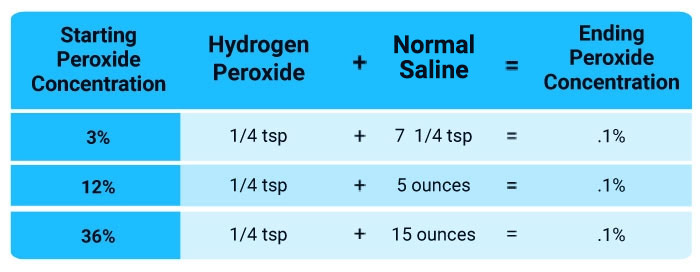
It’s interesting to note that even nebulizing normal saline may be an effective treatment for acute viral bronchiolitis, a viral infection in the small airways of your lungs.21 So while saline is considered the “inert” substance in the solution — and is often used as a placebo in trials that evaluate nebulized drugs — it may have benefits of its own.
I recommend using nebulized peroxide for any suspected respiratory infection, and the earlier you start, the better. There is no danger in doing it every day if you’re frequently exposed, and there may even be additional beneficial effects, such as a rapid rise in your blood oxygen level.
It is important to understand that this is a protocol that you need to implement BEFORE you attempt to treat COVID. Since early treatment is vital, ideally on Day 1, you want to have the nebulizer and materials already in your house ready to go. I would avoid using a battery powered hand held nebulizer and rather opt for a unit you plug into the wall.
You can find them on eBay or Amazon but make sure they have a face mask and not just a mouthpiece as you want to put the mist into your nose in addition to your lungs as many of the viruses lodge there and if you merely use a mouthpiece you will not reach these viral particles. This is an example of one that plugs in the wall and has a face mask.
– Sources and References
- 1, 2, 4 Indian J Otolaryngol Head Neck Surg. 2021 Apr 8 : 1–6
- 3, 20 Science, Public Health Policy, and the Law July 2020; 2: 4-22 (PDF)
- 5 ClinicalTrials.gov, Virucidal Effect of Povidone Iodine on COVID-19 In-Vivo September 16, 2020
- 6, 8 Indian J Otolaryngol Head Neck Surg. 2021 Apr 8 : 1–6. Oro-Nasal Spray
- 7 Indian J Otolaryngol Head Neck Surg. 2021 Apr 8 : 1–6. Safety of PVP-I Oro-Nasal Spray
- 9 Dermatology. 2002;204 Suppl 1:32-6. doi: 10.1159/000057722
- 10 Research Gate January 2020
- 11 Am J Otolaryngol. 2020 September-October; 41(5): 102618
- 12, 13 JAMA Otolaryngol Head Neck Surg. 2021;147(4):400-401. doi:10.1001/jamaoto.2020.5490
- 14 medRxiv December 8, 2021
- 15 Journal of Otolaryngology – Head & Neck Surgery volume 49, Article number: 77 (2020)
- 16 JAMA Otolaryngol Head Neck Surg. 2021;147(4):400-401. doi:10.1001/jamaoto.2020.5490. Discussion
- 17 Indian J Otolaryngol Head Neck Surg. 2021 Apr 8 : 1–6. Benefits of PVP-I Oro-Nasal Spray in Brief
- 18 Twitter, Peter McCullough December 22, 2021
- 19 FLCCC Alliance, I-Mask+
- 21 EMPR.com February 6, 2020
How Polypharmacy Led to 43 Prescription Pills at Once
Reproduced from original article:
https://articles.mercola.com/sites/articles/archive/2021/12/10/polypharmacy.aspx
The original Mercola article may not remain on the original site, but I will endeavor to keep it on this site as long as I deem it to be appropriate, and will not be bullied into removing it.

STORY AT-A-GLANCE
- While 89% of people aged 65 and older take at least one prescription medication, 54% take four or more
- A commentary by Dr. Mark E. Williams detailed the case of “Allison,” who was taking 43 different medications and suffering multiple side effects as a result
- Polypharmacy is a preventable risk factor for hospital admission in older adults, due to adverse drug events
- The risks of polypharmacy include mortality, falls, adverse drug reactions, increased length of hospital stay and hospital readmission
- A holistic approach, one that addresses the key tenets of good health and creates real wellness instead of attempting to cover up symptoms with more pills, is needed to achieve optimal health
Polypharmacy, or the use of multiple medications, is common in older adults. While 89% of people aged 65 and older take at least one prescription medication, 54% take four or more.1 Data from Merck similarly found that nearly 80% of older adults regularly take at least two prescription drugs while 36% regularly use five or more different drugs — and this doesn’t include over-the-counter medications.2
Adverse effects from polypharmacy are common and may drive patients to seek out ever-more drugs to treat the side effects caused by their unsafe drug regimen. It’s a vicious cycle, one that’s perpetuated by a broken health care system that revolves around pharmaceutical-driven, fragmented care.
Not only do many patients see multiple doctors, each of whom may prescribe their own set of medications, but patients may pressure doctors to prescribe drugs they’ve seen on direct-to-consumer advertisements. Instead of looking at the big picture of how to get healthy, tending to essential factors like diet, stress and physical activity, “health care” for seniors often turns into “drug care,” with potentially disastrous results.
One Patient — 43 Prescription Drugs
A commentary by Dr. Mark E. Williams published on Medscape highlights just how extreme polypharmacy can become. In some cases, it’s not “just” four or five medications but dozens of them, and in the case of Williams’ patient “Allison,” it was 43. The woman had been transferred to a chronic care facility for long-term care due to bipolar illness.
Days earlier, she was treated at a hospital for mental health issues, which Williams said “was probably related to inappropriate polypharmacy.”3
“Despite being admitted to the hospital for adverse drug reactions related to polypharmacy, Allison was discharged to my facility on 43 prescription medications and an almost equal number of over-the-counter (OTC) drugs. It took more than 10 minutes for the nurse to review the admission medications with me over the phone,” he wrote.4
Allison’s symptoms included fatigue, dizziness, muscle aches, headache, nausea, insomnia and more, and she requested additional medications to treat them. Not only was the woman taking duplicate medications meant to treat the same symptoms, but she was also taking medications intended to treat common adverse effects.
“The ‘chemical soup’ in her body is leading to mental and physical problems,” Williams told the patient’s daughter, but she, too, bought into the notion that more drugs equaled better care. After overcoming the patient’s resistance to going off the drugs, over a three-month period Williams was able to reduce Allison’s medications to about 15 — still a staggering number, but less so than 43.
“Allison improved, both mentally and physically,” Williams wrote,5 but challenges still ensued, including the patient demanding a memory drug she had seen advertised on television, and an incident in which her daughter gave her an over-the-counter sleep aid, leading to lethargy, confusion and slurred speech.
Ultimately, Allison was transferred to another facility, where the dangerous polypharmacy undoubtedly continued. While Williams’ commentary highlights an extreme case, it’s not unique — polypharmacy is prevalent among seniors.
Polypharmacy Worsens Health
When medications are prescribed in excess, including to treat the side effects of other drugs, the patient’s health suffers. “The use of numerous medications may result in medication-related problems such as inappropriate indications, therapeutic duplication, adverse effects, drug interactions, unnecessary medications, poor adherence and a strain on health care resources,” according to a featured article in The Journal for Nurse Practitioners.6
It also noted that polypharmacy is a preventable risk factor for hospital admission in older adults, due to adverse drug events. The risks of polypharmacy, meanwhile, are well noted. In BMC Geriatrics, adverse outcomes including mortality, falls, adverse drug reactions, increased length of hospital stay and hospital readmission are listed, and the risk of harm increases with the number of medications.7 According to the systematic review:8
“Harm can result due to a multitude of factors including drug-drug interactions and drug-disease interactions. Older patients are at even greater risk of adverse effects due to decreased renal and hepatic function, lower lean body mass, reduced hearing, vision, cognition and mobility.”
In 2007, Dr. Michael Stern, geriatric emergency medicine specialist at New York Presbyterian Hospital, even told a New York Times reporter that polypharmacy accounts for more than one-fourth of all admissions to the hospital and that it would be considered the fifth leading cause of death if it were categorized that way.9
Older People Are More Vulnerable to Drug Side Effects
The fact that older people are more likely to be taking more prescription drugs is a double-edged sword, as the elderly are already at increased risk of drug side effects. In fact, the elderly are estimated to be twice as susceptible to adverse drug events compared to younger people.
“Side effects are also likely to be more severe, affecting quality of life and resulting in visits to the doctor and in hospitalization,” according to the Merck Manual, which also explains several reasons why older people are so vulnerable to drug side effects:10
- Older people have less water and more fat tissue in the body; this allows higher concentrations of drugs that dissolve in water and increased accumulation of drugs that dissolve in fat
- The kidneys are less effective at excreting drugs into urine
- The liver is less able to metabolize drugs, so they’re not removed as readily from the body
- “Older people are more likely to have chronic medical disorders that may be worsened by drugs or that may affect how the drugs work”
Some common examples of how drugs may affect seniors differently include blood pressure drugs, which may lead to more dramatic drops in older people, leading to symptoms of dizziness and falls. Older adults may also become confused and sleepy when using antianxiety drugs, more so than typically seen in younger people. Such effects may only be compounded when multiple drugs are being taken at the same time.
In fact, due to changes that occur during biological aging, it’s now recognized that medications should be clinically tested specifically with older adults in mind. However, older adults are often excluded from clinical trials, which means the safety and efficacy of drugs in this population is often unknown, with supportive evidence lacking.
“Inevitably, this lack of evidence has often led to inappropriate drug treatment and, consequently, to various adverse clinical outcomes,” according to a review published in March 2021 in European Geriatric Medicine.11
Why Are so Many More Seniors Taking Antidepressants?
Overprescribing is rampant among the senior population, and antidepressants are one such example. There’s been a major rise in the number of antidepressants being prescribed for older adults over the last two decades, without a similarly sharp increase in the number depressed, according to a study published in The British Journal of Psychiatry.12
The findings suggest seniors may be being overprescribed antidepressant drugs, which could have serious implications for their health, although the researchers weren’t willing to state this, noting instead, “we can’t infer that older patients are prescribed antidepressants unnecessarily.”13
In the first study group, 4.2% of the adults were taking antidepressants, but this jumped to 10.7% in the later study. During this time, the prevalence of depression decreased, but only slightly, from 7.9% to 6.8%.14 Also noteworthy, among older adults living in care homes, the prevalence of depression was unchanged but the use of antidepressants rose from 7.4% to 29.2%.15
There were a few suggestions offered for why antidepressant prescribing rates increased so steeply without a similar increase in depression, including overdiagnosis or prescribing the drugs for conditions other than depression. However, most of those prescribed antidepressants had not been diagnosed with depression.
Further, antidepressants carry a risk of side effects that could easily spiral into more drug prescriptions. For instance, antidepressant users have an increased risk of developing Type 2 diabetes,16 and antidepressant use has been linked to thicker arteries, which could contribute to the risk of heart disease and stroke.17
Nearly Half of Over 75s Take Statins
Statin cholesterol-lowering drugs are another example of a wildly overprescribed drug class that’s contributing to polypharmacy risks. In the U.S., close to 50% of U.S. adults over 75 years take a statin,18 even though their use may also harm brain health — more than doubling risk of dementia in some cases.19
A connection also exists between statins and diabetes, to the extent that people who take statins are more than twice as likely to be diagnosed with diabetes than those who do not, and those who take the drugs for longer than two years have more than triple the risk.20,21 With a diabetes diagnosis, of course, comes more drugs.
Often, statins are unnecessary in the first place. While they are effective at lowering cholesterol, whether this is the panacea for helping avoid heart disease and extend lifespan is a topic of heated debate. In 2018, a scientific review presented substantial evidence that high LDL and total cholesterol are not an indication of heart disease risk, and that statin treatment is of doubtful benefit as a form of primary prevention for this reason.22
Drugs Don’t Equate to Good Health
Overprescribing pills is setting up seniors for a downward spiral of increasing side effects and worsening health. A holistic approach is needed, one that addresses the key tenets of good health and creates real wellness instead of attempting to cover up symptoms with more pills.
As just one example, in a study of older depressed adults, 80% experienced a significant reduction in depressive symptoms after taking up strength training for 10 weeks, such that researchers concluded that the exercise was “an effective antidepressant in depressed elders, while also improving strength, morale and quality of life.”23
It’s important to work with a health care provider who understands the risks of polypharmacy and the fact that good health doesn’t come from a pill. Only by building a health plan that addresses diet, exercise, sleep, emotional wellness and toxic exposures, along with only targeted and truly necessary medications and/or supplements, can you reach optimal health.
- 1 KFF August 9, 2019
- 2, 10 Merck Manual July 2021
- 3, 4, 5 Medscape November 17, 2021
- 6 The Journal for Nurse Practitioners March 1, 2020
- 7, 8 BMC Geriatr. 2017; 17: 230
- 9 New York Times, September 18, 2007 Para 7
- 11 Eur Geriatr Med. 2021; 12(3): 443–452. Intro
- 12, 15 The British Journal of Psychiatry October 7, 2019
- 13, 14 Medscape October 11, 2019
- 16 PLOS One July 31, 2017
- 17 Emory April 4, 2011
- 18, 19 SciTechDaily June 28, 2021
- 20 Medical News Today June 26, 2019
- 21 Diabetes Metabolism Research and Reviews May 24, 2019
- 22 Expert Review of Clinical Pharmacology, September 10, 2018, doi.org/10.1080/17512433.2018.1519391
- 23 J Gerontol A Biol Sci Med Sci. 1997 Jan;52(1):M27-35
Black Seed Oil Evaluated for Chronic Inflammation
Reproduced from original article:
https://articles.mercola.com/sites/articles/archive/2021/11/12/black-seed-oil-covid.aspx
The original Mercola article may not remain on the original site, but I will endeavor to keep it on this site as long as I deem it to be appropriate, and will not be bullied into removing it.
Analysis by Dr. Joseph Mercola Fact Checked November 12, 2021

STORY AT-A-GLANCE
- Black seed oil may be an alternative herbal treatment for combating COVID-19
- The bioactive compounds have an antihistamine effect and anti-inflammatory properties that downregulate interferon regulatory factor 3 activation and promote autophagy
- Researchers hypothesize that several of the terpenes in the oil are similar in structure to chloroquine and may act as a zinc ionophore; evidence also suggests one compound may block ACE2 receptors, which the virus uses to release viral RNA into the cell
- Black seed oil has many traditional medicinal uses, including as an antidiabetic, antimicrobial, bronchodilator and antioxidant
- The Front Line doctors list black seed oil as an alternative therapeutic agent in the treatment of COVID-19. However, the oil is high in linoleic acid and so should not be used preventively against COVID
Black seed oil has been used for its therapeutic benefits for thousands of years. Since the pandemic began, researchers have been evaluating the effect it may have on COVID-19.1 The seeds come from the Nigella sativa (N. sativa) plant that grows in Southern Europe, Southwest Asia and the Middle East.2 Traditional medicine healers have used the seeds in different forms.
Black seed is coal-black with a dull surface and shaped like tiny Brazil nuts. The bioactive components include thymoquinone, α-hederin, alkaloids and omega-6 fatty acids.
Black seed oil has also been used for dermatological applications. For example, a review of the literature in the Journal of Dermatology & Dermatologic Surgery3 found black seed oil could promote wound healing in farm animals and reduce the impact of vitiligo in lizards.
In one clinical study4 in humans, lotion infused with 10% of N. sativa oil reduced acne vulgaris after two months with 67% of the patients fully satisfied and 28% partially satisfied with the results.
In the current research,5 scientists believe the oil may have promising benefits in the treatment and prevention of COVID-19. However, while short-term use for treatment may be advantageous, it is wise to avoid long-term use for prevention.
Black Seed Oil May Be a Promising Option for COVID-19
Historically, black seed oil has been used to help balance the inflammatory response in the body as well as reduce oxidative stress, inflammation and ischemia. Using recent computational findings, one research group found the active ingredients in N. sativa were “strongly suggestive of combating emerged COVID-19 pandemic.”6
The paper suggests that the active ingredients, especially thymoquinone, α-hederin, and nigellidine, may be an alternative herbal treatment in the combat against COVID-19. The paper reviews several pathways that the active ingredients in black seed oil may use to protect health.
For example, the researchers reviewed past studies that demonstrated the actions the active ingredients in black seed oil have on the immune system, which may help reduce the severity of COVID-19. The active compounds have a significant antihistamine effect in animal studies and thymoquinone downregulates interferon regulatory factor 3 activation, which plays a critical role in innate immune responses.7
Autophagy is a mechanism that clears out damaged cells in the body. Data has shown that COVID-19 suppresses autophagy and that pharmacological agents used to induce the process may therefore have an antiviral effect. One study8 published in 2018 indicated thymoquinone promotes autophagy in the heart muscle.
The researchers suggest that further study should be undertaken to determine if thymoquinone has a similar effect with COVID-19. Severe COVID-19 is characterized by cytokine storms that may require intensive care.9 Animal studies have demonstrated that the bioactive compound α-hederin has anti-inflammatory activity and can decrease histamine levels.
The researchers reported one study had found thymoquinone helped inhibit two enzymes that produce inflammatory leukotriene and prostaglandins. Researchers suggest that these actions may potentially make the active compounds in N. sativa useful in the treatment and prevention of SARS-CoV-2 viral infections.
Finally, in their review of comorbid conditions associated with COVID-19, the researchers found that N. sativa may have a positive effect against diabetes, high blood pressure, heart disease, autoimmune and auto inflammatory diseases and bacterial infections associated with COVID-19.
After a review of the evidence, the researchers suggest that further experiments with the active compounds found in black seed oil are required to determine if they have preventive potential or may provide a new treatment modality.10
Zinc Combinations Help Treat COVID-19
Research into medications that may influence COVID-19 have included antivirals. One such antiviral being studied is favipiravir. Data show the drug was approved and has been used for flu infections in Japan.11 In late 2020, a study published in PNAS12 revealed that when given in high doses to hamsters favipiravir had promising antiviral activity against SARS-CoV-2.
However, a computer-model molecular docking study published in Biological and Medicinal Chemistry13 revealed that the bioactive compounds nigellidine and α-hederin found in black seed oil were able to inhibit SARS-CoV-2 with a greater potential than favipiravir, chloroquine and hydroxychloroquine.
Evidence from a second paper that reviewed the biological effects of the active compounds in black seed oil suggested that thymoquinone may block ACE2 receptors,14 which is where the SARS-CoV-2 binds to the cell and releases the viral RNA into the cytoplasm.
Contrary to what the PNAS hamster study found, these researchers hypothesized that chloroquine, and potentially the derivative hydroxychloroquine, may also interfere with the virus’s ability to bind with the ACE2 receptors.
This is one pathway the researchers suggest that black seed oil may use in the treatment of COVID-19. Another pathway is as a zinc ionophore. The body uses zinc in several pathways to support the immune system, including:15
- Proliferation and activation of natural killer cells, macrophages, neutrophils, and T and B cells
- Mediating protection against reactive oxygen species produced during an inflammatory response
- Stopping recombinant RNA dependent RNA polymerase activity needed to replicate SARS-CoV-2
- Inhibiting replicase processing
Therefore, moving zinc into the cytoplasm is crucial to help prevent the replication of the SARS-CoV-2 virus and thus effectively stop infected cells from infecting other cells.
Oral supplementation of zinc alone is not sufficiently effective since zinc cannot move easily across the cell wall. It needs another compound to provide transportation. The second compound is called a zinc ionophore. The application of zinc with an ionophore has demonstrated improved outcomes in patients hospitalized with COVID.16
Research has identified several zinc ionophores, including chloroquine,17 hydroxychloroquine,18 quercetin and EGCG.19 Scientists have suggested that several of the terpenes in black seed oil, such as nigellimine, are similar in structure to chloroquine. They hypothesize that this may mean they can function in a similar manner as a zinc ionophore.20
Thus, recent data have shown that the active ingredients found in black seed oil may have greater potential in the treatment of COVID-19 than antiviral drugs, may act as a zinc ionophore and may help block the ACE2 receptors the virus uses to infect cells.
Black Seed Oil Has Traditional Medicinal Uses
N. sativa is a popular and traditional medicinal and has a long history of use in several diseases and ailments.21 Traditional medicine has used black seed oil as a diuretic, antidiarrheal, appetite stimulant, analgesic, lower blood pressure, liver tonic and skin disorder treatment.22 However, research has also explored the pharmacological activity of black seed oil and found it has many properties, including:23
| Antidiabetic | Anticancer | Immunomodulator |
| Analgesic | Antimicrobial | Anti-inflammatory |
| Spasmolytic | Bronchodilator | Hepato-protective |
| Renal protective | Gastro-protective | Antioxidant |
The immune-modulating activities of black seed oil help to regulate the immune system and maybe another pathway in the treatment for COVID-19. In addition to the studies using black seed oil, researchers have also separated the bioactive ingredients and evaluated their potential benefit against SARS-CoV-2.
A data review24 on thymoquinone was published in February 2021, in which the researchers reviewed the bioactivity of the compound found in past research. They wrote that thymoquinone increased the activity and number of natural killer cells, macrophages, lymphocytes and cytokines suppressors.
Additionally, they cite past research that showed the active ingredient had antiviral potential against other viruses, including human immunodeficiency virus, other coronaviruses, Epstein-Barr virus, cytomegalovirus and hepatitis C. In addition, they reviewed an Egyptian study in which thymoquinone demonstrated antiviral activity in a strain of SARS-CoV-2 isolated in patients and the inhibitory effect it has on the viral protease, which may reduce viral replication.
One study25 from Saudi Arabia evaluated the effectiveness of black seed oil as a supplement in patients with mild COVID-19 who were between 18 and 65 years. The intervention group received 500 mg of soft gel capsules twice daily for 10 days in addition to their standard treatment.
Initial results were published on Clinical Trials.26 The primary outcome measurement was the percentage of participants who showed clinical recovery within 14 days after treatment began. The team reported 62.1% of those receiving the black seed oil demonstrated recovery from mild COVID-19 while 36% of the control group recovered within 14 days.
Consider Oil for Short-Term Use to Reduce Health Risk
The Front Line COVID-19 Critical Care Alliance (FLCCC)27 lists black seed oil as an alternative for prevention and treatment of COVID-19. They stress there is no “magic bullet” for COVID-19, yet:28
“… a number of therapeutic agents have shown great promise for both the prevention and treatment of this disease including Ivermectin, Vitamin D, quercetin, melatonin, fluvoxamine, corticosteroids, curcumin (turmeric), Nigella sativa and antiandrogen therapy.”
The team recommends taking N. sativa with honey as they both have antimicrobial, antiviral, immunomodulatory and anti-inflammatory effects with proven safety profiles. They list N. sativa and honey in the prevention protocol for children and adolescents, and as an alternative for first-line treatment in the early treatment protocol at home.
While short-term use of black seed oil may be efficacious in the treatment of COVID-19, long-term use for prevention may have other unwanted effects. One study29 of the chemical composition of black seed oil shows that the majority of fatty acids are from linoleic acid, an omega-6 polyunsaturated fat or (PUFA).
As I have discussed in an interview with Tucker Goodrich,30 linoleic acid (LA) is likely the leading contributing cause of virtually all chronic diseases we have encountered in the last century.
When LA is consumed in excessive amounts, it acts as a metabolic poison. Chances are you’re getting an excess amount of this dangerous fat from foods that you may even consider healthy. For example, olive oil and chicken, which are fed LA-rich grains, increase your levels of omega-6 fatty acids.
Many are aware that the omega-3 to omega-6 ratio is important and should be close to equal. However, it is not as simple as raising omega-3 fatty acids. You need to minimize omega-6. fats A compelling report in the journal Gastroenterology31 has offered a logically sound explanation as to why some patients with COVID-19 develop life-threatening organ failure.
The data indicate that the mortality rates appear to be heavily influenced by the amount of unsaturated fats you eat, such as LA. To date, there have been no clinical studies on the treatment they believe may help reduce the rate of organ failure and ICU admissions, namely the administration of calcium and egg albumen. It appears these compounds can bind the unsaturated fats and reduce injury to vital organs.
Take Care to Lower Your Omega-6 Intake
Fortunately, you can analyze your food for LA from the convenience of your home. All you need to do is accurately enter your food intake into Cronometer — a free online nutrition tracker — and it will provide you with your total LA intake. The key is to carefully weigh your food with a digital kitchen scale so you can enter the weight of your food to the nearest gram.
Cronometer.com is free to use as a desktop version. If you feel the need to use your cellphone (which is not recommended), then you will need to purchase a subscription. Personally, I have used the desktop version exclusively for the last five years as it has greater functionality and allows me to avoid electromagnetic fields from my phone.
Ideally, it is best to enter your food before you eat it. The reason for this is quite simple: It’s impossible to delete the food once you have already eaten it, but you can easily delete it from your menu if you find something that pushes you over the ideal limit.
Once you’ve entered the food for the day, go to the “Lipid” section on the lower left side. To find out how much LA is in your diet for that day, you merely need to see how many grams of omega-6 are present since roughly 90% of the omega-6 you eat is LA.
Thus, you can see that chronic use of black seed oil for prevention against COVID-19 will likely increase your risk of other chronic diseases that increase your risk of severe disease. If you are interested in using black seed oil, consider the extracts of the bioactive ingredients and not the whole oil.
If you are seeking an alternative for prevention and treatment, consider a combination of quercetin and zinc. Quercetin also has antiviral properties32 and is a zinc ionophore.33 While safe to take for about two weeks when you’re ill, it is important you are careful with zinc supplements as you may offset your zinc/copper balance and negatively impact your immune system.34,35
- 1, 5, 6, 7, 9, 10 Phytotherapy Research, 2020; doi.org/10.1002/ptr.6895
- 2, 22, 23 Asian Pacific Journal of Tropical Biomedicine, 2013; 3(5)
- 3 Journal of Dermatology & Dermatologic Surgery, 2015; 19(2) 3, 4.2, 5.1
- 4 The Iraqi Postgraduate Medical Journal, 2010;9(2)
- 8 Cellular Biochemistry, 2018; 119(9)
- 11 Proceedings of the Japan Academy, 2017;93(7)
- 12 PNAS, 2020;117(43)
- 13 Biological and Medicinal Chemistry, 2020; doi.org/10.26434/chemrxiv.12055716.v1
- 14, 15, 20 Journal of Herbal Medicine, 2020; 23(100382)
- 16, 18 Journal of Medical Microbiology, 2020;69(10)
- 17 PLOS|One, 2014;9(10)
- 19, 33 Journal of Agricultural and Food Chemistry, 2014;62(32)
- 21 Iranian Journal of Basic Medical Sciences, 2014;17(12)
- 24 Dovepress, 2021; doi.org/10.2147/DDDT.S308863
- 25 BMC Trials, 2020; 21(703)
- 26 Clinical Trials, May 26, 2020
- 27, 28 FLCCC, An overview of the MATH+, I-MASK+ and I-RECOVER Protocols, Intro page 7
- 29 Natural Product Research, 2010;24(12)
- 30 Bitchute, December 11, 2020
- 31 Gastroenterology, 2020;159(3)
- 32 Natural Product Communications, 2020; doi.org/10.1177/1934578X20976293
- 34 Oregon State University, Zinc, bullet 5
- 35 Oregon State University, Copper, Bullets 1-3
Nasal Irrigation May Help Prevent COVID Hospitalizations
Reproduced from original article:
https://articles.mercola.com/sites/articles/archive/2021/09/16/nasal-irrigation-may-help-prevent-covid-hospitalizations.aspx
Analysis by Dr. Joseph Mercola Fact Checked September 16, 2021

STORY AT-A-GLANCE
- A recent preprint study demonstrated that people who used normal saline nasal irrigation were 19 times less likely to be hospitalized for COVID-19 than the national rate; the study used pressure-based nasal irrigation systems
- In one group, the intervention included povidone-iodine, which some physicians have been using as oral solutions, and nasal irrigation to protect against COVID infection; other health care professionals are using nebulized hydrogen peroxide, and some are using both
- Since early 2020, some physicians have encouraged individuals and organizations to include hydrogen peroxide in their treatment protocols. In an interview with Dr. David Brownstein, he discusses his protocol that includes vitamins, hydrogen peroxide and iodine
- In another short video, Dr. Thomas Levy and I discuss the advantages of using nebulized hydrogen peroxide to your gut microbiome, which is essential to supporting your immune health
A recent preprint study1 demonstrated that people who used a normal saline nasal irrigation were 19 times less likely to require hospitalization for treatment of COVID-19 than the national rate of hospitalizations. You may be familiar with nasal irrigation when it’s referred to as using a Neti Pot.
According to a 2009 article in the American Family Physician,2 nasal irrigation has been an adjunctive therapy for upper respiratory conditions and is currently prescribed after nasal and sinus surgeries.3 Nasal irrigation with a neti pot instills normal saline into your nasal passages with a small device that resembles a teapot.
After inserting the end of the pot in one side of your nose, the solution moves around the sinuses and out the other nostril. For example, by flushing out pollen in the nose and sinus cavities, it helps to manage the symptoms of mild to moderate allergic rhinitis.
While using a neti pot is probably the most-recognized over-the-counter method of deep nasal irrigation, one study4 evaluated other irrigation techniques to discover which would more effectively reach the maxillary sinus and frontal recess after an endoscopic sinus surgery. They analyzed the results of a metered nasal spray, nebulization and nasal douching “while kneeling with the head on the floor.”5
Nasal douching is a procedure in which you “sniff” saline into your nostrils,6 and researchers found that it was more effective than a metered nasal spray or nebulized normal saline to reach the sinus cavities.7
If you want to try a nasal irrigation with a neti pot, and you’re thinking of making your own saline solution, it’s important to remember to use only distilled, sterile or cooled, boiled water. Tap water can contain bacteria and protozoa that may be safe in the gastrointestinal tract8 but not in your nasal passages, where a free-living microscopic ameba called Naegleria fowleri can trigger a devastating brain infection that is usually fatal.9
Nasal Irrigation With Normal Saline Reduced Hospitalizations
The most recent study10 compared the clinical outcomes in patients with COVID-19 using normal nasal saline irrigation. The researchers engaged patients who were 55 years or older who tested positive with a PCR test in a community testing site.
They began with a group of 79 patients who were randomized into two groups. The data were then compared against outcomes from the Centers for Disease Control and Prevention’s national database. In this study the participants used one of two pressure-based nasal irrigation systems: the NAVAGE or the NeilMed Sinus Rinse.
The participants were then randomly selected to use either one-half teaspoon of sodium bicarbonate (alkalinization) with the standard saline rinse twice a day for 14 days, or to include 2.5 milliliters (roughly a half-teaspoon) of povidone-iodine 10% solution (antimicrobial) for the same period. The researchers then followed up with each group 14 days after their final intervention.
The primary outcome was hospitalization for COVID-19 within the first 28 days after the intervention began. Secondarily, they tracked symptom resolution, adherence to the intervention and the side effects that the intervention may have had on the participant. At the end of 28 weeks, 62 patients had completed their research diaries and averaged 1.79 irrigations each day.
After analyzing the results, the researchers found there were no statistical differences in outcomes when the participants used the povidone-iodine antimicrobial wash or alkalized the nasal cavity with sodium bicarbonate. None of the patients assigned to the povidone-iodine wash and only one assigned to the alkalized group had a COVID-19 related hospitalization.
However, resolutions of symptoms in those using the povidone-iodine were more likely. The researchers concluded that the isotonic saline nasal irrigation had a positive effect on reducing hospitalization and “Further research is required to determine if adding povidone-iodine to irrigation reduces morbidity and mortality of SARS-CoV-2 infection.”11
Further study may also be necessary to determine if alkalizing the nasal cavity had an impact on killing the virus and preventing hospitalization as the body’s natural pH is slightly alkaline,12 and most pathogens prefer an acidic environment.13 Clearing the oral cavity of SARS-CoV-2 is also part of the outpatient IMASK protocol from the Front Line COVID-19 Critical Care Alliance.14
Addition of Povidone Iodine May Improve Efficacy
In the 4th century B.C., a student of Aristotle discovered that using iodine-rich seaweed could help sunburn pain.15 One of the first iodine preparations used in the care and treatment of open wounds was Lugol’s solution that contained elemental iodine and potassium. This was used to treat wounds during the American Civil War.
The two most commonly used iodine solutions today are povidone-iodine (PVP-I), which is also known as Betadine, and cadexomer iodine, which is used in wound care to fill cavities. The exact way iodine kills microbes is not well understood but believed to be associated with the ability to penetrate the microorganisms’ cell wall, which then affects the structure and function.
At the start of 2020, some doctors began using PVP-I in the oral and nasal cavity to shield against COVID-19. Dr. Mostafa Arefin,16 from Dhaka Medical College and Hospital in Bangladesh, published a paper in early 2021 detailing use of PVP-I for himself and more than 50 other doctors and other health care workers.
During a five- to nine-month period he performed airway surgeries in which SARS-CoV-2 could be expected to be aerosolized, such as tracheostomies, endoscopic sinus surgeries, laryngeal biopsies and tonsillectomies. At the conclusion, he recommended that doctors, health care workers, COVID-19 patients and others use oral and nasal spray to reduce the transmission and as a potential treatment modality.
One study17 published in JAMA in early 2021 investigated nasopharyngeal application of povidone-iodine to reduce the viral load of people who had COVID-19. Adult outpatients who tested positive with a PCR test cycle threshold less than 20 in the past 48 hours were included.
The group was split into two factions. The control group underwent no intervention. The intervention group used a mouthwash and gargle of 25 milliliters (a little over 5 teaspoons) of 1% povidone-iodine solution and then 2.5 milliliters (one-half teaspoon) of nasal solution sniffed into each nostril using a mucosal atomization device.
The participants followed this procedure four times a day for five days. The researchers followed up and found that no one required hospital admission and all but one of the patients had a negative viral titer by the end of Day 3. Thyroid dysfunction did occur in 42% of the patients, but it resolved spontaneously when the treatment was stopped.
It is interesting to note that the study published in JAMA18 used 1% solution, while Arefin and his colleagues used a 0.23% concentration, having found that PVP-I had 99.99% virucidal efficacy at that concentration.19
Hydrogen Peroxide May Reduce Hospitalization, Complications
In early 2020, a joint research team from Italy and the United Kingdom published a paper in Infection Control and Hospital Epidemiology.20 In April they recognized that “the virus resides in the mucous membranes and is transmitted through the saliva and respiratory droplets” to facilitate viral spread.
The paper recounts how in February 2020, the Italian government recommended sanitizing the environment with 0.5% hydrogen peroxide as it was already in use for both disinfect purposes and to treat of oral gingivitis. They cited a 2016 study with the SARS coronavirus,21 which showed the virus stays in mucous membranes up to two days before moving to the lower respiratory tract.
The team22 identified this delay as a window of opportunity to prevent the onset of symptoms. Because hydrogen peroxide efficiently inactivates coronavirus on inanimate surfaces and since it has been tested in, and is in use, in human health, they proposed that hydrogen peroxide could reduce hospitalization and severity of illness when it was used in the oral and nasal mucosa.
They postulated that gargling three times a day and using a nasal wash and nebulizer twice a day could be safe and effective. In March 2020, a retired professor from the University of Ghana Medical School wrote in a letter to the editor to the BMJ that23 “there is evidence that even 0.5% hydrogen peroxide could inactivate the SARS-CoV-2 on surfaces.”
And, since hydrogen peroxide has been in use in dental practice for nearly 100 years and in view of its safety, he proposed the World Health Organization add hydrogen peroxide mouthwash and gargling to their preventive protocols.
By May 2020, word about hydrogen peroxide reached the ears of the Federal Trade Commission, which then began issuing warning letters to those who dared to suggest that hydrogen peroxide was an at-home treatment that may be effective against SARS-CoV-2.24
Nebulized Hydrogen Peroxide Helps Stop Respiratory Infections
In this interview with Dr. David Brownstein, we discussed the protocol he has been using for over 25 years for patients with cold and flu. He is using the same protocol for patients with COVID-19 and at the time of the recording had successfully treated over 220 patients without any deaths and only a few hospitalizations.25
In an open letter26 physician and attorney Thomas Levy attributes the original concept of nebulizing hydrogen peroxide to Dr. Charles Farr, who “championed” it in 1990. In the letter, he discusses how the extra oxygen atom in hydrogen peroxide is deadly for viruses and how under normal circumstances, your immune cells produce their own hydrogen peroxide.
Yet, when your immune system is overwhelmed with viral replication, it may not be able to produce enough hydrogen peroxide. The original therapy used intravenous administration, which made the process unavailable for most people.
Dr. Frank Shallenberger, known for his research in mitochondrial function and oxygen utilization,27 went on to propose and use nebulize hydrogen peroxide, finding it had an additional advantage since the intervention went directly to the area of the body that was most affected by a virus.
Although Levy recommends using 3% hydrogen peroxide off the shelf and undiluted, I prefer food grade hydrogen peroxide28 that does not have the additives and stabilizers you find in the products sold at big box stores.
In the interview, Brownstein talks about the change he pioneered to the treatment — which was to add iodine to the nebulized hydrogen peroxide.29 Interestingly, he used nebulized iodine first with his patients and then added hydrogen peroxide to the treatment protocol.
Nebulized Hydrogen Peroxide May Help Your Gut Microbiome
In this video, Levy and I talked about the benefits of using nebulized hydrogen peroxide three to four times a week to improve your gut microbiome. He addresses this as well in his open letter when he writes:30
“As it is a completely non-toxic therapy, nebulization can be administered as often as desired. If done on a daily basis at least once, a very positive impact on bowel and gut function will often be realized as killing the chronic pathogen colonization present in most noses and throats stops the 24/7 swallowing of these pathogens and their associated toxins.
If daily prevention is not a practical option, the effectiveness of this treatment is optimized when somebody sneezes in your face, or you finally get off of the plane after a trans-Atlantic flight. Don’t wait for initial symptoms. Just nebulize at your first opportunity.”
As you know, when your gut microbiome is out of balance, it can severely impact your body’s immune system,31 which in turn influences your potential risk for getting sick with a viral illness. To see how to make the hydrogen peroxide solution and how to use the nebulizer, see the video below. Be sure to bookmark this video and the others on this page as this article will not be available after 48 hours.
- 1, 10, 11 medRxiv, 2021; doi.org/10.1101/2021.08.16.21262044
- 2 American Family Physician, 2009;80(10)
- 3 Respiratory Physiology & Neurobiology, 2021;284(103580)
- 4, 5 The Laryngoscope, 2009; doi.org/10.1097/01.mlg.0000149463.95950.c5
- 6 Oxford Radcliffe Hospitals, Nasal Douching Information for Patients
- 7 The Laryngoscope, 2009; doi.org/10.1097/01.mlg.0000149463.95950.c5 conclusion
- 8 U.S. Food and Drug Administration, August 4, 2021
- 9 Centers for Disease Control and Prevention, Parasites – Naegleria fowleri – Primary Amebic Meningoencephalitis (PAM)
- 12 News-Medical Life Sciences, pH in the Human Body
- 13 Journal of Virology, 2006;80(7):3180 Abstract
- 14 FLCCC.net IMASK protocol
- 15 Wound Care International, Iodine Made Easy
- 16 Indian Journal of Otolaryngology Head and Neck Surgery, 2021: 1-6 My Experience with PVP-I in COVID-19 Era
- 17, 18 JAMA Otolaryngology, 2021;147(4)
- 19 Indian Journal of Otolaryngology Head and Neck Surgery, 2021: 1-6
- 20, 22 Infection Control and Hospital Epidemiology, 2020; doi.org/10.1017/ice.2020.170
- 21 Mucosal Immunology, 2016;9(4)
- 23 BMJ, 2020;368:m1252
- 24 Federal Trade Commission, May 13, 2020
- 25, 29 Bitchute, February 17, 2021
- 26 An At-Home Treatment That Can Cure Any Virus, Including Coronavirus
- 27 The Nevada Center for Alternative & Antiaging Medicine
- 28 Bitchute, October 1, 2020, minute 5:15
- 30 An At-Home Treatment That Can Cure Any Virus, Including Coronavirus – Prevention and Maintenance
- 31 Cell Research, 2020;30:492