Vitamins
now browsing by category
Most People Don’t Reach Micronutrient Requirements Through Food Alone
Reproduced from original article:
https://articles.mercola.com/sites/articles/archive/2023/11/20/micronutrient-deficiencies.aspx
The original Mercola article may not remain on the original site, but I will endeavor to keep it on this site as long as I deem it to be appropriate.
Analysis by Dr. Joseph Mercola November 20, 2023

STORY AT-A-GLANCE
- Most adolescents are not getting adequate nutrient intake from diet alone — a finding confirmed from other studies in developed countries such as Spain, France, Portugal and Germany
- Three-quarters of adolescents consumed less than 54% of the recommended amounts of healthy foods like fruits, vegetables and dairy products
- Nearly three-quarters of the youth exceeded the recommended limit for sweet and salty snacks — by 453%
- When nutrient intake was considered from diet alone, adolescents often consumed less than recommended amounts of the fat-soluble vitamins A, D and E along with the water-soluble vitamins folate, biotin and pantothenic acid
- The use of dietary supplements helped to increase the adolescents’ intake of vitamins and minerals, particularly magnesium and vitamin C, but this isn’t a replacement for a healthy, nutrient-rich diet
While it’s possible to get all the vitamins and minerals your body needs by eating a healthy diet, most people fall short. The issue isn’t typically a matter of quantity but quality — many people are eating energy-rich, nutrient-poor foods, setting them up for an excess of omega-6 fats from seed oils and sugar while important micronutrients are lacking.
For instance, among children and adults with high intakes of added sugars — more than 25% of their caloric intake — dietary intake of vitamins A, C and E and magnesium were low.1 Research published in Critical Reviews in Food Science and Nutrition also suggested that more than 80% of the U.S. population is at risk of certain nutrient inadequacies.2
Among adolescents, who are growing rapidly and have an increased need for nutrients as a result, low vitamin and mineral intake is also common, according to a study in BMC Nutrition.3
Many Adolescents Missing Out on Important Vitamins and Minerals
The study involved 342 Slovenian adolescents with an average age of 15.4 years. In addition to collecting data on eating habits, body height and mass and micronutrient intake the researchers assessed participants’ use of dietary supplements, including multivitamins consumed in popular drinks.
When nutrient intake was considered from diet alone, adolescents often consumed less than recommended amounts of the fat-soluble vitamins A, D and E along with the water-soluble vitamins folate, biotin and pantothenic acid. Minerals such as iodine, chromium and molybdenum were also low.
The adolescents weren’t getting enough of these nutrients because three-quarters of them consumed less than 54% of the recommended amounts of healthy foods like fruits, vegetables and dairy products.4 At the same time, nearly three-quarters of the youth exceeded the recommended limit for sweet and salty snacks — by 453% — and the recommended amount of meat products by 320%.5
Sodium intake was also high, “most likely due to excessive consumption of meat/meat products (except female DS [dietary supplement] users) and sweet/salty snacks.”
The use of dietary supplements helped to increase the adolescents’ intake of vitamins and minerals, particularly magnesium and vitamin C. However, the team stated, “Although DS use improved micronutrient intake in adolescents (especially vitamin C and magnesium), activities on public-health interventions should be focus to improve their diets.”6
Overall, the study stressed that adolescents are not getting adequate nutrient intake from diet alone — a finding confirmed from other studies in developed countries such as Spain, France, Portugal and Germany. The researchers concluded:7
“After reviewing and summarizing nutrient deficiencies in adolescents from different studies, almost the entire spectrum of nutrients has been identified as those with inadequate intake (e.g. minerals calcium, magnesium, iron, zinc, potassium, and iodine, and vitamins D, K, E, C, folic acid, B2, B6, B12), making it difficult to highlight the most important ones.”
Children and Adults Are Lacking in Nutrients, Too
Other age groups are also lacking in important nutrients needed for optimal health, potentially compromising immune system function, exacerbating chronic disease and hindering growth and development.8
One study suggested that, globally, 56% of preschool-aged children, or 372 million, are deficient in at least one of three micronutrients. Among non-pregnant women of reproductive age, 69%, or 1.2 billion people, are deficient.9
While most individuals with micronutrient deficiencies live in low- and middle-income countries, close to half (48%) of women and children in high-income countries also have at least one micronutrient deficiency.10 A computer analysis of diets from 20 people, including professional and amateur athletes and sedentary adults, also revealed that each one fell short of meeting recommended micronutrient levels.11
“Food alone in all 20 subjects did not meet the minimal Recommended Daily Allowances (RDA) micronutrient requirements for preventing nutrient-deficiency diseases,” the team concluded.12

Download this Article Before it Disappears
Nutrient Levels in Food Are Falling
Many nutrient deficiencies are the result of poor dietary choices or lack of access to healthy foods. However, foods are also generally less nutritious than they used to be. It’s interesting to note that even in 1936, concerns were raised about nutrient levels in food. An excerpt from the 74th USA Congressional Record from that year states:13
“Laboratory tests prove that the fruits, the vegetables, the grains, the eggs and even the milk and the meats of today are not what they were a few generations ago (which doubtless explains how our forefathers thrived on a selection of foods that would starve us today).
It is bad news to learn from our leading authorities that 99% of the American people are deficient in these minerals, and that a marked deficiency in any one of the more important minerals actually results in disease. Any upset of the balance, any considerable lack of one or another element, however microscopic the body requirement may be, and we sicken, suffer, and shorten our lives.”
Nutrient declines have only continued. In one analysis of 43 garden crops from 1950 to 1999, “apparent, statistically reliable declines” were detected for six nutrients — protein, calcium, riboflavin, vitamin C, phosphorus and iron. The declines ranged from 6% for protein to 38% for riboflavin.14
A study that analyzed nutritional quality changes in wheat from 1850 to 2016 also found nutrient levels had dropped. While the amount of carbohydrates in wheat increased, protein content and other nutrients, including manganese, iron, zinc and magnesium, declined.15,16
Common Nutrient Deficiencies
In the U.S., it’s estimated that 1 in 3 Americans are deficient in at least 10 minerals, putting them at risk of chronic diseases such as heart disease and diabetes.17 Even at a subclinical level, being deficient in vitamins and minerals can cause a range of symptoms, ranging from fatigue and irritability to heart palpitations and pain.18 Common nutrient deficiencies include:
1. Vitamin D — An estimated 40% of Europeans are deficient in vitamin D, while 13% are severely deficient.19 Among older Americans, up to 100% may be deficient, in large part due to less time spent outdoors.20
The only way to gauge whether you might need to supplement, and how much to take, is to get your level tested, ideally twice a year, in the early spring, after the winter, and early fall when your level is at its peak and low point. Vitamin D is best obtained via sensible sun exposure, but supplementation may be necessary for some people.
2. Magnesium — It’s estimated that more than half of the U.S. population may not be consuming enough magnesium.21 You only need about 150 milligrams (mg) to 180 mg a day to prevent deficiency, but optimal levels are closer to the 600 mg/day level. For comparison, the RDA for magnesium is around 310 mg to 420 mg per day depending on your age and sex.22
Dark green leafy vegetables are a good source of magnesium, and juicing your greens is an excellent way to boost your intake, although supplementation is likely necessary for most people.
3. Vitamin K2 — Known for its role in bone and heart health, vitamin K2 is found in grass fed animal products such as meat, eggs, liver and dairy, as well as in fermented foods, including sauerkraut, certain cheeses and the fermented soy food natto — items that many Americans do not consume enough of.
4. Vitamin B12 — A water-soluble vitamin also known as cobalamin, vitamin B12 plays a role in numerous biochemical reactions and neurological functions in your body, including DNA synthesis.23 Your body can’t make vitamin B12 on its own, so it must be obtained via your diet or supplementation.
It’s been suggested that nearly two-fifths of Americans may have lower than ideal B12 levels, with 9% deficient and 16% below 185 pmol/L, which is considered marginally deficient.24 While vegetarians and vegans are susceptible since B12 is derived from animal products, even meat eaters may be deficient, as problems with absorption are common.
5. Vitamin A — An estimated 51% of adults are not consuming enough vitamin A,25 increasing their risk of degenerative diseases like macular degeneration, a leading cause of blindness in the U.S.26
Vitamin A is a group of nutrients that falls into two different categories: retinoids found in animal foods and carotenoids found in plant foods. The two are chemically different and provide different health benefits, but both are necessary for optimal health. Plant foods high in beta-carotene include sweet potatoes, carrots, cantaloupe and mangoes.27 Animal foods rich in vitamin A include liver, egg yolks and grass fed butter.
Can a Multivitamin Make Up for Nutrient Deficiencies?
No dietary supplement can replace a healthy diet full of nutrient-dense whole foods. But if you’re not eating right, or you suspect you have nutrient deficiencies, a multivitamin may help to fill in the gaps. In one study, a team of researchers from Oregon State University found a significant positive effect when older men used multivitamins. The multivitamin group had improved biomarkers of nutrition while the placebo group did not.28
In fact, nutrition biomarkers fell in some of the placebo participants, which “suggests that food alone was not enough to keep their vitamin and carotenoid levels up,” Tory Hagen, principal investigator and Helen P. Rumbel Professor for Healthy Aging Research at the Linus Pauling Institute explained.29
Daily multivitamin use in older adults may also give memory a boost. In one study, researchers estimated that taking a multivitamin improved performance by “the equivalent of 3.1 years of age-related memory change” compared to placebo30 and could not only help maintain cognitive functioning but potentially enhance it later in life.
Since multivitamins contain both water- and fat-soluble vitamins, it’s generally recommended you take half your daily dose in the morning, with breakfast, and the other half with your main meal. Be sure that you’re not using a multivitamin to replace real food, however.
Dietary supplements should be used in addition to a healthy lifestyle, not in place of it. You can also work with a holistic health care provider to help you identify any nutrient deficiencies in your body and use targeted supplements and foods to address them.
- 1 Linus Pauling Institute, Micronutrient Information Center
- 2 Crit Rev Food Sci Nutr. 2010 Mar;50(3):228-58. doi: 10.1080/10408391003626223
- 3 BMC Nutrition volume 9, Article number: 110 (2023)
- 4, 5, 7 BMC Nutrition volume 9, Article number: 110 (2023), Results
- 6 BMC Nutrition volume 9, Article number: 110 (2023), Conclusions
- 8, 9 The Lancet Global Health November 2022 Volume 10, Issue 11, E1590-E1599, Findings
- 10 The Lancet Global Health November 2022 Volume 10, Issue 11, E1590-E1599, Discussion
- 11, 13 J Int Soc Sports Nutr. 2006; 3(1): 51–55
- 12 J Int Soc Sports Nutr. 2006; 3(1): 51–55., Conclusion
- 14 J Am Coll Nutr. 2004 Dec;23(6):669-82. doi: 10.1080/07315724.2004.10719409
- 15 Scientific Reports volume 10, Article number: 21828 (2020)
- 16 National Geographic May 3, 2022
- 17 Amazon, The Mineral Fix
- 18 Nutrients. 2017 Jul; 9(7): 655., Abstract
- 19 European Journal of Clinical Nutrition volume 74, pages 1498–1513 (2020)
- 20 J Aging Gerontol. 2014 Dec; 2(2): 60–71
- 21 Oregon State University, Micronutrient Inadequacies, Magnesium
- 22 National Institutes of Health, Magnesium
- 23 Journal of Clinical Nephrology & Kidney Diseases August 31, 2018
- 24 Agricultural Research August 2000
- 25 Oregon State University, Micronutrient Inadequacies, Vitamin A
- 26 U.S. CDC, Macular Degeneration
- 27 National Institutes of Health, Vitamin A, Sources Of Vitamin A, Table 2
- 28 Nutrients 2023, 15(12), 2691; doi: 10.3390/nu15122691
- 29 Oregon State University June 14, 2023
- 30 The American Journal of Clinical Nutrition July 2023, Volume 118, Issue 1, Pages 273-282, Results
Top Supplements for Longevity by Popular Physician
Reproduced from original article:
https://articles.mercola.com/sites/articles/archive/2023/11/10/top-supplements-for-longevity.aspx
The original Mercola article may not remain on the original site, but I will endeavor to keep it on this site as long as I deem it to be appropriate.
Analysis by Dr. Joseph Mercola November 10, 2023
STORY AT-A-GLANCE
- Dr. Peter Attia recently reviewed some of the supplements he takes to improve his health and longevity. These include fish oil, vitamin D, magnesium, folate, B6 and B12, aspirin, ashwagandha, glycine, phosphatidyl serine and probiotics
- Higher omega-3 levels have been consistently linked to better health and longer life spans. However, while most reach for fish oil to increase their omega-3, this isn’t the best choice, as most fish oils are synthetic ethyl esters. Your best source of omega-3 is cold-water fatty fish like wild-caught salmon, sardines, herring and mackerel
- Your vitamin D level is a biomarker for sun exposure. Ideally, get your vitamin D level tested twice a year. Based on the evaluation of healthy populations that get plenty of natural sun exposure, the optimal range for general health appears to be somewhere between 60 and 80 ng/mL (150 to 200 nmol/L)
- Magnesium is the fourth most abundant element in your body and one of the seven essential minerals we cannot live without. According to one scientific review that included studies dating as far back as 1937, low magnesium may be the greatest predictor of heart disease
- When it comes to B vitamins, I also recommend taking niacinamide, as it plays a vital role in producing energy in your mitochondria. It’s also a precursor to NAD+, which is tightly correlated with total ATP production and acts as fuel for longevity proteins called sirtuins
In the video below, Dr. Peter Attia reviews some of the supplements he takes to improve his longevity. Attia’s medical background is distinguished by both top-tier training and hands-on experience.
After earning his MD at Stanford and completing surgical residency at the eminent Johns Hopkins Hospital, he pursued two focused years at the esteemed National Institutes of Health, concentrating on applied physiology related to longevity and metabolic health.
Attia complemented his clinical immersion with business insights gained through consulting for the globally-respected firm McKinsey & Company, advising organizations on achieving critical goals. This dual expertise fuels his nuanced approach to preventative care.
As a physician, he has become highly influential for championing an evidence-based methodology to nutrition, preventative medicine and lifespan extension. His academic rigor and communication acumen have made him one of the most respected voices on applying scientific principles to optimize health span. Media outlets praise his pioneering work in preventative care and metabolic health.
I have enormous respect for his academic achievements and his unwavering commitment to learn, but despite his exceptional abilities, he does not appear to recognize the profound influence of industry on scientific and medical research. This influence often makes it exceedingly challenging to address the foundational questions he seeks to address.
Similarly, while I respect a significant portion of Attia’s beliefs and teachings, there are an equal number of his positions where I hold a radically different viewpoint.
Some examples would be his embrace of regular weekly fasts, even though it resulted in him losing 40 pounds of muscle mass. He also strongly endorsed the diabetic drug Metformin to lower glucose levels and increase longevity and wasn’t aware that it’s a potent mitochondrial poison that impairs Complex 1 and lowers your metabolic rate, which decreases longevity.
He recently, although reluctantly, for reasons you can see in the video below, shared the supplements he uses to improve his own longevity. I thought this would be a perfect opportunity to weigh in on some of his positions.
Fish Oil
The first longevity supplement Attia lists is fish oil (Carlson’s brand EPA and DHA). In an interview I recently did with William Harris, Ph.D. — an internationally recognized expert on omega-3 fatty acids and the inventor of the Omega-3 Index test — he stressed that higher omega-3 levels have been consistently linked to better health and longer life spans. You can order the test without any doctor’s order for $49.95 at their site. EPA and DHA protects health and promotes longevity by:
| Thinning your blood, which discourages inappropriate clotting that can lead to a stroke or heart attack |
| Lowering serum triglyceride levels |
| Helping to lower blood pressure, in part by improving the health of the lining of your blood vessels so that they can relax better |
| Anti-inflammatory effects — For example, provided you have enough EPA and DHA in your membranes, when an inflammatory insult occurs, metabolites of the EPA and DHA — resolvins and protectins — will be synthesized. As their names imply, these metabolites help protect against and resolve inflammation. If you do not have sufficient omega-3, the inflammatory response persists longer and can become chronic |
| Helping the mitochondrial membrane process energy — Improving the fluidity and flexibility of the mitochondrial membrane allows enzymes and the other proteins embedded in the membrane to operate more smoothly |
| Adding structural stability to mitochondrial membranes — When loaded with omega-3, the membrane allows these agents to move freely, allowing everything to work as it should |
Why Fish Oil Is Not an Ideal Omega-3 Source
While most reach for fish oil to increase their omega-3 level, this isn’t the best choice. In fact, most fish oils are synthetic ethyl esters, and ethyl esters are very different from the triglyceride and phospholipid forms omega-3 found in sea food. Based on the EPA content he cites, I suspect Attia is taking the Elite EPA product from Carlson, which is an ethyl ester form.
Seafood contains roughly 50/50 triglycerides and phospholipids. Krill oil also delivers omega-3 primarily in the phospholipid form, which makes it a superior choice to fish oil. There’s also evidence suggesting that the naturally occurring phosphatidyl-choline in krill oil has important health benefits. Krill oil also has the benefit of naturally occurring astaxanthin, a potent antioxidant that helps keep the oil fresh longer.
Ethyl ester, meanwhile, is a completely synthetic product. It starts out as a raw fish oil which is then processed to separate the fatty acids from the triglycerides. An ethyl group (ethanol) is then added to the fatty acids, which allows for the further chemical separation of non-omega-3s and the omega-3s, so that you end up with a concentrated form of omega-3.
One problem with ethyl esters is that they’re poorly absorbed, so unless you take it with a fatty meal, most of it will go right through you. It’s also prone to rancidity, which doesn’t do your health any favors.
Ideally, you’d want to get most of your omega-3 from cold-water fatty fish like wild-caught Alaskan salmon, sardines, herring and mackerel, for example. So, while I agree that omega-3 is an important nutrient for optimal health and longevity, I disagree with the recommendation to get it from synthetic fish oil.
Download this Article Before it Disappears
Omega-3 Dosing
I also believe Attia is taking too much fish oil. He estimates he takes about 2 grams of EPA and 1.5 grams of DHA per day to reach his goal of a red blood cell (RBC) membrane concentration of 12%. Research1 has shown that an index greater than 8% is associated with the lowest risk of death from heart disease while an index below 4% places you at the highest risk of heart disease-related mortality.
Even Harris, who invented the Omega-3 Index test that measures your RBC concentration of omega-3, only recommends 1 gram of fish oil, and prefers to get it from seafood.
I believe anything over 1 gram could be risky, because EPA and DHA are both polyunsaturated fats (PUFAs) and, like linoleic acid (LA), are susceptible to oxidation and the production of dangerous aldehyde metabolites.
Vitamin D
Vitamin D is next. Attia takes 5,000 IUs a day, which I suspect is far too low unless he also gets loads of sun exposure. He doesn’t mention sun exposure at all, though, so it’s probably not part of his daily routine.
The ideal dose for most adults of normal weight is 6,000 IUs a day, 7,000 IUs if you’re overweight, and 8,000 IUs a day if you’re obese. At those dosages, most people can reach a minimum blood level of 40 ng/mL (100 nmol/L),2 which is the lower cutoff for sufficiency. Other research suggests you may need as much as 9,122 IUs per day to reach 40 ng/mL.3
Most definitely, the conventional claim that you only need a few hundred IUs per day — which is still touted by medical professionals in media4 — is completely inaccurate and is based on a statistical error5 that for some reason has never been officially corrected.
An incredible body of research shows the benefits of having optimal vitamin D levels from sun exposure — not a supplement. Your vitamin D level is really a biomarker for sun exposure. Based on the evaluation of healthy populations that get plenty of natural sun exposure, the optimal range for general health appears to be somewhere between 60 and 80 ng/mL (150 to 200 nmol/L).
Interestingly, Attia takes the vitamin D reluctantly, as he’s believes most vitamin D studies “have been poorly done.” As a result, he’s not convinced that vitamin D supplementation is all that important. The reason he takes it is because while he’s unsure of the benefits, he’s sure the risks of taking vitamin D are minuscule.
What he seems to be missing is the incredible body of research showing the benefits of having optimal vitamin D levels from sun exposure — not a supplement. Your vitamin D level is really a biomarker for sun exposure. Yet Attia fails to acknowledge the benefits of sun exposure altogether.
Your best bet is to get your vitamin D level tested twice a year. Based on the evaluation of healthy populations that get plenty of natural sun exposure, the optimal range for general health appears to be somewhere between 60 and 80 ng/mL (150 to 200 nmol/L). You can order a vitamin D test without any doctor visit at the omega 3 test site for only $49.95.
Magnesium
When it comes to Attia’s magnesium recommendation, we’re entirely aligned. Magnesium is the fourth most abundant element in your body6 and one of the seven essential minerals we cannot live without.7
It’s involved in hundreds of biochemical reactions in the body,8 and deficiency can contribute to significant health problems.9 It is necessary for the healthy functioning of most cells, and especially your heart and muscles.10 Low levels can impede both cellular metabolic function and mitochondrial function.
According to one scientific review11,12 that included studies dating as far back as 1937, low magnesium may actually be the greatest predictor of heart disease. Research published in 201713 shows even subclinical magnesium deficiency can compromise cardiovascular health.
Attia takes about 1 gram of elemental magnesium per day from three different sources: SlowMag (a slow release brand), magnesium L-threonate and magnesium oxide. Of these, my favorite is L-threonate, as it appears to make its way into your brain the best.
B Vitamins
B vitamins are also vitally important. Attia takes methylfolate and methylcobalamin (methylated vitamin B12) daily, and 50 milligrams of B6 three times a week.
Personally, I believe a B complex is a good option for most people, as you really need all the B vitamins, not just one or two. That said, Attia does mention that the reason he takes the folate and B12 to keep his homocysteine level below 9. Elevated homocysteine is a risk factor for heart disease.
I also recommend taking 50 mg of niacinamide (aka nicotinamide, a form of niacin or vitamin B3) two to three times a day, as it plays a vital role in producing energy in your mitochondria.
Without it, your mitochondria simply cannot make energy efficiently. Niacinamide is also a precursor to NAD+, which is also tightly correlated with total ATP production. NAD+ also acts as fuel for longevity proteins called sirtuins.
Because of its effects on energy production and NAD+, niacinamide can be useful in the prevention and/or treatment of a long list of chronic conditions, including obesity,14,15 insulin resistance and diabetes,16,17 neurodegeneration18 and neurological conditions such as Alzheimer’s and ischemic stroke,19,20 heart failure,21,22 leaky gut,23,24 glaucoma,25,26 declining testosterone levels,27,28 cancer,29,30 kidney disease,31 alcoholic- and nonalcoholic liver disease,32,33 and even COVID-19.34
Your NAD levels dramatically decline with age. It’s also used up by DNA repair enzymes and enzymes involved in inflammation and immunity, such that chronic inflammation, or acute illness in old age, can rapidly result in depletion.
Attia doesn’t mention niacinamide in his short discussion about B vitamins, and it’s possible he might not be aware that niacinamide is one of the best, not to mention most cost-effective, ways to boost NAD+. It’s far superior to both nicotinamide riboside (NR) and nicotinamide mononucleotide (NMN).
Aspirin
I also agree with his recommendation to take a baby aspirin every day. He takes it for cardiovascular protection, although he admits the evidence base for this is light. He also stresses that the potential CV benefits must be weighed against the risk of bleeding.
According to a 2009 paper,35 long-term low-dose aspirin therapy nearly doubles your risk for gastrointestinal bleeding.
Using aspirin in combination with SSRI antidepressants has been shown to increase your risk of abnormal bleeding by 42%, compared to those taking aspirin alone,36 and taking aspirin (325 mg/day) with Plavix has been shown to nearly double your risk of major hemorrhage and significantly increase your risk of death, while not affecting your risk of recurrent stroke to any significant degree.37
That said, aspirin may have other benefits as well. Importantly, it helps increase the oxidation of glucose as fuel for your body while inhibiting the oxidation of fatty acids, specifically linoleic acid.
As I’ve mentioned many times before, one of the most foundational strategies to improve your health is to lower your linoleic acid intake, but since you’re always going to get some from your food, and linoleic acid remains in your cellular membranes for up to seven years, a daily low-dose aspirin regimen may help prevent some of the damage in the meantime by limiting its release from your fat cells.
This is because aspirin has an anti-lipolytic effect, so it helps lower both the supply of fat to the cell and the excessive oxidation of fats. It will also lower your baseline cortisol, indirectly by lowering inflammation, and directly by inhibiting the enzyme 11-beta-hydroxysteroid dehydrogenase Type 1. This enzyme synthesizes active cortisol from the inactive precursor cortisone. Cortisol promotes inflammation, so you do not want elevated levels.
Purchasing Guidelines
While picking out aspirin might seem like an easy thing to do, there are, in fact, some important considerations to keep in mind. First, avoid coated extended-release aspirin. It’s not recommended due to the additives they put in it.
Immediate-release aspirin made with cornstarch is the preferred version, but it can now be hard to find. Look carefully at the list of inactive ingredients. I personally use a USP grade aspirin which is the highest grade and use one scoop twice a day which is about two-thirds of one aspirin a day.
Ashwagandha
Ashwagandha is another good recommendation. It’s an apoptogenic herb, meaning it helps your body adapt to stress by balancing your immune system, metabolism and hormonal systems. The root contains the highest concentration of active ingredients that modulate hormones, including thyroid hormone, estrogen, progesterone and testosterone.
Naturally occurring steroids called withanolides in ashwagandha also suppress pathways responsible for several inflammation-based illnesses such as arthritis, asthma, hypertension, osteoporosis and cancer.
Ashwagandha also supports sexual and reproductive health in both men and women. In men, it helps boost testosterone levels, and has been shown to improve semen quality in infertile men.
In women, ashwagandha’s ability to rebalance hormones (including thyroid hormone, estrogen and progesterone) has been shown to improve polycystic ovary syndrome and relieve menopausal symptoms.
Ashwagandha also has natural pain reliever (analgesic) and rejuvenating properties, and can promote general health when used regularly. While some adaptogens are stimulants in disguise, this is not the case with ashwagandha. It can give your morning exercise routine a boost, and when taken prior to bed it can help you get a good night’s sleep as well.
Glycine
Attia also takes glycine at night, which is an excellent recommendation. However, at just 2 grams, he’s seriously underdosing unless he’s also taking large amounts of collagen or gelatin, which I doubt as he never mentions it. A therapeutic dose is closer to 10 to 15 grams.
Collagen accounts for about 30% of the total protein in your body, and nearly one-third of the amino acids in collagen is glycine. One of the primary purposes of collagen is to provide structural support and strength to your tissues, such as your hair, skin, nails, bones, tendons, ligaments and cartilage.38,39,40 Sufficient collagen intake allows these tissues to stretch while still maintaining tissue integrity.
Glycine also helps reduce inflammation and oxidative damage, as it inhibits the consumption of nicotinamide adenine dinucleotide phosphate (NADPH). NADPH is used as a reductive reservoir of electrons to recharge antioxidants once they become oxidized.
Glycine also has cell-protective, and anti-stress effects,41 and has been shown to extend lifespan in animal studies and mitigate chronic disease and disability, thereby increasing healthspan. You need at least 12 grams of glycine daily for optimal collagen turnover, plus another 3 grams per day to form glutathione.
Phosphatidyl Serine and Probiotics
I also agree with the recommendation for the phosphatidyl serine. This is something I also take. Phosphatidyl serine is a component of the cell membrane, and is involved in cell cycle signaling and apoptosis (programmed cell death).
It’s particularly important for brain health and is commonly used to prevent age-related declines in memory and cognition. Some also use it to boost athletic performance, and to ameliorate symptoms of ADHD.
Lastly, he’s experimenting with a brand probiotic specifically for glucose control. I believe there are far better reasons to take a probiotic, the main one being to optimize your microbiome and limit endotoxin production, which is a major contributor to many diseases.
- 1 Preventive Medicine July 2004; 39(1):212-20
- 2 Dermato-Endocrinology 2017; 9(1) article e1300213
- 3, 5 J. Prev Med Public Health July 2017; 50(4):278-281
- 4 Healthline June 5, 2023
- 6 Austin Journal of Nutrition and Food Sciences, 2014;2(10)
- 7 Michigan Medicine, University of Michigan, March 28, 2018
- 8, 10 NIH.gov Magnesium Fact Sheet for Professionals
- 9 Open Heart 2018;5:e000668, Magnesium in human biology
- 11 PR Newswire, January 31, 2013
- 12 New Hope Network, January 31, 2013
- 13 Open Heart November 7, 2017
- 14 Journal of Nutritional Biochemistry September 2022; 107: 109056
- 15 Haidut.me May 31, 2023
- 16 Nutrients June 2022; 14(11): 2219
- 17 Haidut.me July 12, 2022
- 18 Haidut.me May 11, 2023
- 19 Cell Reports April 20, 2023; 42(5): 112372
- 20 Phys.org April 27, 2023
- 21 Nature Cardiovascular Research February 13, 2023; 2: 174-191
- 22 Haidut.me March 3, 2023
- 23 Nutrients 2023; 15(1): 174
- 24 Lifespan January 11, 2023
- 25 JAMA Ophthalmology 2022;140(1):11-18
- 26 Haidut.me December 9, 2021
- 27 Nature Aging 2022; 2: 105-114
- 28 Haidut.me March 31, 2022
- 29 Nature Metabolism 2022; 4: 711-723
- 30 Haidut.me July 14, 2022
- 31 Nat Metab March 2023; 5(3): 357-359
- 32 Exp Mol Pathol April 2016; 100(2): 303-306
- 33 NMN.com April 7, 2016
- 34 Metabolism December 2020; 295(52): 17986-17996
- 35 Drug Ther Bull. 2009 Nov;47(11):122-5
- 36 CMAJ 2011 Nov 8; 183(16): 1835–1843, Results
- 37 New England Journal of Medicine August 30, 2012
- 38 Bone 2010 Mar;46(3):827-3
- 39 PLoS One 2014 Jun 13;9(6):e99920
- 40 J Agric Food Chem. 2010 Jan 27;58(2):835-41
- 41 RayPeat.com Gelatin Stress and Longevity
Why Most People Need a Multivitamin
Reproduced from original article:
https://articles.mercola.com/sites/articles/archive/2023/11/06/multivitamin-supplementation.aspx
The original Mercola article may not remain on the original site, but I will endeavor to keep it on this site as long as I deem it to be appropriate.
Analysis by Dr. Joseph Mercola November 06, 2023
STORY AT-A-GLANCE
- Older adults taking a multivitamin supplementation may experience memory improvements
- Taking a multivitamin improved performance by “the equivalent of 3.1 years of age-related memory change” compared to placebo and could not only help maintain cognitive functioning but potentially enhance it
- Separate research found three years of multivitamin supplementation translated to a 60% slowing of cognitive decline; Improvements in global cognition, episodic memory and executive function were noted
- Other research revealed daily multivitamins potentially reduced lung cancer by 38% and improved levels of several nutritional biomarkers
- While whole, nutrient-dense foods are the best source of nutrition, older adults may be at risk of nutrient deficiencies and some may benefit from multivitamin supplementation
Food is your best source of nutrients, but with soil health declining and many people not eating an ideal diet, multivitamins may help address any gaps. This may be particularly true for adults age 60 and over. A large study on the effects of multivitamins and cognitive function found the supplements have the potential to improve memory.1
It’s the second study using data from the COcoa Supplement and Multivitamin Outcomes Study Web (COSMOS-Web), which was an ancillary study of COSMOS, to link a daily multivitamin to better brain function. Separate research also linked multivitamins to improved cognition.2
“When we start seeing that kind of consistency across well-designed studies, it certainly helps convince me — the ultimate skeptic — that we’re on to something real,” professor Adam Brickman of Columbia University, who worked on the first study, told Insider. “… I started taking multivitamins the day we ran the analyses and saw the results, and I take ’em every morning.”3
Daily Multivitamin Gives Memory a Boost
Scientists from Harvard Medical School and Columbia University demonstrated that older adults taking a multivitamin supplementation may experience memory improvements.4 In this group of 3,562 older adults, including men over the age of 60 and women over 65, participants received either a multivitamin supplement or a placebo.
The participants were evaluated at baseline and each year using a battery of neuropsychological tests over a period of three years. Results showed that participants taking the multivitamin supplement had better immediate recall at the first year point, which was maintained during follow-up. Effects were most pronounced in people with cardiovascular disease.
“There is evidence that people with cardiovascular disease may have lower micronutrient levels that multivitamins may correct, but we don’t really know right now why the effect is stronger in this group,” Brickman said.5
The researchers estimated that taking a multivitamin improved performance by “the equivalent of 3.1 years of age-related memory change” compared to placebo6 and could not only help maintain cognitive functioning but potentially enhance it later in life. The team concluded:7
“Vitamin supplementation is relatively inexpensive, accessible, and has a few adverse effects, and thus might be a potentially useful population health intervention … Daily multivitamin supplementation, compared with placebo, improves memory in older adults. Multivitamin supplementation holds promise as a safe and accessible approach to maintaining cognitive health in older age.”
Multivitamins Offer Cognitive Benefits
A separate study involving 2,262 participants with a mean age of 73 tested whether cocoa extract versus placebo and a multivitamin supplement versus placebo improved cognition.8 In addition to taking the supplement, the participants took tests designed to evaluate memory and other cognitive functions when the study started and annually.
Significant benefits were found from the daily multivitamin, with three years of such supplementation translating to a 60% slowing of cognitive decline, which is equivalent to about 1.8 years.9
Improvements in global cognition, episodic memory and executive function were noted, with the effects again most pronounced in people with cardiovascular disease. According to the study, which was published in the journal Alzheimer’s & Dementia:10
“COSMOS-Mind provides the first evidence from a large-scale, long-term, pragmatic RCT [randomized controlled trial] to suggest that daily use of a safe, readily accessible, and relatively low-cost MVM [multivitamin-mineral] supplement has the potential to improve or protect cognitive function for older women and men.
An additional trial is needed to confirm these findings in a more representative cohort and to explore potential mechanisms for cognitive benefit. This work may ultimately have important public health implications for standard of care to improve or protect cognitive function in older adults.”
Download this Article Before it Disappears
Multivitamins May Lower Cancer Risk
The larger COSMOS study evaluated whether cocoa extract supplementation with and without a standard multivitamin affected the risk of developing cardiovascular disease and cancer. The larger study enrolled 21,442 participants and found cocoa flavanol supplementation did not show a significant impact in reducing the total number of cardiovascular events.
However, when the data was evaluated further, they found daily multivitamins potentially reduced lung cancer by 38% and “did appear to improve levels of several nutritional biomarkers.”11 Previous research also found that daily multivitamin supplementation led to a statistically significant reduction in the incidence of total cancer among men aged 50 years or older.12
Other research found multivitamin use was associated with a 70% decrease in risk of non-cardia gastric cancer among Black participants in the Southern Community Cohort Study who were below the healthy eating index median, meaning they had a lower quality diet.13
B Vitamins May Also Slow Brain Aging
Many multivitamins contain B-complex vitamins, which are important for your brain. Vitamins B6, B9 (folate) and B12 support cognitive function as you age and have been shown to play a major role in the development of dementia. As noted in Nutrition Reviews:14
“Deficiencies of the vitamins folate, B12 and B6 are associated with neurological and psychological dysfunction … In the elderly, cognitive impairment and incident dementia may be related to the high prevalence of inadequate B vitamin status and to elevations of plasma homocysteine.
Plausible mechanisms include homocysteine neurotoxicity, vasotoxicity and impaired S-adenosylmethionine-dependent methylation reactions vital to central nervous system function. In light of this, it is imperative to find safe ways of improving vitamin B status in the elderly …”
Research published in PLOS One even suggests B vitamins may slow brain aging. It compared brain atrophy in participants taking folic acid (0.8 milligrams (mg) per day), vitamin B12 (0.5 mg per day) and vitamin B6 (20 mg per day) for 24 months with that in patients taking a placebo.15
Those taking B vitamins had a lower rate of brain atrophy per year — 0.76% — than those not taking them, who had an atrophy rate of 1.08%. According to the researchers, “The accelerated rate of brain atrophy in elderly with mild cognitive impairment can be slowed by treatment with homocysteine-lowering B vitamins.”16
Vitamin B3 is found in grass fed beef, mushrooms and avocados,17 while vitamin B6 is plentiful in grass fed beef, potatoes, bananas and avocados.18 You can find folate, or vitamin B9, spinach, broccoli, avocado and asparagus.19
Vitamin B12-rich foods include grass fed beef liver, wild rainbow trout and wild sockeye salmon. For more serious deficiency you may need weekly shots of vitamin B12 or daily high-dose B12 supplements.
Trace Nutrient Protects Brain Health
Another nutrient to be aware of as you age is nicotinamide riboside (NR), a precursor of nicotinamide adenine dinucleotide (NAD+) and a form of vitamin B3. Found in milk as well as in supplement form, NR may help to boost levels of NAD+, which typically declines in the brain with age, leading to metabolic and cellular dysfunction.20 By raising NAD+ levels, NR may modify neurodegenerative disease in humans, helping to protect brain health.
In a study published in the journal Aging Cell, Martens and colleagues found that NR supplementation increases NAD+ levels and lowers biomarkers of neurodegeneration in plasma extracellular vesicles enriched for neuronal origin (NEVs).21
Among the 22 older adults who took NR at a dosage of 500 mg twice a day for six weeks, NAD+ levels in NEVs increased while kinases involved in insulin resistance and neuroinflammatory pathways decreased.22 The results suggest NR, by increasing NAD+, could help ward off Alzheimer’s disease.
The NAD+ precursor niacinamide is also beneficial, but it’s not widely promoted because it costs much less than other NAD+ precursors, including NR. You can use 1 to 1/2 of 1/64th of a teaspoon of niacinamide powder three times a day (25 mg to 50 mg), but will need special measuring spoons to carefully measure it out. In this case, more is not better as too much can inhibit sirtuins, which are important longevity proteins.
Why Older Adults May Need a Nutritional Boost
Older adults may be perfect candidates for multivitamins as they may be predisposed to deficiencies and inadequacies in micronutrients. Nutrient absorption may decline with age, for instance, while gastrointestinal pH changes, existing diseases, the use of certain medications and inflammation in the gut can all contribute to nutrient deficiencies.23
In addition, older adults may use micronutrients in greater concentrations, making it difficult to maintain adequate levels.24 Changes in eating habits and poor oral health, leading to tooth loss, can further affect older adults’ ability to consume enough nutrients and in a wide enough variety.
Ideally, people of all ages should strive to get their nutrition from whole, nutrient-dense foods. “We’re not suggesting that people should get their vitamin and nutrient intake from supplements — the primary source of that should be from whole and healthy foods,” Brickman told Insider. “… I think that multivitamins, along with a lot of other things that we could potentially do as we age, might have a modest but meaningful effect on how we age, cognitively.”25
He added in a news release, “Supplementation of any kind shouldn’t take the place of more holistic ways of getting the same micronutrients.”26 In the event you feel you’re not getting the nutrients you need from diet alone, however, you might want to consider a multivitamin.
They’re among the most popular supplements in the U.S., with an estimated one-third of U.S. adults — and one-quarter of children and adolescents — using them.27 If you decide to add one to your daily routine, look for a manufacturer that has checks and balances in place to ensure a high-quality product.
Since multivitamins contain both water- and fat-soluble vitamins, it’s generally recommended you take half your daily dose in the morning, with breakfast, and the other half with your main meal.
- 1, 4, 6, 7 The American Journal of Clinical Nutrition July 2023, Volume 118, Issue 1, Pages 273-282
- 2, 8, 10 Alzheimer’s & Dementia September 14, 2022
- 3, 25 Insider October 11, 2023
- 5, 26 Columbia University Irving Medical Center May 24, 2023
- 9 Atrium Health, Wake Forest Baptist September 14, 2022
- 11 Cocoa Supplement and Multivitamin Outcomes Study, Multivitamin Findings
- 12 JAMA. 2012 Nov 14;308(18):1871-80. doi: 10.1001/jama.2012.14641
- 13 Cancer Causes Control. 2023 Jun 13. doi: 10.1007/s10552-023-01734-7
- 14 Nutrition Reviews 2010 Dec;68 Suppl 2:S112-8
- 15, 16 PLOS One September 8, 2010
- 17 My Food Data, Vitamin B3 September 26, 2022
- 18 My Food Data, Vitamin B6 September 26, 2022
- 19 My Food Data, Vitamin B9 September 26, 2022
- 20, 21, 22 Aging Cell December 14, 2022
- 23, 24 Nutrients 2023, 15(12), 2691; doi: 10.3390/nu15122691
- 27 NIH, Multivitamin/mineral Supplements, Fact Sheet for Health Professionals
The Crucial Role of Vitamin D in Physical and Mental Health
Reproduced from original article:
https://articles.mercola.com/sites/articles/archive/2023/10/30/vitamin-d-physical-and-mental-health.aspx
The original Mercola article may not remain on the original site, but I will endeavor to keep it on this site as long as I deem it to be appropriate.
Analysis by Dr. Joseph Mercola October 30, 2023

STORY AT-A-GLANCE
- Vitamin D is a potent immunomodulator, influencing both your innate and adaptive immune responses. As such, vitamin D deficiency has been linked to health conditions such as osteoporosis, autoimmune diseases, cardiovascular diseases and cancer
- Vitamin D is also crucial for the maintenance of healthy bones and nervous system function
- Sun exposure is the primary source of vitamin D, and while sunburn needs to be avoided, this risk needs to be balanced with the need for vitamin D production
- In the critically ill, vitamin D deficiency has been shown to increase infection and mortality rates, and is associated with longer hospital stays
- Chinese researchers concluded that vitamin D status can predict your risk of death from COVID-19, as well as the severity of your symptoms in the acute phase. Having a vitamin D level lower than 36.04 ng/mL was predictive for death
For decades, the conventional medical establishment and media have downplayed if not entirely ignored evidence showing that sun exposure is a crucial part of a healthy lifestyle that prevents, as opposed to creates, diseases — including cancer.
Is that about to change? It’s too early to tell, but surprisingly supportive scientific papers and mainstream media articles have recently highlighted the benefits of sun exposure and vitamin D optimization.
Scientific Review Highlights Importance of Vitamin D
Among them is a scientific review published in the peer-reviewed journal Cureus, in which the authors highlight “the intricate relationship between Vitamin D and patient outcomes.” An excerpt from the paper, “The Sunlight-Vitamin D Connection: Implications for Patient Outcomes in the Surgical Intensive Care Unit,” reads:1
“Vitamin D, known for its multifaceted roles in immune modulation, inflammation regulation, and maintenance of calcium homeostasis, emerges as a pivotal factor in the care of critically ill patients.
Our exploration reveals a high prevalence of Vitamin D deficiency in the SICU, primarily attributable to limited sunlight exposure, comorbidities, and medication use.
Importantly, Vitamin D status impacts infection rates, mortality, and length of stay in the SICU, making it a clinically relevant consideration … The prospect of personalized Vitamin D supplementation strategies offers promise for optimizing patient care.”
The paper goes on to stress that vitamin D’s “crucial role in maintaining human health” goes well beyond its classical role in bone health (by regulating calcium and phosphorus homeostasis).
“Emerging evidence suggests that vitamin D exerts a much broader influence on various physiological processes,” the authors note. For example, they point out that vitamin D is “a potent immunomodulator, influencing the innate and adaptive immune responses”:
“In the innate immune response, Vitamin D enhances the production of antimicrobial peptides like cathelicidins and defensins, which are essential for defense against infections.
The adaptive immune response regulates the proliferation and differentiation of T and B cells, two critical immune system components. By modulating the immune response, Vitamin D can help the body defend against pathogens and may be involved in autoimmune diseases where the immune system mistakenly attacks the body’s tissues.”
As such, vitamin D deficiency has been linked to health conditions such as osteoporosis, autoimmune diseases, cardiovascular diseases, and cancer. According to this paper, vitamin D is also “crucial for the functioning of the nervous system and has been associated with mental health disorders.”
Vitamin D is also a key regulator of cell growth and differentiation, and “Proper cell growth and differentiation regulation is crucial for maintaining tissue health and preventing abnormal cell proliferation, often associated with cancer,” the authors state.
Sensible Sunlight Exposure Is the Primary Source of Vitamin D
Importantly, the authors accurately stress that sunlight is the primary source of vitamin D, and while sunburn needs to be avoided, this risk needs to be balanced with the need for vitamin D production:2
“When ultraviolet B (UVB) radiation from the sun penetrates the skin, it triggers a series of enzymatic reactions that lead to the synthesis of Vitamin D in the body. This process highlights the crucial role of sunlight exposure in maintaining adequate Vitamin D levels …
Using clothing that covers most of the skin and applying sunscreen can block UVB radiation, inhibiting Vitamin D synthesis. While protecting the skin from harmful UV radiation is essential to prevent sunburn and skin cancer, individuals may need to balance sun protection practices with the need for Vitamin D production.
Strategies such as exposing uncovered skin for short periods or considering Vitamin D supplements may be necessary when sun protection is paramount.”
Download this Article Before it Disappears
Vitamin D in Critical Illness
The authors also review the clinical implications of vitamin D in critically ill ICU patients, where the scientific evidence shows vitamin D deficiency:3
- Increases infection rates, including hospital-acquired nosocomial infections
- May increase mortality rates in SICU patients
- Is associated with longer hospital stays
Conversely, higher vitamin D levels in SICU patients have been shown to:
| Reduce infection rates | Improve immune function by directly regulating immune cells’ behavior and regulating adaptive immunity, thereby preventing excessive immune activation |
| Mitigate excessive inflammation | Improve muscle function and mobility, thereby aiding in patient recovery and rehabilitation |
| Support lung function | Mitigate cardiovascular risks and complications |
| Improve mental health | Improve patient outcomes and reduce mortality |
To improve outcomes in SICU patients, the authors recommend taking an individualized approach, where patients with documented vitamin D deficiencies are given vitamin D supplements, with vitamin D3 (the active form) being preferred over D2 (the synthetic version), as it raises levels more effectively.
The authors also accurately recommend assessing the patient’s baseline vitamin D level through blood testing before supplementing, to determine the extent of the deficiency, and to monitor the level during and after supplementation. This is the only way to ensure vitamin D sufficiency, because it’s the blood level that matters, not the individual dose. In conclusion, the authors made the following comments:4
“Through our exploration of Vitamin D’s immunomodulatory effects, anti-inflammatory properties, and role in maintaining calcium homeostasis, it becomes evident that Vitamin D is a critical factor influencing the recovery and overall health of SICU patients.
Despite the challenges and complexities surrounding accurate assessment and supplementation, the implications for clinical practice are substantial. Routine screening, individualized dosing strategies, and patient education can help optimize care in the SICU.”
Vitamin D Status Can Predict COVID-19 Mortality Rate
In November 2020, I coauthored a scientific review on vitamin D’s impact on COVID-19. That paper, “Evidence Regarding Vitamin D and Risk of COVID-19 and Its Severity” was published in the journal Nutrients.5
Media vilified me for my stance on vitamin D, and one journalist went so far as to claim she “couldn’t verify” that I was the author of this peer-reviewed paper, all in an effort to discredit me.
Since then, the evidence for vitamin D against COVID has only grown stronger. Most recently, an observational study6,7 from China concluded that vitamin D status can predict your risk of death from COVID-19, as well as the severity of your symptoms in the acute phase.
In the critically ill, vitamin D deficiency has been shown to increase infection and mortality rates, and is associated with longer hospital stays.
The study, published in the Virology Journal, analyzed data from 399 COVID patients hospitalized between December 2022 and February 2023. The patients were categorized into three groups based on their vitamin D blood levels at admission (normal: 30 ng/mL or higher, insufficient: 20-29 ng/mL, or deficient: less than 20 ng/mL).
Analysis revealed that vitamin D deficiency was associated with more severe symptoms and having a vitamin D level lower than 36.04 ng/mL was predictive for death.
The predictability of COVID-19 mortality was even greater when vitamin D levels were considered together with levels of interleukin-5 (IL-5) and eosinophil. Patients with vitamin D below 36.04 ng/mL, IL-5 higher than 1.7 pg/mL, and an eosinophil count of less than 0.015 had the highest risk of death.
What’s particularly notable here is that 36.04 ng/mL is within the “normal” range for vitamin D, clearly illustrating that “normal” is far from optimal, and not enough when your life hangs in the balance. Most vitamin D experts consider 30 ng/mL half of what an optimum vitamin D level should be, which is 60 to 80 ng/mL.
‘Unexpected’ Life Extension Benefits
October 1, 2023, The Guardian also ran an article8 highlighting some of the “unexpected” benefits of sun exposure, including longer life expectancy and a reduced risk of death from skin cancer. Of course, anyone who has spent any amount of time investigating the matter will not be surprised. That said, here’s an excerpt from that article, written by science correspondent Linda Geddes:
“For decades, it has been drilled into us that if the sun is out, we’d better slip on protective clothing, slop on suncream and slap on a hat to stay safe. There’s little doubt that too much sun exposure — and particularly sunburn — increases our risk of developing skin cancer.
It also prematurely ages the skin. But scientists are increasingly questioning the mantra that sunlight is an evil to be avoided at all costs, and investigating the brighter side of sun exposure.
It’s not just about vitamin D. Though important for strong bones and teeth this sun-induced vitamin is just the tip of the iceberg in terms of the physiological processes that are influenced by sunlight falling on the skin. Sunseekers may even have a longer lifespan.
This counterintuitive connection first came to light in 2014, when a Swedish researcher … published the results of a large study9 that followed the health of around 30,000 women over 20 years.
It found that, on average, women who spent more time in the sun lived for one to two years longer than those who avoided the sun, even after taking into account factors such as wealth, education and exercise.
This increased life expectancy appeared to stem from lower rates of cardiovascular disease and other non-cancer-related illnesses, including type 2 diabetes, autoimmune disease and chronic lung disease.
Other studies10 have since identified a similar pattern, including among pale-skinned Britons … [T]hose with more active sun-seeking behavior were 14% less likely to die from any cause during the [13-year] study period compared to sun avoiders, and their risk of death from cardiovascular disease was 19% lower …
Curiously, active sunseekers’ risk of dying from cancer, including skin cancers, was also 14% lower. [A] similar pattern has been seen in other studies too.”
Your Skin Has Built-In Protective Mechanisms
Geddes accurately describes how melanin, the pigment that gives your skin its dark color, protects your skin cells from DNA damage by absorbing ultraviolet sun rays. This is what causes you to develop a tan. She also explains how melanin production is activated by the release of beta-endorphins in response to sunlight, which have stress- and pain relieving effects all of their own.
And, while skin cancer can be triggered by repeated sunburn that damages your skin, people who get lots of sun exposure still have longer life expectancy than those who avoid the sun. So, clearly, routine sun exposure is not a prescription for death by skin cancer. Quite the opposite.
The key, really, is to avoid the skin damage caused by sunburns,11 and the easiest way to do that is by gradually building up a tan. Start by exposing large portions of skin for only five to 15 minutes if you’re fair-skinned, and longer if you have naturally darker skin, around solar noon.
You want your skin to develop just the slightest hint of pink, then cover back up. Each day after that, add a few more minutes. This will allow your melanin to do its job and protect your skin cells from UV damage. If you start in the spring, by mid-summer, you’ll be able to spend hours outside without burning, and your risk of skin cancer will then be minimal.
Vitamin D Supplements Do Not Confer the Same Benefits
Thankfully, Geddes also accurately notes that vitamin D supplements do not confer the same benefits as sun exposure, and that your vitamin D level is a biomarker of sun exposure, which is something I’ve been stressing for quite some time. Never in the history of mankind have we relied on pills for vitamin D production, and there’s no evidence to suggest that it would be wise to do so. Geddes writes:12
“Surprisingly though, large long-term trials assessing the impact of taking daily vitamin D supplements to prevent these conditions have produced mixed results, prompting some researchers to question whether they may have been looking at this from the wrong perspective.
‘Your vitamin D level is a biomarker that you have been in the sun, but it is not necessarily the active agent involved in human disease pathogenesis,’ says Prof Prue Hart at the Telethon Kids Institute in Perth, Australia …
As evidence mounts for these potentially beneficial effects of sunlight, so do calls for a rethink of public health advice on how best to stay safe in the sun.
In 2020, Weller, Hart, Lindqvist and 12 other researchers published a review13 in the International Journal of Environmental Research and Public Health, alerting doctors and policymakers to the ‘significant public health problem of insufficient sun exposure.’
While they don’t dispute that UV exposure is a major cause of skin cancer, they believe the ‘Slip, Slap, Slop’ approach to sun avoidance — originally advocated by Cancer Council Australia, but now broadly adopted in other countries — may be damaging the health of people living in high-latitude countries such as the UK.”
The one drawback with using sun exposure to maintain a protective vitamin D level is that there’s simply not enough sunlight hitting the earth year-round in some areas. If you live north of 37 degrees North latitude, you may still need a vitamin D supplement to get you through the winter.
Cancer Organizations Trade Skin Cancer for Internal Cancers
Indeed, the U.S. Surgeon General,14,15 the American Academy of Dermatology (AAD) and many other cancer organizations recommend complete and total sun avoidance in order to prevent skin cancer. The AAD will not even acknowledge different recommendations based on skin type.
This is a disastrous recommendation, as having a vitamin D blood level of 40 ng/mL or higher is a key prevention tool for all types of cancer, including internal cancers that are far deadlier than melanoma (malignant skin cancer). Studies have repeatedly demonstrated that it can significantly reduce your cancer risk, and increase your chances of surviving cancer if you do get it.16,17
For example, researchers at the University of California found that women with a vitamin D serum level of 40 ng/mL or greater had a 67% lower risk of cancer compared to women with levels of 20 ng/mL or less.18,19
The study included ALL invasive cancers, except for skin cancer, and had a follow-up period of nearly four years. Higher vitamin D is also associated with lower all-cause mortality.20,21 So, essentially, the recommendation to avoid all sun exposure trades the low risk of skin cancer for a far greater risk of deadly internal cancers.
By adhering to sensible sun exposure guidelines and making sure you do not get burned, you can maximize your benefits and minimize the risks of skin damage that could lead to skin cancer.
On the whole, overexposure to the sun, not all sun exposure, is the real problem when it comes to raising your risk for skin cancer.22 Meanwhile, optimizing your vitamin D via regular UV exposure can help decrease your risk of well over a dozen different cancers that are far more common and far more deadly than melanoma.
Brittle Bones Is a Serious Problem
Optimizing your vitamin D with sensible sun exposure will also protect you against osteopenia (brittle bones) and osteoporosis (bone loss), the prevalence of which is on the rise among younger people.
As of 2020, an estimated 12.3 million Americans over 50 were affected by osteoporosis, and an additional 47 million younger Americans were in the early stages.23 If your bones are getting compromised in your 40s or even 30s, what life expectancy, not to mention quality of life, can you really expect?
Fosamax and other bisphosphonate drugs are not the answer to this, as they are incredibly toxic and can raise your risk of bone fractures, particularly in the thigh bone.24
The reason for this is because these drugs strengthen your bones, but they do that by inhibiting your body’s ability to absorb old bone. As a result, the bone becomes harder, but also more brittle. Truly healthy bone is hard yet flexible.
Other side effects of bisphosphonate drugs include gastrointestinal problems, gastric ulcers, flu-like symptoms, severe bone, joint and muscle pain, and osteonecrosis of the jawbone.
Optimizing your vitamin D and getting sufficient exercise is a far better route for most people. KAATSU, or blood flow restriction (BFR) training is a great option if you’re frail and/or out of shape, as you don’t need heavy weights.
Recent research25 has confirmed that BFR increases not only muscle mass but also bone mass, “primarily through several hormonal pathways at the same time it enhances cardiovascular function.”
As noted by the authors, “The improvements in mobility and gait are indicators of greater health-related quality of life minimizing disability in older adults.” For more details on how BFR works its magic, see my previous article “How to Stay Fit for Life.”
- 1 Cureus October 10, 2023; 15(10): e46819
- 2 Cureus October 10, 2023; 15(10): e46819, Introduction & Background, and Factors Influencing Sunlight-Mediated Vitamin D Synthesis
- 3 Cureus October 10, 2023; 15(10): e46819, Clinical implications of vitamin D in SICU patients
- 4 Cureus October 10, 2023; 15(10): e46819, Conclusions
- 5 Nutrients November 2020; 12(11): 3361
- 6 Virology Journal 2023; 20, Article number 212
- 7 NutraIngredients Asia October 4, 2023
- 8, 12 The Guardian October 1, 2023
- 9 Journal of Internal Medicine April 4, 2014; 276(1): 77-86
- 10 MedRxiv Preprint July 12, 2023
- 11, 22 Dermatoendocrinol. 2009 Sep-Oct; 1(5): 253–261
- 13 International Journal of Environmental Research and Public Health July 13, 2020; 17: 5014
- 14 Surgeon General’s Call to Action to Prevent Skin Cancer
- 15 CNN July 30, 2014
- 16 Anticancer Research February 2011: 31(2); 607-611
- 17 UC San Diego Health System Press Release March 6, 2014
- 18 PLOS ONE, 2016; 11 (4): e0152441
- 19 PR Web April 6, 2016
- 20 Institute of Medicine, Committee to Review Dietary Reference Intakes for Vitamin D and Calcium, Dietary Reference Intakes for Calcium and Vitamin D
- 21 J Clin Endocrinol Metab 2013;98:2160-2167
- 23 The Washington Post October 17, 2023 (Archived)
- 24 Yahoo News October 18, 2023
- 25 Physical Therapy and Rehabilitation July 21, 2020; 9: 128-133
Why You Should Embrace Healthful Sun Exposure
Reproduced from original article:
https://articles.mercola.com/sites/articles/archive/2023/10/29/sun-exposure-health-benefits.aspx
The original Mercola article may not remain on the original site, but I will endeavor to keep it on this site as long as I deem it to be appropriate.
Analysis by Dr. Joseph Mercola October 29, 2023
STORY AT-A-GLANCE
- Both ultraviolet A (UVA) and the near-infrared light spectrum increase NO. Sunlight also boosts cytochrome c oxidase, serotonin, brain-derived neurotrophic factor and other photoproducts, all of which are produced even in the wintertime when the sunlight is too weak to trigger vitamin D production
- Your body is designed to benefit from sun exposure, and if you’re diabetic or have heart disease, it may well be one of the missing factors. Sunlight also lowers your risk for many other conditions, including Type 1 diabetes, multiple sclerosis, osteoporosis and several types of cancer, including melanoma
- For every death caused by diseases related to excessive sun exposure — such as melanoma, the deadliest form of skin cancer — there are 328 deaths caused by diseases of sunlight deprivation
Marc Sorenson, who has a doctorate in education, and who is the founder of the Sunlight Institute,1 has written an excellent book, “Embrace the Sun,” in which he reveals why sunlight is foundational for optimal health and longevity.2 While vitamin D supplements clearly have their place, you cannot obtain all the benefits you get from the sun when you swallow it.
For example, many of the benefits of sunlight, such as a decreased risk of heart disease, have to do with its ability to increase nitric oxide (NO) production in your body.3 Ultraviolet A (UVA) and the near-infrared light spectrum both increase NO, so you’re getting that benefit from both ends of the light spectrum. Fifty percent of sunlight is near-infrared.4
Near-infrared also increases cytochrome c oxidase (COO),5 the fourth cytochrome in the mitochondria, and neither of these benefits can be had from swallowing a pill. It’s really important to realize that your body is designed to benefit from sun exposure, and if you’re diabetic or have heart disease, it may well be one of the missing factors. As noted by Sorenson:
“When we get out in the sun, the research is incredible. The risk of heart disease and the risk of myocardial infarction drop dramatically in the summertime, and go up dramatically in the wintertime.
Meaning, there’s something there that has to be beyond vitamin D, because the vitamin D supplement studies with heart disease haven’t worked out well. What we know now is the main mover to prevent heart disease is probably NO, which is a potent vasodilator. It opens them up.
Blood pressure can go down dramatically with regular sun exposure, which it does. Among people who are getting sunlight on a regular basis, the risk of dropping dead of a heart attack goes down rather dramatically …
You can produce 20,000 international units (IU) in 20 minutes of ideal unobstructed sun exposure on both sides of the body …”
How the Sun Avoidance Conspiracy Was Born
Importantly, for every death caused by diseases related to excessive sun exposure — such as common skin cancers (basal cell and squamous cell carcinomas) as well as some other uncommon diseases — there are 328 deaths caused by diseases related to sunlight deprivation,6 according to Sorenson’s data.
Knowing your risk of dying from heart disease or stroke is 80 times greater on average than from skin cancer should really put things into perspective.7 Clearly, sun avoidance is hardly the lifesaving strategy dermatologists make it out to be.
I’d always wondered why there was such an avid aversion of sun exposure within the dermatology community. It just doesn’t make any sense — until I read Sorensen’s book, in which he dissects the motivation behind this illogical stance. He explains:
“The powers of darkness, as I call them, are very highly invested in the sunscreen industry. About 70% of the funding comes from the sunscreen industry. Of course, with a dermatological society, they back those who produce sunscreens.
We’ve got a vast conspiracy with the sunscreen industry. That’s one of the main things. Besides … medicine in general is not that interested in keeping people well, because if they do get people well — and sunlight will do that to a great extent — they’re out of business. There is a conspiracy out there. I’ve written a very large chapter about that and how they used their anti-sun [propaganda] to keep people sick.”
On Skin Cancer
There are two basic types of skin cancer: melanoma and nonmelanoma. Importantly, 75% of all melanoma occurs on areas of the body that never see the sun, Sorenson notes, and indoor workers have double the rate of lethal melanoma skin cancer than outdoor workers.8 A primary risk factor for melanoma appears to be intermittent sun exposure and sunburn, especially when you’re young.
According to data presented in his book, in 1935 about 1 in 1,500 people contracted melanoma. As of 2002/2003, that rate was 1 in 50. Between 2006 and 2015, melanoma rates increased 3% per year,9 so rates just keep going up.
“The more we use sunscreen, the more melanoma we get. Australia’s proven that for many, many years,” Sorenson says. “They use more sunscreen than any people on Earth, yet they have the highest prevalence of melanoma …
Melanoma increased by 3,000% between 1935 and, let’s say, 2002 to 2003. That’s a tremendous increase. Sun exposure during that time, by my government figures, has gone down by over 90%. We have a 90% decrease in sun exposure and a 3,000% increase in melanoma.
How does that add up for their theory? It doesn’t add up at all. They’re now beginning to realize that, I think, little by little. But still, they’re in that hip pocket of the medical schools that promote sunscreens and such.”
As noted by Sorenson, the sun actually protects you from melanoma. It does not protect again the more common skin cancers, though. However, protection from those can be had from a diet high in antioxidants.
Download this Article Before it Disappears
Sun Avoidance Kills Far More People Than Sun-Related Diseases
Nonmelanoma skin cancers are primarily divided into basal cell and squamous cell cancer, and sun exposure does increase your risk of those cancers. The thing to remember is that these are typically nonlethal. The relative safety of skin cancer is craftily hidden, however, by combining statistics for nonfatal and fatal skin cancers.
Most of the deaths attributed to nonmelanoma skin cancers (basal and squamous cell), which number around 4,420 per year, according to cancer.net,10 are in those who have severely compromised immune systems. Melanoma, meanwhile, kills an estimated 7,230 people per year in the U.S.11,12 It’s also important to realize that common skin cancer does not turn into the deadlier melanoma.
When you consider the statistics, it seems clear that sun avoidance is actually increasing your risk of deadly skin cancer, and that by exposing your skin to the sun, you will decrease your risk of melanoma.
What’s more, sun avoidance will also raise your risk of internal cancers, along with a long list of chronic diseases, the mortality rates of which are far more alarming than melanoma. As mentioned earlier, for every sun-related death there are 328 deaths from sun-deficiency-related diseases.
Sorenson’s book also cites Iranian research showing women who cover themselves completely have a 10-times higher risk of breast cancer compared to women who don’t cover themselves completely. That’s a 1,000% greater risk of breast cancer. Yet women are being told to avoid sun exposure at all costs to protect their health.
You Can Benefit From Sun Exposure Year-Round
During wintertime at latitudes above 22 degrees you’re not going to be able to get enough ultraviolet B (UVB) exposure on your skin to significantly raise your vitamin D level, unless you are at high altitudes in the mountains.
However, you’re still getting other photoproducts such as brain-derived neurotrophic factor (BDNF), NO and others. They will be produced even in the winter when the sunlight is too weak to trigger vitamin D production.
“I tan every day in St. George, Utah,” Sorenson says. “It may be 40 degrees F. outside; I step into the garage, so I’m protected from the breezes. I get out in the sun every day. It’s not doing me a bit of good for vitamin D, but I do have my own tanning bed. I can go into that tanning bed and it produces a dramatic amount of vitamin D.
So will a good vitamin D sunlamp … Sometimes I fudge and take a vitamin D pill, but I would rather [use my tanning bed] because it’s a lot more natural than taking a vitamin D pill, in my opinion. That’s the way that I do it …
Of course, tanning beds have been much maligned, [yet it] dramatically increases bone strength. It dramatically increases vitamin D levels. It reduces the risk of psoriasis and eczema. It does many other things that they never give any credit for …
I was just thinking about the new study on Parkinson’s disease, [which] showed people who are out in the bright sun daily, regularly have 1/50th the risk of ever getting Parkinson’s. That’s fairly new research. I was stunned by that research.”
Avoid Sunburn at All Costs
Naturally, regardless of the season, you want to make sure you do not get sunburn. Once your skin turns the lightest shade of pink, move into the shade or put on clothing and a hat to cover up your skin. Beyond that point, there’s no benefit, only the risk of skin damage. As noted by Sorenson:
“Your body shuts it down at that point. In fact, your body will shut down your vitamin D production, along with anything else, that it doesn’t want. There is a very interesting piece of research … that shows people who use sunscreen have anywhere from three to six times the risk of sunburn.
Another one was a big meta-analysis, which showed there was no benefit whatsoever in using sunscreens. None at all. In fact, there was a slight increase in the risk of all skin cancers together.”
Sun Exposure Decreases Risk of Autoimmune Disease
Aside from lowering your risk for a variety of cancers, including melanoma, sun exposure also radically decreases your risk of autoimmune diseases. (Diseases in which your body identifies proteins and other structures made by the body as foreign and destroys them.) Two classic examples are multiple sclerosis (MS) and Type 1 diabetes.
Sorenson cites research from Finland showing vitamin D supplementation decreased the risk of Type 1 diabetes by five- to sixfold. When compared to Venezuelan children, who get ample sun exposure, Finnish children had 400 times the risk of Type 1 diabetes.
Researchers have also found an inverse risk between vitamin D status and MS risk,13 and studies have confirmed MS is far less prevalent in areas near the equator, such as Ecuador, where prevalence ranges from a low of 0.75 per 100,000 inhabitants in the South, to a high of 5.05 per 100,000 in the capital city of Quito.14
What’s a Healthy Vitamin D Level?
Science has shown 20 ng/mL (50 nmol/L), which is typically considered the cutoff for vitamin D sufficiency, is still grossly inadequate and dangerous to health. For optimal disease protection, you need a vitamin D blood level between 60 and 80 ng/mL15 (150 to 200 nmol/L).
Once you get above 60 ng/mL, the risk for cancer and other chronic illness declines dramatically — in the case of breast cancer by more than 80%.16
There appears to be variations in the ideal level, however, depending on the condition in question. Sorenson cites research showing that athletic performance, and the risk of injury due to falling among nonathletes, improved until they reached a level of about 63 ng/mL (158 nmol/L), at which point performance and risk of falling started to slightly decline again.
On the other hand, in the case of breast cancer, which is a major concern for women, levels upward of 80 ng/mL (200 nmol/L) appear to be the most protective. When aiming for those higher levels, though, I believe getting your vitamin D from sunlight becomes all the more important, especially if you’re seeking protection from diseases such as heart disease.
Because, remember, swallowing a vitamin D pill will not trigger NO production like sun exposure does, and increasing NO appears to be a significant way by which sun exposure lowers your heart disease risk. Sunlight also boosts your serotonin level, a neurotransmitter thought to play an important role in depression.
In his book, Sorenson cites research showing that spending the entire day in bright sunlight increases your serotonin level by 800%. A precursor to serotonin — melatonin — is also crucial for sleep and cancer prevention.
Sunlight and Visual Acuity
Myopia, with people needing glasses at an early age, and presbyopia, which is when you need reading glasses, are also on the rise, and this too may be a side effect of insufficient sun exposure. Sorenson explains:
“One of the studies was done comparing people in Singapore to people who grew up in Australia. They had the same ethnic background, basically Oriental-Asian background. Those who were playing in the sun in Australia had about one-sixth the risk of getting myopia.
It is so important. If we don’t get out and we don’t focus [our eyes] in the sun, [if] we don’t look into the distance — that may be one of the reasons we don’t get enough vitamin D, we don’t get enough serotonin, NO and any of the other photoproducts produced by the sun.
There is a pandemic of myopia. We’re seeing it here in the United States with the Asian kids. In many cases, as they get older, it will lead to blindness. Of course, they always talk about macular degeneration and so forth, but there’s a dichotomy here, because if you have macular degeneration, they tell you to totally stay out of the sun.
It does tend to relate to sun exposure. At the same time, vitamin D levels that are high tend to reduce the risk. So, what do you do? Stop getting your sun and take a vitamin D pill? I don’t think so. I think if we’re in the sun the way we ought to be and eat the polyphenols and so forth … that’s probably the way to prevent most of the older-age diseases.
Now, as far as presbyopia … I’ve had it since I was about 40. I just take some reading glasses and I can get along with reading my fine print. I wasn’t able to escape it. It runs in my family. I think there must be some genetic component there, because I was out in the sun and I never had any myopia.”
As for age-related macular degeneration (ARMD), which is the leading cause of blindness among the elderly, research by Dr. Chris Knobbe, an ophthalmologist who wrote a book on the risk factors of ARMD, whom I’ll be interviewing on this topic, has compiled massive amounts of data showing that ARMD did not exist before 1930 and this appears largely due to the consumption of processed foods, especially processed vegetable oils.
Sugar, of course, does not help either. That combination causes massive degeneration of your vision, which is very difficult to reverse in its advanced stages. But if you catch it at an early stage, you can reverse it using dietary changes.
For presbyopia, I recommend not wearing sunglasses and avoiding reading glasses. As you age, there’s a tendency to want to make that font bigger to see text better, but I recommend resisting that temptation, as it’s only going to make matters worse.
Also, avoid squinting and simply blink instead. Blink multiple times until the text becomes clear, then relax your eyes to refocus. Brighter light may also help you read without increasing the font size on your tablet or computer, or using reading glasses.
Sunlight for Bone Health
Sorenson also recounts some of the historical data supporting the idea that sun exposure benefits health in important ways and boosts athletic performance. Aside from breast health, research shows sun exposure also helps prevent osteoporosis, which is yet another significant concern for women in particular. Sorenson says:
“In Spain, women who were sun seekers, those who were always outside, trying to tan … as much as possible, those women had 1/11th the risk of ever having a hip fracture as women who were avoiding the sun. That one point alone should get every woman out in the sun, because all women are afraid not only of breast cancer but also of osteoporosis.
Women need sunlight to prevent it. Whether vitamin D pills will work, I am not convinced. They don’t give them enough vitamin D so they can’t really tell in the research. But we know that sunlight works to prevent hip fractures. Boy, that’s a big one to me …
[Higher] vitamin D levels also dramatically help your brain … People think better … You are 3.5 times more likely to end up in a rest home [assisted care facility] if you do not have a good vitamin D level … [If] you’ve got a mom, dad, uncle or whoever is in danger of going there, I think it can be prevented … They can stay at home, maybe with a son or daughter, and they wouldn’t need to worry about them injuring themselves every other second.”
More Information
To learn more, I strongly recommend picking up a copy of Sorenson’s book, “Embrace the Sun.” Strongly emphasized in the book is the importance of sunlight for the prevention of cardiovascular disease — again, by way of boosting NO, which lowers your blood pressure and increases blood flow, more so than raising your vitamin D.
Sorenson believes erectile dysfunction (ED), for men, may be a related problem that could be addressed through improved sun exposure, as one of the major reasons for ED is lack of NO. Cialis or Viagra is not the answer. Sunlight is.
“I think … we have to have holistic sun [exposure] again,” Sorenson says. “We need to have every single photoproduct produced. I have written down about five more photoproducts I haven’t even had the time to study. We don’t know what they do yet.
But why would you go for a vitamin D pill when you could get out in the sun and get all of the available [photoproducts] that we don’t even know [the benefits of] yet? For optimal human health, we need to be in the sunlight.”
- 1 Sunlight Institute
- 2 Sunlight Institute January 18, 2016
- 3 Medical News Today May 8, 2013
- 4 Illuminating Engineering Society March 29, 2018
- 5 Scientific Reports, February 22, 2018
- 6 Embrace the Sun, by Marc Sorenso
- 7 BBC News May 7, 2013
- 8 Medical Hypotheses 2009 Apr;72(4):434-43
- 9 Cancer.net Melanoma Statistics 2016
- 10, 11 Cancer.net Skin Cancer Statistics 2019
- 12 Skincancer.org Skin Cancer Statistics
- 13 JAMA 2006 Dec 20;296(23):2832-8
- 14 Neurologia 2010 Jun;25(5):309-13
- 15 PLOS ONE June 15, 2018
- 16 European Journal of Cancer 2005 May;41(8):1164-9
Vitamin D for COVID-19, Diabetes and Heart Health
Reproduced from original article:
https://articles.mercola.com/sites/articles/archive/2023/10/23/vitamin-d-for-covid-19-diabetes-heart-health.aspx
The original Mercola article may not remain on the original site, but I will endeavor to keep it on this site as long as I deem it to be appropriate.
Analysis by Dr. Joseph Mercola October 23, 2023
STORY AT-A-GLANCE
- Vitamin D levels affect the severity of COVID-19 infection and maintaining optimal levels may reduce symptoms and related long-term complications
- Vitamin D modulates innate immunity by maintaining the integrity of physical barriers, helping to keep infectious agents from entering the body
- Vitamin D also affects adaptive immunity, increasing human cathelicidin LL-37, antimicrobial peptides that have both antiviral and antiparasitic properties
- Vitamin D levels are inversely associated with cardiovascular disease events
- Supplementing with vitamin D has also been found to prevent diabetes in people with prediabetes, and its beneficial effects on blood glucose and metabolic health are well known
Evidence continues to pile up on vitamin D’s therapeutic potential against COVID-19, as well as its usefulness for chronic conditions like diabetes and heart disease. I published a review on the importance of vitamin D for COVID-19 prevention and treatment in October 20201 and was widely vilified as a result.
Now, another review has been published highlighting vitamin D’s role in managing COVID-19 infection as well as preventing complications. Not only do vitamin D levels affect the severity of COVID-19 infection, the team wrote in the peer-reviewed journal Cureus, but maintaining optimal levels may reduce symptoms and related long-term problems.2
Vitamin D Modulates Your Immune System, Reduces Inflammation
One way vitamin D fights COVID-19 is via immune-modulating properties. It influences innate immunity by maintaining the integrity of physical barriers, helping to keep infectious agents from entering the body.
It also affects adaptive immunity, increasing human cathelicidin LL-37,3 antimicrobial peptides that have both antiviral and antiparasitic properties, and “act as a primary defense against bacteria and other pathogens in the case of inflammation.”4 Vitamin D also increases secretin of defensin immune proteins, which have antiviral properties. According to the review:5
“As the virus enters the respiratory system, defensins get attached to the influenza virus and accumulated onto the surface of the virus. This reduces the virulence of the virus. Ultimately leading to the destruction of the outer cell membrane thus reducing the viral load.”
Meanwhile, vitamin D blocks a pathway leading to increased vascular permeability in inflammatory conditions, helping to relieve related symptoms. It also suppresses proinflammatory cytokines and reduces the cytokine storm that causes symptoms in many inflammatory conditions.6
Vitamin D Cut COVID Rates by 54%
A meta-analysis and trial sequential analysis (TSA), the latter of which weighs errors in order to assess if further studies are needed,7 found giving vitamin D to people with COVID-19 cut risk of death from SARS-CoV-2 by 51% and reduced risk of admission to the intensive care unit (ICU) by 72%.8
COVID-19 patients supplemented with vitamin D not only had lower rates of ICU admission and fewer mortality events, but they also had lower rates of COVID-19 infection, by 54%.9 Further, the TSA revealed “the protective role of vitamin D and ICU admission showed that, since the pooling of the studies reached a definite sample size, the positive association is conclusive.”10
To put it another way, the results suggest “a definitive association between the protective role of vitamin D and ICU hospitalization.”11 The team shared why it makes perfect sense that vitamin D fights COVID-19, stating:12
“COVID-19 is characterized by high levels of inflammatory markers, including C-reactive protein (CRP), and increased levels of inflammatory cytokines and chemokines. In this sense, various data have demonstrated the anti-inflammatory, antioxidant, and immunomodulatory properties of vitamin D, in addition to the importance of vitamin D for bone health, as well as its role in extra-skeletal function.”
Specific examples of how vitamin D may be beneficial in the case of COVID-19 include that it:13
| Maintains pulmonary barrier function | Determines the production of antimicrobial peptides |
| Enhances neutrophil activity, which boosts the innate immune response | Shifts that adaptive immune response to a more T helper cell-2 type |
| Reduces the production of pro-inflammatory cytokines | Increases the anti-inflammatory response |
Vitamin D is also protective against acute respiratory distress syndrome (ARDS), a lung condition that’s common in severe COVID-19 cases, which causes low blood oxygen and fluid buildup in the lungs. Along with cytokine release syndrome, ARDS is one of the deadliest complications of COVID-19, and vitamin D inhibits the metabolic pathways that may cause it.14
Download this Article Before it Disappears
Low Vitamin D Increases Infection, Post-COVID Complications
It’s clear that people with higher levels of vitamin D are also less likely to die from COVID-19 — and one study suggested that, theoretically, “a mortality rate close to zero” could be achieved if your vitamin D level reaches 50 ng/ml.15 I’ve long recommended a vitamin D level of 40 to 60 ng/ml for optimal health and disease prevention.
However, higher levels of 60 to 80 ng/ml may be even better, while a level upward of 100 ng/mL appears safe and beneficial for certain conditions, especially cancer. Another study of 489 patients found those with vitamin D deficiency had a 77% increased risk of COVID-19 infection.16 When your body is deficient in vitamin D, it leads to a number of deleterious outcomes, including increased:17
| Risk of lung injury | Susceptibility to infection |
| Blood pressure | Insulin resistance |
| Smooth muscle calcification | Risk of cardiovascular disease |
Vitamin D deficiency may also result in prolonged intracellular inflammation, which drives mitochondrial dysfunction fueling accelerated aging, DNA damage and early cell death. According to the Cureus review:18
“One of vitamin D’s main roles is to control oxidative stress, chronic inflammation, and maintain mitochondrial respiratory processes. Vitamin D has important positive impacts on regulating oxidative stress, inflammation, and energy metabolism through its focused mitochondrial activity and subduing of ROS [reactive oxygen species] through a variety of pathways.
Having enough of it considerably reduces the risk of developing illnesses where the pathognomonic feature of the development and progression of illness is an inflammatory process … The fibrotic and “cytokine storm” effects of infection can be countered by vitamin D3.”
Further, vitamin D is protective against post-COVID complications that may affect the cardiovascular, gastrointestinal, musculoskeletal, endocrine and neuropsychiatric systems, along with the kidneys.19
Vitamin D Linked to Cardiovascular Disease Events, Diabetes
Low vitamin D levels are associated with an increased risk of heart disease, stroke and all-cause mortality.20 A study involving 5,684 participants also found that vitamin D levels are inversely associated with cardiovascular disease events.21
Further, vitamin D deficiency is linked to vascular dysfunction, arterial stiffness and increased thickness of the heart muscle. Dr. Vijay Natarajan, cardiac surgeon at Bharati Hospital, told Indian Express:22
“Blood pressure regulation is also adversely affected by a deficiency of vitamin D. In people with diabetes, better control of blood sugar levels is facilitated by adequate vitamin D levels. So, one can say that vitamin D deficiency aggravates one or more cardiovascular risk factors … There have been studies to show a link between vitamin D deficiency and obesity … Unchecked, these risk factors can increase the risk of heart attack and stroke.”
It’s possible that vitamin D influences heart health by optimizing cholesterol and triglyceride levels as well as via improvements in glucose and insulin levels. One study also found vitamin D deficiency leads to a 50% increase in fatal stroke.23
On the other hand, supplementing with vitamin D has also been found to prevent diabetes in people with prediabetes,24 and its beneficial effects on blood glucose and metabolic health are well known. In a systematic review and meta-analysis, vitamin D supplementation led to a reduction in hemoglobin A1C (HbA1C) in adults with Type 2 diabetes,25 while other research shows it effectively reduces insulin resistance.26
Among people with prediabetes, vitamin D supplementation reduced the risk of developing diabetes by 13%, according to additional research,27 and it’s also possible that vitamin D deficiency is related to the increased risk of cancer often seen in Type 2 diabetes patients. According to research published in the International Journal of Molecular Sciences:28
“Vitamin D, via alleviation of insulin resistance, hyperglycemia, oxidative stress and inflammation, reduces diabetes driven cancer risk factors. Moreover, vitamin D strengthens the DNA repair process, and regulates apoptosis and autophagy of cancer cells as well as signaling pathways involved in tumorigenesis i.e., tumor growth factor β (TGFβ), insulin-like growth factor (IGF) and Wnt-β-Cathenin.
It should also be underlined that many types of cancer cells present alterations in vitamin D metabolism and action as a result of Vitamin D Receptor (VDR) and CYP27B1 expression dysregulation.”
Why It’s Best to Get Your Vitamin D From the Sun
I strongly recommend getting your vitamin D from proper sun exposure, if possible, as it provides benefits beyond vitamin D optimization. Higher levels of vitamin D may even serve as a marker for healthy sun exposure, which in turn may be responsible for many of the health benefits, like reduced risk of cancer and increased longevity, attributed to vitamin D.
Regular sun exposure, for instance, enhances production of melatonin — a potent anticancer agent.29 However, if you’re unable to get adequate sun exposure each day, vitamin D supplementation may be necessary. The global prevalence of vitamin D deficiency (defined as a level of less than 20 ng/mL) and insufficiency (defined as a level of 20 to less than 30 ng/mL) is 40% to 100%,30 so many people are lacking.
Further, 20 ng/mL has repeatedly been shown to be grossly insufficient for good health and disease prevention, which means the true prevalence of people without optimal levels of vitamin D is even greater.
Among older adults in the U.S., vitamin D deficiency may even affect up to 100% of the population,31 not only because they tend to spend a lot of time indoors but also because they produce less vitamin D in response to sun exposure than a younger person with the same sun exposure.
The only way to determine how much sun exposure is enough and/or how much vitamin D3 you need to take is to measure your vitamin D level, ideally twice a year. When supplementing, also remember vitamins D and K2, calcium and magnesium all work together and must be properly balanced for optimal health.
Once you’ve confirmed your vitamin D levels via testing, adjust your sun exposure and/or vitamin D3 supplementation accordingly. Then, remember to retest in three to four months to make sure you’ve reached your target level.
The optimal level for health and disease prevention is between 60 ng/mL and 80 ng/mL (150-200 nmol/L), while the cutoff for sufficiency appears to be around 40 ng/mL. In Europe, the measurements you’re looking for are 150 to 200 nmol/L and 100 nmol/L respectively.
- 1 Nutrients 2020, 12(11), 3361; doi: 10.3390/nu12113361
- 2, 3, 18, 19 Cureus 15(9): e46121. doi: 10.7759/cureus.46121
- 4, 5, 6 Biofactors. 2015 Sep-Oct;41(5):289-300. doi: 10.1002/biof.1225. Epub 2015 Oct 5
- 7 BMC Medical Research Methodology volume 20, Article number: 284 (2020)
- 8, 10, 11, 12, 13 Pharmaceuticals (Basel). 2023 Jan; 16(1): 130
- 9 YouTube, John Campbell February 1, 2023, 7:50
- 14 Nutrients. 2021 Oct; 13(10): 3596
- 15 Nutrients. 2021 Oct; 13(10): 3596. Abstract
- 16 JAMA Netw Open. 2020 Sep 1;3(9):e2019722. doi: 10.1001/jamanetworkopen.2020.19722
- 17 Cureus 15(9): e46121. doi: 10.7759/cureus.46121, Outcomes of vitamin D3 deficiency on the human body
- 20 Nutrients. 2023 Sep; 15(18): 4046., Introduction
- 21, 24 Nutrients. 2023 Sep; 15(18): 4046
- 22 Indian Express October 2, 2023
- 23 Am J Med Sci. 2009 Jul; 338(1): 40–44., Cohort and Case Control Studies
- 25 J Diabetes Complications. 2017 Jul; 31(7): 1115–1126
- 26 Nutrients. 2018 Mar; 10(3): 375
- 27 J Clin Endocrinol Metab. 2020 Dec; 105(12): 3721–3733
- 28 Int J Mol Sci. 2021 Jun; 22(12): 6444
- 29 Bitchute, The Joe Cohen Show, Episode 1, October 25, 2022, 4:00
- 30 Endocr Pract. 2021 May; 27(5): 484–493., Intro
- 31 J Aging Gerontol. 2014 Dec; 2(2): 60–71
Best Anti-Inflammatory Nutrients
Reproduced from original article:
https://articles.mercola.com/sites/articles/archive/2023/10/16/best-anti-inflammatory-nutrients.aspx
The original Mercola article may not remain on the original site, but I will endeavor to keep it on this site as long as I deem it to be appropriate.
Analysis by Dr. Joseph Mercola Fact Checked October 16, 2023
STORY AT-A-GLANCE
- Inflammation is your body’s built-in emergency response to assaults resulting in injury or infection. If the inflammation is not resolved, it becomes chronic, which can result in serious disease states such as rheumatoid arthritis, liver disease and heart disease
- There are many anti-inflammatory nutrients, and if you make a habit of including enough of them in your diet, you can keep inflammation in check relatively easily
- Nutrients known for their potent anti-inflammatory properties include omega-3 fats EPA and DHA, which are also crucial for the functionality of your cell membranes and the membranes of your mitochondria, and ginger, which has been shown to bolster immune system function and ameliorate autoimmune diseases such as lupus and rheumatoid arthritis
- Curcumin, a compound found in turmeric, has antibacterial, anticancer, anti-inflammatory, antimalarial, antioxidant, antiparasitic, antiproliferative, pro-apoptotic and wound healing properties. Conditions responsive to curcumin include certain types of cancer, high blood pressure, heart disease and blood clots, intestinal and bowel issues, neurodegenerative conditions and glaucoma
- Other potent anti-inflammatory nutrients include chondroitin, glucosamine, MSM, vitamin E, glycine, bromelain, boswellic acid and green tea extract
Inflammation is your body’s built-in emergency response to assaults resulting in injury or infection. In the acute state, inflammation is an important and vitally necessary part of your body’s healing mechanism.
However, if the inflammation is not resolved, it becomes chronic, which is profoundly destructive and plays a role in nearly every chronic degenerative disease.
While anti-inflammatory drugs may be helpful in some situations, they can have undesirable side effects and are rarely an ideal solution in the long run. To prevent and treat chronic inflammation, dietary nutrients, either from whole food or a nutritional supplement, are typically your best option.
The good news is there are many anti-inflammatory nutrients out there, and if you make a habit of including enough of them in your diet, you can keep inflammation in check relatively easily. Below, in no particular order, I’ll review some of the nutrients known for their anti-inflammatory powers.
Vitamin E
Vitamin E prevents LA stored in your tissues from being oxidized into dangerous toxic byproducts. Since most people are walking around with LA stores that are 10 times higher than normal, and since excess LA is likely one of the primary contributors to chronic disease, it can be a good idea to take vitamin E regularly until you get your LA down to healthy levels, which may take up to six years for most people.
Vitamin E also prevents LA stored in your tissues from being oxidized into dangerous toxic byproducts.
Vitamin E can almost miraculously prevent most of the damage done by LA, and it can also reverse or prevent many of the issues associated with excess estrogen. This is important because LA has remarkable parallels to excess estrogen in terms of its metabolic and anti-health effects. You see, when you eat excess PUFA or LA, you increase your body’s production of estrogen.
So, when you increase LA, estrogen levels go up — and that’s not a good thing. Both LA and estrogen interestingly increase the flow of calcium from outside the cell to inside because the concentration of calcium outside as well is 50 times higher than inside. So, the excess as LA will cause the influx of calcium inside the cell, which causes nitric oxide and superoxide to increase inside the cell.
When you do this, with this magical combination, you increase a very pernicious reactive nitrogen species called peroxynitrite, and that causes pervasive damage to tissues in your body.
Both LA and estrogen also increase a potentially dangerous process in your body called lipolysis, which is simply the liberation of fatty acids from your fat cells into your bloodstream where they are mobilized. This then increases the oxidation or, simply, the burning of fats in your mitochondria, which is precisely what you want to avoid as ideally you want to be burning glucose in your mitochondria, not fatty acids.
Fortunately, vitamin E can help neutralize this damaging effect of LA. Vitamin E also directly inhibits the activity of an enzyme called aromatase. This is an enzyme that converts the male hormones like testosterone and DHEA into estrogens.
Even better, it serves as an estrogen antagonist, meaning it binds to the estrogen receptor to block it from binding to estrogen. This dramatically lowers the damage from excess estrogen.
Vitamin E works very similarly to the drug tamoxifen, which is used to treat estrogen receptor-positive breast cancers. For these reasons, I firmly believe nearly everyone needs to be getting vitamin E in their diet. However, due to the high LA burden, very few people are able to get enough vitamin E from their diet to suppress this oxidative destruction from excess LA in their tissues.
The good news is that since the supplementation is short term, you’re not going to need it the rest of your life.
If you can keep your LA intake to below 5 grams a day for three years, it’s likely you may not even need it at all, or at most, only a few times a month. However, if for whatever reason, during this time, or when the LA in your tissues are low or normal, and you go out and binge on a meal that’s very high in LA, I would strongly recommend taking a vitamin E capsule to protect yourself from this exposure.
Vitamin E also protects against free radical damage and the normal effects of aging. It’s particularly important for brain health, and studies have found it can help delay the loss of cognitive function in people with Alzheimer’s disease by preventing cell membrane damage and neuronal death.1
How to Pick a Good Vitamin E Supplement
Most vitamin E supplements are synthetic. This is a major clue that it is different from the vitamin E you’re getting from real food. How can you tell a vitamin E supplement is synthetic? Well, all you must do is read the label. Fortunately, they make it pretty simple.
Synthetic vitamin E is called alpha tocopherol acetate. The acetate is the key. If the label says tocopherol acetate, it’s screaming that it is synthetic. Next, you need to pay attention to the orientation of the optical isomer. Most vitamin supplements are racemic, or they have left- and right-hand isomers. This is a problem as most biological molecules have optical isomers that are right-handed. They’re usually called D and L isomers for right and left.
When you have both left and right isomers present, it’s called racemic. Biologically, there’s usually only one optical isomer that works well, and with vitamin E it is the D isomer that works in your body, while the L isomer is useless. Yet in synthetic supplements, 50% of the vitamin E in the supplement is the useless L isomer.
To make matters even worse, many synthetic versions use an ester of vitamin E, which only has about 50% of the activity of the natural product. So, the total activity of many vitamin E supplements is reduced by 75%.
So, the first step in identifying healthy good vitamin E supplements is to make sure you’re not getting real vitamin E and not synthetic. What you’re looking for is “d alpha tocopherol,” as on the label below. As you can see on this label, it says that this is d alpha tocopherol. It is not DL or racemic; this is the pure D isomer, which is what your body can use.

You might also have noticed that this is vitamin E from sunflower oil, which has a very high percentage of LA. Not to worry, though, as the LA in the capsule is an insignificant amount, probably less than 50 or 100 milligrams.
Your goal is to keep LA intake under 5,000 milligrams, so it really won’t negatively impact your LA intake at all. You’ll also notice that the dose is 134 milligrams or units. You really wouldn’t want to use much more than this, as it is unnecessary. More is not better; you don’t want to take 400 units, you don’t want 1,000 units, you want the sweet spot Goldilocks dose, which is about 100 units, or 100 mg.
You also see at the bottom of this label that there are other vitamin E isomers, the complete spectrum of tocotrienols, specifically the beta, gamma and delta types of vitamin E, which are also only the effective D isomer.
So, you can use this label as a template to select a healthy vitamin E supplement. It’s important to get this right, and nearly everyone watching this would benefit from taking the appropriate vitamin E supplement, which is why I’m spending so much time on it.
Download this Article Before it Disappears
Omega-3 Fats
Omega-3 fats play a crucial role in the health and functionality of your cell membranes and the membranes of your mitochondria. June 25, 2023, I posted an interview with Nils Hoem, Ph.D., in which we took a deep dive into this.
Membranes are lipid structures made of phospholipids and other constituents. The foods you eat provide the raw material substrate that is then assembled into the mitochondrial and cellular membranes, which is why the type of fats you consume is so important.
If you’re eating any processed foods, you’re likely getting far too much omega-6 linoleic acid (LA), which damages your mitochondrial machinery and reduces your body’s ability to convert the 18-carbon omega 3 fat ALA into the 20-carbon fat EPA and 22-carbon fat DHA.
If you reduce your LA intake to historical norms — about 2% of your daily calories — and get enough omega-3 ALA (found in chia seeds, walnuts, beans and seaweed), then you can make substantial amounts of DHA and EPA and may not need supplementation. You can probably also forgo supplements if you eat fatty fish like wild-caught salmon, mackerel, sardines and anchovies on a regular basis.
That said, most people who are not strict enough about reducing their LA intake and don’t eat these kinds of fish might benefit from a DHA/EPA supplement. If you decide to take an omega-3 supplement, I believe krill oil is superior to most fish oil supplements, which are synthetically produced ethyl esters. The omega-3 in krill, on the other hand, is just the way it is in nature, and is attached to phospholipids that increase its absorption, which means you need less of it.
Krill oil also contains almost 50 times more astaxanthin, a potent antioxidant, than fish oil, which prevents the highly perishable omega-3 fats from oxidizing before they’re integrated into your cellular membranes.
While LA is highly inflammatory, the omega-3s are anti-inflammatory and help protect your bones, muscles, joints and connective tissues from damage, and repair any damage that has already occurred.
A 2019 animal study2 that compared the analgesic and anti-inflammatory activity of Neptune krill oil and fish oil concluded that while both reduced severe inflammation and pain, the Neptune krill oil was the most effective.
Ginger Root
Ginger, which is easy to grow at home, has been shown to bolster immune system function and ameliorate autoimmune diseases such as lupus and rheumatoid arthritis by making neutrophils (a type of white blood cell) more resistant to neutrophil extracellular trap (NET) formation, which is known to propel inflammation and contribute to autoimmune diseases. As reported by CU Anschutz Medical Campus in September 2023:3
“In a clinical trial, the researchers found that daily intake of a ginger supplement for seven days (20 mg of gingerols/day) by healthy volunteers boosted a chemical inside the neutrophil called cAMP. These high levels of cAMP then inhibited NETosis (neutrophil extracellular trap formation) in response to various disease-relevant stimuli.
‘Our research, for the first time, provides evidence for the biological mechanism that underlies ginger’s apparent anti-inflammatory properties in people,’ said senior co-author Jason Knight, MD, PhD, associate professor in the Division of Rheumatology at the University of Michigan.”
Ginger also has antibacterial, antiviral, antioxidant and anticancer properties that protect against disease, both acute and chronic. The National Library of Medicine has the following to say about ginger:4
“The exact mechanism is not understood entirely, but several active compounds of ginger have been shown to have biological activity.
- Gingerol and gingerol-related compounds: Antioxidant activity, anti-tumor activity via induction of apoptosis and modulation of genetic activity, anti-inflammatory and anti-analgesic activity, antimicrobial activity, and hepatoprotective activity
- Paradol: Antioxidant, anti-cancerous, and antimicrobial properties
- Shogaol: Antioxidant, anti-inflammatory, anti-cancerous activity via inhibition of cell invasion, reduction of matrix metalloproteinase-9 expression, and anti-proliferation activity
- Zingerone: Antioxidant activity, anti-inflammatory, and anti-bacterial properties
- 1-Dehydro-10-gingerdione: Regulation of inflammatory genes
- Terpenoids: Induction of apoptosis via activation of p53
- Ginger flavonoids: Antioxidant activity
… Ginger has been shown to play a vital role as an antimicrobial agent. Several active components have been shown to be active against E coli, Salmonella typhi, Bacillus subtilis, Candida albicans, M. avium, and M. tuberculosis …
Antioxidants help free the body of free radicals and reduce oxidative stress. The imbalance between reactive oxygen species (ROS) production and antioxidative defense mechanisms can induce oxidative stress …
Ginger is a source of numerous antioxidants and plays a role in reducing lipid oxidation and ROS formation. Studies have shown ginger root’s active compounds’ ability to scavenge superoxide anion and hydroxyl radicals and inhibit lipid peroxidation in vivo.
Inflammation is an important immune response mechanism to damage and can be mediated via interleukin-1 (IL-1), tumor necrosis factor (TNF), and anti-inflammatory cytokines … In vivo studies have shown ginger’s ability to suppress pro-inflammatory cytokines and down-regulate induction of inflammatory genes.”
Turmeric Extract
Besides giving Indian curries their rich golden color, turmeric contains a polyphenol called curcumin, which exhibits more than 150 potentially therapeutic actions.
With thousands of studies performed,5 researchers have shown curcumin has antibacterial, anticancer, anti-inflammatory, antimalarial, antioxidant, antiparasitic, antiproliferative, pro-apoptotic and wound healing properties. Scientists investigating curcumin’s biological activities had this to say about the extent to which it plays a vital role in supporting your health:6
“Modern science has shown that curcumin modulates various signaling molecules, including inflammatory molecules, transcription factors, enzymes, protein kinases, protein reductases, carrier proteins, cell survival proteins, drug resistance proteins, adhesion molecules, growth factors, receptors, cell-cycle regulatory proteins, chemokines, DNA, RNA and metal ions.”
Given its antioxidant and anti-inflammatory properties, conditions shown to be responsive to curcumin include7 certain types of cancer8,9 (by blocking blood supply to tumors and modulating signaling pathways involved in cancer), high blood pressure, heart disease and blood clots, intestinal and bowel issues10 (by stimulating bile production), neurodegenerative conditions,11 and glaucoma12 (by limiting oxidative damage in the eye and lowering intraocular pressure).
While turmeric is widely available in powdered form, it contains a very small amount of curcumin, which is also known to be poorly absorbed through your gastrointestinal tract. For these reasons, you’ll receive more health benefits from a curcumin extract. Because it’s a lipophilic (fat-loving) molecule, many curcumin preparations include some sort of oil or fat to improve its absorbability and bioavailability.
Glucosamine, Chondroitin and MSM
Glucosamine and chondroitin are compounds found in human cartilage, while MSM13 (methylsulfonylmethane) is a sulphur-rich compound found in certain plants, fruits and vegetables.
Research suggests glucosamine and chondroitin work synergistically when paired, and MSM can further boost their effects by enhancing cell penetration. All three have anti-inflammatory properties and are commonly used in the treatment of arthritis symptoms.
Alone or together, glucosamine and chondroitin help relieve arthritis-related pain by slowing the degradation of collagen and cartilage and improving the function of your joints. As explained by Center TRT:14
“Glucosamine and chondroitin are two essential components of cartilage that play a crucial role in maintaining joint health. Glucosamine is a vital building block for glycosaminoglycans, which are essential for the formation and repair of cartilage.
Chondroitin, on the other hand, is a structural component of cartilage that helps it retain water, thereby providing the necessary lubrication and shock absorption for joints to function smoothly.
Together, glucosamine and chondroitin work synergistically to support healthy joints. While glucosamine promotes the growth and repair of cartilage, chondroitin helps maintain its integrity and flexibility. This is why glucosamine and chondroitin supplements are often recommended for individuals experiencing joint pain or stiffness resulting from age-related wear and tear, injury, or arthritis.
Moreover, research has shown that the combination of glucosamine and chondroitin can help slow down the progression of joint damage in individuals with osteoarthritis,15 which is a common degenerative joint disease characterized by the breakdown of cartilage.”
Other Anti-Inflammatory Nutrients
Other anti-inflammatory nutrients you may want to consider include:
• Glycine — Glycine exerts potent anti-inflammatory effects by inhibiting activation of immune cells and suppressing the production of pro-inflammatory cytokines. It acts on inflammatory cells like macrophages to block the signaling of the NLRP3 inflammasome.
Glycine also reduces TNFα, IL-6, and other cytokine levels in macrophages, and counteracts LPS-induced inflammatory responses. Furthermore, glycine acts on neutrophils to inhibit CXCR2 signaling and recruitment, as well as blocking ICAM-1 expression and limiting endothelial adhesion.
• Bromelain — Bromelain is an enzyme found in pineapples. It can reduce inflammation, joint pain and joint degradation, improve gut function and digestive health, and aid in the metabolism of amino acids. There’s also evidence suggesting it can help to prevent respiratory issues and heart disease, and bolster immune function.16
• Boswellic acid — Boswellic acid, extracted from the boswellia serrata tree, has a long history of use in traditional medicine. It can reduce pain and inflammation throughout the body, including arthritis pain.17
• Green tea extract — Green tea extract contains a potent antioxidant catechin called EGCG, which combats inflammation, relieves joint and muscle soreness, and prevents future oxidative stress and damage. It can also improve the function of your brain, heart and blood vessels, and help your immune system fight off various diseases.18
- 1 Medical News Today April 14, 2015
- 2 Biotechnology Reports June 2019; 22: e00341
- 3 CU Anschutz Medical Campus September 22, 2023
- 4 National Library of Medicine Ginger Root
- 5 PubMed.gov, Curcumin
- 6, 9 Clinical and Experimental Pharmacology and Physiology March 2012; 39(3): 283–299
- 7 LIVESTRONG October 3, 2017
- 8 Cancer Prevention Research (Philadelphia) April 2014; 7(4): 466-474
- 10 Cochrane Database of Systematic Reviews October 17, 2012; 10: CD008424
- 11 Biofactors January 2013; 39(1): 122-132
- 12 J Ocul Pharmacol Ther October 2014; 30(8): 657-664
- 13 Nutrients March 2017; 9(3): 290
- 14 Center TRT June 13, 2023
- 15 Molecular and Cellular Proteomics June 2012; 11(6): M111.012417
- 16 Biotechnol Res Int 2012; 2012: 976203
- 17 Indian Journal of Pharmaceutical Sciences May-June 2011; 73(3): 255-261
- 18 Chinese Medicine 2010; 5: 13
Schizophrenia Is Chronic Encephalitis …and Niacin Cures It
Reproduced from original OMNS article (OrthoMolecular News Service):
http://orthomolecular.org/
Subscribe to the free Orthomolecular Newsletter: http://orthomolecular.org/subscribe.html
Go to the OMNS Archive: http://orthomolecular.org/resources/omns/index.shtml
Orthomolecular Medicine News Service, October 12, 2023
by Thomas E. Levy, MD
OMNS (October 12, 2023) Orthomolecular medicine is based on the concept that most chronic diseases are ultimately initiated, and then sustained, by the chronic deficiency of one or more vitamins, minerals, nutrients, or other natural agents. When the deficiency can be lessened, the disease improves. Conversely, the worse the deficiency and the longer it persists in the body, the more advanced and entrenched the disease becomes. What often is unclear for both the public as well as many healthcare providers is that the clinical benefits of some nutrient supplements continue to increase as the doses are increased. These doses can vastly exceed the Recommended Dietary [or Daily] Allowance (RDA) disseminated by the Food and Nutrition Board, a committee established by the United States National Academy of Sciences. Since 1997, the term Dietary Reference Intake (DRI) has been in use to describe much the same information as the RDA. The DRI recommendations have not significantly deviated from the earlier RDA recommendations. [1]
While a few nutrients can rapidly become toxic with minimally excessive intake (calcium, copper, and iron), many nutrients have little toxicity at almost any dose. [2] In general, the doses of vitamins are difficult to push to the point of clinical toxicity. However, nearly all the nutrient minerals can readily be taken to excess and result in various presentations of toxicity. Toxicity in this context refers to definable physiological damage to the supplement taker, not occasional side effects such as nausea in a sensitive stomach (niacin) or osmotic diarrhea (vitamin C or magnesium) when too much is not efficiently absorbed but accumulates in the colon instead.
However, the concern about potential toxicity keeps supplements like niacin, vitamin C, and magnesium severely underdosed, resulting in a loss of the incredible benefits they offer when optimally dosed.
Vitamin C and Magnesium Supplementation
Vitamin C is the safest of all known nutrient supplements. In fact, there has never been established any dose of vitamin C above which toxicity will reliably ensue. This is consistent with the fact that vitamin C is the molecule on which the physiology of all cells runs, and the healthy function of the body relies on having large amounts of it both inside the cells as well as outside of them. Arguably, vitamin C is the safest consumable agent in existence. Rare individuals can experience minimal side effects, but this should not be confused with any degree of cell-damaging toxicity. By contrast, too much water intake is toxic and can even result in death. [3-5]
The vitamin C RDA for older children and adults ranges from 45 to 90 mg per day. However, many people maintain a much higher level of general health when multigram supplementation is taken regularly, on the order of 100 times the RDA. Furthermore, the administration of vitamin C in doses 1,000 times the RDA are frequently given intravenously around the world for the treatment of a wide range of infections and medical conditions, with excellent effect and unrivaled safety. [6-8]
Magnesium, like all minerals, can be pushed to toxic levels of intake. However, it is almost impossible to induce toxicity with ORAL magnesium intake, as the highest levels of intake will reliably induce an osmotic diarrhea from unabsorbed magnesium reaching the colon. But when given intravenously, enough magnesium will reliably lower even the most elevated of blood pressures to hypotensive levels. In some surgeries, sufficient magnesium is infused to deliberately keep blood pressure below normal levels to help achieve hemostasis and keep the surgical field from bleeding excessively. [9-11]
Such highly-dosed infusions should only be administered in a hospitalized setting. However, the addition of a few grams of magnesium can always be added to a therapeutic vitamin/mineral IV bag and be safely infused over an hour or so in the clinic setting. In fact, the appropriate administration of magnesium by IV infusion is the best way to help restore low body levels of magnesium, especially in patients who cannot take very much orally. [12,13] Some caution and dosage adjustments need to be made by the clinician when there is decreased kidney function.
Just like vitamin C, but much less dramatically so, oral magnesium supplementation of several grams daily can be taken as long as the osmotic diarrhea is not induced. With a magnesium RDA of roughly 300 to 400 mg daily, the amounts of supplementation to keep most adults out of a significant deficiency of magnesium will be in the range of 5-fold or more of this RDA. Furthermore, very few people can reach an optimal magnesium status with oral supplementation. Rather, the practical goal is to minimize the degree of magnesium deficiency. Nevertheless, as a significant magnesium deficiency causes some diseases and makes all diseases worse, taking as much magnesium supplementation as can be readily tolerated is always a good idea. [14]
Of the 13 essential vitamins (A, C, D, E, K, B1, B2, B3, B5, B6, B7, B9, B12), increased intake and/or increased blood levels have been associated with decreased all-cause mortality for 11 of them. [15-23] Studies clearly establishing the same associations with biotin (vitamin B7) and pantothenic acid (vitamin B5) were not found. For the most part, these studies only examined vitamin intakes in the range of the RDA or DRI values, further supporting their critical support of good health even when ingested in relatively small amounts. While toxic effects can be seen with vigorous dosing of vitamin A, vitamin D, or vitamin E, the rest have RDA or DRI values that can be greatly exceeded, resulting in only improved health and blood chemistries.
Niacin: Nomenclature and Physiology
Confusion can easily arise in sorting through the literature on niacin and its derivatives. Niacin is vitamin B3. It is also known as nicotinic acid. These are all synonyms for the chemically identical substance. Niacin, vitamin B3, and nicotinic acid are completely interchangeable terms. For completeness, niacin is also rarely referred to in the literature as “vitamin PP,” with the PP meaning “pellagra-preventive.” Pellagra is the clinical condition that results from a severe deficiency of niacin in the body. [24]
Niacin has several vitamers. Vitamers are derivatives or related chemical substances that fulfill the same specific vitamin functions despite not being chemically identical. Niacin derivatives that qualify as vitamers include niacinamide (also known as nicotinamide or nicotinic acid amide), nicotinamide riboside, and nicotinamide mononucleotide. Referring to nicotinamide as niacinamide decreases the possibility of niacin and its vitamers as being perceived by the public as having nicotine-like properties, which it does not. All these substances promote the biosynthesis of NAD (nicotinamide adenine dinucleotide) throughout the body, and they are the primary sources of NAD. [25,26]
Large amounts of NAD are essential for optimizing the electron supply in the first of the four steps of the electron transport chain (ETC). Located along the membranes of the mitochondria inside every cell, the ETC is responsible for the production of all the ATP (adenosine triphosphate) in the body. ATP is the most important energy-providing molecule in the body. Any compromises in its production results in a decline in the healthy function of all affected tissues and organs. When there is not enough NAD present at the beginning of the ETC, sufficient ATP simply cannot be generated.
Optimizing the production of NAD for ATP synthesis in the cells is the most important function of niacin and its vitamers.
Furthermore, greater deficiencies in available NAD results in even more pronounced declines in cellular function throughout the body. Nothing is more important for optimal health than maximal amounts of intracellular ATP. [27] Low NAD levels have been recognized as a sign of aging in not only humans, but in all living cells, including those in animals and insects. [28-34]
Niacin Supplementation
Names of forms of niacin supplementation that directly fuel NAD production in the body:
- Niacin
- Niacinamide
- Nicotinamide
- Nicotinamide riboside
- Nicotinamide mononucleotide
- Inositol hexaniacinate
- Inositol hexanicotinate
Of note, niacin has an additional important property that its vitamers do not have. Reported as early as 1955, niacin has been documented to lessen the abnormal lipid metabolism that promotes atherosclerosis. [35-37] It reduces triglycerides and the lipoproteins VLDL and LDL while raising HDL, the “good” lipoprotein. [38]
If well-tolerated, niacin is the best of the supplement forms itemized above to take, as it has both the positive impact on the lipids as well as on the NAD levels in the body. It also costs less. However, niacin causes a warm to hot flushing effect in many people who supplement it. While for many people this flushing effect is either minimal or even disappears after several doses, for some people it is not tolerable. The other supplement forms noted above are largely “flush-free,” and can be easily taken by nearly everyone. The downside is that the non-flushing forms do not have the positive lipid impact of unmodified niacin.
Niacin and all its vitamers profoundly impact ATP generation throughout the body, as noted above. However, like so many other powerful orthomolecular therapies, the niacin RDA and DRI is amazingly tiny, completely misleading the health seeker as to its importance and impact of much higher doses. The optimal energy-supporting doses of niacin can be 200- to 1,000-fold higher than these officially-advised doses. And other than nausea in a few individuals, side effects are decidedly uncommon. [39] Very high doses have been linked to liver toxicity, as reflected in significant liver enzyme elevation. However, minor enzyme elevation that typically resolves without discontinuation of the supplementation is not uncommon. Such enzyme increases are felt to represent a temporary increased metabolic activity in the liver cells and not inflammatory damage. [40]
In the toxin-laden, pro-oxidant environment in which we now all live, virtually everyone is deficient in the antioxidant impact provided by niacin supplementation and the NAD levels it supports. Everybody should take at least some niacin supplementation. There really does not exist a dietary regimen that can provide the NAD-producing benefits of even a minimal supplementation of niacin.
Niacin, Health, and Schizophrenia
Optimizing the production of ATP in the body is a very desirable goal. Many clinicians today regard chronic fatigue patients as having “mitochondrial dysfunction” or “mitochondrial fatigue.” While decreased ATP production is uniformly present in such patients, different patients can have different reasons for that decline in production. [41] However, except for individuals with genetic deficiencies that typically cannot be completely resolved, increasing the production of ATP not only can resolve the fatigue and associated symptoms, it can also infuse the needed energy into the dysfunctional metabolic pathways to completely resolve the biochemical abnormalities that decreased the ATP production in the first place. Quite literally, this results in cellular healing. Niacin supplementation has been shown to restore healthy NAD levels (which then increase ATP production), greatly improving muscular strength in patients with mitochondrial dysfunction. [42]
Ultimately, all such dysfunction inside the cytoplasm as well as inside the mitochondria comes from increased numbers of inactivated, oxidized biomolecules relative to the numbers of normal, reduced biomolecules. This is traditionally referred to simply as increased oxidative stress. Improvements in all pathological states can be anticipated with increased ATP production, although certain conditions, such as muscle fatigue from low ATP levels, can be expected to respond even more dramatically. The heart muscle in heart failure is a classic example of a tissue severely depleted of ATP, no longer able to respond to significant exercise with a sufficiently increased production of ATP. [43]
Endomyocardial biopsies have documented that heart muscle in congestive and hypertrophic cardiomyopathies have significantly depressed levels of both ATP and NAD. [44] Normal heart muscle has the highest NAD levels in the body. [45] In both congestive and hypertrophic cardiomyopathy impaired energy metabolism has been identified. [46] Consistent with these findings, the elevation of NAD levels in different studies has been shown to improve atherosclerosis as well as different forms of heart failure, including ischemic, hypertrophic, and congestive cardiomyopathies. [47,48] In an animal study, niacin has also been shown to lessen damage in myocardial infarction. [49] Studies in both animals and humans have shown that niacinamide can lower elevated blood pressures and decrease cardiac mortality. [50,51] In a mouse model of cardiac arrest, niacinamide administration was able to normalize NAD levels and improve survival. [52]
Niacin vitamer supplementation in humans has been clearly shown to dramatically increase blood levels of NAD. [53] Not surprisingly, NAD-increasing agents, with their strong support of ATP production, are also being increasingly appreciated as being useful for both anti-aging and overall good health. [54-59] In an animal study of sepsis, probably the most advanced and dire of medical conditions, a niacin vitamer was shown to increase survival and prevent the lung and heart injury otherwise seen. [60]
Some studies indicate that lower NAD and ATP levels are the primary abnormalities that result in cancer. [61-63] In one human study, it was shown the niacinamide supplementation was effective in reducing the appearance of new skin cancers. [64] This is consistent with the pellagra-associated skin inflammation (dermatitis) seen when niacin levels are very low. [65] Higher niacin intake has been linked to decreased all-cause mortality, indicating its importance in every cell in the body. [66,67]
The clinical effectiveness of daily multigram niacinamide dosing depends on how severely the affected tissues or organs in a disease are depleted of the NAD needed to make ATP. Heart failure, while not always responsive to increased NAD production, will often respond dramatically to an improved NAD status. A significant number of patients with congestive cardiomyopathy and low cardiac output have been spared heart transplantation after adequately-dosed Coenzyme Q10 (CoQ10), another agent capable of increasing ATP production via the ETC in the mitochondria. In many of those patients, ejection fractions have increased dramatically, and all-cause mortality decreased along with an improved exercise capacity. [68-74] Also, like niacinamide, CoQ10 also improves heart failure patients with preserved ejection fractions (hypertrophic cardiomyopathy with diastolic dysfunction). [75,76]
Niacinamide has also been shown to enhance acetyl-CoA production, which in turn enhances the biosynthesis of CoQ10.
This means that niacinamide supplementation can provide the substrates needed for both NAD and CoQ10 production, directly powering two of the four steps of the ATP-producing ETC. [77,78]
Like heart muscle, the brain and central nervous system (CNS) require very high levels of ATP for normal function relative to the rest of the body. As such, having inadequate building blocks for ATP production in the body will be reflected more often and more prominently as nervous system and psychiatric disorders than other medical conditions. Many studies have indicated that niacinamide is essential for the development, growth, and maintenance of the CNS. [79-81] Furthermore, niacinamide has been shown to readily pass the blood-brain barrier in both directions, supporting its supplementation as a simple and effective approach to treating various CNS conditions. [82] Also, oral niacinamide supplementation has been shown to be very well-absorbed. [83]
Animal studies have shown that niacinamide will protect against ischemia-induced (decreased blood supply) damage in the brain and CNS. Neuronal death is reduced, and the recovery of affected sensory and motor function is improved as well. [84-87]
Significant infection protection and resolution can be seen when NAD production is optimized with niacin and several other NAD-producing agents. Sepsis recovery is supported by increased niacin levels. COVID has also been shown to resolve more rapidly with agents that help to optimize cellular ATP levels. [88-91] Improved outcomes in COVID-related acute kidney injury have been seen with niacinamide therapy. [92] Niacinamide has also been shown to lessen inflammation-induced renal failure in an animal model. [93] It has a protective effect against the pro-inflammatory toxicity of paraquat in rats. [94]
Severe niacin deficiency results in a disease known as pellagra. This syndrome has been characterized by a triad of symptoms: delirium, dermatitis, and diarrhea. More accurately, the triad should be referred to more broadly as neurocognitive, dermatological, and gastrointestinal symptoms. A substantial variation in this symptom pattern can be seen, as the circumstances resulting in a deficiency of niacin can result in a variety of other significant nutrient and micronutrient deficiencies in a given patient. [95-97] Nevertheless, the complete restoration of niacin levels in the body, along with the micronutrients supplied by a balanced diet, reliably resolves the symptoms of pellagra, including those involving the CNS.
The neurocognitive symptoms in patients with severe niacin deficiency are always present, and they can be very pronounced clinically. Both Alzheimer’s disease and Parkinson’s disease typically have depleted NAD levels in the affected tissue, and some of their symptoms can be lessened with increased niacin intake. [98] Other CNS symptoms, including disorientation, memory loss, confusion, dementia, poor sleep, and even frank psychosis can be seen in the severely niacin-deficient patient. [99] Of note, the statistical risk of Parkinson’s disease is lessened in individuals having an increased consumption of niacin-containing foods. [100,101]
Schizophrenia is one of the most devastating of diseases, with enormous societal impact in addition to the symptoms endured along with the effective loss of a functional life in the patient. [102] Chronically increased oxidative stress defines a state of chronic inflammation in the brain (neuroinflammation). The presence of chronic inflammation in the brains of schizophrenic patients has been well-documented. [103,104] Studies have shown that schizophrenia in younger individuals can be initiated following exposure to the toxins, or pro-oxidants, encountered in prenatal exposures to infection. [105,106] Consistent with this, many cases of schizophrenia start early in life with toxin-induced abnormal neurodevelopment. [107,108]
The symptoms of schizophrenia are numerous and diverse, with some symptoms assuming a much more prominent role in one patient versus another. The bulk of the literature simply recounts the classical and well-known symptoms of schizophrenia that focus solely on brain dysfunction. Such symptoms include hallucinations, delusions with loss of contact with reality, difficulty thinking clearly, and social/emotional withdrawal, sometimes to the point of staying in a largely motionless, catatonic state. However, it has also been recognized that symptoms not directly referable to brain dysfunction are often present as well. These include the classical symptoms of pellagra, the potentially fatal condition secondary to severe niacin deficiency in the body.
The niacin deficiency in pellagra can result brain and CNS pathology manifesting as irritability, difficulty concentrating, some social withdrawal, depression and manic depression, insomnia, delirium, hallucinations, coma and even frank psychosis. Some authors have termed this “pellagroid encephalopathy.” [109] Furthermore, the psychosis with associated delusions that sometimes occurs in pellagra is indistinguishable from some cases of schizophrenia. [110] These symptoms all typically resolve with adequate restoration, and maintenance, of niacin levels in the body. [111] The effective use of niacin for psychiatric symptoms has also spawned the concept of “reversible dementia,” a remarkable term since dementia is generally considered to be progressive and non-resolving in nature, especially in older individuals. [112] Similarly, the close relationship between pellagra and brain dysfunction has spawned the term “niacin-respondent subset of schizophrenia.” [113]
The niacin deficiency in pellagra always has symptoms of brain dysfunction, and niacin restoration treats them very effectively.
Pellagra causes significant gastrointestinal problems and symptoms. This is significant in understanding the contribution and worsening that a pellagra-related leaky gut with a pathogen-overgrown microbiome does to diseases of the CNS (and elsewhere in the body). Alzheimer’s, Parkinson’s, amyotrophic lateral sclerosis (ALS), and schizophrenia have all been clearly documented to either have pathogens and/or their toxic metabolites present in the affected nervous tissue. [114-125] The damage that niacin deficiency (pellagra) does to the microbiome is a major factor in the associated neuropsychiatric problems and schizophrenia-like symptoms seen with it as well. Niacin deficiency not only results in decreased energy production in the brains of schizophrenics, it also results in the continued exposure of pathogens and/or their toxic metabolites from an abnormal gut microbiome to the CNS of those patients.
Schizophrenia most commonly appears in late adolescence or early adulthood. [126] But it can occur later in life as well. Increased intracellular oxidative stress, left unchecked, results in premature death of the affected cells. Brain volume studies have established that schizophrenic patients progressively lose gray matter and the actual physical mass of the brain over time, well beyond the deterioration seen with aging. [127-130] Microglia, the scavenger white cells of the brain, become activated in the inflammation seen in schizophrenia. [131-133] Pro-inflammatory cytokines and other inflammatory markers are also increased. [134-136] All this information leads to the following assertion:
Schizophrenia is chronic encephalitis.
Encephalitis is inflammation of the brain, typically occurring acutely in conjunction with a new viral infection precipitating widespread inflammation throughout the brain and CNS. In schizophrenia the chronically elevated inflammatory parameters indicate that ongoing inflammation is causing the signs and symptoms of schizophrenia. Schizophrenia = chronic brain inflammation = chronic encephalitis. [137] Many of the symptoms seen in acute encephalitis brain are also seen in the chronic encephalitis brain of the schizophrenic patient, including alterations in consciousness, confusion, hallucinations, and cognitive impairment. Some authors have descriptively referred to schizophrenia as “the shattered mind.” [138] The steady destruction of brain tissue by the chronic inflammation also explains why schizophrenia present for years responds less readily to any nutrient or drug regimen than schizophrenia of recent onset. The chronic inflammation slowly destroying brain tissue in schizophrenia is analogous to the patient with ongoing myocarditis and death of heart muscle eventually going into congestive heart failure. The later a positive therapy is started, the less effective it will be.
The effective clinical resolution of many schizophrenics is further complicated and even impaired by the common and severe side effects seen with the drugs commonly used in its treatment. Many of these side effects are indistinguishable from many of the symptoms for which the drugs are being given. Such symptoms include restlessness, brain fog, and social withdrawal with the loss of desire to interact with others. [139] Once a schizophrenic patient has received prescription drugs for a long enough period, it can become impossible to know when the condition itself is getting worse or a drug needs to be discontinued and/or decreased in dosage. As it is, the clinical picture of an unmedicated schizophrenic patient also spans a variety of symptoms present in many different combinations. [140]
The levels of niacin in schizophrenic patients are always low, oftentimes severely so. This also means that their cellular ATP levels are significantly depressed as well. It has been clearly shown that high doses (relative to RDA or DRI recommendations) of niacin or a niacin vitamer often completely resolves schizophrenia, even in its advanced stages. And when clinical resolution is not complete, significant improvement in the major symptoms of schizophrenia is nearly always seen.
In a group of 30 acute schizophrenia patients, one gram three times daily of niacin or niacinamide were given for only 30 days, and the patients were then followed for one year. 80% of the niacin-treated group recovered versus 33% of the placebo-treated group. [141] Recovery in acute or chronic schizophrenia was only considered to have been reached when the patient
- Had complete disappearance of disease-related symptoms and signs
- Was interacting normally with family members as well as members of the community
- Became gainfully employed
Vitamin C, a perfect treatment for any condition involving chronic inflammation, was often given in a dose of 1 to 10 grams daily as well. As the primary antioxidant (anti-inflammatory agent) in the body, vitamin C should always be used to help resolve the brain inflammation of schizophrenia. [142] Much higher doses will always help, and sometimes dramatically so, especially in schizophrenia of recent onset.
While not typical, acute schizophrenia can spontaneously resolve. Presumably, the factors provoking the inflammation in the brain of those patients eventually resolve, or become much less pronounced (e.g., infection, toxin, autoimmune reaction, micronutrient depletion).
Six more double-blind, randomized and controlled clinical trials confirmed the positive impact of niacin on the recovery of schizophrenic patients. [143,144] Many of the most chronic patients (with the most structural brain damage) required this therapy for five or more years to derive clear benefits. [145] For the niacin treatment of schizophrenia, the starting dose was 1,000 mg three times daily, with the dose slowly increased to as much as 4,500 to 18,000 mg daily, depending on clinical response. For those treated with niacinamide rather than niacin, the daily dose rarely exceeded 6,000 mg due to the increased problems with nausea and stomach sensitivity. [146-148]
Dr. Abram Hoffer treated over 5,000 schizophrenic patients with this niacin protocol. No deaths ever resulted from the administration of niacin. Furthermore, consistent with the wide-ranging positive effects of niacin on NAD levels throughout the body described above, Hoffer noted improvements in many symptoms not directly attributable to schizophrenia in his niacin-treated patients. [149] He also developed a more comprehensive orthomolecular approach to schizophrenia over the course of his years in clinical practice. [150] Currently, over 85% of chronic schizophrenic patients treated with traditional measures never resolve, even if some treatment benefits are realized. Instead, they remain sick and dysfunctional for the rest of their lives when niacin is not at least a part of their treatment program.
The following can be definitively asserted:
Niacin cures acute schizophrenia most of the time. And substantial clinical improvement is the rule even when a complete cure is not realized in acute or long-standing schizophrenia.
As covered above, schizophrenia, with its close connection to pellagra, is a condition precipitated and worsened by multiple factors. A quality diet and a wide array of vitamin and mineral nutrients are mandatory for an optimal clinical response in all these patients. Several reasons account for the varied (but positive) clinical responses of schizophrenia patients treated with niacin. [151] Nevertheless, monotherapy with niacinamide has completely resolved schizophrenia. [152] As an important and non-toxic nutrient vitamin, niacin should NEVER be denied to any patient with any brain disorder, much less schizophrenia. As Dr. Hoffer put it: “Apparently the worst sin in orthodox medicine is to see a recovery for the wrong reason.”
The production of ATP, the final physiological goal in the severely NAD-depleted brain (and body) of the schizophrenic patients is specifically nurtured and supported not only by niacin, but also by riboflavin, CoQ10, and methylene blue. These four agents directly power the different steps in the mitochondrial ETC needed to optimize ATP production, which directly accounts for all healing and good health. And when permanent brain damage is minimal and the symptoms are due to ongoing neuroinflammation, an excellent clinical response can be anticipated, even if a complete cure is not realized. Niacin, CoQ10, and riboflavin comprise a nutrient triad that has been shown to benefit the antioxidant status of breast cancer patients. [153-155] And even though vitamin B3 is important to everyone, its optimal dosing is achieved by few individuals. While it is literally good for everyone, it nevertheless needs to be clearly asserted that:
Everyone with any psychological or psychiatric condition should take niacin or one of its vitamers, and the dose should be maximized before considering such a condition permanent and/or unresponsive.
Currently, the standard of care in psychiatry does not include the routine administration of niacin or niacinamide for schizophrenia or any other mental or emotional disorder.
While the established standard of practice is usually sufficient to protect a physician from malpractice, deliberately avoiding the usage of niacin for schizophrenia after being exposed to much of the literature and information cited in this article nevertheless constitutes clear medical malpractice, even if it remains unadjudicated.
Healthcare practitioners have an obligation, albeit rarely-honored, to stay informed on the science of old, current, and new therapies. The benefit of niacin therapy in schizophrenia and most brain disorders is certainly not a new discovery. As with all other conditions that have been shown to clearly benefit from an orthomolecular approach to addressing vitamin, mineral, and other nutrient deficiencies, a healthcare practitioner should always be open to all legitimate scientific information that the patient might offer. If such a practitioner refuses to even review such information, and/or will not even discuss such information with the patient, it is time to find a new one.
You do not need a doctor to give you niacin, and there are no absolute contraindications to taking it. You can take it for yourself, and you can advise any friend or family member with a neurological or psychiatric condition that you have information indicating that it is often beneficial regardless of the precise diagnosis.
Recap
Niacin and its related compounds have a long history of improving the mental status of a wide variety of mental and emotional disorders. It has been shown to cure or greatly improve most cases of schizophrenia for which it is properly-dosed. These disorders are primarily caused by a severe deficiency of NAD in the ATP-generating mitochondria in all cells. The primary role of niacin is to increase NAD levels, resulting in an improved or normalized amount of cellular ATP, the most important energy-providing molecule in the body. While many other nutrients will be of benefit in schizophrenia, highly-dosed vitamin C and magnesium should always be given to further control and quell the ongoing neuroinflammation.
Pellagra, the disease established to occur after severe and long-standing niacin deficiency, typically presents with significant brain dysfunction, sometimes clinically identical to schizophrenia. Niacin administration often completely resolves such states of psychosis, further supporting the concept that NAD repletion leading to optimal ATP levels in the brain is the root cause of schizophrenia.
A chronic NAD deficiency always causes increased oxidative stress in the affected tissue. This means that schizophrenia is a chronic encephalitis, as chronic encephalitis simply means an ongoing state of neuroinflammation in the brain.
The variability in clinical response of schizophrenia to niacin therapy is primarily due to how many other nutrient deficiencies are present and whether they are properly restored. How long the schizophrenia has been present and how much irreversible brain damage (decreased brain mass) has occurred is also critical in determining how much clinical benefit is realized.
Even though the psychiatric standard of care does not include niacin therapy for schizophrenia, it can only be considered malpractice not to apply it, especially considering the enormous physical, mental, and societal impact of this dreaded disease. Opting not to use a toxic therapy that might only help a little for a relatively minor condition does not apply to niacin for schizophrenia. That reasoning is reserved for many pharmaceutical agents, not natural nutrients.
Dedicated to the work of Abram Hoffer, MD, PhD
(Dr. Thomas E Levy, an OMNS Contributing Editor, is a cardiologist, attorney, and author of 13 books. He can be reached at televymd@yahoo.com. A collection of all his OMNS articles can be easily accessed with the following link under the subheading of “Orthomolecular”: https://www.tomlevymd.com/health_ebytes.php )
References
1. Institute of Medicine (US) Committee on Use of Dietary Reference Intakes in Nutrition Labeling (2003) Dietary Reference Intakes: Guiding Principles for Nutrition Labeling and Fortification. PMID: https://pubmed.ncbi.nlm.nih.gov/24967483/
2. Levy T (2023) http://orthomolecular.org/resources/omns/v19n36.shtml
3. Ferrier I (1985) Water intoxication in patients with psychiatric illness. British Medical Journal (Clinical Research Ed.) 291:1594-1596. PMID: https://pubmed.ncbi.nlm.nih.gov/3935199/
4. de Leon J, Verghese C, Tracy J et al. (1994) Polydipsia and water intoxication in psychiatric patients: a review of the epidemiological literature. Biological Psychiatry 35:408-419. PMID: https://pubmed.ncbi.nlm.nih.gov/8018788/
5. Siegel A (2015) Fatal water intoxication and cardiac arrest in runners during marathons: prevention and treatment based on validated clinical paradigms. The American Journal of Medicine 128:1070-1075. PMID: https://pubmed.ncbi.nlm.nih.gov/25910792/
6. Levy T (2002) Curing the Incurable: Vitamin C, Infectious Diseases, and Toxins, Henderson, NV: MedFox Publishing
7. Levy T (2021) http://orthomolecular.org/resources/omns/v17n28.shtml
8. Levy T, Hunninghake R (2022) http://orthomolecular.org/resources/omns/v18n14.shtml
9. Ryu J, Sohn I, Do S (2009) Controlled hypotension for middle ear surgery: a comparison between remifentanil and magnesium sulphate. British Journal of Anaesthesia 103:490-495. PMID: https://pubmed.ncbi.nlm.nih.gov/19687032/
10. Jangra K, Malhotra S, Gupta A, Arora S (2016) Comparison of quality of the surgical field after controlled hypotension using esmolol and magnesium sulfate during endoscopic surgery. Journal of Anaesthesiology, Clinical Pharmacology 32:325-328. PMID: https://pubmed.ncbi.nlm.nih.gov/27625479/
11. Juibari H, Eftekharian H Arabion H (2016) Intravenous magnesium sulfate to deliberate hypotension and bleeding after bimaxillary orthognathic surgery; a randomized double-blind controlled trial. Journal of Dentistry 17:276-282. PMID: https://pubmed.ncbi.nlm.nih.gov/27840841/
12. Woods K, Fletcher S (1994) Long-term outcome after intravenous magnesium sulphate in suspected acute myocardial infarction: the second Leicester Intravenous Magnesium Intervention Trial (LIMIT-2). Lancet 343:816-819. PMID: https://pubmed.ncbi.nlm.nih.gov/7908076/
13. Shechter M, Hod H, Rabinowitz B et al. (2003) Long-term outcome of intravenous magnesium therapy in thrombolysis-ineligible acute myocardial infarction patients. Cardiology 99:205-210. PMID: https://pubmed.ncbi.nlm.nih.gov/12845247/
14. Levy T (2019) Magnesium: Reversing Disease, Henderson, NV: MedFox Publishing [For a free download of the eBook: https://mag.medfoxpub.com/]
15. Huang Y, Lee M, Wahlqvist M (2012) Prediction of all-cause mortality by B group vitamin status in the elderly. Clinical Nutrition 31:191-198. PMID: https://pubmed.ncbi.nlm.nih.gov/22071291/
16. Ricci C, Freisling H, Leitzmann M et al. (2020) Diet and sedentary behaviour in relation to cancer survival. A report from the national health and nutrition examination survey linked to the U.S. mortality registry. Clinical Nutrition 39:3489-3496. PMID: https://pubmed.ncbi.nlm.nih.gov/32229168/
17. Imdad A, Mayo-Wilson E, Haykal M et al. (2022) Vitamin A supplementation for preventing morbidity and mortality in children from six months to five years of age. The Cochrane Database of Systematic Reviews 3:CD008524. PMID: https://pubmed.ncbi.nlm.nih.gov/35294044/
18. Shea M, Barger K, Booth S et al. (2022) Vitamin K status, all-cause mortality, and cardiovascular disease in adults with chronic kidney disease: the Chronic Renal Insufficiency Cohort. The American Journal of Clinical Nutrition 115:941-948. PMID: https://pubmed.ncbi.nlm.nih.gov/34788785/
19. Wang J, Fan J, Yang Y et al. (2022) Vitamin D status and risk of all-cause and cause-specific mortality in osteoarthritis patients: results from NHANES III and NHANES 2001-2008. Nutrients 14:4629. PMID: https://pubmed.ncbi.nlm.nih.gov/36364891/
20. Xu K, Peng R, Zou Y et al. (2022) Vitamin C intake and multiple health outcomes: an umbrella review of systematic reviews and meta-analyses. International Journal of Food Sciences and Nutrition 73:588-599. PMID: https://pubmed.ncbi.nlm.nih.gov/35291895/
21. Hong Y, Zhou Z, Zhang N et al. (2022) Association between plasma vitamin B5 levels and all-cause mortality: a nested case-control study. Journal of Clinical Hypertension 24:945-954. PMID: https://pubmed.ncbi.nlm.nih.gov/35699663/
22. Liu Y, Geng T, Wan Z et al. (2022) Associations of serum folate and vitamin B12 levels with cardiovascular disease mortality among patients with type 2 diabetes. JAMA Network Open 5:e2146124. PMID: https://pubmed.ncbi.nlm.nih.gov/35099545/
23. Xu Q, Qian X, Sun F et al. (2023) Independent and joint associations of dietary antioxidant intake with risk of post-stroke depression and all-cause mortality. Journal of Affective Disorders 322:84-90. PMID: https://pubmed.ncbi.nlm.nih.gov/36372128/
24. Holubiec P, Leonczyk M, Staszewski F et al. (2021) Pathophysiology and clinical management of pellagra-a review. Folia Medica Cracoviensia 61:125-137. PMID: https://pubmed.ncbi.nlm.nih.gov/34882669/
25. Fricker R, Green E, Jenkins S, Griffin S (2018) The influence of nicotinamide on health and disease in the central nervous system. International Journal of Tryptophan Research 11:1-11. PMID: https://pubmed.ncbi.nlm.nih.gov/29844677/
26. Vignier N, Chatzifrangkeskou M, Rodriguez B et al. (2018) Rescue of biosynthesis of nicotinamide adenine dinucleotide protects the heart in cardiomyopathy caused by lamin A/C gene mutation. Human Molecular Genetics 27:3870-3880. PMID: https://pubmed.ncbi.nlm.nih.gov/30053027/
27. Bonora M, Patergnani S, Rimessi A et al. (2012) ATP synthesis and storage. Purinergic Signalling 8:343-357. PMID: https://pubmed.ncbi.nlm.nih.gov/22528680/
28. Lopez-Otin C, Blasco M, Partridge L et al. (2013) The hallmarks of aging. Cell 153:1194-1217. PMID: https://pubmed.ncbi.nlm.nih.gov/23746838/
29. Fang E, Lautrup S, Hou Y et al. (2017) NAD+ in aging: molecular mechanisms and translational implications. Trends in Molecular Medicine 23:899-916. PMID: https://pubmed.ncbi.nlm.nih.gov/28899755/
30. Imai S, Guarente L (2014) NAD+ and sirtuins in aging and disease. Trends in Cell Biology 24:464-471. PMID: https://pubmed.ncbi.nlm.nih.gov/24786309/
31. Yoshino J, Baur J, Imai S (2018) NAD+ intermediates: the biology and therapeutic potential of NMN and NR. Cell Metabolism 27:513-528. PMID: https://pubmed.ncbi.nlm.nih.gov/29249689/
32. Mouchiroud L, Houtkooper R, Moullan N et al. (2013) The NAD(+)/sirtuin pathway modulates longevity through activation of mitochondrial UPR and FOXO signaling. Cell 154:430-441. PMID: https://pubmed.ncbi.nlm.nih.gov/23870130/
33. Sohal R, Arnold L, Orr W (1990) Effect of age on superoxide dismutase, catalase, glutathione reductase, inorganic peroxides, TBA-reactive material, GSH/GSSG, NADPH/NADP+ and NADH/NAD+ in Drosophila melanogaster. Mechanisms of Ageing and Development 56:223-235. PMID: https://pubmed.ncbi.nlm.nih.gov/2128525/
34. Verdin E (2015) NAD+ in aging, metabolism, and neurodegeneration. Science 350:1208-1213. PMID: https://pubmed.ncbi.nlm.nih.gov/26785480/
35. Altschul R, Hoffer A, Stephen J (1955) Influence of nicotinic acid on serum cholesterol in man. Archives of Biochemistry and Biophysics 54:558-559. PMID: https://pubmed.ncbi.nlm.nih.gov/14350806/
36. Parsons Jr W, Achor R, Berge K et al. (1956) Changes in concentration of blood lipids following prolonged administration of large doses of nicotinic acid to persons with hypercholesterolemia: preliminary observations. Proceedings of the Staff Meetings. Mayo Clinic 31:377-390. PMID: https://pubmed.ncbi.nlm.nih.gov/13336128/
37. Parsons Jr W (2000) Introduction of niacin as the first successful treatment for cholesterol control, a reminiscence. Journal of Orthomolecular Medicine 15:121-126. http://orthomolecular.org/library/jom/2000/pdf/2000-v15n03-p121.pdf
38. Ganji S, Kamanna V, Kashyap M (2003) Niacin and cholesterol: role in cardiovascular disease (review). The Journal of Nutritional Biochemistry 14:298-305. PMID: https://pubmed.ncbi.nlm.nih.gov/12873710/
39. Huber R, Wong A (2020) Nicotinamide: an update and review of safety & differences from niacin. Skin Therapy Letter 25:7-11. PMID: https://pubmed.ncbi.nlm.nih.gov/33196157/
40. Parsons Jr W (2003) Cholesterol Control without Diet! The Niacin Solution. 2nd ed., Scottsdale, AZ: Lilac Press
41. Filler K, Lyon D, Bennett J et al. (2014) Association of mitochondrial dysfunction and fatigue: a review of the literature. BBA Clinical 1:12-23. PMID: https://pubmed.ncbi.nlm.nih.gov/25147756/
42. Pirinen E, Auranen M, Khan N et al. (2020) Niacin cures systemic NAD+ deficiency and improves muscle performance in adult-onset mitochondrial myopathy. Cell Metabolism 31:1078-1090. PMID: https://pubmed.ncbi.nlm.nih.gov/32386566/
43. Schwemmlein J, Maack C, Bertero E (2022) Mitochondria as therapeutic targets in heart failure. Current Heart Failure Reports 19:27-37. PMID: https://pubmed.ncbi.nlm.nih.gov/35147851/
44. Starling R, Hammer D, Altschuld (1998) Human myocardial ATP content and in vivo contractile function. Molecular and Cellular Biochemistry 180:171-177. PMID: https://pubmed.ncbi.nlm.nih.gov/9546644/
45. Tannous C, Booz G, Altara R et al. (2021) Nicotinamide adenine dinucleotide: biosynthesis, consumption and therapeutic role in cardiac diseases. Acta Physiologica 231:e13551. PMID: https://pubmed.ncbi.nlm.nih.gov/32853469/
46. Kalsi K, Smolenski R, Pritchard R et al. (1999) Energetics and function of the failing human heart with dilated or hypertrophic cardiomyopathy. European Journal of Clinical Investigation 29:469-477. PMID: https://pubmed.ncbi.nlm.nih.gov/10354207/
47. Diguet N, Trammell S, Tannous C et al. (2018) Nicotinamide riboside preserves cardiac function in a mouse model of dilated cardiomyopathy. Circulation 137:2256-2273. PMID: https://pubmed.ncbi.nlm.nih.gov/29217642/
48. Abdellatif M, Sedej S, Kroemer G (2021) NAD+ metabolism in cardiac health, aging, and disease. Circulation 144:1795-1817. PMID: https://pubmed.ncbi.nlm.nih.gov/34843394/
49. Trueblood N, Ramasamy R, Wang L, Schaefer S (2000) Niacin protects the isolated heart from ischemia-reperfusion injury. American Journal of Physiology. Heart and Circulatory Physiology 279:H764-H771. PMID: https://pubmed.ncbi.nlm.nih.gov/10924076/
50. Abdellatif M, Trummer-Herbst V, Koser F et al. (2021) Nicotinamide for the treatment of heart failure with preserved ejection fraction. Science Translational Medicine 13:eabd7064. PMID: https://pubmed.ncbi.nlm.nih.gov/33568522/
51. Bays H, Rader D (2009) Does nicotinic acid (niacin) lower blood pressure? International Journal of Clinical Practice 63:151-159. PMID: https://pubmed.ncbi.nlm.nih.gov/19054161/
52. Zhu X, Li J, Wang H et al. (2023) Nicotinamide restores tissue NAD+ and improves survival in rodent models of cardiac arrest. PLoS One 18:e0291598. PMID: https://pubmed.ncbi.nlm.nih.gov/37713442/
53. Airhart S, Shireman L, Risler L et al. (2017) An open-label, non-randomized study of the pharmacokinetics of the nutritional supplement nicotinamide riboside (NR) and its effects on blood NAD+ levels in healthy volunteers. PLoS One 12:e0186459. PMID: https://pubmed.ncbi.nlm.nih.gov/29211728/
54. Hootkooper R, Canto C, Wanders R, Auwerx J (2010) The secret life of NAD+: an old metabolite controlling new metabolic signaling pathways. Endocrine Reviews 31:194-223. PMID: https://pubmed.ncbi.nlm.nih.gov/20007326/
55. Canto C, Menzies K, Auwerx J (2015) NAD(+) metabolism and the control of energy homeostasis: a balancing act between mitochondria and the nucleus. Cell Metabolism 22:31-53. PMID: https://pubmed.ncbi.nlm.nih.gov/26118927/
56. Jacobson M, Jacobson E (2018) Vitamin B3 in health and disease: toward the second century of discovery. Methods in Molecular Biology 1813:3-8. PMID: https://pubmed.ncbi.nlm.nih.gov/30097857/
57. Rotllan N, Camacho M, Tondo M et al. (2018) Therapeutic potential of emerging NAD+-increasing strategies for cardiovascular diseases. Antioxidants 10:1939. PMID: https://pubmed.ncbi.nlm.nih.gov/34943043/
58. Mehmel M, Jovanovic N, Spitz U (2020) Nicotinamide riboside-the current state of research and therapeutic uses. Nutrients 12:1616. PMID: https://pubmed.ncbi.nlm.nih.gov/32486488/
59. Sharma C, Donu D, Cen Y (2022) Emerging role of nicotinamide riboside in health and diseases. Nutrients 14:3889. PMID: https://pubmed.ncbi.nlm.nih.gov/36235542/
60. Hong G, Zheng D, Zhang L et al. (2018) Administration of nicotinamide riboside prevents oxidative stress and organ injury in sepsis. Free Radical Biology & Medicine 123:125-137. PMID: https://pubmed.ncbi.nlm.nih.gov/29803807/
61. Poljsak B, Kovac V, Dahmane R et al. (2019) Cancer etiology: a metabolic disease originating from life’s major evolutionary transition? Oxidative Medicine and Cellular Longevity 2019:7831952. PMID: https://pubmed.ncbi.nlm.nih.gov/31687086/
62. Shah G, Shah R, Veillette H et al. (2005) Biochemical assessment of niacin deficiency among carcinoid cancer patients. The American Journal of Gastroenterology 100:2307-2314. PMID: https://pubmed.ncbi.nlm.nih.gov/16181385/
63. Kirkland J (2003) Niacin and carcinogenesis. Nutrition and Cancer 46:110-118. PMID: https://pubmed.ncbi.nlm.nih.gov/14690785/
64. Chen A, Martin A, Choy B et al. (2015) A phase 3 randomized trial of nicotinamide for skin-cancer chemoprevention. The New England Journal of Medicine 373:1618-1626. PMID: https://pubmed.ncbi.nlm.nih.gov/26488693/
65. Benavente C, Jacobson M, Jacobson E (2009) NAD in skin: therapeutic approaches for niacin. Current Pharmaceutical Design 15:29-38. PMID: https://pubmed.ncbi.nlm.nih.gov/19149600/
66. Canner P, Berge K, Wenger N et al. (1986) Fifteen year mortality in Coronary Drug Project patients: long-term benefit with niacin. Journal of the American College of Cardiology 8:1245-1255. PMID: https://pubmed.ncbi.nlm.nih.gov/3782631/
67. Liu W, Cao S, Shi D et al. (2023) Association between dietary vitamin intake and mortality in US adults with diabetes: a prospective cohort study. Diabetes/Metabolism Research and Reviews Sep 26. Online ahead of print. PMID: https://pubmed.ncbi.nlm.nih.gov/37750562/
68. Langsjoen P, Folkers K, Lyson et al. (1990) Pronounced increase in survival of patients with cardiomyopathy when treated with coenzyme Q10 and conventional therapy. International Journal of Tissue Reactions 12:163-168. PMID: https://pubmed.ncbi.nlm.nih.gov/2276894/
69. Langsjoen P, Langsjoen A (2008) Supplemental ubiquinol in patients with advanced congestive heart failure. Biofactors 32:119-128. PMID: https://pubmed.ncbi.nlm.nih.gov/19096107/
70. Oleck S, Ventura H (2016) Coenzyme Q10 and utility in heart failure: just another supplement? Current Heart Failure Reports 13:190-195. PMID: https://pubmed.ncbi.nlm.nih.gov/27333901/
71. Lei L, Liu Y (2017) Efficacy of coenzyme Q10 in patients with cardiac failure: a meta-analysis of clinical trials. BMC Cardiovascular Disorders 17:196. PMID: https://pubmed.ncbi.nlm.nih.gov/28738783/
72. Langsjoen P, Langsjoen A, Folkers K (1990) A six-year clinical study of therapy of cardiomyopathy with coenzyme Q10. International Journal of Tissue Reactions 12:169-171. PMID: https://pubmed.ncbi.nlm.nih.gov/2276895/
73. Mortensen S, Rosenfeldt F, Kumar A et al. (2014) The effect of coenzyme Q10 on morbidity and mortality in chronic heart failure: results from Q-SYMBIO: a randomized double-blind trial. JACC. Heart Failure 2:641-649. PMID: https://pubmed.ncbi.nlm.nih.gov/25282031/
74. Fotino A, Thompson-Paul A, Bazzano L (2013) Effect of coenzyme Q10 supplementation on heart failure: a meta-analysis. The American Journal of Clinical Nutrition 97:268-275. PMID: https://pubmed.ncbi.nlm.nih.gov/23221577/
75. Langsjoen P, Langsjoen A, Willis R, Folkers K (1997) Treatment of hypertrophic cardiomyopathy with coenzyme Q10. Molecular Aspects of Medicine 18 Suppl:S145-S151. PMID: https://pubmed.ncbi.nlm.nih.gov/9266516/
76. Sobirin M. Herry Y, Sofia S et al. (2019) Effects of coenzyme Q10 supplementation on diastolic function in patients with heart failure with preserved ejection fraction. Drug Discoveries & Therapeutics 13:38-46. PMID: https://pubmed.ncbi.nlm.nih.gov/30880321/
77. Yan H, Zou T, Tuo Q et al. (2021) Ferroptosis: mechanisms and links with diseases. Signal Transduction and Targeted Therapy 6:49. PMID: https://pubmed.ncbi.nlm.nih.gov/33536413/
78. Walker M, Tian R (2018) Raising NAD in heart failure: time to translate? Circulation 137:2274-2277. PMID: https://pubmed.ncbi.nlm.nih.gov/29784680/
79. Griffin S, Pickard M, Orme R et al. (2013) Nicotinamide promotes neuronal differentiation of mouse embryonic stem cells in vitro. Neuroreport 24:1041-1046. PMID: https://pubmed.ncbi.nlm.nih.gov/24257250/
80. Griffin S, Pickard M, Orme R et al. (2017) Nicotinamide alone accelerates the conversion of mouse embryonic stem cells into mature neuronal populations. PLoS One 12:e0183358. PMID: https://pubmed.ncbi.nlm.nih.gov/28817722/
81. Gasperi V, Sibilano M, Savini I, Catani M (2019) Niacin in the central nervous system: an update of biological aspects and clinical applications. International Journal of Molecular Sciences 20:974. PMID: https://pubmed.ncbi.nlm.nih.gov/30813414/
82. Spector R (1987) Niacinamide transport through the blood-brain barrier. Neurochemical Research 12:27-31. PMID: https://pubmed.ncbi.nlm.nih.gov/2952896/
83. Ito T, Sato T, Takanashi Y et al. (2021) A single oral supplementation of nicotinamide within the daily tolerable upper level increases blood NAD+ levels in healthy subjects. Translational Medicine of Aging 5:43-51. https://www.sciencedirect.com/science/article/pii/S2468501121000055
84. Cui X, Chopp M, Zacharek A et al. (2010) Niacin treatment of stroke increases synaptic plasticity and axon growth in rats. Stroke 20671245 https://pubmed.ncbi.nlm.nih.gov/20671245/
85. Shehadah A, Chen J, Zacharek A et al. (2010) Niaspan treatment induces neuroprotection after stroke. Neurobiology of Disease 40:277-283. PMID: https://pubmed.ncbi.nlm.nih.gov/20554037/
86. Maiese K, Chong Z (2003) Nicotinamide: necessary nutrient emerges as a novel cytoprotectant for the brain. Trends in Pharmacological Sciences 24:228-232. PMID: https://pubmed.ncbi.nlm.nih.gov/12767721/
87. Mokudai T, Ayoub I, Sakakibara Y et al. (2000) Delayed treatment with nicotinamide (vitamin B3) improves neurological outcome and reduces infarct volume after transient focal cerebral ischemia in Wistar rats. Stroke 31:1679-1685. PMID: https://pubmed.ncbi.nlm.nih.gov/10884473/
88. Suchard M, Savulescu D (2022) Nicotinamide pathways as the root cause of sepsis-an evolutionary perspective on macrophage energetic shifts. The FEBS Journal 289:955-964. PMID: https://pubmed.ncbi.nlm.nih.gov/33686748/
89. Kujundzic R (2022) COVID-19: are we facing secondary pellagra which cannot simply be cured by vitamin B3? International Journal of Molecular Sciences 23:4309. PMID: https://pubmed.ncbi.nlm.nih.gov/35457123/
90. Altay O, Arif M, Li X et al. (2021) Combined metabolic activators accelerates recovery in mild-to-moderate COVID-19. Advanced Sciences 8:e2101222. PMID: https://pubmed.ncbi.nlm.nih.gov/34180141/
91. Badawy A (2020) Immunotherapy of COVID-19 with poly (ADP-ribose) polymerase inhibitors: starting with nicotinamide. Bioscience Reports 40:BSR20202856. PMID: https://pubmed.ncbi.nlm.nih.gov/33063092/
92. Raines N, Ganatra S, Nissaisorakarn P et al. (2020) Niacinamide may be associated with improved outcomes in COVID-19-related acute kidney injury: an observational study. Kidney360 2:33-41. PMID: https://pubmed.ncbi.nlm.nih.gov/35368823/
93. Kumakura S, Sato E, Sekimoto A et al. (2021) Nicotinamide attenuates the progression of renal failure in a mouse model of adenine-induced chronic kidney disease. Toxins 13:50. PMID: https://pubmed.ncbi.nlm.nih.gov/33440677/
94. Brown O, Heitkamp M, Song C (1981) Niacin reduces paraquat toxicity in rats. Science 212:1510-1512. PMID: https://pubmed.ncbi.nlm.nih.gov/7233236/
95. Hoffer A (1975) Nutrition and schizophrenia. Canadian Family Physician 21:78-82. PMID: https://pubmed.ncbi.nlm.nih.gov/20469184/
96. Morris M, Schneider J, Tangney C (2006) Thoughts on B-vitamins and dementia. Journal of Alzheimer’s Disease 9:429-433. PMID: https://pubmed.ncbi.nlm.nih.gov/16917152/
97. Rivadeneira A, Moyer P, Salciccioli J (2019) Pellagra in the USA: unusual manifestations of a rare entity. BMJ Case Reports 12:e230972. PMID: https://pubmed.ncbi.nlm.nih.gov/31570356/
98. Morris M, Evans D, Bienias J et al. (2004) Dietary niacin and the risk of incident Alzheimer’s disease and of cognitive decline. Journal of Neurology, Neurosurgery, and Psychiatry 75:1093-1099. PMID: https://pubmed.ncbi.nlm.nih.gov/15258207/
99. Wakade C, Chong R, Bradley E et al. (2014) Upregulation of GPR109A in Parkinson’s disease. PLoS One 9:e109818. PMID: https://pubmed.ncbi.nlm.nih.gov/25329911/
100. Hellenbrand W, Boeing H, Robra B et al. (1996) Diet and Parkinson’s disease. II. A possible role for the past intake of specific nutrients. Results from a self-administered food-frequency questionnaire in a case-control study. Neurology 47:644-650. PMID: https://pubmed.ncbi.nlm.nih.gov/8797457/
101. Fall P, Fredrikson M, Axelson O, Granerus A (1999) Nutritional and occupational factors influencing the risk of Parkinson’s disease: a case-control study in southeastern Sweden. Movement Disorders 14:28-37. PMID: https://pubmed.ncbi.nlm.nih.gov/9918341/
102. Hoffer L (2008) Vitamin therapy in schizophrenia. The Israel Journal of Psychiatry and Related Sciences 45:3-10. PMID: https://pubmed.ncbi.nlm.nih.gov/18587164/
103. Pasternak O, Kubicki M, Shenton M (2016) In vivo imaging of neuroinflammation in schizophrenia. Schizophrenia Research 173:200-212. PMID: https://pubmed.ncbi.nlm.nih.gov/26048294/
104. Ansari Z, Pawar S, Seetharaman R (2022) Neuroinflammation and oxidative stress in schizophrenia: are these opportunities for repurposing? Postgraduate Medicine 134:187-199. PMID: https://pubmed.ncbi.nlm.nih.gov/34766870/
105. Meyer U (2013) Developmental neuroinflammation and schizophrenia. Progress in Neuro-Psychopharmacology & Biological Psychiatry 42:20-34. PMID: https://pubmed.ncbi.nlm.nih.gov/22122877/
106. Karlsson H, Dalman C (2020) Epidemiological studies of prenatal and childhood infection and schizophrenia. Current Topics in Behavioral Neurosciences 44:35-47. PMID: https://pubmed.ncbi.nlm.nih.gov/30852763/
107. Rund B (2018) The research evidence for schizophrenia as a neurodevelopmental disorder. Scandinavian Journal of Psychology 59:49-58. PMID: https://pubmed.ncbi.nlm.nih.gov/29356007/
108. Falkai P, Schmitt A (2022) Failed regeneration and inflammation in schizophrenia: two sides of the same coin? Journal of Neural Transmission 129:611-615. PMID: https://pubmed.ncbi.nlm.nih.gov/35451657/
109. Shah D, Pandey S, Rathi R (1972) Psychiatric manifestations in pellagra. The Journal of the Association of Physicians of India 20:575-578. PMID: https://pubmed.ncbi.nlm.nih.gov/4680826/
110. Periyasamy S, John S, Padmavati R et al. (2019) Association of schizophrenia risk with disordered niacin metabolism in an Indian genome-wide association study. JAMA Psychiatry 76:1026-1034. PMID: https://pubmed.ncbi.nlm.nih.gov/31268507/
111. Prakash R, Gandotra S, Singh L et al. (2008) Rapid resolution of delusional parasitosis in pellagra with niacin augmentation therapy. General Hospital Psychiatry 30:581-584. PMID: https://pubmed.ncbi.nlm.nih.gov/19061687/
112. Mahler M, Cummings J, Benson D (1987) Treatable dementias. The Western Journal of Medicine 146:705-712. PMID: https://pubmed.ncbi.nlm.nih.gov/3617715/
113. Xu X, Jiang G (2015) Niacin-respondent subset of schizophrenia-a therapeutic review. European Review for Medical and Pharmacological Sciences 19:988-997. PMID: https://pubmed.ncbi.nlm.nih.gov/25855923/
114. Torrey E, Yolken R (2003) Toxoplasma gondii and schizophrenia. Emerging Infectious Diseases 9:1375-1380. PMID: https://pubmed.ncbi.nlm.nih.gov/14725265/
115. Rantala M, Luoto S, Borraz-Leon J, Krams I (2022) Schizophrenia: the new etiological synthesis. Neuroscience and Biobehavioral Reviews 142:104894. PMID: https://pubmed.ncbi.nlm.nih.gov/36181926/
116. Miklossy J, Khalili K, Gern L et al. (2004) Borrelia burgdorferi persists in the brain in chronic Lyme neuroborreliosis and may be associated with Alzheimer’s disease. Journal of Alzheimer’s Disease 6:673-681. PMID: https://pubmed.ncbi.nlm.nih.gov/15665404/
117. Sasmita A (2019) Modification of the gut microbiome to combat neurodegeneration. Reviews in the Neurosciences 30:795-805. PMID: https://pubmed.ncbi.nlm.nih.gov/31095511/
118. Wozniak M, Mee A, Itzhaki R (2009) Herpes simplex virus type 1 DNA is located within Alzheimer’s disease amyloid plaques. The Journal of Pathology 217:131-138. PMID: https://pubmed.ncbi.nlm.nih.gov/18973185/
119. Alonso R, Pisa D, Marina A et al. (2014) Fungal infection in patients with Alzheimer’s disease. Journal of Alzheimer’s Disease 41:301-311. PMID: https://pubmed.ncbi.nlm.nih.gov/24614898/
120. Dominy S, Lynch C, Ermini F et al. (2019) Porphyromonas gingivalis in Alzheimer’s disease brains: evidence for disease causation and treatment with small-molecule inhibitors. Science Advances 5:eaau3333. PMID: https://pubmed.ncbi.nlm.nih.gov/30746447/
121. Balin B, Gerard H, Arking E et al. (1998) Identification and localization of Chlamydia pneumoniae in the Alzheimer’s brain. Medical Microbiology and Immunology 187:23-42. PMID: https://pubmed.ncbi.nlm.nih.gov/9749980/
122. Jiang C, Li G, Huang P et al. (2017) The gut microbiota and Alzheimer’s disease. Journal of Alzheimer’s Disease 58:1-15. PMID: https://pubmed.ncbi.nlm.nih.gov/28372330/
123. Fang X (2016) Potential role of gut microbiota and tissue barriers in Parkinson’s disease and amyotrophic lateral sclerosis. The International Journal of Neuroscience 126:771-776. PMID: https://pubmed.ncbi.nlm.nih.gov/26381230/
124. Ning J, Huang S, Chen S et al. (2022) Investigating casual associations among gut microbiota, metabolites, and neurodegenerative diseases: a Mendelian randomization study. Journal of Alzheimer’s Disease 87:211-222. PMID: https://pubmed.ncbi.nlm.nih.gov/35275534/
125. Zhuang Z, Yang R, Wang W et al. (2020) Associations between gut microbiota and Alzheimer’s disease, major depressive disorder, and schizophrenia. Journal of Neuroinflammation 17:288. PMID: https://pubmed.ncbi.nlm.nih.gov/33008395/
126. Picchioni M, Murray R (2007) Schizophrenia. BMJ 335:91-95. PMID: https://pubmed.ncbi.nlm.nih.gov/17626963/
127. Madsen A, Keidling N, Karle A et al. (1998) Neuroleptics in progressive structural brain abnormalities in psychiatric illness. Lancet 352:784-785. PMID: https://pubmed.ncbi.nlm.nih.gov/9737286/
128. Cahn W, Pol H, Lems E et al. (2002) Brain volume changes in first-episode schizophrenia: a 1-year follow-up study. Archives of General Psychiatry 59:1002-1010. PMID: https://pubmed.ncbi.nlm.nih.gov/12418933/
129. Emsley R, Asmal L, du Plessis S et al. (2017) Brain volume changes over the first year of treatment in schizophrenia: relationships to antipsychotic treatment. Psychological Medicine 47:2187-2196. PMID: https://pubmed.ncbi.nlm.nih.gov/28347393/
130. Hirayasu Y (2007) Brain imaging in schizophrenia. Neuropathology 27:601-603. PMID: https://pubmed.ncbi.nlm.nih.gov/18021383/
131. Muller N (2018) Inflammation in schizophrenia: pathogenetic aspects and therapeutic considerations. Schizophrenia Bulletin 44:973-982. PMID: https://pubmed.ncbi.nlm.nih.gov/29648618/
132. Marques T, Ashok A, Pillinger T et al. (2019) Neuroinflammation in schizophrenia: meta-analysis of in vivo microglial imaging studies. Psychological Medicine 49:2186-2196. PMID: https://pubmed.ncbi.nlm.nih.gov/30355368/
133. Leng F, Edison P (2021) Neuroinflammation and microglial activation in Alzheimer disease: where do we go from here? Nature Reviews Neurology 17:157-172. PMID: https://pubmed.ncbi.nlm.nih.gov/33318676/
134. Na K, Jung H, Kim Y (2014) The role of pro-inflammatory cytokines in the neuroinflammation and neurogenesis of schizophrenia. Progress in Neuro-Psychopharmacology & Biological Psychiatry 48:277-286. PMID: https://pubmed.ncbi.nlm.nih.gov/23123365/
135. Buckley P (2019) Neuroinflammation and schizophrenia. Current Psychiatry Reports 21:72. PMID: https://pubmed.ncbi.nlm.nih.gov/31267432/
136. Murphy C, Walker A, Weickert C (2021) Neuroinflammation in schizophrenia: the role of nuclear factor kappa B. Translational Psychiatry 11:528. PMID: https://pubmed.ncbi.nlm.nih.gov/34650030
137. Bechter (2013) [Schizophrenia-a mild encephalitis?] Article in German. Fortschritte der Neurologie-Psychiatrie 81:250-259. PMID: https://pubmed.ncbi.nlm.nih.gov/23629631/
138. Osmond H, Hoffer A (1959) A small research in schizophrenia. Canadian Medical Association Journal 80:91-94. PMID: https://pubmed.ncbi.nlm.nih.gov/13618799/
139. Lahteenvuo M, Tiihonen J (2021) Antipsychotic polypharmacy for the management of schizophrenia: evidence and recommendations. Drugs 81:1273-1284. PMID: https://pubmed.ncbi.nlm.nih.gov/34196945/
140. Weller M (1987) The spectrum of schizophrenia. Postgraduate Medical Journal 63:1021-1024. PMID: https://pubmed.ncbi.nlm.nih.gov/3330234/
141. Hoffer A, Osmond H, Callbeck M, Kahan I (1957) Treatment of schizophrenia with nicotinic acid and nicotinamide. Journal of Clinical and Experimental Psychopathology 18:131-158. PMID: https://pubmed.ncbi.nlm.nih.gov/13439009/
142. Sandyk R, Kanofsky J (1993) Vitamin C in the treatment of schizophrenia. The International Journal of Neuroscience 68:67-71. PMID: https://pubmed.ncbi.nlm.nih.gov/8063516/
143. Hoffer A, Prousky J (2008) The proper treatment of schizophrenia requires optimal daily doses of vitamin B3. Journal of Orthomolecular Medicine 23:191-195. http://orthomolecular.org/library/jom/2008/pdf/2008-v23n04-p191.pdf
144. Hoffer A, Prousky J (2008) Successful treatment of schizophrenia requires optimal daily doses of vitamin B3. Alternative Medicine Review 13:287-291. PMID: https://pubmed.ncbi.nlm.nih.gov/19238764/
145. Hoffer A (1994) Chronic schizophrenic patients treated ten years or more. Journal of Orthomolecular Medicine 9:7-37.
146. Hoffer A, Osmond H (1964) Treatment of schizophrenia with nicotinic acid. A ten year follow-up. Acta Psychiatrica Scandinavica 40:171-189. PMID: https://pubmed.ncbi.nlm.nih.gov/14235254/
147. Hoffer A (1963) Nicotinic acid: an adjunct in the treatment of schizophrenia. The American Journal of Psychiatry 120:171-173. PMID: https://pubmed.ncbi.nlm.nih.gov/13963912/
148. Osmond H, Hoffer A (1962) Massive niacin treatment in schizophrenia: review of a nine-year study. Lancet 1:316-319. PMID: https://pubmed.ncbi.nlm.nih.gov/14482545/
149. Hoffer A, Saul A, Foster H (2023) Niacin: The Real Story. Nashville, TN: Basic Health Publications, Inc.
150. Hoffer A (2020) Light on Schizophrenia: Revealing causes and solutions from an orthomolecular perspective. Victoria, BC: Tellwell Publishing
151. Hoffer A (1971) Megavitamin B-3 therapy for schizophrenia. Canadian Psychiatric Association Journal 16:499-504. PMID: https://pubmed.ncbi.nlm.nih.gov/4947171/
152. Hoffer A (1973) A neurological form of schizophrenia. Canadian Medical Association Journal 108:186. PMID: https://pubmed.ncbi.nlm.nih.gov/4684627/
153. Premkumar V, Yuvaraj S, Vijayasarathy K et al. (2007) Effect of coenzyme Q10, riboflavin and niacin on serum CEA and CA 15-3 levels in breast cancer patients undergoing tamoxifen therapy. Biological & Pharmaceutical Bulletin 30:367-370. PMID: https://pubmed.ncbi.nlm.nih.gov/17268082/
154. Yuvaraj S, Premkumar V, Vijayasarathy K et al. (2008) Augmented antioxidant status in tamoxifen treated postmenopausal women with breast cancer on co-administration with coenzyme Q10, niacin and riboflavin. Cancer Chemotherapy and Pharmacology 61:933-941. PMID: https://pubmed.ncbi.nlm.nih.gov/17668211/
155. Premkumar V, Yuvaraj S, Sathish S et al. (2008) Anti-angiogenic potential of Coenzyme Q10, riboflavin and niacin in breast cancer patients undergoing tamoxifen therapy. Vascular Pharmacology 48:191-201. PMID: https://pubmed.ncbi.nlm.nih.gov/18407793/
Nutritional Medicine is Orthomolecular Medicine
Orthomolecular medicine uses safe, effective nutritional therapy to fight illness. For more information: http://www.orthomolecular.org
Find a Doctor
To locate an orthomolecular physician near you: http://orthomolecular.org/resources/omns/v06n09.shtml
The peer-reviewed Orthomolecular Medicine News Service is a non-profit and non-commercial informational resource.
Editorial Review Board:
Albert G. B. Amoa, MB.Ch.B, Ph.D. (Ghana)
Seth Ayettey, M.B., Ch.B., Ph.D. (Ghana)
Ilyès Baghli, M.D. (Algeria)
Barry Breger, M.D. (Canada)
Ian Brighthope, MBBS, FACNEM (Australia)
Gilbert Henri Crussol, D.M.D. (Spain)
Carolyn Dean, M.D., N.D. (USA)
Ian Dettman, Ph.D. (Australia)
Susan R. Downs, M.D., M.P.H. (USA)
Ron Ehrlich, B.D.S. (Australia)
Hugo Galindo, M.D. (Colombia)
Gary S. Goldman, Ph.D. (USA)
William B. Grant, Ph.D. (USA)
Claus Hancke, MD, FACAM (Denmark)
Patrick Holford, BSc (United Kingdom)
Ron Hunninghake, M.D. (USA)
Bo H. Jonsson, M.D., Ph.D. (Sweden)
Dwight Kalita, Ph.D. (USA)
Felix I. D. Konotey-Ahulu, M.D., FRCP (Ghana)
Peter H. Lauda, M.D. (Austria)
Fabrice Leu, N.D., (Switzerland)
Alan Lien, Ph.D. (Taiwan)
Homer Lim, M.D. (Philippines)
Stuart Lindsey, Pharm.D. (USA)
Pedro Gonzalez Lombana, M.D., Ph.D. (Colombia)
Victor A. Marcial-Vega, M.D. (Puerto Rico)
Juan Manuel Martinez, M.D. (Colombia)
Mignonne Mary, M.D. (USA)
Joseph Mercola, D.O. (USA)
Jorge R. Miranda-Massari, Pharm.D. (Puerto Rico)
Karin Munsterhjelm-Ahumada, M.D. (Finland)
Sarah Myhill, MB, BS (United Kingdom)
Tahar Naili, M.D. (Algeria)
Zhiyong Peng, M.D. (China)
Isabella Akyinbah Quakyi, Ph.D. (Ghana)
Selvam Rengasamy, MBBS, FRCOG (Malaysia)
Jeffrey A. Ruterbusch, D.O. (USA)
Gert E. Schuitemaker, Ph.D. (Netherlands)
Thomas N. Seyfried, Ph.D. (USA)
Han Ping Shi, M.D., Ph.D. (China)
T.E. Gabriel Stewart, M.B.B.CH. (Ireland)
Jagan Nathan Vamanan, M.D. (India)
Andrew W. Saul, Ph.D. (USA), Editor-In-Chief
Associate Editor: Robert G. Smith, Ph.D. (USA)
Editor, Japanese Edition: Atsuo Yanagisawa, M.D., Ph.D. (Japan)
Editor, Chinese Edition: Richard Cheng, M.D., Ph.D. (USA)
Editor, Norwegian Edition: Dag Viljen Poleszynski, Ph.D. (Norway)
Editor, Arabic Edition: Moustafa Kamel, R.Ph, P.G.C.M (Egypt)
Editor, Korean Edition: Hyoungjoo Shin, M.D. (South Korea)
Editor, Spanish Edition: Sonia Rita Rial, PhD (Argentina)
Editor, German Edition: Bernhard Welker, M.D. (Germany)
Associate Editor, German Edition: Gerhard Dachtler, M.Eng. (Germany)
Assistant Editor: Michael Passwater (USA)
Contributing Editor: Thomas E. Levy, M.D., J.D. (USA)
Contributing Editor: Damien Downing, M.B.B.S., M.R.S.B. (United Kingdom)
Contributing Editor: W. Todd Penberthy, Ph.D. (USA)
Contributing Editor: Ken Walker, M.D. (Canada)
Contributing Editor: Michael J. Gonzalez, N.M.D., Ph.D. (Puerto Rico)
Technology Editor: Michael S. Stewart, B.Sc.C.S. (USA)
Associate Technology Editor: Robert C. Kennedy, M.S. (USA)
Legal Consultant: Jason M. Saul, JD (USA)
Comments and media contact: drsaul@doctoryourself.com OMNS welcomes but is unable to respond to individual reader emails. Reader comments become the property of OMNS and may or may not be used for publication.
Riordan Clinic | Orthomolecular.org
3100 N Hillside Ave
Wichita, Kansas 67219
United States
What Are the Key Micronutrients for Your Brain?
Reproduced from original article:
https://articles.mercola.com/sites/articles/archive/2023/10/09/brain-nutrients.aspx
The original Mercola article may not remain on the original site, but I will endeavor to keep it on this site as long as I deem it to be appropriate.
Analysis by Dr. Joseph Mercola Fact Checked October 09, 2023

STORY AT-A-GLANCE
- Micronutrients refer to food-based vitamins and minerals your body requires for optimal functioning. The four primary types are water-soluble vitamins, fat-soluble vitamins, macrominerals and trace minerals
- Micronutrients catalyze enzymatic processes, have antioxidant activity and modulate your immune system
- Long-term micronutrient deficiencies can contribute to the development of neurodegenerative processes and neurological diseases such as Alzheimer’s disease, Parkinson’s disease, Huntington’s disease and amyotrophic lateral sclerosis (ALS)
- Some of the most important micronutrients involved in Alzheimer’s disease are vitamins A, B, C, D and E, selenium, copper, zinc, iron and manganese. In the case of copper, iron and manganese, elevated levels are typically the problem
- In the case of Parkinson’s disease, key micronutrients include vitamins A, D, E, B1, B6, B9 and C
Micronutrients refer to food-based vitamins and minerals your body requires for optimal functioning, and even mild deficiencies can contribute to chronic disease. Micronutrients can be divided into four primary types:
- Water-soluble vitamins such as B vitamins and vitamin C
- Fat-soluble vitamins such as vitamins A, D, E and K
- Macrominerals such as calcium, magnesium, sodium and potassium (minerals your body needs in larger amounts)
- Trace minerals such as iron, zinc, copper and selenium (minerals your body needs in very small amounts)
Micronutrient Deficiencies Can Drive Neurodegeneration
A recent scientific review1,2 published in the peer-reviewed journal Nutrients discusses the role of micronutrients in neurological disorders specifically, noting that long-term deficiencies may be involved in the cause and subsequent development of neurodegenerative processes and neurological diseases such as Alzheimer’s disease, Parkinson’s disease, Huntington’s disease and amyotrophic lateral sclerosis (ALS).
As noted in this paper, the primary function of micronutrients is their “catalytic effect in enzyme systems, either as cofactors or as components of metalloenzymes.” Other essential roles include antioxidant activity and immune modulation.
When you’re deficient in micronutrients, especially long term, peripheral nerve damage and/or damage to the central nervous system can result, which in turn can contribute to a variety of neurological diseases, including Alzheimer’s and Parkinson’s.
Key Nutrients Involved in Alzheimer’s Disease
While any number of nutrients can impact your risk for Alzheimer’s disease, some of the most important players are vitamins A, B, C, D, and E, selenium, copper, zinc, iron and manganese. In the case of copper, iron and manganese, elevated levels are typically the problem. As explained by the authors:3
“Elevated levels of Hcy [homocysteine] are associated with cognitive impairment. Because of the involvement of vitamins B9, B12, and B6 in Hcy metabolism, hypovitaminosis of these vitamins [i.e., lack of these vitamins] lead to hyperhomocysteinemia [elevated homocysteine].
Substitution of these vitamins helps to decrease the levels of Hcy. However, it has been reported that high doses of vitamins B9, B12, and B6 do not influence the cognition of patients with mild AD [Alzheimer’s disease].
Other vitamins are also associated with AD pathogenesis: thiamine (B1) deficiency has been observed in patients with cognitive impairment, and supplementation improved the symptoms. Vitamin B12 has a direct effect on tau proteins — it inhibits their fibrilization. Vitamin B3 (niacin) may have protective properties against AD and other types of cognitive decline.
Prolonged treatment with vitamin E is in consideration as beneficial in the management of AD, but the outcome is still unclear. Vitamin A inhibits amyloid-β plaque formation.
Vitamin D hypovitaminosis is acknowledged as a risk factor for AD. The pathogenic and therapeutic effects of vitamin D are not yet fully known, but its neuroprotective and anti-inflammatory functions are crucial. It was proposed as a potential therapeutic option for individuals with AD.
Detection of copper can be useful when diagnosing and preventing AD. Significantly higher levels of copper have been found in the brain tissue of AD patients. Copper supports oxidative stress, and it induces neurofibrillary tangle formation by tau hyperphosphorylation.
Another element involved in the pathogenesis of AD is zinc. Low plasmatic levels of zinc are repeatedly associated with decreases in learning ability and memory. Zinc status affects the progression of AD.
The neurotoxicity of manganese can also be associated with AD: it influences the function of astrocytes and the synthesis and degradation of glutamate. Monitoring of manganese can be one of the strategies for preventing AD.
The correlation of higher selenium levels with higher cognitive abilities in the elderly was reported. It is also believed that selenium deficiency may be linked to AD causation. Imbalance in iron metabolism and its accumulation also participates in AD development. One of the proposed novel strategies for Alzheimer’s disease prevention is a diet rich in antioxidants.”
Download this Article Before it Disappears
Important Notes on Iron
Unfortunately, this review does not go into detail about iron. The key issue with iron is you don’t want elevated iron levels. Most adults have excessive iron and do not need more.
Instead, they need to lower their iron, which is easily done by donating blood on a regular basis. What’s more, low ferritin is typically a sign that copper insufficiency is preventing proper iron recycling. In this case, increasing copper will allow the stored iron to recycle, thereby correcting the problem. To learn more about the hazards of high iron and simple ways to screen for and lower it, please see “Why Managing Your Iron Level Is Crucial to Your Health.”
Key Nutrients Involved in Parkinson’s and ALS
In the case of Parkinson’s disease, key micronutrients include:4
| Vitamin A |
| Vitamin D — Has anti-inflammatory effects and lowers oxidative stress. Deficiency is associated with dopaminergic neuronal death. according to the authors, it’s been “proven that adequate vitamin D serum levels might avoid Parkinson’s disease onset and possibly improve clinical outcomes.”
Higher serum concentration of vitamin D has also been shown to improve motor symptoms, and getting at least 15 minutes or more of sunlight exposure per week is associated with a lower risk of Parkinson’s |
| Vitamin E — Improves the function of the dopaminergic receptors, and higher levels are associated with lower Parkinson’s incidence. Vitamin E-rich diets have been shown to be protective, reducing the risk of Parkinson’s more than carotenoids or vitamin C |
| Thiamine (B1) — Low thiamine speeds up the degeneration of dopaminergic neurons. Thiamine and folate play important roles in the olfactory system, and many Parkinson’s patients develop impaired taste and smell, which is indicative of a deficiency in one or both of these B vitamins |
| B6 — Low B6 is a known risk factor for Parkinson’s |
| Folate (B9) — Elevated homocysteine is a risk factor for Parkinson’s and induces dopaminergic neuron death in Parkinson’s patients. B6, B9 and B12 help keep homocysteine levels in check |
| Vitamin C — Parkinson’s patients routinely have lower plasma vitamin C levels than healthy controls |
The featured paper also reviews the key micronutrients involved in ALS and other motor neuron diseases, myasthenia gravis (an autoimmune disorder affecting the neuromuscular junction), multiple sclerosis (MS), Huntington’s disease (a neurodegenerative disorder resulting in involuntary movements and cognitive impairment), epilepsy, ischemic stroke, myopathy (a muscle disorder), neuropathy, restless leg syndrome and injuries to the central and peripheral nervous systems.
Signs and Symptoms of Nutrient Deficiency
In most cases, symptoms of micronutrient deficiencies do not become apparent until your body is severely depleted, and even then, they can be difficult to identify if there’s no test available.
Oftentimes, symptoms are nonspecific, and include things like frequent infections and skin problems, and as your health deteriorates, more micronutrients are used up, thereby speeding up their depletion. Some micronutrient deficiencies do have more identifiable symptoms, though, such as:
| Anemia (iron, copper and/or B12 deficiency) | Scurvy (vitamin C) |
| Osteomalacia or softening of the bones (vitamin D) | Pellagra (niacin) |
| Hemorrhagic diseases (vitamin K) | Night blindness (vitamin A) |
Your Brain Needs Glucose for Optimal Function
It’s important to recognize that, of all the organs in your body, your brain has the highest energy requirement, and as you age, the mitochondrial genes that drive energy production become less active, leaving your brain more susceptible to disease.5
The mitochondria tend to be less dense and more fragmented, and generate much lower amounts of energy. That does not mean that neurodegeneration is a given, however. You can effectively prevent this fate by eating correctly and having a healthy lifestyle in general.
Free radicals catalyzed by excessive reactive oxygen species (ROS) formed at the level of the mitochondria are typically extremely harmful, and one of the most effective ways to minimize them is to make sure you’re eating enough healthy carbs, such as fruit, because glucose is the optimal fuel for creating energy in your mitochondria.
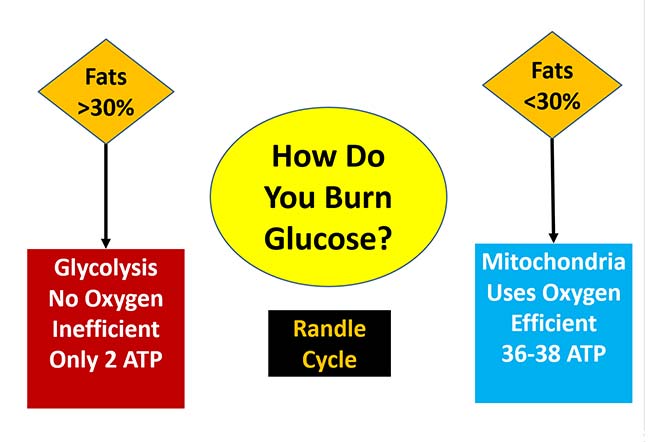
Your mitochondria can only burn one fuel at a time — either fat or glucose. As illustrated above, fats are broken down in a process called beta oxidation into acetyl-co A, which gets fed into the Krebs cycle. Carbs are broken down to pyruvate, which cannot enter the electron transport chain until they are converted to Acetyl-Co-A by pyruvate dehydrogenase.
The key here is that there’s a stealth switch that controls which of these fuels your mitochondria will burn. The switch has been given the name the Randle Cycle, but it is more helpful to visualize it as a railroad switch that changes the tracks of the train. The train can only travel down one track: not both. This is because only one type of fuel can be burned at a time.
Burning glucose in your mitochondria creates more energy and fewer ROS, raises your metabolic rate, and produces carbon dioxide, which protects against oxidative (reductive) stress and oxygenates cells. All of these things will help protect your brain function.
In a best-case scenario, you will metabolize, or burn, glucose in your mitochondria with minimal reductive stress. When you do this, you will only generate 0.1% ROS.
This route is also incredibly efficient at energy production, creating 36 to 38 adenosine triphosphates (ATP) for every molecule of glucose that is metabolized. However, for this to occur, you need to consume less than 30 to 40% of your calories as fat. When you consume significantly more than that amount, the switch changes to burn fat in your mitochondria and your ability to burn glucose will be impaired.
Chronically oxidizing fats as your primary fuel will also tend to increase your cortisol level, resulting in chronic inflammation, both of which accelerate the aging process.
So, in summary, burning glucose in your mitochondria creates more energy and fewer ROS, and raises your metabolic rate. It also produces carbon dioxide as a byproduct, which protects against oxidative (reductive) stress and oxygenates cells. All these things will help protect your brain function.
For more details about the Randle Cycle and how your metabolism works, see “Crucial Facts About Your Metabolism” and “Crucial Facts About Your Metabolism, Part 2.”
Gut Problems Also Likely Cause of Parkinson’s Disease
A new study6 in the October 2023 issue of Molecular Psychiatry showed that the presence of damaged mitochondrial DNA in the bloodstream is sufficient to cause all symptoms of Parkinson’s disease. The mitochondrial debris is then activated by the endotoxin (lipopolysaccharide) receptor TLR4.
Endotoxin is produced in your gut when you eat fermentable carbs that you are unable to digest in your stomach and small intestine. The carbs then travel to the large intestine, where they fuel the growth of gram-negative bacteria that grow and die. When they die, the endotoxin in their cell wall is released, activating the TLR4 receptor.
The Ray Peat approach is to increase the amount of simple carbs in your diet so your mitochondria can be optimally fueled. But there is strict caution to avoid fermentable carbs for the very reason that they can create endotoxin and activate the TLR4 receptor.
When introducing carbs, it is important to do it slowly, and make sure you are not having digestive symptoms like belching, bloating or gas, which are signs that the carbs aren’t being digested in your upper digestive system. If this is the case, you will need to use small amounts of fruit juices without pulp until your gut can digest the carbs without symptoms.
Lion’s Mane Mushroom May Protect Your Cognitive Function
In addition to basic micronutrients, a number of other supplements can also help protect your cognitive function. One interesting one is lion’s mane mushroom (Hericium erinaceus), which has a long history of use in traditional medicine.
Buddhist monks, for example, traditionally used lion’s mane mushroom tea to enhance brain function and heighten focus. In modern times, several studies have confirmed lion’s mane’s neuroprotective and cognition-enhancing effects, including the following:
| A 2023 study7 found that Lion’s mane extract can enhance memory by promoting neuron projections and connections to other neurons. |
| In a 2020 study,8 patients with mild Alzheimer’s disease who were given three 350-milligram capsules of lion’s mane mushroom per day for 49 weeks improved their cognitive test scores. |
| An epidemiological study9 published in 2017, which included 13,230 participants 65 years of age and older, found those who ate mushrooms at least once a week had “a lower risk of incident dementia, even after adjustment for possible confounding factors.” The greatest risk reduction was among those ate mushrooms three times or more per week. |
| A similar but smaller study10 published in 2019 reported that those who ate the most mushrooms had a 43% lower risk of developing mild cognitive impairment, independent of confounding factors such as alcohol consumption, cigarette smoking and high blood pressure. |
| A 2016 study found extracts from lion’s mane mushroom reduced symptoms of memory loss in mice and prevented neuronal damage caused by amyloid beta plaques known to accumulate in the brain with Alzheimer’s disease. |
| A 2010 study11 involving seniors between the ages of 70 and 74 found higher intakes of fruits, vegetables, grain products and mushrooms improved cognitive performance. |
You can consider adding mushrooms like lion’s mane to your diet as they can be an excellent addition to nearly any meal. They complement all kinds of grass-fed meats and wild-caught fish, go well in nearly any salad and can be added to soups, casseroles and other meals.
However, it is crucial to choose organically grown mushrooms as fungi easily absorb air and soil contaminants. Alternatively, you could opt for an organic supplement or extract.
- 1, 4 Nutrients September 25, 2023; 15(9): 4129
- 2 Medical News Today October 2, 2023
- 3 Nutrients September 25, 2023; 15(9): 4129, Section 6.1.1
- 5 Cell Reports May 29, 2018; 23(9): 2550-2558
- 6 Molecular Psychiatry October 2, 2023
- 7 Journal of Neurochemistry, 2023; doi: 10.1111/jnc.15767
- 8 Frontiers in Aging Neuroscience, 2020;12
- 9 Journal of the American Geriatrics Society, 2017;65(7)
- 10 Journal of Alzheimer’s Disease, 2019;68(1)
- 11 British Journal of Nutrition, 2010;104(8)
A Review of Helpful Antiviral Strategies
Reproduced from original article:
https://articles.mercola.com/sites/articles/archive/2023/10/08/vitamin-c-dosage-for-viral-infection.aspx
The original Mercola article may not remain on the original site, but I will endeavor to keep it on this site as long as I deem it to be appropriate.
Analysis by Dr. Joseph Mercola Fact Checked October 08, 2023
STORY AT-A-GLANCE
- Initial predictions called for 2.2 million COVID-19 deaths in the U.S. alone. According to the latest models, an estimated 60,000 Americans may die from COVID-19 complications
- Some doctors are promoting the use of the antimalarial drug hydroxychloroquine combined with azithromycin for seriously ill COVID-19 patients. Apparently, many are seeing good results, although not universally. Some Swedish hospitals have stopped using chloroquine due to severe side effects in some patients
- Northwell Health, New York’s largest health care provider, is using vitamin C at its hospitals in conjunction with hydroxychloroquine and azithromycin
- Some doctors have noted their patients’ symptoms have more in common with altitude sickness than pneumonia. In the final analysis, it may turn out that ventilators are inappropriate for a majority of patients. A better alternative may actually be hyperbaric oxygen therapy
- Preventive methods you can use at home include taking vitamin C to bowel tolerance; zinc, vitamin B1 and melatonin supplementation; nebulized hydrogen peroxide; ozone therapy and nitric oxide boosting exercise
From Dr. Joseph Mercola
Since COVID-19 first entered the scene, exchange of ideas has basically been outlawed. By sharing my views and those from various experts throughout the pandemic on COVID treatments and the experimental COVID jabs, I became a main target of the White House, the political establishment and the global cabal.
Propaganda and pervasive censorship have been deployed to seize control over every part of your life, including your health, finances and food supply. The major media are key players and have been instrumental in creating and fueling fear.
I am republishing this article in its original form so that you can see how the progression unfolded.
Originally published: April 19, 2020
In this interview, recorded April 7, 2020, Dr. Andrew Saul, editor-in-chief of the Orthomolecular Medicine News Service, brings us new updates and insights into the COVID-19 pandemic.
Since our March 17, 2020, interview, which focused on the use of vitamin C, Dr. Anthony Fauci, director of the National Institute of Allergy and Infectious Diseases, made the prediction that SARS-Cov-2 would kill anywhere from 100,000 to 240,000 Americans,1 which is still far less than the original prediction of 2.2 million.2
However, even that prediction has since been revised downward. April 8, 2020, a new model referred to as the Murray Model3 predicts COVID-19 will kill 60,000 in the U.S. by August.4 There’s no doubt in my mind that there will be more deaths from the financial collapse than there will be from the actual infection. So, it’s a sad state of affairs. As noted by Saul:
“Folks need to remember that in any given year, influenza escalating to pneumonia is a killer. And in any given year, there’s around 40,000 to 65,000 deaths, depending who you listen to, from pneumonia.
This is an awful lot of people dying every year. COVID-19 is a serious disease, but it’s not worth shutting down the world for. The stress from that is going to be a killer …
The people who die from COVID-19 are dying basically from SARS, Severe Acute Respiratory Syndrome, or pneumonia. So, it doesn’t really matter what virus does that. It matters if you die or not.
Many people are going to get COVID-19, and they’re going to have a mild case. And, for those who have a typical case, they’re going to have a miserable flu. They’re going to be sick as a dog for a couple of weeks.
Well, welcome to humanity, because how many times have we all had a miserable flu in our lifetimes? Those who are really at risk from COVID-19 usually have multiple pre-existing health problems, or they have a demonstrably poor lifestyle.
They’re overweight or they’re smoking, or they have an impaired immune system, or they’re elderly. And if you have a combination of those, anything can take that person out. So, we have to have perspective here.”
Google, Facebook Censor Real Data
Unfortunately, if you’re still using Google or social media platforms like Facebook, you’re unlikely to locate sensible information about how to protect yourself from COVID-19.
I believe suppressing access to the truth — the information you need to upregulate your innate immune system — is part of the plan to control the discussion about treatment options. Clearly, Fauci is promoting a pharmaceutical agenda when he says there’s nothing anyone can do until there’s a vaccine or antiviral drug available. Saul provides the following real-world example:
“This is something you can verify with your own Facebook account. Try this little experiment. If you post the meme I have at DoctorYourself.com on Facebook, it will immediately be blocked.
Here’s what the poster says: ‘Dr. Enqiang Mao, who is chief of emergency medical service at Ruijan hospital in Shanghai, China, treated 50 patients with high dose intravenous vitamin C. They had moderate to severe COVID. 50 out of 50 recovered. There were no fatalities.’
This is a report from a senior physician, right from China, to my contact in China, Dr. Richard Cheng, who is a board-certified himself and a Chinese-American, right there, reporting in firsthand. And this is labeled false news, fake news. This is demonstrably oppressive.”
The good news is Cheng is presenting his evidence before the National Institutes of Health. “I’ve seen his PowerPoint,” Saul says. “He’s going to run down why vitamin C is an antiviral, and how it can be used, and what doctors are doing.”

Aside from Mao, Dr. Zhiyong Peng, chief physician at Zhongnan Hospital, who is doing a major COVID-19 trial in Wuhan City, China, has stated that intravenous vitamin C is successful. “The number of new cases of COVID in China is very low, it’s gone way down, almost to the vanishing point,” Saul says. “Yet this information, somehow, is not on the news. And this is the very thing America and the rest of the world so needs to know now.”
Immune-Boosting Supplementation Regimen
Some New York hospitals are using vitamin C, though. A Northwell Health spokesperson has reportedly confirmed that vitamin C treatment is being “widely used” against coronavirus within the 23-hospital system.
According to Dr. Andrew G. Weber, a pulmonologist and critical-care specialist affiliated with two Northwell Health facilities on Long Island, vitamin C is being used in conjunction with the antimalarial drug hydroxychloroquine and the antibiotic azithromycin, which have also shown promise in coronavirus treatment.5 Saul notes:
“Northwell, which is the largest health care provider chain in New York state, [has] over 20 hospitals. It’s difficult to get information out of them, but to their credit, their spokesperson has announced that vitamin C is being used. And Weber … has reported that the vitamin C works. He said, basically, as close as I can quote him, ‘It’s not getting more publicity because it’s not a sexy drug.’ I love that …
If you have vitamin C for prevention, you are much less likely to have a bad case of any kind of viral infection, including COVID-19. Doesn’t mean you won’t get it; it means that your immune system will be able to handle it, and that’s what your immune system does …
In fact, people now are being told if they can manage this at home, [then] please stay home. Leave the hospital beds for those who really need them, and reduce risk of infection.
Remember, a hospital, by definition, is where we have our very sickest people with the greatest load of viruses and drug-resistant bacteria that you’ll ever find … We don’t live in a bubble, we live in a world of viruses, and they’re constantly mutating, and they’re constantly developing …
So, for prevention, the Orthomolecular Medicine News Service Editorial Review Board and the Japanese College of Intravenous Therapy both recommend 3,000 milligrams (mg) of vitamin C a day in divided doses, 400 mg of magnesium … 20 mg of zinc … 100 micrograms (mcg) of selenium … and 5,000 units of vitamin D, scaling down to 2,000 units of vitamin D a day after the first week.
That is a big difference. So, between the vitamin D and the vitamin C, we have something that will strengthen the immune system. When a person is in hospital, they are less likely to have access to supplements, at a very time when they’re going to need them more.
This is why we have to push, and the only way to do that is for the family to get in there and make it happen. More and more doctors are willing to do it because of the studies … in New York … So, the cat’s out of the bag … and it’s not going to go back in. There is a precedent. Just say to your doctor, ‘I want you to do what they’re doing in New York’ …
What we should learn from history is “have a strong immune system and you will survive.” This is the way it works. And the emphasis now is on scaring people, and actually telling them in the media, “Don’t take vitamin C, it won’t help you. Don’t take extra vitamin D, you don’t need it. There’s nothing you can do to build your immune system.”
You’ll actually see this on some news reports, and some newspapers. But, you’ll also see others that are reporting that it’s working in China and other parts of the world.”
Download this Article Before it Disappears
Zinc With Hydroxychloroquine
Some doctors are promoting the use of the antimalarial drug hydroxychloroquine (Plaquenil) combined with azithromycin (Z-Pak) for seriously ill COVID-19 patients. Apparently, many are seeing good results, although not universally.
According to Newsweek, some Swedish hospitals have stopped using chloroquine due to severe side effects in some patients.6 That said, it appears one of the reason quinine drugs work is because it allows zinc to enter the cells. Saul comments on the use of hydroxychloroquine saying:
“I think if you can use a nutrient with a drug, you get better results than if you use the drug alone. Dr. Abram Hoffer, who was my personal mentor … said, ‘Sometimes you need a drug. Sometimes the drug will get you that immediate result that you’ve got to have, but you have to have nutrition if you want it to stick.’
So, if you use medication and the nutrient, you’re going to do better than if you use the medication alone … If the drug will help get the zinc to where it needs to go, that just makes good sense to me.”
Since the drug is now being rationed to those who need it most, you’d be wise to take zinc preventively. Your body only needs a small amount of it, and knows exactly what to do with it. Your immune system, for example, requires it to function. The elderly, who tend to eat less and eat less wholesomely, have a greater need for zinc supplementation.
“This is in every nutrition textbook ever written,” Saul says. “So, what we want to do right now is tell people, ‘Don’t worry about the drug unless you really need it. It’ll be at the hospital pharmacy. But for the rest of us, let’s stay out of the hospital by taking a step so we won’t need the drug.’
It’s not about avoiding doctors; it’s about not needing them. And that means you have to get on the wagon here. We have to do this every day. We have to be sure we take our supplements and eat a good diet, and avoid the junk and continue to get our fresh air and exercise.”
Ventilators May Do More Harm Than Good
In recent days, we’re seeing more and more reports of doctors saying the use of ventilators may be misguided.7 According to Business Insider,8 80% of COVID-19 patients in New York City who are placed on ventilators die, causing some doctors to question their use. As reported by STAT News:9
“What’s driving this reassessment is a baffling observation about Covid-19: Many patients have blood oxygen levels so low they should be dead. But they’re not gasping for air, their hearts aren’t racing, and their brains show no signs of blinking off from lack of oxygen.
That is making critical care physicians suspect that blood levels of oxygen, which for decades have driven decisions about breathing support for patients with pneumonia and acute respiratory distress, might be misleading them about how to care for those with Covid-19.
In particular, more and more are concerned about the use of intubation and mechanical ventilators. They argue that more patients could receive simpler, noninvasive respiratory support, such as the breathing masks used in sleep apnea, at least to start with and maybe for the duration of the illness.”
Some doctors have noted their patients’ symptoms have more in common with altitude sickness than pneumonia.10 This situation highlights the problems inherent with strategic standard of care. We thought we had a serious ventilator shortage and industries such as the auto industry redirected their manufacturing capacity to making ventilators.
In the final analysis, it may turn out that ventilators are inappropriate for a majority of patients. A far better alternative may actually be hyperbaric oxygen therapy.
“Making the oxygen available in a way that’s appropriate to the severity of the patient is the answer,” Saul says. “We have to remember that our body is singularly good at taking in oxygen or we wouldn’t be here. And our lungs have a huge amount of absorptive space. I mean, that’s what they do. It’s just an extraordinary system that we have.
Oxygen goes in by diffusion. You don’t push it in; the body sucks it in because if you have more oxygen outside than you do inside, it just goes through. All you do is give a lot of absorptive surface. And if you flattened out all the little alveoli in the lungs, you’d have an enormous area …
So, by providing the oxygen and then see if the body will take it up, you’ve made the first step. That can be done preventively by fresh air and exercise and going out and playing …
If somebody needs more oxygen, and you want to give them a little pressure, if that makes the patient better, then you do it. But the idea that you’ve got to ram this oxygen like a supercharger on a Mustang is, I think, a little bit, shall we say, industry friendly …
[The alveoli] are tiny, tiny little sacks. They have some of the thinnest little membranes you’ve ever seen. Look at them under a microscope. They’re very delicate. So, the last thing you want to do is add injury to insult.”
Hydrogen Peroxide Therapy
Saul, along with Dr. Thomas Levy, recommend nebulized hydrogen peroxide therapy. Similarly, Dr. Robert Rowen has published a commentary11 about the use of ozone therapy against SARS-CoV-2 infection. Both of these treatment alternatives are inexpensive and safe, and could be administered at home.
One point I want to stress after looking more deeply into this is that you may want to be careful about using regular 3% hydrogen peroxide, as they use proprietary stabilizers. By law, they’re not required to disclose those chemicals. So, ideally, you’d want to use food grade hydrogen peroxide and carefully dilute it to a 3% concentration.
What to Do if You’re Feeling Under the Weather
So, to recap, what can you do if you’re suddenly feeling under the weather and suspect a viral infection? Saul recommends taking vitamin C to bowel tolerance.
“Take enough C to be symptom free, whatever the amount might be. Dr. Cathcart would say take vitamin C to bowel tolerance, and that’s exactly what you think it means. The sicker you are, the more you hold. So, if you are really facing an influenza outbreak, you’ll hold a lot of C before you get to bowel tolerance.
This is something that everyone can do at home. My grandchildren can do this. When they get sick, they manage their own case by taking vitamin C until they get to bowel tolerance. Use whatever kind of vitamin C you can afford … [and] take enough C to be symptom free.
The more frequently you can take the vitamin C, the better off [you’ll be]. Vitamin C being water soluble is constantly lost … The more often you take it, the better results you will have, and you will need less to do so.
So, taking a small amount of vitamin C every half-hour is actually much better than taking a large amount of C twice a day. And taking a large amount of C twice a day is better than taking a huge amount of C every other day. So, the more often you take it, the friendlier it is for your body.”
For acute infection, you may need to increase your dosage somewhat beyond bowel tolerance. Keep in mind that taking it more frequently, such as every half-hour, will allow you to take more before you hit bowel tolerance. Other alternatives include taking a liposomal vitamin C or getting an IV infusion of vitamin C. Liposomal vitamin C can achieve intracellular levels very similar to IV vitamin C at a fraction of the cost and inconvenience.
B Vitamins (Thiamine)
Thiamine (vitamin B1) is also important, and works synergistically with vitamin C. Any infection increases your body’s need for thiamine. You can read more about this in “Vitamin B1 Is Vital to Protect Against Infectious Disease.”
The recommended daily allowance for thiamine is well below 2 mg. For acute illness or short-term prevention, Saul suggests taking 50 mg to 100 mg of thiamine per day, ideally in divided doses.
“Thiamine is the vitamin that smells funny,” he says. “When you open the bottle of your multiple vitamin, or your B complex, that smell is thiamine. So, when your urine smells like thiamine, you’re probably getting more than you need, but that’s not a problem.
Thiamine is safe, and you can excrete that. The excretion is an indicator of saturation. Thiamine, really, is best taken with the entire B complex. The B complex vitamins work better together.
For prevention, most people will get a B complex, B50 … Generally speaking, what I would tell people to do is take a look at the RDA, and you can do that on the internet in seconds, and take more than that. A B complex is this cheapest and safest way to do that.”
Melatonin for COVID-19
Another strategy that appears useful against both bacterial and viral infections is hormone melatonin. I review this in greater depth in “Melatonin for Sepsis.” Saul comments:
“Melatonin is a wonderful thing, because the safety studies are very encouraging. If you want to hurt yourself, melatonin will not do the job … Melatonin is inexpensive, it’s non-prescription and, obviously, something that safe deserves a try … And a little bit of melatonin can go a long way.
The older you get, the less you make. Now, if you keep your bedroom dark at night, you will make more melatonin. I’m about to impart a piece of wisdom that makes me very unpopular very quickly with a large number of people, and that is if you go to bed early, you will make more melatonin, and you will sleep better.
If you go to bed at 7:30 or 8:00 o’clock at night, you will have a far better sleep than if you go to bed later, even if you have the same number of hours. The old adage is, each hour of sleep before midnight is worth two hours of sleep after midnight. There’s something to that.”
Nitric Oxide Helps Inhibit Viral Replication
Another strategy worth mentioning is nitric oxide, which appears to inhibit viral replication. To boost nitric oxide, you could use precursors such as arginine or citrulline, but exercise and near-infrared radiation (such as a near-infrared sauna) will also do the trick.
“Exercise is absolutely crucial. I’m so big on that, and I would like to underscore that this is something that doesn’t cost a dime,” Saul says. “What is missing from most discussions on COVID-19 is an appreciation of how far we have let ourselves go. We’ve been eating crummy food for a long time.
We’ve been doing behaviors for a long time that don’t work. And sooner or later, the body is going to be weakened by that. Too much of the wrong thing, not enough for the right thing, and the immune system is going to be weak. And viruses, unfortunately, to put it very coldly, will thin the herd.
This is the way nature works … Now, this is a very harsh lesson from nature, but we would do well to learn it. If we let ourselves go, as my mother would say, ‘If you do this wrong, and you know it, don’t come crying to me afterwards.’ We have to take responsibility, and right now the COVID-19 epidemic is pointing that out in a very, very strong way.
It is most unpleasant to see this, but bearing in mind that we are not a healthy nation, we have to immediately take steps to become one, or there will be another virus, because this is not the first, and it is not the last … It just makes my day when I learn about people that … are not watching the news, they’re going out and they’re getting well.”
- 1 CNN March 31, 2020
- 2 The Intercept March 17, 2020
- 3 IHME April 2, 2020
- 4 CNN April 8, 2020
- 5 New York Post March 24, 2020
- 6 Newsweek April 6, 2020
- 7 Medscape April 6, 2020
- 8 Business Insider April 9, 2020
- 9, 10 STAT News April 8, 2020
- 11 Journal of Infectious Diseases and Epidemiology, A Plausible “Penny” Costing Effective Treatment for Coronavirus — Ozone Therapy