NAD+
now browsing by category
The Wide-Ranging Health Benefits of Niacinamide
Reproduced from original article:
https://articles.mercola.com/sites/articles/archive/2023/06/22/health-benefits-of-niacinamide.aspx
The original Mercola article may not remain on the original site, but I will endeavor to keep it on this site as long as I deem it to be appropriate.
Analysis by Dr. Joseph Mercola Fact Checked June 22, 2023

STORY AT-A-GLANCE
- Niacinamide (aka nicotinamide) is a form of niacin (vitamin B3) that plays an important role in energy metabolism. Without it, your mitochondria cannot make energy
- Niacinamide is also a precursor to NAD+, which is essential in the conversion of food to energy, maintaining DNA integrity and ensuring proper cell function. NAD+ is also a primary fuel for longevity proteins that become depleted with age
- According to recent research, a century-long decline in our basic metabolic rate (BMR) can by itself account for the obesity epidemic. For some reason, we’re spending less energy (burning fewer calories) now, when resting, than people did in decades past
- Consumption of polyunsaturated fats may be to blame for this BMR decline. Niacinamide has potent antiobesity effects and also helps inhibit release of inflammatory PUFAs from fat cells
- Niacinamide can also help prevent neurodegeneration, kidney disease and heart failure, and reverse leaky gut
In a series of articles, biohacker Georgi Dinkov highlights a variety of benefits of niacinamide (aka nicotinamide), a form of niacin (vitamin B3) that plays a vital role in energy metabolism, as it’s essential for the mitochondrial electron transport chain to function. Without it, your mitochondria cannot make energy.
Niacinamide is so important because it is a precursor for NAD+, which is involved in the conversion of food to energy, maintaining DNA integrity and ensuring proper cell function. NAD+ is also a primary fuel for sirtuins, longevity proteins that become depleted with age.
As such, niacinamide can be an important longevity hack. As I’ve explained in previous articles, niacinamide at a dose of 50 milligrams per day will provide the fuel for NAMPT, the rate limiting enzyme for NAD+. Niacinamide also has potent antiobesity effects, can help prevent neurodegeneration and heart failure, and reverse leaky gut.
Obesity Epidemic Linked to Decline in Basic Metabolic Rate
In a May 2023 article,1 Dinkov reviewed evidence showing that lack of exercise and increased calorie intake are not the cause of the obesity epidemic. Interestingly, there has been a century-long decline in our basic metabolic rate (BMR), or basal energy expenditure. BMR refers to the number of calories your body burns when you’re at rest, which accounts for 60% to 75% of your total daily energy expenditure.
According to research published in the April 2023 issue of Nature Metabolism,2 the adjusted basal metabolic rates (BMR) in the U.S. and Europe have declined by 14.7% in men and 2% in women since the 1990s. While the decline in women was not considered significant, when they looked at a larger data set that stretched back 100 years, a significant drop was confirmed for both sexes.
This, the authors believe, is “a previously unrecognized factor” in the obesity epidemic. In plain English, what this means is that, for some reason, we’re burning fewer calories now when resting or even sleeping than people did in decades past.
“It does not take much acumen to realize that with double digit declines over a 3-decade period, by now our BMR is probably only half of the BMR of people who lived at the turn of the 20th century,” Dinkov writes.3
“What makes the situation worse is that if BMR has declined so much, the current guidelines for ‘optimal’ health — reduced caloric intake and plenty of exercise — are virtually guaranteed to make the situation even worse since they will invariably further lower the BMR …
What could be causing these declines in BMR? Well, chronic stress aside, that decline in BMR mirrors almost perfectly the curves of PUFA [polyunsaturated fat] consumption rates in the general population.
Namely, as the BMR curve has steadily declined over the last 100 years the PUFA consumption rate curve has steadily moved upwards over time. Unless this trend of ever-increasing PUFA consumption is interrupted, I don’t see the decline of BMR flattening (let alone reversing) any time soon.”
Niacinamide’s Antiobesity Effects
In another article, Dinkov cites recent research4,5 showing that niacinamide reprograms cellular metabolism in adipose (fat) tissue and increases mitochondrial biogenesis, which in turn results in fat loss. Basically, it ameliorates obesity-related metabolic dysfunction by increasing fatty acid catabolism.
Obese mice given a daily dose of 2.5 mg of niacinamide per kilo of bodyweight for three weeks lost 47% of their body fat. They also saw increases in lean muscle mass.
Obese mice that were given a daily dose of 2.5 mg of niacinamide per kilo of bodyweight for three weeks lost 47% of their body fat, and this was true whether they ate a regular diet or a high-fat one. They also saw increases in lean muscle mass, mitochondrial biogenesis and energy production, CO2 levels, and physical activity. Insulin sensitivity was also improved.

Download this Article Before it Disappears
Niacinamide Is Helpful When Clearing PUFAs
Where does niacinamide fit into this? Primarily, it has to do with the fact that it raises NAD+, and NAD+ inhibits the release of inflammatory polyunsaturated fats (PUFAs) such as linoleic acid (LA) from your fat cells. Another term for this is anti-lipolytic.
This is a good thing, because when LA is released from your fat cells it is metabolized into highly inflammatory molecules, so you want to release it from your cells very gradually.
PUFAs such as LA are not typically burned as fuel like saturated fats. Instead, they’re stored,6 and the half-life of PUFAs, which get embedded and integrated into your cell membranes, is about 680 days. This means that to rid your body of LA will take approximately seven years, provided you don’t load more in.
It is fascinating to note that most of the body fat in obese individuals is composed of PUFAs. Saturated dietary fat is mostly burned (oxidized) and used up. So, most people have large stores of LA, and these stores need to be lowered to safe levels of 1% to 2% LA.
If your cells are loaded with these inflammatory fats (which they will be if you’ve been eating processed foods), rapid release of LA from your fat cells will precipitate or increase inflammation, so you really want to limit that. Aside from niacinamide, aspirin is also an anti-lipolytic and also slows down the release of LA from your fat cells.
Taking a high-quality vitamin E supplement once a day can also be helpful. In addition to impairing the release of LA from fat cells, just like NAD+ and aspirin, vitamin E also helps prevent the LA from converting into dangerous oxidative linoleic acid metabolites (OXLAMs) once released, so it does double-duty.
Most vitamin E supplements are garbage. To ensure you’re getting a high-quality vitamin E, you want most of the vitamin E isomer as alpha tocopherol, typically about 150 units. It should also have the other tocopherol isomers, alpha, beta and gamma, but at far lower doses.
Additionally, it should have alpha, beta and gamma tocotrienols. Finally, it should only have the “D” isomer. Avoid all vitamin E supplements that are “DL,” as half of it is the wrong isomer and not biologically useful and may even be harmful.
Niacinamide May Protect Against Neurodegeneration
In another May 2023 article,7 Dinkov reviews evidence showing niacinamide may help prevent neurodegeneration by allowing for higher energy levels through energy metabolism in the mitochondria. “There are many studies, going back decades, demonstrating that a drop in NAD+ levels, and thus of NAD/NADH, is a common feature of virtually all neurodegenerative diseases,” he writes.
Studies have also demonstrated that raising NAD+ levels can help prevent and treat many neurological conditions, including Alzheimer’s and ischemic stroke. Dinkov goes on to cite a recent study8,9 that suggests the primary purpose of autophagy, particularly autophagy in your brain, is to maintain optimal NAD+ levels.
When autophagy is low, the resulting NAD depletion causes cytotoxicity in the brain cells and degeneration of brain tissue. Since declining NAD+ levels appear to be what’s behind the neurodegenerative processes, the authors suggest the remedy is to raise NAD+ using precursors such as nicotinamide, nicotinamide mononucleotide (NMN), nicotinamide riboside (NR) or niacin (vitamin B3).
Of these, I’m convinced niacinamide is the best. I’ll review why in the next section. The reason so few promote it is because it’s incredibly inexpensive, so there’s no financial incentive at play.
Another inexpensive solution to increasing or modulating autophagy is aspirin,10 which may activate autophagy without the downside of fasting’s increasing cortisol levels. Also, as Georgi states below:
“Since aspirin is known to modulate autophagy (raise it when it is abnormally low and lower it when it is abnormally high) and niacinamide is a very effective NAD precursor, it is reasonable to try them in combination that should be synergistic when it comes to protecting the brain (and the entire organism) from diseases and even aging.”
Dinkov continues by mentioning some surprising tidbits that I was previously unaware of:
“Last but not least, the study is one of the few to pour cold water on everybody’s favorite anti-aging target — the sirtuins (SIRT). I mentioned SIRT years ago in a post demonstrating that its activity is greatly increased in cancer and that SIRT promotes fatty acid oxidation (FAO), which drives cancer growth and metastases.
Now, [this study] demonstrates that the sirtuin genes are also heavy consumers of NAD and also mentions that their activity actually increases in aging and pathological states. Conversely, inhibiting the sirtuins (SIRT) would be beneficial, as the study itself demonstrates …
The really good news here is that niacinamide is not only a precursor to NAD+, but is also an inhibitor (in higher doses) of both NAD-consuming enzymes mentioned in the study (PARP-1 and SIRT). None of the other NAD precursors have been shown (so far) to inhibit the NAD-consuming enzymes.”
Why Choose Niacinamide?
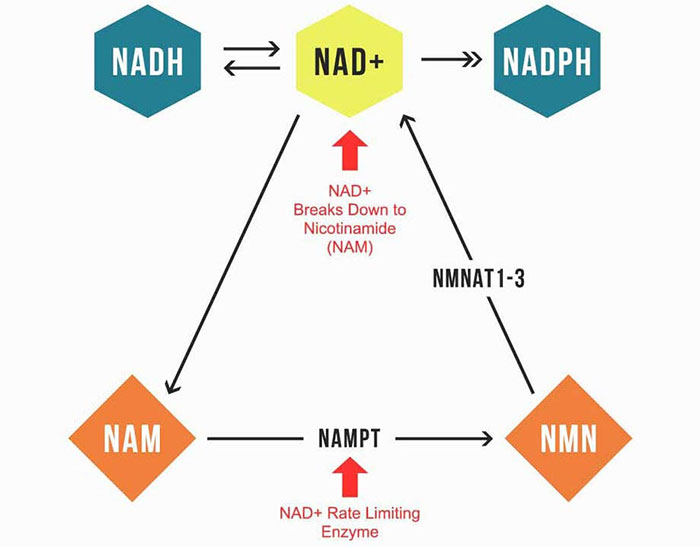
The reason I’m convinced niacinamide is the best NAD+ precursor is because the immediate breakdown product of NAD+ is niacinamide. As you can see in the illustration below, when NAD is used up, it gets broken down into niacinamide.
This niacinamide is then recycled. First, it’s converted into NMN, and then into NAD+. This is likely why some researchers promote NMN. However, the enzyme NMNAT1-3 that converts NMN to NAD+ is not the rate limiting enzyme. NAMPT is what controls how much NAD+ you make. So, flooding your body with NMN is not going to be as useful as using small amounts of niacinamide and activating NAMPT.
The ideal dosing of niacinamide is from 50 mg three times a day. It is the rare person that will not respond favorably to this simple intervention for increasing NAD+.
Niacinamide Prevents Kidney Disease
Speaking of NAD+, NAD+ deficiency has been linked to kidney disease, and niacinamide can help prevent that too.11 As Dinkov explains in a May 18, 2023, article:12
“Many studies have … shown that elevated lipolysis (delivering inflammatory PUFA to the kidneys) and, consequently, elevated fatty acid oxidation (FAO) as per the Randle Cycle are the … likely culprits. It is well-known that one of the effects of elevated FAO is a decline in the mitochondrial NAD/NADH ratio — i.e. relative deficiency of NAD+.
This is actually the primary mechanism through which elevated FAO inhibits glucose oxidation since lower NAD/NADH ratio inhibits the activity of the enzyme pyruvate dehydrogenase.
In any event, the study … demonstrates that relative deficiency in NAD+ (i.e. lower NAD/NADH ratio) is the direct cause of kidney damage due to the resulting OXPHOS dysfunction. Conversely, elevating NAD+ (and thus NAD/NADH) levels with precursors such as nicotinamide mononucleotide (NMN) or nicotinamide riboside (NR) was effective in completely preventing kidney damage and CKD.
Since NMN is no longer available over the counter and NR is rather expensive, niacinamide remains as the most viable option for replicating the study in humans with CKD, especially considering the fact that niacinamide is just as effective as an NAD+ precursor as NMN/NR while also having potential additional benefits the other two precursor do not.
Namely, niacinamide is an inhibitor of the NAD-consuming enzymes PARP-1 and CD38, so taking niacinamide not only directly increases NAD+ levels but also inhibits its excessive consumption/decline. I can’t find the actual published study that article is based on, but other studies have demonstrated benefits for CKD in animals from human-equivalent (HED) doses in the 250mg-500mg daily range.”
Niacinamide for Leaky Gut
Niacinamide also holds out the promise of healing for all those who struggle with increased gut permeability, so-called “leaky gut,” and related problems. When lipopolysaccharide (LPS), an endotoxin, leaks from your gut into your bloodstream, it causes low-grade systemic inflammation that fuels a wide range of chronic diseases and conditions.
While certain toxins such as glyphosate and gluten have been implicated in leaky gut, recent research13,14 suggests it may be rooted in an energy deficiency which, again, niacinamide can help fix. Dinkov explains:15
“Since apparently intestinal epithelial cells (forming the bulk of the gut barrier) consume at least 20% of the ATP we synthesize daily, any sizable drop in ATP levels results in massive dysfunction in both the structure and function of these cells …
Endotoxin (LPS), produced by the gram-negative members of our microbiome, is known to deplete ATP levels in the epithelial cells. The study used another known ATP depleting agent — ethanol — to cause the energetic deficiency in the epithelial cells and, unsurprisingly, found that endotoxin levels in the blood massively increased.
However … administering niacinamide at a human-equivalent dose of 30mg/kg daily, for 10 days, fully prevented the endotoxemia caused by ethanol, and reversed all the energetic (ATP, NAD, Krebs cycle function) deficits as well, thereby restoring the gut barrier function.
In fact, niacinamide supplementation reversed the energetic deficits to a level surpassing the healthy control group! As I mentioned above, the study is relevant even for people who do not drink alcohol since endotoxin naturally formed in our intestines in response to feeding can also cause similar energetic depletion in the intestinal cells and thus cause the same state of ‘leaky gut’ as ethanol.
While 30mg/kg of niacinamide daily is not a small dose, it is below the daily dose even mainstream medicine considers toxic, and the duration of usage was just 10 days. Furthermore, the treatment lasted 10 days since ethanol was also administered for 10 days. If a person is not drinking daily, then the niacinamide treatment would also likely not be needed daily.
In the absence of daily drinking, I think a reasonable protocol would be to take 30mg/kg on weekends (2 days), maybe twice a month, as a general prophylactic and/or gut-repair regimen.
A daily dose of 200 mg-300 mg would probably have similar beneficial effects as the larger doses taken sporadically. Several human studies already demonstrated that a daily dose of 300 mg niacinamide raises NAD levels to the same degree as 1,000 mg daily.”
Niacinamide for Heart Failure Prevention
Finally, niacinamide may also act as a preventive against heart failure — again because heart failure is a localized symptom of energy deficiency and mitochondrial dysfunction. As explained by Dinkov,16 when your NAD+ level drops, your ATP level also drops, and this puts stress on the cardiomyocytes in your heart. Cardiomyocytes are specialized cells in your heart that generate contractive force.
Thusly stressed, the cardiomyocytes release pro-fibrotic mediators that further suppress mitochondrial function. Over time, this leads to cell death, collagen deposition and fibrosis, which are hallmarks of heart failure.
Research17 published in February 2023 found that replenishing NAD+ prevented this energetic dysfunction, and therefore the subsequent development of heart failure. Here, the human-equivalent of 3.5 mg per kilo of bodyweight was administered via daily injection for two months, but Dinkov and I both believe that oral niacinamide might be just as effective, although you might have to use it for a longer period of time.
General Niacinamide Recommendations
As a blanket recommendation for optimal health, I recommend taking 50 mg of niacinamide three times per day. Niacinamide will only cost you about 25 cents a month if you get it as a powder. Typically, one-sixty-fourth of a teaspoon of niacinamide powder is about 50 mg.
The reason I recommend getting it in powder form is because in most supplement brands, the lowest available dose is 500 mg, and that will decrease NAD+ due to negative feedback on NAMPT, which is the opposite of what you’re looking for.
Also, please note that although niacinamide and niacin are both called vitamin B3, niacin will not activate NAMPT like niacinamide, so it is best to use niacinamide. Additionally, niacinamide, unlike niacin, will not cause flushing which is due to a large release of histamine.
It would also be helpful to make sure you’re getting all the other B vitamins, as they too are crucial for mitochondrial function, especially regular niacin, riboflavin, and folate. Oftentimes, decreased mitochondrial function is due to a deficiency in B vitamins, and that’s easy to fix with a low dose high quality B complex. Usually, when this is the case, improvement can be seen within two to three weeks.
- 1, 3 Haidut.me May 11, 2023
- 2 Nature Metabolism April 26, 2023; 5: 579-588 Full Text PDF
- 4 Journal of Nutritional Biochemistry September 2022; 107: 109056
- 5 Haidut.me May 31, 2023
- 6 Haidut.me October 22, 2019
- 7 Haidut.me May 11, 2023, Niacinamide may prevent neurodegeneration
- 8 Cell Reports April 20, 2023; 42(5): 112372
- 9 Phys.org April 27, 2023
- 10 Aspirin Recapitulates Features of Caloric Restriction Cell Rep. 2018 Feb 27; 22(9): 2395–2407
- 11 Nat Metab March 2023; 5(3): 357-359
- 12 Haidut.me May 18, 2023
- 13 Nutrients 2023; 15(1): 174
- 14 Lifespan January 11, 2023
- 15 Haidut.me February 22, 2023
- 16 Haidut.me March 3, 2023
- 17 Nature Cardiovascular Research February 13, 2023; 2: 174-191
Strategies to Optimize Mitochondrial Health in Long COVID
Reproduced from original article:
https://articles.mercola.com/sites/articles/archive/2023/04/02/optimize-mitochondrial-health-long-covid.aspx
The original Mercola article may not remain on the original site, but I will endeavor to keep it on this site as long as I deem it to be appropriate.
Analysis by Dr. Joseph Mercola Fact Checked April 02, 2023
STORY AT-A-GLANCE
- Mitochondrial dysfunction is at the root of most all chronic diseases, and it also plays a crucial role in conditions such as long COVID, which is becoming quite common. It’s also a root factor that must be addressed in COVID jab injuries, regardless of symptoms or severity
- One of the most foundational lifestyle components that can make or break your mitochondrial health is electromagnetic field (EMF) exposure. To allow your body to heal, you’ll want to minimize EMF exposure as much as possible
- The cristae of the inner membrane of the mitochondria contains a fat called cardiolipin, the function of which is dependent on the type of fat you get from your diet. Cardiolipin is important because, if cardiolipin is damaged, mitochondrial energy production will be impaired. The most damaging fat is omega-6 linoleic acid, found in seed oils
- Another major culprit that destroys mitochondrial function is excess iron, and almost everyone has too much iron. Copper is also important for energy metabolism, detoxification and mitochondrial function, and copper deficiency is common. Copper is also required for proper iron recycling, and low ferritin is typically a sign of copper insufficiency
- Other strategies reviewed include sun exposure and near-infrared light therapy, time-restricted eating, NAD+ optimizers and methylene blue, which can be a valuable rescue remedy
The video above features a recent lecture I gave to the American College for Advancement in Medicine (ACAM) on how to optimize your mitochondrial health and function.
Mitochondrial dysfunction is at the root of most all chronic diseases, and it also plays a crucial role in conditions such as long COVID, which is becoming quite common. It’s also a root factor that must be addressed in COVID jab injuries, regardless of symptoms or severity.
Features of the post-jab injuries we see point to severe mitochondrial dysfunction, which in turn causes energy failure. The same goes for long COVID in people who struggle with unrelenting fatigue and other symptoms for months after they’ve recovered from COVID-19 infection.
If you can improve your mitochondrial function and restore energy supply to your cells, you’re going to massively increase your odds of reversing the problems caused by the jab or the virus.
US Life Expectancy Falls in Historic Decline
Allopathic medicine has been a leading cause of death in the U.S. for over two decades. In 1998, researchers concluded that properly prescribed and correctly taken pharmaceutical drugs were the fourth leading cause of death in the U.S.
Two years later, in 2000, Dr. Barbara Starfield published her groundbreaking paper, “Is US Health Really the Best in the World?”1 in which she provided data showing that medical errors by doctors were the third leading cause of death. Little has changed since then.
In 2016, Johns Hopkins patient safety experts calculated that more than 250,000 patients died each year from medical errors, again pegging it as the third leading cause of death.2
In July 2022, the National Institutes of Health concluded the annual death toll from medical errors could be as high as 440,000 — and possibly even more because of lack of reporting — making it, still, the third leading cause of death.3
In future years, I believe the medical intervention sold as “COVID vaccines” will prove to be the No. 1 killer of Americans, and we’re already seeing that trend. Something extraordinarily odd happened in 2020 and 2021, something that shaved nearly three years off the life expectancy in the U.S.4
Even a tenth or two-tenths of a year mean decline in life expectancy on a population level is a big deal, as it means a lot more people are dying prematurely than they really should be. A three-year drop is simply unheard of.
While media blame this drop on COVID-19 infection, that makes no sense because the average age of those who died from COVID was about 85, well over the life expectancy in 2019. No, this massive drop in life expectancy is due to younger people dying decades earlier than they should, and the only factor that can account for that is the mass injection of people with an experimental bioweapon.
Limit Your EMF Exposure
One of the most foundational lifestyle components that can make or break your mitochondrial health is electromagnetic field (EMF) exposure. To allow your body to heal, you’ll want to minimize EMF exposure as much as possible. The World Health Organization classified cell phone radiation as a 2B carcinogen in May 2011.
However, as I detail in my 2020 book, “EMF*D,” it’s actually a Class 2A carcinogen. To minimize your EMF exposure, which includes electric fields, magnetic fields and radiofrequencies:
- Keep your cell phone in airplane mode whenever you’re not actively using it
- Do not sleep with it near your bed
- At night, be sure to turn off your Wi-Fi
- Turn the breakers off to your bedroom, as the electrical wiring in most homes also emit dirty electricity
- Alternatively, sleep in an EMF-shielding tent, which is what I use whenever I travel and have no control over the EMF exposure in my room
Download this Article Before it Disappears
Dietary Fat Choices Influence Energy Production
You have about 40 quadrillion to 100 quadrillion mitochondria throughout the cells of your body. In my lecture, I show a picture of the structure of your mitochondria. The cristae of the inner membrane of the mitochondria contains a fat called cardiolipin,5 the function of which is dependent on the type of fat you get from your diet.
Cardiolipin is important, because it influences the structure of the cristae inside your mitochondria, which is the area where energy production occurs. If cardiolipin is damaged, then the complexes will not be close enough together to form supercomplexes and thus the mitochondrial energy production will be impaired.
Cardiolipin also works like a cellular alarm system that triggers apoptosis (cell death) by signaling caspase-3 when something goes wrong with the cell. If the cardiolipin is damaged from oxidative stress due to having too much LA, it cannot signal caspase-3, and hence apoptosis does not occur. As a result, dysfunctional cells are allowed to continue to grow, which can turn into a cancerous cell.
The type of dietary fat that promotes healthy cardiolipin is omega-3 fat, and the type that destroys it is omega-6, especially linoleic acid (LA), which is highly susceptible to oxidation. So, to optimize your mitochondrial function, you want to avoid LA as much as possible, and increase your intake of omega-3s.
Primary sources of LA include seed oils used in cooking, processed foods and restaurant foods made with seed oils, condiments, seeds and nuts, most olive oils and avocado oils (due to the high prevalence of adulteration with cheaper seed oils), and animal foods raised on grains such as conventional chicken and pork.
Ideally, consider cutting LA down to below 7 grams per day, which is close to what our ancestors used to get. If you’re not sure how much you’re eating, enter your food intake into Cronometer — a free online nutrition tracker — and it will provide you with your total LA intake.
Cronometer will tell you how much omega-6 you’re getting from your food down to the tenth of a gram, and you can assume 90% of that is LA. Anything over 10 grams of LA is likely to cause problems. Healthy fat replacements include tallow, butter or ghee, all of which are excellent for cooking.
Address Iron Excess and Copper Insufficiency
Another major culprit that destroys mitochondrial function is excess iron, and almost everyone, with the exception of menstruating women and those with large blood losses, have too much iron. On the other side of this coin is copper, which most people are deficient in.
Iron and copper are highly interdependent and need to be considered together. Low ferritin is rarely indicative of low iron. In most cases, it’s a sign that copper insufficiency is preventing proper iron recycling. Copper is also crucial for energy metabolism, detoxification and mitochondrial function.6 You can learn more about this in “The Poorly-Understood Role of Copper in Anemia.”
To increase your copper level, you can either take 4 to 10 milligrams of copper bisglycinate per day, or eat more copper-rich foods, such as bee pollen, grass fed beef liver and acerola cherry. (Acerola cherry is very high in vitamin C, which contains the copper-rich tyrosinase enzyme.)
The other side of the equation is to lower your iron, which is easily done through regular blood donations. One way is to simply donate blood two to four times a year. If losing 10% of your blood in one sitting is problematic, then you can remove blood in smaller amounts once a month on the schedule I have listed below. If you have congestive heart failure or severe COPD, you should discuss this with your doctor, but otherwise this is a fairly appropriate recommendation for most.
| Men | 150 ml |
| Postmenopausal Women | 100 ml |
| Premenopausal Women | 50 ml |
The Importance of Sun Exposure
A third leading contributor to mitochondrial dysfunction is lack of sun exposure. Getting regular sun exposure is crucial for several different reasons:
1.UVB triggers vitamin D production in your skin — In addition to playing an important role in infections, vitamin D is also necessary for mitochondrial function and cell health in general.7,8 The ideal source of vitamin D is sun exposure, so if you live in an area with plenty of year-round sunshine, aim to expose as much bare skin as possible for about an hour during solar noon.
If you live in an area that doesn’t get enough sunshine during parts of the year, you’ll want to take a vitamin D3 supplement, along with magnesium and vitamin K2.
You need 244% more oral vitamin D if you’re not also taking magnesium and vitamin K2,9 so taking them together means you need far less vitamin D in order to achieve a healthy vitamin D level, which is between 60 ng/mL and 80 ng/mL (150 nmol/L to 200 nmol/L).
2.Near-infrared rays in sunlight shining on your bare skin trigger melatonin production in your mitochondria10 — The vast majority of the melatonin your body produces (95%) is made inside your mitochondria in response to near-infrared radiation from the sun. Only 5% of melatonin is produced in your pineal gland.
Melatonin is a master hormone,11 a potent antioxidant12 and antioxidant recycler,13 a master regulator of inflammation and cell death,14 and an important anticancer molecule.15
Melatonin has also been shown to be an important part of COVID treatment, reducing incidence of thrombosis and sepsis16 and lowering mortality,17,18 and is a known cytoprotector with neuroprotective properties that can potentially reduce the neurological sequelae documented in patients infected with COVID-19.19
When your mitochondria produce ATP (the energy currency of your cells), reactive oxygen species (ROS) are created as a byproduct. ROS are responsible for oxidative stress, and excessive amounts of ROS will damage your mitochondria, contributing to suboptimal health, inflammation and thrombosis (blood clots).
Melatonin production in your mitochondria is your body’s built-in mechanism to counteract this damage, but in order for this invaluable system to work, you must expose your body to near-infrared light. While you can raise your vitamin D level using a supplement, this cannot be done with melatonin.
Oral melatonin supplements do not wind up in your mitochondria where they are needed most to quench the damage from oxidative stress produced in the electron transport chain. An alternative to sun exposure would be to use a near-infrared sauna, described in “Near-Infrared Sauna Therapy — A Key Biohack for Health.”
3.Near-infrared light also:
- Increases mitochondrial ATP production
- Increases autophagy
- Increases heat shock proteins, which help proteins maintain their three-dimensional structure and refold misfolded proteins
- Reduces inflammation
- Triggers the conversion of retinol (vitamin A) to retinoids, which are crucial for immune function
- Structures the water in your body — Structured water acts like a storage battery that stores energy in your body in your blood, and helps push blood cells through your capillaries
Restore Metabolic Function With Time-Restricted Eating
The vast majority of people eat across 12 hours or more, which is a recipe for metabolic disaster. Health statistics bear this out. In July 2022, the Journal of the American College of Cardiology20 posted an update on the metabolic fitness or flexibility of the American population.
Metabolic fitness includes things like blood glucose and blood sugar, blood pressure and weight, and metabolic flexibility refers to your body’s ability to seamlessly transition between burning fat and carbohydrates as your primary fuel.
TRE is one of the easiest yet most powerful interventions for restoring metabolic flexibility and optimizing your mitochondrial function, which is key for recovery from any illness or disease.
In 2016, 12.2% of Americans were considered metabolically fit.21 Two years later, in 2018, only 6.8% of U.S. adults had optimal cardiometabolic health.22 That was four years ago so, today, that ratio is probably even lower, especially if you consider the number of people who are now struggling with mitochondrial dysfunction as a result of the COVID jab.
TRE is one of the easiest yet most powerful interventions for restoring metabolic flexibility and optimizing your mitochondrial function, which is key for recovery from any illness or disease.
As a general rule, I recommend compressing your eating window to between six and eight hours, and fasting for the remaining 14 to 16 hours each day. The timing of that eating window is important though.
You want to avoid eating first thing in the morning (wait at least two or three hours) and you want to avoid eating right before bed. Ideally, have your last meal at least three hours or more before bedtime. So, to give you an example, you could eat all your meals between 10 a.m. and 6 p.m., or 11 a.m. and 5 p.m.
Optimize NAD+
Boosting nicotinamide adenine dinucleotide (NAD+) is, I believe, another crucial component when treating COVID jab injuries and long COVID. NAD+ is a crucial signaling molecule believed to play an important role in mitochondrial function and longevity.
NAD is used up by DNA repair enzymes and enzymes involved in inflammation and immunity, such that chronic inflammation or acute illness can rapidly result in depletion. To learn more about the role of NAD+ in health, see my interview with Nichola Conlon, Ph.D., a molecular biologist, featured in “The Crucial Role of NAD+ in Optimal Health.” There are a number of ways to boost NAD+ without resorting to expensive supplements, including:
- Circadian rhythm optimization
- TRE and other forms of intermittent fasting
- Low-dose niacinamide (not niacin), taken at a dose of 50 mg three times a day. More is not better as it will impair the function of your longevity proteins (sirtuins)
- Intense exercise in a fasted state
Mitochondrial Rescuer: Methylene Blue
Methylene blue can be particularly useful for addressing the fatigue and neurological problems that are common in long COVID and COVID jab injuries, as it works as an electron cycler. It basically acts like a battery, but unlike other compounds that do the same thing, it doesn’t cause damaging oxidation in the process.
If anything interferes with oxygenation or cellular respiration, methylene blue is able to bypass that point of interference through electron cycling, thus allowing mitochondrial respiration, oxygen consumption and energy production to function as it normally would.
Methylene blue can also be helpful in instances where you have impaired blood flow that prevents the delivery of oxygenated hemoglobin to the tissues. In this case, methylene blue helps counteract the reduced blood flow by optimizing the efficiency of mitochondrial respiration.
Methylene blue also activates the Nrf2 pathway. Nrf2 is a transcription factor that, when activated, goes into the cell’s nucleus and binds to the antioxidant response element (AREs) in the DNA. It then induces the transcription of further cytoprotective enzymes such as glutathione, superoxide dismutase catalase, glutathione peroxidase, phase II enzymes, heme-1 oxygenase and many others.
Methylene blue’s action on mitochondrial respiration is also coupled with biochemical upregulation of your oxygen consumption machinery in general. This upregulation remains even after the methylene blue is expelled from your system, and over time, it can actually increase the number of mitochondria.
For neurological conditions, consider using methylene blue in combination with near-infrared sauna therapy. A 2020 paper23 in Translational Neurodegeneration reviews the benefits of this combination, specifically as it refers to neuroprotection.
Methylene Blue Dosages and Quality Considerations
Methylene blue is a hormetic, so low dosages have the opposite effect of high dosages. While every possible dose response has not been tested, as a general guideline, the benefits mentioned here are based on lower dosages, ranging from 0.5 mg per kilogram of bodyweight to 4 mg per kg at most. For brain health and nootropic effects, a dosage between 0.5 mg to 1 mg per kg per day is recommended.
Selecting the correct product is of crucial importance. There are three basic types of methylene blue: industrial, chemical and pharmaceutical-grade. The only version you’ll want to use medicinally is pharmaceutical-grade, which is 99%+ pure. Lower grades will contain varying levels of heavy metals and other contaminants.
Pharmaceutical grade will be marked USP, which stands for United States Pharmacopeia. Taking it with some ascorbic acid (vitamin C) facilitates absorption. To learn more, see “The Surprising Health Benefits of Methylene Blue,” in which I interview Francisco Gonzalez-Lima, Ph.D., who has spent many years studying this drug.
- 1 JAMA. 2000;284(4):483-485
- 2 Hopkins Medicine May 3, 2016
- 3 NIH. Medical Error. July 4, 2022
- 4 New York Times August 31, 2022 (Archived)
- 5 YouTube, Omega-6 Apocalypse 2, Chris Knobbe August 25, 2021
- 6 Medeiros, et al, 2009, Kansas State University Select Cardiac Copper Chaperone Proteins Up-Regulated by Dietary Copper Deficiency
- 7 Int J Mol Sci June 2018; 19(6): 1672
- 8 Am J. Physiol Cell Physiol March 1, 2020; 318(3): c536-c541
- 9 GrassrootsHealth Magnesium and Vitamin K2 Combined Important for Vitamin D Levels
- 10 Physiology February 5, 2020 DOI: 10.1152/physiol.00034.2019
- 11 Indian J. Exp Biol. May 1996; 34(5): 391-402
- 12 Frontiers in Pharmacology August 21, 2020 DOI: 10.3389/fphar.2020.01220
- 13 Allergy Research Group, Melatonin, the Antioxidant Recycler
- 14 Cell Death & Disease 2019; 10 article number 317
- 15 Oncotarget June 13, 2017; 8(24): 39896–39921
- 16, 17 Diseases, 2021; doi.org/10.1016/j.ijid.2021.10.012
- 18 Frontiers in Medicine, 2020; doi.org/10.3389/fmed.2020.00226
- 19 Diseases, 2020;8(4)
- 20 Journal of the American College of Cardiology July 2022; 80(2): 138-151
- 21, 22 Metab Syndr Relat Disord February 2019; 17(1): 46-52
- 23 Translational Neurodegeneration 2020; 9: 19
Are These the 19 Most Important Supplements to Take?
Reproduced from original article:
https://articles.mercola.com/sites/articles/archive/2023/03/24/most-important-supplements-to-take.aspx
The original Mercola article may not remain on the original site, but I will endeavor to keep it on this site as long as I deem it to be appropriate.
Analysis by Dr. Joseph Mercola Fact Checked March 24, 2023

STORY AT-A-GLANCE
- Molecular hydrogen is a selective antioxidant, meaning it doesn’t indiscriminately suppress free radicals but, rather, helps your body make the antioxidants it needs
- Glycine and NAC are glutathione precursors; your body uses glutathione to increase the effectiveness of antioxidants such as vitamin C, which is why it’s known as the “master antioxidant”
- Magnesium is involved in the functioning of more than 300 enzymes, and many people are deficient
- The best supplements for you depend on your age, health status, diet and health goals
- I mention a bonus supplement at the end of the article
While dietary supplements cannot take the place of a healthy lifestyle, they can be used strategically to boost your health, especially in cases of deficiency. In the U.S., 57.6% of adults aged 20 and over use supplements, with multivitamins, vitamin D and omega-3 fats representing the top three.1 Another survey put the percentage of Americans using supplements at 86%.2
So, it’s safe to say that many people are interested in taking control of their health with the support of supplemental vitamins, minerals and other compounds. But, when it comes to supplements, more isn’t always better.
To ensure you’re using only supplements you need — avoiding wasting your money while maintaining your body’s balance — I recommend using dietary interventions first. Next, work with a holistic health care practitioner who can guide you on which supplements your body truly needs.
19 Supplements I Consider Essential
The best supplements for you depend on your age, health status and health goals. If having a practitioner guide you isn’t possible, essential supplements may be next on your list — and I’ve compiled the list in rank order of what I believe to be the most important ones.
Some of the most important individual variables you need to consider would be if you are plant-based or choose to eat animal products. While many plant-based diets are fundamentally healthy, they do lack some vital nutrients, like vitamin B12, retinol, vitamin K2, carnosine, carnitine, collagen and choline. If you are plant-based, you will certainly want to consider adding these to your regimen.
1. Molecular Hydrogen (H2)
Molecular hydrogen acts as a selective antioxidant, meaning it doesn’t indiscriminately suppress free radicals. Rather, it’s unique in that it helps your body make its own endogenous antioxidants. This is important because excessive use of antioxidants can be counterproductive, while molecular hydrogen serves as a redox regulator.
The H2 molecule is the smallest in the universe, which allows it to diffuse through all cell membranes, including the blood-brain barrier and subcellular compartments, and into the mitochondria. According to Tyler LeBaron, Ph.D., it’s been shown to have therapeutic benefits in more than 170 different animal disease models.3 While there’s no risk of overdosing on molecular hydrogen, intermittent exposure produces the best results.
Download this Article Before it Disappears
2. Vitamin D
Vitamin D has multiple actions on the immune system, including enhancing the production of antimicrobial peptides by immune cells, reducing damaging pro-inflammatory cytokines, and promoting the expression of anti-inflammatory cytokines.4
A recent study found giving vitamin D to people with COVID-19 cut risk of death from SARS-CoV-2 by 51% and reduced risk of admission to the intensive care unit (ICU) by 72%.5,6 Vitamin D also plays a role in heart disease, as it improves circulation and may be beneficial for high blood pressure. In addition, due to its effects on endothelial function, vitamin D may also help improve or prevent heart failure, heart attack, vasculopathy, stroke and diabetes.7
Ideally, optimize your vitamin D levels via sensible sun exposure, as there are many benefits to sun exposure even aside from vitamin D, such as increasing mitochondrial melatonin by near infrared (IR) exposure.
My vitamin D level is typically between 80 and 100 and I haven’t taken any vitamin D supplements so you can get your levels high if you are disciplined about your sun exposure. Just be sure to make sure you are eating a very low linoleic acid (LA) diet as it is excessive omega-6 fats that virtually everyone consumes, that cause sun-induced skin cancers.
However, if getting healthy sun exposure simply isn’t an option for you due to your location or lifestyle, daily vitamin D3 supplementation of 8,000 to 10,000 units is likely needed to reach a vitamin D level of 60 to 80 ng/mL.
Data from GrassrootsHealth’s D*Action studies suggest the optimal level for health and disease prevention is between 60 ng/mL and 80 ng/mL, while the cutoff for sufficiency appears to be around 40 ng/mL. In Europe, the measurements you’re looking for are 150 to 200 nmol/L and 100 nmol/L respectively.
The only way to gauge whether you might need to supplement, and how much to take, however, is to get your level tested, ideally twice a year — in the early spring and early fall — when your level is at its low point and peak, respectively. Make sure that your supplemental vitamin D intake is balanced with other nutrients, including vitamin K2 (to avoid complications associated with excessive calcification in your arteries) and magnesium.
3. Niacinamide
NAD+ (nicotinamide adenine dinucleotide) is one of the most important biomolecules in your body. It’s involved in the conversion of food to energy, maintaining DNA integrity and ensuring proper cell function. Together, these functions help protect against or delay aging and virtually all chronic disease.
NAD+ also acts as fuel for longevity proteins called sirtuins. Sadly, NAD levels dramatically decline with age, contributing to aging and chronic disease states. NAD is also used up by DNA repair enzymes and enzymes involved in inflammation and immunity, such that chronic inflammation, or acute illness in old age, can rapidly result in depletion.
To restore NAD_, you need to fix the root cause for NAD+ depletion, which primarily involves addressing the decline in the NAD salvage pathway. By increasing enzymes in that pathway, which decline with age, your body can recycle NAD_ like it did naturally when it was younger. For more information, please review my fantastic interview with molecular biologist Nichola Conlon, Ph.D.
In addition to optimizing NAD+ levels, it also blocks lipolysis which is important if you are the more than 99% of the population that have elevated linoleic acid (LA) levels. Reducing the release of LA from your tissues will lower the amount of oxidative stress in in your body.
Niacinamide, like progesterone, inhibits the production of nitric oxide, and also like progesterone, it improves recovery from brain injury and also:
| Helps lowers stress | Lowers harmful free fatty acids | Protects against scar formation |
| Helps brain injuries | Supports immune function | Improves mitochondrial function |
| Reduces serotonin formation and/or accelerates it’s elimination | Reduces lipolysis | Protects against pathogenic prostaglandins |
| Supports glucose oxidation | Inhibits excess nitric oxide formation |
Niacinamide can also lower your triglycerides, which are a potent cardiovascular disease risk factor. It also has a direct anti-adrenaline effect and increases the oxidation of glucose which is your primary metabolic fuel.
The best way to supplement niacinamide is by taking a very low dose of 50 mg three times a day. This is an order of magnitude less expensive than taking NAD precursors like nicotinamide riboside or nicotinamide mononucleotide to increase NAD+ levels.
Please do NOT take high doses like 500 mg or even 1,000 mg, because taking more is not better and will be highly counterproductive as higher doses will impair your sirtuin longevity proteins.
You can purchase a niacinamide powder and take one-sixty-fourth of a teaspoon three times a day or take a 50 mg niacinamide tablet three times a day. Because a 50 mg niacinamide tablet currently is not being made commercially, we will be launching one very soon.
4. B Complex
Vitamin B complex is important for your health because it’s involved in a wide range of bodily functions and processes including cell health and the growth of red blood cells, energy levels, eyesight, brain function, digestion and appetite, proper nerve function, hormones and cholesterol production, and cardiovascular health.
B vitamins have a direct impact on your energy levels, brain function and cell metabolism. Vitamin B complex help support or promote cell health, growth of red blood cells, energy levels, eyesight, brain function, digestion, appetite, proper nerve function, and cardiovascular health and may help prevent infections.
Vitamin B complex is also important for pregnant women as it helps to form the neural tube, which is the precursor to the baby’s brain and spinal cord. It also helps to prevent birth defects of the baby’s brain and spine. It is important to note that vitamin B complex is water-soluble, which means it is not stored in the body and needs to be taken more than once a day.
5. Magnesium
Magnesium is necessary for the healthy functioning of most cells, especially your heart, kidneys and muscles. It’s involved in the functioning of more than 300 enzymes,8 and low levels of magnesium impede cellular metabolic function and deteriorate mitochondrial function.
Magnesium is also required for the activation of vitamin D, and deficiency may hamper your ability to convert vitamin D from sun exposure and/or oral supplementation. Unfortunately, deficiency is common and rarely diagnosed.9
When it comes to oral supplementation, my personal preference is magnesium threonate, as it appears to be the most efficient at penetrating cell membranes, including your mitochondria and blood-brain barrier. Magnesium is also absorbed through your skin, so you can use a topical solution or take Epsom salt (magnesium sulfate) baths to increase your levels.
6. Vitamin E
Vitamin E is a fat-soluble antioxidant that I believe is important for nearly everyone to take. Why? Because it limits the production of very dangerous free radicals from the metabolism of the omega-6 fat, linoleic acid (LA), which virtually everyone reading this has too much of. It does this by inhibiting lipolysis, or the release of the stored LA in your tissues.
While exercise and fasting are wonderful tools to improve your health, the downside is that virtually everyone has too much LA in their tissues and both of these strategies will increase lipolysis of LA stored in your tissue and produce loads of free radicals and oxidative stress.
Vitamin E not only can prevent oxidative stress from too much LA, but it may also help your body convert this dangerous fat to a non-dangerous saturated fat. Bacteria in your intestine can use vitamin E to saturate the LA. So, vitamin E can actually transform the polyunsaturated fat rather than just protect against it after effects.
Vitamin E is an aromatase inhibitor, which means it blocks the enzyme that converts androgens like testosterone to estrogen, which is useful in reducing the risk for many cancers, especially breast and prostate cancers. Not only does it prevent the production of estrogen, but it also detoxifies xenoestrogens from synthetic chemicals.
Vitamin E is an iron chelator and can also remove age spots or liver spots and scars on your skin if applied topically. It does this because it is an iron chelator. Another term for liver spots is lipofuscin, which is an accumulation of oxidized fats like LA and iron.
While cosmetically unattractive, removing lipofuscin spots is key because what you see on your skin is the tip of the iceberg. They are also in your tissues and organs and will contribute to premature aging. Thankfully, taking vitamin E orally seems to help lower lipofuscin levels. Vitamin E also lowers prolactin, which helps counteract high estrogen levels which tends to increase fertility. Finally, it also blocks adrenaline and reduces cortisol and inflammation.
All of these are major reasons why I am huge fan of vitamin E and believe most people would benefit by taking it. However, you just need to be very careful in selecting your vitamin E supplements as most on the market are counterproductive. Natural vitamin E is a family of eight different compounds: four tocopherols and four tocotrienols. If you eat certain wholesome foods, all eight of the different vitamin E compounds are naturally available.
So, please be careful and make sure to avoid all synthetic vitamin E supplements. You also want to make sure that it has no soy oil in it as soy is typically a GMO, loaded with glyphosate and high in LA.
Your vitamin supplement should have all tocopherols (alpha, beta, gamma and delta) with the majority of tocopherol as alpha. Similarly, it should have balance tocotrienols (alpha, beta, gamma and delta). The most common vitamin E supplement on the market is made from GMO soy, is synthetic and only has alpha tocopherol with no other isomers and has no tocotrienols. You definitely don’t want to use supplements like that.
7. Vitamin C (Not Ascorbic Acid)
Vitamin C is a powerful antioxidant that can strengthen your body’s natural defenses. It may reduce your risk of chronic disease, including protection against immune system deficiencies, cardiovascular disease, prenatal health problems, eye disease and even skin wrinkling.
Vitamin C plays an essential role in your body, particularly for skin and immune health. It also boosts collagen production and helps protect your skin from UV damage. Some research has found that supplementing with vitamin C can shorten the duration of a cold and may help prevent and treat other infections, such as tetanus and pneumonia.
There are basically two types of vitamin C: that derived from whole foods with all the vital and important micronutrients and synthetic ascorbic acid. They both are important and serve crucial biological roles.
The best of the synthetic ascorbic acid would by liposomal forms as they can more easily penetrate cell membranes, especially when needed in large doses as when treating an acute infection, sepsis or cancer. However, it is best to avoid taking synthetic ascorbic acid daily as this can impair copper utilization by your mitochondria.
It is better to take whole food vitamin C daily as this will support the integration of copper into the electron transport chain in your mitochondria and allow you to generate cellular energy more efficiently. Ideally this can be in the form of fruits that are high in vitamin C, like oranges, tangerines, amla (also known as gooseberry) and, my favorite, acerola cherries. It is best to take it a few times a day as vitamin C is water soluble.
8. Probiotics
If you don’t eat fermented foods on a regular basis, a probiotic supplement can be useful for maintaining your gut health and microbial diversity. Your gut microbiome affects nearly all your physiological systems, but gut microbial diversity decreases with age.10
For each gram-per-day increase in the average national consumption of fermented vegetables, the mortality risk for COVID-19 decreased by 35.4% in one study.11 Beneficial bacteria found in fermented foods may even be effective for suppressing colon cancer,12 while your mental health is also affected.
One randomized controlled trial demonstrated that high-dose probiotic supplementation is beneficial for people with depression,13 while Lactobacillus has been found to produce gamma aminobutyric acid (GABA), a neurotransmitter that inhibits excessive neuronal firing, helping to induce a natural state of calm,14 in animal studies.15
9. Omega-3 Fat as DHA and EPA
Omega-3 fats are important for brain health, warding off autoimmune disease16 and decreasing mortality from cardiovascular disease, while also reducing heart attacks and coronary heart disease events.17 An omega-3 index test is one of the most important annual health screens that everyone needs, and it’s a more important predictor of your heart disease risk than your cholesterol levels.
Even research supported by the National Institutes of Health suggests an omega-3 test is a good predictor of overall health and all-cause mortality.18,19 The ideal sources for EPA and DHA omega-3s include cold-water fatty fish, like wild-caught Alaskan salmon, sardines, herring and anchovies. If you do not eat these fish on a regular basis, consider taking a krill oil supplement.
Fish oil is among the most popular supplements in the U.S. Globally, the fish oil market was valued at $1.9 million in 2019, with estimates suggesting this will rise to $2.8 million by 2027.20 Many of these dollars may be wasted, however, due to a chemical process that leaves many fish oil supplements lacking in actual EPA and DHA.
The issue with most fish oil supplements is the chemical process used — trans-esterification — which transforms the oil into a synthetic product that’s far removed from the oil you’d get when eating fish or a high-quality cod liver oil.
When you eat fish or a high-quality cod liver oil, the omega-3 is in a triglyceride form. However, the omega-3s in most all fish oil supplements are in an ethyl ester which is essentially a synthetic substrate, created through the micro distillation process of crude fish oil, in which ethanol and/or industrial alcohol is added. This mix is heat distilled in a vacuum chamber, resulting in a concentrated omega-3 ethyl ester condensate.
The problem with ethyl esters is they’re the least bioavailable form of omega-3. Manufacturers could convert them back into the triglyceride form by detaching the ethyl alcohol molecule and reattaching a glycerol molecule in a process known as re-esterification,21 but most don’t because it’s so costly.
Additionally, not only does this molecular distillation process remove vital resolvins and protectins that are important in reducing inflammation, but it also concentrates the EPA and DHA. You can tell the concentration of these two fats in any given supplement by looking at the label. In fish, the oil consists of 20% to 30% EPA and DHA, whereas purified fish oil concentrate typically contains between 60% and 85% EPA and DHA.22
In my view it is best to avoid most omega-3 supplements as there are many dangers with them. Krill or a high-quality cod liver oil are some of the best choices I know of, but you must be careful here also, as most are very low quality and add synthetic vitamin A and D into the oil.
Krill oil stands out in this regard, however. It’s more bioavailable because the EPA and DHA are bound in a phospholipid form, allowing you to take lower doses while still reaping similar results. Research also suggests krill oil alleviates oxidative stress and iron accumulation, such that it could be used as a treatment for toxicity caused by iron overload.23
10. L-Glycine
I personally take teaspoon (about 5 grams) of glycine twice a day, in the morning and before bed. Glycine is an amino acid and is an important methyl-group donor. Methyl groups are found in DNA, where they play a role in cellular reactions. Glycine helps protect against intracellular calcium overload and hypoxia and has anti-inflammatory effects.
In addition to supporting brain function,24 supplemental glycine may be useful for the “prevention and control of atherosclerosis, heart failure, angiogenesis associated with cancer or retinal disorders and a range of inflammation-driven syndromes, including metabolic syndrome.”25 Importantly, glycine is also a glutathione precursor, discussed below. Ray Peat has shown that glycine is:
| Anti-excitatory | Anti-stress | Anti-inflammatory |
| Anti-Serotonin | Anti-estrogenic | Improves learning & memory |
| Promotes recovery from strokes & seizures | Cell protective | Promotes wound healing |
| Inhibits tumor formation | Inhibits lipolysis |
11. N-acetylcysteine (NAC)
NAC, a form of the amino acid cysteine. It’s most well-known to help increase glutathione and reduce the acetaldehyde toxicity26 that causes many hangover symptoms. Anyone who overdoses on acetaminophen (Tylenol) also receives large doses of NAC in the emergency room, as it helps prevent liver damage by increasing glutathione.
NAC can be combined with glycine (known as GlyNAC) for even more benefits. In a pilot trial of older adults, GlyNAC supplementation for 24 weeks corrected glutathione deficiency and improved multiple measures of health, including:27
| Mitochondrial dysfunction | Oxidative stress | Inflammation |
| Endothelial dysfunction | Insulin resistance | Genomic damage |
| Cognition | Strength | Gait speed |
| Exercise capacity | Body fat levels | Waist circumference |
12. Quercetin
Quercetin, an antioxidant flavonol found in foods such as onions, apples, plums and green tea, is a natural antiviral28 which helps drive zinc into the cells to stop viral replications. It also combats inflammation and works as a natural antihistamine. A number of studies have also shown quercetin, when used early, also lowers your risk of hospitalization and death from COVID-19,29 and improves clinical outcomes.
Quercetin is one of the supplements I recommend keeping in your medicine chest for times when you feel you’re “coming down” with something, be it the common cold or influenza. This is because it helps drive zinc ions into your cells, which then serves to halt replication of the virus that you are infected with.
Like vitamin E, quercetin also chelates iron. Like niacinamide, it also increases NAD+ levels but through a different mechanism. Rather than serving as a substrate to make NAD+, it helps to activate the rate limiting enzyme in the NAD+ salvage pathway, NAMPT, thus increasing NAD+ levels. Finally, it can also help with nonalcoholic fatty liver disease (NAFLD).
Plant-Based Diets Essential Supplements
If you are eating a plant-based diet or you do eat animal foods but are avoiding any organ meats, which are some of the most nutrient dense foods that we know of, then please seriously consider adding these supplements to your regimen.
13. Vitamin B12
Vitamin B12 is likely the most important nutrient that is missing from a plant-based diet and it is absolutely essential that you take it if you choose not to eat animal foods. Left undetected and unaddressed, a vitamin B12 deficiency can lead to fatigue, muscle weakness, intestinal issues, limited nerve development, mood disturbances and much more.
But it is not only vegetarians that can be deficient in this important B vitamin. There are three factors are involved in the widespread B12 deficiency we’re seeing today:
- Many people don’t have enough stomach acidity due to lower levels of pepsin secretion to release the vitamin B12 from dietary proteins.
- Factory-farmed meat and poultry (the most common types consumed today) contain lower levels of vitamin B12.
- Insufficient production of intrinsic factor, a special protein, required for B12 to be absorbed in your small intestine may be the result of aging or an autoimmune condition.
Your body needs vitamin B12 to make red blood cells, maintain nerves, produce DNA and to carry out essential functions for your heart, arteries and veins, nervous system, brain and cognitive function. There’s no way you can enjoy optimal health without adequate B12 levels.
When you supplement with vitamin B12 be sure to choose the more biologically active, methylcobalamin, or “methyl B12,” is the most bioavailable and most absorbable form of vitamin B12. Avoid using the most common form of B12, cyanocobalamin.
14. Retinol (Vitamin A)
Retinol, also known as Vitamin A, is a fat-soluble vitamin that is essential for many bodily functions, including vision, growth, cell division, reproduction and immunity. It is not to be confused with beta-carotene. Even though many nutritional labels conflate the two, they are completely different. Since many are unable to easily convert beta-carotene to vitamin A, it is important to make sure you are getting retinol not beta-carotene.
Vitamin A is necessary for producing hemoglobin, the protein in your red blood cells that transports oxygen. It is necessary to properly recycle and make copper available in your mitochondrial electron transport chain for energy production. It is also necessary for your body to produce two vitally important hormones, progesterone and pregnenolone and has ant-estrogenic properties. It is also helpful for male fertility.
One of the most important benefits of retinol would be to help your body’s immune system and natural defense against illness and infection to work optimally. It also works synergistically with vitamin D with many similar benefits. Also, like vitamin E, retinol has anti-estrogenic properties.
Retinol is responsible for making the pigments in your eye’s retina, improves your vision and promotes good night vision. It also can help protect against cancer. It likely also improves skin health and helps keep your skin moist, and may help reduce the risk of skin and other cancers. Doses are typically from 5,000 to 10,000 I.U.s.
15. Copper
Copper is an essential mineral that plays a vital role in many bodily functions, including the production of red blood cells, the absorption of iron and the maintenance of nerve cells. Most importantly, it is vital to the proper functioning of your mitochondria so you can generate enough ATP.
Copper and its master protein, ceruloplasmin, are instrumental for mitochondrial function. Ceruloplasmin is what drives the copper into the mitochondria, and each mitochondrion needs about 50,000 atoms of copper to do its work.
There are five cytochrome complexes embedded in your inner mitochondrial membranes. Their purpose is to shuttle electrons created from the food you eat that is ultimately converted to acetyl-CoA to produce ATP. If these complexes are deficient in copper, you will not be able to generate enough cellular energy.
Despite its bad rap, most people are deficient in copper. To raise your copper level, you could use a copper bisglycinate supplement (about 4 to 8 mg), or foods like grass fed beef liver, and whole food vitamin C that has the enzyme tyrosinase which is loaded with copper. For additional information please review my podcast with Morley Robbins.
16. Zinc
Zinc plays many roles in your body. It is required for the healthy functioning of all your cells, tissues, organs and bones. Zinc is the second most abundant trace mineral in your body, coming in just after iron. It’s found in foods like beef, poultry, shellfish and mushrooms.
Zinc deficiency is not just an issue with vegetarians, but for those with GI and digestive disorders who can experience decreased zinc absorption. Those who eat seeds, grains, nuts and legumes that are loaded with phytates which can bind zinc and also prevent absorption, may also be deficient. Pregnant and nursing women require higher levels of zinc and those with excessive alcohol consumption also need extra zinc to metabolize the alcohol.
Researchers have discovered hundreds of ways zinc supports health in your body, and every year, they continue to discover more. In the last decade alone, there have been tens of thousands of studies investigating the roles zinc plays in promoting good health.
Zinc provides support for immune function, healthy cell growth, respiratory health and healthy metabolism. It also helps support brain health and healthy function of your taste, smell and vision.
One of the biggest challenges with zinc for people of any age is that zinc isn’t stored in your body, so you must consume the amount your body needs each and every day which is about 15 mg. If you are eating sufficient animal protein or organs, you should not need to supplement unless you are sick, as supplemental zinc can be quite useful to limit viral replication especially if taken with quercetin.
17. Vitamin K2
Vitamin K2 is needed to activate the protein osteocalcin, which is found in your bones. Without vitamin K2, this and other vitamin K2-dependent proteins remain inactivated, and cannot perform their biological functions.30 Vitamin K2 also facilitates the transfer process of calcium from your arteries to your bone. Without it, your risk of arterial calcification increases. It does this by increasing the production of an important hormone for bone health, osteocalcin.
In one study, those who consumed foods with the highest amount of vitamin K2 were less likely to experience severe calcification in their arteries or less likely to die from heart disease over a seven- to 10-year period.31 Vitamin K2 also works in tandem with vitamin D and magnesium. As a rule, if you have osteoporosis, heart disease or diabetes, you’re likely deficient in vitamin K2.
If you are eating fermented foods such as natto, or vegetables fermented using a starter culture of vitamin K2-producing bacteria, then you may not need to take a supplement. Certain cheeses such as Brie, Munster and gouda, are also particularly high in K2, as are grass fed organic animal products such as egg yolks, liver, butter and dairy.
18. Collagen
Collagen, in addition to being rich in glycine, is well-known for its role in skin health, including helping mitigate age-related wrinkles.32 It may also reduce joint pain and stiffness33 while improving glucose tolerance34 and high blood pressure.35
My personal preference is to use a less denatured (unhydrolyzed) organic collagen supplement, as it has a more balanced amino acid profile or, better yet, simply boost your collagen intake by making homemade bone broth using bones and connective tissue from grass fed, organically raised animals.
19. L-Carnosine
Carnosine is a dipeptide composed of two amino acids: beta-alanine and histidine. It’s a potent antioxidant as it binds to advanced lipoxidation endproducts (ALEs) that are the result of oxidized seed oils in your diet. The highest concentrations of carnosine are found in your muscles and brain.
If you’re a vegetarian or vegan, you will have lower levels of carnosine in your muscles. This is one reason why many strict vegans who do not properly compensate for this and other nutritional deficiencies tend to have trouble building muscle. Eating beef is known to efficiently raise carnosine levels in your muscle,36 which is why if you’re a vegetarian or vegan this supplement may be particularly important.
Bonus Methylene Blue
While methylene blue is clearly not a vitamin or mineral and is, in fact, the oldest known modern drug, I consider it an important and, in many cases, essential supplement for most because it is the best product out there to increase mitochondrial electron transport efficiency and your production of cellular energy currency or ATP. In simpler terms, most anyone who is fatigued or tired will benefit from using methylene blue.
Additionally, it is very inexpensive if you avoid buying it in foolish ways. If you purchase 1 ounce (25 grams) of the bulk powder it will last you over three years if you take 20 mg/day, which is a solid maintenance dose, but if you are tired you can easily double or triple that.
Twenty mg is a very small amount and is about half of one-sixty-fourth teaspoon. That would be a one-one hundred twenty-eighth teaspoon, but those are not available. Just be really careful, though, as methylene blue is a dye and will stain your countertop. It’s best to measure over a stainless-steel sink. A dose of 50 mg is best taken by putting one-sixty-fourth teaspoon into an empty gel cap, as it can irritate your mouth at higher concentrations.
The best time to take it is prior to near infrared (IR) exposure from a near IR sauna, a photobiomodulation panel or sun exposure. For more details about methylene blue be sure to view my interview with the leading researcher in the field, Francisco Lima-Gonzalez, Ph.D.
The Timing of Your Supplements Matters
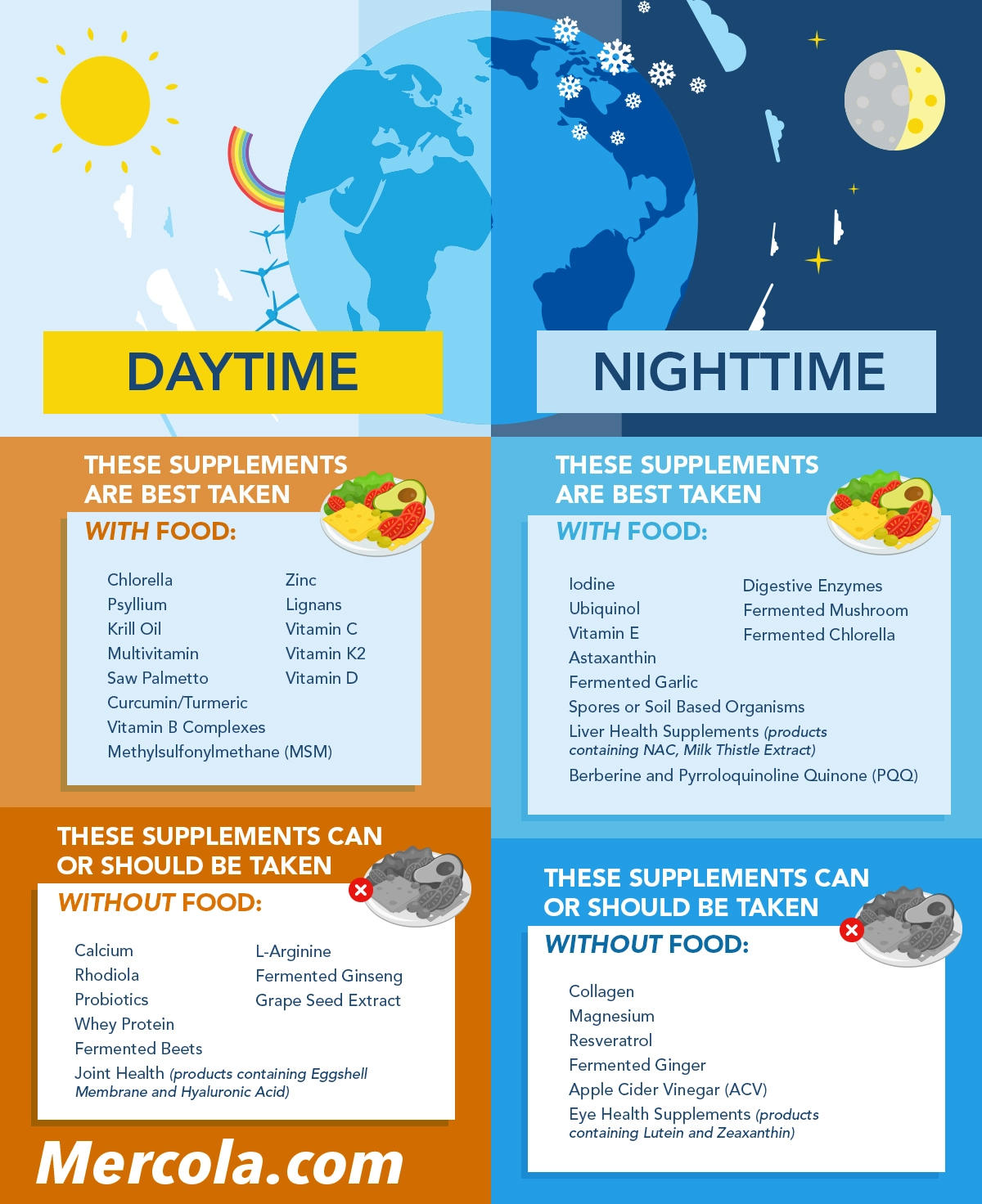
When and how you take supplements — such as with or without food and in the morning or evening — can make a difference in their safety and effectiveness. For instance, fat-soluble vitamin K2 is best taken with your largest meal that contains fat, while magnesium, which helps your body relax, is best taken in the evening. In the infographic above, you can see a simple breakdown of some of the most common supplements and when it’s best to take them.
- 1 U.S. CDC, NCHS Data Brief No. 399, February 2021
- 2 American Osteopathic Association January 16, 2019
- 3 Bitchute, Interview With Tyler Lebaron March 1, 2023
- 4 Scientific Reports volume 11, Article number: 10641 (2021)
- 5 YouTube, Dr. John Campbell February 1, 2023, 14:07
- 6 Pharmaceuticals (Basel). 2023 Jan; 16(1): 130., Abstract
- 7 International Journal of Nanomedicine January 19. 2018; 2018(13): 455-466
- 8, 9 BMJ Open Heart 2018
- 10 Aging (Albany NY). 2019 Jan 31; 11(2): 289–290
- 11 medRxiv July 7, 2020; DOI: 10.1101/2020.07.06.20147025
- 12 Factors Determining the Apoptotic Response of Colorectal Carcinoma Cells to Butyrate, a Fermentation Product Derived from Dietary Fiber (2009)
- 13 Translational Psychiatry June 3, 2022
- 14 The Journal of Neuroscience May 1, 2013; 33(18):7770-7
- 15 Translational Psychiatry June 3, 2022, Discussion
- 16 BMJ 2022;376:e066452
- 17 Journal of the American College of Cardiology December 13, 2022, Volume 80, Issue 24, Pages 2269-2285, Results
- 18 Journal of Clinical Lipidology, 2018;12(3):718
- 19 EurekAlert! March 15, 2018
- 20 Business Wire September 9, 2020
- 21, 22 A Comparison of Synthetic Ethyl Ester Form Fish Oil vs. Natural Triglyceride Form (PDF), What Are Triglycerides and Ethyl Esters?
- 23 Environ Sci Pollut Res Int. 2020 Feb;27(4):3950-3961. doi: 10.1007/s11356-019-06983-1. Epub 2019 Dec 10
- 24 Clinical and Translational Medicine March 27, 2021, Section 4.13
- 25 Medical Hypotheses January 15, 2019
- 26 Indian Journal of Clinical Biochemistry 1994, 9 (2)
- 27 Clinical and Translational Medicine March 27, 2021, Abstract, Results
- 28 Journal of Infectious Diseases and Preventive Medicine May 24, 2014; 2: 111
- 29 International Journal of General Medicine June 8, 2021; 14: 2359-2366
- 30 Integrative Medicine (Encinitas) February 2015
- 31 The Journal of Nutrition November 1, 2004: 134(11); 3100-3105 (The Rotterdam Study)
- 32 Journal of Medical Nutrition & Nutraceuticals 2015; 4(1): 47-53
- 33 Curr Med Res Opin. 2008 May;24(5):1485-96
- 34 J Med Food. 2016 Sep;19(9):836-43
- 35 J Med Food. 2010 Apr;13(2):399-405
- 36 Science Direct, Carnosine
Fitness Strategies That Are Creating World-Class Champions
Reproduced from original article:
https://articles.mercola.com/sites/articles/archive/2023/02/12/fitness-strategies-world-class-champions.aspx
The original Mercola article may not remain on the original site, but I will endeavor to keep it on this site as long as I deem it to be appropriate.
Analysis by Dr. Joseph Mercola Fact Checked February 12, 2023
STORY AT-A-GLANCE
- Sam Calavitta, aka Coach Cal, founder of The Treigning Lab, has put together much of the health science I’ve been teaching over the years into a unique training program that is getting extraordinary results
- The most central strategies are those that optimize ATP production (energy production) and mitochondrial function
- ATP (the energy currency of your cells) can be produced in three ways: aerobically in the mitochondria, anaerobically in the cytosol, or through phosphocreatine. Of these, the phosphocreatine pathway is the most effective in terms of boosting athletic performance, as it allows your body to use D-ribose, adenosine and phosphate to form ATP within your body at a higher level. Near-infrared light also boosts ATP production
- Mitochondrial function must also be optimized, or energy production cannot be elevated. Effective strategies include near-infrared sauna therapy and intermittent fasting
- Other strategies that help optimize fitness and athletic performance include sun exposure, boosting NAD+ with low-dose niacinamide, a cyclical ketogenic diet, intermittent fasting or time-restricted eating, addressing elevated iron levels, methylene blue and molecular hydrogen
In the video above, I interview Sam Calavitta, aka Coach Cal, founder of The Treigning Lab. We met through a biohacking conference in the fall of 2022. One of the organizers of the event introduced me to Miesha Tate, a professional and former Ultimate Fighting Championship (UFC Women’s Bantamweight champion) and mixed martial artist who in turn introduced me to Coach Cal.
He’s taken much of the health science I’ve been teaching over the years and put it together into a revolutionary training program that is producing extraordinary results. Here, we’ll review some of the strategies that can take your fitness to the next level.
Coach Cal’s Unique Approach Gets Results
Calavitta himself wrestled until he turned 40, at which point he switched to Ironman competitions, which is an entirely different paradigm in terms of energy expenditure.
“So, I had to figure out my energy systems,” Calavitta says. “I used a lot of the things that you have been preaching … in particular [strategies for] mitochondrial optimization.
I brought a lot of those practices into the sports, I brought them into Ironman, and I was able to hybridize Ironman training along with combat sports and wrestling, and came up with a very unique way of training athletes …
There’s a plethora of athletes who are seeking to get in to train with us … A huge portion of the UFC and Bellator athletes are my athletes … Almost the entire Olympic wrestling team, which this year [2022], won the first world title in wrestling in many years, beating out Russia [and] Iran.
Wrestling and combat sports are very weight-specific programs which tie right into many of your practices with intermittent fasting, with your meticulous directions on cyclic ketogenic diet, not overdoing it and things like that …
The Treigning Lab is known for some of the most magnificent body transformations ever seen. And … I appreciate your approach, [which is] ‘Treat the body the way God intended, and then sit back and watch the miracle take over.’ And it’s been really, really neat …
These athletes are the toughest athletes in the world, but they’re very cerebral and they appreciate being guided by expertise. And a lot of that expertise is directed by many of the things that you’ve taught me.
This is a young gal who fights in an organization overseas [see video for image]. We were able to bring her down from about 154 pounds to 125 pounds without ever bastardizing her hydration status or her caloric intake, all through many of the principles that were found in your book, ‘Fat for Fuel.’”
‘Proof of the Pudding’
Calavitta shows several other pictures of amazing body transformations in the video.
“That’s the influence that you’ve had on a huge plethora of different athletes,” he says. “You do a lot of health and wellness for the general population, but I don’t think you really understand the effect you’ve had on the world-class athletes … those who are truly listening to and appreciate the educational pieces that you put out daily, and your steadfast fight to let people facilitate the means to allow the human body to do what it can do.”
Frankly, I was unaware that so many elite athletes were using these principles that I’ve been teaching, and it was a real treat to see the kinds of results a person can get if they’re dedicated.
The good news is, you don’t have to be a professional athlete to get similar results — you just have to have a willingness to implement and follow through. If you’ve ever doubted or wondered what the strategies we discuss here can actually do for you, I think you’ll be inspired by Calavitta’s testimony, and the before-and-after pictures of his roster of athletes.
Download this Article Before it Disappears
Optimizing Energy Production
So, what are some of the most effective strategies in Calavitta’s toolbox? The most central strategies are those that optimize ATP production (energy production) in the mitochondria. This is a no-brainer, since you need optimal energy production in your cells order to perform at an optimal level physically.
“Basically, everything came down to ‘How can I optimize ATP production in these athletes, to allow their bodies to overtake that of an opponent?’” Calavitta says. “It came down to understanding that ATP could be produced in three main ways. One, aerobically in the mitochondria. Two, anaerobically in the cytosol. Or three, through phosphocreatine.”
Phosphocreatine is the phosphorylated form of creatine, which rapidly mobilizes reserves of high-energy phosphates in your skeletal muscle, heart and brain. Those phosphates, in turn, recycle adenosine triphosphate, which is the energy currency of your cells.
Of these three ATP producing pathways, the phosphocreatine pathway is the most effective in terms of boosting athletic performance, as it allows your body to use D-ribose, adenosine and phosphate to form ATP within your body at a higher level. That said, your mitochondrial function must also be optimized, or this energy boost cannot occur.
Near-Infrared Sauna Therapy for Mitochondrial Optimization
There are several ways to optimize mitochondrial function, but one of the most effective, as it provides more than one benefit, is near-infrared sauna therapy. First of all, it’s an effective detox strategy. Most people have toxins in their system — plasticizing chemicals, pesticides, flame retardants and heavy metals — and they need to be expelled.
Calavitta uses the Sauna Space near-infrared sauna bulbs with a wavelength of 700 to 960 nanometers. He also appreciates the science of electromagnetic field (EMF) damage, so he uses an EMF-free setup. He explains:
“I didn’t do that until I read your book ‘EMF*D.’ But when I understood what actually happens — the EMF damage, due to the voltage-gated calcium channels in the body, and the [subsequent] necrosis and breakdown of the cell, I thought ‘I can’t be using this with my athletes and having their cells break down.’
I want them in a state of autophagy, mitophagy and whatnot, to be able to clean out, replicate and rebuild. So, I took the far-infrared sauna, as you suggested, and outfitted it with seven of the Sauna Space bulbs, so I can get it up to 150 degrees.”
Autophagy is a really important built-in function your body has that most people fail to optimize. “Auto” means “self” and “phago” means “eat.” So, autophagy is the process by which your body removes damaged cellular parts so that they can then be replaced. Autophagy is activated through fasting, exercise and near-infrared sauna, and when you’re doing all three, you end up with a very efficient self-healing process.
Optimizing ATP Output With Photobiomodulation and Nutrition
Near-infrared sauna also has powerful photobiomodulation effects. As explained by Calavitta:
“Near-infrared light works in conjunction with chlorophyll to … convert ubiquinone to ubiquinol in the body, thereby allowing the ubiquinol to go through the bloodstream and be used in a very effective manner in the electron transport chain …
So, what I did is, I took the near-infrared light and I developed a protocol to use diindolylmethane — which is a metabolite of indole-3-carbinol, sulforaphane and chlorophyll [all of which are found in cruciferous vegetables] — and to administer the red [near-infrared] light in a very calculated fashion to put out a larger ATP production.
People say, ‘How do you know that?’ The thing is, I’m a mathematician, so I took your interview with Dr. Shallenberger, and I wrote the algorithm with a metabolic cart, to actually be able to calculate mitochondrial function and discreet ATP output within the human body. So, I’m not just telling you what we do with the red light, I’m telling you we can measure it, because what is measurable can be improved.”
Low-Dose Niacinamide Boosts NAD+
Calavitta also uses low-dose niacinamide (not niacin), 50 milligrams three times a day (or four times a day for bigger athletes), to boost nicotinamide adenine dinucleotide (NAD+), a crucial signaling molecule believed to play an important role in longevity.
It’s also important in the building and maintenance of muscle mass. When the NAD+ salvage pathways in muscle are impaired, mitochondrial dysfunction and decreased muscle mass ensue.
Many athletes get sold on intravenous NAD, which is extremely expensive, but oral supplementation with niacinamide has also been shown to significantly increase NAD, and at a fraction of the cost. Results doing this, he says, has been nothing short of spectacular.
“I implemented a very strict protocol, as per your suggestion, of one-sixty-fourth teaspoon, three times a day for the athletes,” Calavitta says.
“Their energy levels, which I have measured on the metabolic carts — in the way of resting metabolic rate, resting energy expenditure, metabolic efficiency crossover, as well as fat substrate and carbohydrate substrate use for fuels — have all been skyrocketing as a result of using this practice. My athletes call it the fountain of youth, and I myself use it.”
Sun Exposure for Vitamin D Optimization
Calavitta’s athletes also get an hour of sun exposure every day, which is the easiest and most effective way to optimize your vitamin D level, and then some. I think it’s one of the top two or three things everyone needs to do.
“I understand completely how this is going to be a game changer in my guys. I can’t have them going out there with low vitamin D. For my athletes, I want their vitamin D [level] between 80 ng/mL and 100 ng/mL.
I’ve actually seen athletes whose vitamin D levels were 21 ng/mL, and when we raised them up to the 80s and 90s, their performance absolutely went through the roof and were completely optimized. We try to steer clear of the supplementation with the D3-K2-magnesium cascade, if we can … So many people don’t understand that the D3 without the K2 is not going to end up, possibly, in the right tissues.”
Putting It All Together for Optimal Fuel Synthesis
Another practice Calavitta’s athletes have embraced is the cyclical ketogenic diet detailed in my book, “Fat for Fuel.”
“High-level athletes, with the amount of energy expenditure they have, there are certain things that have to be cycled in, otherwise we’re going to get a down-regulation in thyroid hormone, and I can follow that directly,” Calavitta says.
“By using the cyclical ketogenic diet and the intermittent fasting protocol, along with fasted training, the red-light therapy and the nutrients, we’re able to get some really fantastic pathways of fuel synthesis.
A lot of your fuels don’t just come from carbohydrates or glycolysis, but through … thiamine. Basically, what people don’t understand is that through many different pathways, even to be able to work within the mitochondria … you have to have thiamine in there …
So, all of these principles, the supplementation, [it’s about] reaching the mitochondria from an optimized performance of the facilities that are available to it …
One of the first things that I do with my athletes is reduce the linoleic acid (LA) [and] balance the ratios between omega-3s and omega-6s … We’re supposed to have, at best, a 3-to-1 [omega-3 to omega-6] profile. An outlier would be 6-to-1, and Americans are on average, anywhere from a 25-to-1 to 50-to-1 ratio. So, that’s a big one.”
He also checks iron levels to make sure they’re not elevated and he understands the important interplay and symbiotic relationship between iron and copper. As detailed in previous articles, more often than not, if you’re told you have low iron because your ferritin level is low, the real problem is copper deficiency, as copper deficiency prevents the proper recycling of iron.
Depending on their individual situation, an athlete may be placed on a blood donation schedule if iron is high, and if low on copper, copper-rich foods are added to their diet. Whole food vitamin C is an excellent choice if your copper needs a boost, such as acerola cherry and amla berry.
“So, being able to put all these pieces together, at the level that we have here … with all of the means that we’ve mentioned on this podcast, we’re able to see a complete picture of an individual, to enable their God-given potential to go to a level that is basically unsurpassable,” Calavitta says.
Other Tips and Tricks
Two additional strategies Calavitta has embraced are:
• Supplementing with methylene blue, which I think is one of the most exciting products available, with respect to mitochondrial function, especially for those who are tired all the time.
While it does not address the foundational cause of the problem, it’s a phenomenal crutch when you’re in a pinch or just need to get over a hump, as results are felt very rapidly, typically well within a couple of hours. As noted by Calavitta, its main benefit is its ability to bridge the gap when there’s a breakdown in the electron transport chain.
• Supplementing with molecular hydrogen tablets, to neutralize the free radical damage from ionized radiation during flights. It also helps athletes attenuate jet lag and water retention or edema. “People don’t understand how much oxidative damage actually happens when you’re flying,” he says. “I’m in a unique position because I measure everything and I’m able to see it. And I’m able to see the [decline in] performance that comes from it.”
More Information
To learn more about Coach Cal and all the performance and recovery tools he uses, check out TreigningLab.com and sign up for his newsletter. He also has a Treigning Lab phone app, available for both Apple and Android.
The Treigning Lab Recovery Center, located in Placentia, California, offers a variety of services, including hyperbaric oxygen therapy, full body cryotherapy, infrared light therapy, compression boots, hair and tissue mineral analysis and percutaneous hydrotomy.
Can These Nutrients Help Prevent Muscle Wasting?
Reproduced from original article:
https://articles.mercola.com/sites/articles/archive/2022/11/25/how-to-prevent-sarcopenia.aspx
The original Mercola article may not remain on the original site, but I will endeavor to keep it on this site as long as I deem it to be appropriate.
Analysis by Dr. Joseph Mercola Fact Checked November 25, 2022<
STORY AT-A-GLANCE
- Age-related muscle loss, also called sarcopenia, begins at age 30 and affects at least half of the people over age 80; omega-3 fatty acids, the amino acid leucine, and the probiotic Lactobacillus paracasei PS23 help counteract sarcopenia
- Whey protein is high in leucine and has long been known as an excellent source of protein that is easily digested and absorbed. Leucine may regulate muscle protein turnover and is an effective way to optimize muscle growth when combined with resistance training
- Nicotinamide adenine dinucleotide (NAD+) is a substrate for important enzymes and impacts age-related amyloid protein aggregates in the muscle that affects muscle aging. Boost your levels through exercise, sauna bathing, fasting, and minimizing EMF exposure
- A Harvard study showed consuming protein is not enough to protect muscle mass, participants must also include strength training, which also improves basal blood flow in the lower extremities. This helps protect against functional impairment and metabolic syndrome
As you age, your body naturally tends to lose muscle. This condition is known as sarcopenia or muscle wasting. A 2022 study published in the journal Nutrients1 found increasing certain nutrients could lower your risk of sarcopenia as you age.
If you are not proactive, you can expect to lose approximately 15% of your muscle mass between your 30s and your 80s.2 An estimated3 10% to 25% of older adults under age 70 and half of those over age 80 have sarcopenia.
Even when you’re younger, if you are forced to stay in bed it can have a dramatic impact on your muscle mass. In one 2015 review,4 researchers found you could lose 5.2% of your muscle mass in the first two weeks of bed rest and by Day 23, you could have lost up to 10% of your quadriceps muscle mass. Strong muscles are required for mobility, balance and the ability to live independently.
Sarcopenia5 can increase the risk of falls and fractures, which ultimately can lead to hospitalization and surgery. It is important to know that sarcopenia is not related to your body mass. In other words, individuals who are obese can also lose muscle mass, which increases their risk for complications.
One meta-analysis6 of 35 studies and 58,404 people demonstrated the global prevalence of sarcopenia is 10% in men and women. Scientists understand the importance of muscle wasting as it relates to longevity and health. This led the Centers for Disease Control and Prevention7 to recognize it as an independently reportable medical condition.
When you have a reserve of muscle mass, it minimizes the challenges that result from muscle wasting8 if you become sick or hospitalized. Because muscle is lost far more easily and quickly than it’s built, it’s crucial to find ways to continuously promote and maintain muscle mass.
Nutritional Treatment Helps Counteract Sarcopenia
Researchers in the featured study9 knew that a variety of nutrients have shown effectiveness in supporting muscle. The randomized clinical trial was developed to analyze how effective two months of food high in omega-3 fats, leucine and probiotic Lactobacillus paracasei PS23 (LPPS23) would be on appendicular lean mass, inflammatory status, amino acid profile and muscle performance in people who were diagnosed with sarcopenia.
The researchers enrolled 60 participants who were within 4.8 years of 79.7 years and split them into an intervention or placebo group. The researchers prepared a customized diet schedule for both groups that provided 1.5 grams of protein per kilogram of body weight each day.10 Each group also received a dietary plan that consisted of approximately 30% lipids and 55% carbohydrates.
The researchers measured weight loss as compared to the individual’s weight history in the six months before their baseline visit. The subjects were questioned about how well they had followed their diet plan and physical activity recommendations. They also filled out a 24-hour dietary recall once a month.
The group that received the intervention took a supplement containing 500 mg of omega-3 fatty acid, 2.5 g of leucine and an LPPS23 probiotic. The control group received an isocaloric placebo. At the end of the study, the researchers measured body composition, physical performance, mood, blood pressure, muscle strength and functional status.
They concluded from the measurements that the intervention appeared to be a “valid strategy to counteract the progression of sarcopenia and sarcopenic-defining parameters in older adults.”11
Whey Protein Another Tool to Prevent Sarcopenia
As the featured study demonstrated, your diet plays a significant role in muscle development since your muscles need enough protein to stay viable. A 2011 paper12 published in the American Journal of Nutrition noted that the differences in digestion and absorption of dietary protein can modulate muscle growth.
So, while you need protein to build and maintain muscle, some proteins are more easily digested and absorbed than others. When you eat the right kind of protein it can make a difference in the potential risk for sarcopenia. The researchers in the featured study13 included the amino acid leucine in the intervention, which is also found in high concentrations in whey protein.14
Whey is a byproduct of cheese production and has long been acknowledged as an excellent source of protein. In the 2011 study, whey protein was compared to casein and casein hydrolysate, and was found to stimulate muscle protein growth the best, likely because of the leucine content.
One of the reasons that leucine is so important to prevent sarcopenia is that it helps regulate the turnover of protein in your muscle. A 1975 paper15 in the Journal of Clinical Investigation said leucine may also “play a pivotal role in the protein-sparing effect of amino acids.”
A more recent 2017 study16 explained the most effective way to optimize muscle building is to use a combination of resistance training followed by a protein meal, with leucine-rich whey being one of the most efficient proteins that can be used. However, a Harvard study demonstrated that simply taking leucine will likely be ineffective.17
Two groups of men over age 65 consumed either 0.8 grams of protein per kilo per day or 1.3 g of protein per kilo per day. The researchers found the high protein group did not experience an increase in lean muscle mass, or improve physical function or muscle strength, greater than the low protein group, most likely because they were not exercising.
Whey protein also contains glutathione, another important component in promoting and protecting muscle mass. It is thought to play an important role in muscle wasting, specifically in helping to modulate higher levels of oxidative stress18 often found in patients with sarcopenia. As noted in a 2012 review:19
“It has been suggested that oral antioxidant supplementation may contribute at reducing indices of oxidative stress both in animal and human models by reinforcing the natural endogenous defenses …
Antioxidants are substances able to inhibit the rate of oxidation. Mainly, antioxidant enzymes (e.g., catalase, superoxide dismutase (SOD), glutathione peroxidase, glutathione reductase) work to maintain a state of balance preventing the transformation of ROS and to convert them into more stable molecules (like water and molecular oxygen).”
NAD+ Combats Age-Related Muscle Deterioration
Studies have also proposed that mitochondrial dysfunction in the motor neurons may drive the development of sarcopenia. A 2021 paper20 published in Cell Reports compared the similarities between muscle aging and degenerative muscle diseases. The data revealed that protein aggregates deposit in skeletal muscle, which is a feature of muscle aging.
The researchers identified an amyloid-like protein that impairs mitochondrial function. While researchers have known that aggregated proteins could contribute to brain aging, this was the first time that data had shown it could contribute to muscle aging and directly damage the mitochondria.
The researchers first used a substance in worms and found it could reduce age-related amyloid protein aggregates.21 They found the same results in human muscle tissue from older subjects. They then went on to test nicotinamide adenine dinucleotide (NAD+) boosting nicotinamide riboside in aged mice and found it reduced the number and size of the amyloid aggregates within the skeletal muscle tissue.
NAD+ is a substrate for several important enzymes and is essential in metabolic processes, such as creating ATP in the mitochondria. A 2020 paper22 published in Endocrinology and Metabolism demonstrated that when the NAD+ salvage pathways in muscle are impaired, mitochondrial dysfunction and decreased muscle mass ensue.
If your NAD+ level is low, some simple lifestyle strategies can help. For example, exercise, fasting, minimizing electromagnetic field (EMF) exposure and sauna bathing can help improve your NAD+ levels. Exercise, heat exposure and fasting address low NAD+ because they are catabolic stressors that activate AMP protein kinase (AMPK).
This in turn activates an enzyme called NAMPT, which governs the NAD+ salvage pathway. Oxidative stress and inflammation can also deplete NAD+. Exercise, sauna and fasting can help reduce oxidative stress and inflammation, and as a result, less NAD+ is depleted.
The best way to increase NAD+ levels is to optimize your circadian rhythm by going to bed around 9 and getting up around 5 AM. The further you veer from these hours the more you challenge your circadian rhythm. It is also important to avoid blue light from screens and home lights after sunset and before sunrise.
Then you want to make sure you are doing regular strength training exercises. The best time to do them would be in the AM while you are fasting. You can also take niacinamide 50 mg powder three times a day. More is not better and will be counterproductive by inhibiting your longevity proteins (sirtuins). You can see my interview with Nichola Conlon for more details.
Strength Training Helps Preserve Muscle Mass and Heart Health
As the Harvard study23 demonstrated, consuming protein is not enough to protect your muscle mass. One study24 from the University of Michigan School of Public Health found those with lower muscle strength did not live as long as their peers with stronger muscles. After adjusting for confounding factors, the data continue to show those with low muscle strength had a 50% greater risk of dying early.
The data was pulled from a study of 8,326 men and women aged 65 and older. A loss of muscle in older adults may also be a primary driver of insulin resistance25 and declining strength may impact a reduction in daily physical activity, which also contributes to metabolic dysfunction.26
Researchers from the National Institute of Health and Nutrition in Tokyo, Japan,27 tested the hypothesis that a reduction in leg blood flow would be absent or minimal in people who regularly perform strength training exercises. They engaged a group of 104 men ages of 20 to 34 and 35 to 65 to compare whole-leg blood flow and vascular conductance between the groups.
The data showed no notable differences in the two age groups in those who used resistance training. However, there was a significant difference in the sedentary middle-aged group leading the team to conclude that a reduction in basal whole leg blood flow may be absent in men who routinely engage in resistance training.
The researchers suggested that resistance training could favorably influence leg perfusion. Lower levels of basal leg blood flow are associated with developing metabolic syndrome and functional impairment.28
I have been exercising for over 50 years. In the first 43 years, I exclusively used aerobic exercise. I didn’t realize that while it lowered the risk of heart disease, it is highly catabolic and eventually lowers the ability to build muscle. At the height of my running career, my upper arm circumference was 10.5 in.
However, contrast that with my arm circumference in December 2020 when it measured 15 inches. I stopped long-distance running and started resistance training. The results didn’t happen overnight, and I was well over 50 when I first began using resistance training.
The key to my success has been allowing time for significant recovery so the connective tissue and muscle can rebuild. I work with a trainer, but if you cannot afford a trainer, there are many great videos.
When you use resistance training and add the nutritional elements your body needs to grow muscles, you’ll reap the benefits. Remember to avoid doing the same exercise every day to allow the body to recover and repair so you get the benefits and avoid injuries.
- 1, 13 Nutrients, 2022;14(21)
- 2 Journals of Gerontology, 1995;50(5-8)
- 3 Journals of Gerontology, 2003; 58(10)
- 4 Extreme Physiology & Medicine 2015;4:16
- 5 Aging in Motion, What Is Sarcopenia?
- 6 Journal of Diabetes and Metabolic Disorders, 2017; 16
- 7 Federal Practitioner, 2017;34(7)
- 8 Current Opinions in Clinical Nutrition and Metabolic Care 2012; 15(1)
- 9 Nutrients, 2022;14(21) Abstract
- 10 Nutra-Ingredients, November 2, 2022
- 11 Nutrients, 2022;14(21) 5
- 12, 14 American Journal of Nutrition, 2011; 93(5): 997-1005
- 15 Journal of Clinical Investigation, 1975;56(5)
- 16 Journal of the International Society of Sports Nutrition, 2017, 43(14)
- 17, 23 JAMA Internal Medicine, 2018; 178(4)
- 18 Maturitas 2018;109
- 19 Journal of Aging Research, 2012;2012(316943)
- 20 Cell Reports, 2021;34(3)
- 21 Science Daily, January 20, 2021
- 22 Endocrinology and Metabolism, 2020;35(4) Section Mitochondrial dysfunction
- 24 University of Michigan School of Public Health, August 22, 2018
- 25 Diabetes Care, 2009;32(2)
- 26 Journals of Gerontology, 2018;73(8)
- 27, 28 Journal of Applied Physiology, October 1, 2005; doi.org/10.1152/japplphysiol.00061.2005
Accumulating Body Flab as You Age? Help Stop It With This
Reproduced from original article:
https://articles.mercola.com/sites/articles/archive/2022/06/08/spirulina-for-leptin-resistance.aspx
The original Mercola article may not remain on the original site, but I will endeavor to keep it on this site as long as I deem it to be appropriate, and will not be bullied into removing it.
Analysis by Dr. Joseph Mercola Fact Checked June 08, 2022
STORY AT-A-GLANCE
- Bilirubin inhibits NOX, a metabolic enzyme that reduces NADPH, which is the most important antioxidant recharging molecule in your body. Phycocyanobilin found in spirulina can inhibit NOX and increase NADPH
- Elevated bilirubin might aid weight control by preventing the development of leptin resistance, and spirulina may therefore be an effective way to combat leptin resistance
- Bilirubin also appears to have anti-inflammatory, antioxidant and atheroprotective properties, and spirulina mimics those effects as well
- Most overweight Americans have some degree of insulin and leptin resistance. This also includes diabetics and many with high blood pressure or high cholesterol
- If you fall into this category, it would be prudent for you to restrict fructose to about 15 to 25 grams per day from all sources. Spirulina supplementation may also be an effective treatment for leptin resistance
This article was previously published April 8, 2019, and has been updated with new information.
In 2018, James DiNicolantonio, co-author of my book, “Superfuel,” published a groundbreaking paper,1 “Antioxidant Bilirubin Works in Multiple Ways to Reduce Risk for Obesity and Its Health Complications.”
Bilirubin is a breakdown product of red blood cells (heme) and the chemical responsible for the yellow color of bruises, urine and jaundice.
In that paper, DiNicolantonio explains how bilirubin inhibits NADPH oxidase (typically abbreviated as NOX) — a metabolic enzyme activated in a large number of pathological conditions that generates a great deal of oxidative stress — and how phycocyanobilin found in spirulina can exert similar effects.
The reason for this is because the phycocyanobilin found in spirulina is rapidly reduced to phycocyanorubin, a close homolog of bilirubin, in mammalian cells.2,3 In a follow-up paper4 published March 2019, DiNicolantonio, et.al, propose that elevated bilirubin might aid weight control by preventing the development of leptin resistance, and discuss evidence suggesting spirulina may be an effective way to combat leptin resistance as well.
Bilirubin Can Play a Role in Chronic Disease
When a newborn baby gets jaundice, he is placed under “bili lights” in the hospital nursery to prevent brain damage (kernicterus), should his bilirubin levels become too high. The blue lights break down the bilirubin so it can be excreted. However, at appropriate levels, bilirubin has a strong free radial scavenging effect.
Until recently, scientists were unaware that bilirubin may actually have anti-inflammatory, antioxidant and atheroprotective properties, and there is a growing body of scientific and clinical evidence to support this.
From an evolutionary/biological perspective, it also makes sense that nature would have created a way for your body to break down heme,5 which can be toxic if it accumulates. The way bilirubin is thought to provide these health benefits is through its ability to inhibit NOX.
In fact, NOX overactivity appears to play a significant role in a wide range of health conditions, including but not limited to vascular diseases and vascular complications of other diseases (diabetes, kidney failure, blindness and heart disease, for example), insulin resistance, neurodegenerative disorders such as Alzheimer’s and Parkinson’s, cancer, glaucoma, pulmonary fibrosis and erectile dysfunction.
It follows then that preventing many chronic diseases would require finding a means of inhibiting or modulating NOX. Bilirubin is believed to assist with this modulating effect.
People with Gilbert Syndrome comprise 3 to 7% of the population6,7 and illustrate this phenomenon quite nicely, as they are genetically predisposed to chronically elevated levels of unconjugated bilirubin.
These individuals, having two to three times as much bilirubin as the rest of us after a 24-hour fast,8 enjoy a greatly reduced risk for coronary artery disease, hypertension, carotid atherosclerosis and overall mortality, and this protection is thought to be related to their high bilirubin levels.9
Spirulina — An Effective NADPH Oxidase Inhibitor
Since phycocyanobilin is a very close relative of bilirubin — and spirulina is a great source of phycocyanobilin — spirulina has enormous clinical potential due to its NOX inhibiting effect. This is why phycocyanobilin has been the focus of a large amount of research.
Phycobilin extracts have been shown to inhibit NOX activity in human aortic endothelium, aortic smooth muscle and renal cell cultures. And bilirubin protects against diabetic nephropathy via downregulation of NOX in rats.
As DiNicolantonio’s 2018 paper10 explains, bilirubin reduces the risk for obesity and related health problems through a number of mechanisms, but primarily by inhibiting NOX complexes.
Downregulating NOX activity — which can be done with spirulina, thanks to its bilirubin-mimicking phycocyanobilin — could therefore have “profound implications for preservation of metabolic and vascular health.” As further explained by the authors:
“Expression of inducible form of heme oxygenase, HO-1, can be boosted by oxidative stress — often derived from NADPH oxidase [NOX] activity; the resultant production of bilirubin feeds back to quell this oxidative stress …
[Phycocyanobilin, which is covalently attached to phycocyanin] is readily converted by biliverdin reductase to the bilirubin analogue phycocyanorubin, which appears to share bilirubin’s ability to inhibit NADPH oxidase [NOX] complexes. Arguably, this may largely explain the versatile antioxidant and anti-inflammatory properties of oral spirulina … in rodent studies …
A recent cross-sectional epidemiological study evaluating subjects with [Gilbert Syndrome] has discovered that [Gilbert Syndrome] is associated with a reduced tendency to gain body fat in later life … A reasonable deduction is that chronically elevated free unconjugated bilirubin — and perhaps an upregulation in intracellular bilirubin generation — somehow opposes age-related gain in body fat.
Of related interest is a study showing that intraperitoneal administration of bilirubin — administered daily for 14 days — inhibits weight gain in rats fed a diet high in fats and sugar. Bilirubin injections were also found to prevent deterioration of glucose tolerance …
A credible case can be made that the favorable impact of elevated bilirubin on risk for undesirable weight gain reflects preservation of hypothalamic leptin sensitivity …
Activation of NADPH oxidase [NOX] is a key mediator of proinflammatory microglial activation; hence, elevated bilirubin might be expected to support effective leptin function in the arcuate nucleus, thereby aiding appetite control.
Oxidative stress in adipocytes, stemming largely from NADPH oxidase [NOX] activity, appears to play a key role in the induction of insulin resistance and the skewing of adipokine and cytokine production in hypertrophied adipocytes.
Hence, bilirubin and heme oxygenase activity could be expected to aid maintenance of adipocyte insulin sensitivity. Indeed, plasma levels of unconjugated bilirubin have been found to correlate inversely with risk for metabolic syndrome and diabetes in prospective epidemiological studies, as confirmed in a recent meta-analysis.
In both cross-sectional and prospective studies, higher plasma bilirubin levels are associated with better insulin sensitivity and decreased risk for metabolic syndrome and Type 2 diabetes — independent of BMI … A direct protective effect of bilirubin on adipocyte function may be largely responsible for this phenomenon.”
Leptin Resistance: A Hallmark of Obesity and Type 2 Diabetes
In order for you to significantly gain weight, you must first become leptin resistant. Leptin is a hormone that helps you regulate your appetite. When your leptin levels rise, it signals your body that you’re full, so you’ll stop eating.
However, as you become increasingly resistant to the effects of leptin, you end up eating more. The question then is: what drives this basic process? Why do you become leptin resistant in the first place?
Research by Dr. Richard Johnson — head of nephrology at the University of Colorado who has published more than 500 medical papers and written a number of books on obesity — clearly shows that refined sugar (in particular fructose) is exceptionally effective at causing leptin resistance in animals and blocks the burning of fat.
Most overweight Americans have some degree of insulin and leptin resistance. This also includes people with diabetes, and many individuals with high blood pressure or high cholesterol. If you fall into this category, it would be prudent for you to restrict fructose to about 15 to 25 grams per day from all sources.
In his most recent paper,11 DiNicolantonio and his co-authors hypothesize that spirulina supplementation may also be an effective treatment for leptin resistance.
Bilirubin Protects Against Weight Gain
As mentioned earlier, people with Gilbert Syndrome are genetically predisposed to chronically elevated levels of unconjugated bilirubin. This not only appears to protect them from heart disease and overall mortality, but also prevents body fat accumulation, especially during later years, and hypothalamic leptin resistance is one known condition that promotes weight gain as you grow older.12
Research has shown that leptin injections have no effect on obesity. “Studies in rodents with diet-induced obesity suggest that this phenomenon reflects a loss of leptin responsiveness that is specific to the arcuate nucleus,” DiNicolantonio notes.13
Research also suggests that diet-induced obesity is related to the activation of microglia (glial cells that function as scavengers) in the mediobasal hypothalamus (MBH).14 Again, NOX plays an important role. Activation of microglia also leads to the production of toxic oxidants such as peroxynitrite and other proinflammatory cytokines.
As noted by DiNicolantonio, “Hence, it is straightforward to propose that bilirubin may have the ability to downregulate microglial activation by diminishing NADPH oxidase activation.” That said, bilirubin does not appear to be able to influence leptin activity until or unless leptin resistance has actually developed.
Spirulina May Combat Leptin Resistance by Mimicking Bilirubin
Now, while raising your bilirubin level could potentially protect you from obesity and diabetes, it’s not a useful nutraceutical in and of itself, and this is where spirulina comes in, as the phycocyanobilin found in spirulina is very similar to bilirubin. DiNicolantonio sums it up as follows:15
“If the hypothesis presented here is correct, the far lower body fat in older subjects with Gilbert Syndrome reflects the ability of bilirubin to suppress the activation and proliferation of microglia in the MBH.
The extent to which this expansion of activated microglia — and the associated impact on the function of leptin-responsive neurons — can be reversed by elevation of bilirubin (or administration of phycocyanobilin) in patients who have already developed obesity with leptin resistance remains to be seen.
Particularly because microglial mass increases, it may be rash to assume that this syndrome is fully reversible. If phycocyanobilin does prove to have utility for controlling hypothalamic inflammation, its greatest impact on obesity will likely be achieved by long-term administration in a preventive mode.
In any case, studies evaluating the impact of bilirubin or phycocyanobilin administration on the development of hypothalamic leptin resistance in fat-fed rodents appear to be warranted … Two studies have been published very recently in which inclusion of spirulina in the diet has been shown to inhibit gain in body weight and fat in rats fed a high-fat diet; these appear to be the first studies to have evaluated spirulina’s impact in this regard.
Although neither of these studies focused on leptin function, the fact that markers of adipose tissue browning were higher in rats receiving spirulina is consistent with effective leptin function in these rats.
Moreover, a double-blind, placebo-controlled clinical trial has also emerged, in which spirulina supplementation (at only 2 grams daily) was found to potentiate loss of body fat, body weight, waist circumference and BMI in overweight subjects placed on a calorie-restricted diet; reductions in triglycerides and C reactive protein were also greater in the spirulina group.
Bilirubin mimesis [imitation or mimicry] may represent one example of a more general strategy for preventing or reversing inappropriate weight gain: counteracting hypothalamic leptin resistance or upregulating hypothalamic leptin signaling.”
Spirulina Types, Dosing and Potential Adverse Reactions
There are many types of spirulina on the market, so do your homework before making a purchase. Since spirulina grown in an uncontrolled environment has the potential to become contaminated with heavy metals and other toxins, it is important to choose organic spirulina from a reputable source.
Spirulina comes in capsules, tablets, powders and flakes. Dosing depends on what you plan to use it for and to whom it is given. A general starting dose for adults is typically around 3 grams. For disease prevention, you may work your way up to 20 grams per day. The adult maintenance dose is typically around 10 grams a day.
Remember to increase your intake of spring water or filtered water when taking spirulina to help it absorb into your system. Also be aware that spirulina is a potent detoxifier, so depending on your toxic burden, you may or may not experience a detox reaction. For that reason, it is best to start with a small dose and work your way up.
Though there are no known side effects associated with spirulina, your body may react to it based on your current state of health. Some of the most prominent reactions you may experience include:
| Slight fever — The high protein content in spirulina increases metabolism, which may elevate body temperature |
| Dark green stool — Spirulina can remove accumulated waste products in your colon, which may cause darker stool. Also, spirulina is high in chlorophyll, which turns your stool green |
| Gas — Buildup of gas may indicate that your digestive system is not functioning properly |
| Excitability — Your body is converting protein into heat energy, which may cause temporary feelings of restlessness |
| Breakouts and/or itchy skin — This is caused by the colon cleansing process and is a temporary reaction |
| Sleepiness — This is caused by the detoxification process and may indicate your body is exhausted and needs more rest |
Also keep in mind that while spirulina is entirely natural and generally considered a healthy food, there are some important contraindications you need to be aware of. Avoid spirulina if you are:16
- Severely allergic to seafood
- Allergic to iodine
- Pregnant
- Nursing
If you have hyperthyroidism (overactive thyroid), consult your health care provider before taking spirulina. Also avoid taking spirulina if you are currently running a fever, as it may raise it further. Also, do not take spirulina if you have an autoimmune diseases such as multiple sclerosis or rheumatoid arthritis, or if you a metabolic condition called phenylketonuria (PKU).
Chlorella — An Alternative if You Can’t Tolerate Spirulina
Chlorella is another form of algae that is sometimes confused with spirulina. The fundamental difference between spirulina and chlorella is that spirulina does not possess the hard cell wall that makes chlorella closer to a plant than algae. Note, however, that chlorella does not have the phycocyanobilin so it will not inhibit NOX and increase NADPH.
Chlorella is an excellent way to detoxify your body from mercury, a common problem if you have amalgam dental fillings, have received a thimerosal-containing vaccine or regularly eat contaminated fish. It is also one of nature’s highest source of chlorophyll, which has many biological benefits.
Spirulina is unable to remove heavy metals, as it lacks a cell membrane. It can, however, protect your liver against the toxic effects of heavy metals, and help eliminate other toxins, including arsenic. If for whatever reason you cannot tolerate spirulina, chlorella could be a viable alternative to obtain some of its benefits described above.
– Sources and References
- 1 Open Heart 2018; 5: e000914 (PDF)
- 2 RSC Advances 2015, Issue 76
- 3 Journal of Medicinal Food December 25, 2007; 10(4)
- 4, 11, 12, 13, 14, 15 Open Heart 2019; 6: e000897
- 5 Pediatrics June 2004; 113(6)
- 6 Rare Disease Database 2015
- 7 NIH Genetics Home Reference, April 2, 2019
- 8 Science Direct, Jaundice, 2018
- 9 World J Gastrointest Pharmacol Ther, November 6, 2016
- 10 BMJ Open Heart 2018;5:e000914
- 16 Mount Sinai. Spirulina