Bacteria
now browsing by category
Low Magnesium Linked to Increased DNA Damage in Healthy Adults
Reproduced from original article:
https://articles.mercola.com/sites/articles/archive/2024/12/02/low-magnesium-dna-damage.aspx
Analysis by Dr. Joseph Mercola December 02, 2024
STORY AT-A-GLANCE
- Low magnesium levels, especially when combined with high homocysteine, significantly increase DNA damage in healthy adults, accelerating cellular aging and increasing the risk of chronic degenerative diseases
- Magnesium plays a crucial role in DNA replication, repair and stability. It acts as a cofactor for enzymes involved in these processes and helps maintain the double helix structure
- Magnesium is essential for brain health, regulating NMDA receptors, modulating immune responses and acting as an antioxidant. It also supports synaptic plasticity, learning and memory functions
- Adequate magnesium levels are vital for blood sugar control, insulin sensitivity and cellular energy production. Magnesium deficiency leads to insulin resistance and metabolic disorders like Type 2 diabetes
- To optimize magnesium levels, consider supplements like magnesium threonate, consume magnesium-rich foods and try alternative methods such as Epsom salt baths or topical application for better absorption
There’s a critical link between magnesium levels and the integrity of your DNA, according to research published in the European Journal of Nutrition.1 The study, conducted on healthy middle-aged Australians, revealed that low magnesium levels, especially when combined with high homocysteine, significantly increase DNA damage.
This finding underscores the vital role magnesium plays in maintaining your genetic health and staving off age-related diseases. As the fourth most abundant mineral in your body, magnesium is involved in over 600 enzymatic reactions, including those crucial for DNA replication and repair.
Ensuring adequate magnesium intake could be a key factor in protecting your genetic material and promoting healthy aging. In fact, by examining various biomarkers of DNA damage, researchers have shed light on how magnesium deficiency might accelerate cellular aging and increase your risk of developing chronic degenerative diseases.
The Hidden Dangers of Magnesium Deficiency
While magnesium’s importance for bone health and nerve function is well-known, its role in safeguarding your DNA is less recognized. The study found that participants with lower magnesium levels exhibited higher frequencies of micronuclei (MN) and nucleoplasmic bridges (NPBs) in their cells.2 These are telltale signs of DNA damage and chromosomal instability.
Essentially, when your body lacks sufficient magnesium, it struggles to efficiently replicate and repair DNA, leaving your genetic material vulnerable to damage. This vulnerability manifests as increased oxidative stress and a higher likelihood of DNA strand breaks. Over time, these effects accumulate, leading to premature aging of your tissues and organs.
The research suggests that chronic magnesium deficiency might create a state of persistent oxidative stress in your body, similar to the effects seen with deficiencies in other crucial micronutrients like zinc.3
The Homocysteine Connection: A Double-Edged Sword
The study didn’t just focus on magnesium; it also examined the interplay between magnesium levels and homocysteine, an amino acid linked to various health issues when present in high concentrations. Researchers discovered a significant negative correlation between magnesium and homocysteine levels. In other words, as magnesium levels decreased, homocysteine levels tended to increase.4
This relationship is noteworthy because elevated homocysteine is associated with an increased risk of neurodegenerative diseases, cardiovascular problems and pregnancy complications. Participants with both low magnesium and high homocysteine levels showed the highest frequency of DNA damage markers.
This synergistic effect suggests that the combination of magnesium deficiency and elevated homocysteine could be particularly detrimental to your genetic health, accelerating the aging process and increasing your susceptibility to age-related diseases.5

Save This Article for Later – Get the PDF Now
Unraveling the Mechanisms of Magnesium’s Protective Effects
To understand why magnesium is so crucial for your DNA’s integrity, it’s important to look at its role in various cellular processes. Magnesium acts as a cofactor for enzymes involved in DNA replication and repair, such as DNA polymerase and DNA ligases. When magnesium levels are low, these enzymes can’t function optimally, leading to errors in DNA replication and inefficient repair of damaged DNA.6
Additionally, magnesium plays a role in maintaining the stability of DNA and RNA structures. It helps neutralize the negative charges on DNA phosphate groups, contributing to the overall stability of the double helix structure.
The study also hints at magnesium’s involvement in epigenetic regulation and protein modification processes that are crucial for maintaining genomic integrity.7 By ensuring adequate magnesium levels, you’re providing your cells with the tools they need to protect and maintain your genetic material effectively.
Magnesium’s Role in Protecting Your Brain’s Delicate Balance
Your brain’s health depends on a delicate balance of various processes, and magnesium plays a key role in maintaining this equilibrium. Recent research reveals how magnesium acts as a gatekeeper for N-methyl-D-aspartate (NMDA) receptors, which are vital for learning and memory.8 By regulating these receptors, magnesium helps prevent excessive glutamate activity, which leads to inflammation and neuronal damage.
Additionally, magnesium has been found to influence the production of substance P, a neuropeptide involved in pain perception and inflammatory responses. Low magnesium levels increase substance P, exacerbating neuroinflammation.9 Furthermore, magnesium’s interplay with calcium in your neurons is critical. By limiting calcium influx, magnesium helps prevent a cascade of events that could otherwise result in intensified inflammation and neuronal injury.
This balancing act extends to magnesium’s role in modulating immune responses, particularly through its interaction with nuclear factor kappa-light-chain-enhancer of activated B cells (NF-κB), a key player in inflammatory processes. By inhibiting NF-κB activation, magnesium helps dampen the expression of proinflammatory genes, reducing overall brain inflammation.10
The Hidden Power of Magnesium as an Antioxidant
While not typically classified as an antioxidant, emerging research suggests that magnesium plays a role in your body’s defense against oxidative stress.11 This is particularly important for your brain health, as oxidative stress is a significant contributor to cognitive decline and neurodegenerative diseases.
Studies have shown that magnesium deficiency is associated with increased markers of oxidative stress, including modified lipids, proteins and DNA. Importantly, magnesium appears to support your body’s antioxidant defense mechanisms. One key way it does this is by stabilizing superoxide dismutase (SOD), a critical enzyme that converts harmful superoxide radicals into less reactive molecules.12
This stabilization of SOD provides a unique link between magnesium and your antioxidant defense system. Magnesium’s involvement in various cellular processes, including mitochondrial function and fatty acid metabolism, further contributes to its role in managing oxidative stress.
By supporting these fundamental processes, magnesium helps maintain cellular health and resilience against oxidative damage. This antioxidant-like activity of magnesium adds another layer to its neuroprotective properties, helping to slow the progression of age-related cognitive decline and neurodegenerative disorders.13
Magnesium’s Impact on Your Brain’s Plasticity and Memory
Recent discoveries have also unveiled magnesium’s role in synaptic plasticity, your brain’s ability to form and reorganize connections between neurons.14 This process is fundamental to learning, memory and cognitive flexibility.
Research has shown that presynaptic intracellular magnesium is instrumental in mediating the transition between two crucial synaptic configurations: one involved in encoding new information and learning, and another responsible for storing and recalling memories.15 This insight highlights magnesium’s importance not just in maintaining neural health but in actively shaping your cognitive processes.
Studies on animal models of Alzheimer’s disease have demonstrated that magnesium supplementation enhances cognitive function and synaptic plasticity. Moreover, in a rat model of Alzheimer’s, magnesium sulfate supplementation improved cognitive function, synaptic plasticity and even the morphology of dendritic spines — the tiny protrusions on neurons that receive input from other neurons.16
These findings suggest that maintaining optimal magnesium levels could be crucial for preserving cognitive function as you age.17
Magnesium for Blood Sugar Control and Cellular Energy Production
Your body’s intricate blood sugar control system also relies on magnesium. This essential nutrient is involved in the function of your pancreatic beta cells, which produce insulin to regulate blood glucose levels.18 When you eat, these cells respond by releasing insulin to help your body store glucose as glycogen, primarily in your liver and muscle cells.
Magnesium is vital for this process, acting as a cofactor for enzymes involved in glucose metabolism and insulin signaling. If your magnesium levels are low, your beta cells may struggle to produce and release insulin effectively, leading to blood sugar imbalances. Furthermore, magnesium deficiency impairs the activity of glucokinase, an enzyme that acts as a glucose sensor in beta cells and controls the rate of glucose entry into these cells.19
Without adequate magnesium, your body’s ability to sense and respond to changes in blood glucose levels may be compromised, setting the stage for metabolic disorders like Type 2 diabetes. Low magnesium levels also contribute to insulin resistance by altering the activity of the insulin receptor and its downstream signaling pathways. Conversely, insulin resistance leads to increased urinary magnesium loss, further depleting your body’s magnesium stores.20
This creates a self-perpetuating cycle that’s difficult to break. Studies have shown that individuals with Type 2 diabetes often have lower intracellular magnesium concentrations compared to those without diabetes.21
Beyond its effects on insulin and glucose metabolism, magnesium is essential for your cells’ energy production processes. It acts as a cofactor for numerous enzymes involved in glycolysis and the Krebs cycle, two key pathways in cellular energy generation. In the absence of sufficient magnesium, these enzymes may not function optimally, leading to reduced energy production and metabolic inefficiencies.22
It’s important to remember that magnesium’s benefits are far-reaching. Adequate magnesium intake helps maintain healthy blood pressure, support proper muscle and nerve function and promote strong bones.
There are also positive correlations between magnesium levels and other important nutrients like folate and vitamin B12, suggesting that magnesium status is an indicator of overall nutritional health.23 By prioritizing your magnesium intake, you’re not just protecting your DNA, brain or blood sugar; you’re supporting your body’s overall function and resilience.
How to Optimize Your Magnesium Levels
More than half of Americans don’t get enough magnesium daily,24 and this deficiency is even more widespread in certain groups. Various health conditions and lifestyle choices increase magnesium loss from your body. For example, if you have diabetes or drink alcohol regularly, you’re at higher risk of magnesium deficiency.
Your magnesium levels are also affected by lack of sleep and stress. Even short periods of stress might lower your magnesium. When it comes to supplements, I prefer magnesium threonate because it’s particularly good at entering cells, including those in your brain and mitochondria.
However, if you’re new to magnesium supplements, it’s best to start slowly with magnesium citrate to find the right dose for you. This method, called “bowel tolerance,” helps you determine how much magnesium your body needs. Like vitamin C, excessive oral magnesium results in loose stools, indicating that you’ve surpassed your optimal intake. This natural safeguard makes magnesium toxicity highly unlikely.
Start with 200 milligrams (mg) of magnesium citrate per day and gradually increase until you notice your stools becoming slightly loose. This indicates you’ve found your ideal dose. From there, try other types of magnesium if you want.
Take magnesium threonate with or without food. If you’re also taking calcium supplements, it’s good to take them together. Fitness enthusiasts might benefit from a pre-workout regimen that includes calcium and magnesium in a 1:2 ratio. While a 1:1 ratio of magnesium to calcium is often recommended, most diets are already high in calcium. So, you might need two to three times more magnesium than calcium in your supplements to balance things out.
Remember, blood tests aren’t always reliable for checking your magnesium levels, especially in muscles and bones. Instead, tracking what you eat is a more practical way to make sure you’re getting enough magnesium. Foods that are high in magnesium include:
| Raw milk and homemade yogurt | Broccoli |
| White rice | Bok choy |
| Potato | Turnip greens |
| Dried seaweed or agar | Brussels sprouts |
Aside from food and oral supplements, alternative methods to increase your magnesium levels include:
• Epsom salt baths — Soaking in magnesium sulfate-rich water enables transdermal (skin) absorption, circumventing your digestive system.
• Topical application — Create a concentrated Epsom salt solution using the following steps:
◦Heat 6 ounces of water and dissolve 7 tablespoons of Epsom salt
◦Once cooled, transfer to a dropper bottle
◦Apply directly to your skin
◦For enhanced absorption, follow with fresh aloe vera gel
As we continue to uncover the intricate ways in which nutrients interact with our genes and cellular processes, the importance of maintaining optimal magnesium levels becomes increasingly clear. To ensure healthy aging and disease prevention, prioritize getting an adequate intake of magnesium.
- 1, 2, 3, 4, 5, 6, 7, 23 European Journal of Nutrition June 12, 2024
- 8, 9, 10, 11, 12, 13, 14, 15, 16, 17 Front. Endocrinol., 25 September 2024 Sec. Cellular Endocrinology, Volume 15 – 2024
- 18, 19, 20, 21, 22 Front. Nutr., 25 September 2024 Sec. Nutritional Epidemiology, Volume 11 – 2024
- 24 Oregon State University, “Micronutrient Inadequacies in the US Population: An Overview” Micronutrient Deficiencies and Inadequacies
Surprise! Microbes on Showerheads and Toothbrushes Turn Out To Be Life-Savers
Reproduced from original article:
https://articles.mercola.com/sites/articles/archive/2024/11/04/life-saving-microbes-in-showerheads-and-toothbrushes.aspx
Analysis by Dr. Joseph Mercola November 04, 2024

STORY AT-A-GLANCE
- Microbes found in everyday items like showerheads and toothbrushes enhance health by forming diverse microbial communities that offer protective benefits
- Showerheads and toothbrushes host a variety of microbial communities, including bacteria and viruses, which play a role in maintaining a balanced ecosystem
- Bacteriophages, viruses that infect bacteria, are key in shaping these microbial communities, influencing bacterial populations and promoting diversity
- Understanding the interactions between these microbes leads to improved health strategies, offering new ways to manage bacterial infections and enhance sanitation practices
- Recent research has uncovered novel interactions between phages and their bacterial hosts in household biofilms, revealing a high diversity of previously undocumented phages
Household microbiomes are communities of microorganisms that inhabit the surfaces and environments within your home. According to recent research published in the Frontiers in Microbiology journal,1 certain surfaces and environments in your household harbor diverse communities of bacteriophages.
Showerheads and toothbrushes are particularly significant as they serve as constant habitats for these microbes, creating glue-like communities — called “biofilms” — where these tiny organisms thrive.2 The microbes found in these surfaces play a crucial role in shaping the balance between beneficial and harmful bacteria in your home, and could have direct implications for your health and well-being.
The interactions between bacteriophages and bacteria in your household items could suppress pathogenic bacteria and promote a healthier living environment. Moreover, these findings challenge the conventional perception of microbes as solely harmful invaders, highlighting their life-saving advantages.
How Indoor Microbiomes Shape Our Health
Indoor environments play a significant role in influencing human health through the complex communities of microorganisms they harbor. Research has consistently shown that your home, workplace and public spaces are teeming with bacteria and viruses that impact your well-being.3 However, most studies have primarily concentrated on bacterial populations, often overlooking the viral counterparts that coexist with them.
Bacteriophages, or phages, are the natural enemy of bacteria; they are tiny, tripod-looking viruses that specifically infect bacteria. These phages act by hunting, attacking and gobbling up bacterial species, making them essential in regulating pathogenic bacteria populations.4
Phages contribute to microbial diversity by controlling which bacteria thrive and which die off.5 The dynamics between phages and their bacterial hosts reveals how microbial communities maintain balance and resist the overgrowth of harmful bacteria, and advancing our knowledge of phage interactions within household biofilms allows for the creation of new, innovative approaches in health and sanitation.
By exploring these viral communities, scientists aim to uncover new ways to promote beneficial microbes and suppress pathogens, ultimately enhancing the cleanliness and safety of our daily environments.6 This research fills a crucial gap, providing insights that could transform how we manage indoor microbial ecosystems for better health outcomes.
Uncovering Hidden Guardians in Your Bathroom
To explore their hypothesis, the researchers used metagenomic sequencing, a powerful technique that deciphers genetic material from environmental samples. By analyzing 34 toothbrush and 92 showerhead samples, they aimed to identify and characterize the viral populations present.
The results were striking — a vast diversity of novel phages emerged, many of which had never been documented before. The researchers identified a total of 616 high-quality viral operational taxonomic units (vOTUs), within biofilms from showerhead and toothbrush samples. These vOTUs represent distinct groups of bacteriophages, each interacting with specific bacterial hosts.
The sheer number of unique viral sequences highlights the complexity and richness of the viral communities in everyday household items. Erica M. Hartmann, an indoor microbiologist and the study’s lead author said:7
“The number of viruses that we found is absolutely wild. We found many viruses that we know very little about and many others that we have never seen before. It’s amazing how much untapped biodiversity is all around us. And you don’t even have to go far to find it; it’s right under our noses.”
These initial findings not only highlighted the complexity of indoor microbiomes but also set the stage for deeper investigations into how these phages influence bacterial populations.
Save This Article for Later – Get the PDF Now
Showerheads and Toothbrushes Have Distinct Types of Phages
The featured study stems from previous research,8 also led by Hartmann, along with her colleagues from the University of Colorado, that was published in the Microbiome journal in 2021. Dubbed “Operation Pottymouth,” the researchers identified how flushing a toilet spreads bacteria to toothbrushes and showerheads.
“This project started as a curiosity. We wanted to know what microbes are living in our homes. If you think about indoor environments, surfaces like tables and walls are really difficult for microbes to live on. Microbes prefer environments with water. And where is there water? Inside our showerheads and on our toothbrushes.”9
In the latest study, Hartmann and her team found that viral communities in showerheads and toothbrushes are distinct from one another. No single vOTU was found across all samples, and the most abundant phages differed between the two household items.10 This distinction reflects the specialized environments each item provides.
Showerheads, which are less frequently in direct contact with humans, harbor phages linked to environmental bacteria, such as those from water sources.11 In contrast, toothbrushes, constantly exposed to the human oral microbiome, contain phages associated with oral bacteria, like Streptococcus and Veillonella.12 These phages are likely involved in maintaining a balanced microbiome that prevents the overgrowth of pathogenic species.
This means that even within the same household, different items cultivate unique viral ecosystems. The lack of shared vOTUs between showerheads and toothbrushes emphasizes the role of specific environmental conditions and microbial sources in shaping viral communities.
Another significant finding of the study is the positive correlation between viral richness and bacterial richness in household biofilms. This means that areas with a higher variety of bacterial species also tend to have a greater diversity of bacteriophages.13
Interestingly, while viral richness aligns with bacterial richness, the distribution of phage abundance across these species does not follow the same pattern. Basically, having more types of bacteria leads to more types of phages, but it doesn’t necessarily mean that the phages are evenly spread among all bacterial hosts.
These findings highlight the uniqueness of each microbial habitat within your home, driven by factors like how they’re used and exposed to different bacterial sources.
“There’s just an enormous amount of microbial diversity. And for every bacterium, there’s potentially tens or hundreds or even thousands of viruses that infect it,” Hartmann said.14
Novel Phages Discovered in Household Microbiomes
Another notable discovery from this research is the identification of numerous novel phages, which could possess unique functions and interactions that are not yet understood. The presence of these novel phages suggests that household microbiomes are more complex and diverse than previously thought.
A third intriguing finding was the presence of Mycobacteriophages in showerhead samples.15 These viruses specifically target Mycobacterium species, some of which are pathogenic to humans, indicating a natural mechanism for controlling harmful bacteria in these environments.
This could mean phages are able to act as biological agents that manage and reduce the presence of pathogenic bacteria, thereby enhancing household hygiene and reducing the risk of infections.
The researchers also found no evidence of harmful antibiotic resistance or virulence genes within the identified phages.16 This finding is reassuring, because that means these household phages are not spreading harmful traits to bacteria. They merely control bacterial populations, without introducing additional threats.
These phages could also be used for future biotechnological applications, like phage therapy, helping target and eliminate specific harmful bacteria without the risk of exacerbating antibiotic resistance.
“There’s interest in designing maybe more sophisticated drugs, so that instead of taking a broad-spectrum antibiotic and wiping out your entire microbiome, you would be able to take this drug that would only affect the pathogen and leave the rest of your microbiome intact,” Hartmann said.17
How Do These Findings Impact Today’s Society?
The presence of life-saving bacteriophages in everyday household items like showerheads and toothbrushes holds significant implications for public health. By naturally regulating bacterial populations, these phages help reduce the prevalence of harmful bacteria, lowering the risk of infections and illnesses inside your home.
Another advantage is the development of new sanitation strategies that maximize phages. It could help identify methods that eliminate the need for chemical disinfectants that disrupt beneficial microbes, for example.18
Understanding the intricate relationships between phages and bacteria also helps foster environments that support beneficial microbial communities. For instance, materials and surfaces that encourage the growth of health-promoting phages could be integrated into home designs, providing natural defense mechanisms against harmful pathogens without chemical solutions.19
The biotechnology sector also takes advantage of these findings, paving the way for phage-based therapies and products, such as targeted cleaning and sanitation agents, as well as medical treatments.20,21 Importantly, phage-based solutions could be implemented in healthcare facilities to minimize the risk of hospital-acquired infections and reduce antibiotic use.22,23
How to Utilize the Life-Saving Microbiomes in Your Home
The discovery of life-saving microbes in everyday household items like showerheads and toothbrushes marks a significant shift in our understanding of indoor environments. This research reveals the complex and vital role that bacteriophages play in maintaining healthy microbial ecosystems within our homes.
By incorporating microbiome-friendly practices into your daily cleaning routine, you will help beneficial microbes to thrive. Simple changes, such as using natural, nontoxic cleaning products and ensuring thorough drying of showerheads and toothbrushes, help maintain a healthier balance of phages and bacteria.24
The use of household air and water filters significantly influences indoor microbiomes. Installing a high-quality water filter limits environmental bacteria in showerheads, allowing beneficial phages to manage bacterial populations effectively.25 Similarly, air purifiers with microbial filters reduce airborne bacteria, promoting a stable indoor microbiome.26
“Microbes are everywhere all the time … We wouldn’t be able to digest our food or fend off infection if we didn’t have our microbes.” Hartmann said.
“As much as we might initially react with a little ick factor, I think it’s really important to approach the microbial world with a sense of wonder and curiosity that these are actually things that do an enormous amount of good and potentially harbor an enormous potential for biotechnology.”27
- 1, 3, 5, 6, 10, 12, 13, 15, 16, 18, 19, 20, 22, 24 Front. Microbiomes, 09 October 2024, Sec. Environmental Microbiomes, Volume 3 – 2024
- 2, 4, 11, 14, 17, 27 CNN October 9, 2024
- 7 Northwestern Now, October 9, 2024
- 8, 9 Microbiome. 2021 Jan 31;9(1):32
- 21 BMJ 2018;361:k2179
- 23 U.S. CDC, July 31, 2024, About Microbial Ecology
- 25 Sci Rep. 2018 May 29;8:8268
- 26 Environ Monit Assess. 2019 Nov 6;191(12):720
The Dairy Truth: Unveiling the Gut Health Benefits of Nature’s Perfect Food
Reproduced from original article:
https://articles.mercola.com/sites/articles/archive/2024/10/08/dairy-gut-health.aspx
Analysis by Ashley Armstrong October 08, 2024

STORY AT-A-GLANCE
- Contrary to popular belief, scientific evidence shows that dairy does not increase mucus production or exacerbate respiratory conditions
- Dairy products contain milk fat globule membrane (MFGM), which strengthens the gut lining, reduces inflammation, and promotes a healthier microbiome
- Raw dairy contains living bacteria that act as natural probiotics, potentially improving digestion and overall gut health. Additionally, lactoferrin, a protein found in dairy, promotes beneficial bacteria growth, maintains gut lining integrity, and helps prevent endotoxins from entering the bloodstream
- A2 milk, which lacks the A1 beta-casein protein, is easier to digest for individuals sensitive to conventional dairy
- The push towards plant-based dairy alternatives is partly driven by higher profit margins, but these products often lack the nutritional benefits of real dairy
In recent years, dairy has found itself at the center of a nutritional controversy. Once hailed as a dietary staple, it now faces skepticism and misconceptions in some diet camps. But the tide is turning, and science and consumers are rediscovering the incredible benefits of dairy, especially for your gut health. Let’s dive into the creamy world of dairy and explore why this ancient superfood can improve microbiome and gut function.
It’s worth noting that the recent push towards plant-based dairy alternatives isn’t just about health or “environmental” concerns. Big food companies have discovered that these alternatives are often more profitable than traditional dairy products.
Plant-based milks typically have lower production costs, longer shelf lives, and higher profit margins. This financial incentive has led to increased marketing and availability of these products, potentially influencing consumer perceptions about dairy.
However, as we’ll explore, the nutritional value of these alternatives often falls short of natural dairy, especially when it comes to gut health. Plant-based dairy alternatives do NOT compare nutritionally to the real deal.
Debunking the Mucus Myth
One of the most persistent myths about dairy is that it increases mucus production. You’ve probably heard someone say, “I can’t drink milk; it makes me phlegmy.” But is there any truth to this claim?
A fascinating Australian study surveyed 345 random shoppers about their views on milk’s health qualities. The results were eye-opening:
- 46% of whole milk drinkers believed milk causes mucus
- 25% of reduced-fat milk drinkers held this belief
- 11% of soy milk drinkers agreed with the mucus myth
Even more surprising, 20% of whole milk drinkers, 8% of reduced-fat milk drinkers, and 5% of soy milk drinkers believed milk caused asthma.1 These beliefs aren’t limited to Australia. A U.S. study of 330 parents in a pediatric respiratory clinic2 found that:
- 59% believed drinking milk increases mucus production
- 22% thought it did not
- 20% were uncertain
With such widespread beliefs, you might think there must be some truth to the mucus myth. However, there is zero scientific evidence that milk and dairy consumption lead to excess mucus secretion. Multiple studies have debunked this misconception, proving that dairy does not increase mucus production or exacerbate respiratory conditions.3,4
The Plant-Based Pitfall
In recent years, many people have turned to plant-based “milk” alternatives in an attempt to avoid dairy. While these options can be suitable for those with severe dairy allergies, they often come with their own set of problems:
- Added seed oils — Many plant-based milk alternatives contain added oils, which can be proinflammatory and potentially harmful to gut health.
- Emulsifiers — These additives, used to improve texture and shelf life, have been shown to negatively impact gut health by disrupting the gut microbiome and potentially leading to inflammation.5
When compared to the natural, gut-friendly composition of dairy, many plant-based alternatives fall short in terms of nutritional value and potential health benefits.


Save This Article for Later – Get the PDF Now
Dairy: A 7,000-Year-Old Superfood
Humans have been making and consuming dairy products for over 7,000 years. Our ancestors recognized the value of this nutrient-dense food long before modern nutritional science existed.6,7,8
Cheese, in particular, has played a crucial role in human history. Historians have documented how milk, dairy, and fermented dairy products like cheese served as a storable, calorie-dense food source. This allowed early explorers to travel safely and expand their communities, leading to significant demographic shifts and the development of diverse farming communities.
But why has dairy stood the test of time? The answer lies in its incredible nutritional profile and its positive impact on our gut health.
The Gut-Loving Goodness of Dairy
Let’s delve into the science behind dairy’s gut health benefits:
1. Milk fat globule membrane (MFGM) — Milk contains a component called milk fat globule membrane (MFGM), which is a true gut health superhero. Here’s what MFGM does for your digestive system:
- Strengthens your gut lining
- Lowers endotoxemia-associated inflammation
- Improves glucose tolerance
- Promotes a healthier microbiome environment
These benefits contribute to overall gut health and can help prevent issues like leaky gut syndrome and metabolic disorders.9
2. Lactoferrin: The gut’s guardian — Dairy is rich in lactoferrin, a multifunctional protein that acts as a guardian for your gut. Lactoferrin:
- Promotes the growth of beneficial bacteria
- Keeps harmful bacteria in check
- Helps maintain the integrity of your gut lining10
- Binds to endotoxins, preventing them from leaking into your bloodstream and lymph system11
By fostering a balanced gut microbiome and protecting your gut lining, lactoferrin plays a crucial role in maintaining digestive health and supporting your immune system.
3. Living bacteria: Mother nature’s probiotic — While all dairy can be beneficial, raw dairy takes these benefits to the next level. Many people report improved digestion and overall health when consuming raw dairy products. But why is raw dairy so special?
Raw dairy is teeming with living bacteria that provide numerous health benefits.12 It’s essentially Mother Nature’s probiotic, transferring beneficial microbes directly to your gut microbiome.
While it’s a common misconception that raw milk contains the lactase enzyme, it does contain lactobacillus bacteria and other lactase-producing bacteria. These microorganisms significantly aid in lactose digestion, making raw dairy more tolerable for many people who struggle with lactose intolerance.
Raw dairy also contains butyrate-producing bacteria, which can increase the concentration of these beneficial microbes in our guts.13
Butyrate is a short-chain fatty acid that serves as the primary energy source for the cells lining our gut (colonocytes), improving the function of tight junctions and regulating mucosal layer thickness, which all make for a healthy, non-leaky gut.
Raw dairy is also rich in digestive enzymes like peptidases, lipases, and proteases. These enzymes can aid in the breakdown of dairy proteins and fats, potentially making raw dairy easier to digest for some individuals.
It’s important to note that the benefits of raw dairy are partly due to the higher quality of the product. Farmers producing raw dairy for consumption must maintain stringent quality standards to ensure safety, resulting in a superior product.
When it comes to raw dairy, safety is a common concern — which is valid, you should know where your food is coming from! However, it’s important to put the risks in perspective. According to realmilk.com, you are 35,000 times more likely to get sick from other foods than you are from raw milk.14
That being said, it’s crucial to source raw dairy from a farmer you trust. Never source raw dairy from a Concentrated Animal Feeding Operation (CAFO). These large-scale operations with thousands of cows simply cannot produce raw milk safely!
Remember, raw dairy has been consumed for millennia before the invention of pasteurization. With proper sourcing and handling, it can be a safe and incredibly nutritious addition to your diet.
The A2 Advantage
Dairy sourcing can play a huge role in determining an individual’s tolerance to dairy products. Many people who experience discomfort with conventional dairy find that they can better tolerate milk, cheese, and other dairy products from specific sources.
For instance, A2 milk, which comes from cows that produce only A2 beta-casein protein, is often easier to digest for those sensitive to A1 protein. A2 casein is the original form of beta-casein that cows produced before a genetic mutation occurred thousands of years ago. Some studies suggest that A2 milk may be easier to digest and less likely to cause gastrointestinal discomfort compared to A1 milk.
If you’ve had trouble with dairy in the past, trying A2 milk or dairy products might be worth a shot! Similarly, raw milk or dairy from grass fed cows may be more easily tolerated due to their different enzymatic profiles and nutrient content. Goat and sheep milk products are also frequently better tolerated than cow’s milk due to their unique protein structures and fat compositions.
The processing method, such as fermentation in yogurt or cheese-making, can also enhance digestibility. By exploring various dairy sources, individuals may discover options that allow them to enjoy dairy without the typical adverse reactions.
Conclusion: Embracing Dairy for Gut Health
As we’ve explored, dairy is far more than just a calcium source — it’s a complex, nutrient-dense food that can significantly benefit your gut health. From the MFGM and lactoferrin in all dairy to the living bacteria and enzymes in raw dairy, these products offer a wealth of gut-friendly compounds.
While it’s important to choose high-quality sources and listen to your body’s individual needs, don’t let unfounded myths scare you away from this nutritional powerhouse. Whether you opt for traditional dairy, raw dairy, or A2 products, you’re tapping into a food source that has nourished humans for thousands of years.
So, the next time you pour a glass of milk, spread some butter on your toast, or indulge in a piece of raw cheese, remember — you’re not just enjoying a tasty treat. You’re providing your gut with a feast of beneficial compounds that support your overall health and well-being.
The Best Cheese Source
Check out what Carol had to say about her recent exclusive Mercola Cheese Box order:
“Hello, I just wanted to let you know that I received my first shipment of your cheese. I have had a severe lactose intolerance for over 20 years. I always got serious cramps and twice fainted before figuring out what was causing it. I listened to your interview with Dr. Mercola and thought maybe cheese wasn’t the real problem, but rather the composition of most commercially sold cheese.
I have been cautious in sampling your cheese. I started with just one small bite. I’ve graduated to cheese sticks. I love the taste! I’m so happy to be able to finally enjoy cheese again. Thanks so much!!!”
How awesome! The SOURCE of dairy can really impact its digestibility! The highest quality cheese you can find is restocked every Sunday evening, delivering dietary calcium, fat soluble vitamins and deliciousness directly to your door! What makes this cheese special?
| Raw cheese with all nutrients and enzymes intact | 100% grass fed | GMO free, animal rennet only (NO use of Pfizer’s microbial rennet) |
| Tested A2A2 | Amish produced | Artisan, small-batch cheese |
About the Author
Ashley Armstrong is the co-founder of Angel Acres Egg Co., which specializes in low-PUFA (polyunsaturated fat) eggs that are shipped to all 50 states (join waitlist here), and Nourish Cooperative, which ships low-PUFA pork, beef, cheese, A2 dairy and traditional sourdough to all 50 states. Waitlists will reopen shortly.
- 1 Appetite. 2003 Apr;40(2):93-100. doi: 10.1016/s0195-6663(03)00004-7
- 2 Arch Pediatr Adolesc Med. 2004 Jun;158(6):601-3. doi: 10.1001/archpedi.158.6.601-b
- 3 Arch Dis Child. 2019;104:91–93. doi: 10.1136/archdischild-2018-314896
- 4 Am Rev Respir Dis. 1990 Feb;141(2):352-6. doi: 10.1164/ajrccm/141.2.352
- 5 Microbiome volume 9, Article number: 66 (2021)
- 6 Phys.org, September 5, 2018
- 7 National Geographic, September 6, 2018
- 8 PLoS One. 2018; 13(9): e0202807
- 9 Curr Dev Nutr. 2020 Jul 25;4(9):nzaa130. doi: 10.1093/cdn/nzaa130
- 10 Pharmaceutics. 2023 May 23;15(6):1569. doi: 10.3390/pharmaceutics15061569
- 11 Cell Mol Life Sci. 2005 Nov;62(22):2549-59. doi: 10.1007/s00018-005-5370-2
- 12, 13 Int J Mol Sci. 2021 Apr; 22(7): 3417
- 14 RealMilk.com July 31, 2011
How Gut Bacteria May Trigger Binge Eating and Weight Gain
Reproduced from original article:
https://articles.mercola.com/sites/articles/archive/2024/08/26/gut-bacteria-binge-eating-and-weight-gain.aspx
Analysis by Dr. Joseph Mercola August 26, 2024

STORY AT-A-GLANCE
- Gut bacteria may trigger binge eating and weight gain. Studies show similarities in microbiome patterns between humans and mice with compulsive eating behaviors, including increased Proteobacteria and decreased Actinobacteria and Blautia
- The gut-brain axis plays a crucial role in food addiction and binge eating disorders. Gut microbiota can produce substances affecting appetite and mood, potentially influencing eating behaviors through the vagus nerve
- Research has identified distinct neural pathways for fat and sugar cravings originating in the gut. When activated simultaneously, these pathways lead to increased dopamine release, potentially driving overeating
- Akkermansia muciniphila, a beneficial gut bacterium, is associated with improved metabolic health and weight management. It enhances gut barrier function, reduces inflammation, and may help regulate appetite through effects similar to GLP-1 medications
- Healing the gut microbiome may help break food addiction. Nurturing beneficial oxygen-intolerant bacteria strengthens intestinal defenses, while imbalances can lead to leaky gut syndrome and contribute to binge eating behaviors
If you’ve ever experienced symptoms of food addiction, like intense cravings for specific (usually unhealthy) foods or eating to the point that you feel sick, your gut bacteria could be to blame. Both humans and mice who engage in compulsive eating share similar microbiome patterns, including an increase in Proteobacteria and a decrease in Actinobacteria and bacteria called Blautia.1
The findings, published in the journal Gut,2 suggest that addressing your gut health may be instrumental in curbing binge eating and its associated weight gain.
“We speculate that the gut talks with the brain,” study author Elena Martin-Garcia, an associate professor at the Universitat Pompeu Fabra in Barcelona, Spain, told NBC News. “And that may change the function of some brain areas, such as the prefrontal cortex, which is involved in self-control.”3
Gut Microbiota May Trigger Food Addiction
The Gut study uncovered a potential link between gut microbiota and food addiction, a disorder characterized by loss of control over food intake. It’s estimated that up to 20% of adults may struggle with food addiction,4 which can lead to compulsive eating behaviors that are similar to drug addiction.
Researchers used the Yale Food Addiction Scale 2.0 to identify food addiction. While human participants answered 35 questions, mice were observed for signs of food addiction, including persistent food-seeking, compulsive behavior and high motivation for food.5
Gut bacteria were then compared among humans and mice who were and were not addicted to food. The study revealed striking similarities in gut microbiota signatures linked to food addiction in both mice and human cohorts. Bacteria belonging to the Proteobacteria phylum were associated with potentially harmful effects, while Actinobacteria showed potential protective effects against food addiction development.6
Notably, a decreased abundance of the Blautia genus was observed in food addicted humans and mice. Researchers found that feeding non-digestible carbohydrates like lactulose and rhamnose, prebiotics known to promote Blautia growth, led to increased Blautia abundance in mice feces. Further, this change occurred along with significant improvements in food addiction symptoms. Similar positive results were found after the mice were given Blautia wexlerae orally as a probiotic.7
The study suggests that specific gut microbiota content may serve as a biomarker for food addiction vulnerability, opening new avenues for diagnosis and treatment. It also paves the way for innovative treatments using beneficial microbes and dietary supplementation. This new understanding could revolutionize approaches to managing food addiction and potentially contribute to addressing the broader issue of weight gain and obesity. According to Martin-Garcia:8
“We have demonstrated for the first time a direct interaction between the gut composition and brain gene expression, revealing the complex and multifactorial origin of this important behavioral disorder related to obesity. Understanding the crosstalk between alterations in behavior and bacteria in the gut constitutes a step forward for future treatments for food addiction and related eating disorders.”
Disrupted Gut Microbiome Linked to Binge Eating Disorder
Binge eating disorder (BED), a condition defined by recurrent episodes of eating large amounts of food in a short time, shares many similarities with food addiction, including a link to gut microbiota.
It’s likely that the gut microbiome is influencing eating behaviors through the microbiota-gut-brain axis. This is a complex communication system between your gut and your brain. Your microbiome can produce various substances, like short-chain fatty acids and neurotransmitters, that affect your appetite and mood. For instance, some gut bacteria produce molecules that mimic your body’s own appetite-regulating hormones.9
The vagus nerve, which connects your gut to your brain, also plays a crucial role in this communication. Recent studies have shown that certain metabolites produced by gut bacteria can interact with receptors on the vagus nerve, potentially influencing your eating behaviors.
One such metabolite, kynurenic acid (KYNA), has been found to be lower in individuals with bulimia nervosa, which involves binge eating behaviors. When researchers administered KYNA to mice prone to binge eating, it reduced their preference for palatable food and overall calorie intake.10
Brain imaging studies have revealed that individuals with BED show differences in brain activity, particularly in areas involved in reward processing, motivation and decision-making. These differences might explain why people with BED have stronger food cravings, make riskier decisions around food and have difficulty controlling their eating.
“Emerging evidence corroborates the notion that dysbiosis of gastrointestinal microbiome and its metabolites, alteration of gut-brain axis, as well as malfunctioning central circuitry regulating motivation, execution and reward all contribute to the pathology of binge eating,” researchers explained in Gut Microbes.11
Save This Article for Later – Get the PDF Now
Gut-Brain Circuits May Control Overeating
Separate research also highlights the complex interplay between your gut, your brain and your desire to eat — or overeat. The study, by scientists from the Monell Chemical Senses Center in Philadelphia, uncovered distinct neural pathways for fat and sugar cravings that originate in the gut.12
When the pathways were simultaneously activated, it led to significantly more dopamine release, setting the stage for cravings and, potentially, overeating. Study author Guillaume de Lartigue, Ph.D., explained in a news release:13
“Food is nature’s ultimate reinforcer. But why fats and sugars are particularly appealing has been a puzzle. We’ve now identified nerve cells in the gut rather than taste cells in the mouth are a key driver. We found that distinct gut-brain pathways are recruited by fats and sugars, explaining why that donut can be so irresistible.
… It’s like a one-two punch to the brain’s reward system. Even if the total calories consumed in sugar and fats stays the same, combining fats and sugars leads to significantly more dopamine release and, ultimately, overeating in the mice … The communication between our gut and brain happens below the level of consciousness … We may be craving these types of food without even realizing it.”
In another example, obesity also alters the gut microbiome, which in turn influences the host’s metabolism, including appetite.14 In a study published in the journal Microbiome, researchers used fecal transplants from lean or obese mice to recipient mice, revealing that gut microorganisms influence food reward mechanisms, including the desire for and learning associated with pleasurable eating.
These microbes may be responsible for an excessive drive to obtain sugar pellets and changes in dopamine and opioid indicators in brain regions linked to reward. The researchers identified 3-(3′-hydroxyphenyl)propanoic acid (33HPP) — a metabolite produced by certain gut microbes through the breakdown of dietary compounds — as strongly correlated with this heightened motivation. When they gave mice this compound, it affected their desire for food.
“Our data suggest that targeting the gut microbiota and its metabolites would be an interesting therapeutic strategy for compulsive eating, preventing inappropriate hedonic food intake,” the scientists explained.15 By better understanding how the gut microbiome influences eating behaviors, therapies that target the microbiome may one day help manage binge eating disorders. However, you can take steps now to help heal a damaged gut.
Gut Microbe Akkermansia Benefits Metabolic Health and Weight Management
Akkermansia muciniphila is a beneficial bacterial species naturally found in the human gut. Ideally, Akkermansia should make up about 3% to 5% of a healthy gut microbiome. However, genetic analyses indicate that approximately one-third of individuals have low or undetectable levels of Akkermansia, possibly due to compromised mitochondrial function leading to increased oxygen in the gut environment.
Akkermansia has been tested in overweight and obese individuals with promising initial results. Akkermansia is associated with several positive health outcomes, including:16
- Improved gut barrier function
- Decreased inflammation
- Better metabolic health
- Potential weight loss effects
Interestingly, the effects of Akkermansia on glucagon-like peptide-1 (GLP-1) are similar to those of medications like Ozempic. GLP-1 plays a role in insulin regulation and may also affect the nervous system, potentially leading to reduced appetite. Given its significant health implications, Akkermansia is expected to remain an important focus of scientific research in the coming years.17
Akkermansia, a Gram-negative, anaerobic bacterium, grows in the absence of oxygen and colonizes the human gut early in life through breast milk. It’s benefits stem largely from its ability to break down mucin, a key component of gut mucus. This process stimulates increased mucin production, enhancing intestinal barrier integrity.18
The bacterium also boosts the expression of tight junction proteins and reduces gut lipopolysaccharide (LPS) production, leading to anti-inflammatory effects.19 Studies in rodents showed that administering Akkermansia led to less weight gain, improved glucose tolerance and reduced diet-induced endotoxemia. Meanwhile, in humans, Akkermansia improved insulin sensitivity and liver function markers, and decreased body weight and fat mass.20
There are some quality concerns with Akkermansia, however, as many manufacturers use AFU (Active Fluorescent Units) instead of the more traditional CFU (Colony-Forming Units) to measure the bacteria in their products. CFU is the gold standard in the industry, counting only the viable bacteria that can grow, multiply and form colonies within your digestive system.
When a company uses AFU, they’re not just counting the live bacteria; they’re also including cells that might be potentially viable or even dead; this can lead to inflated numbers that don’t accurately represent the true potency of the probiotic.
Healing Your Gut May Help You Break Food Addiction
The gut microbiome’s influence on binge eating can be understood through the intricate balance of bacteria in your intestines. A healthy gut hosts a diverse community of microorganisms that work in harmony to protect your overall health. Nurturing beneficial oxygen-intolerant bacteria, such as the crucial species Akkermansia, strengthens your intestinal defenses and helps create an environment that supports overall well-being.
These beneficial bacteria break down dietary fibers to produce short-chain fatty acids (SCFAs), particularly butyrate. This compound fuels colonic epithelial cells, strengthening the intestinal barrier. SCFAs also stimulate mucin production, forming a protective layer against harmful bacteria.
When oxygen-intolerant bacteria decrease, it can lead to leaky gut syndrome. This condition allows toxins, undigested food and harmful microbes to enter your bloodstream, potentially triggering systemic inflammation and chronic illnesses.
Oxygen-intolerant bacteria are crucial for converting indigestible plant fibers into beneficial fats. They thrive in an oxygen-free environment, which requires adequate cellular energy to maintain. However, modern factors like seed oil consumption and exposure to toxins like endocrine-disrupting chemicals in plastics can compromise this energy production, making it difficult to maintain the ideal no-oxygen gut environment.
This can cause a shift from oxygen-intolerant to oxygen-tolerant species. Importantly, oxygen-tolerant bacteria produce more potent endotoxins. As a result, individuals with more oxygen-tolerant gut bacteria may experience stronger negative reactions to plant carbohydrates due to increased endotoxin exposure. In the context of binge eating, this bacterial imbalance could contribute to the disorder in several ways:
- Mood and behavior — Increased inflammation from endotoxins can affect brain function, potentially influencing mood and eating behaviors.
- Gut-brain axis disruption — The compromised gut barrier might alter your gut-brain communication, affecting appetite regulation and emotional responses to food.
- Stress response — The chronic low-grade inflammation from a compromised gut can heighten stress responses, potentially leading to stress-induced binge eating.
Understanding the relationship between cellular energy production, gut oxygen levels and microbial diversity is crucial for overall wellness, including balanced eating behaviors. Improving mitochondrial function and maintaining a healthy gut ecosystem can promote beneficial bacteria growth while reducing harmful endotoxin effects, potentially helping to mitigate factors contributing to binge eating.
- 1 Newsweek June 26, 2024
- 2, 6 Gut June 26, 2024
- 3 NBC News June 28, 2024
- 4 Frontiers in Psychiatry January 10, 2022 DOI: 10.3389/fpsyt.2021.824936
- 5, 7, 8 EurekAlert! June 26, 2024
- 9 Gut Microbes. 2024; 16(1): 2357177
- 10 Gut Microbes. 2024; 16(1): 2357177, Vagal pathway
- 11 Gut Microbes. 2024; 16(1): 2357177, Abstract
- 12 Cell Metabolism February 6, 2024
- 13 Science Daily January 18, 2024
- 14 Microbiome. 2023; 11: 94
- 15 Microbiome. 2023; 11: 94, Abstract
- 16 Front. Immunol., 19 March 2024
- 17 Front. Microbiol., 09 November 2022
- 18, 19, 20 Int. J. Mol. Sci. 2023, 24(7), 6755; doi: 10.3390/ijms24076755
How Your Gut Microbiome Affects Your Oxalate Tolerance
Reproduced from original article:
https://articles.mercola.com/sites/articles/archive/2024/06/23/oxalate-intolerance-gut-microbiome.aspx
Analysis by Dr. Joseph Mercola June 23, 2024
STORY AT-A-GLANCE
- Oxalates are naturally occurring substances found in many plants, including vegetables and fruit
- While they’re a normal part of human metabolism and your diet, can contribute to the formation of kidney stones and other problems in sensitive individuals
- The problem isn’t the oxalates themselves but a damaged gut, which interferes with your body’s ability to clear oxalates effectively
- In my interview with Ruth Ann Foster, ScD, BSN, RN, we explore the underlying causes of that gut dysfunction and how it relates to overall health
- A diet of ultraprocessed foods and antibiotics are two primary culprits underlying gut dysfunction and oxalate intolerance
Oxalates are naturally occurring substances found in many plants, including vegetables, fruits, nuts and seeds. Chemically, oxalate is the ionized form of oxalic acid, explains Ruth Ann Foster, ScD, BSN, RN.1 While they’re a normal part of human metabolism and your diet, they can bind to minerals like calcium, forming crystals known as calcium oxalate.
When consumed in large amounts or in susceptible individuals, oxalates can contribute to the formation of kidney stones. However, the problem isn’t the oxalates themselves but a damaged gut, which interferes with your body’s ability to clear oxalates effectively.
In my interview with Foster, who has a doctorate in holistic nutrition and studies the relationships between minerals, microbes and water, we explore the underlying causes of that gut dysfunction and how it relates to overall health.
People Have Eaten High-Oxalate Diets for Millenia
“I really got started on oxalates when I was doing my dissertation on magnesium and drinking water. And because magnesium is, you know, vital it inside the cell,” Foster explains. “It’s an antagonist with calcium, which is made mainly outside of the cell. And, you know, the majority of kidney stones are calcium oxalate, and that has coincided with a deficiency in magnesium. So, I was well aware of problems with oxalates.”2
However, she started to wonder why oxalates are such a problem. Initially, she thought plants may be the issue, assuming Eskimos and other native cultures didn’t eat a lot of high-oxalate foods and were therefore healthy, with low rates of kidney stones. But it turned out that high-oxalate foods are common in many traditional diets:3
“I found that there are a lot of ancestral tribes and communities that ate a lot of oxalates and a lot of people that are still living on them today. So, then I started looking more into kidney stone disease and realize yes, while it’s been around since antiquity, it really has taken off exponentially since the Industrial Revolution — since we started eating processed foods.
And, you know, processing our water to take the magnesium out of the drinking water … one of the first groups of people that I looked at … were the people in the lower Pecos … region of I think it’s Western Texas, and they ate a lot of oxalates. But they were able to clear them.
And then looking around at that, looking at animals in the kind of desert area, there’s a wood rat, a white-throated wood rat, that also consumes most of its diet in an oxalate cactus and things like that. But it also excretes them.
So, scientists are now using the woodrat to study our microbiome. And they’ve taken some of the transplanted fecal material from the woodrat into lab rats. And they’ve been able to maintain oxalate clearing tolerance for nine months later. So, there’s something going on in the gut microbiome.”
Foster also researched the Inuits, first assuming that their very low rates of kidney stone disease are due to a diet low in fruits and vegetables, and low in oxalates. Yet, once again, she revealed these native cultures have eaten high-oxalate foods all along, without the problems they cause to so many people today:4
“It turns out … the Inuits eat a lot of high-oxalate foods, and they eat them all year long. They don’t just eat them [during] their short little growing season. They ferment them, they dry them, and so on …
Plus, the other thing that they would do is they eat the rumen of some of the reindeer that they find, which is, again, it’s going to have some bacteria in it. And that helps them to be able to process through these things. So then looking at Africa, same kind of thing, high-oxalate foods. And in each one of these situations, all of these people have been able to clear the oxalates.”
Antibiotics, Ultraprocessed Foods Are Destroying Gut Health
Exposures to antibiotics and ultraprocessed foods represent a key difference in traditional cultures and those living in the modern world. These factors are destroying gut health among those living in the Western world, such that many people are unable to handle high-oxalate foods.
“Overall, accumulating evidence reveals that kidney stones are fundamentally linked to a damaged gut, which impairs the body’s ability to clear oxalates. We must, therefore, consider the real culprits like refined sweeteners, ultraprocessed foods and seed oils — hallmarks of the modern industrial diet,” Foster writes.5
One consequence is that an important bacterium, Oxalobacter formigenes, is now missing in many adults’ guts. “A lot of the primitive cultures still have Oxalobacter in their guts,” Foster says.6 This beneficial bacterium plays a crucial role in the metabolism and regulation of bodily oxalate levels. It digests oxalate crystals and basically signals the gut wall to excrete oxalate for its own nourishment.
In this way, Oxalobacter helps reduce the concentration of oxalate in your gut, which can consequently lower the risk of oxalate crystallization and the formation of kidney stones and other health problems. However, this is just one type of beneficial bacteria involved in oxalate degradation. According to Foster:7
“With rapid advances in technology, scientists have learned that multiple bacterial species can degrade oxalate, working through a large network. For example, monitoring the gut bacteria of over one thousand healthy participants, one study found that the majority (92%) of gut microbiomes contained several species of oxalate-degrading bacteria.
Because of the complexity of the oxalate-degrading network, researchers now understand the importance of assessing gut health in its entirety rather than focusing on a single bacterial type such as O. formigenes … Hence, a healthy gut is key to maintaining oxalate tolerance.”
Save This Article for Later – Get the PDF Now
Healthy Foods Often Get Blamed for Problems Caused by a Damaged Gut
Often, Foster says, when people try to switch from a highly processed diet to a healthy one, they introduce more high-oxalate foods, like spinach and beets. Then, digestive issues, such as bloating, gas and abdominal pain, may occur due to the irritation of the intestinal lining by oxalates.
“You want to correct it and so you start eating healthy, and then you get even sicker … then, instead of blaming the bad foods, you blame the healthy food,” Foster says. In short, as a result of an ultraprocessed diet, mitochondrial dysfunction and an inability to create sufficient cellular energy occurs.
So, many people have lost the ability to maintain a high enough concentration of beneficial bacteria in their gut that actually digest the healthy fibers in fruit, vegetables and grain. Then, when you do eat those types of foods, you get worse, as you’re not feeding the good bacteria anymore, because they’re not there, they can’t survive.
Instead, you have a buildup of pathogenic bacteria that produce toxic endotoxin, one of several factors that destroys mitochondrial function.
Two Major Types of Bacteria — Oxygen Tolerant and Oxygen Intolerant
A healthy gut with a properly maintained anaerobic environment supports the growth of beneficial oxygen intolerant, such as the keystone species Akkermansia. When the oxygen gradient is disturbed due to insufficient energy production (as seen in metabolically inflexible individuals), it allows pathogenic oxygen tolerant bacteria to proliferate.
These bacteria often produce more virulent endotoxins, also known as lipopolysaccharides (LPS), which can cause inflammation if they translocate across the compromised gut barrier into the systemic circulation. Oxalates indirectly contribute to this scenario by exacerbating mitochondrial dysfunction and reducing cellular energy production.
Colonocytes are the epithelial cells lining the surface of your colon, where they make up the majority — about 80% — of the epithelial cell population. Not only do they serve as the barrier, the actual lining of your gut, but they perform beta oxidation and are involved in the metabolism of short chain fatty acids.
In the process of metabolizing short chain fatty acids, colonocytes consume a significant amount of oxygen, reducing the oxygen levels in your colon. The short chain fatty acids that colonocytes need are produced from the fibers that you eat — typically from healthy foods like vegetables, apples and other fruits.
These fibers nourish both good and bad bacteria, however. if you have a preponderance of pathogenic bacteria, it makes it hard to eat healthy, because eating healthy foods makes you feel worse due to the radical increase in endotoxin, which can kill you.
In my view, the No. 1 cause of death, that exceeds heart disease and cancer, is endotoxemia. Healthy, unprocessed foods are historically all our ancient ancestors had — they didn’t have to deal with processed foods. So, they had a healthy gut and were able to consume high-oxalate foods without a problem.
Once your gut is healthy, consuming dietary oxalate helps you maintain tolerance by feeding sustaining oxalate-degrading bacteria, Foster notes. The key is to consume a healthy amount — neither too much nor too little:8
“Maintaining tolerance by daily consuming some dietary oxalate is important. Ironically, when dietary oxalate intake is lower than fifty milligrams per day, oxalate absorption increases significantly. At the same time, overconsuming high amounts of dietary oxalates, especially in the form of foods like spinach smoothies, can be hazardous.”
As mentioned, you have to have cellular energy to consume high-oxalate foods without issue. But if you don’t have it, then you enter a cascading downhill spiral that gets increasingly worse.
Modern Diets Are the Problem
Foster points out that it’s not dietary oxalates that are the issue, but rather modern diets focused on ultraprocessed foods:9
“Considering escalating diabetes rates and poor American dietary habits, it appears that gut dysbiosis and the overconsumption of industrially ultraprocessed foods are more responsible for oxalate toxicity than the overconsumption of so-called ‘superfoods’ like spinach or sweet potatoes.
Simply put, it is not oxalate-containing foods like spinach that are increasing the production and absorption of oxalate. To address the oxalate problem, we must consider the impact of processed and ultraprocessed industrial foods on gut and kidney health.”
This includes seeds oils, high in omega-6 polyunsaturated fatty acids (PUFAs) like linoleic acid. Foster explains:10
“Overconsumption of industrial seed oils, high in omega-6 polyunsaturated fatty acids (PUFAs), contributes to AGE [advanced glycation end product] production … The fatty acid ratio of omega-6 to omega-3 is a driving factor in kidney disease and many other chronic illnesses.
In the past 30 years, dietary omega-6 consumption has increased in the face of omega-3 deficiency. The ideal ratio of omega-6 to omega-3 is about two to one, but today’s ratio is over 20 to one. Researchers have noted that a ‘USDA egg’ has an omega-6 to omega-3 ratio of about 20:1.
Industrial seed oils and other sources of omega-6 weaken and soften the cell membranes, which enhance oxalate binding to the nephrons and begin crystal formation. Accumulating evidence shows a link between increased consumption of omega-6 fatty acids and kidney stone disease.
In contrast, higher intakes of omega-3 fatty acid (mostly from seafood) protect against the risk of kidney stone formation, CKD [chronic kidney disease] and other degenerative diseases, as evidenced by the diet of traditional Inuit populations, rich in omega-3 fatty acids.”
The addition of excessive amounts of omega-6 fat to the diet via ultraprocessed foods is what catalyzed the now epidemic levels of mitochondrial dysfunction. It caused depletion of colonocytes because of the gradual intrusion and increase in oxygen concentration in the colon that causes this cascade of death in your microbiome.
Glucose (Dextrose) May Offer a Short-Term Solution
In my view, the healthiest fuel for your mitochondria is glucose, not fat, as fat increases reductive stress and slows down the electron transport chain. Some cells, like the colonocytes, thrive on beta oxidation, so do our heart cells. Most cells require glucose, but if you’re following a keto or carnivore diet, you’re likely carb deficient.
There’s a lot of consequences from that, but many people get better on carnivore or keto because they stop eating ultraprocessed foods and feeding these patterns.
In the short-term, however, to get out of this destructive cycle, consider taking glucose, which is more commonly called dextrose. It’s pretty inexpensive — about $5 a pound. Glucose never reaches your colon; it’s all absorbed in your small intestine. Because of that, it avoids the complication of providing fuel to the facultative anaerobes, the pathogenic bacteria that can make endotoxin.
Consuming glucose is preferable to not consuming any carbs, which is highly problematic, in part because your cortisol level goes up. Ultimately, if your body is producing high amounts of cortisol to compensate for the lack of healthy carbs in your diet, this is not a state you want to be in for a prolonged period if you want to live a long and healthy life.
So, if you’re unable to tolerate healthy carbs, try pure glucose for a few weeks. This is especially useful for those who are seriously damaged, who don’t have the capacity to eat virtually any carbohydrates. You can go on a high-dextrose diet until your gut starts to heal. You save more cellular energy, which allows you to introduce more carbs back in to your diet, helping to restore your mitochondrial function.
Fraud in the Probiotics Market
Unfortunately, once you’re lacking cellular energy and your gut health is disrupted, most probiotic supplements on the market are useless, as they’re all fatally flawed. No one has yet figured out how to how to take that raw material and put it in a capsule and get it into your gut. It dies in the meantime. There’s a lot of fraud going on in this area, which I’m going to expose shortly.
Further, no one has yet grown Oxalobacter, but I’ve got a research team on it right now to define the protocol. These bugs are very difficult to grow and require many millions of dollars of investment to identify the specific protocol that causes them to thrive and then to harvest them. Once they’re harvested, you still have the technical challenge of putting them into a capsule in a way that doesn’t kill them.
I’m hoping we’ll have Oxalobacter within a year or two. It’s one of our priorities to get that out because it’s just like a seed to encourage good bacterial growth in your gut. But remember, if you put a seed in the Sahara Desert, and there’s no water, the seed can’t grow. It’s the same with Oxalobacter.
Even if you have the best Oxalobacter supplement in the world, if you put it in most everyone’s gut, nothing’s going to happen because the environment isn’t healthy enough to support it. You have to take care of the foundational causes of the issue first, including resolving mitochondrial dysfunction and an inability to create sufficient cellular energy.
Protecting Your Microbiome Is Key
The health of your microbiome begins even before birth, from conception. This crucial window of development sets the stage for your gut health — a topic Foster says she’d like to expand on in book form:11
“The book that I would like to write is … the first 1000 days. And it is from conception to about age 3, when that whole microbiome is developed … we get our gut colonized at birth … we [once] thought that the baby was born sterile. We now know that babies come out with, I think, 100 different species in the colon, ready to go. And it comes from the mother’s … microbiome.”
However, early antibiotic treatments, lack of breastfeeding and other factors often disrupt gut microbiome early on. At any age, however, promoting a healthy gut microbiome by avoiding ultraprocessed foods and consuming probiotic-rich foods like yogurt, kefir and fermented vegetables can support the growth of beneficial bacteria, including those that can degrade oxalates like Oxalobacter.
Drinking sufficient water is also crucial as it helps to flush out oxalates through your urine and prevents kidney stones from forming. Foster explains that not only is the quality of your drinking water important but the mineral content also matters:12
“Higher mineral content is associated with increased urinary citrate, while lower mineral content is not. Mineral water frequently contains bicarbonate, which is absent in tap water. Gerolsteiner, a naturally sparkling mineral water, is a great source of magnesium and high in bicarbonate. As mentioned, magnesium is a natural stone inhibitor, while bicarbonate increases the excretion of citrate, another important inhibitor.
Mineral water provides the most bioavailable forms of magnesium and calcium. Because they are hydrated (ionic), these minerals are rapidly absorbed. Likewise, raw milk is a valuable source of bioavailable magnesium and calcium. Other liquids to increase hydration can include bone broths, soups, tea (depending on oxalate content) and limited amounts of sour kombucha.”
Guard against bacteria and fungi with THIS natural defender
Reproduced from original article:
https://www.naturalhealth365.com/guard-against-bacteria-and-fungi-with-this-natural-defender.html
by: June 12, 2024
 (NaturalHealth365) As you know, Western medicine relies heavily on antibiotics to treat infections – and sometimes, these drugs are truly needed. But the rise of antibiotic-resistant “superbugs” – along with the unwanted side effects that can accompany antibiotic use – has triggered an urgent search for naturally sourced substances, oregano oil, to kill pathogens safely and effectively.
In fact, recently published research reveals the potential of a familiar Mediterranean cooking herb to do just that, and the results are stunning.
Oregano oil has potent effects against Candida albicans
A member of the mint family, oregano is scientifically known as origanum vulgare L. The name “oregano” derives from the Greek words for “mountain” and “joy” – and oregano certainly seems to be bringing joy to researchers when it comes to its surprising antimicrobial properties.
In a study conducted at Georgetown University Medical Center and published in Molecular and Cellular Biology, the research team investigated the ability of oregano essential oil to kill Candida albicans. This fungal yeast overgrowth can cause joint pain, exhaustion, and digestive problems.
They found amazing results: at concentrations of .25 mg/ml, wild oregano oil – a blend known as P73 – completely inhibited both the germination and the mycelial growth of C. albicans in cultures.
The team credited the oil with “potent’ antifungal effects against C. albicans.
Defend against dangerous bacteria and viruses
In a 2012 study, researchers found that oregano essential oil inhibited the growth of 20 different clinical bacterial strains of E. coli – which can cause severe gastrointestinal problems, anemia, and even kidney failure – and 20 strains of P. aeruginosa, which can cause ear infections, skin rashes, and pneumonia.
The encouraging results led researchers to call for further study on oregano oil as an alternative antibacterial remedy – and to explore its use as an “effective means for the prevention of antibiotic-resistant bacteria.”
And there’s more.
Additional studies have shown that oregano oil kills at least 30 different strains of disease-causing bacteria, including staphylococcus aureus, the leading cause of skin and soft tissue infections, and coronavirus, a primary cause of the common cold, pneumonia, and other respiratory infections.
In addition, oil of oregano kills the H. pylori bacterium – a contributory factor in 90 percent of all duodenal ulcers and 80 percent of all gastric ulcers.
What makes this all-natural oil so potent?
Oregano’s two most formidable weapons are a pair of volatile oils, thymol and carvacrol. Carvacrol has also been studied for its therapeutic effects, and a 2016 study published in the European Review for Medical and Pharmacological Sciences showed that carvacrol from oregano oil protected against methotrexate toxicity.
Other constituents of oregano include various flavonoids, essential vitamins, and minerals, including iron, manganese, vitamin E, tryptophan, and omega-3 fatty acids. Oregano also contains ursolic acid, a powerful antioxidant and antibacterial agent.
Even MRSA is no match for this potent essential oil
Did you know that the World Health Organization (WHO) has classified the advent of “superbugs” as a global public health crisis? Currently, methicillin-resistant staphylococcus aureus – or MRSA – strikes 80,000 people and claims over 11,000 lives worldwide every year. Just don’t expect any organization – like WHO – to tell you the health benefits of a substance like, oregano oil.
By the way, the news about oregano oil just keeps getting better. A team of British and Indian researchers reports that the essential oil of Himalayan oregano – simply, origanum vulgare, which happens to grow in the Himalayas – is effective against the MRSA pathogen.
According to researcher Professor Vyv Salisbury, the essential oil kills MRSA at a dilution of 1 to 1,000. The oil kills MRSA both as a liquid and a vapor, and its antimicrobial ability is undiminished by heating in boiling water.
Plans are underway to develop an oregano-based soap for use in hospitals, both for washing hands and disinfecting surfaces.
How should I take this powerful essential oil?
P73 oil of oregano is available in capsule form.
Natural healthcare providers will often advise the use of oregano essential oil for colds, flu, sinusitis, and other respiratory illnesses, as well as for candida and yeast infections.
It can also be used for duodenal and gastric ulcers – in conjunction with other medications that target H. pylori – and, when mixed with coconut oil, can be used topically for athletes’ foot and ringworm.
Because oregano oil is so potent, you should only use it under the guidance of your trusted holistic physician, who can advise you on the correct amount. Some experts say oil of oregano should be diluted with water or mixed with coconut oil and not taken internally for more than two weeks.
Because oregano oil is such an effective antibacterial agent, long-term use can deplete levels of friendly gut bacteria. So it’s wise to make sure you consume sufficient amounts of probiotic foods – such as live-cultured yogurt, miso soup, or raw sauerkraut – along with prebiotic foods such as organic garlic, onion, and asparagus.
Sources for this article include:
NIH.gov
NIH.gov
NIH.gov
Medicalnewstoday.com
Medicalnewstoday.com
The Health Benefits of Getting Dirty
Reproduced from original article:
https://articles.mercola.com/sites/articles/archive/2024/06/03/health-benefits-of-getting-dirty.aspx
Analysis by Dr. Joseph Mercola June 03, 2024

STORY AT-A-GLANCE
- Evidence demonstrates that getting dirty is one key to a healthy immune system, a lower rate of allergies and asthma and a better mood, as it can help seed your skin and gut microbiome with beneficial microbes
- The Hygiene Hypothesis proposes that without exposure to bacteria you are at higher risk of illness. Conversely, the Farm Effect proposes that children and adults who are routinely exposed to dirt and animals have a lower risk of the same
- Someday, today’s population may be known as the indoor generation as most people spend up to 90% of their time inside
- Gardening reduces stress and exposes you to soil-based Mycobacterium vaccae, which animal and clinical studies have demonstrated has anti-inflammatory properties that can affect mood
- Embracing the outdoors may help reduce your seasonal allergy reactions. Consider taking probiotics, avoiding antibacterial soap, eating organic and fermented foods, and getting your hands dirty in your garden
One key to a healthy immune system, a lower rate of allergies and a better mood might be getting dirty. But not just any dirt. This isn’t the dust in your house or grease from the garage. The dirt I’m talking about is in the garden, or your pots if you live in an apartment.
According to the Asthma and Allergy Foundation of America,1 roughly 1 in 3 adults and 1 in 4 children in the U.S. have seasonal allergies, eczema or a food allergy. In 2021, 81 million people were diagnosed with seasonal allergic rhinitis, which was 26% of adults and 19% of children. Seasonal allergies cause 3.1 million missed workdays and cost $8 billion annually.2 In other words, it’s nothing to sneeze at.
Your gut microbiome, which is affected by your exposure to dirt, also influences your mood, including depression and anxiety. There is a crucial relationship between anxiety and depression.3 In 2020 and 2021, researchers estimated the prevalence of anxiety from 26.9% to 31.9% and the prevalence of depression from 28% to 33.7%.4 Those percentages represent a large part of the U.S. population.
The first line of treatments for seasonal allergies, anxiety and depression are medications, many of which come with a long line of side effects. The good news? There is strong data to suggest that by carefully cultivating your gut microbiome you may influence your risk and severity of allergies and mood disorders.
Why a Little Bit of Dirt May Be Healthy for You
It’s called the Farm Effect or the Hygiene Hypothesis. The basic idea is that the more you’re exposed to soil and dirt, the more diverse your gut microbiome and the stronger your immune system, which affects many physiological processes.
In 1989, David Strachan a professor of epidemiology at the University of London/St George’s Hospital5 published a paper6 proposing that children who were exposed to more germs were less susceptible to developing disease and illness as they grow. He found differences between children who had more and fewer siblings. This was dubbed the “Hygiene Hypothesis,” which was then framed as “the Old Friends” or “microbiota hypothesis.”7
A 2012 paper8 found that microbial diversity plays a central role in protective effects against asthma and allergies. The researchers found individuals exposed to cows, straw and drinking unprocessed, raw milk just three times experienced protective effects from asthma but not atopy (eczema and allergic rhinitis).
This was dubbed the “Farm Effect,” “one of the most compelling observations to arise from investigations of the microbiome in asthma development, and it is one of the key phenomena that has maintained the relevance of the hygiene hypothesis.”9
Exposure to microbes when you’re young can lead to a much lower risk of asthma and allergic inflammation when you’re older. Researchers have proposed exposure to animal-associated microbes is key, yet analysis of the published data finds potential gaps and questions the specific exposures that offer the best protective effect.
A 2016 study10 in The New England Journal of Medicine identified some significant differences. The researchers analyzed the rates of asthma and allergies among Amish communities,11 including the Hutterites, who are a group living largely in Canada and the northwest U.S. While both communities make their livelihood from farming, Amish families use traditional methods, including livestock power tools while Hutterites use modern farm machinery.
The researchers found that only 10% of Amish school children were diagnosed with asthma and allergies while up to 30% of Hutterite children experienced those conditions. The researchers concluded that the dust from the farm fields might protect the Amish children while being sheltered from the exposure might increase the vulnerability of Hutterite children.
Proper Hygiene Has Its Place
Regular hand washing became a strong focus of public health agencies during and after 2020 to remove germs, avoid illness and prevent the spread of germs to others.12 The importance of hand washing to prevent the spread of infection became a worldwide focus in 2008 during the first Global Hand Washing Day.13
Many parents spend a good deal of time teaching young children the importance of taking baths, washing their hands before meals or staying as clean and germ-free as possible. Is this counterintuitive to the Farm Effect, Hygiene Hypothesis and multiple studies demonstrating that many of our kids may have become too clean for their own good?
No, it isn’t. Exposure to common viruses is not what seeds your gut microbiome with beneficial bacteria. Hand washing to reduce the spread of viral infections is necessary, but digging into a handful of soil or hiking through the woods offers exposure to different live cultures.
Save This Article for Later – Get the PDF Now
Being Out in Nature Helps Seed Your Microbiome
Someday, today’s population might be known as the indoor generation. A report on a survey from window manufacturing company VELUX found nearly 1 in 4 Americans spend their entire day indoors without ever going outside.14
On average, the 16,000 people from 14 countries who were surveyed believed they spent 18% of their day inside, but the actual amount was 90%. Peter Foldbjerg, head of daylight energy and indoor climate at VELUX, said in a press release:
“With the pressures of modern life, we are all now firmly a part of the Indoor Generation and we need to understand the implications on our health and wellbeing of life indoors, as well as outdoors, when it comes to polluted air.
We are a 24/7 society and this has disconnected us from the natural rhythms of nature — our circadian rhythm, a neurophysiological term for the 24-hour body clock that anticipates and adapts our physiology to the different phases of the day, sleep and wake cycle. All of this impacts our sleep quality and general health.”
So, while the first step is to step outside, the second step might be to get your hands in the dirt. Scientists have discovered the broad range of benefits that microbes play on mental and physical health. Christopher Lowry, professor of integrative physiology at the University of Boulder Colorado told The New York Times that when we are outside, “we’re breathing in a tremendous amount of microbial diversity.”15
A study from Finland revealed that children who went to nature-oriented daycare centers experienced greater biodiversity in their skin microbiome and gut bacterial community. The researchers found correlations between the gut microbiota and their immunological systems concluding that the results:16
“… support the biodiversity hypothesis and the concept that low biodiversity in the modern living environment may lead to an uneducated immune system and consequently increase the prevalence of immune-mediated diseases.”
Anti-inflammatory Fat in Soil-Dwelling Bacterium May Affect Mood
Soil exposure may not only help allergies and asthma, but it could affect your mood. In a 2004 paper17 published in the Annals of Oncology, physicians reported the effect of injecting SRL172, (killed Mycobacterium vaccae) alongside chemotherapy to treat non-small cell lung cancer.
The researchers had hypothesized this may help the body fight cancer based on previous studies where the suspension was used in individuals with drug-resistant pulmonary tuberculosis18 and to boost immune system response.19
However, the data showed there was no difference between the control group who did not receive SRL172 and the intervention group in overall survival, which was the primary endpoint of the study.
The researchers found that patients who received SRL172 experienced improved quality of life in the time they had left. This was a unique demonstration of the influence the bacterium had over mood in a group of individuals who were facing a challenging health condition.
In 2007,20 Lowry injected heat-killed or M. vaccae into mice and exposed them to stress tests. The animals that received the bacteria demonstrated less stress during the tests. A later research group21 fed mice the bacterium and found they ran mazes twice as fast and enjoyed doing it. The researchers theorized it had something to do with the effect on the immune system.
In 2010, Dorothy Matthews of the Sage Colleges, presented her results at the annual American Society for Microbiology meeting. They found the bacteria appeared to stimulate the hippocampus, which is responsible for spatial memory and changed the mice’s mood as they demonstrated less anxiety-related behavior.
“It just shows that we evolved with dirt as hunter-gatherers,” she said. “So, turn off your TV and go work in your garden, or walk in the woods.”22
Lowry continued studying Mycobacterium vaccae and in 2019 he published information on anti-inflammatory fat found in the bacterium that might explain the effect it has on mood and stress.23 The anti-inflammatory fat — 10(Z)-hexadecenoic acid — appear to inhibit inflammation in immune cells. The research supports the Farm Effect and brings researchers closer identifying how it could help reduce stress and anxiety for those in high-stress jobs.
Embracing the Outdoors May Reduce Your Seasonal Allergy Reactions
Thankfully, you don’t have to live on a farm to experience the Farm Effect. While taking probiotics and prebiotics can help reseed your gut microbiome and affect your overall health, several more steps can prevent damage and help improve your microbiome diversity.
| Stop using antibacterial soap and detergents — Regular soap and water can clean your hands, and there is no evidence that antibacterial soap offers more benefits.24 |
| Clean up your diet — Choose organically grown foods and eliminate products grown with genetically modified seeds or sprayed with pesticides and insecticides as these destroy your gut bacteria. |
| Eat fermented foods — Fermented vegetables are inexpensive and easy to make at home and provide a host of health benefits, including seeding your gut microbiome. |
| Go gardening — No matter where you live you can garden. Even in an apartment, you can grow plants in pots and get your hands dirty. Just remember to leave the gardening gloves for when you’re pruning plants with thorns and use your bare hands for planting. |
| Get dirty — Children love getting dirty, and adults may want to take a page from their playbook. Think about playing in the dirt or mud, making mud pies, bug hotels, fairy gardens or even mud art. Take up a mud sport like mud runs, mountain biking or hiking. The idea is to just get dirty. “I think we underestimate how much exposure we get from simply being outside,” Lowry said.25 |
| Not all dirt is good dirt — Steer clear of dirt in polluted areas that contain harmful contaminants and can be unhealthy for children and adults. Don’t use chemical weed killer or glyphosate and choose the best soil possible for your pots and raised gardens so you enjoy the same benefits as your plants. |
- 1 Asthma and Allergy Foundation of America, Allergy Facts, Green bar #2 & #7
- 2 Allergy and Asthma Network, Allergy Statistics in the U.S.
- 3 American Journal of Psychiatry, May 1, 2020, Abstract
- 4 Journal of Family Medicine and Primary Care, 2023; 12(6)
- 5 St. George’s University of London, Professor David Strachan
- 6 BMJ, 1989; 299(6710)
- 7 Archives of Medical Research, 2017;48(8)
- 8 Current Opinion in Allergy and Clinical Immunology, 2012; 12(5)
- 9 The Journal of Allergy and Clinical Immunology, 2021; 148(1)
- 10 The New England Journal of Medicine, 2016; 375
- 11 Stat News, August 3, 2016
- 12 Centers for Disease Control and Prevention, May 4, 2023
- 13 Global Hand Washing Partnership, About Global Handwashing Day
- 14 PR Newswire, May 15, 2018
- 15, 25 The New York Times, April 17, 2024
- 16 Science Advances, 2020;6(42)
- 17 Annals of Oncology 2004; 15(6)
- 18 Respiratory Medicine, 2001; 95(6)
- 19 Immunology, 2001; 102(2)
- 20 Neuroscience, 2007; 146
- 21, 22 New Scientist, May 27, 2010
- 23 Neuroscience News, May 29, 2019
- 24 Centers for Disease Control and Prevention, November 4, 2022, Soap (Archived)
Why Does Science Still Ignore Vitamin C?
Reproduced from original OMNS article (OrthoMolecular News Service):
http://orthomolecular.org/
Subscribe to the free Orthomolecular Newsletter: http://orthomolecular.org/subscribe.html
Go to the OMNS Archive: http://orthomolecular.org/resources/omns/index.shtml
Orthomolecular Medicine News Service, May 18, 2022
From colds to Covid, ascorbate has long been marginalized
by Pim Christiaans
OMNS (May 18, 2022) For more than 20 years, Dr. Harri Hemilä, biochemist, physician and epidemiologist, has been analyzing research conducted with vitamin C. In 2017, ORTHO magazine had an interview with him. [1] At that time, the interest in vitamin C was mainly about the common cold. Now it also concerns another virus infection, Covid-19. Has anything changed since then? The near-total lack of interest within medical science for vitamin C still exists. And apparently, medical professors don’t give a damn about the vitamin, as if it were a career killer.
Since 2002, Hemilä has considered it his professional duty to analyze studies conducted on vitamin C and to publish the analyses. What is the common thread after more than a hundred scientific publications, of which twelve were published in the years 2020 and 2021, and three in 2022? Well, one of these three reveals that common thread. In a review article of 27 pages in the open access magazine Life, [2] Hemilä unfolds his experiences and explains them in a long telephone conversation with ORTHO. The title of the article speaks volumes: “Bias against Vitamin C in Mainstream Medicine: Examples from Trials of Vitamin C for Infections.” Remarkable. It turns out that prejudices (“bias”) are a major common thread in the medical scientific world.
Thousand versus half a million
In the article, Hemilä shows, among other things, that the authors of the COVID-A to Z Study wrongly conclude that vitamin C is ineffective against Covid-19, because the data they rely on incorrectly show otherwise. [3] This will be discussed in more detail below.
Hemilä is pleased that Life has published his extensive article on the prejudice against vitamin C for everyone to read. [2] However, he is under no illusions about its impact: “According to the counter on Life’s website, more than a thousand people have read my article. The COVID-A to Z Study on JAMA’s website also has a counter. And it was at half a million the last time I looked.”
In the Life article, Hemilä refers to articles by scientists who note that since the beginning of the last century, doctors and medical scientists have been writing about and discussing nutritional supplements with disdain. According to these researchers, over-the-counter vitamin pills undermined the authority of doctors, because they allowed the patient to self-treat. Moreover, it was not possible to patent nutrients, so there was little to gain for the pharmaceutical industry. And in the second half of the twentieth century, the discovery of patentable antibiotics overshadowed the promising effects of vitamin C against infectious diseases.
It was not until the end of the 1960s that there was renewed interest in the vitamin when Linus Pauling got involved. This led to a series of relatively large studies that, according to Hemilä, supported the effectiveness of vitamin C. Nevertheless, scientific interest in the vitamin fell again in the late 1970s. Hemilä points to the so-called “Karlowski Study” as the main cause, along with two other articles from 1975.
Start of the problem
In 1975, five years after the publication of Linus Pauling’s book Vitamin C and the Common Cold, the scientific journal JAMA published the results of the Karlowski Study, a double-blind randomized placebo-controlled trial of vitamin C. [4] Although colds in the group of subjects who took 6 grams of vitamin C were 17% shorter, the authors attribute this outcome entirely to a placebo effect. Hemilä did not agree with this, and in 1996 subjected the data to a thorough re-analysis. [5] Astonished, he concluded that the data in fact do show a real, physiological effect of vitamin C and that the placebo explanation is incorrect. He caught the authors making all kinds of mistakes. For example, 42% of the recorded colds were apparently omitted from the subgroup analysis without further explanation – an unforgiveable sin within the statistics. The data indicate a dose-response effect: the tested dose of 6 grams per day is twice as effective as the tested dose of 3 grams per day. Hemilä calculates that if you draw the line, a study with 12 grams of vitamin C would have been the obvious choice. Such a study, however, never materialized, partly due to the discouraging placebo explanation of the Karlowski Study.
He compares the Karlowski-Study to a zombie: “Although liquidated long ago, it refuses to disappear into the grave and continues to leave a trail of destruction through scientific literature.” Hemilä’s skilful disassembly of the Karlowski Study has never been disproved, but nevertheless has had little impact. According to him, this study has remained by far the most influential study on vitamin C and the common cold. The vitamin C skeptics couldn’t have it any better. There is a good chance that if a skeptical scientist mentions evidence on vitamin C, he will refer to this study.
Recent studies ignore evidence
Even now, according to Hemilä, studies are published with negative conclusions in their summaries, while the data on which they are based imply a very different conclusion. A good example of this is the ‘CITRIS-ALI study’ that was published in JAMA in 2019. [6]
In that study, participants were 167 patients in the ICU with sepsis and acute respiratory distress syndrome (ARDS). They received intravenous vitamin C (50 mg/kg body weight every 6 hours) or a placebo for four days. The researchers conclude: “A 96-hour infusion of vitamin C showed no significant improvement in organ dysfunction scores, nor did it alter markers of inflammation and vascular damage, compared to placebo.” but did not mention a major result: a strong decrease in mortality. Hemilä checked this and explained that during the first four days (when the vitamin C was administered) the mortality in the vitamin C group decreased by 81%. “The main clinically relevant result of the CITRIS-ALI trial was mortality and the measurement of a dozen biomarkers should not distract from that,” said Hemilä.
A second study
As a second example, Hemilä provided the previously mentioned COVID-A to Z-Study, which was published in JAMA Network Open in 2021. [3] The aim of that study was to evaluate the effect of 8 grams per day of vitamin C in 520 ambulatory Covid-19 patients. However, the study was terminated prematurely due to the slow influx of patients. This slowness led, as the researchers had mentioned, to a state of “futility.” [3] Therefore, in this aborted study, the number of patients remained at 214.
But Hemilä explained that this premature stopping was unjustified, because the effects of vitamin C were actually greater than the researchers had anticipated. [2] The researchers had expected a 1.0 day reduction in the duration of Covid-19, but they found a reduction of 1.2 days. Hemilä calculated that the recovery percentage in the vitamin C group was 70% greater than in the control group. None of this was reflected in the abstract of the article. The researchers, in turn, concluded that vitamin C did not significantly reduce the duration of symptoms.
How can this difference between the facts found and the conclusions of the research be explained? Hemilä does not need to look far: one of the authors of the COVID-A to Z-Study declared in the “Conflict of Interest” statement that she has carried out paid consultancy work for Gilead Sciences.” [3] This pharmaceutical company is the producer of Remdesivir, the first virus-inhibiting drug that was approved by the FDA for the treatment of Covid-19. Hemilä writes in his Life article: “What motivation does such a researcher have to find out whether a very cheap nutrient is actually effective against Covid-19 when an expensive drug available is available from a company for which she is a consultant?”
Timing purely coincidental
In February 2020, a team led by Harri Hemilä published a meta-analysis in the Journal of Intensive Care on the effect of vitamin C on the duration of artificial respiration given to ICU patients. [7] The timing was purely coincidental, but could not be better: the SARS-CoV-2 virus had only just started to spread from Wuhan and would cause death and destruction in the rest of the world in the months that followed. Hospitals’ intensive care units everywhere were overloaded by Covid-19 victims, some of whom had to be on artificial ventilation for an unusually long time. The article’s analysis seemed to imply a benefit from treatment with vitamin C. Hemilä and colleagues had collected data from eight studies involving a total of 685 patients who had ended up in ICU for a variety of reasons. Their calculations indicated that vitamin C had shortened the duration of artificial respiration by an average of 14%. In the most critically ill patients who had been on the ventilator the longest, vitamin C had actually reduced the duration by 25%.
More about vitamin C and Covid-19
The big question now is whether lives would have been saved if the vitamin had been given as standard to all Covid-19 patients in the ICU from the start of the pandemic as a precaution? Very likely, but we’ll never know. In any case, Hemilä’s hopeful article received little attention. The field has not rushed to start the bigger and better research studies called for in the last paragraphs.
In a telephone interview, Hemilä reacted resignedly to this finding: “It is a very big step to add vitamin C to the treatment protocol for Covid patients in ICUs. Based on our publication, it is too early for that. The studies we had to rely on were small and therefore of poor quality. However, there is very strong evidence for a biological effect of vitamin C, which justifies better and larger studies. In the meantime, you could assuredly give it to patients — because vitamin C is cheap, and safe even in doses of tens of grams administered orally or intravenously. This is again confirmed by a 2010 review of vitamin C researchers, including the first and last authors of researchers from the most respected institute in the US, the National Institutes of Health (NIH). [8]
Two quotes from Harri Hemilä:
Hemilä is not an uncritical apologist for Linus Pauling’s views:
“Pauling had a point, but he was too optimistic about vitamin C,” he says. “Unlike Pauling, I don’t think that an ordinary, healthy person would benefit from taking more than 500 mg of vitamin C per day. For the elderly, he recommended something like 10 grams of vitamin C per day, and I see no justification for that. But if people are sick, the dose can be increased considerably. That should be better investigated.”
About twenty years ago, he considered setting up a clinical trial with vitamin C himself, but he quickly abandoned that plan:
“You need a lot of doctors for such a project and the doctors I approached were not interested. People who matter in science just don’t care. I then decided that it makes more sense to continue to focus on analyzing existing data”
Reviews and meta-analysis
In his most recent meta-analysis, Hemilä showed that vitamin C increases left ventricular ejection fraction in cardiac patients. [9] He is also the lead author of a number of authoritative meta-analyses on vitamin C for the Cochrane Database of Systematic Reviews: within the medical science field the conclusions of ‘Cochrane reviews’ are often taken as the most reliable evidence.
He became best known for his Cochrane review on vitamin C and the common cold. [10] The conclusion is that vitamin C can reduce the severity and duration of a cold, albeit to a modest degree: with a daily intake of at least 1 gram of vitamin C per day an infection with a respiratory virus lasts on average 8% shorter in adults and 18% shorter in children. In 2017 he told ORTHO that you can see these results as a “proof of concept” of the effectiveness of vitamin C against respiratory infections. [1] The small but significant effect proves that vitamin C has an influence on viral infections, and there are indications that the effect is greater at higher doses. Hemilä also published meta-analyses on the effects of vitamin C on pneumonia (“therapeutic supplementation with vitamin C is reasonable”) [11] and vitamin C on the length of stay in IC patients: [12] this appears to be on average 8% shorter under the influence of moderate doses of vitamin C.
Against viral and bacterial infections
Hemilä has gradually become very well established in reference to his knowledge about vitamin C, especially with regard to infectious diseases. We should take the opinion of such a person seriously during a disruptive pandemic caused by a virus. For example, the article “Vitamin C and COVID-19,” published in the journal Frontiers in Medicine in early 2021. [13] In that article, he reviewed the evidence from about a hundred animal studies that have shown that vitamin C can alleviate a wide range of viral and bacterial infections. In mice with sepsis and acute respiratory distress syndrome (ARDS), high-dose vitamin C administration decreased pro-inflammatory genes, improved epithelial barrier function and improved alveolar fluid clearance. According to Hemilä, vitamin C has a number of biological properties that are important in light of Covid-19 and a weakened immune system: the vitamin stimulates the proliferation and function of T lymphocytes and Natural Killer lymphocytes and increases the production of interferon, which are important functions of the immune system.
Low blood levels
An important indication of the usefulness of vitamin C in the treatment of Covid-19 is the fact that patients in critical condition who end up in intensive care often have greatly reduced blood levels of vitamin C. [13] And a vitamin C deficiency is often associated with pneumonia: “While 0.1 grams of vitamin C per day can maintain a normal plasma level in a healthy person, much higher doses (1-4 grams per day) are needed for critically ill patients to raise plasma vitamin C levels to the normal range. Therefore, high vitamin C doses may be needed to compensate for the increased metabolism to reach normal plasma levels.”
Sepsis and ARDS patients
Hemilä acknowledges in the article that there are currently no large double-blind random-controlled trials that provide direct evidence for an effect of vitamin C against Covid-19. [13] Weighing his words on a gold platter, however, he states that pending more and larger studies, high-dose vitamin C administration is already known to be helpful for Covid patients. After all, the vitamin is cheap and safe. He makes a suggestion based on his own review from 2017: “In patients suffering from a viral respiratory infection, 6 to 8 grams of oral vitamin C was significantly more effective than 3 to 4 grams per day. In recent studies of sepsis and ARDS patients, the dose of intravenous vitamin C was 7 to 14 grams over 3 to 4 days.” [14]
Currently Hemilä finds that his call to utilize vitamin C has been little heeded. The fact that doctors have not started to give vitamin C to Covid-19 victims en masse can be explained by the appalling lack of good and large-scale studies. But why have they not been implemented? When asked about the state of affairs regarding the science of vitamin C and Covid-19 during the interview, he answered: “I can’t say exactly because there is so much published that I can’t keep up with it. Most of it is of low quality.”
The Chinese Vitamin C Trial (2020)
As early as mid-2020, Hemilä was asked as a reviewer to comment on the protocol of a Chinese double-blind randomized placebo-controlled study. [15] The intention of the study was that 308 Covid-19 patients in the ICU would receive 24 grams daily of vitamin C or a placebo by infusion for a week. However, the execution of the experiment largely failed because of the draconian lockdown measures of the Chinese government, and too few patients ended up in the ICU. It eventually became a ‘pilot study’ with 56 patients: the duration of artificial respiration did not decrease in the vitamin C group. [16] According to Hemilä, however, the number of test subjects was too low to draw clear conclusions. After the interview, he sent in an e-mail: “You asked about the state of affairs about vitamin C and Covid. See what you find when you type [vitamin C] and [Covid-19] on pubmed.” The scientific search engine turns out to cough up sixteen reviews and four clinical studies. Hemilä, disappointed wrote: “That says enough. And most of it is junk.”
How it started
How can the half-baked treatment of vitamin C be explained? Harri Hemilä explains it based on his own experiences over the years. His fascination for the vitamin started in the 1970s when he saw Linus Pauling on television. The two-time Nobel laureate has just published his book Vitamin C and the Common cold. In it, he argued, based on the studies available at the time, that the common cold can be treated with high doses of C. A few weeks later, a Swedish professor appeared on Finnish television. “A very arrogant man,” Hemilä recalls. “He had a bottle of vitamin C tablets with him and said, “This is junk without any effect.” But he had no factual arguments or study results to support his negative statements.”
Hemilä was studying biochemistry at the time and he asked himself who is right: Pauling or the skeptical professor? “I started collecting all the articles about vitamin C and infections. I didn’t understand how it was possible that the important reviews judged the vitamin so negatively, while you could conclude from the results of studies that C is actually effective.”
(Pim Christiaans is journalist, magazine maker and author of health books in the Dutch language. He writes about scientific developments in the field of healthy aging at his website www.lifeunlimited.nl . Christiaans has no financial ties with or interests in companies that manufacture or sell nutritional supplements.)
Translated from Dutch and reprinted in English with permission of the author and Orthomoleculair Magazine, April 2022. Those seeking permission to reprint or translate may contact the magazine’s publisher Gert Schuitemaker (ortho@ortho.nl)
References
1. Christiaans P (2017) Vitamine C tegen verkoudheid. Orthomoleculair Magazine. 5:184-189. https://docplayer.nl/154405845-Vitamine-c-tegen-verkoudheid-opnieuw-op-een-rij-gezet-door-finse-wetenschapper.html
2. Hemilä H, Chalker E (2022) Bias against Vitamin C in Mainstream Medicine: Examples from Trials of Vitamin C for Infections. Life 12:62. https://pubmed.ncbi.nlm.nih.gov/35054455.
3. Thomas S, Patel D, Bittel B, et al. (2021) Effect of high-dose zinc and ascorbic acid supplementation vs usual care on symptom length and reduction among ambulatory patients with SARS-CoV-2 infection: The COVID A to Z randomized clinical trial. JAMA Netw Open. 4:e210369. https://pubmed.ncbi.nlm.nih.gov/33576820
4. Karlowski TR, Chalmers TC, Frenkel LD, et al. (1975) Ascorbic acid for the common cold: A prophylactic and therapeutic trial. JAMA 231:1038-1042. https://pubmed.ncbi.nlm.nih.gov/163386
5. Hemilä H (1996) Vitamin C, the placebo effect, and the common cold: A case study of how preconceptions influence the analysis of results. J Clin Epidemiol. 49:1079-1084. https://pubmed.ncbi.nlm.nih.gov/8826986
6. Fowler AA, Truwit JD, Hite RD et al. (2019) Effect of vitamin C infusion on organ failure and biomarkers of inflammation and vascular injury in patients with sepsis and severe acute respiratory failure: the CITRIS-ALI randomized clinical trial. JAMA 322:1261-1270. https://pubmed.ncbi.nlm.nih.gov/31573637
7. Hemilä H, Chalker E (2020) Vitamin C may reduce the duration of mechanical ventilation in critically ill patients: a meta-regression analysis. J Intensive Care 8:15. https://pubmed.ncbi.nlm.nih.gov/32047636
8. Padayatty SJ, Sun AY, Chen Q, et al. (2010) Vitamin C: Intravenous Use by Complementary and Alternative Medicine Practitioners and Adverse Effects. PLoS ONE 5(7):e11414. https://pubmed.ncbi.nlm.nih.gov/20628650
9. Hemilä H, Chalker E, de Man AME (2022) Vitamin C May Improve Left Ventricular Ejection Fraction: A Meta-Analysis. Front Cardiovasc Med. 9:789729. https://pubmed.ncbi.nlm.nih.gov/35282368
10. Hemilä H, Chalker E (2013) Vitamin C for preventing and treating the common cold. Cochrane Database Syst Rev. 2013(1):CD000980. https://pubmed.ncbi.nlm.nih.gov/23440782
11. Hemilä H, Louhiala P. Vitamin C for preventing and treating pneumonia. Cochrane Database Syst Rev 2013; 8:CD005532. https://pubmed.ncbi.nlm.nih.gov/23925826
12. Hemilä H, Chalker E (2019) Vitamin C Can Shorten the Length of Stay in the ICU: A Meta-Analysis. Nutrients 2019; 11:708. https://pubmed.ncbi.nlm.nih.gov/30934660
13. Hemilä H, de Man AME (2021) Vitamin C and COVID-19. Front Med. 7:559811. https://pubmed.ncbi.nlm.nih.gov/33537320
14. Hemilä H (2017) Vitamin C and infections. Nutrients 9:339. https://pubmed.ncbi.nlm.nih.gov/28353648
15. Liu F, Zhu Y, Zhang J, et al. (2020) Intravenous high-dose vitamin C for the treatment of severe COVID-19: study protocol for a multicentre randomised controlled trial. BMJ Open 10:e039519. https://pubmed.ncbi.nlm.nih.gov/32641343
16. Zhang J, Rao X, Li Y, et al. (2021) Pilot trial of high-dose vitamin C in critically ill COVID-19 patients. Ann. Intensive Care 11:5. https://pubmed.ncbi.nlm.nih.gov/33420963
Nutritional Medicine is Orthomolecular Medicine
Orthomolecular medicine uses safe, effective nutritional therapy to fight illness. For more information: http://www.orthomolecular.org
Find a Doctor
To locate an orthomolecular physician near you: http://orthomolecular.org/resources/omns/v06n09.shtml
The peer-reviewed Orthomolecular Medicine News Service is a non-profit and non-commercial informational resource.
Editorial Review Board:
Albert G. B. Amoa, MB.Ch.B, Ph.D. (Ghana)
Seth Ayettey, M.B., Ch.B., Ph.D. (Ghana)
Ilyès Baghli, M.D. (Algeria)
Ian Brighthope, MBBS, FACNEM (Australia)
Gilbert Henri Crussol, D.M.D. (Spain)
Carolyn Dean, M.D., N.D. (USA)
Ian Dettman, Ph.D. (Australia)
Susan R. Downs, M.D., M.P.H. (USA)
Ron Ehrlich, B.D.S. (Australia)
Hugo Galindo, M.D. (Colombia)
Martin P. Gallagher, M.D., D.C. (USA)
Michael J. Gonzalez, N.M.D., D.Sc., Ph.D. (Puerto Rico)
William B. Grant, Ph.D. (USA)
Claus Hancke, MD, FACAM (Denmark)
Tonya S. Heyman, M.D. (USA)
Patrick Holford, BSc (United Kingdom)
Suzanne Humphries, M.D. (USA)
Ron Hunninghake, M.D. (USA)
Bo H. Jonsson, M.D., Ph.D. (Sweden)
Dwight Kalita, Ph.D. (USA)
Felix I. D. Konotey-Ahulu, MD, FRCP, DTMH (Ghana)
Jeffrey J. Kotulski, D.O. (USA)
Peter H. Lauda, M.D. (Austria)
Alan Lien, Ph.D. (Taiwan)
Homer Lim, M.D. (Philippines)
Stuart Lindsey, Pharm.D. (USA)
Pedro Gonzalez Lombana, MD, MsC, PhD (Colombia)
Victor A. Marcial-Vega, M.D. (Puerto Rico)
Juan Manuel Martinez, M.D. (Colombia)
Mignonne Mary, M.D. (USA)
Jun Matsuyama, M.D., Ph.D. (Japan)
Joseph Mercola, D.O. (USA)
Jorge R. Miranda-Massari, Pharm.D. (Puerto Rico)
Karin Munsterhjelm-Ahumada, M.D. (Finland)
Tahar Naili, M.D. (Algeria)
W. Todd Penberthy, Ph.D. (USA)
Zhiyong Peng, M.D. (China)
Isabella Akyinbah Quakyi, Ph.D. (Ghana)
Selvam Rengasamy, MBBS, FRCOG (Malaysia)
Jeffrey A. Ruterbusch, D.O. (USA)
Gert E. Schuitemaker, Ph.D. (Netherlands)
T.E. Gabriel Stewart, M.B.B.CH. (Ireland)
Thomas L. Taxman, M.D. (USA)
Jagan Nathan Vamanan, M.D. (India)
Garry Vickar, M.D. (USA)
Ken Walker, M.D. (Canada)
Anne Zauderer, D.C. (USA)
Andrew W. Saul, Ph.D. (USA), Editor-In-Chief
Associate Editor: Robert G. Smith, Ph.D. (USA)
Editor, Japanese Edition: Atsuo Yanagisawa, M.D., Ph.D. (Japan)
Editor, Chinese Edition: Richard Cheng, M.D., Ph.D. (USA)
Editor, French Edition: Vladimir Arianoff, M.D. (Belgium)
Editor, Norwegian Edition: Dag Viljen Poleszynski, Ph.D. (Norway)
Editor, Arabic Edition: Moustafa Kamel, R.Ph, P.G.C.M (Egypt)
Editor, Korean Edition: Hyoungjoo Shin, M.D. (South Korea)
Editor, Spanish Edition: Sonia Rita Rial, PhD (Argentina)
Contributing Editor: Thomas E. Levy, M.D., J.D. (USA)
Contributing Editor: Damien Downing, M.B.B.S., M.R.S.B. (United Kingdom)
Assistant Editor: Helen Saul Case, M.S. (USA)
Technology Editor: Michael S. Stewart, B.Sc.C.S. (USA)
Associate Technology Editor: Robert C. Kennedy, M.S. (USA)
Legal Consultant: Jason M. Saul, JD (USA)
Comments and media contact: drsaul@doctoryourself.com OMNS welcomes but is unable to respond to individual reader emails. Reader comments become the property of OMNS and may or may not be used for publication.
Natural Therapies for Cystic Fibrosis
Reproduced from original article:
https://articles.mercola.com/sites/articles/archive/2024/05/02/natural-therapies-for-cystic-fibrosis.aspx
Analysis by Dr. Joseph Mercola May 02, 2024

STORY AT-A-GLANCE
- Cystic fibrosis (CF) is a severe genetic disorder marked by excessive, thick mucus in the lungs and other organs, leading to chronic inflammation and reduced lung function, necessitating daily breathing treatments
- Nutritional support, including vitamins A, C, E, zinc, omega-3 (DHA), garlic, ginseng and curcumin, is commonly recommended for CF patients
- Vitamin D deficiency is notably prevalent among CF patients, affecting their lung function and overall disease progression; maintaining a vitamin D level of at least 60 ng/mL is recommended for mitigating these effects
- N-acetylcysteine (NAC) has emerged as a significant antioxidant in CF management, helping to reduce inflammation, break down mucus, enhance antibiotic effectiveness, and support immune response
- Reducing dietary intake of linoleic acid (LA) is advised for CF patients due to its potential to exacerbate disease symptoms through mitochondrial dysfunction
Cystic fibrosis (CF) is a progressive and terminal genetic disease that causes an overproduction and buildup of thick, sticky mucus in the lungs and other organs that lead to chronic inflammation and, eventually, a deterioration of lung function.
The disease requires daily breathing treatment for up to five hours a day, and many CF patients end up spending a lot of time in the hospital due to respiratory distress and chronic infections. Pancreatic and gastrointestinal complications, including malabsorption of proteins and fats, and chronic liver disease are also common. The median survival age is about 35 years.1
A 2012 paper2 in the Journal of Pharmacy Practice reviewed several of the most commonly recommended nutritional supports for those with CF, including vitamins A, C and E, zinc, omega-3 docosahexaenoic (DHA), garlic, ginseng and curcumin.
According to this paper, 75% of CF patients routinely use complementary and alternative medicine (CAM) in addition to their regular treatment, so it’s important for health professionals to be familiar with these options.
More recently, a scientific review3 published in 2022 highlighted the role of N-acetylcysteine (NAC) in the clinical management of CF. Removing all linoleic acid (LA) from your diet and optimizing your vitamin D level are two additional foundational recommendations that I will go over here.
Vitamins A, C and E and Zinc
Many CF patients have poor absorption of fat-soluble vitamins such as A and E, due to malabsorption of fats. For this reason, supplementation with these vitamins is often recommended. As a rule, patients are advised to consume between 120% and 150% of the recommended daily allowance (RDA) of nutrients to prevent premature death from malnutrition.4
The Journal of Pharmacy Practice paper5 cites research from 2001, which found that CF patients who received 1 milligram of beta-carotene per kilo of bodyweight per day (up to 50 mg per day) for three months, followed by a daily dose of 10 mg for another three months, experienced “a statistically significant decrease in the number of days of treatment with systemic antibiotics.”
Zinc supplementation at a dose of 30 mg per day has also been shown to reduce the average days of antibiotic use, and a pediatric study using an antioxidant-rich multivitamin supplement containing vitamins A, C, E and zinc and other micronutrients found “modest improvement” in lung function.
How to Select a Good Vitamin Supplement
Vitamin A (retinol) should not be confused with beta-carotene, which is pre-vitamin A that gets converted into vitamin A in your liver. To use beta-carotene, you need to have a well-functioning digestive tract and sufficient bile produced by your gallbladder. Specific enzymes are also needed to break down the carotene for the conversion into retinol to occur.
Most people have poor gut health, and this is particularly true for CF patients, which makes beta-carotene a poor alternative as a primary source of vitamin A. Retinol — preformed vitamin A — is found in animal products such as grass fed meat and poultry, liver, fish and raw organic dairy products like butter. This is the form of vitamin A your body can use, so make sure the vitamin A you buy specifies “retinol” or “retinoic acid,” and not just “vitamin A” or “beta-carotene.”
When it comes to vitamin C, you want to make sure it’s liposomal, as it will allow you to take higher dosages without causing loose stools. It’s also absorbed better.
While healthy people can typically get enough vitamin C from food such as red pepper, broccoli, kiwi, strawberries, citrus fruits, camu camu, rose hips or acerola cherries, if you’re ill, you need far more than what can be obtained from food (possibly except for acerola cherry, which contains 80 mg of vitamin C per cherry).
Selecting a natural supplement is particularly important when it comes to vitamin E. Studies have demonstrated that synthetic vitamin E has the opposite effect of natural vitamin E, such as increasing the risk of certain cancers rather than lowering it,6,7,8 for example. So, it’s important to make sure you’re getting a natural version.
What you’re looking for is “d alpha tocopherol.” Avoid all synthetic forms such as succinate, acetate and the racemic DL isomer. You want the pure D isomer, which is what your body can use. There are also other vitamin E isomers, and you want the complete spectrum of tocotrienols, specifically the beta, gamma, and delta types of vitamin E, in the effective D isomer.
Save This Article for Later – Get the PDF Now
Vitamin D
Vitamin D also plays a crucial role in the health and management of CF, offering several benefits backed by scientific research. A systematic review and meta-analysis9 published in January 2024 revealed that CF patients typically have significantly lower levels of vitamin D compared to healthy controls, both in childhood/adolescence and adulthood.
The prevalence of vitamin D levels considered insufficient (20–30 ng/mL) in CF patients was found to be 36% among pediatrics and adolescents and 63% among adults. Twenty-seven percent of pediatric/adolescent CF patients and 35% of adults had vitamin D levels of below 20 ng/mL, which is a severe deficiency state.
Ideally, you’d want a vitamin D level of at least 60 ng/mL year-round. To reach that level, I recommend daily walks with minimal clothing for 30 minutes before and after solar noon, for a total of one hour. During summertime, that would be right around 1 pm.
While oral vitamin D3 supplementation is an option if you cannot get enough sun exposure, you’ll miss out on many of the other health benefits that sun exposure provides. You also need to make sure you’re taking vitamin K2 and magnesium when using oral supplementation.
How Vitamin D Deficiency Impacts CF
Another study10 focused on the relationship between vitamin D levels and lung function in CF patients, specifically through the lung clearance index (LCI), a measure of lung function. The study found a strong negative correlation between vitamin D levels and LCI, indicating that lower vitamin D levels are associated with worse lung function.
It also noted that vitamin D deficiency could be particularly detrimental in patients with comorbidities such as cystic fibrosis-related diabetes (CFRD) and cystic fibrosis liver disease (CFLD).
Additionally, a pilot study11 published in 2019 investigated the immunomodulatory effects of vitamin D on pro-inflammatory cytokines in the airways of CF patients infected by Pseudomonas aeruginosa.
They found that supplementation with vitamin D led to a decrease in the levels of interleukins IL-17A and IL-23 in the exhaled breath condensate (EBC), indicating a reduction in inflammation.
These cytokines are known to play roles in the body’s inflammatory response, suggesting that vitamin D supplementation can help modulate the immune response in CF patients, potentially mitigating lung damage caused by chronic infections.
These findings collectively underscore the importance of monitoring and managing vitamin D levels in CF patients, not only for bone health but also for its potential benefits in improving lung function, reducing inflammation, and enhancing the body’s response to infections.
N-acetylcysteine (NAC)
NAC is a precursor to your body’s production of glutathione (GSH), also has an important role in the management of CF.12 As noted in the journal Pharmaceuticals:13
“[NAC] has been known for a long time as a powerful antioxidant and as an antidote for paracetamol overdose. However, other activities related to this molecule have been discovered over the years, making it a promising drug for diseases such as cystic fibrosis (CF).
Its antioxidant activity plays a key role in CF airway inflammation and redox imbalance. Furthermore, this molecule appears to play an important role in the prevention and eradication of biofilms resulting from CF airway infections, in particular that of Pseudomonas aeruginosa …
To do this, NAC can act alone, but it can also be used as an adjuvant molecule to known drugs (antibiotics/anti-inflammatories) to increase their activity.”
Here’s a quick overview of how NAC can be beneficial for CF patients, drawing on its various mechanisms:14
| Fighting oxidative stress — There’s a battle between damaging oxidative substances (ROS) and the body’s antioxidants. NAC steps in as a reinforcement, helping to boost the body’s antioxidant levels, especially glutathione (GSH). This helps to mitigate the damage caused by oxidative stress, which can worsen CF conditions. |
| Reducing inflammation — CF lungs are often inflamed, partly due to overactive immune responses that attract too many neutrophils (a type of white blood cell) to the site. These neutrophils release substances that can damage lung tissue. NAC helps calm this overreaction, reducing inflammation by modulating the production of molecules like cytokines that drive the inflammatory process. |
| Breaking down mucus — The thick mucus in CF can trap bacteria, creating biofilms that are hard to treat. NAC can break the sulfur bonds in the mucus, making it less sticky and easier to clear from the lungs. This action helps disrupt the biofilm structure, allowing antibiotics to reach and kill bacteria more effectively. |
| Enhancing antibiotic effectiveness — The presence of biofilms and thick mucus in CF lungs can make bacteria resistant to antibiotics. NAC can make these bacteria more susceptible to antibiotics by breaking down the biofilms. It can also work synergistically with certain antibiotics, improving their ability to kill bacteria. |
| Acting against bacteria directly — Even though NAC is not an antibiotic, it has properties that can directly inhibit the growth of bacteria and their ability to form biofilms. This adds an extra layer of defense against lung infections. |
| Supporting healthy immune responses — By reducing the oxidative stress and helping to manage the inflammatory response, NAC can indirectly support the body’s immune system, making it more effective at fighting off infections without causing additional damage to lung tissues. |
| Improving cell function — On a cellular level, NAC might help correct some of the dysfunction caused by the CF mutation. It has been suggested that NAC can help with the maturation and function of CFTR proteins, which are faulty in CF, thereby helping to alleviate some of the symptoms. |
Omega-3
Omega-3 is also thought to be important for CF patients because deficiency has been linked to worsened pulmonary and GI symptoms, as well as CF progression. DHA, in particular, is important, as it has a beneficial impact on lung function. Previous research has concluded that doses up to 50 mg of DHA per kilo of bodyweight is safe for CF patients.15
When it comes to omega-3, I recommend trying to get most of it from omega-3-rich seafood, such as wild-caught Alaskan salmon, herring, sardines, mackerel and anchovies. If using a supplement, avoid synthetic fish oils and opt for krill oil instead.
Herbal Remedies
Herbal remedies recommended for CF include:16
- Garlic, which has antibacterial effects.
- Ginseng, which has antioxidant, antimicrobial and immune modulating effects. Aqueous extract of ginseng has been shown to be effective in inhibiting P aeruginosa, a bacteria often involved in chronic pulmonary infections, including antibiotic-resistant strains.
- Curcumin, which has antioxidant properties. Limited data also suggests it may increase CFTR-regulated channel activity in CF patients. CFTR is a protein that, when dysfunctional, results in the development of CF symptoms.
Eliminate Linoleic Acid From Your Diet
As important as supplementing certain nutrients might be, CF patients must also be vigilant about avoiding certain things. As explained in my in-depth review, “Linoleic Acid — The Most Destructive Ingredient in Your Diet,” linoleic acid (LA) — an omega-6 polyunsaturated fat (PUFA) — acts as a mitochondrial poison and the primary contributor to all chronic disease.
If you have CF, I strongly advise you to eliminate as much LA from your diet as humanly possible. While LA is found in most foods, by eliminating processed foods, condiments, seed oils for cooking, fast food and restaurant food, and conventionally raised pork, chicken and eggs, you can get your LA intake below 5% of daily calories, which is about what our ancestors used to get.
While there are no studies detailing direct harm caused by LA in CF, dysfunctional lipid metabolism, including LA metabolism, is a characteristic of CF. So, there appears to be a complex interaction with LA that could influence disease outcomes.
Excess LA is a primary driver of mitochondrial dysfunction, and well-functioning mitochondria are a prerequisite for health and disease prevention.
That said, considering excess LA is a primary driver of mitochondrial dysfunction, there’s every reason to believe that it will have a detrimental impact on CF. After all, health and disease prevention require you to have well-functioning mitochondria. It’s as foundational as you can get.
If you’re not sure how much you’re eating, enter your food intake into Cronometer — a free online nutrition tracker — and it will provide you with your total LA intake. Cronometer will tell you how much omega-6 you’re getting from your food down to the 10th of a gram, and you can assume 90% of that is LA. Anything over 10 grams of LA is likely to cause problems.
Healthy fat replacements include tallow, butter or ghee, all of which are excellent for cooking. The table below provides a fairly comprehensive list of the most commonly consumed oils and their approximate LA content.
In general, the lowest LA-containing fats — butter and beef tallow — would be the fats of choice. These excellent cooking fats would not only be the lowest in LA, but will also provide the fat-soluble vitamins, A, D, and K2. Coconut oil is also very low in LA but doesn’t provide the important fat-soluble vitamins that tallow and butter contain.
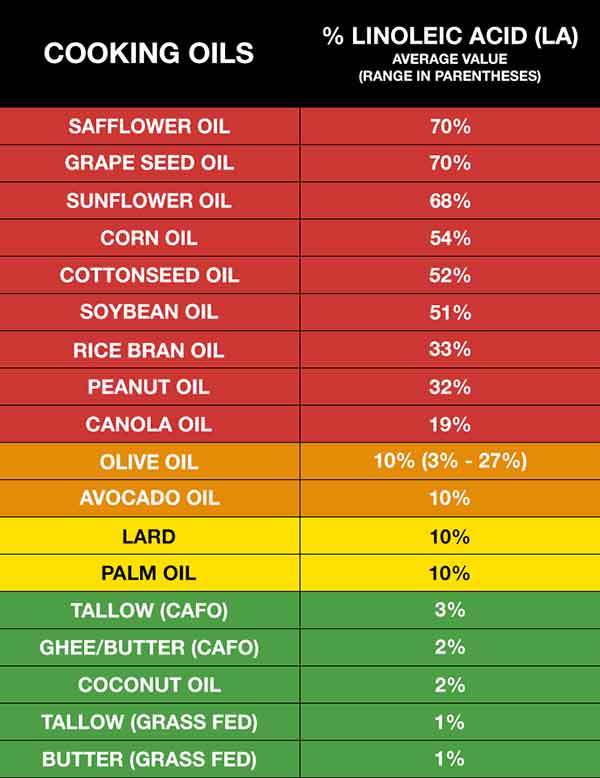
Vitamin E Prevents Oxidation of LA
If you’ve been eating a high-PUFA diet for a long time, consider taking vitamin E regularly until you get your LA down to healthy levels. As noted earlier, CF patients need extra vitamin E anyway, and this is yet another reason to make sure you’re getting enough.
High LA levels increase a potentially dangerous process in your body called lipolysis — the liberation of fatty acids from your fat cells into your bloodstream where they are mobilized. This then increases the oxidation of LA, which is precisely what you want to avoid. Ideally, you want to keep LA in your fat cells until they metabolize it with peroxisomes. Vitamin E can help neutralize this damaging effect of LA.
Due to the high LA burden, few people can get enough vitamin E from their diet to suppress the oxidative destruction caused by LA unless they’re supplementing with vitamin E.
The good news is that since the supplementation is short term, you’re not going to need it the rest of your life. If you can keep your LA intake to below 5 grams a day for three years, it’s likely you may not even need it at all, or at most, only a few times a month.
The Story of Claire Wineland
Claire Wineland, an inspirational speaker and YouTube sensation, was diagnosed with CF at birth. At age 13, she founded the Claire’s Place Foundation17 to help families with children who have CF. She died September 2, 2018, from a massive stroke following an otherwise successful lung transplant.
In 2016, Wineland appeared in an episode of “My Last Days,” a limited CW docuseries hosted by Justin Baldoni, featuring people living with terminal illness. September 2, 2019, YouTube Originals released the documentary “CLAIRE,” directed by Nicholas Reed (above).
While filled with chronic illness, Wineland’s life was a testament to how to live life well, with purpose and gratitude. It’s a potent reminder of how we need to live life to the fullest, even though we might die tomorrow. “I’ve always loved the idea of bringing life into places where people think life doesn’t really exist,” Wineland said.
Wineland’s mother said she was convinced her daughter came into the world with a mission to share the message of “what it’s like to be blessed with life.” I couldn’t agree more.
- 1, 2, 4, 5, 15, 16 Journal of Pharmacy Practice 2012; 26(1): 14-17
- 3, 12, 13, 14 Pharmaceuticals February 2022; 15(2): 217
- 6 Cancer Prevention Research May 2012, DOI: 10.1158/1940-6207.CAPR-12-0045
- 7 Science Daily April 23, 2012
- 8 Sci Transl Med 29 January 2014: Vol. 6, Issue 221, p. 221ra15
- 9 Journal of Health, Population and Nutrition January 17, 2024; 43, Article number 11
- 10 Children 2022; 9(3): 329
- 11 Italian Journal of Pediatrics 2019; 45, Article number 41
- 17 Claire’s Place Foundation, Inc
Oxalates — The Hidden Dangers in ‘Healthy’ Foods
Reproduced from original article:
https://articles.mercola.com/sites/articles/archive/2024/04/28/oxalates-in-food.aspx
Analysis by Dr. Joseph Mercola April 28, 2024
STORY AT-A-GLANCE
- Oxalates, or dicarboxylic acids, are natural compounds found in many foods like leafy greens and nuts. Despite their simple carbon dioxide-based structure, they can form harmful crystals in the body and disrupt biological processes
- Oxalates can bind to calcium to form insoluble crystals that may lead to kidney stones and other health issues
- Oxalates can also inhibit crucial enzymes in the mitochondrial electron transport chain, reducing energy production and increasing oxidative stress
- If you struggle with chronic health issues related to mineral imbalances or metabolic inflexibility, minimizing your oxalate intake is advisable
- Foods high in oxalates that should be avoided if sensitive include spinach, almonds, peanut butter and sweet potatoes
In today’s episode, I am thrilled to welcome back Sally Norton, an esteemed authority on oxalates, whose expertise is invaluable for anyone seeking to understand this topic.
Norton has dedicated years to meticulously analyzing data and compiling an authoritative guide on oxalates, “Toxic Superfoods: How Oxalate Overload Is Making You Sick — and How to Get Better.” In it, she reviews how and why foods we’ve been told are healthy can undermine your health.
Her academic background includes a bachelor’s degree in nutritional science from Cornell University and her master’s degree in public health from the University of North Carolina, Chapel Hill. In this interview, we explore the broader implications of oxalates on health, Norton’s personal journey with oxalate sensitivity, and her innovative solutions for common nutritional misunderstandings.
What Are Oxalates?
Oxalates are natural compounds found in many foods, including leafy greens, nuts, and seeds. Another term for oxalate is dicarboxylic acid, which is made up by two carbon dioxide (CO2) molecules. As I’ve discussed in previous articles, CO2 is essential for health and life itself, so how is it that two CO2 molecules together cause so much harm?
The key problem with oxalates is not their CO2 origin but rather their ability to form crystals that interfere with normal biological processes. Dicarboxylic acids, such as oxalate, are characterized by having two carboxyl groups (COOH), which can lose protons under physiological conditions, leaving them with a negative charge.
This negative charge allows them to bind positively charged ions like calcium. When oxalates bind with calcium, they form calcium oxalate crystals, which are not soluble and can accumulate, leading to the formation of kidney stones or other tissue deposits.
Moreover, the electromagnetic properties of these charged oxalate ions can interfere with cellular functions. For example, the negatively charged oxalate can disrupt enzyme functions that are crucial for cellular energy production.
The enzymes in the mitochondrial electron transport chain, which are vital for ATP (energy) production, can be inhibited by the binding of oxalate ions, resulting in decreased energy production and increased oxidative stress within cells. In this way, oxalates contribute to broader metabolic and physiological dysfunctions.
This paradoxical nature of oxalates — arising from a simple and essential molecule like CO2 but leading to complex health challenges — illustrates the nuanced interactions within human biochemistry. In essence, the “charging” of dicarboxylic acids like oxalate transforms them into reactive molecules that can disrupt normal cellular processes through electromagnetic interactions.
As a result, people with compromised kidney function aren’t the only ones who need to be concerned about oxalates. Just about anyone struggling with chronic health issues related to mineral imbalances and/or metabolic flexibility may be adversely impacted by them and would do well to minimize their intake.
Oxalate Rashes Are a Common Symptom of Oxalate Toxicity
Oxalate toxicity can cause several problems that are very common, such as oxalate rashes — intensely itchy rashes that have no apparent cause. I struggled with that for 15 years before I finally discovered the cause. While using my aloe vera plants helped me, the best solution is to avoid oxalate-rich foods, as they’re what’s causing it.
Topical calcium citrate can also help resolve those itchy rashes. The reason topical calcium citrate works so well is twofold. Calcium binds to and forms precipitates with oxalates. It also addresses the calcium and electrolyte interference caused by oxalates.
“This interference with electrolytes and calcium is a major toxic effect,” Norton says. “And as the immune system is trying to deal with those oxalates in the subdermis, you’re getting additional electrolyte disturbances.
I don’t really know the mechanism of why that calcium topically is so powerful, but it’s amazing [for] any skin injury, People who are doing hair removal or whatever, damaging their skin, putting calcium on top of it, it just heals like overnight …
Interestingly, you can see it in the primary hyperoxaluria literature where high oxalate levels turn fascia and other connective tissues into calcified sheets. You can see it in the X-rays in kids that end up dying of oxalate poisoning that, just because the body is high oxalate, it causes calcification in tissues …
Calcium encourages oxalate clearing depending on how much oxalate is already in the diet, but once you’re low in oxalate, adding more calcium can increase the mobilization of oxalate.”
Citrate, such as fresh-squeezed lemon juice, taken internally, will also help dissolve oxalates.
Save This Article for Later – Get the PDF Now
Oxalate-Rich Foods to Avoid
In the interview, Norton specifies several foods that are particularly high in oxalate and need to be avoided if you’re sensitive. Top examples include:
• Spinach — Typically, spinach can have oxalate levels as high as 600-800 mg per 100 grams
• Almonds — Almonds generally contain about 122 mg of oxalates per 100 grams. Nuts in general tend to be problematic, not only for oxalates but also for linoleic acid. As noted by Norton:
“These seeds from the trees are designed with all these multiple anti-nutrients to kick you in the gut. All the anti-nutrients are gut toxic. They’re all causing some degree of gut damage. Nuts are just designed to be indigestible. They’re designed to dismantle your ability to digest food. If you want a healthy gut, you don’t want nuts kicking your gut over and over again.”
• Peanut butter — Peanut butter can have around 140 mg per 100 grams
• Sweet potatoes — They contain about 30 mg of oxalates per 100 grams, which is considered high compared to other vegetables but much lower than spinach or nuts
• Figs — Figs have approximately 40 mg per 100 grams
Surprisingly, collagen-rich protein sources, including gelatin, bone broth, animal skins, tendons and ligaments, meat cuts that include a lot of connective tissues such as oxtail, neck and shank, and organ meats like heart and liver, can also be aggravating if you’re sensitive to oxalates or struggle with recurring kidney stones. So, it is wise to avoid oxalates until your gut is healed and you can tolerate them.
Decreased Mitochondrial Energy Production Contributes to Oxalate Toxicity
Metabolic inflexibility refers to your body’s reduced ability to switch between fuel sources, particularly between carbohydrates and fats, efficiently. This inflexibility can impair your energy production capabilities. When energy production is compromised, especially at the cellular level in the gut lining, it impairs your body’s ability to maintain a low oxygen environment in the large intestine, which is required to keep pathogenic bacteria in check.
The large intestine is typically an anaerobic (low oxygen) environment where beneficial bacteria thrive. These bacteria are crucial for various functions, including maintaining the integrity of the gut barrier and modulating immune responses.
A healthy gut with a properly maintained anaerobic environment supports the growth of beneficial obligate anaerobes, such as the keystone species Akkermansia. When the oxygen gradient is disturbed due to insufficient energy production (as seen in metabolically inflexible individuals), it allows facultative anaerobes (bacteria that can utilize oxygen when available) to proliferate.
These bacteria often produce endotoxins, also known as lipopolysaccharides (LPS), which can cause inflammation if they translocate across the compromised gut barrier into the systemic circulation.
Oxalates indirectly contribute to this scenario by exacerbating mitochondrial dysfunction and reducing cellular energy production. This reduction in ATP production can impair the maintenance of the anaerobic conditions necessary in the large intestine, facilitating the overgrowth of facultative anaerobes and the subsequent production of endotoxins.
The Intricate Relationship Between Gut Bacteria and Oxalates
Another important bacterium is Oxalobacter formigenes, a beneficial bacterium in the gut that plays a crucial role in the metabolism and regulation of bodily oxalate levels. It digests oxalate crystals and basically signals the gut wall to excrete oxalate for its own nourishment.
In this way, Oxalobacter helps reduce the concentration of oxalate in your gut, which can consequently lower the risk of oxalate crystallization and the formation of kidney stones and other health problems. However, the relationship between oxalates and Oxalobacter also has a hazardous aspect.
While these bacteria can mitigate some of the risks associated with high oxalate levels, their presence and effectiveness can be compromised if the oxalate levels become too high or if the gut environment becomes inhospitable due to other dietary or metabolic imbalances.
Excessive oxalates can overwhelm the gut system, inhibit other beneficial gut flora, and contribute to a reduction in Oxalobacter populations, thus diminishing their protective role. But the reason oxalates are able to overwhelm your system goes right back to having low or impaired metabolism again.
Your body’s inability to produce cellular energy to maintain the oxygen gradient in your gut causes the Oxalobacter to disappear in the first place, which allows the oxalates to accumulate. It’s basically a self-perpetuating cycle in the wrong direction. As noted by Norton:
“It’s this vicious cycle because one of the major ways that oxalate itself is toxic is by breaking down cellular production of ATP. It blocks the last step of glycolysis. It blocks Complex II.
It causes all this oxidative stress and inflammation that messes up the mitochondria. It’s messing up the membranes of the mitochondria in the cell. So, this is one of its mechanisms of harm. And then you have these redundant ways in which the energy production is being destroyed.
And unfortunately, the body really tries hard to look like everything’s fine. So, this can go on under the hood for decades. Then suddenly in your late 30s or in your 40s, you suddenly feel old and broken.”
How to Minimize the Harmful Effects of Oxalates
We cover a lot of ground in this interview, so here’s a quick summary of the strategies and food choices discussed that can help minimize the harmful effects of oxalates or aid in their elimination:
| Limit high-oxalate foods — This is of course a no-brainer. Reducing your intake of foods known to be high in oxalates such as spinach, almonds, and peanut butter will decrease your overall oxalate load. |
| Increase your calcium intake — Consuming foods high in calcium or using calcium supplements can bind to oxalates in the gut, preventing their absorption and facilitating their excretion through the stool. Foods rich in calcium include dairy products, leafy greens, and fortified foods. |
| Hydrate adequately — Drinking sufficient water is crucial as it helps to flush out oxalates through the urine and prevents kidney stones from forming. |
| Balance your collagen intake — While collagen is extremely beneficial, it’s important to moderate its intake if you are sensitive to oxalates, given that collagen breakdown can lead to oxalate production. So, do consume sources of collagen like bone broth, but do so in moderation. |
| Optimize your gut health — Promoting a healthy gut microbiome by consuming probiotic-rich foods like yogurt, kefir and fermented vegetables can support the growth of beneficial bacteria, including those that can degrade oxalates like Oxalobacter. |
| Citrate consumption — Citrate, found in citrus fruits like lemons and oranges, can help by binding with calcium and oxalate, thereby reducing the formation of kidney stones. Avoid over-supplementation with ascorbic acid, however, as high doses can convert into oxalate. Ascorbic acid is the most common form of vitamin C used in dietary supplements. |
| Cook high-oxalate foods well — Cooking methods that involve boiling can help reduce oxalate content in foods as the oxalates will leach into the cooking water. |
| Topical calcium for oxalate-related skin irritations — If oxalates are causing skin irritations, applying topical calcium can alleviate symptoms by precipitating oxalates at the site. |
More Information
To learn more, pick up a copy of “Toxic Superfoods: How Oxalate Overload Is Making You Sick — and How to Get Better.” You can also find more information on her website, SallyKNorton.com, or follow her on YouTube, Facebook, Twitter/X and Instagram.