Flu
now browsing by category
Quercetin — A Far Better Flu Remedy Than Tamiflu
Reproduced from original article:
https://articles.mercola.com/sites/articles/archive/2023/03/16/quercetin-for-flu.aspx
The original Mercola article may not remain on the original site, but I will endeavor to keep it on this site as long as I deem it to be appropriate.
Analysis by Dr. Joseph Mercola Fact Checked March 16, 2023

STORY AT-A-GLANCE
- Your immune system is your first-line defense against all types of infections, be they bacterial or viral, so the most effective way to prevent infectious illness — including influenza — is a robust immune system
- Quercetin, a plant flavonol found naturally in apples, plums, red grapes, green tea, elder flower and onions, packs a powerful antiviral punch, inhibiting several strains of influenza, hepatitis B and C and other viruses
- Quercetin also combats inflammation and acts as a natural antihistamine
- Quercetin reduces viral illness and boosts mental performance following extreme physical stress, which might otherwise undermine your immune function and render you more susceptible to infections
- Its antiviral effects can be attributed to three main mechanisms of action: Inhibiting the virus’ ability to infect cells, inhibiting replication of already infected cells and reducing infected cells’ resistance to treatment with antiviral medication
Editor’s Note: This article is a reprint. It was originally published February 26, 2018.
Your immune system is your first-line defense against all types of infections, be they bacterial or viral, so the most effective way to prevent infectious illness — including influenza — is a robust immune system. Your diet and other lifestyle factors are foundational for good immune function, but certain supplements can also be quite helpful.
One such supplement is quercetin,1 an antioxidant flavonol found naturally in apples, plums, red grapes, green tea, elder flower and onions, just to name a few. For a more exhaustive list, see Superfoodly’s ranking of the top 100 quercetin-packed foods.2
Quercetin has been shown to combat inflammation and acts as a natural antihistamine. Elder flower extract, which is rich in quercetin, has been traditionally used as a tonic to boost immunity. It is also widely known to promote lung and bronchial tract health.
Quercetin is also available in supplement form and has been used to ameliorate obesity,3 Type 2 diabetes,4 circulatory dysfunction, chronic inflammation, hay fever and mood disorders.5 A number of studies have also highlighted quercetin’s ability to prevent and treat both the common cold6 and influenza.7
Quercetin Significantly Lowers Your Risk for Viral Illness
Research8 from Appalachian State University in North Carolina published in 2007 found quercetin reduces viral illness and boosts mental performance following extreme physical stress, which might otherwise undermine your immune function and render you more susceptible to infections. The research in question was funded by the U.S. Department of Defense.
To investigate the effects of quercetin on viral illness, 40 cyclists were divided into two groups; half of them received a daily dose of 1,000 mg of quercetin in combination with vitamin C (which enhances plasma quercetin levels9,10) and niacin (to improve absorption) for five weeks while the other half received a placebo.
Three weeks into the trial, the athletes rode a bicycle for three hours a day, three days in a row. Blood and tissue samples were collected before and after exertion. Analysis revealed 45% of the placebo group contracted viral illness after the physical stress, compared to just 5% of the treatment group. According to lead investigator David Nieman:
“That’s a highly significant difference. When you have a double-blind, placebo-controlled study and you have those kinds of differences, it can’t be due to chance … These are ground-breaking results because this is the first clinical, double-blind, randomized, placebo-controlled study that has found a natural plant compound to prevent viral illness …
It appears that it takes significant stress to bring out quercetin’s infection-fighting properties. This all happened when athletes were under high oxidative stress, when stress hormones were high, and they were also undergoing muscle damage.
The athletes taking the quercetin supplement maintained their ability to react to an alertness test when exhausted, whereas those who took the placebo became measurably slower. The infection data and vigilance data are our two biggest findings in this study.”
Quercetin Protects Against Flu and Other Viral Infections
In another study funded by the U.S. Defense Advanced Research Projects Agency (DARPA), published in 2008, animals treated with quercetin were challenged with a highly pathogenic H1N1 influenza virus. Again, the treatment group had significantly lower morbidity and mortality than the placebo group.
These and similar studies led to the development of a quercetin supplement for military personnel. In 2008, DARPA director Tony Tether provided testimony to the Subcommittee on Terrorism, Unconventional Threats and Capabilities, saying quercetin “will help keep our warfighters healthy during training and deployment.”
The supplement, Q-Force, is also commercially available to the general public. A number of other studies have confirmed quercetin’s effectiveness against influenza, as well as a variety of other viruses, including the following:
| A 1985 study found quercetin inhibits infectivity and replication of herpes simplex virus type 1, polio-virus type 1, parainfluenza virus type 3 and respiratory syncytial virus.11 |
| A 2010 animal study found that quercetin inhibits both influenza A and B viruses. Two other important discoveries were made. Firstly, the viruses were unable to develop resistance to quercetin, and secondly, when used concomitant with antiviral drugs (amantadine or oseltamivir), the effect was significantly amplified — and it prevented drug-resistance from developing.12 |
A 2004 animal study investigating quercetin’s effect on influenza used a strain of the H3N2 virus. According to the authors:13
|
| In 2014, researchers noted that quercetin appears to be “a promising treatment for the common cold,” caused by the rhinovirus, adding that “Quercetin has been shown to reduce viral internalization and replication in vitro, and viral load, lung inflammation and airways hyper-responsiveness in vivo.”14
By attenuating oxidative damage, it also lowers your risk of secondary bacterial infections, which is actually the primary cause of influenza-related deaths. Importantly, quercetin increases mitochondrial biogenesis in skeletal muscle, which suggests part of its antiviral effects are due to enhanced mitochondrial antiviral signaling. According to the authors:
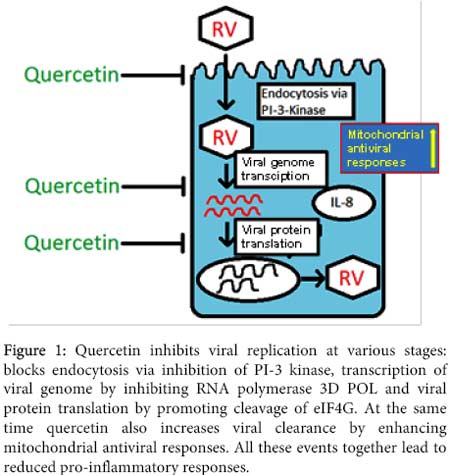 Source: Journal of Infectious Diseases and Preventive Medicine May 24, 2014; 2: 111 |
| A 2016 animal study found quercetin inhibited mouse hepatitis virus and the dengue virus.15 |
| Another 2016 study found quercetin offered protection against influenza A virus H1N1 by modulating protein expression. More specifically, the regulation of heat shock proteins, fibronectin 1 and prohibitin was instrumental in reducing viral replication.16 |
| A third study published in 2016 found quercetin inhibited a wide spectrum of influenza strains, including H1N1, H3N2 and H5N1. According to the authors, “This study indicates that quercetin showing inhibitory activity in the early stage of influenza infection provides a future therapeutic option to develop effective, safe and affordable natural products for the treatment and prophylaxis of [influenza A viruses] infections.”17 |

Download this Article Before it Disappears
Quercetin Inhibits Hepatitis B and C
In summary, quercetin’s powerful antiviral effects can be attributed to three main mechanisms of action:
- Inhibiting the virus’ ability to infect cells
- Inhibiting replication of already infected cells
- Reducing infected cells’ resistance to treatment with antiviral medication
As you can see from the list of studies above, quercetin’s ability to prevent illness is not restricted to influenza. Research shows it’s incredibly effective for boosting general immune health, and studies have shown it can inhibit both hepatitis B18 and C19 infection. It may even be useful in the treatment of HIV. As noted in a Superfoods Scientific Research article on quercetin:20
“Hepatitis C is an important cause of liver failure and liver cancers. In August 2009, [a] cell study21 demonstrated that quercetin interfered with the gene signals that enable hepatitis C virus production. The researchers showed … quercetin inhibits hepatitis C viral production in tissue culture, at least partially through its inhibition of heat shock protein expression.
Therapy with quercetin reduced the infectious particle production to nontoxic concentrations of [hepatitis C virus].”
Similarly, research published in 2015 found quercetin inhibited hepatitis B virus replication in human liver cells, protecting cells from infection and limiting the spread of infection in already infected samples.22 As in previous studies, when combined with antiviral drugs, in this case lamivudine, entecavir or adefovir, the antiviral effect was greatly enhanced.
According to the authors, “The results indicate that quercetin inhibited HBV [hepatitis B virus] antigen secretion and genome replication in human hepatoma cell lines, which suggests that quercetin may be a potentially effective anti-HBV agent.”
Quercetin a Far Safer Alternative to Tamiflu
Should you or your child come down with the flu and your doctor or pediatrician recommends Tamiflu, you should know this antiviral drug has been shown to shorten the duration of flu symptoms by less than 17 hours.23,24 It also does not reduce viral transmission and does not lower your risk of complications from the flu, such as pneumonia.25,26 Scientists have also warned that the risks far outweigh the benefits.27
These risks include convulsions, brain infections, psychosis and other neuropsychiatric problems. Tamiflu made recent headlines after a 6-year-old girl started hallucinating and attempted to jump out a second story window.28 Indeed, a number of studies have observed that Tamiflu may cause psychiatric symptoms, including mood swings, suicidal feelings, auditory hallucinations, memory deterioration and insomnia.29
The drug is particularly risky for children, and more than half of all children taking Tamiflu suffer side effects from the drug.30,31 Considering its risks, and its limited effectiveness, quercetin appears to be a far safer and more effective alternative. Studies have repeatedly found it to be nontoxic, with no adverse side effects.
Vitamin D — Another Potent Immune Booster and Antiviral
Optimizing your vitamin D is another important prevention strategy that will boost your immune function and help prevent infectious diseases of all kinds.
The latest research suggests a vitamin D serum level of 60 to 80 ng/mL is ideal. While conventional health authorities claim getting an annual flu shot is the best way to ward off influenza, the medical literature actually suggests vitamin D optimization may be a far more effective strategy, and the evidence for this goes back at least a decade.
Dr. John Cannell, founder of the Vitamin D Council, was one of the first to introduce the idea that vitamin D deficiency may actually be a causative factor in influenza. His hypothesis32 was initially published in the journal Epidemiology and Infection in 2006.33 It was subsequently followed up with another study published in the Virology Journal in 2008.34
The following year, a large, nationally representative study35 confirmed that people with the lowest vitamin D levels indeed reported having significantly more colds or cases of the flu. Since then, a number of studies have come to similar conclusions.
Most recently, a scientific review36,37 published last year concluded that vitamin D supplementation boosts immunity and cuts rates of cold and flu. In all, 25 randomized controlled trials were included in the review, involving nearly 11,000 individuals from more than a dozen countries.
People with significant vitamin D deficiency (blood levels below 10 ng/mL), taking a vitamin D supplement reduced their risk of respiratory infections such as influenza by 50%. People with higher vitamin D levels also benefited, although not as greatly.
Overall, they reduced their risk by about 10%, which the researchers stated was about equal to the effect of flu vaccines. Coincidentally, 10% is the effectiveness rate of this year’s flu vaccine.38 The take-home message here is that vitamin D supplementation far exceeds the flu vaccine in terms of effectiveness, and the more deficient you are, the greater its protective effects.
Aside from vitamin D and quercetin, loading up on vitamins B1 and C may go a long way toward keeping you healthy through the flu season and beyond. Influenza has also been successfully treated with high-dose vitamin C,39 and vitamin C also boosts the effectiveness of quercetin. Taking zinc lozenges at the first sign of a cold or flu can also be helpful.
- 1, 5 Fitoterapia 2015 Oct;106:256-71
- 2 Superfoodly, 100 Quercetin Foods
- 3 Food Chemistry Volume 179. Pages 305-310. July 15, 2015
- 4 Biomedicine & Pharmacotherapy Volume 146. February 2022
- 6 Semantic Scholar. 2014
- 7 Biomolecules. December 24, 2020
- 8 Newswise. Appalachian State University February 8, 2007
- 9 Journal of the American Dietetic Association 2011 Apr;111(4):542-9
- 10, 14 Journal of Infectious Diseases and Preventive Medicine May 24, 2014; 2: 111
- 11 Journal of Medical Virology January 1985 DOI: 10.1002/jmv.1890150110
- 12 Antiviral Research 2010 Nov;88(2):227-35
- 13 Experimental Lung Research 2005; 31(5)
- 15 Asian Pacific Journal of Tropical Medicine January 2016; 9(1): 1-7
- 16 Journal of Agricultural and Food Chemistry 2016; 64(21): 4416-4425
- 17 Viruses 2016 Jan; 8(1): 6
- 18, 22 Virologica Sinica August 2015; 30(4): 261-268
- 19, 21 Hepatology 2009 Dec;50(6):1756-64
- 20 Superfoods Scientific Research, Quercetin
- 23, 25 BMJ 2014;348:g2545
- 24 Forbes April 10, 2014
- 26 The Guardian April 10, 2014
- 27 Cochrane Database of Systematic Reviews 2014, Issue 4. Art. No.: CD008965
- 28 Newsweek January 15, 2018
- 29 Clin Psychopharmacol Neurosci. 2015 Aug; 13(2): 209–211
- 30 The Guardian July 31, 2009
- 31 Eurosurveillance July 2009; 14(30)
- 32 Epidemic Influenza and Vitamin September 15, 2006
- 33 Epidemiology and Infection 2006 Dec;134(6):1129-40
- 34 Virology Journal 2008; 5:29
- 35 Archives of Internal Medicine 2009;169(4):384-390
- 36 BMJ 2017; 356:i6583
- 37 NPR February 16, 2017
- 38 New England Journal of Medicine January 4, 2018; 378:7-9
- 39 Journal of Manipulative and Physiological Therapeutics 1999 Oct;22(8):530-3
How COVID Patients Died for Profit
Reproduced from original article:
https://articles.mercola.com/sites/articles/archive/2023/02/01/how-covid-patients-died-for-profit.aspx
The original Mercola article may not remain on the original site, but I will endeavor to keep it on this site as long as I deem it to be appropriate.
Analysis by Dr. Joseph Mercola Fact Checked February 01, 2023

STORY AT-A-GLANCE
- By May 2020, it had become apparent that the standard practice of putting COVID-19 patients on mechanical ventilation with ventilators was a death sentence
- Between 50% and 86% of COVID patients placed on life support ended up dying
- By May 2020, doctors had also found that high-flow nasal cannulas and proning led to better outcomes than ventilators
- The World Health Organization promoted the use of ventilators as a way to purportedly curtail the spread of virus-laden aerosols, thereby protecting other patients and hospital staff. In other words, suspected COVID patients were sacrificed to “protect” others
- The matter becomes even more perverse when you consider the fact that many “COVID cases” were patients who merely tested positive using faulty PCR testing. Hospitals also received massive incentives to diagnose patients with COVID and put them on a vent
By May 2020, it had become apparent that the standard practice of putting COVID-19 patients on mechanical ventilation with ventilators was a death sentence.1 As early as April 9, 2020, Business Insider reported2 that 80% of COVID-19 patients in New York City who were placed on ventilators died, which caused a number of doctors to question their use.
The Associated Press3 also publicized similar reports from China and the U.K. A U.K. report put the figure at 66%, while a small study from Wuhan, China, put the ratio of deaths at 86%. Data presented by attorney Thomas Renz in 2021 showed that in Texas hospitals, 84.9% of patients died after more than 96 hours on a ventilator.4
The lowest figure I’ve seen is 50%.5 So, somewhere between 50% and 86% of all ventilated COVID patients died. Compare that to historical prepandemic ratios, where 30% to 40% of ventilated patients died.
High-Flow Cannulas and Proning Were Always More Effective
Meanwhile, doctors at UChicago Medicine reported6 getting “truly remarkable” results using high-flow nasal cannulas in lieu of ventilators. As noted in a press release:7
“High-flow nasal cannulas, or HFNCs, are non-invasive nasal prongs that sit below the nostrils and blow large volumes of warm, humidified oxygen into the nose and lungs.
A team from UChicago Medicine’s emergency room took 24 COVID-19 patients who were in respiratory distress and gave them HFNCs instead of putting them on ventilators. The patients all fared extremely well, and only one of them required intubation after 10 days …
‘Avoiding intubation is key,’ [UChicago Medicine’s Emergency Department’s medical director Dr. Thomas] Spiegel said. ‘Most of our colleagues around the city are not doing this, but I sure wish other ERs would take a look at this technique closely.'”
The UChicago team also endorsed proning, meaning lying in the face-down position, which automatically improves oxygenation and helps alleviate shortness of breath.
Yet despite these early indications that mechanical ventilation was as unnecessary as it was disastrous, placing COVID patients on life support is standard of care to this day, more than three years later. How could that be?
How China and the WHO Created Ventilator Hysteria
In a September 30, 2020, Substack article,8 journalist Jordan Schachtel described how China and the World Health Organization came up with and nurtured the idea that mechanical ventilation was the correct and necessary first-line response to COVID:
“In early March, when COVID-19 was ravaging western Europe and sounding alarm bells in the United States, the WHO released COVID-19 provider guidance9 documents to healthcare workers.
Citing experience ‘based on current knowledge of the situation in China,’ the WHO recommended mechanical ventilators as an early intervention for treating COVID-19 patients. The guidance recommended10 escalating quickly, if not immediately, to mechanical ventilation.
In doing so, they cited the guidance being presented by Chinese medical journals, which published papers in January and February claiming that ‘Chinese expert consensus’ called for ‘invasive mechanical ventilation’ as the ‘first choice’ for people with moderate to severe respiratory distress.
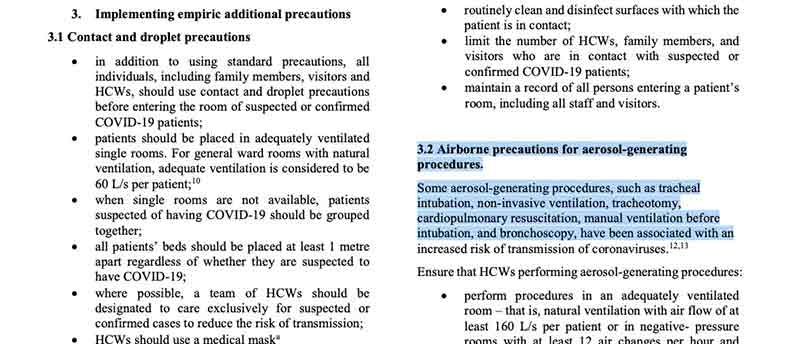
The WHO further justified this approach by claiming that the less invasive positive air pressure machines could result in the spread of aerosols, potentially infecting health care workers with the virus.”
That last paragraph is perhaps the most shocking reason for why millions of COVID patients were sacrificed. They wanted to isolate the virus inside the mechanical vent machine rather than risk aerosol transmission.
In other words, they put patients to death in order to “save” staff and other, presumably non-COVID, patients. If you missed this news back in 2020, you’re not alone. In the flurry of daily reporting, it escaped many of us. Here’s the description given in the WHO’s guidance document.
Strangely enough, while the U.S. quickly began clamoring for ventilators, China started relying on them less, and instead exported them in huge quantities. As noted by Schachtel, “China was making a fortune off of manufacturing and exporting ventilators (many of which did not work correctly and even killed patients11) around the world.”
Download this Article Before it Disappears
COVID Patients Effectively Euthanized
That ventilation and sedation were used to protect hospital staff was also highlighted by The Wall Street Journal in a December 20, 2020, article,12 which noted:
“Last spring, with less known about the disease, doctors often pre-emptively put patients on ventilators or gave powerful sedatives largely abandoned in recent years. The aim was to save the seriously ill and protect hospital staff from COVID-19 …
Last spring, doctors put patients on ventilators partly to limit contagion at a time when it was less clear how the virus spread, when protective masks and gowns were in short supply.
Doctors could have employed other kinds of breathing support devices that don’t require risky sedation, but early reports suggested patients using them could spray dangerous amounts of virus into the air, said Theodore Iwashyna, a critical-care physician at University of Michigan and Department of Veterans Affairs hospitals in Ann Arbor, Mich.
At the time, he said, doctors and nurses feared the virus would spread through hospitals. “We were intubating sick patients very early. Not for the patients’ benefit, but in order to control the epidemic and to save other patients,” Dr. Iwashyna said ‘That felt awful.'”
As noted in a January 23, 2023, Substack article,13 in which James Lyons-Weiler revisits the ventilator issue and the shocking reason behind it, “euthanizing humans is illegal. Especially for the benefit of other patients. It should feel awful.”
The matter becomes even more perverse when you consider the fact that many “COVID cases” were patients who merely tested positive using faulty PCR testing.
They didn’t have COVID but were vented anyway, thanks to the baseless theory that you could have COVID-19 and be infectious without symptoms. Hospitals also received massive incentives to diagnose patients with COVID — whether they actually had it or not — and to put them on a vent.
Frontline Nurse Blew the Whistle on Vent Misuse
Some of you may remember Erin Olszewski, a retired Army sergeant and frontline nurse who blew the whistle on the horrific mistreatment of COVID patients at Elmhurst Hospital Center in Queens, New York, which was “the epicenter of the epicenter” of the COVID-19 pandemic in the U.S.
She described14 a number of problems at Elmhurst, including the disproportionate mortality rate among people of color, the controversial rule surrounding Do Not Resuscitate (DNR) orders, lax personal protective equipment (PPE) standards, and the failure to segregate COVID-positive and COVID-negative patients, thereby ensuring maximum spread of the disease among noninfected patients coming in with other health problems.
Olszewski also highlighted the fact that COVID-negative patients were being listed as confirmed positive and placed on mechanical ventilation, thus artificially inflating the numbers while more or less condemning the patient to death from lung injury.
Making matters worse, many of the doctors treating these patients were not trained in critical care. One of the “doctors” on the COVID floor was a dentist. Residents (medical students) were also relied on, even though they were not properly trained in how to safely ventilate, and were unfamiliar with the potent drugs used.
At the time, Olszewski blamed financial incentives for turning the hospital into a killing field. Elmhurst, a public hospital, received $29,000 extra for a COVID-19 patient receiving ventilation, over and above other treatments, she said.
If Elmhurst had infection control in mind when ventilating patients, they certainly didn’t follow through, as COVID-positive and negative patients were comingled — a strategy Olszewski suspected was intended to drive up the COVID case and mortality numbers.
Killing for Profit
Others have also highlighted the role of financial incentives. In early April 2020, Minnesota family physician and state Sen. Scott Jensen explained:15
“Medicare has determined that if you have a COVID-19 admission to the hospital you’ll get paid $13,000. If that COVID-19 patient goes on a ventilator, you get $39,000; three times as much.”
Former CDC director Robert Redfield also admitted that financial policies may indeed have resulted in artificially elevated hospitalization rates and death toll statistics. As reported August 1, 2020, by the Washington Examiner:16
“… Redfield agreed that some hospitals have a monetary incentive to overcount coronavirus deaths … ‘I think you’re correct in that we’ve seen this in other disease processes, too.
Really, in the HIV epidemic, somebody may have a heart attack but also have HIV — the hospital would prefer the [classification] for HIV because there’s greater reimbursement,’ Redfield said17 during a House panel hearing … when asked by Rep. Blaine Luetkemeyer about potential ‘perverse incentives.’ Redfield continued: ‘So, I do think there’s some reality to that …”
In addition to receiving exorbitant payments for COVID admissions and putting patients on a ventilator, hospitals are also paid extra for:18
- COVID testing for all patients
- COVID diagnoses
- Use of remdesivir
- COVID deaths
When everything is said and done, a COVID patient can be “worth” as much as $250,000, but for the maximum payment, they have to leave in a body bag. If we know anything, it’s that profit motives can make people commit atrocious acts, and that certainly appears true when it comes to COVID treatment.
In the U.S., hospitals also LOST federal funding if they failed or refused to administer remdesivir and/or ventilation, which further incentivized them to go along with what amounts to malpractice at best, and murder at worst.
We need harsh, hard investigations with consequences — and activists need to write bills tying the hands of protocolists to prevent them from ever again killing one patient to hypothetically save another — under threat of a murder charge. ~ James Lyons-Weiler
Patient Rights Have Evaporated
There’s also evidence that certain hospital systems, and perhaps all of them, have waived patients’ rights, making anyone diagnosed with COVID a virtual prisoner of the hospital, with no ability to exercise informed consent. As noted by Citizens Journal in December 2021:19
“We now see government-dictated medical care at its worst in our history since the federal government mandated these ineffective and dangerous treatments for COVID-19, and then created financial incentives for hospitals and doctors to use only those ‘approved’ (and paid for) approaches.
Our formerly trusted medical community of hospitals and hospital-employed medical staff have effectively become ‘bounty hunters’ for your life.
Patients need to now take unprecedented steps to avoid going into the hospital for COVID-19. Patients need to take active steps to plan before getting sick to use early home-based treatment of COVID-19 that can help you save your life.”
There Must Be a Reckoning
There’s no telling how many COVID patients have already lost their lives to this medical malpractice, and it must stop. Patient rights must be reestablished and be irrevocable, we need to hold decision-makers to account, and lastly, we have to somehow ensure that our hospitals cannot be turned into killing fields for profit ever again. As noted by Lyons-Weiler in his January 2023 article:20
“We need harsh, hard investigations with consequences — and activists need to write bills tying the hands of protocolists to prevent them from ever again killing one patient to hypothetically save another — under threat of a murder charge.
We need legislation for ‘on-demand’ scripts for off-label medicines that patients want for potentially deadly infections — regardless of ‘FDA Approval’ (FDA does not, by definition, have to ‘approve’ off-label scripts.”
COVID Treatment Guidance
While SARS-CoV-2 has become milder with each iteration, I still believe it’s a good idea to treat suspected COVID at first signs of symptoms — especially if you’ve gotten the COVID jab. COVID hospitalization and death are now “pandemics of the vaccinated,” to reuse and rephrase one of the globalist cabal’s favorite mantras.
Perhaps it’s the common cold or a regular influenza, maybe it’s the latest COVID variant. Either way, since they’re now virtually indistinguishable, at least in the early stages of infection, your best bet is to treat symptoms as you would treat earlier forms of COVID. Treatment for long-COVID also overlaps with the protocols for SARS-CoV-2 infection. Early treatment protocols with demonstrated effectiveness include:
- The Front Line COVID-19 Critical Care Alliance’s (FLCCC’s) prevention and early at-home treatment protocol. They also have an in-hospital protocol and long-term management guidance for long-haul COVID-19 syndrome. You can find a listing of doctors who can prescribe ivermectin and other necessary medicines on the FLCCC website.
- The AAPS protocol
- Dr. Tess Lawrie’s World Council for Health protocol
- America’s Frontline Doctors
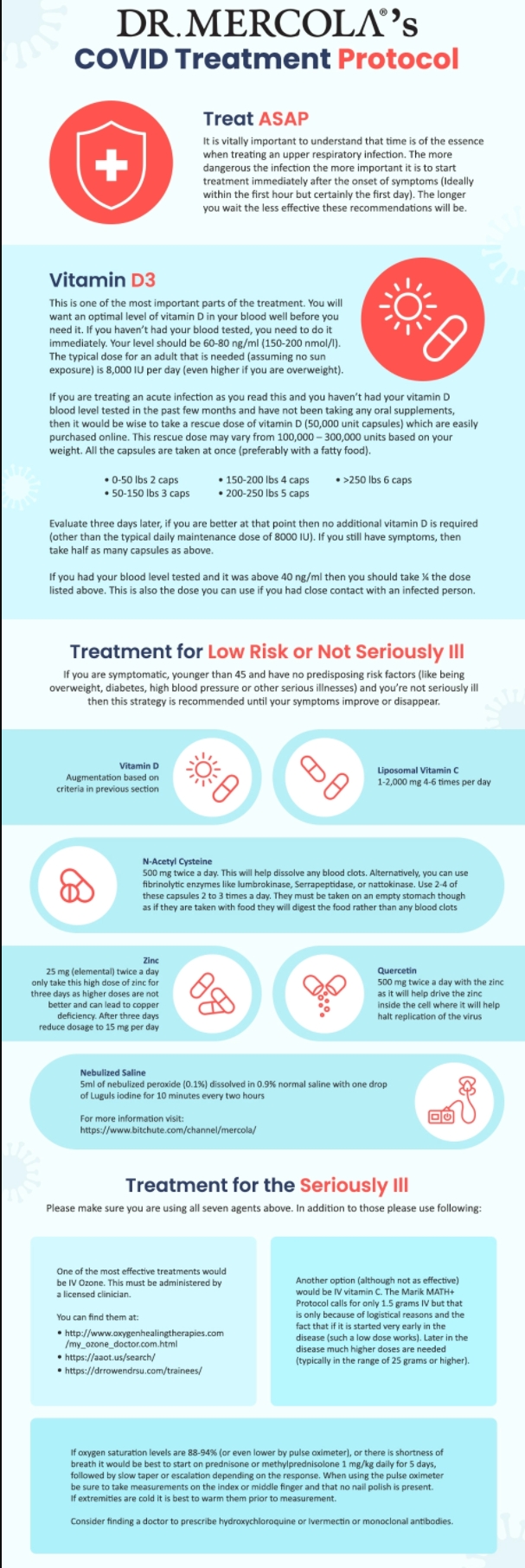
Based on my review of these protocols, I’ve developed the following summary of the treatment specifics I believe are the easiest and most effective.
- 1 Medscape April 6, 2020
- 2 Business Insider April 9, 2020
- 3 The Associated Press April 8, 2020
- 4, 18, 19 Citizens Journal December 20, 2021
- 5, 12 Wall Street Journal December 20, 2020
- 6, 7 Newswise April 23, 2020
- 8 The Dossier Substack September 30, 2020
- 9 WHO Clinical Management of Severe COVID-19
- 10 WHO Infection Prevention and Control for COVID
- 11 NBC News April 30, 2020
- 13, 20 Substack Popular Rationalism January 23, 2023
- 14 YouTube Perspectives on the Pandemic 2020
- 15 Fox News April 9, 2020
- 16 Washington Examiner August 1, 2020
- 17 Breitbart July 31, 2020
Might Flu Shots Increase COVID-19 Pandemic Risk?
Reproduced from original article:
https://articles.mercola.com/sites/articles/archive/2023/02/03/will-the-flu-shot-help-with-coronavirus.aspx
The original Mercola article may not remain on the original site, but I will endeavor to keep it on this site as long as I deem it to be appropriate.
Analysis by Dr. Joseph Mercola Fact Checked February 03, 2023

STORY AT-A-GLANCE
- People who received the trivalent influenza vaccine during the 2008-2009 flu season were between 1.4 and 2.5 times more likely to get infected with pandemic H1N1 in the spring and summer of 2009 than those who did not get the seasonal flu vaccine
- A double-blind, placebo-controlled study on ferrets confirmed the results, showing the seasonal influenza vaccine did worsen symptoms after subsequent exposure to the H1N1 virus
- A 2011 study found the seasonal flu vaccine may weaken children’s immune systems and increase their chances of getting sick from influenza viruses not included in the vaccine
- In a 2012 study, children receiving inactivated influenza vaccines had a 4.4 times higher relative risk of contracting noninfluenza respiratory virus infections in the nine months following their inoculation
- A 2020 study found people were 36% more likely to get some form of coronavirus infection if they had been vaccinated against influenza
From Dr. Joseph Mercola
Since COVID-19 first entered the scene, exchange of ideas has basically been outlawed. By sharing my views and those from various experts throughout the pandemic on COVID treatments and the experimental COVID jabs, I became a main target of the White House, the political establishment and the global cabal.
Propaganda and pervasive censorship have been deployed to seize control over every part of your life, including your health, finances and food supply. The major media are key players and have been instrumental in creating and fueling fear.
I am republishing this article in its original form so that you can see how the progression unfolded.
Originally published: September 8, 2020
Could a “perfect storm” be brewing, ready to be unleashed this fall? If the regular influenza season ends up converging with a resurgence of SARS-CoV-2 outbreaks, or even a new SARS-CoV-3, the results are anyone’s guess at this point. Confounding matters is the possibility that influenza vaccination may increase people’s risk of other viral infections.
In a June 12, 2020, Science editorial, Michael Osterholm, virologist and director of the Center for Infectious Disease Research and Policy at the University of Minnesota in Minneapolis, and Edward Belongia, director of the Center for Clinical Epidemiology and Population Health at the Marshfield Clinic Research Institute in Marshfield, Wisconsin write:1
“There are important differences in the epidemiology of COVID-19 and seasonal influenza, but symptoms overlap … The prospect of a second COVID-19 wave requires planning to ensure optimal delivery of influenza vaccines starting in the early fall …
The optimal timing of influenza vaccination in patients with confirmed COVID-19 is uncertain. There are no clinical studies on the effects of influenza vaccination in patients with COVID-19, but it may be prudent to delay vaccine administration until after the acute illness has resolved …
Will there be a perfect storm of COVID-19 and influenza during the 2020–2021 season? We do not yet know, but we must start preparing in the coming months.”
‘False Claim’ Is Based on Published Science
Osterholm and Belongia stress there is a “false claim that influenza vaccination increases the risk of SARS-CoV-2 infection” promoted by Judy Mikovits and circulating online, and that “Scientists, health care providers, and public health leaders must counter these claims with clear, evidence-based information on the importance of influenza vaccination during the COVID-19 pandemic.”
But this so-called “false claim” is not a rumor pulled out of thin air. As is so often the case, Osterholm and Belongia are actually insulting fellow virologists and researchers when slapping a hoax label on such claims, seeing how there is published research showing that, yes, influenza vaccination appears to worsen outcomes during viral pandemics.
If Osterholm and Belongia wanted to be factual and clear, they should dissect the actual studies using scientific methods and reasoning, and not just dismiss them as made-up internet hoaxes.
The fact that peer-reviewed studies have come to the conclusion that previous flu vaccination seems to increase patients’ risk of contracting more severe pandemic illness at least worthy of consideration and review.
I’m not surprised though, seeing how Osterholm appears to routinely ignore the reality of published science. In a March 10, 2020, interview with Joe Rogan,2 in which the question of SARS-CoV-2’s origin came up, Osterholm stated that “we could not have crafted a virus like this to do what it’s doing; I mean we don’t have the creative imagination or the skill set.”
This simply does not line up with reality. Again, published research shows we clearly have the technology, know-how and “creative imagination” to create SARS-CoV-2.
Flu Vaccine Increased Risk of Pandemic H1N1
So, what is the basis for these claims? Research raising serious questions about flu vaccinations and their impact on pandemic viral illnesses include a 2010 review3,4 in PLOS Medicine, led by Dr. Danuta Skowronski, a Canadian influenza expert with the Centre for Disease Control in British Columbia, which found the seasonal flu vaccine increased people’s risk of getting sick with pandemic H1N1 swine flu and resulted in more serious bouts of illness.
People who received the trivalent influenza vaccine during the 2008-2009 flu season were between 1.4 and 2.5 times more likely to get infected with pandemic H1N1 in the spring and summer of 2009 than those who did not get the seasonal flu vaccine.
In all, five observational studies conducted across several Canadian provinces found identical results. These findings also confirmed preliminary data from Canada and Hong Kong. As Australian infectious disease expert professor Peter Collignon told ABC News at the time:5
“Some interesting data has become available which suggests that if you get immunized with the seasonal vaccine, you get less broad protection than if you get a natural infection …
We may be perversely setting ourselves up that if something really new and nasty comes along, that people who have been vaccinated may in fact be more susceptible compared to getting this natural infection.”
Download this Article Before it Disappears
Double-Blind Animal Study Confirmed Results
To double-check the findings, Skowronski and other researchers conducted a study on ferrets. Their findings were presented at the 2012 Interscience Conference on Antimicrobial Agents and Chemotherapy. As reported by MedPage Today:6
“A double-blind, placebo-controlled animal study suggests that vaccination with seasonal influenza vaccine did, in fact, worsen symptoms after subsequent exposure to H1N1 flu … The vaccinated ferrets also accumulated significantly greater lung virus titers — 4.96 plot forming units/ml versus 4.23 pfu/ml …
‘We did find that the ferret findings were consistent with our earlier human studies,’ Skowronski said, noting that the scientifically stringent experiment used ferrets, considered to be excellent models of human influenza infection …
‘We needed to follow up on those studies from Canada. They were clearly indicating something important about the interaction between seasonal and pandemic viruses,’ she said.
‘First, people attributed the human findings to bias and confounding. That is a common problem with observational studies … Our ferret studies showed that the findings could not be explained away on the basis of confounding.
There may be a direct vaccine effect in which the seasonal vaccine induced some cross-reactive antibodies that recognized pandemic H1N1 virus, but those antibodies were at low levels and were not effective at neutralizing the virus,’ she continued, explaining that instead of killing the new virus it actually may facilitate its entry into the cells.”
Flu Vaccine Increases Risk of Respiratory Infections
Another study,7 published in the Journal of Virology in 2011, found the seasonal flu vaccine weakens children’s immune systems and increases their chances of getting sick from influenza viruses not included in the vaccine.
Further, when blood samples from 27 healthy, unvaccinated children and 14 children who had received an annual flu shot were compared, the former unvaccinated group was found to have naturally built up more antibodies across a wider variety of influenza strains compared to the latter vaccinated group, which is the type of situation Collignon referred to in the quote above.
Then there’s a 2012 study8,9 in the journal Clinical Infectious Diseases, which found that children receiving inactivated influenza vaccines had a 4.4 times higher relative risk of contracting noninfluenza respiratory virus infections in the nine months following their inoculation.
The authors proposed the theory that “Being protected against influenza, trivalent inactivated influenza vaccine recipients may lack temporary nonspecific immunity that protected against other respiratory viruses.”
Natural Infection, Inoculation Confer Different Protection
So, on the one hand, studies have shown that when you get the flu vaccine, you may become more prone to flu caused by influenza viruses that are not contained in the vaccine, or other noninfluenza viral respiratory illnesses, including coronavirus infections (more on that below).
Conversely, researchers10,11,12 recently found that common colds caused by the betacoronaviruses OC43 and HKU1 might actually make you more resistant to SARS-CoV-2 infection, and that the resulting immunity might last as long as 17 years.
The authors suggest that if you’ve beat a common cold caused by a OC43 or HKU1 betacoronavirus in the past, you may have a 50/50 chance of having defensive T-cells that can recognize and help defend against SARS-CoV-2.
Flu Vaccination Increases Risk of Coronavirus Infection
So, what about SARS-CoV-2? Is there any evidence to suggest influenza vaccines might render people more susceptible to this pandemic virus too? So far, no one has looked at SARS-CoV-2 specifically, but there are recent findings showing seasonal flu vaccinations can worsen coronavirus infections in general.
While seasonal influenza vaccination did not raise the risk of all respiratory infections, it was in fact ‘significantly associated with unspecified coronavirus.’
Remember, SARS-CoV-2 is one of seven different coronaviruses known to cause respiratory illness in humans.13 Four of them cause symptoms associated with the common cold: 229E, NL63, OC43 and HKU1.
In addition to the common cold, OC43 and HKU1 — two of the most commonly encountered betacoronaviruses14 — are also known to cause bronchitis, acute exacerbation of chronic obstructive pulmonary disease and pneumonia in all age groups.15 The other three human coronaviruses — which are capable of causing more serious respiratory illness — are SARS-CoV, MERS-CoV and SARS-CoV-2.
A study16,17 published in the January 10, 2020, issue of the journal Vaccine found people were more likely to get some form of coronavirus infection if they had been vaccinated against influenza. As noted in this study, titled “Influenza Vaccination and Respiratory Virus Interference Among Department of Defense Personnel During the 2017-2018 Influenza Season:”
“Receiving influenza vaccination may increase the risk of other respiratory viruses, a phenomenon known as virus interference. Test-negative study designs are often utilized to calculate influenza vaccine effectiveness.
The virus interference phenomenon goes against the basic assumption of the test-negative vaccine effectiveness study that vaccination does not change the risk of infection with other respiratory illness, thus potentially biasing vaccine effectiveness results in the positive direction.
This study aimed to investigate virus interference by comparing respiratory virus status among Department of Defense personnel based on their influenza vaccination status. Furthermore, individual respiratory viruses and their association with influenza vaccination were examined.”
While seasonal influenza vaccination did not raise the risk of all respiratory infections, it was in fact “significantly associated with unspecified coronavirus (meaning it did not specifically mention SARS-CoV-2) and human metapneumovirus” (hMPV).
Those who had received a seasonal flu shot were 36% more likely to contract coronavirus infection and 51% more likely to contract hMPV infection than unvaccinated individuals.18,19
Looking at the symptoms list for hMPV20 is telling, as the main symptoms include fever, sore throat and cough. The elderly and immunocompromised are at heightened risk for severe hMPV illness, the symptoms of which include difficulty breathing and pneumonia. All of these symptoms also apply for SARS-CoV-2.
Did Flu Shots Increase Mortality in Italy?
In a recent blog post, Dr. Michael Murray discusses the possibility that seasonal influenza vaccinations may have contributed to the dramatically elevated COVID-19 mortality seen in Italy. He writes:21
“… the standard answers of an elderly population and the failure to implement social distancing soon enough just don’t explain what is happening. My colleague, Dr. Alex Vasquez, provided me with a valuable insight.
In September 2019, Italy rolled out an entirely new type of influenza vaccine. This vaccine called VIQCC is different than others. Most available influenza vaccines are produced in embryonated chicken eggs. VIQCC, however, is produced from cultured animal cells rather than eggs and has more of a ‘boost’ to the immune system as a result.
VIQCC also contains four types of viruses — 2 type A viruses (H1N1 and H3N2) and 2 type B viruses.22 It looks like this ‘super’ vaccine impacted the immune system in such a way to increase coronavirus infection through virus interference that set the stage for what happened in Italy.”
Fast-Tracked COVID-19 Vaccine Plus Flu Vaccine This Season?
Needless to say, there’s also no telling what the effects might be if people are vaccinated against both influenza and SARS-CoV-2 in the same season. We don’t even know what the ramifications of the SARS-CoV-2 vaccine might be yet, although, historically, all coronavirus vaccines have resulted in more devastating disease and increased risk of death, as reviewed in my interview with Robert F. Kennedy Jr.
Preliminary results from Moderna’s Phase 1 trial showed the vaccine (mRNA-1273) caused systemic side effects in 80% of participants receiving the 100 microgram (mcg) dose.23,24 Side effects ranged from fatigue (80%), chills (80%), headache (60%) and myalgia or muscle pain (53%). After the second dose, 100% of participants in the 100-mcg group experienced side effects.
This is important to note as, unlike the flu vaccine, the coronavirus vaccine will be a minimum of a two-dose regimen and most likely recommended to be repeated annually, just like the flu vaccine.
The 45 volunteers were divided into three dosage groups — 25 mcg, 100 mcg and 250 mcg — with 15 participants in each. Even in the low-dose group, one participant (6%) got so sick he required emergency medical care. In the high-dose (250 mcg) group, 100% of participants suffered side effects after both the first and second doses, and three of the participants suffered “one or more severe events.”
Keep in mind, these were healthy individuals between the ages of 18 and 55,25 who were not overweight, were lifelong nonsmokers with no family history of respiratory problems or seizures. People with asthma, diabetes, rheumatoid arthritis or other autoimmune diseases were excluded.
What do you think might happen when a vaccine that sends perfectly healthy individuals to the hospital is given to the elderly and/or people with serious health conditions? Then, add to that the possibility of being more prone to respiratory illnesses due to receiving the seasonal flu vaccine. The end result seems pretty obvious, and it’s not going to be a boon to public health.
I’ve written many articles reviewing the ineffectiveness of flu vaccines, and several more on the potential problems facing us from fast-tracked mRNA vaccines for COVID-19. Hopefully, sanity and logical thinking will sprout before it’s too late, but as it stands right now, it appears we’re headed toward a public health disaster.
The way forward is to make sure we defend our right to choose, to opt out, and to fight vaccine mandates wherever they turn up, regardless of the vaccine in question, because ultimately, it is previous precedents that allow government to continue mandating ever more dangerous vaccines.
- 1 Science June 12, 2020; 368(6496): 1163
- 2 YouTube Joe Rogan Experience Michael Osterholm March 10, 2020
- 3 PLOS Medicine April 6, 2010 DOI: 10.1371/journal.pmed.1000258
- 4 CIDRAP April 6, 2010
- 5 ABC News March 5, 2011
- 6 Medpage Today September 10, 2012
- 7 Journal of Virology 2011 Nov;85(22):11995-2000
- 8 Clinical Infectious Diseases June 15, 2012; 54(12): 1778–1783
- 9 The BMJ March 2, 2020;368:m810
- 10 Biorxiv preprint DOI: 10.1101/2020.05.26.115832 (PDF)
- 11 Daily Mail June 12, 2020
- 12 Science Times June 12, 2020
- 13 CDC.gov Human Coronavirus Types
- 14, 15 J Infect Dis. 2013 Nov 15; 208(10): 1634–1642
- 16 Vaccine January 10, 2020; 38(2):350-354
- 17, 21 Doctormurray.com Does Flu Shot Increase COVID-19 Risk
- 18 Vaccine January 10, 2020; 38(2):350-354, 3. Results and Table 5
- 19 Vaccine 10 January 2020, Pages 350-354
- 20 Lung.org Symptoms of hMPV
- 22 Doctorsinitaly.com January 13, 2020
- 23 NEJM July 14, 2020 DOI: 10.1056/NEJMoa2022483
- 24, 25 Reporter.am July 14, 2020
Asafoetida: Why This Stinky Herb Is so Beneficial
Reproduced from original article:
https://articles.mercola.com/sites/articles/archive/2023/01/30/asafoetida-benefits.aspx
The original Mercola article may not remain on the original site, but I will endeavor to keep it on this site as long as I deem it to be appropriate.
Analysis by Dr. Joseph Mercola Fact Checked January 30, 2023

STORY AT-A-GLANCE
- The Indian cooking spice asafoetida is a gum obtained from a type of giant fennel. It has an offensive smell akin to that of rotting garlic and sweaty feet, but an appetizing savory, umami taste
- With its onion-garlic flavor, you can use it as a substitute for either of those ingredients. Many recommend using it in bean-based dishes, as it helps prevent gassiness
- Asafoetida has antibacterial, antiparasitic and antiviral properties. In 2009, researchers discovered certain compounds in the herb were more effective at killing the H1N1 influenza virus than the commercial antiviral drug amantadine
- Asafoetida also has antispasmodic, carminative, expectorant, laxative and sedative properties, just to name a few. Historical uses include the treatment of nervous conditions, bronchitis, asthma, whooping cough and more
- This smelly herb can also be useful for the prevention and treatment of various gut ailments, and for feminine health issues such as sterility, premature labor, painful and excessive menstruation and leucorrhoea
The Indian cooking spice asafoetida1,2 — a name that translates into “rotten resin”3 — also known as hing, hingu4 or heeng,5 is a gum obtained from a type of giant fennel. It has an offensive smell akin to that of rotting garlic and sweaty feet, but an appetizing savory, umami taste. In France, the herb is known as devil’s dung.
According to GoodFood.com,6 Jain and Brahmin Indians have long used it in lieu of garlic and onions. It’s also popular among those in whom onions cause digestive trouble.
While it is sometimes possible to locate asafoetida in its raw gum form, it’s most commonly sold as a ground powder mixed with flour, starch or turmeric. This is likely a good thing, as eating it raw can cause severe diarrhea and/or vomiting.7 It has a very strong odor and should be used in very small amounts. As noted by GoodFood.com:8
“Once a container of asafoetida has been opened it’s best to close it as soon as possible. Then, keep it hermetically sealed in an airtight plastic container, or double wrapped — at least. If the aroma escapes you will awake to find a house reeking of yesterday’s garlic …
Generally, the yellow, diluted asafoetida powder is used in about the proportion of a pinch or two to 250g of the main ingredient … longer cooking mellows it …
Asafoetida works best when first fried for five to ten seconds in hot oil until its pungency is dramatically obvious — make sure you have the extractor on or the window open. Then quickly add other ingredients to stop it burning.”
Health Benefits of Asafoetida
With its onion-garlic flavor, you can use it as a substitute for either of those ingredients. Many recommend using it in bean-based dishes, as it helps prevent gassiness.9
Its ability to cut gas is attributed to antibacterial compounds that impede the activity of gut bacteria responsible for flatulence.10 It also has a number of other health benefits,11 including antibacterial, antiparasitic and antiviral properties.
In 2009, researchers discovered certain compounds in the herb were more effective at killing the H1N1 influenza virus than the commercial antiviral drug amantadine.12,13
Another study14 found the ferulic acid in asafoetida has the ability to control fascioliasis,15 a zoonotic liver disease (meaning it can spread between animals and people) caused by eating watercress or other water plants contaminated with Fasciola hepatica and/or Fasciola gigantica.
According to a paper16 in the Pharmacognosy Review, asafoetida also has antispasmodic, carminative, expectorant, laxative and sedative properties, just to name a few. Historical uses include the treatment of hysteria, nervous conditions, bronchitis, asthma, whooping cough, infantile pneumonia and flatulent colic.17
According to the Pharmacognosy Review paper, it’s particularly beneficial for asthma, thanks to volatile oils that are eliminated through the lungs. It’s also been shown to work as a natural blood thinner and helps lower blood pressure. In traditional medicine in India, the herb is taken to help break up and eliminate kidney stones and gallstones.18
Historically, it has also been used as an antidote to opium. According to the Pharmacognosy Review, “Given in the same quantity as opium ingested by the patient, it will counteract the effect of the drug.”19
Asafoetida Has Anticancer and Life Extending Properties
Asafoetida also contains a number of chemicals shown to have anti-inflammatory, anticancer and antimutagenic activities.20 As reported in the Pharmacognosy Review:21
“Dried resin, administered orally to Sprague–Dawley rats at doses of 1.25 and 2.5% w/w of the diet, produced a significant reduction in the multiplicity and size of palpable N-methyl-N-nitrosourea-induced mammary tumors, and a delay in mean latency period of tumor appearance.
Oral administration to mice increased the percentage of life span by 52.9%. Intraperitoneal administration did not produce any significant reduction in tumor growth.
The extract also inhibited a two-stage chemical carcinogenesis induced by 7,12-dimethylbenzathracene and croton oil on mice skin with significant reduction in papilloma formation.”
Similarly, a study22 published in the Journal of Ayurveda and Integrative Medicine in 2017 confirmed the asafoetida resin had antitumor effects against breast cancer. According to the authors:23
“Our results showed that treatment with asafoetida was effective in decreasing the tumor weight and tumor volume in treated mice. Body weight significantly increased in female BALB/c mice against control.
Apart from the antitumor effect, asafoetida decreased lung, liver and kidney metastasis and also increased areas of necrosis in the tumor tissue respectively.”
Other studies24 have also found the isolated ferulsinaic acid in asafoetida has life extending capability, increasing the mean life span of Caenorhabditis elegans by as much as 18.03%, and their maximum life span between 8.33% and 41.6%.
Improved heat stress tolerance and reductions in lipid peroxidation are thought to be responsible for this effect. According to the authors, “Ferulsinaic acid had therapeutic efficacy as an antioxidant with the possibility of its use as an antioxidant drug.”
Download this Article Before it Disappears
Asafoetida’s Usefulness in Treatment of Women’s Ailments
Asafoetida may also be useful in the treatment of a variety of female health ailments, such as sterility, premature labor, painful and excessive menstruation and leucorrhoea.
The Pharmacognosy Review25 suggests taking 12 centigrams of asafoetida gum fried in ghee with 120 grams of fresh goat’s milk and 1 tablespoon of honey, three times a day for four weeks, to increase secretion of progesterone, which can be helpful in these situations.
In male rats, asafoetida at doses between 25 and 200 mg/kg has been shown to significantly increase the number and viability of sperm, thus improving fertility.26
Care must be used if you’re pregnant or planning to become pregnant,27 however, as asafoetida also has the ability to prevent pregnancy and induce miscarriage. Antifertility effects have been noted in rats at a dosage of 400 mg/kg, preventing pregnancy in 80% of cases.28,29
Breastfeeding women should also avoid asofoetida as it can be transferred via breast milk to their baby, in whom certain chemicals in the herb may contribute to certain blood disorders.30 To treat colic, asafoetida is typically applied to the infant’s navel in the form of a paste, opposed to being ingested.31
Brain and Cardiovascular Benefits
As mentioned, the herb has been shown to lower blood pressure, and appears to be quite effective at this, the Pharmacognosy Review notes.32 One of the mechanisms responsible for this hypotensive effect is vasodilation. Tinctures and water extracts of dried gum resin has been shown to have a significant smooth muscle relaxant and anticoagulant effects.33
Moreover, certain compounds appear to have the ability to inhibit acetylcholinesterase,34,35 which means it may be useful against Alzheimer’s disease.36 In animal trials, asafoetida at doses of 200 to 400 milligrams per kilo has also been shown to improve memory formation.
Asafoetida Helps Promote Gut Health
Another area in which this smelliest of herbs can be useful is for the prevention and treatment of various gut ailments. One study37 looking at asafoetida’s effects on functional dyspepsia (FD), a chronic disorder of the upper digestive tract,38 found it to be both safe and effective. As reported in this study:39
“In the double-blinded, placebo-controlled study, 43 subjects diagnosed to have moderate to severe discomforts of nonulcer FD were randomized to receive hard-shell capsules (250 mg × 2/day) of either placebo or a food-grade formulation of asafoetida (Asafin) for 30 days.
When evaluated by a set of validated indexing tools … almost 81% in the Asafin group showed significant improvement in the overall score and quality of life as compared to the placebo. At the end of the study, 66% of subjects in the Asafin group remained symptoms-free.
Although the symptoms score improved significantly in both the groups … the relative percentage of subjects in the Asafin group with more than 80% reduction in various symptoms were: bloating (58%), appetite (69%), postprandial fullness (74%) motion sickness (75%), and digestion (77%) as compared to less than 10% nonspecific improvement in the placebo group.
All the subjects remained safe with no adverse events or variations in haematological and biochemical parameters.”
Cooking With Asafoetida
If the idea of smelling up your kitchen isn’t a deterrent, consider spicing up your meals with this medicinal herb.
In “Asafoetida Stinks, But It Helps the Cook,”40 published in The Seattle Times, Monica Bhide details how to use it in cooking, and provides you with a recipe for savory cheesecake topped with red pepper and green tomatillo chutney to get you started.
Additional cooking tips can be found on NDTV’s Food Channel,41 and a recipe for lemon-asafoetida water is given on netmeds.com.42
- 1 Examine.com, Asafoetida Research
- 2, 7 Wise Geek, Asafoetida
- 3, 10, 13 Chemistry World, Asafoetida
- 4, 19 Pharmacognosy Review 2012 Jul-Dec; 6(12): 141–146, Introduction
- 5, 41 Food.ndtv.com, How to Use Heeng in Cooking
- 6, 8, 9 Goodfood.com, Asafoetida
- 11 Pharmacognosy Review 2012 Jul-Dec; 6(12): 141–146
- 12 J Nat Prod. 2009 Sep;72(9):1568-72
- 14 J Parasitol Res. 2011; 2011: 240807
- 15 Merck Manuals, Fascioliasis
- 16 Pharmacognosy Review 2012 Jul-Dec; 6(12): 141–146, Abstract and Table 1
- 17 Pharmacognosy Review 2012 Jul-Dec; 6(12): 141–146, Abstract
- 18 Pharmacognosy Review 2012 Jul-Dec; 6(12): 141–146, Ferula Asafoetida as traditional medicine in India
- 20 Pharmacognosy Review 2012 Jul-Dec; 6(12): 141–146, Table 1
- 21 Pharmacognosy Review 2012 Jul-Dec; 6(12): 141–146, Ferula asafoetida and cancer
- 22 Journal of Ayurveda and Integrative Medicine July-September 2017; 8(3): 152-158
- 23 Journal of Ayurveda and Integrative Medicine July-September 2017; 8(3): 152-158, Results
- 24 J Pharm Pharmacol. 2011 Mar;63(3):423-8
- 25 Pharmacognosy Review 2012 Jul-Dec; 6(12): 141–146, Ferula asafoetida as women’s ailments
- 26 J Ayurveda Integr Med. 2015 Jul-Sep; 6(3): 175–180
- 27, 30 Parenting.firstcry.com, Is Consuming Asafoetida Safe During Pregnancy?
- 28 Pharmaceutical Biology 1999; 37(4) : 273-276
- 29 Examine.com, Asafoetida Research, 9.1 Women’s health
- 31 Parentune August 2022
- 32 Pharmacognosy Review 2012 Jul-Dec; 6(12): 141–146, Ferula asafoetida and its effect on blood pressure
- 33 Pharmacognosy Review 2012 Jul-Dec; 6(12): 141–146, Ferula asafoetida on blood vessels and blood
- 34 Phytother Res. 2009 Feb;23(2):172-7
- 35 Examine.com, Asafoetida Research, 4.1 Cholinergic neurotransmission
- 36 Front Mol Neurosci. 2011; 4: 22
- 37 Evid Based Complement Alternat Med. 2018; 2018: 4813601
- 38 Bad Gut, Functional Dyspepsia
- 39 Evid Based Complement Alternat Med. 2018; 2018: 4813601, Abstract
- 40 Seattle Times Updated July 9, 2011
- 42 Netmeds.com Hing: Medicinal Uses
Does Green-Yellow Snot Mean You Have a Sinus Infection?
Reproduced from original article:
https://articles.mercola.com/sites/articles/archive/2022/12/24/does-green-yellow-snot-mean-sinus-infection.aspx
The original Mercola article may not remain on the original site, but I will endeavor to keep it on this site as long as I deem it to be appropriate.
Analysis by Dr. Joseph Mercola Fact Checked December 24, 2022

STORY AT-A-GLANCE
- The color of your snot, or nasal mucus, offers clues to your health, including a viral or fungal infection. Not all green or yellow-colored snot means you have a sinus infection
- Seasonal allergies can change the color of your nasal mucus to white and cause a runny nose. However, the common cold or sinus infection will usually also trigger a fever, headaches and a productive cough
- You can lower your risk of an upper respiratory infection or sinus infection by caring for your immune system through hydration, an adequate amount of quality sleep, promoting the proliferation of healthy bacteria in your gut microbiome and eating a vitamin-rich diet
- Several natural strategies that help to shorten a cold include zinc lozenges, nebulized hydrogen peroxide, chicken soup, vitamin C and echinacea tea
After you blow your nose, do you open the tissue and look? Although not many people talk about it, it’s time to break that taboo and talk about the color of your snot. Snot is the everyday term for mucus that your nasal passages naturally produce. This mucus serves the purpose of trapping allergens, pathogens and dust that you inhale before they reach your lungs.
Snot is sticky and loaded with antibacterial and antiviral proteins your body uses to fight off germs. A 2016 paper called it an “understudied host-restriction factor for influenza virus.”1 The mucus in your nasal cavity is made up of molecules called mucins that mix with water to form a gluey gel.
Mucus is the first line of defense in the respiratory system. Each day, your lungs manufacture roughly 100 milliliters, which is just over 3 ounces.2 The mucus that comes up from your lungs is thicker and stickier than what’s in your nose and is also known as phlegm.
This is nothing compared to the one liter (33.8 ounces) of mucus your nose and sinuses produce each day when you are healthy.3 When the mucus dries it becomes boogers. Picking boogers irritate the inside of your nose and one 2022 study4 published in Scientific Reports found there was an association between people who picked their nose and those who had a higher risk of Alzheimer’s disease.
If you have ever looked in a tissue after blowing your nose, you realize that the color of your snot can change when you are sick or suffering from seasonal allergies. The color of your snot is a good indicator of the health of your upper respiratory system.5
There Are Clues in the Color of Your Snot
Respiratory viruses first infect the nose and sinuses. Your sinuses are four paired air-filled, interconnected cavities within the skull.6 They are linked to your nasal passages and create mucus that flows into your nose. The sinuses also serve to warm and humidify the air you breathe before it moves into your lungs.
While the color of your mucus or snot gives you an indication of what’s going on, it is the consistency with which it happens that is the best indicator. For example, snot may turn yellow or green during the initial stages of a cold, but it must stay green-colored for 12 or more days to indicate that the infection has moved into the sinuses.
The color of your snot is not the only indication of a sinus infection. Your doctor will use a physical examination and reports of symptoms that include fever, headaches, facial pain, nasal congestion, teeth pain and bad breath7 to diagnose a sinus infection. Did you know there are seven colors of snot you might have? These are the colors and what they may mean:8
| Clear snot — This is an indication that nothing is going on in your respiratory system. However, excess clear snot could signal the beginning of a cold or a reaction to an allergen. |
| White snot — This could indicate dehydration, a nasal infection or a reaction to an allergen. Oftentimes when your snot is white you might be congested and have swollen, irritated nasal mucous membranes. |
| Yellow snot — This can indicate that you are fighting a cold or an infection. The color comes from dead white blood cells that your body is expelling. You may feel sick but do not necessarily need to see your doctor. |
| Green snot — The color of the mucus is caused by dead white blood cells and other cellular debris. It indicates your immune system is fighting hard against a viral pathogen. This is normal during a cold. However, if the color remains green for 12 or more days and you have other symptoms, it may be time to see your doctor as it could be a sinus infection. |
| Pink or red snot — The color comes from small amounts of blood released from dry, irritated or damaged nasal tissue. This can happen if you pick your nose, blow your nose aggressively or if the humidity in the room is consistently lower than 40%. |
| Brown snot — This color could be from dried blood or the result of inhaling colored dust particles. It’s not an immediate cause for alarm but should resolve quickly and spontaneously. If you’re coughing up brown mucus or consistently blowing brown mucus out of your nose, it may be time to see the doctor. |
| Black snot — This color can occur in smokers or drug users. If you suddenly begin blowing black snot, it could signal a fungal infection, which is a strong indicator to see your physician as soon as possible. |
Allergy or Infection?
For some, it’s easy to tell the difference between seasonal allergies and a mild cold. However, some individuals have such significant reactions to seasonal allergies that they may appear just as sick and miserable as if they had contracted a cold or flu.
Each of these conditions shares many of the same symptoms, such as a runny nose, cough and congestion. One of the significant differences is fever. People experiencing seasonal allergic reactions rarely have a fever while those who have a cold nearly always have a low-grade temperature.
Allergies and colds cause people to experience sneezing, runny or stuffy nose, headaches, coughing and fatigue.9 Seasonal allergies follow a pattern and symptoms tend to stick around longer than the 7 to 10 days of a normal cold virus.
Allergies usually cause a dry cough while a cold may produce a wet cough. Colds typically occur during the winter and spring months while allergies often show up during the spring and summer months when pollen is more prevalent. Interestingly, you can develop a sinus infection, middle ear infection and an exacerbation of your asthma with both a cold and seasonal allergy.10
Tips Help Lower Your Risk of an Upper Respiratory Infection
There are several strategies you can use to lower your risk of contracting an upper respiratory infection at any time during the year. Each of these strategies helps to support your immune system and promote good health.
• Hydration — Your nasal mucus11 includes water so when you get dehydrated, your nasal mucus gets thicker and does not work as well. When you are dehydrated it is difficult for your body to transport the necessary nutrients to your organ systems and it slows lymphatic drainage of foreign invaders and waste material.
• Humidity — Scientists have known that cold and flu transmit more easily during the winter months when the humidity in the air is lower. Indoor heating contributes to making the air dryer, and the author of a 2009 paper12 wrote that past studies had demonstrated the virus survives better and is more easily transmitted in lower humidity.
A 2019 animal study showed that not only were the mice more susceptible to flu when housed in low humidity conditions, they also got sicker. The researchers concluded that “dry air impairs host defense against influenza infection, reduces tissue repair and inflicts caspase-dependent disease pathology.”13
• Sleep — Sleep and your circadian system exert a strong regulatory influence on immune functions.14 During sleep, there’s an increased production of cytokines that contribute to recovery from illness and injury. Sleep may also strengthen immune memory and reinforce the system’s ability to recognize and react to dangerous pathogens.
A modest amount of sleep loss can reduce the activity of natural killer cells by an average of 72% when compared to individuals who had a full night’s sleep.15 When participant sleep was restricted to 4 hours for one night, there was an increase in the release of inflammatory cytokines that play a role in heart disease and metabolic disorders.
• Gut microbiome — Your gut microbiome is part of your antiviral defense. A 2020 article by Harvard Medical School reported on a recent study, writing:16
“The work … pinpoints a group of gut microbes, and a specific species within it, that causes immune cells to release virus-repelling chemicals known as type 1 interferons. The researchers further identified the precise molecule — shared by many gut bacteria within that group — that unlocks the immune-protective cascade.”
• Vitamin insufficiency — A poor diet, excess weight and exposure to environmental toxins17 such as those you find in foods sprayed with pesticides, can depress your immune system and increase your risk of illness. Eating a poor diet also reduces your vitamin and nutritional intake which is linked to your immunity.
Diets that are high in ultraprocessed foods can negatively affect your immune system, as well as foods that are high in refined sugars and a diet low in fruits and vegetables. A deficiency of a single nutrient can alter the immune response, including deficiencies in zinc, selenium, iron, folic acid and vitamins A, B6, C, D and E,18 even when the deficiencies are mild.
Tips to Combat Viral Respiratory Illnesses
There are several natural strategies you can use to shorten the length of a cold.
| Zinc lozenges — Zinc is an effective natural remedy that can shorten the common cold by an average of 33%.19 Zinc lozenges are most effective when started in the first 24 hours you experience symptoms.20 |
| Hydrogen peroxide — One of my favorite treatments for upper respiratory viruses, including SARS-CoV-2 that causes COVID-19, is nebulized hydrogen peroxide. The treatment is simple and effectively helps kill the virus in your respiratory tract. The video below demonstrates how to administer the treatment, which must use food-grade hydrogen peroxide and not the product you purchase in the grocery store. |
| Chicken soup — Homemade chicken soup is soothing when you’re sick, and it contains the amino acid cysteine21 that may thin the mucus in your lungs, so it clears more easily.22 |
| Vitamin C — Eating foods high in vitamin C may shorten the duration of your cold.23 Food high in vitamin C includes red bell peppers, tomatoes, sweet potatoes, broccoli, kiwi and citrus fruits. |
| Echinacea tea — Echinacea is one of the more popular Native American medicinal plants that may help shorten your cold when you start drinking the tea on the first or second day. Researchers have found it will reduce the recurrence of a viral infection.24 Drinking two or three cups of hot tea a day may also help soothe a sore throat. |
| Propolis — This material is collected from trees by bees to maintain the hive. One study showed a propolis nasal spray improved children’s recovery from the common cold.25 |
- 1 Cell Host Microbe, 2016; 19(2)
- 2 Science News Explores, February 20, 2019
- 3 MDLive, What Your Mucus Tells You About Your Health
- 4 Scientific Reports, 2022;12(2759)
- 5 Business Insider, December 5, 2022
- 6 Maryland ENT Center, What Are the Sinuses Responsible For?
- 7 American College of Allergy, Asthma & Immunology, Sinus Infection, Symptoms
- 8 PennMedicine, March 4, 2020
- 9, 10 NIH News in Health, October 2014
- 11 University of California Irvine, April 13, 2020
- 12 Science, February 9, 2009
- 13 PNAS, 2019;116(22)
- 14 Sleep Foundation, April 22, 2022
- 15 Centers for Disease Control and Prevention, Sleep and the Immune System
- 16 Harvard Medical School November 18, 2020
- 17 Harvard T.H. Chan School of Public Health, Nutrition and Immunity
- 18 The American Journal of Clinical Nutrition, 1997;66(2)
- 19 JRSM Open, 2017;8
- 20 Journal of the American Pharmacists Association, 2004;44 Data Synthesis
- 21 My Food Data, November 10, 2019
- 22 Daily Mail, December 23, 2015
- 23 Oregon State University, Vitamin C, Common Cold section
- 24 Advances in Therapy, 2015;32(3)
- 25 Journal of Biological Regulators and Homeostatic Agents, 2017;31(4)
Roche Flu Medication Fraud Stole Billions
Reproduced from original article:
https://articles.mercola.com/sites/articles/archive/2022/12/24/tamiflu-fraud-stole-billions.aspx
The original Mercola article may not remain on the original site, but I will endeavor to keep it on this site as long as I deem it to be appropriate.
Analysis by Dr. Joseph Mercola Fact Checked December 24, 2022

STORY AT-A-GLANCE
- A whistleblower lawsuit has been filed against drugmaker Roche over influenza medicine Tamiflu
- The suit alleges the company made false claims and misrepresented studies, causing the U.S. government to stockpile $1.5 billion of the drug for use during potential pandemics
- The whistleblower lawsuit alleges that Roche knew Tamiflu was ineffective at fighting influenza pandemics but went ahead and “masterfully marketed this drug to fill Roche’s coffers at taxpayer expense”
- The lawsuit was filed under the False Claims Act by Dr. Thomas Jefferson, who has been questioning Tamiflu’s effectiveness since 2009
- Because the False Claims Act mandates payment of triple damages along with civil penalties, Roche could face a judgment in excess of $4.5 billion
A whistleblower lawsuit has been filed against drugmaker Roche, alleging the company made false claims and misrepresented studies, causing the U.S. government to stockpile $1.5 billion of its influenza medicine Tamiflu (oseltamivir).1
The lawsuit was filed by Dr. Thomas Jefferson, a researcher associated with the Cochrane Collaboration research network, under the False Claims Act, in which individuals may file suit on behalf of the government. Jefferson has been questioning Tamiflu’s effectiveness since 2009.
The lawsuit, which was unsealed in September 2019, alleges Roche duped the U.S. government into stockpiling Tamiflu while mispresenting its effectiveness. According to the Houston-based Lanier Law Firm, which filed the suit:
“The lawsuit claims the drugmaker’s scheme involved publishing misleading articles falsely stating that Tamiflu reduces complications, severity, hospitalizations, mortality and transmission of influenza.
The company then used those articles to aggressively market the drug to the government for pandemic use. Relying on the supposed truthfulness of Roche’s claims, federal and state governments spent about $1.5 billion to stockpile Tamiflu to combat influenza pandemics.”2
‘Multisystem Failure’ Involved in Tamiflu’s Success
Antiviral drugs like Tamiflu are still recommended by government agencies like the U.S. CDC,3 despite long-standing studies questioning their effectiveness and safety.
At one point, the World Health Organization even classified Tamiflu as an “essential” medicine even though scientists like Peter Doshi, Ph.D., had already begun to question whether it worked any better than Tylenol.4 By 2015 several researchers were questioning the risk-benefit ratio of the drug,5 and it was ultimately downgraded by the WHO in 2017.6
In July 2017, WHO moved Tamiflu from a “core” essential medicine to a “complementary” drug, which is used for those that are less cost effective.7 (To clarify, a correction to the article was published in November 2017, saying the drug was still on the essential list, but “downgraded.”8)
In a BMJ editorial, Mark Ebell, professor of epidemiology at the University of Georgia, called the move “far too late” and described a multisystem failure that allowed Tamiflu to become a blockbuster medication.9 According to Ebell:10
“Oseltamivir (Tamiflu) was approved by the US Food and Drug Administration in 1999 for the treatment of uncomplicated influenza within 48 hours of the onset of symptoms. The manufacturer’s press release stated that the drug was studied in two randomised trials enrolling a total of 849 patients with influenza and reported a 1.3 day mean reduction in the duration of symptoms.
The drug was described as safe, with less than 1% of patients discontinuing it because of adverse effects. It was approved by the European Medicines Agency in 2002. On the basis of these limited (and ultimately revealed as incomplete) data, governments acted.
Concerned about a possible outbreak of avian influenza, as well as the H1N1 pandemic in 2009, the UK government stockpiled oseltamivir at a cost of over £600m (€680m; $770m) from 2006 to 2014. Similarly, the US government has spent over $1.5bn stockpiling the drug, based on recommendations from the Centers for Disease Control and Prevention (CDC).”
Examples of system-wide failures that let Tamiflu slip through regulatory cracks included a failure to publish all available evidence and make that data available at the individual patient level, along with a failure of recognizing the limitations inherent to observational data.
It wasn’t until repeated requests from The BMJ were honored that data from unpublished trials were released to researchers, revealing the true extent of Tamiflu’s effectiveness — or lack thereof.11
Tamiflu Reduced Duration of Flu by Just 16.8 Hours
In the BMJ review of Tamiflu it’s found that Tamiflu shortened the duration of flu symptoms by less than a day, specifically, by just 16.8 hours, and did not affect the number of hospitalizations.12 In exchange for this very modest benefit, Tamiflu caused nausea and vomiting and increased the risk of headaches and renal and psychiatric syndromes.
“The trade-off between benefits and harms should be borne in mind when making decisions to use oseltamivir for treatment, prophylaxis or stockpiling,” the researchers added.13 What’s more, in a Cochrane Review of the data on both Tamiflu and Relenza (zanamivir), another antiviral drug, Jefferson and colleagues noted:14
“Based on our assessments of the regulatory documents (in excess of 160,000 pages), we came to the conclusion that there were substantial problems with the design, conduct, reporting and availability of information from many of the trials … We identified problems in the design of many of the studies that we included, which affects our confidence in their results.”
Further, the review noted that the drugmakers’ proposed mechanism of action, which suggests the drugs work via a multisystem and central action, does not fit with the clinical evidence they reviewed. Any beneficial effects of the drug may have occurred due to lowering levels of pro-inflammatory cytokines or via depressing the central nervous system, not by actually inhibiting the replication of the influenza virus.15
Tamiflu Causes Psychiatric Symptoms
Tamiflu and Relenza are part of a group of anti-influenza drugs called neuraminidase inhibitors, which work by blocking a viral enzyme that helps the influenza virus to invade cells in your respiratory tract.
The problem is that your nervous system also contains neuraminidase enzymes essential for proper brain functioning, and when blocked with these dangerous drugs, severe neurotoxicity may ensue, especially in the infants and children whose blood-brain barrier has not yet developed sufficiently.
Serious side effects include convulsions, delirium or delusions and suicidal behavior. In January 2020, an Oregon woman warned that her son experienced hallucinations while taking the drug, telling a news outlet, “He was saying that everything was going fast and that everything was in fast forward. He was hearing voices. He was seeing things. He was crying and grabbing his head and it was really scary.”16
The boy’s pediatrician said the hallucinations were due to Tamiflu, and Dr. James Shames, Jackson County medical health director, likewise stated, “Psychiatric symptoms are more unusual. It wasn’t even recognized until after the drug had been released and they started doing further studies. It does look like it occurs more commonly in children.”17
In another report, a 6-year-old girl in Texas also had hallucinations while taking Tamiflu and even tried to jump out of a second story window.18 A 16-year-old boy with no prior suicidal thoughts or depression also committed suicide less than 24 hours after taking the drug, which his parents believe is what caused the suicide to occur.19
Japan banned the use of Tamiflu in children and teens in 2007, after cases of teenagers trying to jump from apartment building windows while taking the drug. In 2018, the country lifted the ban, but still said the relationship between Tamiflu and the unusual actions is unclear and patients should be warned of such side effects.20
Corruption Surrounding Tamiflu
Corruption has surrounded Tamiflu from the start. Former U.S. Defense Secretary Donald Rumsfeld was made the chairman of a company called Gilead in 1997. While drug company Roche manufactured Tamiflu, it was developed by Gilead decades ago, and they gave Roche the exclusive rights to market and sell the drug in 1996 (an agreement they attempted to terminate in 2005).21
Rumsfeld held major portions of stock in Gilead and was reported to have made more than $5 million from selling shares of the company around the time of the bird flu hoax in 2005. Rumsfeld was on the board of Gilead between 1988 and 2001, and when he left to join the Bush administration he reportedly retained a large shareholding (worth $25 million or more).
Roche also engaged in extensive lobbying to influence countries to stockpile Tamiflu, including in Denmark. In a 2018 review published in the Journal of Public Health, researchers investigated how members of Denmark’s pandemic planning committee experienced lobbying efforts by Roche, noting:22
“Roche promoted Tamiflu using two arguments: that the procurement deal had to be signed quickly because the drug would be delivered on a first-come, first-served basis, and that Denmark was at heightened risk in the event of a major influenza outbreak because it had a smaller Tamiflu stockpile than other countries.
One informant pointed to how Roche ‘toured’ Denmark and neighbouring countries to ratchet up the volume of Tamiflu stockpiles. Interestingly, and in line with this allegation, in March 2005 Roche sent an official letter directly to the Swedish Minister of Health and Social Affairs (and copies to the Director Generals of the National Board of Health and Welfare and the Crisis Management Agency) that exactly repeated these two arguments …
Furthermore, Roche practised tactics that included both lobbying through direct contact and lobbying through a seemingly independent third party, i.e. the DSI [Danish Health Institute].
In addition, some interviewees suspected third party lobbying via colleagues. The DSI was established by the public sector to conduct independent research, yet it still agreed to act on behalf of the company — quite a disturbing finding.”
Lawsuit Alleges Roche Knew Tamiflu Was Ineffective
The whistleblower lawsuit alleges that Roche knew Tamiflu was ineffective at fighting influenza pandemics but went ahead and “masterfully marketed this drug to fill Roche’s coffers at taxpayer expense,” Clayton Halunen of Halunen Law said. “This is precisely the type of corporate behavior the False Claims Act is designed to stop.”23
Because the False Claims Act mandates payment of triple damages along with civil penalties, Roche could face a judgment in excess of $4.5 billion. Attorney Mark Lanier, of Lanier Law Firm, added:24
“As alleged in the complaint — Tamiflu does not do what Roche promised. Roche hid this fact for many years by selectively citing its studies and suppressing the data about Tamiflu. The company utilized lobbyists, key opinion leaders and ghostwriters to promote Tamiflu with a deceptive promise to governments fearful of an influenza pandemic.”
Even in the face of such damning evidence, Roche still attempted to have the courts dismiss the suit. They weren’t successful, though, and a Maryland federal judge formally denied it in September 2020.25
While Roche is on trial for fraud, the fact remains that Tamiflu is likely to do little to help in the event you or a loved one comes down with flu, and it could end up causing harm. Prevention is a far better option, and along these lines vitamin D testing and optimization has been shown to cut your risk of respiratory infections, including colds and flu, in half if you are vitamin D deficient.26,27
In my view, optimizing your vitamin D levels is one of the absolute best respiratory illness prevention and optimal health strategies available. Influenza has also been treated with high-dose vitamin C,28 and taking zinc lozenges at the first sign of respiratory illness can also be helpful.
Following other basic tenets of health, like eating right, getting sound sleep, exercising and addressing stress are also important, as is regularly washing your hands — sound advice for staying healthy not only during flu season but also year-round.
- 1 PR Newswire June 29, 2020
- 2, 23, 24 Halunen Law January 13, 2020
- 3 U.S. CDC, Flu, Treatment: What You Need to Know
- 4 PLOS Medicine April 10, 2012
- 5 Indian J Pharmacol. 2015 Jan-Feb; 47(1): 11–16
- 6, 9, 11 Science Daily July 12, 2017
- 7 BMJ 2017;357:j2841
- 8 BMJ November 14, 2017
- 10 BMJ 2017;358:j3266
- 12, 13 BMJ 2014;348:g2545
- 14, 15 Cochrane April 10, 2014
- 16, 17 Fox 17 Nashville. January 10, 2020
- 18 Fox 59 January 16, 2018
- 19 Fox 59 January 30, 2018
- 20 The Mainichi May 17, 2018
- 21 SF Gate June 24, 2005
- 22 J Public Health (Oxf). 2018 Sep 1;40(3):646-651. doi: 10.1093/pubmed/fdx101
- 25 Fierce Pharma September 29, 2020
- 26 BMJ 2017;356:i6583
- 27 NPR February 16, 2017
- 28 Journal of Manipulative and Physiological Therapeutics 1999 Oct;22(8):530-3
More Health Benefits of Quercetin Revealed
Reproduced from original article:
https://articles.mercola.com/sites/articles/archive/2022/11/09/quercetin-benefits.aspx
The original Mercola article may not remain on the original site, but I will endeavor to keep it on this site as long as I deem it to be appropriate.
Analysis by Dr. Joseph Mercola Fact Checked November 09, 2022

STORY AT-A-GLANCE
- Quercetin has been shown to combat inflammation and acts as a natural antihistamine. Several studies have highlighted quercetin’s ability to prevent and treat both the common cold and influenza
- Another, less known benefit and use for quercetin includes the prevention and/or treatment of high blood pressure, cardiovascular disease, metabolic syndrome, certain cancers, gout, arthritis and mood disorders
- A review of quercetin’s effect on metabolic syndrome found it significantly reduced fasting plasma glucose when taken for at least eight weeks at a dosage of 500 milligrams per day or more
- Other recent research found quercetin has a beneficial impact on nonalcoholic fatty liver disease by ameliorating inflammation, oxidative stress and lipid metabolism
- Quercetin also has the ability to trigger tumor regression by interacting with your DNA and activating the mitochondrial pathway of apoptosis (the programmed cell death of damaged cells)
Quercetin1 is an antioxidant flavonol found naturally in foods such as apples, plums, red grapes, green tea, elder flower and onions, just to name a few.2 According to a 2022 LinkedIn report,3 the quercetin market is growing rapidly as its health benefits are becoming more widely known, with a projected global market of $406 million by 2027.
Quercetin has been shown to combat inflammation and acts as a natural antihistamine. In fact, its antiviral capacity appears to be the primary focus of many studies looking at quercetin’s benefits, and a number of studies have highlighted quercetin’s ability to prevent and treat both the common cold and influenza.4,5,6
But there are also other, less known benefits and uses for this supplement, including the prevention and/or treatment of:7
| High blood pressure8 | Cardiovascular disease9 |
| Metabolic syndrome10 | Certain kinds of cancer11 |
| Nonalcoholic fatty liver disease (NAFLD)12 | Gout13 |
| Arthritis14 | Mood disorders15 |
| Longevity, thanks to its senolytic benefits (clearing out damaged and worn-out cells)16,17 |
Additionally, quercetin is also helpful for aluminum-induced neurodegenerative changes, such as those seen in Alzheimer’s, Parkinson’s and amyotrophic lateral sclerosis (ALS). As noted in a 2016 study:18
“Administration of quercetin (10 mg/kg body wt/day) reduced aluminum (10 mg/kg body wt/day)-induced oxidative stress (decreased ROS production, increased mitochondrial superoxide dismutase (MnSOD) activity).
In addition, quercetin also prevents aluminum-induced translocation of cyt-c, and up-regulates Bcl-2, down-regulates Bax, p53, caspase-3 activation and reduces DNA fragmentation …
Further electron microscopic studies revealed that quercetin attenuates aluminum-induced mitochondrial swelling, loss of cristae and chromatin condensation. These results indicate that treatment with quercetin may represent a therapeutic strategy to attenuate the neuronal death against aluminum-induced neurodegeneration.”
Quercetin Improves Metabolic Syndrome Traits
Among the most recent papers on this powerful antioxidant is a review19 published in the March 2019 issue of Phytotherapy Research, which looked at nine randomized controlled trials investigating quercetin’s effect on metabolic syndrome.
Metabolic syndrome refers to a cluster of conditions (including high blood pressure, high blood sugar, high triglyceride levels and fat accumulation around the waist) that raise your risk for Type 2 diabetes, heart disease and stroke.
While pooled findings found no effect on fasting plasma glucose, insulin resistance or hemoglobin A1c levels, further subgroup analyses revealed quercetin supplementation “significantly reduced” fasting plasma glucose in studies lasting at least eight weeks and in which dosages of at least 500 milligrams (mg) per day were used.
In studies that included people over the age of 45, “significant” reductions in insulin were also found when using a dosage of 500 mg per day or more. An earlier study,20 published in 2011, looked at quercetin’s effects on certain traits of metabolic syndrome.
This study focused specifically atherosclerosis and inflammation in men with the APOE genotype 3/3, 3/4 and 4/4, and found quercetin significantly decreased waist circumference, postprandial systolic blood pressure, postprandial triacylglycerol, and increased HDL-cholesterol compared to placebo. Here, participants were given 150 mg of quercetin per day for eight weeks.
Research21 on obese rats published in 2008 also found that quercetin supplementation at doses of 2 mg per kilo or 10 mg/kg of body weight for 10 weeks improved systolic blood pressure, triglyceride, total cholesterol and free fatty acid levels. The 10 mg/kg dose also improved the animals’ inflammation status. As noted by the authors:
“In conclusion, both doses of quercetin improved dyslipidemia, hypertension, and hyperinsulinemia in obese Zucker rats, but only the high dose produced antiinflammatory effects in VAT together with a reduction in body weight gain.”
One of the first studies22 to demonstrate quercetin’s beneficial effects on blood pressure was published in 2007. As reported by the authors:
“Epidemiological studies report that quercetin … is associated with reduced risk of coronary heart disease and stroke … Men and women with prehypertension and stage 1 hypertension were enrolled in a randomized, double-blind, placebo-controlled, crossover study to test the efficacy of 730 mg quercetin/d for 28 d[ays] vs. placebo.
Blood pressure at enrollment was … 148 +/- 2/96 +/- 1 in stage 1 hypertensive subjects … Reductions in systolic (-7 +/- 2 mm Hg), diastolic (-5 +/- 2 mm Hg), and mean arterial pressures (-5 +/- 2 mm Hg) were observed in stage 1 hypertensive patients after quercetin treatment … These data are the first to our knowledge to show that quercetin supplementation reduces blood pressure in hypertensive subjects.”
Similarly, a January 2020 systematic review23 of 17 studies concluded quercetin “significantly decreased” blood pressure in human subjects. Those who took it for eight weeks or more also had “significantly” improved high-density lipoprotein cholesterol and triglycerides.
Quercetin Improves Diabetes-Induced NAFLD
Other recent research24 published in the August 2019 issue of Phytotherapy Research concluded quercetin has a beneficial impact on NAFLD “by ameliorating inflammation, oxidative stress and lipid metabolism.”
Diabetes can play a role in NAFLD as well, showing just how influential insulin resistance is in the development of chronic diseases of all kinds. As explained in the abstract:
“Multiphase pathological processes involve in Type 2 diabetes (T2DM)‐induced nonalcoholic fatty liver disease (NAFLD). However, the therapies are quite limited. In the present study, the hepatoprotective effects and underlying mechanisms of quercetin in T2DM‐induced NAFLD were investigated …
The results revealed that quercetin alleviated serum transaminase levels and markedly reduced T2DM‐induced histological alterations of livers. Additionally, quercetin restored superoxide dismutase, catalase, and glutathione content in livers.
Not only that, quercetin markedly attenuated T2DM‐induced production of interleukin 1 beta, interleukin 6, and TNF‐α. Accompanied by the restoration of the increased serum total bile acid and the decreased liver total bile acid, quercetin could reduce lipid accumulation in the liver … These findings suggested that quercetin might be a potentially effective drug for the treatment of T2DM‐induced NAFLD.”
Quercetin Helps Modulate Gene Expression
According to research25 published in 2016, quercetin even has the ability to trigger tumor regression by interacting with your DNA and activating the mitochondrial pathway of apoptosis (the programmed cell death of damaged cells).
Quercetin was found to induce cytotoxicity in leukemic cells, and the effect was dose-dependent. Limited cytotoxic effects were also found in breast cancer cells. Overall, quercetin increased the life span in cancer-ridden mice fivefold compared to untreated controls.
The authors attributed these effects to quercetin’s direct interaction with DNA and its activation of the mitochondrial pathway of apoptosis, and suggested quercetin’s potential use as a cancer therapy adjunct deserves further exploration.
More recent research26 in the journal Molecules also highlights quercetin’s epigenetic influence and ability to:
- Interact with cell-signaling pathways
- Modulate gene expression
- Influence the activity of transcription factors
- Modulate microRNAs
MicroRNAs used to be considered “junk” DNA. Far from being useless, research has now revealed that “junk” DNA is actually microRNA and plays a crucial role in regulating genes that make the proteins that build your body.
The microRNA function as “on/off” switches for the genes. Depending on the microRNA input, a single gene can code for any of more than 200 protein products. Quercetin’s ability to module microRNA may also help explain its cytotoxic effects, and why it appears to improve cancer survival (at least in mice).
Quercetin Is a Powerful Antiviral
As mentioned, one of the most well-studied attributes of quercetin is its antiviral capacity, which have been attributed to three main mechanisms of action:
- Inhibiting the virus’ ability to infect cells
- Inhibiting replication of already infected cells
- Reducing infected cells’ resistance to treatment with antiviral medication
For example, research27 published in 2007 found it lowered cyclists’ risk of upper respiratory track infections following intensified exercise.
Here, cyclists who received a daily dose of 1,000 mg of quercetin in combination with vitamin C (which enhances plasma quercetin levels28,29) and niacin (to improve absorption) for five weeks were significantly less likely to contract a viral illness after bicycling three hours a day for three consecutive days, compared to untreated controls. While 45% of the placebo group got sick, only 5% of the treatment group did.
In another study30 funded by the U.S. Defense Advanced Research Projects Agency (DARPA), published in 2008, animals treated with quercetin were challenged with a highly pathogenic H1N1 influenza virus. Again, the treatment group had significantly lower morbidity and mortality than the placebo group. A number of other studies have also confirmed quercetin’s effectiveness against a variety of viruses, including the following:
| A 1985 study found quercetin inhibits infectivity and replication of herpes simplex virus type 1, polio-virus type 1, parainfluenza virus type 3 and respiratory syncytial virus.31 |
| A 2010 animal study found that quercetin inhibits both influenza A and B viruses. Two other important discoveries were made. Firstly, the viruses were unable to develop resistance to quercetin, and secondly, when used concomitant with antiviral drugs (amantadine or oseltamivir), the effect was significantly amplified — and it prevented drug-resistance from developing.32 |
A 2004 animal study investigating quercetin’s effect on influenza used a strain of the H3N2 virus. According to the authors:33
|
| Another 2016 study found quercetin offered protection against influenza A virus H1N1 by modulating protein expression. More specifically, the regulation of heat shock proteins, fibronectin 1 and prohibitin was instrumental in reducing viral replication.34 |
| A third study published in 2016 found quercetin inhibited a wide spectrum of influenza strains, including H1N1, H3N2 and H5N1. According to the authors, “This study indicates that quercetin showing inhibitory activity in the early stage of influenza infection provides a future therapeutic option to develop effective, safe and affordable natural products for the treatment and prophylaxis of [influenza A viruses] infections.”35 |
| In 2014, researchers noted that quercetin appears to be “a promising treatment for the common cold,” caused by the rhinovirus, adding that “Quercetin has been shown to reduce viral internalization and replication in vitro, and viral load, lung inflammation and airways hyper-responsiveness in vivo.”36
By attenuating oxidative damage, it also lowers your risk of secondary bacterial infections, which is actually the primary cause of influenza-related deaths. Importantly, quercetin increases mitochondrial biogenesis in skeletal muscle, which suggests part of its antiviral effects are due to enhanced mitochondrial antiviral signaling. |
| A 2016 animal study37 found quercetin inhibited mouse dengue virus and hepatitis virus. Other studies have confirmed quercetin’s power to inhibit both hepatitis B38 and C39 infection. |
Most recently, a March 2020 study40 in the Microbial Pathogenesis journal found quercetin “provides comprehensive protection against Streptococcus pneumoniae infection,” both in vitro and in vivo, primarily by neutralizing pneumolysin (PLY),41 one of the toxins released from pneumococci that encourages S. pneumoniae infection to blossom in the first place. As reported by the authors in Microbial Pathogenesis:
|
Quercetin Combats Inflammation and Boosts Immunity
Aside from its antiviral activity, quercetin is also known for boosting immunity and combating inflammation. As noted in a 2016 study42 in the journal Nutrients, mechanisms of action include (but is not limited to) the inhibition of:43
• Lipopolysaccharide (LPS)-induced tumor necrosis factor α (TNF-α) production in macrophages. TNF-α is a cytokine involved in systemic inflammation, secreted by activated macrophages, a type of immune cell that digests foreign substances, microbes and other harmful or damaged components
• LPS-induced mRNA levels of TNF-α and interleukin (IL)-1α in glial cells, which results in “diminished apoptotic neuronal cell death”
• The production of inflammation-producing enzymes
• Calcium influx into the cell, which in turn inhibits:
◦ Pro-inflammatory cytokine release
◦ Histamine and serotonin release from intestinal mast cells release44
According to this paper, quercetin also stabilizes mast cells, has cytoprotective activity in the gastrointestinal tract, and “a direct regulatory effect on basic functional properties of immune cells,” which allows it to inhibit “a huge panoply of molecular targets in the micromolar concentration range, either by down-regulating or suppressing many inflammatory pathways and functions.”45
Quercetin May Be a Useful Supplement for Many
Considering its wide-ranging benefits, quercetin may be a useful supplement for many, either acutely or more long-term. It’s one of the supplements I recommend keeping in your medicine chest for times when you feel you’re “coming down” with something, be it the common cold or influenza.
If you’re prone to colds and flu, you could consider taking it for a couple of months before cold and flu season hits to boost your immune system. More long-term, it appears useful for those with metabolic syndrome, although it would be foolish to rely on any given supplement without also addressing more fundamental strategies such as diet and exercise.
As explained in my 2015 interview with Dr. Robert Lustig, sugar has been shown to be a causative factor in insulin resistance, which is a hallmark of metabolic syndrome and a risk factor for virtually all chronic disease.
If you have one or more of the conditions that make up metabolic syndrome, you’d be wise to limit your total sugar consumption to 15 grams per day. If you’re healthy, and want to stay that way, your daily sugar limit would be around 25 grams.
- 1, 15 Fitoterapia 2015 Oct;106:256-71
- 2 Superfoodly, 100 Quercetin Foods
- 3 LinkedIn. Quercetin Raw Material Supply in Q4 of 2022 September 6, 2022
- 4 Antiviral Research, Volume 94, Issue 3 June 2012, Pages 258-271
- 5 Viruses 2016 8(1), 6
- 6 European Journal of Pharmaceutical Sciences Volume 37, Issues 3-4 28 June 2009, Pages 329-333
- 7 Genetic Lifehacks December 17, 2019
- 8 J Am Heart Assoc. 2016 Jul 12;5(7). pii: e002713
- 9 Int J Mol Sci. 2019 Dec 3;20(23). pii: E6093
- 10, 19 Phytotherapy Research March 8, 2019; 33(5)
- 11, 25 Scientific Reports April 12, 2016; 6 Article Number: 24049
- 12, 24 Phytotherapy Research August 26, 2019 DOI: 10.1002/ptr.6486
- 13 Br J Nutr. 2016 Mar 14;115(5):800-6
- 14 J Am Coll Nutr. 2017 Jan;36(1):9-15
- 16 EBioMedicine. 2019 Sep;47:446-456
- 17 BMB Rep. 2019;52(1):47–55
- 18 Neuroscience 2016 Jun 2;324:163-76
- 20 Nutrition, Metabolism & Cardiovascular Diseases 2013; 23: 403-409 (PDF)
- 21 Obesity (Silver Spring). 2008 Sep;16(9):2081-7
- 22 Journal of Nutrition 2007 Nov;137(11):2405-11
- 23 Nutrition Reviews January 6, 2020 DOI: 10.1093/nutrit/nuz071
- 26 Molecules 2019 Dec 23;25(1). pii: E63
- 27 Academia. 2007
- 28 Journal of the American Dietetic Association 2011 Apr;111(4):542-9
- 29, 36 Journal of Infectious Diseases and Preventive Medicine May 24, 2014; 2: 111
- 30 American Journal of Physiology August 1, 2008
- 31 Journal of Medical Virology January 1985 DOI: 10.1002/jmv.1890150110
- 32 Antiviral Research 2010 Nov;88(2):227-35
- 33 Experimental Lung Research 2005; 31(5)
- 34 Journal of Agricultural and Food Chemistry 2016; 64(21): 4416-4425
- 35 Viruses 2016 Jan; 8(1): 6
- 37 Asian Pacific Journal of Tropical Medicine January 2016; 9(1): 1-7
- 38 Virologica Sinica August 2015; 30(4): 261-268
- 39 Hepatology 2009 Dec;50(6):1756-64
- 40 Microbial Pathogenesis March 2020; 140: 103934
- 41 Clinical & Experimental Immunology November 2004; 138(2): 195-201
- 42 Nutrients 2016 Mar; 8(3): 167, 5.2.1 Animal Models
- 43, 45 Nutrients 2016 Mar; 8(3): 167, 5.1.2 Mechanism of Action
- 44 Nutrients 2016 Mar; 8(3): 167, Table 1: Mast cell
Mad Scientists Create Coronavirus With 80% Lethality in Mice
Reproduced from original article:
https://articles.mercola.com/sites/articles/archive/2022/10/26/lab-made-hybrid-covid-virus.aspx
The original Mercola article may not remain on the original site, but I will endeavor to keep it on this site as long as I deem it to be appropriate.
Analysis by Dr. Joseph Mercola Fact Checked October 26, 2022
STORY AT-A-GLANCE
- Less than two months ago, scientists funded by the National Institutes of Health (NIH) and Dr. Anthony Fauci’s National Institute of Allergy and Infectious Diseases (NIAID) announced they’d resurrected the Spanish flu virus through reverse genetics
- Now, scientists at Boston University report they’ve engineered an Omicron strain of SARS-CoV-2 with an 80% lethality in mice. The new hybrid was created by extracting spike protein from the Omicron BA.1 variant of SARS-CoV-2 and attaching it to the original Wuhan Alpha strain
- The research was funded by four grants from the NIH/NIAID, but because those funds were supposedly “earmarked” primarily for equipment, they did not clear the viral engineering portion of the experiment with the NIH. The NIH is reviewing the case to determine whether the University violated rules for enhanced potential pandemic pathogen (ePPP) research
- Boston University denies the research qualifies as “gain of function” research as the Alpha strain’s lethality was reduced from 100% to 80%. However, the Alpha strain did gain function, namely immune escape, which it didn’t have before. The immune-evading properties came from the Omicron spike
- The likelihood of SARS-CoV-2 assembling itself into a Wuhan Alpha strain with Omicron spike protein “in the wild” is just about nil, as the Wuhan strain has mutated out of existence already. Were it not for these madmen, we would never have had to worry about this kind of recombination
Less than two months ago, we reported scientists funded by the National Institutes of Health (NIH) and Dr. Anthony Fauci’s National Institute of Allergy and Infectious Diseases (NIAID) have resurrected the Spanish flu virus through reverse genetics.
Disturbingly, the scientists appeared frustrated by the fact that the recreated virus failed to kill the macaque species selected for the experiment, even at the highest doses tested.
They argued a more dangerous version of the Spanish flu virus must be created in order to develop better vaccines against it. This despite the fact that, until they resurrected this virus, it no longer existed in nature and posed zero threat to mankind. It kind of reminds me of a Mary Shelley quote, the author of “Frankenstein,” who in 1818 stated:
“Frightful must it be; for supremely frightful would be the effect of any human endeavor to mock the stupendous mechanism of the Creator of the world.”
Massively Lethal Omicron Hybrid Has Now Been Engineered
Now, we come to learn that mad scientists at Boston University’s biosafety level 4 (BSL4) laboratory have engineered an Alpha/Omicron hybrid strain of SARS-CoV-2 with an 80% lethality in mice.1
In the video above, John Campbell reviews this paper. He, like many others, are calling on the U.S. government to immediately close down this kind of research, and to destroy all the Frankenstein viruses already created. If they don’t exist in a lab somewhere, then they cannot escape.
Considering SARS-CoV-2 was most likely concocted in a lab, just like this hybrid, the fact that they continue tinkering with it to make it more lethal is indeed mind-bogglingly reckless. What’s to prevent this souped-up hybrid from escaping and wiping out mankind? Sure, BSL4 labs have the tightest safety precautions,2 but that is no guarantee the virus won’t get out (especially if someone intentionally wants it out).
There have been plenty of lab leaks in the past, and as discussed by The Lancet COVID Commission chairman Jeffrey Sachs in the video at the end of this article, evidence suggests SARS-CoV-2 emerged from a U.S.-backed research program in China.
Granted, effects on mice are not directly translatable to humans, but since SARS-CoV-2 appears particularly adapted to infecting humans,3 these results are certainly cause for concern. And again, the likelihood of SARS-CoV-2 somehow reassembling itself into a Wuhan strain with Omicron spike protein “in the wild” is just about nil. Why? Because the original Wuhan strain has vanished from the environment.
It has mutated out of existence already and been replaced by a series4 of new variants. So, the chance of the first, original strain getting mixed with one of the last — in nature, by itself — is beyond remote. Were it not for these madmen, we would never have had to worry about this kind of recombination.
Yet here we are, facing the possibility of an unimaginably deadly coronavirus — thanks to scientists who continue to act without moral compass. Just because something can be done doesn’t mean it should be done. As noted by Steve Kirsch:5
“Presumably there is some benefit to creating a new strain of SARS-CoV-2 that has a case fatality rate (CFR) of 80% (up from the average 0.2% CFR for the current variants) and is highly contagious. I’m baffled as to what it is …
Here’s an idea how fast it could spread. Look at the slope of the purple curve … that’s Omicron. This is from a CDC paper.6 So expect the virus to spread everywhere in about a month. How fast will it wipe out the entire US population if released? It depends on how quickly the virus kills humans.”
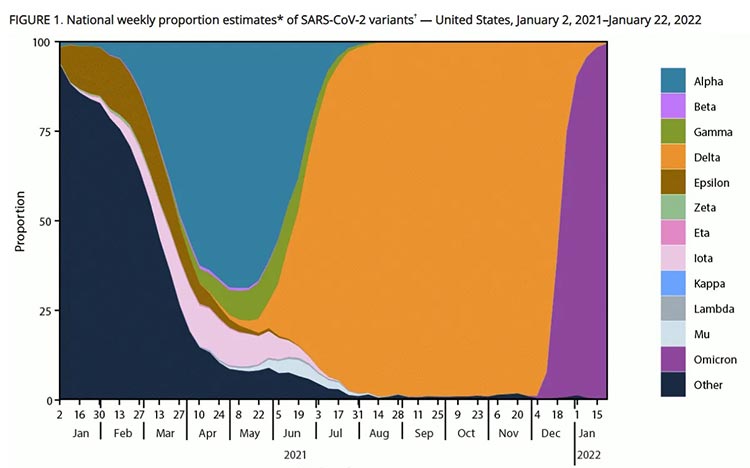
How This Souped-Up Hybrid Was Created
To create this new bioweapon, the scientists extracted spike protein from the Omicron BA.1 variant of SARS-CoV-2 and attached it to the original Wuhan Alpha strain.7 Of the lab mice infected with this reengineered virus, 80% died. Mice infected with the regular Omicron strain experienced only mild symptoms and none died, while lethality from the original Alpha strain was 100%.8
Mutations in the Omicron spike protein is what makes it so much more infectious than previous variants, while mutations in other parts of the virus have rendered it far milder than the original, which caused unique problems such as blood clots. Mutations in the Omicron spike protein have also given it significant immune-evading capabilities — which were carried over to the new hybrid in this experiment.
By combining the more infectious spike protein from Omicron with the far more dangerous Alpha virus, they’ve created what can easily be described as a biological superweapon. As reported by the Daily Mail:9
“The revelation exposes how dangerous virus manipulation research continues to go on even in the US, despite fears similar practices may have started the pandemic.”
Scientists Call for End to Gain of Function Insanity
The Daily Mail goes on to quote a number of scientists and experts who recognize the absolute folly of engaging in this kind of research.
“Professor Shmuel Shapira, a leading scientist in the Israeli Government, said: ‘This should be totally forbidden, it’s playing with fire’ … Dr. Richard Ebright, a chemist at Rutgers University in New Brunswick, New Jersey, told DailyMail.com …
‘The research is a clear example of gain of function research of concern and enhanced potential pandemic pathogen (ePPP) research.
It is especially concerning that this new US-government ePPP research — like the previous US-government ePPP research on chimeric SARS-related coronaviruses at Wuhan Institute of Virology that may have caused the pandemic — appears not to have undergone the prior risk-benefit review mandated under US-government policies.
If we are to avoid a next lab-generated pandemic, it is imperative that oversight of ePPP research be strengthened. It is imperative that the existing polices mandating prior risk-benefit assessment of ePPP research be followed, and it is imperative that officials at US-government agencies who repeatedly have placed the public at risk by repeatedly violating the existing policies be held accountable’ …
Prof. David Livermore, a professor of microbiology at the UK’s University of East Anglia told DailyMail.com: ‘given the strong likelihood that the COVID pandemic originated from the escape of a lab-manipulated coronavirus in Wuhan, these experiments seem profoundly unwise.’”10
The Daily Caller also published scathing rebukes of the research. For example, Justin Goodman, senior vice president of advocacy and public policy at White Coat Waste Project told them:11
“[Dr. Anthony] Fauci and other mad scientists need to be stopped before they cause another pandemic by recklessly supercharging deadly viruses in wasteful taxpayer-funded animal experiments … Stop the madness.”
‘The Dumbest Possible Thing’
In an October 17, 2022, article, Jeff Childers, an attorney and the president and founder of Childers Law firm, offers the following review of Boston University’s latest experimentation:12
“Try to imagine the dumbest thing the public health experts could do at this point. Allow that the PHE [public health emergency] folks do stupid stuff all the time, so you have to think big. No, BIGGER. Think even dumber than whatever you’re thinking right now. The DUMBEST POSSIBLE thing.
On Friday [October 14], BioRxIV naively published a blandly-named study titled ‘Role of spike in the pathogenic and antigenic behavior of SARS-CoV-2 BA.1 Omicron.’
There are 23 scientists credited with helping create the study, and the acknowledgements identify it was funded by a major grant from the NIH/NIAID [National Institutes of Health/National Institutes of Allergy and Infectious Diseases].
The study provides a detailed, step-by-step recipe for how to genetically enhance the Omicron virus to make it vaccine-resistant, lung-penetrable, and 80% lethal.
They didn’t even wait till the first pandemic was over! They’re so excited for a doomsday virus, and so impatient with Mother Nature, that they are going to just manufacture it themselves, through gain-of-function research that should be so toxic it gets you hounded out of your career and driven into a life of humiliating obscurity …
These mad scientists and generous government grant-approvers know better than anyone that we JUST went through a global pandemic almost certainly caused by a virus that was produced by gain of function research to ‘enhance’ its transmissibility and pathogenicity, which LEAKED OUT OF A LAB.
And they know it’s been illegal to conduct gain of function research in the U.S. since the Obama Administration. Why, oh why, are these criminals, I mean scientists, still allowed to tinker around with this kind of explosive material?
Why haven’t we ALREADY passed laws criminalizing ALL gain of function research? … And WHY is the government still PAYING FOR gain of function research, or whatever obtuse euphemism they are using these days to disguise the fact that it’s ‘gain of function research’?
Have we learned NOTHING from the Wuhan lab leak? Hey, lawmakers: LABS LEAK!! This is the kind of lesson we really, really don’t need to learn again … But … thanks to our witless ‘health agencies,’ we — taxpayers! — are funding our own destruction.”
Boston University Denies Gain of Function
For their part, the University of Boston denies that the experiment13 is gain of function — a tactic previously employed by Dr. Anthony Fauci, who also funded this study — or that it made the original virus more dangerous, which is true to a point.14
The lethality of the Alpha virus went from 100% lethality to 80%, so the lethality, in mice, was reduced. However, the Alpha virus also gained the ability to evade the immune system, which could potentially make it more dangerous in humans, and this is something the researchers have downplayed.
The wildtype ‘backbone’ virus gains immune escape from the insertion of the Omicron spike, in ways that the paper describes in detail. That is gain of function. ~ Marc Lipsitch
As explained by infectious disease epidemiologist and microbiologist Marc Lipsitch in a lengthy October 18, 2022, Twitter thread,15 the research is “unquestionably gain of function” because:
“The wildtype ‘backbone’ virus gains immune escape from the insertion of the Omicron spike, in ways that the paper describes in detail. That is gain of function.”
You could also argue they made Omicron more lethal, although the objection to that argument would be that only the spike protein was used.
Was Gain of Function Framework Circumvented?
Questions have also arisen about whether the research was properly supervised. While the experiment was reviewed and approved by the institutional biosafety committee of Boston University’s National Emerging Infectious Diseases Laboratories and the Boston Public Health Commission, it was apparently never cleared with the NIH.
According to Boston University director Ronald Corley, it wasn’t cleared with the NIH because the agency didn’t fund it.16 Yet the paper clearly states the work was funded by not just one but four different NIH grants (R01 AI159945, R37 AI087846, NIH SIG grants S10-439 OD026983 and SS10-OD030269). “He’s lying. Brazenly,” Ebright commented in a tweet, referring to Corley.17 As reported by STAT News:18
“In response to questioning from STAT, the National Institute of Allergy and Infectious Diseases, which had awarded two grants to the research group, said … that it should have been informed about the nature of the work beforehand, in order for a review to be conducted.
Emily Erbelding, director of NIAID’s division of microbiology and infectious diseases, said that is the policy set out in what’s known as the P3CO framework, which lays out the rules for work that could lead to enhancement of dangerous pathogens …
Some funding from NIAID went towards work that might be considered foundational to the questioned research. Corley said the team used some of the federal funds to develop a system for making plasmids it would need to do the later work.
He acknowledged it can be difficult to see where lines are drawn, when research groups are using different pots of money to fund their work. ‘It is a murky world, but in our view because the funding was not supporting the work that was supported in this paper, that it wasn’t necessary to report it to NIH,’ he said.
STAT asked the NIAID if it was satisfied with Boston University’s response. The agency’s response … did not directly answer the question, though it indicated the situation is still being investigated.
‘NIH is examining the matter to determine whether the research conducted was subject to the NIH Grants Policy Statement or met the criteria for review under the HHS Framework for Guiding Funding Decisions about Proposed Research Involving Enhanced Potential Pandemic Pathogens (HHS P3CO framework),’ the statement said.”
Erbelding reportedly only found out about the research after reading about it in the media. According to the Daily Mail,19 she “admitted feeling uneasy about the type of research the grants had been used to fund — given the lingering questions about the role of virus manipulation studies and the origins of COVID” and said she “wished” they’d notified the NIAID about their work. In another interview, she stated:20
“What we would have wanted to do is to talk about exactly what they wanted to do in advance … [and then] we could have put a package forward for review.”
Boston University Lambasted for ‘Demonstrably False’ Denials
As noted by Ebright, Boston University’s claims that the research was not gain of function “are demonstrably false and should be deeply embarrassing.”21 Lipsitch also has concerns about the University’s denials.
“The statement from BU [Boston University] is disturbing in several ways,” Lipsitch writes.22 “First, it denies that this is GOF [gain of function]. It is GOF. If meant sincerely, this is disturbing from the institution that did the research because it provides prima facie evidence that institutions are not equipped to self-regulate …
Second, the statement reflects a culture of compliance rather than responsibility: because the NIAID funding was for equipment rather than the specific experiments, BU states it doesn’t need to report the research to NIH. I’m no lawyer but likely they are right …
In seeming contradiction to that, the BU statement says ‘If at any point there was evidence that the research was gaining function, under both NIAID and our own protocols we would immediately stop and report.’ Is there an obligation to report or no?
Finally, BU seems to be saying in that statement that high lethality is only for mice, not humans, so nothing to worry about. This is misguided and hard to know how one could say it. SARS-CoV-2 has caused havoc in humans with <1% infection-fatality rate.
High lethality in mice is used … as a proxy for severity in humans … No one cares if Omicron can kill a mouse, except as a marker for severity (>1 order of magnitude lower) in humans. If not a proxy for human phenotype, spare the mice and stop doing those experiments …
Has BU shown that they are capable of self-regulation, assessing both the real risks that might be created and documenting that they considered them and found them minor compared to benefit: no. They are in full denial mode from their public statements. Did they consider whether safer experiments could answer some or all of these questions well enough to accomplish what was needed? If so, [there’s] no evidence thereof.”
Fauci’s Final Splurges Before Leaving Office
As detailed in “Why Is Fauci Continuing to Fund EcoHealth Alliance?” before stepping down from his position as NIAID director and overseer of U.S. bioweapons research in December 2022, Fauci made sure gain-of-function research to create more potent bioweapons would continue for some time after his departure.
Not only was the featured Omicron experiment funded, but he also lined up five years’ worth of additional funding for the most controversial and suspect organization of all — EcoHealth Alliance. EcoHealth was a key participant in the risky gain of function research on bat coronaviruses at the WIV, which is now suspected of having played a role in the creation of SARS-CoV-2.
Fauci has spent hours in the Congressional hot seat answering questions about his funding of that research — which, by the way, also bypassed the P3CO framework, on top of skirting an outright federal ban on gain-of-function research, which was in force at the time.
EcoHealth’s role in COVID-19 is so suspect, Iowa Sen. Joni Ernst recently introduced the “Defund EcoHealth Alliance Act,”23 which specifies that “No funds authorized or appropriated by federal law may be made available for any purpose to EcoHealth Alliance Inc, including any subsidiaries and related organizations that are directly controlled by EcoHealth Alliance Inc.”
Despite all of that, Fauci recently gave EcoHealth another $3.3 million in additional funding to analyze “the potential for future bat coronavirus emergence in Myanmar, Laos and Vietnam” and “rapidly supply viral sequences and isolates for use in vaccine and therapeutic development, including ‘prototype pathogen’ vaccines.”
Loads of Gain-of-Function Research Going On
In late October 2021, we also reported that the United States Agency for International Development (USAID) had given a $125 million grant to Washington State University to detect “emerging viruses.” The goal of that project is to collect over 800,000 samples over five years from wildlife and then determine the zoonotic potential of these viruses.
They expect to find between 8,000 and 12,000 new viruses, “which researchers will then screen and sequence the genomes of the ones that pose the most risk to animal and human health.”24
As Breaking Points anchor Saagar Enjeti emphasized in an October 2021 news report,25 “detect emerging viruses” is code for gain-of-function research, meaning they’re going to conduct gain-of-function research to assess which of the viruses have the potential to mutate into something dangerous for humans.
Research With Civilization-Ending Potential Must Be Stopped
As noted by Childers in his Coffee and COVID commentary on the lethal Omicron hybrid, the researchers methodically detail each step of the engineering process, down to the makes and models of the incubator and centrifuge used and the serial numbers of the cell lines.
“It’s a flipping recipe. Anybody could follow it,” he writes.26 “We’re now about two seconds away from midnight on the Doomsday clock. If we aren’t even smart enough to stop GAIN OF FUNCTION RESEARCH after what the entire world just went through, then we should grudgingly accept the title … as the Universe’s most imbecilic civilization …
Sometimes I’m convinced we are literally sprinting toward the apocalypse, at the speed of science. All those horrible afflictions in the Book of the Revelation, the terrible boils and deadly plagues and stuff? I’m starting to believe that those aren’t caused by God. I’m starting to believe we’re going to do it to ourselves.”
- 1, 11, 21 Daily Caller October 18, 2022
- 2, 9, 10 Daily Mail October 17, 2022, Updated October 18, 2022
- 3 Cureus March 2020; 12(3): e7423 Abstract
- 4 Gavi, From Alpha to Omicron
- 5 Steve Kirsch Substack October 18, 2022
- 6 CDC MMWR February 11, 2022; 71(6): 206-211
- 7, 13 BioRxiv October 14, 2022
- 8, 14 Boston Herald October 17, 2022 (Archived)
- 12, 26 Coffee and COVID October 17, 2022
- 15, 22 Twitter Marc Lipsitch October 18, 2022
- 16, 18 STAT News October 18, 2022
- 17 Twitter Richard Ebright October 18, 2022
- 19 Daily Mail October 18, 2022
- 20 Stat News October 17, 2022
- 23 Daily Caller September 30, 2022
- 24 Washington State University, October 5, 2021, para 8
- 25 YouTube, October 7, 2021, Minute 00:55
The New COVID Vaccines Have Only Been Tested on Mice
Reproduced from original article:
https://articles.mercola.com/sites/articles/archive/2022/09/06/was-covid-vaccine-tested-on-mice.aspx
The original Mercola article may not remain on the original site, but I will endeavor to keep it on this site as long as I deem it to be appropriate, and will not be bullied into removing it.
Analysis by Dr. Joseph Mercola Fact Checked September 06, 2022
STORY AT-A-GLANCE
- August 31, 2022, the U.S. Food and Drug Administration authorized Pfizer’s and Moderna’s bivalent boosters, which will be available to those who have received the primary two-dose series
- Pfizer is releasing a bivalent injection targeting Omicron subvariants BA.4 and BA.5, which are the two currently in circulation. Moderna’s bivalent booster targets the already extinct Wuhan strain and Omicron subvariant BA.1
- The reformulated COVID boosters will be rolled out without safety or effectiveness data from human trials. They’re being green-lighted based on antibody data from mice alone, even though antibody levels tell us nothing about effectiveness
- According to the FDA, the reactogenicity profile of Pfizer’s reformulated shot is “overall similar to prototype BNT162b2 vaccine,” and VAERS data prove that’s hardly a selling point
- This fall, health agencies will also push the seasonal flu shot, and all flu vaccines will be quadrivalent this year, meaning they contain antigens against four influenza strains. Seniors may be at greatest risk for vaccine injury, as they will get a high-dose quadrivalent flu vaccine
As the U.S., U.K. and other countries around the world prepare for a fall vaccination campaign against both the flu and COVID, it’s worth taking note of some basic facts. In “Untested Bivalent COVID Jab Being Rolled Out,” I reviewed potential problems with Moderna’s new bivalent COVID shot for adults, authorized by the U.K. in mid-August 2022.
August 23, 2022, Pfizer and Moderna submitted their respective authorization requests to the U.S. Food and Drug Administration.1 Pfizer is releasing a bivalent injection targeting Omicron subvariants BA.4 and BA.5, which are the two currently in circulation, while Moderna’s shot targets the already extinct Wuhan strain and Omicron subvariant BA.1.2
August 31, the FDA authorized both.3 The bivalent boosters will only be available to those who have already received the primary two-dose series and/or a monovalent booster at least two months ago. Per the FDA:4
“The Moderna COVID-19 Vaccine, Bivalent, is authorized for use as a single booster dose in individuals 18 years of age and older. The Pfizer-BioNTech COVID-19 Vaccine, Bivalent, is authorized for use as a single booster dose in individuals 12 years of age and older …
With today’s authorization, the monovalent mRNA COVID-19 vaccines are not authorized as booster doses for individuals 12 years of age and older … These monovalent vaccines continue to be authorized for use for administration of a primary series for individuals 6 months of age and older …
Individuals 18 years of age and older are eligible for a single booster dose of the Moderna COVID-19 Vaccine, Bivalent if it has been at least two months since they have completed primary vaccination or have received the most recent booster dose with any authorized or approved monovalent COVID-19 vaccine.
Individuals 12 years of age and older are eligible for a single booster dose of the Pfizer-BioNTech COVID-19 Vaccine, Bivalent if it has been at least two months since they have completed primary vaccination or have received the most recent booster dose with any authorized or approved monovalent COVID-19 vaccine.”
The reformulated boosters will be available as soon as the U.S. Centers for Disease Control and Prevention gives its OK.5,6 For the record, all boosters, including these, are still under emergency use authorization (EUA) only, so manufacturers have no liability for injuries, and the reformulated shots are being released based on antibody levels in mice alone.
Many Are Bailing on Never-Ending Boosters
According to The New York Times:7
“The Biden administration has struggled to convince Americans of the need for successive vaccinations. Only about two-thirds of the population has been inoculated with the primary series of two shots, and far fewer have received booster doses.”
According to the latest U.S. Centers for Disease Control and Prevention statistics,8 262,643,277 Americans have received at least one COVID shot (79.1% of the total population); 108,540,822 have received a first booster dose (48.5%) and 36,323,498 have taken a second booster (33.7%).
But wait, there’s more. As best we can tell, you will not be allowed to get this “new and improved” COVID jab unless you already had your initial two jabs and are double boosted. You simply will not qualify, as they want everyone to get as much of the spike proteins as they can. We won’t know for sure, though, until after the CDC meets this week to decide.
The fact that far fewer people are continuing with the booster madness is a good sign, as it suggests people are finally realizing that the COVID shots aren’t safe OR effective. The entire point of a vaccine is to render you immune against future infection, and getting a booster every three to six months clearly speaks to the failure of these injections to provide any worthwhile protection.
Most COVID cases, especially serious infections, are now also occurring among the “vaccinated,” which further undermines their allure. Only the most brainwashed fail to rethink after having COVID two or three times despite being fully vaxxed and boosted, which today is not a rare event.
According to MSN,9 40% of Americans hospitalized with a SARS-CoV-2 subvariant are fully vaxxed and boosted. Excess mortality statistics also tell a story, with age-adjusted all-cause excess mortality (deaths above the expected norm) nearly tripling since the rollout of the COVID jabs in mid-December 2020.10,11
Vaccine Performance Is Not Dependent on Frequency of Use
It remains to be seen how government and media intend to bully people into continuing with this clearly failed strategy, but if The Atlantic is any indication, we can expect Orwellian double-speak and irrational emotionalism to prevail.
According to The Atlantic,12 “Vaccine performance … depends on how and how often the shots are used. The more people take the doses, the better they will work.” This is merely blatant and outrageous propaganda whose sole purpose is to increase COVID jab adoption. As noted by one Twitter user,13 that’s complete rubbish, as “The performance of a ‘vaccine’ should have NOTHING to do with everyone ELSE taking it.”
The statement that vaccine performance depends on “how often” they’re taken is also clearly misleading if not outright false. No vaccine in history has depended on boosters several times a year, indefinitely. That’s not how real vaccines work. Historically, vaccine booster doses are spaced years apart, if they’re required at all.
New Formulation Is Only Tested on Mice
As mentioned earlier, the reformulated shots will be rolled out long before any data from human trials become available.14 As reported by The Atlantic,15 they’re being green-lighted based on antibody data from mice alone.16 While this has, for years, been the approval protocol for influenza vaccines, these mRNA shots are hardly run-of-the-mill vaccines.
We have no long-term data on them whatsoever, but in the short-term, the original COVID shots have between them resulted in 1,390,594 adverse event reports being logged with the U.S. Vaccine Adverse Events Reporting System (VAERS, data as of August 19, 202217).
That includes 134,245 urgent care visits, 174,371 hospitalizations and 30,479 deaths, and due to widespread underreporting, you have to multiply those numbers by underreporting factor of 41 (or more) to get an idea of the true impact. If you do the math, you will quickly discover that the COVID jabs have been the No. 1 cause of death the past two years, far exceeding heart attacks and cancers that were unrelated to the jab.
All of these effects have been swept under the rug and dismissed as unrelated to the jabs, and now they’re going to release reformulated mRNA shots based on nothing but mouse antibody data! It’s been said before, but it’s worth stating again, that antibody levels tell us nothing about effectiveness.
Recall: Antibody tests have been discouraged throughout the pandemic as a means to determine whether the COVID shot is providing protection.18 Why? Because your antibody level cannot tell you whether you’re protected against infection, symptomatic illness and serious illness.
It’s the same here. Antibody levels in response to the COVID shot tell us nothing about its ability to protect against infection and severe illness or death. In classic Orwellian double-speak, they claim that if antibody levels are high after the injection in a trial setting, it’s proof of effectiveness. But don’t waste your time measuring your antibody level, because that won’t tell you anything about your immune protection.
Bivalent Booster Will Be at Least as Reactive as the Original
So many things can go wrong at this point, I shudder to make predictions. According to the FDA, the reactogenicity profile of the reformulated shot is “overall similar to prototype BNT162b2 vaccine,”19 and as you can see from the VAERS data, that’s hardly a selling point.
The Atlantic, however, downplays the situation by focusing only on the fact that we won’t have any data on effectiveness with which to entice and cajole the public into taking more of these devastating experimental gene therapy shots:20
“… the shortcut does introduce a snag: ‘We know nothing yet about the efficacy or effectiveness of these Omicron-focused vaccines,’ [Mayo Clinic vaccinologist Gregory] Poland said. Researchers can’t be sure of the degree to which the shots will improve upon the original recipe.
And public-health officials won’t be able to leverage the concrete, comforting numbers that have been attached to nearly every other shot that’s been doled out.
Instead, communications will hinge on ‘how much trust you have in the information you’re getting from the government,’ UNC’s [public health researcher Deshira] Wallace told me. ‘And that is very tricky right now.'”
How Pfizer Hid Severe Side Effects
With regard to safety, health authorities claim the original COVID shots have already been “proven” safe, hence the CDC and FDA tell us they don’t need human trial data in order to authorize the reformulated boosters.
Not only do VAERS data negate such statements, we also don’t even have all the data from the original trials yet, and what we do have is beyond terrifying. As reported by Children’s Health Defense (CHD) back in June 2022, court-ordered released FOIA documents reveal Pfizer classified nearly all severe reactions in its trials as unrelated to the shot:21
“The latest release by the U.S. Food and Drug Administration (FDA) of Pfizer-BioNTech COVID-19 vaccine documents22 reveals numerous instances of participants who sustained severe adverse events during Phase 3 trials. Some of these participants withdrew from the trials, some were dropped and some died …
The CRFs [case report forms] included in this month’s documents contain often vague explanations of the specific symptoms experienced by the trial participants. They also reveal a trend of classifying almost all adverse events — and in particular severe adverse events (SAEs) — as being ‘not related’ to the vaccine …
The many serious adverse events — and several deaths — recorded during the Phase 3 trials are also apparent in a separate, massive document,23 exceeding 2,500 pages, cataloging such adverse events.
This document lists a wide range of adverse events suffered by trial participants classified as toxicity level 4 — the highest and most serious such level. However, not one of the level 4 (most severe) adverse events listed in this particular document is classified as being related to the vaccination.”
The CHD goes on to list a number of examples from Pfizer’s case reports where participants suffered now well-recognized and common side effects of the jab, such as a teen girl who was diagnosed with right lower extremity deep vein thrombosis, November 15, 2020.
Her condition was still “ongoing” as of March 29, 2021, the date of the CRF. She was hospitalized and her condition listed as “serious.” Still, the CRF indicated the condition was “not related” to the vaccine, but rather due to a “fracture,” which occurred before her injection on September 11, 2020.
Release of Patient Data From COVID Shot Trials Delayed
Some of the most important data — the raw patient data from the initial trials — also won’t be available for release until years in the future. As noted in a recent BMJ article:24
“Independent researchers looking to obtain patient level data from the Pfizer and Moderna COVID-19 vaccine trials may have to wait longer. In status reports filed recently with the US federal trials registry (clinicaltrials.gov) between February and May, both companies extended the dates by which the trials will be completed, Pfizer by nine months, from 15 May 2023 to 8 February 2024.
Moderna’s expected completion date is delayed from 27 October to 29 December, 2022. Pfizer indicated in its trial protocol that individual participant data would be made available two years after study completion.
Now that the date has been pushed back, Pfizer will entertain and review requests ‘when the study is complete and all planned analyses have been performed’ …
Luis Carlos Saiz, a researcher at the Innovation and Organisation Unit of the Navarre Regional Health Service, Spain, said that access to raw patient data was important for researchers because ‘it is key to build trust in health policies and to protect citizens from potential vested interests.’
The raw patient data would allow independent researchers to assess trials and verify results. ‘The vaccination strategies adopted by health authorities all over the world must be audited and checked by looking carefully at the raw data,’ said Saiz, especially given the ‘revelations of poor practices’ at vaccine trial sites as reported by The BMJ.“
The article cites a preprint study that examined the first four months of trial data from Pfizer and Moderna, finding the excess risk of serious adverse events was 12.5 per 10,000 — a far cry from the “1 in 1 million” risk of an adverse event from childhood vaccines.25 (Yes, many of us know the side effect ratio is far higher than that, but that’s what our health authorities claim.)
That is the same data set the FDA used to grant Pfizer and Moderna EUA, and the only data they have upon which to base any safety claims for the reformulated boosters.
Dick Bijl, president of the International Society of Drug Bulletins, also told the BMJ author that in order to assess the risk-benefit ratio for any given group we need the raw data, and we need all of it. As it stands, that data won’t be available until 2025 or so, and in the meantime, we’re flying in the dark.
FDA Clearly Doesn’t Understand the Word ‘Safe’
That doesn’t stop health authorities from making definitive statements, however. For example, in a recent tweet, FDA commissioner Dr. Robert Califf stated:26
“Real world evidence from the current mRNA COVID-19 vaccines, which have been administered to millions of individuals, show us that the vaccines are safe. As we know from prior experience, strain changes can be made without affecting safety.”
Again, there are so many things wrong with this statement. Real world evidence shows the COVID shots are actually the most dangerous drugs ever put to market, bar none. Clearly, the FDA has different safety standards than the rest of the world. Perhaps they redefined the word “safe” and didn’t tell anyone?
Furthermore, the notion that “strain changes can be made without affecting safety” refers exclusively to flu shots, not gene therapies. Flu vaccines contain live or attenuated flu viruses grown in eggs or other biological media. You cannot, under any circumstance, assume that an mRNA gene therapy injection — which is not even remotely similar to the flu vaccine — will behave in the same way as a flu vaccine.
False Equivalence Used to Justify Untested Reformulations
Swapping viral strains in a flu vaccine is in no way the same as swapping mRNA instructions. In the case of Pfizer, the reformulated booster will now program your cells to produce two different spike proteins from two Omicron variants, all while your body is likely still producing spike protein from the initial series plus the first two boosters.
We already know the spike protein is the most toxic part of the coronavirus. We’ve already seen the devastating effects of the original spike protein. With your body now producing a total of THREE different kinds of spike protein, how will that affect your biological function?
And here’s the real kicker: The Pfizer jab had 30 micrograms (mcg) of mRNA while Moderna had 100 mcg. The new Pfizer bivalent will now contain 90 mcg of mRNA to make two different kinds of spike protein, and theoretically can be every bit as deadly as Moderna’s original jab.
No one knows how these new spike proteins will affect the human body, and assuming safety based on flu vaccines is beyond idiotic, as the flu vaccine doesn’t program your cells to produce toxic spike proteins. It’s a false equivalence, and Califf surely knows it.
Even Dr. Paul Offit — infamous for making irrational assumptions about vaccine safety — has the good sense to question this line of reasoning. As reported by the New York Post:27
“‘I’m uncomfortable that we would move forward — that we would give millions or tens of millions of doses to people — based on mouse data’ … Paul Offit, told the Journal.28
Offit, an FDA adviser and director of the Vaccine Education Center at Children’s Hospital of Philadelphia, believes the comparison between flu shots and COVID-19 shots is not well grounded due to the differences in mutations and protection levels.”
And, for the record, while the CDC initially claimed the spike protein would only be produced for a short amount of time and wouldn’t last long in your body, the agency in early August 2022 deleted that statement from its website — probably because they know it was false, it’s been proven false, and they’re now trying to clean up some of their missteps and blatant lies.
Disclose TV exposed the deletion on its Twitter account,29 with an archived link showing the CDC’s original webpage.
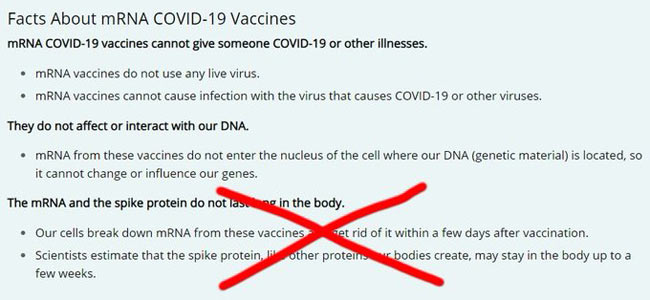
All Flu Shots Will Be Quadrivalent This Year
This fall, expect another major vaccination campaign — possibly even greater than what we’ve seen so far, because in addition to the new COVID booster, they’re also going to push the seasonal flu vaccine again.
Seniors will probably be at greatest risk for vaccine-induced injury and death, as they typically get a high-dose flu vaccine. According to a Danish pilot study, a high-dose quadrivalent influenza vaccine “hinted at morbidity and mortality benefits” for older adults,30 but I don’t think that’ll carry into the real world — especially if given at the same time as a COVID booster.
I can’t even begin to stress how risky it could be to mix an untested bivalent COVID mRNA jab with a high-dose quadrivalent flu vaccine. That’s SIX different antigens being injected into you, where you already might have original spike protein from earlier shots in circulation.
It’s a recipe for disaster, in my opinion. I fear many whose immune function has been compromised and suppressed by the COVID shots might not live to regret their vaccine decisions this winter.
By the way, ALL flu vaccines will be quadrivalent this year,31 meaning they protect against four different influenza strains. There will be no single, bivalent or trivalent versions available. Also keep in mind that multidose vial formulations contain thimerosal32 (mercury) as a preservative, which is yet another health risk.
- 1 LA Times August 28, 2022
- 2 Sky News August 15, 2022
- 3 New York Times August 31, 2022 (Archived)
- 4 FDA August 31, 2022
- 5, 6, 7 New York Times August 23, 2022
- 8 Covid.cdc.gov, First booster dose 108.5 million, Second booster 23.1 million
- 9 MSN August 25, 2022
- 10 Twitter Ben@US Mortality August 23, 2022
- 11 USMortality.com
- 12, 15, 20 The Atlantic August 25, 2022
- 13 Twitter Dr. Mercola August 28, 2022, response by Sylvester McMonkey McBean
- 14, 26, 27 NY Post August 28, 2022
- 16, 19 FDA.gov June 28, 2022
- 17 Openvaers.com Through August 19, 2022, All territories
- 18 Medical.mit.edu August 17, 2021
- 21 The Defender June 22, 2022
- 22 PHMPT.org Pfizer documents
- 23 PHMPT.org Adverse events legend
- 24 BMJ 2022; 378: o1731
- 25 Chop.edu Vaccine Safety
- 28 STAT News June 29, 2022
- 29 Twitter Disclose.tv August 13, 2022
- 30 Medpage Today August 29, 2022
- 31, 32 CDC Vaccine Supply for 2022-2023 Season
Judy Mikovits Suggests Retroviruses Play a Role in COVID-19
Reproduced from original article:
https://articles.mercola.com/sites/articles/archive/2022/09/04/is-the-new-coronavirus-created-in-a-lab.aspx
The original Mercola article may not remain on the original site, but I will endeavor to keep it on this site as long as I deem it to be appropriate, and will not be bullied into removing it.
Analysis by Dr. Joseph Mercola Fact Checked September 04, 2022
STORY AT-A-GLANCE
- Cellular and molecular biologist Judy Mikovits, Ph.D., believes COVID-19 — the disease — is not caused by SARS-CoV-2 alone, but rather that it’s the result of a combination of SARS-CoV-2 and XMRVs (human gammaretroviruses)
- SARS-CoV-2 also appears to have been manipulated to include components of HIV that destroys immune function along with XMRVs
- Those already infected with XMRVs may end up getting serious COVID-19 infection and/or die from the disease. Mikovits’ research suggests more than 30 million Americans carry XMRVs and other gammaretroviruses in their bodies from contaminated vaccines and blood supply
- Mikovits believes 40 years of data suggest Type 1 interferon at a very low dose would be an ideal treatment for COVID-19
- RT-PCR (reverse transcription polymerase chain reaction) testing, currently used to diagnose active infection by detecting the presence of SARS-CoV-2 genetic material, overestimates infection rates. For an accurate account of COVID-19 prevalence, we need to test for antibodies
Judy Mikovits, Ph.D. is a cellular and molecular biologist,1 researcher and founding research director of the Whittemore Peterson Institute that researches and treats chronic fatigue syndrome (CFS) in Reno, Nevada.
She is likely one of the most qualified scientists in the world to comment on this disease because of her groundbreaking research in molecular biology and virology. Mikovits is absolutely brilliant but, like many gifted researchers, her complex discussions on science are quite challenging for the average lay person to follow.
For this reason, I present her interview in a different format, cutting and splicing pieces together to present a more cohesive and coherent presentation of her many important points. I would encourage you to watch the initial, very short, videos first, so you will be well-grounded, and if you are motivated, watch the entire interview at the bottom of this article.
Because there were so many surprising and important revelations in this interview I will present part 2 next week along with an interview with Bobby Kennedy Jr. which will revolve more on the vaccine issue.
Mikovits Doesn’t Believe SARS-CoV-2 Is the Cause of COVID-19
One of the most shocking revelations Mikovits reveals is that she doesn’t believe SARS-CoV-2 is the cause of COVID-19 but merely serves to activate or wake up a dormant XMRV infection. To support her assertion, she states that COVID-19 patients have the same cytokine signature as the gammaretrovirus XMRV, which she published many years ago.
XMRV stands for “xenotropic murine leukemia virus-related virus.” Xenotropic refers to viruses that only replicate in cells other than those of the host species. So, XMRVs are viruses that infect human cells yet are not human viruses.2
The XMRV retrovirus is actually the virus that has the same cytokine storm signature as COVID-19, not coronaviruses, which are far more benign. (I delve into what retroviruses are in another section further below.)
Additionally, there may be other infections that also are contributing to the infection, such as Borrelia and Babesia or parasites, which may be why some of the antiparasite drugs like Ivermectin and hydroxychloroquine are working.
Vaccine Gammaretroviruses Have Adapted and Are Aerosolized
Getting back to the issue of gammaretroviruses, Mikovits’ research showed that many of our vaccines are contaminated with them. How did this happen? In short, vaccine viruses were replicated and grown in animal cell cultures that were already contaminated with retroviruses. In other words, the root of the problem stems from the use of contaminated cell culture lines.
Vaccine manufacturing frequently involves the use of animal tissues and many vaccines are grown in animal culture cell lines. As noted in the 2010 paper, “Of Mice and Men: On the Origin of XMRV,” published in Frontiers in Microbiology (which Mikovits did not work on):3
“The novel human retrovirus xenotropic murine leukemia virus-related virus (XMRV) is arguably the most controversial virus of this moment. After its original discovery in prostate cancer tissue from North American patients, it was subsequently detected in individuals with chronic fatigue syndrome from the same continent …
The detection of integrated XMRV proviruses in prostate cancer tissue proves it to be a genuine virus that replicates in human cells, leaving the question: how did XMRV enter the human population?
We will discuss two possible routes: either via direct virus transmission from mouse to human … or via the use of mouse-related products by humans, including vaccines. We hypothesize that mouse cells or human cell lines used for vaccine production could have been contaminated with a replicating variant of the XMRV precursors encoded by the mouse genome.”
Mikovits goes even further, explaining that, “It became clear in 2011 that these [gammaretro]viruses had adapted to become aerosolized.” This is a rather shocking finding, and this, Mikovits says, is what allows the gammaretroviruses to spread in laboratories from one cell line to another.
This could be related to research catalyzed by Charles Lieber, the former head of Harvard’s chemistry department, who is a nanoscience expert and was arrested by federal authorities in January 2020 for working with the Wuhan Virology Institute.
Lab workers may also be inadvertently spreading them as they are using cell lines contaminated with retroviruses in vaccine production that could result in the spread of these retroviruses via the finished vaccine. Mikovits suspects COVID-19 may in fact be a type of vaccine-derived or vaccine-induced retroviral infection.
“I don’t believe [COVID-19] is infection from without,” she says. “I believe the spread across [210] countries4 is from injection, and there’s enough evidence to support that.”
SARS-CoV-2 — A Combination of SARS, Gammaretroviruses and HIV
Another of her theories is that SARS-CoV-2 is unlikely to have had a zoonotic origin but is likely synthetically produced. She believes it originated in and escaped or leaked from a biosafety laboratory. Mikovits believes both scenarios might be at play, where a lab-created virus, SARS-CoV-2, is causing serious infection and/or death only in those who have underlying retroviruses in their bodies.
Mikovits suspects that people who do not have retroviral infections, SARS-CoV-2 causes no or only mild symptoms. Another possibility is that the SARS-CoV-2 virus is the result of growing coronaviruses in retrovirus-contaminated cell lines, producing a gammaretrovirus-carrying virus.
According to Mikovits, her 2009 through 2011 work suggested 25 million to 30 million Americans were carriers of XMRVs and other gammaretroviruses. That estimate is over a decade old now so the number is likely far higher.
“There is a family of gammaretroviruses, most likely [in] contaminated blood supply and vaccines that are still to this day, almost 10 years later, being injected,” she says.
“We don’t need an infectious virus if you inject the blueprint, if you inject the provirus. And … there are a lot of data to support COVID-19 is not SARS-CoV-2 alone, that it’s SARS-CoV-2 and XMRVs (human gammaretroviruses) and HIV.”
Might Wearing a Mask Worsen Your Odds of Illness?
Mikovits is also highly critical of the recommendation (and in some places mandate) to wear a face mask or fabric cover such as a bandana around your face. She believes:
“Wearing a mask is going to cause more secretions and give more cells a home and amplify any viruses. [Wearing a mask is] immune suppressive; it’s going to limit your body’s ability to produce Type 1 interferon.
You’re driving the infection in yourself and you’re not preventing the spread. [Instead], you’re amplifying [replication of] not just [SARS-CoV-2] but also many other [viruses], including your XMRVs, influenza or other dormant viruses.
What keeps those dormant viruses dormant? Your natural killer (NK) cells, your mast cells, your macrophages. That’s where you’re getting the inflammatory signature.
So, every virus you amplify is driving the inflammatory signature, and you’re going to get sick. [The resulting illness] doesn’t have to be SARS-CoV-2 at all. You’re making yourself sick [by bringing dormant viruses out of dormancy]. It’s insanity.”
Wearing a face mask after getting a live flu vaccine may further worsen your odds, she says. Why? Because you’re injecting three or more live flu virus strains into your body, which lowers your immune function. You’re also going to shed the viruses contained in the vaccine. If you wear a mask, Mikovits says, you’ll shed those viruses into the mask, which could encourage illness.
On the other hand, not wearing one might jeopardize the health of others. “If you’re shedding [the viruses] into the air, you’re going to make somebody else get another upper respiratory infection that’s going to allow [SARS-CoV-2] to make them sicker,” she warns.
Why PCR Testing Is a Bad Idea
We’re also being lied to about the prevalence of infection. At the height of the pandemic, we saw inflated case numbers for the simple reason that the Centers for Disease Control and Prevention stopped requiring doctors to do testing in order to confirm that a patient is in fact infected with SARS-CoV-2 or died from COVID-19. The numbers now include “suspected” and “assumed” cases.
Naturally, without widespread and accurate testing, there’s no way to get a clear idea of how prevalent the infection is, and how many actually get sick and die from it. The initial emphasis on PCR testing resulted in massive false positives and greatly inflated numbers of those infected.
As noted by Mikovits, confirming each case through testing matters greatly, as there are hundreds, if not thousands, of microbes that can cause upper respiratory infections, including seasonal influenza viruses. None of those should be lumped in with COVID-19 if we want to understand the true nature and danger of this disease.
What’s more, the initial decision to use RT-PCR (reverse transcription polymerase chain reaction) testing instead of antibody testing was an unwise one, as it virtually guaranteed an overestimation of the problem. RT-PCR is now being used to diagnose an active infection by detecting the presence of SARS-CoV-2 genetic material.5 However, by doing that, you end up with high rates of false positives. Mikovits explains how the RT-PCR test works:
“We’re taking a swab and scraping some epithelial cells [from the back of the sinuses or throat] because that’s what coronaviruses infect … We get a little RNA — because it’s an RNA virus — we reverse-transcribe that, meaning write it backwards with enzymes in the lab, and then we amplify it [through a] polymerase chain reaction …
We’re only taking a piece of the virus, we’re not taking the whole virus … The first thing about [the PCR] test is, it was admitted by the U.S. Food and Drug Administration and the CDC that the tests put out by the CDC were contaminated.
And when you amplify something a million times, or 10 million times — whatever they do in the 30 cycles or so — it’s logarithmic that RNA then is way overestimated … [But] no [viral] particle was identified or isolated from your saliva or from your nasal passages. Nobody took the secretions from your nose or your mouth and isolated the [actual] viruses.
[When I isolated] HIV in 1983, I isolated it from saliva. What you do is you take the virus and grow it in any human cell, in an appropriate cell line, and you make many copies. [Viral replication] means you have [a positive test for] that virus. Then you sequence the whole virus.
A PCR [test, on the other hand] can give you a lot of false positives [by amplifying RNA fragments].
We [also] showed the people that had [HIV] infection had antibodies; that they had been fully exposed and it was not a piece of nucleic acid in a biopsy or in their throat or in their nose. [A piece of nucleic acid] is not a virus. And it’s certainly not infectious.
If RNA is there and in the tiniest amount, I’m not going to cough it on somebody, especially if I’m not coughing. I’m not going to breathe that [out and infect] somebody because there’s no evidence of an infectious virus.”
Better Testing Strategy: Antibodies
Rather than using PCR testing, “what should have been done is test for antibodies,” Mikovits says. This is what was done in South Korea. An antibody test will tell you whether you had the infection at some point, and have developed a strong immune response or immunological memory that will allow you to fight the infection should you encounter it again.
“Epidemiology is not done with PCR. In fact, Kary Mullis who invented PCR, Nobel Laureate, and others, said PCR was never intended for diagnostic testing. So that puts that to bed.
It takes nothing to develop a really good serology [i.e., antibody] test … [It takes] a few weeks. It’s pretty easy because the people who have recovered have antibodies. So, you isolate those antibodies, you take their plasma, you purify the antibodies, and then you can grow them.
Then you develop the tests… It’s usually ELISA or Western Blot [which check for] the protein and the antibody binds. You form an immune complex, and you detect it with a dye. You can do that test with a finger stick … and it takes 15 minutes to get the answer, almost like a pregnancy test.”
My belief is that the use of PCR instead of a proper antibody test was intentional, as it inflates the case numbers. Mikovits agrees, saying “I wouldn’t get any tests right now. I’d simply wash my hands and drink hot lemon water as I always do for any flu season.”
Evidence SARS-CoV-2 May Be a Lab-Created Virus
In the Epoch Times documentary, “Tracking Down the Origin of the Wuhan Coronavirus,”6 Mikovits details some of the evidence supporting the view that SARS-CoV-2 is not a naturally-evolved virus, but rather a laboratory concoction.
One piece of evidence is that the virus contains a protein envelope from the HIV virus. It’s also very similar to SARS which, according to bioweapons expert Francis Boyle, is an engineered bioweapon.
As explained by Mikovits, an Indian paper7,8 detailed the presence of Gp120, a protein envelope from the HIV virus. That paper was quickly retracted due to political pressure. However, Mikovits colleague, Luc Montagnier, made a similar discovery, finding Gp41 in the SARS-CoV-2 virus, which is the transmembrane domain of the HIV virus.
“The folks from India also had GAG. That’s structural proteins. That gives you a clue that it wasn’t a CRISPR technique or a pseudotyping where the envelope was expressed in a gene therapy-type of way. If it were CRISPR, you wouldn’t put the GAG sequences in there.
What was done is, the virus was acquired as they grew SARS-CoV-2 in Vero-E6 cells — the monkey kidney cells where you get HIV.
Simian immune deficiency virus was the origin, and we were told all the way back in the 80s that somebody forgot to cook their food in Africa and a few promiscuous men spread this [HIV] virus around the world. So, you can see again the patterns of the lies and of what people end up believing.”
The addition of this envelope protein from HIV gives SARS-CoV-2 the ability to impair the immune system. It also contributes to its pathogenicity. Mikovits continues her explanation:
“The first thing is, you must grow a virus to make a lot of it. So, you grow it in cell lines. They didn’t take [SARS-CoV-2] from the bat and it jumped into a human. It normally goes through another cell [from] a monkey or a smaller animal. The cell line that supports the growth and expansion [of viruses] are monkey kidney cells.
Maybe [SARS-CoV-2] is not engineered at all … but the end result is, now it not only infects the epithelial cells of the lungs, it infects the white blood cells, it infects the immune cells. We see the splenomegaly in large spleens, we’re seeing penias, cytopenias. We’re losing cells like HIV-killing T-cells …
So, it’s got not only an expanded host range, but also disease symptoms that make no sense for a coronavirus.
Hence, we’re killing people because they’re treating an upper respiratory infection, and you’re getting that inflammatory disease signature because you’re infecting the very innate immune response, the macrophages, the monocytes, the natural killer cells, the T cells. And it’s primarily the T-cells in the macrophages because those are the cells HIV 120 and Gp41 infect through CCR5 in the CD4 receptor.
So now you’re going to lose your adaptive immune response, you’re going to drive the inflammation. And it’s the fire [of inflammation] that does the tissue damage.”
Another piece that hints at SARS-CoV-2 being a manufactured virus is the construction of its spike proteins, which bind to ACE2 receptors to gain access into the cell. This appears to be an engineering feature. According to Mikovits, it’s quite clear that the spike proteins came from the original SARS virus, which also infects through ACE receptors.
There are also “single point mutations there that make it far more infectious, easier to spread,” she says, “and how those were acquired, nobody really can say.” At least not yet. Nanotechnology may also have been used to aerosolize it for ease of transmission.
“The nano[size] further increases the host range. So now you can go into every cell. Now you can go across the blood brain barrier. That’s nano. Now you don’t need a receptor. You can breathe it, it can go into every cell of the body. You don’t need the gatekeeper. You don’t need the receptor. You don’t need the lock and key.”
Contaminated Cell Line Shared With Wuhan Biolab
According to Mikovits, one contaminated cell line is the Vero monkey kidney cell line called Vero E6, which was given by Fort Detrick — a U.S. Army Medical Command installation that hosts many of our national biological defense programs and houses the National Cancer Institute laboratory where she used to work — to the biosafety 4 laboratory (BSL-4) in Wuhan, China. This cell line is what the Wuhan lab used to grow and study coronaviruses, she says.
The Vero cell line is listed in the 2015 paper,9 “A SARS-like Cluster of Circulating Bat Coronaviruses Shows Potential for Human Emergence,” co-written by University of North Carolina researchers and Dr. Shi Zhengli, a Chinese virologist at the Wuhan lab who in 2010 published a paper10 discussing the weaponization of the SARS virus.
The contaminated Vero monkey kidney cells were also used in the production of polio vaccines, Mikovits notes. The original polio vaccines were passed through mice brains, as we didn’t have cell lines in the 1930s when that vaccine was originally developed. According to Mikovits, the spread of this Vero retrovirus has occurred through laboratory workers and hospital caretakers for decades.
“That’s why the family studies we did were so important,” she says, referring to studies in which retroviral transmission was tracked to determine how it spread between family members.11
Alas, whenever patterns were detected, she was always directed to cover them up. Her refusal to hide the information from the public was what led to her firing in 2011. According to Mikovits, we’re seeing the same pattern of sweeping evidence under the rug now during the COVID-19 pandemic.
“The patterns are the same as far as the science goes, and the patterns are the same as far as the political corruption, the plague of corruption, in covering up data,” she says.
Mikovits Pioneering Research in XMRV
In 2009, Mikovits got embroiled in controversy when she wrote a paper reporting that a retrovirus known as xenotropic murine leukemia virus-related virus may play a causal role in CFS and other diseases, including autism.
Her career background and past troubles also involved Fauci who, according to Mikovits, is guilty of scientific fraud. She details this in her book, “Plague of Corruption: Restoring Faith in the Promise of Science.”
According to Mikovits, Fauci does not appear to have changed his stripes, and is still misleading the public and hiding the truth about SARS-CoV-2, just like he did with the HIV virus and retroviral-associated diseases.
“I think the way to think about the background of what’s going on right now is to go back to my first interactions with Dr. Tony Fauci when I was a 25-year-old lab technician in the National Cancer Institute. At that time, we had isolated — from blood and saliva — the lymphadenopathy virus.
[Lymphadenopathy-associated virus (LAV)] was the name given to it by Luc Montagnier, the Nobel Laureate, [who] first isolated and discovered that virus and its association with HIV/AIDS.12
In that situation, Fauci delayed the serology testing [to find out] who was exposed [to HIV]. It was politicized such that the only people that were [said to be] susceptible to getting infected with HIV was gay men [and] IV drug users.
The country was told not to worry about it. It was only spread through blood and body fluids and shouldn’t be a problem for most other people. So, the testing that could have been done wasn’t done because of political reasons, and the treatments weren’t done because Fauci had patents, and — we didn’t know this at the time — the wrong type of treatment was used. That led to the spread and [death] of millions worldwide …”
The Discovery of Human Gammaretroviruses
Ultimately, Mikovits and her colleagues discovered that the HIV virus was spread through a contaminated blood supply. After that, they proceeded to look into other “clearly retroviral-associated diseases,” such as CFS,13 certain kinds of autism, cancers, leukemias and lymphomas.
Gammaretroviruses14 are viruses that can cause cancer, leukemia and immune deficiencies in various animals. Examples include murine leukemia virus, feline leukemia virus and mink focus forming virus. As explained in a 2011 paper on gamma retroviruses:15
“Retroviruses are evolutionary optimized gene carriers that have naturally adapted to their hosts to efficiently deliver their nucleic acids into the target cell chromatin, thereby overcoming natural cellular barriers …
Retroviral vectors are fascinating and efficient delivery tools for the transfer of nucleic acids. As a hallmark, all retroviruses are capable of reverse transcribing their single stranded RNA genome into double stranded DNA, which will be stably integrated into the host cell genome.
As highly evolved parasites they act in concert with cellular host factors to deliver their nucleic acid into the nucleus, where they exploit the host cell’s machinery for their own replication and long-term expression occurs.”
The key take-home here is that retroviruses are “integrated into the host cell genome,” and infection can result in “long-term expression.” In other words, once they’re in your body, they can remain dormant, only to reactivate when conditions are favorable. In this regard, they’re quite different from your average virus that, when you’re exposed, invades your cells, replicates and causes symptoms, and is eventually eliminated from your body through your immune response.
In 2009, Mikovits and her team discovered and isolated the first human gammaretrovirus family of retroviruses, known then as XMRVs. As mentioned earlier, XMRV stands for “xenotropic murine leukemia virus-related virus.” Xenotropic refers to viruses that only replicate in cells other than those of the host species. So, XMRVs are viruses that infect human cells yet are not human viruses.16
My Entire Interview With Judy Mikovits
To reiterate some of the key take-home messages Mikovits delivers in this interview:
• She believes COVID-19 — the disease — is not caused by SARS-CoV-2 alone, but rather that it’s the result of a combination of SARS-CoV-2 (which appears to have been manipulated to include components of HIV that destroys immune function). Previous XMRV (human gammaretroviruses) infection may facilitate SARS-CoV-2 to express the COVID-19 illness.
Put another way, COVID-19 may be initiated by SARS-CoV-2 but dependent upon a preexisting infection with and awakening of other viruses such as XMRV, gamma retroviruses, possibly Lyme and other coinfections, including parasites, and this is why anti-parasitic medications like hydroxychloroquine and Ivermectin help.
• Blood products and vaccines are contaminated with XMRVs that can damage your immune system and cause CFS, cancer and other chronic diseases. The viruses spread within laboratories as they have adapted to become aerosolized, and contaminate cell lines used in vaccine production and other viral research, including research on coronaviruses.
• Flu vaccines have spread a host of dangerous viruses around the world, which can then interact with SARS COV-2.
• It is possible to develop safer oral vaccines, and interferon alpha could be a valuable treatment alternative against COVID-19. Aside from interferons, other treatment strategies discussed in our interview include hyperbaric oxygen therapy, cannabinoids (CBD), peptide T and antioxidant support.
• SARS-CoV-2 is more dangerous and virulent than typical coronaviruses because it includes sequences of HIV, SARS and another virus, which enable it to infect more than just your respiratory epithelium. It can also infect blood cells and hematopoietic organs such as the spleen.
Last but not least, if this topic intrigues you, be sure to pick up a copy of her new book, “Plague of Corruption: Restoring Faith in the Promise of Science.” You can also find more information on her website, plaguethebook.com.
– Sources and References
- 1 MJforMDs.org Judy Mikovits Bio
- 2, 16 Emerging Microbes & Infections 2014 Apr; 3(4): e
- 3 Frontiers in Microbiology 2010; 1: 147
- 4 Worldometer COVID-19
- 5 IAEAO.org March 27, 2020
- 6 YouTube April 7, 2020
- 7 Biorxiv Preprints February 2, 2020 DOI: 10.1101/2020.01.30.927871 (Withdrawn)
- 8 Biorxiv Preprints February 2, 2020 DOI: 10.1101/2020.01.30.927871 (PDF, withdrawn full article)
- 9 Nat Med. 2015; 21(12): 1508–1513
- 10 Archives of Virology 2010; 155: 1563–1569
- 11 Scientific American October 8, 2009
- 12 Lindau Nobel Laureate Meetings, Luc Montagnier
- 13 Virulence 2010 Sep-Oct; 1(5): 386–390
- 14 Viral Zone, Gammaretrovirus
- 15 Viruses 2011 Jun; 3(6): 677–713