Coronavirus

now browsing by category


‘Dissolving Illusions’ 10th Anniversary Edition Challenges Vaccine Narratives


Reproduced from original article:
https://articles.mercola.com/sites/articles/archive/2024/06/16/dissolving-illusions.aspx


Analysis by Dr. Joseph Mercola     
June 16, 2024

STORY AT-A-GLANCE

  • The updated and expanded 10th anniversary edition of “Dissolving Illusions: Disease, Vaccines, and the Forgotten History,” by Dr. Suzanne Humphries and Roman Bystrianyk, empowers readers with information, encourages critical examination of vaccine policies and advocates for informed consent in medical decisions
  • “Dissolving Illusions” is a seminal book that critically examines vaccine science and history
  • The new edition includes 200 additional pages, offering updated insights and deepening the historical context of vaccine development and its societal impacts
  • The book challenges widely accepted views on vaccines, highlighting discrepancies between public health promises and actual outcomes, including the history of polio and smallpox vaccinations
  • Through extensive research, Humphries and Bystrianyk present evidence suggesting that improvements in sanitation and hygiene, rather than vaccines, played a pivotal role in the decline of certain infectious diseases

In this interview, Dr. Suzanne Humphries discusses the release of the 10th anniversary edition of “Dissolving Illusions: Disease, Vaccines, and the Forgotten History,” one of my favorite books on vaccines, originally published in 2013. I was honored to write the foreword for the update of this classic.

In that book, Humphries details how vaccine science has been misrepresented to portray them as safe and effective, when in reality they’re neither. The vaccine industry has intentionally deceived us about the risks and benefits to make a profit, with complete disregard for the suffering they cause.

Questioning Vaccines Has Never Been Allowed

Humphries first became aware that vaccines might be problematic when she was working as a nephrologist in northern Maine.

“I was not a pediatrician, so I didn’t come at this from an autism standpoint or from an allergy standpoint,” she says. “I didn’t get to that until later. Early on, it was more about watching my patients who already had kidney failure experience worsening kidney failure after they were vaccinated or watching them bleed out after a biopsy of the kidney after they were vaccinated, because vaccines change your coagulation profile.

That was shown as early as the 1960s by an Italian researcher named Del Campo. He did one of the few studies that really tracked biological indicators and children over days, weeks and months, and found antacid production, inflammatory markers, coagulopathies.

In the end, he said vaccination is a trauma of considerable measure, and it should be undertaken with great caution. And yet, what we’ve seen since then is the addition of more and more vaccines to all of us, not just children …

I was basically watching adults have malignant hypertension, develop proteinuria protein in the urine, really nasty entities that are hard to deal with.”

After a three-year-long struggle with the hospital administration, who refused to listen to any of her concerns, she finally quit in 2011.

“That’s pretty much the history of me, being in the medical system, waking up, thinking that people around me would be interested in the medical literature that I looked at, which they never had looked at,” she says.

“Instead, I was ostracized and pretty much became a pariah. I just didn’t want to be there anymore. So, so I left. But the best decision I ever made was getting free of those golden handcuffs, where you leave medical school with this huge debt, and then you feel like you don’t have a lot of options after that. Pretty much every penny I earned went towards paying off my loans so that I could be free again.”

This is actually very common as the average medical school debt is about a quarter of a million dollars. Such a debt is indeed a pair of golden handcuffs that turn the physician into a debt slave, forcing them to work in positions with little to no autonomy when it comes to practicing the type of medicine they hoped they would when they applied to medical school. This is something I hope to address in the near future.

Dissolving Illusions

Shortly after quitting her job at the hospital, she wrote the first edition of “Dissolving Illusions” together with Roman Bystrianyk, who had been researching the history of disease and vaccines since 1998.

“What we decided to talk about was the history [of vaccines] because everywhere I went, talking about the flu shot that was damaging my kidney patients, I was met with, ‘Well, what about smallpox? And what about polio?’

And so, because I had to answer their questions, I learned a lot of things that I wouldn’t have otherwise learned.

Roman, who had gone through the world’s databases — he’s a computer guy, and he’s real smart — put these graphs and charts together [showing that] the death rate for many diseases was at least 96% decreased, sometimes 99% decreased, when vaccines and antibiotics came onto the scene. And so that was kind of the beginning of ‘Dissolving Illusions.’ We wrote the history around that.”

Save This Article for Later – Get the PDF Now

Download PDF

History Is Repeating Itself

According to Humphries, who has been “knee deep” in the vaccination issue for 16 years now, there’s a bigger picture that is only discernible when you look at the history of vaccines.

“What happens over time is, we’re able to sit back and look at everything that we have learned, and then re-weave it, and we see a bigger picture out of that … COVID, which, by the way, was probably no surprise to you and was no surprise to me … because if you do know your history, you know what’s going to come.

After the whole COVID debacle, and then reading about all the other vaccines, watching what happened with Gardasil, with the new flu vaccines, the old flu vaccines, and the childhood vaccination schedule just ever-growing, I sat back and I thought, ‘You know, this is just a repeating story.’

Vaccines, most of the time, if not all of the time, are marketed to the public as one thing, and then, later, the public discovers that they’re a different thing.

For instance, with COVID, the public was told it was just nice little particles of this virus put into saline, and it would stay in your arm. And then we have scientists that are now coming out — real bench scientists, real genetic scientists — who have broken down the constituents of the vaccine and are saying that there’s so much more in there than we were told.

Well, the same was true the smallpox vaccine. It didn’t have smallpox in it. Sometimes it had cow pox in it, sometimes it didn’t. Sometimes it had rabbit pus, sometimes it had the pus from horses, sometimes it had pus from goats and donkeys. And, and it was passaged back and forth between humans and animals because back then they thought that would strengthen the effectiveness of this so-called pure lymph, which was anything but pure.

So here, the public was told one thing, then doctors start crying out saying, ‘Wait a minute. This disease was not bad enough to cause this problem with the vaccines’ … Every vaccine that has come out, the public was told one thing, the effect is completely different. Doctors come out saying this isn’t what it was supposed to be, the doctors are ostracized, the doctors become afraid and don’t want to give reports.

This has been going on for 225 years. There’s been about 200 years of outcry from really upset doctors who were done in by the system for standing up for their patients and seeing the negative effects of vaccination.

So, we’ve added another 200 pages to our original book, ‘Dissolving Illusions,’ based on what we’ve discovered since. So, people who’ve already bought the book won’t be disappointed because there’ll be some new things included, and people who have never read it will get a bigger, deeper picture of the history.”

Critics’ Most-Oft Used Arguments to Dismiss Clinical Experience

Humphries initial foray into vaccine science centered around flu shots, because she wanted to know if they could cause all the kidney problems she was seeing, things like hematuria proteinuria, kidney failure, glomerular sclerosis or high blood pressure.

“I was just looking at that and wrote a 16-page white paper with 45 medical references and gave it to the CEO of the hospital, the head of nursing, my colleagues. I was met with absolute silence. I was really hurt and shocked by that, because it was a lot of work on my part. I really thought that people would be interested in it,” Humphries says.

“What’s interesting is that people want to nail us clinicians down to do the bench research, to talk about the genetics of a virus, to prove the existence of a virus, when what we’re watching in front of our eyes is a consistent repetitive timeline of somebody either marginally healthy or fully healthy, who gets a jab and then within hours, days or weeks develops horrible new medical problems.

This is what we see with the boots on the ground, but that’s considered irrelevant to people who want to discredit us. Our clinical experience means nothing. This is a way to just split us all into a million bits and say only the bench researchers can prove something. You can’t. So, you have to go do your own study.

That’s what was told to me. The Chief of Medicine of the hospital told me that he would support me if I wanted to do a research project on vaccine injuries in the hospital. To prove that you would need hundreds of patients, and he wasn’t really going to support me. He just wanted to divert me. That’s really what they want to do.

In terms of ‘do viruses exist or not,’ it’s the same thing. What we’re seeing is a consistent pattern. Children get measles one time in their life and don’t get it again. Children get chickenpox one time in their life, and then they don’t get it again. But because I haven’t personally viewed a virus under an electron microscope, my clinical experience means nothing.

So, this is how we’re dismantled and discredited by our critics. What I found is that if people don’t want to hear what I have to say, I just move on. I’m not going to get trapped in arguments with people, because there are so many individuals out there that know nothing.

I couldn’t care less about the brainwashed ignoramuses who are willfully ignorant. If they’re just innocently ignorant, then they’ll change pretty quickly. They’ll have questions and they’ll want to talk. But the people who are just like, ‘Well, what about this?’ … and won’t relent when the facts are piled up in front of them by somebody who’s done the work … Sorry, I have no respect for that.”

Vaccines Didn’t Eradicate Polio

So, just what happened with polio? As it turns out, polio was nearly eradicated well before the first polio vaccine became available. The primary reasons for its disappearance were the relatively rapid change in sanitation and hygiene.

“When I left my job, I spent about a year and a half pretty much doing nothing but researching polio from morning till night,” Humphries says. “I was given a library from the daughter of a very prominent physician in Illinois … He was the health department chair, and he waited to give the oral polio vaccine because he wanted to see what would happen, and because he had his doubts.

His name is Herbert Ratner. He collected a lot of information. So, I had a lot of public health reports to go through. I went through pretty much every book that was ever written about polio, both pro-vaccine and anti-vaccine and everything in between.

If you want to talk about gain-of-function and criminality, go ahead, and let’s talk about polio. Because poliomyelitis is a neurological entity, and it can be caused by a lot of different things.

So, in some ways, it was really brilliant for them to grab on to that pathophysiology and give it a name [after] a virus — a virus that’s actually a commensal [symbiotic] in the human body that’s been shown to cause no harm in most people …

Your immune system is always dealing with it, keeping it under control. But if you add a toxin to that, a toxin that increases permeability of the gastric mucosa, then all bets are off. Then, these entities can gain access.

The natural polio virus was not a thing that was necessarily being pathologically passed around to people. It was only when humans started tinkering around with it, like the gain-of-function experiment that happened at the Rockefeller labs in 1916.

During that exact time, there’s the world’s worst outbreak of polio with a 25% to 50% paralytic ratio. That was unheard of in 1916. So that would have set the stage for terror among the masses. We’ve got to get rid of this horrible disease. It’s crippling children, crippling adults. That’s when the movement to start developing the vaccine really began, and there were some horrifying failures along the way.”

The Failure of Salk’s Polio Vaccine Was Covered Up

As explained by Humphries, Jonas Salk was recruited to produce the first polio vaccine, and a massive propaganda campaign ensued to instill the idea that the polio vaccine was the greatest medical achievement there ever was. In 1954, Salk began a massive field trial of the vaccine that lasted one year. Millions of dollars were spent on it. It was one of the largest medical experiments in history, at the time.

At the end of the trial, there were scientists who disagreed with the design of the vaccine, and there were statisticians who spoke about its flaws. There were biochemist and biologists who warned the vaccine would cause a big problem, because if you don’t kill the virus, it’ll come back stronger. Alas, all detractors were replaced and the vaccine was licensed anyway.

Two years later, access to the complete database finally became available, and scientists who went through it “ripped it up, down and sideways,” Humphries says.

“It was absolutely a terrible design. The interpretations were incorrect. But by then the horse was already out of the barn. And isn’t that how it always happens? … So, that’s one side of the vaccine for polio.

The other side is that it was a very low-incidence disease. If you look at it on the charts in ‘Dissolving Illusions,’ we have all the diseases and the deaths. The incidence of polio, you can barely see it at the bottom.”

Change in Diagnostic Criteria Made Polio Vaccine Appear Effective

In the years that followed, most of the polio cases occurred in those who were vaccinated. In other words, the vaccine itself became a cause of polio. Natural polio was associated with paralysis, but most paralytic cases resolved within 60 days.

To make the vaccine appear effective, the diagnostic criteria for polio was changed. Initially, all you needed for a polio diagnosis was two physical exams, 24 hours apart. After the vaccine was released, the patient had to be reassessed after 60 days.

Since most cases resolved on their own in two months without intervention, this change made it seem as though the vaccine had remarkable effectiveness. Today, most polio cases worldwide are caused by vaccine-derived poliovirus (VDPV). So, VDPV has replaced natural polio infection.

Smallpox Vaccine Was a Major Killer

While the polio vaccine was rarely lethal, the smallpox vaccine turned out to be a major killer. According to Humphries, the death rate for smallpox infection was about 10 in 100,000. After the vaccine was brought out, the death rate for smallpox rose by 50%.

“That’s all documented from the UK. When they brought out the vaccine, the death rate from smallpox went up, cancer rates went up, tuberculosis rates went up. That’s what [smallpox vaccine creator Edward] Jenner’s subjects died from, they died from tuberculosis (consumption).

So, here we are today. We don’t have smallpox vaccines. The reason I think they got rid of it is because people were really analyzing and showing what was actually in it. And then we have scientists like Thomas Mac, who was still alive during the days of smallpox, saying that the vaccine didn’t get rid of smallpox. It was hygiene, it was cleanliness, and it’s not as easy to spread.”

Ever-Changing Goalposts

Another repeating story with vaccines is the changing of goalposts, such as the frequency at which you needed to get vaccinated, and how many doses you need to be fully protected. For polio, it went from one dose once in a lifetime, to four initial doses and a booster.

Why? Because the vaccine doesn’t offer lifetime protection. Few if any vaccines do, and that’s one of the primary differences between vaccine-induced immunity (which wanes) and natural immunity (which tends to be long-lasting, often for life).

“It’s the same story as the COVID vaccine,” Humphries says. “I’ve got patients now that have had five, six COVID jabs [and still got COVID]. When did it become okay to accept a vaccine and then still get the disease multiple times? …

Why on earth are we injecting ourselves with this putrid concoction with E. coli plasmids in it, when we could just use the technology that we have today, that good common sense that we have to support the divine blueprint instead of doing something diabolically against it, and injecting people numerous times with something that mis-programs their immune system so that when they are back in contact with it later, they’re going to have a worst time of it — original antigenic sin.

It’s been shown with flu, it’s been shown now with COVID. And it’s just a big mess. Seventy-five percent of my practice, for the first year, were vaccine injured people or people who had to go get the jab and didn’t feel they could get out of it and want it to be pretreated or post-treated.”

Humphries COVID Experience

In the interview, Humphries recounts her own experience with COVID. She had a severe case that lasted two weeks. My go-to recommendation for any respiratory infection is nebulized peroxide. She used this, but still had a hard time overcoming the infection. In her case, one of the remedies that made the biggest difference was low-dose aspirin.

“For me, the thing that made me feel like I was not going to make it was the pain. I had total body pain. I don’t get headaches. I didn’t even really understand what headaches were until COVID came along and I just had the most horrible headache. So, for me, I believe in retrospect that it was the vascular aspect of it.

My blood wasn’t flowing properly, and the spike protein is really rough on the endothelium. The day that I took a quarter of a tablet of dissolvable aspirin, my whole world changed. My pain went away, and I felt like I was going to be OK.

So, I think for some of us, we just needed to get our blood flowing again properly. That for me was key, and I’m a big advocate of using very controlled low dose, as needed, aspirin when people are having the effects of COVID.”

I’m a big fan of low-dose aspirin as well. I take it every day. I think it’s a wise strategy for many. The reason aspirin has been vilified is because it’s a massive competitor to their high-priced NSAIDs.

Speaking Your Truth Can Change the World

Like Ashley Armstrong, who took a huge risk by leaving her engineering career to get into regenerative farming, Humphries can attest to the power of following your own truth and inner guidance. Sure, quitting her job at the hospital put her in a tough spot initially, but in the end, she’s better off for it — and so is the world. Over the past decade, her book has educated untold numbers of people about the truth behind the vaccine propaganda, and this update will continue to do so.

“When I left conventional medicine, I didn’t know how I would survive,” she says. “I didn’t have any debt, but I didn’t have any savings. It was friends and family that that helped me out. But when ‘Dissolving Illusions’ was published, we earned a little bit of money. Over the 10 years, it’s been what enabled me to not sink, and to not go into huge amounts of debt. It kept me afloat.

I just feel like God looks after us when we do the right thing. I feel like God has been 100% faithful to me, and that’s really what kept me going. I never imagined that in 2024, we’d be publishing another version of the book. But Roman brought that up to me about a year and a half ago.

I was like, ‘Oh, Roman, I’m so done with vaccines, I just want to have a life. I want to learn about the real physiology, how to really help people in front of me now. I want to start curing some of these diseases.’ That’s what I wanted to focus on. But he really wanted to do this, and I can’t say no to him …

I don’t know what holds for the future. Every year or two I like to bring a new project into my medical practice to learn a new thing and to offer a new thing. Sometimes the new thing ends up being a nothing-burger and I drop it, but I still like to explore, because we’re not at the end of the line in terms of what we can offer people. There are always things we haven’t heard about before.

One of the funniest things is that — and I can say this with great confidence today — health is not made in the doctor’s office; it’s made in the kitchen. When people see me today, I say if you’re not willing to change what you’re eating, forget about it, I’m not going to be of any help to you. And if I’m working harder than you, then you’re not going to get better. The primary focus for me is what people are putting into their mouths.”

Diet and Sanitation Are Key Disease-Prevention Strategies

Indeed, diets have always played a key role in disease. Part of the additions made to the 10th anniversary edition of “Dissolving Illusions” is historical dietary and sanitary information.

“It’s always been a huge part of what changed so that human beings weren’t dying of diseases that were circulating,” she says. “Sewage [exposure] was a big part of it. In the mid-1800s, there was so much horse manure and horse urine in the streets in London and New York City. They had literally tons of this stuff sitting in the street, and where people were living.

People were living in apartments and dwellings that literally had cesspools underneath of them. It was part of the house, part of the basement. So, you’d be walking through horse manure, horse urine and dead horses. The average lifespan of a horse was three years back then. We now know horses live into their 30s. That’s a normal lifespan, sometimes longer.

Three years was the average lifespan because even the horses were sickened by what was going on around them. So, what’s going to happen to human beings as a result of that? You think there were fresh farmers markets on that street? No, there weren’t. In fact, some of the people were basically eating rotten meat mixed with saw dust as a sausage. I mean, that was the diet of the average people.

The average person was living in squalor on top of each other and the disease and death rates were extremely high as a result.

Henry Ford did a big favor to the world by bringing out motorcars so we could get these horses and horse dung and horse urine out of the street. That was one of the beginnings. Environmental cleanup was a huge deal … We also had a white slavery system in place then.

If you talk to someone like Catherine Austin Fitts, a financial expert who watches societal changes, she says slavery is the most profitable [business] that has ever existed, and that was true in the mid-1800s. Pregnant women and children with measles were working in coal mines and in bottle factories. They didn’t care that the kid had measles. It was about productivity.

That was all that these owners cared about. So, we had that form of white slavery in that sense that even though you got to go home to your own house, you got a pittance of pay and you couldn’t make ends meet, so you were stressed out. You were a slave to the system. We’re still not really 100% free, but we’re so much better off in terms of what our bodies can accomplish than those people back in the 1700s 1800s.”

More Information

To learn more, be sure to pick up the 10th anniversary update of “Dissolving Illusions: Disease, Vaccines and the Forgotten History,” available on dissolvingillusions.com and Amazon. Buying her book is also the best way to support her work, which is so crucial for our future. The world needs to understand the history behind vaccines to really see the big picture.

“When people read it, even if you just use it as a reference book, it gives you some kind of standpoint to start with when you’re talking to other people,” she says.

“In fact, it’s changed a lot of people’s minds who are pretty much dead set against the idea of no vaccines or limited vaccines. It’s like they start to see it in a different way, because the data are the data. It’s the world’s vital statistics.”

Not only are vaccines harming many people, but by focusing public health efforts on vaccination, so many safer and more effective strategies are overlooked as well. We cannot afford to continue the way we have been, and mandatory mass vaccination of our children is one of the failed strategies that needs to be overhauled if we are to turn our disease statistics around.

For your convenience, I’ve also embedded our previous interview above, where we dive further into some of the dishonest tactics used by the vaccine industry, and why the tetanus vaccine is unnecessary.

What Makes All Vaccines So Dangerous?


Reproduced from original article:
https://articles.mercola.com/sites/articles/archive/2024/06/14/what-makes-vaccines-so-dangerous.aspx


Analysis by A Midwestern Doctor     
June 14, 2024

what makes vaccines so dangerous

STORY AT-A-GLANCE

  • Vaccines often cause various side effects, making it hard to identify common causes. Neurologist Andrew Moulden discovered that vaccines frequently trigger microstrokes, which can lead to a myriad of acute and chronic diseases
  • Forgotten research from the 1960s, shows that blood cell clumping is a root cause of many diseases — a belief also shared by Chinese Medicine
  • Colloidal chemistry and zeta potential science reveal that positive charges around blood cells cause clumping. Agents with concentrated positive charges, such as aluminum and the COVID spike protein, are especially problematic
  • Improving the physiologic zeta potential benefits a wide range of acute and chronic illnesses. A strong case can be made that many conventional and holistic therapies work in part by enhancing zeta potential

Many medical problems stem from the diagnostic approach of physicians, especially with complex illnesses, which are often misdiagnosed and lead to ongoing patient struggles.

Complex conditions can present with varied symptoms across patients and resemble other illnesses (e.g., fibromyalgia vs. chronic fatigue syndrome). In turn, poorly trained physicians often default to psychiatric explanations, overlooking the true causes.

Vaccine injuries have a wide range of symptoms and hence have confused doctors for over 200 years (with many doctors in the past labeling them as “encephalitis”).1 Presently, I believe three main mechanisms underlie the myriad of vaccine injury:

1. Immune dysfunction — Vaccines frequently cause chronic autoimmune disorders and varying degrees of immune suppression.

2. Cell danger response — Cells can enter a primitive state under threat,2 stopping normal mitochondrial function. This temporary state can become chronic, underlying many severe conditions. Treating this response has resolved conditions linked to vaccination, like autism.

3. Impaired circulation — Vaccines can impair fluid circulation by affecting the body’s zeta potential. This causes fluid clumping (i.e. micro blood clots and blood thickening) and obstructs blood flow in capillaries.

My focus was drawn to the zeta potential concept once I realized that many of the mysteries of COVID-19 (and later the COVID-19 vaccines) were due to the spike protein being extremely disruptive to the body’s zeta potential. I now believe that patient outcomes would significantly improve if the medical system prioritized the zeta potential.

Andrew Moulden

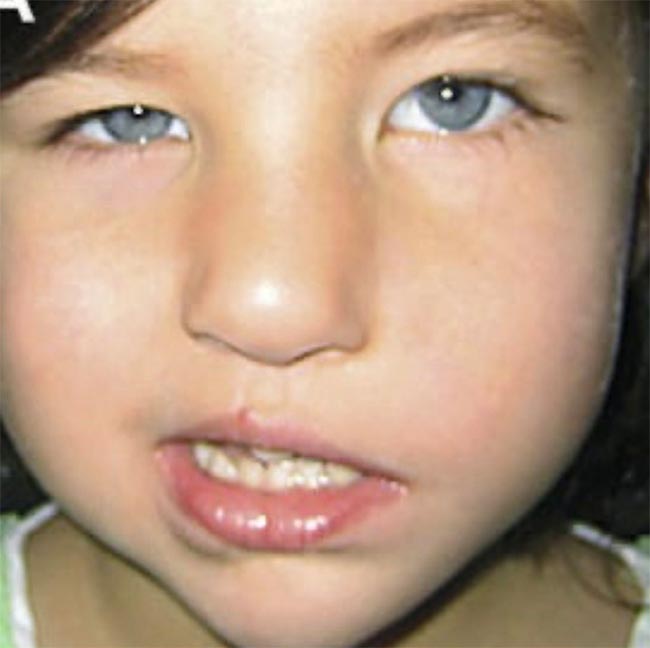
Andrew Moulden3 was a Canadian neuroscientist and doctor specializing in neuropsychiatry. During his clinical training, he noticed young children showing subtle neurological signs of strokes that his colleagues missed. Over time, he found these strokes often occurred soon after vaccination and could lead to severe neurological disorders like autism.

Note: Vaccine injury reports as far back as the early 1800s contain the same signs Moulden noticed.4

Moulden realized that the subtle stroke signs doctors look for in adults should also be assessed in children. Because these strokes in infants are often missed, many conditions are misdiagnosed or attributed to unknown causes. One scientific challenge is making “invisible” issues visible. In neurology, disruptions in brain function, often due to impaired blood flow, can reveal stroke locations through careful physical examination.

Moulden found that cranial nerves in the brainstem, particularly in watershed areas with less redundant blood supply, were vulnerable to strokes. These strokes, caused by impaired blood flow, often due to increased blood thickness, were missed in infants, leading to conditions misdiagnosed or attributed to unknown causes. Key cranial nerves indicating vaccine-caused microstrokes include:

• Cranial Nerve VI5 — Controls eye movement; damage causes inward eye resting or jerky side-to-side movement.

cranial nerve vi

Note: We’ve found CN VI is the nerve most frequently affected by COVID-19 injuries.

• Cranial Nerve VII6 — Controls facial muscles; damage causes Bell’s palsy,7 facial drooping, or asymmetry (e.g., this appeared to have happened to Justin Bieber).8

justin bieber

• Cranial Nerve IV9 — Levels eyes; damage causes head tilting to compensate for uneven eye height.

cranial nerve iv

Note: Often, you will see multiple cranial nerve issues on the same face (which suggests more parts of the brain lost their blood supply and hence that deeper neurological damage is also present).

Once you know how to look for these symptoms (e.g., a loss of smooth eye motion), they are very easy to spot, and you will gradually become aware of how far reaching the neurological damage that results from vaccination can be (as any part of the brain can be affected).

the tiny victims of dessert storm

Moulden’s work also suggested strokes were also occurring in other watershed areas of the body, such as internal organs and speech centers. Evidence included:

  • Autopsy studies showing strokes in internal organs of children with congenital rubella.
  • Similar disease processes in teenagers and adults after HPV or anthrax vaccination.
  • One of the most striking examples was the children of soldiers who received the anthrax vaccine10 and were born without limbs11 (thalidomide was also notorious for doing this by blocking the formation of new blood vessels).12
  • Neurodegenerative processes in the elderly13 and psychiatric disorders being linked to cranial nerve damage.

Note: A major issue in conventional medicine is the failure to recognize that neurological damage can lead to psychiatric issues.14 Consequently, emotional changes in patients with nervous system injuries are often misattributed as the cause rather than a symptom of their illness.

Moulden thus began exploring what universal response was leading to these microstrokes and how they could be treated. From this, he produced three videos describing the problem (which can be viewed here). Unfortunately, shortly before releasing a second series on the solutions for these injuries, he died under suspicious circumstances. However, we now have many clues as to what Moulden discovered.

Blood Sludging

In the medical world, a long-standing puzzle revolves around how small insults to the body can lead to widespread illness or even death. One key factor in this equation is blood sludging, a phenomenon observed for centuries where the blood clumps together and thickens under certain disease conditions. Melvin Knisely, Ph.D.,15 in the mid-20th century made critical discoveries about this phenomenon.

Knisely’s research, particularly with malaria-infected monkeys, revealed that certain severe illnesses could trigger significant blood sludging,16 starting in small vessels and eventually spreading to larger ones, which was typically fatal (unless prevented with the anticoagulant heparin). This thickening of blood can be likened to traffic jams, disrupting the body’s natural blood-flow, and eventually leading to gridlock (death).

Additionally, he discovered that this sludging could be seen externally through the eyes, providing a non-invasive way to assess this process throughout the body.

greatest blood sludging

From this, he discovered the greatest blood sludging was seen in critically ill hospital patients — something Pierre Kory MD also observed with point-of-care ultrasound, as once micro clots within the IVC17 became echogenic (visible), patients died shortly after.

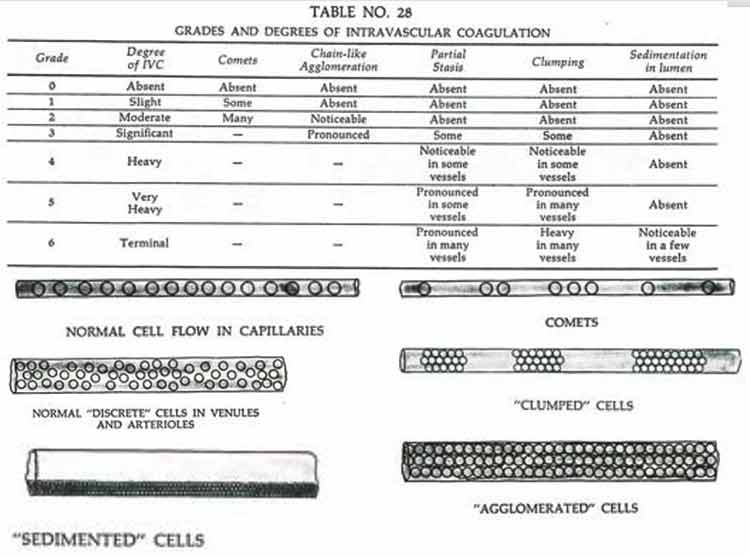
Knisely’s grading scale for blood sludging severity correlated with disease prognosis, highlighting its clinical significance.

After learning of this, we attempted to replicate Knisely’s microscope and have been able to see the same sludging he observed 80 years ago in his patients. This video, for example was taken from the eyes of a COVID-19 vaccine-injured patient:

Save This Article for Later – Get the PDF Now

Download PDF

Zeta Potential

When particles are placed in water, one of three things can happen:

  • They don’t mix (e.g., oil floats to the top, sand sinks to the bottom).
  • They dissolve (e.g., salt).
  • They form a colloidal suspension (e.g., milk) in which each particle is repelled from the other and evenly distributed.

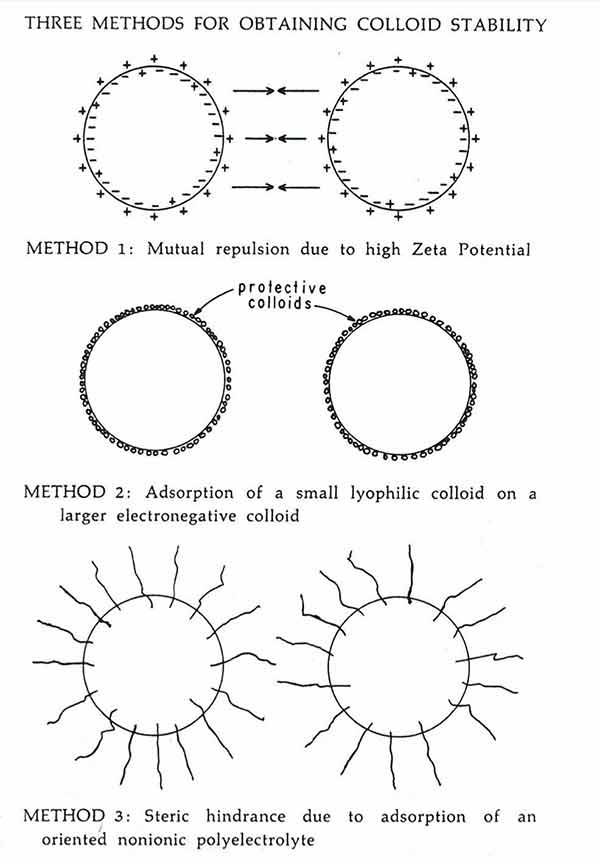
In the case of colloidal suspensions, their stability is determined by what causes their particles to come together (gravity separating things by weight, the inherent molecular attraction between objects),18 and what pushes them apart.

three methods for obtaining colloid stability

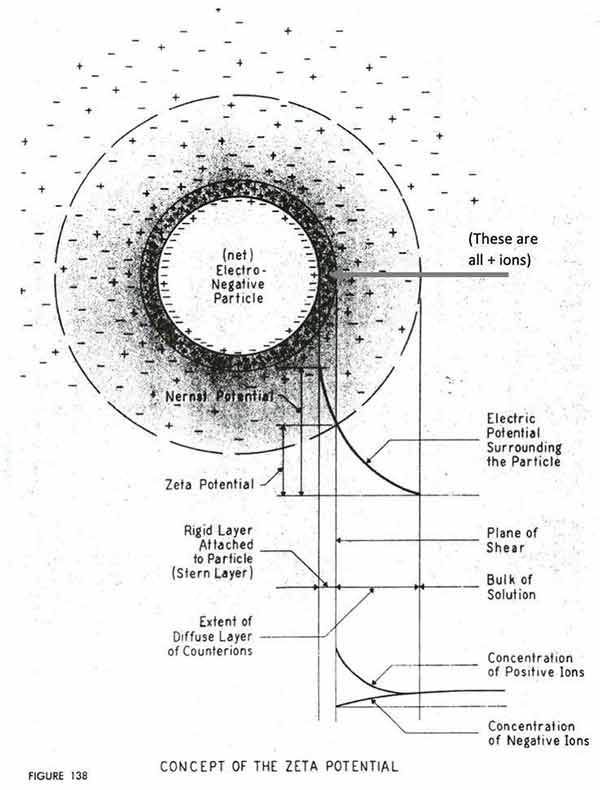
The first method (zeta potential) refers to the charge difference between the water ions (that coat the charged ions) and the charge of the surrounding water.

concept of zeta potential

Because electrical repulsion due to zeta potential is easier to control, it is typically the factor focused on when trying to improve colloidal dispersion (e.g., to eliminate blood sludging).

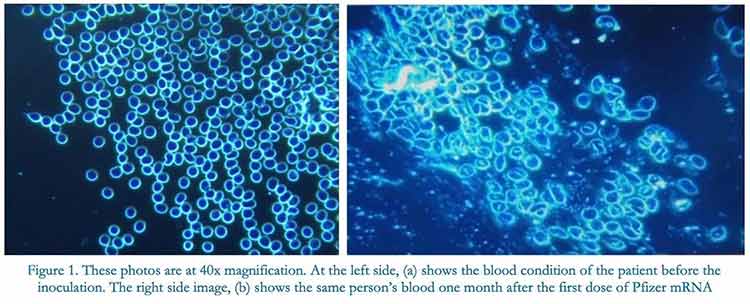
One of the most effective agents for reducing zeta potential is aluminum (which explains why it’s frequently used to separate organic matter from water in sewage plants or to clot wounds). Moulden thus concluded aluminum’s widespread use in vaccines likely accounted for many of their side effects. Similarly, consider the effect the COVID-19 vaccine’s spike protein has on the blood.19

blood condition

The key thing to understand about zeta potential is that when its repulsion no longer suffices to overcome the attractive forces in a colloidal system, it will clump together, initially in small clumps (termed agglomerations), and then as the zeta potential worsens, form larger clumps.

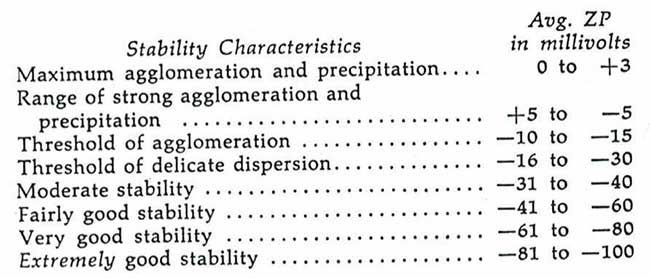
Note: The normal zeta potential of a red blood cell is around -15.7 millivolts.20 Additionally, as red blood cells age, they lose their negatively charged sialic acid,21 which worsens their zeta potential.

stability characteristics

Thomas Riddick, a pioneer in this field,22 discovered that the body maintains blood zeta potential near the agglomeration threshold so it can clot in case of bleeding.

With further study, Riddick found the degree of blood sludging or loss of physiologic zeta potential significantly varied from person to person (due to modern life disrupting it), and Knisely’s grading scale for blood flow in the eyes could be used to accurately predict who was at risk of an arrhythmia, a stroke, or a fatal heart attack.

Most importantly, Riddick discovered that once the colloidal dispersion of the blood was fixed, heart arrhythmias normalized and circulatory problems greatly improved. For reference, this is the scale Knisely and Riddick (and now us) used to evaluate blood flow in the eyes.

grades and degress of intravascular coagulation

Note: I believe Knisely’s observations of profound blood sludging in the eyes of severely ill hospital patients account for why IV saline (which improves zeta potential) so frequently benefits people who are sick enough to require hospitalization.

Likewise, Knisely also observed that certain agents, such as hydroxychloroquine, reversed blood sludging. This led him to suspect a significant degree of the anti-malarial benefit of hydroxychloroquine actually arose from it reducing blood sludging; I also suspect this property may account for hydroxychloroquine’s value in treating autoimmune conditions and COVID-19 (both conditions linked to poor zeta potential).

Riddick gradually discovered blood sludging was widespread in America and eventually concluded our food and water supply were contaminated with positive ions that were destructive to zeta potential. He attributed this to:

Potassium being replaced by sodium in processed foods.
Aluminum being used in municipal water systems.
Aluminum kitchenware.
Aluminum being added to many foods (e.g. most salt has aluminum added to keep it from caking).
Many medications (e.g., antacids) are full of aluminum and other problematic metals.
Many foods are stored in metal cans (acidic foods leach these metals).

Riddick also performed experiments that showed consuming water stored in aluminum significantly impaired microcirculation. Sadly, we are now witnessing a trend of storing water in aluminum cans. For this reason, I will never drink anything from an aluminum can (fortunately, a few zeta-potential restoring bottled water brands still exist).

Note: The first head of the FDA fought to stop aluminum from entering general use but was muscled out by industry.23

Lastly, in addition to these, I also believe vaccines, EMFs, certain chronic infections, and humans no longer being electrically grounded to the Earth24 are significantly impairing humanity’s zeta potential.

Note: As mentioned above, a case can also be made impaired zeta potential creates autoimmunity (e.g., aluminum causes both, and Chinese medicine believes blood stasis leads to autoimmunity).

Vaccines, Microbes and Zeta Potential

Riddick also concluded that bacterial metabolism of proteins lowers their zeta potential by decarboxylating them. Many sewage treatment systems (e.g., septic tanks) work under this principle, as over time, decarboxylation (which removes negative charges) destroys the colloidal stability of the organic matter suspended in wastewater, causing it to sludge at the bottom.

Riddick next assessed how zeta potential changed in humans during acute infections. Much like Knisely had observed in the eyes of his acutely ill patients, Riddick consistently observed a decrease in physiologic zeta potential during an infectious condition.

These observations were important because they provided a means to explain why the elderly (who cannot tolerate a further drop in their zeta potential) are so much more vulnerable to infections like influenza. Sadly, it also likely explains their greater susceptibility to vaccine injuries (e.g., I once admitted a patient to the hospital who suffered a classic zeta-potential collapse from a pneumococcal vaccine).

Lastly, many microbes carry positive charges, which allow them to adhere to the negatively charged surfaces of the body. These hence cause them to disrupt zeta potential once they’ve sufficiently reproduced in the body.

This is a major problem in Lyme disease and chronic mold toxicity, which in part explains why therapies for those diseases often fail unless something (e.g., treating zeta potential) is also done to address the fluid stagnation they create (particularly within the lymphatics).

Fortunately, there are many ways to address this. Ozone, for instance oxidizes those charges, and I believe this accounts for the dramatic improvements sometimes observed after one receives an oxidative therapy.

Similarly, a 2022 paper25 that showed the spike protein directly impaired blood cell zeta potential also found that ivermectin dispersed blood cells the spike protein had clumped together (which may explain the instantaneous normalization of vital signs sometimes seen after ivermectin is given to severely ill hospital patients).

Protein Misfolding

Since folded proteins are essentially colloidal suspensions, ions that disrupt zeta potential can also cause protein misfolding and denaturing (something that also happens to egg whites when they are heated in a pan). I believe this is a key reason why the plaques found in Alzheimer’s disease (which are misfolded proteins) are found to contain aluminum.26,27

Note: Since the clearance of Alzheimer’s plaques depends upon the brain’s glymphatic system,28 it is also possible that the improvement in cognitive decline that is frequently seen after improving zeta potential is due to improved cranial blood flow or cranial venous and lymphatic drainage.

Likewise, the COVID spike protein (produced by the vaccines) has been linked to protein misfolding diseases such as CJD, amyloidosis, and unusual fibrous29 (amyloid) clots embalmers have found within the vaccinated, which appear to result from misfolded blood proteins the body can’t break down.

Conclusion

Healthy fluid circulation is essential for health, and the zeta potential concept begins to explain why so many different conditions can lead to similar symptomatology. In the case of vaccines, this model explains why:

  • Vaccines consistently cause harm.
  • There is so much variability in vaccine injuries.
  • Vaccine damage is cumulative, as existing impairment of the microcirculation (and other fluid circulations) will progressively worsen with each successive vaccine.
  • Many infectious diseases can sometimes cause similar (but not as severe) injuries as vaccines.

The zeta potential concept profoundly changed my medical practice, and I now believe that many effective holistic therapies (e.g., EDTA chelation) work in part because they can restore physiologic zeta potential. Thank you for reading, and I sincerely hope the knowledge here can benefit you in the same way it has many of our patients.

Author’s note: This is an abbreviated version of a full-length article. For the entire read with much more specific details and sources, please click here.

A Note From Dr. Mercola About the Author

A Midwestern Doctor (AMD) is a board-certified physician in the Midwest and a longtime reader of Mercola.com. I appreciate his exceptional insight on a wide range of topics and I’m grateful to share them. I also respect his desire to remain anonymous as he is still on the front lines treating patients. To find more of AMD’s work, be sure to check out The Forgotten Side of Medicine on Substack.

Australian DNA CONTAMINATION Confirmed .. in Australian vials of Pfizer and Moderna .. NOT safe for Humans

Reproduced from original article:
https://julesonthebeach.substack.com/p/australian-dna-contamination-confirmed

.. what did our politicians say this was .. safe & effective?

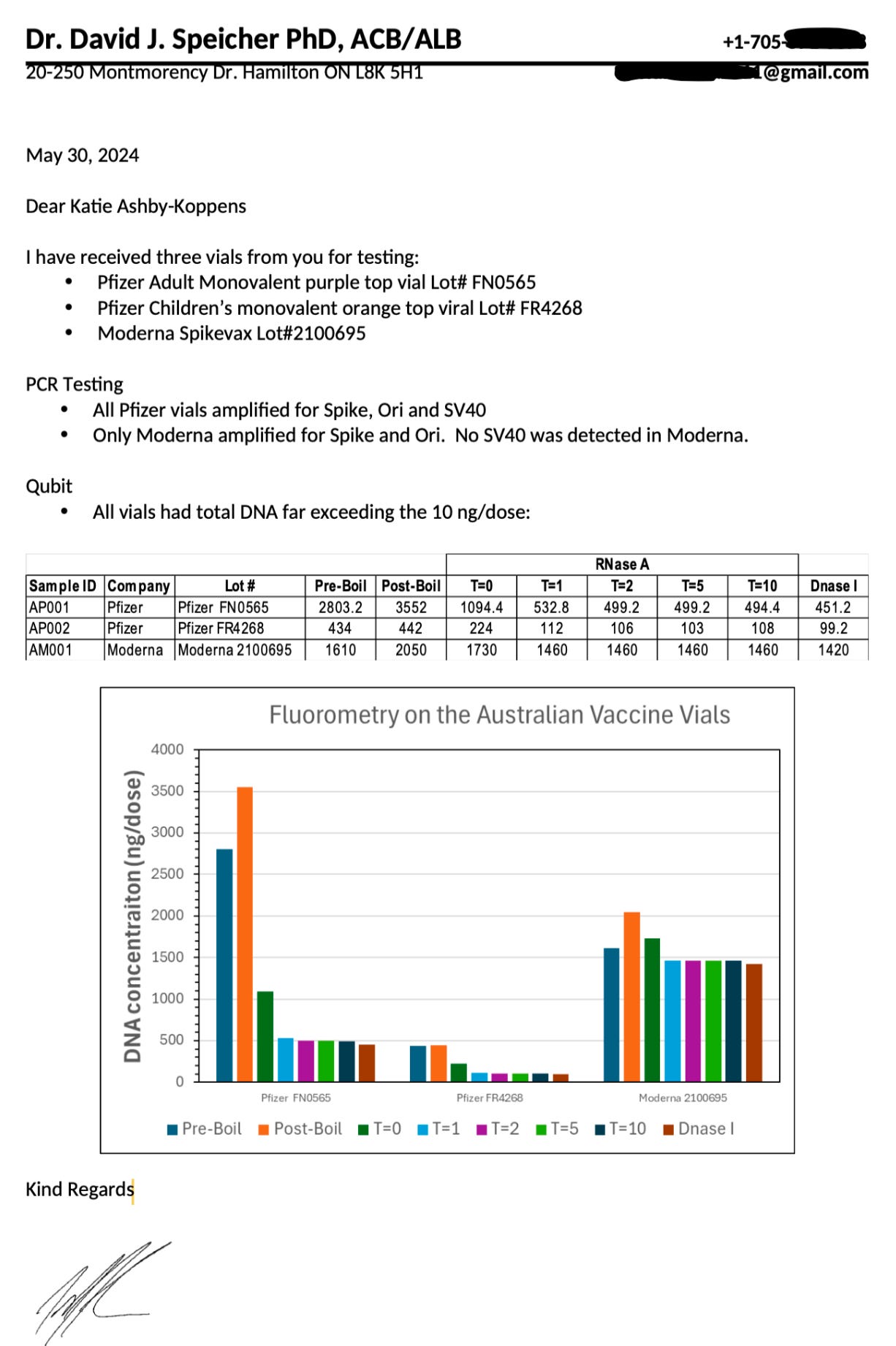
here is a screen shot from the preliminary report returned by Dr David Speicher .. the Post-Boil figures and the chart are what you need to focus on:


last week we shared this data (as a prelude to the final report Dr Speicher will be providing soon) with a select group of Australian Senators and MPs

part of the correspondence was as follows:

A part of the GMO proceedings is the allegation the Pfizer and Moderna products contain excessive synthetic DNA contamination, which contamination forms another much more insidious form of GMO.

After many Australian labs refused to conduct testing, we organised for Australian vials to be tested in Canada, by David Speicher PhD, the first author on the paper confirming excessive DNA contamination of Canadian vials (509 x above limits).

Dr Speicher has provided an initial report to us which is attachment 6 for your consideration. Dr Speicher has confirmed excessive synthetic DNA contamination in Pfizer was over 350 times above per dose limits set by the TGA (34,900% above), and over 200 times above per dose limits for Moderna (19,900% above).

We distinguish old TGA limits because the TGA limits for DNA did not contemplate synthetic DNA encapsulated in lipid nanoparticles (LNPs) which is the vehicle that efficiently delivers the synthetic DNA within cells for transit to the nucleus, to in turn affect natural human DNA.

The former Research Director for the Human Genome Project, Kevin McKernan, and expert in the GMO case, has confirmed the LNPs are encapsulating the synthetic DNA for transit throughout human bodies and into cells. See article here.

Recent preliminary findings by McKernan (and associates) has confirmed the DNA contamination from the Pfizer product integrates with human DNA, and this synthetic DNA has the capacity to replicate. See article here.

The report by Dr Speicher of vials supplied from Australia underlines yet another reason why it may be supposed powerful and vested interests do not want the GMO proceedings to be heard.

As many readers here know, the GMO proceedings specifically raise excessive DNA contamination .. a heinous form of GMO when encapsulated in LNPs, particularly when containing sequences from the SV40 virus that ensure entry into the nucleus of cells, and access to Human DNA


So this is not theory folks .. we are not in a training exercise .. this is not a drill .. this entry into the nucleus has been confirmed and until evidence shows otherwise, must be assumed to have affected millions of Australians

.. millions


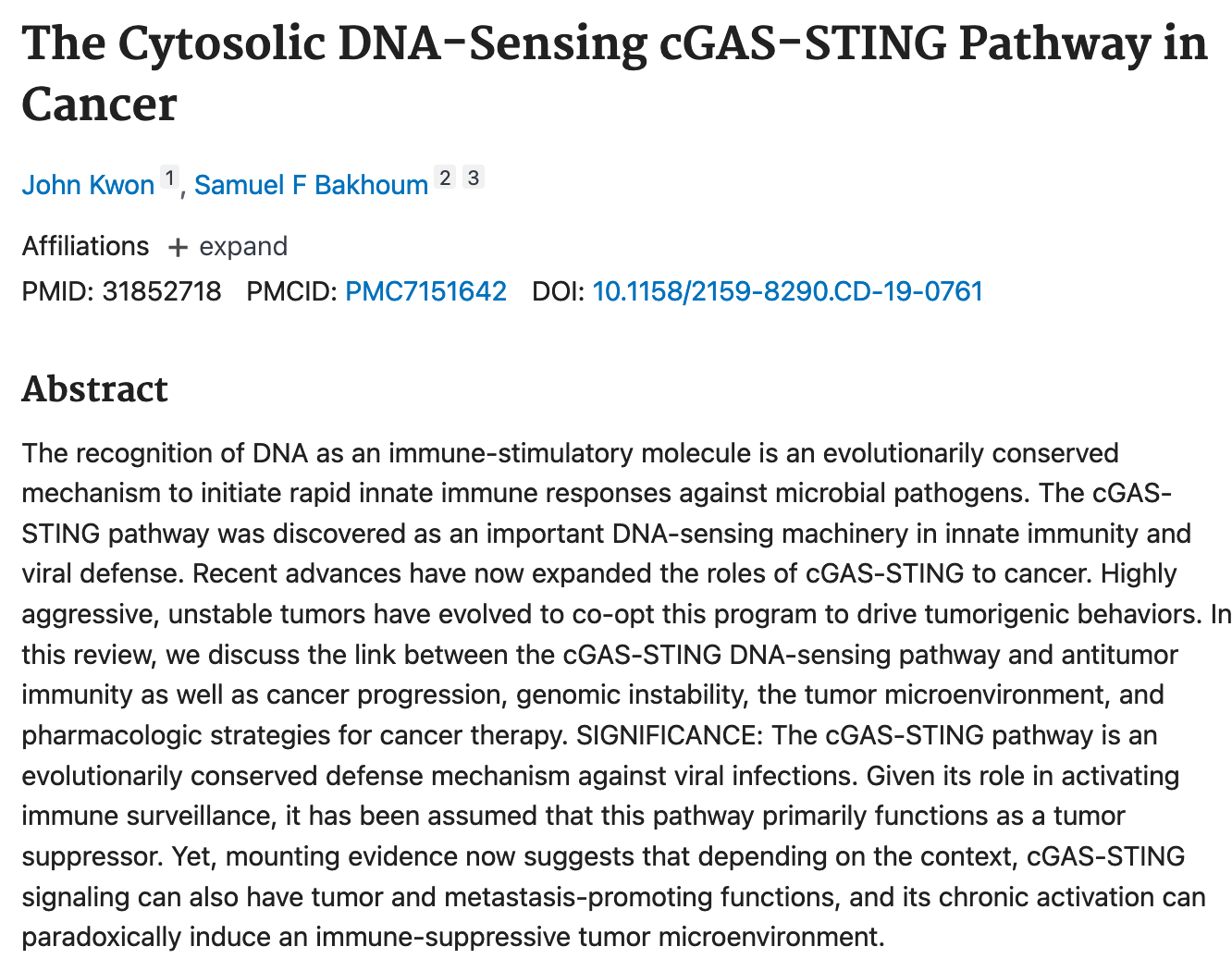
And for the rest of the DNA contamination that does not enter the nucleus for creating genetic disease disorder and havoc, like kicking-starting cancers, there are a multitude of other pathways of destruction synthetic DNA triggers just by being present outside the nucleus, in the cytoplasm .. have a read of this peer reviewed paper to get a measure of the destruction ..

.. as for cancers following entry into the nucleus of Human cells

don’t take my word for it

take the word of Moderna CEO Stephane Bancel, co-author and co-owner of patent US10077439B2

titled: Removal of DNA fragments in mRNA production process

.. in which Stephane states:


oncogenic = cancers


in another patent Stephane owns and co-authored titled Modified polynucleotides for the production of membrane proteins, he and his fellow authors tell everyone the science straight-up ..

synthetic (= heterologous) DNA screws with offspring’ in other words: Australian babies

in another patent owned by Moderna the company once again tells the world how much they knew and know synthetic DNA causes cancers ..


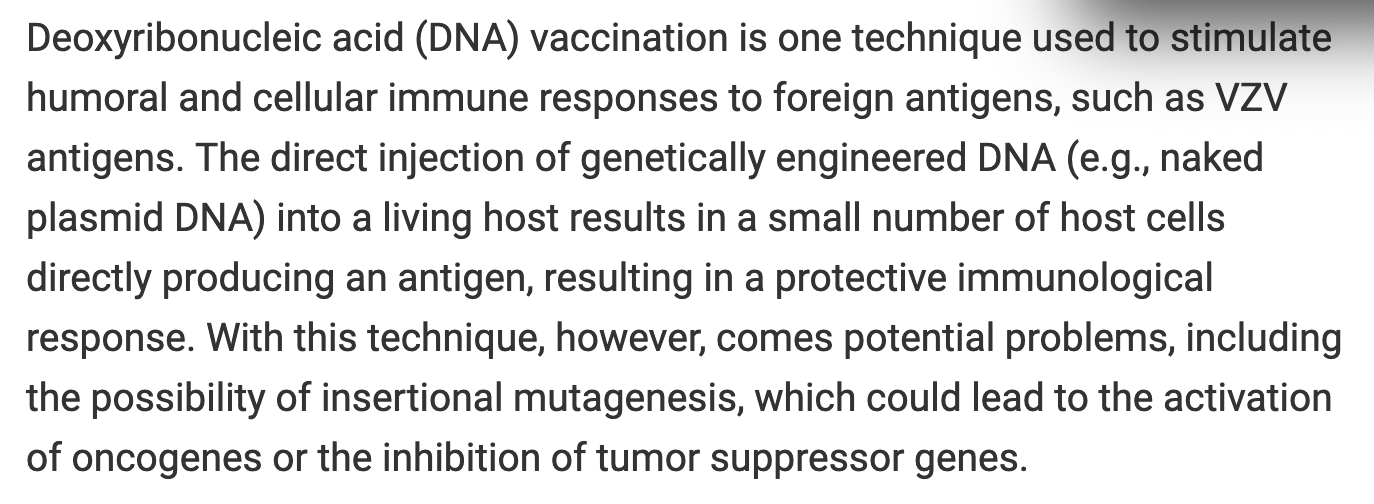
‘insertional mutagenesis’ = integration with our natural DNA

‘activation of oncogenes’ = once integrated, the synthetic DNA activates genes that cause cancers

‘inhibition of tumour suppressor genes’ = the synthetic DNA interferes with our genes that protect us from cancers


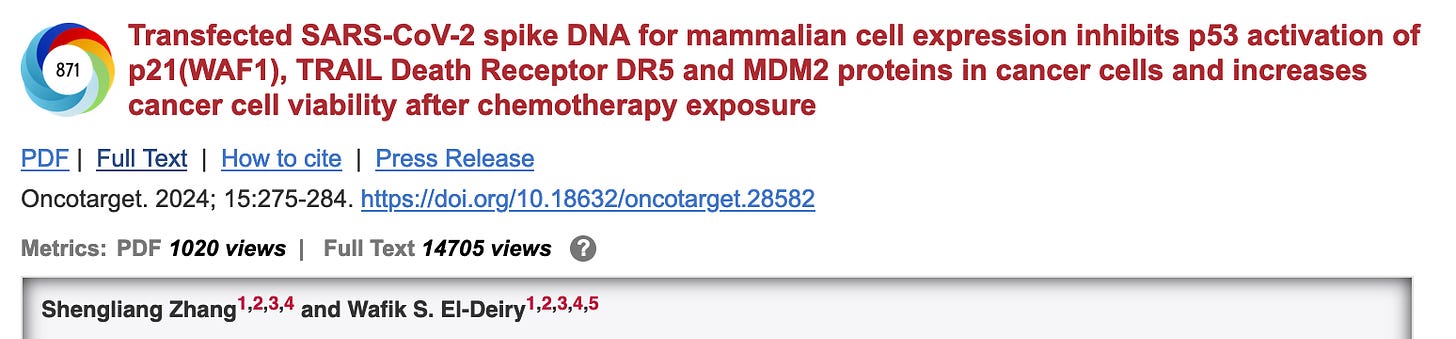
the last point of interfering with our genes that protect us from cancer was confirmed again to be occurring by Dr Wafik El-Deiry

a globally eminent American physician and cancer researcher who is the Associate Dean for Oncologic Sciences at the Warren Alpert Medical School, Brown University, Director of the Cancer Center at Brown University, and the Director of the Joint Program in Cancer Biology at Brown University and its affiliated hospitals, in the peer reviewed paper:

.. and do you know what competitors like Pfizer and Moderna do?


they read each others patents very closely

so everything

about DNA contamination and its cancerous effects Moderna knew and knows

Pfizer has known equally too

and they knew all of the above and much much more

well before rolling out their Covid-19 crap


.. and guess what else?

all our drugs regulators knew and know about all this stuff too

but they did nothing

and continue to do nothing

so good Substack folk, this was no accident

indeed, Moderna knew it was contaminating their vials

with synthetic DNA

as researcher @Patent_SUN amply evidences HERE

this folks .. all of the above and much much more damning evidence besides, is why many are desperately trying to shut-down the Australian GMO proceedings

rogue judge Helen Rofe tried but failed due to her misconduct

so for everyone’s sake


for your fellow Australians who have been poisoned

and

for your friends and family overseas who have also been poisoned too


express your outrage over the attempt by Helen Rofe to derail the GMO proceedings

and the Aussies reading this, head on over to Section72.au for informing your Senators and MPs if you are cross with Helen Rofe

.. and support the GMO proceedings

for getting the truth out to the world

please share widely

.. and perhaps tell some of your politicians you are a little unhappy about all this

they, after all, were spruiking this stuff as safe & effective on behalf of Pfizer and Moderna

‘You Cannot Believe One Word’: Fauci Defends COVID Policies in Heated Showdown With Skeptical Lawmakers

© June 3, 2024 Children’s Health Defense, Inc. This work is reproduced and distributed with the permission of Children’s Health Defense, Inc.
Want to learn more from Children’s Health Defense?
Sign up for free news and updates from Robert F. Kennedy, Jr. and the Children’s Health Defense.
Your donation will help to support us in our efforts.
Reproduced from original article:
https://childrenshealthdefense.org/defender/fauci-defends-covid-policies-lawmakers-house-select-subcommittee-hearing/

During a contentious hearing today before the House Select Subcommittee on the Coronavirus Pandemic, Dr. Anthony Fauci defended the “safe and effective” COVID-19 vaccines, but admitted science didn’t support mask mandates for children.

by 

anthony fauci and covid inside magnifying glass

During a contentious hearing today before the U.S. House of Representatives Select Subcommittee on the Coronavirus Pandemic, Dr. Anthony Fauci defended the “safe and effective” COVID-19 vaccines, which he credited with saving millions of lives.

Fauci also largely defended the government’s pandemic policies and said vaccine mandates saved “many, many, many lives.”

He said the unvaccinated are “probably responsible for an additional 200,000-300,000 deaths” in the U.S. but conceded “that the first iteration of the vaccines did have an effect — not 100%, not a high effect.”

However, he admitted that clinical studies did not conclusively support mask mandates and that no such studies were performed on children, despite the imposition of school mask mandates.

When asked about how long lockdowns and mask mandates were enforced, he said it is “debatable” whether the duration of those measures was appropriate or excessive.

Fauci’s oral testimony today largely mirrored the written testimony he provided in advance of the hearing — and the transcript of his two-day closed-door interview in January with members of the House.

The subcommittee released the transcripts of the two-day interview on Friday.

In one heated moment today, Rep. Marjorie Taylor Greene (R-Ga.) suggested the subcommittee should issue a criminal referral against Fauci.

“We should be recommending you to be prosecuted for crimes against humanity,” she said, accusing Fauci of “muzzling” school-aged children as a result of mask mandates and also accusing him and his “cronies” of being funded by Big Pharma.

Fauci “does not deserve to have a license,” Greene said.

Rep. Robert Garcia (D-Calif.) and other Democrat lawmakers frequently apologized to Fauci for the attacks levied against him and thanked him for his service during his 38-year tenure as director of the National Institute of Allergy and Infectious Diseases (NIAID).

Meanwhile, Republican lawmakers addressed revelations by Open The Books, published Sunday in The New York Post, that the National Institutes of Health (NIH), the parent agency of NIAID, received more than $710 million in royalties between 2022 and 2023, with NIAID receiving over $690 million of these payments.

Adam Andrzejewski, CEO and founder of OpenTheBooks.com, told The Defender “every royalty payment, tens of thousands of them, represent a potential conflict of interest,” noting that NIH will not disclose specifics about the payments.

Andrzejewski said:

“It makes some intuitive sense that NIAID and the National Cancer Institute are top royalty receivers historically. Those subagencies are responsible for vaccines and treatments for infectious diseases and sought-after cancer-fighting inventions, respectively.

“What is remarkable is the abrupt growth year over year, timed to the pandemic outbreak.”

During the hearing, Fauci denied benefiting financially from the royalties but could not explain which scientists received the money or for which purposes.

Fauci also denied that NIAID funded controversial gain-of-function research through EcoHealth Alliance at the Wuhan Institute of Virology in China and that U.S. taxpayer money was used to genetically engineer SARS-CoV-2 — claims he also made during January’s interview.

Leaked messages released last year suggested Fauci was aware of the gain-of-function research and pressured key virologists to suppress research indicating that COVID-19 originated as a result of a lab leak while supporting research favoring a “zoonotic” — or natural origin — of the virus.

In his testimony today, Fauci denied those allegations.

During his opening remarks, Rep. Brad Wenstrup (R-Ohio), chair of the subcommittee, thanked Fauci for his years of service to science and public health but was critical of Fauci’s actions during the COVID-19 pandemic.

“We should have been more precise,” Wenstrup said. “We should have used words and phrases that are accurate and not misleading. We should have been honest, especially about things we did not know.”

“Policy decisions should be made based on data, but some were not,” he added. As a result, Americans who questioned “oppressive mandates” were “bullied” while “any dissent … was immediately labeled ‘anti-science.’”

“Dr. Fauci, you oversaw one of the most invasive regimes of domestic policy the U.S. has ever seen,” Wenstrup said.

“Whether intentional or not, you became so powerful that any disagreements the public had with you were forbidden and censored on social and most legacy media time and time again. That is why so many Americans became so angry — because this was fundamentally un-American,” Wenstrup added.

During his closing remarks, Wenstrup suggested, “It’s important that we don’t do things like mandates.”

‘Fauci perjured himself’

Experts who spoke with The Defender questioned Fauci’s claims.

Rutgers University molecular biologist Richard Ebright, Ph.D., a frequent critic of gain-of-function research, told The Defender:

“Fauci perjured himself in three U.S. Senate hearings in 2021-2022, in which he denied — knowingly, willfully, and brazenly untruthfully — that NIH funded gain-of-function research and enhanced potential pandemic pathogens research in Wuhan.

“Fauci perjured himself again in his transcribed interview with the U.S. House Select Subcommittee, in which he lied about the coverage of the policies, lied about his violations of the policies, and lied about his perjury before the Senate.”

Francis Boyle, J.D., Ph.D., professor of international law at the University of Illinois, told The Defender, “Fauci has already lied and perjured himself before Congress. He should have been prosecuted already. You cannot believe one word he is saying.”

Boyle, a bioweapons expert who drafted the Biological Weapons Anti-Terrorism Act of 1989, said Fauci “knew about the Chinese lab leak all along and covered it up right from the very get-go around September of 2019.”

Fauci “has lied about it ever since then and about everything related to the COVID-19 pandemic and vaccines in order to cover up his own criminality,” Boyle said.

Fauci: Social distancing rules ‘sort of just appeared’

The transcripts of Fauci’s House interview in January revealed admissions that many COVID-19 restrictions were not based on science.

Responding to a question about the 6-foot social distancing rule instituted in many public spaces, including schools, Fauci said “It sort of just appeared,” adding that he “was not aware of studies — that, in fact, that would be a very difficult study to do.”

Similarly, Fauci admitted “there are a lot of conflicting studies” regarding mask efficacy. When asked if he recalled reviewing any studies supporting masking for children in particular, Fauci said he “might have” but didn’t “recall specifically.”

Mark Crispin Miller, Ph.D., an author and professor of media studies at New York University whose research and teaching focus on propaganda and who came under fire in 2020 for asking his students to review both sides of the mask debate, told The Defender:

“Once upon a time — before early 2020 — Dr. Fauci told the truth about the uselessness of masking as a barrier to respiratory viruses and told it publicly on “60 Minutes,” only to reverse himself days later and for the first few years of the ‘pandemic.’

“And now, after several years of flogging that ‘Big Lie,’ he’s contradicting it again, or half-contradicting it, with near-admissions that ‘the science’ does not back the use of masks against ‘the virus.’”

Fauci adamantly defended vaccine mandates during today’s hearing. However, he admitted in his January testimony that the mandates may have increased vaccine hesitancy. He said:

“I think one of the things that we really need to do after the fact, now, to — you know, after-the-game, after-the-event evaluation of things that need to be done, we really need to take a look at the psyche of the country, have maybe some social-type studies to figure out, does the mandating of vaccines in the way the country’s mental framework is right now, does that actually cause more people to not want to get vaccinated, or not? I don’t know. But I think that’s something we need to know.”

This article was funded by critical thinkers like you.

The Defender is 100% reader-supported. No corporate sponsors. No paywalls. Our writers and editors rely on you to fund stories like this that mainstream media won’t write.

PLEASE DONATE TODAY

Fauci also acknowledged that the lab-leak theory of COVID-19’s origins is not a conspiracy theory, a statement he repeated during today’s interview.

“I have always kept an open mind to the different possibilities,” Fauci said today.

The New York Times featured a guest essay today by Alina Chan, Ph.D., a molecular biologist at the Broad Institute of M.I.T. and Harvard, and a co-author of “Viral: The Search for the Origin of COVID-19,” stating that “a laboratory accident is the most parsimonious explanation of how the pandemic began.”

Both during the January interview and today’s testimony, Fauci adamantly denied that NIAID funded gain-of-function research or studies that manipulated viruses to make them more infectious in humans, perhaps leading to the COVID-19 outbreak.

In today’s testimony, Fauci also distanced himself from former aide David Morens, who allegedly boasted in emails about his ability to evade public records requests and his intention to delete any potential “smoking guns” for potential Freedom of Information Act requests.

“That was wrong and inappropriate and violated policy … he should not have done that,” Fauci said, denying knowledge of Morens’ alleged actions.

Miller said “the only thing we know for sure” about Fauci’s claims “is that we can’t believe a word of them, and that we heeded them at our enormous peril.”

Watch the hearing here:

Researchers Call for Urgent Action to Address Mass Contamination of Blood Supply


Reproduced from original article:
https://articles.mercola.com/sites/articles/archive/2024/05/27/blood-supply-contamination.aspx


Analysis by Dr. Joseph Mercola     
May 27, 2024

blood supply contamination

STORY AT-A-GLANCE

  • Japanese researchers warn of the risks of using blood from mRNA COVID vaccine recipients, highlighting potential deadly effects and the need for urgent action to secure the global blood supply
  • Blood contaminated with prion-like structures from the spike protein raises the risk of inducing fatal neurodegenerative diseases in recipients. The potential transmission of harmful proteins through exosomes (“shedding”) and the risk of autoimmune diseases due to the vaccines’ mechanism and components like lipid nanoparticles (LNPs) are other major concerns
  • Proposals for managing blood collection include rigorous donor interviews, deferral periods, and a suite of tests to ensure the safety of blood products
  • The researchers advocate for comprehensive testing of both jabbed and unjabbed individuals to assess the safety of blood products and suggest discarding blood products contaminated with spike proteins or modified mRNA until effective removal methods have been developed
  • They call for suspending all gene-based “vaccines” and conducting a rigorous harm-benefit assessment in light of the serious health injuries reported. They also urge countries and organizations to take concrete steps to address and mitigate the already identified risks

In a recent meta-analysis1,2 posted on preprints.org, Japanese researchers warn of potentially deadly risks to patients who receive blood from people who have taken mRNA COVID jabs and call for urgent action to ensure the safety of the global blood supply. According to the authors:3

“… many countries around the world have reported that so-called genetic vaccines, such as those using modified mRNA encoding the spike protein and lipid nanoparticles as the drug delivery system, have resulted in post-vaccination thrombosis and subsequent cardiovascular damage, as well as a wide variety of diseases involving all organs and systems, including the nervous system …

[B]ased on these circumstances and the volume of evidence that has recently come to light, we call the attention of medical professionals to the various risks associated with blood transfusions using blood products derived from people who have suffered from long COVID and from genetic vaccine recipients, including those who have received mRNA vaccines, and we make proposals regarding specific tests, testing methods, and regulations to deal with these risks.”

Blood From Jabbed Donors May Pose Risk to Neurological Health

One particular risk addressed in this paper is the implications of blood tainted with prion-like structures found within the spike protein. Prions are misfolded proteins that can cause neurodegenerative diseases, such as Creutzfeldt-Jakob Disease (CJD) in humans, by inducing the misfolding of normal proteins in the brain.

Prion diseases are characterized by a long incubation period, followed by rapid progression and high mortality. The suggestion that the spike protein of SARS-CoV-2, especially from certain variants, might contain prion-like domains raises concerns for several reasons:

  • Transmission risk — If spike proteins with prion-like structures can be transmitted through blood transfusions, there might be a risk of inducing prion diseases in recipients. Prion diseases are notoriously difficult to diagnose early, have no cure, and are fatal, making any potential transmission through blood products a significant safety concern.
  • Detection and removal challenges — Current blood screening processes do not specifically test for prions, partly because prion diseases are rare and partly due to the technical challenges in detecting prions at low concentrations. If spike proteins with prion-like properties are present in the blood of COVID jabbed individuals, existing blood safety protocols may not be adequate to prevent transmission.
  • Long-term safety concerns — Prion diseases have long latency periods, meaning that symptoms can appear years or even decades after exposure. This delay complicates efforts to trace the source of an infection back to a blood transfusion and assess the safety of blood supplies over time.
  • Impacts on blood supply management — Concerns about the potential risks associated with prion-like structures in spike proteins might lead to changes in donor eligibility criteria or the implementation of additional screening measures. These changes could impact the availability of blood products, which are critical for routine medical procedures.
  • Public confidence — Public awareness of these potential risks, even if they are theoretical or have a very low likelihood of occurring, could affect individuals’ willingness to donate or receive blood transfusions, thereby lowering blood donation rates and the overall trust in the safety of blood transfusions.

The authors stress the need for comprehensive studies to better understand the implications of these prion-like structures in the spike protein, not only for mRNA jab safety but also for the broader implications for public health measures like blood transfusion practices.

Other Potential Health Hazards of Contaminated Blood

Contaminated blood may also pose other serious health risks, including:

• Reduced immune function among blood recipients — It’s been shown that the more doses of the COVID shot you’ve received, the more likely you are to suffer future infections, either by SARS-CoV-2 or other viruses, due antibody-dependent enhancement.

Blood donations from people who have received several doses of mRNA injections may not provide adequate immunity against common infections, resulting in subclinical infections and diseases in recipients.

• Formation of blood clots and amyloid aggregates — If the immune system of a blood recipient isn’t strong enough to neutralize spike protein, blood clots and amyloid aggregates may also form.

• Chronic inflammation — Prolonged exposure to the antigens from the COVID-19 shots can trigger the generation of IgG4 antibodies, resulting in chronic inflammation and immune dysfunction.

IgG4 antibodies are often associated with chronic exposure to antigens, such as those seen in persistent infections, certain cancers, and prolonged exposure to allergens. IgG4 antibodies are also associated with a unique condition known as IgG4-Related Disease (IgG4-RD), a fibro-inflammatory condition characterized by swellings or masses in affected organs.4

Save This Article for Later – Get the PDF Now

Download PDF

Blood Transfusions and the Risk of Autoimmune Diseases

The authors also raise concerns about the potential of contaminated blood to cause autoimmune diseases in recipients. Recent research found that the RNA pseudouridylation, a process in which uracil is swapped out for synthetic methylpseudouridine, can cause frameshifting, basically a glitch in the decoding, which can trigger the production of off-target aberrant proteins.

The antibodies that develop as a result may, in turn, trigger off-target immune reactions. In addition to that, lipid nanoparticles (LNPs), a key component of the COVID shots, have been identified as highly inflammatory and possessing more potent adjuvant activity compared to traditional vaccine adjuvants, which further increases the risk of an autoimmune response. As reported in the featured paper:5

“Recent studies have shown that RNA pseudouridylation can result in frameshifting. It is not yet clear whether a portion of the pseudouridinated mRNA for the spike protein is translated into another protein of unknown function in vaccine recipients. If these proteins are also pathogenic, additional testing for such frameshift proteins may be needed in the future.

Even if a frameshift protein is not toxic, it must be foreign to the body and could cause autoimmune disease. In addition, LNPs themselves are highly inflammatory substances … LNPs have been found to have stronger adjuvant activity than the adjuvants used in conventional vaccines, and there is also concern about autoimmune diseases resulting from this aspect.

Thus, although it is not clear what the causative agent of autoimmune disease is, the large number of reported cases of autoimmune disease following genetic vaccination is extremely concerning.

The very mechanism of gene vaccines that causes one’s own cells to produce the antigens of pathogens carries the risk of inducing autoimmune diseases, which cannot be completely avoided even if mRNA pseudouridylation technology is used.

In this context, individuals with a positive blood test for spike protein may need to have interviews and additional tests for autoimmune disease indicators, such as antinuclear antibodies.

Alternatively, if the amino acid sequence of the protein resulting from the frameshift is predictable, these candidate proteins could be included in the initial mass spectrometry assay. In any case, it is particularly important to develop tests and establish medical care settings in anticipation of these situations.”

Proposals for Managing Blood Collection

The authors outline several specific proposals for managing blood collection and blood products from individuals who have received genetic “vaccines.” Given the variety of blood-related abnormalities observed post-jab, the researchers argue that rigorous and precautionary measures in blood handling and transfusion practices have now become a necessity.

A key part of the proposal involves conducting thorough interviews with potential blood donors. These interviews should cover their vaccination status, number of doses received, their COVID-19 infection history, and any symptoms they might be experiencing that could indicate conditions like post-vaccination syndrome (PVS), long-COVID or other complications.

The researchers also recommend deferral periods for blood collected from COVID jab recipients — 48 hours for mRNA shots and six weeks for AstraZeneca DNA jab recipients. A series of tests are also proposed to ensure the safety of collected blood, including:

Mass spectrometry to measure spike protein content PCR for detecting the presence of spike protein mRNA and DNA
Testing for markers associated with autoimmune disorders Enzyme-linked immunosorbent assay (ELISA)
Immunophenotyping Liquid biopsies combined with proteomics to detect and quantify spike protein and its mRNA

The authors also note that policies and procedures must be constantly revised as new risks and problems with blood products derived from mRNA and DNA jab recipients are identified.

Ensuring Safety of Current Blood Products

The paper also reviews strategies to ensure the safety of blood products already collected, highlighting the complex challenges that medical institutions, regulatory bodies, and the broader healthcare ecosystem must navigate in the wake of widespread use of mRNA injections.

The primary concern is the risk posed to patients by the use of blood products from donors who have received gene-based injections without confirming the presence or absence of spike proteins or modified mRNA. To ensure their safety, methods to quantify potential contaminants must be developed and implemented as soon as possible.

Another critical issue that must be addressed is the current lack of reliable methods to remove spike proteins or modified mRNA from blood products. The authors warn that, given the potential persistence, low solubility, heat resistance, and radiation resistance of these components, current methodologies are inadequate for the job. The only solution, they say, is to discard all blood products found to contain these contaminants until effective removal techniques are established.

Researchers Call for Widespread Blood Testing

Additionally, the researchers call for widespread testing of both jabbed and unjabbed to assess the potential transmission of spike proteins through exosomes (so-called shedding).

As noted by the authors:

“… when exosomes collected from vaccine recipients were administered to mice that had not been vaccinated with the genetic vaccine, the spike protein was transmitted.

Therefore, it cannot be denied that the spike protein and its modified genes can be transmitted through exosomes. For this reason, we suggest that full testing be done initially, regardless of genetic vaccination status, and that a cohort study be conducted to quickly capture the full picture …

In addition … it cannot be ruled out that even those who have not been vaccinated with the genetic vaccine, but have had long COVID, may have residual spike proteins or fibrin- derived microthrombi in their bodies, so it would be advisable to conduct the same testing and follow-up as for genetic vaccine recipients.

The presence or absence and amount of anti-nucleocapsid antibodies as well as antibody isotypes may be an indicator(s) in distinguishing whether genetic vaccination or long COVID is the cause. In any case, these cohort studies are expected to help establish cutoff values for blood levels of spike protein and other substances to determine the safety of blood products.

Faksova et al. conducted a large cohort study of 99 million people using a multinational Global Vaccine Data NetworkTM (GVDN®) and found a significantly increased risk of myocarditis, pericarditis, Guillain-Barre syndrome, and cerebral venous sinus thrombosis in genetic vaccine recipients.”

Ensuring the traceability of blood products and establishing a rigorous legal and regulatory framework to manage the myriad issues arising from the use of blood products derived from COVID jabbed individuals are also paramount. This includes creating systems for the registration of all potential donors, ensuring the traceability of blood products, and conducting recipient outcome studies.

Call to Pause: Evaluating the Risks and Benefits of Genetic Vaccines for a Safer Future

In conclusion, the authors point out that if we continue using mRNA-LPN-based platforms to replace conventional vaccines or create new ones, then the risks to our blood and bone marrow supply will be augmented further.

“The impact of these genetic vaccines on blood products and the actual damage caused by them are unknown at present,” they write.6

“Therefore, in order to avoid these risks and prevent further expansion of blood contamination and complication of the situation, we strongly request that the vaccination campaign using genetic vaccines be suspended and that a harm-benefit assessment be carried out as early as possible, as called for by Fraiman et al.7 and Polykretis et al.8

[T]he health injuries caused by genetic vaccination are already extremely serious, and it is high time that countries and relevant organizations take concrete steps together to identify the risks and to control and resolve them.”

97% of Countries Will Soon Be Unable to Sustain Populations as Fertility Rates Drop


Reproduced from original article:
https://articles.mercola.com/sites/articles/archive/2024/05/25/dropping-fertility-rates.aspx


Analysis by Dr. Joseph Mercola     May 25, 2024

dropping fertility rates

STORY AT-A-GLANCE

  • A report published in The Lancet predicts that by 2100, the global infertility problem will be so severe that 97% of countries will be unable to sustain their populations. According to the World Health Organization, 1 in 6 people globally are now infertile
  • Exposure to electromagnetic fields (EMFs) and radiofrequency radiation may be the most significant factor for the observed decrease in male sperm count
  • Endocrine-disrupting chemicals like phthalates and bisphenols are also a key culprit to infertility and declining sperm count rates in men
  • Several factors can compromise your ability to reproduce, but following some basic common-sense strategies and healthy lifestyle habits can help address the root of infertility

Americans are now having difficulty conceiving, with one-third of adults in the U.S. turning to fertility treatments or are acquainted with someone who has.1 According to the National Institutes of Health, 9% of men and 11% of women in the U.S. are now struggling with fertility problems, and in healthy couples below 30 years old, 40% to 60% fail to conceive in the first three months of having unprotected sex.2

But infertility isn’t just an American dilemma; it’s a worldwide crisis. According to the World Health Organization,3 1 in 6 people globally are now infertile — and it’s going to get much worse, unless we do something about it.

‘Dramatic Decline’ in Fertility Will Cause Populations to Drop in Most Countries

A report published in The Lancet4 predicts that by 2100, the global infertility problem will be so severe that 97% of countries will be unable to sustain their populations. Published in March 2024, the featured report5 estimates that there will be a dramatic decline in fertility globally, with majority of countries experiencing a significant drop in fertility rates. According to an article by Euronews Health:6

“Researchers led by the University of Washington’s Institute for Health Metrics and Evaluation (IHME) in the US found that three-quarters of countries will not have fertility rates high enough to sustain population size by 2050.

By 2100, they project that this will be the case in 97% of countries, estimating that the global total fertility rate will drop from 2.23 births per female in her lifetime in 2021 to 1.68 in 2050 and 1.57 in 2100.”

Taking into the account the margins of error, the projected fertility rates in the featured report are not far off from the United Nations projections, which state “global fertility is projected to fall from 2.3 children per woman in 2021 to 2.1 in 2050.”7 This is based on their World Population Prospects report published in 2022.8

A separate commentary9 about the featured report, also published in The Lancet, notes, “Although projections are by their nature hypothetical, they ought to offer an avenue for scrutiny, objective comparisons with other forecasts, and improvement, and should inform actions that countries could take to influence, or not, the rate of TFR [total fertility rate] declines.”

What’s Causing Fertility Rates to Decline?

Gitau Mburu, one of the authors of the commentary, reached out to Euronews Health, stating that declining fertility rates can be caused by multiple factors, including “education, contraception access, and postponing parenthood.” He also says economic reasons, such as the cost of raising children and changes in the work force, may also be to blame.10

However, I believe environmental factors, such as being exposed to toxic substances that are ubiquitous in our lives today, could play a more significant role. A 2000 study11 explored several environmental factors affecting fertility, including cigarette smoking, alcohol and exposure to chemicals and pesticides in the workplace. The authors state:

“Although infertility can be caused by many different factors, most infertility is caused by abnormal oocyte and/or sperm production, tubal defects, or endometriosis.

It is important to note, however, that a significant proportion of infertility is unexplained. Investigators hypothesize that environmental factors have the potential to alter male and female reproductive tissues and thus affect the ability of couples to conceive healthy offspring.”

Save This Article for Later – Get the PDF Now

Download PDF

Microwaves — The Invisible Factor Damaging Your Reproductive Health

One stealth factor that can make you infertile is your exposure to electromagnetic fields (EMFs) and radiofrequency radiation from wireless technologies, like cellphones and Wi-Fi. In fact, I believe this may be the most significant reason why sperm counts are dwindling today.12

According to a 2023 study published in the journal Fertility and Sterility,13 men who use their cell phones more than 20 times a day have significantly lower sperm concentrations and sperm counts than those who use their phones once a week or less.

Research by Martin Pall, Ph.D., can help explain why this occurs. Nearly a decade ago, he discovered a previously unknown mechanism of biological harm from microwave radiation. Your cell membranes contain voltage-gated calcium channels (VGCCs) which, when activated by microwaves release about 1 million calcium ions per second.

This massive excess of intracellular calcium then stimulates the release of nitric oxide (NO) inside your cell and mitochondria, which combines with superoxide to form peroxynitrite. Peroxynitrites not only cause oxidative damage, but also create hydroxyl free radicals, which are the most destructive free radicals known to man.

Hydroxyl free radicals decimate mitochondrial and nuclear DNA, their membranes and proteins, resulting in mitochondrial dysfunction. In a 2013 children’s health expert panel on cellphone and Wi-Fi exposures,14 it was noted that “The testicular barrier, that protects sperm, is the most sensitive of tissues in the body … Besides sperm count and function, the mitochondrial DNA of sperm are damaged three times more if exposed to cellphone radiation.”

Many in-vivo and in-vitro studies have also demonstrated the potential implications of EMF exposure to reproductive function. In a paper published in Clinical and Experimental Reproductive Medicine,15 researchers noted that EMFs can affect sperm motility, and the degree of damage can vary depending on the frequency, duration of exposure and strength of EMFs.

Endocrine-Disrupting Chemicals Are Also Making You Infertile

Environmental and reproductive epidemiologist Shanna Swan, Ph.D., says that sperm counts in Western men have been declining for decades, as the rates in 2011 were less than half of what they were in 1973.16 She notes another key culprit for this decline — endocrine-disrupting chemicals (EDCs).

Swan, who authored the book “Count Down: How Our Modern World Is Threatening Sperm Counts, Altering Male and Female Reproductive Development, and Imperiling the Future of the Human Race,” says that phthalates and bisphenols are one of the key culprits to infertility and declining sperm count rates in men. If the curve continues to decline, the median sperm count will be zero by 2045.17 Couples who want to have children will then have no choice but to seek fertility treatments.

Endocrine-disrupting chemicals work by adhering to hormone receptors and directly interfere with the functioning of your steroid hormones, which are crucial for pregnancy and fetal development. As a result, these chemicals can change how many receptors are present in cells, as well as affect the creation, movement, levels and breakdown of hormones in your blood.

This is a cause for concern, considering how ubiquitous EDCs are in our everyday lives. Plastics, cosmetics, personal care products, and processed and packaged foods all contain EDCs. In an article published in Salon,18 Swan comments:

“We also see declines in testosterone in several studies around the world. We see increases in erectile dysfunction. We see increases in rates of genital abnormalities … We see increases in testicular cancer rates.”

France’s national public health agency, Santé Publique France (SPF), recently released 21 health effects linked to endocrine-disrupting chemicals that they consider a priority for surveillance.19 The findings were part of the 2021 PEPS’PE study, and unsurprisingly, “infertility,” “decreased fertility” and “alteration of sperm quality” are on the list.20

‘Forever Chemicals’ Are Just as Problematic

Per- and polyfluoroalkyl chemicals (PFAS) are dubbed “forever chemicals” because aside from having the ability not to break down easily in the environment, they can also bioaccumulate in wildlife and people. When these EDCs enter your body, they can have half-lives of two to five years.21

Forever chemicals are used in food packaging, clothing, personal care products and other stain- and grease-resistant products. It can even be found in your clothes — including your children’s school uniform. A 2022 study22 notes that about 3 tons of PFAS are used in U.S. school uniforms annually, exposing children to 1.03 ng/kg bw/day of PFAS, which can be absorbed via their skin.

Over 9,000 PFAS are used today, and exposure is so widespread that 97% of Americans were found to have PFAS in their bodies.23 And just like phthalates and bisphenols, many studies24,25,26 demonstrate their potential to disrupt reproductive hormones and affect fertility.

A study published in the journal Environmental Health Perspectives,27,28 for example, notes that there’s “a statistically significant association between exposure to a mixture of PFAS in early pregnancy and lower sperm concentration and total sperm count and higher proportion of non-progressive and immotile sperm” in male offspring.

PFAS have also been linked to reproductive health issues in women. A study29 conducted by researchers in Singapore highlighted the dangers of these chemicals on women’s fertility, saying that “higher exposure to PFAS, individually and as a mixture, is associated with reduced probability for clinical pregnancy and live birth.”

The researchers also note that forever chemicals not only disrupt reproductive hormones, but they can also delay puberty, and increase the risk of endometriosis and polycystic ovary syndrome (PCOS).30

What’s on Your Dinner Plate Can Also Affect Your Fertility

It’s no secret that we’re exposed to dangerous chemicals every day from our environment. However, your food choices could be adding to your toxic load, too. For example, conventional fruits and vegetables today are sprayed with pesticides, including glyphosate, the active ingredient in Roundup. These chemicals are particularly problematic, as they are known endocrine disruptors.

High pesticide exposure from pesticide-treated fruits and vegetables has been associated with an 18% lower in-vitro fertilization (IVF) success rate in women. They were also 26% less likely to have a live birth if they did become pregnant.31 This clearly illustrates why it’s far better to opt for organic, pesticide-free produce.

And if you’re always fond of eating processed foods like frozen pizzas, pancakes and waffles, be warned – these products contain sodium aluminum phosphate, a known neurotoxin that could impact your reproductive health. Used in food products as an emulsifying agent and stabilizer, this ingredient, albeit classified as “safe to consume,”32 could have long-term damaging effects on your fertility.

According to Dr. Naomi Wolf, exposure to sodium aluminum phosphate may lead to long-term oxidative stress, DNA damage and a negative impact on blood testosterone levels and sperm production.33 For a more detailed report about this additive, you can read my article “Food Additive in Pizza, Pancakes Linked to Lower Sperm Counts.”

Vaccines Cause Low Testosterone and Miscarriage

Wolf adds that exposure to aluminum-containing products can also be a key factor in the increasing rates of depression, weight gain and sexual disinterest among young men — these may all be associated with decreased levels of testosterone.34

I’ve warned about aluminum’s serious risks for many years now, especially its role in the rising rates of autism and Alzheimer’s. You can be exposed to it in many ways, but one of the most significant sources — and potentially one of the worst — is through vaccines. Vaccines contain aluminum adjuvants, which bypass your body’s natural filtering and detoxification systems.

Particularly problematic are the mRNA shots, which are likely both ineffective and dangerous. Wolf claims that mRNA shots contain aluminum,35 and although there is no current proof the mRNA shot for COVID does, the European Medicines Agency has approved the use of other COVID vaccines using complete viruses and a dual adjuvant of aluminum hydroxide-CpG 1018. Shots against COVID-19 that contain aluminum adjuvants are also approved in other countries.

Equally alarming is the fact that vaccines can cause miscarriage in pregnant women. In 2009, women reported losing their babies hours or days after getting the H1N1 swine flu vaccine. Not surprisingly, these instances were passed off as coincidental.36

However, a 2017 paper published in the journal Vaccine37 found that women who had received a pH1N1-containing flu vaccine two years in a row were more likely to suffer miscarriage within the following 28 days.

The CDC has not made any changes to its recommendation for pregnant women to get vaccinated against influenza, and is recommending getting the vaccine “during any trimester of pregnancy.”38,39 This is reprehensible public health policy at its worst, as corporations are profiting while the health of moms and their unborn children are being sacrificed.

Progesterone Can Help Reduce Miscarriage Risk

If you’re pregnant or planning to get pregnant, I advise you to avoid vaccines, including mRNA jabs. Remember, the more mRNA shots you take, the more severe the damage to your immune system could be.

Another way to reduce your risk of a miscarriage is to consider progesterone supplementation. Dubbed the “pregnancy hormone,”40 it plays a crucial role in conception, from implantation of the embryo to delivery of the baby.

According to studies published in 2020,41 progesterone could prevent 8,450 miscarriages each year, especially when given to women with bleeding in early pregnancy. For more information, read my article “Progesterone for Miscarriage Prevention.”

More Strategies to Boost Fertility Naturally

There are indeed various factors that can compromise your ability to reproduce, but I believe following some basic common-sense strategies and healthy lifestyle habits can help address the root of infertility. Here’s a summary of my recommendations:

Minimize your exposure to toxic chemicals, including heavy metals, endocrine disruptors, pesticides and herbicides, formaldehyde, organic solvents, dry-cleaning chemicals and paint fumes.
Avoid all vaccines, particularly mRNA shots — If you’ve already had one or more COVID-19 shots, there are steps you can take to repair from the assault on your system. The Front Line COVID-19 Critical Care Alliance (FLCCC) also has a treatment protocol for post-jab injuries. It’s called I-RECOVER and can be downloaded from covid19criticalcare.com.42
Avoid drinking unfiltered tap water, as our waterways are constantly being polluted by industrial waste and byproducts.
Eat an optimal fertility diet — An optimal fertility diet is about what to avoid as much as it is about what to include. Eat REAL food, ideally organic, to avoid pesticide residues, and locally grown.

Avoid factory farmed animal products, processed seed and vegetable oils that are loaded with linoleic acid (LA) that destroys mitochondrial function, as well as unfermented soy, as soybeans contain phytoestrogens that act on hormones. Men would do well to add more sperm-enhancing foods43 to their diet, such as organic pastured eggs, bananas, asparagus, broccoli, pomegranates, garlic and all zinc-rich foods (zinc plays a key role in sperm development).

Avoid common allergens — An overactive immune system is more likely to attack its own body cells, and the link between food intolerances and anti-sperm antibodies is well established. The two most widely spread food intolerances are gluten and dairy. Factory-farmed milk can also be a source of estrogen that can harm a man’s fertility.
Minimize microwave exposure — Avoid carrying your cellphone on your body while it is on, and avoid using laptops and tablets on your lap. Turn off your Wi-Fi off at night and make your bedroom an EMF-free zone.
Get checked for sexually transmitted diseases (STDs) — Some STDs, like chlamydia, can be asymptomatic. In men, chlamydia can lead to sperm abnormalities including sperm antibodies. In women, it can lead to scarring, blocked tubes and miscarriage.
Avoid coffee, smoking and alcohol — While organic black coffee has several health benefits, fertility does not appear to be one of them. On the contrary, studies suggest it decreases fertility.44 Alcohol, smoking and recreational drugs can also adversely affect fertility, reducing the size of your testes and lowering your sperm count.
Get regular exercise — According to research,45 getting at least 30 minutes of exercise three times a week can help boost men’s sperm count.
Normalize your weight — Obesity contributes to infertility in both men and women. Normalizing weight can help improve sperm quality and quantity in men and augment a woman’s chances of getting pregnant,46 in part by normalizing menstrual cycles.47
Limit hot baths and saunas — While hot baths and saunas have a myriad of health benefits, it’s ideal to limit them during the conception phase, as the heat can take a toll on sperm. In one three-year-long study,48 5 of 11 men who quit taking hot baths were able to raise their sperm count by 491%.
Combat stress — Make sure to get sufficient amounts of sleep and/or incorporate a tool like the Emotional Freedom Techniques (EFT), yoga or meditation to address stress.
Clean up your home environment — Use natural cleaning products or make your own.
– Sources and References

Black Seed Oil — A Natural Ally in Maintaining Disease-Free Living


Reproduced from original article:
https://articles.mercola.com/sites/articles/archive/2024/05/15/black-seed-oil-health-benefits.aspx


Analysis by Dr. Joseph Mercola     
May 15, 2024

black seed oil health benefits

STORY AT-A-GLANCE

  • Studies have shown black seed oil’s impressive potential to help protect against cancer, as well as other disorders like diabetes, asthma and even respiratory ailments
  • Thymoquinone (TQ), black seed oil’s main bioactive component, is the primary compound responsible for its many benefits. This monoterpene molecule helps alter certain molecular and signaling pathways related to cancer and other inflammatory and degenerative diseases
  • Thymoquinone helps reduce the risk of cancer by inhibiting cell proliferation, triggering apoptosis (cancer cell death) and preventing cancer cell migration, but without harming healthy cells
  • Black seed oil contains 1.7 grams of linoleic acid per teaspoon, so only take it as a supplement

Herbal oils have a long history of use in traditional medicine, and one particular example that has stood the test of time is black seed oil. Not to be confused with black cumin (Bunium bulbocastanum),1 black seed oil comes from the Nigella sativa (N. sativa) plant, which grows in Southern Europe, Southwest Asia and the Middle East.2 The seeds are shaped like tiny Brazil nuts and coal-black (as their name implies).

Black seed oil is regarded for its potential to help protect against diseases and heal ailments — it has antidiabetic, analgesic, anti-inflammatory, antimicrobial and antioxidant properties, to name a few.3 Studies have also shown its impressive potential to help protect against cancer.

Studies Demonstrate Black Seed Oil’s Anticancer Effects

In his COVID Intel4 Substack article, Canadian physician William Makis posted a summary of five papers that focus on the anticancer potential of black seed oil. According to the studies,5,6,7,8,9 N. sativa may help protect against different types of cancer in humans, including:

  • Breast cancer — A study in Fitoterapia10 found that the combination of phytochemicals thymoquinone (TQ), carvacrol and trans-anethole in black seed oil, even in small doses, was more efficient in preventing breast cancer cells from spreading, as opposed to using individual but higher concentrations of these chemicals.
  • Pancreatic cancer — Published in the Frontiers of Oncology journal, the study11 notes that thymoquinone “regulates the occurrence and development of pancreatic cancer at multiple levels and through multiple targets that communicate with each other.”
  • Colorectal cancer — The researchers noted12 that TQ-LNCs (thymoquinone lipid nanocapsules) helped reduce tumor size in mice with colorectal cancer.
  • Prostate and colon cancers — According to the study,13 N. sativa oil helped slow down the growth of prostate and colon cancer cells, especially when higher doses of thymoquinone were administered.
  • Hepatic cancer, cervical cancer, leukemia and more — Using nanotechnology, the researchers14 observed the anticancer efficacy of TQ on its own or when combined with other cancer treatments.

The five studies highlight black seed oil’s main bioactive component, thymoquinone (TQ), as the primary compound responsible for its anticancer benefits.

Thymoquinone’s Mechanism of Action

Chemically known as 2-methyl-5-isopropyl-1, 4-benzoquinone, thymoquinone is a monoterpene molecule that’s been found to alter certain molecular and signaling pathways related to cancer and other inflammatory and degenerative diseases.15

According to the featured research,16 thymoquinone helps reduce the risk of cancer by inhibiting cell proliferation, triggering apoptosis (cancer cell death) and preventing cancer cell migration, but without harming healthy cells. One study notes:17

“TQ [thymoquinone] is the main bioactive constituent in N. sativa that has been intensively investigated in vitro and in vivo and shown to have several therapeutic properties, including anticancer activity. Its effectiveness on cancers is demonstrated in murine model studies in which TQ enhances higher survival rates, reduced tumor volume, reduced pro-cancerous molecules and elevated anti-tumorigenesis biomarkers.

Meanwhile, in in vitro studies, TQ has shown the ability to inhibit cancer staging such as migration, proliferation, and invasion or apoptosis induction by repressing the activation of vital pathways, such as JAK/STAT and PI3K/AKT/mTOR.”

In the featured article,18 Makis summarizes the mechanisms of action of thymoquinone, explaining that this phytochemical’s unique feature is its ability to activate certain proteins that prevent tumors from forming. It also turns off oncogenes, which are genes that promote cancer growth.

Considering that cancer is now the leading cause of death worldwide — with 10 million people dying in 2020 from this illness, according to the World Health Organization (WHO)19 — the rise of natural interventions like black seed oil is certainly an advantage, especially since conventional cancer treatments today are rife with side effects.

“Cancer continues to threat [sic] mortal alongside scientific community with burgeoning grasp. Most efforts directed to tame Cancer such as radiotherapy or chemotherapy, all came at a cost of severe side effects.

The plant derived bioactive compounds on the other hand carries an inevitable advantage of being safer, bioavailable & less toxic compared to contemporary chemotherapeutics,” one of the studies reports.20

Save This Article for Later – Get the PDF Now

Download PDF

Black Seed Oil May Also Protect Against COVID-19

During the height of the COVID-19 pandemic, N. sativa was found to be one of the natural remedies that may be potentially beneficial against the viral infection. One study21 published in 2021 reviewed the active ingredients in black seed oil, mainly thymoquinone, α-hederin, and nigellidine, and found that they may help combat COVID-19.22

Aside from having significant antihistamine effects, these black seed oil compounds help downregulate interferon regulatory factor-3 activation, which is essential in innate bacterial and viral immune responses.23

Thymoquinone may also help promote autophagy, which is the body’s mechanism of eliminating damaged cells. A 2018 study24 found that thymoquinone can help promote autophagy in the heart muscle. This is crucial, as COVID-19 was found to suppress autophagy; therefore, thymoquinone’s effects on autophagy are indicative of its antiviral potential.

In addition, the researchers noted that thymoquinone may help inhibit enzymes that can produce leukotriene and prostaglandins,25 which are both inflammatory agents.

“Considering the anti-inflammatory actions of N. sativa seed and its different extracts, these might be potentially used for the prevention as well as cure of SARS‐CoV‐2 viral infection,” the researchers report.26

Black seed oil is listed as one of the Front Line COVID-19 Critical Care Alliance’s (FLCCC) recommended first-line treatments for COVID-19,27 along with ivermectin, hydroxychloroquine (HCQ) and zinc.

What Else Can Black Seed Oil Do for You?

In different cultures, N. sativa has been used for centuries to help ease ailments. The Indians consider it an important element in their Unani and Ayurvedic traditional systems of medicine. Meanwhile, the Muslims value it as one of the “greatest forms of healing medicine.” In fact, the Prophetic Hadith — the compilations of the teachings of Muhammad — refer to black seed as “the remedy for all diseases except death.”28

To give you an idea of just how useful black seed oil is, here’s a list of ways it can benefit your health:

• Helps ease asthma and other respiratory problems — Diffusing the oil may help ease asthma attacks. A 2019 study noted its potential for treating allergies as well as obstructive lung disorders.29

• Promotes normal blood pressure levels — A double-blind, randomized experiment published in the Phytotherapy Research30 found that participants who were given black seed oil daily had decreased systolic and diastolic blood pressure levels compared to those who were only given a placebo.

• May help in diabetes management — A Malaysian study31 looked at N. sativa’s ability to repair pancreatic damage related to Type 1 diabetes in animal subjects. They found that those that were given the oil had increased serum insulin levels and reduced blood glucose levels.

• Helps protect against the toxic effects of aflatoxins — These are substances produced by certain types of mold, particularly Aspergillus flavus and Aspergillus parasiticus. Aflatoxin exposure may lead to an increased risk of liver cancer.32

In a study published in the International Journal of Health Sciences, animal subjects that were exposed to aflatoxins and given black seed oil had reduced effects on their kidneys and liver, showing its cytoprotective effects.33

Black Seed Oil May Also Help With Dermatological Conditions

N. sativa oil may also help with skin ailments and promote a healthier complexion. In one review of the literature published in the Journal of Dermatology and Dermatologic Surgery,34 black seed oil was found to help promote wound healing in farm animals as well as reduced the effects of vitiligo in lizards.

“In a randomized double blind clinical study, patients applied N. sativa oil to lesions of vitiligo twice daily for 6 months had a significant decrease in the vitiligo area scoring index with no significant side effects,” the researchers noted.35

Another clinical study,36 this time on humans, found that a 10% black seed oil lotion reduced acne vulgaris after two months of use, mainly due to its anti-inflammatory, immunomodulatory and antimicrobial properties. The study says 67% of patients were “fully satisfied” and 28% were “partially satisfied” with the treatment.

“The 10% Nigella sativa oil lotion showed no side effects, and can be considered very safe when compared with other topical therapies like tretinoin and benzoyl peroxide that are commonly associated with local and systemic side effect such as local irritation, burning sensation, dryness of skin, peeling and teratogenic effects.

The present study recommends the use of 10% Nigella sativa oil lotion as a topical therapy for acne vulgaris, as it is a natural plant extract,” the researchers conclude.37

However, remember that black seed oil may still have certain side effects on sensitive individuals when applied topically. One study notes that the oil caused contact dermatitis in two persons.38 No adverse effects were reported when the oil was used internally, though. To be safe, dilute pure black seed oil with a safe carrier oil and apply a small amount on your skin to check for any adverse reactions.

Black Seed Oil Contains Linoleic Acid, So Be Mindful of Dosage

Since it is a seed oil, N. sativa contains unsaturated fatty acids, with linoleic acid (LA) as the primary constituent, making up 50% to 60%. Other fatty acids include oleic acid (20%), eicosadienoic acid (3%) and dihomolinoleic acid (10%).39

Although it’s advisable to avoid omega-6 fats, particularly LA, you shouldn’t be too worried if you’re only using black seed oil as a supplement (as opposed to consuming ultraprocessed foods or deep-fry foods in seed oils, which exposes you to excessively high amounts of LA).

Each teaspoon of black seed oil contains about 1.7 grams of LA, so avoid taking higher amounts than that. Ideally, you’ll want to limit your LA intake to 5 grams a day or less, which is closer to what our ancestors used to get. Black seed oil also contains oleic acid, which is nearly as damaging as LA.

Use an online tool like Cronometer.com to help you track your food and LA intake. The key is to use a digital scale to carefully weigh your food, so you can enter the exact amount to the nearest gram.

Once you’ve entered your food for the day, go to the “Lipid” section on the lower left side. You just need to look at how many grams of omega-6 are present to find out how much LA is in your diet for that day. Roughly 90% of the omega-6 you eat is LA. To learn more about the dangers of excessive linoleic acid, I advise you to read my article, “Linoleic Acid — The Most Destructive Ingredient in Your Diet.”

– Sources and References

Why Does Science Still Ignore Vitamin C?

Reproduced from original OMNS article (OrthoMolecular News Service):
http://orthomolecular.org/


Subscribe to the free Orthomolecular Newsletter: http://orthomolecular.org/subscribe.html
Go to the OMNS Archive: http://orthomolecular.org/resources/omns/index.shtml

Orthomolecular Medicine News Service, May 18, 2022

From colds to Covid, ascorbate has long been marginalized

by Pim Christiaans

OMNS (May 18, 2022) For more than 20 years, Dr. Harri Hemilä, biochemist, physician and epidemiologist, has been analyzing research conducted with vitamin C. In 2017, ORTHO magazine had an interview with him. [1] At that time, the interest in vitamin C was mainly about the common cold. Now it also concerns another virus infection, Covid-19. Has anything changed since then? The near-total lack of interest within medical science for vitamin C still exists. And apparently, medical professors don’t give a damn about the vitamin, as if it were a career killer.

Since 2002, Hemilä has considered it his professional duty to analyze studies conducted on vitamin C and to publish the analyses. What is the common thread after more than a hundred scientific publications, of which twelve were published in the years 2020 and 2021, and three in 2022? Well, one of these three reveals that common thread. In a review article of 27 pages in the open access magazine Life, [2] Hemilä unfolds his experiences and explains them in a long telephone conversation with ORTHO. The title of the article speaks volumes: “Bias against Vitamin C in Mainstream Medicine: Examples from Trials of Vitamin C for Infections.” Remarkable. It turns out that prejudices (“bias”) are a major common thread in the medical scientific world.

Thousand versus half a million

In the article, Hemilä shows, among other things, that the authors of the COVID-A to Z Study wrongly conclude that vitamin C is ineffective against Covid-19, because the data they rely on incorrectly show otherwise. [3] This will be discussed in more detail below.

Hemilä is pleased that Life has published his extensive article on the prejudice against vitamin C for everyone to read. [2] However, he is under no illusions about its impact: “According to the counter on Life’s website, more than a thousand people have read my article. The COVID-A to Z Study on JAMA’s website also has a counter. And it was at half a million the last time I looked.”

In the Life article, Hemilä refers to articles by scientists who note that since the beginning of the last century, doctors and medical scientists have been writing about and discussing nutritional supplements with disdain. According to these researchers, over-the-counter vitamin pills undermined the authority of doctors, because they allowed the patient to self-treat. Moreover, it was not possible to patent nutrients, so there was little to gain for the pharmaceutical industry. And in the second half of the twentieth century, the discovery of patentable antibiotics overshadowed the promising effects of vitamin C against infectious diseases.

It was not until the end of the 1960s that there was renewed interest in the vitamin when Linus Pauling got involved. This led to a series of relatively large studies that, according to Hemilä, supported the effectiveness of vitamin C. Nevertheless, scientific interest in the vitamin fell again in the late 1970s. Hemilä points to the so-called “Karlowski Study” as the main cause, along with two other articles from 1975.

Start of the problem

In 1975, five years after the publication of Linus Pauling’s book Vitamin C and the Common Cold, the scientific journal JAMA published the results of the Karlowski Study, a double-blind randomized placebo-controlled trial of vitamin C. [4] Although colds in the group of subjects who took 6 grams of vitamin C were 17% shorter, the authors attribute this outcome entirely to a placebo effect. Hemilä did not agree with this, and in 1996 subjected the data to a thorough re-analysis. [5] Astonished, he concluded that the data in fact do show a real, physiological effect of vitamin C and that the placebo explanation is incorrect. He caught the authors making all kinds of mistakes. For example, 42% of the recorded colds were apparently omitted from the subgroup analysis without further explanation – an unforgiveable sin within the statistics. The data indicate a dose-response effect: the tested dose of 6 grams per day is twice as effective as the tested dose of 3 grams per day. Hemilä calculates that if you draw the line, a study with 12 grams of vitamin C would have been the obvious choice. Such a study, however, never materialized, partly due to the discouraging placebo explanation of the Karlowski Study.

He compares the Karlowski-Study to a zombie: “Although liquidated long ago, it refuses to disappear into the grave and continues to leave a trail of destruction through scientific literature.” Hemilä’s skilful disassembly of the Karlowski Study has never been disproved, but nevertheless has had little impact. According to him, this study has remained by far the most influential study on vitamin C and the common cold. The vitamin C skeptics couldn’t have it any better. There is a good chance that if a skeptical scientist mentions evidence on vitamin C, he will refer to this study.

Recent studies ignore evidence

Even now, according to Hemilä, studies are published with negative conclusions in their summaries, while the data on which they are based imply a very different conclusion. A good example of this is the ‘CITRIS-ALI study’ that was published in JAMA in 2019. [6]

In that study, participants were 167 patients in the ICU with sepsis and acute respiratory distress syndrome (ARDS). They received intravenous vitamin C (50 mg/kg body weight every 6 hours) or a placebo for four days. The researchers conclude: “A 96-hour infusion of vitamin C showed no significant improvement in organ dysfunction scores, nor did it alter markers of inflammation and vascular damage, compared to placebo.” but did not mention a major result: a strong decrease in mortality. Hemilä checked this and explained that during the first four days (when the vitamin C was administered) the mortality in the vitamin C group decreased by 81%. “The main clinically relevant result of the CITRIS-ALI trial was mortality and the measurement of a dozen biomarkers should not distract from that,” said Hemilä.

A second study

As a second example, Hemilä provided the previously mentioned COVID-A to Z-Study, which was published in JAMA Network Open in 2021. [3] The aim of that study was to evaluate the effect of 8 grams per day of vitamin C in 520 ambulatory Covid-19 patients. However, the study was terminated prematurely due to the slow influx of patients. This slowness led, as the researchers had mentioned, to a state of “futility.” [3] Therefore, in this aborted study, the number of patients remained at 214.

But Hemilä explained that this premature stopping was unjustified, because the effects of vitamin C were actually greater than the researchers had anticipated. [2] The researchers had expected a 1.0 day reduction in the duration of Covid-19, but they found a reduction of 1.2 days. Hemilä calculated that the recovery percentage in the vitamin C group was 70% greater than in the control group. None of this was reflected in the abstract of the article. The researchers, in turn, concluded that vitamin C did not significantly reduce the duration of symptoms.

How can this difference between the facts found and the conclusions of the research be explained? Hemilä does not need to look far: one of the authors of the COVID-A to Z-Study declared in the “Conflict of Interest” statement that she has carried out paid consultancy work for Gilead Sciences.” [3] This pharmaceutical company is the producer of Remdesivir, the first virus-inhibiting drug that was approved by the FDA for the treatment of Covid-19. Hemilä writes in his Life article: “What motivation does such a researcher have to find out whether a very cheap nutrient is actually effective against Covid-19 when an expensive drug available is available from a company for which she is a consultant?”

Timing purely coincidental

In February 2020, a team led by Harri Hemilä published a meta-analysis in the Journal of Intensive Care on the effect of vitamin C on the duration of artificial respiration given to ICU patients. [7] The timing was purely coincidental, but could not be better: the SARS-CoV-2 virus had only just started to spread from Wuhan and would cause death and destruction in the rest of the world in the months that followed. Hospitals’ intensive care units everywhere were overloaded by Covid-19 victims, some of whom had to be on artificial ventilation for an unusually long time. The article’s analysis seemed to imply a benefit from treatment with vitamin C. Hemilä and colleagues had collected data from eight studies involving a total of 685 patients who had ended up in ICU for a variety of reasons. Their calculations indicated that vitamin C had shortened the duration of artificial respiration by an average of 14%. In the most critically ill patients who had been on the ventilator the longest, vitamin C had actually reduced the duration by 25%.

More about vitamin C and Covid-19

The big question now is whether lives would have been saved if the vitamin had been given as standard to all Covid-19 patients in the ICU from the start of the pandemic as a precaution? Very likely, but we’ll never know. In any case, Hemilä’s hopeful article received little attention. The field has not rushed to start the bigger and better research studies called for in the last paragraphs.

In a telephone interview, Hemilä reacted resignedly to this finding: “It is a very big step to add vitamin C to the treatment protocol for Covid patients in ICUs. Based on our publication, it is too early for that. The studies we had to rely on were small and therefore of poor quality. However, there is very strong evidence for a biological effect of vitamin C, which justifies better and larger studies. In the meantime, you could assuredly give it to patients — because vitamin C is cheap, and safe even in doses of tens of grams administered orally or intravenously. This is again confirmed by a 2010 review of vitamin C researchers, including the first and last authors of researchers from the most respected institute in the US, the National Institutes of Health (NIH). [8]

Two quotes from Harri Hemilä:

Hemilä is not an uncritical apologist for Linus Pauling’s views:

“Pauling had a point, but he was too optimistic about vitamin C,” he says. “Unlike Pauling, I don’t think that an ordinary, healthy person would benefit from taking more than 500 mg of vitamin C per day. For the elderly, he recommended something like 10 grams of vitamin C per day, and I see no justification for that. But if people are sick, the dose can be increased considerably. That should be better investigated.”

About twenty years ago, he considered setting up a clinical trial with vitamin C himself, but he quickly abandoned that plan:

“You need a lot of doctors for such a project and the doctors I approached were not interested. People who matter in science just don’t care. I then decided that it makes more sense to continue to focus on analyzing existing data”

Reviews and meta-analysis

In his most recent meta-analysis, Hemilä showed that vitamin C increases left ventricular ejection fraction in cardiac patients. [9] He is also the lead author of a number of authoritative meta-analyses on vitamin C for the Cochrane Database of Systematic Reviews: within the medical science field the conclusions of ‘Cochrane reviews’ are often taken as the most reliable evidence.

He became best known for his Cochrane review on vitamin C and the common cold. [10] The conclusion is that vitamin C can reduce the severity and duration of a cold, albeit to a modest degree: with a daily intake of at least 1 gram of vitamin C per day an infection with a respiratory virus lasts on average 8% shorter in adults and 18% shorter in children. In 2017 he told ORTHO that you can see these results as a “proof of concept” of the effectiveness of vitamin C against respiratory infections. [1] The small but significant effect proves that vitamin C has an influence on viral infections, and there are indications that the effect is greater at higher doses. Hemilä also published meta-analyses on the effects of vitamin C on pneumonia (“therapeutic supplementation with vitamin C is reasonable”) [11] and vitamin C on the length of stay in IC patients: [12] this appears to be on average 8% shorter under the influence of moderate doses of vitamin C.

Against viral and bacterial infections

Hemilä has gradually become very well established in reference to his knowledge about vitamin C, especially with regard to infectious diseases. We should take the opinion of such a person seriously during a disruptive pandemic caused by a virus. For example, the article “Vitamin C and COVID-19,” published in the journal Frontiers in Medicine in early 2021. [13] In that article, he reviewed the evidence from about a hundred animal studies that have shown that vitamin C can alleviate a wide range of viral and bacterial infections. In mice with sepsis and acute respiratory distress syndrome (ARDS), high-dose vitamin C administration decreased pro-inflammatory genes, improved epithelial barrier function and improved alveolar fluid clearance. According to Hemilä, vitamin C has a number of biological properties that are important in light of Covid-19 and a weakened immune system: the vitamin stimulates the proliferation and function of T lymphocytes and Natural Killer lymphocytes and increases the production of interferon, which are important functions of the immune system.

Low blood levels

An important indication of the usefulness of vitamin C in the treatment of Covid-19 is the fact that patients in critical condition who end up in intensive care often have greatly reduced blood levels of vitamin C. [13] And a vitamin C deficiency is often associated with pneumonia: “While 0.1 grams of vitamin C per day can maintain a normal plasma level in a healthy person, much higher doses (1-4 grams per day) are needed for critically ill patients to raise plasma vitamin C levels to the normal range. Therefore, high vitamin C doses may be needed to compensate for the increased metabolism to reach normal plasma levels.”

Sepsis and ARDS patients

Hemilä acknowledges in the article that there are currently no large double-blind random-controlled trials that provide direct evidence for an effect of vitamin C against Covid-19. [13] Weighing his words on a gold platter, however, he states that pending more and larger studies, high-dose vitamin C administration is already known to be helpful for Covid patients. After all, the vitamin is cheap and safe. He makes a suggestion based on his own review from 2017: “In patients suffering from a viral respiratory infection, 6 to 8 grams of oral vitamin C was significantly more effective than 3 to 4 grams per day. In recent studies of sepsis and ARDS patients, the dose of intravenous vitamin C was 7 to 14 grams over 3 to 4 days.” [14]

Currently Hemilä finds that his call to utilize vitamin C has been little heeded. The fact that doctors have not started to give vitamin C to Covid-19 victims en masse can be explained by the appalling lack of good and large-scale studies. But why have they not been implemented? When asked about the state of affairs regarding the science of vitamin C and Covid-19 during the interview, he answered: “I can’t say exactly because there is so much published that I can’t keep up with it. Most of it is of low quality.”

The Chinese Vitamin C Trial (2020)

As early as mid-2020, Hemilä was asked as a reviewer to comment on the protocol of a Chinese double-blind randomized placebo-controlled study. [15] The intention of the study was that 308 Covid-19 patients in the ICU would receive 24 grams daily of vitamin C or a placebo by infusion for a week. However, the execution of the experiment largely failed because of the draconian lockdown measures of the Chinese government, and too few patients ended up in the ICU. It eventually became a ‘pilot study’ with 56 patients: the duration of artificial respiration did not decrease in the vitamin C group. [16] According to Hemilä, however, the number of test subjects was too low to draw clear conclusions. After the interview, he sent in an e-mail: “You asked about the state of affairs about vitamin C and Covid. See what you find when you type [vitamin C] and [Covid-19] on pubmed.” The scientific search engine turns out to cough up sixteen reviews and four clinical studies. Hemilä, disappointed wrote: “That says enough. And most of it is junk.”

How it started

How can the half-baked treatment of vitamin C be explained? Harri Hemilä explains it based on his own experiences over the years. His fascination for the vitamin started in the 1970s when he saw Linus Pauling on television. The two-time Nobel laureate has just published his book Vitamin C and the Common cold. In it, he argued, based on the studies available at the time, that the common cold can be treated with high doses of C. A few weeks later, a Swedish professor appeared on Finnish television. “A very arrogant man,” Hemilä recalls. “He had a bottle of vitamin C tablets with him and said, “This is junk without any effect.” But he had no factual arguments or study results to support his negative statements.”

Hemilä was studying biochemistry at the time and he asked himself who is right: Pauling or the skeptical professor? “I started collecting all the articles about vitamin C and infections. I didn’t understand how it was possible that the important reviews judged the vitamin so negatively, while you could conclude from the results of studies that C is actually effective.”

(Pim Christiaans is journalist, magazine maker and author of health books in the Dutch language. He writes about scientific developments in the field of healthy aging at his website www.lifeunlimited.nl . Christiaans has no financial ties with or interests in companies that manufacture or sell nutritional supplements.)

Translated from Dutch and reprinted in English with permission of the author and Orthomoleculair Magazine, April 2022. Those seeking permission to reprint or translate may contact the magazine’s publisher Gert Schuitemaker (ortho@ortho.nl)


References

1. Christiaans P (2017) Vitamine C tegen verkoudheid. Orthomoleculair Magazine. 5:184-189. https://docplayer.nl/154405845-Vitamine-c-tegen-verkoudheid-opnieuw-op-een-rij-gezet-door-finse-wetenschapper.html

2. Hemilä H, Chalker E (2022) Bias against Vitamin C in Mainstream Medicine: Examples from Trials of Vitamin C for Infections. Life 12:62. https://pubmed.ncbi.nlm.nih.gov/35054455.

3. Thomas S, Patel D, Bittel B, et al. (2021) Effect of high-dose zinc and ascorbic acid supplementation vs usual care on symptom length and reduction among ambulatory patients with SARS-CoV-2 infection: The COVID A to Z randomized clinical trial. JAMA Netw Open. 4:e210369. https://pubmed.ncbi.nlm.nih.gov/33576820

4. Karlowski TR, Chalmers TC, Frenkel LD, et al. (1975) Ascorbic acid for the common cold: A prophylactic and therapeutic trial. JAMA 231:1038-1042. https://pubmed.ncbi.nlm.nih.gov/163386

5. Hemilä H (1996) Vitamin C, the placebo effect, and the common cold: A case study of how preconceptions influence the analysis of results. J Clin Epidemiol. 49:1079-1084. https://pubmed.ncbi.nlm.nih.gov/8826986

6. Fowler AA, Truwit JD, Hite RD et al. (2019) Effect of vitamin C infusion on organ failure and biomarkers of inflammation and vascular injury in patients with sepsis and severe acute respiratory failure: the CITRIS-ALI randomized clinical trial. JAMA 322:1261-1270. https://pubmed.ncbi.nlm.nih.gov/31573637

7. Hemilä H, Chalker E (2020) Vitamin C may reduce the duration of mechanical ventilation in critically ill patients: a meta-regression analysis. J Intensive Care 8:15. https://pubmed.ncbi.nlm.nih.gov/32047636

8. Padayatty SJ, Sun AY, Chen Q, et al. (2010) Vitamin C: Intravenous Use by Complementary and Alternative Medicine Practitioners and Adverse Effects. PLoS ONE 5(7):e11414. https://pubmed.ncbi.nlm.nih.gov/20628650

9. Hemilä H, Chalker E, de Man AME (2022) Vitamin C May Improve Left Ventricular Ejection Fraction: A Meta-Analysis. Front Cardiovasc Med. 9:789729. https://pubmed.ncbi.nlm.nih.gov/35282368

10. Hemilä H, Chalker E (2013) Vitamin C for preventing and treating the common cold. Cochrane Database Syst Rev. 2013(1):CD000980. https://pubmed.ncbi.nlm.nih.gov/23440782

11. Hemilä H, Louhiala P. Vitamin C for preventing and treating pneumonia. Cochrane Database Syst Rev 2013; 8:CD005532. https://pubmed.ncbi.nlm.nih.gov/23925826

12. Hemilä H, Chalker E (2019) Vitamin C Can Shorten the Length of Stay in the ICU: A Meta-Analysis. Nutrients 2019; 11:708. https://pubmed.ncbi.nlm.nih.gov/30934660

13. Hemilä H, de Man AME (2021) Vitamin C and COVID-19. Front Med. 7:559811. https://pubmed.ncbi.nlm.nih.gov/33537320

14. Hemilä H (2017) Vitamin C and infections. Nutrients 9:339. https://pubmed.ncbi.nlm.nih.gov/28353648

15. Liu F, Zhu Y, Zhang J, et al. (2020) Intravenous high-dose vitamin C for the treatment of severe COVID-19: study protocol for a multicentre randomised controlled trial. BMJ Open 10:e039519. https://pubmed.ncbi.nlm.nih.gov/32641343

16. Zhang J, Rao X, Li Y, et al. (2021) Pilot trial of high-dose vitamin C in critically ill COVID-19 patients. Ann. Intensive Care 11:5. https://pubmed.ncbi.nlm.nih.gov/33420963


Nutritional Medicine is Orthomolecular Medicine

Orthomolecular medicine uses safe, effective nutritional therapy to fight illness. For more information: http://www.orthomolecular.org


Find a Doctor

To locate an orthomolecular physician near you: http://orthomolecular.org/resources/omns/v06n09.shtml


The peer-reviewed Orthomolecular Medicine News Service is a non-profit and non-commercial informational resource.


Editorial Review Board:

Albert G. B. Amoa, MB.Ch.B, Ph.D. (Ghana)
Seth Ayettey, M.B., Ch.B., Ph.D. (Ghana)
Ilyès Baghli, M.D. (Algeria)
Ian Brighthope, MBBS, FACNEM (Australia)
Gilbert Henri Crussol, D.M.D. (Spain)
Carolyn Dean, M.D., N.D. (USA)
Ian Dettman, Ph.D. (Australia)
Susan R. Downs, M.D., M.P.H. (USA)
Ron Ehrlich, B.D.S. (Australia)
Hugo Galindo, M.D. (Colombia)
Martin P. Gallagher, M.D., D.C. (USA)
Michael J. Gonzalez, N.M.D., D.Sc., Ph.D. (Puerto Rico)
William B. Grant, Ph.D. (USA)
Claus Hancke, MD, FACAM (Denmark)
Tonya S. Heyman, M.D. (USA)
Patrick Holford, BSc (United Kingdom)
Suzanne Humphries, M.D. (USA)
Ron Hunninghake, M.D. (USA)
Bo H. Jonsson, M.D., Ph.D. (Sweden)
Dwight Kalita, Ph.D. (USA)
Felix I. D. Konotey-Ahulu, MD, FRCP, DTMH (Ghana)
Jeffrey J. Kotulski, D.O. (USA)
Peter H. Lauda, M.D. (Austria)
Alan Lien, Ph.D. (Taiwan)
Homer Lim, M.D. (Philippines)
Stuart Lindsey, Pharm.D. (USA)
Pedro Gonzalez Lombana, MD, MsC, PhD (Colombia)
Victor A. Marcial-Vega, M.D. (Puerto Rico)
Juan Manuel Martinez, M.D. (Colombia)
Mignonne Mary, M.D. (USA)
Jun Matsuyama, M.D., Ph.D. (Japan)
Joseph Mercola, D.O. (USA)
Jorge R. Miranda-Massari, Pharm.D. (Puerto Rico)
Karin Munsterhjelm-Ahumada, M.D. (Finland)
Tahar Naili, M.D. (Algeria)
W. Todd Penberthy, Ph.D. (USA)
Zhiyong Peng, M.D. (China)
Isabella Akyinbah Quakyi, Ph.D. (Ghana)
Selvam Rengasamy, MBBS, FRCOG (Malaysia)
Jeffrey A. Ruterbusch, D.O. (USA)
Gert E. Schuitemaker, Ph.D. (Netherlands)
T.E. Gabriel Stewart, M.B.B.CH. (Ireland)
Thomas L. Taxman, M.D. (USA)
Jagan Nathan Vamanan, M.D. (India)
Garry Vickar, M.D. (USA)
Ken Walker, M.D. (Canada)
Anne Zauderer, D.C. (USA)

Andrew W. Saul, Ph.D. (USA), Editor-In-Chief
Associate Editor: Robert G. Smith, Ph.D. (USA)
Editor, Japanese Edition: Atsuo Yanagisawa, M.D., Ph.D. (Japan)
Editor, Chinese Edition: Richard Cheng, M.D., Ph.D. (USA)
Editor, French Edition: Vladimir Arianoff, M.D. (Belgium)
Editor, Norwegian Edition: Dag Viljen Poleszynski, Ph.D. (Norway)
Editor, Arabic Edition: Moustafa Kamel, R.Ph, P.G.C.M (Egypt)
Editor, Korean Edition: Hyoungjoo Shin, M.D. (South Korea)
Editor, Spanish Edition: Sonia Rita Rial, PhD (Argentina)
Contributing Editor: Thomas E. Levy, M.D., J.D. (USA)
Contributing Editor: Damien Downing, M.B.B.S., M.R.S.B. (United Kingdom)
Assistant Editor: Helen Saul Case, M.S. (USA)
Technology Editor: Michael S. Stewart, B.Sc.C.S. (USA)
Associate Technology Editor: Robert C. Kennedy, M.S. (USA)
Legal Consultant: Jason M. Saul, JD (USA)

Comments and media contact: drsaul@doctoryourself.com OMNS welcomes but is unable to respond to individual reader emails. Reader comments become the property of OMNS and may or may not be used for publication.

WHO Cancer Agency Predicts 77% Rise in Cancers by 2050


Reproduced from original article:
https://articles.mercola.com/sites/articles/archive/2024/04/17/rising-cancer-rates.aspx


Analysis by Dr. Joseph Mercola     
April 17, 2024

STORY AT-A-GLANCE

  • The World Health Organization’s International Agency for Research on Cancer estimates more than 35 million new cancer cases in 2050
  • This represents a 77% increase from the estimated 20 million cancer cases that occurred in 2022
  • WHO blamed the rising cancer rates on an aging population, along with tobacco, alcohol, obesity and exposure to air pollution
  • WHO ignored the emergence of rapid-growing “turbo cancers” in people who have received one or more COVID-19 shots
  • Many of these cancers are showing up in young people, many under age 30, with no family history of cancer; treatment protocols are available to help recover from post-jab injuries

The World Health Organization’s International Agency for Research on Cancer (IARC) released a daunting prediction of the global cancer burden. It estimates more than 35 million new cancer cases in 2050 — a 77% increase from the estimated 20 million cancer cases that occurred in 2022.1

While WHO named an aging population as a key driver behind the increasing cancer burden, along with tobacco, alcohol, obesity and exposure to air pollution, what they’re ignoring is the concerning trend of turbo cancers that occur shortly after COVID-19 shots.

Cancer Cases Set to Increase Significantly by 2050

The IARC cancer burden estimates are based on the “best sources of data available in [185] countries in 2022.”2 That year, there were an estimated 20 million new cancer cases and 9.7 million deaths, with WHO reporting, “About 1 in 5 people develop cancer in their lifetime, approximately 1 in 9 men and 1 in 12 women die from the disease.”3

About two-thirds of the new cancer cases and deaths were caused by 10 types of cancer. Lung cancer was most common, followed by female breast cancer, colorectal cancer, prostate cancer and stomach cancer. When broken down by sex, breast cancer was the most commonly diagnosed — and the leading cause of cancer death — among women. For men, it was lung cancer.

Lung cancer and colorectal cancer accounted for the second and third most diagnosed types and cause of most deaths among women. However, for men, prostate and colorectal cancers were second and third most common, while liver and colorectal cancer caused the second and third most cancer deaths.4

There were also disparities revealed based on human development index (HDI), a statistical tool that assesses three dimensions of human development: a long and healthy life, access to knowledge (schooling) and a decent standard of living. According to WHO:5

“In terms of the absolute burden, high HDI countries are expected to experience the greatest absolute increase in incidence, with an additional 4.8 million new cases predicted in 2050 compared with 2022 estimates. Yet the proportional increase in incidence is most striking in low HDI countries (142% increase) and in medium HDI countries (99%). Likewise, cancer mortality in these countries is projected to almost double in 2050.”

What’s Driving Up Cancer Rates?

WHO blamed the projected cancer burden increase on a combination of age and environmental factors, stating:6

“The rapidly growing global cancer burden reflects both population ageing and growth, as well as changes to people’s exposure to risk factors, several of which are associated with socioeconomic development. Tobacco, alcohol and obesity are key factors behind the increasing incidence of cancer, with air pollution still a key driver of environmental risk factors.”

But it did not mention the emergence of rapid-growing cancers of the breast, colon, esophagus, kidney, liver, pancreas, bile duct, brain, lung and blood — including exceedingly rare types of cancer. As noted by Canadian oncologist and cancer researcher Dr. William Makis in the Highwire interview above,7 these cancers are showing up in young people, many under age 30, with no family history of cancer.

They’re showing up in pregnant women and young children. Equally odd is the fact that most are Stage 3 or 4 by the time they’re diagnosed, with symptoms arising only days or weeks before. The cancers grow and spread so rapidly, many of these patients die before treatment can even begin. Most of them are also resistant to conventional treatment.

The phenomenon has become common enough that the term “turbo cancers” was coined to describe these rapid-growing cancers in people who have received one or more COVID jabs.

Save This Article for Later – Get the PDF Now

Download PDF

Turbo Cancer Cases Reported Following COVID-19 Shots

In a case report described by board-certified internist and cardiologist Dr. Peter McCullough and colleagues, basaloid carcinoma, a type of aggressive cancer, developed in a 56-year-old man shortly after he received an mRNA COVID-19 shot.

Early symptoms, which began just four days after the jab, were similar to those caused by Bell’s palsy, and involved head pain — but soon a tumor developed on his ear and face. According to the study:8

“We place this within the context of multiple immune impairments potentially related to the mRNA injections that would be expected to potentiate more aggressive presentation and progression of cancer. The type of malignancy we describe suggests a population risk for occurrence of a large variety of relatively common basaloid phenotype cancer cells, which may have the potential for metastatic disease.

… Since facial paralysis/pain is one of the more common adverse neurological events following mRNA injection, careful inspection of cutaneous/soft tissue should be conducted to rule out malignancy.”

This is just one example. Another case report, published in Frontiers in Medicine,9 also found a “rapid progression” of angioimmunoblastic T-cell lymphoma (AITL) — a rare type of non-Hodgkin lymphoma (NHL) — following an mRNA COVID booster shot. AITL is a cancer that affects the lymph system, primarily involving T-cells, a type of white blood cell that plays a crucial role in the immune system.

“Since nucleoside-modified mRNA vaccines strongly activate T follicular helper cells, it is important to explore the possible impact of approved SARS-CoV-2 mRNA vaccines on neoplasms affecting this cell type,” the study notes.10

The cancer occurred in a 66-year-old man, mere days after he got his third Pfizer shot. Ironically, he got the shot to protect him during chemotherapy, and in eight days, the cancer just exploded and spread like wildfire.

According to Makis, that kind of progression would normally take a couple of years, or at least a few months. “Such a rapid evolution would be highly unexpected in the natural course in the disease,” according to the study.11

How Might COVID-19 Shots Trigger Cancer?

In May 2021, I interviewed Stephanie Seneff, Ph.D., a senior research scientist at MIT for over five decades, about the likely hazards of replacing the uracil in the RNA used in the COVID shots with synthetic methylpseudouridine.12 Uracil is one of the four nucleobases in the nucleic acid of RNA that are represented by the letters A, G, C and U.

This process of substituting letters in the genetic code is known as codon optimization, which is known to be problematic.

At the time, Seneff predicted the shots would cause a rise in prion diseases, autoimmune diseases, neurodegenerative diseases at younger ages, blood disorders and heart failure, and one of the primary reasons for this is because they genetically manipulated the RNA in the shots with synthetic methylpseudouridine, which enhances RNA stability by inhibiting its breakdown.

But when substituting parts of the code in this way, the resulting protein can easily get misfolded, and this has been linked to a variety of chronic diseases,13 including Alzheimer’s, Parkinson’s disease and heart failure.14 As explained by Makis, the pseudouridine insertion can also suppress your innate immune surveillance by dampening the activity of toll-like receptors, and one downstream effect of that is reduced cancer surveillance.

“The more mRNA shots you take, the greater the immune system damage, the greater your risk of impaired cancer surveillance and hence, the greater your risk of turbo cancer,” Makis says.

DNA Contamination Discovered in COVID Shots

In a preprint study, microbiologist Kevin McKernan — a former researcher and team leader for the MIT Human Genome project15 — and colleagues assessed the nucleic acid composition of four expired vials of the Moderna and Pfizer mRNA shots. “DNA contamination that exceeds the European Medicines Agency (EMA) 330ng/mg requirement and the FDAs 10ng/dose requirements” was found.16

So, in addition to the spike protein and mRNA in COVID-19 shots, McKernan’s team discovered simian virus 40 (SV40) promoters that, for decades, have been suspected of causing cancer in humans, including mesotheliomas, lymphomas and cancers of the brain and bone.17

Florida Surgeon General Dr. Joseph Ladapo, called for an end to the use of COVID-19 mRNA shots, citing concerns about DNA fragments in the products.18 In a December 6, 2023, letter sent to the U.S. Food and Drug Administration and Centers for Disease Control and Prevention, Ladapo outlined findings showing the presence of lipid nanoparticle complexes and the SV40 promoter/enhancer DNA.

While there are limits on how much DNA can be in a vaccine due to concern over DNA integration, the guidelines don’t consider lipid nanoparticles and other factors in COVID-19 shots that could enhance how much DNA can enter a cell.

“Lipid nanoparticles are an efficient vehicle for delivery of the mRNA in the COVID-19 vaccines into human cells and may therefore be an equally efficient vehicle for delivering contaminant DNA into human cells.

The presence of SV40 promoter/enhancer DNA may also pose a unique and heightened risk of DNA integration into human cells,” according to a news release from the Florida Department of Health (DOH).19 Further, according to the Florida DOH, the FDA’s own 2007 guidance states:20

  • “DNA integration could theoretically impact a human’s oncogenes – the genes which can transform a healthy cell into a cancerous cell.
  • DNA integration may result in chromosomal instability.
  • The Guidance for Industry discusses biodistribution of DNA vaccines and how such integration could affect unintended parts of the body including blood, heart, brain, liver, kidney, bone marrow, ovaries/testes, lung, draining lymph nodes, spleen, the site of administration and subcutis at injection site.”

How to Recover From Post-Jab Injury

If you’ve had a COVID-19 shot, there are steps you can take to repair from the assault on your system. Remember, the more mRNA shots you take, the greater the immune system damage. So, the first step is to avoid getting anymore COVID jabs. Next, if you’ve developed any unusual symptoms, seek out help from an expert.

The Front Line COVID-19 Critical Care Alliance (FLCCC) also has a treatment protocol for post-jab injuries. It’s called I-RECOVER and can be downloaded from covid19criticalcare.com.21

Dr. Pierre Kory, who cofounded the FLCCC, has transitioned to treating the vaccine injured more or less exclusively. For more information, visit DrPierreKory.com. McCullough is also investigating post-jab treatments, which you can find on PeterMcCulloughMD.com.

The World Health Council has also published lists of remedies that can help inhibit, neutralize and eliminate spike protein, which most experts agree is a primary culprit. I covered these in my 2021 article, “World Council for Health Reveals Spike Protein Detox.”

4x Vaccinated Youth 318% More Likely to Die Than Unvaxxed Peers


Reproduced from original article:
https://articles.mercola.com/sites/articles/archive/2024/04/13/covid-vaccine-mortality-rate-youth.aspx


Analysis by Dr. Joseph Mercola     
April 13, 2024

covid vaccine mortality rate youth

STORY AT-A-GLANCE

  • Young people who received multiple COVID jabs were significantly more likely to die than those who skipped the shots, according to data from the U.K.’s Office for National Statistics
  • An analysis by The Exposé revealed that, in February 2023, those who received four COVID-19 shots had a 318% higher mortality rate than the unvaccinated group
  • The other months analyzed showed four-shot teens and youth were between 221% and 290% more likely to die than those who didn’t get the shot
  • Another study found that, compared to unvaccinated children, vaccinated children had significantly higher rates of asthma, allergies, eczema, respiratory infections, behavioral issues and other health conditions
  • Separate research showed “for every life saved, there were nearly 14 times more deaths caused by the modified mRNA [COVID-19] injections”

Young people who received multiple COVID jabs were significantly more likely to die than those who skipped the shots, according to data from the UK’s Office for National Statistics (ONS).1,2 The data include deaths by vaccination status from April 1, 2021, to May 31, 2023, when the COVID-19 shot campaign was in full effect.

When The Exposé analyzed the data, they revealed the disturbing finding that those with the most COVID-19 shots fared the worst:3

“Our analysis focused on mortality rates per 100,000 person-years from January to May 2023 among residents in England aged 18 to 39, and what we found is truly shocking. Initial observations of the data prove that individuals in this age bracket who had received four doses of a COVID-19 vaccine exhibited higher mortality rates compared to their unvaccinated counterparts.”

Mortality Rate 318% Higher Among Quadruple-Jabbed Youth

As noted by Canadian oncologist and cancer researcher Dr. William Makis, “The more mRNA shots you take, the greater the immune system damage,” which can lead to a host of health problems, not the least of which is a greater risk of impaired cancer surveillance and turbo cancer.4

The Exposé analysis suggests multiple shots also raise mortality rates among those aged 18 to 39 years. In every month, those who received four COVID-19 shots were significantly more likely to die than those who hadn’t received any. In January 2023, for instance, those who never received a COVID-19 shot had a mortality rate of 31.1 per 100,000 person-years.

But among the quadruple jabbed, the rate was 106 per 100,000 person-years. Even among those who had received one COVID-19 shot, the mortality rate was much higher than the unvaccinated at 53.3 per 100,000 person-years that month. According to The Exposé:5

“For the remaining months, unvaccinated teens and young adults mortality rate remained within the 20-something per 100,000 person-years. Whereas four-dose vaccinated teens and young adults’ mortality rates only went as low as 80.9 per 100,00 in April and remained within 85 to 106 per 100,000 for the remaining months.

The January to May average mortality rate per 100,000 person-years was 26.56 for unvaccinated teens and young adults and a shocking 94.58 per 100,000 for four-dose vaccinated teens and young adults. Meaning on average, the four-dose vaccinated were 256% more likely to die than the unvaccinated based on mortality rates per 100,000.”

In February 2023, however, those who received four COVID-19 shots had a 318% higher mortality rate than the unvaccinated group. The other months showed four-shot teens and youth were between 221% and 290% more likely to die than those who didn’t get the shot.6

“These figures are extremely worrying and strongly suggest that Covid-19 vaccination increases a person’s mortality rate, which in turn suggests Covid-19 vaccination may actually be killing teens and young adults in the tens of thousands,” The Exposé reported.7

COVID-19 Shots Killed More People Than They Saved

Other research has reached similar conclusions that mRNA COVID shots may be deadly. A now-retracted narrative review published in the journal Cureus called for a global moratorium on mRNA COVID-19 shots,8 citing significant increases in serious adverse events among those who received the injections, along with an “unacceptably high harm-to-reward ratio.”9

When factoring in absolute risk and the “number needed to vaccinate” (NNV), a metric used to quantify how many people need to be vaccinated to prevent one additional case of a specific disease, the review found “for every life saved, there were nearly 14 times more deaths caused by the modified mRNA injections.”10

As for why the paper was retracted, study author Steve Kirsch said, “It’s about supporting the narrative.”11 Board-certified internist and cardiologist Dr. Peter McCullough, another of the paper’s authors, called the retraction a “stunning act of scientific censorship.”12

In addition to calling for a global moratorium on mRNA COVID-19 shots, the authors of the paper — M. Nathaniel Mead, Stephanie Seneff, Ph.D., Russ Wolfinger, Ph.D., Jessica Rose, Ph.D. Kris Denhaerynck, Ph.D., Kirsch and McCullough — said the shots should be immediately removed from the childhood vaccine schedule, while boosters should also be suspended.

“It is unethical and unconscionable to administer an experimental vaccine to a child who has a near-zero risk of dying from Covid-19 but a well-established 2.2 percent risk of permanent heart damage based on the best prospective data available,” the paper notes.13

The moratorium is warranted based on the shots’ risks of serious adverse events, the mechanisms behind those adverse events, mortality data and issues with inefficacy, vaccine control and processing.14 According to the review:15

“Federal agency approval of the COVID-19 mRNA vaccines on a blanket-coverage population-wide basis had no support from an honest assessment of all relevant registrational data and commensurate consideration of risks versus benefits.

Given the extensive, well-documented SAEs [serious adverse events] and unacceptably high harm-to-reward ratio, we urge governments to endorse a global moratorium on the modified mRNA products until all relevant questions pertaining to causality, residual DNA, and aberrant protein production are answered.”

Save This Article for Later – Get the PDF Now

Download PDF

Are Unvaxxed Children Healthier Than Vaxxed?

Another study that runs counter to the narrative was also retracted. The research, by Dr. Paul Thomas, who had his medical license suspended after he became widely known for supporting informed consent for vaccinations, and James Lyons-Weiler, with The Institute for Pure and Applied Knowledge (IPAK), analyzed data spanning a 10-year period within a pediatric practice.

It focused on comparing health outcomes between vaccinated and unvaccinated children.16 The data showed vaccinated children had significantly higher rates of:17

Asthma Allergies
Eczema Sinusitis
Gastroenteritis Respiratory infections
Middle ear infection Conjunctivitis
Breathing issues Behavioral issues

Further, none of the 561 children who were not vaccinated had attention deficit hyperactivity disorder (ADHD), while 0.063% of partially and fully vaccinated children did. “The implications of these results for the net public health effects of whole-population vaccination and with respect for informed consent on human health are compelling,” they wrote.18

The study also points out that the rate of autism spectrum disorder in their practice was half that of the U.S. national average (0.84% versus 1.69%). The rate of ADHD in the practice was also about half the national rate. According to the authors, “The data indicate that unvaccinated children in the practice are not unhealthier than the vaccinated and indeed the overall results may indicate that the unvaccinated pediatric patients in this practice are healthier overall than the vaccinated.”19

The researchers call for more studies on this topic to be done independently from the vaccine industry, emphasizing the need for unbiased research in understanding the impact of vaccinations on children’s health. Canadian oncologist and cancer researcher Dr. William Makis explained:20

“The results were not even remotely close in comparison. It is a total knockout. If you listened to the TV Media you would think that results would be just the opposite of these findings. There is a reason in 100 years of Vaccinating Children there have NEVER been retrospective studies.

Don’t you want to see 5-, 10-, 15- or even 20-year studies of the vaxxed vs unvaxxed? Wouldn’t that be VERY Helpful? Why has there never been any studies like this?

They would 100% PROVE without Shadow of a Doubt that not only do Vaccines NOT prevent infections and transmission but they are severely harming children – especially for Allergies, Middle Ear Infections, Autism, Breathing issues, Sinusitis, Respiratory Infections, Eye Infections, Gastroenteritis, Eczema and Behavioral issues.

IF Vaccines PREVENT Infections then why are infections Significantly Higher in all of Dr. Thomas’ vaccinated children? These are serious life changing chronic conditions. Vaccines shift the immune system to Allergy and Autoimmunity, and you have more and more infections of other kinds.

In short, what does this mean? It means that Vaxcines DESTROY a Child’s Immune System, every vax is different with different live viruses and toxins and they will really hit a child with a weaker immune system first.”

Other Studies Show Health Issues More Common in Vaxxed Children

While the mainstream narrative only shares the notion that “vaccines are safe and effective,” several studies have shown this isn’t always the case. One study looked at health outcomes of vaccinated and unvaccinated children from three medical practices in the U.S.21

Vaccinated children were much more likely to have several health issues compared to unvaccinated children. Specifically, the chances of being diagnosed with severe allergies, autism, gastrointestinal disorders, asthma, ADHD and chronic ear infections were significantly higher for vaccinated children.

For example, vaccinated children had over four times the risk of severe allergies and over 20 times the risk of ADHD compared to unvaccinated children. The vaccinated children who were not breastfed or delivered by cesarean section had the highest risk of negative health outcomes.

Another study found that children vaccinated before their first birthday had a higher chance of experiencing developmental delays, asthma and ear infections.22 The more vaccine doses the children received, the higher their risk for these health issues became. Further, when the scientists looked at developmental delays over time, the risk increased as children got older, from 6 months up to 24 months of age.

The risk for four health conditions — developmental delays, asthma, ear infections and gastrointestinal disorders — also increased when they extended the age for possible diagnosis from at least 3 years to at least 5 years. In another example, researchers looked into the health of U.S. children who are homeschooled, comparing those who had been vaccinated with those who hadn’t.23

While the vaccinated children were less likely to have had chickenpox or whooping cough (pertussis), they were more likely to have had pneumonia, ear infections, allergies, and neurodevelopmental disorders such as a learning disability, ADHD or autism.

A particularly high risk of neurodevelopmental disorders (NDDs) was found in children who were both born prematurely and vaccinated, with these children being 6.6 times more likely to have NDDs compared to other children.

The fact that no link was found between premature birth and NDDs among the unvaccinated raises the disturbing possibility that the vaccination schedule for premature babies could be responsible for the neurological disorders some premature babies exhibit, which have been previously assumed to be simply a result of premature birth.

Past research published in the journal Human & Experimental Toxicology also showed infant mortality rates correlated with childhood vaccination rates, with high-uptake countries having higher child mortality.24 A reanalysis of the study, published in the peer-reviewed journal Cureus in February 2023, reaffirmed the positive correlation between number of vaccine doses and infant mortality rates.25

As it stands, the childhood vaccine schedule shouldn’t be considered safe and effective for all — and mRNA COVID-19 shots’ association with increased mortality and other significant health issues should give everyone pause. If you’ve developed unusual symptoms after a COVID-19 shot or other vaccination, seek out help from an expert.

The Front Line COVID-19 Critical Care Alliance (FLCCC) also has a treatment protocol for COVID-19 shot injuries. It’s called I-RECOVER and can be downloaded from covid19criticalcare.com.26

Sources and References