Toxins
now browsing by category
Which Are the Most Effective Lifestyle Strategies to Combat PCOS?
Reproduced from original article:
https://articles.mercola.com/sites/articles/archive/2025/04/03/lifestyle-strategies-to-combat-pcos.aspx
Analysis by Dr. Joseph Mercola April 03, 2025

STORY AT-A-GLANCE
- PCOS affects 6% to 20% of reproductive-age women, causing irregular periods, unwanted hair growth and fertility issues, but can be effectively managed through lifestyle changes
- Diet plays a key role in PCOS management, with low-glycemic, anti-inflammatory and antioxidant-rich foods helping to balance hormones and reduce insulin resistance
- Regular exercise, including both aerobic activity (60 minutes of walking daily) and strength training (30 to 60 minutes weekly), significantly improves insulin sensitivity and hormone balance
- Mental health support through counseling, mindfulness and education is essential, as PCOS affects both mind and body, often triggering stress or sadness
- Environmental toxins, particularly microplastics that act as xenoestrogens, contribute to hormonal imbalance in PCOS patients and should be avoided whenever possible
Have you ever heard of PCOS? It’s short for polycystic ovary syndrome, a common hormonal condition that affects women during their reproductive years. You might notice irregular periods, extra hair growing where you don’t want it or even trouble getting pregnant. If you’re affected, you’re not alone — PCOS impacts 6% to 20% of reproductive-age women worldwide.1
The great news? PCOS can be managed with simple lifestyle changes — like eating better, moving more and handling stress. It’s wise to try these steps first because they boost your overall health and make life feel better as well. Further, these aren’t short-term fixes; they’re ways to help your body thrive. Let’s explore what PCOS is, why lifestyle changes work and tips to improve your diet, exercise and mental well-being if you’re struggling with PCOS.
What Is PCOS?
PCOS is like a hormonal mix-up in your body. Imagine a seesaw that’s off balance — your hormones lean too far one way, often making too many male hormones like testosterone. This throws off your periods, triggers extra hair growth on your face or body, kicks up acne and makes weight stick around. Sometimes, tiny cysts pop up on your ovaries, but they’re not dangerous.
However, PCOS isn’t just a nuisance — it leads to bigger issues. Left untreated, PCOS often results in struggles with blood sugar due to insulin resistance, which makes weight tougher to manage and increases your chances of diabetes and heart trouble later. These are risks to keep an eye on, but you’ve got options to address them.
What causes PCOS? Part of it comes from your family — if your mom or sister has it, you might too. Your habits, like what you eat or how active you are, also play a role. Then there’s inflammation — think of it as your body’s alarm going off too loud, making symptoms worse. The good part? It’s easy to manage these pieces with lifestyle changes.
Why Are Lifestyle Changes Important for PCOS?
Why start with lifestyle changes? Because they’re like fixing the foundation of your house — get that solid, and everything else runs smoother. Lifestyle changes address the root problems of PCOS, like insulin resistance, inflammation and imbalanced hormones.
When you eat better and move more, you help your body handle blood sugar better. That’s key because insulin resistance — a condition where your body’s cells don’t respond properly to insulin — is a big player in PCOS. These changes also calm inflammation and nudge your hormones back into balance naturally.
What’s in it for you? You could see more regular periods, feel happier, find weight easier to manage and lower your odds of diabetes or heart issues. It’s like giving your body a tune-up so it runs like a champ. Best of all, you’re in charge of making it happen.

Save This Article for Later – Get the PDF Now
How Does Diet Help Manage PCOS?
Your diet is a superstar when it comes to PCOS — it’s like fuel for your car, and the right kind keeps you humming along. But with so many choices, which diets work best? A systematic review published in Nutrients revealed several options to try.2 Remember, when it comes to diet, there’s no one-size-fits-all solution — always listen to your body.
• Low glycemic index (GI) diet
◦ What it is — Foods that give you energy slowly — like oats, lentils or berries.
◦ Why it helps — They keep your blood sugar steady, easing the pressure on insulin.
◦ Important caveat — The impact of fiber on gut health and overall health isn’t straightforward, particularly if your gut bacteria are out of balance, a condition called dysbiosis. If your gut health is suboptimal, complex carbohydrates, like fiber and many low-GI foods, feed harmful bacteria that multiply and eventually die off, releasing a highly virulent endotoxin called lipopolysaccharide (LPS).
In addition to causing digestive issues, when LPS enters your bloodstream through a compromised gut barrier, it leads to a severe condition known as endotoxemia, which often progresses to septic shock — a state of systemic inflammation that’s sometimes fatal. If you have dysbiosis, avoid fiber until your gut is healed.
• Ketogenic diet
◦ What it is — Low carbs, high fats — like red meats and eggs, but skip the bread.
◦ Why it helps — It switches your body to burn fat, helping with weight and hormones.
◦ Important caveat — For several years, I recommended the ketogenic diet as a way to optimize your metabolic and mitochondrial health. But since I discovered the work of the late Ray Peat, Ph.D., my stance on the ketogenic diet has drastically changed. It turns out, going low-carb can be detrimental for your health. While a ketogenic diet is beneficial in some short-term cases, it’s not an optimal long-term strategy for most people.
• Anti-inflammatory diet
◦ What it is — Foods that quiet your body’s alarm—like salmon or spinach.
◦ Why it helps — PCOS loves inflammation, so this soothes it, like calming a cranky engine.
◦ Try these — In addition to consuming anti-inflammatory foods like berries and mushrooms, avoid inflammatory choices like processed foods, which contain seed oils rich in linoleic acid — a mitochondrial poison.
• Antioxidant-rich diet
◦ What it is — Foods that fight oxidative stress, which occurs when there’s an imbalance between free radicals and antioxidants in your body.
◦ Why it helps — They protect your cells from the oxidative stress and inflammation that drives PCOS.
◦ Try These — Berries, dark chocolate or a cup of green tea.
• Microbiome-rich diet
◦ What it is — Gut-friendly foods like fermented vegetables, kefir, fruits and fiber.
◦ Why it helps — A happy gut means better overall health — like tending a garden in your belly.
◦ Try These — Most adults need between 200 and 350 grams of healthy carbohydrates daily for energy, and these carbs are also the foundation for a healthy gut. For those without dysbiosis, focus on getting your carbs from real, whole foods, but ease into a high-fiber diet gradually.
Begin with simple, gentler carbohydrate sources like fruit and white rice. Once your gut is healthy, consider introducing beneficial bacteria to further support gut health, like a timed-release Akkermansia supplement.
How Does Exercise Help with PCOS?
Exercise is about far more than dropping pounds — it’s a secret weapon to help your body feel better with PCOS. Think of it as a reset button you can hit anytime. Here’s why it’s so beneficial:
• Blood sugar support — It helps your muscles use sugar better, cutting insulin resistance.
• Weight control — Moving more helps lighten your load, easing PCOS symptoms.
• Hormone balance — Exercise nudges your hormones into line, helping to balance them out and maybe even making periods regular.
• Heart health — PCOS increases heart risks, but exercise keeps yours strong.
Types of Exercise You’ll Love
• Aerobic — Get your heart going with walking, cycling or swimming. While even short walks are beneficial, aiming for about an hour each day is a powerful goal for safeguarding your health. This doesn’t need to be an hour all at once. Try breaking it up into shorter segments throughout the day — perhaps two 30-minute walks or three 20-minute walks. If you’re new to exercise, start gradually with short walks before working your way up to the full 60 minutes.
• Strength training — Lifting weights or doing resistance exercises isn’t just about building bigger muscles; it’s fundamentally about improving the quality of your muscles. Aim for 30 to 60 minutes of strength training per week, targeting all major muscle groups.
How Does Mental Health Support Help with PCOS?
PCOS impacts both mind and body, sometimes triggering stress or sadness. That’s why supporting your mental health matters. These tips may help you feel better:
• Counseling — Chatting with a therapist is like having a guide when you’re lost—it sorts out your feelings.
• Mindfulness — Slow breathing and meditation calm your mind and help pause the chaos.
• Education — Learning about PCOS puts you in control so you’re able to take proactive steps to improve your health.
Why Environmental Toxins Play a Key Role in PCOS
PCOS causes androgens such as testosterone to rise, causing hormonal imbalance. However, many patients with PCOS also have high levels of estrogen.3 And what is a major contributor to elevated estrogen levels? Microplastics.
• Avoid microplastics and other xenoestrogens — Plastics are xenoestrogens that mimic the effects of estrogen in your body, stimulating your estrogen receptors. Phthalates, for instance, have estrogenic properties, and some endocrine-disrupting chemicals are also considered estrogenic carcinogens.
• Consider natural progesterone — To help restore hormonal balance, consider taking natural progesterone. As noted in a 2020 study, “Cyclic progesterone for PCOS lowers androgens and restores estradiol-progesterone balance.”4
Putting It All Together — Diet, Exercise and Mental Health
Managing PCOS is like playing in a band — diet, exercise and mental health all work together to make sweet music. Here’s how they team up:
• Diet — Keeps blood sugar and inflammation in check.
• Exercise — Boosts insulin use, weight control and hormone balance.
• Mental health — Keeps you motivated and stress-free.
PCOS hits everyone differently, so tweak these to fit you — and also make a point to avoid xenoestrogens in the products you use around your home. When you incorporate these healthy lifestyle changes, you’ll likely feel more energy and build a stronger you, one step at a time.
FAQs — Your Top PCOS Questions Answered
Q: What are the best foods for PCOS?
A: Focus on low glycemic index foods like oats and berries to stabilize blood sugar, and incorporate anti-inflammatory options like fruits. Be sure to avoid inflammatory processed foods and seed oils. Remember to prioritize whole foods and be mindful of your gut health, especially if you experience dysbiosis.
Q: How much exercise do you need for PCOS?
A: Aim for about an hour walk each day, which can be broken up into shorter segments, like three 20-minute walks. If you’re new to exercise, start gradually with short walks before working your way up to the full 60 minutes. Also incorporate 30 to 60 minutes of strength training per week, targeting all major muscle groups.
Q: Does stress make PCOS worse?
A: Yes, stress exacerbates PCOS symptoms by disrupting hormone balance and increasing inflammation. Incorporate stress-reducing practices like mindfulness, meditation or counseling to manage your mental well-being and alleviate symptoms.
Q: What’s one easy lifestyle change to start with?
A: Begin by making small dietary adjustments, such as swapping processed snacks for whole fruits or vegetables, or start with short 10-minute walks daily. Gradual changes are more sustainable and lead to significant improvements in your overall health.
Q: How do you stay motivated?
A: Set achievable, small goals and track your progress to see your improvements. Educate yourself about PCOS to understand how your lifestyle choices impact your health, and remember that consistent effort leads to positive outcomes.
– Sources and References
The Hidden Key to Boundless Energy
Reproduced from original article:
https://articles.mercola.com/sites/articles/archive/2025/04/06/the-hidden-key-to-boundless-energy.aspx
Analysis by Dr. Joseph Mercola April 06, 2025
STORY AT-A-GLANCE
- Modern environmental factors including seed oils, endocrine disruptors, estrogens and EMFs allow harmful gut bacteria to proliferate, producing endotoxins that severely compromise mitochondrial function and reduce cellular energy production
- While ketogenic diets provide short-term benefits, long-term carbohydrate restriction impairs mitochondrial function and creates reductive stress in cells, necessitating a more balanced approach
- Excessive consumption of omega-6-rich seed oils severely damages mitochondrial function and makes skin more susceptible to sun damage, making these processed oils one of the biggest threats to health
- A healthy gut environment requires proper cellular energy to maintain low oxygen levels, allowing beneficial bacteria to thrive and produce protective short-chain fatty acids that strengthen your intestinal barrier
- Restoring health requires systematically reducing exposure to environmental toxins while gradually reintroducing healthy carbohydrates to support mitochondrial function and maintain proper gut bacteria balance
In my interview with Sean Kim of Growth Minds, we discussed the decades I’ve spent searching for the best ways to help you reclaim your health.1 When you consider how different modern lifestyles are from our ancestors’ days, it reveals many clues about why you might feel tired, run-down or prone to illness. Those ancestors had their own health challenges, but they weren’t swimming in artificial chemicals, electromagnetic fields and processed seed oils that drive chronic diseases.
You face these threats every day, and your body is likely struggling as a result. I’ve devoted my life to understanding how food, environment and daily habits affect you at the cellular level. That journey led me to study how your mitochondria produce the energy you need. Mitochondria are known as your cells’ power stations.
They depend on proper fuel, stable hormone levels and minimal toxic exposures to keep you thriving. If those factors are off balance, you’ll feel it. The question is: how do you get them back on track?
While a ketogenic diet or intermittent fasting help you lose weight initially, they’re a short-term fix with long-term consequences. As I explained to Kim, there’s a deeper story about how your body responds to various fuels, especially when you’ve been under stress or exposed to toxic influences.
You have to look at your gut, your hormone systems and your environment to fully understand what’s going on and restore optimal health. When I first explored diets high in fat and extremely low in carbohydrates, I saw benefits for some people in specific circumstances. Over time, however, I discovered that your system needs more than a strict low-carb diet provides.
Rethinking What It Means to Eat Well
In my interview with Kim, I made it clear that I used to be a leading advocate of ketogenic diets. I even wrote a No. 1 bestselling book on the topic. Many people have used a ketogenic diet with good outcomes for weight loss and insulin control, and I believed that kind of diet could support you in turning your health around. The results people experienced weren’t imaginary. Many of them had real successes.
Over time, however, more detailed research into mitochondrial function made me change my stance. It’s not enough to measure your short-term results. You have to look at what happens over many years. If you keep forcing your body into a state of ultra-low carbohydrate intake, you risk backing up electron flow in your mitochondria. That jammed-up electron flow weakens your cells’ ability to produce steady energy, a phenomenon otherwise known as reductive stress.
It also encourages shifts in your gut bacteria that harm you more than help you. You need healthy gut bacteria to make short-chain fatty acids, which keep your colon lining strong and keep harmful pathogens in check. A balanced intake of healthy carbohydrates is key once you’ve corrected the root concerns. Your brain needs glucose, and while you can survive on fewer carbs for a while, it’s easy to slip into a stressful metabolic state if you don’t consume enough healthy carbs.
How Your Environment Shapes Your Health
Everyday toxins also affect you at the cellular level. Throughout our talk, I explained to Kim that I’ve identified four main stressors that diminish your mitochondrial energy production. These factors silently harm your gut health, disrupt your hormones and trigger damaging oxidative stress.
First, you have the overconsumption of omega-6 seed oils, which are rich in linoleic acid. These highly processed cooking oils are the single biggest nutritional danger you face. You’ll find them in countless packaged foods, snack items and restaurant meals. The main reason why excess LA causes disease is that it prevents your mitochondria from working well. It also makes sun exposure more damaging due to the accumulation of these fats in your skin cells.
Second, you have excess endocrine-disrupting chemicals (EDCs) in your environment. These come from plastics, personal care products and even certain pesticides and mimic hormones, like estrogen, in your body. Many of these endocrine-disrupting chemicals reduce fertility and create hormonal imbalances. Xenoestrogens found in everyday items like plastic are one example of EDCs with widespread reach.
It’s also important to minimize exposure to synthetic estrogens, such as those found in hormone replacement therapy and oral contraceptives. Estrogen increases intracellular calcium levels and decreases mitochondrial function. In fact, estrogen dominance is nearly as dangerous as excessive LA intake when it comes to destroying your mitochondrial function.
The third significant threat to cellular health comes from pervasive exposure to electromagnetic fields (EMFs) due to the proliferation of wireless technologies. EMFs increase calcium ion concentrations within cells, resulting in the production of harmful free radicals.
Together, widespread exposure to LA in seed oils, EDCs in plastics and EMFs impair your cells’ ability to generate energy efficiently. This energy deficit makes it challenging to sustain the oxygen-free gut environment necessary for beneficial bacteria to flourish.
As your gut barrier weakens, it allows harmful substances to breach your intestinal wall and enter your bloodstream. This intrusion triggers a systemic inflammatory response, with wide-ranging effects on your health. Of particular concern is the proliferation of oxygen-tolerant bacteria, which are not ideally suited for the gut environment.
These microorganisms produce a potent form of endotoxin — the fourth major threat to your cellular health — known as lipopolysaccharide (LPS). When LPS enters your bloodstream through a compromised gut barrier, it leads to a severe condition known as endotoxemia, which often progresses to septic shock — a state of systemic inflammation that’s sometimes fatal.
Save This Article for Later – Get the PDF Now
Restoring Gut Health as Your Foundation
A healthy gut is pivotal to your well-being. In my interview with Kim, I explained that if your healthy gut bacteria can’t thrive, your body faces one hurdle after another. An oxygen-free environment is necessary for beneficial bacteria that create short-chain fatty acids such as butyrate, propionate and acetate to thrive. These compounds help keep your colon lining strong by nourishing the cells that line your gut wall.
Your body needs cellular energy to keep oxygen levels low in your colon, however. So, if your mitochondria aren’t functioning properly and your cellular energy is low, you’re likely to have excess oxygen in your colon that boosts harmful bacteria.
The end result is an upsurge in toxic byproducts, including more potent forms of endotoxin. That’s why simply cutting carbohydrates might seem to help in the short term: if you starve harmful bacteria of their favorite fuels, they don’t multiply so fast.
Yet you pay for it later by ultimately decreasing the cellular energy you need for robust digestion and a healthy metabolism. A diet that includes high-quality fiber from vegetables and other sources of healthy carbohydrates is key, but if you have a compromised gut, it’s important to start with easier-to-digest options, like white rice or slowly sipping dextrose water daily for a week or two.
You want to steer clear of a low-carb diet, especially long term. If you keep your body in a constant energy deficit, you’re only compounding your mitochondrial problems. You’re also setting yourself up for increased stress hormone release, which breaks down your lean muscle tissue to make emergency glucose.
By cutting out mitochondrial poisons and nourishing your gut with healthy carbohydrates, you give your body the chance to restore that protective mucus layer, keep oxygen levels low in your colon and restore mitochondrial health for increased cellular energy.
When you remove the factors that destroy your cellular energy, you can then enjoy moderate to higher carbohydrate intake without wrecking your metabolic function. This might mean 200 to 350 grams of quality carbohydrates in a day, but the exact amount varies by your personal needs, activity level and genetics. The key is to focus on real, whole-food sources instead of ultraprocessed carbs that contain seed oils and refined sugar.
Let me emphasize once more that you should clear out the elements causing harm before you increase your carbohydrate intake. That means cutting back on omega-6-rich seed oils, limiting endocrine-disrupting chemicals, reducing EMF exposure and repairing your gut so it’s able to handle more fiber.
Practical Steps to Tame the Toxins
During my discussion with Kim, we touched on ways to reduce exposure to chemicals and stressors, so you enhance your health from the inside out. If you want to limit microplastics and hormone-disrupting substances, start by cutting down on plastic packaging.
Swap plastic containers for glass whenever possible, and avoid heating foods in plastic. Be mindful of personal care items with synthetic fragrances or complex chemical blends. Even so-called “organic” products often contain compounds that destabilize your hormones, so read labels carefully.
You also want to be wary of your Wi-Fi router and the constant signals from your phone. If you keep your phone by your bed at night, you’re exposing your body to nonstop EMFs. Turning off your wireless devices or switching to airplane mode gives your cells a break, but a better option is to turn off your Wi-Fi at night — or even shut off the power to your bedroom.
Also, try wired internet at home and see whether you notice improvements in your sleep or focus. As you move beyond eating well, also look into ways to speed up the removal of toxins. Sweating is one of the best methods. Traditional exercise does the job as you increase circulation, but an infrared sauna takes it further if you have access to one.
Grounding, or walking barefoot on natural surfaces like sand or soil, also helps reduce extra electrical charges in your body. You still want to watch out for walking barefoot on unnaturally hard floors every day, which promotes the development of joint or foot issues. Even so, a dose of nature is calming, and you might find that grounding on natural surfaces like grass or the ocean is a soothing method to connect with your environment.
During the interview, I also noted that sunlight is both beneficial and at times harmful, depending on your overall health. You absolutely need adequate sun exposure to help your body produce vitamin D and provide other benefits. However, if you’re carrying an excessive amount omega-6 seed oils in your skin cells, they’re prone to oxidation when exposed to sunlight, increasing the risk of skin damage.
Too many of these oxidizable fats in your tissues magnifies any negative effects from UV rays. To maximize the benefits of sun exposure and minimize the risks, eliminate seed oils from your diet. I recommend avoiding sun during peak hours (from 10 a.m. to 4 p.m. in most U.S. regions) until you’ve been seed-oil-free for at least six months.
The Promise of Future Health Innovations
As I told Kim, I believe technology itself becomes a friend if it’s harnessed in the right way. Yes, you should reduce EMF exposure from your phone and your Wi-Fi. Still, advanced computer systems, including artificial intelligence, help you monitor your health in real time.
In the near future, you might use AI-driven software that tracks your daily habits, recognizes patterns in your hormone levels and reminds you to make adjustments to your diet or supplement routine. It’s like having a health coach who’s always there, offering personalized feedback based on data from wearable devices or blood tests.
Progress in the field of mitochondrial research is also advancing at a rapid pace. We’ve come a long way in understanding how molecules like coenzyme Q10 help push electrons through your mitochondrial chain. Further investigations could pinpoint more specific strategies to optimize that electron flow, so you generate energy without building up damaging free radicals.
I’m particularly excited about new insights into gut therapies that restore the colon’s oxygen-free environment, such as an approach that combines targeted probiotics with supportive nutrients to revive the cells lining your gut.
Doing so would let beneficial microbes flourish and block harmful bacteria from expanding. This holds the promise of turning gut health into a more precise science, where you measure shifts in your microbiome composition and match specific interventions for faster results.
As these new approaches gain traction, I’m working to gather data and share it with you. I’m driven by a mission to show you that your body already has the blueprint for abundant energy and balanced hormones. The problem is interference. Environmental pollutants, seed oils and stressors have created roadblocks. If you reduce them systematically, you’ll give yourself a fresh start.
Charting Your Path to Lasting Vitality
In my interview with Kim, I emphasized that your mitochondria lie at the heart of your health story. They decide whether you have the energy to thrive or whether you struggle with chronic fatigue and cellular stress. By addressing the four main stressors — seed oils, endocrine-disrupting chemicals, endotoxins and EMFs — you free up your mitochondria to run at full power. You stop feeding the processes that tear down your gut and your energy.
You also open the door for a truly balanced diet, one that includes not just healthy fats and proteins, but also the right kind of carbohydrates. You deserve to feel vibrant, and your cells are programmed to help you get there.
Clear away plastic toxins, turn off your Wi-Fi at night, choose glass bottles and avoid consuming seed oils. As your gut health improves, introduce better fiber sources that feed your beneficial gut microbes and support mucin production, which protects you from leaky gut.
If you take these steps, you’ll likely see a positive ripple effect. Your thyroid might perk up, your hormones rebalance and your gut wall becomes sturdier. In time, you might even be able to tolerate moderate sun exposure without burning as easily, since your cell membranes are no longer packed with unhealthy fats.
No matter where you are in your health journey, let this knowledge empower you — you can fix the hidden obstacles that drain your energy and derail your gut, and feel confident in a plan that nourishes you from your cells outward, letting you enjoy a fuller life.
This is what I hope you’ll take away from my conversation with Kim: you have more control over your well-being than you realize. When you align your habits with what your body needs, you unleash the boundless energy that’s been waiting inside you all along.
Understanding the Effects of Vitamin D Toxicity
Reproduced from original article:
https://articles.mercola.com/sites/articles/archive/2025/04/06/understanding-effects-of-vitamin-d-toxicity.aspx
Analysis by Dr. Joseph Mercola April 06, 2025
STORY AT-A-GLANCE
- Vitamin D metabolism involves a three-step process — initial production in skin, conversion to 25-hydroxyvitamin D in the liver, and final activation to 1,25-dihydroxyvitamin D in the kidneys
- While vitamin D deficiency causes health problems, excessive intake results in hypercalcemia, causing symptoms like increased thirst, fatigue, and digestive issues
- Natural sunlight exposure is recommended for vitamin D production, but you should consider your skin color and linoleic acid intake when determining appropriate sun exposure times
- Regular monitoring through blood tests twice a year and maintaining levels between 60 and 80 ng/mL is recommended for optimal health benefits
- Approaches to optimize your vitamin D level includes proper sunlight exposure at the right time, consuming vitamin D-rich foods like pastured eggs and wild-caught fish, and taking supplements at the right dose
I’m a big believer in the role of vitamin D in optimizing your health. As noted in previous articles, it’s been shown to help promote a diverse range of functions, including mental health, skeletal health, and immune function.
However, there’s one topic about vitamin D that deserves more attention — toxicity. Just as a deficiency will lead to various health problems, it’s important to maintain a proper balance because too much vitamin D will also cause problems. This issue, as well as other topics, was explored by Reinhold Vieth, Ph.D., during a presentation at the University of Minnesota, which I will summarize below.
Vitamin D Metabolism Explained
Vieth begins his presentation, featured in the video above, by providing an overview of how vitamin D is produced and metabolized in your body.
• Your skin creates an early version of vitamin D — This precursor substance travels through your bloodstream to your liver, where it is converted into 25-hydroxyvitamin D. When your doctor asks for a vitamin D blood test, this is the vitamin D measurement they’re looking for.1
• The kidneys help synthesize vitamin D — To become fully active, 25-hydroxyvitamin D then travels to your kidneys, where it is converted into 1,25-dihydroxyvitamin D, which works more like a hormone.
This active form helps your intestines absorb calcium from the food you eat. It also supports a stable environment in your body by making sure cells get what they need to function correctly. Your body stores this nutrient in places such as your muscles and fatty tissue.2
• An easy way to understand how vitamin D is created — To paint a picture explaining this process, visualize the flow of vitamin D as if it moves through several buckets, each one connected by holes that let the vitamin drop to the next step. The first bucket is the form made in your skin. The second is the 25-hydroxyvitamin D in your liver. The third is the active 1,25-dihydroxyvitamin D produced in your kidneys.
The reason proper vitamin D levels matter is that this nutrient does not act alone. It works alongside calcium and other substances to keep many parts of your body healthy. Two common symptoms of vitamin D deficiency include fatigue and brittle bones. However, too much vitamin D also has its risks.
Balancing Calcium with Vitamin D — Your Body’s Tightrope Act
Another crucial topic that Vieth discusses is the interaction between vitamin D and calcium. Essentially, vitamin D boosts your ability to absorb calcium from meals.
• Vitamin D increases the bioavailability of calcium — When you eat foods rich in calcium, such as dairy products, your intestines take in more of that mineral if there is enough vitamin D available. In addition to supporting your bones, calcium is important for muscle and nerve health.
• Parathyroid hormone (PTH) also supports calcium management — It acts as a messenger in your body’s calcium system. When calcium levels are low, PTH sends signals to your bones to release some calcium into your bloodstream. Vitamin D works alongside PTH by helping your body absorb calcium from food through your digestive system, which helps replenish your bones.3
If your vitamin D level is too high, your blood calcium levels become excessive, leading to hypercalcemia. You’ll feel thirstier, develop fatigue faster, or sense that your digestive habits have changed. Although hypercalcemia is rare, it does occur if you take large doses of supplemental vitamin D on a regular basis.4
Save This Article for Later – Get the PDF Now
Effects of Vitamin D Overload
While low levels of vitamin D are not good, mega-doses put extra stress on your system. If you already get enough vitamin D from sun exposure and/or moderate supplementation, swallowing more won’t make you healthier.
• Symptoms of excess vitamin D — In Vieth’s presentation, he tells the story of a 29-year-old man who was experiencing a wide range of symptoms, such as vomiting, increased thirst, and acute renal failure. At first, doctors diagnosed him with gastroenteritis, saying he’ll eventually feel better.
However, the man had to return, and now, doctors took him seriously. They tested his blood, which contained 3.72 mmol/L of calcium (normal is 2.20 to 2.65 mmol/L), as well as a whopping 1,555 nmol/L of vitamin D (normal is 20 to 80 nmol/L).5
• Fortified products drastically increase your vitamin D levels — Eventually, the man’s father had to be admitted to the same hospital for similar symptoms. After investigating their eating habits, Vieth noted that the father and son’s table sugar was fortified with pure vitamin D, about a milligram per teaspoon. Eventually, they made a full recovery when the fortified table sugar was removed.6
Setting the Foundation to Optimized Vitamin D Levels
The takeaway is that excessive vitamin D intake from food or supplements are just as harmful as having too little. So, it’s important to be mindful of supplement dosages and not exceed recommended amounts.
• Exposing your skin to natural sunlight at appropriate times is the best approach — However, there are certain caveats you need to be aware of, such as your diet, which is most likely high in linoleic acid (LA). When ultraviolet light hits your skin, it also interacts with LA that triggers inflammatory responses and DNA damage. As a result, high-LA diets make you more prone to sunburn and skin damage.
• Take a more careful approach to sun exposure as you work to purge LA from your body — I recommend avoiding high-intensity midday sun exposure until you’ve been off vegetable oils for at least six months.
As you gradually eliminate LA from your body — a process that typically takes two to three years — your risk of sunburn and skin cancer declines. However, after about six months, your skin is usually better protected against sunburn, allowing you to safely enjoy sun exposure around solar noon.
• Consider your skin color when optimizing your vitamin D — Melanin, responsible for skin pigmentation, also acts as a natural sunscreen. This means that if you have darker skin, you’ll need more time under the sun to generate the same amount of vitamin D as those with lighter complexions.
Additional Guidelines for Safe Sun Exposure
When you begin getting regular sun exposure, use this simple safety test: watch your skin for the first sign of pinkness, which is an early warning of sunburn. Stop sun exposure before your skin turns pink to prevent damage. This pinkness threshold helps you determine your safe exposure time.
Now, what if you need to spend time under the sun but haven’t completely removed LA from your body yet? Here are some protective strategies I recommend:
• Take 12 milligrams of astaxanthin daily to enhance your skin’s UV resistance.
• Apply topical niacinamide (vitamin B3) cream before sun exposure to protect against UV-induced DNA damage.
• Take a baby aspirin 30 to 60 minutes before sun exposure to help prevent LA conversion to harmful oxidized linoleic acid metabolites (OXLAMs).
• Use molecular hydrogen supplements to combat oxidative stress.
How to Supplement Vitamin D Properly
While most people would probably benefit from a vitamin D3 supplement, it’s important to get your vitamin D level tested before you start supplementing.
• You cannot rely on blanket dosing recommendations — The crucial factor here is your blood level, not the dose, as the dose you need is dependent on several individual factors, including your baseline blood level.
• The sweet spot for harnessing the benefits of vitamin D — Research suggests the optimal level for health and disease prevention is between 60 ng/mL and 80 ng/mL, while the cutoff for sufficiency appears to be around 40 ng/mL. In Europe, the measurements you’re looking for are 150 to 200 nmol/L and 100 nmol/L respectively.
I’ve published a comprehensive vitamin D report in which I detail vitamin D’s mechanisms of action and how to ensure optimal levels. I recommend downloading and sharing that report with everyone you know. A quick summary of the key steps is as follows:
1. First, measure your vitamin D level — Once you know what your blood level is, you can assess the dose needed to maintain or improve your level. If you cannot get enough vitamin D from the sun (you can use the DMinder app7 to see how much vitamin D your body can make depending on your location and other individual factors), then you’ll need an oral supplement.
2. Assess your individualized vitamin D dosage — To do that, you can either use the chart below, or use GrassrootsHealth’s Vitamin D*calculator. To convert ng/mL into the European measurement (nmol/L), simply multiply the ng/mL measurement by 2.5. To calculate how much vitamin D you may be getting from regular sun exposure in addition to your supplemental intake, use the DMinder app.8
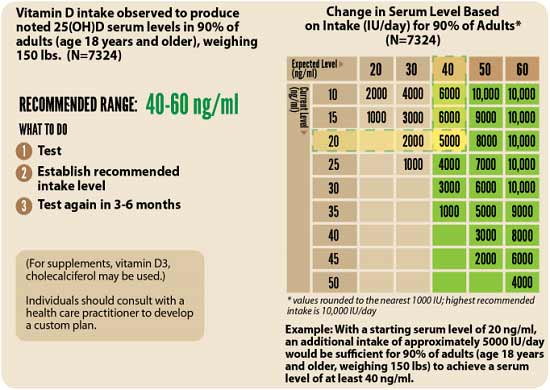
3. Retest in three to six months — Lastly, you’ll need to remeasure your vitamin D level in three to six months, to evaluate how your sun exposure and/or supplement dose is working for you.
Take Your Vitamin D With Magnesium and K2
It’s strongly recommended to take magnesium and K2 concomitant with oral vitamin D. Data from nearly 3,000 individuals reveal you need 244% more oral vitamin D if you’re not also taking magnesium and vitamin K2.9
What this means in practical terms is that if you take all three supplements in combination, you need far less oral vitamin D in order to achieve a healthy vitamin D level.

Frequently Asked Questions (FAQs) About Vitamin D Toxicity
Q: Why is vitamin D important for health, and how is it processed in my body?
A: Vitamin D supports your mental, skeletal, and immune health. It is produced in the skin from sun exposure, then converted in the liver to 25-hydroxyvitamin D, and finally activated in the kidneys as 1,25-dihydroxyvitamin D. This final form helps absorb calcium and maintain cell function.
Q: Can I have too much vitamin D? If so, what are the risks?
A: Yes, excessive vitamin D leads to hypercalcemia (high blood calcium), causing symptoms like fatigue, thirst, digestive issues, and even kidney failure. This occurs with chronic supplementation or consuming fortified foods unknowingly.
Q: How does vitamin D interact with calcium and other nutrients?
A: Vitamin D enhances calcium absorption from food, which is essential for bone, muscle, and nerve health. It works with parathyroid hormone (PTH) to maintain calcium balance. Supplementing with magnesium and vitamin K2 is also crucial, as they help vitamin D function efficiently and safely.
Q: What’s the safest way for me to get vitamin D from sunlight?
A: Expose your skin to sun just before it turns pink to avoid sunburn. If your diet is high in linoleic acid (from vegetable oils), it increases sun sensitivity. Reducing LA intake over time and using protective strategies (like astaxanthin or niacinamide) help your skin handle UV exposure better.
Q: How should I supplement vitamin D correctly?
A: Start by testing your blood levels. The optimal range is 60 to 80 ng/mL (150 to 200 nmol/L). Use tools like the DMinder app or GrassrootsHealth’s calculator to assess sun exposure and determine the right supplement dose. Retest every three to six months to adjust intake as needed.
Environmental Chemicals Increasingly Linked to Breast Cancer Risk
Reproduced from original article:
https://articles.mercola.com/sites/articles/archive/2025/03/26/triclosan-exposure-breast-cancer-risk.aspx
Analysis by Dr. Joseph Mercola March 26, 2025

STORY AT-A-GLANCE
- Women with moderate triclosan exposure face up to 2.33 times greater breast cancer risk
- Triclosan, found in 75% of Americans’ urine, is readily absorbed through skin and commonly appears in antibacterial products, cosmetics and even clothing, making its way into blood, breast milk and the food chain
- Exposure to environmental chemicals like DDT, dioxins and BPA during pregnancy, infancy or puberty significantly increases breast cancer risk decades later by disrupting normal development
- A 2023 study reveals triclosan’s cancer-promoting mechanisms, showing it increases oxidative stress that damages cells and affects telomere length, both of which contribute to breast cancer development
- Simple preventive steps include avoiding antimicrobial products, choosing organic produce, improving indoor air quality and carefully scrutinizing personal care product ingredients to reduce exposure to harmful chemicals
Breast cancer is on the rise worldwide, and research increasingly points toward the often-overlooked role of environmental chemicals like triclosan as key contributors to this escalating health crisis.
Chemicals are pervasive in daily life, from the plastics used to store your food to the ingredients in your personal care products, and the pollutants filling your air and water. Many of these substances, often unseen, mimic or disrupt your body’s delicate hormonal balance and interfere with essential biological processes, laying the groundwork for breast cancer to take hold and progress.
Triclosan Is a Key Culprit in Breast Cancer
A study published in the journal Scientific Reports explored the links between common endocrine-disrupting chemicals (EDCs) — specifically phenols and parabens — and the development of breast cancer in women.1 The study used extensive data from the National Health and Nutrition Examination Survey (NHANES), collected between 2005 and 2014.
The researchers examined urine samples from 4,455 women, quantifying levels of various phenols, including bisphenol A (BPA), triclosan and benzophenone-3, and parabens, such as methyl, ethyl, propyl and butyl paraben.
Among these chemicals, triclosan emerged as a key focus. The researchers found that women in the second quartile of triclosan exposure faced a 2.33 times greater risk and those in the third quartile had a 1.94 times greater risk of developing breast cancer when compared to women in the lowest exposure group.
Interestingly, the study revealed a complex, nonlinear relationship between triclosan exposure and breast cancer risk, specifically an inverted U-shaped curve. This pattern indicates that as triclosan exposure initially increases, the risk of breast cancer also rises, but then, at even higher exposure levels, the risk appears to plateau or slightly recede, though it remains elevated compared to the lowest exposure group.
Overweight women had a stronger association between triclosan exposure and breast cancer risk. Similarly, women under the age of 60, as well as White women, also had a more pronounced connection. While other phenols and parabens were not linked to an overall increased risk of breast cancer in this study, ethyl and butyl paraben exposure were found to increase breast cancer risk specifically among lean women.
Study Reveals Mechanisms Behind Triclosan’s Breast Cancer Link
A 2023 study published in Frontiers in Public Health adds more fuel to the fire regarding triclosan’s dangers, particularly its link to breast cancer.2 Researchers looked at 302 women with breast cancer and compared them to 302 healthy women. They found a clear connection between higher levels of triclosan in the urine and an increased risk of breast cancer. The paper then explains how triclosan is causing this increased risk.
The researchers focused on oxidative stress, which is an imbalance of free radicals and antioxidants in your body. Oxidative stress damages your cells, including your DNA. The researchers measured several markers of oxidative stress and found that women with higher triclosan levels also had higher levels of these markers. This suggests that triclosan contributes to breast cancer by ramping up oxidative stress in the body.
The study also looked at telomeres, which are like protective caps on the ends of your chromosomes. Shorter telomeres have been linked to an increased risk of cancer. Interestingly, this study found a connection between triclosan exposure and longer telomeres, which, surprisingly, has also been linked to breast cancer risk. Triclosan’s influence on telomeres reveals another pathway by which it increases cancer risk.
Save This Article for Later – Get the PDF Now
Triclosan Is Found in Many Everyday Products
Triclosan is an antimicrobial agent incorporated into a vast range of everyday products, from antibacterial soaps and toothpastes to cosmetics and even clothing. Its primary function is to inhibit the growth of bacteria and fungi, extending product shelf life and appealing to consumer desires for cleanliness. However, this additive carries an undesirable trait: it’s readily absorbed into the human body.
Alarmingly, triclosan has been detected in human blood, urine and even breast milk, with widespread exposure across populations. In fact, 75% of the U.S. population has triclosan in their urine.3
This pervasive presence raises concerns, particularly given triclosan’s classification as an endocrine disruptor. Its chemical structure resembles thyroid hormones and several known endocrine disruptors like diethylstilbestrol (DES) and BPA, raising red flags for hormonal interference.
At low concentrations, triclosan appears to increase the growth of estrogen-sensitive breast cancer cells, suggesting it behaves like estrogen. Estrogen plays a complex role in breast cell growth and development. When this signaling is disrupted by chemicals like triclosan, it promotes abnormal cell proliferation, fueling the growth of tumors.
Further, triclosan has been linked to thyroid dysfunction, which itself has been associated with an increased risk of breast cancer. Beyond breast cancer, concerns extend to other developmental and health issues, including smaller head circumference at birth, early breast development in girls and even the promotion of antibiotic resistance and allergies.4
Because triclosan is used in so many personal care products, it often ends up being washed down the drain after use. Triclosan persists through wastewater treatment and accumulates in sewage sludge. This sludge is often used as fertilizer, allowing triclosan to be absorbed by plants, including food crops, introducing this harmful chemical into the food chain.
Early-Life Exposure to Chemicals Increases Breast Cancer Risk Later in Life
In a review published in Environmental Research, numerous epidemiological studies — research that tracks disease patterns in populations — were evaluated against established biological knowledge of how various chemicals interact with the human body at the cellular level.5 By merging these two streams of evidence — population trends and biological understanding — the review achieves a powerful perspective on the environmental chemical-breast cancer link.
The in-depth review found that early life exposures to certain environmental chemicals are particularly concerning for breast cancer risk later in life. Exposure during key windows of development — in utero, during infancy and throughout puberty — has lasting effects and increases vulnerability to breast cancer decades later.
The review specifically pinpoints persistent and pervasive chemicals like DDT and dioxins, along with perfluorooctane-sulfonamide (PFOSA), as posing significant risks when exposure occurs early in life.
Early-life exposure to endocrine disruptors like DDT and dioxins has particularly devastating effects on mammary gland development. Since these chemicals mimic or block natural hormones, it sends confusing signals to developing breast cells, altering their normal growth patterns and ultimately increasing cancer susceptibility. Beyond endocrine disruption, the review details other mechanisms at play.
Polycyclic aromatic hydrocarbons, or PAHs, and air pollution are highlighted as significant risk factors, particularly through the mechanism of DNA damage. PAHs, produced by burning fossil fuels and found in vehicle exhaust and industrial emissions, and components of general air pollution directly damage DNA, the very blueprint of your cells. This DNA damage, if not properly repaired, leads to mutations that drive cancer development.
Other widely used chemicals in consumer products were also named in the review. For instance, BPA, an endocrine disruptor with estrogenic activity, and phthalates and nonylphenols also exhibit endocrine-disrupting properties and have been linked to altered mammary gland development in animal models. Hair dyes and straighteners contain aromatic amines and formaldehyde, respectively, both of which have raised carcinogenicity concerns.
Per- and polyfluoroalkyl substances, commonly known as PFAS, are persistent chemicals with evidence of mammary gland effects and links to cancer. Flame retardants, including PBDEs, also show evidence of endocrine disruption and altered mammary gland development in animal studies.
The review reinforces the conclusion that environmental chemicals are not merely bystanders but active players in the development of breast cancer. It is not just about one or two isolated chemicals; it’s about the complex mixture of exposures you face daily and the cumulative impact these exposures have over your lifetime, especially when exposure occurs during important periods of development.
Proactive Steps to Reduce Your Chemical Exposure
While the risks posed by environmental chemicals is significant, remember that you’re not powerless. You can take meaningful steps to reduce your exposure and lessen your risk of breast cancer and other related health problems. It starts with making informed choices in your daily life and being proactive about your health. Every small change you make to reduce your chemical burden contributes to a healthier you.
1. Scrutinize your personal care products — Personal care products are a common source of triclosan, phthalates and nonylphenols. Start reading labels and opt for products specifically labeled “phthalate-free,” “triclosan-free” and “nonylphenol-free.” In addition, switch to simpler products with fewer ingredients, focusing on natural and organic options whenever possible. Your skin is absorbent, so what you put on your body matters.
2. Avoid antimicrobial products — Avoid “antimicrobial” soaps, toothpastes and other products claiming to be antimicrobial and containing triclosan or 5-chloro-2-(2,4-dichlorophenoxy)phenol — another name for triclosan. Wash your hands with plain soap and water. Antibacterial soaps are no more effective than plain soap for killing germs for everyday activities.
3. Peel your carrots and other root vegetables, or buy organic — Vegetables (especially the outer layer of roots) may be contaminated if sewage sludge is used as a fertilizer.6 Sewage sludge is not allowed in organic farming, so choosing organic produce is wise when possible.
4. Improve your indoor air quality — The air you breathe daily in your home is likely polluted with PAHs, flame retardants and other chemicals. Ensure your home is well-ventilated by opening windows regularly to circulate fresh air and reduce the build-up of indoor pollutants.
Vacuum and dust frequently to minimize dust, which is a significant source of triclosan, flame retardants and other chemicals. An air purifier with a HEPA filter is also a worthwhile investment to further cleanse your indoor air.
5. Consider natural progesterone for estrogen balance — If you’re concerned about the cumulative effects of xenoestrogens — estrogen-mimicking chemicals like triclosan — on your hormonal balance, consider natural progesterone. Natural progesterone works as an estrogen antagonist and helps mitigate some of the negative effects of excessive estrogen in your body.
How to Use Progesterone
Before you consider using progesterone, it is important to understand that it is not a magic bullet, and that you get the most benefit by implementing a Bioenergetic diet approach that allows you to effectively burn glucose as your primary fuel without backing up electrons in your mitochondria that reduces your energy production. My new book, “Your Guide to Cellular Health: Unlocking the Science of Longevity and Joy,” covers this process in great detail.
Once you have dialed in your diet, an effective strategy that can help counteract estrogen excess is to take transmucosal progesterone (i.e., applied to your gums, not oral or transdermal), which is a natural estrogen antagonist. Progesterone is one of only three hormones I believe many adults can benefit from. (The other two are DHEA and pregnenolone.)
I do not recommend transdermal progesterone, as your skin expresses high levels of 5-alpha reductase enzyme, which causes a significant portion of the progesterone you’re taking to be irreversibly converted primarily into allopregnanolone and cannot be converted back into progesterone.
Ideal Way to Administer Progesterone
Please note that when progesterone is used transmucosally on your gums as I advise, the FDA believes that somehow converts it into a drug and prohibits any company from advising that on its label. This is why companies promote their progesterone products as “topical.”
However, please understand that it is perfectly legal for any physician to recommend an off-label indication for a drug to their patient. In this case, progesterone is a natural hormone and not a drug and is very safe even in high doses. This is unlike synthetic progesterone called progestins that are used by drug companies, but frequently, and incorrectly, referred.
Dr. Ray Peat has done the seminal work in progesterone and probably was the world’s greatest expert on progesterone. He wrote his Ph.D. on estrogen in 1982 and spent most of his professional career documenting the need to counteract the dangers of excess estrogen with low LA diets and transmucosal progesterone supplementation.
He determined that most solvents do not dissolve progesterone well and discovered that vitamin E is the best solvent to optimally provide progesterone in your tissue. Vitamin E also protects you against damage from LA. You just need to be very careful about which vitamin E you use as most supplemental vitamin E on the market is worse than worthless and will cause you harm not benefit.
It is imperative to avoid using any synthetic vitamin E (alpha tocopherol acetate — the acetate indicates that it’s synthetic). Natural vitamin E will be labeled “d alpha tocopherol.” This is the pure D isomer, which is what your body can use.
There are also other vitamin E isomers, and you want the complete spectrum of tocopherols and tocotrienols, specifically the beta, gamma, and delta types, in the effective D isomer. As an example of an ideal vitamin E, you can look at the label on our vitamin E in our store. You can use any brand that has a similar label.
You can purchase pharmaceutical grade bioidentical progesterone as Progesterone Powder, Bioidentical Micronized Powder, 10 grams for about $40 on many online stores like Amazon. That is nearly a year’s supply, depending on the dose you choose.
However, you will need to purchase some small stainless steel measuring spoons as you will need a 1/64 tsp, which is 25 mg and a 1/32 tsp, which is 50 mg. A normal dose is typically 25 to 50 mg and is taken 30 minutes before bed, as it has an anti-cortisol function and will increase GABA levels for a good night’s sleep.
If you are a menstruating woman, you should take the progesterone during the luteal phase or the last half of your cycle, which can be determined by starting 10 days after the first day of your period and stopping the progesterone when your period starts.
If you are a male or non-menstruating woman, you can take the progesterone every day for four to six months and then cycle off for one week. The best time of day to take progesterone is 30 minutes before bed as it has an anti-cortisol function and will increase GABA levels for a good night’s sleep.
This is what I have been personally doing for over a year with very good results. I am a physician so do not have any problems doing this. If you aren’t a physician, you should consult one before using this therapy, as transmucosal progesterone therapy requires a doctor’s prescription.
SHOCKING: Your kitchen utensils may be poisoning you, researchers warn
Reproduced from original article:
https://www.naturalhealth365.com/shocking-your-kitchen-utensils-may-be-poisoning-you-researchers-warn.html
by: Patrick Tims, staff writer | March 4, 2025
 (NaturalHealth365)
New research published in Chemosphere reveals an alarming reality: everyday kitchen utensils may quietly harm your well-being. The research reveals the extent to which some cooking tools, particularly ones contaminate food with deadly toxins while we cook.
This new proof defies our assumptions regarding the safety of common household products that we use to make everyday meals.
The culprits in your kitchen drawer
Black plastic kitchenware is a serious problem. Most contain harmful chemicals like flame retardants, colorants, and other additives that can migrate into food during cooking. The study cites black non-stick cookware, plastic cutting boards, and plastic utensils as particular causes of chemical contamination.
Even though plastic kitchenware is convenient, cheap, and easy to clean, these benefits are paid for with a potential cost to your health. The longevity and ease of cleaning that sell the products to consumers cannot be worth the potential health risks they provide.
Scientists are most concerned with long-term exposure through regular food preparation.
Black spatulas, plastic forks and knives, and certain pans release toxic chemicals such as decabromodiphenyl ether (decaBDE), a flame retardant found in household goods. The chemical has been linked to thyroid and hormone disruption, cancer risks, and developmental issues in children. What makes these pollutants sneaky is that they are invisible – there is no way for consumers to know they are there.
Even more alarming, many of those toxic chemicals are recycled from electronics. Manufacturers put flame retardants in kitchenware in the guise of making kitchens safer against fire, but in doing so, they cause significant health risks that can outweigh any safety advantage.
The research findings: A closer look at the evidence
The in-depth study screened 203 black plastic items purchased from stores and online retailers for cooking, hair items, or food service ware. Researchers illustrated the prevalence of toxic chemicals in these products through advanced analytical techniques.
The research was exhaustive. Researchers employed X-ray spectrometry to analyze the chemical composition. They conducted dissolution tests by cutting products into micro-pieces, adding toluene, and storing them in glass tubes for detailed analysis.
The researchers uncovered some scandalous results:
- 85% of black plastic consumer goods analyzed had lethal flame retardants
- The average person is exposed to 34.7 parts per million of the chemicals on a daily basis
- Even small exposure can result in bioaccumulation, building up to toxic levels over time as these chemicals build up in body tissues
In addition, plastic cutting boards possess their own unique dangers. A single cut – slicing, chopping, or dicing – can shed around 1,114 microplastic pieces (about 15mg) onto food. Microplastics don’t simply travel through the human body; they are absorbed into the blood and can cause serious health conditions like blockage of arteries, heart attack, stroke, damage to DNA, and several types of cancers.
The cumulative effect of daily exposure poses the most significant concern. While a single exposure may introduce only trace amounts of these chemicals, their persistent nature means they accumulate in body tissues over time, potentially reaching harmful levels after months and years of routine cooking activities.
Healthier alternatives for your kitchen
To minimize exposure to these poisons, substitute offending cookware with safer options that can be simply incorporated into your daily cooking routine:
- Replace plastic cutlery with old-school metal silverware, which will not leach chemicals into food and offers improved durability
- Substitute non-stick pans with stainless steel or cast iron cookware. Though stainless steel may take a bit longer to preheat, it offers a safer cooking surface free of potentially toxic substances
- Substitute plastic cutting boards with tempered glass cutting boards, offering a non-porous, chemical-free surface that is resistant to bacterial contamination and doesn’t release microplastics when foods are being prepared.
- As an alternative to glass, opt for solid wood cutting boards without glue-based adhesives if glass seems impractical. Choose boards constructed from a single piece of wood rather than composite materials that can contain chemical adhesives. Keep in mind that these natural alternatives must be hand-washed rather than dishwasher-cleaned
These small changes can reduce your daily exposure to potentially hazardous chemicals without sacrificing cooking performance. While the initial cost of higher-quality cookware may be greater, the possible health benefit makes this a worthwhile investment for health-conscious consumers.
By making informed decisions about the utensils we use to cook our food, we can create a healthier kitchen environment that encourages rather than potentially compromising our health and well-being.
Sources for this article include:
Carrageenan’s Gut Health and Insulin Risks
Reproduced from original article:
https://articles.mercola.com/sites/articles/archive/2025/02/05/carrageenans-gut-health-and-insulin-risks.aspx
Analysis by Dr. Joseph Mercola February 05, 2025

STORY AT-A-GLANCE
- Carrageenan, a common food additive, is linked to insulin resistance and gut inflammation by increasing intestinal permeability and promoting systemic inflammation
- A study found that carrageenan intake led to reduced insulin sensitivity and increased inflammatory markers in overweight participants, suggesting a disruption in gut barrier function
- Animal studies have shown that carrageenan causes intestinal lesions and promotes cancer, with degraded carrageenan being particularly associated with carcinogenic effects
- The mechanism by which carrageenan causes harm involves macrophage infiltration and lysosomal disruption, leading to inflammation and tumor formation
- Avoid processed foods to reduce your exposure to carrageenan, as many contain this toxic additive
Carrageenan, a common food additive used to enhance texture in products like dairy and meat, is under scrutiny for its health risks. This widespread ingredient, known scientifically as E 407, has been linked to insulin resistance and chronic inflammation in the gut.
Insulin resistance is a condition where your body’s cells don’t respond effectively to insulin, leading to elevated blood sugar levels. Characterized by fatigue, increased hunger and weight gain, insulin resistance is a precursor to Type 2 diabetes — a disease affecting millions worldwide. Research published in BMC Medicine highlights that carrageenan disrupts your body’s insulin sensitivity, especially if you carry extra weight.1
As carrageenan consumption has surged over the past decades, understanding its impact on metabolic health is important for public health. The BMC Medicine study underscores the need for caution regarding consumption of carrageenan-containing foods. Future research must further investigate the long-term health effects of carrageenan to ensure public safety and well-being.
Understanding Carrageenan’s Risks to Health
Carrageenan is commonly found in processed foods, particularly those marketed as low-fat or dairy alternatives. While carrageenan is used for its gelling and emulsifying properties, concerns have arisen about its impact on gut health and metabolic processes.
One primary concern is its ability to increase intestinal permeability, often referred to as “leaky gut.” This condition allows harmful substances to pass through your gut lining into your bloodstream, triggering systemic inflammation. Additionally, carrageenan has been shown to activate immune cells, leading to the release of proinflammatory cytokines.
These immune responses exacerbate existing health conditions, particularly in those already predisposed to metabolic disorders. The interaction between carrageenan and the gut microbiome is another area of concern, as it disrupts the balance of beneficial bacteria, further contributing to health issues.
Explaining how these underlying causes lead to health problems involves understanding your body’s complex response to carrageenan. When intestinal permeability increases, it sets off a chain reaction. Harmful substances that should remain confined to your gut enter your bloodstream, prompting the immune system to respond. This immune activation can lead to chronic inflammation, a known precursor to various diseases, including Type 2 diabetes.
The disruption of the gut microbiome also impairs digestion and nutrient absorption, compounding the negative effects on overall health. These processes illustrate how a seemingly innocuous food additive has far-reaching consequences.
Diagnosing issues related to carrageenan consumption is challenging. Many symptoms, such as digestive discomfort and fatigue, are nonspecific and attributed to numerous other conditions. This overlap makes it difficult for healthcare professionals to pinpoint carrageenan as the culprit.
The diagnostic process often falls short due to the complexity of symptoms and the limited awareness of carrageenan’s health impacts. Many healthcare providers don’t consider food additives as a primary factor in their assessments, focusing instead on more common dietary or lifestyle factors.
As research continues to uncover the risks associated with carrageenan, it becomes increasingly important for both healthcare providers and consumers to be informed about its health implications.
Carrageenan Intake Significantly Impacts Insulin Sensitivity and Gut Health
The BMC Medicine study investigated the effects of carrageenan on insulin resistance, subclinical inflammation and intestinal health in humans.2 The research specifically aimed to determine how carrageenan consumption influences metabolic processes and gut integrity, shedding light on its role in chronic health issues.
The study involved 20 young, nonobese men with an average age of 27.4 years and a body mass index (BMI) of 24.5.3 These participants were exposed to carrageenan or a placebo over a two-week period, with a subsequent washout period to assess the lasting impacts of the additive.
The findings indicated that carrageenan intake did not significantly alter overall insulin sensitivity; however, in overweight participants, it was associated with reduced whole-body and hepatic insulin sensitivity.4
Carrageenan was also found to increase intestinal permeability. This disruption of the intestinal barrier was evidenced by higher lactulose absorption and elevated circulating zonulin levels, a protein associated with gut permeability.5 The study noted that participants who consumed carrageenan showed a significant rise in zonulin levels compared to those who took a placebo, underscoring the compound’s impact on gut integrity.6
Furthermore, those exposed to carrageenan had a “trend towards increased brain inflammation, and elevated C-reactive protein (CRP) and IL-6 levels,” while carrageenan exposure also activated natural killer (NK) cells and increased the release of proinflammatory cytokines such as IL-6.7
These immune responses contribute to a state of subclinical inflammation, which is a precursor to various chronic diseases, including Type 2 diabetes. The activation of NK cells in response to carrageenan suggests that the additive plays a direct role in promoting inflammatory pathways within the body.8
The study also highlighted that carrageenan-induced insulin resistance was more pronounced in individuals with higher BMIs.9 Participants with higher body mass experienced a greater decline in insulin sensitivity and increased levels of inflammatory markers like CRP and IL-6 during carrageenan intake.10 This suggests that carrageenan may exacerbate metabolic issues in overweight individuals, leading to more severe health complications over time.11
In summary, this study provides compelling evidence that carrageenan consumption can significantly disrupt metabolic and intestinal functions, particularly in individuals with higher body mass. The additive’s role in increasing gut permeability and promoting inflammation underscores the need for further investigation into its long-term health effects.12
Save This Article for Later – Get the PDF Now
Carrageenan’s Harmful Effects on the Gastrointestinal System
A research review further investigated the adverse effects of carrageenan on the gastrointestinal systems of various animals. The research aimed to determine how carrageenan contributes to chronic inflammatory bowel disease, ulcers and even cancer in different animal models.13
The study utilized a diverse group of animals, including guinea pigs, rats, monkeys, mice, rabbits, and ferrets. These animals were exposed to both undegraded and degraded forms of carrageenan to assess its impact. The findings revealed a strong association between carrageenan consumption and the development of intestinal tumors and ulcerations. Notably, degraded carrageenan was identified as a potential carcinogen, raising significant health concerns.14
One of the most striking outcomes was the high incidence of colonic tumors in rats. When rats were fed a diet containing 10% degraded carrageenan for less than two years, 32% developed colonic tumors.15 Further, exposing animals to 5% degraded carrageenan in their drinking water resulted in a 100% incidence of colonic metaplasia after just 15 months. Colonic metaplasia refers to the abnormal transformation of cells in the colon, which is often a precursor to cancer.16
The study also highlighted the severe gastrointestinal lesions caused by carrageenan. In various animal models, carrageenan exposure led to the formation of polypoidal lesions and significant, irreversible changes in the rectal mucosa.
These ulcerative lesions closely resembled those seen in human ulcerative colitis, a chronic inflammatory condition of the colon.17 Such similarities suggest that carrageenan could trigger similar inflammatory processes in humans, leading to serious bowel diseases.
Carrageenan Breaks Down in Your Stomach, Posing Health Risks
Biologically, carrageenan undergoes a chemical transformation during digestion. In the acidic environment of your stomach, carrageenan breaks down into smaller molecules, known as degraded carrageenan, which are more harmful.18
This degradation increases carrageenan’s ability to penetrate your intestinal barrier, allowing it to reach deeper tissues and organs. Once inside your body, carrageenan causes epithelial cell loss and erosion, weakening your gut lining and making it more susceptible to infections and inflammation.19
One mechanism by which carrageenan induces these harmful effects is through macrophage infiltration. Macrophages are immune cells that respond to foreign substances in your body. When carrageenan is present, it attracts macrophages to the intestinal walls, leading to an inflammatory response. This inflammation not only damages your gut lining but also disrupts normal cellular functions, paving the way for tumor formation and chronic diseases.20
Another important aspect of carrageenan’s harmful action is its ability to cross your intestinal barrier and accumulate in lymph nodes. This accumulation further exacerbates immune responses, leading to systemic inflammation.21 Furthermore, carrageenan’s interaction with lysosomes, which are your cell’s recycling centers, leads to their disruption. When lysosomes are damaged, they release enzymes that break down cellular components indiscriminately.22
The study also noted that the harmful effects of carrageenan are dose-dependent and related to the duration of exposure. Higher doses and longer exposure periods resulted in more severe gastrointestinal damage and a higher likelihood of tumor development.23 This dose-response relationship underscores the importance of minimizing carrageenan intake to reduce your risk of chronic health issues.
The study’s findings have significant implications for human health, especially considering the widespread use of carrageenan in processed foods. The evidence from animal models strongly suggests that carrageenan consumption could lead to similar gastrointestinal problems in humans, including chronic inflammation and an increased risk of colorectal cancer.24 These results call for a reevaluation of carrageenan’s safety in food products to protect public health.
Simple Steps to Avoid Carrageenan and Protect Against Its Harmful Effects
To safeguard your cellular health from carrageenan’s detrimental impacts on insulin sensitivity and gut integrity, adopt a comprehensive strategy that eliminates carrageenan exposure while enhancing your body’s natural healing capabilities. Follow these steps:
1. Avoid processed foods — Eliminate processed foods from your diet, as many contain carrageenan. For processed foods you’re considering, carefully scrutinize their ingredient lists.
If carrageenan is listed, avoid the product and choose cleaner alternatives that align with optimal health guidelines. The Cornucopia Institute has an online guide to avoid carrageenan in organic foods.25 Also avoid carrageenan-containing supplements to further protect your health.
2. Make your own alternatives — Replace commercial dairy products, like yogurt, and creamy soups, which often contain carrageenan, with homemade versions. This approach ensures full control over ingredients, eliminating unnecessary additives. Use milk sourced from grass fed cows and natural thickeners like grass fed cream or pureed vegetables to achieve the desired texture and flavor without compromising your health.
3. Enhance your cellular energy production — Boost your body’s natural ability to maintain a healthy gut barrier by optimizing your mitochondrial function, which is essential for cellular energy production.
Your mitochondria produce adenosine triphosphate (ATP), the essential fuel that keeps your cells running and repairing themselves. Without energy, your cells can’t repair and regenerate themselves. So, the fundamental issue underlying most chronic disease is that your cells are not producing enough energy.
By avoiding mitochondrial poisons, including linoleic acid (LA) in seed oils, synthetic endocrine-disrupting chemicals (EDCs), estrogen and pervasive electromagnetic fields (EMFs), you protect your mitochondrial health and boost cellular energy, so your body is better able to recover from exposure to toxins like carrageenan.
- 1, 2, 3, 4, 5, 6, 7, 8, 9, 10, 11, 12 BMC Medicine November 26, 2024; 22:558
- 13, 14, 15, 16, 17, 18, 19, 20, 21, 22, 23, 24 Environmental Health Perspectives October 2001, Volume 109, Number 10
- 25 The Cornucopia Institute, Guide to Avoiding Carrageenan in Organic Food
How This Chemical in Everyday Products Might Be Harming Your Health
Reproduced from original article:
https://articles.mercola.com/sites/articles/archive/2025/02/05/formaldehyde-exposure.aspx
Analysis by Dr. Joseph Mercola February 05, 2025

STORY AT-A-GLANCE
- Formaldehyde, a common chemical in household products like furniture and building materials, poses significant health risks including cancer, asthma and fertility problems, according to investigations by the U.S. Environmental Protection Agency (EPA)
- A long-awaited EPA report, released in 2024, downplayed formaldehyde risks, particularly for workers and people near industrial zones, amid pressure from chemical industry groups and political figures
- Formaldehyde “off-gases” from products over time, especially in warm environments, making it particularly concerning in indoor spaces like homes and workplaces where people spend significant time
- Studies show formaldehyde exposure increases asthma risk in children, and each increase of 10 micrograms per cubic meter leads to a 10% higher risk
- Consumers will be able to reduce exposure by ensuring good ventilation, choosing low-emission products, letting new furniture air out and staying informed about product labels and safety standards
Visualize yourself walking into a new home and noticing a strange, sharp smell. While you may think it’s coming from the fresh coat of paint, that smell also lurks in cleaning products or even your brand-new furniture. This invisible culprit in your home is formaldehyde, a chemical found in many everyday products.
Formaldehyde Is Dangerous to the Public
While formaldehyde has various industrial uses, an investigation by ProPublica1 on a report2 by the U.S. Environmental Protection Agency (EPA) raises concerns about its potential health risks in our daily lives.3 Specifically, it’s been found to cause cancer more compared to other chemicals released in the air, and that it also causes a host of other health issues, such as asthma, miscarriage and fertility problems.4
However, the report doesn’t end there. What’s more concerning is that the EPA downplayed the threat formaldehyde poses to people living in factories and industrial zones that release it into the air. Why? The most logical answer is that the chemical industry is colluding with certain high-ranking government officials. As noted in ProPublica’s analysis:5
“While a note accompanying the EPA’s report stated that workers have the greatest exposure to the chemical, the agency’s risk assessment adopted weaker standards for protecting workers from formaldehyde than had been proposed in a previous draft …
But even before the agency released the report, House Republicans urged the administration to invalidate it. And a chemical industry group immediately attacked the report as flawed, accusing the EPA of ‘pursuing unaccountable lame duck actions that threaten the U.S. economy and key sectors that support health, safety and national security’ …
When Trump first assumed office in 2017, the agency was preparing to publish a report on the toxicity of the chemical. But one of his EPA appointees, who was given a high-ranking role in the agency’s Office of Research and Development, was a chemical engineer who had worked to fend off the regulation of formaldehyde as an employee of Koch Industries, whose subsidiary made formaldehyde and many products that emit it.
The report was not released until August 2024, long after Trump’s appointee left the agency.”
As noted in ProPublica’s investigation, the previous draft of the EPA’s report, created back in March 2024, already had a final assessment saying that the health risks “are not unreasonable.” To make things worse, both the first and final drafts concluded that “formaldehyde in outdoor air isn’t a threat that needs to be addressed.”
This puts the people living near industrial areas (known as fence line areas) at risk with little hope of government protection because the regulations aren’t leaning towards their health and safety.6
What Is Formaldehyde and Where Do We Encounter It?
Formaldehyde is a simple organic molecule, similar to the building blocks of other familiar chemicals like sugar and vinegar. In its pure form, it’s a gas with a pungent odor. However, it’s often used in a liquid form combined with other chemicals in various products.
Think of pressed wood furniture like desks, bookshelves or cabinets. The glue that holds these wood pieces together often contains formaldehyde. Similarly, building materials like plywood, laminate flooring and even some types of insulation contain formaldehyde. Beyond construction materials, formaldehyde is found in certain glues, some fabrics like wrinkle-free clothes and even nail polish removers.
One of the main concerns with formaldehyde is its tendency to “off-gas,” meaning it slowly releases from these products as a gas over time, especially in warm or humid environments. This invisible gas then becomes part of the air you breathe indoors. Interestingly, the “new car smell” you experience is partly due to formaldehyde off-gassing from interior materials.7
While everyone encounters some level of formaldehyde throughout life, certain professions have a higher risk of exposure. For example, employees in tire manufacturing plants, hairdressers who use products with formaldehyde-based preservatives and furniture makers are at increased risk of inhaling higher levels.8
Save This Article for Later – Get the PDF Now
The Unreasonable Risk — Formaldehyde and Health Concerns
According to the U.S. Centers for Disease Control and Prevention (CDC), formaldehyde exposure causes a range of health problems, depending on the level and duration of exposure. Generally, it irritates the eyes, nose and throat.9 This is similar to the discomfort you experience from exposure to strong cleaning products.
But, as noted by the ProPublica report, there’s a more concerning issue — the link between formaldehyde exposure and an increased risk of certain cancers, particularly nasopharyngeal cancer.10
Beyond cancer, formaldehyde exposure is also linked to respiratory problems like asthma, especially in children. In one study, researchers noted that children exposed to formaldehyde at home are more likely to develop asthma. Specifically, they noted that each time formaldehyde exposure increases by 10 micrograms per cubic meter, the risk of asthma also goes up by 10%.11
Industry vs. Regulations — Who Will Prevail?
The EPA report concluded that formaldehyde exposure poses an “unreasonable risk” to human health, raising concerns for consumers and prompting calls for stricter regulations.12,13 But, as the ProPublica report stated, the EPA was criticized for its initial assessment.
The American Chemistry Council argues that stricter regulations will significantly impact jobs and the economy since formaldehyde is a “building block” chemical.14,15 Regulations for improved safety are currently under attack as well. Unsurprisingly, the EPA gave in:
“Compared to the draft published in March, which was heavily criticized by industry, the final version contained weaker standards for protecting workers. The acceptable levels of workplace formaldehyde exposure set in the final version of the assessment were significantly higher than the levels in the earlier draft of the report …
Last month, Rep. Pete Sessions, R-Texas, urged the incoming administration to make revisiting the Biden EPA’s work on formaldehyde ‘a top priority for 2025.’
In a letter to Lee Zeldin, Trump’s pick to run the agency, Sessions derided this week’s report as ‘based upon unscientific data that was utilized by unaccountable officials at the EPA to tie the hands of the new Administration and hamper economic growth.’ (The letter was first reported by Inside EPA.)
Sessions, who is a co-chair of the new Delivering Outstanding Government Efficiency caucus and a staunch ally of Trump, recommended scrapping the EPA’s assessments of formaldehyde and reversing course on ‘broader Biden policies’ on chemicals.”
The ongoing debate must center on finding the right balance. Stricter regulations will lead to the development of safer alternative materials and practices. However, immediate changes will have economic consequences. As such, scientists, government agencies and industry leaders should work together to find solutions that prioritize both public health and economic stability.
Simple Steps for a Safer Home
Based on the published reports, it’s clear that formaldehyde presents a clear danger to your health. While authorities figure out a way to balance regulations and economic growth, there are several strategies available to minimize your exposure to formaldehyde at home and create a healthier environment.
The first step is prioritizing good ventilation. Open windows and doors whenever possible to allow fresh air to circulate and dilute any formaldehyde off-gasing. Additionally, use exhaust fans in kitchens your kitchen, making sure to turn them on whenever you’re cooking.16
When purchasing new furniture or building materials, look for products labeled as “low-emission” or “formaldehyde-free.” These products are designed to release minimal amounts of formaldehyde into the air. While they may be slightly more expensive, the long-term health benefits are worth considering. Most furniture is made using different wood composites held together by glue to bind everything together. As noted in a January 2025 report by Children’s Health Defense:17
“The adhesives used in this type of furniture can contain formaldehyde, which goes through a process called off-gassing, where the chemical is released into the air over time. Federal regulators have set limits on how much of the chemical some composite woods can release.
But those limits, set more than a decade ago, are still well above the level that EPA scientists recently established to protect people from asthma, allergic reactions and other breathing problems.
So, at the very least, you want to look at the item’s packaging for a label that shows it is compliant with the standards set under the Toxic Substances Control Act (TSCA).”
Another helpful tip is to let new furniture or carpets air out in a well-ventilated space for several days before bringing them indoors. This allows most of the initial formaldehyde to off-gas before you start using the furniture.18
Stay Informed for a Healthy Future
Staying informed about the latest research and regulations regarding formaldehyde exposure is crucial for protecting you and your family’s health. Aside from government health agencies, various public organizations provide up-to-date information on the health risks and best practices for minimizing exposure. Frequently reading up on these sources will help you stay informed about any new findings or changes in regulations.
Consumer awareness and advocacy play a significant role in influencing industries to adopt safer practices. Thus, where you spend your money will be noticed by manufacturers.
By choosing products from companies that prioritize low emissions and transparency about their materials, consumers will eventually push manufacturers away from using formaldehyde. Supporting companies that prioritize health and safety sends a powerful message and encourages innovating safer alternatives.
Being aware of the symptoms of formaldehyde exposure is also important. If you have related concerns, especially if you experience persistent symptoms like respiratory problems, skin irritation or other unusual health issues, it’s important to discuss them with your doctor. They’ll assess your risk and provide personalized advice.
Taking Control of Your Indoor Air
Finally, consider adding some greenery to your home. Certain houseplants have been shown to help remove formaldehyde and other toxins from the air. While they won’t eliminate formaldehyde entirely, they’ll be able to contribute to a healthier indoor environment. For a list of the plants, read my article “The Importance of Reducing Indoor Pollution.” There, I give other tips, such as using a high-quality air purifier and cleaning appliances regularly.
The health risks associated with formaldehyde exposure, as highlighted by the ProPublica report, are a legitimate concern because most people are exposed to it. However, by taking proactive steps to minimize exposure in your home and workplace, you’ll significantly reduce your risk. Again, remember to turn on ventilation when cooking, choose low-emission products and be mindful of off-gasing from new items to make a real difference on your health.
While the issue of formaldehyde seems overwhelming considering how ubiquitous it is, remember that you have the power to make informed choices that help you take control of your health.
- 1, 3, 4, 5, 6, 12, 15 ProPublica January 3, 2025
- 2, 10, 13 EPA, December 2024
- 7 Forbes, April 15, 2023
- 8 Indoor Air. 2021 Oct 27;32(1):e12949, Results
- 9 U.S. CDC, Agency for Toxic Substances and Disease Registry, Public Health Statement for Formaldehyde
- 11 Indoor Air. 2020 Jul;30(4):682-690, Abstract
- 14, 17, 18 Children’s Health Defense, January 3, 2025
- 16 P65 Warnings, Formaldehyde
The History and Therapeutic Mechanisms Of Chlorine Dioxide
Reproduced from original article:
https://pierrekorymedicalmusings.com/p/the-history-and-therapeutic-mechanisms
Pierre Kory’s Medical Musings
Chlorine dioxide was discovered over 200 years ago. It’s use has steadily expanded into many industries and therapeutic applications despite a near global regulatory blockade on clinical research.
Jan 27, 2025
I believe that my writings on chlorine dioxide are the most important (and the most dangerous) work I have yet done on Substack. Although several experts have written extensively on this topic previously (here, here, and here), this similar effort of mine simply results from my wish to become as knowledgeable as possible about this critically important therapeutic (there is no better way to do so than personally researching and writing about a topic).
This is the 3rd in my ongoing series of posts. In the first two I presented the political context in which chlorine dioxide has been attacked during Covid (“Trump’s Bleach Conference”) and in the 2nd post I detailed the success achieved by Bolivia’s national chlorine dioxide program against Covid.
In this post I will review its discovery, chemical properties, industrial applications, and therapeutic mechanisms. Upcoming posts will cover the history of the attacks faced by the pioneering researchers and practitioners, followed by a review of the safety studies of oral ingestion and a compilation of studies showing efficacy in a number of diseases. Be sure to subscribe so as not to miss out on these critical upcoming posts.
Ultimately, what me and my growing network of clinical and scientific experts of this therapeutic compound want to achieve, is for the FDA (and the copycat regulatory agencies worldwide) to lift its restrictions on performing clinical research trials of chlorine dioxide in human diseases. If anyone from MAHA is reading this right now (and I know some are), please add chlorine dioxide (and DMSO) to the list of therapies currently being suppressed by the FDA that need to be reversed (RFK Jr listed more than a dozen other such therapies in the below recent tweet):

Note that, in the below, many (but not all) references were found from the superlative theuniversalantidote.com’s website, from their “interactive reference guidebook” document.
Chlorine Dioxide – What It is, What It Isn’t
Chlorine Dioxide is a small, volatile and strong molecule consisting of 1 chlorine atom and 2 oxygen atoms.
- It is a gas at normal temperatures and pressures.
- Yellowish/green color and has an odor similar to that of chlorine.
- Denser than air and is water soluble at standard temperatures and pressures up to 2500ppm.
- Explosive in air at concentrations >10%. It is therefore normally generated in-situ (on-site) within an aqueous solution at <0.3%
- Chlorine dioxide is a biocide. This means it kills all bacteria, viruses, and fungus on contact through a process of oxidization.
Chlorine dioxide was initially discovered in 1814 by Sir Humphrey Davy and was commercially produced in 1940 as a bleaching agent. It is labeled as a strong oxidizing agent, microbicide, and antiseptic. Based on these references here and here, chlorine dioxide is also known to have the ability to “neutralize various toxins, pesticides, herbicides, and pharmaceuticals contaminating drinking water.”
As an added bonus, it can do all of that without producing any harmful organic compounds as occurs with nearly all other disinfectants (like bleach – which contrary to FDA “warnings,” chlorine dioxide certainly is not).
Chlorine dioxide is more effective as a disinfectant than chlorine in most circumstances against waterborne pathogenic agents such as viruses, bacteria, and protozoa – including the cysts of Giardia and the oocysts of Cryptosporidium.
Chlorine dioxide has been extensively studied within multiple fields (commercial, industrial, healthcare) and by multiple entities including: EPA, HHS, USDA, CDC, NIH, NASA, DOD, independent laboratories, and universities worldwide.
Chlorine dioxide is registered as a sterilizer and biocide and is used to sterilize medical facilities and laboratories including BSL-3 and BSL-4 labs which handle the world’s most deadly pathogens. It was used to decontaminate the Senate offices in 2001 after the anthrax attack, and was also used in Ebola hot spots.
From this systematic review paper on chlorine dioxide as a disinfectant:
Different chemical structures with properties of disinfectants have been identified. These chemical structures include alcohol, aldehydes, anilides, biguanides, bisphenols, diamidines, halogen-releasing agents, halophenols, heavy metal derivatives, peroxygens, quaternary ammonium compounds, phenols, and cresols. However, each disinfectant attacks different target areas of the micro-organisms. Disinfectants can be divided into two broad groups: oxidizing and non-oxidizing disinfectants. Disinfectants containing halogens such as chlorine, iodine, and oxygen releasing materials are called oxidizing disinfectants, while disinfectants that bond to structures such as quaternary ammonium compounds and amphoterics are known as non-oxidizing disinfectants.
Oxidizing agents like chlorine dioxide are chemical compounds that accept electrons from “electron donors.” This is important because relative to chlorine dioxide, all pathogens (disease causing organisms or substances) are electron donors.
So what happens to chlorine dioxide after it reacts and oxidizes the pathogens? In aqueous systems, chlorine dioxide eventually decomposes into generally safe byproducts that naturally occur in our environment, i.e. chloride ions (like in table salt), oxygen (O₂), and other non-toxic residues.
From Chat GPT when asked to contrast chlorine dioxide with bleach:
Chlorine dioxide and bleach (sodium hypochlorite) are both powerful oxidizing agents commonly used as disinfectants, but they differ significantly in their chemical structure, mechanism of action, and applications. Here’s how they compare:
1. Chemical Composition
- Chlorine Dioxide (ClO₂): A gas at room temperature, typically dissolved in water for use. It is a single molecule composed of one chlorine atom and two oxygen atoms.
- Bleach (Sodium Hypochlorite, NaOCl): A liquid solution containing sodium hypochlorite as the active ingredient, along with water and small amounts of other chemicals.
2. Mechanism of Action
- Chlorine Dioxide: Kills microorganisms by disrupting their metabolic processes and breaking down cell membranes and proteins. It primarily reacts with organic matter through oxidation.
- Bleach: Also acts as an oxidizer, generating hypochlorous acid (HOCl) in water, which destroys bacteria and viruses by disrupting their enzymes and proteins.
3. By-products
- Chlorine Dioxide: Produces fewer harmful by-products, primarily chlorite and chlorate ions (initially), which are less persistent in water systems compared to bleach by-products.
- Bleach: Can produce potentially harmful chlorinated organic compounds (e.g., trihalomethanes and chloramines), especially when reacting with organic matter in water. (Editorial note: this is extremely important, trihalomethanes are suspected carcinogenic disinfection by-products[ associated with chlorination of naturally occurring organics in raw water.
4. Effectiveness
- Chlorine Dioxide: Remains effective over a wide pH range (4–10) and is less affected by the presence of organic matter, making it suitable for challenging disinfection tasks.
- Bleach: Its efficacy decreases significantly outside a pH range of 6–8 and in the presence of organic matter.
5. Applications
- Chlorine Dioxide:
- Water treatment (municipal, industrial, and potable water systems).
- Food and beverage sanitation.
- Medical disinfection and biofilm removal.
- Bleach:
- Household cleaning and laundry.
- Pool and spa disinfection.
- Surface disinfection in healthcare and other settings.
6. Safety and Stability
- Chlorine Dioxide: Typically generated on-site because it is unstable as a concentrated gas and can decompose explosively. However, it is considered safer for certain applications due to fewer toxic by-products.
- Bleach: Stable in liquid form but degrades over time, particularly when exposed to light and heat. It has a strong, recognizable smell and can be irritating to skin and respiratory systems.
7. Odor and Residue
- Chlorine Dioxide: Has a less pronounced odor and does not leave a strong chemical residue or taste in treated water.
- Bleach: Has a strong chlorine smell and can leave noticeable chemical residues.
Summary:
While both are effective disinfectants, chlorine dioxide is often preferred for applications requiring minimal by-products and effectiveness in diverse conditions, whereas bleach is more common for general-purpose household and industrial disinfection.
TIMELINE OF ITS ADOPTION ACROSS INDUSTRIES
Taken from pioneer Jim Humble’s website, here I provide a short paraphrased history of its use in industry where I also dug up the references:
1811: Chlorine dioxide is discovered by Sir Humphrey Davy, when he adds sulfuric acid (H2SO4) to potassium chlorate (KClO3). In the early 1900’s it was recognized as an antimicrobial biocide and became known for its disinfectant properties.
1930’s: Due to concerns about the logistics of safely transporting the gas, sodium chlorite began to be manufactured as a relatively safe precursor chemical, and the industries using chlorine dioxide would then generate the gas onsite as needed. Because of chlorine dioxide’s solubility in water, it starts being used as a water treatment.
1944: First commercial application. Used as a biocide/taste and odor control agent in domestic water at Niagara Falls in the USA.
1950’s: Increasing use of chlorine dioxide in water treatment plants and swimming pools in the U.S.A. Likewise it is discovered that chlorine dioxide destroys biofilm, the algal slime that collects in cooling towers, among other places and harbors harmful bacteria. Chlorine bleach by contrast cannot kill biofilm.
1956: Brussels, Belgium, switches to chlorine dioxide from chlorine for its drinking water disinfection operations. This marks the first large scale use of chlorine dioxide for potable water treatment.
1967: The Environmental Protection Agency (EPA) of the United States first registers chlorine dioxide as a disinfectant and sanitizer. The registration is for chlorine dioxide in the liquid form. Indicated uses include food processing (!), handling and storage plants, bottling plants, washing fruit and vegetables (!), sanitizing water, controlling odors, and treating medical wastes.
1970’s: The EPA begins recommending using chlorine dioxide instead of chlorine bleach to treat water. Hundreds of municipal water systems successfully convert to chlorine dioxide. This happens across the United States and Europe; more so for the latter. The conversion is catalyzed by a safer environmental profile of chlorine dioxide over chlorine, because chlorine dioxide does not produce any harmful byproducts, as does chlorine bleach.
1977: Three thousand municipal water systems achieve biological control using chlorine dioxide (EPA document here)
1980’s: Chlorine dioxide gradually replaces chlorine in many industries – in the pulp and paper industry as a bleaching agent, in industrial water treatment as a biocide and as an odor control agent, in food processing as a sanitizer.
1983: The EPA recommends chlorine dioxide as a solution for the problem of trihalomethanes (THMs). When chlorine is used to disinfect water and make it potable (chlorination), THMs are produced as a by-product. THMs have been linked to cancer (i.e., they are carcinogenic). Chlorine dioxide does not produce THMs.
1988: The EPA registers chlorine dioxide as a sterilizer. This means chlorine dioxide is both safe and effective to use in hospitals, healthcare facilities, and laboratories.
1990: Use of chlorine dioxide as a disinfectant, sanitizer and sterilizer grows across many industries and countries. Some of the industries are the beverage industry, fruit and vegetable processing plants, pulp and paper industries, and industrial waste treatment sites. These industries are spread across the United States, the United Kingdom and Europe.
2001: The Federal Emergency Management Agency (FEMA) and other government agencies use chlorine dioxide to decontaminate buildings contaminated with Anthrax. The chlorine dioxide was completely effective against the tiny Anthrax spores. The buildings, walls and furnishings suffered no damage from the treatment.
2005: FEMA again uses chlorine dioxide. It is used to eradicate mold infestations in homes damaged by the flood waters from Hurricane Katrina. After a 12-hour treatment, a New Orleans restaurant is able to banish all mold inside without rebuilding.
2010: The United States Food and Drug Administration issue a warning on using the chlorine dioxide formulation called Miracle Mineral Solution (MMS – made by combining sodium chlorite with hydrochloric acid) and pioneered by Jim Humble in his numerous treatment protocols. The FDA repeatedly describes it as industrial bleach while at the same time approving chlorine dioxide for use in mouthwashes, toothpastes, and as a food service disinfectant, citing it as being a better alternative than chlorine.
2014: The Centers for Disease Control (CDC) registers ProKure V and PERFORMACIDE® as disinfectants against the Ebola virus. Both contain chlorine dioxide. ProKure V claims it “begins to kill pathogens in a matter of seconds, whereas other commonly used, more traditional disinfectants take minutes. The rapid speed in which ProKure V kills pathogens makes it a product of choice for helping contain infectious-disease outbreaks and keeping public facilities cleaner and safer for everyone.” Chlorine dioxide is a potent virucide.”
EFFICACY AND SAFETY AS A BIOCIDE
Chlorine dioxide is one of, if not the fastest known and “complete spectrum” disinfectants, killing all forms of bacteria (aerobic, anaerobic, gram positive and negative), viruses, fungi and yeast, typically within a minute of contact, (spores a little longer), and notably without damage to animal cells, or even tissue culture cells.
In this mouse study (know that mice are more sensitive than humans to toxicities for many but not all compounds), they found that at concentrations between 5 and 20 ppm (this concentration becomes highly relevant in a later post when I discuss safety of oral treatment dose concentrations), chlorine dioxide killed almost all of the bacteria and fungi present while no damage to lung cells, eyes, or other organs was observed, even when 40ppm was added to their drinking water sub-chronically. The study concluded “chlorine dioxide showed favorable disinfection activity and a higher safety profile tendency than in previous reports.”
This is a very short list of papers showing in vitro and/or in vivo (animals) efficacy against a number of viruses and bacteria (more on this in a later post).
Typhoid, Norovirus, Hepatitis C virus, HPV, HIV, Influenza A Virus, E.Coli, Listeria, Rotavirus, Mycobacterium Avium, Hepatitis A Virus, staph aureus, also hospital pathogens like Acinetobacter baumannii, Escherichia coli, Enterococcus faecalis, Mycobacterium smegmatis, and Staphylococcus aureus.
Moving away from in vitro data in order to show that it can cure infectious disease in animals (in vivo study), in a randomized controlled trial from 2008 they exposed 10 mice to aerosolized influenza A and aerosolized chlorine dioxide at (0.03 ppm) simultaneously for 15 minutes. A control group of 10 mice were exposed to only the aerosolized influenza A for 15 minutes. Sixteen days after exposure, none of the mice exposed to the chlorine dioxide influenza A group had died, but 7 out of 10 mice in the influenza only control group died. That is a 70% fatality for the mice that did not receive aerosolized chlorine dioxide. Did you catch that? Extremely low doses of chlorine dioxide protected 100% of those mice from influenza.
Moving past in vitro and in vivo trials, in a later post I will review the efficacy of chlorine dioxide in the treatment of infectious and other diseases in humans. There I will provide a compilation of all published human clinical trials and studies (which are artificially few due to the suppression of clinical research using chlorine dioxide.
A comprehensive list of all organisms it has been studied and shown efficacy against is beyond the scope of this post, however, know that in a 2010 study, concentrations ranging from 1 to 100 ppm inactivated ≥ 99.9% of the viruses with a 15 sec treatment. The antiviral activity of CD was approximately 10 times higher than that of sodium hypochlorite which is standard bleach.
NASA actually referred to chlorine dioxide as “A Universal Antidote” back in 1988 (p.118 from this Annual Report), where these statements appear:
- The special properties of the Alcidem formulation, which has been approved by U.S. regulatory authorities, enable it to destroy mold and fungus, as well as bacteria and viruses, with minimal harm to humans, animals or plants
- NERAC conducted a computer search of more than a dozen databases and uncovered scores of applications, among them treatment of viral, fungal and bacterial infections in animals; treatment of human skin diseases; disinfection and sterilization of medical facilities;
- The University of Connecticut Medical School is studying the effects of the Alcide compound on human wound healing and scar tissue suppression.
- At Israel’s Hebrew University Dental School, trials are in progress on a plaque reducing mouthwash and in England researchers are meeting success in human clinical trials of treating herpes and other sexually transmitted diseases.
I cannot over emphasize the importance of the above NASA document from 1988. In it, they admit that it treats a broad range of infections in animals, aids in wound healing (I have a lot on that later), and was having success in treating herpes and other STD’s. Never forget this when you read statements from regulatory agencies across the world where they repeatedly warn that it is a “toxic bleach,” “bleach like substance,” and is “dangerous for ingestion.” Absurd.
Also take note of the fact that NASA never refers to it again in such a positive way. The next mention by NASA was in 1991 when referring to its use in the space shuttle where they caution of the risk of developing hemolytic anemia and disturbing thyroid function (such risks are negligible to non-existent in clinical practice).
Therapeutic Mechanisms Of Action
- Anti-bacterial mechanisms: chlorine dioxide interacts intricately with sulfur-containing compounds that are abundantly found in various bacteria. This interaction disrupts the metabolic processes of these microorganisms, effectively inhibiting their reproduction and growth. Remarkably, at lower concentrations of 0.25 mg/L, CD can eradicate 99% of E. coli (15,000 cells/mL) within a mere 15 seconds.
- Anti-fungal mechanisms: causes significant damage to fungal cell membranes. This damage leads to the leakage of intracellular components such as potassium ions (K⁺) and adenosine triphosphate (ATP), suggesting that ClO₂ disrupts membrane integrity.
- Anti-viral mechanisms: ClO₂ inactivates viruses by oxidizing specific amino acids, such as cysteine, methionine, tyrosine, and tryptophan, in viral proteins. This oxidative modification leads to protein denaturation, impairing the virus’s ability to infect host cells. ClO₂ reacts with viral components, including proteins and genetic material. These reactions compromise the virus’s structural integrity and functionality, leading to its inactivation. In its gaseous state, ClO₂ can penetrate the outer shells of encapsulated viruses, leading to their inactivation.
In this post, Andreas Kalcker describes the “dual properties” of CDS:
It possesses the unique ability to effectively oxidize pathogens that exhibit an oxidation-reduction potential (ORP) lower than its own ORP of 0.95V. This means that it can target and neutralize various harmful microorganisms, including bacteria, viruses, and fungi, by disrupting their cellular processes and ultimately leading to their demise.
At the same time, CDS also functions as a powerful reducing agent, as it can interact with and reduce harmful free radicals that have higher ORPs—such as hydroxyl radicals (OH-) which possess an ORP of 2.8V. In this process, chlorine dioxide transforms these detrimental radicals into harmless water molecules. This dual functionality is particularly important in the context of therapeutic applications, as it allows CDS to both eliminate harmful agents while simultaneously protecting healthy cells from oxidative stress.
From this masterful review article in the University of Guadelajara journal on mechanisms of chlorine dioxide, they report even more broadly systemic therapeutic mechanisms:
- low concentrations of ClO2 can protect erythrocytes (red blood cells) from oxidative stress while inhibiting myeloperoxidase (MPO)-mediated excessive hypochlorous acid (HClO) production, thus reversing inflammatory responses and macrophage activation.
- increases the expression of heme-oxygenase (HO-1), protects cells from death caused by hydrogen peroxide (H2O2), enhances the expression and activities of antioxidant enzymes, such as superoxide dismutase, catalase and glutathione peroxidase, and contributes to the resolution of the inflammatory process.
- It promotes apoptosis (programmed cell death) in neutrophils, which helps resolve inflammation effectively
- It has demonstrated anti-inflammatory responses by inhibiting macrophage activation in humans, thus reducing inflammation
- Here it is important to review the different types and functions of macrophages (our immune system’s first line of defense against toxins and pathogens) :
Monocytes are bone marrow derived precursors of tissue macrophages that are critical effectors of wound healing, clearance of bacteria and cellular debris and induction and resolution of inflammation. Macrophages that are associated with classical inflammation are termed M1 and those cells produce factors such as TNF-α, IL-1 and other proinflammatory factors. Macrophages that are associated with reversal of inflammation and suppression of immune responses are termed M2. In the context of ALS pathogenesis, the M2 macrophage phenotype within the spinal cord is associated with normal function, whereas the appearance of new M1 type macrophages within the spinal cord is associated with disease progression.
These data suggest that systemic macrophage associated inflammation may play a significant role in ALS disease progression.“ In this study of a chlorine dioxide precursor in ALS, they report “these mechanisms of downregulation transform inflammatory monocytes/macrophages from a proinflammatory to a basal phagocytic (wound healing) state.”
I will cover the studies showing improved survival and function in ALS patients in a later post.
- taurine-chloramine is a product of activated neutrophils and represents the most relevant functional product formed under the influence of chlorine dioxide. This molecule activates nuclear factor erythroid 2 (Nrf2), (this transcription factor regulates the inducible expression of numerous genes for detoxifying and antioxidant enzymes), and inhibits production of pro-inflammatory cytokines.
- In a study of a different precursor, they report, “Of importance, a single dose of NP001 (a patented formulation of chlorite) caused a dose-dependent reduction in downregulation of CD16-expressing inflammatory macrophages in blood.”
- In this study, they found that the above WF10 (another patented formulation) exerts potent immune-modulatory effects through generating endogenous oxidative compounds such as taurine chloramine. Proliferation and IL-2 production of anti-CD3 stimulated PBMC were inhibited by WF10, as was the nuclear translocation of the transcription factor NFATc.
- In another study of the NP001 proprietary formulation of pH stabilized, purified chlorite, they found that in the presence of heme-associated iron, presumably from the nicotinamide adenine dinucleotide phosphate (NADPH) oxidase complex on the surface of phagocytic cells, it is converted from a prodrug through a hypochlorite intermediate, to an intracellular form of taurine chloramine (TauCl). TauCl is a long-lived effector molecule within macrophages that down-regulates NF-kB expression and inhibits production of pro-inflammatory cytokines in part through activation of heme oxygenase-1 (HO-1). A phase 1 controlled trial of NP001 in patients with ALS demonstrated the safety, tolerability, and dose dependent down-regulation of monocyte activation.
More therapeutic mechanisms:
Taken from this Andreas Kalcker substack post, he describes the effects of chlorine dioxide solution (CDS) using venous blood gas analysis:
- The blood pH became more alkaline, indicating a reduction in acidity and an increase in basicity.
- Blood oxygen levels increased, suggesting enhanced oxygenation throughout the body.
- The concentration of carbon dioxide (CO₂) in blood decreased, implying effective CO₂ elimination via respiration.
- There was an observable improvement in acid-base balance, particularly in base deficit, reflecting better pH regulation within the body, essentially reducing metabolic acidity, frequently a fundamental factor in numerous modern diseases
- Blood glucose levels normalized, with reductions in hyperglycemia noted in other cases.
- A significant decrease in blood lactic acid levels was observed, indicating improved removal of metabolic waste products.
Based on the above and considering the molecular composition of chlorine dioxide (two atoms of oxygen), Kalker argues in his mechanisms of action post here (where I paraphrase for brevity:
“chlorine dioxide transports oxygen to all parts of the body where water is present. The bound oxygen dissociates in the presence of excess protons in areas of disease (like spike protein). The released oxygen optimizes the saturation of hemoglobin in the red blood cell and thus improves oxygen delivery to the most acidic cells and their compromised mitochondria first, while the chlorine ion (not chloride) eliminates pathogens or acidic toxins and restores pH balance. This improvement in cellular oxygenation is thought to be yet another positive therapeutic mechanism for reversing disease.
Images depicting the effects of CDS on blood on a Nikon Phase contrast Microscope:

Effects of CDS in Human Blood under phase contrast microscope
In these phase contrast microscopy images above, the impact of CDS on small red blood cells is clearly visible. Initially, the cells were highly agglutinated and oxygen-deprived. Following the infusion of CDS at a maximum concentration of 3000 ppm from the left side, immediate signs of oxygenation can be observed. After a mere 12 minutes, all blood cells exhibit optimal oxygenation levels.
**As a pulmonologist, I don’t know how you can “see” improved oxygenation, although it can be inferred by the dramatic increase in the exposed surface area of each blood cell as they de-aggregate.
Overall, studies and treatment experiences reveal that treatment with chlorine dioxide:
- is broadly antimicrobial against nearly all infectious pathogens
- reduces inflammation
- prevents scarring
- aids in wound healing
- is non-toxic when orally ingested (in appropriate concentrations)
- reduces oral plaque
- treats oral atrophic candidiasis
- is a potent deodorizer
- has in-vitro anti-cancer cell effects, stimulates an in-vivo anti-cancer cell immune response and is also effective when injected intra-tumorally, or via a combination of oral, enema, and IV administration.
This combination of properties is not found in any other compound. The therapeutic uses for chlorine dioxide are endless. And therein lies the problem. Stay tuned for my upcoming post which compiles the studies and trials in a diverse set of human diseases.
** Please know that I am not recommending that anyone use chlorine dioxide orally given it is not FDA approved for oral ingestion in any medical condition, nor has it been approved by any foreign regulatory agency, nor is it classified as a food supplement. What I am trying to do is amass the critical information needed to petition the “new” FDA (and other regulatory agencies worldwide) to remove their restriction on performing human subjects research with orally ingested chlorine dioxide.
E. Coli Toxin Sparks Cancer Concerns Worldwide
Reproduced from original article:
https://articles.mercola.com/sites/articles/archive/2025/01/10/colibactin-colorectal-cancer.aspx
Analysis by Dr. Joseph Mercola January 10, 2025

STORY AT-A-GLANCE
- Colibactin-producing E. coli bacteria are linked to increased risks of colorectal and urinary tract cancers due to their ability to induce DNA damage, leading to tumorigenesis
- Geographical variations in cancer incidence are associated with colibactin exposure, with higher prevalence in high-Human Development Index countries, correlating with increased cancer rates in these regions
- Autophagy, the body’s natural recycling process, plays a role in inhibiting colibactin-induced carcinogenesis by repairing DNA damage and removing harmful substances
- Genetic diversity of colibactin-producing E. coli is observed across different populations, with the B2 phylogroup being more prevalent among cancer-associated strains, indicating higher pathogenicity
- Understanding the role of colibactin-producing E. coli in cancer development opens new avenues for prevention and intervention strategies, such as lifestyle modifications to improve gut health
Colorectal cancer, characterized by the uncontrolled growth of cells in the colon or rectum, presents symptoms such as persistent abdominal discomfort, changes in bowel habits and unexplained weight loss. Urinary tract cancer, including bladder and prostate cancer, manifests through painful urination, blood in urine and frequent urges to urinate. These cancers pose significant health challenges, often leading to severe complications if left untreated.
Research published in The Lancet Microbe1 uncovered a link between certain strains of Escherichia coli bacteria that produce a toxin called colibactin and the increased risk of developing colorectal and urinary tract cancers.
Colibactin induces double-strand breaks in the DNA of human cells, driving tumorigenesis and contributing to the formation of cancerous growths. This discovery sheds light on how bacterial infections play a more substantial role in cancer development than previously understood.
Colibactin-Producing E. Coli Linked to Increased Cancer Risk
The Lancet Microbe study investigated the connection between colibactin-producing E. coli and the incidence of colorectal, bladder and prostate cancers. The research sought to determine how geographical variations in the prevalence of these bacteria correlate with cancer rates, particularly focusing on regions with high Human Development Index (HDI).
The study examined different populations across various countries, assessing the presence of colibactin-producing E. coli and the corresponding rates of colorectal and urinary tract cancers. It revealed that areas with a higher prevalence of these bacteria also experienced increased incidences of these cancers. This strong association suggests that the bacteria play a significant role in cancer development.
One of the key findings is that colibactin causes double-strand breaks in the DNA of epithelial cells. This damage is a key factor in tumorigenesis, the process by which normal cells transform into cancer cells. The study highlighted that colibactin-driven DNA damage is a plausible mechanism linking these bacteria to cancer.
Additionally, the research found that certain phylogroup B2 E. coli strains secrete colibactin during interbacterial competition. This secretion not only helps the bacteria survive but also increases the host’s risk of DNA damage. Such interactions within the gut microbiome create an environment conducive to cancer development.
The prevalence of colibactin-producing E. coli varies significantly across different regions, aligning closely with the variation in colorectal cancer rates. In high-HDI countries, the major lineages of these bacteria are frequently associated with urinary tract infections and are more commonly found within the population.
Moreover, the study noted that the incidence of early-onset colorectal cancer has risen significantly in high-HDI countries since the mid-1980s. This trend correlates with the increased prevalence of colibactin-producing E. coli, suggesting that environmental and lifestyle factors in these regions contribute to the spread and impact of these bacteria.
The research highlighted that other members of the Enterobacteriaceae family, particularly the Klebsiella genus, also possess genes for colibactin production. These bacteria frequently colonize the human gut and are common culprits in urinary tract infections. The presence of these genes in multiple bacterial species suggests a broader impact on public health, as it increases the number of sources of colibactin exposure.
The study concluded that eradication of the major pks+ E. coli lineages could offer considerable public health benefits. Reducing the burden of E. coli infections, decreasing the need for antibiotics and lowering the risk of developing cancers linked to colibactin exposure are significant outcomes of such efforts.2
Autophagy Is the Body’s Defense Against E. Coli-Induced Cancer
Another study found that the body’s natural recycling system, known as autophagy, plays a role in protecting against cancer caused by harmful E. coli bacteria. Autophagy is like the cell’s own cleaning crew, removing damaged parts and keeping everything running smoothly. In this research, scientists explored how autophagy helps prevent the development of cancer in the presence of colibactin-producing E. coli (CoPEC).3
The study focused on mice that were either normal or had a specific genetic modification that impaired their autophagy process in intestinal cells. By introducing CoPEC to these mice and inducing chronic inflammation, the researchers aimed to see how autophagy affects cancer formation.
The findings were striking: mice with impaired autophagy developed more invasive cancers compared to those with functioning autophagy systems. This shows that autophagy is essential in fighting off the cancer-promoting effects of CoPEC.
One of the key discoveries was that CoPEC infection leads to significant DNA damage in the cells lining the colon. DNA damage is like having cracks in the blueprint of a building; it leads to structural failures, or in this case, to cells turning cancerous.
The researchers observed that in mice with deficient autophagy, the extent of DNA damage was much greater. This suggests that autophagy helps to repair or remove damaged DNA, preventing the cells from becoming cancerous.4
Moreover, the study highlighted that autophagy not only repairs DNA but also controls the amount of harmful substances within the cells. When autophagy is functioning properly, it clears out toxins and damaged components that could otherwise contribute to cancer development. In the absence of efficient autophagy, these harmful elements accumulate, creating an environment where cancer thrives.5
The researchers also discovered that chronic inflammation, which is a long-term, persistent irritation of the body’s tissues, exacerbates the cancer-promoting effects of CoPEC. Inflammation is the body’s response to harmful stimuli, but when it becomes chronic, it causes more harm than good. The study showed that in mice with chronic inflammation, the presence of CoPEC led to a higher incidence of invasive tumors.
However, when autophagy was active, it mitigated some of the damage caused by both inflammation and bacterial infection, reducing the overall risk of cancer.6 The findings suggest that enhancing autophagy could be a strategy for reducing cancer risk in environments where harmful bacteria are prevalent.7
When comparing the effects of different variables, the study found that the presence of colibactin was a critical factor in cancer development. Mice infected with CoPEC that produced colibactin showed a much higher rate of cancer than those infected with bacteria that could not produce this toxin. This indicates that colibactin is a potent agent in causing DNA damage and promoting cancer.
Additionally, the interaction between colibactin and the body’s autophagy system illustrates how important cellular processes are in defending against external threats.8 Overall, this study underscores the role of autophagy in preventing cancer.
By understanding how autophagy interacts with harmful bacteria like CoPEC, researchers can develop better strategies to enhance this natural defense mechanism. This could lead to new treatments that boost autophagy in high-risk populations, ultimately reducing the incidence of colorectal cancer linked to bacterial infections and chronic inflammation.
Save This Article for Later – Get the PDF Now
Genetic Diversity of Colibactin-Producing E. Coli
A study published in PLOS One explored the genetic diversity of harmful E. coli bacteria that produce colibactin within different populations in Pakistan.9 The researchers aimed to understand how these bacteria differ genetically and how these differences influence their ability to cause cancer.
By analyzing samples from both colorectal cancer patients and healthy individuals, the study provided valuable insights into the relationship between specific E. coli strains and cancer development.
The study focused on individuals from Pakistan, specifically those visiting the Pakistan Institute of Medical Sciences (PIMS) in Islamabad. By comparing the E. coli strains, the researchers identified significant differences in the types and characteristics of the bacteria.
One of the key findings was that a substantial portion of the E. coli isolates from cancer patients belonged to the B2 phylogroup. Phylogroups are classifications that group bacteria based on their genetic characteristics. The B2 group, in particular, was found to be more pathogenic, meaning it has a greater ability to cause disease, compared to other phylogroups. This higher pathogenicity makes the B2 group a significant concern in the context of cancer development.
The study revealed that 43.47% of the cancer-associated E. coli isolates were from the B2 phylogroup, whereas none of the isolates from healthy controls belonged to this group. This stark difference highlights the role of B2 phylogroup E. coli in promoting cancer. The absence of B2 phylogroup strains in healthy individuals suggests that these bacteria specifically contribute to the progression of colorectal cancer.
In addition to the prevalence of the B2 phylogroup, the researchers found that a remarkable 90% of the cancer-associated E. coli strains tested positive for colibactin and the polyketide synthase (pks) island. The pks island is a cluster of genes responsible for producing colibactin. None of the healthy control isolates tested positive for these colibactin genes, underscoring the strong association between colibactin-producing E. coli and colorectal cancer.
Colibactin Is a Genotoxic Compound
The presence of colibactin in these bacteria is particularly concerning because colibactin is a genotoxic compound. Genotoxic means it damages the genetic information within a cell, leading to mutations and causing the cell to become cancerous. In simpler terms, colibactin acts like a faulty key that disrupts the normal functioning of cells, making them more likely to turn into cancer cells.
Furthermore, the study documented the significant cytotoxic activity of the B2 phylogroup E. coli isolates that produce colibactin. Cytotoxic activity refers to the ability of these bacteria to kill cells or damage them severely. The damage caused by these bacteria disrupts the balance of the gut microbiota, which is essential for maintaining intestinal health.
Interestingly, this research was the first to report the prevalence of different E. coli phylogroups in cancer patients within a Pakistani population from a low socioeconomic background. This finding is important because it highlights how genetic diversity in harmful bacteria varies across different regions and populations.
Understanding this diversity helps in identifying specific bacterial strains that pose the highest risk for cancer, allowing for more targeted prevention and treatment strategies.
Microbial dysbiosis, an imbalance in gut microbiota, is closely linked with various intestinal abnormalities, including inflammatory bowel disease (IBD) and colorectal cancer. The study emphasized that the presence of colibactin-producing E. coli strains disrupts the normal gut environment, leading to dysbiosis.
This imbalance creates conditions that favor the growth of harmful bacteria while inhibiting beneficial ones, thereby increasing the risk of cancer development.
Further, in vitro studies, which are experiments conducted outside of living organisms, have shown that E. coli strains with the pks island promote megalocytosis, a condition where cells and their nuclei become enlarged without undergoing proper cell division.
Additionally, these bacteria induce DNA double-strand breaks and encourage G2 cell cycle arrest, where cells are halted before they divide. These effects collectively contribute to the development and progression of cancer by allowing damaged cells to survive and proliferate uncontrollably.
Overall, the genetic diversity of colibactin-producing E. coli and their strong association with the B2 phylogroup highlight the significant role these bacteria play in colorectal cancer development. This study provides a foundation for further research into the microbial factors involved in cancer and underscores the importance of addressing bacterial diversity in the fight against colorectal cancer.10
Practical Steps to Reduce Colorectal Cancer Risk
With E. coli bacteria linked to cancer development, it’s important to take steps to safeguard your health. Research indicates that specific strains of E. coli, especially those producing colibactin toxins, elevate cancer risk by causing DNA damage. Maintaining a stable microbial balance enhances cellular health for chronic disease prevention. Below are the top approaches to improve your gut health and decrease cancer risk.
1. Eliminate processed foods and seed oils — The contemporary diet is laden with processed foods that contain seed oils rich in linoleic acid (LA), which harms your gut microbiome and encourages the proliferation of harmful bacteria.
LA acts as a mitochondrial toxin, disrupting cellular energy production and hindering your ability to sustain a healthy gut environment. In addition to removing processed foods, avoid nuts and seeds to further lower LA intake. It’s also advisable to minimize eating out, as most restaurants use seed oils in their cooking, sauces and dressings.
Furthermore, reduce your consumption of chicken and pork, which are typically high in LA. Replace processed foods with whole, natural foods and healthy fats such as grass fed butter, tallow and ghee. Aim to keep your total LA intake below 5 grams from all sources, ideally under 2 grams. To monitor your LA consumption, record all your daily meals using an online nutrition tracker.
2. Optimize your carbohydrate consumption — Another key factor is the careful management of your carbohydrate intake. Carbohydrates are essential for supporting mitochondrial function since glucose is the primary fuel for cellular energy production. Adjust your carbohydrate intake to promote a healthy microbiome by consuming 200 to 350 grams of specific carbohydrates each day for most adults.
Individuals with higher activity levels may require more. Introduce carbohydrates gradually to allow your gut time to adapt, thereby minimizing digestive issues and endotoxin levels. Start with white rice and whole fruits to nourish beneficial bacteria before incorporating vegetables, whole grains and starches. Initially avoiding high-fiber diets is important if your gut microbiome is compromised, as excessive fiber elevates endotoxin levels in this case.
If your gut health is significantly impaired, focus on easily digestible carbohydrates like dextrose water for the first week or two. Slowly sip it throughout the day to support gradual healing of your gut.
3. Minimize exposure to environmental toxins — Exposure to synthetic endocrine-disrupting chemicals (EDCs), estrogens and widespread electromagnetic fields (EMFs) further weakens your cells’ ability to produce energy efficiently. This energy shortfall makes it challenging to maintain the oxygen-free gut environment necessary for beneficial bacteria like Akkermansia to thrive.
Additionally, inadequate cellular energy creates a gut environment that favors endotoxin-producing bacteria, which damage mitochondria and perpetuate a cycle of declining health. By reducing excess LA, estrogens (including xenoestrogens found in everyday products like plastics), EDCs and EMFs, you restore cellular energy and move toward optimal health.
4. Limit antibiotic use and consider Akkermansia — Antibiotics severely damage beneficial gut bacteria and significantly increase the risk of colon cancer. Use antibiotics only when absolutely necessary and focus on rebuilding your gut flora with targeted dietary choices, including fermented foods, afterward.
Additionally, avoid conventionally raised meats that often contain antibiotic residues by selecting high-quality, responsibly sourced proteins to support a healthy microbiome.
Akkermansia is vital for a healthy microbiome, but many individuals have little to none. It is important to eliminate all seed oils from your diet for at least six months before starting an Akkermansia supplementation program.
This preparation period allows your body to restore mitochondrial function and create a more supportive environment in your colon for beneficial bacteria. By following these steps, you maximize the benefits of Akkermansia supplementation and support overall gut health.
When selecting Akkermansia supplements, choose those that utilize advanced, timed-release capsules or microencapsulation technology. These methods keep the bacteria dormant and protected until they reach your colon, typically within two to four hours after ingestion, ensuring that a higher number of live bacteria survive the journey through your digestive system.
- 1, 2 The Lancet Microbe December 05, 2024
- 3, 4, 5, 6, 7, 8 Cancers 2021, Volume 13(9), 2060
- 9, 10 PLoS ONE November 11, 2022, Volume 17; 11
The Dangers of Inhaling Petrochemical Fragrances and Scented Products
Reproduced from original article:
https://articles.mercola.com/sites/articles/archive/2024/12/24/harmful-chemicals-perfumes-scented-products.aspx
Analysis by Dr. Joseph Mercola December 24, 2024

STORY AT-A-GLANCE
- Perfumes and scented products often contain undisclosed synthetic compounds due to regulatory loopholes, leaving consumers unaware of the harmful chemicals labeled simply as “fragrance”
- Many scented products release chemicals that contribute to indoor air pollution and increase your risk of health issues like allergies and respiratory problems
- Some fragrance chemicals act as endocrine disruptors, increasing the risk of reproductive, developmental and metabolic problems, particularly in vulnerable groups like children
- Synthetic fragrances pollute waterways and harm ecosystems, with some chemicals persisting long-term
- Choosing fragrance-free or naturally scented products will reduce your exposure; advocate for transparency in labeling as well to push the industry toward safer practices
Perfumes have captivated people since ancient times. Today, fragrance has evolved into a massive global industry, with revenue reaching a whopping $50 billion in 2023 and projected to hit $70 billion by 2036.1
The average adult uses about a dozen scented personal care products each day.2 Yet, few consider what goes into making these scents — a surprising mix of undisclosed synthetic chemicals. These compounds aren’t limited to perfumes; they’re also in everyday products like shampoos, lotions and household cleaners.
Research3 found that up to 99.1% of the population is exposed to at least one scented product every week, either through personal use or indirect exposure from others. This leads to inhaling or absorbing dozens, if not hundreds, of different compounds, which have been linked to various health and environmental concerns.
Harmful Chemicals Lurking in Perfumes and Scented Products
According to the International Fragrance Association,4 over 3,500 fragrance chemicals are used in products today, many of which are derived from petrochemicals and formulated to enhance or prolong the scents.
However, due to legal loopholes, manufacturers are not required to disclose each chemical. Instead, they’re allowed to simply label these substances under the umbrella term “fragrance” to protect their “trade secret.” According to a report published in the Journal of Xenobiotics:5
“Personal care products (PCPs) are formulated with several classes of organic chemicals (e.g., fragrances, antiseptics, additives, fixatives, preservatives and solvents) that can enter all environmental compartments and pose considerable risks to human health and marine and terrestrial wildlife.”
In this context, “organic” simply means the compound contains carbon or hydrogen; it doesn’t imply that the substances are natural or eco-friendly. In fact, the study outlines an array of synthetic agents found in scented products, including alkylphenols, antimicrobials, bisphenols, cyclosiloxanes, ethanolamines, parabens, phthalates and benzophenone. These are just a few classes among hundreds of substances used.
The authors also note that synthetic fragrances, which are largely petroleum-based, are of particular concern, as they’re cheap and therefore widely used, making them a major contributor to declining indoor air quality and increasing personal exposure and health risks. They list a cocktail of hard-to-pronounce ingredients:6
“Synthetic fragrances include derivates of several chemical structures and organic functions: acids, alcohols, esters, aldehydes, acetals, nitrogen heterocycles, oximes, amides, amines, nitriles, Schiff base, oxygen heterocyclics, lactones, coumarins, ethers, sulfur heterocycles, thiols, sulfides, thiocyanates, dithiazides and hydrocarbons.
For instance, the transformation of alkenes, alkynes, dienes, and enynes results in carbo- and heterocyclic fragrances with natural and tunable scents.”
Each of these categories of chemicals poses significant health and environmental risks, especially with consistent and cumulative exposure. Many of these compounds don’t simply dissipate but will build up in your body and the environment, leading to long-term effects that are not immediately apparent.
Fragrance Chemicals Contribute to Indoor Air Pollution
The study in the Journal of Xenobiotics7 highlighted the dangers of fragrances to indoor air. The authors explained that these chemicals are volatile organic compounds (VOCs), which easily evaporate into the air and contribute to indoor air pollution. These VOCs are especially harmful in enclosed spaces like homes and offices, where ventilation is limited.
What’s particularly alarming is that indoor VOC concentrations are higher than what is typically found outdoors, contributing to a range of health issues, including headaches, dizziness and respiratory irritation, as well as long-term risks such as asthma and cardiovascular or neurological problems. The study also highlighted the dangers of VOCs to children:8
“Due to the vulnerability of children at an early age exposed to VOCs, the fragrances in children’s products are pollutants of concern since they appear as potential carcinogens, endocrine disruptors, neurotoxicants, phytotoxins and skin sensitizers.
In a study of 42 fragranced baby products, over 600 emitted VOCs were detected, of which approximately one-third are hazardous. These VOCs comprised different chemical classes but predominated the fragrance compounds limonene, α-pinene, linalool, β-myrcene, β-pinene and acetaldehyde (additive/fragrance) and the solvents (ethanol, acetone).”
Moreover, these VOCs react to indoor air, leading to the formation of secondary pollutants such as formaldehyde, a well-known respiratory irritant and carcinogen, as well as ultrafine particles, which penetrate deep into the lungs and even enter the bloodstream due to their minuscule size, contributing to cardiovascular stress and systemic inflammation.9
Save This Article for Later – Get the PDF Now
Some Fragrance Chemicals Are Endocrine Disruptors
Fragrance chemicals not only pollute indoor air but also disrupt the endocrine system, which is responsible for regulating growth, metabolism and reproduction. These compounds, often referred to as endocrine-disrupting chemicals (EDCs), mimic, block or alter natural hormones, leading to serious health implications.
Key EDCs commonly found in fragrances include phthalates, synthetic musks, parabens, benzophenone, eugenol, isoeugenol, octinoxate and oxybenzone.10 Even in trace amounts, these ingredients disturb the delicate hormonal balance necessary for normal biological processes.11
Phthalates, in particular, interfere with estrogen and testosterone pathways, affecting reproductive health in both men and women. Research has linked it to issues such as reduced sperm count, fertility problems and developmental abnormalities in children exposed prenatally.12,13 Synthetic musks accumulate in body tissues and mimic hormone activity, further altering your body’s endocrine function.14
The subtle hormonal shifts that result from constant exposure to these EDCs daily in environments like homes, workplaces and schools eventually increase your risk of thyroid issues, metabolic disorders and hormone-sensitive cancers. Children are particularly susceptible to EDCs, as their developing bodies are sensitive to hormonal disruptions.15
During important stages of development, such as the prenatal period, infancy and puberty, EDCs have lasting impacts on growth, brain development and reproductive health. Early exposure has been linked to accelerated puberty, behavioral shifts and metabolic disturbances later in life.16
Health Issues Linked to Fragrances and Other Personal Care Products
A review published in the Journal of Dermatology and Cosmetology17 took a deep dive into the health risks associated with perfumes and scented personal care products like cosmetics, concluding that fragrance ingredients must meet the same requirements for safety as other cosmetic ingredients. According to the researchers, chemicals in these products are linked to:18
| Contact dermatitis — This type of skin rash manifests in two forms — allergic and irritant. Allergic contact dermatitis is a delayed reaction, appearing hours to days after exposure and presenting as red, inflamed and itchy skin. Irritant contact dermatitis occurs from repeated exposure to mildly irritating substances, leading to immediate skin damage and rashes. |
| Contact urticaria (hives) — This condition involves itchy, raised welts on the skin, commonly triggered by fragrance allergens. Contact urticaria sometimes escalates into angioedema, where deeper layers of skin swell, causing pain and warmth. In extreme cases, exposure leads to anaphylaxis, a severe, life-threatening allergic reaction. |
| Phototoxicity — Phototoxic reactions occur when certain chemicals in perfumes or cosmetics become reactive under sunlight. This leads to a severe sunburn-like effect, damaging your cell membranes and DNA in the skin. Phototoxic compounds, such as furocoumarins, absorb UV light and cause visible skin damage, leaving long-term discoloration or burn-like injuries. |
| Photoallergy — Unlike phototoxicity, photoallergic reactions are immune-driven and develop only after repeated exposure to both a chemical and sunlight. This reaction is relatively rare but causes chronic skin irritation and discoloration. Photoallergic reactions occur after using certain medications or personal care products with photosensitizing agents. |
| Cancer — Phthalates, benzene derivatives and formaldehyde-releasing agents in perfumes are absorbed through the skin or inhaled as aerosols, disrupting hormone pathways and increasing the risk of hormone-related cancers. Additionally, certain fragrance chemicals bioaccumulate in your body, raising long-term exposure risks and leading to cellular changes associated with cancer development. |
| Reproductive problems — Chemicals in fragrances have been linked to fertility issues, menstrual irregularities and other reproductive and thyroid health problems. Products like bubble baths or shower gels, if used near your sensitive areas, introduce risks of infections, hormonal imbalance and even cancer in reproductive organs. |
| Lung diseases — Inhalable chemicals from powder-based cosmetics and fragrances damage your lung tissues over time. Particulate ingredients in talcum powder, for example, cause respiratory issues such as allergies, asthma exacerbation and chronic lung irritation, particularly in people with existing respiratory sensitivities. |
| Irritation and redness — Certain ingredients, such as benzene, phenol, salicylic acid, resorcinol and phosphoric acid, cause intense stinging or burning sensations within minutes of application. Although these reactions subside after several minutes, frequent use leads to ongoing sensitivity and redness, especially if your skin’s pH balance is disrupted. |
| Hair and scalp problems — Many hair products, including dyes and styling sprays, contain harsh chemicals that cause scalp irritation, dandruff and even hair thinning. Hair dyes, in particular, are associated with toxic allergic reactions leading to burning, itchy scalp and respiratory irritation. |
| Headaches and neurological effects — VOCs trigger headaches, nausea and dizziness. For people experiencing migraines, these compounds significantly worsen symptoms, leading to chronic headaches or neurological disruptions with prolonged exposure. |
The Impact of Fragrances on the Environment
The chemicals in your scented products don’t just affect your body — they have a significant impact on the environment, too. When you shower with fragranced products or spray perfumes or air fresheners, these chemicals wash down the drain, seep into soil or drift into the air.
Many fragrance compounds are particularly stubborn — they resist breaking down in water treatment plants and persist in rivers and streams for years. Studies have found these synthetic fragrances accumulate in marine life, disrupting ecosystems and contributing to air pollution.19,20
Musk compounds have been detected in human breast milk, ocean sediments, and even Arctic ice.21 These chemicals travel thousands of miles from their source, affecting wildlife and environments far from where they were initially used. Even the packaging of these products, like plastic containers and aerosol cans, adds to mounting waste.
Given what we know about the health and environmental impacts of fragrances, it’s time for a serious reconsideration of your use of synthetic fragrances. Pleasant scents may be appealing, but the true cost of artificial fragrances is far too high — a price that neither your health nor the planet can keep paying.
Freshen Yourself and Your Space with Safe, Natural Alternatives
A report published in Air Quality, Atmosphere and Health22 found that there’s now a growing demand for fragrance-free environments, with over half of the survey participants expressing a preference for fragrance-free workplaces and health care settings. This shift reflects a rising awareness of the health risks associated with conventional fragrances and a demand for safer, nontoxic options.
The good news is, if you’re looking to avoid harmful chemicals, there are many nontoxic fragrance options available. All-natural products made from organic essential oils, like lavender, citrus, eucalyptus, rosemary, sandalwood, peppermint and other botanical sources provide an alternative to synthetic fragrances.
Natural anti-odor ingredients like baking soda, witch hazel, tea tree oil, activated charcoal, coconut oil and aloe vera are also effective alternatives for neutralizing odors. For more on using these options, check out my article, “How to Make a Natural Odor Eliminator.”
While natural scents are subtler, their formulations are clearer and simpler. They’re free of petrochemicals, phthalates or synthetic musks, so they’re better for both your health and the environment. When shopping, it helps to look for products labeled as “phthalate-free,” “paraben-free” or “unscented.” However, don’t rely solely on these claims — read the full ingredient list.
Keep in mind that your skin absorbs what you put on it, so making your choice of personal care products is just as important as your diet. Choosing products thoughtfully will help lower your exposure to harmful chemicals and safeguard your health in the long run.
Advocate for Healthier Skin and Body Care Products
The fragrance and personal care industry has operated unchecked for too long, flooding the shelves with products full of questionable chemicals while hiding behind weak regulations. While we need a comprehensive reform of the laws governing this industry, we don’t have to wait for new regulations to protect ourselves.
The first step is simple — flip over your products and read the labels. If you can’t pronounce most ingredients or if the word “fragrance” appears repeatedly, it’s time to rethink your choices. Look for products with ingredients you recognize, and remember — simpler is typically safer. Here are additional ways to drive even more positive changes:
1. Get informed — Use resources like the Environmental Working Group’s Skin Deep database23 to understand what’s in your products and make informed decisions.
2. Support brands that prioritize safety — Choose to buy from companies that are transparent about their ingredients and put consumer safety first.
3. Advocate for safer chemistry — Encourage schools and universities to teach green chemistry practices, which pave the way for safer, more eco-friendly products.
4. Think about the planet — Look for products that aren’t just safe for you but also kind to the environment.
5. Rethink beauty standards — Take a moment to evaluate the societal norms that prioritize appearance, or in this case, scent, over health. Consider whether artificial fragrances in products like hand soap or lotion are truly necessary for you.
Your choices matter. Each time you skip artificially fragranced products in favor of safer alternatives, you send a clear message to manufacturers: “We demand better.” The growing market for natural and fragrance-free products proves that change is possible — and it starts with informed consumers making smarter choices.
Progesterone Helps Mitigate the Effects of EDCs in Fragrances
The best way to minimize your exposure to endocrine-disrupting fragrance chemicals is to avoid using them altogether. Sometimes, the best scent is no scent at all. The obsession with masking natural odors has led to the overuse of fragrances in nearly every product. By breaking free from this cycle, you not only protect yourself but help create a market for safer alternatives.
However, if you find yourself frequently using scented products, one way to counteract the effects of EDCs is through the use of transmucosal progesterone combined with vitamin E, as detailed below.
Progesterone is a hormone that acts as a switch to “turn off” estrogen’s activity, helping mitigate the effects of phthalates and other estrogenic compounds. By counteracting the effects of these disruptive chemicals, progesterone helps restore balance in your body’s hormonal systems.
How to Use Progesterone
Before you consider using progesterone, it is important to understand that it is not a magic bullet, and that you get the most benefit by implementing a Bioenergetic diet approach that allows you to effectively burn glucose as your primary fuel without backing up electrons in your mitochondria that reduces your energy production. My new book, “Your Guide to Cellular Health: Unlocking the Science of Longevity and Joy,” covers this process in great detail.
Once you have dialed in your diet, an effective strategy that can help counteract estrogen excess is to take transmucosal progesterone (i.e., applied to your gums, not oral or transdermal), which is a natural estrogen antagonist. Progesterone is one of only four hormones I believe many adults can benefit from. (The other three are thyroid hormone T3, DHEA and pregnenolone.)
I do not recommend transdermal progesterone, as your skin expresses high levels of 5-alpha reductase enzyme, which causes a significant portion of the progesterone you’re taking to be irreversibly converted primarily into allopregnanolone and cannot be converted back into progesterone.
Ideal Way to Administer Progesterone
Please note that when progesterone is used transmucosally on your gums as I advise, the FDA believes that somehow converts it into a drug and prohibits any company from advising that on its label. This is why companies like Health Natura promotes their progesterone products as “topical.”
However, please understand that it is perfectly legal for any physician to recommend an off-label indication for a drug to their patient. In this case, progesterone is a natural hormone and not a drug and is very safe even in high doses. This is unlike synthetic progesterone called progestins that are used by drug companies, but frequently, and incorrectly, referred.
Dr. Ray Peat has done the seminal work in progesterone and probably was the world’s greatest expert on progesterone. He wrote his Ph.D. on estrogen in 1982 and spent most of his professional career documenting the need to counteract the dangers of excess estrogen with low LA diets and transmucosal progesterone supplementation.
He determined that most solvents do not dissolve progesterone well and discovered that vitamin E is the best solvent to optimally provide progesterone in your tissue. Vitamin E also protects you against damage from LA. You just need to be very careful about which vitamin E you use as most supplemental vitamin E on the market is worse than worthless and will cause you harm not benefit.
It is imperative to avoid using any synthetic vitamin E (alpha tocopherol acetate — the acetate indicates that it’s synthetic). Natural vitamin E will be labeled “d alpha tocopherol.” This is the pure D isomer, which is what your body can use.
There are also other vitamin E isomers, and you want the complete spectrum of tocopherols and tocotrienols, specifically the beta, gamma, and delta types, in the effective D isomer. As an example of an ideal vitamin E, you can look at the label on our vitamin E in our store. You can use any brand that has a similar label.
You can purchase pharmaceutical grade bioidentical progesterone as Progesterone Powder, Bioidentical Micronized Powder, 10 grams for about $40 on many online stores like Amazon. That is nearly a year’s supply, depending on the dose you choose.
However, you will need to purchase some small stainless steel measuring spoons as you will need a 1/64 tsp, which is 25 mg and a 1/32 tsp, which is 50 mg. A normal dose is typically 25-50 mg and is taken 30 minutes before bed, as it has an anti-cortisol function and will increase GABA levels for a good night’s sleep.
Unfortunately, this vendor frequently runs out of product, and if that’s the case, then you can use Simply Progesterone by Health Natura. It’s premixed with vitamin E and MCT oil. Again, while Health Natura states that its product is for “topical use only,” I recommend applying it transmucosally, by rubbing it on your gums.
If you are a menstruating woman, you should take the progesterone during the luteal phase or the last half of your cycle, which can be determined by starting 10 days after the first day of your period and stopping the progesterone when your period starts.
If you are a male or non-menstruating woman, you can take the progesterone every day for four to six months and then cycle off for one week. The best time of day to take progesterone is 30 minutes before bed as it has an anti-cortisol function and will increase GABA levels for a good night’s sleep.
This is what I have been personally doing for over a year with very good results. I am a physician so do not have any problems doing this. If you aren’t a physician, you should consult one before using this therapy, as transmucosal progesterone therapy requires a doctor’s prescription.
- 1 Global Newswire, February 26, 2024
- 2, 4 EWG, July 25, 2023
- 3 Air Qual Atmos Health. 14, 235–243 (2021)
- 5, 6, 7, 8, 9 J Xenobiot. 2023 Mar 1;13(1):121–131
- 10 Curr Treat Options Allergy. 2021 Jan 23;8(1):21–41
- 11 Endotext [Internet]. Endocrine Disruptor Chemicals
- 12 J Clin Endocrinol Metab. 2020 Jan 30;105(4):e1225–e1234
- 13, 15 Int J Environ Res Public Health. 2020 Sep 18;17(18):6811
- 14 Endocrines. 2024;5(3): 366-381
- 16 Hum Reprod Update. 2022 Apr 25;28(5):687–716
- 17, 18 Journal of Dermatology and Cosmetology. 2020;4(2): 42-44
- 19 Environmental Pollution Volume 307, 15 August 2022, 119502
- 20 Water 2022, 14(5), 692
- 21 Science of The Total Environment Volume 922, 20 April 2024, 171344
- 22 Air Qual Atmos Health 14, 235–243 (2021)
- 23 EWG, Skin Deep