Depression
now browsing by category
Arctic herb linked to IMPROVED quality of life, especially for people feeling emotionally upset
Reproduced from original article:
www.naturalhealth365.com/arctic-herb-quality-of-life-3847.html
by: Karen Sanders, staff writer | May 27, 2021
 (NaturalHealth365) For centuries, natural practitioners have relied on Rhodiola rosea to stop depression, treat age-related cognitive decline, promote overall wellbeing and boost physical performance. Now, emerging data links this ancient herb with the ability to prolong life.
Rhodiola also called golden root or arctic root grows in the mountainous areas of Asia and Europe. The medicinal use of rhodiola root, which has a characteristic fragrance of roses, has been documented as early as the first century A.D. In fact, rhodiola has been traditionally used in Russian folk medicine to treat stress, hysteria, and headaches; in the ancient Indian healing system known as Ayurveda, rhodiola is treasured as a rasayana, or “royal” herb capable of extending life.
Multifaceted herbal solution reduces stress-related fatigue
Like ginseng, another adaptogenic herb, rhodiola boosts the immune system, combats depression and fatigue, and helps the body deal with stress. Animal and test-tube studies have supported the power of rhodiola, as an antioxidant, to decrease the creation of free radicals – which helps to prevent serious health conditions like, cancer and heart disease.
Rhodiola’s therapeutic powers – which have been known to natural healers for close to two thousand years — are currently impressing conventional Western-trained scientists. Even the anti-natural healing advocates at Memorial Sloan-Kettering Cancer Center credit rhodiola with neuroprotective, antidepressant, and antioxidant effects, and confirms that the herb can improve physical and mental performance while reducing stress-related fatigue.
Interestingly, the effects of this useful herb can vary by the amount you take. While low amounts appear to stimulate mental clarity and promote vitality – by improving blood flow to the brain and stimulating the serotonin, norepinephrine, and dopamine systems – higher amounts have a mildly sedating effect.
Recent studies confirm rhodiola has potent life-extending properties
In a study published in 2013 in the medical journal PLOS One, researchers found that rhodiola increased the lifespan of Drosophilia fruit flies by a dramatic 24 percent. Drosophila fruit flies are a common subject of laboratory study, due to both their abbreviated life spans and the number of genes they share in common with humans. Although this result may seem at first glance to have little relevance to human longevity, knowing how rhodiola helps prolong life can help scientists glean valuable insight into ways in which the herb can help treat and prevent age-related health issues and degenerative diseases.
Making the study results even more significant is the fact that rhodiola produced its results by an unusual mechanism that was unrelated to dietary restriction, the usual method of increasing life span in studies.
Dietary restriction prolongs life — up until the point that diet is so severely restricted that malnutrition becomes an issue. Contrary to all expectations, rhodiola prolonged life even when the severely decreased nutrients should have shortened it, and even helped extend the lives of flies that were already elderly. These promising results led researchers to conclude that rhodiola is a viable candidate to treat aging and age-related disease in humans.
Like so many other life-prolonging herbs, rhodiola is rich in antioxidants.
In addition to rhodiola’s primary active constituents – phytochemicals known as rosavin, rosarin, and salidroside – the roots are also packed with flavonoids, catechins, and proanthocyanidins – the same healthful plant pigments found in acknowledged ‘superfoods’ such as blueberries and cherries. Beta-sitosterol, a natural anti-inflammatory substance, is found in rhodiola as well, as well as beneficial gallic acid, which is also a constituent of life-prolonging green tea.
How effective is rhodiola in helping people with depression?
In a double-blind, randomized 6-week study published in 2007 in Nordic Journal of Psychiatry, patients with mild to moderate depression who were given rhodiola experienced a substantial reduction in symptoms of depression and insomnia, as assessed on day 42 with the use of the Hamilton Depression Scale and the Beck Depression Inventory.
Patients who received a placebo rather than rhodiola reported no improvement whatsoever. Plus, no serious side effects were reported in the rhodiola group.
How much rhodiola should I take?
Rhodiola, standardized to contain 3 percent rosavin and 1 to 2 percent salidroside, is available in capsule and tablet form at health food stores and online. The usual amount is 200 to 600 milligrams per day.
Rhodiola is generally considered safe, but you shouldn’t use it to treat depression – or any other condition – unless under the guidance of a qualified medical professional – well trained in herbalism. It can interact with prescription drugs and other supplements; so consult your doctor before taking rhodiola – especially if you also take psychotropic medications or have diabetes or a thyroid condition.
This sweet-smelling, rose-scented arctic root – which is currently being studied for possible applications in treating Alzheimer’s disease and cancer – may hold a sweet promise indeed: the potential for extending human life.
Sources for this article:
NIH.gov
NIH.gov
MSKCC.org
MentalHealthAmerica.net
PLOS.org
How zinc deficiency could be harming your health
Reproduced from original article:
www.naturalhealth365.com/zinc-deficiency-2293.html
by: Lori Alton, staff writer | June 30, 2017

(NaturalHealth365) Next to iron, zinc is the most common mineral in the body – and is absolutely essential to the functioning of more than 300 hormones and enzymes. Although serious zinc deficiency is rare in the ‘modern’ world, mild deficiencies are not and the effects are NOT good.
Did you know that a shortage of zinc can impair your sense of taste and smell, cause problems with cognition and memory, and virtually derail the immune system, leaving you vulnerable to disease? Let’s take a closer look at the signs and symptoms of zinc deficiency – and what you can do about it.
Zinc deficiency causes a reduction in disease-fighting cells
As zinc activates and supports T-lymphocytes – which target and destroy infected cells – a shortage of zinc can decrease the body’s supply, resulting in a lowered ability to fight infection and heal wounds.
Zinc deficiency is linked with many diseases and conditions, including anemia, impaired growth in children, higher incidence of diarrhea and pneumonia in infants, and higher infant mortality.
Zinc is also important in supporting the thymus gland, an important component of the immune system. The thymus decreases in size and function as people age, but new research suggests an encouraging finding – zinc can help maintain healthy function of the thymus gland in elderly people.
A University of Florida study found that healthy participants taking 15 mg of zinc a day had improved T-cell function, increasing their ability to ward off infection – and confirming that zinc strengthens the body’s immune defenses.
Do NOT ignore the health dangers linked to toxic indoor air. These chemicals – the ‘off-gassing’ of paints, mattresses, carpets and other home/office building materials – increase your risk of nasal congestion, fatigue, poor sleep, skin issues plus many other health issues.
Get the BEST indoor air purification system – at the LOWEST price, exclusively for NaturalHealth365 readers. I, personally use this system in my home AND office. Click HERE to order now – before the sale ends.
In addition to supporting immune system function, zinc – a powerful antioxidant – scavenges free radicals which would otherwise damage lipids, proteins and cell DNA – and possibly trigger disease. It is a key constituent of copper/zinc superoxide dismutase, a powerful antioxidant enzyme associated with longevity.
Zinc deficiency can contribute to the growth of tumors
Studies have shown that zinc regulates production of the pro-inflammatory enzyme COX-2, which has been associated with the growth of certain cancers – particularly of the esophagus and tongue. Researchers say that patients with these types of cancer are often deficient in zinc, while displaying elevated COX-2 levels.
Animal studies have revealed that zinc deficiency encourages tumor growth and COX-2 – with the reverse also true. Bringing zinc levels up to optimal resulted in less production of COX-2 – and less incidence of tumors.
It almost sounds too easy – and good – to be true. But research supports the ability of healthy zinc levels to help prevent certain types of cancer.
Zinc deficiency causes slowed growth, cognitive deficits and depression
Zinc is necessary for normal growth and development, and shortages can cause cognitive deficits and slowed growth among males and females alike. Animal studies have shown that even moderate zinc deficiency causes disruptions in normal growth and maturation, with behavioral changes – such as lethargy – appearing before other symptoms are apparent.
This essential mineral is vital to learning and memory – and for the formation of new nerve connections. Lack of zinc can trigger changes in the hippocampus and prefrontal cortex, with animal studies showing that diets low in zinc cause depression, poor motivation and social withdrawal – along with decreased sense of taste and smell.
In humans, zinc deficiency is associated with impairments of normal bone mineralization, short stature and developmental delays.
The good news: these changes are reversible. Researchers conducting a review of clinical trials noted that zinc supplementation produced highly significant and positive responses in height and weight. In one study, researchers found that zinc supplementation promoted the production of insulin-like growth factor, as well as other proteins involved in bone development and overall growth.
Zinc supplementation can reduce the severity and duration of colds and respiratory infections
Zinc inhibits the ability of viruses to cling to respiratory tract cells and to reproduce – an important step in preventing infections from taking hold and causing symptoms.
Clinical trials with both children and adults support the ability of zinc lozenges to alleviate cold symptoms. If used within the first 24 hours of the development of symptoms, zinc can reduce symptoms as well as the length of the illness – not only reducing the need for antibiotics, but causing a decrease in overall colds contracted per year.
For maximum benefit, experts advise taking zinc lozenges within 24 hours of the appearance of the first symptoms. Of course, a nice amount of vitamin C – on a daily basis – can increase your protection against cold and flu symptoms.
Are you at risk for zinc deficiency?
Diets that are high in cereals and grains – and that exclude red meat, seafood and eggs – may cause zinc deficiencies, with vegetarians and vegans at particular risk. Obviously, with whatever food you choose to eat, always be sure to maintain a mineral-rich diet.
Elderly people and those with chronic digestive disorders can also be low in zinc, along with athletes and those who perspire heavily. Keep in mind, symptoms of zinc deficiency include brittle nails, white spots on the fingernails, hair loss, fatigue, low sex drive, body odor and adult acne.
Although the Institute of Medicine sets the zinc RDA at 11 mg a day for men and 8 mg a day for women, many natural health experts advise that women take up to 50 mgs a day of supplementary zinc, with men taking up to 75 mgs.
Before taking zinc supplements, consult with your healthcare provider to create a program that’s best for you.
Zinc is truly an anti-aging, disease-fighting “miracle mineral.” It would be wise to ensure we have adequate supplies of this amazing micronutrient.
References:
https://www.lifeextension.com/magazine/2006/12/aas/page-01
https://www.wellnessresources.com/wellness-blog/posts/zinc_more_than_just_the_common_cold_remedy
https://www.wellnessresources.com/health/articles/zinc_is_vital_for_learning_memory_synaptic_plasticity
Lower your stress, depression, and even inflammation by eating THIS delicious treat
Reproduced from original article:
www.naturalhealth365.com/dark-chocolate-benefits-3819.html
by: Sara Middleton, staff writer | May 3, 2021
 (NaturalHealth365) Dark chocolate is one of those foods that tends to go through a revolving door in the media. In one news cycle, we’re told dark chocolate isn’t a health food and is so high in calories that it should be avoided. In the next news cycle, we hear that dark chocolate actually comes with many notable health benefits.
So, which is it? The truth is, dark chocolate is generally considered to be beneficial for your physical and even mental well-being — provided you consume it in moderation. And while you don’t have to eat dark chocolate to live a healthy lifestyle, there are a few tips that will help you figure out how to choose the right dark chocolate brand if you want to add this sweet treat to your weekly diet.
Mounting evidence suggests dark chocolate offers multiple health benefits
Dark chocolate contains a high number of many healthy compounds, including antioxidants called flavonoids, as well as minerals like magnesium, zinc, and even iron. Many researchers suspect that these healthy nutrients are what give dark chocolate its impressive list of health benefits. Here are just a few of the most recent findings:
- A 2019 study involving more than 13,000 participants found that people who eat dark chocolate are less likely to be depressed. The researchers, who published their data in the peer-reviewed journal Depression and Anxiety, controlled for confounding factors like weight, marital status, ethnicity, education, household income, physical activity, smoking, and chronic health problems and still found this surprising correlation between dark chocolate and mood.
- Research out of Loma Linda University in California and presented at the Experimental Biology 2018 annual meeting showed that dark chocolate also has beneficial effects on a person’s memory, inflammation levels, and immune system (in addition to mood).
- A 2017 review published in Frontiers in Immunology found that consuming dark chocolate may have beneficial effects on blood pressure, at least in older individuals and people at higher risk of cardiovascular disease.
Surprisingly, some research has found that consuming dark chocolate may improve a person’s fasting blood sugar levels and “healthy” HDL cholesterol.
Overwhelmed by choice? Here are some tips on how to pick the best dark chocolate
If you want to enjoy some dark chocolate in your weekly diet, here are a few things to look for:
- Cocoa percentage: Make sure it contains at least 70% cocoa or more
- Sustainability and quality: If your budget and availability allow, opt for fair-trade and organic dark chocolate since this may support sustainable and ethical food practices and reduce your exposure to pesticides
- Non-alkalized chocolate: “Dutching” or alkalization is a process used by some manufacturers to reduce dark chocolate’s bitter flavor, but research suggests this can reduce the number of healthy antioxidants left over
As for how much dark chocolate you need to eat to gain its noted health benefits, there’s no specific amount. Many studies investigating dark chocolate consumption use between 20 and 30 grams (around 1 ounce) per day.
In addition, here’s a “pro tip:” Let the small piece of chocolate melt in your mouth. Don’t chew it for a longer lasting, more satisfying result.
Remember, going over that (small) amount by too much may start to negate the health benefits simply because you end up consuming too much of a good thing. So, pay attention to portion sizes, but feel free to enjoy!
Sources for this article include:
Sciencedaily.com
Sciencedaily.com
Medicalnewstoday.com
Healthline.com
NIH.gov
NIH.gov
NIH.gov
Wiley.com
FASEbj.org
NEW study reveals shocking connection between fast food and mental distress
Reproduced from original article:
www.naturalhealth365.com/negative-mental-health-fast-food-3817.html
by: Damon Hines, staff writer | May 2, 2021
 (NaturalHealth365) Today’s food contains non-food ingredients that your grandmother and great-grandmother wouldn’t have recognized as food. In fact, according to journalist and food writer Mark Bittman in his new book Animal, Vegetable, Junk, close to 50% of the food that’s available today is in the form of ultra-processed junk food. While there’s a well-established relationship between diet and physical health, the associations between diet and mental health remain largely a gray area – within the “conventional” world, and it’s one that’s being increasingly looked at by scientists and researchers.
Cheap food has a terrible impact on public health. According to Bittman, as more countries switch from a traditional diet to a more American diet, rates of chronic disease go up. In a new study published in the journal Nutrients, researchers at Binghamton and Stony Brook University insist there is also growing evidence that dietary factors affect mental health. Key findings of the study include the associations that mental distress has with caffeine and fast food consumption.
Obesity and chronic diseases are only the tip of the iceberg: Research shows fast foods cause even MORE harm
The more fast food is consumed, the greater the risk of anxiety and depression. It’s a dietary thesis that’s backed up by numerous observational studies.
For example, a 2019 study looking at adults over the age of 50 found a link between higher levels of anxiety and diets high in (toxic) saturated fat and added sugars.
A separate study in 2019 found that fast food was a factor in rising teen depression. “The consumption of foods high in sodium and low in potassium may contribute to depression through multiple mechanisms, including direct effects on neurotransmitters and neural function,” the researchers concluded in the study published in Physiological Reports.
Meanwhile, according to research published in Public Health Nutrition and prepared by the University of Las Palmas de Gran Canaria and the University of Navarra, in Spain, fast food can increase the risk of falling into depression by up to 51%.
Finally, a multi-country analysis of 41 studies found that foods containing a lot of contaminated fat or sugar, or were processed, lead to “systemic inflammation,” which can lead directly to depression.
The bottom line: there’s nothing happy about those “Happy Meals.”
Processed foods are a trap. Here is why creating healthy eating habits pays dividends
In the emerging field of Nutritional Psychiatry, researchers are asking one question: Does diet help prevent mental health conditions? Yes, it does.
But part of the problem is that ultra-processed foods are cheap, fast, and widely available. Therefore it’s easy for consumers to fall into a poor dietary pattern, one that may not only lead to chronic disease and obesity but increased anxiety and depression.
What can you do? Eat a healthy diet characterized by high intakes of organic fruit, vegetables, whole grains, olive oil, fish, low-fat dairy, and antioxidants.
Don’t just steer clear of fast food but also avoid “fast groceries” – that 90% of the middle part of the supermarket where processed, high-calorie junk food thrives, conveniently packaged and engineered to be craveable, even though your grandmother and great-grandmother wouldn’t recognize those non-food products as food.
Sources for this article include:
Feeling the “lockdown blues?” One simple choice may have a SURPRISING effect on your emotional health
Reproduced from original article:
https://www.naturalhealth365.com/indoor-plants-benefits-3727.html
by: Sara Middleton, staff writer | February 12, 2021
 (NaturalHealth365) Does having plants in your home actually improve indoor air quality? Frequently-cited NASA-funded research from the late 1980s suggests indoor plants help remove volatile organic compounds (VOCs) from the air, such as formaldehyde and benzene. VOCs are potentially harmful compounds found in common household material, according to the Environmental Protection Agency.
But it’s worth noting that plants’ air-purifying effects have been mostly tested in controlled laboratory settings. When assessed in real home-like environments, potted plants don’t appear to improve air quality as significantly as one might hope. However, one recent study adds to years of evidence indicating that indoor plants CAN help with stress relief and supporting mental health … so don’t give up on your green thumb just yet.
Indoor plants add much more than color, may affect mental health
A team of researchers from the University of Seville’s School of Agricultural Engineering recently surveyed over 4,200 people from 46 countries. Their goal was to assess the impact of indoor plants and exposure to green spaces on people’s psychological wellbeing during the stressful COVID-19 lockdowns in March and June of 2020.
Here are a few of the key findings from the study:
- Almost 75% of survey respondents said having plants in the home positively influenced their emotional wellbeing
- More than half said they would have actually preferred to have more plants in the home during the lockdown and that they ended up spending more time than usual caring for their plants while they were stuck at home
- Notably, people who reported greater negative emotions were more likely to live in “small-sized houses with minimal natural light and deprived of plants”
Not sure you can invest the time and energy needed to bring more “green” into your home? Don’t worry. The researchers—who published their data in the November 2020 volume of Urban Forestry and Urban Greening — found that having just a few indoor plants placed in strategic positions (e.g., on an outdoor balcony) were preferred to having a high number of plants in the home.
This study only proves correlation, of course, so we’re not able to say that having houseplants will directly improve your mood. But this study is just one of a long list of studies that suggest your plants could be helping you more than you realize (air quality questions notwithstanding).
Do NOT ignore the health dangers linked to toxic indoor air. These chemicals – the ‘off-gassing’ of paints, mattresses, carpets and other home/office building materials – increase your risk of nasal congestion, fatigue, poor sleep, skin issues plus many other health issues.
Get the BEST indoor air purification system – at the LOWEST price, exclusively for NaturalHealth365 readers. I, personally use this system in my home AND office. Click HERE to order now – before the sale ends.
Indoor plants may even have THIS shocking effect on your blood pressure
A small 2015 randomized cross-over study from the Journal of Physiological Anthropology found that interacting with indoor plants was associated with reduced stress and lowered blood pressure. Amazingly, being around plants also decreased activity in the study subjects’ sympathetic nervous systems.
The sympathetic nervous system gets activated during moments of stress and is responsible for the cortisol-elevating “fight or flight” response.
In 2010, Time magazine also cited a study that showed that cardiac and pulmonary patients who sat in waiting rooms filled with plants reported increased happiness and well-being over the course of the study compared to patients who sat in plant-derived waiting rooms. Talk about a simple update to a clinical setting — or even your loved one’s hospital room — that could make a big impact on healing, health, and recovery!
Stock up on these low-maintenance plants for your home
Need some green inspiration? Here are some favorite low-maintenance houseplants that could fit well into your interior decor:
- Philodendron
- Spider plant
- Aloe vera
- English ivy
- Jade
- Yucca
- Rubber
Sources for this article include:
Eurekalert.org
Goodhousekeeping.com
NIH.gov
NIH.gov
EPA.gov
Time.com
Time.com
Nature.com
NASA.gov
Meridian.allenpress.com
ScienceDirect.com
COVID-19 Pandemic Has Decimated Mental Health
Reproduced from original article:
https://articles.mercola.com/sites/articles/archive/2020/09/10/mental-health-coronavirus.aspx
Analysis by Dr. Joseph Mercola Fact Checked September 10, 2020
STORY AT-A-GLANCE
- Statistics show rates of depression, anxiety and suicide are currently at an all-time high due to COVID-19 pandemic responses
- According to poll results published in late August, 53% of American adults said their mental health “has been negatively impacted due to worry and stress over the coronavirus”
- 36% report having trouble sleeping, 32% have trouble eating, 12% report increased alcohol consumption and/or substance use and 12% report worsening of chronic health conditions due to worry and stress. Those faring the worst are people sheltering in place, 47% of whom report negative health effects, compared to 37% of those not sheltering in place
- A CDC study found 40.9% of respondents reported anxiety, depression or symptoms of trauma- and stressor-related disorder relating to the pandemic; 13.3% of American adults reported new or increased substance use as a way to manage stress, and 10.7% of adults said they’d seriously contemplated suicide in the past 30 days
- Unpaid caregivers for adults had the highest rate of suicidal ideation at 30.7%, followed by young adults, age 18 to 24 (25.5%) and essential workers (21.7%)
America has had an epidemic of poor health long before SARS-CoV-2 appeared earlier this year. This is largely a result of industry propaganda influencing their choices of large amounts of processed foods that are high in carbs and industrially processed vegetable oils.
However, over the past several months, several polls discovered more about the impact of the COVID-19 pandemic response on mental health, and it’s not good. In the featured video, Glenn Greenwald, host of System Update, discusses the “crumbling of the U.S. social fabric” and explores the rise in “deaths of despair” from drugs and suicide brought on by the pandemic.
Anxiety, Depression and Suicide Are at All-Time Highs
Indeed, statistics show rates of depression, anxiety and suicide are currently at an all-time high.1,2 The Kaiser Family Foundation has conducted polls at regular intervals since the beginning of the pandemic. Here’s a quick summary of findings over time:
•In the early-April poll,3 45% of respondents said the pandemic had disrupted their lives “a lot,” with women (49%) being more disproportionally affected than men (40%). At the time, 52% worried they would lose their job, and 85% worried local businesses would have to permanently close due to loss of revenue.
•The late-July poll4 found that 60% of American adults still felt that the worst effects of the pandemic were still to come (down from 74% in early April5), and 53% now said that “worry and stress related to coronavirus has had a negative impact on their mental health.” Of respondents, 4 in 10 reported having trouble affording basic necessities or falling behind on bills.
•Poll results6 published in late August revealed economic hardships have negatively affected many people’s mental health “and created new barriers for people already suffering from mental illness and substance use disorders.”
As in the previous month, 53% of American adults said their mental health “has been negatively impacted due to worry and stress over the coronavirus;” 36% report having trouble sleeping, 32% have trouble eating, 12% report increased alcohol consumption and/or substance use and 12% report worsening of chronic health conditions due to worry and stress.
Those faring the worst are people sheltering in place, 47% of whom report negative health effects, compared to 37% of those not sheltering in place. Women with children under the age of 18 also report higher rates of mental health problems than male counterparts. Kaiser Family Foundation reports:
“More than 1 in 3 adults in the U.S. have reported symptoms of anxiety or depressive disorder during the pandemic (weekly average for May: 34.5%; weekly average for June: 36.5%; weekly average for July: 40.1%).” For comparison, from January to June 2019, the rate of anxiety or depressive disorder was 11%.
Stress Is Taking a Toll, CDC Finds
Similarly, a study7 by the U.S. Centers for Disease Control and Prevention published August 14, 2020, found 40.9% of the 5,412 respondents reported struggling with anxiety, depression or symptoms of trauma- and stressor-related disorder (TSRD) relating to the pandemic; 13.3% of American adults reported new or increased substance use as a way to manage stress, and 10.7% of adults said they’d seriously contemplated suicide in the past 30 days.
Unpaid caregivers for adults had the highest rate of suicidal ideation at 30.7%, followed by young adults, age 18 to 24 (25.5%) and essential workers (21.7%). Symptoms of trauma- and stressor-related disorder caused by the pandemic, increased substance use and suicidal ideation were all also more prevalent among employed than unemployed respondents.
Now, as noted by Greenwald in the video above, depression and suicide rates were seeing significant increases even before the pandemic, especially among younger people. This, despite the explosion of social media, where you can stay connected to people across vast distances 24/7.
This paradoxical result has been taken as evidence that social media simply cannot replace actual face-to-face interactions. We need physical contact. We need to be able to interact face-to-face.
Between lockdowns and mandatory mask orders, not only has physical contact been extinguished, but we also cannot see each other’s facial expressions when wearing masks. Both significantly contribute to the feeling of alienation and loneliness.

Antidepressant Use Has Skyrocketed
According to an April 16, 2020, report8,9,10 by Express Scripts, an employer-based pharmacy benefit management company, prescriptions for antidepressants have also skyrocketed, rising 34.1% between mid-February and mid-March, by which time stay at home orders had been issued for many parts of the U.S.
Combined, drugs for anxiety, depression and insomnia rose by 21%. Mirroring poll results, far more women have turned to antidepressants than men, with women increasing use by 40% compared to men, who had a 22.7% rise in prescriptions.11
June 3, 2020, The Food and Drug Administration reported12 that the antidepressant Zoloft had been added to the FDA’s list of drugs experiencing shortages due to increased demand. Increased antidepressant use has also been reported in Queensland, Australia.13
All of this is regrettable, considering studies14,15,16,17,18,19 have repeatedly shown antidepressants work no better than placebo for mild to moderate depression and come with a long list of adverse health effects.
According to a 2017 systematic review20 that included meta-analysis and trial sequential analysis of 131 placebo-controlled studies, all trials were at high risk of bias, thereby rendering their clinical significance “questionable.” None of the trials, even when reporting a positive result, met the threshold for clinical significance of three points on the depression score.
The authors also pointed out that “SSRIs significantly increase the risk of both serious and non-serious adverse events,” and that “The potential small beneficial effects seem to be outweighed by harmful effects.”
Suicide Rates Are Spiking
As one would expect, we are also seeing a rise in suicides. In a July 2020 Buck Institute webinar reported by Townhall,21 CDC director Robert Redfield stated that lockdowns and lack of school attendance have had a disproportionally negative impact on children and teens’ mental health. Among high school students — who are at very low risk of dying from COVID-19 — suicides and drug overdoses have surpassed the death rate for COVID-19.
“This is why I keep coming back for the overall social being of individuals,” Redfield said. “Let’s all work together and find out how we can find common ground to get these schools open in a way that people are comfortable and they’re safe.”
Townhall pointed out that it’s unclear where Redfield got his data,22 but highlighted a May 21, 2020, report23 by ABC7 News, in which Dr. Mike deBoisblanc, at John Muir Medical Center in Walnut Creek, California, stated the hospital had “seen a year’s worth of suicide attempts” in just four weeks.
Trauma nurse Kacey Hansen was also quoted, saying, “What I have seen recently, I have never seen before. I have never seen so much intentional injury.” In March, FirstLink, a company that answers 211 helplines and the National Suicide Prevention Lifeline for North Dakota and parts of Minnesota, reported a 300% increase in call volume.24 Text conversations with the national Crisis Text Line were also double that of the normal volume during the week of March 15.25
Isolation and loneliness is bad for our health — both physical and mental … Lack of social connection heightens health risks as much as smoking three-quarters of a pack of cigarettes a day, every day. ~ Psycom
The week of April 20, which, looking back, coincided with the peak of COVID-19 deaths in the U.S., suicides exceeded COVID-19 deaths in Tennessee,26,27 and in Knox County (one of the few areas in Tennessee where nonessential businesses were ordered to close), eight suicides took place within a span of just 48 hours during the third week of March.28
Meanwhile, only six patients died from COVID-19 in the entire state that week. In a statement, Knoxville, Tennessee, Mayor Glenn Jacobs said:29
“That number is completely shocking and makes me wonder if what we are doing now is really the best approach. We have to determine how we can respond to COVID-19 in a way that keeps our economy intact, keeps people employed and empowers them with a feeling of hope and optimism — not desperation and despair.”
Isolation Worsens Already Existing Mental Health Issues
A report released in April by The Well Being Trust predicts30 “deaths of despair” due to the COVID-19 pandemic may reach as high as 75,000. Psycom, which reported the results, noted:31
“The research has been clear on this one for years: isolation and loneliness is bad for our health — both physical and mental. According to a meta-analysis co-authored by Julianne Holt-Lunstad, PhD, a professor of psychology and neuroscience at Brigham Young University, lack of social connection heightens health risks as much as smoking three-quarters of a pack of cigarettes a day, every day.
‘There is robust evidence that social isolation and loneliness significantly increase risk for premature mortality, and the magnitude of the risk exceeds that of many leading health indicators,’ Holt Lunstad says. The coronavirus has obviously exacerbated the problem.”
In a related article, Psycom notes that:32
“The effects of this crisis are more far-reaching than heightened anxiety, which pretty much everyone is feeling. There are also trickle-down effects to those with addiction and behavioral disorders like OCD, ADHD, and substance abuse.
Along with the good that social distancing can do for our own health and society in general, it also increases feelings of isolation, loneliness, stress, and fear — all of which can be triggers that make many mental illnesses infinitely worse.”
The article goes on to address what people struggling with nine of the most common mental health problems can do to cope better. This includes those with anxiety, depression, obsessive-compulsive disorder, substance abuse and eating disorders, ADHD, bipolar disorder, schizophrenia and post-traumatic stress disorder. For more details about each of those, please refer to the original Psycom article.33
Intentional and Unintentional Deaths Reported by CDC
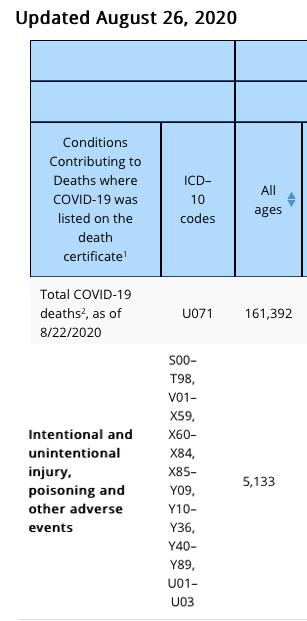
According to data34 released by the CDC August 26, 2020, only 6% of the total COVID-19-related death toll had COVID-19 listed as the sole cause of death on the death certificate. Six percent of 161,392 is 9,683. “For deaths with conditions or causes in addition to COVID-19, on average, there were 2.6 additional conditions or causes per death,” the CDC states.
Now, we’ve heard reports of accident victims being listed as COVID-19 deaths, and Table 3 in this August 26 report is granular enough that we can see that a total of 5,133 “COVID-19-related deaths” also had “intentional or unintentional injury, poisoning or other adverse events” listed on the death certificate.
This number likely also contains suicides where the individual was found to test positive for SARS-CoV-2, or was suspected of testing positive. (Please note, these data are accurate as of this writing, as shown in the partial screenshots below. The CDC does not notate when data are altered as new death certificates come in, so the numbers may therefore be different from what is reported here, depending on when you’re looking at it. For the most up-to-date figures, see the CDC’s website.35)
The Difference Between Being Scared and Being Fearful
Fear is the primary emotion that the technocrats are using to manipulate and coerce their tyrannical controls. It is the most powerful tool at their disposal and highly effective which is why it is being deployed.
As explained in “You Can Control Fear,” there’s a difference between being scared and being fearful. Right now, the whole world is holding its proverbial breath in anticipation for what might come next. It’s easy to feel fearful, considering the daily barrage of bad news.
However, understanding the difference between being scared and living in fear can be very helpful, as fear has a paralyzing effect while being scared primarily heightens alertness. Novel threats raise a person’s level of anxiety to a greater degree than familiar threats, even when they have the same or similar consequences. This is thought to be related to activity in your amygdala, which processes emotions.36
Ryan Holiday, media strategist and author of 10 books, including “The Daily Stoic” and “The Obstacle Is the Way,” writes:37
“Being afraid? That’s not fight or flight. That’s paralysis. That only makes things worse. Especially right now. Especially in a world that requires solutions to the many problems we face. They’re certainly not going to solve themselves. And inaction (or the wrong action) may make them worse, it might put you in even more danger. An inability to learn, adapt, to embrace change will too.”
While fleeting feelings of concern are expected when faced with new experiences, when such feelings are allowed to continuously dominate, paralysis can set in. To thrive in times of great uncertainty and fear, Holiday stresses the importance of training, education and preparation, which are the foundations of courage.38
The difference between being fearful and being scared is that fear paralyzes your ability to evaluate what’s happening and to make decisions. But preparation and information help you to make decisions and act, even when you’re scared. This is the definition of courage — taking action despite being scared.
How to Reduce Fear and Find Courage
There are several strategies you can use to reduce fear and find courage. It is important to begin with the understanding that your thoughts engender feelings. Your emotions do not have a life of their own, but rather are dependent on your thinking.
So, one of the strategies you can use to reduce fear is to change the way you think about things. Yes, we’re dealing with many unknowns right now, but focusing on planning and preparation rather than getting locked into panic mode can go a long way toward safeguarding your mental health. Take the safety precautions you can take, and limit your exposure to the news.
Psychology Today39 recommends reducing anxiety by consuming positive news stories while keeping up with what’s going in the world. Also do your best to apply some critical thinking when reading the news.
It’s important to pay careful attention to “vague or loaded terms, cited statistics, and unstated assumptions.” In other words, don’t accept at face value what’s in the news but, rather, consider the information and ask questions about what you’re being told. Other stress- and depression-reducing techniques include:40
- Getting enough exercise
- Eating whole foods
- Limiting sugar
- Getting quality sleep
- Practicing meditation and mindfulness training
When you’re tired and your body doesn’t have adequate nutrition to function, you’re more apt to fall into the trap of fear-based thinking. Additional nondrug treatment strategies for depression can be found in “What Does the Best Evidence Say About Antidepressants?”
The Emotional Freedom Techniques
A strategy that can provide more immediate results is the use of Emotional Freedom Techniques, or EFT. In the video above, Julie Schiffman demonstrates a tapping strategy to relieve anxiety and other challenging emotions brought on by news and uncertainty about this pandemic and/or self-quarantining. If you aren’t familiar with EFT you’ll find a library of demonstrations at “Basic Steps to Your Emotional Freedom.”
The NET FAST Technique
Another alternative is the Neuro-Emotional Technique’s First Aid Stress Tool, or NET FAST, demonstrated in the video above. Firstaidstresstool.com also provides an excellent printable summary with visuals of the technique,41 which even a young child can do. Here is a summary of the FAST procedure:
- While thinking about an issue that is bothering you, place your right wrist, palm up, into your left hand. Place three fingers of your left hand onto the area of your right wrist where you can feel your pulse
- Place your open right hand on your forehead. Gently breathe in and out several times while concentrating on feeling the issue that bothers you
- Switch hands and repeat Steps 1 and 2
Suicide Prevention Resources
If you feel depressed, anxious or creeping despair, please do not hesitate to reach out to family, friends or any of the available suicide prevention services:
- The National Suicide Prevention Lifeline (U.S.) — Call 1-800-273-TALK (8255)
- Crisis Text Line — Text HOME to 741741 to connect with a crisis counselor
- Lifeline Crisis Chat — Chat online with a specialist who can provide emotional support, crisis intervention and suicide prevention services at suicidepreventionlifeline.org
- Alternatively, call 911, or simply go to your nearest Hospital Emergency Department
- 1 News-Medical.net August 25, 2020
- 2 PR Newswire May 1, 2020
- 3, 5 KFF.org April 2, 2020
- 4 KFF.org July 27, 2020
- 6 KFF.org August 21, 2020
- 7 CDC.gov MMWR August 14, 2020; 69(32): 1049-1057
- 8 Express Scripts, America’s State of Mind Report April 16, 2020
- 9, 11 CNN Health April 16, 2020
- 10 Ecowatch April 16, 2020
- 12 US FDA June 3, 2020
- 13 MSN May 7, 2020
- 14 PLOS Medicine February 26, 2008
- 15 Science Translational Medicine January 8, 2014: 6(218):218ra5
- 16 Prevention & Treatment 1998; 1(2), article ID 2a
- 17 JAMA 2010 Jan 6;303(1):47-53
- 18 J Clin Psychiatry. 2011 Apr;72(4):464-7
- 19 Zeitschrift fur Psychologie 2014; 222(3): 128–134
- 20 BMC Psychiatry February 8, 2017; 17(1): 58
- 21, 22 Townhall July 28, 2020
- 23 ABC7 News May 21, 2020
- 24 The Sacramento Bee March 25, 2020
- 25 Boston Globe March 24, 2020 (Archived)
- 26 The Federalist March 27, 2020
- 27 Red State March 29, 2020
- 28, 29 WBIR.com March 27, 2020
- 30 Well Being Trust Projected deaths of despair during covid-19
- 31 Psycom Impact of Covid-19 on suicide rates
- 32, 33 Psycom How coronavirus is affecting mental health of millions of Americans
- 34, 35 CDC.gov August 26, 2020
- 36 PLOS|ONE, 2013;8(5):e63220 Abstract
- 37, 38 Ryan Holiday Blog, The Important Thing Is to Not Be Afraid
- 39, 40 Psychology Today, March 13, 2020
- 41 Firstaidstresstool.com
Exercise ‘Fundamental’ for Healing of Mental Illness
© 1st September 2020 GreenMedInfo LLC. This work is reproduced and distributed with the permission of GreenMedInfo LLC. Want to learn more from GreenMedInfo? Sign up for the newsletter here www.greenmedinfo.com/greenmed/newsletter
Reproduced from original article:
www.greenmedinfo.com/blog/exercise-fundamental-healing-mental-illness Posted on: Friday, August 28th 2020 at 5:15 pm
Written By: GreenMedInfo Research Group
This article is copyrighted by GreenMedInfo LLC, 2020

Thinking about skipping your workout because of a flat mood? If you’re upset, depressed or anxious, a recent study indicates that’s when you need exercise the most. It’s so effective for mental health, it may even speed healing for psychiatric patients
A study on physical exercise has shone a spotlight on the positive effects to be gained from deliberate, structured movement of your body. Published in the journal Global Advances in Health and Medicine,[i] the 2019 study was conducted by researchers from the University of Vermont Medical Center, in conjunction with the medical center’s inpatient psychiatry unit.
The study was led by David Tomasi, Ph.D., a psychotherapist and inpatient psychiatry group therapist at the University of Vermont Medical Center and lead researcher of the study. Tomasi and his team assembled a gym for the exclusive use of approximately 100 patients of the center’s inpatient psychiatric facility.
The research team then introduced 60-minute, structured exercise and nutrition plans to patients that were incorporated as a key element of their respective treatments for various mental health and mood disorders. Results on mood were so impactful, Tomasi stated in a news release, “Now that we know it’s so effective, it can become as fundamental as pharmacological intervention.”[ii]
Exercise Benefits Mental Health and Mood Disorders
Patients in this study were hospitalized for a wide array of psychiatric issues, with symptoms including mild-to-severe depression, anxiety, schizophrenia, suicidality and acute psychotic episodes. According to Tomasi, only a handful of psychiatric hospitals in the U.S. with inpatient facilities provide exercise areas for patients.[iii]
Prior to engaging in the exercise sessions, psychotherapists surveyed patients’ mood, self-image and self-esteem via standardized questionnaires designed to limit bias. Individual fitness levels were not assessed, and no “normal” values were determined, given the possible negative connotations of expectations on patients’ self-esteem and self-image assessments.
After patients were led through exercise sessions, the questionnaires were repeated to gauge the effects of exercise on psychiatric symptoms and self-assessments.
Exercise sessions were conducted four times per week for 60 minutes each, and consisted of cardiovascular and resistance training, as well as flexibility development through stretching and/or use of equipment like recumbent bikes, ellipticals, rowers, steps, exercise balls and other gym equipment.
Each session was followed by nutrition education in which patients were taught how to identify healthy food choices, budget and make meal plans according to the most recent scientific recommendations on the connection between gut health and psychological well-being.
These sessions included facilitated discussions about the unique challenges of maintaining a healthy lifestyle coupled with patients’ individual psychiatric concerns.
Nearly 100% of Psychiatric Patients Improved With Exercise
Researchers analyzed the data, considering specific differences between patient groups related to their levels of cognitive strength, understanding and ability versus capacity, as demonstrated in the responses provided to questionnaires.
This additional layer of analysis reflects cognitive differences between individuals diagnosed with, for example, moderate depression, versus an individual with acute schizoaffective disorder. According to researchers, “These aspects are reflected in some of the answers pertaining to the perceived effectiveness or helpfulness of the interventions offered.”[iv]
The research team was able to identify multiple positive outcomes that were direct results of implementation of physical exercise and nutrition coaching in inpatient psychiatry. Overall, patients reported less anger, improved mood, higher self-esteem and less anxiety and depression as a result of exercise sessions.[v]
These positive results were experienced by the vast majority of patients, with 95% reporting improved mood and 63% reporting being “happy” or “very happy” after exercising.[vi]
An impressive 97.6% of patients responded in the affirmative to the question, “After attending this group, do you think you will exercise more?,” a fact researchers considered to be one of the most important aspects of the study.
According to their report, “The willingness of patients to make room for physical exercise in their therapeutic schedule has resulted in an overall positive effect for the therapeutic environment as a whole.”[vii]
Tomasi suggests that physical exercise is so effective at alleviating psychiatric symptoms, it could reduce the amount of time patients are confined to acute facilities and potentially reduce reliance on psychotropic medications.[viii] It also presents treatment options that may be effective at reaching individuals who are in a psychotic state, a condition when, according to Tomasi, talk therapy or psychotherapy has limits.
“It’s hard to receive a message through talk therapy in that state, whereas with exercise, you can use your body and not rely on emotional intelligence alone” explains Tomasi.[ix]
Sweat Therapy: A Safe Alternative to Psychotropic Drugs?
Patients who are hospitalized for mental health and mood conditions are often in an acute state, with hospitalization used as a means of protecting the individuals, as well as others in society, from harm.
However, psychiatric wards are frequently noisy, crowded places that can increase a patient’s distress and difficulty, creating barriers to effective treatment. As a result, sedative medications are often the first line of therapy, with self-care practices like proper diet and exercise not considered part of a standard treatment protocol.[x]
“The priority is to provide more natural strategies for the treatment of mood disorders, depression and anxiety,” Tomasi says. “In practice, we hope that every psychiatric facility will include integrative therapies — in our case, exercise in particular — as the primary resource for their patients’ psycho-physical well-being.”[xi]
Exercise is a powerful therapeutic action that boosts overall health and immunity and is one of the top ways to improve your mental wellness. It does this, in part, by stopping mitochondrial aging in its tracks. Some studies even suggest that exercise can cut your risk of developing Alzheimer’s disease in half.[xii]
You can get more juice out of your sweat session if you combine exercise with being outdoors. Science has shown that access to green space improves longevity, physical and mental health, boosts sleep and shortens recovery time from illness.[xiii]
To learn more about the health benefits of exercise, research more than 670 abstracts on the health benefits of exercise on GreenMedInfo.com.

References
[i] Tomasi, D., Gates, S., & Reyns, E. (2019). Positive Patient Response to a Structured Exercise Program Delivered in Inpatient Psychiatry. Global Advances in Health and Medicine. https://doi.org/10.1177/2164956119848657
[ii] Science Daily, News Releases, Exercise: Psych patients’ new natural prescription. May 21, 2019 https://www.sciencedaily.com/releases/2019/05/190521124650.htm
[iii] Science Daily, News Releases, Exercise: Psych patients’ new natural prescription. May 21, 2019 https://www.sciencedaily.com/releases/2019/05/190521124650.htm.
[iv] Tomasi, D., Gates, S., & Reyns, E. (2019). Positive Patient Response to a Structured Exercise Program Delivered in Inpatient Psychiatry. Global Advances in Health and Medicine. https://doi.org/10.1177/2164956119848657
[v] Science Daily, News Releases, Exercise: Psych patients’ new natural prescription. May 21, 2019 https://www.sciencedaily.com/releases/2019/05/190521124650.htm.
[vi] Science Daily, News Releases, Exercise: Psych patients’ new natural prescription. May 21, 2019 https://www.sciencedaily.com/releases/2019/05/190521124650.htm.
[vii] Tomasi, D., Gates, S., & Reyns, E. (2019). Positive Patient Response to a Structured Exercise Program Delivered in Inpatient Psychiatry. Global Advances in Health and Medicine. https://doi.org/10.1177/2164956119848657
[viii] Science Daily, News Releases, Exercise: Psych patients’ new natural prescription. May 21, 2019 https://www.sciencedaily.com/releases/2019/05/190521124650.htm.
[ix] Science Daily, News Releases, Exercise: Psych patients’ new natural prescription. May 21, 2019 https://www.sciencedaily.com/releases/2019/05/190521124650.htm.
[x] Tomasi, D., Gates, S., & Reyns, E. (2019). Positive Patient Response to a Structured Exercise Program Delivered in Inpatient Psychiatry. Global Advances in Health and Medicine. https://doi.org/10.1177/2164956119848657
[xi] Science Daily, News Releases, Exercise: Psych patients’ new natural prescription. May 21, 2019 https://www.sciencedaily.com/releases/2019/05/190521124650.htm.
[xii] Raji CA, Merrill DA, Eyre H, et al. Longitudinal Relationships between Caloric Expenditure and Gray Matter in the Cardiovascular Health Study. J Alzheimers Dis. 2016;52(2):719-729. doi:10.3233/JAD-160057. PMID: 26967227
[xiii] Mark J Nieuwenhuijsen et al. “Positive health effects of the natural outdoor environment in typical populations in different regions in Europe (PHENOTYPE): a study programme protocol.” BMJ Open 2014;4:e004951 doi: 10.1136/bmjopen-2014-004951

Magic Mushroom Ingredient May Improve Mental Health
© 28th August 2020 GreenMedInfo LLC. This work is reproduced and distributed with the permission of GreenMedInfo LLC. Want to learn more from GreenMedInfo? Sign up for the newsletter here www.greenmedinfo.com/greenmed/newsletter
Reproduced from original article:
www.greenmedinfo.com/blog/magic-mushroom-ingredient-may-improve-mental-health
Posted on: Wednesday, August 19th 2020 at 4:15 pm
Written By: GreenMedInfo Research Group
This article is copyrighted by GreenMedInfo LLC, 2020

Are you looking to support positive mental health without using pharmaceuticals? Psilocybin may be gaining mainstream acceptance by providing a safe “trip” out of desolation and into a more open, positive state of mind
Psilocybin (4-phosphoryloxy-N, N-dimethyltryptamine) is the main psychoactive compound in “magic mushrooms,” a euphemism for certain types of wild mushrooms found in North and South America and parts of Europe and Mexico. Psilocybin is classified as a tryptamine, naturally occurring alkaloids that include serotonin and melatonin, essential mood-regulating chemicals that function as neurotransmitters in the brain.[i]
Consuming psilocybin produces hallucinogenic effects similar to those of LSD (lysergic acid diethylamide) and DMT (dimethyltryptamine), other well-known tryptamines, by activating serotonin receptors in the brain, particularly the prefrontal cortex, the region of the brain affecting mood, perception and cognition.[ii] Such actions are called serotonergic — they modify the way serotonin affects the body.[iii]
More than 180 species of mushroom have been identified as containing psilocybin or psilocin, a structurally similar compound that occurs naturally and is the byproduct of the body’s metabolization of psilocybin.[iv] Dried mushrooms typically contain 0.2% to 0.4% psilocybin and only trace amounts of psilocin.[v]
Psilocybin Makes Magical Connections in the Brain
Hallucinogenic or “psychedelic” mushrooms have been used by native and indigenous peoples in healing and religious ceremonies for centuries. According to the May 2020 scientific study titled “Psilocybin: from ancient magic to modern medicine,” South American Aztec Indians referred to these mushrooms as teonanacatl, or “God’s flesh.”[vi]
Prior studies on hallucinogenic substances such as mescaline and LSD have led researchers to theorize that psilocybin’s actions on serotonin receptors are responsible for observed effects on mood and perception, such as visual and auditory hallucinations and difficulty discerning fantasy from reality.[vii]
Studies on psilocybin, which can be obtained organically from select mushroom species or reproduced synthetically in a lab, have produced beneficial effects on mood, personality and mental state, although scientists admit that the underlying mechanisms behind these benefits are still unknown. [viii]
A study published in the March 2020 issue of European Neuropsychopharmacology attempted to unlock these mysteries by studying psilocybin’s effect on mindfulness. According to researchers, mindfulness signifies “presence of mind” or “attentiveness to the present,” and is positively associated with income and socioeconomic status, but negatively associated with psychological distress and mental health scores, hence it is often purposely cultivated as part of mental health interventions.[ix]
In the study, 10 healthy volunteers were enlisted who were “psychedelic-naïve.” They underwent positron emission tomography (PET) neuroimaging of the brain at baseline and one week after a single oral dose of psilocybin (0.2 to 0.3 mg/kg).
Primary focus was placed on the neocortex, site of the highest expression of serotonin 2A receptor sites, with the cerebellum used as a reference region. Personality and mindfulness questionnaires were completed at baseline and at the three-month follow-up point.
Psilocybin induced an altered state of consciousness for all participants. Eight of 10 volunteers had a “complete mystical experience,” defined as a score of at or above 60% of possible maximum values for ineffability, positive mood, transcendence of time and space, and mystical experience. PET scans revealed no difference in the neocortical region of the brain at baseline and at follow-up.
However, test results revealed statistically significant increases in personality openness and mindfulness, with more self-rated positive changes than negative changes. Researchers concluded that a single dose of psilocybin can positively affect well-being and reduce clinical symptoms of depression and anxiety, and suggested that these effects can be long lasting.[x]
Studies Show Psilocybin’s Medical Merit
Other studies add to the evidentiary pile of psilocybin’s medical and therapeutic potential. Some researchers are even calling magic mushrooms a “game-changer” for treating severe depression and anxiety. A 2016 study out of Johns Hopkins University School of Medicine in Baltimore, Maryland, examined the use of psilocybin to treat 51 cancer patients with life-threatening diagnoses and symptoms of depression and/or anxiety.
The randomized, double-blind trial investigated the effects of a very low (placebo-like) dose (1 or 3 mg/70 kg) versus a high dose (22 or 30 mg/70 kg) of psilocybin administered in counterbalanced sequence with five weeks between sessions and a six-month follow-up. Participants’ moods, attitudes and behaviors were monitored and reported on throughout the study by the participants themselves, clinical staff and trained community observers.
Results were crystal clear: high doses of psilocybin produced large decreases in depressed mood, anxiety level and anxiety about death, as rated by both participants and community observers.
High doses of psilocybin further corresponded to increases in quality of life, life meaning and optimism. These changes were sustained at the six-month follow-up point, with about 80% of participants continuing to show clinically significant decreases in depressed mood and anxiety.
The study participants attributed their improved attitudes about life, themselves, their relationships and personal spirituality to the high-dose experience, with more than 80% endorsing moderately or greatly improved well-being and life satisfaction, changes that were apparent even to the community observers.[xi]
It’s Time to End Psilocybin Prohibition
Buoyed by positive results in the cancer trial, Johns Hopkins researchers conducted another study on psilocybin, published May 2020 in the journal NeuroImage. The focus of this study was the claustrum, the region of the brain believed by some to be the seat of consciousness, responsible for your sense of self and universal awareness.[xii]
Researchers took functional MRI scans, known as fMRIs, of the claustrum brain region of 15 individuals after taking either psilocybin or a placebo. Scans showed that psilocybin reduced neural activity in the claustrum by 15% to 30%, activity that corresponded with stronger subjective drug effects as well, such as reported emotional and mystical experiences.
Psilocybin also appeared to change the way the claustrum communicated with regions of the brain involved in hearing, attention, decision-making and remembering.[xiii]
“Our findings move us one step closer to understanding mechanisms underlying how psilocybin works in the brain,” said Frederick Barrett, Ph.D., assistant professor of psychiatry and behavioral sciences at the Johns Hopkins University School of Medicine and a member of the school’s Center for Psychedelic and Consciousness Research, in a news release. “This will hopefully enable us to better understand why it’s an effective therapy for certain psychiatric disorders, which might help us tailor therapies to help people more.”[xiv]
While the U.S. Drug Enforcement Agency (DEA) currently lists psilocybin as a Schedule I substance, claiming that it has a high potential for abuse and no known medical uses,[xv] research over the past decade, such as that being conducted at Johns Hopkins University, has challenged this assessment, especially with regard to mental health.
Researchers at Johns Hopkins Medical Center previously issued a statement explaining that clinical trials have repeatedly demonstrated psilocybin to be a low-risk drug with low potential for abuse, with no known lethal overdose level.[xvi]
Combined with psilocybin’s significant promise as a medical intervention, scientists recommended that the DEA reconsider their erroneous and restrictive Schedule I designation and reclass the substance to Schedule IV, the same category as prescription sleep medication.
To learn more about the potential mental health benefits of psilcybin mushrooms, visit the GreenMedInfo database on the subject.

References
[i] M. Scott-Ham, M.M. Stark. Substance Misuse: Legal Highs. Encyclopedia of Forensic and Legal Medicine (Second Edition), 2016, Pages 394-399. https://doi.org/10.1016/B978-0-12-800034-2.00354-2
[ii] L.F. Tófoli, D.B.de Araujo. Perspectives from EEG and Imaging Studies on Psychedelics, International Review of Neurobiology, Volume 129, 2016, Pages 157-185. https://doi.org/10.1016/bs.irn.2016.06.005
[iii] Merriam-Webster, Serotonergic https://www.merriam-webster.com/dictionary/serotonergic
[iv] Drugs.com, Reference, Commonly Abused Drugs and Substances, Psilocybin (Magic Mushrooms), https://www.drugs.com/illicit/psilocybin.html
[v] Drugs.com, Reference, Commonly Abused Drugs and Substances, Psilocybin (Magic Mushrooms), https://www.drugs.com/illicit/psilocybin.html
[vi] David E Nichols. Psilocybin: from ancient magic to modern medicine. J Antibiot (Tokyo). 2020 May 12. Epub 2020 May 12. PMID: 32398764
[vii] Drugs.com, Reference, Commonly Abused Drugs and Substances, Psilocybin (Magic Mushrooms), https://www.drugs.com/illicit/psilocybin.html
[viii] Martin Korsbak Madsen, Patrick MacDonald Fisher, Dea Siggaard Stenbæk, Sara Kristiansen, Daniel Burmester, Szabolcs Lehel, Tomas Páleníček, Martin Kuchař, Claus Svarer, Brice Ozenne, Gitte M Knudsen. A single psilocybin dose is associated with long-term increased mindfulness, preceded by a proportional change in neocortical 5-HT2A receptor binding. Eur Neuropsychopharmacol. 2020 Mar 4. PMID: 32146028
[ix] Martin Korsbak Madsen, Patrick MacDonald Fisher, Dea Siggaard Stenbæk, Sara Kristiansen, Daniel Burmester, Szabolcs Lehel, Tomas Páleníček, Martin Kuchař, Claus Svarer, Brice Ozenne, Gitte M Knudsen. A single psilocybin dose is associated with long-term increased mindfulness, preceded by a proportional change in neocortical 5-HT2A receptor binding. Eur Neuropsychopharmacol. 2020 Mar 4. PMID: 32146028
[x] Martin Korsbak Madsen, Patrick MacDonald Fisher, Dea Siggaard Stenbæk, Sara Kristiansen, Daniel Burmester, Szabolcs Lehel, Tomas Páleníček, Martin Kuchař, Claus Svarer, Brice Ozenne, Gitte M Knudsen. A single psilocybin dose is associated with long-term increased mindfulness, preceded by a proportional change in neocortical 5-HT2A receptor binding. Eur Neuropsychopharmacol. 2020 Mar 4. PMID: 32146028
[xi] Griffiths RR, Johnson MW, Carducci MA, et al. Psilocybin produces substantial and sustained decreases in depression and anxiety in patients with life-threatening cancer: A randomized double-blind trial. J Psychopharmacol. 2016;30(12):1181-1197. doi: 10.1177/0269881116675513
[xii] Johns Hopkins Medicine, News and Publications, Newsroom, News Releases, Research Story Tip: Psychedelic Drug Psilocybin Tamps Down Brain’s Ego Center. https://www.hopkinsmedicine.org/news/newsroom/news-releases/research-story-tip-psychedelic-drug-psilocybin-tamps-down-brains-ego-center. Accessed 26 June 2020.
[xiii] Frederick Barrett, Samuel Krimmel, Roland Griffiths, David Siemienowicz, Brian Mathur. Psilocybin acutely alters the functional connectivity of the claustrum with brain networks that support perception, memory, and attention. NeuroImage, Volume 218, September 2020, 116980. doi: 10.1016/j.neuroimage.2020.116980
[xiv] Johns Hopkins Medicine, News and Publications, Newsroom, News Releases, Research Story Tip: Psychedelic Drug Psilocybin Tamps Down Brain’s Ego Center. https://www.hopkinsmedicine.org/news/newsroom/news-releases/research-story-tip-psychedelic-drug-psilocybin-tamps-down-brains-ego-center. Accessed 26 June 2020.
[xv] DEA.gov, Drug Facts, Psilocybin, Drug Fact Sheet, https://www.dea.gov/sites/default/files/2020-06/Psilocybin-2020_0.pdf
[xvi] Johns Hopkins Medicine, News and Publications, Newsroom, News Releases, Reclassification Recommendations for Drug in ‘Magic Mushrooms.’ https://www.hopkinsmedicine.org/news/newsroom/news-releases/reclassification-recommendations-for-drug-in-magic-mushrooms. Accessed 26 June 2020.
5 Top Anxiety-Relieving Foods
© 19th June 2020 GreenMedInfo LLC. This work is reproduced and distributed with the permission of GreenMedInfo LLC. Want to learn more from GreenMedInfo? Sign up for the newsletter here www.greenmedinfo.com/greenmed/newsletter
Reproduced from original article:
www.greenmedinfo.com/blog/5-top-anxiety-relieving-foods
Posted on: Friday, June 19th 2020 at 2:15 pm
Written By: GreenMedInfo Research Group
This article is copyrighted by GreenMedInfo LLC, 2020

Is anxiety affecting your life negatively? Don’t fret — you can soothe your spirit and hunger with these five anxiety-relieving foods that are good for your body and your mood
According to the American Psychiatric Association, nearly two-thirds of U.S. residents surveyed in 2017 were “extremely or somewhat anxious” about the health and safety of themselves and their families, with more than a third feeling “more anxious overall” than they did in 2016.[i] With more recent data indicating that feelings of anxiety are on the rise,[ii] and have since skyrocketed due to COVID-19 and related shutdowns and stay-at-home orders, it’s important to know what to do to keep your central nervous system calm and supported during times of increased stress.
While allopathic doctors generally advocate pills to treat anxiety, there is mounting evidence showing that these medications can have many negative side effects including addiction, depression, suicide, seizures, sexual dysfunction, headaches and more.[iii]
Practitioners of natural health know that food is the best medicine, and some foods are better than others when it comes to soothing body and mind. Here are five of the top foods to eat to stimulate feelings of calm and well-being from the inside-out.
1. Fish
Cold-water fishes like salmon, cod, mackerel and sardines are under-consumed in the U.S., which culturally favors protein from sources like beef and chicken. This is a dietary misstep if you want to quell anxious energy. Rich in the essential amino acids L-lysine and L-arginine as well as healthy omega-3 fatty acids, increasing your intake of clean fish may help relieve anxiety by promoting a healthy brain and enhanced mood.
Studies have shown that individuals with L-lysine deficiency are at higher risk of anxiety,[iv] while L-lysine supplementation lowers anxiety and reduces the impact of stress.[v] In clinical trials, supplementation with L-arginine reduced synthesis of cortisol, a major stress hormone, in healthy human subjects.[vi]
Consumption of adequate levels of omega-3 fatty acids has been shown to enhance mood[vii] and reduce the risk of anxiety.[viii] Supplementation for a period of three months with a high-quality source of omega-3s has even been shown to support withdrawal-related anxiety in a trial with substance abuse patients.[ix] Just a few servings per week of healthy fish may be sufficient to receive these benefits.
Widespread pollution of our oceans as well as the environmental impacts of overfishing have made some people wary of eating fish. The Environmental Working Group (EWG) has produced a useful guide to choosing the most nutritious and clean fish from sustainable sources, including a calculator to help you customize portion sizes for optimal nutrition while minimizing negative impact on the planet.[x]
2. Nuts
Many essential proteins and fats are available from nuts like Brazil nuts, almonds and walnuts, plus vitamins D and E and the mineral selenium, all proven to reduce anxious feelings.
Vitamin D has been studied for its positive effects on mood, possibly due to its action as a steroid hormone with many important functions in the brain. Vitamin D deficiencies have been linked to multiple behavioral disorders, including anxiety and depression in patients with fibromyalgia.[xi] A study on mice showed that specimens with fewer vitamin D receptors in the brain demonstrated increased anxiety-like behaviors, suggesting that adequate vitamin D intake can be an important factor for healthy emotional behavior.[xii]
Almonds are a potent source of vitamin E, a powerful scavenger of damaging free radicals, which is linked to a healthy brain response to fearful conditions. Vitamin E supplementation was found in one animal study to improve fear response in rats that were exposed to healthy vitamin E levels in utero, versus impaired fear response and increased anxiety in rats whose mothers were deprived of this essential nutrient during pregnancy.[xiii] One cup of ground almonds (a great addition to many recipes) provides 125% of an adult’s Recommended Daily Allowance (RDA) of vitamin E.[xiv]
Brazil nuts are one of the best sources of selenium, an essential trace mineral that is critical for optimal health. A clinical trial of adults who were supplemented with 100 micrograms (mcg) of selenium per day reported less anxiety than the placebo group. According to the report, the lower the level of selenium in the diet, the higher the levels of anxiety, depression and tiredness among patients, all of which decreased following five weeks of selenium therapy. [xv]
Adults over 14 years of age are recommended to intake 55 mcg of selenium each day.[xvi] A small handful of Brazil nuts (six to eight nuts) delivers a whopping 544 mcg, more than enough to take the edge off your mood.[xvii]
All of these nuts provide essential amino acids and fatty acids that produce the mood-regulating hormones serotonin and dopamine, adding to their potential for helping to regulate mood and improve overall mental health.[xviii]
3. Yogurt
Fermented foods like yogurt have long been acknowledged as beneficial for gut health due to the presence of friendly bacteria known as probiotics, which help protect the gastrointestinal (GI) tract against harmful pathogens and potentially dangerous microbes. As the understanding of the gut-brain connection develops, science is further acknowledging the benefits of fermented foods on brain health and even mood regulation.
A 2014 study on the effects of daily intake of yogurt enriched with probiotics by adults with high-trait anxiety disorder found that individuals who consumed enriched yogurt had healthier stress responses than those who consumed non-enriched yogurt, suggesting that eating probiotic-enriched yogurt aids in coping with chronic stress.[xix]
This beneficial activity may be due to probiotics’ neuroprotective effect on the brain. A study on healthy women with no gastrointestinal or psychiatric symptoms showed that ingesting a fermented milk product with probiotic for four weeks led to “robust alteration” within specific brain regions that control processing of emotion and sensation, leading researchers to assert that consuming such probiotic-rich foods may work to prevent anxious feelings from developing.[xx]
Other studies on animals and humans have shown that fermented food consumption is associated with fewer symptoms of social anxiety[xxi] and lowered risk of depression.[xxii]
It should be noted that there are plenty of alternatives to cow’s milk-based yogurt products today, such as coconut-, almond, and goat’s milk, all of which can help to prevent bovine casein-associated adverse health effects which we have documented in detail on our cow’s milk database here.
4. Green Tea for Theanine
Having a daily tea ritual is a great way to weave a moment of calm into your days. Besides the benefits of taking a break from daily concerns to boil water, select a cup and let it steep, drinking tea is a great way to boost your brain’s ability to ward off stress. There are more than 400 reasons to drink green tea, and for most adults today, feeling less stressed is at the top of the list.
A Singapore study on 60 healthy seniors showed that those with a regular tea habit had brain scans showing improved brain organization brought about by tea’s ability to prevent disruption of interregional connections. In other words, the different brain regions had more and healthier interconnections; they were more organized with better hemispheric symmetry.[xxiii]
Green tea’s magical properties are attributed primarily to L-theanine, an active polyphenol in green tea that may be at the heart of its ability to calm nerves and fortify the brain. An amino acid, theanine produces a soothing effect by stimulating production of GABA and dopamine, neurotransmitters known to play a role in anxiety[xxiv] and pleasurable sensations.
Green tea contains another potent phytochemical called EGCG, short for epigallocatechin-gallate, another polyphenol in green tea that has gained a lot of attention as a potential therapeutic agent for preventing neurodegenerative inflammatory diseases.[xxv] And if you need any more reasons to start a green tea habit, regular tea drinking may bolster the immune system to prevent influenza infection.
If you’re wondering how much is too much, the answer is it’s very hard to overdo green tea consumption. A 2009 study conducted in Japan, one of the largest consumer countries of green tea, found that those who consumed more than 5 cups per day had significantly less stress than those who drank less than 1 cup per day.[xxvi] In other words, the more you drink, the better you feel. So, put on the kettle and start feeling better.
5. Dark Chocolate
While you engage in afternoon tea, why not break off a square (or two) of fine dark chocolate? Don’t worry about the jitters one might associate with chocolate; dark chocolate is clinically shown to improve anxiety and deliver a potent feel-good boost of serotonin.[xxvii]
Cocoa contains more active phenolic antioxidants than most foods, a factor that can benefit brain function.[xxviii] One could argue that dark chocolate tastes better than most foods too, a factor that has been clinically shown to impart a soothing effect to individuals who are prone to mood disorders.[xxix]
Dark chocolate isn’t just about taste; it’s got minerals like magnesium that are important for brain health and mood. A large square of dark chocolate with 70% to 85% cacao provides around 36 milligrams (mg) of magnesium, nearly 10% of the U.S. RDA for adults.[xxx]
Magnesium is considered an essential supplement for psychiatric patients due to the role it plays in calming the nervous system.[xxxi] A 2011 study of highly stressed individuals showed that eating 40 grams of dark chocolate every day for two weeks led to participants reporting significantly lower stress levels than participants eating milk or white chocolates.[xxxii]
Eating dark chocolate has been shown to boost the neurotransmitter serotonin, which can lead to fewer and milder feelings of anxiety due to an enhanced ability to manage stress.[xxxiii] By adding a serving of dark chocolate to your day, you can impart a wide array of self-care benefits to both enhance your mood and increase your resilience to life’s daily stressors. There is no reason not to indulge.
For additional information on anxiety-reducing foods and herbs, visit our database dedicated to the topic here. To learn more about the ways nutrition can support a sane, healthy lifestyle, consult GreenMedInfo.com’s repository of articles as the world’s most widely referenced, evidence-based natural medical resource.
References
[i] American Psychiatric Association, Newsroom, APA Public Opinion Poll – Annual Meeting 2017, https://www.psychiatry.org/newsroom/apa-public-opinion-poll-annual-meeting-2017 [Accessed April 10, 2020]
[ii] American Psychiatric Association, Newsroom, APA Public Opinion Poll – Annual Meeting 2018, https://www.psychiatry.org/newsroom/apa-public-opinion-poll-annual-meeting-2018 [Accessed April 10, 2020]
[iii] Alramadhan E, Hanna MS, Hanna MS, Goldstein TA, Avila SM, Weeks BS. Dietary and botanical anxiolytics. Med Sci Monit. 2012;18(4):RA40-RA48. doi:10.12659/msm.882608, https://www.ncbi.nlm.nih.gov/pmc/articles/PMC3560823/
[iv] Ghosh S, Smriga M, Vuvor F, et al. Effect of lysine supplementation on health and morbidity in subjects belonging to poor peri-urban households in Accra, Ghana. Am J Clin Nutr. 2010;92(4):928-39. https://www.ncbi.nlm.nih.gov/pubmed/20720257
[v] Smriga M, Ghosh S, Mouneimne Y, et al. Lysine fortification reduces anxiety and lessens stress in family members in economically weak communities in Northwest Syria. Proc Natl Acad Sci USA. 2004;101(22):8285-88. https://www.ncbi.nlm.nih.gov/pubmed/15159538
[vi] Smriga M, Ando T, Akutsu M, et al. Oral treatment with L-lysine and L-arginine reduces anxiety and basal cortisol levels in healthy humans. Biomed Res. 2007;28(2):85-90. https://www.ncbi.nlm.nih.gov/pubmed/17510493
[vii] Perica MM, Delas I. Essential Fatty acids and psychiatric disorders. Nutr Clin Pract. 2011;26(4):409-25. https://www.ncbi.nlm.nih.gov/pubmed/21775637
[viii] Appleton KM, Rogers PJ, Ness AR. Is there a role for n-3 long-chain polyunsaturated fatty acids in the regulation of mood and behaviour? A review of the evidence to date from epidemiological studies, clinical studies and intervention trials. Nutr Res Rev. 2008;21(1):13-41. https://www.ncbi.nlm.nih.gov/pubmed/19079852
[ix] Buydens-Branchey L, Branchey M, Hibbeln JR. Associations between increases in plasma n-3 polyunsaturated fatty acids following supplementation and decreases in anger and anxiety in substance abusers. Prog Neuropsychopharmacol Biol Psychiatry. 2008;32(2):568-75. https://www.ncbi.nlm.nih.gov/pubmed/18060675
[x] Environmental Working Group Consumer Guide to Seafood https://www.ewg.org/research/ewgs-good-seafood-guide?gclid=Cj0KCQjw-Mr0BRDyARIsAKEFbecYJ5AL5Fy3CUMbQFWGkP6I9Zlwruvv6AgBPMcDOHfXkwR8eCUGKagaAhoUEALw_wcB
[xi] Armstrong DJ1, Meenagh GK, Bickle I, Lee AS, Curran ES, Finch MB. Vitamin D deficiency is associated with anxiety and depression in fibromyalgia. Clin Rheumatol. 2007 Apr;26(4):551-4. Epub 2006 Jul 19. https://www.ncbi.nlm.nih.gov/pubmed/16850115
[xii] Kalueff AV1, Lou YR, Laaksi I, Tuohimaa P. Increased anxiety in mice lacking vitamin D receptor gene. Neuroreport. 2004 Jun 7;15(8):1271-4. https://www.ncbi.nlm.nih.gov/pubmed/15167547
[xiii] Ambrogini P, Ciuffoli S, Lattanzi D, et al. Maternal dietary loads of α-tocopherol differentially influence fear conditioning and spatial learning in adult offspring. Physiol Behav. 2011;104(5):809-15. https://www.ncbi.nlm.nih.gov/pubmed/21839761
[xiv] Self Nutrition Data, Facts, Nuts and Seeds, Almonds, https://nutritiondata.self.com/facts/nut-and-seed-products/3085/2
[xv] Benton D., Cook R. The impact of selenium supplementation on mood. Biol Psychiatry. 1991 Jun 1;29(11):1092-8. https://www.ncbi.nlm.nih.gov/pubmed/1873372
[xvi] National Institutes of Health, Fact Sheets, Selenium, https://ods.od.nih.gov/factsheets/Selenium-HealthProfessional/
[xvii] National Institutes of Health, Fact Sheets, Selenium, https://ods.od.nih.gov/factsheets/Selenium-HealthProfessional/
[xviii] Murphy M, Mercer JG. Diet-regulated anxiety. Int J Endocrinol. 2013;2013:701967. doi:10.1155/2013/701967. https://www.ncbi.nlm.nih.gov/pmc/articles/PMC3762204/
[xix] Jaatinen N1, Korpela R, Poussa T, Turpeinen A, Mustonen S, Merilahti J, Peuhkuri K. Effects of daily intake of yoghurt enriched with bioactive components on chronic stress responses: a double-blinded randomized controlled trial. Int J Food Sci Nutr. 2014 Jun;65(4):507-14. doi: 10.3109/09637486.2014.880669. https://www.ncbi.nlm.nih.gov/pubmed/24490888
[xx] Tillisch K, Labus J, Kilpatrick L, et al. Consumption of fermented milk product with probiotic modulates brain activity. Gastroenterology. 2013;144(7):1394-1401.e14014. doi:10.1053/j.gastro.2013.02.043. https://www.ncbi.nlm.nih.gov/pmc/articles/PMC3839572/
[xxi] Hilimire MR, DeVylder JE, Forestell CA. Fermented foods, neuroticism, and social anxiety: An interaction model. Psychiatry Res. 2015 Aug 15;228(2):203-8. doi: 10.1016/j.psychres.2015.04.023. https://www.ncbi.nlm.nih.gov/pubmed/25998000
[xxii] Selhub EM, Logan AC, Bested AC. Fermented foods, microbiota, and mental health: ancient practice meets nutritional psychiatry. J Physiol Anthropol. 2014;33(1):2. Published 2014 Jan 15. doi:10.1186/1880-6805-33-2. https://www.ncbi.nlm.nih.gov/pmc/articles/PMC3904694/
[xxiii] Junhua Li, Rafael Romero-Garcia, John Suckling, Lei Feng. Habitual tea drinking modulates brain efficiency: evidence from brain connectivity evaluation. Aging, 2019; 11 (11): 3876 DOI: 10.18632/aging.102023
[xxiv] Lydiard RB. The role of GABA in anxiety disorders. J Clin Psychiatry. 2003;64 Suppl 3:21-7. https://www.ncbi.nlm.nih.gov/pubmed/12662130
[xxv] Singh NA, Mandal AK, Khan ZA. Potential neuroprotective properties of epigallocatechin-3-gallate (EGCG). Nutr J. 2016;15(1):60. Published 2016 Jun 7. doi:10.1186/s12937-016-0179-4. https://www.ncbi.nlm.nih.gov/pmc/articles/PMC4897892/#CR5
[xxvi] Hozawa A, Kuriyama S, Nakaya N, Ohmori-Matsuda K, Kakizaki M, Sone T, Nagai M, Sugawara Y, Nitta A, Tomata Y, Niu K, Tsuji I.
Green tea consumption is associated with lower psychological distress in a general population: the Ohsaki Cohort 2006 Study. Am J Clin Nutr. 2009 Nov;90(5):1390-6. doi: 10.3945/ajcn.2009.28214. Epub 2009 Sep 30. https://www.ncbi.nlm.nih.gov/pubmed/19793850
[xxvii] Nehlig A. The neuroprotective effects of cocoa flavanol and its influence on cognitive performance. Br J Clin Pharmacol. 2013;75(3):716-727. doi:10.1111/j.1365-2125.2012.04378. https://www.ncbi.nlm.nih.gov/pmc/articles/PMC3575938/
[xxviii] Katz DL, Doughty K, Ali A. Cocoa and chocolate in human health and disease. Antioxid Redox Signal. 2011;15(10):2779-2811. doi:10.1089/ars.2010.3697. https://www.ncbi.nlm.nih.gov/pmc/articles/PMC4696435/
[xxix] Katz DL, Doughty K, Ali A. Cocoa and chocolate in human health and disease. Antioxid Redox Signal. 2011;15(10):2779-2811. doi:10.1089/ars.2010.3697. https://www.ncbi.nlm.nih.gov/pmc/articles/PMC4696435/
[xxx] Katz DL, Doughty K, Ali A. Cocoa and chocolate in human health and disease. Antioxid Redox Signal. 2011;15(10):2779-2811. doi:10.1089/ars.2010.3697. https://www.ncbi.nlm.nih.gov/pmc/articles/PMC4696435/
[xxxi] Ruppersberg J et al. The mechanism of magnesium block of NMDA receptors. Seminars in Neuroscience. 1994;6(2): 87-96. https://www.sciencedirect.com/science/article/abs/pii/S1044576584710128
[xxxii] Al Sunni A, Latif R. Effects of chocolate intake on Perceived Stress; a Controlled Clinical Study. Int J Health Sci (Qassim). 2014;8(4):393-401. https://www.ncbi.nlm.nih.gov/pmc/articles/PMC4350893/
[xxxiii] Nehlig A. The neuroprotective effects of cocoa flavanol and its influence on cognitive performance. Br J Clin Pharmacol. 2013;75(3):716-727. doi:10.1111/j.1365-2125.2012.04378. https://www.ncbi.nlm.nih.gov/pmc/articles/PMC3575938/
Addressing EMF Pollution — A 21st Century Health Imperative
Reproduced from original article:
https://articles.mercola.com/sites/articles/archive/2020/01/22/emf-pollution.aspx
Analysis by Dr. Joseph Mercola Fact Checked
January 22, 2020

STORY AT-A-GLANCE
- The primary danger of electromagnetic fields (EMFs) — and what drives the processes of chronic disease — is the mitochondrial damage triggered by peroxynitrites
- Peroxynitrites are potent reactive nitrogen species associated with systemic inflammation and mitochondrial dysfunction, and are thought to be a root cause for many of today’s chronic diseases
- You cannot see, hear or smell EMF, and most do not feel it. Still, biological effects are taking place whether you’re able to sense it or not
- The number of people reporting pathological hypersensitivity to EMFs is rising. Between 1994 and 2008, prevalence of electromagnetic hypersensitivity syndrome in Austria rose from 2% to 3.5%. In 2011, Taiwan reported an incidence rate of 13.3%
- The possibility of large portions of the population being unable to work or live as free individuals due to incessant, elevated exposure to EMF is a very real threat to society as we know it. There are very few EMF-free zones left on the planet, and such zones will further shrink with the global implementation of 5G
Over the past decade, I’ve written many articles discussing the evidence of biological harm from nonionizing electromagnetic field (EMF) radiation.
While the wireless industry is built on the premise that the only type of radiation capable of causing harm is ionizing — X-rays being one example — researchers have for a long time warned that even nonionizing and non-heating radiation can jeopardize your health. This includes not only human health, but also that of plants and animals.
Over time, I became so convinced of the deleterious effects of EMF, I took three years to write “EMF*D,” which is slated to be released in February 2020. In it, I review the now overwhelming evidence showing EMFs are a hidden health hazard that simply cannot be ignored any longer, especially seeing how the rollout of 5G will exponentially increase exposures.

Scientists Now Understand How EMFs Impact Your Health
Over the years, I’ve interviewed several experts who have shared their in-depth knowledge about the poorly understood mechanisms behind EMF harm. Among them:
•Martin Pall, Ph.D., Professor Emeritus of biochemistry and basic medical sciences at Washington State University, has published research1,2,3,4 showing that the primary danger of EMFs — and what drives the processes of chronic disease — is the mitochondrial damage triggered by peroxynitrites, one of the most damaging types of reactive nitrogen species.
Low-frequency microwave radiation activates the voltage-gated calcium channels (VGCCs) in the outer membrane of your cells, causing them to open, thus allowing an abnormal influx of calcium ions. This activates nitric oxide, which is a precursor for peroxynitrite.5
These potent reactive nitrogen species are associated with an increased level of systemic inflammation and mitochondrial dysfunction, and are thought to be a root cause for many of today’s chronic diseases.
For an in-depth understanding of peroxynitrites and the harm they inflict, see “Nitric Oxide and Peroxynitrite in Health and Disease”6 by Dr. Pal Pacher, Joseph Beckman and Dr. Lucas Liaudet. It’s one of the best reviews I’ve ever read and free to download.
One of its most significant downsides of peroxynitrite is that it damages DNA. While your body has the capacity to repair that damage through a family of enzymes collectively known as poly ADP ribose polymerases (PARP), PARP require NAD+ for fuel, and when they run out of NAD+ they stop repairing your DNA, which can lead to premature cell death.
•Dr. Sam Milham, a physician and epidemiologist, wrote the book, “Dirty Electricity: Electrification and the Diseases of Civilization.” In his interview, he explains the biological mechanisms of high-frequency electric transients (electromagnetic interference patterns), and details some of the lesser-known household sources of this “dirty electricity.”
•Magda Havas, Ph.D., associate professor at Trent University in Canada, has written research including the effects dirty electricity can have on children’s behavior, and helpful remediation techniques.

EMF Pollution Is Likely Taking a Hidden Toll on Your Health
The problem with EMF radiation is that you cannot see it, hear it or smell it, and most do not feel it. Still, researchers assure us that biological effects are taking place whether you’re able to sense it or not. For most, it’s simply a matter of time and overall exposure load.
Here, it’s important to realize that we’re not just talking about radiation from your cellphone. The electromagnetic frequencies emitted from your Wi-Fi router, computer, home appliances, all manner of wireless “smart” technology, and even the wiring inside your walls are all capable of inflicting serious biological harm to your body and mind. And with 5G, it’s bound to get far worse.
Electromagnetic Hypersensitivity Syndrome Is on the Rise
For some, the effects of EMFs are unmistakable and undeniable, and the number of people reporting pathological hypersensitivity to EMFs is rising. In 2008, an Austrian study7 noted that actual prevalence of electromagnetic hypersensitivity syndrome in Austria had risen by 1.5% since 1994, from 2% to 3.5%.
In 2006, Germany had an electrosensitivity incidence rate of 9%, and Taiwan reported an incidence rate of 13.3% in 2011.8 The RT documentary “Wi-Fi Refugees,” featured in “Documentary Explore Electromagnetic Hypersensitivity Syndrome,” investigates the struggles reported by these “canaries in the coal mine.”
While symptoms may vary from one individual to another, commonly reported symptoms of electromagnetic hypersensitivity syndrome include:
- Skin itch/rash/flushing/burning and/or tingling — Many describe a “burning pins and needles” kind of pain, especially in the head and chest area
- Confusion/poor concentration and/or memory loss
- Fatigue and muscle weakness
- Headache
- Chest pain and heart problems
Other reported symptoms include:
| Ear pain | Panic attacks |
| Insomnia | Seizures |
| Tinnitus (ringing in the ears) | Feeling a vibration in the body |
| Paralysis | Unrelenting dizziness |
One 2015 study9 pointed out that electromagnetic hypersensitivity is becoming an increasing challenge to the medical profession, which has yet to fully understand its implications, let alone its remedies.
Still, the complaints of modern-day hypersensitivities match those reported in the 1970s and ’80s by those working with radio and radar equipment and cathode ray tube monitors, which tells us that this is not a brand-new phenomenon. According to the authors:10
“In population-based surveys, the prevalence of EHS has ranged from 1.5% in Sweden to 13.3% in Taiwan. Provocation studies on EMF have yielded different results, ranging from where people with EHS cannot discriminate between an active RF signal and placebo, to objectively observed changes following exposure in reactions of the pupil, changes in heart rhythm, damage to erythrocytes, and disturbed glucose metabolism in the brain.”
As early as 2005, the World Health Organization warned that people have “for some time” reported health problems attributed to EMF exposure, and that some are “so severely affected that they cease work and change their entire lifestyle.”11
The possibility of large portions of the population being unable to work or live as free individuals due to incessant, elevated exposure to EMF is a very real threat to society as we know it. The reality is that there are very few EMF-free zones left on the planet, and such zones will further shrink with the global implementation of 5G.
‘EMF*D’
I believe EMF exposure is one of the greatest challenges to public health facing us today. If we go back in time to the end of World War I, around 1918 or so, and use that timeframe as a baseline of EMF exposure among the general public, you come to the astonishing conclusion that EMF exposure has increased about 1 quintillion times over the past 100 years.
Knowing the impact EMFs can have, it’s completely irrational to assume that this radical increase won’t have adverse effects. My new book, “EMF*D,” is an attempt to inform you about the hidden harms of EMF and what you need to do to protect yourself and those you love. In it, you’ll learn:
- How EMFs are impacting your body and mind
- Where you can find them in your daily life
- How they can cause disease and speed up aging
- How to repair the damage done by EMFs at the cellular level
- Practical strategies to protect yourself and your loved ones from EMFs
In my book, I also reveal the reasons why you’ve been left in the dark about this serious health threat. “EMF*D” comes out February 18, 2020, but you don’t need to wait. Preorder your copy today and receive these five bonus gifts immediately:
- Early access to a chapter from the book
- $10 discount on a Mercola order
- 30-page Sneak Peak PDF Book
- 7 strategies to help reduce EMF exposure
- 5 tips to minimize your cellphone risk (SMS exclusive bonus)
Brain Cancer Is Not the Only, Nor the Major, Concern
While a number of studies have shown that cellphone radiation can trigger brain cancer this is not the greatest cause for concern. Your brain does have a far greater density of VGCCs than other organs, but so does your nervous system and heart, as well as male testes.
As a result of the elevated density of VGCCs in these areas, EMFs are likely to contribute to neurological and neuropsychiatric problems,12 as well as heart and reproductive problems, including but not limited to cardiac arrhythmias, anxiety, depression, autism, Alzheimer’s and infertility13,14 and miscarriage15,16,17,18 — and these conditions are far more prevalent than brain cancer.
That said, studies have also linked radiofrequency radiation equivalent to that emitted by 2G and 3G cellphones to other forms of cancer, including heart tumors. This includes U.S. government-funded animal studies19 published in 2018 that were further corroborated by the Ramazzini Institute that same year.20
As early as 2011, the evidence was strong enough for the International Agency for Research on Cancer, the cancer research arm of the WHO, to declare cellphones a Group 2B “possible carcinogen.”21
I’ve already mentioned one of the primary mechanisms by which EMFs harm your biology — i.e., the creation of peroxynitrites, which are potent oxidant stressors — but EMFs also damage your health in other ways.
For example, the enzyme ATP synthase — which passes currents of protons into the mitochondrial intermembrane space, similar to current passing through a wire — powers the generation energy of the creation of ATP from ADP, using this flow of protons.
Magnetic fields can change the transparency of the flow of protons to the mitochondrial intermembrane space, thereby reducing the current. As a result, you get less ATP, which can have system wide consequences, from promoting chronic disease and infertility to lowering intelligence.
EMFs may also alter your microbiome, turning what might otherwise be beneficial microbes pathogenic or toxic. This too can have far-ranging health effects, since we now know your microbiome plays an important role in health.
5G Rollout Will Significantly Magnify Health Risks
Any and all health ramifications attributed to previous generations of wireless technologies will be exponentially magnified with the rollout of 5G, which is simply being added on top of the already existing wireless infrastructure. This 5th generation technology may also present additional health risks.
A main concern with 5G is that it relies primarily on the bandwidth of the millimeter wave (MMW), which is known to penetrate 1 to 2 millimeters of human skin tissue.22 There’s also evidence suggesting sweat ducts in human skin act as antennae when they come in contact with MMWs.23
Many can feel the impact of MMWs as a burning sensation and/or pain, which is precisely why it’s used in nonlethal crowd control weapons.24 MMW has also been linked to eye problems, suppressed immune function and altered heart rate variability (an indicator of stress) and arrhythmias.25
In 2015, more than 230 scientists engaged in the study of biological and health effects of nonionizing EMFs in 41 nations signed an international appeal to the United Nations, calling for protection from nonionizing EMF exposure due to evidence of health effects even at low levels.26
Two years later, more than 180 doctors and scientists from 35 countries signed a petition27 to enact a moratorium on the rollout of 5G due to the potential risks to wildlife and human health.
Dr. Mercola Answers Your EMF Questions

I believe that the risk of EMFs is so important that I’ve decided to answer your questions on this topic in an upcoming video. Please submit any EMF questions you may have by clicking on the button below.

The earlier I get the questions, the greater the likelihood I will have a chance to include them in my response. Looking forward to answering your questions!
Protect Yourself From Excessive EMF
There’s no doubt in my mind that EMF exposure is an important lifestyle component that needs to be addressed if you’re concerned about your health, which is why I spent three years writing “EMF*D.”
My aim was to create a comprehensive and informative guide, detailing not only the risks, but also what you can do to mitigate unavoidable exposures. To get you started, see the tips listed in my previous article, “Top 19 Tips to Reduce Your EMF Exposure.”
If you know or suspect you might already be developing a sensitivity to EMFs (full-blown hypersensitivity can often strike seemingly overnight), mitigating your exposures will be particularly paramount. Many sufferers become obsessed with finding solutions, as the effects can be severely crippling. My book can be a valuable resource in your quest for relief.
The EMF Experts website28 also lists EMF groups worldwide, to which you can turn with questions, concerns and support, and EMFsafehome.com29 lists a number of publications where you can learn more about the dangers of EMFs.
Should you need help remediating your home, consider hiring a trained building biologist to get it done right. A listing can be found on the International Institute for Building-Biology & Ecology’s website.30
- 1 Rev Environ Health. 2015;30(2):99-116
- 2 International Journal of Innovative Research in Engineering and Management, September 2015; 2(5)
- 3 J Cell Mol Med. 2013 Aug;17(8):958-65
- 4 Current Chemical Biology 2016; 10(1): 74-82
- 5 American Journal of Physiology 1996 Nov;271(5 Pt 1):C1424-37
- 6 Physiol Rev. 2007 Jan; 87(1): 315–424
- 7 BMC Public Health 2008; 8: 310
- 8 Physicians for Safe Technology, Electrohypersensitivity Overview, Prevalence of Electrosensitivity
- 9 Rev Environ Health. 2015;30(4):209-15
- 10 Rev Environ Health. 2015;30(4):209-15, Results
- 11 World Health Organization December 2005
- 12 Journal of Chemical Neuroanatomy 2016 Sep;75(Pt B):43-51
- 13 Environ Int. 2014 Sep; 70C:106-112
- 14 Central European Journal of Urology 2014; 67(1): 65–71
- 15 Scientific Reports 2017; 7 Article number 17541
- 16 American Journal of Epidemiology 1992 Nov 1;136(9):1041-51
- 17 Bioelectromagnetics 1993;14(3):229-36
- 18 PLoS ONE 8(12): e82113
- 19 National Toxicology Program, Cellphone Radio Frequency Radiation Final Report
- 20 Environmental Research March 7, 2018
- 21 World Health Organization, Fact Sheet #193, October 2014
- 22 Telecom Power Grab, 5G Fact Sheet
- 23 Phys Med Biol. 2011 Mar 7;56(5):1329-39
- 24 Environmental Health Trust 20 Facts About 5G Wireless
- 25 Electric Sense May 12, 2017
- 26 EMFScientist.org International Appeal to the UN May 11, 2015, updated January 1, 2019
- 27 Scientists Warn of Potential Serious Health Effects of 5G, September 13, 2017
- 28 EMF-experts.com, EMF Groups Worldwide
- 29 EMFsafehome.com, Publications
- 30 International Institute for Building-Biology & Ecology, Find an Expert