Age
now browsing by category
Top Five Best and Worst Anti-Aging Substances
© 11th June 2020 GreenMedInfo LLC. This work is reproduced and distributed with the permission of GreenMedInfo LLC. Want to learn more from GreenMedInfo? Sign up for the newsletter here www.greenmedinfo.com/greenmed/newsletter
Reproduced from original article:
www.greenmedinfo.com/blog/top-five-best-and-worst-anti-aging-substances
Posted on: Thursday, June 11th 2020 at 5:00 pm
Written By: GreenMedInfo Research Group
This article is copyrighted by GreenMedInfo LLC, 2020

Americans are obsessed with reducing the effects of aging on their hair, skin, muscles and brain. Here are five substances that can improve the aging process and five more that dramatically worsen the effects of time on your body
Many of you are aware that how you look and feel largely depends on what you put into your body. The health of your gut, brain, eyes, muscles and even skin can be improved or worsened through your diet and lifestyle choices.
This list highlights the best and worst substances for aging, and by adding or removing these items from your diet you can dramatically mediate the effects of time on your body and decrease your risk of age-related illnesses.
Five Best Anti-Aging Substances
1. Melatonin
Melatonin’s anti-stress properties, as well as its effects on the immune system, have been well researched for their anti-aging effects.[i] Additional anti-aging benefits of melatonin include its ability to improve the microstructure of bones and protect the skin.[ii],[iii] Melatonin has also been studied for its beneficial effects on a variety of age-related diseases, including cancer.[iv]
2. Curcumin
Curcumin’s anti-aging effects come from its antioxidant and anti-inflammatory properties, which work to suppress NF-kappaB-dependent inflammation, a type of inflammation believed to be responsible for the development of many age-related disorders in which cellular senescence is involved, including cancer and atherosclerosis.[v],[vi],[vii]
Curcumin may also lower the risk for age-associated cognitive disorders like Alzheimer’s disease and researchers believe that curcumin could be used as a therapeutic cognitive treatment for elderly adults.[viii]
3. Coffee
Research has demonstrated that caffeine, a bioactive natural compound present in coffee, protects against oxidative stress-related skin disease.[ix]
Caffeine may also protect against age-related cognitive diseases such as Alzheimer’s and dementia, and a recent study found that drinking three to five cups of coffee each day decreased the risk of these disorders by 65%.[x]
Although additional research is necessary to further study these effects, researchers are enthusiastic about coffee’s therapeutic benefits. Further, research suggests many of the benefits may stem not only from caffeine but from other natural compounds in coffee as well.
4. Grape Seed Extract
Grape seed extract is known for its high concentration of proanthocyanidins, a type of polyphenol known for its immunomodulating effects and ability to protect against oxidative stress and lower cholesterol.[xi] Proanthocyanidins also inhibit the progression of atherosclerosis and diabetes, two common diseases often associated with aging.[xii]
5. Probiotics
A common concern with aging is the appearance of the skin. Probiotics work to restore the acidic pH balance of skin and improve photoaging, premature aging of the skin caused by excess exposure to UV radiation, through the up-regulation of antioxidant components.[xiii],[xiv],[xv]
Additionally, many degenerative diseases are related to imbalances of gut microbiota, microorganisms necessary for optimal nutrient metabolism.[xvi] Changes in diet and microbial diversity throughout life may lead to a higher risk of infections and diseases, but researchers believe that a daily intake of probiotic supplements or foods may improve the aging process and reduce the risk of age-related disorders.[xvii]
Five Worst Anti-Aging Substances
1. Artificial Sweeteners
Researchers have found that intake of artificial sweeteners such as aspartame or sucralose is associated with a higher risk of weight gain and may contribute to the risk of developing diabetes.[xviii]
Additional risks of artificial sweeteners include their adverse effects on the gut microbiome, increasing the risk of tissue inflammation and diseases associated with improper gut microbiota balance, including cancer, cardiovascular disease, diabetes and obesity.[xix],[xx]
2. Sugar
Research has demonstrated that glucose (sucrose, or table sugar, is made up of glucose and fructose) negatively impacts skin repair by cross-linking collagen fibers, and diets high in sugar are linked with a higher perceived age among diabetic and non-diabetic subjects.[xxi],[xxii]
By reducing glycation load, it’s possible to effectively lower premature cellular senescence in skin fibroblasts and increase collagen repair while also lowering the risk of cardiovascular disease and diabetes, two age-related diseases linked with excess sugar consumption.[xxiii],[xxiv],[xxv]
3. Aluminum
While aluminum has long been considered an innocuous metal and therefore safe to include in cookware and food preparation processes, researchers have now discovered that prolonged exposure to aluminum may increase and hasten the risk of neurodegeneration and brain-aging disorders, including diseases like Alzheimer’s.[xxvi],[xxvii]
4. Trans-Fatty Acids
There is some research to suggest that a diet low in trans-fatty acids may reduce the risk of Alzheimer’s disease and other forms of dementia.[xxviii] Avoiding these types of synthetic fats may also lower the risk of obesity and Type 2 diabetes, which are also risk factors for age-related dementia.[xxix] Although more research is needed, diets low in these fats (such as the Mediterranean diet) seem to lower dementia risk.[xxx],[xxxi]
5. Tobacco and Alcohol
The use of tobacco products and alcohol have both been linked to premature skin aging.[xxxii],[xxxiii] Other dangerous effects of tobacco use include increased oxidative damage and decreased absorption of antioxidant vitamins, like vitamin C, increasing the risk of age-related diseases.[xxxiv]
Similarly, long-term use of alcohol disrupts cellular aging and negatively impacts telomere length, and some researchers believe that even moderate consumption of alcohol may severely affect biological health as these shortened telomeres are a predictor of increased mortality.[xxxv],[xxxvi]
Additionally, the effects of alcohol seem to worsen with age, since liver enzymes are less able to effectively metabolize alcohol over time.[xxxvii] Finally, heavy alcohol consumption is linked with changes in brain plasticity and cognitive decline, although further research is needed to assess these correlations.[xxxviii]
Properly nourishing your body with the right nutrients and lowering your exposure to the substances listed above is the first step in decreasing your risk of age-related diseases like cardiovascular disease, diabetes, cancer and obesity while also improving your quality of life, skin health and gut microbiome.
To view a complete list of the substances that have been researched for their effects on aging, please visit the GreenMedInfo.com research database on aging.

References
[i] Med Hypotheses. 1991 Apr;34(4):300-9.
[ii] J Drugs Dermatol. 2018 Sep 1;17(9):966-969.
[iii] Rejuvenation Res. 2014 Aug;17(4):341-6. doi: 10.1089/rej.2013.1542.
[iv] J Pineal Res. 2005 Nov;39(4):360-6.
[v] Int J Mol Sci. 2019 Mar 12;20(5). pii: E1239. doi: 10.3390/ijms20051239.
[vi] Curr Pharm Des. 2010;16(7):884-92.
[vii] J Natl Med Assoc. 2017 Spring;109(1):9-13. doi: 10.1016/j.jnma.2017.01.005. Epub 2017 Jan 31.
[viii] Geroscience. 2018 Apr;40(2):73-95. doi: 10.1007/s11357-018-0017-z. Epub 2018 Apr 21.
[ix] Theranostics. 2018; 8(20): 5713-5730.
[x] J Alzheimers Dis. 2010;20 Suppl 1:S167-74. doi: 10.3233/JAD-2010-1404.
[xi] Antioxidants (Basel). 2017 Sep; 6(3): 71.
[xii] Antioxidants (Basel). 2017 Sep; 6(3): 71.
[xiii] Cutis. 2005 Feb;75(2 Suppl):5-8; discussion 8-9.
[xiv] J Drugs Dermatol. 2016 Jan;15(1):9-12.
[xv] BMC Complement Altern Med. 2018 Jun 26;18(1):196. doi: 10.1186/s12906-018-2194-9.
[xvi] World J Gastroenterol. 2015 Aug 7; 21(29): 8787-8803.
[xvii] Biomed Res Int. 2017; 2017: 5939818.
[xviii] Int J Pediatr Obes. Author manuscript; available in PMC 2010 Oct 8.
[xix] Front Physiol. 2017; 8: 487.
[xx] Am J Clin Nutr. 2012 Dec; 96(6): 1249-1251.
[xxi] Clin Dermatol. 2010 Jul-Aug;28(4):409-11. doi: 10.1016/j.clindermatol.2010.03.018.
[xxii] Age (Dordr). 2013 Feb;35(1):189-95. doi: 10.1007/s11357-011-9339-9. Epub 2011 Nov 20.
[xxiii] Biogerontology. 2018; 19(6): 447-459.
[xxiv] Age (Dordr). 2013 Feb; 35(1): 189-195.
[xxv] Nutr Healthy Aging. 2016; 4(1): 31-46.
[xxvi] Toxicology. 2014 Jan 6;315:1-7. doi: 10.1016/j.tox.2013.10.008. Epub 2013 Nov 1.
[xxvii] Environ Health Perspect. 1986 Mar; 65: 363-441.
[xxviii] Nutr Rev. Author manuscript; available in PMC 2014 May 13.
[xxix] Nutr Rev. Author manuscript; available in PMC 2014 May 13.
[xxx] Arch Neurol. 2009 Feb;66(2):216-25. doi: 10.1001/archneurol.2008.536.
[xxxi] Ann Neurol. 2006 Jun;59(6):912-21.
[xxxii] J Dermatol Sci. 2001 Aug;27 Suppl 1:S26-31.
[xxxiii] J Clin Aesthet Dermatol. 2019 Aug; 12(8): 28-39.
[xxxiv] Immun Ageing. 2008; 5: 10.
[xxxv] Psychopharmacology (Berl). 2019 Nov;236(11):3245-3255. doi: 10.1007/s00213-019-05281-5. Epub 2019 Jun 3.
[xxxvi] Sci Rep. 2019 Feb 5;9(1):1404. doi: 10.1038/s41598-019-38904-0.
[xxxvii] Alcohol Res. 2016; 38(1): 115-120.
[xxxviii] Front Neurosci. 2019; 13: 713.

Why COVID-19 Disproportionately Affects the Elderly
Reproduced from original article:
https://articles.mercola.com/sites/articles/archive/2020/06/12/age-of-coronavirus-fatalities.aspx

STORY AT-A-GLANCE
- While the mortality rate for COVID-19 varies around the world, one trend is clear: The infection disproportionately affects the elderly, with those over the age of 75 making up the bulk of the deaths
- Adults over 65 years of age represent 80% of hospitalizations and have a 23-fold greater risk of death than those under 65
- In addition to age, underlying health conditions are primary risk factors that raise your risk of death from COVID-19
- More than 80% of deaths have occurred in nursing homes, assisted living facilities and live-in rehab centers. More than 90% of such residents have at least one chronic disease and more than 70% have two conditions
- Additional factors that make the elderly more susceptible to dying is an aging immune system, excessive calorie intake and epigenetic changes that occur with age, specifically the dysregulation of the epigenome and changes in glycosylation
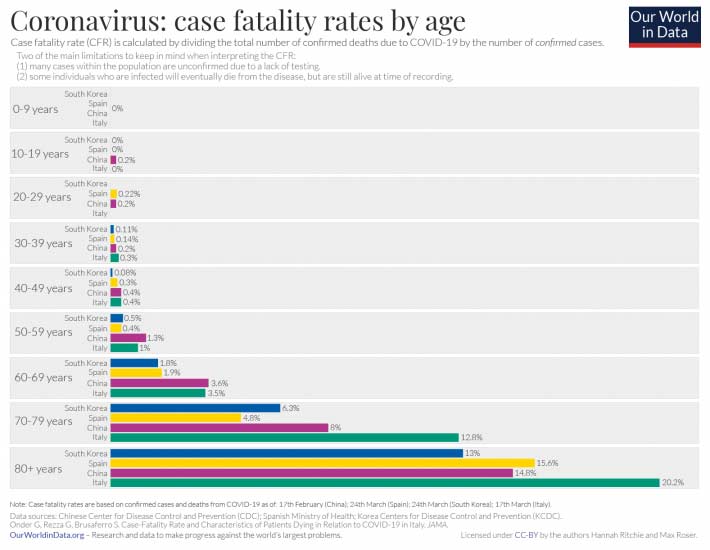
While the mortality rate for COVID-191 varies around the world (in large part due to variations in testing), one trend is clear: The infection disproportionately affects the elderly, with those over the age of 75 making up the bulk of the deaths.
COVID-19 Outcomes Tied to Age
Looking at provisional data2 from the U.S. Centers for Disease Control and Prevention, you can see a clear and dramatic increase in deaths for each older age group.
For young people, especially children, the risk of death is negligible. (Even so, more elderly die from pneumonia that is unrelated to COVID-19. The statistics separate out COVID-19 cases, pneumonia only, and pneumonia with concurrent COVID-19 infection.3)
The exact same age-dependent trend is seen in other countries, four examples of which are included in the OurWorldInData.org’s graph below.4 As noted in a May 29, 2020, review5 in the journal Aging, “Adults over 65 years of age represent 80% of hospitalizations and have a 23-fold greater risk of death than those under 65.”
Below is a graph created by the Minnesota Department of Health, published by Twin Cities Pioneer Press6 June 1, 2020, showing the same kind of age-dependent mortality curve.

Underlying Conditions Are a Primary Risk Factor
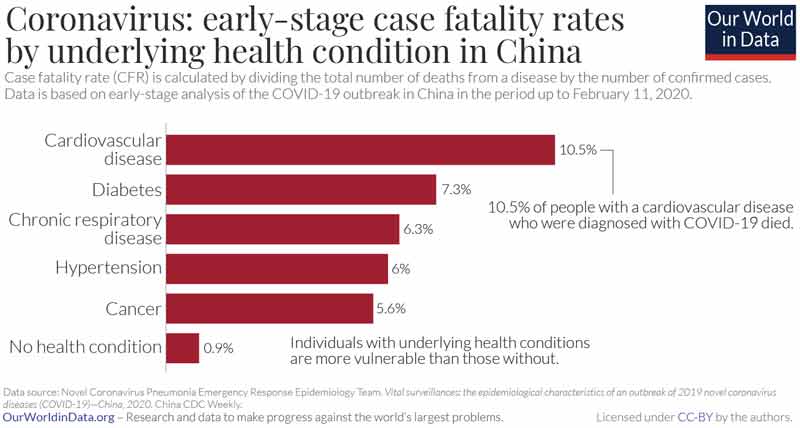
In addition to age, underlying health conditions (so-called comorbidities) are a primary risk factor that raises your risk of death from COVID-19. Not surprisingly, the elderly tend to have more underlying conditions. Very few people who have no underlying health conditions at all end up dying from this infection.
Below is an Our World in Data graph showing the breakdown of comorbidities found in Chinese patients, as of February 11, 2020.7
Another graph from the Minnesota Department of Health, (again, published by Twin Cities Pioneer Press8) reveals a different picture of prevailing comorbidities, yet the trend itself is clear: A vast majority of those who die have underlying conditions that make them more susceptible to severe infection and death.

In the case of Minnesota, 97% of COVID-19-related deaths have occurred in those “already fighting serious illness before they were infected.“9 The average age of those who have died is 82. Meanwhile, the medial age of Minnesotans with known COVID-19 infection is 42.
Just like in other areas, more than 80% of deaths occurred in nursing homes, assisted living facilities and live-in rehab centers, and there are logical reasons for this. More than 90% of residents of these centers have at least one chronic disease and more than 70% have two conditions, which in turn can weaken their immune systems.10 They also live in close quarters and share staff, which facilitates the spread of pathogens.
Italy and certain states in the U.S. — most notably New York, which has the highest COVID-19 death rate in the world — made the grave error of sending COVID-19 infected patients into nursing homes.
In light of what we currently know about the transmission, this was one of the most catastrophic and negligent government decisions that likely caused far more deaths than the lockdown prevented.
Rather than calling for the total lockdown of healthy and low-risk populations, why did health and government officials not simply call for the protection and isolation of the elderly?
According to a May 15, 2020, report by the University of Michigan,11 nursing home residents and workers account for about one-third of all COVID-19 deaths in the U.S. Another report12 in The Guardian has pointed out that up to 20% of hospitalized COVID-19 patients actually caught it in the hospital while being treated for another ailment.
If 20% of people catch the disease at the hospital and 33% of deaths happen in nursing homes, just how much of the entire disease burden is a result of the health care system alone?

Biological Differences Help Explain Age-Related Morbidity
According to the outstanding May 29, 2020, review by David Sinclair on the molecular biology of COVID-1913 mentioned earlier, “Comorbidities such as cardiovascular disease, diabetes and obesity increase the chances of fatal disease, but they alone do not explain why age is an independent risk factor.”
If that’s so, then what else might account for the radical discrepancy in mortality? In his excellent review, Sinclair discusses the “molecular differences between young, middle-aged and older people that may explain why COVID-19 is a mild illness in some but life-threatening in others.” If you have any interest in this topic I would strongly recommend reading this paper.
Importantly, Sinclair points out that inhibiting the virus is not enough in and of itself. One must also restore the patient’s ability to fight the infection and upregulate their immune responses to avoid an overreaction. This is done by many strategies I have previously discussed such as exercise, time-restricted eating and NAD+ optimization.
The Aging Immune System
Topping the list of additional factors that make the elderly more susceptible to dying is an aging immune system — both the innate and adaptive arms. As noted by Sinclair:14
“For the immune system to effectively suppress then eliminate SARS-CoV-2, it must perform four main tasks: 1) recognize, 2) alert, 3) destroy and 4) clear. Each of these mechanisms are known to be dysfunctional and increasingly heterogeneous in older people.”
During aging, your immune system undergoes a gradual decline in function known as immunosenescence, which inhibits your body’s ability to recognize, alert and clear pathogens. Aging also increases systemic inflammation, known as inflammaging, thanks to an overactive yet ineffective alert system. According to Sinclair:
“An abundance of recent data describing the pathology and molecular changes in COVID-19 patients points to both immunosenescence and inflammaging as major drivers of the high mortality rates in older patients.
The inability of [alveolar macrophages] AMs in older individuals to recognize viral particles and convert to a pro-inflammatory state likely accelerates COVID-19 in its early stages, whereas in its advanced stages, AMs are likely to be responsible for the excessive lung damage.”
Sinclair also addresses the impact an aging innate immune system has on vaccination efficacy, noting that:
“In the aged, immune responses to vaccination are also often weak or defective whereas autoimmunity increases. Therefore, in designing vaccines against SARS-CoV-2, it will be important to consider that older people may not respond as well to vaccines as young people.”
Vascular Inflammation Is a Risk Factor
While we have all heard of the cytokine storm, what is even more predictive of death is an increase in the fibrin degradation product D-dimer that is released from blood clots in the microvasculature and is highly predictive of disseminated intravascular coagulation (DIC). The elderly have naturally higher levels of D-dimer, which appears to be a “key indicator for the severity of late-stage COVID-19,” the Sinclair states.15
In the elderly, elevated levels are thought to be due to higher basal levels of vascular inflammation associated with cardiovascular disease, and this, the authors say, “could predispose patients to severe COVID-19.” Similarly, the elderly tend to have higher levels of NLRP3 inflammasomes, which appear to be a key culprit involved in cytokine storms. According to Sinclair:
“In older individuals, NLRP3 may be poised for hyperactivation by SARS-CoV-2 antigens. NLRP3 activity is under the direct control of sirtuin 2 (SIRT2), a member of the NAD+-dependent sirtuin family of deacetylases.
During aging, NAD+ levels decline, reducing the activity of the sirtuins. Old mice … have decreased glucose tolerance and increased insulin resistance. This decline, exacerbated by COVID-19, might promote hyperactivation of NLRP3 and the trigger [for] cytokine storms in COVID-19 patients.”
Higher NAD+ Level May Be Protective
Importantly, he points out that maintaining optimal NAD+ levels may therefore alleviate COVID-19 symptoms. This theory is further supported by recent data showing “SARS-CoV-2 proteins … deplete NAD+,” and the fact that NAD+ precursors are known to inhibit inflammation.
Helpful strategies to achieve that include taking NAD precursors such as nontimed-release niacin, lowering your sugar intake (as excess blood glucose lowers NAD+), cyclical nutritional ketosis, and/or taking glycine or collagen.
Other Factors at Play
Other factors that predispose the elderly to severe infection and death include epigenetic changes that occur with age, specifically:
- The dysregulation of the epigenome
- Excessive calorie intake
- Changes in glycosylation (the enzymatic process by which glycans, a type of carbohydrate, are covalently attached to proteins or fats on the cell surface or in the bloodstream)
Sinclair points out that metformin, a glucose-lowering drug that inhibits the mTOR pathway, “has been suggested as a possible drug to combat severe SARS-CoV-2 infection in older people.”
Metformin also has antiviral effects and helps improve mitochondrial metabolism, decrease inflammatory cytokines, decrease cellular senescence and protect against genomic instability, Sinclair notes.
The following illustrations from his review16 summarize the biological mechanisms that determine your COVID-19 susceptibility and subsequent risk of death.


Vitamin D Is a Simple Strategy That Can Save Lives
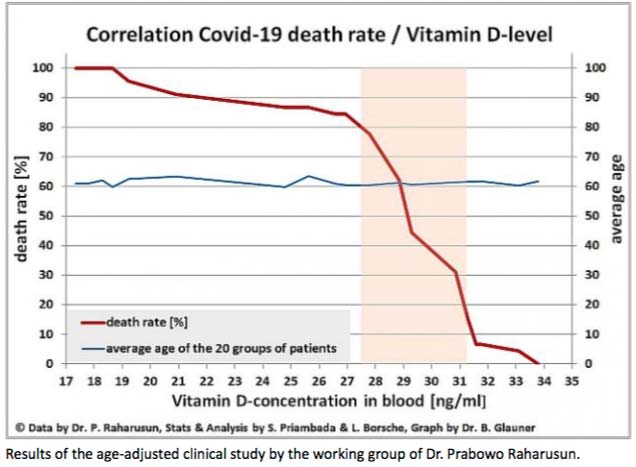
The elderly also tend to have low vitamin D levels, and vitamin D deficiency is another trend that several researchers have now identified as an underlying factor that significantly impacts COVID-19 severity and mortality. I discuss this in “Vitamin D Is Directly Correlated to COVID-19 Outcome.”
The following graph is from a May 18, 2020, letter17 to the Federal Chancellor of Germany, Angela Merkel, from retired biochemist Bernd Glauner and Lorenz Borsche, in which they highlight studies18 showing a clear correlation between COVID-19 mortality and vitamin D levels.
It’s important to note that experts are already warning SARS-CoV-2 may reemerge in the fall when temperatures and humidity levels drop, thereby increasing the virus’ transmissibility.
To improve your immune function and lower your risk of viral infections, you’ll want to raise your vitamin D to a level between 60 nanograms per milliliter (ng/mL) and 80 ng/mL by fall. In Europe, the measurements you’re looking for are 150 nanomoles per liter (nmol/L) and 200 nmol/L. Optimizing your vitamin D is particularly important if you are older or have darker skin.
One of the easiest and most cost-effective ways of measuring your vitamin D level is to participate in the GrassrootsHealth’s personalized nutrition project, which includes a vitamin D testing kit, either alone or in combination with the omega-3 test. This is done in the convenience of your home.
To make sure your vitamin D level and immune system function are optimized, follow these three steps:
1.Measure your vitamin D level — Once you know what your blood level is, you can assess the dose needed to maintain or improve your level. The easiest way to raise your level is by getting regular, safe sun exposure, but if you’re very dark-skinned, you may need to spend about 1.5 hours a day in the sun to have any noticeable effect.
Those with very light skin may only need 15 minutes a day, which is far easier to achieve. Still, they too will typically struggle to maintain ideal levels during the winter. So, depending on your situation, you may need to use an oral vitamin D3 supplement. The next question then becomes, how much do you need?
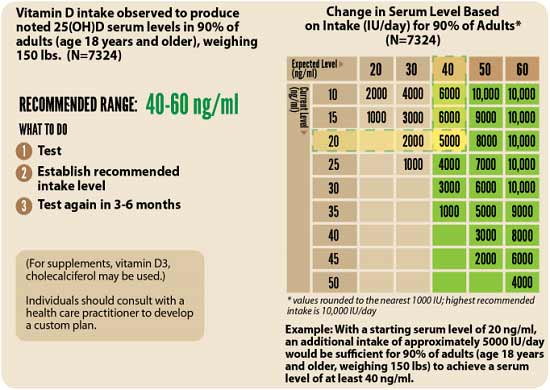
2.Assess your individualized vitamin D dosage — To do that, you can either use the chart below, or use GrassrootsHealth’s Vitamin D*calculator. To convert ng/mL into the European measurement (nmol/L), simply multiply the ng/mL measurement by 2.5. To calculate how much vitamin D you may be getting from regular sun exposure in addition to your supplemental intake, consider using the DMinder app.19
3.Retest in three to six months — Lastly, you’ll need to remeasure your vitamin D level in three to six months, to evaluate how your sun exposure and/or supplement dose is working for you.
Not only will optimizing your vitamin D be an important strategy for you and your family, but it would be really helpful to start thinking about your community as well. I am in the process of writing an even more comprehensive and detailed report on vitamin D in the prevention of COVID-19 and I hope to enlist ALL of you to talk to your friends and family and get them on board to get their vitamin levels optimized.
If you can, speak to pastors in churches with large congregations of people of color and help them start a program getting people on vitamin D, and if you have a family member or know anyone who is in an assisted living facility, meet with the director of the program and encourage them to get everyone tested or at least start them on vitamin D.
- 1, 4, 7 Our World in Data, COVID-19 Mortality Risk
- 2, 3 CDC.gov Provisional COVID-19 Death Counts by Sex, Age, and State
- 5, 13, 15, 16 Aging May 29, 2020; 12(10): 9959-9981
- 6, 8, 9 Twin Cities Pioneer Press June 1, 2020
- 10, 11 Newswise May 15, 2020
- 12 The Guardian May 17, 2020
- 14 Aging May 29, 2020; 12(10): 9959-9981, The Aging Immune System
- 17 Letter to Dr. Angela Merkel from Bernd Glauner and Lorenz Borsche, May 18, 2020 (PDF)
- 18 Letter to Dr. Angela Merkel from Bernd Glauner and Lorenz Borsche, May 18, 2020
- 19 DMinder app
Eating Walnuts Preserves Youthful Telomere Strands
© 4th April 2020 GreenMedInfo LLC. This work is reproduced and distributed with the permission of GreenMedInfo LLC. Want to learn more from GreenMedInfo? Sign up for the newsletter here www.greenmedinfo.com/greenmed/newsletter
Reproduced from original article:
www.greenmedinfo.com/blog/eating-walnuts-preserves-youthful-telomere-strands
Posted on: Saturday, April 4th 2020 at 2:00 pm
Written By: GreenMedInfo Research Group
This article is copyrighted by GreenMedInfo LLC, 2020

If you care about aging gracefully, you will want to learn how to protect your telomeres. Like the plastic tip on the ends of your shoelaces, telomeres keep DNA strands from unravelling — and eating walnuts is a great way to keep telomeres laced up tight
Science has established that diet plays a role in the length and integrity of telomeres,[i] the small protective caps on the ends of chromosomes that serve to protect the vital DNA information inside the nucleus of a cell.[ii]
In December 2018, a cross-functional team of researchers from Spain and California deepened this body of knowledge by publishing their research into the effects of eating walnuts on leukocyte telomere length, or LTL.[iii]
This opportunistic sub-study was conducted within a larger study called “Walnuts and Healthy Aging,” a parallel trial conducted between Barcelona, Spain and Loma Linda University in California.[iv] The study’s primary aim was to explore whether inclusion of walnuts in the diet for two years would maintain LTL in cognitively healthy elders as compared to a control group that abstained from walnuts.
Walnuts and Telomeres: Partners in Healthy Aging
In this trial, walnuts comprised 15% of total caloric intake, equating 30 to 60 grams per day, based on the energy requirements of individuals in the experimental group.
The final participant pool was comprised of 169 cognitively healthy men and women between 63 and 79 years who were living independently and had met eligibility requirements after a clinical visit, physical examination and other exclusionary criteria were applied.
The final 169 subjects were randomized to the two diet groups and 162 completed the trial. There were two dropouts due to severe indigestion attributed to walnuts, while six participants had milder indigestion that was alleviated by reducing the walnut doses.
By the end of the trial, complete data on LTL, dietary anthropometrics and fatty acids were available for 149 participants: 80 in the experimental group consuming walnuts and 69 in the control or abstaining group.
Researchers assessed LTL at baseline and after two years on the experimental dietary protocols via blood samples drawn after an overnight fast. Serum lipid and glucose concentrations were determined by standard enzymatic methods in the hospital clinical laboratory. Telomere length quantification was carried out using high-throughput quantitative fluorescence microscopy.
After assessing the cumulative data, researchers concluded that there was a trend indicating that walnut consumption did preserve leukocyte telomere length in test subjects.[v] Researchers called for further study involving larger test groups and longer time periods, noting that positive dietary impact on health is cumulative over time.
Telomeres: The Forward Edge of Anti-Aging Science
With nearly 72 million Baby Boomers worldwide,[vi] the needs of the geriatric population are at the forefront of modern health care. The standard approach in anti-aging medicine is to replace diminishing hormones with synthetic or “bioidentical” versions.
Natural health devotees look to a nutrient-dense diet and supplementation to stimulate rapid cell turnover. Scientists on the fringes are developing even more controversial therapies involving genetic manipulation of DNA to try and stop the biological clock.[vii] With so much investment into the science of staying young, the discovery of telomeres may be the most valuable finding to date in the race to slow down the way your body ages.
Telomeres get shortened each time a cell replicates, eventually becoming too short to function properly, which correlates with declining health experienced as aging. Telomeres can also become damaged by poor lifestyle habits, such as smoking, obesity, unhealthy diet and lack of exercise.[viii]
Walnuts Protect and Preserve Telomere Length
DNA information essentially writes the code for health or disease into every cell of your body, making the length and integrity of telomeres vital to healthy cell replication. Leukocytes are white blood cells that are found throughout your body and are a major part of your immune system response.[ix]
In humans, leukocyte telomere length (LTL) is positively correlated with lifespan, while shorter LTL is associated with an increased risk of age-related disease.[x] Telomere length, or LTL, is therefore considered a reliable biomarker of aging.
Walnuts are an excellent source of polyunsaturated fatty acids (PUFAs), a type of essential fatty acid that is known to have beneficial effects on the heart.[xi] Prior studies have been conducted on the effects of PUFA consumption on telomere length, however the fatty acids were derived from fish oils, a source that is less sustainable than tree nuts.[xii]
Walnuts are a vegan source of PUFA containing the highest amount of alpha-linolenic acid[xiii] and a rich matrix of antioxidants, namely polyphenols and vitamin E, which have also been related to maintained leukocyte telomere length when included in the diet.[xiv]
There are dozens of reasons to eat more walnuts. They benefit the heart, brain, bones and more, and have been shown to reduce the risk of certain cancers. Walnuts can even help improve the way you respond to stress. To learn more about the health-boosting power of this beneficial tree nut, and to explore further ways you can protect your telomeres, explore the thousands of scientific articles and natural health abstracts on GreenMedInfo.com.

References
[i] Balan, E., Decottignies, A., & Deldicque, L. Physical Activity and Nutrition: Two Promising Strategies for Telomere Maintenance? Nutrients, 10(12), 1942. doi:10.3390/nu10121942. PMID: 30544511
[ii] TA Sciences, What is a telomere? https://www.tasciences.com/what-is-a-telomere.html
[iii] Freitas-Simoes TM, et al. Walnut Consumption for Two Years and Leukocyte Telomere Attrition in Mediterranean Elders: Results of a Randomized Controlled Trial. Nutrients. 2018 Dec 4;10(12). pii: E1907. doi: 10.3390/nu10121907. PMID: 30518050
[iv] NIH, Clinicaltrials.gov, Walnuts and Healthy Aging (WAHA), https://clinicaltrials.gov/ct2/show/NCT01634841
[v] Freitas-Simoes TM, et al. Walnut Consumption for Two Years and Leukocyte Telomere Attrition in Mediterranean Elders: Results of a Randomized Controlled Trial. Nutrients. 2018 Dec 4;10(12). pii: E1907. doi: 10.3390/nu10121907. PMID: 30518050
[vi] Pew Research Center, Fact Tank, Millennials projected to overtake Baby Boomers as America’s largest generation, https://www.pewresearch.org/fact-tank/2018/03/01/millennials-overtake-baby-boomers/
[vii] Ullah, M., Sun, Z. Stem cells and anti-aging genes: double-edged sword–do the same job of life extension. Stem Cell Res Ther 9, 3 (2018). https://doi.org/10.1186/s13287-017-0746-4
[viii] TA Sciences, What is a telomere? https://www.tasciences.com/what-is-a-telomere.html
[ix] Wikipedia, White blood cell, https://en.wikipedia.org/wiki/White_blood_cell
[x] Nature, Scientific reports, Human leukocyte telomere length is associated with DNA methylation levels in multiple subtelomeric and imprinted loci, https://www.nature.com/articles/srep04954
[xi] Ander, B. P., Dupasquier, C. M., Prociuk, M. A., & Pierce, G. N. Polyunsaturated fatty acids and their effects on cardiovascular disease. Experimental and clinical cardiology, 8(4), 164-172. https://www.ncbi.nlm.nih.gov/pmc/articles/PMC2719153/
[xii] Freitas-Simoes TM, et al. Walnut Consumption for Two Years and Leukocyte Telomere Attrition in Mediterranean Elders: Results of a Randomized Controlled Trial. Nutrients. 2018 Dec 4;10(12). pii: E1907. doi: 10.3390/nu10121907. PMID: 30518050
[xiii] Hayes, D.; Angove, M.J.; Tucci, J.; Dennis, C. Walnuts (Juglans regia) Chemical Composition and Research in Human Health. Crit. Rev. Food Sci. Nutr. 2016, 56, 1231-1241. PMID: 25747270
[xiv] Freitas-Simoes TM, Ros E, Sala-Vila A. Nutrients, foods, dietary patterns and telomere length: Update of epidemiological studies and randomized trials. Metabolism 2016, 65, 406-415. PMID: 26975532
Selenium in your cancer prevention program
by: July 20, 2019

(NaturalHealth365) What does selenium have to do with your health? The answer may surprise you (and motivate you – in a whole new way!)
Let’s start with a discussion about cancer – the second leading cause of death in the United States, right behind heart disease. Experts predict that cancer will soon surpass heart disease as the leading killer of American adults.
No doubt, we can all agree: the need for a safe (non-toxic) methods of preventing and treating this deadly disease is truly urgent. This brings us to why we – at NaturalHealth365 – are pleased to feature studies like this one – from Nutrition and Cancer highlighting the importance of consuming enough selenium – on a regular basis. (Note: PubMed has over 1,500 studies on “selenium and cancer prevention.”)
An essential trace element found in various foods, soil and water, selenium helps to prevent cancer by enhancing our immune system, increasing protection against stress and disease plus suppressing the growth of cancerous cells.
Selenium enhances the power of a “master antioxidant” to help detoxify the body
One of selenium’s most vital functions is to help create antioxidant enzymes, or selenoproteins, that recycle glutathione, the body’s “master antioxidant” and detoxifier. In this way, selenium strikes a blow against the disease-causing oxidative stress – which contributes to chronic degenerative disease.
But selenium also has many more “tricks up its sleeve” when it comes to fighting cancer.
Do NOT ignore the health dangers linked to toxic indoor air. These chemicals – the ‘off-gassing’ of paints, mattresses, carpets and other home/office building materials – increase your risk of headaches, dementia, heart disease and cancer.
Unlike therapies that address only one specific stage or type of cancer, selenium is pleiotropic. This means that it combats cancer through multiple pathways and mechanisms, allowing it to target the disease in various forms and stages.
So important is selenium that low levels are linked with an eight-fold increased risk of cancers of the bladder, lungs, stomach, esophagus and liver.
And, supplementation has been shown to lower cancer risk, particularly cancers of the bladder, lung and colon.
Selenium’s extensive therapeutic “toolkit” allows it to prevent cancerous cells from developing into tumors
In addition to preserving the selenoproteins that recycle antioxidants, selenium regulates inflammatory molecules that contribute to cancer growth.
This versatile nutrient also helps to boost the immune system, detoxify carcinogens and heavy metals, protect DNA from cancer-causing mutations and inactivate molecules crucial to the development of cancer cells.
In addition, selenium induces apoptosis – the programmed death of cancer cells – meaning it may help check the uncontrolled reproduction that can help cancer spread so swiftly.
Finally, selenium regulates sex hormone receptors used by some cancers, thereby helping to suppress tumor invasion and growth. Peer-reviewed research has documented reductions in cancer risk through selenium supplementation.
One recent meta-analysis involving nine randomized controlled clinical trials and over 152,000 participants showed that selenium supplementation can cut cancer risk by 26 percent.
Participants who had low levels of selenium at the beginning of the study experienced an even larger (36 percent) reduction in risk – and those in high-risk populations experienced a sizeable 34 percent decrease as well.
Great NEWS: Three different forms of selenium join forces to fight cancer “across the board”
Selenium exists in three distinct forms, each with its own unique capabilities against cancer. While their names can be tongue-twisters, it’s worth noting their individual benefits.
Inorganic sodium selenite destroys the mitochondria that exist in tumor cells – while leaving the mitochondria of healthy cells unharmed. It also helps repair damaged DNA while boosting the immune response.
While it is not absorbed as well as organic forms of selenium, sodium selenite seems to do the best job of boosting crucial glutathione activity.
The second form, selenium-methyl L-selenocysteine, is an organic complex of selenium that contains the sulfur-containing amino acid cysteine.
This form suppresses tumor growth by inhibiting angiogenesis – the creation of new blood vessels that carry nutrients to tumors. It also induces the destruction of cancer cells, and has been shown to boost the effectiveness of chemotherapy drugs.
The third form, L-selenomethionine, is an organic compound of selenium that contains the amino acid L-methionine. This is the form most frequently used in clinical trials – and it has yielded extremely promising results.
In a landmark 1996 University of Arizona study, participants were given 200 mcg of L-selenomethionine a day in order to discern whether the complex could prevent skin cancer. The study did not yield any evidence at all that L-selenomethione could prevent basal or squamous cell skin cancer, per se.
But what it did do – slash the incidence of death from all cancers, by 50 percent – caused researchers to do a double take.
The results were so impressive that the team did something that is almost unprecedented in medical research: stopped the “blinded” phase of the study cold – so that all participants could immediately begin to take advantage of maximum protection against cancer.
And that’s not all.
A separate study showed that L-selenomethionine could reduce risk of prostate cancer by 63 percent – when a prior history of cancer existed – and by a whopping 74 percent in those with normal levels of PSA (prostate-specific androgen, which researchers use as a marker of prostate cancer).
How to decrease your risk of bladder cancer by nearly 40 percent
Over 70,000 Americans will be diagnosed with bladder cancer over this year alone – and 14,000 will lose their lives to the disease.
A recent review shows that selenium can substantially decrease the risk of the disease.
In a meta-analysis involving over 17,000 participants and published in Cancer Epidemiology and Prevention Biomarkers, the authors noted that selenium supplementation was associated with a 39 percent decrease in the risk of bladder cancer – when averaged out over both sexes.
When the researchers looked at the effects of selenium supplementation on women alone, they found that it reduced bladder cancer risk by a robust 45 percent. The team called for more study to further explore the benefits of selenium supplementation.
Proper nutrition can help raise selenium levels
The USDA advises that the adult daily allowance for selenium is 55 mcg a day.
You can increase your selenium levels by eating organic cage-free eggs, wild-caught salmon, halibut, poultry and grass-fed beef.
Vegans and vegetarians can obtain selenium through sunflower seeds and Brazil nuts. In fact, with a whopping 607 micrograms of selenium per cup, Brazil nuts are the single best source of this essential mineral.
If you think selenium supplementation might be right for you, check with your integrative healthcare provider before adding it to your health routine – to best advise you on the proper forms and dosages to take.
Sources for this article include: