VAERS

now browsing by category


Exclusive: Clinical Trial Documents Suggest Moderna Skimped on Autopsies, Discounted Serious Injuries — Did FDA Know?


© July 20, 2023 Children’s Health Defense, Inc. This work is reproduced and distributed with the permission of Children’s Health Defense, Inc.
Want to learn more from Children’s Health Defense?
Sign up for free news and updates from Robert F. Kennedy, Jr. and the Children’s Health Defense.
Your donation will help to support us in our efforts.
Reproduced from original article:
https://childrenshealthdefense.org/defender/moderna-clinical-trial-documents-injuries/

The documents, previously submitted by Moderna to the U.S. Food and Drug Administration as part of the licensing process for Moderna’s Spikevax COVID-19 vaccine, included details on unexplained deaths and fetal abnormalities in animal studies.
By Michael Nevradakis, Ph.D.

moderna clinical trial documents injuries feature

Miss a day, miss a lot. Subscribe to The Defender’s Top News of the Day. It’s free.

A 13,685-page tranche of documents related to Moderna’s COVID-19 vaccine clinical trials released Tuesday contain details about the deaths of 16 trial participants, the prevalence of severe adverse events (SAEs) and other abnormalities.

The documents, previously submitted by Moderna to the U.S. Food and Drug Administration (FDA) as part of the licensing process for Moderna’s Spikevax COVID-19 vaccine, also exposed an “utter lack of thoroughness” in how the trials were conducted, according to Defending the Republic (DTR), a Dallas-based nonprofit that obtained the documents via a a still-pending Freedom of Information Act lawsuit against Moderna.

The documents, shared with The Defender in advance of their public release, are the first set of “Moderna documents” to be released as part of the lawsuit — with approximately 8,000 more pages expected to follow later this year.

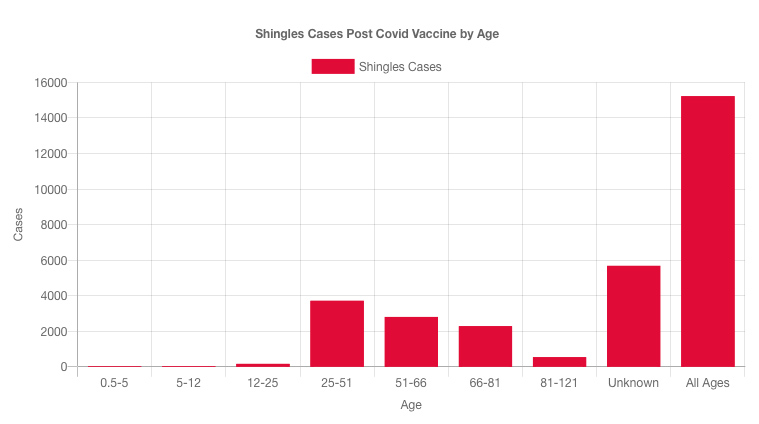
Travis Miller, a Fort Worth-based attorney representing DTR, told The Defender, “These documents include over 13,500 pages relating to serious adverse event listings that  document injuries — such as shingles and Bell’s palsy and other more serious conditions — which we believe may be related to the Moderna COVID-19 vaccine.”

DTR also received documents describing  experiments involving mRNA injections on rats in 2017-2018, prior to the onset of COVID-19. Miller told The Defender these studies revealed fetal abnormalities in pregnant rats.

Dr. Meryl Nass, an internist, biological warfare epidemiologist and member of the Children’s Health Defense scientific advisory committee, said the Moderna clinical trial data bear similarities to the outcomes seen in the Pfizer COVID-19 vaccine trials, and raise several questions about safety and liability.

Nass told The Defender:

“Both the preclinical (animal) studies of Moderna and of Pfizer revealed skeletal abnormalities in the offspring of vaccinated mice and rats at higher-than-normal rates and revealed vaccine components travelled throughout the body into all organs.

“Both the Pfizer and Moderna trial data in humans reveal concerning deaths and side effects that were attributed to other causes, but likely were vaccine side effects.”

Nass said “it appears” the FDA did not perform due diligence regarding the clinical trials for each vaccine.

“Did the FDA perform its required regulatory function to oversee the conduct of the trials?” Nass asked. “Or did Operation Warp Speed wave the vaccines through without a proper FDA review of the data?”

Nass asked “who is responsible” if the FDA failed to “perform its regulatory tasks?”

She said the clinical trial data also lead to questions about the liability shield enjoyed by vaccine manufacturers:

“If Moderna (and Pfizer) knew of more problems with the vaccines than they acknowledged, will they have liability under the PREP Act?

“Finally, pilot lots of vaccine (used for the clinical trials of the Pfizer vaccine, and likely the Moderna vaccine) were considerably different than lots made later, using different methods. This was noted by the European Medicines Agency.

“Therefore, do the clinical trial findings even apply to everyone else who received the vaccine later?”

Serious adverse events routinely classified as ‘unrelated’ to vaccine

Four of the six files contained in the documents released Tuesday contained data from the human clinical trials for the Moderna COVID-19 vaccine. The documents date from between November 2020 and June 2021.

Miller criticized Moderna’s lack of scientific rigor in determining the causes of the deaths and adverse events, saying that, in several cases, “Individuals who died after receiving the Moderna vaccine were not given an autopsy.”

According to DTR, “The study’s authors indicated that of those 16 deaths, only two autopsies were performed, five of the dead were not autopsied, and the autopsy status of nine of the dead was ‘unknown.’”

In one instance, a 56-year-old woman experienced “sudden death” 182 days after receiving her second dose of the Moderna vaccine. The cause of death was listed as “unknown” and no autopsy was performed.

“It seems they purposely decided not to investigate suspicious deaths in case the Moderna vaccine might be the cause,” DTR stated in its summary.

Yet the deaths “did not stop those running these ‘studies’ from concluding, despite the absence of evidence, that the Moderna vaccine was not related to these deaths,” DTR added.

Several trial participants also developed neurological disorders, DTR said. “One 44-year-old female had ‘left side facial paralysis’ just eight days after the second dose” and “Numerous vaccinated participants saw the onset of shingles less than 10 days after vaccination.”

This was not the full extent of SAEs sustained by trial participants. According to DTR:

“A number of participants experienced: myocardial infarction (heart attack); pulmonary embolism; spontaneous abortion/miscarriage; transient ischemic attack (TIA); and lymphoma.

“Subsequent analyses of reports from the FDA VAERS [Vaccine Adverse Events Reporting System] database, the Department of Defense’s DMED [Defense Medical Epidemiological Database], and European regulators showed heightened rates of these illnesses following administration of the Moderna vaccine.”

VAERS has historically been shown to report only 1% of actual vaccine adverse events.

Similar to the Pfizer documents released last year, the Moderna documents indicate SAEs were routinely classified as being “unrelated” to the vaccine. According to DTR:

“… similar to their treatment of deaths post-vaccination, the studies seemed predestined to conclude that these serious adverse events — many of them life-threatening — were not related to the Moderna vaccine. It didn’t matter whether the adverse event occurred within days of vaccination.

“All this creates serious doubt about the safety of the Moderna vaccine and the standards by which it was approved by the FDA,” Miller said.

According to DTR, the documents also contained “troubling” evidence from animal studies.

Referring to the results of one study, DTR stated, “The findings of this study are troubling: the mRNA vaccine altered the skeletal variations of the rat fetuses and the ‘female pregnancy index’ of the vaccinated rats was significantly lower than the control group.”

Other abnormalities noted in this study included an above-average rate of “common skeletal variations consisting of wavy ribs and increase[d] nodules,” a “statistically significant higher” mean number of reproductive cycle lengths and a lower incidence of mating and pregnancy in the mRNA-1273 group rats compared to the control group.

Moderna included an older study, conducted in 2017 and 2018, prior to the COVID-19 pandemic, in its application for FDA approval. The study showed similar results, with mRNA found in several organs.

According to DTR, “Testing revealed that ‘mRNA-1647 was detected in all of the analyzed tissues except for kidney[s],’ with elevated levels of mRNA-1647 found in the spleen and eye. Notably, mRNA-1647 was detected in the brain and heart.”

FDA twice denied FOIA requests for release of the Moderna documents

Miller told The Defender that DTR sued Moderna after the FDA “wrongly denied our request for the expedited production of the records submitted by Moderna in support of its Biologics License Application (BLA) for its COVID-19 vaccine ‘Spikevax.’”

The lawsuit was filed June 7, 2022 in the U.S. District Court for the Northern District of Texas – Dallas Division — the same federal court that previously ordered the release of the FDA documents pertaining to the approval of the Pfizer COVID-19 vaccine. The court rejected the FDA’s proposed release schedule to make those documents public over a period of 75 years.

DTR said it reached an agreement earlier this year with the FDA for the production of approximately 24,000 pages of some of the most important records submitted by Moderna in support of its Biologics License Application.”

The agreement, announced March 31, required the FDA to release the first 13,685-page set of documents by July 17, and the remainder by the end of 2023.

The FDA granted full approval of Moderna’s Spikevax on Jan. 31, 2022. On Feb. 3, 2022, DTR filed a FOIA  request with the FDA, “seeking the expedited production of records relating to the FDA’s approval of the Moderna COVID-19 vaccine.”

However, the FDA twice rejected DTR’s request — first on Feb. 9, 2022 and again on June 6, 2022 — claiming DTR had not shown “a compelling need for expedited processing” of the documents. DTR sued the FDA the following day.

While the lawsuit is still ongoing, Miller told The Defender it will be “dismissed per agreement by the parties” once the FDA provides the remaining documents.

According to Miller, these documents include:

  • Moderna’s May 28, 2021 original application.
  • Postmarketing reports of herpes zoster.
  • Data related to unsolicited adverse events.
  • Data relating to analysis and efficacy against severe COVID.
  • Information on antibody quantification.
  • Information on postmarketing vaccine effectiveness.

The documents are expected to be released by the end of the year.

Miller told The Defender he hopes the findings in the Moderna documents will “at a minimum, lead to further Congressional oversight of the FDA’s approval process and for accountability within that agency.”

Michael Nevradakis, Ph.D.'s avatar

Study: 74% of Post-Jab Deaths Caused by the Shot


Reproduced from original article:
https://articles.mercola.com/sites/articles/archive/2023/07/18/post-covid-vaccination-deaths.aspx
The original Mercola article may not remain on the original site, but I will endeavor to keep it on this site as long as I deem it to be appropriate.


Analysis by Dr. Joseph Mercola
     Fact Checked     July 18, 2023

STORY AT-A-GLANCE

  • July 5, 2023, Dr. Peter McCullough, Dr. Harvey Risch, Dr. Roger Hodkinson, an expert clinical pathologist, and colleagues published a systematic review of autopsy findings in people who died after receiving a COVID shot on The Lancet journal’s preprint server
  • The autopsy review found that 62.5% to 73.9% of post-jab deaths were likely caused by the injection
  • Preprints with The Lancet pulled the study in less than 24 hours
  • The New England Journal of Medicine (NEJM) also rejected the paper, as did the Journal of the American Medical Association (JAMA). The preprint server medRxiv and others also refused to post it
  • Belgian researchers report that two doses of the Pfizer mRNA COVID jab induced lethal “turbo cancers” in a mouse. Two days after receiving its second dose, one of the 14 injected mice (7%) died suddenly. No clinical signs of illness were present before its abrupt death. Upon post-mortem examination, the mouse was found to have lymphoma in several organs, including the heart, liver, kidneys, spleen and lungs

July 5, 2023, Dr. Peter McCullough, Dr. Harvey Risch, Dr. Roger Hodkinson, an expert clinical pathologist, and several other colleagues published a systematic review of autopsy findings in people who died after receiving a COVID shot on The Lancet journal’s preprint server.1

Disturbingly, but not surprisingly, they concluded that 62.5% to 73.9% of post-jab deaths were likely caused by the injection. Previous autopsy reviews have also concluded that the mRNA COVID jabs are a causative factor in sudden cardiac deaths.2

Nearly Three-Quarters of Post-Jab Deaths Caused by the Shot

As explained by the authors:3

“The aim of this systematic review is to investigate possible causal links between COVID-19 vaccine administration and death using autopsies and post-mortem analysis … We searched for all published autopsy and necropsy reports relating to COVID-19 vaccination up until May 18th, 2023.

We initially identified 678 studies and, after screening for our inclusion criteria, included 44 papers that contained 325 autopsy cases and one necropsy case. Three physicians independently reviewed all deaths and determined whether COVID-19 vaccination was the direct cause or contributed significantly to death.

The most implicated organ system in COVID-19 vaccine-associated death was the cardiovascular system (53%), followed by the hematological system (17%), the respiratory system (8%), and multiple organ systems (7%). Three or more organ systems were affected in 21 cases.

The mean time from vaccination to death was 14.3 days. Most deaths occurred within a week from last vaccine administration. A total of 240 deaths (73.9%) were independently adjudicated as directly due to or significantly contributed to by COVID-19 vaccination …

Among adjudicators, there was complete independent agreement (all three physicians) of vaccination causing or contributing to death in 203 cases (62.5%). The one necropsy case was judged to be linked to vaccination with complete agreement …

The consistency seen among cases in this review with known COVID-19 vaccine adverse events, their mechanisms, and related excess death, coupled with autopsy confirmation and physician-led death adjudication, suggests there is a high likelihood of a causal link between COVID-19 vaccines and death in most cases.”

The Lancet Censors Paper

As has so often been the case over these past three years, the journal didn’t waste time censoring the paper. Preprints with The Lancet pulled it within 24 hours,4 stating “the study’s conclusions are not supported by the study methodology.”5 In what way? They don’t say. As noted by McCullough, the methodology is as standard as it gets. Will Jones at the Daily Sceptic adds:6

“A number of the authors of the paper are at the top of their fields so it is hard to imagine that the methodology of their review was really so poor that it warranted removal at initial screening rather than being subject to full critical appraisal. It smacks instead of raw censorship of a paper that failed to toe the official line …

Dr. Clare Craig, a pathologist and co-Chair of the HART pandemic advisory group, says that in her view the approach taken in the study is sound. She told the Daily Sceptic:

‘The VAERS system … is designed to alert to potential harms without necessarily being the best way of measuring the extent of those harms. Quantifying the impact of deaths can be done by looking at overall mortality rates in a country.

However, this is imperfect as a deficit of deaths would be expected after a period of excess deaths, making the accuracy of any baseline dubious. An alternative approach of auditing such deaths through autopsy is sound.

There may be a bias [in the study] towards reporting the autopsies of deaths where there was evidence of causation and the likelihood of causation might be exaggerated by that bias. For example, 19 of the 325 deaths were due to vaccine-induced immune thrombocytopenia and thrombosis (VITT) but these reports may be overrepresented because of the regulators’ willingness to acknowledge such deaths.

Nevertheless, it is important that attempts are made to quantify the risk of harm and censorship of these attempts, rather than open scientific critique, does nothing to help reassure people.”

Prior to this, The New England Journal of Medicine (NEJM) had also rejected the paper, as had the Journal of the American Medical Association (JAMA). NEJM rejected it within a few days, and JAMA within about an hour of submission. The preprint server medRxiv and others also refused to post it.

In the video above, Naomi Wolf with Daily Clout interviewed McCullough about the censoring of his paper. According to McCullough, overnight, while the paper was still on the Preprint server, downloads of the paper were in the hundreds per minute, demonstrating there’s a clear demand for this information.

This act of medical censorship occurred after the paper met all the criteria for listing on the Lancet PrePrint Server and appears to be triggered by very heavy worldwide interest and rapid downloading of the paper.

This speaks to the importance of our findings as the largest summary of autopsies after COVID-19 vaccination. Elsevier and Lancet are trying to suppress critical scientific observations on COVID-19 vaccine safety. Their actions are reprehensible. ~ Dr. Peter McCullough

The paper is currently only available for download on the preprint server Zenodo.7 Ironically, by pulling the paper off the server, The Lancet magnified its existence, as news of the censorship went viral on social media.

Download this Article Before it Disappears

Download PDF

Mechanisms of Action

In the featured Daily Clout interview, McCullough explains the jab’s mechanisms of action that appear to be responsible for a majority of post-jab heart-related deaths. The first is myocarditis (heart inflammation). The other is progression of atherosclerotic cardiovascular disease.

In myocarditis, the electrical current can no longer conduct smoothly through the heart muscle, causing an abnormal heart rhythm. This abnormal heart rhythm can then lead to sudden cardiac death. This is one of the primary reasons behind many athletic deaths, where players have died on the field.

In a letter to the editor of the Scandinavian Journal of Immunology published in late 2022,8,9 McCullough compared the pre- and post-COVID jab cardiac death rates among athletes, finding that before the jab, there were an average of 29 cardiac-related deaths among pro athletes per year.

After the rollout of the jab, which was mandated on players, it shot up to 283 per year — a 10-fold increase. And, in many cases, players have no prior symptoms. Wolf points out that lipid nanoparticles have been found to damage electrical conduction in the myelin sheath, so why would it not also damage electrical conduction in the heart? It makes sense that it would.

McCullough adds that when lipid nanoparticles are taken up by human somatic cells — nonreproductive cells, found in the heart and other internal organs — it causes syncytia formation where cell membranes fuse together.

And, because the heart prefers lipids over glucose for fuel, it may preferentially take up lipid nanoparticles, more so than other tissues. On top of that, exercise increases blood flow, which draws more lipid nanoparticles to the heart.

He also cites research showing there are two primary periods of sudden cardiac death: during exercise and between 3 AM and 6 AM. The common factor between these two is adrenaline. Adrenaline surges during exercise and in the natural waking process. If you have myocarditis, this adrenaline surge can be enough to trigger sudden cardiac death.

Shining a Light on Possible Treatments

As noted by Wolf, by clearly identifying how the COVID jab is killing people, McCullough’s paper also helps shed light on potential treatments. The spike protein produced by your body in response to the mRNA shot is the primary culprit that needs to be degraded and eliminated.

The enzymes in your body that would normally do this job are unable to degrade the synthetic spike protein, but there are products that can get the job done. McCullough refers to Japanese research that found nattokinase can be very helpful in this regard. However, lumbrokinase is a much stronger fibrinolytic enzyme and would likely work better.

Bromelain, an enzyme derived from pineapple stems, also works, McCullough says, as does curcumin, the active ingredient in turmeric. We also know that both hydroxychloroquine and ivermectin aid in the elimination of spike protein.

As noted by McCullough, it’s interesting that while the SARS-CoV-2 virus and the spike protein produced by the mRNA jab are synthetic and wholly unnatural, most of the best remedies are turning out to be all-natural compounds.

Reprehensible Medical Censorship

At the end of the interview, McCullough says that if the current censorship trend continues, medical history may well state that the COVID shots are perfectly safe, even though there’s plenty of evidence to the contrary — evidence that was never allowed to be seen.

In a three-part series for TrialSite News, published in 2021, investigative journalist Sonia Elijah reviewed how scientific journals were censoring the science on COVID. July 7, 2023, she published a follow-up based on the most recent censoring of McCullough’s paper:10

“This is just another example of a paper with findings, not fitting in with the ‘very good safety profile of the COVID-19 vaccines,’ being expelled from a prominent journal,” she writes. “Dr. McCullough commented exclusively for TrialSite about this highly concerning issue. This is what he said:

‘This act of medical censorship occurred after the paper met all the criteria for listing on the Lancet PrePrint Server and appears to be triggered by very heavy worldwide interest and rapid downloading of the paper.

This speaks to the importance of our findings as the largest summary of autopsies after COVID-19 vaccination. Elsevier and Lancet are trying to suppress critical scientific observations on COVID-19 vaccine safety. Their actions are reprehensible.’

My own research11 in analyzing the Periodic Safety Update Reports compiled by Pfizer for the European Medicines Agency revealed damning data. As of June 2022, 161 children have died shortly after taking the Pfizer-BioNTech COVID-19 vaccine.

What is even more shocking is that an overwhelming majority of autopsies were not performed or followed up by the pharmaceutical behemoth … This is why McCullough et al.’s study is so key because there is an incredible lack of laboratory data and post-mortem information on these post-vaccine deaths …

This begs the all-important question — has this scarcity been carefully orchestrated to prevent sufficient evidence of a causal association of COVID-19 vaccines with the reported deaths?”

Case Report of mRNA Jab-Induced Turbo Cancers

In related news, Belgian researchers report that two doses of the Pfizer mRNA COVID jab induced lethal “turbo cancers” in a mouse. Two days after receiving its second dose, one of the 14 injected mice (7%) died suddenly. No clinical signs of illness were present before its abrupt death.

Upon post-mortem examination, the mouse was found to have lymphoma in several organs, including the heart, liver, kidneys, spleen and lungs. The case report, published in Frontiers in Oncology May 1, 2023, noted:12

“Two days following booster vaccination (i.e., 16 days after prime), at only 14 weeks of age, our animal suffered spontaneous death with marked organomegaly and diffuse malignant infiltration of multiple extranodal organs (heart, lung, liver, kidney, spleen) by lymphoid neoplasm.

Immunohistochemical examination revealed organ sections positive for CD19, terminal deoxynucleotidyl transferase, and c-MYC, compatible with a B-cell lymphoblastic lymphoma immunophenotyped …

Given the paucity of data on the long-term safety of the SARS-CoV-2 mRNA vaccines, it is vital that clinicians and scientists report any adverse event to establish potential correlations.

Our case adds to previous clinical reports on malignant lymphoma development following novel SARS-CoV-2 mRNA vaccination. Interestingly, we are the first to report a B-LBL subtype …

Although strong evidence proving or refuting a causal relationship between SARS-CoV-2 mRNA vaccination and lymphoma development or progression is lacking, vigilance is required, with conscientious reporting of similar cases and a further investigation of the mechanisms of action that could explain the aforementioned association.”

Resources for Those Injured by the COVID Jab

Aside from autopsy assessments, case reports of harms and various other studies, things like job statistics, disability claims, life insurance claims and all-cause mortality statistics also tell us that the COVID jabs are having a devastating effect.13 All have skyrocketed since the introduction of these COVID jabs.

If you got one or more jabs and suffered an injury, first and foremost, never ever take another COVID booster, another mRNA gene therapy shot or regular vaccine. You need to end the assault on your body.

The same goes for anyone who has taken one or more COVID jabs and had the good fortune of not experiencing debilitating side effects. Your health may still be impacted long-term, so don’t take any more shots.

When it comes to treatment, it seems like many of the treatments that worked against severe COVID-19 infection also help ameliorate adverse effects from the jab. This makes sense, as the toxic, most damaging part of the virus is the spike protein, and that’s what your whole body is producing if you got the jab.

As mentioned earlier, eliminating the spike protein is a primary task to prevent and/or address post-jab injuries. Ivermectin and hydroxychloroquine bind to and facilitate the removal of spike protein. According to McCullough, nattokinase, bromelain and curcumin also help degrade the spike protein.

For a comprehensive treatment plan, see the Front Line COVID-19 Critical Care Alliance (FLCCC) I-RECOVER protocol. It’s continuously updated as more data become available, so be sure to download the latest version straight from the FLCCC website at covid19criticalcare.com.14 Additional detox remedies can be found in “World Council for Health Reveals Spike Protein Detox.”

– Sources and References

COVID Shots Associated With Increased Risk of Blindness


Reproduced from original article:
https://articles.mercola.com/sites/articles/archive/2023/06/13/eye-problems-after-covid-vaccine.aspx
The original Mercola article may not remain on the original site, but I will endeavor to keep it on this site as long as I deem it to be appropriate.


Analysis by Dr. Joseph Mercola
     Fact Checked     June 13, 2023

eye problems after covid vaccine

STORY AT-A-GLANCE

  • The broad range of reported side effects of the COVID jab is astounding. Effects involve just about every part, organ and system of the body, including a range of eye problems
  • The U.S. Centers for Disease Control and Prevention’s data mining of the Vaccine Adverse Event Reporting System (VAERS) reveals reports ranging from eye discomfort, bruising and numbness, to serious conditions such as retinal vein and retinal artery occlusions, eye hemorrhage and retinal and ophthalmic migraines
  • Two recent papers highlight the risk of ophthalmic vascular events, which can lead to blindness, following the COVID jab. Less than 20% of patients who experience central retinal artery occlusion, i.e., a blockage in the main artery of the retina, regain functional visual acuity in the affected eye
  • A systematic review of 49 studies found that most vascular events involving the eyes occurred after the first dose, and were more common after the Pfizer and AstraZeneca shots
  • A second risk assessment concluded that, across age groups, the risk of retinal vascular occlusion more than doubled in the two years following the mRNA COVID jab

While U.S. health agencies have admitted that myocarditis (heart inflammation), and a related condition called pericarditis (inflammation of the heart sack), are potential side effects of the COVID jab,1 the U.S. Centers for Disease Control and Prevention has ignored hundreds of other safety signals that have shown up during their Proportional Reporting Ratio (PRR) data mining of the Vaccine Adverse Event Reporting System (VAERS).

For example, in individuals aged 18 and older, there are 770 safety signals for different adverse events, and more than 500 of them have a stronger safety signal than myocarditis and pericarditis.2

Range of Eye Problems Reported Post-Jab

The broad range of reported side effects is also astounding. They involve just about every part, organ and system of the body, including a range of eye problems. For example, looking at the list of reported side effects in 18-and-over age group in the CDC’s PRR document,3 we find:

Ocular discomfort
Eye contusions (bruising)
Eye color change
Eyelid sensory disorder
Hypoesthesia eye (numbness of the eye, typically resulting from nerve damage and/or blood clots that result in tissue damage)
Retinal vein occlusion (blood clot in the vein that carries deoxygenated blood from your retina back to your heart)
Retinal artery occlusion (blood clot in the artery that feeds blood to your retina)

Eye hemorrhage

Retinal migraine (a retinal disease accompanied by migraine caused by ischemia or vascular spasm in or behind the affected eye; bouts can cause diminished vision or temporary blindness)
Ophthalmic migraine (a nervous system problem typically involving the third, fourth or sixth cranial nerves that allow for various eye movements; the condition is associated with severe headache and pain around the eyes; double vision is common during bouts)

Ophthalmic Vascular Events Linked to COVID Jab

Two recent papers specifically highlight the risk of ophthalmic vascular events, which can lead to blindness, following the COVID jab. Basically, what we’re talking about are acute ischemic strokes that affect the eyes and can cause permanent loss of vision.

For example, according to research4 published in 2021, less than 20% of patients who experience central retinal artery occlusion,5 i.e., a blockage in the main artery of the retina, regain functional visual acuity in the affected eye.

The first paper, a systematic review6 of 49 studies published in the journal Vaccines in December 2022, found that most vascular events involving the eyes (46.2%) occurred after the first dose, and were more common after the Pfizer and AstraZeneca shots.

“Ophthalmic vascular events are serious vision-threatening side effects that have been associated with COVID-19 vaccination. Clinicians should be aware of the possible association between COVID-19 vaccines and ocular vascular events to provide early diagnosis and treatment,” the authors concluded.

Prolonged Increased Risk of Blindness Post-Jab

The second article was published May 2, 202 in NPJ Vaccines.7 Here, the researchers did a risk assessment to determine just how common retinal vascular occlusion — which can cause blindness — was after the COVID-19 jab. The results were devastating.

Across age groups, the risk more than doubled in the two years following the shot. For a detailed breakdown of retinal vascular occlusion incidence among various age groups, genders and ethnicities, see Table 2 on this page.8 According to Retsef Levi, that amounts to one additional case for every 300 seniors jabbed (age 64 and older), and one additional case for every 1,000 people jabbed between the ages of 18 and 64.9

According to the CDC,10 58,739,476 seniors aged 65 and older have received at least one dose. Divide that by 300, and we could be looking at 195,798 additional cases of retinal vascular occlusion and potential blindness among the elderly. And that’s just in the United States.

If we look at the 18 and older age group, the CDC claims 238,163,284 Americans have received at least one dose.11 Divide that by 1,000, and we’re potentially looking at an additional 238,163 instances of eye damage that could lead to blindness.

That’s an awful lot of visually impaired people. For reference, in 2017, an estimated 1.08 million Americans were blind.12 Of that 1.08 million, only 141,000 were younger than 40 (about 13%).

Retinal Vascular Occlusion Post-Jab Not Likely Coincidental

Patients included in the NPJ Vaccines study13 were jabbed between January 2020 and December 2022. Individuals with confirmed COVID-19, a history of retinal vascular occlusion, and those who used medication within four weeks of getting the jab that could affect blood coagulation were excluded. In the end, 739,066 “vaccinated” cohorts were matched to the same number of unvaccinated individuals at a ratio of 1-to-1. As reported in this paper:14

“Coronavirus disease 2019 (COVID-19) vaccines are associated with several ocular manifestations. Emerging evidence has been reported; however, the causality between the two is debatable. We aimed to investigate the risk of retinal vascular occlusion after COVID-19 vaccination …

We employed multivariable-adjusted Cox proportional hazards models after performing a 1:1 propensity score matching between the vaccinated and unvaccinated cohorts.

Individuals with COVID-19 vaccination had a higher risk of all forms of retinal vascular occlusion in 2 years after vaccination, with an overall hazard ratio of 2.19 (95% confidence interval 2.00–2.39).

The cumulative incidence of retinal vascular occlusion was significantly higher in the vaccinated cohort compared to the unvaccinated cohort, 2 years and 12 weeks after vaccination. The risk of retinal vascular occlusion significantly increased during the first 2 weeks after vaccination and persisted for 12 weeks.

Additionally, individuals with first and second dose of BNT162b2 and mRNA-1273 had significantly increased risk of retinal vascular occlusion 2 years following vaccination, while no disparity was detected between brand and dose of vaccines.

This large multicenter study strengthens the findings of previous cases. Retinal vascular occlusion may not be a coincidental finding after COVID-19 vaccination.”

The authors cite 10 different case reports15,16,17,18,19,20,21,22,23,24 of retinal vascular occlusion following vaccination, as well as two additional literary reviews25,26 on the condition as it relates to mRNA COVID “vaccination.” Unfortunately, both are behind a paywall. You can review the case reports, however, if you want.

Molecular mimicry of the S protein, which shares sequence homology with human proteins, may play a central role in retinal vascular occlusion. ~ NPJ Vaccines

As for how the mRNA COVID jab might cause retinal vascular occlusion, the authors’ hypothesis is that “molecular mimicry of the S protein, which shares sequence homology with human proteins, may play a central role.”

Special Vaccine Issue to Focus on Post-Jab Eye Problems

Apparently, medical scientists are concerned enough about what they’re seeing so far that the journal Vaccine has issued a call for manuscripts for a special issue of “Ophthalmic Adverse Events Following SARS-CoV-2 Vaccination.” The submission deadline is December 31, 2023, so obviously, we won’t see this special edition until sometime in 2024. As noted in the manuscript request:27

“Over the past 20 months, several reports and studies have highlighted the adverse events (such as myocarditis, Guillain–Barré syndrome, etc.) following the administration of these vaccines. In this special edition, we are compiling case reports, series, review articles and studies focused on ophthalmic adverse events following SARS-CoV-2 vaccinations. The submissions may include:

1.Case of rare ophthalmic adverse events following vaccination

2.Studies reporting risk of ophthalmic adverse events following vaccine

3.Analysis of global databases reporting vaccine-associated ophthalmic adverse events

4.Review articles evaluating published literature on ocular adverse events with special emphasis on underlying potential mechanisms.”

Signs and Symptoms of Retinal Vascular Occlusion

In closing, it’s important to realize that the primary symptom of retinal vascular occlusion is a sudden change in vision — be it blurry vision, or a partial or complete loss of vision — typically only in one eye. Rarely ever is there pain.

Should this happen, seek evaluation immediately. The risk of more severe and/or permanent vision loss increases the longer the treatment delay. Your ophthalmologist (eye doctor) can give you a diagnosis, but it would be prudent to seek emergency room care if you suddenly lose your vision in one eye — particularly if you’ve received one or more mRNA COVID shots.

Since this is like a “stroke” in your eye, the sooner you are able to provide the tissue that is not being supplied with oxygen, the more likely it is you will recover function. We know that there are two supplements that will help with these types of reperfusion injuries, methylene blue and melatonin. I discussed this in my interview with Dr. Russel Reiter.

In May 2023, actor Jamie Foxx suffered what is being reported as a stroke that left him partially paralyzed and blind.28 Hollywood journalist AJ Benza claimed Foxx had been pressured to get the shot for the production of “Back in Action,” but sources close to Foxx claim his condition is unrelated to the COVID jab, and no one has even confirmed that he got the shot, although it was supposedly required on the set.

While it’s unclear if the mRNA shot had anything to do with Foxx’s sudden incapacitation, his condition resembles what I’ve discussed here, which drives home the point that this is something that needs to be taken seriously.

United States forms official committee to investigate extent of COVID jab injuries

Reproduced from original article:
https://www.naturalhealth365.com/united-states-forms-official-committee-to-investigate-extent-of-covid-jab-injuries.html


by:  | 

covid-jab-injuries(NaturalHealth365)  A whopping 672 million COVID jabs were administered nationwide from December 2020 through March 2023.  In this period, nearly 20,000 reports of death were submitted to the Vaccine Adverse Events Reporting System (VAERS).  A total of 8,000 injuries were reported to VAERS by January 2021 alone.

Fast forward a full year after the jab program’s implementation, and more than a million post-injection adverse events were reported to VAERS.  Unfortunately, the numbers continue to climb as we enter the third year of the shot program.  Now (finally!), due to this ever-expanding public health problem, the United States has created an official committee to explore the true extent of injuries caused by the jab.

United States expert panel convened to explore COVID jab adverse events

A group of health experts met in late March 2023 as part of an overarching project to gauge the extent of the adverse events caused by the jab program.  The committee, formed by the National Academies of Sciences, Engineering, and Medicine (NASEM), met to analyze evidence of the relationship between the shots and negative health outcomes post-injection.  Those adverse events include but are not limited to sudden death, myocarditis, irregular menstrual cycles, and infertility.

The process employed by the committee included the creation of methods for analysis, literature review, conclusions, and the generation of an informative report.  The report is expected to be released to the public in March 2024.

Will the committee’s analysis be truly objective?

The work performed by the committee is funded through the Centers for Disease Control and Prevention (CDC).  The United States Department of Health and Human Services (HHS) also helps fund the work.  But, critical thinkers rightfully question whether such funding will compromise the integrity of the research and analysis.

According to NASEM, if one of the funding agencies does not like what the committee reports, that financier cannot keep the conclusions under wraps.  Even though this may seem “reassuring,” there is good reason to question whether the CDC played a part in handpicking some of the supposed experts added to the committee.

The committee’s findings might set the stage for a payout to jab victims

Most people don’t know that as of the date of this publication, COVID-19 jab injuries are only compensable through the Countermeasures Injury Compensation Program (CICP), not the National Vaccine Injury Compensation Program (VICP).  This makes it difficult for those injured by the shots to seek financial compensation.

Although we are not holding our breath, we hope the committee’s findings will illuminate a potential cause-and-effect relationship between the jab and adverse health outcomes.  This could pave the way for a viable avenue to seek financial compensation for those who have experienced COVID jab-related injuries.

Ultimately, according to many integrative healthcare professionals, this COVID shot program should be stopped immediately to prevent even greater harm.

Sources for this article include:

Epochtimes.com
Nationalacademies.org
Hrsa.gov
Crsreports.congress.gov
Hrsa.gov
MCTLaw.com

What’s Driving the Sudden Increase of Bell’s Palsy?


Reproduced from original article:
https://articles.mercola.com/sites/articles/archive/2023/03/07/bells-palsy-and-covid-vaccination.aspx
The original Mercola article may not remain on the original site, but I will endeavor to keep it on this site as long as I deem it to be appropriate.


Analysis by Dr. Joseph Mercola
     Fact Checked     March 07, 2023

bells palsy and covid vaccination

STORY AT-A-GLANCE

  • Bell’s palsy diagnoses increased 8.6% among those who had COVID-19, while the incidence of Bell’s palsy also rose 6.8% among those who received a COVID-19 shot
  • Bell’s palsy has previously been noted as a complication of meningococcal, hepatitis B, smallpox and influenza (seasonal and H1N1) vaccinations
  • During two phase 3 COVID-19 shot trials involving 73,898 people, eight cases of Bell’s palsy were detected — seven among the shot groups and one among the placebo groups
  • According to one analysis, the observed incidence of Bell’s palsy among those who received COVID-19 shots is between 3.5 times and seven times higher than would be expected in the general population
  • The Pfizer and Moderna COVID-19 shots are most commonly involved in Bell’s palsy cases; the time between receiving the shot and onset of facial weakness ranges from one to 48 days

Bell’s palsy, a neurological disorder that causes paralysis or weakness of facial muscles, typically affects about 40,000 people in the U.S. annually.1 But since the COVID-19 pandemic, Bell’s palsy diagnoses have been skyrocketing, with close to 50 million more people affected worldwide than before COVID.2

While it’s clear this condition is on the rise, what’s driving the increase remains a mystery, as does effective treatment for the millions affected.

Incidence of Bell’s Palsy on the Rise

Using data collected from 41 health care organizations around the world, researchers with Case Western Reserve University School of Medicine in Ohio identified 348,088 patients diagnosed with COVID-19, with or without a Bell’s palsy diagnosis within eight weeks of the COVID-19 diagnosis.3 They also matched 63,551 patients with COVID-19 who didn’t get the jab with people who did get the jab but had no history of COVID-19.

An analysis of the data revealed Bell’s palsy diagnoses increased 8.6% among those who had COVID-19, compared to before the pandemic started. The incidence of Bell’s palsy also rose 6.8% among those who received a COVID-19 shot, although it’s unclear how “vaccinated” was defined in this study.4

While the exact underlying cause of Bell’s palsy is unclear, and it can affect people of any age, it’s most common in those aged 15 to 45. People who are pregnant or have preeclampsia, obesity, high blood pressure, diabetes or upper respiratory ailments may be at increased risk.5 According to the National Institute of Neurological Disorders and Stroke, triggers of Bell’s palsy may include:

  • An existing (dormant) viral infection
  • Impaired immunity from stress, sleep deprivation, physical trauma, minor illness or autoimmune syndromes
  • Infection of a facial nerve and resulting inflammation
  • Damage to the myelin sheath, a fatty covering on nerve fibers

Is Molecular Mimicry Involved?

In terms of COVID-19, however, the researchers explained, “The mechanism of paralysis is thought to be viral, ischemic and/or immune mediated. The hypothetical mechanism of COVID-19 associated with BP [Bell’s palsy] is thought to be molecular mimicry attributable to a neuroimmunologic process between microbial and nerve antigens.”6

Molecular mimicry has also been suggested as the reason why mRNA COVID-19 injections are causing a range of autoimmune conditions.7 It occurs when similarities between different antigens confuse the immune system.

There are often significant similarities between elements in the vaccine and human proteins, which can lead to immune crossreactivity. When this occurs, researchers explained in Cellular & Molecular Immunology, “the reaction of the immune system towards the pathogenic antigens may harm the similar human proteins, essentially causing autoimmune disease.”8

In relation to COVID-19 shots, specifically, researchers wrote in the Journal of Autoimmunity, “Indeed, antibodies against the spike protein S1 of SARS-CoV-2 had a high affinity against some human tissue proteins. As vaccine mRNA codes the same viral protein, they can trigger autoimmune diseases in predisposed patients.”9

A significantly increased risk of Bell’s palsy has also been found with the meningococcal vaccine, when it was given along with another vaccination. The risk of Bell’s palsy increased 2.9-fold in the 12 weeks after vaccination among those administered concomitant vaccines.

Bell’s palsy has previously been noted as a complication of hepatitis B,10 smallpox and influenza (seasonal and H1N1) vaccination as well.11 Research published in Human Vaccines & Immunotherapeutics also revealed an increased risk of cranial nerve palsies following vaccination, especially combinations of vaccines.12

In 59% of the cases, the palsies were identified as serious, which suggests, the authors noted, “that a cranial nerve palsy may sometimes be the harbinger of a broader and more ominous clinical entity, such as a stroke or encephalomyelitis [inflammation of the brain and spinal cord].”13

Another theory suggests COVID shots may trigger autoimmune phenomenon like Bell’s palsy via the production of interferon, a substance typically used by the body to fight infection. According to a comment published in The Lancet Infectious Diseases:14

“[D]iscussion between members of the FDA’s Vaccines and Related Biologic Products Advisory Committee and a sponsor (Pfizer) raised the possibility that the vaccine might induce innate immune activation from a combined effect of mRNA and lipids, potentially including interferon production. Such interferon production could transiently break peripheral tolerance, a hypothetical phenomenon invoked in several case reports.”

Download this Article Before it Disappears

Download PDF

Bell’s Palsy 3.5- to 7-Fold Higher in COVID Shot Recipients

During two phase 3 COVID-19 shot trials involving 73,898 people, eight cases of Bell’s palsy were detected — seven among the shot groups and one among the placebo groups.

This “translates to an incidence of 19 per 100,000,” the University Hospitals Cleveland Medical Center researchers noted. Yet, at the time, “The FDA cited insufficient evidence to determine a causal association between COVID-19 vaccinations and BP. This area warrants continued surveillance,” they explained.15

However, while the media and the FDA brushed off the Bell’s palsy cases as what would be expected in the general population, the Lancet Infectious Diseases commentary said this was based on a misconception and “inaccurate reporting”:16

“The FDA briefing on the Pfizer-BioNTech trial stated ‘observed frequency of reported Bell’s palsy in the vaccine group is consistent with the expected background rate in the general population,’ although this statement was removed from the subsequent FDA briefing on the Moderna trial. However, this reporting is based on a misconception, driven by a subtle distinction between rates and proportions, that has persisted in the lay media.

The estimated incidence rate of Bell’s palsy in the general population ranges from 15 to 30 cases per 100,000 person-years.

Since the 40,000 vaccine arm participants were followed for a median of 2 months, the combined safety population receiving vaccine across the two trials represents roughly 6,700 person-years of observation time for an expected incidence of Bell’s palsy of one to two cases, in line with the single observed case in the combined placebo arms.

Therefore, the observed incidence of Bell’s palsy in the vaccine arms is between 3·5-times and 7-times higher than would be expected in the general population. This finding signals a potential safety phenomenon and suggests inaccurate reporting of basic epidemiological context to the public.”

CDC Monitoring Bell’s Palsy as Potential Safety Signal

The indications are that Bell’s palsy is potentially a “safety signal,” which is an adverse event that may need further investigation, as there is information to suggest it’s caused by the administration of a medication or vaccine.17

In September 2022, The Epoch Times asked the U.S. Centers for Disease Control and Prevention to release its Proportional Reporting Ratio (PRR) data mining results. PRR18 measures how common an adverse event is for a specific drug compared to all the other drugs in the database.

According to the standard operating procedures19 for the Vaccine Adverse Event Reporting System (VAERS), which is run jointly by the CDC and the Food and Drug Administration, the CDC is required to perform these data mining analyses.

Initially, the CDC refused to release the data and even provided false information — twice — in response to The Epoch Times’ questions about the monitoring being performed. As reported by The Epoch Times in September 2022, the CDC initially claimed PRR analyses were “outside the agency’s purview” and that no monitoring was being done by them.20

In reality, however, the CDC’s PRR monitoring revealed HUNDREDS of safety signals, including Bell’s palsy, along with blood clots, pulmonary embolism and death, which, according to the rules, require thorough investigation to either confirm or rule out a possible link to the shots.21

Anecdotal and Case Reports of Bell’s Palsy After COVID Shots

Former professional footballer Matthew Lloyd, who was diagnosed with Bell’s palsy, stated in 2022, “Heart issues and Bell’s palsy have gone through the roof since the boosters and Covid issues.”22 He’s not alone. As of February 10, 2023, there were 16,728 reports of Bell’s palsy following COVID-19 shots in VAERS23 — and VAERS data are notoriously underreported.24

In another example, a 61-year-old man developed unilateral Bell’s palsy shortly after receiving both his first and second doses of the Pfizer-BioNTech COVID-19 shot.25 The man developed Bell’s palsy the first time five hours after the first dose was administered. Six weeks later he took the second dose and developed Bell’s palsy two days later.

In both cases, the unilateral facial paralysis occurred on the left side of his face. Although this was a case report, the researchers concluded, “The occurrence of the episodes immediately after each vaccine dose strongly suggests that Bell’s palsy was attributed to the Pfizer-BioNTech vaccine, although a causal relationship cannot be established.”26

A systematic review also looked into reported cases of Bell’s palsy following COVID-19 shots, finding that the Pfizer and Moderna COVID-19 shots were most commonly involved, and left-sided paralysis was reported more often.

Further, the time between receiving the shot and onset of facial weakness ranged from one to 48 days.27 “Further studies with larger sample sizes are necessary to assess the association between Bell’s palsy and the dose-response of the COVID-19 vaccine,” the researchers concluded.28

Help for Bell’s Palsy

Bell’s palsy may occur as part of long COVID or post-vaccine syndrome, complex conditions being increasingly seen among people who have recovered from COVID-19 or received COVID-19 shots.

The Front Line COVID-19 Critical Care Working Group’s (FLCCC) I-RECOVER29 protocol can be downloaded in full,30 giving you step-by-step instructions on how to treat long COVID31 and/or reactions from COVID-19 injections.32 In particular, for Bell’s palsy or facial paresthesia, FLCCC recommends:33

  • Low dose naltrexone. Begin with 1 mg/day and increase to 4.5 mg/day as required. May take two to three months for full effect.34
  • Low dose corticosteroid: 10 to 15 mg/day prednisone for three weeks. Taper to 10 mg/day and then 5 mg/day as tolerated.
  • Reduced workload, stress and light exercises for a couple of months.

Additional alternative treatments may increase the potential for a favorable outcome. For instance, acupuncture is a “strongly recommended” treatment modality35 that may lead to complete recovery in as few as five courses of treatment.36 Facial exercise therapy may also help, especially when started early on in the recovery period.37

Positive Correlation between the Number of Vaccine Doses and Infant Mortality

Reproduced from original OMNS article (OrthoMolecular News Service):
http://orthomolecular.org/

Subscribe to the free Orthomolecular Newsletter: http://orthomolecular.org/subscribe.html
Go to the OMNS Archive: http://orthomolecular.org/resources/omns/index.shtml

Orthomolecular Medicine News Service, Feb 22, 2023

Editorial by Gary S. Goldman, PhD

OMNS (Feb 22, 2023) There exists a heated controversy as to whether COVID-19 vaccines and associated boosters are truly “safe and effective.” Health care providers and regulators recommend COVID-19 vaccines to all individuals, despite differences in risk factors of serious disease among various age groups. Even those who have contracted COVID and have recovered from the disease via natural immunity are strongly encouraged to be vaccinated. Various laws and mandates have been drafted that require COVID-19 vaccination of employees. Senate Bill (SB) 866, introduced on the Senate floor on May 12, 2022, was initially drafted to allow children as young as 12-years of age to make their own medical decisions, including the administration of an FDA approved COVID-19 vaccine, without the knowledge or consent of their parents and have their medical records sealed. This measure was subsequently amended, but then moved to an inactive file.

According to Dr. E. G. Bailey, a bioinformatics course instructor and her students, vaccine hesitancy “has intensified due to the rapid development and distribution of the COVID-19 vaccine.” They voice concern regarding “anti-vaccine information” being shared on social media, and appear to target for retraction a 2011 peer-reviewed study published in the journal Human and Experimental Toxicology that I coauthored with Neil Miller. In this paper, we reported a counterintuitive correlation demonstrating that among the most highly developed nations, those that require the most vaccines for their infants tend to have the worst infant mortality rates (IMRs) [1]. Bailey and nine coauthors uploaded a preprint manuscript [2] that reports, “it is troublesome that this [the Miller and Goldman] manuscript is in the top 5% of all research outputs since its publication, being shared extensively on social media with tens of thousands of likes and re-shares (see https://acs.altmetric.com/details/406556).”

If all vaccines were truly “safe and effective,” would not everyone be actively seeking to be vaccinated to gain protection against “vaccine preventable” diseases? Interestingly, many individuals assigned the label “anti-vaccine” initially manifested a “pro-vaccine” mindset. It was only after one or more of their own children experienced an adverse vaccine reaction, or they learned of an adverse reaction from friends, that their perception of vaccines changed. It is not just the lay public that has become skeptical of claims that vaccines have a positive risk-to-benefit ratio. A diverse range of medical professionals and researchers challenge that paradigm as exemplified by Seneff et al. [3] and other emerging peer-reviewed studies that specifically question the-benefit of COVID-19 vaccination and subsequent boosters compared to protection afforded by natural immunity. After a 30-year career, the recent resignation of Dr. Philip R. Krause, former FDA Deputy Chief for Vaccines, likely speaks to his integrity of supporting vaccine safety and estranging himself from an agency whose decision-making has become captured by the pharmaceutical industry and increasing conflicts of interests.

The Bailey manuscript (Nysetvold et al. [2]), is methodologically flawed by its use of data from both highly developed and Third World nations that have the tendency to attenuate the strength of the correlation between number of vaccine doses and IMR. Their failure to account for differences in nations’ vaccination rates and diversity (heterogeneity) of socio-economic factors, likely explains why they were only able to report a statistically significant positive correlation (r = 0.16, p < .03) that is very weak relative to the stronger correlation, r = 0.70 (p < .0001), reported by Miller and Goldman [1]. Miler and Goldman avoided introducing many confounders by performing linear regression analysis using data from the US (which specified the most vaccine doses of any nation) and the 29 nations with better IMRs than the US. These nations inherently reported high vaccination rates (exceeding 90%) and displayed homogeneity of socio-economic factors.

Once the critics achieved a “negligible” association, it is likely that outcome reporting biases influenced them to pursue other investigations that they considered as further evidence in support of the “safety and effectiveness” of vaccines [4]. For example, in their analysis of IMR versus percentage vaccination rates for each of 8 vaccines, they report inverse correlations (e.g., as the percentage vaccination rate increases, IMR improves) for 7 vaccines. However, close inspection of the scatter plot reveals that vaccines are not necessary for low IMR (some countries with low IMR have lower dose schedules) nor are they sufficient (some countries with high dose schedules have very high IMR) [5]. Moreover, the methodology used by the critics ignore the possibility of synergistic effects of combinations of vaccines.

The methodology, results, and conclusions of several analyses that were performed by these critics are critically reviewed in a recent peer-reviewed publication by Goldman and Miller [5] which includes three new analyses (e.g., odds ratio, sensitivity analysis, and 2019 replication) that affirm the positive correlation (of their original study) (Table 1). An odds ratio analysis performed by an independent statistician, Dr. Walter Schumm, split the nations at the median for IMR and for the total number of vaccine doses. Three of eleven control variables that were investigated (i.e., child poverty rate, pertussis vaccination rate, and teenage fertility rate) were statistically significant. None of these variables lowered the correlation below 0.62, thus robustly confirming the original findings [5]. A sensitivity analysis demonstrated that the original study of 30 top nations could have been expanded to sixteen additional nations with IMRs worse than the US (for a total of 46 nations) and the linear regression analysis of IMR and number of vaccine doses would have remained statistically significant. The Miller and Goldman 2011 study using 2009 data was replicated using 2019 data. Linear regression analysis based on the US (which now ranked 44th based on IMR and continued to specify the most vaccine doses of any nation) and the 43 nations with improved IMRs, corroborated the positive correlation between number of vaccine doses and IMR.

Table 1. Multiple analyses by Goldman and Miller affirm a positive correlation between number of vaccine doses and infant mortality rates

Table 1: Vaccine doses and infant mortality rates

There is credible evidence and biological plausibility for an association between pediatric vaccines and infant deaths. Of the 2605 infant deaths reported to the Vaccine Adverse Event Reporting System (VAERS) from 1990 through 2019, 58% clustered within three days post-vaccination, and 78% occurred within seven days post-vaccination, confirming that infant deaths tend to occur in temporal proximity to vaccine administration [6]. The excess of deaths during these early post-vaccination periods was statistically significant (p < 0.00001). This study, and studies by Aaby et al. [7-9] (who discovered that vaccines have non-specific effects that can increase or decrease mortality from infectious diseases not targeted by the vaccine), provide additional evidence for an association between increased vaccine doses and higher rates of infant mortality.

Vaccine-related morbidity and mortality are more extensive than publicly acknowledged. In Third World nations, numerous studies indicate that DTP and inactivated polio (IPV) vaccines have an inverse safety profile, especially when administered out of sequence [8,9]. Multiple vaccines administered concurrently have also been shown to increase mortality. In all nations, a causal relationship between vaccines and sudden infant deaths is rarely acknowledged. Yet, physiological studies have provided biological plausibility by showing that infant vaccines can produce fever and inhibit the activity of 5-HT neurons in the medulla, causing prolonged apneas and interfering with auto-resuscitation [6].

Vaccines are not always safe and effective. This outcome may be partially due to the US granting pharmaceutical companies immunity from litigation arising from adverse vaccine reactions.

Miller and Goldman conclude their recently published 2023 study [5] by reaffirming the main finding in their original 2011 study:

There is a positive correlation between infant vaccines and infant mortality rates. This relationship is most pronounced in analyses of the most highly developed homogenous nations but is attenuated in background noise in analyses of nations with heterogeneous socioeconomic variables. Health authorities in all nations have an obligation to determine whether their immunization schedules are achieving desired goals. More investigations into the health outcomes of vaccinated vs. unvaccinated populations and the effect of vaccinations on all-cause mortality are imperative.

(Gary S. Goldman holds a Ph.D. in Computer Science and served as Editor-in-Chief of the journal Medical Veritas. He has authored or coauthored 18 medical journal articles indexed in Pubmed, and is an unpaid advisor to the non-profit Physicians for Informed Consent https://physiciansforinformedconsent.org/ . The views presented in this article are the author’s and not necessarily those of all members of the Orthomolecular Medicine News Service Editorial Review Board.)

References

1. Miller NZ, Goldman GS. Infant mortality rates regressed against number of vaccine doses routinely given: Is there a biochemical or synergistic toxicity? Human & Expl Toxicol 2011 May 4;30(9):1420-28. doi:10.1177/0960327111407644 https://journals.sagepub.com/doi/10.1177/0960327111407644

2. Nysetvold E, Mika T , Elison W , Garrett D, Hunt J , Tsuchiya I , Brugger SW , Davis MF, Payne SH, Bailey EG. Infant vaccination does not predict increased infant mortality rate: correcting past information [PREPRINT]. medRxiv 2021.09.03.21263082; doi: 10.1101/2021.09.03.21263082 https://www.medrxiv.org/content/10.1101/2021.09.03.21263082v4

3. Seneff S, Nigh G, Kyriakopoulos AM, McCullough PA. Innate immune suppression by SARS-CoV-2 mRNA vaccinations: the role of G-quadruplexes, exosomes, and MicroRNAs. Food Chem Toxicol 2022 Jun; 164:113008. doi: 10.1016/j.fct.2022.113008 https://www.ncbi.nlm.nih.gov/pmc/articles/PMC9012513/

4. Goldman GS. Examples of outcome reporting bias in vaccine studies: Illustrating how perpetuating medical consensus can impede progress in public health. Cureus 20200 Sep 21; 14(9): e29399. doi:10.7759/cureus.29399 https://pubmed.ncbi.nlm.nih.gov/36304385/

5. Goldman GS, Miller NZ. Affirming a positive correlation between number of vaccine doses and infant mortality rates: A response to critics. Cureus 2022 Feb 2; 15(2): e34566. doi:10.7759/cureus.34566 https://pubmed.ncbi.nlm.nih.gov/36751569/

6. Miller NZ. Vaccines and sudden infant death: an analysis of the VAERS database 1990-2019 and review of the medical literature. Toxicol Rep 2021 Jun 24; 8:1324-35. doi: 10.1016/j.toxrep.2021.06.020. eCollection 2021 https://pubmed.ncbi.nlm.nih.gov/34258234/

7. Aaby P, Ravn H, Benn CS, Rodrigues A, Samb B, Ibrahim SA, Libman MD, Whittle HC. Randomized trials comparing inactivated vaccine after medium- or high-titer measles vaccine with standard titer measles vaccine after inactivated vaccine: a meta-analysis. Pediatr Infect Dis J 2016 Nov; 35(11):1232-41. doi: 10.1097/INF.0000000000001300 https://pubmed.ncbi.nlm.nih.gov/27753769/

8. Aaby P, Benn C, Nielsen J, Lisse IM, Rodrigues A, Ravn H. Testing the hypothesis that diphtheria-tetanus-pertussis vaccine has negative non-specific and sex-differential effects on child survival in high-mortality countries. BMJ Open 2012 May 22;2(3):e000707 doi: 10.1136/bmjopen-2011-000707 https://pubmed.ncbi.nlm.nih.gov/22619263/

9. Mogensen SW, Andersen A, Rodrigues A, Benn CS, Aaby P. The introduction of diphtheria-tetanus-pertussis and oral polio vaccine among young infants in an urban African community: a natural experiment. EBioMedicine. 2017;17:192-8. doi: 10.1016/j.ebiom.2017.01.041 https://pubmed.ncbi.nlm.nih.gov/28188123/

Nutritional Medicine is Orthomolecular Medicine

Orthomolecular medicine uses safe, effective nutritional therapy to fight illness. For more information: http://www.orthomolecular.org

Find a Doctor

To locate an orthomolecular physician near you: http://orthomolecular.org/resources/omns/v06n09.shtml

The peer-reviewed Orthomolecular Medicine News Service is a non-profit and non-commercial informational resource.

Editorial Review Board:

Albert G. B. Amoa, MB.Ch.B, Ph.D. (Ghana)
Seth Ayettey, M.B., Ch.B., Ph.D. (Ghana)
Ilyès Baghli, M.D. (Algeria)
Barry Breger, M.D. (Canada)
Ian Brighthope, MBBS, FACNEM (Australia)
Gilbert Henri Crussol, D.M.D. (Spain)
Carolyn Dean, M.D., N.D. (USA)
Ian Dettman, Ph.D. (Australia)
Susan R. Downs, M.D., M.P.H. (USA)
Ron Ehrlich, B.D.S. (Australia)
Hugo Galindo, M.D. (Colombia)
Gary S. Goldman, Ph.D. (USA)
Michael J. Gonzalez, N.M.D., D.Sc., Ph.D. (Puerto Rico)
William B. Grant, Ph.D. (USA)
Claus Hancke, MD, FACAM (Denmark)
Patrick Holford, BSc (United Kingdom)
Ron Hunninghake, M.D. (USA)
Bo H. Jonsson, M.D., Ph.D. (Sweden)
Dwight Kalita, Ph.D. (USA)
Felix I. D. Konotey-Ahulu, MD, FRCP, DTMH (Ghana)
Alan Lien, Ph.D. (Taiwan)
Homer Lim, M.D. (Philippines)
Stuart Lindsey, Pharm.D. (USA)
Pedro Gonzalez Lombana, MD, MsC, PhD (Colombia)
Victor A. Marcial-Vega, M.D. (Puerto Rico)
Juan Manuel Martinez, M.D. (Colombia)
Mignonne Mary, M.D. (USA)
Joseph Mercola, D.O. (USA)
Jorge R. Miranda-Massari, Pharm.D. (Puerto Rico)
Karin Munsterhjelm-Ahumada, M.D. (Finland)
Tahar Naili, M.D. (Algeria)
Zhiyong Peng, M.D. (China)
Isabella Akyinbah Quakyi, Ph.D. (Ghana)
Selvam Rengasamy, MBBS, FRCOG (Malaysia)
Jeffrey A. Ruterbusch, D.O. (USA)
Gert E. Schuitemaker, Ph.D. (Netherlands)
Thomas N. Seyfried, Ph.D. (USA)
Han Ping Shi, M.D., Ph.D. (China)
T.E. Gabriel Stewart, M.B.B.CH. (Ireland)
Jagan Nathan Vamanan, M.D. (India)

Andrew W. Saul, Ph.D. (USA), Editor-In-Chief
Associate Editor: Robert G. Smith, Ph.D. (USA)
Editor, Japanese Edition: Atsuo Yanagisawa, M.D., Ph.D. (Japan)
Editor, Chinese Edition: Richard Cheng, M.D., Ph.D. (USA)
Editor, Norwegian Edition: Dag Viljen Poleszynski, Ph.D. (Norway)
Editor, Arabic Edition: Moustafa Kamel, R.Ph, P.G.C.M (Egypt)
Editor, Korean Edition: Hyoungjoo Shin, M.D. (South Korea)
Editor, Spanish Edition: Sonia Rita Rial, PhD (Argentina)
Editor, German Edition: Bernhard Welker, M.D. (Germany)
Contributing Editor: Thomas E. Levy, M.D., J.D. (USA)
Contributing Editor: Damien Downing, M.B.B.S., M.R.S.B. (United Kingdom)
Contributing Editor: W. Todd Penberthy, Ph.D. (USA)
Contributing Editor: Ken Walker, M.D. (Canada)
Contributing Editor: Michael Passwater (USA)
Technology Editor: Michael S. Stewart, B.Sc.C.S. (USA)
Associate Technology Editor: Robert C. Kennedy, M.S. (USA)
Legal Consultant: Jason M. Saul, JD (USA)

Comments and media contact: drsaul@doctoryourself.com OMNS welcomes but is unable to respond to individual reader emails. Reader comments become the property of OMNS and may or may not be used for publication.

This article may be reprinted free of charge provided 1) that there is clear attribution to the Orthomolecular Medicine News Service, and 2) that both the OMNS free subscription link http://orthomolecular.org/subscribe.html and also the OMNS archive link http://orthomolecular.org/resources/omns/index.shtml are included.

Riordan Clinic | Orthomolecular.org
3100 N Hillside Ave
Wichita, Kansas 67219
United States

The Truth About HPV Vaccination, Part 1: How Safe Is It, Really?

© January 19, 2023 Children’s Health Defense, Inc. This work is reproduced and distributed with the permission of Children’s Health Defense, Inc.
Want to learn more from Children’s Health Defense?
Sign up for free news and updates from Robert F. Kennedy, Jr. and the Children’s Health Defense.
Your donation will help to support us in our efforts.
Reproduced from original article:
https://childrenshealthdefense.org/defender/hpv-vaccine-safety-concerns-part-1-et

This first installment in a multi-part series about the human papillomavirus, or HPV, vaccine explores peer-reviewed scientific literature that reveals serious safety concerns about a vaccine widely regarded as safe.
By The Epoch Times

Here’s the COVID Vaccine Injury Report CDC Was Forced to Release

© January 5, 2023 Children’s Health Defense, Inc. This work is reproduced and distributed with the permission of Children’s Health Defense, Inc.
Want to learn more from Children’s Health Defense?
Sign up for free news and updates from Robert F. Kennedy, Jr. and the Children’s Health Defense.
Your donation will help to support us in our efforts.
Reproduced from original article:
https://childrenshealthdefense.org/defender/cdc-vaers-covid-vaccines-serious-injuries

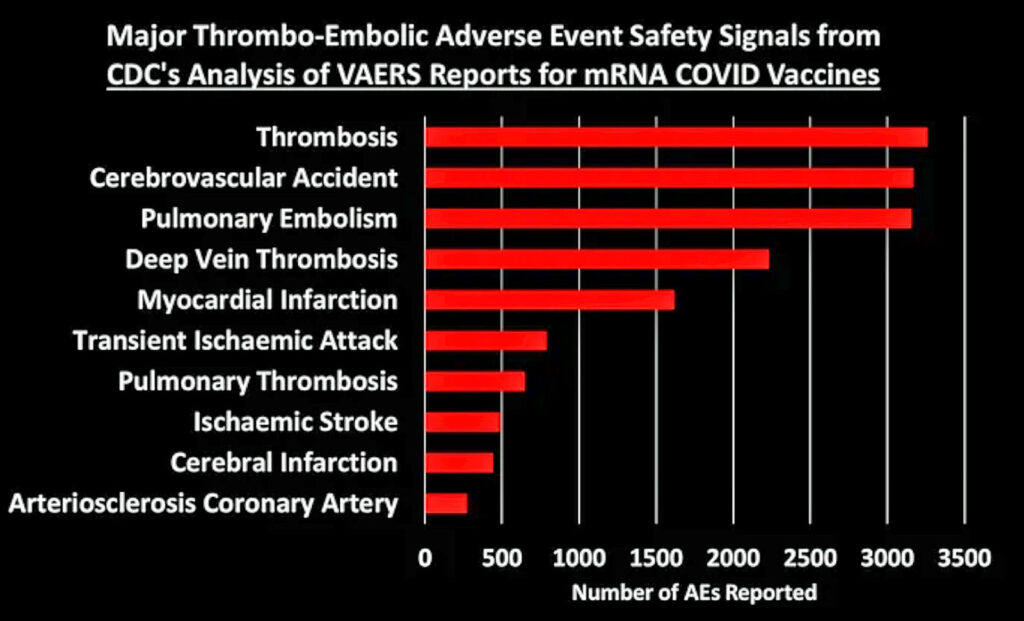
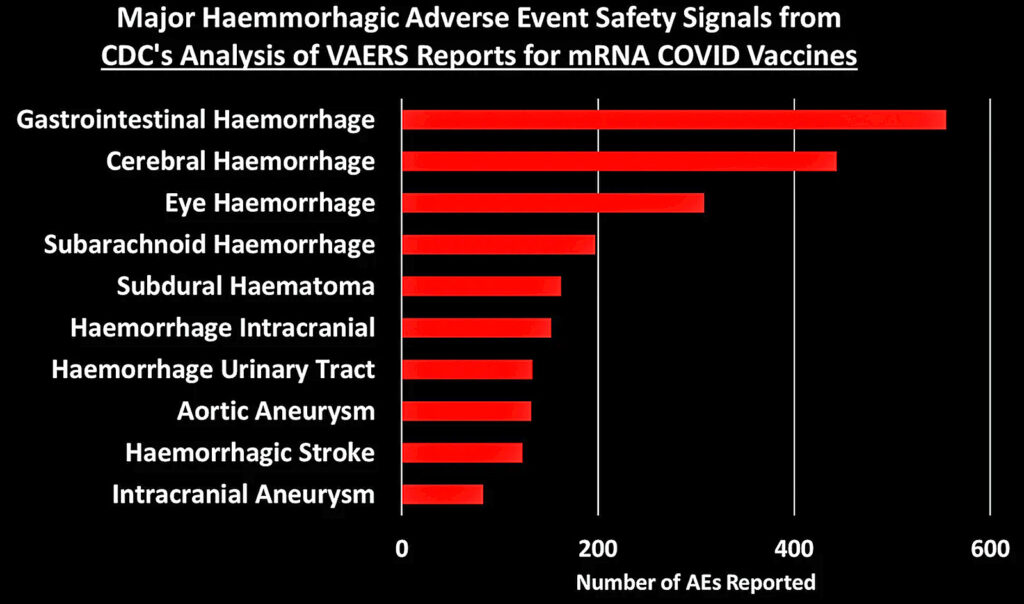
Centers for Disease Control and Prevention’s Vaccine Adverse Event Reporting System safety signal analysis for mRNA COVID-19 vaccines shows clear safety signals for death and a range of highly concerning thrombo-embolic, cardiac, neurological, hemorrhagic, hematological, immune-system and menstrual adverse events among U.S. adults.

By Josh Guetzkow, Ph.D.

cdc vaers serious injuries covid vaccines feature

Miss a day, miss a lot. Subscribe to The Defender’s Top News of the Day. It’s free.

Summary

  • Centers for Disease Control and Prevention’s (CDC) Vaccine Adverse Event Reporting System (VAERS) safety signal analysis based on reports from Dec. 14, 2020 – July 29, 2022, for mRNA COVID-19 vaccines shows clear safety signals for death and a range of highly concerning thrombo-embolic, cardiac, neurological, hemorrhagic, hematological, immune-system and menstrual adverse events (AEs) among U.S. adults.
  • There were 770 different types of adverse events that showed safety signals in ages 18+, of which more than 500 (or 2/3) had a larger safety signal than myocarditis/pericarditis.
  • The CDC analysis shows that the number of serious adverse events reported in less than two years for mRNA COVID-19 vaccines is 5.5 times greater than all serious reports for vaccines given to adults in the U.S. since 2009 (~73,000 vs. ~13,000).
  • Twice as many mRNA COVID-19 vaccine reports were classified as serious compared to all other vaccines given to adults (11% vs. 5.5%). This meets the CDC definition of a safety signal.
  • There are 96 safety signals for 12-17 year-olds, which include: myocarditis, pericarditis, Bell’s Palsy, genital ulcerations, high blood pressure and heart rate, menstrual irregularities, cardiac valve incompetencies, pulmonary embolism, cardiac arrhythmias, thromboses, pericardial and pleural effusion, appendicitis and perforated appendix, immune thrombocytopenia, chest pain, increased troponin levels, being in intensive care and having anticoagulant therapy.
  • There are 66 safety signals for 5-11 year-olds, which include: myocarditis, pericarditis, ventricular dysfunction and cardiac valve incompetencies, pericardial and pleural effusion, chest pain, appendicitis and appendectomies, Kawasaki’s disease, menstrual irregularities, vitiligo and vaccine breakthrough infection.
  • The safety signals cannot be dismissed as due to “stimulated,” exaggerated, fraudulent or otherwise artificially inflated reporting, nor can they be dismissed due to the huge number of COVID-19 vaccines administered.

There are several reasons why, but the simplest one is this: the safety signal analysis does not depend on the number of reports, but whether or not some AEs are reported at a higher rate for these vaccines than for other non-COVID vaccines. Other reasons are discussed in the full post below.

  • In August 2022, the CDC told The Epoch Times that the results of their safety signal analysis “were generally consistent with EB [Empirical Bayesian] data mining [conducted by the U.S. Food and Drug Administration (FDA)], revealing no additional unexpected safety signals.”

So either the FDA’s data mining was consistent with the CDC’s method — meaning they “generally” found the same large number of highly alarming safety signals — or the signals they did find were expected. Or they were lying. We may never know because the FDA has refused to release their data mining results.

Introduction

Finally! Zachary Stieber at The Epoch Times managed to get the CDC to release the results of its VAERS safety signal monitoring for COVID-19 vaccines, and they paint a very alarming picture.

The analyses cover VAERS reports for mRNA COVID-19 vaccines from the period from the vaccine rollout on Dec. 14, 2020, through to the end of July 2022.

The CDC admitted to only having started its safety signal analysis on March 25, 2022 (coincidentally three days after a lawyer at Children’s Health Defense wrote to them reminding them about our Freedom of Information Act [FOIA] request for it).

Like me, you might be wondering why the CDC waited more than 15 months before doing its first safety signal analysis of VAERS, despite having said in a document posted to its website that it would begin in early 2021 — especially since VAERS is touted as our early warning vaccine safety system.

You might also wonder how they could insist all the while that the COVID-19 vaccines are being subjected to the most rigorous safety monitoring the world has ever known.

I’ll come back to that later. First I’m going to give a little background information on the analysis they did (which you can skip if you’re up to speed) and then describe what they found.

Background on safety signal analysis

Back in June 2022, the CDC replied to a FOIA request for the safety signal monitoring of the VAERS — the one it had said it was going to do weekly beginning in early 2021.

Their response was: we never did it. Then a little later they said they had been doing it from early on.

But by August 2022, they had finally gotten their story straight, saying that they actually did do it, but only from March 25, 2022, through the end of July. You can get up to speed on that here.

The analysis they were supposed to do uses what’s called proportional reporting ratios (PRRs). This is a type of disproportionality analysis commonly used in pharmacovigilance (meaning the monitoring of adverse events after drugs/vaccines go to market).

The basic idea of disproportionality analysis is to take a new drug and compare it to one or more existing drugs generally considered safe.

We look for disproportionality in the number of adverse events (AEs) reported for a specific AE out of the total number of AEs reported (since we generally don’t know how many people take a given drug).

We then compare to existing drugs considered safe to see if there is a higher proportion of particular adverse events reported for the new drug compared to existing ones. (In this case, they are looking at vaccines, but they still use PRR even though they generally have a much better sense of how many vaccines were administered.)

There are many ways to do disproportionality analysis. The PRR is one of the oldest. Empirical Bayesian data mining, which was supposed to be done on VAERS by the FDA, is another.

The PRR is calculated by taking the number of reports for a given adverse event divided by the total number of events reported for the new vaccine or the total number of reports. It then divides that by the same ratio for one or more existing drugs/vaccines considered safe. Here is a simple formula:

1 prr covid vaccines

So for example, if half of all adverse events reported for COVID-19 vaccines and the comparator vaccine(s) are for myocarditis, then the PRR is 0.5/0.5 = 1.

If one quarter of all AEs for the comparator vaccine are for myocarditis, then the PRR is 0.5/0.25 = 2.

Traditionally, for a PRR to count as a safety signal, the PRR has to be 2 or greater, have a Chi-square value of 4 or greater (meaning it is statistically significant) and there has to be at least 3 events reported for a given AE. (This also means that if there are tons of different AEs reported for COVID-19 vaccines that have never been reported for any other vaccine, it will not count as a safety signal. I found more than 6,000 of those in my safety signal analysis from 2021.

Of course, a safety signal does not necessarily mean there is a problem or that the vaccine caused the adverse event. But it is supposed to set off alarm bells to prompt closer inspection, as in this CDC pamphlet:
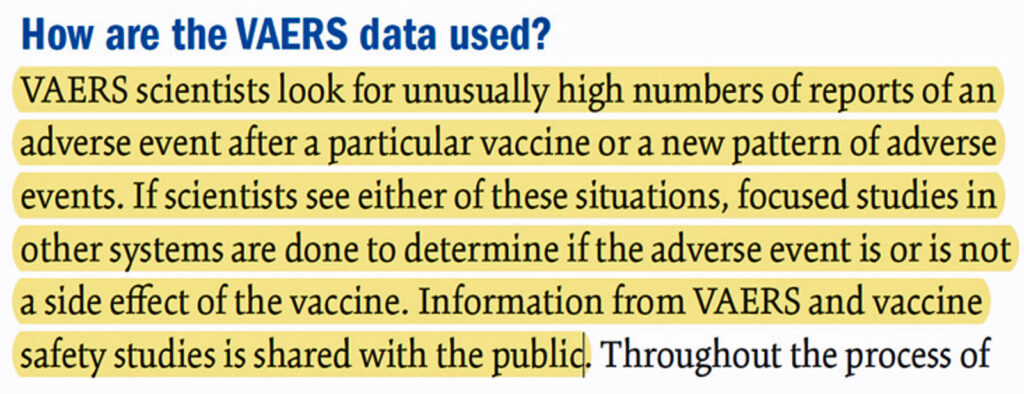
2 vaers data Ah yes, shared with the public — after first refusing to share the results and months of foot-dragging following repeated FOIA requests! We will see that the CDC has not done a more focused study on almost any of adverse events with “new patterns” (AKA safety signals).

So what did the CDC actually do?

The Epoch Times obtained 3 weeks of safety signal analyses from the CDC for VAERS data updated on July 15, 2022 and 29, 2022. Here I will focus on the last one since there is very little difference between them and it is more complete.

The safety signal analysis compares adverse events reported to VAERS for mRNA COVID-19 vaccines from Dec. 14, 2020, through July 29, 2022, to reports for all non-COVID vaccines from Jan. 1, 2009, through July 29, 2022.

[To be precise, the “adverse events” are for “preferred terms” which is a type/level of classification used in the Medical Dictionary for Regulatory Activities, which is the classification system used by VAERS and in other pharmacovigilance systems and clinical research for coding reported adverse events. Not all preferred terms are a symptom or adverse event per se. Some refer to a specific diagnostic test that was done or a treatment that was given.]

PRRs are calculated separately for 5-11 year-olds, 12-15 year-olds and 18+ separately.

For each age group, there are separate tables for AEs from all reports, AEs from reports marked serious and AEs from reports not marked as serious.

[It’s not entirely clear how they divided these up, since there are clearly AEs that should be considered serious that don’t show up in the serious Excel table — though maybe they don’t come up simply because they are looking within serious reports. I believe that they just filtered the reports to include only serious reports or non-serious reports, then did the safety signal analysis on all the AE’s coded in those reports. The reason I think this is that I used the MedAlerts Wayback Machine, selected just the serious COVID-19 vaccine reports, and the numbers of total reports was very close to the one in the table provided by the CDC (MedAlerts actually had a bit less). The files obtained by The Epoch Times do not include much in the way of a description as to how the analyses were done, so I had to infer some details, which might be incorrect. I will try to note when I am drawing an inference about how the analysis was done.]

Recall that a serious report is one that involves death, a life-threatening event, new or prolonged hospitalization, disability or permanent damage, or a congenital anomaly. I will focus on the reports for all AE’s.

They also have a table that calculates PRRs by comparing reports for the Pfizer COVID-19 vaccine to reports for the Moderna vaccine and vice versa, again for all reports, serious reports only and non-serious reports. There were no remarkable findings in those tables, so I will not discuss them.

This isn’t that surprising since both vaccines are very similar and so should present relatively similar adverse events when compared to each other, and any differences are likely not large enough to be picked up by a PRR analysis.

The CDC seems to have calculated PRRs for every different type of adverse event reported for all the COVID-19 vaccines examined — though it’s possible they only analyzed a subset. What seems clear is that among the AEs they examined, the only ones included in the tables satisfy at least one of two conditions: a PRR value of at least 2 and a Chi-square value of at least 4 (Chi is the Greek letter χ and is pronounced like ‘kai’).

When both conditions were met, they highlighted the adverse event in yellow, which appears to indicate a safety signal. There were no COVID-19 vaccine AEs listed with fewer than 3 reported events, though for non-COVID vaccines there were many AEs listed that had only 1 or 2 reported since 2009.

The CDC tables still include these and highlight them in yellow when the PRR is greater than 2 and the Chi-square value is great than 4, indicating these events are counted as safety signals.


What safety signals did the CDC find?

I’m going to divide this up by age groups and the Pfizer v. Moderna comparison. Let’s start with the 18+ group.

There are 772 AEs that appear on the list. Of these, 770 are marked in yellow and have PRR and Chi-square values that qualify them as safety signals. Some of these are new COVID-19-related codes, and we would expect those to trigger a signal since they didn’t exist in prior years to be reported by other vaccines.

So if we take those off, we are left with 758 different types of non-COVID adverse events that showed safety signals.

I grouped these 758 safety signals into different categories. The figure below shows the total number of AEs reported for each of the major categories of safety signals:
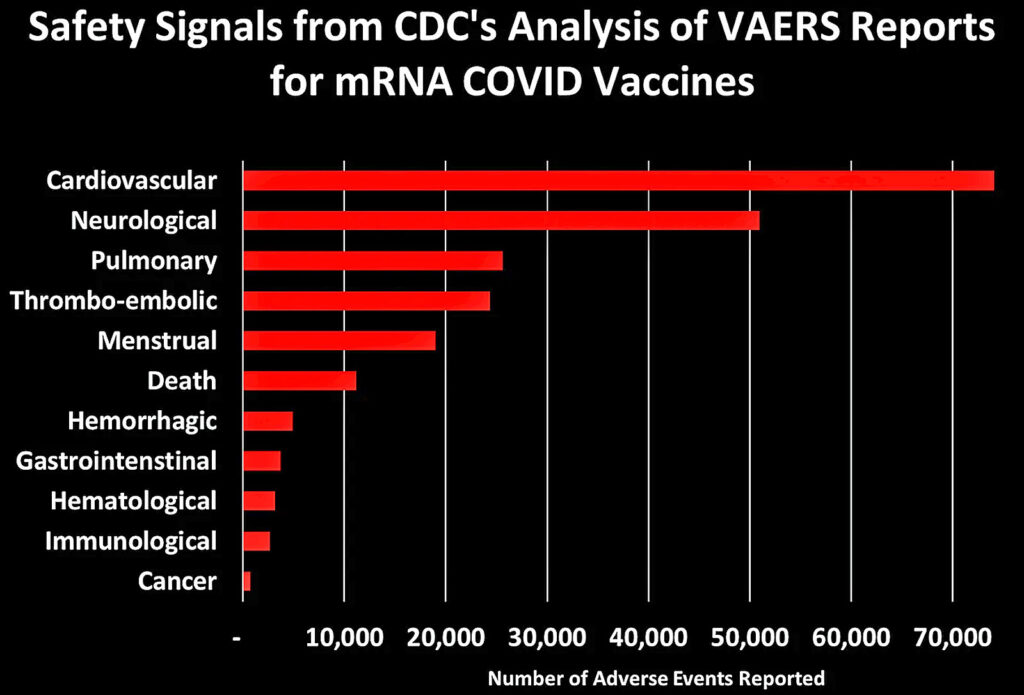
3 safety signals cdc vaers covid vaccines

Let’s dig into some of these categories to look at what types of AEs generated the most number of reports:

[Generally speaking, these figures show the top 10 AEs in each category. In some cases I combined AEs that indicated the same thing, such as combining “heart rate irregular” with “arrythmia.”]
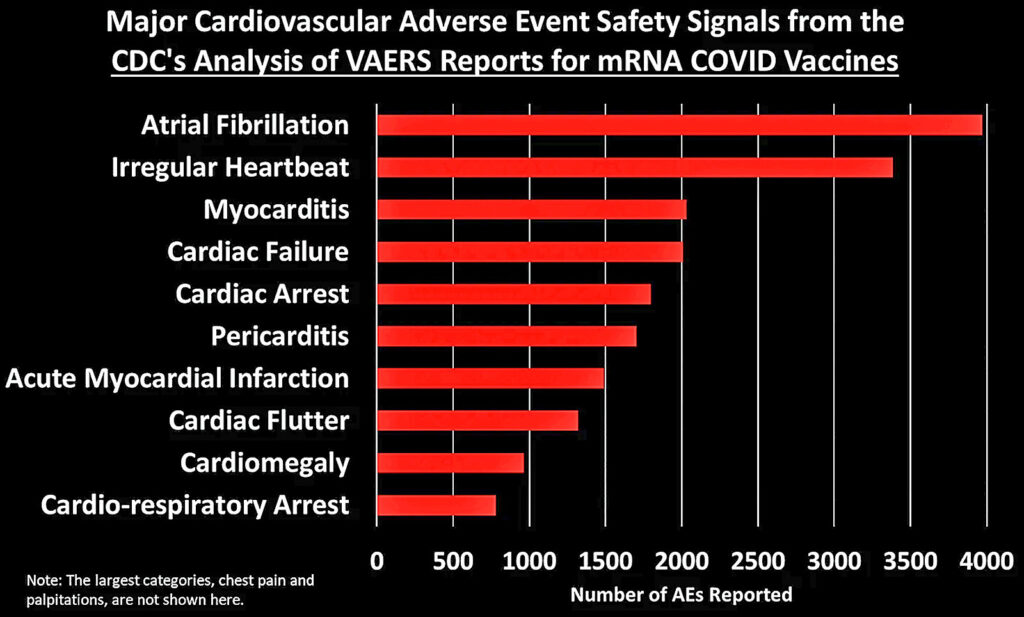
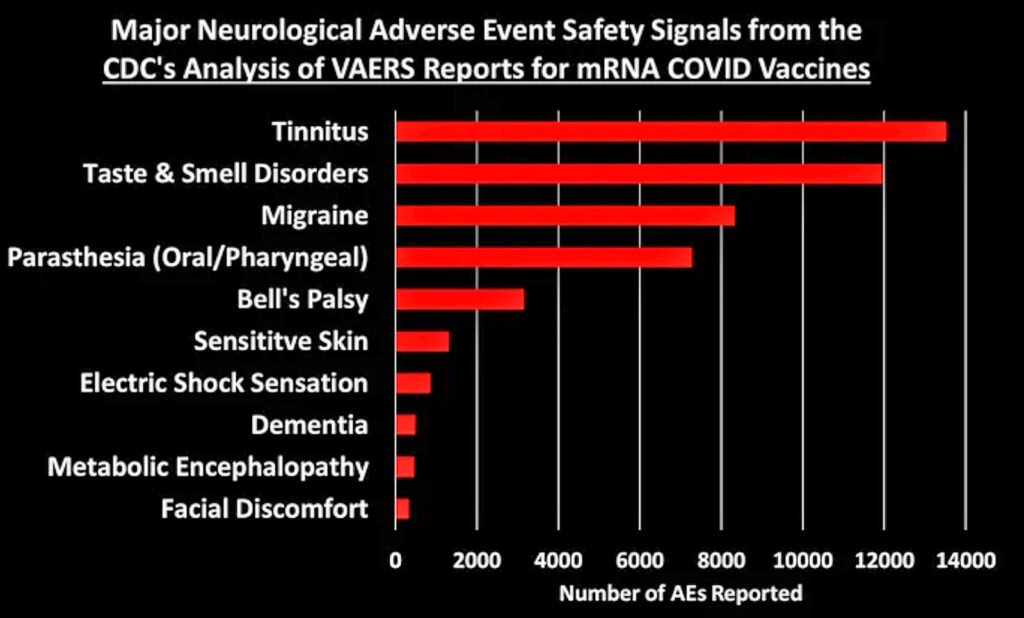
4 cardiovascular adverse event

5 major neurological adverse event

6 major thrombo embolic adverse event

7 haemmorhagic adverse event

8 major gastrointestinal adverse event

You can peruse the adverse events using the Excel tables provided by the CDC, which were posted by The Epoch Times and Children’s Health Defense at the links at the top of this post.

What about the children?

If there is anything that looks remotely like a bright spot in all of this is that the list of safety signals for 12-17 and 5-11 year-olds is much shorter than for 18+.

There are 96 AEs that qualify as a safety signal for the 12-17 group and 67 for the 5-11. When we take out the new COVID-19-era AEs, there are 92 safety signals for 12-17 year-olds and 65 for 5-11 year-olds. Here are the most alarming ones:
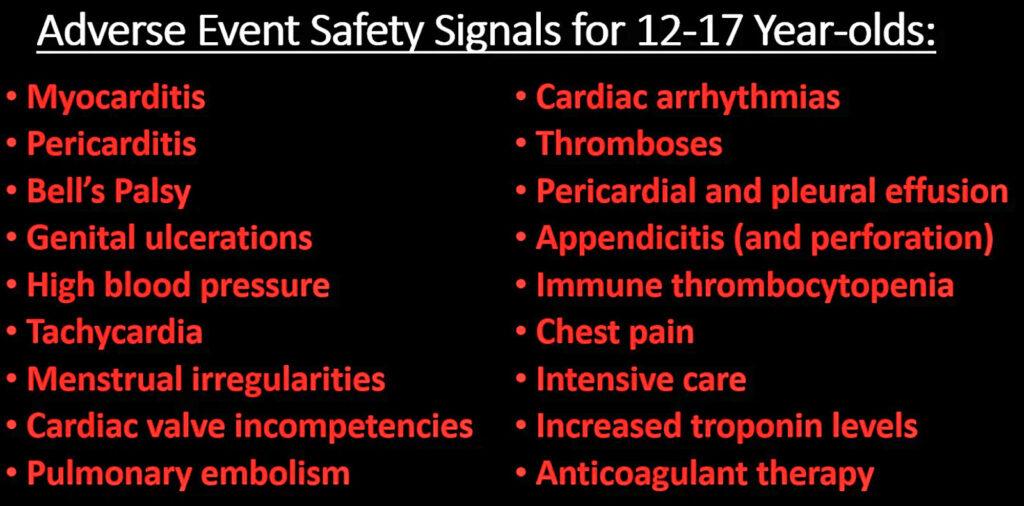
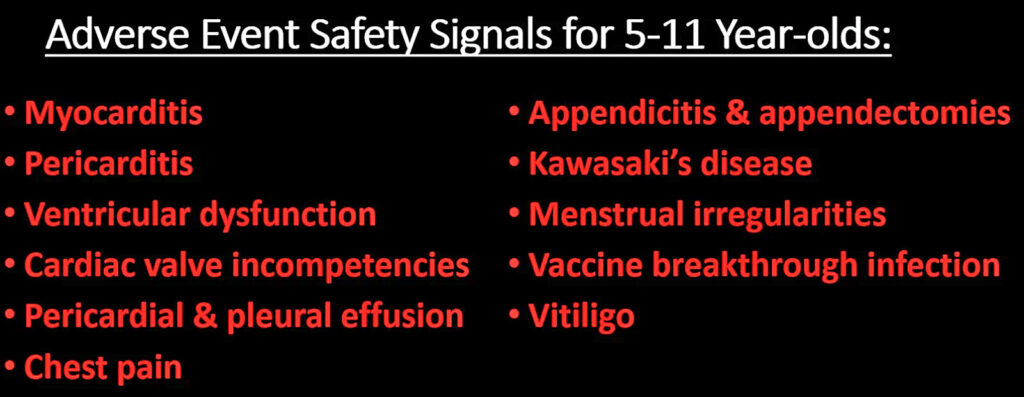
9 adverse event 12-17 year-olds

10 adverse event 5-11 year-olds

I don’t know why the list of AE’s is so much shorter for these age groups. It could be that the list of AE’s for other vaccines for these age groups is much shorter, so in a case where AEs have been reported for the mRNA COVID-19 vaccines but not for other vaccines, it will not be counted as a safety signal by definition.

Comparisons to myocarditis and pericarditis

We are told that the existence of a safety signal doesn’t necessarily mean the AE is caused by the vaccine and I accept that premise. But the current practice seems to be to ignore safety signals, dismiss them as noise without any evidence and stall any investigation into them as long as possible.

The precautionary principle, however, dictates we should presume that a safety signal indicates causality until proven otherwise.

Since it has been acknowledged that the mRNA COVID-19 vaccines can cause myocarditis and pericarditis (often referred to as myo-pericarditis), we can take those AEs as a kind of benchmark and propose that, at minimum, any AE with a signal of equal or greater size should be considered potentially causal and investigated more thoroughly.

[Note that using the myopericarditis signal as a yardstick doesn’t mean that these are the only signals that matter. To give one example, anaphylactic reactions don’t even show up in the list of safety signals, even though that was one of the very first risk of the vaccine that became apparent from day one of the vaccine rollout. One potential objection to this benchmark is that it is too low of a bar, since myo-pericarditis appears to disproportionately affect younger men and so a proper safety signal should be stratified by age and gender then compared with myocarditis similarly stratified. I agree, and it is the CDC’s job to do that. But the fact is that any adverse reaction might disproportionately affect some subgroup of people, in which case the safety signal for that group would be similarly faint or diluted when we look at everyone together. So objection overruled.]

After dropping the new COVID-19-era AEs, there are 503 AEs with PRRs larger than myocarditis (PRR=3.09) and 552 with PRRs larger than pericarditis (PRR=2.82).

[In their Standard Operation Procedures document, the CDC said they would combine these and related codes together to assess a safety signal, but never mind — at least they finally got around to doing something.]

This means that 66.4% of the AEs had a bigger safety signal than myocarditis and 77.3% were larger than pericarditis.

You can see what those were by using this Excel file provided by the CDC and sorting the 18+ tab by the 12/14-07/29 PRR column (Column E). Then just look at which AEs have PRRs larger than the ones for pericarditis and myocarditis.

For 12-17 year-olds, there is 1 safety signal larger than myocarditis (it’s ‘troponin increased’) and 14 safety signals larger than pericarditis (excluding myocarditis), which include: mitral valve incompetence, bell’s palsy, heavy menstrual bleeding, genital ulceration, vaccine breakthrough infection and a range of indicators of cardiac abnormalities.

For 5-11 year-olds, the comparison to myo/pericarditis is less germane, as they seem to suffer less from this side effect. But we can still make the comparison: there are 7 safety signals larger than pericarditis, including bell’s palsy, left ventricular dysfunction, mitral valve incompetence and ‘drug ineffective’ (presumably meaning they still got COVID-19).

There are 16 safety signals larger than myocarditis (excluding pericarditis), which in addition to those listed above also include: pericardial effusion, diastolic blood pressure increase, tricuspid valve incompetence and vitiligo. Sinus tachycardia (high heart rate), appendicitis and menstrual disorder come in just below myocarditis.

Now if we think of a safety signal as having both strength and clarity, then the PRR can be thought of as an indicator of how strong the signal is, while the Chi-square is a measure of how clear or unambiguous the signal is because it gives us a sense of how likely the signal is due to chance alone: the larger the Chi-square value, the less likely the signal is due to chance.

A Chi-square of 4 means there is only a 5% chance the observed signal is due to chance. A Chi-square of 8 means there is only a 0.5% chance of it being due to chance.

[In this context, the Chi-square is largely driven by the sheer number of adverse events: the more adverse events reported, including for the comparator vaccine, the larger the Chi-square. For example, the PRR for pericarditis and subdural haematoma is the same (2.82), but there were 1,701 incidents of pericarditis reported for mRNA COVID-19 vaccines versus 221 for the comparator vaccines, with Chi-square of 229.5. For subdural haematoma, these numbers are 162 verus 21, for a Chi-square of 21.2.]

For the 18+ group, there are 57 AEs with a Chi-square larger than myocarditis (Chi-square=303.8) and 68 with a Chi-square larger than pericarditis (Chi-square=229.5). Again, you can see what these are by going to the Excel file linked above and sorting on Column D.

For the 12-17 group, there are 4 AEs with a larger Chi-square than myocarditis (Chi-square=681.5) and 6 larger than pericarditis (Chi-square=175.4).

For the 5-11 group, there are 22 AEs with a Chi-square larger than myocarditis (Chi-square=30.42) and 34 AEs with a Chi-square larger than pericarditis (Chi-square=18.86).

Responding to objections

Let’s dispense with some of the criticisms used to dismiss VAERS data, which will undoubtedly be raised if you try to bring the CDC’s analysis to people’s attention.

1. Objection: Anybody can report to VAERS.

The reports are unreliable. Anti-vaxxers made lots of fraudulent reports. Nobody was aware of VAERS in the past, but now they are. So many people were afraid of the vaccine so they blamed all their health problems on it. Health workers were required by law to report certain adverse events, like deaths and anaphylaxis. Etc. Etc.

All of these objections ultimately rely on the notion that VAERS reports for COVID-19 vaccines have been artificially inflated over previous years for one reason or another. The thing of it is, though, that the CDC has a method for distinguishing between artificial inflation and real signal.

The idea is simple: if adverse events are artificially inflated, they should be artificially inflated to the same degree. Meaning, the PRRs for all of these safety signals should be about the same. But even a casual glance at the PRRs in the Excel file shows they vary widely, from as low at 2 to as high as 105 for vaccine breakthrough infection or 74 for cerebral thrombosis.

This method does not on the number of reports, but the rate of reporting for certain events out of all events reported. If anything, this method would tend to hide safety signals in a situation where a new vaccine generates a very large number of reports.

The CDC has even done us the favor of calculating upper and lower confidence intervals, meaning that we can be at least 95% confident that two PRRs are truly different if their confidence intervals don’t overlap. So for example the lower confidence interval for pulmonary thrombosis is 19.7, which is higher than the upper confidence interval for 543 other signals. Artificially inflated reporting cannot explain why so many different adverse events have large PRRs that are statistically distinct from one another.

2. Objection: The safety signals are due to the huge number of COVID vaccines given out.

Never before have we given out so many vaccine doses. By the end of July, the US had administered something like 600 million vaccine doses to people aged 18+. But the CDC analysis compares VAERS reports for these doses to all doses for all other vaccines for this age group since Jan. 1, 2009.

But from 2015-2020 there were over 100 million flu doses administered annually to this age group alone. In previous work, I estimated 538 million doses of flu given to people 18+ from July 2015-June 2020.

The number of flu and other non-COVID-19 vaccines for this age group administered from Jan 1., 2009 through July 29, 2022, must be well over double this number, meaning VAERS reports for COVID-19 vaccines are being compared to reports for at least double the number of doses for other vaccines.

In addition to this, as already noted, the PRR methodology does not depend, strictly speaking, on the number of doses, but rather the rate of reporting of a specific AE out of all AEs for that vaccine.

3. Objection: the vaccines are mainly being given to older people who tend to have health problems, whereas other vaccines are given to younger people.

This objection is dealt with since the analyses are stratified by age groups. It might still be somewhat valid for the 18+ group, except that in the safety signal analysis I did in the fall of 2021, I stratified by smaller age bands and still found safety signals. In any case, this objection is not enough to dismiss the safety signal analysis out of hand but rather calls for better and more refined research.

4. Objection: The VAERS data is not verified and cannot be trusted.

I’ll be the first person to agree that VAERS is not high-quality data, but if it is completely untrustworthy, then how is it that the CDC uses these data to publish in the best medical journals such as JAMA and The Lancet?

If the data were worthless, then these journals shouldn’t accept these papers. In that JAMA paper, they reported that 80% of the myocarditis reports met their definition of myocarditis and were included in the analysis.

Many other reports simply needed more details for validation. Furthermore, the CDC has the ability and budget to follow up on every report VAERS receives to get more details and even medical records to verify the report.

So if myocarditis shows a clear signal in the CDC’s analysis, and 80% of those reports were apparently high quality enough to be included in a paper published in one of the world’s top medical journals, how is it possible that all the rest of the reports are junk?

That all of the other safety signals are meaningless? Answer: it isn’t.

And since we’re on the topic of safety signals that turned out to be real, it’s instructive to find appendicitis turns up as a safety signal in all 3 age groups since a study published in NEJM based on medical records of over a million adult Israelis found an increased risk of appendicitis in the 42 days following Pfizer vaccination (but not following a positive SARS-CoV-2 PCR test).

That study also found an increase in lymphadenopathy (swollen lymph nodes) after vaccination, but not after positive COVID-19 test. Lymphadenopathy was another safety signal.

5. And that brings us to our last objection to be dispensed with: all of these AEs were due to COVID-19.

There was an epidemic and so people were falling ill due to COVID-19 and having all of these problems that were then blamed on the vaccine.

Well to begin with, as we just saw, at least two of them (appendicitis and lymphadenopathy) do not appear to have increased risk ratios following a positive SARS-CoV-2 test, and we know that the mRNA vaccines increase risk of myo/pericarditis independent of infections.

So how can we assume the rest of these are and dismiss them with the wave of a hand? We can’t.

At minimum, they need further investigation. Furthermore, in the safety signal analysis I did in 2021, I dropped all VAERS reports where any sign of a SARS-CoV-2 exposure or infection was indicated on the report and I still found large, significant safety signals.

Putting it all into perspective

The Epoch Times article quotes my esteemed colleague and friend, Norman Fenton, professor of risk management and a world-renowned expert in Bayesian statistical analysis:

“From a Bayesian perspective, the probability that the true rate of the AE of the COVID-19 vaccines is not higher than that of the non-COVID-19 vaccines is essentially zero….

“The onus is on the regulators to come up with some other causal explanation for this difference if they wish to claim that the probability a COVID-19 vaccine AE results in death is not significantly higher than that of other vaccines.” (See his post on the CDC analysis here.) The same is true for all the safety signals they found.

The CDC’s VAERS SOP analysis document lists 18 Adverse Events of Special Interest. The agency says it is going to pay close attention to these.

In their 2021 JAMA paper (and similar presentations to the Advisory Committee on Immunization Practices), the researchers responsible for analyzing the millions of medical records in the CDC’s Vaccine Safety Datalink using the ‘rapid cycle analysis’ only studied 23 outcomes.

A similar analysis in NEJM from Israeli researchers focused on only 25 outcomes.

Compare this to over 700 safety signals found by the CDC when they finally decided to look — and that’s not even counting all the adverse events that have never been reported for other vaccines so cannot ever show a safety signal by definition.

How can the CDC say that these safety signals are meaningless if almost none of them have been studied any further? And yet we are assured that these vaccines have undergone the most intensive safety monitoring effort in history.

It’s complete and utter hogwash!

Originally published on Josh Guetzkow’s Jackanapes Junction Substack page.

The views and opinions expressed in this article are those of the authors and do not necessarily reflect the views of Children’s Health Defense.

Shingles Activation Associated With COVID Jab


Reproduced from original article:
https://articles.mercola.com/sites/articles/archive/2023/01/04/covid-vaccine-shingles.aspx
The original Mercola article may not remain on the original site, but I will endeavor to keep it on this site as long as I deem it to be appropriate.


Analysis by Dr. Joseph Mercola
     Fact Checked     January 04, 2023

covid vaccine shingles

STORY AT-A-GLANCE

  • According to a recent case study, persistent post-jab shingles was associated with the presence of COVID jab spike protein in the affected skin. The researchers speculate that the COVID jab may induce persistent shingles reactivation by perturbing the immune system
  • Another study details the cases of six patients with autoimmune inflammatory rheumatic diseases who developed shingles shortly after their Pfizer jabs. None of the healthy controls developed shingles post-jab
  • A systematic review also concluded that the COVID jab increases the risk of shingles reactivation if you’ve had it before or have known risk factors for it
  • The COVID shots suppress your innate immune system by inhibiting the type-1 interferon pathway, which is the first-stage response to all viral infections. Type-1 interferon also keeps latent viruses in check, so if your interferon pathway is suppressed, latent viruses can start to emerge
  • Type 1 interferon is suppressed by the jab because it responds to viral RNA, and viral RNA is not present in the COVID shot. The RNA is modified to look like human RNA, so the interferon pathway is not triggered

According to a recent case study1 published in the Journal of Cutaneous Immunology and Allergy, persistent post-jab shingles, aka herpes zoster, an infection caused by the varicella zoster virus, was associated with the presence of COVID jab spike protein in the affected skin. As explained by the authors:2

“Since the campaign of vaccination against COVID-19 was started, a wide variety of cutaneous adverse effects after vaccination has been documented worldwide. Varicella zoster virus (VZV) reactivation was reportedly the most frequent cutaneous reaction in men after administration of mRNA COVID-19 vaccines, especially BNT162b2.

A patient, who had persistent skin lesions after BNT162b2 vaccination for … over 3 months, was investigated for VZV virus and any involvement of vaccine-derived spike protein … Strikingly, the vaccine-encoded spike protein of the COVID-19 virus was expressed in the vesicular keratinocytes and endothelial cells in the dermis.”

COVID Jab Impairs Your Immune Function

The researchers speculate that the COVID jab may induce persistent shingles reactivation by “perturbing the immune system.” How your immune system is perturbed by the COVID shots is the topic of MIT researcher Stephanie Seneff’s paper3 “Innate Immune Suppression by SARS-CoV-2 mRNA Vaccinations: The Role of G-quadruplexes, Exosomes and MicroRNAs,” co-written with Drs. Peter McCullough, Greg Nigh and Anthony Kyriakopoulos.

In it, they describe how the COVID shots suppress your innate immune system by inhibiting the type-1 interferon pathway, which is the first-stage response to all viral infections.

When a cell is invaded by a virus, it releases type-1 interferon alpha and beta. Both of these molecules act as signaling molecules that tell the cell it’s been infected. That, in turn, launches the immune response and gets it going early in the viral infection.

Type-1 interferon also keeps latent viruses in check, so if your interferon pathway is suppressed, latent viruses can start to emerge. The U.S. Vaccine Adverse Event Reporting System (VAERS) database reveals many who have been jabbed report these kinds of infections. Regulators in the European Union are also warning that repeat COVID shots can weaken overall immunity.4

How is type-1 interferon suppressed by the jab? It’s suppressed because type-1 interferon responds to viral RNA, and viral RNA is not present in the COVID shot. The RNA is modified to look like human RNA, so the interferon pathway is not triggered. Worse, the interferon pathway is actively suppressed by the microRNA in the shot, which limits your ability to fight off all viruses. It also opens the door for latent viruses to reactivate.

In the case study above, the patient had received one dose of Pfizer’s mRNA shot 13 days before the shingles outbreak and a second dose eight days after, causing the researchers to suspect there was an association between the outbreak and the shots.

COVID Jab and Shingles in the Immunocompromised

Similarly, a study5,6 published in April 2021 detailed the cases of six patients with autoimmune inflammatory rheumatic diseases who developed shingles shortly after their Pfizer jabs.

“The safety profile of mRNA-based vaccines in patients with autoimmune inflammatory rheumatic diseases (AIIRD) is unknown,” the authors noted.7 “The objective of this report is to raise awareness of reactivation of herpes zoster (HZ) following the BNT16b2 mRNA vaccination in patients with AIIRD.”

The study found herpes infection occurred in 1.2% of AIIRD patients who got the shot (six out of 491), compared to none among controls. Five of them developed shingles for the first time in their life a short time after their first dose of Pfizer. One got it after her second dose.

As noted by the authors, immunosuppressed patients, including patients with AIIRD, have been prioritized for the COVID jab, even though immunosuppressed patients were excluded from the clinical trials. The fact that 1.2% of immunocompromised patients developed shingles, whereas none of the healthy controls suffered this fate, shows you just how important it is not to confine clinical trials to the healthiest among us.

Pathogenic Mechanisms

As for the mechanisms, the researchers offered the following:8

“Potential mechanisms that might explain the pathogenetic link between mRNA-COVID19 vaccination and HZ reactivation are related to stimulation of innate immunity through toll-like receptors (TLRs) 3,7 by mRNA-based vaccines. TLR signaling has been implicated during reactivation of herpesviruses, a process essential for these viruses to maintain themselves in the host.

Defects in TLR expression in patients suffering from diseases caused directly by herpesvirus infection highlight the importance of these signaling pathways during infection and eventual disease progression.

The vaccine stimulates induction of type I INFs [type 1 interferon] and potent inflammatory cytokines, which instigate T and B immune responses but may negatively affect antigen expression potentially contributing to HZ reactivation.”

COVID Jab Raises Risk of Shingles Reactivation

A systematic review9 published in November 2021 also concluded that the COVID jab increases the risk of shingles reactivation if you’ve had it before or have known risk factors for it. Fifty-four cases involving 27 men and 27 women had been reported at the time and were included in the review. As noted by the authors:10

“There were cases with known risk factors for herpes zoster, which included age more than 50 years (n = 36), immunological disorders (n = 10), chronic disease (n = 25), metabolic disorder (n = 13), malignancy (n = 4), and psychiatric disorder (n = 2).

The mean (SD) period between development of herpes zoster and COVID-19 vaccination was 7.64 (6.92) days. Majority of the cases were from the high-income and/or middle-income countries. 86.27% of the cases of HZ were reported due to mRNA vaccine. Thirty-six patients 36/45 (80%) developed herpes zoster following the priming dose of COVID-19 vaccine among those who received mRNA vaccine.

We could not establish definite link but there may be possible association between COVID-19 vaccine and shingles. Large-scale studies may help to understand the cause-effect relationship.”

Shingles Reports in VAERS

Looking at VAERS, as of December 16, 2022, there were 15,225 reports of shingles after the COVID jab.11 Most cases (for which age are given) have occurred in younger individuals between the ages of 25 and 51, which is younger than normal. There are even 170 cases in 12- to 25-year-olds.

The Pfizer shot has more than double the number of shingles reports associated with it than Moderna, and there are more than twice the number of reports from women than men.

shingles cases post covid vaccine by age chart

Can VAERS Data Demonstrate Causality?

One person who has taken a strong stance against the claim that VAERS data cannot tell us anything about causation is Steve Kirsch, executive director of the COVID-19 Early Treatment Fund. In the video “Vaccine Secrets: COVID Crisis,”12 he argues that VAERS can indeed be used to determine causality.

It’s important to realize that the idea that VAERS cannot show causality is part of how and why the CDC can claim none of the deaths is attributable to the COVID shot. Kirsch argues that this premise is in fact false, and that causation can be determined using VAERS’ data.

To prove his point, Kirsch gives the following analogy: Suppose you give a two-dose vaccine. After the first dose, nothing happens, but after the second dose, people die within 24 hours of a deep vein thrombosis (DVT).

When you look at the VAERS data, what you would find is no reports associated with the first dose, and a rash of deaths after the second dose, all within the same timeframe and with the same cause of death.

According to the CDC, you cannot ascribe any causality at all from that. To them, it’s just random chance that everyone died after the second dose, and from the same condition, and not the first dose or from another condition.

Kirsch argues that causality can indeed be identified from this kind of data. It’s very difficult to come up with another explanation for why people — many who are young, in perfect health with no predisposing conditions — die exactly 24 hours after their second dose. It’s even difficult to come up with another explanation for people who do have underlying conditions.

For example, is it reasonable to assume that people with, say, undiagnosed heart conditions, would die from DVT exactly 24 hours after getting a second dose of vaccine? Or that people with undiagnosed diabetes would die from DVT exactly 24 hours after their second dose?

Why not after the first dose, or two months after the second dose, or any other random number of hours or days, or for other random cause of death? Why would people randomly die of the same condition at the exact same time, repeatedly?

At bare minimum, as an early warning system, VAERS is designed to flag potential causation. It’s by looking for repeated patterns of side effects that you would begin to identify a potentially problematic vaccine.

Once a pattern is identified — and there’s no denying death within 24 hours to one week is a pattern seen for the COVID shots — an investigation should be launched. But no such investigation has been launched into the COVID jabs. Clear-cut patterns are simply ignored.

Ignoring Warning Signs Does Not Make the Shots Safe

As an early warning system, VAERS is performing as intended, despite severe underreporting (the CDC even published a paper in which they admitted COVID jab adverse effects in children are underreported by a factor of 6.513). It’s the follow-up that’s lacking.

But lack of investigation and follow-up is not evidence that the shots can’t cause problems, one of which is reactivation of latent viruses such as shingles. While I don’t believe these shots are beneficial for anyone, if you have a history of latent infection, be aware that the shot may cause a flare-up.

Also be aware that having a compromised immune system will render you more prone not only to COVID-19 but also any number of other viral and bacterial infections, plus chronic diseases such as cancer.

Esteemed Cardiologist: ‘Stop This Rollout NOW’


Reproduced from original article:
https://articles.mercola.com/sites/articles/archive/2023/01/03/stop-covid-19-mrna-shots-rollout.aspx
The original Mercola article may not remain on the original site, but I will endeavor to keep it on this site as long as I deem it to be appropriate.


Analysis by Dr. Joseph Mercola
     Fact Checked     January 03, 2023

stop covid 19 mrna shots rollout

STORY AT-A-GLANCE

  • Esteemed U.K. cardiologist, Dr. Aseem Malhotra, has called on Prime Minister Rishi Sunak to halt the rollout of the COVID-19 mRNA shots in light of the “ongoing unnecessary harm that is devastating individuals and families”
  • He spent nine months analyzing studies, and now he believes the program to inject people with a genetic experiment should be suspended immediately and has since joined a growing body of researchers, scientists and doctors who do not follow the mainstream COVID narrative
  • Malhotra reviewed the data with the chair of the British Medical Association (BMA). At the end of the conversation, the BMA chair commented, “I don’t think anybody has critically appraised the data as well as you have. Most of these people are getting their information on the vaccine from the BBC”
  • Despite the high number of people who have taken the jab, the number of deaths has continued to rise; U.K. data show roughly 80% of all cases, hospitalizations and deaths were in the vaccinated
  • Of the excess number of 2021 non-COVID deaths, many were from heart disease, which is a known effect of the mRNA genetic jab

Esteemed U.K. cardiologist, Dr. Aseem Malhotra,1 has called on Prime Minister Rishi Sunak to halt the rollout of the COVID-19 mRNA shots in light of the “ongoing unnecessary harm that is devastating individuals and families.”2

Despite efforts by the CDC and FDA to minimize the data those same agencies are collecting through the Vaccine Adverse Event Reporting System (VAERS),3 the number of people who are sick, permanently disabled or die from the shot continues to rise. Data from December 9, 2022,4 show 32,828 deaths, 61,065 permanently disabled and 35,828 myocarditis inflammatory responses.

These numbers are also likely lower than the actual damage being done.5 One paper from Columbia University reports there were “146K to 187K vaccine-associated U.S. deaths between February and August 2021.”6

The topic of vaccines has always been controversial, but it reached a fever pitch during COVID when it became sacrilegious to speak out against them, or even question their safety and efficacy. Malhotra has been keeping track of the numbers.

“They (politicians & media) may keep their hands over their eyes, but we can see them & the silence is DEAFENING,” he tweeted. “Please stop this rollout NOW.”7

Britain’s Most Influential Cardiologist Says ‘Stop!’

Until July 2021, Malhotra was an outspoken supporter of the COVID-19 genetic jabs. However, he began taking a closer look at the data after his 73-year-old father died.8

He spent nine months analyzing studies, and now he believes that the mRNA program to inject people with a genetic experiment should be suspended immediately and has since joined a growing body of researchers, scientists and doctors who do not follow the mainstream COVID narrative.

During an interview with Epoch TV, Malhotra noted that “ethical evidence-based medical practice” should be the default for medical care, but has fallen by the wayside with the release of the COVID jabs. After critically analyzing the data from the COVID-19 shots, he believes the efficacy of the technology is “very, very poor” in comparison to traditional vaccines. Additionally, the shots are not only ineffective but “the harms were unprecedented.”

Early in the pandemic, Malhotra took two doses of the Pfizer vaccine and went on Good Morning Britain to help tackle vaccine hesitancy. He shared what little information he had at the time, which he later learned was wrong. After months of evaluating the evidence, he says this about the current shot program:9

“We’re talking about one of the most poorly efficacious pharmacological interventions in the history of medicine with the worst side effect profile being the most lucrative and profitable. And when you try and join those dots together, the picture that it paints is extremely ugly. A real indictment on our whole healthcare system.”

Malhotra notes that to prevent one COVID death in people over 80 years, 230 people must take the shot. To prevent one death in people between 70 and 80, 520 people must be jabbed. In people under 70 years, thousands must take the jab to prevent just one person from dying.

Malhotra would tell a person in their 50s that to prevent one person from dying, 2,000 people must get the shot and based on the evidence now available, for every 800 people who take the shot, one experiences a severe adverse event including disability. He went on to describe the data from the drug companies that led to the approval.10

“We know now that the original trials — the gold standard randomized control trials — that led to the approval by the regulators of the vaccine in the first place revealed you were more likely to suffer a serious adverse event from the vaccine than you were to be hospitalized with COVID.”

From the data that have been gathered since the shot program rolled out, Malhotra notes that while “The harm of the vaccine remains constant, the risk of COVID goes down.”11 Under normal circumstances, scientists and public health experts would not be debating this vaccine program. Instead, “it would have been pulled a long time ago.”

Reasons for the Passionate Different Points of View

Speaking November 14, 2022, at Friend’s House,12 Malhotra described some of the psychological effects that have occurred in the last three years which triggered the division and passionately different points of view concerning the pandemic and the genetic jabs.

His first point was that fear is a psychological phenomenon that can inhibit our ability to think critically. This is a crucial point to understand since it’s a continuing challenge, which I believe has been perpetuated by the media and agencies in the hope of continuing to control your behavior. Malhotra notes that at the start of the pandemic most of the world was gripped by a type of fear that has never been experienced in our lifetime.

The second reason that many people have such differing views is willful blindness or turning “a blind eye to the truth in order to feel safe, to avoid conflict, to reduce anxiety and to protect prestige or, in some cases, precious fragile egos.”

He notes that it is important to understand this so that moving forward the right information is disseminated in the right way and that it is done compassionately for people who are struggling under the burden of fear. He then quoted the late Stephen Hawking, who stated, “The greatest enemy of knowledge is not ignorance; it is the illusion of knowledge.”13

Malhotra argues that when the British National Health Service (NHS) was founded in 1948 it was done so to create health care that was free at the point of need and the point of use. However, he believes that many people have forgotten that it was also created to ensure that people received the best possible care they could at the time that it was given.

He describes John Ioannidis, professor of medicine at Stanford, as the Stephen Hawking of medicine. He agrees with Ioannidis’ evaluation that medical misinformation stems from a lack of understanding of the published research by health care professionals and the poor reliability of research to be translated into decision-making for patients.

Malhotra quotes Ioannidis, saying, “ignorance of this problem even at the highest levels of academic and clinical leadership is profound.”

After spending months reviewing the data, Malhotra spent two hours with the chair of the British Medical Association (BMA) reviewing the data. At the end of the conversation, Malhotra shared the BMA chair’s comment:14

“… from all the people I’ve spoken to in medical leadership positions, and you know he brought into the conversation the chief medical officer in this as well, he said I don’t think anybody has critically appraised the data as well as you have. Most of these people are getting their information on the vaccine from the BBC.”

Despite Shots, the Number of Deaths Continues to Rise

Despite the high number of people who have taken the jab, the number of deaths has continued to rise. The data show that there are not only excess deaths from non-COVID-related diseases, but also a report from the U.K. shows 9 of every 10 deaths that were related to COVID were in those who were fully vaccinated.

The Expose15 reported on the U.K. in March 2022, noting that most people were distracted by Russia’s invasion of Ukraine, during which the U.K. government quietly released a vaccine surveillance report showing roughly 80% to 90% of all cases, hospitalizations and deaths were in people who were vaccinated.

In total, the number of COVID cases in England from January 24, 2022, to February 20, 2022, were 404,030 in unvaccinated people and 1,086,434 in people who had taken one, two or three shots. In small geographical areas, it appears the data from the U.S. is similar.16 However the raw numbers gathered by the CDC are different since, in April 2022, the CDC defined fully vaccinated individuals as two weeks after their final dose.17

By September 2022, the CDC had changed the definition to “You are up to date with your COVID-19 vaccines if you have completed a COVID-19 vaccine primary series and received the most recent booster dose recommended for you by CDC.”18

Not all who are fully vaccinated are identified on admission to the hospital, so analyzing U.S. numbers is difficult, if not impossible. It is probably safe to assume that someone identified as fully vaccinated has met the CDC standard and that the unvaccinated group likely contains people who are not two weeks after their primary series or who are fully vaccinated and were not identified on admission to the hospital. You must ask yourself if this statistical chaos is intentional.

In addition to the data showing the jabs are not effective is the fact that the overall number of deaths from non-COVID diseases is also on the rise. In November 2021, Silicon Valley software engineer Ben M. revealed data on Twitter19 that showed over a 13-week period roughly 107,700 seniors died above the normal rate, despite a 98.7% vaccination rate. Four days earlier he revealed that CDC data for excess deaths in Vermont, tweeting:20

“Vermont had 71% of their entire population vaccinated by June 1, 2021. That’s 83% of their adult population, yet they are seeing the most excess deaths now since the pandemic!”

In November 2021, the U.K. also revealed an excess number of deaths as compared to the same period between 2015 and 2019.21 Additionally, non-COVID deaths in the U.K. were higher than the weekly average in the five years prior to the pandemic. Of these excess deaths, many were the result of heart disease and strokes.

This information is particularly concerning since researchers have found that the Pfizer and Moderna mRNA shots dramatically increase biomarkers associated with thrombosis, cardiomyopathy and other vascular events after injection. The study was published in the journal Circulation and originally concluded that:22

“… the mRNA vacs dramatically increase inflammation on the endothelium and T cell infiltration of cardiac muscle and may account for the observations of increased thrombosis, cardiomyopathy, and other vascular events following vaccination.”

But this was later changed to:23

“… the mRNA vacs numerically increase (but not statistically tested) the markers IL-16, Fas, and HGF, all markers previously described by others for denoting inflammation on the endothelium and T cell infiltration of cardiac muscle, in a consecutive series of a single clinic patient population receiving mRNA vaccines without a control group.”

Two World Views and One Is Badly, Badly Wrong

In a December 17, 2022 GBN segment,24 Neil Oliver, British television presenter, archaeologist, historian and author, quoted American scientist Carl Sagan, who insisted on “aggressive, enthusiastic skepticism at all times in relation to science because that’s how we get ahead, by remaining open to new ideas at all times. Skeptical inquiry is the order of the day.”

He was of course referencing the phenomenal differences in opinion around the COVID pandemic and the genetic jab. As one example he talked about the few minutes in which Andrew Bridgen presented before the House of Commons that Oliver believes should make the “Big Book of History.”

Bridgen called for a complete suspension of the rollout of vaccines because of “clear and robust data of significant harms and little ongoing benefit.” Bridgen referenced the research by Malhotra, who has described the rollout of the Pfizer product as “perhaps the greatest miscarriage of medical science attack on democracy, damage to population health and erosion of trust in medicine that we will witness in our lifetime.”

Bridgen also referenced the half a million reports of serious adverse effects and a journalist from a major news outlet who is afraid to report what he’s seen or he would lose his job. He talked about the re-analysis of Pfizer’s data that was published in a peer-reviewed journal demonstrating there was one serious adverse effect for every 800 jabs and how other products have been withdrawn from the market after far lower incidences of harm.

Bridgen concluded that we’ve sacrificed far too many citizens “on the altar of ignorance and unfettered corporate greed.” He was followed by Maria Caulfield, under secretary of state at the Department of Health and Social Care. Although she didn’t speak as long, she was unequivocal in her belief that the vaccine had made the biggest difference in combating COVID-19.

She was adamant that all the vaccines in the U.K. are safe and debunked what she called conspiracy theories that people were benefiting financially from the vaccine. Oliver admits it is not possible for both individuals to be talking about the same reality, but it was apparent that they each were as committed to their worldview as the other. In his opinion, of these two mutually exclusive worldviews, one of them has gotten it “badly, badly wrong.”