Uric Acid
now browsing by category
The Uric Acid Paradox: Why Too Little May Hurt Your Brain and Too Much Hurts Your Joints
Reproduced from original article:
https://articles.mercola.com/sites/articles/archive/2026/11/26/uric-acid-brain-health-gout.aspx
Analysis by Dr. Joseph Mercola November 26, 2026

Story at-a-glance
- A new study found that people with Alzheimer’s-related brain plaques and memory problems had depleted blood levels of uric acid and allantoin, a compound formed when uric acid neutralizes free radicals. Lower levels tracked with heavier plaque burden and worse cognitive scores
- Uric acid is one of your body’s most important antioxidants and supplies roughly half of the antioxidant capacity in your blood. Yet it is also the compound that crystallizes in your joints and causes gout
- Whether uric acid helps or harms depends on where it sits, how your body makes it, and whether it crystallizes. Concentration alone does not tell the whole story
- Temperature, sodium, calcium, acidity, hydration, and repeated impact all influence when uric acid crystallizes. This helps explain why gout so often strikes the big toe in the middle of the night
- Raising uric acid with supplements failed to slow Parkinson’s disease in a major clinical trial and increased kidney stones. The smarter goal is to keep your level in a moderate middle range through hydration, whole foods, warmth, and a healthy metabolism
Uric acid has a terrible reputation. Most people know it only as the cause of gout, the excruciating joint disease that once earned the nickname “disease of kings.” Doctors routinely flag high uric acid on blood work and prescribe drugs to push it down.
But uric acid has a second identity that rarely makes headlines. It is one of the most powerful antioxidants circulating in your blood. A new study published in JCI Insight suggests that when uric acid levels fall too low, your brain may lose part of its defense against Alzheimer’s disease.1
So which is it: villain or protector? The answer is both, and the reason why reveals something important about how your body manages oxidative stress. Understanding the variables that tip uric acid one way or the other gives you practical control over which side of the paradox you land on.
Low Uric Acid Linked to Plaques and Cognitive Impairment
Researchers at Ruijin Hospital in Shanghai combined a mouse model of Alzheimer’s disease with a human clinical study. Their goal was to understand how purine metabolism relates to the buildup of amyloid-beta, the sticky protein fragments that form Alzheimer’s plaques.2 Purines are building blocks of DNA and of adenosine triphosphate (ATP), your cells’ energy currency. Uric acid is the end product of purine breakdown in humans.
- Purine metabolism was the most disrupted pathway in the mice — Broad metabolic profiling of blood from Alzheimer’s-model mice identified purine metabolism as the most significantly altered pathway. Levels of compounds such as adenine and adenosine shifted as plaque burden increased across disease stages.
- People with plaques and cognitive impairment had depleted uric acid — In the human cohort of 103 people, participants were classified by brain amyloid status and cognitive function. Those with confirmed plaques and cognitive impairment had specifically lower blood levels of uric acid and allantoin. Lower levels correlated with heavier amyloid load, more brain inflammation, and poorer cognitive scores.
- Plaques appeared to be the link — Statistical modeling suggested that low uric acid and allantoin did not impair cognition directly. Instead, their association with cognitive decline ran through amyloid buildup.
- Changes may predict future decline — Over two years of follow-up in a subgroup of 26 people, changes in guanosine, a purine metabolite appeared to forecast how quickly cognition would worsen.
- Allantoin helped the brain’s cleanup crew in mice — When the researchers gave allantoin to Alzheimer’s-model mice, plaque buildup decreased in a small group of mice. The researchers attributed this to microglia, the brain’s resident immune cells, which appeared to become better at engulfing and removing amyloid.*
Why You Shouldn’t Rush to Raise Your Uric Acid
These findings are intriguing, but several important caveats keep them from being a green light to push uric acid higher.
- Low uric acid may be a result of decline, not a cause — People developing cognitive impairment often eat less, lose weight, and become frail. Uric acid naturally falls with weight loss and reduced protein intake. Low levels may simply reflect a body in decline.
- The mouse results may not translate to people — This point is easy to miss. Mice have an enzyme called uricase that converts uric acid into allantoin as a routine metabolic step. Humans lost that enzyme millions of years ago.In your body, allantoin forms only when uric acid is burned up neutralizing free radicals. In fact, allantoin is so closely tied to oxidation that researchers use it as a marker of oxidative stress. In one study, plasma allantoin rose about 200% above baseline after just 10 minutes of intense running, while uric acid rose only 20%.3 That’s why giving allantoin to a mouse is a very different intervention from anything that happens naturally in a human.
- Genetic evidence does not show cause and effect — Researchers can study gene variants that set a person’s lifelong uric acid level, a kind of natural experiment. A large analysis of this type found no clear causal effect of uric acid on Alzheimer’s, Parkinson’s, amyotrophic lateral sclerosis (ALS), or multiple sclerosis.4
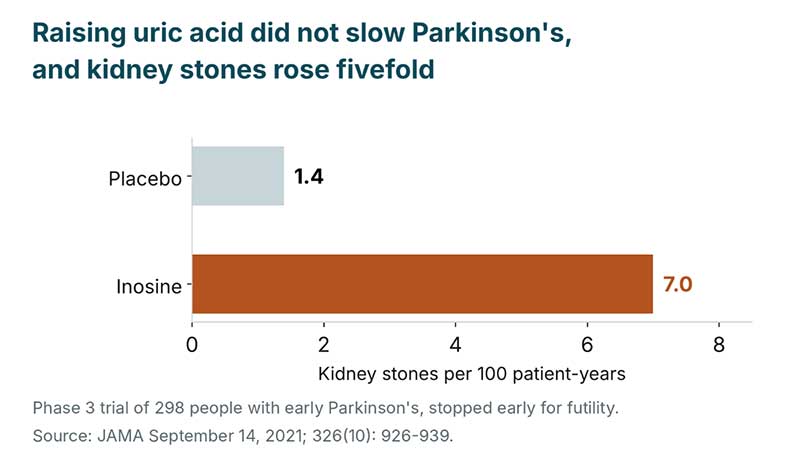
- Raising uric acid has already been tested and failed — The strongest evidence comes from Parkinson’s disease, where low uric acid also predicts faster progression. In a phase 3 trial, 298 people with early Parkinson’s received either inosine, a compound that raises uric acid, or a placebo for up to two years.5Inosine raised uric acid by about 2 milligrams per deciliter (mg/dL), from an average of 4.6 mg/dL. Disease progression did not slow, and the trial was stopped early for futility. The inosine group did have fewer serious adverse events, but it developed kidney stones five times as often: 7.0 versus 1.4 per 100 patient-years.
On the other side of the ledger, the observational signal keeps showing up. In a United Kingdom study of nearly 300,000 people, those diagnosed with gout had about a 24% lower risk of developing Alzheimer’s disease, even after matching for age, sex, and body weight.6
Gout Is a Crystal Problem, Not Just a Uric Acid Problem
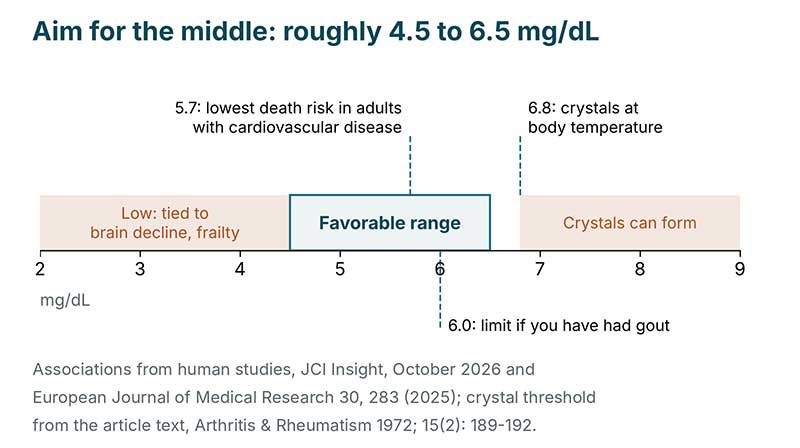
To reconcile these findings, it helps to understand what actually happens in gout. Gout is driven by physical chemistry. In your body fluids, uric acid circulates as a salt called monosodium urate. When its concentration rises above about 6.8 mg/dL at normal body temperature, it can come out of solution and form needle-shaped crystals.
Your immune system treats those crystals as a threat. It triggers an intense inflammatory response that produces the swelling, heat, and severe pain of a gout attack. Below that threshold, dissolved uric acid behaves very differently.
Large population studies show that both extremes carry risk. Data from the U.S. National Health and Nutrition Examination Survey show a U-shaped relationship between uric acid and death risk.7 Among adults with cardiovascular disease, the risk of dying was lowest at about 5.7 mg/dL and rose on either side.8 In other words, there appears to be a sweet spot.
How Uric Acid Switches from Protector to Troublemaker
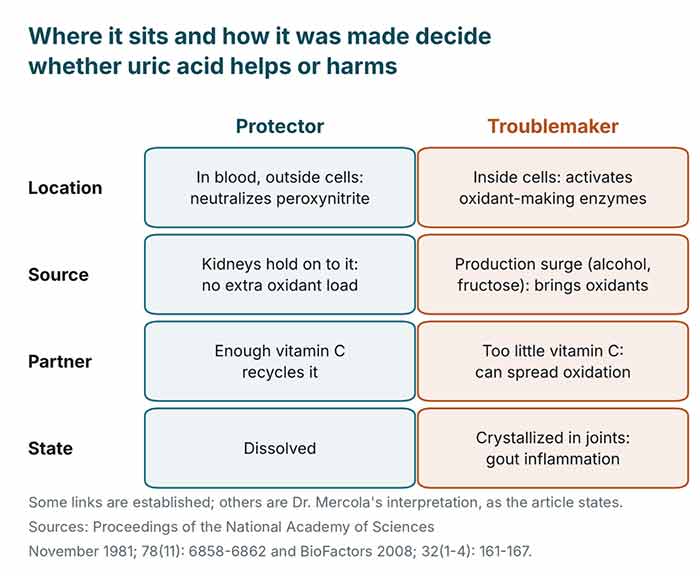
Here is how I see the paradox resolving. Some of these points are well established, and others are my interpretation of how the pieces fit together.
- Location matters — In your blood, outside your cells, uric acid is a potent antioxidant. Bruce Ames proposed decades ago that humans retained high uric acid levels partly to compensate for losing the ability to make vitamin C.9 Uric acid is particularly good at neutralizing peroxynitrite, one of the most damaging oxidants in your body.Inside your cells, uric acid behaves differently. It can activate enzymes that generate oxidants, stress your mitochondria, and reduce nitric oxide, the molecule that keeps blood vessels flexible.
- How your body makes it matters even more — This is the variable a blood test cannot see. The enzyme that produces uric acid, xanthine oxidase, releases superoxide and hydrogen peroxide as it works. When uric acid rises because production is surging, such as after heavy alcohol intake or large amounts of fructose from sodas and processed foods, it arrives with its own load of oxidants.When uric acid is moderately elevated simply because your kidneys hold on to it, that oxidant burden is not there. Children with Down syndrome illustrate this split. They have high uric acid and higher total antioxidant capacity, yet they also show elevated allantoin, a sign of ongoing oxidative damage.10
- Antioxidant partners matter — When uric acid neutralizes a free radical, it becomes a mild radical itself. Vitamin C helps recycle it. Without enough vitamin C, particularly in fatty environments like cell membranes, uric acid can spread oxidation rather than stop it.
- Metabolic health matters — Insulin signals your kidneys to retain uric acid. Much of the research linking high uric acid to heart disease and metabolic problems may actually be measuring insulin resistance, with uric acid serving as a convenient marker.
For the brain, one plausible explanation ties these points together. Microglia need energy and intact cell membranes to clear amyloid, and peroxynitrite damages both. Falling uric acid may weaken your defense against peroxynitrite at the blood-brain barrier and in the tiny blood vessels of the brain, leaving microglia less effective.
It is equally possible that low uric acid is simply a readout of disrupted energy metabolism upstream. If that’s the case, raising uric acid would be like adjusting a gauge rather than fixing the engine, which would explain the failed Parkinson’s trial.
The Variables That Control Uric Acid Crystals
If gout comes down to crystals, the next question is what makes uric acid more or less likely to crystallize. Several factors play a role.
-
- Temperature — This is the factor most people overlook. Uric acid becomes less soluble as tissue cools. Laboratory measurements show the crystallization threshold falling from about 6.8 mg/dL at 37 degrees Celsius (98.6 degrees F) to roughly 6.0 at 35 C (95 F) and about 4.5 at 30 C (86 F).11 Your toes, ankles, and the rims of your ears run cooler than your core, which helps explain why gout so often strikes the big toe and why uric acid deposits can form on the ears.
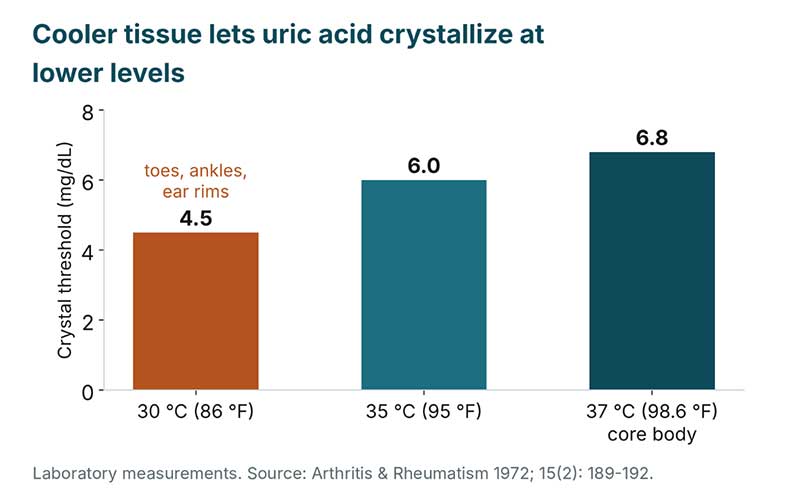
- Temperature — This is the factor most people overlook. Uric acid becomes less soluble as tissue cools. Laboratory measurements show the crystallization threshold falling from about 6.8 mg/dL at 37 degrees Celsius (98.6 degrees F) to roughly 6.0 at 35 C (95 F) and about 4.5 at 30 C (86 F).11 Your toes, ankles, and the rims of your ears run cooler than your core, which helps explain why gout so often strikes the big toe and why uric acid deposits can form on the ears.
- Acidity — Acid speeds up crystal formation both directly and by freeing up calcium, which strongly promotes urate crystals.12 An inflamed joint can become more acidic, which may help a gout attack feed on itself.
- Calcium and sodium — Calcium greatly accelerates both the formation and growth of urate crystals.13 Because the crystal is a sodium salt, higher sodium in body fluids also reduces how much urate can stay dissolved.
- Dehydration and the nighttime effect — One explanation is that at night, your joints reabsorb water faster than they clear uric acid, so its concentration in joint fluid rises. Combine that with cooler feet and some overnight dehydration, and you have the classic gout attack that wakes someone at 3 a.m.
- Mechanical shock — Physical impact greatly increased crystal formation in laboratory studies.14 Impact can also dislodge crystals already sitting in a joint. The big toe joint takes heavy repeated loading with every step, which adds to its vulnerability.
- Cartilage condition — Worn or damaged cartilage provides surfaces where crystals can take hold. This may be why gout tends to settle in joints already affected by arthritis.
- Rapid swings in uric acid — Sudden drops, such as when starting uric acid-lowering drugs, can trigger attacks by loosening existing deposits. So can sudden rises after heavy drinking.
- Lactate and ketones — Heavy alcohol use, intense exercise, and extended fasting raise these acids, which compete with uric acid for removal by your kidneys and push blood levels higher.
Would Being More Alkaline Help?
Many people assume that eating a more alkaline diet raises the level at which uric acid crystallizes in the blood. It doesn’t, because your blood pH is held tightly between 7.35 and 7.45. At that pH, about 98% of uric acid is already in its dissolved salt form, so there is little room for improvement.
Where pH makes a large difference is in your urine. Urine pH ranges from about 5 to 7.5. In acidic urine, uric acid is poorly soluble and can form kidney stones. In more alkaline urine, it is many times more soluble.
That shift also helps you excrete more uric acid. In a study of 26 healthy young women, a vegetable- and fruit-rich alkaline diet raised urine pH to 6.5, compared with 5.9 on a protein-rich acid diet.15 Daily uric acid excretion was 413 mg on the alkaline diet versus 302 mg on the acid diet, about 37% higher, even though the alkaline diet contained fewer purines.
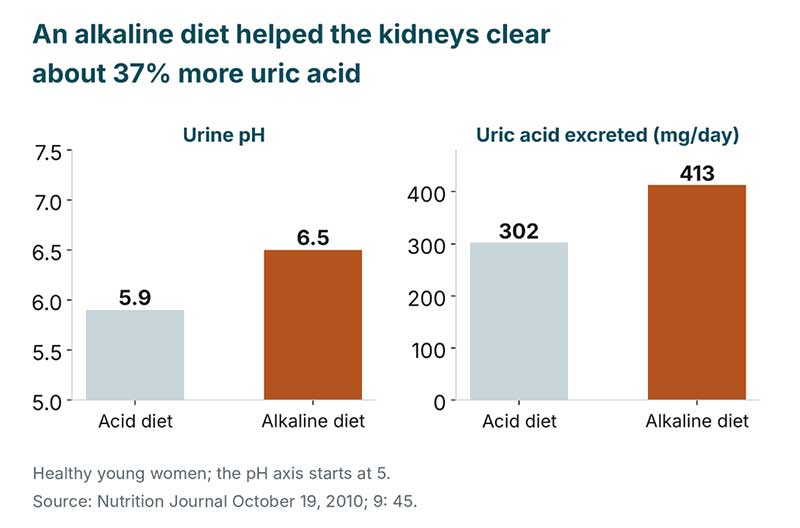
So an alkaline diet won’t let you safely carry more uric acid in your blood. It does help your kidneys clear the excess and helps protect you from uric acid stones.
How to Keep Uric Acid in the Healthy Middle
The goal is not to drive uric acid as low as possible or to push it higher. It is to keep it in a moderate range while reducing the factors that turn it harmful.
- Know your number — Uric acid is not part of a standard metabolic panel, so you’ll need to ask for it. Talk to your healthcare provider about whether this testing is appropriate for you. Based on the current evidence, a range of roughly 4.5 to 6.5 mg/dL looks reasonable to me.That is above the low levels associated with brain decline and frailty, and below the point where crystals form at core body temperature. If you’ve ever had gout, aim to stay under 6 mg/dL, since cooler joints crystallize at lower levels.
Cut the sources that produce uric acid along with oxidants — Eliminate sodas, sweetened drinks, and processed foods containing high-fructose corn syrup. Avoid alcohol, especially beer, which delivers purines and alcohol together. Whole fruit is a different matter. Its fiber, potassium, and vitamin C help buffer its fructose, and vitamin C helps your kidneys excrete uric acid.
- Eat to alkalinize your urine — Build meals around whole fruit and well-cooked vegetables. This raises urine pH, increases uric acid excretion, and may help lower your risk of uric acid kidney stones.
- Stay hydrated, especially in the evening — Steady water intake keeps uric acid diluted in your blood, urine, and joint fluid. Drinking enough in the evening helps counter the overnight concentration effect.
- Keep your feet warm — If you’re prone to gout, wear socks at night and avoid letting your feet get cold. A few degrees can meaningfully change whether uric acid stays dissolved.
- Avoid crash diets and extreme fasting — Ketones compete with uric acid for removal by your kidneys and can trigger attacks. Most adults do well with roughly 250 grams of carbohydrates daily from whole fruit, white rice, and root vegetables, which also support healthy metabolism.
- Protect your joints from repeated impact — Walking patterns that slam the heel and roll inward concentrate stress on the big toe joint with every step. Softer, more controlled walking may help reduce that mechanical load.
- Don’t take inosine or allantoin supplements to raise uric acid — The inosine trial showed no benefit for Parkinson’s and a fivefold rise in kidney stones. Allantoin supplementation has only been tested in mice, which handle uric acid very differently than humans.
- Pay attention to unexpectedly low levels as you age — A falling uric acid level in an older adult, especially alongside weight loss, can be an early sign of frailty. Protect muscle with resistance training and adequate protein, about 0.8 grams per pound of ideal body weight daily, with about one-third from collagen.
If you take uric acid-lowering medication or have a history of kidney stones or kidney disease, don’t change your treatment without talking to your doctor.
*These findings are from laboratory or animal research and may not directly apply to human health.
Frequently Asked Questions
Q: Is uric acid good or bad for you?
A: Both. In your blood, uric acid is a powerful antioxidant that supplies roughly half of your blood’s antioxidant capacity. Above about 6.8 mg/dL, it can crystallize in your joints and cause gout. Large population studies show the lowest risk of death in the moderate middle range, with higher risk at both extremes.
Q: What did the new Alzheimer’s study find?
A: People with Alzheimer’s-related brain plaques and cognitive impairment had lower blood levels of uric acid and allantoin, and lower levels tracked with more plaque and worse cognition.16 In mice, allantoin supplementation helped the brain’s immune cells clear amyloid. Because mice process uric acid differently than humans, the supplementation results may not apply to people.
Q: Should I try to raise my uric acid to protect my brain?
A: No. A major clinical trial that raised uric acid with inosine failed to slow Parkinson’s disease and increased kidney stones fivefold.17 Genetic studies also do not show that higher uric acid prevents Alzheimer’s.18 Focus instead on keeping it in a healthy middle range.
Q: Why does gout usually affect the big toe?
A: Uric acid becomes less soluble as temperature drops, and the big toe is one of the coolest joints in your body. It also absorbs heavy repeated impact with every step, and both cool temperatures and mechanical shock promote crystal formation.
Q: Does an alkaline diet raise the level of uric acid I can tolerate?
A: Not in your blood, because your body holds blood pH within a narrow range. An alkaline diet does raise urine pH, which helps your kidneys excrete more uric acid and can reduce your risk of uric acid kidney stones.19
This article is for informational purposes only and does not constitute medical advice. Consult a qualified healthcare provider before making changes to your health regimen.
- 1, 2, 16 JCI Insight, October 2026
- 3 Physiological Research 2014; 63(6): 753-762
- 4, 18 Experimental Gerontology 2024; 112503
- 5, 17 JAMA September 14, 2021; 326(10): 926-939
- 6 Annals of the Rheumatic Diseases March 2016; 75(3): 547-551
- 7 Frontiers in Nutrition 2025 Apr 22:12:1569798
- 8 European Journal of Medical Research 30, 283 (2025)
- 9 Proceedings of the National Academy of Sciences November 1981; 78(11): 6858-6862
- 10 BioFactors 2008; 32(1-4): 161-167
- 11 Arthritis & Rheumatism 1972; 15(2): 189-192
- 12, 13, 14 Annals of the Rheumatic Diseases August 1975; 34(4): 332-339
- 15, 19 Nutrition Journal October 19, 2010; 9: 45
Why Phosphate-Loaded Sodas Hammer Your Metabolism Harder Than Sugar
Reproduced from original article:
https://articles.mercola.com/sites/articles/archive/2026/08/24/phosphate-loaded-sodas-metabolism-damage.aspx
Analysis by Dr. Joseph Mercola August 24, 2026

Story at-a-glance
- A single can of cola floods your system with nearly 100% absorbable inorganic phosphate, triggering hormonal shifts that disrupt vitamin D, calcium balance, and kidney function
- Phosphate in soda raises levels of FGF23, a hormone that accelerates vascular calcification, weakens bones, and increases your long-term risk of heart attack or stroke, even if your labs are normal
- Unlike natural sources, phosphate additives in soda are rapidly absorbed and bypass digestive safeguards, placing a silent burden on your kidneys and arteries with every sip
- When combined with high-fructose corn syrup (HFCS), soda creates a metabolic double hit — HFCS promotes liver fat, raises uric acid, and drives insulin resistance, while phosphate sabotages hormonal and mineral balance
- Replacing soda with sparkling citrus water, magnesium glycinate, and vitamin K2 helps support your bones, protect your heart, and reverse the silent damage phosphate leaves behind
A single can of cola delivers more than just refined sugar — it delivers a metabolic ambush that your body absorbs within minutes. While most people know to worry about the high-fructose corn syrup (HFCS) lurking in soft drinks, few realize that the real damage comes from the phosphate hidden in plain sight.
Phosphoric acid is added to cola for flavor and shelf life, but what it delivers is a rapid spike in inorganic phosphate, a form your body absorbs almost entirely. Your bloodstream reacts fast. Within just 30 to 60 minutes, phosphate levels surge — and with them, a hormone called fibroblast growth factor 23 (FGF23). That one surge sets off a hormonal chain reaction that disrupts calcium absorption, suppresses vitamin D, stresses your kidneys, and begins laying the groundwork for hardening of your arteries.
Unlike the sugar in soda, phosphate acts more like a stealth hormone disruptor. It hijacks your endocrine system with every sip. And it doesn’t matter how healthy you think you are. Even young adults with no chronic conditions have shown elevated FGF23 levels within hours of a single phosphate load.
What’s worse, this phosphate exposure is virtually unregulated by your body. While natural food sources contain phosphate bound in protein or phytate, which slows absorption, sodas deliver inorganic phosphates that enter your system quickly. This largely bypasses your digestive safeguards and leaves your organs to clean up the mess.
It’s a burden your kidneys never signed up for and one your arteries pay for over time. That’s why the real danger in soda isn’t just about sugar — it’s about what happens when fructose and phosphate collide in the same can. Let’s take a closer look at the two ingredients side by side.
What’s Really in a Can of Cola?
When you crack open a can of soda, you’re not just sipping something sweet. You’re taking in a concentrated mix of biologically active compounds that hit your metabolism hard. Each 12-ounce serving of cola contains ingredients that work against your health in different ways — and some are far more damaging than they appear.
• High-fructose corn syrup (HFCS-55, ~39 grams of total sugar) — HFCS-55 is made of roughly 55% fructose and 45% glucose. While glucose raises blood sugar and stimulates insulin, it’s the fructose component that does the deeper damage. Your liver takes the hit first.
Fructose gets funneled directly into your liver’s fat-making process, increasing your liver’s fat load and elevating triglycerides. At the same time, it spikes uric acid, which increases oxidative stress, raises blood pressure, and damages mitochondria. Over time, this combination drives insulin resistance — the foundational defect in obesity, diabetes, and cardiovascular disease.
• Phosphoric acid (~50 to 60 milligrams (mg) of elemental phosphorus) — This is where things turn hormonal. Unlike phosphate found in whole foods, the phosphate in cola is inorganic and nearly 100% bioavailable. That means your body absorbs almost all of it, quickly. Within minutes, it forces your kidneys and bones to compensate.
You’ll see a spike in FGF23 — a hormone that lowers vitamin D, impairs calcium metabolism, and forces your kidneys to waste phosphate in an effort to protect your bloodstream. Repeated exposure increases vascular stiffness and elevates cardiovascular risk, even in people without existing kidney problems.
• Caffeine, caramel color, and artificial flavors — Don’t dismiss the trace components. Caffeine itself increases calcium loss in your urine, compounding the calcium-phosphate imbalance created by phosphoric acid.
Caramel color, especially the ammonia-sulfite processed kind, adds another layer of risk by introducing advanced glycation end products (AGEs). These compounds contribute to inflammation, oxidative stress, and tissue aging. Artificial flavors may seem harmless, but their unknown interactions with your gut and liver remain poorly studied.
Each of these ingredients hits a different pathway — metabolic, endocrine, vascular — but the real problem is how they interact. Fructose depletes adenosine triphosphate (ATP) and raises uric acid. Phosphate hijacks your hormone signaling. Add caffeine and AGEs, and you’ve got a cocktail that does far more than add inches to your waistline.
How Inorganic Phosphate Hijacks Your Hormones and Stresses Your Kidneys
When you eat whole foods, like meat, eggs, or legumes, the phosphate they contain is naturally bound to proteins or plant compounds like phytate. Your body takes its time breaking those down, and you only absorb about 40% to 60% of the phosphate in a typical meal. That’s a manageable load.
But the phosphate in soda doesn’t play by those rules. Phosphoric acid is a form of inorganic phosphate that’s not bound to anything. It bypasses digestion and enters your bloodstream at nearly 100% absorption. Within 30 to 60 minutes, your blood phosphate level spikes. And your body scrambles to respond.
• FGF23 is the hormone that flips your metabolism into damage control — This sudden phosphate flood triggers a spike in FGF23.1 This hormone is produced by your bones to get rid of excess phosphate, but FGF23 suppresses the enzyme 1α-hydroxylase, which your kidneys need to convert vitamin D into its active form, calcitriol. Without calcitriol, your body struggles to absorb calcium, shutting down bone turnover and starving your cells of calcium even when your diet is sufficient.
• Your body tries to rebalance, and your skeleton pays the price — As calcium levels drop, your parathyroid glands kick in. They release parathyroid hormone (PTH), which pulls calcium out of your bones to bring blood levels back up. But this leaching process weakens bone structure over time. If you’re regularly drinking cola, your bones are constantly being tapped to fix a problem that started in your soda can.
• A silent source of wear and tear on your kidneys — With every phosphate spike, your kidneys start dumping phosphate into your urine to keep blood levels in check. This ongoing flush seems protective, but it comes at a cost: micro-damage, oxidative stress, and accelerated wear on delicate filtering structures. Over time, even small, repeated injuries add up, especially if you’re already dealing with other metabolic stressors like insulin resistance or high uric acid.
How Phosphate Hardens Your Arteries and Raises Your Risk of a Heart Attack
You don’t need kidney disease for phosphate to wreck your heart. Even if your lab tests look normal, chronically high phosphate levels, like the ones triggered by regular soda consumption, quietly damage your blood vessels and heart over time. The damage starts in your bloodstream, but it doesn’t stay there.
• Your arteries aren’t supposed to turn into bone, but that’s what happens — Under normal conditions, smooth muscle cells in your arterial walls stay flexible and elastic. But when exposed to persistently elevated phosphate, those same cells begin expressing genes typically seen in bone-forming cells. This process turns pliable arteries into rigid, calcium-laced pipes. Once this transformation begins, it’s extremely difficult to reverse.
• Your hormonal defense system collapses — High phosphate doesn’t just activate bone-building pathways in your arteries. It also disrupts the protective feedback loop between FGF23 and a protein called α-Klotho.2
These two normally work together to regulate phosphate and calcium balance. But when phosphate keeps flooding your system, this balance breaks. Klotho levels drop, oxidative stress goes up, and arterial walls stiffen.3 That stiffening drives up blood pressure and reduces blood flow, setting the stage for a heart attack or stroke.
• Phosphate raises your risk of dying from heart disease — A 2024 meta-analysis showed that people in the highest phosphate quartile had a 44% greater risk of cardiovascular death compared to those with lower phosphate levels, even if their kidney function was perfectly normal.4 This isn’t about end-stage disease or rare cases. It’s about everyday exposures, like the phosphate in your soda, quietly eroding your cardiovascular resilience year after year.
The Collateral Damage You Don’t See — Kidney Strain, Bone Loss, and Faster Aging
The impact of high-phosphate sodas goes far beyond your arteries. What starts as a seemingly harmless beverage choice quickly spreads into a web of silent damage that hits multiple systems in your body. If you’re drinking cola regularly, you’re stacking the odds against your kidneys, bones, and even your longevity.
• Phosphate overload speeds up kidney decline, even before symptoms show up — If you already have mild kidney dysfunction, high-phosphate intake pushes that damage into overdrive. Diets rich in inorganic phosphate, like what’s found in sodas and ultraprocessed foods, accelerate the progression of chronic kidney disease.5
Your kidneys are forced to work overtime to dump excess phosphate from your bloodstream, which increases oxidative stress and causes scarring in the nephrons — the tiny filters inside your kidneys that clean your blood. Over time, this leads to progressive loss of kidney function, even in people who aren’t diabetic or hypertensive. And because kidney damage is largely symptomless until advanced stages, you may not even know it’s happening.
• Soda pulls calcium out of your skeleton and leaves it brittle — Women who drink cola four or more times per week have significantly lower BMD in the hip, one of the most fracture-prone areas of the skeleton.6 The combination of high phosphate and low calcium absorption makes bones porous and weak, raising the risk of osteoporosis and fractures.
• Excess phosphate accelerates the biological clock — Phosphate affects you down to the cellular level. High phosphate levels activate mTOR, a key regulator of growth and metabolism.7
While mTOR has beneficial roles in controlled settings, chronic overactivation leads to DNA damage,8 increased cellular replication errors, and premature senescence — a state where cells stop dividing and enter a permanent state of aging. This isn’t just about disease — it’s about quality of life. Phosphate-laden sodas rob you of resilience, making it harder for your body to recover, repair, and maintain the energy you need to thrive.
Fructose in Soda Still Damages Your Metabolism
Fructose in soda isn’t off the hook. You’ll find about 22 grams of it in every can of HFCS-sweetened soda, and that’s more than enough to create metabolic chaos in the wrong context. But unlike phosphate, which hits hard no matter what, you do have some leverage when it comes to fructose’s effects.
• Fructose goes straight to your liver and turns into fat — Unlike glucose, which is used by nearly every cell in your body, fructose has a narrow processing window — it’s metabolized almost entirely in your liver.
When your liver is already loaded with energy (especially in sedentary or overfed states), it begins converting that fructose into fat. This results in fat droplets building up inside your liver cells and elevates triglycerides in your bloodstream. Over time, this fat buildup contributes to insulin resistance, fatty liver disease, and rising cardiovascular risk.
• Fructose metabolism generates uric acid as a byproduct — High uric acid levels drive inflammation. They impair nitric oxide availability in your blood vessels, reducing their ability to relax and regulate pressure. Elevated uric acid also promotes oxidative stress through the generation of reactive oxygen species (ROS), further damaging the endothelium — the delicate lining of your arteries. This sets the stage for high blood pressure, kidney strain, and accelerated aging.
•Fructose feeds the wrong microbes and fuels leaky gut — Too much fructose also disrupts your gut. It feeds opportunistic bacteria in your small intestine, creating dysbiosis — a microbial imbalance that weakens your gut barrier. When that happens, endotoxins seep into your bloodstream. These toxic fragments drive systemic inflammation, contributing to joint pain, brain fog, and autoimmune flare-ups.
• Fructose isn’t harmful in small, buffered doses — The damage from fructose largely depends on how and when you consume it. When eaten with fiber-rich whole foods like fruit, fructose does far less harm. The fiber slows absorption, and the nutrients in whole fruit counterbalance the inflammatory effects. But in soda, you’re drinking a fast-acting dose with zero buffering — just straight metabolic stress.
How to Protect Yourself from the Hidden Damage in Soda
If you’ve been drinking soda regularly, even just a few cans per week, your body is already dealing with the consequences. That phosphate-fructose combo doesn’t just affect your blood sugar or waistline. It hijacks your hormones, leaches calcium from your bones, stiffens your arteries, and stresses your kidneys.
But the good news is, you’re not stuck. You can take control starting today by removing the source and supporting your body’s natural defenses. Whether you’re an athlete using energy drinks, a parent reaching for a cola, or just looking to break a soda habit, these steps will help you protect your metabolism and cellular health.
1. Swap soda for sparkling water with fresh citrus — If you’re drinking cola — even the diet kind — you’re getting a dose of inorganic phosphate that hits your bloodstream fast. Switch to sparkling mineral water and squeeze in some lemon or lime. You’ll get flavor, hydration, and a small amount of citrate, which helps support kidney function without adding phosphate or HFCS.
2. Ditch phosphate-loaded energy drinks and reach for coconut water with sea salt — If you’re an athlete or just someone who relies on energy drinks or sports colas, those are hammering your kidneys and arteries every time you sip. Coconut water mixed with a pinch of sea salt offers natural electrolytes without the phosphate hit, helping your cells rehydrate and recover without metabolic fallout.
3. Use maple-salt rice bars instead of commercial gels — If you’re using sports gels or preworkout drinks with cola flavoring or phosphoric acid, it’s time to upgrade. Cook some white rice, mix in a little maple syrup and sea salt, press it into a pan, and let it chill. You’ll get slow-burning carbs, no added phosphate, and a better energy profile that doesn’t disrupt your insulin response.
4. Shield your system with magnesium glycinate — If you drink soda now and then — maybe socially or during travel — take 200 to 400 mg of magnesium glycinate with it. This helps bind phosphate, restore calcium balance, and reduce the risk of vascular and kidney damage. It’s a simple tool to soften the metabolic blow.
5. Use vitamin K2 (MK-7) daily to guard your arteries — Vitamin K2 activates matrix-Gla protein, which prevents calcium from getting deposited in soft tissues like your arteries. I recommend 100 to 200 micrograms per day. If you’ve ever had a history of soda drinking, this is a long-term investment in your vascular health. If you’ve already been exposed for years, don’t panic. Your body has the capacity to recover, but only if you remove the drivers and give it the nutrients it needs to repair.
FAQs About Phosphate-Loaded Sodas
Q: What makes soda harmful beyond the sugar content?
A: While HFCS in soda is damaging to liver and metabolic health, the phosphate — especially in the form of phosphoric acid — delivers a faster and more disruptive blow. Inorganic phosphate is absorbed almost instantly, spiking the hormone FGF23, which suppresses vitamin D, disrupts calcium metabolism, and stresses your kidneys and arteries.
Q: How does phosphate affect my bones and heart?
A: Inorganic phosphate triggers hormonal shifts that leach calcium from your bones, weaken your skeleton, and harden your arteries. The rise in FGF23 and drop in active vitamin D impair calcium handling, while high phosphate levels drive smooth muscle cells in your arteries to behave like bone cells, increasing cardiovascular risk even in healthy individuals.
Q: What are the long-term risks of drinking cola regularly?
A: Regular soda consumption increases your risk for chronic kidney disease, osteoporosis, vascular calcification, and premature aging. Studies show that even people without kidney disease experience microdamage to their filtering systems and a significant increase in cardiovascular mortality risk when phosphate levels remain elevated.
Q: Is HFCS still a problem in soda?
A: Yes. HFCS in soda drives fat production in your liver, raises uric acid, and fuels gut dysbiosis. However, the effects of fructose are context-dependent — fructose in fruit behaves differently than HFCS in soda due to the presence of fiber and protective nutrients. In soda, fructose is unbuffered, rapidly absorbed, and synergistically harmful alongside phosphate.
Q: What can I do to protect myself if I’ve been drinking soda?
A: Eliminate soda and similar phosphate-loaded drinks. Replace them with sparkling water and natural electrolyte options like coconut water with sea salt. Use magnesium glycinate (200 to 400 mg) to buffer phosphate exposure and consider taking vitamin K2 (100 to 200 mcg daily) to help prevent calcium from depositing in your arteries. These steps support bone, kidney, and cardiovascular recovery.
- 1 Pflugers Arch. 2024 Nov 27;477(3):495-508
- 2 Scientific Reports November 13, 2024
- 3 Nutrients 2024, 16(11), 1599
- 4 Bone 2016 Nov 12;100:87-93
- 5 Clinical Journal of the American Society of Nephrology March 20, 2025
- 6 The American Journal of Clinical Nutrition October 2006, Volume 84, Issue 4, Pages 936-942
- 7 J Am Soc Nephrol. 2016 Feb 12;27(9):2810-2824
- 8 Nutrients 2025, 17(9), 1587