Nutrition
now browsing by category
“Let food be thy medicine, and medicine be thy food” ~ Hippocrates.
Doctors should be taught this in medical school, as well as “First, do no harm”.
Seaweed for SARS CoV-2
Reproduced from original article:
https://articles.mercola.com/sites/articles/archive/2020/09/05/seaweed-for-sars-cov-2.aspx
Analysis by Dr. Joseph Mercola Fact Checked September 05, 2020

STORY AT-A-GLANCE
- Researchers are looking into seaweed extracts as potential treatments against SARS-CoV-2, the virus that causes COVID-19
- A dose response study was performed with five seaweed extracts, revealing the effective concentration that inhibits 50% of viral activity — known as EC50; a lower EC50 is indicative of a more effective extract
- The results revealed that the seaweed extract RPI-27 had an EC50 of about 83 nanomolar, compared to remdesivir’s 770 nanomolar
- Remdesivir is an antiviral drug that has shown some promise in treating COVID-19; however, serious side effects have been reported, including kidney failure
- With the seaweed extracts, no cellular toxicity was found, even at the highest concentrations, and in some cases they outperformed remdesivir in fighting SARS-CoV-2
While seaweed is more of a novelty in the typical Western diet, save for an occasional sushi dinner or bowl of miso soup, it’s been a staple food in Japan, Korea and China since ancient times. In Japan, seaweed may account for more than 10% of the diet, and 21 different types are used in everyday cooking.1
Seaweed is highly nutritious and provides a rich source of micronutrients.2 However, it also has powerful antiviral properties and researchers are looking into seaweed extracts as potential treatments against SARS-CoV-2, the virus that causes COVID-19.
Seaweed Extracts Outperform Standard COVID-19 Antiviral
Researchers from the Center for Biotechnology and Interdisciplinary Studies (CBIS) at Rensselear Polytechnic Institute tested the antiviral effectiveness of seaweed extracts against SARS-CoV-2,3 with promising results.
Five sulfated polysaccharides were tested, including variants of heparin, which is widely used for anticoagulant therapy,4 (heparin, trisulfated heparin and a nonanticoagulant low molecular weight heparin) along with the fucoidans RPI-27 and RPI-28.5
“We’re learning how to block viral infection, and that is knowledge we are going to need if we want to rapidly confront pandemics,” said lead researcher Jonathan Dordick in a news release. “The reality is that we don’t have great antivirals. To protect ourselves against future pandemics, we are going to need an arsenal of approaches that we can quickly adapt to emerging viruses.”6
A dose response study was performed with the extracts, revealing the effective concentration that inhibits 50% of viral activity — known as EC50. A lower EC50 is indicative of a more effective extract. The results, given in molar concentration, revealed that RPI-27 had an EC50 of about 83 nanomolar, compared to remdesivir’s 770 nanomolar, which was revealed via separate research.7
Remdesivir is an antiviral drug that has shown some promise in treating COVID-19, however serious side effects have been reported, including kidney failure.8 With the seaweed extracts, however, no cellular toxicity was found, even at the highest concentrations.
In the case of the other extracts, heparin had an EC50 of 2.1 micromolar, which was about one-third as active as remdesivir, while the nonanticoagulant heparin was about one-fifth as active as remdesivir, with an EC50 of 5 micromolar.9
A New Method of Treatment
Robert Linhardt, a Rensselaer professor who’s collaborating with Dordick, said what’s most intriguing is uncovering a potential new way to treat an infection:10
“The current thinking is that the COVID-19 infection starts in the nose, and either of these substances could be the basis for a nasal spray. If you could simply treat the infection early, or even treat before you have the infection, you would have a way of blocking it before it enters the body.”
Because the seaweed compounds can also be consumed orally, they may also be beneficial for addressing gastrointestinal infections, according to Dordick. In fact, while remdesivir must be delivered intravenously, the seaweed extracts could be delivered through a nasal spray, inhaler or orally. When taken orally, seaweed fucoidans are considered “Generally Recognized as Safe.”11
The seaweed extracts appear to work against SARS-CoV-2 via what’s known as a decoy technique, which has previously been used against dengue, Zika, influenza A and other viruses. According to the Rensselaer Polytechnic Institute in a news release:12
“The spike protein on the surface of SARS-CoV-2 latches onto the ACE-2 receptor, a molecule on the surface of human cells. Once secured, the virus inserts its own genetic material into the cell, hijacking the cellular machinery to produce replica viruses.
But the virus could just as easily be persuaded to lock onto a decoy molecule that offers a similar fit. The neutralized virus would be trapped and eventually degrade naturally.”
By binding tightly to the spike protein of SARS-CoV-2, seaweed’s sulfated polysaccharides may act as decoys to interfere with the spike protein binding to the heparan sulfate co-receptor, which could effectively deter viral infection.13
Also worth noting, separate research found that anticoagulants such as heparin led to better outcomes among hospitalized COVID-19 patients. Intubated patients who received heparin had a significantly lower risk of mortality compared to those who did not.14
“It is unknown whether this is a result of heparin’s anticoagulation alone, or to some degree is an effect of its anti-SARS-CoV-2 activity,” the featured study researchers explained.15

Seaweed’s Antiviral Activity
While the usage against SARS-CoV-2 is new, seaweed extracts and polysaccharides including carrageenan, alginate, fucan, laminaran and naviculan have long been valued for their antiviral properties.16 In one study of extracts from six Hong Kong brown seaweed species, most of them inhibited herpes simplex virus types 1 and 2, with very low toxicity to other cells.17 They were also moderately effective in inhibiting respiratory syncytial virus (RSV).
In fact, seaweeds are being actively studied in the hopes of finding new compounds to treat viral diseases. In one such study, red and brown seaweed polysaccharides inhibited viral replication of the hepatitis C virus,18 while others have pointed to their diverse modes of action.
“The structural diversity and complexity of marine polysaccharides and their derivatives contribute to their antiviral activities in different phases of many different viral infection processes,” researchers wrote in the journal Carbohydrate Research, noting that seaweed extracts have the ability to inhibit virus internalization and uncoating as well as inhibit virus transcription and replication. Some are also immunomodulatory.19
In another study, 16 extracts of British Columbian seaweeds were investigated and 15 of them were found to have direct virus-killing abilities.20
Was Seaweed Behind Japan’s Initial Low COVID-19 Rates?
Japan, where seafood is a dietary staple, had low initial levels of COVID-19 infection, particularly in Hokkaido.
Writing in the Journal of Applied Phycology, researchers from the University of Coimbra and Canada’s Verschuren Centre for Sustainability in Energy and Environment suggested that there may be a connection and the low initial rates “were possibly related to the traditional and widespread consumption of seaweed and the regular supply of iodine in their diet.”21
While cases later increased, they noted, “These reports suggest that seaweed helped Hokkaido populations to reduce contagion in an initial period, but their consumption was not a 100% effective weapon …”22
Seaweed extracts, including carrageenan, have also been found to benefit the common cold, which is caused by different respiratory viruses, including coronavirus. In a study of children and adults, a carrageenan nasal spray reduced the duration of the common cold while also increasing viral clearance and reducing relapse of symptoms.23
The pharmaceutical company Boehringer Ingelheim markets a carrageenan-based nasal spray, but the researchers questioned why the substantial research about the antiviral properties of seaweed extracts appears to have gone largely unrecognized by Big Pharma during the COVID-19 pandemic. They added:24
“Many species of marine algae contain significant quantities of complex structural sulphated polysaccharides that have been shown to inhibit the replication of enveloped viruses including members of the Nidovirales.
Other compounds, both of red algae (e.g., the lectin griffithsin), and other sulphated polysaccharides extracted from green algae (i.e. ulvans) and brown algae (i.e. fucoidans) could be potential antiviral therapeutic agents against SARS-CoV-2.”
Seaweed Is a Superfood
There are many reasons to add seaweed to your diet, even aside from its antiviral potential. It’s an excellent source of iodine, for starters, which in itself is a strong weapon against viral infections. An imbalance of iodine affects your thyroid function, which in turn affects many other systems in your body, including your heart.
Seaweed also has properties that are useful for lowering blood pressure. In an observational study in children, seaweed consumption was shown to lower diastolic blood pressure in boys and systolic blood pressure in girls.25
As for adults, research published in the American Journal of Hypertension found that a preparation made from seaweed decreased mean blood pressure in 62 middle-aged patients with mild high blood pressure.26
Seaweed contains beneficial nutrients as well, including potassium, calcium, iron and alginic acid. Alginic acid naturally protects marine plants from bacteria and binds to heavy metals in humans, which makes seaweed a powerful detoxifying food.
Choosing seaweed from unpolluted waters is crucial, as these plants absorb the contents of the water in which they’re grown. While this is part of what makes them so nutritious, it can also be their downfall if sourced from contaminated waters.
Further, seaweed that comes from large, industrial seaweed “farms” (often in Asia) may be machine harvested in ways that harm the environment. Look for seaweed sourced from unpolluted waters that is harvested in a sustainable, environmentally friendly manner (such as hand harvested).
Also check that your seaweed is processed using only sun drying or low-temperature air drying, not high heat that may damage nutrients.
You may also be able to find seaweed that is regularly tested for chemicals and heavy metals to ensure it’s a pure, health-boosting product. If you want to add some seaweed to your daily meals, there are many to choose from, each with different flavor profiles and uses. Here are a few from Supermarket Guru27 to get started:
- Hijiki — A stronger-flavored seaweed that grows in thick branches, which expand considerably when cooked.
- Nori — Often used to make sushi rolls, nori is deep purple or red but turns bright green when toasted. Untoasted nori is best, nutritionally speaking.
- Arame — Arame has feathery leaves and a sweeter flavor than some other varieties.
- Wakame — Found in miso soup, wakame is brown with delicate leaves and a mild, non-fishy flavor.
- Dulse — Dulse has a chewy texture and is often used in dried or flaked form.
- 1 The Seaweed Site, Seaweed as Human Food
- 2 Foods. 2015 Jun; 4(2): 240–253
- 3, 11, 15 Cell Discovery volume 6, Article number: 50 (2020)
- 4 Science Direct, Heparin
- 5, 6, 7, 9, 10, 12 Science Daily July 24, 2020
- 8 International Journal of Infectious Diseases, 2020; doi.org/10.1016/j.ijid.2020.06.093
- 13 Cell Discovery volume 6, Article number: 50 (2020), 2nd para from end
- 14 Journal of the American College of Cardiology July 7, 2020
- 16 Hindawi September 21, 2015
- 17 J Zhejiang Univ Sci B. 2008 Dec; 9(12): 969–976
- 18 Iran J Pharm Res. 2016 Summer; 15(3): 483–491
- 19 Carbohydrate Research December 2017, Volumes 453-454, Pages 1-9
- 20 Pharmaceutical Biology 1999, Vol. 37, No. 4, pp. 300-306
- 21, 22, 23, 24 Journal of Applied Phycology volume 32, pages1875–1877(2020)
- 25 Nutrition Journal 2011 Aug 10;10:83
- 26 The American Journal of Hypertension 1991 Jun;4(6):483-8
- 27 Supermarket Guru March 1, 2019
Low Vitamin K in Elderly Linked to Increased Risk of Death
Reproduced from original article:
https://articles.mercola.com/sites/articles/archive/2020/09/02/vitamin-k-and-elderly.aspx
Analysis by Dr. Joseph Mercola Fact Checked September 02, 2020

STORY AT-A-GLANCE
- People with higher levels of vitamin K have a lower risk of death from all-cause mortality
- There are two types of vitamin K; the body’s not very good at storing them so they must be consumed every day for optimal health
- Vitamin K is important in the workings of vitamin D, as it helps prevent osteoporosis and arterial calcification and contributes to blood clotting
Vitamin K is a fat-soluble vitamin that can be found in some foods. The body uses it for certain functions, such as those required for bone metabolism, blood clotting and a variety of other cellular functions.1
Your body has a limited ability to store vitamin K, so it must be absorbed from your food or a supplement on a daily basis. It’s also recycled within your system, optimizing its benefits.2 Several different medications, such as antibiotics, weight loss drugs, cholesterol medications and the blood thinner warfarin, may interfere with its absorption, and therefore affect blood clotting.
Vitamin K is distributed throughout the body, including in your brain, heart, bones and liver.3 Since it’s broken down and excreted quickly it rarely reaches toxic levels in a way that happens with other fat-soluble vitamins.
Since the vitamin is crucial to several bodily functions, it’s not surprising to learn that if you don’t get enough every day, on a daily basis, you could be at risk for an earlier death.
Vitamin K Lowers Risk of Death in Older Adults
Recently, a paper was published in the American Journal of Clinical Nutrition by a team that investigated the vitamin K-dependent proteins that may affect atherosclerosis, which is the stiffness and calcification of the arterial vessels.4
The aim of the investigation was to determine if there was an association between circulating vitamin K, cardiovascular disease and all-cause mortality. The study was carried out at Tufts University and led by Kyla Shea, who commented:5
“The possibility that vitamin K is linked to heart disease and mortality is based on our knowledge about proteins in vascular tissue that require vitamin K to function. These proteins help prevent calcium from building up in artery walls, and without enough vitamin K, they are less functional.”
The researchers gathered data from three science databases, including the Framingham Offspring Study. The participants had circulating vitamin K1 (phylloquinone) measured, and each person either had some type of heart event or they died. There were 3,891 men and women with 858 heart events and 1,209 deaths over 13 years.
Interestingly, although vitamin K is associated with vascular health, the data did not show an association between low vitamin K and cardiovascular disease (CVD). However, there was a link between low levels and all-cause mortality. They found a 19% increased risk of all-cause mortality in those with the lowest serum levels of vitamin K.6
Since the study was observational, the scientists could not establish a causal link, yet the data fit with what we know about the function of vitamin K in the body. One-third of the participants in the study were not white, which allowed the researchers to theorize that the association is multi-ethnic.7 Dr. Daniel Weiner, nephrologist from Tufts Medical center, explained the association between stiff arteries and CVD:8
“Similar to when a rubber band dries out and loses its elasticity, when veins and arteries are calcified, blood pumps less efficiently, causing a variety of complications. That is why measuring risk of death, in a study such as this, may better capture the spectrum of events associated with worsening vascular health.”

Vitamin K: The Basics
There are two basic types of vitamin K.9 Vitamin K1 is found in green leafy vegetables and works through the liver to help maintain a healthy clotting system. This is the type researchers measured in the study. Vitamin K1 also helps reduce calcification in the blood vessels and assists your bones in retaining calcium.
Vitamin K2 (menaquinone) is produced by bacteria in your gut and can be found in some animal products and fermented foods, particularly cheese and natto. This is the one that helps activate vitamin D and move calcium out of the arterial system and into your bones and teeth.10
There are also several different forms of vitamin K2. They are named for the length of the chemical chain, beginning with the letter M for menaquinone. The two most important types are found in animal products and fermented foods. Most Western diets are deficient in both forms of vitamin K2.11
In one study, researchers sought to compare the effectiveness of giving supplements of these two types, MK-4 and MK-7, to healthy women. They “demonstrated that a nutritional dose of MK-7 is well absorbed in humans, and significantly increases serum MK-7 levels, whereas MK-4 had no effect on serum MK-4 levels.”12
More Benefits of Vitamin K
Vitamin K is integral to the body’s ability to coagulate, or clot, blood. These clotting factors are involved in a cascade of events that stop bleeding and are produced in the liver. Therefore, individuals with severe liver disease can have difficulty with vitamin K-dependent clotting and are at an increased risk for hemorrhage.13
As discussed previously, Vitamin K is also integral to moving calcium out of the arterial system and to preventing soft tissue calcification. This function is central to preventing osteoporosis and maintaining strong bone health.
Another benefit is a vitamin K-dependent protein, growth arrest specific gene 6 protein (Gas6), which was identified in 1993 and is found in the heart, kidneys, lungs and cartilage. It contributes to many cellular functions that may play a role in protecting an aging nervous system, and it appears to regulate vascular homeostasis.
Separate studies using vitamin K2 on cancer cells in the lab have demonstrated an apoptotic effect. In one study, researchers found vitamin K2 induced apoptosis in bladder cancer cells and in another, against triple negative breast cancer.14,15
Vitamin K2 and Magnesium Optimize Vitamin D Supplementation
The evidence that your serum vitamin D level is protective against COVID-19 and reduces the severity of the disease continues to grow. While your body produces vitamin D from the reaction to sunlight, many don’t get enough sun to raise their vitamin D levels above 30 ng/mL.
To reach this minimal goal, you may need a supplement. Yet, taking vitamin D3 supplements without magnesium and vitamin K2 may offer little effective protection and could increase your risk of atherosclerosis. Before you can determine how much supplementation is needed, you’ll want to test your current level. You can do this using a home kit through GrassrootsHealth.16
The kit is delivered to your home where you use a finger stick and send the kit back to the lab. Only you get the results of the test, which you can then input into the GrassrootsHealth calculator to determine the amount of supplement you’ll need to achieve your desired result.17
Vitamin D is important in the absorption and utilization of vitamin K2. In fact, a vitamin K deficiency may contribute to symptoms of “vitamin D toxicity.” In my interview with Dr. Kate Rheaume-Bleue, natural health physician and author of Vitamin K2 and the Calcium Paradox, she talked about this challenge:18
“We don’t see symptoms of D toxicity very often but when we do those symptoms are inappropriate calcification. That’s a symptom of D toxicity and that is actually a lack of vitamin K2 that will cause that. K2 protects you against that toxicity quite simply.”
Added to this, I’ve written about the importance of vitamin K2 when you’re taking supplemental vitamin D3 to avoid excessive calcification in your arteries. Magnesium is also a crucial part of raising your vitamin D level as it is necessary for the activation of the vitamin.
Without sufficient amounts your body can’t properly use the vitamin you’re taking. Mohammed Razzaque is a professor of pathology at Lake Erie College of Osteopathic Medicine in Pennsylvania. He notes that without magnesium, vitamin D supplements may not be useful.19
To lower the risk of vitamin D deficiency it’s necessary to have optimal amounts of magnesium.20 According to one scientific review, as many as 50% of Americans who are taking vitamin D supplementation may not benefit, as it’s stored in the inactive form without sufficient levels of magnesium.21,22
The relationship is a two-way street. While vitamin D improves the absorption of magnesium, large doses of vitamin D may deplete magnesium.23,24 This is because large doses of vitamin D will require large doses of magnesium to convert it to the active form.
GrassrootsHealth published research that was based on data from nearly 3,000 people showing you must take 244% more vitamin D if you aren’t also taking a magnesium and vitamin K2 supplement.25 Practically speaking, this means when you take all three in combination you’ll need far less vitamin D to achieve a healthy level.
According to researchers, “those taking both supplemental magnesium and vitamin K2 have a higher vitamin D level for any given vitamin D intake amount than those taking either supplemental magnesium or vitamin K2 or neither.”26
Consider Supplementing With Magnesium and Vitamin K2
There are several forms of magnesium. In each form, the magnesium is bound to another molecule. Some forms have compounds that serve other functions in the body, as you’ll find in “NYC Doctor Highlights Importance of Vitamin D Optimization”:
- Magnesium glycinate,27 a powder with low solubility. Glycine is an important amino acid and precursor for glutathione.
- Ionic magnesium found in molecular hydrogen tablets. Each water-soluble tablet has about 80 mg of highly bioavailable unbound magnesium ions, which is about 20% of the recommended daily allowance.
- Magnesium threonate28 is another excellent choice as it seems it can efficiently penetrate the blood-brain barrier.
- Magnesium malate,29 which dissolves well in water. Malate is an intermediary in the Krebs cycle, so it likely contributes to ATP production.
- Magnesium citrate30 also dissolves well and has a pleasant citric acid taste.
Since most people eating a Western diet are deficient in vitamin K2 and the vitamin is quickly used and excreted, it’s important to either change the foods you eat, or consider supplementation. As noted in the featured study, those with higher levels of vitamin K have a lower risk of death.
It can be difficult to tell if you’re getting enough vitamin K, as there’s no easy way to screen or test for vitamin K2 sufficiency. For more information about getting enough vitamin K, see “Spinach, Eggs and Gouda Cheese to Combat COVID?”
- 1 National Institutes of Health
- 2, 9, 13 Linus Pauling Institute
- 3 Harvard T.H. Chan School of Public Health
- 4 The American Journal of Clinical Nutrition, 2020; doi.org/10.1093/ajcn/nqaa082
- 5, 7, 8 Science Daily, June 15, 2020
- 6 Pharmacy Times, August 3, 2020
- 10, 11 Integrative Medicine: A Clinician’s Journal, 2015;14(1)
- 12 Nutrition Journal, 2012;11(93)
- 14 PLOS|One, 2016; doi.org/10.1371/journal.pone.0161886
- 15 Science Direct, 2015; dx.doi.org/10.1016/j.nutres.2015.05.014
- 16 GrassrootsHealth, Daction
- 17 GrassrootsHealth, Dcalculator
- 18 YouTube, January 15, 2013
- 19 EurekAlert! February 27, 2018
- 20 Live Science February 26, 2018
- 21 Science Daily, February 2018
- 22 Journal of the American Osteopathic Association March 2018;118:181
- 23 Magnesium Research 1995;8(1):19
- 24 American Journal of Therapeutics 2019;26(1):e124
- 25, 26 GrassrootsHealth, Vitamin D levels
- 27 Journal of Innovative Optical Health Sciences Vol. 10, No. 3 (2017) 1650052
- 28 Magnesium Research 2016
- 29, 30 Biological Trace Element Research December 27, 2017
Magic Mushroom Ingredient May Improve Mental Health
© 28th August 2020 GreenMedInfo LLC. This work is reproduced and distributed with the permission of GreenMedInfo LLC. Want to learn more from GreenMedInfo? Sign up for the newsletter here www.greenmedinfo.com/greenmed/newsletter
Reproduced from original article:
www.greenmedinfo.com/blog/magic-mushroom-ingredient-may-improve-mental-health
Posted on: Wednesday, August 19th 2020 at 4:15 pm
Written By: GreenMedInfo Research Group
This article is copyrighted by GreenMedInfo LLC, 2020

Are you looking to support positive mental health without using pharmaceuticals? Psilocybin may be gaining mainstream acceptance by providing a safe “trip” out of desolation and into a more open, positive state of mind
Psilocybin (4-phosphoryloxy-N, N-dimethyltryptamine) is the main psychoactive compound in “magic mushrooms,” a euphemism for certain types of wild mushrooms found in North and South America and parts of Europe and Mexico. Psilocybin is classified as a tryptamine, naturally occurring alkaloids that include serotonin and melatonin, essential mood-regulating chemicals that function as neurotransmitters in the brain.[i]
Consuming psilocybin produces hallucinogenic effects similar to those of LSD (lysergic acid diethylamide) and DMT (dimethyltryptamine), other well-known tryptamines, by activating serotonin receptors in the brain, particularly the prefrontal cortex, the region of the brain affecting mood, perception and cognition.[ii] Such actions are called serotonergic — they modify the way serotonin affects the body.[iii]
More than 180 species of mushroom have been identified as containing psilocybin or psilocin, a structurally similar compound that occurs naturally and is the byproduct of the body’s metabolization of psilocybin.[iv] Dried mushrooms typically contain 0.2% to 0.4% psilocybin and only trace amounts of psilocin.[v]
Psilocybin Makes Magical Connections in the Brain
Hallucinogenic or “psychedelic” mushrooms have been used by native and indigenous peoples in healing and religious ceremonies for centuries. According to the May 2020 scientific study titled “Psilocybin: from ancient magic to modern medicine,” South American Aztec Indians referred to these mushrooms as teonanacatl, or “God’s flesh.”[vi]
Prior studies on hallucinogenic substances such as mescaline and LSD have led researchers to theorize that psilocybin’s actions on serotonin receptors are responsible for observed effects on mood and perception, such as visual and auditory hallucinations and difficulty discerning fantasy from reality.[vii]
Studies on psilocybin, which can be obtained organically from select mushroom species or reproduced synthetically in a lab, have produced beneficial effects on mood, personality and mental state, although scientists admit that the underlying mechanisms behind these benefits are still unknown. [viii]
A study published in the March 2020 issue of European Neuropsychopharmacology attempted to unlock these mysteries by studying psilocybin’s effect on mindfulness. According to researchers, mindfulness signifies “presence of mind” or “attentiveness to the present,” and is positively associated with income and socioeconomic status, but negatively associated with psychological distress and mental health scores, hence it is often purposely cultivated as part of mental health interventions.[ix]
In the study, 10 healthy volunteers were enlisted who were “psychedelic-naïve.” They underwent positron emission tomography (PET) neuroimaging of the brain at baseline and one week after a single oral dose of psilocybin (0.2 to 0.3 mg/kg).
Primary focus was placed on the neocortex, site of the highest expression of serotonin 2A receptor sites, with the cerebellum used as a reference region. Personality and mindfulness questionnaires were completed at baseline and at the three-month follow-up point.
Psilocybin induced an altered state of consciousness for all participants. Eight of 10 volunteers had a “complete mystical experience,” defined as a score of at or above 60% of possible maximum values for ineffability, positive mood, transcendence of time and space, and mystical experience. PET scans revealed no difference in the neocortical region of the brain at baseline and at follow-up.
However, test results revealed statistically significant increases in personality openness and mindfulness, with more self-rated positive changes than negative changes. Researchers concluded that a single dose of psilocybin can positively affect well-being and reduce clinical symptoms of depression and anxiety, and suggested that these effects can be long lasting.[x]
Studies Show Psilocybin’s Medical Merit
Other studies add to the evidentiary pile of psilocybin’s medical and therapeutic potential. Some researchers are even calling magic mushrooms a “game-changer” for treating severe depression and anxiety. A 2016 study out of Johns Hopkins University School of Medicine in Baltimore, Maryland, examined the use of psilocybin to treat 51 cancer patients with life-threatening diagnoses and symptoms of depression and/or anxiety.
The randomized, double-blind trial investigated the effects of a very low (placebo-like) dose (1 or 3 mg/70 kg) versus a high dose (22 or 30 mg/70 kg) of psilocybin administered in counterbalanced sequence with five weeks between sessions and a six-month follow-up. Participants’ moods, attitudes and behaviors were monitored and reported on throughout the study by the participants themselves, clinical staff and trained community observers.
Results were crystal clear: high doses of psilocybin produced large decreases in depressed mood, anxiety level and anxiety about death, as rated by both participants and community observers.
High doses of psilocybin further corresponded to increases in quality of life, life meaning and optimism. These changes were sustained at the six-month follow-up point, with about 80% of participants continuing to show clinically significant decreases in depressed mood and anxiety.
The study participants attributed their improved attitudes about life, themselves, their relationships and personal spirituality to the high-dose experience, with more than 80% endorsing moderately or greatly improved well-being and life satisfaction, changes that were apparent even to the community observers.[xi]
It’s Time to End Psilocybin Prohibition
Buoyed by positive results in the cancer trial, Johns Hopkins researchers conducted another study on psilocybin, published May 2020 in the journal NeuroImage. The focus of this study was the claustrum, the region of the brain believed by some to be the seat of consciousness, responsible for your sense of self and universal awareness.[xii]
Researchers took functional MRI scans, known as fMRIs, of the claustrum brain region of 15 individuals after taking either psilocybin or a placebo. Scans showed that psilocybin reduced neural activity in the claustrum by 15% to 30%, activity that corresponded with stronger subjective drug effects as well, such as reported emotional and mystical experiences.
Psilocybin also appeared to change the way the claustrum communicated with regions of the brain involved in hearing, attention, decision-making and remembering.[xiii]
“Our findings move us one step closer to understanding mechanisms underlying how psilocybin works in the brain,” said Frederick Barrett, Ph.D., assistant professor of psychiatry and behavioral sciences at the Johns Hopkins University School of Medicine and a member of the school’s Center for Psychedelic and Consciousness Research, in a news release. “This will hopefully enable us to better understand why it’s an effective therapy for certain psychiatric disorders, which might help us tailor therapies to help people more.”[xiv]
While the U.S. Drug Enforcement Agency (DEA) currently lists psilocybin as a Schedule I substance, claiming that it has a high potential for abuse and no known medical uses,[xv] research over the past decade, such as that being conducted at Johns Hopkins University, has challenged this assessment, especially with regard to mental health.
Researchers at Johns Hopkins Medical Center previously issued a statement explaining that clinical trials have repeatedly demonstrated psilocybin to be a low-risk drug with low potential for abuse, with no known lethal overdose level.[xvi]
Combined with psilocybin’s significant promise as a medical intervention, scientists recommended that the DEA reconsider their erroneous and restrictive Schedule I designation and reclass the substance to Schedule IV, the same category as prescription sleep medication.
To learn more about the potential mental health benefits of psilcybin mushrooms, visit the GreenMedInfo database on the subject.

References
[i] M. Scott-Ham, M.M. Stark. Substance Misuse: Legal Highs. Encyclopedia of Forensic and Legal Medicine (Second Edition), 2016, Pages 394-399. https://doi.org/10.1016/B978-0-12-800034-2.00354-2
[ii] L.F. Tófoli, D.B.de Araujo. Perspectives from EEG and Imaging Studies on Psychedelics, International Review of Neurobiology, Volume 129, 2016, Pages 157-185. https://doi.org/10.1016/bs.irn.2016.06.005
[iii] Merriam-Webster, Serotonergic https://www.merriam-webster.com/dictionary/serotonergic
[iv] Drugs.com, Reference, Commonly Abused Drugs and Substances, Psilocybin (Magic Mushrooms), https://www.drugs.com/illicit/psilocybin.html
[v] Drugs.com, Reference, Commonly Abused Drugs and Substances, Psilocybin (Magic Mushrooms), https://www.drugs.com/illicit/psilocybin.html
[vi] David E Nichols. Psilocybin: from ancient magic to modern medicine. J Antibiot (Tokyo). 2020 May 12. Epub 2020 May 12. PMID: 32398764
[vii] Drugs.com, Reference, Commonly Abused Drugs and Substances, Psilocybin (Magic Mushrooms), https://www.drugs.com/illicit/psilocybin.html
[viii] Martin Korsbak Madsen, Patrick MacDonald Fisher, Dea Siggaard Stenbæk, Sara Kristiansen, Daniel Burmester, Szabolcs Lehel, Tomas Páleníček, Martin Kuchař, Claus Svarer, Brice Ozenne, Gitte M Knudsen. A single psilocybin dose is associated with long-term increased mindfulness, preceded by a proportional change in neocortical 5-HT2A receptor binding. Eur Neuropsychopharmacol. 2020 Mar 4. PMID: 32146028
[ix] Martin Korsbak Madsen, Patrick MacDonald Fisher, Dea Siggaard Stenbæk, Sara Kristiansen, Daniel Burmester, Szabolcs Lehel, Tomas Páleníček, Martin Kuchař, Claus Svarer, Brice Ozenne, Gitte M Knudsen. A single psilocybin dose is associated with long-term increased mindfulness, preceded by a proportional change in neocortical 5-HT2A receptor binding. Eur Neuropsychopharmacol. 2020 Mar 4. PMID: 32146028
[x] Martin Korsbak Madsen, Patrick MacDonald Fisher, Dea Siggaard Stenbæk, Sara Kristiansen, Daniel Burmester, Szabolcs Lehel, Tomas Páleníček, Martin Kuchař, Claus Svarer, Brice Ozenne, Gitte M Knudsen. A single psilocybin dose is associated with long-term increased mindfulness, preceded by a proportional change in neocortical 5-HT2A receptor binding. Eur Neuropsychopharmacol. 2020 Mar 4. PMID: 32146028
[xi] Griffiths RR, Johnson MW, Carducci MA, et al. Psilocybin produces substantial and sustained decreases in depression and anxiety in patients with life-threatening cancer: A randomized double-blind trial. J Psychopharmacol. 2016;30(12):1181-1197. doi: 10.1177/0269881116675513
[xii] Johns Hopkins Medicine, News and Publications, Newsroom, News Releases, Research Story Tip: Psychedelic Drug Psilocybin Tamps Down Brain’s Ego Center. https://www.hopkinsmedicine.org/news/newsroom/news-releases/research-story-tip-psychedelic-drug-psilocybin-tamps-down-brains-ego-center. Accessed 26 June 2020.
[xiii] Frederick Barrett, Samuel Krimmel, Roland Griffiths, David Siemienowicz, Brian Mathur. Psilocybin acutely alters the functional connectivity of the claustrum with brain networks that support perception, memory, and attention. NeuroImage, Volume 218, September 2020, 116980. doi: 10.1016/j.neuroimage.2020.116980
[xiv] Johns Hopkins Medicine, News and Publications, Newsroom, News Releases, Research Story Tip: Psychedelic Drug Psilocybin Tamps Down Brain’s Ego Center. https://www.hopkinsmedicine.org/news/newsroom/news-releases/research-story-tip-psychedelic-drug-psilocybin-tamps-down-brains-ego-center. Accessed 26 June 2020.
[xv] DEA.gov, Drug Facts, Psilocybin, Drug Fact Sheet, https://www.dea.gov/sites/default/files/2020-06/Psilocybin-2020_0.pdf
[xvi] Johns Hopkins Medicine, News and Publications, Newsroom, News Releases, Reclassification Recommendations for Drug in ‘Magic Mushrooms.’ https://www.hopkinsmedicine.org/news/newsroom/news-releases/reclassification-recommendations-for-drug-in-magic-mushrooms. Accessed 26 June 2020.

Vit D, Magnesium and B12 Significantly Improve COVID Outcomes
Reproduced from original article:
https://articles.mercola.com/sites/articles/archive/2020/08/11/vitamin-d-magnesium-b12-improve-covid-outcomes.aspx
Analysis by Dr. Joseph Mercola Fact Checked August 11, 2020
STORY AT-A-GLANCE
- StopCOVIDCold is now LIVE and ready for you to find out your COVID-19 risk and help spread the word about vitamin D
- Researchers with the Singapore General Hospital and Duke-NUS Medical School set out to determine if a combination of vitamin D, magnesium and vitamin B12 would improve outcomes among COVID-19 patients aged 50 and older
- Seventeen of the patients received oral vitamin D3 (1,000 IU), magnesium (150 milligrams (mg)) and vitamin B12 (500 mcg) — together known as DMB — upon admission for a median of five days while 26 patients who did not receive DMB served as the control group
- Significant benefits were seen among the DMB group, with only 17.6% requiring initiation of oxygen therapy during their hospitalization, compared to 61.5% of those in the control group
- Vitamin D, magnesium and vitamin B12 may present a unique three-pronged approach for tackling COVID-19 by modulating the hyper-inflammation often seen in the disease
You know I have been passionate about how useful optimal levels of vitamin D can be in lowering your COVID-19 risk. For the last few months I have been working on a campaign that I really need your help on. The new site is StopCOVIDCold and you can reach it by clicking the button below.
New Campaign to Spread the Word About Vitamin D

Once you are on the site, there is a quiz you can take that will help you determine your risk for getting COVID-19 by answering a few questions that will only take you a few minutes. There is also an opportunity to upload a Facebook frame to your Facebook profile picture to help spread the word.
The media has failed miserably in educating the public on how to improve their immune system and has instead relied on the false hope of drugs, vaccines, social distancing and masks, all of which do nothing to improve your immune system.
We need your help in sharing this information with the elderly, and Blacks, who are most at risk of vitamin D deficiency.
The goal is to get this information out to tens, if not hundreds of millions of people. I simply can’t do it without your help. We plan on launching this information to 50-100 sites and I am giving readers of this site the first opportunity to participate in this process. I would deeply appreciate it if you could provide your feedback in the comment section below.
Vitamin D Deficiency Linked to More Severe COVID-19
Vitamin D, in particular, has emerged as an essential nutrient in the fight against COVID-19. In a letter to the editor published by Clinical Endocrinology, Dr. Grigorios Panagiotou, a clinical fellow in endocrinology and diabetes at the U.K.’s Newcastle upon Tyne Hospitals, found that COVID-19 patients admitted to intensive treatment units (ITUs) were more likely to be vitamin D deficient than those who were managed in medical wards.
Specifically, “only 19% of the ITU COVID-19 patients had 25(OH)D (vitamin D) levels greater than 50 nmol/L (20 ng/mL) versus 39.1% of non-ITU patients.”1
“Vitamin D receptors are highly expressed in B- and T-lymphocytes, suggesting a role in modulating innate and adaptive immune responses,” Panagiotou said in a news release. “[Vitamin D] levels reach their nadir at the end of winter, and low levels are associated with increased risk of acute respiratory tract infections during winter [and are] mitigated by vitamin D supplementation.”2
While this study did not find an association between vitamin D and COVID-19 fatality, it could be due to the small sample size and quick diagnosis and treatment of vitamin D deficiency.3 In fact, other research has linked vitamin D to increased death rates.
Researchers in Indonesia, who looked at data from 780 COVID-19 patients, found those with a vitamin D level between 21 ng/mL (52.5 nmol/L) and 29 ng/mL (72.5 nmol/L) had a 12.55 times higher risk of death than those with a level above 30 ng/mL.4 Having a level below 20 ng/mL was associated with a 19.12 times higher risk of death.
Even the French National Academy of Medicine released a press release in May 2020 detailing the importance of vitamin D for COVID-19.5 For COVID-19 patients over 60, they recommend vitamin D testing and if deficiency is found, a bolus dose of 50,000 to 100,000 IU. For anyone under the age of 60 who receives a positive COVID-19 test, they advise taking 800 IUs to 1,000 IUs of vitamin D per day.
A vitamin D review paper published in the journal Nutrients in April 2020 recommends higher amounts, stating:6
“To reduce the risk of infection, it is recommended that people at risk of influenza and/or COVID-19 consider taking 10,000 IU/d of vitamin D3 for a few weeks to rapidly raise 25(OH)D concentrations, followed by 5000 IU/d.
The goal should be to raise 25(OH)D concentrations above 40–60 ng/mL (100–150 nmol/L). For treatment of people who become infected with COVID-19, higher vitamin D3 doses might be useful.”
The best way to know how much vitamin D you need is to have your levels tested. Data from GrassrootsHealth’s D*Action studies suggest the optimal level for health and disease prevention is between 60 ng/mL and 80 ng/mL, while the cutoff for sufficiency appears to be around 40 ng/mL. In Europe, the measurements you’re looking for are 150 to 200 nmol/L and 100 nmol/L respectively.
I recently published a comprehensive vitamin D report in which I detail vitamin D’s mechanisms of action and how to ensure optimal levels. I recommend downloading and sharing that report with everyone you know, as the time to optimize your vitamin D level is now — before the fall and winter.

Additional Nutrient Strategies to Combat COVID-19
As with many viral infections, COVID-19 appears to have a nutritional component, by which you may lower your risk of severe outcomes by using vitamins and minerals therapeutically. Considering that current COVID-19 treatments are few and far between, and even “standard” therapies like mechanical ventilation appear to be backfiring,7 the use of natural solutions has caught the eye of numerous researchers.
Among them are researchers with the Singapore General Hospital and Duke-NUS Medical School, who set out to determine if a combination of vitamin D, magnesium and vitamin B12 would improve outcomes among COVID-19 patients aged 50 and older. Their basis was to attack the inflammatory component of the infection, noting:8
“A broad theme of immune hyper-inflammation has emerged as a key determinant of patient outcome with uncontrolled immune response postulated as a pathophysiologic factor in disease severity. Intuitively, immunomodulation becomes an attractive potential treatment strategy.”
Vitamin D, Magnesium, B12 Combo Improves COVID Outcomes
The cohort study involved 43 COVID-19 patents who were admitted to the Singapore General Hospital between January 15, 2020, and April 15, 2020. Seventeen of the patients received oral vitamin D3 (1,000 IU), magnesium (150 milligrams (mg)) and vitamin B12 (500 mcg) — together known as DMB — upon admission for a median of five days while 26 patients who did not receive DMB served as the control group.9
Significant benefits were seen among the DMB group, with only 17.6% requiring initiation of oxygen therapy during their hospitalization, compared to 61.5% of those in the control group. The requirement for oxygen is associated with an increased risk of needing intensive care, and the DMB group also benefited in this area.
Among those in the DMB group who required supplemental oxygen (three out of the 17 patients), two required ICU admission while one did not. Among the control group, all of those who needed supplemental oxygen required further ICU support. Nine of the DMB patients were given the combination within the first week of the onset of symptoms, and only one among them required oxygen therapy.
Overall, only three of the DMB patients deteriorated, two of whom deteriorated within 24 hours and may not have had enough time for the combo to work. The third case was started on DMB after seven days from onset of symptoms, and the researchers believe starting earlier in the course of the infection may be important.10
Further, DMB was protective even after accounting for other risk factors, including age and high blood pressure:11
“On univariate analysis, increasing age and hypertension demonstrated significantly higher odds ratio for oxygen therapy, while exposure to DMB therapy was associated with a significantly improved odds ratio. Multivariate analysis showed that DMB remained a significant protective factor against clinical deterioration after adjusting for age or hypertension separately.”
Combo Targets the Inflammatory Response
The researchers noted that many current therapeutics are focused on viral elimination instead of modulating the hyper-inflammation often seen in the disease. In fact, uncontrolled immune response has been suggested as a factor in disease severing, making immunomodulation “an attractive potential treatment strategy.”12
For example, cytokines are a group of proteins that your body uses to control inflammation. If you have an infection, your body will release cytokines to help combat inflammation, but sometimes it releases more than it should.
If the cytokine release spirals out of control, the resulting “cytokine storm” becomes dangerous and is closely tied to sepsis, which may be an important contributor to the death of COVID-19 patients.13
“COVID-19 is therefore a multi-organ phenomenon and it is becoming evident that appropriate systemic inflammatory control is necessary for overall survival benefit,” the researchers explained, writing how vitamin D, magnesium and vitamin B12 present a unique three-pronged approach for tackling COVID-19:14
“Vitamin D, through its effect on NFkB and other pathways, can attenuate various proinflammatory cytokine mediating the uncontrolled cytokine storm seen in severe COVID-19 with deficiency associated with severe COVID-19.
Magnesium is critical in the synthesis and activation of vitamin D, acting as a cofactor in many of the enzymes involved in vitamin D metabolism. Vitamin B12 is essential in supporting a healthy gut microbiome which has an important role in the development and function of both innate and adaptive immune systems.
This could be pivotal in preventing excessive immune reaction especially in COVID-19 patients with microbiota dysbiosis which were associated with severe disease.”
No side effects or adverse events occurred after DMB administration, which also provides an inexpensive, readily available solution that could be easily administered in doctor’s offices at the first onset of symptoms or even taken prophylactically among high-risk populations during outbreaks. There may even be benefit against other viral infections:15
“As all agents in this combination are readily available, safe and inexpensive, DMB can benefit a large swath of the world population especially in economically-challenged countries with limited or late access to vaccines and other therapies. DMB may also exhibit a generic efficacy against other viral infections with similar pathological mechanism.”
Magnesium Works in Concert With Vitamin D
Magnesium, which is required for the conversion of vitamin D into its active form, is important to ensure you’re properly utilizing the vitamin D you’re taking.
Research by GrassrootsHealth, based on data from nearly 3,000 individuals, reveals you need 244% more oral vitamin D if you’re not also taking magnesium and vitamin K2, which also works synergistically with vitamin D and helps prevent complications associated with excessive calcification in your arteries.16
What this means in practical terms is that if you take all three supplements in combination, you need far less oral vitamin D in order to achieve a healthy vitamin D level. This is also part of the success of the featured study’s DMB combination, which combines vitamin D with magnesium.
Importantly, a study published in October 2019 in the online issue of Diabetes Research and Clinical Practice also linked to low magnesium levels with both diabetes and high blood pressure, both of which are risk factors for severe COVID-19 outcomes.17
Dark green leafy vegetables are a good source of magnesium, and juicing your greens is an excellent way to boost your intake, although supplementation may also be necessary for some people.
If your magnesium intake from food is lacking, it would certainly be wise to supplement, either orally or topically. For oral supplementation, my personal preference is magnesium threonate, as it appears to be the most efficient at penetrating cell membranes, including your mitochondria and blood-brain barrier.
As a general rule, I recommend starting out on a dose of 200 mg of oral magnesium citrate per day, gradually increasing your dose until you develop slightly loose stools. To use this method, you need to use magnesium citrate, as it’s known for having a laxative effect. Once you know your cutoff, you can switch to other forms if you like. These include:
- Magnesium glycinate, a powder with low solubility. Glycine is an important amino acid and precursor for glutathione.
- Ionic magnesium found in molecular hydrogen tablets. Each water-soluble tablet has about 80 mg of highly bioavailable unbound magnesium ions, which is about 20% of the recommended daily allowance.
- Magnesium threonate is another excellent choice as it seems it can efficiently penetrate the blood-brain barrier.
- Magnesium malate, which dissolves very well in water. Malate is an intermediary in the Krebs cycle, so it likely contributes to ATP production.
- Magnesium bisglycinate, which has high bioavailability.
As for vitamin B12, the third component of DMB, increasing B12-rich foods, such as grass fed beef liver, wild rainbow trout and wild sockeye salmon, in your diet can help, but for more serious deficiency you may need weekly shots of vitamin B12 or daily high-dose B12 supplements.
It’s encouraging, however, that simple and readily available nutrients such as these are showing such significant promise against COVID-19, and highlights the importance of optimizing your nutrient intake year-round to stay healthy and help ward off infectious disease.
- 1 Clinical Endocrinology July 3, 2020
- 2, 3 Healio July 24, 2020
- 4 Emerginnova.com (PDF) June 4, 2020
- 5 French National Academy of Medicine May 22, 2020 (PDF)
- 6 Nutrients April 2, 2020; 12(4): 988
- 7 The American Journal of Tropical Medicine and Hygiene June 3, 2020
- 8, 9, 10, 11, 12, 14, 15 medRxiv June 10, 2020
- 13 Lancet. 2020 May 9;395(10235):1517-1520. doi: 10.1016/S0140-6736(20)30920-X. Epub 2020 Apr 17
- 16 GrassrootsHealth Magnesium and Vitamin K2 Combined Important for Vitamin D Levels
- 17 Diabetes Research and Clinical Practice October 31, 2019 [Epub ahead of print]
5 Top Foods for Eye Health
© 7th August 2020 GreenMedInfo LLC. This work is reproduced and distributed with the permission of GreenMedInfo LLC. Want to learn more from GreenMedInfo? Sign up for the newsletter here www.greenmedinfo.com/greenmed/newsletter
Reproduced from original article:
www.greenmedinfo.com/blog/5-top-foods-eye-health
Posted on: Wednesday, August 5th 2020 at 1:45 pm
Written By: GreenMedInfo Research Group
This article is copyrighted by GreenMedInfo LLC, 2020

Do you find yourself squinting and straining to read the daily news and wondering why the writing on menus has become so small? Are you interested in keeping your vision sharp no matter what your age? If so, these five best foods for eye health are a natural way to give your vision a boost from the inside out!
Maintaining eye health becomes increasingly important as you age. Followers of natural health know that nutrition is your best defense against degeneration associated with aging and eye health is no exception.
We have compiled five of the best foods for eye health so that you can include these power-packed nutrients in your diet. Eating these vital foods and maintaining good overall health practices can help your eyes stay strong and your vision remain clear well into your golden years.
1. Ginkgo Biloba
Extracted from one of the oldest species of tree in the world, ginkgo is a nutritional supplement that has been used as traditional herbal medicine in China for hundreds of years. Derived from the leaves of the Ginkgo biloba tree, some of which are believed to be more than 2,500 years old, ginkgo is available as a tea, capsule, tablet or tincture and has gained acclaim for a wide array of health benefits.
Ginkgo leaves contain natural flavonoids imbued with antioxidants that are believed to improve eye health by boosting circulation and protecting against damaging free radicals.[i] Studies have shown ginkgo may help reduce age-related macular degeneration and may be useful in the treatment of peripheral vascular disease.[ii]
Ginkgo has been shown to increase ocular blood, making it potentially effective in treating glaucoma[iii] and other eye diseases. Adding this potent supplement to your regimen may provide an added layer of protection against age-related memory loss and heart disease.[iv]
Ginkgo is generally well-tolerated but does have some contraindications and should not be combined with other drugs. The maximum recommended dose for ginkgo extract is 240 milligrams (mg) a day.[v]
2. Goji Berry
Another traditional Chinese medicine that has relevance to modern lifestyles is goji berries. This nutrient-dense superfood contains all eight essential amino acids and a healthy dose of protein, which is unusual for a fruit. Goji berries are also unusually good for eye health.
A study from 2017 found that a low dose of goji berry extract (between 250 and 350 mg per kilogram (kg) of body weight) helped ameliorate the symptoms of dry eye disease.[vi] Researchers attributed these actions to increased antioxidant and plasma zeaxanthin levels, a common carotenoid that has been associated with a significantly reduced risk of age-related maculopathy and cataract.[vii]
Maculopathy is any disease of the macula, the part of the eye associated with accurate vision. Cataract is the clouding of the eye associated with aging that blurs vision and affects sensitivity to light,[viii] which may be positively impacted by proper nutrition.
Zeaxanthin is one of 600 carotenoids found in nature, but one of only two that are deposited in high quantities in the retina (macula) of the eye.[ix] Antioxidant nutrients like zeaxanthin neutralize unstable free radical molecules that are associated with the oxidative stress that causes retinal damage.
Goji berries’ high antioxidant profile may further help protect against macular degeneration. A study published in the journal Optometry and Vision Science found that the boost in antioxidant and plasma zeaxanthin levels provided by daily dietary supplementation with goji berry for a period of 90 days protected elderly subjects’ eyes from hypopigmentation and soft drusen accumulation in the macula,[x] tiny deposits of protein and fat that get deposited under the retina.
The study also found that goji berries helped filter harmful high-energy blue wavelengths of light to protect and maintain healthy cells in the eyes.[xi] Gojis, also called wolfberries, are available fresh in some locations, dried and as a juice or extract. Goji berry is generally well-tolerated and associated with more than 20 beneficial pharmacological actions.
3. Carrots
Carrots are widely known to be beneficial for eye health. Loaded with beneficial vitamins and micronutrients, it’s no wonder that eating carrots is associated with strong eyesight.
Nutrient deficiency is a serious problem in developing countries where malnutrition is more common and can be a precursor to disease. While malnutrition is less frequent in first-world nations, bariatric surgeries, which are performed to achieve weight loss, or surgeries to remove diseased sections of the bowel can create malabsorption syndrome, the body’s failure to absorb nutrients from food.
A 2013 study published in the Journal of Optometry examined the case of a 55-year-old woman who presented to doctors with a two-year period of progressive night blindness. Initial treatment with oral vitamin A supplementation was ineffective, suggesting that the deficiency was related to malabsorption rather than dietary insufficiency.
The patient had a medical history of Crohn’s disease and had undergone three previous bowel resections, which subsequently led to the malabsorptive state associated with short bowel syndrome. Injections of vitamin A once per month over an 18-month period led to significant improvements in the patient’s night vision, including remission of symptoms and vision tests that returned to normal ranges.[xii]
Carrots are also a good source of the carotenoids beta carotene, lutein and zeaxanthin, a class of antioxidant micronutrients that are believed to protect against macular degeneration and cataracts.[xiii]
A 2008 study examined the relationship between dietary intake of carotenoids and the risk of cataract in women and found that higher dietary intakes of lutein and zeaxanthin are associated with significantly decreased risk of cataract.[xiv] Green leafy vegetables and egg yolks are also good sources of lutein and zeaxanthin.
The Age-Related Eye Disease Study, sponsored by the U.S. government’s National Eye Institute, found that vitamin supplementation that included beta carotene at levels well above the Recommended Dietary Allowance (RDA) reduced the risk of developing advanced macular degeneration by a whopping 25%.[xv]
4. Coconut Oil
The GreenMedInfo.com research database has 80 scientific abstracts on coconut oil’s many healthiful properties. Despite all the favorable press in recent years, you may not know that one of coconut oil’s benefits to health is retina protection.
Macular degeneration is the leading cause of vision loss in the U.S., affecting more than 10 million Americans, which is more than cataracts and glaucoma combined.[xvi] Age-related macular degeneration, or AMD, is diagnosed when an eye doctor detects drusen, yellow plaque-like deposits, under the surface of the retina. Over time, these deposits can blur the central field of vision and, if left untreated, vision loss can become severe and debilitating.[xvii]
One of the prime risk factors for developing AMD is exposure to ultraviolet light. A 1966 study found that rats who were fed a diet of coconut oil and exposed to bright light had significantly better retinal morphologies than rats in control groups, something researchers attributed to reduced caspase-3 activity.[xviii]
Caspase-3 is a family of protease enzymes that plays an essential role in inflammation and apoptosis, or programmed cellular death. Benefits to the retina increased when the dosage of coconut oil was doubled, suggesting that coconut oil was the significant factor behind these potent eye health benefits.[xix]
5. Oily Fish
Many fish are rich sources of omega-3 fatty acids. Oily fish are fish that have oil in their gut and body tissue, so eating them offers higher levels of omega-3-rich fish oil. The fish that contain the most beneficial levels of omega-3s include:
- Tuna
- Salmon
- Trout
- Mackerel
- Sardines
- Anchovies
- Herring
Some studies have found that fish oil can reverse dry eye, including dry eye caused by spending too much time on a computer.
Your retinas need two types of omega-3 fatty acids to work right: DHA and EPA. You can find both in fatty fish, such as salmon, tuna and trout, as well as other seafood. Omega-3s also seem to protect your eyes from AMD and glaucoma. Low levels of these fatty acids have been linked to dry eyes. Be sure to choose fish sourced from non-polluted waters.
References
[i] Tian J, Liu Y, Chen K. Ginkgo biloba Extract in Vascular Protection: Molecular Mechanisms and Clinical Applications. Curr Vasc Pharmacol. 2017;15(6):532‐548. doi: 10.2174/1570161115666170713095545
[ii] Evans JR. Ginkgo biloba extract for age-related macular degeneration. Cochrane Database Syst Rev. 2013;2013(1):CD001775. Published 2013 Jan 31. doi: 10.1002/14651858.CD001775.pub2
[iii] Kang JM, Lin S. Ginkgo biloba and its potential role in glaucoma. Curr Opin Ophthalmol. 2018;29(2):116‐120. doi: 10.1097/ICU.0000000000000459
[iv] Nguyen T, Alzahrani T. Ginkgo Biloba. [Updated 2020 Feb 27]. In: StatPearls [Internet]. Treasure Island (FL): StatPearls Publishing; 2020 Jan-. Available from: https://www.ncbi.nlm.nih.gov/books/NBK541024/
[v] Nguyen T, Alzahrani T. Ginkgo Biloba. [Updated 2020 Feb 27]. In: StatPearls [Internet]. Treasure Island (FL): StatPearls Publishing; 2020 Jan-. Available from: https://www.ncbi.nlm.nih.gov/books/NBK541024/
[vi] Chien KJ, Horng CT, Huang YS, et al. Effects of Lycium barbarum (goji berry) on dry eye disease in rats. Mol Med Rep. 2018;17(1):809‐818. doi:10.3892/mmr.2017.7947
[vii] Delcourt C, Carrière I, Delage M, Barberger-Gateau P, Schalch W; POLA Study Group. Plasma lutein and zeaxanthin and other carotenoids as modifiable risk factors for age-related maculopathy and cataract: the POLA Study. Invest Ophthalmol Vis Sci. 2006;47(6):2329‐2335. doi: 10.1167/iovs.05-1235
[viii] American Academy of Opthamology, Eye Health, https://www.aao.org/eye-health/diseases/what-are-cataracts
[ix] American Optometric Association, Patients & Public, Caring for Your Vision, Diet & Nutrition, Lutein & Zeaxanthin. https://www.aoa.org/patients-and-public/caring-for-your-vision/diet-and-nutrition/lutein
[x] APA Bucheli, Peter*; Vidal, Karine*; Shen, Lisong†; Gu, Zhencheng*; Zhang, Charlie‡; Miller, Larry E.*; Wang, Junkuan* Goji Berry Effects on Macular Characteristics and Plasma Antioxidant Levels, Optometry and Vision Science: February 2011 – Volume 88 – Issue 2 – p 257-262. doi: 10.1097/OPX.0b013e318205a18f
[xi] APA Bucheli, Peter*; Vidal, Karine*; Shen, Lisong†; Gu, Zhencheng*; Zhang, Charlie‡; Miller, Larry E.*; Wang, Junkuan* Goji Berry Effects on Macular Characteristics and Plasma Antioxidant Levels, Optometry and Vision Science: February 2011 – Volume 88 – Issue 2 – p 257-262. doi: 10.1097/OPX.0b013e318205a18f
[xii] Clifford LJ, Turnbull AMJ, Denning AM. Reversible night blindness – A reminder of the increasing importance of vitamin A deficiency in the developed world [Ceguera nocturna reversible – recordatorio de la importancia creciente de la deficiencia de vitamina A en el mundo desarrollado]. J Optom. 2013;6(3):173‐174. doi: 10.1016/j.optom.2013.01.002
[xiii] Rasmussen HM, Johnson EJ. Nutrients for the aging eye. Clin Interv Aging. 2013;8:741‐748. doi: 10.2147/CIA.S45399
[xiv] Christen, Liu, Glynn, Gaziano, Buring. Dietary carotenoids, vitamins C and E, and risk of cataract in women: a prospective study. Arch Ophthalmol. 2008 Jan;126(1):102-9. PMID: 18195226
[xv] Rasmussen HM, Johnson EJ. Nutrients for the aging eye. Clin Interv Aging. 2013;8:741‐748. doi: 10.2147/CIA.S45399
[xvi] American Macular Degeneration Foundation, What is Macular Degeneration? https://www.macular.org/what-macular-degeneration
[xvii] American Macular Degeneration Foundation, What is Macular Degeneration? https://www.macular.org/what-macular-degeneration
[xviii] Noell WK, Walker VS, Kang BS, Berman S. Retinal damage by light in rats. Invest Ophthalmol. 1966;5(5):450‐473.
[xix] Noell WK, Walker VS, Kang BS, Berman S. Retinal damage by light in rats. Invest Ophthalmol. 1966;5(5):450‐473.
The GMI Research Group (GMIRG) is dedicated to investigating the most important health and environmental issues of the day. Special emphasis will be placed on environmental health. Our focused and deep research will explore the many ways in which the present condition of the human body directly reflects the true state of the ambient environment.The Spice That Prevents Fluoride From Destroying Your Brain
© 31st July 2020 GreenMedInfo LLC. This work is reproduced and distributed with the permission of GreenMedInfo LLC. Want to learn more from GreenMedInfo? Sign up for the newsletter here www.greenmedinfo.com/greenmed/newsletter
Reproduced from original article:
www.greenmedinfo.com/blog/spice-prevents-fluoride-destroying-your-brain
Posted on: Thursday, July 30th 2020 at 7:00 am
Written By: Sayer Ji, Founder
This article is copyrighted by GreenMedInfo LLC, 2020

Fluoride is found everywhere today, from antibiotics to drinking water, no stick pans to toothpaste, making exposure inevitable. All the more reason why research proving this common spice can prevent fluoride damage is so promising…
Fluoride’s neurotoxicity has been the subject of academic debate for decades, and now a matter of increasingly impassioned controversy among the general public, as well. From ‘conspiracy theories’ about it being first used in drinking water in Russian and Nazi concentration camps to chemically lobotomize captives, to its now well-known IQ lowering properties, to its ability to enhance the calcification of the pineal gland — the traditional ‘seat of the soul’ — many around the world, and increasingly in the heavily fluoridated regions of the United States, are starting to organize at the local and statewide level to oust this ubiquitous toxicant from municipal drinking water.
A compelling study published in the Pharmacognosy Magazine titled, “Curcumin attenuates neurotoxicity induced by fluoride: An in vivo evidence,” adds experimental support to the suspicion that fluoride is indeed a brain-damaging substance, also revealing that a natural spice-derived protective agent against the various health effects associated with this compound is available.
The study was authored by researchers from the Department of Zoology, University College of Science, M.L. Sukhadia University, Udaipur, India, who have spent the past decade investigating the mechanisms through which fluoride induces severe neurodegenerative changes in the mammalian brain, particularly in cells of the hippocampus and cerebral cortex.[i] [ii]
The study opens by describing the historical backdrop for concern about fluoride’s significant and wide ranging toxicity:
“Fluoride (F) is probably the first inorganic ion which drew attention of the scientific world for its toxic effects and now the F toxicity through drinking water is well-recognized as a global problem. Health effect reports on F exposure also include various cancers, adverse reproductive activities, cardiovascular, and neurological diseases.[1,2]”
The study focused on fluoride induced neurotoxicity, identifying excitoxicity (stimulation of the neuron to the point of death) and oxidative stress as the two main drivers of neurodegeneration. It has been observed that subjects with the condition known as fluorosis, a mottling of tooth enamel caused by excessive exposure to fluoride during tooth development, also have neurodegenerative changes associated with a form of oxidative stress known as lipid peroxidation (rancidity). Excess lipid peroxidation in the brain can lead to a decrease in total brain phospholipid content. Owing to these well-known mechanisms of fluoride associated neurotoxicity and neurodegeneration, the researchers identified the primary polyphenol in the spice turmeric — known as curcumin — as an ideal agent worth testing as a neuroprotective substance. Previous research on curcumin indicates that it is capable of activing as an antioxidant in 3 distinct ways by protecting against: 1) singlet oxygen 2) hyrodxyl radicals and 3) superoxide radical damage. Also, curcumin appears to raise endogenous glutathione production in the brain, a major antioxidant defense system.
In order to assess the neurotoxic effects of fluoride and prove curcumin’s protective role against it, researchers randomly divided up mice into four groups, for 30 days:
- Control (no fluoride)
- Fluoride (120 ppm): fluoride was given in distilled water drinking water without restriction.
- Fluoride (120 ppm/30 mg/kg body weight) + Curcumin: Oral dose of curcumin dissolved in olive oil along with fluoride in drinking water
- Curcumin: (30 mg/kg body weight)
In order to ascertain the effect of treatment, the researchers measured the malondialdehyde (MDA) content in the brains of the different treated mice. MDA is a well-known marker of oxidative stress/damage.
As was expected, the fluoride (F) only treatment group showed significantly elevated MDA levels vs. the non-fluoride treated control. The F + Curcumin group saw reduced MDA levels vs. the fluoride only group, demonstrating curcumin’s neuroprotective activity against fluoride associated neurotoxicity.
The study concluded,
“Our study thus demonstrate that daily single dose of 120 ppm F result in highly significant increases in the LPO [lipid peroxidation, i.e. brain rancidity] as well as neurodegenerative changes in neuron cell bodies of selected hippocampal regions. Supplementation with curcumin significantly reduce the toxic effect of F to near normal level by augmenting the antioxidant defense through its scavenging property and provide an evidence of having therapeutic role against oxidative stress mediated neurodegeneration.”
Discussion
This is far from the first study to demonstrate curcumin’s remarkable brain-saving properties. From the perspective of the primary research alone, there are over two hundred peer-reviewed published studies indicating that curcumin is a neuroprotective agent. On our own turmeric database we have 115 articles proving this statement: Turmeric Protects The Brain. We have also featured studies on turmeric’s ability to protect and restore the brain:
- How Turmeric Can Save the Aging Brain From Dementia and Premature Death
- Turmeric Produces ‘Remarkable’ Recovery in Alzheimer’s Patients
Considering the many chemical insults we face on a daily basis in the post-industrial world, turmeric may very well be the world’s most important herb, with over 800 evidence-based health applications. Visit our Turmeric Research database — the world’s largest, open access turmeric resource of its kind — to view the first hand published research on the topic.
References
[i] Bhatnagar M, Rao P, Saxena A, Bhatnagar R, Meena P, Barbar S. Biochemical changes in brain and other tissues of young adult female mice from fluoride in their drinking water. Fluoride. 2006;39:280–4. [Ref list]
[ii] Bhatnagar M, Sukhwal P, Suhalka P, Jain A, Joshi C, Sharma D. Effects of fluoride in drinking water on NADPH-diaphorase neurons in the forebrain of mice: A possible mechanism of fluoride neurotoxicity. Fluoride. 2011;44:195–9. [Ref list]

Magnesium-Rich Foods and Why You Need Them
© 30th July 2020 GreenMedInfo LLC. This work is reproduced and distributed with the permission of GreenMedInfo LLC. Want to learn more from GreenMedInfo? Sign up for the newsletter here www.greenmedinfo.com/greenmed/newsletter
Reproduced from original article:
www.greenmedinfo.com/blog/magnesium-rich-foods-and-why-you-need-them1
Posted on: Thursday, July 23rd 2020 at 3:45 pm
Written By: Dr. Diane Fulton
This article is copyrighted by GreenMedInfo LLC, 2020

You may have a low level of magnesium in your diet that is preventing you from reaping important health benefits
Magnesium (Mg) is considered a healthy mineral essential to your body, but it is estimated that 75% of Americans and people around the world are well below the recommended daily intake of Mg.[i] Luckily, there is an easy fix, since magnesium is bountiful in many foods.
Bright leafy greens/veggies (magnesium gives them that rich green color) top the magnesium-dense list including spinach, chard, broccoli and kale, followed closely by legumes such as lima beans, black beans, peas and edamame (soybean).[ii] When it comes to snacks, seeds[iii] (pumpkin and flax), nuts[iv] (almonds, cashews, peanut butter) and dark chocolate[v] pack a high magnesium punch.
Healthy omega-3 fats and magnesium are also abundant in salmon, tuna and avocado.[vi] Whole grains such as quinoa, brown rice, oatmeal, buckwheat and even wild rice (technically a grass) are filled with magnesium.[vii] For a list of the top 25 magnesium-rich foods, see Table 1.
|
Table 1 |
||
|
25 Foods Rich in Magnesium |
Portions |
Magnesium (100% Daily Value = 420 mg) |
|
Spinach |
1 cup cooked |
157 mg (37%) |
|
Chard |
1 cup |
157 mg (37%) |
|
Seeds (Pumpkin and Squash) |
1 ounce |
156 mg (37%) |
|
Lima Beans |
1 cup cooked |
126 mg (30%) |
|
Black Beans |
1 cup cooked |
120 mg (29%) |
|
Quinoa |
1 cup |
118 mg (28%) |
|
Tuna |
6 oz fillet (high in mercury) |
109 mg (26%) |
|
Almonds |
¼ cup |
105 mg (25%) |
|
Cashews |
¼ cup |
90 mg (21%) |
|
Brown Rice |
1 cup |
86 mg (20%) |
|
Buckwheat |
1 cup or 1 ounce dry |
65 mg (15%) |
|
Dark Chocolate |
1 ounce square (70% cocoa) |
64 mg (15%) |
|
Oatmeal |
1 cup |
60 mg (14%) |
|
Avocado |
medium |
58 mg (14%) |
|
Salmon |
½ fillet (178 grams) |
53 mg (13%) |
|
Wild Rice |
1 cup |
52 mg (12%) |
|
Edamame (Soybean) |
½ cup |
50 mg (12%) |
|
Broccoli |
½ cup (don’t overcook) |
50 mg (12%) |
|
Figs |
½ cup |
50 mg (12%) |
|
Peas |
1 cup cooked |
50 mg (12%) |
|
Peanut Butter |
2 Tablespoons |
49 mg (12%) |
|
Yogurt |
1 cup |
47 mg (11%) |
|
Flaxseed Oil or Flaxseed |
1 Tablespoon or ½ Tablespoon |
42 mg (10%) |
|
Banana |
1 cup sliced |
41 mg (10%) |
|
Kale |
1 cup (raw) |
37 mg (8%) |
Benefits of Eating Magnesium-Rich Foods
Magnesium in your diet helps to prevent diseases and lessen the harshness of some diseases if you get them. Magnesium has neuroprotective, cardio-protective, anti-hypertensive, anti-inflammatory, anti-obesity and hypoglycemic properties.
A magnesium deficiency or low level of magnesium in your food creates an out of balance condition in your body linked to many diseases from diabetes, heart disease and metabolic syndrome to depression and neurological disorders.
Diabetes
Magnesium has many protective properties, such as glucose or blood sugar moderating and insulin regulating, lowering risk for Type 2 diabetes (T2D) and improving outcomes for Type 1 diabetes (T1D).
Magnesium intake significantly improved glucose parameters in people with diabetes and also improved insulin-sensitivity parameters in those at high risk of diabetes in a review of 18 randomized clinical trials, including a total of 670 diabetic and 453 at risk for diabetes patients.[viii]
In another meta-analysis of 637,922 individuals, the risk of T2D was reduced by 17% across all the studies; 19% in women and 16% in men when magnesium was increased in their diet.[ix]
A magnesium deficiency is seen as a contributing factor in insulin resistance for T2D patients.[x] In a 2017 study of 71 children with T1D, magnesium supplementation improved glycemic control and lipid profiles while decreasing complications such as hypomagnesaemia (clinical magnesium deficiency).[xi] For the 52,684 without known diabetes, dietary magnesium was found to lower fasting glucose and insulin, two risk factors for diabetes.[xii]
Heart Disease
Because of chronic diseases, medications, decreases in food crop magnesium contents, and higher availability of refined and processed foods, the vast majority of people in modern societies are at risk for magnesium deficiency (often undiagnosed) and magnesium dietary supplementation is an easy and low cost way to lower the risks for a variety of heart diseases.[xiii]
In a meta-analysis of 532,979 participants from 19 studies, the greatest risk reduction for cardiovascular disease (CVD) occurred when magnesium intake increased from 150 to 400 milligrams (mg) per day.[xiv] In a meta-analysis of 48 genetic studies with a total of 60,801 coronary artery disease (CAD) cases and 123,504 non-cases, researchers found that serum magnesium levels are inversely associated with risk of heart disease.[xv]
Magnesium supplementation is also seen as a successful preventative mechanism (by improving lipid profiles, fasting glucose and blood pressure)[xvi] to heart disease complications (a leading cause of death from T2 diabetes).[xvii],[xviii]
Metabolic Syndrome
Generally, the triad of obesity, high blood pressure and impaired glucose tolerance, as in T2D (insulin resistance), is referred to as metabolic syndrome.[xix] In a meta-analysis of six studies, including a total of 24,473 individuals and 6,311 cases of metabolic syndrome, a higher dietary magnesium level lowered the risk of metabolic syndrome by 17%.[xx]
Magnesium supplementation has also been shown to lower blood pressure measures significantly in those with high blood pressure taking anti-hypertensive medication (135 subjects); systolic blood pressure decreased by 18.7 points and diastolic blood pressure dropped by an average of 10.9 points.
In a 2018 study of obesity and diabetes of over 1,500 Mexican subjects, increased dietary magnesium reduced body mass index, waist circumference and serum glucose levels, and is likely to prevent co-morbidities.[xxi] High blood pressure is associated with vascular failure and can increase arterial stiffness.[xxii] In a 2016 randomized double-blind placebo-controlled study, a daily dose (350 mg) of magnesium decreased arterial stiffness in 52 obese and overweight subjects.[xxiii]
Obesity, inflammation, oxidative stress and insulin resistance are thought to be the common pathways to the overlap in high blood pressure and diabetes.[xxiv] Increasing magnesium intake has been shown to reduce C-reactive protein (CRP) levels, which indicate the amount of inflammation in the body,[xxv] among individuals with low-grade chronic systemic inflammation in a meta-analysis of 17 studies. Overall, a lower level of magnesium is seen in those having metabolic syndrome.[xxvi]
Neurological Disorders
Magnesium is often called the “mind mineral,” as it is abundant in the central nervous system and contributes to a balanced brain, influencing serotonin, dopamine and neuro-transmissions.[xxvii] Recent research has linked magnesium deficiency and low magnesium levels with many neurological disorders, such as cerebral vasospasm, Alzheimer’s disease, Parkinson’s disease, depression,[xxviii] stroke and migraine.[xxix] Daily consumption of 500 mg magnesium oxide tablets for over eight weeks by 30 depressed patients suffering from magnesium deficiency in 2017 led to significant improvements in depression status compared to the placebo group.[xxx]
A lower level of magnesium has been statistically associated with Alzheimer’s disease.[xxxi],[xxxii] Higher magnesium intake showed neuroprotection and lower risk for Parkinson’s disease in a study of 49 Japanese patients.[xxxiii] There is also strong evidence that magnesium deficiency is much more prevalent in migraine sufferers than in healthy controls[xxxiv] and oral magnesium could help to alleviate migraine symptoms.[xxxv]
Magnesium-Rich Diet Tied to Improved Health
Don’t miss out on the health benefits of magnesium-rich foods (i.e., dark chocolate, nuts/seeds, leafy greens, legumes, fatty fish and whole grains) in your diet. Recent research has confirmed links between magnesium and diseases such as diabetes, heart disease, metabolic syndrome and neuro-related diseases, both as a preventative and a moderator for disease severity. You can find further scientific evidence at GreenMedInfo.com under magnesium and magnesium deficiency.

Magnesium’s Esoteric Role in Biotransforming Light into Matter!
Also, if you are interested in going deeper down the rabbit hole into the topic, read Chapter 3 of Sayer Ji, founder of Greenmedinfo’s new book REGENERATE, which discusses the role of magnesium-ATP chelate in producing a nano-particle accelerator type effect that has profound new implications for nutrition, biology, and medicine: The New Biophysics: A Deep Dive into the Quantum Rabbit Hole of Esoteric Physiology
References
[i] Guerrera MP, Volpe SL, Mao JJ. Therapeutic uses of magnesium. Am Fam Physician. 2009;80(2):157‐162. PMID: 19621856
[ii] My Food Data, Magnesium Rich Foods List. https://www.myfooddata.com/articles/foods-high-in-magnesium.php#magnesium-rich-foods-list
[iii] Simply Health. Today. 21 Foods High In Magnesium. https://simplyhealth.today/21-foods-high-magnesium/4/
[iv] Medical News Today, Almonds https://www.medicalnewstoday.com/articles/318595#4-almonds
[v] Medical News Today, Dark Chocolate. https://www.medicalnewstoday.com/articles/318595#5-dark-chocolate
[vi] Healthline.com, 10 Foods High in Magnesium. https://www.healthline.com/nutrition/10-foods-high-in-magnesium
[vii] Tools. My Food Data.com, Nutrient Ranking, Magnesium and Food Group. https://tools.myfooddata.com/nutrient-ranking tool.php?nutrient=Magnesium&foodgroup=All&sortby=Highest&servsize=Common&list=Simple
[viii] N Veronese, S F Watutantrige, C Luchini, M Solmi, G Sartore, G Sergi, E Manzato, M Barbagallo, S Maggi, B Stubbs. Effect of magnesium supplementation on glucose metabolism in people with or at risk of diabetes: a systematic review and meta-analysis of double-blind randomized controlled trials. Eur J Clin Nutr. 2016 Aug 17. Epub 2016 Aug 17. PMID: 27530471
[ix] Xin Fang, Hedong Han, Mei Li, Chun Liang, Zhongjie Fan, Jan Aaseth, Jia He, Scott Montgomery, Yang Cao. Correction of hypomagnesemia in type 1 diabetic children with oral magnesium supplements is associated with optimization of glycemic control. Nutrients. 2016 Nov 19 ;8(11). Epub 2016 Aug 19. PMID: 27869762
[x] Krasimir Kostov. Effects of Magnesium Deficiency on Mechanisms of Insulin Resistance in Type 2 Diabetes: Focusing on the Processes of Insulin Secretion and Signaling. Int J Mol Sci. 2019 Mar 18 ;20(6). Epub 2019 Mar 18. PMID: 30889804
[xi] Doaaa Shahbah, Tamer Hassan, Saeed Morsy, Hosam El Saadany, Manar Fathy, Ashgan Al-Ghobashy, Nahla Elsamad, Ahmed Emam, Ahmed Elhewala, Boshra Ibrahim, Sherief El Gebaly, Hany El Sayed, Hanan Ahmed. Correction of hypomagnesemia in type 1 diabetic children with oral magnesium supplements is associated with optimization of glycemic control. Medicine (Baltimore). 2017 Mar ;96(11):e6352. PMID: 28296769
[xii] Adela Hruby, Julius S Ngwa, Frida Renström, Mary K Wojczynski, Andrea Ganna, Göran Hallmans, Denise K Houston, Paul F Jacques, Stavroula Kanoni, Terho Lehtimäki, et al., Higher magnesium intake is associated with lower fasting glucose and insulin, with no evidence of interaction with select genetic loci, in a meta-analysis of 15 CHARGE Consortium Studies. J Nutr. 2013 Mar ;143(3):345-53. Epub 2013 Jan 23. PMID: 23343670
[xiii] James J DiNicolantonio, James H O’Keefe, William Wilson. Subclinical magnesium deficiency: a principal driver of cardiovascular disease and a public health crisis. Open Heart. 2018 ;5(1):e000668. Epub 2018 Jan 13. PMID: 29387426
[xiv] Xinhua Qu, Fangchun Jin, Yongqiang Hao, Huiwu Li, Tingting Tang, Hao Wang, Weili Yan, Kerong Dai. Dietary magnesium intake and serum magnesium concentrations are inversely associated with the risk of total CVD events. PLoS One. 2013 ;8(3):e57720. Epub 2013 Mar 8. PMID: 23520480
[xv] Susanna C Larsson, Stephen Burgess, Karl Michaëlsson. Serum magnesium levels are inversely associated with risk of coronary artery disease. BMC Med. 2018 May 17 ;16(1):68. Epub 2018 May 17. PMID: 29769070
[xvi] H Verma, R Garg. Effect of magnesium supplementation on type 2 diabetes associated cardiovascular risk factors: a systematic review and meta-analysis. J Hum Nutr Diet. 2017 Feb 2. Epub 2017 Feb 2. PMID: 28150351
[xvii] Liana C Del Gobbo, Fumiaki Imamura, Jason H Y Wu, Marcia C de Oliveira Otto, Stephanie E Chiuve, Dariush Mozaffarian. Circulating and dietary magnesium and risk of cardiovascular disease: a systematic review and meta-analysis of prospective studies. Am J Clin Nutr. 2013 Jul ;98(1):160-73. Epub 2013 May 29. PMID: 23719551
[xviii] Christina M Gant, Sabita S Soedamah-Muthu, S Heleen Binnenmars, Stephan J L Bakker, Gerjan Navis, Gozewijn D Laverman. Higher Dietary Magnesium Intake and Higher Magnesium Status Are Associated with Lower Prevalence of Coronary Heart Disease in Patients with Type 2 Diabetes. Nutrients. 2018 Mar 5 ;10(3). Epub 2018 Mar 5. PMID: 29510564
[xix] Helmut Geiger, Christoph Wanner, Magnesium in disease, Clinical Kidney Journal, Volume 5, Issue Suppl_1, 1 February 2012, Pages i25-i38, https://doi.org/10.1093/ndtplus/sfr165
[xx] D T Dibaba, P Xun, A D Fly, K Yokota, K He. The present meta-analysis suggests that dietary magnesium intake is inversely associated with the prevalence of metabolic syndrome. Diabet Med. 2014 Nov ;31(11):1301-9. PMID: 24975384
[xxi] Analí Castellanos-Gutiérrez, Tania G Sánchez-Pimienta, Alicia Carriquiry, Teresa H M da Costa, Ana Carolina Ariza. Higher dietary magnesium intake is associated with lower body mass index, waist circumference and serum glucose in Mexican adults. Nutr J. 2018 12 5 ;17(1):114. Epub 2018 Dec 5. PMID: 30518394
[xxii] Maruhashi, T., Kinoshita, Y., Kajikawa, M. et al. Relationship between home blood pressure and vascular function in patients receiving antihypertensive drug treatment. Hypertens Res 42, 1175-1185 (2019). https://doi.org/10.1038/s41440-019-0240-8
[xxiii] Peter J Joris, Jogchum Plat, Stephan Jl Bakker, Ronald P Mensink. Daily magnesium supplement of 350 mg for 24 wk in overweight and obese adults reduces arterial stiffness. Am J Clin Nutr. 2016 May ;103(5):1260-6. Epub 2016 Apr 6. PMID: 27053384
[xxiv] Bernard M. Y. Cheung and Chao Li. Diabetes and Hypertension: Is There a Common Metabolic Pathway? Curr Atheroscler Rep. 2012 Apr; 14(2): 160-166. Published online 2012 Jan 27. doi: 10.1007/s11883-012-0227-2, PMCID: PMC3314178, PMID: 22281657
[xxv] WebMD, C Reactive Protein Test. https://www.webmd.com/a-to-z-guides/c-reactive-protein-test#1
[xxvi] Iwona Rotter, Danuta Kosik-Bogacka, Barbara Dołęgowska, Krzysztof Safranow, Beata Karakiewicz, Maria Laszczyńska. Lower serum Mg level may be conducive to the development of total testosterone deficiency, arterial hypertension, diabetes, and therefore metabolic syndrome. Magnes Res. 2015 Aug 1 ;28(3):99-107. PMID: 26507751
[xxvii] James Greenblatt. Magnesium: The Missing Link In Mental Health? November 17, 2016 , Mental Health, Cal + Mag Resources, DBH Resources. https://www.greatplainslaboratory.com/articles-1/2016/11/17/magnesium-the-missing-link-in-mental-health
[xxviii] Cheungpasitporn W, Thongprayoon C, Mao MA, et al. Hypomagnesaemia linked to depression: a systematic review and meta-analysis. Intern Med J. 2015;45(4):436‐440. PMID: 25827510 doi:10.1111/imj.12682
[xxix] Wenwen Xue, Jing You, Yingchao Su, Qinglu Wang. Magnesium has effects on neurological disorders. Iran J Public Health. 2019 Mar ;48(3):379-387. PMID: 31223564
[xxx] Afsaneh Rajizadeh, Hassan Mozaffari-Khosravi, Mojtaba Yassini-Ardakani, Ali Dehghani. Effect of magnesium supplementation on depression status in depressed patients with magnesium deficiency: A randomized, double-blind, placebo-controlled trial. Nutrition. 2017 Mar ;35:56-60. Epub 2016 Nov 9. PMID: 28241991
[xxxi] Barbagallo M, Belvedere M, Di Bella G, Dominguez LJ. Altered ionized magnesium levels in mild-to-moderate Alzheimer’s disease. Magnes Res. 2011;24:S115-21 PMID: 21951617
[xxxii] Nicola Veronese, Anna Zurlo, Marco Solmi, Claudio Luchini, Caterina Trevisan, Giulia Bano, Enzo Manzato, Giuseppe Sergi, Ragnar Rylander. Magnesium Status in Alzheimer’s Disease: A Systematic Review. Am J Alzheimers Dis Other Demen. 2015 Sep 7. Epub 2015 Sep 7. PMID: 26351088
[xxxiii] Miyake Y, Tanaka K, Fukushima W, Sasaki S, Kiyohara C, Tsuboi Y, Yamada T, Oeda T, Miki T, Kawamura N, Sakae N, Fukuyama H, Hirota Y, Nagai M; Fukuoka Kinki. Dietary Intake of Metals and Risk of Parkinson’s Disease: A Case-Control Study in Japan. J Neurol Sci. 2011 Jul 15;306(1-2):98-102. Epub 2011 Apr 16. PMID: 21497832, DOI: 10.1016/j.jns.2011.03.035
[xxxiv] Afshin Samaie, Nabiollah Asghari, Raheb Ghorbani, Jafar Arda. Blood Magnesium levels in migraineurs within and between the headache attacks: a case control study. Pan Afr Med J. 2012 ;11:46. Epub 2012 Mar 15. PMID: 22593782
[xxxv] Alexander Mauskop, Jasmine Varughese. Why all migraine patients should be treated with magnesium. J Neural Transm. 2012 May ;119(5):575-9. Epub 2012 Mar 18. PMID: 22426836

Are Seed Oils Behind the Majority of Diseases This Century?
Reproduced from original article:
https://articles.mercola.com/sites/articles/archive/2020/07/18/chris-knobbe-macular-degeneration.aspx
Analysis by Dr. Joseph Mercola Fact Checked
July 18, 2020
STORY AT-A-GLANCE
- Ophthalmologist Dr. Chris Knobbe says most chronic diseases such as heart disease, cancer, high blood pressure, stroke, diabetes, obesity, metabolic syndrome, Alzheimer’s disease and macular degeneration are linked to the consumption of processed seed oils
- Knobbe says the large consumption of omega-6 seed oil in everyday Western diets is so dangerous it is “a global human experiment … without informed consent”
- Polyunsaturated fatty acids, also called PUFAs, found in vegetable oils, edible oils, seed oils, trans fat and plant oils, owe their existence to “roller mill technology,” which replaced stone mill technology and removed their nutrients
- Many people now consume 80 grams of PUFAs a day, which amounts to 720 calories and one-third of their caloric intake
- Results from studies of tribal peoples and animals have demonstrated the deleterious effects of PUFAs in the diet
What do heart disease, cancer, high blood pressure, stroke, diabetes, obesity, metabolic syndrome, Alzheimer’s disease, macular degeneration and other chronic health conditions of modern society have in common? They all have increased by shocking amounts in the last decades. And, they are all linked to the consumption of seed oils.
In a recent speech at the Sheraton Denver Downtown Hotel, titled “Diseases of Civilization: Are Seed Oil Excesses the Unifying Mechanism?,” Dr. Chris Knobbe reveals startling evidence that seed oils, so prevalent in modern diets, are the reason for most of today’s chronic diseases.1
Knobbe, an ophthalmologist, is the founder of the nonprofit Cure AMD Foundation, dedicated to the prevention of vision loss from age-related macular degeneration (AMD).2 He is a former associate clinical professor emeritus of the University of Texas Southwestern Medical Center.3
His research indicts the high consumption of omega-6 seed oil in everyday diets as the major unifying driver of the chronic degenerative diseases of modern civilization. He calls the inundation of Western diets with harmful seeds oils “a global human experiment … without informed consent.”
The Rise of Polyunsaturated Fatty Acids (PUFAs)
Trans fats and polyunsaturated fatty acids, also called PUFAs, found in vegetable oils, edible oils, seed oils and plant oils, are a fairly recent invention and include cottonseed, rapeseed, sunflower, safflower, rice bran, soybean, corn and other popular oils. PUFAs owe their existence to “roller mill technology,” which around 1880 replaced stone mill technology that was used to grind wheat into flour.4
Roller mill technology facilitated the entire removal of the bran and the germ of a grain, leaving only the endosperm, a refined product with its nutrients removed.5 According to Knobbe, writing on the Cure AMD Foundation website:6
“The first of these [PUFAs] was cottonseed oil. This was soon followed by the hydrogenation and partial hydrogenation of cottonseed oil, producing the first ever artificially created trans-fat. The latter was introduced by Proctor & Gamble in 1911 under the name ‘Crisco,’ which was marketed as ‘the healthier alternative to lard … and more economical than butter.'”
Crisco, the grandfather of commercially produced PUFAs or trans fats, is still widely sold today. The plan of vegetable oil producers, says Knobbe, was to undersell and therefore replace animal fats, which were priced higher.7 The plan was successful.
PUFAs became so popular that they now make up 63% of the American diet, form the basis of USDA food recommendations and are found in 600,000 processed foods sold in the U.S. today.8 In 1909, Americans ate 2 grams a day of vegetable oil, says Knobbe, and by 2010 they were eating an astounding 80 grams of vegetable oil a day.9
There are several reasons PUFAs are harmful, says Knobbe. Unlike animal fats, they lack vitamins A, D and K, so they are nutrient deficient. They contribute to most of the chronic diseases associated with modern civilization. And PUFAs also contribute to the epidemic of obesity. The 80 grams of PUFAs a day that Americans are now consuming amount to 720 calories, says Knobbe, which means that one-third of most people’s calories are “coming out of factories.”10

Chronic Diseases Rose With PUFAs
Many people are aware that diabetes, obesity, cancer, heart disease, metabolic syndrome and other conditions were less common in the first part of the 20th century than they are today. But the rise in the incidence of these conditions is more dramatic than many realize. According to Knobbe:11
- In 1900, 12.5% percent of the U.S. population died of heart-related disease; in 2010, that figure was 32%
- In 1811, 1 person in 118 died of cancer; in 2010, 1 in 3 died of cancer
- In 80 years, the incidence of Type 2 diabetes has increased 25-fold
- In the 19th century, 1.2% of Americans were obese; in 2015, 39.8% were obese
- In 1930, there were no more than 50 cases of macular degeneration; in 2020, there are 196 million cases
Are the rises in these chronic conditions correlated with the rise in the dietary consumption of PUFAs? Absolutely, says Knobbe in his lecture. He gives the following explanation:12
“These disorders from heart disease to atherosclerosis to type-2 diabetes to macular degeneration and cancer all have the same thing. They all have mitochondrial dysfunction …The very first thing that happens when the electron transport chain fails … is that it starts shooting out reactive oxygen species — these are hydroxyl radicals and superoxide …
These free radicals lead to nuclear mitochondrial DNA mutations … which contribute to heart failure … macular degeneration, Alzheimer’s Parkinson’s … a catastrophic lipid peroxidation cascade [that] leads to toxic aldehydes.”
At the root of the harmful biochemical reactions enacted by seed oils is linoleic acid, says Knobbe, which is an 18-carbon omega-6 fat. Linoleic acid is the primary fatty acid found in PUFAs and accounts for about 80% of total vegetable oils. Omega-6 fats must be balanced with omega-3 fats in order not to be harmful.
“Most of this linoleic acid, when it oxidizes, it develops lipid hydroperoxides and then these rapidly degenerate into … oxidized linoleic acid metabolites,” says Knobbe.13
The oxidized linoleic acid metabolites are a perfect storm. They are cytotoxic, genotoxic, mutagenic, carcinogenic, atherogenic and thrombogenic, says Knobbe. Their atherosclerosis and thrombogenic actions are especially concerning because they can produce strokes and clots.
PUFAs Create Insulin Resistance
Diabetes, insulin resistance and metabolic syndrome have become epidemic since the U.S. diet has been based on PUFAs. It is estimated that nearly 70% of Americans are now overweight or obese and a substantial amount are metabolically unhealthy.14
This puts people at risk for Type 2 diabetes as well as the many chronic diseases associated with insulin resistance, from cancer to Alzheimer’s disease. In his lecture, Knobbe explains how these conditions develop:15
“When you consume omega-6 to excess … it combines with reactive oxygen species like hydroxyl radicals … so this begins catastrophic lipid peroxidation cascade — these polyunsaturated fats are accumulating [in] your cells, accumulate in your membranes, accumulate in your mitochondria and they cause a peroxidation reaction.”
Because there’s so many reactive oxygen species it leads to developing insulin resistance at the cellular level and the production of lipid droplets in your liver, continues Knobbe:
” … that creates a catastrophic lipid part or it feeds back to the lipid peroxidation … so now you’re not burning fat for fuel properly so the person gaining weight and getting sick in this regard is now carb dependent — their glycolysis is working but … [they] start storing the fat … so this leads to obesity.”
Linoleic acid is especially a culprit in this harmful process, agrees Dr. Paul Saladino, a physician journalist, in a podcast. Linoleic acid “breaks the sensitivity for insulin at the level of your fat cells” — it makes them more insulin sensitive — and, since your fat cells control the insulin sensitivity of the rest of your body by releasing free fatty acids, you end up with insulin resistance.
Rat Studies and Indigenous People Show PUFA Harm
Animal studies have dramatically demonstrated the deleterious effects of PUFAs. In one study Knobbe cites, two sets of rats were put on identical diets except one group received 5% cottonseed oil and the other received 1.5% butterfat.16 The result of the study was that:17
” … the rats on the cottonseed oil grow to sixty percent of normal size and live[d] 555 days on average; they’re, weak, fragile, sickly little rats. The rats on the butterfat they are healthy; they grow to normal size and they live 1020 days so they grow to almost twice the size [of the cottonseed oil-fed rats], live twice as long and are infinitely more healthy.”
While it’s suggested that the American Heart Association and other medical groups might discount such studies, potentially calling them paradoxical, there are also examples of the positive effects from saturated and animal-based fats upon human health, says Knobbe.
For example, the Tokelau people who live on islands in the South Pacific between Hawaii and Australia eat a diet almost exclusively of coconut, fish, starchy tubers and fruit.18 Between 54% and 62% of their calories come from coconut oil, which contains saturated fat, Knobbe points out.
Nevertheless, a study of Tokelau men between 40 and 69 years found that they had no heart attacks, no obesity and no diabetes.19 They were “fantastically healthy,” says Knobbe.
Whether we’re talking about animal studies or studies of non-Westernized people, at least 80% of obesity and chronic diseases in Westernized countries come from processed foods, Knobbe concludes. “It is driven by vegetable oils and trans-fats … fast food restaurants almost all cook in soybean oil and canola oil.”
Other Experts Agree With Knobbe
In a previous newsletter with the Saldino podcast mentioned above, I discussed how Saladino and journalist Nina Teicholz decry the popularity and ubiquity of PUFAs in the modern food system and believe in the healthful benefits of saturated fat.
In the podcast, Saladino and Teicholz review the history of the demonization of saturated fat and cholesterol, which began, they say, with the flawed hypothesis in 1960 to 1961 that saturated fat causes heart disease.
The hypothesis was buttressed by the first Dietary Guidelines for Americans, introduced in 1980, which told people to limit their saturated fat and cholesterol, all the while exonerating carbs, which were increasingly made with PUFAs. It should be no surprise that the hypothesis and dietary guidelines were linked to a rapid rise in obesity and chronic diseases such as heart disease.
In the podcast, Saladino and Teicholz discuss the reasons why this myth has been allowed to persist, despite the scientific evidence against it.
If saturated animal fats were acknowledged to be healthy and processed industrial vegetable oils and grains were exposed as unhealthy, it would decimate the major processed food and fast food industries, which rely on vegetable oils and grains. Moreover, statin sales and other Big Pharma profit areas would suffer. Big Food and Big Pharma have financial motives for keeping the health benefits of real food hidden.
Like Knobbe, the experts are convinced that the massive increase in linoleic acid consumption because of its ubiquity in industrial vegetable oils and processed foods is a key metabolic driver of obesity, heart disease, cancer and other chronic disease.
They stress that the belief that high low-density lipoproteins (LDL) — the so-called “bad” cholesterol — are a risk factor for heart disease and that by lowering your LDL you lower your risk of a heart attack, is incorrect. The science simply doesn’t bear this out, they say. The reason for this is because not all LDL particles are the same.
Cutting down on red meat and saturated fat and eating more vegetable oil may cause LDL to go down, Saladino explains, but those LDLs will not be oxidized. It is the effect of LDL oxidation that triggers insulin resistance and related problems, including heart disease — something the LDL tests don’t detect.
Eating saturated fat, on the other hand, may raise your LDL, but those LDL particles will be large and fluffy and do not cause arterial damage, says Saladino.
The take-home message from both doctors Knobbe and Saladino is that seed oils are responsible for the vast majority of modern diseases and the best thing you can do for your health is renounce them.
- 1, 2, 3, 8, 9, 10, 11, 12, 13, 15, 16, 17 YouTube June 13, 2020
- 4, 5, 6, 7 Cure AMD Foundation 2020
- 14 Metabolic Syndrome and Related DisordersVol. 17, No. 1
- 18, 19 YouTube June 13, 2020
Top 10 Natural Cough and Lung Remedies
© 16th July 2020 GreenMedInfo LLC. This work is reproduced and distributed with the permission of GreenMedInfo LLC. Want to learn more from GreenMedInfo? Sign up for the newsletter here www.greenmedinfo.com/greenmed/newsletter
Reproduced from original article:
www.greenmedinfo.com/blog/top-10-natural-cough-and-lung-remedies
Posted on: Thursday, July 16th 2020
Written By: GreenMedInfo Research Group
This article is copyrighted by GreenMedInfo LLC, 2020

If you’re feeling a tell-tale tickle in your throat that signifies a cough may be coming on, it’s time to stock up on the top 10 natural cough and lung remedies. You don’t need narcotic syrups or prescription medicines to start breathing easier today
For decades, the conventional way of managing a low-grade cough has been to take a medicated cough syrup. Whether obtained through a doctor’s prescription or purchased over the counter (OTC), cough syrups can contain potentially habit-forming ingredients that come with strong contraindications for many individuals.
Prescription cough syrups may contain the opiate narcotic codeine, known for its potential for abuse, while OTC cough medicines often use dextromethorphan (DXM) or promethazine as active ingredients, both potentially addictive sedative drugs.[i]
Medicated cough syrups must carry warnings to minors and pregnant or breastfeeding women. In addition, cough syrup labels warn of the dangers of overdose, which can require urgent medical attention.[ii]
As if that weren’t enough reason for pause, a total of 270 drugs are known to interact with dextromethorphan,[iii] and a whopping 683 drugs are known to interact with codeine/promethazine.[iv]
If you’re seeking a safer way to mitigate a scratchy throat and low-grade cough, look no further. We have compiled 10 of the top natural cough remedies that are safe (and even enjoyable) for young and old and everyone in between.
1. Ginger
Ginger root is a traditional medicinal herb that has been widely researched in modern times for treating more than 240 diseases. With natural antibacterial and anti-inflammatory properties, ginger is known for its ability to soothe nausea. It is also widely used in tribal herbal therapies for treatment of severe cough and cold symptoms.
There are many natural benefits of ginger: it flushes toxins from the body, improves the immune system and boosts energy with more than a dozen vitamins and trace minerals. Research into asthma cures found that ginger “significantly attenuated airway resistance,”[v] illustrating why upping your ginger intake may help you breathe easier.
Another benefit for improving coughs may come from ginger’s effectiveness at reducing stomach acid, a lesser-known precipitating factor in some coughs.
2. Moisture
Symptoms of a dry cough can onset when the weather turns cold and indoor heaters kick on, reducing humidity in the air. Coughs can be precipitated by this drier air as well as by trapped indoor dust particles causing irritation to the lungs.
Those living in warm, arid climates may experience cough symptoms such as these year-round. Rapid relief can come by reintroducing moisture back into your nose and throat through one or more of the following practices:
- Use a humidifier. There are many sizes and styles of misters and humidifiers for the home, and it’s particularly useful to use one by your bed while you sleep. Moisture helps to open sinuses, allowing you to breathe easier while you rest.
Whether you choose warm steam or cool mist may depend on your climate, the time of year or season, as well as whether your cough is dry (no mucus) or productive (with phlegm). Dry coughs respond to cool or room temperature air, while congestion is often eased with warm steam.
Some misters allow use with essential oil drops, which can provide additional lung and sinus support. Herbs such as thyme, eucalyptus, peppermint and even oil blends specifically for sinuses can be readily obtained at most health food stores and herbal apothecaries.
- Gargle with salt water. A dry, red throat will be much relieved after a soak with mild salt water. Stir between 1/4 and 1/2 teaspoon of natural mineral salt into warm, purified water. Gargle gently for up to 30 seconds and spit. Repeat two to three times in a session.
- Steam bath. Place your head over a steaming bowl of water with a towel covering your head and trapping the steam inside. Inhale deeply for five or six breaths. Uncover your head and sit quietly, breathing normally for a minute or so. Repeat until the water cools down. You can add a few drops of therapeutic essential oils to the water for added support.
Finally, don’t neglect your direct water intake while recuperating. Drinking around 2 liters of purified water each day is a good rule of thumb to follow.
3. Thyme
Besides being a fragrant addition to many kitchen recipes, thyme is a potent aromatic herb that has many useful healing properties. Antimicrobial, antibacterial and antifungal, thyme has been studied as a therapeutic substance for more than 70 diseases, including bronchitis and asthma.
Thyme is considered a superhero in the world of gut health, but it’s thyme’s antispasmodic effects that make it useful as a cough suppressant.[vi] Studies show that treatment with thyme extract is more effective than placebo at reducing coughing fits due to bronchitis.[vii]
Available as an extract and often blended with oregano, thyme can be added to your regimen by taking it as a supplement or in a tea. Simply crush 1 to 2 teaspoons of fresh thyme into a cup, add 6 to 8 ounces of hot water and steep for two to three minutes. Strain and enjoy with raw honey, another wonderful way to soothe a sore throat and cough.
4. Honey
Honey is an ancient healing panacea that is also one of nature’s most perfect foods. When in its raw state, honey has high nutritional value and immense health benefits. Great for feeding beneficial bacteria as well as killing bad bacteria, honey is not only delicious, it’s full of amazing healing properties. And there’s a good chance you have some in your pantry right now.
During cough and flu season, honey is particularly useful to have around. In a double-blind controlled trial, a paste made of honey and coffee was more effective than steroids at treating persistent post-infectious cough, a cough that remains for weeks or months after a cold or upper respiratory infection.
In this study, honey out-performed prednisolone, a common cough prescription, and guaifenesin, the active ingredient in many cough syrup formulas such as Mucinex, Wal-Tussin and Geri-Tussin, among other brands.
If you’re all-in on honey, simply dissolve 1 to 2 tablespoons in hot (but not boiling) water and add your herbs and spices of choice. Coffee, tea and other fresh or dried herbs such as ginger, mint or chamomile can boost honey’s healing effects, not to mention the taste. Don’t forget a squeeze of lemon juice for a boost of vitamin C and extra anti-inflammatory effects.
Procuring local honey is best if you’re using honey to boost resistance to allergies and seasonal pollens. Honey can even boost your immunity to influenza, especially important during flu season. Always purchase honey in its raw state, as some brands contain added glycerin and heating honey can kill the active enzymes that are a vital part of honey’s healing properties.
5. Neti Pot
A neti pot is another useful tool from the traditional medicine cabinet. A neti pot refers to a specific type of container used to cleanse the sinus passages with warm saline solution. Popular in the Far East, the tradition of the neti pot has not been widely adopted in the U.S., although rising rates of seasonal allergy and the resultant irritated nose and throat may encourage more people to try this gentle, hygienic practice.
Neti pots can be purchased online and at most local pharmacies and they generally come with saline packs to add to distilled water (it’s important not to use tap water due to potentially dangerous contaminants). You can also make your own saline solution using around 16 ounces of water to 1 teaspoon of mineral salt.
Per the Mayo Clinic, “To use the neti pot, tilt your head sideways over the sink and place the spout of the neti pot in the upper nostril. Breathing through your open mouth, gently pour the saltwater solution into your upper nostril so that the liquid drains through the lower nostril. Repeat on the other side.”[viii]
6. Marshmallow Root
Marshmallow root, which comes from the plant Althaea officinalis, is a lesser known medicinal herb that has a lot of beneficial uses. Both the root and leaf of this perennial herb are used by traditional healers and herbalists to treat wounds and reduce infection, thanks to potent antibacterial properties.
When marshmallow root is processed, a thick, gummy substance called mucilage exudes from the plant, which, when mixed with water, creates a slick gel that has been used for centuries to coat the throat, stomach and skin to soothe irritation.
This sticky gum is also used in, you guessed it — marshmallows. At least, that’s how they were made before modern manufacturers substituted gelatin and other less wholesome substances.
Consumed as a tea, tincture or extract, marshmallow root has been used effectively to treat asthma, bronchitis, colds, sore throats and coughs.[ix] Marshmallow may be the herbal supplement that helps you slide right through cough season without a scratch.
7. Turmeric
One of the most therapeutic herbs available today is the golden-orange powdered spice turmeric. Explored for uses in treating more than 850 disease conditions, turmeric and its active ingredient, curcumin, are natural medicine’s golden child.
Turmeric has shown promise in treating lung disease and controlling asthma in children,[x] while curcumin has proven effective at attenuating inflamed airways and improving breathing function in both human[xi] and animal studies.[xii]
Besides taking turmeric or curcumin in supplement form, you can prepare a therapeutic beverage called golden milk that’s as delicious as it is soothing for dry, scratchy throats. Simply warm your milk of choice until it’s just below boiling and add a heaping tablespoon of turmeric and honey.
You can boost the flavor and potency of your cup by adding additional anti-inflammatory spices such as ginger, cardamom and black pepper. We recommend avoiding dairy milk if you have a wet cough; try rice, almond, oat or coconut milk for a delicious plant-based alternative.
8. Eucalyptus
Known for its nose-clearing smell, eucalyptus is revered for its ability to soothe irritated sinuses and ease the lungs. Researched for healing properties such as the ability to reduce inflammation and pain, eucalyptus’s antibacterial properties may be one reason it’s used to treat upper respiratory infections.
A 2011 study tested a throat spray made with aromatic essential oils from five plants, including two types of eucalyptus. Results demonstrated that the eucalyptus spray brought about significant and immediate improvement in symptoms of upper respiratory ailment, including sore throat, hoarseness and cough.
Another great way to benefit from this soothing plant is to add drops of eucalyptus essential oil to a steam bath or home humidifier and breathe in the healing vapors while you sleep. If you have access to fresh eucalyptus leaves, consider crushing a few handfuls and adding them to a warm bath with magnesium-rich Epsom salts. Pure healing luxury!
9. Bromelain
Pineapple is an enzyme-rich tropical fruit with amazing healing properties, many of which are attributed to bromelain, a protein-digesting enzyme found in high concentration in pineapples. Extracts of bromelain are available in supplement form and may be highly effective at relieving a dry cough.
A potent anti-inflammatory, bromelain was shown to produce beneficial effects on asthma[xiii] in mice in multiple studies.[xiv] It was also used to good effect in a trial on children with acute sinusitis, with participants receiving bromelain experiencing a “statistically significant” faster rate of recovery from symptoms.
If you prefer the fruit to a supplement, pineapple is anti-mucogenic, which may have a positive effect on coughing symptoms.
10. Spiced Tea
Chai tea has become a popular drink in recent years, something that comes as no surprise to Ayurvedic medicine practitioners. Tea spiced with aromatic herbs and sweetened with honey is a traditional cough and sore throat remedy in India, and it’s a relaxing and delicious way to get relief and comfort no matter where you are.
You can formulate your own spiced tea by starting with a base of green, black or herbal tea, and including any of the following spices that are appealing to you. They all have anti-inflammatory properties, and several of these herbs, such as cloves, ginger and cayenne, have expectorant properties, which can help reduce phlegm associated with a productive cough.
For an extra kick, try adding a dash of cayenne pepper, especially if you want to treat a wet cough. Capsaicin, a compound found in chili peppers, has been shown to reduce chronic coughing. Don’t forget to add honey for the extra throat coat as well as to soothe the bite off this ultra-spicy therapeutic potion.
References
[i] American Addiction Centers, Codeine Addiction, Cough Syrup, https://americanaddictioncenters.org/codeine-addiction/cough-syrup
[ii] Drugs.com, Treatment Options, Cough, https://www.drugs.com/sfx/cough-syrup-dm-side-effects.html
[iii] Drugs.com, Treatment Options, Cough, https://www.drugs.com/drug-interactions/dextromethorphan,cough-syrup-dm.html
[iv] Drugs.com, Treatment Options, Cough, codeine/promethazine, https://www.drugs.com/drug-interactions/codeine-promethazine.html
[v] Effects of Ginger and Its Constituents on Airway Smooth Muscle Relaxation and Calcium Regulation, Townsend et al, Am J Respir Cell Mol Biol. 2013 Feb; 48(2): 157-163. doi: 10.1165/rcmb.2012-0231OC. PMID: 23065130
[vi] Jonas Engelbertz, Tatjana Schwenk, Ute Kinzinger, Detlef Schierstedt, Eugen J Verspohl. Thyme extract, but not thymol, inhibits endothelin-induced contractions of isolated rat trachea. Zentralbl Gynakol. 2000;122(11):561-5. PMID: 18729040
[vii] Kemmerich B. Evaluation of efficacy and tolerability of a fixed combination of dry extracts of thyme herb and primrose root in adults suffering from acute bronchitis with productive cough. A prospective, double-blind, placebo-controlled multicentre clinical trial. Arzneimittelforschung. 2007;57(9):607‐615. doi:10.1055/s-0031-1296656. PMID: 17966760
[viii] Mayo Clinic, Diseases and Conditions, Common Cold, Expert Answers, Neti Pot, Can it clear your nose? https://www.mayoclinic.org/diseases-conditions/common-cold/expert-answers/neti-pot/faq-20058305
[ix] Penn State Hershey, Milton S. Hershey Medical Center, Health Information Library, Marshmallow, https://pennstatehershey.adam.com/content.aspx?productid=107&pid=33&gid=000265
[x] J Ethnopharmacol. 2019 Jun 28 ;238:111882. Epub 2019 Apr 13. PMID: 30991137 www.greenmedinfo.com/article/turmeric-ameliorates-asthma-control-children-and-adolescents
[xi] J Clin Diagn Res. 2014 Aug ;8(8):HC19-24. Epub 2014 Aug 20. PMID: 25302215 www.greenmedinfo.com/article/curcumin-has-value-addon-therapy-patients-bronchial-asthma
[xii] Clin Exp Pharmacol Physiol. 2015 May ;42(5):520-9. PMID: 25739561 www.greenmedinfo.com/article/curcumin-ameliorates-asthmatic-airway-inflammation
[xiii] Cell Immunol. 2005 Sep;237(1):68-75. Epub 2005 Dec 6. PMID: 16337164 www.greenmedinfo.com/article/bromelain-exerts-anti-inflammatory-effects-ovalbumin-induced-murine-model-alle
[xiv] Evid Based Complement Alternat Med. 2008 Mar;5(1):61-9. PMID: 18317550 www.greenmedinfo.com/article/bromelain-attenuates-inflammation-experimental-mouse-model-asthma
The Role of Magnesium for Cognitive Function in Older Adults
Reproduced from original article:
https://articles.mercola.com/sites/articles/archive/2020/07/16/magnesium-cognitive-function.aspx
Analysis by Dr. Joseph Mercola Fact Checked July 16, 2020

STORY AT-A-GLANCE
- Vitamin D protects neuronal structures, plays a role in neuronal calcium regulation, and can lower your risk for age-related neurodegeneration and COVID-19
- Magnesium is required for converting vitamin D to its active form and improves brain plasticity. Magnesium deficiency has been implicated in several neurological disorders, including cognitive dysfunction
- Research has shown higher vitamin D levels are associated with reduced risk of low cognitive function in older adults, and this association appears to be modified by the level of magnesium intake
- You need 146% more vitamin D to achieve a blood level of 40 ng/ml (100 nmol/L) if you do not take supplemental magnesium, compared to taking your vitamin D with at least 400 mg of magnesium per day
- Combined intake of both supplemental magnesium and vitamin K2 has a greater effect on vitamin D levels than either individually. You need 244% more oral vitamin D if you’re not concomitantly taking magnesium and vitamin K2
I’ve previously discussed the synergy between magnesium and vitamin D, and the importance of vitamin D for optimal immune function and overall health — especially as it pertains to lowering your risk of COVID-19. Previous studies have also highlighted the role this duo plays in cognitive function among older adults, as well as overall mortality.
Vitamin D and Magnesium Protect Cognitive Health
One such study,1 “Association of Vitamin D and Magnesium Status with Cognitive Function in Older Adults: Results from the National Health and Nutrition Examination Survey (NHANES) 2011 to 2014,” points out that vitamin D not only protects neuronal structures and plays a role in neuronal calcium regulation, but also appears to impact your risk for neurodegeneration as you grow older.
Magnesium, meanwhile, aside from being required for converting vitamin D to its active form,2,3,4 also plays a role in cognitive health, and magnesium deficiency has been implicated in several neurological disorders.
Using NHANES data from 2,984 participants over the age of 60, the researchers compared serum vitamin D status and dietary magnesium intake against cognitive function scores.
After adjusting for confounding factors, including total calorie consumption and magnesium intake, higher blood levels of vitamin D positively correlated with decreased odds of having a low cognitive function score on the Digit Symbol Substitution Test.
The same trend was found when they looked at vitamin D intake, rather than blood level. The correlation of higher vitamin D levels and better cognitive function was particularly strong among those whose magnesium intake was equal to or greater than 375 mg per day. According to the authors:5
“We found that higher serum 25(OH)D levels were associated with reduced risk of low cognitive function in older adults, and this association appeared to be modified by the intake level of magnesium.”
Magnesium Improves Brain Plasticity
While magnesium intake by itself did not appear to have an impact on cognitive function in the study above, other research has highlighted its role in healthy cognition.
Memory impairment occurs when the connections (synapses) between brain cells diminish. While many factors can come into play, magnesium is an important one. As noted by Dr. David Perlmutter, a neurologist and fellow of the American College of Nutrition:6
“It has now been discovered that magnesium is a critical player in the activation of nerve channels that are involved in synaptic plasticity. That means that magnesium is critical for the physiological events that are fundamental to the processes of learning and memory.”
A specific form of magnesium called magnesium threonate was in 2010 found to enhance “learning abilities, working memory, and short- and long-term memory in rats.”7 According to the authors, “Our findings suggest that an increase in brain magnesium enhances both short-term synaptic facilitation and long-term potentiation and improves learning and memory functions.”
COVID-19 Can Deprive Brain of Oxygen
While we’re on the topic of the brain, a July 1, 2020, article8 in The Washington Post reviewed findings from autopsies of COVID-19 patients. Surprisingly, Chinese researchers have reported9 that COVID-19 patients can exhibit a range of neurological manifestations.
A June 12, 2020, letter to the editor10 published in The New England Journal of Medicine also discusses the neuropathological features of COVID-19. As reported by The Washington Post:11
“Patients have reported a host of neurological impairments, including reduced ability to smell or taste, altered mental status, stroke, seizures — even delirium … In June, researchers in France reported that 84% of patients in intensive care had neurological problems, and a third were confused or disoriented at discharge.
… Also this month, those in the United Kingdom found that 57 of 125 coronavirus patients with a new neurological or psychiatric diagnosis had experienced a stroke due to a blood clot in the brain, and 39 had an altered mental state.
Based on such data and anecdotal reports, Isaac Solomon, a neuropathologist at Brigham and Women’s Hospital in Boston, set out to systematically investigate where the virus might be embedding itself in the brain.
He conducted autopsies of 18 consecutive deaths, taking slices of key areas: the cerebral cortex (the gray matter responsible for information processing), thalamus (modulates sensory inputs), basal ganglia (responsible for motor control) and others …”
Interestingly, while doctors and researchers initially suspected that brain inflammation was causing the neurological problems seen in some patients, Solomon’s autopsies found very little inflammation. Instead, these neurological manifestations appear to be the result of brain damage caused by oxygen deprivation.
Signs of oxygen deprivation were present both in patients who had spent a significant amount of time in intensive care, and those who died suddenly after a short but severe bout of illness. I believe this is likely due to increases in clotting in the brain microvasculature.
Solomon told The Washington Post he was “very surprised,” by the finding. It makes sense, though, considering COVID-19 patients have been found to be starved for oxygen. As reported by The Washington Post:12
“When the brain does not get enough oxygen, individual neurons die … To a certain extent, people’s brains can compensate, but at some point, the damage is so extensive that different functions start to degrade … The findings underscore the importance of getting people on supplementary oxygen quickly to prevent irreversible damage.”
Magnesium and Vitamin D Impact Mortality
Getting back to magnesium and vitamin D, previous research13 using NHANES data from 2001 through 2006 found the duo has a positive impact on overall mortality rates. This study also pointed out that magnesium “substantially reversed the resistance to vitamin D treatment in patients with magnesium-dependent vitamin-D-resistant rickets.”
The researchers hypothesized that magnesium supplementation increases your vitamin D level by activating more of it, and that your mortality risk might therefore be lowered by increasing magnesium intake. That is indeed what they found. According to the authors:
“High intake of total, dietary or supplemental magnesium was independently associated with significantly reduced risks of vitamin D deficiency and insufficiency respectively. Intake of magnesium significantly interacted with intake of vitamin D in relation to risk of both vitamin D deficiency and insufficiency.
Additionally, the inverse association between total magnesium intake and vitamin D insufficiency primarily appeared among populations at high risk of vitamin insufficiency.
Furthermore, the associations of serum 25(OH)D with mortality, particularly due to cardiovascular disease (CVD) and colorectal cancer, were modified by magnesium intake, and the inverse associations were primarily present among those with magnesium intake above the median.
Our preliminary findings indicate it is possible that magnesium intake alone or its interaction with vitamin D intake may contribute to vitamin D status. The associations between serum 25(OH)D and risk of mortality may be modified by the intake level of magnesium.”
Magnesium Lowers Vitamin D Requirement by 146%
According to a scientific review14,15 published in 2018, as many as 50% of Americans taking vitamin D supplements may not get significant benefit as the vitamin D simply gets stored in its inactive form, and the reason for this is because they have insufficient magnesium levels.
Research published in 2013 also highlighted this issue, concluding that higher magnesium intake helps reduce your risk of vitamin D deficiency by activating more of it. As noted by the authors:16
“High intake of total, dietary or supplemental magnesium was independently associated with significantly reduced risks of vitamin D deficiency and insufficiency respectively.
Intake of magnesium significantly interacted with intake of vitamin D in relation to risk of both vitamin D deficiency and insufficiency … Our preliminary findings indicate it is possible that magnesium intake alone or its interaction with vitamin D intake may contribute to vitamin D status.”
More recently, GrassrootsHealth concluded17 you need 146% more vitamin D to achieve a blood level of 40 ng/ml (100 nmol/L) if you do not take supplemental magnesium, compared to taking your vitamin D with at least 400 mg of magnesium per day.
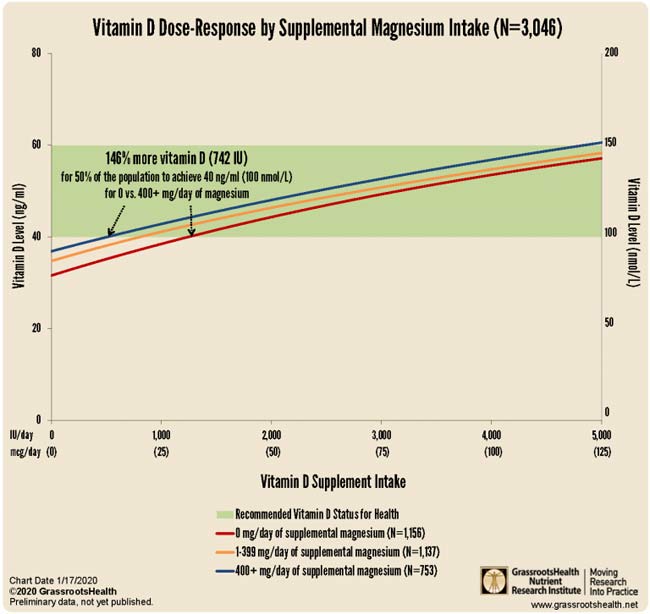
The interplay between magnesium and vitamin D isn’t a one-way street, though. It goes both ways. Interestingly, while vitamin D improves magnesium absorption,18 taking large doses of vitamin D can also deplete magnesium.19 Again, the reason for that is because magnesium is required in the conversion of vitamin D into its active form.
Magnesium + Vitamin K Lowers Vitamin D Requirement Even More
Magnesium isn’t the only nutrient that can have a significant impact on your vitamin D status. GrassrootsHealth data further reveal you can lower your oral vitamin D requirement by a whopping 244% simply by adding magnesium and vitamin K2. As reported by GrassrootsHealth:20
“… 244% more supplemental vitamin D was needed for 50% of the population to achieve 40 ng/ml (100 nmol/L) for those not taking supplemental magnesium or vitamin K2 compared to those who usually took both supplemental magnesium and vitamin K2.”
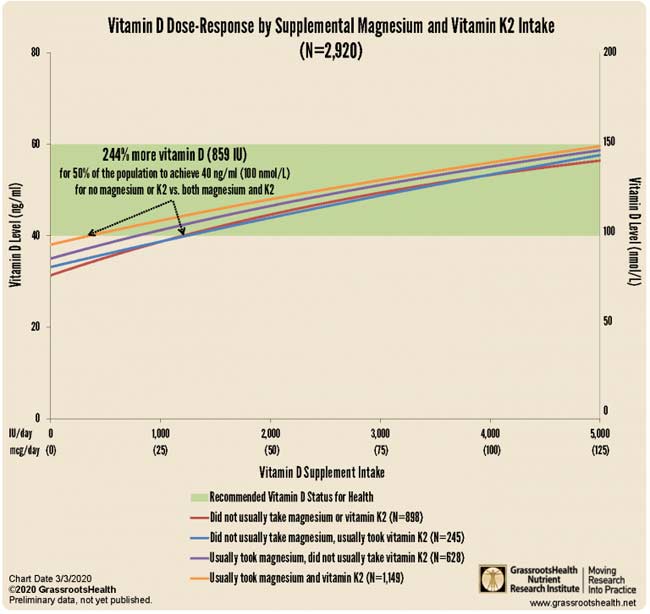
How to Boost Your Magnesium Level
The recommended daily allowance for magnesium is around 310 mg to 420 mg per day depending on your age and sex,21 but many experts believe you may need anywhere from 600 mg to 900 mg per day.22
Personally, I believe many may benefit from amounts as high as 1 to 2 grams (1,000 to 2,000 mg) of elemental magnesium per day, as most of us have EMF exposures that simply cannot be mitigated, and the extra magnesium may help lower the damage from that exposure.
My personal recommendation is that unless you have kidney disease and are on dialysis, continually increase your magnesium dose until you have loose stools and then cut it back. You want the highest dose you can tolerate and still have normal bowel movements.
When it comes to oral supplementation, my personal preference is magnesium threonate, as it appears to be the most efficient at penetrating cell membranes, including your mitochondria and blood-brain barrier. But I am also fond of magnesium malate, magnesium citrate, and ionic magnesium from molecular hydrogen as each tablet has 80 mg of elemental magnesium.
Eat More Magnesium-Rich Foods
Last but not least, while you may still need magnesium supplementation (due to denatured soils), it would certainly be wise to try to get as much magnesium from your diet as possible. Dark-green leafy vegetables lead the pack when it comes to magnesium content, and juicing your greens is an excellent way to boost your intake. Foods with high magnesium levels include:23
| Avocados | Swiss chard |
| Turnip greens | Beet greens |
| Herbs and spices such as coriander, chives, cumin seed, parsley, mustard seeds, fennel, basil and cloves | Broccoli |
| Brussel sprouts | Organic, raw grass fed yogurt and natto |
| Bok Choy | Romaine lettuce |
- 1, 5 Current Developments in Nutrition June 2019; 3(Issue Supplement 1): nzz052.FS05-03-19
- 2 Live Science February 26, 2018
- 3 Medicalxpress.com February 27, 2018
- 4 News-Medical.net February 26, 2018
- 6 drperlmutter.com, Magnesium and Your Brain
- 7 Neuron January 27, 2010; 65(2): 165-177
- 8, 11, 12 The Washington Post July 1, 2020
- 9 Journal of Neurology, Neurosurgery & Psychiatry 2020; 91(6)
- 10 The New England Journal of Medicine June 12, 2020 DOI: 10.1056/NEJMc2019373
- 13 BMC Medicine August 2013; 11(1): 187
- 14 Journal of the American Osteopathic Association March 2018; 118: 181-189
- 15 Science Daily February 2018
- 16 BMC Medicine 2013; 11: 187
- 17 GrassrootsHealth Is Supplemental Magnesium Important for Vitamin D Levels?
- 18 Magnesium Research March 1995; 8(1): 19-26
- 19 American Journal of Therapeutics Jan/Feb 2019; 26(1): e124-e132
- 20 GrassrootsHealth Magnesium and Vitamin K2 Combined Important for Vitamin D Levels
- 21 National Institutes of Health, Magnesium
- 22 Open Heart 2018:e000668 (PDF)
- 23 USDA National Nutrient Database for Standard Reference Release 28, November 10, 2015