Nutrition
now browsing by category
“Let food be thy medicine, and medicine be thy food” ~ Hippocrates.
Doctors should be taught this in medical school, as well as “First, do no harm”.
Fingernails Tell a Story
Written by Brenton Wight, Health Researcher, LeanMachine
Copyright © 1999-[y] Brenton Wight, LeanMachine
Updated 13th July 2020, Copyright © 1999-[y] Brenton Wight and BJ & HJ Wight trading as Lean Machine
We can tell much about a person’s health by examining the fingernails, which can show defects in nutrition or changes in health over recent weeks or months.
Nail abnormalities may involve shape, texture, colour, thickness, brittleness and more.
This article mainly discusses ridges – vertical and horizontal.
Other issues with fingernails are briefly discussed in this document. The same information usually also applies to toenails, but fingernails are more easily observed.
Anatomy of a Nail
Fingernails and toenails have the same anatomy. The nail itself is called the nail plate, normally bound tightly to the nail bed under the plate.
Because the nail is partly transparent, the colour of blood in vessels in the bed show through as a light pink.
The Lunula is the white half-moon shape at the base of the nail marks the start of the nail matrix begins, which is where the nail growth occurs.
Loose Nails (Onycholysis)
There are generally only two causes for loose nails: Infection or Trauma.
Toenails are more susceptible to trauma if we trip on something, or if something falls on the foot, causing damage to the nail matrix and separation of the nail.
Sometimes nail trauma causes excess bleeding under the nail, exerting pressure to loosen the nail, sometimes resulting in total nail loss.
The Distal Phalanx (bone at the fingertip or toetip) is very close to the nail and the trauma may cause a bone fracture.
Running, endurance sport, hiking or other “repeated trauma” can cause a subungual hematoma, leading to loosening of the nail, typically on the big toe,
sometimes called “black toenail” where built-up blood causes a red, purple, or black colour. Sometimes continual pressure from a shoe will loosen the nail with no bleeding.
Seek medical assistance for heavy nail trauma, especially with bleeding under the nail.
Fungal infections (Onychomycosis) are more common in toenails, but any nail can be affected, especially where the nails have continued water exposure.
Onychomycosis grows slowly, and can cause loosening, thickening, discolouration, and debris under the nail.
Loosening normally occurs on part of the nail, shown by a whitish colour where it has separated from the bed.
Some infections, fungal and bacterial, cause a dark brown or greenish colour and/or nail loosening.
Bacterial infections generally progress faster and are more severe than fungal infections.
Always seek medical assistance to reduce risk of complications of a bacterial infection.
Other reasons for loosening of a nail include Psoriasis, Photosensitizing reaction to medication, Hyperthyroidism, Anemia, or an allergic reaction to manicure or pedicure treatments.
Generally, loose nails will re-grow successfully over several months, but if the matrix is damaged, the new nail may be thicker or bumpy.
Always best to get medical advice to prevent further injury, damage or infection.
Treatment may be debriding (cutting away loose nail parts), and sometimes anti-fungal medications.
Vertical Ridges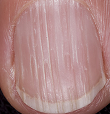 Many parallel lines running vertically from the cuticle to the tip. |
Horizontal Ridges Usually one or more horizontal lines running across the nail. Many ridges can be buffed away, but will reoccur unless we note their warning and take appropriate action! |
Some reasons why we get ridges:
- Poor thyroid function, poor hydration or ageing
- Malnutrition, especially deficiencies in proteins, essential oils, minerals, vitamins, Zinc deficiency, Iron deficiency, Anaemia
- Poor absorption of nutrients (Celiac Disease, Grains or Dairy foods, or low stomach acid)
- Inflammatory arthritis or Rheumatoid arthritis
- Poor liver function, liver disease, kidney disease, peripheral vascular disease, lung or heart disease
- Fungal infections (Lichen planus)
- Smoking (depletes zinc in the body)
- Over-zealous attention to the cuticles, excess alcohol, stress, lack of sleep, lack of exercise
- Fever, illness, Eczema or Psoriasis
- Lupus or Alopecia areata (autoimmune diseases)
- Arsenic or Silver poisoning
- Raynaud’s disease, Yellow nail syndrome, Darier disease, Langerhans cell Histiocytosis, Graft-versus-host disease
- Periungual warts pressing on the nail
- Sickle cell anaemia patients on hydroxyurea treatment
- Antacids or medication such as Nexium and other PPI’s (Proton Pump Inhibitors), which kill stomach acid, preventing absorption of nutrients
- Trauma to the nail
Fingernail Structure
Nails are comprised of tough laminated layers of keratin (a protein). Most of the nail plate is actually dead keratin, the living component being the growing section under the cuticle.
The structure of nails closely resembles claws and horns of other animal species.
Keratin itself is comprised of calcium, magnesium, collagen, boron, iron, water and many other components, which must all come from the diet.
Toxin Absorption
The water component of nails is around 10% of the nail structure, making the nail very permeable, so toxins are absorbed into the body faster through the nails than through the skin.
Obviously, it is essential to avoid cosmetic treatment of nails. Most nail polishes have harmful chemicals, and under current laws, manufacturers have no legal requirement to disclose these toxins!
Selecting well-known brands of cosmetics is no guarantee of safety.
The practice of painting nails goes back at least 3000 years, but in past times there were none of the toxic chemicals we have now, and natural colours such as beetroot were used.
Growth Rate
The nails grow at around 3mm per month, with the longest fingers (the middle) producing the fastest growth, and the shortest (thumbs) the slowest.
Because of better circulation, nails of the dominant hand will grow faster than the other hand.
Nail growth speed is also dependent on age, overall health, climate, adequate sleep, diet, and many other factors.
We need to pay attention to the growing part of the nail which is not visible, existing below the cuticle line and underneath the nail surface.
We can increase circulation in hands by keeping them warm (gloved in cold climate), regular hand massage, typing, playing musical instruments, or other activities involving hands.
When the problems are rectified, changes will not happen overnight, as it will take months for visible improvement when new nails completely cover the nail plate.
Dietary Essentials
Healthy nails require essential fatty acids, oils, vitamins, minerals and protein in the diet.
Oily fish (small, cold saltwater fish best)
Cold-pressed virgin Coconut or Olive Oil (NEVER Canola, Sunflower, Safflower or Corn Oil)
Walnuts, Avocados, nuts
Red meat, chicken breast (never processed meats)
Sunflower Seeds (much healthier than processed sunflower oil)
Supplements which can help:
Biotin (most essential for skin, hair and nails)
B-complex vitamins, plus additional Active B12
Vitamin C (essential for immunity and collagen production)
Vitamins A, D3, and E
Silica
Zinc
Chelated Iron (only if blood test reveals deficiency)
Fish oil or Krill oil
Boron
Vitamin K2 MK7
Treatment applied direct to the nail:
Vitamin E creams are available, but breaking open a Vitamin E capsule is just as effective
Jojoba oil is similar to human sebum, the oily substance produced in the skin to keep it hydrated and healthy.
The body assumes that Jojoba oil is the natural sebum, helping to restore the moisture level of nails, hair and skin.
Massage the oil or Vitamin E into the cuticle and base area of the nail – this is where the new nail is growing.
Vegetarians and vegans
Individual medical advice is recommended for all vegans, as deficiency in B-group and especially B-12 is common.
Vegetarians are also at risk of B12 deficiency unless there is a regular intake of eggs and/or fish.
Vegetarians and vegans may have anaemic conditions due to iron deficiency (blood test required).
Iron supplementation should never begin without a ferritin study to ascertain the iron stores in the body.
Low iron is a problem, but high iron is deadly, so we need just the right amount, and a ferritin study is the only way to tell.
Natural iron intake can be increased with iron-rich foods like brewer’s yeast, blackstrap molasses, wheatgerm, egg yolks and whole grain cereals (but LeanMachine does not recommend cereals or grains in any shape or form).
Eggs contain nearly 1 mg of iron, but also contain other components which restrict iron absorption.
Iron supplements are not recommended by LeanMachine unless Chelated Iron is used, as the regular Ferrous Sulfate supplements usually cause stomach upsets, pain, constipation, and increase risk of cardiovascular damage.
Iron comes in two forms in food: Heme iron (iron attached to heme proteins, from meat, poultry, fish) and non-heme iron (not attached to heme proteins, from plant foods).
Heme iron is better absorbed than non-heme iron, but can cause more cardiovascular damage.
If taken with Vitamin C, absorption is increased 3 to 6 times, but many other factors affect absorption.
To increase iron absorption even more, Lactoferrin has 300 times the ability of transferrin to bind iron, promote healthy bacteria, and strengthen the immune system.
When the body needs iron, it will absorb more, when there is plenty, it will absorb less.
For more information on iron, see my Ferritin article.
Vertical Ridges – the most common condition
These ridges are not unusual, and tend to become more prominent with age, especially with inadequate nutrition and dehydration.
Doctors do not generally associate vertical ridges with any serious disease, but they can be a cause for concern, especially when paired with colour changes in the nail.
Heavy ridge lines may be caused by:
Iron deficiency, or Inflammatory arthritis, or Lupus (with red lines at the base of the nails).
Sometimes caused by a deficiency in vitamin A, and B Complex vitamins.
More attention should be paid to the diet and supplements, as no-one wants a hastening of old age symptoms and associated illnesses.
Treatment of Vertical Ridges
Hydrate – drink plenty of water.
Alkalise – eat more green leafy vegetables and lemons.
Take Biotin and Active B12 supplements – essential for strong, healthy nails, hair and skin.
Take Vitamin C – essential for collagen production in the body as well as immune function and many other benefits. Smokers especially have low vitamin C and low collagen (which is why their skin is usually wrinkly). All smokers reading this: QUIT NOW!
Take vitamins A and B Complex.
Take Vitamin E supplements – approx 1000IU daily taken orally.
Take another vitamin E capsule, break open and massage the oil into the base of each nail. Jojoba oil can also be used.
Low-cost Vitamin E should be fine for external use, but for internal use, Vitamin E with all 8 alpha, beta, gamma and delta tocopherols and tocotrienols is a complete and natural vitamin E.
Increase consumption of foods rich in omega-3 fatty acids such as fish, walnuts, avocados, or supplement with fish oil or Krill oil.
Eating gelatin may also improve the nails.
Iron supplementation may help, but ONLY after a blood test determines iron deficiency.
Too much iron is very damaging to health. Read more in my Ferritin and Iron article.
Horizontal ridges or Beau’s lines (sometimes called “Beauty Lines”)
Horizontal ridges extend from one side of the nail to the other side horizontally.
Sometimes deeply grooved, often a corrugated appearance.
They are more serious than vertical, and may indicate illness or nutritional problems, chemotherapy agents, uncontrolled diabetes, peripheral vascular disease, metabolism disorders,
high fever (e.g. scarlet fever, pneumonia, measles, mumps), zinc deficiency or changes in diet causing halts or changes in nail growth.
Rounds of heavy chemotherapy are often quite visible as the nail stops growing during this period. Chemotherapy drugs which can cause fingernail problems:
- Taxanes (Taxol, Taxotere, Docetaxel)
- Doxorubicin (Adriamycin)
- 5-fluorouracil (5Fu)
- Bleomycin
There may not always be a health problem, but medical advice should always be sought to rule out anything sinister.
The doctor should start with blood tests and looking at nutrition issues.
If only one nail is affected, it may be simply from trauma (physical damage).
Mee’s Lines – horizontal whitish/discoloured lines, often a third to half the way up from the base.
Caused by Arsenic poisoning, Carbon monoxide poisoning, Hodgkin’s disease, Malaria, Leprosy, or other systemic problems.
Ageing
As we age, we lose natural moisture in our skin and nails. Brittle nails or vertical ridges are often the first signs of age-related dehydration.
Discoloured nails
Healthy fingernails should be pink with a touch of pinkish white (moons) near the base. Nails of dull colour or streaked with other colours, may indicate a possible serious health issue.
Green nails
Often indicates a bacterial infection. Seek medical advice.
Red Streaks
Red streaks in the nail bed may indicate a heart valve infection or problem. Seek medical advice.
Dark Streaks
Dark streaks under the nail may indicate melanoma, a deadly form of skin cancer. Seek medical advice.
Blue or Purple Nails
Signals low blood oxygen levels. Often caused by lung infections, pulmonary problems or cardiovascular disease.
Can also be a sign of silver poisoning, sometimes as a eresult of excessive consumption of colloidal silver medication. Seek medical advice.
Dull nails
Usually indicates a vitamin deficiency. Seek nutritional advice.
White or Pale Nails
Pale or white nails may indicate anaemia, congestive heart disease, liver disease (such as hepatitis) or malnutrition. Hepatitis or other liver disease often causes extremely white nails.
Injury can cause lifting of the nail from the bed, or reduced blood flow to the finger or toe. Either can cause white appearance.
White nails can also be caused by infection or psoriasis. Always seek medical advice.
Dark stripes at the top (also known as Terry’s nails)
White nails, often with a dark line, sometimes curved, at the tip.
May mean liver disease, congestive heart failure, diabetes, hyperthyroidism or malnutrition.
Generally worsens with age, and some elderly people have this condition with no other apparent symptoms.
Thick nails
Normal nails are not supposed to be thick.
Unusually thick nails that are otherwise normal may indicate lung disease or a circulation problem. Seek medical advice.
Nails which thicken very quickly may be the result of an allergic reaction to recently prescribed medication or change in the diet or other health problems. Seek medical advice.
Thick nails combined with a rough texture may mean a fungal infection, especially if there is any evidence of yellow colour. Seek medical advice.
Thick nails with separation can indicate Thyroid disease or Psoriasis. Seek medical advice.
Thin Nails
See “Vitamin B12 deficiency” and “Concave Nails with Thinning”
Nail Separation
If the nail separates (loosens) from the nail bed, the cause may be Thyroid disease, Hyperthyroidism, Psoriasis, some medications, nail hardeners, adhesives, injury or infection.
Cracked, Flaking or Split Nails
Nails which can flake away in layers may mean a deficiency in
Active Folate, Vitamin C, or Protein.
Split nails combined with pitting of the nail bed may indicate Psoriasis.
About 10% of Poriasis patients have split and/or pitting nails, often showing as the first symptom.
Split nails may be the result of chronic malnutrition, poor digestion (unable to absorb nutrients from food), fungal infection or thyroid disease. Seek medical advice.
Concave Nails (Spooned Nails or koilonychia)
Concave fingernails are usually soft and curve up, forming a dip, and may also be thin and brittle.
May indicate iron-deficiency anaemia, and medical advice should be sought.
Chelated Iron supplements should never be taken without a prior blood test to determine if there is a real iron deficiency.
A simple blood test for iron is not enough, a complete ferritin/iron study is best, as there are many causes of iron problems. Ferritin is the protein that transports iron through the body.
See LeanMachine’s article on Ferritin and Iron.
May also indicate Heart disease, Hypothyroidism, or Hemachromatosis (too much iron accumulated due to an inherited liver disorder).
Medical advice should always be sought, as too little and too much iron are both serious problems.
Concave Nails with Thinning
Often appears in healthy infants, disappearing as the child grows.
May also be due to an inherited genetic condition nail-patella syndrome which results in small, poorly developed nails and kneecaps, often also affecting elbows and other areas of the body.
Also known as Iliac Horn syndrome, Hood syndrome, Hereditary Onychoosteodysplasia, Fong disease, Turner-Kieser syndrome.
May also be caused by type 1 or 2 Diabetes.
Pitted Nails
Small holes or dips can be simply a result of injury to the nails, but can also signal:
Psoriasis, Connective tissue disorder, Alopecia Areata (autoimmune disease typically causing temporary hair loss), malnutrition, lung or respiratory disease.
Zinc deficiency may be indicated, especially if the pit seems to form a line across the middle of the nail.
Medical advice should be sought.
Pitted Nails with white blotches and/or a pitted line across the centre
Zinc deficiency.
Zinc supplements are inexpensive and readily available.
Pits cased by physical damage to nails clears up quickly, but pits linked to disease last longer.
Brittle Nails
Brittle nails can be caused by Kidney disease, Hypothyroidism, Iron deficiency anaemia, or Ageing.
Seek medical advice.
Ridge lines associated with with dry, brittle nails
Hormone problems, Bacterial infection or Thyroid disease. Medical advice should be sought.
Carotenosis
Yellow or orange nails with accompanying yellow or orange toning of the skin may indicate Carotenosis, or too much Carotene in the diet.
Caused by eating too many carrots or pumpkin (or other red, yellow, orange or green fruits and vegetables), or taking too many multivitamins.
In some cases, the inability to flush excess carotenes from the body causes a buildup.
Fair-skinned people are affected by this colour staining the most.
Carotenes are essential for health, but too much can be toxic, especially when Vitamin D3 levels are low. When the problem is rectified, the staining will gradually disappear as the carotenes are slowly converted to retinal, a form of Vitamin A.
Note:
Not to be confused with yellowing caused by liver problems leading to jaundice, where the skin and also the whites of the eyes turn yellow, also fungal infections that turn nails yellow.
Medical advice should be sought immediately in this case.
Dry or Crumbly Nails
Thyroid problems can cause brittle, dry fingernails which may easily crack or split.
Fungal infections can cause dry or even crumbly nails, said to affect a tenth of the population, more so as we age.
Medical advice should be sought. Lotions or cuticle oils are probably not going to help.
Thyroid and fungal issues take time to heal, so the benefits will not be apparent for a full growth cycle (several months).
Clubbed Nails
Symptoms are plump skin that seems to swollen or puffed around the nail behind the tips of toes or fingers.
The tips of fingers or toes may become enlarged, and the nail may curve downward around the tip and may also seem to “float” in the nail bed.
Sometimes the cause is unknown, and can be inherited, but medical advice should be sought.
More common in toes, but clubbed fingers are also common.
May be a sign of lung disease, lung cancer, heart or lung conditions, chronic lung infections, endocarditis (infection of the lining of the heart chambers and/or valves),
Inflammatory Bowel Disease, Liver disease or AIDS.
Red lines at the nail base
May indicate Lupus (an autoimmune disease). Seek medical advice.
Yellow Nails
May indicate bronchitis or some other lung or respiratory problem.
May also indicate a Fungal infection, especially if the nails are also thick and crumbling.
Other but rare causes of yellow nails include Thyroid disease, Diabetes or Psoriasis.
See also the “Carotenosis” section.
Nails with spots, streaks or cracks
Chronic renal (kidney) disease, or Leukonychia, causes white streaks and spots, sometimes also cracks. Seek medical advice.
Half and Half Nails (Lindsay’s Nails)
If the bottom half (proximal) of the nail is white and the top half (distal) pink or brown, it may indicate kidney disease or kidney failure.
A buildup of nitrogen waste products in the body causes swelling of the nail bed, turning that section white. Seek medical advice NOW.
Splinter Haemorrhage
Tiny blood clots under the nails, often appearing as small vertical red lines and looking like a splinter, may indicate Rheumatoid arthritis, Peptic ulcers, Malignancies, Bacterial endocarditis, Psoriasis or damage to the nail.
Pregnancy or oral contraceptives can also cause this condition.
Hormones
Many hormones can upset normal growth and appearance of nails, especially the Pituitary and Thyroid hormones. Seek medical advice.
Black Nails – Vitamin B12 deficiency causing Nail Hyperpigmentation
Hyperpigmentation of nails, usually brown or black, is usually caused by vitamin B12 deficiency as a result of pernicious anaemia (an autoimmune disease).
Caused by the substance IF (Intrinsic Factor, also GIF – Gastric Intrinsic Factor) missing from the body.
The elderly generally suffer from low IF and subsequent low B12 levels.
IF is essential for the body to absorb Vitamin B12.
Bariatric surgery patients have a high risk factor for developing pernicious anaemia.
If B12 malabsorption is treated, allowing B12 levels to rise, the fingernail hyperpigmentation should eventually return to normal.
Hyperpigmentation is also caused by drugs such as Indinavir, a HIV protease inhibitor used to treat HIV infections (also causes hyperpigmentation of hair and skin as well).
An alkylating agent called Cyclophosphamide is also known to cause nail hyperpigmentation in some cases, sometimes extending to folds of skin between the fingers and/or thumbs.
Diabetics on Metformin (Diabex) medication also have trouble absorbing Vitamin B12.
Notes on Vitamin B12 deficiency
Vitamin B12 is essential for protein and DNA synthesis.
B12 is also the only water soluble vitamin that the body can store, by binding to protein.
If we have enough B12, it can last a long time, but dietary or nutritional problems may mean we do not consume enough B12, or cannot absorb enough B12, particularly vegetarians and especially vegans.
Apart from mushrooms, only animal foods contain B12, so vegans or vegetarians often need supplementation.
B12 supplies the methyl groups we need to synthesise protein, which is the main component of the keratin in fingernails.
Low vitamin B12 levels mean low keratin production and poor nails, typically brittle.
B12 supplements can help. Babies to 6 months old need about 0.4 mcg of vitamin B12 daily.
Infants 6 to 12 months need about 0.5 mcg, children between 1 and 3 years need 0.9 mcg, between 4 and 13, 1.8 mcg, 14 to adults need 2.4 mcg, pregnant females need 2.6 mcg and breastfeeding women need 2.8 mcg per day.
Note that these amounts are bare minimums to avoid deficiency. LeanMachine recommends much more, and supplements daily on 1500mcg of B12 every day, and this is our recommended dose for seniors, vegans, anaemia sufferers or for anyone with a B12 deficiency.
B12 Testing:
Blood tests for B12 are readily available, however low levels of Folate and/or Vitamin B1 may mask a B12 deficiency. Always test Folate at the same time as B12. A deficiency of one can mask a deficiency of the other.
B12 Overdose:
Generally non-toxic in very large doses, but too much may cause tingling or numbing sensations in fingers and/or toes.
B12 Warnings:
Leber’s disease (an inheredited condition) causes atrophy (shrinkage) of the optic nerve. In these patients, excess Vitamin B12 can cause severe and sudden optic nerve degeneration.
Disclaimer
LeanMachine is a researcher, not a doctor, and everyone should consult with their own health professional before taking any product to ensure there is no conflict with existing prescription medication.
LeanMachine has been studying nutrition and health since 2010 and has completed many relevant studies including:
- Open2Study, Australia – Food, Nutrition and Your Health
- RMIT University, Australia – Foundations of Psychology
- Swinburne University of Technology, Australia – Chemistry – Building Blocks of the World
- University of Washington, USA – Energy, Diet and Weight
- Johns Hopkins Bloomberg School of Public Health, USA – Health Issues for Aging Populations
- Johns Hopkins Bloomberg School of Public Health, USA – International Nutrition
- Johns Hopkins Bloomberg School of Public Health, USA – Methods in Biostatistics I & II
- Johns Hopkins Bloomberg School of Public Health, USA – Principles of Human Nutrition
- TUFTS University, USA – Nutrition and Medicine
- TUFTS University, USA – Lipids/Cardiovascular Disease 1
& II - Technical Learning College, USA – Western Herbology, Identification, Formulas
- Bath University, England – Inside Cancer
- WebMD Education – The Link Between Stroke and Atrial Fibrillation
- WebMD Education – High Potassium: Causes and Reasons to Treat
- Leiden University Medical Center, Netherlands – Anatomy of the Abdomen and Pelvis
- MIT (Massachusetts Institute of Technology) – A Clinical Approach to the Human Brain
- LeanMachine has now examined thousands of studies, journals and reports related to health and nutrition and this research is ongoing
Disclaimer: Any information here is for educational purposes, and the needs of each individual varies, so everyone should consult with their own health professional before taking any product to ensure that there is no conflict with existing prescription medication.
LeanMachine has been researching nutrition and health since 2010, and has now examined thousands of studies, journals and reports related to health and nutrition and this research is ongoing.
Copyright © 1999-[y] Brenton Wight and BJ & HJ Wight trading as Lean Machine abn 55293601285
Curcumin Inhibits Virus-Induced Cytokine Storm
Reproduced from original article:
https://articles.mercola.com/sites/articles/archive/2020/07/06/curcumin-cytokine-storm.aspx
Analysis by Dr. Joseph Mercola Fact Checked
July 06, 2020

STORY AT-A-GLANCE
- Curcumin inhibits COVID-19 main protease, a potential drug target
- Curcumin also has an inhibitory effect on virus-induced cytokine storms, which occur as a result of an overproduction of immune cells and pro-inflammatory cytokines, and modulates immune responses, meaning it can both upregulate and downregulate immune responses as needed
- According to a scientific review, curcumin can be used as a therapeutic agent against pneumonia, acute lung injury and acute respiratory distress syndrome resulting from coronavirus infection
- Curcumin also has direct antiviral activity against many viruses, including SARS-CoV (the coronavirus responsible for SARS)
- Other beneficial effects that suggest curcumin may be suitable in the treatment of COVID-19 include alleviating exudation and edema, attenuating lung injury, reducing airway inflammation, inhibiting proliferation of bronchial epithelial cells, improving pneumonia, alleviating fibrosis and improving lung index
Curcumin, the active ingredient in the spice turmeric, has a solid foundation in science with numerous studies vouching for its anti-inflammatory effects.1 As noted in a 2017 review in the journal Foods:2
“[Curcumin] aids in the management of oxidative and inflammatory conditions, metabolic syndrome, arthritis, anxiety, and hyperlipidemia … Most of these benefits can be attributed to its antioxidant and anti-inflammatory effects.”
Along with several other supplements, curcumin has also been identified as having particular benefit against COVID-19.
According to the paper,3 “Potential Inhibitor of COVID-19 Main Protease (Mpro) From Several Medicinal Plant Compounds by Molecular Docking Study,” posted March 13, 2020, on preprints.org, curcumin and demethoxycurcumin were two compounds among several that were found to inhibit COVID-19 Mpro.
As noted in “Designing of Improved Drugs for COVID-19,”4 COVID-19 Mpro is a potential drug target because “the crystal structure of Mpro provides a basis for designing of a potent inhibitor to the protease with a marked tropism to the lung.”
Studies have also shown curcumin has an inhibitory effect on virus-induced cytokine storms, which occur as a result of an overproduction of immune cells and pro-inflammatory cytokines. This too suggests it may be of particular use against COVID-19, considering the cytokine storm triggered in severe and critical COVID-19 infection is what ends up killing these patients.
Curcumin Is a Potential Therapeutic Against COVID-19
Most recently, a scientific review5 in Frontiers in Cell and Developmental Biology, published June 12, 2020, reports curcumin might be useful in cases of severe viral pneumonia such as COVID-19. According to the authors:
“Coronavirus infection, including SARS-CoV, MERS-CoV, and SARS-CoV2, causes daunting diseases that can be fatal because of lung failure and systemic cytokine storm.
The development of coronavirus-evoked pneumonia is associated with excessive inflammatory responses in the lung, known as ‘cytokine storms,’ which results in pulmonary edema, atelectasis, and acute lung injury (ALI) or fatal acute respiratory distress syndrome (ARDS).
No drugs are available to suppress overly immune response-mediated lung injury effectively. In light of the low toxicity and its antioxidant, anti-inflammatory, and antiviral activity, it is plausible to speculate that curcumin could be used as a therapeutic drug for viral pneumonia and ALI/ARDS.
Therefore, in this review, we summarize the mounting evidence obtained from preclinical studies using animal models of lethal pneumonia where curcumin exerts protective effects by regulating the expression of both pro- and anti-inflammatory factors … promoting the apoptosis of PMN cells, and scavenging the reactive oxygen species (ROS), which exacerbates the inflammatory response.
These studies provide a rationale that curcumin can be used as a therapeutic agent against pneumonia and ALI/ARDS in humans resulting from coronaviral infection.”
Curcumin Inhibits Cytokine Storm
As discussed in that Frontiers in Cell and Developmental Biology review,6 curcumin has a long history of medicinal use, without overt side effects. Studies have demonstrated it has potent antioxidant, anti-inflammatory, anticancer and antidiabetic activity, and clinical trials have shown efficacy in the treatment of cardiovascular diseases, metabolic syndrome, Type 2 diabetes and infectious diseases — especially viral infections.
One important mechanism behind curcumin’s beneficial effects is its ability to modulate immune responses, meaning it can both upregulate and downregulate immune responses as needed. According to the authors, at least four studies, published between 2018 and 2020, suggest curcumin inhibits virus-induced cytokine storms. These include:
- A 2018 study7 in the International Immunopharmacology journal, which showed curcumin inhibits influenza A virus replication and influenza-induced pneumonia. It also activates the Nrf2 signaling pathway, inhibits oxidative stress and improves influenza-induced ALI in vivo.
- A 2018 study8 in the Journal of Food and Drug Analysis, which found curcumin effectively inhibits influenza A infection.
- A 2019 study9 in Frontiers in Microbiology, which highlighted curcumin’s antiviral activity against the influenza virus, hepatitis C virus and HIV.
- A 2020 study10 in the International Journal of Molecular Sciences that reported curcumin has the ability to block herpes simplex virus Type 2 (HSV-2) infection and inhibit production of inflammatory cytokines and chemokines in vitro.

Curcumin’s Mechanisms of Action
As for how curcumin inhibits the cytokine storm and modulates immune function, the Frontiers in Cell and Developmental Biology review explains:11
“There is clear evidence from coronavirus infected patients with both high cytokine levels and pathological changes in the lung. For example, in plasma of COVID-19 patients, high concentrations of IL-2, IL-6, and IL-7 have been observed.
In particular, IL-6 was significantly elevated in critically ill patients with ARDS compared to patients without ARDS and was statistically significantly correlated with death …
Numerous in vivo and in vitro studies have been shown that curcumin and its analogs markedly inhibit the production and release of pro-inflammatory cytokines, such as IL-1, IL-6, IL-8, TNF-α …
Curcumin also decreases expression of many other inflammatory mediators … which regulate the activity of immune cells and inflammatory responses and promote fibrosis in the lung after infection.
The mechanism underlying curcumin modulation of inflammation has been extensively investigated and engages diverse signaling pathways, among which NF-κB plays an essential role. It was reported that curcumin effectively regulates NF-κB signaling through multiple mechanisms (Figure 2):
First, curcumin inhibits activation of IKKβ … Second, curcumin enhances the expression or stability of IκBα … Third, curcumin activates AMPK. It has been documented that curcumin blocks NF-κB signaling upon infection with Influenza A virus (IAV) as a consequence of AMPK activation. Fourth, curcumin acts on p65 to disturb the NF-κB pathway.
Infection with IAV led to a decrease of p65 in the cytosol of macrophages and a corresponding increase in the nucleus, where it forms a functional complex with NF-κB, ultimately upregulating transcription of pro-inflammatory cytokines. In contrast, the use of curcumin blocks the nuclear translocation of NF-κB and p65, downregulating transcription of the cytokine genes …
In contrast to its negative effect on pro-inflammatory molecules, curcumin has been shown to regulate anti-inflammatory cytokines positively, in particular IL-10. The latter is an essential negative regulator for inflammatory responses …
IL-10 acts on inflammatory monocytes to reduce the release of TNF-α, IL-6, and ROS, thereby alleviating tissue damage caused by the continuous inflammatory response … Curcumin noticeably attenuates lung injury by inducing the differentiation of regulatory T cells (Tregs) and upregulating IL-10 production.”
Figure 2.

Curcumin Has Antiviral Activity
Curcumin also has direct antiviral activity — including against SARS-CoV (the coronavirus responsible for SARS), as demonstrated in a 2007 study.12 Several studies have elaborated on its antiviral mechanisms, which Frontiers in Cell and Developmental Biology lists as:13
- Directly targeting viral proteins
- Inhibiting particle production and gene expression
- Blocking viral attachment to cells (possibly by disrupting the fluidity of the viral envelope)
- Blocking viral entry into the cell
- Blocking viral replication
Curcumin binds strongly to hemagglutinin (HA), a glycoprotein that allows the influenza virus to attach to the cell. Research has shown curcumin interacts with HA, thus disturbing the integrity of the viral membrane. This is what blocks viral binding to the host cell and prevents the virus from entering the cell. Curcumin has also been shown to directly inactivate certain strains of influenza virus.
Other Pulmonary Benefits of Curcumin
Other beneficial effects that suggest curcumin may be suitable in the treatment of COVID-19 include:14
| Alleviating exudation of proteins to alveoli spaces | Alleviating lung edema triggered by inflammation |
| Attenuating lung injury | Reducing the degree of airway inflammation |
| Disrupting airway remodeling by inhibiting the proliferation of bronchial epithelial cells | Improving pneumonia and preventing development of severe pneumonia |
| Alleviating ALI-induced pulmonary fibrosis | Improving lung index |
According to the Frontiers in Cell and Developmental Biology review,15 the available research “suggest that curcumin administration could have both prophylactic and therapeutic effects on virus-induced pneumonia and mortality.” Furthermore, while human trials on curcumin for coronaviruses are still lacking:
“… in light of and its preventative and therapeutic role in viral infection and cytokine storms common to all viral infections, curcumin could conceivably be considered as an attractive agent for the management of coronavirus infections.”
Research published in 2015 further supports the conclusions in the Cell and Developmental Biology review. That study,16 “Curcumin Suppression of Cytokine Release and Cytokine Storm,” found curcumin could be a potential therapy for patients infected with Ebola and other dangerous viruses. According to the authors:17
“The activity of curcumin in suppressing multiple cytokines, and its activity in experimental models of diseases and conditions associated with cytokine storm, suggest it may be useful in the treatment of patients with Ebola and cytokine storm.
Curcumin is poorly absorbed from the intestinal tract; however, intravenous formulations may allow therapeutic blood levels of curcumin to be achieved in patients diagnosed with cytokine storm.”
How to Get the Most Out of Your Curcumin Supplement
If you want to use curcumin, be aware that its poor absorption rate is one of its greatest drawbacks. While IV formulations may solve the problem in clinical settings, that would be rather impractical for home use.
Researchers have investigated a variety of different delivery methods, including oral, intravenous, subcutaneous and intraperitoneal delivery, as well as a variety of formulations, to optimize bioavailability. The following methods were all found to improve the absorption rate of curcumin:18
- When delivered as a nanoparticle
- Combined with polylactic-co-glycolic acid
- Liposomal encapsulation
Since curcumin is fat-soluble, you might be able to further increase absorption by making a microemulsion. To do that, combine 1 tablespoon of curcumin powder with one or two egg yolks and 1 to 2 teaspoons of melted coconut oil, then use a hand blender on high speed to emulsify the powder.
Timing is another important variable. One of the ways curcumin works is to activate AMPK and autophagy. Both of these occur during the fasted state. So, it would best to take curcumin at least three hours after a meal and/or right before you go to bed. This would be similar for another powerful anti-COVID supplement, quercetin, which should also be taken while fasting and preferably with zinc.
- 1 European Journal of Nutrition April 2011; 50(3): 151-161
- 2 Foods 2017 Oct; 6(10): 92
- 3 Preprints March 13, 2020; 2020030226, DOI: 10.20944/preprints202003.0226.v1
- 4 Signal Transduction and Targeted Therapy May 9, 2020; 5 Article number 67
- 5, 6 Frontiers in Cell and Developmental Biology June 12, 2020 DOI: 10.3389/fcell.2020.00479
- 7 International Immunopharmacology January 2018; 54: 177-187
- 8 Journal of Food and Drug Analysis July 2018; 26(3): 1015-1023
- 9 Frontiers in Microbiology 2019; 10: 912
- 10 International Journal of Molecular Sciences January 4, 2020;21(1):337
- 11 Frontiers in Cell and Developmental Biology June 12, 2020 DOI: 10.3389/fcell.2020.00479, Inhibition of the Production of Pro-Inflammatory Cytokine
- 12 Journal of Medicinal Chemistry 2007; 50(17): 4087-4095
- 13 Frontiers in Cell and Developmental Biology June 12, 2020 DOI: 10.3389/fcell.2020.00479, Antiviral Activity of Curcumin
- 14 Curcumin Alleviates Exudation … Suppresses Fibrosis … Potential Role of Curcumin in Prevention and Treatment of Coronavirus
- 15 The Potential Role of Curcumin in the Prevention and Treatment of Coronavirus Infection
- 16 In Vivo Jan/Feb 2015; 29(1): 1-4
- 17 In Vivo Jan/Feb 2015; 29(1): 1-4, Conclusion
- 18 Cancer Research Treatment 2014; 46(1): 2-18
Foods to ALWAYS buy Organic
Written by Brenton Wight, LeanMachine – Health Researcher, updated 3rd July 2020
The latest results from the EWG (Envirinmental Working Group) are now published as the Clean Fifteen Foods, and the Dirty Dozen that we should buy only as Organic:
Dirty Dozen List – always buy as Organic
- Strawberries
- Spinach
- Kale
- Nectarines
- Apples
- Grapes
- Peaches
- Cherries
- Pears
- Tomatoes
- Celery
- Potatoes
The Clean Fifteen foods have the lowest levels of pesticides, even when conventionally grown.
If organic foods are unavailable, select foods from this list to reduce harmful chemical exposure.
Clean Fifteen List – safer foods less likely to be toxic
- Avocados
- Sweet corn
- Pineapple
- Onions
- Papaya
- Sweet peas (frozen)
- Eggplants
- Asparagus
- Cauliflower
- Cantaloupe
- Broccoli
- Mushrooms
- Cabbage
- Honeydew melon
- Kiwi
The EWG uses lab reports and studies that measure pesticides and other chemicals excreted from the urine of people eating particular foods.
Higher intake of organic foods has been shown to improve fertility, birth outcomes, and reduce risk of non-Hodgkin lymphoma and obesity.
The only way to prevent contaminating food crops is to not buy those products unless they are organic.
A few years ago, organic foods were very expensive, but these days, as the demand increases, organic foods are much more affordable, and will be cheaper again as conventional growers go broke when no one buys their products, and the additional volume of organic foods brings the price down yet again.
Copyright © 1999-[y] BJ Wight and LeanMachine abn 55293601285
Daily dose of baking soda may help combat autoimmune disease
Reproduced from original article:
www.naturalhealth365.com/autoimmune-disease-baking-soda-3415.html
by: Lori Alton, staff writer | May 25, 2020
 (NaturalHealth365) According to the National Institutes of Health, over 23 million Americans currently live with some type of autoimmune disease – which can encompass such potentially debilitating conditions as rheumatic arthritis, lupus, irritable bowel disease, type 1 diabetes, psoriasis, multiple sclerosis and Hashimoto’s thyroiditis. Autoimmune diseases – which arise when the immune system mistakenly attacks the body’s own organs, tissues and cells – are notoriously complex and difficult to treat.
But encouraging research shows that a common, familiar household staple – baking soda – can function as a potent weapon against them.
A recent study not only revealed baking soda’s ability to fight autoimmune disease – but showcased its ability to work at the cellular and molecular level. For a lowly cooking ingredient, baking soda seems to have some highly sophisticated and powerful effects!
Can baking soda help those suffering with autoimmune disease?
Baking soda, also known as bicarbonate of soda, has a variety of household and medical uses.
It has long been used as a natural toothpaste, a non-toxic deodorant and a cheap, quick-acting antacid to treat heartburn. In addition, some nephrologists advise small daily doses of baking soda to slow the progression of chronic kidney disease.
After clinical studies affirmed baking soda’s beneficial effects on chronic kidney disease, researchers wondered what other conditions it could improve. And they soon had their answer.
Do NOT ignore the health dangers linked to toxic indoor air. These chemicals – the ‘off-gassing’ of paints, mattresses, carpets and other home/office building materials – increase your risk of headaches, dementia, heart disease and cancer.
Get the BEST indoor air purification system – at the LOWEST price, exclusively for NaturalHealth365 readers. I, personally use this system in my home AND office. Click HERE to order now – before the sale ends.
In a study conducted by scientists at Medical College of Georgia at Augusta University and published in April 2018 in Journal of Immunology, the team found that drinking baking soda in water every day for two weeks helped to reduce the destructive inflammation of autoimmune disorders.
The key to baking soda’s action was the way it affected mesothelial cells on the exterior of the spleen. These specialized immune cells have microvilli that sense the environment and warn when an immune response is needed in order to defend against invading pathogens.
But in autoimmune disorders, this response can be inappropriate, excessive and damaging.
Baking soda helped the cells to convey the message that a protective immune response need not be triggered. In the words of study co-author Dr. Paul O’Connor, the compound helped reassure the immune system that there was no pathogen to be fought. “It’s most likely a hamburger, not a bacterial infection,” explained Dr. O’Connor.
It’s official: Baking soda reduces the inflammatory actions of cells
Bicarbonate of soda also affects the population of immune cells called macrophages, which engulf and destroy pathogens. The scientists found that it shifted the macrophage population to a higher percentage of anti-inflammatory M2 macrophages, while decreasing pro-inflammatory M1 macrophages.
Although the initial research was conducted on rats, the researchers studied healthy human volunteers as well. And these human participants also experienced an anti-inflammatory response from the baking soda.
In addition, the group who took baking soda had more inflammation-regulating T cells, which discourage the immune system from attacking tissue.
The researchers concluded that baking soda was a “cheap, relatively safe, effective and … noninvasive method to activate cholinergic anti-inflammatory pathways, which may be of benefit to patients suffering from a multitude of inflammatory disease states.”
In a separate study published in Proceedings of the National Academy of Sciences, researchers found that baking soda could specifically benefit rheumatoid arthritis – an autoimmune condition. The scientists concluded that baking soda and water helped reduce inflammation and disease severity.
Baking soda’s antiviral effects are currently being studied
Scientists have found that certain pH-dependent viruses – which happen to include some influenza viruses and coronaviruses – are most able to replicate and spread under acid conditions (pH6.0) and are deactivated completely at pH 8.0.
Baking soda raises acidic pH to higher alkaline levels – a fact with exciting implications for possibly slowing the spread of COVID-19 and other viral infections. While clinical studies have yet to be performed, cell and animal studies attest to the effects of alkalinity on viruses.
In fact, baking soda has been used to fight a pandemic in the past. In 1918 and 1919, Dr. Edward R. Hays – a physician with the U.S. Health Department – utilized baking soda against the Spanish flu, claiming that it could lead to a resolution of symptoms within 36 hours.
In addition to antiviral and inflammation-fighting effects, baking soda can improve general health in myriad other ways. According to noted doctor and author Dr. Eddy Bettermann, baking soda increases bicarbonates in the blood – in turn increasing carbon dioxide and helping with oxygenation of body organs.
And Dr. Lynda Frassetto of the University of California notes that baking soda can reduce acidic wastes in the body – which show up as cholesterol, fatty acids, uric acid, phosphate and kidney stones.
How much baking soda should I take?
While the University of Georgia scientists did not reveal the daily amount of baking soda used in the study, many natural health experts recommend half a teaspoon of baking soda dissolved in a cup or two of water a day.
Of course, check with your doctor before using baking soda to treat kidney disease, autoimmune disorders or any other medical condition. It is especially important to seek your physician’s guidance if you have high blood pressure, as baking soda is very high in sodium.
Health warning: To avoid possible gastric rupture, don’t take baking soda when your stomach is excessively full – such as after a huge meal.
While autoimmune disease can be a formidable foe, the simple, old-fashioned remedy of baking soda in water may emerge as a front-line defense against it.
Sources for this article include:
Coconut Water Reduces Body Weight and Blood Sugar
© 24th June 2020 GreenMedInfo LLC. This work is reproduced and distributed with the permission of GreenMedInfo LLC. Want to learn more from GreenMedInfo? Sign up for the newsletter here www.greenmedinfo.com/greenmed/newsletter
Reproduced from original article:
https://greenmedinfo.com/blog/coconut-water-reduces-body-weight-and-blood-sugar
Posted on: Wednesday, June 24th 2020 at 3:45 pm
Written By: GreenMedInfo Research Group
This article is copyrighted by GreenMedInfo LLC, 2020

Fresh coconut water is a staple in many diets around the world, including those of India and other tropical countries. But it goes beyond being a refreshing, thirst-quenching drink. Here’s a rundown of its research-backed benefits, such as decreased blood glucose and body weight for improved health
Coconut water is nature’s gift in one complete package. It’s the liquid found in the center of a young, green coconut, helping nourish the fruit. Its wide range of applications is justified by its unique chemical composition of sugars, vitamins, minerals and amino acids, as well as phytohormones.[i]
The average green coconut offers about one-half to 1 cup of coconut water. One cup contains 46 calories along with 9 grams (g) of carbohydrates, 3 g of fiber, 2 g of protein, 11% of the recommended daily intake (RDI) of sodium and 17% of the RDI of potassium.[ii]
Coconut is known to be an excellent alternative to sports drinks, a natural refreshing beverage that could be used for whole-body rehydration post-exercise.[iii] Nature also filters coconut water through an intensive purification process, eliminating safety issues commonly tied with municipal water systems and even sports beverages comprising synthetic ingredients.
Let’s recap some of the whole-body benefits of consuming fresh coconut water, starting with a 2018 study looking into its effects on body weight and glucose levels.
Slashing Blood Glucose and Excess Pounds Naturally
A group of researchers sought to compare the effects of higher saturated fatty acid and fiber intake, as provided by fresh coconut, and monounsaturated fatty acid (MUFA) and fiber intake via a combination of groundnut oil and groundnuts.[iv] They then measured indicators such as blood insulin and glucose levels, along with blood pressure, in healthy adults.
The researchers divided the 80 healthy subjects they recruited into two randomized groups, consuming a standardized diet along with either 100 g of fresh coconut or an equal amount of groundnuts and groundnut oil for 90 days.
The results showed that fasting blood sugar in both groups was significantly reduced. Yet they also observed a significant reduction in body weight in the coconut group, along with a notable increase in diastolic pressure in the groundnut group.
The researchers noted, “Fresh coconut-added diet helps reduce blood glucose levels and body weight in normal healthy individuals.” This supports previous studies that vouch for the blood-sugar lowering action of the natural drink, offering potential anti-diabetes benefits despite its naturally sweet taste.[v]
Interestingly, while groundnut intake reflected an increase in diastolic pressure, coconut was shown in previous research to push down systolic and diastolic pressures in hypertensive subjects.[vi] Additional animal research shows coconut water prevents and reverses fructose feeding-induced high blood pressure, along with reducing oxidative stress and insulin resistance.[vii]
Coconut water vinegar, too, has been promoted as a food ingredient with potential anti-obesity and anti-inflammatory effects, thanks to alterations in the gut microbiota due to increased populations of Bacteroides and Akkermansia genera bacteria.[viii]
Other Wondrous Health Benefits of Coconut
- Anti-ulcer properties: Both coconut water and coconut milk demonstrate strong anti-ulcer activity against chemicals such as indomethacin, a non-steroidal anti-inflammatory drug (NSAID).[ix]
- Lipid-lowering action: Coconut water has a lipid-modulating effect similar to the drug lovastatin in rats fed a fat- and cholesterol-enriched diet.[x]
- Alzheimer’s disease protection: In a novel study, young coconut juice showed positive future implications in the prevention and treatment of Alzheimer’s disease in menopausal women.[xi]
- Sperm preservation: A coconut water-based extender, ACP-116c, along with 20% egg yolk and 3% glycerol, was effective for the cryopreservation of semen.[xii]
- Antibacterial benefits: Three peptides were purified and identified from green coconut water, exhibiting remarkable antimicrobial action against pathogenic bacteria.[xiii]
- Kidney stone fighter: In a study on rats with kidney stones, coconut water barred crystals from sticking to the kidneys and other parts of the urinary tract. In addition, it slashed the number of crystals formed in the urine.[xiv]
While pure, clear water remains the beverage of choice to stay cool and hydrated, some ice-cold natural coconut water can be a sound option, replacing electrolytes lost from sweating without the added sugar. Its close kin, coconut oil, is equally celebrated for its own set of healing and nourishing benefits.

References
[i] Yong JW et al “The chemical composition and biological properties of coconut (Cocos nucifera L.) water” Molecules. 2009 Dec 9;14(12):5144-64.
[ii] SELF Nutrition Data https://nutritiondata.self.com/facts/nut-and-seed-products/3115/2
[iii] Mohamed S et al “Rehydration after exercise with fresh young coconut water, carbohydrate-electrolyte beverage and plain water” J Physiol Anthropol Appl Human Sci. 2002 Mar;21(2):93-104.
[iv] Venogupal V et al “Diet Enriched With Fresh Coconut Decreases Blood Glucose Levels and Body Weight in Normal Adults” J Complement Integr Med. 2018 Feb 20;15(3).
[v] “Hypoglycemic and antioxidant potential of coconut water in experimental diabetes” Food Funct. 2012 Jul;3(7):753-7
[vi] T Alleyne et al “The control of hypertension by use of coconut water and mauby: two tropical food drinks” West Indian Med J. 2005 Jan;54(1):3-8.
[vii] Therapeutic effects of tender coconut water on oxidative stress in fructose fed insulin resistant hypertensive rats. act Source: Asian Pac J Trop Med. 2012 Apr ;5(4):270-6.
[viii] Nurul Elyani et al “Dietary coconut water vinegar for improvement of obesity-associated inflammation in high-fat-diet-treated mice” Food Nutr Res. 2017 ;61(1):1368322. Epub 2017 Sep 21.
[ix] R O Nneli et al “Antiulcerogenic effects of coconut (Cocos nucifera) extract in rats” Phytother Res. 2008 Jul;22(7):970-2.
[x] V G Sandhya et al “Comparative evaluation of the hypolipidemic effects of coconut water and lovastatin in rats fed fat-cholesterol enriched diet” Food Chem Toxicol. 2008 Dec;46(12):3586-92. Epub 2008 Sep 3.
[xi] Nisaudah R et al “Young coconut juice, a potential therapeutic agent that could significantly reduce some pathologies associated with Alzheimer’s disease: novel findings” Br J Nutr. 2011 Mar ;105(5):738-46. Epub 2010 Nov 30.
[xii] M A Silva et al “Cryopreservation of collared peccaries (Tayassu tajacu) semen using a powdered coconut water (ACP-116c) based extender plus various concentrations of egg yolk and glycerol” Theriogenology. 2012 Apr 24. Epub 2012 Apr 24.
[xiii] Santi M et al “Identification and structural insights of three novel antimicrobial peptides isolated from green coconut water” Peptides. 2009 Apr;30(4):633-7. Epub 2008 Dec 6.
[xiv] Gandhi M et al “Prophylactic effect of coconut water (Cocos nucifera L.) on ethylene glycol induced nephrocalcinosis in male wistar rat” Int Braz J Urol. 2013 Jan-Feb;39(1):108-17.

5 Top Anxiety-Relieving Foods
© 19th June 2020 GreenMedInfo LLC. This work is reproduced and distributed with the permission of GreenMedInfo LLC. Want to learn more from GreenMedInfo? Sign up for the newsletter here www.greenmedinfo.com/greenmed/newsletter
Reproduced from original article:
www.greenmedinfo.com/blog/5-top-anxiety-relieving-foods
Posted on: Friday, June 19th 2020 at 2:15 pm
Written By: GreenMedInfo Research Group
This article is copyrighted by GreenMedInfo LLC, 2020

Is anxiety affecting your life negatively? Don’t fret — you can soothe your spirit and hunger with these five anxiety-relieving foods that are good for your body and your mood
According to the American Psychiatric Association, nearly two-thirds of U.S. residents surveyed in 2017 were “extremely or somewhat anxious” about the health and safety of themselves and their families, with more than a third feeling “more anxious overall” than they did in 2016.[i] With more recent data indicating that feelings of anxiety are on the rise,[ii] and have since skyrocketed due to COVID-19 and related shutdowns and stay-at-home orders, it’s important to know what to do to keep your central nervous system calm and supported during times of increased stress.
While allopathic doctors generally advocate pills to treat anxiety, there is mounting evidence showing that these medications can have many negative side effects including addiction, depression, suicide, seizures, sexual dysfunction, headaches and more.[iii]
Practitioners of natural health know that food is the best medicine, and some foods are better than others when it comes to soothing body and mind. Here are five of the top foods to eat to stimulate feelings of calm and well-being from the inside-out.
1. Fish
Cold-water fishes like salmon, cod, mackerel and sardines are under-consumed in the U.S., which culturally favors protein from sources like beef and chicken. This is a dietary misstep if you want to quell anxious energy. Rich in the essential amino acids L-lysine and L-arginine as well as healthy omega-3 fatty acids, increasing your intake of clean fish may help relieve anxiety by promoting a healthy brain and enhanced mood.
Studies have shown that individuals with L-lysine deficiency are at higher risk of anxiety,[iv] while L-lysine supplementation lowers anxiety and reduces the impact of stress.[v] In clinical trials, supplementation with L-arginine reduced synthesis of cortisol, a major stress hormone, in healthy human subjects.[vi]
Consumption of adequate levels of omega-3 fatty acids has been shown to enhance mood[vii] and reduce the risk of anxiety.[viii] Supplementation for a period of three months with a high-quality source of omega-3s has even been shown to support withdrawal-related anxiety in a trial with substance abuse patients.[ix] Just a few servings per week of healthy fish may be sufficient to receive these benefits.
Widespread pollution of our oceans as well as the environmental impacts of overfishing have made some people wary of eating fish. The Environmental Working Group (EWG) has produced a useful guide to choosing the most nutritious and clean fish from sustainable sources, including a calculator to help you customize portion sizes for optimal nutrition while minimizing negative impact on the planet.[x]
2. Nuts
Many essential proteins and fats are available from nuts like Brazil nuts, almonds and walnuts, plus vitamins D and E and the mineral selenium, all proven to reduce anxious feelings.
Vitamin D has been studied for its positive effects on mood, possibly due to its action as a steroid hormone with many important functions in the brain. Vitamin D deficiencies have been linked to multiple behavioral disorders, including anxiety and depression in patients with fibromyalgia.[xi] A study on mice showed that specimens with fewer vitamin D receptors in the brain demonstrated increased anxiety-like behaviors, suggesting that adequate vitamin D intake can be an important factor for healthy emotional behavior.[xii]
Almonds are a potent source of vitamin E, a powerful scavenger of damaging free radicals, which is linked to a healthy brain response to fearful conditions. Vitamin E supplementation was found in one animal study to improve fear response in rats that were exposed to healthy vitamin E levels in utero, versus impaired fear response and increased anxiety in rats whose mothers were deprived of this essential nutrient during pregnancy.[xiii] One cup of ground almonds (a great addition to many recipes) provides 125% of an adult’s Recommended Daily Allowance (RDA) of vitamin E.[xiv]
Brazil nuts are one of the best sources of selenium, an essential trace mineral that is critical for optimal health. A clinical trial of adults who were supplemented with 100 micrograms (mcg) of selenium per day reported less anxiety than the placebo group. According to the report, the lower the level of selenium in the diet, the higher the levels of anxiety, depression and tiredness among patients, all of which decreased following five weeks of selenium therapy. [xv]
Adults over 14 years of age are recommended to intake 55 mcg of selenium each day.[xvi] A small handful of Brazil nuts (six to eight nuts) delivers a whopping 544 mcg, more than enough to take the edge off your mood.[xvii]
All of these nuts provide essential amino acids and fatty acids that produce the mood-regulating hormones serotonin and dopamine, adding to their potential for helping to regulate mood and improve overall mental health.[xviii]
3. Yogurt
Fermented foods like yogurt have long been acknowledged as beneficial for gut health due to the presence of friendly bacteria known as probiotics, which help protect the gastrointestinal (GI) tract against harmful pathogens and potentially dangerous microbes. As the understanding of the gut-brain connection develops, science is further acknowledging the benefits of fermented foods on brain health and even mood regulation.
A 2014 study on the effects of daily intake of yogurt enriched with probiotics by adults with high-trait anxiety disorder found that individuals who consumed enriched yogurt had healthier stress responses than those who consumed non-enriched yogurt, suggesting that eating probiotic-enriched yogurt aids in coping with chronic stress.[xix]
This beneficial activity may be due to probiotics’ neuroprotective effect on the brain. A study on healthy women with no gastrointestinal or psychiatric symptoms showed that ingesting a fermented milk product with probiotic for four weeks led to “robust alteration” within specific brain regions that control processing of emotion and sensation, leading researchers to assert that consuming such probiotic-rich foods may work to prevent anxious feelings from developing.[xx]
Other studies on animals and humans have shown that fermented food consumption is associated with fewer symptoms of social anxiety[xxi] and lowered risk of depression.[xxii]
It should be noted that there are plenty of alternatives to cow’s milk-based yogurt products today, such as coconut-, almond, and goat’s milk, all of which can help to prevent bovine casein-associated adverse health effects which we have documented in detail on our cow’s milk database here.
4. Green Tea for Theanine
Having a daily tea ritual is a great way to weave a moment of calm into your days. Besides the benefits of taking a break from daily concerns to boil water, select a cup and let it steep, drinking tea is a great way to boost your brain’s ability to ward off stress. There are more than 400 reasons to drink green tea, and for most adults today, feeling less stressed is at the top of the list.
A Singapore study on 60 healthy seniors showed that those with a regular tea habit had brain scans showing improved brain organization brought about by tea’s ability to prevent disruption of interregional connections. In other words, the different brain regions had more and healthier interconnections; they were more organized with better hemispheric symmetry.[xxiii]
Green tea’s magical properties are attributed primarily to L-theanine, an active polyphenol in green tea that may be at the heart of its ability to calm nerves and fortify the brain. An amino acid, theanine produces a soothing effect by stimulating production of GABA and dopamine, neurotransmitters known to play a role in anxiety[xxiv] and pleasurable sensations.
Green tea contains another potent phytochemical called EGCG, short for epigallocatechin-gallate, another polyphenol in green tea that has gained a lot of attention as a potential therapeutic agent for preventing neurodegenerative inflammatory diseases.[xxv] And if you need any more reasons to start a green tea habit, regular tea drinking may bolster the immune system to prevent influenza infection.
If you’re wondering how much is too much, the answer is it’s very hard to overdo green tea consumption. A 2009 study conducted in Japan, one of the largest consumer countries of green tea, found that those who consumed more than 5 cups per day had significantly less stress than those who drank less than 1 cup per day.[xxvi] In other words, the more you drink, the better you feel. So, put on the kettle and start feeling better.
5. Dark Chocolate
While you engage in afternoon tea, why not break off a square (or two) of fine dark chocolate? Don’t worry about the jitters one might associate with chocolate; dark chocolate is clinically shown to improve anxiety and deliver a potent feel-good boost of serotonin.[xxvii]
Cocoa contains more active phenolic antioxidants than most foods, a factor that can benefit brain function.[xxviii] One could argue that dark chocolate tastes better than most foods too, a factor that has been clinically shown to impart a soothing effect to individuals who are prone to mood disorders.[xxix]
Dark chocolate isn’t just about taste; it’s got minerals like magnesium that are important for brain health and mood. A large square of dark chocolate with 70% to 85% cacao provides around 36 milligrams (mg) of magnesium, nearly 10% of the U.S. RDA for adults.[xxx]
Magnesium is considered an essential supplement for psychiatric patients due to the role it plays in calming the nervous system.[xxxi] A 2011 study of highly stressed individuals showed that eating 40 grams of dark chocolate every day for two weeks led to participants reporting significantly lower stress levels than participants eating milk or white chocolates.[xxxii]
Eating dark chocolate has been shown to boost the neurotransmitter serotonin, which can lead to fewer and milder feelings of anxiety due to an enhanced ability to manage stress.[xxxiii] By adding a serving of dark chocolate to your day, you can impart a wide array of self-care benefits to both enhance your mood and increase your resilience to life’s daily stressors. There is no reason not to indulge.
For additional information on anxiety-reducing foods and herbs, visit our database dedicated to the topic here. To learn more about the ways nutrition can support a sane, healthy lifestyle, consult GreenMedInfo.com’s repository of articles as the world’s most widely referenced, evidence-based natural medical resource.
References
[i] American Psychiatric Association, Newsroom, APA Public Opinion Poll – Annual Meeting 2017, https://www.psychiatry.org/newsroom/apa-public-opinion-poll-annual-meeting-2017 [Accessed April 10, 2020]
[ii] American Psychiatric Association, Newsroom, APA Public Opinion Poll – Annual Meeting 2018, https://www.psychiatry.org/newsroom/apa-public-opinion-poll-annual-meeting-2018 [Accessed April 10, 2020]
[iii] Alramadhan E, Hanna MS, Hanna MS, Goldstein TA, Avila SM, Weeks BS. Dietary and botanical anxiolytics. Med Sci Monit. 2012;18(4):RA40-RA48. doi:10.12659/msm.882608, https://www.ncbi.nlm.nih.gov/pmc/articles/PMC3560823/
[iv] Ghosh S, Smriga M, Vuvor F, et al. Effect of lysine supplementation on health and morbidity in subjects belonging to poor peri-urban households in Accra, Ghana. Am J Clin Nutr. 2010;92(4):928-39. https://www.ncbi.nlm.nih.gov/pubmed/20720257
[v] Smriga M, Ghosh S, Mouneimne Y, et al. Lysine fortification reduces anxiety and lessens stress in family members in economically weak communities in Northwest Syria. Proc Natl Acad Sci USA. 2004;101(22):8285-88. https://www.ncbi.nlm.nih.gov/pubmed/15159538
[vi] Smriga M, Ando T, Akutsu M, et al. Oral treatment with L-lysine and L-arginine reduces anxiety and basal cortisol levels in healthy humans. Biomed Res. 2007;28(2):85-90. https://www.ncbi.nlm.nih.gov/pubmed/17510493
[vii] Perica MM, Delas I. Essential Fatty acids and psychiatric disorders. Nutr Clin Pract. 2011;26(4):409-25. https://www.ncbi.nlm.nih.gov/pubmed/21775637
[viii] Appleton KM, Rogers PJ, Ness AR. Is there a role for n-3 long-chain polyunsaturated fatty acids in the regulation of mood and behaviour? A review of the evidence to date from epidemiological studies, clinical studies and intervention trials. Nutr Res Rev. 2008;21(1):13-41. https://www.ncbi.nlm.nih.gov/pubmed/19079852
[ix] Buydens-Branchey L, Branchey M, Hibbeln JR. Associations between increases in plasma n-3 polyunsaturated fatty acids following supplementation and decreases in anger and anxiety in substance abusers. Prog Neuropsychopharmacol Biol Psychiatry. 2008;32(2):568-75. https://www.ncbi.nlm.nih.gov/pubmed/18060675
[x] Environmental Working Group Consumer Guide to Seafood https://www.ewg.org/research/ewgs-good-seafood-guide?gclid=Cj0KCQjw-Mr0BRDyARIsAKEFbecYJ5AL5Fy3CUMbQFWGkP6I9Zlwruvv6AgBPMcDOHfXkwR8eCUGKagaAhoUEALw_wcB
[xi] Armstrong DJ1, Meenagh GK, Bickle I, Lee AS, Curran ES, Finch MB. Vitamin D deficiency is associated with anxiety and depression in fibromyalgia. Clin Rheumatol. 2007 Apr;26(4):551-4. Epub 2006 Jul 19. https://www.ncbi.nlm.nih.gov/pubmed/16850115
[xii] Kalueff AV1, Lou YR, Laaksi I, Tuohimaa P. Increased anxiety in mice lacking vitamin D receptor gene. Neuroreport. 2004 Jun 7;15(8):1271-4. https://www.ncbi.nlm.nih.gov/pubmed/15167547
[xiii] Ambrogini P, Ciuffoli S, Lattanzi D, et al. Maternal dietary loads of α-tocopherol differentially influence fear conditioning and spatial learning in adult offspring. Physiol Behav. 2011;104(5):809-15. https://www.ncbi.nlm.nih.gov/pubmed/21839761
[xiv] Self Nutrition Data, Facts, Nuts and Seeds, Almonds, https://nutritiondata.self.com/facts/nut-and-seed-products/3085/2
[xv] Benton D., Cook R. The impact of selenium supplementation on mood. Biol Psychiatry. 1991 Jun 1;29(11):1092-8. https://www.ncbi.nlm.nih.gov/pubmed/1873372
[xvi] National Institutes of Health, Fact Sheets, Selenium, https://ods.od.nih.gov/factsheets/Selenium-HealthProfessional/
[xvii] National Institutes of Health, Fact Sheets, Selenium, https://ods.od.nih.gov/factsheets/Selenium-HealthProfessional/
[xviii] Murphy M, Mercer JG. Diet-regulated anxiety. Int J Endocrinol. 2013;2013:701967. doi:10.1155/2013/701967. https://www.ncbi.nlm.nih.gov/pmc/articles/PMC3762204/
[xix] Jaatinen N1, Korpela R, Poussa T, Turpeinen A, Mustonen S, Merilahti J, Peuhkuri K. Effects of daily intake of yoghurt enriched with bioactive components on chronic stress responses: a double-blinded randomized controlled trial. Int J Food Sci Nutr. 2014 Jun;65(4):507-14. doi: 10.3109/09637486.2014.880669. https://www.ncbi.nlm.nih.gov/pubmed/24490888
[xx] Tillisch K, Labus J, Kilpatrick L, et al. Consumption of fermented milk product with probiotic modulates brain activity. Gastroenterology. 2013;144(7):1394-1401.e14014. doi:10.1053/j.gastro.2013.02.043. https://www.ncbi.nlm.nih.gov/pmc/articles/PMC3839572/
[xxi] Hilimire MR, DeVylder JE, Forestell CA. Fermented foods, neuroticism, and social anxiety: An interaction model. Psychiatry Res. 2015 Aug 15;228(2):203-8. doi: 10.1016/j.psychres.2015.04.023. https://www.ncbi.nlm.nih.gov/pubmed/25998000
[xxii] Selhub EM, Logan AC, Bested AC. Fermented foods, microbiota, and mental health: ancient practice meets nutritional psychiatry. J Physiol Anthropol. 2014;33(1):2. Published 2014 Jan 15. doi:10.1186/1880-6805-33-2. https://www.ncbi.nlm.nih.gov/pmc/articles/PMC3904694/
[xxiii] Junhua Li, Rafael Romero-Garcia, John Suckling, Lei Feng. Habitual tea drinking modulates brain efficiency: evidence from brain connectivity evaluation. Aging, 2019; 11 (11): 3876 DOI: 10.18632/aging.102023
[xxiv] Lydiard RB. The role of GABA in anxiety disorders. J Clin Psychiatry. 2003;64 Suppl 3:21-7. https://www.ncbi.nlm.nih.gov/pubmed/12662130
[xxv] Singh NA, Mandal AK, Khan ZA. Potential neuroprotective properties of epigallocatechin-3-gallate (EGCG). Nutr J. 2016;15(1):60. Published 2016 Jun 7. doi:10.1186/s12937-016-0179-4. https://www.ncbi.nlm.nih.gov/pmc/articles/PMC4897892/#CR5
[xxvi] Hozawa A, Kuriyama S, Nakaya N, Ohmori-Matsuda K, Kakizaki M, Sone T, Nagai M, Sugawara Y, Nitta A, Tomata Y, Niu K, Tsuji I.
Green tea consumption is associated with lower psychological distress in a general population: the Ohsaki Cohort 2006 Study. Am J Clin Nutr. 2009 Nov;90(5):1390-6. doi: 10.3945/ajcn.2009.28214. Epub 2009 Sep 30. https://www.ncbi.nlm.nih.gov/pubmed/19793850
[xxvii] Nehlig A. The neuroprotective effects of cocoa flavanol and its influence on cognitive performance. Br J Clin Pharmacol. 2013;75(3):716-727. doi:10.1111/j.1365-2125.2012.04378. https://www.ncbi.nlm.nih.gov/pmc/articles/PMC3575938/
[xxviii] Katz DL, Doughty K, Ali A. Cocoa and chocolate in human health and disease. Antioxid Redox Signal. 2011;15(10):2779-2811. doi:10.1089/ars.2010.3697. https://www.ncbi.nlm.nih.gov/pmc/articles/PMC4696435/
[xxix] Katz DL, Doughty K, Ali A. Cocoa and chocolate in human health and disease. Antioxid Redox Signal. 2011;15(10):2779-2811. doi:10.1089/ars.2010.3697. https://www.ncbi.nlm.nih.gov/pmc/articles/PMC4696435/
[xxx] Katz DL, Doughty K, Ali A. Cocoa and chocolate in human health and disease. Antioxid Redox Signal. 2011;15(10):2779-2811. doi:10.1089/ars.2010.3697. https://www.ncbi.nlm.nih.gov/pmc/articles/PMC4696435/
[xxxi] Ruppersberg J et al. The mechanism of magnesium block of NMDA receptors. Seminars in Neuroscience. 1994;6(2): 87-96. https://www.sciencedirect.com/science/article/abs/pii/S1044576584710128
[xxxii] Al Sunni A, Latif R. Effects of chocolate intake on Perceived Stress; a Controlled Clinical Study. Int J Health Sci (Qassim). 2014;8(4):393-401. https://www.ncbi.nlm.nih.gov/pmc/articles/PMC4350893/
[xxxiii] Nehlig A. The neuroprotective effects of cocoa flavanol and its influence on cognitive performance. Br J Clin Pharmacol. 2013;75(3):716-727. doi:10.1111/j.1365-2125.2012.04378. https://www.ncbi.nlm.nih.gov/pmc/articles/PMC3575938/
Honey for the Heart: Cardiovascular Benefits for Postmenopausal Women
© 16th June 2020 GreenMedInfo LLC. This work is reproduced and distributed with the permission of GreenMedInfo LLC. Want to learn more from GreenMedInfo? Sign up for the newsletter here www.greenmedinfo.com/greenmed/newsletter
Reproduced from original article:
www.greenmedinfo.com/blog/honey-heart-cardiovascular-benefits-postmenopausal-women
Posted on: Tuesday, June 16th 2020 at 4:15 pm
Written By: GreenMedInfo Research Group
This article is copyrighted by GreenMedInfo LLC, 2020

Honey has long been celebrated for its beneficial effects on cardiovascular symptoms. A study from 2018 takes the sweet benefit up a notch by looking at the 12-month effects of tualang honey and honey cocktail on cardiovascular risk factors of postmenopausal women
Since time immemorial, honey has had widespread use as food and medicine, found perfectly preserved in ancient Egyptian tombs and in cave art some 8,000 years back.[i] Its lineup of active biological constituents includes polyphenols, which are nutritionally dense phytochemicals that boast of antioxidant properties.[ii]
Honey is no stranger to providing heart-friendly benefits, consistently appearing in studies to help reduce the risk of cardiovascular disease. It aids the body in its healthy processing of fats by decreasing the total amount of cholesterol and fats present in the bloodstream.[iii]
This benefit takes on special importance when it comes to menopause, as cardiovascular disease emerges as one of the long-term complications at this stage of life with the highest morbidity and mortality rates.[iv]
While hormone replacement therapy (HRT) is widely prescribed to manage menopausal symptoms, concerns over its safety and side effects have got many postmenopausal women turning to alternative solutions,[v] such as the use of honey and beehive-based therapies.[vi]
In 2018, researchers investigated the long-term effects of honey — specifically tualang honey and honey cocktail made up of honey, bee bread and royal jelly — on cardiovascular markers in postmenopausal women.
Tualang Honey Lowers Blood Pressure, Fasting Blood Sugar
The group conducted a randomized, double blinded, two-armed parallel study that compared 20 grams (g) per day of tualang honey with 20 g per day honey cocktail in postmenopausal subjects ages 45 to 65.[vii] They then assessed heart health indicators at the beginning of the study as well as six and 12 months into the intervention.
If you haven’t heard about tualang honey before, it is a Malaysian multifloral jungle honey that has become popular in medical databases in recent years for its potential health benefits.[viii] The honey is created by the rock bee, building hives on branches of tall tualang trees in Peninsular Malaysia’s northwestern region.
Tualang honey has been linked to anti-influenza, antimicrobial, anti-inflammatory, antioxidant, antimutagenic, antitumor and antidiabetic properties, on top of its wound-healing action.[ix]
The study recruited 100 participants and randomized them into groups. The results reflected a significant reduction in diastolic blood pressure, from 77.92 mmHg at the beginning to 73.45 mmHg at 12 months in the tualang honey group versus the honey cocktail group. The researchers also saw a dramatic decrease in fasting blood sugar, dropping from 6.11 mmol/L at baseline to 5.71 mmol/L at the 12month mark in the same group compared to the other.
The study concluded that tualang honey therapy yielded super effects in lowering diastolic blood pressure as well as fasting blood sugar compared to honey cocktail. The latter, however, showed remarkable effects on body mass index (BMI).
“Twelve months of TH [tualang honey] and HC [honey cocktail] supplementation in postmenopausal women helped reduce some of the cardiovascular risk factors … The underlying mechanisms of TH and HC on the observed parameters are not fully understood and they need to be further investigated,” the researchers wrote.[x]
Nature’s Gift Against Cardiovascular Disease
An increased prevalence of metabolic syndrome, a cluster of conditions that increases the risk of heart disease, also highly correlates with late-stage postmenopause.[xi] In one study, for instance, the participants had menopause for at least eight years, considered the late stage of postmenopause.[xii]
The subjects’ baseline characteristics also showed that at the mean age of 58, all of them were overweight, while over half had hypercholesterolemia and high blood pressure.
High blood pressure itself is a crucial risk factor for heart disease, with a prevalence that increases for postmenopausal women.[xiii] According to data, women have the highest high blood pressure risk five to nine years after they go into menopause.[xiv]
In previous studies, natural honey demonstrated an ability to modulate some of the risk factors present in cardiovascular disease,[xv] which is the leading cause of death in the U.S., causing one death every 37 seconds.[xvi] Honey also has protective effects against metabolic syndrome.[xvii]
Learn more from the more than 200 abstracts on GreenMedInfo.com that extol the different health benefits of consuming honey. Over 1,700 abstracts on GreenMedInfo.com also discuss cardiovascular diseases.

References
[i] Heathmont Honey, Bees, Honey history, https://www.heathmonthoney.com.au/bees/HoneyHistory.htm
[ii] Hossen MS et al “Beneficial roles of honey polyphenols against some human degenerative diseases: A review” Pharmacol Rep. 2017 Dec;69(6):1194-1205. Epub 2017 Jul 4.
[iii] Rasad H et al “The effect of honey consumption compared with sucrose on lipid profile in young healthy subjects (randomized clinical trial” Clin Nutr ESPEN. 2018 Aug;26:8-12. doi: 10.1016/j.clnesp.2018.04.016.
[iv] AHEM Maas et al “Women’s health in menopause with a focus on hypertension” Neth Heart J. 2009 Feb;17(2):68-72.
[v] Amato P et al “Estrogenic activity of herbs commonly used as remedies for menopausal symptoms” Menopause. 2002 Mar; 9(2):145-150.
[vi] Elia D et al “Assessment of the tolerance and effectiveness of a food supplement Serelys (Femal) for menopausal women” Genesis. 2008 Nov;135:12-15.
[vii] AB Wahab SZ et al “Long-term effects of honey on cardiovascular parameters and anthropometric measurements of postmenopausal women” Complement Ther Med. 2018 Dec;41:154-160. doi: 10.1016/j.ctim.2018.08.015. Epub 2018 Sep 5.
[viii] Sarfarz Ahmed et al “Review of the Medicinal Effects of Tualang Honey and a Comparison with Manuka Honey” Malays J Med Sci. 2013 May; 20(3): 6-13.
[ix] Sarfarz Ahmed et al “Review of the Medicinal Effects of Tualang Honey and a Comparison with Manuka Honey” Malays J Med Sci. 2013 May; 20(3): 6-13.
[x] AB Wahab SZ et al “Long-term effects of honey on cardiovascular parameters and anthropometric measurements of postmenopausal women” Complement Ther Med. 2018 Dec;41:154-160. doi: 10.1016/j.ctim.2018.08.015. Epub 2018 Sep 5.
[xi] Marchi R et al “Prevalence of metabolic syndrome in pre and postmenopausal women” Arch Endrocrinol Metab. 2017 Mar-Apr;61(2):160-166. doi: 10.1590/2359-3997000000253. Epub 2017 Feb 16.
[xii] Harlow SD et al “Executive summary of the Stages of Reproductive Aging Workshop + 10: addressing the unfinished agenda of staging reproductive aging” Menopause. 2012 Apr;19(4):387-95. doi: 10.1097/gme.0b013e31824d8f40.
[xiii] Lima R et al “Hypertension in Postmenopausal Women” Curr Hypertens Rep. 2012 Jun; 14(3): 254-260. doi: 10.1007/s11906-012-0260-0
[xiv] Cho GJ et al “Postmenopausal status according to years since menopause as an independent risk factor for the metabolic syndrome” Menopause. 2008 May-Jun;15(3):524-9. doi: 10.1097/gme.0b013e3181559860.
[xv] Rasad H et al “The effect of honey consumption compared with sucrose on lipid profile in young healthy subjects (randomized clinical trial” Clin Nutr ESPEN. 2018 Aug;26:8-12. doi: 10.1016/j.clnesp.2018.04.016.
[xvi] CDC, Heart disease, Facts https://www.cdc.gov/heartdisease/facts.htm
[xvii] Nutrients. 2018 Aug 2;10(8):1009. doi: 10.3390/nu10081009. https://pubmed.ncbi.nlm.nih.gov/30072671/
Truth be told: How a low-carb diet prevented polio
Reproduced from original article:
https://www.naturalhealth365.com/low-carb-diet-polio-3418.html
by: Lori Alton, staff writer | May 28, 2020
 (NaturalHealth365) Although COVID-19 may feel uniquely terrifying, the truth is: the novel coronavirus is only the latest in a series of pandemics and epidemics that have threatened human health. Remember, in 1948, polio was raging across the United States, taking a particularly heavy toll in North Carolina and in the city of Asheville. Against the spread of this infectious illness stood Dr. Benjamin P. Sandler, a visionary physician who endorsed a low-carb diet to ward off infection.
While some of Dr. Sandler’s assertions remain controversial to this day, he was certainly “ahead of his time” in endorsing a high-protein, low-starch, low-sugar diet. To learn more about this forward-thinking physician – and how his nutritional regimen helped to combat a crippling pathogen –read on.
A sugar-free, low-carb diet may strengthen resistance to infections within a day
In a nutshell, Dr. Sandler believed that a high-sugar, high-starch diet set the stage for polio. Keep in mind, “starch” is considered a carbohydrate. This means that Dr. Sandler’s “low-carb” nutritional recommendations are consistent with the best advice given by nutritionists today.
His dietary regimen, which he confidently offered “without reservation,” was simple, safe and easily applicable: avoid foods containing sugar or starch.
Significantly, Dr. Sandler advocated for a diet rich in beneficial high-fiber vegetables and nourishing, high-quality protein – such as lean meat, dairy products and fish. Noting the prevalence of polio in warm weather, Dr. Sandler also warned against the consumption of “cooling beverages.”
Why did Dr. Sandler object to these drinks?
Pointing out that polio epidemics occur only in countries with high per capita sugar consumption, Dr. Sandler realized that the popular beverages of the day were disastrously high in sugar.
Do NOT ignore the health dangers linked to toxic indoor air. These chemicals – the ‘off-gassing’ of paints, mattresses, carpets and other home/office building materials – increase your risk of headaches, dementia, heart disease and cancer.
Get the BEST indoor air purification system – at the LOWEST price, exclusively for NaturalHealth365 readers. I, personally use this system in my home AND office. Click HERE to order now – before the sale ends.
However, Dr. Sandler maintained the body could quickly recover from the damaging effects of sugar and starches. In just 24 hours of following his nutritional recommendations, reported Dr. Sandler, the body could build up sufficient resistance to the polio virus to prevent infection.
Warning: Low blood sugar raises vulnerability to infectious diseases
According to Dr. Sandler, maintaining normal blood sugar was of paramount importance in avoiding polio. In fact, consuming excessive sugar can cause a rise in production of insulin – which triggers the well-known “sugar crash.”
Medically known as hypoglycemia, this condition can cause headache, dizziness, weakness, fatigue, nervousness, sweating, palpitations and fainting. As Dr. Sandler intuited, another effect of hypoglycemia is poor resistance to infection -hence the increased susceptibility to polio, as well as to influenza and colds.
While blood sugar levels falling too low (from 55 to 75 mg/dL) could lead to polio, individuals with normal blood sugar would “never” contract the disease, Dr. Sandler explained.
“If blood sugar never fell below 80 mg, polio could never result,” declared Dr. Sandler.
Low-carb dietary habits helped to “flatten the curve” of polio
In 1948, Dr. Sandler – who had assisted the research staff at Willard Parker Hospital in New York City during the 1931 polio epidemic – was on staff as a nutritional expert at Oteen Veterans Hospital in Asheville.
Proponents say that his dietary recommendations had a “significant effect” on the number of polio cases in North Carolina – as well as in neighboring states. In fact, the city of Asheville experienced a reduction in the number of polio cases between 1948 and 1949 – and many give Dr. Sandler the credit.
And, this occurred in spite of the fact that Asheville is located in North Carolina, which had the second highest case rate in the country in 1948. At its height, the polio epidemic affected 58,000 American children. Over 3,000 children eventually died from the disease, with an additional 20,000 left paralyzed.
In 1951, Dr. Sandler wrote his book “Diet Prevents Polio.” He also published six scientific papers on the relationship between diet and disease.
Insight from animals: Vulnerability to polio linked with low blood sugar
Dr. Sandler’s theory was supported by animal studies. Researchers working at Columbia University and Cornell University had shown that the only laboratory animal that could contract polio by experimental inoculation was the rhesus monkey.
And they thought they knew why. Like humans, monkeys sometimes experience subnormal blood sugar levels.
While blood sugar in monkeys could fall as low as 50 mg/dL, the levels of rabbits never seemed to fall below 100 mg/dL. As a result, rabbits are impervious to polio – until low blood sugar levels are experimentally induced.
In a groundbreaking study published in American Journal of Pathology, the team showed that rabbits could be infected with polio if their blood sugar levels were lowered with insulin.
Stabilize blood sugar levels with a low-carb diet
Dr. Sandler’s regimen called for the elimination of soft drinks, sugary fruit juices, baked goods, ice cream, cakes, pastries and candies.
These recommendations may have seemed drastic to some – yet we know now that they make good nutritional sense. After all, baked goods and candies have been described as “nutritional disasters,” laden with refined sugar, preservatives, chemicals and trans fats.
Dr. Sandler also advised sharply reducing consumption of white bread, rolls, pancakes, potatoes, rice, corn, cereals and grits. While some of these foods, particularly corn and potatoes, can offer certain benefits when properly prepared and eaten in moderation, Dr. Sandler correctly spoke out about over-reliance on carbohydrates.
In addition, Dr. Sandler recommended a technique of replacing “starchy” foods with nutritionally-superior choices, many of which are now recognized as “superfoods.”
He suggested antioxidant-rich fresh vegetables, including tomatoes, beets, cucumbers, dark leafy greens (a treasure trove of cancer-fighting polyphenols) and onions (high in the beneficial flavonoid quercetin).
These foods are packed with healthy fiber, carotenoids and – perhaps most importantly – cancer-fighting sulforaphanes and isothiocyanates. These powerful plant chemicals, found in humble Brussels sprouts and un-glamorous cabbage, can be your best friends in maintaining optimal health and fighting infections and cancer.
Dr. Sandler also called for eating healthy amounts of “protein protective foods.” Cage-free eggs, grass-fed beef and wild-caught cold-water fish are all good sources of high-quality protein.
While not all physicians agree that consumption of sweets was linked to the polio epidemic, there is no doubt that Dr. Sandler’s recommendations represent a far healthier way of eating. Simply put, the contributions of this courageous scientist should not go unrecognized.
Sources for this article include:
Breaking NEWS: Additional risk factor to COVID-19 fatalities, research reveals
Reproduced from original article:
www.naturalhealth365.com/breaking-news-covid-19-glutathione-3344.html
 (NaturalHealth365) As we lift lockdown orders and attempt to keep “social distancing,” it’s time for government health agencies (and the media) to clarify for the public what lifestyle-related actions are needed to move our society away from a constant stay of fear.
Or will these so called health “experts” and the media continue to merely report on the race for a vaccine “cure” – which many people are very concerned about.
Another source – in a string of research – is proving that COVID-19 susceptibility is largely due to lifestyle-based factors. For example, new research out of Russia has finally proven that an immune-boosting antioxidant is a key ingredient in COVID-19 susceptibility. Early research has discovered that low levels of the body’s most powerful antioxidant, glutathione, are extremely prevalent in serious and fatal cases of the novel coronavirus.
To be clear: the link between glutathione levels and the COVID-19 mortality risk factors is undeniable.
Dr. Alexey Polonikov’s research links life-threatening COVID-19 cases to a glutathione deficiency
Serious COVID-19 cases involve an immense amount of respiratory oxidative stress causing hyper-inflammation to the lungs where antioxidants are necessary for recovery. This research reveals that poor antioxidant response is closely linked to the increased oxidative stress on the lungs, resulting in acute respiratory distress syndrome.
Many patients infected with COVID-19 suffering from acute respiratory distress syndrome, have undergone multiple organ failure and premature death. According to this new breaking research, this chain effect can be halted with sufficient natural antioxidation responses.
Do NOT ignore the health dangers linked to toxic indoor air. These chemicals – the ‘off-gassing’ of paints, mattresses, carpets and other home/office building materials – increase your risk of headaches, dementia, heart disease and cancer.
Get the BEST indoor air purification system – at the LOWEST price, exclusively for NaturalHealth365 readers. I, personally use this system in my home AND office. Click HERE to order now – before the sale ends.
As the mother of all antioxidants, high levels of glutathione couldn’t be more pertinent. Basically, glutathione is comprised of 3 amino acids (glutamate, glycine and cysteine) – with the first two being non-essential. And, in case you’re curious, “non essential” means the body can make it on its own.
The problem is: as we age, our stores of this powerful antioxidant naturally decline.
Low glutathione levels can be linked to many chronic diseases – including diabetes
This is not the first study of its kind exploring the relationship between decreasing glutathione levels and chronic disease. It’s not surprising that there are links between the antioxidant and diabetes, Parkinson’s disease, psoriasis, and other autoimmune diseases.
As an antioxidant, there are none more powerful. Several studies show how glutathione aids in oxidative damage triggered by Autism in children under 13. Due to the crucial role it plays in reducing oxidative stress, it’s titled “the most important antioxidant of the human body”.
Thank goodness, there is something we can do about low levels of this lifesaving antioxidant. For example, drastic measures (when needed) include intravenous injections. Or, in less severe situations, we can simply add glutathione-boosting supplements to our diet.
Decrease your chances of contracting COVID-19 with NAC supplementation
The repercussions of low levels of glutathione are more dangerous than ever given the current worldwide situation. You can’t prevent aging but you can slow down the degeneration of life-sustaining aids like glutathione with the right information.
NAC is N-Acetylcysteine, a supplement that aids in the recovery of glutathione stores. When other non-essential amino acids are low, your cysteine levels will plummet. This eliminates a necessary ingredient involved in creating our most important antioxidant.
The fastest way to regenerate our cysteine levels is through NAC supplementation.
But don’t stop there. Eating sulfur-rich foods such as organic nuts, legumes, eggs, broccoli, garlic, and onion will also increase glutathione. Alongside this, both exercise and sufficient sleep will slow down the decline of the antioxidant as you age.
This breaking research has unveiled information that the mainstream media are still failing to report to us.
Bottom line: regular exercise, informed supplementation, and balanced nutrition really are the essential foundations of combating any bacterial or viral infection.
Sources for this article include:
Researchgate.net
Sciencedirect.com
Coremedscience.com
Healthline.com
Ultraprocessed Food Makes You Vulnerable to COVID-19
Reproduced from original article:
https://articles.mercola.com/sites/articles/archive/2020/04/29/ultraprocessed-food-makes-you-vulnerable-to-covid-19.aspx

STORY AT-A-GLANCE
- A diet of ultraprocessed food makes people more susceptible to COVID-19 by causing metabolic dysfunction and harm to the immune system
- Ultraprocessed food increases the risk of obesity, cancer, Type 2 diabetes, cardiovascular disease and gallstones and compromises the gut microbiome
- Ultraprocessed food increases how fast people eat and delays how full they feel
- Food giants have targeted those with low incomes with aggressive marketing of ultraprocessed food, causing disproportionate health problems in some communities
- Ultraprocessed food relies on environmentally destructive monocrop farming, concentrated animal feeding operations, fertilizers and pesticides
As the world deals with the scope of the COVID-19 pandemic, scientific articles have zeroed in on who is most vulnerable to the virus. It appears those who are elderly, overweight and suffer from an underlying health condition like diabetes or high blood pressure are most at risk. But the consumption of ultraprocessed food is increasingly seen as a risk factor for contracting COVID-19, too.
Ultraprocessed foods increase the risk of conditions like obesity, cancer, Type 2 diabetes, cardiovascular disease and gallstones, which make you more vulnerable to illnesses like COVID-19. In fact, eating over four servings of ultraprocessed foods daily increased the risk of premature death by 62% in a 2019 study.1
When it comes to fighting off COVID-19, ultraprocessed foods pose another health danger: They compromise the gut microbiome, which has a crucial role in your body’s immune response to infection and in maintaining overall health. Even before the virus that causes COVID-19 surfaced, ultraprocessed foods were a bad idea but during the current pandemic they are especially dangerous.
Beware of Ultraprocessed Foods
What are ultraprocessed foods, sometimes referred to as UPFs? According to the NOVA Food Classification system, designed by the Center for Epidemiological Studies in Health and Nutrition, they are:2
“[I]ndustrial formulations made entirely or mostly from substances extracted from foods (oils, fats, sugar, starch, and proteins), derived from food constituents (hydrogenated fats and modified starch), or synthesized in laboratories from food substrates or other organic sources (flavor enhancers, colors, and several food additives used to make the product hyper-palatable).
Manufacturing techniques include extrusion, moulding, and preprocessing by means of frying. Beverages may be ultra-processed.”
Ultraprocessed foods, aggressively marketed by giant food producers for their profitable potential, constitute around 25% to 60% of daily energy intake in many countries, according to Science Daily. They include:3
“… packaged baked goods and snacks, fizzy drinks, sugary cereals, ready meals containing food additives, dehydrated vegetable soups, and reconstituted meat and fish products — often containing high levels of added sugar, fat, and/or salt, but lacking in vitamins and fiber.”
While it is tempting to dismiss the dangers of UPFs by saying that all foods, to some extent, are “processed,” food writer Bee Wilson says that is not the case:4
“UPFs are different. They are processed in ways that go far beyond cooking or fermentation, and they may also come plastered with health claims. Bettina Elias Siegel the author of Kid Food: The Challenge of Feeding Children in a Highly Processed World … ‘there’s a huge difference between a cooked carrot and a bag of industrially produced, carrot-flavoured veggie puffs’ …”
Moreover, cautions Wilson, food giants deliberately mislead consumers. When fat was misleadingly considered the cause of obesity, she says, the food industry rolled out low-fat products. When sugar became the culprit, food giants manipulatively marketed artificially sweetened drinks.5
UPF manufacturers have also launched successful campaigns to convince the public that obesity is not caused by their products, but by lack of exercise. Coca-Cola is among them, and, toward that end, has provided funding to universities and a wide spectrum of medical groups including the American Heart Association, the American Lung Association, the American College of Cardiology and the American Academy of Pediatrics.6
You can’t help but wonder if that is why Harvard Medical School/Partners in Health, a recipient of Coca-Cola funding, writes this about obesity:7
“Obesity results from energy imbalance: too many calories in, too few calories burned. A number of factors influence how many calories (or how much ‘energy’) people burn each day, among them, age, body size, and genes. But the most variable factor — and the most easily modified — is the amount of activity people get each day.”
Obesity is increasingly linked to serious cases of COVID-19 that require hospitalization, even among young people, according to The New York Times.8 The reasons are not entirely clear, but abdominal obesity can cause compression of the lungs and diaphragm, which impairs breathing ability.
Other factors that could explain the link between obesity and serious cases of COVID-19 could include pre-existing respiratory conditions, a greater amount of circulating, pro-inflammatory cytokines and low-grade inflammation, which are all correlated with obesity. Almost 80 million Americans — 42 percent of the population — are obese.9
A report released by the Intensive Care National Audit and Research Centre on 196 patients critically ill with COVID-19 found 56 patients had a body mass index (BMI) of 25 to 30, which is classified as overweight.10 Fifty-eight had a BMI of 30 to 40, which indicates obesity, and 13 had a BMI of 40 or higher, which is severely obese. In the study, 71.7% of the critical patients were overweight, obese or severely obese.11

Ultraprocessed Food Impairs the Microbiome
Two studies published by The BMJ in 2019 cast ultraprocessed food as a threat to global public health. In a linked editorial, Australian researchers add that the negative effects of UPFs on the gut microbiome must be explored.12
Science has increasingly revealed the huge effect of diet on the human microbiome and its ability to ward off disease. The more diverse with healthy microorganisms a microbiome is, the better it supports the immune system, according to Tim Spector, professor of genetic epidemiology at King’s College in London — especially as COVID-19 has spread all over the world. Writing in The Conversation, Spector says:13
“As well as mounting a response to infectious pathogens like coronavirus, a healthy gut microbiome also helps to prevent potentially dangerous immune over-reactions that damage the lungs and other vital organs. These excessive immune responses can cause respiratory failure and death …
The fine details of the interactions between the gut microbiome and the immune system are not fully understood. But there seems to be a link between the makeup of the microbiome and inflammation — one of the hallmarks of the immune response. Gut bacteria produce many beneficial chemicals.”
Fermented foods and probiotics are the best route to optimal microbiome health, if they are traditionally made and unpasteurized. Healthy fermented choices include lassi (an Indian yogurt drink), fermented, grass fed organic milk (kefir), fermented soy or natto and different types of pickled fermentations of cabbage, turnips, eggplant, cucumbers, onions, squash and carrots.
Unless antibiotics are absolutely necessary, they should be avoided and, if avoidance is not possible, counteracted with fermented food and probiotics. Be aware that conventionally-raised meats are also a source of antibiotics because animals are routinely fed the medications. Genetically engineered grains and chlorinated and/or fluoridated water can also destroy gut flora.
UPFs Have Put Millions at Risk for COVID-19
Ultraprocessed food is designed to be sensually appealing, hyperpalatable and habit-forming, thanks to additives, crafty packaging and marketing and “convenience.” Yet UPFs fill you up without the vitamins, minerals, live enzymes, micronutrients, healthy fats and high-quality protein your body needs. UPFs increase how fast people eat and delay how “full” they feel, causing obesity and metabolic dysfunction.
Dr. Aseem Malhotra is an honorary consultant cardiologist at Lister Hospital in Stevenage, England.14 According to an article he wrote in European Scientist, UPFs cause:15
“… chronic metabolic disease which can affect many of ‘normal’ weight. Furthermore, sarcopenic obesity may misclassify many elderly patients to having a normal BMI on hospital admission with COVID-19 … There’s no such thing as a healthy weight, only a healthy person.
A recent commentary In Nature states that ‘patients with type 2 diabetes and metabolic syndrome might have to up 10 times greater risk of death when they contract COVID-19’ and has called for mandatory glucose and metabolic control of type 2 diabetes patients to improve outcomes.”
Kristin Lawless, author of the book, “Formerly Known As Food: How the Industrial Food System Is Changing Our Minds, Bodies, and Culture,” also sees correlations between metabolic dysfunction and succumbing to COVID-19:16
“These underlying conditions correlate with increased morbidity and mortality for those who contract the virus. Preliminary findings show that metabolic dysfunction is causing devastating complications from COVID-19 and, shockingly, only 12 percent of the entire U.S. adult population is considered metabolically healthy.
Metabolic dysfunction has one primary source: our highly processed, sugar- laden, nutrient-poor food supply.”
While the millions who suffer from metabolic syndrome from UPFs are not seen as urgent like COVID-19 is, the problems are one and the same, according to Malhotra. Governments, in addition to telling people to stay home to save lives during the COVID-19 pandemic, should address diet, he asserts. He writes:17
“[A]n equally strong if not more significant population health message should now be to ‘eat real food, protect the NHS and save lives.’
Such implementation backed by policy changes may not just save hundreds and potentially thousands of lives around the world in the coming months but given the high likelihood of another international viral pandemic in the next decade a healthier population … will be much better equipped to handle what would then be a smaller mortality peak on the next occasion.”
UPFs Are Especially Harmful to Poor Communities
People living in poverty, whether in developing or advanced countries, are especially vulnerable to health problems from ultraprocessed foods and COVID-19. According to Malhotra:18
“[T]he disproportionate numbers of those from black and ethnic minority backgrounds succumbing to the virus may in part be explained by a significantly increased risk of chronic metabolic disease in these groups.”
Even before the COVID-19 pandemic, food giants have targeted those with low incomes with aggressive marketing of UPFs. Following initiatives by Brazil to fight the trend, Ecuador, Uruguay and Peru have urged citizens to avoid UPFs in favor of natural foods.19 Food deserts further the dietary exploitation of the poor, according to Lawless:20
“New data show that Black people are dying at higher rates from COVID-19 than other groups. Certainly lack of health care and poor quality of care shape outcomes, and it is well documented that poverty rates among people of color are significantly higher than in white populations.
Perhaps less obvious is the influence of Big Food’s targeted advertising to people of color in neighborhoods with little access to fresh, whole foods. This means many people of color often rely on fast-food and cheap packaged foods for meals that provide more caloric bang for the buck.
Nationwide, Black people have much higher rates of diet-related diseases — Black adults are 60 percent more likely to be diagnosed with diabetes than white adults.”
The USDA defines a food desert as a low-income tract where many residents do not have easy access to a supermarket or large grocery store.21 In addition to a lack of food outlets offering healthy food, residents’ lack of transportation to get to stores is a big factor. Residents who have to walk with their groceries or take the bus can carry fewer groceries, and transporting perishable items is especially difficult.
According to the USDA, many types of organizations like businesses, local governments and nonprofits are eligible for assistance to address the problems created by food deserts.22 However, like discouraging the consumption of UPFs, such changes take time and certainly will not occur during the COVID-19 pandemic.
Other Environmental Causes of COVID-19
A diet of UPFs puts people at risk for COVID-19 because of the metabolic, immune system and microbiome degradation it causes. But the coronavirus pandemic also has environmental causes and repercussions, says Lawless:23
“All over the world, industrial agriculture has pushed small-scale farmers deeper into forests where these types of pathogens exist. The decimation of forests has also sent those who bring wild animals into city markets deeper into remote forest areas, resulting in human exposure to novel pathogens.
What’s more, animals confined in factory farms are perfect incubators when these pathogens spill over — unsanitary, cramped conditions among animals with near-identical genetics means that viruses spread rapidly and often become more virulent.”
Whether people whose vulnerability to disease has been increased by Big Agriculture or viruses spread from its excesses, most experts agree we need a radical overhaul of the entire food production and distribution system. According to Lawless:24
“First, our industrial food system is decimating our environment. Second, our nutrient-depleted, and chemically saturated processed food supply is changing our bodies from the inside out …
Large-scale mono-crop farms, concentrated animal feeding operations, fertilizers, pesticides, gas-powered machinery, storage facilities, manufacturing plants, and shipping methods are all dependent on and made possible by fossil fuels … A new Harvard analysis shows that exposure to fine particulate matter correlates with COVID-19 deaths.25
Fuel combustion results in dangerous fine particulate matter, which kills 7 million people prematurely each year worldwide.”
If ever there were a time to consider our eating habits and the domination of harmful agricultural systems it is during this coronavirus pandemic.
- 1 BMJ 2019;365:l1949
- 2 NOVA 2018
- 3, 12 Science Daily May 29, 2019
- 4, 5, 19 Guardian February 2, 2020
- 6 The BMJ February 28, 2018
- 7 Harvard T.H. Chan School of Public Health 2019
- 8, 9 New York Times April 16, 2020
- 10 The Intensive Care National Audit and Research Centre COVID-19 Report
- 11 The Intensive Care National Audit and Research Centre COVID-19 Report page four
- 13 The Conversation March 19, 2020
- 14 King’s Fund 2020
- 15, 17, 18 European Scientist April 16, 2020
- 16, 20, 23, 24 Heated Medium April 13, 2020
- 21, 22 USDA 2017
- 25 Harvard University April 5, 2020