This article is copyrighted by GreenMedInfo LLC, 2018

It saddens me to see older women diagnosed with “osteopenia” or “osteoporosis” listening to their doctors and taking supplemental calcium and even problematic drugs called bisphosphonates. These are irrational, dogmatic, harmful approaches to the problem of degrading bone as we age.
“A joyful heart is good medicine, but a broken spirit dries up the bones.“~Proverbs 17:22
It saddens me to see older women diagnosed with “osteopenia” or “osteoporosis” listening to their doctors and taking supplemental calcium and even problematic drugs called bisphosphonates. These are irrational, dogmatic, harmful approaches to the problem of degrading bone as we age. In my time practicing nephrology and internal medicine, I saw numerous patients suffering from vascular disease while taking the recommended doses of calcium. X-rays revealed perfect outlines of calcified blood vessels and calcified heart valves.
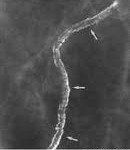
Pictured here is a calcified breast artery, often seen in women who are being treated for hypertension. The primary drug used in high blood pressure, a thiazide diuretic, causes the body to retain calcium and lose magnesium and potassium. We incidentally note these types of calcifications in the large arteries of the entire body, not just the breasts. I believe these problems are avoidable.
The matrix of bone will incorporate calcium and nutrients where they belong as long as the proper hormones and nutrients are present. Needless to say gravitational force in the form of weight bearing exercise is essential and should be the foundation to a healthy skeleton. Don’t be afraid to exercise with some weight in a backpack if you have no disk disease or low back pain.
You still have to look at what you can do nutritionally, and in interpersonal relationships to help your body heal itself. Supplements are no replacement for good nutrition. After all, scientists are constantly discovering new things about food and its interaction with the body that we don’t know.
The first thing to do is either google or look in your reference books to find foods right in Vitamin C, Vitamin K2, magnesium and minor minerals such as boron and silica. Silica is also important for bones. Remember too, that depression has many causes. Sometimes the cause can be nutritional deficiencies and sometimes depression can result from entrapment in unhealthy family dynamics. Controversially, I would also say that depression can also have spiritual origins.
But if time feels of the essence, then supplementation is one route which could be taken. While the medical profession supplements with calcium and fosomax, in my opinion, a more constructive supplementation regimen could include Vitamin C, Vitamin K2, vitamin D3( in winter months, sun in summer) and boron, silica and magnesium. These are all far more important to preventing fracture and keeping bone healthy than calcium.
Calcium will ultimately land in the muscles of the heart, the heart valves and the blood vessels, leading to cardiovascular disease. However if you are getting enough vit C, D3 and K2, your body will direct the calcium you ingest from your food, to where it belongs, not in your heart and blood vessels.
Vitamin C does several things to strengthen bones
- It mineralizes the bone and stimulates bone forming cells to grow.
- Prevents too much degradation of bone by inhibiting bone absorbing cells.
- Dampens oxidative stress, which is what aging is.
- Is vital in collagen synthesis.
When vitamin C is low, just the opposite happens. Bone cells that degrade bone called octeoclasts proliferate, and bone cells that lay down mineral and new bone called osteoblasts are not formed.
Studies have shown that elderly patients who fractured bones had significantly lower levels of vitamin C in their blood than those who haven’t fractured. [1] Bone mineral density- the thing that the tests measure, is higher in those who supplement with vitamin C, independent of estrogen level.[2],[3]
Vitamin K2 is well known among holistic practitioners to be important in cardiovascular and bone health. Supplementing this is also a good idea if bone or heart issues are a concern. Read more here.
And of course good old vitamin D3 with a level around 50-70 mg/ml will help keep the immune system functioning well and the bones strong.
This may seem like a lot of supplementing, yet to me is a worthwhile endeavor that will keep much more than the bones strong. These days getting enough vitamin C is not so easy with diet alone. With the toxic load we all have, even with the most pristine diets, we are requiring more vitamin C internally than our ancestors did. Adults would do well to take 2-5 grams per day of sodium ascorbate as a general supplement. If you have active kidney stones, or kidney disease please check with your doctor first.
Humans, monkeys and guinea pigs don’t make any vitamin C. This leaves us on our own to get our needs met. Cats weighing only about 10-15 pounds, synthesize more than 15 times the RDA of vit C recommended for humans. Goats are about the size of a human adults, and under no stress they synthesize 13G per day. Under stress it can rise to 100G. Do not fear taking vitamin C. It is the one of the most non-toxic and safe supplements known. Use liposomal vitamin C, sodium ascorbate or ascorbic acid, never Ester-C or calcium ascorbate. If you prefer a natural plant-based source, camu-camu is very high in C. However its harvest does threaten the rainforest.
Related Blog: Osteoporosis Myth: The Dangers of High Bone Mineral Density
References
- [1] Falch. 1998. “low levels of serum ascorbic acid in elderly patients with hip fracture.” Scand J Clin Lab Invest May 58(3): 225-8
- [2] Morton D. 2001. “Vitamin C supplement use and bone mineral density in postmenopausal women” J Bone and Min Res 16(1), 135-140
- [3] Leveille, 1997. “Dietary vitamin C and bone mineral density in postmenopausal women in Washington State, USA” J Epid and Comm Health. 51(5):479-485.
 Dr. Suzanne Humphries is a conventionally educated medical doctor who has taken the walk into, around, and out of the allopathic paradigm. She fully and successfully participated in the conventional system for 19 years, witnessing first-hand how that approach fails patients and creates new disease time and again. Prior to medical school, she earned a bachelor’s degree in physics from Rutgers University.
Dr. Humphries is on the board of directors of the International Medical Council on Vaccination. She lives in Maine, USA.
Visit her website: drsuzanne.net


