Vitamins
now browsing by category
This Is the Primary Benefit of Niacin (B3)
Reproduced from original article:
https://articles.mercola.com/sites/articles/archive/2020/11/16/niacin-benefits.aspx
Analysis by Dr. Joseph Mercola Fact Checked November 16, 2020
STORY AT-A-GLANCE
- Niacin plays an important role in photoprotection from the effect of UV radiation on DNA damage and oxidative stress and helps guard against the rising prevalence of skin cancer
- Some research has also found long-term benefits from taking niacin that lower your risk of all-cause mortality
- B vitamins help support your immune system. B3 is a precursor to NAD and may help prevent some of the worst COVID-19 outcomes from cytokine and bradykinin storms
- Seek to get your B3 from food; high dose supplements may trigger a niacin flush in which your skin will get red and tingle. Although it is irritating, it is harmless
Niacin, also called vitamin B3, is a water-soluble vitamin that is found naturally in foods, is added to processed foods and can be bought as a supplement. Niacin plays a vital role in over 400 enzymes, and one study suggests that a diet rich in niacin could protect your skin against ultraviolet (UV) radiation.1
A severe niacin deficiency called pellagra is ultimately a lethal disease. While it was common in the early 20th century, pellagra is uncommon in industrialized populations where most processed foods are fortified with niacin. Currently, pellagra is limited to people living in poverty whose diets are low in niacin and protein.2
The disease is marked by the four D’s: diarrhea, dermatitis, dementia and death. Symptoms of the condition include a brown discoloration on skin exposed to sunlight, a bright red tongue and vomiting, constipation and/or diarrhea. Neurological symptoms include headache, fatigue, loss of memory and depression.
Without treatment, the disease progresses until a person exhibits paranoid and suicidal behaviors with visual and auditory hallucinations and dies. Although this deficiency is rare in industrialized nations, insufficiency contributes to several disease entities and researchers have found:3
“Benefits of niacin supplementation have been observed in experimental models of cancer, cardiovascular disease, skin health, mental health, and oxidant lung injury.”
Niacin Protects Your Skin From UV Radiation
There are three main forms of niacin, which are dietary precursors to nicotinamide adenine dinucleotide (NAD). These are nicotinamide riboside, nicotinic acid and nicotinamide.4 Researchers in Italy studied skin cells from nonmelanoma skin cancers and treated them with different doses of nicotinamide for 48, 24 and 18 hours, after which they were exposed to UV light.
The lab studies showed the cells that were pretreated with nicotinamide were protected from oxidative stress, including damage to DNA from ultraviolet rays. In addition, the data showed niacin reduced local inflammation and the production of reactive oxygen species. Laura Camillo participated in the study and commented in a press release:5
“Our study indicates that increasing the consumption of vitamin B3, which is readily available in the daily diet, will protect the skin from some of the effects of UV exposure, potentially reducing the incidence of non-melanoma skin cancers. However, the protective effect of vitamin B3 is short-acting, so it should be consumed no later than 24 to 48 hours before sun exposure.”
The current lab study supported data from past studies demonstrating similar results. In an animal model, nicotinamide helps prevent photocarcinogenesis and protected the skin against UVA and UVB light.6 Researchers also tested nicotinamide supplements twice-daily in a human trial with people who had actinic keratosis, a precursor to skin cancer.
The nicotinamide supplements reduced the actinic keratosis by 35% relative to the placebo used in the study when it was measured at two and four months. The results were presented at the 41st European Society for Dermatological Research Annual Meeting 2011.
In a paper published in American Health & Drug Benefits, the author reported on one study investigating the use of oral nicotinamide in people who were at high risk for skin cancer.7 The data showed the supplement reduced the rate of new diagnosis of basal cell and squamous cell carcinoma after one year by 23% when the results were compared against a placebo.
Niacin also lowered the risk the participant would develop actinic keratosis. It was estimated the use of this inexpensive supplement could reduce health care costs by approximately $4.8 million each year. The investigators stressed the results were in individuals who had been diagnosed with skin cancer in the past and may not apply to other populations.
In addition, the researchers believe vitamin B3 could be used as a preventive strategy and not treatment. The lead investigator from the University of Sydney also warned the prevention did not take the place of routine care and skin examinations, commenting:8
“This form of prevention is safe and inexpensive, costing around $10 per month, and it is widely available. It is ready to go straight to the clinic for high-risk patients with a track record of skin cancer. This is a new opportunity for skin cancer prevention.”
Prevalence of Skin Cancer Is Rising
Approximately 20% of people living in the U.S. will have skin cancer by age 70.9 Experts estimate nearly 9,500 people receive a diagnosis of skin cancer every day in the U.S.10 There are four main types of skin cancer, including basal cell carcinoma, squamous cell carcinoma, Merkel cell carcinoma and melanoma.
Of the nonmelanoma types of skin cancer, nearly 80% are basal cell, which develop more often on the head and neck. These types of cancer grow slowly and rarely spread. Nearly 20% are squamous cell carcinomas that can be found in areas of the skin that had been burned, exposed to X-rays or damaged by chemicals. Merkel cell is a rare and highly aggressive form of cancer.
Experts estimate over 100,000 adults in the U.S. are diagnosed with invasive melanoma each year and it is the fifth most common cancer that can develop in any age person.11 From 1982 until 2011, the rate of melanoma in the U.S. doubled.12 Since then, the number of people diagnosed has continued to rise.13
Long-Term Heart Benefits of Niacin
Nicotinic acid has been used for more than 40 years to help control dyslipidemia.14 Supplementation with nicotinic acid from 1,000 milligrams (mg) to 2,000 mg have been used daily to increase HDL and lower LDL cholesterol in carefully monitored studies. However, doses this high can produce side effects.
Some clinical trials have demonstrated patients on niacin therapy have a lower number of cardiovascular events and deaths. Other trials were not as positive. After a review of the literature, the U.S. Food and Drug Administration concluded:15
“… scientific evidence no longer supports the conclusion that a drug-induced reduction in triglyceride levels and/or increase in HDL-cholesterol levels in statin-treated patients results in a reduction in the risk of cardiovascular events.”
As I’ve written before, it is the relationship between HDL, LDL and triglycerides that is a greater predictor of heart health and not the absolute numbers of each. This means the FDA statement supports lowering LDL cholesterol with dangerous statin medications but suggests altering HDL and triglyceride levels with an inexpensive and safe supplement would have no effect on heart health.
In one study published in the Journal of the American College of Cardiology, researchers evaluated data from 1966 to 1975, looking at the effectiveness and safety of five drugs in a population of 8,341 men.16
Two medications were discontinued early in the study because of adverse events. The niacin treatment showed modest benefit in reducing the number of heart attacks, but did not reduce all-cause mortality. However, researchers followed up with the group 15 years later, nearly nine years after the participants stopped using the interventions.
They found all-cause mortality was similar to the placebo group in all drugs except niacin. Nine years after the participants stopped taking niacin, it continued to have a positive effect on their health, lowering all-cause mortality by 11% over the placebo group.
B Vitamins May Lower Risk of Worst COVID Outcomes
In the past, I have reviewed how nutrients such as vitamins C and D play a role in the treatment of COVID-19. A recently published paper has also highlighted the potential value of B vitamins.17 The paper was an international collaborative effort among researchers from the University of Oxford, United Arab Emirates University and the University of Melbourne Australia.18
Although there are no studies evaluating the efficacy of B vitamins on patients with COVID-19, the scientists advocate for research into the group of vitamins, stressing their importance to the immune system and immune competence. The paper does not suggest that B vitamins could prevent or treat COVID-19 alone.
However, as scientists have discovered many times, a single vitamin or nutritional supplement does not work alone, but in concert with others. COVID-19 has been dangerous for those with underlying medical conditions or older adults as it triggers an overactivation of your immune system and a cytokine or bradykinin storm.
Niacin and nicotinamide are important to your immune health as they are precursors to NAD+. This is a crucial signaling molecule that naturally declines with age. According to David Sinclair with Harvard Medical School, higher levels of NLRP3 inflammasomes are culprits in cytokines storms and are influenced by NAD+ levels.19
Niacin is a building block of NAD and NADP. This component is vital when combating inflammation, such as what happens during a viral infection like COVID-19. The scientists advocating for research into B vitamins explain:20
“NAD+ is released during the early stages of inflammation and has immunomodulatory properties, known to decrease the pro-inflammatory cytokines, IL-1β, IL-6 and TNF-α.
Recent evidence indicates that targeting IL-6 could help control the inflammatory storm in patients with COVID-19. Moreover, niacin reduces neutrophil infiltration and exhibits an anti-inflammatory effect in patients with ventilator-induced lung injury …
In addition, nicotinamide reduces viral replication (vaccinia virus, human immunodeficiency virus, enteroviruses, hepatitis B virus) and strengthens the body’s defense mechanisms. Taking into account the lung protective and immune strengthening roles of niacin, it could be used as an adjunct treatment for COVID-19 patients.”
Be Aware of a Niacin Flush
Niacin can be found in a wide variety of foods, including animal-based foods such as poultry, beef and fish, and nuts and grains.21 Many processed foods such as breads, cereals and infant formulas are fortified with niacin.
One of the highest sources of B3 is grass fed beef liver, and even a half a cup of chopped onions has 0.1 mg of niacin per serving. Other rich sources include brown rice, beef, pork and sockeye salmon.
If you are considering using a niacin supplement, be aware that one of the common side effects is a niacin flush. This most often happens when the vitamin is taken in large doses and usually only when using nicotinic acid. Niacinamide does not commonly produce the flushing side effect, but also does not have the same effect on cholesterol levels.22
A niacin flush doesn’t happen when you eat foods high in niacin. The condition is marked by symptoms of a burning or tingling sensation in the chest, neck and face.23 Your skin can feel warm to the touch and take on a flushed, red appearance. For some, as little as a 50 mg supplement can trigger the reaction.
Although it is irritating, and sometimes alarming, it is nonetheless harmless. Some find using a time release supplement, taking it with meals or drinking plenty of fluid can reduce the flushing effect. Taking smaller doses spread throughout the day may also reduce the potential of a reaction.
- 1 India Times, November 2, 2020
- 2 National Institutes of Health, Niacin, Niacin Deficiency
- 3 Advances in Nutrition, 2016;7(3) Niacin Deficiencies last line
- 4 Oregon State University, Niacin, bullet 1
- 5 EurekAlert! October 31, 2020 Second last para
- 6 F1000 Research, September 23, 2011
- 7, 8 American Health & Drug Benefits, 2015;8(Spec Issue)
- 9 Skin Cancer Foundation, Skin Cancer Facts And Statistics
- 10 American Academy of Dermatology Association, Skin Cancer
- 11 Cancer.net, Melanoma Statistics
- 12 American Academy of Dermatology Association, Skin Cancer, Incidence rates, bullet 8
- 13 Skin Cancer Foundation, Skin Cancer Facts And Statistics, Melanoma
- 14 Harvard TH Chan School of Public Health, Niacin Vitamin B3, Niacin And Health
- 15 Federal Register, April 18, 2016, II Withdrawal under section 505
- 16 Journal of the American College of Cardiology, 1986; 8(6) abstract
- 17 Maturitas, 2020; doi.org/10.1016/j.maturitas.2020.08.007
- 18 MSN, August 28, 2020 para 2
- 19 Aging, 2020; doi.org/10.18632/aging.103344 Increased inflammation and cytokine storms in the aged first line para 7
- 20 Maturitas, 2020; doi.org/10.1016/j.maturitas.2020.08.007 1.3 Vitamin B3
- 21 National Institutes of Health, Niacin, Food sources
- 22 MedlinePlus, Niacinamide, how does it work para 3
- 23 British Columbia Drug and Poison Information Centre,Niacin: The Facts on Flushing
NEW study: Vitamin D helps to improve gut function and your immune response
Reproduced from original article:
https://www.naturalhealth365.com/vitamin-d-leaky-gut-3620.html
by: Joy Jensen, staff writer | November 10, 2020
 (NaturalHealth365) Inflammatory bowel disease (IBD) is a phrase used to describe a group of conditions, including ulcerative colitis and Crohn’s disease, all of which involve chronic inflammation throughout the gastrointestinal tract. According to the U.S. Centers for Disease Control and Prevention (CDC), more than three million adults have been diagnosed with the disease, and it’s becoming increasingly common. But, the big question is: what does science tell us about how vitamin D can improve this condition?
Well, previous studies have found that vitamin D deficiency is common among individuals with IBD, and lower levels of this vitamin correlate with a more complicated course of the disease and higher disease activity.
In a new study, researchers took a closer look at why a vitamin D deficiency seems to play a part in these diseases and how the vitamin regulates immune response in the gut.
The connection between vitamin D deficiencies and IBD patients
This new study, published in Autoimmunity Reviews, was built on evidence collected in the past that has shown the protective role vitamin D plays on gut health, which is why a deficiency is linked to poor outcomes and greater disease activity. Not only did researchers review the evidence and confirm that vitamin D deficiencies are higher among patients who have IBD, but they also found out more about how this vitamin works in the gut.
Experts believe that leaky gut, which is an insufficient intestinal barrier, is central to how IBD develops.
In addition, research has shown that vitamin D seems to work on the cellular level to help increase the integrity of that barrier, reducing problems with leaky gut. It also promotes the interplay between the gut’s microbiome, intestinal epithelial cells, and immune cells, helping to regulate the immune response of the intestines.
Do NOT ignore the health dangers linked to toxic indoor air. These chemicals – the ‘off-gassing’ of paints, mattresses, carpets and other home/office building materials – increase your risk of headaches, dementia, heart disease and cancer.
Get the BEST indoor air purification system – at the LOWEST price, exclusively for NaturalHealth365 readers. I, personally use this system in my home AND office. Click HERE to order now – before the sale ends.
Although researchers caution that there’s still work to do to further reveal how vitamin D works in the gut, it once again highlights the serious complications that may occur in individuals with a vitamin D deficiency.
Scientifically CLEAR: There are serious consequences to this hormone deficiency
Beyond its role in the gut, studies also show that vitamin D deficiency comes with additional serious consequences. Being deficient in this important vitamin, particularly if you have blood levels under 30 ng/ml, increases your risk of premature death from any cause.
To be clear: Premature death from respiratory disease, heart disease, fracture, and cancers have all been linked to having chronically low vitamin D levels.
While that may sounds scary, it’s easy to take control of your vitamin D levels to reduce your risk of chronic disease and premature death. Start by getting 20 minutes daily of direct sunlight so the body is able to create its own. Naturally, if you live in more northern climates … direct sunlight – that’s strong enough to produce a positive result – may not be realistic.
The fact is: it’s more difficult to produce this hormone (naturally from sun exposure) during the wintertime or if you live in an area that just doesn’t get as much sunshine, on a regular basis throughout the year. This is where D3 supplementation can help to solve the problem. Just keep in mind, you’ll need to ensure it’s taken with fat-containing foods for the best absorption since it’s a fat-soluble vitamin.
And, finally (for best results), you may want to consider taking all the cofactors that enhance absorption such as, zinc, boron and (of course) vitamin K2. Ultimately, if you’re deficient and concerned, it’s a good idea to consult with an experienced (integrative) physician before making any significant changes to your diet or supplement routine.
Bottom line: It’s good to know what your vitamin D levels are … so, get a simple blood test and make it a health priority to maintain blood levels of about 50 – 80 ng/ml to protect your health.
Sources for this article include:
More Than 80% of COVID Patients Are Vitamin D Deficient
Reproduced from original article:
https://articles.mercola.com/sites/articles/archive/2020/11/09/covid-19-patients-vitamin-d-deficiency.aspx
Analysis by Dr. Joseph Mercola Fact Checked November 09, 2020

STORY AT-A-GLANCE
- Vitamin D deficiency has emerged as a primary risk factor for severe COVID-19 infection and death. Higher vitamin D levels have even been shown to lower your risk of testing positive for the virus in the first place
- According to a Spanish study, 82.2% of COVID-19 patients tested were found to be deficient in vitamin D
- One study found your risk of developing a severe case of, and dying from, COVID-19 virtually disappears once your vitamin D level gets above 30 ng/mL (75 nmol/L)
- Vitamin D can reduce your risk of COVID-19 and other respiratory infections via several different mechanisms, including reducing the survival and replication of viruses, reducing inflammatory cytokine production and maintaining endothelial integrity
- Dark skin color, increased age, pre-existing chronic conditions and vitamin D deficiency are all features of severe COVID disease. Of these, vitamin D deficiency is the only factor that is modifiable. As such, it would be foolish to ignore, especially since vitamin D supplements are readily available and low cost
Aside from insulin resistance, discussed in “The Real Pandemic Is Insulin Resistance,” vitamin D deficiency has emerged as a primary risk factor for severe COVID-19 infection and death. Higher vitamin D levels have even been shown to lower your risk of testing positive for the virus in the first place.
Getting the word out about this — especially to the Black community and the elderly in nursing homes — could have a significant impact on future hospitalization and death rates from this virus.
If you have a loved one in a nursing home, taking the time to talk to the medical management about vitamin D testing and supplementation could also make a big difference in the general health of all the residents, as vitamin D is something that can strengthen your immune system in a matter of a few weeks and has many health benefits beside lowering your risk of viral illness.
Vast Majority of COVID-19 Patients Have Vitamin D Deficiency
According to a Spanish study1,2,3 published online October 27, 2020, in The Journal of Clinical Endocrinology & Metabolism, 82.2% of COVID-19 patients tested were found to be deficient in vitamin D, the medical term for which is 25-hydroxycholecalciferol (25OHD).
The researchers compared the vitamin D levels of 216 COVID-19 patients and 197 population-based controls, finding that hospitalized COVID-19 patients had a higher prevalence of deficiency and had lower vitamin D levels overall. As reported by the authors:4
“In COVID-19 patients, mean± SD 25OHD levels were 13.8±7.2 ng/ml, compared to 20.9 ±7.4 ng/ml in controls. 25OHD values were lower in men than in women. Vitamin D deficiency was found in 82.2% of COVID-19 cases and 47.2% of population-based controls.
25OHD inversely correlate to serum ferritin and D-dimer levels. Vitamin D deficient COVID-19 patients had a greater prevalence of hypertension and cardiovascular diseases, raised serum ferritin and troponin levels, as well as a longer length of hospital stay than those with serum 25 OHD levels ≥ 20 ng/ml.”
While this particular study failed to find a correlation between vitamin D levels and disease severity, other studies have shown patients with higher levels do tend to have milder disease. In fact, one such study5,6 found your risk of developing a severe case of, and dying from, COVID-19 virtually disappears once your vitamin D level gets above 30 ng/mL (75 nmol/L).
Vitamin D’s Impact on COVID-19
Back in June 2020, I launched an information campaign about vitamin D that included the release of a downloadable scientific report. This report, as well as a two-minute COVID risk quiz is available on StopCovidCold.com.
October 31, 2020, my review paper7 “Evidence Regarding Vitamin D and Risk of COVID-19 and Its Severity,” co-written with William Grant, Ph.D., and Dr. Carol Wagner, both of whom are part of the GrassrootsHealth expert vitamin D panel, was also published in the peer-reviewed journal Nutrients. You can read the paper for free on the journal’s website. It will be officially published later this month.
As noted in that paper, dark skin color, increased age, pre-existing chronic conditions and vitamin D deficiency are all features of severe COVID disease, and of these, vitamin D deficiency is the only factor that is modifiable. As such, it would be foolish to ignore, especially since vitamin D supplements are readily available and low cost.
Vitamin D can reduce your risk of COVID-19 and other respiratory infections via several different mechanisms, including but not limited to the following, all of which are discussed in greater detail in our paper:8
- Reducing the survival and replication of viruses9
- Reducing inflammatory cytokine production
- Maintaining endothelial integrity (Endothelial dysfunction contributes to vascular inflammation and impaired blood clotting, two hallmarks of severe COVID-19)
- Increasing angiotensin-converting enzyme 2 (ACE2) concentrations. As explained in our paper:
“Angiotensin II is a natural peptide hormone best known for increasing blood pressure through stimulating aldosterone. ACE2 normally consumes angiotensin I, thereby lowering its concentrations. However, SARS-CoV-2 infection downregulates ACE2, leading to excessive accumulation of angiotensin II.
Cell cultures of human alveolar type II cells with vitamin D have shown that the SARS-CoV-2 virus interacts with the ACE2 receptor expressed on the surface of lung epithelial cells. Once the virus binds to the ACE2 receptor, it reduces its activity and, in turn, promotes ACE1 activity, forming more angiotensin II, which increases the severity of COVID-19.”
Vitamin D also boosts your overall immune function by modulating your innate and adaptive immune responses, reduces respiratory distress10 and improves overall lung function, helps produce surfactants in your lungs that aid in fluid clearance.11
It lowers your risk of comorbidities associated with poor COVID-19 prognosis, including obesity,12 Type 2 diabetes,13 high blood pressure14 and heart disease.15 All of these factors make it an important component of COVID-19 prevention and treatment.
Criteria for Causality Satisfied
As of September 27, 2020, the data from 14 observational studies — summarized in Table 1 of our paper16 — suggest that vitamin D blood levels are inversely correlated with the incidence and/or severity of COVID-19, and the evidence currently available generally satisfies Hill’s criteria for causality in a biological system, which include:17
| Strength of association | Consistency of evidence |
| Temporality | Biological gradient |
| Plausibility (e.g., mechanisms) | Coherence (although it still needs to be verified experimentally) |
COVID-19 Features Related to Vitamin D Status
In our paper,18 we review several features of COVID-19 that are indicative of vitamin D deficiency. For starters, SARS-CoV-2 emerged in the winter in the northern hemisphere, and as we moved into summer, positive tests, hospitalizations and death rates fell. So, generally, COVID-19 prevalence has been inversely correlated with solar UVB doses and vitamin D production.
Secondly, people with darker skin have higher COVID-19 case and death rates than Caucasians. Vitamin D is produced in your skin in response to sun exposure, but the darker your skin, the more sun exposure you need in order to maintain an optimal vitamin D level.
While a light-skinned individual may need only 10 to 15 minutes a day, a person with very dark skin may need upward of 1.5 hours. As a result, vitamin D deficiency tends to be far higher among Blacks and dark-skinned Hispanics.
SARS-CoV-2 positivity is strongly and inversely associated with circulating 25(OH)D levels, a relationship that persists across latitudes, races/ethnicities, both sexes, and age ranges. ~ PLOS ONE September 17, 2020
Thirdly, one of the lethal hallmarks of COVID-19 is the cytokine storm that can develop in severe cases, which manifests as hyperinflammation and tissue damage. Vitamin D is known to regulate inflammatory cytokine production, thereby lowering this risk. Lastly, vitamin D is an important regulator of your immune system, and dysregulation of the immune system is a hallmark of severe COVID-19.
Findings From Largest Study to Date
The largest observational study19 to date was published in the journal PLOS ONE, September 17, 2020. It looked at data for 191,779 American patients with a mean age of 50 who were tested for SARS-CoV-2 between March and June 2020 and had had their vitamin D tested sometime in the preceding 12 months. It found:
- 12.5% of patients who had a vitamin D level below 20 ng/ml (deficiency) tested positive for SARS-CoV-2
- 8.1% of those who had a vitamin D level between 30 and 34 ng/ml (adequacy) tested positive for SARS-CoV-2
- Only 5.9% of those who had an optimal vitamin D level of 55 ng/ml or higher tested positive for SARS-CoV-2
According to the authors:20
“SARS-CoV-2 positivity is strongly and inversely associated with circulating 25(OH)D levels, a relationship that persists across latitudes, races/ethnicities, both sexes, and age ranges. Our findings provide impetus to explore the role of vitamin D supplementation in reducing the risk for SARS-CoV-2 infection and COVID-19 disease.”
This inverse relationship between vitamin D and SARS-CoV-2 infection rates may be due to the fact that vitamin D reduces survival and replication of the virus by activating immune cells to produce the antimicrobial and antiviral peptides cathelicidin and defensins, and increasing concentrations of free ACE2, which prevents the virus from entering cells via the ACE2 receptor.21
Higher Vitamin D Lowers All Risks Associated With COVID-19
The argument for vitamin D optimization is strengthened by the fact that higher levels not only reduce your risk of testing positive for the virus but also cut the risk of severe illness, the need for hospitalization and mechanical ventilation, the length of hospitalization, and death. Examples of this include the following studies, which show vitamin D:
• Lowers infection rates — In the PLOS ONE study22 above, people with a vitamin D level of at least 55 ng/mL (138 nmol/L) had a 47% lower SARS-CoV-2 positivity rate compared to those with a level below 20 ng/mL (50 nmol/L). Even after adjustment for gender, age, ethnicity and latitude, the risk of having a positive test result was 43% lower among those with a vitamin D level of 55 ng/mL compared to those with a level of 20 ng/mL.
This was also confirmed in an Israeli population-based study23,24 published in July 2020. Here, those with a vitamin D level above 30 ng/mL (75 nmol/L) had a 59% lower risk of testing positive for SARS-CoV-2 compared to those with a vitamin D level between 20 ng/mL and 29 ng/mL (50 to 74 nmol/L), and a 58% lower risk compared to those with a vitamin D level below 20 ng/mL (50 nmol/L).
• Lowers hospitalization rates — The Israeli analysis25 above also found that among individuals who tested positive for SARS-CoV-2 infection, those who had a vitamin D level below 30 ng/mL had a 1.95 times (crude odds ratio) to 2.09 times (odds ratio after adjustment for demographics and psychiatric and somatic disorders) higher risk of being hospitalized for COVID-19.
In other words, having a vitamin D level below 30 ng/mL about doubled the risk of being hospitalized with COVID-19.
• Lowers need for intensive care — Vitamin D, when administered to hospitalized patients, can also lower their risk of needing intensive care. This was demonstrated by Spanish researchers in a small randomized clinical study26,27,28,29 published online August 29, 2020.
Hospitalized COVID-19 patients given supplemental calcifediol (a vitamin D3 analog) in addition to standard of care — which included the use of hydroxychloroquine and azithromycin — had significantly lower intensive care unit admissions.
Patients in the vitamin D arm received 532 micrograms of calcifediol on the day of admission (equivalent to 106,400 IUs of vitamin D30) followed by 266 mcg on Days 3 and 7 (equivalent to 53,200 IUs31). After that, they received 266 mcg once a week until discharge, ICU admission or death.
Of those receiving calcifediol, only 2% required ICU admission, compared to 50% of those who did not get calcifediol. None of those given vitamin D supplementation died, compared to 7.6% of those in the standard care group.
• Reduces severity of COVID-19 — An August 2020 study32,33 published in the journal Nutrients found patients who had a vitamin D level below 12 ng/mL (30 nmol/L) had a 6.12 times higher risk of severe disease requiring invasive mechanical ventilation.
Studies have also shown vitamin D deficiency is a common factor among hospitalized patients diagnosed with COVID-19 related respiratory failure. One such study34 found 81% of the patients with acute respiratory failure due to COVID-19 had vitamin D levels below 30 ng/ml (75 nmol/L); 24% had severe vitamin D deficiency (≤10 ng/ml or ≤25 nmol/L).
• Reduces mortality — The Nutrients study35,36 above also found having a vitamin D level below 12 ng/mL (30 nmol/L) raised the risk of death by 14.7 times, compared to having a vitamin D level above 12 ng/mL.
Similarly, researchers in Indonesia found37 those with a vitamin D level between 21 ng/mL (50 nmol/L) and 29 ng/mL (75 nmol/L) had a 12.55 times higher risk of death than those with a level above 30 ng/mL (75 nmol/L), and having a level below 20 ng/mL (50 nmol/L) was associated with a 19.12 times higher risk of death.
In an Iranian study,38,39 among COVID-19 patients over the age of 40 who had vitamin D levels below 30 ng/mL (75 nmol/L), 20% died, compared to 9.7% of those with levels at or above 30 ng/mL. Among those with a vitamin D level of at least 40 ng/mL (100 nmol/L), only 6.3% died.
The Role of Magnesium and Vitamin K2
While regular sun exposure is the ideal way to optimize your vitamin D level, this can be nearly impossible during the winter. For this reason, an oral vitamin D3 supplement is recommended for most people. However, when supplementing you also need to be mindful of other nutrients that have synergistic effects.
One of them is magnesium, which is required for the conversion of vitamin D into its active form. Without sufficient amounts of magnesium, your body cannot properly utilize the vitamin D you’re taking.40,41,42,43
According to a scientific review44,45 published in 2018, as many as 50% of Americans taking vitamin D supplements may not get significant benefit as the vitamin D simply gets stored in its inactive form, and the reason for this is because they have insufficient magnesium levels. Research46 published in 2013 also highlighted this issue, concluding that higher magnesium intake helps reduce your risk of vitamin D deficiency by activating more of it.
Another cofactor is vitamin K2, as it helps prevent complications associated with excessive calcification in your arteries. In fact, relative vitamin K2 deficiency is typically what produces symptoms of “vitamin D toxicity.”
Research by GrassrootsHealth, based on data from nearly 3,000 individuals, reveals you need 244% more oral vitamin D if you’re not also taking magnesium and vitamin K2.47 What this means in practical terms is that if you take all three supplements in combination, you need far less oral vitamin D in order to achieve a healthy vitamin D level.
Take-Home Message
If you live in the northern hemisphere, which is currently heading toward winter, now is the time to check your vitamin D level and start taking action to raise it if you’re below 40 ng/mL (100 nmol/L). Experts recommend a vitamin D level between 40 and 60 ng/mL (100 to 150 nmol/L).
An easy and cost-effective way of measuring your vitamin D level is to order GrassrootsHealth’s vitamin D testing kit. Also, if you haven’t already visited www.StopCovidCold.com please do so now so you can take your free COVID risk test and also grab a free PDF copy with far better graphics than I was able to put in my recently published Nutrients paper.
Once you know your current vitamin D level, use the GrassrootsHealth vitamin D calculator48 to determine how much vitamin D you might need to reach your target level. Again, to optimize vitamin D absorption and utilization, be sure to take your vitamin D with vitamin K2 and magnesium.
Lastly, remember to retest in three to four months to make sure you’ve reached your target level. If you have, then you know you’re taking the correct dosage. If you’re still low (or have reached a level above 80 ng/mL), you’ll need to adjust your dosage accordingly and retest again in another three to four months.
- 1 The Journal of Clinical Endocrinology & Metabolism October 27, 2020; dgaa733 [Epub ahead of print]
- 2 Endocrine.org October 27, 2020
- 3 Science Daily October 27, 2020
- 4 The Journal of Clinical Endocrinology & Metabolism October 27, 2020; dgaa733 [Epub ahead of print], Results
- 5 Infectious Diseases April 8, 2020 DOI: 10.21203/rs.3.rs-21211/v1
- 6 Orthomolecular Medicine News Service June 22, 2020
- 7, 8, 18 Nutrients October 31, 2020;12, 3361; doi:10.3390/nu12113361
- 9 Nutrients, 2020;12:988
- 10 Advances in Pharmacological Sciences 2018; 2018: 8494816
- 11 ATS Journals October 5, 2010; 183(10)
- 12 Medicina 2019 Sep; 55(9): 541
- 13 Diabetes.co.uk January 15, 2019
- 14 The Lancet Diabetes & Endocrinology September 1, 2014; 2(9): 682-684
- 15 Current Treatment Options in Cardiovascular Medicine 2012 Aug; 14(4): 414–424
- 16 Nutrients October 31, 2020;12, 3361; doi:10.3390/nu12113361, Table 1
- 17 Nutrients October 31, 2020;12, 3361; doi:10.3390/nu12113361, Table 3
- 19, 22 PLOS ONE September 17, 2020 DOI: 10.1371/journal.pone.0239252
- 20 PLOS ONE September 17, 2020 DOI: 10.1371/journal.pone.0239252, Abstract
- 21 Rev Med Virol. 2020 Jun 25 : 10.1002/rmv.2119
- 23, 25 The FEBS Journal July 2020; 287(17)
- 24 GrassrootsHealth, Vitamin D level below 30 ng/mL an independent risk factor for COVID-19
- 26 The Journal of Steroid Biochemistry and Molecular Biology August 29, 2020 [Epub ahead of print]
- 27, 30, 31 Chrismasterjohnphd.com September 3, 2020
- 28 Medium September 4, 2020
- 29 GrassrootsHealth, Vitamin D treatment for COVID-19 patients nearly erased need for ICU admission
- 32, 35 Nutrients 2020; 12(9): 2757
- 33, 36 GrassrootsHealth, 15 fold higher risk of death due to COVID-19 with vitamin D below 12 ng/mL
- 34 GrassrootsHealth, Increased mortality rate among COVID-19 ARDS patients with severe vitamin D deficiency
- 37 Emerginnova.com June 4, 2020
- 38 Preprints with The Lancet July 14, 2020
- 39 GrassrootsHealth, Higher Vitamin D status associated with better clinical outcomes in patients hospitalized with COVID-19
- 40 Live Science February 26, 2018
- 41 Medicalxpress.com February 27, 2018
- 42 News-Medical.net February 26, 2018
- 43 Wellandgood.com February 26, 2018
- 44 Journal of the American Osteopathic Association March 2018; 118: 181-189
- 45 Science Daily February 2018
- 46 BMC Medicine 2013; 11: 187
- 47 GrassrootsHealth Magnesium and Vitamin K2 Combined Important for Vitamin D Levels
- 48 GrassrootsHealth Vitamin D Calculator
6 ways to naturally eliminate migraines
Reproduced from original article:
www.naturalhealth365.com/migraine-headaches-remedy-3601.html
Dr. Matthew Roe | October 25, 2020
 (NaturalHealth365) Migraine headaches are the second most common type of primary headache after tension headaches. And, just to be clear, a “primary” headache is a headache that is not caused by another disease or condition.
Along with debilitating pain, migraines can generate blurred vision, dizziness, nausea, and sensitivity to light and sound. Often without much warning, migraines can happen once a year, monthly, or several times a week. And, unfortunately, migraines can either occur with an aura – which is known as the classic migraine – or without an aura, which is called a common migraine.
What can trigger a migraine?
The possible migraine triggers not only vary from one individual to another, but encompass a whole range of common substances. This can include hormonal imbalances, synthetic fragrances, processed cereals (or other junk foods) and skipping meals. A simple drop in blood sugar can cause all kinds of health issues including head pain.
The list of possible triggers is so long – it often appears impossible to eliminate the so-called causes. In the food category alone the list is extensive and includes ripened and aged cheese, poor-quality chocolate, citrus fruits, conventionally-raised (processed) meat with nitrites such as hot dogs, MSG, caffeinated beverages and alcohol.
Food additive such as nitrites, sulfites, and aspartame can be the culprit behind a migraine. In fact, studies show a large percentage of migraine sufferers point to specific foods as the trigger.
Non-food triggers include changes in the atmosphere such as drops in barometric pressure, high temperatures and bright, fluorescent lights. Many women get migraines monthly due to hormone fluctuations or the use of birth control pills.
Do NOT ignore the health dangers linked to toxic indoor air. These chemicals – the ‘off-gassing’ of paints, mattresses, carpets and other home/office building materials – increase your risk of headaches, dementia, heart disease and cancer.
Get the BEST indoor air purification system – at the LOWEST price, exclusively for NaturalHealth365 readers. I, personally use this system in my home AND office. Click HERE to order now – before the sale ends.
However, one of the most common migraine triggers seems to be chronic stress. It is a known fact that anxiety, worry, depression and moods changes can all release specific brain chemicals – which can trigger a migraine.
Sadly, Western medicine promotes the use of analgesic migraine medications – including both prescription pain relievers and over-the-counter drugs – which produce “rebound” headaches. The point here is simple: no pill will ever solve the (underlying) problem associated with chronic head pain.
A better way to achieve freedom from chronic headache pain
Even with many drugs, lifestyle techniques, and surgical options available to treat and prevent the onset of a migraine – finding the right combination of therapies to manage migraines can be difficult. Fortunately, there is growing scientific evidence to suggest that natural means are just as effective as prescription medication and, many times, even more effective.
#1 – Biofeedback: Most studies on biofeedback show that it can reduce the frequency and duration of headaches. The effects of biofeedback appear to be comparable to many drugs used for chronic headaches, and can be recommended as early treatment for recurrent migraines.
#2 – Acupuncture: Albrecht Molsberger, MD, a medical acupuncture said it is at least as effective as blood pressure medication such as, beta-blockers – most often used for migraine prevention. The American Headache Society has recommended acupuncture for migraines.
Acupuncture helps the natural energy flow and is thought to correct an energy disruption which leads to a migraine.
#3 – Melatonin: Two-thirds of study participants who took melatonin before going to bed every night for 3 months said the number of migraines they experienced dropped by 50%.
#4 – Magnesium: Studies have shown that migraine sufferers have low brain magnesium during migraine attacks and may also suffer from a magnesium deficiency. It is thought magnesium deficiency may play a particularly important role in menstrual migraine.
#5 – Diet: It pays to avoid headache-inducing substances, including nitrites in processed meats, sugar, processed foods, chocolate, nuts aged cheese, aspartame and monosodium glutamate (MSG) used in foods as a flavor enhancer. It’s also worth mentioning that dehydration is a major cause of headaches.
Even though food may not be the underlying cause of a migraine, a poor diet does contribute to the problem by depleting vitamins and minerals – which are meant to help ward off an attack.
#6 – Upper cervical chiropractic treatment: The most recent research is showing that the most plausible cause of migraine headaches resides in the autonomic nervous system. The swelling of the blood vessels in the brain and the drop in neurotransmitters are secondary and mainly occur in response to the changes in the autonomic nervous system.
Emotional stress is a well known trigger for migraine. Japanese researchers have found that people living in fast-paced business centers in Tokyo tend to have an imbalance in the autonomic nervous system – specifically, an inhibition of the parasympathetic system that is active during relaxation, and an excitation of the sympathetic nervous system, which governs our response to stress.
The major finding of a recent study is that migraine is a disorder of chronic sympathetic dysfunction. Many times the top vertebra in the spine known as the atlas can be jarred from its normal position.
The atlas is the only vertebra in the entire spine not connected by discs to the vertebra below it and the atlas is the only vertebra that can induce increased pressure on the spinal cord.
Right above the atlas sits the brain stem and a misalignment in the upper cervical spine can affect the functionality of the brain stem, which in turn can cause migraine headaches.
The goal of the upper cervical treatment is to correct the misalignment consequently addressing the real cause of the migraine instead of just the symptoms. There are many case studies, which show a positive response using upper cervical chiropractic adjustments to treat migraines.
About the author: Dr. Matthew Roe is a practicing upper cervical chiropractor and has a Bachelor of Science Degree in Exercise Science. He has a Doctor of Chiropractic degree graduating Cum Laude from Life University College of Chiropractic. Having studied with the best Upper Cervical specific doctors in the world he understands true healing. His practice focus is to help people fine true health naturally. For more information about Dr. Roe – visit: WinterGardenChiropractors.com
Sources for this article include:
Multivitamins Shortened Duration and Severity of Illness
Reproduced from original article:
https://articles.mercola.com/sites/articles/archive/2020/10/09/benefits-of-taking-multivitamins-and-minerals.aspx
Analysis by Dr. Joseph Mercola Fact Checked October 09, 2020

STORY AT-A-GLANCE
- A daily multivitamin and mineral may shorten the duration and severity of an illness in people ages 55 to 75
- More than one-third of older adults may be deficient in at least one micronutrient, and often they are low in more than one
- Multivitamins may help fill in nutritional gaps, but they cannot overcome the damage from a diet filled with processed foods
- Seek out multivitamins from trusted companies that submit to voluntary testing and certification from ConsumerLab.com, NSF International or U.S. Pharmacopoeia
In 2018, sales in the U.S. supplement market had reached $124.8 billion and are expected to top $210.3 billion by 2026.1 While that sounds like a lot of money, and it is, it pales in comparison to health care spending for prescription drugs.
In 2016, the cost of health care reached $3.3 trillion, of which $329 billion was on prescription drugs.2 The Centers for Medicare and Medicaid Services (CMS) estimates that in the next decade, the money that’s spent on prescription drugs will outpace that of other types of health care spending.3
The projected spending on retail prescription drugs matches the consistent rise in chronic diseases, such as heart disease and Type 2 diabetes. But, as spending on medications rises, more adults are also spending money on preventive care, such as vitamin supplements.
In one study, it was reported that in 2019, younger people who bought vitamins and supplements spent an average of $62.73 per trip on the products whereas people who grew up during the Great Depression spent $129.58.4
Multivitamins and Minerals in Older Adults Shortened Illness
In the 20th year that the Council for Responsible Nutrition (CRN) conducted their annual consumer survey on dietary supplements, 77% of the respondents said that they took supplements.5 Vice president of communications Nancy Weindruch commented on the results, saying:
“While the industry continues to innovate, there is no denying that these regulated products have become mainstream. More than three quarters of Americans are taking dietary supplements each year — a crystal clear trend that serves as an indicator of the vital role supplementation plays in their overall health and wellness regimens.”
To test the hypothesis that using a multivitamin and mineral supplement may support immune function in older adults,6 a research team from Oregon State University recruited 42 healthy individuals ages 55 to 75.7 The interventional study was designed to measure the effect that a multivitamin with minerals may have on immune system indicators.8
Before and after the intervention, the researchers took samples to measure the amount of minerals and vitamins in the participants’ blood as well as immune function and status. The participants were given a questionnaire in which they reported details of their health during the trial.
The data showed that the same percentage of people in each group experienced symptoms of illness or sickness, but those who took the supplement averaged three days with symptoms as compared to more than six days by members of the group taking a placebo.
Adrian Gombart from Linus Pauling Institute at the University of Oregon was a principal investigator in the study. He commented on the results that showed older adults may benefit from a multivitamin and mineral supplement, saying:9
“The observed illness differences were striking. While the study was limited to self-reported illness data and we did not design the study to answer this question, the observed differences suggest that additional larger studies designed for these outcomes are warranted — and, frankly, overdue.”

Vitamin Deficiencies Contribute to Age-Related Decline
Vitamins and minerals are also called micronutrients because they’re only required in small amounts. Your body cannot produce them and deficiencies can introduce very serious problems.
According to data from UNICEF, more than 200 million children younger than age 5 are either undernourished or overweight.10 The CDC reports that at least half of all children around the world in that age group suffer from micronutrient deficiencies.11
The World Health Organization estimates that 250 million preschool children are deficient in vitamin A, which contributes to up to 500,000 children becoming blind every year.12 Within 12 months of losing their eyesight, up to half of them will die.
The authors of one literature review write that vitamin deficiencies are a major trigger for chronic diseases worldwide. Some stages in life increase the risk for deficiency, including childhood, adolescence and old age.13
The Oregon State University researchers wrote that the risks of deficiency “contribute to age-related immune system deficiencies” and that among adults in North America and Europe, “more than one-third of older adults are deficient in at least one micronutrient, often more than one.”14 Gombart commented on the challenges people face with micronutrient deficiency:15,16
“That likely contributes to a decline in the immune system, most often characterized by increased levels of inflammation, reduced innate immune function and reduced T-cell function.
Since multiple nutrients support immune function, older adults often benefit from multivitamin and mineral supplements. These are readily available, inexpensive and generally regarded as safe.
Supplementation was associated with significantly increased circulating levels of zinc and vitamin C, and with illness symptoms that were less severe and shorter lasting. This supports findings that stretch back decades, even to the days of Linus Pauling’s work with vitamin C.
Our results suggest more and better designed research studies are needed to explore the positive role multivitamin and mineral supplementation might play in bolstering the immune system of older adults.”
Multivitamins May Help Fill Nutritional Gaps
In a survey done in 2015 on behalf of CRN, it was found that the vast majority of those they interviewed understood that multivitamins and Vitamin D supplements help fill the gaps in their daily diet but should not be used as a substitute for a nutrient-rich diet.17
More than 2,000 U.S. adults were asked questions to measure their understanding of multivitamins, vitamin D and calcium supplements. An almost equal percentage understood the roles that calcium and vitamin D play in bone health and ways in which multivitamins and mineral supplements can help fill nutritional gaps that are not addressed by their diet.
That percentage was an impressive 87% and 88%. CRN consultant Annette Dickinson, Ph.D., was one of the researchers. She commented on the results of data from other surveys in a press release, saying:18
“Surveys find that dietary supplement users tend to have better diets and adopt other healthy habits — suggesting that they view supplements as just one strategy in an array of health habits to help ensure wellness.”
The authors of a 2017 study examined data from 10,698 adults in the National Health and Nutrition Examination Survey and found that people who were using a multivitamin and mineral supplement had a lower prevalence of vitamin inadequacy in 15 out of 17 of the micronutrients analyzed.19
Using the supplement for greater than or equal to 21 out of 30 days in the month nearly eliminated inadequacies in the micronutrients that were analyzed and significantly lowered the ratio of deficiency for all biomarkers except iron. Nutrients not affected by taking a multivitamin and mineral supplement included calcium, magnesium and vitamin D.
The researchers concluded that the supplements decreased nutritional inadequacies and lowered the risk of deficiencies. Carrie Ruxton, Ph.D., from the Health and Food Supplements Information Service, commented on the results of this study:20
“This study is really important in setting the record straight on the value of multivitamins and minerals. We know these nutrients are key to our health and wellbeing and low levels have been shown to have negative health impacts.
Unfortunately, all too often it is said that you can get all the nutrition you need from a healthy, balanced diet. But this ignores how most people actually eat. A lot of people don’t consume the full-spectrum of micronutrients needed to support optimum health.”
In addition to the commentary that most people do not eat the necessary micronutrients, it’s important to recognize that while whole foods are the healthier option, the micronutrients in the food are dependent on the air and soil in which they are grown.21,22
Vitamins Help Support Heart Health and More
In one study of 8,678 adults, researchers sought to determine the effect multivitamin and mineral supplements may have on cardiovascular health and mortality in women. The data were drawn from a nationally representative sample. The initial results showed no association between heart disease mortality and those taking multivitamin and mineral supplements.
However, once the data were classified by the length of time the supplements had been used, the researchers found people who had taken the supplements for three years or more had a reduction in risk of mortality from CVD. The researchers wrote that these results were consistent “with the one available RCT [random controlled trial] in men, indicating no relation with MVM use and CVD mortality.”
The results of the study do not establish a causal (cause-and-effect) relationship, however. In other words, it does not prove that taking a multivitamin with a mineral supplement will reduce the risk of heart disease mortality. Many researchers, such as Dickinson, also consider that people who consistently take multivitamins often tend to have a healthier lifestyle, which could account for the benefits of taking supplements.
In situations of vitamin insufficiency, when a person has low levels but not low enough to trigger symptoms of deficiency, several health conditions can be ameliorated with supplements, such as:
- Vitamin D to address depression23
- Vitamin A to contribute to the prevention of blindness24
- Vitamin C to power the body’s response to connective tissue defects25
- Vitamin B12 to reduce the symptoms of dementia26
Use Supplements With a Healthy Diet
If multivitamins and mineral supplements are used, they must be taken in combination with a healthy diet because they can never replace poor nutrition from the daily intake of highly processed foods. While it’s important to choose a quality multivitamin and mineral supplement, the process of identifying one may not be straightforward. Look for a manufacturer that has checks and balances in place to ensure the quality of the product.
Some manufacturers agree to voluntary certification and testing by ConsumerLab.com, NSF International or U.S. Pharmacopoeia. These organizations help that ensure strict standards of quality are met by examining and testing the product throughout the process of production.
As with most products, vitamins have a shelf life, so check the expiration dates before using them and store them according to the manufacturer’s instructions. Choose a well-respected company and a product that is consistently evaluated and tested to be sure you’re getting exactly what’s on the label.
- 1 Global Newswire, March 25, 2019
- 2 Health Affairs, December 6, 2017
- 3 American Academy of Actuaries, March 2018
- 4 Statistica, 2019
- 5 Council for Responsible Nutrition, September 30, 2019
- 6 Nutrients, 2020;12(18)
- 7, 9, 14, 16 Oregon State University, August 18, 2020
- 8 Science Daily, August 18, 2020
- 10 UNICEF, October 2019
- 11 Centers for Disease Control and Prevention
- 12, 24 World Health Organization
- 13 Current Developments in Nutrition, 2019; 3:nzz075
- 15 Science Daily August 18, 2020
- 17, 18 EurekAlert! July 1, 2015
- 19 Nutrients, 2017;9(8) Abstract
- 20 HSIS, September 13, 2017
- 21 Politico, September 13, 2017
- 22 Journal of the American College of Nutrition, 2004;23(6)
- 23 Issues of Mental Health Nursing, 2010;31(6)
- 25 Merck Manual
- 26 Journal of Geriatric Psychiatry and Neurology, 2005;18(1)
Experts Weigh in on Vitamin D for COVID-19
Reproduced from original article:
https://articles.mercola.com/sites/articles/archive/2020/10/05/dr-michael-f-holick-on-vitamin-d.aspx
Analysis by Dr. Joseph Mercola Fact Checked October 05, 2020
STORY AT-A-GLANCE
- Dr. Michael Holick, widely recognized as one of the leading vitamin D experts in the world, physicist Gareth Davies, Ph.D., and Drs. William Grant and David Grimes present important information about vitamin D as it relates to COVID-19
- Vitamin D can strengthen your immune system in a matter of a few weeks, and according to recent research, correcting vitamin D deficiency could save thousands of lives in Great Britain alone
- Hospitalized COVID-19 patients given supplemental calcifediol (a vitamin D3 analog) in addition to standard of care lowered ICU admissions from 50% to 2% — and eliminated deaths
- Another study found COVID-19 patients with a vitamin D level of at least 30 ng/mL had a significantly lower risk of adverse clinical outcomes, including a 51% lower risk of dying
- Based on data from 191,779 American patients, people with a vitamin D level of at least 55 ng/mL (138 nmol/L) had a 47% lower SARS-CoV-2 positivity rate compared to those with a level below 20 ng/mL (50 nmol/L)
Aside from insulin resistance, discussed in “The Real Pandemic Is Insulin Resistance,” mounting research reveals vitamin D deficiency is one of the primary risk factors for severe COVID-19 infection, hospitalization, complications and death.
Vitamin D can strengthen your immune system in a matter of a few weeks, and according to recent research, correcting vitamin D deficiency could save thousands of lives in Great Britain alone. As reported by conservative member of the British Parliament David Davis and writer Matt Ridley in a September 26, 2020, article in The Telegraph:1
“As we face six tough months of curfews, isolation and economic misery, with vaccines a distant hope, testing struggling to control the virus, and the hospitalization rate once again rising, it’s surely time to try anything reasonable to slow the pandemic down.
There is one chemical that is known to be safe, known to be needed by many people anyway, known to have a clinically proven track record of helping people fight off respiratory diseases, and is so cheap no big firm is pushing it: vitamin D. It is not a silver bullet, but growing evidence suggests that it might help prevent COVID turning serious in some people.”
Randomized Control Trial Confirms Vitamin D Cuts ICU Rates
As reported by The Telegraph, while initial support for vitamin D relied on data showing correlations between vitamin D levels and infection rates and COVID-19 outcomes, we now have a randomized, controlled trial backing it up.
The study,2,3,4,5 published online August 29, 2020, found hospitalized COVID-19 patients who received supplemental calcifediol (a vitamin D3 analog also known as 25-hydroxycholecalciferol or 25-hydroxyvitamin D) in addition to standard of care — which included the use of hydroxychloroquine and azithromycin — had significantly lower intensive care unit admissions. It also eliminated deaths.
Patients in the vitamin D arm (50 out of 76 enrolled patients) received 532 micrograms of calcifediol on the day of admission (equivalent to 106,400 IUs of vitamin D6) followed by 266 mcg on Days 3 and 7 (equivalent to 53,200 IUs7). After that, they received 266 mcg once a week until discharge, ICU admission or death.
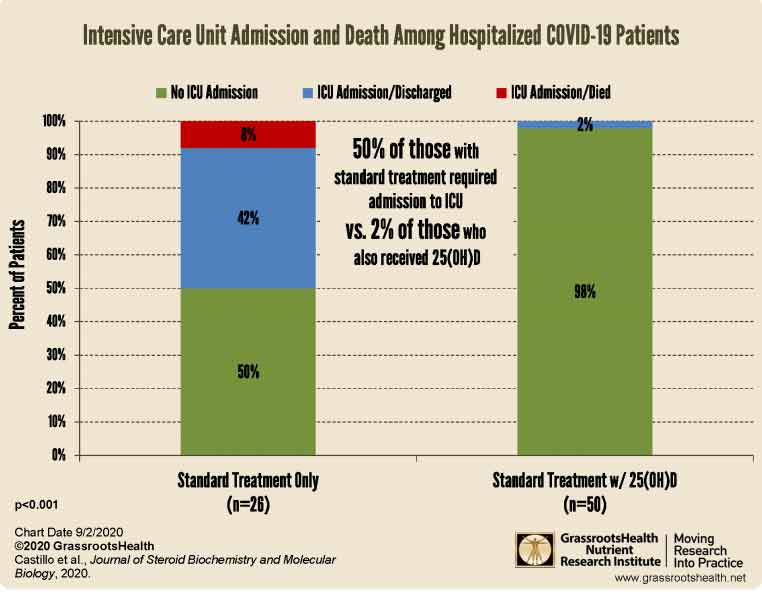
Of those receiving calcifediol, only 2% required ICU admission, compared to 50% of those who did not get calcifediol. In other words, the addition of vitamin D reduced a patient’s risk of needing intensive care 25-fold.8
What’s more, none of those in the vitamin D arm died, compared to 7.6% in the standard care group. The graph below, created by GrassrootsHealth,9 illustrates the difference in ICU admissions and deaths between the two trial groups.
As noted by Davis and Ridley:10
“While the sample is too small to conclude that vitamin D abolishes the risk of death in COVID patients, it is nonetheless an astonishing result, and corresponds with Prof Backman’s assertion that correcting vitamin deficiency might cut mortality by half. The Government should now act on this latest evidence.
Vitamin D supplementation is cheap — it costs less than a penny a pill — and readily available. If you allocated this to the identified comorbidity risk group it would cost £45 million: to these, plus to every ethnic minority citizen, about £200 million, to every obese person somewhat more. These costs are trivial rounding errors by comparison with the costs of lockdown.
With hospitals already facing pressures from influenza during the winter months, any way of reducing this strain should be taken up. This will no doubt save thousands of lives in any second wave. There is now no reason not to act.”
Vitamin D Sufficiency Cuts Fatalities in Half
Another study,11,12,13 published online September 25, 2020, in PLOS ONE, found COVID-19 patients with a vitamin D level of at least 30 ng/mL had a significantly lower risk of adverse clinical outcomes, including a 51.5% lower risk of dying.
Hospital data of 235 COVID-19-positive patients were analyzed for this study. Of those, 74% had severe symptoms and 32.8% were vitamin D deficient. As reported by the authors:14
“After adjusting for confounding factors, there was a significant association between vitamin D sufficiency and reduction in clinical severity, inpatient mortality serum levels of C-reactive protein (CRP) and an increase in lymphocyte percentage.
Only 9.7% of patients older than 40 years who were vitamin D sufficient succumbed to the infection compared to 20% who had a circulating level of 25(OH)D< 30 ng/ml.
The significant reduction in serum CRP, an inflammatory marker, along with increased lymphocytes percentage suggest that vitamin D sufficiency also may help modulate the immune response possibly by reducing risk for cytokine storm in response to this viral infection.
Therefore, it is recommended that improving vitamin D status in the general population and in particular hospitalized patients has a potential benefit in reducing the severity of morbidities and mortality associated with acquiring COVID-19.”
One of the co-authors of this study was Dr. Michael Holick, a professor of medicine, physiology and biophysics and molecular medicine at Boston University School of Medicine. Holick is also on GrassrootsHealth’s vitamin D expert panel,15 and is widely recognized as one of the leading vitamin D experts in the world.
Higher Vitamin D Lowers Risk of Positive SARS-CoV-2 Test
In a September 17, 2020, paper,16 Holick and his team also reported findings showing that people with lower vitamin D levels in their blood had a significantly higher risk of testing positive for SARS-CoV-2.
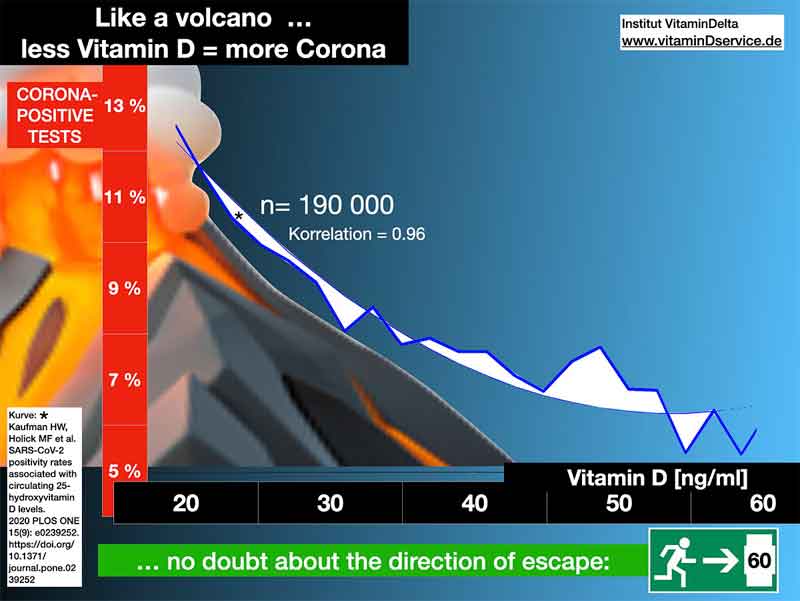
Analysis of vitamin D results from the preceding 12 months and SARS-CoV-2 test data from mid-March through mid-June 2020 from 191,779 patients revealed the higher the vitamin D level the lower the risk of testing positive for SARS-CoV-2.
People with a vitamin D level of at least 55 ng/mL (138 nmol/L) had a 47% lower SARS-CoV-2 positivity rate compared to those with a level below 20 ng/mL (50 nmol/L).17
“The evidence for vitamin D is overwhelming. During a pandemic, all people should take a vitamin D supplement.” ~ Dr. David Grimes
Even after adjustment for gender, age, ethnicity and latitude, the risk of having a positive test result was 43% lower among those with a vitamin D level of 55 ng/mL compared to those with a level of 20 ng/mL.
Granted, there are many reasons to be suspicious of COVID-19 tests. They may well be worthless, considering the high rate of false positives. Still, at present, it’s the only metric we have to assess the potential value of any given intervention.
Experts Weigh in on Vitamin D
In the video above, Holick, along with Rufus Greenbaum, a citizen scientist in the U.K., physicist Gareth Davies, Ph.D., and Drs. William Grant and David Grimes present important new information about vitamin D as it relates to COVID-19:
•Holick discusses his two studies summarized above. He also reviews:
◦The importance of vitamin D for healthy immune function and how it affects cytokine production and cytokine storms
◦Minimum and ideal vitamin D levels
◦Suggested minimum dosages and evidence showing vitamin D is nontoxic even at doses of 20,000 IUs a day
◦How to calculate your vitamin D production from sun exposure using the D-Minder app,18 which he helped develop
•Grant provides an overview of more than 15 vitamin D trials published around the world, showing:
◦Vitamin D lowers your risk of testing positive for SARS-CoV-2 and/or being diagnosed with COVID-19
◦Reduces your risk of severe infection
◦Improves clinical outcomes in hospitalized COVID-19 patients and reduces need for intensive care and/or mechanical ventilation
◦Increases survival in COVID-19 patients with acute respiratory failure
◦Lowers COVID-19 related fatality rates, and more
•Davies explains how his team used artificial intelligence and causal interference to demonstrate the influence of vitamin D deficiency on COVID-19 outbreaks and illness severity around the world.
According to Davies, the data unequivocally proves vitamin D deficiency worsens COVID-19 outcomes, and the biological mechanisms behind these effects — including vitamin D’s effect on your innate immune system, adaptive immune system, ACE2 receptors and renin-angiotensin system — are well-documented
•Grimes reviews and explains how various studies showing a correlation between vitamin D levels and COVID-19 risks end up fulfilling Bradford Hill’s criteria for causation.
As explained by Grimes, “proof” is “the fulfilment of predetermined criteria.” Proof is never absolute. Bradford Hill criteria are used in medical science when trying to establish an argument for causation. These criteria, which are explained in further detail by Grimes, include the following.19
| Strength of association | Consistency | Specificity |
| Temporality/temporal sequence | Plausibility | Biologic rationale |
| Coherence | Experimental evidence | Analogous evidence |
If these criteria are satisfactorily fulfilled, you have pragmatic proof of causation — in this case that vitamin D deficiency has a direct impact on COVID-19. According to Grimes:
“The evidence for vitamin D is overwhelming, so my conclusion is that during a pandemic, all people should take a vitamin D supplement.”
•Lastly, Greenbaum reviews U.K. data showing the level of vitamin D deficiency at various times of year, and lays out a plan of action moving forward
Britons Are Sorely Deficient in Vitamin D
As noted by Greenbaum, the information presented is aimed at everyone, including national and local health policy experts, politicians, health care professionals, insurance companies and laypersons.
Additional information can be found on vitaminduk.com. There, you can also download each expert’s presentation. For clarity, the U.S. and Europe use different units of measure for vitamin D. The U.S. uses ng/mL and Europe, including the U.K. use nmol/L. You can easily translate ng/mL into nmol/L by multiplying the ng/mL measurement by 2.5.
For reference, GrassrootsHealth experts (which include Holick) recommend a vitamin D level between 40 ng/mL and 60 ng/mL (100 nmol/L to 150 nmol/L) for optimal health and disease prevention.
For bone health, a level of 30 ng/mL (75 nmol/L) is recommended. In the U.S., a vitamin D level below 20 ng/mL (50 nmol/L) is considered deficient, whereas the U.K. department of health defines deficiency as a level below 10 ng/mL (25 ng/mL).
According to Greenbaum’s data, many Britons are so deficient in vitamin D that to achieve a target level of 100 nmol/L or higher, they need to increase their blood levels of vitamin D by four to six times.
Now’s the Time to Optimize Your Vitamin D Level
As we move into fall in the Western Hemisphere, now’s the time to start optimizing your vitamin D level. Experts are already warning that SARS-CoV-2 may reemerge in the fall when temperatures and humidity levels drop, thereby increasing the virus’ transmissibility. Optimizing your vitamin D is particularly important if you are elderly or have darker skin. To make sure your immune system has a chance to work optimally, follow these three steps.
1.Measure your vitamin D — First, find out what your baseline vitamin D level is. This is done with a simple blood test. An easy and cost-effective way of doing this is to order GrassrootsHealth’s vitamin D testing kit.
Once you know what your blood level is, you can assess the dose needed to maintain or improve your level. Again, the ideal level you’re looking for is above 40 ng/mL, and ideally between 60 ng/mL and 80 ng/mL (European measurement: 100 nmol/L or, ideally, 150 nmol/L to 200 nmol/L).
2.Assess your individualized vitamin D3 dosage — The following chart can provide you with a basic starting point:
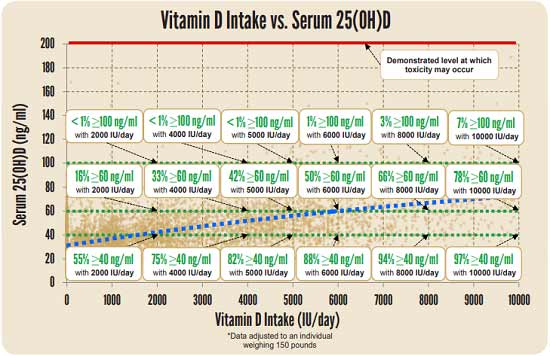
You can fine-tune your dosage further by taking into account your baseline vitamin D level. To do that, you can either use the chart below, or use GrassrootsHealth’s Vitamin D*calculator. (To convert ng/mL into nmol/L, simply multiply the ng/mL measurement by 2.5.)
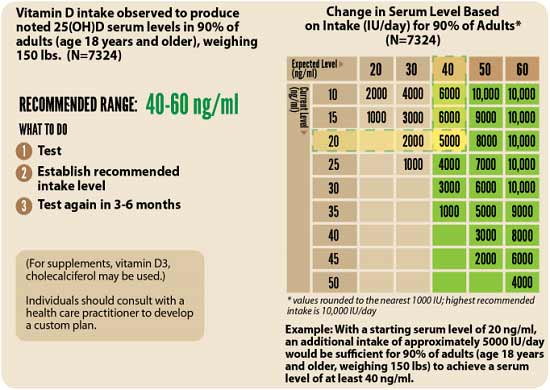
3.Retest — Lastly, you’ll need to remeasure your vitamin D level in three to six months, to evaluate how your sun exposure and/or supplement dose is working for you.
For more details about how vitamin D can help prevent and combat COVID-19, see my special report, available for free download on StopCOVIDcold.com (no opt-in required). There, you can also find a two-minute COVID risk quiz to assess your personal risk for developing COVID-19.
- 1, 8, 10 The Telegraph September 26, 2020 (Archived)
- 2 The Journal of Steroid Biochemistry and Molecular Biology August 29, 2020 [Epub ahead of print]
- 3, 6, 7 Chrismasterjohnphd.com September 3, 2020
- 4 Medium September 4, 2020
- 5, 9 GrassrootsHealth, Vitamin D treatment for COVID-19 patients nearly erased need for ICU admission
- 11, 14 PLOS ONE September 25, 2020 DOI: 10.1371/journal.pone.0239799
- 12 SciTechDaily September 27, 2020
- 13 MSN September 26, 2020
- 15 GrassrootsHealth Michael Holick
- 16, 17 PLOS ONE September 17, 2020 DOI: 10.1371/journal.pone.0239252
- 18 D-Minder App
- 19 The Journal of Neuropsychiatry and Clinical Neuroscience August 1, 2001\
B Vitamins Might Help Prevent Worst COVID-19 Outcomes
Reproduced from original article:
https://articles.mercola.com/sites/articles/archive/2020/10/02/b-vitamins-might-help-prevent-worst-covid19-outcomes.aspx
Analysis by Dr. Joseph Mercola Fact Checked October 02, 2020

STORY AT-A-GLANCE
- While no studies using B vitamins have been performed on COVID-19 patients, researchers stress that, based on B vitamins’ effects on your immune system, immune-competence and red blood cells, supplementation may be a useful adjunct to other prevention and treatment strategies
- One of the factors that make COVID-19 so dangerous to those with underlying conditions or old age is its ability to overactivate your immune system, triggering a cytokine storm
- B vitamins — B1, B2, B3, B5, B6, B9 and B12 — play important roles in cell functioning, energy metabolism and proper immune function, and can play important roles in minimizing your risk of cytokine storm
- B vitamins are involved in the activation of both the innate and adaptive immune responses. They help reduce proinflammatory cytokine levels, improve respiratory function, maintain endothelial integrity, prevent hypercoagulability and can reduce the length of hospital stays
- Dietary source for B vitamins are listed, along with suggestions if you need supplementation
I’ve written many articles reviewing how nutrients such as vitamins C and D can help prevent and even play a role in the treatment of COVID-19. Now, researchers have highlighted the value of yet another vitamin or, rather, complex of vitamins, namely B vitamins.
The paper,1,2,3,4 “Be Well: A Potential Role for Vitamin D in COVID-19,” was published online August 15, 2020, in the journal Maturitas. The paper is the result of a joint collaboration between researchers at the University of Oxford, United Arab Emirates University and the University of Melbourne, Australia.
While no studies using B vitamins have been performed on COVID-19 patients, the researchers stress that, based on B vitamins’ effects on your immune system, immune-competence and red blood cells (which help fight infection), supplementation may be a useful adjunct to other prevention and treatment strategies. They are not suggesting B vitamins might prevent or treat COVID-19 by themselves.
Why Well-Regulated Immune Function Is Essential
One of the factors that make COVID-19 so dangerous to those with underlying conditions or old age is its ability to overactivate your immune system, triggering cytokine and/or bradykinin storms.
In a poorly regulated immune system, the body’s cytokine storm induced by COVID cause lots of inflammation in the body, just as if little grenades were being tossed around. This is what causes the worst outcomes and death in COVID. ~ Dr. Uma Naidoo
By strengthening and modulating immune function, in other words, making it function more appropriately and effectively, nutrients such as vitamins B, C and D can play important roles in minimizing your risk of this deadly development. As explained by Dr. Uma Naidoo, a nutrition expert at Harvard Medical School, who was not involved in the paper:5
“You can think of the immune system as an army. Its job is to protect the body. But if the immune system army isn’t well-regulated, it can overreact and actually cause more damage — this overreaction is what often happens in COVID-19 and is referred to as the cytokine storm.
Cytokines are inflammatory molecules released by immune cells. They are like the weapons of the immune system army. So, if immune cells are soldiers, cytokines are guns and grenades.
And in a poorly regulated immune system, the body’s cytokine storm induced by COVID cause lots of inflammation in the body, just as if little grenades were being tossed around. This is what causes the worst outcomes and death in COVID.
It follows that anything that improves immune system function and decreases the chances that an infected person will have a catastrophic cytokine storm may improve the outcome of COVID-19 cases and decrease the overall death rate. Therefore, it’s quite feasible that B-vitamin supplementation could contribute to preventing the worst COVID outcomes.”
B Vitamins for Healthy Immune Function
As noted by the authors of “Be Well: A Potential Role for Vitamin D in COVID-19”:6
“There is a need to highlight the importance of vitamin B because it plays a pivotal role in cell functioning, energy metabolism, and proper immune function.
Vitamin B assists in proper activation of both the innate and adaptive immune responses, reduces pro-inflammatory cytokine levels, improves respiratory function, maintains endothelial integrity, prevents hypercoagulability and can reduce the length of stay in hospital.
Therefore, vitamin B status should be assessed in COVID-19 patients and vitamin B could be used as a non-pharmaceutical adjunct to current treatments …
Vitamin B not only helps to build and maintain a healthy immune system, but it could potentially prevent or reduce COVID-19 symptoms or treat SARS-CoV-2 infection. Poor nutritional status predisposes people to infections more easily; therefore, a balanced diet is necessary for immuno-competence.”
The graphic below illustrates the roles various B vitamins play in the COVID-19 disease process. As you can see, B vitamins are involved in several disease aspects, including viral replication and invasion, cytokine storm induction, adaptive immunity and hypercoagulability.
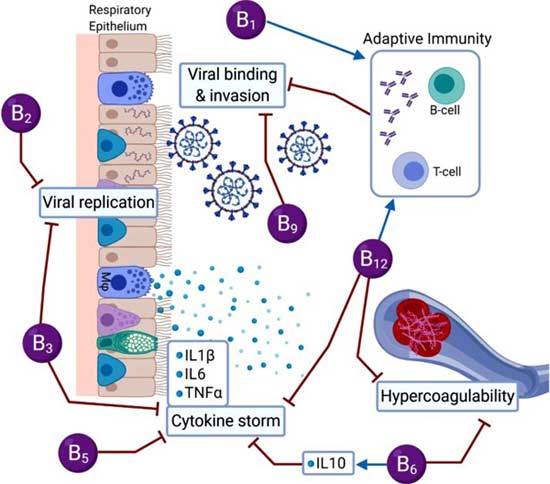
B Vitamins Play Many Roles in COVID-19 Disease Process
The paper goes on to detail how each B vitamin can be used to manage COVID-19 symptoms:
| Vitamin B1 (thiamine) — Thiamine improves immune system function, protects cardiovascular health, inhibits inflammation and aids in healthy antibody responses. Vitamin B1 deficiency can result in an inadequate antibody response, thereby leading to more severe symptoms. There’s also evidence suggesting B1 may limit hypoxia. |
| Vitamin B2 (riboflavin) — Riboflavin in combination with ultraviolet light has been shown to inhibit replication of the MERS-CoV virus, and the combination has also been shown to decrease the infectious titer of SARS-CoV-2 below the detectable limit in human blood, plasma and platelet products. |
Vitamin B3 (niacin/nicotinamide) — Niacin is a building block of NAD and NADP, which are vital when combating inflammation. As explained in “Be Well: A Potential Role for Vitamin D in COVID-19”:7
|
| Vitamin B5 (pantothenic acid) — Vitamin B5 aids in wound healing and reduces inflammation. |
| Vitamin B6 (pyridoxal 5′-phosphate/pyridoxine) — Pyridoxal 5′-phosphate (PLP), the active form of vitamin B6, is a cofactor in several inflammatory pathways. Vitamin B6 deficiency is associated with dysregulated immune function. Inflammation increases the need for PLP, which can result in depletion.
According to the authors, in COVID-19 patients with high levels of inflammation, B6 deficiency may be a contributing factor. What’s more, B6 may also play an important role in preventing the hypercoagulation seen in some COVID-19 patients:8
|
| Vitamin B9 (folate/folic acid) — Folate, the natural form of B9 found in food, is required for the synthesis of DNA and protein in your adaptive immune response.
Folic acid, the synthetic form typically found in supplements, was recently found9 to inhibit furin, an enzyme associated with viral infections, thereby preventing the SARS-CoV-2 spike protein from binding to and gaining entry into your cells. The research10 suggests folic acid may therefore be helpful during the early stages of COVID-19. Another recent paper11 found folic acid has a strong and stable binding affinity against SARS-CoV-2. This too suggests it may be a suitable therapeutic against COVID-19. |
| Vitamin B12 (cobalamin) — B12 is required for healthy synthesis of red blood cells and DNA. A deficiency in B12 increases inflammation and oxidative stress by raising homocysteine levels. Your body can eliminate homocysteine naturally, provided you’re getting enough B9 (folate), B6 and B12.12
Hyperhomocysteinemia — a condition characterized by abnormally high levels of homocysteine — causes endothelial dysfunction, activates platelet and coagulation cascades and decreases immune responses. B12 deficiency is also associated with certain respiratory disorders. Advancing age can diminish your body’s ability to absorb B12 from food,13 so the need for supplementation may increase as you get older. According to “Be Well: A Potential Role for Vitamin D in COVID-19”:14
|
How to Improve Your Vitamin B Status
As a general rule, I recommend getting most if not all of your nutrition from real food, ideally organic to avoid toxic pesticides, and locally grown. Depending on your situation and condition, however, you may need one or more supplements.
To start, review the following listing of foods that contain the B vitamins discussed in this article. If you find that you rarely or never eat foods rich in one or more of these nutrients, you may want to consider taking a high quality, ideally food-based supplement.
Also consider limiting sugar and eating fermented foods. The entire B group vitamin series is produced within your gut, assuming you have healthy gut flora. Eating real food, including plenty of leafy greens and fermented foods, will provide your microbiome with important fiber and beneficial bacteria to help optimize your internal vitamin B production.
| Nutrient | Dietary Sources | Supplement Recommendations |
|---|---|---|
| Vitamin B1 | Pork, fish, nuts and seeds, beans, green peas, brown rice, squash, asparagus and seafood.15 | The recommended daily allowance for B1 is 1.2 mg/day for men and 1.1 mg/day for women.16 |
| Vitamin B2 | Eggs, organ meats, lean meats, green vegetables such as asparagus, broccoli and spinach.17 | The RDA is 1.1 mg for adult women and 1.3 mg for men.
Your body cannot absorb more than about 27 mg at a time, and some multivitamins or B-complex supplements may contain unnecessarily high amounts.18 |
| Vitamin B3 | Liver, chicken, veal, peanuts, chili powder, bacon and sun-dried tomatoes have some of the highest amounts of niacin per gram.19
Other niacin-rich foods include baker’s yeast, paprika, espresso coffee, anchovies, spirulina, duck, shiitake mushrooms and soy sauce.20 |
The dietary reference intake established by the Food and Nutrition Board ranges from 14 to 18 mg per day for adults.
Higher amounts are recommended depending on your condition. For a list of recommended dosages, see the Mayo Clinic’s website.21 |
| Vitamin B5 | Beef, poultry, seafood, organ meats, eggs, milk, mushrooms, avocados, potatoes, broccoli, peanuts, sunflower seeds, chickpeas and brown rice.22 | The RDA is 5 mg for adults over the age of 19.
Pantothenic acid in dietary supplements is often in the form of calcium pantothenate or pantethine.23 |
| Vitamin B6 | Turkey, beef, chicken, wild-caught salmon, sweet potatoes, potatoes, sunflower seeds, pistachios, avocado, spinach and banana.24,25 | Nutritional yeast is an excellent source of B vitamins, especially B6.26
One serving (2 tablespoons) contains nearly 10 mg of vitamin B6. Not to be confused with Brewer’s yeast or other active yeasts, nutritional yeast is made from an organism grown on molasses, which is then harvested and dried to deactivate the yeast. It has a pleasant cheesy flavor and can be added to a number of different dishes. |
| Vitamin B9 | Fresh, raw, organic leafy green vegetables, especially broccoli, asparagus, spinach and turnip greens, and a wide variety of beans, especially lentils, but also pinto beans, garbanzo beans, kidney beans, navy and black beans.27 | Folic acid is a synthetic type of B vitamin used in supplements; folate is the natural form found in foods.
(Think: Folate comes from foliage, edible leafy plants.) For folic acid to be of use, it must first be activated into its biologically active form (L-5-MTHF). Nearly half the population has difficulty converting folic acid into the bioactive form due to a genetic reduction in enzyme activity. For this reason, if you take a B-vitamin supplement, make sure it contains natural folate rather than synthetic folic acid. Nutritional yeast is an excellent source.28 Research29 also shows your dietary fiber intake has an impact on your folate status. For each gram of fiber consumed, folate levels increased by nearly 2%. The researchers hypothesize that this boost in folate level is due to the fact that fiber nourishes bacteria that synthesize folate in your large intestine. |
| Vitamin B12 | Vitamin B12 is found almost exclusively in animal tissues, including foods like beef and beef liver, lamb, snapper, venison, salmon, shrimp, scallops, poultry, eggs and dairy products.
The few plant foods that are sources of B12 are actually B12 analogs that block the uptake of true B12. |
Nutritional yeast is high in B12, and is highly recommended for vegetarians and vegans.
One serving (2 tablespoons) provides nearly 8 mcg of natural vitamin B12.30 Sublingual (under-the-tongue) fine mist spray or vitamin B12 injections are also effective, as they allow the large B12 molecule to be absorbed directly into your bloodstream. |
- 1, 6 Maturitas August 15, 2020 DOI: 10.1016/j.maturitas.2020.08.007 [Epub ahead of print]
- 2 AOL August 28, 2020
- 3 MSN August 28, 2020
- 4, 5 Yahoo August 27, 2020
- 7 Maturitas August 15, 2020 DOI: 10.1016/j.maturitas.2020.08.007 [Epub ahead of print], 1.3. Vitamin B3
- 8 Maturitas August 15, 2020 DOI: 10.1016/j.maturitas.2020.08.007 [Epub ahead of print], 1.5. Vitamin B6
- 9, 10 ChemRxiv March 30, 2020 DOI: 10.26434/chemrxiv.12034980.v1 (PDF)
- 11 Research Square May 26, 2020 DOI: 10.21203/rs.3.rs-31775/v1
- 12 PLoS ONE 5(9): e12244
- 13 New York Times September 6, 2016
- 14 Maturitas August 15, 2020 DOI: 10.1016/j.maturitas.2020.08.007 [Epub ahead of print], 1.7. Vitamin B12
- 15 My Food Data, Thiamine
- 16 Dietary Reference Intakes for B Vitamins
- 17, 18 NIH.gov Riboflavin
- 19 Healthaliciousness.com, Top 10 High Niacin Foods
- 20 Healthaliciousness.com, Niacin-Rich Foods
- 21 Mayo Clinic Niacin Dosing
- 22, 23 NIH.gov Pantothenic Acid
- 24 Worlds Healthiest Foods, Vitamin B6
- 25 Healthalisciousness.com, Top 10 Foods High in Vitamin B6
- 26, 30 Self Nutrition Data, Nutritional Yeast
- 27 Worlds Healthiest Foods, Folate
- 28 Chalkboard, Nutritional Yeast
- 29 American Journal of Clinical Nutrition 1997 Dec;66(6):1414-21
Vitamin D Cuts SARS-CoV-2 Infection Rate by Half
Reproduced from original article:
https://articles.mercola.com/sites/articles/archive/2020/09/28/coronavirus-infection-rate-vitamin-d.aspx
Fact Checked September 28, 2020

STORY AT-A-GLANCE
- Based on data from 191,779 American patients, people with a vitamin D level of at least 55 ng/mL (138 nmol/L) had a 47% lower SARS-CoV-2 positivity rate compared to those with a level below 20 ng/mL (50 nmol/L)
- Based on data from 7,807 Israelis, those with a vitamin D level above 30 ng/mL (75 nmol/L) had a 58% to 59% lower risk of testing positive for SARS-CoV-2 compared to those with a vitamin D level below 29 ng/mL (74 nmol/L)
- Having a vitamin D level below 30 ng/mL also approximately doubles your risk of being hospitalized with COVID-19, Israeli researchers found
- Spanish researchers found giving hospitalized COVID-19 patients supplemental calcifediol (a vitamin D3 analog) in addition to standard of care lowered ICU admissions from 50% to 2% and eliminated deaths
- An August 2020 study found patients who had a vitamin D level below 12 ng/mL (30 nmol/L) had a 6.12 times higher risk of severe disease requiring invasive mechanical ventilation, and a 14.7 times higher risk of death compared to those with a vitamin D level above 12 ng/mL
Evidence showing vitamin D lowers your risk of SARS-CoV-2 infection, hospitalization, severe complications and death continues to mount. Most recently, a September 17, 2020, paper1 in PLOS ONE found people with lower vitamin D levels in their blood had a significantly higher risk of testing positive for SARS-CoV-2.
Higher Vitamin D Lowers Risk of Positive SARS-CoV-2 Test
The lead researcher in this study was Dr. Michael Hollick, who is widely recognized as one of the leading vitamin D experts in the world. I have interviewed him twice in the past. He and his team used retrospective observational analysis of SARS-CoV-2 tests to determine whether vitamin D blood levels impacted positivity rates.
Based on vitamin D results from the preceding 12 months and SARS-CoV-2 test data from mid-March through mid-June 2020 from 191,779 patients from 50 U.S. states, people with a vitamin D level of at least 55 ng/mL (138 nmol/L) had a 47% lower SARS-CoV-2 positivity rate compared to those with a level below 20 ng/mL (50 nmol/L).2 As noted by the authors:
“The SARS-CoV-2 positivity rate was 9.3% and the mean seasonally adjusted 25(OH)D was 31.7 [ng/mL]. The SARS-CoV-2 positivity rate was higher in the 39,190 patients with ‘deficient’ 25(OH)D values (<20 ng/mL) (12.5% …) than in the 27,870 patients with ‘adequate’ values (30–34 ng/mL) (8.1% …) and the 12,321 patients with values ≥55 ng/mL (5.9% …) …3
The risk of SARS-CoV-2 positivity continued to decline until the serum levels reached 55 ng/mL. This finding is not surprising, given the established inverse relationship between risk of respiratory viral pathogens, including influenza, and 25(OH)D levels.4
SARS-CoV-2 positivity is strongly and inversely associated with circulating 25(OH)D levels, a relationship that persists across latitudes, races/ethnicities, both sexes, and age ranges. Our findings provide impetus to explore the role of vitamin D supplementation in reducing the risk for SARS-CoV-2 infection and COVID-19 disease.”5
The graph below, obtained from GrassrootsHealth,6 shows how the rate of positive SARS-CoV-2 results declines as vitamin D levels go up. Again, as you increase your vitamin D level from 20 ng/mL to 55 ng/mL, your risk of having a positive SARS-CoV-2 test result decreases by 47%.
Even after adjustment for gender, age, ethnicity and latitude, the risk of having a positive test result was 43% lower among those with a vitamin D level of 55 ng/mL compared to those with a level of 20 ng/mL. I understand that the COVID-19 test may be worthless and counterproductive with its false positives, but it is the only metric we currently have to assess interventions.
Vitamin D Lowers Infection and Hospitalization Rates
That higher vitamin D levels lower the risk of SARS-CoV-2 infection (i.e., getting a positive test result) was also confirmed in an Israeli population-based study7,8 published in July 2020. This paper examined data from 7,807people tested for SARS-CoV-2 infection between February 1 and April 30 of 2020 who also had vitamin D test data available.
Here, those with a vitamin D level above 30 ng/mL (75 nmol/L) had a 59% lower risk of testing positive for SARS-CoV-2 compared to those with a vitamin D level between 20 ng/mL and 29 ng/mL (50 to 74 nmol/L), and a 58% lower risk compared to those with a vitamin D level below 20 ng/mL (50 nmol/L). The graph below, from a GrassrootsHealth report,9 illustrates the findings.
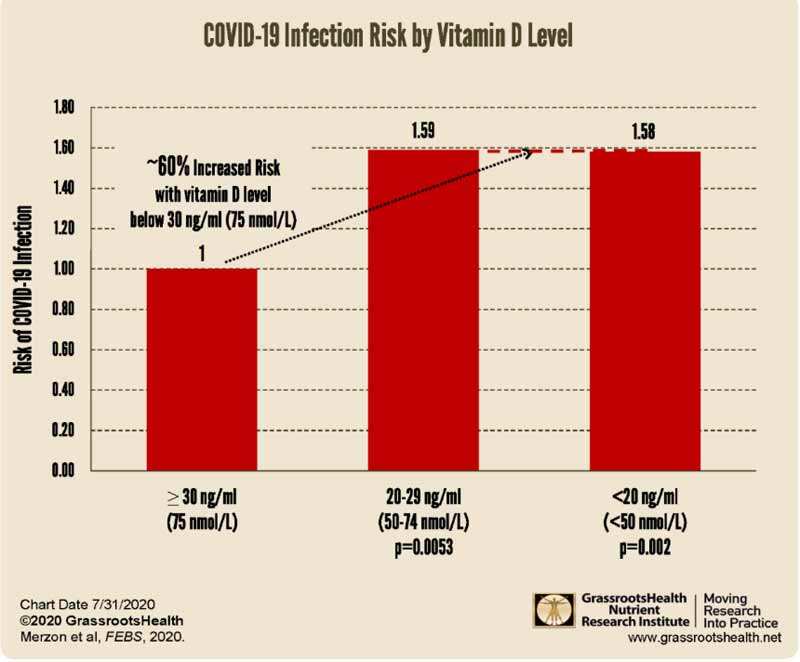
Vitamin D Lowers Hospital and ICU Admissions
Seeing how higher vitamin D levels lowers your risk of testing positive for SARS-CoV-2 in the first place, it’s no surprise then that other data show higher vitamin D also lowers hospital and intensive care admissions.
The Israeli analysis10 above, for example, found that among individuals who tested positive for SARS-CoV-2 infection, those who had a vitamin D level below 30 ng/mL also had a 1.95 times (crude odds ratio) to 2.09 times (odds ratio after adjustment for demographics and psychiatric and somatic disorders) higher risk of being hospitalized for COVID-19.
In other words, having a vitamin D level below 30 ng/mL about doubled the risk of being hospitalized with COVID-19. Vitamin D, when administered to hospitalized patients, can also lower their risk of needing intensive care.
This was demonstrated by Spanish researchers in a small randomized clinical study11,12,13,14 published online August 29, 2020. They found hospitalized COVID-19 patients who were given supplemental calcifediol (a vitamin D3 analog also known as 25-hydroxycholecalciferol or 25-hydroxyvitamin D) in addition to standard of care — which included the use of hydroxychloroquine and azithromycin — had significantly lower intensive care unit admissions.
Patients in the vitamin D arm received 532 micrograms of calcifediol on the day of admission (equivalent to 106,400 IUs of vitamin D15) followed by 266 mcg on Days 3 and 7 (equivalent to 53,200 IUs16). After that, they received 266 mcg once a week until discharge, ICU admission or death.
Of those receiving calcifediol, only 2% required ICU admission, compared to 50% of those who did not get calcifediol. None of those given vitamin D supplementation died, whereas 7.6% in the standard care group perished.
Vitamin D Lowers COVID-19 Mortality
Other studies have also confirmed that higher vitamin D levels lowers your risk of complications and death from COVID-19. Among them is an August 2020 study17,18 published in the journal Nutrients, which found patients who had a vitamin D level below 12 ng/mL (30 nmol/L) had a 6.12 times higher risk of severe disease requiring invasive mechanical ventilation, and a 14.7 times higher risk of death compared to those with a vitamin D level above 12 ng/mL.
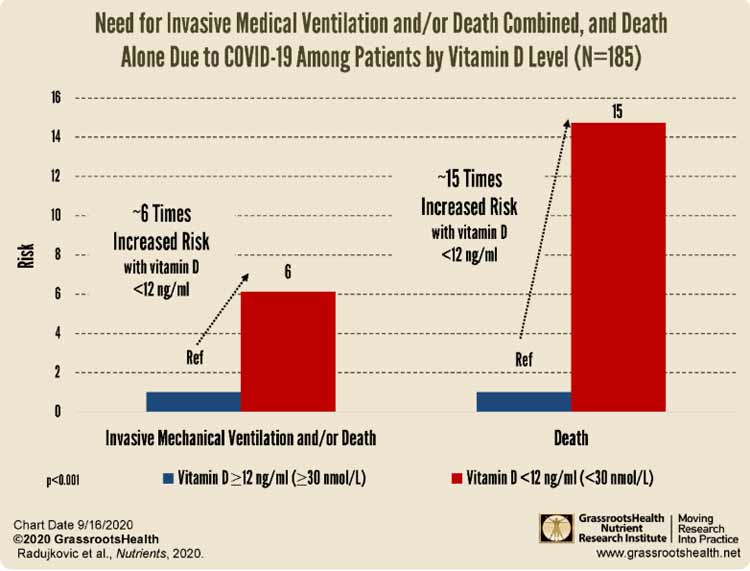
An Iranian study19,20 published online in mid-July 2020 also found that patients with vitamin D levels above 30 ng/mL (75 nmol/L) had better clinical outcomes and a far lower risk of death. Among COVID-19 patients over the age of 40 who had vitamin D levels below 30 ng/mL, 20% died, compared to 9.7% of those with levels at or above 30 ng/mL. Among those with a vitamin D level of at least 40 ng/mL, only 6.3% died.
Low Vitamin D Is a Risk Factor for Respiratory Failure
Yet another study, published in the Journal of Endocrinological Investigation in August 2020, found vitamin D deficiency was a common factor among hospitalized patients in Italy who had been diagnosed with COVID-19 related respiratory failure.
These considerations support the recommendation that people at risk of influenza and/or COVID-19 consider vitamin D supplementation to raise their 25(OH)D concentrations above 40-60 ng/mL, and that treatment of patients infected with influenza and/or COVID-19 includes higher vitamin D doses. ~ Journal of Endocrinological Investigation August 2020
As reported by GrassrootsHealth:21
“Vitamin D levels were measured for each patient and were defined as insufficient (20-29 ng/ml or 50-74 nmol/L), moderately deficient (10-19 ng/ml (25-49 nmol/L), and severely deficient (<10 ng/ml or <25 nmol/L). A normal vitamin D level was defined as 30 ng/ml (75 nmol/L) or higher.
81% of the patients with acute respiratory failure due to COVID-19 had vitamin D levels below 30 ng/ml (75 nmol/L); and 24% had severe vitamin D deficiency (≤10 ng/ml or ≤25 nmol/L).
When looking at mortality rates after 10 days of hospitalization, it was found that those with severe vitamin D deficiency had a 50% probability of death, compared to 5% among those with a vitamin D level greater than 10 ng/ml (25 nmol/L).
This is a 10 times higher risk of death among patients with severe vitamin D deficiency compared to patients with vitamin D levels >10 ng/ml (>25 nmol/L) at 10 days of hospitalization.”
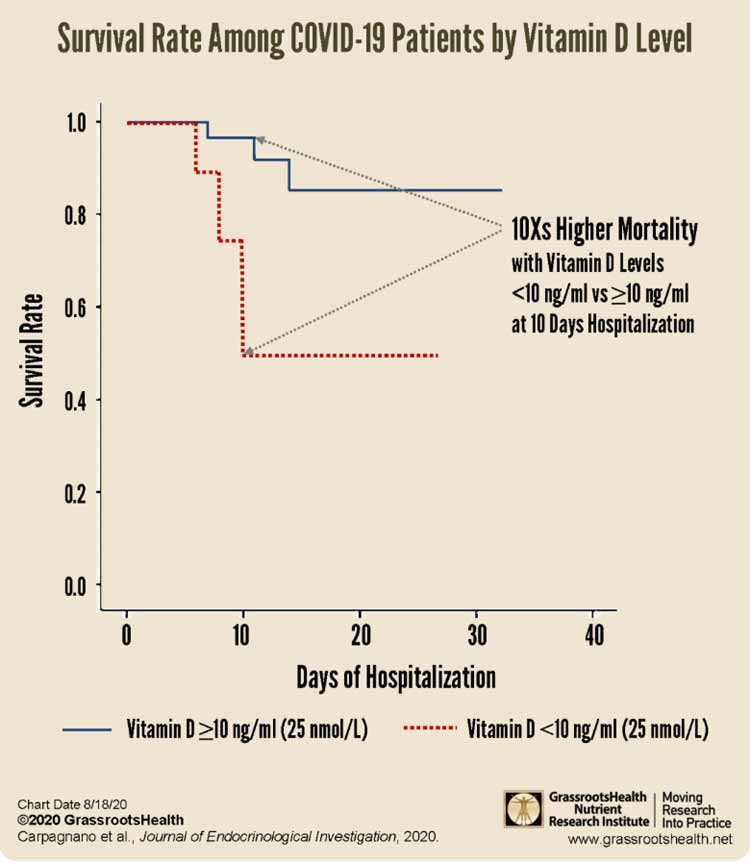
According to the study authors:
“Altogether, these considerations support the recommendation that people at risk of influenza and/or COVID-19 consider vitamin D supplementation to raise their 25(OH)D concentrations above 40-60 ng/mL, and that treatment of patients infected with influenza and/or COVID-19 includes higher vitamin D doses.”
How and Why Vitamin D Lowers COVID-19 Risks
In “Bradykinin Hypothesis Explains COVID-19 Complexities,” I reviewed how vitamin D lowers your risk of COVID-19 complications and death by inhibiting both cytokine22 and bradykinin storms.23 Vitamin D also:
| Lowers viral replication24 |
| Boosts your overall immune function by modulating both innate and adaptive immune responses |
| Reduces respiratory distress25 |
| Improves overall lung function |
| Helps produce surfactants in your lungs that aid in fluid clearance26 |
| Lowers your risk of comorbidities associated with poor COVID-19 prognosis, including obesity,27 Type 2 diabetes,28 high blood pressure29 and heart disease30 |
All of these factors make it an important component of COVID-19 prevention and treatment. As temperatures and humidity levels drop — two factors that influence the viability of SARS-CoV-2 in air and on surfaces — it’s quite likely we’ll see a reemergence as we move into fall and winter.
My #StopCOVIDCold campaign seeks to raise awareness about the importance of vitamin D optimization to prevent a resurgence of COVID-19 hospitalizations and deaths. The two reports, which you can download free of charge on the #StopCOVIDCold website, provide in-depth information about the biological mechanics behind vitamin D’s protective effects.
Now, as the northern hemisphere heads into autumn, is the ideal time to check your vitamin D level and start taking action to raise it if you’re below 40 ng/mL (100 nmol/L). Experts recommend a vitamin D level between 40 and 60 ng/ml (100 to 150 nmol/L). An easy and cost-effective way of measuring your vitamin D level is to order GrassrootsHealth’s vitamin D testing kit.
Once you know your current vitamin D level, use the GrassrootsHealth vitamin D calculator31 to determine how much vitamin D you might need to reach your target level.
To optimize vitamin D absorption and utilization, be sure to take your vitamin D with vitamin K2 and magnesium. As explained in “Magnesium and K2 Optimize Your Vitamin D Supplementation,” taking magnesium and vitamin K2 can lower your oral vitamin D requirement by as much as 244%.
Lastly, remember to retest in three to four months to make sure you’ve reached your target level. If you have, then you know you’re taking the correct dosage. If you’re still low (or have reached a level above 80 ng/mL), you’ll need to adjust your dosage accordingly and retest again in another three to four months.
- 1, 2, 4 PLOS ONE September 17, 2020 DOI: 10.1371/journal.pone.0239252
- 3, 5 PLOS ONE September 17, 2020 DOI: 10.1371/journal.pone.0239252, Abstract
- 6 Analysis of over 190,000 US COVID-19 test results shows positivity rate halved with vitamin D levels of 55 ng/ml or higher vs. less than 20 ng/ml
- 7, 10 The FEBS Journal July 2020; 287(17)
- 8, 9 GrassrootsHealth, Vitamin D level below 30 ng/mL an independent risk factor for COVID-19
- 11 The Journal of Steroid Biochemistry and Molecular Biology August 29, 2020 [Epub ahead of print]
- 12, 15, 16 Chrismasterjohnphd.com September 3, 2020
- 13 Medium September 4, 2020
- 14 GrassrootsHealth, Vitamin D treatment for COVID-19 patients nearly erased need for ICU admission
- 17 Nutrients 2020; 12(9): 2757
- 18 GrassrootsHealth, 15 fold higher risk of death due to COVID-19 with vitamin D below 12 ng/mL
- 19 Preprints with The Lancet July 14, 2020
- 20 GrassrootsHealth, Higher Vitamin D status associated with better clinical outcomes in patients hospitalized with COVID-19
- 21 GrassrootsHealth, Increased mortality rate among COVID-19 ARDS patients with severe vitamin D deficiency
- 22 NFS Journal 2020 Aug; 20: 10–21
- 23 eLife July 7, 2020; 9:e59177
- 24 Nutrients, 2020;12:988
- 25 Advances in Pharmacological Sciences 2018; 2018: 8494816
- 26 ATS Journals October 5, 2010; 183(10)
- 27 Medicina 2019 Sep; 55(9): 541
- 28 Diabetes.co.uk January 15, 2019
- 29 The Lancet Diabetes & Endocrinology September 1, 2014; 2(9): 682-684
- 30 Current Treatment Options in Cardiovascular Medicine 2012 Aug; 14(4): 414–424
- 31 GrassrootsHealth Vitamin D Calculator
Sunlight Makes Coronavirus Tests Turn Negative
Reproduced from original article:
https://articles.mercola.com/sites/articles/archive/2020/09/26/sunlight-makes-coronavirus-tests-turn-negative.aspx
Analysis by Dr. Joseph Mercola Fact Checked September 26, 2020

STORY AT-A-GLANCE
- Sensible sun exposure that raises your vitamin D level has once again been tied to lowering the number of positive SARS-CoV-2 tests
- Positive tests and deaths have declined over the summer, which may be the result of higher humidity, vitamin D and spending more time outside
- Vitamin D continues to demonstrate effectiveness against infectious diseases, yet deficiency is at a pandemic level across the world
- You can also reduce your risk of severe disease by becoming metabolically flexible, using molecular hydrogen, quercetin and zinc and becoming familiar with the MATH+ protocol
Once the social, economic and medical implications of COVID-19 had a hold on society, all eyes turned from nearly every other environmental and health-related concern to focus solely on the controversies and debates about how to treat and contain the virus and what to do about a vaccine. These are just some of the economic, political and social challenges people are facing:
• The initial panic resulted in the purchase of $3 billion worth of ventilators, 79,295 of which The Washington Post reports are sitting unused.1
• The question of whether or not to wear a mask has become one of the most hotly contested debates, despite research over the past decade demonstrating cloth masks are ineffective against viruses.2
• Hiding under the guise of “biodefense” and “biomedicine,” a network of virologists, military scientists and biotech entrepreneurs are weaponizing microorganisms and growing an arsenal of Frankenstein pathogens.
But as investigative reporter and bioweapons expert Sam Husseini writes, gain-of-function/biowarfare scientists in labs such as Wuhan, China, and Fort Detrick, Maryland, have been accused of deliberately and recklessly conducting nefarious types of research.3
• As part of Operation Warp Speed, Pfizer struck a $1.95 billion deal to provide the U.S. with 100 million doses of its COVID-19 vaccine to give the U.S. public for “free,” with an option for 500 million more.4
• As some people are considering whether they will submit to yet another vaccine, Yale University is conducting trials to determine the type of message that will maximize the number of people who will accept and use the vaccine.5
In other words, they are testing messages that will trigger an emotional response to raise the potential that you will say yes. This is a blatant and highly sophisticated form of salesmanship. The types of messages under investigation include those that address your personal freedom, self-interest, economic benefit and guilt.
The core message throughout this pandemic should have been how to protect your health and reduce the risk of severe disease. But, it hasn’t been. Instead, minor wars are being waged over financial decisions that may have little to do with you.
Sunlight Negatively Correlated With Positive Testing
Human coronaviruses are named for the appearance of spikes on the surface. There are four main subgroups, the first of which was identified in the mid-1960s. To date, the CDC has identified seven types of coronavirus that can infect humans, including MERS, SARS and SARS-CoV-2.6
Without the fanfare that has accompanied the proposed release of remdesivir, an antiviral medication costing $3,120 per dose to treat COVID-19,7 recently published data again revealed the simple and cost-free act of sensible sun exposure for fighting SARS-CoV-2 and four other human coronaviruses.8
The research team began with the knowledge that RNA viruses, such as human coronaviruses, are sensitive to ultraviolet radiation from the sun and that the “incidence and mortality of coronavirus disease 2019 (COVID-19) are considered to be correlated with vitamin D levels.”
Using these two points as a foundation, they sought to analyze the correlation between five types of human coronavirus and how much sunlight was needed for a negative test. Measurements were taken from April 17, 2020, to July 10, 2020, during which time the researchers found there was a significant negative correlation in four viruses with the amount of sunlight and a percent positive test.
The U.S. has four census regions, which the researchers used to categorize the findings. Census region No.1 includes the Northeast states bordered in the south by Pennsylvania. Census region No. 2 includes North Central states bordered on the south by Illinois, Indiana, Ohio, Missouri and Kansas.
Census No. 3 includes the Southern states bordered on the west by Texas and on the east by Florida’s Atlantic coast. Census region No. 4 is the West Coast, boarded on the east by Montana, Wyoming, Colorado and New Mexico.
Data indicate census regions 1 and 2 had a significant negative correlation with sunlight exposure (meaning sunlight reduced coronavirus infection), while regions 3 and 4 had a minimal positive correlation that was not statistically significant. The difference in these two areas may be explained by the significant heat during those months, driving people indoors to air conditioning.
Vitamin D Deficiency at Pandemic Levels
As more research demonstrates the effectiveness vitamin D has against infectious diseases and COVID-19, it’s important to note that vitamin D deficiency across the world is also at a pandemic level.
Deficiencies have been found in countries in the Southern Hemisphere where it was assumed there was enough exposure to UV radiation to prevent a vitamin D deficiency.9 However, a variety of factors likely influence this difference. For instance, the authors of one literature review found that women from the Middle East were particularly low in vitamin D.10
However, since many people in Middle Eastern countries practice Islam and the women do not go outside unless they are fully covered, the skin’s ability to produce vitamin D with exposure to the sun is inhibited.11
Another study involved the use of an international Vitamin D Standardization Program led by the National Institutes of Health to evaluate 14 population studies.12 The data showed that regardless of age, ethnicity or latitude, 13% of the 55,844 Europeans who were tested had serum vitamin D levels less than 12 ng/mL (30 nmol/L).
When an alternate level of deficiency was used, less than 20ng/mL (50 nmol/L), the prevalence was even higher at 40.4%. Additionally, when the group was subdivided by ethnicity, the data showed people with dark skin had a much higher level of deficiency than white populations, at rates of up to 71 times higher.
Sunscreen Advice Counter to Lifesaving Vitamin D
Remarkably, as the importance of vitamin D becomes more widely recognized, some doctors are continuing to advise against sensible sun exposure, vitamin D supplementation or both. For example, Dr. Pieter Cohen is an internal medicine physician at Cambridge Health Alliance in Massachusetts who has not recognized the importance of vitamin D at this time.
In an interview with Today, Cohen told the reporter he strongly discourages people from even getting a vitamin D test, and went on to say:13
“We don’t recommend vitamin D to our patients and I see no credible evidence that vitamin D has a role in either preventing or treating COVID-19. We might have evidence in the future that evolves and would change our opinion, but that’s the status here.
I would discourage anyone from thinking that any pill is going to resolve this problem. It’s going to be the meticulous social distancing, hand washing [and] wearing a mask that [are] going to be the key.”
As sensible sun exposure and vitamin D supplementation are relatively innocuous with little to no side effects when done appropriately, it seems rather peculiar to recommend people should not even be tested or take a supplement for the potential benefit they may receive.
The advice to use sunscreen while getting “incidental” exposure is also medically incorrect, since sunscreen filters out the ultraviolet rays that stimulate vitamin D production in your skin.
In order for sensible sun exposure to work, your skin must be unprotected, and you should be sure you don’t get sunburned. Stay out until your skin turns the lightest shade of pink and then cover with long sleeves and pants.
Positive Tests and Deaths Declined Over the Summer
Many respiratory illnesses decline over the summer. While it’s still possible to get a cold or flu, it’s less likely during the summer months. Since mid-July, indicators from the CDC show COVID-like illnesses and positive tests have declined in the U.S.14
The CDC also gathers data to tally the number of deaths from COVID-19 and pneumonia while excluding flu. The first death in this category was recorded February 22, 2020.15
The number peaked the week of April 18, 2020, at 7,292 deaths. By end of June the number had dropped significantly to 1,530. However, as a new report from the CDC reveals, 94% of the deaths attributed to COVID-19 happened in people who had other significant health conditions and contributing causes.16
For only 6% of the deaths, COVID-19 was the single cause on the death certificate. To make this comparison, it’s the difference between an individual dying FROM COVID-19 versus WITH COVID-19, since for many with a positive test they are asymptomatic and therefore do not qualify as a “case” of COVID-19 but, rather, as a positive test.
Some of the top contributing conditions were cardiac arrest, heart or renal failure, vascular or unspecified dementia, and influenza and pneumonia.17 In addition to rising vitamin D levels during the summer months, there are other factors that influence the transmission of infectious diseases and slow the spread. For instance, influenza is affected by both temperature and humidity.18
In one study conducted in New South Wales, Australia, researchers found a similar connection between humidity and COVID-19. A 1% decrease in humidity was predicted to increase the number of cases by 6.11%.19 In a separate study, the addition of a humidifier in the bedroom demonstrated a decrease in the survival of influenza virus, by 17.5% to 31.6%.20
During the cold winter months, people also spend more time indoors, in enclosed spaces with less ventilation. The same can be said during the heat of the summer when people seek relief indoors with air conditioning. During the fall and winter months, school is usually in session, which has been associated with a higher transmission of respiratory viruses.
Marc Lipsitch, professor of epidemiology and director of the Center for Communicable Disease Dynamics at the Harvard T.H. Chan School of Public Health also notes:21
“It is possible that the condition of the average person’s immune system is systematically worse in winter than summer. One hypothesis has focused on melatonin which has some immune effects and is modulated by the photoperiod, which varies seasonally. Another with more evidence is that vitamin D levels, which depend in part on ultraviolet light exposure (higher in summer) modulate our immune system in a positive way.”
Combine These Strategies With Raising Your Vitamin D Level
Vitamin D optimization is a powerful and beneficial strategy to protect your health. In my free report on vitamin D I’ve developed a resource you can use to share and help educate others. The only way you’ll know your vitamin D level is to test it. GrassrootsHealth has a home test kit that is simple to use and provides you with results at home.22
You’ll find a calculator at GrassrootsHealth.net that uses your current weight, serum level and daily supplement intake to estimate how much vitamin D3 you need to reach your desired vitamin D level.23 Yet, while crucial, it’s not the only thing available to help protect your health.
It’s particularly important to become metabolically flexible to help reduce the severity of a COVID-19 infection. The single most important step to attaining and maintaining metabolic flexibility is to reduce the number of hours during the day in which you eat.
When you do this, you decrease insulin resistance. In my book Fat for Fuel I discuss how to become metabolically flexible, including using intermittent fasting and cyclical nutritional ketosis.
The use of molecular hydrogen is another strategy, as it’s a powerful antioxidant and an anti-inflammatory agent. Using quercetin with zinc can further lower your risk. Quercetin acts as a zinc ionophore24 and has its own antiviral effects.25
One of the best treatments today is the MATH+ Protocol, first developed by the Front Line Covid-19 Critical Care Alliance.26 It’s designed to be used when someone is hospitalized and needs supplemental oxygen. You’ll find further information about each of these strategies in “How to Fix the COVID-19 Crisis in 30 Days.”
- 1 The Washington Post August 18, 2020
- 2 BMJ Open 2015;5:e006577. doi: 10.1136/bmjopen-2014-006577
- 3 Salon April 24, 2020
- 4 Pfizer, July 22, 2020
- 5 Clinicaltrials.gov COVID-19 Vaccine Messaging, Part 1, Identifier: NCT04460703
- 6 Centers for Disease Control and Prevention
- 7 NPR, June 29, 2020
- 8 Science of the Total Environment, 2021;751(141816)
- 9 Best Practice and Research Clinical Endocrinology and Metabolism, 2011;25(4)
- 10 Journal of Steroid Biochemistry and Molecular Biology, 2014;144PA:138
- 11 Center for Educational Technologies
- 12 American Journal of Clinical Nutrition, 2016;103(4)
- 13 Today, June 1, 2020
- 14 U.S. Centers for Disease Control and Prevention
- 15 Centers for Disease Control and Prevention, Daily Updates of Totals by Week and State
- 16 CDC
- 17 Fox 8, August 30, 2020
- 18 Journal of Virology DOI: 10.1128/JVI.03544-13
- 19 Transboundary and Emerging Diseases May 21, 2020
- 20 Environmental Health 2010;9(55)
- 21 Harvard Center for Communicable Disease Dynamics
- 22 GrassrootsHealth
- 23 GrassrootsHealth, Vitamin D calculator
- 24 Journal of Agricultural Food Chemistry August 13, 2014; 62(32): 8085-8093
- 25 Viruses, 2016;8(1)
- 26 covid19criticalcare.com
Winter Is Coming — How to Stop a Second Wave of COVID-19
Reproduced from original article:
https://articles.mercola.com/sites/articles/archive/2020/09/23/coronavirus-2nd-wave.aspx
Analysis by Dr. Joseph Mercola Fact Checked September 23, 2020
STORY AT-A-GLANCE
- Two recent studies highlight the effects of vitamin D on your renin-angiotensin system (RAS), and how raising your vitamin D level can reduce your risk of a lethal cytokine storm and bradykinin storm respectively
- A randomized clinical study found giving hospitalized COVID-19 patients calcifediol (a vitamin D3 analog) in addition to standard care reduced intensive care unit admissions from 50% to 2%. None of those given calcifediol died, and all were discharged without complications
- Vitamin D lowers viral replication, boosts your overall immune function by modulating both innate and adaptive immune responses, reduces respiratory distress, improves overall lung function and helps produce surfactants in your lungs that aid in fluid clearance
- Vitamin D also lowers your risk of comorbidities associated with poor COVID-19 prognosis, including obesity, Type 2 diabetes, high blood pressure and heart disease
- Now is the time to check your vitamin D level and start taking action to raise it if you’re below 40 ng/mL
Over the past few months, several investigations have highlighted the apparent influence of vitamin D in COVID-19 incidence, severity and mortality. Interestingly, recent genetic analysis has produced a novel hypothesis1 that helps explain the unusual disease progression of COVID-19.
The hypothesis,2 published in the journal eLife in July 2020, specifically identifies bradykinin, a blood pressure regulating chemical controlled by your renin-angiotensin system (RAS), as a primary culprit.
As reviewed in greater depth in “Bradykinin Hypothesis Explains COVID-19 Complexities,” the lethality of COVID-19 may be due to the virus’ ability to induce a bradykinin storm. The effects of the virus on your RAS also adds further support to the recommendation to optimize your vitamin D.
In fact, the researchers who came up with the novel bradykinin hypothesis stress the usefulness of vitamin D, as it plays an important role in the RAS system3,4,5,6 and suppresses the biosynthesis of a compound called renin (REN), thereby preventing a deadly bradykinin storm.
Conversely, if you are vitamin D deficient, your renin expression is stimulated, and based on the latest data, that may render you more prone to bradykinin storm. Other studies have also emerged in recent weeks, showing that raising patients’ vitamin D levels has a dramatic and beneficial effect on COVID-19 outcomes.
Vitamin D Massively Reduces ICU Admissions
Among them is a pilot randomized clinical study7,8,9 published online August 29, 2020, which found hospitalized COVID-19 patients in Spain who were given supplemental calcifediol (a vitamin D3 analog also known as 25-hydroxycholecalciferol or 25-hydroxyvitamin D) in addition to standard of care — which included the use of hydroxychloroquine and azithromycin — had significantly lower intensive care unit admissions.
Patients in the vitamin D arm received 532 micrograms of calcifediol on the day of admission (equivalent to 106,400 IUs of vitamin D10) followed by 266 mcg on Days 3 and 7 (equivalent to 53,200 IUs11). After that, they received 266 mcg once a week until discharge, ICU admission or death.
Of those receiving calcifediol, only 2% required ICU admission, compared to 50% of those who did not get calcifediol. None of those given vitamin D supplementation died, and all were discharged without complications.
CDC Warns of Second Wave of COVID-19
In the video above, NBC News interviews Michael Osterholm, virologist and director of the Center for Infectious Disease Research and Policy at the University of Minnesota in Minneapolis, about the prospect of a second wave of COVID-19.
According to Osterholm, we likely have another 12 to 14 months of “a really hard road ahead of us.” While Swedish statistics suggest the virus can and is dying off naturally, Osterholm believes cases will again rise as we move into fall and winter. Even if a vaccine does become available, it will take months to vaccinate the population, he notes.
There is ample evidence that various non-communicable diseases (hypertension, diabetes, CVD, metabolic syndrome) are associated with low vitamin D plasma levels. These comorbidities, together with the often concomitant vitamin D deficiency, increase the risk of severe COVID-19 events. ~ NFS Journal August 2020
Chief epidemiologist in charge of Sweden’s coronavirus response, Anders Tegnell, has stated12 he does not believe Sweden will see a second wave with widespread contagion as the country is seeing a rapid decline in positive tests, indicating herd immunity is being achieved.13
That said, there are still open questions as to how long natural immunity might last.14 Some evidence points to months,15 while other data point to several years.16 Then there are the data suggesting herd immunity for COVID-19 occurs at much lower rates than normal.
As reported17 by Dr. James Hamblin in The Atlantic, infectious disease modeling by Gabriela Gomes, who specializes in nonlinear chaos dynamics, “selective depletion” of individuals susceptible to infection can rapidly reduce viral spread, and in the case of SARS-CoV-2, models suggest the threshold for herd immunity may occur below 20% of the population.
Yet other data18,19,20,21 suggest certain antibodies against other coronaviruses, such as the common cold, appear to provide some protection against SARS-CoV-2 as well, such that a majority of people may already have some level of immunity. So, there’s a variety of “moving parts” that still need to be nailed down before we can come to any firm conclusions about future risks.

Vitamin D Versus Vaccine
While Osterholm22 and other health officials are still focused on getting people onboard with vaccination, both against influenza and COVID-19, no one at the federal level has as of yet addressed the elephant in the room, which is vitamin D deficiency and its impact on these infections.
Importantly, influenza vaccination has been shown23,24 — by the Department of Defense, no less — to increase the risk of subsequent coronavirus infections by 36%. If we are to follow the science, as Osterholm says, then we should not be so quick to overlook such findings.
Then, of course, there’s the issue of whether a safe and effective COVID-19 vaccine is achievable. I’ve discussed the reasons for why I believe COVID-19 vaccines will fail in several previous articles. Vitamin D optimization, in contrast, is already known to be both safe and effective against not only influenza but also COVID-1925,26,27 and other respiratory infections.28
According to a 2017 systematic review29,30,31 published in The BMJ, vitamin D supplementation protected against acute respiratory tract infection. The number needed to treat (NNT) was 33, meaning 33 people had to take the supplement in order to prevent a single case of infection. Among those with severe vitamin D deficiency at baseline, the NNT was 4.
Meanwhile, a systematic review32 by the Cochrane Database of Systematic Reviews found that to prevent one case of influenza-like illness (defined33 by the World Health Organization as an acute respiratory infection), the NNT for inactivated vaccines was 40. To prevent a single case of confirmed influenza, the number needed to vaccinate (NNV) was 71.
Vitamin D Is an Important Modifier of COVID-19 Risk
In a November 1, 2020, commentary34 in the journal Metabolism Clinical and Experimental, JoAnn Manson and Shari Bassuk call for the elimination of vitamin D deficiency to effectively squelch the COVID-19 pandemic, noting that 23.3% of the total U.S. population have insufficient or deficient vitamin D levels, with people of color having disproportionately lower levels than non-Hispanic whites.
They list several types of studies showing vitamin D deficiency is “an important modifiable risk factor for COVID-19,” including:35
•Laboratory studies that demonstrate how vitamin D helps regulate immune function and the RAS, and modulate inflammatory responses to infection.
•Ecologic studies showing populations with lower vitamin D levels or lower UVB radiation exposure have higher COVID-19 mortality,36,37,38 and the fact that people identified as being at greatest risk for COVID-19 hospitalization and death (people of color, the elderly, nursing home residents and those with comorbidities such as obesity, vascular conditions and chronic kidney disease) also have a higher risk of vitamin D deficiency.
•Observational studies showing low vitamin D levels are associated with a greater risk of testing positive for SARS-CoV-2 and contracting acute respiratory infections.
According to a September 3, 2020, JAMA study,39,40 people who tested positive for SARS-CoV-2 were 1.77 times more likely to be deficient in vitamin D than those who tested negative for the virus — a statistically significant difference.
CTV News, which reported the JAMA results, also pointed out that:41 “The connection between vitamin D and other respiratory illnesses is well known.
According to the World Health Organization,42 vitamin D deficiency has been linked to pneumonia, tuberculosis and bronchiolitis,” and that “research43 out of New Orleans found 100% of its sickest COVID-19 patients were deficient in vitamin D.”
•Randomized clinical trials showing vitamin D inhibits respiratory tract infections, especially in those with lower vitamin D levels at baseline.
Vitamin D Protects Your Lungs
A 2020 GrassrootsHealth study published in the journal Nutrients44 describes how vitamin D can reduce the risk of both influenza and SARS-CoV-2 infection by lowering the viral replication rate and reducing the pro-inflammatory cytokines that damage the lungs, leading to pneumonia.
Vitamin D also helps increase concentrations of anti-inflammatory cytokines that may help protect your lungs. The researchers recommended those at risk for COVID-19 take:
“10,000 IU/d of vitamin D3 for a few weeks to rapidly raise 25(OH)D concentrations, followed by 5000 IU/d. The goal should be to raise 25(OH)D concentrations above 40-60 ng/mL (100-150 nmol/L).”
Vitamin D and COVID-19 Comorbidities
Vitamin D may also help protect against COVID-19 by beneficially impacting many of the comorbidities associated with poor COVID-19 prognosis. In an August 2020 paper45 published in the NSF Journal, the authors review the “fatal relationship” between vitamin D deficiency in combination with comorbidities in COVID-19 patients, noting that:
” … low vitamin D status is common in Europe with the exception of the Scandinavian countries. The calculated COVID-19 mortality rate from 12 European countries shows a significant inverse correlation with the mean 25(OH)D plasma concentration.
This raises the question whether insufficient vitamin D supply has an influence on the course of COVID-19 disease? An analysis of the distribution of COVID-19 infections showed a correlation between geographical location (30–50° N+), mean temperature between 5–11 °C and low humidity.
In a retrospective cohort study (1,382 hospitalized patients) 326 died … The mortality of COVID-19 (cases/ million population) shows a clear dependence on latitude. Below latitude 35, mortality decreases markedly. Indeed, there are exceptions … however, the management of the pandemic may increase infection risk …
Older age and comorbidities are linked to an insufficient vitamin D supply. Over 60 years of age, a reduction in the synthesis of vitamin D in the skin becomes apparent, which further increases getting older …
Based on a meta-analysis including 30 studies with 53,000 COVID-19 patients, co-morbidities are risk factors for disease severity … Comorbidities and old age show a relationship with Renin-Angiotensin-Aldosteron-System (RAS), vitamin D status and COVID-19 infection.”
How Vitamin D Helps Modulate SARS-CoV-2 Infection
This brings us back to where I started. While this NSF Journal study does not make reference to bradykinin storm being part of the disease progression and lethality of COVID-19, it does review how vitamin D impacts your RAS (which regulates bradykinin), and how your RAS in turn plays a role in the progression of SARS-CoV-2 infection:46
“Infection with SARS-CoV-2 causes the virus spike protein to come into contact with ACE2 on the cell surface and thus to be transported into the cell. This endocytosis causes upregulation of a metallopeptidase (ADAM17), which releases ACE2 from the membrane, resulting in a loss of the counter regulatory activity to RAS.
As a result, proinflammatory cytokines are released extensively into the circulation. This leads to a series of vascular changes, especially in the case of preexisting lesions, which can promote further progression of cardiovascular pathologies.
SARS-CoV-2 not only reduces the ACE2 expression, but also leads to further limitation of the ACE2/Ang 1–7/Mas axis via ADAM17 activation, which in turn promotes the absorption of the virus. This results in an increase in Ang II, which further upregulates ADAM 17.
Thus a vicious circle is established turning into a constantly self-generating and progressive process. This process may contribute not only to lung damage (Acute respiratory distress syndrome – ARDS), but also to heart injury and vessels damage, observed in COVID-19 patients …
Several studies have shown increased plasma renin activity, higher Ang II concentrations and higher RAS activity as a consequence of low vitamin D status. The same applies to the decreasing Renin activity with increasing vitamin D levels. There is an inverse relationship between circulating 25(OH)D and renin, which is explained by the fact that vitamin D is a negative regulator of renin expression …”
The NSF Journal paper goes on to review the connections found between the RAS, vitamin D levels and a list of comorbidities shown to worsen COVID-19 outcomes, including high blood pressure, cardiovascular diseases, obesity, Type 2 diabetes and ARDS. It also reviews how vitamin D levels, RAS function and cytokine storms are interconnected. The authors state, in conclusion:47
“There is ample evidence that various non-communicable diseases (hypertension, diabetes, CVD, metabolic syndrome) are associated with low vitamin D plasma levels. These comorbidities, together with the often concomitant vitamin D deficiency, increase the risk of severe COVID-19 events.
Much more attention should be paid to the importance of vitamin D status for the development and course of the disease. Particularly in the methods used to control the pandemic (lockdown), the skin’s natural vitamin D synthesis is reduced when people have few opportunities to be exposed to the sun.
The short half-lives of the vitamin therefore make an increasing vitamin D deficiency more likely. Specific dietary advice, moderate supplementation or fortified foods can help prevent this deficiency. In the event of hospitalization, the status should be urgently reviewed and, if possible, improved.”
Summary
To summarize what the NSF and eLife journals tell us, when your vitamin D is low, your risk of COVID-19 complications and death increases because your renin expression is stimulated.
High renin increases both cytokines and bradykinin, placing you at risk for increased inflammation and oxidative stress resulting in both cytokine storm (as discussed in the NSF paper48) and bradykinin storm (as discussed in the eLife paper49).
Considering cytokine and/or bradykinin storms are key factors in COVID-19 mortality, it seems reasonable to conclude that anything that can help modulate and prevent these devastating storms would be of significant value. As of right now, the one thing we know can do that is vitamin D.
In addition to that, vitamin D lowers viral replication,50 boosts your overall immune function by modulating both innate and adaptive immune responses, reduces respiratory distress,51 improves overall lung function and helps produce surfactants in your lungs that aid in fluid clearance.52
Vitamin D also lowers your risk of comorbidities associated with poor COVID-19 prognosis, including obesity,53 Type 2 diabetes,54 high blood pressure55 and heart disease.56 In my view, there’s every reason to believe vitamin D optimization will help lower your risk of COVID-19 complications and death, and no reason to dismiss this strategy.
Optimize Your Vitamin D Level Now
My #StopCOVIDCold campaign seeks to raise awareness about the importance of vitamin D optimization to prevent a resurgence of COVID-19 hospitalizations and deaths.
As temperatures and humidity levels drop — two factors that influence the viability of the virus in air and on surfaces — it’s quite likely we’ll see a reemergence. But a surge in positive tests, by itself, should not be cause for panic.
Remember, a vast majority of so-called “cases,” meaning positive tests, remain asymptomatic. I believe raising vitamin D levels among the general public can go a long way toward increasing the number of people who have no symptoms or only mild illness.
Now is the time to check your vitamin D level and start taking action to raise it if you’re below 40 ng/mL. An easy and cost-effective way of measuring your vitamin D level is to order GrassrootsHealth’s vitamin D testing kit and learn more about vitamin D and its impact on your health.
- 1, 2, 49 eLife July 7, 2020; 9:e59177
- 3 Journal of Cellular Biochemistry February 1, 2003; 88(2):327-31
- 4 Journal of Nephropathology 2014; 3(2): 41–43
- 5 Vitamin D (Third Edition) 2011: 707-723
- 6 The Journal of Steroid Biochemistry and Molecular Biology May 2004; 89-90: 387-392
- 7 The Journal of Steroid Biochemistry and Molecular Biology August 29, 2020 [Epub ahead of print]
- 8, 10, 11 Chrismasterjohnphd.com September 3, 2020
- 9 Medium September 4, 2020
- 12 Metro August 24, 2020
- 13 The Sun August 24, 2020
- 14 MIT Technology Review July 13, 2020
- 15 medRxiv July 11, 2020
- 16 Biorxiv preprint DOI: 10.1101/2020.05.26.115832 (PDF)
- 17 The Atlantic July 13, 2020
- 18 Cell May 14, 2020 DOI: 10.1016/j.cell.2020.05.015
- 19 Wall Street Journal June 12, 2020 (Archived)
- 20 Medrxiv DOI: 10.1101/2020.04.17.20061440
- 21 Science May 14, 2020
- 22 Science June 12, 2020; 368(6496): 1163
- 23 Vaccine January 10, 2020; 38(2):350-354
- 24 Doctormurray.com Does Flu Shot Increase COVID-19 Risk
- 25 Grassroots, April 9, 2020
- 26 TILDA.tcd.ie Vitamin D deficiency in Ireland — Implications for COVID-19. Results from the Irish Longitudinal Study on Ageing (TILDA)
- 27 Nutrients April 2, 2020; 12(4): 988
- 28 the BMJ, 2017;356:j6583
- 29 BMJ 2017;356:i6583
- 30 BBC News February 16, 2017
- 31 The Harvard Gazette February 15, 2017
- 32 Cochrane Database of Systematic Reviews March 13, 2014, Main Results
- 33 WHO.int, Case Definition for ILI
- 34 Metabolism Clinical and Experimental November 1, 2020; 112: 154322
- 35 Metabolism Clinical and Experimental November 1, 2020; 112: 154322, Table 1
- 36 MedRxiv DOI: 10.1101/2020.04.08.20058578
- 37 Northwestern.edu May 7, 2020
- 38 Fox News May 7, 2020
- 39 JAMA Network Open 2020;3(9):e2019722
- 40, 41 CTV News September 3, 2020
- 42 WHO.int Vitamin D supplementation and respiratory infections in children
- 43 medRxiv April 28, 2020
- 44, 50 Nutrients, 2020;12:988
- 45, 46, 48 NFS Journal 2020 Aug; 20: 10–21
- 47 NFS Journal 2020 Aug; 20: 10–21, Conclusion
- 51 Advances in Pharmacological Sciences 2018; 2018: 8494816
- 52 ATS Journals October 5, 2010; 183(10)
- 53 Medicina 2019 Sep; 55(9): 541
- 54 Diabetes.co.uk January 15, 2019
- 55 The Lancet Diabetes & Endocrinology September 1, 2014; 2(9): 682-684
- 56 Current Treatment Options in Cardiovascular Medicine 2012 Aug; 14(4): 414–424