Vitamins
now browsing by category
Swiss Protocol for COVID — Quercetin and Zinc
Reproduced from original article:
https://articles.mercola.com/sites/articles/archive/2020/08/20/swiss-protocol-for-covid-quercetin-and-zinc.aspx
Analysis by Dr. Joseph Mercola Fact Checked August 20, 2020

STORY AT-A-GLANCE
- A recently published Swiss Policy Research (SPR) protocol recommends people at high risk of COVID-19 or exposure to it use quercetin and zinc to treat the virus, in addition to other commonly available medications
- Hydroxychloroquine studies with negative outcomes were marred by a delay in administering the drug, excessive doses of the drug, skewed data and contraindications that were not honored, according to SPR
- Simple, safe and inexpensive COVID-19 treatments could render more complex medications and vaccinations obsolete
Swiss Policy Research (SPR), formerly known as Swiss Propaganda Research, which describes itself as “an independent, nonpartisan and nonprofit research group investigating geopolitical propaganda in Swiss and international media,” has published numerous articles on COVID-19 since the beginning of the pandemic.1
While SPR’s critics2 have accused it of promoting “unproven” theories, their work focuses on using published studies, case reports and actual physician testimonies for its reporting.
In regard to the pandemic, they have focused on the origin of COVID-19,3 the effectiveness of face masks,4 the lethality of an infection5 and misinformation from mainstream media sources.6 Most recently, SPR has released a summary of the scientific evidence they’ve found for treating COVID-19 with simple, safe and inexpensive ingredients.7
Zinc, quercetin, hydroxychloroquine, bromhexine, azithromycin and heparin are all treatments that scientific evidence or practical use by physicians have shown can be used successfully against COVID-19, SPR says. U.S. physicians, for example, using zinc, hydroxychloroquine and azithromycin:
“… reported an 84% decrease in hospitalization rates, a 50% decrease in mortality rates among already hospitalized patients (if treated early), and an improvement in the condition of patients within 8 to 12 hours. Italian doctors reported a decrease in deaths of 66%.”
Iranian doctors using bromhexine, a drug which breaks down mucus8 but is not available in the U.S., have:
“… reported in a study with 78 patients a decrease in intensive care treatments of 82%, a decrease in intubations of 89%, and a decrease in deaths of 100%. Chinese doctors reported a 50% reduction in intubations.”
The Suggested Treatment Protocol
Reminding readers to be sure to check with their doctors before beginning any treatment, SPR chose the following protocols for early treatment of COVID-19 over a five- to seven-day regimen of:9
| Zinc — 50 milligrams [mg] to 100 mg per day | Hydroxychloroquine — 400 mg per day |
| Quercetin — 500 mg to 1,000 mg per day | Bromhexine — 50 mg to 100 mg per day |
| Azithromycin — up to 500 mg per day | Heparin — usual dosage |
The rational for the protocols is backed by data from prior research involving treatments that SPR said was found to be effective:10
“The efficacy of HCQ [hydroxychloroquine] against SARS coronaviruses was established in 2005 in the wake of the SARS-1 epidemic. The efficacy of zinc in blocking RNA replication of coronaviruses was discovered in 2010 by world-leading SARS virologist Ralph Baric.
The efficacy of HCQ in supporting the cellular uptake of zinc was discovered in 2014 as part of cancer research. The efficacy of the flavonoid quercetin in supporting the cellular uptake of zinc was also discovered in 2014. The efficacy of bromhexine in blocking cell entry of coronaviruses was established in 2017.”
The goal of treating COVID-19 with the six suggested supplements and medications is to nip the virus in the bud and avoid hospitalization, says the organization.11 Starting the protocol as soon as symptoms emerge may prevent progression of the illness.

Data Show Hydroxychloroquine Is Effective, SPR Found
Many people have heard about hydroxychloroquine as a treatment for COVID-19 and much of what they’ve heard recently in mainstream news is negative. That’s because the media have focused on negative outcomes from selected studies and subsequent warnings from the FDA.12
SPR contends, however, that those studies were marred by a delay in administering the drug, excessive doses of the drug, skewed data and contraindications that were ignored.13
According to notes which accompany the protocol, hydroxychloroquine and quercetin (which can be substituted for hydroxychloroquine) “support the cellular absorption of zinc and have additional anti-viral properties.”
In treating COVID-19, the use of hydroxychloroquine and other common medications and supplements has become so politicized, patients may end up being denied inexpensive and effective treatments which have been studied and found to be effective in multiple investigations from around the world.
Even The Lancet, a well-respected medical journal, found itself embroiled in COVID-19 misinformation — possibly partisan — and had to retract research that claimed hydroxychloroquine had no benefit.
Still, top doctors have not been afraid to speak out about the effectiveness of hydroxychloroquine in treating patients who contract the virus. In an op-ed in Newsweek magazine, Dr. Harvey A. Risch from the Yale School of Public Health, wrote:14
“When this inexpensive oral medication is given very early in the course of illness, before the virus has had time to multiply beyond control, it has shown to be highly effective, especially when given in combination with the antibiotics azithromycin or doxycycline and the nutritional supplement zinc.
On May 27, I published an article in the American Journal of Epidemiology (AJE) entitled, ‘Early Outpatient Treatment of Symptomatic, High-Risk COVID-19 Patients that Should be Ramped-Up Immediately as Key to the Pandemic Crisis.’
That article, published in the world’s leading epidemiology journal, analyzed five studies, demonstrating clear-cut and significant benefits to treated patients, plus other very large studies that showed the medication safety.”
In his op-ed, Risch cites hydroxychloroquine studies in U.S. nursing homes and clinics, and trials in Brazil and France that had positive outcomes with few to no deaths.15
Zinc Is an Important Part of the COVID-19 Fight
Zinc plays a vital role in immunity as well as in blood clotting,16 cell division,17 thyroid health,18 smell and taste,19 vision20 and wound healing.21 It can effectively inhibit the replication of viruses in a cell, but it needs “ionophores”22 to shuttle it into the cell where it puts up its fight. You may also need to take zinc daily because the body does not store it.23
Luckily, both hydroxychloroquine and quercetin are ionophores that usher zinc into the cells where it is needed. Zinc is so basic to fighting infections, some research suggests that it is zinc rather than hydroxychloroquine or quercetin that does the “heavy lifting” of inhibiting viral replication when they are given together.
In research published in the International Journal for Infectious Diseases, both hydroxychloroquine and azithromycin were effective and “associated with reduction in COVID-19 associated mortality.”24 In a study of 2,541 patients with an average age of 64 and who spent an average of six days in the hospital, Michigan scientists found:25
“In this multi-hospital assessment, when controlling for COVID-19 risk factors, treatment with hydroxychloroquine alone and in combination with azithromycin was associated with reduction in COVID-19 associated mortality.”
However, zinc was not included in this trial and most doctors fail to add zinc and an antibiotic for secondary bacterial infections in their hydroxycholoroquine regimens. Despite FDA warnings about hydroxychloroquine-related heart rhythm problems,26 the researchers in this study report that:27
“A review of our COVID-19 mortality data demonstrated no major cardiac arrhythmias … observed with hydroxychloroquine treatment.”
In addition to strengthening your immune system through activating your body’s T cells,28 zinc has cognitive29 and mood effects.30 It protects your hippocampus, which is involved in depression, emotion, memory and learning.31 It also helps your brain release brain derived neurotrophic factor (BDNF) which counteracts brain inflammation and depression.
Signs that your zinc levels are low32 include loss of appetite, impaired immune system, sluggish metabolism and thinning hair.
Quercetin Helps Fight COVID-19
Quercetin is a natural antihistamine and anti-inflammatory plant pigment that boosts your immune system and may work to control viral replication, according to some research.33 It allows zinc to exert its proven antiviral properties; in treating COVID-19, quercetin may also lower inflammation, help clear mucus, prevent ventilator-induced damage and support immunity.
According to the research, quercetin has been shown to help fight obesity, Type 2 diabetes, circulatory dysfunction, chronic inflammation and mood disorders.34 It has even been found to help lower blood pressure.35
Researchers have found that quercetin can trigger tumor regression and begin the process of apoptosis.36 This is programmed cell death, without which cells can grow uninterrupted and develop into cancerous growths.
Protect Yourself With Facts From Sources Such as SPR
Operation Warp Speed, the fast-tracking of a COVID-19 vaccine to licensure and subsequent widespread use, is now in full operation. What we must remember here is that vaccine manufacturers are not liable for any damage their vaccines do. Since 2011, drug companies making and selling vaccines are even shielded from design defect lawsuits, which means they have absolutely no incentive for reducing the risks associated with the use of their products.
Vaccine makers and the health care practitioners who administer vaccines do not face any liability whatsoever if a new coronavirus vaccine turns out to be a catastrophe.
Worse, when a COVID-19 vaccine is ready to be marketed to the public, there likely will be little or no information about its long- and short-term side effects, because it will be so new and because it will lack the test of time for determining its efficacy and safety. Operation Warp Speed and fast-tracked vaccines may be largely unnecessary, as SPR writes:37
“It is conceivable that the above treatment protocol, which is simple, safe and inexpensive, could render more complex medications, vaccinations, and other measures largely obsolete.”
- 1 Swiss Policy Research
- 2 Media Bias Fact Check May 21, 2020
- 3 Swiss Policy Research July 16, 2020
- 4 Swiss Policy Research July 30, 2020
- 5 Swiss Policy Research May 12, 2020
- 6 Swiss Policy Research March 19, 2020
- 7, 9, 10, 11, 13, 37 Swiss Policy Research July 2, 2020
- 8 Rxwiki.com 2nd graph 2020
- 12 FDA July 1, 2020 headline
- 14, 15 Newsweek July 23, 2020
- 16 British Heart Foundation October 27, 2015
- 17 The Journal of Nutrition May 5, 2000
- 18 International Journal of Trichology Jan-March 2013
- 19, 32 NIH, Zinc, July 15, 2020
- 20 American Optometric Association 2020
- 21 Nutrients January 2018
- 22 PLOS ONE October 1, 2014
- 23 Patient April 26, 2019
- 24, 25, 27 International Journal for Infectious Diseases Volume 97, P396-403
- 26 FDA July 1, 2020
- 28 Journal of Experimental Medicine April 11, 2011
- 29 European Journal of Clinical Nutrition April 29, 2015
- 30 Neuropsychiatry Volume 7, Issue 4 2017
- 31 PLOS ONE January 31, 2013
- 33 Medical Hypotheses 2020 May 4;142:109800
- 34 Fitoterapia 2015 Oct;106:256-71
- 35 Journal of Nutrition 2007 Nov;137(11):2405-11
- 36 Scientific Reports April 12, 2016
Vit D, Magnesium and B12 Significantly Improve COVID Outcomes
Reproduced from original article:
https://articles.mercola.com/sites/articles/archive/2020/08/11/vitamin-d-magnesium-b12-improve-covid-outcomes.aspx
Analysis by Dr. Joseph Mercola Fact Checked August 11, 2020
STORY AT-A-GLANCE
- StopCOVIDCold is now LIVE and ready for you to find out your COVID-19 risk and help spread the word about vitamin D
- Researchers with the Singapore General Hospital and Duke-NUS Medical School set out to determine if a combination of vitamin D, magnesium and vitamin B12 would improve outcomes among COVID-19 patients aged 50 and older
- Seventeen of the patients received oral vitamin D3 (1,000 IU), magnesium (150 milligrams (mg)) and vitamin B12 (500 mcg) — together known as DMB — upon admission for a median of five days while 26 patients who did not receive DMB served as the control group
- Significant benefits were seen among the DMB group, with only 17.6% requiring initiation of oxygen therapy during their hospitalization, compared to 61.5% of those in the control group
- Vitamin D, magnesium and vitamin B12 may present a unique three-pronged approach for tackling COVID-19 by modulating the hyper-inflammation often seen in the disease
You know I have been passionate about how useful optimal levels of vitamin D can be in lowering your COVID-19 risk. For the last few months I have been working on a campaign that I really need your help on. The new site is StopCOVIDCold and you can reach it by clicking the button below.
New Campaign to Spread the Word About Vitamin D

Once you are on the site, there is a quiz you can take that will help you determine your risk for getting COVID-19 by answering a few questions that will only take you a few minutes. There is also an opportunity to upload a Facebook frame to your Facebook profile picture to help spread the word.
The media has failed miserably in educating the public on how to improve their immune system and has instead relied on the false hope of drugs, vaccines, social distancing and masks, all of which do nothing to improve your immune system.
We need your help in sharing this information with the elderly, and Blacks, who are most at risk of vitamin D deficiency.
The goal is to get this information out to tens, if not hundreds of millions of people. I simply can’t do it without your help. We plan on launching this information to 50-100 sites and I am giving readers of this site the first opportunity to participate in this process. I would deeply appreciate it if you could provide your feedback in the comment section below.
Vitamin D Deficiency Linked to More Severe COVID-19
Vitamin D, in particular, has emerged as an essential nutrient in the fight against COVID-19. In a letter to the editor published by Clinical Endocrinology, Dr. Grigorios Panagiotou, a clinical fellow in endocrinology and diabetes at the U.K.’s Newcastle upon Tyne Hospitals, found that COVID-19 patients admitted to intensive treatment units (ITUs) were more likely to be vitamin D deficient than those who were managed in medical wards.
Specifically, “only 19% of the ITU COVID-19 patients had 25(OH)D (vitamin D) levels greater than 50 nmol/L (20 ng/mL) versus 39.1% of non-ITU patients.”1
“Vitamin D receptors are highly expressed in B- and T-lymphocytes, suggesting a role in modulating innate and adaptive immune responses,” Panagiotou said in a news release. “[Vitamin D] levels reach their nadir at the end of winter, and low levels are associated with increased risk of acute respiratory tract infections during winter [and are] mitigated by vitamin D supplementation.”2
While this study did not find an association between vitamin D and COVID-19 fatality, it could be due to the small sample size and quick diagnosis and treatment of vitamin D deficiency.3 In fact, other research has linked vitamin D to increased death rates.
Researchers in Indonesia, who looked at data from 780 COVID-19 patients, found those with a vitamin D level between 21 ng/mL (52.5 nmol/L) and 29 ng/mL (72.5 nmol/L) had a 12.55 times higher risk of death than those with a level above 30 ng/mL.4 Having a level below 20 ng/mL was associated with a 19.12 times higher risk of death.
Even the French National Academy of Medicine released a press release in May 2020 detailing the importance of vitamin D for COVID-19.5 For COVID-19 patients over 60, they recommend vitamin D testing and if deficiency is found, a bolus dose of 50,000 to 100,000 IU. For anyone under the age of 60 who receives a positive COVID-19 test, they advise taking 800 IUs to 1,000 IUs of vitamin D per day.
A vitamin D review paper published in the journal Nutrients in April 2020 recommends higher amounts, stating:6
“To reduce the risk of infection, it is recommended that people at risk of influenza and/or COVID-19 consider taking 10,000 IU/d of vitamin D3 for a few weeks to rapidly raise 25(OH)D concentrations, followed by 5000 IU/d.
The goal should be to raise 25(OH)D concentrations above 40–60 ng/mL (100–150 nmol/L). For treatment of people who become infected with COVID-19, higher vitamin D3 doses might be useful.”
The best way to know how much vitamin D you need is to have your levels tested. Data from GrassrootsHealth’s D*Action studies suggest the optimal level for health and disease prevention is between 60 ng/mL and 80 ng/mL, while the cutoff for sufficiency appears to be around 40 ng/mL. In Europe, the measurements you’re looking for are 150 to 200 nmol/L and 100 nmol/L respectively.
I recently published a comprehensive vitamin D report in which I detail vitamin D’s mechanisms of action and how to ensure optimal levels. I recommend downloading and sharing that report with everyone you know, as the time to optimize your vitamin D level is now — before the fall and winter.

Additional Nutrient Strategies to Combat COVID-19
As with many viral infections, COVID-19 appears to have a nutritional component, by which you may lower your risk of severe outcomes by using vitamins and minerals therapeutically. Considering that current COVID-19 treatments are few and far between, and even “standard” therapies like mechanical ventilation appear to be backfiring,7 the use of natural solutions has caught the eye of numerous researchers.
Among them are researchers with the Singapore General Hospital and Duke-NUS Medical School, who set out to determine if a combination of vitamin D, magnesium and vitamin B12 would improve outcomes among COVID-19 patients aged 50 and older. Their basis was to attack the inflammatory component of the infection, noting:8
“A broad theme of immune hyper-inflammation has emerged as a key determinant of patient outcome with uncontrolled immune response postulated as a pathophysiologic factor in disease severity. Intuitively, immunomodulation becomes an attractive potential treatment strategy.”
Vitamin D, Magnesium, B12 Combo Improves COVID Outcomes
The cohort study involved 43 COVID-19 patents who were admitted to the Singapore General Hospital between January 15, 2020, and April 15, 2020. Seventeen of the patients received oral vitamin D3 (1,000 IU), magnesium (150 milligrams (mg)) and vitamin B12 (500 mcg) — together known as DMB — upon admission for a median of five days while 26 patients who did not receive DMB served as the control group.9
Significant benefits were seen among the DMB group, with only 17.6% requiring initiation of oxygen therapy during their hospitalization, compared to 61.5% of those in the control group. The requirement for oxygen is associated with an increased risk of needing intensive care, and the DMB group also benefited in this area.
Among those in the DMB group who required supplemental oxygen (three out of the 17 patients), two required ICU admission while one did not. Among the control group, all of those who needed supplemental oxygen required further ICU support. Nine of the DMB patients were given the combination within the first week of the onset of symptoms, and only one among them required oxygen therapy.
Overall, only three of the DMB patients deteriorated, two of whom deteriorated within 24 hours and may not have had enough time for the combo to work. The third case was started on DMB after seven days from onset of symptoms, and the researchers believe starting earlier in the course of the infection may be important.10
Further, DMB was protective even after accounting for other risk factors, including age and high blood pressure:11
“On univariate analysis, increasing age and hypertension demonstrated significantly higher odds ratio for oxygen therapy, while exposure to DMB therapy was associated with a significantly improved odds ratio. Multivariate analysis showed that DMB remained a significant protective factor against clinical deterioration after adjusting for age or hypertension separately.”
Combo Targets the Inflammatory Response
The researchers noted that many current therapeutics are focused on viral elimination instead of modulating the hyper-inflammation often seen in the disease. In fact, uncontrolled immune response has been suggested as a factor in disease severing, making immunomodulation “an attractive potential treatment strategy.”12
For example, cytokines are a group of proteins that your body uses to control inflammation. If you have an infection, your body will release cytokines to help combat inflammation, but sometimes it releases more than it should.
If the cytokine release spirals out of control, the resulting “cytokine storm” becomes dangerous and is closely tied to sepsis, which may be an important contributor to the death of COVID-19 patients.13
“COVID-19 is therefore a multi-organ phenomenon and it is becoming evident that appropriate systemic inflammatory control is necessary for overall survival benefit,” the researchers explained, writing how vitamin D, magnesium and vitamin B12 present a unique three-pronged approach for tackling COVID-19:14
“Vitamin D, through its effect on NFkB and other pathways, can attenuate various proinflammatory cytokine mediating the uncontrolled cytokine storm seen in severe COVID-19 with deficiency associated with severe COVID-19.
Magnesium is critical in the synthesis and activation of vitamin D, acting as a cofactor in many of the enzymes involved in vitamin D metabolism. Vitamin B12 is essential in supporting a healthy gut microbiome which has an important role in the development and function of both innate and adaptive immune systems.
This could be pivotal in preventing excessive immune reaction especially in COVID-19 patients with microbiota dysbiosis which were associated with severe disease.”
No side effects or adverse events occurred after DMB administration, which also provides an inexpensive, readily available solution that could be easily administered in doctor’s offices at the first onset of symptoms or even taken prophylactically among high-risk populations during outbreaks. There may even be benefit against other viral infections:15
“As all agents in this combination are readily available, safe and inexpensive, DMB can benefit a large swath of the world population especially in economically-challenged countries with limited or late access to vaccines and other therapies. DMB may also exhibit a generic efficacy against other viral infections with similar pathological mechanism.”
Magnesium Works in Concert With Vitamin D
Magnesium, which is required for the conversion of vitamin D into its active form, is important to ensure you’re properly utilizing the vitamin D you’re taking.
Research by GrassrootsHealth, based on data from nearly 3,000 individuals, reveals you need 244% more oral vitamin D if you’re not also taking magnesium and vitamin K2, which also works synergistically with vitamin D and helps prevent complications associated with excessive calcification in your arteries.16
What this means in practical terms is that if you take all three supplements in combination, you need far less oral vitamin D in order to achieve a healthy vitamin D level. This is also part of the success of the featured study’s DMB combination, which combines vitamin D with magnesium.
Importantly, a study published in October 2019 in the online issue of Diabetes Research and Clinical Practice also linked to low magnesium levels with both diabetes and high blood pressure, both of which are risk factors for severe COVID-19 outcomes.17
Dark green leafy vegetables are a good source of magnesium, and juicing your greens is an excellent way to boost your intake, although supplementation may also be necessary for some people.
If your magnesium intake from food is lacking, it would certainly be wise to supplement, either orally or topically. For oral supplementation, my personal preference is magnesium threonate, as it appears to be the most efficient at penetrating cell membranes, including your mitochondria and blood-brain barrier.
As a general rule, I recommend starting out on a dose of 200 mg of oral magnesium citrate per day, gradually increasing your dose until you develop slightly loose stools. To use this method, you need to use magnesium citrate, as it’s known for having a laxative effect. Once you know your cutoff, you can switch to other forms if you like. These include:
- Magnesium glycinate, a powder with low solubility. Glycine is an important amino acid and precursor for glutathione.
- Ionic magnesium found in molecular hydrogen tablets. Each water-soluble tablet has about 80 mg of highly bioavailable unbound magnesium ions, which is about 20% of the recommended daily allowance.
- Magnesium threonate is another excellent choice as it seems it can efficiently penetrate the blood-brain barrier.
- Magnesium malate, which dissolves very well in water. Malate is an intermediary in the Krebs cycle, so it likely contributes to ATP production.
- Magnesium bisglycinate, which has high bioavailability.
As for vitamin B12, the third component of DMB, increasing B12-rich foods, such as grass fed beef liver, wild rainbow trout and wild sockeye salmon, in your diet can help, but for more serious deficiency you may need weekly shots of vitamin B12 or daily high-dose B12 supplements.
It’s encouraging, however, that simple and readily available nutrients such as these are showing such significant promise against COVID-19, and highlights the importance of optimizing your nutrient intake year-round to stay healthy and help ward off infectious disease.
- 1 Clinical Endocrinology July 3, 2020
- 2, 3 Healio July 24, 2020
- 4 Emerginnova.com (PDF) June 4, 2020
- 5 French National Academy of Medicine May 22, 2020 (PDF)
- 6 Nutrients April 2, 2020; 12(4): 988
- 7 The American Journal of Tropical Medicine and Hygiene June 3, 2020
- 8, 9, 10, 11, 12, 14, 15 medRxiv June 10, 2020
- 13 Lancet. 2020 May 9;395(10235):1517-1520. doi: 10.1016/S0140-6736(20)30920-X. Epub 2020 Apr 17
- 16 GrassrootsHealth Magnesium and Vitamin K2 Combined Important for Vitamin D Levels
- 17 Diabetes Research and Clinical Practice October 31, 2019 [Epub ahead of print]
Another Reason to Add Quercetin to Your Daily Supplements
Reproduced from original article:
https://articles.mercola.com/sites/articles/archive/2020/07/24/coronavirus-prevention-quercetin.aspx
Analysis by Dr. Joseph Mercola Fact Checked
July 24, 2020

STORY AT-A-GLANCE
- Researchers recommend administering quercetin with vitamin C, because vitamin C helps recycle oxidized quercetin, thereby producing a synergistic effect and enhancing quercetin’s antiviral capability
- Quercetin promotes SIRT2, thereby inhibiting the NLRP3 inflammasome assembly involved with COVID-19 infection. It also transports zinc across cellular membranes
- Quercetin binds to the spike protein of SARS-CoV (the virus responsible for SARS), thereby inhibiting its ability to infect host cells. It has also been identified as one of several molecules most likely to inhibit the SARS-CoV-2 spike protein from interacting with human cells
- Quercetin also inhibits platelet aggregation, and many COVID-19 patients suffer abnormal blood clotting
- Turkish researchers are currently conducting a nonrandomized trial on quercetin. COVID-19 patients are receiving 1,000 mg of quercetin per day as an active treatment, while front-line health care workers are receiving 500-mg doses as a prophylaxis
I’ve previously reviewed the similarities between the flavonoid quercetin and the drug hydroxychloroquine, discussing the possibility of using quercetin in lieu of the drug against COVID-19. We’re now also starting to see quercetin mentioned more often in the scientific literature on COVID-19.
Quercetin Highlighted in COVID-19 Medical Literature
For example, a review article1 published in the June 19, 2020, issue of Frontiers in Immunology highlights quercetin’s usefulness as a COVID-19 treatment, especially in conjunction with vitamin C. Quercetin is also featured in a review2 of emerging COVID-19 research published in the Integrative Medicine journal. As reported by MedPage Today:3
“Quercetin … promotes SIRT2, which then inhibits the NLRP3 inflammasome assembly involved with COVID-19 infection, said Samuel F. Yanuck, DC, of the Program on Integrative Medicine at the University of North Carolina Chapel Hill School of Medicine, who co-authored a review4 of emerging research on the subject. It also plays a role in facilitating zinc transportation across lipid membranes, Yanuck said.
‘It’s not a bizarre or experimental substance and given it has these potential important biological roles, I think it’s worth being considered as part of an overall strategy,’ Yanuck told MedPage Today, adding that quercetin would need to be one part of a multifactorial treatment regimen …
COVID-19 has been associated with high levels of interleukin-6, depleted levels of interferons, and a cytokine storm that damages the body and is related to respiratory failure, said Ruben Colunga Biancatelli, MD, of Old Dominion University in Norfolk, Virginia, and first author of a paper on quercetin and vitamin C as a potential therapy for treating SARS-CoV-2 in Frontiers in Immunology.5
Using this rationale, researchers are postulating that vitamin C should be administered with quercetin because it can recycle oxidized quercetin, producing a synergistic effect and enhancing quercetin’s antiviral capability, Biancatelli added.”
Why Quercetin May Offer Hope Against COVID-19
There are solid reasons to suspect quercetin can be effective against SARS-CoV-2, the virus that causes COVID-19 disease. For example, quercetin has been shown to:
| Bind to the spike protein of SARS-CoV (the virus responsible for severe acute respiratory syndrome or SARS), thereby inhibiting its ability to infect host cells.6 Using the supercomputer SUMMIT, researchers at Oak Ridge National Lab also identified quercetin as one of the molecules that might inhibit the SARS-CoV-2 spike protein from interacting with human cells.7,8 |
| Inhibit lipopolysaccharide (LPS)-induced tumor necrosis factor α (TNF-α) production in macrophages.9 (TNF-α is a cytokine involved in systemic inflammation, secreted by activated macrophages, a type of immune cell that digests foreign substances, microbes and other harmful or damaged components.) |
| Inhibit the release of proinflammatory cytokines and histamine by modulating calcium influx into the cell.10 |
| Stabilize mast cells and regulate the basic functional properties of immune cells, thereby allowing it to inhibit “a huge panoply of molecular targets in the micromolar concentration range, either by down-regulating or suppressing many inflammatory pathways and functions.”11 |
| Act as a zinc ionophore, i.e., a compound that shuttles zinc into your cells.12 This is one of the mechanisms that can account for the effectiveness seen with hydroxychloroquine, which is also a zinc ionophore. |
| Boost interferon response to viruses, including SARS-CoV-2, by inhibiting the expression of casein kinase II (CK2)13 — CK2 is an enzyme that is fundamental to controlling homeostasis at the cellular level. There is evidence that it down-regulates the ability a cell has to generate Type 1 interferon when attacked by a virus.
It does this by inhibiting retinoic acid-inducible gene I (RIG-I),14 which has protein sensors that signal genetic expression of type 1 interferon by identifying the replication of RNA viruses, such as SARS-CoV-2. Quercetin inhibits the expression of CK2, which slows the replication of RNA viruses.15 Interferons are a subset of cytokines discovered in 1957.16 These cells are often the initial defense against viruses. There are two types and three forms of interferon. Within Type 1 interferon, there are alpha and beta. Type 2 interferon has the gamma form.17 The different types are based on the function of the cytokine. Type 1 interferons help cells resist viruses. Type 2 aids in responding to infections and cancer growth. The name “interferon” came from the ability of Type 1 to interfere with the virus’s ability to duplicate. A cell secretes interferons when a foreign substance, like a virus, is detected. However, the interferon does not function by attacking the virus. Instead, it tells the infected cell and the cells that surround the infected cell to make proteins that stop viral replication. In a nutshell, quercetin stops CK2 from interfering with the action of Type 1 interferon so cells receive the signal to stop viral replication. |
| Modulate the NLRP3 inflammasome, an immune system component involved in the uncontrolled release of proinflammatory cytokines that occurs during a cytokine storm.18 |
| Prevent a wide variety of dangerous viruses from entering cells, including Ebola.19 |
Exert a direct antiviral activity against SARS-CoV20,21,22 — Quercetin’s general antiviral capacity has been attributed to three primary mechanisms of action:
|
| Inhibit the SARS-CoV-2 main protease.23 |

Quercetin Studied as COVID-19 Treatment and Prophylaxis
As reported by MedPage Today,24 Dr. Hasan Önal is currently conducting an open-label nonrandomized trial25 on quercetin in Turkey. COVID-19 patients are given 1,000 milligram (mg) of quercetin per day as an active treatment, while front-line health care workers are receiving 500-mg doses as a prophylaxis. As noted by the researchers:26
“Quercetin is reported to be effective on treatment and prophylaxis of other SARS like coronavirus infections, as a strong antioxidant and scavenger flavonoid without any adverse events. Upon this data, the investigators hypothesize that quercetin can be effective on both prophylaxis and treatment of COVID-19 cases. Therefore, the aim of this study to evaluate the possible role of quercetin on prophylaxis and treatment of COVID-19.”
Vitamin C Enhances Quercetin’s Efficacy
Vitamin C has been shown to enhance plasma quercetin levels,27,28 and the duo is the subject of the Frontiers in Immunology review article,29 “Quercetin and Vitamin C: An Experimental, Synergistic Therapy for the Prevention and Treatment of SARS-CoV-2 Related Disease (COVID-19),” mentioned earlier.
That review, by the way, was co-written by Dr. Paul Marik, who in 2017 discovered a highly effective vitamin C-based sepsis treatment. In “Quercetin and Vitamin C,” Marik and co-authors point out that:30
“Ascorbic acid is a crucial vitamin necessary for the correct functioning of the immune system. It plays a role in stress response and has shown promising results when administered to the critically ill.
Quercetin is a well-known flavonoid whose antiviral properties have been investigated in numerous studies. There is evidence that vitamin C and quercetin co-administration exerts a synergistic antiviral action due to overlapping antiviral and immunomodulatory properties and the capacity of ascorbate to recycle quercetin, increasing its efficacy.
Safe, cheap interventions which have a sound biological rationale should be prioritized for experimental use in the current context of a global health pandemic.
We present the current evidence for the use of vitamin C and quercetin both for prophylaxis in high-risk populations and for the treatment of COVID-19 patients as an adjunct to promising pharmacological agents such as Remdesivir or convalescent plasma.”
Vitamin C and Quercetin Both Provide Antiviral Protection
In summary, aside from having direct viricidal effects, vitamin C:31
| Supports lymphocyte activity | Increases interferon-alpha production |
| Modulates cytokines | Reduces inflammation |
| Improves endothelial dysfunction | Restores mitochondrial function |
All of these effects contribute to vitamin C’s antiviral effects. Like vitamin C, quercetin also has antioxidant, anti-inflammatory, antiviral, immunoprotective and immunomodulatory properties. According to Marik’s review paper, many of quercetin’s antiviral effects are attributable to its inhibition of:32
- Polymerases
- Proteases
- Reverse transcriptase
- DNA gyrase
- Viral capsid proteins
Quercetin also inhibits platelet aggregation,33 which is pertinent with regard to COVID-19, seeing how many patients suffer abnormal blood clotting. It also has powerful anti-inflammatory effects, inhibiting lipid peroxidation and proinflammatory mediators.34
Quercetin and Vitamin C Work Synergistically
Marik’s paper goes on to explain the synergistic antiviral action of the two compounds together:35
“Quercetin spontaneously oxidizes to form O-semiquinone and O-quinone/quinone methide (QQ), which can bind protein thiols forming toxic compounds. This process of both anti- and pro-oxidant effects has been named the “quercetin paradox.”
However, QQ can be recycled into quercetin by electron donors like NADPH or ascorbate, or form together, with glutathione either 6-glutathionyl-quercetin or 8-glutathionyl-quercetin (GSQs).
Importantly, if ascorbate or glutathione levels are insufficient, quercetin may be shunted to QQ and exert prooxidant effects. Therefore, we stress the importance for its co-administration with vitamin C …
Even though QQ exhibits a higher affinity for glutathione than for vitamin C, the methylated metabolites of quercetin show a higher preference for ascorbate than for thiols, suggesting a cycling of activity which will exert anti-oxidant effects …
The supraphysiological concentrations of ascorbate achieved with intravenous administration (i.v. 3 gr q6) are capable of free radical scavenging and electron donation, preventing either quercetin or glutathione oxidation.
In this scenario, ascorbate may exert antioxidant and immunoprotective effects, quercetin and its metabolites exert a concurrent antiviral response and, if quercetin-oxidized compounds are formed, they can be partially recycled by ascorbate and transported by glutathione, thus preventing their possible toxicity.
A multi-drug approach with quercetin and vitamin C may disrupt virus entry, replication, enzyme activity and assembly, and concurrently fortify the immune response promoting early IFNs production, modulating interleukins, promoting T cell maturation, and phagocytic activity.
Quercetin and ascorbic acid co-administration represents an experimental strategy for prophylaxis and treatment of several respiratory viruses, such as SARS-CoV-2.”
Optimal Dosing
According to “Quercetin and Vitamin C,”36 both vitamin C and quercetin have excellent safety profiles, and oral supplementation with quercetin at doses up to 1 gram (1,000 mg) per day for three months has not resulted in any significant side effects.
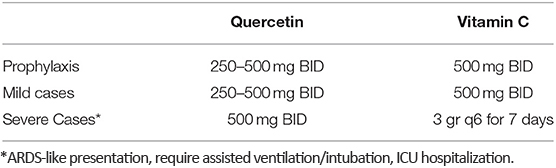
“Only higher intravenously administered doses up to 51.3 mg/Kg (around 3,591 mg per individual) were associated with renal toxicity,” the paper notes. The following table shows the proposed dosages for concurrent use of vitamin C and quercetin, either as a prophylactic for high-risk groups, and/or treatment for mild to severe COVID-19 disease.
The Importance of Zinc
While Marik’s paper does not address the use of zinc, it seems reasonable to recommend oral zinc supplementation as well, especially if you’re older. In fact, two oft-noted early symptoms of COVID-19 — the loss of taste and smell — are both symptoms of zinc deficiency.
As noted in the Integrative Medicine journal’s review37 of emerging COVID-19 research, “Zinc plays a crucial role in the function of essentially all immune cells,” and “Deficiency of this critical element has a profound impact on immune response, increasing susceptibility to a variety of infections.” Like quercetin and vitamin C, zinc also has well-known antiviral properties in its own right. As noted in the Integrative Medicine journal’s review:38
“Increasing intracellular zinc concentrations in cell culture impairs the replication of a variety of RNA viruses including SARS-CoV-1 … In vivo evidence for zinc’s antiviral role comes from a Cochrane review that found zinc intake was associated with a significant reduction in the duration of the common cold.
Many of the studies showing benefit when taken during the course of an infection were in the form of a zinc lozenge. It makes sense to utilize this mode of delivery during the acute infection phase …
Anosmia (loss of smell) and dysgeusia (distorted sense of taste) are commonly being reported in patients at every phase of COVID-19. These are also classic symptoms of zinc deficiency.
It is too early in the discovery process to determine if this is cause or effect, nonetheless zinc deficiency greatly impairs immune function, especially resistance to viral infections. Notably, inadequate dietary consumption of zinc is found in almost half the older population.”
My Personal Take on This and Strong Recommendations
I am a huge fan of zinc, quercetin and vitamin C, but it is important to understand some very basic principles before using them. It is clear in my mind that quercetin is far less expensive, is safer and is likely equally effective to hydroxychloroquine at driving zinc into the cell, where it does its job of inhibiting viral replication, and unlike hydroxychloroquine, it reduces inflammatory cytokines and also increases interferon.
However, it is important to understand that if this excellent strategy is going to be optimally effective it needs to be administered early in the disease phase — the earlier the better. Using quercetin and zinc would be best done if you were recently exposed to the virus. This way you can inhibit viral replication and keep the viral load low while your innate immune system does its work in clearing the virus.
With respect to vitamin C, it is my perception that there is major confusion in this area. It can be used in low doses of several hundred milligrams to meet nutritional requirements and support your immune system in the early phase of the illness.
However, if you’re really sick and have shortness of breath, and are considering being hospitalized or are already in the hospital, then you need very high doses of vitamin C in the 10 gram to 100 gram-dose per day, either through liposomal or IV administration.
I don’t recommend taking high doses of vitamin C unless you are acutely sick. The bulk of the literature reviewed here is promoting the use of vitamin C to regenerate quercetin, but I believe there are far more powerful approaches. What might that be?
It seems obvious to me that quercetin is best taken at night (with zinc) before you go to bed and you haven’t eaten for at least three to four hours. You will sleep for eight hours, and if you are metabolically flexible, this is the time that you will dive into nutritional ketosis. Ketosis will increase your NADPH levels, which is FAR superior to vitamin C at recycling antioxidants like quercetin.
The other benefit of taking quercetin at night is to take advantage of its senolytic action to remove senescent cells, which are similar to nonreplicating cancer cells that secrete powerful proinflammatory cytokines that destroy your health. You can optimize quercetin’s senolytic properties if you take it while you are fasting.
- 1, 5, 29, 30, 31, 36 Frontiers in Immunology June 19, 2020 DOI: 10.3389/firmmu.2020.01451
- 2, 4, 37, 38 Integrative Medicine 2020; 19(S1) [Epub ahead of print] (PDF)
- 3, 24 MedPage Today July 1, 2020
- 6 Journal of Virology 2004 Oct;78(20):11334-9
- 7 ChemRxiv.org March 11, 2020 (PDF full study), Table 3
- 8 Greenstarsproject.org March 27, 2020
- 9, 11 Nutrients 2016 Mar; 8(3): 167, 5.1.2 Mechanism of Action
- 10 Nutrients 2016 Mar; 8(3): 167, Table 1: Mast cell
- 12 Journal of Agricultural and Food Chemistry 2014, 62, 32, 8085-8093
- 13, 15 Medical Hypothesis, 2020;142(109800)
- 14 Frontiers in Immunology, 2019; doi.org/10.3389/fimmu.2019.01586
- 16 Journal of Biological Chemistry, 2007; doi.org/10.1074/jbc.R700004200
- 17 Britannica
- 18 Mediators of Inflammation 2016; 2016, Article ID 5460302
- 19 Antimicrobial Agents and Chemotherapy 2016 Sep; 60(9): 5182–5188
- 20 Journal of Virology October 2004: 11334-11339 (PDF)
- 21 Biotechnology Letters February 15, 2012; 34: 831-838
- 22 Bioorg Med Chem 2010 Nov 15;18(22):7940-7
- 23 Preprints.org March 12, 2020
- 25, 26 ClinicalTrials.gov Identifier: NCT04377789, Effect of Quercetin on Prophylaxis and Treatment of COVID-19
- 27 Journal of the American Dietetic Association 2011 Apr;111(4):542-9
- 28 Journal of Infectious Diseases and Preventive Medicine May 24, 2014; 2: 111
- 32 Frontiers in Immunology June 19, 2020 DOI: 10.3389/firmmu.2020.01451, Introduction
- 33, 34 Frontiers in Immunology June 19, 2020 DOI: 10.3389/firmmu.2020.01451, Biology of Quercetin
- 35 Frontiers in Immunology June 19, 2020 DOI: 10.3389/firmmu.2020.01451, Synergistic Antiviral Action
UV Radiation Protects Against Coronavirus
Reproduced from original article:
https://articles.mercola.com/sites/articles/archive/2020/07/21/coronavirus-uv-radiation.aspx
Analysis by Dr. Joseph Mercola Fact Checked
July 21, 2020

STORY AT-A-GLANCE
- Research suggests ultraviolet (UV) radiation exposure lowers COVID-19 mortality rates even when the exposure is insufficient to produce vitamin D
- UVA measures and COVID-19 death statistics were obtained for 2,474 U.S. counties, 6,755 Italian municipalities and 6,274 areas in England between the months of January and April 2020, which is when vitamin D production due to low sun exposure tend to be minimal
- Researchers hypothesize UV irradiation may have a direct effect on the viability of SARS-CoV-2 virus in airborne droplets, as well as the virus’ ability to stay viable on various surfaces, thus reducing overall infection rates
- UVA radiation also triggers release of nitric oxide, which lowers blood pressure. Nitric oxide also mitigates endothelial damage, improves immune function, thins your blood and decreases platelet aggregation (thus reducing clotting risk), and inhibits replication of the SARS virus
- Since high blood pressure and cardiometabolic disease increase COVID-19 mortality risk, nitric oxide can help explain how UV exposure lowers COVID-19 mortality even in the absence of vitamin D production
According to a British observational study1 posted July 6, 2020, on the preprint server medRxiv, ultraviolet (UV) radiation exposure appears to lower COVID-19 mortality rates.
As reported by News Medical Life Sciences,2 environmental factors such as temperature, humidity and UV irradiation are known to play a role in other infectious diseases, including seasonal influenza, so it shouldn’t come as a surprise that SARS-CoV-2 — the virus responsible for COVID-19 — can be affected in a similar manner.
UV Radiation Lowers COVID-19 Mortality
I’ve written extensively about the importance of vitamin D and its influence on COVID-19 specifically, but this research suggests there are other benefits to sun exposure besides vitamin D production.
The researchers looked at UVA measures and COVID-19 death statistics in 2,474 U.S. counties, 6,755 Italian municipalities and 6,274 areas in England between the months of January and April 2020, which is when vitamin D production due to low sun exposure tend to be minimal. According to the authors:3
“Our fully adjusted model showed an inverse correlation between UVA and COVID-19 mortality with a Mortality Risk Ratio (MRR) of 0.73 … per 100KJ/m2 increase UVA in the USA, 0.81 … in Italy and 0.51 … in England. Pooled MRR was 0.68 …
This represents a halving of the average risk of death across the lower and narrower range of UVA experienced across England and across the higher and wider range across Italy and the USA …
Our analysis suggests that higher ambient UVA exposure is associated with lower COVID-19 specific mortality. This effect was independent of temperature and UV within the vitamin D action spectrum.
Relatively higher UVA, across a country experiencing lower average levels of UVA during and immediately preceding the pandemic (England), is associated with greater falls in mortality risk compared to countries (Italy and the USA) with a higher average level suggesting an exposure tolerance effect …
We have been able to show a possible benefit from UV at wavelengths that do not cause synthesis of vitamin D. this suggests that explanations for seasonal and geographic variations in COVID-19 prevalence need to consider mechanisms other than just vitamin D.”
Mechanisms of Action
The researchers hypothesize UV exposure “may have a direct effect on the viability of SARS-CoV-2 virus in airborne droplets,” as well as the virus’ ability to stay viable on various surfaces, thus reducing overall infection rates and lowering the initial inoculation load in those infected, which in turn might reduce the risk of severe illness.
Another mechanism of action may involve nitric oxide. UVA radiation triggers the release of nitric oxide in your skin, mobilizing it into your circulation. This lowers blood pressure by causing your blood vessels to expand. This, the researchers say, is one important metabolic benefit of UV exposure that does not involve vitamin D.
“As cardio-metabolic disease and possibly hypertension increase the risk of death from COVID-19, any UV driven improvements in these risk factors would be expected to reduce mortality,” the researchers note.
What’s more, nitric oxide may help mitigate the endothelial damage seen in severe COVID-19 infection that leads to organ failure. While not mentioned in this study, nitric oxide also improves your immune function, thins your blood and decreases blood viscosity, which in turn decreases platelet aggregation. As such, nitric oxide helps reduce your risk of developing a life-threatening blood clot.
Previous research has also found nitric oxide inhibits replication of the SARS virus (SARS-CoV), and the researchers hypothesize that, since the spike proteins of the two viruses are similar, nitric oxide may have a similar effect on SARS-CoV-2. If correct, this could be yet another mechanism of action by which nitric oxide helps reduce disease transmission and severity.
So, to summarize, not only does exposure to sunlight lower COVID-19 mortality, but just about any strategy that boosts nitric oxide production may also have a similar effect. Examples of such strategies include the Nitric Oxide Dump workout and consuming nitrate-rich foods such as beetroot juice, arugula and cilantro.
Are Stay-At-Home Orders Increasing COVID-19 Mortality?
In related news, another study4 posted on medRxiv, July 2, 2020, asks whether lockdown orders might do more harm than good by decreasing the protective role of UVB radiation — the kind that triggers vitamin D production in your skin — which has also been shown to lower COVID-19 mortality rates. As noted by the authors:
“Recent studies indicate that measures such as lockdowns may have slowed down the growth of COVID-19. However, in addition to substantial economic and social costs, these measures also limit the exposure to Ultraviolet-B radiation (UVB).
Emerging observational evidence indicate the protective role of UVB and vitamin D in reducing the severity and mortality of COVID-19 … In this observational study, we empirically outline the independent protective roles of lockdown and UVB exposure as measured by ultraviolet index (UVI), whilst also examining whether the severity of lockdown is associated with a reduction in the protective role.”
According to their calculations, mortality rates could have been reduced by an average of 21% had lockdown orders been accompanied by instructions to get regular sun exposure.
Vitamin D Lowers All COVID-19 Related Risks
As reviewed in several previous articles, vitamin D appears to impact virtually all COVID-19 related risks, including your risk of testing positive for active infection, disease severity and your risk of death. For example:
| Research5 posted on the preprint server medRxiv, May 13, 2020, found low vitamin D status at the time of COVID-19 testing was a risk factor for a positive result. Compared to those with sufficient vitamin D levels, those with deficient levels were nearly twice as likely to test positive for COVID-19 (21.6% versus 12.2%). |
| A study6 from the Philippines found that for each standard deviation increase in serum vitamin D, the odds of experiencing only mild disease rather than severe illness was 7.94 times greater, and the odds of having a mild clinical outcome rather than a critical outcome was 19.61 times greater. |
| Research7,8 posted on the preprint server MedRxiv June 10, 2020, reports a combination of vitamin D3, magnesium and B12 inhibited the progression of COVID-19 in patients over the age of 50, resulting in “a significant reduction in proportion of patients with clinical deterioration requiring oxygen support and/or intensive care support.” |
| A study9 from Indonesia found COVID-19 patients with a vitamin D level between 20 ng/mL (50 nmol/L) and 30 ng/mL (75 nmol/L) had a sevenfold higher risk of death than those with a level above 30 ng/mL. Having a level below 20 ng/mL was associated with a 12 times higher risk of death. |
| A study10 that looked at data from 20 European countries found that “the probability of developing COVID-19, and of dying from it, is negatively correlated with mean population vitamin D status, with both probabilities reaching zero above about 75 nmol/L,” (30 ng/mL). |
| A paper11,12 posted on the preprint portal medRxiv May 18, 2020, found a strong correlation between severe vitamin D deficiency and higher mortality rates in countries across the globe.
The researchers attribute this to a connection between low vitamin D and high risk for cytokine storms. The analysis suggests higher vitamin D levels among the general population could cut mortality in half by reducing complications.13 |
Higher Vitamin D Lowers All-Cause Mortality Risk
COVID-19 certainly isn’t the only disease influenced by vitamin D. As noted in a study14 published July 4, 2020, in the Journal of Clinical Endocrinology and Metabolism, higher vitamin D levels are “non-linearly linked to lower risk of all-cause, [cardiovascular disease] CVD, and cancer mortality.”
Interestingly enough, this study found the risk for CVD and all-cause deaths tapered off at a vitamin D level of just 24 ng/mL (60 nmol/L). Cancer deaths leveled off at a mere18 ng/mL (45 nmol/L).
This is surprisingly low, considering large-scale studies suggest the cutoff for optimal cancer protection is around 40 ng/mL (100 nmol/L), with a level of 60 ng/mL to 80 ng/mL (150 nmol/L to 200 nmol/L) being ideal for health and disease prevention. You can learn more about this in “For Optimal Health, Make Sure You Have a Vitamin D Level of 60 ng/mL.”
Magnesium Optimizes Vitamin D Supplementation
According to a scientific review15,16 published in 2018, as many as 50% of Americans taking vitamin D supplements may not get significant benefit as the vitamin D simply gets stored in its inactive form, and the reason for this is because they have insufficient magnesium levels, and magnesium is required in the conversion of vitamin D into its active form.
Research17 published in 2013 also highlighted this issue, concluding that higher magnesium intake helps reduce your risk of vitamin D deficiency by activating more of it.
More recently, research18 by GrassrootsHealth reveals you need 146% more vitamin D to achieve a blood level of 40 ng/ml (100 nmol/L) if you do not take supplemental magnesium, compared to taking your vitamin D with at least 400 mg of magnesium per day.
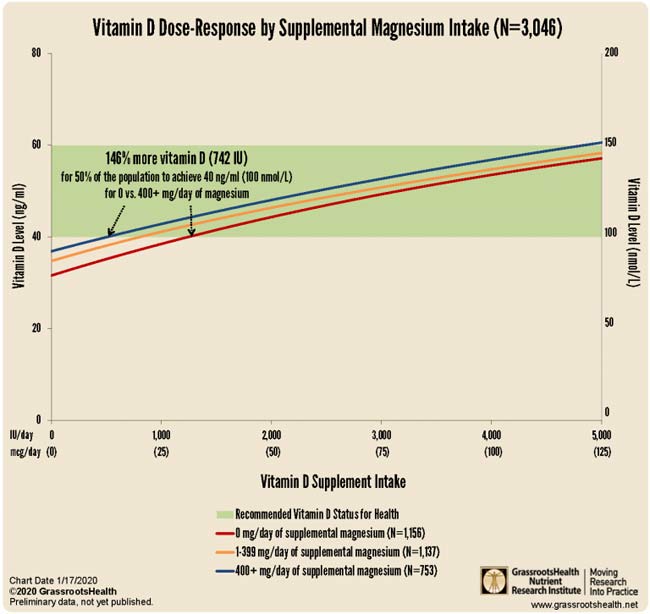
You can cut your need for oral vitamin D even further — by as much as 244% — by taking it concurrently with both magnesium and vitamin K2, as reported in “Magnesium and K2 Optimize Your Vitamin D Supplementation.”
Optimize Your Vitamin D Level to Minimize COVID-19 Risks
While oral vitamin D supplementation may be a good idea for most people, it’s important to remember to get your vitamin D level tested first. The reason for this is because you cannot rely on blanket dosing recommendations. The crucial factor here is your blood level, not the dose, as the dose you need is dependent on several individual factors, including your baseline blood level.
I recently published two vitamin D reports, a comprehensive scientific review and a shorter summary, in which I detail vitamin D’s mechanisms of action and how to ensure optimal levels. I recommend downloading and sharing those reports with everyone you know.

Here’s a condensed summary of the key steps to optimizing your vitamin D:
1.First, measure your vitamin D level — One of the easiest and most cost-effective ways of measuring your vitamin D level is to participate in the GrassrootsHealth’s personalized nutrition project, which includes a vitamin D testing kit. You also have the option of testing vitamin D in conjunction with magnesium and omega-3.
Once you know what your blood level is, you can assess the dose needed to maintain or improve your level. If you cannot get enough vitamin D from the sun (you can use the DMinder app19 to see how much vitamin D your body can make depending on your location and other individual factors), then you’ll need an oral supplement.
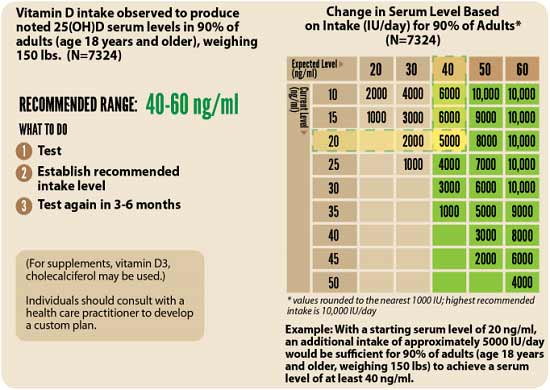
2.Assess your individualized vitamin D dosage — To do that, you can either use the chart below, or use GrassrootsHealth’s Vitamin D*calculator. To convert ng/mL into the European measurement (nmol/L), simply multiply the ng/mL measurement by 2.5.
To calculate how much vitamin D you may be getting from regular sun exposure in addition to your supplemental intake, use the DMinder app.20 Remember, you won’t need as much oral vitamin D if you also take magnesium and vitamin K2, as discussed above.
3.Retest in three to six months — Lastly, you’ll need to remeasure your vitamin D level in three to six months, to evaluate how your sun exposure and/or supplement dose is working for you.
- 1 medRxiv July 6, 2020, DOI: 10.1101/2020.07.03.20145912
- 2 News Medical Life Sciences July 8, 2020
- 3 medRxiv July 6, 2020, DOI: 10.1101/2020.07.03.20145912, Preview PDF. Abstract, Results and Discussion
- 4 medRxiv July 2, 2020 DOI: 10.1101/2020.06.30.20143586
- 5 MedRxiv DOI 10.1101/2020.05.08.20095893
- 6 SSRN April 9, 2020
- 7 MedRxiv June 10, 2020 DOI: 10.1101/2020.06.01.20112334
- 8 News Medical Life Sciences June 4, 2020
- 9 Emerginnova.com June 4, 2020
- 10 Infectious Diseases April 8, 2020 DOI: 10.21203/rs.3.rs-21211/v1
- 11 Medrxiv May 18, 2020 DOI: 10.1101/2020.04.08.20058578
- 12, 13 Northwestern McCormick School of Engineering May 7, 2020
- 14 Journal of Clinical Endocrinology and Metabolism July 4, 2020; dgaa432
- 15 Journal of the American Osteopathic Association March 2018; 118: 181-189
- 16 Science Daily February 2018
- 17 BMC Medicine 2013; 11: 187
- 18 GrassrootsHealth Is Supplemental Magnesium Important for Vitamin D Levels?
- 19, 20 DMinder app
Fingernails Tell a Story
Written by Brenton Wight, Health Researcher, LeanMachine
Copyright © 1999-[y] Brenton Wight, LeanMachine
Updated 13th July 2020, Copyright © 1999-[y] Brenton Wight and BJ & HJ Wight trading as Lean Machine
We can tell much about a person’s health by examining the fingernails, which can show defects in nutrition or changes in health over recent weeks or months.
Nail abnormalities may involve shape, texture, colour, thickness, brittleness and more.
This article mainly discusses ridges – vertical and horizontal.
Other issues with fingernails are briefly discussed in this document. The same information usually also applies to toenails, but fingernails are more easily observed.
Anatomy of a Nail
Fingernails and toenails have the same anatomy. The nail itself is called the nail plate, normally bound tightly to the nail bed under the plate.
Because the nail is partly transparent, the colour of blood in vessels in the bed show through as a light pink.
The Lunula is the white half-moon shape at the base of the nail marks the start of the nail matrix begins, which is where the nail growth occurs.
Loose Nails (Onycholysis)
There are generally only two causes for loose nails: Infection or Trauma.
Toenails are more susceptible to trauma if we trip on something, or if something falls on the foot, causing damage to the nail matrix and separation of the nail.
Sometimes nail trauma causes excess bleeding under the nail, exerting pressure to loosen the nail, sometimes resulting in total nail loss.
The Distal Phalanx (bone at the fingertip or toetip) is very close to the nail and the trauma may cause a bone fracture.
Running, endurance sport, hiking or other “repeated trauma” can cause a subungual hematoma, leading to loosening of the nail, typically on the big toe,
sometimes called “black toenail” where built-up blood causes a red, purple, or black colour. Sometimes continual pressure from a shoe will loosen the nail with no bleeding.
Seek medical assistance for heavy nail trauma, especially with bleeding under the nail.
Fungal infections (Onychomycosis) are more common in toenails, but any nail can be affected, especially where the nails have continued water exposure.
Onychomycosis grows slowly, and can cause loosening, thickening, discolouration, and debris under the nail.
Loosening normally occurs on part of the nail, shown by a whitish colour where it has separated from the bed.
Some infections, fungal and bacterial, cause a dark brown or greenish colour and/or nail loosening.
Bacterial infections generally progress faster and are more severe than fungal infections.
Always seek medical assistance to reduce risk of complications of a bacterial infection.
Other reasons for loosening of a nail include Psoriasis, Photosensitizing reaction to medication, Hyperthyroidism, Anemia, or an allergic reaction to manicure or pedicure treatments.
Generally, loose nails will re-grow successfully over several months, but if the matrix is damaged, the new nail may be thicker or bumpy.
Always best to get medical advice to prevent further injury, damage or infection.
Treatment may be debriding (cutting away loose nail parts), and sometimes anti-fungal medications.
Vertical Ridges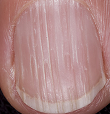 Many parallel lines running vertically from the cuticle to the tip. |
Horizontal Ridges Usually one or more horizontal lines running across the nail. Many ridges can be buffed away, but will reoccur unless we note their warning and take appropriate action! |
Some reasons why we get ridges:
- Poor thyroid function, poor hydration or ageing
- Malnutrition, especially deficiencies in proteins, essential oils, minerals, vitamins, Zinc deficiency, Iron deficiency, Anaemia
- Poor absorption of nutrients (Celiac Disease, Grains or Dairy foods, or low stomach acid)
- Inflammatory arthritis or Rheumatoid arthritis
- Poor liver function, liver disease, kidney disease, peripheral vascular disease, lung or heart disease
- Fungal infections (Lichen planus)
- Smoking (depletes zinc in the body)
- Over-zealous attention to the cuticles, excess alcohol, stress, lack of sleep, lack of exercise
- Fever, illness, Eczema or Psoriasis
- Lupus or Alopecia areata (autoimmune diseases)
- Arsenic or Silver poisoning
- Raynaud’s disease, Yellow nail syndrome, Darier disease, Langerhans cell Histiocytosis, Graft-versus-host disease
- Periungual warts pressing on the nail
- Sickle cell anaemia patients on hydroxyurea treatment
- Antacids or medication such as Nexium and other PPI’s (Proton Pump Inhibitors), which kill stomach acid, preventing absorption of nutrients
- Trauma to the nail
Fingernail Structure
Nails are comprised of tough laminated layers of keratin (a protein). Most of the nail plate is actually dead keratin, the living component being the growing section under the cuticle.
The structure of nails closely resembles claws and horns of other animal species.
Keratin itself is comprised of calcium, magnesium, collagen, boron, iron, water and many other components, which must all come from the diet.
Toxin Absorption
The water component of nails is around 10% of the nail structure, making the nail very permeable, so toxins are absorbed into the body faster through the nails than through the skin.
Obviously, it is essential to avoid cosmetic treatment of nails. Most nail polishes have harmful chemicals, and under current laws, manufacturers have no legal requirement to disclose these toxins!
Selecting well-known brands of cosmetics is no guarantee of safety.
The practice of painting nails goes back at least 3000 years, but in past times there were none of the toxic chemicals we have now, and natural colours such as beetroot were used.
Growth Rate
The nails grow at around 3mm per month, with the longest fingers (the middle) producing the fastest growth, and the shortest (thumbs) the slowest.
Because of better circulation, nails of the dominant hand will grow faster than the other hand.
Nail growth speed is also dependent on age, overall health, climate, adequate sleep, diet, and many other factors.
We need to pay attention to the growing part of the nail which is not visible, existing below the cuticle line and underneath the nail surface.
We can increase circulation in hands by keeping them warm (gloved in cold climate), regular hand massage, typing, playing musical instruments, or other activities involving hands.
When the problems are rectified, changes will not happen overnight, as it will take months for visible improvement when new nails completely cover the nail plate.
Dietary Essentials
Healthy nails require essential fatty acids, oils, vitamins, minerals and protein in the diet.
Oily fish (small, cold saltwater fish best)
Cold-pressed virgin Coconut or Olive Oil (NEVER Canola, Sunflower, Safflower or Corn Oil)
Walnuts, Avocados, nuts
Red meat, chicken breast (never processed meats)
Sunflower Seeds (much healthier than processed sunflower oil)
Supplements which can help:
Biotin (most essential for skin, hair and nails)
B-complex vitamins, plus additional Active B12
Vitamin C (essential for immunity and collagen production)
Vitamins A, D3, and E
Silica
Zinc
Chelated Iron (only if blood test reveals deficiency)
Fish oil or Krill oil
Boron
Vitamin K2 MK7
Treatment applied direct to the nail:
Vitamin E creams are available, but breaking open a Vitamin E capsule is just as effective
Jojoba oil is similar to human sebum, the oily substance produced in the skin to keep it hydrated and healthy.
The body assumes that Jojoba oil is the natural sebum, helping to restore the moisture level of nails, hair and skin.
Massage the oil or Vitamin E into the cuticle and base area of the nail – this is where the new nail is growing.
Vegetarians and vegans
Individual medical advice is recommended for all vegans, as deficiency in B-group and especially B-12 is common.
Vegetarians are also at risk of B12 deficiency unless there is a regular intake of eggs and/or fish.
Vegetarians and vegans may have anaemic conditions due to iron deficiency (blood test required).
Iron supplementation should never begin without a ferritin study to ascertain the iron stores in the body.
Low iron is a problem, but high iron is deadly, so we need just the right amount, and a ferritin study is the only way to tell.
Natural iron intake can be increased with iron-rich foods like brewer’s yeast, blackstrap molasses, wheatgerm, egg yolks and whole grain cereals (but LeanMachine does not recommend cereals or grains in any shape or form).
Eggs contain nearly 1 mg of iron, but also contain other components which restrict iron absorption.
Iron supplements are not recommended by LeanMachine unless Chelated Iron is used, as the regular Ferrous Sulfate supplements usually cause stomach upsets, pain, constipation, and increase risk of cardiovascular damage.
Iron comes in two forms in food: Heme iron (iron attached to heme proteins, from meat, poultry, fish) and non-heme iron (not attached to heme proteins, from plant foods).
Heme iron is better absorbed than non-heme iron, but can cause more cardiovascular damage.
If taken with Vitamin C, absorption is increased 3 to 6 times, but many other factors affect absorption.
To increase iron absorption even more, Lactoferrin has 300 times the ability of transferrin to bind iron, promote healthy bacteria, and strengthen the immune system.
When the body needs iron, it will absorb more, when there is plenty, it will absorb less.
For more information on iron, see my Ferritin article.
Vertical Ridges – the most common condition
These ridges are not unusual, and tend to become more prominent with age, especially with inadequate nutrition and dehydration.
Doctors do not generally associate vertical ridges with any serious disease, but they can be a cause for concern, especially when paired with colour changes in the nail.
Heavy ridge lines may be caused by:
Iron deficiency, or Inflammatory arthritis, or Lupus (with red lines at the base of the nails).
Sometimes caused by a deficiency in vitamin A, and B Complex vitamins.
More attention should be paid to the diet and supplements, as no-one wants a hastening of old age symptoms and associated illnesses.
Treatment of Vertical Ridges
Hydrate – drink plenty of water.
Alkalise – eat more green leafy vegetables and lemons.
Take Biotin and Active B12 supplements – essential for strong, healthy nails, hair and skin.
Take Vitamin C – essential for collagen production in the body as well as immune function and many other benefits. Smokers especially have low vitamin C and low collagen (which is why their skin is usually wrinkly). All smokers reading this: QUIT NOW!
Take vitamins A and B Complex.
Take Vitamin E supplements – approx 1000IU daily taken orally.
Take another vitamin E capsule, break open and massage the oil into the base of each nail. Jojoba oil can also be used.
Low-cost Vitamin E should be fine for external use, but for internal use, Vitamin E with all 8 alpha, beta, gamma and delta tocopherols and tocotrienols is a complete and natural vitamin E.
Increase consumption of foods rich in omega-3 fatty acids such as fish, walnuts, avocados, or supplement with fish oil or Krill oil.
Eating gelatin may also improve the nails.
Iron supplementation may help, but ONLY after a blood test determines iron deficiency.
Too much iron is very damaging to health. Read more in my Ferritin and Iron article.
Horizontal ridges or Beau’s lines (sometimes called “Beauty Lines”)
Horizontal ridges extend from one side of the nail to the other side horizontally.
Sometimes deeply grooved, often a corrugated appearance.
They are more serious than vertical, and may indicate illness or nutritional problems, chemotherapy agents, uncontrolled diabetes, peripheral vascular disease, metabolism disorders,
high fever (e.g. scarlet fever, pneumonia, measles, mumps), zinc deficiency or changes in diet causing halts or changes in nail growth.
Rounds of heavy chemotherapy are often quite visible as the nail stops growing during this period. Chemotherapy drugs which can cause fingernail problems:
- Taxanes (Taxol, Taxotere, Docetaxel)
- Doxorubicin (Adriamycin)
- 5-fluorouracil (5Fu)
- Bleomycin
There may not always be a health problem, but medical advice should always be sought to rule out anything sinister.
The doctor should start with blood tests and looking at nutrition issues.
If only one nail is affected, it may be simply from trauma (physical damage).
Mee’s Lines – horizontal whitish/discoloured lines, often a third to half the way up from the base.
Caused by Arsenic poisoning, Carbon monoxide poisoning, Hodgkin’s disease, Malaria, Leprosy, or other systemic problems.
Ageing
As we age, we lose natural moisture in our skin and nails. Brittle nails or vertical ridges are often the first signs of age-related dehydration.
Discoloured nails
Healthy fingernails should be pink with a touch of pinkish white (moons) near the base. Nails of dull colour or streaked with other colours, may indicate a possible serious health issue.
Green nails
Often indicates a bacterial infection. Seek medical advice.
Red Streaks
Red streaks in the nail bed may indicate a heart valve infection or problem. Seek medical advice.
Dark Streaks
Dark streaks under the nail may indicate melanoma, a deadly form of skin cancer. Seek medical advice.
Blue or Purple Nails
Signals low blood oxygen levels. Often caused by lung infections, pulmonary problems or cardiovascular disease.
Can also be a sign of silver poisoning, sometimes as a eresult of excessive consumption of colloidal silver medication. Seek medical advice.
Dull nails
Usually indicates a vitamin deficiency. Seek nutritional advice.
White or Pale Nails
Pale or white nails may indicate anaemia, congestive heart disease, liver disease (such as hepatitis) or malnutrition. Hepatitis or other liver disease often causes extremely white nails.
Injury can cause lifting of the nail from the bed, or reduced blood flow to the finger or toe. Either can cause white appearance.
White nails can also be caused by infection or psoriasis. Always seek medical advice.
Dark stripes at the top (also known as Terry’s nails)
White nails, often with a dark line, sometimes curved, at the tip.
May mean liver disease, congestive heart failure, diabetes, hyperthyroidism or malnutrition.
Generally worsens with age, and some elderly people have this condition with no other apparent symptoms.
Thick nails
Normal nails are not supposed to be thick.
Unusually thick nails that are otherwise normal may indicate lung disease or a circulation problem. Seek medical advice.
Nails which thicken very quickly may be the result of an allergic reaction to recently prescribed medication or change in the diet or other health problems. Seek medical advice.
Thick nails combined with a rough texture may mean a fungal infection, especially if there is any evidence of yellow colour. Seek medical advice.
Thick nails with separation can indicate Thyroid disease or Psoriasis. Seek medical advice.
Thin Nails
See “Vitamin B12 deficiency” and “Concave Nails with Thinning”
Nail Separation
If the nail separates (loosens) from the nail bed, the cause may be Thyroid disease, Hyperthyroidism, Psoriasis, some medications, nail hardeners, adhesives, injury or infection.
Cracked, Flaking or Split Nails
Nails which can flake away in layers may mean a deficiency in
Active Folate, Vitamin C, or Protein.
Split nails combined with pitting of the nail bed may indicate Psoriasis.
About 10% of Poriasis patients have split and/or pitting nails, often showing as the first symptom.
Split nails may be the result of chronic malnutrition, poor digestion (unable to absorb nutrients from food), fungal infection or thyroid disease. Seek medical advice.
Concave Nails (Spooned Nails or koilonychia)
Concave fingernails are usually soft and curve up, forming a dip, and may also be thin and brittle.
May indicate iron-deficiency anaemia, and medical advice should be sought.
Chelated Iron supplements should never be taken without a prior blood test to determine if there is a real iron deficiency.
A simple blood test for iron is not enough, a complete ferritin/iron study is best, as there are many causes of iron problems. Ferritin is the protein that transports iron through the body.
See LeanMachine’s article on Ferritin and Iron.
May also indicate Heart disease, Hypothyroidism, or Hemachromatosis (too much iron accumulated due to an inherited liver disorder).
Medical advice should always be sought, as too little and too much iron are both serious problems.
Concave Nails with Thinning
Often appears in healthy infants, disappearing as the child grows.
May also be due to an inherited genetic condition nail-patella syndrome which results in small, poorly developed nails and kneecaps, often also affecting elbows and other areas of the body.
Also known as Iliac Horn syndrome, Hood syndrome, Hereditary Onychoosteodysplasia, Fong disease, Turner-Kieser syndrome.
May also be caused by type 1 or 2 Diabetes.
Pitted Nails
Small holes or dips can be simply a result of injury to the nails, but can also signal:
Psoriasis, Connective tissue disorder, Alopecia Areata (autoimmune disease typically causing temporary hair loss), malnutrition, lung or respiratory disease.
Zinc deficiency may be indicated, especially if the pit seems to form a line across the middle of the nail.
Medical advice should be sought.
Pitted Nails with white blotches and/or a pitted line across the centre
Zinc deficiency.
Zinc supplements are inexpensive and readily available.
Pits cased by physical damage to nails clears up quickly, but pits linked to disease last longer.
Brittle Nails
Brittle nails can be caused by Kidney disease, Hypothyroidism, Iron deficiency anaemia, or Ageing.
Seek medical advice.
Ridge lines associated with with dry, brittle nails
Hormone problems, Bacterial infection or Thyroid disease. Medical advice should be sought.
Carotenosis
Yellow or orange nails with accompanying yellow or orange toning of the skin may indicate Carotenosis, or too much Carotene in the diet.
Caused by eating too many carrots or pumpkin (or other red, yellow, orange or green fruits and vegetables), or taking too many multivitamins.
In some cases, the inability to flush excess carotenes from the body causes a buildup.
Fair-skinned people are affected by this colour staining the most.
Carotenes are essential for health, but too much can be toxic, especially when Vitamin D3 levels are low. When the problem is rectified, the staining will gradually disappear as the carotenes are slowly converted to retinal, a form of Vitamin A.
Note:
Not to be confused with yellowing caused by liver problems leading to jaundice, where the skin and also the whites of the eyes turn yellow, also fungal infections that turn nails yellow.
Medical advice should be sought immediately in this case.
Dry or Crumbly Nails
Thyroid problems can cause brittle, dry fingernails which may easily crack or split.
Fungal infections can cause dry or even crumbly nails, said to affect a tenth of the population, more so as we age.
Medical advice should be sought. Lotions or cuticle oils are probably not going to help.
Thyroid and fungal issues take time to heal, so the benefits will not be apparent for a full growth cycle (several months).
Clubbed Nails
Symptoms are plump skin that seems to swollen or puffed around the nail behind the tips of toes or fingers.
The tips of fingers or toes may become enlarged, and the nail may curve downward around the tip and may also seem to “float” in the nail bed.
Sometimes the cause is unknown, and can be inherited, but medical advice should be sought.
More common in toes, but clubbed fingers are also common.
May be a sign of lung disease, lung cancer, heart or lung conditions, chronic lung infections, endocarditis (infection of the lining of the heart chambers and/or valves),
Inflammatory Bowel Disease, Liver disease or AIDS.
Red lines at the nail base
May indicate Lupus (an autoimmune disease). Seek medical advice.
Yellow Nails
May indicate bronchitis or some other lung or respiratory problem.
May also indicate a Fungal infection, especially if the nails are also thick and crumbling.
Other but rare causes of yellow nails include Thyroid disease, Diabetes or Psoriasis.
See also the “Carotenosis” section.
Nails with spots, streaks or cracks
Chronic renal (kidney) disease, or Leukonychia, causes white streaks and spots, sometimes also cracks. Seek medical advice.
Half and Half Nails (Lindsay’s Nails)
If the bottom half (proximal) of the nail is white and the top half (distal) pink or brown, it may indicate kidney disease or kidney failure.
A buildup of nitrogen waste products in the body causes swelling of the nail bed, turning that section white. Seek medical advice NOW.
Splinter Haemorrhage
Tiny blood clots under the nails, often appearing as small vertical red lines and looking like a splinter, may indicate Rheumatoid arthritis, Peptic ulcers, Malignancies, Bacterial endocarditis, Psoriasis or damage to the nail.
Pregnancy or oral contraceptives can also cause this condition.
Hormones
Many hormones can upset normal growth and appearance of nails, especially the Pituitary and Thyroid hormones. Seek medical advice.
Black Nails – Vitamin B12 deficiency causing Nail Hyperpigmentation
Hyperpigmentation of nails, usually brown or black, is usually caused by vitamin B12 deficiency as a result of pernicious anaemia (an autoimmune disease).
Caused by the substance IF (Intrinsic Factor, also GIF – Gastric Intrinsic Factor) missing from the body.
The elderly generally suffer from low IF and subsequent low B12 levels.
IF is essential for the body to absorb Vitamin B12.
Bariatric surgery patients have a high risk factor for developing pernicious anaemia.
If B12 malabsorption is treated, allowing B12 levels to rise, the fingernail hyperpigmentation should eventually return to normal.
Hyperpigmentation is also caused by drugs such as Indinavir, a HIV protease inhibitor used to treat HIV infections (also causes hyperpigmentation of hair and skin as well).
An alkylating agent called Cyclophosphamide is also known to cause nail hyperpigmentation in some cases, sometimes extending to folds of skin between the fingers and/or thumbs.
Diabetics on Metformin (Diabex) medication also have trouble absorbing Vitamin B12.
Notes on Vitamin B12 deficiency
Vitamin B12 is essential for protein and DNA synthesis.
B12 is also the only water soluble vitamin that the body can store, by binding to protein.
If we have enough B12, it can last a long time, but dietary or nutritional problems may mean we do not consume enough B12, or cannot absorb enough B12, particularly vegetarians and especially vegans.
Apart from mushrooms, only animal foods contain B12, so vegans or vegetarians often need supplementation.
B12 supplies the methyl groups we need to synthesise protein, which is the main component of the keratin in fingernails.
Low vitamin B12 levels mean low keratin production and poor nails, typically brittle.
B12 supplements can help. Babies to 6 months old need about 0.4 mcg of vitamin B12 daily.
Infants 6 to 12 months need about 0.5 mcg, children between 1 and 3 years need 0.9 mcg, between 4 and 13, 1.8 mcg, 14 to adults need 2.4 mcg, pregnant females need 2.6 mcg and breastfeeding women need 2.8 mcg per day.
Note that these amounts are bare minimums to avoid deficiency. LeanMachine recommends much more, and supplements daily on 1500mcg of B12 every day, and this is our recommended dose for seniors, vegans, anaemia sufferers or for anyone with a B12 deficiency.
B12 Testing:
Blood tests for B12 are readily available, however low levels of Folate and/or Vitamin B1 may mask a B12 deficiency. Always test Folate at the same time as B12. A deficiency of one can mask a deficiency of the other.
B12 Overdose:
Generally non-toxic in very large doses, but too much may cause tingling or numbing sensations in fingers and/or toes.
B12 Warnings:
Leber’s disease (an inheredited condition) causes atrophy (shrinkage) of the optic nerve. In these patients, excess Vitamin B12 can cause severe and sudden optic nerve degeneration.
Disclaimer
LeanMachine is a researcher, not a doctor, and everyone should consult with their own health professional before taking any product to ensure there is no conflict with existing prescription medication.
LeanMachine has been studying nutrition and health since 2010 and has completed many relevant studies including:
- Open2Study, Australia – Food, Nutrition and Your Health
- RMIT University, Australia – Foundations of Psychology
- Swinburne University of Technology, Australia – Chemistry – Building Blocks of the World
- University of Washington, USA – Energy, Diet and Weight
- Johns Hopkins Bloomberg School of Public Health, USA – Health Issues for Aging Populations
- Johns Hopkins Bloomberg School of Public Health, USA – International Nutrition
- Johns Hopkins Bloomberg School of Public Health, USA – Methods in Biostatistics I & II
- Johns Hopkins Bloomberg School of Public Health, USA – Principles of Human Nutrition
- TUFTS University, USA – Nutrition and Medicine
- TUFTS University, USA – Lipids/Cardiovascular Disease 1
& II - Technical Learning College, USA – Western Herbology, Identification, Formulas
- Bath University, England – Inside Cancer
- WebMD Education – The Link Between Stroke and Atrial Fibrillation
- WebMD Education – High Potassium: Causes and Reasons to Treat
- Leiden University Medical Center, Netherlands – Anatomy of the Abdomen and Pelvis
- MIT (Massachusetts Institute of Technology) – A Clinical Approach to the Human Brain
- LeanMachine has now examined thousands of studies, journals and reports related to health and nutrition and this research is ongoing
Disclaimer: Any information here is for educational purposes, and the needs of each individual varies, so everyone should consult with their own health professional before taking any product to ensure that there is no conflict with existing prescription medication.
LeanMachine has been researching nutrition and health since 2010, and has now examined thousands of studies, journals and reports related to health and nutrition and this research is ongoing.
Copyright © 1999-[y] Brenton Wight and BJ & HJ Wight trading as Lean Machine abn 55293601285
Save your teeth: Discover natural ways to improve gum health
Reproduced from original article:
www.naturalhealth365.com/improve-gum-health-3471.html
by: Natalie Robins, staff writer | July 8, 2020
 (NaturalHealth365) Naturally, everybody wants healthy teeth and gums – especially when you consider the connection between poor oral health and chronic disease. Unfortunately, in order to avoid tooth loss, it would appear that too many people remain uneducated about how to improve gum health – the key to maintaining strong teeth.
So, how do we avoid gum disease? The following tips will help you lower your risk or prevent it from progressing – if you already have gingivitis, or early gum disease.
4 ways to avoid gum disease naturally
1. Consume calcium-rich foods: Please note: We do not recommend the consumption of calcium supplements that can increase the risk of cardiovascular disease.
Having said that, calcium is an essential mineral for strong bones and teeth, and it also supports healthy gums. Simply put, you’re at higher risk for periodontal disease if you don’t get enough calcium.
The average American gets less than the daily value of 1,000 milligrams of calcium, but supplementing with too much calcium can lead to heart attacks and other health problems. Instead, focus on healthy sources such as organic dark, leafy green vegetables, sesame seeds, wild-caught salmon, and other plant sources like organic broccoli and chia seeds.
2. Avoid plaque with xylitol: Xylitol is a sugar alcohol in some fruits, such as berries and plums. Because it tastes sweet, has fewer calories than sugar, and does not spike your blood sugar levels the way sugar does, the food industry uses it as a sugar substitute in some sugar-free gums and candies.
Do NOT ignore the health dangers linked to toxic indoor air. These chemicals – the ‘off-gassing’ of paints, mattresses, carpets and other home/office building materials – increase your risk of headaches, dementia, heart disease and cancer.
Get the BEST indoor air purification system – at the LOWEST price, exclusively for NaturalHealth365 readers. I, personally use this system in my home AND office. Click HERE to order now – before the sale ends.
Using a xylitol-containing (or herbal) toothpaste can reduce plaque formation and neutralize some bacteria in your saliva that produce acid and contribute to tooth decay. When brushing, you may also like to use essential oils like, clove, neem and peppermint.
3. Reduce inflammation: Your gums are inflamed if you have gingivitis and periodontitis – which is more advanced gum disease. Bottom line: bleeding gums is not a good sign. Be sure to increase your anti-inflammatory activities like, salt water rinsing or oil pulling to reduce the risk of swelling, redness and infections.
In addition, supplementation with fish oil and borage oil provide essential fatty acids, and can reduce gum inflammation. Plus, to help reduce inflammation, you may want to consider:
- Vitamin D supplementation to optimize your blood levels
- Topical folic acid
- Probiotics – which you can get from miso, tempeh, kombucha or supplements
- Pomegranate
4. Eat lots of antioxidants: Antioxidants protect cells against damage from chemicals called free radicals. There are a variety of antioxidants which slow down the progression of periodontal disease or reduce symptoms, including:
- Vitamin C – which you can get from citrus fruits and vegetables or in a high-quality nutritional supplement.
- Epigallocatechin gallate (EGCG) and epicatechin gallate (ECG) – which are in green tea extract.
- Vitamin E – which can be found in organic nuts and seeds.
- Coenzyme Q10 – which is abundant in wild-caught fish and grass-fed meats.
Naturally, there are many other ways to promote healthy teeth and gums. In fact, one of the best ways to prevent gum disease is by using a Hydro Floss Oral Irrigator.
This daily practice will help to clear away sticky substances that attract unwanted bacteria and virtually eliminate bleeding gums. Another benefit – in many cases – is the reversal of large size gum pockets, which you want to avoid.
Of course, another wise decision, would be to get regular checkups (and cleanings) at a trusted, holistically-minded dentist and, always remember, to brush away from the gum line – for best results.
Click here to get access to the Holistic Oral Health Summit, hosted by Jonathan Landsman and discover the best ways to save your teeth and avoid serious health issues.
Sources for this article include:
Mouthhealthy.org
Mayoclinic.org
Vitamin D in the Prevention of COVID-19
Reproduced from original article:
https://articles.mercola.com/sites/articles/archive/2020/07/04/coronavirus-prevention-vitamin-d.aspx
Analysis by Dr. Joseph Mercola Fact Checked
July 04, 2020
STORY AT-A-GLANCE
- The French National Academy of Medicine stresses the importance of vitamin D against COVID-19 and recommends everyone take supplemental vitamin D. For COVID-19 patients over 60, they recommend vitamin D testing, and if deficiency is found, a bolus dose of 50,000 to 100,000 IU
- While vitamin D testing is not stressed for those under the age of 60, the French Agency recommends anyone under the age of 60 who receives a positive COVID-19 test start taking 800 IUs to 1,000 IUs of vitamin D per day anyway
- Vitamin D modulates (can upregulate and downregulate as needed) the function of your immune system by stimulating dentritic cells (which detect the presence of antigens such as viruses or bacteria) and macrophages (responsible for triggering immune responses and destroying pathogens)
- Vitamin D also regulates and suppresses the cytokine inflammatory response. This is particularly important for COVID-19, as out of control inflammation (cytokine storm) is a primary cause of death
- Scotland and the U.K. are also starting to take vitamin D more seriously. The British Frontline Immune Support Team is providing U.K. National Health Service workers with free liposomal vitamin C, vitamin D and zinc to bolster and regulate their immune function
As noted by retired nursing teacher John Campbell1 in the video above, vitamin D is “an important immunological molecule” that likely plays role in the COVID-19 pandemic.
In his video commentary, Campbell reviews a number of recent papers stressing the importance of vitamin D, starting with a press release2 from the French National Academy of Medicine, dated May 22, 2020.
The press release correctly points out that vitamin D is a prohormone, meaning it acts as an endocrine hormone. As such, it has wide-ranging influence on health. There are vitamin D receptors throughout your body, in every tissue and organ. Campbell reviews some of the basics of where and how vitamin D is synthesized in the body.
In summary, vitamin D is synthesized in the dermis of your skin in response to ultraviolet light from the sun. From there, it is transported to your liver and kidneys, where it is converted into an active hormone that is then circulated throughout your body. People with liver or kidney problems may have a reduced ability to synthesize vitamin D. As noted by the French National Academy of Medicine, vitamin D:3
- Modulates (meaning it can upregulate and downregulate as needed) the function of your immune system by stimulating dendritic cells (which detect the presence of antigens such as viruses or bacteria) and macrophages (responsible for triggering immune responses and destroying pathogens)
- Regulates and suppresses the cytokine inflammatory response.4 The ability to downregulate the inflammatory response is particularly important for COVID-19, as out of control inflammation (cytokine storm) is a primary cause of death
Vitamin D — An Excellent Adjunct to Any Therapy
The French medical authority points out there’s “a significant correlation between low serum vitamin D levels and mortality from COVID-19” — which one would expect considering its modulating and regulatory influence on immune function — and that “by mitigating the inflammatory storm and its consequences,” vitamin D “could be considered as an adjunct to any form of therapy.”
They cite research showing the inverse correlation between vitamin D and COVID-19 infection and mortality (the lower your vitamin D the greater your risk of infection and death) in European countries has a confidence value of 95.4%, meaning there’s only a 4.6% chance that this correlation is due to chance alone.
The press release ends by recommending the French population take supplemental vitamin D, as it is a “simple and inexpensive measure.” The French authority also recommends “rapid serum vitamin D testing in people over 60 years of age with COVID-19.”
As noted by Campbell, this is “a remarkably good idea.” In those who are found to be deficient in vitamin D, the French National Academy of Medicine recommends an initial bolus dose of 50,000 IUs to 100,000 IUs.
And, while vitamin D testing is not stressed for those under the age of 60, they do recommend that anyone under the age of 60 who receives a positive COVID-19 test start taking 800 IUs to 1,000 IUs of vitamin D per day anyway.

Prospective Vitamin D for COVID-19 Studies Are Underway
The French recommendations are in stark contrast to the U.S., where Big Pharma-controlled health authorities and media are still trying to frighten people away from vitamin D supplementation. One reason for this could be because a healthier population is less likely to line up for inoculation with a fast-tracked vaccine.
It’s worth noting that while the French National Academy of Medicine and Campbell state there are no randomized controlled trials looking at vitamin D supplementation and COVID-19, this is not true. There are many such trials currently underway. They just haven’t been completed and published yet, but you can find them (and may be able to enroll in them) by searching ClinicalTrials.gov.5
In the UK, there’s the Covidence UK Study,6 an effort to collect data about how vitamin D deficiency impacts your COVID-19 risk. If you live in the U.K., you can sign up for the Covidence UK study here. According to Adrian Martineau, a professor of respiratory infection and immunity at Queen Mary University of London, who is leading the Covidence study:7
“Vitamin D could almost be thought of as a designer drug for helping the body to handle viral respiratory infections. It boosts the ability of cells to kill and resist viruses and simultaneously dampens down harmful inflammation, which is one of the big problems with Covid.”
British Health Care Workers Get Free Vitamin D
Aside from the French, Scotland and the U.K. are also starting to take vitamin D optimization more seriously. For example, the British Frontline Immune Support Team is providing U.K. National Health Service workers with free liposomal vitamin C, vitamin D and zinc packs to bolster and regulate their immune function.8 As noted by The Frontline Immune Support Team, vitamin D:9
“… plays a critical role in your immune defense system, both in reducing flu-like days of illness if your blood level is sufficient, and in helping your immune system respond when under viral attack. It speeds up recovery from pneumonia.
Two in five adults have a level of vitamin D below 25nmol/l, especially in late winter months such as February and March, that is likely to almost double their risk of flu. A vitamin D level above 100 nmol/l correlates with the lowest numbers of flu-like days. The moral of the story is to get your level up as quickly as possible.”
The British NHS is also assessing the evidence to determine whether vitamin D should be prescribed to hospitalized COVID-19 patients and as a prevention to high-risk groups.10
Scottish Government Recommends Daily Vitamin D Supplement
As of June 3, 2020, Scottish government COVID-19 guidance includes taking a daily vitamin D supplement. As reported by the Scotland Herald:11
“Official Scottish Government guidance issued on June 3 states that everyone, including children, ‘should consider taking a daily supplement containing 10 micrograms of vitamin D.’
However, it is ‘specifically recommended’ to all pregnant and breastfeeding women; infants and children under five years old; people from minority ethnic groups with dark skin such as those of African, African-Caribbean and South Asian origin, who require more sun exposure to make as much vitamin D; and people who are confined indoors.”
Data Support Role of Vitamin D in COVID-19
Several studies have noted the inverse relationship between low vitamin D and a higher risk for COVID-19-positive test results,12 severity of infection13,14 and mortality.15 These studies are correlation studies and do not confirm causation, but studies that will be able to prove causation are currently underway.
Examples of these correlation studies include The Irish Longitudinal Study on Ageing (TILDA),16,17 which suggests vitamin D deficiency could have serious implications for COVID-19. The researchers recommend adults over 50 take a vitamin D supplement year-round if they don’t get enough sun exposure to optimize their levels.
Another Irish paper,18 “Vitamin D and Inflammation: Potential Implications for Severity of COVID-19,” concluded there is “a strong plausible biological hypothesis and evolving epidemiological data supporting a role for vitamin D in COVID-19.”
Some of those biological mechanisms have already been summarized above. Other mechanisms of action that can impact your risk of COVID-19 include the following:
| SARS-CoV-2 is an enveloped virus, which means it’s more difficult for your immune system to identify and destroy it. However, higher vitamin D levels are inversely associated with infection by many other enveloped viruses, including dengue, hepatitis, herpes, HIV, rotavirus, respiratory syncytial virus and influenza.19,20 We’ll have to wait and see if the same holds true for SARS-CoV-2, but chances are it will. |
| Vitamin D strengthens cellular junctions, thereby making it more difficult for viruses to gain entry through your eyes, ears, lungs and mucus membranes. This in turn makes the infection less likely to migrate down into your lungs.21 |
Vitamin D can reduce the risk of infection by lowering the rate at which the virus replicates and can reduce the pro-inflammatory cytokines that damage the lungs, leading to pneumonia. It also helps increase concentrations of anti-inflammatory cytokines that may help protect the lungs. For these reasons, researchers suggest people who are at risk for COVID-19 should take:22
|
| Vitamin D is an important component in the prevention and treatment of influenza23 and upper respiratory tract infections.24 While vitamin D does not appear to have a direct effect on the virus itself, it strengthens immune function, thus allowing the host body to combat the virus more effectively.25
As detailed in “Vitamin D Prevents Infections,” research shows high-dose vitamin D supplementation lowers the risk of respiratory illnesses and lung infections in the elderly by 40%. As noted by an author of that study, “Vitamin D can improve the immune system’s ability to fight infections because it bolsters the first line of defense of the immune system.” As mentioned earlier, vitamin D also suppresses inflammatory processes and inhibits excessive production of proinflammatory cytokines that give rise to a cytokine storm.26 Taken together, this might make vitamin D quite useful against COVID-19, because while robust immune function is required for your body to combat the virus, an overactivated immune system is also responsible for the cytokine storm we see in COVID-19 infection that can lead to death. |
| Vitamin D upregulates production of human cathelicidin, LL-37, which has antimicrobial and antiendotoxin activities.27 |
| Vitamin D supplementation has been shown to protect against acute respiratory infections.28 Daily or weekly supplementation (opposed to infrequent bolus doses) of vitamin D had the greatest protective effect in those with the lowest vitamin D levels.29
In one study,30 those with severe vitamin D deficiency who took a daily or weekly supplement cut their respiratory infection risk in half, whereas the acute administration of high bolus doses of vitamin D had no significant impact on infection risk. |
| Data analysis31 by GrassrootsHealth shows people with a vitamin D level of at least 40 ng/mL reduced their risk of colds by 15% and flu by 41%, compared to those with a level below 20 ng/mL. |
COVID-19-Specific Papers
In addition to the Irish papers cited above, several others have come to the same or similar conclusions. Additional examples include:
The vitamin D review paper32 “Evidence That Vitamin D Supplementation Could Reduce Risk of Influenza and COVID-19 Infections and Death,” published in the journal Nutrients, April 2, 2020, which states that:
|
| A GrassrootsHealth review33 of an observational study involving 212 COVID-19 patients in Southeast Asia identified a correlation between vitamin D levels and disease severity. Those with the mildest disease had the highest vitamin D levels, and vice versa.
In the initial study group of 212 patients (see Table 1 below), 55 had normal vitamin D levels, which was defined as greater than 30 ng/ml; 80 had insufficient levels of 21 to 29 ng/ml and 77 had deficient levels of less than 20 ng/ml. According to the research done by GrassrootsHealth, 40 ng/mL is the lower edge of optimal, with 60 ng/mL to 80 ng/mL being ideal for health and disease prevention. Despite that, the benefit of having a vitamin D level above 30 ng/mL was clear. 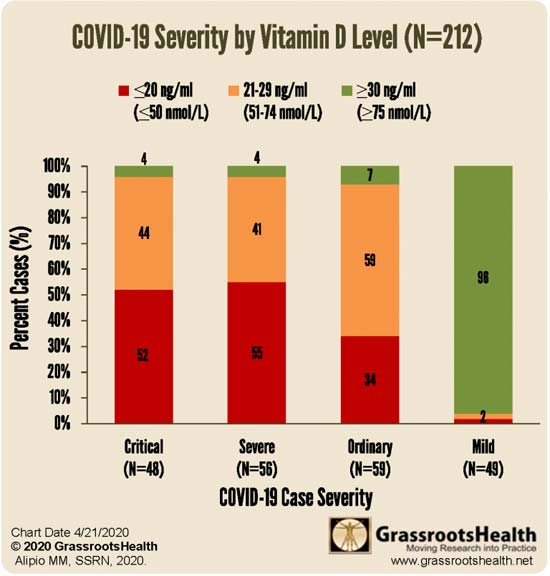 |
| In a study34 that looked at data from 780 COVID-19 patients in Indonesia, those with a vitamin D level between 20 ng/mL and 30 ng/mL had a sevenfold higher risk of death than those with a level above 30 ng/mL. Having a level below 20 ng/mL was associated with a 12 times higher risk of death. |
| Research35,36 posted on the preprint server MedRxiv June 10, 2020, reports a combination of vitamin D3, B12 and magnesium inhibited the progression of COVID-19 in patients over the age of 50, resulting in “a significant reduction in proportion of patients with clinical deterioration requiring oxygen support and/or intensive care support.” |
| “The Role of Vitamin D in the Prevention of Coronavirus Disease 2019 Infection and Mortality”37 — which looked at the average vitamin D levels and the number of COVID-19 cases and death rates in 20 European countries — found lower vitamin D levels correlated with higher caseloads and mortality. The authors concluded, “We believe that we can advise vitamin D supplementation to protect against SARS-CoV2 infection.” |
Northwestern University researchers report finding an inverse relationship between vitamin D and CRP, a marker for inflammation. Those with higher CRP had lower vitamin D and vice versa. According to the authors:38
|
| “The Possible Role of Vitamin D in Suppressing Cytokine Storm and Associated Mortality in COVID-19 Patients,”39,40 posted on the preprint portal medRxiv May 18, 2020, reports finding a strong correlation between severe vitamin D deficiency and higher mortality rates in countries across the globe.
The researchers attribute this to a connection between low vitamin D and high risk for cytokine storms. The analysis suggests higher vitamin D levels among the general population could cut mortality in half by reducing complications.41 |
Now Is the Time to Optimize Your Vitamin D
Health experts are warning we’re likely to see a second wave of COVID-19 this fall, as temperatures drop. This means the time to start optimizing your vitamin D is now.
Data from GrassrootsHealth’s D*Action studies suggest the optimal level for health and disease prevention is between 60 ng/mL and 80 ng/mL, while the cutoff for sufficiency appears to be around 40 ng/mL. In Europe, the measurements you’re looking for are 150 to 200 nmol/L and 100 nmol/L respectively.
I recently published a comprehensive vitamin D report in which I detail vitamin D’s mechanisms of action and how to ensure optimal levels. I recommend downloading and sharing that report with everyone you know.
A quick summary of the key steps is as follows:
1.First, measure your vitamin D level — One of the easiest and most cost-effective ways of measuring your vitamin D level is to participate in the GrassrootsHealth’s personalized nutrition project, which includes a vitamin D testing kit.
Once you know what your blood level is, you can assess the dose needed to maintain or improve your level. If you cannot get enough vitamin D from the sun (you can use the DMinder app42 to see how much vitamin D your body can make depending on your location and other individual factors), then you’ll need an oral supplement.
As previously detailed in “Magnesium and K2 Optimize Your Vitamin D Supplementation,” it’s strongly recommended to take magnesium and K2 concomitant with oral vitamin D. Data from nearly 3,000 individuals reveal you need 244% more oral vitamin D if you’re not also taking magnesium and vitamin K2!43
What this means in practical terms is that if you take all three supplements in combination, you need far less oral vitamin D in order to achieve a healthy vitamin D level.
2.Assess your individualized vitamin D dosage — To do that, you can either use the chart below, or use GrassrootsHealth’s Vitamin D*calculator. To convert ng/mL into the European measurement (nmol/L), simply multiply the ng/mL measurement by 2.5. To calculate how much vitamin D you may be getting from regular sun exposure in addition to your supplemental intake, use the DMinder app.44
3.Retest in three to six months — Lastly, you’ll need to remeasure your vitamin D level in three to six months, to evaluate how your sun exposure and/or supplement dose is working for you.
The Importance of Testing Your Vitamin D Levels
A growing body of evidence shows that vitamin D plays a crucial role in disease prevention and maintaining optimal health. There are about 30,000 genes in your body, and vitamin D affects nearly 3,000 of them, as well as vitamin D receptors located throughout your body.
For a more detailed and comprehensive analysis of the connection of vitamin D and COVID-19, please review the report I created that could be used to address any health care professionals who would disagree with this recommendation. Also included is a shortened version of the document which will be better to educate those that you would like to convince of the importance of getting your vitamin D levels optimized.
Vitamin D Helps Protect Against Cancer and Other Diseases
According to one large-scale study, having optimal vitamin D levels can slash your risk of cancer and can help prevent at least 16 different types of cancer, including pancreatic, lung, ovarian, prostate and skin cancers.
Vitamin D from sun exposure also radically decreases your risk of autoimmune diseases such as multiple sclerosis (MS) and Type 1 diabetes. Sun exposure also helps prevent osteoporosis, which is a significant concern for women in particular.
Magnesium Is Necessary to Activate Vitamin D
Since over half the population does not get enough magnesium and far more are likely deficient, magnesium supplementation is recommended when taking vitamin D supplements. This is because magnesium helps to activate vitamin D, as the enzymes that metabolize vitamin D in your liver and kidneys require magnesium.
What GrassrootsHealth observed in testing and analyzing nutrient intakes from over 15,000 patients is that about half of those taking vitamin D supplements were unable to normalize their vitamin D levels until they started to take supplemental magnesium.
They also found that those who do not take supplemental magnesium need, on average, 146% more vitamin D per day to achieve a healthy blood level of 40 ng/ml (100 nmol/L), compared to those who take at least 400 mg of magnesium along with their vitamin D supplement.
Omega-3 Fats Are Crucial to Your Well-Being
Meanwhile, recent research suggests high doses (4 grams) of the omega-3 fats EPA and DHA may help improve healing after a heart attack. Other benefits of omega-3 fats include prevention of lupus and Parkinson’s disease, decreased anxiety, healthier and stronger bones, as well as fighting fats in the body.
However, you can’t tell by looking in a mirror if you are deficient in vitamin D, magnesium or omega-3s. The only real way to know if you are deficient in these nutrients is to get tested.
How Much Vitamin D Should You Take
If you know your vitamin D level you can use the calculator below to find the best dose to take.
If you are unable or unwilling to get a vitamin D test, they have found that the average dose to achieve a healthy vitamin D level of 40 ng/ml is about 8,000 units per day. If you are underweight you will want to reduce this dose to 6-7,000 units per day as heavier people tend to need more vitamin D.
How to Test Your Levels
I’m really pleased GrassrootsHealth Nutrient Research Institute has expanded its research projects to include a range of different tests, seeing how deficiency may be needlessly affecting the health of so many. Like its Vitamin D*action Project, the Magnesium*PLUS Focus Project will allow us all to take action on known science with a consensus of experts without waiting for institutional lethargy.
The Vitamin D*action Project has truly demonstrated the value measurement can have on public health, and there’s no doubt in my mind that the Magnesium*PLUS Focus Project will have the same impact. As in earlier projects, once the study of a community is completed, all that information can be used to push for public health recommendations that will benefit everyone.
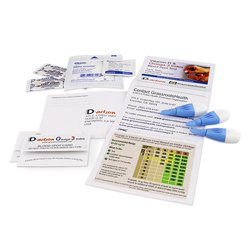

You have the ability to participate in a variety of different tests, including:
- Vitamin D
- Vitamin D and Omega 3
- Vitamin D, Omega 3 and Magnesium
- Vitamin D, Magnesium & Omega 3 PLUS Elements. Remember, by participating in this public research project, you not only are identifying your own levels, but allowing yourself to make decisions about your diet and supplements to improve your health.Your data (which is anonymous) will also help GrassrootsHealth researchers to determine the ideal levels for the prevention of various diseases, and what kind of dose-response relationship exists among the general population.
With the data from this project, individuals will be able to see what works for them, and, researchers will be able to demonstrate just to what extent health care costs may be reduced simply by getting people into an optimal range.
- 1 Campbell Teaching
- 2, 3 French National Academy of Medicine May 22, 2020 (PDF)
- 4, 38, 39 Medrxiv May 18, 2020 DOI: 10.1101/2020.04.08.20058578
- 5 Clinicaltrials.gov Vitamin D Trials
- 6 Covidence UK Study
- 7, 10 The Guardian June 17, 2020
- 8, 9 Frontlinesupport.com
- 11 Scotland Herald June 17, 2020
- 12 MedRxiv DOI 10.1101/2020.05.08.20095893
- 13 Pharmacol Ther. 2020 May 13. doi: 10.1111/apt.15820
- 14 NutraIngredients.com April 28, 2020
- 15, 34 Emerginnova June 4, 2020
- 16 TILDA.tcd.ie Vitamin D deficiency in Ireland — Implications for COVID-19. Results from the Irish Longitudinal Study on Ageing (TILDA)
- 17 Medical Xpress April 6, 2020
- 18 Irish Medical Journal 2020; 113(5): 81
- 19, 21 Frontline Support Team Vitamin D Evidence (Studies) (PDF)
- 20 vitamindwiki.com
- 22 Nutrients, 2020;12:988
- 23 Can Fam Physician. 2015 Jun; 61(6): 50
- 24 Endocr Pract. 2009 Jul–Aug; 15(5): 438–449
- 25 Clinical Therapeutics 2017; 39(5): 930-945 (PDF)
- 26, 27 Derma Endocrinology 2009 Jul-Aug; 1(4): 215–219
- 28, 30 The BMJ 2017;356:i6583
- 29 YouTube, Coronavirus Epidemic Update 30, 7:58 minutes
- 31 GrassrootsHealth.net, Vitamin D Reduces Colds and Flu
- 32 Nutrients April 2, 2020; 12(4): 988
- 33 SSRN April 9, 2020
- 35 MedRxiv June 10, 2020 DOI: 10.1101/2020.06.01.20112334
- 36 News Medical Life Sciences June 4, 2020
- 37 Infectious Diseases April 8, 2020 DOI: 10.21203/rs.3.rs-21211/v1
- 40, 41 Northwestern McCormick School of Engineering May 7, 2020
- 42, 44 DMinder app
- 43 GrassrootsHealth Magnesium and Vitamin K2 Combined Important for Vitamin D Levels
Bold Action Required to Defeat Second Wave of COVID-19
Reproduced from original article:
https://articles.mercola.com/sites/articles/archive/2020/06/29/dark-skin-and-vitamin-d-deficiency.aspx
Analysis by Dr. Joseph Mercola Fact Checked
June 29, 2020

STORY AT-A-GLANCE
- Vitamin D helps regulate immune function and prevent respiratory illnesses in general, and data analyses show clear parallels between vitamin D levels and the risk of infection, severity and mortality from COVID-19 as well
- While U.S. authorities are still trying to debunk (and even instill fear) of vitamin D supplementation, British and Scottish authorities appear to be embracing recommendations to improve public vitamin D levels
- The British Frontline Immune Support Team is providing health care workers with free nutritional supplements known to bolster and regulate immune function
- Public Health Scotland and the British NHS are also assessing the evidence to determine whether vitamin D should be prescribed to in-hospital patients and as a prevention to high-risk groups
- Darker skin requires far more sun exposure to produce adequate vitamin D, so much so that dark-skinned individuals living north of the equator are virtually guaranteed to be chronically deficient
As health officials continue to expect a second wave of COVID-19 this fall, spreading information about how to prevent it is becoming crucial. One of the most important strategies in this regard is to optimize your vitamin D level.
Vitamin D not only helps regulate immune function and prevent respiratory illnesses in general, but mounting data analyses show clear parallels between vitamin D levels and the risk of infection, severity and mortality from COVID-19 as well.
While U.S. authorities are still trying to debunk (and even instill fear) of vitamin D supplementation, British and Scottish authorities appear to be embracing a more sensible approach.
The British Frontline Immune Support Team, founded “to make available some of the best quality immune supportive products … to help keep those on the NHS (UK National Health Service) frontline resilient and strong,” is already providing health care workers with free nutritional supplements known to bolster and regulate immune function.
This includes liposomal vitamin C, vitamin D and zinc. As noted on frontlineimmunesupport.com, the group’s fundraiser page:1
“Immune supportive packs are sent directly to each individual NHS healthcare worker who signs up for this initiative — and they receive all products for FREE. We currently have hundreds of NHS staff already signed up ready to go; and with your contributions we can supply and reach thousands more.”
The Frontline Immune Support Team point out that vitamin D:2
“… plays a critical role in your immune defense system, both in reducing flu-like days of illness if your blood level is sufficient, and in helping your immune system respond when under viral attack. It speeds up recovery from pneumonia.
Two in five adults have a level of vitamin D below 25nmol/l, especially in late winter months such as February and March, that is likely to almost double their risk of flu. A vitamin D level above 100 nmol/l correlates with the lowest numbers of flu-like days. The moral of the story is to get your level up as quickly as possible.”
Public Health Scotland and the British NHS are also assessing the evidence to determine whether vitamin D should be prescribed to in-hospital patients and as a prevention to high-risk groups.3
Vitamin D Level Correlates With Risk of Respiratory Infection
Clinical trials using vitamin D against COVID-19 are currently underway,4 but we don’t need to wait for results to know that vitamin D optimization is a good idea. SARS-CoV-2 is an enveloped virus, which means it’s more difficult for your immune system to identify and destroy it.
However, as noted by The Frontline Support Team, we already know higher vitamin D levels are inversely associated with infection by many other enveloped viruses, including dengue, hepatitis, herpes, HIV, rotavirus, respiratory syncytial virus and influenza.5,6
Vitamin D also strengthens cellular junctions, thereby making it more difficult for viruses to gain entry through your eyes, ears, lungs and mucus membranes. This in turn makes the infection less likely to migrate down into your lungs.7 Importantly, vitamin D also strengthens the adaptive arm of your immune system, and its ability to produce antibodies.8 According to a June 17, 2020, report by The Guardian:9
“Public health officials are urgently reviewing the potential ability of vitamin D to reduce the risk of coronavirus. It comes amid growing concern over the disproportionate number of black, Asian and minority ethnic people contracting and dying from the disease, including a reported10 94% of all doctors killed by the virus …
The Scientific Advisory Committee on Nutrition (SACN) began this work last month and is considering recent evidence on vitamin D and acute respiratory tract infection in the general population. Evidence will be considered on specific population groups, including those of different ages and BAME [black, Asian, minority ethnic] groups.
In a parallel development, the National Institute for Health and Care Excellence (Nice) is conducting a ‘rapid’ evidence review on vitamin D ‘in the context of Covid-19’ with support from Public Health England (PHE).”
Vitamin D — ‘Designer Drug’ Against Viral Infections
Adrian Martineau, a professor of respiratory infection and immunity at Queen Mary University of London, is currently leading the “Covidence UK Study,”11 an effort to collect data about how vitamin D deficiency impacts your COVID-19 risk. If you live in the UK, you can sign up for the Covidence UK study here.
Martineau tells The Guardian that COVID-19 deaths among black, Asian and minority ethnic (BAME) staff within the NHS raises important questions about vitamin D status.12
“Vitamin D could almost be thought of as a designer drug for helping the body to handle viral respiratory infections. It boosts the ability of cells to kill and resist viruses and simultaneously dampens down harmful inflammation, which is one of the big problems with Covid,” he told the paper.
Why People of Color Are at Increased Risk
There’s a simple reason why BAME groups are more susceptible to COVID-19. Darker skin requires far more sun exposure to produce adequate vitamin D, so much so that dark-skinned individuals living north of the equator are virtually guaranteed to be chronically deficient.
According to data collected by the National Health and Nutrition Examination Survey (NHANES) between 2005 and 2006, and published in 2018, 82.1% of black American adults and 62.9% of Hispanic adults are deficient in vitamin D.13 As noted in that paper, lower melanin levels are protective of vitamin D deficiency, and the darker your skin, the more likely you are of having a low vitamin D level.
The good news is that this predisposition is easily and inexpensively remedied. The Frontline Support Team has made good strides toward protecting health care workers, so far supplying about 750 NHS frontline staff with free supplement packs. But the general public also needs it, too. At bare minimum, the public needs the information.
Scotland Issues Guidance on Vitamin D
In Scotland, government COVID-19 guidance now includes taking a daily vitamin D supplement. As reported by the Scotland Herald:14
“Official Scottish Government guidance issued on June 3 states that everyone, including children, ‘should consider taking a daily supplement containing 10 micrograms of vitamin D.’
However, it is ‘specifically recommended’ to all pregnant and breastfeeding women; infants and children under five years old; people from minority ethnic groups with dark skin such as those of African, African-Caribbean and South Asian origin, who require more sun exposure to make as much vitamin D; and people who are confined indoors.”
US Ignores Vitamin D Impact
In stark contrast, U.S. health agencies appear to have little interest in helping the public support their immune system through appropriate nutrition, but would rather have you rely on drugs and vaccines.
The U.S. National Institutes of Health recommends15 getting your vitamin D from food and beverages only, despite the fact that dietary intake of vitamin D is insufficient to reach and maintain the level required to prevent viral illnesses and other chronic diseases.
That said, some health experts are speaking out. Among them is former CDC director Dr. Tom Frieden, who wrote an opinion piece for Fox News in which he suggests vitamin D may reduce COVID-19 mortality rates, especially in those who are deficient.16
He goes on to say supplementation has reduced the “risk of respiratory infections, regulates cytokine production and can limit the risk of other viruses such as influenza.” Much of the damage from COVID-19 occurs with a “cytokine storm,” during which the body’s inflammatory system goes into high gear, damaging organs and increasing mortality rates. He writes:17
“We can do lots of things to improve our resistance to infection. These include getting regular physical activity, getting enough sleep, stopping smoking and other tobacco use, and, for people living with diabetes, getting it under control.
Taking a multivitamin that includes Vitamin D, or a Vitamin D supplement, probably can’t hurt, and it might help. As we continue to work to mitigate the impact of COVID-19, anything we can do to strengthen our resistance is a step in the right direction.”
Similarly, Dr. John C. Umhau, a public health specialist at the NIH, has argued that vitamin D is one of the “most studied and most important host factor impacting survival from COVID-19.”18 He also points out that “A government-sponsored research strategy to address this issue has not been developed, as officials explained that there was no mandate to explore an alternative to the existing vaccination program.”
Considering the hazards inherent in fast-tracking a COVID-19 vaccine, and seeing how previous attempts at creating a safe and effective coronavirus vaccine have all failed, putting all of the public health eggs in the vaccine basket is questionable in the extreme.
What Science Says About Vitamin D
By now, there’s a very long list of scientific evidences pointing toward vitamin D optimization as being a crucial component for preventing another spike in COVID-19 deaths.
In the video above, Ivor Cummins, chief program officer for Irish Heart Disease Awareness, explains how higher levels of vitamin D may reduce your risk of negative outcomes from COVID-19. Studies supporting this view include but are not limited to the following:
A scientific review19 in the journal Nutrients concluded vitamin D can reduce the risk of infection by lowering the rate at which the virus replicates and reduce the pro-inflammatory cytokines that damage the lungs, leading to pneumonia. Vitamin D also helps increase concentrations of anti-inflammatory cytokines that may help protect the lungs. The researchers recommended those at risk take:
|
| Vitamin D is an important component in the prevention and treatment of influenza20 and upper respiratory tract infections21 — While vitamin D does not appear to have a direct effect on the virus itself, it strengthens immune function, thus allowing the host body to combat the virus more effectively.22
As detailed in “Vitamin D Prevents Infections,” research shows high-dose vitamin D supplementation lowers the risk of respiratory illnesses and lung infections in the elderly by 40%. As noted by an author of that study, “Vitamin D can improve the immune system’s ability to fight infections because it bolsters the first line of defense of the immune system.” Importantly, vitamin D also suppresses inflammatory processes. Taken together, this might make vitamin D quite useful against COVID-19, because while robust immune function is required for your body to combat the virus, an overactivated immune system is also responsible for the cytokine storm we see in COVID-19 infection that can lead to death. As noted by pulmonologist Dr. Roger Seheult in the video below:
|
Research23 published in 2009 suggests fatality rates during the 1918-1919 influenza pandemic were influenced by season, with greater numbers of people dying during the winter (when vitamin D levels are at their lowest) than the summer. According to the authors:24
|
| Research25 published in 2017 — a meta-analysis of 25 randomized controlled trials — confirmed that vitamin D supplementation helps protect against acute respiratory infections.
Importantly, this analysis also discovered daily or weekly supplementation of vitamin D had the greatest protective effect in those with the lowest vitamin D levels.26 In other words, large, infrequent bolus doses do not work well. Those with severe vitamin D deficiency who took a daily or weekly supplement cut their respiratory infection risk in half, whereas the acute administration of high bolus doses of vitamin D had no significant impact on infection risk. |
| Data analysis27 by GrassrootsHealth shows people with a vitamin D level of at least 40 ng/mL reduced their risk of colds by 15% and flu by 41%, compared to those with a level below 20 ng/mL. |
| Findings from The Irish Longitudinal Study on Ageing (TILDA)28,29 suggest vitamin D deficiency could have serious implications for COVID-19. The researchers recommend adults over 50 take a vitamin D supplement year-round (not just in winter) if they don’t get enough sun exposure to optimize their levels. |
According to the vitamin D review paper30 “Evidence That Vitamin D Supplementation Could Reduce Risk of Influenza and COVID-19 Infections and Death,” published in the journal Nutrients, April 2, 2020:
|
| A GrassrootsHealth review of an observational study involving 212 COVID-19 patients in Southeast Asia identified a correlation between vitamin D levels and disease severity. Those with the mildest disease had the highest vitamin D levels, and vice versa.
In the initial study group of 212 patients (see Table 1 below), 55 had normal vitamin D levels, which was defined as greater than 30 ng/ml; 80 had insufficient levels of 21 to 29 ng/ml and 77 had deficient levels of less than 20 ng/ml. According to the research done by GrassrootsHealth, 40 ng/mL is the lower edge of optimal, with 60 ng/mL to 80 ng/mL being ideal for health and disease prevention. Despite that, the benefit of having a vitamin D level above 30 ng/mL was clear. |
| In a study31,32 that looked at data from 780 COVID-19 patients in Indonesia, those with a vitamin D level between 20 ng/mL and 30 ng/mL had a sevenfold higher risk of death than those with a level above 30 ng/mL. Having a level below 20 ng/mL was associated with a 12 times higher risk of death. |
| Research33,34 posted on the preprint server MedRxiv June 10, 2020, reports a combination of vitamin D3, B12 and magnesium inhibited the progression of COVID-19 in patients over the age of 50, resulting in “a significant reduction in proportion of patients with clinical deterioration requiring oxygen support and/or intensive care support.” |
Check Your Level Before You Start Downing Supplements
On the upside, news about vitamin D appears to be reaching the masses. According to Foodnavigator-Asia, sales of the Japanese FANCL brand of vitamin D were 2018% higher in April 2020 compared to April 2019.35 While that’s a good sign, it’s important to remember to get your vitamin D level tested before you start supplementing.
The reason for this is because you cannot rely on blanket dosing recommendations. The crucial factor here is your blood level, not the dose, as the dose you need is dependent on several individual factors, including your baseline blood level.
Data from GrassrootsHealth’s D*Action studies suggest the optimal level for health and disease prevention is between 60 ng/mL and 80 ng/mL, while the cutoff for sufficiency appears to be around 40 ng/mL. In Europe, the measurements you’re looking for are 150 to 200 nmol/L and 100 nmol/L respectively.
I recently published a comprehensive vitamin D report in which I detail vitamin D’s mechanisms of action and how to ensure optimal levels. I recommend downloading and sharing that report with everyone you know. A quick summary of the key steps is as follows:
1.First, measure your vitamin D level — One of the easiest and most cost-effective ways of measuring your vitamin D level is to participate in the GrassrootsHealth’s personalized nutrition project, which includes a vitamin D testing kit.
Once you know what your blood level is, you can assess the dose needed to maintain or improve your level. If you cannot get enough vitamin D from the sun (you can use the DMinder app36 to see how much vitamin D your body can make depending on your location and other individual factors), then you’ll need an oral supplement.
2.Assess your individualized vitamin D dosage — To do that, you can either use the chart below, or use GrassrootsHealth’s Vitamin D*calculator. To convert ng/mL into the European measurement (nmol/L), simply multiply the ng/mL measurement by 2.5. To calculate how much vitamin D you may be getting from regular sun exposure in addition to your supplemental intake, use the DMinder app.37
3.Retest in three to six months — Lastly, you’ll need to remeasure your vitamin D level in three to six months, to evaluate how your sun exposure and/or supplement dose is working for you.
Take Your Vitamin D With Magnesium and K2
As previously detailed in “Magnesium and K2 Optimize Your Vitamin D Supplementation,” it’s strongly recommended to take magnesium and K2 concomitant with oral vitamin D. Data from nearly 3,000 individuals reveal you need 244% more oral vitamin D if you’re not also taking magnesium and vitamin K2!38
What this means in practical terms is that if you take all three supplements in combination, you need far less oral vitamin D in order to achieve a healthy vitamin D level.
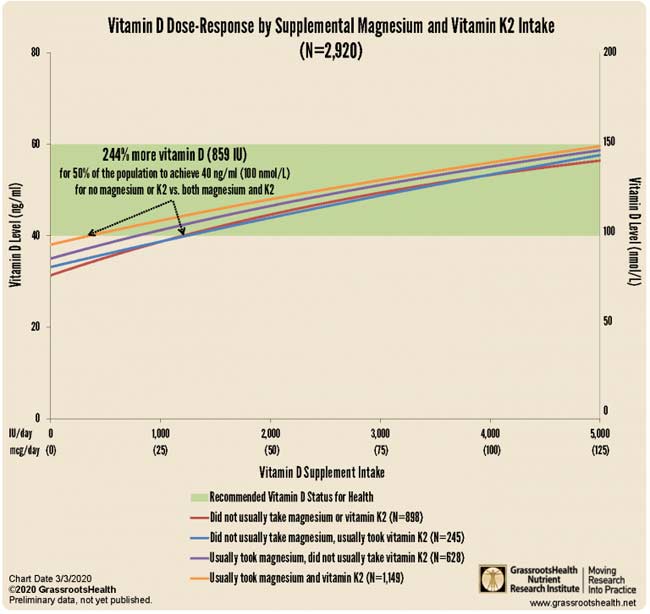
Help Us Spread the Word!
Remember, while vitamin D is important for everyone, key target populations are the elderly and people of color. It’s now beyond evident that COVID-19 affects the elderly far more severely, on average, than younger individuals, and those living in nursing homes and assisted living facilities seem to be at an extraordinarily increased risk of dying from COVID-19.
Add to that the increased hospitalization rate and mortality among people of color, and it should be easy to see that targeting these two groups with commonsense strategies such as vitamin D optimization can, and most likely will, have a tremendous impact on COVID-19 mortality rates in the future. As Robert Brown with the McCarrison Society, a nutrition think tank, told the Scotland Herald:39
“The biological pathways by which vitamin D can help reduce severity of Covid-19 are well established and the real-life evidence from within this pandemic is growing. What’s needed now is for government to be bold and act now to mitigate the risk of a second wave returning in the winter.”
That said, don’t let government’s failure to address vitamin D to stop you from taking control of your own health. Vitamin D supplements are inexpensive and readily available, as are vitamin K2 and magnesium. If we can get the word out, we are likely to significantly quell any reemergence of COVID-19, and eliminate most of the racial disparities we see among patients with severe illness.
A growing body of evidence shows that vitamin D plays a crucial role in disease prevention and maintaining optimal health. There are about 30,000 genes in your body, and vitamin D affects nearly 3,000 of them, as well as vitamin D receptors located throughout your body.
Vitamin D May Help Protect Against Cancer and Other Diseases
According to one large-scale study, having optimal vitamin D levels can slash your risk of cancer and can help prevent at least 16 different types of cancer, including pancreatic, lung, ovarian, prostate and skin cancers.
Vitamin D from sun exposure also radically decreases your risk of autoimmune diseases like multiple sclerosis (MS) and Type 1 diabetes. Sun exposure also helps prevent osteoporosis, which is a significant concern for women in particular.
Magnesium Is Important for Heart Health
Magnesium is involved in the regulation of blood sugar and insulin sensitivity, which is important for the prevention of many chronic diseases, including Type 2 diabetes and heart disease and dementia. It also supports your brain and heart health via other mechanisms.
It supports healthy heart function by relaxing your blood vessels and normalizing blood pressure, for example. Magnesium also has anti-inflammatory activity, support your endothelial function, and the function of your muscles and nerves, including the action of your heart muscle.
Low magnesium has been linked to a higher risk for hypertension, cardiovascular disease, arrhythmias, stroke and sudden cardiac death. According to one scientific review, which included studies dating as far back as 1937, low magnesium actually appears to be the greatest predictor of heart disease, and other recent research shows even subclinical magnesium deficiency can compromise your cardiovascular health.
Omega-3 Fats Are Crucial to Your Well-Being
Meanwhile, recent research suggests high doses (4 grams) of the omega-3 fats EPA and DHA may help improve healing after a heart attack. Other benefits of omega-3 fats include prevention of lupus and Parkinson’s disease, decreased anxiety, healthier and stronger bones, as well as fighting fats in the body.
However, you can’t tell by looking in a mirror if you are deficient in vitamin D, magnesium or omega-3s. The only real way to know if you are deficient in these nutrients is to get tested.
How to Test Your Levels
I’m really pleased GrassrootsHealth Nutrient Research Institute has expanded its research projects to include a range of different tests, seeing how deficiency may be needlessly affecting the health of so many. Like its Vitamin D*action Project, the Magnesium*PLUS Focus Project will allow us all to take action on known science with a consensus of experts without waiting for institutional lethargy.
The Vitamin D*action Project has truly demonstrated the value measurement can have on public health, and there’s no doubt in my mind that the Magnesium*PLUS Focus Project will have the same impact. As in earlier projects, once the study of a community is completed, all that information can be used to push for public health recommendations that will benefit everyone.
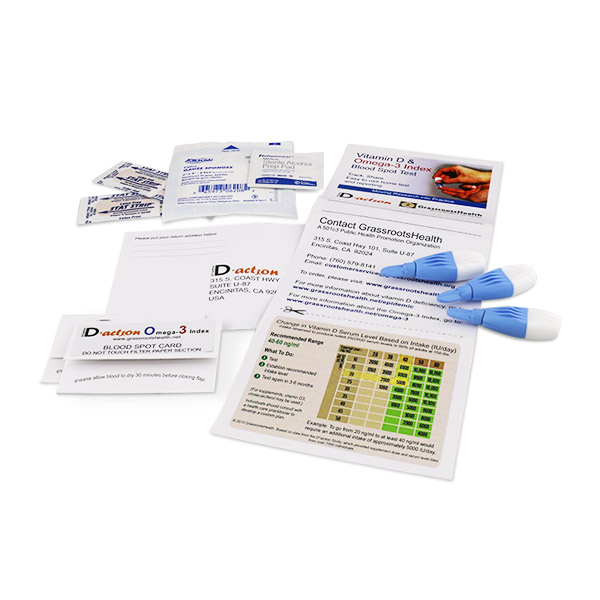

You have the ability to participate in a variety of different tests, including:
- Vitamin D
- Vitamin D and Omega 3
- Vitamin D, Omega 3 and Magnesium
- Vitamin D, Magnesium & Omega 3 PLUS Elements. Remember, by participating in this public research project, you not only are identifying your own levels, but allowing yourself to make decisions about your diet and supplements to improve your health.Your data (which is anonymous) will also help GrassrootsHealth researchers to determine the ideal levels for the prevention of various diseases, and what kind of dose-response relationship exists among the general population.
With the data from this project, individuals will be able to see what works for them, and, researchers will be able to demonstrate just to what extent health care costs may be reduced simply by getting people into an optimal range.
- 1, 2 Frontlinesupport.com
- 3, 9, 12 The Guardian June 17, 2020
- 4 Clinicaltrials.gov Vitamin D Trials
- 5, 7, 8 Frontline Support Team Vitamin D Evidence (Studies) (PDF)
- 6 vitamindwiki.com
- 10 Twitter The BMA June 13, 2020
- 11 Covidence UK Study
- 13 Cureus 2018 Jun; 10(6): e2741
- 14, 39 Scotland Herald June 17, 2020
- 15 Frontiers in Endocrinology, 2018;9:373
- 16, 17 Fox News, March 23, 2020
- 18 MedPageToday, March 25, 2020
- 19 Nutrients, 2020;12:988
- 20 Can Fam Physician. 2015 Jun; 61(6): 50
- 21 Endocr Pract. 2009 Jul–Aug; 15(5): 438–449
- 22 Clinical Therapeutics 2017; 39(5): 930-945 (PDF)
- 23 Derma Endocrinology 2009 Jul-Aug; 1(4): 215–219
- 24 Derma Endocrinology 2009 Jul-Aug; 1(4): 215–219, Abstract
- 25 The BMJ 2017;356:i6583
- 26 Youtube, Coronavirus Epidemic Update 30, 7:58 minutes
- 27 GrassrootsHealth.net, Vitamin D Reduces Colds and Flu
- 28 TILDA.tcd.ie Vitamin D deficiency in Ireland — Implications for COVID-19. Results from the Irish Longitudinal Study on Ageing (TILDA)
- 29 Medical Xpress April 6, 2020
- 30 Nutrients April 2, 2020; 12(4): 988
- 31 SSRN April 30, 2020
- 32 JoanneNova.com.au May 2020
- 33 MedRxiv June 10, 2020 DOI: 10.1101/2020.06.01.20112334
- 34 News Medical Life Sciences June 4, 2020
- 35 Food Navigator Asia June 16, 2020
- 36, 37 DMinder app
- 38 GrassrootsHealth Magnesium and Vitamin K2 Combined Important for Vitamin D Levels
Can Your Blood Type Predict Your Risk of Virus Infection?
Reproduced from original article:
https://articles.mercola.com/sites/articles/archive/2020/06/27/can-blood-type-predict-virus-infection-risk.aspx
Analysis by Dr. Joseph Mercola Fact Checked
June 27th 2020

STORY AT-A-GLANCE
- The results from three studies show that blood type O has some protective effect against COVID-19; one scientist believes the factor is small compared to comorbidities
- The authors of one study tested genetic variants and found the gene responsible for overreaction of the immune system was near the gene for blood type
- Some have used at-home DNA testing to track genealogy or learn about medical risks; while helpful for this, using consumer labs is not risk-free
- Your blood type is likely not the most important factor; instead, optimize your vitamin D level, improve your metabolic sensitivity and reduce insulin resistance with intermittent fasting
Not soon after China revealed the discovery of SARS-CoV-2 in their country, scientists around the world began acting. This was a different type of coronavirus than had been studied since at least 1980.1
One difference is the gain of function potential capabilities the virus is believed to have2 that have been used in lab settings to alter the function of cells “as powerful tools to understand basic bacterial and viral biology and pathogen-host interactions.”3 The U.S. had banned this research in 2014, but in 2017 it was quietly lifted and4
“… the US National Institutes of Health (NIH) announced that they would resume funding gain-of-function experiments involving influenza, Middle East respiratory syndrome coronavirus, and severe acute respiratory syndrome coronavirus [SARS].”
The novel coronavirus appeared to trigger a wide range of symptoms in people. Some had only a mild affliction; others were sick for weeks and still others suffered such serious respiratory debilitation that they required the assistance of a ventilator.5
Your Blood Type May Reveal Risk Profile
After the SARS outbreak of 2003, researchers found that one specific blood type, Type O, had a potential protective effect against that strain of the coronavirus.6 Scientists have also been looking at what genetic factors may impact infection and its severity for people exposed to SARS-CoV-2.
The home-based genetic testing company 23andMe released preliminary results from a study they conducted using the information of more than 750,000 people.7 Their early results suggest that a person’s blood type has an influence on their susceptibility to the virus.
In addition to the information they used from among the millions who have sent their DNA to the company,8 they want to add data from 10,000 hospitalized patients who are not already part of their database.9
The company reported that the percentage who tested positive for COVID-19 by blood type was 4.1% for blood group AB.10 The differences reported in the study showed that those with type O had a 9% or 18% lower potential for testing positive for the virus when compared to those with blood types A, B or AB.11
In a separate study, researchers found that individuals with blood type O Rh positive had the best protection.12 23andMe did not find any differences between the two RH factors, positive or negative.13 It’s important to note that data were collected from self-reported information, which may reduce the validity of this study.14
In an investigation from China, researchers compared the blood types of 2,173 patients who tested positive for SARS-CoV-2.15 The results demonstrated that those with blood type O had a lower risk of infection and those with blood type A had a higher risk. The results of this study are early, and the researchers warn they should be used only as a guide.
A different group of researchers evaluated the health information of people who had respiratory failure; in addition to reviewing the data from a control group, they studied individuals who were patients at seven hospitals in Italy and Spain.16 In the final analysis, 835 people from Italy and 775 people from Spain who tested positive for the virus were included.
The researchers analyzed 8.5 million single-nucleotide polymorphisms, which are genetic variations.17 They found statistically significant genetic differences in blood groups. They also found a higher risk for individuals who have A-positive blood and a lower risk for those with blood type O.
It’s important to remember that the results do not demonstrate there is absolute protection or risk with blood type, only that those with blood type O may have a lower risk and those with blood type A may have a slightly higher risk. The results from Italy and Spain add to a growing body of evidence indicating that blood type has some impact on a person’s susceptibility to the SARS-CoV-2 infection.18
Laura Cooling from the University of Michigan said that the current data don’t match the epidemiology of the disease pattern in the U.S.19 She pointed out that blood type O is more prevalent in the population of African-Americans, who are experiencing a disproportionately higher number of infections.
This suggests that blood type may be less of a risk factor compared to others, such as comorbidities known to increase the risk of severe conditions and disease such as vitamin D deficiency, obesity, diabetes and cardiovascular diseases.20
What’s Important About Blood Type?
Blood type has an impact on emergency care and transfusion; a successful transfusion requires that the person receiving the blood gets the same type from a donor.
Your blood type is determined by the presence or absence of antigens on the surface of every red blood cell. These give your blood specific characteristics, including blood type. The four major types that are determined by two specific antigens, A and B, include A, B, AB and O. Another factor, Rh, may also be present.
The most common blood types are O-positive and A-positive. The approximate distribution of blood types ranges from type O-positive at 38% of the population to type AB-negative at 1% of the population.21
At this time, it’s not understood how blood type may play a role in susceptibility to COVID-19. Professor Andre Franke from the University of Kiel is an author of the study from Italy and Spain.22 He found the gene to type blood is near a gene that controls a protein for a strong immune response.
The overreaction of the immune system, called a cytokine storm, is primarily what causes a massive inflammatory response and lung damage with COVID-19. Theoretically, this genetic variation may have an influence over the immune system and explain the link to blood type.
Consider These Risks Before Taking a Home DNA Test
The number of people using at-home DNA tests to track their ancestry, confirm their heritage or get information on blood type grew through 2019, as demonstrated by the large population that 23andMe used in their study.23,24
Although 23andMe.com saw recent growth, that company, along with Ancestry.com, which also collects your DNA, began losing sales in 2019. However, these tests are not risk-free. They still hold the data on everyone who’s sent them information, however.25 The potential use for DNA ranges from mapping your family tree and helping find genetic indicators to identifying health conditions and solving crimes.
The last two are usually done in highly regulated labs, while DNA to identify your family tree is not. The at-home test kit allows you to check your results online.26 In so doing, you have to give the company permission to store your information in their database. This is the same database 23andMe used to perform the recent comparison of blood type and COVID-19 infection.
Information may also be used in other ways, depending on the rules of the company. With some, your use of their services allows them to sell your genetic data to third parties without your consent and without profit sharing. Pharmaceutical companies, as an example, need large DNA data sets to develop new drugs.
These data are typically sold for millions of dollars, but those who provide the data realize none of the profits.27 That irony is compounded by the fact that consumers have to pay about $99 to get their DNA tested, which then becomes freely available for corporate use and profiteering, among other things, over which the donors have no control.
Your DNA is your most personal set of information, which can be used and manipulated in several ways. In an era when companies have difficulty keeping your usernames and passwords safe, it isn’t unrealistic to think your DNA data may also be at risk.
In 2013 researchers published a paper demonstrating that it was possible to identify people participating in genetic research studies by cross-referencing their data with information freely available on the internet.28,29 Scientists are excited about the potential information that may be gleaned from large DNA databases, but it poses a problem for your privacy.
Direct-to-consumer DNA testing companies are not bound by HIPAA regulations, which means your personal health information is not protected.30 Even if there is no leak, your genetic information may be used by employers, life insurance organizations and health insurance companies. In fact, in 2013, 23andMe admitted that the goal of their company was to collect massive amounts of DNA data to use without donors’ consent.31
Steps to Optimize Your Health and Support Your Immune System
It is helpful to know your blood type, but that is likely not a strong factor in your ability to withstand a viral infection. The number of people who are dying from COVID-19 lies somewhere between the World Health Organization’s estimate of 3.4%32 and a study in Nature Medicine indicating 1.4%.33
With many cases going unreported or untested, many of the mild and asymptomatic cases are likely not included in the figures. This means the death rate would be lower. In a study from Italy’s national health authority, 99% of the deaths in Italy were in people who had underlying medical conditions.34
Of those reported, 48.5% had 3 or more comorbidities.35 This points to the importance of addressing any underlying conditions you may have. It’s important that you work to optimize your health in ways that don’t also result in unwanted side effects or conditions related to taking a drug.
Comorbid conditions with higher rates of death and severity are cardiovascular disease, diabetes, high blood pressure, chronic respiratory diseases and cancer.36 Of the five conditions in this list, four are significantly affected by metabolic dysfunction. The common denominator is insulin resistance, which is triggered by a diet of high amounts of carbohydrates and processed foods.
When your body is insulin resistant it is also not metabolically flexible. As Dr. Sandra Weber, president of the American Association of Clinical Endocrinologists, noted:37
“We know that if you do not have good glucose control, you’re at high risk for infection, including viruses and presumably this one [COVID-19] as well … [improving glucose control] would put you in a situation where you would have better immune function.”
What and when you eat has a strong influence on your ability to beat insulin resistance. Intermittent fasting promotes insulin sensitivity and improves blood sugar management. This strategy helps to resolve Type 2 diabetes, high blood pressure, obesity and other conditions affected by metabolic dysfunction. To read more about how intermittent fasting affects insulin sensitivity, see “Intermittent Fasting Instead of Insulin for Type 2 Diabetes.”
Researchers have also found compelling evidence that maintaining optimal levels of vitamin D helps to lower your risk of severe disease. Since scientists anticipate a second wave of illness in the fall, you have a known “deadline” to raise your vitamin D level to at least 60 ng/mL and up to 80 ng/mL by that time.
Importantly, research published April 28, 2020 showed vitamin D insufficiency is prevalent in severe cases of COVID-19.38 They also found 100% of people under age 75 admitted to the intensive care unit had vitamin D insufficiency. For a more in depth discussion of how your vitamin D level will impact your risk and how to optimize your levels see “Your Vitamin D Level Must Reach 60ng/mL Before the Second Wave.”
So, how do you go about optimizing your vitamin D level? First, you need to find out what your base level is, which is done using a simple blood test. An easy and cost-effective way of doing this is to order GrassrootsHealth’s vitamin D testing kit.
Once you know what your blood level is, you can assess the dose needed to maintain or improve your level. Again, the ideal level you’re looking for is above 40 ng/mL, and ideally between 60 ng/mL and 80 ng/mL (European measurement: 100 nmol/L or, ideally, 150 nmol/L to 200 nmol/L).
Next, you can fine-tune your dosage further by taking into account your baseline vitamin D level. To do that, you can either use the chart below, or use GrassrootsHealth’s Vitamin D*calculator. To convert ng/mL into the European measurement (nmol/L), simply multiply the ng/mL measurement by 2.5.
Along with intermittent fasting and optimizing your vitamin D levels, you’ll find a list of more strategies you can simply incorporate into your daily routine at “Want to Defeat Coronavirus? Address Diabetes and Hypertension.”
- 1 PennMedicine News, March 5, 2020
- 2 Salon, April 24, 2020
- 3 The Journal of Infectious Disease, 2016;213:1364
- 4 The Lancet, 2018;18 (2)
- 5 Mayo Clinic
- 6 Glycobiology, 2008;18(12)
- 7, 9, 13 23andMe, June 8, 2020
- 8 23andMe, April 6, 2020
- 10, 14 Technology News, June 9, 2020
- 11 Bloomberg, June 8, 2020
- 12 medRxiv, April 11, 2020; doi.org/10.1101/2020.04.08.20058073
- 15 medRxiv, 2020; doi.org/10.1101/2020.03.11.20031096
- 16 medRxiv, 2020; doi.org/10.1101/2020.05.31.20114991
- 17 Genetics Home Reference
- 18 Forbes, June 10, 2020
- 19 Chemical and Engineering News, June 11, 2020
- 20 News Medical Life Sciences, June 3, 2020
- 21 ZME Science, May 2, 2018
- 22 The New York Times, June 3, 2020
- 23 Technology Review, February 12, 2018
- 24 Technology Review, February 11, 2019
- 25 Medium, February 7, 2020
- 26 PC Magazine, March 27, 2018
- 27 Business Insider, July 25, 2018
- 28 Nature, May 8, 2013
- 29 Science, 18 Jan 2013: Vol. 339, Issue 6117, pp. 321-324, DOI: 10.1126/science.1229566
- 30 Harvard Law Bill of Health, November 22, 2016
- 31 Scientific American, November 27, 2013
- 32 World Health Organization March 3, 2020
- 33 Nature Medicine March 19, 2020 Abstract
- 34 Bloomberg, March 18, 2020
- 35 The Istituto Superiore di Sanità Marcy 17, 2020
- 36 WHO-China Joint Mission on COVID-19 February 2020
- 37 The New York Times March 12, 2020
- 38 Medrxiv April 28, 2020 DOI: 10.1101/2020.04.24.20075838
How Drug Industry Is Countering Diminishing Vaccine Uptake
Reproduced from original article:
https://articles.mercola.com/sites/articles/archive/2020/06/26/what-is-vaccine-uptake.aspx
Analysis by Dr. Joseph Mercola Fact Checked
June 26, 2020

STORY AT-A-GLANCE
- As lockdowns have kept people at home and out of medical facilities, infant vaccination rates have dropped. This may be why they’ve started promoting baseless claims suggesting common childhood vaccinations might prevent COVID-19 deaths
- Despite lack of proof, media claims the TB vaccine, measles-mumps-rubella (MMR) and oral polio vaccines might protect against COVID-19
- A Singaporean study finds common colds caused by frequently encountered betacoronaviruses might make you more resistant to SARS-CoV-2 infection, and that the resulting immunity might last as long as 17 years
- If you’ve beat a common cold caused by a OC43 or HKU1 betacoronavirus in the past, you may have a 50/50 chance of having defensive T-cells that can recognize and help defend against SARS-CoV-2
- Other studies have also discovered that many appear to have prior resistance to SARS-CoV-2. One study found 70% of patients who had recovered from mild cases of COVID-19, as well as 40% to 60% of people who had not been exposed to the virus, had resistance to SARS-CoV-2 on the T-cell level
As lockdowns have kept people at home and out of medical facilities, infant vaccination rates have dropped. As you might expect, this is bad news for the drug industry, which is likely why they’ve started promoting baseless claims that childhood vaccinations might prevent COVID-19 deaths.
Baseless Claims Seek to Bolster Vaccine Uptake
There’s absolutely no evidence for this, yet, in March 2020, they started pushing the TB vaccine, claiming it might “steel the immune system” against SARS-CoV-2. As reported by Science:1
“Researchers in four countries will soon start a clinical trial of an unorthodox approach to the new coronavirus. They will test whether a century-old vaccine against tuberculosis (TB), a bacterial disease, can rev up the human immune system in a broad way, allowing it to better fight the virus that causes coronavirus disease 2019 and, perhaps, prevent infection with it altogether.”
In April 2020, the measles-mumps-rubella (MMR) vaccine was touted as a “major breakthrough” against COVID-19. The British Express reported:2
“Researchers at the University of Cambridge said the injection could prevent severe symptoms in people who have had it because the rubella virus has a similar structure to the coronavirus …
When they compared the rubella virus and the coronavirus the researchers found that they were 29 percent identical … The researchers have no evidence that the MMR vaccine works on COVID-19 patients but they assured ‘a study is warranted.’”
In June 2020, it was the polio vaccine’s turn in the spotlight. According to The Hill,3 tuberculosis and polio vaccines are being examined “for possible protection against COVID-19.”
Jeffrey D. Cirillo, a professor of microbial pathogenesis and immunology at Texas A&M Health Science Center, went so far as to state, “This is the only vaccine in the world that can be given to combat COVID-19 right now.”
Based on what? Based on vaccination rates in countries such as Pakistan, “where most of the population is vaccinated for tuberculosis and death rates for COVID-19 have been extremely low.” That’s it.
Meanwhile, discussions and evidence showing the benefits of vitamin C and vitamin D — as well as many other therapies — are banned and censored. This, despite significant scientific evidence actually backing their use and showing the biology by which these nutrients and therapies can prevent and/or treat this particular infection. Talk about travesty.
The oral polio vaccine, by the way, is now the primary cause of polio paralysis in the world, not wild polio.4,5 This is an inconvenient fact that is completely ignored by most mainstream media.
Common Cold May Provide Long-Term Immunity Against COVID-19
In related news, June 12, 2020, the Daily Mail,6 Science Times7 and others8 reported findings from a Singaporean study9 led by professor Antonio Bertoletti, an immunologist with the Duke-NUS Medical School, showing common colds caused by the betacoronaviruses OC43 and HKU1 might make you more resistant to SARS-CoV-2 infection, and that the resulting immunity might last as long as 17 years.
In addition to the common cold, OC43 and HKU1 — two of the most commonly encountered betacoronaviruses10 — are also known to cause bronchitis, acute exacerbation of chronic obstructive pulmonary disease and pneumonia in all age groups.11 As reported by the Daily Mail:12
“They share many genetic features with the coronaviruses Covid-19, MERS and SARS, all of which passed from animals to humans. Coronaviruses are thought to account for up to 30 percent of all colds but it is not known specifically how many are caused by the betacoronavirus types.
Now scientists have found evidence that some immunity may be present for many years due to the body’s ‘memory’ T-cells from attacks by previous viruses with a similar genetic make-up — even among people who have had no known exposure to Covid-19 or SARS …
Blood was taken from 24 patients who had recovered from Covid-19, 23 who had become ill from SARS and 18 who had never been exposed to either SARS or Covid-19 …
Half of patients in the group with no exposure to either Covid-19 or SARS possessed T-cells which showed immune response to the animal betacoronaviruses, Covid-19 and SARS. This suggested patients’ immunity developed after exposure to common colds caused by betacoronavirus or possibly from other as yet unknown pathogens.”
In other words, if you’ve beat a common cold caused by a OC43 or HKU1 betacoronavirus in the past, you may have a 50/50 chance of having defensive T-cells that can recognize and help defend against SARS-CoV-2, the novel coronavirus that causes COVID-19. According to the researchers:13
“These findings demonstrate that virus-specific memory T-cells induced by betacoronavirus infection are long-lasting, which supports the notion that Covid-19 patients would develop long-term T-cell immunity. Our findings also raise the intriguing possibility that infection with related viruses can also protect from or modify the pathology caused by SARS-Cov-2.”
Other Studies Show Similar Results
Other studies have also discovered that many appear to have prior resistance to SARS-CoV-2. For example, a study14 published May 14, 2020, in the journal Cell, found 70% of samples obtained by the La Jolla Institute for Immunology from patients who had recovered from mild cases of COVID-19, as well as 40% to 60% of people who had not been exposed to the virus, had resistance to SARS-CoV-2 on the T-cell level.
According to the authors, this suggests there’s “cross-reactive T cell recognition between circulating ‘common cold’ coronaviruses and SARS-CoV-2.” Like Bertoletti’s study above, the Cell study found that exposure to coronaviruses responsible for the common cold appear to allow your immune system to recognize and fight off SARS-CoV-2 as well.
May 14, 2020, Science magazine reported15 these Cell findings, drawing parallels to another earlier paper16 by German investigators that had come to a similar conclusion.
That German paper,17 the preprint of which was posted April 22, 2020, on Medrxiv, found helper T cells that targeted the SARS-CoV-2 spike protein in 15 of 18 patients hospitalized with COVID-19. As reported by Science:18
“The teams also asked whether people who haven’t been infected with SARS-CoV-2 also produce cells that combat it. Thiel and colleagues19 analyzed blood from 68 uninfected people and found that 34% hosted helper T cells that recognized SARS-CoV-2.
The La Jolla team20 detected this crossreactivity in about half of stored blood samples collected between 2015 and 2018, well before the current pandemic began …
The results suggest ‘one reason that a large chunk of the population may be able to deal with the virus is that we may have some small residual immunity from our exposure to common cold viruses,’ says viral immunologist Steven Varga of the University of Iowa. However, neither of the studies attempted to establish that people with crossreactivity don’t become as ill from COVID-19.
Before these studies, researchers didn’t know whether T cells played a role in eliminating SARS-CoV-2, or even whether they could provoke a dangerous immune system overreaction. ‘These papers are really helpful because they start to define the T cell component of the immune response,’ [Columbia University virologist Angela] Rasmussen says.”
Statistician Believes Majority Are Resistant to COVID-19
These studies add support to the latest COVID-19 mortality models suggesting widespread resistance and prior immunity. Freddie Sayers, executive editor of UnHerd, recently interviewed professor Karl Friston, a statistician whose expertise is mathematical modeling, who believes prior immunity across the global population might be as high as 80%. Sayers reports:21
“[Friston] invented the now standard ‘statistical parametric mapping’ technique for understanding brain imaging — and for the past months he has been applying his particular method of Bayesian analysis, which he calls ‘dynamic causal modelling,’ to the available Covid-19 data …
His models suggest that the stark difference between outcomes in the UK and Germany, for example, is not primarily an effect of different government actions (such as … earlier lockdowns), but is better explained by intrinsic differences between the populations that make the ‘susceptible population’ in Germany … much smaller than in the UK …
Even within the UK, the numbers point to the same thing: that the ‘effective susceptible population’ was never 100%, and was at most 50% and probably more like only 20% of the population.”
These statistics really throw the idea of social distancing being an unavoidable part of the post-COVID-19 “new normal” into question. What’s more, once sensible behaviors such as staying home when sick are entered into Friston’s model, the effect of lockdown efforts vanish altogether, so global lockdowns were likely completely unnecessary in the first place.
Nobel-Prize Winning Scientist Debunks Growth Projections
Michael Levitt,22 a professor of structural biology at the Stanford School of Medicine who received the Nobel Prize in 2013 for his development of multiscale models for complex chemical systems, has also presented strong evidence that supports Friston’s model.
According to Levitt, statistical data reveals a mathematical pattern that has stayed consistent regardless of the government interventions implemented. While early models predicted an exponential explosion of COVID-19 deaths, those predictions never materialized. As reported by Sayers in the video above:
“After around a two-week exponential growth of cases (and, subsequently, deaths) some kind of break kicks in, and growth starts slowing down. The curve quickly becomes ‘sub-exponential.’ This may seem like a technical distinction, but its implications are profound.
The ‘unmitigated’ scenarios modelled by (among others) Imperial College, and which tilted governments across the world into drastic action, relied on a presumption of continued exponential growth …
But Professor Levitt’s point is that that hasn’t actually happened anywhere, even in countries that have been relatively lax in their responses.”
Levitt believes prior immunity plays a significant role in why we simply don’t see an exponential growth pattern of COVID-19 deaths, and that certainly seems to make sense. A majority of people simply aren’t (and weren’t) susceptible to the disease in the first place.
He tells Sayers the indiscriminate lockdowns implemented around the world were “a huge mistake.” A more rational approach would have been to protect and isolate the elderly, who are by far the most vulnerable and make up the bulk of COVID-19 deaths around the world.
Hopefully, these data will not be swept under the rug if or when a second wave of COVID-19 emerges this fall. Making that mistake once is bad enough. Let us not repeat it.
Last but not least, to bolster your immune system and lower your risk of COVID-19 infection in the future, be sure to follow the instructions given in “Your Vitamin D Level Must Reach 60 ng/mL Before the Second Wave.”
One of the Most Powerful Videos I’ve Ever Seen
The following video from Barbara Loe Fisher is one of the most powerful videos that I have ever seen. I am hopeful that watching this video will inspire you to take up the cause and join the fight for vaccine freedom and independence.
There is a cultural war and collusion between many industries and federal regulatory agencies that results in a suppression of the truth about vital important health issues. If this suppression continues we will gradually and progressively erode our private individual rights that our ancestors fought so hard to achieve. Please take a few minutes to watch this video.
Protect Your Right to Informed Consent and Defend Vaccine Exemptions
With all the uncertainty surrounding the safety and efficacy of vaccines, it’s critical to protect your right to make independent health choices and exercise voluntary informed consent to vaccination. It is urgent that everyone in America stand up and fight to protect and expand vaccine informed consent protections in state public health and employment laws. The best way to do this is to get personally involved with your state legislators and educate the leaders in your community.
Think Globally, Act Locally
National vaccine policy recommendations are made at the federal level but vaccine laws are made at the state level. It is at the state level where your action to protect your vaccine choice rights can have the greatest impact.
It is critical for EVERYONE to get involved now in standing up for the legal right to make voluntary vaccine choices in America because those choices are being threatened by lobbyists representing drug companies, medical trade associations and public health officials, who are trying to persuade legislators to strip all vaccine exemptions from public health laws.
Signing up for NVIC’s free Advocacy Portal at www.NVICAdvocacy.org gives you immediate, easy access to your own state legislators on your smartphone or computer so you can make your voice heard. You will be kept up to date on the latest state bills threatening your vaccine choice rights and will get practical, useful information to help you become an effective vaccine choice advocate in your own community.
Also, when national vaccine issues come up, you will have the up-to-date information and call-to-action items you need at your fingertips. So, please, as your first step, sign up for the NVIC Advocacy Portal.
Share Your Story With the Media and People You Know
If you or a family member has suffered a serious vaccine reaction, injury or death, please talk about it. If we don’t share information and experiences with one another, everybody feels alone and afraid to speak up. Write a letter to the editor if you have a different perspective on a vaccine story that appears in your local newspaper. Make a call in to a radio talk show that is presenting only one side of the vaccine story.
I must be frank with you: You have to be brave because you might be strongly criticized for daring to talk about the “other side” of the vaccine story. Be prepared for it and have the courage to not back down. Only by sharing our perspective and what we know to be true about vaccination will the public conversation about vaccination open up so people are not afraid to talk about it.
We cannot allow the drug companies and medical trade associations funded by drug companies or public health officials promoting forced use of a growing list of vaccines to dominate the conversation about vaccination.
The vaccine injured cannot be swept under the carpet and treated like nothing more than “statistically acceptable collateral damage” of national one-size-fits-all mandatory vaccination policies that put way too many people at risk for injury and death. We shouldn’t be treating people like guinea pigs instead of human beings.
Internet Resources Where You Can Learn More
I encourage you to visit the website of the nonprofit charity, the National Vaccine Information Center (NVIC), at www.NVIC.org:
- Vaccine Requirements and Exemptions by State — Vaccine laws vary from one U.S. state to another. By knowing the specific policies where you live, you’ll learn how you can get exemptions and better protect your right to make informed vaccine choices.
- NVIC Memorial for Vaccine Victims — View descriptions and photos of children and adults who have suffered vaccine reactions, injuries and deaths. If you or your child experiences an adverse vaccine event, please consider posting and sharing your story here.
- If You Vaccinate, Ask 8 Questions — Learn how to recognize vaccine reaction symptoms and prevent vaccine injuries.
- Vaccine Freedom Wall — View or post descriptions of harassment and sanctions by doctors, employers and school and health officials for making independent vaccine choices.
- Vaccine Failure Wall — View or post descriptions about vaccines that have failed to work and protect the vaccinated from disease.
Connect With Your Doctor or Find a New One Who Will Listen and Care
If your pediatrician or doctor refuses to provide medical care to you or your child unless you agree to get vaccines you don’t want, I strongly encourage you to have the courage to find another doctor.
Harassment, intimidation and refusal of medical care are becoming the modus operandi of the medical establishment in an effort to stop the change in attitude of many parents about vaccinations after they become truly educated about health and vaccination. However, there is hope.
At least 15% of young doctors recently polled admit that they’re starting to adopt a more individualized approach to vaccinations in direct response to the vaccine safety concerns of parents.
It is good news that there is a growing number of smart young doctors who prefer to work as partners with parents in making personalized vaccine decisions for children, including delaying vaccinations or giving children fewer vaccines on the same day, or continuing to provide medical care for those families who decline use of one or more vaccines.
So, take the time to locate a doctor who treats you with compassion and respect, and who is willing to work with you to do what is right for your child.
Subscribe to the Mercola Newsletter to Get Timely Vaccine News and Updates
Google has been censoring vaccine information providers, which means finding reliable information about this topic can be a real challenge.
To help you keep updated on vaccine issues and exemptions, I invite you to subscribe to my FREE health newsletter. You will receive the latest health news from Mercola.com straight to your inbox, with no threats to your security and privacy.
You will also get free access to more than 100,000 Mercola.com health articles and a totally FREE subscription to my Natural Health newsletter. You can unsubscribe at any time and I guarantee the privacy of your email.
– Sources and References
- 1 Science March 23, 2020
- 2 Express April 22, 2020
- 3 The Hill June 11, 2020
- 4 CDC Vaccine-Derived Poliovirus
- 5 The Scientist November 25, 2019
- 6, 12, 13 Daily Mail June 12, 2020
- 7 Science Times June 12, 2020
- 8 iHeart radio June 12, 2020
- 9 Biorxiv preprint DOI: 10.1101/2020.05.26.115832 (PDF)
- 10, 11 J Infect Dis. 2013 Nov 15; 208(10): 1634–1642
- 14, 20 Cell May 14, 2020 DOI: 10.1016/j.cell.2020.05.015
- 15, 18 Science May 14, 2020
- 16, 17, 19 Medrxiv DOI: 10.1101/2020.04.17.20061440
- 21 Unherd.com June 4, 2020
- 22 Unherd.com May 2, 2020