Minerals
now browsing by category
Feeling hopeless about your underactive thyroid? These two nutrients may help, study suggests
Reproduced from original article:
www.naturalhealth365.com/underactive-thyroid-zinc-selenium-3687.html
by: Edit Lang, staff writer | January 8, 2021
 (NaturalHealth365) According to the National Institutes of Health (NIH), approximately 4.6 percent of the U.S. population over 12 years old lives with hypothyroidism, with women far more likely to develop the condition than men. Hypothyroidism, also known as underactive thyroid, occurs when your thyroid gland does not produce enough thyroid hormones. This diminished thyroid function can potentially lead to devastating health consequences, such as weight gain, muscle weakness, pain, depression, plus much more.
Although thyroid medications are the gold standard for managing hypothyroidism symptoms, they are certainly not the only way to nudge your thyroid gland to release more of its vital hormones. A study published in the Journal of the American College of Nutrition put two nutrients to the test to see if they can help improve thyroid function.
Study questions effectiveness of medications used to treat underactive thyroid
If you live with low thyroid, you know how the condition progresses over time and symptoms worsen. Upon diagnosis, most doctors recommend patients to begin taking one of the many thyroid medications on the market, likely for the rest of their life. This approach might sound reasonable if we did not consider the long list of possible side effects and severe long-term health consequences, such as breast cancer associated with thyroid medications. In addition, scientists also raised questions about medication efficacy, as a whopping 40 percent of patients on thyroid medications continue to have abnormal TSH levels, according to the Colorado thyroid disease prevalence study.
Such dismal results with commonly prescribed pharmaceuticals may partially explain why researchers looked at nutrients to boost thyroid hormone levels naturally.
Supplementing with these two nutrients can increase thyroid hormone levels
In this 12-week study, researchers divided 68 obese women with underactive thyroid into four groups.
- Group 1 received 30 milligrams of zinc (as zinc gluconate) and 200 micrograms of selenium (as selenium yeast)
- Group 2 received 30 mg of zinc
- Group 3 received 200 micrograms of selenium
- Group 4 received a placebo
At the end of the study period, researchers noted significant improvements in several areas. First, participants in the zinc-selenium group saw a 9.2 percent increase in Free T3 hormone levels. The zinc only group had an even more remarkable, 27 percent increase. Second, Free T4 levels also went up by 12.4 percent among patients taking both zinc and selenium. Finally, the ratio between Free T3 and Free T4 also improved by 23.8 percent.
Do NOT ignore the health dangers linked to toxic indoor air. These chemicals – the ‘off-gassing’ of paints, mattresses, carpets and other home/office building materials – increase your risk of nasal congestion, fatigue, poor sleep, skin issues plus many other health issues.
Get the BEST indoor air purification system – at the LOWEST price, exclusively for NaturalHealth365 readers. I, personally use this system in my home AND office. Click HERE to order now – before the sale ends.
Researchers concluded that yes, indeed, supplementing with zinc or zinc and selenium has a beneficial effect on thyroid function.
Discover the various ways zinc and selenium affect your thyroid
To better appreciate the above findings, let’s take a closer look at the connection between thyroid and zinc. One of the most important functions of zinc is its role in the T4 to T3 conversion. This process is also called the peripheral thyroid conversion, by which your body converts the inactive thyroid hormone T4 into the active hormone T3.
Although zinc is not the only nutrient playing a role in this conversion, it is undeniably the most important of all. Zinc deficiency impairs your body’s ability to convert T4 to T3 and may lead to low thyroid development. On the contrary, maintaining adequate zinc levels can help optimize your health in multiple ways.
Selenium, an essential micronutrient for thyroid function, also boosts T4 to T3 conversion, protects the gland against damage, and plays a vital role in thyroid hormone synthesis. Of all the organs, your thyroid contains the highest concentration of selenium in your body.
Know this before supplementing with zinc or selenium
Although avoiding deficiency in zinc and selenium is essential for optimum health, you should always consult with your healthcare professional before starting a new supplement regiment. Taking high amounts (especially over 40 mg) of zinc for long periods can deplete copper stores in your body. If you have celiac disease or other digestive disorders, you may not be able to absorb zinc at all.
Selenium requires similar precautions as it can be toxic at high amounts. Experts have set the daily upper limits of selenium at 400 mcg. Brazil nuts are a popular way to ensure you meet the recommended daily intake of selenium.
Be mindful, however, that according to the NIH, one ounce, or about 4 to 6 Brazil nuts contain approximately 544 micrograms of selenium, which is more than nine times the recommended daily allowance (RDA) of 55 mcg for most adults. A good rule of thumb is to limit the number of Brazil nuts to a couple of them a day.
Sources for this article include:
Zinc
Written by Brenton Wight, Health Researcher
Copyright [c] 1999-[y] Brenton Wight. All Rights Reserved.
This site is non-profit, existing only to help people improve health
Updated 17th January 2021
Why we Need Zinc
Zinc is an essential trace mineral, found in almost every cell in the body and is involved in over 200 enzymes, and in more enzymatic reactions than any other mineral. Apart from enzymes, many body hormones such as insulin, growth hormone and sex hormones all need zinc to function correctly.
Most importantly: Zinc, like Vitamn D3, also helps regulate overactive immune responses (autoimmune conditions) that cause inflammation.
Zinc Deficiency
Zinc deficiency is common.
Most at risk are children, seniors, vegetarians, vegans, those with kidney disorders or chronic diarrhea.
Deficiency reduces immunity, affecting our natural virus-fighting system.
Zinc for Immune Function
Zinc is vital for several immune system functions, including Innate immunity, white blood cell function, and the Thymus gland function.
Innate immunity is the body’s natural defense mechanism, separate from the immune system.
Zinc, with the help of Vitamin A, Vitamin D3, Selenium and other nutrients, aids in our barriers to infection, but deficiency of these other nutrients can reduce the benefits of zinc.
Zinc is referred to as the gatekeeper of immune function.
Zinc, in the ionic form, is one of our best weapons to defeat invading viruses.
Viruses infect cells with the use of replicase, an enzyme, but zinc can block the replicase enzyme, blocking virus replication. However, zinc also needs an open ionophore, a cell membrane portal (door) that allows ions to enter cells. Many natural compounds act as zinc ionophores, such as flavonoids like Quercetin and Green Tea Extract (EGCG).
Zinc and the Thymus
Zinc Chelate promotes a healthy immune system via the thymus, the major gland of our immune system. It sits below the thyroid and above the heart, and thymus health affects immune health.
The thymus produces T lymphocytes, white blood cells responsible for cell-mediated immunity (i.e. immune systems unaffected by antibodies). Cell-mediated immunity is extremely important for mold-like bacteria, yeast (including Candida albicans), fungi, parasites, and viruses such as Herpes simplex, Epstein-Barr, and viruses that cause hepatitis. Zinc deficiency affects immunity, also affecting allergies, autoimmune conditions, and inflammation. Studies show that zinc supplementation can reverse immunity issues, even in elderly subjects.
The thymus also needs zinc to release several hormones that improve white blood cell function, imperative for immunity.
Zinc and White Blood Cells
Apart from the T cells involved in cell-mediated immunity, monocytes (different white blood cells, and the body’s “garbage collectors”) require zinc. Monocytes located in the liver, spleen, and lymph nodes are called macrophages. Monocytes and macrophages engulf foreign particles including bacteria, viruses, and cellular debris and destroy them, at the same time sending information messages about the invaders to other immune cells.
The NK cells (Natural Killer cells) are yet another type of white blood cells, receiving their name because they destroy cells that have become cancerous or infected with viruses. Zinc is required in the NK cell signaling function. Without enough zinc, an active viral infection could be disastrous instead of a healthy recovery.
Zinc Dosage
Adults, including during pregnancy or lactation: 15 mg to 20 mg.
To help fight an infection: 30 mg to 45 mg (men), 20 mg to 30 mg (women).
To boost zinc levels temporarily: Zinc lozengers 15mg to 20 mg dissolved in the mouth every 2 waking hours for up to 7 days.
Children: 5 to 10 mg
Note: High intake of zinc (and magnesium) can block absorption of copper, so zinc supplements containing a small amount of copper should be considered.
Forms of Zinc
There are many forms of zinc supplements.
Many studies have used a common zinc sulfate, which is poorly absorbed. Better forms are:
– Zinc bisglycinate
– Zinc picolinate
– Zinc acetate
– Zinc citrate
– Zinc monomethionine
– Zinc oxide
Zinc Lozengers are mostly made with zinc acetate or gluconate.
I recommend a chelated (ionic) form of zinc bisglycinate such as Zinc Chelate as the body can more readily use supplements already in an ionic form without having to break them down. Also frees up glycine, an amino acid required for production of glutathione, the body’s “master antioxidant”.
Zinc Side Effects
– Gastrointestinal upset and nausea if taken on an empty stomach (mainly zinc sulfate which is not recommended)
– Anemia, lower HDL-cholesterol levels, depressed immune function after prolonged intake over 150 mg daily, due to reduced copper absorption.
– Decreased absorption of tetracycline and ciprofloxacin antibiotics. Take zinc supplements at least 2 hours before or after taking these antibiotics.
– Loss of zinc or poor zinc absorption if used with aspirin; AZT (azidothymidine); captopril; enalapril; estrogens (oral contraceptives and Premarin®); penicillamine; and diuretics (thiazide class). Supplementation often required to maintain zinc levels in those taking these drugs.
References:
- Gammoh NZ, Rink L. Zinc in Infection and Inflammation. Nutrients. 2017 Jun 17;9(6). pii: E624
- Wessels I, Maywald M, Rink L. Zinc as a Gatekeeper of Immune Function. Nutrients. 2017 Nov 25;9(12). pii: E1286
- Mocchegiani E, Romeo J, Malavolta M, et al. Zinc: dietary intake and impact of supplementation on immune function in elderly. Age (Dordr). 2013 Jun;35(3):839-60
- Barnett JB, Dao MC, Hamer DH, et al. Effect of zinc supplementation on serum zinc concentration and T cell proliferation in nursing home elderly: a randomized, double-blind, placebo-controlled trial. Am J Clin Nutr. 2016 Mar;103(3):942-51
- Prasad AS. Zinc in human health: effect of zinc on immune cells. Mol Med. 2008 May-Jun;14(5-6):353-7
- Hulisz D. Efficacy of zinc against common cold viruses: an overview. J Am Pharm Assoc (2003). 2004 Sep-Oct;44(5):594-603
- Dabbagh-Bazarbachi H, et al. Zinc ionophore activity of quercetin and epigallocatechin-gallate: from Hepa 1-6 cells to a liposome model. J Agric Food Chem. 2014 Aug 13;62(32):8085-93
Vitamin D Reduces Cancer Deaths
Reproduced from original article:
https://articles.mercola.com/sites/articles/archive/2020/12/07/vitamin-d-to-prevent-tumor-death.aspx
Analysis by Dr. Joseph Mercola Fact Checked December 07, 2020

STORY AT-A-GLANCE
- Several recent studies demonstrate vitamin D can have a significantly beneficial impact on your cancer risk, both in terms of preventing cancer and in the treatment of cancer
- A secondary analysis of the VITAL study found patients with no prior history of cancer who took 2,000 IUs of vitamin D per day reduced their risk for metastatic cancer and death by 17%
- The risk for metastatic cancer and death was reduced by as much as 38% among those who also maintained a healthy weight
- Another meta-analysis found supplementation with vitamin D resulted in a 30% reduction in adverse colorectal cancer outcomes. Vitamin D also improved outcomes among patients already diagnosed with colorectal cancer
- Research has also shown women who have a vitamin D level at or above 60 ng/mL (150 nmol/L) have an 82% lower risk of breast cancer compared to those with levels below 20 ng/mL (50 nmol/L)
There’s good news for those of you who have taken the proactive step to make sure your vitamin D level is optimized. Several recent studies demonstrate vitamin D can have a significantly beneficial impact on your cancer risk, both in terms of preventing cancer and in the treatment of cancer.
Vitamin D Reduces Cancer Mortality
In the first of these studies,1,2 which included 25,871 patients, vitamin D supplementation was found to reduce the risk for metastatic cancer and death by 17%. The risk was reduced by as much as 38% among those who also maintained a healthy weight.
This was a really poorly done study as they only gave participants 2,000 IUs a day and never measured their blood levels. Had there been no improvement, I would not have been surprised, but the fact is it still reduced metastatic cancer and death by 17%, and they found significant benefit among those who were not obese.
This is pretty extraordinary but not as good as epidemiological studies that show a 50% to even 78% reduction in vitamin D sufficient people, as suggested in a study further below. That said, UPI reported the results saying:3
“The benefits of vitamin D3 in limiting metastases — or disease spread to other organs — and severity was seen across all cancers, and was particularly prominent among study participants who maintained a healthy weight …
‘The primary message [of our study] is that vitamin D may reduce the chance of developing metastatic or fatal cancer among adults without a diagnosis of cancer,’ study co-author Dr. Paulette Chandler told UPI.”
The study, published in JAMA Network Open, is a secondary analysis of the VITAL Study4 which, in part, sought to determine whether taking 2,000 IUs of vitamin D per day would reduce the risk of cancer, heart disease or stroke in people who did not have a prior history of these diseases.
The VITAL study itself, which followed patients for an average of 5.3 years, found no statistical difference in overall cancer rates among those who took vitamin D3, but there was a reduction in cancer-related deaths, which is what prompted this secondary analysis.
Obesity May Inhibit Vitamin D’s Benefits
The fact that patients with a healthy weight derived a much greater benefit — a 38% reduced risk for metastatic cancer and death compared to 17% overall — suggests your body weight may play a significant role in whether vitamin D supplementation will provide you with the anticancer benefits you seek.
Obesity may confer resistance to vitamin D effects. ~ Dr. Paulette Chandler
According to study co-author Dr. Paulette Chandler, assistant professor of medicine at Brigham and Women’s Hospital in Boston, “Our study highlights that obesity may confer resistance to vitamin D effects.”5
There may be something to that. Research6 published in 2010 found that dietary fructose inhibits intestinal calcium absorption, thereby inducing vitamin D insufficiency in people with chronic kidney disease.
That said, vitamin D tends to be lower in obese people in general, for the fact that it’s a fat-soluble nutrient and when you’re obese, the vitamin D ends up being “volumetrically diluted.” As explained in the paper “Vitamin D in Obesity,” published in 2017:7
“Serum vitamin D is lower in obese people; it is important to understand the mechanism of this effect and whether it indicates clinically significant deficiency … Vitamin D is fat soluble, and distributed into fat, muscle, liver, and serum.
All of these compartments are increased in volume in obesity, so the lower vitamin D likely reflects a volumetric dilution effect and whole body stores of vitamin D may be adequate … Obese people need higher loading doses of vitamin D to achieve the same serum 25-hydroxyvitamin D as normal weight.”
While that particular paper stresses that lower vitamin D in obese individuals might not mean that they’re deficient, others disagree. For example, one study8,9 found that for every 10% increase in body-mass index, there’s a 4.2% reduction in blood levels of vitamin D. According to the authors of that particular study, obesity may in fact be a causal factor in the development of vitamin D deficiency.10
Vitamin D Also Improves Colorectal Cancer Outcomes
A scientific review11 published in the September 2020 issue of the British Journal of Cancer noted that having low vitamin D is associated with poor colorectal cancer survival.
To assess whether vitamin D supplementation might improve survival in these patients, they reviewed the findings of seven trials, three of which included patients diagnosed with colorectal cancer from the outset and four population trials that reported survival in incident cases.
Overall, the meta-analysis found supplementation resulted in a 30% reduction in adverse colorectal cancer outcomes. Vitamin D also improved outcomes among patients already diagnosed with colorectal cancer. According to the authors:12
“Meta-analysis demonstrates a clinically meaningful benefit of vitamin D supplementation on [colorectal cancer] survival outcomes. Further well-designed, adequately powered RCTs are needed to … [determine] optimal dosing.”
Low Vitamin D Linked to Increased Cancer Incidence
Another review and meta-analysis,13 this one published in November 2019 in Bioscience Reports, looked at vitamin D supplementation on cancer incidence and mortality in general. Ten randomized controlled trials with a pool of 81,362 participants were included in the analysis.
While the incidence rate of cancer was very similar between the vitamin D intervention group and the placebo control group (9.16% versus 9.29%), the risk reduction in mortality was deemed “significant.” As reported by the authors:
“The mortality rate of cancer was 2.11% (821 cases) and 2.43% (942 cases) in vitamin D intervention group and placebo group, respectively, resulting in a significant reduction in risk (RR = 0.87).
There was no observable heterogeneity or publication bias … Our findings support a beneficial effect of vitamin D supplement on lowering cancer mortality, especially in subpopulations with no history of cancer, extra use of vitamin D, or calcium supplement.”
Vitamin D Protects Against Breast Cancer
Several studies have highlighted the benefit of vitamin D for breast cancer. For example, an analysis14 by GrassrootsHealth published June 2018 in PLOS ONE showed women with a vitamin D level at or above 60 ng/mL (150 nmol/L) had an 82% lower risk of breast cancer compared to those with levels below 20 ng/mL (50 nmol/L).
An earlier study,15,16 which looked at women in the U.K., found having a vitamin D level above 60 ng/mL resulted in an 83% lower breast cancer risk, which is nearly identical to GrassrootsHealth’s 2018 analysis.
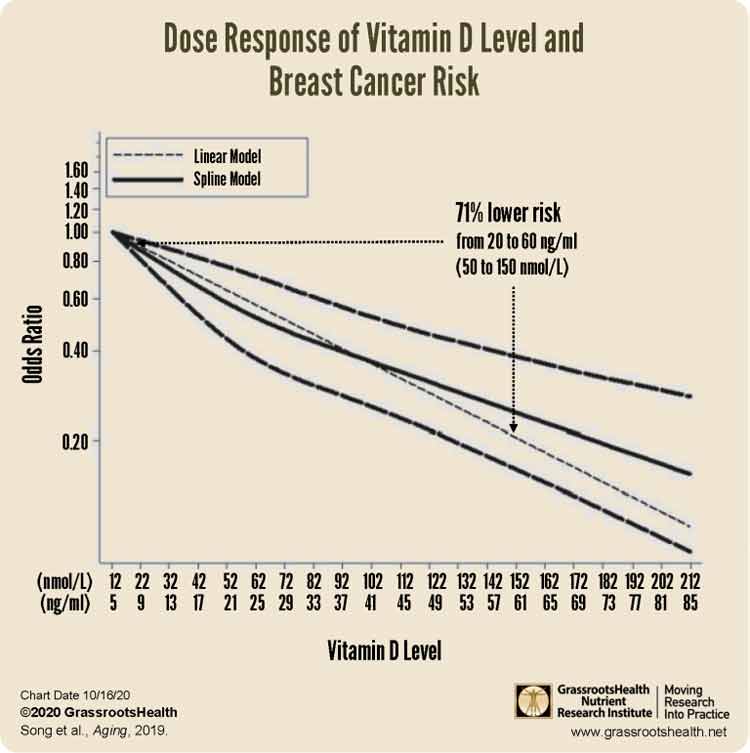
One of the most recent meta-analyses17,18 looking at breast cancer was published December 28, 2019, in the journal Aging. Here, they reviewed 70 observational studies, finding that for each 2 ng/mL (5 nmol/L) increase in vitamin D level there was a corresponding 6% decrease in breast cancer incidence.
Overall, this translates into a 71% reduced risk when you increase your vitamin D level from 20 ng/mL to 60 ng/mL. The following graph, created by GrassrootsHealth,19 illustrates the dose response between vitamin D levels and breast cancer risk found in this study.
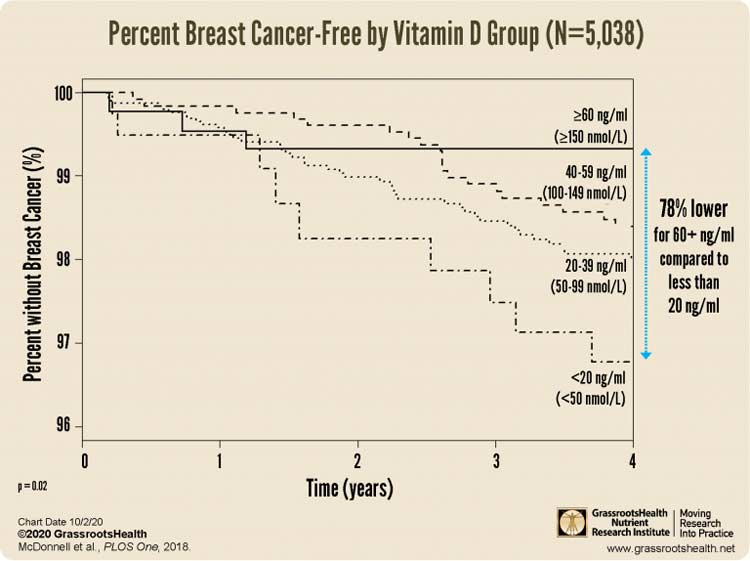
GrassrootsHealth’s 2018 analysis in PLOS ONE also analyzed this dose relationship.20 To do that, they looked at the percentage of breast cancer-free participants in various vitamin D groups, from deficient (below 20 ng/mL) to optimal (at or above 60 ng/mL), over time (four years).
As you might expect, the higher the blood level of vitamin D, the lower the incidence of breast cancer. The graph below illustrates this dose-related protection. At four years, the percentage of women who had been diagnosed with breast cancer in the 60 ng/mL group was 78% lower than among those with blood levels below 20 ng/mL.
How to Optimize Your Vitamin D Level
If you live in the northern hemisphere, which is currently heading toward winter, now is the time to check your vitamin D level and start taking action to raise it if you’re below 40 ng/mL (100 nmol/L). As you can see from the studies above, a vitamin D level of 60 ng/mL (150 nmol/L) or higher is recommended if you want to protect against cancer.
An easy and cost-effective way of measuring your vitamin D level is to order GrassrootsHealth’s vitamin D testing kit. Once you know your current vitamin D level, use the GrassrootsHealth vitamin D calculator21 to determine how much vitamin D you might need to reach your target level. To optimize vitamin D absorption and utilization, be sure to take your vitamin D with vitamin K2 and magnesium.
Lastly, remember to retest in three to four months to make sure you’ve reached your target level. If you have, then you know you’re taking the correct dosage. If you’re still low (or have reached a level above 80 ng/mL), you’ll need to adjust your dosage accordingly and retest again in another three to four months.
- 1 JAMA Network Open 2020;3(11):e2025850
- 2 The Sentinel November 22, 2020
- 3, 5 UPI November 18, 2020
- 4 Vital Study Findings
- 6 JASN 2010 Feb; 21(2): 261–271
- 7 Curr Opin Endocrinol Diabetes Obes 2017 Dec;24(6):389-394
- 8, 10 PLOS Medicine February 5, 2013 DOI: 10.1371/journal.pmed.1001383
- 9 Live Science February 8, 2013
- 11, 12 BJC 2020; 123: 1705-1712
- 13 Bioscience Reports 2019 Nov 29; 39(11): BSR20190369
- 14, 20 PLOS ONE June 15, 2015 (PDF)
- 15 European Journal of Cancer 2005 May;41(8):1164-9
- 16 GrassrootsHealth, Breast Cancer Reduction and Vitamin D
- 17 Aging 2019 Dec 28;11(24):12708-12732
- 18, 19 GrassrootsHealth Blog, Lower Breast Cancer Risk with Vitamin
- 21 GrassrootsHealth Vitamin D Calculator
The Truth About COVID-19 ‘Long-Haulers’
Reproduced from original article:
https://articles.mercola.com/sites/articles/archive/2020/11/20/the-truth-about-covid-19-long-haulers.aspx
Analysis by Dr. Joseph Mercola Fact Checked November 20, 2020

STORY AT-A-GLANCE
- 18.1% of individuals diagnosed with COVID-19 also received a first-time psychiatric diagnosis in the 14 to 90 days afterward. Most common were anxiety disorders, insomnia and dementia
- An estimated 10% of patients treated for COVID-19 report fatigue, breathlessness, brain fog and/or chronic pain for three weeks or longer. This phenomenon occurs even among patients who had mild cases of COVID-19
- U.S. Centers for Disease Control and Prevention data show the rate of COVID-19 patients who continue experiencing lingering health problems after recovering from acute COVID-19 may be as high as 45%
- Many post-acute COVID-19 patients fit the diagnostic criteria for ME/CFS, which has been linked to viral infections
- According to a COVID-19 treatment guide, many of these “long COVID” patients do spontaneously recover — albeit slowly — with holistic support, rest, symptomatic treatment and gradual increase in activity
You may have seen reports about COVID-19 patients who seem unable to fully recover. Some complain of lingering chronic fatigue symptoms. Others struggle with mental health problems.
In fact, a study1,2 from Oxford University published online November 9, 2020, in The Lancet Psychiatry, found 18.1% of individuals diagnosed with COVID-19 also received a first-time psychiatric diagnosis in the 14 to 90 days afterward. Most common were anxiety disorders, insomnia and dementia. A similar trend was also observable after COVID-19 relapses.
Interestingly, people with pre-existing mental illness were also found to be 65% more likely to be diagnosed with COVID-19 than those who did not have a pre-existing psychiatric problem.
Now, while this may sound terrifying, I would point out that, given the fearmongering surrounding COVID-19, it’s not surprising that receiving a diagnosis would trigger anxiety and insomnia in many. It doesn’t mean you end up with a chronic psychiatric disorder. It just tells us that getting a COVID-19 diagnosis is very stressful, even if you remain asymptomatic.
The link to dementia is interesting, however, and likely needs to be looked into further. This also applies to the higher risk of COVID-19 if you have a pre-existing mental health problem. It’s possible that people struggling with depression, anxiety and similar disorders are simply more likely to get tested for COVID-19 — and end up receiving false positive diagnoses.
As discussed in “Asymptomatic ‘Casedemic’ Is a Perpetuation of Needless Fear,” mass testing of asymptomatic people doesn’t tell us anything of value since the test cannot discern between an active infection and the presence of nonreproductive (harmless) virus. It only makes the pandemic appear graver than it is.
That said, going through a severe bout of COVID-19 is also going to take a mental toll. As reported3 by a 40-year-old previously healthy man who underwent an apparent recurrence of COVID-19, after three weeks of fatigue, he started feeling “completely overwhelmed” and for the next 72 hours, he “felt unwell in a way that was bordering on not coping.”
He says he “felt physically exhausted” and “mentally drained.” Severe illness will do that. He says it took him nearly eight weeks before he started feeling “close to my normal self again,” but even then, he still struggled with “fatigue to the point of having to sleep in the day” and an inability to exercise.
COVID-19 ‘Long-Haulers’
He’s not alone in reporting such symptoms. An estimated 10% of patients treated for COVID-19 report fatigue, breathlessness, brain fog and/or chronic pain for three weeks or longer.4 This phenomenon occurs even among patients who had mild cases of COVID-19.
U.S. Centers for Disease Control and Prevention data5 show the rate of COVID-19 patients who continue experiencing lingering health problems after recovering from acute COVID-19 may be as high as 45%. Only 65% report having returned to their previous level of health within 14 to 21 days after receiving a positive test result.
Many of these “long COVID” patients do spontaneously recover — albeit slowly — with holistic support, rest, symptomatic treatment and gradual increase in activity.
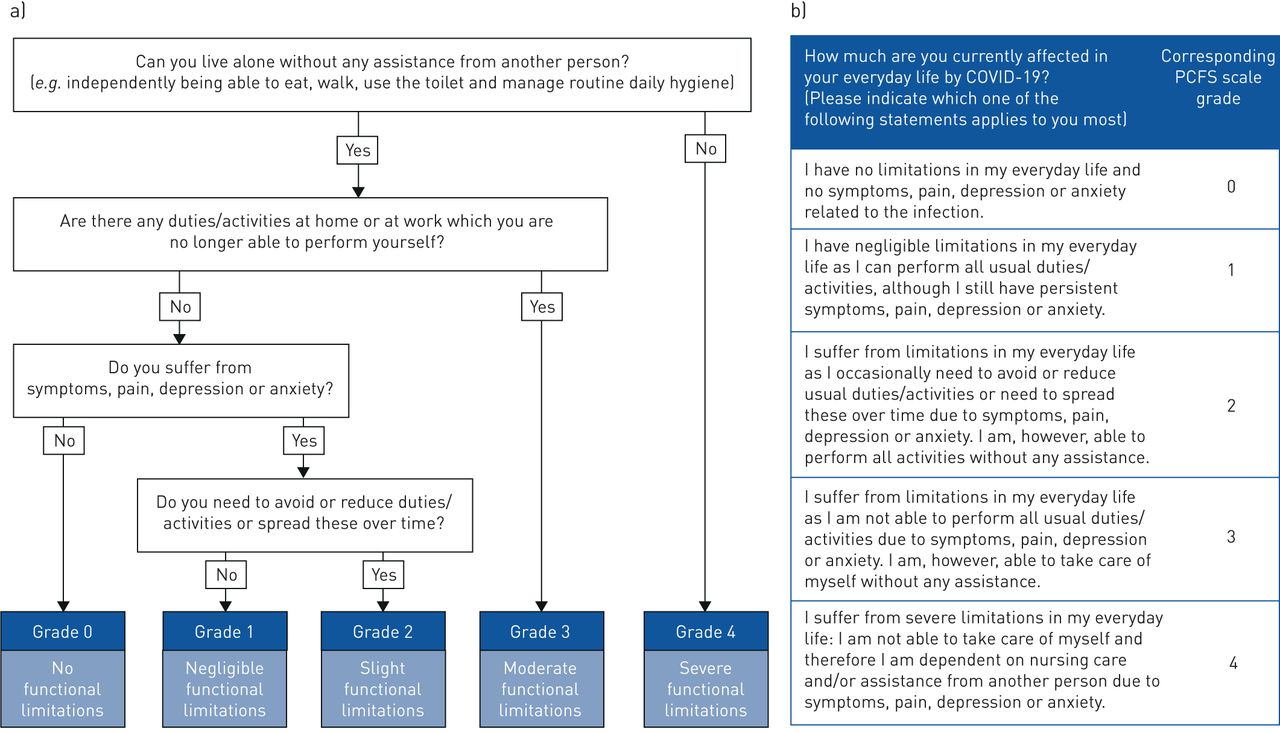
The flowchart6 below, published in the European Respiratory Journal, is a tool you can use to measure your functional status over time after recovery from COVID-19.
Treatment Guidance for Post-Acute COVID-19
The good news is that, according to an August 11, 2020, article in The BMJ,7 which provides post-acute COVID-19 primary care guidance, many of these “long COVID” patients do spontaneously recover — albeit slowly — “with holistic support, rest, symptomatic treatment and gradual increase in activity.” To support recovery, the article suggests that:8
“… patients should be managed pragmatically and symptomatically with an emphasis on holistic support while avoiding over-investigation. Fever, for example, may be treated symptomatically with paracetamol or non-steroidal anti-inflammatory drugs.
Monitoring functional status in post-acute COVID-19 patients is not yet an exact science. A post-COVID-19 functional status scale has been developed pragmatically but not formally validated9 …
Referral to a specialist rehabilitation service does not seem to be needed for most patients, who can expect a gradual, if sometimes protracted, improvement in energy levels and breathlessness, aided by careful pacing, prioritization, and modest goal setting.
In our experience, most but not all patients who were not admitted to hospital recover well with four to six weeks of light aerobic exercise (such as walking or Pilates), gradually increasing in intensity as tolerated. Those returning to employment may need support to negotiate a phased return.”
The following graphic from that BMJ article10 provides a visual summary of the recommended assessment and management recommended for patients with lingering symptoms after recovering from acute COVID-19.

Chronic Fatigue in the Limelight
As reported by Time magazine,11 that many COVID-19 patients report lingering fatigue, myalgic encephalomyelitis/chronic fatigue syndrome (ME/CFS) has gained new attention. It seems many of these post-acute COVID-19 patients fit the diagnostic criteria for ME/CFS, which has been linked to viral infections.
For years, people with ME/CFS were disregarded as faking it. Many were told it was “all in their head.” The fact that COVID-19 patients are now reporting the same problem strengthens the theory that ME/CFS really is rooted in some sort of chronic infection.
“There is … a critical mass of long-haulers getting sick and speaking out all at once, enough to draw attention from scientists, the media and the general public,” Time magazine writes.12
“Enough of these patients tested positive for COVID-19 or its antibodies to make a strong case that coronavirus is turning into ME/CFS … The influx of new patients could go a long way toward figuring out why, exactly, a viral illness can last forever.
Though there are multiple theories in the ME/CFS research world, [Dr. Anthony] Komaroff [who treats ME/CFS at Brigham and Women’s Hospital in Boston] believes the cause of the condition can be traced back to a part of the brain that kicks on when you’re sick — the part that saps your energy and appetite so your body can focus all its energy on clearing an infection.
‘This center in the brain gets flicked on, but for whatever reason it never gets switched off,’ Komaroff says. New research efforts spurred by the pandemic could help determine if that’s really happening, and why.”
In May 2020, Maryland Rep. Jamie Raskin introduced a bill13 to provide funding to study the connection between SARS-CoV-2 and ME/CFS. The bill, HR 7057 (The UCS ME/CFS Act) has not yet cleared the U.S. House of Representatives. It has no corresponding bill in the Senate. However, studies are already underway, and “COVID-19 longhaulers” can volunteer for them on the You + ME registry.14
A significant hurdle remains though: Few doctors are familiar enough with ME/CFS to treat these patients. If the pandemic results in a massive influx of ME/CFS patients, the medical system will be ill equipped to handle it and countless patients are bound to suffer without much hope. According to Time magazine:15
“[Dr. Ron] Tompkins [a surgeon from Massachusetts General Hospital who researches ME/CFS] adds that any progress for ME/CFS patients will hinge on doctors definitively determining that coronavirus can turn into ME/CFS, rather than making post-coronavirus syndrome a separate diagnosis.
‘It would be a disservice to make post-COVID something special,’ he says, because ME/CFS patients wouldn’t share the benefits. ‘I don’t think there’s a nickel of difference between the two,’ he adds.”
The Gut Connection
While conventional medicine has no cure to offer ME/CFS patients, there’s compelling evidence suggesting your gut health can play a significant role in this condition. Research published in 2017 linked both chronic fatigue and Parkinson’s to gut bacteria.
People with ME/CFS have distinctly different gut microbiomes than healthy controls,16 as determined by serial sequencing of bacterial RNA, and research17,18 has found 35% to 90% of ME/CFS patients “report abdominal discomfort consistent with irritable bowel syndrome.”
In related news,19 researchers have also discovered a link between COVID-19 and gut problems. A likely reason for this is because SARS-CoV-2 uses the ACE2 receptor to gain entry into the cell, and the greatest number of ACE2 receptors are found in the cells that line your gut.
According to one review,20 18.6% of COVID-19 patients had gastrointestinal symptoms such as diarrhea, nausea and vomiting. In another study,21 as many as 50.5% of COVID-19 patients admitted to the hospital had one or more digestive symptoms.
Abdominal pain is rare at just 1.9%,22 and theories of why COVID-19 would cause stomach pain include inflammation of the nerves in the gut23,24 and/or sudden loss of blood supply to abdominal organs resulting in tissue death.25
Incidentally, your gut microbiome is also known to influence your mental health, and has been linked to depression26 and anxiety,27 and a large portion of your immune system also resides in your gut.
All of these links between viral infection, gut problems, mental health issues, immune function and ME/CFS suggest restoring your gut health may be a crucial strategy if you come down with COVID-19.
How to Boost Your Gut Health
To optimize your gut microbiome, consider the following recommendations. Also keep an eye out for my interview with health scientist Rodney Dietert, which will be published shortly. In it, we discuss the connections between COVID-19 and gut health and review the importance of your gut for a well-functioning immune system.
•Avoid processed vegetable oils (polyunsaturated fats or PUFAs), as they promote inflammation, damage your endothelium (the cells lining your blood vessels) and your mitochondria, and lower your antioxidant defenses by stripping your liver of glutathione. For more details, see “The Case Against Processed Vegetable Oils.”
•Avoid processed foods and conventionally raised meats and other animal products as they are routinely fed low-dose antibiotics and genetically engineered feed grown with glyphosate, which is known to kill many beneficial bacteria.
•Increase your soluble and insoluble fiber intake. Short-chain fatty acids produced by bacteria that feed on plant fiber are major epigenetic communicators. In other words, they actually communicate with your DNA, thereby providing protection against a number of different diseases. If using a fiber supplement, make sure its unprocessed, such as organic whole husk psyllium. Processed supplement fiber does not provide gut bacteria with what they need.
•Avoid chlorinated and/or fluorinated water and antibacterial soap as all will kill off healthy bacteria.
•Eat plenty of traditionally fermented foods such as lassi, natto, fermented vegetables and fermented grass fed organic milk products like kefir and yogurt, and/or take a probiotic supplement. This is particularly important after a course of antibiotics.
Additional Advice for ME/CFS and ‘COVID-19 Long-Haulers’
In addition to addressing your gut health, there are many other strategies that can be helpful for ME/CFS, and yet others that appear extremely beneficial for the prevention and treatment of COVID-19 specifically. Important treatment strategies for ME/CFS include but are not limited to:
- Exercising according to your ability, with a focus on increasing the amount of exercise you can handle. Gentle exercise such as yoga can also be an excellent part of your program, and yoga benefits your mind as well as your body.
- Supplementing with nutrients important for cellular energy synthesis, such as ubiquinol, the reduced form of CoQ10, and D-ribose, a core building block of ATP.
- Eating foods rich in glutathione precursors, sulfur and selenium to encourage glutathione production. Glutathione is one of your body’s most important antioxidants and a natural detoxification agent. Glutathione deficiency also appears to play a distinct role in COVID-19 and has been linked to increased severity.
- Implementing a time-restricted eating schedule so that you’re eating all of your meals within a six- to eight-hour window. Also make sure your last meal is taken at least three hours before bedtime. The rationale for avoiding late night eating is directly tied to the way your body produces energy.
- Addressing your mental outlook. I recommend trying the Emotional Freedom Techniques (EFT) to help normalize your bioenergetic circuitry. Emotionally traumatic events can leave “energy blockages” for many years, which then interfere with your overall health, including immune function. There are many different techniques that can be used, but EFT is my favorite, and it’s easy to learn and apply.
Lastly, recommendations that can be helpful to prevent and treat COVID-19, both in the short and long term include the following. Some of these also tie in with ME/CFS while other don’t:
•Improve your insulin sensitivity by adopting a diet high in healthy fats and low in processed carbs, implementing a time-restricted eating schedule and avoiding food for at least three hours before bed.
Research shows insulin resistance is a primary and independent risk factor for severe COVID-19, which makes sense when you consider it both increases inflammation and lowers immune function. You can learn more about all of this in “The Real Pandemic Is Insulin Resistance.”
Ketones — produced when you eat a cyclical ketogenic diet and/or intermittently fast — also appear to be very helpful against COVID-19, which adds further support for these lifestyle strategies.
•Supplement with:
◦Lumbrokinase, an enzyme that helps combat blood clots (another symptom associated with more severe COVID-19) and breaks down biofilms associated with Lyme disease, an infection also linked to ME/CFS.
◦Quercetin and zinc. Like hydroxychloroquine, quercetin helps shuttle zinc into the cell, thereby stemming viral replication. COVID-19 patients with low zinc levels have a higher risk of poor outcome and death.28
Quercetin also boosts type 1 interferon, which signals infected cells to produce proteins that stop the virus from replicating. In addition, quercetin works synergistically with vitamin C, which is another powerful COVID-19 prophylactic.
◦Vitamin D. More than 80% of COVID-19 patients are vitamin D deficient, and the evidence overwhelmingly supports the idea that raising your vitamin D level above 40 ng/mL can go a long way toward preventing SARS-CoV-2 infection, reducing severity, lowering the risk of death and improving outcomes overall.
•Use nebulized hydrogen peroxide. Nebulizing hydrogen peroxide into your sinuses, throat and lungs is a simple, straightforward way to augment your body’s natural expression of hydrogen peroxide to combat infections and can be used both prophylactically after known exposure to COVID-19 and as a treatment for mild, moderate and even severe illness.
Buy a desktop nebulizer and stock food-grade hydrogen peroxide and some saline. That way, you have everything you need and can begin treatment at home at the first signs of a respiratory infection. Keep in mind food grade hydrogen peroxide must be diluted down to a 0.1% dilution before use.
- 1 The Lancet Psychiatry November 9, 2020 [Epub ahead of print]
- 2 Reuters November 9, 2020
- 3, 4, 7, 8, 10 The BMJ 2020;370:m3026
- 5 MMWR 2020;69:993-8
- 6 European Respiratory Journal 2020;56:2001494, Figure 1
- 9 European Respiratory Journal 2020;56:2001494
- 11, 12, 15 Time October 16, 2020
- 13 HR 7057 UCS ME/CFS Act
- 14 You + ME
- 16 Microbiome June 23, 2016; 4 Article number 30
- 17 Microbiome April 26, 2017; 5 Article number 44
- 18 Eurekalert April 26, 2017
- 19 Inverse, How COVID-19 Affects the Gut
- 20 BJS Open August 5, 2020; 107(10)
- 21 Clinical Characteristics of COVID-19 Patients With Digestive Symptoms (PDF), Results: Prevalence and Outcomes of Patients with Digestive Symptoms
- 22 Clinical Characteristics of COVID-19 Patients With Digestive Symptoms (PDF), Abstract: Results
- 23 Clinical Medicine Journal May 2020 DOI: https://doi.org/10.7861/clinmed.2020-0150
- 24 Neurogastroenterol Motil 2008 May;20 Suppl 1:73-80
- 25 Kidney 360 June 2020; 1(6): 584-585
- 26 Journal of Neuroscience Research May 29, 2019
- 27 Harvard, The Gut-Brain Connection
- 28 Medscape, October 8, 2020
6 ways to naturally eliminate migraines
Reproduced from original article:
www.naturalhealth365.com/migraine-headaches-remedy-3601.html
Dr. Matthew Roe | October 25, 2020
 (NaturalHealth365) Migraine headaches are the second most common type of primary headache after tension headaches. And, just to be clear, a “primary” headache is a headache that is not caused by another disease or condition.
Along with debilitating pain, migraines can generate blurred vision, dizziness, nausea, and sensitivity to light and sound. Often without much warning, migraines can happen once a year, monthly, or several times a week. And, unfortunately, migraines can either occur with an aura – which is known as the classic migraine – or without an aura, which is called a common migraine.
What can trigger a migraine?
The possible migraine triggers not only vary from one individual to another, but encompass a whole range of common substances. This can include hormonal imbalances, synthetic fragrances, processed cereals (or other junk foods) and skipping meals. A simple drop in blood sugar can cause all kinds of health issues including head pain.
The list of possible triggers is so long – it often appears impossible to eliminate the so-called causes. In the food category alone the list is extensive and includes ripened and aged cheese, poor-quality chocolate, citrus fruits, conventionally-raised (processed) meat with nitrites such as hot dogs, MSG, caffeinated beverages and alcohol.
Food additive such as nitrites, sulfites, and aspartame can be the culprit behind a migraine. In fact, studies show a large percentage of migraine sufferers point to specific foods as the trigger.
Non-food triggers include changes in the atmosphere such as drops in barometric pressure, high temperatures and bright, fluorescent lights. Many women get migraines monthly due to hormone fluctuations or the use of birth control pills.
Do NOT ignore the health dangers linked to toxic indoor air. These chemicals – the ‘off-gassing’ of paints, mattresses, carpets and other home/office building materials – increase your risk of headaches, dementia, heart disease and cancer.
Get the BEST indoor air purification system – at the LOWEST price, exclusively for NaturalHealth365 readers. I, personally use this system in my home AND office. Click HERE to order now – before the sale ends.
However, one of the most common migraine triggers seems to be chronic stress. It is a known fact that anxiety, worry, depression and moods changes can all release specific brain chemicals – which can trigger a migraine.
Sadly, Western medicine promotes the use of analgesic migraine medications – including both prescription pain relievers and over-the-counter drugs – which produce “rebound” headaches. The point here is simple: no pill will ever solve the (underlying) problem associated with chronic head pain.
A better way to achieve freedom from chronic headache pain
Even with many drugs, lifestyle techniques, and surgical options available to treat and prevent the onset of a migraine – finding the right combination of therapies to manage migraines can be difficult. Fortunately, there is growing scientific evidence to suggest that natural means are just as effective as prescription medication and, many times, even more effective.
#1 – Biofeedback: Most studies on biofeedback show that it can reduce the frequency and duration of headaches. The effects of biofeedback appear to be comparable to many drugs used for chronic headaches, and can be recommended as early treatment for recurrent migraines.
#2 – Acupuncture: Albrecht Molsberger, MD, a medical acupuncture said it is at least as effective as blood pressure medication such as, beta-blockers – most often used for migraine prevention. The American Headache Society has recommended acupuncture for migraines.
Acupuncture helps the natural energy flow and is thought to correct an energy disruption which leads to a migraine.
#3 – Melatonin: Two-thirds of study participants who took melatonin before going to bed every night for 3 months said the number of migraines they experienced dropped by 50%.
#4 – Magnesium: Studies have shown that migraine sufferers have low brain magnesium during migraine attacks and may also suffer from a magnesium deficiency. It is thought magnesium deficiency may play a particularly important role in menstrual migraine.
#5 – Diet: It pays to avoid headache-inducing substances, including nitrites in processed meats, sugar, processed foods, chocolate, nuts aged cheese, aspartame and monosodium glutamate (MSG) used in foods as a flavor enhancer. It’s also worth mentioning that dehydration is a major cause of headaches.
Even though food may not be the underlying cause of a migraine, a poor diet does contribute to the problem by depleting vitamins and minerals – which are meant to help ward off an attack.
#6 – Upper cervical chiropractic treatment: The most recent research is showing that the most plausible cause of migraine headaches resides in the autonomic nervous system. The swelling of the blood vessels in the brain and the drop in neurotransmitters are secondary and mainly occur in response to the changes in the autonomic nervous system.
Emotional stress is a well known trigger for migraine. Japanese researchers have found that people living in fast-paced business centers in Tokyo tend to have an imbalance in the autonomic nervous system – specifically, an inhibition of the parasympathetic system that is active during relaxation, and an excitation of the sympathetic nervous system, which governs our response to stress.
The major finding of a recent study is that migraine is a disorder of chronic sympathetic dysfunction. Many times the top vertebra in the spine known as the atlas can be jarred from its normal position.
The atlas is the only vertebra in the entire spine not connected by discs to the vertebra below it and the atlas is the only vertebra that can induce increased pressure on the spinal cord.
Right above the atlas sits the brain stem and a misalignment in the upper cervical spine can affect the functionality of the brain stem, which in turn can cause migraine headaches.
The goal of the upper cervical treatment is to correct the misalignment consequently addressing the real cause of the migraine instead of just the symptoms. There are many case studies, which show a positive response using upper cervical chiropractic adjustments to treat migraines.
About the author: Dr. Matthew Roe is a practicing upper cervical chiropractor and has a Bachelor of Science Degree in Exercise Science. He has a Doctor of Chiropractic degree graduating Cum Laude from Life University College of Chiropractic. Having studied with the best Upper Cervical specific doctors in the world he understands true healing. His practice focus is to help people fine true health naturally. For more information about Dr. Roe – visit: WinterGardenChiropractors.com
Sources for this article include:
Green Tea Compound Improves Zinc Absorption
Reproduced from original article:
https://articles.mercola.com/sites/articles/archive/2020/10/26/green-tea-benefits-for-skin-and-oral-health.aspx
Analysis by Dr. Joseph Mercola Fact Checked October 26, 2020

STORY AT-A-GLANCE
- A 2% green tea mouthwash helps reduce plaque and gingivitis; drinking it may boost the antibacterial action of your saliva
- One polyphenol found in green tea, Epigallocatechin-3-gallate (EGCG), helps zinc move into the cells where it can stop the replication of cold viruses
- Topical applications of green tea are effective against fungal infections including athlete’s foot; it also has a cure rate comparable to antibiotics for impetigo
- It does not harm gut bacteria but acts as a prebiotic to boost the number of beneficial bacteria, including Bifidobacterium
One of the key factors to your health and wellness is your nutrition. Hopefully, everyone who reads my newsletters is drinking plenty of pure water every day and abstaining from soda. After water, the most common beverages people drink are coffee and tea.
Unlike soda, organic coffee and tea are leading sources of beneficial antioxidant polyphenols. According to the Tea Association of the USA,1 tea is found in nearly 80% of all households and on any day, more than 159 million people in the U.S. are drinking it.
In 2019, 15% of 84 billion servings of tea was green tea and 84% was black tea. The U.S. is the third largest tea importer in the world and the only Western country growing in the amount of tea imported and consumed. However, while those across the pond take their tea hot,2 approximately 75% of Americans drink it iced.
The organization anticipates industry growth of up to 3%, which may be driven by the growing knowledge of its health benefits, convenience and high-end specialty teas.3 When brewed at home, tea costs about three cents per serving and even the more expensive kinds can be less than 10 cents per serving.
While more than 7,000 studies are recorded in PubMed under “tea and health,”4 only recently have scientists begun investigating the potential for using it as an antimicrobial. Its health benefits come from the leaves of the Camellia sinensis plant, from which all tea is derived.
There are four polyphenols found in green tea, of which epicatechin-3-gallate (ECG), epigallocatechin (EGC), and epigallocatechin-3-gallate (EGCG) have the greatest antimicrobial effects.5
EGCG Improves the Body’s Ability to Use Zinc
Coming into cold and flu season, and the potential for a new wave of COVID-19, many people are talking about the importance of zinc supplementation to thwart an infection. Zinc is an essential mineral found throughout the body and it is a cofactor for nearly 3,000 proteins.6
One of the effective treatments for early symptoms of COVID-19 has been the combination of hydroxychloroquine with zinc. Initially, a team of doctors from New York University used hydroxychloroquine and azithromycin.
Later, zinc sulfate was added to the protocol.7 To compare the outcomes between the two groups they completed a retrospective observational study and found that those who received the zinc sulfate went home more frequently and were less likely to need a ventilator.
As research has been published quickly during the pandemic, some have found that published results are not always accurately supported by the data. For example, the authors of a study published in the Lancet May 22, 2020, claimed a reduction in survival and an increase in ventricular arrhythmias with patients receiving hydroxychloroquine alone or with a macrolide antibiotic, such as azithromycin.
The results were later retracted,8 but not until after the World Health Organization stopped using the drug in their protocols and leaders of other trials announced the investigations were terminated.9 Hydroxychloroquine acts as a zinc ionophore, helping zinc to move into the cells where it can halt the progression of viral replication.10,11
Catechins May Be a Strategic Key to Good Health
There are several ways that the catechins in green tea influence your health. In one study of more than 50,000 participants, scientists found that ischemic heart disease and stroke were the leading causes of death and represented nearly 50% of all premature deaths.12 The simple habit of drinking green or black tea may help reduce your blood pressure; high blood pressure is a contributing factor to heart disease and stroke.13
In a literature review of 25 trials, another group of researchers found that those who drank green or black tea for 12 weeks had an average reduction of 2.6 mm Hg systolic blood pressure and 2.2 mm Hg diastolic blood pressure as compared to those who did not drink tea.14 Although green tea is less popular when compared to the sales of black tea, it provided the best results.
According to the authors, this reduction may be expected to lower risk by 8% for stroke, 5% for coronary artery disease mortality and 4% for all-cause mortality.15 The data support other research showing that drinking three to four cups of tea per day may reduce the risk of heart disease.16
Researchers have found that this amount of daily tea promotes heart and cardiovascular health and reduces the risk of heart attack and stroke through a beneficial effect on endothelial function.17,18
Drinking green tea can also inhibit amyloid-beta plaque formation in the brain, associated with the development of Alzheimer’s disease.19 Altering the structure of the amyloid fibrils can make them less toxic.20 Unfortunately, the concentrations used in the study were so high you couldn’t possibly consume that amount. Drinking green tea is also associated with:
| Lower risk of cancer21 | Weight loss22 |
| Lower risk of Type 2 diabetes23 | Enhanced brain function24 |
| Protection of the eyes25 | Improved exercise performance26 |
| Reduced pain and inflammation from rheumatoid arthritis27 | Lower risk of autoimmune diseases28 |
Struggling With Gingivitis? Consider Green Tea
The prevalence of periodontal disease varies among countries, but some experts estimate it affects nearly 50% of the global population.29 Risk factors include medications, poor oral hygiene, diabetes and stress. It’s believed that it may increase the risk of cardiovascular disease by 19% and treatment may help improve glycemic control in people with Type 2 diabetes.
According to the American Dental Association, brushing your teeth twice a day with toothpaste for 2 minutes helps remove food and plaque and reduces your risk of cavities.30 Unfortunately, proper teeth brushing techniques may not be followed frequently.
In one study of 13,070 people, researchers found an association between the development of diabetes and the number of times participants brushed their teeth.31 Those who brushed more often were at reduced risk for disease.
In another study from 2015, green tea was found to help with dental issues. The study group started with a plaque index of at least 1.5 and members were randomized into two groups.32 Those in the first group rinsed twice a day with a 2% green tea mouthwash and the other used a placebo mouthwash. After 28 days the differences were analyzed, and the data revealed that green tea was “effective in the reduction of plaque and gingivitis scores.”
Additionally, drinking green tea may boost the antibacterial capacity of saliva. In one study of Taekwondo athletes, researchers evaluated the ingestion of green tea after a two-hour training session.
Saliva samples were collected before and immediately after training and 30 minutes after drinking the tea. An analysis of the data showed that the antibacterial action of the saliva was not impacted by training, but green tea enhanced its capacity.33
Topical Infections Respond to Green Tea
Green tea has demonstrated effectiveness when consumed, but it is also effective when applied topically. The leaders of a laboratory study investigated the antifungal activity of EGCG and compared it to the drugs fluconazole and flucytosine.34
The action of EGCG was four times higher than that of fluconazole and up to 16 times higher than flucytosine, indicating an ability to inhibit pathogenic dermatophytes. The researchers suggested that EGCG could be used alone as an antifungal agent in dermatophytosis.35
Following up on the study, another group of scientists engaged 94 patients who had interdigital tinea pedis, or athlete’s foot.36 They were offered either a placebo treatment or a foot bath infused with green tea polyphenols (GTP).
The researchers evaluated the results after 12 weeks of treatment and found people in the intervention group had a significant decrease in the size of the infected area. Researchers concluded that green tea polyphenols were effective, suggesting that “GTP could have antifungal activity.”37
In a literature review gathering data from 145,028 children, researchers found that the median prevalence of impetigo was 12.3%, with a range of 4.2% to 19.4% depending on the area of the world where the study took place.38 The condition is typically treated with an antibiotic ointment or a topical cream.
However, data have shown that the topical application of green tea ointment has an effective cure rate of 81.3% for people with impetigo. This is presented in comparison to the cure rate of 72.2% with topical antibiotics and 78.6% with oral antibiotics.39
A 2% green tea lotion applied to mild to moderate acne also demonstrated effectiveness when it reduced the lesions and severity of the condition in 20 participants. The green tea lotion was applied twice a day for six weeks and the participants were evaluated every two weeks.40
Green Tea Antimicrobial Action Doesn’t Hurt Gut Microbiome
The antiviral and antifungal effects of green tea have been demonstrated against a number of viruses and health conditions. Yet, its polyphenols do not appear to exert the same antibacterial effect in your intestinal tract.41 However, there is evidence that it modulates the composition of the microbiota.
In one study, researchers investigated these changes in 12 healthy volunteers using saliva and fecal samples collected before the intervention, two weeks after participants had been drinking 400 milliliters per day and again one week later after a wash-out period.42
The purposes were to explore the effect that drinking green tea had on the microbiome and to test the theory that the alterations were consistent with anticancer activity. The researchers found data that suggested that the changes in the gut microbiome could persist past the time individuals were drinking the green tea.
The results of this study supported past data that demonstrated a tendency for a rising number of Bifidobacterium. After analysis of the data, the researchers found that “the change in proportion was induced, not by an interspecies transition, but by an intraspecies increase and/or decrease. In conclusion, green tea consumption might act as a prebiotic and improve the colon environment by increasing the proportion of the Bifidobacterium species.”43
Get the Most From Your Tea
There are three main varieties of tea: green, black and oolong. The differences have to do with how the leaves are processed. Interestingly, EGCG is sensitive to water temperature, so brewing in 80 degrees Celsius or 176 degrees Fahrenheit releases only 60% of the EGCG from the tea leaf.44 When measuring loose leaf tea, use a ratio of 1 tablespoon for every 8 ounces of water.45
Try drinking it hot while it’s freshly brewed to get the most health benefits, rather than tea that might have been sitting for a few hours. Instead of adding milk, which may reduce the potency of some of the antioxidants, try adding a spritz of lemon to boost the benefits and increase catechin absorption.46
- 1, 3 Tea Association of the USA
- 2 Huffington Post, December 1, 2016
- 4 PubMed
- 5 Frontiers in Microbiology, 2014, 5, 4:34
- 6 International Society for Zinc Biology
- 7 medRxiv, 2020; doi.org/10.1101/2020.05.02.20080036
- 8 The Lancet, June 5, 2020
- 9 Alliance for Human Research Protection, August 20, 2020
- 10 Cell Discovery, 2020; 6(16)
- 11 Plos|One, 2014;9(10)
- 12 BMJ Open, 2018, 8, e 02147 9
- 13, 14 British Journal of Nutrition October 2014: 112(7); 1043
- 15 Time October 21, 2014
- 16 European Journal of Clinical Nutrition January 2007;61(1):3
- 17 Journal of Biological Chemistry 2018; doi: 10.1074/jbc.RA118.002038
- 18 European Journal of Preventive Cardiology, 2008; doi.org/10.1097/HJR.0b013e3282f4832f
- 19 Infectious Agents and Cancer, 2017;12:36
- 20 New Atlas June 3, 2018
- 21 EurekAlert! December 1, 2004
- 22 Journal of Nutritional Biochemistry, 2019;67
- 23 Annals of Internal Medicine, 2006;144(8)
- 24 Science Daily, April 7, 2014
- 25 Journal of Agricultural and Food Chemistry 2010;58(3):1523
- 26 Frontiers in Physiology, 2018;9:1137
- 27 Science Daily, February 16, 2016
- 28 Journal of Inflammation, 2015;12(53)
- 29 International Journal of Health Sciences, 2017; 11(2)
- 30 Mayo Clinic, Adult Health
- 31 Journal of Cardiology, 2017;70(2)
- 32 Oral Health and Preventive Dentistry, 2015;13(3)
- 33 Plos|One 2014;9(1)
- 34 Yonsei Medical Journal, 2011;52(3) Abstract
- 35 Yonsei Medical Journal, 2011;52(3)
- 36, 37 Foot, 2013; 23(2)
- 38 Plos One 2015;10(8)
- 39 Journal of Dermatology, 2000; 27(11)
- 40 Journal of Drugs in Dermatology, 2009;8(4)
- 41 Nutrition Facts, October 6, 2020
- 42 Molecular Nutrition and Food Research, 2018;62(12)
- 43 Microbiology and Immunology, 2012;56(11)
- 44 Acne Einstein July 4, 2012
- 45 Teatulia
- 46 Molecular Nutrition and Food Research, 2007;51(9)
Zinc Is Key for COVID-19 Treatment and Prevention
Reproduced from original article:
https://articles.mercola.com/sites/articles/archive/2020/10/26/zinc-for-covid.aspx
Analysis by Dr. Joseph Mercola Fact Checked October 26, 2020
STORY AT-A-GLANCE
- Zinc prevents viral replication inside your cells, but is poorly absorbed. Zinc ionophores (zinc transport molecules) such as quercetin, epigallocatechin-gallate (EGCG) and the drug hydroxychloroquine facilitate zinc uptake
- A combination of zinc with a zinc ionophore was in 2010 shown to inhibit SARS coronavirus in vitro. In cell culture, it also blocked viral replication within minutes
- Zinc deficiency impairs immune function
- Preliminary research found COVID-19 patients with plasma zinc levels below 50 mcg/dl at admission had a 2.3 times greater risk of in-hospital death than those with a zinc level of 50 mcg/dl or higher
- Other recent research found COVID-19 patients were more likely to be deficient in zinc than healthy controls. Zinc deficient patients also had worse outcomes and higher rates of death. While 70.4% of zinc deficient patients developed complications, only 30% of those with sufficient levels developed complications
Your immune system is your first line of defense against all disease, especially infectious disease, and there are many different ways to boost your immune system and improve its function. One nutrient that plays a very important role in your immune system’s ability to ward off viral infections is zinc.
Zinc gluconate,1 zinc acetate2 and zinc sulphate3 have all been shown to reduce the severity and duration of viral infections such as the common cold. Zinc also appears to be the key ingredient in treatment protocols using hydroxychloroquine (HCQ).
The reason for this is because HCQ is a zinc ionophore (zinc transport molecule),4,5 meaning it’s a drug that improves your cells’ uptake of zinc. Once inside your cells, zinc prevents viral replication.6 This is also why zinc and zinc ionophores need to be taken very early in the illness, or as a prophylactic.
The problem is that zinc is largely insoluble and cannot easily enter through the fatty wall of your cells. Getting all the way into the cell is crucial, as this is where the viral replication occurs. This is why zinc ionophores are so important.
Aside from hydroxychloroquine, other natural, and safer, zinc ionophores include quercetin and epigallocatechin-gallate (EGCG). If given early, zinc along with a zinc ionophore should, at least theoretically, help lower the viral load and prevent the immune system from becoming overloaded.
Zinc Is Crucial for Healthy Immune Function
Zinc is crucial for healthy immune function7 — like vitamin D, it actually helps regulate your immune function8 — and a combination of zinc with a zinc ionophore was in 2010 shown to inhibit SARS coronavirus in vitro. In cell culture, it also blocked viral replication within minutes.9
Importantly, zinc deficiency has been shown to impair immune function.10 As noted in a 2013 paper on zinc deficiency:11
“Zinc is a second messenger of immune cells, and intracellular free zinc in these cells participate in signaling events. Zinc … is very effective in decreasing the incidence of infection in the elderly. Zinc not only modulates cell-mediated immunity but is also an antioxidant and anti-inflammatory agent.”
Similarly, the September 2020 paper in Medical Hypotheses, “Does Zinc Supplementation Enhance the Clinical Efficacy of Chloroquine / Hydroxychloroquine to Win Todays Battle Against COVID-19?” points out that:12
“Besides direct antiviral effects, CQ/HCQ [chloroquine and hydroxychloroquine] specifically target extracellular zinc to intracellular lysosomes where it interferes with RNA-dependent RNA polymerase activity and coronavirus replication.
As zinc deficiency frequently occurs in elderly patients and in those with cardiovascular disease, chronic pulmonary disease, or diabetes, we hypothesize that CQ/HCQ plus zinc supplementation may be more effective in reducing COVID-19 morbidity and mortality than CQ or HCQ in monotherapy. Therefore, CQ/HCQ in combination with zinc should be considered as additional study arm for COVID-19 clinical trials.”
Low Zinc Levels Increase COVID-19 Death Risk
Preliminary data also suggest people with low zinc levels are more likely to die from COVID-19 than those with higher levels. The research13,14,15,16,17 was presented at the European Society of Clinical Microbiology and Infectious Disease (ESCMID) Conference on Coronavirus Disease,18 held online September 23 through September 25, 2020, and posted19 on the preprint server medRxiv October 11, 2020.
Each unit increase of plasma zinc at admission to hospital was associated with a 7% reduced risk of in-hospital mortality. Having a plasma zinc level lower than 50 mcg/dl at admission was associated with a 2.3 times increased risk of in-hospital death compared with those patients with a plasma zinc level of 50 mcg/dl or higher.
In the video above, Dr. John Campbell reviews this and other zinc research. As noted by the authors of this study,20 “Zinc balances immune responses and also has a proven direct antiviral action against some viruses.” As mentioned, zinc’s primary antiviral action is to impair viral replication inside the cell.
To evaluate the importance of plasma zinc levels on COVID-19 outcomes, the researchers did a retrospective analysis of 249 COVID-19 patients admitted to a hospital in Barcelona, Spain, between Mach 15 and April 30, 2020, for whom fasting plasma zinc levels were recorded. The average patient age was 63.
Patients who had low zinc levels upon admission were found to have higher levels of inflammation during the course of their illness, and they were also more likely to die from complications related to COVID-19. As reported by Medical Xpress:21
“Mean baseline zinc levels among the 249 patients were 61 mcg/dl. Among those who died, the zinc levels at baseline were significantly lower at 43 mcg/dl vs 63.1 mcg/dl in survivors.
Higher zinc levels were associated with lower maximum levels of interleukin-6 (proteins that indicate systemic inflammation) during the period of active infection.
After adjusting by age, sex, severity and receiving hydroxychloroquine, statistical analysis showed each unit increase of plasma zinc at admission to hospital was associated with a 7% reduced risk of in-hospital mortality.
Having a plasma zinc level lower than 50 mcg/dl at admission was associated with a 2.3 times increased risk of in-hospital death compared with those patients with a plasma zinc level of 50 mcg/dl or higher.”
Zinc Deficiency Linked to Poor COVID-19 Outcomes
Another paper22 reviewed by Campbell was published in the November 2020 issue of the International Journal of Infectious Diseases. Here, they found that people admitted to the hospital with COVID-19 related symptoms were more likely to be deficient in zinc than healthy controls. The median zinc level among hospitalized COVID-19 patients was 74.5 mcg/dl, compared to 105.8 mcg/dl in the control group. As reported by the authors:23
“Amongst the COVID-19 patients, 27 (57.4%) were found to be zinc deficient. These patients were found to have higher rates of complications, acute respiratory distress syndrome (18.5% vs 0%), corticosteroid therapy, prolonged hospital stay, and increased mortality (18.5% vs 0%). The odds ratio (OR) of developing complications was 5.54 for zinc deficient COVID-19 patients.”
Importantly, while 70.4% of zinc deficient patients developed complications, only 30% of those with sufficient levels developed complications. As noted by Campbell, here we see that healthy controls had far higher zinc levels than patients with milder illness in the Spanish study.
The hospitalized patients also had higher levels on average. This raises the question as to whether the Spanish cutoff level of 50 mcg/dl might be too low still. He points out that “normal” levels of zinc are between 72 mcg/dl and 144 mcg/dl. This seems to support the findings of the Spanish study, seeing how all of the patients were on the low side.
Zinc Is a Key Component of MATH+ Protocol
Among the most effective treatment protocols for COVID-19 is the MATH+ Protocol,24 developed by the Front Line COVID-19 Critical Care Working Group25 (FLCCC).
In the interview above, Dr. Paul Marik explains how the COVID-19 critical care protocol grew out of his sepsis treatment (a core ingredient of which is vitamin C), as he and other doctors noticed there were many similarities between sepsis and severe COVID-19 infection, in particular the out-of-control inflammatory cascade.
There are also distinct differences between the two conditions, and to address those, Marik and nine other physicians founded the FLCCC and began developing a modified protocol specifically for COVID-19.
Zinc is one of the central components of this protocol. As of its July 2020 update, the protocol also includes the use of quercetin to facilitate zinc uptake. There are now MATH+ protocols26 for prophylaxis, mild symptoms that can be treated at home, and a full clinical in-hospital critical care protocol.
The group has issued several updates since April 2020, so be sure to download the latest versions from the Eastern Virginia Medical School COVID Care for Clinicians site.27
Natural Zinc Transporters — Quercetin and EGCG
As mentioned, quercetin28 and EGCG are natural zinc ionophores that can do the same job as HCQ. According to a study29 published in 2014, many of the biological actions of quercetin and EGCG actually appear to be related to their ability to increase cellular zinc uptake. As explained by the authors:30
“Labile zinc, a tiny fraction of total intracellular zinc that is loosely bound to proteins and easily interchangeable, modulates the activity of numerous signaling and metabolic pathways. Dietary plant polyphenols such as the flavonoids quercetin (QCT) and epigallocatechin-gallate act as antioxidants and as signaling molecules.
Remarkably, the activities of numerous enzymes that are targeted by polyphenols are dependent on zinc. We have previously shown that these polyphenols chelate zinc cations and hypothesized that these flavonoids might be also acting as zinc ionophores, transporting zinc cations through the plasma membrane.
To prove this hypothesis, herein, we have demonstrated the capacity of QCT and epigallocatechin-gallate to rapidly increase labile zinc in mouse hepatocarcinoma Hepa 1-6 cells as well as, for the first time, in liposomes … The ionophore activity of dietary polyphenols may underlay the raising of labile zinc levels triggered in cells by polyphenols and thus many of their biological actions.”
Aside from increasing zinc uptake, both quercetin and EGCG also inhibit 3CL protease31 — an enzyme used by SARS coronaviruses to infect healthy cells.32 As explained in a 2020 paper33 in Nature, 3CL protease “is essential for processing the polyproteins that are translated from the viral RNA.”
And, according to another 2020 study,34 the ability of quercetin, EGCG and certain other flavonoids to inhibit SARS coronaviruses “is presumed to be directly linked to suppress the activity of SARS-CoV 3CLpro in some cases.”
Niacin (vitamin B6) and selenium also improve the absorption and bioavailability of zinc. For example, a study35 published in 1991 demonstrated that when young women were on a vitamin B6-deficient diet, their serum zinc declined, suggesting B6 deficiency affected zinc metabolism such that “absorbed zinc was not available for utilization.”
A more in-depth exploration and explanation of both niacin and selenium’s relationship to zinc is provided in the 2008 paper, “Zinc, Metallothioneins and Longevity: Interrelationships With Niacin and Selenium.”36
More Support for Quercetin
Support for the use of quercetin against COVID-19 has also been reported by the Green Stars Project.37 Using the supercomputer SUMMIT, Oak Ridge National Lab researchers looked for molecules capable of inhibiting the COVID-19 spike protein from interacting with human cells. Quercetin is fifth on that list.38
Quercetin is also a potent antiviral in general. As detailed in “Quercetin Lowers Your Risk for Viral Illnesses,” mechanisms of action that can make it useful against COVID-19 include:
| Inhibiting virus’ ability to infect cells39 |
| Inhibiting replication of already infected cells |
| Reducing infected cells’ resistance to treatment with antiviral medication |
| Inhibiting lipopolysaccharide (LPS)-induced tumor necrosis factor α (TNF-α) production in macrophages.40 TNF-α is a cytokine involved in systemic inflammation, secreted by activated macrophages, a type of immune cell that digests foreign substances, microbes and other harmful or damaged components |
| Inhibiting release of proinflammatory cytokines and histamine by modulating calcium influx into the cell41 |
| Stabilizing mast cells42 |
| Regulating the basic functional properties of immune cells43 |
| Down-regulating or suppressing inflammatory pathways and functions44 |
Zinc-to-Copper Ratio Can Impact Immune Function
When it comes to zinc supplementation, more is not necessarily better. In fact, it can frequently backfire is you do not also maintain a healthy zinc-to-copper ratio. As explained by Chris Masterjohn, who has a Ph.D. in nutritional sciences,45 in an article46 and series of Twitter posts:47
“In one study, 300mg/day of zinc as two divided doses of 150 mg zinc sulfate decreased important markers of immune function, such as the ability of immune cells known as polymorphonuclear leukocytes to migrate toward and consume bacteria.
The most concerning effect in the context of COVID-19 is that it lowered the lymphocyte stimulation index 3 fold. This is a measure of the ability of T cells to increase their numbers in response to a perceived threat. The reason this is so concerning in the context of COVID-19 is that poor outcomes are associated with low lymphocytes …
The negative effect on lymphocyte proliferation found with 300 mg/day and the apparent safety in this regard of 150 mg/d suggests that the potential for hurting the immune system may begin somewhere between 150-300 mg/d …
It is quite possible that the harmful effect of 300 mg/d zinc on the lymphocyte stimulation index is mediated mostly or completely by induction of copper deficiency …
The negative effect of zinc on copper status has been shown with as little as 60 mg/d zinc. This intake lowers the activity of superoxide dismutase, an enzyme important to antioxidant defense and immune function that depends both on zinc and copper …
A study done with relatively low intakes of zinc suggested that acceptable ratios of zinc to copper range from 2:1 to 15:1 in favor of zinc. Copper appears safe to consume up to a maximum of 10 mg/d.
Notably, the maximum amount of zinc one could consume while staying in the acceptable range of zinc-to-copper ratios and also staying within the upper limit for copper is 150 mg/d.”
Another factor to keep in mind is that certain additives can inhibit zinc absorption, which is the complete opposite of what you’re looking for. For instance, research has shown citric acid, glycine, mannitol and sorbitol can reduce zinc absorption,48 so zinc lozenges containing these ingredients may be less useful.
How Much Zinc Do You Need?
That said, the recommended dietary allowance for zinc in the U.S is 11 mg for adult men and 8 mg for adult women, with slightly higher doses recommended for pregnant and breastfeeding women.49
As a prophylactic against COVID-19 and other viral infections, Masterjohn recommends taking 7 mg to 15 mg of zinc four times a day, ideally on an empty stomach, or with a phytate-free food. He also recommends getting at least 1 mg of copper from food and supplements for every 15 mg of zinc you take.
Last but not least, remember there are many food sources of zinc, so a supplement may not be necessary. I eat about three-quarters of a pound of ground bison or lamb a day, which provides 20 mg of zinc. I personally don’t take any zinc supplement other than what I get from my food, which is likely in an optimal form to maximize absorption.
- 1 Antimicrob Agents Chemother 1984 Jan;25(1):20-4
- 2 JRSM Open, 2017;8(5):20542704
- 3 Acta Paediatrica 2006; 95(10):1175-81
- 4 PLOS ONE 2014; 9(10): e109180
- 5, 6 Preprints April 6, 2020 DOI: 10.20944/preprints202004.0124.v1
- 7 NIH Zinc Fact Sheet for Consumers
- 8, 22 International Journal of Infectious Diseases November 2020; 100: 343–349
- 9 PLOS Pathogens November 4, 2010 DOI: 10.1371/journal.ppat.1001176
- 10 NIH Zinc Fact Sheet, Zinc Deficiency
- 11 Advances in Nutrition 2013 Mar; 4(2): 176–190
- 12 Medical Hypotheses September 2020; 142: 109815
- 13, 19 MedRxiv October 11, 2020 DOI: 10.1101/2020.10.07.20208645
- 14 Univadis, ECCVID 2020 Conference Report, September 23, 2020
- 15, 21 Medical Xpress September 23, 2020
- 16 US News September 23, 2020
- 17 Yahoo! Life September 25, 2020
- 18 ESCMID Conference
- 20 MedRxiv October 11, 2020 DOI: 10.1101/2020.10.07.20208645, Abstract
- 23 International Journal of Infectious Diseases November 2020; 100: 343–349, Results
- 24 Covid.us.org MATH+ Protocol
- 25 covid19criticalcare.com
- 26, 27 Eastern Virginia Medical School COVID Care Protocol for Clinicians
- 28 Journal of Agricultural and Food Chemistry 2014, 62, 32, 8085-8093
- 29, 30 Journal of Agricultural Food Chemistry August 13, 2014; 62(32): 8085-8093
- 31, 34 Journal of Enzyme Inhibition and Medicinal Chemistry 2020; 35(1): 145–151
- 32 Science March 20, 2020; eabb3405
- 33 Nature June 24, 2020; 11 Article Number 3202
- 35 American Journal of Clinical Nutrition December 1991; 54(6): 1059-1064
- 36 Curr. Pharm. Des. 2008; 14(26): 2719-2732
- 37 Greenstarsproject.org March 27, 2020
- 38 ChemRxiv.org March 11, 2020 (PDF full study), Table 3
- 39 Viruses 2016 Jan; 8(1): 6
- 40, 43, 44 Nutrients 2016 Mar; 8(3): 167, 5.1.2 Mechanism of Action
- 41, 42 Nutrients 2016 Mar; 8(3): 167, Table 1: Mast cell
- 45 Chrismasterjohnphd.com
- 46 Chrismasterjohnphd.com Best Dose of Zinc for COVID-19 Prevention
- 47 Twitter, Chris Masterjohn April 10, 2020
- 48 Cochrane Database Syst Rev. 2015 Apr; 2015(4): CD001364
- 49 NIH Zinc Fact Sheet
Multivitamins Shortened Duration and Severity of Illness
Reproduced from original article:
https://articles.mercola.com/sites/articles/archive/2020/10/09/benefits-of-taking-multivitamins-and-minerals.aspx
Analysis by Dr. Joseph Mercola Fact Checked October 09, 2020

STORY AT-A-GLANCE
- A daily multivitamin and mineral may shorten the duration and severity of an illness in people ages 55 to 75
- More than one-third of older adults may be deficient in at least one micronutrient, and often they are low in more than one
- Multivitamins may help fill in nutritional gaps, but they cannot overcome the damage from a diet filled with processed foods
- Seek out multivitamins from trusted companies that submit to voluntary testing and certification from ConsumerLab.com, NSF International or U.S. Pharmacopoeia
In 2018, sales in the U.S. supplement market had reached $124.8 billion and are expected to top $210.3 billion by 2026.1 While that sounds like a lot of money, and it is, it pales in comparison to health care spending for prescription drugs.
In 2016, the cost of health care reached $3.3 trillion, of which $329 billion was on prescription drugs.2 The Centers for Medicare and Medicaid Services (CMS) estimates that in the next decade, the money that’s spent on prescription drugs will outpace that of other types of health care spending.3
The projected spending on retail prescription drugs matches the consistent rise in chronic diseases, such as heart disease and Type 2 diabetes. But, as spending on medications rises, more adults are also spending money on preventive care, such as vitamin supplements.
In one study, it was reported that in 2019, younger people who bought vitamins and supplements spent an average of $62.73 per trip on the products whereas people who grew up during the Great Depression spent $129.58.4
Multivitamins and Minerals in Older Adults Shortened Illness
In the 20th year that the Council for Responsible Nutrition (CRN) conducted their annual consumer survey on dietary supplements, 77% of the respondents said that they took supplements.5 Vice president of communications Nancy Weindruch commented on the results, saying:
“While the industry continues to innovate, there is no denying that these regulated products have become mainstream. More than three quarters of Americans are taking dietary supplements each year — a crystal clear trend that serves as an indicator of the vital role supplementation plays in their overall health and wellness regimens.”
To test the hypothesis that using a multivitamin and mineral supplement may support immune function in older adults,6 a research team from Oregon State University recruited 42 healthy individuals ages 55 to 75.7 The interventional study was designed to measure the effect that a multivitamin with minerals may have on immune system indicators.8
Before and after the intervention, the researchers took samples to measure the amount of minerals and vitamins in the participants’ blood as well as immune function and status. The participants were given a questionnaire in which they reported details of their health during the trial.
The data showed that the same percentage of people in each group experienced symptoms of illness or sickness, but those who took the supplement averaged three days with symptoms as compared to more than six days by members of the group taking a placebo.
Adrian Gombart from Linus Pauling Institute at the University of Oregon was a principal investigator in the study. He commented on the results that showed older adults may benefit from a multivitamin and mineral supplement, saying:9
“The observed illness differences were striking. While the study was limited to self-reported illness data and we did not design the study to answer this question, the observed differences suggest that additional larger studies designed for these outcomes are warranted — and, frankly, overdue.”

Vitamin Deficiencies Contribute to Age-Related Decline
Vitamins and minerals are also called micronutrients because they’re only required in small amounts. Your body cannot produce them and deficiencies can introduce very serious problems.
According to data from UNICEF, more than 200 million children younger than age 5 are either undernourished or overweight.10 The CDC reports that at least half of all children around the world in that age group suffer from micronutrient deficiencies.11
The World Health Organization estimates that 250 million preschool children are deficient in vitamin A, which contributes to up to 500,000 children becoming blind every year.12 Within 12 months of losing their eyesight, up to half of them will die.
The authors of one literature review write that vitamin deficiencies are a major trigger for chronic diseases worldwide. Some stages in life increase the risk for deficiency, including childhood, adolescence and old age.13
The Oregon State University researchers wrote that the risks of deficiency “contribute to age-related immune system deficiencies” and that among adults in North America and Europe, “more than one-third of older adults are deficient in at least one micronutrient, often more than one.”14 Gombart commented on the challenges people face with micronutrient deficiency:15,16
“That likely contributes to a decline in the immune system, most often characterized by increased levels of inflammation, reduced innate immune function and reduced T-cell function.
Since multiple nutrients support immune function, older adults often benefit from multivitamin and mineral supplements. These are readily available, inexpensive and generally regarded as safe.
Supplementation was associated with significantly increased circulating levels of zinc and vitamin C, and with illness symptoms that were less severe and shorter lasting. This supports findings that stretch back decades, even to the days of Linus Pauling’s work with vitamin C.
Our results suggest more and better designed research studies are needed to explore the positive role multivitamin and mineral supplementation might play in bolstering the immune system of older adults.”
Multivitamins May Help Fill Nutritional Gaps
In a survey done in 2015 on behalf of CRN, it was found that the vast majority of those they interviewed understood that multivitamins and Vitamin D supplements help fill the gaps in their daily diet but should not be used as a substitute for a nutrient-rich diet.17
More than 2,000 U.S. adults were asked questions to measure their understanding of multivitamins, vitamin D and calcium supplements. An almost equal percentage understood the roles that calcium and vitamin D play in bone health and ways in which multivitamins and mineral supplements can help fill nutritional gaps that are not addressed by their diet.
That percentage was an impressive 87% and 88%. CRN consultant Annette Dickinson, Ph.D., was one of the researchers. She commented on the results of data from other surveys in a press release, saying:18
“Surveys find that dietary supplement users tend to have better diets and adopt other healthy habits — suggesting that they view supplements as just one strategy in an array of health habits to help ensure wellness.”
The authors of a 2017 study examined data from 10,698 adults in the National Health and Nutrition Examination Survey and found that people who were using a multivitamin and mineral supplement had a lower prevalence of vitamin inadequacy in 15 out of 17 of the micronutrients analyzed.19
Using the supplement for greater than or equal to 21 out of 30 days in the month nearly eliminated inadequacies in the micronutrients that were analyzed and significantly lowered the ratio of deficiency for all biomarkers except iron. Nutrients not affected by taking a multivitamin and mineral supplement included calcium, magnesium and vitamin D.
The researchers concluded that the supplements decreased nutritional inadequacies and lowered the risk of deficiencies. Carrie Ruxton, Ph.D., from the Health and Food Supplements Information Service, commented on the results of this study:20
“This study is really important in setting the record straight on the value of multivitamins and minerals. We know these nutrients are key to our health and wellbeing and low levels have been shown to have negative health impacts.
Unfortunately, all too often it is said that you can get all the nutrition you need from a healthy, balanced diet. But this ignores how most people actually eat. A lot of people don’t consume the full-spectrum of micronutrients needed to support optimum health.”
In addition to the commentary that most people do not eat the necessary micronutrients, it’s important to recognize that while whole foods are the healthier option, the micronutrients in the food are dependent on the air and soil in which they are grown.21,22
Vitamins Help Support Heart Health and More
In one study of 8,678 adults, researchers sought to determine the effect multivitamin and mineral supplements may have on cardiovascular health and mortality in women. The data were drawn from a nationally representative sample. The initial results showed no association between heart disease mortality and those taking multivitamin and mineral supplements.
However, once the data were classified by the length of time the supplements had been used, the researchers found people who had taken the supplements for three years or more had a reduction in risk of mortality from CVD. The researchers wrote that these results were consistent “with the one available RCT [random controlled trial] in men, indicating no relation with MVM use and CVD mortality.”
The results of the study do not establish a causal (cause-and-effect) relationship, however. In other words, it does not prove that taking a multivitamin with a mineral supplement will reduce the risk of heart disease mortality. Many researchers, such as Dickinson, also consider that people who consistently take multivitamins often tend to have a healthier lifestyle, which could account for the benefits of taking supplements.
In situations of vitamin insufficiency, when a person has low levels but not low enough to trigger symptoms of deficiency, several health conditions can be ameliorated with supplements, such as:
- Vitamin D to address depression23
- Vitamin A to contribute to the prevention of blindness24
- Vitamin C to power the body’s response to connective tissue defects25
- Vitamin B12 to reduce the symptoms of dementia26
Use Supplements With a Healthy Diet
If multivitamins and mineral supplements are used, they must be taken in combination with a healthy diet because they can never replace poor nutrition from the daily intake of highly processed foods. While it’s important to choose a quality multivitamin and mineral supplement, the process of identifying one may not be straightforward. Look for a manufacturer that has checks and balances in place to ensure the quality of the product.
Some manufacturers agree to voluntary certification and testing by ConsumerLab.com, NSF International or U.S. Pharmacopoeia. These organizations help that ensure strict standards of quality are met by examining and testing the product throughout the process of production.
As with most products, vitamins have a shelf life, so check the expiration dates before using them and store them according to the manufacturer’s instructions. Choose a well-respected company and a product that is consistently evaluated and tested to be sure you’re getting exactly what’s on the label.
- 1 Global Newswire, March 25, 2019
- 2 Health Affairs, December 6, 2017
- 3 American Academy of Actuaries, March 2018
- 4 Statistica, 2019
- 5 Council for Responsible Nutrition, September 30, 2019
- 6 Nutrients, 2020;12(18)
- 7, 9, 14, 16 Oregon State University, August 18, 2020
- 8 Science Daily, August 18, 2020
- 10 UNICEF, October 2019
- 11 Centers for Disease Control and Prevention
- 12, 24 World Health Organization
- 13 Current Developments in Nutrition, 2019; 3:nzz075
- 15 Science Daily August 18, 2020
- 17, 18 EurekAlert! July 1, 2015
- 19 Nutrients, 2017;9(8) Abstract
- 20 HSIS, September 13, 2017
- 21 Politico, September 13, 2017
- 22 Journal of the American College of Nutrition, 2004;23(6)
- 23 Issues of Mental Health Nursing, 2010;31(6)
- 25 Merck Manual
- 26 Journal of Geriatric Psychiatry and Neurology, 2005;18(1)
Bradykinin Hypothesis Explains COVID-19 Complexities
Reproduced from original article:
https://articles.mercola.com/sites/articles/archive/2020/09/14/bradykinin-hypothesis.aspx
Analysis by Dr. Joseph Mercola Fact Checked September 14, 2020
STORY AT-A-GLANCE
- Genetic analysis using the Oak Ridge National Lab supercomputer has revealed an interesting new hypothesis — the bradykinin hypothesis — that helps explain the disease progression of COVID-19
- The bradykinin hypothesis also strengthens the hypothesis that vitamin D plays a really important role in the disease
- SARS-CoV-2 not only infects cells that naturally have high numbers of ACE2 receptors but also tricks your body into upregulating ACE2 receptors in places where they’re usually expressed at lower levels, such as your lungs
- SARS-CoV-2 also downregulates your body’s ability to degrade or break down bradykinin, a chemical that helps regulate your blood pressure and is controlled by your renin-angiotensin system
- The end result is a bradykinin storm, which appears to be the primary cause behind many of COVID-19’s lethal effects, even more so than the cytokine storms associated with the disease
- The virus also increases production of hyaluronic acid (HLA) in your lungs. HLA has the ability to absorb more than 1,000 times its own weight in fluid, and when it combines with the built-up fluid in the lungs, it forms a thick hydrogel that makes breathing very difficult
Genetic analysis using the Oak Ridge National Lab supercomputer called the Summit has revealed an interesting new hypothesis that helps explain the disease progression of COVID-19. A September 1, 2020, Medium article1 by Thomas Smith reviewed the findings of what is now referred to as the bradykinin hypothesis.
As reported by Smith, the computer crunched data on more than 40,000 genes obtained from 17,000 genetic samples.
“Summit is the second-fastest computer in the world, but the process — which involved analyzing 2.5 billion genetic combinations — still took more than a week. When Summit was done, researchers analyzed the results. It was, in the words of Dr. Daniel Jacobson, lead researcher and chief scientist for computational systems biology at Oak Ridge, a ‘eureka moment.’”
The Bradykinin Hypothesis
Bradykinin is a chemical that helps regulate your blood pressure and is controlled by your renin-angiotensin system (RAS). As explained in the Academic Press’ book on vitamin D (which has a significant impact on the RAS):2
“The renin-angiotensin system (RAS) is a central regulator of renal and cardiovascular functions. Over-activation of the RAS leads to renal and cardiovascular disorders, such as hypertension and chronic kidney disease, the major risk factors for stroke, myocardial infarction, congestive heart failure, progressive atherosclerosis, and renal failure.”
The bradykinin hypothesis provides a model that helps explain some of the more unusual symptoms of COVID-19, including its bizarre effects on the cardiovascular system. It also strengthens the hypothesis that vitamin D plays a really important role in the disease.
The findings3 were published in the journal eLife July 7, 2020. Based on this new hypothesis, the researchers also suggest more than 10 potential treatments, most of which are readily available drugs already approved by the U.S. Food and Drug Administration. I’ll review those later on.
As detailed in previous articles, your ACE2 receptors are the primary gateways of the virus, as the virus’ spike protein binds to the ACE2 receptor. As explained by Smith:4
“… COVID-19 infection generally begins when the virus enters the body through ACE2 receptors in the nose … The virus then proceeds through the body, entering cells in other places where ACE2 is also present: the intestines, kidneys, and heart. This likely accounts for at least some of the disease’s cardiac and GI symptoms.
But once Covid-19 has established itself in the body, things start to get really interesting … The data Summit analyzed shows that COVID-19 isn’t content to simply infect cells that already express lots of ACE2 receptors. Instead, it actively hijacks the body’s own systems, tricking it into upregulating ACE2 receptors in places where they’re usually expressed at low or medium levels, including the lungs.
In this sense, COVID-19 is like a burglar who slips in your unlocked second-floor window and starts to ransack your house. Once inside, though, they don’t just take your stuff — they also throw open all your doors and windows so their accomplices can rush in and help pillage more efficiently.”

Bradykinin Storm Likely Responsible for Lethal Effects
In addition to upregulating ACE2 receptors throughout your body, the SARS-CoV-2 virus also downregulates your body’s ability to degrade or break down bradykinin.
The end result is a bradykinin storm, and according to the researchers, this appears to be an important factor in many of COVID-19’s lethal effects, even more so than the cytokine storms associated with the disease. As bradykinin accumulates, the more serious COVID-19 symptoms appear.
Mounting clinical data suggest COVID-19 is actually primarily a vascular disease rather than a respiratory one, and runaway bradykinin buildup can help explain this.
How SARS-CoV-2 Attacks the Lungs
That said, COVID-19 certainly has a respiratory component, and it appears the virus attacks the lungs in more ways than one. For starters, bradykinin increases vascular permeability, essentially causing your blood vessels to leak fluid. In the lungs, this leads to fluid buildup that can trigger inflammation when immune cells also leak out into the lungs.
But the Summit data also show the virus uses yet another pathway, which raises production of hyaluronic acid (HLA) in your lungs. HLA has the ability to absorb more than 1,000 times its own weight in fluid, and when it combines with the built-up fluid in the lungs, the effect is devastating, as it ends up forming a thick hydrogel that makes breathing near-impossible.
When this happens — in severe cases — even mechanical ventilation becomes ineffective, as the alveoli in the lungs are simply too clogged with this gel-like substance that prevents oxygen uptake.
Note that the HLA produced in your lungs does not mean that using supplemental HLA is a bad strategy. It is only when HLA is produced locally in high concentrations in pathologic conditions like COVID-19 that it becomes problematic. Otherwise it has important physiologic benefits.
How SARS-CoV-2 Attacks Your Heart and Brain
SARS-CoV-2 can also affect heart function, causing arrhythmias and low blood pressure. About 1 in 5 COVID-19 patients requiring hospitalizations have experienced damage to their heart. Your heart has ACE2 receptors, so SARS-CoV-2 has the ability to infect your heart directly. Arrhythmias and low blood pressure can also be the result of a bradykinin storm.
In some cases, COVID-19 has also been known to trigger neurological symptoms such as dizziness, seizures, delirium and stroke, and this too can be explained by bradykinin buildup.
At high levels, bradykinin can lead to a breakdown of your blood-brain barrier, thereby allowing harmful compounds to flood your brain. Bradykinin itself also causes blood vessel leakage. Together, these effects can trigger inflammation, brain damage and a variety of neurological symptoms.
SARS-CoV-2 Mimics ACE Inhibiting Drugs
Interestingly, as reported by Smith:5
“Increased bradykinin levels could also account for other common COVID-19 symptoms. ACE inhibitors — a class of drugs used to treat high blood pressure — have a similar effect on the RAS system as COVID-19, increasing bradykinin levels.
In fact, Jacobson and his team note in their paper that ‘the virus … acts pharmacologically as an ACE inhibitor’ — almost directly mirroring the actions of these drugs.
By acting like a natural ACE inhibitor, COVID-19 may be causing the same effects that hypertensive patients sometimes get when they take blood pressure-lowering drugs. ACE inhibitors are known to cause a dry cough and fatigue, two textbook symptoms of COVID-19.
And they can potentially increase blood potassium levels, which has also been observed in COVID-19 patients. The similarities between ACE inhibitor side effects and COVID-19 symptoms strengthen the bradykinin hypothesis, the researchers say.”
Another side effect associated with ACE inhibiting drugs is the loss of smell and taste. This is also an early sign associated with SARS-CoV-2 infection, and it’s a primary symptom of zinc deficiency too.
Zinc, as explained in “Swiss Protocol for COVID — Quercetin and Zinc,” plays a vital role in immunity as well as in blood clotting, cell division, thyroid health, smell and taste, vision and wound healing, and can effectively inhibit viral replication.
Your body does not store zinc, and it’s poorly absorbed, which appears to be why the combination of zinc and zinc ionophores such as quercetin and hydroxychloroquine are so effective when taken at first symptoms.
Bradykinin Hypothesis Explains Other COVID-19 Symptoms Too
The bradykinin storm also helps explain other odd COVID-19 symptoms such as “COVID toes,” a condition in which your toes become swollen and bruised. This may be due to leaky vasculature in your toes.
As explained by Smith, it can also shed helpful light on the gender differences seen in COVID-19. Women tend to have a lower mortality rate than men, and this may be due to the fact that women have twice the level of certain proteins involved in the RAS system.
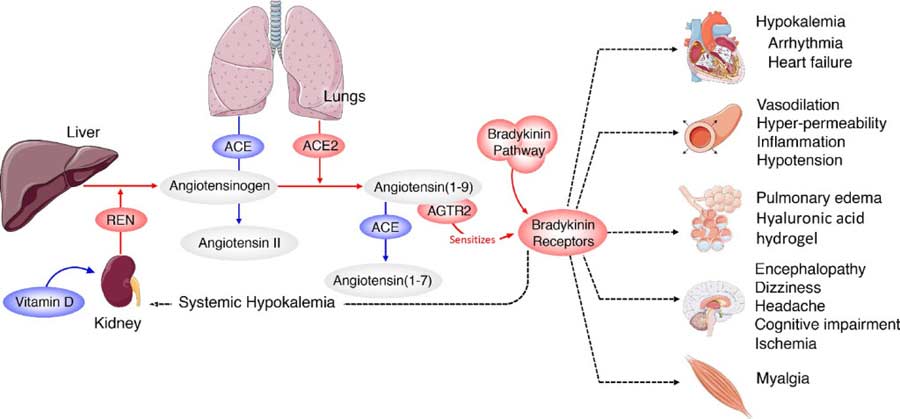
Potential Treatments
The good news is that if bradykinin storms are to blame, there are a number of already existing drugs that can help prevent bradykinin storms, either reducing bradykinin or blocking its receptors. As noted in the study:6
“Several interventional points (most of them already FDA-approved pharmaceuticals) could be explored with the goal of increasing ACE, decreasing BK [bradykinin], or blocking BK2 receptors.
Icatibant is a BKB2R antagonist whereas Ecallantide acts to inhibit KLKB1, reducing levels of BK production. Androgens (danazol and stanasolol) increase SERPING1, although the side effects likely make these undesirable, but recombinant forms of SERPING1 could be administered to reduce BK levels.
It should be noted that any intervention may need to be timed correctly given that REN levels rise on a diurnal cycle, peaking at 4AM which corresponds with the commonly reported worsening of COVID-19 symptoms at night …
4-methylumbelliferone (Hymecromone) is a potent inhibitor of HAS1, HAS2, and HAS3 gene expression and results in the suppression of the production of hyaluronan in an ARDS model.
Hymecromone (4-methylumbelliferone) is approved for use in Asia and Europe for the treatment of biliary spasm. However, it can cause diarrhea with subsequent hypokalemia, so considerable caution should be used if this were to be tried with COVID-19 patients … Timbetasin may reduce COVID-19 related coagulopathies by increasing fibrinolysis.”
However, please understand that taking these drugs is absolutely not my recommendation. These are simply the conventional strategies that can be used if this hypothesis is correct.
Why on earth would we use dangerous drugs like these for a disease that they have not been tested on when we have so many other safe, inexpensive and highly effective interventions for COVID-19? Strategies like nebulized peroxide, ozone, molecular hydrogen, exogenous ketones, and quercetin with zinc.
Evidence for Vitamin D Strengthens
The researchers also highlight the usefulness of vitamin D, noting that “Another approach would be the modulation of REN levels via Vitamin D supplementation …” Vitamin D is involved in the RAS system,7,8,9 and can reduce a compound called renin (REN), thereby preventing a deadly bradykinin storm. Renin is an endopeptidase, the function of which is to generate angiotensin 1 from angiotensinogen in your plasma.
If you are vitamin D deficient, your renin expression is stimulated, and based on the latest data, that may render you more prone to bradykinin storm.
Several investigations have highlighted the apparent influence of vitamin D in COVID-19 incidence, severity and mortality, and its effects on RAS further strengthens the idea that vitamin D may be a crucial component in your COVID-19 defense arsenal.
As explained in the 2004 paper,10 “Vitamin D: A Negative Endocrine Regulator of the Renin-Angiotensin System and Blood Pressure,” when the RAS system is inappropriately activated, high blood pressure can result.
One factor that influences your RAS is your vitamin D level, as it suppresses renin biosynthesis. If you are vitamin D deficient, your renin expression is stimulated, and based on the latest data, that may render you more prone to bradykinin storm.
The Evidence for Vitamin D
In a November 1, 2020 commentary11 in the journal Metabolism Clinical and Experimental, JoAnn Manson and Shari Bassuk call for the elimination of vitamin D deficiency to effectively squelch the COVID-19 pandemic, noting that 23.3% of the total U.S. population have insufficient or deficient vitamin D levels, with people of color having disproportionately lower levels than non-Hispanic whites.
They list several types of studies showing vitamin D deficiency is “an important modifiable risk factor for COVID-19,” including:12
•Laboratory studies that demonstrate how vitamin D helps regulate immune function and the RAS, and modulate inflammatory responses to infection.
•Ecologic studies showing populations with lower vitamin D levels or lower UVB radiation exposure have higher COVID-19 mortality,13,14,15 and the fact that people identified as being at greatest risk for COVID-19 hospitalization and death (people of color, the elderly, nursing home residents and those with comorbidities such as obesity, vascular conditions and chronic kidney disease) also have a higher risk of vitamin D deficiency.
A pilot randomized clinical study16,17 published online August 29, 2020, found hospitalized COVID-19 patients in Spain who were given supplemental vitamin D (calcifediol) in addition to standard of care — which included the use of hydroxychloroquine and azithromycin — had significantly lower intensive care unit admissions.
Patients in the vitamin D arm received 532 micrograms of calcifediol on the day of admission (equivalent to 106,400 IUs of vitamin D18) followed by 266 mcg on Days 3 and 7 (equivalent to 53,200 IUs19). After that, they received 266 mcg once a week until discharge, ICU admission or death.
Of those receiving calcifediol, only 2% required ICU admission, compared to 50% of those who did not get calcifediol. None of those given vitamin D supplementation died, and all were discharged without complications.
•Observational studies showing low vitamin D levels are associated with a greater risk of testing positive for SARS-CoV-2 and contracting acute respiratory infections.
Most recently, a September 3, 2020 JAMA study20 reported that people who tested positive for SARS-CoV-2 were 1.77 times more likely to be deficient in vitamin D than those who tested negative for the virus.
•Randomized clinical trials showing vitamin D inhibits respiratory tract infections, especially in those with lower vitamin D levels at baseline.
REALLY IMPORTANT: Optimize Your Vitamin D Level Now
For years, I’ve stressed the importance of optimizing your vitamin D level, especially in anticipation of flu season, and it seems clear it can go a long way toward protecting yourself against COVID-19 as well.
Aside from what’s already been mentioned, vitamin D also helps Type II cells in your lungs produce surfactant that aids in fluid clearance. When you’re vitamin D deficient, your entire RAS is deranged or dysfunctional, thereby raising your risk of both bradykinin storm and cytokine storm.
In closing, experts have been warning that SARS-CoV-2 may reemerge in the fall when temperatures and humidity levels drop, thereby increasing the virus’ transmissibility.
Now is the time to check your vitamin D level and start taking action to raise it if you’re below 60 ng/mL. An easy and cost-effective way of measuring your vitamin D level is to order GrassrootsHealth’s vitamin D testing kit and learn more about vitamin D and its impact on your health.
Knowledge is empowerment, and that is particularly true during this pandemic. To learn more about the influence of vitamin D on your health in general and COVID-19 in particular, see my vitamin D report.
- 1, 4, 5 Medium September 1, 2020
- 2, 9 Vitamin D (Third Edition) 2011: 707-723
- 3, 6 eLife July 7, 2020; 9:e59177
- 7 Journal of Cellular Biochemistry February 1, 2003; 88(2):327-31
- 8 Journal of Nephropathology 2014; 3(2): 41–43
- 10 The Journal of Steroid Biochemistry and Molecular Biology May 2004; 89-90: 387-392
- 11 Metabolism Clinical and Experimental November 1, 2020; 112: 154322
- 12 etabolism Clinical and Experimental November 1, 2020; 112: 154322, Table 1
- 13 MedRxiv DOI: 10.1101/2020.04.08.20058578
- 14 Northwestern.edu May 7, 2020
- 15 Fox News May 7, 2020
- 16 The Journal of Steroid Biochemistry and Molecular Biology August 29, 2020 [Epub ahead of print]
- 17, 18, 19 Chrismasterjohnphd.com September 3, 2020
- 20 JAMA Network Open 2020;3(9):e2019722
Swiss Protocol for COVID — Quercetin and Zinc
Reproduced from original article:
https://articles.mercola.com/sites/articles/archive/2020/08/20/swiss-protocol-for-covid-quercetin-and-zinc.aspx
Analysis by Dr. Joseph Mercola Fact Checked August 20, 2020

STORY AT-A-GLANCE
- A recently published Swiss Policy Research (SPR) protocol recommends people at high risk of COVID-19 or exposure to it use quercetin and zinc to treat the virus, in addition to other commonly available medications
- Hydroxychloroquine studies with negative outcomes were marred by a delay in administering the drug, excessive doses of the drug, skewed data and contraindications that were not honored, according to SPR
- Simple, safe and inexpensive COVID-19 treatments could render more complex medications and vaccinations obsolete
Swiss Policy Research (SPR), formerly known as Swiss Propaganda Research, which describes itself as “an independent, nonpartisan and nonprofit research group investigating geopolitical propaganda in Swiss and international media,” has published numerous articles on COVID-19 since the beginning of the pandemic.1
While SPR’s critics2 have accused it of promoting “unproven” theories, their work focuses on using published studies, case reports and actual physician testimonies for its reporting.
In regard to the pandemic, they have focused on the origin of COVID-19,3 the effectiveness of face masks,4 the lethality of an infection5 and misinformation from mainstream media sources.6 Most recently, SPR has released a summary of the scientific evidence they’ve found for treating COVID-19 with simple, safe and inexpensive ingredients.7
Zinc, quercetin, hydroxychloroquine, bromhexine, azithromycin and heparin are all treatments that scientific evidence or practical use by physicians have shown can be used successfully against COVID-19, SPR says. U.S. physicians, for example, using zinc, hydroxychloroquine and azithromycin:
“… reported an 84% decrease in hospitalization rates, a 50% decrease in mortality rates among already hospitalized patients (if treated early), and an improvement in the condition of patients within 8 to 12 hours. Italian doctors reported a decrease in deaths of 66%.”
Iranian doctors using bromhexine, a drug which breaks down mucus8 but is not available in the U.S., have:
“… reported in a study with 78 patients a decrease in intensive care treatments of 82%, a decrease in intubations of 89%, and a decrease in deaths of 100%. Chinese doctors reported a 50% reduction in intubations.”
The Suggested Treatment Protocol
Reminding readers to be sure to check with their doctors before beginning any treatment, SPR chose the following protocols for early treatment of COVID-19 over a five- to seven-day regimen of:9
| Zinc — 50 milligrams [mg] to 100 mg per day | Hydroxychloroquine — 400 mg per day |
| Quercetin — 500 mg to 1,000 mg per day | Bromhexine — 50 mg to 100 mg per day |
| Azithromycin — up to 500 mg per day | Heparin — usual dosage |
The rational for the protocols is backed by data from prior research involving treatments that SPR said was found to be effective:10
“The efficacy of HCQ [hydroxychloroquine] against SARS coronaviruses was established in 2005 in the wake of the SARS-1 epidemic. The efficacy of zinc in blocking RNA replication of coronaviruses was discovered in 2010 by world-leading SARS virologist Ralph Baric.
The efficacy of HCQ in supporting the cellular uptake of zinc was discovered in 2014 as part of cancer research. The efficacy of the flavonoid quercetin in supporting the cellular uptake of zinc was also discovered in 2014. The efficacy of bromhexine in blocking cell entry of coronaviruses was established in 2017.”
The goal of treating COVID-19 with the six suggested supplements and medications is to nip the virus in the bud and avoid hospitalization, says the organization.11 Starting the protocol as soon as symptoms emerge may prevent progression of the illness.
Data Show Hydroxychloroquine Is Effective, SPR Found
Many people have heard about hydroxychloroquine as a treatment for COVID-19 and much of what they’ve heard recently in mainstream news is negative. That’s because the media have focused on negative outcomes from selected studies and subsequent warnings from the FDA.12
SPR contends, however, that those studies were marred by a delay in administering the drug, excessive doses of the drug, skewed data and contraindications that were ignored.13
According to notes which accompany the protocol, hydroxychloroquine and quercetin (which can be substituted for hydroxychloroquine) “support the cellular absorption of zinc and have additional anti-viral properties.”
In treating COVID-19, the use of hydroxychloroquine and other common medications and supplements has become so politicized, patients may end up being denied inexpensive and effective treatments which have been studied and found to be effective in multiple investigations from around the world.
Even The Lancet, a well-respected medical journal, found itself embroiled in COVID-19 misinformation — possibly partisan — and had to retract research that claimed hydroxychloroquine had no benefit.
Still, top doctors have not been afraid to speak out about the effectiveness of hydroxychloroquine in treating patients who contract the virus. In an op-ed in Newsweek magazine, Dr. Harvey A. Risch from the Yale School of Public Health, wrote:14
“When this inexpensive oral medication is given very early in the course of illness, before the virus has had time to multiply beyond control, it has shown to be highly effective, especially when given in combination with the antibiotics azithromycin or doxycycline and the nutritional supplement zinc.
On May 27, I published an article in the American Journal of Epidemiology (AJE) entitled, ‘Early Outpatient Treatment of Symptomatic, High-Risk COVID-19 Patients that Should be Ramped-Up Immediately as Key to the Pandemic Crisis.’
That article, published in the world’s leading epidemiology journal, analyzed five studies, demonstrating clear-cut and significant benefits to treated patients, plus other very large studies that showed the medication safety.”
In his op-ed, Risch cites hydroxychloroquine studies in U.S. nursing homes and clinics, and trials in Brazil and France that had positive outcomes with few to no deaths.15
Zinc Is an Important Part of the COVID-19 Fight
Zinc plays a vital role in immunity as well as in blood clotting,16 cell division,17 thyroid health,18 smell and taste,19 vision20 and wound healing.21 It can effectively inhibit the replication of viruses in a cell, but it needs “ionophores”22 to shuttle it into the cell where it puts up its fight. You may also need to take zinc daily because the body does not store it.23
Luckily, both hydroxychloroquine and quercetin are ionophores that usher zinc into the cells where it is needed. Zinc is so basic to fighting infections, some research suggests that it is zinc rather than hydroxychloroquine or quercetin that does the “heavy lifting” of inhibiting viral replication when they are given together.
In research published in the International Journal for Infectious Diseases, both hydroxychloroquine and azithromycin were effective and “associated with reduction in COVID-19 associated mortality.”24 In a study of 2,541 patients with an average age of 64 and who spent an average of six days in the hospital, Michigan scientists found:25
“In this multi-hospital assessment, when controlling for COVID-19 risk factors, treatment with hydroxychloroquine alone and in combination with azithromycin was associated with reduction in COVID-19 associated mortality.”
However, zinc was not included in this trial and most doctors fail to add zinc and an antibiotic for secondary bacterial infections in their hydroxycholoroquine regimens. Despite FDA warnings about hydroxychloroquine-related heart rhythm problems,26 the researchers in this study report that:27
“A review of our COVID-19 mortality data demonstrated no major cardiac arrhythmias … observed with hydroxychloroquine treatment.”
In addition to strengthening your immune system through activating your body’s T cells,28 zinc has cognitive29 and mood effects.30 It protects your hippocampus, which is involved in depression, emotion, memory and learning.31 It also helps your brain release brain derived neurotrophic factor (BDNF) which counteracts brain inflammation and depression.
Signs that your zinc levels are low32 include loss of appetite, impaired immune system, sluggish metabolism and thinning hair.
Quercetin Helps Fight COVID-19
Quercetin is a natural antihistamine and anti-inflammatory plant pigment that boosts your immune system and may work to control viral replication, according to some research.33 It allows zinc to exert its proven antiviral properties; in treating COVID-19, quercetin may also lower inflammation, help clear mucus, prevent ventilator-induced damage and support immunity.
According to the research, quercetin has been shown to help fight obesity, Type 2 diabetes, circulatory dysfunction, chronic inflammation and mood disorders.34 It has even been found to help lower blood pressure.35
Researchers have found that quercetin can trigger tumor regression and begin the process of apoptosis.36 This is programmed cell death, without which cells can grow uninterrupted and develop into cancerous growths.
Protect Yourself With Facts From Sources Such as SPR
Operation Warp Speed, the fast-tracking of a COVID-19 vaccine to licensure and subsequent widespread use, is now in full operation. What we must remember here is that vaccine manufacturers are not liable for any damage their vaccines do. Since 2011, drug companies making and selling vaccines are even shielded from design defect lawsuits, which means they have absolutely no incentive for reducing the risks associated with the use of their products.
Vaccine makers and the health care practitioners who administer vaccines do not face any liability whatsoever if a new coronavirus vaccine turns out to be a catastrophe.
Worse, when a COVID-19 vaccine is ready to be marketed to the public, there likely will be little or no information about its long- and short-term side effects, because it will be so new and because it will lack the test of time for determining its efficacy and safety. Operation Warp Speed and fast-tracked vaccines may be largely unnecessary, as SPR writes:37
“It is conceivable that the above treatment protocol, which is simple, safe and inexpensive, could render more complex medications, vaccinations, and other measures largely obsolete.”
- 1 Swiss Policy Research
- 2 Media Bias Fact Check May 21, 2020
- 3 Swiss Policy Research July 16, 2020
- 4 Swiss Policy Research July 30, 2020
- 5 Swiss Policy Research May 12, 2020
- 6 Swiss Policy Research March 19, 2020
- 7, 9, 10, 11, 13, 37 Swiss Policy Research July 2, 2020
- 8 Rxwiki.com 2nd graph 2020
- 12 FDA July 1, 2020 headline
- 14, 15 Newsweek July 23, 2020
- 16 British Heart Foundation October 27, 2015
- 17 The Journal of Nutrition May 5, 2000
- 18 International Journal of Trichology Jan-March 2013
- 19, 32 NIH, Zinc, July 15, 2020
- 20 American Optometric Association 2020
- 21 Nutrients January 2018
- 22 PLOS ONE October 1, 2014
- 23 Patient April 26, 2019
- 24, 25, 27 International Journal for Infectious Diseases Volume 97, P396-403
- 26 FDA July 1, 2020
- 28 Journal of Experimental Medicine April 11, 2011
- 29 European Journal of Clinical Nutrition April 29, 2015
- 30 Neuropsychiatry Volume 7, Issue 4 2017
- 31 PLOS ONE January 31, 2013
- 33 Medical Hypotheses 2020 May 4;142:109800
- 34 Fitoterapia 2015 Oct;106:256-71
- 35 Journal of Nutrition 2007 Nov;137(11):2405-11
- 36 Scientific Reports April 12, 2016