Immunity
now browsing by category
Former Pfizer Science Officer Reveals Great COVID-19 Scam
Reproduced from original article:
https://articles.mercola.com/sites/articles/archive/2020/11/25/michael-yeadon-pfizer-coronavirus-scam.aspx
Analysis by Dr. Joseph Mercola Fact Checked November 25, 2020
Video not available on this site. To view video, go to original site above.
STORY AT-A-GLANCE
- There are no excess deaths. The same number of people have died in 2020 that, on average, have died in previous years. This simply wouldn’t be the case if we had a lethal pandemic
- The slight uptick in deaths now being reported in the U.K. aren’t due to COVID-19. Data show these deaths — primarily people aged 45 to 65, with equal distribution between the sexes — are mainly due to heart disease, stroke and cancer, which suggests they are excess deaths caused by lack of routine medical care due to the pandemic restrictions
- The PCR test is not a valid diagnostic tool and should not be done on the scale we’re now doing it. The high rate of false positives is only fodder for needless fearmongering
- Virtually no one who is asymptomatic has the live virus, but when you run the test at a cycle threshold over 30, meaning you amplify the viral RNA more than 30 times, you end up with a positive test even if the virus is inactive and noninfectious
- According to Michael Yeadon, Ph.D., a former vice-president and chief scientific adviser of the drug company Pfizer, very few people will need the COVID-19 vaccine as the mortality rate is so low and the illness is clearly not causing excess deaths
I’ve written several articles about scientists and medical doctors who question the official narrative about the COVID-19 pandemic and the global measures put into place because of it, from useless testing, mask wearing and social distancing, to lockdowns, tracking and tracing and the baseless fearmongering driving it all.
In the video above, British journalist Anna Brees interviews Michael Yeadon, Ph.D., a former vice-president and chief scientific adviser of the drug company Pfizer and founder and CEO of the biotech company Ziarco, now owned by Novartis.
In it, he discusses several concerns, including his belief that widespread PCR testing is creating the false idea that the pandemic is resurging, as the total mortality rate is completely normal. He also discusses his concerns about COVID-19 vaccine mandates.
PCR Testing Is Causing a False ‘Casedemic’
As I explained in “Asymptomatic ‘Casedemic’ Is a Perpetuation of Needless Fear,” by using PCR testing, which cannot diagnose active infection, a false narrative has been created.
Currently, rising “cases,” meaning positive tests, are again being used as the justification to impose more severe restrictions, including lockdowns and mandatory mask wearing, when in fact positive tests have nothing to do with the actual spread of illness.
According to Yeadon, the U.K. has now tested an estimated 30 million people, or close to half of the population. “A large number of those tests have been recent,” Yeadon says, noting that the definition of a “coronavirus death” in the U.K. is anyone who dies, from any cause, within 28 days of a positive COVID-19 test.
So, what we’re seeing now is a natural death rate — about 1,700 people die each day in the U.K. in any given year, Yeadon says — but many of these deaths are now falsely attributed to COVID-19. “I’m calling out the statistics, and even the claim that there is an ongoing pandemic, as false,” he says.
He challenges anyone who doesn’t believe him to seek out any database on total mortality. If you do that, you will find that the daily death count is “absolutely bang-on normal,” Yeadon says.
For some months, the death count is actually slightly lower than the average norm over the past five years. And, he adds, “You cannot have a lethal pandemic stalking the land and not have excess deaths.”
Lack of Routine Medical Care Is Causing Uptick in Deaths
The slight uptick in deaths that are now being reported simply aren’t directly due to COVID-19, he insists. Data show these deaths — primarily people aged 45 to 65, with equal distribution between the sexes — are mainly from heart disease, stroke and cancer, which suggests they are excess deaths caused by inaccessibility of routine medical care as people are either afraid or discouraged from going to the hospital.
These deaths may be characterized as being COVID related, but that’s only because they have been falsely lumped into that category due to false positives being recorded within 28 days of death.
Again, people are being tested very regularly, and the rate of false positives is extremely high. All hospital patients are also tested upon admission, so when they die — regardless of the cause — they’re likely to have a false positive on their record, which then lumps them into the death tally for COVID-19.
“The longer you stay in hospital, the more likely you are to die, obviously,” Yeadon says. “You would be released if you were well and improving. So … long-stay patients are both more likely to die statistically, and much more likely to be tested so often that they’ll have a false positive test.
That is what I think is happening … It’s a convenience for someone playing some macabre game, because I don’t think it’s an error anymore … I’ve spoken to people in [public health] and they’re embarrassed that they’re not even being allowed to characterize and publish the information you would need to know to work out how useful the test is. That’s not being done.”
Can You Get Reinfected?
Yeadon also says he’s “sick and tired” of people claiming that immunity against SARS-CoV-2 may wane after a short time, leaving you vulnerable to reinfection. If you’ve been ill with COVID-19 and recover, you will have antibodies against the virus, and you will be immune, he says.
He understands that journalists may get this wrong, or may be given incorrect information, but if a scientist says this, “they are lying to you,” he says. Yeadon categorically denies the premise that you can recover from COVID-19 and later get reinfected and experience severe illness again.
According to Yeadon, there are only two ways by which COVID-19 would not provide lasting immunity. The first would be if it destroys your immune system. The HIV virus, for example, which causes AIDS, disarms your immune system, causing permanent impairment. Hence you do not become immune to the HIV virus. Coronaviruses do not do that.
The second way is if the virus mutates, which is common among influenza viruses. If the virus mutates, your immune system may not fully recognize it and will have to mount a defense again, thereby creating another set of antibodies. However, coronaviruses are genetically stable, Yeadon says.
(For transparency, there have been reports of SARS-CoV-2 mutating,1 so it’s not impossible that some people might get reinfected with a slightly mutated version of the virus that might make them sick again.)
Hidden Agenda in Plain Sight
As noted by Yeadon, people are now changing the laws of immunology, which simply shouldn’t happen. This should not be a political issue, but somehow it is being treated as one. He claims to have no ideas at all as to why these false narratives are being created, and why scientific truth that contradicts the mainstream narrative is being censored.
Others, however, have become more outspoken about this issue, pointing out how the pandemic is being used as a convenient excuse and justification for redistribution of wealth and the technocratic takeover of the whole world under the banner of a Great Reset to a “more equitable” social order and greener commerce.
It’s being used to usher in social changes that simply could never be introduced without some sort of calamity, be it war or a biological threat, because they involve a radical limitation of personal freedoms and the elimination of privacy. Those in charge of pandemic response measures also refuse to take into account the price of these measures.
When making public health decisions, you need to calculate the cost in terms of lives saved and the price in dollars and cents of saving those people, against the cost of not implementing the measure in question. This is not being done. The question is why is such an illogical stance being taken?
Yeadon on Vaccination
Toward the end of the interview, Yeadon addresses the issue of COVID-19 vaccination. Many are nervous about it becoming mandatory, and rightfully so. Vaccine passports are already being rolled out, and all the indicators point to vaccination becoming a requirement for travel, perhaps even within national borders.
Having spent his career in the pharmaceutical industry, Yeadon fully supports vaccination, believing they prevent large numbers of deaths. However, when it comes to SARS-CoV-2, he believes the vaccine will only benefit the elderly. For those over 80, a vaccine might give them a few more months of life.
“Nobody else needs this [vaccine],” he says. “You don’t vaccinate a population because 1 in 1 million might have a bad outcome [from the infection].” He also strongly believes the vaccine must be voluntary:
“It’s an appalling … public platform to suggest that the only way we get our lives back is to mass vaccinate the population. Something very smelly is going on. It’s simply not appropriate. I don’t even think it would work.”
In an open letter to the British health minister, Yeadon wrote:2
“I have read the consultation document. I’ve rarely been as shocked and upset. All vaccines against the SARS-COV-2 virus are by definition novel. No candidate vaccine has been in development for more than a few months. If any such vaccine is approved for use under any circumstances that are not EXPLICITLY experimental, I believe that recipients are being misled to a criminal extent.
This is because there are precisely zero human volunteers for whom there could possibly be more than a few months past-dose safety information. My concern does not arise because I have negative views about vaccines (I don’t).
Instead, it’s the very principle that politicians seem ready to waive that new medical interventions at this, incomplete state of development, should not be made available to subjects on anything other than an explicitly experimental basis. That’s my concern.
And the reason for that concern is that it is not known what the safety profile will be, six months or a year or longer after dosing. You have literally no data on this and neither does anyone else.
It isn’t that I’m saying that unacceptable adverse effects will emerge after longer intervals after dosing. No: it is that you have no idea what will happen yet, despite this, you’ll be creating the impression that you do …
I don’t trust you. You’ve not been straightforward and have behaved appallingly throughout this crisis. You’re still doing it now, misleading about infection risk from young children. Why should I believe you in relation to experimental vaccines?”
What Can You Do?
In his interview with Brees, Yeadon suggests medical professionals, especially those who are members of a professional society, who disagree with further pandemic measures — based on the medical facts — write an open letter to the government, urging them to speak to and heed the recommendations from independent experts.
Arm yourself with mortality statistics and the facts on PCR testing, so you can explain how and why this pandemic simply isn’t a pandemic anymore. First and foremost, there are no excess deaths. The same number of people have died this year that, on average, have died in previous years. This simply wouldn’t be the case if we had a lethal pandemic.
Second, the PCR test is not a valid diagnostic tool and should not be done on the scale we’re now doing it. The high rate of false positives is only fodder for needless fearmongering. “People should demand to know what [the false positive] rate is,” Yeadon says.
Additionally, “testing people who are well — it’s just a madcap thing,” he says. Virtually no one who is asymptomatic has the live virus, but when you run the test at a cycle threshold over 30, meaning you amplify the viral RNA more than 30 times, you end up with a positive test even if the virus is inactive and noninfectious.
“Let’s get back to the facts,” Yeadon says. “There are no excess deaths. But that’s not what you hear from the BBC now, is it? I’m never going to trust the BBC again, by the way. I’ve watched BBC for 41 years. [They’re] never coming back into my ears, because they’ve lied in my face all year … There’s a fraud going on …
You’re walking into voluntary house arrest when there are no excess deaths. Why are you doing that? Seriously? … I’m fearful, because it doesn’t make any sense and there are no benign outcomes.”
Get Organized
It’s easy to get so confused that you can no longer think straight these days. As explained by Dr. Peter Breggin, featured in “Psychiatrist Blows the Whistle on Pandemic Fearmongering,” when you add uncertainty to fear you end up with anxiety, a state in which you can no longer think logically.
If this applies to you, I urge you to turn off mainstream media news and turn to independent experts, such as Yeadon. Do the research. Read through the science. Reorient yourself to the facts and turn off the propaganda. Next, join a group so that you can have support.
A number of groups have formed around the world that are now rising up against mask mandates, mandatory vaccinations and lockdowns. A few examples of such groups include:
- Us for Them, a group campaigning for reopening schools and protecting children’s rights in the U.K.
- Keep Britain Free
- The COVID Recovery Group (CRG), founded by 50 conservative British MPs to fight lockdown restrictions3
- In the U.S., a team of attorneys, doctors, business owners and parents started the Freedom to Breathe Agency, which is fighting to protect freedom and liberty
Additional sources of information and groups fighting for truth and transparency that are worth checking out include:
- The Great Barrington Declaration,4 which calls for an end to lockdowns. As of November 18, 2020, it had been signed by 34,973 medical practitioners, 12,070 medical and public health scientists, and 634,838 concerned citizens5
- Robert F. Kennedy Jr.’s The Defender, a new newsletter that publishes “banned” news
- The German COVID-19 Extra-Parliamentary Inquiry Committee (ACU2020.org), which is launching an international class-action lawsuit against a long list of authorities over the global pandemic response
- In Spain, more than 600 doctors have formed Doctors for the Truth (Medicos por la verdad)
- In the U.S., doctors have formed a group called America’s Frontline Doctors, which is fighting to make hydroxychloroquine available across the nation
The Truth About COVID-19 ‘Long-Haulers’
Reproduced from original article:
https://articles.mercola.com/sites/articles/archive/2020/11/20/the-truth-about-covid-19-long-haulers.aspx
Analysis by Dr. Joseph Mercola Fact Checked November 20, 2020

STORY AT-A-GLANCE
- 18.1% of individuals diagnosed with COVID-19 also received a first-time psychiatric diagnosis in the 14 to 90 days afterward. Most common were anxiety disorders, insomnia and dementia
- An estimated 10% of patients treated for COVID-19 report fatigue, breathlessness, brain fog and/or chronic pain for three weeks or longer. This phenomenon occurs even among patients who had mild cases of COVID-19
- U.S. Centers for Disease Control and Prevention data show the rate of COVID-19 patients who continue experiencing lingering health problems after recovering from acute COVID-19 may be as high as 45%
- Many post-acute COVID-19 patients fit the diagnostic criteria for ME/CFS, which has been linked to viral infections
- According to a COVID-19 treatment guide, many of these “long COVID” patients do spontaneously recover — albeit slowly — with holistic support, rest, symptomatic treatment and gradual increase in activity
You may have seen reports about COVID-19 patients who seem unable to fully recover. Some complain of lingering chronic fatigue symptoms. Others struggle with mental health problems.
In fact, a study1,2 from Oxford University published online November 9, 2020, in The Lancet Psychiatry, found 18.1% of individuals diagnosed with COVID-19 also received a first-time psychiatric diagnosis in the 14 to 90 days afterward. Most common were anxiety disorders, insomnia and dementia. A similar trend was also observable after COVID-19 relapses.
Interestingly, people with pre-existing mental illness were also found to be 65% more likely to be diagnosed with COVID-19 than those who did not have a pre-existing psychiatric problem.
Now, while this may sound terrifying, I would point out that, given the fearmongering surrounding COVID-19, it’s not surprising that receiving a diagnosis would trigger anxiety and insomnia in many. It doesn’t mean you end up with a chronic psychiatric disorder. It just tells us that getting a COVID-19 diagnosis is very stressful, even if you remain asymptomatic.
The link to dementia is interesting, however, and likely needs to be looked into further. This also applies to the higher risk of COVID-19 if you have a pre-existing mental health problem. It’s possible that people struggling with depression, anxiety and similar disorders are simply more likely to get tested for COVID-19 — and end up receiving false positive diagnoses.
As discussed in “Asymptomatic ‘Casedemic’ Is a Perpetuation of Needless Fear,” mass testing of asymptomatic people doesn’t tell us anything of value since the test cannot discern between an active infection and the presence of nonreproductive (harmless) virus. It only makes the pandemic appear graver than it is.
That said, going through a severe bout of COVID-19 is also going to take a mental toll. As reported3 by a 40-year-old previously healthy man who underwent an apparent recurrence of COVID-19, after three weeks of fatigue, he started feeling “completely overwhelmed” and for the next 72 hours, he “felt unwell in a way that was bordering on not coping.”
He says he “felt physically exhausted” and “mentally drained.” Severe illness will do that. He says it took him nearly eight weeks before he started feeling “close to my normal self again,” but even then, he still struggled with “fatigue to the point of having to sleep in the day” and an inability to exercise.
COVID-19 ‘Long-Haulers’
He’s not alone in reporting such symptoms. An estimated 10% of patients treated for COVID-19 report fatigue, breathlessness, brain fog and/or chronic pain for three weeks or longer.4 This phenomenon occurs even among patients who had mild cases of COVID-19.
U.S. Centers for Disease Control and Prevention data5 show the rate of COVID-19 patients who continue experiencing lingering health problems after recovering from acute COVID-19 may be as high as 45%. Only 65% report having returned to their previous level of health within 14 to 21 days after receiving a positive test result.
Many of these “long COVID” patients do spontaneously recover — albeit slowly — with holistic support, rest, symptomatic treatment and gradual increase in activity.
The flowchart6 below, published in the European Respiratory Journal, is a tool you can use to measure your functional status over time after recovery from COVID-19.
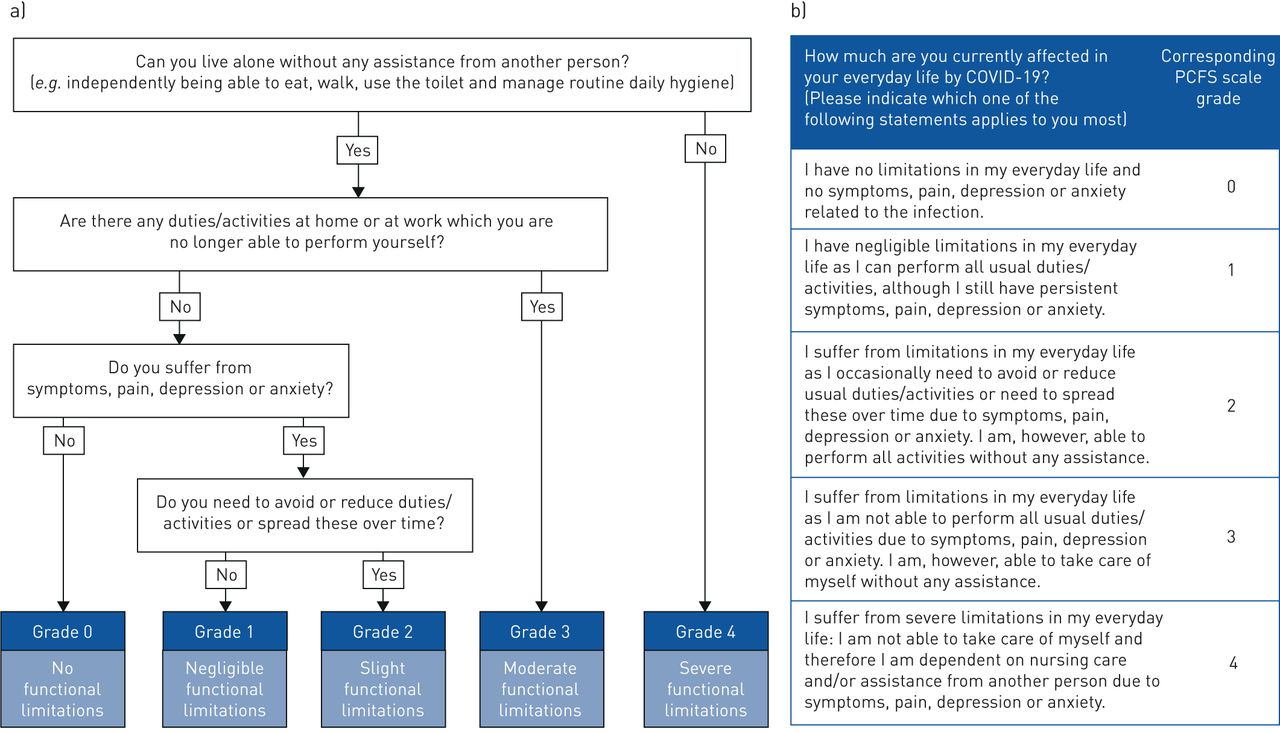
Treatment Guidance for Post-Acute COVID-19
The good news is that, according to an August 11, 2020, article in The BMJ,7 which provides post-acute COVID-19 primary care guidance, many of these “long COVID” patients do spontaneously recover — albeit slowly — “with holistic support, rest, symptomatic treatment and gradual increase in activity.” To support recovery, the article suggests that:8
“… patients should be managed pragmatically and symptomatically with an emphasis on holistic support while avoiding over-investigation. Fever, for example, may be treated symptomatically with paracetamol or non-steroidal anti-inflammatory drugs.
Monitoring functional status in post-acute COVID-19 patients is not yet an exact science. A post-COVID-19 functional status scale has been developed pragmatically but not formally validated9 …
Referral to a specialist rehabilitation service does not seem to be needed for most patients, who can expect a gradual, if sometimes protracted, improvement in energy levels and breathlessness, aided by careful pacing, prioritization, and modest goal setting.
In our experience, most but not all patients who were not admitted to hospital recover well with four to six weeks of light aerobic exercise (such as walking or Pilates), gradually increasing in intensity as tolerated. Those returning to employment may need support to negotiate a phased return.”
The following graphic from that BMJ article10 provides a visual summary of the recommended assessment and management recommended for patients with lingering symptoms after recovering from acute COVID-19.

Chronic Fatigue in the Limelight
As reported by Time magazine,11 that many COVID-19 patients report lingering fatigue, myalgic encephalomyelitis/chronic fatigue syndrome (ME/CFS) has gained new attention. It seems many of these post-acute COVID-19 patients fit the diagnostic criteria for ME/CFS, which has been linked to viral infections.
For years, people with ME/CFS were disregarded as faking it. Many were told it was “all in their head.” The fact that COVID-19 patients are now reporting the same problem strengthens the theory that ME/CFS really is rooted in some sort of chronic infection.
“There is … a critical mass of long-haulers getting sick and speaking out all at once, enough to draw attention from scientists, the media and the general public,” Time magazine writes.12
“Enough of these patients tested positive for COVID-19 or its antibodies to make a strong case that coronavirus is turning into ME/CFS … The influx of new patients could go a long way toward figuring out why, exactly, a viral illness can last forever.
Though there are multiple theories in the ME/CFS research world, [Dr. Anthony] Komaroff [who treats ME/CFS at Brigham and Women’s Hospital in Boston] believes the cause of the condition can be traced back to a part of the brain that kicks on when you’re sick — the part that saps your energy and appetite so your body can focus all its energy on clearing an infection.
‘This center in the brain gets flicked on, but for whatever reason it never gets switched off,’ Komaroff says. New research efforts spurred by the pandemic could help determine if that’s really happening, and why.”
In May 2020, Maryland Rep. Jamie Raskin introduced a bill13 to provide funding to study the connection between SARS-CoV-2 and ME/CFS. The bill, HR 7057 (The UCS ME/CFS Act) has not yet cleared the U.S. House of Representatives. It has no corresponding bill in the Senate. However, studies are already underway, and “COVID-19 longhaulers” can volunteer for them on the You + ME registry.14
A significant hurdle remains though: Few doctors are familiar enough with ME/CFS to treat these patients. If the pandemic results in a massive influx of ME/CFS patients, the medical system will be ill equipped to handle it and countless patients are bound to suffer without much hope. According to Time magazine:15
“[Dr. Ron] Tompkins [a surgeon from Massachusetts General Hospital who researches ME/CFS] adds that any progress for ME/CFS patients will hinge on doctors definitively determining that coronavirus can turn into ME/CFS, rather than making post-coronavirus syndrome a separate diagnosis.
‘It would be a disservice to make post-COVID something special,’ he says, because ME/CFS patients wouldn’t share the benefits. ‘I don’t think there’s a nickel of difference between the two,’ he adds.”
The Gut Connection
While conventional medicine has no cure to offer ME/CFS patients, there’s compelling evidence suggesting your gut health can play a significant role in this condition. Research published in 2017 linked both chronic fatigue and Parkinson’s to gut bacteria.
People with ME/CFS have distinctly different gut microbiomes than healthy controls,16 as determined by serial sequencing of bacterial RNA, and research17,18 has found 35% to 90% of ME/CFS patients “report abdominal discomfort consistent with irritable bowel syndrome.”
In related news,19 researchers have also discovered a link between COVID-19 and gut problems. A likely reason for this is because SARS-CoV-2 uses the ACE2 receptor to gain entry into the cell, and the greatest number of ACE2 receptors are found in the cells that line your gut.
According to one review,20 18.6% of COVID-19 patients had gastrointestinal symptoms such as diarrhea, nausea and vomiting. In another study,21 as many as 50.5% of COVID-19 patients admitted to the hospital had one or more digestive symptoms.
Abdominal pain is rare at just 1.9%,22 and theories of why COVID-19 would cause stomach pain include inflammation of the nerves in the gut23,24 and/or sudden loss of blood supply to abdominal organs resulting in tissue death.25
Incidentally, your gut microbiome is also known to influence your mental health, and has been linked to depression26 and anxiety,27 and a large portion of your immune system also resides in your gut.
All of these links between viral infection, gut problems, mental health issues, immune function and ME/CFS suggest restoring your gut health may be a crucial strategy if you come down with COVID-19.
How to Boost Your Gut Health
To optimize your gut microbiome, consider the following recommendations. Also keep an eye out for my interview with health scientist Rodney Dietert, which will be published shortly. In it, we discuss the connections between COVID-19 and gut health and review the importance of your gut for a well-functioning immune system.
•Avoid processed vegetable oils (polyunsaturated fats or PUFAs), as they promote inflammation, damage your endothelium (the cells lining your blood vessels) and your mitochondria, and lower your antioxidant defenses by stripping your liver of glutathione. For more details, see “The Case Against Processed Vegetable Oils.”
•Avoid processed foods and conventionally raised meats and other animal products as they are routinely fed low-dose antibiotics and genetically engineered feed grown with glyphosate, which is known to kill many beneficial bacteria.
•Increase your soluble and insoluble fiber intake. Short-chain fatty acids produced by bacteria that feed on plant fiber are major epigenetic communicators. In other words, they actually communicate with your DNA, thereby providing protection against a number of different diseases. If using a fiber supplement, make sure its unprocessed, such as organic whole husk psyllium. Processed supplement fiber does not provide gut bacteria with what they need.
•Avoid chlorinated and/or fluorinated water and antibacterial soap as all will kill off healthy bacteria.
•Eat plenty of traditionally fermented foods such as lassi, natto, fermented vegetables and fermented grass fed organic milk products like kefir and yogurt, and/or take a probiotic supplement. This is particularly important after a course of antibiotics.
Additional Advice for ME/CFS and ‘COVID-19 Long-Haulers’
In addition to addressing your gut health, there are many other strategies that can be helpful for ME/CFS, and yet others that appear extremely beneficial for the prevention and treatment of COVID-19 specifically. Important treatment strategies for ME/CFS include but are not limited to:
- Exercising according to your ability, with a focus on increasing the amount of exercise you can handle. Gentle exercise such as yoga can also be an excellent part of your program, and yoga benefits your mind as well as your body.
- Supplementing with nutrients important for cellular energy synthesis, such as ubiquinol, the reduced form of CoQ10, and D-ribose, a core building block of ATP.
- Eating foods rich in glutathione precursors, sulfur and selenium to encourage glutathione production. Glutathione is one of your body’s most important antioxidants and a natural detoxification agent. Glutathione deficiency also appears to play a distinct role in COVID-19 and has been linked to increased severity.
- Implementing a time-restricted eating schedule so that you’re eating all of your meals within a six- to eight-hour window. Also make sure your last meal is taken at least three hours before bedtime. The rationale for avoiding late night eating is directly tied to the way your body produces energy.
- Addressing your mental outlook. I recommend trying the Emotional Freedom Techniques (EFT) to help normalize your bioenergetic circuitry. Emotionally traumatic events can leave “energy blockages” for many years, which then interfere with your overall health, including immune function. There are many different techniques that can be used, but EFT is my favorite, and it’s easy to learn and apply.
Lastly, recommendations that can be helpful to prevent and treat COVID-19, both in the short and long term include the following. Some of these also tie in with ME/CFS while other don’t:
•Improve your insulin sensitivity by adopting a diet high in healthy fats and low in processed carbs, implementing a time-restricted eating schedule and avoiding food for at least three hours before bed.
Research shows insulin resistance is a primary and independent risk factor for severe COVID-19, which makes sense when you consider it both increases inflammation and lowers immune function. You can learn more about all of this in “The Real Pandemic Is Insulin Resistance.”
Ketones — produced when you eat a cyclical ketogenic diet and/or intermittently fast — also appear to be very helpful against COVID-19, which adds further support for these lifestyle strategies.
•Supplement with:
◦Lumbrokinase, an enzyme that helps combat blood clots (another symptom associated with more severe COVID-19) and breaks down biofilms associated with Lyme disease, an infection also linked to ME/CFS.
◦Quercetin and zinc. Like hydroxychloroquine, quercetin helps shuttle zinc into the cell, thereby stemming viral replication. COVID-19 patients with low zinc levels have a higher risk of poor outcome and death.28
Quercetin also boosts type 1 interferon, which signals infected cells to produce proteins that stop the virus from replicating. In addition, quercetin works synergistically with vitamin C, which is another powerful COVID-19 prophylactic.
◦Vitamin D. More than 80% of COVID-19 patients are vitamin D deficient, and the evidence overwhelmingly supports the idea that raising your vitamin D level above 40 ng/mL can go a long way toward preventing SARS-CoV-2 infection, reducing severity, lowering the risk of death and improving outcomes overall.
•Use nebulized hydrogen peroxide. Nebulizing hydrogen peroxide into your sinuses, throat and lungs is a simple, straightforward way to augment your body’s natural expression of hydrogen peroxide to combat infections and can be used both prophylactically after known exposure to COVID-19 and as a treatment for mild, moderate and even severe illness.
Buy a desktop nebulizer and stock food-grade hydrogen peroxide and some saline. That way, you have everything you need and can begin treatment at home at the first signs of a respiratory infection. Keep in mind food grade hydrogen peroxide must be diluted down to a 0.1% dilution before use.
- 1 The Lancet Psychiatry November 9, 2020 [Epub ahead of print]
- 2 Reuters November 9, 2020
- 3, 4, 7, 8, 10 The BMJ 2020;370:m3026
- 5 MMWR 2020;69:993-8
- 6 European Respiratory Journal 2020;56:2001494, Figure 1
- 9 European Respiratory Journal 2020;56:2001494
- 11, 12, 15 Time October 16, 2020
- 13 HR 7057 UCS ME/CFS Act
- 14 You + ME
- 16 Microbiome June 23, 2016; 4 Article number 30
- 17 Microbiome April 26, 2017; 5 Article number 44
- 18 Eurekalert April 26, 2017
- 19 Inverse, How COVID-19 Affects the Gut
- 20 BJS Open August 5, 2020; 107(10)
- 21 Clinical Characteristics of COVID-19 Patients With Digestive Symptoms (PDF), Results: Prevalence and Outcomes of Patients with Digestive Symptoms
- 22 Clinical Characteristics of COVID-19 Patients With Digestive Symptoms (PDF), Abstract: Results
- 23 Clinical Medicine Journal May 2020 DOI: https://doi.org/10.7861/clinmed.2020-0150
- 24 Neurogastroenterol Motil 2008 May;20 Suppl 1:73-80
- 25 Kidney 360 June 2020; 1(6): 584-585
- 26 Journal of Neuroscience Research May 29, 2019
- 27 Harvard, The Gut-Brain Connection
- 28 Medscape, October 8, 2020
This Is the Primary Benefit of Niacin (B3)
Reproduced from original article:
https://articles.mercola.com/sites/articles/archive/2020/11/16/niacin-benefits.aspx
Analysis by Dr. Joseph Mercola Fact Checked November 16, 2020
STORY AT-A-GLANCE
- Niacin plays an important role in photoprotection from the effect of UV radiation on DNA damage and oxidative stress and helps guard against the rising prevalence of skin cancer
- Some research has also found long-term benefits from taking niacin that lower your risk of all-cause mortality
- B vitamins help support your immune system. B3 is a precursor to NAD and may help prevent some of the worst COVID-19 outcomes from cytokine and bradykinin storms
- Seek to get your B3 from food; high dose supplements may trigger a niacin flush in which your skin will get red and tingle. Although it is irritating, it is harmless
Niacin, also called vitamin B3, is a water-soluble vitamin that is found naturally in foods, is added to processed foods and can be bought as a supplement. Niacin plays a vital role in over 400 enzymes, and one study suggests that a diet rich in niacin could protect your skin against ultraviolet (UV) radiation.1
A severe niacin deficiency called pellagra is ultimately a lethal disease. While it was common in the early 20th century, pellagra is uncommon in industrialized populations where most processed foods are fortified with niacin. Currently, pellagra is limited to people living in poverty whose diets are low in niacin and protein.2
The disease is marked by the four D’s: diarrhea, dermatitis, dementia and death. Symptoms of the condition include a brown discoloration on skin exposed to sunlight, a bright red tongue and vomiting, constipation and/or diarrhea. Neurological symptoms include headache, fatigue, loss of memory and depression.
Without treatment, the disease progresses until a person exhibits paranoid and suicidal behaviors with visual and auditory hallucinations and dies. Although this deficiency is rare in industrialized nations, insufficiency contributes to several disease entities and researchers have found:3
“Benefits of niacin supplementation have been observed in experimental models of cancer, cardiovascular disease, skin health, mental health, and oxidant lung injury.”
Niacin Protects Your Skin From UV Radiation
There are three main forms of niacin, which are dietary precursors to nicotinamide adenine dinucleotide (NAD). These are nicotinamide riboside, nicotinic acid and nicotinamide.4 Researchers in Italy studied skin cells from nonmelanoma skin cancers and treated them with different doses of nicotinamide for 48, 24 and 18 hours, after which they were exposed to UV light.
The lab studies showed the cells that were pretreated with nicotinamide were protected from oxidative stress, including damage to DNA from ultraviolet rays. In addition, the data showed niacin reduced local inflammation and the production of reactive oxygen species. Laura Camillo participated in the study and commented in a press release:5
“Our study indicates that increasing the consumption of vitamin B3, which is readily available in the daily diet, will protect the skin from some of the effects of UV exposure, potentially reducing the incidence of non-melanoma skin cancers. However, the protective effect of vitamin B3 is short-acting, so it should be consumed no later than 24 to 48 hours before sun exposure.”
The current lab study supported data from past studies demonstrating similar results. In an animal model, nicotinamide helps prevent photocarcinogenesis and protected the skin against UVA and UVB light.6 Researchers also tested nicotinamide supplements twice-daily in a human trial with people who had actinic keratosis, a precursor to skin cancer.
The nicotinamide supplements reduced the actinic keratosis by 35% relative to the placebo used in the study when it was measured at two and four months. The results were presented at the 41st European Society for Dermatological Research Annual Meeting 2011.
In a paper published in American Health & Drug Benefits, the author reported on one study investigating the use of oral nicotinamide in people who were at high risk for skin cancer.7 The data showed the supplement reduced the rate of new diagnosis of basal cell and squamous cell carcinoma after one year by 23% when the results were compared against a placebo.
Niacin also lowered the risk the participant would develop actinic keratosis. It was estimated the use of this inexpensive supplement could reduce health care costs by approximately $4.8 million each year. The investigators stressed the results were in individuals who had been diagnosed with skin cancer in the past and may not apply to other populations.
In addition, the researchers believe vitamin B3 could be used as a preventive strategy and not treatment. The lead investigator from the University of Sydney also warned the prevention did not take the place of routine care and skin examinations, commenting:8
“This form of prevention is safe and inexpensive, costing around $10 per month, and it is widely available. It is ready to go straight to the clinic for high-risk patients with a track record of skin cancer. This is a new opportunity for skin cancer prevention.”
Prevalence of Skin Cancer Is Rising
Approximately 20% of people living in the U.S. will have skin cancer by age 70.9 Experts estimate nearly 9,500 people receive a diagnosis of skin cancer every day in the U.S.10 There are four main types of skin cancer, including basal cell carcinoma, squamous cell carcinoma, Merkel cell carcinoma and melanoma.
Of the nonmelanoma types of skin cancer, nearly 80% are basal cell, which develop more often on the head and neck. These types of cancer grow slowly and rarely spread. Nearly 20% are squamous cell carcinomas that can be found in areas of the skin that had been burned, exposed to X-rays or damaged by chemicals. Merkel cell is a rare and highly aggressive form of cancer.
Experts estimate over 100,000 adults in the U.S. are diagnosed with invasive melanoma each year and it is the fifth most common cancer that can develop in any age person.11 From 1982 until 2011, the rate of melanoma in the U.S. doubled.12 Since then, the number of people diagnosed has continued to rise.13
Long-Term Heart Benefits of Niacin
Nicotinic acid has been used for more than 40 years to help control dyslipidemia.14 Supplementation with nicotinic acid from 1,000 milligrams (mg) to 2,000 mg have been used daily to increase HDL and lower LDL cholesterol in carefully monitored studies. However, doses this high can produce side effects.
Some clinical trials have demonstrated patients on niacin therapy have a lower number of cardiovascular events and deaths. Other trials were not as positive. After a review of the literature, the U.S. Food and Drug Administration concluded:15
“… scientific evidence no longer supports the conclusion that a drug-induced reduction in triglyceride levels and/or increase in HDL-cholesterol levels in statin-treated patients results in a reduction in the risk of cardiovascular events.”
As I’ve written before, it is the relationship between HDL, LDL and triglycerides that is a greater predictor of heart health and not the absolute numbers of each. This means the FDA statement supports lowering LDL cholesterol with dangerous statin medications but suggests altering HDL and triglyceride levels with an inexpensive and safe supplement would have no effect on heart health.
In one study published in the Journal of the American College of Cardiology, researchers evaluated data from 1966 to 1975, looking at the effectiveness and safety of five drugs in a population of 8,341 men.16
Two medications were discontinued early in the study because of adverse events. The niacin treatment showed modest benefit in reducing the number of heart attacks, but did not reduce all-cause mortality. However, researchers followed up with the group 15 years later, nearly nine years after the participants stopped using the interventions.
They found all-cause mortality was similar to the placebo group in all drugs except niacin. Nine years after the participants stopped taking niacin, it continued to have a positive effect on their health, lowering all-cause mortality by 11% over the placebo group.
B Vitamins May Lower Risk of Worst COVID Outcomes
In the past, I have reviewed how nutrients such as vitamins C and D play a role in the treatment of COVID-19. A recently published paper has also highlighted the potential value of B vitamins.17 The paper was an international collaborative effort among researchers from the University of Oxford, United Arab Emirates University and the University of Melbourne Australia.18
Although there are no studies evaluating the efficacy of B vitamins on patients with COVID-19, the scientists advocate for research into the group of vitamins, stressing their importance to the immune system and immune competence. The paper does not suggest that B vitamins could prevent or treat COVID-19 alone.
However, as scientists have discovered many times, a single vitamin or nutritional supplement does not work alone, but in concert with others. COVID-19 has been dangerous for those with underlying medical conditions or older adults as it triggers an overactivation of your immune system and a cytokine or bradykinin storm.
Niacin and nicotinamide are important to your immune health as they are precursors to NAD+. This is a crucial signaling molecule that naturally declines with age. According to David Sinclair with Harvard Medical School, higher levels of NLRP3 inflammasomes are culprits in cytokines storms and are influenced by NAD+ levels.19
Niacin is a building block of NAD and NADP. This component is vital when combating inflammation, such as what happens during a viral infection like COVID-19. The scientists advocating for research into B vitamins explain:20
“NAD+ is released during the early stages of inflammation and has immunomodulatory properties, known to decrease the pro-inflammatory cytokines, IL-1β, IL-6 and TNF-α.
Recent evidence indicates that targeting IL-6 could help control the inflammatory storm in patients with COVID-19. Moreover, niacin reduces neutrophil infiltration and exhibits an anti-inflammatory effect in patients with ventilator-induced lung injury …
In addition, nicotinamide reduces viral replication (vaccinia virus, human immunodeficiency virus, enteroviruses, hepatitis B virus) and strengthens the body’s defense mechanisms. Taking into account the lung protective and immune strengthening roles of niacin, it could be used as an adjunct treatment for COVID-19 patients.”
Be Aware of a Niacin Flush
Niacin can be found in a wide variety of foods, including animal-based foods such as poultry, beef and fish, and nuts and grains.21 Many processed foods such as breads, cereals and infant formulas are fortified with niacin.
One of the highest sources of B3 is grass fed beef liver, and even a half a cup of chopped onions has 0.1 mg of niacin per serving. Other rich sources include brown rice, beef, pork and sockeye salmon.
If you are considering using a niacin supplement, be aware that one of the common side effects is a niacin flush. This most often happens when the vitamin is taken in large doses and usually only when using nicotinic acid. Niacinamide does not commonly produce the flushing side effect, but also does not have the same effect on cholesterol levels.22
A niacin flush doesn’t happen when you eat foods high in niacin. The condition is marked by symptoms of a burning or tingling sensation in the chest, neck and face.23 Your skin can feel warm to the touch and take on a flushed, red appearance. For some, as little as a 50 mg supplement can trigger the reaction.
Although it is irritating, and sometimes alarming, it is nonetheless harmless. Some find using a time release supplement, taking it with meals or drinking plenty of fluid can reduce the flushing effect. Taking smaller doses spread throughout the day may also reduce the potential of a reaction.
- 1 India Times, November 2, 2020
- 2 National Institutes of Health, Niacin, Niacin Deficiency
- 3 Advances in Nutrition, 2016;7(3) Niacin Deficiencies last line
- 4 Oregon State University, Niacin, bullet 1
- 5 EurekAlert! October 31, 2020 Second last para
- 6 F1000 Research, September 23, 2011
- 7, 8 American Health & Drug Benefits, 2015;8(Spec Issue)
- 9 Skin Cancer Foundation, Skin Cancer Facts And Statistics
- 10 American Academy of Dermatology Association, Skin Cancer
- 11 Cancer.net, Melanoma Statistics
- 12 American Academy of Dermatology Association, Skin Cancer, Incidence rates, bullet 8
- 13 Skin Cancer Foundation, Skin Cancer Facts And Statistics, Melanoma
- 14 Harvard TH Chan School of Public Health, Niacin Vitamin B3, Niacin And Health
- 15 Federal Register, April 18, 2016, II Withdrawal under section 505
- 16 Journal of the American College of Cardiology, 1986; 8(6) abstract
- 17 Maturitas, 2020; doi.org/10.1016/j.maturitas.2020.08.007
- 18 MSN, August 28, 2020 para 2
- 19 Aging, 2020; doi.org/10.18632/aging.103344 Increased inflammation and cytokine storms in the aged first line para 7
- 20 Maturitas, 2020; doi.org/10.1016/j.maturitas.2020.08.007 1.3 Vitamin B3
- 21 National Institutes of Health, Niacin, Food sources
- 22 MedlinePlus, Niacinamide, how does it work para 3
- 23 British Columbia Drug and Poison Information Centre,Niacin: The Facts on Flushing
How COVID-19 Vaccine Can Destroy Your Immune System
Reproduced from original article:
https://articles.mercola.com/sites/articles/archive/2020/11/11/coronavirus-antibody-dependent-enhancement.aspx
Analysis by Dr. Joseph Mercola Fact Checked November 11, 2020
STORY AT-A-GLANCE
- According to a study that examined how informed consent is given to COVID-19 vaccine trial participants, disclosure forms fail to inform volunteers that the vaccine might make them susceptible to more severe disease if they’re exposed to the virus
- Previous coronavirus vaccine efforts — including those for SARS, MERS and RSV — have revealed a serious concern: The vaccines have a tendency to trigger antibody-dependent enhancement (ADE)
- ADE means that rather than enhance your immunity against the infection, the vaccine actually enhances the virus’ ability to enter and infect your cells, resulting in more severe disease than had you not been vaccinated
- Lethal Th2 immunopathology is another potential risk. A faulty T cell response can trigger allergic inflammation, and poorly functional antibodies that form immune complexes can activate the complement system, resulting in airway damage
- There’s evidence showing the elderly — who are most vulnerable to severe COVID-19 and would need the vaccine the most — are also the most vulnerable to ADE and Th2 immunopathology
According to a study that examined how informed consent is given to COVID-19 vaccine trial participants, disclosure forms fail to inform volunteers that the vaccine might make them susceptible to more severe disease if they’re exposed to the virus.
The study,1 “Informed Consent Disclosure to Vaccine Trial Subjects of Risk of COVID-19 Vaccine Worsening Clinical Disease,” published in the International Journal of Clinical Practice, October 28, 2020, points out that “COVID-19 vaccines designed to elicit neutralizing antibodies may sensitize vaccine recipients to more severe disease than if they were not vaccinated.”
“Vaccines for SARS, MERS and RSV have never been approved, and the data generated in the development and testing of these vaccines suggest a serious mechanistic concern: that vaccines designed empirically using the traditional approach (consisting of the unmodified or minimally modified coronavirus viral spike to elicit neutralizing antibodies), be they composed of protein, viral vector, DNA or RNA and irrespective of delivery method, may worsen COVID-19 disease via antibody-dependent enhancement (ADE),” the paper states.
“This risk is sufficiently obscured in clinical trial protocols and consent forms for ongoing COVID-19 vaccine trials that adequate patient comprehension of this risk is unlikely to occur, obviating truly informed consent by subjects in these trials.
The specific and significant COVID-19 risk of ADE should have been and should be prominently and independently disclosed to research subjects currently in vaccine trials, as well as those being recruited for the trials and future patients after vaccine approval, in order to meet the medical ethics standard of patient comprehension for informed consent.”
What Is Antibody-Dependent Enhancement?
As noted by the authors of that International Journal of Clinical Practice paper, previous coronavirus vaccine efforts — for severe acute respiratory syndrome coronavirus (SARS-CoV), Middle East respiratory syndrome coronavirus (MERS-CoV) and respiratory syncytial virus (RSV) — have revealed a serious concern: The vaccines have a tendency to trigger antibody-dependent enhancement.
What exactly does that mean? In a nutshell, it means that rather than enhance your immunity against the infection, the vaccine actually enhances the virus’ ability to enter and infect your cells, resulting in more severe disease than had you not been vaccinated.2
This is the exact opposite of what a vaccine is supposed to do, and a significant problem that has been pointed out from the very beginning of this push for a COVID-19 vaccine. The 2003 review paper “Antibody-Dependent Enhancement of Virus Infection and Disease” explains it this way:3
“In general, virus-specific antibodies are considered antiviral and play an important role in the control of virus infections in a number of ways. However, in some instances, the presence of specific antibodies can be beneficial to the virus. This activity is known as antibody-dependent enhancement (ADE) of virus infection.
The ADE of virus infection is a phenomenon in which virus-specific antibodies enhance the entry of virus, and in some cases the replication of virus, into monocytes/macrophages and granulocytic cells through interaction with Fc and/or complement receptors.
This phenomenon has been reported in vitro and in vivo for viruses representing numerous families and genera of public health and veterinary importance. These viruses share some common features such as preferential replication in macrophages, ability to establish persistence, and antigenic diversity. For some viruses, ADE of infection has become a great concern to disease control by vaccination.”
Previous Coronavirus Vaccine Efforts Have All Failed
In my May 2020 interview above with Robert Kennedy Jr., he summarized the history of coronavirus vaccine development, which began in 2002, following three consecutive SARS outbreaks. By 2012, Chinese, American and European scientists were working on SARS vaccine development, and had about 30 promising candidates.
Of those, the four best vaccine candidates were then given to ferrets, which are the closest analogue to human lung infections. In the video below, which is a select outtake from my full interview, Kennedy explains what happened next. While the ferrets displayed robust antibody response, which is the metric used for vaccine licensing, once they were challenged with the wild virus, they all became severely ill and died.
The same thing happened when they tried to develop an RSV vaccine in the 1960s. RSV is an upper respiratory illness that is very similar to that caused by coronaviruses. At that time, they had decided to skip animal trials and go directly to human trials.
“They tested it on I think about 35 children, and the same thing happened,” Kennedy said. “The children developed a champion antibody response — robust, durable. It looked perfect [but when] the children were exposed to the wild virus, they all became sick. Two of them died. They abandoned the vaccine. It was a big embarrassment to FDA and NIH.”
Neutralizing Versus Binding Antibodies
Coronaviruses produce not just one but two different types of antibodies:
- Neutralizing antibodies,4 also referred to as immoglobulin G (IgG) antibodies, that fight the infection
- Binding antibodies5 (also known as nonneutralizing antibodies) that cannot prevent viral infection
Instead of preventing viral infection, binding antibodies trigger an abnormal immune response known as “paradoxical immune enhancement.” Another way to look at this is your immune system is actually backfiring and not functioning to protect you but actually making you worse.
Many of the COVID-19 vaccines currently in the running are using mRNA to instruct your cells to make the SARS-CoV-2 spike protein (S protein). The spike protein, which is what attaches to the ACE2 receptor of the cell, is the first stage of the two-stage process viruses use to gain entry into cells.
The idea is that by creating the SARS-CoV-2 spike protein, your immune system will commence production of antibodies, without making you sick in the process. The key question is, which of the two types of antibodies are being produced through this process?
Without Neutralizing Antibodies, Expect More Severe Illness
In an April 2020 Twitter thread,6 The Immunologist noted: “While developing vaccines … and considering immunity passports, we must first understand the complex role of antibodies in SARS, MERS and COVID-19.” He goes on to list several coronavirus vaccine studies that have raised concerns about ADE.
The first is a 2017 study7 in PLOS Pathogens, ”Enhanced Inflammation in New Zealand White Rabbits When MERS-CoV Reinfection Occurs in the Absence of Neutralizing Antibody,” which investigated whether getting infected with MERS would protect the subject against reinfection, as is typically the case with many viral illnesses. (Meaning, once you recover from a viral infection, say measles, you’re immune and won’t contract the illness again.)
To determine how MERS affects the immune system, the researchers infected white rabbits with the virus. The rabbits got sick and developed antibodies, but those antibodies were not the neutralizing kind, meaning the kind of antibodies that block infection. As a result, they were not protected from reinfection, and when exposed to MERS for a second time, they became ill again, and more severely so.
“In fact, reinfection resulted in enhanced pulmonary inflammation, without an associated increase in viral RNA titers,” the authors noted. Interestingly, neutralizing antibodies were elicited during this second infection, preventing the animals from being infected a third time. According to the authors:
“Our data from the rabbit model suggests that people exposed to MERS-CoV who fail to develop a neutralizing antibody response, or persons whose neutralizing antibody titers have waned, may be at risk for severe lung disease on re-exposure to MERS-CoV.”
In other words, if the vaccine does not result in a robust response in neutralizing antibodies, you might be at risk for more severe lung disease if you’re infected with the virus.
And here’s an important point: COVID-19 vaccines are NOT designed to prevent infection. As detailed in “How COVID-19 Vaccine Trials Are Rigged,” a “successful” vaccine merely needs to reduce the severity of the symptoms. They’re not even looking at reducing infection, hospitalization or death rates.
ADE in Dengue Infections
The Dengue virus is also known to cause ADE. As explained in a Swiss Medical Weekly paper published in April 2020:8
“The pathogenesis of COVID-19 is currently believed to proceed via both directly cytotoxic and immune-mediated mechanisms. An additional mechanism facilitating viral cell entry and subsequent damage may involve the so-called antibody-dependent enhancement (ADE).
ADE is a very well-known cascade of events whereby viruses may infect susceptible cells via interaction between virions complexed with antibodies or complement components and, respectively, Fc or complement receptors, leading to the amplification of their replication.
This phenomenon is of enormous relevance not only for the understanding of viral pathogenesis, but also for developing antiviral strategies, notably vaccines …
There are four serotypes of Dengue virus, all eliciting protective immunity. However, although homotypic protection is long-lasting, cross-neutralizing antibodies against different serotypes are short-lived and may last only up to 2 years.
In Dengue fever, reinfection with a different serotype runs a more severe course when the protective antibody titer wanes. Here, non-neutralizing antibodies take over neutralizing ones, bind to Dengue virions, and these complexes mediate the infection of phagocytic cells via interaction with the Fc receptor, in a typical ADE.
In other words, heterotypic antibodies at subneutralizing titres account for ADE in persons infected with a serotype of Dengue virus that is different from the first infection.
Cross-reactive neutralizing antibodies are associated with decreased odds of symptomatic secondary infection, and the higher the titer of such antibodies following the primary infection, the longer the delay to symptomatic secondary infection …”
The paper goes on to detail results from follow-up investigations into the Dengue vaccine, which revealed the hospitalization rate for Dengue among vaccinated children under the age of 9 was greater than the rate among controls. The explanation for this appears to be that the vaccine mimicked a primary infection, and as that immunity waned, the children became susceptible to ADE when they encountered the virus a second time. The author explains:
“A post hoc analysis of efficacy trials, using an anti-nonstructural protein 1 immunoglobulin G (IgG) enzyme-linked immunosorbent assay (ELISA) to distinguish antibodies elicited by wild-type infection from those following vaccination, showed that the vaccine was able to protect against severe Dengue [in] those who had been exposed to the natural infection before vaccination, and that the risk of severe clinical outcome was increased among seronegative persons.
Based on this, a Strategic Advisor Group of Experts convened by World Health Organization (WHO) concluded that only Dengue seropositive persons should be vaccinated whenever Dengue control programs are planned that include vaccination.”
ADE in Coronavirus Infections
This could end up being important for the COVID-19 vaccine. Hypothetically speaking, if SARS-CoV-2 works like Dengue, which is also caused by an RNA virus, then anyone who has not tested positive for SARS-CoV-2 might actually be at increased risk for severe COVID-19 after vaccination, and only those who have already recovered from a bout of COVID-19 would be protected against severe illness by the vaccine.
To be clear, we do not know whether that is the case or not, but these are important areas of inquiry and the current vaccine trials will simply not be able to answer this important question.
The Swiss Medical Weekly paper9 also reviews the evidence of ADE in coronavirus infections, citing research showing inoculating cats against the feline infectious peritonitis virus (FIPV) — a feline coronavirus — increases the severity of the disease when challenged with the same FIPV serotype as that in the vaccine.
Experiments have shown immunization with a variety of SARS vaccines resulted in pulmonary immunophathology once challenged with the SARS virus.
The paper also cites research showing “Antibodies elicited by a SARS-CoV vaccine enhanced infection of B cell lines in spite of protective responses in the hamster model.” Another paper,10 “Antibody-Dependent SARS Coronavirus Infection Is Mediated by Antibodies Against Spike Proteins,” published in 2014, found that:
“… higher concentrations of anti-sera against SARS-CoV neutralized SARS-CoV infection, while highly diluted anti-sera significantly increased SARS-CoV infection and induced higher levels of apoptosis.
Results from infectivity assays indicate that SARS-CoV ADE is primarily mediated by diluted antibodies against envelope spike proteins rather than nucleocapsid proteins. We also generated monoclonal antibodies against SARS-CoV spike proteins and observed that most of them promoted SARS-CoV infection.
Combined, our results suggest that antibodies against SARS-CoV spike proteins may trigger ADE effects. The data raise new questions regarding a potential SARS-CoV vaccine …”
A study11 that ties into this was published in the journal JCI Insight in 2019. Here, macaques vaccinated with a modified vaccinia Ankara (MVA) virus encoding full-length SARS-CoV spike protein ended up with more severe lung pathology when the animals were exposed to the SARS virus. And, when they transferred anti-spike IgG antibodies into unvaccinated macaques, they developed acute diffuse alveolar damage, likely by “skewing the inflammation-resolving response.”
SARS Vaccine Worsens Infection After Challenge With SARS-CoV
An interesting 2012 paper12 with the telling title, “Immunization with SARS Coronavirus Vaccines Leads to Pulmonary Immunopathology on Challenge with the SARS Virus,” demonstrates what many researchers now fear, namely that COVID-19 vaccines may end up making people more prone to severe SARS-CoV-2 infection.
The paper reviews experiments showing immunization with a variety of SARS vaccines resulted in pulmonary immunophathology once challenged with the SARS virus. As noted by the authors:13
“Inactivated whole virus vaccines whether inactivated with formalin or beta propiolactone and whether given with our without alum adjuvant exhibited a Th2-type immunopathologic in lungs after challenge.
As indicated, two reports attributed the immunopathology to presence of the N protein in the vaccine; however, we found the same immunopathologic reaction in animals given S protein vaccine only, although it appeared to be of lesser intensity.
Thus, a Th2-type immunopathologic reaction on challenge of vaccinated animals has occurred in three of four animal models (not in hamsters) including two different inbred mouse strains with four different types of SARS-CoV vaccines with and without alum adjuvant. An inactivated vaccine preparation that does not induce this result in mice, ferrets and nonhuman primates has not been reported.
This combined experience provides concern for trials with SARS-CoV vaccines in humans. Clinical trials with SARS coronavirus vaccines have been conducted and reported to induce antibody responses and to be ‘safe.’ However, the evidence for safety is for a short period of observation.
The concern arising from the present report is for an immunopathologic reaction occurring among vaccinated individuals on exposure to infectious SARS-CoV, the basis for developing a vaccine for SARS. Additional safety concerns relate to effectiveness and safety against antigenic variants of SARS-CoV and for safety of vaccinated persons exposed to other coronaviruses, particularly those of the type 2 group.”
The Elderly Are Most Vulnerable to ADE
On top of all of these concerns, there’s evidence showing the elderly — who are most vulnerable to severe COVID-19 — are also the most vulnerable to ADE. Preliminary research findings14 posted on the preprint server medRxiv at the end of March 2020 reported that middle-aged and elderly COVID-19 patients have far higher levels of anti-spike antibodies — which, again, increase infectivity — than younger patients.
Immune Enhancement Is a Serious Concern
Another paper worth mentioning is the May 2020 mini review15 “Impact of Immune Enhancement on COVID-19 Polyclonal Hyperimmune Globulin Therapy and Vaccine Development.” As in many other papers, the authors point out that:16
“While development of both hyperimmune globulin therapy and vaccine against SARS-CoV-2 are promising, they both pose a common theoretical safety concern. Experimental studies have suggested the possibility of immune-enhanced disease of SARS-CoV and MERS-CoV infections, which may thus similarly occur with SARS-CoV-2 infection …
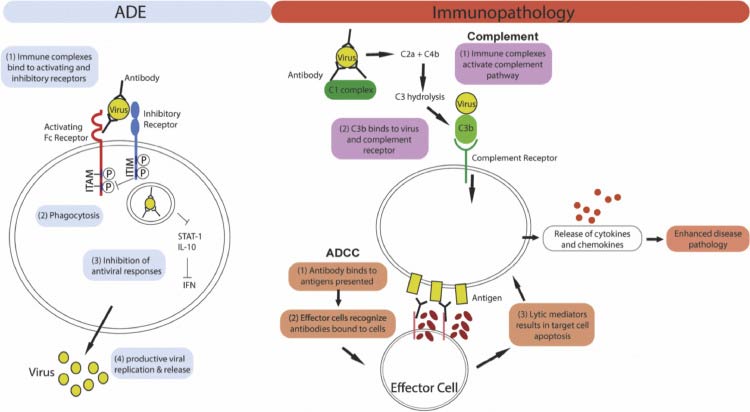
Immune enhancement of disease can theoretically occur in two ways. Firstly, non-neutralizing or sub-neutralizing levels of antibodies can enhance SARS-CoV-2 infection into target cells.
Secondly, antibodies could enhance inflammation and hence severity of pulmonary disease. An overview of these antibody dependent infection and immunopathology enhancement effects are summarized in Fig. 1 …
Currently, there are multiple SARS-CoV and MERS-CoV vaccine candidates in pre-clinical or early phase clinical trials. Animal studies on these CoVs have shown that the spike (S) protein-based vaccines (specifically the receptor binding domain, RBD) are highly immunogenic and protective against wild-type CoV challenge.
Vaccines that target other parts of the virus, such as the nucleocapsid, without the S protein, have shown no protection against CoV infection and increased lung pathology. However, immunization with some S protein based CoV vaccines have also displayed signs of enhanced lung pathology following challenge.
Hence, besides the choice of antigen target, vaccine efficacy and risk of immunopathology may be dependent on other ancillary factors, including adjuvant formulation, age at vaccination … and route of immunization.”
Do a Risk-Benefit Analysis Before Making Up Your Mind
In all likelihood, regardless of how effective (or ineffective) the COVID-19 vaccines end up being, they’ll be released to the public in relatively short order. Most predict one or more vaccines will be ready sometime in 2021.
Ironically, the data17,18,19 we now have no longer support a mass vaccination mandate, considering the lethality of COVID-19 is lower than the flu for those under the age of 60.20 If you’re under the age of 40, your risk of dying from COVID-19 is just 0.01%, meaning you have a 99.99% chance of surviving the infection. And you could improve that to 99.999% if you’re metabolically flexible and vitamin D replete.
So, really, what are we protecting against with a COVID-19 vaccine? As mentioned, the vaccines aren’t even designed to prevent infection, only reduce the severity of symptoms. Meanwhile, they could potentially make you sicker once you’re exposed to the virus. That seems like a lot of risk for a truly questionable benefit.
To circle back to where we started, participants in current COVID-19 vaccine trials are not being told of this risk — that by getting the vaccine they may end up with more severe COVID-19 once they’re infected with the virus.
Lethal Th2 Immunopathology Is Another Potential Risk
In closing, consider what this PNAS news feature states about the risk of vaccine-induced immune enhancement and dysfunction, particularly for the elderly, the very people who would need the protection a vaccine might offer the most:21
“Since the 1960s, tests of vaccine candidates for diseases such as dengue, respiratory syncytial virus (RSV), and severe acute respiratory syndrome (SARS) have shown a paradoxical phenomenon:
Some animals or people who received the vaccine and were later exposed to the virus developed more severe disease than those who had not been vaccinated. The vaccine-primed immune system, in certain cases, seemed to launch a shoddy response to the natural infection …
This immune backfiring, or so-called immune enhancement, may manifest in different ways such as antibody-dependent enhancement (ADE), a process in which a virus leverages antibodies to aid infection; or cell-based enhancement, a category that includes allergic inflammation caused by Th2 immunopathology. In some cases, the enhancement processes might overlap …
Some researchers argue that although ADE has received the most attention to date, it is less likely than the other immune enhancement pathways to cause a dysregulated response to COVID-19, given what is known about the epidemiology of the virus and its behavior in the human body.
‘There is the potential for ADE, but the bigger problem is probably Th2 immunopathology,’ says Ralph Baric, an epidemiologist and expert in coronaviruses … at the University of North Carolina at Chapel Hill.
In previous studies of SARS, aged mice were found to have particularly high risks of life-threatening Th2 immunopathology … in which a faulty T cell response triggers allergic inflammation, and poorly functional antibodies that form immune complexes, activating the complement system and potentially damaging the airways.”
- 1 International Journal of Clinical Practice, October 28, 2020 DOI: 10.111/ijcp.13795
- 2, 21 PNAS.org April 14, 2020 117 (15) 8218-8221
- 3 Viral Immunology 2003;16(1):69-86
- 4 Science Direct Neutralizing Antibody
- 5 Science Direct Binding Antibody
- 6 Twitter, The Immunologist April 9, 2020
- 7 PLOS Pathogens 2017 Aug; 13(8): e1006565
- 8, 9 Swiss Medical Weekly April 16, 2020; 150:w20249
- 10 Biochemical and Biophysical Research Communications August 22, 2014; 451(2): 208-214
- 11 JCI Insight February 21, 2019 DOI: 10.1172/jci.insight.123158
- 12 PLOS ONE April 2012; 7(4): e35421 (PDF)
- 13 PLOS ONE April 2012; 7(4): e35421 (PDF), page 11
- 14 medRxiv DOI:10.1101/2020.03.30.20047365 (PDF)
- 15 EBioMedicine 2020 May; 55: 102768
- 16 EBioMedicine 2020 May; 55: 102768, Introduction
- 17, 20 Annals of Internal Medicine September 2, 2020 DOI: 10.7326/M20-5352
- 18 YouTube, SARS-CoV-2 and the rise of medical technocracy, Lee Merritt, MD, aprox 8 minutes in (Lie No. 1: Death Risk)
- 19 Technical Report June 2020 DOI: 10.13140/RG.2.24350.77125
BREAKING research: Gum disease linked to heart problems and other serious health conditions
Reproduced from original article:
www.naturalhealth365.com/gum-disease-inflammation-3610.html
by: Sara Middleton, staff writer | November 2, 2020
 (NaturalHealth365) It’s well-known that people with poor dental health are more likely to suffer from heart disease and other chronic health conditions. This could be because people who don’t take care of their teeth are less likely to practice other good health habits, like exercising, eating healthy food, and not smoking. But, doctors also point to an apparent link between inflammation and gingivitis (an early form of gum disease) as a possible explanation.
Until recently, the specific mechanism underlying the link between inflammation, gum disease, and overall health hasn’t been fully clear. But a new study published in the Journal of Dental Research offers some interesting insights.
Gum disease triggers UNWANTED immune system response, new study reveals
A team of researchers from the University of Toronto recently discovered that inflammation in the mouth associated with gum disease activates the body’s immune system in a way that makes someone more vulnerable to future health problems.
In their study, the researchers discovered that in vivo models with periodontal disease had higher levels of neutrophils in their bodies. Neutrophils are part of the innate immune system and help fight off bacteria.
Unfortunately, this excess of neutrophils appears to “prime” the immune system to attack, causing an excessive response to other infections and injury elsewhere in the body. The result is that other tissues and organs (including the heart, blood vessels, and brain) may be accidentally destroyed by an over-the-top immune response.
In an interview with the University of Toronto, the study’s lead author Michael Glogauer explains, “The [neutrophils] are much more likely to release [immune substances] much more quickly, leading to negative outcomes.”
Do NOT ignore the health dangers linked to toxic indoor air. These chemicals – the ‘off-gassing’ of paints, mattresses, carpets and other home/office building materials – increase your risk of headaches, dementia, heart disease and cancer.
Get the BEST indoor air purification system – at the LOWEST price, exclusively for NaturalHealth365 readers. I, personally use this system in my home AND office. Click HERE to order now – before the sale ends.
While this study used animal data, it is also supported by earlier research involving human subjects, including a 2011 study published in the Journal of Periodontology which found evidence of hyperactive neutrophils in blood samples of patients diagnosed with gum disease.
In other words:
Allowing your gums to become inflamed and infected with bacteria can make your immune system overactive, which may cause it to damage other parts of your body.
Who knew your mouth had that much power?
Do you know how your oral health is? Remember these seven key warning signs…
You should know that gum disease can be treated (successfully) and the threat eliminated. With appropriate lifestyle habits like regular flossing and brushing; use of a hydrofloss along with essential oils; and the avoidance of sugar-sweetened foods and beverages – you can stop the damage.
Hopefully, by remaining aware of the consequences of gum disease, you’ll be inspired to keep up your good dental habits. To get you motivated, just consider these seven key warning signs and complications of gum disease:
- Bad breath that won’t go away
- Red, tender, and/or swollen gums
- Gums that bleed, especially when you floss or brush
- Pain with chewing
- Loose teeth
- Sensitive teeth
- Receding gums (your teeth may start to look longer)
And don’t forget – allowing your dental health to deteriorate may increase your risk of hypertension, heart disease, and other health conditions.
So, are you willing to deal with the pain, embarrassment, and cost of gum disease? Keep in mind, dentures can cost anywhere from $300 to $1,000, and dental procedures like tooth extractions and flap surgery can be painful on the mouth and the wallet.
If you don’t want trouble – and why would you be? – simply commit to the small investment in time, money, and energy needed for good oral hygiene. Your future self will thank you. And, of course, see an experienced biological dentist for serious health issues in the mouth.
To search for a good dentist in your area, consider visiting: IAOMT.com
Sources for this article include:
Eurekalert.org
UToronto.ca
Journals.sagepub.com
NIH.gov
NIH.gov
How EMFs Disturb Your Immune System
© 3rd November 2020 GreenMedInfo LLC. This work is reproduced and distributed with the permission of GreenMedInfo LLC.
Want to learn more from GreenMedInfo? Sign up for the newsletter here:
www.greenmedinfo.com/greenmed/newsletter
Reproduced from original article:
www.greenmedinfo.com/blog/how-emfs-disturb-your-immune-system1
Posted on: Friday, September 18th 2020 at 4:30 pm
Written By: GreenMedInfo Research Group
This article is copyrighted by GreenMedInfo LLC, 2020

Electromagnetic fields (EMFs) that surround you 24/7 could be interfering with your immune system function, even triggering allergic and inflammatory responses while interfering with your body’s repair mechanisms
We are living in an unprecedented time, one in which electromagnetic fields (EMFs) from cellphones and cellphone base stations, Wi-Fi devices, power lines, electrical wiring and even computers, televisions and microwave ovens, surround us 24/7. Olle Johansson, Ph.D., associate professor and head of the Experimental Dermatology Unit, Department of Neuroscience, at the Karolinska Institute in Sweden, is among those who have questioned whether humans can survive such an assault.
In a 2009 review published in Pathophysiology, Johansson points out that since life on Earth began more than 3.5 billion years ago, the geomagnetic fields and radiation from the sun have remained largely static.[i] During life’s progression, living organisms have developed ways to cope with these influences, including developing pigmented skin to shield from the sun or, for other species, living underground or under the dense, protective foliage of a rainforest.
During the last 100 years, however, as EMFs became prolific, we have not developed a similar adaptation. “Is it possible to adapt our biology to altered exposure conditions in less than 100 years, or do we have to have thousands of years – or longer – for such an adaptation? And, in the meantime, what kind of safety standards must we adopt?” Johansson asked.
After reviewing a number of papers on the effects of manmade EMFs on the immune system, he found disturbing consequences and ultimately concluded not only that existing public safety limits are inadequate to protect public health but also that limits should be set on the deployment of further untested technologies.
EMFs Disturb Immune Function via Allergic and Inflammatory Responses
EMFs present in everyday life, including at workplaces, homes and areas of recreation, disturb the human body at the cellular level, often at low or very low (non-thermal) levels. Johansson cites research showing that EMF exposures stimulate increases in mast cells and other physiological changes that indicate an allergic response and inflammatory conditions.
He believes that rapid rises in the incidence of allergies, asthma and other sensitivities worldwide are a warning signal, as chronic exposure to EMFs may lead to immune dysfunction, chronic allergic responses, inflammatory responses and overall ill health. EMF exposures have also been linked to a variety of specific immune system effects, including:[ii]
|
Overreaction of the immune system |
Alteration of immune cells |
|
Profound increases in mast cells in the upper layers of the skin |
Larger size of mast cells in electrohypersensitive individuals |
|
Suppressed or impaired immune function |
Decreased count of natural killer cells, immune cells that help kill cells infected with viruses and control early signs of cancer[iii] |
|
Negative effects on pregnancy |
It’s estimated that up to 10% of populations in the U.S., Sweden, Switzerland, Germany, Norway and many other countries may be affected by electrohypersensitivity (EHS), a condition that leads to a number of physical and cognitive symptoms upon exposure to EMFs. Common symptoms of EHS include headaches, dizziness, fatigue, trouble concentrating, cognitive problems, sleep interruptions and skin symptoms such as stinging, itching and burning.
According to Johansson, “[I]t is evident from our preliminary experimental data that various biological alterations are present in EHS persons claiming to suffer from exposure to EMF. The alterations are themselves enough to fully explain the EHS symptoms, and the involvement of the immune system is evident.”[iv]
Damages from EMF exposure are not only a matter of increased cell damage but also of reduced repair, facilitating the spread of disease. The report cites evidence that EMF exposure may contribute to DNA damage and adverse effects on cellular communication, metabolism and repair and cancer surveillance within the body, along with causing adverse cardiac and neurological effects, including memory impairment, changes in brainwave activity and disturbed cognitive function.
Biological effects from EMF exposure may occur at levels significantly below U.S. and international limits. Biologically based exposure standards are needed to protect humans from the effects of even low-level EMF exposure, but, according to Johansson, “such a completely protective safety limit would, for many exposure situations, be zero.”
Unfortunately, the currently accelerated rollout of 5G technology, which requires the installation of numerous small cell transmission devices in neighborhoods, stands to dramatically increase EMF exposures and their related health consequences.
1,000 Studies on Adverse Effects of EMFs
The body of evidence showing that EMFs cause harm has become too large to ignore. At GreenMedInfo.com, you can browse through more than 1,000 EMF abstracts and their connection to oxidative stress, DNA damage, cancer, inflammation and more.
More than a dozen studies focus on the immunotoxic effects of EMFs, including potentially reducing immune function in the elderly and affecting cellular processes that play a role in cancer development and the proper growth and development of organisms.[v]
“Living organisms can detect and respond immediately to low environmental levels of these fields,” Henry Lai with the department of bioengineering at the University of Washington in Seattle, wrote.[vi] As such, it’s important to take action now to protect yourself and your family from unnecessary EMF exposures as much as possible.

References
[i] Pathophysiology Volume 16, Issues 2-3, August 2009, Pages 157-177 https://www.sciencedirect.com/science/article/abs/pii/S0928468009000352
[ii] Pathophysiology Volume 16, Issues 2-3, August 2009, Pages 157-177 https://www.sciencedirect.com/science/article/abs/pii/S0928468009000352
[iii] British Society for Immunology, Natural Killer Cells https://www.immunology.org/public-information/bitesized-immunology/cells/natural-killer-cells
[iv] Pathophysiology Volume 16, Issues 2-3, August 2009, Pages 157-177 https://www.sciencedirect.com/science/article/abs/pii/S0928468009000352
[v] Electromagn Biol Med. 2019 Aug 26:1-18. Epub 2019 Aug 26. PMID: 31450976 www.greenmedinfo.com/article/electromagnetic-field-exposure-may-induce-dna-damage-stimulate-inflammation-an
[vi] Electromagn Biol Med. 2019 Aug 26:1-18. Epub 2019 Aug 26. PMID: 31450976 www.greenmedinfo.com/article/electromagnetic-field-exposure-may-induce-dna-damage-stimulate-inflammation-an

Majority Are Already Immune Against SARS-CoV-2
Reproduced from original article:
https://articles.mercola.com/sites/articles/archive/2020/10/14/herd-immunity-coronavirus.aspx
Analysis by Dr. Joseph Mercola Fact Checked October 14, 2020

STORY AT-A-GLANCE
- Several studies suggest immunity against SARS-CoV-2 infection is far more widespread than anyone imagined, and that the threshold for herd immunity is far lower than previously estimated
- German research shows that even among unexposed individuals, 81% were resistant or immune to SARS-CoV-2 infection
- Common colds caused by the betacoronaviruses OC43 and HKU1 might make you more resistant to SARS-CoV-2 infection
- If a majority already have some measure of immunity against COVID-19 due to previous exposure to other coronaviruses, then we’ve probably already reached the threshold for herd immunity and vaccinating every human on the planet is unnecessary
- Several studies suggest the herd immunity threshold is well below 50%, according to one study, as low as 9%. Meanwhile, a mathematical model suggests immunity against SARS-CoV-2, globally, might be as high as 80%
The more data becomes available about SARS-CoV-2, the more obvious it becomes that the response to this pandemic has been grossly overblown. Fatality statistics1,2,3,4,5,6,7 from multiple sources, calculated in a variety of ways, show the risk of dying from COVID-19 is lower than your risk of dying from conventional influenza, at least if you’re under the age of 60.
Overall, the data8,9 also show that the overall all-cause mortality has remained steady this year and doesn’t veer from the norm. In other words, COVID-19 has not killed off more of the population than would have died in any given year anyway.
Several studies also suggest immunity against SARS-CoV-2 infection is far more widespread than anyone imagined, and that the threshold for herd immunity is far lower than previously estimated.
Most Are Already Immune to SARS-CoV-2 Infection
Studies supporting the claim that widespread immunity against SARS-CoV-2 already exists include:
•Cell, June 202010,11 — This study found 70% of samples from patients who had recovered from mild cases of COVID-19 had resistance to SARS-CoV-2 on the T-cell level. Importantly, 40% to 60% of people who had not been exposed to SARS-CoV-2 also had resistance to the virus on the T-cell level.
According to the authors, this suggests there’s “cross-reactive T cell recognition between circulating ‘common cold’ coronaviruses and SARS-CoV-2.” In other words, if you’ve recovered from a common cold caused by a particular coronavirus, your humoral immune system may activate when you encounter SARS-CoV-2, thus rendering you resistant to COVID-19.
•Nature Immunology, September 202012 — This German study was initially posted on a preprint server in June 2020 under the title, “SARS-CoV-2 T-cell Epitopes Define Heterologous and COVID-19-Induced T-Cell Recognition.”13
It’s now published in the September 2020 issue of Nature Immunology with the slightly altered title, “SARS-CoV-2-Derived Peptides Define Heterologous and COVID-19-Induced T Cell Recognition.”14 Much like the Cell study above, this investigation also found that that:
“Cross-reactive SARS-CoV-2 peptides revealed pre-existing T cell responses in 81% of unexposed individuals and validated similarity with common cold coronaviruses, providing a functional basis for heterologous immunity in SARS-CoV-2 infection.”
In other words, even among those who were unexposed, 81% were resistant or immune to SARS-CoV-2 infection. The term “heterologous immunity” refers to immunity that develops against a given pathogen after you’ve been exposed to a nonidentical pathogen.
Typically, this occurs when viruses are sufficiently similar or from closely related species. In this case, SARS-CoV-2 appears to be sufficiently similar to coronaviruses that cause the common cold, so that if you’ve been exposed to any of those coronaviruses, your immune system is also able to combat SARS-CoV-2.
•The Lancet Microbe, September 202015,16 — This study found that rhinovirus infection, responsible for the common cold, largely prevented concurrent influenza infection by triggering the production of natural antiviral interferon.
The researchers speculate that the common cold virus could potentially help protect against SARS-CoV-2 infection as well. Interferon is part of your early immune response, and its protective effects last for at least five days, according to the researchers. Co-author Dr. Ellen Foxman told UPI:17
“Infection with the common cold virus protected cells from infection with a more dangerous virus, the influenza virus, and [this] occurred because the common cold activated the body’s general antiviral defenses.
This may explain why the flu season, in winter, generally occurs after the common cold season, in autumn, and why very few people have both viruses at the same time. Our results show that interactions between viruses can be an important driving force dictating how and when viruses spread through a population.
Since every virus is different, we still do not know how the common cold season will impact the spread of COVID-19, but we now know we should be looking out for these interactions.”
•Nature, July 202018,19,20 — Originally posted on a preprint server in May 2020,21 this Singaporean study was published in the July 2020 issue of Nature.22 Here, they found that common colds caused by the betacoronaviruses OC43 and HKU1 might make you more resistant to SARS-CoV-2 infection, and that the resulting immunity could potentially be long-lasting.
Patients who recovered from SARS infection back in 2003 still had T cell reactivity to the N protein of SARS-CoV now, 17 years later. These patients also had strong cross-reactivity to the N protein of SARS-CoV-2.
The authors suggest that if you’ve beaten a common cold caused by a OC43 or HKU1 betacoronavirus in the past, you may have a 50/50 chance of having defensive T-cells that can recognize and help defend against SARS-CoV-2. According to the authors:
“These findings demonstrate that virus-specific T cells induced by infection with betacoronaviruses are long-lasting, supporting the notion that patients with COVID-19 will develop long-term T cell immunity.
Our findings also raise the possibility that long-lasting T cells generated after infection with related viruses may be able to protect against, or modify the pathology caused by, infection with SARS-CoV-2.”
•Cell August 202023,24 — This Swedish study, initially posted on a preprint server in June 202025 and now published in the October 2020 issue of the journal Cell,26 found that SARS-CoV-2-specific memory T cells likely provide long-term immune protection against COVID-19. According to the authors:27
“Acute-phase SARS-CoV-2-specific T cells displayed a highly activated cytotoxic phenotype that correlated with various clinical markers of disease severity, whereas convalescent-phase SARS-CoV-2-specific T cells were polyfunctional and displayed a stem-like memory phenotype.
Importantly, SARS-CoV-2-specific T cells were detectable in antibody-seronegative exposed family members and convalescent individuals with a history of asymptomatic and mild COVID-19.
Our collective dataset shows that SARS-CoV-2 elicits broadly directed and functionally replete memory T cell responses, suggesting that natural exposure or infection may prevent recurrent episodes of severe COVID-19.”

Innate and Adaptive Immunity
It’s important to realize you have two types of immunity. Your innate immune system is primed and ready to attack foreign invaders at any moment and is your first line of defense. Your adaptive immune system,28 on the other hand, “remembers” previous exposure to a pathogen and mounts a response when an old foe is recognized.
Your adaptive immune system is further divided into two arms: humoral immunity (B cells) and cell mediated immunity (T cells). The B cells and T cells are manufactured as needed from specialized stem cells. The graphs below are from my vitamin D report and will help you understand the components of these systems and their timing.
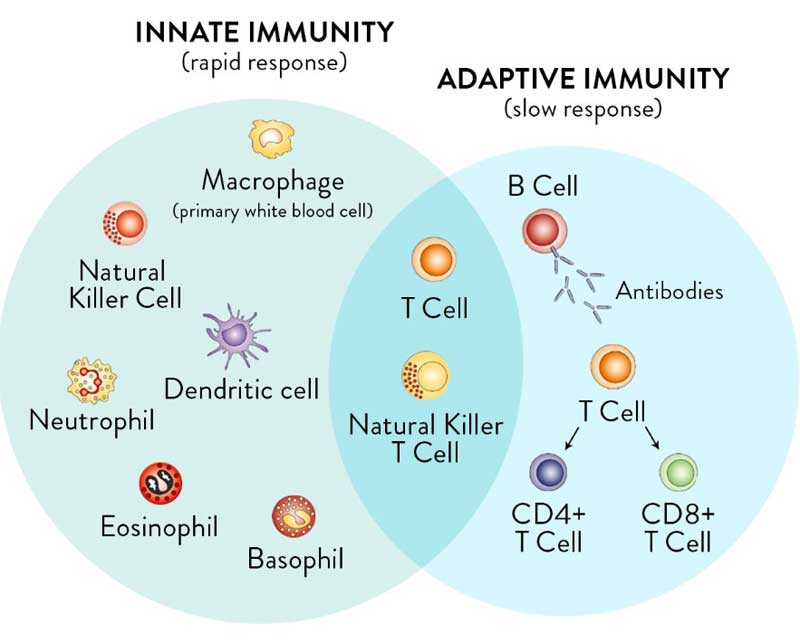
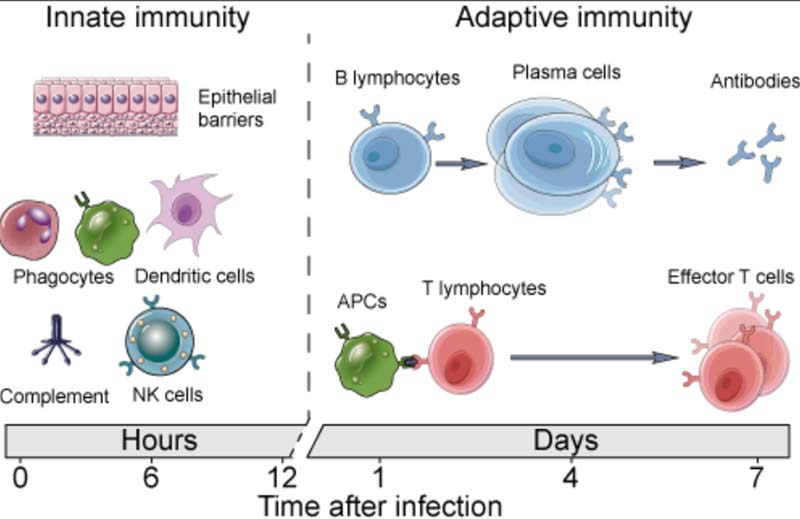
If you have never been exposed to a disease but are given antibodies from someone who got sick and recovered, you can gain humoral immunity against that disease. Your humoral immune system can also kick in if there’s cross-reactivity with another very similar pathogen.
As you can see from the list above, in the case of COVID-19, evidence29 suggests exposure to other coronaviruses that cause the common cold can confer immunity against SARS-CoV-2.
On the flip side, there’s a phenomenon known as viral interference, where exposure to one virus makes you more susceptible to another virus. Importantly, research30 has found that those who received the influenza vaccine were 36% more susceptible to coronavirus infection.
Mathematical Models Add Support for Widespread Immunity
If it’s true that a majority already have some measure of immunity against COVID-19 due to previous exposure to other coronaviruses, then we’ve probably already reached the threshold for herd immunity, and vaccinating every human on the planet (or close to it) will not be necessary.
Added support for the idea that herd immunity may already have been achieved in most countries comes from statisticians working with mathematical models. In June 2020, Freddie Sayers, executive editor of UnHerd, interviewed31 professor Karl Friston, a statistician who claims immunity against SARS-CoV-2, globally, might be as high as 80%, as reviewed in the video interview above.
Friston is credited with inventing a statistical parametric mapping technique that is now the standard for understanding brain imaging. As the pandemic erupted, he began applying this method of analysis (which he refers to as “dynamic causal modeling”) to COVID-19 data, coming up with a model that predicts far lower mortality rates than earlier models.
The reason for this is because the “effective susceptible population,” meaning those who are not already immune to COVID-19 and therefore at risk of infection, was never 100%. At most, it was 50% and most likely only around 20%.
Friston’s model effectively vaporizes claims that social distancing is necessary, because once sensible behaviors such as staying home when sick are entered into it, the positive effect of lockdown efforts on “flattening the curve” simply vanish. In all likelihood, the global lockdowns were completely unnecessary, and certainly should not continue, now or in the future.
Signs of Herd Immunity Emerge in Sweden
One country that bucked the global lockdown trend was Sweden, and they now appear to be head and neck ahead of most other countries in terms of herd immunity, while having a death toll that is very similar to nations that destroyed their economy and sacrificed the population’s mental health in the name of infection control.
Anders Tegnell, the chief epidemiologist in charge of Sweden’s coronavirus response, has stated32 he does not believe Sweden will see a second wave with widespread contagion as the country is seeing a rapid decline in positive tests, indicating herd immunity has been achieved.33
He told The Guardian34 that the primary goal was always merely to slow the spread to avoid overwhelming medical services. The intention was never to prevent infection from spreading altogether, which has indeed proven impossible.
This was in fact the original plan just about everywhere. But while Sweden stuck to the original goal, and by mid-September boasted all-time low infection rates,35 other nations have twisted response plans to prevent infection transmission altogether, even among those for whom the risk of such an infection is vanishingly minor, such as school-aged children.
The two graphs from The Guardian,36 below, show Sweden’s infection rate and deaths per million, compared to other countries that enforced stricter lockdown rules.
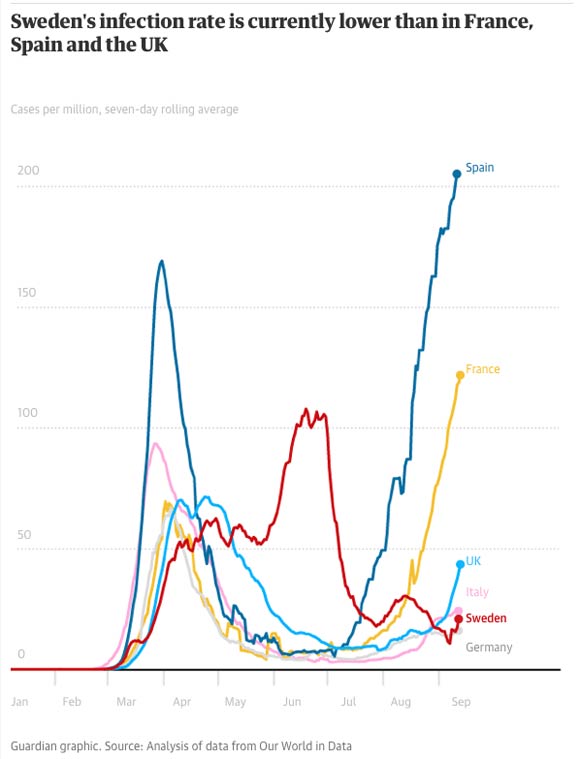
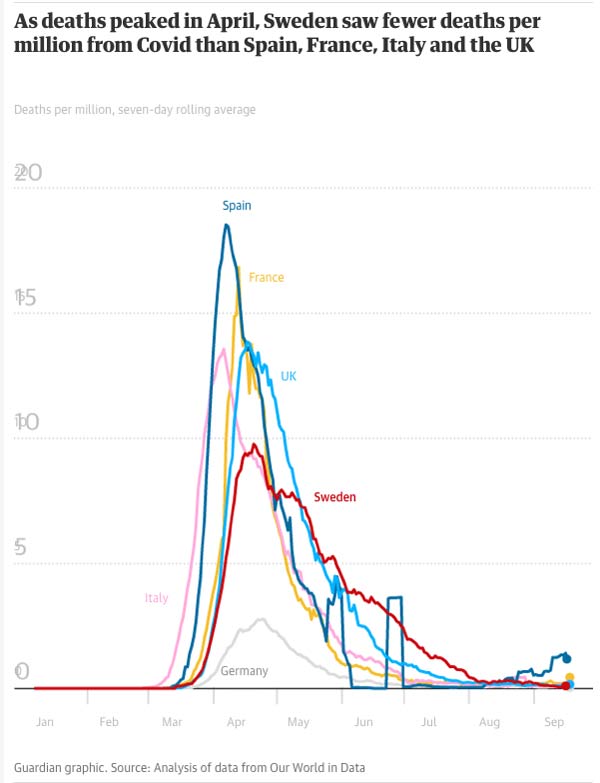
Herd Immunity Threshold Likely Below 50%
As reported in “Herd Immunity ‘Ahead of Schedule’” experts initially estimated that 70% of the population or more would need to be immune before herd immunity would be achieved. Now, more than a dozen scientists claim the herd immunity threshold is likely below 50%.
As stated earlier, if this is true — and as you can see by the studies reviewed, it appears a majority do have some level of immunity — then the need for a vaccine more or less vanishes.
Herd immunity is calculated using reproductive number, or R-naught (R0), which is the estimated number of new infections that may occur from one infected person.37 R0 of below 1 (with R1 meaning that one person who’s infected is expected to infect one other person) indicates that cases are declining while R0 above 1 suggests cases are on the rise.
It’s far from an exact science, however, as a person’s susceptibility to infection varies depending on many factors, including their health, age and contacts within a community. The initial R0 calculations for COVID-19’s herd immunity threshold were based on assumptions that everyone has the same susceptibility and would be mixing randomly with others in the community.
“That doesn’t happen in real life,” Dr. Saad Omer, director of the Yale Institute for Global Health, told The New York Times.38 “Herd immunity could vary from group to group, and subpopulation to subpopulation,” or even zip code. When real-world scenarios are factored into the equation, the herd immunity threshold drops significantly, with some experts saying it could be as low as 10% to 20%.
The most compassionate approach that balances the risks and benefits of reaching herd immunity, is to allow those who are at minimal risk of death to live their lives normally to build up immunity to coronavirus through natural infection, while better protecting those who are at highest risk. ~ Great Barrington Declaration
Researchers from Oxford, Virginia Tech and the Liverpool School of Tropical Medicine are among those that found39,40 when individual variations in susceptibility and exposure are taken into account, the herd immunity threshold dips below 10%.
Independent news source Off-Guardian also cited41 data from Stockholm County, Sweden, which shows a herd immunity threshold of 17%,42 as well as an essay by Brown University professor Dr. Andrew Bostom, who noted:43
“Lead investigator Dr. Gomes, from the Liverpool School of Tropical Medicine, and her colleagues concluded: “naturally acquired immunity to SARS-CoV-2 may place populations over the herd immunity threshold once as few as 10-20% of its individuals are immune.“44
Separate HIT [herd immunity threshold] calculations of 9%,45 10-20%,46 17%,47 and 43%48,49 — each substantially below the dogmatically asserted value of ~70%50 — have been reported by investigators from Tel-Aviv University, Oxford University, University College of London, and Stockholm University, respectively.”
Declaration Urges Implementation of Herd Immunity Approach
All in all, there are many reasons to suspect that continued lockdowns, social distancing and mask mandates are completely unnecessary and will not significantly alter the course of this pandemic illness, or the final death count.
As reported by British Sky News,51 October 7, 2020, many respected scientists are now calling for a herd immunity approach to the pandemic, meaning governments should allow people who are not at significant risk of serious COVID-19 illness to go back to normal life. According to the article:52
“The so-called Great Barrington declaration, signed by leading experts from the universities of Oxford, Nottingham, Edinburgh, Exeter, Cambridge, Sussex and York, suggests herd immunity as a way forward.
The declaration states: ‘The most compassionate approach that balances the risks and benefits of reaching herd immunity, is to allow those who are at minimal risk of death to live their lives normally to build up immunity to coronavirus through natural infection, while better protecting those who are at highest risk. We call this focused protection.”
The declaration points out that current lockdown policies are having “devastating effects on short and long-term public health” that will result in excess mortality in the future, primarily among younger people and the working class.
- 1 CDC.gov August 26, 2020
- 2 Annals of Internal Medicine September 2, 2020 DOI: 10.7326/M20-5352
- 3 Greek Reporter June 27, 2020
- 4 Washington Examiner July 2, 2020
- 5 FEE.org July 2, 2020
- 6, 9 Technical Report June 2020 DOI: 10.13140/RG.2.24350.77125
- 7, 8 YouTube, SARS-CoV-2 and the rise of medical technocracy, Lee Merritt, MD, aprox 8 minutes in (Lie No. 1: Death Risk)
- 10 Cell June 25, 2020; 181(7): 1489-1501.E15
- 11 Wall Street Journal June 12, 2020 (Archived)
- 12, 14 Nature Immunology September 30, 2020 DOI: 10.1038/s41590-020-00808-x
- 13 Immunology Virology June 17, 2020 DOI: 10.21203/rs.3.rs-35331/v1
- 15 The Lancet Microbe September 4, 2020 DOI: 10.1016/S2666-5247(20)30114-2
- 16, 17 UPI September 4, 2020
- 18, 22 Nature July 15, 2020; 584: 457-462
- 19 Daily Mail June 12, 2020
- 20 Science Times June 12, 2020
- 21 Biorxiv preprint DOI: 10.1101/2020.05.26.115832 (PDF)
- 23, 26, 27 Cell October 1, 2020; 183(1): 158-168.E14
- 24 BBC July 1, 2020
- 25 BioRxiv June 29, 2020 DOI: 10.1101/2020.06.29.174888
- 28 Khan Academy, Adaptive Immunity
- 29 Cell May 14, 2020 DOI: 10.1016/j.cell.2020.05.015
- 30 Vaccine January 10, 2020; 38(2): 350-354
- 31 Unherd.com June 4, 2020
- 32 Metro August 24, 2020
- 33 The Sun August 24, 2020
- 34 The Guardian September 22, 2020
- 35, 36 The Guardian September 16, 2020
- 37, 38 The New York Times April 23, 2020
- 39, 44 medRxiv May 21, 2020 DOI: 10.1101/2020.04.27.20081893 (PDF)
- 40, 41 Off-Guardian July 7, 2020
- 42, 47 medRxiv May 22, 2020 DOI: 10.1102/2020.05.19.20104596 (PDF)
- 43 Andrewbostom.org September 2020
- 45 medRxiv September 10, 2020 DOI: 10.1101/2020.09.06.20189290
- 46 medRxiv August 31, 2020 DOI: 10.1101/2020.07.23.20160762
- 48 Cornell University arXiv.org May 6, 2020
- 49 Science August 14, 2020; 369(6505): 846-849
- 50 Immunity May 19, 2020; 52(5): 737–741
- 51, 52 Sky News October 7, 2020
Unique Glucosinolates Found in Moringa
Reproduced from original article:
https://articles.mercola.com/sites/articles/archive/2020/10/08/moringin.aspx
Analysis by Dr. Joseph Mercola Fact Checked October 08, 2020

STORY AT-A-GLANCE
- Glucosinolates are phytochemical compounds that are found in cruciferous vegetables and Moringa, a plant recognized for its medicinal purposes for centuries
- Glucosinolates are metabolized into bioactive isothiocyanates. The primary isothiocyanate in Moringa is moringin. Like sulforaphane in broccoli, moringin has powerful antibacterial, anti-inflammatory and anticancer effects
- Researchers recently discovered a novel type of glucosinolate in wild forms of Moringa oleifera dubbed 4GBGS. Domestic forms of Moringa oleifera, or those specifically grown for human consumption, also had some levels of 4GBGS, but in much lower concentrations
- Moringa also contains all nine essential amino acids and has been shown to lower blood pressure, modulate immune function and protect the health of your organs
- Moringa leaves are often available in a dried, powder form that you can use to make tea or add to your smoothies
Glucosinolates are sulfur-containing phytochemicals most notably found in cruciferous vegetables like broccoli, cabbage and Brussels sprouts. But research shows that Moringa, also known as the drumstick tree or the horseradish tree, is also high in these health-promoting compounds.
According to a May 2018 report published in Scientific Reports,1 Moringa not only contains high levels of glucosinolates, but also has unique glucosinolates that are responsible for many of its medicinal properties.
Glucosinolates, which are inert, are metabolized into bioactive isothiocyanates by an enzyme called myrosinase.2 The primary isothiocyanate in Moringa responsible for many of its health benefits is moringin,3 created by hydrolysis of glucomoringin.4
Moringin is also known as 4RBITC (after its chemical name, 4-(alpha-L-rhamnopyranosyloxy)benzyl isothiocyanate). Like sulforaphane in broccoli, moringin has potent anti-inflammatory and cytoprotective effects.5
According to Jed Fahey, a nutritional biochemist and assistant professor at Johns Hopkins Medical School, moringin is just as potent as sulforaphane, and in some assays actually more potent.
What Is Moringa?
Before diving into the specific health benefits of Moringa and why glucosinolates are important, it’s helpful to know what Moringa is. Moringa is a tree native to India, Pakistan, Bangladesh and Afghanistan.6
There are 14 different species of Moringa, but the most common and most widely consumed is Moringa oleifera, sometimes referred to as the “miracle vegetable.” If you live in a subtropical area and decide to plant this tree, be careful, as it is one of the fastest growing trees I have ever seen.
I planted a few to have as shrubs that I can harvest for my salad. I stopped using it when I switched to carnivore and six months later, these trees were 25 feet tall, blocking my solar panels, and the trunks had a 12-inch circumference.
For centuries, Moringa oleifera has been used in Ayurvedic and natural medicine as a remedy for inflammation, infectious diseases and chronic conditions such as heart disease, blood diseases and digestive disorders.7
While Moringa oleifera is an excellent source of vitamins, minerals and several phenolic compounds, many of the health benefits of the plant come down to its glucosinolates and the isothiocyanate moringin. Interestingly, recent research has revealed a previously unknown glucosinolate in wild Moringa.
Previously Unknown Glucosinolate Found in Moringa
Glucosinolates are a class of sulfur-containing compounds found in cruciferous vegetables, also called the Brassica family of vegetables, and Moringa, but Moringa oleifera contains several members of the glucosinolate family that aren’t found anywhere else. The most concentrated glucosinolate in Moringa oleifera is glucomoringin (GMG), which has antioxidant and anticancer benefits.
Researchers recently discovered a novel type of glucosinolate in wild forms of Moringa oleifera dubbed 4-(-L-glucopyranosyloxy)benzyl GS (4GBGS).8 Domestic forms of Moringa oleifera, or those specifically grown for human consumption, also had some levels of 4GBGS, but in much lower concentrations.
The researchers speculate that this may be due to the manufacturers’ desire to improve the naturally bitter taste of Moringa. Since glucosinolates contain sulfur, they have a distinct, sometimes off-putting flavor.
In addition to GMG and 4GBGS, Moringa oleifera also contains at least 10 other glucosinolates that work together to provide many of the health benefits of Moringa.
Moringa Has Powerful Antibiotic Effects
Moringa has also been shown to have potent antibiotic activity against a wide variety of pathogens, including Escherichia coli, Salmonella typhimurium, Candida and Helicobacter pylori (H. pylori).9 According to Scientific Reports:10
“ … (4RBITC), the isothiocyanate created by hydrolysis of ‘glucomoringin’ … from M. oleifera is a potent and selective antibiotic against H. pylori.
Other studies have shown that the antibiotic activity of 4RBITC from M. oleifera is selective and potent against other important human pathogens such as Staphylococcus aureus and Candida albicans. It also appears to be effective in controlling certain manifestations of both ALS and multiple sclerosis in mouse models.
A growing number of epidemiologic, animal, and clinical studies link dietary glucosinolates and their cognate isothiocyanates to protection against chronic diseases including a variety of cancers, diabetes, and autism spectrum disorder …”
A 2005 study11 in Planta Medica compared the effectiveness of several different isothiocyanates to see which offered the most potent protection against H. pylori. Of the isothiocyanates tested, sulforaphane and moringin (4RBITC) were the most effective.
In another study,12 researchers collected bacteria samples from fecal matter that was supplied by a hospital in Portugal. A total of 18 aerobic bacterial strains, including Enterococcus faecalis, Staphylococcus aureus, Staphylococcus saprophyticus, E. coli (two strains) and Salmonella typhi, were isolated.
The samples were then exposed to three different glucosinolates and three isothiocyanates. While the intact glucosinolates had no effect on the bacteria, the isothiocyanates, specifically SFN, BITC and PEITC, had high antimicrobial activities. In some cases, the isothiocyanates were actually more effective than antibiotics.
Moringa Contains All of the Essential Amino Acids
Moringa is also a source of high-quality protein. Just 2 teaspoons of dried Moringa powder contain 1 gram of protein13 and the total mean protein content of domesticated Moringa oleifera is 30.24%.14 Perhaps most important is the fact that Moringa contains all of the nine essential amino acids, something that many other sources of plant protein fall short on.
Amino acids are important because they’re the building blocks of protein. Conversely, when your body breaks down or digests the proteins you eat, amino acids are what’s left behind. Your body uses amino acids to make new proteins that carry out a variety of different functions, from growth and repair to wound healing to food metabolism.
There are 20 different amino acids that are classified as either essential or nonessential. Your body can make the nonessential amino acids itself, but it cannot make the essential amino acids. That’s why you need to get them from food.
The nine essential amino acids are histidine, isoleucine, leucine, lysine, methionine, phenylalanine, tryptophan, threonine and valine. Three of these essential amino acids — leucine, isoleucine and valine — are also categorized as branched-chain amino acids (BCAA) because they have a branched molecular structure.
While your liver breaks down most amino acids, it can’t break down BCAAs. Because of this, BCAAs are broken down primarily in your muscle. As such, they help improve exercise performance and reduce the breakdown of muscle.15
There aren’t a lot of plant foods that contain all of the essential amino acids, but moringa does. According to the African Journal of Biotechnology, moringa has a total of 19 amino acids,16 including all nine essential amino acids.17 As detailed in several research articles, including the journal Amino Acids, the nine essential amino acids have important biological roles, including the following:18
| Isoleucine19 — Helps stabilize your blood sugar and is required, along with leucine and valine, for muscle synthesis, repair, energy and endurance. |
| Leucine20 — Helps lower blood sugar that is elevated and triggers the production of growth hormone. Along with isoleucine and valine, leucine promotes the growth of muscle, bone and skin. |
| Valine21 — Helps maintain muscle metabolism and nitrogen balance. It’s also used in tissue repair and energy production. |
| Lysine22 — Is needed in the production of hormones, collagen, enzymes and antibodies. It also helps combat viruses and plays a role in calcium assimilation and protein construction in bones and muscle. |
| Methionine23 — Is converted into homocysteine and vice versa, based on the needs of your body. It’s also a primary source of sulfur in your body, which is required for healthy hair, skin and nails. |
| Tryptophan24 — Aids in the production of niacin (vitamin B3), which is required for serotonin and melatonin production. |
| Phenylalanine25 — Plays a role in memory formation and nervous system function and helps reduce inflammation. |
| Threonine26,27 — Important for healthy cardiovascular system, central nervous system, immune system and liver function. It also plays a role in the digestion of fats, and promotes healthy collagen, muscle tissue, skin and bones. |
| Histidine28 — Required for red and white blood cell production, and aids in tissue repair. Importantly, histidine helps protect your nerves by maintaining the myelin sheath around them. |
In addition to essential amino acids, Moringa contains beneficial fatty acids (44.57% being a-linolenic acid29), beta-carotene, phenolics, zeatin, quercetin, beta-sitosterol, kaempferol,30 flavonoids and isothiocyanates.31 Two teaspoons of dried Moringa powder also offers32 0.999 grams of fiber, 80 mg of calcium and 200 IU of vitamin C.
Other Health Benefits of Moringa
In addition to the previously mentioned health benefits, other studies report that Moringa also:
| Helps protect diabetes patients from retinopathy — Retinopathy is caused by the inflammation of the blood vessels in the eyes, which may lead to fluid leakage. If left untreated, retinopathy may advance into complete blindness.
Moringa may help stop retinopathy by regulating blood sugar in diabetes patients and protecting the retina from inflammation. This is usually attributed to moringa’s high antioxidant content.33 |
| May ease asthma — One study34 found Moringa oleifera can decrease the severity of symptoms in people with asthma and improve lung function parameters, including forced vital capacity, forced expiratory volume and peak expiratory flow, without any negative side effects. Moringa oleifera was also shown to reduce the severity of asthma attacks. |
| Helps protect liver, kidney, heart, testes and lung health35 |
| Has analgesic properties36 |
| Has antiulcer activity37 |
| Helps lower blood pressure38 |
| Protects against radiation39 |
| Helps modulate immune function40 |
| Has anti-inflammatory41 and antiviral activity, thanks to quercetin42,43,44 |
How to Include Moringa in Your Diet
Similar to matcha, most Moringa is available in powder form. The Moringa leaves are dried and then ground to form a concentrated powder that’s rich in all of the beneficial compounds, vitamins and minerals that moringa has to offer.
Consuming Moringa this way may be especially beneficial because the leaves are never cooked, only dried. Cooking can denature the myrosinase enzyme, reducing the amount of glucosinolates that get converted to the active isothiocyanates and the amount of isothiocyanates that your body absorbs.45
You can also purchase Moringa in oil or capsule form. When deciding on a source, consider one made from wild Moringa. Wild-harvested Moringa may be more bitter than domesticated versions, but ensures that you’re getting all of the beneficial glucosinolates and the health benefits that come with them.
Moringa supplements can contain a large range of Moringa leaf powder, anywhere from 500 to 2,000 mg, depending on the size of the capsule. The recommended amount for adult supplementation is two capsules per day, one in the morning and one at night.
However, it would be best that you consult a doctor or health practitioner before taking the supplement. This will ensure that the dosage is advisable for you or that the supplement will not interact with any medications you may currently be taking.
While moringa offers impressive health benefits, it’s also important to be aware of the possible side effects moringa supplementation may cause. For pregnant mothers, it’s best that you avoid the use of Moringa oleifera supplements, as there are insufficient studies that show Moringa is safe for pregnant women. There are also a few studies that suggest Moringa, when taken during the early stages of pregnancy, may cause miscarriage due to its ability to cause uterine contractions.46
You can also harvest the seeds, sow them and harvest them like microgreens, i.e., while they’re small, like sprouts. For guidance on how to grow Moringa trees in general, see my previous article, “How to Grow Moringa Tree.”
Other Sources of Glucosinolates
It’s true that Moringa contains unique glucosinolates, like glucomoringin that you can’t find anywhere else, but they’re not the only source of glucosinolates in the diet. If you want to increase your intake of these beneficial plant compounds in other ways, you can do so by including these foods:47
| Brussels sprouts | Broccoli | Watercress |
| Garden cress | Mustard greens | Turnip |
| Savoy cabbage | Kale | Turnip greens |
| Red cabbage | Horseradish | Cauliflower |
| Bok choy | Collard greens | Kohlrabi |
– Sources and References
- 1 Sci Rep. 2018;8(1):7994
- 2 Scientific Reports May 22, 2018; 8 Article number 7994
- 3, 5 Nutrients July 2019; 11(7): 1547
- 4, 9, 10 Scientific Reports May 22, 2018; 8 Article number 7994, Introduction
- 6, 7 J Mass Spectrom. 2014;49(9):900-10
- 8 Sci Rep. 2018; 8: 7994. May 22, 2018
- 11 Planta Medica 2005 Apr;71(4):326-30, Table 2
- 12 J Appl Microbiol. 2009;106(6):2086-95
- 13, 32 USDA FoodData Central. April 1, 2019
- 14 Sci Rep. 2018;8(1):7995
- 15 Nutrition and Traumatic Brain Injury. 2011
- 16, 29 African Journal of Biotechnology. 10(60): 12925-12933
- 17 Sci Rep. 2016;6:26074
- 18 Advances in Molecular Biology. 2014
- 19, 21 J Anim Sci Biotechnol. 2017;8:10
- 20 Nutr Rev. 2011;69(9):550-7
- 22 Essays Biochem. 2012;52:113-33
- 23 J Cachexia Sarcopenia Muscle. 2011;2(2):75-80
- 24 World Heart Journal. 2019;11(2):161-178
- 25 Molecules. 2017;22(12)
- 26, 27 JB JS Open Access. 2018;3(2):e0006
- 28 Front Chem. 2018;6:243
- 30 Phytother Res. 2007;21(1):17-25
- 31 Nutrients. 2018;10(3)
- 33 J Ocul Pharmacol Ther. 2013;29(4):419-26
- 34 Indian J Pharmacol. 2008;40(1):28-31
- 35, 36, 37, 38, 39, 40 Phytother Res. 2015;29(6):796-804
- 41, 42 Fitoterapia. 2015;106:256-71
- 43 Journal of Infectious Diseases and Preventative Medicine. 2014;2(2)
- 44 Viruses. 2015;8(1)
- 45 Front Nutr. 2016;3:24
- 46 Journal of Pharmaceutical Research International, 4(20), 2455-2462
- 47 Linus Pauling Institute
Vitamin D Cuts SARS-CoV-2 Infection Rate by Half
Reproduced from original article:
https://articles.mercola.com/sites/articles/archive/2020/09/28/coronavirus-infection-rate-vitamin-d.aspx
Fact Checked September 28, 2020

STORY AT-A-GLANCE
- Based on data from 191,779 American patients, people with a vitamin D level of at least 55 ng/mL (138 nmol/L) had a 47% lower SARS-CoV-2 positivity rate compared to those with a level below 20 ng/mL (50 nmol/L)
- Based on data from 7,807 Israelis, those with a vitamin D level above 30 ng/mL (75 nmol/L) had a 58% to 59% lower risk of testing positive for SARS-CoV-2 compared to those with a vitamin D level below 29 ng/mL (74 nmol/L)
- Having a vitamin D level below 30 ng/mL also approximately doubles your risk of being hospitalized with COVID-19, Israeli researchers found
- Spanish researchers found giving hospitalized COVID-19 patients supplemental calcifediol (a vitamin D3 analog) in addition to standard of care lowered ICU admissions from 50% to 2% and eliminated deaths
- An August 2020 study found patients who had a vitamin D level below 12 ng/mL (30 nmol/L) had a 6.12 times higher risk of severe disease requiring invasive mechanical ventilation, and a 14.7 times higher risk of death compared to those with a vitamin D level above 12 ng/mL
Evidence showing vitamin D lowers your risk of SARS-CoV-2 infection, hospitalization, severe complications and death continues to mount. Most recently, a September 17, 2020, paper1 in PLOS ONE found people with lower vitamin D levels in their blood had a significantly higher risk of testing positive for SARS-CoV-2.
Higher Vitamin D Lowers Risk of Positive SARS-CoV-2 Test
The lead researcher in this study was Dr. Michael Hollick, who is widely recognized as one of the leading vitamin D experts in the world. I have interviewed him twice in the past. He and his team used retrospective observational analysis of SARS-CoV-2 tests to determine whether vitamin D blood levels impacted positivity rates.
Based on vitamin D results from the preceding 12 months and SARS-CoV-2 test data from mid-March through mid-June 2020 from 191,779 patients from 50 U.S. states, people with a vitamin D level of at least 55 ng/mL (138 nmol/L) had a 47% lower SARS-CoV-2 positivity rate compared to those with a level below 20 ng/mL (50 nmol/L).2 As noted by the authors:
“The SARS-CoV-2 positivity rate was 9.3% and the mean seasonally adjusted 25(OH)D was 31.7 [ng/mL]. The SARS-CoV-2 positivity rate was higher in the 39,190 patients with ‘deficient’ 25(OH)D values (<20 ng/mL) (12.5% …) than in the 27,870 patients with ‘adequate’ values (30–34 ng/mL) (8.1% …) and the 12,321 patients with values ≥55 ng/mL (5.9% …) …3
The risk of SARS-CoV-2 positivity continued to decline until the serum levels reached 55 ng/mL. This finding is not surprising, given the established inverse relationship between risk of respiratory viral pathogens, including influenza, and 25(OH)D levels.4
SARS-CoV-2 positivity is strongly and inversely associated with circulating 25(OH)D levels, a relationship that persists across latitudes, races/ethnicities, both sexes, and age ranges. Our findings provide impetus to explore the role of vitamin D supplementation in reducing the risk for SARS-CoV-2 infection and COVID-19 disease.”5
The graph below, obtained from GrassrootsHealth,6 shows how the rate of positive SARS-CoV-2 results declines as vitamin D levels go up. Again, as you increase your vitamin D level from 20 ng/mL to 55 ng/mL, your risk of having a positive SARS-CoV-2 test result decreases by 47%.
Even after adjustment for gender, age, ethnicity and latitude, the risk of having a positive test result was 43% lower among those with a vitamin D level of 55 ng/mL compared to those with a level of 20 ng/mL. I understand that the COVID-19 test may be worthless and counterproductive with its false positives, but it is the only metric we currently have to assess interventions.
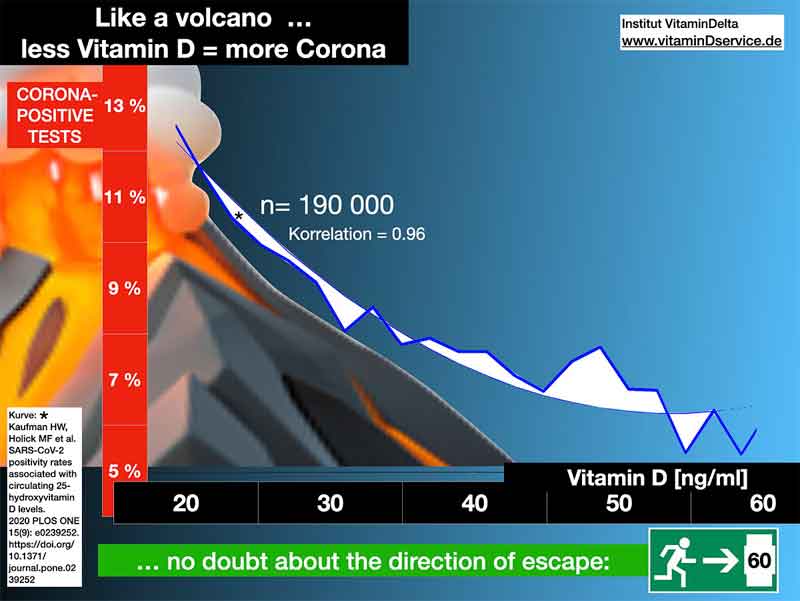
Vitamin D Lowers Infection and Hospitalization Rates
That higher vitamin D levels lower the risk of SARS-CoV-2 infection (i.e., getting a positive test result) was also confirmed in an Israeli population-based study7,8 published in July 2020. This paper examined data from 7,807people tested for SARS-CoV-2 infection between February 1 and April 30 of 2020 who also had vitamin D test data available.
Here, those with a vitamin D level above 30 ng/mL (75 nmol/L) had a 59% lower risk of testing positive for SARS-CoV-2 compared to those with a vitamin D level between 20 ng/mL and 29 ng/mL (50 to 74 nmol/L), and a 58% lower risk compared to those with a vitamin D level below 20 ng/mL (50 nmol/L). The graph below, from a GrassrootsHealth report,9 illustrates the findings.
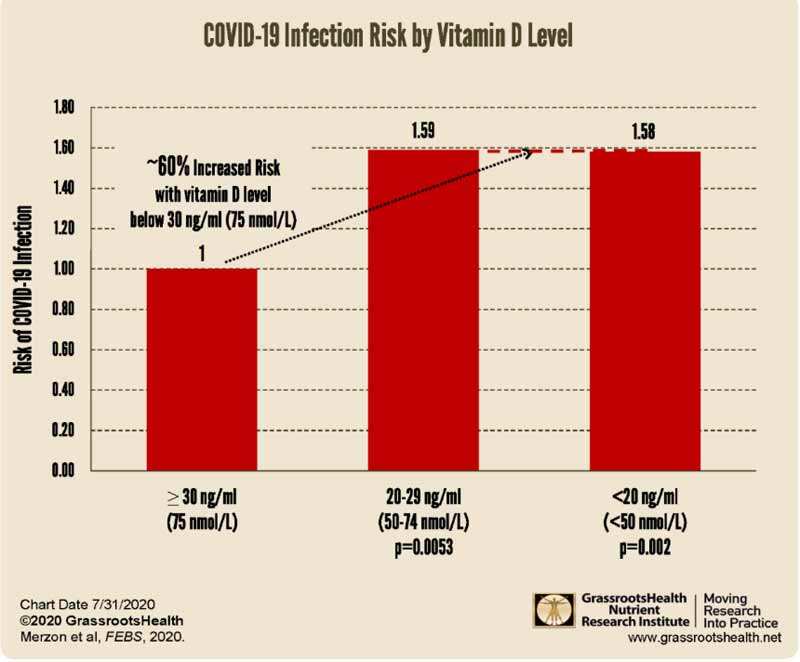
Vitamin D Lowers Hospital and ICU Admissions
Seeing how higher vitamin D levels lowers your risk of testing positive for SARS-CoV-2 in the first place, it’s no surprise then that other data show higher vitamin D also lowers hospital and intensive care admissions.
The Israeli analysis10 above, for example, found that among individuals who tested positive for SARS-CoV-2 infection, those who had a vitamin D level below 30 ng/mL also had a 1.95 times (crude odds ratio) to 2.09 times (odds ratio after adjustment for demographics and psychiatric and somatic disorders) higher risk of being hospitalized for COVID-19.
In other words, having a vitamin D level below 30 ng/mL about doubled the risk of being hospitalized with COVID-19. Vitamin D, when administered to hospitalized patients, can also lower their risk of needing intensive care.
This was demonstrated by Spanish researchers in a small randomized clinical study11,12,13,14 published online August 29, 2020. They found hospitalized COVID-19 patients who were given supplemental calcifediol (a vitamin D3 analog also known as 25-hydroxycholecalciferol or 25-hydroxyvitamin D) in addition to standard of care — which included the use of hydroxychloroquine and azithromycin — had significantly lower intensive care unit admissions.
Patients in the vitamin D arm received 532 micrograms of calcifediol on the day of admission (equivalent to 106,400 IUs of vitamin D15) followed by 266 mcg on Days 3 and 7 (equivalent to 53,200 IUs16). After that, they received 266 mcg once a week until discharge, ICU admission or death.
Of those receiving calcifediol, only 2% required ICU admission, compared to 50% of those who did not get calcifediol. None of those given vitamin D supplementation died, whereas 7.6% in the standard care group perished.
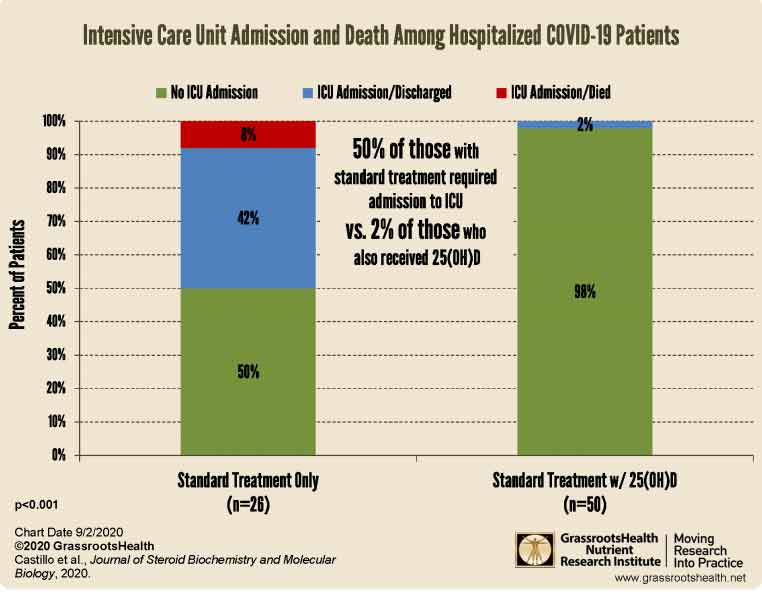
Vitamin D Lowers COVID-19 Mortality
Other studies have also confirmed that higher vitamin D levels lowers your risk of complications and death from COVID-19. Among them is an August 2020 study17,18 published in the journal Nutrients, which found patients who had a vitamin D level below 12 ng/mL (30 nmol/L) had a 6.12 times higher risk of severe disease requiring invasive mechanical ventilation, and a 14.7 times higher risk of death compared to those with a vitamin D level above 12 ng/mL.
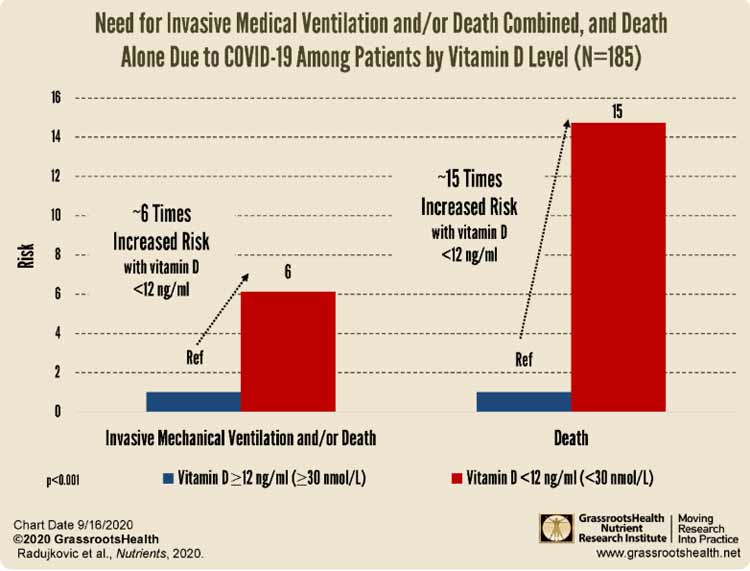
An Iranian study19,20 published online in mid-July 2020 also found that patients with vitamin D levels above 30 ng/mL (75 nmol/L) had better clinical outcomes and a far lower risk of death. Among COVID-19 patients over the age of 40 who had vitamin D levels below 30 ng/mL, 20% died, compared to 9.7% of those with levels at or above 30 ng/mL. Among those with a vitamin D level of at least 40 ng/mL, only 6.3% died.
Low Vitamin D Is a Risk Factor for Respiratory Failure
Yet another study, published in the Journal of Endocrinological Investigation in August 2020, found vitamin D deficiency was a common factor among hospitalized patients in Italy who had been diagnosed with COVID-19 related respiratory failure.
These considerations support the recommendation that people at risk of influenza and/or COVID-19 consider vitamin D supplementation to raise their 25(OH)D concentrations above 40-60 ng/mL, and that treatment of patients infected with influenza and/or COVID-19 includes higher vitamin D doses. ~ Journal of Endocrinological Investigation August 2020
As reported by GrassrootsHealth:21
“Vitamin D levels were measured for each patient and were defined as insufficient (20-29 ng/ml or 50-74 nmol/L), moderately deficient (10-19 ng/ml (25-49 nmol/L), and severely deficient (<10 ng/ml or <25 nmol/L). A normal vitamin D level was defined as 30 ng/ml (75 nmol/L) or higher.
81% of the patients with acute respiratory failure due to COVID-19 had vitamin D levels below 30 ng/ml (75 nmol/L); and 24% had severe vitamin D deficiency (≤10 ng/ml or ≤25 nmol/L).
When looking at mortality rates after 10 days of hospitalization, it was found that those with severe vitamin D deficiency had a 50% probability of death, compared to 5% among those with a vitamin D level greater than 10 ng/ml (25 nmol/L).
This is a 10 times higher risk of death among patients with severe vitamin D deficiency compared to patients with vitamin D levels >10 ng/ml (>25 nmol/L) at 10 days of hospitalization.”
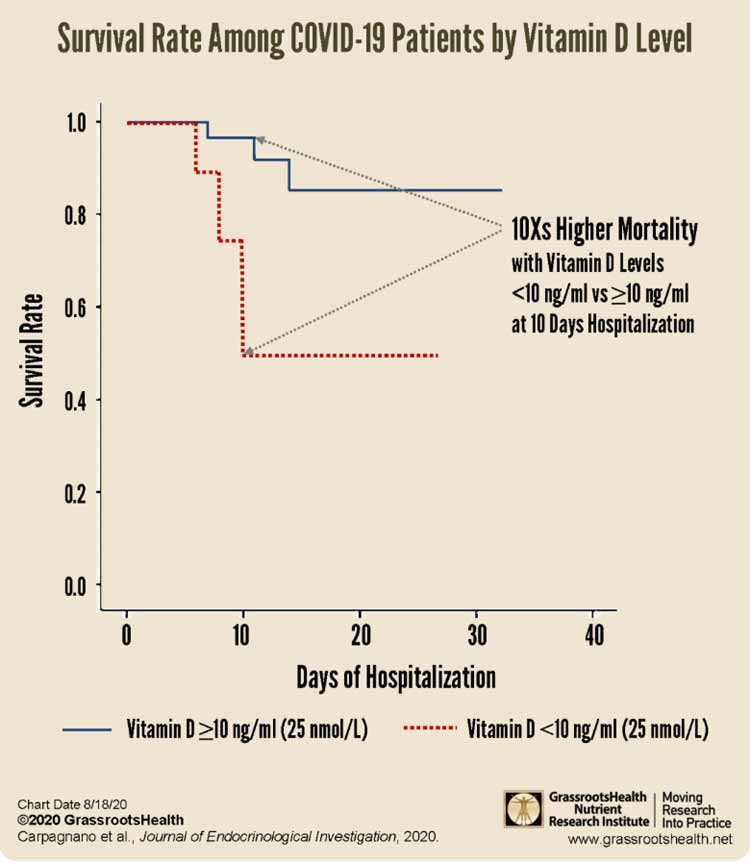
According to the study authors:
“Altogether, these considerations support the recommendation that people at risk of influenza and/or COVID-19 consider vitamin D supplementation to raise their 25(OH)D concentrations above 40-60 ng/mL, and that treatment of patients infected with influenza and/or COVID-19 includes higher vitamin D doses.”
How and Why Vitamin D Lowers COVID-19 Risks
In “Bradykinin Hypothesis Explains COVID-19 Complexities,” I reviewed how vitamin D lowers your risk of COVID-19 complications and death by inhibiting both cytokine22 and bradykinin storms.23 Vitamin D also:
| Lowers viral replication24 |
| Boosts your overall immune function by modulating both innate and adaptive immune responses |
| Reduces respiratory distress25 |
| Improves overall lung function |
| Helps produce surfactants in your lungs that aid in fluid clearance26 |
| Lowers your risk of comorbidities associated with poor COVID-19 prognosis, including obesity,27 Type 2 diabetes,28 high blood pressure29 and heart disease30 |
All of these factors make it an important component of COVID-19 prevention and treatment. As temperatures and humidity levels drop — two factors that influence the viability of SARS-CoV-2 in air and on surfaces — it’s quite likely we’ll see a reemergence as we move into fall and winter.
My #StopCOVIDCold campaign seeks to raise awareness about the importance of vitamin D optimization to prevent a resurgence of COVID-19 hospitalizations and deaths. The two reports, which you can download free of charge on the #StopCOVIDCold website, provide in-depth information about the biological mechanics behind vitamin D’s protective effects.
Now, as the northern hemisphere heads into autumn, is the ideal time to check your vitamin D level and start taking action to raise it if you’re below 40 ng/mL (100 nmol/L). Experts recommend a vitamin D level between 40 and 60 ng/ml (100 to 150 nmol/L). An easy and cost-effective way of measuring your vitamin D level is to order GrassrootsHealth’s vitamin D testing kit.
Once you know your current vitamin D level, use the GrassrootsHealth vitamin D calculator31 to determine how much vitamin D you might need to reach your target level.
To optimize vitamin D absorption and utilization, be sure to take your vitamin D with vitamin K2 and magnesium. As explained in “Magnesium and K2 Optimize Your Vitamin D Supplementation,” taking magnesium and vitamin K2 can lower your oral vitamin D requirement by as much as 244%.
Lastly, remember to retest in three to four months to make sure you’ve reached your target level. If you have, then you know you’re taking the correct dosage. If you’re still low (or have reached a level above 80 ng/mL), you’ll need to adjust your dosage accordingly and retest again in another three to four months.
- 1, 2, 4 PLOS ONE September 17, 2020 DOI: 10.1371/journal.pone.0239252
- 3, 5 PLOS ONE September 17, 2020 DOI: 10.1371/journal.pone.0239252, Abstract
- 6 Analysis of over 190,000 US COVID-19 test results shows positivity rate halved with vitamin D levels of 55 ng/ml or higher vs. less than 20 ng/ml
- 7, 10 The FEBS Journal July 2020; 287(17)
- 8, 9 GrassrootsHealth, Vitamin D level below 30 ng/mL an independent risk factor for COVID-19
- 11 The Journal of Steroid Biochemistry and Molecular Biology August 29, 2020 [Epub ahead of print]
- 12, 15, 16 Chrismasterjohnphd.com September 3, 2020
- 13 Medium September 4, 2020
- 14 GrassrootsHealth, Vitamin D treatment for COVID-19 patients nearly erased need for ICU admission
- 17 Nutrients 2020; 12(9): 2757
- 18 GrassrootsHealth, 15 fold higher risk of death due to COVID-19 with vitamin D below 12 ng/mL
- 19 Preprints with The Lancet July 14, 2020
- 20 GrassrootsHealth, Higher Vitamin D status associated with better clinical outcomes in patients hospitalized with COVID-19
- 21 GrassrootsHealth, Increased mortality rate among COVID-19 ARDS patients with severe vitamin D deficiency
- 22 NFS Journal 2020 Aug; 20: 10–21
- 23 eLife July 7, 2020; 9:e59177
- 24 Nutrients, 2020;12:988
- 25 Advances in Pharmacological Sciences 2018; 2018: 8494816
- 26 ATS Journals October 5, 2010; 183(10)
- 27 Medicina 2019 Sep; 55(9): 541
- 28 Diabetes.co.uk January 15, 2019
- 29 The Lancet Diabetes & Endocrinology September 1, 2014; 2(9): 682-684
- 30 Current Treatment Options in Cardiovascular Medicine 2012 Aug; 14(4): 414–424
- 31 GrassrootsHealth Vitamin D Calculator
Herd Immunity ‘Ahead of Schedule’
Reproduced from original article:
https://articles.mercola.com/sites/articles/archive/2020/09/08/herd-immunity-threshold-for-covid-19.aspx Analysis by Dr. Joseph Mercola Fact Checked September 08, 2020

STORY AT-A-GLANCE
- In the early days of the COVID-19 pandemic, some experts estimated that 70% of the population or more may need to gain immunity before COVID-19 would be under control
- Now, more than a dozen scientists said the herd immunity threshold (HIT) for COVID-19 is likely 50% or lower, with some experts saying it could be as low as 10% to 20%
- The initial calculations for COVID-19’s HIT were based on assumptions that everyone has the same susceptibility and would be mixing randomly with others in the community; when real-world scenarios are factored into the equation, the HIT drops significantly
- In Sweden, where strict lockdown measures were not implemented, it’s been suggested that herd immunity has “almost certainly” been achieved, and the covid-19 epidemic is essentially over
If a novel virus is introduced to a population, eventually enough people acquire natural immunity so that the number of susceptible people declines. When the number susceptible is low enough to prevent epidemic growth, herd immunity is said to have been reached.
In the early days of the COVID-19 pandemic, some experts estimated that 70% of the population or more may need to gain immunity before COVID-19 would be under control. Now, experts are suggesting the percentage may be far lower, and some areas may already have reached what’s known as the herd immunity threshold (HIT).
Scientists: COVID Herd Immunity Threshold Lower Than Thought
According to The New York Times, more than a dozen scientists said in interviews that the HIT for COVID-19 is likely 50% or lower. “If that’s true, then it may be possible to turn back the coronavirus more quickly than once thought,” the Times reported,1 and perhaps without the need for a vaccine.
Herd immunity is calculated using reproductive number, or R-naught (R0), which is the estimated number of new infections that may occur from one infected person.2 R0 of below 1 (with R1 meaning that one person who’s infected is expected to infect one other person) indicates that cases are declining while R0 above 1 suggests cases are on the rise.
It’s far from an exact science, however, as a person’s susceptibility to infection varies depending on many factors, including their health, age and contacts within a community. The initial R0 calculations for COVID-19’s HIT were based on assumptions that everyone has the same susceptibility and would be mixing randomly with others in the community.
“That doesn’t happen in real life,” Dr. Saad Omer, director of the Yale Institute for Global Health, told The Times. “Herd immunity could vary from group to group, and subpopulation to subpopulation,” or even zip code.3
When real-world scenarios are factored into the equation, the HIT drops significantly, with some experts saying it could be as low as 10% to 20%. In fact, as the Times suggested, it’s possible that herd immunity for the pandemic is “ahead of schedule.”4
Herd Immunity Threshold for COVID-19 Could Be Under 10%
Researchers from Oxford, Virginia Tech and the Liverpool School of Tropical Medicine5 are among those that found when individual variations in susceptibility and exposure are taken into account, the HIT declines to less than 10%.6
Independent news source Off-Guardian7 also cited data from Stockholm County, Sweden, that showed an HIT of 17%,8 as well as an essay by Brown University professor Dr. Andrew Bostom, who explained:9
“… [A] respected team of infectious disease epidemiologists from the U.K. and U.S. have concluded: ‘Naturally acquired immunity to SARS-CoV-2 may place populations over the herd immunity threshold once as few as 10-20% of its individuals are immune.’”
And, in an article he wrote for Conservative Review, Bostom said:10
“… Naturally acquired herd immunity to COVID-19 combined with earnest protection of the vulnerable elderly — especially nursing home and assisted living facility residents — is an eminently reasonable and practical alternative to the dubious panacea of mass compulsory vaccination against the virus.
This strategy was successfully implemented in Malmo, Sweden, which had few COVID-19 deaths by assiduously protecting its elder care homes, while ‘schools remained open, residents carried on drinking in bars and cafes, and the doors of hairdressers and gyms were open throughout.’”
The findings have implications for vaccination as well. Tom Britton, a mathematician at Stockholm University, told the Times that because viral infections naturally target the most susceptible during the first wave, “immunity following a wave of infection is distributed more efficiently than with a vaccination campaign that seeks to protect everyone.”11
It’s also suggested by Dr. Michael Mina, an immunologist at Harvard University, that, if herd immunity is obtained during “superspreader” events, vaccinating groups that are most likely to be exposed during such events may be sufficient to induce herd immunity, without the need for universal vaccination.12

Herd Immunity Likely in Some Regions
It’s likely that certain areas of the world have achieved herd immunity already, and all eyes are on the fall and winter to see whether or not COVID-19 reappears. “I’m quite prepared to believe that there are pockets in New York City and London which have substantial immunity,” Bill Hanage, an epidemiologist at the Harvard T.H. Chan School of Public Health, told the Times. “What happens this winter will reflect that.”13
Some data also suggest that up to 80% of people tested at clinics had COVID-19 antibodies, and while rates may be lower among the general population, it’s possible that herd immunity may already exist among certain populations. In a survey of random households in Mumbai, up to 58% of residents in poor areas had antibodies, compared to up to 17% in the rest of the city.14
What’s more, one study even found that 81% of people not exposed to SARS-CoV-2, the virus that causes COVID-19, were still able to mount an immune response against it, which “suggests at least some built-in immune protection from SARS-CoV-2 …”15
Sweden, a country that handled the pandemic differently than most of the globe, may also be close to reaching herd immunity. While high schools and universities closed and gatherings of more than 50 people were banned, elementary and middle schools, shops and restaurants have remained open during the pandemic,16 in contrast to many other countries, which instituted strict lockdowns.
Dr. Gilbert Berdine, an associate professor of medicine at Texas Tech University Health Sciences Center, used data on daily mortality rates for COVID-19 to track the course of the pandemic in Sweden, New York, Illinois and Texas, which each used different pandemic responses.
Sweden, which serves as the control group since it did not implement required lockdowns, hit a peak of 11.38 deaths per day per million population on April 8, 2020, and again on April 15, but deaths have declined since.
“Daily mortality has been less than one death per day per million population for the previous eighteen days. Cases are very low. For all practical purposes, the covid-19 epidemic is over in Sweden. Almost certainly herd immunity has been achieved in Sweden irrespective of any antibody test results,” Berdine wrote for the nonprofit think-tank Mises Institute.17
Lockdowns the ‘Greatest Policy Error of This Generation’
In New York City, the mortality rate from COVID-19 reached beyond 50 deaths per day per million in April 2020, despite a full lockdown being implemented in March. The state ordered nursing homes to accept COVID-19 positive patients from hospitals until May 10, when the order was reversed, but by then the virus was already ravaging nursing homes’ elderly residents — the most vulnerable.
“By facilitating the transmission of the virus from hospitals to nursing homes, the rate of spread within the elderly population was maximized, and any possible benefit from lockdown of the young and healthy population was rendered moot,” Berdine explained.18
In Illinois, meanwhile, a strict lockdown was also implemented and daily mortality rates increased more slowly, reaching a peak of more than 15 deaths per day per million on May 17, 2020.
However, mortality rates have also been slower to decline and death rates have remained higher than in other areas. While the lockdowns appear to have succeeded in flattening the curve and slowing transmission among healthy populations, they also may have lengthened the time that young people could transmit the virus to the elderly.
“The lockdown appears to have made more deaths from covid-19 in Illinois than would have occurred without it,” according to Berdine.19 “Almost certainly herd immunity has not been achieved and will not be achieved until the schools and economy are reopened.”
Texas fell somewhere in the middle, with a looser lockdown than Illinois and New York, although nonessential businesses were closed March 31 and schools were also closed. Daily mortality hit a peak of more than 10 deaths per day per million population on July 31, 2020 — approaching Sweden’s mortality peak while their economy has yet to be reopened. Berdine wrote:
“Although the overall covid-19 mortality is lower in Texas (293 deaths per million population) than in Sweden (570), the current daily mortality in Texas is much higher than in Sweden, so covid-19 mortality in Texas may catch up to Sweden over the next 30–60 days. Furthermore, the situation in Texas will likely get worse when the schools and economy are reopened, as they eventually must be.”20
It’s another example that Sweden appears to have gotten it right in their pandemic response, while other regions’ lockdowns may have backfired. At best, Berdine says, lockdowns may have only deferred death for a short time and, at worst, may have caused more deaths than would have occurred if people were left to choose how to manage their own risk.
“After taking the unprecedented economic depression into account, history will likely judge these lockdowns to be the greatest policy error of this generation,”21 she said.
When Will the Pandemic Be Over?
With herd immunity potentially progressing ahead of schedule, and some areas possibly already immune, when will the pandemic end? The World Health Organization has predicted within two years,22 but the dropping fatality rate is no longer a cause for hysteria.
Data show that the COVID-19 fatality rate for those under the age of 45 is “almost zero,” and between the ages of 45 and 70, it’s somewhere between 0.05% and 0.3%.23 Data from the CDC also shows a stark drop in COVID-19 deaths based on provisional death counts, which are based on death certificate data received and coded by the National Center for Health Statistics.24
The fact remains, however, that COVID-19 may never fully disappear. “Covid-19 is not going to be defeated; we will have to learn how to coexist with it,” Berdine said.25 “The only way we can learn how best to cope with covid-19 is to let individuals manage their own risk, observe the outcomes, and learn from mistakes.” Toward that end, take action now to bolster your immune system against infectious diseases of all kinds.
- 1, 3, 4, 11, 12, 13, 14 The New York Times August 17, 2020
- 2 The New York Times April 23, 2020
- 5, 7 Off-Guardian July 7, 2020
- 6 medRxiv May 21, 2020
- 8 medRxiv May 22, 2020
- 9 medRxiv May 21, 2020, Page 2
- 10 Conservative Review June 25, 2020
- 15 Research Square June 17, 2020
- 16 CBS News July 17, 2020
- 17, 18, 19, 20, 21, 25 Mises Institute August 15, 2020
- 22 BBC News August 21, 2020
- 23 Greek Reporter June 27, 2020
- 24 U.S. CDC, COVID-19 Death Data and Resources July 15, 2020