Tendons
now browsing by category
Revolutionizing Tendon Recovery
Reproduced from original article:
https://articles.mercola.com/sites/articles/archive/2026/11/15/tendon-injury-recovery-exercises.aspx
Analysis by Dr. Joseph Mercola November 15, 2026
Story at-a-glance
- Prolonged rest after a tendon injury can interfere with recovery because tendons need controlled mechanical stress to maintain their structure and rebuild damaged tissue
- Healthy tendon tissue often absorbs most of the force during movement, leaving weaker, injured areas without enough stimulation to repair themselves effectively
- Slow, sustained muscle contractions help distribute tension to damaged tendon tissue while reducing the sudden forces that aggravate injuries
- Researcher Keith Baar recommends gradually increasing tension over three to five seconds, holding for 30 seconds at 30% to 40% of maximum effort, then slowly releasing the contraction
- A gradual return to pain-free movement, followed by resistance training and adequate protein, including collagen-rich foods, may help restore tendon strength and prepare your body for everyday activities and exercise
You strain your elbow, develop pain below your kneecap or feel a nagging ache in your Achilles tendon. The standard advice is to rest the injured area, apply ice and avoid movements that hurt. If a tendon is damaged, giving it time to heal seems like the safest approach. For tendons, though, too much rest can slow recovery.
Tendons are the tough connective tissues that attach your muscles to your bones, allowing you to walk, lift, jump and perform everyday activities. When they become injured, you may experience pain, stiffness, tenderness or weakness that makes even simple movements uncomfortable.
Conventional treatment often emphasizes rest and immobilization, yet relieving discomfort and restoring the tendon’s normal function are two different goals. Proper rehabilitation may help keep tendon problems from lingering and limiting your mobility.
Researcher Keith Baar, Ph.D., has spent years investigating how tendons respond to physical stress and what helps damaged tissue recover. In an interview on The Gamma Seeker Broadcast with Brooke McPoyle, he challenges the assumption that protecting an injured tendon from movement is always the best way to promote healing.1 His research focuses on how the way you apply force to a tendon influences its structure, flexibility and ability to repair itself.
Whether you’re dealing with tennis elbow, Achilles pain or a nagging knee tendon, understanding how these tissues respond to movement could change your approach to rehabilitation. The surprising part is that the difference between helping a tendon heal and making an injury worse isn’t simply how much force you use. It’s also how you apply that force.
How Slow, Sustained Tension May Help Injured Tendons Rebuild
During the interview, Baar explained how his laboratory work has challenged conventional approaches to soft tissue rehabilitation. His work includes laboratory-engineered human ligaments and observations of how connective tissues behave under tension.
Rather than focus exclusively on how much weight a person lifts, he examines how quickly force develops, how long it lasts and how these factors influence the injured tissue. His findings suggest that the right type of movement may matter as much as the amount of exercise you perform.
- Healthy tissue can prevent injured areas from receiving enough force — Baar compares a damaged tendon to a weak thread beside a strong wire. When you pull on both, the stronger wire absorbs most of the tension, protecting the thread.Your tendons behave similarly. Healthy sections carry more force, while weaker, scarred areas remain protected. Researchers call this stress shielding. That protection comes at a cost. Tendon cells rebuild collagen in response to tension, so injured fibers that never feel a pull get no signal to repair.
- Slow contractions reduce sudden stress on damaged tissue — Baar focuses on a physics term called jerk, which describes how abruptly force ramps up. Easing gently onto a car’s brakes is low jerk. Slamming them is high jerk.Think about the sudden force your knee experiences when you land from a jump or the impact your elbow absorbs when a tennis racket strikes a ball. These abrupt changes place considerable stress on tendons. Baar’s approach reduces that stress by gradually increasing muscle tension rather than applying force all at once.
- A 30-second hold helps tension reach weakened areas — Baar recommends gradually increasing force over three to five seconds, maintaining the contraction for 30 seconds at approximately 30% to 40% of maximum effort, then slowly releasing it over another three to five seconds.This is called low-jerk isometric loading, meaning your muscles produce tension while the joint remains still. Tendons are viscoelastic, meaning they slowly give under a steady pull, much like taffy. Over a 30-second hold, the healthy fibers stretch slightly, and as they do, more of the load shifts onto the weaker fibers they had been shielding.
- Repeated contractions help move excess fluid out of tendons — Baar explains that sustained tension compresses the tendon and pushes fluid out of the tissue. When you release the contraction and repeat the movement, you create a pumping effect that helps reduce fluid buildup associated with inflammation.He describes two benefits of this approach: “I’m decreasing the negative component of inflammation,” while also allowing more tension to reach the injured area. This offers a possible mechanical explanation for how gentle exercise may support recovery beyond simple symptom relief.
- Gentle loading may begin earlier than conventional rehabilitation suggests, with professional guidance — Baar describes protocols that introduce controlled tension on the day of an injury or shortly afterward, including selected cases involving surgical repairs. He emphasizes that the exercise requires relatively little force and uses pain as a guide. Sharp discomfort signals that the load is too high.However, early loading requires professional guidance, especially after surgery or a serious injury. Baar also explains that these contractions are only the first stage of rehabilitation. Once full, pain-free movement returns, patients progress toward more demanding exercises.
- Regular loading helps tendons maintain the flexibility needed for movement — Baar’s laboratory experiments showed that when muscle activity stopped, the tendon region closest to the muscle became stiffer, resembling the less flexible portion near the bone. That gradual shift from flexible to stiff works like a shock absorber, spreading force smoothly from muscle to bone.When the gradient flattens, force transfers more abruptly, which may concentrate stress where the tendon meets the muscle.Baar’s findings suggest that regular contractions help preserve the gradual transition from flexible to stiff tissue, allowing force to travel more smoothly between muscle and bone. This reinforces the value of maintaining regular physical activity after recovery. The goal extends beyond relieving pain to restoring the tissue’s ability to handle the physical demands of everyday life.
How to Restore Tendon Strength and Support Recovery
If you’re dealing with tendon pain or recovering from an injury, the goal is to restore the tissue’s ability to handle force without causing further damage. Your tendons need the right amount of mechanical stress to maintain their structure and rebuild weakened areas. I recommend a gradual approach that starts with gentle, controlled contractions and progresses toward normal movement as your strength and comfort improve.
- Start with gentle, pain-free loading — If you have a tendon injury, the first step is to determine how much tension the affected area tolerates without pain. For a mild tendon problem, gentle muscle contractions provide a way to begin restoring function while limiting sudden stress on the damaged tissue.I recommend starting with a comfortable level of effort and paying close attention to how the injured area responds. Your goal is to create steady tension without pain. If you experience pain, reduce the force or stop the exercise. If you’ve experienced a sudden injury, heard a pop or lost the ability to bear weight or move normally, seek prompt medical assessment before attempting rehabilitation. A complete rupture requires a different approach from a mild tendon injury.
- Use slow, sustained contractions to rebuild tendon strength — Once you’ve established that gentle loading is appropriate for your injury, use the low-jerk isometric method Baar describes. An isometric exercise involves contracting your muscles without moving the affected joint.Gradually increase tension over three to five seconds until you reach approximately 30% to 40% of your maximum effort. On a scale of 1 to 10, aim for about a 3 or 4. That should be firm enough to feel the muscle working, yet easy enough to hold steady and breathe normally for the full 30 seconds. Hold that position for 30 seconds, then slowly release the tension over another three to five seconds. Keep the contraction pain-free throughout.For Achilles pain, stand with the ball of your foot on a step and rise slightly onto your toes, then hold that position. For tennis elbow, rest your forearm on a table, palm down, and press the back of your hand up against your other hand without letting the wrist move. For pain below the kneecap, a shallow wall sit loads the patellar tendon without bending or straightening the knee.
I recommend focusing on smooth, deliberate movements rather than how hard you push. The goal is to expose your tendon to sustained tension without abrupt changes in force. The specific exercise and number of repetitions need to match the injured tendon and your stage of recovery.
- Restore your full range of motion before increasing intensity — As your tendon improves, focus on regaining comfortable movement through the affected joint’s normal range of motion. If you’re recovering from an ankle injury, for example, pay attention to how comfortably you move your foot and ankle during everyday activities.Treat pain-free movement as your first milestone before progressing to more demanding exercises. Once you regain full, comfortable motion, gradually introduce exercises that move the joint through its normal range while applying resistance.Increase the challenge as your tendon tolerates the additional work. Track your progress through simple activities, such as walking, climbing stairs or lifting everyday objects. These give you practical ways to measure whether your recovery is translating into better function.
- Build tendon resilience with regular strength training — Once your injury has healed enough for normal exercise, I recommend resistance training twice weekly to help maintain muscle strength and expose your tendons to regular, controlled loads. Focus on movements that strengthen your legs, hips, back, chest and arms, using body weight, resistance bands or weights.Begin with exercises you perform comfortably and gradually increase resistance as your strength improves. Keep your movements smooth and controlled, especially during the early stages of your return to exercise.If heavier weights are uncomfortable, consider blood flow restriction (BFR) training, including KAATSU. This technique uses specialized cuffs to partially restrict blood flow during light-resistance exercise. A 2023 narrative review reports that BFR has been shown to increase muscle strength and size, in healthy people and in musculoskeletal rehabilitation, using much lighter loads.2
It may be especially useful when you’re rebuilding muscle strength but aren’t ready for heavier loads. Use appropriately calibrated equipment and individualized pressure settings, since BFR isn’t suitable for everyone, particularly those with blood-clotting or certain vascular conditions. Check with your healthcare provider before you start BFR training.
If you’re an athlete who runs, jumps or changes direction quickly, you’ll eventually need to prepare your tendons for those demands as well. Progress from slow resistance exercises toward faster, more demanding movements only after you’ve restored strength and comfortable movement. This gradual progression helps prepare your tendons for the activities you enjoy.
- Support tissue repair with adequate nutrition and consistent movement — Your tendons rely on collagen, a structural protein that gives connective tissue much of its strength. I recommend consuming about 0.8 grams of protein per pound of ideal body weight (1.76 grams per kilogram), with one-third coming from collagen-rich sources like slow-cooked meats or bone broth.Include enough carbohydrates to support your energy needs. For most adults, I recommend 250 grams daily, with more if you’re highly active. Combine adequate nutrition with regular walking and strength training as your recovery progresses. Your goal is to give your body the nutrients and mechanical stimulation it needs to maintain healthy connective tissue.Focus on consistency rather than rapid increases in exercise intensity, and use improvements in everyday movement as your measure of progress.
FAQs About Tendon Recovery
Q: Is complete rest the best treatment for an injured tendon?
A: Prolonged inactivity reduces the mechanical stimulation tendons need to maintain their structure. For many mild tendon injuries, gentle, controlled exercise may help restore function. Serious injuries, including complete ruptures, require a different rehabilitation approach.
Q: How might slow isometric exercises help injured tendons heal?
A: In Baar’s model, slow, sustained muscle contractions allow tension to reach weakened portions of a tendon that stronger tissue otherwise protects. This may provide mechanical signals that support tissue remodeling. The contractions also help move excess fluid out of the tendon, according to Baar.
Q: How long do I hold an isometric contraction for tendon recovery?
A: Baar recommends gradually increasing tension over three to five seconds, holding the contraction for 30 seconds at approximately 30% to 40% of maximum effort, then slowly releasing it over another three to five seconds. The exercise needs to remain pain-free, with intensity adjusted to the injury.
Q: When is it safe to return to regular exercise after a tendon injury?
A: A useful first milestone is regaining your full range of motion without pain. From there, gradually rebuild strength through controlled resistance exercises before returning to running, jumping or other high-impact activities. Progress depends on the severity of your injury and how well your tendon tolerates increased loading.
Q: What helps strengthen tendons and may lower your risk of future injuries?
A: Regular resistance training, adequate protein and gradual increases in exercise intensity support tendon health. Collagen-rich foods provide building blocks for connective tissue, while consistent movement helps tendons maintain their flexibility. BFR training, including KAATSU, also offers a lighter-load option for rebuilding muscle strength during rehabilitation, although it doesn’t replace progressive tendon loading.
This article is for informational purposes only and does not constitute medical advice. Consult a qualified healthcare provider before making changes to your health regimen.
– Sources and References
It’s Weird, but Tendon Training Could Give You Jaw-Dropping Strength
Reproduced from original article:
https://articles.mercola.com/sites/articles/archive/2026/11/08/tendon-strengthening-exercises.aspx
Analysis by Dr. Joseph Mercola November 08, 2026
Story at-a-glance
- Your tendons transfer force from your muscles to your bones, helping you lift, grip and move with strength and control, even without large muscles
- Tendons adapt more slowly than muscles, so increasing exercise intensity too quickly puts extra strain on tissues that aren’t yet prepared for heavier loads
- Five training methods — isometric holds, slow resistance exercises, end-range holds, controlled lowering movements and quick hops — challenge your tendons in different ways, which may help improve strength and physical performance
- Simple isometric exercises, such as supported squats, lunges and push-up holds, may help older adults and beginners develop strength without heavy weights and with less of the muscle soreness associated with more demanding workouts
- Training your tendons three times weekly, with rest days between sessions and gradual increases in difficulty, is one practical schedule for steady progress over several months
Picture two people carrying the same heavy piece of furniture. One has noticeably larger muscles, yet the other handles the weight with greater ease and control. Muscle size alone doesn’t explain the difference. Your ability to lift, grip and move with strength also depends on how well your nervous system coordinates your muscles and how efficiently your connective tissues transfer force to your bones.
Those tissues are your tendons, and they deserve more attention than they typically receive in conventional strength training. Your muscles and tendons don’t strengthen on the same schedule, and that mismatch may matter more as you age. I believe tendon strength is one of the most overlooked foundations of a strong, resilient body. Training it directly requires surprisingly little equipment, and the potential payoff is better control in the movements you rely on every day.
Five Tendon Training Methods Build Functional Strength
An October 2026 YouTube video from fitness content creator Mr. White, featured above, describes five exercise methods designed to improve tendon strength, joint control and the ability to produce force.1 The video emphasizes that effective tendon training requires different types of mechanical stress, from sustained holds to rapid, spring-like movements. It also provides a three-day weekly routine and simple ways to measure progress.
The recommendations are based on exercise physiology principles rather than results from a controlled clinical trial. Each method challenges your tendons differently, which may help you to develop strength across a range of movements instead of focusing exclusively on heavier weights.
- Heavy isometric holds create sustained tension without movement — One example uses a thick towel placed beneath both feet. Grip the ends, bend your knees and hips as though preparing for a deadlift, then pull upward without moving.The video recommends approximately 70% to 80% of your maximum effort for 30 to 45 seconds, followed by two minutes of rest, for four to five sets. In practice, that means pulling hard enough that the hold feels challenging but sustainable, with your form staying steady through the final seconds. As the narrator explains, “Here, consistent force beats peak force.” Changing your knee and hip positions also changes which tissues bear the load.
- Slow resistance exercises challenge tendons throughout each repetition — The video recommends taking three seconds to lower a weight and another three seconds to lift it, completing six to eight repetitions for three to four sets. Slow push-ups, rows and split squats are examples.This controlled pace reduces reliance on momentum and keeps the muscles and tendons under tension throughout the movement. Once you complete eight repetitions per set with proper form, increase the resistance slightly and return to six repetitions.
- End-range holds, which load a joint near the limit of its range of motion, help develop grip endurance and upper-body control — Hanging from a pull-up bar challenges your hands, forearms and shoulders while your body remains suspended. The video recommends accumulating two minutes of hanging time, beginning with four 30-second holds if necessary.As your strength improves, progress toward three 60-second holds. An active hang, in which you pull your shoulder blades downward without bending your elbows, adds shoulder control. More advanced variations include towel hangs and assisted one-arm hangs.
- Controlled lowering exercises load tendons heavily as muscles lengthen — Eccentric contractions occur when a muscle lengthens while resisting force, such as when you lower yourself from a pull-up. For calf raises, the video recommends rising onto both feet, shifting your weight onto one leg and lowering your heel over four seconds.The suggested routine is three sets of 12 to 15 repetitions per leg. Because these exercises can cause considerable muscle soreness when they’re unfamiliar, the narrator recommends reducing the number of sets during the first few weeks.
- Short, quick hops train tendons to release stored energy — During a hop, your Achilles tendon stretches as your foot contacts the ground, then releases some of that stored energy to help propel you upward. This is called the stretch-shortening cycle. It works much like a pogo stick: The spring compresses on landing, then releases that stored energy to send you back up.The video recommends beginning with two sets of 20 light, two-legged hops after at least four weeks of preparatory training. As your control improves, progress to forward-and-backward hops, sideways hops and eventually single-leg hops. Treat four weeks as a minimum rather than a deadline, since readiness varies from person to person.
- A three-day routine makes progress easier to measure — The video recommends three weekly sessions lasting approximately 20 to 30 minutes each, with at least one rest day between sessions. Day one combines towel holds with slow leg and pulling exercises.Day two focuses on hanging, dip support holds (supporting your body weight on straight arms using stable parallel bars or a securely anchored dip station) and controlled pull-up descents. Day three combines isometric holds, eccentric calf raises and, once you’re prepared, short hops.Every four weeks, record your maximum hanging time, controlled single-leg calf raises and how your joints feel during the heavy exercise that bothers them most. The narrator’s advice is simple: “Think in months, not weeks.”
Simple Isometric Exercises Build Strength Without Heavy Weights
If towel deadlifts and bar hangs sound like a big leap from where you are now, a researcher who studies tendons for a living offers a gentler entry point. In a video from the University of California, Davis (UC Davis) Health, Keith Baar, Ph.D., professor of molecular exercise physiology at UC Davis, demonstrates three exercises designed to strengthen muscles and tendons without expensive equipment.2 His approach focuses on people who are older, have metabolic conditions or are beginning an exercise program.
Baar recommends exercises that prepare the body for greater physical challenges. One advantage is reduced muscle soreness. Baar explains that older adults and people with metabolic conditions often experience more muscle damage from demanding exercise than younger adults. Static exercises offer a gentler starting point while still challenging the tissues responsible for strength.
As Baar explains, “We get almost a similar strength gain from when we just do light weights, but we hold them for longer periods of time.”
- Holding a position makes your muscles work progressively harder — Baar explains that when you maintain a fixed position, your tendons gradually relax under tension. Your muscles must continue contracting to maintain that position, which helps explain why a simple hold becomes harder after several seconds.In his words, “That’s why our muscles start to burn and we get this feeling that we’re working really hard, even though all we’re doing is staying in the same position.” This gives you a way to challenge your strength without completing repeated movements.
- An assisted lunge targets the tendons around your knees — Begin with one foot forward and the other behind you, then lower your body until your front knee bends to approximately 90 degrees. Hold a sturdy chair for support.Baar recommends maintaining this position for at least 10 seconds initially, then progressing toward 30 seconds. The exercise places tension on the patellar tendon, located below your kneecap, and the quadriceps tendon, located above it. Moving your front knee farther forward increases the demand on your Achilles tendon near your heel.As your strength improves, reduce your reliance on the chair. Progress from two hands to one hand, then eventually hold the position without assistance. This gives you a clear way to measure improvement without adding weights.
- A supported squat challenges your legs while allowing you to control the difficulty — Stand with your feet approximately shoulder-width apart and your toes turned slightly outward. Hold a chair, bend your knees and lower your hips as though preparing to sit. Allow your knees to move slightly beyond your toes while maintaining a comfortable position. Baar recommends beginning with a 10-second hold and gradually extending the duration as your strength improves.You can adjust the difficulty by changing how deeply you squat and how much support you use. Once you’re ready, rely on one hand for balance, then gradually work toward an unsupported hold. Rise slowly when you finish.
- An elevated push-up hold challenges your upper body without repeated push-ups — Place your hands against a sturdy chair, table or another secure surface. Lower your chest toward the surface and hold the position with your elbows bent. This challenges the muscles and tendons around your chest, shoulders and elbows. A higher surface makes the exercise easier, while a lower surface increases the demand.Baar explains that even someone capable of performing numerous regular push-ups can benefit from a 10-second static hold. As your strength improves, gradually lower the surface until you’re ready to perform the exercise closer to the floor.
- Short holds with lighter loads were linked to strength gains in climbers, according to Baar — Baar describes research involving rock climbers who performed 10-second hanging exercises using approximately 40% of their body weight. He reports that their strength improvements were comparable to those achieved with heavier loads. “The weight didn’t actually change how much strength improved,” he explains.This matters if heavy lifting isn’t practical for you. It suggests that sustained tension deserves attention alongside the amount of weight you lift. However, Baar doesn’t provide the study’s participant numbers or detailed methods in the video, so the finding can’t establish that lighter loads work equally well for every exercise or person.
- A 30-second hold may temporarily ease joint discomfort — Baar describes an analgesic effect, meaning a reduction in pain, from sustained isometric contractions. He states that holding an exercise position for 30 seconds can reduce discomfort around the affected joint for approximately two to three hours.This offers another reason to consider carefully selected static exercises when joint discomfort limits activity. However, Baar’s statement doesn’t establish that everyone will experience the same relief, and reduced pain doesn’t mean an injured tendon has healed. If you’re recovering from an injury, a physical therapist can help determine which positions and loads are appropriate.
How to Build Stronger Tendons and Improve Your Strength
A sound approach to strengthening your tendons is to give them the right amount of tension, increase that tension gradually and allow enough time for recovery. Your muscles often become stronger faster than your tendons, so I recommend focusing on controlled, consistent exercise rather than rushing to lift heavier weights. Whether you’re new to exercise, returning after a long break or already strength training, these five steps can help you build a stronger foundation.
Where you begin depends on your current fitness. If you’re new to exercise or rebuilding after time off, spend your first several weeks on the static holds in Steps 1 and 3 before adding the moving exercises in Step 2. If you already strength train, you can move through Steps 1 to 3 quickly and put more of your effort into Step 4. Step 5 applies to everyone.
- Start with supported isometric exercises to build your foundation — If you’re a beginner or an older adult, start with exercises that challenge your muscles and tendons without requiring repeated joint movements. These allow you to build strength while controlling how much weight your body supports.Begin with an assisted squat. Stand with your feet shoulder-width apart, hold a sturdy chair and lower your hips into a comfortable squat. Hold for 10 seconds, then slowly stand. You can also try a supported lunge, with one foot forward and your back knee lowered toward the floor. As your strength improves, extend your holds toward 30 seconds and gradually reduce your reliance on the chair. Your first goal is simple: Complete each hold with good control before increasing the difficulty.
- Use slow resistance exercises to strengthen your tendons throughout each movement — Once you’re comfortable with static holds, add controlled resistance exercises that challenge your muscles and tendons as your joints move. Begin with body-weight exercises, such as push-ups against a sturdy counter, split squats or rows.Take three seconds to lower yourself and another three seconds to return to the starting position. Aim for six to eight repetitions per set, with two to three minutes of rest between sets.Start with a manageable number of sets and work toward three or four. Pay attention to your final repetition. If you lose control of the movement or start rushing, reduce the difficulty. When you complete eight repetitions with consistent form across every set, increase the resistance slightly. Small, steady increases give your tendons time to catch up with your muscles.
- Strengthen your grip and upper body with controlled holds — Your hands, wrists, elbows and shoulders all play a role in lifting, carrying and supporting your body weight. Try adding a simple upper-body hold that matches your current strength. If hanging from a pull-up bar is too demanding, begin with an elevated push-up hold.Place your hands against a sturdy counter, lower your chest slightly and hold for approximately 10 seconds. As you become stronger, progress toward a lower surface.If you already have adequate grip and shoulder strength, try a dead hang from a secure pull-up bar. Begin with short holds and gradually work toward two minutes of total hanging time across several sets. Keep a record of how long you hold each position. Even a few extra seconds provide a useful measure of progress.
- Introduce controlled lowering exercises before faster movements — Your tendons need to tolerate force as your muscles lengthen, especially during activities such as descending stairs or lowering a heavy object. Slow lowering exercises may help develop this ability.A simple place to start is with calf raises. Stand on a stable surface, rise onto your toes using both feet, then shift your weight onto one leg and slowly lower your heel over four seconds. Use a chair or railing for balance. Begin with fewer repetitions and gradually work toward three sets of 12 to 15 per leg.Once you’ve developed a foundation of strength and control, consider light, two-legged hops to challenge your tendons’ spring-like action. Your readiness depends on your strength, balance and comfort. Start with two sets of 20 light contacts, emphasizing quiet landings and brief contact with the ground.
- Give your tendons time to recover and track your progress — Organize your tendon exercises into three weekly sessions, with at least one rest day between them. Build each session up to about 20 to 30 minutes rather than fitting every exercise into one workout.Recovery is part of the process. Your tendons need time between demanding sessions to respond to the stress of exercise. Support that process with adequate sleep, sufficient whole foods and consistent training rather than repeated maximum-effort workouts.Every four weeks, choose two or three simple measurements, such as how long you hold a supported squat, how many controlled calf raises you complete or how long you hang from a bar. Write down your results and compare them with your previous scores.Focus on steady improvements over several months. If you experience persistent tendon pain, swelling or discomfort at rest, reduce the load and arrange an assessment with a qualified healthcare provider or physical therapist before returning to demanding exercises.
FAQs About Tendon Training
Q: Why is tendon strength important for physical performance?
A: Tendons transfer the force produced by your muscles to your bones. Strong, well-conditioned tendons support efficient movement, joint stability and the ability to handle physical demands. Muscle size alone doesn’t determine how much usable strength you have.
Q: What are the best exercises for strengthening tendons?
A: Isometric holds, slow resistance exercises, controlled lowering movements and supported body-weight exercises all challenge tendons. Once you’ve developed adequate strength and control, light hopping exercises help train their ability to store and release energy during quick movements.
Q: Is tendon training safe for older adults and beginners?
A: Supported isometric exercises offer an accessible starting point because they place tension on muscles and tendons without repeated joint movement. Chair-assisted squats, lunges and elevated push-up holds let you adjust the difficulty according to your current strength and mobility. If you have a joint condition, a past tendon injury or persistent pain, check with a qualified healthcare provider before starting a new exercise program.
Q: How long does it take to strengthen my tendons?
A: Tendons generally adapt more slowly than muscles, so meaningful changes require consistent training over several months. Gradually increase exercise difficulty, allow recovery between demanding sessions and assess your progress every four weeks rather than expecting rapid results.
Q: Do I need heavy weights to build stronger tendons?
A: Sustained holds and controlled body-weight exercises provide a useful training stimulus without heavy equipment. Baar describes research in which climbers achieved comparable strength improvements with lighter and heavier loads during specific hanging exercises. The amount of tension, duration of each hold and gradual progression all influence your results.
This article is for informational purposes only and does not constitute medical advice. Consult a qualified healthcare provider before making changes to your health regimen.
Achilles Tendon Injuries Are Rising Among Athletes
Reproduced from original article:
https://articles.mercola.com/sites/articles/archive/2026/01/14/rising-achilles-tendon-injuries.aspx
Analysis by Dr. Joseph Mercola January 14, 2026

Story at-a-glance
- The Achilles tendon, the body’s longest and strongest connective tissue, links your calf muscles to the heel. It supports walking and jumping, withstands extreme loads, yet faces rising injury rates across populations
- National U.S. data from 2001 to 2020 show Achilles ruptures are the most common tendon injury, increasing about 3% annually, with higher risk in men and Black patients
- Research indicates Achilles ruptures develop from long-term overload and silent degeneration, worsened by sudden training changes, poor foot mechanics, limited recovery, and metabolic conditions like obesity and insulin resistance
- Certain medications, especially fluoroquinolone antibiotics and corticosteroids, directly weaken tendon collagen, sharply increasing rupture risk soon after use, particularly with higher or repeated doses
- Prevention focuses on gradual training progression, adequate rest, supportive footwear, metabolic health, and sufficient collagen intake from sources like bone broth to strengthen tendon structure before pain appears
The Achilles tendon is one of the most important connective tissues in your feet. Moreover, it’s the longest and strongest tendon in your entire body, connecting your calf muscles to the heel bone. In fact, it can withstand up to four times your body weight and allows plantar flexion of your feet — an essential movement allowing you to walk, run, and jump.1
However, experts are now noticing an uptick in Achilles tendon injuries from all walks of life. In a report from CNN, it’s not just professional athletes who are getting this injury. High-profile actors and ordinary people exercising at the gym have also torn their Achilles tendon.2 Numerous factors have been implicated in this issue, and a 2025 study shows that everyone, including you, could be at risk.
Data Confirms Achilles Ruptures Are Accelerating
A study published in The Orthopaedic Journal of Sports Medicine mapped out the rising rates in Achilles tendon ruptures in America. For the analysis, the researchers combed through data from 2001 through 2020. Specifically, they used the National Electronic Injury Surveillance System, a large federal database designed to track injury-related emergency visits across a representative sample of U.S. hospitals. This approach allowed the authors to estimate national trends rather than isolated regional snapshots.3
• The current state of Achilles tendon injuries — Across the study period, 235,189 emergency department visits for acute primary tendon ruptures were recorded. Among all tendon injuries, Achilles tendon ruptures stood out as the most common, accounting for 38.2% of cases. Other injuries included the biceps brachii (16.2%) and patellar tendon (12.7%).
• There is a clear, upward trend — The researchers calculated an average annual increase of about 3% in tendon rupture incidence over the 20-year analysis. Interestingly, that rise did not flatten out or reverse toward the end — it continued.
• A breakdown of risk by sex — Men experienced Achilles tendon ruptures at far higher rates than women, with an incidence rate of 2.46 per 100,000 person-years for men compared with just 0.48 for women. That translates to a male-to-female incidence rate ratio of roughly 5 to 1.
• Race-based differences — Black patients showed the highest overall incidence rate of tendon ruptures, at 4.78 per 100,000 person-years, compared with lower rates in White and other racial groups. The study did not specify an explanation for this gap, but it highlighted that tendon rupture risk does not distribute evenly across the population.
• Everyone could be at risk — A steadily rising injury rate over 20 years points to systemic drivers rather than isolated accidents. This means lifestyle changes, occupational demands, recreational exercise trends, and broader health factors likely shape tendon strength long before the rupture occurs. If you wait until pain forces you into an emergency room, the problem has already progressed too far.
The researchers also emphasized that the records were acute primary ruptures, not repeat injuries or complications from prior tears. That distinction matters because it shows the increase in injury rates does not come from poor recovery alone — it reflects a growing vulnerability in the population.
Mapping the Drivers Behind Achilles Rupture Risk
In a study published in the Journal of Orthopaedic Translation, researchers set out to identify why Achilles tendon ruptures continue to rise despite better awareness, training tools, and medical care. The researchers reviewed clinical evidence on rupture risk factors and prevention strategies, with a specific focus on how modern lifestyles affect tendon health.4
The paper focused on adults with Achilles tendon injuries across both athletic and non-athletic populations, reflecting real-world conditions rather than elite performers alone. The researchers also emphasized that ruptures increasingly affect people who exercise recreationally, work physically demanding jobs, or have metabolic disorders.
After analysis was complete, they noted that an Achilles tendon rupture is not a random event — it is the result of repeated tissue overload combined with biological weakening that goes unnoticed until failure occurs.
• Risk builds up long before pain appears — The researchers explained that many people develop silent tendon degeneration over time, meaning the tissue structure slowly weakens without obvious symptoms. This condition leaves the tendon vulnerable to sudden rupture during routine activity.
• Sudden changes in training patterns increase risk — Abrupt changes in physical load are a major driver of rupture risk. For example, sudden increases in running volume, intensity, or explosive movement place stress on the tendon fibers faster than they can repair.
• Foot and ankle mechanics also play a role — The authors described how abnormal foot alignment, limited ankle mobility, and poor force distribution increase localized strain within the Achilles tendon. Over time, this uneven stress degrades the collagen fibers.
• Metabolic health emerged as another overlooked factor — Conditions such as obesity, insulin resistance, and chronic inflammation impair tendon repair. Just like every other process in your body, the tendons also rely on steady nutrient delivery and efficient cellular repair. When those processes slow down, microscopic damage accumulates faster than your body fixes it.
• Drugs also weaken tendons — Certain drugs interfere with tendon cell function and collagen maintenance, making the tissue more fragile under normal loads. While the study didn’t go into detail about the mechanisms, it listed the following drugs as modifiable risk factors:
◦ Fluoroquinolones
◦ Antimicrobial drugs
◦ Statins
◦ Corticosteroids
◦ Aromatase inhibitors
◦ Anabolic steroids
◦ Isotretinoin
◦ Renin-angiotensin system drugs
◦ Thiazide diuretics and calcium channel blockers
• A comparison of compared modifiable and non-modifiable risk factors — Age, sex, and genetic structure fall outside your control, but training design, recovery time, metabolic support, and mechanical alignment do not. The review stressed that focusing only on unchangeable factors leads to missed prevention opportunities. In other words, the risk of injuring your Achilles tendon is something you can influence through choices, not chance or plain bad luck.
• The paper discussed why prevention often fails — Many people rely on pain as a warning sign, yet tendon degeneration progresses quietly. By the time discomfort appears, structural damage already exists.
• How tendon breakdown occurs at the microscopic scale — Collagen fibers lose organization, and enzymes that degrade connective tissue increase in activity. At the same time, oxidative stress rises inside tendon cells, reducing their ability to maintain strong fibers.
• Another mechanism involves blood supply — The Achilles tendon has limited circulation compared to muscle, which slows healing. When combined with metabolic strain or medication effects, this low blood flow leaves the tendon vulnerable. The researchers describe the process below:5
“[T]he middle Achilles tendon part is the least supplied with blood, relying on capillaries in the surrounding connective tissue for reperfusion. Under increased load, these areas are more prone to hypoxia and metabolic disturbances, leading to dystrophic changes.
Poorly supplied tendon parts exhibit higher temperature regimes, which increase the elastic component and significantly reduce tendon fiber strength.”

Save This Article for Later – Get the PDF Now
Could Taking Antibiotics Weaken Your Achilles Tendon?
As mentioned earlier, drugs are a factor in deteriorating tendon health. Now, a study published in the Journal of Sport and Health Science followed this angle, specifically investigating whether commonly prescribed oral fluoroquinolone antibiotics raised the risk of Achilles tendon injury compared with another widely used antibiotic, amoxicillin.6
The research team used a nationwide Danish health registry data in a nested case-control design, which means they compared people who experienced Achilles tendon lesions or ruptures with carefully matched individuals who did not. The goal was straightforward — determine how strong the association is, how quickly the risk appears after exposure, and whether dose matters.
• Risk quickly rises — Within the first 60 days after fluoroquinolone use, the risk was 3.6 times higher in the two months after taking the drug compared to amoxicillin. Even at 90 days, the risk remained high at 2.74, and in one year it stayed elevated at 1.49.
• The impact of dosage — The researchers measured cumulative defined daily doses, which reflects how much of the antibiotic a person consumed over time. Individuals who accumulated more than 10 defined daily doses had a significantly higher risk of Achilles tendon injury than those with lower exposure. This means that longer or repeated courses raise risk more than a short exposure, especially if prescriptions stack up over time.
• What happens when other medications enter the picture — People who experienced Achilles injuries more often have recent exposure to oral glucocorticoids compared with controls. Specifically, about 6% of cases had used glucocorticoids versus 2% of controls. Thus, if you’re an athlete taking both antibiotics and steroids within a short window, your Achilles tendon faces further increased risk.
• How fluoroquinolones affect tendon tissue directly — These drugs interfere with collagen synthesis, meaning they disrupt the process by which tendon cells maintain and repair their structural fibers. Collagen acts like tightly woven rope strands and when these weaken, the tendon loses tensile strength.
• Beware of antibiotics on your connective tissues — By quantifying how strongly and how quickly fluoroquinolones raise Achilles tendon rupture risk, this research adds a critical piece to the larger picture. It shows that modern injury patterns do not stem only from movement or training habits. Sometimes, the trigger comes from a prescription, quietly weakening tissue until the tendon reaches its breaking point.
Some Tips to Protect Your Achilles Tendon
Going back to the CNN report, it’s noted that everyone who is 35 to 50 years old can tear their Achilles tendon. However, there are several things you can do to lower the risk:7
• Get enough rest — After a strenuous game or exercise session, give your body enough time to recover, especially if you’ve been using your legs a lot.8 This tactic allows your tissues to adapt and preventing overuse injuries.9
• Gradually increase intensity — Slowly ramping up exercise intensity, coupled with proper rest, helps lower the risk of injuries.10
• Buy good shoes — Many people overlook the importance of proper footwear when it comes to preventing injuries. According to a study published in the Clinical Journal of Sport Medicine, high-top shoes can significantly reduce tension in the Achilles tendon compared to low-top shoes.11
In another study, shoes biased to forefoot landing was found to improve Achilles tendon loading, “and may be useful for progressing loading prior to introducing more advanced movements.”12
• Reduce vegetable oil consumption — As noted earlier, metabolic disorders have been identified as a risk factor, which is likely influenced by a diet high in linoleic acid (LA).
LA affects your overall metabolic health and ability to produce healthy cellular energy. That said, keep your intake to below 2 grams per day from all sources, such as soybean, cotton, and safflower oil. In addition, avoid ultraprocessed foods, as these also contain LA. Next, add in healthy fat sources, such as coconut oil and grass fed tallow or ghee.
To help monitor your intake, sign up for the upcoming Mercola Health Coach app. It contains the Seed Oil Sleuth, which helps monitor your LA intake to a tenth of a gram.
Support Your Achilles Tendon with Collagen
Collagen is the main structural protein found in your skin, tendons, and bones, as well as playing a crucial role in many bodily functions.13 Thus, proper collagen intake is essential to keeping your Achilles tendon strong and flexible, especially if you’re a high-level athlete or fitness enthusiast.
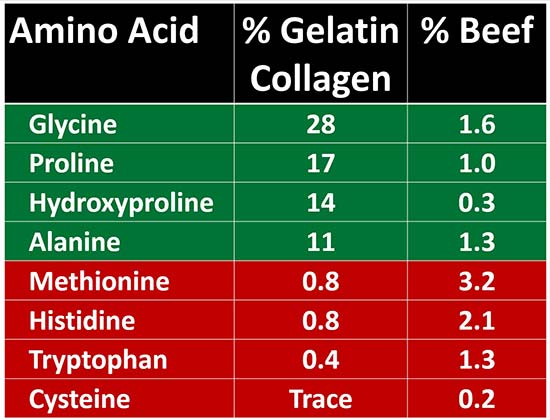
• A primer on collagen sources — For your body to produce collagen, your body will need the right amino acids from animal parts that have them. That’s because red meat alone won’t give your body the amino acids (highlighted in green below). In addition, a high intake of amino acids from red meat (highlighted in red below) can promote inflammation, as well as suppress thyroid function and metabolism.14
• Ideal collagen intake — I recommend that a third of your overall daily protein intake comes from collagen sources, as 30% of your body is comprised of this protein.
• Best source of collagen — For your body to make enough collagen, I recommend making your own bone broth using organic, grass fed animal bones. Gelatinous cuts of meat also work, and you can use slow-cooking or pressure-cooking to make them easier to eat. To learn how to make your own bone broth, read “The Ultimate Guide to Bone Broth: Nature’s Collagen Supplement.”
Frequently Asked Questions About Achilles Tendon Ruptures and Injuries
Q: Why are Achilles tendon injuries becoming more common?
A: Achilles tendon ruptures have increased steadily over the past two decades due to systemic factors like lifestyle changes, recreational exercise trends, metabolic health issues, and cumulative tissue overload, not just sports-related accidents.
Q: Who is most at risk for an Achilles tendon rupture?
A: Men face significantly higher risk than women, Black patients show higher incidence rates, and adults aged 35 to 50 are especially vulnerable, though rising trends suggest most people are at risk.
Q: Can Achilles tendon damage develop without warning signs?
A: Yes. Tendon degeneration often occurs silently over years, weakening collagen structure without pain, making sudden rupture possible during routine activities before any symptoms appear.
Q: Do medications affect Achilles tendon strength?
A: Certain drugs, especially fluoroquinolone antibiotics and corticosteroids, impair collagen synthesis and tendon repair, sharply increasing rupture risk shortly after use, particularly with higher or repeated doses.
Q: What steps can help protect the Achilles tendon?
A: Gradual training progression, adequate recovery, proper footwear, minimize LA intake, avoid antibiotics, and sufficient collagen consumption from natural sources like bone broth can strengthen tendon resilience and reduce injury risk.
- 1, 2, 7, 8 CNN, December 3, 2025
- 3, 4, 5, 9, 10 Journal of Orthopaedic Translation Volume 49, November 2024, Pages 289-307
- 6 J Sport Health Sci. 2024 Apr 2;13(6):749–750
- 11 Clinical Journal of Sport Medicine 20(5):p 344-349, September 2010
- 12 Clinical Biomechanics Volume 131, January 2026, 106684
- 13 Polymers (Basel). 2021 Nov; 13(22): 3868, Introduction
- 14 Optimising Nutrition, December 18, 2022