Environment
now browsing by category
The Stupidity of Ethanol as Green Energy
Reproduced from original article:
https://articles.mercola.com/sites/articles/archive/2023/07/10/stupidity-of-ethanol-as-green-energy.aspx
The original Mercola article may not remain on the original site, but I will endeavor to keep it on this site as long as I deem it to be appropriate.
Analysis by Dr. Joseph Mercola Fact Checked July 10, 2023
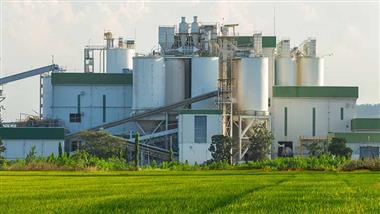
STORY AT-A-GLANCE
- Carbon neutrality refers to a product that has net zero carbon emissions. The manufacture and use of corn-based ethanol has expanded based on the assumption that it’s carbon neutral and therefore far better for the environment than gasoline. However, several studies have shown that such assumptions are categorically false
- A 2016 study found corn grown for ethanol only offset 37% of carbon dioxide emissions produced by burning biofuels, resulting in net-positive carbon dioxide emissions that are greater than gasoline
- One of the primary reasons why growing corn for ethanol has a net-positive CO2 impact is because farmers are plowing up native grasslands to make more room for corn; 60 tons of carbon dioxide are released into the environment per acre of grassland plowed
- Ignoring water consumption further underestimates CO2 emissions from land-use change by 28%. When corn plants’ water needs are considered, corn ethanol is worse for the environment than gasoline
- A five-year study published in 2022 concluded the CO2 emissions from corn-based ethanol are at least 24% greater than that of gasoline. On top of that, it has led to increased fertilizer use, resulting in greater water pollution and a growing dead zone in the Gulf of Mexico
Carbon neutrality is the holy grail of the biofuel industry. It refers to a product that has net zero carbon emissions. In the case of ethanol, the corn or soybeans grown to produce it would have to remove as much carbon dioxide from the environment as is given off when the ethanol is burned.
The manufacture and use of ethanol in the U.S. has been allowed to expand based on the assumption that it’s carbon neutral and therefore far better for the environment than gasoline. However, a 2016 study1 by professor John DeCicco, Ph.D., at the University of Michigan, showed that such assumptions were categorically false.
Ethanol Is Far From Carbon Neutral
What DeCicco and his team discovered was that biofuels such as corn ethanol are associated with a net increase in carbon dioxide emissions — even more so than gasoline. It turns out that the crops only offset 37% of carbon dioxide emissions produced by burning biofuels. At the time, DeCicco explained:2
“The name of the game is to speed up how much CO2 [carbon dioxide] you remove from the air … The best way to begin removing more CO2 from the air is to grow more trees and leave them. Prior to settlement, Michigan was heavily forested.
A state like Michigan could do much more to balance out the tailpipe emissions of CO2 by reforesting than by repurposing the corn and soybeans grown in the state into biofuels. That is just a kind of shell game that’s not working.”
Granted, DeCicco’s study was funded by the American Petroleum Institute, which obviously has reason to want to discredit the sustainability of biofuels. However, the research reiterates what other, more independent researchers have found before.
Ethanol Raises Net Carbon Emissions
For example, in 2014, the Environmental Working Group (EWG) released a report titled “Ethanol’s Broken Promise,”3 which reached similar conclusions as DeCicco’s study. It too concluded that corn ethanol is worse for the environment than gasoline.
One of the primary reasons why growing corn for ethanol has a net-positive carbon impact is because farmers are plowing up native grasslands to make more room for corn. The failure to take this change in land use into account is how proponents of biofuels have been able to perpetuate the myth that it’s carbon neutral.
According to EWG, more than 8 million acres of grassland and wetlands were converted to corn between 2008 and 2011 alone, and every time an acre of grassland is plowed, 60 tons of carbon dioxide are released into the environment.4
So, while the ethanol fuel program was designed to reduce carbon emissions, the loss of grasslands does just the opposite. Estimates showing corn ethanol’s positive influence on the environment have also failed to consider the water needed to grow the corn.
“Ignoring water constraints underestimates emissions from land-use change by 28%,” EWG reported.5 According to agricultural economists at Purdue University, when corn plants’ water needs are considered, corn ethanol is worse for the environment than gasoline.6
The EWG also cited data debunking the false claim that ethanol has no impact on the price of corn and other agricultural commodities. According to scientists with the National Academies, the radical change in the proportion of corn used for ethanol resulted in the price of corn rising by 20% and 40% between 2007 and 2009 alone. This is partly why anti-hunger organizations have been so against corn-based ethanol.

Download this Article Before it Disappears
The Many Downsides of Biofuels
A five-year study7,8 published in Proceedings of the National Academy of Science (PNAS) in February 2022 also came down hard on corn-based ethanol, concluding its CO2 emissions are at least 24% greater than that of gasoline. On top of that, it has led to increased fertilizer use, resulting in greater water pollution and a growing dead zone in the Gulf of Mexico. As reported by Civil Eats:9
“Despite the promise that the RFS [renewable fuel standard] would reduce greenhouse gas emissions, a new study … finds that expansion of U.S. corn cultivation has come at eye-popping environmental costs.
Corn production expanded by 8.7%, or 2.8 million hectares (6.9 million acres), between 2008 and 2016. As a result, the researchers found that nationwide annual fertilizer use surged by 3 to 8% and water pollutants rose by 3 to 5%.
The sheer extent of domestic land use change, however, generated greenhouse gas emissions that are, at best, equivalent to those caused by gasoline use — and likely at least 24% higher.
That’s because the RFS caused corn prices to spike by 30% and soybean and other crops by 20%. As a result, farmers planted corn everywhere they could, replacing other crops and pastureland, and plowing up land that had previously been reserved for conservation purposes. They also often skipped the soybeans in their rotations, despite the potential impacts on their soil …
Previous studies … dramatically underestimated the impacts those land use changes had on carbon emissions; in fact, the models treated the land that was converted from conservation or pasture as if there was little change in the amount of carbon stored once it was planted with corn — which runs counter to existing empirical evidence10 …
In 2008 … Timothy Searchinger, a senior researcher at Princeton University’s Center for Policy Research on Energy and the Environment, was one of several who predicted11 that using U.S. croplands for biofuels would increase greenhouse gas emissions through land use change.
Now, his assessment has been validated by the new study. Searchinger says the new study boils down to a simple, inescapable truth: Using land has a cost. And some uses simply don’t make sense because the cost is too high.
‘It’s crazy to use this very limited resource — highly productive land — for energy,’ he said. ‘It’s almost spectacularly inefficient.’ Corn ethanol converts 0.15% of solar energy into usable energy, while a solar cell today converts 15 to 20% of sunlight to energy. ‘And the good news is you don’t need to put a solar cell on the best available farmland.’”
Will Large-Scale Carbon Capture Worsen the Situation?
Fertile farmland may soon also be sacrificed for large-scale carbon capture and sequestration projects that are being implemented in South Dakota, North Dakota, Iowa, Minnesota and Nebraska.
In a March 4, 2022, interview with SDPB Radio, Chris Hill, director of permitting for the Summit Carbon Solutions project, explained how they intend to capture and sequester the carbon emitted during the ethanol fermentation process:
“The science behind it is relatively straightforward … fermentation is not a new process … The bugs eat the sugars or the starches that are from the corn. They ultimately produce alcohols. They release CO2 in that process. That CO2 bubbles up through the fermentation tanks and ultimately leaves the tanks and it’s currently being emitted to the atmosphere. So that’s the science and where the CO2 is coming from.
We’ll be pulling the CO2 off its current emission point, which is the stack. And what we’re doing with that is, we’re going to use multistage compression to pressurize the CO2 into a dense phase …
After the CO2 is compressed into a dense phase … where it behaves similar to a liquid, it’s going to be injected into a pipeline that will range between 4 inches and 24 inches depending on where you’re at in the system, ultimately to transport that CO2 up to North Dakota, just west of Bismarck in the Oliver/Mercer county area, where it will be injected for safe and permanent sequestration …
The USGS’s study estimates that the state of North Dakota has a capacity to store approximately 250 billion metric tons of CO2 … And our annual capacity of 12 million metric tons. You can easily calculate … that there’s … over 100 years of capacity in that area …”
Summit Carbon Solutions is the largest of three companies seeking to pipe CO2 from ethanol-producing plants into porous rock, deep underground. The two others are Archer-Daniels-Midland and Navigator CO2 Ventures.12
What Can Go Wrong?
According to Hill, the science behind this ridiculous plan has been carefully analyzed and the process deemed 100% safe. Does that mean nothing can go wrong? Hardly. If history tells us anything, it’s that anything that can go wrong probably will, sooner or later, and when it comes to liquefied CO2 gas under pressure, it just so happens to be explosive when exposed to heat above 125 degrees Fahrenheit (52 degrees Celsius).13
Could liquefied CO2, under pressure, deep down in a rock formation, possibly get heated to combustible temperatures under extreme conditions? Something to ponder. Exposure to this CO2, say if a pipe were to bust a leak, also has severe health impacts, ranging from dizziness and increased heart rate to nervous system damage, frostbite and rapid suffocation.14
Aside from that, there’s the direct and immediate threat to farmers — and anyone who needs food — as usable farmland may be seized through eminent domain for these pipelines.15 Seizing the land of small farmers to install CO2 sequestration pipelines hardly seems to be a wise move, seeing how all the signs point to severe food shortages and, potentially, worldwide famine in coming years.
ESG Is a Complete Fraud
In late April 2023, Summit Carbon Solutions signed a multiyear agreement to sell Carbon Dioxide Removal credits (CDRs) to the NextGen, a joint venture between South Pole and the Mitsubishi Corporation.
According to PR Newswire,16 NextGen is seeking to create “one of the world’s largest diversified portfolios of CDRs, with plans to purchase over 1 million tons of CDRs by 2025.” While this may thrill investors, it won’t do a thing for our environment.
In fact, ESG (environmental, social and governance) investing is a complete scam, designed to inflate profits, not save the planet. As reported by the Harvard Business Review in August 2022,17 the trillions of dollars currently being pumped into ESG assets are “dedicated to assuring returns for shareholders, not delivering positive planetary impact”:
“The separation of profit and planet is by design. ESG ratings which underlie ESG fund selection are based on ‘single materiality’ — the impact of the changing world on a company’s profits and losses, not the reverse.
They also bear no connection to natural boundaries. According to Bloomberg,18 ‘[ESG] ratings don’t measure a company’s impact on the Earth and society. In fact, they gauge the opposite: the potential impact of the world on the company and its shareholders.’
Yet it’s hard to blame casual observers for believing that investing in an ESG investment fund is helping to save the planet. Marketing materials of ESG funds often make lofty statements about social or environmental aspirations, but the fine print reveals that the real goal is to assure shareholder profits.
For example, a prior statement from State Street’s ESG Investment Statement mentions the need to encourage a ‘transition to a low-carbon, more sustainable, resource-efficient and circular economy,’ but later it defines ESG issues as ‘events or conditions that, should they occur, could cause a negative impact on the value of an investment.’
According to Henry Fernandez, CEO of the leading ESG ratings provider MSCI, ESG doublespeak has confused most individuals, many institutional investors, and even some portfolio managers.”
In 2020, Social Capital founder and CEO Chamath Palihapitiya went even further, telling CNBC that ESG investing is a “complete fraud.”19 According to Palihapitiya, ESG “does not necessarily encourage best practices, nor does it move the ball forward on things like the climate crisis.”
Rather, it’s primarily a marketing ploy to sell potentially questionable investments and “a way for companies to get free money,” as having a high ESG means you can get negative-interest loans.
Rampant Greenwashing
Similarly, a March 2022 post titled “The False Promise of ESG” on the Harvard Law School Forum on Corporate Governance20 noted that highly-ranked ESG businesses oftentimes are LESS socially responsible than companies with far lower scores. Indeed, several investigations have revealed rampant greenwashing, with many ESG-labeled funds being far from “sustainable.”
Take FTX, for example. FTX — the cryptocurrency exchange that went belly up overnight while its CEO, Sam Bankman-Fried absconded with up to $2 billion of client funds — had a higher governance score than Exxon Mobil,21 despite having almost no corporate governance whatsoever.
It had no board of directors, an “irregular ownership structure,” was rife with conflicts of interest and self-dealing and had no financial controls. Bankman-Fried didn’t even keep an accurate list of accounts. If this doesn’t tell you that ESG is flawed at best, and a complete fraud at worst, I don’t know what will.
FTX isn’t alone in falling short of expectations, though. According to a September 2021 report by climate change think tank InfluenceMap, more than half the 723 funds marketed using ESG claims failed to meet the Paris Accord rules on carbon emissions and clean energy, and more than 70% of funds with broad ESG goals failed to meet global climate targets.22
ESG Is Another Globalist Takeover Tool
One glaring problem with ESG is the lack of regulations that define what qualifies a company as environmentally or socially responsible. It is this very lack of definition that allows the globalist cabal to use ESG to push their own self-serving ideologies on companies and consumers.
In a November 2022 Newsweek opinion piece,23 Republican candidate for the U.S. Senate in Pennsylvania, Kathy Barnette, called ESG “a woke scam” that is changing our nation by forcing companies to embrace ideologies that most people would otherwise reject:
“ESG is the latest trendy acronym designed to empower the elites at the expense of us non-elites,” Barnette wrote. “It’s a wokeness scorecard for investors.
Think of the E in ESG as code for climate change activism. Think of the S in ESG as code for social justice — how open a company is to critical race theory, diversity mandates, and drag queen story hour in public libraries. And the G is all about how much power employees have to shake things up at a company …
Altogether, ESG investing insidiously changes traditional American values, all while never by having to stand before the American people and ask for their permission.
But the real danger is to society. ESG is a win-win for climate change activists and social justice warriors who can bypass the ballot box — and thus the will of the people — to implement policy that would have a very hard time getting passed in Congress.”
ESG Drives the Financial Great Reset
F. William Engdahl, a strategic risk consultant and lecturer who holds a degree in politics from Princeton University,24 has discussed how ESG investing fits into the globalists’ Great Reset more directly:25
“[BlackRock founder and CEO Larry] Fink … now stands positioned to use the huge weight of BlackRock to create what is potentially … the world’s largest Ponzi scam … Fink with $9 trillion to leverage is pushing the greatest shift of capital in history into a scam known as ESG Investing.
The UN ‘sustainable economy’ agenda is being realized quietly by the very same global banks which have created the financial crises in 2008.
This time they are preparing the Klaus Schwab WEF Great Reset by steering hundreds of billions and soon trillions in investment to their hand-picked ‘woke’ companies, and away from the ‘not woke’ … Oil companies like ExxonMobil or coal companies … are doomed as Fink and friends now promote their financial Great Reset or Green New Deal.”
The case of Tesla also shows how ESG can be, and is, used as a weapon. Elon Musk initiated his acquisition of Twitter in mid-April 2022. One month later, his company Tesla was removed from the ESG Index, despite its focus on creating environmentally conscious vehicles. Meanwhile, Exxon Mobil remained in the S&P 500 ESG Index top 10.26 Musk tweeted,27 “… ESG is a scam. It has been weaponized by phony social justice warriors.”
Control by Allocation of Resources
In summary, the ESG system is an early phase of the new financial system envisioned by the World Economic Forum (WEF). Basically, a company’s ESG score decides its ability to obtain loans and investment opportunities, and in the future, the same “social conscience”-type scoring will apply to private individuals as well.
ESG is also a specific tactic to push the “green” agenda forward, and it too is part and parcel of the WEF’s Great Reset. While the notion of a pollution-free world is an attractive one, ESG investing isn’t about the environment, or social justice, or anything else it claims to stand for.
It’s all about creating a control system in which the world’s resources are owned by the richest of the rich, while the rest of the population can be controlled through the allocation of those resources, including energy. As explained in an anonymous Winter Oak article:28
“Under such an economic construct, asset holding conglomerates can redirect the flow of global capital by aligning investments with the UN’s SDGs [sustainable development goals] and configuring them as Environmental, Social, and Corporate Governance (ESG) compliant so that new international markets can be built … and eventually move populations towards a cap-and-trade system, otherwise known as a carbon credit economy.
This will centralize power in the hands of stakeholder capitalists under the benevolent guise of reinventing capitalism through fairer and greener means, using deceptive slogans like ‘Build Back Better’ without sacrificing the perpetual growth imperative of capitalism.”
The WEF itself also describes ESG as being part of its resource-based economic system:29
“Digital finance refers to the integration of big data, artificial intelligence (AI), mobile platforms, blockchain and the Internet of things (IoT) in the provision of financial services. Sustainable finance refers to financial services integrating environmental, social and governance (ESG) criteria into the business or investment decisions.
When combined, sustainable digital finance can take advantage of emerging technologies to analyze data, power investment decisions and grow jobs in sectors supporting a transition to a low-carbon economy.”
So, in closing, it’s important to be aware of the downsides of relying on suspect labels like ESG, which could ultimately tie the global population to a new form of data slavery.30
- 1 Climatic Change 2016; 138: 667-680
- 2 Detroit Free Press August 25, 2016
- 3, 5, 6 EWG Ethanol’s Broken Promise
- 4 Star Tribune September 24, 2012
- 7 PNAS February 14, 2022; 119(9): e2101084119
- 8 ARS Technica February 17, 2022
- 9 Civil Eats February 14, 2022
- 10 Environmental Research Letters Comment, doi: 10.1088/1748-9326/ac2e35
- 11 Science Febraury 29, 2008; 319(5867): 1238-1240
- 12, 15 NPR April 4, 2022
- 13, 14 Praxair Safety Data Sheet Carbon Dioxide
- 16 PR Newswire April 26, 2023
- 17 Harvard Business Review August 1, 2022
- 18 Bloomberg December 10, 2021
- 19 CNBC February 26, 2020
- 20 Harvard Law School Forum on Corporate Governance March 16, 2022
- 21 Flastergreenberg.com November 21, 2022
- 22 Time September 20, 2021
- 23 Newsweek November 28, 2022
- 24, 25 WilliamEngdahl.com June 18, 2021
- 26 TIME May 25, 2022
- 27 Twitter, Elon Musk May 18, 2022
- 28 Winter Oak March 9, 2022
- 29 World Economic Forum, Sustainable Digital Finance Can Unlock a Low-Carbon Economy
- 30 Navdanya
Got MilQ? Fake Milk to Replace Dairy and Breast Milk
Reproduced from original article:
https://articles.mercola.com/sites/articles/archive/2022/12/22/biomilq-fake-milk.aspx
The original Mercola article may not remain on the original site, but I will endeavor to keep it on this site as long as I deem it to be appropriate.
Analysis by Dr. Joseph Mercola Fact Checked December 22, 2022
STORY AT-A-GLANCE
- The globalist technocrats are intent on monopolizing the entire food supply. They already have a monopoly on grains and have made headway in genetically engineered (GE) seafood. The next targets include lab-grown meats and dairy substitutes
- Biomilq, made from cultured breast tissue, will be marketed as a breast milk substitute
- The company Helaina is working on creating glycoproteins “identical to those found in breast milk.” Those proteins can then be added to a variety of infant formulas, seniors’ nutrition and, eventually, all sorts of foods
- The justification for creating synthetic milk substitutes is, of course, preventing and reversing “climate change.” That’s the justification used to sell virtually all fake foods. In reality, however, they will perpetuate and worsen adverse effects on the environment
- Lab-created foods are ultraprocessed and therefore qualify as junk food. Fake meat and dairy cannot replace the complex mix of nutrients found in grass fed beef and dairy, and it’s likely that consuming ultraprocessed meat and milk alternatives may lead to many of the same health issues that are caused by a processed food diet
- The starting ingredients in fermented synthetic biology products are cheap sugars derived from GE corn and soy. All GE crops are grown in environmentally destructive monocultures, and use loads of herbicides such as glyphosate, pesticides like neonicotinoids and synthetic fertilizers. As a result, they’re loaded with chemical residues that end up in the final product
The globalist technocrats are intent on monopolizing the entire food supply. They already have a monopoly on genetically engineered (GE) grains and have made headway in GE seafood. The next targets are lab-grown meats and dairy substitutes. There’s even a lab-made breast milk alternative on the way called Biomilq, which is made from cultured breast tissue.1
Another company, Helaina, aims to create glycoproteins “identical to those found in breast milk,”2 which can then be added to a variety of infant formulas. They may also be used in seniors’ nutrition and eventually, all sorts of foods.
Many familiar globalists are invested in these faux dairy ventures. Biomilq investors, for example, include Bill Gates, Jeff Bezos, Mark Zuckerberg, Richard Branson, Masayoshi Son, Jack Ma, Michael Bloomberg and Marc Benioff.3
The first Biomilq product is expected to be ready for the market within the next three to five years.4 Other animal-free milk products are expected to hit the shelves sometime between 2023 and 2024.5,6 That includes ice cream made with lab-grown diary, which will go into Ben & Jerry’s product line.7
In the Environmental Health Symposium video above, Alan Lewis reviews what goes into the making of synthetic biology. Synthetic biology goes by many names, including “gene edited fermentation” and “precision fermentation products.”
While that sounds fairly innocuous, synthetic biology manufacturers rarely ever discuss what goes into the feed they use to grow the target organism, or what happens to the waste at the end of the fermentation process. That’s understandable, as both raise a number of serious questions.
What Are the Base Ingredients?
As explained by Lewis, the starting ingredients in fermented synthetic biology products are cheap sugars derived from GE corn and soy. All GE crops are grown in environmentally destructive monocultures with taxpayer subsidies, and use loads of herbicides such as glyphosate, pesticides like neonicotinoids and synthetic fertilizers. As a result, they’re loaded with chemical residues that end up in the final product.
In addition to a base of sugars, hundreds of other ingredients may be added to the ferment in order to produce the desired end product, such as a certain protein, color, flavor or scent.
Aside from the desired target metabolite, these gene-edited organisms may also be spitting out any number of non-target metabolites that have completely unknown environmental consequences and health effects.
As explained by Lewis, the most-often used microorganism in the fermentation process is E.coli. The E.coli is gene-edited to produce the desired compound through its digestive process. It also needs to be antibiotic-resistant, since it needs to survive the antibiotics used to kill off other undesirable organisms in the vat.
Aside from the desired target metabolite, these gene-edited organisms may also be spitting out any number of non-target metabolites that have completely unknown environmental consequences and health effects.
How Are Synthetic Biology Ferments Created?
As explained by Lewis, the various “feed” ingredients are placed in a fermentation bioreactor set at 87 to 90 degrees Fahrenheit for anywhere from 24 to hundreds of hours to grow the target microorganism. The target organisms in the ferment consume the nutrients they need, and what’s left over after those organisms are extracted is hazardous biowaste.
Importantly, while traditional fermentation processes, such as the making of beer, produces waste products that are edible by animals, compostable and pose no biohazard, the same cannot be said for these GMO synthetic biology ferments. The biowaste must first be deactivated, and then it must be securely disposed of. It cannot go into a landfill.
It’s important to realize that they are creating GMO organisms that have never existed on earth before, and these organisms and their waste are neither edible nor compostable, and there are unknown risks involved with unintentional or intentional release of these organisms into the environment.
They may also result in novel foodborne illnesses. And, since antibiotics are used to prevent the growth of undesirable organisms in the ferment, antibiotic-resistant organisms are automatically integrated into the final product. The types of foodborne illness that might be caused by gene-edited E.coli and its metabolites are anyone’s guess at this point. Nobody knows what such illness might look like.
The Fake Justification for Fake Foods
The justification for creating synthetic biology for food, including milk substitutes, is to prevent and reverse “climate change.” As reported by CNBC in June 2020:8
“Biomilq co-founder and CEO Michelle Egger … and her co-founder, CSO Leila Strickland, hope that the breast milk produced by Biomilq from culturing mammary epithelial cells will help reduce the carbon footprint from the global infant formula market …
‘Right now, by the estimations we have been able to make, at least 10% of the dairy market globally ends up in infant formula,’ Eggers said. ‘That means per-infant-fed formula in the U.S., 5,700 metric tons of CO2 are produced, and 4,300 gallons of freshwater are consumed each year to feed a child. Parents want to do what’s best for their kids but shouldn’t have to decide between feeding their children and protecting the planet.'”
While the push for synthetic biology is built on the idea that it will somehow save the environment from the ravages of factory farming, concentrated animal feeding operations (CAFOs) and monocultures, it’s incredibly misleading, because it doesn’t address the fact that there are environmentally beneficial ways to farm, and we really should switch to those instead of transitioning into factory laboratories where everything that comes out of it is a biohazard.
Fake Food Manufacturing Creates Toxic Waste Products
In February 2021, the Good Food Institute (GFI), a nonprofit group behind the alternative protein industry, released a techno-economic analysis of cultivated meat, which was prepared by consulting firm CE Delft.9 In it, they developed a model to reduce the current costs of cultured meat production down to a point that would make it economically feasible in full-scale plants by 2030, a model they said is “feasible.”
In attempting to create cultured meat on the scale that would be necessary to feed the world, logistical problems are numerous and, possibly, insurmountable. There are waste products — catabolites — to deal with, as even cultured cells excrete waste that is toxic.
Oxygen and nutrients must also be adequately distributed to all the cells, something that’s difficult in a large reactor. Stirring the cells faster or adding more oxygen may help, but this can cause fatal stress to the cells.10
The environmental “benefits” are also on shaky ground when you factor in soy production as well as the use of conventional energy sources. When this is factored in, GFI’s life-cycle analysis found that cultured meat may actually be worse for the environment than conventionally produced chicken and pork.11,12
Repeat of a Failed System
Yet, the push for the creation of synthetic biology continues. In the foreword to Navdanya International’s report “False Solutions That Endanger Our Health and Damage the Planet,” Vandana Shiva details how lab-grown foods are catastrophic for human health and the environment, as they are repeating the mistakes already made with industrial agriculture:13
“In response to the crises in our food system, we are witnessing the rise of technological solutions that aim to replace animal products and other food staples with lab-grown alternatives. Artificial food advocates are reiterating the old and failed rhetoric that industrial agriculture is essential to feed the world.
Real, nutrient-rich food is gradually disappearing, while the dominant industrial agricultural model is causing an increase in chronic diseases and exacerbating climate change.
The notion that high-tech, ‘farm free’ lab food is a viable solution to the food crisis is simply a continuation of the same mechanistic mindset which has brought us to where we are today — the idea that we are separate from and outside of nature.
Industrial food systems have reduced food to a commodity, to ‘stuff’ that can then be constituted in the lab. In the process, both the planet’s health and our health have been nearly destroyed.”
Lab-Made Foods Are Junk Foods
It’s important to realize that all lab-created “foods” are ultraprocessed, and will likely impart the same kind of ill health effects as other ultraprocessed foods. In 2018, Friends of the Earth (FOE), a grassroots environmental group, released a report that posed critical questions about the trend toward synthetic biology. In it, they stressed the highly-processed nature of these products:14
“Various ‘processing aids’ are employed to make some of these products, including organisms (like genetically engineered bacteria, yeast and algae) that produce proteins, and chemicals to extract proteins.
For example, chemicals like hexane are used to extract components of a food, like proteins (from peas, soy, corn etc.) or compounds (from genetically engineered bacteria) to make xanthan gum … disclosure of these ingredients is not required.
Other processing aids (e.g. bacteria, yeast, algae), including those that are genetically engineered to produce proteins, are also not currently required to be disclosed on package labeling. The lack of transparency makes it difficult to assess the inputs and impact of their use.”
Basically, what the globalist cabal is attempting to do is to eliminate conventional farming methods like raising cattle for beef and dairy products, and replace them with synthetic, patented reproductions. In short, they’re taking whole foods and turning them into ultraprocessed junk foods, all while trying to convince you the junk food is healthier for you.
Synthetic Biology Is Part of a Control Scheme
Aside from the potential health hazards, lab-grown foods rely on monocultured crops that destroy the soil, resulting in carbon release. So, right there, the climate change justification falls apart. Since synthetic biology relies on GMO monoculture, it creates the very things they claim to counteract: environmental degradation that results in climate change.
As noted by Lewis, synthetic biology, which is the latest addition to the patented, genetically modified organism (GMO) food system, also results in a “massive shift in ownership and concentration of wealth … and control over our food supply.”
In short, synthetic biology creates reliance on industry that can then be used to manipulate and control the population in any number of ways. In the long term, people will eventually lose the know-how of producing their own food using traditional methods, and this may well be part of the plan.
The globalist cabal intends to create a one world government, and what better control tool than having everyone completely dependent on the state for all of its food?
Protect Your Health by Avoiding Frankenfoods
The drive for plant-based alternatives to real animal food, be it meat or dairy, isn’t due to health, or even to support vegan or vegetarian diets. Those truly interested in eating a plant-based diet can do so by eating real plants, after all, and in so doing can enjoy the many health benefits that eating plant foods provides. No, it’s about creating a system of control through food. It’s also a way to control people’s health.
It’s already known that the consumption of ultraprocessed food contributes to disease,15 but manufactured fake meat and dairy may also pose additional unknown risks.16 The benefactor of ill health, of course, is Big Pharma.
The processed food industry has spent many decades driving chronic illness that is then treated with drugs rather than a better diet. Synthetic foods will likely be an even bigger driver or chronic ill health and early death.
The fact is, fake meat and dairy cannot replace the complex mix of nutrients found in grass fed beef and dairy, and it’s likely that consuming ultraprocessed meat and milk alternatives may lead to many of the same health issues that are caused by a processed food diet. So, if you want to really protect your health and the environment, skip pseudofoods that require patents and stick to those found in nature instead.
- 1, 4 Alarabiya.net May 3, 2022
- 2 Food Navigator December 12, 2022
- 3, 8 CNBC June 16, 2020
- 5 Startup Daily July 27, 2021
- 6 Sydney Spring Herald September 13, 2022
- 7 ZME Science December 9, 2022
- 9 Techno-Economic Analysis for the production of cultivated meat February 2021
- 10, 12 The Counter September 22, 2021
- 11 LCA of cultivated meat – February 2021, Page 3
- 13 Children’s Health Defense April 5, 2022
- 14 Friends of the Earth, From Lab to Fork, June 2018 (PDF)
- 15 BMJ 2018; 360:k322
- 16 Consumer Reports, August 29, 2019, Impossible Burger, What is it?