Insects
now browsing by category
We Should Be Alarmed by the Staggering Decline of Birds
Reproduced from original article:
https://articles.mercola.com/sites/articles/archive/2023/08/09/birds-declining.aspx
The original Mercola article may not remain on the original site, but I will endeavor to keep it on this site as long as I deem it to be appropriate.
Analysis by Dr. Joseph Mercola Fact Checked August 09, 2023
STORY AT-A-GLANCE
- Worldwide, 1 in 8 bird species is at risk of extinction
- Another 223 bird species are critically endangered and could disappear from the planet
- A net loss of 2.9 billion birds, or 29%, occurred in the U.S. and Canada since 1970
- Industrial agriculture, with its rapid expansion and use of toxic chemicals, is driving bird losses the world over and represents the greatest threat to birds
- Birds are a crucial element of our ecosystem, controlling pests, spreading seeds and pollinating about 5% of plants that humans use for food and medicine
Worldwide, 1 in 8 bird species is at risk of extinction.1 We should be very concerned, since, as BirdLife International notes, “Birds are our early warning system.”2 Declines in bird populations signal that something serious is happening in the environment — habitats are being destroyed, chemical pesticides are taking a toll on wildlife and more.
Already, 223 bird species are critically endangered3 and could disappear from the planet — a loss that would cut deeply. BirdLife explains:4
“Birds have the power to unite people. Many species migrate vast distances, motivating nations to work together to protect them every step of the way. In this way, birds show us the levels of global cooperation needed to tackle the … extinction crises in coming years. More simply than that, a love of birds is something we can all share, regardless of our differences.”
Imagining a world without birds isn’t only about missing their visual beauty and melodic songs. Birds are a crucial element of our ecosystem, controlling pests, spreading seeds and pollinating about 5% of plants that humans use for food and medicine.5 So, a loss of birds should sound alarm bells for every one of us.
“Birds tell us about the health of our natural environment — we ignore their messages at our peril,” says Patricia Zurita, BirdLife’s CEO.6
3 Billion North American Birds Gone in 50 Years
The situation is dire for many bird species, including the black-tailed godwit, a large shorebird with long legs and an equally long bill. Wired interviewed Alice Cerutti, whose 115-hectare (about 284-acre) rice farm in Italy is the country’s last known regular nesting site for the species:7
“During the past decade or so, she and her family have planted thousands of trees, reestablished wetlands, and brought in experts to help study and manage the precious birds that nest in areas Cerutti has set aside for wildlife. It seems to be working. ‘We have this amazing and big responsibility,’ Cerutti says … Local researchers found the bird clinging on there even as it disappeared from other locations.”
It’s a story of hope among an otherwise dismal outlook. A net loss of 2.9 billion birds, or 29%, occurred in the U.S. and Canada since 1970,8 including not only rare species but also common birds at backyard feeders, such as sparrows, warblers, finches and blackbirds.9 Writing in the journal Science, researchers and colleagues with the Cornell Lab of Ornithology explained:10
“Integration of range-wide population trajectories and size estimates indicates a net loss approaching 3 billion birds … A continent-wide weather radar network also reveals a similarly steep decline in biomass passage of migrating birds over a recent 10-year period. This loss of bird abundance signals an urgent need to address threats to avert future avifaunal collapse and associated loss of ecosystem integrity, function, and services.”
Nineteen common bird species lost more than 50 million birds during the study period, with lead author and conservation scientist Ken Rosenberg told CBS News, “There’s an erosion of the numbers of common birds.” “We expected to see continuing declines of threatened species,” he said. “But for the first time, the results also showed pervasive losses among common birds across all habitats, including backyard birds.”11
Birds Declining Throughout Europe
It’s not only North American birds that are in peril. “A further 600 million have been lost in the European Union since 1980, an area five times smaller,” Bird Life International reported.12 There are about 10,000 species of birds worldwide, and half are declining in numbers.13 In Great Britain, 73 million birds have disappeared since 1970, a decline of nearly one-third.
As in the U.S., birds affected included both common and rare species, including a loss of nearly 30 million house sparrows, 20 million starlings, 4 million skylarks and 2 million blackbirds. According to the British Trust for Ornithology (BTO), which conducted the research:14
“The estimated losses actually total 114 million individuals (or 57 million breeding pairs). The losses are masked in part by increases in certain other species, including some familiar residents (e.g. Wren, Woodpigeon and Blackcap), and new arrivals (e.g. Little Egret and Cetti’s Warbler).
The growing numbers of these species, which result in gains of c. 41 million individuals, do not compensate for the extraordinary losses overall, resulting in a net loss of 73 million individuals.”
European mountain birds are also disappearing. Researchers with BTO and colleagues revealed a 7% population decline in 44 bird species monitored from 2002 to 2014.15 Changes in human land use, including grazing pressure and afforestation, may be partly to blame.
European birds that eat insects, known as insectivores, represent another category in trouble, with insectivorous bird populations declining 13% across Europe and 28% in Denmark from 1990 to 2015 or 2016, respectively. “Our findings suggest that the decline of insectivores is primarily associated with agricultural intensification and loss of grassland habitat,” researchers explained.16

Download this Article Before it Disappears
We’ve Already Lost 94% of Some Bird Species
BirdLife International’s State of the World’s Bird report is published every four years, most recently in 2022.17 Along with the 1,409 bird species threatened with extinction, the report found that only 6% of species have populations that are increasing.
Over the last 500 years, meanwhile, more than 160 bird species have been eliminated. Now the rate of extinction is accelerating, says Lucy Haskell, science officer for BirdLife.18 According to a news release for the report:19
“Although long-term population data is far more comprehensive for species in these regions [North America and the European Union], signs point to similar catastrophic declines elsewhere across the globe.
For instance, since 1850, forest and wetland specialist species in Japan are estimated to have declined by a staggering 94 and 88 percent respectively, while populations of Kenya’s raptor species have declined on average by nearly three quarters since 1970.”
Industrial Agriculture Is the Leading Threat to Birds
Industrial agriculture, with its rapid expansion and use of toxic chemicals, is driving bird losses the world over and represents the greatest threat to birds. BirdLife’s report stated:20
“Across the world, birds are impacted by an array of different threats, nearly all of which are caused by human actions. Agriculture — both through its expansion into important habitats and the increasing use of machinery and chemicals as it intensifies — is the leading threat to bird species, impacting at least 73 percent of threatened species.”
A study by Environment Canada suggested agricultural pesticides alone may lead to 2.7 million bird losses there annually.21 It’s also been shown that birds exposed to widely used neurotoxic pesticides called neonicotinoids feed less, accumulate less body mass and fat stores and ultimately delay migration, which can affect survival and reproduction.22
Habitat loss and habitat degradation are also problematic.23 Habitat loss refers to instances when land is converted for other uses, such as agriculture or development. When habitat is degraded, it may not disappear entirely but becomes altered, fragmented or compromised in a way that makes it less able to support bird life. Due to agricultural intensification, habitat essential to birds is rapidly disappearing. BirdLife explained:24
“In Europe, this has resulted in an over 50 percent decline in abundance of the continent’s farmland birds since 1980 and, further south, the conversion of grasslands to croplands has resulted in an 80 percent decline in the population of the Liben Lark (Critically Endangered) in just 15 years.”
Meanwhile, logging is another serious threat. “Over 7 million hectares (17,297,376.7 acres) of forest are lost every year — an area larger than the Republic of Ireland — and this impacts nearly half of the world’s threatened bird species,” BirdLife added.25
This includes the Harpy Eagle, which depends on old-growth trees — 90% of which are targeted by logging in the rainforests of South America.26 Aside from habitat loss and pesticide usage, some of the additional human-caused threats to birds include:27
| Cats | Window collisions |
| Vehicles | Power lines |
| Communication towers | Wind turbines |
Still, many are taking action toward positive change. Wired reported that on Cerutti’s farm, she’s taken steps to avoid pesticides that are so toxic to birds:28
“Cerutti has dispensed with pesticides and allowed vegetation in wetland areas to regrow. Besides the black-tailed godwits, there are bitterns and lapwings — both also in decline.
And no, she doesn’t make as much money as she might if she were driven to maximize profits on the same tract of land. It doesn’t matter. ‘Not every farmer can do what we’re doing, but I think that it’s important to do something,’ she says. A neighbor was recently inspired by Cerutti’s efforts to stop spraying places that border her farm with glyphosate, an incredibly potent herbicide. ‘I think it’s a great step,’ says Cerutti.”
What Do We Lose if Birds Disappear?
Birds play a vital role globally, helping to pollinate plants and disperse seeds while acting as both scavengers and predators. But, humans’ connection to birds runs even deeper. It’s revealing that, in the U.K., more than 1.3 million people belong to the Royal Society for the Protection of Birds, which is more than the members of all the country’s political parties combined.
And in the U.S., birdwatching is a favorite hobby for more than 70 million people,29 while birders can be found worldwide, making a habit of seeking out different bird species whenever they can. Encounters with birds involve both sight and sound, providing complex, multisensory experiences. Interactions with birds in your everyday life may be enough to compel lasting change to your mood.30
The presence of birdsongs also enhances the mental benefits of spending time in nature.31 Birdsongs, in particular, may be appreciated by humans because birds have been around throughout evolution. Singing birds are also often heard in spring and summer, indicating forthcoming or current pleasant weather.32 All of this could be lost if changes aren’t made to protect these vulnerable creatures.
7 Simple Steps to Help Birds
The light at the end of the tunnel is regenerative agriculture, which is a savior to birds, insects and other species worldwide. The best course of action to reduce the harm of industrial agriculture and habitat loss is having on birds is to support biodynamic, grass fed farms that are conserving diversity and not relying on synthetic chemicals and other intensive agriculture practices that harm birds and other wildlife.
Meanwhile, we can all get involved to help make the world a safer place for birds. 3 Billion Birds, a partnership between Audubon, American Bird Conservancy, Bird Conservancy of the Rockies, Georgetown Environment Initiative, the Cornell Lab of Ornithology and Smithsonian, suggests everyone take the following seven actions to help birds now, before their populations decline even further:33
1. Make windows safer — Install screens or break up reflections using film, paint or string to prevent birds from hitting your windows.
2. Keep cats indoors — Free-roaming cats kill birds; give your cat environmental enrichment by providing a catio, a secure outdoor enclosure where your cat can enjoy the outdoors without harming birds.
3. Reduce your lawn, plant native plants instead — Lawns do little to support birds, while native plants sustain birds and provide shelter and nesting areas.
4. Avoid pesticides — They’re toxic to birds and reduce insects, which birds rely on for food; avoid using pesticides in your home and garden and choose organic or biodynamic food produced without pesticides.
5. Choose shade-grown coffee — Sun-grown coffee contributes to forest destruction and requires pesticides and fertilizers; shade-grown coffee preserves forests and helps migratory birds survive the winter.
6. Avoid plastic — Plastic is polluting oceans and harming wildlife, including seabirds; avoid all forms of single-use plastics, including bags, bottles, straws, disposable utensils and wraps.
7. Watch birds and share — Monitoring birds is important to protect them. According to 3 Billion Birds, “The world’s most abundant bird, the Passenger Pigeon, went extinct, and people didn’t realize how quickly it was vanishing until it was too late.”34
Researchers need help from citizen scientists to monitor birds in their own communities and report on what they see. A number of projects are underway, including eBird, Project FeederWatch and a Christmas Bird Count, so you can get involved watching birds in your own backyard.
- 1, 2 BirdLife International, Homepage
- 3, 4, 5 BirdLife International, Birds
- 6, 12, 18, 19, 20, 24, 25, 26 BirdLife International September 28, 2022
- 7, 13, 28 Wired June 20, 2023
- 8 The New York Times September 22, 2019
- 9, 11 CBS News September 19, 2019
- 10 Science September 19, 2019
- 14 British Trust for Ornithology May 11, 2023
- 15 Glob Chang Biol. 2019 Feb;25(2):577-588. doi: 10.1111/gcb.14522. Epub 2018 Dec 11
- 16 Conserv Biol. 2019 Oct;33(5):1120-1130. doi: 10.1111/cobi.13307. Epub 2019 Mar 26
- 17 BirdLife International, State of the World’s Birds 2022
- 21 CBC October 1, 2013
- 22 Science September 13, 2019
- 23 3billionbirds.org, Findings
- 27 3billionbirds.org, Findings, Bar Chart
- 29 Scientific Reports October 27, 2022, Intro
- 30 Scientific Reports October 27, 2022
- 31 Int J Environ Res Public Health. 2020 Apr; 17(7): 2271., Abstract
- 32 Proc Biol Sci. 2020 Dec 23; 287(1941): 20201811., Background
- 33, 34 3billionbirds.org, 7 Simple Actions To Help Birds
Bee-gone extinction: How the decline of bees threatens humanity’s harvest
Reproduced from original article:
https://www.naturalhealth365.com/bee-gone-extinction-how-the-decline-of-bees-threatens-humanitys-harvest.html
by: July 9, 2023
 (NaturalHealth365) Did you know? According to the American Museum of Natural History, it’s been estimated that anywhere from 100 to 10,000 species – ranging from microscopic organisms to big plants and animals – go extinct each year. One animal species that is at risk today? Bees.
Honey bees, in particular – both wild and domestic – are responsible for the vast majority of the world’s pollination, which is essential for food production and growth. But a new study published in Environmental Health Perspectives reveals a shocking reality: the massive decline in bees and other pollinators is already responsible for half a million early human deaths per year, namely by interrupting the global food supply. The truth is simple – if we lose bees, we all lose.
Proliferation of new pesticides, other factors to blame for the scary decline in global bee population – and we’re all affected by it
The widespread use of pesticides – many of which are resistant to degradation and can persist in the environment for years and decades – isn’t the only thing threatening our world’s bee population. Air pollution, drought, and land and habitat destruction certainly aren’t helping.
But we have to ask: when Big Ag corporations realize massive profits thanks to their powerful, widespread, and often unregulated pesticide products (which they claim are essential for improving the world’s food supply), who is really suffering the consequences? The answer is simple: all of us.
According to Greenpeace USA, one single bee colony can pollinate as many as 300 million flowers per day. But it’s not just the flowers we have to worry about. 70 out of the 100 most common cultivated crops – which include things like apples, blueberries, tomatoes, bananas, avocados, cashews, and almonds and contribute to about 90 percent of the world’s food supply – are pollinated by bees. Here’s why that’s relevant:
The world’s bee population is declining at an alarming rate.
According to the U.S. National Agricultural Statistics, the United States alone experienced a 60 percent reduction in the number of honey bee hives between 1947 and 2008. And without bees, experts warn, the global ecosystem would be seriously threatened, and humans would face the loss of diverse, nutrient-dense, and affordable produce – which could cost us our health, autonomy, and freedom from profit-driven corporate entities looking for even more ways to own the world’s food chain.
And to be clear: however strongly agricultural companies like Bayer, DuPont, and Monsanto try to deny it, the widespread use of chemicals, including neurotoxic insecticides called neonics, is having a huge and dangerous impact on pollinators. Studies have already shown that more than 150 chemical residues are regularly identified in bee pollen alone!
And yet … we continue to see captured agencies like the U.S. Environmental Protection Agency (EPA) continue to approve harmful pesticides that are known to kill bees, butterflies, and birds.
So, what can be done? Check out these small things you can do to help save the bees
We call on major corporations, economic systems, policymakers, and global leaders to take meaningful, transparent, cost-effective, and science-based action toward preserving the environment and protecting our future generations. In the meantime, there are also things we can do on an individual level to help support the population of honey bees and other pollinators, including birds and butterflies.
The Bee Conservancy is a nonprofit organization “dedicated to protecting bees, safeguarding the environment, and securing food justice through community-based education, research, habitat creation, and advocacy.” On its website, the organization lists a variety of ways you can help save bees and make a positive impact on the environment. Here are a few ideas to get you inspired:
- Support your local beekeepers by purchasing their products and donating to local beekeeping groups
- Plant trees or start a “bee garden” with flowers that have a variety of shapes, sizes, colors, and bloom times – but skip the chemical pesticides and herbicides!
- When doing yard work, wait until the springtime to cut back dead flower stocks and leave old stems up to 24 inches high, as this provides homes for cavity-nesting bees – about one-third of all bees live in hollow plant stems, logs, or holes inside trees!
That’s not all you can do, of course. Upgrade your household cleaning products to organic and non-toxic options. Vote for political leaders whom you believe will champion environmental causes and hold agencies and corporations accountable for their actions.
And whenever your budget allows, support local, organic, and regenerative farmers when searching for produce and animal products. Why? Because the decimation of grasslands and forests for the establishment of mono-crop farmlands destroys wild bee habitats and exposes even more of the environment to pesticides.
So, vote with your money and support environmentally-conscious food suppliers and operations – it can go a long way toward helping out our planet overall.
Sources for this article include:
AMNH.org
NIH.gov
Britannica.com
Commondreams.org
Thebeeconservancy.org
ABCnews.go.com
Childrenshealthdefense.org
Can This Get Rid of Fruit Flies in Your Kitchen?
Reproduced from original article:
https://articles.mercola.com/sites/articles/archive/2023/07/10/how-to-get-rid-of-fruit-flies.aspx
The original Mercola article may not remain on the original site, but I will endeavor to keep it on this site as long as I deem it to be appropriate.
Analysis by Dr. Joseph Mercola Fact Checked July 10, 2023
STORY AT-A-GLANCE
- Fruit flies look like small flies or gnats, multiply quickly and can be a problem year-round. The best way to avoid the problem is to eliminate the source of food, which is ripened and fermenting fruit and vegetables
- Some propose using an insecticide to eradicate a fruit fly problem, but there are definitely healthier ways to get rid of the annoying insects. Fruit fly traps can be made with apple cider vinegar and plastic wrap, but another that appears to have more success is made with a paper funnel, jar, fruit and tape
- Household cleaners can be just as damaging to your lungs as cigarettes; consider white vinegar for a fabric softener, baking soda to clean your drains, oven and carpets, and rubber gloves to remove pet hair from your furniture
- Did you know that denture tablets can help keep the toilet clean, you should never clean your shower tile with white vinegar, and you can make organic fertilizer using pasta water? Stay off ladders in the fall and still get your gutters clean by spending 10 minutes making a gutter wand that hooks to your garden hose
- Getting small and large spaces organized can be challenging. Consider how to use magazine holders, hanging shoe organizers, ice trays and empty toilet paper rolls to organize your space. A pallet in the garage can keep long-handled garden equipment together and this simple dryer trick can eliminate a lot of ironing
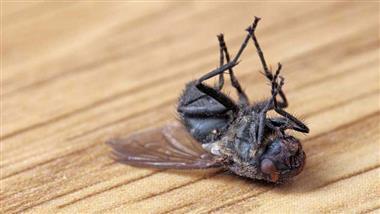
Fruit flies (Drosophila melanogaster) look like small flies or gnats. They can be a problem year-round, but are especially common in the summer and fall months. These pesky little flies seem to appear out of nowhere and multiply at a rapid pace. Fruit flies are attracted to the scent of ripened or fermenting produce. Adults reach about one-eighth inch in length and have red eyes.
They lay eggs near the surface of fermenting fruit or other organic materials. When the tiny larvae emerge, they feed on this fermenting mass. Given the opportunity, one fruit fly can lay 500 eggs and will complete a life cycle from egg to adult in about one week.1
The best way to avoid the issue is to eliminate the source. Any produce that is ripened should not be left on the counter, but either eaten, refrigerated or discarded. Any damaged portion of the fruit or vegetable should be cut away and discarded since it may contain eggs or larvae.
Once fruit flies have entered the house, all areas containing any rotting food must be located and eliminated. This includes where juice may have spilled under the refrigerator, or a potato is rotting at the back of a closet. After the source of attraction is eliminated, then it’s time to get rid of the fruit flies that are in the house.
Fruit flies are just one potential challenge that can pop up at home. After discussing how to get rid of fruit flies without damaging chemicals, we’ll dive into other healthy ways of managing home maintenance, cleaning and getting organized.
Fruit Fly, Don’t Bother Me
While some advocate using a pyrethrum-based insecticide2 there are definitely healthier and more natural ways of getting rid of the annoying flying insects. The most popular method has been an apple cider vinegar trap.3
The trap is made by filling a bowl or glass with apple cider vinegar and covering the opening with plastic wrap. Poke small holes in the top and leave the container out to attract the flies. Fruit flies are attracted to the scent of apple cider vinegar and will enter the glass or bowl through the small holes in the plastic wrap. Once they’re in, they can’t get out.
Tom’s Guide lists a few more ways of trapping fruit flies, including using dishwasher detergent with apple cider vinegar to decrease the surface tension so when they land on the apple cider vinegar they drown. Bottles of old beer and wine also attract fruit flies and because the bottleneck is narrow, they can’t escape.
The U.S. Sun calls Sara Snell (TikTok HappyHome_withSara79) a “savvy homeowner” who may have made fruit flies “a problem of the past.”4 They featured her solution to a home invasion of fruit flies, which includes some rotting fruit, a piece of paper, a jar and a few strips of tape.
Sara places some fruit at the bottom of the jar and forms the paper into a cone shape with a small hole at the bottom. The top of the cone becomes as wide as the mouth of the jar and the paper is then taped into place. The smell of the rotting fruit attracts the fruit flies, but the size of the hole is so small they cannot get out again.
According to The U.S. Sun, the post went viral and quickly garnered 1.4 million views and currently has over 200 comments. This is just one video on Sara’s channel5 where she features information about low-tox living, cleaning, organizing and cooking.
Healthy Cleaning Hacks
Household cleaners are as dangerous for your lungs as long-term smoking. Research6 from the University of Bergen and Norway demonstrated that cleaning once a week with cleaning products for 20 years is equivalent to smoking 20 cigarettes a day for 10 to 20 years. The following are nontoxic, healthier ways of cleaning your home and protecting your health.
| Fabric softener — Sara features a short video7 on her channel about how bad fabric softener is for the environment and people. In the video, the narrator mentions the many service calls that are directly related to people using fabric softeners. Instead, use a cup of white vinegar in your machine — it softens the clothes and helps keep the pipes clean. |
| Fireplace — Line the bottom of the fireplace with foil for easy clean up.8 The foil protects the base of your fireplace from damage from heat and abrasion, while extending its life. After the fire is finished and the ashes have cooled, simply fold it with the ashes inside and toss. No more sweeping ashes or getting them on the floor. |
| Oven cleaner, drain cleaner and carpet deodorizer — Baking soda was used to clean 99 years’ worth of coal tar from the Statue of Liberty in 1986,9 so there’s a good chance it can remove dirt and grime around your house too. Use one cup or more over the bottom of the oven to remove food and grease. Add water to make a thick paste and let it sit overnight before cleaning the next day. Clean your drains by pouring one-half to 1 cup of baking soda down the drain and then slowly pouring one-half to 1 cup of vinegar after it. Let this sit for 15 minutes and flush it with 1 gallon of boiling water. Deodorize your carpet by sprinkling baking soda on it and waiting 15 minutes before vacuuming thoroughly. |
| Drain cleaner — If you have a particularly stubborn drain, consider using a wet-dry vacuum to suck out hair and debris first. You can increase suction by creating a seal between the nozzle and the drain with a wet rag. |
| No iron, wrinkles are gone — Ironing can be time-consuming, especially when you have several items that need the wrinkles out. Instead, try throwing a couple of ice cubes or a wet washcloth in the dryer with lightweight items that need to be ironed.10 Set the dryer for 10 minutes and watch how the steam removes the wrinkles. |
| Slow shower head — Mineral build-up in the shower head can make for an unsatisfying shower. Remove the shower head and soak it in white vinegar and baking soda for 20 to 60 minutes depending on how much buildup you have.11 Rinse it in hot water and replace it. |
| Pet hair on the furniture — Yes, sticky tape and pet brushes work to remove pet hair, but if you don’t want to buy one more thing for the house, try textured rubber gloves you use to wash the dishes.12 These will pick up pet hair off your furniture in nothing flat. |
Download this Article Before it Disappears
Household Maintenance Made Simple
| Looking for the light switch in the dark — A dab of glow-in-the-dark paint on the tip of the light switch means you won’t be groping in the dark anymore. This is a particularly important safety tip for older adults living alone. |
| Maintain a clean toilet — Once the toilet has been cleaned, drop in a denture tablet once weekly to prevent scaly rings around the bowl.13 |
| Shower and bathroom tile — Never clean your tile with acidic cleaners, like white vinegar. This eats away at the grout sealer and destroys the grout, opening small holes so the backboard gets wet and grows mold. Instead, use a squeegee each time you shower and clean the tile with baking soda and water. In high-traffic areas, grout should be resealed yearly. |
| Stinky garbage disposal — Bits of rotted food in the disposal can make the whole kitchen stink.14 Don’t put your hand in the disposal! Instead, drop in some orange or lemon peel with the water running at half-speed. Run the disposal for about five seconds and let it sit for 15 to 20 minutes. The citrus will help soften the bits of food. Next, run a few ice cubes through the disposal with the water running. Next, cover the disposal and fill the sink half-full; then pull the plug and run the disposal. |
| Slow flushing toilet — Mineral deposits and bacteria may have gotten into the rinse holes under the rim and clogged the water flow.15 You can see the condition of the jets using a small mirror. If there are light-colored scales, you have mineral deposits; dark orange or black spots are bacteria buildup. The jet holes can be cleaned with a piece of wire or coat hanger and a hand mirror. Be sure to wear glasses and gloves to protect against any backsplash. |
| Organic fertilizer — Pasta, rice and potato water contain starch that helps feed your garden plants. Dilute it until it’s not too cloudy.16 Used coffee grounds can boost nutrients and build healthy soil. Either add to your compost pile, sprinkle it around your plants or dilute it in water for liquid fertilizer. Coffee grounds can also help deter some unwanted pests. |
| Vinegar in the garden — Vinegar is an inexpensive way to control weeds when it’s mixed with dish detergent and salt.17 However, this mixture will kill whatever it touches. Spray vinegar around door and window frames to deter ants.18 |
| No-ladder gutter cleaner — You can make a gutter cleaning wand in 20 minutes19 using half-inch PVC pipe, two elbows, a cap and a garden hose coupling. Place the garden hose coupling on one end of a long piece of PVC pipe that’s long enough to reach the gutter while you’re on the ground. Place one 90-degree elbow on the other end and another 6-inch PVC pipe to make an “L” shape. At the end place another 90-degree elbow and a 6-inch PVC pipe. You now have a “J” shape with a long handle. At the end of the 6-inch pipe place the cap with 3-1/8-inch holes drilled. Affix each joint with glue and let it dry. Hook this up to your garden hose and spray out your gutters. |
| Upgrade your pots — When you overwater, it can lead to root rot, but holes at the bottom of the pot may allow the soil to dry quickly. Try adding a couple of old sponges to the bottom of the pot to retain moisture, create airspace and act as a water reserve. |
Get Organized
| Small items — Ice cube trays make perfect storage containers for small items like jewelry, office supplies and tools. You can even find colored silicone trays to match your decor. |
| Wrapping paper sleeve — Don’t tape down the loose edges of wrapping paper.20 Instead, cut an empty toilet paper roll lengthwise and slip it over your wrapping paper. Secure it with tape or a rubber band. The next time you need wrapping paper, you won’t waste any paper. |
| Metal file holders — These are good for more than files or magazines.21 Laid on the long vertical side, they make a perfect holder for water bottles. Placed upright, file holders are a perfect way to store your flip flops, sandals and flats. You can also use them to organize your cleaning supplies under your sinks. |
| Hanging shoe organizer — Looking for a place to store your extra cords and chargers?22 Label each pocket of a hanging shoe organizer with the type of cord or the piece of equipment to which it belongs. |
| Don’t shrink clothes in the dryer — If you have clothes in the wash that shouldn’t go into the dryer, try writing on the washing machine lid with a dry-erase marker, noting the clothes that should not go into the dryer. |
| Storing long-handled garden equipment — It can be difficult to corral all your shovels, rakes and brooms so they don’t fall over. Securely anchor a pallet against the wall and slip your long-handled garden supplies in from the top. They will stay organized and upright for easy access.23 |
| Color code your keys — If you have multiple keys for your home or padlocks, it’s easy to get them confused. Use a dab of matching nail polish on the key and padlock that go together or color code the different keys for your home. |
| Keeping your car clean — Getting into a clean car can feel good, but it’s not long before your car can be full of empty wrappers, cups and dead leaves. Quickly make a sturdy and stable in-car garbage can using a plastic cereal container with a lid. Glue a hook and loop fastener (brand name Velcro) to the bottom of the container so it will hook to the car carpet and line it with a small kitchen garbage bag.24 |
- 1 University of Washington, Introduction to Drosophila Melanogaster
- 2 University of Minnesota Extension, Spotted Wing Drosophila, Managing/using insecticides
- 3 Toms Guide, October 9, 2022
- 4 The U.S. Sun, June 11, 2023
- 5 Tik Tok, happyhome_withsara79
- 6 American Journal of Respiratory and Critical Care Medicine, doi: 10.1164/rccm.201706-1311OC
- 7 Tik Tok, May 2, 2022
- 8 Family Handyman, December 13, 2022 #7
- 9 Iowa State University, March 19, 2015
- 10 Family Handyman, May 19, 2023, #89
- 11 BuzzFeed, May 1, 2020, #7
- 12 BuzzFeed, May 1, 2020, #8
- 13 BuzzFeed, May 1, 2020, #24
- 14 Family Handyman, May 19, 2023, #52
- 15 Family Handyman, May 19, 2023, #49
- 16 Sustainable Holly, May 30, 2021
- 17 Insider, August 18, 2021
- 18 Gardening Know How, Gardening Uses for Vinegar, Additional benefits
- 19 Mr. Handyman, October 21, 2015
- 20 Family Handyman, May 19, 2023, #36
- 21 The Krazy Coupon Lady, May 6, 2023, #10, 11
- 22 The Krazy Coupon Lady, May 6, 2023, #22
- 23 Family Handyman, June 7, 2023, #4
- 24 Family Handyman, June 7, 2023, #37